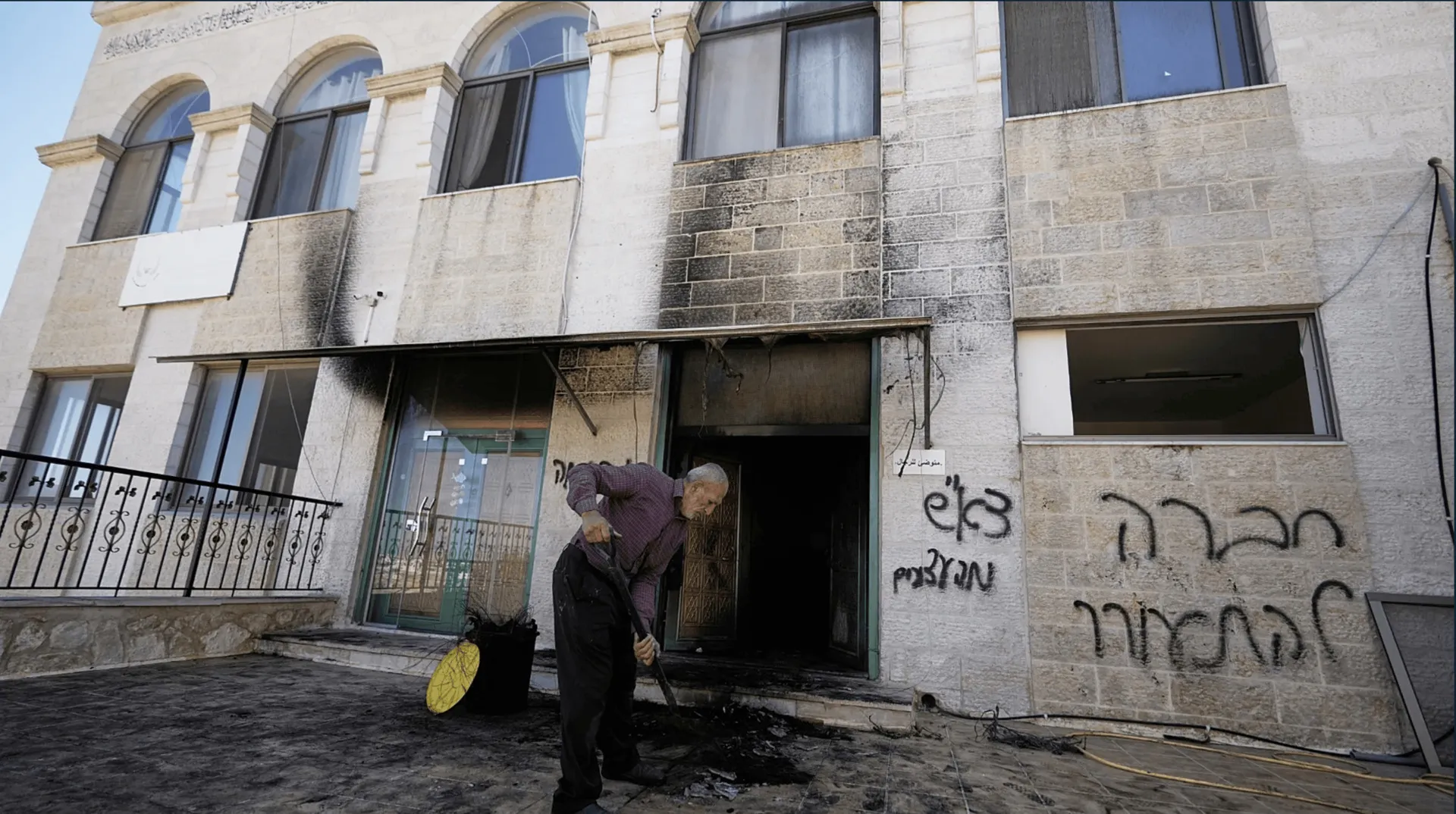
Israeli settlers have vandalised and burned a mosque in the occupied West Bank village of Jaljulia, north of Ramallah. Racist slogans were scrawled on the walls by the settlers.
Israeli air strikes have continued to target towns in southern Lebanon despite an agreement between the United States and Iran set to be formally signed on Friday to end the war on all fronts.
Israeli drones carried out three attacks in Tyre that resulted in injuries while a drone also targeted the Bint Jbeil district in Nabatieh, Lebanon’s state-run National News Agency said on Wednesday.
Recommended Stories
list of 4 itemsend of list
The fighting in Lebanon is considered one of the biggest threats to the framework agreement in the US-Israel war on Iran with Tehran warning that new Israeli strikes on Lebanon and continued occupation of its territory would be regarded as a violation of the deal.
Earlier on Wednesday, Al Jazeera Arabic correspondents on the ground reported that Israeli forces carried out an air strike on the outskirts of Kfar Tebnit, also in the Nabatieh district. They also launched raids on the town of Nabatieh al-Fawqa and shelled the Ali al-Taher heights and the outskirts of the town.
Hezbollah fighters, meanwhile, launched at least 10 rockets towards Israeli forces near Kfar Tebnit.
There has been a reduction in violence since the US-Iran agreement was announced, but attacks have not stopped, Al Jazeera’s Zeina Khodr said, reporting from Beirut.
“Security sources believe that the Israeli army is trying to occupy more ground, especially strategic high ground around Nabatieh,” she said.
“Yes, families have started to return to their villages, but people are worried. They say they don’t trust that Israel will abide by the ceasefire.”
United Nations spokesperson Stephane Dujarric said the number of projectiles fired between Israeli forces and Lebanon fell to 174 on Sunday, compared with 705 the previous Sunday.
Of these, 169 were attributed to Israel and five to Hezbollah, he said.
Lebanon ‘most sensitive issue between the sides’
The situation in Lebanon is one of the main pillars of the US-Iran agreement, Al Jazeera’s Almigdad Alruhaid said, reporting from Tehran.
“As we approach the signing of the deal, it is becoming the most sensitive issue between the sides,” Alruhaid said.
Iran said the Israeli military has violated the ceasefire in Lebanon 84 times in the past two days and warned that Israel should expect “a harsh response” if it does not stop its attacks, he reported.
This came after Iranian Foreign Minister Abbas Araghchi said the withdrawal of the Israeli military from Lebanese territory is one of the core demands right now to move forward with the framework agreement Iran has with the US, Alruhaid said: “So the Iranians say the situation in Lebanon, in particular southern Lebanon, is an integral part of the memorandum of understanding.”
Lebanon was among the top priorities for the Iranians when they started negotiations with US President Donald Trump’s administration, according to Mohammad Eslami from Tehran University.
“Once the Iranians not only retaliated against the Israeli attacks on Dahiyeh and Beirut but also pre-emptively attacked Israeli territory, they showed right from the outset they are determined and very serious about supporting Lebanon, the Lebanese people, the Lebanese government and the resistance factions in Lebanon,” Eslami told Al Jazeera.
Israel’s invasion akin to ‘war crimes’
Meanwhile, the human rights group Amnesty International said on Wednesday that the Israeli army’s mass forced displacement orders in Lebanon amount to war crimes under international law.
“In parts of southern Lebanon, the Israeli military’s forced displacement of civilians and prevention of their return amounts to unlawful transfer – which is a war crime,” Amnesty said in a statement.
The Israeli army has “radically expanded” its use of such orders, displacing hundreds of thousands of people across Lebanon, it said.
“Instead of forcibly uprooting communities and designating entire swathes of Lebanese land as ‘no-go zones’ for civilians, Israeli forces must immediately withdraw from Lebanese territory,” said Kristine Beckerle, Amnesty International’s deputy regional director for the Middle East and North Africa.
The Israeli military declared about 4.6 percent of Lebanon as a “no-go zone” on November 28, 2024, a day after a previous ceasefire took effect, Amnesty noted.
This year, just three days after an April 17 ceasefire announcement, the restricted area was expanded to about 6 percent of the country, and residents were ordered not to return to villages previously home to tens of thousands of civilians.
Lebanese officials said Israel, which has been carrying out a large-scale offensive in the country since March 2, has killed more than 3,800 people, wounded 11,850 and displaced more than one million.
London, United Kingdom – Activists who gained access to the widely condemned Great Israeli Real Estate Event in London have shared photos with Al Jazeera that show property in illegal settlements being marketed.
The invite-only event, held at Edgware United Synagogue, was part of a roadshow promoting the sale of land and property in Israel, but in reality, these included homes in areas such as Givat Zeev and Tivuch Shelly in the occupied West Bank, as well as settlements in East Jerusalem.
Recommended Stories
list of 4 itemsend of list
“Exciting new project just 10 minutes from Jerusalem!” read a leaflet advertising homes, “some with pools!” in Maale Adumim, a West Bank settlement illegal under international law.
Activists saw leaflets marketing homes in illegal Israeli settlements at the controversial property fair [Courtesy of Jewish Anti-Zionist Action group]
Isabel, a member of the Jewish Anti-Zionist Action group who spoke to Al Jazeera on condition of anonymity, said that the mood at the fair was peaceful and heavily protected, including by plainclothes men fitted with body cameras.
She did not hear any participants mention Palestinians, she said, adding that when it came to the occupied Palestinian territory, real estate agents spoke of “Anglo-communities” where English-speaking people from the United States, the UK and South Africa could relocate to.
She said a popular selling point used by real estate agents was that due to the war on Gaza, it was a good time to buy property in Israel, as prices had dropped and they might be willing to offer a discount.
The atmosphere reminded her of the opening week of university with social chatter, stalls and strangers pushing flyers at attendees.
“Unlike outside the synagogue, where there was lots of protests, it was calm inside with a heavy police presence, [security] people even wearing body cams. The room was all set up with stalls, in what I would describe as like freshers’ fair. On the tables were free pens, chocolates.”
Brochures offered people information about buying homes in ‘the heart of Israel’ [Courtesy of Jewish Anti-Zionist Action group]
When Isabel spoke with representatives from the Israeli real estate company Harey Zahav, she was shown advertisements for properties in Jerusalem as well as Netanya, a resort city in central Israel.
More than 100 British legislators, including members of Prime Minister Keir Starmer’s Labour Party, had signed a letter on Friday urging the government to “uphold its obligations under international law” and ensure the event “promoting illegal activities does not proceed”.
Layla Moran, a British MP of Palestinian descent and one of the letter’s signatories, described the sales as “unacceptable”.
Gaza war could mean discounts, said participants
When Isabel told participants she was interested in something a little quieter, they said in hushed tones that they also had a portfolio of properties in “Judea and Samaria”, the Israeli term for the occupied West Bank.
One representative said that organisers asked them not to advertise properties in these locations. When asked why, he said it was due to these “crazy times” when people wanted to stop purchasing property in Israel.
He said they had all the information packs for those properties, but requested her details so he could send them to her afterwards.
Pro-Palestine protesters, MPs and several rights groups had called on the UK to ban the event [Toby Shepheard/Reuters]
At the stand of Tivuch Shelly, another Israeli real estate company, Isabel said representatives were more reticent to discuss properties in the occupied West Bank, but were openly advertising properties in Givat Hamatos and Ramat Eshkol, two settlements in occupied Jerusalem, on their flyers.
An activist with Jewish Anti-Zionist Action at one point shouted out that “this event sells property on illegally occupied stolen Palestinian land” before he was removed by security.
But the overall mood inside the fair was in sharp contrast to the protests and tense atmosphere outside the event.
In the buildup, rights groups, including Amnesty International, as well as the mayor of London, Sadiq Khan, slammed the event for openly advertising the sale of land in illegal Israeli settlements.
Outside, hundreds of protesters shouted slogans and held posters reading, “Stop Israel’s illegal sale of stolen Palestinian land” and “Thou shalt not steal”.
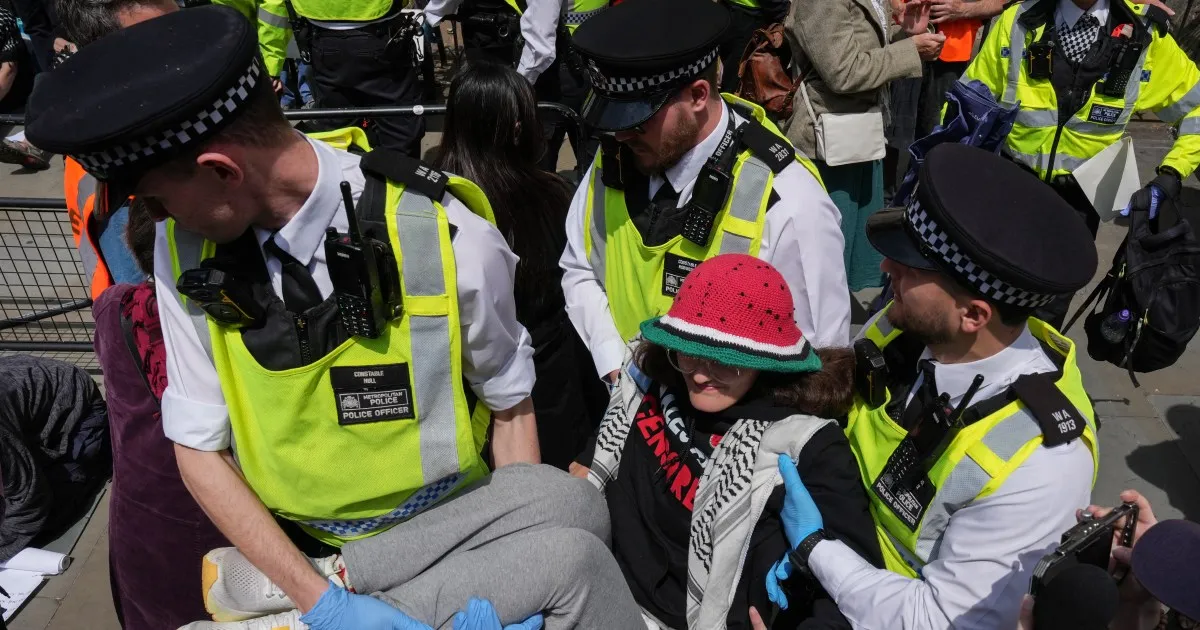
The Metropolitan Police said 15 people were arrested during the demonstrations “for a range of offences, including public order matters”.
Green Party leader Zack Polanski has written to Khan, calling for the event to be investigated by the Metropolitan Police.
Khan earlier said he had discussed the event with the London police force and had been told that any allegations of criminality relating to the potentially unlawful sale of property at the fair would be assessed by the Met as part of a probe.
Israel started building illegal settlements after capturing the West Bank, East Jerusalem and the Gaza Strip in the June 1967 Six-Day War, and now, more than 700,000 settlers – 10 percent of Israel’s population – live in 150 illegal settlements and 128 outposts spread across the occupied West Bank and East Jerusalem.
The government has openly funded and built settlements, and Israeli authorities give their settlers in the occupied West Bank about $5.6m a year to monitor, report and restrict Palestinian construction in Area C, which is administered solely by Israel and comprises more than 60 percent of the West Bank.
United Nations bodies and most countries view the West Bank settlements as illegal, citing international conventions.
But the US has provided diplomatic cover to Israel for decades, with Washington consistently using its veto power at the UN to protect Israel from diplomatic censure.
A police officer stands guard near counterprotesters, as people from pro-Palestine groups gathered near the Edgware United Synagogue for a demonstration against the property fair organised by real-estate agency My Home in Israel, which markets property in illegal Israeli settlements in the occupied West Bank, in London, June 14, 2026 [Toby Shepheard/Reuters]
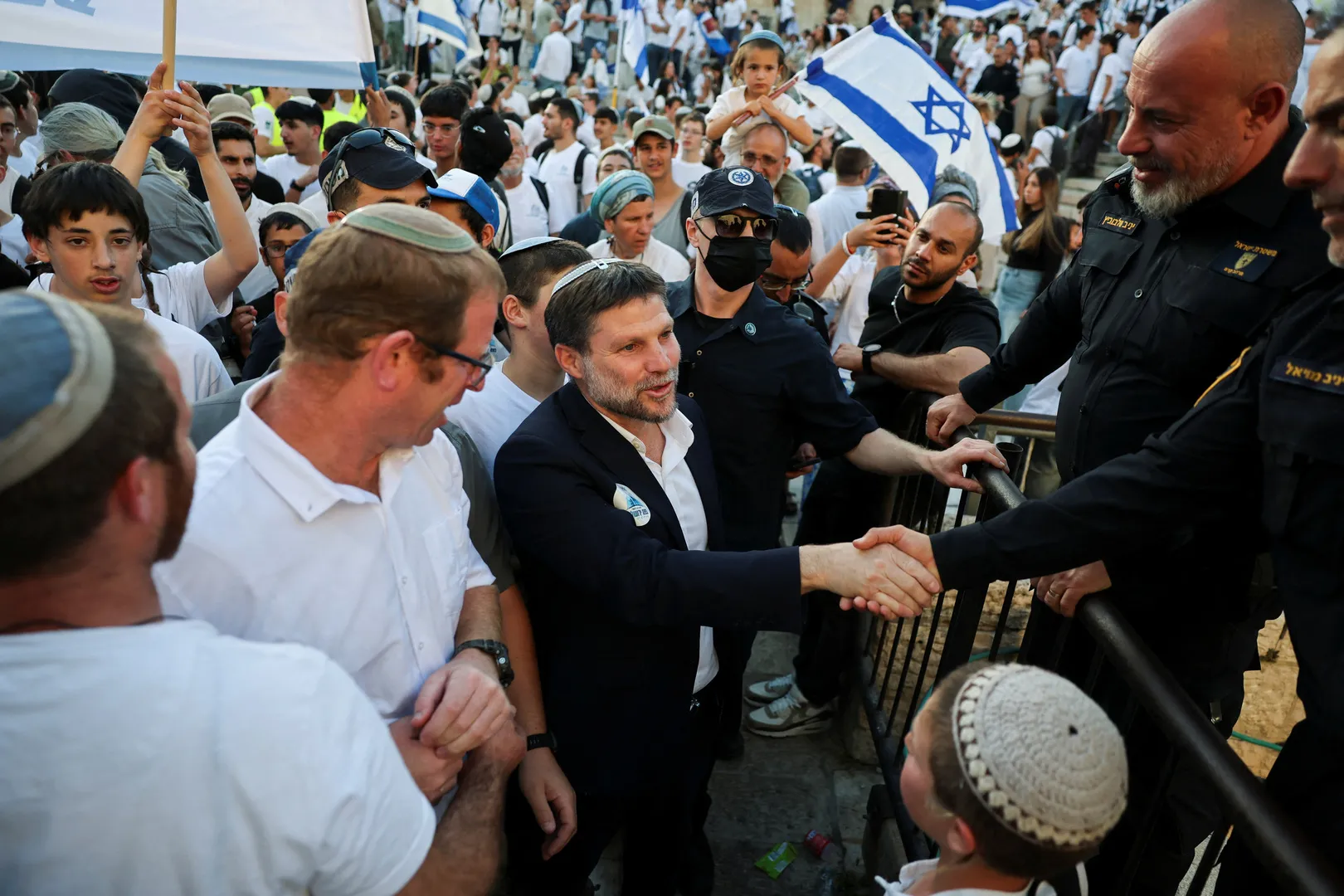
Israeli Finance Minister Bezalel Smotrich says Israel has transferred authority over Hebron to the army. It includes control of the key holy site, Cave of the Patriarchs. Al Jazeera’s Nour Odeh explains.
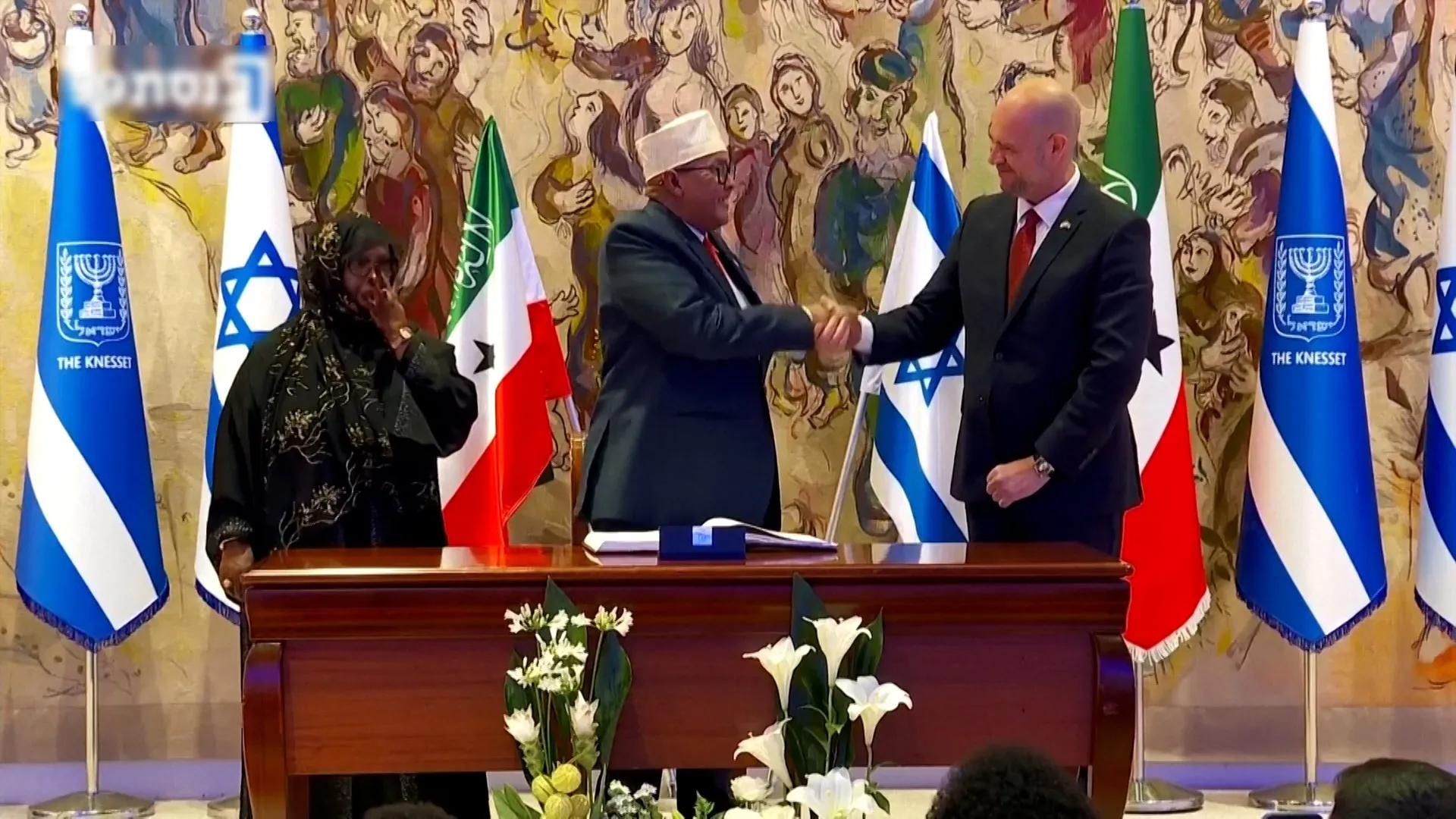
Somaliland’s President Abdirahman Mohamed Abdullahi is on a ‘historic’ tour of Israel, where he’s opened an embassy and visited the Knesset. The landmark trip comes months after Israel became the first country to recognise Somaliland as an independent nation.
Drone attacks target vehicles in Nabatieh amid fragile ceasefire negotiations between Iran and the US.
Published On 16 Jun 202616 Jun 2026
Multiple Israeli strikes have killed at least four people in southern Lebanon’s Nabatieh governorate, according to Lebanon’s National News Agency (NNA), despite a ceasefire and a recent understanding between the United States and Iran to end the war on all fronts.
Tuesday’s killing took place as separate drone attacks targeted two vehicles in Mayfadoun. A third vehicle was also targeted in the village of Shoukin, the agency said.
Recommended Stories
list of 3 itemsend of list
Throughout the often fragile negotiations between Iran and the US, Iranian officials repeatedly said that any ceasefire arrangement would need to include an end to Israeli attacks on Lebanon.
While the final text of the memorandum of understanding has not yet been made public, the prime minister of Pakistan, which is acting as one of the mediators in the conflict, said on Monday that the agreement envisaged an immediate halt to military operations “on all fronts, including Lebanon”.
Iran’s Foreign Minister Abbas Araghchi said on Tuesday that Israel’s continued occupation of southern Lebanon would violate the deal, adding that “without the withdrawal of Israeli forces from the territories they occupied during this war, the war has not fully come to an end”.
In a phone conversation with Lebanon’s Parliament Speaker Nabih Berri, Iran’s top negotiator, Mohammad Bagher Ghalibaf, called for the US to compel Israel to end its war on Lebanon, stop home demolitions, and withdraw from occupied Lebanese territory.
Soon after the announcement of the deal between the US and Iran, Israel’s Prime Minister Benjamin Netanyahu said that Israel will continue to occupy southern Lebanon.
Meanwhile, Lebanese group Hezbollah says it has received assurances from Iran that Tehran will demand a withdrawal of Israeli troops from Lebanon in its next phase of talks with the US, the Reuters news agency reported.
Since the resumption in fighting on March 2, at least 3,826 people have been killed by Israeli attacks in Lebanon and 11,851 wounded, according to the country’s health ministry.
Gaza’s football fans once watched the World Cup from the comfort of their homes. Now, displaced in schools and tents, they face power cuts, sparse internet access and the threat of Israeli attacks.
The US-Iran memorandum of understanding expected to be formally signed in Switzerland on Friday could allow for the establishment of a $300bn investment fund for Iran, as part of a broader settlement to end the war that triggered a global energy crisis and upended markets worldwide.
US Vice President JD Vance told CBS News on Monday that the incentives would be connected to Iran’s “performance” in adhering to the deal, which was digitally signed by both sides on Sunday.
Recommended Stories
list of 3 itemsend of list
The scale of the financial incentives grabbed the headlines due to US President Donald Trump’s longstanding criticism of a 2015 nuclear accord that he claimed delivered economic benefits to Tehran.
In a bid to manage perceptions around this politically sensitive issue, Trump took to his Truth Social platform to claim that “the story that the US is paying Iran 300 million Dollars is Fake News,” while Vance told CBS News that the money would not be a US payout in exchange for Iran’s enriched uranium.
“When people say that billions of dollars of assets will be released, that’s not true,” the vice president told the CBS Morning programme. “What is true is that Iran will have a much better and much more prosperous future if they meet the obligations they make in this agreement.”
What do we know about the $300bn investment fund?
Vance said the deal “fundamentally extends a hand to Iran and says, ‘Look, if you guys are willing to honour your obligations, if you’re willing to allow real inspections of your nuclear programme, then we will welcome you back into the world economy.’
“That’s the sort of thing they could have access to, funded by the Gulf Coast coalition, so long as they honour their end of the obligation,” Vance told CBS. He also claimed that while US money would not be injected, economic opportunities could arise once Iran repositions itself in the global economy.
The New York Times quoted sources saying the fund would not come from governments but be created for companies eager to invest in Iran.
Muhanad Seloom, a non-resident senior fellow at the Middle East Council on Global Affairs, said the setup was a no-lose solution for Washington. “If Iran reforms, the administration owns the peace; if it doesn’t, the US loses nothing and the Gulf carries the risk,” he told Al Jazeera.
What about the Iranian frozen assets?
Seloom said the idea of an investment fund was built precisely to escape the optics of releasing Iran’s frozen funds. While the exact amount of Iran’s frozen assets is unclear, official Iranian reports and experts have set the total amount at more than $100bn.
Iran’s economy has been crippled due to years of sanctions imposed on the country by the United States and other nations following the Islamic revolution in 1979, and then amplified over Iran’s nuclear and ballistic missiles programmes. These measures have restricted Tehran’s ability to access its own assets, such as revenues from oil sales, which have been frozen in foreign banks.
Tehran was granted sanctions relief in the wake of the landmark 2015 nuclear deal signed under President Barack Obama, but Trump tore it up in 2018 during his first term. The 2015 deal had put limits on Iran’s nuclear enrichment in exchange for sanctions relief.
Iran’s state-affiliated Mehr News agency reported on Sunday that the 14-point draft memorandum of understanding provided for the release of $24bn in frozen Iranian assets.
Pressed by CBS News on the possibility of releasing frozen funds, Vance said the $24bn figure “just doesn’t appear anywhere in any of the texts that we’ve talked about with the Iranians”.
“What we have said is that we’re willing to talk about unfreezing assets, but a much, much bigger deal is unsanctioning their economy – so long as they make the long-term commitments on the nuclear programme,” the vice president added.
For Iran, where the war inflicted an estimated $29bn damage and the population is struggling with the highest inflation rate since 1942, the investment fund may constitute a much-needed lifeline.
But the optics will not be as favourable, raising a “dignity problem”, Seloom said. “Tehran reads this as supervised, conditional money rather than sovereign relief,” the analyst told Al Jazeera.
Which other contentious issues will be discussed after signing the deal on Friday?
One of the US’s main declared objectives has been to assuage concerns surrounding Iran’s nuclear programme, including a stockpile of more than 440kg (970lbs) of enriched uranium.
The memorandum extends an existing ceasefire arrangement for another 60 days, during which the two sides are expected to hold further negotiations on issues including the disposal of the enriched uranium.
Vance said Tehran had agreed to surrender its stockpile, undergo regular inspections and refrain from producing or buying nuclear weapons, but the full text of the memorandum of understanding has yet to be disclosed.
The reopening of the Strait of Hormuz, which has been subject to competing blockades by the US and Iran, has also been a point of contention. Trump suggested an agreement to reopen the waterway had been reached when he announced a deal on Sunday with the words: “Let the oil flow!”
Speaking to CNBC, however, Vance acknowledged that not all sticking points surrounding the passageway had been resolved. “Well, our expectation is that the strait is gonna be opened in a toll-free way for the long term, and that’s the sort of thing that we’re gonna figure out in these technical negotiations,” he said.
Israel’s ongoing aggression on Lebanon is also expected to create friction, as Iran has insisted any ceasefire deal must include the allied nation. Israel has so far rejected any arrangement that would limit its ability to strike what it says are Hezbollah targets. Defence Minister Israel Katz on Friday said the military would continue operating in Lebanon regardless of any agreement with Tehran.
Mixed reactions to the agreement
Iranian Foreign Minister Abbas Araghchi said the memorandum of understanding would reap economic benefits for Iran but stressed that Tehran would not rely on those benefits for all of its needs.
“We have a history of broken promises, non-compliance, and the tearing up of agreements,” Araghchi said on Monday, according to Press TV. He said discussions about the lifting of US sanctions and Iran’s nuclear programme would be held during a 60-day period of negotiations following the official signature on Friday.
Iran’s new supreme leader, Mojtaba Khamenei, has yet to comment. Some Iranian observers objected to the timing of the announcement, which coincided with Trump’s birthday. Referring to the assassination of former Supreme Leader Ayatollah Ali Khamenei at the beginning of the US-Iran war, conservative journalist Parisa Nasr wrote on X: “Was giving a birthday gift to the killer of the martyred Leader also one of the unwritten conditions of the deal?”
Iranian President Masoud Pezeshkian said Iran’s Supreme National Security Council had approved the deal so that “America’s genuine commitment to respecting the rights of the Iranian nation could be tested in practice.”
Speaking at the G7 summit in France on Tuesday, Trump described the deal with Iran as “fair”, “good”, and under which Iran “can’t have a nuclear weapon” or “they get blown up.”
Qatar’s Emir Sheikh Tamim bin Hamad Al Thani, who is also attending the summit, said the Iran-US agreement will result in positive outcomes for the region.
“This is a very important deal, there’s still a lot of work to be done, but with this momentum – if we continue like that, Mr President – I think we can achieve and do great things in the region,” Sheikh Tamim said.
US Democratic lawmakers welcomed a deal to halt the war with Iran but stressed that its terms must be made public. Senator Gregory Meeks said “any final agreement must be durable, enforceable, transparent” and more than “vague announcements or political spin”.
US Republican Senator Lindsey Graham on Sunday said he was “pleased” about the deal but also “somewhat concerned that Iran’s view of the agreement seems different than what the American negotiating team is claiming”.
Seloom, at the Middle East Council on Global Affairs, said the different narratives underlined that the two sides were “not really talking to each other”. “They’re talking past each other, to domestic audiences,” he said. “Each side has to sell this as a victory it cannot sell honestly.”
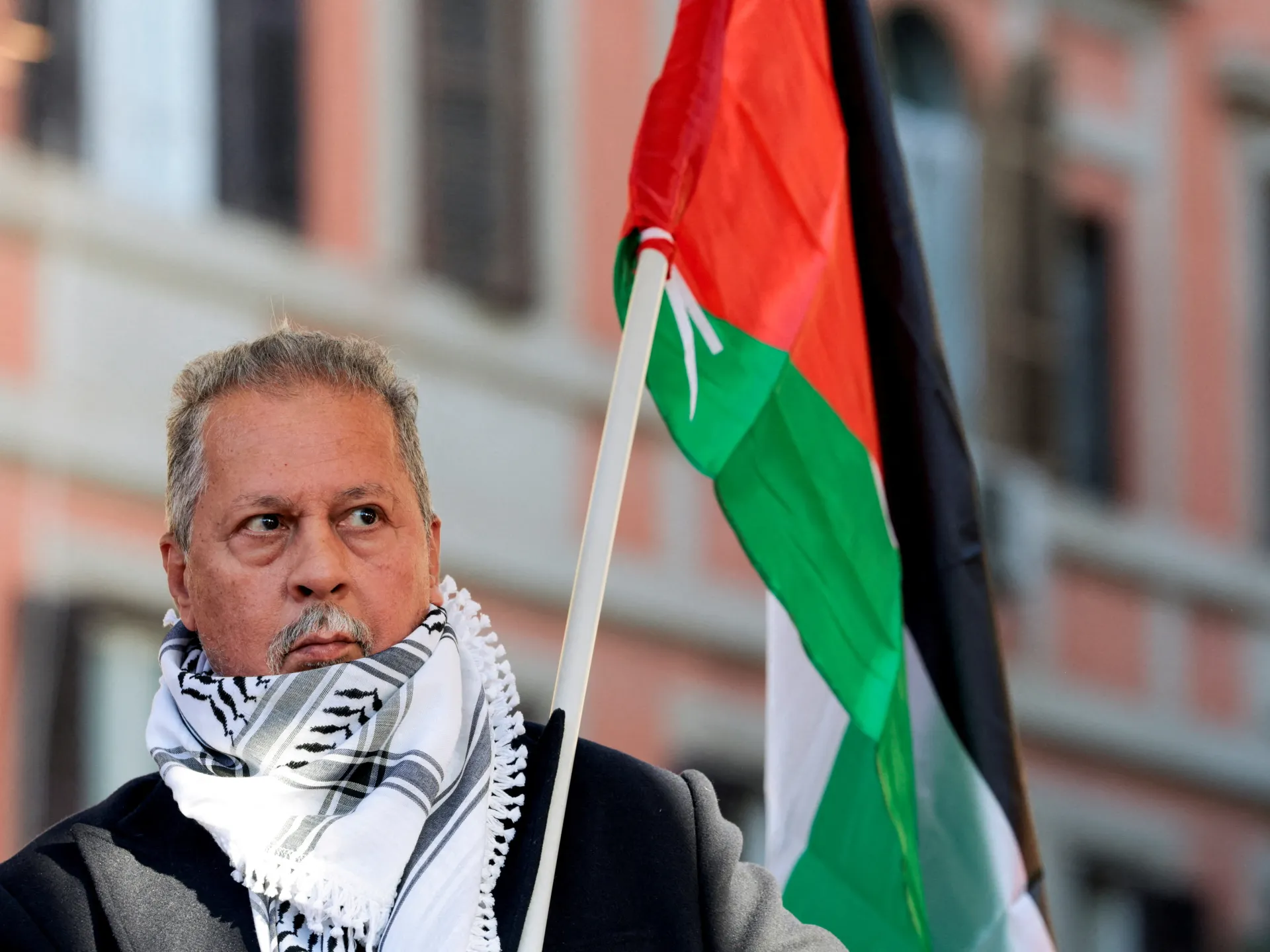
Since Israel launched its latest war on Gaza, Palestinian activist Mohammad Hannoun has been a figurehead in demonstrations across Italy.
Wrapped in a keffiyeh and waving the national flag, as head of the Palestinian Association in Italy he delivered impassioned speeches condemning the Italian government’s military cooperation with Israel and demanding an end to the genocide in Gaza.
Recommended Stories
list of 3 itemsend of list
The 63-year-old Jordanian national, who lives in the port city of Genoa and is an architect by profession, was arrested in December, under the accusation of having raised around 7 million euros ($8.1m) through his non-profit Association of Solidarity with the Palestinian People (ABSPP) that allegedly ended up in Hamas’s coffers.
Italian Prime Minister Giorgia Meloni expressed “appreciation and satisfaction” when the so-called “Operation Domino” led to the arrest of nine people, including Hannoun, described by investigators as the “head of the Italian cell of the Hamas organisation”.
But Italy’s Supreme Court of Cassation last month demanded a “comprehensive re-evaluation” of the evidence, describing it as too “generic”, according to the ruling seen by Al Jazeera.
The material presented in court consisted of Israeli intelligence sent to Italian authorities, as well as open-source online information whose provenance and reliability had not been established.
Hannoun’s case is not an isolated one.
Last month, Amin Abu Rashid, a Dutch national of Palestinian origin, was acquitted in the Netherlands by the Rotterdam District Court of financing Hamas, after a years-long legal battle landed him in jail for a year. Similarly, the evidence had relied on Israeli government reports and unverified newspaper articles.
The UK-based advocacy organisation CAGE International described Abu Rashid’s acquittal as a “direct rebuke of the use of Israeli intelligence as the basis for prosecuting Palestinian humanitarian organisers in Europe”.
Anas Mustapha, head of public advocacy at CAGE, told Al Jazeera that relying on Israeli evidence to prosecute Palestinians was tantamount to relying on Chinese information to try Hong Kong dissidents.
This practice constitutes a “major threat to the rule of law in Europe”, he said.
“Israeli intelligence is being laundered through European legal systems to suppress Palestinian civil society,” said Mustapha. “The aim is to disrupt and restrict activism and action against the state of Israel.”
‘Battlefield evidence’
Nicola Canestrini, who is among the lawyers representing the nine defendants including Hannoun, liaised with Abu Rashid’s representatives over the course of several months to challenge the use of so-called “battlefield evidence” in both Italian and Dutch courts.
The term refers to evidence collected by military forces during active hostilities or combat operations. Just like a standard crime scene, the collection of this type of evidence under European requirements must be presented with a chain of custody – the chronological documentation of the seizure, transfer, analysis, and storage of the materials.
In Hannoun’s case, the files alleging cooperation between the ABSPP and Hamas’s military wing were not accompanied by a chain of custody, but sent by an Israeli official “whose personal details remain confidential”, according to court documents.
The only indication of their provenance was the word “Avi”, which Canestrini said was later found to mean Israeli intelligence official Avi Abramson.
The evidence purportedly originated from hard drives found in Gaza’s hospitals as they were taken over by Israeli forces, namely in al-Shifa, al-Rantisi and Jabalia, as well as the Maghazi refugee camp and other locations across the Gaza Strip.
United Nations experts and organisations, including Human Rights Watch, have found that Israeli military actions in Gaza, including the forcible displacement of patients from those hospitals, amount to war crimes.
Canestrini and his legal team argued in court that unverifiable evidence collected by a state undergoing trial at the International Criminal Court (ICC) and the International Court of Justice (ICJ) was inadmissible.
“There’s a short-circuit in the legal system that is very troublesome for the rule of law,” the lawyer told Al Jazeera. “We’re seeing a foreign state under investigation for war crimes and crimes against humanity bringing evidence forward, and Italian authorities copying and pasting it in their reports.”
Additionally, rather than file an arrest warrant through established international cooperation channels, Israel sent the documents through a “spontaneous information exchange”. That measure bypasses oversight mechanisms established by the European Union Agency for Criminal Justice Cooperation (Eurojust) and the UN Military Evidence Guidelines.
“I believe this was done wilfully to avoid checks and balances that guarantee the respect of human rights,” the lawyer said.
Al Jazeera contacted Italian officials Riccardo Perisi, director of the Service for Combatting Extremism and External Terrorism, and District Attorney Marco Zocco, who declined to comment on Hannoun’s case due to ongoing legal proceedings. Avi Abramson, the Israeli intelligence official identified as the source of the evidence, did not respond to requests for comment.
According to the European Legal Support Center (ELSC), an independent organisation offering legal assistance to organisations and individuals advocating for Palestine, European states have systematically deployed “counterterrorism” and “public order” measures against Palestine solidarity efforts.
ELSC found a pattern of repression to “demobilise opposition to the Israeli genocide against Palestinians” in the United Kingdom, Germany, the Netherlands, and France, “advanced through alliances between state actors, Zionist lobby groups, and arms manufacturers”.
In Italy, activities around Palestinian solidarity are increasingly “equated with terrorism,” Italo Di Sabato, the national coordinator of Osservatorio Repressione (Observatory on Repression), an Italian organisation focused on tracking state control and defending the right to protest, told Al Jazeera.
The observatory documented cases in which pro-Palestinian activists were targeted by lawsuits, searches and administrative sanctions. “The objective is stifling any real form of solidarity with the Palestinian people,” Di Sabato said.
He argued that accepting opaque evidence to be used against Hannoun would have created a dangerous legal precedent.
“Israel’s aim was to have a free zone where everything is permitted,” Di Sabato said. “The political meaning of the Supreme Court of Cassation’s ruling is that the rule of law cannot be suspended when we deal with Palestine.
“What today constitutes the basis for the repression of Palestinian activism could tomorrow be the basis for the repression of any form of dissent.”
WASHINGTON — The terms of a deal to end President Trump’s war with Iran remained a secret on Monday as both sides claimed victory and the months-long conflict reached a nebulous end.
The memorandum of understanding, providing a rough framework to conclude the war, was signed digitally Sunday, with a ceremony scheduled to take place on Friday in Switzerland, U.S. officials said.
Trump hailed the document as a breakthrough after months of negotiations. Yet its broad contours remained unclear more than a day after the deal was announced, as each side offered conflicting public messaging about what had been agreed.
Iran said it would continue regulating traffic through the Strait of Hormuz, a strategic paradigm shift from the prewar status quo that was denied by the White House. The two sides expressed disagreement over whether the status of Iran’s ballistic missile program would be addressed in future negotiations, or whether Israel’s withdrawal from Lebanon was a part of the deal.
And Trump administration officials rejected Iranian claims that the United States would provide immediate sanctions relief as misleading “spin.”
Hours later, another U.S. official suggested that Iran, in fact, might receive some relief at the front end.
“We are prepared to release frozen funds, and we are prepared to release sanctions,” a senior U.S. official told reporters on a call. “And we’ll do some small gestures of that in the beginning, if they make some small gestures to us that show they’re willing to meet their commitments as well.
“We’ll know over the next two to three weeks whether those understandings will turn into actual agreement,” the official added.
Trump started the war in February citing Iran’s nuclear program, which had expanded after he withdrew from a prior nuclear agreement negotiated by President Obama. That deal capped more than two years of intensive diplomacy but ultimately failed under the weight of political criticism from Republicans — led by Trump — over its inclusion of sanctions relief for Tehran.
Trump administration officials said the new agreement would include a commitment from Iran not to develop or purchase nuclear weapons — a vow the Islamic Republic has repeatedly made through the Nuclear Non-Proliferation Treaty, the Obama-era deal and a religious edict from the late supreme leader. Yet the enforcement mechanisms for policing Iran’s nuclear work were left to negotiate another day.
Iran could get sanctions relief
In an interview with CBS News, Vice President JD Vance acknowledged that Iran could get significant sanctions relief — and up to $300 billion in reconstruction funds — if they abide by U.S. terms, such as the full reopening of the Strait of Hormuz, one of the world’s most important commercial waterways.
“Our expectation is that the strait is going to be opened in a toll-free way for the long term, and that’s the sort of thing that we’re going to figure out in these technical negotiations,” Vance said.
In a separate interview, he described the president’s policy as “extending an open hand” to Tehran.
“The hard-liners of the Iranian system will overemphasize the benefits that Iran gets,” he added, “while underemphasizing all the things that they have to concede, and all the things that they have to provide, in order to get these benefits.”
Uncertainty across the region
The news of peace came with a sense of bewilderment and uncertainty in a region that suffered as collateral damage through months of war.
Sunni Arab states that once hoped Iran would emerge weakened from the war issued tepid support for an agreement that could ultimately leave the fate of their oil exports at the whims of an emboldened adversary. And Israeli leaders, across the political aisle, expressed deep concerns over the deal in private, warning they would not be bound by an agreement to which they were not a party.
Israel’s decisions moving forward — particularly in Lebanon— may ultimately decide whether the agreement survives over the next 60 days, when Washington and Tehran plan on ironing out its more technical details.
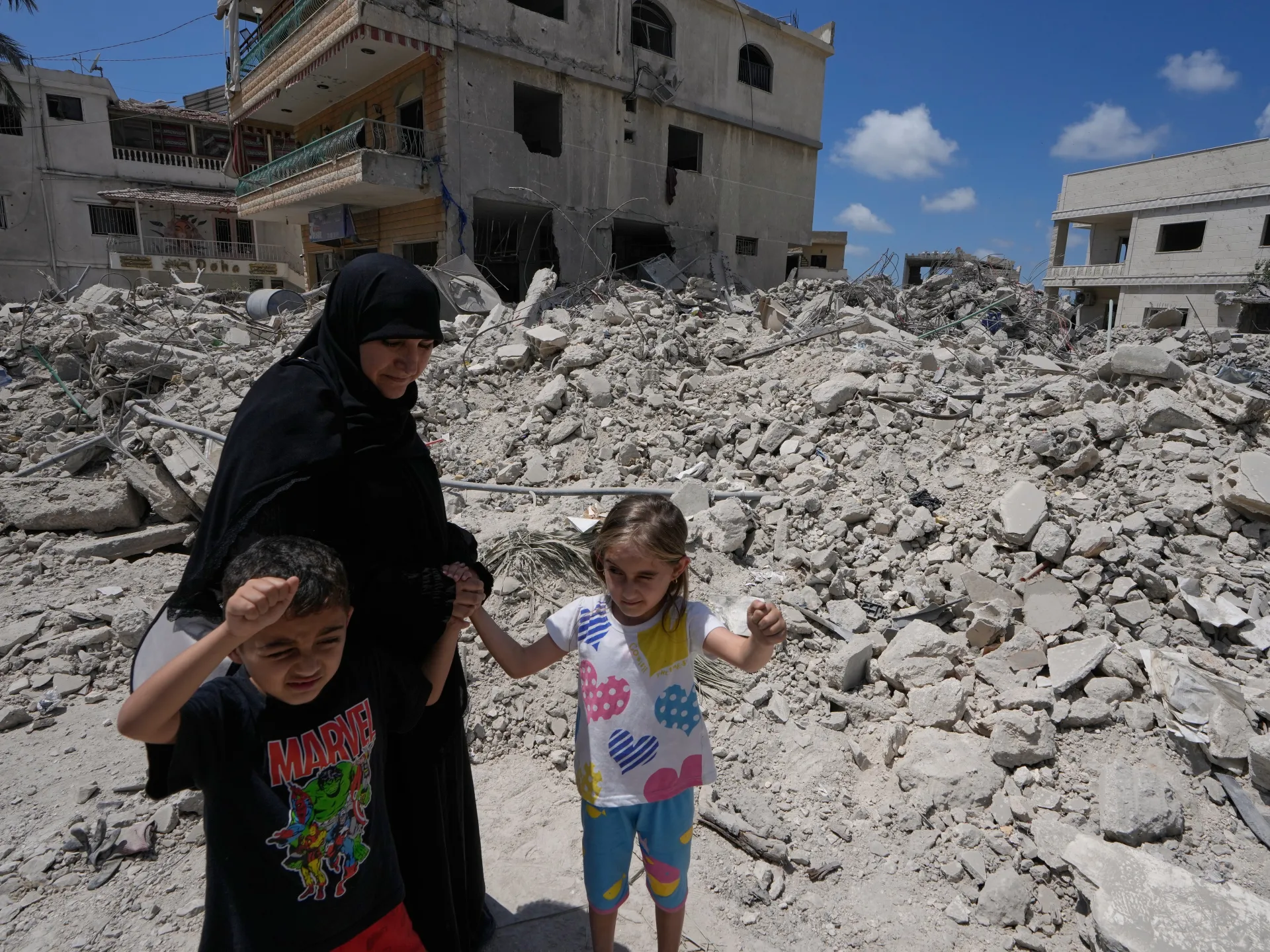
Hours after word of the signing came out, a stream of cars crowded the highway leading to southern Lebanon, full of displaced families desperate to check on homes and villages they hadn’t seen for more than 100 days.
They did so in defiance of Lebanese officials, who called on people to remain where they were until an official end to war in Lebanon — a secondary front in the larger U.S.-Israel war on Iran that has nevertheless seen staggering levels of destruction.
A woman and her children return to their Lebanese village Monday following the ceasefire announcement.
(Mohammed Zaatari / Ap Photo/mohammed Zaatari)
In the more than three months since the Lebanese Shiite group Hezbollah attacked Israel, nearly 3,800 people have been killed, and almost a quarter of the country’s 6 million people are displaced. Israeli troops occupy more than 10% of Lebanese territory, leaving a trail of destruction that has seen swaths of the country’s south all but razed.
‘Everything is gone’
None of that discouraged Hassan Shareef from leaving where he was staying in Beirut at 7 a.m. to head to Nabatieh, one of south Lebanon’s largest cities and a frequent target of Israeli strikes in recent weeks, to check on his tailoring business.
“I wasn’t afraid. I had to come. But what I saw would make you cry,” he said. “Everything is gone. My house, I can’t live in it. And the business is destroyed.”
Aqeel Khalaf, an herbalist, hit the road in the early morning with his brother, son and daughter-in-law. They reached Nabatieh in two hours.
Yet it was less of a homecoming than Khalaf hoped: Israeli troops were still stationed near his village, a few miles down the road from where he stood in Nabatieh’s central market. Their house was tantalizingly close, but for the moment it might as well have been on the moon.
“It’s hard for me, but the Lebanese army told us we can’t go yet. We have no choice,” Khalaf said. “Maybe in 24 hours, when things crystallize with the deal.”
He could at least check on his shop here in the central market, though he already knew there would be damage: The family regularly checked satellite images of the area and saw the building was hit about a week ago.
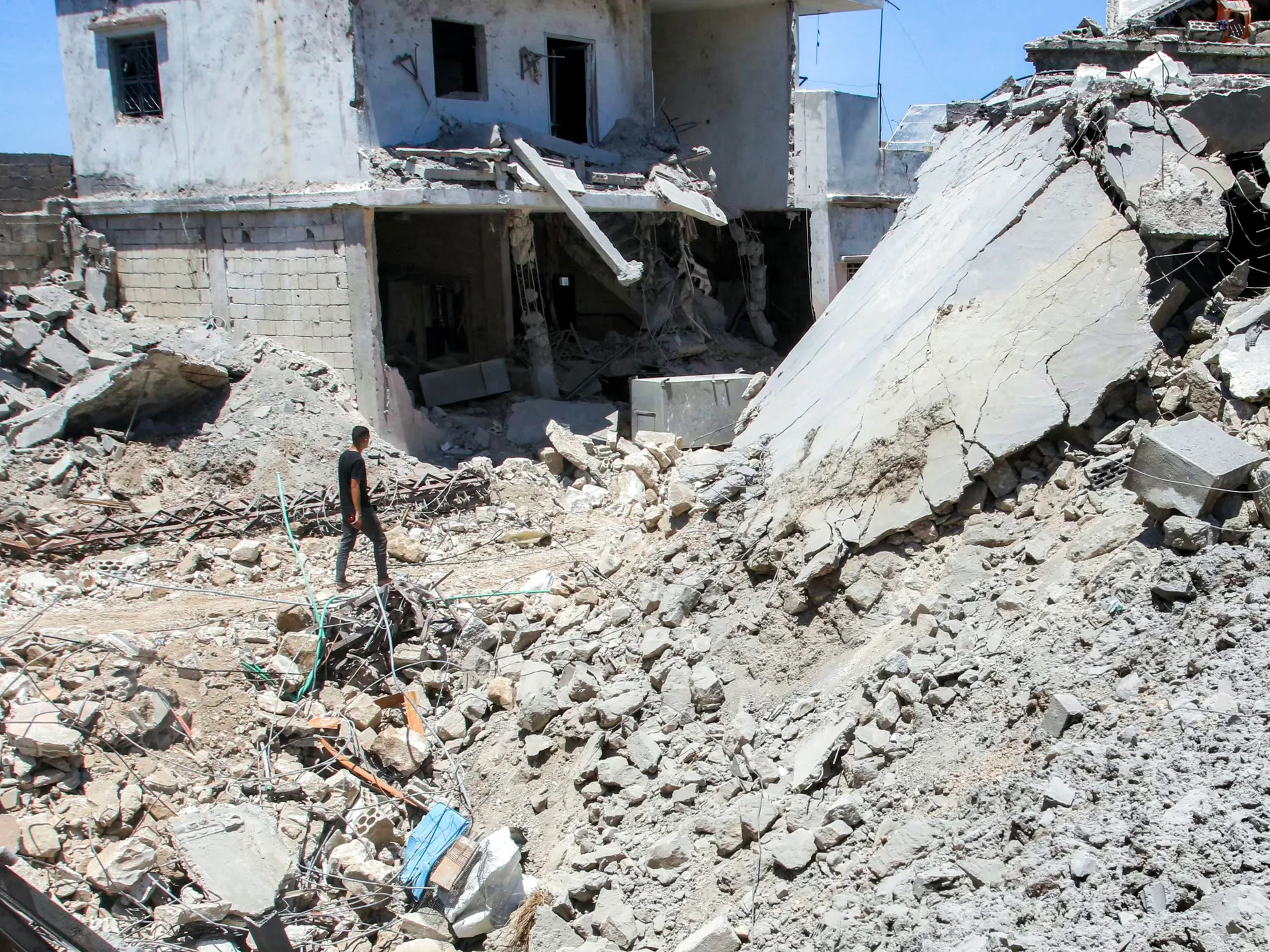
Standing before it, Khalaf saw how the wall of the adjacent building had toppled onto the ground floor, flooding the shop with rubble and coating everything with a film of fine gray dust. A nearby blast had collapsed the roof.
“Nabatieh was hit very hard this time,” he said. Still, he could salvage something, he said, pointing to his son as he fished out boxes of herbal treatments from under the rubble.
Two ceasefires in the last two months, forged during U.S.-led talks between the Lebanese and Israeli governments but without Hezbollah or Iran’s involved, were broken as soon as they were announced. A previous ceasefire from November 2024 saw Hezbollah stop all attacks while Israel continued military operations in south Lebanon.
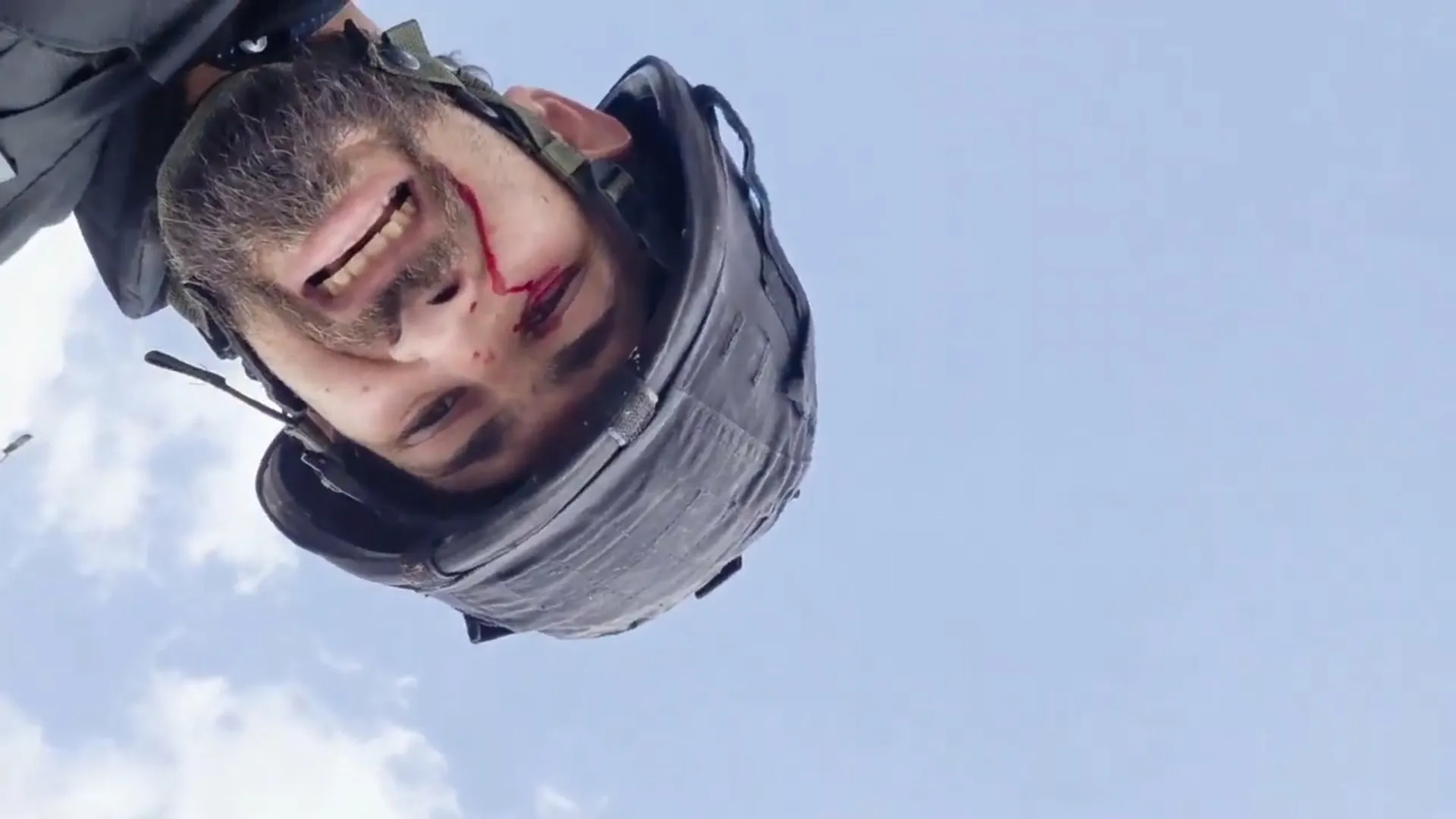
This iteration of the truce appeared to have more success: On Monday, Hezbollah launched no missiles but announced an attack on an Israeli force to stop its advance; and the Israeli military mostly stayed its fire as well, barring a number of shelling incidents and a drone strike on a car in the village of Kfar Tebnit that injured a journalist and killed one person, according to Lebanese media.
Obstacles to a durable peace
Lebanese army units, meanwhile, deployed in parts of the south, barring motorists from reaching areas near Israeli troops. Lebanon’s army remained on the sidelines during the war, but 30 soldiers, including a general, having been killed in Israeli attacks since March 2. Hezbollah attacks killed at least 30 Israeli soldiers and one civilian contractor.
Obstacles to a more durable peace remain. Israeli officials insist on freedom of action against Hezbollah, and they will create a so-called security zone in Lebanon indefinitely so to protect Israel’s northern border. For its part, Hezbollah says it will respond to any attack and will continue fighting until Israel withdraws.
Though the truce appeared to be holding for now, Khalaf, who had raced to reopen his Nabatieh shop after the 2024 ceasefire, was waiting this time. For now, he would take what stock he could and open a shop in Sidon or Beirut.
“We have to work and feed our families. But the damage is too much this time. I’ll come back when things are better,” he said. “And my home too. When I get to see it, even if it’s a mound of rubble, I’ll pitch a tent on it and rebuild.”
Wilner reported from Washington and Bulos from Nabatieh.
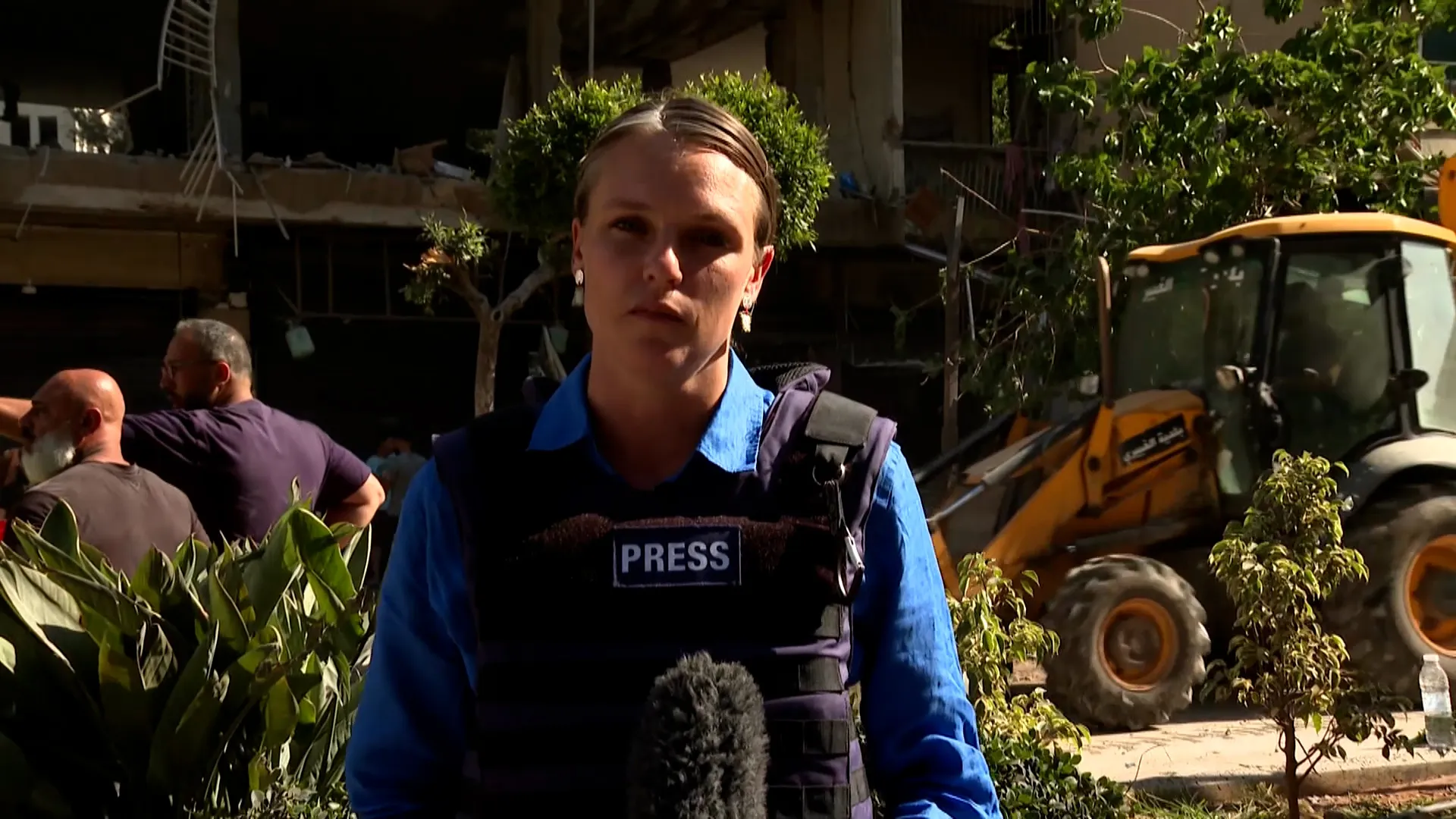
A journalist for Press TV has been hit by shrapnel while filming a report on Israeli attacks in southern Lebanon. Hadi Hoteit said he was targeted despite wearing a ‘Press’ vest, and is in hospital receiving treatment.
The announcement of a preliminary US-Iran agreement has generated cautious optimism in Lebanon, where months of conflict have displaced large portions of the population and devastated communities across the south.
While the framework reportedly calls for the immediate cessation of military operations, Lebanese authorities are warning residents against assuming that conditions are safe enough for a rapid return.
The caution reflects uncertainty over how the agreement will be implemented and whether all parties will abide by its terms.
Adding to those concerns, Israel has made clear that it does not consider itself bound by the agreement and intends to maintain security zones in southern Lebanon.
Lebanon became one of the principal battlegrounds of the wider regional conflict after Hezbollah opened a front against Israel in support of Iran following the outbreak of hostilities.
The resulting escalation led to extensive Israeli military operations across southern Lebanon, causing widespread destruction and one of the largest displacement crises in the country’s recent history.
Entire communities were uprooted as residents fled bombardment and military activity.
Iran consistently pushed for any agreement with Washington to include provisions addressing Lebanon, viewing the conflict there as inseparable from broader regional tensions.
The inclusion of Lebanon in the framework agreement therefore represents a significant diplomatic concession and a central element of Tehran’s negotiating position.
Why This Matters
Lebanon has become one of the clearest examples of how regional conflicts can produce devastating humanitarian consequences.
The conflict has:
Displaced more than a million people.
Damaged homes, infrastructure, and businesses.
Increased pressure on Lebanon’s already fragile economy.
Deepened political and social instability.
A durable ceasefire could allow reconstruction efforts to begin and reduce the risk of further regional escalation.
However, the humanitarian benefits will depend on security conditions improving on the ground rather than merely on diplomatic declarations.
The Challenge of Returning Home
For displaced families, peace announcements do not automatically translate into confidence.
Many residents remain uncertain about:
Whether military operations have truly ended.
The presence of Israeli forces in southern areas.
The condition of homes and infrastructure.
Future security guarantees.
The hesitation expressed by displaced residents reflects a broader reality in conflict zones: trust often takes much longer to rebuild than physical infrastructure.
Even if active fighting stops, communities may remain reluctant to return until they believe the risk of renewed conflict has genuinely diminished.
Israel’s Position Complicates the Picture
A major obstacle to immediate normalization is Israel’s position.
Israeli officials have indicated they will continue maintaining security zones and reserve the right to conduct operations they deem necessary for national security.
This creates ambiguity regarding implementation of the broader agreement.
While the US-Iran framework may establish a diplomatic foundation for reducing violence, the practical situation on the ground will depend on decisions made by actors who were not direct participants in the negotiations.
This distinction could prove crucial in determining whether the agreement produces lasting stability.
A Test of Regional Diplomacy
The inclusion of Lebanon in the agreement demonstrates how interconnected Middle Eastern conflicts have become.
The war was never confined solely to the United States and Iran. It involved multiple regional actors, proxy groups, and overlapping security concerns.
As a result, success will be measured not only by whether Washington and Tehran uphold their commitments but also by whether the agreement influences behavior across the broader region.
Lebanon is likely to become one of the first and most visible tests of that process.
Key Stakeholders
Lebanon and its government institutions
Displaced Lebanese civilians
Israel and its military leadership
Hezbollah
Iran
The United States
Regional mediators including Pakistan
Humanitarian organizations operating in Lebanon
What to Watch Next
Whether military activity in southern Lebanon decreases in the coming days.
Israeli decisions regarding security zones.
Hezbollah’s official response to the agreement.
The pace of civilian returns to southern communities.
International support for reconstruction and humanitarian assistance.
Broader negotiations during the 60-day ceasefire period.
The agreement creates an opportunity for Lebanon to move toward greater stability after months of destruction and displacement.
If implemented successfully, reduced hostilities could pave the way for reconstruction, humanitarian relief, and the gradual return of displaced populations.
Yet significant uncertainty remains. Security concerns, damaged infrastructure, and competing interpretations of the agreement could slow progress and complicate efforts to restore normalcy.
For many Lebanese families, the end of active conflict would represent only the beginning of a much longer recovery process.
Analysis
The most revealing aspect of Lebanon’s reaction is the disconnect between diplomacy and reality.
International leaders may celebrate ceasefires and framework agreements, but people living through conflict judge peace by different standards. They look not at official statements but at troop movements, security conditions, and whether it is safe to return home.
That gap is already visible in southern Lebanon. While diplomats describe the agreement as a breakthrough, local authorities are warning residents against rushing back. Israel’s decision to maintain security zones further reinforces uncertainty about how quickly conditions can normalize.
This highlights a recurring challenge in conflict resolution. Agreements can stop wars on paper, but rebuilding trust often takes far longer than negotiating a ceasefire.
Lebanon’s experience may therefore become a key measure of whether the US-Iran agreement delivers meaningful change beyond diplomatic symbolism. If displaced communities can safely return, reconstruction begins, and violence declines, the agreement will gain credibility. If insecurity persists despite the deal, questions will quickly emerge about its effectiveness.
Ultimately, Lebanon represents the human dimension of the broader regional settlement. The success of the agreement will not be judged solely by geopolitical outcomes or energy markets but by whether ordinary people feel secure enough to rebuild their lives after months of war.
Governments across the world have welcomed the tentative deal between the US and Iran to end the war, calling it a major diplomatic breakthrough. But Israeli politicians have been quick to criticise it, claiming it would undermine Israel’s security.
The United Kingdom’s Court of Appeal has ruled that the British government was right to proscribe the Palestine Action activist group as a “terrorist” organisation last year.
Palestine Action is a British protest group which was founded six years ago and describes itself as a movement “committed to ending global participation in Israel’s genocidal and apartheid regime”.
On Monday, police made more arrests of protesters demonstrating in support of Palestine Action outside the Court of Appeal in London.
Since the group’s proscription, which also bans support for proscribed groups, about 3,000 people have been arrested.
The Metropolitan Police welcomed the ruling and said it would continue to arrest those who protest in support of the group.
Here is what we know about the ruling:
What has the Court of Appeal ruled?
The judgement released on Monday states: “The proscription of an organisation like Palestine Action is highly controversial. But it is a fundamental mistake to overlook the fact that Palestine Action overtly promotes unlawful violence amounting to terrorism”.
The ruling was made by a five-strong panel, including the two most senior judges in England and Wales.
Palestine Action, which was formally proscribed by the UK last July, is a British protest group founded six years ago. It says it uses “disruptive tactics” to target “corporate enablers” and companies involved in the manufacture of weapons for Israel, such as Israeli group Elbit Systems, Italian aerospace company Leonardo, French multinational Thales and Teledyne from the United States. The group has targeted British facilities linked to those companies.
In all, British police say action by the group has resulted in millions of pounds of criminal damage.
A court in London ruled on June 12 that four Palestine Action members convicted of criminal damage at a British facility owned by Israeli weapons group Elbit Systems near Bristol, west England, would be sentenced on the basis that their actions had a “terrorist connection”.
Why was this case brought?
Following the proscription of Palestine Action last year, the group’s co-founder, Huda Ammori, challenged the decision in the High Court. In February, the High Court ruled that the government’s “terror group” ban was unlawful and disproportionate.
The government immediately said it would appeal. “I am disappointed by the court’s decision and disagree with the notion that banning this terrorist organisation is disproportionate,” Home Secretary Shabana Mahmood said.
The judgement on Monday agreed with her. Its ruling states: “The Home Secretary had the institutional competence and the democratic accountability to make the decision. The Proscription Decision was consistent with the Home Secretary’s Proscription Policy and was proportionate. It was not unlawful.”
Days after the Brize Norton attack, members of parliament voted in favour of proscribing the group. That classified Palestine Action as a “terrorist” organisation, bringing it into the same category as armed groups such as al-Qaeda and ISIL (ISIS).
Critics decried the vote, arguing that while members of the group have caused damage to property, they have not committed violent acts that amount to terrorism. More than 130 high-profile public figures have spoken out against the proscription.
Other previous actions the group has taken include:
In 2021, members protested for six days on the roof of Elbit Systems’ subsidiary, UAV Tactical Systems in Leicester, until some were arrested by police.
In 2022, the group broke into a Thales equipment factory in Glasgow, causing damage to weapons worth more than a million pounds ($1.3m).
In 2024, 10 months into Israel’s genocidal war on Gaza, Palestine Action activists broke into an Elbit Systems UK facility near Bristol in southwest England, causing another million pounds of damage.
How has Palestine Action responded to the ruling?
In a statement read by a representative following the ruling, Palestine Action’s Ammori said the group will challenge the judgement in the UK’s Supreme Court.
“We will fight this all the way. We will seek permission to appeal to the Supreme Court and, if need be, take this to the European Court of Human Rights,” Ammori said.
The European Court of Human Rights (ECHR), established by the Council of Europe, allows individuals to hold member states accountable for rights violations through a dedicated court. When the ECHR finds a violation, its judgements are legally binding on the state concerned under the European Convention on Human Rights.
“We will not stop fighting to overturn one of the most extreme attacks on free speech and the right to protest in modern British history,” Ammori added.
“This unprecedented abuse of power has devastated the lives of thousands of people while silencing dissent over Israel’s slaughter of the Palestinian people during the genocide, when that dissent could not be more urgent.”
How have others reacted to the ruling?
Anas Mustapha, Head of Public Advocacy at CAGE International, said: “This ruling tells us exactly what these powers are for. They are not safeguards against violence, they are authoritarian tools for crushing dissent.”
Mustapha added: “No ruling from any court is going to convince people that their conscience is wrong, and no amount of legislation will make support for Palestine disappear. The only sustainable outcome is the abolition of these laws in their entirety.”
Thomas Bell, acting UK Director of Human Rights Watch, said: “This disastrous decision further cements the UK’s place among countries that are backsliding on human rights by classifying acts of protest as terrorism.”
“When Palestine Action members have committed criminal damage, that should be dealt with under normal criminal laws, not by misusing overbroad and poorly defined terrorism powers. Defining a protest group as terrorists has created an absurd situation where thousands of people peacefully holding up signs have been arrested,” Bell added.
People stand near the site of an apartment targeted by an Israeli airstrike in Beirut’s southern suburbs on Sunday. Photo by Wael Hamzeh/EPA
June 14 (UPI) — The Israeli military launched an attack on Hezbollah targets in Beirut on Sunday, accusing the group of violating a cease-fire agreement earlier in the day and throwing an Iranian peace deal into question.
The Israeli strikes hit the southern suburbs of Beirut, specifically in Dahiyeh, a neighborhood where Hezbollah holds sway, The New York Times reported.
Lebanon‘s state-run news agency, NNA, reported that two people died and four others sustained injuries in the attack. A strike hit a residential building, the agency said, as reported by NBC News.
Lebanese security sources told NBC News that Israel fired two missiles in a targeted strike. Israel said it hit a Hezbollah command center used to “advance terrorist attacks against the citizens of the state of Israel and [Israel Defense Force] soldiers operating in southern Lebanon.”
Hours before the strike, the Israeli military accused Hezbollah of violating a cease-fire by firing toward Israel.
Israeli Prime Minister Benjamin Netanyahu and Defense Minister Israel Katz issued a joint statement confirming they ordered the strike.
“Israel will not tolerate fire into its territory,” they said.
Sunday’s violence between Israel and Lebanon could complicate U.S. and Iranian negotiations for a peace deal. The United States and Pakistan — which has acted as a mediator — said Saturday the agreement was ready to be signed Sunday in an additional round of talks, but Iranian Foreign Ministry spokesman Esmail Baghaei said there were no plans for Iran’s negotiators to be involved in any talks for the next few days.
Mohammad Bagher Ghalibaf, Iran’s speaker of parliament and chief negotiator with the United States, accused Washington of “giving the green light” to Israel for its attack on Dahiyeh.
“The game of bad cop and good cop is outdated,” he said in a post on X.
“If you lack the will and ability to fulfill your commitments, speaking of continuing the path is not possible.”
President Donald Trump was apparently incensed about Sunday’s attack and issued a rare rebuke against Netanyahu — saying he has “no [expletive] judgment” — in comments to Axios.
Trump called on Israel and Hezbollah to stand down in a post on Truth Social.
“This morning’s attack on Beirut should not have happened, particularly on a special day when we are so close to a Peace Deal with Iran,” he wrote. “Israel has the right to defend itself against threats, but the attack it was responding to was very small and meaningless, nobody was hurt, injured, or killed, and should not disrupt this important process.
“This could be the beginning of a long and beautiful peace — Let’s not blow it!”
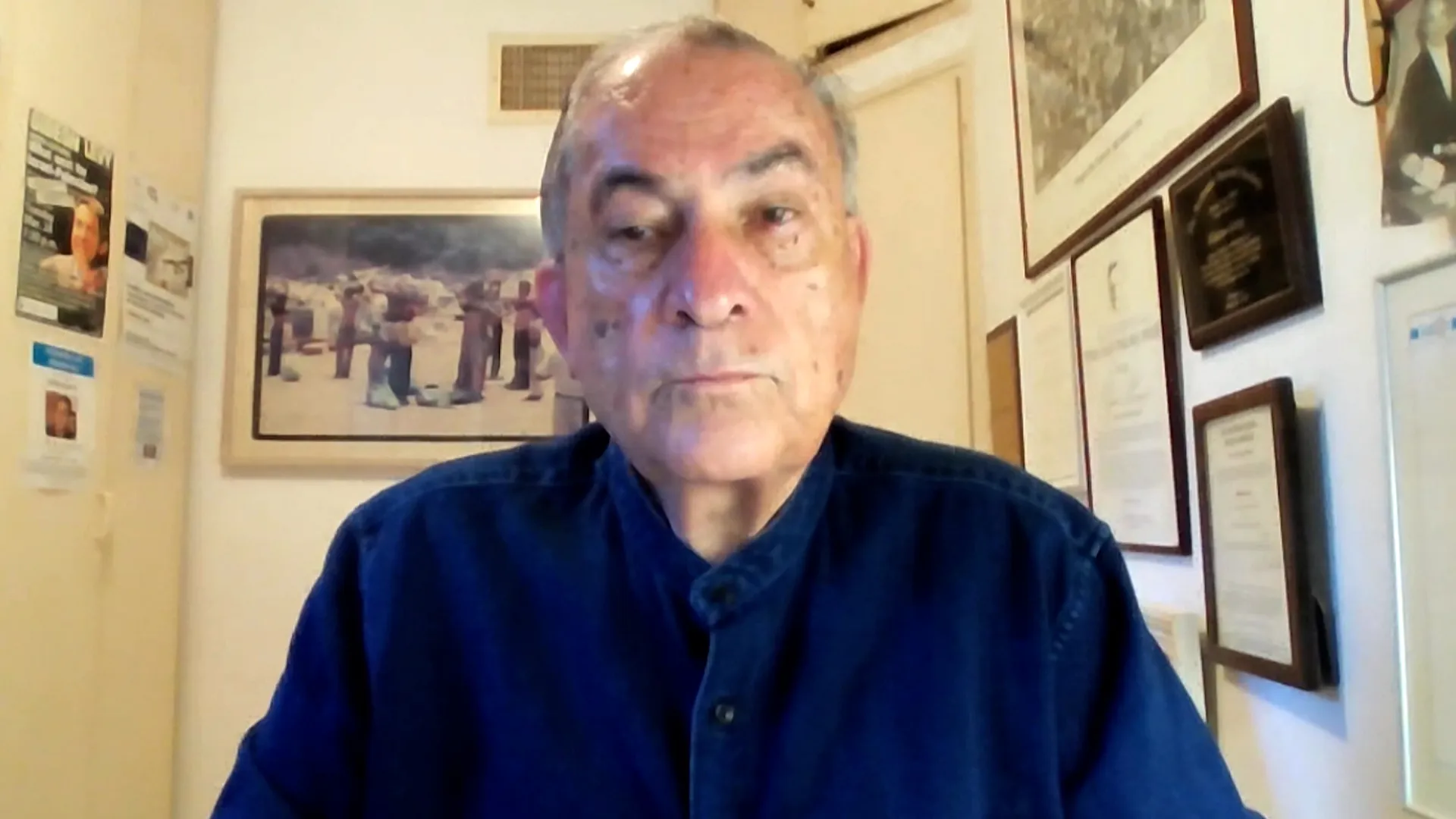
Israeli journalist Gideon Levy says the US-Iran announcement represents a personal defeat for Prime Minister Benjamin Netanyahu and his ambitions against Iran and Lebanon. His relationship with US President Donald Trump could also be at risk if Israel jeopardises the deal.
US President Donald Trump and Iranian leaders say a deal has been agreed to end more than 100 days of war that killed thousands.
By Agence France Presse and Reuters
Published On 15 Jun 202615 Jun 2026
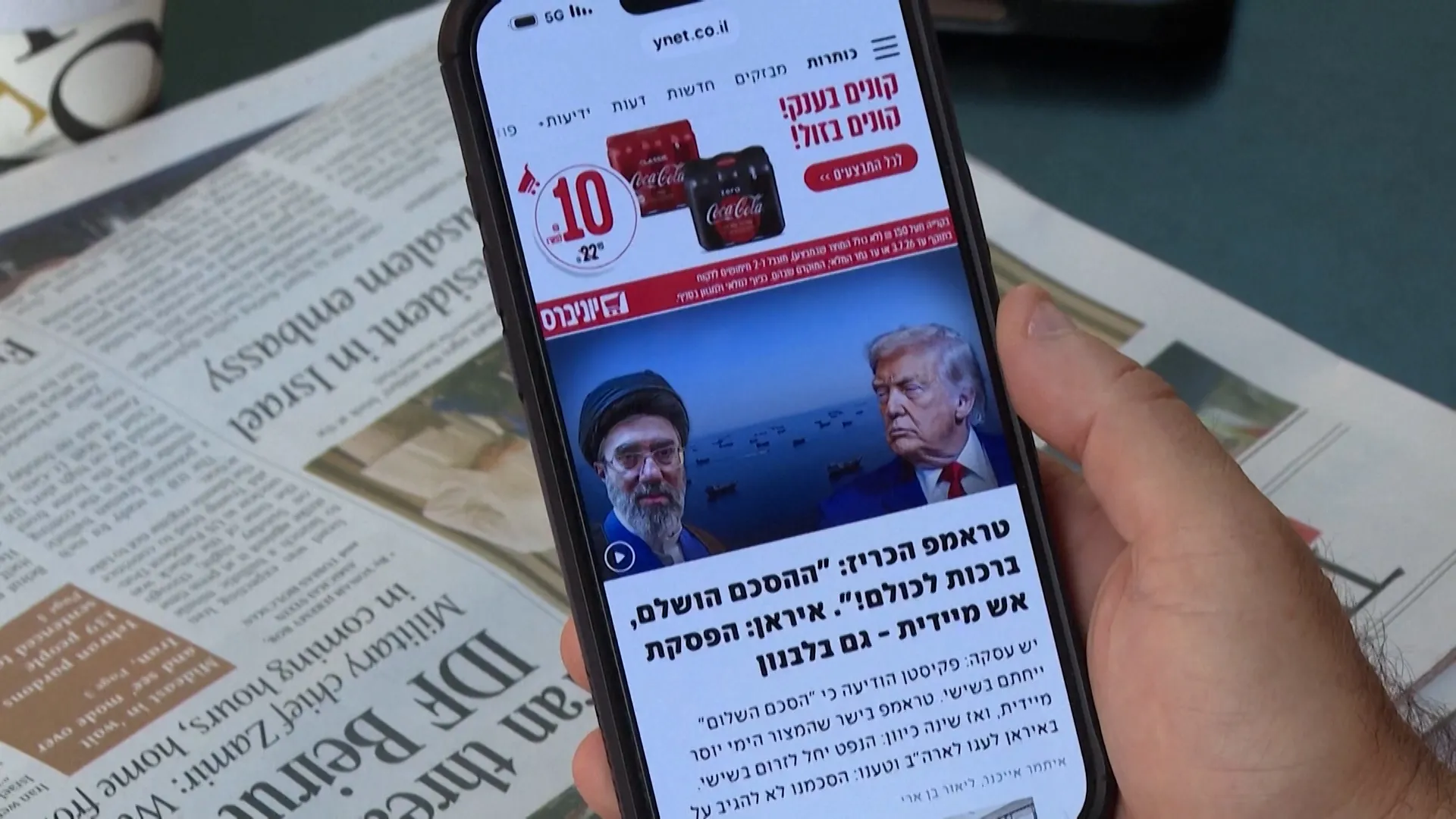
United States President Donald Trump and Iran’s Deputy Foreign Minister Kazem Gharibabadi said on Sunday that they had reached an initial deal to end the war and to resume traffic through the Strait of Hormuz.
Trump said the deal allows for toll-free shipping through the Strait of Hormuz, which has been largely closed since the US and Israel launched an assault on Iran on February 28.
“The Deal with the Islamic Republic of Iran is now complete,” Trump wrote on Truth Social on Sunday.
The US and Iran will sign a memorandum of understanding in Switzerland on Friday, said the prime minister of Pakistan, whose country has served as a mediator.
Monday marks 108 days since the war began, with the US and Israel’s attacks on Iran. Here is what’s happening:
What we know about the deal
The content of the agreement, which follows weeks of fraught negotiations and periodic threats from Trump of new hostilities unless Iran reaches a deal, remained unclear.
Strait of Hormuz to reopen: Iran’s semi-official Mehr news agency said the draft deal called for reopening the Strait of Hormuz within 30 days under Iranian arrangements. Trump, who turned 80 on Sunday, said the deal allows for toll-free shipping through the Strait of Hormuz, which has been largely closed since the US and Israel launched an assault on Iran on December 28.
Frozen assets to be released: Iran’s Mehr news agency reported that the US would release $12bn in frozen assets to Iran before the start of negotiations.
Iran’s enriched uranium: In an interview with The New York Times on Sunday, Trump said Washington was still negotiating whether Iran would suspend its enrichment for 20 years. Trump hinted that he might settle for a 15-year suspension, but said he did not want to negotiate via the press.
Israel has not commented: There has been no official comment from Israel about the peace agreement.
In Iran
The secretariat of Iran’s Supreme National Security Council said on Monday that the deal with the US includes the immediate suspension of hostilities on all fronts. “Based on the agreements reached, the war and military operations on all fronts, including Lebanon, will end immediately and permanently as of tonight, and in addition, the naval blockade against Iran will end immediately and completely,” it said in a statement.
In the US
Democrats slam Trump over war: While Democratic lawmakers welcomed the deal, they criticised the Trump administration’s decisions pertaining to the war. Senator Chris Coons of Delaware said that while the deal moves the situation in the “right direction”, several questions remain. He warned that competing interpretations of what was agreed upon could pose risks. Senator Chris Murphy, who serves on the Senate Foreign Relations Committee, said the deal is a “surrender to Iran” but that the US should be “glad about it because every day this insane, illegal war continues, we get weaker”.
In Lebanon
Trump rebukes Israeli attack on Beirut: On Sunday, shortly before the deal was announced by Trump, Israel launched an air attack on Beirut. Trump angrily blamed Israel for delaying the deal’s signing after launching this attack. In an expletive-laden phone interview with US news outlet Axios, Trump fumed about Israeli Prime Minister Benjamin Netanyahu, saying: “I was so pissed off. I let him know.”
Global response
Western leaders praise deal: UK Prime Minister Keir Starmer said he was ready to aid the further technical talks between the US and Iran, adding that he hopes the reopening of the Strait of Hormuz will stabilise energy markets.
French President Emmanuel Macron also praised the deal and said Paris would support the Lebanese government.
European Union chief Antonio Costa welcomed a deal between the US and Iran to end the Middle East war, adding that the bloc was ready to contribute to a strategy for “lasting peace”.
UN Secretary-General Antonio Guterres said it was a “critical step” towards resolving the war in the Middle East.
Global economy
Oil prices drop: Oil prices slipped to their lowest since March on Monday, with global benchmark Brent crude futures falling $4.08, or 4.7 percent, to $83.25 a barrel by 04:15 GMT. US West Texas Intermediate was at $80.53, down $4.35, or 5.1 percent. Both contracts fell to their lowest levels since March 10 on Monday after tumbling more than 3 percent on Friday.
Asian markets soar: Markets in Japan soared, more than 5 percent up; in South Korea, they were up 5.3 percent; in Taiwan, they were up 2.4 percent. In Shanghai, they were up 1.3 percent; and in Hong Kong, they were up half a percent; while in Indonesia, they were up 2.07 percent; and in the Philippines, they were up 5.2 percent.
The US-Iran ceasefire announcement has raised hopes in Lebanon, after Pakistani mediators claimed it included an end to Israel’s war on the country. But as Al Jazeera’s Heidi Pett explains, we’ve been here before.
Dan Perry: The US ‘may pretend’ that Israel can’t attack Hezbollah ‘in order to get this deal done’. Israeli affairs analyst Dan Perry explains how the US, Israel and Iran may react as they get closer to a potential agreement.
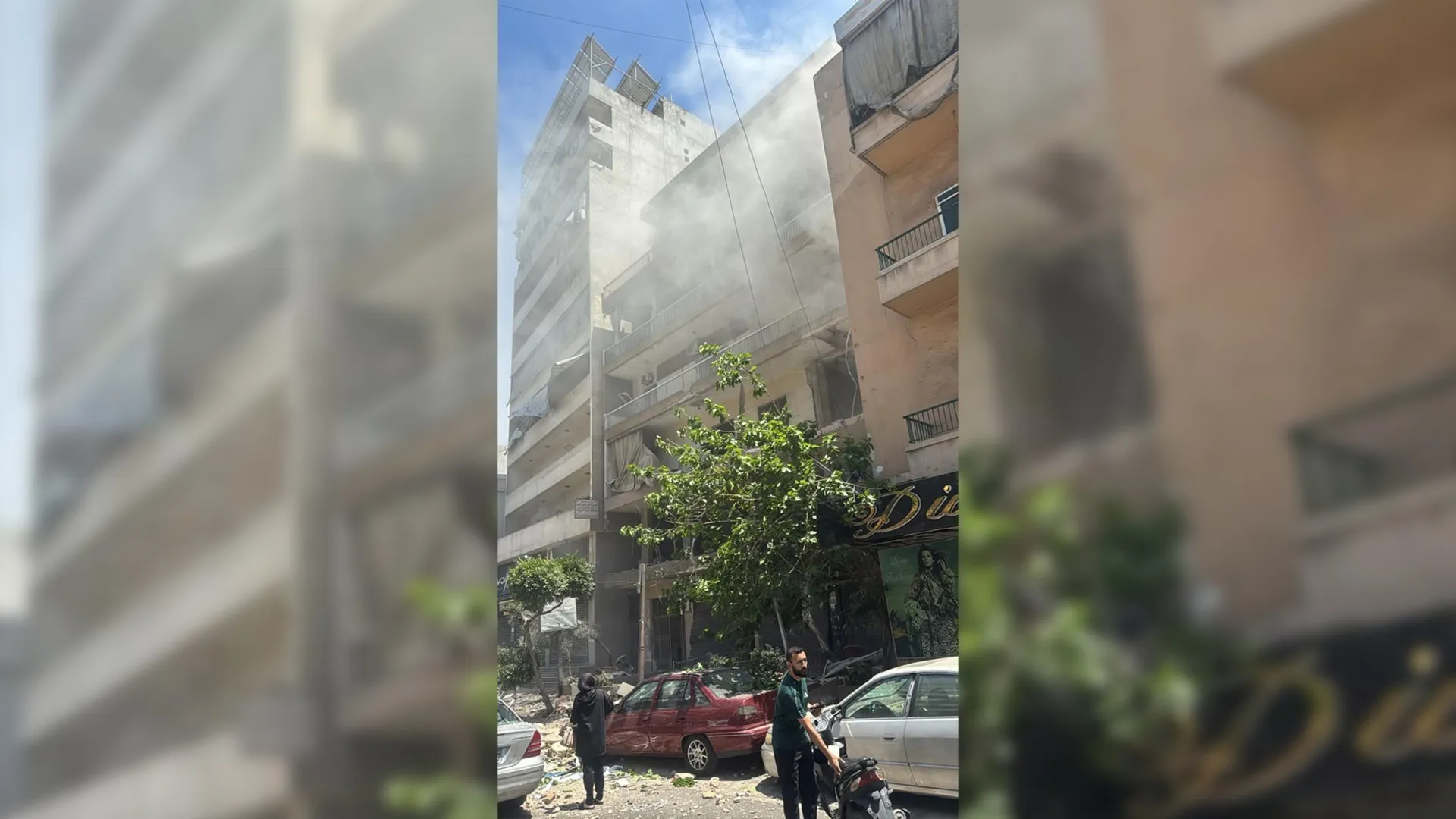
Al Jazeera’s Heidi Pett reports from the site of an Israeli attack on a residential building in southern Beirut, which Israel calls a Hezbollah command centre. The strike came hours before President Trump said a US-Iran deal was meant to be signed.
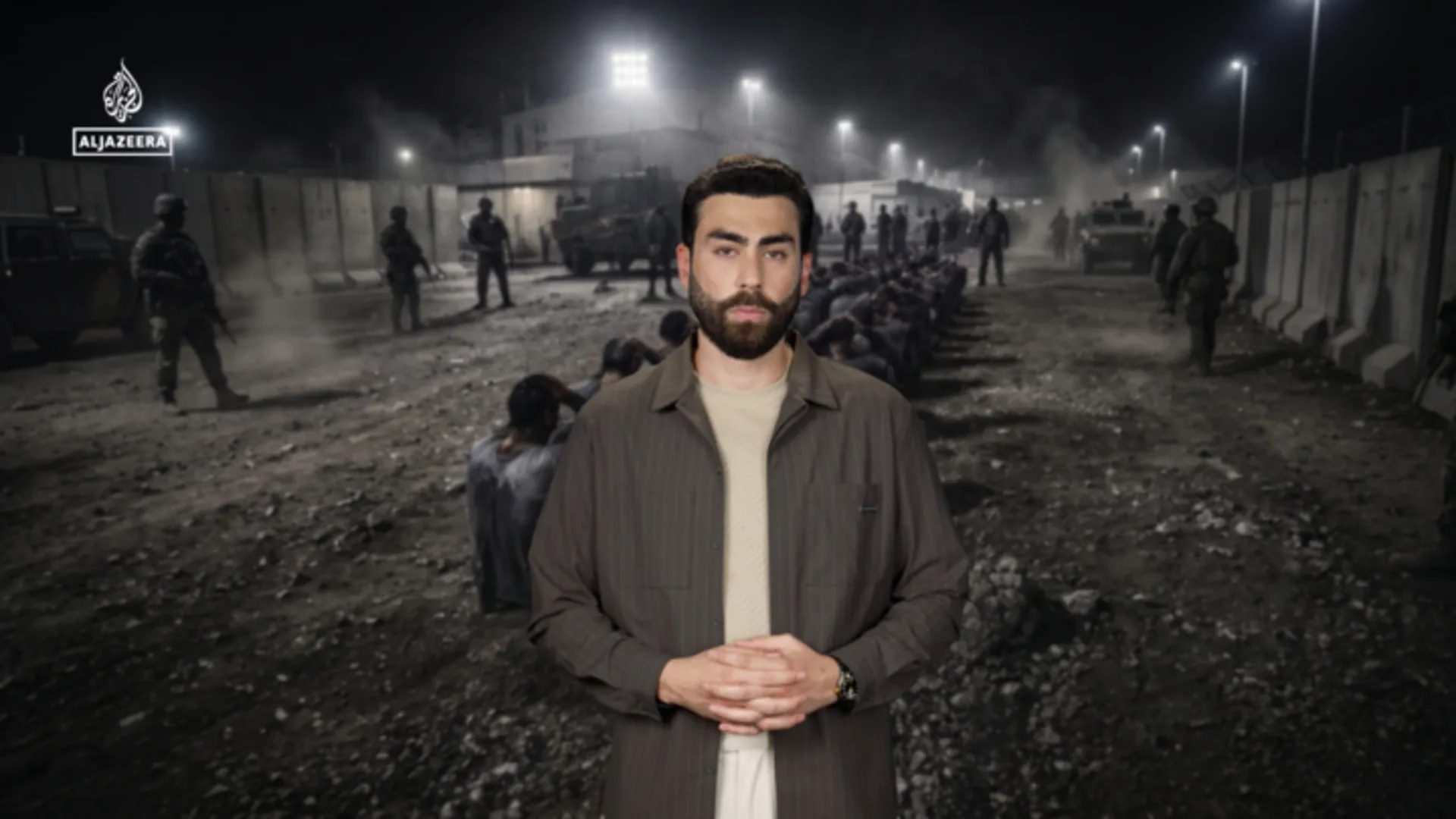
Al Jazeera’s Basel Ghazoghli traces the documented record from 1948 to the present. Sexual violence against Palestinians in Israeli custody is often framed as a post-October 7 issue. But historical records, academic research, and legal testimony suggest a much longer history.
Israel has bombed the southern suburbs of Beirut, saying it targeted Hezbollah ‘infrastructure’ in response to cross-border fire. The strikes come as Israel continues to violate a supposed ceasefire with incursions and daily bombardment in southern Lebanon. Trump has said a deal to end the war on Iran will be signed on Sunday.