Israel

Cautious optimism in Lebanon as direct talks with Israel progress | Israel attacks Lebanon News

A third round of direct talks between Israel and Lebanon has kicked off in Washington, DC, days before the expiration of a “ceasefire” that hardly halted Israeli attacks and Hezbollah’s response to them.

The talks, which began on Thursday, represent a step towards more serious negotiations, with higher-level envoys from Lebanon and Israel taking part after the initial preparatory sessions were headed by the ambassadors of the two countries to Washington.

Recommended Stories

list of 3 itemsend of list

Lebanese officials are hoping that the two-day negotiations will yield a new ceasefire deal and pave the way for tackling a series of thorny issues, including the withdrawal of Israeli forces from southern Lebanon and the disarmament of Hezbollah.

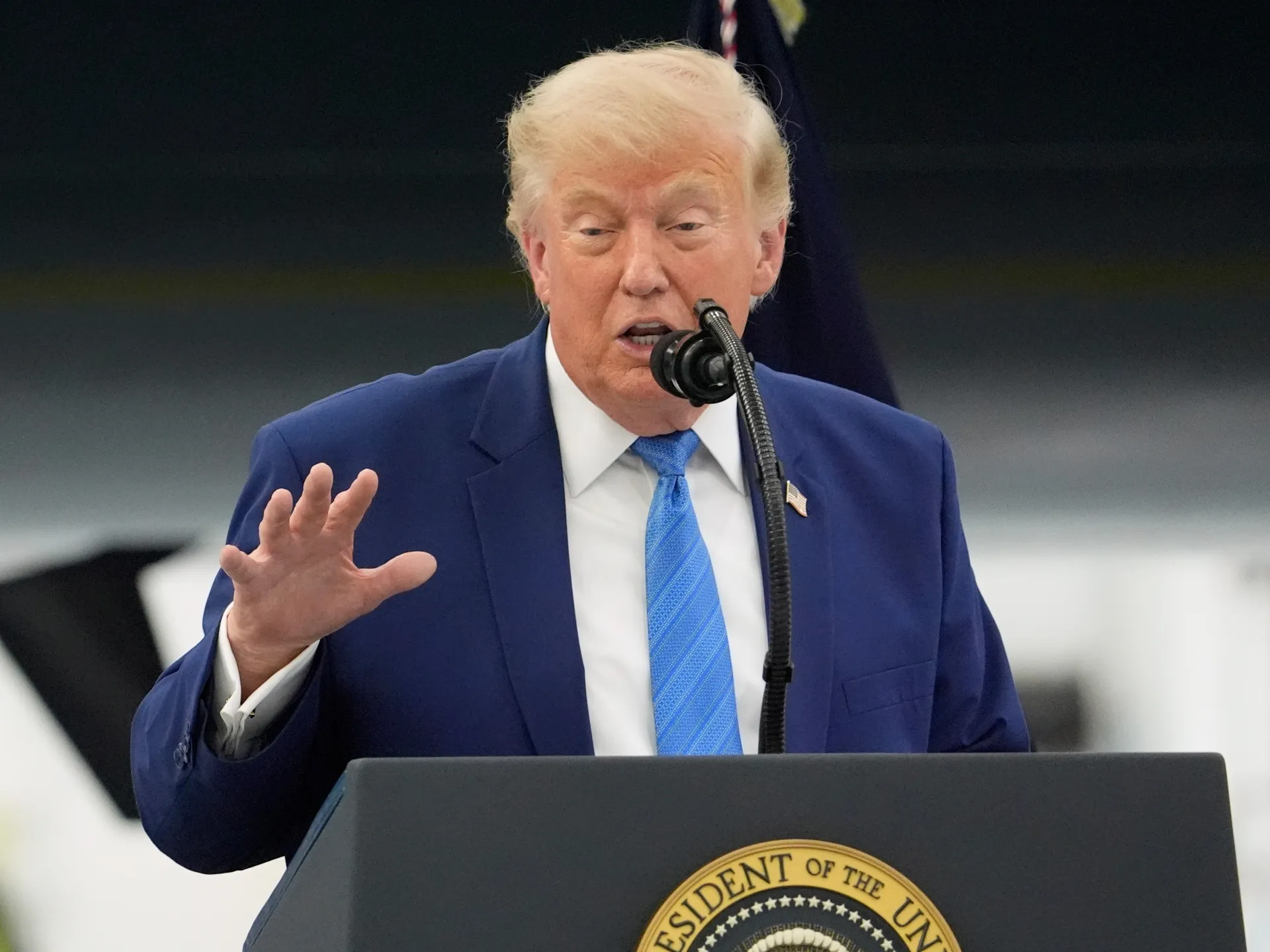
US Secretary of State Marco Rubio, who attended the first Israel-Lebanon meetings in Washington in April, was with US President Donald Trump on a visit to China and did not attend Thursday’s session.

Lebanon’s envoy heading up Thursday’s talks, Simon Karam, is an attorney and well-connected former Lebanese ambassador to the United States who recently represented Lebanon in indirect talks with Israel over implementation of the ceasefire that preceded the latest outbreak of war between Israel and Hezbollah.

On the Israeli side, Deputy National Security Adviser Yossi Draznin was set to attend.

“We do not want to downplay the significance of these talks, but they are ambassador-level talks, excluding top leadership from Israel, Lebanon and the US,” said Al Jazeera’s Manuel Rapalo, reporting from Washington, DC, adding that there is no diplomatic relationship between Lebanon and Israel.

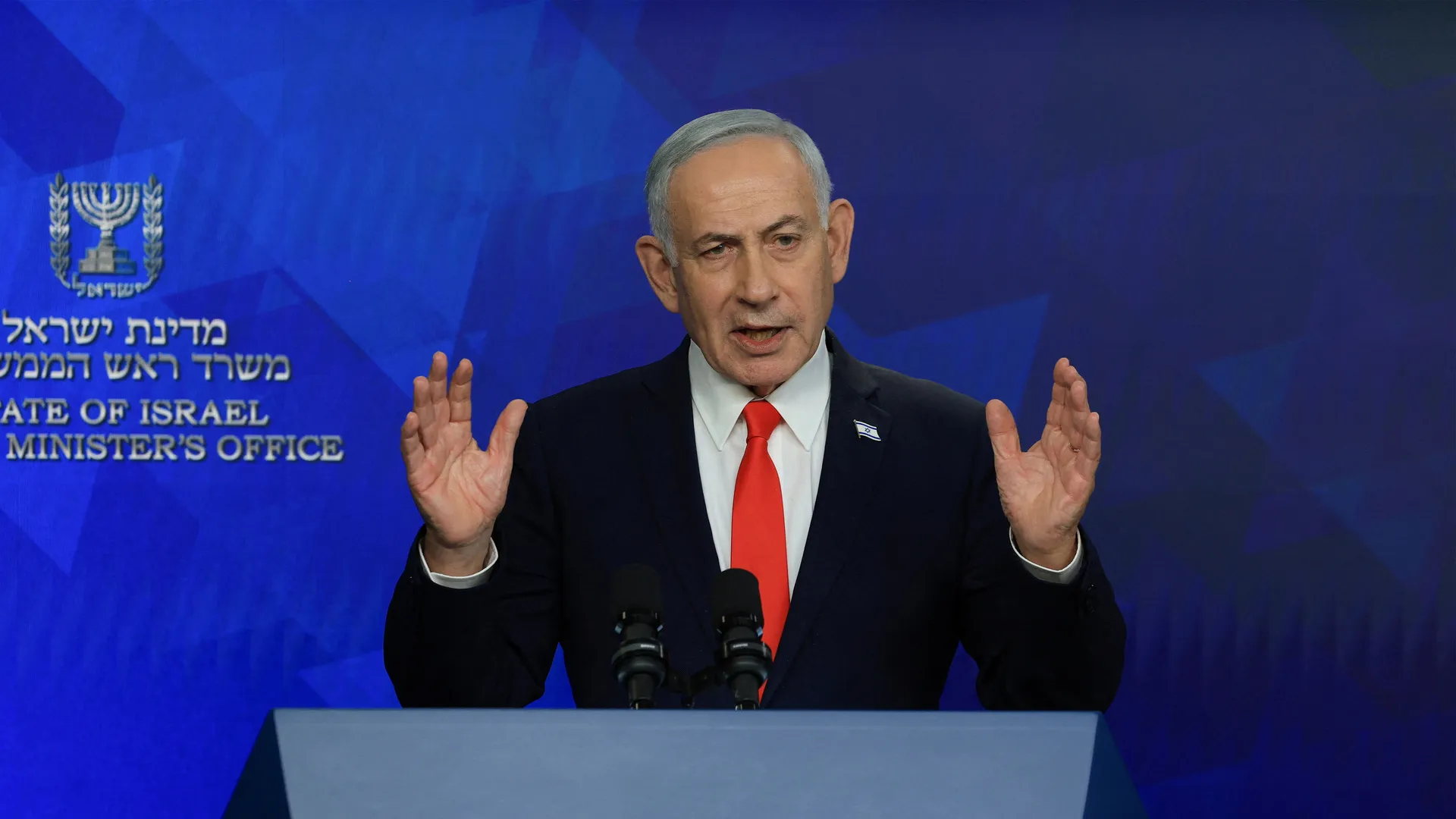
Trump has publicly called for a meeting between Lebanese President Joseph Aoun and Israeli Prime Minister Benjamin Netanyahu, while Aoun has declined to meet or speak directly with Netanyahu at this stage – a move that would likely generate blowback in Lebanon.

Hezbollah, meanwhile, is not part of the talks and has been vocally opposed to Lebanon engaging in direct negotiations with Israel.

A lawmaker from the Iran-backed group, Ali Ammar, on Thursday reiterated his group’s rejection of the direct talks, saying they amounted to “free concessions” to Israel.

Still, “there is optimism”, said Al Jazeera’s Rapalo.

“The cessation of hostilities agreement is due to expire on Sunday, so there is an expectation that this will be front and centre in discussions,” he said.

“Of course, the immediate objective is to prevent the situation along the border from escalating into a broader regional conflict.”

Cautious optimism

The United Nations earlier on Thursday expressed hope for the new round of direct negotiations.

“We hope that the latest round of direct talks between Lebanon and Israel in Washington, planned for today and tomorrow, will contribute to an effective and durable ceasefire and open a path towards lasting peace,” deputy spokesman Farhan Haq told the reporters.

Haq said the UN Interim Force in Lebanon (UNIFIL) continues to observe “significant” aerial and military activity across its area of operations, including multiple air strikes on Wednesday by Israel.

“We reiterate our call on all the parties to exercise maximum restraint, ensure the protection of civilians and humanitarian personnel and fully respect their obligations under international humanitarian law,” he added.

In Lebanon, people also hope for an end to violence as the diplomatic efforts continue.

“I think people here in southern Lebanon are cautiously optimistic about the possible results from these meetings,” said Al Jazeera’s Obaida Hitto, reporting from Tyre, Lebanon.

“Everyone understands that Lebanon is not ready for normalisation, legally speaking. There is a part of the constitution that prevents Lebanon from actually having normalisation with Israel. People realise this might be a huge obstacle to move forward and find a way to live in peace with Israel.”

Still, the Lebanese population wants the violence to stop, said Hitto.

“It’s been more than two months of ongoing Israeli strikes, artillery strikes, air strikes, drone strikes, coordinated, systematic demolitions of entire towns and villages,” he said.

The Israeli army continues daily strikes in Lebanon despite a ceasefire that was announced on April 17 and later extended until May 17.

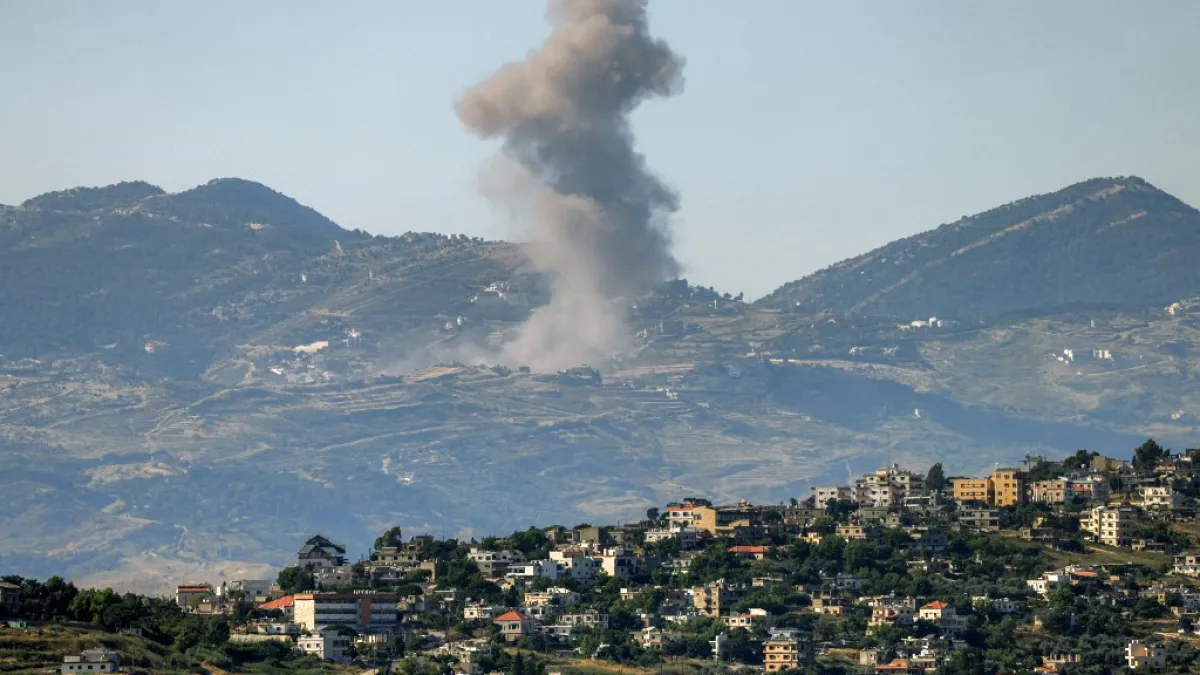
Three people were killed in Israeli strikes in southern Lebanon on Thursday, Lebanese media reported.

Since March 2, Israeli attacks in Lebanon have killed at least 2,896 people, injured over 8,824, and displaced more than 1.6 million, about one-fifth of the country’s population, according to Lebanese officials. In that time, at least 200 children in Lebanon have been killed in Israeli attacks, the UN Children’s Fund (UNICEF) said on Thursday.

Source link

‘The world is sounding an alarm’: Why big tech is the new colonist | Features

Istanbul, Turkiye – When investigations by Al Jazeera and other media outlets in 2024 revealed that Israeli-linked artificial intelligence (AI) systems such as Lavender and Gospel had helped generate thousands of military targets in Gaza, critics warned that warfare was entering a new era – one driven not only by soldiers and bombs, but by algorithms, data, and surveillance technology.

Then, in September 2024, thousands of pagers and walkie-talkies used by members of Hezbollah exploded in coordinated attacks in Lebanon, widely attributed to Israeli intelligence operations that had turned ordinary communication devices into weapons.

And, last year, reporting by Al Jazeera also raised concerns about the use of cloud and data infrastructure linked to major US technology companies in Israeli surveillance operations involving Palestinians.

For a growing number of scholars, economists and political thinkers, such developments reflect more than just the changing nature of conflict. They show how power in the modern world is increasingly exercised not just through military force, but through technology, finance and control over information.

That argument has revived broader debates around decolonisation – a term historically associated with the dismantling of European empires after World War II, when countries across Asia, Africa and the Middle East gained formal independence.

But many proponents of what is termed “decolonial theory” – a school of thought arguing that colonial-era systems of power and hierarchy still shape modern politics, economics and knowledge – argue that colonial power structures never fully disappeared. Instead, they evolved, embedding themselves in global financial systems, technology platforms, media networks and even the production of knowledge itself.

Dependence of Global South countries on Western technology, digital infrastructure and global markets can create new forms of political and economic vulnerability, particularly across the Global South.

“A generation may have grown up believing they had never experienced colonialism or exploitation,” Esra Albayrak, board chair of the NUN Foundation for Education and Culture and daughter of Turkish President Recep Tayyip Erdogan, told Al Jazeera during the World Decolonization Forum in Istanbul on May 11-12.

“Yet, mentally, they may still be living under colonial influence.”

The war in Gaza marked a turning point, Albayrak says, shining a spotlight on how international principles are not applied equally. Global institutions have so far failed to stop what many countries and rights groups have described as genocide against Palestinians.

“The world is sounding an alarm, and we can no longer afford to remain indifferent to it,” she said.

A techno-feudal era

Albayrak argues that a handful of technology companies are emerging as new, invisible centres of power, shaping how information is produced, circulated and consumed in the digital age.

She describes the digital sphere as the realm of what she calls “future colonialism”, warning that AI systems trained largely on Western-centric data risk reinforcing existing global inequalities.

“When AI systems are run by those tech companies and trained on Western sources, they risk carrying the hierarchies of the past into tomorrow’s digital world, as they now have personalised data, suppressing identity,” Albayrak said.

By this, she means that most major AI models are still trained largely on English-language and Western-produced data – a pattern critics say risks sidelining non-Western languages, cultures and perspectives.

On social media platforms, algorithms tend to amplify some conflicts while rendering others nearly invisible, effectively shaping what billions of users see, discuss and remember online.

Walter D Mignolo, professor at Duke University, argues that while what we historically see as “formal colonialism” may have largely ended, systems of Western dominance continue through economics, culture, technology and knowledge production.

“Coloniality is not over. It is all over the world,” Mignolo said, arguing that modern ideas of development and progress often have the effect of pressuring societies to conform to Western norms.

Rather than simply resisting those systems, he said, societies must find a way to “re-exist” by rebuilding intellectual and cultural autonomy outside dominant global frameworks.

Colonisers in the financial age

The March 2026 Global Debt Report by the Organisation for Economic Co-operation and Development (OECD) reveals that 44 countries face severe debt burdens, often aggravated by global conflicts, forcing some governments to spend more on interest payments than on health or education.

This is not a new phenomenon, as developing countries have been labouring under the weight of foreign debt for decades.

But British political economist and author Ann Pettifor told Al Jazeera that modern forms of domination are now increasingly embedded not in empires or nation-states, but in financial systems operating beyond democratic oversight.

Pettifor points to the growing influence of “shadow” banking networks – financial institutions operating largely outside traditional banking regulations – and giant asset managers such as BlackRock, which manages $13 trillion in assets.

Much of the global financial architecture now functions largely outside the regulatory control of governments, she says, including that of Western states themselves.

“This is not a state colonising other states,” Pettifor said. “This is the financial system colonising the whole world, including my country and the US.”

She argues that elected governments increasingly struggle to control key economic realities – from energy prices to commodity markets – because those systems are dictated by global financial actors operating far beyond public accountability.

In Nigeria, for example, Pettifor says, efforts to expand domestic refining capacity continue to face pressure from international financial institutions and global energy markets to keep fuel prices tied to global markets and maintain reliance on imported refined oil products, despite its vast oil reserves.

Coordinated cooperation between developing nations may be necessary to challenge the dominance of Western-centred financial systems, Pettifor says, pointing to growing efforts across parts of West Africa to expand regional refining capacity and reduce dependence on imported fuel. Yet such ambitions can also leave critical sectors dependent on the decisions and influence of a small number of powerful private actors.

Global financial markets, algorithm-driven platforms, and foreign-controlled digital infrastructure increasingly define everyday life – from fuel and food prices to the information people consume online and the technologies governments and societies depend on, observers say.

A ‘mastery complex’

As wars become increasingly influenced by AI, digital infrastructure and financial dependency, debates around colonisation are focusing less on territorial control and more on who influences energy prices, lending systems, access to technology and the flow of information across borders, observers say.

Albayrak draws a parallel between today’s debates around technology and global power and Rudyard Kipling’s 1899 poem “The White Man’s Burden”, published as the US took control of the Philippines following the Spanish-American War. The poem framed colonial expansion as a moral obligation to “civilise” other societies rather than an exercise of domination.

Albayrak said such traces of “mastery complex” still survive today, though in different forms – not necessarily through military occupation, but through technological, financial and informational influence.

But what the world really needs, she argues, is a global order built not on hierarchy, but on shared responsibility.

“The burden should belong to humanity collectively.”

Source link

Two killed as Israel ramps up southern Lebanon attacks ahead of US talks | Israel attacks Lebanon News

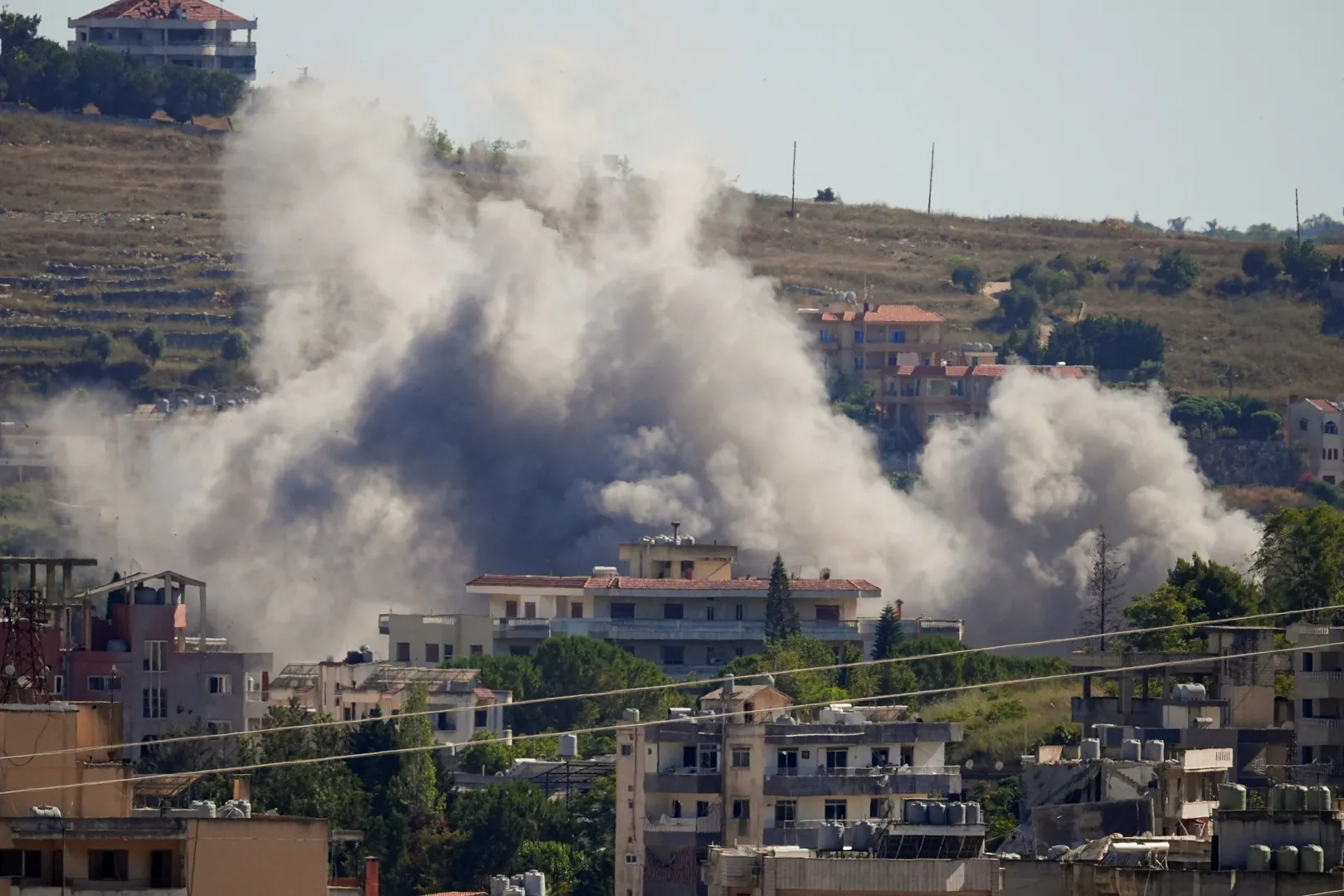
Lebanon’s National News Agency reported that Israeli warplanes targeted the Ezzedine residential project in Srifa on Thursday morning.

Israel has ramped up its attacks on southern Lebanon, killing two people and issuing several forced displacement orders as the two sides prepare for United States-brokered talks on extending a ceasefire.

Lebanon’s National News Agency (NNA) reported on Thursday morning that Israeli warplanes targeted the Ezzedine residential project in the town of Srifa, killing two people.

Recommended Stories

list of 3 itemsend of list

The Israeli army announced in a post on Telegram that it had begun targeting alleged Hezbollah infrastructure sites in several areas in southern Lebanon.

Earlier, the Israeli army’s Arabic language spokesperson, Avichay Adraee, announced on X the forced evacuation orders for the towns and villages of Libbaya, Sahmar, Taffahata, Kafr Malek, Yohmor (Bekaa), Ain Tineh, Houmin al-Fawqa and Mazraat Sina.

NNA reported that one person was injured following a raid by an Israeli drone near the vocational school between the towns of Breqa and Zrarieh.

An air strike was also reported on the town of Ain al-Tineh in the Western Bekaa.

Reporting from Beirut, Al Jazeera’s Rory Challands said in the past few days Israel has launched one of its “most intense periods of aerial bombardment in weeks”.

“There have been many individual strikes – usually by drones – on cars and motorbikes. Several of these have happened on the main coastal highway that leads south from Beirut,” he said.

According to Lebanon’s Ministry of Public Health on Wednesday, at least 2,896 people have been killed in Israeli attacks since the conflict resumed in early March.

At the same time, the Israeli army announced on Telegram that a drone launched by Hezbollah had fallen in Israeli territory near the shared border, injuring several people who were evacuated to hospital for treatment.

Israel-Lebanon talks

Representatives from both sides are expected to meet in Washington, DC, on Thursday for a new round of talks aimed at extending the ceasefire, which is scheduled to expire on Sunday.

“The discussions are controversial here in Lebanon. One of the reasons is that Hezbollah is not at the table. Hezbollah doesn’t want these talks to go ahead at all,” Challands explained.

“It says any direct discussions between Lebanon and Israel are basically capitulation. It wants first a full-on ceasefire, for Israel to have withdrawn from the country, for hundreds of thousands of displaced people to return to their homes, and for reconstruction to have started,” he said, adding that the Lebanese government, however, believes these points can be discussed during the talks with Israel.

Source link

Federal judge blocks US sanctions against UN rapporteur Francesca Albanese | Israel-Palestine conflict News

US sanctions imposed on UN expert Francesca Albanese by the Trump administration have been temporarily ⁠blocked by a judge.

A federal judge has temporarily ⁠blocked United States sanctions against Francesca Albanese, a United Nations expert on the occupied Palestinian territory.

UN Human Rights Council Special Rapporteur Francesca Albanese was sanctioned in July 2025 after she publicly criticised Washington’s policy on Israel’s genocidal war against Palestinians in Gaza.

Recommended Stories

list of 3 itemsend of list

Albanese’s husband and daughter filed a lawsuit in February against the Trump administration over the sanctions. It argued that the sanctions were an effort to punish Albanese for bringing attention to Israel’s rights abuses against Palestinians.

In his court order on Wednesday, US ⁠District Judge Richard Leon granted a preliminary injunction against the sanctions.

He found that the Trump administration sought to regulate ‌her speech because of the “idea or message expressed”.

“Albanese has done nothing more than speak,” judge Leon wrote in his memorandum opinion. “It is undisputed that her recommendations have no binding effect on the ICC’s actions – they are nothing more than her opinion.”

Albanese, who said the US sanctions were “calculated to weaken my mission” when they were first imposed, celebrated the ruling on social media.

“Thanks to my daughter and my husband for stepping up to defend me, and everyone who has helped so far,” Albanese said in a statement on X.

“Together we are One.”

Since 2022, Albanese, a legal scholar, has served as the special rapporteur for the West Bank and Gaza, where she monitors human rights abuses against Palestinians. The UN Human Rights Council selected her for the position.

The Trump administration sanctioned her last July, calling her “unfit” for her role and accusing her of “biased and malicious activities” against the US and its ally, Israel. Albanese had also recommended that the International Criminal Court (ICC) pursue war crimes prosecutions against Israeli and US nationals.

The sanctions barred the Italian lawyer and human rights expert from entering the US, using US banks and payment systems, and prevented anyone else in the US from doing business with her.

Albanese’s husband and her daughter, a US citizen, claimed in the lawsuit that the US ⁠sanctions were “effectively debanking her and making it nearly impossible to meet the needs of her daily life”.

Source link

Could Iran war trigger a hunger crisis? | US-Israel war on Iran

The UN warns disruptions in the Strait of Hormuz could drive up food and fertiliser costs, and worsen global hunger.

The next global food crisis is unfolding in a narrow stretch of water.

The United Nations warns that if fertilisers cannot pass through the Strait of Hormuz within just a few weeks, the world could face mass starvation.

It says the consequences could be severe if shipping disruptions linked to the Iran conflict drag on.

Food prices are already at a three-year high, while fertiliser costs critical for agriculture have rocketed.

Aid agencies fear a prolonged disruption could push tens of millions more people into hunger.

For vulnerable economies already struggling with debt and high import costs, the risks are growing fast.

Source link

Will the boycott of Eurovision have any impact? | Gaza News

The decision by five nations to boycott the song contest comes amid Israel’s genocide in Gaza.

Five nations are boycotting Eurovision, citing Israel’s participation. Their action is against Israel’s war in Gaza and allegations of vote manipulation in the song contest.

But why is it so important for Israel to take part? And is the competition’s future under threat?

Presenter: Folly Bah Thibault

Guests:

Steve Wall – Musician, actor and member of the Ireland Palestine Solidarity Campaign

Jonathan Hendrickx – Assistant professor in media studies at the University of Copenhagen

Ori Goldberg – Political commentator

Source link

Board of Peace envoy says ceasefire hinges on Hamas’ disarmament

Nickolay Mladenov, the top diplomat overseeing the U.S.-brokered ceasefire in Gaza, said Wednesday the truce hinged on Hamas’ disarmament, a sticking point that has stalled progress on other fronts, including rebuilding the mostly destroyed enclave.

The high representative for President Trump’s International Board of Peace in Gaza, Mladenov, said months without progress implementing the deal benefited neither Israel nor Palestinians. He said the phased deal was paralyzed over Hamas not yet disarming, calling it “not negotiable.”

International mediators have long said disarmament is core to the ceasefire, to which Hamas has agreed, but no significant progress has been made toward it. The Palestinian militant group has sought to link any demilitarization to Israeli troop pullbacks. Israel’s military remains in control of more than half of Gaza.

“The only way that we believe that we can ensure that Israeli withdrawal takes place to the perimeter is if we have the full element of the plan unfolding in Gaza,” Mladenov said at a rare press conference in Jerusalem.

Mladenov stated plainly that the plan envisioned in the ceasefire was off to a rocky start. He also said conditions remain dire and miserable for the more than 2 million people in Gaza. He accused both sides of violating the ceasefire but said it had mostly held and staved off the return of full-scale war.

Disarmament is among the most challenging elements of the ceasefire. Hamas, whose founding charter calls for armed resistance against Israel, has been reluctant to give up its arsenal, including rockets, anti-tank missiles, and explosives.

Mladenov did not answer questions about what could lie ahead for Gaza in the absence of disarmament. He criticized Hamas for consolidating power in parts of Gaza under its control, saying it hoped “to squeeze better terms of a negotiation.”

He also said that he could envision a role for Hamas in postwar Gaza if it disarms.

“We are not asking Hamas to disappear as a political movement,” Mladenov told reporters.

Israeli leaders have said they want to destroy the militant group that has governed Gaza for two decades and orchestrated the attack on Israel on Oct. 7, 2023, killing some 1,200 people and taking 251 as hostages.

Israel’s ensuing offensive has killed over 72,724 Palestinians, including at least 846 since a ceasefire took hold last October.

Mladenov’s remarks came as the Board of Peace faces scrutiny, with efforts to advance the phased ceasefire stalled.

The truce envisioned Hamas handing over its weapons, Israeli forces withdrawing and rebuilding destroyed swaths of the coastal enclave after more than two years of war.

Instead, the seven months since the ceasefire have seen Israel and Hamas trade accusations of violations. Aid groups say Israel has not allowed the promised amount of aid in. Hamas has not disarmed and remains in control of roughly half the strip.

Trump’s 20-point plan says that all of Hamas’ “military, terror and offensive infrastructure, including tunnels and weapon production facilities” in Gaza must be destroyed. It also says that weapons must be placed “permanently beyond use.”

Israel and the U.S. say this language is clear and that Hamas must surrender all of its weapons.

Hamas has sought to differentiate between “heavy” weapons, such as rockets, and “light” weapons like rifles and pistols, Hamas officials and mediators say, speaking on condition of anonymity to discuss the negotiations.

Israel has stepped up its attacks in Gaza in recent days, since the U.S.-Iran ceasefire, and many Palestinians fear a return of more airstrikes and full-scale war may be imminent.

Frankel and Metz write for the Associated Press.

Source link

Israel Building Factory To Pump Out Its Own FPV Drones

In another sign of how much first person view (FPV) drones have changed warfare, Israel says it is building a new factory to produce thousands of these weapons. The move comes as its forces are coming under increasing attack from Hezbollah’s FPV drones in southern Lebanon, something we were among the first to report.

“The IDF is currently establishing a factory that will produce suicide drones (FPV drones) for use in all theaters of war,” Israel Army Radio reported. “The goal of establishing the factory is to industrialize and significantly expand the arsenal of suicide drones that the IDF has, in order to increase capabilities on the battlefield.”

פרסמנו אצל @efitriger

התשובה לרחפני הנפץ של חזבאללה? בצה”ל הוחלט: יוקם מפעל צה”לי לייצור אלפי רחפנים מתאבדים מדי חודש – שישרתו בו חיילים חרדים

צה”ל מקים בימים אלה מפעל שעתיד לייצר רחפני נפץ מתאבדים (רחפני FPV) – לשימוש בכל זירות המלחמה. מטרת הקמת המפעל היא לתעש ולהרחיב… pic.twitter.com/784Jikz1Mk

— דורון קדוש | Doron Kadosh (@Doron_Kadosh) May 12, 2026

Israel is racing to catch up to Hezbollah in the use of this class of fast, highly maneuverable munitions that became a main strike weapon for both Ukrainian and Russian forces, as well as elsewhere in the world. In our earlier reporting about the issue, we noted that the Iranian proxy has ramped up FPV attacks the deeper Israel has pushed into southern Lebanon. 

You can see some videos of those attacks below.

Hezbollah conducted more fiber-optic FPV strikes on Israeli vehicles in Lebanon, including two ‘Merkava’ Mk.4 tanks, a D9 Caterpillar armored bulldozer, and what appears to be a rare ‘Namer’ heavy IFV equipped with a turret mounting a 30 mm Bushmaster Mk 2 cannon.
1/ https://t.co/ms2nagNHrD pic.twitter.com/WDs6M3SpwW

— Roy🇨🇦 (@GrandpaRoy2) April 5, 2026

Hezbollah has released footage showing the targeting of IDF Merkava Mk. 4M tanks and a Humvee in the town of Al-Bayada, southern Lebanon, using FPV drones possibly equipped with PG-7VL or PG-7AT high-explosive anti-tank (HEAT) warheads. pic.twitter.com/vmupkVchgV

— OSINTWarfare (@OSINTWarfare) May 12, 2026

The overwhelming majority of fpv drones are intercepted and do no damage to IDF forces. Propaganda videos like this are meant to give hope to terrorists and their supporters that they have a chance at winning, which they don’t. Jew haters stay mad. https://t.co/Z3enrDyyPt

— FellaOfRohan (@FellaOfRohan) May 10, 2026

A big issue for Israel has been that while a domestic manufacturer is producing FPV drones, they include Chinese components, which represent both a security and a supply chain concern, the IDF-funded Israel Army Radio explained. By bringing production in-house to its Technology and Logistics Division, the IDF is looking to boost output, reduce cost and use only indigenous components.

The IDF estimates that the factory will begin supplying the army with drones in large quantities starting in July. Initially, the goal is to produce 1,000 per month, according to Israel Army Radio, with production then being boosted to tens of thousands.

Reaching that goal is not a huge leap for the IDF, one of the world’s most technologically advanced militaries in a country not devastated by the kind of war faced by Ukraine. In comparison, as we have reported in the past, Ukraine and Russia both make and use multiple millions of these drones every year. 

Удари російських дронів по українському Leopard 1A5 [Січень 2025] thumbnail

Удари російських дронів по українському Leopard 1A5 [Січень 2025]


Seeing the lessons learned from Ukraine, the U.S. too is scaling up, with plans to significantly increase the number of FPV drones it makes.

The Marine Corps Attack Drone Team, Weapons Training Battalion – Quantico, in coordination with Training and Education Command and the Marine Corps Warfighting Laboratory, hosted senior U.S. Marine Corps leaders and members of the Marine Gunner Symposium for a weapons demonstration at Marine Corps Base Quantico, Va., Aug. 20, 2025. U.S. Marine Corps Lt. Gen. Jerry Carter, deputy commandant for information, Headquarters Marine Corps, attended the event, which showcased First-Person View attack drone mission profiles, AI-enabled autonomous strikes, and counter-drone training to highlight their role as a critical force multiplier for the Fleet Marine Force and advance the Secretary of Defense’s drone dominance initiative. (U.S. Marine Corps photo by Connor Taggart)
The U.S. is increasing the manufacture of FPV drones and the training of troops to use them. (U.S. Marine Corps photo by Connor Taggart) Connor Taggart

For Israel, however, boosting the number of FPV drones for its troops is only part of the equation in this realm of warfare. The IDF has been highly criticized in Israel for not reacting more quickly to defend against these weapons, especially after encountering them on a much smaller scale in 2024 and watching what has taken place in Ukraine and elsewhere.

Exacerbating the problem for Israel is that Hezbollah has been relying heavily on fiber-optic guided FPV drones. Fiber optic cables mitigate the effect of electronic warfare efforts to jam radio signals as well as some of the limitations imposed by geographical features that can impede the line-of-sight radio connection between drone and operator.

KYIV, UKRAINE - 2025/04/01: First Person View (FPV) drone controlled via fibre optics is seen during a test flight. FPV drones equipped with fiber optics, offer key advantages over traditional UAVs. They drones are immune to electronic warfare (EW) systems, remain undetectable to enemy radio reconnaissance, ensure high-quality communication over long distances, and are not affected by the radio horizon. The first batch50 drones and 10 km of fiber opticshas already been delivered to the front lines. The drones were handed over to Ukrainian forces by Petro Poroshenko, leader of the European Solidarity party. According to him, the project began in the fall of 2023, and now these advanced drones will be operated by Ukraine's best specialists. Over the past three years, Poroshenko's team has been actively supporting the Ukrainian Armed Forces, investing in scientific research, manufacturing, and equipment procurement. More than 70,000 FPV drones have already been sent to the front, along with Ai-Petri strike complexes, Poseidon UAVs, vehicles, trucks, mobile laundry and shower units, grenade launchers, and much more. Now, this arsenal is being expanded with revolutionary fiber-optic drones that could change the course of the war. (Photo by Mykhaylo Palinchak/SOPA Images/LightRocket via Getty Images)
First Person View (FPV) drone controlled via fiber optic wire is seen during a test flight in Ukraine. (Photo by Mykhaylo Palinchak/SOPA Images/LightRocket via Getty Images) SOPA Images

Faced with a threat that is causing casualties and damaging equipment, Israel is beginning to roll out new countermeasures. As we have previously noted, these solutions range from putting netting on vehicles to improving armor defensive systems.

In our past reporting, we explained that the idea behind netting is that drones will get caught up in these nylon or mesh metal barriers and become disabled, or, in some cases, the nets will help keep the drones far enough from the occupants before exploding to keep them from being killed. 

As for protecting armor, active protection systems (APS) on its tanks and armored personnel carriers are being adapted to provide hard-kill counter-drone protection. These systems use sensors to detect incoming rocket-propelled grenades, missiles, and other similar threats, and fire projectiles to hit them before they strike the vehicle. Israel is a major pioneer in the APS space, with systems being deployed for decades, but just how soon it can upgrade existing systems, such as Iron Fist, for this application isn’t clear. Also, this doesn’t help many lighter vehicles that do not have APS capabilities.

Iron Fist APS | Active Protection System for Armored Vehicles thumbnail

Iron Fist APS | Active Protection System for Armored Vehicles


The IDF is also working on other systems. The include equipment to better detect the drones as well as the creation of interceptor drones specifically designed to counter FPV drones, according to Israel’s YNet media outlet.

Israel is far from alone in trying to both make more FPV drones and defend against them. The U.S., for instance, recently came under attack by FPV drones in Iraq and its services are training on ways to defend against them. Given Israel’s advanced military tech base that produces weapons used around the world, we will keep an eye on the solutions to the FPV scourge it develops.

Contact the author: howard@twz.com

Howard is a Senior Staff Writer for The War Zone, and a former Senior Managing Editor for Military Times. Prior to this, he covered military affairs for the Tampa Bay Times as a Senior Writer. Howard’s work has appeared in various publications including Yahoo News, RealClearDefense, and Air Force Times.


Source link

Africa’s richest man plans new Mombasa oil refinery: Why this matters | Business and Economy News

After successfully launching Nigeria’s only operational oil refinery in 2024, billionaire businessman Aliko Dangote has set his sights on East Africa as the next location for another mega refinery project, according to recent reports.

It comes as African countries are actively seeking ways to make energy more secure, following huge global disruptions amid the US and Israel’s war on Iran and Tehran’s subsequent closure of the Strait of Hormuz, through which about 20 percent of the world’s oil and natural gas is shipped.

Recommended Stories

list of 3 itemsend of list

Dangote, Africa’s richest man, appeared to be one of the winners from this fallout when his newly operational refinery, located in Nigeria’s commercial Lagos State, began selling large volumes of crude oil across the continent as the war on Iran escalated in March and global oil prices soared.

At present, West, South and East Africa rely primarily on importing refined petroleum products from the Middle East, meaning they are highly vulnerable to disruptions there.

Neighbours of Nigeria – Cameroon, Togo, Ghana and even Tanzania, further to the east – are among the countries that have turned to Nigeria as supplies from the Middle East dry up.

By the end of March, the refinery, which has the capacity to produce 650,000 barrels per day (bpd), reported it was also receiving orders from beyond the continent, especially for severely scarce jet fuel as hundreds of flights were cancelled across regions.

Supply from Dangote’s refinery has cushioned the impact of the war in terms of fuel supply for Nigeria and neighbouring countries, analysts say.

Nigeria is Africa’s largest oil producer, and the $19bn project in Lagos is currently the world’s largest single-train refinery, meaning it employs a single processing line rather than multiple units. But it hit full production capacity in February 2026, the same month the war with Iran started.

Nigeria has no functional state-owned refinery, so Dangote’s refinery is now positioning the country to be a net exporter of jet fuel and diesel.

Here’s why more refining capacity in Africa matters for the continent:

Dangote
Petroleum trucks line up at the gantry inside the Dangote Industries oil refinery and fertiliser plant site in the Ibeju Lekki district of Lagos, Nigeria, March 2, 2026 [Sodiq Adelakun/Reuters]

What is Dangote’s plan for an East Africa refinery?

In April, Kenya’s President William Ruto announced that East African countries were in talks to build a joint oil refinery at Tanzania’s Tanga port, which would have a similar capacity to Dangote’s Lagos operation.

“We do not want to be held hostage any more by the Strait of Hormuz,” Ruto said at a Nairobi business event in April, which Dangote was present at.

“We do not want to be held hostage by wars that are started by other people. We have our resources here, and we are saying we are going to use our African resources to industrialise our region.”

In an interview with the Financial Times on Sunday, however, Dangote said he would prefer to build the new operation in Kenya rather than Tanzania.

“I’m leaning more towards Mombasa because Mombasa has a much larger, deeper port,” the billionaire told the UK newspaper.

“Kenyans consume more. It’s a bigger economy,” he said, adding that “the ball is in the hands of President Ruto … Whatever President Ruto says is what I’ll do.”

He has projected construction costs of between $15bn and $17bn.

But venturing into East Africa, which has a very different commercial landscape from West Africa, could prove a challenge, analyst Dumebi Oluwole of Lagos-based intelligence firm Stears told Al Jazeera.

“Dangote has proven it [his operation] can build at scale,” she said. “The East African test will be whether it can also navigate the political and logistical landscape of a fragmented, multi-country market.”

Why aren’t African countries already producing more oil?

Despite having sizeable crude reserves, African countries only refine about 44 percent of the total oil consumed themselves, with imports making up the rest, according to a 2022 African Union report.

The top producers of refined oil are Algeria, Egypt and South Africa. There are about 21 refineries in North Africa.

Southern Africa has another seven, while West Africa has 14. However, most refineries in the two regions are either not operating or are producing below the capacity they are equipped to.

East Africa’s only existing refinery is in Mombasa, but it stopped operating in 2013 due to a combination of slow government policies and exiting investors, who deemed it commercially unviable as a result.

There is currently no refining capacity at all in East Africa, despite the region having about 4.7 billion barrels of crude reserves, according to the African Union, mainly in Uganda, South Sudan, Kenya and the Democratic Republic of the Congo.

Kenya imported 40 million barrels of petroleum in 2025. It regularly buys oil from the UAE, Saudi Arabia, India and Oman, all of which have been hampered by Iran’s closure of the Strait of Hormuz.

Nigeria itself is Africa’s biggest net crude producer with a 1.5 million to 1.6 million bpd capacity. The country has not refined meaningfully since 2019.

What difference will local refineries make for African countries?

Exporting most of its crude to then import refined products is expensive and puts Africa on the back foot, analyst Oluwole said.

More oil refined on the continent would mean lower petrol pump prices, lower transport costs, and more energy available for people and businesses, in theory. It would also mean greater access to by-products like fertilisers for farmers, for example, or petrochemicals for manufacturers.

“Dangote has demonstrated that a viable, scalable, intra-African energy supply option is possible – that proof of concept matters enormously,” said Oluwole.

“It reflects a growing continental conviction that Africa can provide for itself, and that this is no longer wishful thinking,” she added.

In Nigeria’s case, Dangote’s refinery is yet to ease pressures, though. Local airlines, for example, have complained about having to pay high prices for jet fuel even with improved local supplies. Analysts say that could be because Nigeria’s government removed fuel subsidies in 2023. Bureaucracy within the state oil company also forced Dangote’s refinery to import crude.

Still, the refinery is contributing to “a more transparent and competitive market”, Oluwole said, adding that results should eventually show.

Other countries are stepping up. Last week, Angola’s $470m Cabinda refinery began supplying domestic as well as foreign markets. The project is owned primarily by the United Kingdom’s Gemcorp Capital and has a capacity of 30,000bpd, with plans to double by the end of 2026.

Dangote’s planned refinery in Kenya, if completed, could also help to reduce East Africa’s reliance on the Middle East.

A separate, government-funded refinery project in Uganda’s Hoima region is also in the works. Authorities expect the project to be able to refine 60,000bpd when it starts operations in 2029. It will be fed by the joint Uganda-Tanzania East African Crude Oil Pipeline (EACOP), an ongoing project which will transport crude from Uganda’s Lake Albert to Tanzania’s Tanga Port.

Uganda also plans to produce diesel, jet fuel, kerosene and Liquefied Petroleum Gas (LPG).

With big plans in place, Oluwole says it’s now left to African governments to create enabling business environments for the private sector.

“Dangote has opened the door,” she said. “The question now is whether African institutions and governments will walk through it.”

Source link

Israel approves law on public trials, death penalty for October 7 detainees | Israel-Palestine conflict News

Rights groups warn that the bill makes the death penalty easier to impose and strips fair trial protections.

Israeli legislators have approved a bill to establish a special tribunal with the power to impose the death penalty on Palestinians accused of involvement in the Hamas-led attacks of October 7, 2023.

The bill passed 93-0 in Israel’s 120-seat parliament, the Knesset, late on Monday.

Recommended Stories

list of 4 itemsend of list

The remaining 27 legislators were absent or abstained from voting.

Israeli and Palestinian rights groups warn that the bill will make the death penalty too easy to impose while also doing away with procedures safeguarding the right to a fair trial.

Muna Haddad, a lawyer with Adalah – The Legal Center for Arab Minority Rights in Israel, told Al Jazeera that the bill intentionally lowers the legal protections to a fair trial to secure the mass conviction of Palestinians.

“The bill explicitly permits mass trials that deviate from standard rules of evidence, including broad judicial discretion to admit evidence obtained under coercive conditions that may amount to torture or ill-treatment,” Haddad said.

“This constitutes a severe violation of fair trial guarantees that falls well short of international law requirements.”

In a departure from standard Israeli judicial practice, which typically prohibits courtroom cameras, the bill mandates the filming and public broadcasting of key moments in the trials on a dedicated website.

This includes opening hearings, verdicts and sentencing.

Haddad warned that this provision effectively “transforms proceedings into show trials at the expense of the accused’s rights”.

“The provisions governing public hearings… violate the presumption of innocence, the right to a fair trial, and the right to dignity,” Haddad explained. “The framework effectively treats indictment as a finding of guilt, before any judicial examination has begun.”

Israel has been holding an estimated 200-300 Palestinians, including those captured in the country during the October 7 attacks, who have not yet been charged.

The Hamas-led assault on Israeli communities along Israel’s southern fence with Gaza killed at least 1,139 people, mostly civilians, according to an Al Jazeera tally based on official Israeli statistics. About 240 others were seized as captives.

Israel’s subsequent genocidal war on Gaza has killed at least 72,628 Palestinians, including at least 846 since a United States-brokered “ceasefire” came into effect last October.

The war, which United Nations experts say could amount to genocide, has left the Palestinian territory in ruins.

Several Israeli rights groups – including Hamoked, Adalah and the Public Committee Against Torture in Israel – said on Monday that while “justice for the victims of October 7 is a legitimate and urgent imperative”, any accountability for the crimes “must be pursued through a process which includes rather than abandons the principles of justice”.

The bill is separate from a law passed in March that approved the death penalty for Palestinians convicted of murdering Israelis, a measure harshly condemned by the international community and rights groups as discriminatory and inhumane.

That law applies to future cases and is not retroactive, so it could not apply to the October 2023 suspects.

Hamas spokesperson Hazem Qassem said the new law “serves as a cover for the war crimes committed by Israel in Gaza”.

The International Criminal Court is probing Israel’s conduct of the Gaza war and has issued arrest warrants for Prime Minister Benjamin Netanyahu and former Minister of Defence Yoav Gallant, as well as ‌three ‌Hamas leaders who have all since been killed by Israel.

Israel is also fighting a genocide case at the International Court of Justice.

It rejects the allegations.

Source link

Israeli attacks kill at least four in southern Lebanon | Israel attacks Lebanon News

Strikes come after forced displacement warnings by Israel for nine towns in southern and eastern Lebanon.

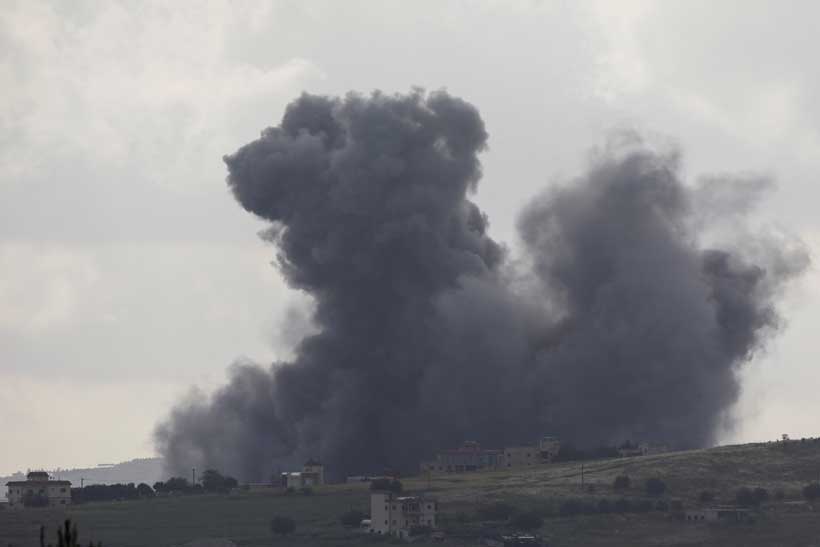
Israeli strikes in southern Lebanon have killed at least four people and wounded eight others, according to Lebanese media.

The state National News Agency (NNA) reported injuries to two medics as they rushed to offer aid to victims of the latest attacks by the Israeli military in violation of the official ceasefire.

Recommended Stories

list of 4 itemsend of list

The medics were wounded when an air strike hit a civil defence team affiliated with the Islamic Health Society in Toul in Nabatieh, as they responded to an earlier attack, NNA said.

Two men were killed and five others injured in an air raid on the town of Ebba in Nabatieh.

NNA added that a drone strike on a car in the town of Haris in Bint Jbeil district killed one man and injured his brother.

Israeli warplanes targeted the home of a former municipal chief in Sajd, while other strikes were reported in Kfar Rumman and Safad al-Battikh. No casualty information was immediately available.

Forced displacement threat

Ahead of the attacks, the Israeli army issued a forced displacement threat for nine towns in southern and eastern Lebanon.

They are: Rihan, Jarjou, Kfar Rumman, Nmairiyeh, Arabsalim and Harouf in Nabatieh, and Jmayjmeh, Mashghara and Qlayaa in eastern Lebanon.

Posting on X, army spokesman Avichay Adraee urged residents there to evacuate due to what he called Hezbollah infrastructure in the towns.

The Israeli military said a soldier was killed by a drone launched by Hezbollah near the border. Also in southern Lebanon, three Israeli soldiers were injured by a booby-trap drone explosion.


Israeli forces continue to exchange fire with Hezbollah and carry out attacks, despite the ceasefire which began on April 17 and later extended to mid-May.

Since March 2, Israeli attacks have killed at least 2,840 people in Lebanon, injured almost 8,700 and displaced more than a million, according to Lebanese figures.

The United States is preparing to host more peace talks between Israel and Lebanon in Washington on Thursday and Friday. Hezbollah has criticised the Lebanese government for taking part.

Source link

Which countries are boycotting Eurovision 2026 over Israel? The Song Contest boycott explained

EUROVISION 2026 is shaping up to be one of the most controversial editions of the contest in its 70-year history.

Five countries have confirmed they are not sending entries to Vienna, and some won’t even be airing the show on national TV.

The Eurovision Song Contest 2026 logo on a purple banner, partially obscured by a tree with white blossoms.
A number of nations are boycotting the Eurovision Song Contest 2026 Credit: Reuters
Noam Bettan singing in the official music video for "Michelle."
Noam Bettan is representing Israel with his song Michelle Credit: @EurovisionSongContest / Youtube

Why is the Eurovision 2026 boycott happening?

The Eurovision walkouts followed the European Broadcasting Union’s (EBU) general assembly in Geneva on December 4, 2025.

EBU members voted on new rules to tighten voting and promotion guidelines, but did not put Israel’s participation itself to a separate vote – meaning Israeli broadcaster KAN was cleared to compete.

Within hours, Spain, the Netherlands, Ireland and Slovenia all announced their withdrawals. On December 10, 2025, Iceland followed suit.

The song contest will still be aired in Iceland and the Netherlands – but will not be broadcast in the other three nations.

read more on eurovision 2026

LIN’S BO PEEP

Eurovision 2026 favourite for Finland unmasked as topless Baywatch beauty


ON TRACK

Look Mum No Computer on how he persuaded BBC to let him represent UK at Eurovision

The boycotters have cited the war in Gaza and concerns over the integrity of recent contests.

Which countries are boycotting Eurovision 2026?

Spain was the first of the contest’s Big Five broadcasters – the five biggest financial contributors – to officially confirm it was boycotting Eurovision.

Secretary general of Spanish national broadcaster RTVE, Alfonso Morales, said: “We would like to express our serious doubts about the participation of Israeli broadcaster KAN in Eurovision 2026.

“The situation in Gaza, despite the ceasefire and the approval of the peace process, and Israel’s use of the contest for political purposes, make it increasingly difficult to maintain Eurovision as a neutral cultural event.”

A statement from Ireland’s national broadcaster RTÉ added: “RTÉ feels that Ireland’s participation remains unconscionable given the appalling loss of lives in Gaza and the humanitarian crisis there, which continues to put the lives of so many civilians at risk.”

Dutch broadcaster AVROTROS, in a statement from director general Taco Zimmerman, said: “Culture connects, but not at any cost. What has happened over the past year touches on our boundaries.

“Universal values such as humanity and freedom of the press have been seriously violated and are non-negotiable for us.”

Slovenian broadcaster RTVSLO’s chair Natalija Gorščak said: “For the third year in a row, the public has demanded that we say no to the participation of any country that attacks another country.

“We must follow European standards for peace and understanding.”

Iceland’s RÚV became the fifth country to confirm a boycott, with the broadcaster saying in a press release: “Given the public debate in this country and the reactions to the decision of the EBU that was taken last week, it is clear that neither joy nor peace will prevail regarding the participation of RÚV in Eurovision.”

What has Israel said about the boycott?

Israeli broadcaster KAN has defended its right to participate.

Addressing EBU members during the general assembly in Geneva, KAN CEO Golan Yochpaz said: “The attempt to remove KAN from the contest can only be understood as a cultural boycott.

“A boycott may begin today with Israel, but no one knows where it will end or who else it may harm.

“Are EBU members willing to be part of a step that harms freedom of creation and freedom of expression?”

Israeli President Isaac Herzog welcomed the EBU’s decision in a post on X, writing: “Israel deserves to be represented on every stage around the world, a cause to which I am fully and actively committed.

“I am pleased that Israel will once again participate in the Eurovision Song Contest, and I hope that the competition will remain one that champions culture, music, friendship between nations, and cross-border cultural understanding.

“Thank you to all our friends who stood up for Israel’s right to continue to contribute and compete at Eurovision.

“This decision demonstrates solidarity, fellowship, and cooperation, and reinforces the spirit of affinity between nations through culture and music.”

Israel is being represented at Eurovision 2026 by Noam Bettan with the song Michelle.

The Eurovision 2026 semi-finals are scheduled for Tuesday, May 12 and Thursday, May 14, while the Grand Final is set to take place on Saturday, May 16.

Source link

Israeli weapon fires tiny metal cubes into people in Lebanon, like Gaza | Israel attacks Lebanon News

The same tiny tungsten cubes that spray out of Israeli bombs, causing devastating internal injuries to people in Gaza are being found in wounded civilians in Lebanon, war surgeon Dr Tahir Mohammed says. He draws parallels between what Israel is doing in both places and describes the weapons as “indiscriminate”.

Source link

Israel deports 2 activists detained from Global Sumud Flotilla

Thiago Avila, a member of the Global Sumud Flotilla, arrives to attend his trial for a remand extension at the Ashkelon Magistrate’s Court in Ashkelon, Israel, on May 3. Avila and Saif Abukeshek were deported on Sunday after Israel’s foreign ministry said it concluded an investigation into the two. Photo by Abir Sultan/EPA

May 10 (UPI) — Israel deported two activists who were part of the Global Sumud Flotilla attempting to deliver aid to Gaza more than a week ago.

Saif Abu Keshek and Thiago Avila were deported on Sunday after Israel’s foreign ministry said it concluded an investigation into the two. It had suspected Abu Keshek, a dual citizen of Spain and Sweden who is of Palestinian origin, of being affiliated with a terrorist organization and suspected Avila of being involved in criminal activity.

The foreign ministry confirmed on social media that Abu Keshek and Avila were deported on Sunday.

Abu Keshek and Avila were part of the flotilla of 22 boats and nearly 175 activists that was intercepted off the Greek island Crete more than a week ago. Armed Israeli naval troops boarded the vessels, destroyed their engines and blocked communications, preventing the flotilla from reaching Gaza, more than 700 miles away.

Hadeel Abu Salih, an attorney who represented Abu Keshek and Avila during their detention, called the detention of them and other activists unlawful and a “sham proceeding with no legal basis, intended to punish them for attempting to challenge Israel’s illegal blockade on Gaza.”

Abu Salih is part of the rights group Adalah. It alleges that they were subject to “psychological abuse” during their detainment.

The Global Sumud Flotilla released a statement on Saturday calling for sanctions against Israel for the detainment of activists.

“We demand explanations from the European Union, and specifically, Greece, after days of silence and complicity, and we call for immediate sanctions against Israel for this illegal abduction and for the constant violations of international law and human rights of the Palestinian people,” the Global Sumud Flotilla said in a statement.

Source link

Flotilla activists arrive in Turkiye before setting sail to Gaza | Gaza

NewsFeed

More than 30 Global Sumud Flotilla vessels have reached Marmaris on Turkiye’s coast, preparing for the final leg of their mission to break Israel’s siege of Gaza. At the end of April, Israel intercepted 22 boats off Greece and detained activists.

Source link

UK lawmaker calls for expulsion of Israel ambassador – Middle East Monitor

A British lawmaker has called for economic and military isolation of Israel to bring it to “some form of negotiated settlement”, and suggested the Israeli ambassador to the UK should face expulsion, Anadolu Agency reports.

Independent MP, John McDonnell, recalled the crippling situation in the Gaza Strip that has been exacerbated during harsh winter conditions.

“We’ve witnessed over the Christmas period when we’re celebrating with our families, the scenes of children starving and freezing to death as a result of Israeli actions,” he said.

Speaking in the House of Commons on Tuesday, McDonnell said that the only solution that they have had in the past is a “total isolation of a country”, economically and militarily, to prevent them performing war crimes in the way Israel has.

“I think this Government could take a leading role in that isolation of Israel to bring it some form of negotiated settlement,” he noted.

Also touching on Israeli Ambassador to UK Tzipi Hotovely’s controversial remarks and stance, including advocating “Greater Israel”.

READ: Qatar condemns Israeli map claiming ‘historical territorial rights’ over Palestine, Lebanon, Jordan, Syria

“We have an Israeli ambassador who’s an advocate of Greater Israel, refuses to recognise the Palestinian state, defies all the UN resolutions that have been passed about how we can secure that peace, and she still remains in this country. Why aren’t we expelling the Israeli ambassador,” he asked.

Hotovely has sparked anger on multiple occasions since a Hamas attack on 7 October, 2023, with controversial remarks such as claiming there is no humanitarian crisis in Gaza and saying Israel is not bombing civilians in Gaza.

‘There is disagreement between British, Israeli governments’

In response, Hamish Falconer, Minister for the Middle East, said: “It is tempting to think that, if only we had representatives more to our tastes politically, then things would be easier.”

He added: “There is a disagreement between the British and Israeli governments about the conduct of the war in Gaza and the humanitarian implications that flow from it.”

Falconer went on to say that they will continue to make that disagreement clear through all channels, both through the Israeli ambassador and directly to the Israeli government, and will continue to talk to the Israeli government about these issues.

On Wednesday, Labour Party MP for Coventry South, Zarah Sultana, expressed support to McDonnell for expelling the Israeli ambassador.

“I agree with @johnmcdonnellMP: Expel the Israeli Ambassador NOW,” she wrote on X.

The Israeli army has continued a genocidal war on the enclave that has killed nearly 46,000 people, mostly women and children, since 7 October, 2023, despite a UN Security Council resolution calling for an immediate ceasefire.

In November 2024, the International Criminal Court issued arrest warrants for Israeli Prime Minister, Benjamin Netanyahu and his former Defence Minister, Yoav Gallant, for war crimes and crimes against humanity in Gaza.

Israel also faces a genocide case at the International Court of Justice for its war on the enclave.

READ: Human rights group calls on ICC prosecutor for investigation into PA crimes in West Bank

Source link