They’re the ones who lecture religious leaders on what Jesus stood for, demanding blessings for Trump’s actions — or else.
Just check out the recent allegations in The Free Press that senior defense officials dressed down the Vatican’s ambassador to the U.S. in January over Pope Leo XIV’s lack of enthusiasm for Trump’s imperialist ambitions. Or Secretary of Defense Pete Hegseth, he of the tattoos hailing the blood thirst of the Crusades (another Middle Eastern forever war that the “civilized” side lost), who compared the rescue of a downed American aviator in Iran over Easter weekend to the resurrection of Jesus.
It’s a playbook straight out of the Book of Revelations, which describes a Beast in the End Times with “a mouth speaking great things and blasphemies” in its quest to hold dominion over the earth.
In the other corner of this existential fight is an actual man of God: Pope Leo XIV.
Rather than cower before a despot who makes the Pharaoh in the Old Testament seem as stable and kind as St. Francis, the first American pope has resisted Trump like a protester at a “No Kings” rally. He has yet to denounce by name anyone in the president’s sordid orbit — but Pope Leo has returned to their actions again and again in his first year as head of the world’s 1.4 billion Catholics.
He began his papacy by greeting a cheering crowd with “Peace be with you all” — what Jesus told his disciples after his Resurrection and a brilliant, biblical way to telegraph where he stands in our bellicose times.
On Palm Sunday a few weeks ago, the pontiff proclaimed during Mass in St. Peter’s Square that God “does not listen to the prayers of those who wage war” — a not-so-subtle rebuke to Hegseth, who prayed shortly after the U.S. launched the Iran war for “every round [to] find its mark” and for “overwhelming violence of action against those who deserve no mercy.”
For his first Easter message, Pope Leo wrote, “Let those who have the power to unleash wars choose peace! Not a peace imposed by force, but through dialogue!”
Meanwhile, President Trump told a reporter that God supports the destruction he’s inflicting on Iran because “God is good. God wants to see people taken care of.”
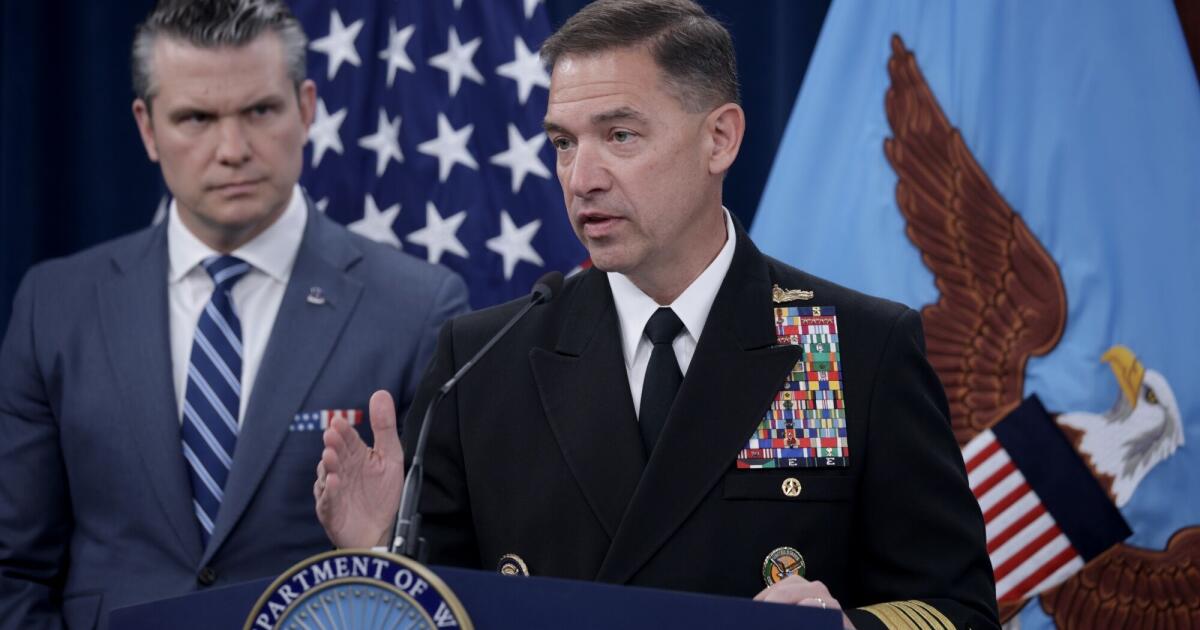
Secretary of Defense Pete Hegseth speaks to reporters at the Pentagon, July 16, 2025, in Washington.
(Julia Demaree Nikhinson / Associated Press)
According to the Free Press article, the Vatican declined an invitation from Vice President JD Vance for Pope Leo to visit the U.S., for fear that Trump would use him as a political pawn. Instead, the man born in Chicago as Robert Prevost plans to spend July 4 — America’s 250th birthday — on a Mediterranean island that has long served as a gateway for migrants trying to make it to Europe.
Critics will accuse Pope Leo of Trump Derangement Syndrome and call him particularly short-sighted, since he stands athwart the desires of many American Catholics.
Though he isn’t Catholic, Trump has favored Catholicism far above any other mainline Christian denomination, from acknowledging feast days to packing his administration and the Supreme Court with adherents in a way that even Joe Biden — a lifelong Catholic — never did.
About 55% of Catholics voted for Trump in 2024, per the Pew Research Center. A survey last year by The Catholic Project at The Catholic University of America found “a clear generational shift away from liberal self-identification” among younger priests. Dioceses across the country are reporting the highest amount of converts in decades, many of them drawn in by orthodox Catholic influencers.
But Trump’s embrace of Catholicism, like everything else in his life, has been conditional on fealty to him. His administration pulled tens of millions of federal funds from Catholic charities because they assisted migrants regardless of legal status — something the American Catholic church has done for over a century. Vance, himself a Catholic convert, accused bishops of being “worried about their bottom line” for daring to criticize the move and his boss’ deportation Leviathan.
The Free Press also reported that Trump’s lackeys invoked the Avignon Papacy — when 14th century French kings exiled a succession of popes from the Vatican and made them their puppets — during their browbeating of the Vatican ambassador.
Re-litigating history is an obsession of the Trump regime, so bringing up a medieval episode amounted to a threat to Leo to shape up — or else.
That’s what makes Pope Leo’s stance against a modern-day Babylon even braver. A pope’s main role is to bear witness to the words of Christ, who said far more about taking care of the meek and turning the other cheek than he did about waging war.
The best popes, from John XXIII to John Paul II, know that their words stand as a challenge for all people, believers and not, to create a better world that paves the way for the world to come. Trump wages war for himself; Pope Leo urges us to stand for something other than ourselves.
At this point in his reign, Trump is a dead ringer for the Antichrist, described in the Second Book of Thessalonians as a “man of sin … the son of perdition who opposeth and exalteth himself above all.”
Pope Leo would never characterize his opposition to Trump in such apocalyptic terms, of course. But his stance against the president’s tyranny is a call to action in the same vein as John Paul II’s exhortation to the free world to oppose the Soviet empire.
“Let us abandon every desire for conflict, domination, and power,” Pope Leo stated on Easter, “and implore the Lord to grant his peace to a world ravaged by wars and marked by a hatred and indifference that make us feel powerless in the face of evil.”
Senegalese prime minister Ousmane Sonko criticised Donald Trump, accusing him of plunging the world into “chaos” by starting a war on Iran, and questioned whether the world is now less safe under Trump’s leadership.
Even though a fragile ceasefire between Iran and the United States and Israel has been announced, it’s going to be a long time before prices of oil and gas come back to pre-war levels, experts say.
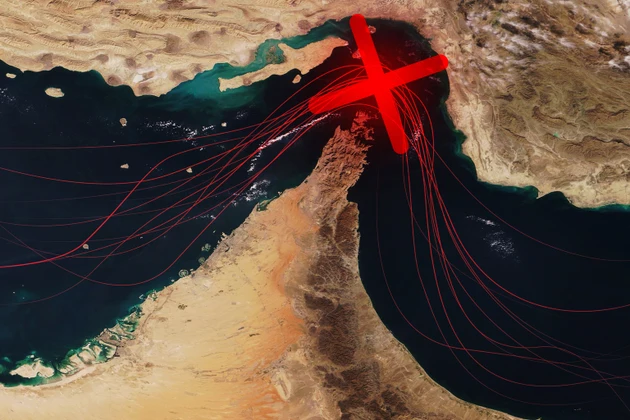
In response to the US-Israeli attacks, Iran choked off the Strait of Hormuz, the narrow channel linking the Gulf to the Gulf of Oman, through which roughly 20 percent of the world’s oil and gas exports pass from the Middle East, mainly to Asia and also to Europe.
Recommended Stories
list of 4 itemsend of list
It also attacked energy infrastructure in several Gulf countries, leading to soaring prices of not just energy but also of byproducts like helium, used in a range of products like tiles used in homes and semiconductor equipment. Fertilisers that rely on some of these inputs were hit too, impacting sowing seasons.
As a result, consumers the world over, but particularly in developing countries of Asia and Africa, have felt the brunt of those shortages and soaring prices. The question on many minds: Now that there is a ceasefire in place, how quickly will prices normalise?
“Anyone who tells you they know the answer to that question is lying,” said Rockford Weitz, professor of practice in maritime studies at The Fletcher School at Tufts University. “It’s too early to tell when we return to normal.”
“What we’re seeing is the biggest disruption in the history of global oil markets,” said Weitz.
Before this conflict, approximately 120-140 ships passed through the Strait of Hormuz every day. On Wednesday, only five vessels crossed the strait, while seven passed through the waterway on Thursday.
That shows why “to get back to normal is going to be a while”, Weitz told Al Jazeera. “And it’s too complicated to know at this stage when that will happen, as it requires collaboration with the great powers [US, China and Russia], but also regional powers [UAE, Saudi Arabia, India and Pakistan]. It’s hard to say when it will end, as there are so many parties who can make it not happen.”
There is also some concern that developments, like Iran charging a toll fee to allow ships to pass through and skyrocketing insurance fees, will keep oil prices high.
“There are reports that Iran is charging fees to tankers going through the Hormuz Strait,” US President Donald Trump wrote on TruthSocial Thursday.
“They better not be and, if they are, they better stop now.”
But experts agree that those fees, rumoured to be about $2m per vessel, are not enough to move the needle on oil prices.
“What is causing oil prices to rise is not insurance. It’s about getting tankers through. Tolls won’t be the cost driver,” said Weitz.
‘Signs of strain’
Some of that reality was on display with the reopening of the strait, showing “signs of strain just hours after the ceasefire was announced”, said Usha Haley, W Frank Barton Distinguished Chair in international business at Wichita State University.
Compounding that problem was the fact that some countries, including Iraq, had shut down production because of limited storage capacity, further taking oil supplies offline.
“That will take weeks and months to reopen,” Haley added.
“It’s going to be a contested reopening … LNG [liquefied natural gas] will take months to rebalance because of the hits to infrastructure, and can take three to six months to normalise if everything else remains normal. And it’s not.”
Slower growth
On Thursday, International Monetary Fund managing director Kristalina Georgieva warned that the fund will downgrade its forecast for the world economy next week from the current expectation of 3.3 percent. “Growth will be slower – even if the new peace is durable,’’ Georgieva said.
While the war has hit most economies, “it hasn’t really affected the two primary [US] targets – Russia and China. Russia, in fact, has benefitted enormously, and Chinese ships have been allowed to go through,” said Haley.
The US has hit Russia with multiple sanctions for its war on Ukraine, including capping sales of Russian oil to undercut its income stream. Similarly, the first Trump administration put tariffs on China and curbed US exports of certain high-end technology, measures that were held up under the administration of former US President Joe Biden and further ratcheted up by Trump last year with his tariffs blitz.
But amid the war on Iran and the effective closure of the Strait of Hormuz, the US temporarily eased some sanctions on Russian oil, and countries desperate for crude have since paid far higher prices to Moscow than the subsidised energy that President Vladimir Putin’s government was previously offering them.
“We [the US] really need to decide what we want to do long-term, who our targets are. There’s got to be some coherence to what we want to do.”
For now, “an overhang of greater risk premium of supplies out of the Gulf means oil prices will remain higher than what they were before the attack started”, said Rachel Ziemba, adjunct senior fellow at the Center for a New American Security.
While it’s possible that some of the blocked oil and oil products could be released soon, providing a short boost of supplies in the coming days and weeks, “that would be a temporary support” and is still conditional on the ceasefire holding and converting to a broader deal, said Ziemba.
For now, she’s keeping an eye on Iraq to see if it strikes a side deal with Iran. Iraq, long a proxy battleground between the US and Iran, can produce at least 3.5 million barrels of oil per day, production that it had shut off because of limited storage capacity, said Ziemba.
Should that come back online, it will help oil flows and, eventually, prices. But the uncertainty of the truce and the history of attacks on Iraq mean that the future of the country’s oil production remains unclear. “In that environment, who wants to invest in scaling up production?” Ziemba wondered.
Iranian state TV has read out a message from new Supreme Leader Mojtaba Khamenei which says Iran ‘does not want war’ but will ‘not renounce legitimate rights’ in the face of threats from the US and Israel.
As UK Prime Minister Keir Starmer arrived in Doha as part of a Gulf tour spanning Saudi Arabia, the UAE, Bahrain and Qatar, he discussed efforts to secure the US-Iran ceasefire and reopen the Strait of Hormuz. Starmer warned there’s more ‘work to do’, stressing the need for regional partners to restore global energy flows.
Video shows an explosion in the sky above Erbil, in the Kurdish region of northern Iraq, in a suspected drone interception following reports of an unidentified aircraft flying over the city. Earlier, Kuwait reported a drone attack. The IRGC insists Iran has not launched anything during the ceasefire.
Pro-Iran groups have used artificial intelligence to create internet memes in English to try to shape the narrative during the war against the U.S. and Israel and foster opposition to it.
Analysts say the memes appear to be coming from groups linked to the government in Tehran and are part of a strategy of leveraging its limited resources to inflict damage on the U.S., even indirectly. That includes how Iran has used attacks and threats to control the flow of traffic through the Strait of Hormuz and maintain a stranglehold on the world’s economy. A ceasefire raised hopes Wednesday of halting hostilities, but many issues remained unresolved.
“This is a propaganda war for them,” Neil Lavie-Driver, an AI researcher at the University of Cambridge, said, referring to Iran. “Their goal is to sow enough discontent with the conflict as to eventually force the West to cave in, so it is massively important to them.”
It’s not the first time memes have been used in a conflict, and they have evolved to include AI images in recent years. AI imagery bombarded Ukrainians after the Russian invasion in 2022. Last year, the term “AI slop” became widely used to describe the glut of imperfect images posted online during the Israel-Iran war to try to destroy the country’s nuclear program.
In the conflict that began Feb. 28 with joint U.S.-Israel strikes, the memes have used well-honed cartoons that lambast U.S. officials.
The memes are steeped in American culture
The memes are fluent not just in English but in American culture and trolling. Published on various social platforms, they are racking up millions of views — though it’s not clear how much influence they have had.
They have portrayed President Trump as old, out of step and internationally isolated. They have referenced bruising on the back of Trump’s right hand that prompted speculation about his health; infighting in Trump’s MAGA base; and U.S. Secretary of Defense Pete Hegseth’s fiery confirmation hearing, among other things.
“They’re using popular culture against the No. 1 pop culture country, the United States,” said Nancy Snow, a scholar who has written more than a dozen books on propaganda.
The pro-Iran images circulating online include a series that uses the style of the “Lego” animated movies. In one, an Iranian military commander raps, “You thought you ran the globe, sitting on your throne. Now we turning every base into a bed of stone,” as Trump falls into a bullseye built of “Epstein files,” the U.S. government’s investigative records on disgraced financier and convicted sex offender Jeffrey Epstein.
Analysts believe groups making the memes are cooperating with the government
The animations show levels of sophistication and internet access that indicate ties to government offices, said Mahsa Alimardani, a director of Witness, a human rights group working on AI video evidence.
“If you’re able to have the bandwidth needed to generate content like that and upload it, you are officially or unofficially cooperating with the regime,” she said, pointing to severe restrictions Iran has imposed on the internet as part of a crackdown on nationwide protests earlier this year.
State media has reposted some of the memes, including some from the account behind the “Lego”-style videos, Akhbar Enfejari, which means Explosive News.
Akhbar Enfejari described itself as an independent group of Iranians with no connection to the government. “We don’t even receive any funding. We’re just a group of friends working voluntarily — paying for our own internet, using our own laptops and computers, and doing all of this ourselves,” the group told the Associated Press on the messaging app Telegram.
The group said it is producing and upload from within Iran to try to disrupt decades-long dominance of Western control of the airwaves.
“They’ve long dominated the media landscape and, through that power, imposed narratives on many nations,” Akhbar Enfejari said. “But this time, something feels different. This time, we’ve disrupted the game. This time, we’re doing it better.”
In addition to the memes coming from pro-Iran groups, Iranian government accounts have trolled the U.S., including in a post Wednesday from Iran’s Embassy in South Africa that said, “Say hello to the new world superpower,” with a picture of the Iranian flag. Both the U.S. and Iran declared victory after agreeing to a ceasefire.
Analysts say the deep grasp of U.S. politics and culture is the fruit of more old-school methods of propaganda: a decades-long Iranian government program to promote narratives against the U.S. and Israel.
“This meme war comes from institutions that are very aware what the American public is aware of and pop cultural references that can appeal to them,” Alimardani said.
Messaging from the U.S. and Israel
Analysts say the U.S. and Israel do not appear to be engaging in the same kind of campaign — and given the restrictions Iran has put on internet access in the country, getting such messages to ordinary Iranians would be difficult.
Early in the war, Israeli Prime Minister Benjamin Netanyahu released a video that used AI to make it seem like he was speaking in Farsi, in which he urged Iranians to overthrow their government. The White House has published a steady stream of memes, but those are aimed at a U.S. audience and feature clips from American TV shows and sports.
The U.S. government-run Voice of America, which for decades beamed news reports to many countries that had no tradition of a free press, does still broadcast in Farsi, though it is has been operating with a skeleton staff since Trump ordered it shut down.
“This world order is really changing overnight and the U.S. is not going to end up necessarily as the state that everybody listens to,” Snow said.
WASHINGTON — President Trump’s threats to wipe out Iran, “a whole civilization,” ended the restraint that Democrats have mostly practiced when it comes to questions of removing him from office in his second term.
By the dozens, Democrats came out to say that Trump should no longer serve in the White House, either through the impeachment process or the 25th Amendment, which allows the vice president and the Cabinet to declare that a president is no longer able to perform the job.
While Trump eventually pulled back on his threat and agreed to a two-week ceasefire with Iran, the episode highlighted the growing demands for Democrats to oppose the Republican president in the strongest possible terms. Calls about Iran flooded into congressional offices, lawmakers said.
The breadth of the Democratic pushback underscored the gravity of Trump’s apocalyptic threat to a country of more than 91 million people. It also served to raise the domestic political stakes for a conflict that is far from over. The Trump administration faces mounting calls to testify about the war and justify its demands for hundreds of billions of dollars in new military spending.
“We cannot excuse what the president said as a negotiating tactic,” Rep. Sara Jacobs, a California Democrat, told reporters at the Capitol Thursday.
“It is important that even though we were able to get this ceasefire, which I pray holds, that we hold this president accountable for what he threatened because threatening genocide is not just against international law, it’s against our federal law, too,” she added.
Still, Democratic leaders and many moderates in the party have steered clear of endorsing impeachment, and any attempt to remove Trump from office is seemingly doomed to fail so long as Republicans control Congress.
In the near term, Democratic leaders in the House and Senate are instead pushing Republicans to join them and pass legislation that would force Trump to get congressional approval before carrying out any more attacks on Iran.
A few Democrats attempted during a brief session of the House on Thursday to pass what’s known as a war powers resolution on Iran, but Republicans, who control the chamber, did not acknowledge their request.
“We need Speaker Johnson to call us into session,” said Democratic Rep. Emily Randall of Washington. “The American people deserve that.”
At the White House, Press Secretary Karoline Leavitt has defended Trump’s rhetoric as effective.
“I think it was a very, very strong threat from the president of the United States that led the Iranian regime to cave to their knees and ask for a ceasefire and agree to reopening the Strait of Hormuz,” she said at a Wednesday White House press briefing.
Callers jam congressional phone lines
As they press their case against Trump, Democrats are responding to the worries of their own base and constituents. Congressional offices were bombarded with phone calls and emails this week, largely from people alarmed by the president’s rhetoric.
In the House, the office of Rep. Suzan DelBene (D-Wash.) received a “ton” of calls and emails Monday and Tuesday, mostly about Iran but also about impeaching Trump or removing him by deploying the 25th Amendment, said one aide who was not authorized to discuss the internal office situation and requested anonymity.
When her district staffers in the state office took a break Tuesday, they returned to 75 voicemails on Iran an hour later, the aide said.
“My office phones have not stopped ringing,” said Rep. Maxine Dexter (D-Ore.) at a press conference in Portland, urging House colleagues to immediately return to Washington.
Dexter’s office received more calls on Tuesday, 257, more than it has ever received in a 24-hour period since the first-term lawmaker’s team began keeping track.
The groundswell appeared to be organic, rather than an orchestrated campaign to pressure lawmakers to act.
While outside groups have been circulating some discussion points, including the legal details around invoking the 25th Amendment, there has not been an organized effort to flood the congressional offices with a strategic message, said one Democratic strategist familiar with the situation who requested anonymity to discuss the private conversations.
It was simply the “horror” of what Trump was saying, the strategist said, and the scale of the president’s threats, that appeared to have sparked the mobilization.
On the political right, several prominent figures including former Rep. Marjorie Taylor Greene of Georgia, also suggested Trump should be removed from office through the 25th Amendment.
Will Democrats make an impeachment push?
Democrats twice impeached Trump for actions taken during his first term, but he was acquitted each time. They have tried to avoid such debates for the last 16 months as they tried to center their midterm message on kitchen table issues rather than opposing a president who narrowly won the popular vote.
Republicans also have the majority in the House and have easily fended off two previous efforts to impeach Trump in his second term. A significant number of Democrats have either joined with Republicans or voted “present” as the House blocked impeachment resolutions sponsored by Rep. Al Green (D-Texas).
Then came Trump’s threat on Tuesday morning to wipe out “an entire civilization.”
“Temporary ceasefire or not, Trump already committed an impeachable offense. Congress needs to get back to work and remove him from office before he does more damage to our country and the world,” said Massachusetts Rep. Seth Moulton, a veteran of the war in Iraq.
It’s unclear how House Democratic leader Hakeem Jeffries will handle the demands for another impeachment push. But Democratic leaders are holding a call on Friday with members of the House Judiciary Committee that is focused on “Trump administration accountability and the 25th Amendment.”
Standing on the Capitol steps Thursday, Rep. Madeleine Dean (D-Pa.) said she supports impeachment, but nevertheless hit the brakes on it for now, as the Democrats are in the minority. Instead, she called on Republicans to stand up to Trump’s threats, including by invoking the 25th Amendment.
She predicted the imperative to remove Trump from office could only grow as negotiators navigate a fragile framework for a peace deal. Dean and other Democrats criticized the plan as “chaotic” and unworkable.
Yet Dean said Trump’s threat to destroy Iranian civilization should have already been enough. “The president brought the entire globe to watch his madness,” she said.
Groves, Mascaro and Freking write for the Associated Press.
WASHINGTON — Pivotal negotiations in Pakistan this weekend between the United States and Iran could hinge on developments in Lebanon, where ongoing Israeli strikes Thursday risked derailing a wider regional ceasefire.
Tensions only deepened amid reports of limited Iranian drone attacks across the region, and as Arab states warned that the Strait of Hormuz — a vital global shipping route — had only partially reopened despite President Trump’s assurances that Tehran had guaranteed full access.
Yet tests of the ceasefire have not deterred Iranian and American officials from their plans to travel to Pakistan on Saturday for the highest-level talks between the two nations, aimed at a final agreement to end the war, now in its sixth week.
The stakes are high for Iran, which has been pummeled by U.S. attacks, and for Trump, whose pursuit of the war has been domestically unpopular. The plan appeared precarious early Thursday, amid ongoing disagreement over whether the ceasefire included Lebanon.
Iran warned that continued Israeli attacks targeting the militant group Hezbollah in Lebanon could jeopardize the two-day-old truce. Hours later, Israel Prime Minister Benjamin Netanyahu said his government would open direct negotiations with Lebanon — but subsequently declared he would not cease strikes there.
His move to negotiate with the Lebanese came the day after President Trump asked Netanyahu to slow operations in Lebanon ahead of the Pakistan talks, a source familiar with the matter told The Times. Iran’s Foreign Ministry spokesman, Esmail Baghaei, told reporters Thursday that the talks starting would be “contingent” upon hostilities ceasing in Lebanon.
As Israel’s posture on Lebanon injected uncertainty into the situation Thursday, the Strait of Hormuz — which Iran agreed to reopen in the ceasefire deal — remained closed, according to Sultan Al Jaber, a government minister in the United Arab Emirates. Traffic through the strait was below 10% of its usual volume Thursday, with only seven ships passing through in a 24-hour period, Reuters reported.
Trump, however, projected optimism Thursday about the weekend negotiations in Islamabad — even as the U.S. position appeared to weaken.
“I spoke with Bibi and he’s going to low-key it. I just think we have to be sort of a little more low-key,” Trump saidin an interview with NBC News. He said he was “very optimistic” that a deal with Iran was in reach.
A White House official said Vice President JD Vance will lead the U.S. delegation, which will also include special envoy Steve Witkoff and Jared Kushner, the president’s son-in-law. They would be the highest-level talks between the United States and Iran since the 1979 Islamic Revolution.
An Israeli official said the separate talks with Lebanon, to be conducted by the Israeli and Lebanese ambassadors to Washington, would start next week at the State Department. A State Department official confirmed the agency would host the talks.
Israel is not a direct party to the weekend negotiations in Pakistan between the U.S. and Iran. But “the United States knows our red lines in terms of nuclear disarmament, proxies, ballistic missile production,” the Israeli official said. “We believe we’re on the same page here.”
The Tuesday night ceasefire deal between the United States and Iran came after 39 days of conflict in the region, set off by Trump’s Feb. 28 attack on Iran. The full terms have not been publicly disclosed, and much remains uncertain about the agreement.
The agreement got off toa shaky start Wednesday: The strait remained restricted as the Iranians accused Americans of violating the agreement and it emerged that the U.S. and Israel were at odds with Iran over whether Lebanon was part of the ceasefire.
Trump threatened late Wednesday on his social media website that if Iran did not comply with the ceasefire, “then the ‘Shootin’ Starts,’ bigger, and better, and stronger than anyone has ever seen before.”
The deal’s status became even more fragile as Thursday dawned and Iran said Israeli strikes in Lebanon overnight violated the agreement. European leaders and the prime minister of Pakistan, which is brokering U.S.-Iran talks, warned that the operations could be putting the truce at risk.
“This is a dangerous sign of deception and lack of commitment to potential agreements,” Iranian President Masoud Pezeshkian said Thursday. “The continuation of these actions will render negotiations meaningless.”
The speaker of Iran’s parliament, Mohammad Bagher Ghalibaf,warned of “explicit costs” for any moves Iran views as violations of the ceasefire, saying Lebanon was an “inseparable part” of the deal.
Israel and the U.S. have said that Lebanon, where Israel says it is targeting Iran-backed Hezbollah militants, was not part of the ceasefire agreement. Netanyahu said in a Thursday evening statement that he was pursuing negotiations at the request of the Lebanese government.
“There is no ceasefire in Lebanon. We are continuing to strike Hezbollah with full force, and we will not stop until we restore your security,” he said.
Also Thursday, House Republicans rebuffed an attempt by Democrats to vote on restricting Trump’s war powers. Democratic leaders — who have raised concerns about Trump’s Easter Sunday threat to wipe out Iranian civilization and said his statement amounted to threatening war crimes — afterward called on Speaker Mike Johnson (R-La.) to bring Congress back to session.
Meanwhile, Trump railed on his social media website against conservative figures who have criticized his approach to the war, including former Fox News hosts Tucker Carlson and Megyn Kelly, calling them “stupid people” and proclaiming that the United States “IS NOW THE ‘HOTTEST’ COUNTRY ANYWHERE IN THE WORLD!”
He also continued to attack NATO members for not living up to his expectations in helping him with the war in Iran. In a post earlier Thursday, the president said the North Atlantic Treaty Organization has been “very disappointing” and suggested the United States needs to pressure allies in order for them to respond to its needs.
That followed a meeting Wednesday afternoon with NATO Secretary Mark Rutte at the White House, after which Trump asserted online that “NATO WASN’T THERE WHEN WE NEEDED THEM, AND THEY WON’T BE THERE IF WE NEED THEM AGAIN.”
In an interview with CNN, Rutte said Trump had made his disappointment with NATO allies clear. Rutte said he had emphasized to Trump that a large majority of European nations have given the U.S. some logistical military help, such as allowing American warplanes to land at their bases and fly over their territories.
Lebanon’s Health Ministry said Israel’s surprise barrage of airstrikes on Wednesday killed 303 people and wounded about 1,150 others, in a preliminary toll. It added that the numbers were likely to rise while search efforts for bodies and DNA testing continue.
If direct negotiations with Israel do take place, they would break a long-standing political taboo for Lebanon. Successive governments have dealt with Israeli diplomats only as far as allowing technical discussions with Lebanese military officials via the United Nations.
The prospect of direct negotiations is likely to kick up fierce opposition from Hezbollah and its political ally, the Lebanese Shiite party Amal.
Both parties — which together form the so-called Shiite Duo, are part of a voting bloc in parliament and hold important portfolios in Lebanon’s Cabinet — are already in a war of wills with the Lebanese government, which recently declared the Iranian ambassador-designate persona non grata and ordered his departure.
Amal and Hezbollah officials told the ambassador-designate to remain in Lebanon and exhorted the government to reverse its decision. He remains at the embassy in Beirut.
McDaniel and Wilner reported from Washington and Bulos from Amman, Jordan. Times staff writer Ana Ceballos in Washington contributed to this report.
In a statement read out on television, Mojtaba Khamenei said Tehran will ‘demand compensation’ for damages due to the war.
Published On 9 Apr 20269 Apr 2026
Iran’s supreme leader, Mojtaba Khamenei, has claimed a “final victory” in the war with Israel and the United States, as a fragile ceasefire continues to be threatened by Israel’s continuing offensive on Lebanon.
Marking 40 days since his father, Ayatollah Ali Khamenei, was killed in a US-Israeli attack on the first day of the war, Khamenei said in a statement on Thursday that, over the course of the war, Iran had “astonished the world”.
Recommended Stories
list of 3 itemsend of list
Khamenei, 58, who has not been seen or heard from since the war began, said in a statement read out on television that Tehran was not seeking war but was fighting for its legitimate rights.
“We will certainly not leave the criminal aggressors who attacked our country unpunished,” he said, adding that Iran will “demand compensation for all damages, as well as the blood of the martyrs and the wounded”.
Regarding the Strait of Hormuz, which Iran has effectively blockaded since the war broke out on February 28 and has become a key sticking point in US-Iran proposals to end the war, Khamenei said that his country will move towards a “new phase” without elaborating.
On Wednesday, the US and Iran agreed to a two-week ceasefire in a deal mediated by Pakistan to allow for negotiations to take place, after attacks on Gulf nations and the near-closure of the Strait of Hormuz had caused fears of a longer conflict whose impact would be felt long after it ended.
As part of the ceasefire, Iran agreed to allow shipping to pass through the important waterway, with reports that Tehran would impose a toll on ships transiting the strait to fund the country’s reconstruction efforts.
Yet, Khamenei warned that Iran was ready to respond if attacks were to end the pause in hostilities.
“Our hands are on the trigger,” he said.
However, a devastating wave of Israeli air strikes across Lebanon on Wednesday killed more than 300 people, threatening the US-Iran truce amid disagreement on whether Beirut was part of the agreement.
While Iran and Pakistan state that Lebanon was part of the deal, the US and Israel have said that it was not. World leaders have also called for Lebanon to be part of the agreement, urging for peace in the region.
Still, Khamenei said that while they did not start the war, they will not “renounce our legitimate rights under any circumstances, and in this respect, we consider the entire resistance front as a whole,” an apparent reference to Lebanon.
On Saturday, delegations from Iran and the US are expected in Pakistan to hold talks on ending the war.
HomeFeaturesQ&A: How Lebanon’s Aviation Chief Keeps Beirut Airport Open Amid Iran War Chaos
With most carriers suspending operations, Aziz, a former Middle East Airlines’ advisor, discusses how the Beirut airport keeps operating despite Israel’s strikes on Lebanon.
Since the start of the US-Israeli war on Iran in late February, air traffic across the Middle East has been severely disrupted. Large portions of regional airspace are either closed or avoided, forcing airlines to reroute flights and cancel services.
In Lebanon, the situation is even more extreme: Israel strikes Beirut and its southern suburbs almost daily, just minutes from the country’s only international airport. With most carriers suspending operations, Middle East Airlines (MEA) remains the only one flying, maintaining a fragile lifeline with the rest of the world.
Global Finance sits down with Captain Mohammed Aziz, head of Lebanon’s Civil Aviation Authority and former senior advisor to MEA’s CEO, to discuss how the Beirut airport continues to operate under fire and what this means for the airline’s business.
Mohammed Aziz, Lebanon, Civil Aviation Authority
Global Finance: How is the airport operating these days?
Aziz: Considering what’s going on around us, the airport is operating in a very nice way. For example, on April 1st, there was a hit near the airport road. The security forces closed the road for half an hour, the time for the bombing to happen and for it to be cleaned. They then resumed operations. But the airport didn’t stop at all during this period. We are ensuring that the airport remains open safely and securely despite the situation.
GF: How do you know when a strike is going to happen and when planes can go in or out?
Aziz: First, most of the time, [Israeli authorities] announce where they want to bomb, especially if it’s around Beirut. Second, we can see on the radar if there are planes coming in for bombardment. They also know when a civilian aircraft is coming in, and they try to avoid it. Only once or twice did they come during a civilian operation. We had to hold the aircraft in the air until they finished their job before landing.
GF: Who are the airlines flying in and out?
Aziz: MEA is flying on all its routes, except to destinations where the airports are closed, like Kuwait, Doha or Abu Dhabi. They are losing about 40% of their traffic because many Gulf airports are closed. Gulf carriers are not coming to Beirut anymore because either their airport is not operating, or, when it is, they have other priorities. European carriers stopped serving the whole region from day one.
GF: What are the MEA’s operations?
Aziz: MEA now has 22 planes; five or six are parked continuously abroad, so they don’t get exposed if anything happens. That means they are practically operating with 16 aircraft. But even these 16 planes are not at full capacity. For example, some airports that used to take Airbus A330s now receive A321s. They have to maintain a balance in order to minimize their losses and insurance exposure.
GF: Why is the MEA the only airline flying?
Aziz: Well, because it’s a Lebanese carrier. For MEA to stay alive, they have to fly. They also consider it a duty to maintain the link between Lebanon and the outside world. This has always been MEA policy. They only stop when the risk assessment tells them not to fly. This occurred a lot during the civil war (1975-1990) and more recently during the 2006 war. But for the time being, MEA is still flying.
GF: How does flying from and to Beirut still make sense business-wise for the MEA?
Aziz: To be able to fly in such a situation, you need a daily risk assessment conducted at the highest level, with the highest contacts. The head of civil aviation, the chairman of MEA and the head of the security forces have to be in direct contact with the government 24/7. The government is in contact with embassies and foreign ministries. So if anything changes, we can know immediately and take the right decision. Every day we have a coordination meeting. If anything changes, we know about it, but this is time-consuming. Now, if Lebanon is 100% of your operations, you do it because the only alternative is to stop. But for foreign airlines, Beirut is just one of thousands of flights, so they say, “OK, forget about it, when the situation gets better, we will return.”
GF: How does insurance cost evolve in a situation like this?
Aziz: Insurers look at many aspects: the risk management done by the company, by the authorities, their own information, and they adjust their policy accordingly. Sometimes they give higher premiums, sometimes they lower the ceiling, sometimes they say you can continue as you are. And it changes constantly. Today might be one thing, tomorrow another, so we have to keep in touch with them.
GF: During a war situation, are there other extra costs?
Aziz: Sure. We have to pay employees extra to encourage them to come in and thank them for being here under the circumstances. If they feel they don’t want to come, they still get their salary. We also have special sleeping facilities for the staff to stay close to the airport. Then there are fuel costs. The ton used to be $700; it’s now $1,500. That’s over a 100% increase. And finally, some routes are now longer. For instance, Beirut to Dubai previously took three hours. Now, it’s about five because planes have to go from Dubai to Oman to Saudi Arabia to Egypt to Cyprus to Beirut instead of coming straight. In addition to the extra fuel costs, the longer flight time means more aircraft maintenance and more staff hours. It’s these incremental cost that keep on adding up.
GF: How can a company like MEA compensate for this extra cost?
Aziz: They cannot compensate 100%, but they can offset some of the cost with yield management. If you have many empty seats, you lower the price of the ticket; when the plane gets full, you raise it. It doesn’t recover all the extra costs, but the only alternative would be to stop flying. Even if they suffer some temporary losses, the MEA considers that people will appreciate that they kept flying, and when things return to normal, they will remain loyal customers. We are confident that the future will be bright. This is why we are working day and night to ensure that the airport remains open and that people’s confidence in the airline and the country remains the same, so that whenever things settle down, they know they have a good airport that never lets them down.
GF: Do you see opportunities in this time?
Aziz: Yes, we are using the current situation as an opportunity to accelerate the improvements to the departure and arrival areas we had started last year. Normally, it should take a year. However, the density of travelers is now 20-25% of what it normally is. I think we can finish it in two to three months.
Weekly insights and analysis on the latest developments in military technology, strategy, and foreign policy.
Traffic through the strategically vital Strait of Hormuz remains largely stalled, according to multiple reports, despite Iran and the United States agreeing to a two-week ceasefire. Earlier this week, U.S. President Donald Trump had given Tehran a deadline to agree to his ceasefire demands, including reopening the strait, or he threatened to turn Iran into a “living hell.”
Only one oil products tanker and five dry bulk carriers have passed through the Strait of Hormuz in the last 24 hours, according to ship-tracking data analysis, Reutersreports. Since the U.S.-Israeli war with Iran began on February 28, vessel traffic has averaged only a few ships per day, based on data from Kpler, Lloyd’s List Intelligence, and Signal Ocean. Prior to the conflict, an average of 140 vessels transited daily through the strait.
Only a single tanker has passed through the Strait of Hormuz over the last 24 hours -Reuters.
An additional 5 dry bulk carriers made the transit.
According to data from Windward, a maritime intelligence firm that tracks international shipping, 11 vessels have been allowed transit through the strait in the 24 hours since the ceasefire. Four of these ships are Iranian, four are Greek, and one is Chinese.
Intelligence firm AXSMarine reports that two eastbound ships, the Oman-owned Lucia and Greek-owned Iolcas Destiny, were given passage from the Gulf in the early hours of Thursday morning despite the Iranian declaration that the strait was closed.
📢 24 hours after the announcement of the US-Iran ceasefire, merchant vessel activity in the region remains unchanged, with a limited number of ships transiting across the Strait.
↖️ Inbound (West→East): 🔹 4 vessels crossed on 8 April, all Iranian-owned ◽ Container ships… pic.twitter.com/qQQ4oODQoV
Windward said all vessels transiting the strait must still coordinate safe passage with Iranian authorities, who are requiring shippers to pay substantial tolls, reportedly as much as $1 per barrel for outbound oil, settled in cryptocurrency. For context, the largest supertankers can carry up to three million barrels of crude.
According to an unconfirmed report from Russia’s TASS news agency, quoting an unnamed senior Iranian source, Iran will allow no more than 15 vessels a day to pass through the strait under the ceasefire agreement.
BREAKING: Iran will allow no more than 15 vessels per day to pass through the Strait of Hormuz under the ceasefire deal.
Meanwhile, Iran’s deputy foreign minister, Saeed Khatibzadeh, claims that the strait has been mined, forcing all ships to use channels that are controlled by Iran.
Iran has settled on a new tactic for managing Hormuz flows, laid out by Khatibzadeh here.
The strait is “open,” but it has been mined, so all ships must use channels that are controlled by Iran until the mines have been cleared (however long that might take). https://t.co/i8l0DLx4mU
There are still around 1,400 ships waiting at anchorages on both sides of the narrow passage.
Although the strait has remained effectively closed since the war began, Iran has granted limited exemptions to allies, including China, Russia, India, Iraq, and Pakistan, while some Malaysian and Thai vessels have also been permitted to transit following diplomatic negotiations in recent weeks.
Now, the Israeli campaign in Lebanon is being identified as a major sticking point in fully reopening the strait.
The United States and Israel maintain that the two-week ceasefire now in place does not apply to Lebanon, where the Israeli military carried out one of its heaviest waves of airstrikes yesterday.
A building hit by an Israeli airstrike in the area of Abbasiyeh, on the outskirts of the southern Lebanese city of Tyre, on April 8, 2026. Photo by Kawnat HAJU / AFP KAWNAT HAJU
Iran and Pakistan, which helped broker the ceasefire, insist that Lebanon is included in the agreement.
Iranian President Masoud Pezeshkian described Israel’s latest strikes on Lebanon as a “blatant violation” of the ceasefire agreement, and their continuation would “render negotiations meaningless.”
In a statement on X, Pezeshkian wrote, as per machine translation:
“Israel’s renewed incursion into Lebanon is a blatant violation of the initial ceasefire agreement. This is a dangerous sign of deception and lack of commitment to potential agreements. The continuation of these actions will render negotiations meaningless. Our fingers remain on the trigger. Iran will never abandon its Lebanese sisters and brothers.”
إنّ اعتداء الكيان الصهيوني المتكرر على لبنان هو انتهاك صارخ لاتفاق وقف إطلاق النار الأولي ومؤشر خطير على الخداع وعدم الالتزام بالاتفاقات المحتملة. مواصلة هذه الاعتداءات سيجعل التفاوض بلا معنى؛ أيدينا ستبقى على الزناد، ولن تتخلّى إيران عن إخوتها وأخواتها اللبنانيين قطّ.
Deputy foreign minister Khatibzadeh accused Israel of carrying out a “surprise attack” on Lebanon, calling it a “serious violation” of the ceasefire agreement.
“It was a sort of genocide, you know, by the regime of Israel in Lebanon, just immediately after the ceasefire was accepted,” Khatibzadeh told the BBC. “It is a type of practice that the Israeli regime has always done: accepting ceasefire, then surprise attack, massacring.”
He added that the United States “must choose between war and ceasefire”, saying: “They cannot have both at the same time.”
Khatibzadeh continued: “If President Trump … is interested in peace for the whole Middle East, and since Iran is committed to that, we ask everybody in the Middle East to be abided by this agreement and this ceasefire that we reached with Americans, and we expect Americans do the same with its ally, the Israeli regime.”
The speaker of the Iranian parliament, Mohammad Bagher Ghalibaf, reiterated that Lebanon forms “an inseparable part of the ceasefire” deal. In a post on X, he said, “There is no room for denial and backtracking”. Ghalibaf added: “Ceasefire violations carry explicit costs and STRONG responses. Extinguish the fire immediately.”
Ahead of expected U.S.-Iran talks in Islamabad tomorrow, Pakistani Prime Minister Shehbaz Sharif also condemned Israel’s “ongoing aggression against Lebanon.” Sharif’s office said in a statement: “The prime minister said that Pakistan was engaged in sincere efforts for regional peace, and it was in this spirit that the peace talks between Iran and the United States were being convened.”
I spoke with Prime Minister Nawaf Salam of Lebanon, this evening.
I strongly condemned Israel’s ongoing aggression against Lebanon and offered condolences over the loss of thousands of precious lives in Lebanon as a result of these hostilities.
Reports suggest that Trump has asked Prime Minister Benjamin Netanyahu to scale back Israeli strikes on Lebanon, in an effort to keep the ceasefire on track.
According to NBC News, which cites a senior Trump official, the request came during a phone call yesterday, shortly after Netanyahu publicly vowed to continue striking Lebanon.
NBC: Trump asked Israeli Prime Minister Benjamin Netanyahu in a phone call yesterday to scale back Israel’s strikes in Lebanon to help ensure the success of the Iran negotiations, a senior administration official said, per @katiadoyl.
Nevertheless, in an interview with PBS News Hour yesterday, Trump had said Lebanon was not included in the ceasefire deal because of Hezbollah, the Iranian-backed militant group that operates in Lebanon.
“They were not included in the deal. That’ll get taken care of, too,” the president told the outlet.
When asked by PBS if he was happy with Israel continuing to hit Lebanon, Trump said, “It’s part of the deal.”
“Everyone knows that,” he said. “That’s a separate skirmish.”
Today, in a possible breakthrough, Israeli Prime Minister Benjamin Netanyahu agreed to conduct direct talks with Lebanon, with a focus on disarming Hezbollah and establishing peaceful relations between the two countries.
Prime Minister Benjamin Netanyahu:
“In light of Lebanon’s repeated requests to open direct negotiations with Israel, I instructed at the Government meeting yesterday to open direct negotiations with Lebanon as soon as possible.
1/2
— Prime Minister of Israel (@IsraeliPM) April 9, 2026
UPDATES:
UPDATE: 2:10 PM EDT –
Israeli Prime Minister Benjamin Netanyahu’s long-running corruption trial is set to resume Sunday, according to a court spokesperson, just hours after Israel lifted the state of emergency imposed during its war with Iran.
“With the lifting of the state of emergency and the return of the judicial system to work, hearings will resume as usual,” a statement from the courts says, according to a report from The Times of Israel.
Halt to Iran attacks means Netanyahu’s corruption trial will resume on Sunday
(Reuters) – Israeli Prime Minister Benjamin Netanyahu’s long-running corruption trial will resume on Sunday, the courts’ spokesperson said on Thursday, after Israel lifted a state of emergency imposed…
The Pentagon has lost eight MQ-9 Reaper drones in the Middle East since April 1, bringing the total number of such aircraft lost in the Iran war up to 24, according to two U.S. officials who spoke to CBS News under condition of anonymity because they were not authorized to speak publicly.
Publicly available flight-tracking data indicates that U.S. transport aircraft are still shuttling between bases in Europe and the Middle East. Open-source accounts on X today reported at least nine Air Force cargo aircraft (eight C-17s and one C-5) all flying between U.S. bases in these regions earlier today.
At least 9 USAF cargo aircraft (eight C-17A and one C-5M) are currently flying between US bases in the Europe and the Middle East. pic.twitter.com/qNgp5SjqTT
There are also signs of a ramp-up in military aircraft activity over Pakistan today, thought to be a development connected with the arrival of the delegations for the scheduled U.S.-Iran talks tomorrow in Islamabad.
HIGH ALERT, HIGHER STAKES Pakistan ramps up air defence as high-powered U.S.-Iran delegations head to Islamabad. Multiple air activity tracked over southern and western airspace, with PAF deploying IL-78 refuelling tankers and C-130 aircraft. Top sources say this is part of a… pic.twitter.com/odzSxEuTSI
Journalist Neria Kraus says she spoke to Trump today, who told her that “Netanyahu is on board with the agreement.”
“We’re going to have a very successful agreement. It’s gonna be very good, everything’s gonna work out very good,” Trump reportedly added.
On the topic of Lebanon, Trump told Kraus, “Netanyahu is gonna be fine. He’s gonna low-key a little bit. He’s got a problem with Hezbollah. He’s gonna low-key a little bit, but he’s gonna be absolutely fine.”
🚨 I had a phone call interview with President Trump today about Iran, Lebanon, and Netanyahu. “We’re going to have a very successful agreement. It’s gonna be very good, everything’s gonna work out very good.” Asked about PM Netanyahu, President Trump said: “Netanyahu is on board…
The head of NATO, Mark Rutte, acknowledged that a number of allies were “a bit slow” to back the United States in its military actions against Iran, as the alliance faces growing criticism from Donald Trump. Speaking in Washington, Rutte commended Trump for his “bold leadership and vision” and said he could see why the president was frustrated with the transatlantic alliance.
.@SecGenNATO Mark Rutte: “This alliance is not ‘whistling past the graveyard’… I recognize we are in a period of profound change in the transatlantic alliance. Europe is assuming a greater and fairer share of the task of providing for its conventional defense.” pic.twitter.com/7SIS65Fc4J
“What I see when I look across Europe today is allies providing a massive amount of support — basing, logistics, and other measures — to ensure the powerful U.S. military succeeds in denying Iran a nuclear weapon and degrading its capacity to export chaos.”
NATO Secretary General Mark Rutte:
“What I see when I look across Europe today, is allies providing a massive amount of support – basing, logistics, and other measures – to ensure the powerful US military succeeds in denying Iran a nuclear weapon and degrading its capacity to… pic.twitter.com/PWfpFPJ4Bu
— Status-6 (War & Military News) (@Archer83Able) April 9, 2026
Meanwhile, there are unconfirmed reports that Trump is pushing NATO to commit to sending warships or other military capabilities to the Strait of Hormuz in the coming days. Rutte reportedly told this to German outlet Spiegel, after meeting with Trump.
With the ceasefire looking increasingly fragile, President Trump said U.S. ships, aircraft, and troops would remain positioned around Iran, warning that Washington would resume military action unless Tehran fully complies with the agreement reached with the United States.
“If for any reason it is not, which is highly unlikely, then the ‘Shootin’ Starts,’ bigger, and better, and stronger than anyone has ever seen before,” Trump wrote in a late-night Truth Social post.
There is also pushback from Iran on another key point that the ceasefire agreement should have cleared up, namely, U.S. and Israeli demands that Iran cease uranium enrichment.
Iran’s atomic energy chief, Mohammad Eslami, has said the United States will “not succeed in restricting Iran’s enrichment program.”
“The claims and demands of our enemies to restrict Iran’s enrichment program are merely wishes that will be buried,” Eslami was quoted as saying by Iran’s ISNA news agency.
Iran’s atomic energy chief Mohammad Eslami says, “the enemy won’t succeed in restricting Iran’s enrichment program. No law or person can stop us,” Iran’s ISNA news agency reports. pic.twitter.com/G9ftQXSrWO
— Ariel Oseran أريئل أوسيران (@ariel_oseran) April 9, 2026
Trump has demanded a total halt on enrichment and called for the removal of buried nuclear “dust” from Iran in exchange for sanctions relief.
The foreign ministers of Iran and Saudi Arabia spoke by phone today in what AFP reported was the first official contact between the two countries since the war began.
Saudi Arabia’s foreign ministry said in a statement on X that Foreign Minister Prince Faisal bin Farhan received a call from his Iranian counterpart, Abbas Araghchi.
The statement said: “During the call, they reviewed the latest developments and discussed ways to reduce tensions to restore security and stability in the region.”
Saudi Arabia’s Foreign Minister has spoken by phone with his Iranian counterpart, marking the first official contact between the two countries since Iran began attacks on neighbouring Gulf states during the war.
Saudi Arabia, the United Arab Emirates, Kuwait, Qatar, and Oman have not reported any hostile aerial attacks today, marking the first prolonged halt in such strikes from Iran since the war began on February 28.
In a statement, the UAE’s Defence Ministry said its airspace remained free of any aerial threats today.
In a post on X, the ministry said: “UAE air defense systems did not detect any ballistic missiles, cruise missiles, or UAVs launched from Iran.”
Ministry of Defence confirms UAE airspace free of any air threats during past hours
The Ministry of Defence announced that on 9th April 2026, UAE air defence systems did not detect any ballistic missiles, cruise missiles, or UAVs launched from Iran.
— مجلة درع الوطن – Nation Shield (@Nation_Shield) April 9, 2026
Israeli Prime Minister Benjamin Netanyahu confirmed that Israeli strikes in Lebanon killed the nephew and secretary of Hezbollah leader Naim Qassem.
In a statement on X, Netanyahu said Ali Yusuf Harshi was “one of the closest people” to the militant group’s leader. He added that the Israeli military will continue to strike Hezbollah “wherever necessary.”
אנחנו ממשיכים להכות בחיזבאללה בעוצמה, בדיוק ובנחישות.
בביירות חיסלנו את עלי יוסף חרשי, מזכירו האישי של מזכ״ל ארגון הטרור חיזבאללה נעים קאסם ואחד האנשים הקרובים אליו ביותר.
במקביל, הלילה תקף צה״ל שורת תשתיות טרור בדרום לבנון: מעברים ששימשו להעברת אלפי אמצעי לחימה, רקטות… pic.twitter.com/tKGuRJKBIE
— Benjamin Netanyahu – בנימין נתניהו (@netanyahu) April 9, 2026
The Israel Defense Forces (IDF) said it has killed “dozens” of Hezbollah fighters during its expanded ground operation in southern Lebanon over the past week.
In a series of posts on X, the military said its forces have established operational control over the area and will continue targeting what it described as Hezbollah infrastructure.
🔎LOCATED: A shaft leading to underground infrastructure, including a cache of weapons, including explosives, rockets, an RPG launcher and grenades.
Additionally, the IDF: • Eliminated 70 + terrorists, including a terrorist cell that had planned to carry out mortar fire toward… pic.twitter.com/IENBecBJkc
There is no sign of any let-up in the Israeli operations directed against Hezbollah.
Today, the IDF ordered people to flee their homes in Beirut as it warned of further strikes. “Urgent warning to residents of the southern suburbs of Beirut … The Israeli Army is continuing its operations and striking Hezbollah military infrastructure throughout the southern suburbs,” said Avichay Adraee, an Arabic-language spokesperson of the IDF.
#عاجل ‼️ انذار عاجل إلى سكان الضاحية الجنوبية وخاصة في الأحياء: 🔸حارة حريك 🔸الغبيري 🔸الليلكي 🔸الحدث 🔸برج البراجنة 🔸تحويطة الغدير 🔸الشياح 🔸الجناح
⭕️يواصل جيش الدفاع العمل ومهاجمة البنى التحتية العسكرية التابعة لحزب الله الإرهابي في مختلف أنحاء الضاحية الجنوبية
Hezbollah said it fired rockets at northern Israel in its first attack on Israel since the ceasefire agreement with Iran. The group said the strike was in response to what it described as Israeli violations of the ceasefire.
💥 Hezbollah says it carries out four attacks targeting Israeli sites and forces after deadly airstrikes in Lebanon
Hezbollah has also released what it says is footage showing C-802/Noor-type anti-ship cruise missiles being prepared for an attempted attack on an Israeli Navy warship earlier this week.
⭕️ Hezbollah releases footage of the targeting of an Israeli Navy ship with C-802/Noor type Anti-Ship Cruise Missiles on April 5. pic.twitter.com/1c8xWxYkm2
In his latest situation report today, Adm. Brad Cooper, the commander of U.S. Central Command, described the U.S. military as having inflicted “a generational military defeat” on Iran.
CBS Newsreports that survivors of a deadly attack on a major U.S. base south of Kuwait City earlier on March 1 have disputed the Pentagon’s description of events. According to CBS News, members of the targeted unit felt their unit in Kuwait was left dangerously exposed in the face of the Iranian attack, which killed six service members and wounded more than 20.
“Painting a picture that ‘one squeaked through’ [as JD Vance had described the attack] is a falsehood,” one of the injured soldiers told CBSNews. “I want people to know the unit … was unprepared to provide any defense for itself. It was not a fortified position.”
The report states that, although troops took cover only hours before the attack, when missile alarms signaled there was a ballistic missile overhead, an all-clear alert subsequently sounded. “Officers removed their helmets and returned to their desks in the wood and tin workspace,” after which the Iranian drone struck.
According to CBS, citing survivors of the deadly Iranian attack in Kuwait that killed 6 U.S. servicemembers from the Army’s 103rd Sustainment Command, the details of the strike have been grossly misrepresented by the Department of War. According to the report, the strike was a… pic.twitter.com/T0XsUDk3Vn
Citing people familiar with the talks, the Financial Timesreports that the White House pushed the idea of a temporary ceasefire with Iran even as Trump escalated threats against the Islamic Republic. The article states:
For weeks, the Trump administration was leaning on Islamabad to convince the Iranians to agree to a pause in fighting where it would reopen the Strait of Hormuz, the people said. Pakistan’s crucial role, as a Muslim-majority neighbour and intermediary, was to sell it to Tehran.
White House pushed Pakistan to broker temporary Iran ceasefire – @humza_jilani & @ahauslohner@FT reports: “…For weeks, the Trump administration was leaning on Islamabad to convince the Iranians to agree to a pause in fighting that would reopen the Strait of Hormuz, the…
Israeli Prime Minister Benjamin Netanyahu says his government is ready to hold direct talks with Lebanon, a day after Israeli attacks on its northern neighbour killed hundreds of people on the deadliest day of the ongoing round of fighting.
“In light of Lebanon’s repeated requests to open direct negotiations with Israel, I instructed the cabinet yesterday to start direct negotiations with Lebanon as soon as possible,” Netanyahu’s office wrote in a statement on Thursday.
Recommended Stories
list of 3 itemsend of list
“The negotiations will focus on disarming Hezbollah and establishing peaceful relations between Israel and Lebanon.”
The statement comes a day after Israeli attacks across Lebanon killed more than 300 people in a series of devastating strikes that have threatened to undermine a United States-Iran ceasefire.
Israel and the US have said Lebanon was not included in the US-Iran two-week truce, which aims to allow for negotiations on ending their more than monthlong war. Iran and mediator Pakistan have said Lebanon was included in the ceasefire, and several international leaders have called for Lebanon to be included.
Shortly before Netanyahu’s surprise announcement about potential talks, Lebanese President Joseph Aoun said he was working on a diplomatic track on this matter that was starting to be seen “positively” by international actors.
And Lebanon’s cabinet instructed security forces to restrict weapons in Beirut exclusively to state institutions, in a warning to the armed group Hezbollah.
“The army and security forces are requested to immediately begin reinforcing the full imposition of state authority over Beirut Governorate and to monopolise weapons in the hands of legitimate authorities alone,” Prime Minister Nawaf Salam said at the end of a cabinet meeting.
Attacks on Hezbollah
Hours before opening the way for talks with Lebanon, Netanyahu said Israel would continue striking Hezbollah “with force, precision and determination”.
Lebanon’s health ministry said at least 303 people were killed and more than 1,000 wounded on Wednesday in Israeli strikes in central Beirut and other areas of Lebanon, with Salam declaring Thursday a “national day of mourning”.
But Israel continued its bombardment overnight and into Thursday, saying it killed Ali Yusuf Harshi, an aide to Hezbollah leader Naim Kassem. There was no immediate comment from the Lebanese armed group.
Meanwhile, Lebanon’s National News Agency (NNA) reported on Thursday that the Israeli army targeted the centre of Bint Jbeil city with heavy artillery shelling.
At the same time, Hezbollah has announced at least 20 operations against Israel and said it had targeted Israeli vehicles on Lebanese territory.
Reporting from Beirut, Al Jazeera’s Malcolm Webb said the Israeli army had issued new forced evacuation orders for the capital’s southern suburbs in advance of an attack.
“[This is an] area where thousands of people had initially fled, so this will force people to be on the move once again, looking yet again for somewhere safe to go to avoid the kind of destruction we can see here at one of the sites in central Beirut that was hit just over 24 hours ago in that wave of bombings across the city,” Webb said.
Since the ongoing Israel-Lebanon conflict began on March 2, Israel has issued evacuation orders for about 15 percent of Lebanese territory, displacing more than 1.2 million people, according to the United Nations. Israeli attacks have killed at least 1,888 people and wounded more than 6,000 others, according to Lebanese health authorities.
A Lebanese civil defence worker looks on as an excavator operates on the rubble of a building destroyed in an Israeli air strike a day earlier in Beirut, Lebanon [Hussein Malla/AP]
Ceasefire deal
As Israel continues its attacks on Lebanon, concerns are growing about the effect it could have on the originally fragile deal.
Since Wednesday, Iran has argued that attacks in Lebanon violate the ceasefire deal, with President Masoud Pezeshkian saying on Thursday that Israeli strikes on Lebanon would render negotiations meaningless, adding that Iran would not abandon the Lebanese people.
However, the US has said Lebanon is not covered by the truce, despite Pakistan, which acted as mediator, saying it was part of the deal.
Other countries, including the United Kingdom, France, Russia and Turkiye, have said the truce should extend to Lebanon.
Delegations from the US and Iran are expected to meet in the Pakistani capital, Islamabad, on Saturday for talks on ending the war.
Israeli Prime Minister Benjamin Netanyahu’s corruption trial will continue on Sunday, following the lifting of a state of emergency related to the ongoing conflict with Iran. Iran began striking Israel with missiles and drones after air strikes from Israel and former U. S. President Donald Trump on February 28 aimed at limiting Iran’s influence and nuclear ambitions. The emergency had led to the closure of schools and businesses but was lifted on Wednesday evening after a ceasefire was agreed, with no missile attacks reported since early morning.
Netanyahu is the first sitting prime minister in Israel to face criminal charges, including bribery, fraud, and breach of trust, stemming from investigations that began years ago. His trial, ongoing since 2020, has faced delays due to his official responsibilities, and no conclusion is in sight. Trump has urged Israeli President Isaac Herzog to consider a pardon for Netanyahu, though pardons during a trial are uncommon. The situation has negatively affected Netanyahu’s popularity as elections approach in October 2023.
BRUSSELS — NATO Secretary-General Mark Rutte has weathered a fresh ordeal with President Trump, this time over the U.S.-Israel war on Iran, a conflict that does not even involve the world’s biggest military alliance and one it was never consulted about.
Since launching the war, Trump has derided U.S. allies as “cowards,” slammed NATO as “a paper tiger” and compared U.K. Prime Minister Keir Starmer to Neville Chamberlain, who is probably best remembered for a policy of appeasement toward Nazi Germany.
That comes on top of Trump’s repeated threats to seize control of Greenland, which have deeply strained relations with U.S. allies in NATO and raised fears that doing by force could spell the end of the organization.
In recent days, the man who is as good as chairman of the NATO board suggested that the U.S. might leave the trans-Atlantic alliance. Trump already threatened to walk out in 2018 during his first term. His complaint now is that some allies ignored his call to help as Iran effectively shut the Strait of Hormuz, a vital trade waterway.
After talks with Rutte on Wednesday, the alliance’s most powerful leader took to social media to show his annoyance. “NATO WASN’T THERE WHEN WE NEEDED THEM, AND THEY WON’T BE THERE IF WE NEED THEM AGAIN,” Trump posted.
Peppered with questions later on CNN about whether Trump intended to take America out of NATO, Rutte said: “He is clearly disappointed with many NATO allies, and I can see his point.”
Keeping America in
Rutte has earned a reputation as a “Trump whisperer,” notably helping to draw up a plan that has seen European allies and Canada buy U.S. weapons for Ukraine, and keep the administration involved in Europe’s biggest war in decades.
Indeed, one of his most demanding tasks since taking office in 2024 has been to keep the mercurial U.S. leader engaged in NATO, particularly as America has set its sights on security challenges elsewhere, in the Indo-Pacific, Venezuela, and most recently Iran.
Rutte has used flattery, praising Trump for forcing allies to spend more on defense. He has congratulated the U.S. leader over the war and refrained from criticizing Trump’s warning that “a whole civilization will die” should Iran not reopen the strait.
“This was a very frank, very open discussion but also a discussion between two good friends,” Rutte told CNN. He declined to confirm reports that Trump is considering moving U.S. troops out of European countries that do not support the war.
Asked whether the world is safer thanks to the U.S.-Israel war, Rutte said: “Absolutely.”
War launched by a NATO member, not at one
The striking thing about the war on Iran is that NATO has no role to play there. As a defensive alliance it has protected ally Turkey when Iranian missiles were fired in retaliation at its territory, but the war was launched by a NATO member, not at one.
Rutte himself has said that NATO would not join the war, and there is no public confirmation that the U.S. had even raised the issue at the organization’s Brussels headquarters, although it cannot be ruled out that the administration made a request on Wednesday for that to happen.
NATO declined to say whether security for the strait has been officially discussed and referred questions to the United Kingdom, which is leading an effort outside the alliance to make the trade route safe for shipping once the ceasefire is working.
Estonian Foreign Minister Margus Tsahkna said Thursday that his country is always ready to consider providing support through NATO to partners who request it there.
“If the U.S. or any other NATO ally is asking (for) our support, we are always read to discuss it,” he told broadcaster CNBC. “But for that, we need of course the official ask to discuss then what is the mission, what is the goal?”
If allies “need our support, then we need to plan together,” he said.
NATO trying to stay out
Rutte himself insists that the alliance will only defend itself, and not become involved in another conflict outside of NATO territory, which is considered to be much of Europe and North America.
“This is Iran, this is the Gulf, this is outside NATO territory,” he said.
NATO has operated outside of the Euro-Atlantic area in the past, notably in Libya and Afghanistan. But there is no appetite to do so again given its chaotic U.S.-led exit from Afghanistan in 2021, which former NATO chief Jens Stoltenberg described as a “defeat.”
Trump’s ire seems most directed at Spain and France, rather than NATO itself. Spain has closed its airspace to U.S. planes involved in the Iran war and has refused U.S. forces the use of jointly operated military bases.
After the two-week ceasefire was announced, Spanish Prime Minister Pedro Sánchez posted on X that his government “will not applaud those who set the world on fire just because they show up with a bucket.”
“What’s needed now: diplomacy, international legality, and PEACE,” he added.
France has been critical, insisting that the war was launched without respecting international law and that Paris was never consulted about it. No blanket restrictions were placed on the use of joint bases or its airspace, but French authorities have said they’re making such decisions on a case by case basis.
The Strait of Hormuz, which links the Gulf to the Gulf of Oman, has held global attention since Israel and the US began their war on Iran in February.
Until fighting began, the narrow channel, through which 20 per cent of the world’s oil and liquefied natural gas (LNG) supplies are shipped from Gulf producers in peacetime, remained toll-free and safe for vessels. The strait is shared by Iran and Oman and does not fall into the category of international waters.
Recommended Stories
list of 4 itemsend of list
After the US and Israel began strikes, Iran retaliated by attacking “enemy” merchant ships in the strait, effectively halting passage for all, stranding shipping, and creating one of the worst-ever global energy distribution crises.
Tehran continued to refuse to re-open the strait to all traffic at the start of this week, despite US President Donald Trump’s threats to bomb Iran’s power plants and bridges if it did not relent. Trump backed away from his threat on Tuesday night when a two-week ceasefire, brokered by Pakistan, was declared.
That followed a 10-point peace proposal from Iran that Trump described as a “workable” basis on which to negotiate a permanent end to hostilities.
As part of the truce, Tehran has now issued official terms it says will guide its control of the Strait going forward. The US has not directly acknowledged the terms ahead of talks set to begin in Islamabad on Friday. However, analysts say Tehran’s continued control will be unpopular with Washington, as well as other countries.
During the crisis, only a few ships from specific countries deemed friendly to Iran and those which pay a toll have been granted safe passage. At least two tolls for ships are believed to have been paid in Chinese yuan, in what appears to be a strategy to weaken the US dollar, but also to avoid US sanctions. China, which buys 80 percent of Iran’s oil, already pays Tehran in yuan.
Here’s what we know about how shipments will work from now on:
(Al Jazeera)
Who is controlling the strait now?
On Tuesday, Iran’s Foreign Minister Abbas Aragchi said Iran would grant safe passage through the strait during the ceasefire in “coordination with Iran’s Armed Forces and with due consideration of technical limitations”.
On Wednesday, the Islamic Revolutionary Guard Corps (IRGC) released a map of the strait showing a safe route for ships to follow. The map appears to direct ships further north towards the Iranian coast and away from the traditional route closer to the coast of Oman.
In a statement, the IRGC said all vessels must use the new map for navigation due to “the likelihood of the presence of various types of anti-ship mines in the main traffic zone”.
Alternative routes through the Strait of Hormuz have been announced by Iran’s Islamic Revolutionary Guard Corps (IRGC), providing new entry and exit pathways for maritime traffic [Screen grab/ Al Jazeera]
It is unclear whether Iran is collecting toll fees during the ceasefire period.
However, Trump said on Tuesday the US would be “helping with the traffic buildup” in the strait and that the US army would be “hanging around” as the negotiations go on.
The Strait will be “OPEN & SAFE” he posted on his Truth Social media site on Thursday, adding that US troops would not leave the area, and threatening to resume attacks if the talks don’t go well.
It’s not known to what extent US troops are directing what happens in the strait now.
Delhi-based maritime analyst C Uday Bhaskar told Al Jazeera that there is a lot of “uncertainty” about who can sail through the strait, and that only between three and five ships have transited since the war was paused.
How does Iran’s 10-point plan affect the Strait?
Among Tehran’s main demands listed on its 10-point plan are that the US and Israel permanently cease all attacks on Iran and its allies – particularly Lebanon – lift all sanctions, and allow Iran to retain control over Hormuz. The plan has not been fully published but is understood to be a starting point for talks.
Iranian media say Iran is considering a plan to charge up to $2m per vessel to be shared with Oman on the opposite side of the strait. Other reports suggest Iran could charge $1 per barrel of oil being shipped.
Revenues raised would be used to rebuild military and civilian infrastructure damaged by US-Israeli strikes, Tehran said.
Oman has rejected the idea. Transport minister Said Al-Maawali said on Wednesday that the Omanis previously “signed all international maritime transport agreements” which bar taking fees.
What does international law say about tolls on shipping?
Critics of Iran’s plan to charge tolls say it violates international law guiding safe maritime passage, and should not be part of a final ceasefire agreement.
The United Nations Convention on the Law of the Sea (UNCLOS) says levies cannot be charged on ships sailing through international straits or territorial seas.
The law allows coastal states to collect fees for services rendered, such as navigation assistance or port use, but not for passage itself.
Neither the US nor Iran has ratified that particular convention, however.
Even if they had, there could be ways to get around this law anyway. Analyst Bhaskar told Al Jazeera that if Iran instead charged fees to de-mine the strait and make it safe for passage again, that could be allowable under maritime laws.
There is no precedent in recent history of countries officially taxing passage through international straits or waterways.
In October 2024, a United Nations Security Council report alleged that the Iran-backed Houthis in Yemen were collecting “illegal fees” from shipping companies to allow vessels to pass through the Red Sea and the Bab-el-Mandeb strait, where it was targeting ships linked to Israel during the Gaza war.
Last week, a top adviser to Supreme Leader Mojtaba Khamenei suggested the Houthis could shut the Bab al-Mandeb shipping route again in light of the war on Iran.
(Al Jazeera)
How might countries react to a Hormuz toll?
Tolls for passage through the Strait of Hormuz would likely most affect oil and gas-producing countries in the Gulf, but ripple effects will spread to others as well, as the current supply shocks have shown.
Gulf countries, which issued statements calling for the reopening of the passage and praising the ceasefire on Wednesday, would also face a continuing degree of uncertainty, analysts say, as Iran could again disrupt flows in the future.
Before the ceasefire was announced, Bahrain had already proposed a resolution at the UN Security Council calling on member states to coordinate and jointly reopen the passage by “all necessary means”. It was backed by Qatar, the UAE, Saudi Arabia, Kuwait and Jordan. On April 7, 11 of 15 UNSC members voted in favour of that resolution.
But Russia and China vetoed the resolution, saying it was biased against Iran and did not address the initial strikes on Iran by the US and Israel.
Beyond the region, observers say the US is unlikely to accept indefinite toll demands by Iran as part of the negotiations expected to begin on Friday.
A toll to pass through the Strait of Hormuz “is not going to go down well with President Trump and his expectations that the strait should be open for everyone”, Amin Saikal, a professor at the Australian National University, said.
Other major powers have also voiced opposition. Ahead of the ceasefire, Britain had begun discussions with 40 other countries to find a way to reopen the strait.
Practical realities in the strait might see a different scenario play out with ship owners losing millions each day their vessels remain stranded seeking to get them out quickly and undamaged experts say. They are more likely to comply with Iran, at least for now.
“If I were the owner of a VLCC [very large crude carrier] which weighs about 300,000 tonnes, whose value could be a quarter billion dollars…I would believe the Iranians if they said we have laid mines,” Bhaskar said.
WASHINGTON — Morning broke in the Middle East on Wednesday with a wave of attacks by Iran. Air defenses in Kuwait were overwhelmed. Three dozen drones and 17 ballistic missiles were shot down over the United Arab Emirates. The most important oil pipeline in Saudi Arabia suffered a hit. Sirens flared in Tel Aviv, and a devastating drumbeat of Israeli strikes targeting Iran’s allies in Lebanon killed scores in Beirut.
A day after President Trump hailed a ceasefire in his war with the Islamic Republic, reversing course on his threat to escalate, the only country spared from attack appeared to be Iran itself.
The “fragile truce,” as Vice President JD Vance called it, began with a calculated show of force from an Iran militarily weakened by six weeks of U.S.-Israeli strikes, yet strategically positioned to press for sweeping concessions from an American president eager to end the war.
You’re reading the L.A. Times Politics newsletter
George Skelton and Michael Wilner cover the insights, legislation, players and politics you need to know. In your inbox Monday and Thursday mornings.
By continuing, you agree to our Terms of Service, which include arbitration and a class action waiver. You agree that we and our third-party vendors may collect and use your information, including through cookies, pixels and similar technologies, for the purposes set forth in our Privacy Policy such as personalizing your experience and ads.
Strait flush
A naval vessel sails on March 1 in the Strait of Hormuz, a vital waterway through which much of the world’s oil and gas passes.
(Sahar al Attar / AFP/Getty Images)
The president’s main conditions for a truce were the reopening of the Strait of Hormuz and, through negotiations, a definitive end to Iran’s nuclear work. But Tehran offered no sign of relenting on its enrichment program, and by Wednesday afternoon, had warned that tanker traffic would halt through the strait until Israel paused its attacks in Lebanon.
It was the clearest demonstration yet of Iran’s emboldened position to use the strait — treated for decades as a free and open international waterway — as a bargaining tool, threatening its closure over any number of demands, or else implementing a toll system as reparations for its war damage.
By Friday, U.S. negotiators flying to Islamabad for talks can expect Iran’s hold on the strait to weigh against all other priorities, including American demands that Iran relinquish its right to enrich uranium, the source of decades of tortured diplomatic efforts.
The White House said that traffic had increased through the strait on Wednesday. But it also described reports of its closure, briefed to a displeased president, as “completely unacceptable,” serving as a stark reminder in the West Wing of the new world its war had brought.
James Acton, co-director of the nuclear policy program at the Carnegie Endowment for International Peace, called the ceasefire framework “a foreign policy disaster” for the United States that revealed Iranian leverage long predicted by independent experts and intelligence analysts.
“Let’s assume the ceasefire actually takes hold — and as far as I can see, it hasn’t done so far,” Acton said. “Iran has the upper hand, and frankly, it’s not close.”
“The negotiations are likely to focus on opening the Strait of Hormuz, which is clearly Trump’s top goal, not Iran’s nuclear program,” he added. “Because Iran has demonstrated it can close the strait — and inflict large economic costs on the U.S. and large political costs on Trump — it now has plenty of leverage over the United States.”
White House Press Secretary Karoline Leavitt speaks during a news briefing in the James S. Brady Press Briefing Room on Wednesday. Leavitt spoke to reporters on a range of topics including a two-week ceasefire deal between the U.S., Iran and Israel.
(Anna Moneymaker / Getty Images)
Unclear terms
The Trump administration reportedly urged two allies of Tehran — China and Pakistan — to pressure the Iranians into a ceasefire ahead of a Tuesday evening deadline, self-imposed by Trump, to escalate the conflict. The resulting truce was described not in a shared statement among the warring parties, but in separate, differing social media posts that all but guaranteed misinterpretation between the two sides.
A statement from the Pakistanis, who have helped mediate the talks, said the ceasefire extended to hostilities in Lebanon. The Israeli statement said it did not; Trump’s post omitted any mention of Lebanon at all.
But the president’s statement did say that a 10-point plan from Iran could serve as the basis for negotiations over a long-term truce going forward. The White House was forced to walk that back Wednesday afternoon, claiming that Iran had presented its diplomats with another, secret 10-point plan substantially revised from those detailed in the press.
“They put forward a more reasonable and entirely different and condensed plan to the president and his team,” White House Press Secretary Karoline Leavitt told reporters. “The idea that President Trump would ever accept an Iranian wish list as a deal is completely absurd.”
In social media posts and interviews with select reporters on Wednesday, Trump appeared to suggest exactly that — floating sanctions relief for Tehran and proposing a plan to share revenue from a Strait of Hormuz toll system that could raise global oil prices while directly funding the Iranian government.
Limited achievements
Experts agree that the U.S.-Israeli campaign succeeded in significantly degrading Iran’s drone and ballistic missile infrastructure. But in a statement on Wednesday, Israel’s prime minister, Benjamin Netanyahu, said any deal between Washington and Tehran had to include structural limits on those programs — suggesting concern in Israel that Iran could reconstitute its military within a matter of years.
Iran’s continued attacks on its neighbors Wednesday, its downing of American aircraft last week, and its retention of its nuclear material have raised doubts among U.S. allies about whether Washington’s military capabilities can deliver on its promises.
“There is less respect for what the United States — and Trump in particular — can accomplish, be it through military force or diplomacy, and for the strategic thinking that underlies U.S. policy,” said Patrick Clawson, director of the Iran program at the Washington Institute for Near East Policy. “These attitudes are even stronger in Europe, Russia and China.”
Iran’s military weaknesses have been uncovered as well. Few of its missiles and drones inflicted physical damage throughout Israel and the Arab world.
Yet the psychological impact — on local populations, on the economy of metropolitan Dubai, on the commercial shipping sector and the oil market — has proven Iran is capable of exacting greater pain than its conventional military capabilities would suggest.
Whether the United States can return the Strait of Hormuz to its status before the war, as a free and open waterway, may depend on longstanding allies that Trump has ostracized over the course of the war.
“We launched a war that affected the rest of the world, with little consideration for its effects,” said Dennis Ross, a veteran diplomat on the Israeli-Palestinian conflict who served in the George H.W. Bush, Clinton and Obama administrations.
“When you berate allies and leave them out but expect them to be there when you need them, you discover that you don’t have them,” Ross added. “No one is going to assume that the U.S. is more reliable after this.”
Fuel prices a gas station in Prague after the government of the Czech Republic responded to soaring oil prices with a cap on fuel distributors’ margins and a cut in diesel excise duty. A daily cap on maximum diesel and petrol prices which retailers must adhere to was due to follow. Photo by Martin Divisek/EPA
April 9 (UPI) — Oil prices were on the rise again on Thursday amid concerns a “fragile” cease-fire between the United States, Iran and Israel could unravel over continued fighting in Lebanon and few signs the Strait of Hormuz was about to reopen to shipping.
The Brent crude and West Texas Intermediate international benchmarks were both trading around 4% higher at $98.62 and $99.94 a barrel respectively in early afternoon trade on Thursday, after prices plunged Wednesday on the announcement of a two-week cessation of hostilities.
Share prices in Asia also fell overnight with the Nikkei 225 in Tokyo giving up some of the gains made on Wednesday with European stocks following suit when exchanges opened Thursday morning.
The market reacted to warnings from both sides that they were prepared to resume military action if the other did not adhere to truce terms neither party accepts are the same, with Tehran saying Israeli strikes on Lebanon were a “grave violation” and Washington saying Iran must comply with the “real” agreement.
There was also growing concern over the reopening of the Hormuz Strait, a key term of the agreement which must be implemented to ease the disruption to global oil supply that has sent prices soaring.
Iranian Deputy Foreign Minister Saeed Khatibzadeh told BBC Radio on Thursday that Iran would “provide security for safe passage” through the sea lane via which around a fifth of the world’s oil and gas is exported, but only “after the United States withdraws this aggression” — an apparent reference to the Israeli strikes in Lebanon.
He stressed that while the 21-mile wide strait had been “open for millennia” prior to the war, it was not international waters and that shipping only transited on the goodwill of Iran and Oman” — the sovereign countries on either side of the channel.
Khatibzadeh dodged questioning over how safe vessels would be and whether they would be required to pay tolls, saying Tehran wanted a “peaceful” arrangement, but that it would not permit “misuse” of the Gulf by warships.
However, London-headquartered shipping brokerage SSY Global said the Iranian navy had issued a warning to ships in the Persian Gulf that any vessels attempting to transit the Strait of Hormuz without permission “will be targeted and destroyed.”
Announcing the cease-fire on Tuesday, U.S. President Donald Trump said the deal hinged on the “complete, immediate, and safe opening” of the strait, a point pressed home on Wednesday by U.S. Vice President JD Vance, who said while there were signs the process was starting Iran was required to fully open the strait.
“The president is very, very clear the deal is a cease-fire, a negotiation. That’s what we give, and what they give is that straits are going to be reopened. If we don’t see that happening, the president is not going to abide by our terms if the Iranians are not abiding by their terms.”
The White House announced Wednesday that Vance would lead the U.S. negotiating team at talks due to get underway in Islamabad, Pakistan, on Saturday.
Khatibzadeh said Mohammad Bagher Ghalibaf, speaker of the Iranian parliament, would head up the Iranian side.
The talks will try to reconcile two very different visions of the way forward — a 15-point U.S. plan and a 10-point Iranian plan — with Iran’s nuclear program which the Americans want totally scrapped but Iran insists on retaining for civilian energy purposes — topping the agenda.
Secretary of Defense Pete Hegseth speaks during a press briefing at the Pentagon on Wednesday. Yesterday, the United States and Iran agreed to a two-week ceasefire, with the U.S. suspending bombing in Iran for two weeks if the country reopens the Straight of Hormuz. Photo by Bonnie Cash/UPI | License Photo
Pakistan has emerged as a key mediator in ceasefire talks between the United States, Iran and Israel, hosting negotiations in Islamabad. The announcement of the initial ceasefire by Shehbaz Sharif signaled Islamabad’s unexpected diplomatic centrality in a high stakes conflict.
This role is not incidental. It reflects Pakistan’s long standing regional ties, security concerns, and strategic positioning between major global and regional powers.
Historical Leverage with Iran Pakistan’s mediation draws on decades of close ties with Iran, shaped by shared borders, religious linkages, and past strategic cooperation. Since 1947, both states have supported each other in regional disputes, creating a baseline of trust that allows Islamabad to act as a credible interlocutor.
Despite occasional tensions, Iran continues to view Pakistan as a state willing to engage without overt hostility, making dialogue politically feasible.
Security Driven Diplomacy Pakistan’s involvement is rooted in hard security calculations. Instability in Iran could spill over into Balochistan, where separatist movements already challenge state authority. A fragmented Iran risks amplifying cross border militancy and separatist narratives.
Additionally, Pakistan’s status as a nuclear power makes regional de escalation a priority, as prolonged conflict increases the risk of external pressure on its own strategic assets.
Military Influence and US Access The central role of the military, particularly Asim Munir, has strengthened Pakistan’s credibility with Donald Trump. Direct engagement between military leadership and Washington has enabled Islamabad to maintain influence within US strategic circles.
This relationship enhances Pakistan’s ability to act as a bridge, especially under an administration that values strong security partnerships.
Emerging Strategic Alignments Pakistan’s deepening ties with Saudi Arabia and parallel coordination with the United States suggest the emergence of a loose strategic alignment. At the same time, Islamabad maintains close relations with China, which has a vested interest in Gulf stability due to energy dependence.
This dual alignment uniquely positions Pakistan as a mediator acceptable to multiple competing blocs.
Implications Pakistan’s role signals a shift in regional diplomacy, where mid tier powers can leverage geography and relationships to shape major geopolitical outcomes. Successful mediation could elevate Pakistan’s global standing, while failure risks exposing its strategic vulnerabilities.
The talks also highlight how regional conflicts are increasingly multi layered, involving overlapping alliances and competing security priorities.
Analysis Pakistan is not acting as a neutral peace broker but as a strategic actor pursuing its own stability. By engaging all sides, it reduces the risk of regional spillover while enhancing its diplomatic relevance.
Its ability to maintain simultaneous ties with Washington, Tehran, Riyadh and Beijing gives it rare flexibility. However, this balancing act is inherently fragile. Any perceived bias could undermine trust and derail negotiations.
Ultimately, Pakistan’s mediation reflects a broader geopolitical reality: influence in today’s conflicts belongs not only to superpowers, but to states that can navigate between them.
Amid all the alarming and unhinged comments of the president of the United States in recent days threatening Iran with genocide — remarks beyond even the usual cray-cray blather from Donald Trump — it was a statement from his spokesperson on Tuesday that really put the madness in the White House in perspective.
“Only the President knows where things stand and what he will do,” Karoline Leavitt said.
She issued those words just hours before Trump’s 8 p.m. Tuesday deadline for Iran to either reopen the Strait of Hormuz to international shipping or face Armageddon — that is, war crimes by the United States. The statement from the White House press secretary was as clear a description as Americans could get of governance under Trump these days: A mad king reigns, virtually unchecked.
And as a practical matter, there is nothing under the Constitution, neither impeachment nor removal under the 25th Amendment, that can be done about him. There’s only voters’ opportunity to eject the complicit Republican majorities in the House and Senate in November’s midterm elections, to install a Democratic — and democratic — check on Trump for the remaining two years of his term.
By now we know that, just before Trump’s deadline to Iran warning “a whole civilization will die tonight,” he announced a fragile two-week ceasefire for negotiations. The commander in chief declared victory, natch. But so did Iran. And it had the better of the argument: Iran continued to control and monetize passage through the strait, unlike before Trump’s war began Feb. 28, and already on Wednesday it flexed that power by closing the route in retaliation for Israeli strikes. The ceasefire also lets Iran retain possession of its enriched, nearly bomb-grade uranium, and the nation won Trump’s offer of possible tariff and sanctions relief.
So much for the “UNCONDITIONAL SURRENDER!” he demanded in a post a month ago.
I’m writing these words on Wednesday. Who knows where things will stand by the time you’re reading this? “Only the president knows.”
Trump has fluctuated, reversed and contradicted himself repeatedly — even within a single social-media screed or chest-thumping performance for the press — since he ordered war against Iran nearly six weeks ago, without notice to Congress, let alone its authorization. Since Sunday, he’s variously called Iran’s leaders “crazy bastards” and “animals” and taken credit for “Total Regime Change, where different, smarter, and less radicalized minds prevail.”
Presidential rule by fiat and whim would be wrong in any case under the Constitution’s checks and balances of power, and specifically of war power. But in Trump’s case, America has a president who lately has piled on the evidence that he is mentally unstable, unfit for the office.
And spare us the cheerleaders’ claimson Fox News about how he’s playing multidimensional chess. When even Alex Jones likens Trump to “crazy King Lear” and calls for invoking the 25th Amendment to remove him from power — echoing former Trump promoters including Marjorie Taylor Greene and Candace Owens, among others — you know he’s crossed a line by his unilateral war-making and profane threats (on Easter Sunday!) of genocidal apocalypse.
The evidence of Trump’s dangerous instability has been there from his political genesis. In his first term, he warned he’d unleash “fire and fury like the world has never seen” against nuclear-armed North Korea then declared that he “fell in love” with dictator Kim Jong-un (without achieving any diminution in Kim’s arsenal). He celebrates the deaths of political enemies and prosecutes those still living. He repeatedly interrupts himself on some policy question to bloviate about his ballroom plans.
He’s ordered armed agents into American neighborhoods on immigration raids, then expressed neither responsibility nor remorse when citizens died and legal residents got deported. The national security leaders of his first term let it be known that they’d prevented him from acting on his worst impulses, but there’s no chance of that from Defense Secretary Pete Hegseth. Retired Gen. Mark Milley, former chair of the Joint Chiefs of Staff, in 2021 described first-term Trump as being in mental decline and “fascist to the core.”
You’d be hard-pressed to find anyone who thinks Trump has gotten better in the intervening five years.
The country “can’t be a therapy session for … a troubled man like this,” Trump’s first-term attorney general, William P. Barr, told CBS in 2023 as Trump campaigned to return to office.
If only the presidency were therapy for Trump. Instead he’s like a power addict in the world’s most powerful job, mainlining its intoxicants, and no one will stop him. Only people with extraordinary egos seek the White House in the first place, but when an actual egomaniac inhabits that warping bubble of butter-uppers, there’s danger. I remain haunted by the words of retired Gen. John F. Kelly, Trump’s first-term Homeland Security secretary and then White House chief of staff, who in 2023 said of Trump’s potential reelection: “God help us.”
Having failed twice to convict and remove Trump in his first term, Democrats have shied from a third attempt, until now. Scores in Congress have called for impeachment or invocation of the 25th Amendment to oust him. There’s some value in sending a message. But Democrats are offering supporters false hope. A Republican-led Congress and a Cabinet of clownish sycophants will not exercise the powers they have, even against a mad king.
The authors of the Constitution, having thrown off a king, debated at length how to guard against a power-crazed president. But they didn’t anticipate political parties that put tribal loyalty over the country. That partisanship has rendered the high bars to a president’s removal — a vote of two-thirds of the Senate for conviction after impeachment, or, under the 25th Amendment, action by the vice president and a Cabinet majority — all but insurmountable.
That leaves the voters, who in special and off-year elections as recently as Tuesday have shown their zeal to punish Trump’s party. We can hope that a new Congress will check him come January.