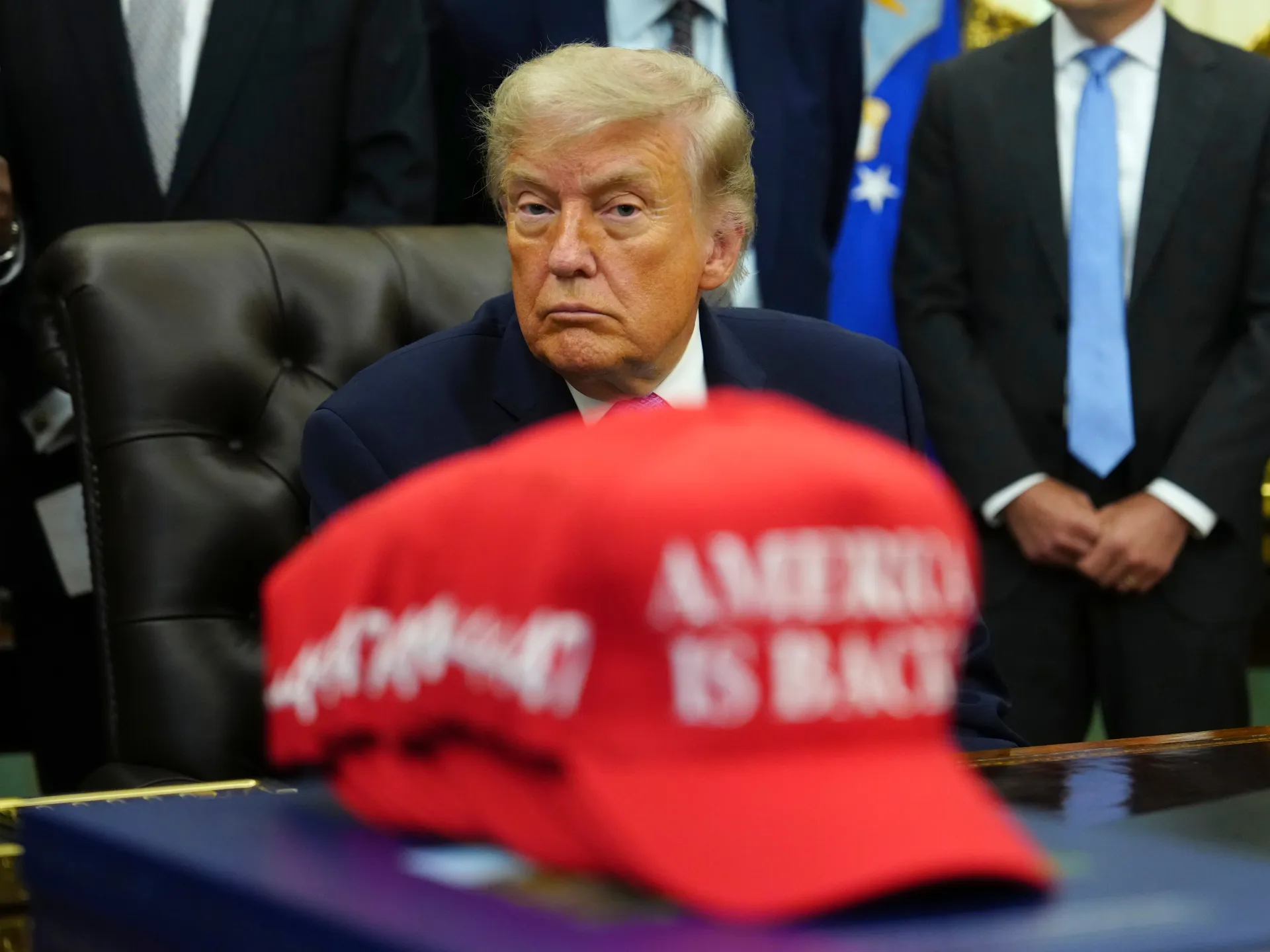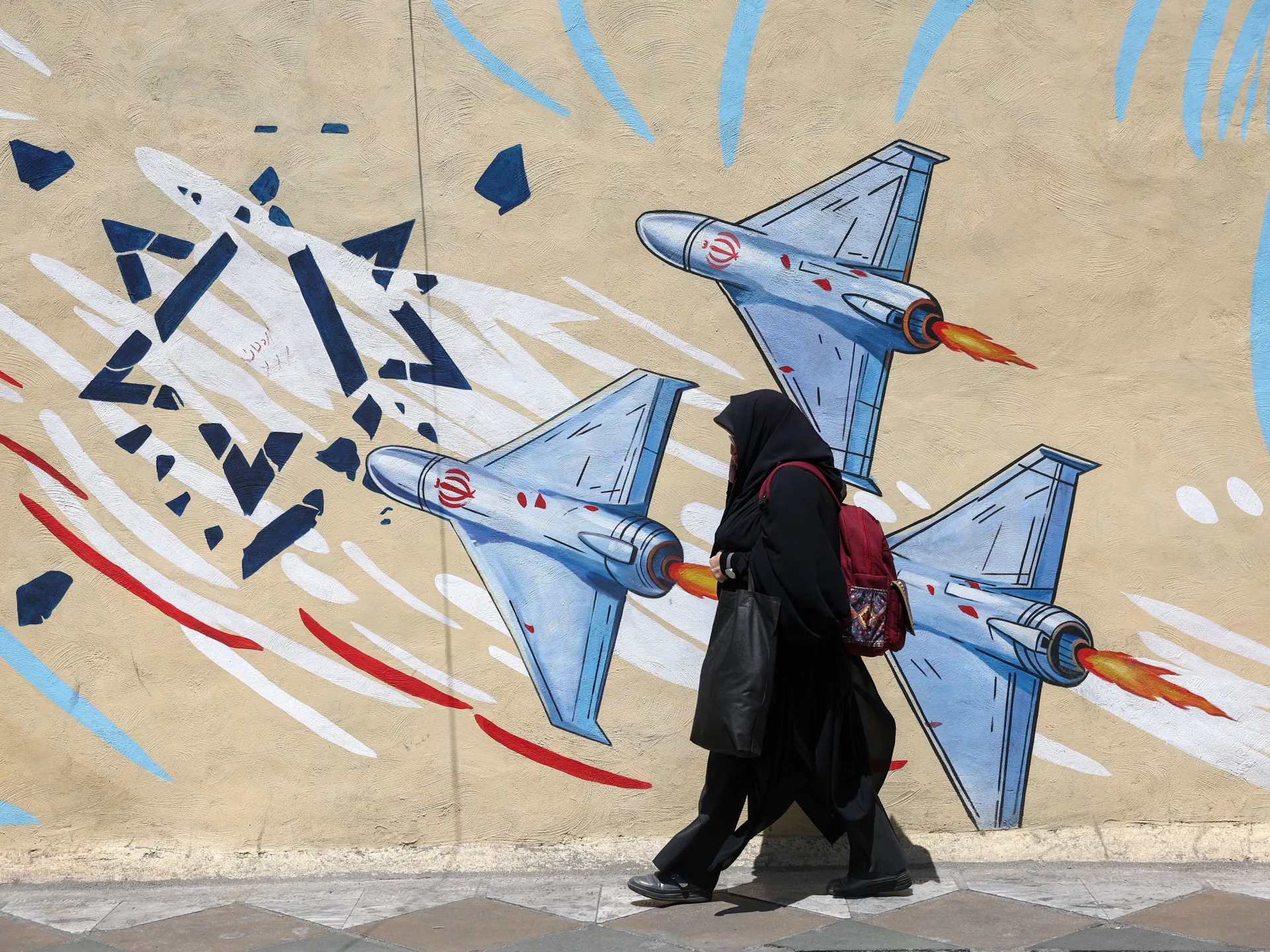
Amid all the alarming and unhinged comments of the president of the United States in recent days threatening Iran with genocide — remarks beyond even the usual cray-cray blather from Donald Trump — it was a statement from his spokesperson on Tuesday that really put the madness in the White House in perspective.
“Only the President knows where things stand and what he will do,” Karoline Leavitt said.
She issued those words just hours before Trump’s 8 p.m. Tuesday deadline for Iran to either reopen the Strait of Hormuz to international shipping or face Armageddon — that is, war crimes by the United States. The statement from the White House press secretary was as clear a description as Americans could get of governance under Trump these days: A mad king reigns, virtually unchecked.
And as a practical matter, there is nothing under the Constitution, neither impeachment nor removal under the 25th Amendment, that can be done about him. There’s only voters’ opportunity to eject the complicit Republican majorities in the House and Senate in November’s midterm elections, to install a Democratic — and democratic — check on Trump for the remaining two years of his term.
By now we know that, just before Trump’s deadline to Iran warning “a whole civilization will die tonight,” he announced a fragile two-week ceasefire for negotiations. The commander in chief declared victory, natch. But so did Iran. And it had the better of the argument: Iran continued to control and monetize passage through the strait, unlike before Trump’s war began Feb. 28, and already on Wednesday it flexed that power by closing the route in retaliation for Israeli strikes. The ceasefire also lets Iran retain possession of its enriched, nearly bomb-grade uranium, and the nation won Trump’s offer of possible tariff and sanctions relief.
So much for the “UNCONDITIONAL SURRENDER!” he demanded in a post a month ago.
I’m writing these words on Wednesday. Who knows where things will stand by the time you’re reading this? “Only the president knows.”
Trump has fluctuated, reversed and contradicted himself repeatedly — even within a single social-media screed or chest-thumping performance for the press — since he ordered war against Iran nearly six weeks ago, without notice to Congress, let alone its authorization. Since Sunday, he’s variously called Iran’s leaders “crazy bastards” and “animals” and taken credit for “Total Regime Change, where different, smarter, and less radicalized minds prevail.”
Presidential rule by fiat and whim would be wrong in any case under the Constitution’s checks and balances of power, and specifically of war power. But in Trump’s case, America has a president who lately has piled on the evidence that he is mentally unstable, unfit for the office.
And spare us the cheerleaders’ claimson Fox News about how he’s playing multidimensional chess. When even Alex Jones likens Trump to “crazy King Lear” and calls for invoking the 25th Amendment to remove him from power — echoing former Trump promoters including Marjorie Taylor Greene and Candace Owens, among others — you know he’s crossed a line by his unilateral war-making and profane threats (on Easter Sunday!) of genocidal apocalypse.
The evidence of Trump’s dangerous instability has been there from his political genesis. In his first term, he warned he’d unleash “fire and fury like the world has never seen” against nuclear-armed North Korea then declared that he “fell in love” with dictator Kim Jong-un (without achieving any diminution in Kim’s arsenal). He celebrates the deaths of political enemies and prosecutes those still living. He repeatedly interrupts himself on some policy question to bloviate about his ballroom plans.
He’s ordered armed agents into American neighborhoods on immigration raids, then expressed neither responsibility nor remorse when citizens died and legal residents got deported. The national security leaders of his first term let it be known that they’d prevented him from acting on his worst impulses, but there’s no chance of that from Defense Secretary Pete Hegseth. Retired Gen. Mark Milley, former chair of the Joint Chiefs of Staff, in 2021 described first-term Trump as being in mental decline and “fascist to the core.”
You’d be hard-pressed to find anyone who thinks Trump has gotten better in the intervening five years.
The country “can’t be a therapy session for … a troubled man like this,” Trump’s first-term attorney general, William P. Barr, told CBS in 2023 as Trump campaigned to return to office.
If only the presidency were therapy for Trump. Instead he’s like a power addict in the world’s most powerful job, mainlining its intoxicants, and no one will stop him. Only people with extraordinary egos seek the White House in the first place, but when an actual egomaniac inhabits that warping bubble of butter-uppers, there’s danger. I remain haunted by the words of retired Gen. John F. Kelly, Trump’s first-term Homeland Security secretary and then White House chief of staff, who in 2023 said of Trump’s potential reelection: “God help us.”
Having failed twice to convict and remove Trump in his first term, Democrats have shied from a third attempt, until now. Scores in Congress have called for impeachment or invocation of the 25th Amendment to oust him. There’s some value in sending a message. But Democrats are offering supporters false hope. A Republican-led Congress and a Cabinet of clownish sycophants will not exercise the powers they have, even against a mad king.
The authors of the Constitution, having thrown off a king, debated at length how to guard against a power-crazed president. But they didn’t anticipate political parties that put tribal loyalty over the country. That partisanship has rendered the high bars to a president’s removal — a vote of two-thirds of the Senate for conviction after impeachment, or, under the 25th Amendment, action by the vice president and a Cabinet majority — all but insurmountable.
That leaves the voters, who in special and off-year elections as recently as Tuesday have shown their zeal to punish Trump’s party. We can hope that a new Congress will check him come January.
We are Iranians, witnessing the failure of a thuggish logic practised by the United States and Israel, which operates on a single, crude premise: that enough pain can bend any nation to their imperial designs.
The US-Israel axis has long believed that force and coercion would eventually compel Iranians to abandon their sovereignty and accept the leash. It has failed. By refusing to surrender, Iranians have turned a lonely struggle for survival into a universal symbol of resistance — a testament to the endurance of the human spirit.
For weeks, we have watched the predictable mechanics of an empire trying to drain a people’s will. We have seen the familiar script of demonisation followed by the machinery of industrial slaughter. Then, we saw America’s “commander-in-chief” issue a threat that defied decency and defiled statecraft.
US President Donald Trump did not just threaten a government or a military. He threatened to end “civilisation” in Iran.
It was a monstrous decree. It was also a transparent one. This was the desperate act of a desperate man. It was the foul howl of a leader who knew he had lost a war.
So, Trump resorted to the “madman theory” of diplomacy, hoping that by appearing unhinged and capable of infinite destruction, he could scare a proud country into capitulation.
He failed. The prospect of annihilation was meant to trigger a collapse. It was meant to prompt the surviving leadership in Tehran to flee and panicked Iranians to yield.
The American-Israeli axis has made a fatal miscalculation. It remains wedded to the discredited conceit that resolve is a commodity to be bought or broken.
Instead, Iran and Iranians stood fast. The “madman” in the White House was obliged to negotiate with an adversary he claimed had already been defeated.
The moving measure of Iran’s success is found in that defiance. The Iranian people could have wilted, succumbed under the burden of such military, economic and psychological terror.
But Iranians fought back. They proved that you cannot bomb a civilisation into oblivion, nor can you erase a history that spans five millennia with a venomous post on social media.
Iran is prevailing. It is winning a war of attrition militarily, strategically, politically and diplomatically. Iran is winning because it understood its enemies’ limits better than they understood themselves.
Iran is winning strategically since it refuses to fight the war its enemies prepared for. It does not try to match the axis ship for ship or jet for jet. Rather, it stretches the battlefield across borders, allies and time.
It absorbs blows and keeps moving. Its doctrine is simple: survive, retaliate, prolong. In doing so, it raises the price of every strike against it. The axis is now trapped in a reactive crouch — bogged down, bleeding money and credibility, while Iran moves its pieces with precision.
Analysts now warn that the war meant to weaken Tehran may leave it stronger. Iran is winning because it adapts. It uses drones, proxies and patience. It does not need air superiority to impose pressure. It needs endurance. Its “mosaic” strategy — layers of command and decentralised power — means leaders can be killed, but the system survives. It turns vulnerability into resilience. It turns time into a weapon.
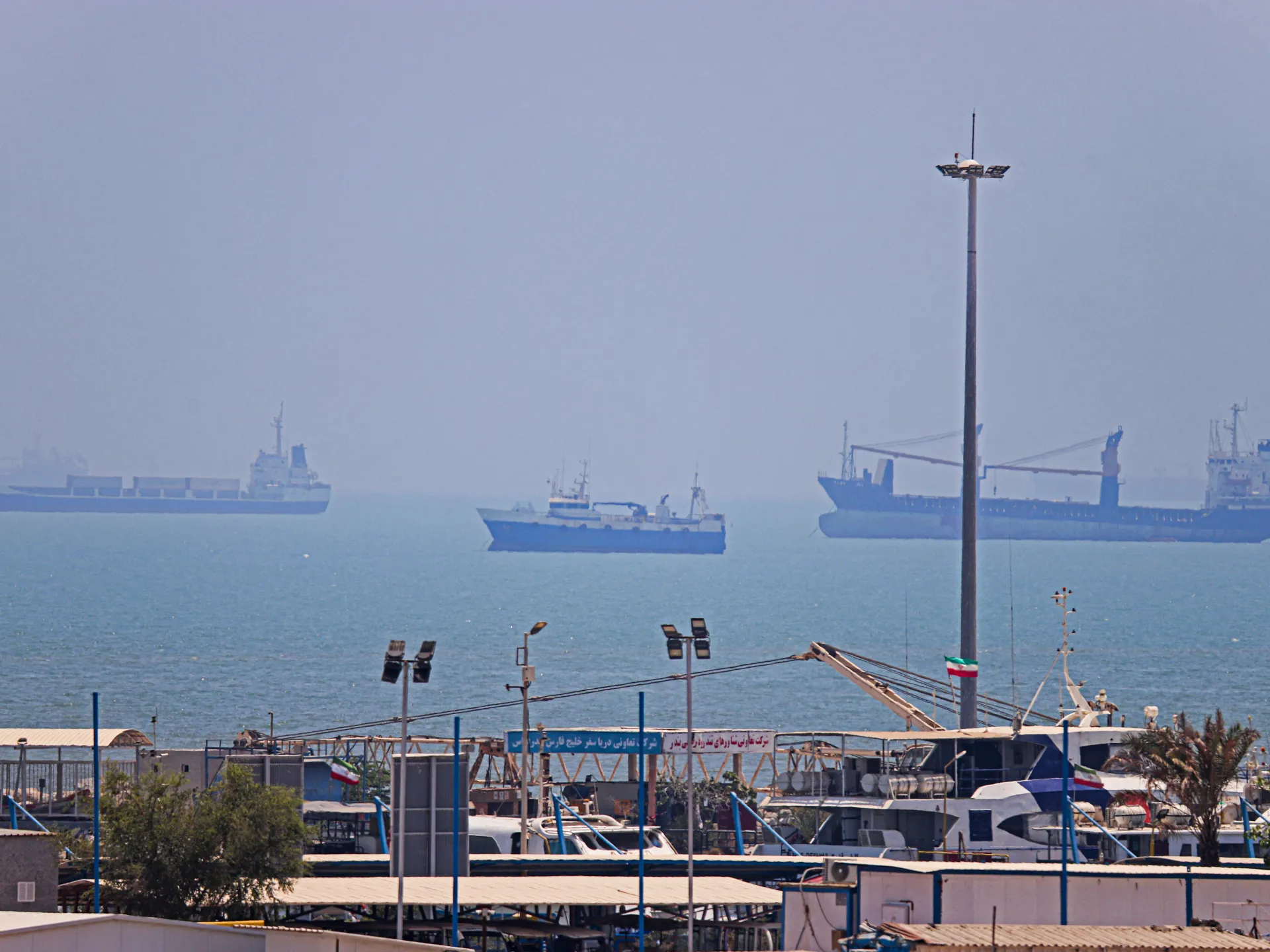
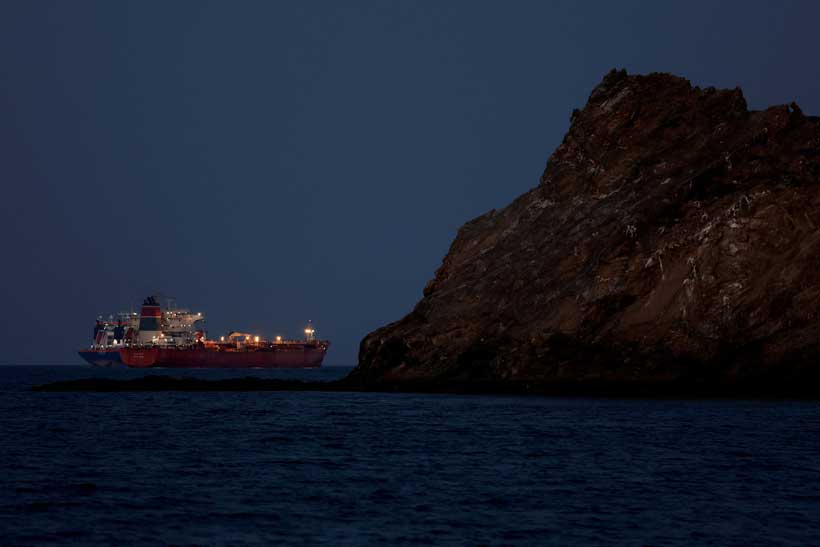
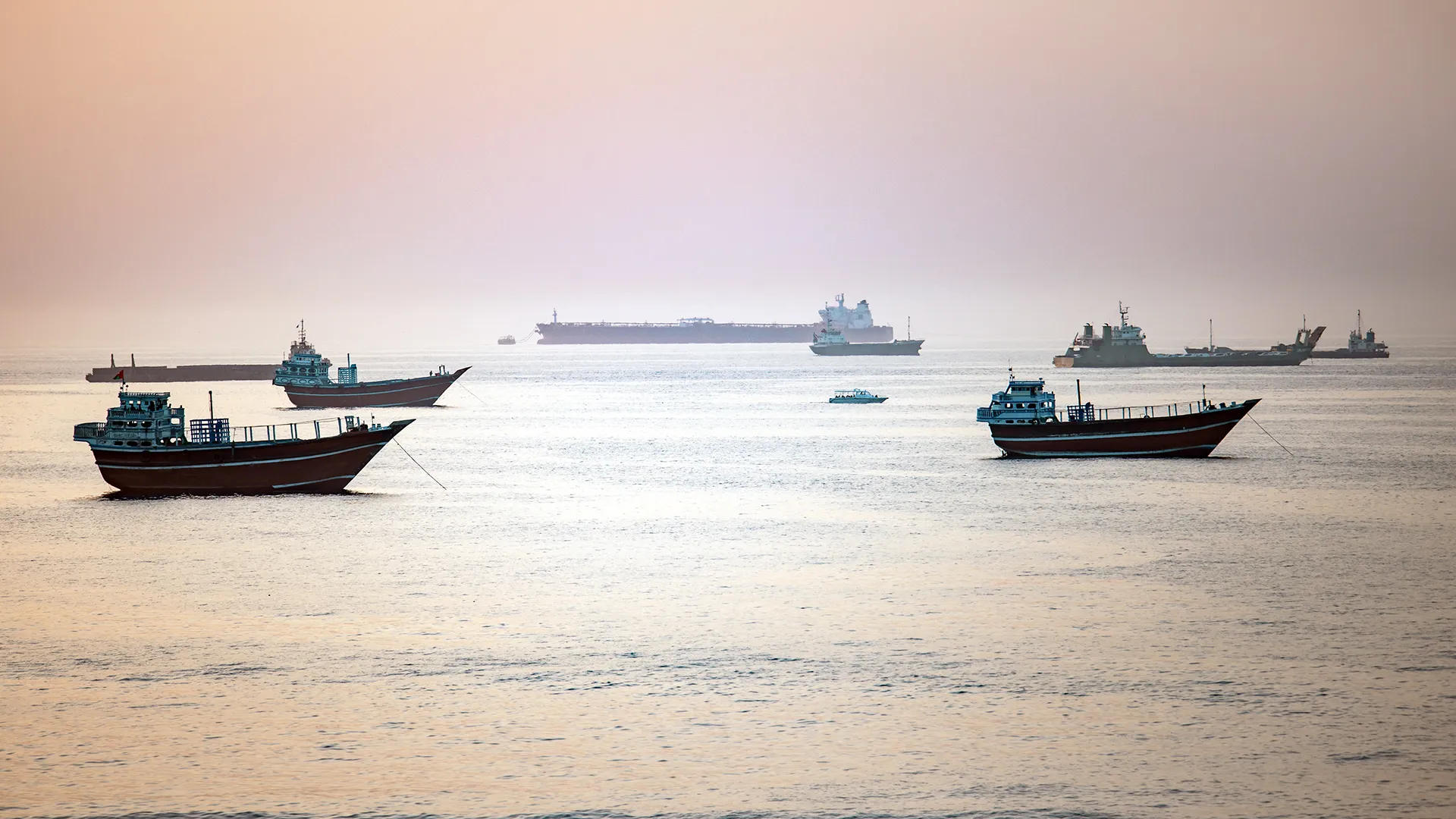
Of course, Iran’s control over the Strait of Hormuz serves as a masterclass in “asymmetric leverage”. By sitting atop a chokepoint through which approximately one-fifth of the world’s liquid petroleum passes, Iran effectively holds a “kill switch” for the global economy.
This geographic reality transforms a narrow waterway into a powerful diplomatic shield. For Iran, “winning” isn’t necessarily about permanently closing the strait — which would hurt its own fragile economy — but about maintaining the credible capability to do so.
This creates a permanent state of strategic caution among Western powers and energy-dependent Asian economies, ensuring that Tehran continues to be an indispensable architect of Middle Eastern security.
Politically, the win is even more stark. The axis has not achieved its paramount goal: “regime change.” The war was launched to fracture the Iranian state. It did the opposite. It appears to have fused the people and the state together against an external existential threat. The American-Israeli axis is not viewed as a force of liberation. It is seen as a collection of would-be occupiers. That perception matters more than any missile.
While Washington is paralysed by chaos and tribalism and Israel is consumed by a descent into blatant, corrosive authoritarianism, Iran — although damaged — is sturdy and intact.
Diplomatically, the United States has never been more isolated. Trump’s ignorance, incoherence, bluster and erratic behaviour have alienated America’s closest allies. Europe, once a reliable partner in so-called “containment,” looks at the bizarre cacophony on display day after dizzying day in Washington and turns away.
Iran, meanwhile, has deepened its ties with the East. It secured its flank with China and Russia. It played the long game while Trump played for the next news cycle.
The world is moving towards Beijing and Brussels, while Washington shouts into the void of its own fading relevance. Iran has turned the “maximum pressure” campaign into a “maximum cost” reality for the West.
The axis can no longer move in the Middle East without accounting for Iranian influence. The hunter has become the hunted.
Still, we must be clear. Iran’s success is not a sterile “win” on a geopolitical scoreboard. It is not a triumph of flags and parades. Its survival is born of fire and bone. It is draped in black and soaked in grief.
The halting human costs and trauma of this war of choice will last for generations. We must remember the thousands who have been killed and maimed. We must remember the schoolchildren whose lives were extinguished by “precision” munitions. The axis failed to break Iran’s back, but it has broken Iranian hearts. That is the nature of war: the winners are merely those who inherit the ruins.
The views expressed in this article are the author’s own and do not necessarily reflect Al Jazeera’s editorial stance.
US president meets NATO chief, expresses disappointment over member states failing to back war on Iran.
By AJ Staff, AFP and Reuters
Published On 9 Apr 20269 Apr 2026
United States President Donald Trump has lashed out at NATO over its reluctance to join Washington’s war on Iran, and appeared to revive threats over Greenland, following a meeting with the alliance’s secretary-general.
Writing on his TruthSocial platform on Wednesday, Trump said in capitalised letters that “NATO wasn’t there when we needed them, and they won’t be there if we need them again”.
Recommended Stories
list of 4 itemsend of list
The remarks came after a two hour meeting with NATO’s Mark Rutte at the White House, a day after the US and Iran agreed to a ceasefire.
Ahead of the meeting, White House spokesperson Karoline Leavitt said that member states had “turned their backs on the American people”, who fund their nations’ defence. She said Trump would have a “very frank and candid conversation” with the NATO chief and quoted the US president as saying: “They were tested, and they failed.”
The rhetoric has raised seats in the West that Trump could move to withdraw the US from the transatlantic alliance, which he has repeatedly called a “paper tiger”. Several NATO members refused to open their airspace to US military aircraft or send naval forces to help reopen the Strait of Hormuz, a vital energy route that Iran has effectively closed.
Trump – following his meeting with Rutte – also appeared to revive his threat to seize Greenland from NATO member Denmark – a move had roiled the alliance before he launched his war on Iran
“Remember Greenland, that big, poorly run, piece of ice!!!”, he wrote.
Rutte, known in Europe as the “Trump whisperer” for his skill in maintaining a productive relationship with the US president, told the CNN broadcaster that Trump was “clearly disappointed with many NATO allies”.
Rutte said he had “very frank” and “very open” discussions with Trump during the meeting, and that while he understood the US president’s frustrations, he had pushed back against some of the broader criticism.
“I was also able to point to the fact that the large majority of European nations have been helpful, with basing, with logistics, with overflights, with making sure that they live up to the commitments,” Rutte said.
“What the US did with Iran, they could do because so many European countries lived up to those commitments. Not all of them, and I totally understand his disappointment about that, but it is, therefore, a nuanced picture,” he added.
Rutte also rejected the notion that NATO members considered the war on Iran “illegal”, arguing that there was widespread support in Europe for degrading Iran’s nuclear and ballistic missile capabilities. He also said that prolonged diplomacy risked a “North Korean moment” – where talks drag on until a country acquires nuclear capacity and it becomes too late to act.
The NATO chief declined to answer directly when asked multiple times if Trump had said he would leave the alliance.
NATO, which includes European countries, the US and Canada, was formed in 1949 to counter the Soviet Union and has been the cornerstone of the West’s security ever since.
The alliance has only activated its mutual defence clause on one occasion, following the September 2001 attacks on the World Trade Center in the US.
It was not clear what role Trump had expected it to play in the Middle East.
The Wall Street Journal, meanwhile, reported that Trump was looking at punishing some NATO members he believed were unhelpful during the conflict by moving US troops out of their countries.
The plan, reported by the Wall Street Journal, would fall short of Trump’s hinted threats to pull the US out of NATO entirely – a move for which he would need the approval of the US Congress.
Rutte did not answer directly when asked about that report.
“The large majority, including France, of European nations, has been doing what they committed before they will do in a case like this,” he said instead.
“So Europe, as a platform of power projection for the United States, was in full play over the last six weeks.”
It’s not clear under what legal authority Trump can tack on this tariff, and analysts called it an ’empty threat’.
Published On 8 Apr 20268 Apr 2026
United States President Donald Trump has said imports from countries supplying Iran with military weapons will face immediate 50 percent tariffs with no exemptions, announcing the threatened duty in a social media post just hours after agreeing to a two-week ceasefire with Tehran.
Trump’s Truth Social post on Wednesday did not specify which legal authority he would invoke to impose such tariffs, as the Supreme Court in February struck down his use of the International Emergency Economic Powers Act [IEEPA] to impose broad global tariffs, prompting a lower court to order refunds of some $166bn collected over the course of a year.
Recommended Stories
list of 4 itemsend of list
The 1977 IEEPA law has been used extensively for decades to back financial sanctions against Iran, Russia and North Korea, but the court ruled that Trump overstepped his authority in using it to impose trade tariffs.
“A Country supplying Military Weapons to Iran will be immediately tariffed, on any and all goods sold to the United States of America, 50%, effective immediately. There will be no exclusions or exemptions! President DJT,” Trump wrote.
However, “it’s a lot more complicated to do that after IEEPA was struck down”, Rachel Ziemba, adjunct senior fellow at the Center for a New American Security, told Al Jazeera. “There’s no immediate policy lever and authorisation that is available for the US to do that. So they need either an act of Congress or need to adapt some other trade tool, and there isn’t really a national security-oriented trade tool.”
Trump did not name any countries that could face punitive tariffs. China and Russia have helped Iran build military capacity to counter US and Israeli pressure, supplying missiles, air defence systems and technology intended to bolster deterrence.
But that support appeared capped during the US-Israeli attacks on Iran. Both Beijing and Moscow have denied supplying any weapons recently, although allegations against Moscow have persisted.
The Reuters news agency has previously reported that Tehran was considering a purchase of supersonic antiship cruise missiles from China. In March, Reuters reported that China’s top semiconductor maker, SMIC, has sent chipmaking tools to Iran’s military, according to two senior Trump administration officials.
“This is a China-related threat, the way I read it. And China will read it that way,” said Josh Lipsky, vice president and chair of international economics at the Atlantic Council.
Although drone and missile parts routinely flow from Chinese entities to Iran, evading US sanctions, Lipsky said Trump was unlikely to follow through with new tariffs in the near term because that would derail his planned trip to Beijing to meet with Chinese President Xi Jinping in mid-May.
“US tariffs on Chinese products have gone down a lot since the court ruling,” said Ziemba, “and slapping on 50 percent tariffs now would be very expensive, especially for US importers and consumers.”
Moreover, with the Trump-Xi meeting looming, “this is kind of an empty threat, but shows that when push comes to shove, Trump comes back to tariffs”, Ziemba said.
Trump does have active “Section 301” unfair trade practices tariffs on Chinese goods from his first term, to which he may be able to add duties and similar pending cases related to excess industrial capacity and China’s compliance with a 2020 trade deal. But these would require a public notice period before they could take effect.
Trump also may be able to invoke Section 232 of the Cold War-era Trade Expansion Act of 1962, which allows sector-specific tariffs to protect strategic domestic industries on national security grounds, but using this law would require a new months-long investigation and public comments.
Russia has been another source of arms technology for Iran, but US imports of Russian goods have fallen sharply since the invasion of Ukraine in 2022 and the wave of financial sanctions imposed on Moscow as a result.
US imports from Russia, one of the only countries not subject to Trump’s now-cancelled “reciprocal” tariffs, jumped 26.1 percent to $3.8bn in 2025. These are dominated by palladium used in automotive catalytic converters, fertilisers and their ingredients, and enriched uranium for nuclear reactors. The US Department of Commerce is already moving to impose punitive tariffs on Russian palladium after an anti-dumping investigation.
French President Emmanuel Macron welcomed the US-Iran ceasefire as “very good news,” saying it appears to be holding, but warned the situation in Lebanon remains critical and must be fully included in any regional truce. He also praised Iran’s readiness to reopen the Strait of Hormuz.
Protesters have blocked roads outside the Israeli embassy in London, condemning Israel’s violent strikes on Lebanon which killed hundreds across the country on the day the US-Iran ceasefire was announced. Many demonstrators also expressed solidarity with Iranians and Palestinians who have all suffered under Israeli bombardment.
US Vice President JD Vance says Lebanon is not part of the US-Iran ceasefire, stressing that neither Washington nor Israel agreed to that. After Pakistan said Lebanon was included, Israel killed hundreds of people when it carried out around 100 strikes across Lebanon in just 10 minutes.
The US president has lashed out at European partners for declining to contribute military forces to the war on Iran.
United States President Donald Trump has reportedly discussed withdrawing from NATO, the transatlantic alliance that has been a central pillar of Western security for decades.
At a news briefing on Wednesday, White House Press Secretary Karoline Leavitt framed the US and Israel’s war on Iran as a “test” that the alliance had failed.
Recommended Stories
list of 3 itemsend of list
Despite Trump’s pressure, NATO allies had declined to contribute military forces to the war, outside of defensive manoeuvres.
Leavitt’s comments came shortly before Trump met with NATO Secretary-General Mark Rutte at the White House.
“I have a direct quote from the president of the United States on NATO, and I will share it with all of you. They were tested, and they failed,” Leavitt said.
“I would add, it’s quite sad that NATO turned their backs on the American people over the course of the last six weeks, when it’s the American people who have been funding their defence.”
Trump, she continued, was preparing to have “a very frank and candid conversation” with Rutte that afternoon.
In an interview with the news outlet CNN after their meeting, Rutte likewise described the encounter as “frank and open”. He reiterated his support for Trump, but added that NATO allies had offered support through logistics and access to bases.
“Did the president say he was going to try withdraw from NATO or, at the very least, not support NATO as much as other presidents have,” CNN host Jake Tapper asked Rutte.
“There is a disappointment, clearly. But at the same time he was also listening careful to my arguments of what is happening,” Rutte replied, before pivoting to praise of Trump’s leadership.
The US president has had a mixed relationship with NATO, sometimes threatening to pull US support and, at other times, reassuring allies of the US’s continued commitment to the alliance.
Since returning to the presidency in 2025, Trump has renewed his pressure campaign for NATO’s European partners to step up their defence spending.
Last June, at the 2025 NATO summit, he largely succeeded. The NATO members agreed to nonbinding commitments to increase their defence budgets to 5 percent of their gross domestic product (GDP) by 2035.
But Spain sought an exemption, leading Trump to denounce the country repeatedly over the past year.
Tensions between the US and its European allies were further strained last year when Trump threatened to use military force to seize the self-governing Danish territory of Greenland, claiming that its ownership was essential for national security.
The US has eased away from those threats. But Trump has continued to assert that US ownership of Greenland is necessary, despite strong protests from the territory’s residents and European leaders.
After the US and Israel unilaterally launched a war against Iran on February 28, Trump lashed out at European countries for their lack of interest in contributing to the campaign.
Many legal scholars consider the war an act of aggression, in violation of international law.
The Wall Street Journal reported on Wednesday that the Trump administration is considering whether to close US bases or move troops out of countries such as Spain and Germany as punishment for their stance on the war.
When asked by reporters if Trump was considering leaving NATO, Leavitt said it was something the president “has discussed” and could address after his meeting with Rutte.
Trump and Rutte are considered to have a close relationship. Rutte has visited the White House multiple times during Trump’s second term, including in March, July, August and October of last year.
In the past, Rutte has warned that NATO “will not work” without US support.
WASHINGTON — A day after the United States and Iran agreed to a two-week ceasefire, the truce showed signs of strain Wednesday as Iranian leaders accused Americans of violating the agreement and reports emerged that Tehran had moved to restrict traffic through the Strait of Hormuz.
The developments tested President Trump’s ability to parlay a fragile pause in fighting into a lasting peace deal with a country he has spent weeks threatening to destroy, and raised questions about whether the Trump administration had the diplomatic leverage to hold the deal together.
The White House sought to project confidence about the ceasefire, but the fragile deal grew shakier after Israel carried out its largest attack against Hezbollah in Lebanon since the conflict began. Iran said the strikes by the U.S. ally amounted to a breach of the ceasefire terms, even as Trump and Israeli Prime Minister Benajmin Netanyahu maintained that Lebanon was not subject to the agreement.
“The big issue seems to be that the two sides can’t agree on what the agreement is,” said Michael Rubin, an expert on Iran at the American Enterprise Institute. At best, he said, the two sides had secured a “tactical pause.”
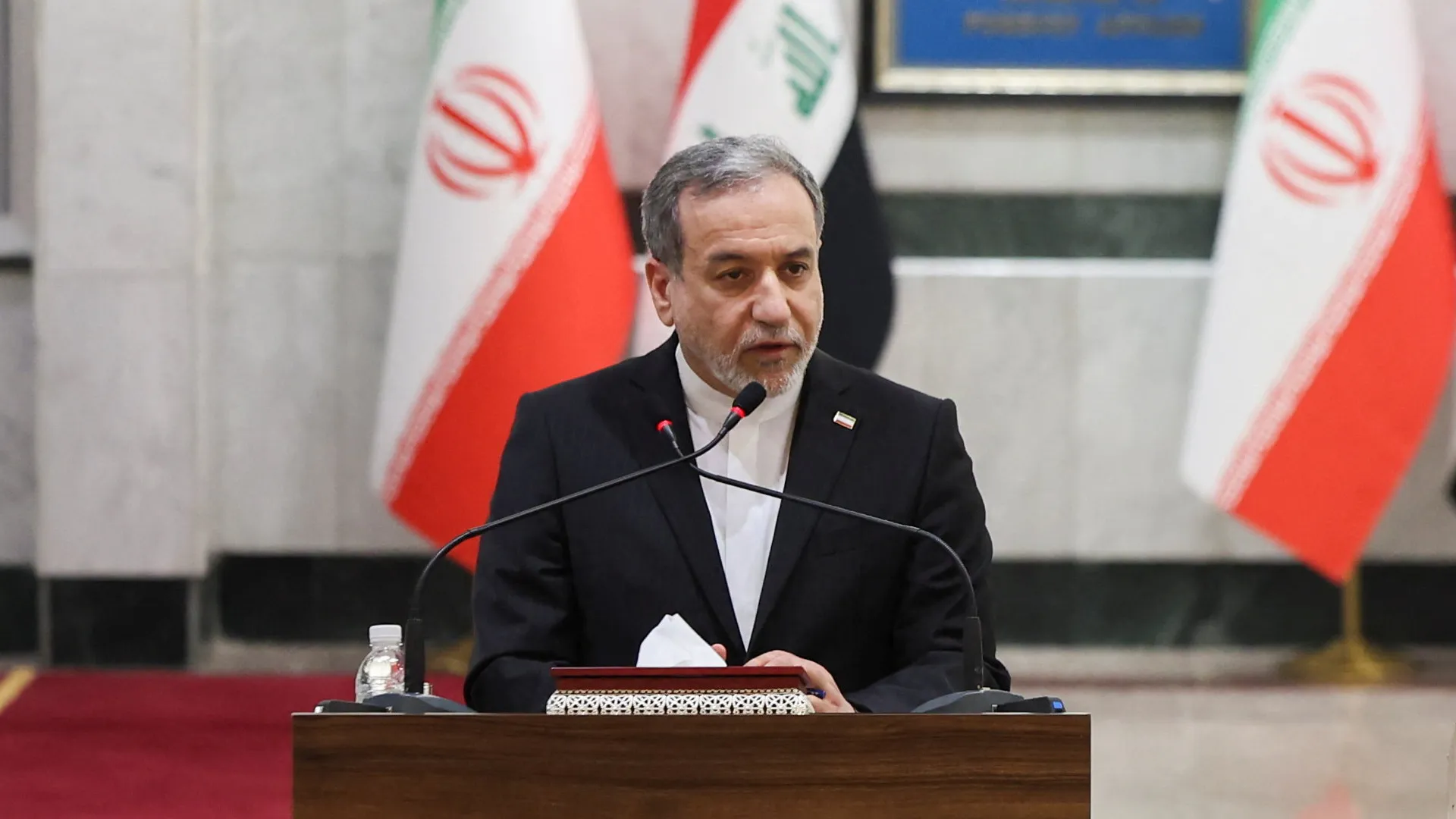
Iranian Foreign Minister Abbas Araghchi said the United States must choose between a ceasefire or “continued war via Israel.
“It cannot have both,” Araghchi wrote on X. “The world sees the massacres in Lebanon. The ball is in the U.S. court, and the world is watching whether it will act on its commitments.”
Whether Iran will draw a red line over Lebanon could become a key question. The Wednesday back-and-forth represented “threshold-testing” of Iran and whether it will be willing to reengage the United States in conflict over the issue, said Ross Harrison, senior fellow at the Middle East Institute.
The parties’ prospects for reaching an agreement — and what Trump’s options become for declaring success — will depend on how the ceasefire goes in the coming days, Harrison said.
“There’s some room here … if [the Iranians] see that negotiations are real and not a pretext for further attacks,” he said. “A lot of what the United States can get depends on what the United States is willing to give — not just in terms of the points of their plan, but also in terms of the signaling that they too have an interest in de-escalating.”
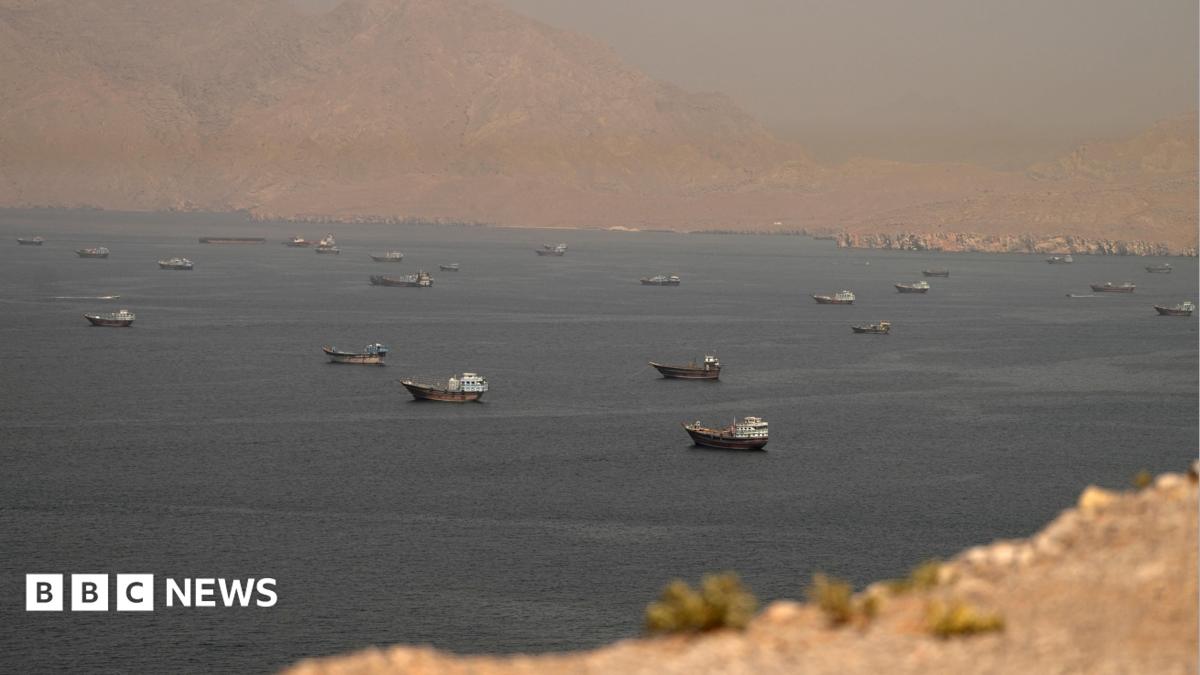
Reports that Iran had moved to restrict traffic through the Strait of Hormuz, a crucial waterway whose opening was central to the truce negotiations, further complicated the ceasefire.
“Any vessel trying to travel into the sea … will be targeted and destroyed,” the Iranian navy told shipping vessels, Fars News reported. The news agency is aligned with the Islamic Revolutionary Guard Corps.
At a news briefing Wednesday, White House Press Secretary Karoline Leavitt said Trump was aware of reports that the Strait of Hormuz had been closed, a move she called both “completely unacceptable” and “false.” She added that the president expects the waterway will be “reopened immediately, quickly and safely” during the ceasefire.
Leavitt sidestepped questions about who currently controls the oil route.
Earlier in the day, at a Pentagon briefing, Defense Secretary Pete Hegseth told reporters that “commerce will flow” through the strait, but did not say whether U.S. warships would be escorting vessels through the waterway. Joint Chiefs of Staff Chairman Gen. Dan Caine, who stood next to Hegseth, was asked whether the strait was open. He said: “I believe so.”
Hegseth emphasized that Iran should keep its end of the bargain or face the consequences.
He said the U.S. military plans to maintain a presence in the region to ensure Iranian compliance, saying American troops are ready to “go on offense and restart operations at a moment’s notice” if the truce broke down.
“We’ll be hanging around,” Hegseth said. “We are going to make sure Iran complies with this ceasefire and then ultimately comes to the table and makes a deal.”
The warning came as several Persian Gulf nations reported Iranian missile and drone attacks on their territories despite the ceasefire. Kuwait said its air defenses intercepted drones, while Bahrain reported that an Iranian attack has sparked a fire at one of its facilities.
Hegseth downplayed the continued Iranian attacks in the region, saying that “it takes time sometimes” for ceasefires to take hold, but advised Iran to “find a way to get a carrier pigeon to their troops in remote locations” and ensure compliance moving forward.
Israel, meanwhile, carried out its largest strike against Hezbollah since the militant group began launching rockets in solidarity with Iran last month. Lebanese health authorities said hundreds were killed and wounded in the Israeli strikes.
Trump and Israeli Prime Minister Benjamin Netanyahu have maintained that Lebanon is not subject to the ceasefire agreement. Leavitt reiterated that stance, telling reporters that “Lebanon was not part of the ceasefire” and that it had been relayed to all parties.
Asked whether Trump would want to add Lebanon to the agreement in the future, Leavitt said that the matter “will continue to be discussed but that “at this point in time they are not included.”
More than a dozen European heads of state called on “all sides” to cease fire, including in Lebanon. In a Wednesday statement, they urged the parties to move quickly in diplomatic talks.
“The goal must now be to negotiate a swift and lasting end to the war within the coming days,” they said in the statement, which was signed by French President Emmanuel Macron, Italian Prime Minister Giorgia Meloni and German Chancellor Friedrich Merz, along with Japanese Prime Minister Sanae Takaichi as well as other European leaders.
Pakistani Prime Minister Shehbaz Sharif, who helped broker the ceasefire, wrote on X that ceasefire violations had been reported at “a few places across the conflict zone” and urged all parties to exercise restraint. He did not detail the violations but said the attacks “undermine the spirit of the peace process.”
The situation in the Strait of Hormuz underscores how much remains uncertain about the agreement between the United States and Iran. The full terms of the ceasefire have not been publicly disclosed, and Trump wrote on his social media website that the “only group of meaningful ‘POINTS’ that are acceptable to the United States” will be discussed behind closed doors.
Trump also seemed to take issue with the 10-point peace plan that Iran publicly released Wednesday. He said that there are terms being floated by people who have “absolutely nothing to do” with the negotiations between the United States and Iran. He said that “in many cases, they are total Fraudsters, Charlatans, and WORSE.”
Leavitt declined to offer details about the working proposal being negotiated, saying the talks will take place privately. Both Leavitt and Hegseth, however, mentioned that the U.S. wants to ensure Iran does not have stockpiles of enriched uranium, the fissile material that is key in developing nuclear weapons.
“This is on the top of the priority list for the president and his negotiating team as they head into the next round of discussions,” Leavitt said.
Hegseth told reporters earlier in the day that Iran may “hand it over.” If they don’t, he said, “we will take it out, or if we have to do something else ourselves like we did [with] Midnight Hammer or something like that, we reserve that opportunity.” He was referring to the 12-day war against Iran in June.
Leavitt reiterated that administration officials “hope it will be through diplomacy,” but left open the possibility that the uranium could be retrieved through ground operations.
There is probably negotiating room over enrichment, said Harrison of the Middle East Institue, while Iran may be less flexible on the Strait of Hormuz. The United States needs a resolution more quickly than Iran, he added.
“Time is their friend, not a friend of Donald Trump’s,” Harrison said.
Americans are split on whether to trust Donald Trump’s instinct-driven approach to the Iran conflict. The range of opinions reflects a deeper unease about a president bypassing his cabinet and Congress in favour of gut decisions. Al Jazeera’s Heidi Zhou-Castro speaks with US citizens at the White House.
Israeli forces have launched an intense bombardment across Lebanon, killing hundreds of people, hours after a two-week ceasefire was announced in the United States-Iran war.
Lebanon’s Civil Defence said at least 254 people were killed and 1,165 others were wounded in air strikes that targeted areas in Beirut, the Bekaa Valley, Mount Lebanon, Sidon, and several villages in southern Lebanon.
Recommended Stories
list of 3 itemsend of list
The Israeli military said that the attack was its largest coordinated assault on Lebanon since it started a new military operation in the country on March 2, “targeting more than 100 Hezbollah command centres and military sites”.
In a written statement, the head of Lebanon’s syndicate of doctors, Elias Chlela, urgently called for “all physicians from all specialities” to head to any hospital they could to offer help, with one of Beirut’s biggest hospitals saying it needed donations of all blood types.
Parliament Speaker Nabih Berri called the attacks on densely populated areas a “full-fledged war crime.”
“Today’s crime, coinciding with the ceasefire agreement declared in the region — an agreement that Israel and its political and security apparatus have failed to uphold — is a serious test for the international community and a blatant challenge to all international laws, norms, and conventions, which Israel violates daily through its unprecedented campaign of human assassination in modern history,” Berri said.
“It is also a test for all Lebanese — political, religious, and civil leaders — to unite in solidarity with the martyrs. May God have mercy on the martyrs, grant a speedy recovery to the wounded, and protect Lebanon,” he added.
Hezbollah
The Lebanese armed group said it had a “right” to respond to the attacks.
“We affirm that the blood of the martyrs and the wounded will not be shed in vain, and that today’s massacres, like all acts of aggression and savage crimes, confirm our natural and legal right to resist the occupation and respond to its aggression,” Hezbollah said in a statement.
Hezbollah lawmaker Hassan Fadlallah told the news agency Reuters that the Israeli strikes were “a grave violation of the ceasefire”, adding there would be “repercussions for the entire agreement” if they continued.
Israel
Defence Minister Israel Katz said Israel “insisted on separating the war with Iran with the fighting in Lebanon in order to change the reality in Lebanon”.
Prime Minister Benjamin Netanyahu also told a news conference that Israel would “continue to strike” Lebanon as the US-Iran ceasefire did not apply to Hezbollah.
First responders and residents gather at the site of an Israeli air strike in Beirut’s Tallet al-Khayyat neighbourhood [AFP]
Iran
The Iranian Revolutionary Guard Corps (IRGC) warned that it will respond to the attacks on Lebanon if Israel does not stop the assault.
“We issue a firm warning to the United States, which violates treaties, and to its Zionist ally, its executioner: if the aggression against beloved Lebanon does not cease immediately, we will fulfil our duty and deliver a response,” the IRGC said in a statement carried on Iran’s state-owned TV channel, using a reference to Israel.
In a post on X, Foreign Minister Abbas Araghchi said the terms of the ceasefire were “clear and explicit: the US must choose — ceasefire or continued war via Israel. It cannot have both.”
“The world sees the massacres in Lebanon. The ball is in the US court, and the world is watching whether it will act on its commitments,” he added.
Qatar
The foreign ministry condemned the “brutal series” of Israeli attacks on Lebanon that had killed hundreds of people, calling the attacks a “dangerous escalation and a flagrant violation of the sovereignty of the sister Lebanese Republic, the rules of international humanitarian law, and United Nations Security Council Resolution (1701).”
“The Ministry of Foreign Affairs calls on the international community to fulfill its responsibilities by compelling the Israeli occupation authorities to halt their barbaric massacres and repeated attacks on Lebanon, and to hold them accountable for respecting international covenants and laws,” a statement posted on X read.
It added that Qatar was in “full solidarity” with Lebanon.
Egypt
The Ministry of Foreign Affiars called Israel’s attacks on Lebanon had a “premediatated intent” to undermine regional and international efforts to reduce escalation.
The ministry added that the attacks were an attempt by Israel to drag the region into “total chaos”.
Spain
In a post on X, Prime Minister Pedro Sanchez said Netanyahu’s “contempt for life and international law is intolerable” in light of the attacks.
“It’s time to speak clearly: – Lebanon must be included in the ceasefire. – The international community must condemn this new violation of international law. – The European Union must suspend its Association Agreement with Israel. – And there must be no impunity for these criminal acts,” Sanchez said.
Italy
Foreign Minister Antonio Tajani said he spoke to the Lebanese President Joseph Aoun and expressed solidarity for the “unjustified and unacceptable attacks he is suffering from Israel.”
“We want to avoid there being a second Gaza. We will reiterate this concept to the Israeli Ambassador as well, whom I have summoned to the Farnesina. We condemn the bombings on the Lebanese civilian population, including the gunfire incidents suffered by our UNIFIL [UN Interim Force in Lebanon] troops, for which we continue to demand guarantees of total safety. We must absolutely avoid any further expansion of the conflict that would jeopardise the ceasefire in Iran and the reopening of the Strait of Hormuz,” Tajani added.
United Nations
The deputy spokesperson for United Nations Secretary-General Antonio Guterres, Farhan Haq, said the UN “strongly condemns” Israel’s attacks on Lebanon.
“The United Nations strongly condemns the strikes by Israel across Lebanon that resulted in significant civilian casualties,” said Haq.
“We continue to call on all sides to avail themselves of diplomatic channels, cease hostilities”, and use the new US-Iran ceasefire as an opportunity to prevent further loss of life,” he added.
Weekly insights and analysis on the latest developments in military technology, strategy, and foreign policy.
The United States and Iran agreed to a two-week ceasefire just under an hour before U.S. President Donald Trump’s Wednesday deadline to hammer the country with an unprecedented level of airstrikes was due to expire, with Tehran announcing it will temporarily reopen the strategically vital Strait of Hormuz. Both sides are now claiming victory in the conflict, which lasted more than a month and disrupted global financial markets, with oil prices driving sharply higher.
Trump told AFP that the agreement last night marked a “total and complete victory” for the United States.
Trump called the provisional Iran ceasefire a “total and complete victory,” saying Tehran’s uranium issue would be “perfectly taken care of.”
“One hundred percent. No question about it,” he said, adding he “wouldn’t have settled” otherwise.
Iran also portrayed the ceasefire as a huge success, stating it had agreed to begin talks with Washington on Friday in Pakistan as part of efforts to bring the conflict to an end. Iran’s Supreme National Security Council conditionally accepted the two-week ceasefire if attacks against Iran are halted.
“The enemy has suffered an undeniable, historic and crushing defeat in its cowardly, illegal and criminal war against the Iranian nation,” said a statement from the Supreme National Security Council.
“Iran achieved a great victory.”
What is the Pentagon saying?
Secretary of War Pete Hegseth and Chairman of the Joint Chiefs of Staff Gen. Dan Caine gave a press conference today.
Hegseth, who had previously described “a fragile truce,” says that Iran “begged for this ceasefire” and that Operation Epic Fury “decimated” Iran’s military.
He says the country’s missile programme has been “functionally destroyed” and that Iran’s navy “is at the bottom of the sea.” Hesgeth adds that “we [the US] own their skies.”
The U.S. military carried out 800 strikes on Tuesday night, Hegseth says, destroying Iran’s defense industrial base.
The ceasefire with Iran is a “fragile truce,” @VP says. Iran’s foreign minister is negotiating, but others in the country have been “lying” about points agreed upon. “If the Iranians are willing in good faith to work with us, I think we can make an agreement,” Vance said in…
Should it be decided, the U.S. military is also ready to resume action against Iran.
In the statement on Truth Social, Trump said that the United States would be just “hangin’ around” in order to make sure everything goes well,” suggesting a continuing beefed-up military presence in the region.
“Let us be clear, a ceasefire is a pause, and the joint force remains ready, if ordered or called upon,” Caine told the press conference today.
While the Israeli Channel 12 reported that U.S. Air Force KC-135 refueling tankers are starting to leave Ben Gurion International Airport in Tel Aviv, publicly available flight-tracking data suggested the aircraft took off and then returned to the same airport.
Israeli Channel 12 reports that U.S. Air Force KC-135 aerial tankers are departing the Ben Gurion International Airport in Tel Aviv.
The airport has been serving as a major staging base for US aerial refueling ops throughout the war with Iran.pic.twitter.com/Q9bOfUMxK3
— Status-6 (War & Military News) (@Archer83Able) April 8, 2026
המריאו וחזרו. מה זה אומר שהם עזבו??? בניגוד לדיווח על עזיבת מתדלקים אמריקניים, בצה”ל אומרים שארה”ב שומרת על יציבה אזורית, ולא מפנה מתדלקים מישראל. הגורם אמר שארה”ב שומרת על מוכנות גבוהה באזור למקרה שהפסקת האש תקרוס https://t.co/0L9oAqmjBqpic.twitter.com/CbSjhLZA0u
— איתי בלומנטל 🇮🇱 Itay Blumental (@ItayBlumental) April 8, 2026
What are the Iranian demands?
Trump said that Iran had proposed a “workable” 10-point peace plan. According to Iranian state media, the 10-point proposal includes various conditions that the United States had rejected in the past.
Among the key Iranian demands are controlled transit through the Strait of Hormuz, coordinated with the Iranian military. The plan would also require the lifting of all primary and secondary sanctions, payment of full compensation to Iran, and release of all frozen Iranian assets. It is unclear if the United States will actually cede to any of these latter points.
Making matters more confusing, a U.S. official said today that the 10-point ceasefire plan published by Iran is not the same set of conditions that were agreed to by the White House for pausing the war.
“The document being reported by media outlets is not the working framework,” the senior official told AFP on condition of anonymity.
NEW: A White House official says that the 10-point peace plan that Iran publicly released on Wednesday differs from the plan that Trump said was a “workable basis on which to negotiate.” – NYT pic.twitter.com/oH9R0bTKif
Since then, Trump has also emphasized the fact that the nature of the points in the agreement is a closely guarded secret, and published claims about them “have absolutely nothing to do with the negotiation.”
“There is only one group of meaningful ‘POINTS’ that are acceptable to the United States, and we will be discussing them behind closed doors during these Negotiations…” – President Donald J. Trump pic.twitter.com/PP4jlW8LAJ
Kuwait, in particular, today reported a barrage of drone attacks targeting oil infrastructure, desalination facilities and power plants.
Kuwait ministry of defense reports a wave of drone attacks targeting oil infrastructure, desalination facilities and power plants. https://t.co/Ao8CGFvICG
However, there are signs that some U.S. airstrikes may have been called off as soon as the ceasefire announcement was made, with at least one B-52 bomber returning to RAF Fairford, England, with weapons still loaded under the wings.
While it remains unclear to what degree Iran is taking the ceasefire seriously, there is also the reality that many Iranian military units have been fighting with a decentralized command and control in order to make its forces more resilient after lessons learned from the 12-Day War. Meanwhile, whatever ability to maintain oversight and authority over these units that is still in place has been significantly incapacitated in U.S.-Israeli airstrikes and by other means, as well as an internet blackout. Iran also mentioned yesterday that getting the word about the ceasefire agreement to military units will take time.
Hegseth: Iran would be wise to find a way to get the carrier pigeon to their troops out in remote locations to know not to shoot missiles—we’re prepared.
Meanwhile, the Financial Timesreported today that Saudi Arabia’s critical East-West oil pipeline, which transports crude from the Gulf to the Red Sea for export, has been attacked. The newspaper cited two sources familiar with the incident, who said that a pumping station along the pipeline was struck around 1:00 p.m. local time today. The pipeline has become an absolutely crucial economic asset for the kingdom (and the world) amid disruptions to shipping through the Strait of Hormuz.
One source said the facility was targeted by a drone, and officials are currently assessing the extent of the damage.
SAUDI ARABIA’S VITAL EAST-WEST OIL PIPELINE CARRYING CRUDE FROM THE GULF TO THE RED SEA FOR EXPORT HAS BEEN ATTACKED – FT
At this point, Iranian officials have not fully confirmed all details of the reported agreement, so the status of the nuclear issue is unclear.
Iranian state media reports that the 10-point plan also requires Washington to accept its uranium enrichment program, a previous red line for the Trump administration, and one of the main reasons for the U.S. military operation in the first instance.
On his Truth Social platform on Wednesday afternoon, Trump said he had rejected the Iranian demand for the right to enrich uranium.
He said the United States would “work closely” with Iran but “there will be no enrichment of uranium.”
Trump has also claimed that the United States will assist in recovering enriched uranium, at least some of which was buried during Operation Midnight Hammer airstrikes last summer. On Truth Social, he wrote:
“The United States will work closely with Iran, which we have determined has gone through what will be a very productive Regime Change! There will be no enrichment of Uranium, and the United States will, working with Iran, dig up and remove all of the deeply buried (B-2 Bombers) Nuclear ‘Dust.’ It is now, and has been, under very exacting Satellite Surveillance (Space Force!). Nothing has been touched from the date of attack.”
BREAKING: Trump:
The United States will work closely with Iran, which we have determined has gone through what will be a very productive Regime Change!
There will be no enrichment of Uranium, and the United States will, working with Iran, dig up and remove all of the deeply… pic.twitter.com/mxzXJhUAHu
Subsequently, White House press secretary Karoline Leavitt told reporters that Iran has indicated it will turn over its stocks of enriched uranium.
(Reuters) – Iran has indicated it would turn over its stocks of enriched uranium, White House press secretary Karoline Leavitt told reporters on Wednesday.
Some of the first ships to sail through the strait since the ceasefire announcement have already been detected, according to tracking data analyst MarineTraffic.
In a post on X, MarineTraffic wrote:
“Early signs of vessel activity are emerging in the Strait of Hormuz following a ceasefire announcement, which includes a temporary reopening of the strategic waterway to allow for negotiations. According to MarineTraffic data, hundreds of vessels remain in the region, including 426 tankers, 34 LPG (liquefied petroleum gas) carriers, and 19 LNG (liquefied natural gas) vessels, many of which had been effectively stranded during the disruption.”
Vessel movements resume in the Strait of Hormuz following ceasefire announcement
Early signs of vessel activity are emerging in the Strait of Hormuz following a ceasefire announcement, which includes a temporary reopening of the strategic waterway to allow for negotiations.… pic.twitter.com/CSy6PZlCJ4
Subsequently, French global marine data tracker AXSMarine reported that 10 ships had passed through the Strait of Hormuz so far today, four of which are Iranian.
📰 The US–Iran ceasefire comes amid notable shipping developments around the Strait of Hormuz. Under the reported terms of the agreement, passage through the strait is to be permitted for a two-week period, in coordination with Iran’s armed forces.
During peacetime, the straits saw between 50 and 100 ships passing in each direction daily.
Iran’s foreign minister said that passage through the Strait of Hormuz will be allowed for the next two weeks under Iranian military management.
Hamid Hosseini, a spokesperson for Iran’s Oil, Gas and Petrochemical Products Exporters’ Union, told the Financial Times today that Iran wanted to collect tolling fees from any tanker passing and to assess each ship.
“Iran needs to monitor what goes in and out of the strait to ensure these two weeks aren’t used for transferring weapons,” said Hosseini, whose industry association works closely with the state. “Everything can pass through, but the procedure will take time for each vessel, and Iran is not in a rush,” he added.
Iran has stated a tariff of $1 per barrel of oil, to be paid in cryptocurrency, adding that empty tankers can pass freely.
FT: Iran will demand that shipping companies pay tolls in cryptocurrency for oil tankers passing through the Strait of Hormuz. Hamid Hosseini, a spokesperson for Iran’s Oil, Gas and Petrochemical Products Exporters’ Union said the tariff is $1 per barrel of oil.
Trump today said he is considering the formation of a “joint venture” with Iran to set up tolls in the strait. This may well be related to Trump’s announcement that the United States will be “helping with the traffic buildup” in the strait, although no further details were provided.
There are also reports that the Iranian Navy said today it will destroy ships attempting to pass through the strait without Tehran’s permission, adding that transit through the waterway remains shut.
“Any vessel trying to travel into the sea … will be targeted and destroyed…” the reported message said.
British Prime Minister Keir Starmer said on Wednesday there was still a lot of work to do to reopen the strait, speaking during a visit to Saudi Arabia. “We now … have a ceasefire, but there’s a lot of work to do, as you will appreciate, a lot of work to make sure that that ceasefire becomes permanent and brings about the peace that we all want to see,” Starmer said. “But also a lot of work to do in relation to the Strait of Hormuz, which has an impact everywhere across the world.”
‘It is very important that we get the Strait of Hormuz open’.
Keir Starmer is in Saudi Arabia for talks with Gulf allies.
In a statement today, the Iranian news agency FARS said that the strait will remain blocked as long as Israel attacks Lebanon, suggesting a nother possbile point of friction in the ceasefire.
Iran state media FARS posted to Telegram. While two tankers transited this morning, they will block strait as long as Israel attacks Lebanon.
Regardless of tolls and continued coercion, it is highly unlikely that energy prices will spring back to their pre-war levels any time soon. Despite the agreement on access to the strait, shipowners will probably remain cautious about re-entering the region when any resumption of hostilities could result in the loss of vessels or crew.
Overall, it will require a lasting ceasefire before there is more confidence in the oil market.
What will happen in Lebanon?
The White House says that Israel agreed to the ceasefire, but Prime Minister Benjamin Netanyahu said it does not include Lebanon, where Israel continues to launch assaults and airstrikes in response to rocket fire by Iranian-backed Hezbollah.
“We will continue striking the Hezbollah terror organization and will utilize every operational opportunity. We will not compromise the security of the residents of northern Israel. We will continue to strike with determination.”
This was underscored by the Israel Defense Forces (IDF) launching what it says is the largest wave of strikes across Lebanon since the current conflict began. The IDF claims it attacked 100 command centres and military infrastructure targets belonging to Hezbollah in 10 minutes.
‼️ In 10 minutes, the IDF completed the largest coordinated strike across Lebanon since the start of Operation Roaring Lion.
The strike targeted 100+ Hezbollah headquarters, military arrays, & command-and-control centers in Beirut, Beqaa and southern Lebanon, including:
“The IDF carried out a surprise strike on hundreds of Hezbollah terrorists at command centres across Lebanon. This is the largest concentrated blow Hezbollah has suffered since Operation Beepers,” Israeli Minister of Defense Israel Katz said in a video statement, referring to the 2024 operation against Hezbollah involving explosive pagers.
There is also a possibility that the continued Israeli campaign directed against Hezbollah could also draw Iran back into the conflict. Al Jazeerareports that a senior Iranian official told them that Iran “will punish Israel in response to the crime it committed in Lebanon,” which Tehran views as a violation of the ceasefire conditions.
Iran is preparing “operations” against Israeli targets in response to the ceasefire violations in Lebanon -Iranian state outlet Fars pic.twitter.com/1iyoCwZ1st
The Israeli Air Force published this photo of an F-15I strike fighter heading out to carry out airstrikes against Hezbollah in Lebanon earlier today. The jet is armed with 2,000-pound Joint Direct Attack Munitions. IAF
What about peace talks?
Iranian state media said negotiations with the United States will be held in Islamabad, the Pakistani capital. Iran wants to see the details of a long-term peace agreement finalized, with the aim of “confirming Iran’s battlefield achievements.”
Talks are supposed to begin on Friday, April 10, but could be extended. This morning, Washington had yet to publicly accept an invitation to the talks, but Trump today told the New York Post that in-person talks with Iran will happen very soon.
(Reuters) – U.S. President Donald Trump said in-person talks with Iran will happen “very soon”, the New York Post reported Wednesday.
In an interview with the Post, Trump said Vice President JD Vance might not attend the talks due to security concerns.
Today, Pakistani Prime Minister Shehbaz Sharif took to X to condemn reported violations of the ceasefire at a “few places across the conflict zone, which undermine the spirit of the peace process.”
Violations of ceasefire have been reported at few places across the conflict zone which undermine the spirit of peace process. I earnestly and sincerely urge all parties to exercise restraint and respect the ceasefire for two weeks, as agreed upon, so that diplomacy can take a…
“I earnestly and sincerely urge all parties to exercise restraint and respect the ceasefire for two weeks, as agreed upon, so that diplomacy can take a lead role towards a peaceful settlement of the conflict,” he added.
Pakistan’s PM Shehbaz Sharif:
Violations of ceasefire have been reported at few places across the conflict zone which undermine the spirit of peace process.
I earnestly and sincerely urge all parties to exercise restraint and respect the ceasefire for two weeks, as agreed… pic.twitter.com/mosd8qaLWI
This afternoon, the White House confirmed that JD Vance, plus Middle East envoys, Jared Kushner, and Steve Witkoff, would lead the U.S. negotiating team in Pakistan.
Vance, Witkoff, and Kushner will lead the U.S. negotiating team in Pakistan for Iran talks starting Saturday -White House
Another early aim for Trump and Netanyahu when the war began was regime change in Iran.
While Iran’s Supreme Leader Ali Khamenei and other senior leaders have been killed, the degree to which the political landscape in Iran has actually changed is highly questionable.
Trump has repeatedly said that the new Iranian leadership is much more open to negotiation, but it remains the case that the new regime is essentially now centred around a hardline group dominated by the Islamic Revolutionary Guards Corps. Such an outcome is what we warned about prior to the conflict beginning.
There is also a question about the condition of the new Iranian supreme leader, Mojtaba Khamenei. Hegseth said again today that he is “wounded and disfigured,” presumably in U.S.-Israeli airstrikes.
Can Iran rearm?
The Iranian military was already reeling under the effects of years of sanctions and previous military operations directed against it by Israel and the United States.
Clearly, its capabilities have been severely degraded by the intense U.S./Israeli airstrikes over the last few weeks.
Efforts to rearm will be blocked by the United States, with Trump declaring that any country supplying weapons to Iran will be “immediately tariffed, on any and all goods sold to the United States of America, 50 percent, effective immediately. There will be no exclusions or exemptions!”
TRUMP ON IRAN: A COUNTRY SUPPLYING MILITARY WEAPONS TO IRAN WILL BE IMMEDIATELY TARIFFED, ON ANY AND ALL GOODS SOLD TO UNITED STATES OF AMERICA, 50%, EFFECTIVE IMMEDIATELY
TRUMP ON IRAN-RELATED TARIFFS: NO EXCLUSIONS OR EXEMPTIONS
This is largely focused on the idea that a major player like China could execute a strategic partnership with wounded Iran in exchange for a part of the country’s oil reserves or at least a steadier supply of energy at a deeply discounted rate. This would also extend Beijing’s ability to wield power throughout the region, and especially over and around the critical Strait of Hormuz. The idea of the spigot being turned off for a prolonged period of time from this region is all too real now, and China’s demand for energy imports is very high.
Russia, to a lesser degree, could step in as well, but for different reasons, although it is not in a position to provide Iran with all the armament it needs as the war in Ukraine rages on. Still, Trump’s 50 percent tariffs would have far less of an impact on Russia than on China.
Iran’s manufacturing base has been largely destroyed, according to the IDF and Pentagon, which will make reconstituting its military capabilities with internal armaments much more challenging, at least in the near term.
The ability of Tehran to support its proxies abroad has also been severely impacted by this conflict. This is on top of years of those forces being targeted by Israel and the United States. Even Iran’s airlift capacity has been heavily impacted, with aircraft used to support its nefarious operations abroad being destroyed.
At the same time, reports as of last week suggested that the Trump administration may well have overestimated the losses inflicted on the Iranian military.
According to a report last week from CNN, which it says was based on recent U.S. intelligence assessments, roughly half of Iran’s missile launchers were still intact, and thousands of one-way attack drones remained in its arsenal.
“They are still very much poised to wreak absolute havoc throughout the entire region,” one source told CNN.
Also, Iran’s military personnel and internal security forces have lost some facilities and a limited number of people, but they remain largely intact.
What next for U.S. power in the Middle East?
Perhaps the question hardest to answer is how the war with Iran will affect U.S. influence in the Middle East.
Putting aside the more bombastic statements of victory from Iran, it is true to say that, while the Trump administration projected unmatched military power in Operation Epic Fury, its strategic effectiveness was more limited. This is something that has been picked up in Israel, too, with the outcome slammed by Israeli opposition leader Yair Lapid.
Israeli opposition leader calls Trump’s ceasefire deal with Iran the greatest “political disaster” in Israel’s history. https://t.co/XswOuag9Zn
Iran’s military — and civilian populace — suffered very heavy blows under sustained U.S. and Israeli attacks, but Tehran also maintained control of the Strait of Hormuz and continued to hit back with drone and missile strikes across the Gulf, and even exacted a toll on U.S. military assets.
(Reuters) – Iranian authorities see the truce with the United States and Israel as a strategic victory, but they emerge battered and isolated with an economy in tatters, little prospect of rapid recovery and an impoverished, embittered population.
Ultimately, Washington was reluctant to deploy ground troops, which would have driven casualty numbers up much higher, but overall, key rivals such as China and Russia may view the conflict as evidence of declining U.S. military power.
During the conflict, Trump threatened to walk away from NATO and slammed most of its major allies around the globe for not coming to help the U.S. and its cause. This sent a shockwave through its alliances. Trump’s deadline threat of total war was also unprecedented and will have a lasting impact, regardless of whether it was just a negotiating tactic or not.
The U.S. has also worn down its arsenal of advanced weaponry even further in a very public manner. This is especially true for air defense capabilities. China is watching this and all other aspects of the operation regarding its future designs on Taiwan.
Meanwhile, the relationship between the U.S. and its allies in the Arabian Peninsula appears to have been strengthened, and those countries will likely see major changes in the force posture of their militaries and their capabilities from lessons learned during the war. But still, this could change based on the long-term outcome of this war.
Overall, it remains to be seen how America’s reputation will be seen after the war, and what kind of effect it will have on alliances in the region and beyond.
At the same time, Iran’s economy is in critical condition. The country has been bombed thousands of times over the last month. Its leadership has been patched together, and regardless of conflicting estimates of what systems remain intact, its military is a shell of its previous self, which wasn’t in great shape to begin with.
While the regime survived the fighting, how it will be able to navigate a positive future for the country and its citizens, many of whom wanted the regime to fall prior to this war, remains to be seen. Meanwhile, there are still very well-armed, fanatical forces that hold major sway in the country, specifically the hardline IRGC. As we stated before the war began, the regime would be more likely to fall to it than a foreign power or the masses.
Before a single term has been negotiated, Trump is claiming total victory over Iran, but with leadership intact, enrichment continuing, and a new Strait of Hormuz toll that didn’t exist before the conflict, is this really a win? Al Jazeera’s Kimberly Halkett explains.
Islamabad, Pakistan – Just under 90 minutes remained until United States President Donald Trump’s deadline to destroy Iran’s “civilisation” late on Tuesday in Washington, DC, when he took to his favourite social media platform, Truth Social, again.
He said he had agreed to a two-week ceasefire with Iran after almost six weeks of bombing.
Recommended Stories
list of 4 itemsend of list
Soon after, Iranian Foreign Minister Abbas Araghchi confirmed the ceasefire on X, giving a world on edge a chance to breathe again.
Beyond the fact of the ceasefire, much remains unclear. Trump claimed Iran would allow unimpeded transit through the Strait of Hormuz while Araghchi said passage through the waterway would need to be done under the auspices of the Iranian armed forces. Other key differences quickly emerged: Was Lebanon included in the ceasefire? Has the US agreed to allow Iran to pursue uranium enrichment? Has Trump agreed to a 10-point Iranian list of demands or accepted that merely as a conversation starter?
But there also was a common glue that bound both Trump’s statement and Araghchi’s assertions: acknowledgement of Pakistan’s central role as the mediator that managed to persuade warring nations deeply distrustful of each other back to the negotiating table.
Trump said he agreed to the ceasefire “based on conversations with Prime Minister Shehbaz Sharif and Field Marshal Asim Munir, of Pakistan”, adding that they had “requested that I hold off the destructive force being sent tonight to Iran”.
Araghchi was even more profuse in his praise for Pakistan. “On behalf of the Islamic Republic of Iran, I express gratitude and appreciation for his dear brothers HE Prime Minister of Pakistan Sharif and HE Field Marshal Munir for their tireless efforts to end the war in the region,” he said in a statement, adding that Iran had accepted the ceasefire “in response to the brotherly request of PM Sharif”.
Sharif, who had publicly called on the US and Iran to accept a ceasefire a short time before, posted again 90 minutes later, highlighting what may be Pakistan’s most significant diplomatic achievement in years.
“With the greatest humility, I am pleased to announce that the Islamic Republic of Iran and the United States of America, along with their allies, have agreed to an immediate ceasefire everywhere including Lebanon and elsewhere, EFFECTIVE IMMEDIATELY,” he wrote, inviting both delegations to Islamabad on Friday “to further negotiate for a conclusive agreement to settle all disputes”.
By Wednesday afternoon, Sharif had spoken directly with Iranian President Masoud Pezeshkian too. Formal talks were expected to begin in Islamabad on Friday with a US delegation that could potentially be led by Vice President JD Vance, accompanied by Trump’s envoy Steve Witkoff and son-in-law Jared Kushner, who had previously been engaged in dialogue with Iran before the war.
The war, which began on February 28 when the US and Israel launched coordinated strikes that killed Supreme Leader Ali Khamenei and struck Iran’s military and nuclear infrastructure, has killed more than 2,000 people in Iran in five weeks, disrupted roughly a fifth of the world’s oil supplies and threatened to draw in regional powers.
That it has been paused, even temporarily, is the result of weeks of painstaking diplomacy that few believed Pakistan could deliver.
Early moves and a balancing act
Pakistan’s diplomatic engagement began almost immediately after the first US-Israeli attacks of the war, largely behind the scenes.
When the first strikes hit Tehran, Foreign Minister Ishaq Dar, who is also deputy prime minister, was in Saudi Arabia, attending a meeting of the Organisation of Islamic Cooperation. Within hours, Pakistan’s Ministry of Foreign Affairs issued a statement, and Dar called Araghchi to convey solidarity.
By March 3, Dar was addressing the country’s Senate, outlining Pakistan’s position. “Pakistan is ready to facilitate dialogue between Washington and Tehran in Islamabad,” he told lawmakers.
At home, meanwhile, protests erupted. In Karachi, demonstrators tried to storm the US consulate on March 1, leaving at least 10 people dead.
Pakistan’s Shia Muslim population, estimated at 15 to 20 percent of the country’s roughly 250 million people, was watching closely. As sectarian tensions rose, Munir summoned Shia clerics to Rawalpindi and warned that violence inside Pakistan would not be tolerated.
Violence breaks out in Karachi on March 1, 2026, when police try to disperse a protest called to condemn the killing of Iranian Supreme Leader Ali Khamenei [Ali Raza/AP Photo]
At the same time, Islamabad was dealing with multiple pressures. It remained engaged in what officials described as an “open war” against the Afghan Taliban. It was also grappling with rising fuel costs due to disruptions to shipping in the Strait of Hormuz and concerns over remittances from Pakistani workers in Gulf states.
On March 12, Sharif travelled to Jeddah with Munir to meet Saudi Crown Prince Mohammed bin Salman, expressing “full solidarity” while urging restraint against mounting Iranian attacks against Gulf countries.
It was a delicate balancing act. Pakistan had to maintain its mutual defence pact with Riyadh, signed in September, without being drawn into a direct confrontation with Iran, its southwesterly neighbour with which it shares a nearly 1,000km (620-mile) border.
Qamar Cheema, executive director of the Islamabad-based Sanober Institute, said Pakistan’s early condemnation of the US-Israeli strikes proved crucial.
“When Pakistan condemned American strikes,” he told Al Jazeera, “that was where Pakistan won over the Iranians as well. This role as a global peacemaker is the result of personal diplomatic investment in Iran and the protection of international law.”
Masood Khan, a former Pakistan ambassador to the United Nations and the US, said regional actors were looking for “reliability, impartiality, consistency, restraint and deliverables”.
“We fit the bill and delivered on all counts,” Khan told Al Jazeera. “We did not seek strategic opportunism. We earned their trust.”
War escalates as diplomacy deepens
On the night of March 16-17, Israeli strikes killed Ali Larijani, secretary of Iran’s Supreme National Security Council, and, since Khamenei’s death, one of the most powerful figures in Tehran.
On March 18, Israeli jets struck South Pars, the world’s largest natural gasfield, which Iran shares with Qatar and which accounts for roughly 70 percent of Iran’s domestic gas production.
The attack triggered a new wave of Iranian retaliation on Gulf energy infrastructure, sending oil and gas prices soaring.
Against this backdrop, Dar arrived in Riyadh on March 18 for a meeting of 12 foreign ministers convened by Saudi Arabia.
The gathering produced a joint statement condemning Israeli actions. Turkiye and Pakistan resisted harsher language that could have undermined Islamabad’s credibility with Tehran, according to officials aware of the deliberations in Riyadh.
It was in Riyadh that a quadrilateral mechanism also took shape, bringing together Pakistan, Saudi Arabia, Turkiye and Egypt.
Betul Dogan-Akkas, assistant professor of international relations at Ankara University, said the format emerged partly from divisions within Gulf diplomacy. While some Gulf countries, such as the United Arab Emirates, were by late March increasingly losing patience with Iran’s attacks and raising the prospects of hitting back, others, while also upset with Iran, were still pushing for de-escalation.
“The intra-GCC [Gulf Cooperation Council] disagreements over a ceasefire and a diplomatic dialogue with Iran created the need for exactly that kind of actor,” Dogan-Akkas told Al Jazeera, adding that Pakistan’s ties with both sides made it a natural choice for a mediator.
From March 22 to 23, officials confirmed that Munir spoke directly to Trump. The US president had already announced a five-day pause on strikes targeting Iranian energy infrastructure by then, signalling he was open to a diplomatic exit.
The foreign ministers of Pakistan, Turkiye, Egypt and Saudi Arabia gather in Islamabad on March 29, 2026, their second such meeting in 10 days [Handout/Pakistan’s Ministry of Foreign Affairs]
On March 23, Pakistan formally offered to host talks. Sharif echoed the offer publicly hours later on X, tagging Trump, Araghchi and Witkoff.
Initial reactions were mixed. Reports suggested talks could take place in Islamabad within days with Vance, Witkoff and Kushner named as possible members of a US delegation.
Iran, however, denied that negotiations were under way while the White House sought to dampen speculation. “The US will not negotiate through the press,” White House spokeswoman Karoline Leavitt said.
On March 26, Dar confirmed that the US had shared a 15-point proposal with Iran via Pakistan. It demanded commitments on Iran’s nuclear programme, limits on its ballistic missiles and the reopening of the Strait of Hormuz.
Tehran rejected the proposal and responded with a 10-point counteroffer, demanding an end to hostilities, sanctions relief, reparations, recognition of its sovereignty over the strait and the withdrawal of US forces from the region.
The positions remained far apart. But the fact that both proposals passed through Islamabad underscored Pakistan’s central role.
On March 29, the foreign ministers of Pakistan, Saudi Arabia, Turkiye and Egypt reconvened in Islamabad. Before the meeting, Sharif held a lengthy call with Pezeshkian, his second in five days.
After the talks, Dar travelled to Beijing, reflecting China’s growing involvement. He met Chinese Foreign Minister Wang Yi, and the two sides outlined a five-point initiative that included a ceasefire, early dialogue, civilian protection, restoration of shipping through the Strait of Hormuz and a larger UN role. On Tuesday, Trump confirmed that China appeared to have played a role in pushing Iran towards talks.
Some critics have described Pakistan’s role as that of a messenger, but Ishtiaq Ahmad, professor emeritus of international relations at Quaid-i-Azam University in Islamabad, rejected that notion.
“A messenger transmits, but Pakistan shaped the sequencing, timing and framing of proposals,” he told Al Jazeera. “It had leverage with all sides.”
Dogan-Akkas said Tehran’s choice of Pakistan as mediator was deliberate.
“I believe it is a strategic choice to not project a powerful middle power with a US military base as the mediator but to have another regional country convey the message,” she said.
The Munir factor
Central to Pakistan’s role was its army chief, Munir.
His relationship with Trump dates back to early last year when Pakistan arrested the alleged perpetrator of the Abbey Gate bombing in Kabul in 2021, which occurred as thousands of Afghans tried to flee after the Taliban takeover. Thirteen American service members were killed in that attack.
But their relationship truly took root after the brief conflict between Pakistan and India in May when Trump publicly claimed credit for brokering a ceasefire, a claim acknowledged by Pakistan but rejected by India.
General Asim Munir became Pakistan’s army chief in November 2022, and after the four-day conflict with India in May 2025, he was promoted to the rank of field marshal [Handout/Inter-Services Public Relations]
That episode opened a direct channel between Munir and the White House. He has since visited Washington, DC, twice, and Trump has publicly praised him on several occasions.
Pakistan also maintained connections with figures close to the Trump administration, including through business engagements involving Witkoff’s family.
Trump himself acknowledged Pakistan’s ties with Iran, telling reporters that Pakistanis “know Iran very well, better than most,” after hosting Munir for an unprecedented lunch in June.
However, Ahmad cautioned against overstating the personal dimension.
“The personal equation helped accelerate decision-making at a critical moment, but the mediation was not built on personalities alone,” he told Al Jazeera.
“It rested on institutional alignment between Pakistan’s civil and military leadership and on sustained engagement with Washington over the past year. Even if personalities shift, the channel Pakistan has built is now institutionalised,” he said.
Cheema argued that the calculus was also structural.
“Trump understands that in the entire Muslim world, this is the only nuclear-capable country, and it can change the course of history,” he told Al Jazeera, referring to Pakistan.
Countdown to a ceasefire
It was on Sunday on the Christian holiday of Easter when tensions peaked. As Pope Leo XIV called for peace from the Vatican, Trump issued a stark warning on Truth Social.
“Tuesday will be Power Plant Day, and Bridge Day, all wrapped up in one, in Iran,” he wrote, threatening to blow up all of Iran’s bridges and power facilities if it did not reopen the Strait of Hormuz.
Iran dismissed the remarks, but behind the scenes, Pakistani officials intensified their diplomatic efforts.
By Monday, Pakistan had put forward a two-phase ceasefire proposal with Munir in contact with Vance, Witkoff and Araghchi.
Trump initially rejected the plan. He set a final deadline of 8pm Washington, DC, time on Tuesday (midnight GMT) and, hours before it expired, warned of catastrophic consequences.
“A whole civilization will die tonight, never to be brought back again,” he posted. “I don’t want that to happen, but it probably will.”
According to officials, Munir continued engaging both sides in the final hours, even as much of the diplomacy remained out of public view, until Sharif’s public appeal came with about five hours remaining.
The breakthrough followed shortly after.
As Trump announced the ceasefire and Iran confirmed it, the immediate impact was visible.
Oil prices dropped by 16 percent. The Strait of Hormuz was set to reopen for the first time in five weeks. And Islamabad was ready to become the centre of diplomatic activity.
What comes next?
The temporary ceasefire is not a peace deal. Iran’s Supreme National Security Council described it as a victory while warning that “our hands are on the trigger.”
Key differences remained unresolved, and expectations for the upcoming talks are cautious.
Despite Sharif’s claim that Lebanon was included, Israeli Prime Minister Benjamin Netanyahu’s office said the arrangement does not cover Lebanon, and Israeli attacks there on Wednesday killed dozens of people and wounded hundreds.
Still, analysts said Pakistan’s role marks a significant shift.
A country that was not at the table for talks that resulted in the 2015 Iran nuclear deal or the Abraham Accords has now positioned itself at the centre of a major diplomatic effort.
“This is the first time Pakistan has simultaneously managed active conflict mediation between two adversaries under ongoing military escalation without direct contact between them,” Ahmad said.
Dogan-Akkas offered a more cautious assessment, noting that Pakistan does not have a long history of mediation compared with countries such as Kuwait, Oman or Qatar.
The outcome, she said, reflects Pakistan’s ties in the Gulf and its improving relationship with Washington rather than a deeply institutionalised mediation role.
When Pakistan quietly facilitated US Secretary of State Henry Kissinger’s secret trip to Beijing in 1971, its role remained unacknowledged for years.
This time, recognition came almost immediately, from both Washington and Tehran.
“Our effort this year is a continuation of the facilitation we undertook between the US and Iran in 2025,” Khan, the former envoy, said.
“But the stakes this time were very high. We did not want to see the richest bloc of the Muslim world decimated nor the world pushed towards a wider war.”
He added a note of caution.
“No relationships are, however, assured in perpetuity. Look at the Trump-Modi bonhomie in the first Trump administration and its unravelling now,” he said, referring to the warm friendship between the US president and Indian Prime Minister Narendra Modi, which appears to have cooled during Trump’s second term.
Even so, he argued, Pakistan has already secured a lasting gain.
“While ultimate success will depend on the outcome of the process, however, even at this preliminary stage, Pakistan has already carved a niche for itself in diplomatic chronicles,” Khan said.
April 8 (UPI) — NATO Secretary General Mark Rutte was set to kick off a visit to Washington on Wednesday with a meeting with U.S. President Donald Trump after European allies’ lack of support for the Iran war prompted fresh threats to pull the United States out of the defensive alliance.
Rutte was expected to use the meeting, at which U.S. Secretary of State Marco Rubio and Defense Secretary Pete Hegseth will also be present, to try to smooth over trans-Atlantic tensions stoked by the refusal of several NATO countries to let U.S. military planes to use their airspace or bases.
Allies also declined to take part in military action to reopen the Strait of Hormuz, effectively blockaded by Iran since the start of the war on Feb. 28, and provide naval vessels to escort oil and gas tankers through the key sea lane.
Trump’s frustration with what he views as a NATO relationship that is unfairly weighted in European allies’ favor boiled over last week after the spat over the strait, with him questioning the point of U.S. membership and saying he would rethink how much the United States contributes to the alliance going forward.
Rubio has also adopted an increasingly hawkish stance calling it a “one-way street” where the United States was always there for other NATO members but was told ‘no’ when it needed to use their military bases, begging the question why it was in the alliance.
The position of European NATO allies is that they were not consulted before the United States launched its airborne offensive in Iran — with the majority of states were not even informed beforehand — and that as a purely defensive alliance, the action has no relevance to NATO.
Former U.S. Ambassador to NATO Kurt Volker told Euronews that vocal criticism of military action against Iran expressed by countries including Germany, France, Spain and Finland ran counter to their own interests.
“The messaging from Europe has been terrible,” said Volker, explaining that it created an opening for Trump to deflect blame onto partners who refused assistance, if his Iran gambit backfires.
“The Europeans could have said, ‘we all have a stake in this and let’s see how we can help,'” added Volker who said this could have been achieved without getting pulled into direct military confrontation with Iran.
Patrick Bury, Senior Associate Professor in Warfare at Bath University, said Rutte had a delicate balancing act to perform of persuading Trump of the alliance’s value while as diplomatically as possible defending members’ right to stay out of the war
“His job is to keep the U.S. in NATO. He represents the alliance as a whole, rather than individual member states,” said Bury.
Matthew Kroenig, vice president and senior director of the Atlantic Council’s Scowcroft Center for Strategy and Security, said if any one could talk Trump down it would be Rutte, calling him a “Trump whisperer.”
Acting Attorney General Todd Blanche speaks during a press conference on the Trump Administration’s efforts to combat fraud at the Department of Justice Headquarters on Tuesday. Last week, President Donald Trump fired Attorney General Pam Bondi over her handling of the Epstein files and the lack of investigation into individuals he felt should face criminal charges. Blanche, a former personal lawyer to Trump, will lead the Justice Department temporarily. Photo by Bonnie Cash/UPI | License Photo
The multi-discipline event scheduled for May 8 will now be held on June 19 should conditions allow, organisers say.
Published On 8 Apr 20268 Apr 2026
World Athletics has postponed its season-opening event in Qatar’s capital, Doha, due to concerns for “player and spectator safety” as the US-Israel war on Iran continues to affect the Middle East.
The Doha Diamond League has been rescheduled from May 8 to June 19, conditional on the safety and security situation in the region, World Athletics said in a statement on Wednesday.
Recommended Stories
list of 4 itemsend of list
“In the interests of athlete and spectator safety, a decision has been taken to postpone the meeting,” the global governing body for athletics said, adding that the event will go ahead on the new date “should conditions allow”.
The Diamond League said it had been “monitoring the situation in Doha” in recent weeks and was “working in close coordination with meeting organisers, Qatari authorities and other stakeholders”.
While Iran and the United States accepted a two-week ceasefire deal – mediated by Pakistan – Gulf states continued to intercept missile and drone attacks on their territories.
Qatar’s Ministry of Defence said on Wednesday that it intercepted a missile attack in the hours leading up to the ceasefire announcement, and the UAE, Kuwait and Bahrain reported strikes after news of the ceasefire was confirmed.
The organisers said they would continue to monitor developments in the Middle East in the coming weeks to deliver “the highest level of safe and secure competition for athletes, media and spectators”.
The Doha meeting was originally scheduled to take place at the Qatar Sports Club as the opening event of the 2026 Wanda Diamond League season, but will now be held at the Khalifa International Stadium, a temperature-regulated venue with air cooling vents.
The stadium hosted the World Athletics Championships in 2019 and was one of the FIFA World Cup 2022 venues in Qatar.
Olympic gold medallist from Botswana, Letsile Tebogo, headlined the 2025 event, winning the 200m race, while Jamaica’s Tia Clayton won the women’s 100m event.
Indian javelin star Neeraj Chopra was the crowd favourite for the field event but finished behind Julian Weber of Germany.
Chopra, Olympic gold medallist in 2021 and silver winner in 2024, has finished on the Doha Diamond League podium on five occasions.
The new date of the Doha Diamond League will fall between the Bislett Games in Oslo on June 10 and the Meeting de Paris on June 28, making it the eighth leg of the 2026 season.
The series will begin in Shanghai on May 16 and end at the Diamond League final in Brussels on September 5.
Countries in the region welcome the temporary truce and urge negotiations for the war’s permanent end.
Iran and the United States have agreed to a two-week ceasefire and allow safe transit through the Strait of Hormuz.
The warring sides agreed to suspend attacks as the war entered its 40th day, with hopes now pinned on a peace deal through talks set to begin in Pakistan on Friday.
Recommended Stories
list of 4 itemsend of list
The truce in the early hours of Wednesday came after US President Donald Trump said he would suspend attacks, subject to Tehran agreeing to fully reopen the crucial Strait of Hormuz, through which 20 percent of global oil flows.
Iran’s foreign ministry said a safe passage through the vital waterway will be possible for a period of two weeks through coordination with the country’s armed forces.
The weeks-long fighting had embroiled nearly the entire Middle East. Iran launched retaliatory attacks by claiming to target US assets in Gulf Cooperation Council (GCC) countries. Gulf states alleged the Iranian attacks targeted civilian infrastructure as well.
Lebanon was also drawn into the war on March 2 after Tehran-aligned Hezbollah launched attacks on Israel. Israel has backed the two-week ceasefire with Iran, but has said it does not include Lebanon, despite Pakistan first announcing that the truce does.
Against this backdrop, here is how the Gulf and other Middle Eastern nations are reacting to the ceasefire announcement:
Saudi Arabia
The kingdom’s foreign ministry said it “welcomes” the ceasefire announcement. It urged an end to attacks on countries in the region and said that the Strait of Hormuz should be opened.
Saudi Arabia also hopes the ceasefire will “lead to a comprehensive sustainable pacification”, the foreign ministry said in a statement.
United Arab Emirates
Anwar Gargash, the diplomatic adviser to the UAE President, said the “UAE triumphed in a war we sincerely sought to avoid”.
“We prevailed through an epic national defense that safeguarded sovereignty and dignity and protected our achievements in the face of treacherous aggression,” Gragash said in a post on X.
“Today, we move forward to manage a complex regional landscape with greater leverage, sharper insight, and a more solid capacity to influence and shape the future”, he added, hailing “the UAE’s renaissance model”.
Oman
Oman’s foreign ministry said in a statement published on X that it welcomes the announcement of a ceasefire between Iran and the US and appreciates “the efforts of Pakistan and all parties calling for an end to the war”.
“We affirm the importance of intensifying efforts now to find solutions that can end the crisis from its roots and achieve a permanent cessation of the state of war and hostilities in the region,” the ministry said.
Iraq
Iraq’s foreign ministry said it “welcomes” the ceasefire but called for “serious and sustainable dialogue” between the US and Iran.
The ministry “calls for building upon this positive step by launching serious and sustainable dialogue tracks that address the root causes of the disputes and strengthen mutual trust,” it said on X.
Iraq has been drawn into the US-Israeli war on Iran, with Tehran-backed armed groups and US forces trading fire in an escalating cycle of violence.
Egypt
The Egyptian foreign ministry said the ceasefire “represents a very important opportunity that must be seized to make room for negotiations, diplomacy, and constructive dialogue”.
The ministry said in a statement on Facebook that a truce must be built upon with a full commitment to “stopping military operations and respecting freedom of international navigation”.
The post also said that Egypt will continue efforts with Pakistan and Turkiye “to promote security and stability in the region”, and that the talks between the US and Iran “must take into account the legitimate security concerns” of Gulf nations.
Turkiye
Turkiye welcomed a ceasefire in the Iran war and said it would support negotiations set to take place in Islamabad, the Turkish foreign ministry said on Wednesday.
It stressed the need for the ceasefire to be fully implemented on the ground and said all parties must adhere to the agreement.
Oil prices have fallen sharply and Asian markets surged on Wednesday after the US and Iran agreed to a two-week ceasefire that includes reopening the Strait of Hormuz but traders are cautious so far until the truce proves durable.
ADVERTISEMENT
ADVERTISEMENT
Brent crude stood at $92.99 per barrel as of Wednesday morning, up 28.30% since the war began in late February but well below the peaks of recent weeks which went up to $110 per barrel.
WTI crude sat at $94.70 per barrel, still 41.30% above pre-war levels despite the ceasefire-driven selloff. Wholesale gasoline was at $2.94 per gallon, also up more than 41% since the conflict began.
The moves follow a dramatic overnight plunge after US President Donald Trump said he was holding off on threatened strikes against Iranian bridges, power plants and other civilian infrastructure.
Iran’s foreign minister confirmed the Strait of Hormuz would be open to shipping for the next two weeks under Iranian military management.
Asia surges, Europe slides
Asian markets responded with enthusiasm. Japan’s Nikkei 225 gained 5.0% in early Wednesday trading, South Korea’s Kospi soared 5.9% and Hong Kong’s Hang Seng jumped 2.6%.
European markets told a different story. The Stoxx Europe 600 was down 6.82% in early trading, reflecting the accumulated damage from weeks of war-driven volatility rather than Wednesday’s ceasefire bounce — European markets having closed before the overnight news broke.
On Wall Street, the S&P 500 is down by 3.81% in pre-market US trading, having swung sharply during Tuesday’s session before clawing back losses after Pakistan’s prime minister urged Trump to extend his deadline and called on Iran to reopen the strait.
Cautious optimism
The ceasefire has done little to fully settle markets.
Attacks were still reported in Israel, Iran and across the Gulf region in the early hours of Wednesday, and neither side has specified when the truce formally begins.
The worry that has stalked markets since late February remains, namely that a prolonged disruption to Gulf oil flows will keep energy prices elevated long enough to push a fresh wave of inflation through the global economy — with or without a ceasefire.