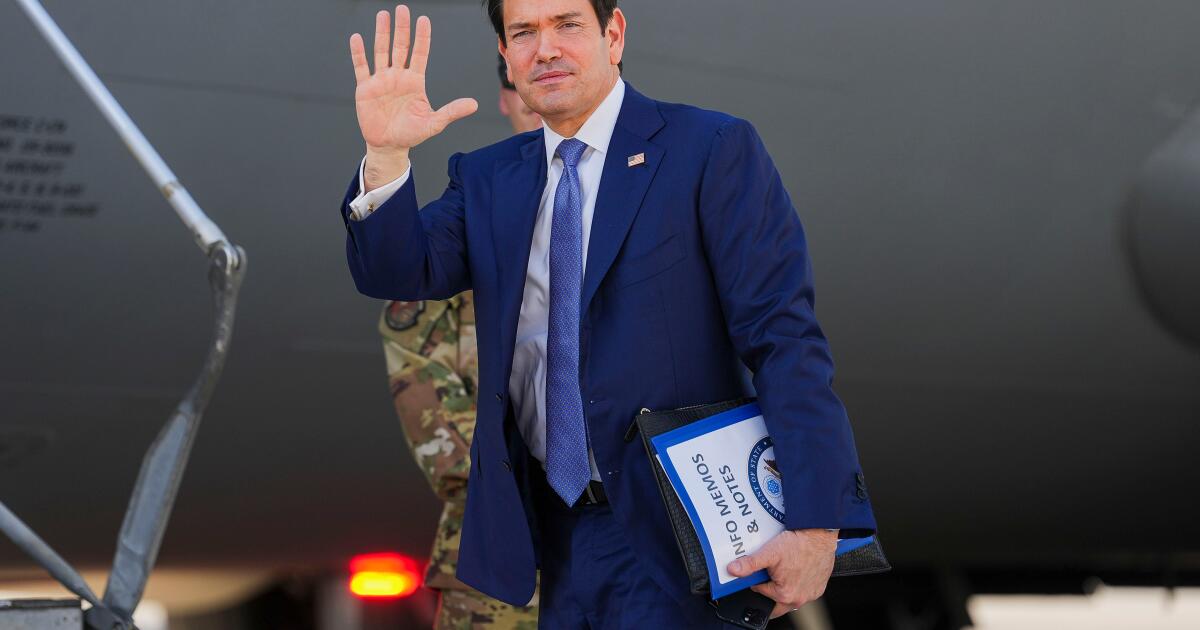
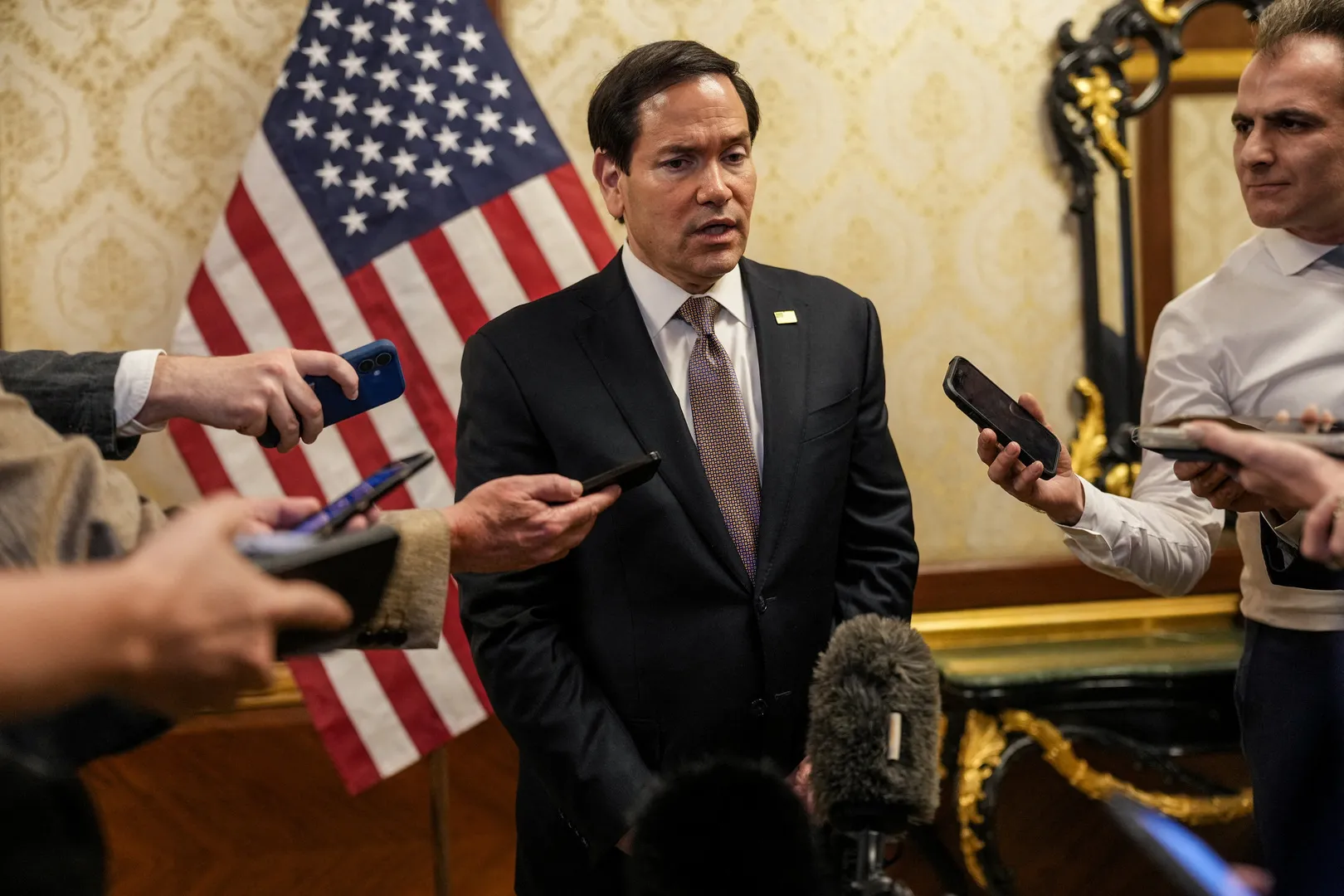
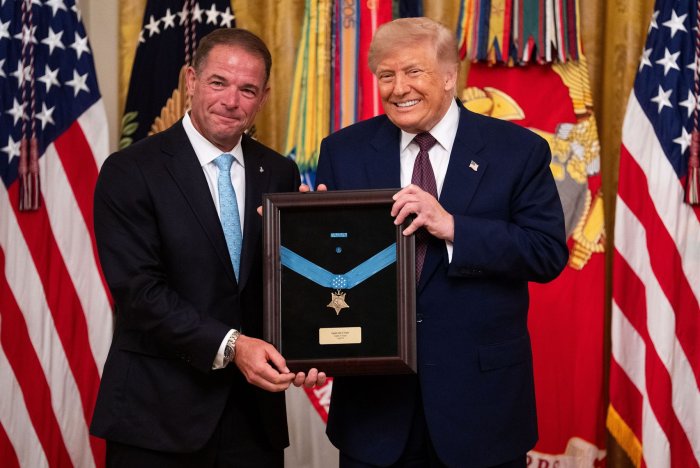
MANAMA, Bahrain — U.S. Secretary of State Marco Rubio said Thursday that relations between the United States and its gulf Arab partners are rock solid, despite fears by some of them that they might be left out of discussions aimed at ending the war with Iran.
Rubio used a three-day, three-nation trip to the United Arab Emirates, Kuwait and Bahrain this week to try to convince all the members of the Gulf Cooperation Council that the Trump administration does indeed have their backs in negotiations to end the war President Trump and Israel launched on Feb. 28.
That conflict sharply curtailed the region’s oil exports and saw several gulf countries take direct retaliatory Iranian missile and drone hits.
“They’ve shared with us some very concrete concerns, ideas,” Rubio said in Bahrain, the last stop on the trip. “And when I say concern, the biggest concern is that they really just want to be informed every step along the way as we enter these negotiations at both the technical and political levels.
“We want them to be involved and we want the views of all these countries to be reflected,” he said. “We don’t want to and will not be making any decisions or commitments that in any way undermines the prosperity, stability or security of our gulf partners.”
Although the U.S. and the gulf council members — Bahrain, Kuwait, Oman, Qatar, Saudi Arabia and the United Arab Emirates — eventually released a joint statement after the meeting that extolled areas of agreement about the end goals of the Iran deal, there were small signs of potential discontent.
The joint statement said the two sides “stressed the need to maintain momentum and unity as negotiations proceed toward a more permanent end to hostilities and the shared objective of preventing Iran from ever developing or otherwise acquiring a nuclear weapon.”
They also expressed opposition to any attempt by Iran to impose tolls or fees, or assert control over the Strait of Hormuz. They welcomed an Omani initiative to create a safe lane to evacuate stranded sailors from the waterway and stressed that any economic benefit Iran might realize “is conditional and reversible, contingent on Iran’s compliance” with the temporary agreement and a final deal.
The joint statement painted a rosy picture, yet the council secretary, Gen. Jasem Mohamed Albudaiwi, suggested in a statement that doubts remain.
He said it was emphasized during the meeting that any future understandings or arrangements must incorporate the requirements of the gulf council countries to safeguard their interests and ensure “their security and stability.” His statement, released by the group, hinted that the gulf council members felt snubbed in the earlier talks.
“Such arrangements must be based on the principles of international law, respect for state sovereignty, good neighborliness, and non-interference in internal affairs, thereby contributing to the consolidation of regional security and stability,” he said.
Before Rubio spoke to the group, the meeting host, Bahraini Foreign Minister Abdullatif bin Rashid Al Zayani, said that although the memorandum of understanding is welcome, many questions remain outstanding.
“While this progress is encouraging, it is critically important that Iran fully adheres to its obligations,” including under the memorandum, he said.
He said that means preventing Iran from getting a nuclear weapon, preserving freedom of navigation, ending all missile and drone attacks, halting support for proxy groups and abandoning attempts to interfere with Iran’s neighbors.
Six countries – Saudi Arabia, the United Arab Emirates (UAE), Qatar, Kuwait, Bahrain and Oman – form the Gulf Cooperation Council (GCC), which was created in 1981 following fears of the perceived expansionist ambitions of the new Iranian government.
Recommended Stories
list of 4 itemsend of list
Since the 1979 Islamic revolution, Israel has attempted to isolate Iran and its wide network of regional proxy groups. But in a twist of irony, Israeli aggression in this pursuit has pushed some Gulf states closer to Tehran.
When Israel and the US launched strikes on Iran on February 28 – and Tehran responded by attacking Gulf states – they were again forced to reassess their relationship with their neighbour.
Gulf relations with Iran, at present, appear more shaped by realism than reconciliation, but this approach could help them navigate the uncertain road ahead.
“The ongoing conflict … compelled the Gulf states to pursue a more pragmatic relationship with Tehran, one that will include enhanced dialogue to deter conflict,” Farah al-Qawasmi, a researcher at the Gulf Studies Center at Qatar University, told Al Jazeera.
Embracing de-escalation – not Iran
All six GCC member states have welcomed a memorandum of understanding (MoU) signed by Iran and the US last week. But this is shaped more by the Gulf states wanting the war to end rather than a newfound trust of Iran.
“An agreement between the two parties is being [highly] advocated by the Gulf states in [an] attempt to prevent and contain regional conflicts,” al-Qawasmi said.
Shortly after the US and Iran agreed in 2015 to the Joint Comprehensive Plan of Action (JCPOA) – putting guardrails on Tehran’s nuclear programme – Gulf states remained sceptical about their neighbour.
The current war has only heightened these suspicions, but it has also seen regional states seek diplomacy with Tehran rather than military confrontation, despite Iran directly attacking Gulf cities.
“The Gulf states still feel like diplomacy is better than using force to get a deal … to change Iran’s behaviour and to insulate them from Iran’s destabilising actions,” Rob Geist Pinfold, a lecturer on security studies at King’s College London, told Al Jazeera.
Pinfold points out that Iran closed the Strait of Hormuz via drones and missiles, not nuclear weapons, making dealing with that threat a priority for Gulf states rather than Tehran’s nuclear programme.
Gulf states will want a more comprehensive agreement between Iran and the US, rather than the nuclear-focused JCPOA, said Pinfold.
“If you talk to people in Gulf capitals, they will tell you that the nuclear programme is a tomorrow problem for them,” he said.
“The today problem is Iran’s use of drones and proxies to destabilise and undermine the sovereignty of Gulf states, but also states throughout the region.”
US Secretary of State Marco Rubio’s three-day tour of the Gulf, which ends Thursday, is seen as a way of allaying these fears and assuring the GCC that Tehran will not be strengthened by the agreement.
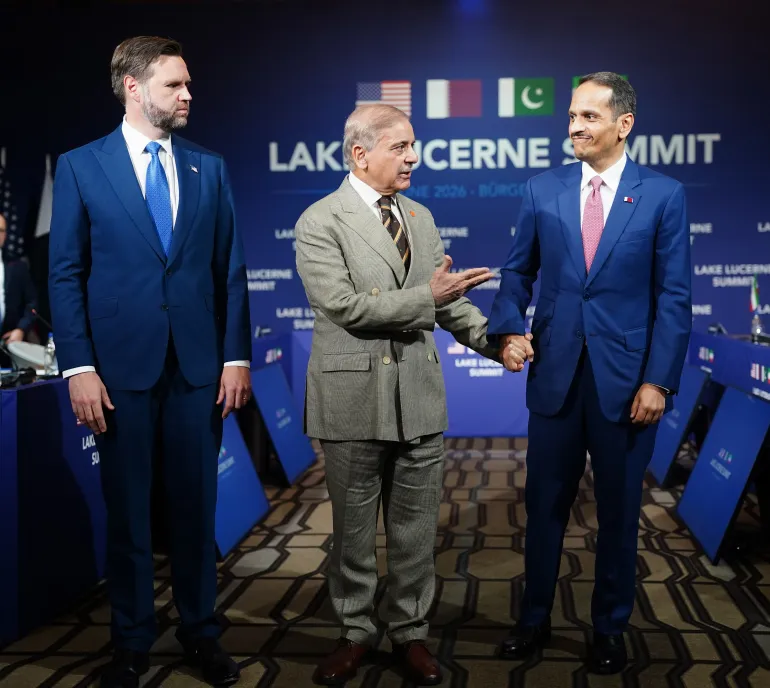
US Vice President JD Vance, left, looks on as Pakistan’s Prime Minister Shehbaz Sharif, centre, speaks and gestures towards Qatar’s Prime Minister and Minister of Foreign Affairs Sheikh Mohammed bin Abdulrahman bin Jassim Al Thani, right, at the start of a quadrilateral meeting between the US, Iran, Pakistan and Qatar [File: Nathan Howard/Pool via Getty Images]
Seat at the table
Mehran Haghirian, the director of research and programmes at the Bourse & Bazaar Foundation, believes Gulf states are in a better position to guide the outcome of the current US-Iran talks than in 2015.
“They are at the heart of the negotiations,” Haghirian said regarding the Gulf states’ role in the current talks.
In its role as a co-mediator, Qatar is essentially representing the GCC and their interests during the talks, while articles five and six of the Iran-US MoU place Gulf states at the centre of the agreement.
Among the biggest concerns for the GCC are the future of the Strait of Hormuz, with Tehran demanding tolls on shipping, and calls for the creation of a regional investment fund for Iran.
“There really cannot be any new Hormuz authority by Iran that would not include other GCC countries,” Haghirian told Al Jazeera.
US Vice President JD Vance claimed last week that the investment fund would be financed by the Gulf coalition, but Rubio said this week that regional allies would not be asked to contribute to any reconstruction fund for Iran.
Qatar’s Prime Minister Sheikh Mohammed bin Abdulrahman bin Jassim Al Thani has described the reported $300bn figure as “aspirational” in an interview with the Financial Times, while no Gulf state has yet said if it will contribute to the fund.
‘Maximum pressure era’
The analysts stress that the GCC is not a monolith – with Gulf states having contrasting and changing approaches towards Iran.
Oman, Qatar and Kuwait were broadly supportive of the JCPOA. Saudi Arabia, the UAE and Bahrain were more sceptical, but even these states publicly backed the agreement, said Haghirian.
When Trump pulled the US out of the JCPOA in 2018, Saudi Arabia, the UAE and Bahrain believed they had “found a partner in DC”.
That led to a “maximum pressure era” that brought a period of brinkmanship in the region, said Haghirian.
Suspected Iran-linked attacks on Saudi Arabia’s Abqaiq-Khurais oil facilities and vessels off the coast of Fujairah in 2019 were “the initial reaction by the Iranians to that maximum pressure” campaign, he added, but paradoxically, this also triggered a recalibration of relations.
“That was enough of a reason for Saudi Arabia [and] the UAE, particularly, to basically restructure their approach towards Iran,” Haghirian said.
The war and accelerated pragmatic rapprochement
While Israel has used war to attempt to increase its presence in the Gulf region – reportedly sending an Iron Dome battery to the UAE – other Gulf states view both Iran and Israel as unsettling forces in the region.
“Israel started the war, which was a destabilising act, and then Iran escalated by targeting the Gulf states, which was in turn a destabilising act,” Pinfold said.
Despite this, the Gulf states targeted by Iran still demonstrated patience and pragmatism in dealing with their neighbour.
Qatar, for example, has played a leading role in mediating between the US and Iran, even after being on the receiving end of Iranian drone and missile attacks.
“All six got attacked, and that’s really a level of foreign policy decision-making that is very difficult for any state to be able to really undertake, considering the fact that it was a military attack,” Haghirian said.
“But again, this pragmatism came out within this context to engage Iran and to actually speak for themselves at these negotiations. This war has really initiated a complete rebalancing of the entire region.”
WASHINGTON — Senate Republicans who were berated by President Trump over opposition to his war in Iran held a late-night vote Wednesday to try to appease him, rejecting a war powers resolution a day after a similar measure passed.
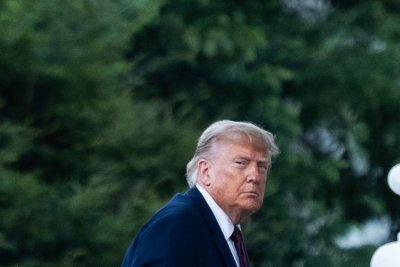
Trump harangued GOP senators face to face earlier in the day for allowing a vote to block his war in Iran on Tuesday, further escalating a feud that has diverted GOP efforts to focus on election-year affordability issues and brought much of the chamber’s business to a halt. He exchanged particularly harsh words with Louisiana Sen. Bill Cassidy, one of four Republicans who had voted with Democrats on the measure.
Hours later, though, Cassidy was invited to receive a personal briefing on the war at the White House from Vice President JD Vance and envoy Steve Witkoff. Cassidy then returned to the Capitol to vote against a separate but nearly identical war powers resolution.
“I want to thank Vice President Vance and Special Envoy Witkoff for the thorough briefing this afternoon on Iran. I appreciate the quick invitation to the White House to address many of my concerns,” said Cassidy, who lost reelection last month after Trump endorsed his opponent, in a post on X.
Kentucky Sen. Rand Paul, a Republican who has repeatedly voted with Democrats to halt the war, voted present this time “to give the President more space and leverage to negotiate a lasting peace,” he said on X. The measure failed 47-50-1 just before midnight on Wednesday, and the Senate then left town for a two-week recess.
It’s unclear whether the move will be enough to appease Trump, who had called the Republicans “losers” for voting against his war and had called Cassidy a “lunatic” at the lunch after their tense exchange. But the vote was a clear signal to the president from Republican senators who still want to placate him, despite increasing tensions in recent weeks and his decision Wednesday morning to reverse himself and delay signing a housing bill that received overwhelming bipartisan support.
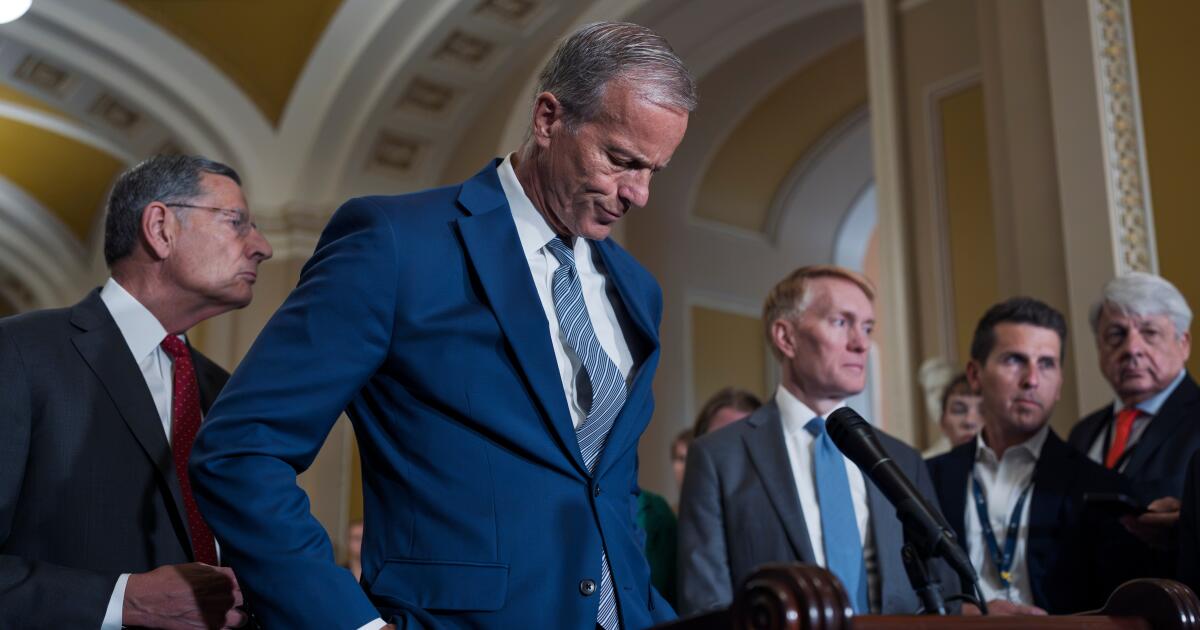
Senate Majority Leader John Thune, R-S.D., and a small group of his Senate GOP colleagues called Trump after the vote. Thune told reporters that the president was “pleased with the outcome.”
Trump later thanked Thune in a social media post and noted that Cassidy and Paul had switched their votes. “This vote puts Iran on notice!” he wrote.
The war powers measure blocked by the Senate on Wednesday was on a separate track from the nearly identical resolution adopted on Tuesday, which had also been passed by the House. Both votes were largely symbolic, and the measures do not carry the full force of law.
Cassidy had sharp words for Trump
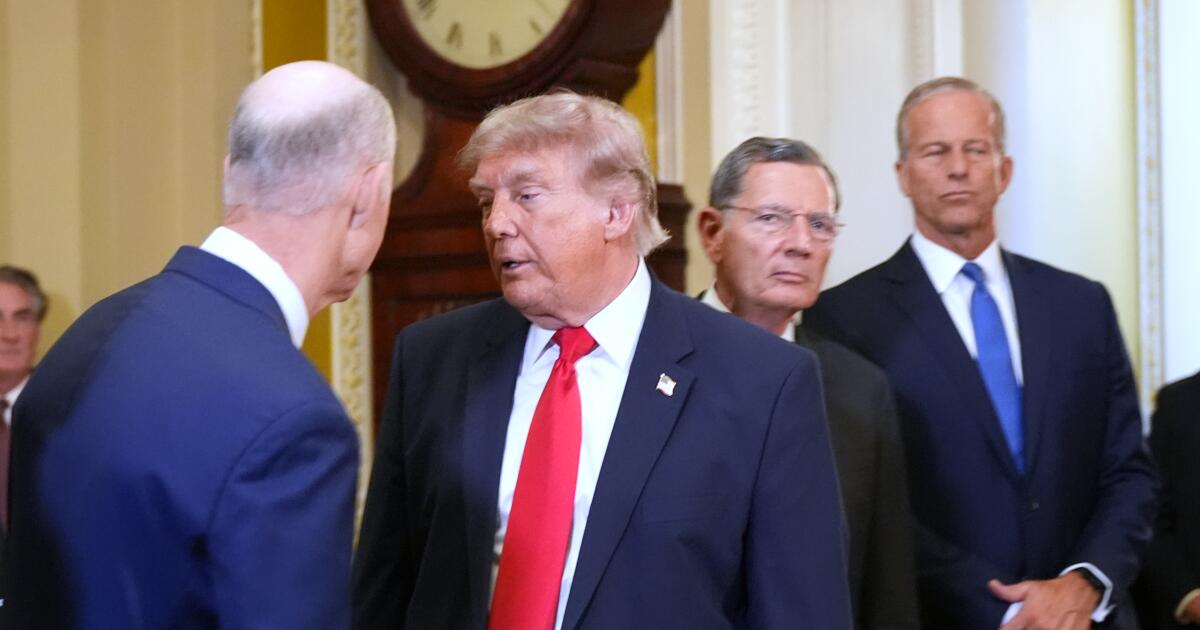
Invited by Florida Sen. Rick Scott to speak at a GOP luncheon in the Capitol, Trump had signaled ahead of time that he would use the closed-door meeting to push senators to pass his proof-of-citizenship voting bill. But the conversation was more focused on Tuesday’s vote on war powers.
Most Republicans stayed quiet. But Cassidy stood up and defended his vote.
“I stood and said, ‘You have not told the American people what’s going on,’” Cassidy told reporters after the meeting. “This was supposed to last four weeks, it’s lasted four months. Our original objectives have not been achieved.”
The two men “went back and forth,” Cassidy said, and he “matched his tone and volume.” Cassidy said that he eventually de-escalated, but he did not want to be bullied.
“I am voting for war powers until I get a briefing,” he said afterward.
Trump repeatedly told Cassidy to sit down, according to a person familiar with the private meeting who was not authorized to discuss it. At one point, the president called the senator a “lunatic.”
Publicly, Trump said afterward that they had “a really great meeting.” But he hinted at the discord.
“We like everyone in the room,” Trump told reporters on his way out. “I don’t like a few people, but that’s OK.”
The luncheon capped weeks of friction between Trump and Senate Republicans and added a new layer of frustration as Tuesday’s vote was the first time the Senate had adopted a war powers resolution on the Iran war. Trump made clear he was in no mood to compromise before it even started, calling off a scheduled signing ceremony on a housing bill that passed both chambers overwhelmingly this week and that GOP lawmakers were touting as an election-year achievement.
Trump reverses on housing bill
Republican senators were eager for a conciliatory meeting with the president after escalating tensions in recent weeks. But Trump upended their plans when he declared on social media just beforehand that he wouldn’t sign the legislation until they send him the SAVE America Act, his bill to require proof of citizenship for all voters.
North Carolina Sen. Thom Tillis said he doesn’t know why Trump is holding the housing bill “hostage” for the voting bill that “will never pass in this Congress.”
“It makes no sense to me,” Tillis said as he walked into the luncheon.
Thune said the housing legislation, which aims to lower costs, is “an affordability issue,” and that ”eventually I hope he finds a way to sign it.”
It’s unclear if Trump might veto the legislation or if the late Wednesday night vote will change his outlook. But by rejecting a public bill signing, Republicans worry that Trump is indicating a level of indifference to voters’ affordability concerns heading into November’s midterm elections.
Trump and Senate Republicans have been at odds
Trump’s move on the housing bill is his latest reversal after weeks of being at odds with Senate Republicans.
Trump has blocked the Senate from confirming one of his own nominees, asked them to fund parts of his White House ballroom project despite opposition and forced them to defend the Iran war even as they question the strategy and endgame.
Trump has also helped whittle down his own support in the Senate after endorsing primary challengers to two GOP incumbents who were previously reliable votes for his agenda — Cassidy and Texas Sen. John Cornyn. Both men have become more critical of Trump since losing reelection.
“If we’re going to win the midterm elections, we need to get on the same page,” Cornyn said ahead of the meeting. “We’re not on the same page now, and that I think is dangerous.”
Trump pushes Thune on SAVE America Act
Trump has pressed Republicans for months to kill the Senate filibuster and focus on the proof-of-citizenship voting bill, even though Thune has repeatedly told him that neither has the votes.
While Thune remains popular in his conference and cordial with the president, he has spent much of his time lately telling Trump what he doesn’t want to hear. Thune said Tuesday that while Trump and some in their conference want to see the voting bill pass, “it’s just not realistic.”
Thune devoted weeks of floor time to the voting bill earlier this year and has said he supports it. But he has repeatedly said there aren’t enough votes to scrap the filibuster that triggers a 60-vote threshold to pass most bills in the 53-47 Senate. And Democrats are uniformly opposed to the bill.
“I think people at some point have to come to grips with that,” Thune said.
Jalonick, Sloan, Cappelletti and Mascaro write for the Associated Press. AP writers Josh Boak and Kevin Freking contributed to this report.
Iran’s Islamic Revolutionary Guard Corps (IRGC) has warned commercial vessels to only use routes through the Strait of Hormuz approved by Tehran, reopening a point of friction in fragile negotiations between the United States and Iran over the future of the strategic waterway.
The warning came after Oman announced a new shipping transit route through the strait on Wednesday, saying it had coordinated the route with the International Maritime Organization (IMO) as maritime traffic slowly resumes following weeks of disruption.
Recommended Stories
list of 4 itemsend of list
The dispute remains one of the unresolved issues after a memorandum of understanding (MoU) was signed by the United States and Iran last week, which largely halted hostilities in the four-month US-Israel war on Iran and which launched a 60-day negotiation process aimed at reaching a broader peace agreement.
The MoU, which includes the reopening of the strait, followed months of severe disruption to shipping after Iran effectively closed it, and the US imposed a corresponding naval blockade on Iranian ports.
Both Washington and Tehran have declared the strait open to commercial shipping, but questions remain over whether Iran will seek greater control over vessel movements, whether it will impose transit or service fees on ships using the strait following the 60-day negotiating period, and whether disagreements over the waterway could derail efforts to reach a permanent agreement altogether.
Why is the Strait of Hormuz so important?
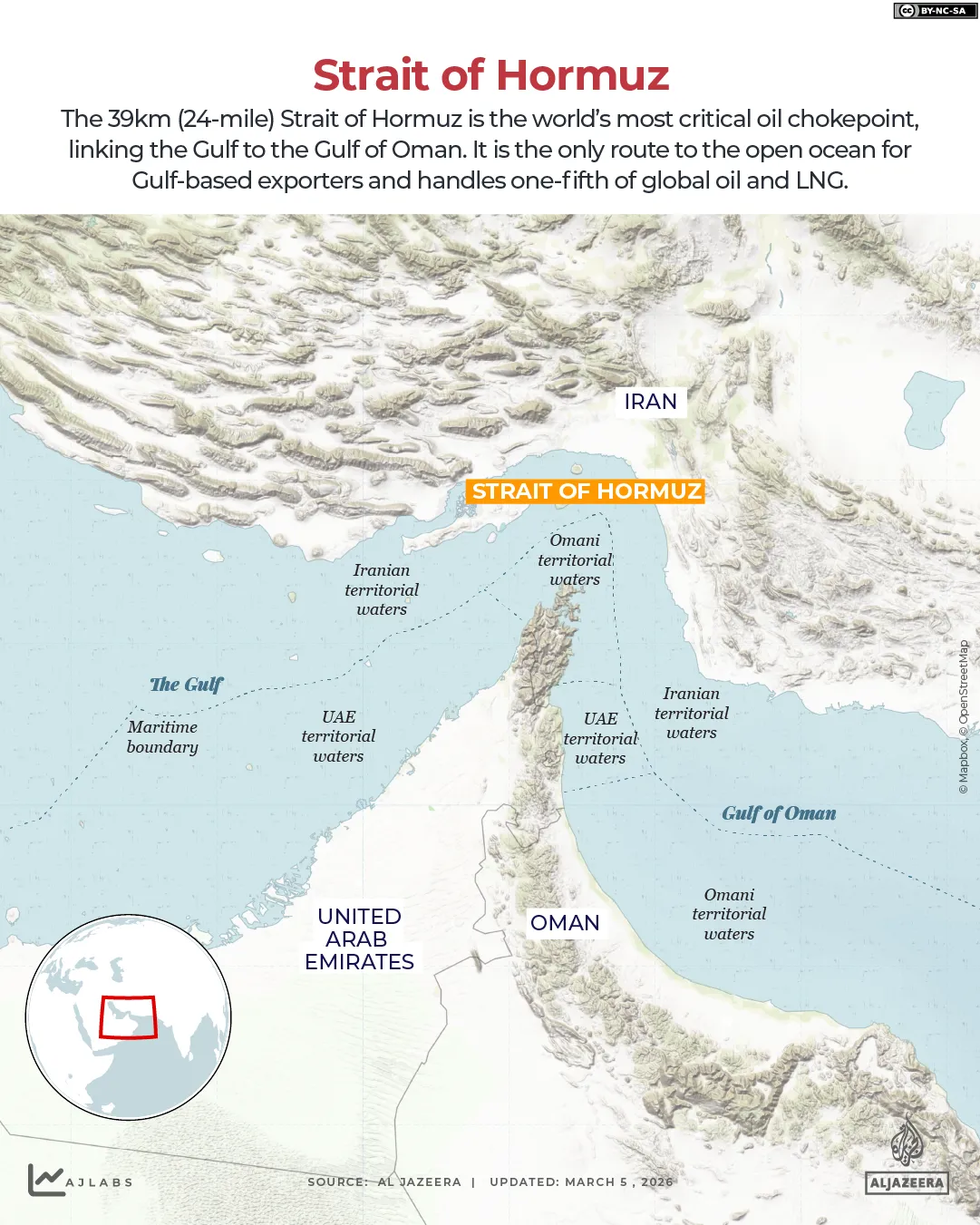
The Strait of Hormuz is one of the world’s most strategically significant waterways, with around one-fifth of global oil and liquefied natural gas (LNG) supplies normally being shipped through the narrow passage linking the Gulf to the Arabian Sea.
Bordered by Iran to the north and Oman and the United Arab Emirates (UAE) to the south, the strait is only about 50km (31 miles) wide at its entrance and exit, narrowing to about 33km (21 miles) at its tightest point. Despite its width, it is deep enough to accommodate the world’s largest oil tankers.
According to the US Energy Information Administration, about 20 million barrels of oil and petroleum products transited the strait each day in 2025, representing hundreds of billions of dollars in annual energy trade.
The route is used not only by Iran but also by Iraq, Kuwait, Qatar, Saudi Arabia and the UAE. It is also vital for global fertiliser exports, with roughly one-third of international fertiliser trade normally passing through the strait.
Because disruptions to shipping there rapidly push up global energy prices and destabilise US markets, control of the waterway has become one of Iran’s strongest sources of strategic leverage in its conflict with the US.
(Al Jazeera)
Why is Iran objecting to Oman’s new route?
The IRGC says Oman and the IMO announced the new shipping corridor without consulting Tehran. “Certain authorities have announced a new shipping route through the Strait of Hormuz without prior notification to or coordination with the Islamic Republic of Iran. The proposed route is unacceptable and poses serious safety risks,” the force said.
“The only authorised transit routes through the Strait of Hormuz are those designated by the Islamic Republic of Iran,” it said, adding that ships must maintain contact with the IRGC Navy while transiting the waterway.
Iran first issued its own map of acceptable routes through the strait in April, showing that ships should pass much closer to the Iranian coast than they had previously.
(Al Jazeera)
The IRGC’s warning came after a Liberian oil tanker passed through the strait on Thursday using a route much closer to Oman’s coastline.
Al Jazeera’s Resul Serdar, reporting from Tehran, said the IRGC appeared frustrated because the Omani route partially bypasses Iran’s direct control over shipping.
“The control of the Strait of Hormuz has been a huge leverage for Iran to put pressure on its adversaries and the global economy since the beginning of the war,” Serdar said.
Oman defended the corridor route it had announced, saying it was intended to restore safe navigation while complying with international law. Foreign Minister Badr Albusaidi said Oman remained committed to ensuring freedom of navigation through the waterway and stressed that “future arrangements related to the strait do not involve imposing any transit fees”.
What does the US-Iran agreement say about the strait?
In the MoU signed last week, Iran agreed that it would “make arrangements using its best efforts for the safe passage of commercial vessels with no charge, for 60 days only, from the Persian Gulf to the Sea of Oman and vice versa”.
While the agreement states that “the traffic of commercial vessels will immediately start”, it also acknowledges that demining operations will be required before normal shipping routes can fully resume, stating that “demining by the Islamic Republic of Iran will be instated within 30 days”. It also provides for discussions between Iran, Oman and other Gulf states on future arrangements for managing the waterway.
However, the memorandum does not specify what will happen after the initial 60-day period. Ali Vaez, Iran project director at the International Crisis Group, said the temporary rerouting of vessels had always been expected because of the mine-clearing operations outlined in the agreement.
“We always knew that if there was a deal, there would be several weeks of mine-clearing operations in the international shipping lane running through the middle of the Strait of Hormuz,” he said.
“During that period, vessels would have to transit through Iranian and Omani territorial waters instead.”
However, Vaez said the latest announcement by Iran was unexpected. “The important thing now is that the Iranians do not start taking fees or other tolls,” he said, “because that is not provided for in the memorandum of understanding.”
Asked whether the IRGC’s position differed from that of Iran’s government, Vaez said: “There is no distinction between the IRGC and the state. They are effectively one and the same. The IRGC is calling the shots.”
Can Iran charge ships fees?
International law generally protects the right of transit through international straits, including Hormuz, making it difficult for coastal states to impose unilateral transit fees on vessels simply passing through international shipping lanes, even where they are within territorial waters.
Last week, Iran announced it would waive planned fees through the strait for 60 days while talks with the US continue in Switzerland, suggesting charges may be introduced once the negotiating period expires.
Iran’s chief negotiator, Mohammad Bagher Ghalibaf, has signalled that Tehran views the post-war arrangement as fundamentally different from the status quo that existed before the conflict.
“Hormuz will never return” to its prewar status, Ghalibaf said.
The suggestion that Iran could charge fees was dismissed by US Secretary of State Marco Rubio this week. Speaking at the start of a regional tour in the United Arab Emirates, he said: “It’s an international waterway. No country is allowed to charge tolls or fees on an international waterway.”
Rubio added that he believed “all the countries in this region would agree”.
Speaking in Manama, Bahrain, after meeting with the Gulf Cooperation Council (GCC) – a bloc comprising Bahrain, Kuwait, Oman, Qatar, Saudi Arabia and the UAE – on Thursday, Rubio also told reporters: “Iranians are saying one thing, but then something else is actually happening.
“It’s now obvious to us that … the Iranian system is going to produce all sorts of maximalist rhetoric. What we’re interested in is not their press conferences. What we’re interested in is whether or not ships are moving. If ships are moving as they should be moving, then that’s what we’re going to judge.
“If, on the other hand, this rhetoric is backed up by actual ships being threatened and ships are not moving, then that’s a violation of the agreement, and we’re going to have a problem with it.”
Rubio claimed there is no regional support for Iranian transit fees, saying, “There is zero support among Gulf countries for any sort of toll or fees charged for the use of international waters … that isn’t going to happen.”
His comments came after UAE presidential adviser Anwar Gargash said that new “geopolitical facts” could not be imposed on the Arab Gulf states as a result of what he described as the “treacherous aggression against them”.
Are ships returning – and which route are they taking?
Some commercial shipping through the strait has resumed, although traffic remains well below normal levels. Before the conflict, between 120 and 140 vessels typically transited the strait each day.
According to shipping analytics company Kpler, confirmed crossings rose to 70 vessels on Wednesday as demining progressed and more operators began using the Omani route.
“The US-Iran MoU framework and apparent lifting of the US blockade appear to have supported a short-term confidence boost, although IRGC warnings against use of the Omani route could create a new source of contention,” Kpler reported.
The company added that incomplete demining, continued “dark” routing by some vessels – when ships limit or switch off their tracking transponders – and unresolved questions over inspections, sanctions and future governance meant shipping had not yet returned to prewar conditions.
This comes as oil prices drop to the lowest level since before the Iran war, with Brent crude, the global benchmark, falling to a low of $72.24 a barrel on Thursday. This remains above the prewar price of $66, however.
The chart below shows how shipping through the strait before the war compares to its status in recent weeks:
Is a peace deal achievable?
The future administration of the Strait of Hormuz is only one of several issues still to be resolved before negotiators hope to reach a comprehensive agreement within 60 days, with another major sticking point being Iran’s nuclear programme.
International Atomic Energy Agency (IAEA) Director-General Rafael Grossi has said the agreement explicitly provides for international monitoring of Iran’s nuclear activities.
However, Kazem Gharibabadi, Iran’s deputy foreign minister for legal and international affairs, has said inspectors’ access to nuclear sites damaged during the conflict will only be considered as part of a final agreement.
Questions also remain over the fate of Iran’s enriched uranium stockpile, the sequencing of sanctions relief and the release of frozen Iranian assets, while regional tensions continue to pose additional risks.
Israeli forces remain deployed in parts of southern Lebanon occupied during the conflict, according to a Lebanese military source, while Israeli strikes have continued, despite the MoU explicitly calling for “a permanent end to the war on all fronts, including Lebanon”.
Vaez said visible progress would be essential if negotiations are to survive, noting, “Both sides have to see progress, whether that’s greater access for UN nuclear inspectors, sanctions relief, or resolving the issue of Iran’s uranium stockpile.”
He cautioned against viewing the interim agreement as a series of smaller deals. “Nothing is agreed until everything is agreed,” Vaez said.
“They [the Iranians] are determined to reach a comprehensive agreement within 60 days. That’s a very ambitious timetable, but there has to be visible momentum or the process risks falling apart.”
However, Vaez said both Washington and Tehran have strong economic incentives to bring about a lasting peace. “The situation in the Strait had become one of mutually assured economic destruction,” he said.
“The United States was facing rising energy and oil prices ahead of the midterm elections … At the same time, Iran was already in a deep economic hole before this conflict began. The war only made that worse.
“It became a lose-lose dynamic, and both sides needed a way out.”
The price of Brent crude has reached its lowest since February 27, before the war started.
Published On 25 Jun 202625 Jun 2026
Oil prices have extended their decline to levels last seen before the start of the Iran war, as expectations of rising supply from the Middle East outweighed demand concerns.
Prompt-month Brent crude futures for August delivery fell $1.06 (1.44 percent) to $72.68 a barrel by 06:39 GMT, while US West Texas Intermediate (WTI) lost 76 cents (1.08 percent) to $69.58 a barrel.
Recommended Stories
list of 4 itemsend of list
Both contracts hit their lowest since February 27.
August Brent was trading lower than September, which was priced at $73.59, signalling ample short-term supply.
Brent had fallen by more than $3 on Wednesday as supply concerns eased, while WTI settled down nearly $3.
US Energy Secretary Chris Wright told a forum that flows through the Strait of Hormuz were close to those before the start of the Iran war, with at least 20 million barrels having exited the strait in the past 24 hours.
A return to complete normality would take a few weeks, however, because the strait needs to be cleared of mines, he added.
Rising Middle East supply, together with Iran set to boost sales after a temporary reprieve from US sanctions, drove down prices of physical crude oil cargoes around the world.
New routes
An initial accord last week to end the US-Israeli war with Iran, which began on February 28, has allowed the resumption of traffic through the strait.
The accord set up a 60-day period of negotiations to tackle tougher issues, such as Iran’s nuclear programme.
Wright said oil would continue to flow through the strait even if the deal did not hold, and that Iran would not be able to close it again.
Tehran has said it plans to impose what it calls maritime service fees, as opposed to tolls, while the United States argues it is an international waterway and therefore should not be charged.
Oman opened temporary routes on Wednesday to ease tanker departures from the strait, with the International Maritime Organization and Omani authorities coordinating movements.
On Thursday, Iran’s Revolutionary Guards warned against any crossings of the Strait of Hormuz without authorisation, saying vessels not complying “will be dealt with” and condemning the new routes.
Thousands gathered in Tehran on the eve of Ashura, the first since the killing of Iranian supreme leader Ali Khamenei. Mourners carried flags, banners and images of Khamenei as Iran prepared to commemorate one of the most significant events in the Shia calendar.
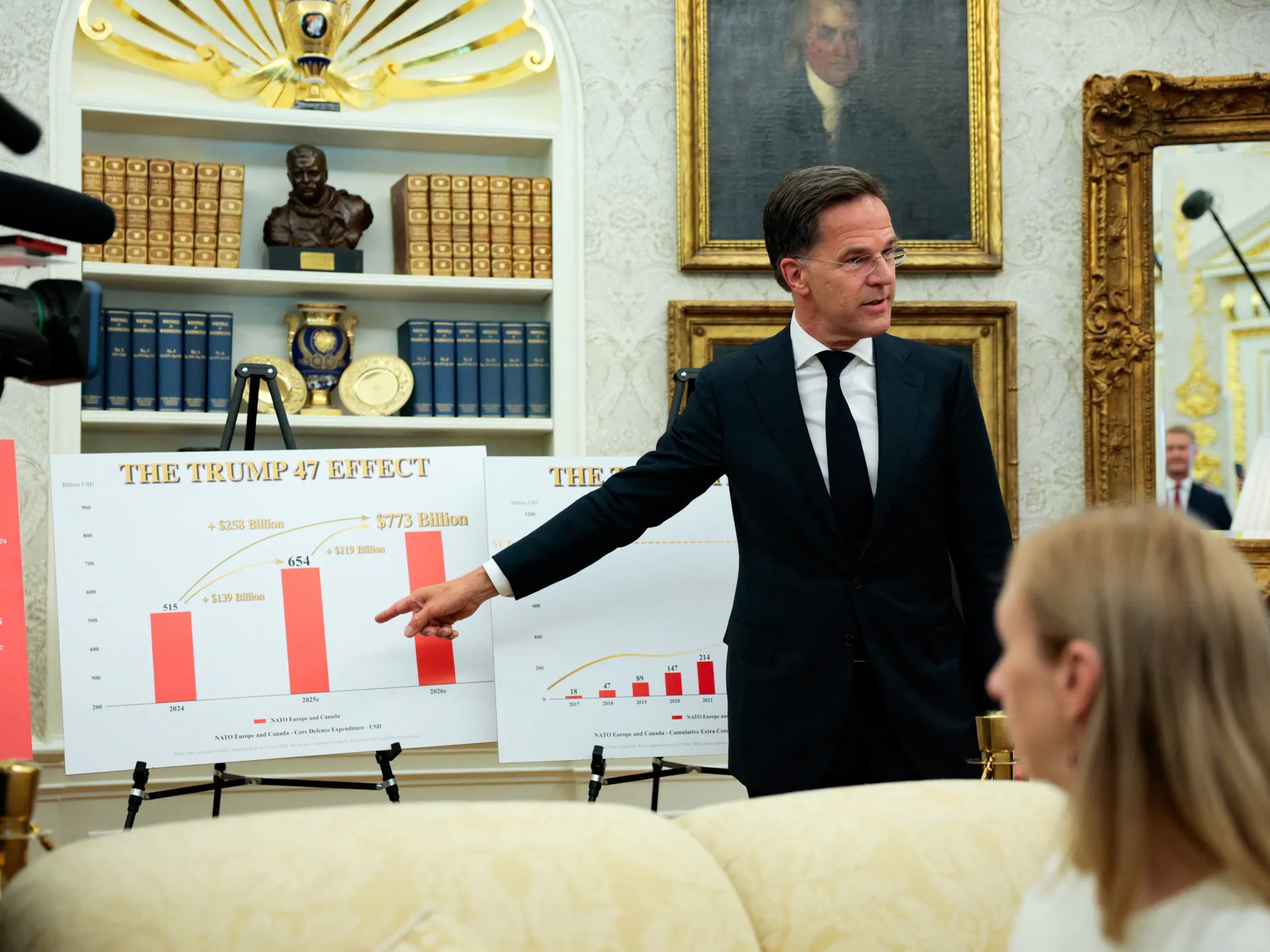
NATO chief Mark Rutte visited the White House to ease tensions with US President Trump ahead of next month’s NATO summit. Trump has said NATO isn’t doing enough, ordering a review of US forces in Europe after saying allies did not support the US war on Iran.
How has US imperialism targeted Venezuela and Iran? How have years of hybrid warfare shaped resistance? What role does China play in the emerging multipolar world?
In Episode 46 of the VA Podcast, Venezuelanalysis editor Ricardo Vaz is joined by VA co-editor Lucas Koerner and scholar Matteo Capasso to discuss sanctions, sovereignty, deterrence, and international anti-imperialist solidarity.
US Secretary of State Marco Rubio said Washington will be “completely aligned” with Gulf allies in Iran peace talks. Rubio met Kuwait’s Crown Prince Sheikh Sabah Al Khalid Al Sabah during a visit to the region after the US and Iran signed an MoU.
US Secretary of State Marco Rubio has said Iran will not be permitted to charge tolls or fees for vessels transiting the Strait of Hormuz under any final agreement with Washington, exposing one of the biggest points of friction in negotiations aimed at ending months of conflict across the Middle East.
The dispute comes after Iran announced it would waive planned transit fees through the strait that crosses through its territorial waters for 60 days while talks with the United States continue in Switzerland, suggesting charges could be introduced once the negotiating period expires.
Recommended Stories
list of 4 itemsend of list
Washington and Tehran signed a preliminary agreement in Switzerland this week to halt hostilities and launched a 60-day diplomatic process focused on sanctions relief, Iran’s nuclear programme and the future administration of the Strait of Hormuz.
Pakistan, which helped mediate the talks alongside Qatar, has said negotiations to end the four-month US-Israel war on Iran are expected to resume early next week, likely on Tuesday.
The future of Hormuz has already emerged as a key sticking point after Iran effectively closed the waterway during the war, severely disrupting maritime traffic through one of the world’s most important energy chokepoints and causing the price of oil to soar.
In peacetime, one-fifth of the world’s oil and natural gas supplies are shipped for export by Gulf producers through the waterway.
In April, the US imposed a corresponding naval blockade on Iranian naval ports in a bid to stem Iranian oil exports.
While a number of ships have crossed through the strait since the US-Iran agreement was signed last week, uncertainty remains over whether Tehran intends to impose permanent fees or service charges on shipping operators using the route. Here’s what we know – and what else is happening in the Strait of Hormuz this week.
(Al Jazeera)
What are the US and Iran saying?
On Friday, Iran’s Persian Gulf Strait Authority (PGSA) said planned fees for ships using the waterway would be suspended during the 60-day negotiation period established under the memorandum of understanding (MoU) signed with the US.
Earlier this week, Iran and Oman said in a joint statement that they would study the future administration of the trade route as well as possible charges for services provided there, while maintaining their sovereignty claims over territorial waters bordering the strait.
Speaking at the start of a regional tour in the United Arab Emirates, Rubio rejected the idea of transit fees. “It’s an international waterway. No country is allowed to charge tolls or fees on an international waterway,” he said, adding that he believed “all the countries in this region would agree”.
Iran’s chief negotiator, Mohammad Bagher Ghalibaf, has signalled that Tehran views the post-war arrangement as fundamentally different from the status quo that existed before the conflict, however. Experts also say that Iran will not give up control of the strait, which has proved to be its greatest point of leverage in the conflict with the US.
“Hormuz will never return” to its prewar status, Ghalibaf said, despite both sides agreeing on Monday to establish “communication mechanisms” aimed at keeping the waterway open.
What does international law say?
International law protects the right of transit through strategic waterways such as the Strait of Hormuz, preventing coastal states from imposing explicit tolls simply for passage through international shipping lanes, even when they are passing solely through territorial waters.
However, countries can charge for specific services, including inspections, navigation assistance, security measures and certain insurance-related requirements, insurance experts say.
Examples include fees associated with transit through the Suez Canal and Panama Canal, as well as some services provided in Turkiye’s Bosporus and Dardanelles straits.
Mohammad Reza Farzanegan, an economist at Germany’s Philipps-Universitat Marburg, told Al Jazeera last month that Iran, like Turkiye, could justify a negotiated mechanism for transit fees or service-based contributions through natural straits as payment for maintaining a safe passageway, reducing environmental risks and providing predictability in a waterway that supports global energy, food and technology supply chains.
A key difference, however, is that while those waterways pass through the territory of a single state in each case, the Strait of Hormuz passes through the territorial waters of both Iran and Oman, while also connecting to waters used by the United Arab Emirates and other Gulf states.
“This sort of arrangement is unprecedented, and there would not be such an outcome, unless there is a complete coordination between the GCC [Gulf Cooperation Council] countries and Iran, with the approval of major international powers, such as China and the United States,” Nader Habibi, an Iranian American economist, told Al Jazeera.
How many ships are getting through the strait now?
Ship movements through the Strait of Hormuz remain well below prewar levels, when between 120 and 140 ships transited the passage each day, including tankers carrying about 20 million barrels of oil from the Gulf.
As the strait begins to open up, Oman says it is working with the United Nations’ International Maritime Organization (IMO) on temporary arrangements to facilitate safe transit through the strait, launching an operation to evacuate more than 11,000 sailors stranded in the area after the conflict left hundreds of vessels trapped for months.
Traffic through the strait has also been held back by ongoing concerns about the possible presence of sea mines in the central shipping channels used by international vessels before the war.
The Joint Maritime Information Center (JMIC), which includes representatives from the US and other maritime partners, has warned ships to avoid the area “due to the existence of mines”.
Other countries, including Japan, are currently weighing up whether to send ships to help with efforts to remove mines from the strait.
While Iran has never confirmed the presence of mines in the strait, when it first issued a map of the waterway for vessels it had approved for transit while the conflict was ongoing, it ordered ships to pass close to its coast to avoid possible mines. Ships had previously passed much closer to the coast of Oman.
The graphic below illustrates how much shipping through the strait dropped off as a result of the US-Israel war on Iran.
Could the dispute over strait fees derail a peace deal?
Mostafa Khoshcheshm, a professor at the University of Applied Sciences in Tehran, told Al Jazeera that Iran is unlikely to abandon plans to introduce long-term service fees in the strait.
“According to the MoU, Iran is not going to charge service fees for 60 days, but afterwards, Iran is definitely going to do that,” Khoshcheshm told Al Jazeera.
He said many Iranians were already unhappy that Tehran had agreed to suspend fees for the duration of the negotiating period.
“The money is not the real core of the issue,” he said. “The point here is how to impose your new protocols in the region. This is highly important for the Iranians.”
Cyrus Schayegh, professor of international history and politics at the Geneva Graduate Institute, told Al Jazeera the success of any new administrative arrangement would depend heavily on regional support.
“I think this is a very big question, and the biggest question is whether they will be able to sell it to the Emirates,” Schayegh told Al Jazeera.
“I think the Emirates will need to be involved in a really substantive way for any sort of new authority to actually work.”
More broadly, he said, the future of Hormuz forms part of a wider debate over Gulf security architecture following the war.
“It is only one piece of a much larger puzzle,” Schayegh said, adding that several regional states now accept that Iran has strengthened its deterrence capabilities following the conflict.
What other issues remain unresolved?
Hormuz is far from the only serious obstacle to a peace deal.
Questions also remain over the future of Iran’s nuclear programme, with Kazem Gharibabadi, Iran’s deputy foreign minister for legal and international affairs, saying that access for international inspectors to nuclear facilities damaged during the war would only be addressed as part of a final agreement with Washington.
His comments came after US President Donald Trump claimed Iran had agreed to “the highest level” of nuclear inspections.
Iranian officials insist no commitments were made in Switzerland regarding Tehran’s nuclear programme and say they did not meet representatives of the International Atomic Energy Agency (IAEA), including Director-General Rafael Grossi.
Regional security remains another major source of disagreement, with Israeli Defence Minister Israel Katz insisting Israeli forces will not withdraw from southern Lebanon “even if there is an American demand” to do so.
Meanwhile, Ghalibaf has identified the withdrawal of foreign military forces from the Middle East as one of Tehran’s strategic objectives in the negotiations.
The future of Iran’s frozen assets also remains a sticking point, with Trump indicating Washington is reluctant to release large sums of Iranian funds directly, arguing that money could ultimately benefit the Islamic Revolutionary Guard Corps (IRGC).
Instead, he has suggested a mechanism under which some funds would be used to purchase US goods.
“Food is desperately needed in Iran, and we will be purchasing it for them exclusively from the United States,” Trump said. Iran has not confirmed plans to do this.
Weekly insights and analysis on the latest developments in military technology, strategy, and foreign policy.
Many questions remain about the complex mission to rescue the crew of the U.S. Air Force F-15E Strike Eagle that came down over Iran in April of this year and what led to it. Now, the reported testimony of the Strike Eagle pilot involved describes a ‘jellyfish-like’ swarm of drones in the sky, moments before they ejected from the stricken jet.
According to a report from CNN, the pilot recounted seeing “multiple Iranian drones hovering in the air, moving as one, in a formation that resembled a jellyfish.” The report is based on statements from four unnamed sources said to be familiar with the matter.
A US fighter jet pilot rescued by special forces after being shot down over Iran in April described a shocking sight before ejecting from his aircraft: multiple Iranian drones hovering in the air, moving as one, in a formation that resembled a jellyfish, according to four sources… pic.twitter.com/RiAEUzEI3b
Needless to say, the veracity of the report should be treated with caution, especially bearing in mind the highly dynamic and confused nature of the situation. However, CNN claims that the account was taken seriously enough to prompt debate within the U.S. intelligence community. It should also be noted that the testimony relates only to the pilot and not the Weapon Systems Officer (WSO).
The report suggests that, during a post-incident debriefing, the F-15E pilot told intelligence officials that they saw:
“Multiple drones interconnected and moving as one with smaller drones below the bigger drones like legs. Real alien shit.”
Those words are not from the pilot themselves, but are said to be from one of the sources familiar with the witness account.
Another source told CNN that the same pilot described seeing a “minefield of drones” in the air.
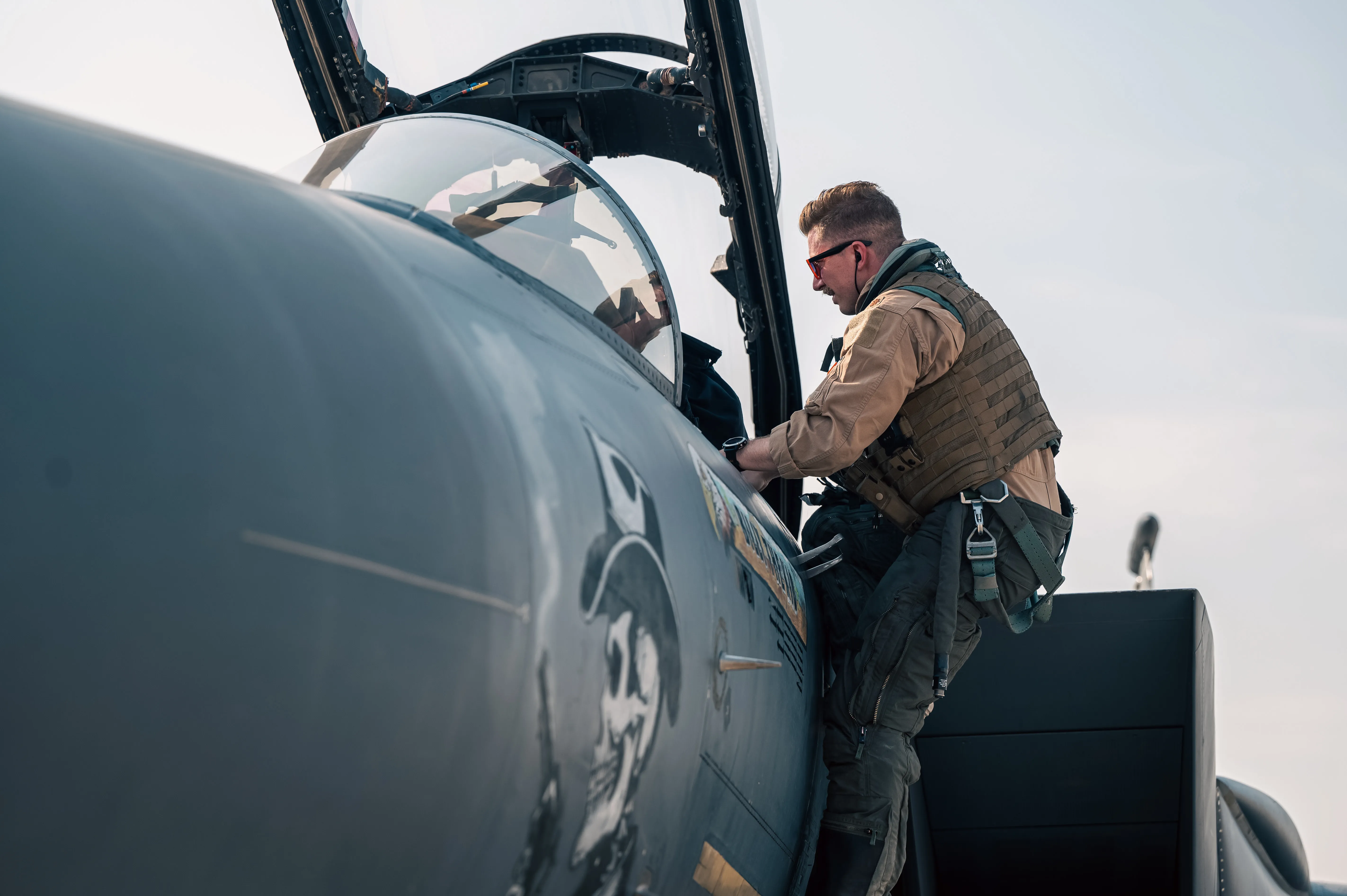
In a library photo, a pilot assigned to the 391st Expeditionary Fighter Squadron climbs into the cockpit of an F-15E Strike Eagle in the U.S. Central Command area of responsibility. U.S. Air Force photo by Senior Airman Grace Turpin
Again, provided these accounts are correct, we cannot say for sure that the pilot actually saw what they described. After all, this was during an extremely high-stress period, and the pilot also ended up with a concussion. Even the U.S. intelligence officials involved in the debrief reportedly disagreed on how to interpret what the F-15 pilot described, and whether the pilot could recount the incident clearly, according to CNN.
The same report also repeats the assertion that the pilot had previously been shot down in the same conflict, during a friendly-fire incident that left three Strike Eagles downed over Kuwait in March. The High Side, a publication on Substack, first reported this detail, citing unnamed current and former Air Force officials. CBS News also subsequently reported this, citing anonymous individuals familiar with the events.
As for the F-15E incident over Iran, you can read our analysis of what was previously revealed about what happened here.
While the exact cause of the loss of the F-15E hasn’t been revealed, NBC News previously quoted three unidentified officials who said the jet “was probably struck by a Chinese-made shoulder-launched missile” and that the engagement may have been supported by a “long-range early-warning radar that spots stealth aircraft,” which Iran received in the “early days” of the war. U.S. President Donald Trump also reportedly said that the Iranians used a shoulder-fired missile, and that “they got lucky.”
Furthermore, while the pilot was rescued within hours, the WSO hid out in a crevice as both rescuers and Iranians frantically searched for him. They were picked up around 50 hours after ejection, aided by a rescue mission involving hundreds of troops, scores of aircraft, and diversion operations over more than a half dozen different parts of Iran. The effort also saw the loss of a second aircraft, an A-10 attack jet in the air, as well as two MC-130J Commando II special operations cargo planes and several H-6 Little Bird special operations helicopters that were destroyed on the ground.
The wreckage of an MC-130J Commando II and an H-6 Little Bird after it reportedly got stuck during the operation to rescue the downed F-15E WSO and later was blown up by U.S. forces so it would not fall into Iranian hands. Iranian state media
The most dramatic interpretation, that a drone swarm directly participated, even if by happenstance, in the shootdown of the Strike Eagle, cannot be entirely ruled out, but there is no publicly available evidence supporting it. There is the description of this formation being a “minefield,” as in something the F-15 could stumble into. This is an interesting note and it may just be how it was mentioned figuratively. At the same time, putting up some sort of a drone screen formation along a known route, especially if it is being used for low-level transits, or near a high-risk facility, could make some sense. Basically, the aircraft would fly into it and be destroyed if it hits a drone, the drones are detonated in close proximity to the aircraft or even if they are connected physically somehow and the aircraft hits the cables. This would match with the description, to a degree, and it would not require any sort of real swarming capability. This would be something of a new ‘barrage balloon’ concept that is more flexible and easier to deploy on demand. China is using balloons in a similar manner to protect key installations today. In addition, Iran certainly has employed its fair share of bizarre tactics and weapons concepts to that point that this doesn’t seem that implausible, but still, it is just a guess.
Returning to the new report, if the pilot really did see a ‘jellyfish-like’ group of Iranian drones that were truly swarming, that would point to previously unknown capabilities within that country, but this is technology that is certainly within the realm of credibility.
Swarms, in this context, are groups of vehicles or guided munitions that are interconnected via datalink and work cooperatively to maximize their combined abilities to accomplish an objective or set of objectives. It is important to note that a major role is played by the nature of a swarm’s computing and autonomy capabilities, and the supporting communications architecture. Swarms can range from ones offering basic cooperative capabilities to far more advanced and dynamic, advanced AI-driven ones. Swarms are not to be confused with a group of drones that are simply sent on a mission together, but have no true cooperative capabilities. These can be best viewed, at least in the aerial sense, as formations of drones or ‘flocks’ of drones that are basically preprogrammed, with tactical planning and large numbers providing an advantage, not the ability to react to external stimuli and make decisions as a team in real-time.
Regardless, based on two of its sources, CNN asserts that “initial reports indicated that it was possible the drone formation had in some way enabled Iran to shoot down the American jet.”
This would raise questions about what type of performance and configuration these drones had, including what altitude the drones were at when they were supposedly sighted, as well as the flight level of the Strike Eagle.
Previously, U.S. officials disclosed that Iran had made use of smaller drones in the hunt for the missing F-15E WSO, but there was no mention of any kind of drone swarms.
An F-15E Strike Eagle pilot and weapon systems officer assigned to the 335th Expeditionary Fighter Squadron prepare to receive fuel from a KC-135 over the CENTCOM area of responsibility. U.S. Air Force photo
For China and Russia, to name just two nations, both of which have provided military assistance to Iran, drone swarming is very much an area of focus. Swarms have many uses, not just to overwhelm the enemy, but also to sense broad areas cooperatively and to work as a highly efficient group offering mixed capabilities that equate to a sum greater than their parts.
The potential of this kind of warfare has not been lost on the U.S. military either, which has been working on it for decades. These efforts date back many years, with the public disclosure of the Perdix having come nearly a decade ago now, and cooperative swarming trials have been carried out repeatedly in the open since then. These efforts have since become ‘mainstream’ as the drone revolution has taken hold of the defense industry. Some of these technologies are now being operationalized in a publicized manner. All this is on top of what is likely an extreme level of development in the classified realm.
Only last month, TWZreported on how the Defense Advanced Research Projects Agency (DARPA) was looking into drones with a high degree of autonomous operation, as well as remotely-operated containerized systems to launch, recover, and otherwise support them. The end result would be a largely self-sustaining “autonomous constellation” capable of supporting networked swarms consisting of as many as 500 drones at once.
❗️Footage of testing by the Swiss-American company “Auterion” on the application of a swarm of FPV drones for striking armored vehicles pic.twitter.com/HgI3Fz4A7O
At this point, it is worth noting that Iran has already demonstrated “loitering” surface-to-air missiles, an unusual category of weapon that blurs the distinction between a kamikaze drone and a more traditional surface-to-air missile. As far as we know, Iran has not attempted to use these weapons in swarms, although having them operate in larger groups would clearly boost the probability of success.
Russia’s Defense Minister Sergei Shoigu, in the front row, second from the right, is shown a 358 “loitering” surface-to-air missile at an Islamic Revolutionary Guard Corps (IRGC) exhibition in Iran. Russian Ministry of Defense
There is also the possibility that what the F-15E pilot saw was some kind of previously unknown drone technology fielded by the U.S. or Israeli military, before the Strike Eagle came down. Clearly, Israel and the United States deployed certain systems in the conflict that had not been seen before, and both countries have the ability to field platforms with swarming capabilities. Releasing a group of drones that can hunt and even kill over the Iranian countryside, looking for targets of opportunity over large areas, like air defenses and standoff weapons launchers, is exactly the kind of concept that swarms were envisioned as being so capable at realizing.
Subsequently, while the rescue effort was underway, the U.S. military certainly was making use of drones in the vicinity. Air Force Gen. Dan Caine, chairman of the Joint Chiefs of Staff, previously described how “A-10s and […] drones and other tactical aircraft were violently suppressing and engaging the enemy in a close-in gunfight to keep them away from the front-seater and allow the pickup force to get into the objective area.”
The use of drones for suppression and destruction of enemy air defenses, as well as stand-in jamming of those systems, is a very real component of modern air warfare dating back decades. Israel was a pioneer in it, which you can read all about here. Those capabilities are far more advanced today, especially for long-range systems dedicated to those missions and for the emerging ‘launched effects’ segment of drone warfare. It’s hard to imagine that these proven capabilities were not put to some use over Iran during the war. The U.S. military even employed its own one-way attack munition, the LUCAS drone, with similar capabilities.
LUCAS drone launching off a ship in the Middle East. (CENTCOM)
With all that being said, there is the possibility that the pilot experienced something else entirely, perhaps related to their concussion or another kind of phenomenon. Even a flock of birds or a group of balloons, the latter of which can be used as decoys to confuse enemy radar and bait fighter aircraft and other air defenses, could appear as a drone swarm, for example. Iran had every reason to use such cheap, but potentially effective tactics. While an experienced fighter pilot would normally be able to tell the difference between drones or birds, these were very much abnormal circumstances. Then there is the matter of Unidentified Aerial Phenomena (UAP), which this could fall into, just for the reason that what was seen may be hard to identify. We don’t know what the description of the configurations of the drones was, or if any was provided, which could help narrow down the possibilities. Also, did the aircraft’s sensors detect these craft? We just don’t know.
A U.S. Air Force F-15E Strike Eagle performs a flare check over the U.S. Central Command area of responsibility. U.S. Air Force photo by Senior Airman Zachary Willis
For now, the reported drone sighting remains an intriguing but unverified element of a much larger story, many important details of which are still to emerge.
Remaining group schedule, teams, as well as the best third-round group fixtures at the tournament in North America.
After 48 matches in North America, it’s time for the final round of games in the group stage at World Cup 2026.
Sixteen teams will be eliminated after these fixtures, with 32 nations heading through to the knockout stages.
Recommended Stories
list of 4 itemsend of list
The top two teams from each of the 12 groups – along with the eight best third-placed teams – will proceed to the next phase.
Here are the top five “must-watch” matches in the second round of fixtures from June 24 until June 27.
Neymar could return for Brazil against Scotland [Reuters]
⚽️ Scotland vs Brazil
Miami Stadium – Wednesday, 6pm (22:00 GMT)
These two sides will meet at the World Cup for the fifth time and there’s plenty to play for in an intriguing encounter in Miami.
Brazil are looking to secure their place in the knockout stages as group winners and are currently tied with Morocco on four points at the top of Group C.
Scotland are aiming to escape the group for the first time at a major international tournament and know that a point will almost certainly guarantee a spot in the round of 32.
Expect Group C to change a lot during these final fixtures, with Morocco taking on Haiti at the same time.
If that isn’t enough, Brazil’s Neymar is also set to make his first appearance at this World Cup.
Sweden have been unpredictable at this tournament [Raquel Cunha/Reuters]
⚽️ Japan vs Sweden
Dallas Stadium – Thursday, 6pm (23:00 GMT)
It’s difficult to predict which Sweden will turn up in Dallas on Thursday.
Graham Potter’s side beat Tunisia 5-1 in their opening match of the World Cup, before losing by the same score to the Netherlands.
Japan have been entertaining to watch at this tournament and were in fine form during their 4-0 win over Tunisia at the weekend.
Expect plenty of goals in this match and plenty of drama. The winner will secure a top-two finish in Group F, so there is a lot to play for.
France’s Kylian Mbappe has scored four goals so far [Kyle Ross/Reuters]
⚽️ Norway vs France
Boston Stadium – Friday, 3pm (19:00 GMT)
Norway and France are already through to the knockout stages, but this game looks set to be a blockbuster affair with both sides looking to top Group I.
Erling Haaland and Kylian Mbappe have both scored four goals so far and they’ll be desperate to add to their tally as they chase down Lionel Messi.
France are one of the favourites to lift the World Cup next month and are looking to end the group stage with three wins from three.
But Norway have the opportunity to prove that they truly are dark horses in this tournament and can compete with elite international sides.
Buckle in for a big one in Boston.
Spain’s Lamine Yamal, Nico Williams and Victor Munoz celebrate after the match against Saudi Arabia [Claudia Greco/Reuters]
⚽️ Uruguay vs Spain
Seattle Stadium – Friday, 6pm (00:00 GMT on Saturday)
Group H has been a tight affair following some surprise results in the opening round of fixtures.
Uruguay drew with Saudi Arabia, while Cape Verde shocked the world with a goalless draw against Spain.
La Roja bounced back by thrashing Saudi Arabia and they go into their final game as group leaders, with Uruguay two points behind in second.
Spain will secure top spot with a win in Seattle, ensuring that they avoid Argentina in the round of 32.
Egypt are looking to reach the knockout stages at the World Cup for the first time [Anne-Marie Sorvin/Reuters]
⚽️ Egypt vs Iran
Seattle Stadium – Friday, 8pm (04:00 GMT on Saturday)
Neither of these sides have ever made it out of the group at a World Cup, but on Friday, at least one of them will achieve that feat.
Group G is closely bunched after a number of drawn matches and it sets things up nicely for an intriguing final round of fixtures.
Victory for either Egypt or Iran will guarantee them a spot in the knockout phase, so expect both sides to be up for this one.
Iran have faced numerous challenges at this World Cup, with restrictions on travel and visa issues before the tournament even began.
If Iran progress, there’s also still a chance that they will face the US in the knockout stages.
World Cup 2026: Remaining group-stage full schedule
Wednesday, June 24
Switzerland vs Canada at 12pm PT (19:00 GMT) – BC Place, Vancouver, Canada
Bosnia vs Qatar at 12pm PT (19:00 GMT) – Seattle Stadium, Seattle, US
Scotland vs Brazil at 6pm ET (22:00 GMT) – Miami Stadium, Miami, US
Morocco vs Haiti at 6pm ET (22:00 GMT) – Atlanta Stadium, Atlanta, US
Czechia vs Mexico at 7pm CST (01:00 GMT on Thursday) – Mexico City Stadium, Mexico City, Mexico
South Africa vs South Korea at 7pm CST (01:00 GMT on Thursday) – Estadio Monterrey, Guadalupe, Mexico
Thursday, June 25
Ecuador vs Germany at 4pm ET (20:00 GMT) – New York New Jersey Stadium, New Jersey, US
Curacao vs Ivory Coast at 4pm ET (20:00 GMT) – Philadelphia Stadium, Philadelphia, US
Japan vs Sweden at 6pm CDT (23:00 GMT) – Dallas Stadium, Dallas, US
Tunisia vs Netherlands at 6pm CDT (23:00 GMT) – Kansas City Stadium, Kansas City, US,
Turkiye vs USA at 7pm PT (02:00 GMT on Friday) – Los Angeles Stadium, Los Angeles, US
Paraguay vs Australia at 7pm PT (02:00 GMT on Friday) – San Francisco Bay Area Stadium, San Francisco, US
Friday, June 26
Norway vs France at 3pm ET (19:00 GMT) – Boston Stadium, Boston, US
Senegal vs Iraq at 3pm ET (19:00 GMT) – Toronto Stadium, Toronto, Canada
Cape Verde vs Saudi Arabia at 7pm CDT (00:00 GMT on Saturday) – Houston Stadium, Houston, US
Uruguay vs Spain at 6pm CST (00:00 GMT on Saturday) – Estadio Guadalajara, Zapopan, Mexico
Egypt vs Iran at 8pm PT (03:00 GMT on Saturday) – Seattle Stadium, Seattle, US
New Zealand vs Belgium at 8pm PT (03:00 GMT on Saturday) – BC Place, Vancouver, Canada
Saturday, June 27
Panama vs England at 5pm ET (21:00 GMT) – New York New Jersey Stadium, New Jersey, US
Croatia vs Ghana at 5pm ET (21:00 GMT) – Philadelphia Stadium, Philadelphia, US
Colombia vs Portugal at 7:30pm ET (23:30 GMT) – Miami Stadium, Miami, US
DRC vs Uzbekistan at 7:30pm ET (23:30 GMT) – Atlanta Stadium, Atlanta, US
Algeria vs Austria at 9pm CDT (02:00 GMT on Sunday) – Kansas City Stadium, Kansas City, US
Jordan vs Argentina at 9pm CDT (02:00 GMT on Sunday) – Dallas Stadium, Dallas, US
The United States Senate has voted in favour of invoking its war powers to force President Donald Trump to halt his military campaign against Iran or seek congressional approval before any further action is taken.
Here is a closer look at Tuesday’s vote – the 10th attempt Congress has made to rein in the US-Israel war on Iran – and what this means for the US government.
Why did this vote take place?
A similar measure had already been approved in the House of Representatives on June 3 by a vote of 215 to 208, and on Tuesday, the Senate passed it in a 50-48 vote. Trump’s Republican Party has slim majorities in both chambers.
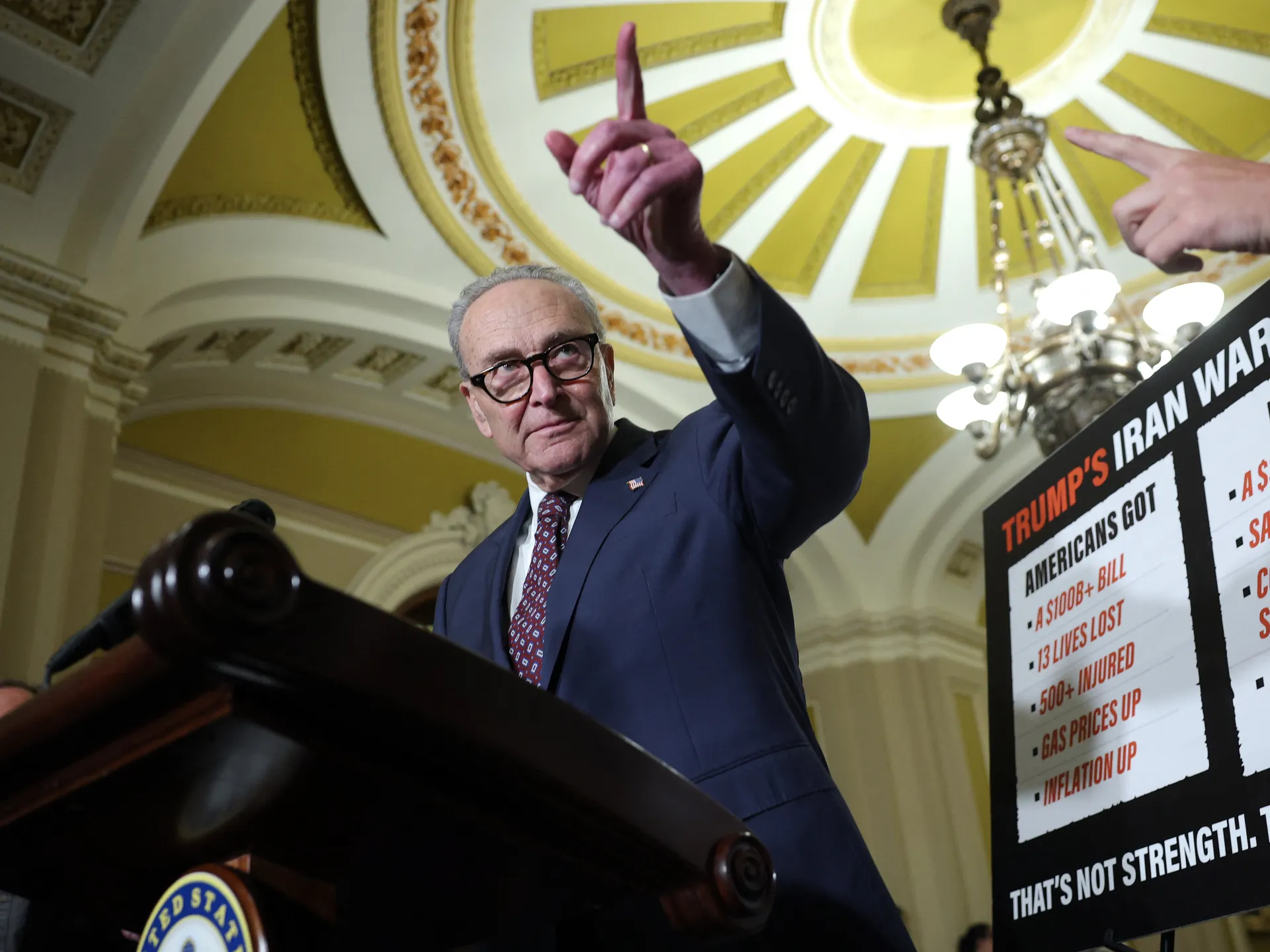
Speaking on the Senate floor before the vote, top Democrat Chuck Schumer advocated for the war powers resolution as he criticised Trump’s military campaign against Iran.
“For years, Trump promised to put maximum pressure on Iran, but he ended up delivering maximum confusion, maximum chaos, maximum cost to the American people with his disastrous war,” Schumer said.
“Time after time, the vast majority of Senate Republicans sided with Trump and his war instead of the American people. The American people have paid the price for Trump’s historic blunder in Iran. It’ll go down in the history books as one of the worst foreign policy forays America has ever made.”
The war against Iran has proved highly unpopular in the US. A poll released on Tuesday by the news agency Reuters and the research firm Ipsos found that 24 percent of respondents felt the war had been worth the cost.
Four Republican senators crossed party lines to vote for the resolution, and all but one of the chamber’s Democrats also voted in favour.
Tuesday’s breakaway Republicans were Bill Cassidy of Louisiana, Lisa Murkowski of Alaska, Susan Collins of Maine and Rand Paul of Kentucky. A further two Republicans did not vote: Mitch McConnell of Kentucky and Dave McCormick of Pennsylvania.
The lone Democrat to vote against the measure was Pennsylvania’s John Fetterman.
What does the resolution say?
The war powers resolution “directs the President to remove United States Armed Forces from hostilities against the Islamic Republic of Iran”.
Only if “explicitly authorised by a declaration of war or a specific congressional authorisation” would Trump be allowed to use further military force against Iran, it says.
The resolution, however, does allow for a limited military presence to remain in the Middle East to prevent any “imminent attack” against the US or its allies.
What is the significance of the vote?
The vote reflects growing unease even among some of Trump’s Republican supporters about the unpopular conflict, which began with US-Israeli air strikes on Tehran on February 28.
This is the first time both chambers of Congress have passed a resolution directing a president to remove US armed forces from a warzone under the War Powers Act although it was not immediately clear how the votes might affect the conflict.
Technically, the Trump administration should now seek explicit congressional approval for further strikes on Iran. However, previous administrations have found routes around this by securing more limited authorisations for the use of military force (AUMFs) instead.
For example, in the wake of the 9/11 attacks in 2001, Congress passed an AUMF that gave then-President George W Bush broad powers to conduct what would become the global “war on terror”.
And one year later, it passed another AUMF, allowing the use of the military against the government of Saddam Hussein in Iraq, which became the basis of the 2003 invasion.
The two authorisations remain in place, and presidents continue to rely on them to carry out strikes without first seeking congressional approval. The assassination of top Iranian General Qassem Soleimani in 2020 in Baghdad was authorised by Trump under the 2003 AUMF.
In addition, a resolution does not have the force of law. Experts said, therefore, that while the Senate vote is viewed as a rebuke to Trump, it is largely symbolic.
What effect will this have on US-Iran talks in Switzerland?
Before the vote on Tuesday, some Republican senators had warned that the war powers resolution would weaken Trump’s standing in the Switzerland negotiations.
“If this passes, the Iranians are going to simply stand up and walk away from negotiations,” Senator James Risch of Idaho told the Senate on Tuesday.
“They’re going to say: This thing’s over. The Congress has told the president of the United States, ‘Leave us alone. We can do whatever we want to do,’ and they will walk away.”
How will the Trump administration respond?
Risch also argued that the resolution is essentially useless, given its symbolic nature. “It’s going to have no effect. The president isn’t going to pay any attention to it,” he said.
The US Constitution gives Congress the sole power to declare war, but that division of power has eroded over the past 75 years as successive presidents alone have committed US forces to overseas conflicts.
Trump has pointed to that precedent to argue that he does not need congressional authorisation at all.
In an appearance on The Axios Show last week, Trump denied learning any “lesson” about the limits of his executive powers during the Iran war. “There are no limits,” he said.
The last time Congress voted to go to war was during World War II although it has passed AUMFs in the decades since, which allow for limited military engagement without congressional approval for all-out war.
During Trump’s first term, there were concerns that he could use the 2001 AUMF to strike Iran under the unfounded claim that Tehran supports al-Qaeda.
Some critics pointed out that Republicans may be more willing to confront Trump over the issue of congressional authorisation now as they defend their seats before November’s midterm elections.
Iran and the US clash over nuclear inspections and Hormuz as negotiators push for a final deal within 60 days.
Published On 24 Jun 202624 Jun 2026
Iran and the United States have offered conflicting accounts of key issues as negotiators work towards a final agreement within a 60-day window. Differences remain over nuclear oversight and the implementation of any deal, underscoring the challenges facing both sides.
US Secretary of State Marco Rubio said Iran would not be allowed to charge tolls in the Strait of Hormuz under a final agreement, stressing that the strategic waterway must remain open to international shipping.
Meanwhile, Iran rejected US claims that it had agreed to allow nuclear inspectors back into the country after President Donald Trump said Tehran had accepted the “highest level” of monitoring. The conflicting statements highlight the gaps that negotiators are still trying to bridge.
Here is what has happened:
In Iran
Iran’s military shifts to ‘offensive doctrine’: General Ahmad Reza Pourdastan, head of Iran’s Army Strategic Studies and Research Center, said Tehran has moved away from a purely defensive posture and now includes preemptive operations in its military strategy. Quoted by the semi-official Fars news agency, Pourdastan said Iran could “severely surprise the enemy” if national interests required it and added that much of the country’s military capability has yet to be used.
Iran says no IAEA inspections planned: Tohid Asadi, reporting from the Strait of Hormuz, says the Iranian Foreign Ministry spokesperson Esmaeil Baghaei has denied reports of a meeting with International Atomic Energy Agency (IAEA) chief Rafael Grossi and said there are currently no plans for visits or inspections by the UN nuclear watchdog. Baghaei said Iran’s dealings with the IAEA would be governed by existing procedures, its safeguards obligations, parliamentary legislation and decisions by the Supreme National Security Council. Iran suspended cooperation with the IAEA after US and Israeli strikes on its nuclear facilities in June 2025, and while diplomacy continues under a 60-day framework, Tehran says it has not granted permission for inspectors to return.
War diplomacy:
‘No way’ US and Iran can finalise deal in 60 days, analyst says: Charles Kupchan, a senior fellow at the Council on Foreign Relations, told Al Jazeera there is “no way” Washington and Tehran can complete a final agreement within the 60-day timeframe repeatedly cited by President Donald Trump. “I think we’re talking about at least into the next calendar year,” he said, adding that he would not be surprised if both sides simply “run out the clock” by continuing negotiations and keeping the Strait of Hormuz open without reaching a final deal before the end of Trump’s presidency.
Qatar says LNG production could return to normal within weeks: Prime Minister Sheikh Mohammed bin Abdulrahman bin Jassim Al Thani told the Financial Times that Qatar is preparing to restore normal liquefied natural gas (LNG) production after the interim US-Iran deal. Qatar, the world’s second-largest LNG producer, halted output in March following an Iranian drone attack on the Ras Laffan facility. Sheikh Mohammed said most production could resume within weeks, except at the damaged site, adding that QatarEnergy would only lift its force majeure declaration once it is satisfied that all safety and operational concerns have been addressed.
In the Gulf:
Rubio ‘trying to sell the deal’ with Iran on Gulf tour: Alan Fisher, reporting from Washington, DC, said US Secretary of State Marco Rubio is visiting the United Arab Emirates, Kuwait and Bahrain, three Gulf countries seen as having been among the most affected by the war with Iran. Rubio, who also serves as Trump’s national security adviser, is expected to reassure regional allies that US security commitments remain intact. He will also address the Gulf Cooperation Council in Bahrain, where he is “really trying to sell the deal”, amid concerns over Washington’s response to Iranian attacks.
In the US
US Senate approves resolution to curb Trump’s war powers on Iran: The Senate voted 50-48 to pass a measure requiring congressional approval for further US military action against Iran, marking the first time a war powers resolution on the conflict has cleared both chambers of Congress. Four Republicans – Bill Cassidy, Lisa Murkowski, Susan Collins and Rand Paul – joined nearly all Democrats in backing the measure, while Pennsylvania Democrat John Fetterman voted against it. The resolution is expected to face a veto from President Trump.
In Israel
US ‘very naive’ on Iran, Ben-Gvir says: Israeli National Security Minister Itamar Ben-Gvir said the US would be “very naive” if it believed Iran would abandon its nuclear programme, and hinted that Israel may act independently against Tehran. “It is Israel’s responsibility to confront this Iranian threat and act against it alone,” he told Israel’s Channel 7, adding that “no circumstances” could force Israel to act “according to the dictates of a friend, even if that friend is truly great”. His remarks come amid reported tensions between Washington and Tel Aviv over Israel’s attacks on Lebanon and ongoing US-Iran negotiations. Last week, US Vice President JD Vance publicly criticised Israeli cabinet ministers for “attacking” Washington, calling the US Israel’s “only powerful ally” left in the world.
In Lebanon
UN says ceasefire ‘largely holding’ in southern Lebanon: The United Nations said the ceasefire in southern Lebanon appears to be “largely holding”, although peacekeepers continue to observe Israeli military ground and air activity. UN spokesperson Stephane Dujarric said UNIFIL troops witnessed “heavy” machine-gun fire and three tank rounds fired by Israeli forces near Biyyada on Monday, while drones were also seen “apparently to monitor UNIFIL peacekeepers”. The incident came a day after peacekeepers reported the first day without exchanges of fire since fighting escalated on March 2. The UN urged all sides to “adhere fully to the ceasefire and refrain from any escalation, particularly during this delicate period of ongoing negotiations”.
June 24 (UPI) — Senate lawmakers have approved a war powers resolution directing President Donald Trump to halt U.S. hostilities with Iran or seek congressional authorization.
The Senate voted 50-48 on Tuesday, with four Republicans — Sens. Bill Cassidy of Louisiana, Susan Collins of Maine, Lisa Murkowski of Alaska and Rand Paul of Kentucky — joining their Democratic colleagues in passing H.Con.Res. 86. Sen. John Fetterman, D-Pa., was the only Democrat to vote against the measure.
The measure’s legal force was disputed. Though concurrent resolutions are non-binding, Democrats argue H.Con.Res. 86 is binding because it was adopted under the War Powers Resolution.
Either way, the measure shows the deepening fissure in support among Trump’s Republican Party for the war his administration unilaterally launched in late February.
Democrats have been forcing repeated war powers resolution votes for months, most of which have been stonewalled by Republicans. But GOP support for the war has waned as it has dragged on, culminating Tuesday when the Senate approved the measure that the House narrowly passed 215-208 earlier this month.
“Both chambers have now made clear that the president cannot continue this war of choice and must cease all hostilities against Iran,” Rep. Gregory Meeks, the resolution’s sponsor and ranking member of the House Foreign Affairs Committee, said Tuesday after the vote.
“Regardless of what President Trump says, this measure is binding under the War Powers Resolution, and I will explore all legal avenues to ensure the Executive complies with the will of Congress.”
Democrats argue that the U.S. war with Iran — as well as other military actions taken by Trump, including attacks on suspected drug-trafficking boats in international waters — is illegal as Congress has not authorized war, a power the Constitution gives to Congress.
Trump has responded that he does not need authorization, and any war powers resolution is moot due to the fragile U.S.-Iran cease-fire that went into effect in early April.
Amid the cease-fire, Trump has been seeking an agreement to end the war, and his administration was actively negotiating terms with Iran when the vote was held Tuesday.
In a social media statement, Trump lambasted Congress over the vote, saying it was informing Iran that the United States does not support him while hee has “Iran on the ‘ropes,’ ready to go down for the fall.”
“Four Republican Losers voted with the Dumocrats,” he said, while calling the measure “poorly timed and meaningless.”
“These Senators have just made my job more difficult, but I will get it done, one way or the other, because I always get it done.”
WASHINGTON — The Pentagon has told senators it needs roughly $80 billion, mostly to cover the cost of the U.S. war against Iran, adding to what is already a sizable military spending boost being sought by President Trump.
Meanwhile, the Senate for the first time approved a war powers resolution Tuesday seeking to block U.S. military action against Iran, as lawmakers warily watch President Trump’s efforts to resolve a conflict that the administration launched on its own and now needs Congress to fund.
It was the 10th time the Senate has tried to stop the war, and the outcome, on a vote of 50-48, was a stunning turnaround from past efforts. Although the resolution is largely symbolic, and does not fully carry the force of law, it reflects the growing concerns from a number of Republican lawmakers in the House and Senate over the war and the deal Trump struck with Iran to end it. The House approved the resolution earlier this month.
The White House Office of Management and Budget has yet to make a formal request to Congress for more money for the war. But Defense Secretary Pete Hegseth has been making the rounds on Capitol Hill, including Monday evening. A top deputy Defense secretary told senators about the Iran funding request last week, according to two people familiar with the situation but not authorized to discuss it publicly.
The Wall Street Journal first reported on the developments.
The push for billions of dollars in Iran war funding comes at a fraught political moment. Lawmakers are not only skeptical of the deal Trump struck with Iran to bring an end to the war, but also wary of next steps. The White House has requested a remarkable $1.5 trillion for the Pentagon — a nearly 50% increase over the current fiscal year’s funding levels.
Senate Majority Leader John Thune said he’s expecting a supplemental spending request from the administration for the war, and when it arrives, “we’ll work through it and see where the votes are.”
“We need to make sure we’re doing everything we can to replenish, resupply a lot our munitions that have been depleted — not only just with what’s happening with Iran, but prior to that,” said Thune (R-S.D.).
Deputy Defense Secretary Stephen Feinberg spoke to several senators about the proposal in calls last week and he notified congressional committees that the $80-billion request had been sent to the Office of Management and Budget. The Pentagon did not immediately respond to a request for comment.
However, the funding package will almost certainly run into trouble from lawmakers who refuse to support Trump’s decision to go to war and are reluctant to give the Pentagon more money at a time of high costs of living for Americans at home.
“You’re spending families’ hard-earned tax dollars on a war that many strongly oppose,” Democratic Sen. Patty Murray of Washington told Hegseth in a hearing last month.
In addition to the Iran funding, Republicans hope to secure about $1.1 trillion through the regular appropriations process, which typically requires support from both parties for approval. Then, they hope to secure an additional $350 billion through a mostly party-line vote later this summer.
The amount being sought by the Pentagon is far higher than the $29-billion estimate of war costs that Hegseth gave Congress during his testimony last month. The bulk of that amount was related to replacing munitions and repairing equipment but also included operational costs to keep forces deployed. That estimate did not include the cost to repair or rebuild U.S. military sites damaged in the region.
It’s also far lower than the initial $200 billion the Pentagon floated as the costs at the start of the war. An early estimate put the cost of the first week of the war at $11.3 billion.
Sen. Brian Schatz of Hawaii, a member of Democratic party leadership, said he expects the actual price tag could be much higher than the $80 billion being proposed.
Schatz said he hasn’t done any counting of Democrats about whether there is support for an Iran-focused bill, “but I haven’t found anyone who wants to do this.”
But Republican Sen. Jim Banks of Indiana said, “To me it’s less about the war, it’s more about the stockpiles.”
Banks said, “I would sell it to my state as an investment in our defense industrial base, reshoring defense production to Indiana.”
Sen. Jack Reed of Rhode Island, the top Democrat on the Senate Armed Services Committee, said funding for an Iran supplemental can’t be done in isolation. It has to be done after lawmakers from both parties have agreed to a total spending amount for both defense and non-defense programs, “then the rest of this would follow pretty quickly,” Reed said.
And Sen. John Hoeven of North Dakota, a member of the Appropriations subcommittee on Defense, said he has been working with the administration to broaden the package to include funds for disaster aid for California, Hawaii and other states hard hit by fires and weather problems, as well as agricultural aid for farmers.
“I think that’s the kind of combination that could pass,” Hoeven said.
Hegseth declined to answer questions from reporters late Monday as he strode around the Capitol.
But on the issue of the cost of the war, Hegseth responded rhetorically during a Senate hearing last month, asking, “What is the cost of Iran obtaining a nuclear weapon?”
He acknowledged the president’s decision to confront the threat of a nuclear Iran “comes with cost — and we recognize that.”
Freking and Mascaro write for the Associated Press. AP writers Konstantin Toropin and Ben Finley contributed to this report.
WASHINGTON — The Senate for the first time approved a war powers resolution Tuesday seeking to block U.S. military action against Iran, as lawmakers warily watch President Trump’s efforts to resolve a conflict that the administration launched on its own and now needs Congress to fund.
It was the 10th time the Senate has tried to stop the war, and the outcome, on a vote of 50 to 48, was a stunning turnaround from past efforts. While the resolution is largely symbolic, and does not fully carry the force of law, it reflects the growing concerns from a number of Republican lawmakers in both the House and Senate over both the war and the deal Trump struck with Iran to end it. The House approved the resolution earlier this month.
“Time after time, the vast majority of Senate Republicans sided with Trump and his war instead of the American people,” said Senate Democratic Leader Chuck Schumer of New York.
Schumer said Americans have paid the price for “Trump’s historic blunder in Iran. It’ll go down in the history books as one of the worst foreign policy forays America has ever made.”
In the past, as many as four GOP senators have voted for the war powers resolutions, and they did so Tuesday — Republicans Lisa Murkowski of Alaska, Susan Collins of Maine, Rand Paul of Kentucky and Bill Cassidy of Louisiana. One Democrat, Sen. John Fetterman of Pennsylvania, voted against the resolution.
On this vote, the absence of two Republicans, including Sen. Mitch McConnell of Kentucky, who was admitted to the hospital recently for an undisclosed matter, left the GOP without a full majority to halt the effort. Sen. Dave McCormick (R-Pa.) also missed the vote.
The vote also comes as the Pentagon is seeking $80 billion from Congress, mostly for the Iran war as it backfills munitions and stockpiles.
Trump to meet senators as Republicans balk at Iran deal
Trump himself is headed to the Capitol this week to meet with GOP senators as Vice President JD Vance has been overseas working to negotiate with Iran to end its nuclear ambitions — which had been among the stated rationales for the war.
The president is not pleased with the Republicans who have been critical of the deal he struck with Iran, according to one GOP senator granted anonymity to discuss the private dynamics.
The terms of the Iran deal are spelled out in a memorandum of understanding that Trump signed last week, starting a 60-day clock for the sides to reach a broader agreement over ending Iran’s nuclear program.
But Republicans have particularly objected to the $300-billion fund to help Iran rebuild, which is far greater than the $1.7 billion then-President Obama refunded the country under his administration’s 2015 Iran deal.
“I believe President Trump is getting very poor advice on Iran,” Sen. Ted Cruz (R-Texas) said last week on his podcast after the deal was made public.
Democrats have repeatedly forced Iran votes
Over and again, Democrats have been forcing votes on the Iran war, almost since the U.S. and Israel launched missile strikes on Iran on Feb. 28.
Nearly each week they’re in session, the Senate Democrats have put forward war powers resolutions, but they have failed to amass the majority needed for passage in the narrowly split chamber, where Trump’s Republican Party holds the majority.
The House pushed its own version to passage earlier this month, with four Republicans joining all Democrats in approving the war powers resolution, over the objections of House Speaker Mike Johnson (R-La.) and the GOP leadership.
While such resolutions do not go to the president for his signature, passage stands as a powerful, if symbolic, statement from Congress and a rebuke of the administration’s military actions.
Sen. Tim Kaine, the Democrat from Virginia who has led his party’s efforts, said the pause in warfighting, as Trump’s team works to shore up a fragile ceasefire, provides the perfect time for Congress to step back and assess “what should the next chapter be.”
Hegseth seeks $80 billion from Congress for the Iran war
Defense Secretary Pete Hegseth is also on Capitol Hill this week, seeking roughly $80 billion in supplemental funding to shore up defense supplies in the aftermath of the Iran war, which is drawing scrutiny when many Americans are reeling from high gas prices and costs of living.
The Pentagon early on had estimated the war cost $11.3 billion during its first week, and experts have put the overall price tag at close to $100 billion.
The Defense Department’s funding request is part of a broader beef-up of military money the White House wants as part of its budget request this year.
The Trump administration is seeking $1.5 trillion in defense funding this year — a 50% increase — including $350 billion that it wants in a so-called budget reconciliation package. Johnson and GOP leaders are working to pass that package on their own, over the objections of Democrats, much the way they approved Trump’s big tax cuts bill last year.
The 2025 tax cuts package also included a sizable increase of about $175 billion for the military.
Following the start of the US-Israel war on Iran on February 28, Tehran had effectively closed off the strait, leaving vessels stuck.
Published On 23 Jun 202623 Jun 2026
The United Nations’ International Maritime Organization (IMO) has begun evacuating more than 11,000 sailors stranded in the Strait of Hormuz following the memorandum of understanding signed by the United States and Iran to end the US-Israel war on Iran.
IMO Secretary-General Arsenio Dominguez said in a statement on Tuesday that the operation would be carried out in “close cooperation with Iran, Oman, all other coastal states in the region, the United States and the maritime industry”.
Recommended Stories
list of 3 itemsend of list
“We have secured the necessary safety guarantees and have thoroughly verified the conditions for safe navigation to support these operations,” he said.
Following the start of the US-Israel war on Iran on February 28, Tehran had effectively closed off the strait, leaving vessels stuck on the waterway.
But shipping traffic has increased since the signing of the agreement last week, with the Kpler shipping intelligence agency reporting that at least 36 commercial vessels passed through the strait on Monday, a record level of traffic since the war began.
According to Oman’s Defence Ministry, the evacuation process under the IMO plan, which has been under discussion for months, will be phased.
“Given the elevated risk of collision in the current environment, a gradual and controlled evacuation of vessel traffic is required,” it said.
Denmark announced on Tuesday that it will join an international maritime mission set up by France and Britain to help reopen the crucial waterway.
Reporting from the Strait of Hormuz, Al Jazeera’s Tohid Asadi explained that talks between the US and Iran on a peace deal have gotten “a little bit better”.
“Today, we’ve got a joint statement by the Omani and Iranian sides saying they are talking about mechanisms to reopen trade through the Strait of Hormuz. This is a positive indication,” he said.
“However, it remains to be seen how long it’s going to take for the strait to reopen, and until then, we see hundreds of ships stranded on both sides of Hormuz.”
Meanwhile, US Secretary of State Marco Rubio arrived in the United Arab Emirates on Tuesday and reiterated that Iran would not be allowed to charge tolls in the strait under any final deal with the US.
“It’s an international waterway. No country is allowed to charge tolls or fees on an international waterway,” he said, adding that he believed “all the countries in this region would agree”.
Tehran’s top negotiator, Mohammad Bagher Ghalibaf, had earlier insisted the Strait of Hormuz “will never return” to the pre-war status quo, despite the foes agreeing to set up communication lines to keep it open.
Vice President JD Vance, Pakistani Prime Minister Shehbaz Sharif and Qatari Prime Minister Mohammed bin Abdulrahman bin Jassim Al Thani speak ahead of talks between the United States and Iran at the Buergenstock resort in Obbuergen, near Lucerne, Switzerland, Sunday. The U.S. has waived Iran sanctions Tuesday. Photo by Urs Flueeler/EPA
June 23 (UPI) — President Donald Trump lifted sanctions on Iran releasing millions into the Iranian economy Monday,
President Donald Trump presents a Medal of Honor to Tom Ripley on behalf of his father, John W. Ripley, during a Medal of Honor award ceremony in the East Room of the White House on Thursday. Photo by Aaron Schwartz/UPI | License Photo
allowing American dollar trade for the first time since 1979.
The U.S. Treasury on Monday issued a 60-day exemption allowing Iran to produce and sell crude oil, petrochemical and petroleum products in U.S. dollars through Aug. 21.
Under this general license, boats and entities that were sanctioned are also cleared to operate. The waiver could also open up allowing U.S. imports of Iranian oil, which hasn’t happened since the 1990s.
Trump defended the move on Truth Social Tuesday morning, saying that the money to Iran is to be used for food and supplies purchased from the United States.
“Despite their protestations and false statements to the contrary, coupled with the drumbeat of the Fake News, which is doing everything possible to make the U.S. Victory as small and insignificant as possible, Iran has fully and completely agreed to highest level Nuclear inspections long into the future (Infinity!!!). This will insure ‘Nuclear Honesty.’ If they did not agree to this, there would be no further negotiations!” the president posted.
“Based on this and other major concessions being made by Iran, I have agreed to allow the Hormuz Strait to remain OPEN, with no further Naval Blockade. However, all ships are remaining in place should it be necessary to reinstitute the Blockade, which seems, at this point, highly unlikely. The Money and/or Sanctions that the U.S. Treasury is releasing goes into escrow, controlled by the U.S.A., and will be used for the purchase of food and medical supplies, exclusively from the United States, including Corn, Wheat, and Soybeans from our great American Farmers. These are things that are desperately needed by Iran. This is a humanitarian crisis, and I feel it is necessary to help, NOW, before it is too late. Talks are going well!” he said.
Vice President JD Vance said Monday that during peace talks on Sunday, Iran agreed to invite the International Atomic Energy Agency back into the country for inspections.
Pakistan hosts Iranian President Masoud Pezeshkian after mediating the breakthrough US-Iran negotiations in Switzerland.
Published On 23 Jun 202623 Jun 2026
Islamabad, Pakistan – Iranian President Masoud Pezeshkian has alanded in Pakistan for a state visit – his first overseas trip since the United States and Israel launched strikes on Iran on February 28.
His Pakistani counterpart Asif Ali Zardari, Prime Minister Shehbaz Sharif, and Deputy Prime Minister and Foreign Minister Ishaq Dar received the Iranian leader at a military base near capital Islamabad on Tuesday.
Recommended Stories
list of 4 itemsend of list
During his day-long visit, Pezeshkian, who is accompanied by a high-level delegation that includes ministers and senior officials, will hold talks with Sharif, and is also expected to meet with Zardari.
According to Pakistan’s Ministry of Foreign Affairs, Senate Chairman Yousaf Raza Gilani, National Assembly Speaker Ayaz Sadiq, and Deputy Prime Minister and Foreign Minister Ishaq Dar will also call on the Iranian leader.
“During the visit, the two sides will review the full spectrum of bilateral relations and explore new avenues to further deepen cooperation across diverse sectors, including trade, energy, border security, people-to-people exchanges, and regional connectivity,” the ministry said in a statement on Monday.
Pezeshkian’s visit follows the crucial first round of talks between the United States and Iran, mediated by Pakistan and Qatar, in the Swiss city of Bürgenstock to end the war on Iran.
As part of the agreement, the US will release $12bn in frozen Iranian funds. The US has also announced a temporary easing of international sanctions on Iran, allowing it to sell its oil and petrochemicals until August 21. The talks concluded with a 60-day roadmap towards a final deal.
It is Pezeshkian’s second visit to Pakistan as president. His first, in August 2025, came days after the 12-day Iran-Israel war, and was also his first overseas trip following that conflict.
The visit is widely viewed as an expression of gratitude for Pakistan’s role in brokering the Islamabad Memorandum of Understanding, signed on June 18 by US President Donald Trump and Pezeshkian, with Prime Minister Sharif signing the document as a mediator.
The Islamabad MoU launched the formal diplomatic process now under way in Switzerland.
“The visit will also provide an important opportunity to discuss ongoing diplomatic engagements following the signing of the Islamabad Memorandum of Understanding, as well as regional and international developments of mutual interest,” Pakistan’s Ministry of Foreign Affairs said in its statement.
US announces the temporary easing of oil sanctions for 60 days after Iran agrees to allow international nuclear inspections.
Published On 23 Jun 202623 Jun 2026
Iran’s top negotiator, Mohammad Bagher Ghalibaf, says an agreement has been reached with the United States to release $12bn in frozen Iranian funds following talks in Switzerland.
The US eased sanctions on Iranian oil for 60 days after Tehran committed to allowing international nuclear inspectors to return to the country during negotiations to end the US-Israel war on Iran.
Recommended Stories
list of 4 itemsend of list
Israel and Lebanon are scheduled to hold talks in the US as a ceasefire appears to be holding in Lebanon.
So what’s the latest as the conflict enters its 116th day?
Diplomacy
Iranian Deputy Foreign Minister Kazem Gharibabadi says technical talks with the US have concluded and the next phase “will take place under the supervision of the high-level committee” that includes Ghalibaf, Foreign Minister Abbas Araghchi and US Vice President JD Vance.
Ghalibaf has hailed “good achievements” in the US-Iran talks and confirmed the release of two tranches of $6bn in frozen funds.
The US Treasury Department has waived sanctions on the sale of Iranian crude oil, petrochemicals and petroleum products until August 21.
Omani Foreign Minister Badr Albusaidi reaffirms a commitment for “toll-free passage” in the Strait of Hormuz after talks with Iranian diplomats in Muscat.
Henry Ensher, a former US ambassador and deputy assistant secretary of state, says the release of frozen Iranian assets and the resumption of maritime traffic in the Strait of Hormuz suggest that Washington and Tehran are both “getting what they want”. “Both sides are very interested to show that, somehow, they’ve gotten the upper hand or at least that they’re not being taken advantage of,” Ensher tells Al Jazeera.
In Iran
Iranian President Masoud Pezeshkian has called for a “full commitment to agreed obligations”. “The effectiveness of the talks depends on full commitment to the agreed obligations and their precise implementation,” Pezeshkian says.
Ghalibaf has defended the decision to hold talks with the US, saying Iranian delegates went to Switzerland to end the bloodshed in Lebanon.
Central Bank of Iran Governor Abdolnaser Hemmati has denied comments by US President Donald Trump that released Iranian funds would be used to buy US farm products. Hemmati tells the Tasnim News Agency that Iran has “no obligation to buy” agricultural products from the US. He says the agreement between the US and Iran on the matter says the first $6bn can be used to buy “basic goods and medicine”.
In the US
Trump says Iran “will agree” to have weapons inspections and any released Iranian assets will be used to buy US produce.
Democrats on the Foreign Affairs Committee of the US House of Representatives have accused Trump of granting Iran sanctions relief before making progress on key issues under negotiation, including Tehran’s nuclear programme. “Trump officials repeatedly said sanctions relief would be tied to Iran addressing its nuclear program and terrorist proxies. Neither has been addressed, but the regime has been gifted sweeping sanctions relief it has dreamed of for decades,” they say in a post on X.
In Lebanon
A ceasefire between Israel and Hezbollah has largely held, even as fear of renewed hostilities has kept displaced people from returning home.
The United Nations said Sunday marked the first time its peacekeepers have detected no air attacks in Lebanon since March 2, the day the war between Israel and Hezbollah escalated and two days after the US-Israel war on Iran began.
Mahmoud Qamati, deputy head of Hezbollah’s political council, has warned that the Lebanese group will respond to any violation of the ceasefire by Israel, according to Iran’s Press TV. “Hezbollah remains fully alert with its finger on the trigger, ready to confront any violation by the Israeli regime,” Qamati is quoted as saying.
Israeli Prime Minister Benjamin Netanyahu, Defence Minister Israel Katz and Chief of the General Staff Eyal Zamir say Israeli troops will continue to occupy southern Lebanon.
The Israeli military will continue to “act with determination in order to neutralize threats against our soldiers and our citizens” and to demolish infrastructure belonging to Hezbollah, they say in a statement.
The Israeli military will also continue to “maintain the security zone in southern Lebanon”, they say, referring to the land Israel occupies there, razing buildings and forcibly displacing one million people.
Israel and Lebanon are to start a new round of direct talks in Washington, DC, on Tuesday.