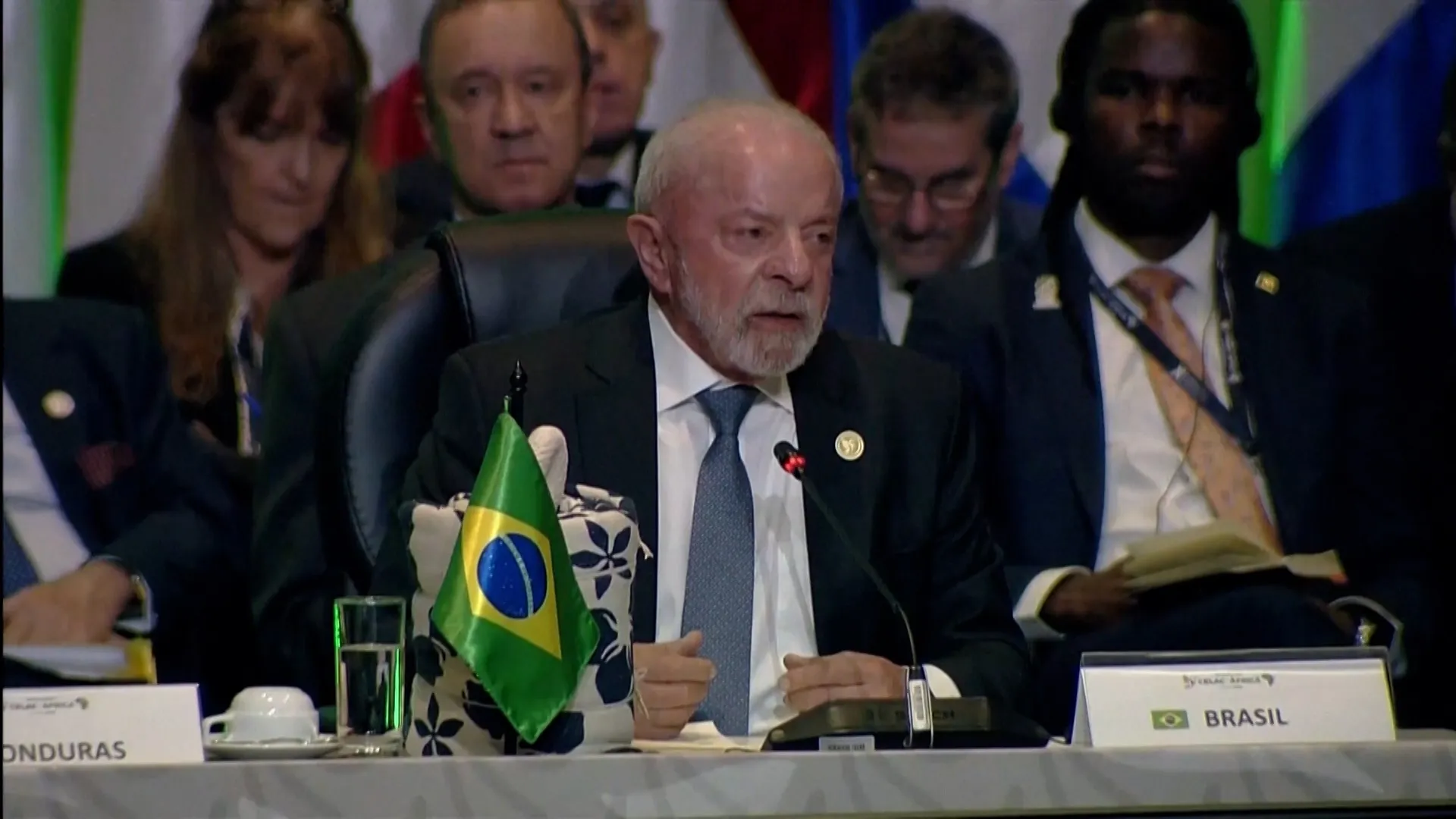
Latin American leaders met at the 10th Community of Latin American and Caribbean States (CELAC) Summit in Bogota on Saturday where Colombian President Gustavo Petro called for an immediate Middle East ceasefire to prevent a global economic crisis and ‘potential world war’.
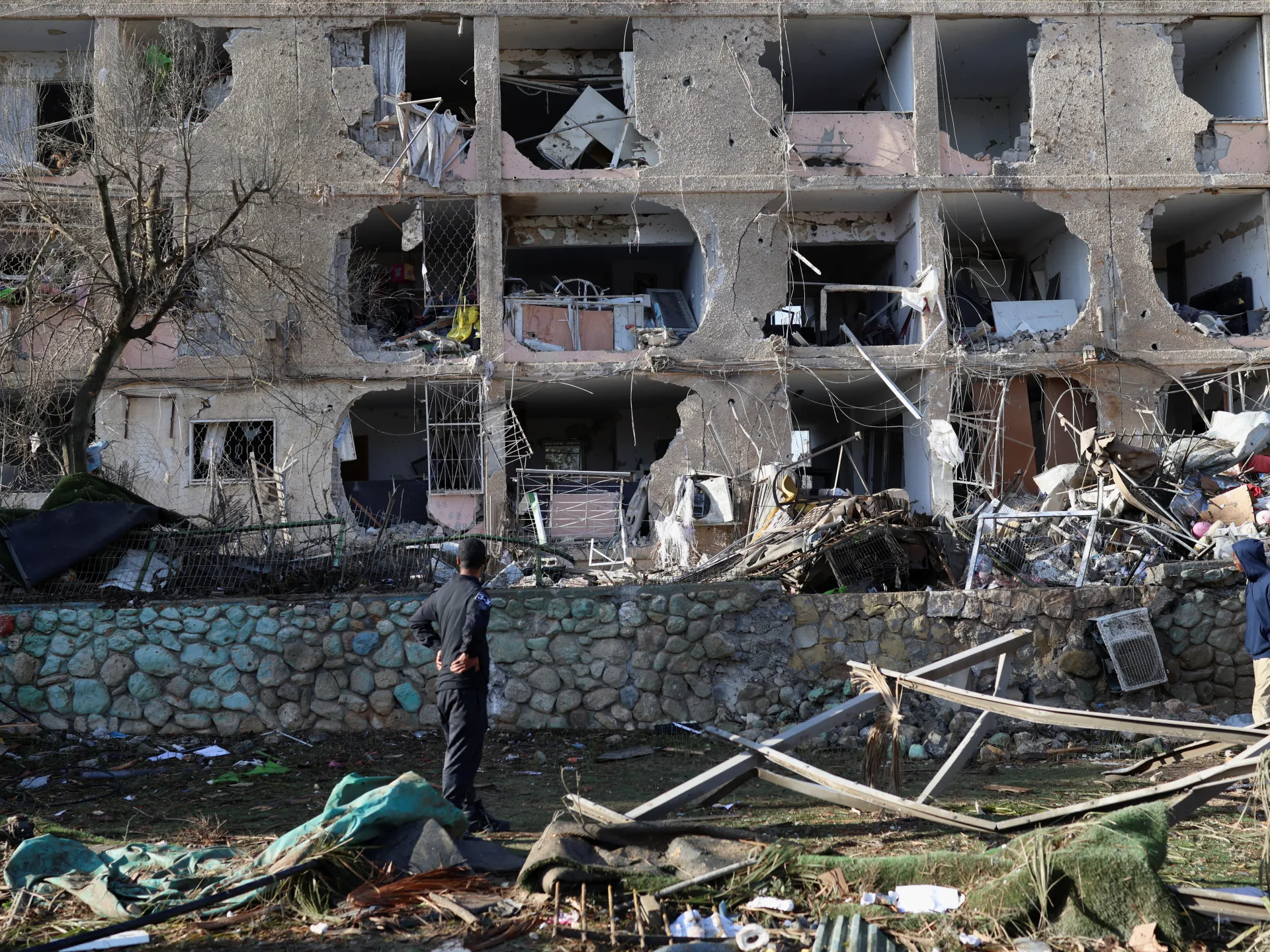
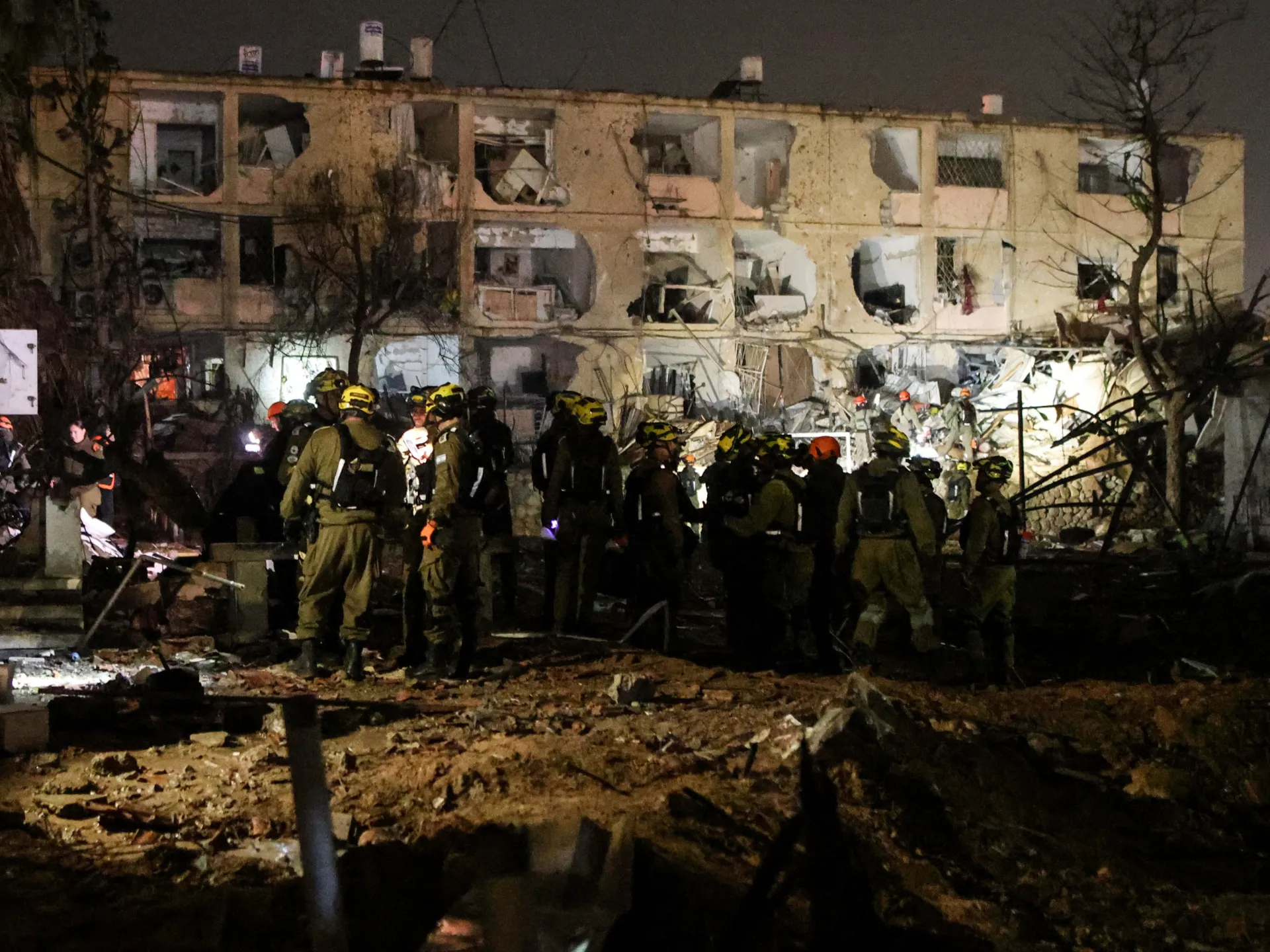
Iranian missiles struck two communities in southern Israel, leaving buildings shattered and dozens injured in dual attacks not far from Israel’s main nuclear research centre.
The Iranian strikes late on Saturday came after Tehran’s main nuclear enrichment facility at Natanz was hit earlier in the day. Israel denied responsibility for the strike on Natanz, nearly 220km (135 miles) southeast of Tehran.
The Pentagon declined to comment on the strike on Natanz, which was also hit during the first week of the war and the 12-day war last June. Russian Ministry of Foreign Affairs spokesperson Maria Zakharova said such strikes posed a “real risk of catastrophic disaster throughout the Middle East”.
Iran retaliated hours later.
Israel’s military said it was not able to intercept missiles that hit the southern cities of Dimona and Arad, the largest near the centre in Israel’s sparsely populated Negev desert. It was the first time Iranian missiles had penetrated Israel’s air defence systems in the area around the nuclear site.
The Israeli Ministry of Health said at least 180 people were wounded in the missile attacks on the southern city of Dimona and nearby Arad.
Dimona is about 20km (12 miles) west of the nuclear research centre, and Arad is around 35km (22 miles) to the north.
Israel is believed to be the only Middle East nation with nuclear weapons, though its leaders refuse to confirm or deny their existence. The UN nuclear watchdog said on X it had not received reports of damage to the Israeli centre or abnormal radiation levels.
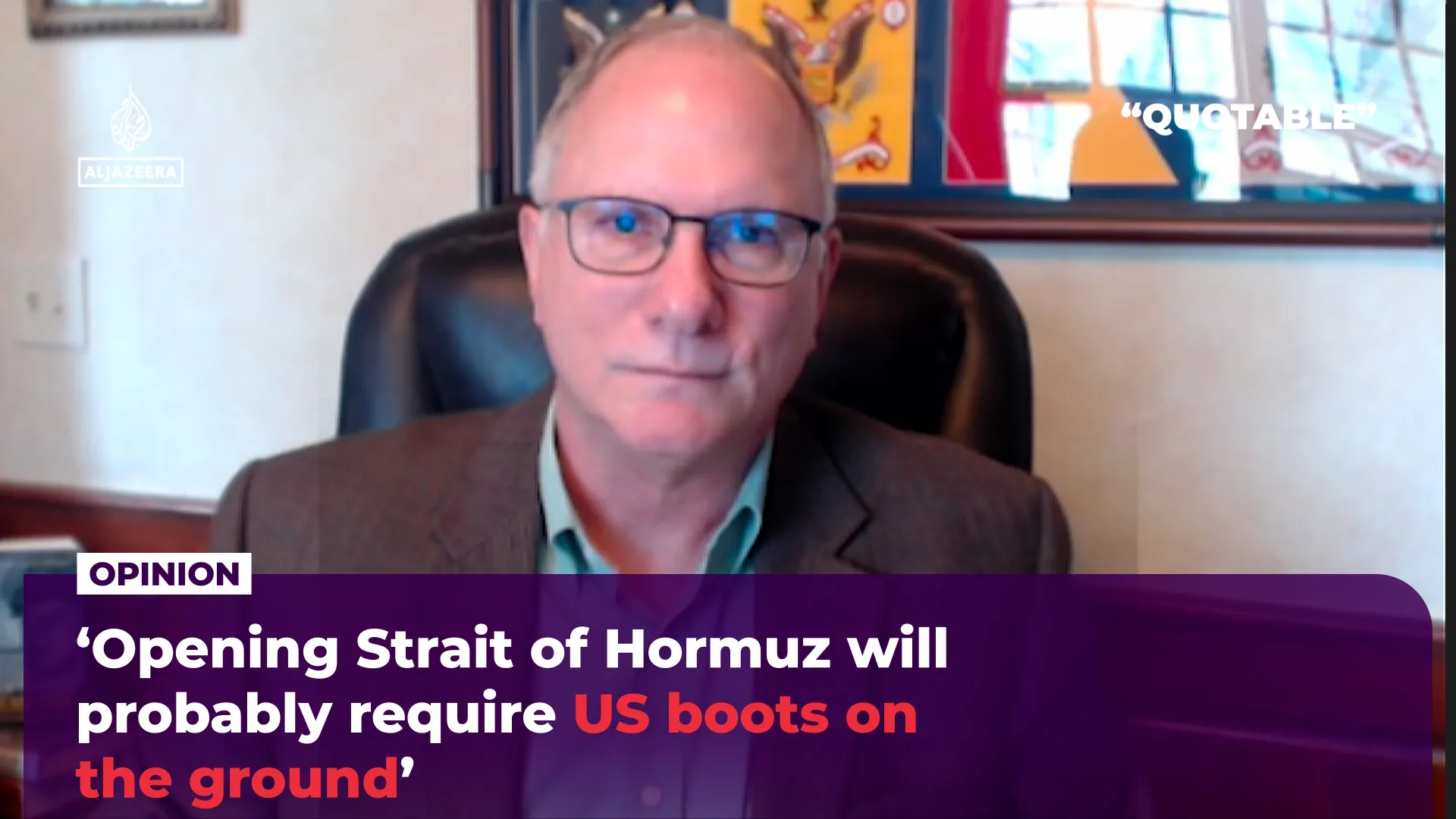
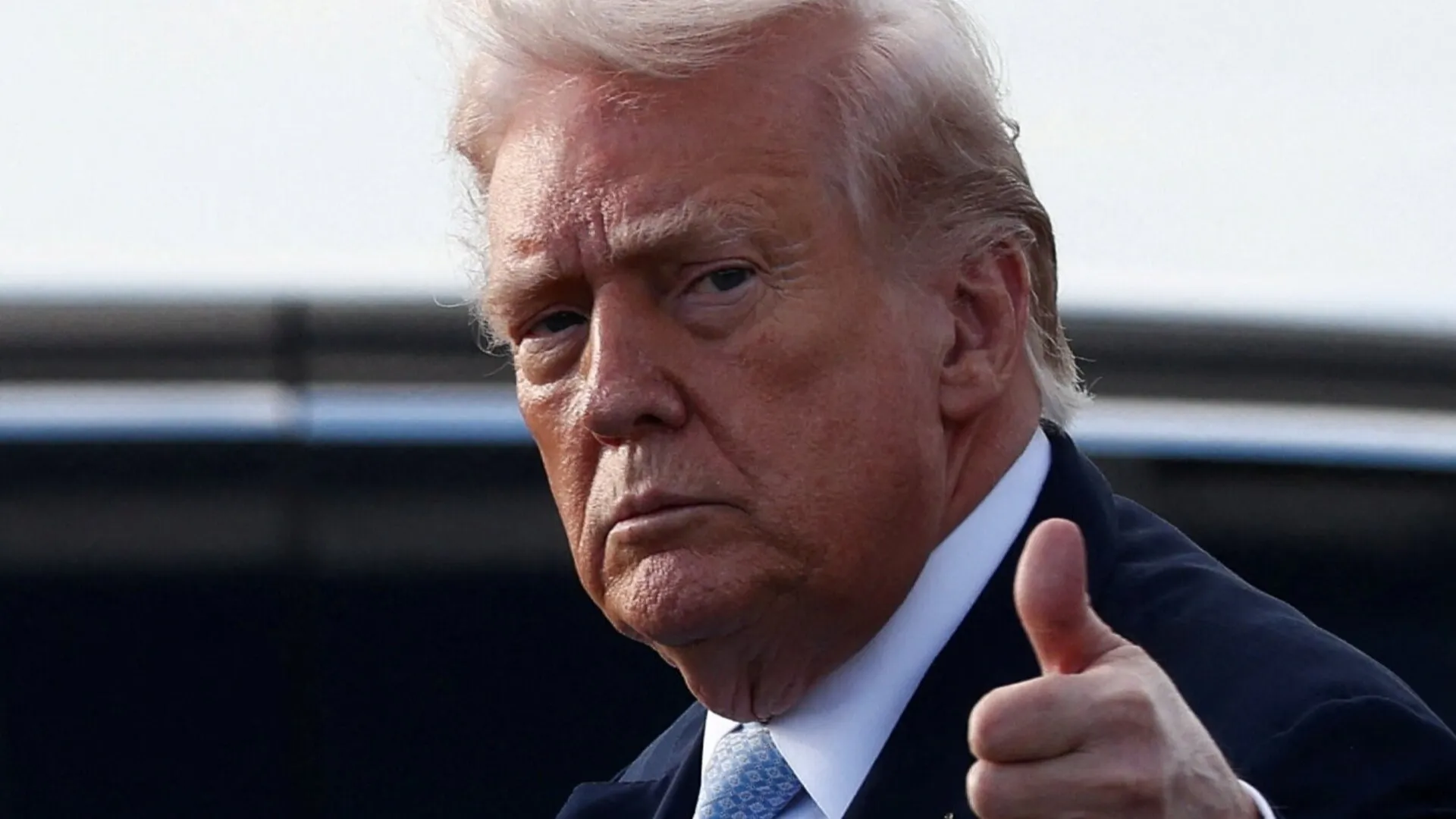
US President Donald Trump has threatened to ‘obliterate’ Iran’s power plants if Tehran fails to open the Strait of Hormuz to all vessels within 48 hours. This major escalation comes as Trump faces pressure over skyrocketing domestic energy prices due to the now three-week-long war.
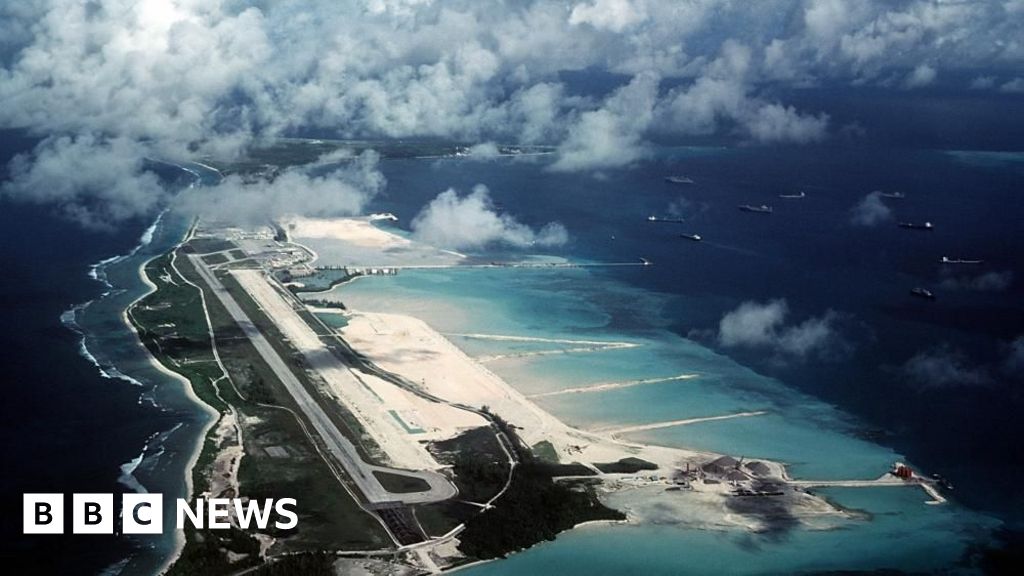
One of themissiles firedreportedly failed in flight, while the other was intercepted by a US warship. The BBC understands the reports are accurate. There are doubts whether Iran has missiles which are capable of reaching Diego Garcia, which is about 2,350 miles from Iran.
Jet2 boss Steve Heapy has issued an update to industry experts
Maria Ortega and Robert Rowlands Deputy editor, money and lifestyle, content hub
04:31, 22 Mar 2026
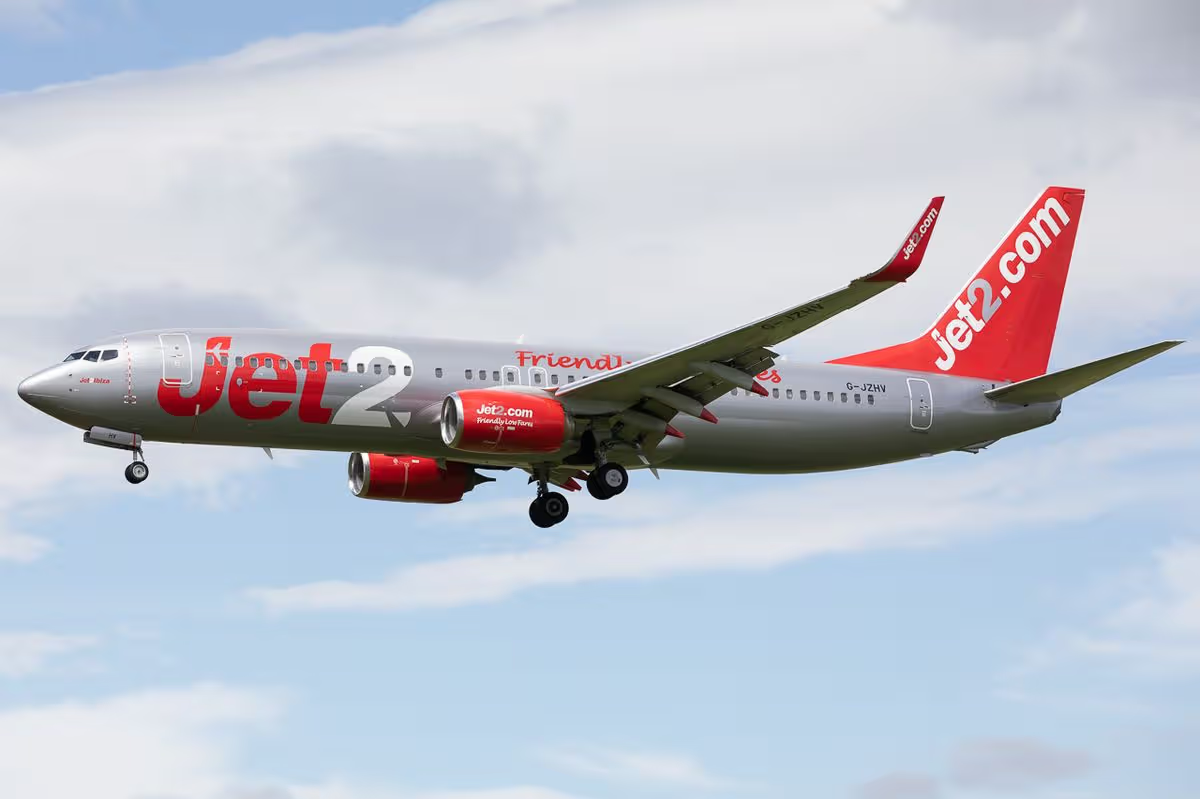
A Jet2 Boeing 737 lands at Newcastle Airport(Image: Getty)
Jet2’s boss has warned of a sharp drop in bookings to Cyprus and Turkey but said tourists could get special offers. CEO Steve Heapy said flights on these routes are becoming “empty” due to the uncertainty caused by the Middle East conflict.
The boss said demand is instead moving to destinations such as Spain and Italy. TTG reported that he spoke about the issue via video link at the airline’s annual conference in Cádiz in Spain.
He also warned hotel partners to not ‘get greedy’ in Spain and Italy and keep prices competitive. And he vowed to protect customers where that happened.
He said he expects holidays to Cyprus and Turkey to recover quickly once the war in Iran ends. “I think we should all be prepared for a fairly rapid end to the conflict and a fairly sharp recovery when that happens,” he said.
Heapy said: “Bookings to Cyprus and Turkey are drying up, cancellations are up and our aircraft are emptying.” He said Jet2 was working to cross-sell customers to western Mediterranean destinations where demand “seems to be OK”.
Heapy added that Cyprus remained a safe destination despite a drop in demand to the island, which has been targeted by Iran since America and Israel launched airstrikes on the Middle Eastern nation.
He said: “Cyprus is still far enough away that you can still travel. We’re doing what we can to understand what’s going on and how we can work our way through it.”
‘Special offers’ to lure more travellers to Cyprus and Turkey
He expects hotels in Cyprus and Turkey to introduce special offers in the weeks ahead to lure more tourists in. Speaking to travel agents at the conference, he said: “We’ll do what we can to work with you and fight to get through this the best we can,” he said. “Our job is to put our customers’ fears to one side and reassure them that these destinations are safe.
“We’re a very resilient industry. These events happen every couple of years, and I’ll do whatever I can to help all our of businesses navigate through this.”
TTG also reported that Phil Nuttall, CEO of Travel Village Group, said it is too early to offer a full assessment of the crisis’s impact. Yet he said possible price rises could create problems for many families.
Jet2’s head of overseas operations, Lee Davies, also said the operator was putting more resource into challenges arising from the conflict, TTG said. “We’ve had to adapt our service, especially across Turkey and Cyprus at the moment. We have our red team, we’ve increased our presence, we’re visiting hotels, reassuring customers.
“We’ve expanded our visiting times and ring-fenced our 24/7 team in the UK. We’re contingency planning in terms of disruption management, you always have to have a very solid plan behind the scenes ready to activate.”
He reportedly added: “You’ve got to understand why in their minds, wherever that destination is, that they possibly don’t want to travel.” He added that by helping customers now, even if they do not then travel, “they will come back”.
Tehran responds to Trump’s threat by saying all US energy infrastructure in the region will be targeted if Iran is attacked.
Published On 22 Mar 202622 Mar 2026
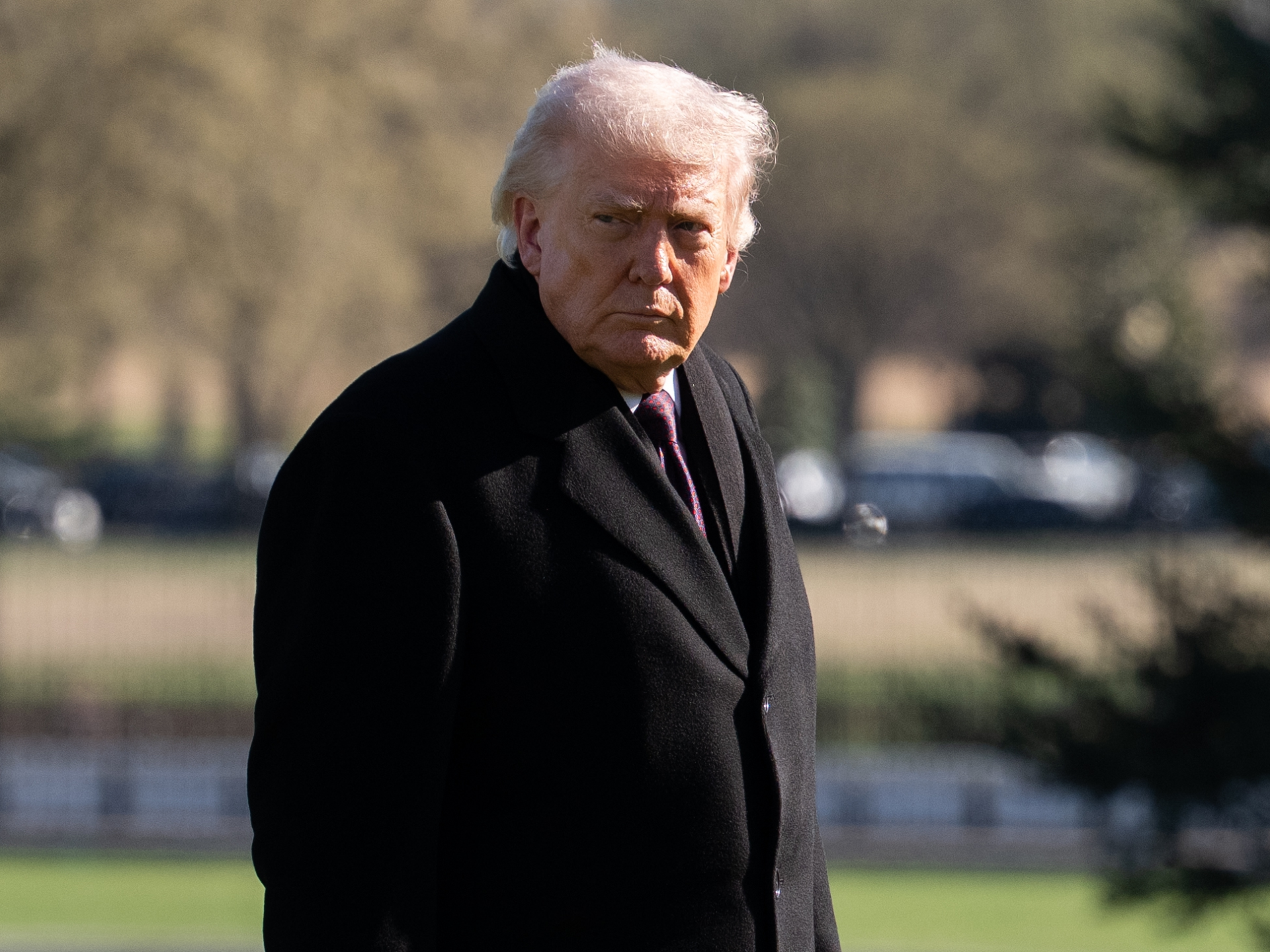
United States President Donald Trump has threatened to attack Iran’s power plants if freedom of navigation is not fully restored at the Strait of Hormuz within 48 hours, a dramatic escalation as the US-Israeli war on Iran continues for a fourth week.
The statement on Saturday came as Trump faces increasing pressure to secure the vital waterway that Iran has promised to keep closed to “enemy ships”, leading to soaring oil prices and plunging stock markets.
“If Iran doesn’t FULLY OPEN, WITHOUT THREAT, the Strait of Hormuz, within 48 HOURS from this exact point in time, the United States of America will hit and obliterate their various POWER PLANTS, STARTING WITH THE BIGGEST ONE FIRST,” Trump, who is in his Florida home for the weekend, wrote on Truth Social at 23:44 GMT.
He did not specify which plant he was referring to as the biggest.
Following Trump’s threat, the Iranian army said it would target all energy infrastructure belonging to the US in the region if Iran’s fuel and energy infrastructure were attacked.
Trump’s escalatory comments came barely a day after he talked about “winding down” the war that he launched alongside Israeli Prime Minister Benjamin Netanyahu on February 28, when the US and Iran were engaged in nuclear negotiations.
In a social media post on Friday, Trump said the US was “getting very close to meeting our objectives as we consider winding down our great Military efforts in the Middle East”.
Key waterway
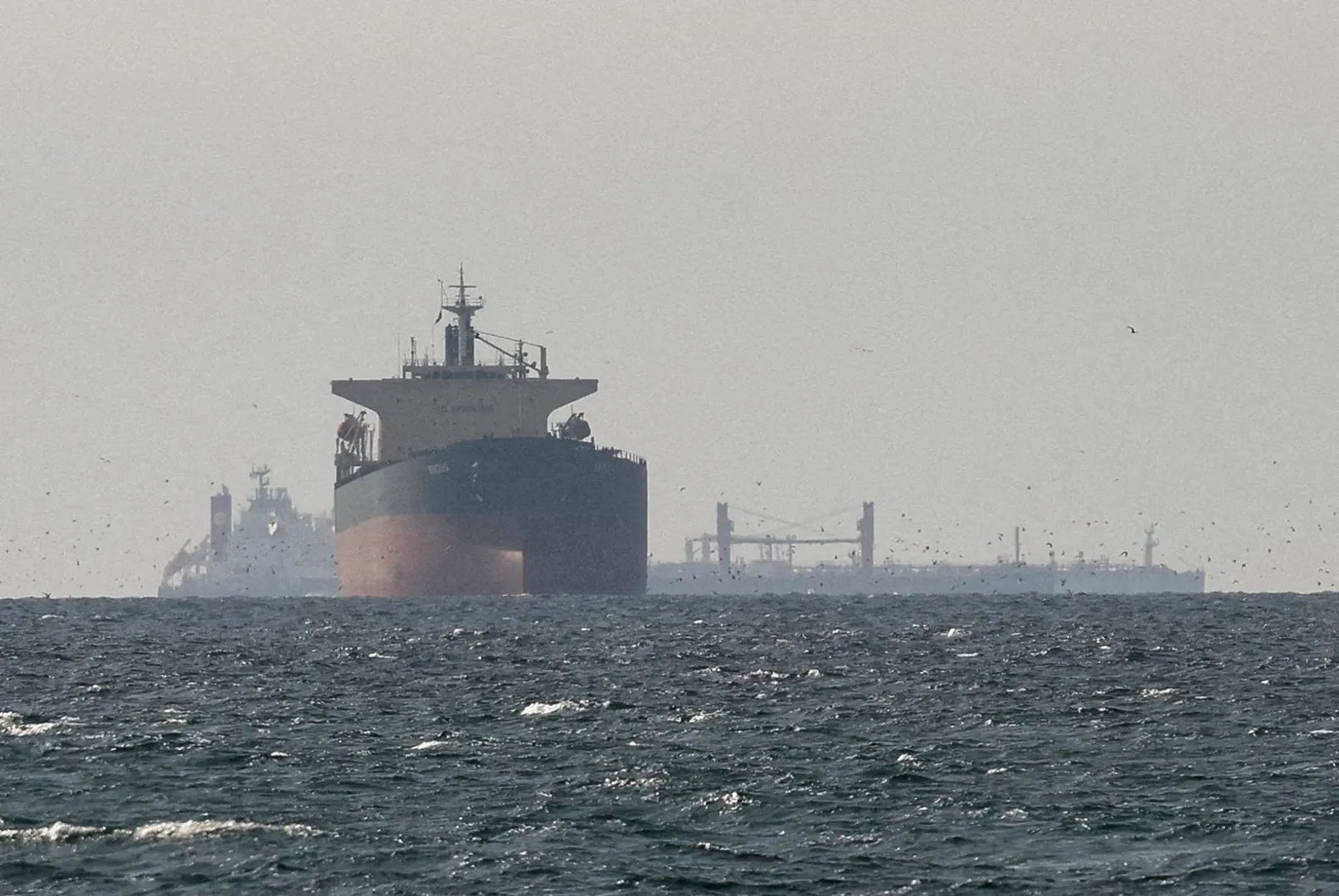
Shipping traffic through the Strait of Hormuz, where a fifth of the world’s oil and gas passes through during peacetime, has virtually ground to a halt since the early days of the war.
Iran has said the Strait of Hormuz is open to all except the US and its allies, with Minister of Foreign Affairs Abbas Araghchi saying last week that he had been “approached by a number of countries” seeking safe passage for their vessels.
“This is up to our military to decide,” he told the US television network CBS, adding that a group of ships from “different countries” had been allowed to pass, without providing details.
The head of US Central Command, Admiral Brad Cooper, asserted on Saturday that Iran’s ability to attack vessels on the strait had been “degraded” after US fighter jets dropped 5,000-pound (about 2,300kg) bombs on an underground Iranian coastal facility storing antiship cruise missiles and mobile launchers earlier this week.
The strike also destroyed “intelligence support sites and missile radar relays” used to monitor ship movements, Cooper said.
Reporting from Washington, DC, Al Jazeera’s Manuel Rapalo said there seemed to be a “gap between what the White House appears to want in the Strait of Hormuz and what the US military says they have already accomplished”.
“It is interesting, to say at the very least, to hear Trump talking about a major escalation, given the fact that we’ve been hearing throughout the course of the day how much damage the US has done, supposedly, to Iran’s ability to target oil tankers and vessels navigating through the strait.”
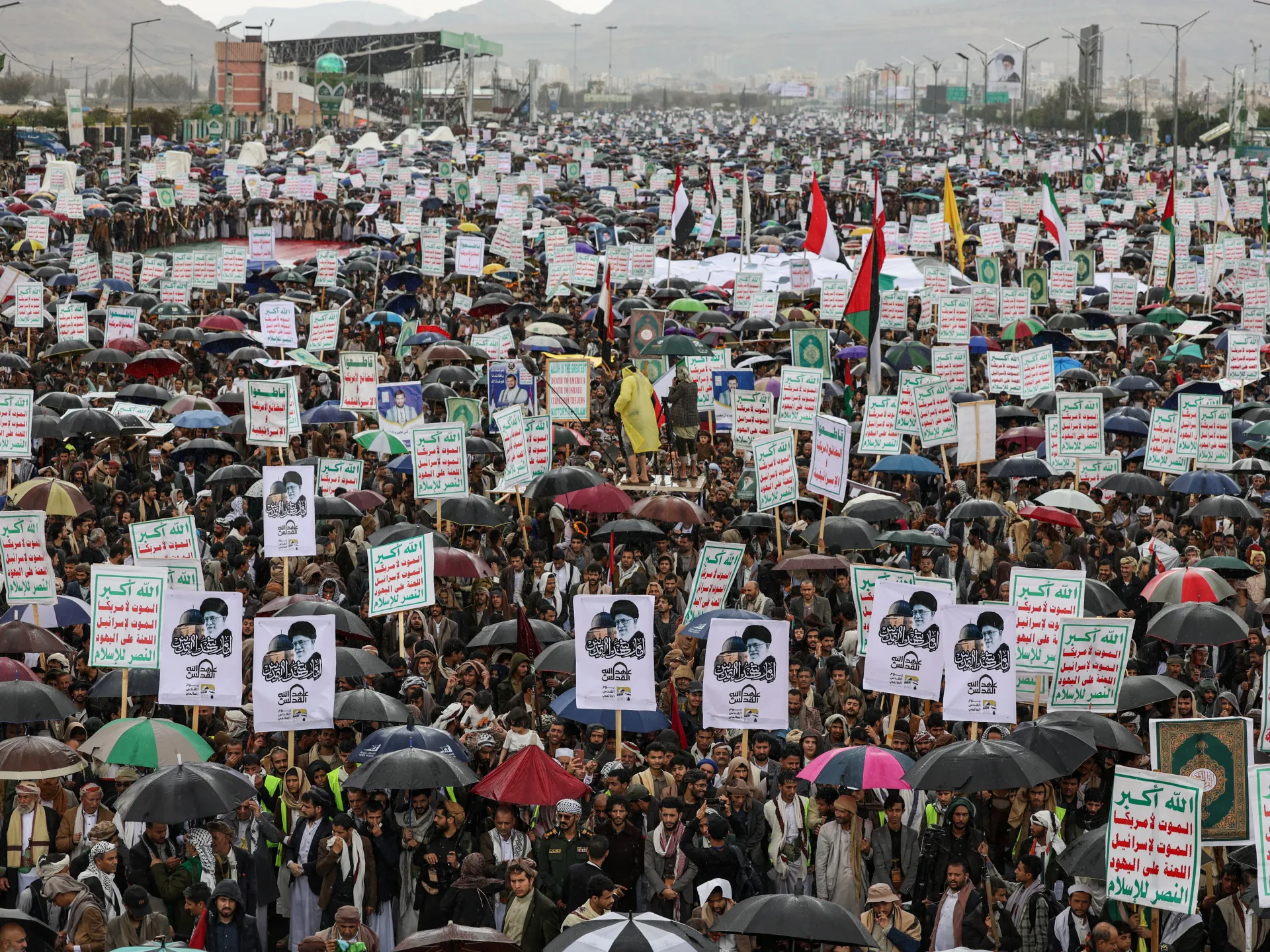
The Yemeni armed group says all options are on the table.
As the US-Israeli war against Iran drags on, Yemen’s Ansar Allah, or the Houthis, have stayed out of the conflict.
But that could change. They have said they consider themselves directly concerned and could take a position alongside Iran.
The armed group has attacked Israel and shipping in the Red Sea in recent years. If a new front opens up, global trade could be further disrupted in another maritime gateway. Shipping is already largely halted in the Strait of Hormuz, causing significant losses worldwide.
So, will the Houthis join the war? And what difference could that make for this volatile region?
Presenter: James Bays
Guests:
Farea al-Muslimi – research fellow in the Middle East and North Africa programme at Chatham House
Khaled Batarfi – political analyst who specialises in Saudi Arabian foreign policy
Rockford Weitz – director of the Fletcher Maritime Studies programme at Tufts University
Israel’s air defence system failed to stop at least two Iranian missile strikes on southern Israel, in retaliation for an attack on Iran’s Natanz nuclear site. More than 100 Israelis have been injured in Arad and Dimona, with dozens of buildings destroyed. This is what we know.
WASHINGTON — President Trump took the United States to war without a vote of support from Congress, but lawmakers are increasingly questioning when, how and at what cost the war with Iran will come to an end.
Three weeks into the conflict, the toll is becoming apparent. At least 13 U.S. military personnel have died and more than 230 have been wounded. A $200-billion request from the Pentagon for war funds is pending from the White House. Allies are under attack, oil prices are skyrocketing, and thousands more U.S. troops are deploying to the Middle East with no endgame in sight.
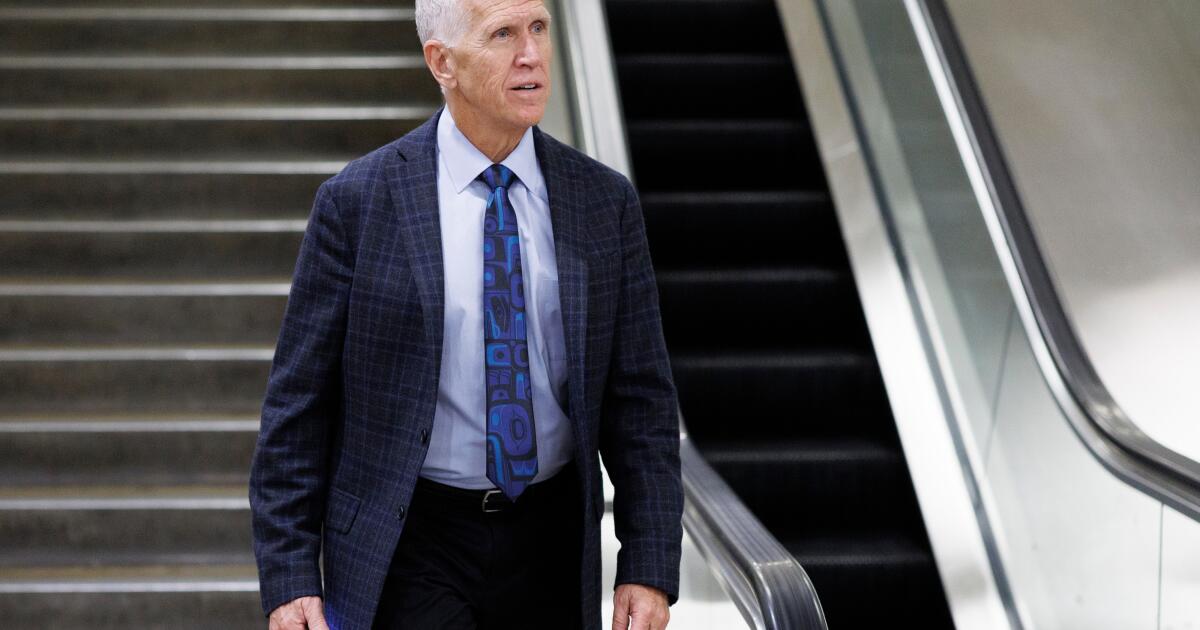
“The real question is: What ultimately are we trying to accomplish?” Sen. Thom Tillis (R-N.C.) told the Associated Press.
“I generally support anything that takes out the mullahs,” he said. “But at the end of the day, there has to be a kind of strategic articulation of the strategy, what our objectives are.”
Trump said late Friday that he was considering “winding down” the military operations even as he outlined new objectives and goals and despite the continued buildup of forces in the region.
Congress stands still
The president’s decision to launch the U.S.-Israeli war on Iran is testing the resolve of Congress, which is controlled by his party. Republicans have largely stood by the commander in chief, but will soon be faced with more consequential wartime choices.
Under the War Powers Act, the president can conduct military operations for 60 days without approval from Congress. So far, Republicans have easily voted down several resolutions from Democrats designed to halt the war.
But the administration will need to show a more comprehensive strategy ahead or risk blowback from Congress, lawmakers said, especially as they are being asked to approve billions in new spending.
Trump’s casual comment that the war will end “when I … feel it in my bones” has drawn alarm.
“When he feels it in his bones? That’s crazy,” said Virginia Sen. Mark R. Warner, the top Democrat on the Senate Intelligence Committee.
House speaker says mission is ‘all but done’
The president’s party appears unlikely to directly challenge him, even as the conflict drags on. House Speaker Mike Johnson (R-La.) has said the military operation will be over quickly.
“I do think the original mission is virtually accomplished now,” Johnson told the AP and others at the Capitol this week.
“We were trying to take out the ballistic missiles, and their means of production, and neuter the navy, and those objectives have been met,” he said.
Johnson acknowledged that Iran’s ability to threaten ships in the Strait of Hormuz is “dragging it out a little bit,” especially as U.S. allies have largely rebuffed the president’s request for help.
“As soon as we bring some calm to the situation, I think it’s all but done,” Johnson said.
But the administration’s stated goals — of ending Iran’s ability to obtain a nuclear weapon and degrading its ballistic missile supplies, among others — have perplexed lawmakers as shifting and elusive.
″Regime change? Not likely. Get rid of the enriched uranium? Not without boots on the ground,” Warner said.
“If I’m advising the president, I would have said: Before you take on a war of choice, make the case clear to the American people what our goals are,” he said.
The power of the purse
The Pentagon has told the White House that it is seeking an additional $200 billion for the war effort, an extraordinary amount that is unlikely to win support. Senate Democratic leader Chuck Schumer of New York called the amount “preposterous.”
The Defense Department’s approved appropriations from Congress this year are more than $800 billion, and Trump’s tax breaks bill gave the Pentagon an additional $150 billion over the next several years for various upgrades and projects.
Sen. Mazie Hirono (D-Hawaii) said the country has other priorities.
“How about not taking away funding for Medicaid, which will impact millions of people? How about making sure SNAP is funded?” she said, referring to the healthcare and food assistance programs that were cut as part of last year’s Republican tax reductions.
“These are things that we should be doing for the American people,” she said.
Many lawmakers have recalled the decision by President George W. Bush in the aftermath of the Sept. 11, 2001, attacks to come to Congress to seek an authorization for the use of military force — a vote to support his proposed military actions in Afghanistan and later Iraq.
Tillis said Trump has latitude under the War Powers Act to conduct the military campaign, but that will soon shift.
“When you get into the 45-day mark, you’ve got to start articulating one of two things — an authorization for the use of military force to sustain it beyond that or a very clear path on exit,” he said.
“Those are really the options the administration needs to be thinking about.”
An Iranian missile has struck the southern Israeli cities of Dimona, home to the country’s main nuclear facility, and nearby Arad, wounding dozens of people and causing significant damage, in one of the most dramatic escalations since the US-Israel war on Iran began.
Iranian state television quickly reframed Saturday’s strikes as a “response” to what it said was a strike on Iran’s Natanz nuclear enrichment complex earlier in the day, marking a stark new phase of tit-for-tat targeting in the conflict, now in its fourth week.
Recommended Stories
list of 2 itemsend of list
Nearly 100 people were wounded in the attacks, according to Israel’s emergency services, including a 10-year-old boy who paramedics said was in critical condition with multiple shrapnel wounds. Seven others are also in critical condition.
An Israeli military spokesman said Israel’s air defence systems activated during the attacks, but failed to intercept some of the missiles, even though they were not “special or unfamiliar”.
The country’s Prime Minister Benjamin Netanyahu, addressing the attacks which wounded nearly 100 people, called it a “difficult” evening for Israel, and again vowed to continue attacking Iran.
The International Atomic Energy Agency (IAEA) said it had received no indication of damage to the Shimon Peres Negev Nuclear Research Center at Dimona itself, and that no abnormal radiation levels had been detected in the area.
The nuclear watchdog said it was closely monitoring the situation, with Director General Rafael Grossi urging that “maximum military restraint should be observed, in particular in the vicinity of nuclear facilities”.
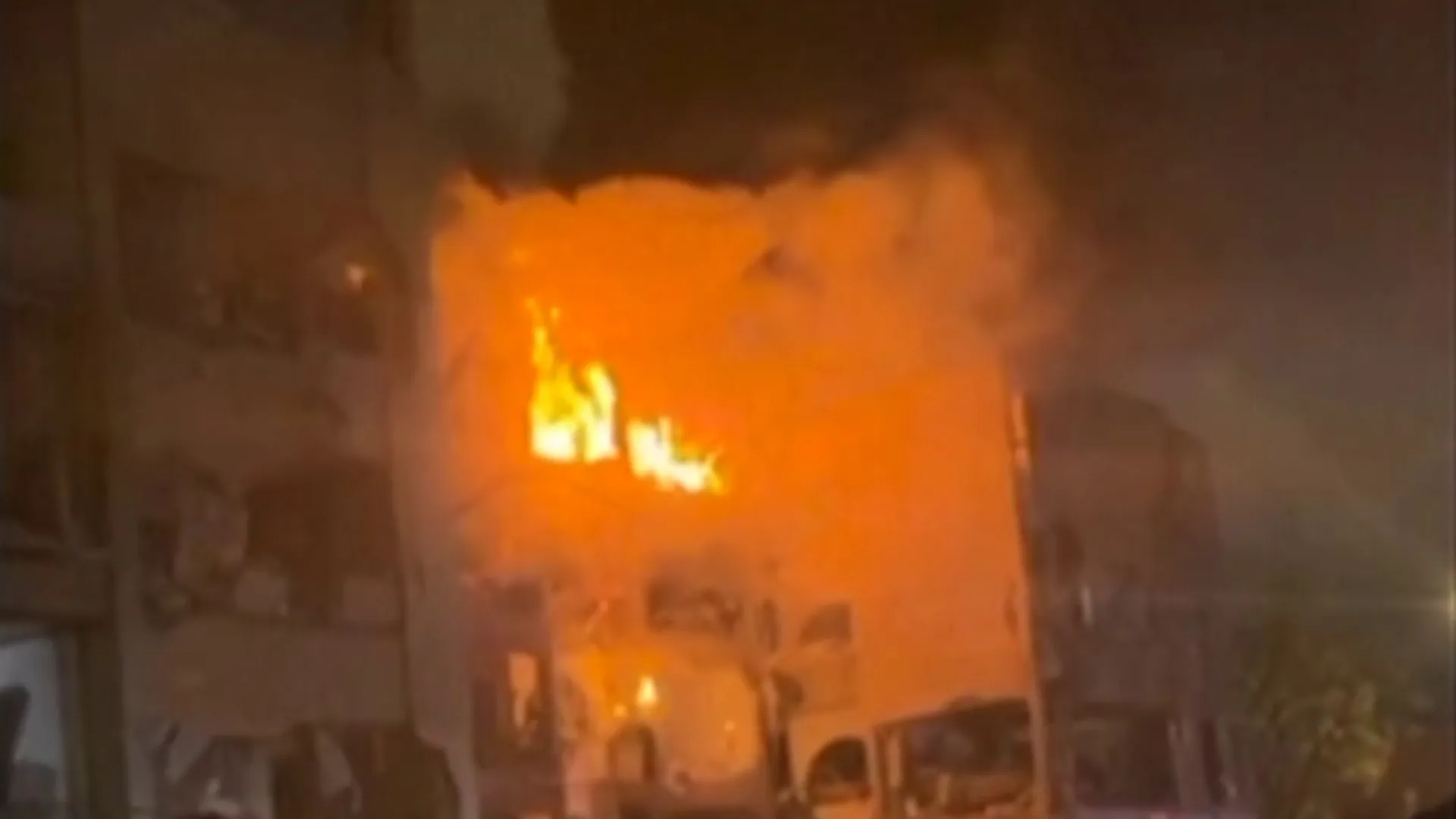
Al Jazeera’s Nour Odeh, reporting from Ramallah in the occupied West Bank, said that three separate impact sites had been identified across Dimona, with one three-storey building having completely collapsed and several fires breaking out.
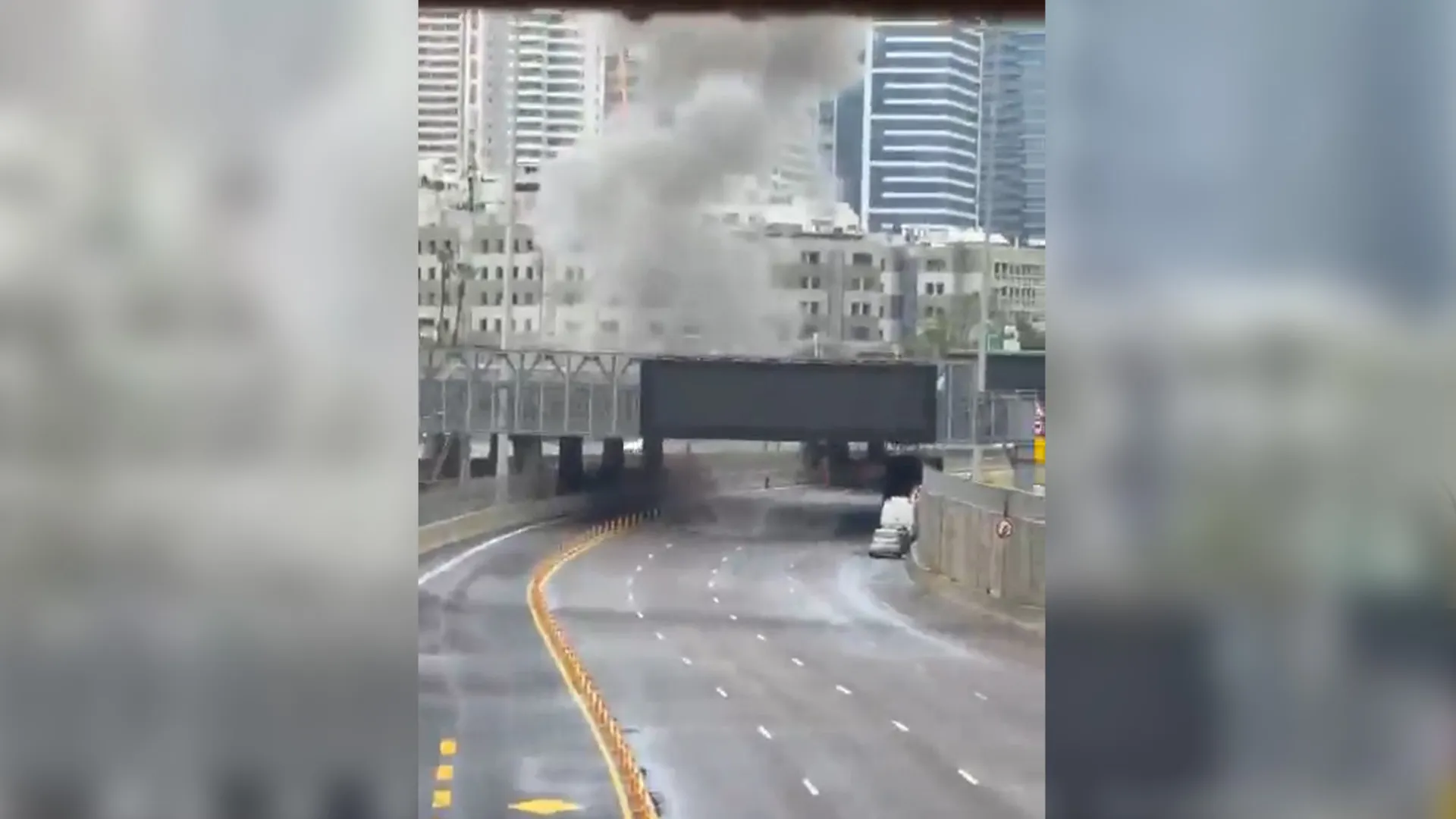
Witness footage verified by Al Jazeera, which is banned from operating inside Israel, showed a missile striking the city, followed by a large explosion.
Arad, another town near the nuclear facility, was also directly attacked, Israel’s firefighting service said in a statement, with extensive damage reported in the city centre.
“In both Dimona and Arad, interceptors were launched that failed to hit the threats, resulting in two direct hits by ballistic missiles with warheads weighing hundreds of kilograms”, firefighters said.
School in the surrounding Ramat Negev Regional Council was cancelled for the following day.
Earlier on Saturday, the Israeli military announced it had struck a research and development facility at Tehran’s Malek Ashtar University, which it said had been used to develop components for nuclear weapons and ballistic missiles.
The military said it “will not allow the Iranian regime to acquire nuclear weapons”.
Iran said that the US and Israel had targeted its Natanz enrichment complex that morning, though it reported no radioactive leakage.
An unnamed Israeli official, quoted by the Associated Press news agency, denied that Israel was responsible for the Natanz strike, but the Israeli army has not released a full statement on the matter.
Dimona has been at the heart of Israel’s nuclear programme since its research centre, built in secret with French assistance, opened there in 1958.
Eye-for-an-eye approach
Israel is believed to have developed nuclear weapons by the late 1960s. Its policy of deliberate ambiguity, neither confirming nor denying their existence, was part of a deal quietly struck with Washington, which judged that an open declaration would risk triggering a regional arms race.
Abas Aslani, a senior fellow at the Centre for Middle East Strategic Studies in Tehran, told Al Jazeera that Iran has been pursuing an eye-for-an-eye approach designed to re-establish deterrence.
“Tehran wants to reduce the gap between words and actions,” he said, adding that Iran’s goal was to make its threats credible enough to underpin a new long-term security arrangement, not to simply force a ceasefire, but establish deterrence.
The attacks came as the broader war grinds through its fourth week.
More than 1,400 people have been killed in Iran since the US and Israeli strikes began on February 28, including more than 200 children.
Iran has retaliated across the region, launching what it described as its 70th wave of attacks on Saturday, targeting Israeli and US military positions, as millions of Iranians marked the Persian New Year, Newroz, and Eid al-Fitr under the shadow of war.
The move follows a drone strike on the Red Sea port of Yanbu, Saudi Arabia’s main oil export outlet, after Iran blocked the Strait of Hormuz.
Published On 21 Mar 202621 Mar 2026
Saudi Arabia has given Iran’s military attache and embassy staff 24 hours to leave the kingdom due to “repeated Iranian attacks” on its territory.
The Saudi Ministry of Foreign Affairs said in a statement on Saturday that it had declared personae non gratae the “military attache of the Embassy of the Islamic Republic of Iran to the Kingdom, the assistant military attache and three members of the mission staff”.
Recommended Stories
list of 3 itemsend of list
The move comes amid the US-Israeli war on Iran, which has seen Tehran target Saudi Arabia and its Gulf neighbours hosting US military assets with increasingly damaging retaliatory attacks on civilian hubs and energy facilities, unleashing chaos across the region and roiling global energy markets.
Saudi Arabia, which holds the world’s second-largest proven crude oil reserves, has come under attack by hundreds of Iranian missiles and drones since the start of the war, the vast majority of which have been intercepted, authorities have said.
Among the attacks, energy facilities in the east of Saudi Arabia have been repeatedly targeted, as well as the capital, Riyadh, where the US Embassy was hit by two drones earlier this month.
On Thursday, oil loadings at the Red Sea port of Yanbu were disrupted after a drone fell on the nearby Aramco-Exxon refinery, SAMREF.
The port is the only export outlet for Saudi Arabia after Iran effectively blocked tanker traffic leaving the Gulf via the Strait of Hormuz.
Saturday’s statement came after Saudi Foreign Minister Prince Faisal bin Farhan Al Saud said earlier in the week that trust in Iran had been “shattered”, asserting his country’s right to defend itself.
The foreign minister said that Saudi Arabia and other Gulf states had “very significant capacities and capabilities that they could bring to bear should they choose to do so”.
Saudi Arabia’s relations with Iran have historically been rocky, but the two countries embarked on a Beijing-brokered rapprochement three years ago.
On Saturday, the Foreign Ministry said that continued Iranian attacks would lead to further escalation and have “significant consequences” for current and future relations.
The statement followed Qatar’s decision on Wednesday to declare the Iranian Embassy’s military and security attaches in Doha as personae non gratae, along with their staff.
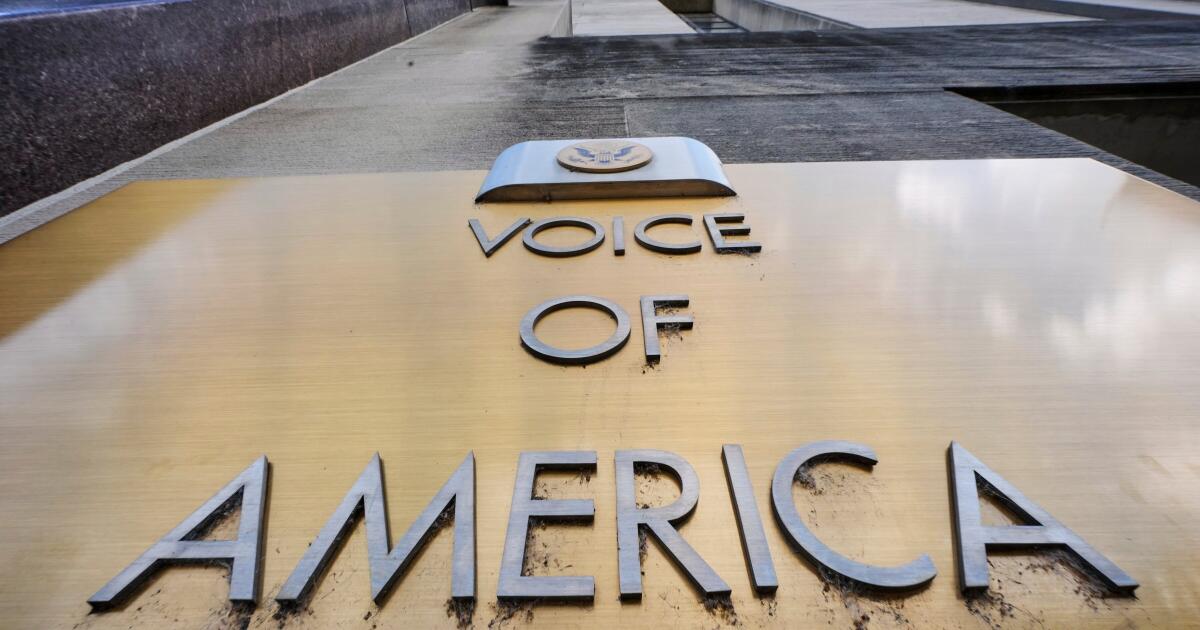
NEW YORK — In a strongly worded decision this week, a federal judge ordered that the Voice of America — an international broadcaster with the mission to provide news for countries around the world that was largely shut down for the last year by the Trump administration — come roaring back to life.
Whether or not that actually happens is uncertain.
The government filed notice Thursday to appeal U.S. District Judge Royce C. Lamberth’s order two days earlier to put hundreds of VOA employees who have been on paid leave the last year back to work. Lamberth had ruled on March 7 that Kari Lake, President Trump’s choice to oversee the bureaucratic parent U.S. Agency for Global Media, didn’t have the authority to reduce VOA to a skeleton.
The Voice of America was established as a news source in World War II, beaming reports to many countries that had no tradition of a free press. Before Trump took office again last year, Voice of America was operating in 49 different languages, heard by an estimated 362 million people.
Trump’s team contended that government-run news sources, which also include Radio Free Europe/Radio Liberty, were an example of bloated government and that it wanted news reporting more favorable to the current administration. With a greatly reduced staff, VOA currently operates in Iran, Afghanistan, China, North Korea and in countries with a large population of Kurds.
Lamberth, in his decision, said Lake had “repeatedly thumbed her nose” at laws mandating VOA’s operation.
Time to turn the page at VOA?
VOA director Michael Abramowitz said legislators in both parties understand the need for a strong operation and have set aside enough funding for the job to be done. “It is time for all parties to come together and work to rebuild and strengthen the agency,” he said.
Don’t expect that to happen soon. “President Trump was elected to eliminate waste, fraud and abuse across the administration, including the Voice of America — and efforts to improve efficiency at USAGM have been a tremendous success,” said White House spokeswoman Anna Kelly. “This will not be the final say on the matter.”
Patsy Widakuswara, VOA’s White House bureau chief and a plaintiff in the lawsuit to bring it back, said that “restoring the physical infrastructure is going to take a lot of money and some time, but it can be done. What is more difficult is recovering from the trauma that our newsroom has gone through.”
It’s an open question whether the administration wants a real news organization or a mouthpiece, said David Ensor, a former Voice of America director between 2010 and 2014. “We don’t know — maybe no one does at the moment — what the future holds,” he said.
The administration’s efforts over the last year to bolster friendly outlets and fight coverage that displeases Trump offer a clue, even though Congress has required that Voice of America be an objective and unbiased news source. This week it was announced that Christopher Wallace, an executive at the far-right network Newsmax who had previously spent 15 years at Fox News Channel, will be the new deputy director at VOA. Abramowitz didn’t know he was getting a new deputy until it was announced.
Widakuswara wouldn’t comment on what Wallace’s appointment might mean. “I’m not going to pass judgment before seeing his work,” she said.
While Lamberth ordered more than a thousand employees on leave to go back to work, it’s not clear how many of them moved on to other jobs or retired in the last year. The judge also said he did not have the authority to bring back hundreds of independent contractors who were terminated.
One employee who left is Steve Herman, a former White House bureau chief and national correspondent at VOA and now executive director of the Jordan Center for Journalism Advocacy and Innovation at the University of Mississippi. Despite the court decisions, he questions whether the Trump administration would oversee a return to what the organization used to be.
“I’m a bit of a pessimist,” Herman said. “I think it’s going to be very difficult.”
An administration loath to admit defeat
Besides fighting to shut it down, Trump is loath to admit defeat. The White House recently nominated Sarah Rogers, the undersecretary of State for public diplomacy, to run the U.S. Agency for Global Media, putting it more firmly within the administration’s control. Her nomination requires Senate approval.
“Is Marco Rubio’s State Department going to allow objective journalism in 49 languages?” Herman asked. “I don’t think so. I would want that to happen, but that’s a fairy tale.”
In the budget bill passed in February, Congress set aside $200 million for Voice of America’s operation. While that represents about a 25% cut in the agency’s previous appropriation, it sent a bipartisan message of support, said Kate Neeper, VOA’s director of strategy and performance evaluation. Besides being a plaintiff with Widakuswara in the lawsuit to restore the agency, she has helped some of her colleagues deal with some of their own problems over the past year, including immigration issues.
“There is a lot of enthusiasm for going back to work,” she said. “People are eager to show up on Monday.”
The hunger for information from Voice of America in Iran when he was director was a clear example of what the organization meant, Ensor said. Surveys showed that between a quarter and a third of Iran’s households tuned in to VOA once a week, primarily on satellite television. Occasionally the government would crack down and confiscate satellite dishes, but Iranians could usually quickly find replacements, he said.
“I believe in Voice of America as a news organization and as a voice of America,” Ensor said. “It was important, and it can be again.”
The head of US Central Command says forces have struck Iranian coastal missile sites and infrastructure, degrading Tehran’s ability to threaten shipping in the Strait of Hormuz, as Washington vows to continue targeting its regional military capabilities.
President Trump frequently contradicts himself, sometimes in the same speech, social media post or even sentence. On Friday, he sent a torrent of mixed signals about the Iran war that raise more questions about the direction of the conflict and his administration’s strategy.
Within a few hours, Trump said he was considering winding down the war, his administration confirmed it was sending more troops to the Middle East and, in an effort to lessen the economic influence on global energy markets, the United States lifted sanctions on some Iranian oil for the first time in decades — relieving some of the pressure that Washington traditionally has used as leverage.
The confusing combination of actions deepens a sense among Trump’s critics that there is no clear, long-term strategy for the war the U.S. and Israel launched against Iran. Now in its fourth week, the war remains on an unpredictable path and a credible endgame is unclear as the global economy is being roiled.
‘Winding down’ the war
After another rough day in the financial markets, Trump said Friday afternoon on his social media network: “We are getting very close to meeting our objectives as we consider winding down our great Military efforts in the Middle East.”
Trump contended that the U.S. has adequately degraded Iranian naval, missile and industrial capacity and prevented Tehran from acquiring a nuclear weapon.
The president then suggested the U.S. could pull out of the conflict without stabilizing the Strait of Hormuz, the channel through which about one-fifth of the world’s oil supply travels. The strait has been ravaged by Iranian missile, drone and mine attacks during the war.
“The Hormuz Strait will have to be guarded and policed, as necessary, by other Nations who use it — The United States does not!” Trump wrote. But, in another contradiction, he said the U.S. would help if asked, “but it shouldn’t be necessary once Iran’s threat is eradicated.”
While oil that traverses the strait is usually bound for Asia and other places rather than North America, the chaos still affects the United States. Oil is bought and sold globally, so a shortage in oil for Asian countries leads to bidding up prices on oil sold to companies in America too.
That fact, coupled with an Israeli strike on Iran’s gas fields and an Iranian retaliation that crippled a major terminal to ship liquefied natural gas from Qatar, helped tank U.S. equity markets Friday, with the S&P dropping 1.5%. There also was a sharp increase in U.S. fuel prices.
More troops to the war zone
Even as Trump said the U.S. was close to winding down the war, his administration announced it was sending three more warships to the Middle East with about 2,500 additional Marines. It was the second time in a week that the administration said it was deploying more forces to the war zone. The military says some 50,000 are supporting the war effort.
Trump has often said he has ruled out sending in ground troops, but not always, and his administration has hinted at a possible deployment of special forces or similar units.
The Marines being sent to the region are an expeditionary unit designed for quick amphibious landings, but their deployment does not mean a ground invasion is certain. Analysts have suggested the presence of U.S. forces on the ground may be needed to ultimately secure the strait.
The surge in troops came just a day after news emerged that the Pentagon was seeking an additional $200 billion from Congress to fund the war. That extraordinarily high figure does not suggest that the war was winding down.
Lifting some sanctions on Iran
The administration said it would lift sanctions on the sale of Iranian oil, provided it was already at sea as of Friday. The move was an attempt to help lower skyrocketing energy prices by allowing freer sale of oil that Iran has let pass through the strait. It also extends a financial lifeline to the Iranian government that Trump is targeting.
His administration has tried other methods to lower oil prices. It has tapped the U.S. strategic petroleum reserve and lifted sanctions on some Russian oil. Yet Brent crude remained at $112 per barrel Friday, and analysts say oil prices are likely to remain high for months regardless of the next steps in the war.
The Iranian oil eventually would have reached another country, but now the United States and its allies can bid on it as well, Treasury Secretary Scott Bessent wrote on X.
“At present, sanctioned Iranian oil is being hoarded by China on the cheap,” Bessent wrote. “By temporarily unlocking this existing supply for the world, the United States will quickly bring approximately 140 million barrels of oil to global markets, expanding the amount of worldwide energy and helping to relieve the temporary pressures on supply caused by Iran.”
While 140 million barrels may seem like a lot, that is only a couple of days’ worth of oil on the global market.
Patrick De Haan, the head of petroleum analysis at GasBuddy, a U.S. fuel-tracking service, said he does not expect the temporary suspension to have a major influence on gas prices. The de facto closure of the strait has a much greater effect, he said. “Prices will likely still continue to rise so long as the Strait remains silent,” De Haan said.
And the contradictions in the position were obvious in Bessent’s post announcing the move, which labeled Iran “the head of the snake for global terrorism.” He said the administration would take steps to prevent Tehran from cashing in on the sales, but it was unclear how that would be done.
Even among some Republicans, the contradictions triggered rare public skepticism.
“Bombing Iran with one hand and buying Iran oil with the other,” South Carolina Rep. Nancy Mace posted on X on Saturday.
Riccardi writes for the Associated Press. AP business writer Dee-Ann Durbin in Ann Arbor, Mich., contributed to this report.
War, which saw Iran attack Qatar facility, has caused ‘high, volatile’ gas prices that could hit EU storage projections.
Published On 21 Mar 202621 Mar 2026
The European Union has urged member states to start early on meeting next winter’s gas storage targets after Iranian attacks on Gulf energy facilities caused prices to surge on global markets.
Energy Commissioner Dan Jorgensen sent a letter Saturday urging the bloc’s members to get to work “as early as possible” in the coming months to “mitigate pressure on prices and avoid [an] end-of-summer rush”, asking them to consider cutting their so-called filling target by 10 percentage points to 80 percent.
Recommended Stories
list of 3 itemsend of list
The move came days after Iran attacked Qatar’s Ras Laffan Industrial City complex, which provides about 20 percent of global supplies of liquefied natural gas (LNG). The attack, which came amid the US-Israeli war on Iran, was in retaliation for an Israeli attack on the Iranian South Pars gasfield.
State-owned QatarEnergy said that Iran’s attack on Qatar, which has been targeted throughout the duration of the war, knocked out 17 percent of Doha’s export capacity and would affect exports for up to five years.
The slowdown will mainly harm Asian buyers, including China, Japan, and India, which buy some 80 percent of QatarEnergy’s LNG.
But Europe, which only sources around 9 percent of its LNG from Qatar, will nevertheless be exposed to increased competition, with tanker traffic leaving the Gulf via the Strait of Hormuz throttled by the war.
Natural gas prices in the EU have risen by more than 30 percent since the start of the war on February 28, spiking after Israel’s attack on Iran’s critical South Pars gasfield and subsequent Iranian attack on Qatar’s Ras Laffan.
Jorgensen said that the EU’s gas supply, which has mainly been furnished by the United States since the bloc weaned itself off Russian energy over the Ukraine war, remained “relatively protected at this stage”.
“But, as a net energy importer on global markets, the resulting high and volatile global prices may also impact the EU gas storage projections,” he cautioned.
Jorgensen warned that developments “threaten regional and global security”, urging member states to refill stores early over a longer period.
The EU requirement for member countries to maintain gas reserves at 90 percent of capacity to meet winter heating and power demand underpins the region’s energy security.
Having cut that target by 10 percent, the energy commissioner noted that, in case of “difficult conditions” and a commission assessment, the countries could deviate by up to 20 percent.
Oil prices have also soared since the start of the war by more than 50 percent.
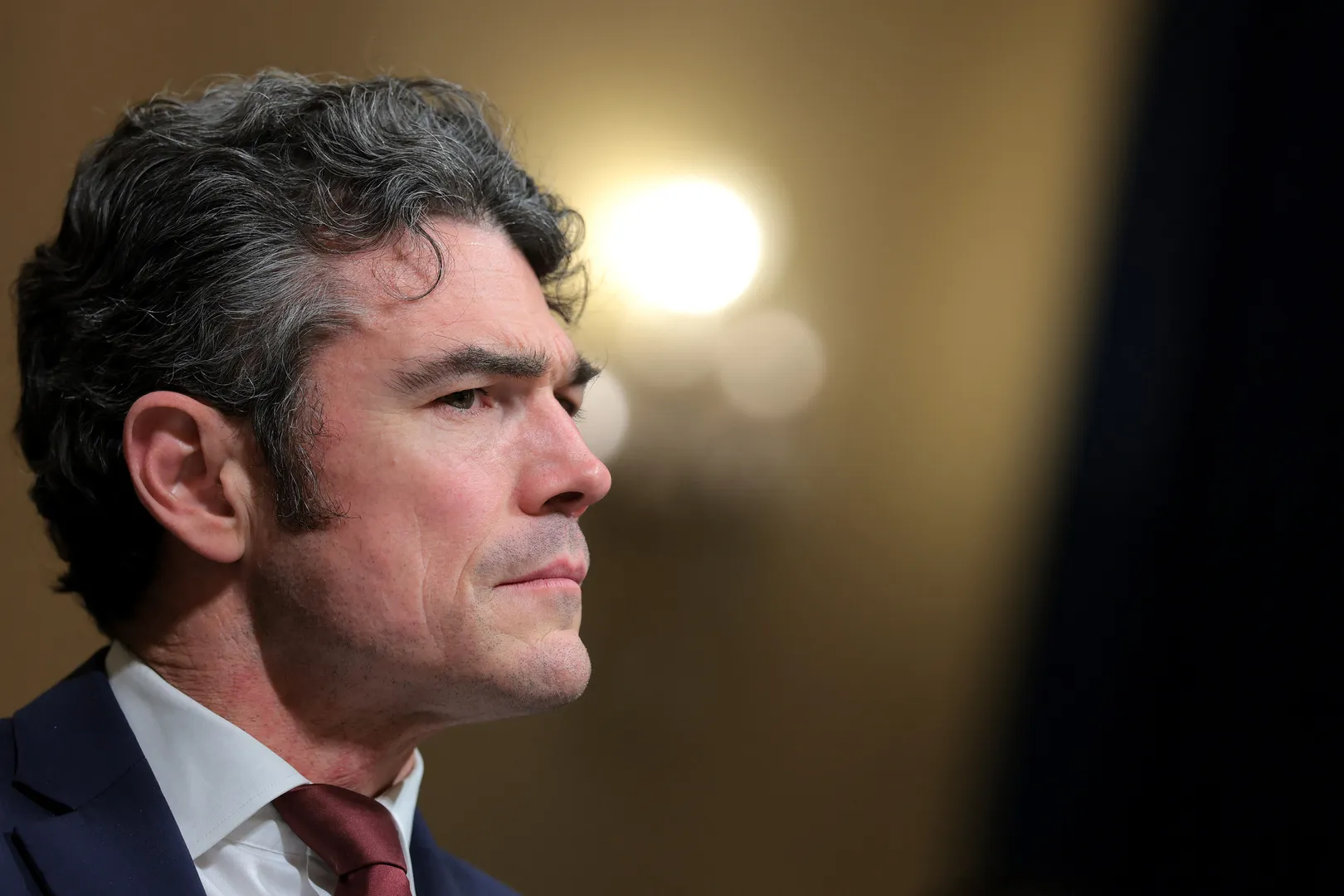
Joe Kent says he resigned as director of the US National Counterterrorism Center over opposition to the war in Iran, telling an audience at a Washington prayer event that he couldn’t “send young men and women off to die on foreign battlefields” in “good conscience.”
Weekly insights and analysis on the latest developments in military technology, strategy, and foreign policy.
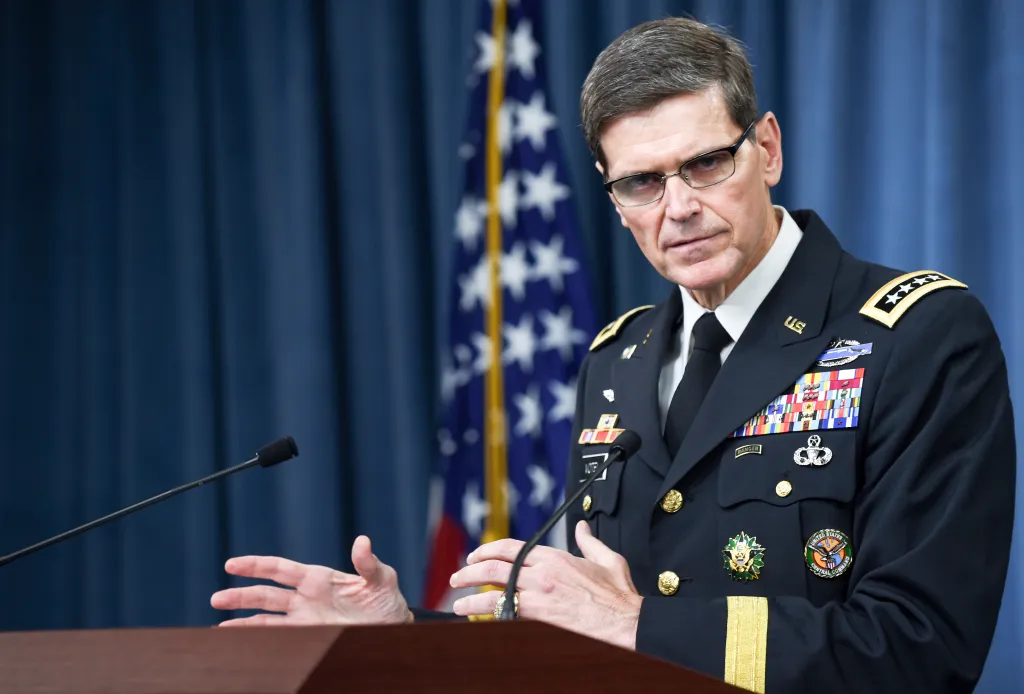
The Pentagon has reportedly drawn up plans to send American troops into Iran, possibly to Kharg Island or far deeper into the country to seize enriched uranium. These moves would represent a huge escalation for Operation Epic Fury. Former CENTCOM commander Joseph Votel offers us exclusive insights into the challenges and dangers of having U.S. boots on the ground in the Islamic Republic, and what it would take to seize Kharg Island or attempt to snatch Iran’s stockpile of enriched uranium that could be very challenging to access.
Gen. Joseph L. Votel, commander, U.S. Central Command, briefs the media in the Pentagon Briefing Room, April 29, 2016. (DoD photo by U.S. Army Sgt. First Class Clydell Kinchen)(Released) Sgt. 1st Class Clydell Kinchen
Some of the questions and answers have been lightly edited for clarity.
Q: Does a seizure of Kharg Island, or an insertion of SOF to recover enriched uranium from Pickaxe Mountain or elsewhere in Iran, seem feasible? What would either of those operations take, in terms of troops and assets?
A: Both of those things are feasible. Let me just start with Kharg Island. We can put troops on there. We can air mobile them in. We could land them by boat. I guess the comment I have about Kharg is, I’m not sure what the significance is of putting troops there. It’s only about 20 miles off the coast of Iran. So you’re definitely under the threat of their weapon systems. You’d be very, very vulnerable there. And I don’t know that it would give us any particular tactical advantage that we don’t already have or couldn’t get someplace else at an offset location where we have established bases and other things like that. So I’m not sure what the tactical advantage of it is.
I get that it has an informational and kind of messaging advantage against the Iranians that we are on their territory. And it may send a message to the broader energy community that we are safeguarding these vital Iranian infrastructures. That might give them some confidence [but] kind of an odd thing to do. But I just don’t really see the big advantage of going to Kharg. But we could certainly do it if we had to.
We would be vulnerable. When you start putting troops on the ground – I know there’s some mishmash and words on that – but that’s troops on the ground right there. It also implies that you are going to have to take care of them, you’re going to have to resupply them, you’re going to medevac them, you have to do all the things that keep them in place for whatever period of time. And that requires that you have a logistical tail, and at some point that tail has to be protected as well. So these are not insignificant considerations and they’re often bigger operations.
I would imagine on a little island like Kharg, you would need a battalion sized force of Marines or soldiers could probably do that. So you’re probably looking at 800 to 1,000 troops, kind of size, maybe a little bit smaller, probably not much larger than that.
The U.S. is reportedly planning to attack or blockade Iran’s Kharg Island. (Google Earth)
Going after the fissile material I think is a bigger operation. Again, I think we have the capabilities to do this. Within our Special Operations community, we have people that are trained to do this and have the right relationships and connections and other things to allow us to get in and do that. So you’d have to be able to project that force onto the ground. This would be going to a place like Natanz or Isfahan – probably one of those locations. Those are well inland – several hundred miles into Iran, a country of the same size as the state of Alaska. So it’s big and it’s diverse. It’s largely in an open plain, so you don’t have a lot of natural terrain protection there. That would have to be taken into consideration.
In addition to the kind of operators you put on the ground, you’d also have to bring in a security force, but probably a sizable security force – a brigade size or 1,000 to 3,000 or 4,000 troops to just secure while they did that work. You’d have to do that. You’d have to make sure you dedicated air power. You’d have to put CAPs [combat air patrols] up over, you’d have to have ISR [information, surveillance and reconnaissance] in place.
Again, you’d have the challenge of people on the ground, so you’d have to logistically sustain them and then be prepared to protect that tail. And then you have to have all of the lift, whether it’s rotary wing or fixed wing, to get them in and get them all back out. And then you have the added challenge of handling nuclear material. So about 450-some kilograms. That’s roughly 1,000 pounds of 60% highly enriched uranium. And that’s a lethal material. So ideally, that would be packaged already, but we’d have to make sure we packaged that and moved it and had someplace to actually take it back to.
A general view of Isfahan (UCF) nuclear power plant about 180 miles from Tehran (HENGHAMEH FAHIMI/AFP via Getty Images) HENGHAMEH FAHIMI
So, yeah, could we do a military operation? Sure. I think it would kind of look like I described there. It would be a big operation, and it wouldn’t be something that would be done in a single period of darkness. It probably takes some time. You’d have to have some special capabilities to go in and excavate these things and identify them.
There’s no real open-source discussion of what the conditions are at these things, you’d have to be prepared for the worst, and the worst would be having to dig down and find it. I’m hoping that our intelligence community understands this a little bit more, and I suspect that is the case. But this is a pretty big, pretty significant operation.
An alternative to this would be waiting until there is a cessation of hostilities and then trying to go in in a more semi-permissive environment with elements of the International Atomic Energy Agency (IAEA) who really have responsibility for this. They would bring expertise in to do this. We – or some other military force – would probably assist with some of that. But that may be another option as well. I’m sure they’re looking at all these.
Q: This is not a job for a Tier One unit like SEAL Team Six or Delta, to go in and grab it, right? There’s a lot of discussion about that.
A: Yeah. First of all, you’re not just going to go in and grab 1,000 pounds of nuclear material and then ferret it right out. That’s not the case. Those unique capabilities reside within the Special Operations community. I won’t identify organizations, but they reside within the tip top of our special operations capability. They’re trained and maintained and normally exercise and rehearse on a regular basis. So, yeah, we have the ability to do that. But it’s unlikely – in my view, my estimate, with what I know – that you just send a few folks in there, grab the stuff and get it out. I don’t think that’s the case. I think it’s going to take more. You might be able to do that in a permissive environment, but I don’t think you want to take the risk associated with that in the environment that we’re seeing right now, or perhaps even in a semi-permissive environment.
A: I have no reason to believe that it wasn’t. Is there pressure on our magazine depth? There sure is. We’ve talked about that for a while. CENTCOM planned – which has been developed and modified over the last 20, 25 years – to do this. Every commander had their fingers involved in it. I do not know the current plan. I’m sure that [CENTCOM commander] Adm. [Brad] Cooper has done that. It was a significant discussion, not only about the targets, but certainly about what was required to execute that and also to protect themselves. So my assessment is, yes, I think we have. And I don’t think we’ve seen an instance where we’ve not been able to defend ourselves because we didn’t have any missiles.
There’s no doubt we’ve expended a lot, and that’s put a lot of pressure on the magazines, but the Department of Defense and CENTCOM and Joint Staff, I think, have been able to make sure that they’ve been able to move enough materials into place so we can sustain this operation, now well into its third week.
A U.S. Army soldier, assigned to 1-43 Air Defense Artillery Regiment (ADAR), operates a forklift bearing MIM-104 Patriot Surface-to-Air Missile (SAM) canisters at an undisclosed location in the CENTCOM region. (U.S. Army photo by Capt. Nick Beavers) Capt. Nick Beavers
Q: How concerned are you about America’s magazine depth of these defensive weapons?
A: We should be concerned. I think the challenge may not necessarily be in CENTCOM. The challenge may be in other areas like the Pacific, Korea, you know, Europe, you know this. This could be impacting our ability to send things to the Ukrainians, or through our NATO partners, the Ukrainians. So I think that’s where the concerns are. And by the way, you know, all of our Gulf Arab partners and many of our partners around the world use THAAD [Terminal High Altitude Area Defense] and use Patriot missile systems, and so they require resupply as well, and stocks available to them.
I think we have long had an issue with making sure we had sufficient magazine depth. We went through this several years ago when North Korea was flexing its muscles and firing missiles towards Guam and over Japan. We had a serious discussion about this. We saw this with the response to Ukraine as well with artillery rounds. The Army’s ramped up production, three or four fold over the last couple of years. But it’s taken a little bit of time. That’s good. But we need to do that with all these other munitions. So a portion of our resources needs to be dedicated to making sure we have sufficient munitions in place for our contingencies and for our partners who have bought our systems they are relying on.
U.S. Army soldiers from the 1st Battalion, 7th Air Defense Artillery Regiment, 108th Air Defense Artillery Brigade, load equipment and trucks onto a C-17 Globemaster III with U.S. Air Force airmen assigned to the 21st Expeditionary Airlift Squadron at an undisclosed location in the CENTCOM Area of Operations. (U.S. Army photo by Sgt. Christopher Neu) Staff Sgt. Christopher Neu
Q: What’s your assessment of Iran’s magazine depth of missiles, operable launchers and drones? How long can they keep presenting a threat?
A: There’s been pretty serious damage done to their missile system and I say the system, because it’s not just the missiles. It’s the launchers, it’s the command and control sites, manufacturing sites, it’s the storage sites. I think we’ve done a lot of damage to that. And you’ve probably heard some of the numbers that have come out of CENTCOM – in the 70, 80% range of destruction. I think we’ve done a lot with the drones as well. I think the concern is the last 15 or 20%.
Don’t pay attention to the numbers. The fact of the matter is, they’re going to have a remnant portion of capabilities, and that’s a portion we’re focused on right now. Iran’s strategy has been to broaden the conflict by hitting a lot of different places, 12 or 13 different countries, and then to extend it by continuing to present this threat to us over a long period of time. They don’t have to shoot large volleys of missiles and drones. They just have to get some across. They just have to launch some every day. And that’s going to keep our focus, and it’s going to keep us occupied doing that. So that’s their strategy on this.
They’ve taken a significant hit in some of their capabilities, and I imagine some of the magazines, but there’s some left. I think at the start of the war, their missile strength was somewhere in the 2,000 to 3,000 range. Some of the numbers I’ve seen show there are probably over 1,000 that have been launched now, and so that leaves a considerable number. They don’t have the ability to launch these. And now that we have air superiority over those locations, we can go anywhere we want. We see something, we can take it out right away. So the missiles are very, very vulnerable, but the drones are much easier [for Iran to protect]. They don’t require all that much, and they probably got larger stores that it’s important to appreciate. They were manufacturing these things for Russia, so they probably have fairly sizable stores of drones left.
Prior to Operation Epic Fury, the Iranian regime used the Karaj Surface-to-Surface Missile Plant to assemble ballistic missiles that threatened Americans, neighboring countries, and commercial shipping. The photo dated March 1, 2026, shows the plant prior to U.S. strikes. The… pic.twitter.com/QEs5toZQpX
Q: How closely is China watching this? And what are they learning from it?
A: Well, I think they’re paying very close attention to this. They’re learning how we respond to counter fire. They’re very closely following our air tactics and how we are working with the Israelis on that. They’re looking at the targets we are going after, and trying to understand the scheme of fires associated with all of this.
They will be watching very closely how we deal with the Strait of Hormuz. We’ve got the straits down there – the Strait of Taiwan and all these other ones in Asia – they’ll be paying very, very close attention to this. They’ll be watching what our readiness rates are throughout all of this, and our ability to marshal forces and how quickly we can do this. So I think they’re absorbing a lot about how we are operating.
But they’re also seeing the use of drones. They’re probably trying to pay attention to how artificial intelligence may be being effectively used. And I would imagine that it is by the US and helping us parse a whole bunch of information and select targets and perform other functions. So, they’re paying a lot of attention. I think they’re also paying attention to what this is doing to our readiness in other areas, frankly. We continue to move resources out of the Asia Pacific, and they certainly are taking note of that.
Q: Do you think China will move on Taiwan given all that?
A: I don’t know. I’m not an expert in that particular area. But what I do know is they’ve had some ambitions of trying to be ready for that in the next year or so. I also know that there’s been a wholesale sacking of their military leadership by President Xi. So he’s putting new people into place, that has an impact. It certainly has an impact on the ability to command and control a major operation to [invade] Taiwan. I don’t think we’re going to see this in the near-term. I don’t know that that’s necessarily the lesson Xi’s taken away from us. I don’t know if they’re actually prepared to do that. But they’re certainly paying attention to how we are doing things here and how that could be used in their types of operations.
A view of China’s new ‘invasion barge,’ which involves a temporary pier that can be connected to other vessels via a barge, or series of barges, with jack-up supports. The development of jack-up barges is widely seen as part of preparations for a possible invasion of Taiwan. (PLAN). via X
Q: So far, the Houthis have been on the sidelines. Why do you think that is and at what point will they get involved?
A: The Houthis – one of the extensions of the Iranian network – have always been much more independent than Hamas or certainly Hezbollah or the Shia militia groups we normally see in Iraq and Syria that are loyal to the Iranian regime. [The Houthis] are much more independent in terms of this. They actually have a governing function, full-on governing function, and so they are trying to make decisions for themselves.
I have heard a couple of discussions on this one. One viewpoint would be that the Iranians have told them to hold on: ‘We want to extend again. We want to extend this conflict out. We want to buy some time. We’re going to be patient,’ and then we may look to do that.
Another theory might be that they’re just keeping their powder dry right now and waiting for an opportunity to launch into this. I think there’s probably a variety of reasons why they aren’t doing it. They have an agreement in place with us. They took a pretty serious beat down during our counter-Houthi operations some months ago. So that had an impact on them. They’re probably not anxious to revisit that immediately, because it was pretty devastating for them. So I imagine they’re just being patient.
A: I don’t view it as particularly likely at this point. There may be some further power shifts there. I think the military component – the IRGC component of the regime, those senior leaders – are having much more influence, and that’s influencing these very angry responses we’re seeing from the Iranians on this, lashing out at the Gulf Arab countries. So I think that the military is definitely ascending in this.
But yet, they have preserved the theocratic side of government by putting a new Ayatollah in place, admittedly, one that’s not well known, that appears to be pretty weak [Mojtaba Khamenei, chosen to replace his father, Ali Khamenei who was killed on the first day of the war]. He actually seems to be very aligned with the hard liners on the military side. There’s not much on him. He doesn’t have a huge amount of religious credibility or anything. So, he could be a figurehead, could be expendable for them, frankly, but their regime is very deep. It has great influence, and it’s pretty much wired everything in Iran, so they can remain in power. And so I suspect that they probably will. Whether a more pragmatic leader arises. I don’t know. I don’t know who that might be.
New Iranian Supreme Leader Ayatollah Mojtaba Khamenei. (Iranian media)
Q: What’s your biggest worry about how this all winds up?
A: That the regime remains in power. They’re going to continue to try to extend and keep this going for a long period of time, and we are going to have to undertake very expensive and deliberate activities to bring this under control. I mean, we’re already three weeks into what has been touted as a four or five week campaign. That’s pretty reasonable based on my experience and knowledge of what CENTCOM is trying to do, and what that plan basically looks like. It makes a lot of sense to me.
And then we have to undertake a very deliberate effort to open the Strait. And then we’ll have to stay committed to helping move ships through there, for some period of time, and Iran will continue to have the ability to interdict that.
My concern is that when we move to a new normal that hasn’t necessarily changed the dynamic all that much, we will have to stay committed to this for some time forward. I don’t know that that was necessarily what we had envisioned at the start of this, or had envisioned for the force long term.
Q: How long do you think this will go on, given what you’re seeing now?
A: I think we’ve got weeks more of operations.
Q: A month? More than that?
A: More than a month, I think probably double digit weeks and single digit months when you throw in a Strait of Hormuz operation, stuff like that. I can see us for a couple of months here.
The amphibious assault ship USS Tripoli is steaming toward the Middle East to boost a growing U.S. military presence there. (Staff Sgt. Samuel Ruiz)
Q: What kind of strain does it put on the U.S. in terms of readiness, in terms of the troops and equipment?
A: Well, most of these naval vessels were not necessarily anticipated or forecasted to be in the Middle East right now. For the most part, they have diverted from other things that they were doing, particularly the carriers. That defers maintenance. It defers normal training cycles, and other readiness cycles that are built into this.
Those ships are fantastic, but they have to go into very deliberate maintenance periods and capital ship maintenance has been an area of some concern for us for a while, because we have so many things going on and because we don’t have the infrastructure that we require to take care of these things. So I think there could be some readiness issues with our maritime vessels. It certainly puts a lot of stress on things like THAADs and Patriots, and again, we have a finite number of those. They’re not in Korea, they’re not other places, they’re not in Europe, they’re here. So that’s going to have an impact, and those organizations are going to have to be reset at some particular point on this.
This is putting more and more stress on our air fleet, our tankers, the C-17 movers, and, of course, all the wear and tear on all of our fighters. I think to our readiness, all of those things have to be taken care of at some particular point. And that’s going to have an impact as we try to rebuild readiness and respond to other contingencies around the world. And in addition to returning to our great power competition. So I think there’s definitely going to be some impacts in this.
An F-35A Lightning II takes off from an undisclosed location in support of Operation Epic Fury. (U.S. Air Force Photo) U.S. Central Command Public Affa
Q: How much of a difference to Epic Fury does it make that the aircraft carrier USS Gerald R. Ford has to leave the theater to undergo fire damage repairs in Souda Bay, Crete? That leaves just the USS Abraham Lincoln as the lone carrier during a major contingency operation.
A: We’ve got a lot of aircraft. We’ve got ground-based aircraft. My understanding is we may be moving another carrier in to replace that one. I don’t recall exactly which one it is, but I think I’ve read at least one or two sources that said it would happen. It takes 80 or 90 airplanes, theoretically, out of the cycle. Now those aircraft can be cross-decked, they can be moved to land. And we may be doing that. I don’t really know. But it takes away a big platform. We lose some flexibility here, and those aircraft carriers are basically floating air bases out in the middle of the ocean, and give us the ability to launch and recover things and project power where we need to. It takes away from some major command and control capability. So, yeah, it creates a void. It’s not impossible to backfill. I suspect we probably will be able to do that, but there’s definitely a diminishment there, and hopefully we’re replacing one with one here.
The USS Gerald R. Ford is heading to Crete to repair fire damage, taking the ship out of the Epic Fury campaign. (USN)
Q: Anything I didn’t ask that you want to talk about?
US president’s reference to Japan’s 1941 attack on naval base in Hawaii has shaken the Japanese public as PM Takaichi’s silence gets mixed reaction.
There has been embarrassment, confusion, and unease in Japan after US President Donald Trump used the Pearl Harbor attack during World War II to justify his secrecy before launching the war on Iran.
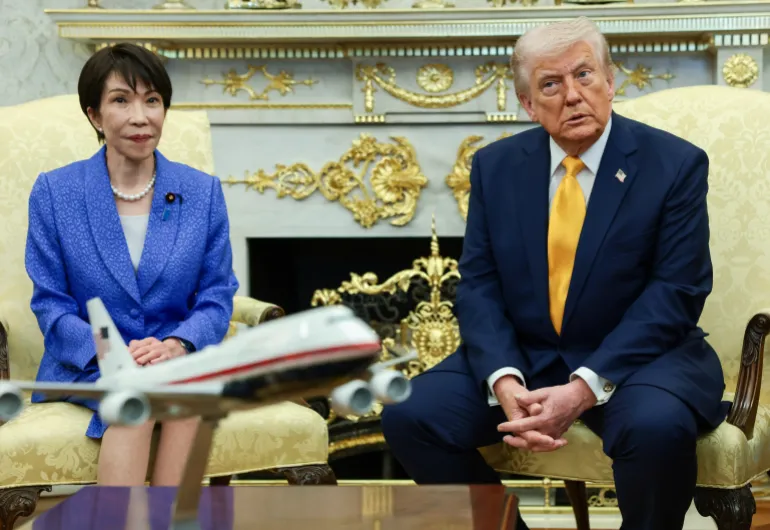
Trump was asked by a reporter why he did not tell allies in Europe and Asia in advance of the US-Israel attack on Iran during a news conference with Japanese Prime Minister Sanae Takaichi at the White House on Friday.
Recommended Stories
list of 4 itemsend of list
Trump cited Pearl Harbor to defend his decision saying, “Who knows better about surprise than Japan? Why didn’t you tell me about Pearl Harbor, OK?”
Following the remarks, social media reaction has ranged from accusations of ignorance and rudeness by the US president to claims that he does not see Japan as an equal partner. There were calls for Japan to protest Trump’s comments.
Tsuneo Watanabe, a senior fellow at the Sasakawa Peace Foundation, said in an opinion piece in the Nikkei newspaper on Saturday that the remarks signalled Trump is “not bound by existing American common sense”.
“I get the impression that the comment was intended to bring the Japanese reporter [who asked the question] or Ms Takaichi into complicity in order to justify his ‘sneak attack’ on Iran during diplomatic negotiations and without telling allied countries,” Watanabe wrote.
There is also a feeling that an unspoken understanding exists between United States and Japanese leaders to tread carefully on the subject.
Both sides need each other, with Washington relying on Japan to host 50,000 troops and an array of powerful hi-tech weapons, and Japan relying on the US nuclear umbrella to deter hostile, nuclear-armed neighbours.
Japan’s post-World War II constitution bans the use of force except for its self-defence, but Takaichi and other officials are now seeking to expand the military’s role.
Mixed reaction to Takaichi’s response
Takaichi, a hardline conservative, was praised by some for not reacting to Trump’s comments, letting them pass with a roll of her eyes and a glance at her ministers seated nearby.
The goal of her summit was to deepen ties with her most important ally, and she arrived shortly after Trump suggested Japan was among the nations that did not quickly join his call to help protect the Strait of Hormuz.
Some, however, criticised Takaichi for not speaking up.
Hitoshi Tanaka, a former diplomat and a special adviser at the Japan Research Institute think tank, wrote on X that he felt embarrassed to see Takaichi flattering Trump.
“As national leaders, they are equals … To make an equal relationship is not to flatter,” he said. “Just doing what pleases Trump and calling it a success if you are not hurt is too sad.”
Initially, social media placed some of the blame on the Japanese reporter who asked the question that prompted Trump’s Pearl Harbor comment.
The reporter, Morio Chijiiwa with TV Asahi, later said on a talk show he asked the question to represent the feelings of Japanese who are not happy about Trump’s one-sided attack on Iran, and because other countries, including Japan, are now being asked to help out after the US and Israel started the war.
“So that’s why I asked the question. I was meaning to say, ‘Why didn’t you tell us, why are you troubling us?’” he said.
“Then President Trump hit back with the Pearl Harbor attack … I found it extremely awkward for him to change the subject.”
Japanese Prime Minister Sanae Takaichi, left, meets President Donald Trump [Evelyn Hockstein/Reuters]
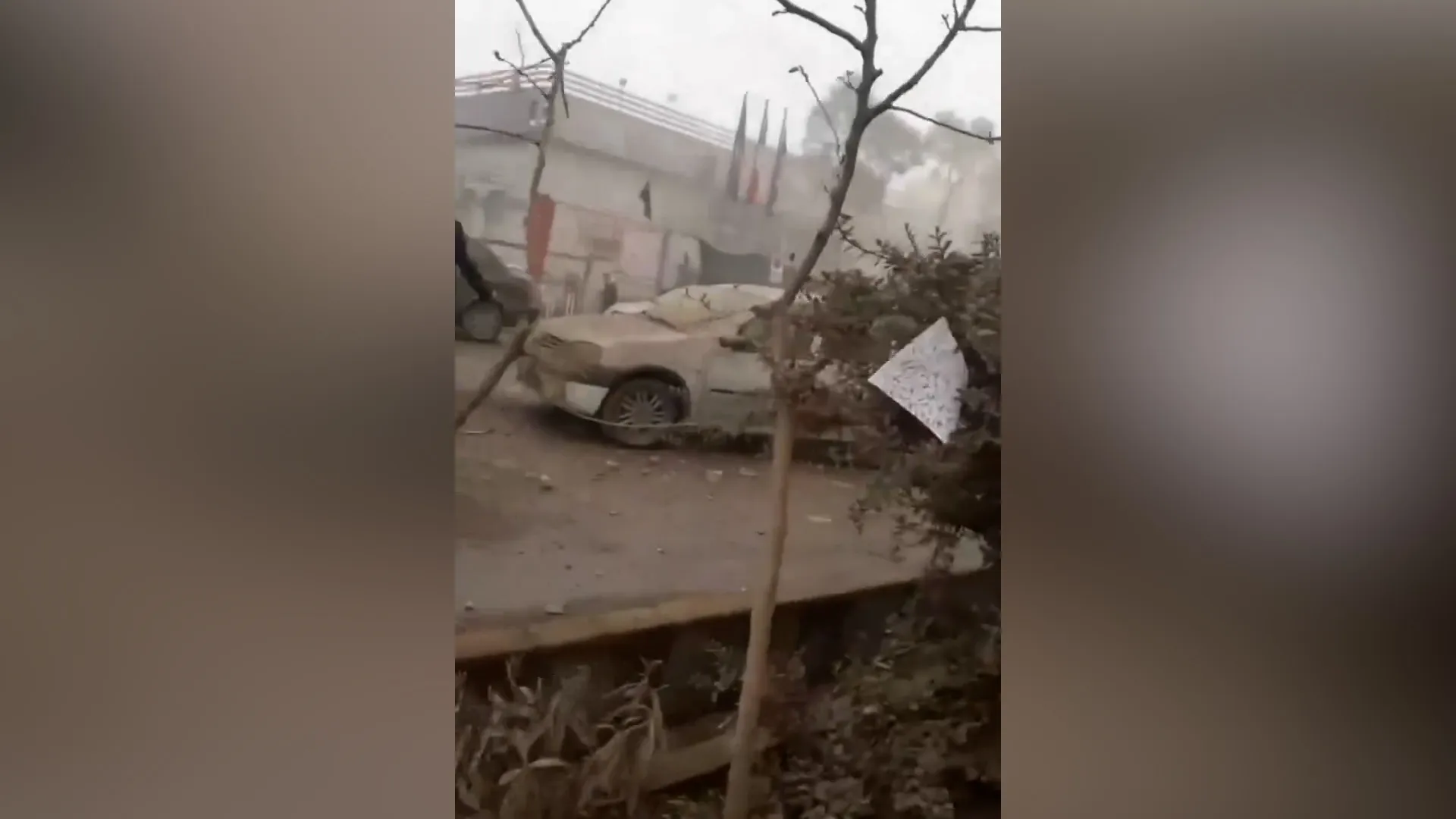
The fate of an Iranian woman caught in a US-Israeli bomb attack is unknown, after video emerged of the moments she filmed the bombardment on her phone.