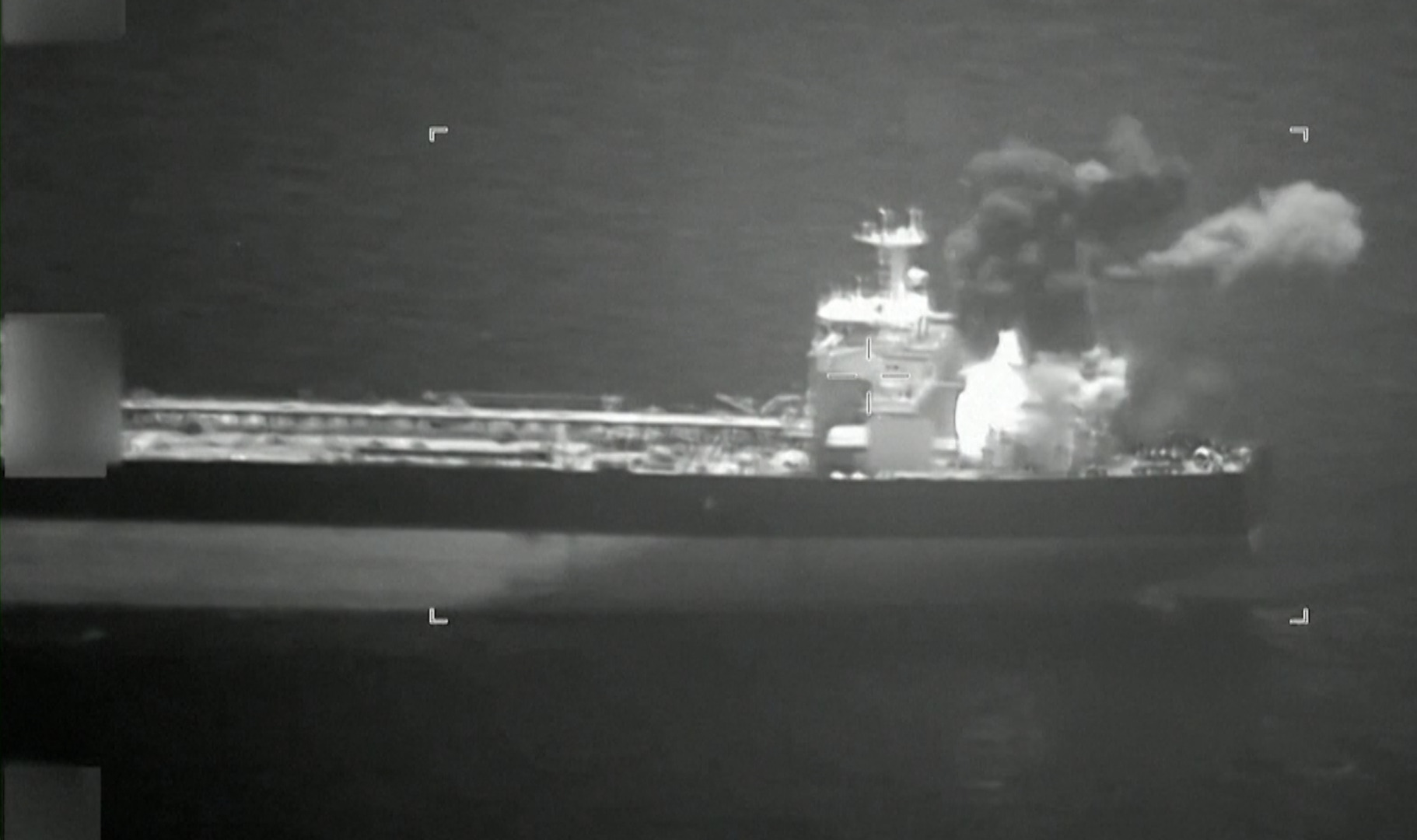
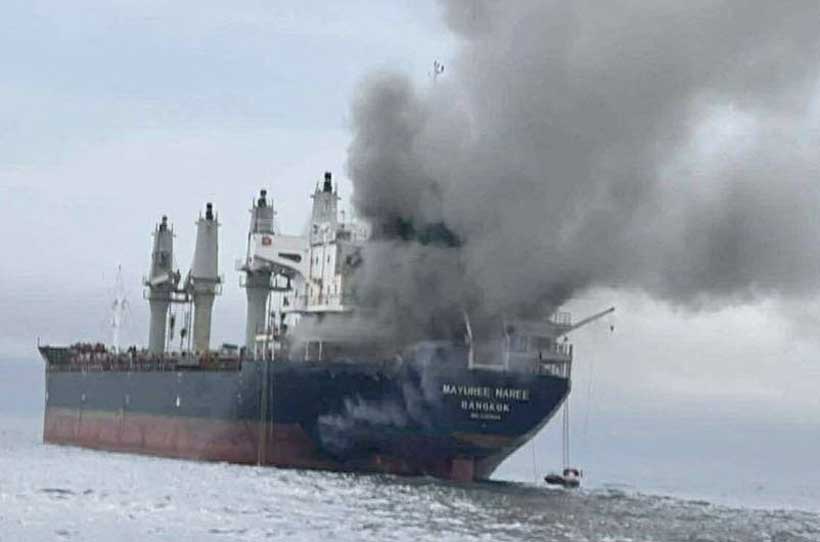
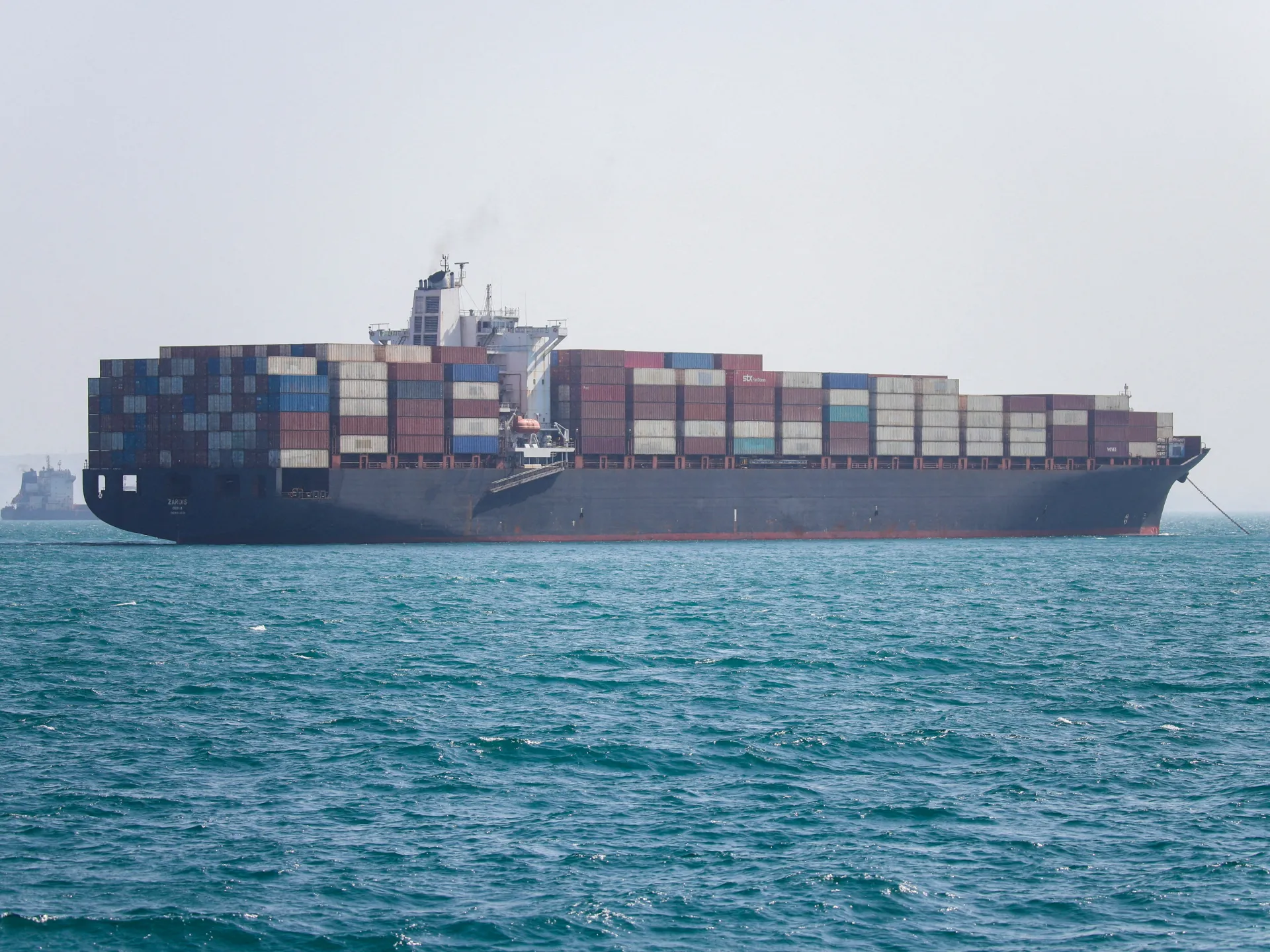
Footage released by the Pentagon shows US strikes on two Iranian oil tankers in the Strait of Hormuz. The US military says the vessels were disabled following overnight exchanges of fire with Iranian forces, preventing them from reaching ports in the Gulf of Oman.
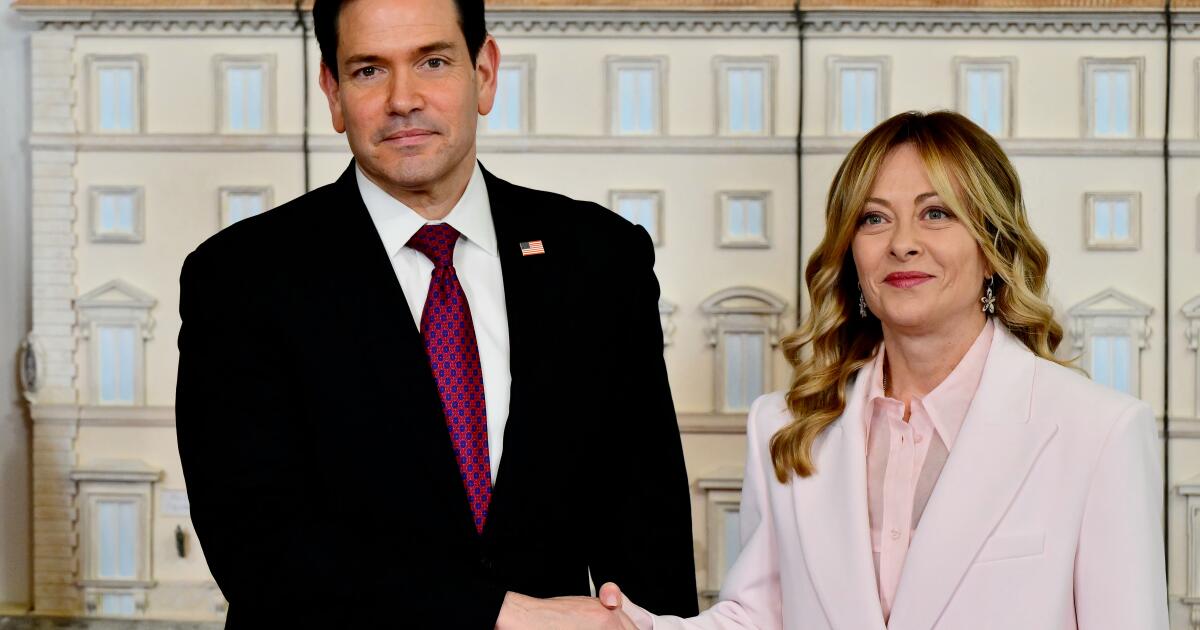
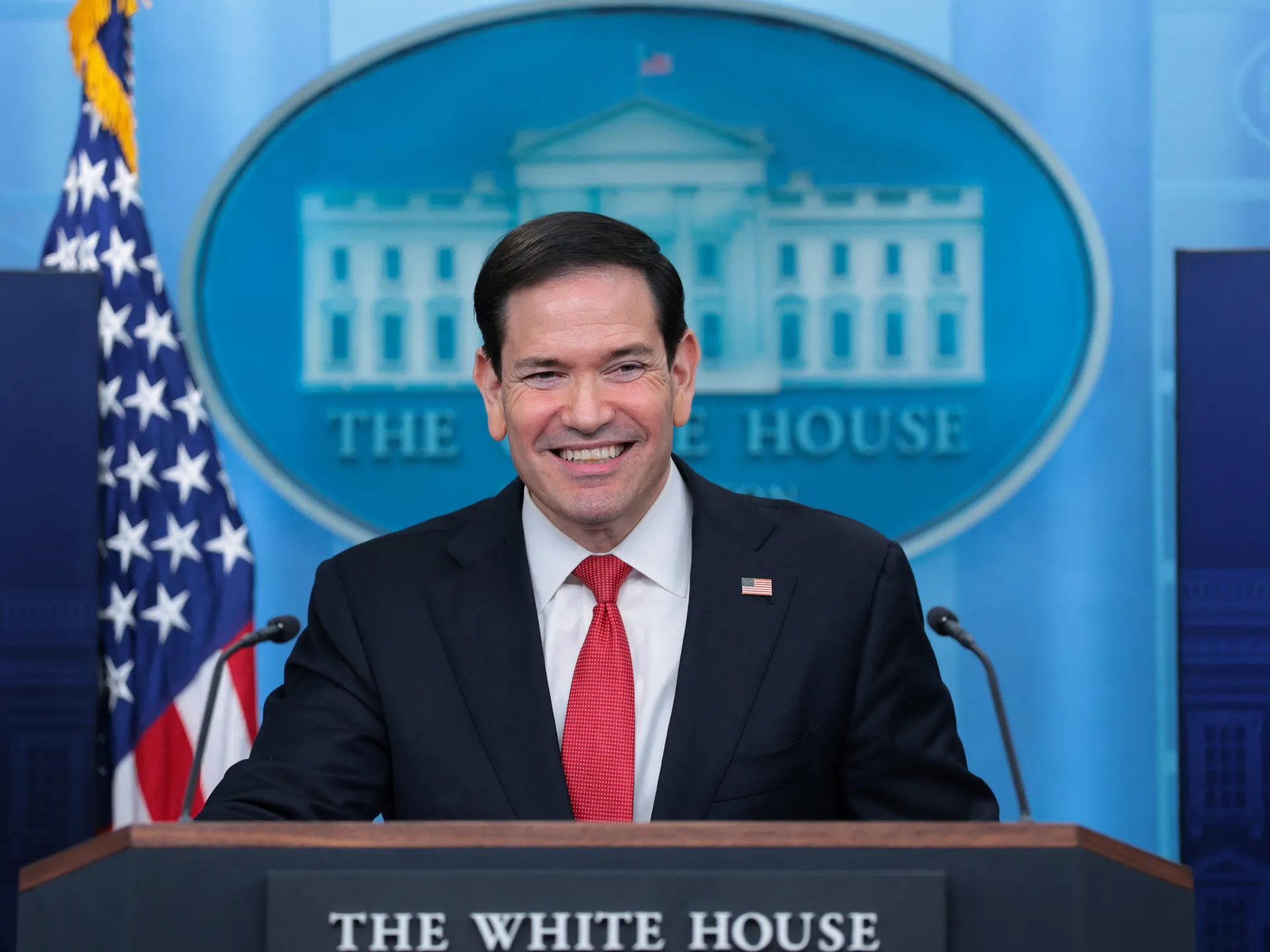
ROME — U.S. Secretary of State Marco Rubio urged European allies Friday to move beyond rhetoric and take concrete action against Iran, even as he sought to repair strained ties with Italy and the Vatican during a two-day visit following tensions over the U.S.-Israeli war in Iran.
Speaking after meetings with Premier Giorgia Meloni and Foreign Minister Antonio Tajani, Rubio warned that Tehran was attempting to assert control over the strategic Strait of Hormuz, calling the move “unacceptable” and a threat to global security.
“Everybody says Iran is a threat. Everybody says that Iran can’t have a nuclear weapon … but you’ve got to do something about it,” Rubio told reporters in Rome. “If the answer is no … then you better have something more than just strongly worded statements to back it up.”
Clear ‘red line’
Rubio said Iran was trying to normalize control over an international waterway, a precedent he warned could encourage similar actions elsewhere. He also cautioned Tehran against targeting U.S. maritime assets, saying the United States had thwarted attacks on three Navy ships in the strait.
“The red line is clear. They threaten Americans, they are going to be blown up,” he said.
Rubio said Washington was pursuing a diplomatic track, including a proposed U.N. Security Council resolution aimed at preserving freedom of navigation. He added the U.S. was awaiting Iran’s response on Friday to ongoing diplomatic efforts.
Rubio’s visit comes after weeks of sharp disagreements between Washington and Rome over the Iran war, tariffs and President Trump’s criticism of both Meloni and Pope Leo XIV.
Differences remain over Iran war
Meloni described her meeting with Rubio as “constructive, frank and productive,” focused on both bilateral relations and major international issues. She said the talks covered strategic topics, including the Middle East, freedom of navigation in the Strait of Hormuz, Ukraine, China and areas of Italian interest such as Libya and Lebanon.
“We both understand how important the trans-Atlantic relationship is, but we also understand that each country must defend its own national interests,” Meloni stressed after the meeting.
Tajani struck a more conciliatory tone after meeting his U.S. counterpart, reaffirming the importance of the trans-Atlantic alliance.
“I am convinced Europe needs America — Italy needs America — and the United States also needs Europe and Italy,” Tajani said, adding he hoped “tensions have been calmed.”
He said discussions covered the Iran conflict and its spillover into Lebanon, as well as Venezuela and Cuba. The U.S. State Department said Rubio also raised the need to protect economic interests and end the war in Ukraine.
Despite the effort to ease tensions, differences remain over the Iran conflict. Italy has opposed the U.S.-Israeli bombing campaign, with Meloni calling it “illegal,” and has resisted involvement in offensive operations.
Tajani said Italy would be prepared to contribute naval forces to demine the Strait of Hormuz once a permanent ceasefire is reached, and would maintain its role in the U.N. peacekeeping mission in Lebanon. He also stressed the importance of continued U.S. troop presence in Europe amid concerns about possible reductions.
No final decision on NATO troops adjustments
Rubio said “no final decision” had been made on NATO troop adjustments, noting that any changes would depend on U.S. national interests and global priorities.
The U.S. has announced a decision to pull 5,000 military personnel from Germany and Trump has threatened to withdraw more troops from Italy and Spain over their stance on the war.
Italy, a key logistics hub for U.S. and allied operations in the Mediterranean and beyond, has already signaled limits to its cooperation. In March, it declined to allow U.S. bombers bound for the Middle East to use a base in Sicily without parliamentary approval, reflecting constitutional constraints and strong domestic opposition to the war.
Meloni, weakened by a recent referendum defeat and facing public unease over the conflict, has insisted that any use of Italian bases for offensive operations would require parliamentary backing.
The war has also raised economic concerns in Italy, with Meloni warning that disruptions in the Strait of Hormuz risk driving up energy costs and inflation, while U.S. tariff threats weigh on the country’s export-driven economy.
An attempt to de-escalate at the Vatican
Rubio also sought to ease tensions with the Vatican following Trump’s criticism of the pope’s calls for peace. After a lengthy meeting on Thursday with the pontiff and Vatican Secretary of State Cardinal Pietro Parolin, Rubio said Washington remained committed to a “productive and fruitful” relationship with the Catholic Church.
“The president’s perspective is clear. He thinks that Iran is a threat, and it needs to be addressed. And that position remains unchanged,” Rubio said.
Rubio confirmed that Cuba was also discussed at the Vatican, with Washington hoping the church’s Caritas charity organization would continue distributing humanitarian aid.
Rubio said the U.S. has provided about $6 million in humanitarian aid to Cuba, to be distributed through Caritas, should the Cubans allow it. He added Washington has also offered up to $100 million in additional aid, but the Cuban government has not accepted it so far. Rubio blamed Cuba’s government for blocking assistance and worsening conditions, describing it as “incompetent.”
U.S. officials said the Vatican talks underscored strong bilateral ties and a shared commitment to promoting peace, even as differences over the Iran war persist.
Zampano and Winfield write for the Associated Press.
The International Air Transport Association (Iata) has urged its European members to consider switching to US-made jet fuel amid rising concerns over possible shortages caused by the Iran oil crisis
13:25, 08 May 2026Updated 15:49, 08 May 2026
Fears remain that there cut be a shortage of jet fuel
European airlines should contemplate switching to US-manufactured jet fuel amid mounting worries over shortages triggered by the Iran oil crisis, a trade body has warned. The International Air Transport Association (IATA), which represents carriers, said its European members could “ease some pressure” by altering the type of fuel they use.
Commercial aviation mainly depends on two fuel grades: Jet A-1, which is utilised across most of the world, and Jet A, which is chiefly used in North America. They are comparable, with the principal distinction being that Jet A-1 has a lower maximum freezing point, offering greater versatility on long-haul and polar routes.
Jet A is predominantly manufactured outside the Gulf, from where fuel supplies are restricted by Iran’s limitations on tankers passing through the Strait of Hormuz. IATA’s director of flight and technical operations, Stuart Fox, stated in a blog that using Jet A “could give airlines facing a possible shortfall in fuel supply more options”.
He proposed this could “help the industry make better use of the fuel we have” and “keep schedules intact”. He continued: “Fuel supply could come under pressure if the war in the Middle East continues.
“Using Jet A, which is produced at scale outside the Gulf, could be a practical way to help ease some pressure on existing supply chains.
“This would have to be done through a controlled transition from one approved fuel grade to another. In normal times, that flexibility might not be noticeable. But in today’s circumstances it’s critical to keeping the whole system moving.”
Mr Fox noted that airlines looking to switch from Jet A-1 to Jet A would need to implement crucial safety precautions, including accounting for the higher freezing point and ensuring crew members are fully briefed on which fuel is on board.
On Friday, British Airways’ parent company International Airlines Group cautioned that its profits would take a hit, anticipating spending approximately two billion euro (£1.72 billion) more than budgeted on fuel this year. Chief executive Luis Gallego stated that he does not believe the group will experience “any interruption for the summer” with regard to fuel supply.
JET fuel restrictions could hit airlines on a global scale, a major airline owner has warned.
International Airlines Group (IAG), who owns British Airways, Iberia and Aer Lingus, initially said that most of its airlines will unaffected this summer.
Sign up for the Travel newsletter
Thank you!
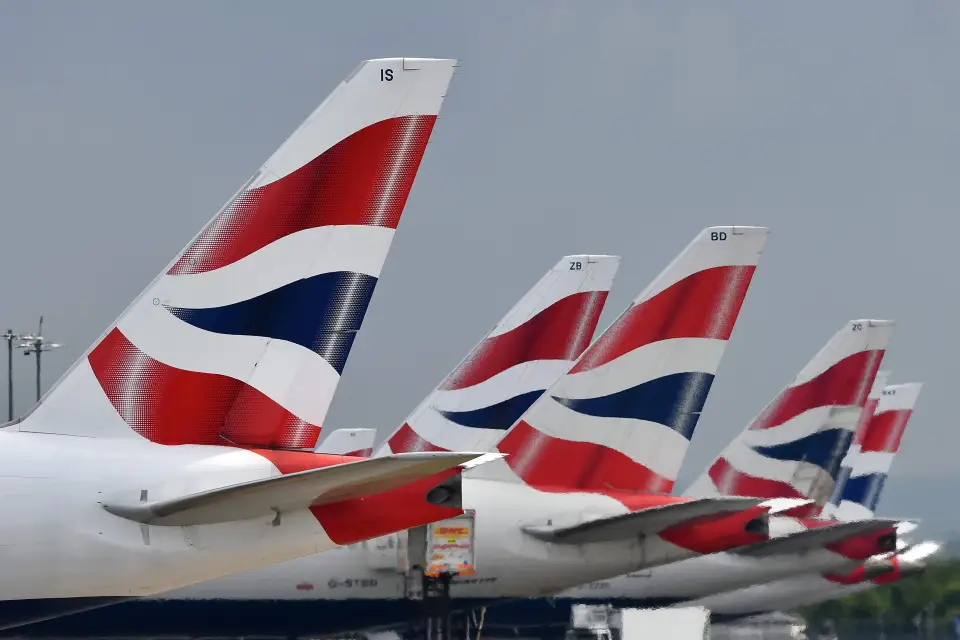
IAG, who owns airlines like British Airways, has warned of restrictions if the war continuesCredit: AFP or licensors
However, they warned that if the crisis continues, shortages will result in restrictions across the globe.
They said: “If the current conflict continues to restrict flows of both crude oil and jet fuel from the Middle East, there is the potential for supplies of jet fuel to be restricted on a global basis.
“We are engaging with governments in each of our home markets as well as with the EU to ensure that the industry is getting the support it needs to navigate this situation.”
IAG has said they expect their profit to be lower than anticipated. It also expects spend more than £1.72billion extra on fuel costs that previously predicted.
The closure of the Strait of Hormuz since March has resulted in fears of fuel shortages, and caused airlines to start hiking prices.
Some airlines, such as Lufthansa, Scandinavian Airlines and Cathay Pacific, have already reduced their flights scheduled for the upcoming months in an attempt to avoid cancellations caused by shortages.
People from the UK heading abroad for the Spring Bank Holiday are being given the latest advice on holidays amid growing fears over jet fuel shortages and flight disruption. Travel experts say flights are continuing to operate “as planned” despite airlines across Europe drawing up contingency measures following soaring fuel prices linked to conflict in the Middle East.
Concerns have grown after reports that some airlines are preparing for possible refuelling stops on long-haul routes if shortages worsen. German airline Lufthansa has reportedly already begun contingency planning after one of its flights was forced to divert for fuel during a recent journey to South Africa.
The airline has also cut thousands of flights from its wider summer schedule as fuel costs continue to rise. However, travel industry figures insist UK holidaymakers should not panic.
Mark Tanzer, Chief Executive of ABTA – The Travel Association, said: “We really don’t want people worrying about their holidays; planes are taking off daily and people are continuing to get away on their holidays. The Government and airlines are clear that there isn’t a problem with fuel supply.
“If you have a holiday booked in for the coming months – including the May half term – we expect it to go ahead as planned.”
He added: “Whilst there have been reports about cancellations globally, these amount to less than one per cent of overall flights.”
According to aviation analytics firm Cirium, around 13,000 flights worldwide have reportedly been cut during May. Munich and Istanbul are believed to be among the worst-affected destinations.
The Department for Transport has also said there is currently “no need” for travellers to change their plans. Officials say UK airlines buy fuel in advance and airports continue to maintain reserves to help prevent disruption.
Passengers are still being advised to check flight updates with airlines before travelling and ensure they have suitable travel insurance in place. Some 120 flights from the UK this month have been cancelled, new figures show, as jet fuel prices surge and fears of shortages grow.
Cirium said airlines have axed 120 of the 22,613 departures initially scheduled from UK airports in May, equivalent to 0.53%. The number of outbound flights planned for June is 36 lower than a week ago. This represents a 0.2% reduction and means capacity for the month has fallen by 7,972 seats.
The final week of May is a peak period for holidays as it is half-time at many schools. For all flights globally, some 13,005 planned for May were cancelled between April 10 and April 21, equivalent to 1.5%. That reduced capacity by almost two million seats.
Julia Lo Bue-Said, chief executive of Advantage Travel Partnership, a network of independent travel agents, said airlines are “assessing poor performance flights and consolidating or cancelling as required”.
She added that UK departures to popular summer hotspots “remain unaffected” and insisted “customers can continue to book with confidence”. Paul Charles, founder of travel consultancy The PC Agency, said: “Airlines are now being forced to cut flights and make difficult decisions ahead of the peak season.
“It is better for them to cancel flights well in advance so that passengers are less inconvenienced than a last-minute change of plan. As the Iran conflict continues, there will need to be many more cancellations as the jet fuel supply is squeezed.”
Lufthansa’s airline group announced in April it would cancel 20,000 flights over the following six months to save fuel. Iran continues to have a stranglehold on tankers passing through the Strait of Hormuz, leading to a surge in oil prices and concerns of jet fuel shortages.
But on Sunday, Transport Secretary Heidi Alexander said summer holiday plans will not face major disruption because of the latter. She revealed that more fuel has been imported from America, while refineries have upped their production.
The Government has also introduced a temporary rule change allowing airlines to group passengers from different flights together on to fewer planes to save fuel.
US President Donald Trump says the ceasefire with Iran is still in effect, despite American and Iranian forces trading fire in the Strait of Hormuz on Thursday. Trump threatened pain for Tehran unless it signs a truce quickly.
Brent crude rises amid clashes in critical waterway.
Published On 8 May 20268 May 2026
Oil prices have jumped after clashes between United States and Iran in the Strait of Hormuz pushed their tenuous ceasefire to the brink.
Futures for Brent crude rose as much as 7.5 percent during a volatile trading session on Thursday, before easing as Asia’s markets opened on Friday morning.
Recommended Stories
list of 4 itemsend of list
The international benchmark stood at $101.12 per barrel as of 03:00 GMT, down from the day’s high of $103.70.
The latest rise came after the US and Iran exchanged fire in the critical strait, a conduit for about one-fifth of global oil and natural gas supplies, despite the truce announced between the sides on April 7.
US Central Command (CENTCOM) said it launched strikes on Iran after three US Navy guided-missile destroyers came under attack from Iranian missiles, drones and small boats in the strait.
Iran’s Khatam al-Anbiya Central Headquarters earlier accused the US of violating the ceasefire by attacking an Iranian oil tanker and another vessel in the vicinity of the waterway.
The Iranian military headquarters also accused the US of targeting civilian areas, including Qeshm Island.
US President Donald Trump on Thursday appeared to downplay the clashes, saying the ceasefire remained in effect, while Iran’s state-run Press TV said the situation had gone “back to normal”.
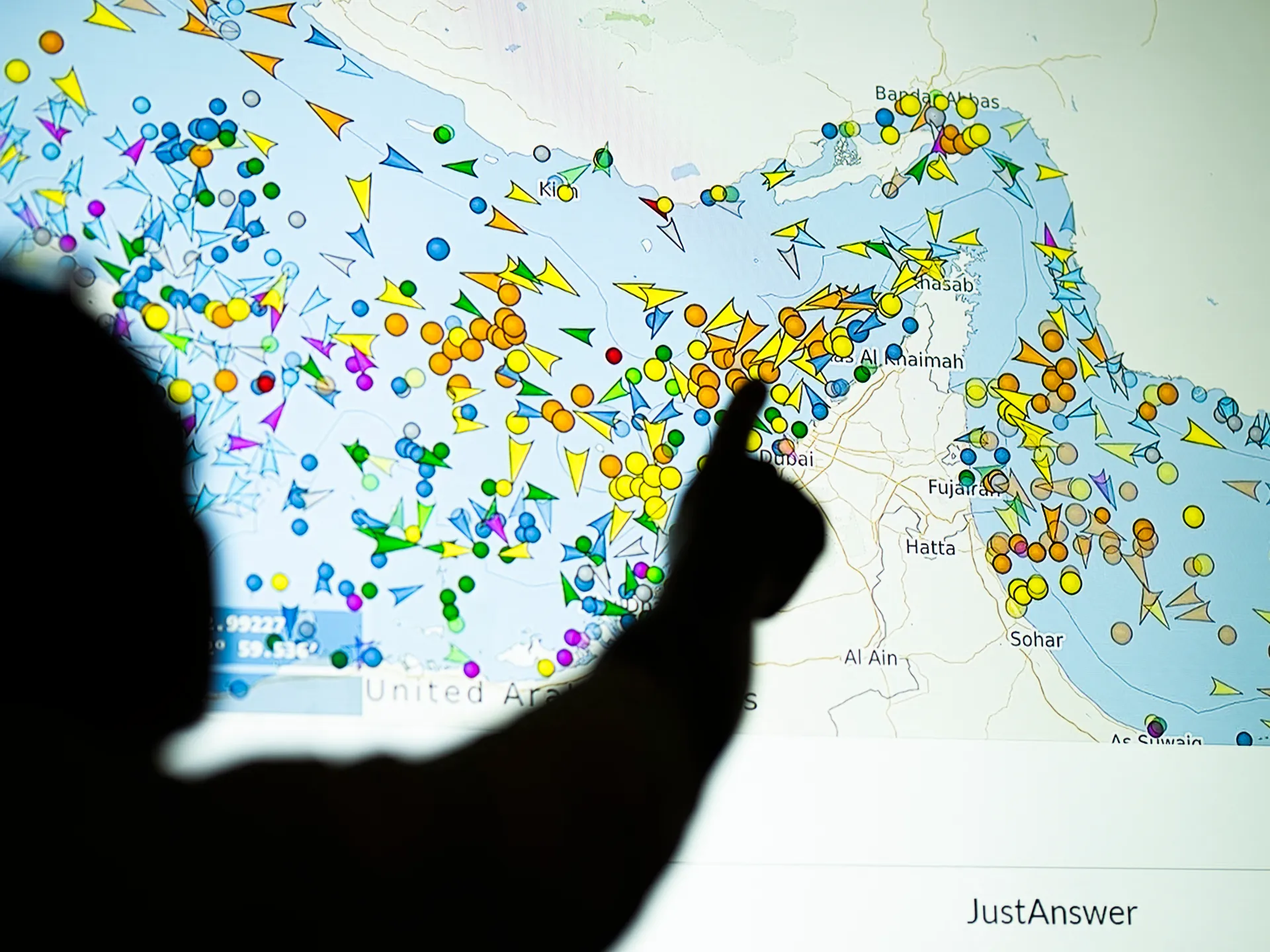
Shipping in the strait has been at a near standstill since late February amid the threat of Iranian attacks on the massive oil tankers that usually transport much of the world’s energy supplies.
Brent prices are up about 40 percent compared with before the war amid an estimated shortfall in daily production of 14.5 million barrels.
Asian stock markets opened lower on Friday amid the heightened tensions, with Japan’s benchmark Nikkei 225, South Korea’s KOSPI and Hong Kong’s Hang Seng Index each falling more than 1 percent.
On Wall Street, the benchmark S&P 500 fell about 0.4 percent overnight after hitting an all-time high the previous day.
BEIRUT — A dozen U.S. Democratic Senators have called for the U.S. Central Command to answer questions about American coordination with Israel in declaring broad “ evacuation zones ” in Lebanon and Iran, alleging that the practice may violate international law.
The letter underlines how the Democratic Party — both its leaders and the base — has grown increasingly critical of Israel.
Since the beginning of the U.S.-Israeli war against Iran and the latest Israel-Hezbollah war in Lebanon, the Israeli military has regularly issued maps covering large areas of territory along with warnings telling all residents of the zones to flee. Israel had previously used a similar approach in Gaza.
The senators said the sweeping warnings have “been used to permanently displace people and destroy homes and towns” and that some civilians who refused to leave their homes in the areas have been killed by subsequent strikes.
The 12 senators led by Vermont Sen. Peter Welch, in a letter dated May. 4 to CENTCOM chief Adm. Brad Cooper that was provided to The Associated Press, state that Israel’s practice of unilaterally declaring mass evacuation warnings in Lebanon and Iran “likely contravene international laws the United States has helped develop around humane warfare.”
The other signatories include senators Bernie Sanders of Vermont, Elizabeth Warren of Massachusetts and Sen. Tammy Baldwin of Wisconsin.
The letter asked the CENTCOM chief whether U.S. forces have coordinated military targets with Israeli forces during the recent war with Iran, whether they provided assistance or intelligence helping Israel’s military to impose the evacuation zones in Lebanon and Iran, and whether CENTCOM signed off on U.S. military support for the targeting of people or infrastructure in the evacuation zones. It also asked whether the U.S. military has reviewed the legality of the practice.
The Israeli military declined to comment when asked about the letter. CENTCOM did not immediately respond to a request for comment.
In the past, Israel has said the evacuation maps aim to keep civilians out of harm’s way. It says Hezbollah has positioned fighters, tunnels and weapons in civilian areas across southern Lebanon, from which it has launched hundreds of drones and missiles — without warning — into northern Israel.
A shift in the party stance
Observers said the move is part of a larger shift in the stance of Democratic Party leaders on U.S. military assistance to Israel. Democrats have also been critical of the Trump administration’s entry into the war on Iran alongside Israel.
The letter came nearly three weeks after more than three dozen Democrats supported an effort by Sanders to block arms sales to Israel, signaling a growing discontent in the party with Israeli Prime Minister Benjamin Netanyahu and the wars in Gaza and Iran.
The two resolutions to block U.S. sales of bulldozers and bombs to Israel were opposed by all Republicans and rejected 40-59 and 36-63.
Jon Finer, former deputy national security adviser under President Joe Biden, said the recent steps by Democratic senators reflect a “growing concern about Israeli conduct of various wars that cause civilian harm and U.S. complicity in that” across the spectrum within the Democratic Party.
Asked why the Democratic Party is taking these steps now and not at the time when the war in Gaza and the Israel-Hezbollah war broke out — when the Democratic Biden administration was in power — Finer said: “our operational integration with Israel appears to be growing, which is part of it, but the truth is the Democratic base has been moving in this direction for some time and Washington has been catching up.”
Andrew Miller, a former senior official on Israel and Palestinian Affairs at the State Department, said the letter “represents a shift among congressional Democrats moving from questions of the legality of Israeli military operations to concerns about the complicity of the U.S. military.”
“It demonstrates that Democrats are taking international law very seriously and that is a welcome development,” Miller said.
The evacuation zones
Israel has issued dozens of evacuation warnings in Lebanon since the latest Israel-Hezbollah war began on March 2. Over 1 million people in Lebanon have fled their homes during the war.
Israel has also issued similar warnings for Iranians, both during the 12-day Israel-Iran war last year and during the U.S.-Israeli war launched on Iran on Feb. 28. In one case last year they warned 300,000 people in Tehran, Iran’s capital, to evacuate.
On Wednesday, the Israel military’s Arabic-language spokesperson Avichay Adraee issued an evacuation warning to residents of 12 villages in southern Lebanon saying Hezbollah is using them to launch attacks. The warnings came despite a ceasefire that has been nominally in place since April 17, although Israel and Hezbollah have been carrying daily attacks since then.
The senators said the declaration of evacuation zones does not absolve Israeli and U.S. forces “from the absolute legal responsibility to determine that each individual person or civilian facility targeted by drones, jets, and gunfire is, in fact, a military target.” It said the use of the zones has been linked to “the deaths of thousands of civilians,” describing them as “kill zones.”
In response to questions by the AP last month, the Israeli military said it issues warnings by phone, text, radio broadcast, social media and leaflets dropped from the air, in accordance with the “principles of distinction, proportionality and feasible precautions” under international law.
Mroue writes for the Associated Press. AP writer Julia Frankel contributed to this report from Jerusalem.
Iran said on Wednesday that it was reviewing a United States peace proposal that sources said would formally end the war, while leaving unresolved the key US demands that Iran suspend its nuclear programme and reopen the Strait of Hormuz.
An Iranian Foreign Ministry spokesperson quoted by Iran’s ISNA news agency said on Wednesday that Tehran would convey its response. US President Donald Trump said he believed Iran wanted an agreement.
“They want to make a deal. We’ve had very good talks over the last 24 hours, and it’s very possible that we’ll make a deal,” Trump told reporters in the Oval Office on Wednesday.
A day before, Trump paused “Project Freedom” to reopen the blockaded strait, citing progress in peace talks. The de facto blockade of the waterway threatens to cause a global recession. Iran has been pressing to keep Hormuz under its control, through which a fifth of global oil and gas supply passes.
Here is more about the US proposal to end the war, and how experts think Iran would respond.
What is the latest US proposal to end the Iran war?
US media outlet Axios said the two sides were “getting close” to an agreement on a 14-point document. Under the memorandum, Iran would agree not to develop a nuclear weapon and halt enrichment of uranium for at least 12 years, it said.
The US would lift sanctions and release billions of dollars in frozen Iranian assets, and both sides, which have imposed competing blockades in the Strait of Hormuz, would reopen the critical waterway within 30 days of signing.
Iran has been under US sanctions for decades, and the lifting of some sanctions under the 2015 nuclear agreement was reversed after Trump walked out of the landmark deal signed under his predecessor, President Barack Obama. Billions of dollars of Iranian assets remain frozen in foreign banks due to the sanctions.
It is unclear how this memorandum differs from a 14-point plan proposed by Iran last week.
The Reuters news agency reported on Thursday, citing a source briefed on the mediation, that the US negotiations were being led by Trump’s envoy Steve Witkoff and son-in-law Jared Kushner. If both sides agreed on the preliminary deal, that would start the clock on 30 days of detailed negotiations to reach a full agreement.
The full agreement would end the competing US and Iranian blockades on the strait, lift US sanctions and release frozen Iranian funds. It would also include certain curbs on Iran’s nuclear programme, which was allowed by the United Nations nuclear watchdog.
While the sources said the memorandum would not initially require concessions from either side, they did not mention several key demands Washington has made in the past, which Iran has rejected, such as curbs on Iran’s missile programme and an end to its support for armed proxy groups in the Middle East.
The sources also made no mention of Iran’s existing stockpile of more than 400kg (900lb) of near-weapons-grade uranium.
Israeli Prime Minister Benjamin Netanyahu, Trump’s ally, said on Wednesday the two leaders agreed that all enriched uranium must be removed from Iran to prevent it from developing a nuclear bomb.
The US and Israel bombed Iranian nuclear sites last June during the 12-day war, after which Trump claimed that Tehran’s nuclear programme was obliterated. A significant portion of Iran’s enriched uranium stockpile remains buried inside the bombed nuclear sites.
Tehran denies wanting to acquire a nuclear weapon. It insists its programme is for civilian purposes as allowed within its position as a signatory to the non-proliferation treaty.
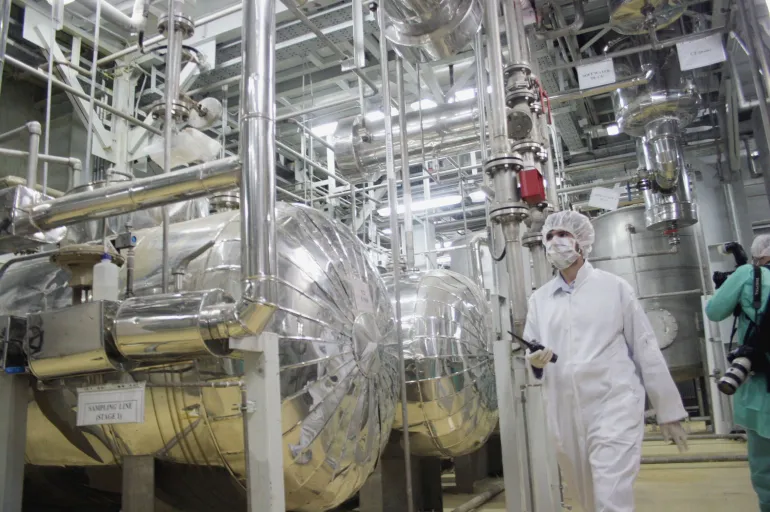
A worker walks inside of an uranium conversion facility on March 30, 2005 just outside the city of Isfahan, about 254 miles (410 kilometers), south of capital Tehran, Iran. President wants Iran to end its nuclear programme [File: Getty Images]
Could Iran agree to this proposal?
Iran has yet to formally respond to the latest US proposal. However, Iranian leaders have pushed back against it.
Iranian lawmaker Ebrahim Rezaee, a spokesperson for the parliament’s powerful foreign policy and national security committee, described the text as “more of an American wish-list than a reality”.
Iran’s Parliament Speaker Mohammad Bagher Ghalibaf appeared to mock reports that the two sides were close, writing on social media in English that “Operation Trust Me Bro failed.”
Al Jazeera’s Resul Serdar Atas, reporting from Tehran, said on Thursday that Iran is still reviewing the US proposal, after which a response is expected to be given to the Pakistani mediators later today.
The Pakistani Ministry of Foreign Affairs said on Thursday that it welcomes the news of a potential agreement between Iran and the US, adding that it will not disclose additional information at this stage.
“As mediators, we will not lose the trust of both parties by revealing details,” it said in a statement quoted by Al Jazeera Arabic.
Atas said, “Iranians are saying that, at this stage, they’re not negotiating their nuclear programme; it’s only about ending the war on all fronts.”
He added that Tehran wants direct guarantees from the UN Security Council, a lifting of sanctions and the reopening of the Strait of Hormuz.
“If that is achieved, in a second phase, they’re ready to discuss their nuclear programme.”
Al Jazeera’s Almigdad Alruhaid reported from Tehran on Tuesday that Iran has set “a very firm red line” on the nuclear file. “The nuclear enrichment programme is non-negotiable,” he said.
According to former US Assistant Secretary of State Mark Kimmitt, Trump’s reported demand that Iran halt all uranium enrichment is unrealistic and unlikely to be accepted by Tehran.
“If there is anything the Iranians are going to insist upon in these negotiations, it is their right to enrich uranium to the 3.67 percent level, which is allowed under nuclear non-proliferation treaties,” he told Al Jazeera.
Kimmitt added that even the 2015 nuclear deal permitted Iran to continue enrichment. Iran boosted its enrichment up to 60 percent after Trump withdrew from the deal in 2018, during his first term.
However, Kimmitt postulated that Trump might want Iran’s existing stockpile of enriched uranium outside of Iran. He added that Iran might either agree to move the enriched uranium outside the country or dilute it down to a non-enriched state.
Alruhaid, the Al Jazeera correspondent, however, said Iran is resisting handing over its existing stockpile of enriched uranium.
Iran is believed to have about 440kg (970lb) of uranium enriched to 60 percent. A 90 percent threshold of enriched uranium is needed to produce a nuclear weapon.
Al Jazeera’s Alruhaid said “the sovereignty on the Strait of Hormuz is becoming one of the main issues on the negotiating table.
“We are seeing the Iranians are tightening their control. They are setting new protocol, new mechanism for controlling that strategic chokepoint for each vessel that is to pass through.”
The US allies in the Gulf, who faced the brunt of Iranian retaliatory strikes, have been pushing for the restoration of navigation in the strait without any conditions. Iran carried out attacks on the Gulf nations, mainly targeting US military assets, after the US and Israel launched attacks on it on February 28.
Trump has repeatedly played up the prospect of an agreement that would end the war, so far without success. The two sides remain at odds over a variety of difficult issues, such as Iran’s nuclear ambitions and its control of the Strait of Hormuz.
A Pakistani source and another source briefed on the mediation told Reuters that an agreement was close on a one-page memorandum that would formally end the conflict, the agency reported on Thursday.
This agreement would kick off discussions to unblock shipping through the strait, lift US sanctions on Iran and set curbs on Iran’s nuclear programme, the sources said.
Al Jazeera, however, could not confirm the veracity of the reports.
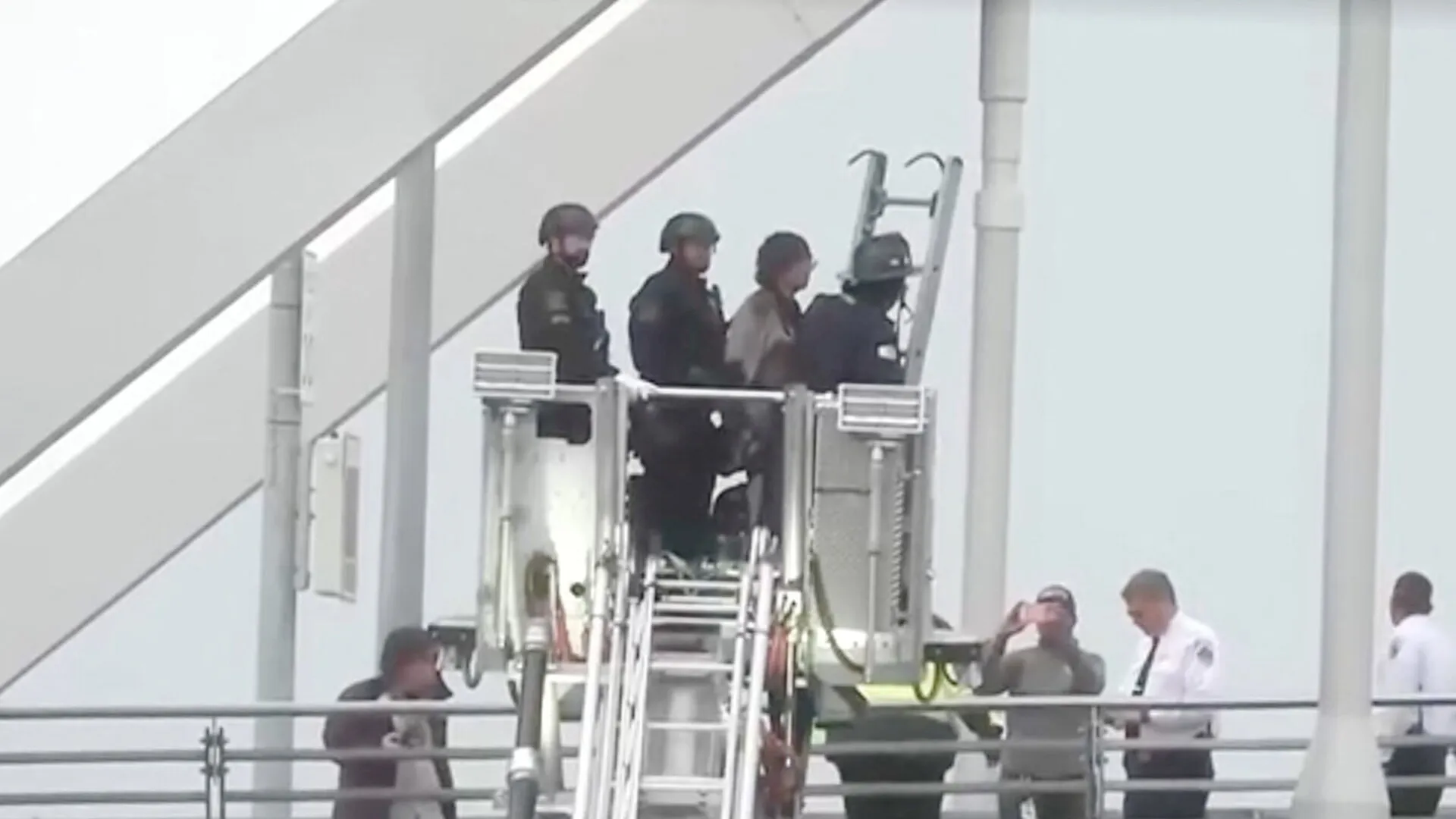
Police have arrested an anti-war protester after he ended a five-day sit-in atop Washington’s Frederick Douglass Memorial Bridge. Guido Reichstadter, opposed to the war on Iran, started the protest to rally others into non-violent opposition.
Iran’s Foreign Minister Abbas Araghchi is in Beijing, seeking support on a deal with the US, while US President Trump will be in China next week, and Iran will be on the agenda.
Why is everyone turning to China? What role is Beijing playing in the US-Israel led war on Iran?
The ceasefire between the US and Iran has been in place for nearly four weeks. The Strait of Hormuz has not been at peace for a single day.
This week pushed that contradiction to its most dangerous point yet. The United States launched Project Freedom, a naval escort operation designed to guide roughly 2,000 ships stranded on either side of the Strait through to open water. Iran said any ship attempting passage without IRGC permission would be fired on. Within hours, both sides were claiming to have hit the other, the UAE was scrambling missile alerts for the first time since the ceasefire began, an oil refinery in Fujairah was on fire, and commercial aircraft bound for Dubai were turning around mid-air.
As of Tuesday evening, Trump announced Project Freedom would be paused “for a short period of time” to see if an agreement with Iran could be reached. Secretary of State Rubio told reporters the US was now in a “defensive” posture. Twenty-four hours earlier, both sides had been shooting and denying it simultaneously.
Here is what we know, what is contested, and what it means.
What Is Project Freedom and Why Did the US Launch It?
Trump announced the operation on Sunday, framing it in humanitarian terms, an effort to free the seafarers and cargo companies that had done nothing wrong and were caught between two governments fighting a war neither had formally ended. About 2,000 ships have been stranded on either side of the Strait since late February, unable to move without IRGC permission, which Iran began requiring and charging for after the ceasefire took effect.
The US had already begun a naval blockade of Iranian ports on April 13. Project Freedom was the next escalation — a direct challenge to Iran’s assertion that the Strait was now under its operational control. Trump described it as a “humanitarian gesture.” Iran described it as a violation of the ceasefire and an act of military aggression in a sensitive oil region that affects the economies of countries around the world.
Two American-flagged merchant ships successfully transited the Strait on Monday with US Navy escort. A Danish shipping company confirmed one of its vessels crossed with US military protection. But the transit did not go smoothly.
Did Iran Attack a US Warship? What the Claims Say
By Monday afternoon, the competing narratives had become almost impossible to untangle, which is itself part of the story.
Iran’s Fars News Agency reported a US warship had been hit by two Iranian drones after refusing to turn back from the Strait. CENTCOM denied any warship had been hit. US Admiral Brad Cooper said CENTCOM forces had sunk six IRGC vessels that tried to interfere with Project Freedom. Trump later said seven. Iran’s state broadcaster then reported that Tehran had launched an investigation and its preliminary conclusion was that the vessels the US claimed to have sunk were not IRGC boats at all, they were two small civilian craft carrying passengers from Oman to the Iranian coast, and five civilian passengers had been killed. The US has not commented on that claim and it has not been independently verified.
Why Iran Attacked the UAE in 2026: The Fujairah Strike Explained
The UAE’s Ministry of Defense said its air defenses engaged 15 ballistic missiles, three cruise missiles, and four drones launched from Iran on Monday, the first Iranian attacks on the UAE since the ceasefire took effect on April 8. One drone struck an oil refinery in Fujairah, wounding three Indian nationals and setting the facility ablaze. Four missile alerts were issued across the country, sending residents to shelter. Commercial aircraft bound for Dubai and Abu Dhabi turned around in mid-flight.
Iran’s position was that the Fujairah attack was not a premeditated strike on the UAE but a consequence of what it called US military adventurism in the Strait. An Iranian military official said the Islamic Republic had no preplanned programme to attack UAE facilities, and that what happened resulted from the US attempt to create an illegal passage through restricted waters. The UAE’s Foreign Ministry rejected that framing entirely, condemning what it called renewed terrorist and unprovoked Iranian attacks on civilian sites, and warning it reserves the full right to respond.
Why the Attack Claims Cannot Be Independently Verified
One detail worth noting is the shifting count of Iranian vessels supposedly sunk. Admiral Cooper said six. Trump said seven. No independent observer has confirmed either figure, and Iran has denied any IRGC boats were hit at all. This pattern: each side claiming damage inflicted while denying damage received, with no neutral verification , has run throughout the conflict and is not unique to this week’s exchange. What is different now is that the Strait is supposed to be under a ceasefire, and the exchanges are happening in a waterway where 2,000 civilian ships are anchored and waiting to see who wins the argument.
How the Hormuz Escalation Is Threatening Iran Ceasefire Talks in 2026
Trump’s decision to pause Project Freedom on Tuesday is significant precisely because of how quickly it followed the launch. The operation began Sunday. By Tuesday, with the UAE under attack, Iranian drones targeting ships in the Strait, and competing claims circulating with no resolution, the White House stepped back. Rubio reframed the entire mission as defensive rather than offensive, and a new UN Security Council resolution on freedom of navigation was announced, co-authored by Bahrain, Saudi Arabia, the UAE, Kuwait, and Qatar. A previous similar resolution was vetoed by China and Russia, and the outlook for this one is no clearer.
The pause does not resolve the underlying problem. The Strait remains contested. Iran still insists ships must seek IRGC permission and pay for transit. The US still insists the Strait is international water under international law. Two thousand ships are still stranded. And the ceasefire that is supposed to govern all of this is being tested in ways its text was never designed to handle.
The attacks this week did not happen in isolation from the negotiations still technically underway. Pakistan has been trying to bring the US and Iran back to a second round of talks after the Islamabad discussions collapsed on the nuclear question in April. Every exchange of fire, every competing claim, every missile alert in Abu Dhabi makes that second round harder to convene and harder to trust once convened.
As Shahram Akbarzadeh, a professor in Middle East and Central Asian politics at Deakin University, told Al Jazeera: “We see escalation after escalation against the backdrop of shuttle diplomacy. Such attacks, even if they are aimed to be contained, risk exploding into another major combat.” Neither the Americans nor the Iranians want a return to full-scale war, Akbarzadeh said, but neither is prepared to show weakness. “This dynamic has locked them in a perpetual conflict and in desperate need of a circuit breaker.”
The circuit breaker Pakistan offered in April produced a ceasefire. That ceasefire is now generating its own escalation cycle, in twenty-one miles of water, over a question neither side has answered: who controls the Strait of Hormuz, and on what terms does the world’s most important waterway reopen.
The surge in jet fuel prices has become a primary concern for the European travel industry, with Lufthansa finding itself at the centre of this crisis.
ADVERTISEMENT
ADVERTISEMENT
According to Lufthansa’s latest earnings report, the airline expects an additional €1.7 billion ($2bn) fuel cost burden in 2026 as soaring jet fuel prices continue to weigh on the industry.
The need to avoid certain airspaces has led to longer flight times, which naturally increases consumption. These adjusted routes also require more staff hours and higher maintenance cycles, adding layers of complexity to an already strained global supply chain.
As reported by Euronews, global airlines have already cancelled approximately 13,000 flights this May, while Lufthansa alone has axed 20,000 short-haul flights through to October in a bid to cut fuel consumption.
This reduction in capacity is a direct response to the unsustainable cost of operating older, less fuel-efficient aircraft during price peaks.
While Lufthansa has managed to stay profitable, the jet fuel price spikes have forced the firm to advise passengers to book their holidays as early as possible to avoid further surcharges.
The company is currently investing heavily in its “fleet modernisation” programme to mitigate these risks in the long term, though the immediate impact of fuel volatility continues to weigh on the balance sheet.
Lufthansa remains committed to its financial targets, but the volatility of the global oil market remains the largest variable in its 2026 outlook.
“We are satisfied with the first quarter […] at the same time, the current situation compels us to rigorously examine every lever available to reduce costs, improve efficiency and mitigate risks in order to maintain our ability to act decisively. Our annual profit will likely be lower than originally anticipated,” CFO Till Streichert stated.
The Lufthansa Group has announced a landmark financial performance, revealing that it generated the highest revenue in its history in 2025. Revenue rose by 5% compared with the previous year to €39.6 billion.
According to the latest figures, the airline group also saw its operating profit grow by 20% compared with 2024, highlighting a robust recovery in passenger demand.
In the first quarter of 2026, year-on-year revenue climbed 8% despite challenges linked to the conflict involving Iran, including €1.7 billion in additional costs caused by volatile jet fuel prices and the suspension of dozens of routes.
The firm kept its capacity broadly stable with slight growth in long-haul traffic compensating for capacity reductions in short and medium-haul segments.
Lufthansa Technik and Lufthansa Cargo also significantly contributed to earnings with demand for maintenance, repair and overhaul services increasing, as well as through the marketing of ITA Airways’ cargo space.
Global demand for air travel remains high and continues to prove resilient even in times of crisis, as Lufthansa Group again expects a strong summer travel season.
“In the first quarter, we significantly improved on the previous year’s financial results […] but the ongoing crisis in the Middle East, combined with rising fuel costs and operational constraints, poses enormous challenges for the world as a whole, for global air travel and for our company as well,” CEO Carsten Spohr stated.
“However, we are resilient in our ability to absorb these impacts. This applies both to our above-average hedging against fuel price fluctuations and to our multi-hub, multi-airline strategy, which provides us with greater flexibility in our route network and fleet development,” Spohr added.
United States Secretary of State Marco Rubio told reporters on Tuesday that Operation Epic Fury – the US-Israeli strikes on Iran which commenced on February 28 and prompted a regional conflict – had concluded as its objectives had been achieved. Washington now prefers “the path of peace”, Rubio said.
On the same day, US President Donald Trump announced that the US military operation to escort stranded ships out of the Strait of Hormuz – “Project Freedom”, which was launched the day before – had been paused.
So, does this mean the US-Israel war on Iran is over?
What did Rubio say about Operation Epic Fury?
In a media briefing at the White House on Tuesday, Rubio told reporters that Operation Epic Fury was over.
“The Operation Epic Fury is concluded. We achieved the objectives of that operation,” Rubio said.
“We’re not cheering for an additional situation to occur. We would prefer the path of peace. What the president would prefer is a deal,” he said, referring to Pakistan’s efforts to arrange direct talks between Iran and the US.
The first round of these, in Islamabad last month, ended without a resolution. Both sides have submitted new proposals since then.
“The on-again, off-again talks with Iran, alongside Trump’s abrupt about turn on ‘Operation Freedom’ to guide vessels out of the Strait of Hormuz has created unwelcome frenzy in the Gulf,” Burcu Ozcelik, a senior research fellow for Middle East security at UK-based think tank Royal United Services Institute (RUSI), told Al Jazeera.
“It also reflects the highly fraught and almost frantic diplomatic backchannelling aimed to extract deep concessions from Tehran on the nuclear issue that will lock in commitments that exceed previous conditions, and which will convince the US to lift the blockade on Iranian ports and unlock sanctions relief – thereby effectively ending the war.”
Ozcelik explained that Iran, on the other hand, wants guarantees that this will be the end of the war, rather than just a pause.
What did Trump say about Project Freedom?
The same day, Trump told reporters that Project Freedom had been paused “based on the request” of Pakistan and other countries, and the “fact that Great Progress has been made towards a Complete and Final Agreement” with representatives of Iran.
Project Freedom was the US forces’ operation to escort stranded ships through the Strait of Hormuz that Trump announced the day before. It had appeared to signal a direct challenge to Iran’s closure of the strategic waterway, through which 20 percent of the world’s oil and liquefied natural gas (LNG) supplies are shipped in peacetime. Iran’s threats to attack ships in the strait have blockaded it since the US-Israel attacks on Iran began. Then, the US announcement of a naval blockade on Iranian ports added to the standoff around the strait.
After Trump announced Project Freedom, Iran said ships trying to use the strait without permission from the Islamic Revolutionary Guard Corps (IRGC) would be fired on, igniting fears of a return to war. His announcement triggered a war of words between the US and Iran, with claims and counterclaims about strikes continuing throughout the day.
First, Iran’s Fars agency claimed it had hit a US warship with drones after it ignored orders to turn back from the Strait of Hormuz. US Central Command (CENTCOM) denied a US ship had been struck, however, and instead claimed to have sunk at least six IRGC vessels. Iran denied that. Tehran then published a new map extending its claimed area of control over the strait into UAE waters, raising fears of a new regional confrontation.
The UAE accused Iran of launching strikes on its Fujairah port, the site of an important oil pipeline, which sparked a fire in an oil refinery.
On Tuesday, the US operation had been stopped, according to Trump.
“We have mutually agreed that, while the [US] Blockade will remain in full force and effect, Project Freedom (The Movement of Ships through the Strait of Hormuz) will be paused for a short period of time to see whether or not the Agreement can be finalized and signed,” he wrote on his Truth Social platform.
Iran has not immediately responded to this.
Shahram Akbarzadeh, a professor in Middle East and Central Asian politics at Australia’s Deakin University, told Al Jazeera that while it is difficult to determine exactly why Trump has paused Project Freedom, the pause comes against the backdrop of growing antiwar public opinion in the US.
“At the same time, Trump may be losing patience with the war; he says he has time to drag this out,” Akbarzadeh said.
“But in reality, Trump has a short attention span and needs to secure a win – soon. Pausing Project Freedom allows diplomacy to pick up pace, bringing US and Iran closer to a deal that Trump would label as a win.”
Is this the end of the war on Iran?
Not exactly. Akbarzadeh said pausing Project Freedom could serve as “the beginning of the end for the war”.
“We know that the Iranians are desperate for an end, so there is little chance of them resuming attacks on US Navy if Trump sends explicit signals that diplomacy has a green light,” he said.
However, he added, “The problem is that we have been here before. Earlier opportunities were squandered because Israel insisted that the US could get a better deal or because Trump misread the situation and expected the military option to grant him more concessions.”
What happens next?
It is difficult to predict this, but neither side appears to want a return to full-scale war, so both are likely to prioritise a diplomatic way out, Akbarzadeh said.
Still, “neither can afford to be seen as the loser,” he added. “They feel their public image needs to be preserved for their own respective domestic audience. This complicates negotiations and reaching a deal.”
Ozcelik said what happens next “will be determined by what the fractured leadership in Tehran commits to on the nuclear file.
“While it has rejected that talks involve curbs on Iran’s nuclear programme, this type of posturing has aimed to assuage domestic, hard-line and Iranian nationalists who are rattled by the US-Israel strikes and see nuclear issues from a nationalist, sovereign rights perspective.”
She predicted that the United Nations may soon issue a formal condemnation of Iran for unilaterally blockading the Strait of Hormuz.
“But the real pressure, mounting by the day, is the economic one – that shutting the strait is imposing punishing costs on Iran’s economic recovery prospects,” she said.
“Despite rhetoric on resilience and survival, the remaining Iranian leadership is undeniably concerned about the costs of the war. The possibility of renewed military strikes against Iranian critical infrastructure and the destabilising impacts these would inevitably have might be finally forcing Tehran’s hand,” Ozcelik concluded.
With domestic football in Iran suspended because of the ongoing conflict, Nazon is following an individual training programme to prepare for the World Cup.
The Haiti squad have become heroes for leading the nation back to football’s grandest stage, where they will make just their second appearance at the finals.
Nazon acknowledges that the players are now “part of the country’s history” but insists they will play without “extra pressure”, starting with their opener against Scotland.
“We are ambassadors of our country and we know we have a responsibility,” he says. “We know the young people also see us as examples.
“But we don’t have to put extra pressure on ourselves and, when we play for our country, it’s more a mission and we do it with passion and with love.”
On loan at St Mirren from Belgian club Sint-Truiden for the second half of the 2018-19 season, Nazon “had a story” in Scotland. It was short-lived, though.
The forward played 12 games, scoring twice, but said he was “not ready for this kind of aggression and fight” in Scottish football, while the weather also played a part.
“I remember one game we had sun, snow and rain,” he recalls. “After this, I was like, OK, I’m done.”
Weather is unlikely to be an issue for Nazon this summer in North America. The striker, a friend of Scotland defender Dominic Hyam – with whom he played at Coventry – did, however, voice concerns about inflated ticket prices for the upcoming World Cup matches.
“There is only one thing that starts to go in my brain – it’s the ticket prices,” he says. “Hopefully this is not going to affect the crowd and people coming to the stadium, because we want this atmosphere.
“We want this energy around us. I’m looking forward to seeing Scottish people and Haitian people in the stadiums. This is going to be important.”
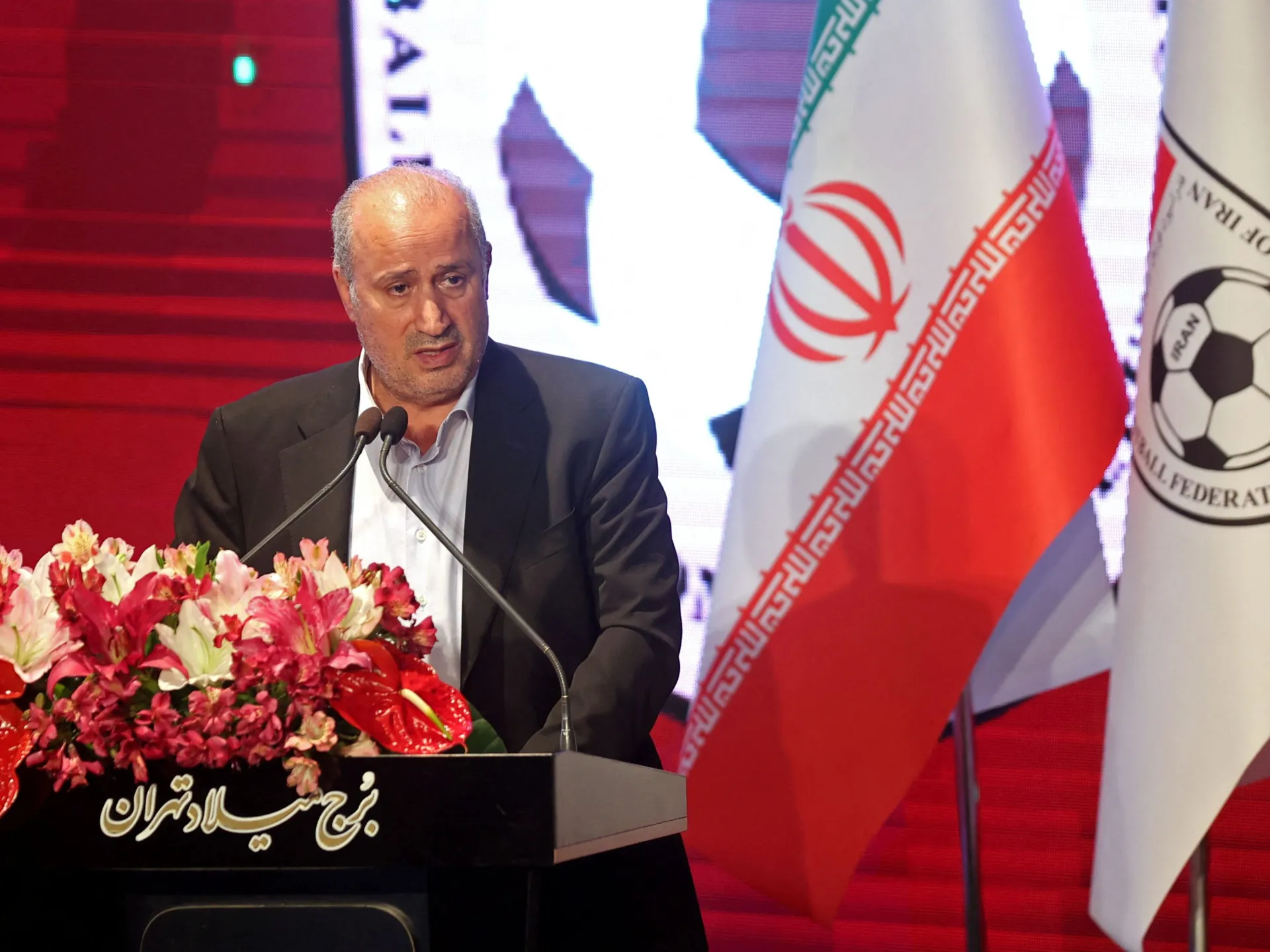
Iran’s football chief says the country’s preparations for the World Cup remain on track, but its participation will depend on a guarantee of respect for the Iranian armed forces by tournament cohosts the United States.
The Iranian Football Federation (FFIRI) will seek reassurance from FIFA that the US will not insult the Islamic Revolutionary Guard Corps (IRGC) during the World Cup, FFIRI President Mehdi Taj said on Tuesday.
“[The] Americans, if they guarantee not to insult our military institutions and the IRGC, we’ll go,” Taj told state broadcaster IRIB.
“If they give such a guarantee that an incident like Canada doesn’t happen and they definitely assure it, we will go,” he added.
The delegation members, including Taj, turned back upon arrival at Toronto’s Pearson airport despite holding valid visas, citing what was described as the “unacceptable behaviour of immigration officials”.
“They [delegation] returned to Turkiye on the first available flight due to the unacceptable behaviour of immigration officials at the airport and the insult to one of the most honourable organs of the Iranian nation’s armed forces,” the FFIRI said in a statement following the incident.
In 2024, Canada listed Iran’s IRGC as a terrorist organisation, and statements from the Canadian government indicated that Taj was denied entry due to his alleged ties with the IRGC.
“IRGC officials are inadmissible to Canada and have no place in our country,” the Canadian government said.
The US and Israel launched a war on Iran on February 28.
At least 3,468 people have been killed in US-Israeli attacks, according to Iran’s Ministry of Health. More than 26,500 people have been injured, including at least 4,000 women and 1,621 children.
Iranian forces retaliated, launching attacks on Middle East countries where US troops are deployed, as well as Israel.
‘Our host is FIFA, not Mr Trump’
Taj, who was speaking in Tehran, will meet FIFA President Gianni Infantino and Secretary-General Mattias Grafstrom at the organisation’s headquarters in Zurich this month.
During the meeting, Taj said he will seek guarantees that the Iranian team and accompanying officials would not face entry restrictions or “disrespect”, particularly towards Iran’s state institutions.
“We need a guarantee there, for our trip, that they have no right to insult the symbols of our system – especially the Islamic Revolutionary Guard Corps,” he said.
“This is something they must pay serious attention to. If there is such a guarantee and the responsibility is clearly assumed, then an incident like what happened in Canada will not happen again.”
The Iranian team is going full-speed ahead with its preparations for the World Cup, and football officials have outlined the team’s training and preparations for the tournament, which include camps at home and in neighbouring Turkiye before travelling to the US.
The squad will depart for Turkiye on Monday for their final leg of preparations before travelling to the US in June.
Team Melli will kick off their campaign against New Zealand in Los Angeles on June 15, before taking on Belgium at the same stadium on June 21 and facing Egypt in their final group match in Seattle on June 26.
Taj insisted Iran had earned the right to play in the World Cup as one of the first teams to have qualified for the tournament.
“We are going to the World Cup because we qualified,” the Iranian official said. “Our host is FIFA, not Mr Trump or America.”
Iran has said it will only accept a fair and comprehensive agreement in ongoing negotiations with the United States, as talks continue alongside a fragile ceasefire in the Middle East conflict. Foreign Minister Abbas Araqchi made the remarks following discussions with Wang Yi in Beijing.
At the same time, Donald Trump has pointed to what he described as significant progress, announcing a temporary pause in US naval operations linked to the Strait of Hormuz to support negotiations. The strait remains largely restricted, disrupting global oil flows and contributing to an ongoing energy crisis.
What does Iran mean by a comprehensive agreement The key question is what Iran is asking for. A comprehensive agreement suggests Tehran wants more than a temporary ceasefire. It likely includes guarantees on sovereignty, relief from military pressure, and recognition of its rights under international agreements such as nuclear development for peaceful purposes.
This position indicates Iran is negotiating for long term security and political legitimacy rather than short term concessions.
What is the United States offering in response The United States appears to be using a mix of pressure and incentives. Military actions and blockades continue, but the pause in naval escort operations signals willingness to de escalate if progress is made.
Statements from US officials show a firm stance on preventing Iran from controlling key shipping routes, while still leaving room for diplomacy. This creates a dual track approach of negotiation backed by force.
Why is the Strait of Hormuz central to the talks The Strait of Hormuz is critical because it carries a significant share of global oil supply. Its disruption has already triggered sharp movements in energy markets and raised concerns about global economic stability.
Control over this route gives Iran strategic leverage, while reopening it safely is a priority for the United States and global markets. This makes the strait a core bargaining point in negotiations.
Implications for global markets and politics The negotiations are directly influencing oil prices, currency markets, and investor sentiment. Even signals of progress have led to falling oil prices and improved market confidence.
Politically, the situation affects domestic dynamics in the United States, where rising energy costs are a concern ahead of elections. It also shapes regional power balances across the Middle East.
Analysis what are the possible outcomes There are three main paths forward. First, a comprehensive agreement could stabilise the region, reopen energy routes, and reduce global economic pressure. Second, prolonged negotiations without resolution could keep markets volatile and maintain the current fragile ceasefire. Third, a breakdown in talks could lead to renewed escalation, further disrupting oil supply and increasing geopolitical risk.
The most realistic short term outcome appears to be continued negotiations with limited de escalation steps. A full agreement will likely require compromises on both security concerns and economic demands.
Iran’s foreign minister meets his Chinese counterpart one week before President Donald Trump’s visit to Beijing.
Published On 6 May 20266 May 2026
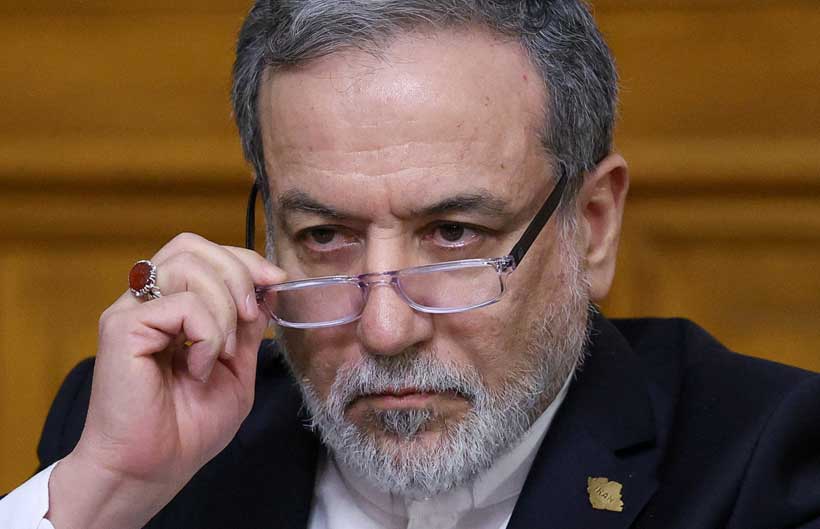
Iran’s Foreign Minister Abbas Araghchi is holding talks with his Chinese counterpart, Wang Yi, in Beijing amid tensions with the United States in the Strait of Hormuz.
Araghchi’s one-day trip on Wednesday comes a week before US President Donald Trump’s scheduled visit to Beijing for a summit with President Xi Jinping on May 14 and 15.
Recommended Stories
list of 4 itemsend of list
China’s official Xinhua news agency reported the meeting between Araghchi and Wang had begun, without providing further details.
Araghchi’s visit to Beijing marks the first time he has travelled to China, a close ally of Tehran, since the US-Israeli war on Iran began on February 28. Araghchi had spoken with Wang by telephone at least three times following the start of the war.
Earlier in Washington, DC, US Secretary of State Marco Rubio expressed hope that Beijing would reiterate to Tehran the need to release its chokehold on the Strait of Hormuz.
Iran effectively closed the strait, through which major oil and gas supplies passed, after the war began, sending prices of fuel and fertiliser skyrocketing and rattling the global economy.
Following a ceasefire in April, the US imposed its own blockade on Iranian ports in a bid to compel Tehran to agree to Washington’s terms in peace talks.
Al Jazeera’s Katrina Yu, reporting from Beijing, said two things will be front and centre on the agenda of Araghchi and Wang’s meeting – maintaining the ceasefire and reopening the Strait of Hormuz.
“We know that China has been very critical of the US’s naval blockade on Iranian ports, calling it dangerous. But increasingly, Beijing has also been critical of Iran’s decision to continually close that vital chokepoint,” Yu said.
Wang is expected to speak to Araghchi about what kind of support China can continue to offer Iran if it continues to close the strait.
“Iran will need Chinese backing, for example, at the United Nations, to continue to block any action that would put any additional sanctions on Iran because of its closure of the strait,” Yu said.
“Reportedly, the Iranian foreign minister is looking for clarity from Beijing as to what it will put on the table when Xi meets with Trump, and whether Beijing will be making any concessions to Washington that could make Tehran nervous.”
China, in return, “wants its own assurances that Iran won’t act in any escalatory way or any dramatic fashion in the lead up to that very important meeting”, she added.
Araghchi and Wang’s meeting came as Trump announced a pause on a US military operation to escort stranded ships out of the Strait of Hormuz.
The effort, which began on Monday, ratcheted up tensions, with the US military claiming it sank several Iranian boats that attempted to interfere in the operation. The United Arab Emirates also reported coming under missile and drone attacks from Iran, with one assault sparking a fire at an oil refinery. Tehran denies the launching the attacks.
Trump said on Truth Social the pause was based “on the request of Pakistan and other Countries” and because “Great Progress has been made toward a Complete and Final Agreement with Representatives of Iran”.
Pakistan has been leading efforts for a peace deal between Iran and the US.
The two sides held direct talks in Islamabad on April 11 and 12, but the negotiations ended without an agreement. Key sticking points include US demands for Iran to halt all nuclear enrichment and Tehran’s wish to continue to exercise control over the Strait of Hormuz.
US president Donald Trump has said that the US military operation “Project Freedom” guiding ships through the Strait of Hormuz will be paused for a short period. He cited a request from Pakistan and progress towards a final deal with Iran.
A military operation titled “Project Freedom” has been launched by the US Navy to secure a safe passage of commercial vessels through the blocked Strait of Hormuz, a spokesperson for the United States military’s Central Command (CENTCOM) told Al Jazeera on Tuesday.
The Strait of Hormuz has been at the centre of the US-Israeli war on Iran that began on February 28, triggering disruptions that have pushed up commodity prices around the world.
Recommended Stories
list of 4 itemsend of list
Iran has effectively sealed off the strait by threatening to deploy mines, drones, missiles and fast-attack craft. The US has countered by blockading Iranian ports and mounting escorted transits for commercial vessels.
The US military spokesperson said that ship owners and insurance companies have responded positively to the operation, which has “just begun” and is aimed at ensuring commercial ships can pass through the strait safely to benefit global and regional economies.
Later on Tuesday, US Secretary of State Marco Rubio said at a news conference in Washington, DC, that 10 civilian sailors have died due to the ongoing conflict in the Strait of Hormuz, adding that the US Navy has destroyed seven Iranian fast boats in the waterway.
Rubio said the US will continue to clear a passageway through the strait to restore freedom of navigation.
Operation ‘defensive in nature’
US Defense Secretary Pete Hegseth said the operation has the goal of reopening the strait and allowing the passage of thousands of stranded commercial vessels.
“Project Freedom is defensive in nature, focused in scope, temporary in duration [and] with one mission: protecting innocent commercial shipping from Iranian aggression,” Hegseth said during a briefing on Tuesday at the Pentagon.
He said that as part of Project Freedom, US forces would not need to enter Iranian waters or airspace, adding that Iran can no longer be allowed to prevent international commerce.
“Iran … cannot be allowed to block innocent countries and their goods from an international waterway,” Hegseth said, and added that two US commercial vessels, along with the country’s warships, have already traversed the strait.
“They said they control the strait – they do not,” the secretary said.
Iran denied any crossings had taken place, though shipping company Maersk said the Alliance Fairfax, a US-flagged ship, exited the Gulf under a US military escort on Monday.
Several merchant ships in the Gulf reported explosions or fires on Monday, and the United Arab Emirates (UAE) claimed to have come under an Iranian attack, with an oil port targeted on Monday. On Tuesday, Iran’s army denied any attack on the UAE in recent days.
Iran did confirm firing warning shots at a US warship approaching the strait, forcing it to turn back.
Alexandru Hudisteanu, a military and diplomatic analyst, has told Al Jazeera that the US operation to force open the Strait of Hormuz considerably increased the risk of miscalculation from both sides, especially Iran.
After issuing a new map of the Strait of Hormuz with an expanded Iranian area of control, Iran’s Islamic Revolutionary Guard Corps (IRGC) warned vessels on Tuesday to stick to the corridors it had set or face a “decisive response”.
US President Donald Trump said Iran’s military had been reduced to firing “peashooters” and Tehran wanted peace, despite public sabre-rattling.
“They play games, but let me just tell you, they want to make a deal,” the US president told reporters in the Oval Office.
On Tuesday, Air Force General Dan Caine, chairman of the US Joint Chiefs of Staff, said that there are more than 1,500 vessels with about 22,500 crew trapped inside the Gulf, but that Iranian attacks against US forces fell “below the threshold of restarting major combat operations at this point”.
Asked what Iran would need to do to violate the ceasefire, Trump said: “They know what not to do.”