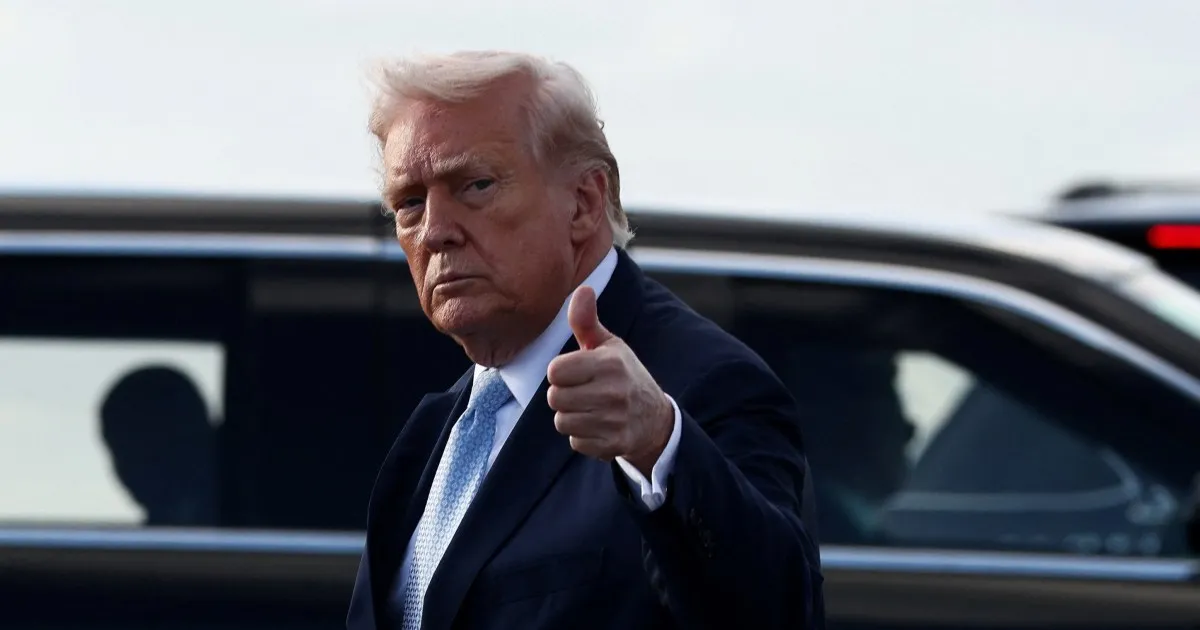
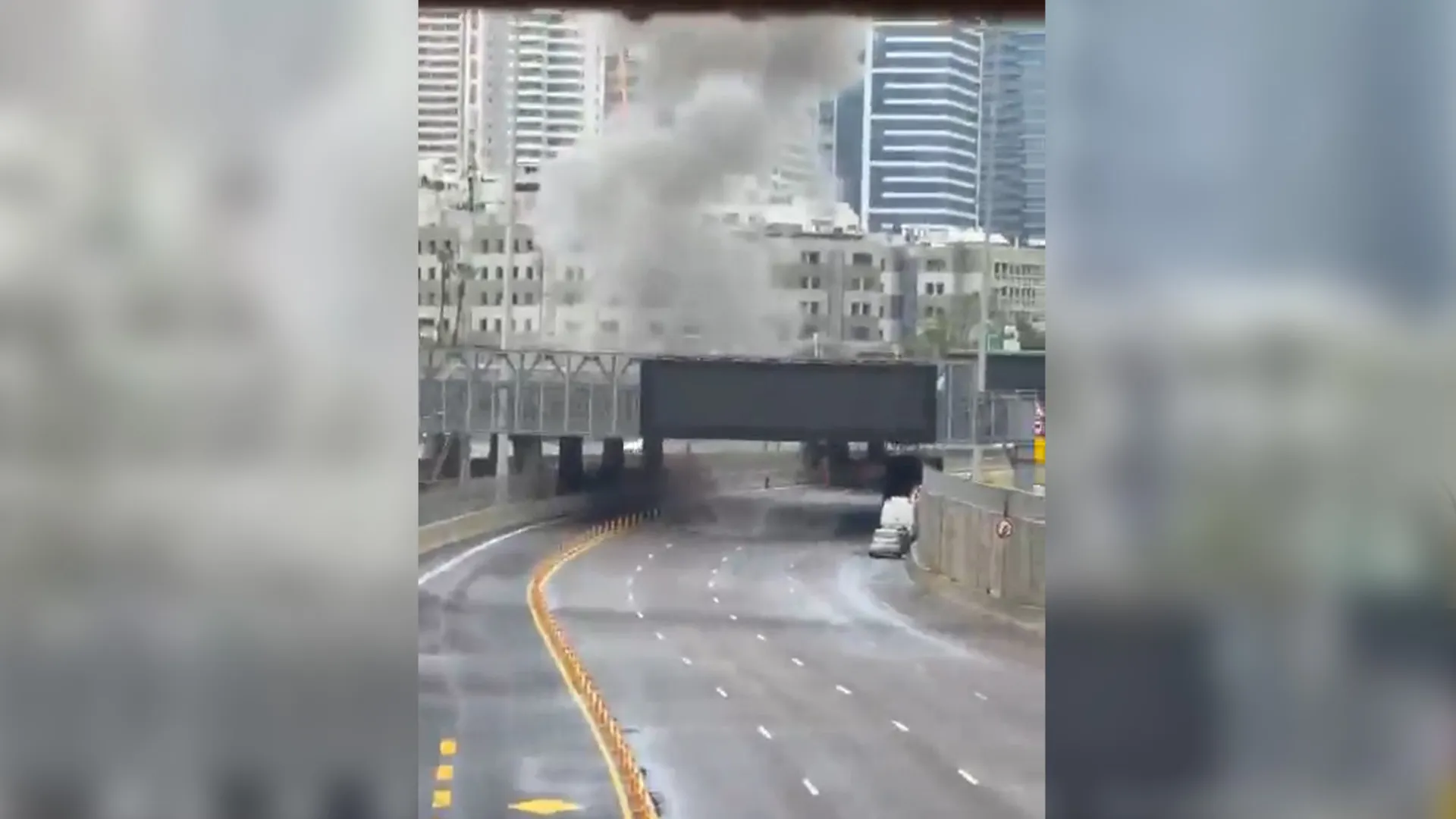
Since Donald Trump entered the political fray, critics have opined that if he ever faced a direct confrontation with Iran as United States president, the result would be chaos, endless war, and global instability. They have been proven wrong once again.
Today, the world is witnessing the swift decisive assertion of US power that is leading to a clear military victory over a terrorist state that has long threatened US as well as global peace and security.
For too long, US foreign policy was dominated by hesitation disguised as sophistication. US presidents, Democrat and Republican, advocated for “containment”, “strategic patience”, and “measured responses”, while adversaries grew bolder and more brazen. Iran expanded its influence across the Middle East, funded proxy militias, threatened global energy supplies, and openly challenged Washington’s credibility by attacking US interests, personnel and assets.
Trump rejected the conventional Washington approach even before assuming public office. He never believed that endless negotiations or carefully worded diplomatic statements would deter a regime that only yields to power. His critics called it recklessness. What it actually was, was clarity.
Instead of drifting into another conventional decade-long war, Trump chose a simple formula: hit hard, hit fast, and make it clear that the US will not capitulate to threats.
Today, most of the foreign policy establishment still defines “victory” the way it did in the 20th century: overthrow the regime, occupy the country, and rebuild its government in our liking. That post-World War II and Cold War model worked in Europe, Asia and Latin America. It did not in the Middle East. Iraq and Afghanistan proved that nation-building can be a futile endeavour.
Trump understands something Washington does not want to admit: the exercise of American power should not be to build democratic societies. It should be to eliminate threats.
From the outset, the Trump administration made clear that it was launching the attacks to control the outcome.
If Iran’s military leadership has been weakened, if its ability to threaten US forces and allies has been reduced, and if its nuclear ambitions have been significantly set back, then the mission has already succeeded, and it is time to end the war.
When Trump declares victory, he will not do it quietly. He will say it directly: America struck, America won, and America did so without engaging in another endless war.
Timing has always been one of Trump’s political talents. He understands momentum better than any of his predecessors of the past few decades did. If the military objectives have already been largely achieved, waiting months to say so would only weaken the message.
Declaring victory at the moment of peak strength sends a powerful signal — not just to Iran, but to the entire world. It ratifies that the US has red lines again. It makes clear that threats will be met with force, not speeches. And most importantly, it declares that the US is once again confident enough to act decisively.
Critics on the American left will predictably label any Trump victory “premature” and his methods “illegal” and reckless. But their genuine discomfort with his success has more to do with the use of American firepower to achieve objectives that they believe can or should only be had through diplomacy and multilateral rather than unilateral actions.
Trump’s “America First” foreign policy builds on US President Ronald Reagan’s peace through strength mantra by being willing to pre-emptively exercise American might to demonstrate American resolve and deter adversaries. It has proven effective before, and it is proven effective again today.
It destroys the critics’ primary thesis — that American strength must always be restrained, that military power should be used cautiously, and that multilateral strategies are a prerequisite.
Trump’s Iran victory speech will not be lofty and replete with platitudes. It will be direct, simple, and unabashedly America First.
He will explain that the US acted because it had to do so. He will declare that the imminent threat of a nuclear Iran has been eliminated. He will say American lives were saved. And he will end by stating that the world is safer because of this sacrifice by the American people.
Through Trump’s America First foreign policy, the US will act decisively and unilaterally. It will not apologise for defending its interests. And it will prove that acting boldly can change the course of events in a matter of weeks, not years.
After decades of vacillation, Trump’s message to the world is simple: America’s back and American interests come first.
America did not need another endless war. It needed a president willing to act.
And that is exactly what it got.
The views expressed in this article are the author’s own and do not necessarily reflect Al Jazeera’s editorial stance.
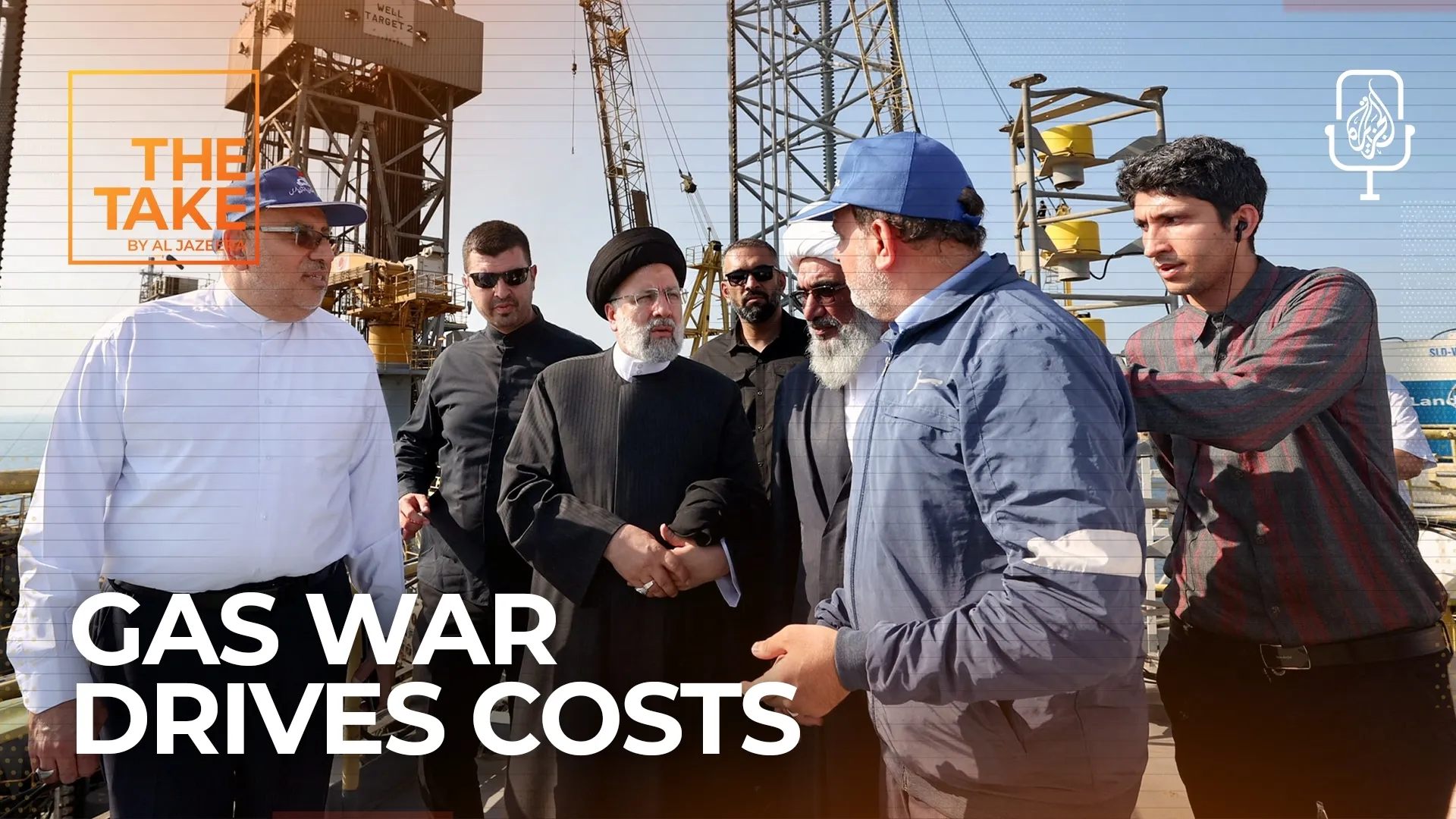
Strikes on gas sites in the Iran war are driving up energy costs, pushing up prices for power, food and more worldwide.
Strikes on gas sites are now part of the US-Israel war with Iran. But its effect will echo far beyond the Gulf, hitting power, food, and prices worldwide. As gas supply shrinks and costs rise, who will feel it most, and how far could the shock spread?
In this episode:
Justin Dargin (@justindargin), Energy Expert, Middle East Council on Global Affairs
Episode credits:
This episode was produced by Marcos Bartolomé, Tamara Khandaker, Sarí el-Khalili, Chloe K. Li, Tuleen Barakat, Catherine Nouhan and our guest host, Kevin Hirten. It was edited by Sarí el-Khalili. Alex Roldan is our sound designer.
The Take production team is Marcos Bartolomé, Sonia Bhagat, Spencer Cline, Sarí el-Khalili, Tamara Khandaker, Chloe K. Li, Alexandra Locke, Catherine Nouhan, Alex Roldan, and Noor Wazwaz. Our host is Malika Bilal.
Our editorial intern is Tuleen Barakat. Our engagement producers are Adam Abou-Gad and Vienna Maglio. Andrew Greiner is lead of audience engagement. Our video editors are Hisham Abu Salah and Mohannad al-Melhem. Alexandra Locke is The Take’s executive producer.
Locals in northern India have a growing concern over essential resources like water, fuel and food, that have become costly due to the US-Israeli war on Iran. The conflict has brought implications on oil and gas prices, which has also affected bottled water and food costs.
Gold’s reputation over the past year as the go-to refuge in a crisis is taking a battering as war rages and threatens to expand in the Middle East and financial markets buckle.
ADVERTISEMENT
ADVERTISEMENT
Spot gold plunged to a 2026 low near $4,100 in early trading on Monday before recovering sharply to above $4,400 after US President Donald Trump announced he was postponing military strikes against Iranian power plants for five days following “very good and productive conversations” with Tehran — a swing of around $300 in the space of hours.
The metal has still shed more than 20% since hitting a record high of $5,594.82 an ounce on 29 January.
Silver has lost nearly half its value since hitting an all-time high of $121.67 in January, in one of the more violent collapses in the precious metal’s modern history.
Spot silver was down 8.9% at $61.76 — a year-to-date low and almost half of its $117 level on 28 February, when the Iran war began.
The counterintuitive sell-off has rattled investors who piled into precious metals expecting them to hold firm.
The dollar dropped against the euro after Trump’s comments and traded around $1.1572 to the euro on Monday afternoon, while the pound was up at a rate of $1.3341. The yen traded at around ¥159.47 per dollar.
Oil shocks continue to reverberate
The main culprit is the oil shock. As crude surges past $100 a barrel, bond yields are climbing and the US dollar is strengthening, making precious metals far less attractive to investors bracing for higher interest rates.
The dollar has emerged as one of the clearest safe-haven winners, strengthening over 2% so far this month.
For a non-yielding asset like gold, that is a double blow.
The prospect of higher interest rates as a result of the war is also boosting government bonds among investors, at the expense of precious metals.
Yet seasoned observers urge caution before declaring the gold story over.
Russ Mould, investment director at AJ Bell, points out that gold is in the middle of only its third major bull run since 1971 and that the previous two also caused stomach-churning fluctuations.
“Neither interest rates staying higher for longer nor a stronger dollar may help the investment case for precious metals, but both the 1971-1980 and 2001-2010 bull runs saw several retreats which did not ultimately nullify or prevent major gains,” Mould said.
“So it may be too early to give up on gold just yet,” he continued.
During the first bull run, triggered by Richard Nixon’s decision to decouple the dollar from the gold standard in 1971, gold surged from $35 to a peak of $835 an ounce by January 1980, but not before enduring three mini bear markets and five corrections of 10% or more along the way.
The second run, which began in 2001 amid the wreckage of the dotcom bust and gathered pace through the 2008 financial crisis, was equally volatile, featuring two bear markets and another five double-digit corrections before gold peaked near $1,900 in 2011.
This third advance has been no smoother.
“A swoon of more than 20% caught some bulls off guard in 2022, as the world emerged from lockdowns, and 10%-plus corrections in each of 2016, 2018, 2020, 2021 and 2023 [gold peaks] warned that volatility was never far away,” Mould noted.
The question of dividends
The paradox at the heart of the current sell-off is that the very crisis that might once have sent investors flooding into gold is now working against it.
Rising oil prices fuel inflation fears, inflation fears fuel expectations of higher interest rates and higher rates make gold — which pays no dividend and costs money to hold — less appealing.
“Gold’s status as a haven may now be tarnished in the eyes of some,” Mould said, “as the precious metal is falling in price even as war roils the Middle East and financial markets alike.”
But not everyone is convinced the metal’s moment has passed.
The inflation and stagflation of the 1970s, partly triggered by the oil shocks of 1973 and 1979, ultimately made gold the standout portfolio pick of that decade.
A prolonged conflict that stretches government finances — pushing welfare costs up and tax revenues down, on top of surging defence spending — could yet revive that dynamic.
If central banks respond to recession with fresh rate cuts and quantitative easing, the case for gold as a store of value comes roaring back.
“The war in Iran and its effect on oil and gas prices is stoking fears of inflation and how that could force central banks to raise interest rates,” he concluded.
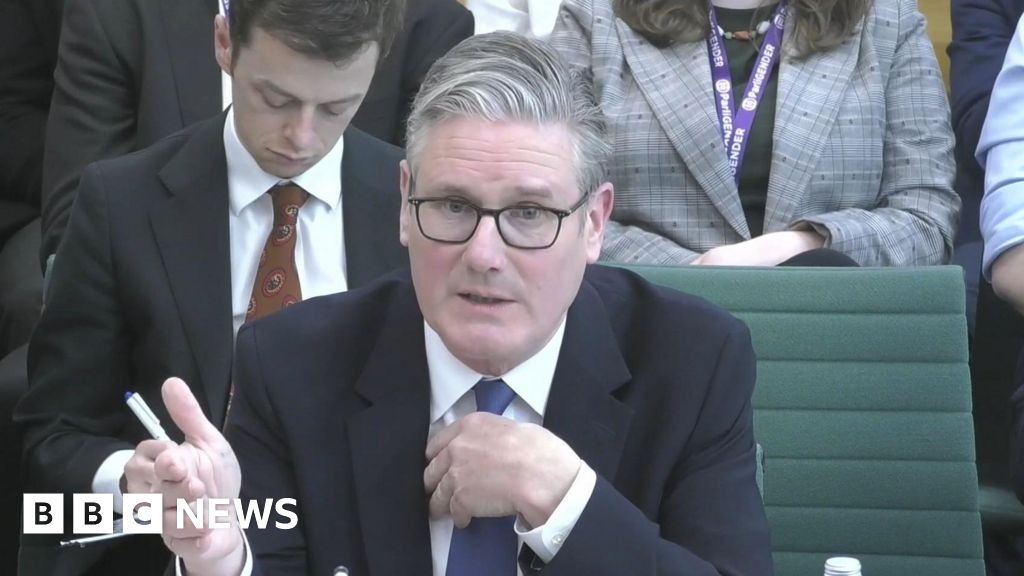
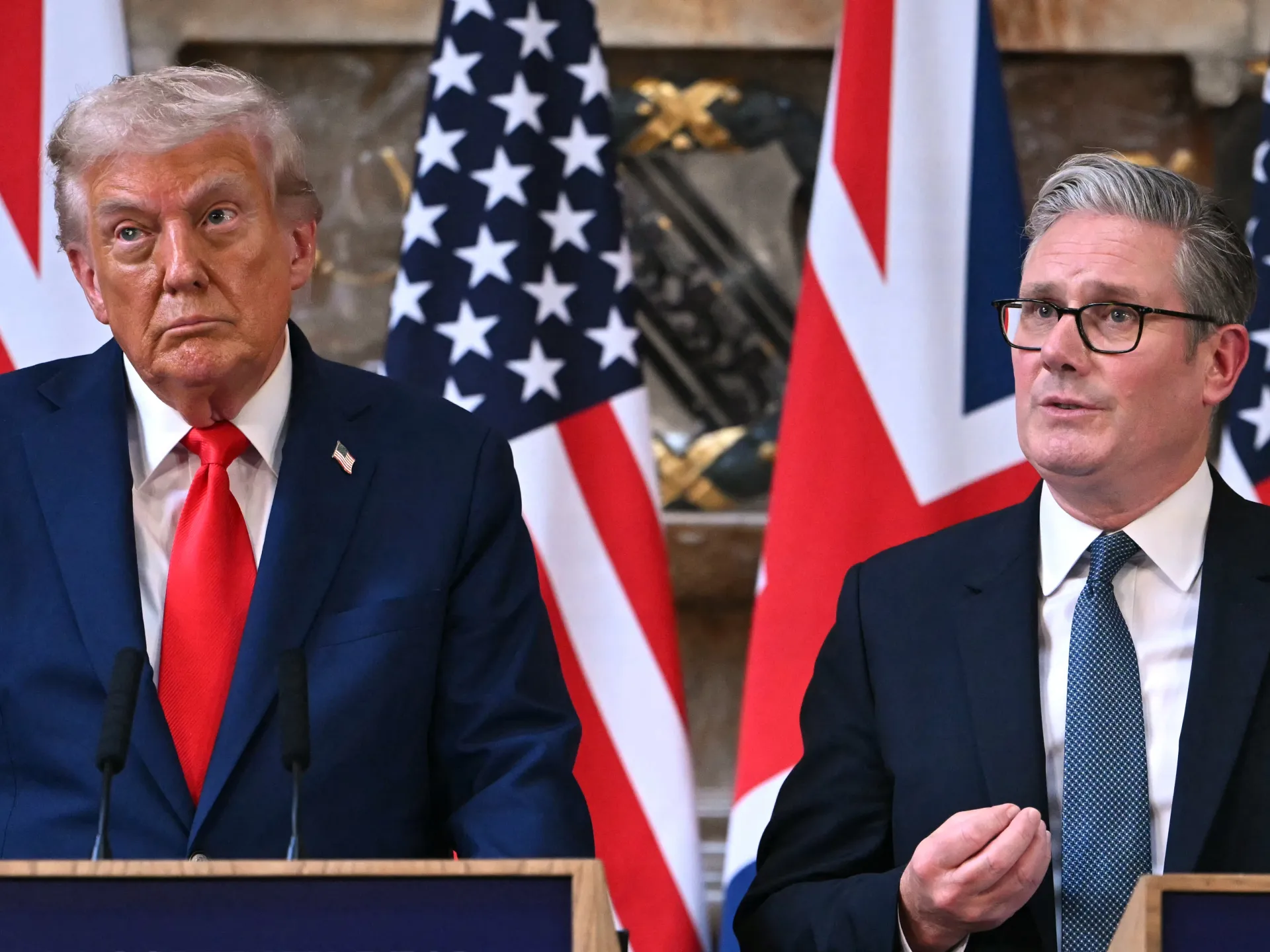
United States President Donald Trump has shared a Truth Social video of a TV comedy skit showing a panicked United Kingdom Prime Minister Keir Starmer trying to avoid his call, on the same evening the two leaders spoke about the US-Israel war on Iran.
The skit, aired on the premiere of the new British version of Saturday Night Live (SNL), adapted from the long-running US show, shows Starmer, played by George Fouracres, panicking inside 10 Downing Street at the prospect of a call with Trump.
Recommended Stories
list of 4 itemsend of list
Starmer turns to a fake David Lammy, his deputy prime minister, and says, “What if Donald shouts at me?”
When Trump picks up the phone, Starmer immediately hangs up, asking why it is so difficult to talk to “that scary, scary, wonderful president”.
“Sir, just be honest and tell him we can’t send any more ships to the Strait of Hormuz,” Lammy says, the vital shipping lane effectively blocked by Iran since the US and Israel launched strikes on Iran on February 28.
“I just want to keep him happy, Lammy. You don’t understand him like I do – I can change him,” Starmer says.
Trump did not post any comment alongside the video.
Trump has lashed out at his NATO allies, including Starmer, for not joining the US efforts to break the de facto blockade of the Strait of Hormuz, through which 20 percent of global oil passes. A week ago, he asked the UK to be more supportive of the US war efforts because Washington spends “a lot of money” on NATO.
The US president last week called the NATO countries “cowards” for their refusal to join the war. This, after European leaders rejected Trump’s demands to help ensure freedom of navigation in the Strait of Hormuz.
“Now that fight is militarily WON, with very little danger for them, they complain about the high oil prices they are forced to pay, but don’t want to help open the Strait of Hormuz, a simple military maneuver that is the single reason for the high oil prices. So easy for them to do, with so little risk,” he wrote on the Truth Social platform.
Separately, on Sunday evening, Starmer spoke with Trump to discuss escalating tensions in the Middle East, his office said in a statement. It was not clear if the call took place before or after Trump posted the SNL skit on Truth Social.
In a readout of the call, the Prime Minister’s Office said the two leaders focused on “the need to reopen the Strait of Hormuz to resume global shipping” amid growing concerns over energy security and regional stability.
“They agreed that reopening the Strait of Hormuz was essential to ensure stability in the global energy market,” the statement said.
The leaders also agreed to remain in close contact as the situation develops and “to speak again soon”, it added.
On Monday, Starmer said there had been no assessment that mainland Britain was being targeted by Iran.
Starmer asserted that any attempt to reopen the Strait of Hormuz needed careful consideration and a viable plan, and that his number one priority was to protect British interests and de-escalate.
‘Not Winston Churchill’
The US leader has repeatedly railed against Starmer since the start of the war, accusing him of not doing enough to support the US.
“This is not Winston Churchill that we’re dealing with,” Trump said earlier this month, after Starmer initially declined to let US warplanes use UK bases to strike Iran.
“I’m disappointed with Keir,” Trump has also said, slamming Starmer’s “big mistake”. “I like him, I think he’s a nice man, but I’m disappointed.”
On Friday, the UK government gave authorisation for the US to use its military bases to carry out strikes on Iranian missile sites that were attacking ships in the Strait of Hormuz.
Starmer initially rejected a US request to use British bases for the strikes on Iran, saying he needed to be satisfied that any military action was legal.
But the prime minister modified his stance after Iran conducted strikes on British allies across the Middle East, saying the US could use RAF Fairford and Diego Garcia, a joint US-UK base in the Indian Ocean.
A crucial 50-mile airspace route through Azerbaijan has become vital for European travellers as Middle East airspace restrictions impact millions of passengers
Jetting away on holiday is getting a bit trickier (Image: Getty Images/iStockphoto)
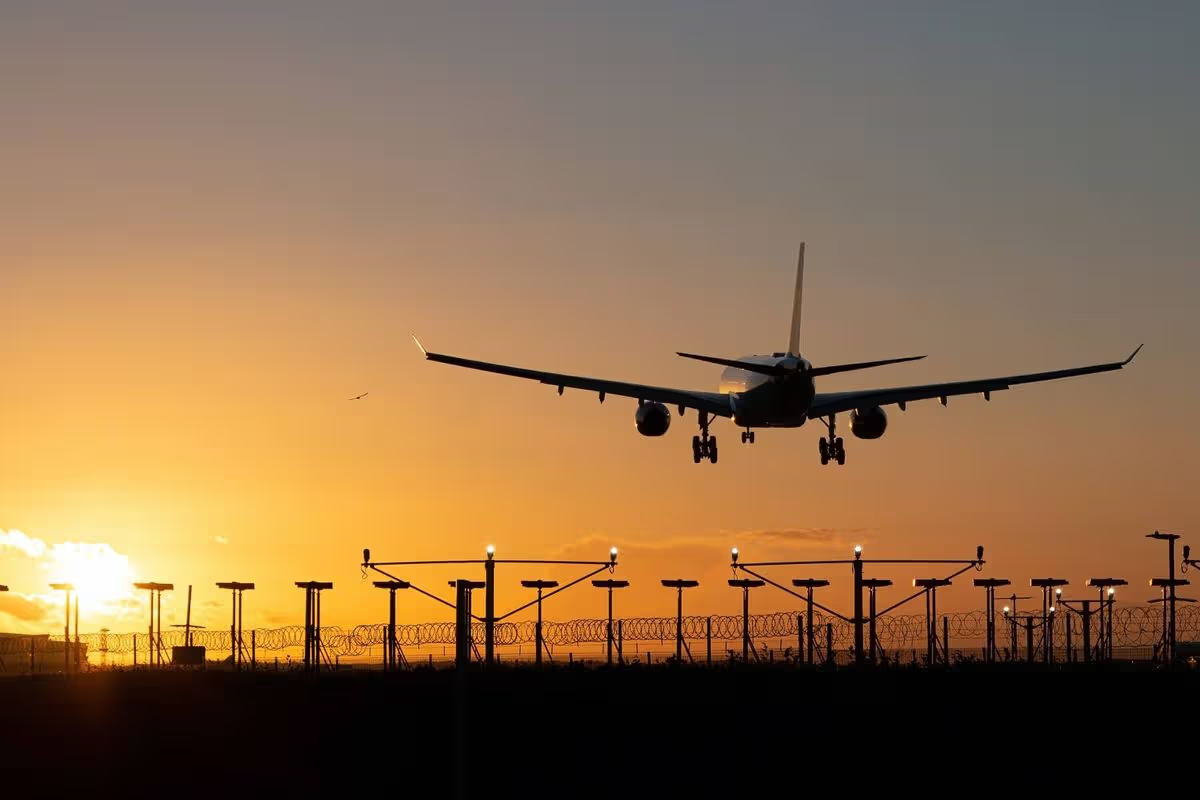
The flight corridor that dictates whether vast numbers of passengers can reach their destination is getting narrower.
32,432. That’s the number of Middle East flights that have been scrapped since Israel and the US began bombing Iran at the end of February. The tally of affected passengers now runs well into the millions.
Whilst the daily cancellation figure has now dropped considerably to 11% per day, according to analytics firm Cirium, the knock-on effects of the disruption are still being experienced and will continue for some time.
One way the conflict has and will continue to affect travel is by constricting flight corridors. Now, many European holidaymakers are dependent on a roughly 50-mile route spanning three countries.
The flight corridor over Azerbaijan is one that numerous commercial aircraft have been using to travel from Europe to Asia since early March, when the country closed portions of its airspace following drone strikes the Azerbaijani authorities claim had been launched from Iranian territory, reports the Express.
Prior to the Iran war, the Azerbaijan path was 100 miles wide at its narrowest points, owing to the Russian invasion of Ukraine to the north. It is now 50 miles wide, with airspace to the south closed off by the Azerbaijan authorities.
Almost three weeks into the Iran war, this route through Azerbaijan, Georgia and Turkey is one of just two available for a majority of long-haul flights between Europe and Asia. The alternative route passes through Saudi Arabia and Egypt. The shortage of accessible airspace is fuelling rivalry amongst airlines competing for routes. It is also rendering air travel more costly and environmentally harmful.
Prior to 2022, flights linking much of Europe and Asia travelled over Russia, via the “Siberian Corridor.” That was regarded as one of the most direct ways to connect the two continents.
Following Russia’s invasion of Ukraine, Western airlines were denied access to the airspace. Now a flight from northern Europe, which would have passed directly over Russia, must take a lengthier route either over the North Pole or around the Black Sea. This can tack on roughly three hours to a nine-hour journey, consuming thousands of pounds more jet fuel and emitting dozens of tonnes more CO2e into the atmosphere.
The alternative route from Europe to Asia that is presently available takes passengers south, via Egypt, Saudi Arabia and the United Arab Emirates. Whilst it is returning to capacity following weeks of disruptions and cancellations, the escalating conflict in Iran means its viability in the long or medium term remains uncertain.
Dubai International Airport is typically one of the globe’s busiest travel hubs, averaging approximately 1,200 departures and landings daily. It, like numerous airports in the region, is still functioning considerably below its standard capacity. This is partly due to the aerial battles taking place overhead. On Friday, the UAE government reported that it had intercepted 338 ballistic missiles, 15 cruise missiles, and 1,740 drones since February 28, Forbes reports. Despite these efforts, at least eight people have been killed in the UAE, and over 150 have been injured.
Ian Petchenik, the communications director for the flight-tracking site FlightRadar24, fears that the narrowing of flight corridors and the uncertain status of major travel hubs is driving up the cost of plane tickets. He told the New York Times: “At some point, we get to the point where airlines have to make the decision: Is this route still economically viable? Is this a route that we can continue to operate long term within these parameters?”
Mr. Petchenik characterises the flight corridor above Azerbaijan as “a very narrow strip of land.”
To increase the number of planes that can fly on a restricted flight corridor, air traffic controllers instruct aircraft to fly at varying altitudes – effectively spreading them out.
However, according to Graham Wild, a senior lecturer of aviation science and technology at the University of New South Wales in Australia, this can trigger other problems. Planes flying at lower altitudes are more vulnerable to weather and turbulence and also consume more fuel, as the air is denser. Extended flight times and the potential for diversions also present staffing challenges for pilots and flight crews.
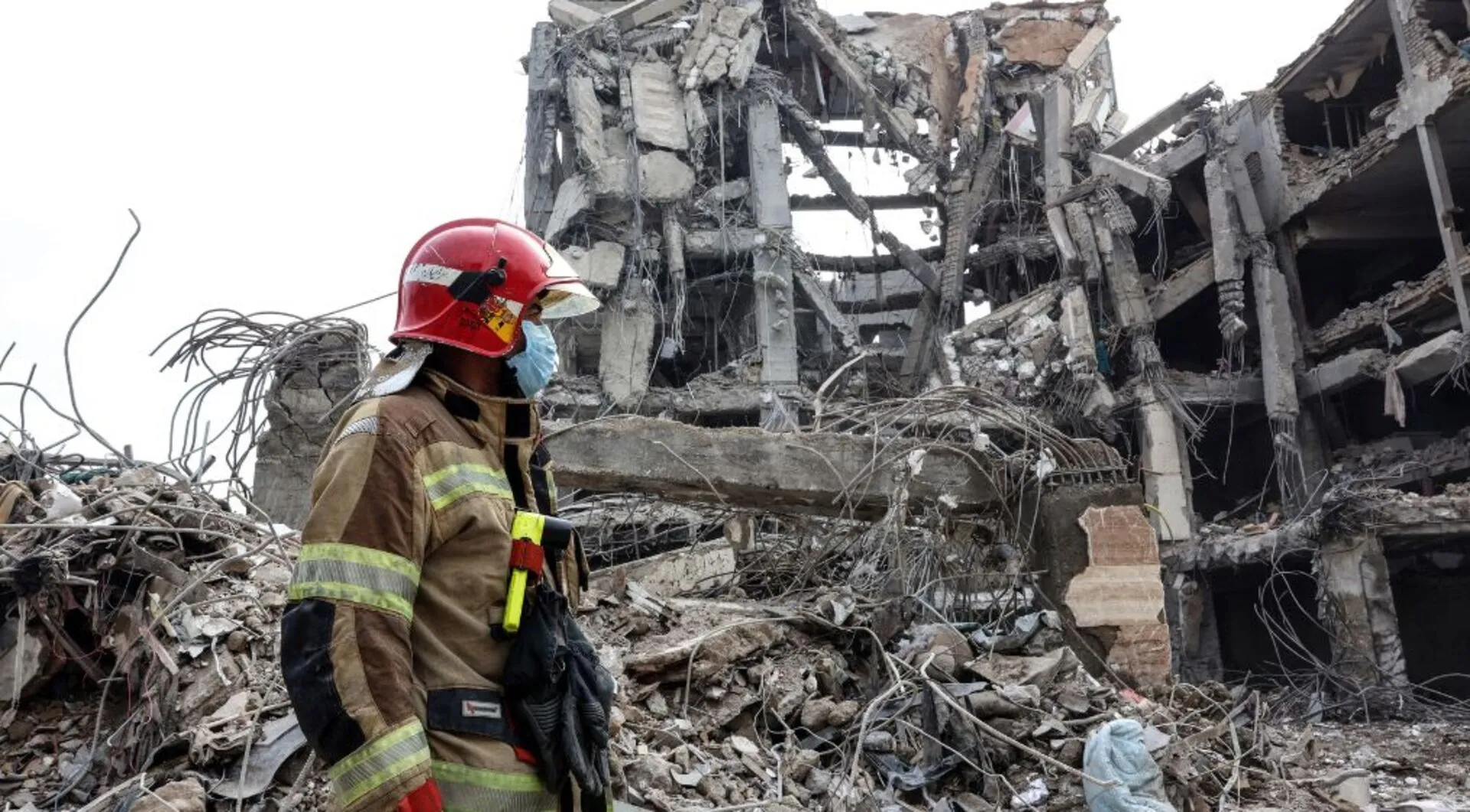
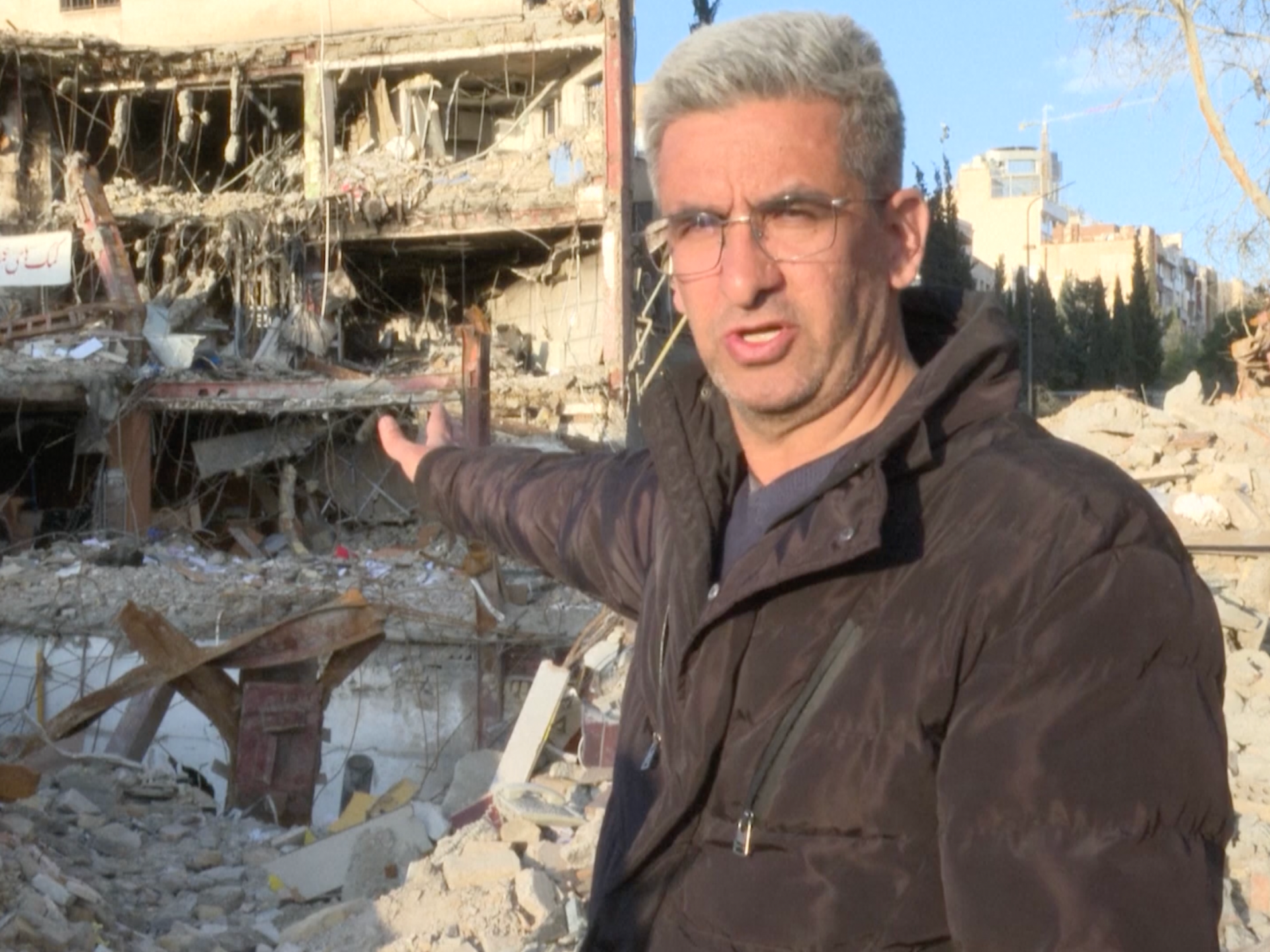
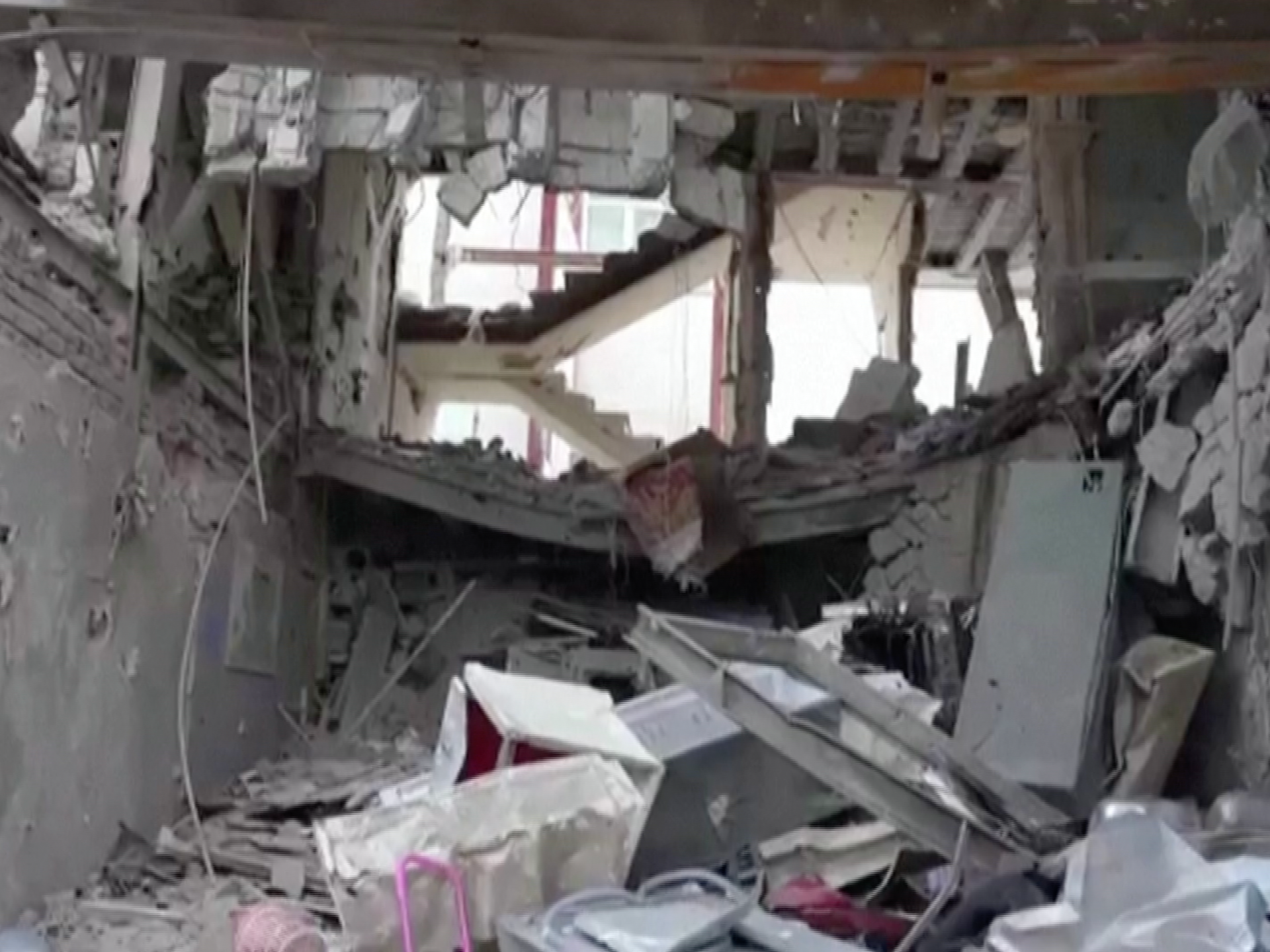
Five days after a strike destroyed a building in Tehran, Mahdi Mirzahosseini’s brothers are still searching through rubble for signs of their youngest sibling. They are holding onto hope of finding their brother who had gone to work insisting on serving customers for the Persian New Year.
Videos show the aftermath of strikes in Iran, as search teams recover bodies from rubble. Residents are using torches to look for loved ones, as air raids appear to have knocked out power in some parts. Iran’s health ministry says more than 1,500 people have been killed during the US and Israel’s war.
Key indexes in Japan, South Korea and Hong Kong tumble as Iran threatens attacks on energy infrastructure across region.
Published On 23 Mar 202623 Mar 2026
Stock markets in the Asia Pacific have fallen sharply amid US President Donald Trump’s ultimatum warning Iran to reopen the Strait of Hormuz or face the annihilation of its energy infrastructure.
Japan’s benchmark Nikkei 225 and South Korea’s KOSPI plunged 4 percent and 4.5 percent, respectively, in early trading on Monday.
Recommended Stories
list of 4 itemsend of list
In Hong Kong, the Hang Seng Index tumbled about 2 percent.
Australia’s ASX 200 dropped about 1.6 percent, while the NZX 50 in New Zealand dipped about 1.3 percent.
Futures on Wall Street, which are traded outside of regular market hours, saw moderate losses, with those tied to the S&P500 and the Nasdaq Composite down about 0.5 percent.
Oil prices remained volatile amid fears of further disruption to global energy supplies.
Futures for Brent crude, the international benchmark, rose more than 1.5 percent to top $114 a barrel, before easing to about $112 as of 02:00 GMT.
Trump on Saturday threatened to “obliterate” Iran’s power plants within 48 hours if Tehran does not end its effective blockade of the strait, through which about one-fifth of global oil and natural gas exports usually transit.
Tehran has pledged to completely close the waterway, which is still being transited by a small number of Chinese, Indian and Pakistani-flagged vessels, and launch retaliatory attacks on energy and water infrastructure across the region if Trump follows through on his threat.
Based on the timing of Trump’s warning on Truth Social, the deadline for his ultimatum is set to expire at 23:44 GMT on Monday.
A woman stands beside a sign for prices at a gasoline station in Quezon City, Philippines, on March 19, 2026 [Aaron Favila/AP]
Trump’s threat has added to fears of a cascading global energy crisis as the US and Israel’s war on Iran approaches the one-month mark with no clear end in sight.
Oil prices have surged more than 50 percent since the start of the war, which began with US-Israeli strikes on February 28.
Analysts have warned that energy prices are likely to rise significantly further if the strait remains effectively closed, with some observers predicting oil to hit $150 or even $200 a barrel.
Trump on Sunday held a phone call with UK Prime Minister Keir Starmer to discuss the situation in the Middle East, including the effective closure of the strait.
The two leaders agreed that unblocking the strait is “essential to ensure stability in the global energy market”, Starmer’s office said in a statement.
Trump has provided conflicting messages about the goals of the war and how long it might last.
Hours before issuing his ultimatum on Saturday, Trump said that his administration was “very close to meeting our objectives as we consider winding down” military operations against Iran.
Israeli military spokesperson Lieutenant Colonel Nadav Shoshani last week told reporters that officials had detailed plans for at least three more weeks of war.
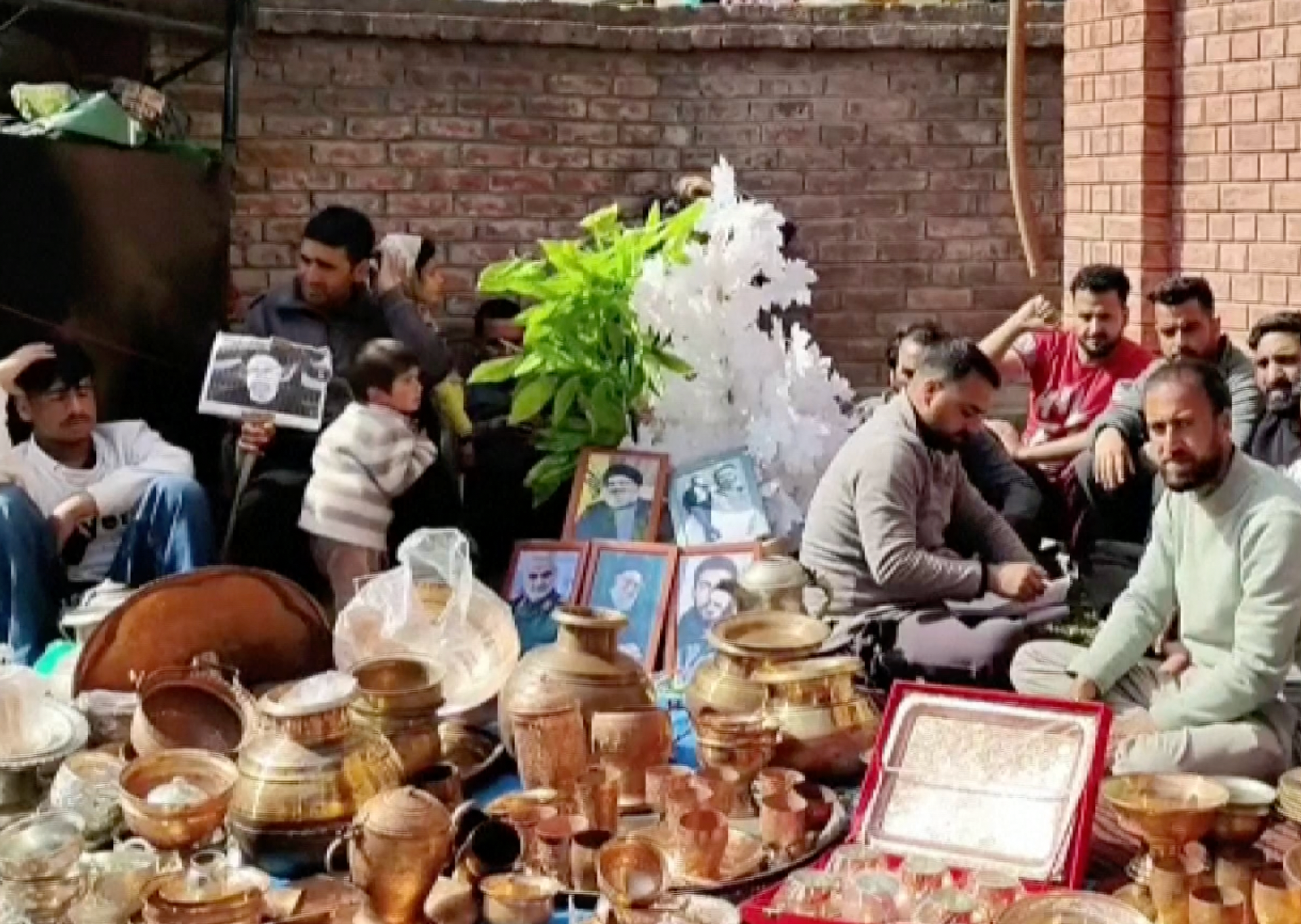
Residents in Indian-administered Kashmir are donating their gold possessions and cash to support Iranians impacted by the US-Israeli war. Iran’s embassy in India has acknowledged the gesture, saying their kindness ‘will never be forgotten’.
“Whatever we do, we do together, and as far as possible, in confidence.”
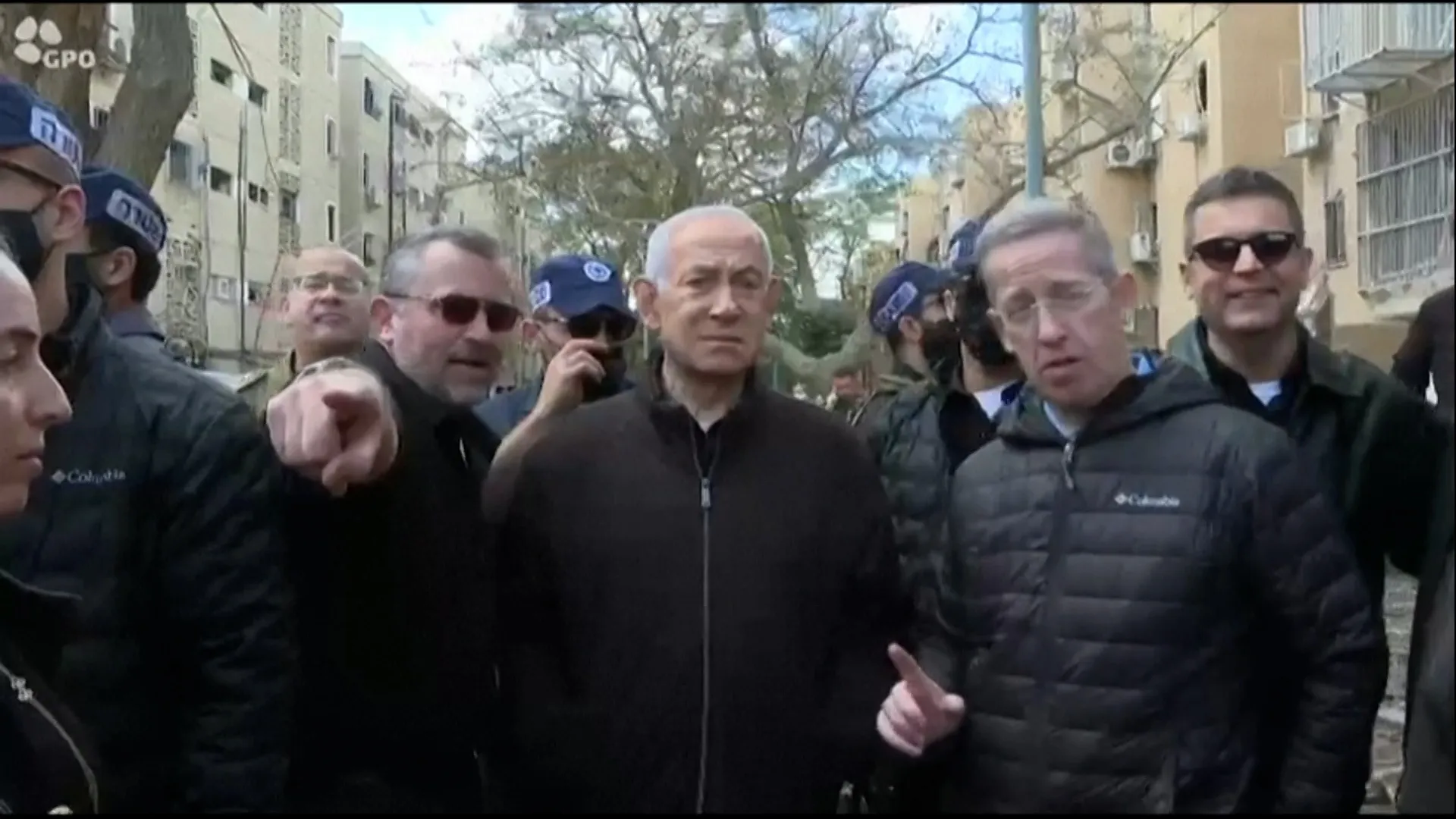
Israeli Prime Minister Benjamin Netanyahu has vowed to back US strikes on Iran’s power grid if Tehran does not reopen the Strait of Hormuz, as he visited the site of an Iranian strike in Arad. He urged world leaders to join the war effort as US-Israeli attacks on Iran have killed more than 1,500 people and injured thousands.
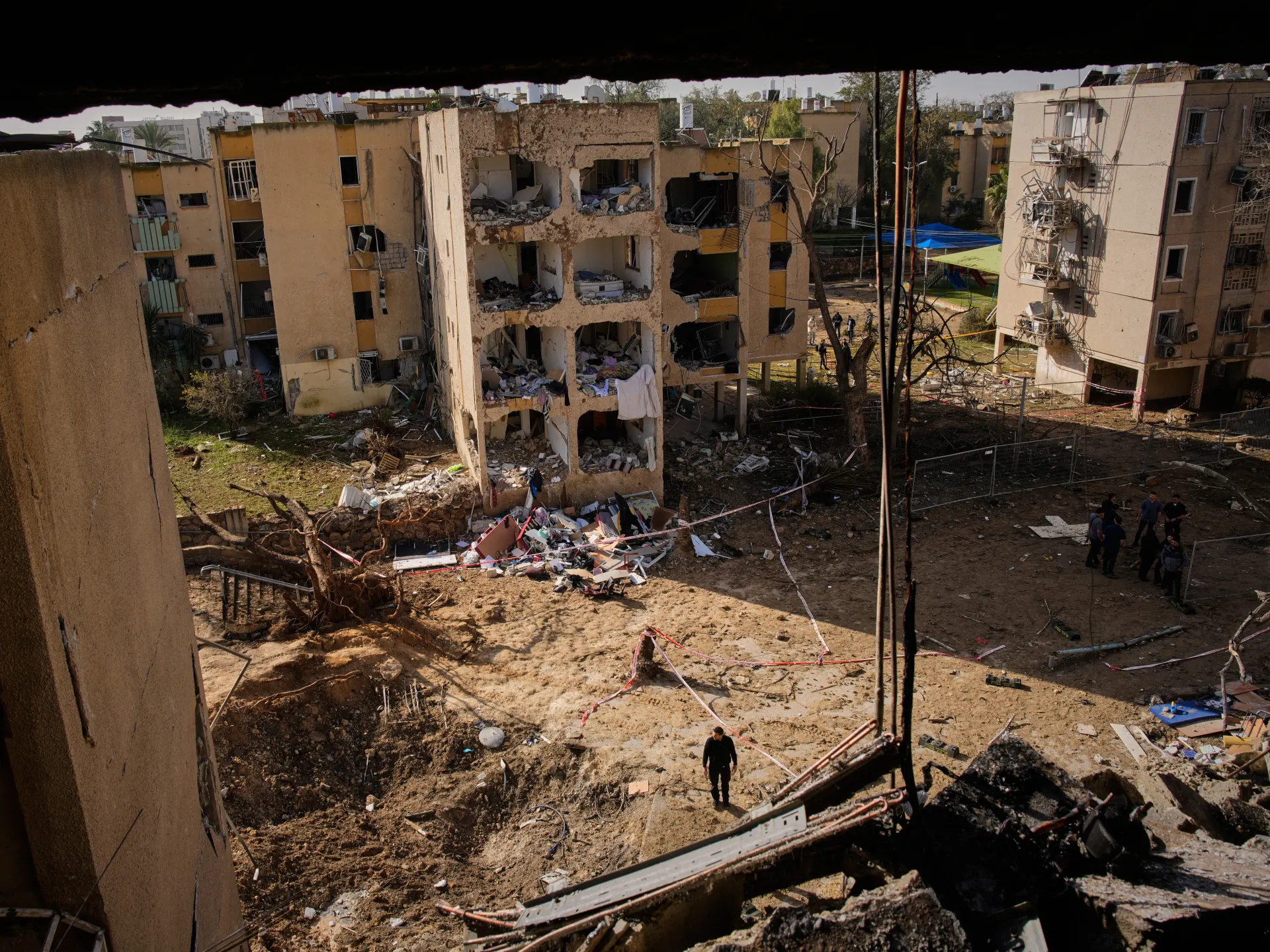
Iranian missiles have struck the towns of Arad and Dimona near an Israeli nuclear research centre in what Iran says was a response to an Israeli attack on its Natanz nuclear facility in Isfahan province.
At least 180 people were wounded in Saturday’s attack, and hundreds of people have been evacuated from the strategic towns as the Israeli-United States war on Iran is seemingly entering a new, more lethal phase of fighting.
Recommended Stories
list of 3 itemsend of list
Israeli Prime Minister Benjamin Netanyahu said his country had a “very difficult evening in the battle for our future”. There have been at least 4,564 people wounded in Israel, according to the Ministry of Health, since the start of the war on February 28.
Analysts said that while Israel has regularly waged military campaigns on Gaza, the occupied West Bank, Lebanon and elsewhere, it is rare for the Israeli public to feel the effects of war like it has over the past three weeks.
In Palestinian territory, including Gaza, Israeli forces have used disproportionate force against armed groups, who use rudimentary rockets to fire at Israel. Israel’s war on Gaza has been called a genocide by scholars and rights groups.
With Saturday’s high casualty count, the attacks in Arad and Dimona raise a question: Has Israel underestimated Iranian military capabilities?
What weapons is Iran using?
Defence analysts described Iran’s missile programme as the Middle East’s largest and most varied. Developed over decades, it contains ballistic and cruise missiles and is designed to give Tehran reach even despite its lack of a modern air force.
Iran has short- and medium-range missile systems and longer-range land-attack and antiship cruise missiles.
Iran’s short-range ballistic missiles have a range of roughly 150km to 800km (93 to 500 miles) and are built for nearby military targets and rapid regional strikes.
Their core systems include the Fateh variants: Zolfaghar, Qiam-1 and older Shahab-1/2 missiles. Their shorter range can be an advantage in a crisis. They can be launched in volleys, compressing warning times and making pre-emption harder.
Those medium-range systems include the Shahab-3, Emad, Ghadr-1, the Khorramshahr variants and Sejjil. They also have newer designs like Kheibar Shekan and Haj Qassem.
Iran’s land-attack and antiship cruise missiles include the Soumar, Ya-Ali and the Quds variants, Hoveyzeh, Paveh and Ra’ad.
The longest reaching ballistic missiles, the Soumar, have a range of 2,000km to 2,500km (1,243 to 1,553 miles). However, it was reported that two Iranian missiles were fired late on Thursday or early on Friday on Diego Garcia, the site of a joint US-United Kingdom military base in the Indian Ocean that is 4,000km (2,485 miles) from Iran. The UK said the attack failed, and an Iranian official denied firing the missile.
Former Iranian Supreme Leader Ali Khamenei had previously limited Iranian missile ranges to 2,200km (1,367 miles) but removed that limit after Israel’s 12-day war on Iran in June. The US joined Israel in that war as well, carrying out one day of attacks on Iran’s three main nuclear facilities.
“Iran has also used cluster munitions in its attacks on Israel. Each kind of warhead the Iranians have also uses a cluster warhead,” Uzi Rubin, founding director of Israel’s missile defence programme and a senior fellow at the Jerusalem Institute for Strategy and Security, told the US news agency Media Line.
What is a cluster munition or warhead?
Instead of a single explosive payload, a cluster warhead disperses multiple bomblets.
“The tip of the missile, instead of containing a big barrel of explosives, contains a mechanism which holds on to a lot of small bombs. And when the missile approaches the target, it opens its skin, it peels off and it spins around and the bomblets are released and released into space and fall on the ground,” Rubin told Media Line.
He added that Iranian cluster warheads may contain 20 to 30 bomblets or 70 to 80, depending on the missile.
These munitions are not new for Iran either. Iran reportedly also used cluster munitions in the 12-day war.
Amnesty International called Iran’s use of cluster munitions during that war a flagrant violation of international humanitarian law while Israel has also been accused of using cluster bombs in Lebanon.
Cluster munitions were banned in 2008 when the Convention on Cluster Munitions was adopted. Neither Iran nor Israel are signatories to the convention.
Why are they making an impact now?
An Israeli military spokesman said Israel’s air defence systems failed to intercept some of the Iranian missiles that hit Arad and Dimona despite being activated. He said Iran’s weaponry was not “special or unfamiliar” and an investigation was under way.
So why are these cluster munitions now making an impact? There are a few reasons.
For a ballistic missile equipped with cluster bomblets to be intercepted, it must happen before the payload opens and releases the submunitions. After the payload opens, the missile goes from a single point of attack to multiple points, making it difficult to stop.
On Thursday, The Times of Israel reported that the Israeli air force will start conserving interceptors. Military officials reportedly said at the time that Iranian cluster bombs are unlikely to cause significant harm if people have taken shelter and, therefore, may avoid shooting down some of them.
What is next?
In the next stage of the war, Iran, the US and Israel may continue to target important infrastructure.
The US and Israel struck Iran’s Natanz nuclear facility on Saturday, according to the Iranian Atomic Energy Organisation. This facility in central Iran is one of the country’s most important uranium enrichment sites, about 220km (135 miles) southeast of Tehran.
Israel previously struck fuel storage facilities in Tehran, leading to vast, toxic smoke over the Iranian capital. For its part, the US previously hit Kharg Island, Iran’s oil export hub, and threatened to do it again.
Iran has essentially closed the Strait of Hormuz, a vital chokepoint for global shipping and oil transport, and has targeted military bases and crucial energy infrastructure across Arab Gulf countries.
US President Donald Trump demanded the reopening of the strait and threatened to begin hitting energy infrastructure should Iran not comply.
“If Iran doesn’t FULLY OPEN, WITHOUT THREAT, the Strait of Hormuz, within 48 HOURS from this exact point in time, the United States of America will hit and obliterate their various POWER PLANTS, STARTING WITH THE BIGGEST ONE FIRST,” Trump wrote on Truth Social at 23:44 GMT on Saturday.
As the United States-Israeli war on Iran enters its fourth week, the conflict seems to have escalated beyond President Donald Trump’s control.
The Iranian government has been able to endure the killings of its top political and military leaders and has launched retaliatory attacks on Israel and Gulf countries despite weeks of air strikes.
Recommended Stories
list of 4 itemsend of list
Tehran has also been able to impose a de facto blockade of the Strait of Hormuz, a narrow waterway through which a fifth of the world’s oil and liquefied natural gas supplies pass, sending oil prices soaring. Analysts said the conflict risks unleashing a global recession. And that has put pressure on Trump, prompting his administration to allow the sale of sanctioned Russian oil to try to ease the energy crisis and pressure allies to police the strait, so far unsuccessfully.
Trump’s response in how to deal with the situation has been anything but coherent.
On Saturday, Trump upped the ante, issuing a threat to “obliterate” Iran’s power plants if Tehran does not reopen the Strait of Hormuz within 48 hours. This came a day after he said the US was “winding down” its military operations in Iran.
Analysts said Trump launched the war without a clear goal and misjudged how Tehran would respond. The conflict has expanded across the Middle East.
So is Trump looking to exit the war – or escalate it?
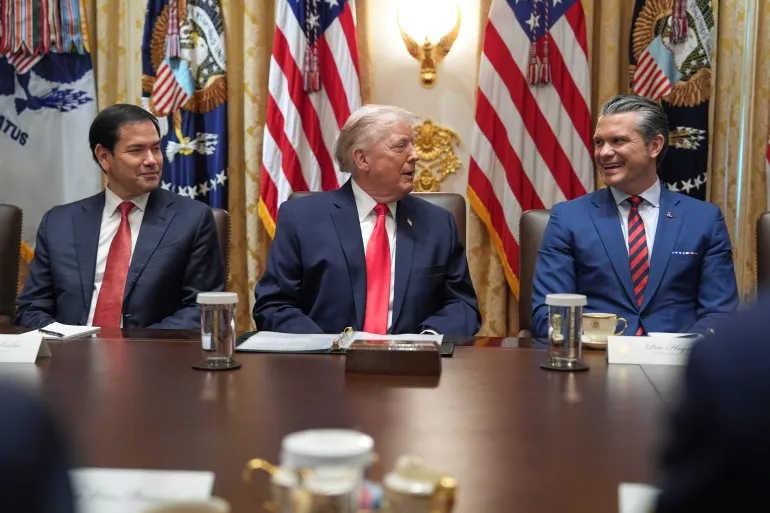
From left, US Secretary of State Marco Rubio, President Donald Trump and Defense Secretary Pete Hegseth attend a cabinet meeting at the White House [File: Evan Vucci/AP]
Trump’s mixed messaging on the Iran war
Here’s a brief look at the changing statements from Washington:
Is the war winding up or widening?
While one statement from Trump signalled that the US is considering “winding down” the war on Iran, another one indicated that the conflict would widen in the coming days.
On Saturday, Trump posted on his Truth Social platform that Washington was “very close to meeting our objectives as we consider winding down our great Military efforts in the Middle East with respect to the Terrorist Regime of Iran”.
Trump listed the goals of the war as: completely degrading Iran’s missile capability, destroying its defence industrial base, eliminating the Iranian navy and air force, never allowing Iran to get even close to having nuclear weapons, protecting Middle Eastern allies, and guarding and policing the Strait of Hormuz.
Both Trump and Israeli Prime Minister Benjamin Netanyahu have claimed repeatedly in the past few days that Iranian military capabilities have been “completely destroyed” even as Tehran continues to retaliate against Israel and strike countries in the region.
US military officials said they have carried out heavy bombardments of Iran’s coast, including with bunker buster bombs, but still have not been able to limit Tehran’s capacity to disrupt the Strait of Hormuz.
On Saturday, Trump said the US “has blown Iran off of the map” and insisted that he has “met my own goals … and weeks ahead of schedule!” He also reiterated that Iran’s “leadership is gone, their navy and air force are dead, they have absolutely no defense, and they want to make a deal”.
Iranian leaders have consistently denied reaching out to the US with a ceasefire offer.
Just an hour later, Trump returned to his Truth Social platform with a warning for Iran.
“If Iran doesn’t FULLY OPEN, WITHOUT THREAT, the Strait of Hormuz, within 48 HOURS from this exact point in time, the United States of America will hit and obliterate their various POWER PLANTS, STARTING WITH THE BIGGEST ONE FIRST!” Trump wrote.
Iran has since responded by saying it will hit energy sites across the Middle East if its power facilities are targeted. It has already fired hundreds of missiles and drones on Gulf countries, targeting US assets as well as energy facilities.
Between Trump’s claims to be “winding down” operations and upping the ante later, his administration announced it is sending three more warships to the Middle East with about 2,500 additional Marines.
The US military said about 50,000 military personnel are already deployed for the war against Iran.
(Al Jazeera)
When will the war on Iran end?
That has been among the foremost questions posed to US officials, including Trump, since the war on Iran was launched on February 28.
The next day, Trump told the Daily Mail that “it will be four weeks or so. It’s always been about a four-week process.” A day later, Trump said at the White House: “We projected four to five weeks, but we have capability to go far longer than that.”
On March 8, Defense Secretary Pete Hegseth told the CBS TV network’s 60 Minutes programme: “This is only just the beginning.” The next day, the US president told the same channel that he thinks “the war is very complete, pretty much.” And the US military operation was “way ahead of schedule”.
Then, on March 9, Trump said one could say the war is “both complete and just beginning”. Later the same day, the president said: “We’ve already won in many ways, but we haven’t won enough” and promised to go further and harsher against Iran.
On March 11, Trump said: “We don’t want to leave early, do we? We’ve got to finish the job.”
Why did US and Israel launch strikes on Iran?
Responses to this question are perhaps the most telling about US posturing in the war against Iran.
On March 2, Hegseth said the attacks were aimed at ending “47 long years” of war by “the expansionist and Islamist regime in Tehran” and were launched because Iran refused to negotiate with the US.
Hours later, Marco Rubio, the secretary of state, told reporters the US knew Israel was about to strike Iran, adding that the Trump administration believed the US needed to launch a pre-emptive strike before Iran’s retaliation potentially targeted US forces. “We went proactively in a defensive way to prevent them from inflicting higher damage,” he said.
This sparked a massive row in Washington with critics saying Israel had forced the US into war with Iran. Soon Trump rebutted his top diplomat, saying: “They [Iran] were going to attack. If we didn’t do it, they were going to attack first. … So if anything, I might have forced Israel’s hand.”
The next day, the White House press secretary, Karoline Leavitt, concluded that Trump just had a “good feeling” that Iran would strike so Washington attacked Tehran.
The launch of the war came as Washington and Tehran were scheduled to meet for another round of talks that were started late last year. Before the war, their Omani mediator said a deal was “within reach”.
The US and Israeli assertion that Tehran was on the verge of making a nuclear bomb has not been backed up by the United Nations nuclear watchdog. Last week, US Director of National Intelligence Tulsi Gabbard also told Congress that Iran was not in a position to make an atomic bomb.
Some analysts said the Trump administration was convinced to go to war by Netanyahu, who has been seeking US military intervention in Iran for decades. They said Trump was buoyed by a swift US military operation in Venezuela and did not think through Iran’s strengths before going into the war. In January, the US military abducted President Nicolas Maduro in a military operation in Caracas that took two and a half hours.
US President Donald Trump, left, greets Israeli Prime Minister Benjamin Netanyahu at the White House on September 29, 2025, on the fourth of his six visits to the US during Trump’s second term, which began in January 2025 [Alex Brandon/AP]
What does the conflicting messaging mean for US strategy?
Analysts said the moving goalposts in the Iran war show the policy limits of the current Trump administration as well as its strategy, to some extent, of keeping off-ramps available.
Zeidon Alkinani, a Middle East analyst at the Arab Perspectives Institute, told Al Jazeera that in the earlier days of the hostilities, there appeared to be clearer targets and limited objectives.
“There now seems to be a more chaotic reaction,” he said. He described the attacks as increasingly reciprocal, suggesting strikes on oil or energy facilities could prompt further escalation.
Last week, Iran attacked energy facilities in Qatar and caused “significant damage”, knocking out 17 percent of Qatar’s liquefied natural gas (LNG) export capacity. Qatar produces 20 percent of global LNG supplies. Iran said the attack was in retaliation for Israeli attacks on a gas plant.
Paolo von Schirach, president of the Global Policy Institute, told Al Jazeera that Trump changes his mind “very quickly” and it is hard to predict what his next step could be in the war on Iran.
The analyst said it was unclear to him what “tools” Trump has to end the war.
“We look at his message saying the war is winding down. OK, good. Things are quiet. Maybe there is an off-ramp somehow. But now he says that if the Iranians don’t open the Strait of Hormuz, then we [the US] are going to unleash hell and what have you,” von Schirach noted.
“It is not quite clear to me what he wants and what the tools are to accomplish this.”
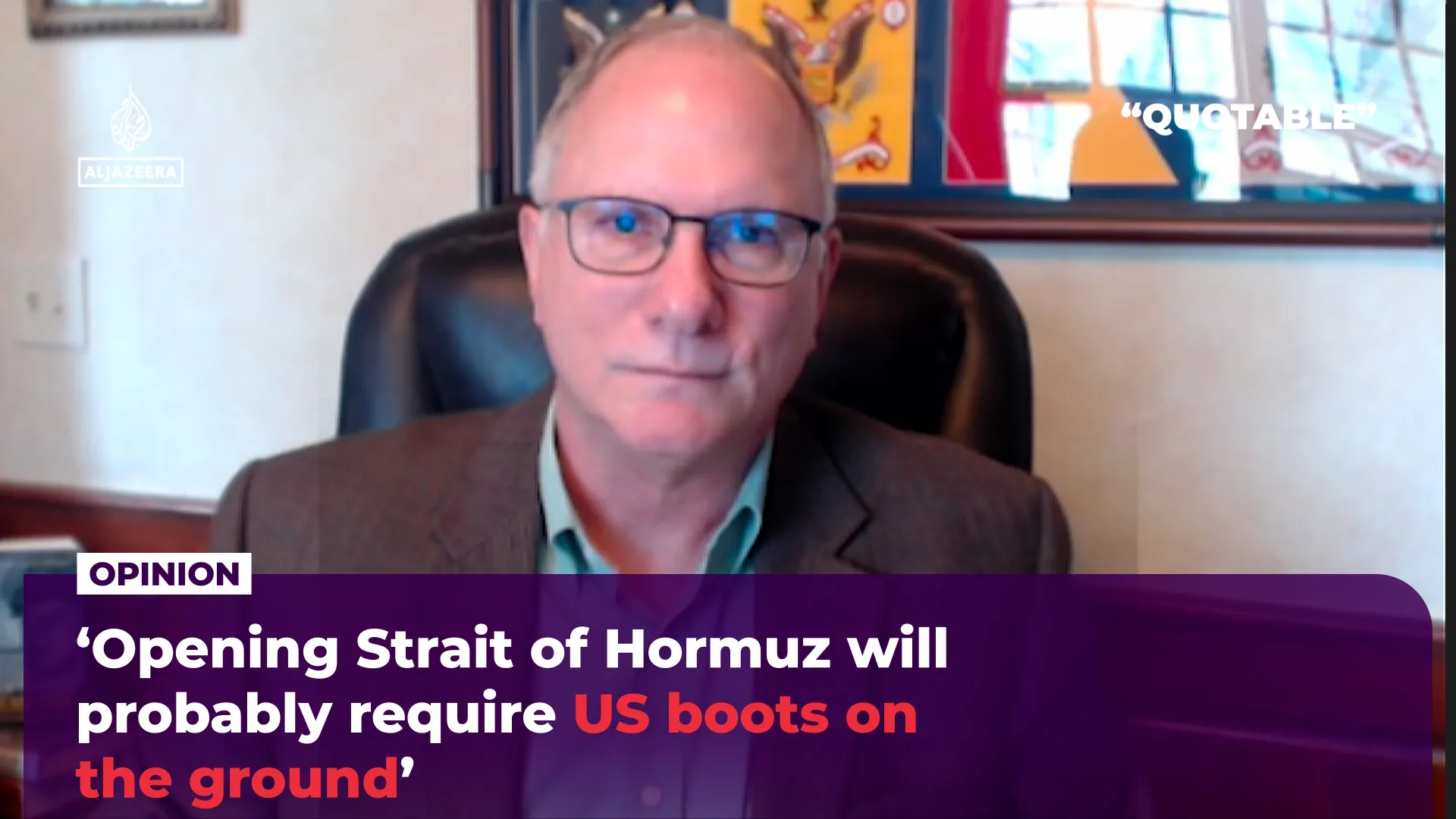
Von Schirach added that it would be difficult to predict whether the US could force Iran into submission, given its size and population. Using as a reference Iraq, where 150,000 American soldiers were deployed during the Second Gulf War, the analyst predicted that the US might need as many as half a million soldiers if Trump “wants to take over Iran”.
Tehran, Iran – Military and political authorities in Iran are projecting a message that “victory” is near as war with the United States and Israel continues to escalate, and air strikes and assassination attempts are reported across the country.
Massive joint US-Israeli air raids were recorded in multiple areas of the capital Tehran overnight into Sunday, and in central Iran’s Isfahan city in the morning, a day after Dezful and Andimeshk in western Khuzestan and several other cities were hit.
Recommended Stories
list of 4 itemsend of list
Israeli warplanes also conducted two separate sets of precision strikes on privately-owned residential units located in small towns in the green provinces of Gilan and Mazandaran to the north on Saturday, which appeared to be assassination attempts on officials.
Local authorities confirmed that several people were killed, but did not elaborate. Israeli and US media said a senior drone commander is believed to have been killed.
Nevertheless, top officials in Tehran said they were unyielding and focused on retaliatory attacks.
Parliament speaker and former Islamic Revolutionary Guard Corps (IRGC) commander Mohammad Bagher Ghalibaf said the fact that Iranian missiles struck Israel’s Dimona overnight shows that a “new stage of battle” has started where “Israel’s skies are defenceless”.
Majid Mousavi, aerospace commander of the IRGC, echoed the same statement about control over Israeli skies in a post on X on Saturday night, which came in response to the US and Israel declaring dominance over Iranian airspace.
“Pinpoint precision Seyed Majid, hit Dimona again,” chanted flag-waving pro-establishment supporters shown on state television broadcasts, calling on Mousavi for action.
Israel said more than 180 people were injured in Dimona, a southern city where its key nuclear facilities are also located, in addition to nearby Arad.
Ahmad-Reza Radan – Iran’s hardline police chief, who has been cited by Israeli media as being a target for assassination along with Mousavi, Ghalibaf and others – was seen briefly addressing a group of supporters in Tehran on Saturday night.
“Trump first threatened the European Union, then begged. Today, he has said he will come take Greenland if the Europeans don’t come. I want to tell the European Union that if they can’t hold on to Greenland, then send a request and we will come preserve it,” he said, followed by chants of “Alla akbar” (God is greatest).
Defence Ministry spokesman Reza Talaei-Nik said in a statement that attacks across the region will continue “until the complete halt and surrender of the enemy”.
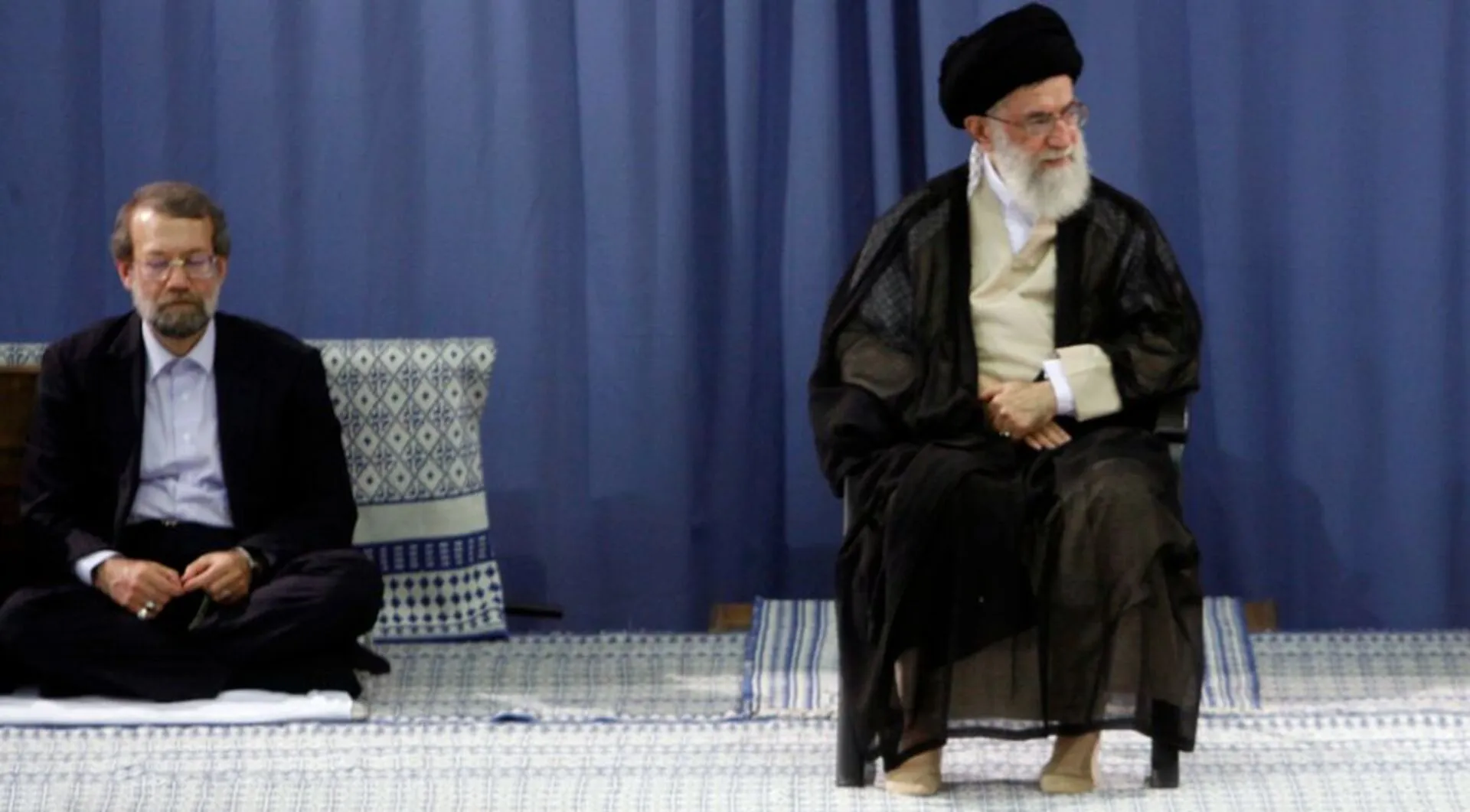
The taunts are in line with the state’s messaging in recent days, including a written statement attributed to Mojtaba Khamenei, who was selected as the supreme leader after his father Ayatollah Ali Khamenei was assassinated on the first day of the war, but who has not been seen or heard.
The message said Iran’s enemies were being “defeated” and there is “particular unity” among supporters of the theocratic establishment.
Over the past week, the country’s top security official, commanders of the paramilitary Basij force of the IRGC, the government’s intelligence minister, and a number of other military and security personnel have been among those killed.
The government reports that a large number of residential buildings, hospitals, schools and other civilian facilities have also been impacted during the war, as state supporters control the city streets, squares and mosques to counter potential anti-government protests.
‘Say goodbye to electricity!’
The Iranian rhetoric quickly escalated on Sunday after US President Donald Trump issued a 48-hour ultimatum for Tehran to reopen the strategic Strait of Hormuz, a key water route for global energy export, or face strikes on its power plants.
In response, Iranian politicians and armed forces said they would strike back harder against the region’s energy facilities.
The IRGC-affiliated Mehr news agency released a map with graphics that showed power plants across the region, including in the United Arab Emirates, Saudi Arabia, Qatar and Kuwait, that could be attacked if Iranian facilities are hit. An accompanying message read, “Say goodbye to electricity!”
On Saturday night, state and IRGC-affiliated media circulated a different map, showing Doha and also marking the central offices of Al Jazeera network as potential targets, and said all residents of the Qatari capital were advised to evacuate immediately.
State television quickly issued a retraction and cited unnamed sources as saying the map was not official, but no explanation was provided about who circulated the image and why.
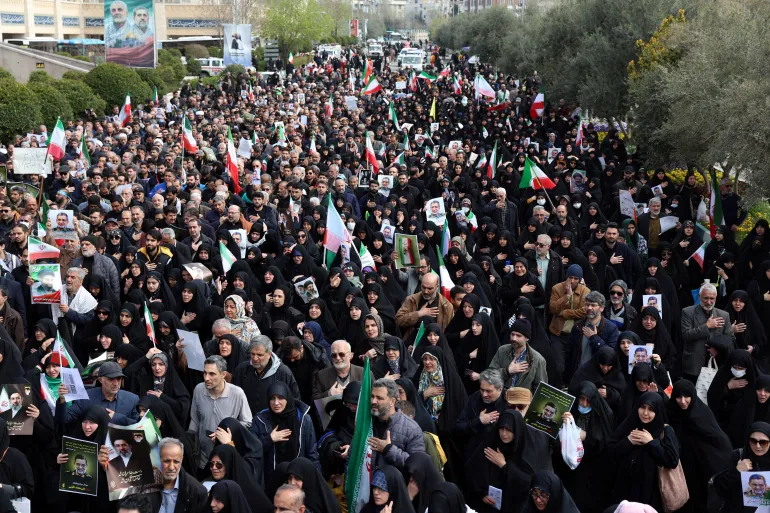
Iranians attend the funeral ceremony of Islamic Revolutionary Guard Corps (IRGC) spokesman Ali Mohammad Naini, who was killed in US-Israeli strikes, in Tehran on March 21, 2026 [AFP]
The all-around promises of escalation, particularly around bombing electricity facilities and other critical civilian infrastructure, have created additional concerns among many Iranians about the impact on daily lives and implications on the country’s future.
“If the main power plants are bombed, it’s not going to be just a brief disruption; it could stop the flow of everything from water to gas,” a Tehran resident told Al Jazeera, asking to remain anonymous due to security concerns. “It would be foolish to just punish the population like that.”
The US-Israeli forces have also struck natural gas facilities in southern Iran and bombed fuel reserves across Tehran, but authorities said fires and damage were contained quickly without creating major disruptions.
In an Instagram post to mark Nowruz, the Persian New Year, iconic footballer and nationally respected figure Ali Daei said this year’s celebrations were different because Iran is grieving for its people killed in the war.
“Wishing for a prosperous and free Iran, away from war and bloodshed, all about welfare and calm,” he wrote, drawing the ire of a number of state media, including the IRGC-affiliated Tasnim, which criticised Daei for not specifically condemning the US and Israel.
Proclamations, warnings under blackout
Meanwhile, the internet remains cut for more than 92 million Iranians for a 23rd day, becoming the longest shutdown in the country’s history, trailed only by a 20-day blackout imposed during the killing of thousands of anti-government protesters in January.
State media outlets continue to focus on successful IRGC attacks and present Iran as a country on the brink of being recognised as a world power, as they refrain from communicating details about the US and Israeli attacks or significant damage sustained.
Alaeddin Boroujerdi, a member of the national security committee of Iran’s parliament, told the state television on Sunday that the IRGC’s overnight attacks against Israel “opened a new page in shifting the balance of power and showed the victory of the Islamic Republic in this imposed war”.
The parliamentary committee’s spokesman, Ebrahim Rezaei, stretched the same line of thinking even further, and said in a post on X that Iran should demand to become a veto-yielding permanent member of the United Nations Security Council as a condition for ending the war. The lawmaker did not say how or when he expected that to happen.
Iran’s government has also demanded war reparations and guarantees against future aggression, but the US and Israel have been pushing to overthrow the Islamic Republic that came to power in a 1979 revolution.
Intelligence authorities advised the Iranian population on Saturday that even being a member of foreign-based news and war footage channels on Telegram and all other social media outlets banned by the state could violate national security laws.
The Iranian judiciary said that such channels are considered “terrorist” outlets and that sending any videos of impact sites or armed state checkpoints on the streets to them could carry maximum penalties like confiscation of assets and even execution.
State security authorities have emphasised that anyone who engages in anti-establishment protests will be treated as an “enemy”.
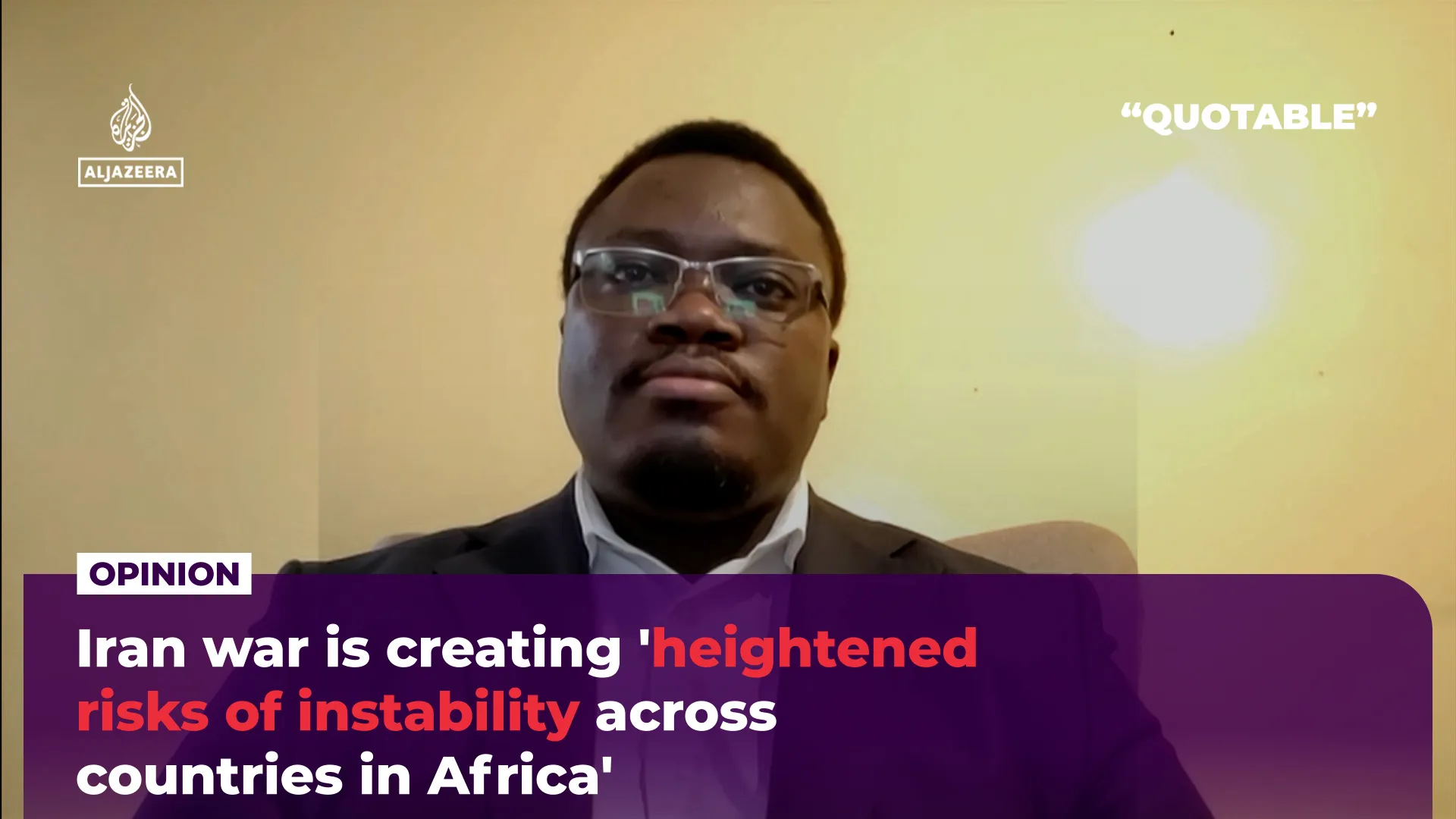
‘These are countries that face drought, food or economic difficulties that compound this crisis much farther.’
David Owiro, founder of the African Development Think Tanks, says that African countries are particularly vulnerable to the economic consequences of the US-Israeli war on Iran.
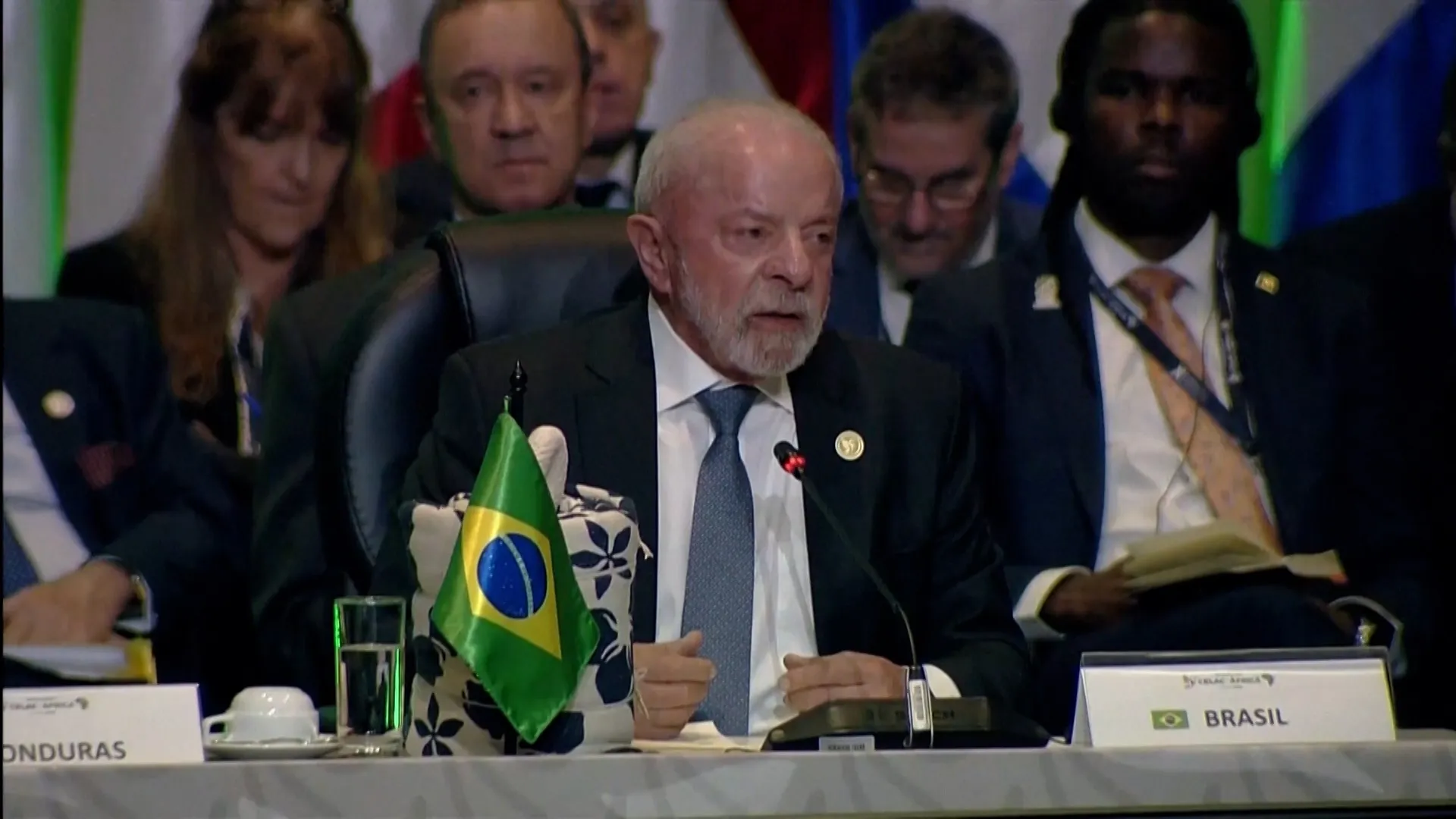
Latin American leaders met at the 10th Community of Latin American and Caribbean States (CELAC) Summit in Bogota on Saturday where Colombian President Gustavo Petro called for an immediate Middle East ceasefire to prevent a global economic crisis and ‘potential world war’.