Iran

Refugee in my own city: Surviving Tehran’s bombing, with my cat for company | US-Israel war on Iran News

Sana* is a 27-year-old woman living with her roommate, Fatemeh, in a two-bedroom apartment in western Tehran. The economics master’s student and risk control analyst at an investment firm had already survived the June 2025 Israel-Iran war. When the latest war began in late February, she promised herself she would not run away from the city again. As told to Ariya Farahand. 

The night before the war, every piece of news arriving on my phone had two possibilities: Either they strike, or they don’t. I stayed up late, waiting. Previously, the strikes had come around midnight, so I kept watching. When nothing happened, I put on some Persian music, poured myself a drink to take the edge off, and went to bed. I told myself the night had passed without an attack.

Recommended Stories

list of 3 itemsend of list

I was wrong.

It was 9:40am on February 28 when the first missiles hit Tehran. I was caught between sleep and wakefulness in my apartment in the west of the city. My neighbourhood hadn’t been targeted yet. I hadn’t heard any explosions. I didn’t know what to expect.

My phone began chiming with text messages I couldn’t bring myself to get up and check. When it started ringing, I realised that it was urgent. It was my boyfriend, his shaky voice enquiring if I was OK. Before I could answer, he blurted out: “They struck. They attacked.”

He didn’t need to elaborate further.

Within minutes, my mother, my father and my younger sister were calling from Sari, 250 kilometres (155 miles) north in Mazandaran province, where they’re based, begging me to leave the capital. I stared at my cat, Fandogh (Hazelnut). She stared back. I made myself a promise: No matter what happens, I am not leaving Tehran.

The 12-day war last June had broken something in me. On its third day, my family’s pressure forced me out of the city. The drive to Sari was miserable, and my parents’ house was crowded; none of us found peace. This time, I refused. My boyfriend urged me to go somewhere safer. I said no.

By mid-afternoon, my roommate Fatemeh had finally made it home from work, the gridlock traffic making her typical hour-and-a-half journey take four hours. She walked in, still wearing her coat, sat down in the middle of the living room, and wept – the first explosion, she told me, had hit right near her office.

Routine

The war settled into a grim routine. We learned to anticipate strikes during certain windows: early morning, the afternoon, and after 11 at night. The bombings were never predictable enough to be safe, but those were the hours we instinctively braced. We relied on supermarket deliveries to avoid going outside. If we absolutely needed something, we made a frantic dash to the shops and rushed straight back.

The internet was another kind of suffocation. When friends who had emigrated abroad heard there was “no internet”, they assumed it meant social media was blocked. But, for most people, it was a total blackout – we couldn’t even load Google. We kept buying virtual private networks (VPNs) that would work for a day and then stop. My daily life ran on podcasts and YouTube. Now there was nothing. I downloaded foreign TV series from local servers that were still operating just to keep my mind occupied. I read. I found a copy of Baghdad Diaries (a 2003 book recounting the war in Iraq), and its mirroring of my own reality sent a chill through me. You could write a whole book, I kept thinking, about what we were living through.

March 16 was one of the worst nights of my life – though it had started gently enough.

At my friends’ urging, I had gone to a nearby cafe that evening, the first time in weeks that anything felt briefly, superficially normal. I got home about 9pm, did some light cleaning, and was asleep by 11.

At 2:30 in the morning, a massive explosion tore through the silence. The force of it jolted me upright. Fatemeh was already awake. We stumbled into the hallway, peered out the window – and then an intense flash of light flooded the apartment, followed by a blast so violent we both screamed. Still in our pyjamas, without stopping to grab our phones, we sprinted down the fire escape to the lowest level of the parking garage. Several neighbours were already there.

Seven or eight more explosions followed. They were bombing near Mehrabad airport, close to us. I genuinely thought I was going to die.

When I finally went back upstairs, my cat was hiding in the wardrobe, trembling. My family and boyfriend had been calling and texting, without response, for hours, watching the news reports about strikes near the airport and imagining the worst. Guilt washed over me for leaving my cat behind. I called everyone to say I was alive.

Attempting normality

I felt like a refugee in my own city.

The days had already been darkening before that night. One day, an oil depot was struck. I had stepped out to do some shopping at the corner of the street. I stopped and looked up. It was the middle of the day, but the sky had turned black. Pitch black. Like the end of the world.

April 4 was my first day back in the office – and the day we would find out whether our contracts were being renewed or not. When I arrived, a colleague was already standing in the hallway, termination letter in hand, crying about how she would pay her rent, how she was supposed to find work in the middle of a war. I will never forget her tears. By midday, half the staff – 18 out of 41 – had been laid off. Nobody did any work.

I kept my job. Three days later, on my commute home, the streets were nearly empty – a journey that once took more than an hour took less than 20 minutes. The only queues were at petrol stations, snaking down deserted roads, after US President Donald Trump threatened to strike Iran’s energy infrastructure and destroy our “whole civilisation”. In the lift, my neighbour stepped in, carrying two large packs of bottled water and talked anxiously about pooling money for a building generator. That night, Fatemeh went to bed early, claiming she didn’t care about any of it. She had been biting her nails all evening. She showered before bed – so that she would be clean, she told me, if the water was cut off after an attack.

When the ceasefire was announced, I couldn’t believe it. I waited for the denial that never came. When it was finally clear the war was on pause, it felt as though a 100-kilogramme weight had been lifted from my chest.

I pulled the blanket over my head, but found I still couldn’t sleep. What happens next?

The first thing I did the following morning was book an appointment to get my hair cut and my nails done. The second thing I did was buy a high-grade VPN – expensive, about $4 a gigabyte — and scroll through Instagram for the first time in weeks.

Small things. The kind that makes you feel human again.

*The names used in this article are pseudonyms chosen for security reasons

Source link

Trump lashes out at Pope Leo over Iran war criticism

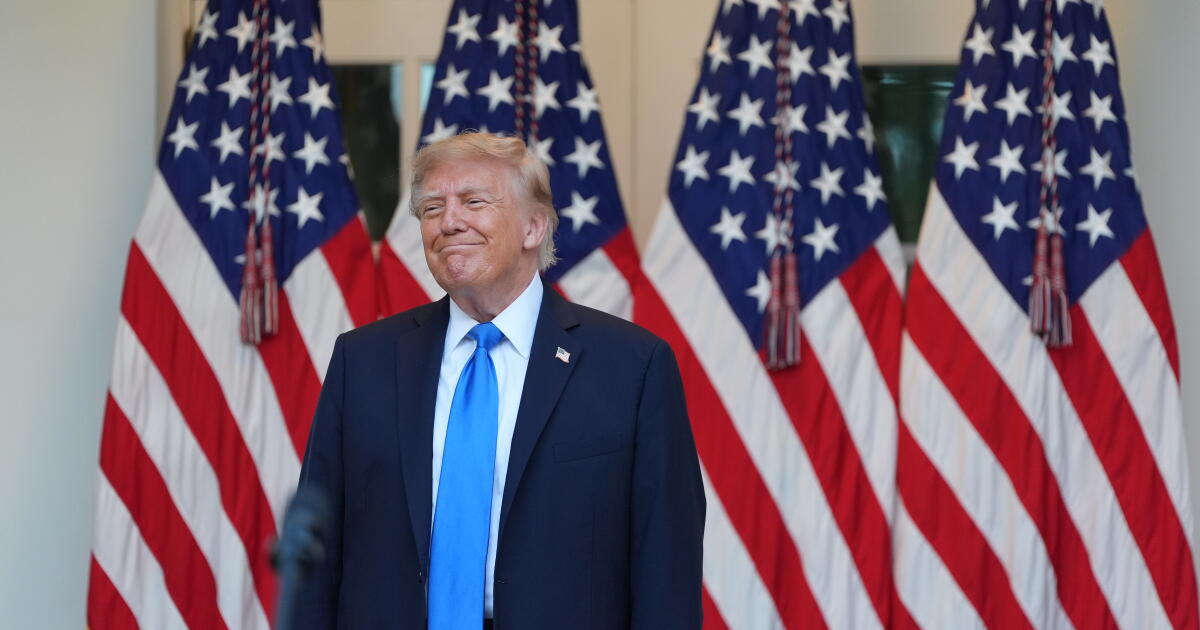
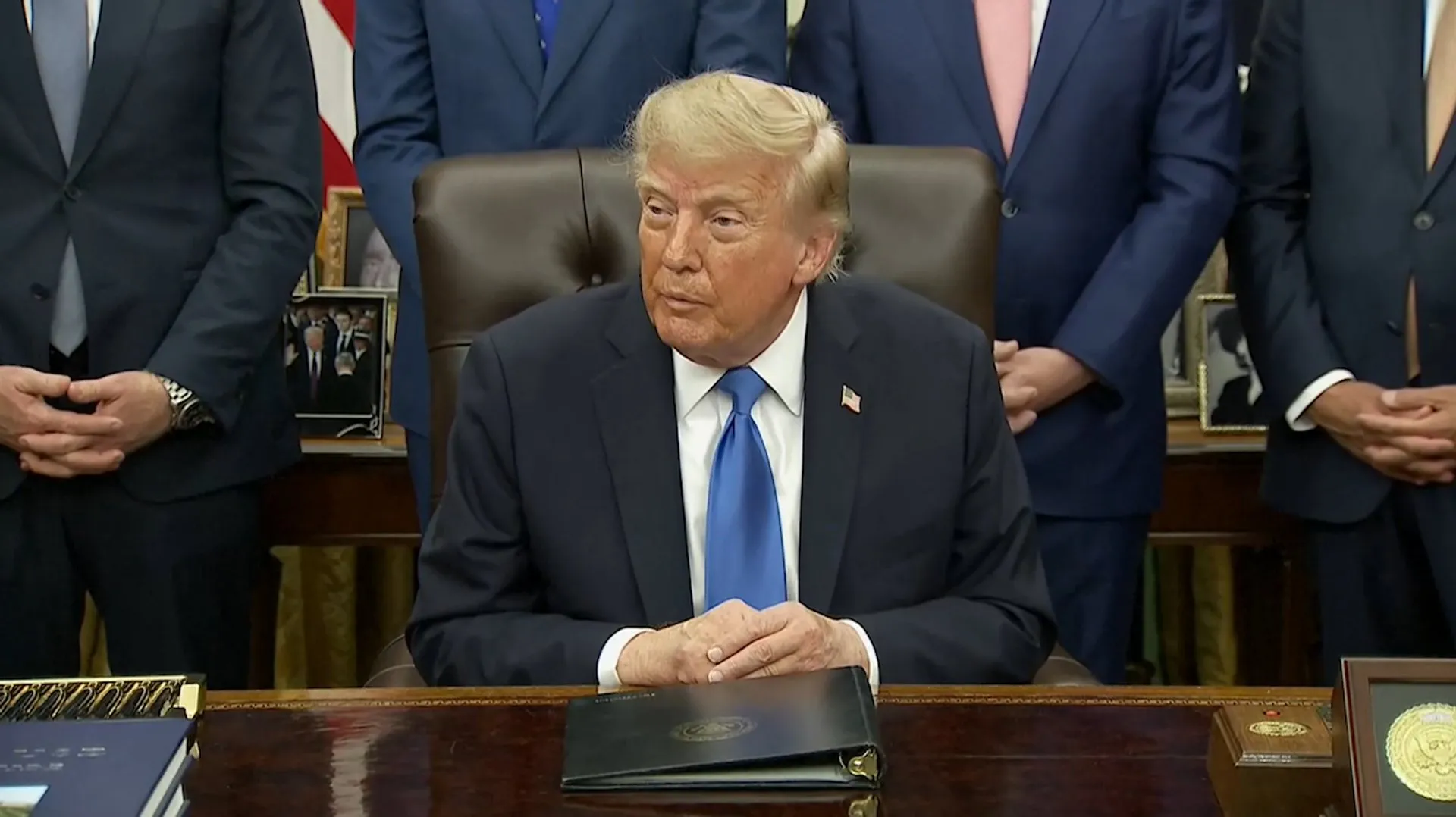
April 13 (UPI) — President Donald Trump lashed out at Pope LeoXIV over his criticism of the war in Iran, claiming a reason the American was named pontiff was because the Church was trying to curry favor with his administration.

Since being elected the first American head of the Catholic Church in May, Pope Leo has criticized the Trump administration’s policies, particularly its aggressive immigration crackdown and military campaigns. As the war in Iran has continued, the Chicago native has ramped up his criticism of the New York real estate mogul and his administration.

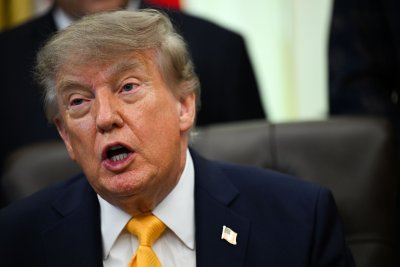
Seemingly in response, Trump on Sunday called the pope “WEAK on Crime and Terrible for Foreign Policy.”

“Leo should be thankful because, as everyone knows, he was a shocking surprise. He wasn’t on any list to be Pope, and was only put there by the Church because he was an American, and they thought that would be the best way to deal with President Donald J. Trump,” Trump said in a statement on his Truth Social platform. “If I wasn’t in the White House, Leo wouldn’t be in the Vatican.”

Amid the conflict, Pope Leo has repeatedly called for an end to the war in Iran and other conflicts, most often without mentioning the warring parties or their leaders by name.

In seemingly pointed remarks in late March, the pope said God “does not listen to the prayers of those who wage war, but rejects them.” Then early this month, the pontiff, speaking in Italian, described Trump’s threat to destroy “the whole Iranian civilization,” as “truly unacceptable!”

In his late Sunday statement, Trump said he preferred Leo’s eldest brother Louis Prevost, a noted supporter of the president’s far-right nationalist Make America Again movement.

“Leo should get his act together as Pope, use Common Sense, stop catering to the Radical Left and focus on being a Great Pope, not a politician,” Trump said.

“It’s hurting him very badly and, more importantly, it’s hurting the Catholic Church!”

Catholic Americans constituted a major electoral bloc in Trump’s 2024 election victory. According to the Pew Research Center, about 55% of Catholic voters cast ballots for Trump compared to 43% for his Democratic challenger, former Vice President Kamala Harris.

The statement comes as pressure mounts on Trump over the war in Iran, which was launched jointly with Israel on Feb. 28. During the current two-week cease-fire, U.S. efforts to secure a permanent end to the war are ongoing as calls from Democrats and critics for his ouster grow louder.

“The deranged and disgusting post from Trump attacking Pope Leo should certainly help him appeal to the more than 50 million Americans who identify as Catholics. Perhaps this will convince JD Vance to invoke the 25th Amendment to remove Trump from office,” Rep. Pramila Jayapal, D-Wash., said in a statement referring to the vice president, who is Catholic, and his ability to invoke a constitutional mechanism that could lead to Trump’s removal from the White House.

Source link

‘Terrible for foreign policy’: Trump attacks Pope Leo after peace appeal | Donald Trump News

Leo, ​who last year became the first US-born pope, has emerged as an outspoken critic of the US-Israeli ⁠war on Iran.

United States President Donald Trump has unleashed a storm of criticism at Pope Leo XIV, calling him “weak on crime” and “terrible for foreign policy”.

Trump delivered the unusual criticism of the head of the Catholic Church in a Sunday night post on social media, saying he does not “want a Pope who criticises the President of the United States”.

Recommended Stories

list of 3 itemsend of list

Trump’s outburst appeared to be triggered by recent remarks from Pope Leo critical of the US-Israel war on Iran.

Last week, Leo issued a rare direct rebuke of Trump’s threat to destroy Iranian civilisation, calling it “truly unacceptable“. And then, on Sunday, the 70-year-old pontiff implored leaders to end ongoing bloodshed, condemning what he described as a “delusion of omnipotence” fuelling war – comments that appeared directed at Trump.

The pope has also previously questioned the Trump administration’s hardline immigration policies, saying, “I don’t know if that’s ⁠pro-life.”

Taking to Truth Social, Trump wrote: “I don’t want a Pope who thinks it’s OK for Iran to have a Nuclear Weapon. I don’t want a Pope who thinks it’s terrible that America attacked Venezuela.”

“Leo should get his act together as Pope, use Common Sense, stop catering to the Radical Left, and focus on being a Great Pope, not a Politician,” said the US president.

Trump also claimed credit for Leo’s leadership in the Catholic Church, suggesting the Vatican picked the first US-born pontiff – elected last year – to curry favour with the White House. “If I wasn’t in the White House, Leo wouldn’t be in the Vatican,” Trump said.

Asked about the comments later on Sunday, Trump reiterated that he is “not a big fan” of Leo, who he said “is not doing a very good job”.

“He likes crime, I guess,” said Trump. “He’s a very liberal person.”

Trump also had a rocky relationship with Leo’s predecessor, Pope Francis, who criticised Trump’s ‌immigration ‌policy proposals when he first ran for president and suggested Trump was “not a Christian“. Trump had called Francis “disgraceful” in early 2016.

Leo is set to begin an 11-day trip to Africa on Monday, starting with a historic visit to Muslim-majority Algeria.

Source link

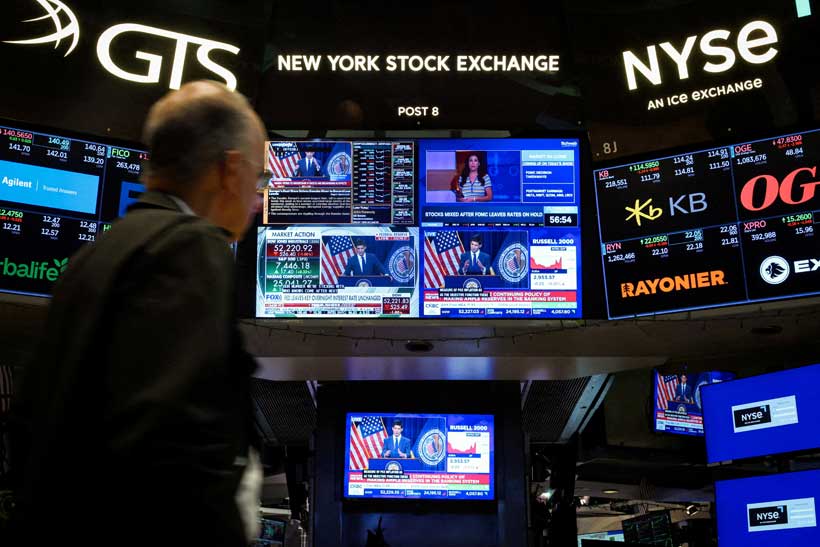
Oil prices surge past $103 a barrel after US announces blockade of Iran | Oil and Gas News

Asian stocks fall as naval blockade threat injects new turmoil into financial markets.

Oil prices have risen sharply following US President Donald Trump’s announcement of a naval blockade of Iran.

Brent crude, the international benchmark, rose more than 8 percent on Sunday to top $103 a barrel.

Recommended Stories

list of 4 itemsend of list

It was the first time the benchmark rose above the psychologically important threshold of $100 since Tuesday, when prices surpassed $111 a barrel.

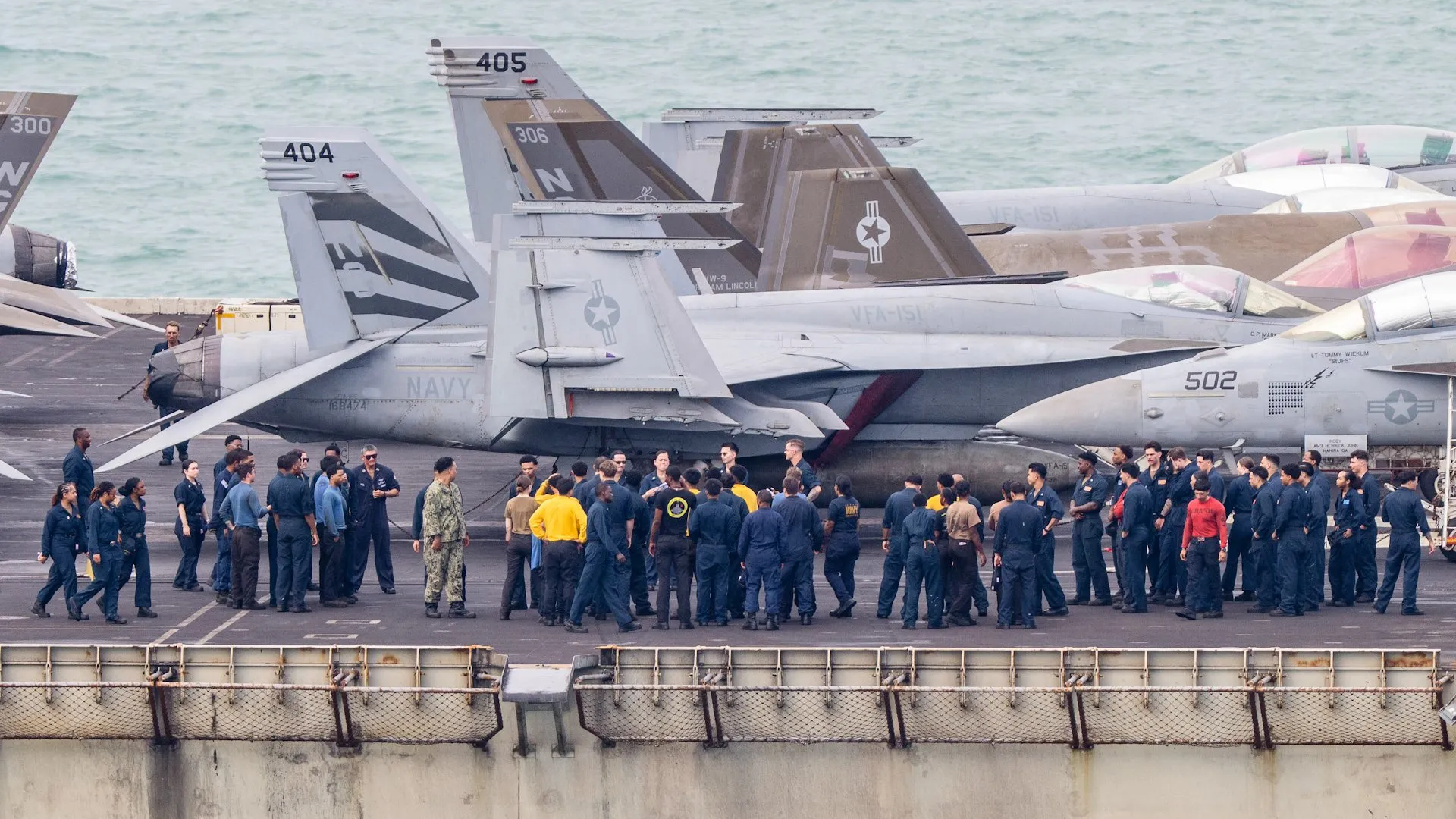
Trump announced on Sunday that the US Navy would block all ships from entering or exiting the Strait of Hormuz, following the collapse of ceasefire talks between US and Iranian officials over the weekend.

US Central Command said in a later statement that it would only block vessels travelling to and from Iran and that other traffic would not be impeded, in an apparent scaling back of Trump’s threat to impose a full blockade.

The command said the blockade would take effect on Monday at 10am Eastern Time (14:00 GMT).

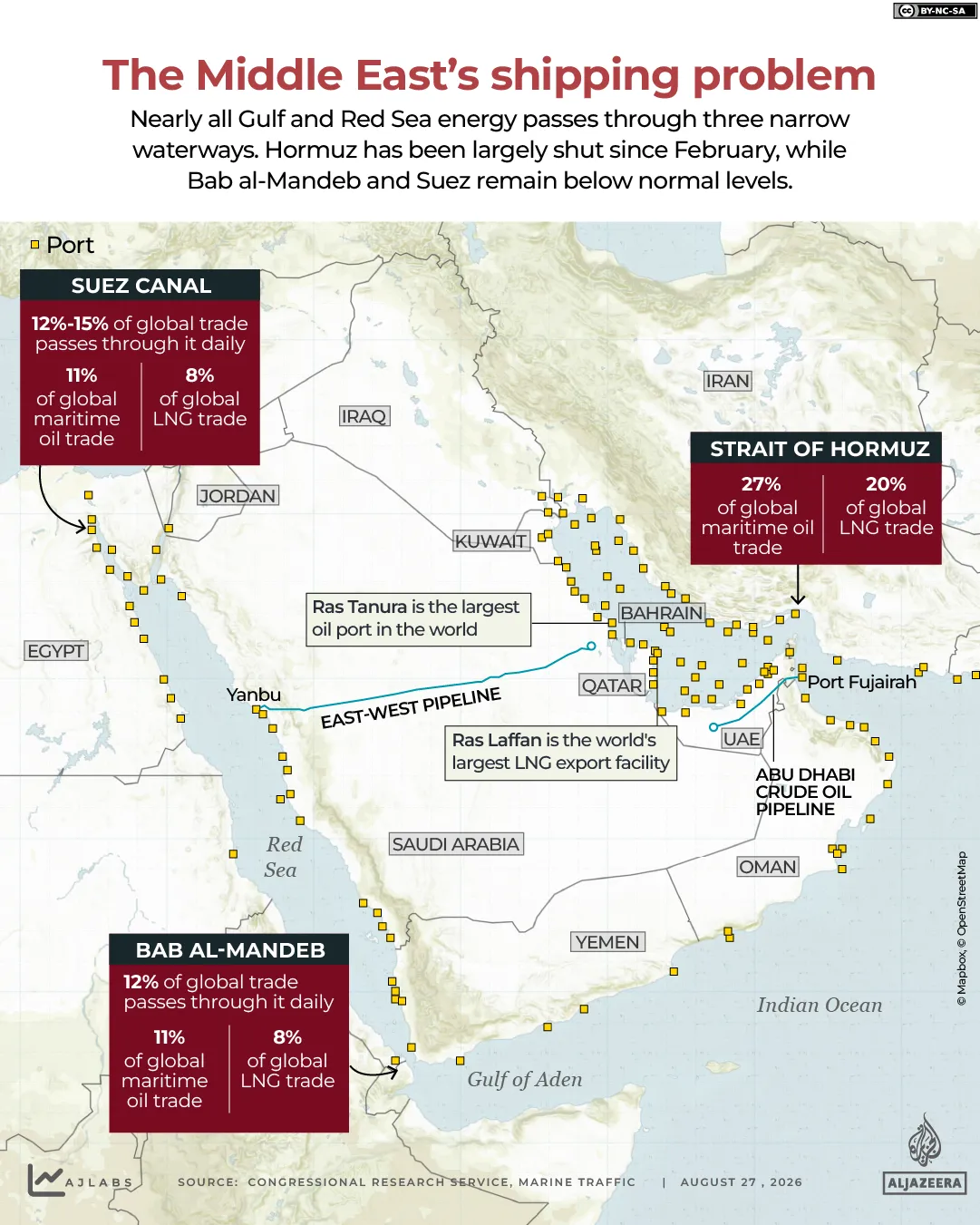
Oil prices have been a rollercoaster since US-Israeli strikes on Iran prompted Tehran to impose a de facto blockade of the Strait of Hormuz, a conduit for about one-fifth of global oil and natural gas supplies.

After topping $119 last month, Brent fell below $92 a barrel last week after the US and Iran announced a two-week ceasefire following more than six weeks of war.

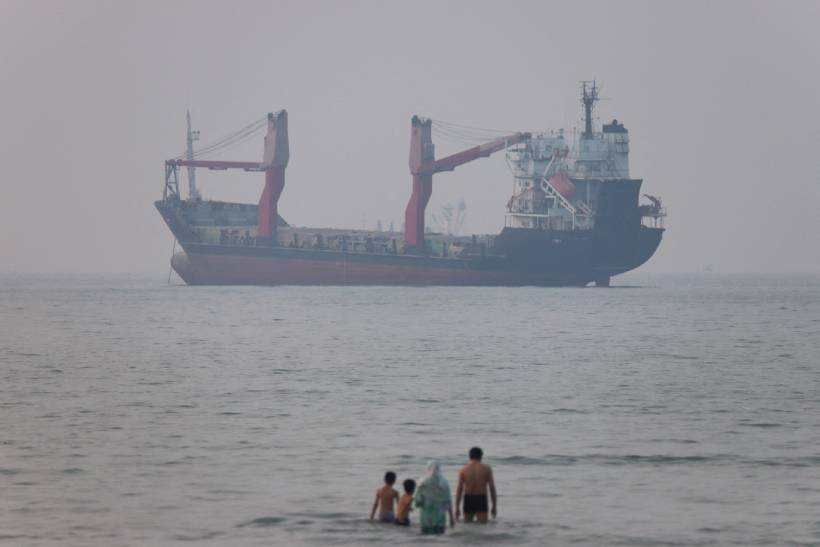
While Iran has allowed a limited number of ships to transit the waterway, subject to prior vetting and authorisation, traffic has been reduced to a trickle compared with peacetime levels.

Despite Washington and Tehran’s fragile truce officially remaining in place until April 22, only 17 vessels crossed the strait on Saturday, according to maritime intelligence firm Windward, down from roughly 130 daily transits before the war.

Major stock markets in Asia opened lower on Monday as Trump’s blockade threat stoked uncertainty on trading floors.

Japan’s benchmark Nikkei 225 fell 0.9 percent in morning trading, while South Korea’s KOSPI dropped more than 1 percent.

US stock futures, which are traded outside of regular market hours, also fell, with those tied to the benchmark S&P 500 down about 0.8 percent.

Source link

US military threatens to blockade all Iranian ports starting on Monday | US-Israel war on Iran News

Vessels will still be able to transit Strait of Hormuz to and from non-Iranian ports, says CENTCOM; Iran warns any approaching military vessels will be breaching ceasefire.

The United States military has announced it will begin blockading all Iranian ports on Monday, its latest move to exert pressure on Tehran after marathon peace talks in Pakistan concluded without a deal.

In a statement on Sunday evening, US Central Command (CENTCOM) said the blockade would apply to “all maritime traffic entering and exiting Iranian ports” from 10am Eastern Time (14:00 GMT) on April 13. That includes “vessels of all nations entering or departing Iranian ports and coastal areas”, including those on the Gulf and the Gulf of Oman.

Recommended Stories

list of 3 itemsend of list

However, US forces “will not impede freedom of ⁠navigation for vessels transiting the Strait ⁠of Hormuz to and ⁠from non-Iranian ports,” CENTCOM said, in an apparent scaling back from President Donald Trump’s earlier threat to blockade the entire strait and pursue ships paying tolls to Iran.

“There are a lot of questions here,” said Al Jazeera’s Heidi Zhou-Castro from Washington, DC, pointing to “conflicting information” coming out of the US side.

“Trump said the blockade would target any and all ships trying to enter or leave the Strait of Hormuz. But CENTCOM is saying this would only target ships going to or from Iranian ports.”

The price of US crude oil jumped 8 percent to $104.24 a barrel after the US blockade threat. Brent crude oil, the international standard, increased 7 percent to $102.29.

Iran has essentially taken control over the Strait of Hormuz, a vital chokepoint for the global energy market, since the US and Israel launched a war against the country on February 28. Traffic through the waterway has since slowed to a trickle, nearly paralysing about one-fifth of the world’s oil and liquefied natural gas shipments.

Iran has continued to move its own vessels through the strait, while allowing limited passage of ships from other countries. Iranian officials have discussed setting up a toll system after the fighting ends.

In a statement responding to Trump’s blockade threat, Iran’s Islamic Revolutionary Guard Corps said any approaching military vessels would be in breach of a US-Iran ceasefire – meant to be in effect until April 22 – and “will be dealt with severely”.

The US-declared blockade appears to be triggered by the failure of the talks in Pakistan’s capital, Islamabad, raising fears of renewed fighting.

Iranian officials blamed the US side for failing to reach a deal, with Minister of Foreign Affairs Abbas Araghchi saying US negotiators shifted the “goalposts” and obstructed efforts when a memorandum of understanding was “just inches away”.

Zohreh Kharazmi, an associate professor at the University of Tehran, said the US “is not in a position to dictate” to Iranians how to behave, or “to choose which vessels may pass”.

“If this blockade becomes a contest between the resilience of the Islamic Republic and the resilience of global markets, it will not take long to see who is losing,” she said, adding that Iran “is ready for a prolonged war”.

“Technically, they [the US] cannot control the situation. With Hollywood-style strategies, they cannot prevail in this battleground.”

Source link

Trump threatens to blockade the Strait of Hormuz

President Donald Trump announced on Sunday that the U. S. Navy would begin a blockade of the Strait of Hormuz following unsuccessful talks with Iran, endangering a fragile two-week ceasefire. Trump stated that the Navy would take action against vessels in international waters that had paid Iran a toll and would destroy mines allegedly placed by Iran in the strait, a critical passage for about 20% of global energy supplies.

Trump declared, “Effective immediately, the United States Navy. . . will begin the process of BLOCKADING any and all Ships trying to enter, or leave, the Strait of Hormuz. ” He added that no vessel paying an illegal toll to Iran would have safe passage and warned that any Iranian who fired at the U. S. or peaceful vessels would face severe consequences. Trump also mentioned that NATO allies had expressed interest in assisting with this operation.

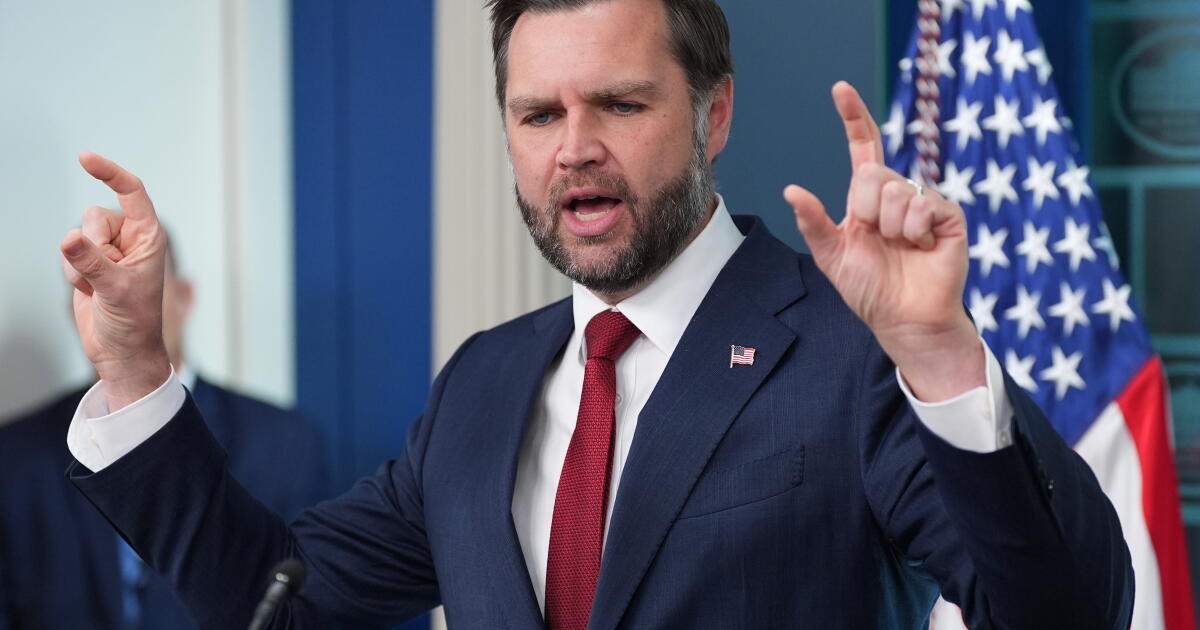
In an interview with Fox News, Trump anticipated that Iran would return to negotiations, suggesting that his comment about wiping out Iranian civilization had prompted initial discussions. Each side blamed the other for the failure of the talks, which aimed to end six weeks of fighting that resulted in thousands of deaths and rising oil prices. Vice President JD Vance, who led the U. S. delegation, indicated that Iran’s unwillingness to accept terms relating to nuclear weapons was the main obstacle.

Iranian Parliamentary Speaker Mohammad Baqer Qalibaf criticized the U. S. for failing to earn Tehran’s trust despite proposed initiatives. He emphasized that the U. S. needed to decide if it could gain Iran’s trust. The recent talks were the first direct U. S.-Iranian meeting in over a decade and came after a ceasefire was announced.

Despite ongoing negotiations, Israel continued its military actions against Hezbollah militants in Lebanon, claiming that this conflict was separate from the U. S.-Iran ceasefire discussions. Israeli military struck Hezbollah rocket launchers, while air raid sirens in Israeli villages signalled incoming rocket fire from Lebanon. Iran seeks control of the Strait of Hormuz, war reparations, a regional ceasefire, and the release of its frozen assets. Even amidst these tensions, three supertankers laden with oil successfully passed through the Strait of Hormuz, marking the first vessels to leave the Gulf since the ceasefire deal.

With information from Reuters

Source link

Rescuers dig through rubble after deadly Israeli strikes in south Lebanon | US-Israel war on Iran

NewsFeed

Rescuers are digging through rubble after a new wave of Israeli strikes across southern Lebanon killed at least 13 people. The attacks hit multiple towns in the Tyre and Nabatieh districts. The death toll from Israeli attacks in Lebanon climbs above 2,000.

Source link

Seven ways America can win the ceasefire and end the war | US-Israel war on Iran

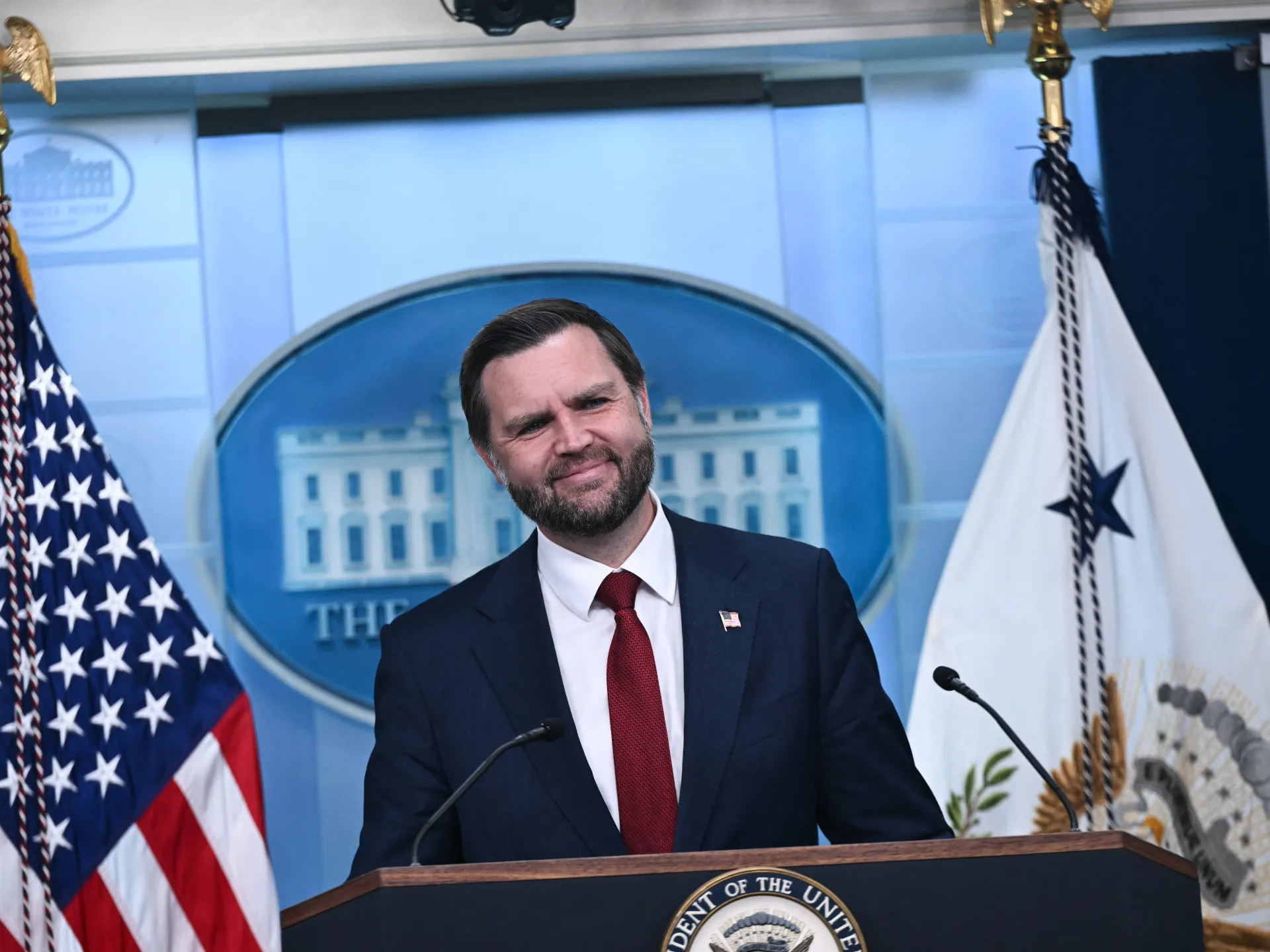
It was too much to ask of United States Vice President JD Vance that he hammer out a peace agreement with representatives of the Islamic Republic of Iran after the first direct meeting of the two sides in more than a decade.

But it is not too much to ask for enemy combatants to maintain the ceasefire and for negotiators to come back to the table for a second round of meetings.

As of now, we still have a ceasefire. The question remains: Can America win it?

For President Donald Trump, this question is existential. If voters perceive that the US lost the war against Iran, the Republicans will lose Congress and the president would be on the political hot seat for his last two years in office.

If, on the other hand, voters perceive that this conflict with Iran was worth it and life returns to normal by the summer, then the Republicans have a better chance of breaking even in November’s midterm elections.

What would it take for the US to win the ceasefire and eventually get a peace agreement?

Well, first, the Strait of Hormuz must be open to all shipping. This must be the number one objective for the Trump administration as it is the one thing that has the most impact on the global economy and, most importantly for a domestic audience, the price of oil. Policy planners at the White House didn’t fully appreciate how Iran could seize control of this critical chokepoint in international commerce, but they appreciate it now.

Second, the US must increase domestic pressure on the Iranian regime. Stopping the bombing is a good way to do that. The Islamic Revolutionary Guard Corps has been significantly weakened by the joint US-Israeli attacks. Our intelligence community needs to do everything it can to strengthen the Iranian protest movement, arming them with weapons and resources. Bombing bridges and oil refineries would have been a significant blunder by the Americans because it would have made it much more difficult for insurgents within the country to mount any kind of opposition.

Third, the US must mend its relationships with its traditional allies. This isn’t just about Iran. Russia and China look at the tensions within NATO, and they rejoice. A more united Western world, especially when it comes to keeping the Strait of Hormuz open, is essential.

Fourth, the Trump administration needs to improve its messaging game. Right now, the US is thoroughly divided when it comes to this war. Even elements of Trump’s political base are deeply sceptical of the campaign. I understand the motivation behind the president’s maximalist rhetoric, but trying to convince your opponents that you are a madman who just might put his finger on the button comes with some downsides.

Our allies were frightened, the American people were concerned, the pope was aghast. Even some of the president’s biggest political fans called for him to be removed via the 25th Amendment of the US Constitution, which provides for replacing a sitting president due to incapacity. Messaging from Secretary of War Pete Hegseth hasn’t been much better. Calling this another Christian crusade is not helpful to our long-term goals in the region.

Fifth, the president needs to paint a picture of what peace would mean to the Iranian people and to the region in general and then sell it to them. What is happening with Venezuela is a perfect example of what could happen with Iran. We cut off the head of government there, but the rest of the political body is still mostly in place. We do not need a total change in the regime. We do need a total change in the attitude of the current regime.

Sixth, the president needs to firmly lay out what we expect from a lasting peace agreement and what we need from the Iranian regime. The first thing we need is actual peace. Enough with funding terrorism, terrorist proxies and never-ending war against Israel. Peace means peace. The nuclear programme must never be turned into nuclear weapons.

Seventh, the president needs to make sure Israel’s objectives are aligned with ours. This would require some blunt talk between Trump and Israeli Prime Minister Benjamin Netanyahu. Clearly, the Israeli prime minister sold Trump a bill of goods when he told him that this would be a quick war that would topple the Iranian regime at a relatively low cost. That hasn’t happened.

I appreciate how the Israelis are sick and tired of getting missiles sent their way from Hezbollah. But a forever war seems to be a key component of the Netanyahu political campaign, and that simply does not work for the American people any more.

The US and Israel need to be on the same page about what their objectives are now that we are in a lull in the fighting. This is critical to win this ceasefire.

The views expressed in this article are the author’s own and do not necessarily reflect Al Jazeera’s editorial stance.

Source link

News Analysis: Trump’s Strait of Hormuz blockade risks clash with China

President Trump responded to the collapse of high-stakes negotiations with Iran by escalating the conflict on Sunday, ordering a full blockade of shipping through the Strait of Hormuz — a risky move that could drive global oil prices higher and provoke confrontation with a far more formidable adversary.

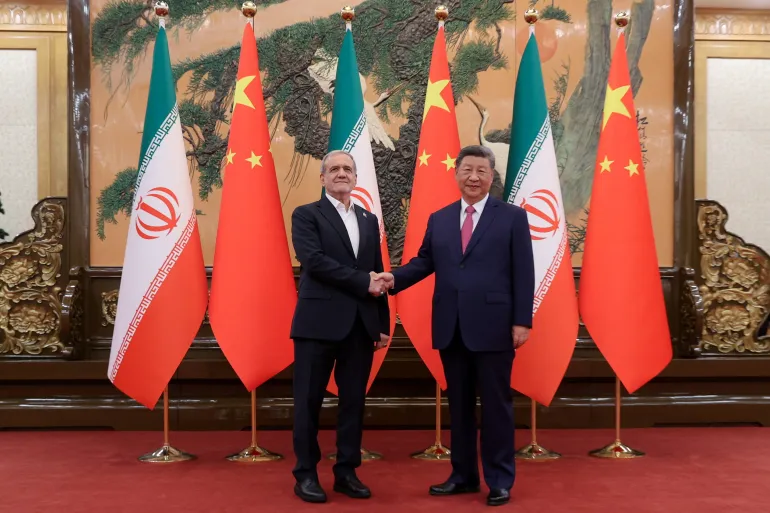
No country relies more heavily on the strait than China, which receives nearly half of its oil imports through the international waterway. In recent days, Beijing has warned that access to its shipping lanes “must be guaranteed.”

Trump administration officials believe the blockade could compel China to pressure Tehran into making further concessions, following Beijing’s crucial role earlier this month in convincing Iran to accept an initial ceasefire.

But the decision by U.S. diplomats to tie negotiations over the status of the strait to those over the fate of Iran’s nuclear program — a matter of torturous diplomacy for the last quarter-century — could make it harder to secure a breakthrough.

In the meantime, a full blockade of the strait could force China to become more directly involved in a conflict that is already heightening tensions with Washington.

On Saturday, reports that Beijing could be preparing to send advanced missile and air defense systems to Iran prompted anger from the White House.

“If China does that, China is gonna have big problems,” Trump told reporters.

It is a high-stakes moment in the world’s most important bilateral relationship, ahead of a closely watched summit between Trump and Chinese President Xi Jinping in Beijing next month that both sides had hoped would help stabilize relations.

The United States and Iran agreed to a two-week ceasefire in the war on Tuesday — on the condition that Iran would allow full freedom of navigation through the strait, a vital commercial artery that was treated for decades as an open, international waterway.

Marathon negotiations in Islamabad, Pakistan, over the weekend between senior U.S. and Iranian officials failed to secure a long-term agreement.

Vice President JD Vance said the central sticking point was Iran’s insistence on maintaining its nuclear program. But Tehran also signaled that shipping through the strait would not return to prewar conditions, pledging to control traffic and impose transit tolls — a scenario that could result in permanently higher global oil prices, a political nightmare for the Trump administration entering the midterm elections.

Trump’s threat to completely shut down traffic through the strait on Sunday may also lead to a temporary spike in oil prices, with experts warning the market could experience barrels costing $150 or more if a blockade persists.

Describing his plans to Fox News on Sunday, Trump said there would be no exceptions to the U.S. blockade for Tehran’s “friends.” Throughout the war, Chinese-bound vessels were granted special passage by Iranian authorities.

“We’re putting on a complete blockade. We’re not going to let Iran make money on selling oil to people that they like and not people that they don’t like, or whatever,” Trump said.

“It won’t be a percentage,” he added. “It won’t be a friend of yours, like a country that’s an ally or a country that’s your friend. It’s all or nothing.”

Trump also wrote on social media that he had ordered the Navy to “seek and interdict every vessel in International Waters that has paid a toll to Iran” — and to “blow to hell” any Iranian assets that open fire on ships.

Beijing did not immediately respond to the proposal. But it has walked a fine line over six weeks of war in the region, describing open waters in the strait as of global interest, while avoiding any condemnation of Iran’s assertion of control.

China’s main energy trading partners in the gulf — Saudi Arabia, the United Arab Emirates and Kuwait — have all advocated for a return to the status quo ante for the passage, pressing allies to reject Iranian control as the new normal.

“Keeping the area safe and stable and ensuring unimpeded passage serves the common interest of the international community,” a Chinese official said last week.

“We hope that all sides can work together,” the official added, “for the early resumption of normal traffic at the strait.”

Source link

Iranian authorities remain defiant, urge supporters to stay in streets | US-Israel war on Iran News

Tehran, Iran – Iranian authorities say the United States needs to do more if an agreement is to be made to end the war as they urge their supporters to maintain control of the streets.

The US delegation at Saturday’s marathon talks in Islamabad, Pakistan, “ultimately failed to gain the trust of the Iranian delegation in this round of negotiations”, said Mohammad Bagher Ghalibaf, the parliament speaker who led the Iranian team.

Recommended Stories

list of 3 itemsend of list

US President Donald Trump said on Sunday that the US Navy will immediately begin the process of “blockading any and all ships trying to enter, or leave, the Strait of Hormuz” in Iran’s southern waters. He also said the US military remains “locked and loaded” and will “finish up” Iran at the “appropriate moment”.

The fact that the Iranian delegation did not accede to Washington’s core demands of eliminating nuclear enrichment on Iranian soil and ending Iranian control over the Strait of Hormuz was welcomed by Iranian authorities on Sunday as they projected defiance.

Judiciary chief Gholam-Hossein Mohseni-Ejei thanked the delegation that went to Islamabad and said they “guarded the rights” of the supporters of Iran’s government, including paramilitary forces converging on main squares, streets and mosques in Tehran and other cities every night for more than six weeks.

When the delegations were engaged in the talks on Saturday night, a member of the aerospace division of the Islamic Revolutionary Guard Corps (IRGC) was shown by state television telling flag-waving supporters in downtown Tehran not to be concerned.

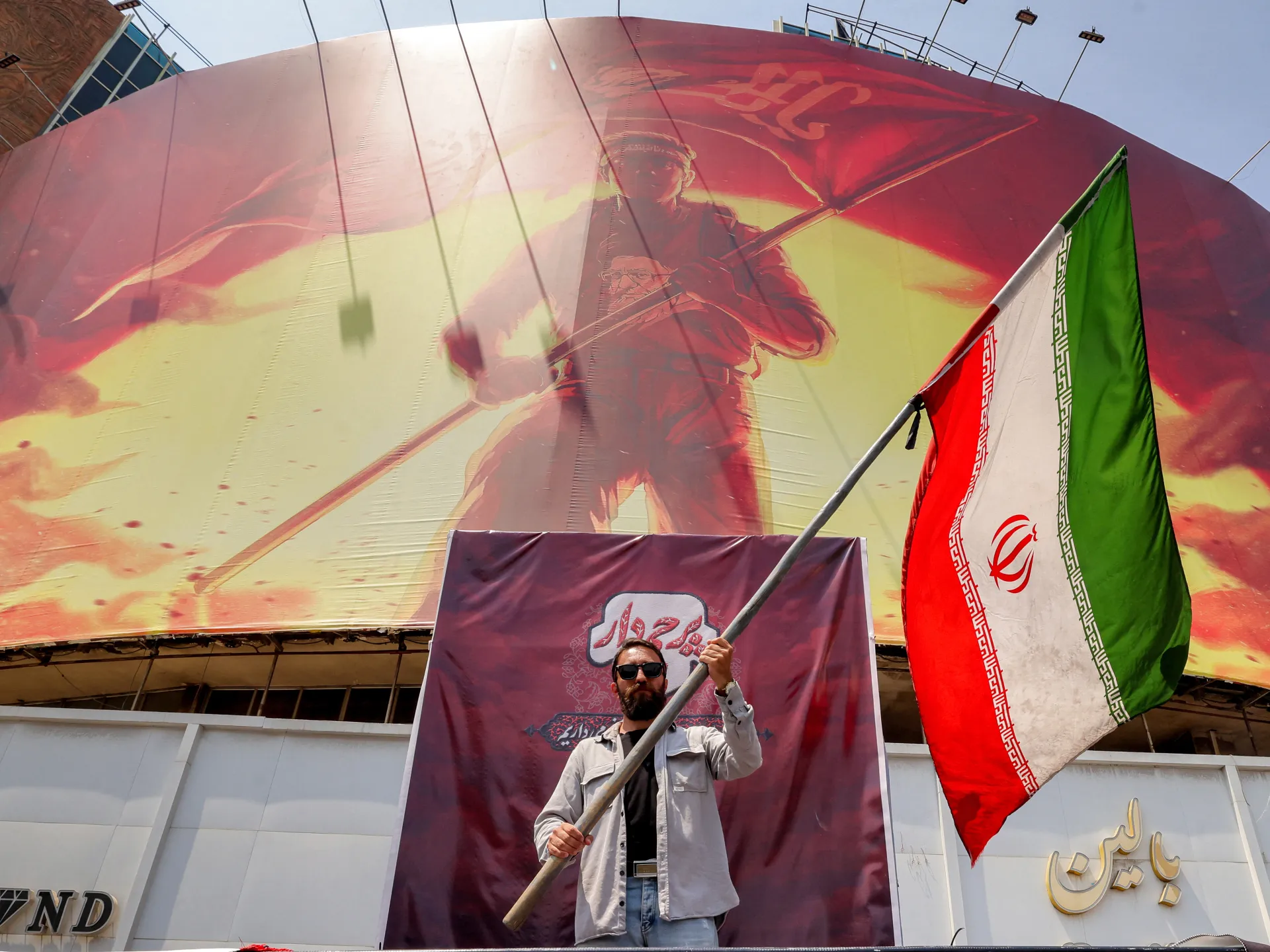
A woman walks past a giant billboard reading 'The Strait of Hormuz remains closed' at the Revolution Square in Tehran, Iran on April 12, 2026.
A billboard reading, ‘The Strait of Hormuz remains closed,’ is displayed in Revolution Square in Tehran on April 12, 2026 [Atta Kenare/AFP]

“If the enemy does not understand, we will make them understand,” the man who was wearing military attire and a black mask to conceal his identity said to cheers from the crowd, some of whom demanded more missile and drone attacks from the IRGC.

State television also said it was Trump, not Tehran, that wished to “restore his image” through the negotiations and his “excessive demands” were the reason the talks failed.

The Ministry of Foreign Affairs said it did not expect to reach an agreement after only one day of negotiations.

Multiple lawmakers in the hardliner-dominated parliament said they were happy that the talks did not yield results because they believed Iran had the upper hand in the war.

Hamidreza Haji-Babaei, the parliament speaker’s deputy, said the only thing acceptable to the establishment supporters who are on the streets is a United Nations Security Council resolution that would signal “surrender” for the US and lead to the lifting of sanctions against Iran and its leaders.

Amir Hossein Sabeti, a Tehran lawmaker affiliated with the Paydari faction of hardliners, said he was thankful to the negotiating team for “not backing away from red lines” and “there is no way left but to show resistance in the field against these evildoers and demons”.

More escalation ahead

This comes after some pro-state voices said they were disheartened by the abrupt announcement overnight into Wednesday of a two-week ceasefire and direct negotiations on ending the war with the US.

To assuage internal concerns, the Iranian delegation to Islamabad had more than 85 members, according to local media, including dozens of representatives from state-affiliated media and analysts close to different factions.

In addition to Ghalibaf, a former IRGC commander who advanced Iran’s missile programme, senior members of the team included Foreign Minister Abbas Araghchi, hardline diplomat Ali Bagheri Kani, Defence Council head and former security chief Ali Akbar Ahmadian and moderate central bank chief Abdolnasser Hemmati.

The talks on Saturday established that a diplomatic breakthrough was not close and that more escalation was likely, even if there is no immediate return to full-fledged fighting.

“What he [Trump] has been saying after the negotiations is just excessive talk. He is saying his wishes out loud,” Ebrahim Azizi, the head of the national security commission of Iran’s parliament, told state television on Sunday afternoon about Trump’s announced naval blockade and new threats.

The IRGC has threatened that it will respond to any passage of military vessels through the Strait of Hormuz with full force. It also rejected the US military’s announcement during the talks that two US warships had passed through the strait in preparation for an operation to clear naval mines blocking the strategic waterway.

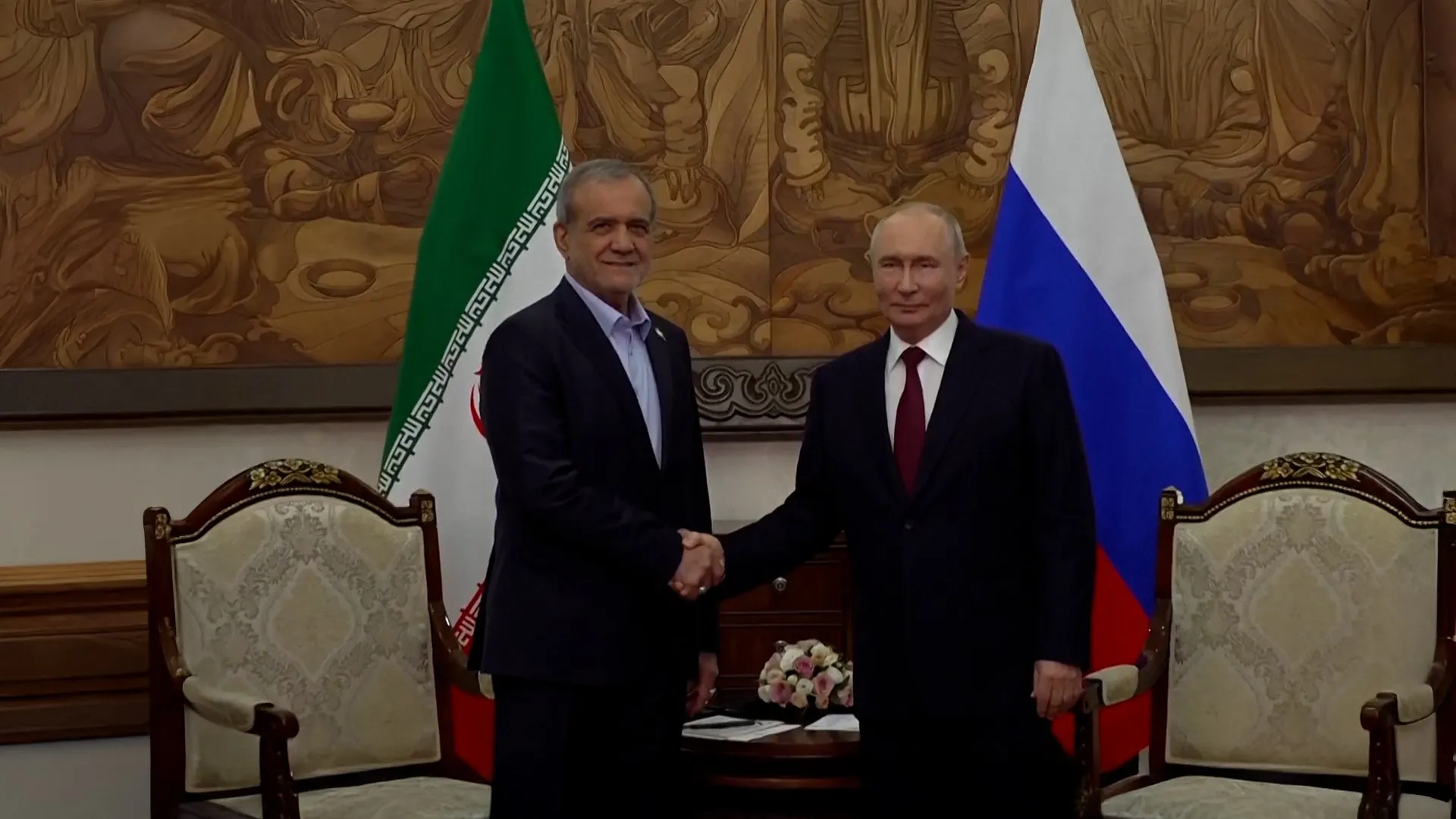
Russian President Vladimir Putin told Iranian President Masoud Pezeshkian in a phone call on Sunday that he is ready to continue diplomatically facilitating a peace settlement in the Middle East.

Pezeshkian, who has been tasked mainly with working on domestic affairs, has supported continuity of the establishment and backing for Mojtaba Khamenei, the supreme leader who has not been seen or heard from outside of written statements since Israel and the US launched the war on February 28. His government announced that schools and universities will be held online, using a limited local intranet, until further notice.

Iran’s economy continues to suffer from chronic inflation with more jobs lost in 2026 as the state continues to impose a near-total internet shutdown.

Source link

Lessons from the Iran war | US-Israel war on Iran

On Saturday, the United States and Iran held direct negotiations for the first time in more than a decade. The talks ended without a deal, as the US and Iranian positions remain far apart.

While it is unclear what will happen next, the past month and a half of fighting has cast light on important lessons to be learned not just about this conflict but also the nature of modern warfare. These may turn into key considerations for decision-makers in Washington as they determine what to do next.

Scale and geography matter

Iran operates on a scale that immediately complicates any direct confrontation. With a landmass of approximately 1.64 million sq km (more than 633,200sq miles) and a population exceeding 90 million, the country dwarfs the environments in which recent major wars have taken place.

By comparison, Iraq — invaded by a US-led coalition in 2003 — has roughly one quarter of Iran’s land area and half its population. Afghanistan and Ukraine, while sizeable, are still significantly smaller in both territory and demographic weight.

This matters because military operations scale nonlinearly. Larger territory does not simply require more troops and weapons; it requires exponentially more logistics, longer supply lines, and expanded intelligence coverage.

If scale complicates the planning of a war, geography compounds it even more.

The US invasion of Iraq benefitted from favourable terrain. Coalition forces advanced rapidly through the relatively flat southern desert and river valleys, enabling a swift push towards Baghdad. Russian forces also benefitted from the relatively even landscape in Ukraine, easily crossing through the steppe in the eastern part of the country.

The problem with flat terrain is that it exposes troops to enemy attacks, as their movements can easily be detected.

Afghanistan presented the opposite challenge: mountainous terrain that limited conventional operations and forced reliance on airpower, special forces, and local allies.

Iran, however, combines the worst of both environments at a much larger scale.

The Zagros Mountains stretch along Iran’s western frontier, forming a natural defensive barrier. The Alborz Mountains in the north protect key population centres, including Tehran. The central plateau introduces vast desert expanses that can complicate military manoeuvres and sustainment. Meanwhile, Iran’s long coastline along the Gulf and the Gulf of Oman introduces maritime vulnerabilities, but also defensive depth.

Iran’s mountainous terrain not only makes a ground invasion almost impossible but also provides plenty of opportunities to hide missile launchers, military production facilities, and even air defences. This means that even a conflict limited to an air campaign could be stretched over many months, as Iran retains the capability to retaliate.

Strong and cohesive defence

The assumption that internal diversity translates into vulnerability is often overstated. Iran is ethnically diverse, with minorities such as the Azerbaijanis, Kurds, Arabs, Baloch, and others forming a significant part of its population. Yet historical experience suggests that external threats tend to strengthen national cohesion rather than fracture it.

Ukraine provides the most recent example. Despite linguistic and regional differences, Russia’s invasion reinforced Ukrainian national identity and resistance.

Iran followed a similar trajectory. External military pressure did not dissolve the state; it consolidated it.

This is particularly significant given Iran’s military structure. With more than 800,000 active personnel, including both the regular army and the Islamic Revolutionary Guard Corps (IRGC), Iran possesses a layered defence system designed for both conventional and asymmetric warfare. Its doctrine emphasises dispersal, survivability, and long-term resistance.

Unlike Iraq in 2003, whose military had been weakened by sanctions and prior conflict, Iran maintains a functioning state apparatus, integrated command structures, and extensive missile and drone capabilities.

Here, Ukraine offers another important lesson: even a large, modern military can fail to achieve decisive results against a smaller but determined and organised defender.

Russia entered Ukraine with a large force, hoping for a swift victory and regime change. Yet the war quickly evolved into a protracted conflict, with high costs and limited strategic gains.

Limits of conventional arms

There are also lessons to be learned about the effectiveness of conventional arms. The past month and a half has shown that even overwhelming air superiority does not necessarily translate into decisive results when deployed against a state designed to absorb and outlast attacks.

Iran’s ballistic missile and drone capabilities are central to this dynamic. Rather than relying on concentrated, high-value assets that can be quickly neutralised, Iran has developed a dispersed and layered system. Missile launchers, storage facilities and production sites have been embedded in mountainous terrain or hardened underground infrastructure, making them difficult to detect and eliminate. This reinforces the broader point: geography is not just a backdrop to conflict; it is actively integrated into Iran’s defensive strategy.

At the same time, Iran’s increasing reliance on drones and relatively low-cost missile systems introduces a different kind of challenge. These systems do not need to achieve precision or dominance; they only need to survive and sustain pressure over time. In doing so, they impose a continuous operational burden on even the most advanced air defence systems.

This creates a structural imbalance. Highly sophisticated and expensive military platforms are used to counter weapons that are significantly cheaper and easier to reproduce. Over time, this dynamic does not necessarily result in victory on the battlefield, but it erodes the ability to achieve decisive outcomes.

The result is a shift in how military power functions in practice. Conventional superiority remains important, but its role becomes more limited. It can disrupt, degrade, and contain, but it struggles to decisively defeat an adversary that is territorially embedded, operationally dispersed, and strategically prepared for a prolonged confrontation.

What this means strategically

Iran is not Afghanistan in 2001, nor Iraq in 2003, nor Ukraine in 2022. It is a hybrid of all three — combining scale, complexity and resilience.

Taken together, these factors reinforce a central conclusion of this conflict: Iran is not simply a harder target; it fundamentally alters the strategic calculus of war.

The combination of scale, geography, and resilience means that any conflict is likely to become prolonged, costly, and uncertain in outcome. This helps explain why, despite sustained military pressure, the war did not produce a decisive shift on the ground. Instead, it moved towards a temporary pause, reflecting the difficulty of translating military action into clear strategic gains.

This does not suggest that future conflict is unlikely. Rather, it indicates that the nature of such conflict could be different from what we saw in this month and a half. Direct, large-scale confrontation becomes less attractive when the probability of a quick victory is low, and the costs of escalation are high. Instead, what emerges is a pattern of limited engagements, calibrated responses, and strategic signalling — forms of conflict that fall short of full-scale war but stop well short of lasting resolution.

For the US and other major powers, the implications are equally significant. The expectation of rapid, decisive campaigns — seen in Iraq in 2003 — becomes far less applicable in this context. Military superiority can still shape the battlefield, but it cannot easily compress time or guarantee outcomes.

Ultimately, the conflict points to a broader shift in the nature of modern warfare. Victory is no longer defined by speed or initial dominance, but by endurance, adaptability, and the ability to operate effectively within complex environments. This may well be a major factor in US calculations on whether to restart the war.

The views expressed in this article are the author’s own and do not necessarily reflect Al Jazeera’s editorial stance.

Source link

Foreign Office warns ‘do not travel here’ or risk invalidating your insurance

The FCDO has all the latest travel warnings listed online, advising against all travel to multiple countries

The Foreign, Commonwealth and Development Office (FCDO) provides regularly updated travel guidance for British nationals heading abroad. It’s vital to check the latest FCDO advice before your trip, as it could affect your holiday plans and travel insurance.

Choosing to travel against FCDO warnings can invalidate your travel insurance. You may also find that consular assistance is severely limited should you face an emergency. On its travel advice page, the government agency says: “No travel can be guaranteed safe. Read all the advice in this guide.”

To safeguard British nationals travelling overseas for work or pleasure, the FCDO provides up-to-date travel advice for every country worldwide. It’s essential to consult this guidance before every journey.

Should the FCDO consider a situation dangerous, it may advise against all travel or only non-essential travel to a particular country or specific regions within it. Alongside travel warnings, the FCDO provides useful information, including entry requirements, crime statistics, local laws and customs, and details regarding any forthcoming strikes or industrial action that could disrupt your holiday.

It’s important to be aware that if the FCDO issues a warning against all travel or all but essential travel to your chosen destination before your departure, your travel insurance is unlikely to provide cover. Consequently, any claims you make will in all probability be rejected.

Travel insurance is designed to safeguard you against unexpected and unforeseen risks. However, heading to a destination that the FCDO has declared dangerous carries a considerably greater risk than jetting off to a generally regarded safe country.

Should the FCDO issue a warning while you are already in an affected region, you will remain covered under the medical and personal accident sections of your travel insurance policy. However, this is provided you comply with the latest FCDO guidance for British nationals in that area.

While most travel insurance policies do not cover trips taken against official advice, there are a handful of exceptions. These particular policies were originally designed to protect individuals travelling to high-risk areas for professional reasons, such as journalists and aid workers. But, they are increasingly being taken up by leisure travellers keen to press ahead with their plans during the COVID-19 pandemic.

Political instability, natural disasters, and safety concerns are among the factors that can prompt an FCDO warning. The FCDO has issued numerous travel advisories, advising against “all travel” and “all but essential travel” to certain nations or regions across Europe, Africa, Asia, and South America.

Of the 226 countries featured on the FCDO’s travel advice page, certain destinations are currently marked as ‘do not travel’ zones owing to various concerns that ‘can not guarantee safety’, including security threats, health risks, and legal differences from Britain. Your travel insurance may be rendered invalid if you travel contrary to FCDO guidance concerning the following nations, as of April 2026.

Afghanistan

The FCDO advises against all travel to Afghanistan, saying: “Your travel insurance could be invalidated if you travel against advice from the FCDO.” The government agency says the security situation is volatile and tensions between Afghanistan and Pakistan have previously resulted in violent clashes in border regions.

It adds: “Travel throughout Afghanistan is extremely dangerous and a number of border crossings are not currently open. There is a heightened risk of British nationals being detained in Afghanistan. If you are a British national and you are detained in Afghanistan, you could face months or years of imprisonment. FCDO’s ability to help you is extremely limited and support in person is not possible in Afghanistan. For more details about the risks in Afghanistan, see Safety and security.”

Belarus

FCDO advises against all travel to Belarus. You face a significant risk of arrest if you have at any time engaged in any activity now considered illegal by the Belarusian regime. There is also a low risk that direct conflict linked to the war in Ukraine may spread to Belarus. Find out more about why FCDO advises against all travel.

Burkina Faso

FCDO advises against all travel to Burkina Faso. This is due to the threat of terrorist attacks and terrorist kidnappings, and the unstable political situation in the country.

It explains: “There is no British Embassy in Burkina Faso and all consular support is provided from the British Embassy in Accra, Ghana. They cannot provide in-person assistance. If there is serious violence, unrest or a deterioration in the security situation, it could be difficult to leave safely.

“Do not rely on the British government to evacuate you as they may not be able to do so. Have your own plans on how you would leave the country, make sure you keep all travel documentation up to date and monitor the local situation.”

Haiti

The FCDO advises against all travel to Haiti owing to the unstable security situation. There are presently no British consular officials in Haiti and the capacity to provide consular assistance is severely restricted and cannot be delivered in person in Haiti. British nationals may receive consular services assistance at our diplomatic mission in the Dominican Republic.

The government agency says: “If you choose to travel to or stay in Haiti against FCDO advice, try to avoid all crowds and public events, and take appropriate security precautions.”

Content cannot be displayed without consent

Iran

FCDO advises against all travel to Iran. It says: “If you are a British national already in Iran, either resident or visitor, carefully consider your presence there and the risks you take by staying. British and British-Iranian dual nationals are at significant risk of arrest, questioning or detention.

“Having a British passport or connections to the UK can be reason enough for the Iranian authorities to detain you.” British nationals should:

  • read if you’re affected by a crisis abroad. This includes guidance on ‘how to prepare for a crisis’ with suggestions on what you might include in your emergency supplies and ‘what to do in a crisis’
  • sign up to FCDO Travel Advice email alerts
  • monitor local and international media for the latest information
  • stay away from areas around security or military facilities
  • keep your departure plans under review, and ensure your travel documents are up to date
  • if you are advised to take shelter, stay indoors or find the nearest safe building or designated shelter. An interior stairwell or a room with as few external walls or windows as possible may provide additional protection

Mali

FCDO advises against all travel to the whole of Mali due to the unpredictable security conditions. The FCDO says if you’re in Mali, you should leave immediately by commercial flight if you judge it safe to do so.

It explains: “The international airport in Bamako is open, and commercial flights are available. Do not try to leave Mali by overland routes to neighbouring countries, as this is too dangerous. This is due to terrorist attacks along national highways. Terrorist group Jama’a Nusrat ul-Islam wa al-Muslimin (JNIM) has implemented blockades on key routes throughout Southern and Western Mali, including the capital city of Bamako.

“These blockades are targeting fuel trucks and are enforcing checkpoints for individuals attempting to pass through them. Attacks can occur at any time. There is a high threat of kidnapping and criminal activity across Mali, including in the capital, Bamako. If you choose to remain in Mali, you do so at your own risk. You should have a personal emergency plan that does not rely on the UK government. If you are a British national already in Mali, either resident or visitor, carefully consider your presence there and the risks you take by staying.”

Niger

FCDO advises against all travel to Niger. This is due to the rise of reported terrorist and criminal kidnappings of foreign nationals, which have taken place this year in Niger.

There is an ongoing risk of terrorist attacks throughout Niger, including in the capital, Niamey. The political situation remains unstable following the July 2023 military coup. Further instability is possible.

Russia

FCDO advises against all travel to Russia due to the risks and threats from its continuing invasion of Ukraine, including:

  • security incidents, such as drone attacks, and Russian air defence activity
  • lack of flights to return to the UK
  • limited ability for the UK government to provide support

There is an increased risk of British nationals being detained in Russia, including if the Russian authorities suspect you of engaging in or supporting activities against Russian law, even if the activities took place outside Russia.

Russia has a track record of targeting foreign nationals and holding them in detention as leverage over other countries. FCDO’s ability to assist you in these circumstances is extremely limited. There is also a high likelihood that terrorists will try to carry out attacks, including in major cities

South Sudan

The FCDO strongly advises against all travel to South Sudan owing to the threat of armed violence and criminal activity. The political and security situation remains unpredictable. Political tensions are high, and the security situation across the country could deteriorate rapidly and unpredictably.

If the unstable security situation deteriorates, routes into and out of South Sudan may be blocked. Juba airport may close or be inaccessible. Flights may be cancelled at short notice. Regional developments may also affect international transport. For example, in 2019 and 2023, events in Sudan caused South Sudan’s airspace to close temporarily. Consular assistance to British nationals is severely limited in South Sudan. In-person consular assistance is not available.

Syria

FCDO advises against all travel to Syria due to unpredictable security conditions and the threat of terrorist attacks. Regional escalation poses significant security risks and has led to travel disruption. British nationals should:

  • read If you’re affected by a crisis abroad. This includes guidance on “how to prepare for a crisis” with suggestions on what you might include in your emergency supplies and “what to do in a crisis”
  • follow advice from the local authorities and sign up to receive information and alerts
  • sign up to FCDO Travel Advice email alerts
  • monitor local and international media for the latest information
  • stay away from areas around security or military facilities
  • keep your departure plans under review, and ensure your travel documents are up to date
  • if you are advised to take shelter, stay indoors or find the nearest safe building or designated shelter. An interior stairwell or a room with as few external walls or windows as possible may provide additional protection

Yemen

FCDO advises against all travel to the whole of Yemen due to the unpredictable security conditions. If you’re in Yemen, you should leave immediately.

It says: “Support for British people is severely limited in Yemen. British Embassy services in Sana’a are suspended, and all diplomatic and consular staff have been withdrawn. The UK government cannot help British nationals leaving Yemen. There are no evacuation procedures in place.

“FCDO cannot offer advice on the safety of travelling to any potential departure point. The UK government’s ability to help with onward travel is severely limited and you’ll be expected to cover the cost of visas, accommodation, insurance and onward travel yourself. If you choose to remain in Yemen, you should minimise movement around the country and within cities and towns, monitor developments in the local security situation and follow other precautions in this travel advice.”

If you’re a British national in Yemen and need help from the UK government, you can call FCDO on 020 7008 5000 (24 hours).

Source link