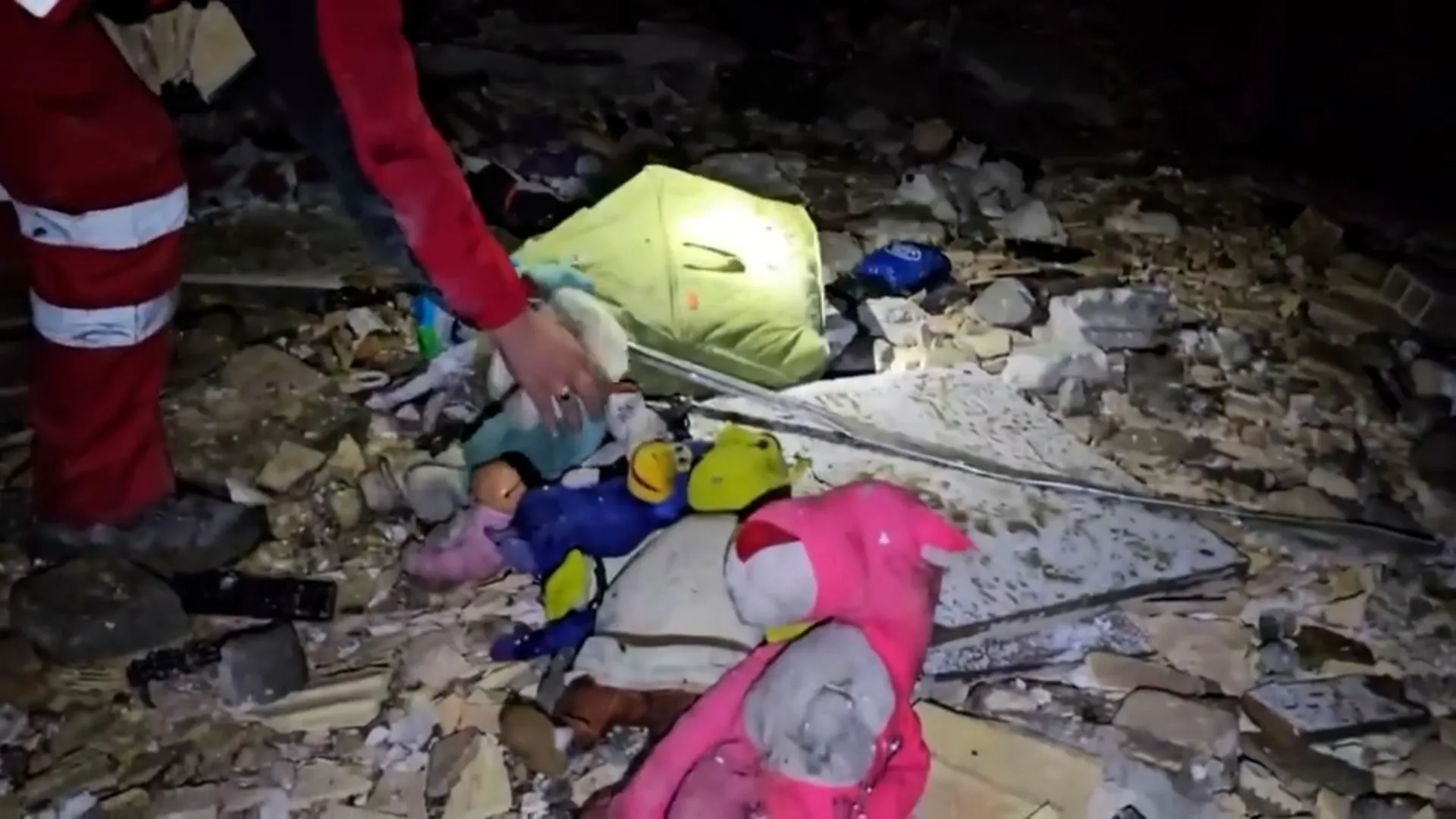
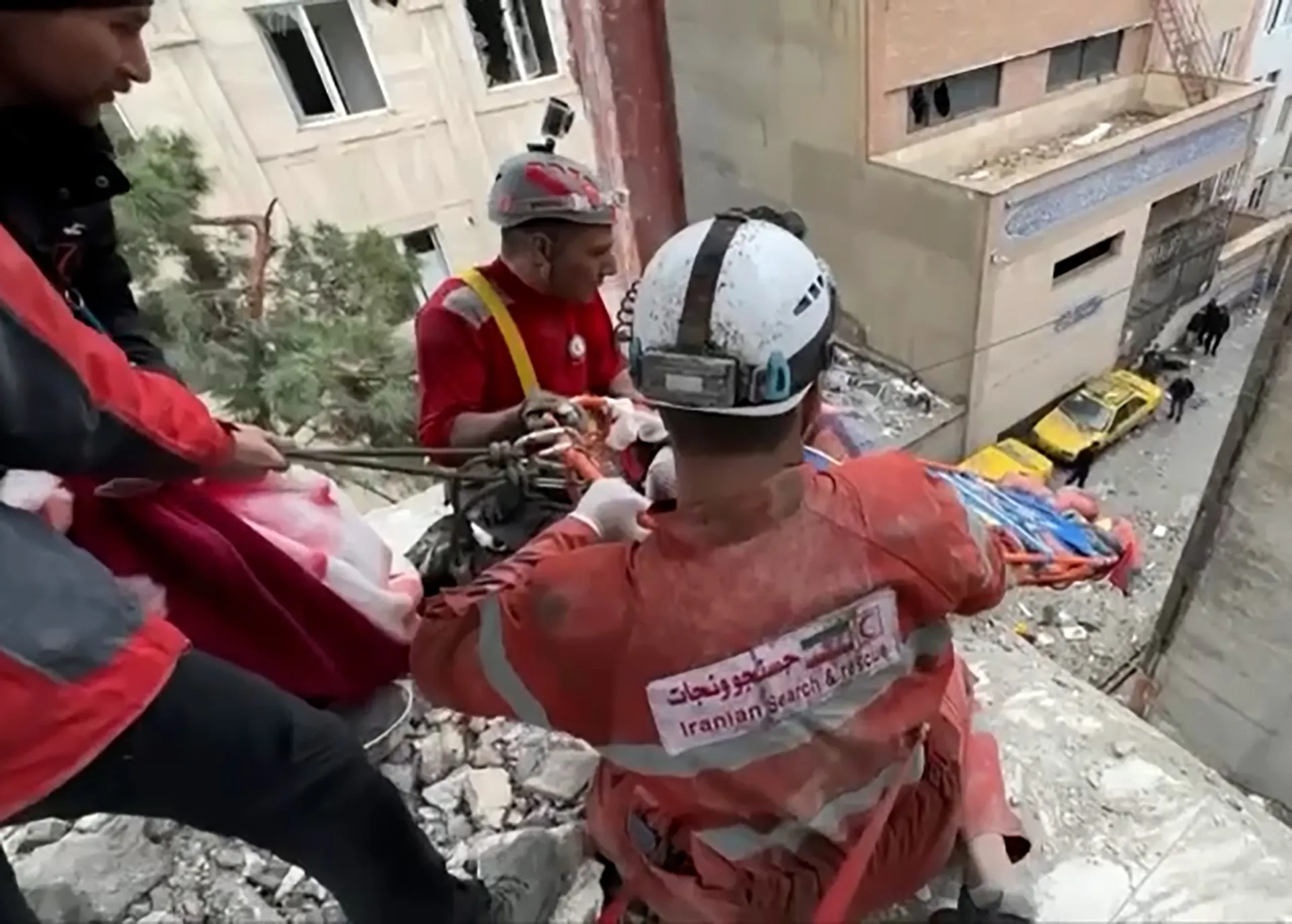
Rescue teams from the Iranian Red Crescent Society have been searching the rubble of residential buildings hit in US-Israeli attacks in Iran, where officials say around 2,000 people have been killed.
“A bit” is what United States President Donald Trump thinks about the scale of Russia’s military aid to Iran.
Moscow “might be helping them a bit”, he told Fox News on March 13.
A day later, Iran’s Foreign Minister Abbas Araghchi stated laconically that Moscow’s military cooperation with Tehran was “good”.
His words seemed to confirm earlier media reports that Russia is providing Iran with satellite and intelligence data on the locations of US warships and aircraft.
It may not sound like much, given the superiority of Western military satellites and Russia’s battlefield losses and communication problems after Elon Musk’s SpaceX company switched off smuggled Starlink satellite Internet terminals.
But data on US military assets Iran is receiving most likely comes from Liana, Moscow’s only fully functional system of spy satellites, according to an expert on Russia’s space programme and military.
“The [Liana] system has been created to spy on US carrier strike groups and other navy forces and for identifying them as targets,” Pavel Luzin, a senior fellow at the Jamestown Foundation, a US think tank, told Al Jazeera.
Eyes in the sky
Russia also played a key role in the development of Iran’s space programme and its key satellite, the Khayyam.
Launched in 2022 from Russia’s Baikonur cosmodrome, the 650kg (1,430 pound) satellite orbits the Earth at 500 kilometres (310 miles) and has a resolution of one metre (3.3 feet).
Moscow “can, in theory, receive and process data from Iran’s optical imaging satellite and share data from its own several satellites”, Luzin said.
On Wednesday, Tehran claimed to have struck the Abraham Lincoln carrier with multiple cruise and ballistic missiles, but the Pentagon called the claim “pure fiction”.
On Sunday, Iranian media claimed that a “massive blaze” was caused by a strike on a US destroyer refuelling in the Indian Ocean.
Washington did not comment on that strike.
Russia has, for decades, supplied weaponry to Iran, including advanced air defence systems, trainer and fighter jets, helicopters, armoured vehicles and sniper rifles, worth billions of dollars.
Since Washington and Tel Aviv began their strikes on February 28, Russia has continued aiding Iran with “intelligence, data, experts and components” for weaponry, Lieutenant General Ihor Romanenko, former deputy chief of Ukraine’s general staff of armed forces, told Al Jazeera.
While Moscow and Tehran loudly proclaim their strategic partnership, they do not have a mutual defence clause, and Moscow has not intervened in the conflict directly.
But the arms supplies have been mutual. Since Russia’s 2022 invasion of Ukraine, Tehran has provided Moscow with ammunition and artillery shells, firearms and short-range ballistic missiles, helmets and flak jackets.
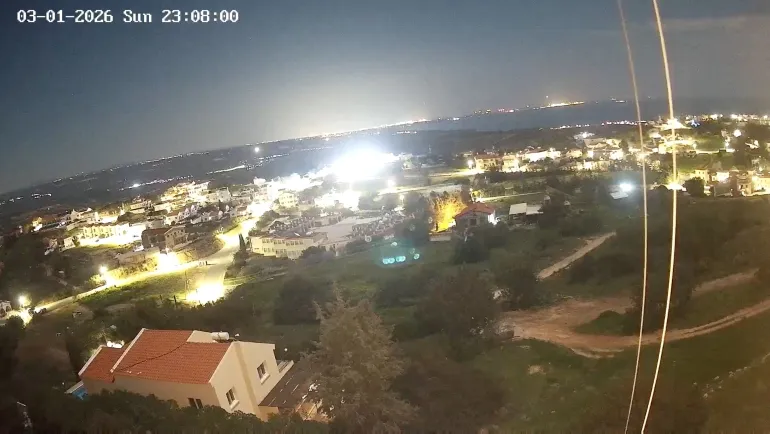
Flashes appear in the sky over RAF Akrotiri, as seen from Pissouri, Limassol District, Cyprus, in this screengrab taken from a handout video obtained on March 2, 2026 [KitasWeather/Handout via Reuters]
Drones with ‘comets’
And then there are the Shahed kamikaze drones – slow, noisy, yet cheap to manufacture – which have been launched on Ukrainian cities in swarms of dozens and then hundreds. Ukraine became so adept at bringing these down – now mass-producing cheap interceptor systems specifically to target Shaheds – that it is now providing its own know-how to Gulf states where US military assets have come under fire from Iran in recent weeks.
In the course of its war with Ukraine, Moscow has manufactured and modernised Shaheds, making them faster and deadlier, and equipping them with cameras, navigators and, occasionally, artificial intelligence modules.
And now, some of the upgrades have made their way back to Iran.
A Shahed drone with a pivotal Russian component launched by Iran-backed Hezbollah from southern Lebanon was able to hit a British airbase on Cyprus on March 1, the UK’s Times newspaper reported on March 7.
It reportedly contained Kometa-B (Comet B), a Russian-made satellite navigation module that also acts as an anti-jamming shield, making drones more resistant to interference.
Russia has also perfected the tactic of sending waves of real and decoy drones to exhaust and overwhelm Western-supplied air defence systems in Ukraine.
These days, the scheme helps Iran hit targets in the Gulf, Western officials say.
“I think no one will be surprised to believe that Putin’s hidden hand is behind some of the Iranian tactics and potentially some of their capabilities as well,” British Defence Secretary John Healey said on March 12 after Iranian drones struck a base used by Western forces in Erbil, northern Iraq.
However, if Iran is suffering a shortage of drones – as some analysts believe it is – that would render the use of Russian tactics, as well as Russia-supplied satellite data useless, experts say.
“Russia does supply data, it’s obvious, the data helps Iran, but not much,” Nikita Smagin, a Russian expert who has written extensively on ties between Moscow and Tehran, told Al Jazeera.
After four days of intensive strikes using up to 250 drones a day in early March, Iran has been launching only up to 50 drones a day, according to Nikolay Mitrokhin, a researcher with Germany’s Bremen University.
“Iran ran out of steam really fast,” he told Al Jazeera.
[Al Jazeera]
‘A goodwill gesture’
Moreover, Moscow is not necessarily particularly interested in an Iranian military victory, as the war is benefitting Russian President Vladimir Putin’s own conflict in Ukraine.
Skyrocketing oil prices make “Putin financially capable of further hostilities,” Lieutenant General Romanenko said.
As Iran strangles shipping through the Strait of Hormuz, the price of Brent crude – the international benchmark – has soared past $100 a barrel in the past three weeks. US President Donald Trump was forced to temporarily suspend sanctions on shipped Russian oil to ease the economic backlash. The result has been tankers laden with Russian oil bound for China making U-turns in the open ocean to divert to India, as countries scramble to grab Russian oil cargoes out at sea. The price of Urals crude has bounced.
Putin “hasn’t achieved his goals in Ukraine and will therefore use anything, including the war [in Iran] and lies to achieve his vision, press with his ultimatums,” Romanenko said.
The Kremlin “doesn’t pursue a breakthrough in this war, doesn’t help Iran break the United States and Israel,” Ruslan Suleymanov, an associate fellow at the New Eurasian Strategies Center, a US-British think tank, told Al Jazeera.
The current intelligence and military aid is “more of a goodwill gesture, an attempt to create an illusion of help, to show Tehran that despite the lack of formal commitments, Russia doesn’t leave its friend in need”, he said.
And Tehran fully understands how insufficient Moscow’s aid is – and therefore relies on its own stratagem of expanding hostilities to the entire region through strikes on neighbouring states and of crippling the global economy with soaring oil prices.
“Iranians understand that the forces are not equal and it’s impossible to defeat the United States and Israel on the battlefield, and no Russian aid is going to help,” he said.
It seems that Trump’s assessment that Moscow “might be helping them a bit” may not be too far wide of the mark.
The Iranian Red Crescent Society released video showing rescuers in Tehran lowering a man strapped to a stretcher from the wreckage of a building severely damaged in an airstrike.
Malaysian leader says oil tankers granted clearance by Iran as government introduces measures to conserve fuel.
Published On 27 Mar 202627 Mar 2026
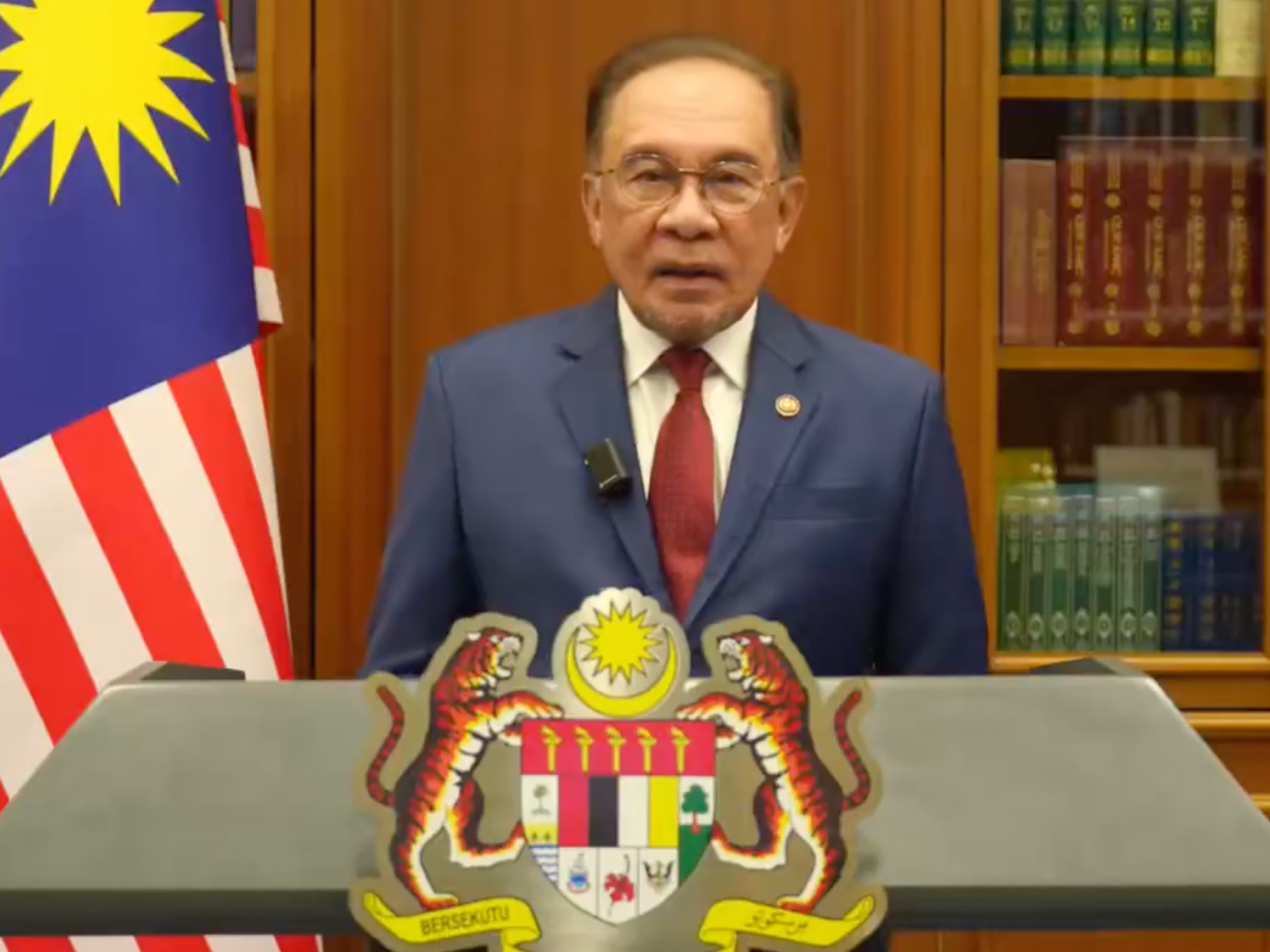
Iran has allowed Malaysian ships to pass through the Strait of Hormuz, Malaysia’s leader said, amid the global energy crunch driven by the United States and Israel’s war with Tehran.
In a televised address on Thursday, Malaysian Prime Minister Anwar Ibrahim expressed thanks to Iran’s President Masoud Pezeshkian for granting Malaysian vessels “early clearance” through the waterway, which has been effectively closed by Tehran.
Recommended Stories
list of 4 itemsend of list
“We are in the process of securing the release of the Malaysian oil tankers and the workers involved so they can continue their journey home,” Anwar said.
Anwar did not elaborate on how many vessels had cleared the strait, which normally facilitates the transport of about one-fifth of global oil and liquefied natural gas (LNG) supplies, or under what conditions the vessels were cleared for safe passage.
The Malaysian government, which has traditionally pursued a policy of non-alignment in international affairs, did not immediately respond to requests for comment.
Anwar said that while Malaysia had been affected by the disruption to energy supplies, the Southeast Asian country was in a “much better position” than other nations due to the capacity of the state-run oil and gas company Petronas.
As one of the world’s top suppliers of LNG, Malaysia is a net energy exporter, but the country imports nearly 70 percent of its crude oil from the Gulf region.
Anwar said his government would take a series of measures to conserve fuel, including reducing the individual monthly quota for subsidised petrol and “gradually and selectively” moving civil servants onto work-from-home arrangements.
“Food supplies are affected; prices will certainly rise. Fertiliser as well, and of course, oil and gas,” Anwar said.
“So there are steps we need to take. There are countries whose impacts are far worse than ours, but that does not mean we are spared entirely,” he said.
While Iran has stated that the strait is open to ships that are not aligned with the US or Israel, Tehran has claimed the right to exercise control over the waterway and admitted responsibility for at least two of 20 documented attacks on commercial vessels in the region.
Iran’s parliament is also pushing legislation that would establish a toll system in the strait amid reports that Iranian authorities have been demanding vessels fork over as much as $2m to guarantee their safe passage.
Five ships were tracked transiting the strait via their automatic identification systems on Wednesday, up from four the previous day, according to maritime intelligence company Windward.
Before the war, an average of 120 vessels transited the waterway each day, according to Windward.
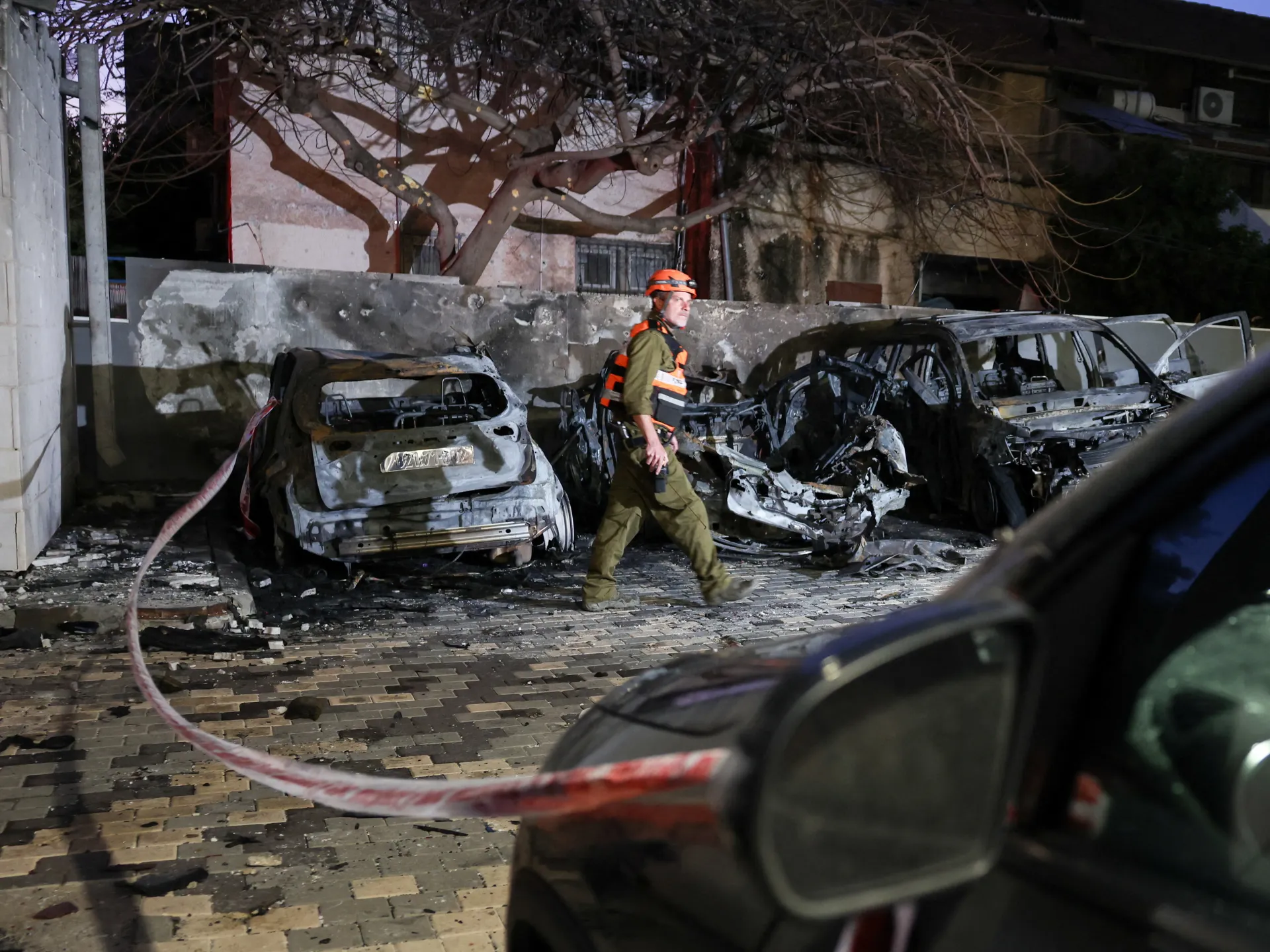
Video captured flames and black smoke where a projectile from Lebanon killed at least one person and injured 13 others in Nahariya, Israel. Burnt vehicles and extensive shrapnel damage could be seen at the site.
Watch this discussion between Ross Harrison and Hassan Ahmadian on US strategy regarding Iran. They conclude the US is still negotiating with old talking points, while Iran has moved on.
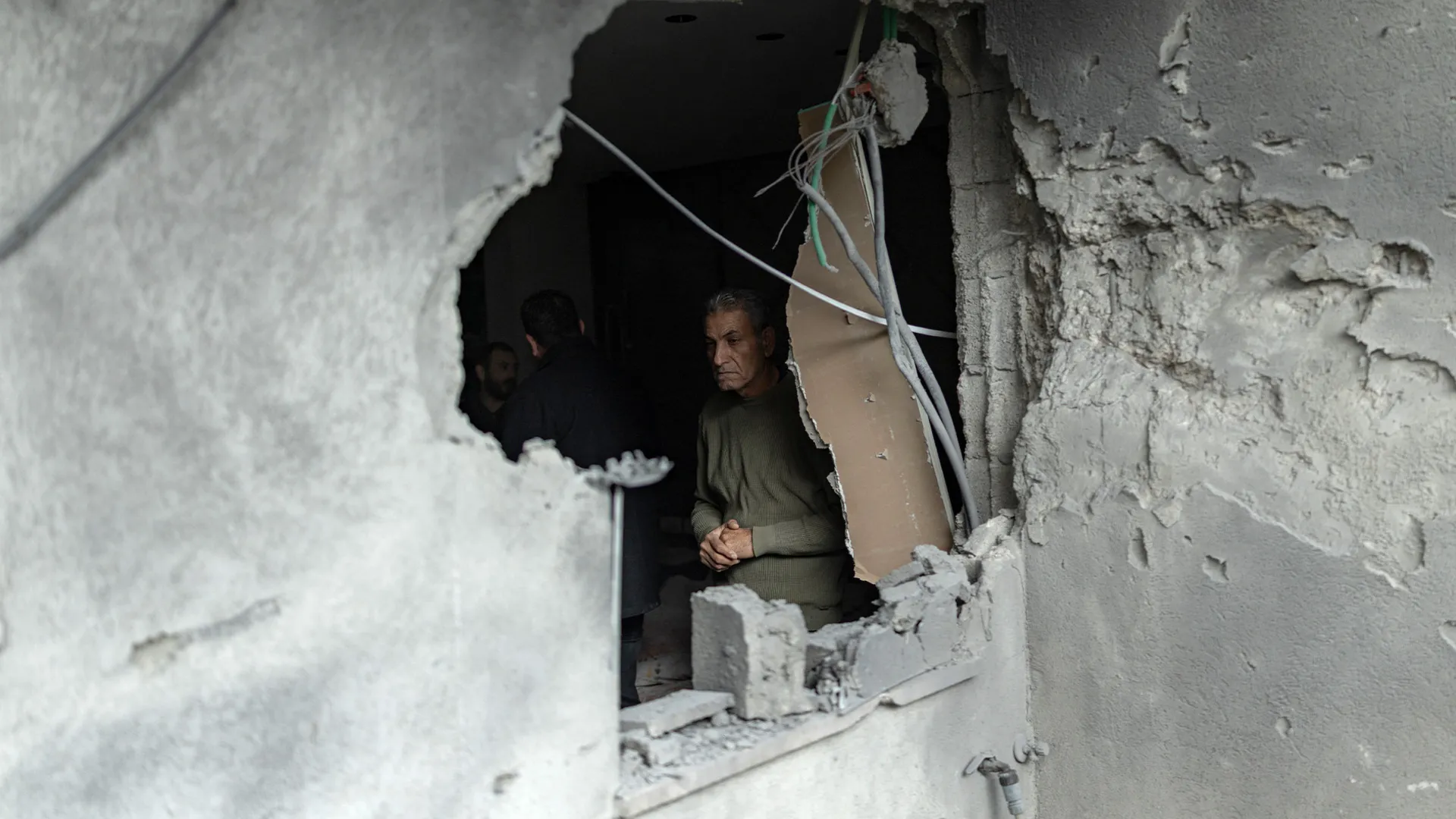
Iranian missiles have caused widespread damage across Israel in the latest wave of attacks, as President Donald Trump says US-Israeli strikes have destroyed the majority of Iran’s missile launchers.
President Trump on Thursday continued projecting confidence in the U.S. war effort in Iran, suggesting online and during a high-level Cabinet meeting that Iran has been “obliterated,” that its leaders were “begging” for a deal, and that the U.S. is “roaming free” over Iran and “NEEDS NOTHING” from its European allies.
His description of the war as all but finished — he actually said “we’ve won” — stood in contrast to the facts on the ground, where Iran continued to launch attacks and threaten oil tanker traffic in the vital Strait of Hormuz, and the U.S. continued sending troops and warships to what is already the largest U.S. military buildup in the Middle East in decades.
Trump’s framing of the conflict also contrasted with that of Iranian officials, who have remained publicly defiant, downplayed negotiations and outwardly rejected several of Trump’s conditions for ending the war — as Trump himself acknowledged, accusing them of saying one thing in private and another in public.
“They better get serious soon, before it is too late,” the president wrote on social media, “because once that happens, there is NO TURNING BACK, and it won’t be pretty.”
“They are begging to make a deal, not me,” Trump reiterated later Thursday, while hosting his first Cabinet meeting since the war began. “Anybody that sees what is happening understands why they are begging to make a deal.”
Trump asserted that Iran’s military capabilities have been destroyed, and that the American mission is “ahead of schedule.” He said American forces were operating without opposition over Iran, and “there’s not a damn thing they can do about it” because they’ve been “beat to s—.”
Trump’s outward confidence, a defining feature of the war campaign that has been consistently echoed by Secretary of Defense Pete Hegseth and other administration loyalists, continued despite growing concerns this week in Congress — and not only from Democrats.
Several Republicans emerged from a classified war briefing Wednesday clearly frustrated with the administration for not providing a clearer picture of the path out of the now monthlong war, or clear answers on whether it planned to deploy ground troops.
“We want to know more about what’s going on,” said Rep. Mike Rogers (R-Ala.), chairman of the House Armed Services Committee. “We’re just not getting enough answers.”
“I can see why he might have said that,” said Sen. Roger Wicker (R-Miss.), chairman of the Senate Armed Services Committee.
Democrats have hammered the president — contrasting the war and its massive budget with rising fuel costs for average Americans and lamenting the deaths of U.S. service members.
“Thirteen American lives lost and tens of billions of taxpayer dollars spent in just three weeks since Donald Trump plunged us into war without congressional authorization. There is still no plan, no clear justification, and no end in sight,” Sen. Alex Padilla (D-Calif.) said. “Americans called for lower prices, not endless wars.”
For weeks, Trump, Hegseth and other war leaders such as Gen. Dan Caine, the chairman of the Joint Chiefs of Staff, have focused on U.S. wins in the conflict — tallying up Iran’s sunken ships and grounded planes, assassinated leaders and undermined missile capabilities.
In recent days, Trump has suggested that, because of those wins, Iran is buckling and its leaders reaching out for a deal. He has said the U.S. is pushing a 15-point plan that will forever block Iran from developing a nuclear weapon or threatening the U.S. or its allies. And he and others in his administration have accused the media of ignoring tremendous battlefield wins to harp on losses instead.
Israel, America’s major partner in the conflict, has projected similar confidence while showing no signs of slowing its attacks on Iran. On Thursday it announced it had killed several senior Iranian naval commanders, including Commodore Alireza Tangsiri, the head of Revolutionary Guard’s navy.
Israel’s Defense Minister Israel Katz said the deaths should send a “clear message” that Israel will continue to hunt down top Iranian military officials. Iran did not immediately acknowledge Tangsiri’s death.
The head of U.S. Central Command, Adm. Brad Cooper, praised Tangsiri’s killing, said U.S. strikes would continue, and called on Iranian fighters to “immediately abandon their post and return home to avoid further risk of unnecessary injury or death.”
Meanwhile, death, destruction and environmental and economic damage from the war spread far beyond Iran, where officials recently increased their estimated death toll to nearly 2,000.
Israel was fighting off a barrage of incoming missiles Thursday, with booms heard in Tel Aviv and Jerusalem and an impact reported in the central town of Kafr Qassem. Iraqi Defense Ministry spokesman Maj. Gen. Tahsin al Khafaj on Thursday said 23 people had been wounded in a Wednesday strike on a military clinic in western Iraq’s Anbar province.
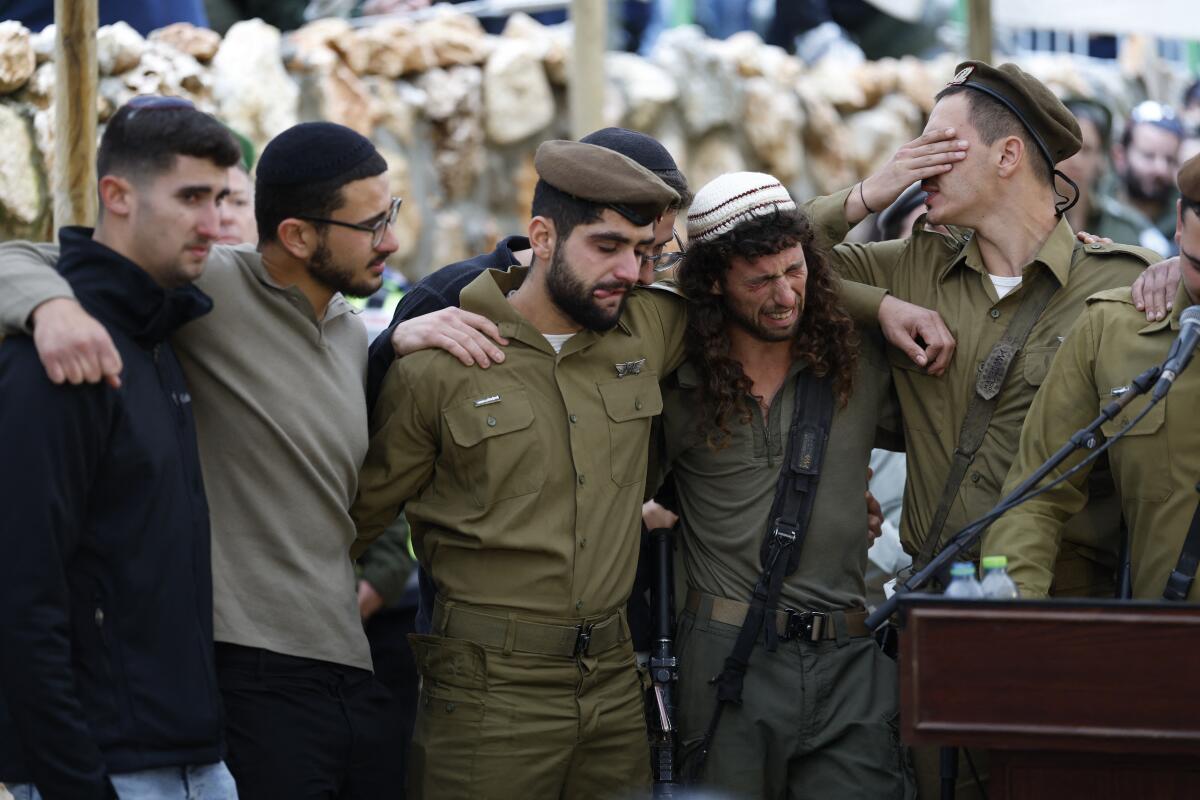
Israeli soldiers grieve during the funeral of Staff Sgt. Ori Greenberg, 21, at the Mount Herzl military cemetery in Jerusalem on Thursday.
(Odd Andersen / AFP via Getty Images)
Thousands of additional U.S. troops are on their way to the region, while many of the tens of thousands already stationed there have been displaced into hotels and other temporary housing — diminishing their war-fighting capabilities — by Iranian attacks that have left the 13 regional military bases they normally live on “all but uninhabitable,” the New York Times reported.
Iran announced Thursday that it had launched drone and missile attacks on a U.S. military base in Kuwait and a separate air base used by American forces in Saudi Arabia.
Jasem Mohamed al-Budaiwi, the secretary-general of the Gulf Cooperation Council, accused Iran of charging fees for ships to safely transit the Strait of Hormuz, continuing the economic toll on global oil supplies. Environmental experts warned of massive pollution from burning oil and gas fields.
Russia, emboldened by the Iran war, which has drawn resources away from Ukraine and led the U.S. to ease sanctions on Russian oil, has launched a renewed spring offensive against Ukraine.
The distance between U.S. and Iranian messaging about the war and their negotiations to end it — which foreign officials have said are occurring through intermediaries — has contributed to the tensions and the reluctance of allies to get involved, with some citing similar frustrations as Republicans in Congress this week.
Many allies have largely stayed out of the conflict despite Trump vacillating between demanding their help and insisting it isn’t necessary.
In one of his posts to social media Thursday morning, Trump blasted allies in the North Atlantic Treaty Organization, or NATO, for having “DONE ABSOLUTELY NOTHING TO HELP” in the conflict, and said the U.S. would “never forget.”
During his Cabinet meeting, Trump said that when the “right deal” is made with Iran, the Strait of Hormuz will reopen — while insisting that Iran no longer has any “mine droppers” that would threaten merchant vessels passing through the key oil route.
Steve Witkoff, one of Trump’s top advisors leading the negotiations in the Middle East, said the Iranians were looking for an “offramp,” that Pakistan is serving as a mediator between Washington and Tehran, and that the U.S. has presented a 15-point plan that “forms the framework for a peace deal.”
“These are sensitive, diplomatic discussions and you have directed us to maintain confidentiality on the specific terms and not negotiate through the news media, as others do,” Witkoff said. “We will see where things lead and if we can convince Iran that this is the inflection point, with no good alternatives for them other than more death and destruction.”
Trump has also declined to say whom Washington is negotiating with in Iran, but described them as “very smart,” “not fools,” and “very lousy fighters, but great negotiators.”
He also said he knows they are “the right people” for the U.S. to be dealing with because they had given him a “present” — and proved they are in control — by allowing “eight big boats of oil” travel through the strait this week.
Asked if he intended to send U.S. troops into Iran to take its enriched uranium, he called it a “ridiculous question” that he wouldn’t answer.
Treasury Secretary Scott Bessent said he is confident that more merchant vessels will soon be able to safely pass through the Strait of Hormuz. He also told the president that he believed the oil market is currently “well supplied” and that once the war ends, energy prices will drop.
Hegseth repeatedly slammed the media for falsely framing the war effort as floundering or unfocused, saying Iran’s “air defenses are gone,” its leaders hiding in “underground bunkers,” and its fighters losing morale.
He said Iranian officials in private are admitting “very heavy losses,” and that the U.S. and the world are benefiting from having Trump, whom he called the “ultimate deal maker,” working toward a peace deal.
In the meantime, he said, the U.S. military will “continue negotiating with bombs.”
Yields on government debt across European countries and the United States have been rising since the start of the Iran war.
ADVERTISEMENT
ADVERTISEMENT
Investors are demanding higher yields as confidence in the global economy has cratered due to the severe negative impact of the conflict on energy markets, supply chains and Middle Eastern infrastructure.
The 2-year notes, sensitive to near-term rate expectations, have risen faster than their 10-year counterparts in a classic bear-flattening move, while longer-dated yields reflect worries over the economic drag caused by more expensive energy.
Speaking to Euronews, BCA Research’s Chief Fixed Income Strategist, Robert Timper, explained that “the aggressive bear flattening of yield curves reflects a hawkish monetary policy repricing in response to inflation fears stemming from the Iran war”.
“The front-end [2-year yields] is more sensitive to changes in monetary policy and has therefore risen more than the long-end [10-year yields] in response to investors’ anticipation of more hawkish central bank policy,” Timper added.
Historically, this specific curve behaviour often precedes an inverted yield curve, which is a well-recognised indicator of a potential economic recession.
European bonds bear the brunt of the sell-off
The repricing has been most pronounced in Europe, with the UK bond market feeling the biggest pressure.
Since the start of the conflict, the 10-year UK gilt yield has risen from 4.2% to a high of over 5% while the 2-year note yield jumped from 3.5% to a peak of 4.6%.
Timper explained to Euronews that past inflation experience has proved decisive, stating that “rate hikes in the UK are more likely than elsewhere because inflation has been more elevated than elsewhere, and the risk of inflation expectations unanchoring is therefore higher.”
On Wednesday, AJ Bell’s investment director Russ Mould highlighted the UK-specific implications in a detailed press release, noting that the 10-year gilt yield is hovering near 5% for only the third time since 2008 while the 2-year gilt yield comfortably exceeds the Bank of England base rate.
Mould also explained that the gap between the 10-year gilt yield and the FTSE 100 dividend yield has widened to more than one-and-a-half percentage points, making UK equities relatively less attractive.
Elsewhere in Europe, bond yields experienced similar surges.
Germany’s 10-year bund yield increased from 2.65% to around 3%, nearing 15-year highs, while the 2-year note yield climbed from roughly 2% to 2.65%.
In France, the 10-year OAT yield jumped from 3.2% to above 3.7%, approaching 17-year peaks, while the 2-year note yield has risen from 2.1% to over 2.8%.
As for Italy, the 10-year BTP yield was at around 3.3% before the Iran war and has now surpassed 3.9%, approaching two-year highs, while the 2-year note yield has increased from roughly 2.15% to 3%.
In every single one of these bond markets, the yield on the 2-year notes has risen faster than their 10-year counterparts.
The 30 and 20-year bond yields are also all trading higher which denotes deteriorating confidence in the long-term growth prospect of the respective European economies.
US Treasuries face comparable headwinds
Across the Atlantic, US Treasuries have followed a similar trajectory, though the sell-off has been less severe than in the UK for example.
The 10-year note yield has risen from around 3.9% to a peak of 4.4%, reached on Monday, and is currently trading at 4.37%.
Meanwhile, the 2-year note yield increased from 3.35% to a high of over 4%, and it is hovering 3.9% at the time of writing.
The yields on both notes have hit an 8-month high.
Timper’s analysis places US bond performance close to that of the euro area, reflecting broadly comparable inflation histories and policy outlooks. There is scant evidence of investors fleeing European bonds for US Treasuries as a safe-haven trade.
Speaking to Euronews, Timper explained that such shifting flows would be more visible in currency markets as the US dollar benefits from being the predominant denominator for energy exports.
For now the message from bond markets on either side of the Atlantic is consistent, the Middle East conflict has rewritten the near-term outlook for inflation, monetary policy and borrowing costs.
Kremlin spokesperson says talks are part of ‘necessary dialogue’ with Washington as war in Ukraine continues for a fifth year.
Published On 26 Mar 202626 Mar 2026
A delegation of Russian officials has arrived in the United States for meetings with their American counterparts.
The visit, which began on Thursday, marks the first such trip since relations strained over Moscow’s war in Ukraine.
Recommended Stories
list of 3 itemsend of list
Kremlin spokesperson Dmitry Peskov said, “We hope that these first tentative steps will, of course, make their contribution to the further revival of our bilateral engagement.”
He said President Vladimir Putin had set the “main directives” for the trip and would be “thoroughly briefed” on the meeting.
The visit comes as US-brokered talks seeking a deal to end the war in Ukraine are in effect frozen.
Several rounds of negotiations since US President Donald Trump returned to the White House last year have failed to break the deadlock, with the Kremlin ruling out compromises to halt its years-long offensive.
Russia, a close ally of Iran, has also been cited by Western intelligence officials as one of the backers of the Iranian government, as Tehran fights a war launched by the US and Israel.
A report in the United Kingdom-based Financial Times newspaper on Wednesday alleged that Russia was close to completing a shipment of drones to Iran.
Responding to questions about the report, Peskov said, “There are so many lies being spread by the media … Do not pay attention to them.”
Russia this week carried out one of the largest aerial attacks since the start of its war on Ukraine, launching 948 drones in 24 hours as it moved troops and equipment to the front line.
Ukraine’s President Volodymyr Zelenskyy issued a new appeal for allies to supply Kyiv with air defence munitions, warning that Kyiv, which relies on the US for air defence systems against ballistic missiles, will face a deficit of missiles while Washington is focused on the US-Israeli war on Iran.
Talks between Ukraine and the US that opened in the US state of Florida on Saturday again failed to produce a security guarantee that Kyiv has long sought from Washington.
My deepest sympathies lie with the Iranian people, whose hearts are torn in many directions. Many long for freedom and dignity, yet they remain wary of the long history of Western imperial intervention across the world, including their own country.
The Iranian people who took to the streets in recent years did not call for one form of domination to replace another. They demanded an end to oppression in all its forms, not the beginning of a new round under the Western thumb. Nor did they want change at any cost.
At every step, history teaches us – these promises of freedom offered by the West are never fulfilled.
The reason is simple. The freedom of others is simply not on the Western agenda, no matter its public rhetoric. Imperialism of this nature does not want freedom; it wants control, domination, power and profit.
On March 4, as bombs were falling around him in Tehran, Mohamad Maljoo, an Iranian dissident, was finally able to connect to the internet. He wrote on his Telegram channel: “Those who claim that one can rain fire on the body of Iran in the name of striking the Islamic Republic while imagining that the people will remain unharmed either do not understand the reality of war or deliberately choose to ignore it. Bombs do not discriminate. Destruction does not operate selectively.”
The truth of his warning echoes from Palestine to Iran: “Life does not flourish in the shadow of oppression. Nor does it grow beneath the rubble of bombs.”
As a Palestinian, I feel the pain and determination in these words. I cannot help but feel solidarity.
We, Palestinians, know the horror of war in our bodies. We understand the shudders caused by yet another explosion, the tears of orphans and the despair of sleepless nights as fires burn everywhere. From the 1948 Nakba (catastrophe) to the current Ibadah (destruction), we have felt the pain of genocide for many generations. We see the echoes of our experience in the plight of others.
The US-Israel war on Iran began with something all too familiar to us: a strike on a school.
According to UNICEF, an average of a classroom full of children was killed each day for two years in Gaza; 432 out of the Strip’s 564 schools sustained “direct hits” from the Israeli army.
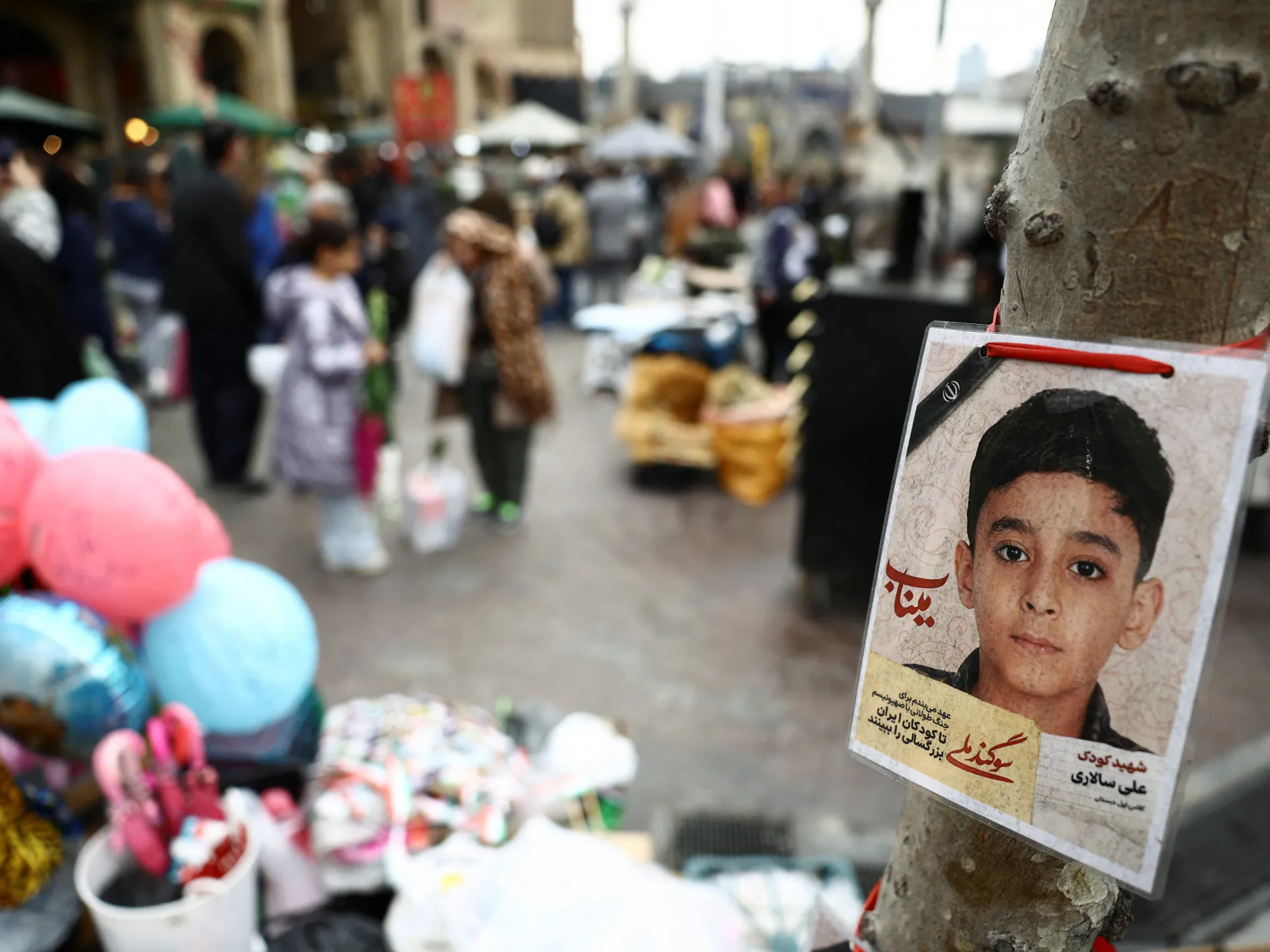
The Shajareh Tayyebeh, a girls’ elementary school in the city of Minab in southern Iran, was also a “direct hit”. About 170 young girls between the ages of six and 12 and staff were killed by two high-precision US-made Tomahawk missiles on February 28.
After the initial strike, teachers rushed to protect the students. Paramedics hurried to the scene to rescue the wounded. And then, a second bomb fell.
It was a double-tap strike – a horror of modern-day warfare that people of Gaza know all too well. It is designed to kill its target and then kill again those who come to the rescue.
Like in Gaza, the attack on the girls’ school in Minab did not remain an exception. Over the past three weeks, Israel and the United States have rained death and destruction on public spaces across Iran. Schools, hospitals, sports halls, stadiums, stores, cafes, bazaars and historical sites have been attacked. More than 5,000 residential units have been hit, and over 1,900 civilians have been killed.
As in Gaza, the cumulative goal is not only physical destruction, but also the spread of fear and terror. The targeting of civilian spaces thus operates as a form of psychological warfare — an assault on the very idea of safety and normality.
Targeting civilian infrastructure is against international law. Yet the US and Israel view international legal norms through the lens of US Defense Secretary Pete Hegseth, who has repeatedly expressed his disdain for the rules of engagement, calling them “stupid”.
By now, it is clear that Gaza has served as Israel’s laboratory, as a testing ground, for the vision it seeks to impose across the entire region.
Just days ago, Israel’s Finance Minister Bezalel Smotrich issued a chilling warning: “Dahiyeh [in southern Beirut] will look like Khan Younis.”
The destruction of Khan Younis – my hometown – has become the new model of devastation to be repeated elsewhere. In Lebanon, in the span of 20 days, this model has resulted in the massacre of nearly 1,100 people, including 120 children – a full classroom every three days.
What we witness in Gaza travels to Lebanon, then on to Iran.
What is the ultimate goal? The consolidation of Israeli hegemony in the region. The strategy is not necessarily the complete overthrow of the Iranian regime, but rather to break the Iranian state itself and significantly curtail its capacity to project power. A weakened or broken Iran would no longer be an obstacle to Israeli regional supremacy.
All this is happening with the full support of the US. Just last month, US Ambassador to Israel Mike Huckabee voiced his approval for Israeli expansion into “Greater Israel”.
Other Western powers have also consented, supporting the illegal war on Iran, albeit refusing to commit their own troops, ships and aircraft.
In his poem “The Earth Is Closing on Us”, Mahmoud Darwish wrote:
“Where should we go after the last frontier? Where should the birds fly after the last sky? Where should the plants sleep after the last breath of air?”
Soon, this may become the reality for the entire region. Under Israel’s absolute and unrestrained dominance, we will all feel as if we have nowhere left to go. What will life under this reality look like?
If Gaza is the laboratory, then we can picture that the region will burn in flames for years to come. Whenever Israel wants to, it will “mow the lawn” to impose its will over any government and to suppress any rebellion from the people of the region.
The views expressed in this article are the author’s own and do not necessarily reflect Al Jazeera’s editorial stance.
The war launched by the United States and Israel has killed more than 1,500 people in Iran.
This number is considered conservative, as actual calculations are yet to be released by the authorities.
Recommended Stories
list of 4 itemsend of list
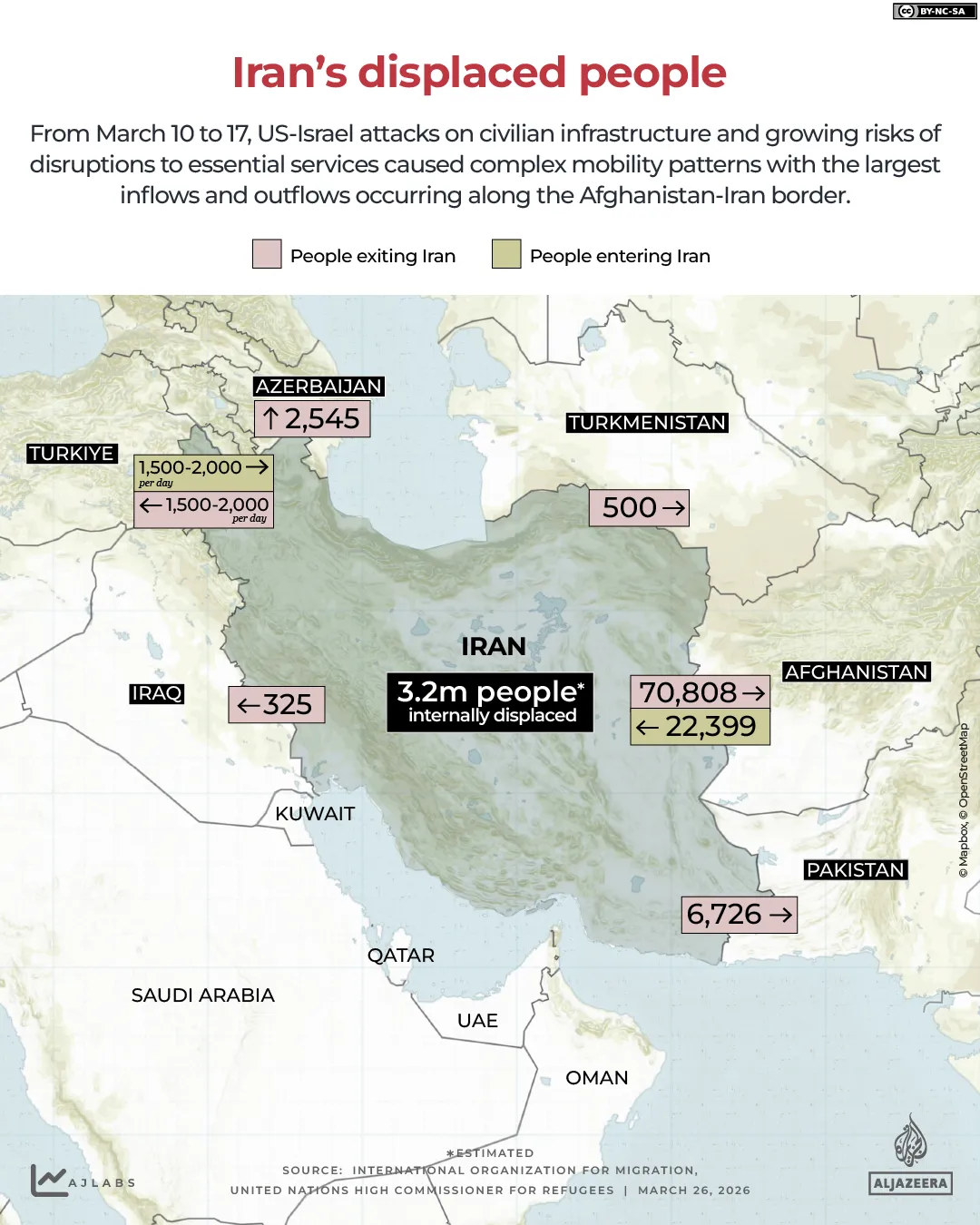
But the devastation from the war has also triggered mass displacement in the country: the United Nations refugee agency, UNHCR, estimates that 3.2 million people – more than 3 percent of the population – have already been displaced within Iran since US-Israeli strikes began on February 28.
Twenty-seven days into the conflict, aid agencies and countries bordering Iran are bracing themselves for a potential refugee crisis as civilians begin to flee the violence.
Cross-border flows have been limited and largely economic or short-term. In Afghanistan, most arrivals are Afghan returnees from Iran, citing insecurity or forced returns. Pakistan reports only authorised entries by citizens or traders, with no refugee inflows.
Turkiye, Turkmenistan and Azerbaijan report stable borders, limited authorised crossings, and occasional evacuations of third-country nationals.
Iraq has seen small-scale returns and 325 Iranian nationals crossing the border, citing the crisis. Within Iran, people have been forced from the ruins of their homes, and several hospitals, nuclear facilities, refineries and desalination plants have been hit.
However, pressure on the ground in Iran is mounting as more than 85,176 civilian sites have been damaged since the war began, including 282 healthcare facilities, 600 schools and 64,583 homes. In Tehran alone, the city administration said to local media that nearly 14,000 residential units in the capital have been damaged and at least 6,000 people have been accommodated in municipal hotels.
The growing risks of disruption to essential services are driving complex mobility patterns.
More than one million displaced in Lebanon
But Iran is not the only country where the rapidly expanding war has led to a displacement crisis.
According to the Norwegian Refugee Council, Israel’s sweeping evacuation orders now cover more than 1,470sq km (568sq miles), or about 14 percent of the country’s territory.
The map below shows more than 100 towns and villages across the country that are under forced evacuation orders from the Israeli military.
Israel’s ground troops are also now increasingly expanding their de facto occupation of parts of southern Lebanon, with Israeli authorities claiming that they want to create what they describe as a “buffer zone”.
Nearly one in five people in Lebanon – or 18 percent of the population – have been displaced over the past two weeks.
According to the International Organization for Migration, the total number of registered displaced people has reached 1,049,328, and the number of displaced people residing in collective shelters is 132,742.
The pace of displacement has outstripped the country’s shelter capacity. Many families have been unable to secure accommodation and are spending nights in streets, vehicles or public spaces as collective shelters fill up. For many of them, this is not the first time.
More than 250,000 people have left Lebanon over the past two weeks, a 40 percent increase compared with the last two weeks of February.
Much of the outward movement has been towards neighbouring Syria. As of March 17, more than 125,000 people had crossed the border. Nearly half are children. Most are Syrian nationals, with about 7,000 Lebanese among those crossing.
Southern Lebanon’s bridges attacked
Israel has struck several bridges in southern Lebanon, connecting the country through the Litani River.
Israeli forces have attacked:
Qasmiyeh Bridge.
Coastal Highway Bridge.
al-Qantara Bridge.
Khardali Bridge.
al-Dalafa Bridge.
Zaraiya-Tirseflay Bridge.
Footage and photos of the locations, verified by Al Jazeera, show each bridge specifically bombed, making them impossible to use. These were key crossings linking Lebanon’s south.
Israeli Defence Minister Israel Katz had last week ordered the military to destroy all crossings over the Litani River and homes close to the border between the two countries.
The areas in Lebanon near the Israeli border to the Litani River are the same locations where at least a million people have been pushed out.
Lebanese President Joseph Aoun has said the attacks on the bridges are “an attempt to sever the geographical connection between the southern Litani region and the rest of Lebanese territory”.
He said they fell “within suspicious schemes to establish a buffer zone along the Israeli border, solidify the reality of the occupation and seek Israeli expansion within Lebanese territory”.
Iran will play two friendly matches in Turkiye as they prepare for the FIFA World Cup in the US, Canada and Mexico.
Published On 26 Mar 202626 Mar 2026
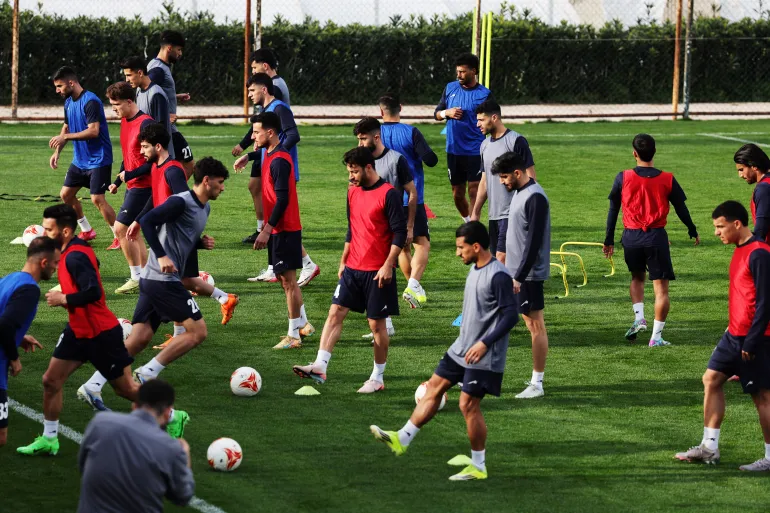
Iran’s men’s football team have been training in southern Turkiye as they prepare for two upcoming friendly matches before the FIFA World Cup, where the squad are likely to attract heightened attention against the backdrop of the United States-Israel war on Iran.
Team Melli held a training session in Belek, a resort area near the Mediterranean city of Antalya, with tightly restricted media access as officials said they wanted to avoid distractions before the matches described as critical to their World Cup preparations.
Recommended Stories
list of 3 itemsend of list
Iran’s football federation is in discussions with world governing body FIFA about moving its World Cup matches to Mexico from the US due to concerns over player safety, federation President Mehdi Taj said last week.
Iran’s camp has largely sought to keep a low public profile as the team builds towards the World Cup, where they are expected to face intense political and media scrutiny.
In Belek, no interviews with players or coaches were made available, and a team media representative said the squad were focused entirely on their immediate competitive programme.
Iran will play two matches in Antalya, against Nigeria on Friday and Costa Rica on Tuesday.
Iran’s football team trained at the Huseyin Aygun Football Center in Antalya, Turkiye [Umit Bektas/Reuters]
The friendlies were originally scheduled to take place in Jordan, but were moved to Turkiye following the outbreak of the war on Iran.
The players appeared relaxed during the session in sunny conditions, with staff and players at times chatting and joking.
Among those present was forward Mehdi Taremi, who has been in the spotlight in recent days after swapping shirts with an Israeli opponent while playing for his club Olympiacos in Greece.
Striker Sardar Azmoun was omitted from the squad after posting a picture on his Instagram feed of a meeting with Dubai’s ruler Mohammed bin Rashid Al Maktoum.
Iranian media reported that Azmoun, who has scored 57 goals in 91 internationals, had been expelled from the national team for a perceived act of disloyalty to the government.
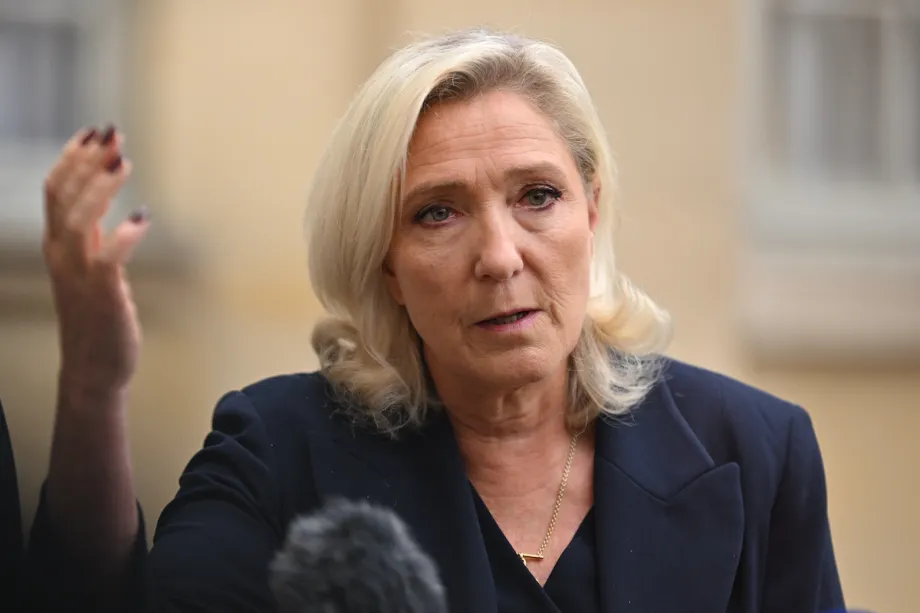
French far-right leader Marine Le Pen said on Wednesday that the US has “clearly made a mistake” in attacking Iran, Anadolu reports.
“What I see is that the United States clearly made a mistake, thinking the Iranian regime would fall within a few days. It has not fallen. The Iranian regime is extremely strong,” Le Pen, head of the National Rally (RN), told France Inter radio.
She said Trump’s war goals are “erratic” and questioned the ultimate objective of the conflict, adding that “no one knows” what he seeks to achieve.
Le Pen underscored that the war has affected several Gulf countries and caused a heavy imbalance in energy supplies.
“Russia is Hungary’s energy supplier,” and “Ukraine hinders Russia’s oil supply to Hungary,” she added.
The National Rally leader described Hungary’s Prime Minister Viktor Orban as a “symbol of resistance” to the European Commission.
“It is perfectly natural that I come to support our allies during electoral situations,” she said, stressing that she does not interfere in Hungary’s internal affairs.
Regional escalation has continued to flare since the US and Israel launched a joint offensive on Iran on Feb. 28, killing so far over 1,300 people, including then-Supreme Leader Ali Khamenei.
Iran has retaliated with drone and missile strikes targeting Israel, along with Jordan, Iraq, and Gulf countries hosting US military assets, causing casualties and damage to infrastructure while disrupting global markets and aviation.
The US and Israel’s war on Iran is intensifying, as Trump again claims Iranian leaders want to ‘make a deal’.
Published On 26 Mar 202626 Mar 2026
The United States and Israel’s war on Iran continues, with an Al Jazeera correspondent in Tehran reporting strikes are “increasing in number and in intensity” amid conflicting claims about whether negotiations are taking place.
US President Donald Trump says talks are happening, but Iran rejects the talks, saying it will continue to “resist” US aggression.
On Thursday, Iran carried out retaliatory strikes against Israel and several Gulf countries, as the Middle East conflict sees no signs of ending, and global energy and food prices continue to rise.
In Iran
Intensifying attacks: US-Israeli attacks on Iran are “increasing in number and in intensity”, according to Al Jazeera correspondent, with Israel announcing extensive strikes on central Isfahan. Alongside US forces, Israel has launched a “wave of extensive strikes” across Iran.
Civilian casualties reported: Iranian media reported that two teenage boys were killed in a recent US-Israeli strike on a residential area in a village in the county of Shiraz.
Iran talks: US President Donald Trump insisted that Iran was taking part in peace talks.
Iran chooses ‘resistance’: Foreign Minister Abbas Araghchi said Tehran will continue its “resistance” and does not intend to negotiate.
US targets missile capacities: The US has hit two-thirds of Iran’s production facilities for missiles and drones, a top officer said.
Threat to Iranian island: Tehran warned enemies may try to occupy one of its islands with support from an unnamed regional country.
Iran’s leverage: Jane Foley, an analyst from Rabobank, noted that Tehran’s position on negotiations leaves the ball firmly in their court. Because the critical Strait of Hormuz remains effectively closed, she suggests Iran could have the power to dictate the terms of any resolution.
New toll legislation: The Iranian parliament is preparing a draft law that would mandate the collection of tolls and duties from ships and tankers transiting the Strait of Hormuz, treating the waterway like a standard transit corridor.
In the Gulf
Hezbollah plot uncovered in Kuwait: Authorities arrested six people allegedly linked to Hezbollah, accused of planning assassinations in the Gulf state, the Interior Ministry said.
Saudi Arabia: Saudi Arabia’s Defence Ministry on Thursday morning announced the interception and destruction of a drone in the Eastern Province. Its air defence systems intercepted and destroyed at least two dozen drones targeting the Eastern Province, home to the majority of the kingdom’s oil facilities, on Wednesday.
Bahrain: A fire broke out at a facility in the Muharraq Governorate due to what the Interior Ministry described as “Iranian aggression”.
United Arab Emirates: The UAE’s Defence Ministry said on Thursday that its air defence systems have been actively responding to and intercepting incoming missiles and drones from Iran.
In the US
Trump says Iran wants a deal: Trump again claims Iranian leaders want to “make a deal so badly” but are afraid to say so “because they figure they’ll be killed by their own people”.
Trump threatens ‘hell’ if no deal: Trump is ready to “unleash hell” on Iran if Tehran does not accept a deal to end the war, the White House warned on Wednesday.
Strategic posturing: Jason Campbell, a former Pentagon official, said US threats to “hit Iran harder” are more about signalling than intensifying attacks.
Intentional vagueness: Campbell told Al Jazeera that Trump is deliberately omitting specific details because he wants the Iranian regime to believe the US is fully capable and willing to execute these harsher attacks.
In Israel
Missile salvoes: Israel’s army on Thursday morning said it had detected a wave of missiles from Iran heading towards the country, the second salvo in less than 30 minutes.
Rockets and missiles targeting Israel: Iranian missiles continue to target central and northern Israel. Additionally, Hezbollah has fired volleys of rockets into the Western Galilee region.
In Iraq, Lebanon
Gulf issues Iraq demand: Gulf states and Jordan have urged Iraq to stop attacks by pro-Iran armed groups from its territory.
Ground clashes with Hezbollah: Israeli troops have crossed the border into Lebanese territory and are actively engaging in ground combat. Hezbollah says its fighters are continuing to clash with invading Israeli troops in south Lebanon.
Defending Lebanese soil: Hezbollah’s Secretary-General Naim Qassem stated that the group is now in a war against both the US and Israel and will do everything it can to defend Lebanese territory.
Oil markets and food
Oil prices climb: Oil prices have climbed higher amid fading hopes of de-escalation in the Iran war following Tehran’s rejection that talks with the US are under way.
Food supply shocks: Antony Currie, a columnist for Breakingviews, warned that the Iran war will likely have a more severe impact on global food security than Russia’s 2022 invasion of Ukraine.
A week into the United States-Israeli war on Iran, and Iran’s attacks on its Gulf neighbours, Jaya Khuntia spoke – as he often did – to his Doha-based son Kuna on the phone.
It was March 6, about 10pm, and Khuntia and the family were worried. “He told me, ‘I am safe here, don’t worry,’” the father recalled from the conversation with Kuna.
It was the last time they spoke.
The next day, the family in Naikanipalli village of India’s eastern Odisha state received a phone call from Kuna’s roommate telling them that the son had suffered a heart attack after hearing the sound of missiles and debris from interceptions falling near their residence. He collapsed and was later declared dead. Kuna’s body reached home days later.
Al Jazeera cannot independently confirm the cause of Kuna’s death, but the family of the 25-year-old, who worked as a pipe fitter in Qatar’s capital, is among millions across South Asia directly affected by the war in the Middle East.
Of the eight people killed in the United Arab Emirates in Iranian attacks, two were Emirati military personnel, a third a Palestinian civilian, and the remaining five were from South Asia: Three from Pakistan, and one each from Bangladesh and Nepal. All three people killed in Oman were from India. An Indian national and a Bangladeshi national are the only deaths in Saudi Arabia.
Migrant workers from South Asia total nearly 21 million people in the Gulf nations, a third of the total population of the region. At stake, for their families back home, is the safety of their loved ones and the future of their dreams.
The Khuntia family had taken on a 300,000-rupee ($3200) debt in 2025 for the marriages of their two daughters. Kuna’s income in Doha – where he had moved only in late 2025 – of 35,000 rupees ($372) was helping them collect what they needed to pay back the loan. Kuna had been sending back about 15,000 rupees ($164) every month.
“We thought our suffering was finally ending,” Jaya said, his voice trembling. “My only son would say, ‘Baba, don’t worry, I am here.’ He was our only hope… our everything.”
That hope is now extinguished. “That one call finished us,” Jaya cried. “He promised to return after clearing our debts … but he came back in a coffin. We have nothing left now. Losing our only son is the biggest debt we have to live with.”
Kuna Khuntia, a 25-year-old pipe fitter from India’s Odisha, who died of a heart attack in Doha, Qatar [Photo courtesy the Khuntia family]
‘I thought we would be next’
In all, Bahrain, Kuwait, Oman, Qatar, Saudi Arabia and the UAE – the six Arab countries in the Gulf – host 35 million foreign nationals, who form a majority of their total population, 62 million.
They include 9 million people from India, 5 million each from Pakistan and Bangladesh, 1.2 million from Nepal, and 650,000 from Sri Lanka. Most of them are engaged in blue-collar work, building or supporting the industries and services that are at the heart of the Gulf’s success and prosperity.
But since the US and Israel launched their war on Iran, these migrant workers have often been among the most vulnerable. That vulnerability extends beyond deaths and injuries to the very nature of their work: Oil refineries, construction areas, airports and docks, where many work, have been targeted in Iranian attacks.
The suspension of work at many of these facilities, coupled with fears of a major economic downturn in the region, has also left many workers and their families worried about the future of their jobs.
Hamza*, a Pakistani migrant labourer working at an oil storage facility in the UAE, recalled a recent attack that he witnessed. “A drone struck a storage unit right in front of us. We were completely shaken. Most of us there are from India, Pakistan and Bangladesh.
“We couldn’t sleep for nights after that. The drone was so close that it could have killed us, too,” Hamza added. “For a moment, I thought we would be next.”
Despite these dangers, he said, leaving is not an option.
“We want to go back, but we can’t,” Hamza said. “Our families depend on us. It’s dangerous here, but if we stop working, they will have nothing to eat. We have no choice.”
Experts say Hamza’s sentiment is common across South Asian blue-collar workers in the Gulf, because of poverty and limited employment opportunities back home.
Imran Khan, a faculty member at the New Delhi Institute of Management working on migration economics, said migrant labourers from South Asia are often driven by desperation to take up jobs in the Middle East. He said Western countries have, in recent years, dramatically raised entry barriers for less-educated blue-collar foreign workers.
“These workers are the worst affected during crises – whether war or natural disasters,” he says. “I have been speaking to several migrant labourers, particularly Indians in the Middle East, and many are living in distress since the conflict began.”
But, like Hamza, most cannot afford to leave, Khan said.
“They cannot simply quit. Their income would stop immediately, and there are very limited opportunities back home,” he explained. “They have families to support, and without these jobs, survival becomes difficult.”
Indian labourers work at the construction site of a building in Riyadh, November 16, 2014 [Faisal Al Nasser/Reuters]
Families – and societies – that depend on remittances
Middle Eastern countries remain a key source of remittances for South Asian nations such as India, Pakistan, Bangladesh, Sri Lanka and Nepal. The remittances these five countries receive from the region, $103bn, are comparable to Oman’s total gross domestic product (GDP).
Just the remittances that India receives from the Gulf, $50bn, are more than Bahrain’s entire GDP. Pakistan receives $38.3bn in remittances, Bangladesh $13.5bn, Sri Lanka $8bn, and Nepal $5bn.
With the recent escalation of conflict in the Middle East, experts warn these flows could be significantly affected, especially if Gulf economies contract and layoffs follow.
Faisal Abbas, an expert in international economics and director at the Centre of Excellence on Population and Wellbeing Studies, a Pakistan-based research institute, said remittances from the Middle East form a crucial economic backbone for South Asian nations, not just families.
“Remittances are a critical pillar for Pakistan and other South Asian economies, and a large share comes from Middle Eastern countries,” he explained. “If the situation worsens, it will not be a positive development for the region.”
Pakistan’s remittances from the Gulf constitute nearly 10 percent of its GDP, about $400bn.
Abbas added that the effect may extend beyond remittance flows. “Migration patterns could also be disrupted. Many workers may return home, while those planning to migrate might reconsider,” he said. “This could further increase unemployment in a region already facing job shortages.”
Unlike Hamza, a number of South Asian workers are planning to return home.
Noor*, a migrant worker from Bangladesh employed at an oil facility in Saudi Arabia, said he no longer feels safe and plans to return home once his contract ends.
“I will never come back here again,” he said. “It’s too dangerous. We can’t even sleep at night. The fear never leaves us.”
Noor said drone attacks had occurred close to his workplace. “We saw it happen in front of us,” he said. “That fear stays with you… It doesn’t go away.”
His family, too, is deeply affected. “My children cry every time they call me. They are scared for my life,” he added.
He said he knows that returning to Bangladesh would mean more economic hardship for his family. But Noor said he had made up his mind.
“I would rather go back and struggle to survive with my family than live here in constant fear,” he said. “At least there, I will be with them.”
*Some names have been changed at the request of workers who fear retribution from contractors for speaking to the media.
Brent crude tops $104 a barrel as hopes fade for deescalation in US-Israel war on Iran.
Published On 26 Mar 202626 Mar 2026
Oil prices have climbed higher amid fading hopes of deescalation in the Iran war following Tehran’s denial that talks with the United States are under way.
Futures for Brent crude, the international benchmark, rose nearly 2 percent on Thursday to top $104 per barrel after Tehran dismissed reports of direct negotiations with US President Donald Trump’s administration.
Recommended Stories
list of 4 itemsend of list
The rise comes after oil prices eased on Wednesday following reports that Trump had shared a 15-point plan for ending the war with Iran.
Asian stock markets opened lower on Thursday, with Japan’s Nikkei 225, South Korea’s KOSPI and Hong Kong’s Hang Seng Index all seeing losses.
Iranian Foreign Minister Abbas Araghchi said in an interview with state media aired on Wednesday that Tehran was not engaged in direct talks with Washington and has “no intention of negotiating for now”.
White House Press Secretary Karoline Leavitt warned on Wednesday that Iran would be “hit harder” than ever before if Tehran did not accept military defeat.
Iran’s effective closure of the Strait of Hormuz, a conduit for one-fifth of global oil supplies, and its attacks on energy facilities across the Middle East have prompted a surge in energy prices worldwide.
Oil prices are up more than 40 percent compared with before the US and Israel launched strikes on Iran on February 28, prompting numerous countries to implement fuel rationing and other energy conservation measures.
Market-watchers say prices are likely to rise further until shipping is free to traverse the strait, despite efforts by countries to bolster supply by tapping emergency stockpiles in coordination with the International Energy Agency.
While Tehran has repeatedly claimed that the strait is open to ships that are not aligned with its enemies, daily transits have all but collapsed since the start of the conflict.
Four vessels were tracked transiting the waterway via their automatic identification systems on Tuesday, down from an average of 120 daily transits before the conflict, according to maritime intelligence firm Windward.
Malaysia’s Prime Minister Anwar Ibrahim said any talks with Iran must aim to end the war, not serve as a “tactical advantage” or temporary pause. He reaffirmed Iran’s right to defend its sovereignty while urging restraint to avoid wider regional fallout. His comments come as the US warns Iran to accept defeat or face being “hit harder”.
Home Affairs Department said decision to ban Iranian visitors amid the war on Iran was in Australia’s ‘national interest’.
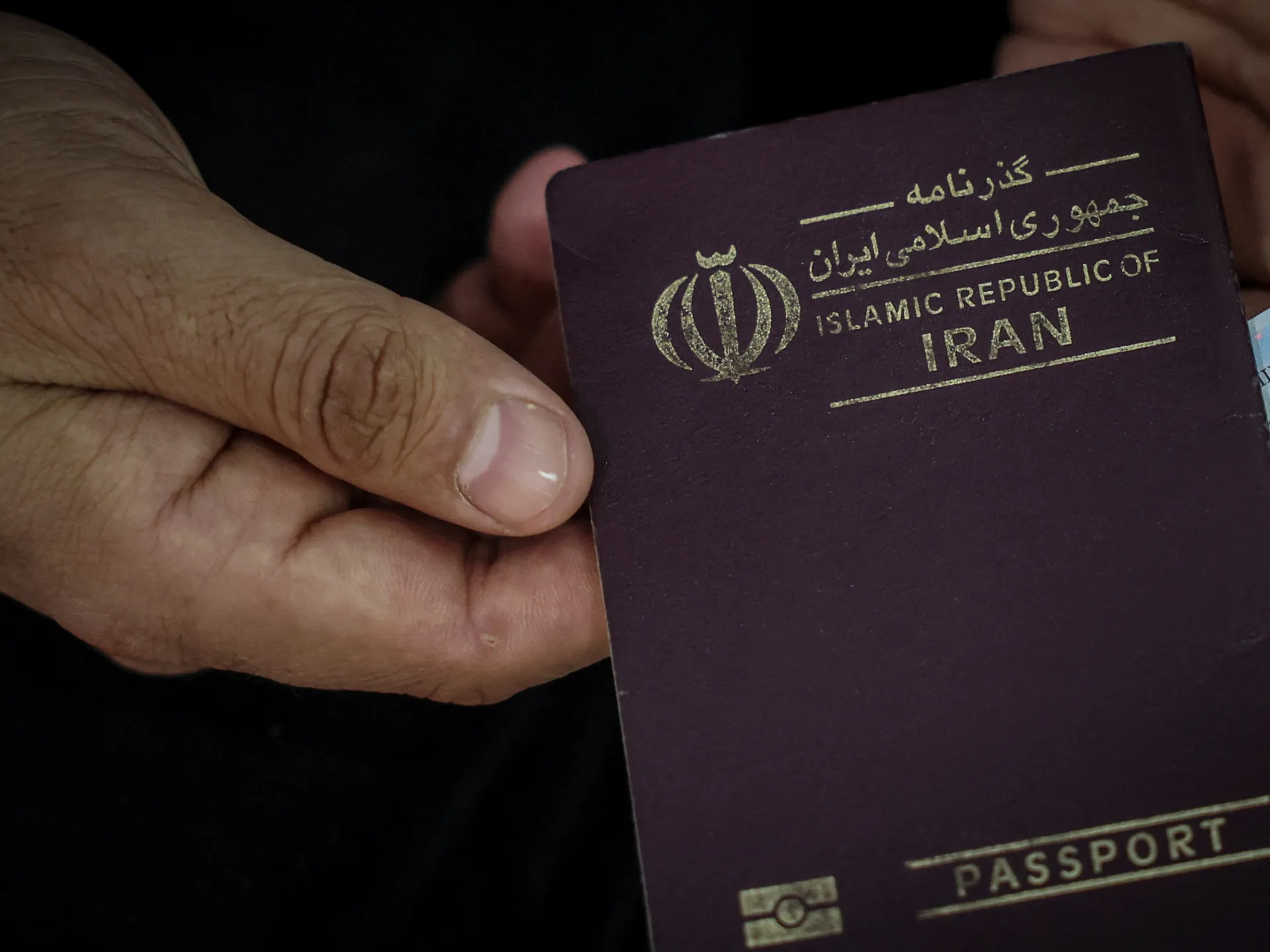
Australia has temporarily banned visitors from Iran, claiming that the United States-Israeli war on the country has increased the risk that Iranian passport holders could refuse or be unable to fly home once their short-term visitor visas expire.
Australia’s Department of Home Affairs said on Wednesday that the restrictions on Iranian visitors would be for a period of six months, describing the move as in the “national interest amid rapidly changing global conditions”.
Recommended Stories
list of 4 itemsend of list
“The conflict in Iran has increased the risk that some temporary visa holders may be unable or unlikely to depart Australia when their visas expire,” the Home Affairs Department said in a statement.
“This measure gives the Government time to assess the situation properly, while still allowing flexibility in limited cases,” it said.
The ban applies to Iranian citizens who are currently outside Australia – even if they have an Australian visitor visa for tourism or work.
Exceptions to the ban include Iranian citizens already in Australia, those currently in transit to Australia, spouses, de facto partners, or dependent children of Australian citizens, and those with permanent visas.
Exemptions will also be considered on a case-by-case basis, such as for the parents of Australian citizens, the department said.
Home Affairs Minister Tony Burke said decisions on who can remain permanently in Australia should be made by the government and should not be the “random consequence of who booked a holiday”.
“There are many visitor visas which were issued before the conflict in Iran that may not have been issued if they were applied for now,” he said.
Burke added that the government is monitoring developments and “will adjust settings as required to ensure Australia’s migration system remains orderly, fair and sustainable”.
The Sydney-based Asylum Seekers Centre said in a post on social media that the ban on Iranian visitors was the result of a “shameful new law” rushed through Australia’s parliament that “threatens the very foundations of Australia’s onshore protection programme” for those seeking safety.
“For years, politicians have been stressing the importance of seeking safety through so-called legal routes,” the group said.
“Now, in the face of an international humanitarian crisis, the government is slamming the door shut and blocking a key pathway for people seeking safety today and in the future,” it said.
Earlier this month, US President Donald Trump called on Australian Prime Minister Anthony Albanese to give the Iranian women’s football team asylum in Australia amid fears that players may face repercussions at home for failing to sing their national anthem before a Women’s Asian Cup 2026 match in Queensland.
Albanese later told reporters that five team members had sought assistance and “were safely located” by Australian authorities.
In total, seven players and officials were granted asylum in Australia, though five team members later reversed their decision to stay in Australia and chose to return home.
The Iranian team had arrived in Australia to participate in the football tournament before the US and Israel launched their attack on Iran on February 28.
According to Australian government figures up to 2024, more than 90,000 Australian residents were born in Iran, and large diaspora communities are present in major cities such as Sydney and Melbourne.
Ross Harrison, Senior Fellow at the Middle East Institute, says public talk of diplomacy between the US and Iran is hiding hardline positions, warning that despite the messaging, the situation is still likely heading toward military escalation.













![Kuna Khuntia, a 25-year-old pipe fitter from India's Odisha, who died of a heart attack in Doha Qatar [Photo courtesy the Khuntia family]](https://i0.wp.com/www.aljazeera.com/wp-content/uploads/2026/03/Kuna-Khuntia-1774503793.jpeg?w=640&ssl=1)