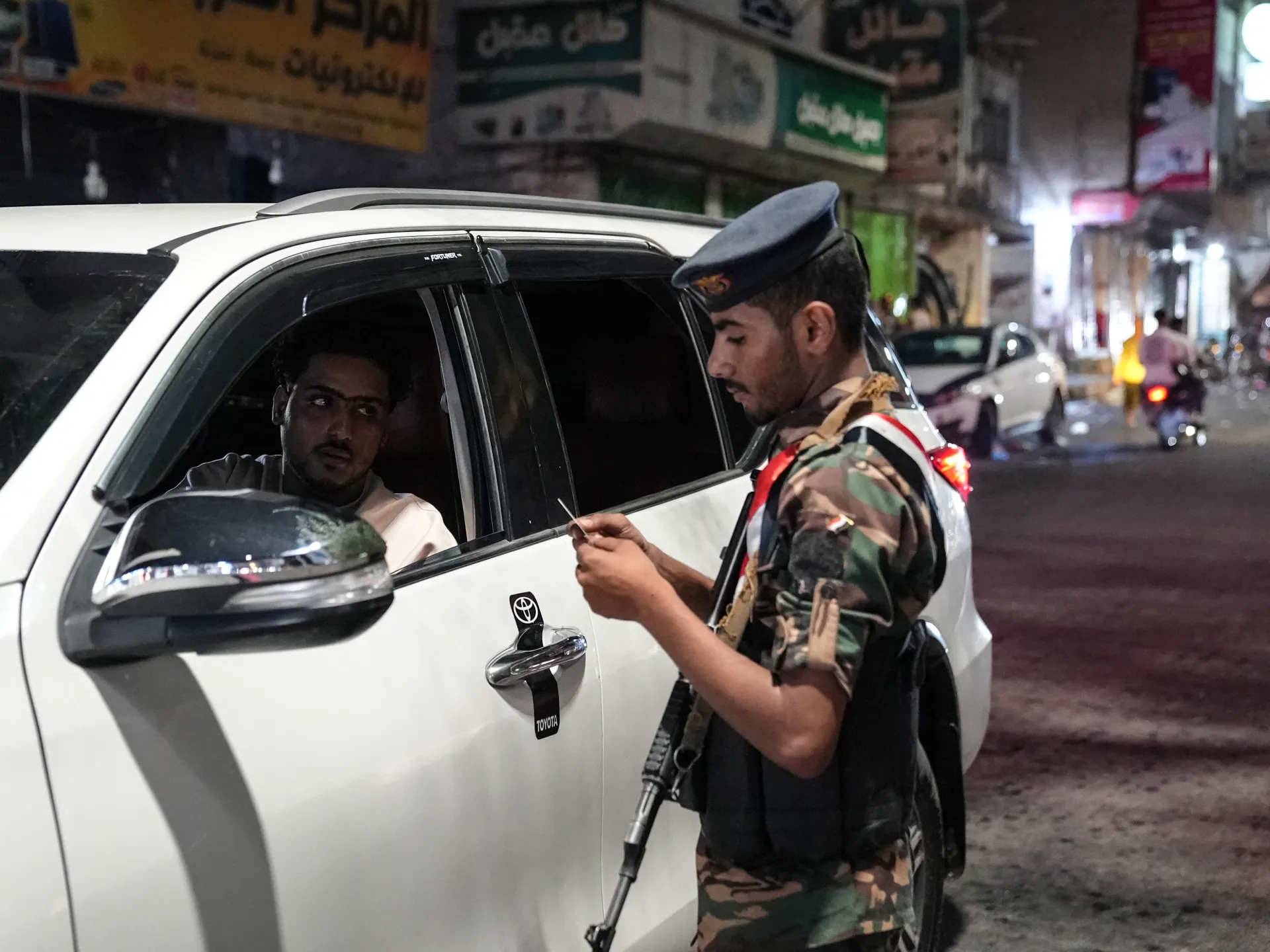
Iran war live: Fighting intensifies in Yemen, hundreds killed or injured
Fighting intensifies across Yemen as the army says 474 attacks in 24 hours killed or wounded 1,540 Houthi fighters.
Source link
Fighting intensifies across Yemen as the army says 474 attacks in 24 hours killed or wounded 1,540 Houthi fighters.
Source link
Smit Machchhar recalls mid-air disaster after co-pilot’s attack on flydubai flight to Tel Aviv.

Published On 2 Oct 20262 Oct 2026
Indian pilot Smit Machchhar, who was stabbed by his co-pilot in an alleged attempt to crash a Flydubai flight to Tel Aviv, has shared a public account of how he managed to open the cockpit door and let passengers take control of the plane despite his injuries.
Speaking on Friday from a hospital bed in Abu Dhabi via video call with Indian Prime Minister Narendra Modi, Machchhar said that he knew the aircraft was going down as he lay bleeding on the floor.
list of 3 itemsend of list
“I had suffered so many injuries that I had collapsed. At that time, I could feel that the aircraft was going down. I knew this was the last push, that the door was right there,” he said in a nearly 10-minute video released on the prime minister’s social media channels.
He added: “I was being hit even then, but I just opened the door and everyone came in.”
Machchhar, who has 17 years of aviation experience, including 11 as a captain, said that experience helped him grasp what was happening even while wounded.
He told Modi he had recited a Hindu devotional prayer during the ordeal.
“I know God himself saved me,” he said, in an emotional exchange with Modi, who is from the same home state of Gujarat.
Modi praised Machchhar’s bravery, saying his presence of mind had saved lives and the reputation of Indian pilots.
Machchhar said he allowed passengers and crew to overpower the co-pilot and let a second pair of Flydubai pilots take control and land the plane in Tabuk, Saudi Arabia.
The Flydubai flight was carrying 174 people as it briefly plunged around 17,000 feet (5,180 metres) before it was brought back under control.
UAE presidential adviser Anwar Gargash has called the incident a “terrorist act”, while Israeli Prime Minister Benjamin Netanyahu said the co-pilot had undergone “Islamist radical indoctrination” and appeared “suicidal”.
US President Donald Trump has warned that Iran would be “hit very hard” if found to be linked to the attack.
The United Arab Emirates has said it will launch an investigation into the incident.
Mahan Air is excluded from the agreement as Baghdad says Washington granted its request for a waiver.
Published On 2 Oct 20262 Oct 2026
Iraq has agreed to let Iranian airlines, except Mahan Air, operate up to 40 flights a day to and from Najaf International Airport, saying the United States granted an exemption from its sanctions.
Prime Minister Ali al-Zaidi’s office announced the agreement on Friday, a day after Tehran urged Baghdad to lift restrictions that it said hurt pilgrims, patients, students and business.
list of 2 itemsend of list
The deal eases the links between the two Shia-majority neighbours since Washington sanctioned Iran’s aviation sector last month.
Al-Zaidi welcomed the “positive response shown by the US government to Iraq’s efforts and its cooperation in granting the necessary exemption”, the statement from his office said.
“Air travel does not merely represent transportation between two airports, but rather a bridge of communication between peoples,” it added.
Separately, Iraq’s Foreign Minister Fuad Hussein said the return of flights supports an Iraqi-US partnership premised on mutual respect.
Hussein also welcomed what he described as US understanding of the importance of respecting religious freedom and facilitating access for visitors to holy sites.

The US Treasury announced sanctions on September 8 against 36 entities linked to Iran’s aviation sector.
Foreign ground-handling companies then refused to service Iranian aircraft for fear of falling foul of US sanctions, and flights stopped at four Iraqi airports.
Soon after, Iraq’s government held direct talks with Washington, seeking an exemption.
Iraq’s ambassador to Tehran, Yasser al-Hajjaj, told Iran’s IRNA news agency that Baghdad had not ordered the halt in flights. The suspension also led to demonstrations outside Najaf airport and in Nasiriya, Karbala and Amarah, according to Iran’s Press TV.
Najaf is the main destination for Iranian flights in Iraq. Flights to and from the city carry Iraqi Shia Muslim pilgrims to Iran’s holy cities or Iranians visiting sacred sites in Iraq.
Iran’s ambassador to Baghdad, Mohammad Kazem al-Sadegh, told the Iranian news agency ISNA that there were “roughly 25 daily flights from Iran to Najaf and about 15 flights to Baghdad” before the ban.
“Around 12,000 to 13,000 people travel between Iran and Iraq and vice versa on Iranian airlines, which is not a small number,” he added.
In a statement shared on Thursday, Iran’s Foreign Ministry said that Washington’s “illegal and inhumane” extraterritorial enforcement of sanctions was disrupting Iran’s trade and air transport.
Flights between Najaf and Iran restarted late on Monday, according to the Iraqi News Agency.
However, flights with Iran are still suspended at Baghdad, Erbil and Sulaimaniyah airports, forcing passengers into land journeys of at least 12 hours and disrupting pilgrim traffic.
Al Jazeera has not verified the exemption with representatives in Washington.
President Masoud Pezeshkian says Iran “has never avoided” dialogue with the US, even though it’s been attacked three times during negotiations.


Published On 2 Oct 20262 Oct 2026
Share
By Konstantin Toropin and Michelle L. Price
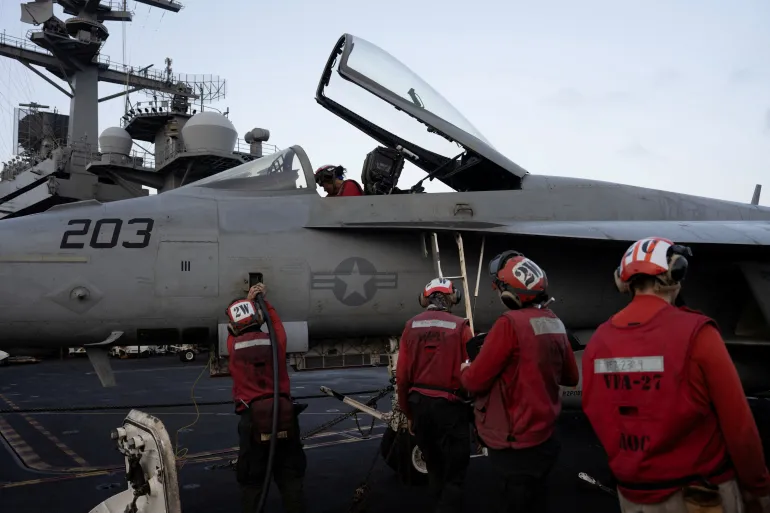
WASHINGTON — The U.S. military is dispatching roughly 9,000 troops aboard a group of ships to the Middle East, a U.S. official said Thursday. The bolstering of the American military presence comes as President Trump warned anew that new strikes against Iran could be on the horizon.
He also said early indications suggest that Iran is linked to the co-pilot who stabbed his captain and tried to crash an Israel-bound flight on Wednesday.
In an exchange with reporters at the White House, Trump raised the connection when asked by a reporter if there were any links between the pilot behind the attack and Tehran.
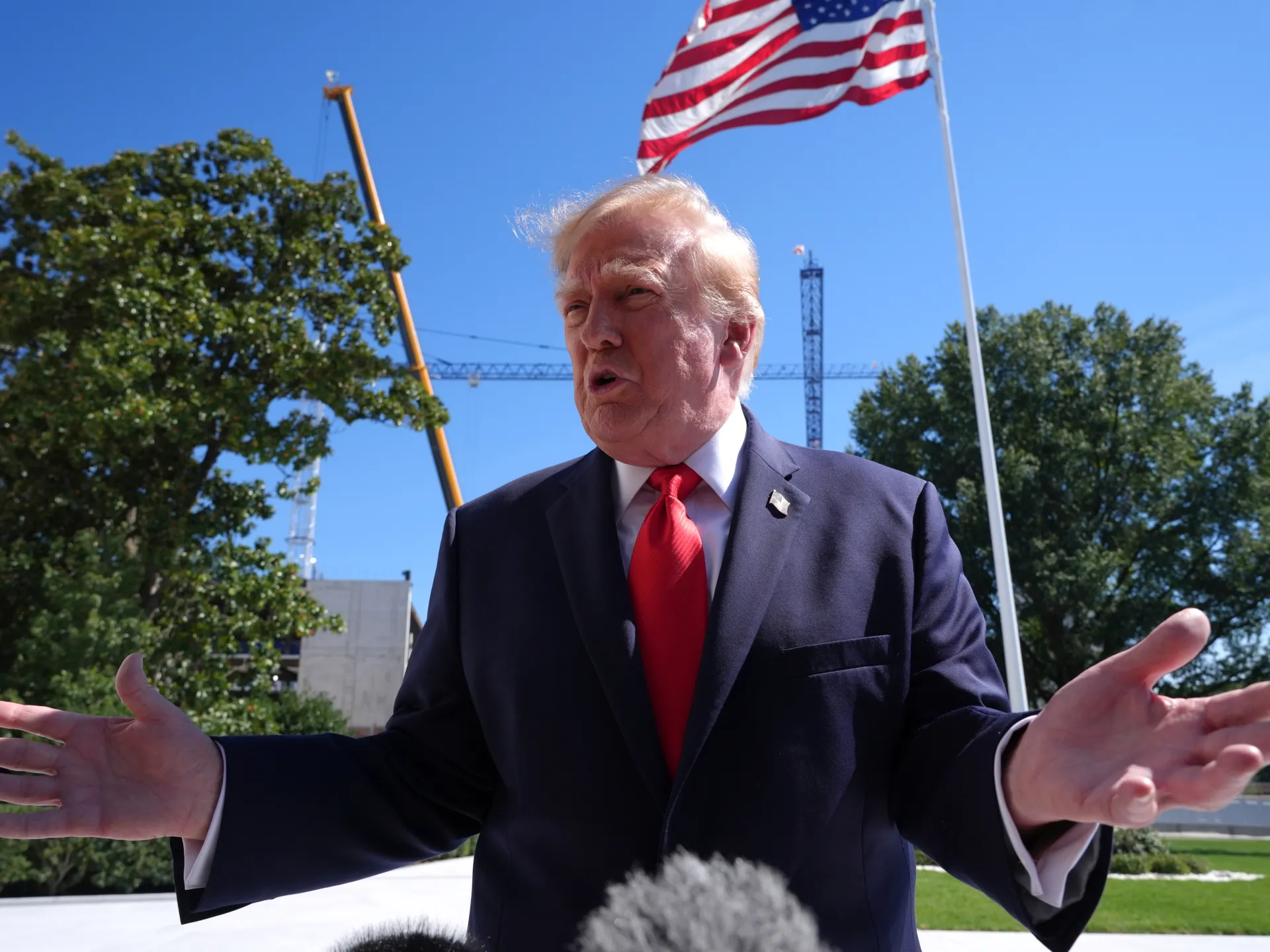
“I would say the answer, based on what I’m hearing, is ‘yes,’ but we’re working on it right now,” Trump said, without offering details.
Trump also warned that if the link is established to Iran, the United States would retaliate.
“Oh they’ll be hit, very hard, don’t worry,” Trump said. “You just ask them. They know what happened. They’ll be hit very hard.”
Meanwhile, the group of ships now en route to the Middle East together carry over 7,000 sailors and 2,000 Marines.
It includes the USS Theodore Roosevelt carrier strike group, which recently deployed with the cruiser USS Chosin, and the USS Makin Island amphibious readiness group, which includes the USS John P. Murtha and USS Anchorage amphibious landing ships.
It could mean that three carriers are in the region as early as the end of October, according to the U.S. official who spoke to the Associated Press on condition of anonymity to discuss sensitive military operations.
Given the personnel already in place in the Middle East, the move would bring the U.S. naval presence to an unusually high number of more than 20,000 sailors and Marines and hundreds of aircraft. The Navy previously had three carrier strike groups in the Middle East in April for the first time since 2003.
The carriers USS George H.W. Bush and the USS George Washington are in the region now, along with the USS Boxer amphibious readiness group. The Washington is typically deployed to Pacific Ocean but it was moved to the Middle East to relieve the USS Abraham Lincoln, whose arduous deployment resulted in the crew being at sea for more than 260 days straight.
Trump, in a Time magazine interview published Thursday, also raised the prospects of new strikes, saying it is “possible” that he will ramp up bombing in Iran after the Nov. 3 elections in the United States.
When pressed, Trump said he could not go further in detailing his strategy.
“I can’t tell you that because look, you know, you’re asking, where are you going to bomb?” Trump said.
He said in the interview, conducted Monday, that he rejected the latest ceasefire proposal from Iran because “things that I wouldn’t have approved a year ago I wouldn’t have today.”
Trump cited as an example an offer from Iran to “open up” the Strait of Hormuz, the key energy shipping corridor, but said the overall proposal was “not good enough.”

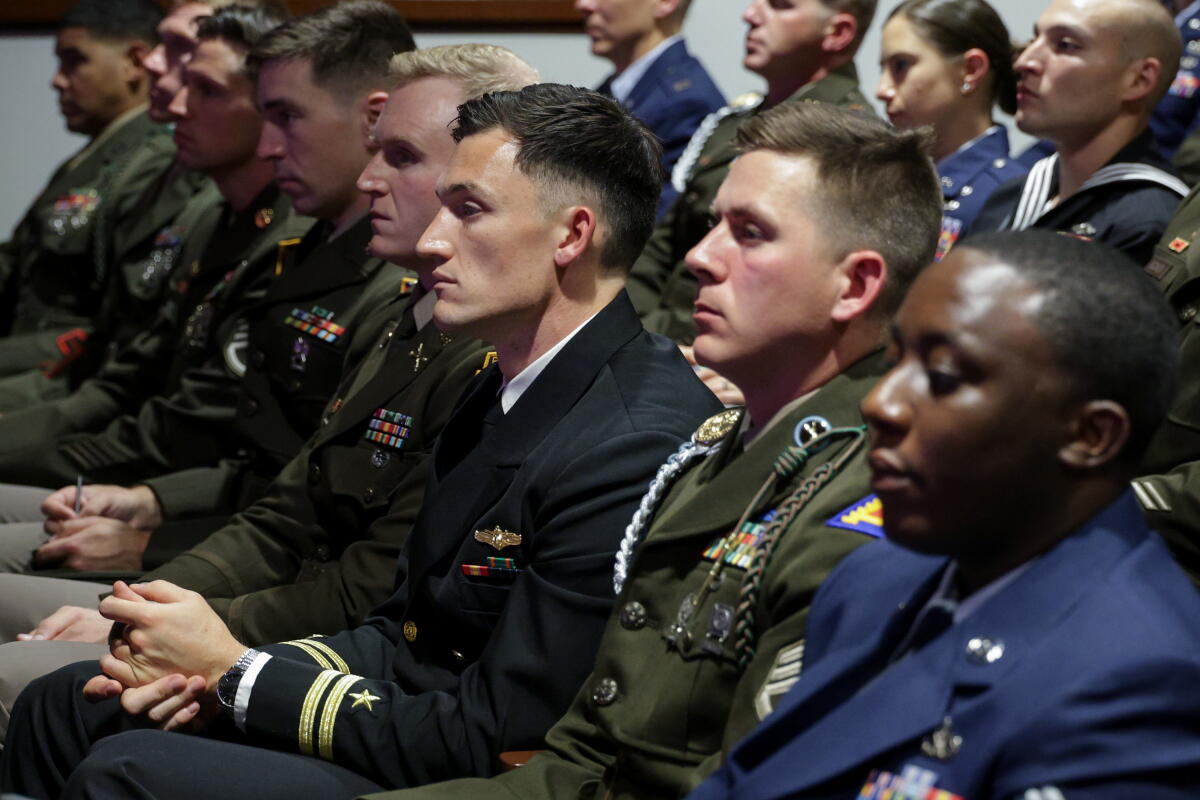
Members of the military listen as Defense Secretary Pete Hegseth gives a State of the Force address at Marine Corps Base Quantico.
(Alex Wong / Getty Images)
Asked if the increasingly unpopular war would threaten Republican Party chances in November, Trump at first responded, “It’s possible.” But then he added, “It should help, because Iran will not have a nuclear weapon.”
The president said “100% of the people” oppose Iran having nuclear attack capabilities “including worldwide.”
“So, when you say it that way, It would help,” Trump added. “If you don’t say that, it could hurt.”
Toropin and Price write for the Associated Press. AP writers Seung Min Kim, Will Weissert and Aamer Madhani contributed to this report.
Nearly 70 percent of Americans say the US-Israeli war is not worth fighting, marking a significant spike since July.
Published On 1 Oct 20261 Oct 2026
Approximately 70 percent of US adults in a new nationwide poll say the US-Israeli war has not been worth fighting, a five-point spike since July.
“Seventy-one percent of adults disapprove of how Trump is handling Iran and 69 percent say the war in Iran has not been worth fighting,” said the survey released on Thursday by The Associated Press-NORC Center for Public Affairs Research.
list of 3 itemsend of list
The poll, which surveyed more than 2,000 adults in the US, also suggested that Americans are deeply frustrated with US President Donald Trump’s handling of the economy and rising prices, with only 17 percent of US adults polled approving of his handling of the cost of living. Just 26 percent approved of his handling of the economy overall, marking a new low.
Public angst over fuel costs has surged, with about half of respondents now deeply concerned about being able to fill their tanks —up from 39 percent in July. Roughly half of respondents are also highly concerned about being able to afford food.
The data comes as Trump kickstarts his midterm campaign trail in an all-in effort to galvanise the Republican base, stumping first in Texas and Oklahoma amid widespread voter anxiety surrounding the war on Iran’s mounting economic fallout.
The poll also indicated that, despite their frustration, two-thirds of Republicans surveyed said that higher than usual prices are due to factors outside of Trump’s control, with about one-third saying it was directly related to Trump’s policies.
The sombre numbers suggest the president remains deeply unpopular nationally, with some Republicans also faulting him for failing to deliver on promised relief.
Overall, more than half of adult respondents said the national economy and the country as a whole are worse off since President Trump took office again in 2025.
In an interview with TIME magazine, published on Thursday, Trump was asked if the deeply unwanted war would threaten his party’s chances in November, to which he initially responded, “It’s possible,” before adding that “it should help, because Iran will not have a nuclear weapon.”
Confronted with sliding poll numbers, Trump said that the “pollsters are corrupt” and that the bad polls “are fake”, adding that he would beat anybody running today “by 20 points”.
DEVELOPING STORYDEVELOPING STORY,
Counter-terrorism police also questioned a UK national, days after five others were arrested and released on bail.
Published On 1 Oct 20261 Oct 2026
A man with dual UK-Iranian citizenship has been arrested in connection with an alleged security incident at an airbase in southwest England over the weekend.
British counter-terrorism police said on Thursday that a “27-year-old man, a dual UK/Iranian national, was arrested” in central London.
He was detained “on suspicion of preparation of terrorist acts” as part of an investigation into the events Sunday near RAF Fairford.
A second man, 26 – a UK national – was also “questioned under caution”, the police statement added.
The RAF base 160km west of London has been used by US bombers during decades of conflicts in the Middle East, including the US and Israel’s war on Iran, which began in February.
On Sunday, five men, all in their 20s and from London, were arrested on suspicion of explosives offences and “terrorism” over the incident at RAF Fairford. They have since been released on bail.
“The investigation into circumstances surrounding events in Gloucestershire is hugely complex, and our specialist teams are interrogating multiple lines of enquiry,” Vicki Evans, the senior national coordinator for counter-terrorism policing for the Metropolitan Police, said in a statement.
“As we’ve made clear, we’re looking at all possible angles – including possible foreign state involvement.”
Earlier, UK Prime Minister Andy Burnham said there were “strong indications” that Iran played a role in an alleged security incident.
Iran, however, strongly denied any involvement in the incident and the country’s foreign minister, Abbas Araghchi, hit back at Burnham’s allegations.
More to come…
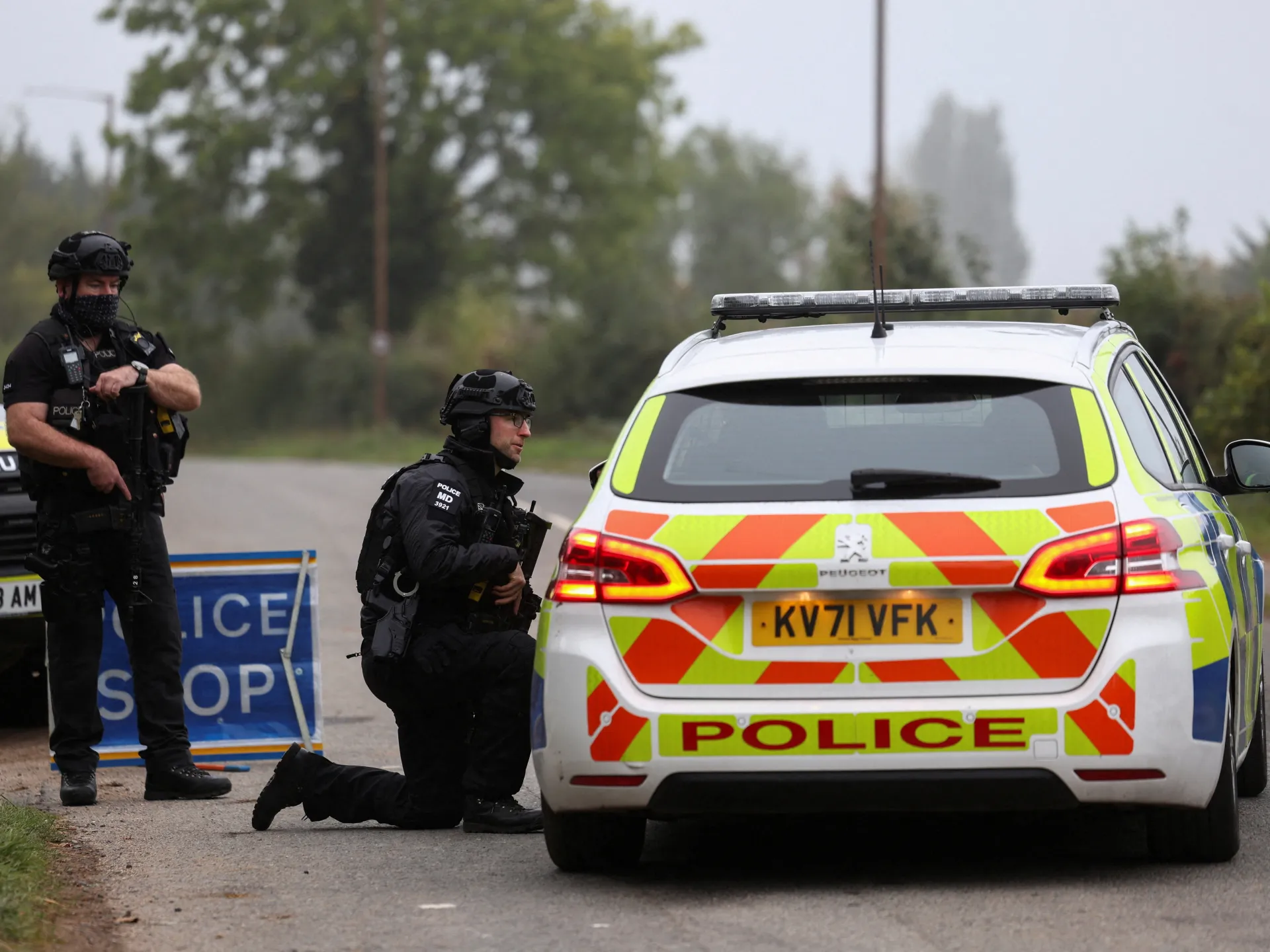
British Prime Minister Andy Burnham has said the UK’s security services have “strong indications” of Iranian involvement in the incident at a British Royal Air Force (RAF) station near Fairford this week in which five men were arrested before they were released on bail.
The five British men were spotted near the airbase and arrested on Sunday on suspicion of “terrorism” and explosives offences, before they were released.
list of 3 itemsend of list
The United States has used the British base to carry out operations in various conflicts, including to deploy bombers in its war against Iran.
Iran has strongly denied any involvement with the airbase incident, with Foreign Minister Abbas Araghchi saying British authorities are “barking up the wrong tree”.
So, what do we know about the incident, and is there evidence Iran played a role?
Authorities were alerted to suspicious activity near the base early Sunday morning, including three vans parked oddly and a group of hooded, masked men.
Police responded and arrested five British men in their early 20s in the nearby Whelford area, saying they were suspected of explosives offences. Counter Terrorism police later took over the probe and said the men were suspected of preparing “a terrorist act”.
The suspects were released on bail Monday, but remain subject to “stringent conditions on their movement and contact with others,” according to the United Kingdom’s head of counter terrorism policing, Laurence Taylor.
On Tuesday, after three days of investigations, including using a bomb disposal team, police said they had found no explosives in the vehicles that were parked the near the base, but had retrieved a “quantity of petrol”.
Officials in the UK, the US and Israel have all pointed to Iran but offered no details.
Burnham on Wednesday spoke of “strong indications” of Iran’s involvement and said an “ongoing, complex and serious police investigation” is continuing.
However, the prime minister did not give any details on what the suspects were planning or why the UK thinks Iran was involved, saying only that he would “update people more in due course”.
In the US, President Donald Trump said the case “might be” Iran-linked and that the US had been keeping tabs on the suspects “for a long time”. Secretary of State Marco Rubio said the case “clearly involved the hands of a foreign actor”, without naming a specific state.
In Israel, Prime Minister Benjamin Netanyahu said Israel had forewarned the UK about a potential “Iranian-sponsored attack”.
Iran has firmly denied involvement.
In a statement on Monday, Iran’s embassy in London said it “categorically rejects and strongly condemns” any attempts to link Iran to the individuals arrested near the airbase.
It said the spread of such “fabricated speculations” fuel “Iranophobia propaganda” and that Iran reserves the right to “take appropriate legal measures”.
On Wednesday, Iran’s Foreign Minister Abbas Araghchi said the UK was “barking up the wrong tree” by pointing to potential Iranian involvement.
It is unclear. Under British “counterterrorism law”, police can hold suspects for up to two weeks before charging them. However, if authorities find little evidence to support their initial suspicion of “terrorism”, they would have far less time – usually 24 to 36 hours, said Chris Phillips, a former head of the UK’s National Counter Terrorism Security Office.
“If it’s not an actual terrorist attack, then the police don’t have anywhere near as long to keep them in custody,” said Phillips. “I think the police just need more time to do their enquiries.”
Andrew Silke, professor of criminology at Royal Holloway, University of London, said the suspects could have also been released on bail while under suspicion of “terrorism” if “authorities feel relatively confident that these individuals do not pose an imminent danger of either carrying out or organising a terrorist attack”, such as if they had “peripheral” or “unknowing involvement”.
Afzal Ashraf, a visiting fellow in international relations and security at Loughborough University and a former senior Royal Air Force officer, said the bail release does not necessarily indicate that the “Iranian-involvement hypothesis has been rejected” but it does mean “police have judged that these individuals did not present any immediate danger”.
Taylor, the head of counter terrorism policing, said the men’s release on bail was an “investigative decision” based on “experience and careful considerations of policing powers.” He stressed that the men are bound by “stringent conditions on their movement and contact with others” as the investigation into them continues.
But their release drew backlash in the US from Trump, who said British authorities “should not have done that”.
“How do you give bail to a terrorist?” Trump asked.
Iran’s Araghchi appeared to suggest that the suspects’ release supported Iran’s position that it was not involved.
“I can confirm Iran’s belief that releasing supposed terrorists working for foreign states really says it all,” wrote Araghchi in a post on X.
Questions remain about the circumstances in which authorities were initially alerted to suspicious activity near the base, the extent to which they believe the suspects are linked to Iran and what the suspects may have been planning.
According to the BBC, police received two early-morning calls on Sunday regarding suspicious vehicles near the base, the first of which the media understands was made by one of the suspects themselves.
The Times of London reported that police are looking into the suspect’s motives for making such a call, including “whether he got cold feet or whether it was part of the plan”.
Authorities are also probing whether the incident was a form of “surveillance, a ‘dry run’ to test security or a stunt to send a message to the British government”, reported The Times.
Meanwhile, police have suggested they are looking into whether the suspects could have been unwittingly acting on Iran’s behalf.
In an updated briefing on Tuesday, Taylor said officials were examining whether the activity could have been “committed by proxies, or individuals either knowingly or unknowingly, working on behalf of a foreign state”.
He also spoke more generally about the “increasing breadth and complexity” of threats facing the UK, saying threats often emerge first as small-scale criminal activity, “committed by individuals whose primary aim is not terrorism but a quick financial gain”.
Phillips told Al Jazeera he believes the suspects could have been recruited online to carry out some type of malicious activity that falls short of a “terrorist attack”.
“It sounds as though these people have been paid online to do some naughty work”, such as “setting fire to something”, said Phillips.
He said both Russia and Iran have allegedly paid “stooges” to carry out such acts in recent years. “At first glance now, it seems that that may be the case, but time will tell,” Phillips added.
Royal Holloway’s Silke also said he believes the evidence suggests “a proxy explanation”.
“Certainly, there have been recent cases in Europe where individuals have been used unwittingly as proxies by foreign governments to carry out activities which have a hostile intent,” he said. “The UK authorities in this case may have assessed that something similar had happened here, and that the individuals involved had no inherent terrorist motivation themselves, but had been caught up unintentionally in a larger plot.”
Yes. MI5 Director General Ken McCallum said in October 2025 that the agency had tracked “more than 20 potentially lethal Iran-backed plots” in the UK within a year.
McCallum alleged that Iran, along with Russia, has resorted to “ugly methods,” such as “surveillance, sabotage, arson or physical violence”.
British Security Minister Dan Jarvis has said Iran often uses criminal proxies to “obfuscate” its involvement in attacks, which have targeted Iranian dissidents and Jewish and Israeli people in the country.
In March this year, British police arrested four people on suspicion of helping Iran spy on the local Jewish community. The month after, police said they were probing possible Iran links to a series of arson attacks on Jewish targets in London.
In June, two Romanian men whom British prosecutors said had acted as proxies for Iran’s government were handed lengthy jail terms for stabbing a British journalist of Iranian origin who wrote for an Iranian media outlet critical of Iran’s government.
Iran’s government has repeatedly denied involvement in any illegal plots or attacks on British.
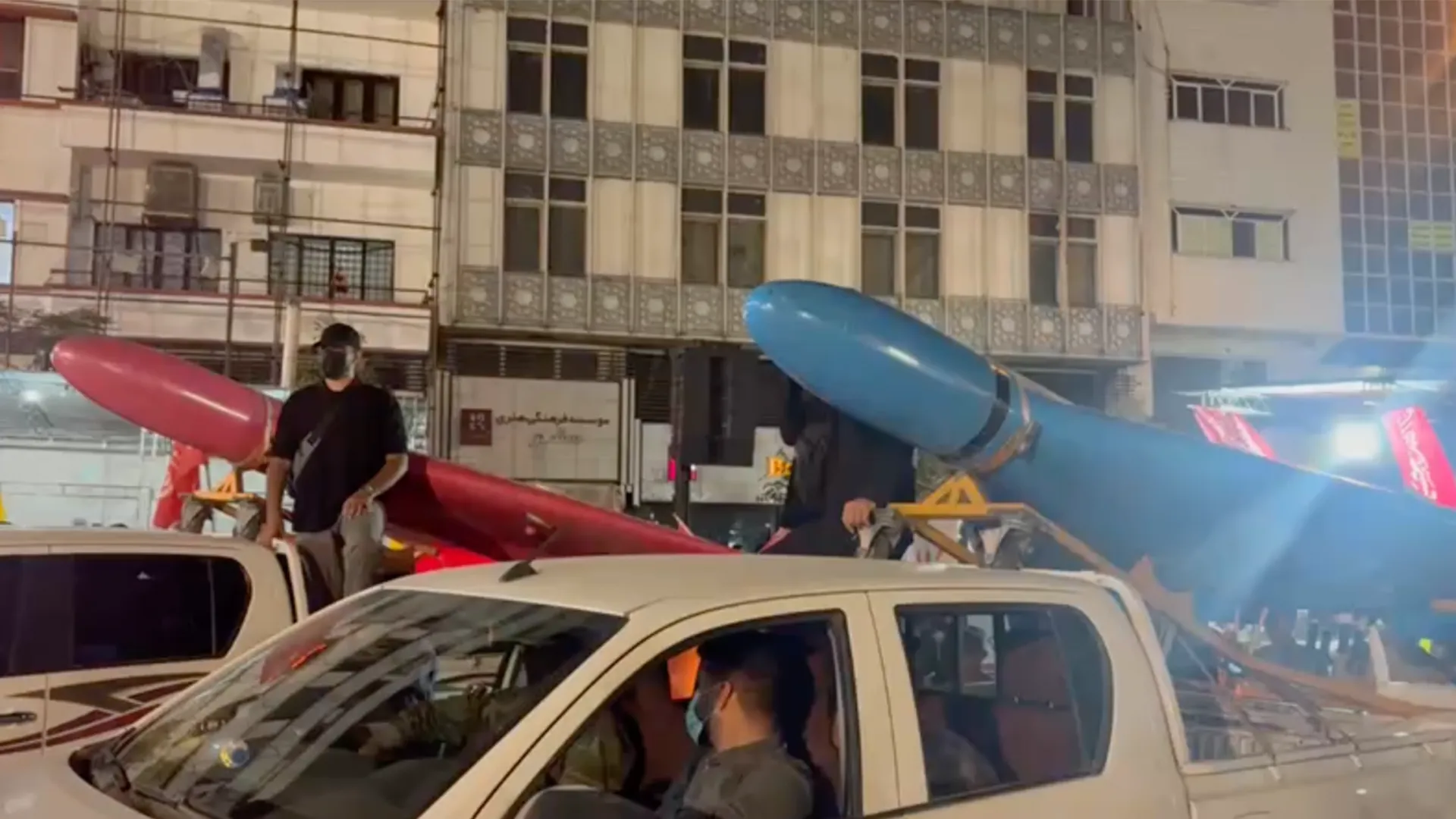
Crowds cheered and waved national flags as two Shahed drones were paraded through Tehran. Iranian-made, low-cost Shahed drones have become a major feature of modern warfare, used in attacks across the Gulf and extensively by Russia in its war in Ukraine.
Published On 1 Oct 20261 Oct 2026
Share
Trump repeats the claim that the US has “virtually total control” over the Strait of Hormuz during an event marking Hispanic Heritage Month.


Published On 1 Oct 20261 Oct 2026
Share
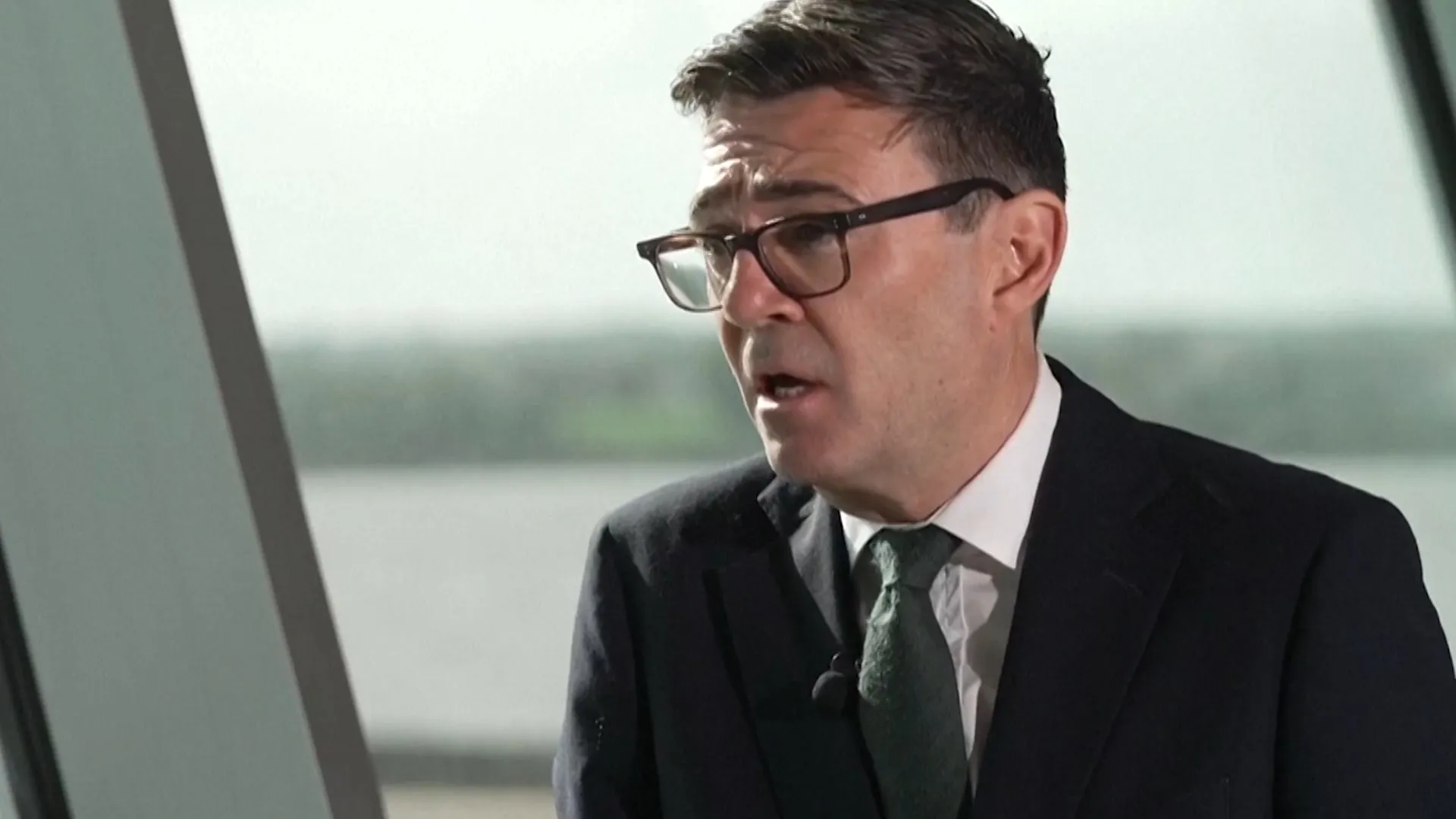
UK Prime Minister says there are ‘strong indications’ Iran played a part in the suspected RAF Fairford airbase plot.
Source link
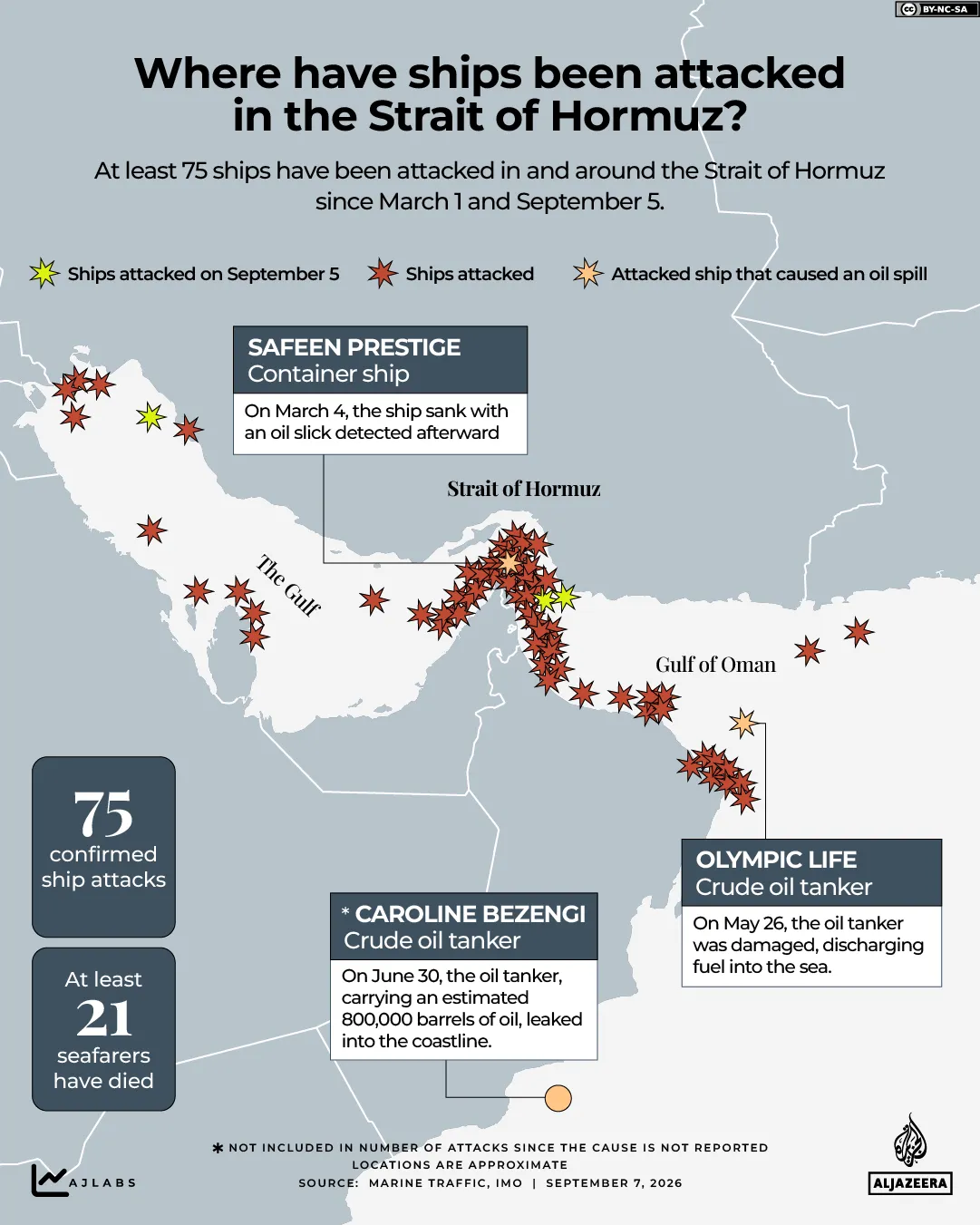
As Iran and the United States work with mediators to end seven months of hostilities, the reality in the Strait of Hormuz is shifting in ways that could prove to be a game-changer in ongoing negotiations.
According to the latest data from tanker-tracker websites, traffic through the key waterway has been steadily increasing, with some estimates putting oil and petroleum flow through the Strait of Hormuz at nearly 80 percent of what it was before the US-Israeli war on Iran began on February 28.
list of 3 itemsend of list
This could dent Iran’s leverage in reaching a favourable deal for itself in its attempts to end the fighting, which has seriously hampered its already heavily sanctioned economy, amid the US blockade of Iranian ships and ports.
Despite that, experts believe it would be a mistake to think normality in the Strait of Hormuz is imminent, or that Iran will fold easily despite growing economic hardship.
“The fact that oil is getting through the Strait of Hormuz is encouraging, but flows are not yet regarded as completely secure or guaranteed, particularly while the wider conflict remains unresolved,” Susannah Streeter, chief investment strategist at Wealth Club, told Al Jazeera.
Moreover, oil prices remain high globally, including in the US, where President Donald Trump faces a crucial midterm election that could see his party swept away in both houses of Congress.
Tanker insurance costs also remain elevated and energy flows through Hormuz are still far from secure, suggesting Iran’s leverage may be weakening rather than disappearing.
The latest data from commodity analytics firm Kpler points to a significant recovery in oil exports from the Middle East.
Crude exports reached an estimated 16.328 million barrels per day (bpd) in September – their highest level since the war began in late February, the firm reported this week.
Flows through the Strait of Hormuz itself were expected to reach about 9.719 million bpd during the month. Saudi Arabia has driven much of the increase, with its exports rebounding from 2.446 million bpd in August to about 5.4 million bpd in September.
Kpler said Middle East crude exports have recovered to just under 80 percent of their pre-war level. But the figures remain about 3.2 million bpd below the 19.513 million bpd exported in February.
The data also does not include ships crossing Hormuz with their tracking systems switched off, meaning actual traffic could be higher.
Prior to the war, an estimated 120-140 vessels crossed through the waterway daily, roughly half of them oil tankers moving approximately 20 million barrels per day. At the height of the fighting, traffic through the waterway collapsed to as few as two tankers a day after Iran in effect closed the strait in retaliation for US-Israeli attacks.

The rebound in oil flow presents a challenge for Tehran. Iran has sought to use its ability to disrupt the Strait of Hormuz – one of the world’s most important energy chokepoints – as leverage against Washington’s military and economic pressure.
But if large volumes of oil can continue moving through the strait while Iran itself remains under a US naval blockade, Tehran’s bargaining power could diminish.
Iran, however, rejects any assessment that its control over the strait is slipping.
Islamic Revolutionary Guard Corps spokesperson Hossein Mohebbi on Tuesday said the ability of vessels to transit the waterway with US assistance did not mean Hormuz had returned to normal.
Oil prices are another indication that Iran has not lost all of its leverage.

Brent crude fell 2.6 percent to $102.59 a barrel on Tuesday as traders focused on recovering Middle East exports. But it was still heading for a roughly 13 percent gain in September.
Chris Beauchamp, an analyst at IG, said markets were beginning to incorporate evidence of recovering flows but remained wary about how durable that recovery would be.
“It takes time for evidence to filter through to markets,” Beauchamp said. “Oil prices came off yesterday as the narrative began to take hold, and should continue to fall.”
But he said concerns persisted over whether the US protection system could withstand a renewed barrage of Iranian missiles and drones.
Streeter of Wealth Club said the market still had a geopolitical risk premium built into crude prices, despite the improving flows.
“Insurance costs for tankers also remain elevated because of the perceived risks of operating in the region, adding to the cost of transporting crude even as more ships make it through the waterway,” she said.
Moreover, Streeter warned that crude figures tell only part of the story. Flows of refined fuels, particularly diesel and gasoline, remain constrained, while damage to infrastructure has placed additional pressure on energy supply chains, she added.
There is another vulnerability, the investment strategist pointed out. Countries including the US have relied heavily on strategic oil reserves to cushion the impact of the disruption and help contain prices.
“With those stockpiles now significantly depleted, there is a thinner buffer if there is another disruption, which is helping to keep a floor under crude prices,” Streeter added.
There is little doubt that economic pressure on Iran is intensifying, potentially increasing Tehran’s incentive to reach an agreement.
Official data from the Statistical Center of Iran earlier this month showed gross domestic product (GDP) contracting 10.1 percent year on year between March 21 and June 20, while the crucial oil and gas sector shrank 26.4 percent.
Iran has also been battling high inflation and a plunging currency as the US blockade constrains oil exports and foreign currency earnings.
Twelve-month average inflation reached 69.9 percent earlier in September, while the rial had fallen beyond 2.2 million to the US dollar in early September.

In August, the US announced a fresh economic pressure campaign against Iran, promising to target Tehran’s financial interests across the world.
Mohammad Eslami, a research fellow at the University of Tehran, told Al Jazeera that Iran was facing an “economic war” alongside the military conflict.
“There is a US blockade of the Strait of Hormuz, which affects Iran’s revenues from oil exports and other products such as petrochemicals, which are important to Iran’s economy,” Eslami said. “As a result, Iran’s dollar revenues have been affected by the blockade.”
But he cautioned against judging Iran’s economy solely through the value of its currency.
“The exchange rate is a very important indicator, but it is not the only measure for explaining what is happening or the difficulties and challenges facing Iran’s economy,” Eslami said, adding that Iran has faced US economic pressure for “five decades”.
Despite the military and economic pressure, negotiations have not collapsed.
At the United Nations General Assembly last week, Tehran and Washington engaged in three hours of indirect talks, as US special envoys Steve Witkoff and Jared Kushner met with Iranian Foreign Minister Abbas Araghchi.
President Trump later described the encounter as “very good” and “very productive.”
Iran also proposed a seven-day roadmap under which the Strait of Hormuz could be reopened and normal maritime traffic restored if Washington meets Tehran’s conditions, a plan Trump categorically rejected.
Those conditions included ending the naval blockade on Iran, easing sanctions and releasing frozen Iranian funds.
However, on Wednesday, Reuters news agency reported that Araghchi had received US feedback on the proposal through Qatari mediators.
An official briefed on the talks said the main disagreement now centred on the sequencing of measures rather than the components of the plan.
US President Donald Trump reiterates that Tehran will not have a nuclear weapon.
Published On 30 Sep 202630 Sep 2026
Share
Indirect talks between the United States and Iran aimed at ending the seven-month-long war continue – most recently via Qatar as mediator on the sidelines of the United Nations General Assembly (UNGA) in New York – but the two sides still disagree about the agenda.
Iranian Foreign Minister Abbas Araghchi left New York on Tuesday after telling state-run Islamic Republic of Iran Broadcasting (IRIB) that he expects an official response to Tehran’s proposal to reopen the Strait of Hormuz by the end of the day. The proposal, which Iran said would see the strait reopened within seven days, was first passed to the US via Qatari mediators last week.
list of 3 itemsend of list
United States President Donald Trump was reported to have rejected that offer, under which Tehran would reopen the strait in return for Washington lifting its naval blockade, waiving sanctions, releasing an estimated $12bn in frozen Iranian assets and enforcing a wider regional ceasefire that includes Lebanon.
Under Iran’s proposal, wider peace talks, including discussions of its nuclear programme, would begin only then
Despite Trump’s public rejection, Araghchi says he has not yet received a formal response from Washington. Meanwhile, US media reports that Trump may well be willing to relax sanctions and unfreeze Iranian assets have been strongly denied by the US president.
Instead, US officials say, the US wants a deal that resolves all outstanding issues, particularly Tehran’s nuclear programme, in one go, rather than pursuing a gradual, step-by-step approach.
Here’s what we know about the talks:
Qatari mediators met Araghchi in New York on Monday to discuss how to advance Tehran’s proposal for reopening the Strait of Hormuz and then progressing to wider peace talks.
In a post on Telegram, Araghchi insisted that the talks focused solely on the Strait of Hormuz. He denied that the US had formally rejected the Iranian proposal.
“Despite what the US president said, I said that we were waiting for the official US response through the mediators … They [Qatar] had ideas, and we discussed them. They are going to raise this issue with the American side again, and then the final response from the American side will be conveyed to us through the Qatari mediator,” Araghchi said late on Monday.
Araghchi also said negotiations had become more “serious”, but cautioned that Tehran’s position has not changed.
“I state firmly that there has been no change in Iran’s position. Our conditions for opening the strait are clear. Our position on other issues is also clear. At present, there has been no discussion at all about flexibility,” he added.
Tehran’s proposal includes elements of the Islamabad memorandum of understanding (MoU), which was signed by both the US and Iran on June 17.
A US official told The Associated Press news agency last week that Trump is not willing to make a final peace deal with Iran until the issue of its nuclear programme is addressed. According to the official, who has not been named, the US president would be willing, however, to grant Iran sanctions relief and release some frozen funds if progress is made on the nuclear file.
Then, on Monday, US-based news outlet Axios also reported that Trump had offered Iran sanctions relief in return for concessions on its nuclear programme. The report also cited US officials, one of whom told Axios that the indirect talks had been “positive and constructive”, adding that Tehran had indicated it was “flexible” on nuclear issues.
Trump, however, angrily denounced the story as a “hoax” in a post on Truth Social, the social media platform he owns. He said the story was “not true” and demanded Axios remove the article.
Iran has been heavily sanctioned for decades. The restrictions have severely affected Iranians’ quality of life, including their access to essential medicines and healthcare.
In August, the US announced yet more sweeping economic sanctions on Iran and countries that trade with it as it sought to apply more economic pressure to isolate the country from the global economy during the diplomatic deadlock in their war.
US Treasury Secretary Scott Bessent described the campaign as the “economic asphyxiation” of Iran.
It is difficult to quantify exactly how many Iranians have been killed by what Tehran views as “economic warfare”. However, a study published last year by the highly regarded medical journal The Lancet Global Health concluded that more than 564,250 people worldwide die annually as a result of US sanctions.

In late February, just before the US launched its first strikes on Iran, the two sides were already holding talks hosted by Oman, which included the issue of Iran’s nuclear programme.
But before those talks could conclude, the US and Israel launched strikes, triggering the closure of the Strait of Hormuz, through which one-fifth of the world’s oil and natural gas is shipped in peacetime, by Iran. The closure of the strait has since become the primary point of contention between the two sides, when it had not been an issue before the war began. The strait is currently subject to blockades by both sides.
Throughout the war, Trump has repeatedly expressed his desire to strike a deal with Tehran. However, serious differences between the two sides will need to be resolved first, including the order in which issues are addressed for the purpose of peace talks.
Iran wants to establish its control of the Strait of Hormuz, have sanctions lifted and assets unfrozen, as well as ensure an end to US-Israeli strikes before it will go back to negotiating other issues, such as its nuclear programme. This was the order of events laid out in the MoU agreed between Iran and the US in June, but which quickly fell apart.
The US, however, wants everything to be on the table at the same time – it does not want to agree to anything relating to these Iranian demands before it addresses the other issues.
Scott Lucas, professor of US politics and international relations at University College Dublin, told Al Jazeera that Washington effectively wants Iran to surrender.
“The Strait of Hormuz has become a fundamental issue. The question here is, will both sides give? The memorandum of understanding clearly gave Iran a role in the management of the strait,” Lucas said.
“When the Trump administration pulled away from negotiating on the basis of the memorandum, they effectively went back to the idea of Iran having to completely allow passage through the Strait of Hormuz with no guarantees over it, in terms of not only what it means for Iran financially, but [also] in terms of Iranian security. The Iranian government is not going to agree to that, so we’re stuck in this limbo right now,” he added.
“Are the Trump folks going to come back to the talks on the basis of the memorandum of understanding or something that is a revised version of it, or are they going to try and break the government with economic warfare until at least after the US elections in November? That’s where we are right now.”
After half a century of bitter enmity with Washington, Iran wants to consolidate what it sees as the strategic gains it has made during a war it did not start. This specifically includes its newly established ability to close the Strait of Hormuz, sending global energy markets into a tailspin and placing additional pressure on the Trump administration.
Since US-Israeli strikes on Iran began on February 28, Hormuz has dominated talks aimed at ending the war and emerged as Tehran’s greatest point of leverage. Prior to the conflict, Iran did not exert control over the waterway and all commercial shipping passed through freely.
For this reason, Iran will not move on to wider peace talks until it has leveraged its control of the strait to get its demands met. “Our discussion is clear. Right now, it is only about the Strait of Hormuz,” Araghchi said late on Monday.
“The opening of the Strait of Hormuz is also subject to the fulfilment of a series of conditions that we announced to the other side.”
Ali Salehian, director of the Center for Intellectual Diplomacy at the Governance and Policy Think Tank in Iran, told Al Jazeera that Tehran does not believe Washington will honour any future deal as it did not honour what was agreed under the Pakistan-brokered June MoU.
“For Iran, the bottom line of every negotiation with Trump, considering all of his misbehaving and [military] targeting of Iran during negotiations, is the Islamabad MoU,” Salehian said.
“Tehran thinks that if the US doesn’t fulfil its commitments based on the MoU, there is no guarantee that any kind of future deal would be sustainable.”
![Iranian-made Zolfaghar missiles are seen on display beside a large portrait of Iran’s Supreme Leader Mojtaba Khamenei at Baharestan Square in Tehran on September 28, 2026 [AFP]](https://i0.wp.com/occasionaldigest.com/wp-content/uploads/2026/09/afp_6abbb983ec1b-1790687619.jpg?w=640&ssl=1)
It does not look likely that the diplomatic standoff will be eased anytime soon, analysts say.
Both the US and Iran have indicated throughout the war that they would prefer a diplomatic settlement to a continuation of the war. However, Trump has continued to threaten Iran with more strikes if it does not agree to a deal, and Araghchi told US news outlet NBC on Sunday that Tehran is also prepared to resume fighting, even though it has not abandoned diplomacy.
“We are fully prepared for the time for the war to be resumed, and I repeat, we stand firm in the face of any new aggression, even if it comes to a doomsday war,” he said.
Trump said last week that he expects a deal will be reached, but not until after the US midterms on November 3.
“For the moment, the Trump administration is going to try to make the Iranian government capitulate through economic warfare,” Lucas said.
However, a deep sense of distrust remains between the two sides. Senior Iranian officials believe Trump will restart the war after the midterms on a far greater scale and that Israel would also participate.
If that theory proves true, Tehran may well prefer the fighting to resume before November’s elections, as it would allow Iran to impose a greater cost on Trump.
“The reaction of the Iranians to that might be to actually trigger the war themselves, early, right before the midterm elections in order to maximise the pain that [it] will impose on the US president,” Trita Parsi, executive vice president of the US-based Quincy Institute for Responsible Statecraft, told Al Jazeera earlier this month.
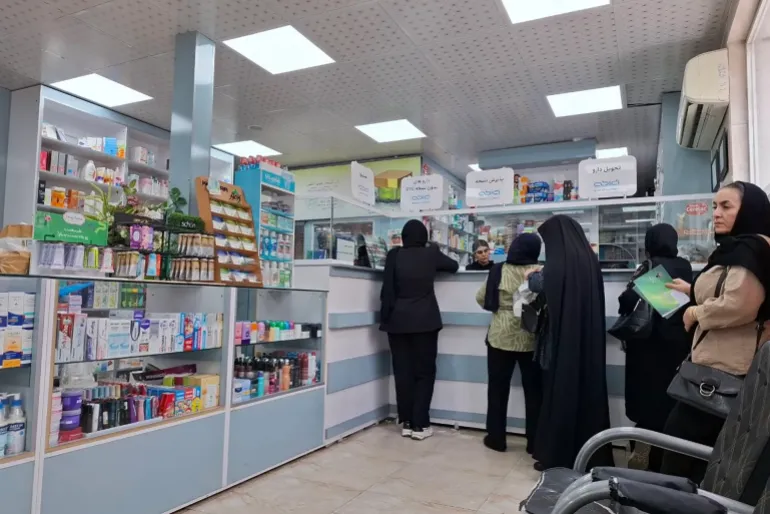
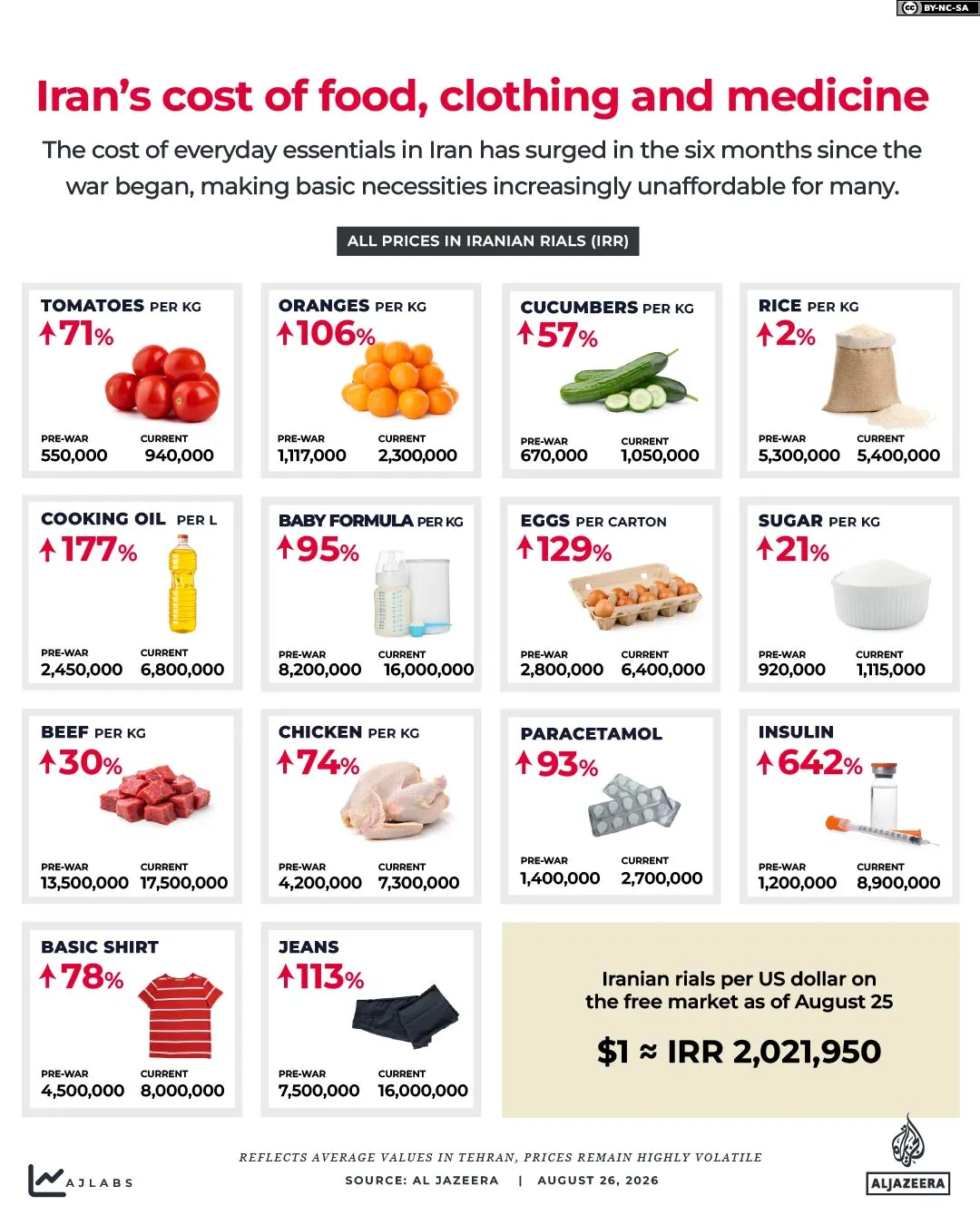
Tehran, Iran – Iranians are stocking up on food and medicines as fears grow that the country will face dire shortages as the United States tightens an embargo on the country.
The Iranian government had managed to keep household staples flowing during the early months of the war. But a US naval blockade and pivot to draconian sanctions have led to fears that imports will be limited.
list of 3 itemsend of list
More recently, the US announced a ban on Iranian airlines worldwide and is pressing other countries to cut trade ties with Iran in a bid to isolate the country.
Addressing the United Nations General Assembly last week, Iranian President Masoud Pezeshkian condemned Washington for its blockade on his country, saying it will prevent food and medicine from reaching the Iranian people.
On Saturday, US President Donald Trump rejected Iran’s offer for a seven-day truce that would see it reopen the Strait of Hormuz in exchange for economic relief and other conditions.
As the war enters its eighth month and hopes for a diplomatic solution dim, Al Jazeera looks at how some Iranians are faring under a US embargo.
Tehran’s stores remain stocked, but shoppers are keeping an eye on shop shelves. Their anxiety has deepened since a flurry of social media posts urging people to ensure they have several days of food before a possible new round of fighting with the US.
At one shopping centre, Ali, 51, was loading a trolley packed with rice, flour, pasta, pulses, cooking oil and canned food.
He is stocking up because he is convinced that Iran’s adversary is seeking to “starve” the people to push them to turn on their government.
“This is not a war in the traditional sense. It targets the people to put pressure on the authorities,” he said.
With flights to some nearby countries suspended, imports of certain medicines and mobile phone headsets are hard to find. The prices of those still available in shops have been pushed up.
Haj Pasandideh, a 71-year-old grocer, said he believed warehouses were well-stocked with basic goods at the moment. But the problem lies in the daily price increases due to Iran’s weakening rial, prompting him to bulk-buy goods before the expected hikes.
He sometimes caps cooking oil at one bottle per sale to ensure as many customers can purchase the goods as possible.
Farmers are also on edge due to the embargo, unable to ship out their produce and forced to sell to local markets.
The war has worsened the economic situation, even after years of sanctions that have pushed the country from being a regional exporter of agricultural and food products to being one of the region’s main importers.
Mehran, an apple grower, told Al Jazeera that due to the difficulties of exporting, he had sold only a third of this year’s harvest, all of it inside Iran.
Some neighbouring countries have halted trade with Iran in recent months, he said, while trucks now spend days at crossings they once cleared in a day, causing fruit to spoil before it reaches buyers.
“The blockade has not only closed the sea and air but also the land routes but in an undeclared manner,” he said.
The war has also deepened an already-dire shortage of medications. Some pharmacies Al Jazeera visited in southern Tehran had run out of infant formula and dozens of other types of medications.
Although officials have assured Iranians that substitute products were available, pharmacy staff expressed concern about the increasing number of customers searching for infant formula in vain.
“Imported medicines are disappearing fast, and lately people have been coming in to buy certain items before they need them for fear they will run out in future,” Mahsa, a 23-year-old pharmacy assistant, told Al Jazeera.
She said the health authorities had introduced “smart systems” to track the quantity and type of medication each person buys.
![Women queue at a pharmacy in Tehran [Al Jazeera]](https://i0.wp.com/www.aljazeera.com/wp-content/uploads/2026/09/1arann-1790588624-1790672728.jpeg?w=640&ssl=1)
The prospect of a prolonged siege and deteriorating economic conditions have driven some Iranians to call for a military solution.
On Tehran’s main thoroughfare, several people told Al Jazeera that another round of fighting with the US was unavoidable. Some urged the government to break the blockade by force before it is tightened further.
Mohsen, a 23-year-old economics student, believes Washington’s goal is to strangle the Iranian economy and the cost will ultimately be felt by Iranian citizens.
Iran possesses many strong cards that it must use to break the air and sea blockade before they develop into a land blockade that would completely choke Tehran, he said.
Alireza Taghavinia, an Iranian international relations expert, told Al Jazeera that the gap between Washington and Tehran was too wide to be bridged. “The siege imposed by force will only be lifted by force,” he said.
In a worst-case scenario, falling living standards could bring protesters onto the streets, he added.
“The enemy is counting on stirring up chaos inside Iran because it believes no military strike will achieve its objectives without internal unrest,” he said.
Washington’s top diplomat calls the suspected plot ‘a very serious situation’ after five were arrested over the weekend.
Published On 29 Sep 202629 Sep 2026
United States Secretary of State Marco Rubio has said a “foreign actor” was involved in a suspected bomb plot near an airbase in the United Kingdom used by the US military.
Police arrested five men, all British nationals from London, in their early to mid-20s, on Sunday after being alerted by a local farmer about three white vans driving towards RAF Fairford, a British base that houses US bombers flying missions against Iran.
list of 4 itemsend of list
The counterterrorism police said on Monday they were investigating whether individuals were acting for a foreign state in an apparent plot to attack the airbase. They later said the suspects would be released on bail.
Commenting on the suspected plot and arrests on the Hannity programme on Fox News late on Monday, Rubio said, “What happened, what almost happened, what could have happened in the UK over the weekend is a very serious situation.”
“It’s one that clearly involves the hands of a foreign actor. I won’t get into great detail about that yet,” he added.
Iran’s Islamic Revolutionary Guard Corps (IRGC) had said in July the Fairford base was a legitimate target.
Iran’s embassy in London said in a statement on Monday it “categorically rejects and strongly condemns the recent unfounded and malicious speculations” that it was involved, which it said would fuel “Iranophobia propaganda” in the UK.
Trump said on Sunday the UK and the US had had the suspects “under investigation” for a while and alleged, “They were looking to do big damage to our fort.”
After hearing news that suspects were being released on bail, Trump said on Monday the case “might be” linked to Iran but declined to elaborate.
The UK gave the US permission in March to use Fairford for “specific defensive operations into Iran” to destroy Iranian missiles at source.
US bombers and other planes have since been seen taking off and landing at the base – the only one on the British mainland used for this purpose.
Residents in the rural Cotswolds area surrounding Fairford said the site, which hosts a range of US military equipment and personnel, had seen increased activity and security in recent months.
Authorities evacuated about 85 households from a nearby village early on Sunday, but they were allowed to return home the next day.
Tehran has previously warned London against allowing its bases to be used by the US in operations against Iran.
Iranian Foreign Minister Abbas Araghchi has accused London of “putting British lives in danger” by allowing the bases to be used “for aggression against Iran”.
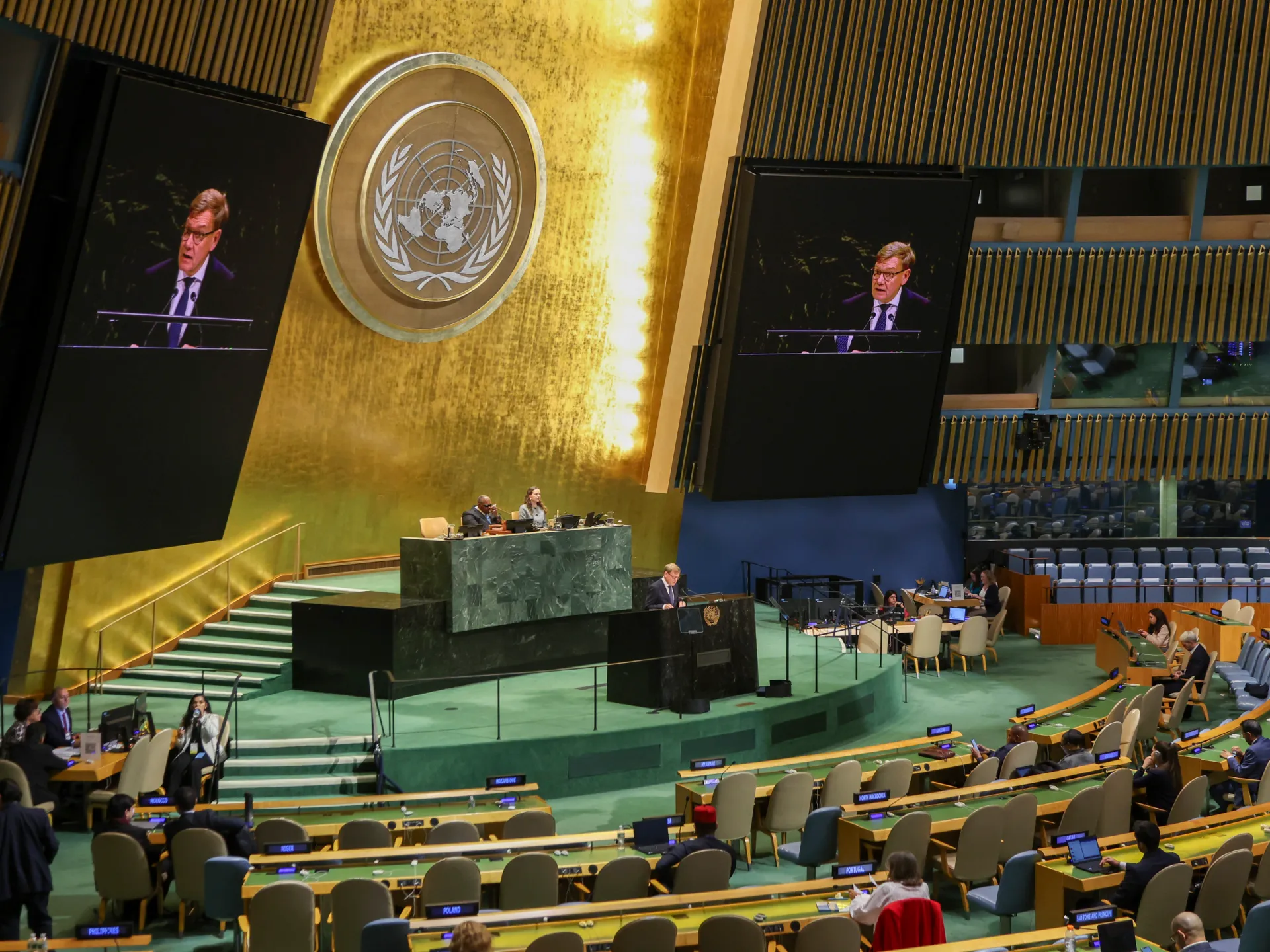
The 81st United Nations General Assembly (UNGA) concluded on Monday with artificial intelligence (AI), the Israel-Palestine conflict and the US-Israel war on Iran dominating world leaders’ addresses during the general debate.
UN Secretary-General Antonio Guterres, in his final address before his term ends, warned that the future of the world would be shaped by four tests: AI, climate change, wars and inequality.
list of 3 itemsend of list
“Across all four tests, the decisive issue is power. Power over force, money, energy, technology, rules and the future. That is why the UN Charter – and the work of the United Nations – matter more than ever,” Guterres said.
Speeches ranged from calls to reform the UN to appeals for upholding international law, as the global body has been undermined by the unilateral foreign policy pushed by United States President Donald Trump.
Here are the biggest takeaways from this year’s summit:
The situation in Palestine was a key issue among members amid Israel’s ongoing genocidal war on Gaza despite the so-called “ceasefire” and escalating settler pogroms in the occupied West Bank.
France, Canada, Iraq, the United Kingdom and others called for Palestinian sovereignty during their speeches.
“What credibility do we have if we continue to remain inactive in the face of Gaza,” French President Emmanuel Macron said in his address.
“Some boast of a supposed peace, but this peace hasn’t reopened humanitarian routes for a single second,” he said, adding: “Must we stand by and watch this spectacle that shames us all?”
Macron, British Prime Minister Andy Burnham, his Canadian counterpart Mark Carney and Saudi Foreign Minister Prince Faisal bin Farhan Al Saud chaired a meeting at the UNGA on Palestinian statehood, which is being actively undermined by Israel. Israeli Prime Minister Benjamin Netanyahu’s government has accelerated construction of illegal settlements and provided impunity to settlers in the occupied territory.
At the same time, the US-led Board of Peace unveiled a 66-project reconstruction blueprint with proposed funding of $2.4bn for the Gaza Strip on the sidelines of the UNGA.
However, the board’s plan excludes the UN agency for Palestinian refugees (UNRWA), saying it has no role in the future of Gaza. The decision was described by Palestinian political analyst and playwright Ahmed Najar to Al Jazeera as aligned with Israeli efforts to “marginalise and ultimately dismantle the agency, removing it not only from Gaza’s present but from its future”.
Dozens of delegates left the hall in protest as Netanyahu delivered his speech, in which he declared that Israeli forces would continue fighting against Hamas and Iran.
In his address, Trump emphasised that while others spoke of peace, he “made peace”.
Trump defended his actions in abducting the then-Venezuelan President Nicolas Maduro in January and said, since his military operation, hundreds of political prisoners had been freed in the South American country and that Caracas had signed the largest oil deal in history last month, covering “65 billion barrels of oil, which will benefit both Venezuela and the United States enormously and help drive down the cost of energy all over the world”.
“It was perhaps the biggest deal ever made. To the victor belong the spoils – you’ve all heard that,” Trump boasted.
Trump reiterated that he would never allow Tehran to have nuclear weapons and that the 12-day war in July 2025 had “obliterated their nuclear programme beneath mountains of rubble” as the ongoing US-Israel war on Iran had sunk “159 ships of their navy” to the bottom of the sea.
“I have a big decision to make – will a deal be made with Iran that lets them rebuild and create a far greater country than it ever was before … or do I annihilate the Islamic Republic and do it quickly, never giving them a chance to kill and destroy people and countries again,” he said, adding: “I believe we make a deal right after the elections.”
During sideline talks and one-on-one meetings, Iranian officials were in demand.
In his speech to delegates, President Masoud Pezeshkian emphasised that Iran had only “defended ourselves” amid attacks on his country and killings of Supreme Leader Ayatollah Ali Khamenei, scientists and children.
“We are not terrorists, our innocent people have been the targets of cowardly attacks and aggressions imposed upon our country,” he said.
Pezeshkian added Iran would not accept that peaceful nuclear technology is held exclusively in the hands of a few countries.
“We will not bow our head and give up the right that is inherently ours,” he said.
Meanwhile, on the sidelines of the summit, Foreign Minister Abbas Araghchi met his counterparts from India, Qatar, Turkiye, Pakistan, Ukraine and other countries.
He also met US Special Envoy Steve Witkoff and Trump’s son-in-law Jared Kushner in a four-hour meeting mediated by Qatar.
World leaders used their time at the podium to call for a global approach to using AI as interest in the technology grows, but fears that it could escalate if unchecked are also growing.
In his address, Finnish President Alexander Stubb said AI was the “most consequential technology in the history of mankind”.
“It will impact science, the economy, politics, security, and the very essence of our humanity. Humans can and should be in the driver’s seat. We have a choice: we can compete, cooperate or slow down. For me, cooperation is the best way forward,” he said.
While discussions are moving away from a good-versus-bad dichotomy, officials disagreed on approaches.
While Guterres and the European Union called for safety standards and international rules, Trump said AI innovation should not be constrained by international regulation, adding that the US should control its AI sector.
Chinese President Xi Jinping skipped the UNGA despite being in the US for a summit with Trump. He sent Vice President Han Zheng to attend.
Xi rarely attends the UNGA. He had sent Premier Li Qiang in his place last year. In 2024, Foreign Minister Wang Yi attended the annual gathering.
Without mentioning Iran in his address, Han reiterated Beijing’s position that “sovereignty and security of countries in the Middle East, including the Gulf, should be respected”.
“China calls for advancing the governance of the West Bank and the post-conflict reconstruction of Gaza in accordance with the principle of the Palestinians governing Palestine. It also calls for bringing the Palestinian question back onto the right track of the two-state solution at an early date,” he said.
Han also called for a “people-centred approach and develop AI for the positive and for good, narrow the digital divide, and promote development that is universally beneficial”.
Iran’s foreign minister says his visit to the UN General Assembly last week was mainly to outline Tehran’s position on regional conflicts and the critical security situation in the Strait of Hormuz.

Published On 29 Sep 202629 Sep 2026
Share
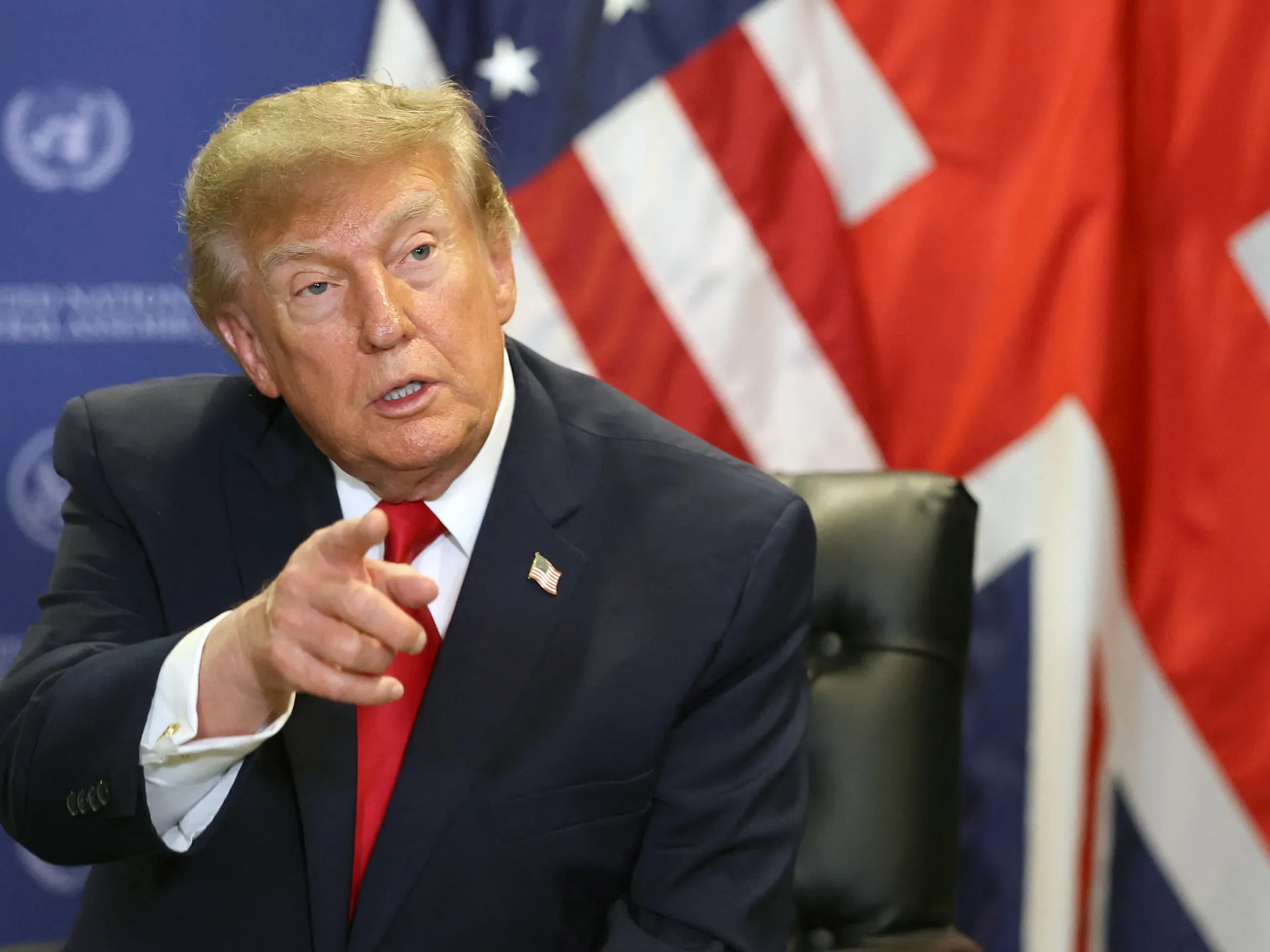
The Strait of Hormuz remains the most perilous choke point on the global map as Iran continues to disrupt traffic by attacking vessels. A recent proposal by the Islamic Republic to open the waterway within seven days raised hopes that the situation could go back to normal. United States President Donald Trump, however, rejected the offer.
To understand the strategic calculus behind his high-stakes decision, one must look beyond the immediate tactical noise and peer into the deeper logic of deterrence.
On its surface, the rejection of a temporary truce in the world’s most vital energy corridor appears to be a reckless gamble – a provocation inviting the very conflagration the West seeks to avoid. But viewed through the lens of cold realism, the rejection was not only a calculated necessity; it was the right decision.
The Iranian regime’s proposal was a classic exercise in asymmetric diplomacy. It offered a brief window of stability, a transactional pause, in exchange for what would have amounted to a de facto relaxation of American pressure. To accept such terms would have meant embracing the delusional belief that a terrorist power can be bribed into good behaviour by accepting its terms of engagement.
Had Washington accepted, it would have validated Iran’s self-assumed right to turn the spigot of global commerce on and off at will. By flatly rejecting the offer, Trump signalled that freedom of navigation is not a chip to be bartered in a week-long bazaar, but an absolute, non-negotiable prerequisite of international order.
The timing of this gambit – on the eve of the critical midterm elections – has naturally drawn the ire of the domestic political class. Critics argue that risking an energy crisis and a subsequent spike in oil prices weeks before Americans head to the ballot box is an act of political self-immolation. This view, while superficially plausible, misunderstands both the nature of the electorate and the psychology of our adversaries.
The Iranians chose this moment to put forward their proposal precisely because of the midterm elections. They are sophisticated observers of American domestic politics. They calculated that an administration facing an electoral test would be paralysed by the fear of rising fuel prices and would eagerly grasp at any diplomatic lifeline, however flimsy, to keep the peace until November.
Had Trump capitulated to save Republicans a few points at the polls, he would have handed Iran a profound psychological victory. He would have demonstrated that American foreign policy is subservient to the domestic election calendar – a vulnerability that every autocracy from Moscow to Beijing would immediately exploit.
By taking the gamble before the midterm elections, Trump has turned the tables. He has demonstrated that his administration is willing to absorb short-term political pain in pursuit of long-term strategic clarity. This is the essence of credible deterrence.
Deterrence is not merely a function of military hardware; it is a function of perceived will. When an adversary believes you are too weak, too compromised, or too worried about the next election cycle to defend your core interests, deterrence fails. By rejecting the seven-day proposal, the Trump administration proved it could not be blackmailed by the electoral calendar.
Trump’s decision reflects a sophisticated understanding of the regime in Tehran. The Islamic Republic is currently facing an acute internal economic crisis, a direct consequence of the sustained American maximum-pressure campaign.
The seven-day proposal was not a gesture of Iranian confidence; it was a sign of desperation disguised as a diplomatic overture. It was an attempt to buy breathing room, fragment the expanding international coalition against Tehran and project an image of being in control to its own restive population.
To grant Iran that reprieve would have been to throw a lifeline to an antagonist regime on the ropes. Clearly, this offer was only made because US strategy is working and Iran’s economy is cratering.
History teaches us that truces with terrorist regimes are rarely precursors to permanent peace; they are merely opportunities for the aggressor to rearm, recalibrate and choose the next moment of confrontation on more favourable terms. A short-term guarantee of open shipping lanes implied that any day, the threat could return, magnified by the legitimacy Washington would have afforded to Iran’s leverage.
The critics who cry havoc at this decision are the heirs of the foreign policy establishment that spent decades managing decline through endless, inconclusive and failed negotiations. They prefer the comfortable fiction of a temporary deal to the hard reality of a sustained geopolitical contest.
President Trump’s gamble is risky, yes. The potential for miscalculation in the narrow waters of the Gulf is always present. But the risk of inaction, or of a pliant accommodation, is far greater.
By holding the line, the administration has reaffirmed a foundational principle of US global stewardship: the US will not permit rogue states to hold the global economy hostage.
The rejection of the Iranian proposal is the correct path because it chooses clarity of American resolve over partisan political convenience. It signals to the regime in Iran that its leverage is artificial and its economic isolation is permanent unless its behaviour changes.
This November, American voters will decide the composition of the US Congress based on a multitude of domestic and foreign policy factors. But on the global stage, Trump remains steadfast by demonstrating that principle trumps political expediency.
The views expressed in this article are the author’s own and do not necessarily reflect Al Jazeera’s editorial stance.
Abbas Araghchi’s warning comes after Washington rejected a seven-day roadmap to end the war and reopen the Strait of Hormuz.


Published On 28 Sep 202628 Sep 2026
Share
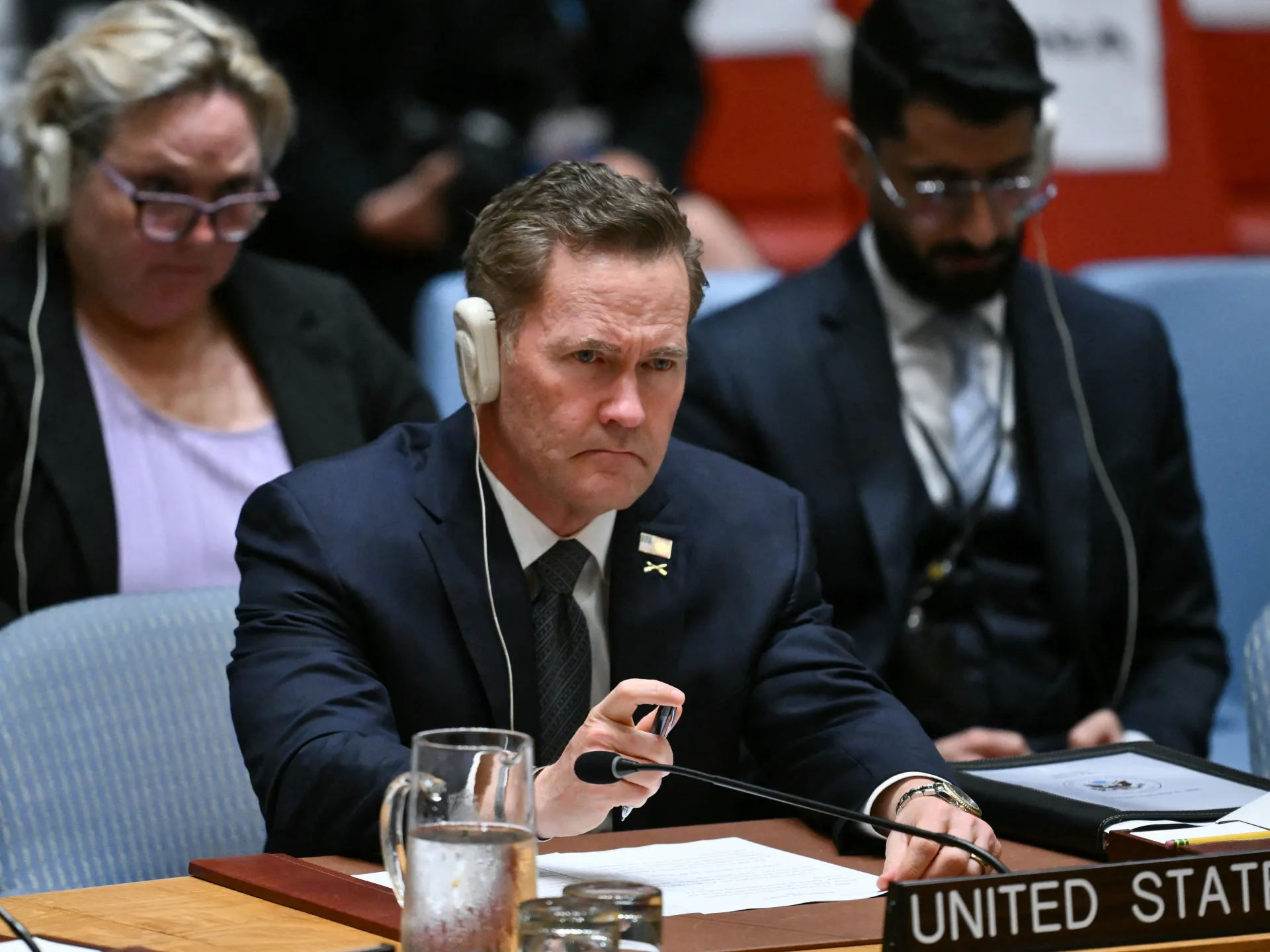
As part of previous negotiations aimed at ending its war on Iran, the United States offered to sell Tehran uranium for use in a civilian programme, but Iran refused, a top US official said on Sunday.
“Heck, our negotiators even offered to sell them uranium,” US Ambassador to the United Nations Mike Waltz said on NBC’s Meet the Press. He said the agreement would have been akin to that with the United Arab Emirates, which has “a peaceful programme, right there in their neighbourhood, and they abide by international law and inspection regimes”.
list of 3 itemsend of list
Waltz said the administration of US President Donald Trump was open to allowing Iran to keep a civilian nuclear programme, provided it agreed to its obligations in accordance with international law and the Nuclear Non-Proliferation Treaty (NPT).
There were “a number of ways” President Trump was open to dealing with Iran to ensure it did not have access to highly enriched uranium, or the ability to reconstitute highly enriched uranium, including by having Tehran “hand over” any such material it currently has, Waltz said.
The UAE, a signatory to the NPT, generates electricity from a nuclear power plant and signed an agreement with the US in 2009. Under those agreements, the UAE has agreed not to produce enriched uranium domestically, and not to reprocess spent fuel on its own. Trump said Saudi Arabia and the US reached an agreement on civilian nuclear use this year, but details have not yet been made public, and the US president has also claimed the deal is contingent on Riyadh agreeing to the controversial Abraham Accords. Around the region, Egypt and Turkiye also operate civilian nuclear programmes.
Pakistan openly operates a nuclear arsenal, while experts have long believed Israel secretly possesses one of its own. Neither country is a signatory to the NPT.
A key point of contention between Iran and the US has been what should be done with the uranium that Tehran currently has, and how, or even if, to ensure any future supply of the material is not capable of being used for producing a nuclear weapon. Iran has insisted it has no plans to create a nuclear weapon, and any uranium it possesses and enriches is only for civilian purposes, including for generating electricity and use in medical treatments and scientific research.
Iran is estimated to have more than 440kg (970lb) of uranium enriched at 60 percent purity. Uranium enriched to around 90 percent purity is suitable for a nuclear weapon. Enriching uranium is a complex process that involves isolating the most radioactive isotope in a quantity of uranium. Under the 2015 Joint Comprehensive Plan of Action (JCPOA), Iran agreed to cap its uranium enrichment at 3.67 percent under strict international supervision in exchange for lifting sanctions against its economy. Trump scrapped that deal in 2018, saying it was too generous to Iran.
On September 10, the International Atomic Energy Agency (IAEA) said it was concerned over Iran’s “continued noncompliance” with the Nuclear Non-Proliferation Treaty, of which it is a signatory. Under the treaty, Iran agrees not to produce nuclear weapons and to meet IAEA safeguards to control its supply of uranium used for civilian purposes. The agency has not had access to key Iranian nuclear facilities since June 2025, when Israel and the US attacked sites in the country as part of a 12-day war.
Iranian officials have responded to the IAEA by saying the finding was made “under political pressure from the US and its allies”, and that they have not stopped respecting their treaty obligations, but could not allow inspections until facilities were safe from US and Israeli attacks.
At times, Trump has said he will destroy the enriched uranium Iran has or retrieve it by force. In April, the US president claimed to have convinced Iran to turn over the enriched uranium it had, which he referred to as “nuclear dust”. Iranian officials quickly dismissed those claims, saying enriched uranium would not be transferred outside the country under any circumstances.
On Saturday, Trump rejected a plan submitted by Iran to reopen the Strait of Hormuz within seven days, as Tehran continued to insist that only diplomacy can solve the conflict between the two countries. Speaking to reporters at the White House, Trump said on Saturday that Iran wants to make a deal to open the vital maritime corridor immediately only “because they are losing so badly”.
In an interview on Meet the Press on Sunday, Iran’s foreign minister, Abbas Araghchi, said that Iran is prepared for war to resume, “even if it comes to a doomsday war”.
He added, “If you ask us, there is no reason why we should go back to diplomacy. But I’m still trying diplomacy, because I think we shouldn’t miss any chance for peace.”
Tehran, Iran – Hours after US President Donald Trump rejected a diplomatic solution put forward by Iran to reopen the Strait of Hormuz, explosions were heard in the waterway, according to Iranian media.
Reports of blasts near southern Iran’s Qeshm Island in the Strait of Hormuz suggested that multiple antiship missiles and drones were fired at vessels transiting the waterway against Tehran’s wishes.
list of 4 itemsend of list
While Iranian authorities did not confirm any attacks in the Strait of Hormuz that day, shipping continues to be attacked in the waters, including an Indian cargo ship last week, which killed a sailor.
The Islamic Revolutionary Guard Corps (IRGC) maintains that the strait is closed to any ship that does not coordinate with Iranian authorities. On Sunday afternoon, it released video of what it said was a second US underwater drone seized this month.
Tehran has issued instructions to shipping companies transiting the Strait of Hormuz to use a temporary route approved by Iranian authorities and pay relevant fees. But it has also said the strait will not fully reopen until the US blockade on Iranian ports ends.
Iran’s Persian Gulf Strait Authority announced on Saturday that it would blacklist any shipping charterer company which orders crews to use routes it considers to be unauthorised.
It also published what it described as an apology from an unnamed shipowner blaming commercial pressure from its charterer for trying to pass through the strait.
Washington still insists that its warships are successfully guiding oil tankers out of the strait via a different route. US Energy Secretary Chris Wright told Fox News on Sunday that the “running average” of crude oil in transit was nearly 13 million barrels per day.
A September 19 operational update by US Central Command claimed that its forces had helped move more than one billion barrels of crude out of the Gulf over roughly two months.
The US military also says its forces have redirected 122 commercial vessels to enforce the naval blockade of Iran’s ports, halting all Iranian crude exports.
Tehran has claimed that the US is providing false information regarding Strait of Hormuz traffic to project control over the key waterway. Shipping has been severely disrupted since the US and Israel started their war on Iran on February 28.
Andreas Krieg, associate professor at King’s College London, said Iran’s strategy of launching maritime attacks has spread the economic costs of the conflict beyond its borders.
While Iran has suffered economically from war damages, the US naval blockade and sanctions, it would be a mistake “to assume that reaching that threshold produces submission”.
“The next Iranian move is therefore likely to be an attempt to increase the pain experienced by the Gulf rather than simply absorb further American pressure,” Krieg said.
“That could mean more aggressive vessel interdictions in Hormuz, attacks on energy infrastructure, greater Houthi pressure around Bab al-Mandeb and pressure from Iranian-aligned groups against alternative Saudi export routes. We are already seeing how pressure on Hormuz, the Red Sea and Saudi infrastructure can interact.”

At the United Nations General Assembly in New York, Iran projected a message of defiance while also proposing to reopen the Strait of Hormuz within a week if its seven conditions were met.
They included lifting the blockade on Iran, the release of frozen Iranian funds and an end to attacks on all fronts, including Israel’s assault on Lebanon. The demands mostly amounted to a return to the June memorandum of understanding between the US and Israel.
Tehran has added that reopening the strait must be undertaken through a bilateral arrangement already finalised with Oman, the only other country with territorial waters in Hormuz.
US President Donald Trump told reporters he rejected the offer, but Iran’s Foreign Minister Abbas Araghchi said on Sunday they were adamant about the conditions and would await an official response through mediators, such as Pakistan, Qatar and Oman.
Abolfazl Shekarchi, chief spokesman of the Iranian armed forces, warned that if the US further intervenes in the Strait of Hormuz, “it will get slapped”.
“The Americans have no way out other than withdrawing from the West Asia region. The sooner they leave, the fewer losses they will incur and the region will certainly become safe after that,” he said.
Iranian army spokesman Mohammad Akraminia said conditions were deteriorating so badly for the US that it might launch another “military aggression” on Iran.
Krieg said that as the US moves to isolate Iran via sanctions, Tehran, unable to respond with mutual financial measures against Washington, will be forced to rely on continued coercion in the Strait of Hormuz.
“The most likely level remains controlled attrition rather than an immediate return to the massive air campaign of the opening months,” Krieg said.
“Over the coming weeks, I would expect further attacks or attempted attacks on tankers, US-enabled shipping and regional infrastructure, followed by limited US strikes against IRGC maritime assets, coastal missile positions, drones or vessels involved in those operations. That tit-for-tat cycle has already re-emerged around Hormuz.”