

Iran

Rubio says Iran was ‘playing’ US in negotiations | Israel-Iran conflict

NewsFeed

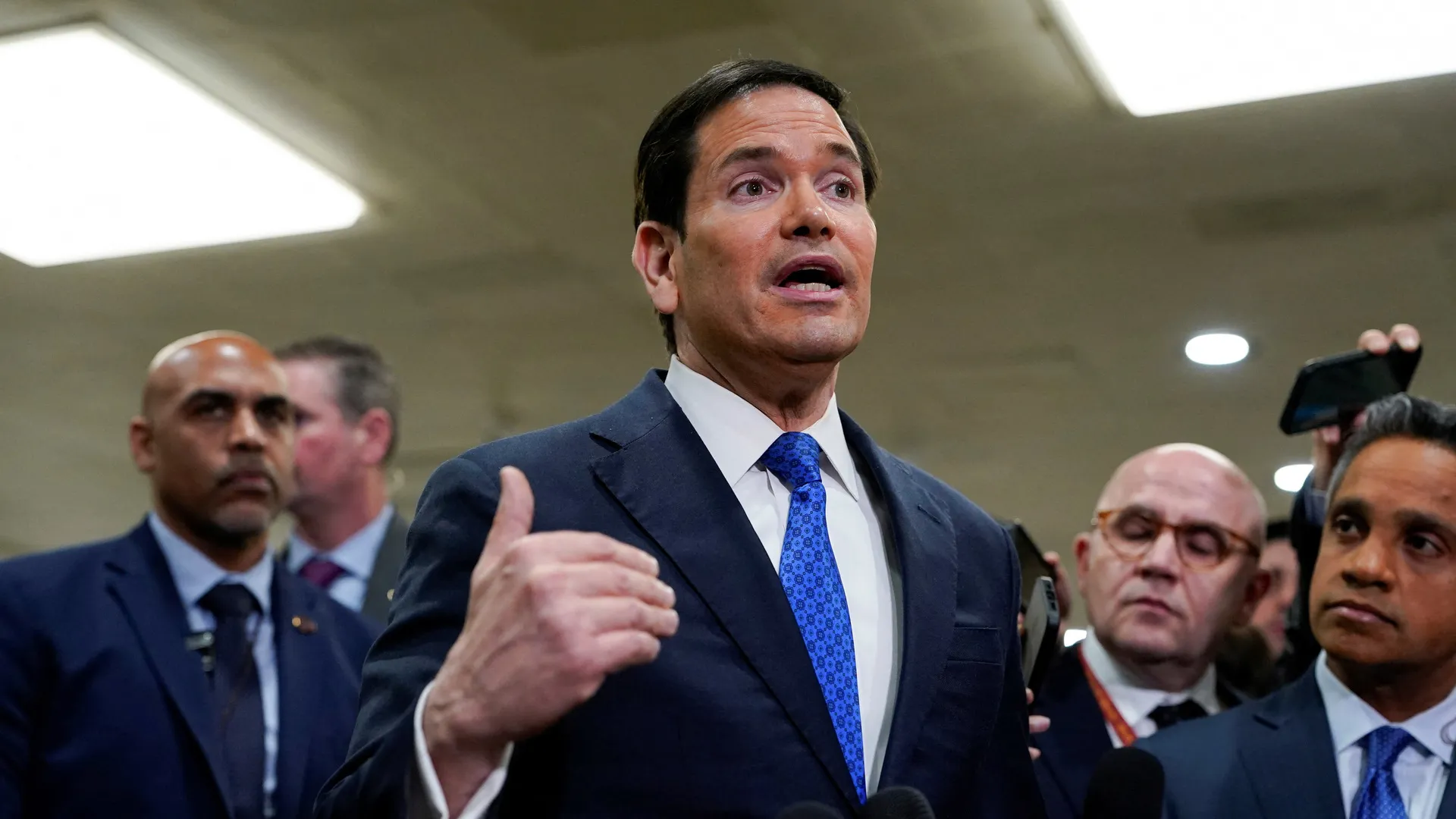
US Secretary of State Marco Rubio defended joint US-Israeli strikes on Iran, saying “the world will be safer” if Tehran doesn’t have access to nuclear weapons. He says President Trump made the decision to strike because Iran was ‘playing’ the US in negotiations.

Source link

US will provide insurance for ships in Gulf amid Iranian attacks: Trump | Energy News

US Navy ‘will begin escorting’ oil tankers through the Strait of Hormuz, a strategic waterway, if necessary, US President Trump says.

President Donald Trump has announced that the United States government will offer insurance to ships in the Gulf after Iran largely succeeded in shutting down the Strait of Hormuz, sending oil prices soaring.

The US president added that the US military will accompany ships through Hormuz if necessary.

Recommended Stories

list of 3 itemsend of list

“Effective IMMEDIATELY, I have ordered the United States Development Finance Corporation (DFC) to provide, at a very reasonable price, political risk insurance and guarantees for the Financial Security of ALL Maritime Trade, especially Energy, traveling through the Gulf,” Trump wrote in a social media post on Tuesday.

DFC is the US government’s development finance agency. Its mission is to “advance US foreign policy and strengthen national security by mobilising private capital” across the world.

Trump added that the discounted risk insurance will be available for all shipping lanes.

“If necessary, the United States Navy will begin escorting tankers through the Strait of Hormuz, as soon as possible,” he wrote.

“No matter what, the United States will ensure the FREE FLOW of ENERGY to the WORLD.”

The Strait of Hormuz is a vital trade artery that connects the Gulf to the Indian Ocean. Around 20 percent of the world’s oil flows through it.

The price of oil has shot up by more than 15 percent since the US and Israel launched strikes on Tehran that started a war with Iran three days ago.

Costs are expected to rise even higher as oil supplies decrease as a result of Iran’s closure of the strait, as well as attacks on energy instalments in the Gulf.

Some insurance companies were reported to have cut back coverage amid the Iranian attacks.

Although the US is largely self-sufficient with its oil production, an uptick in prices globally could hike the cost for Americans at the gas or petrol pump, and could boost inflation.

The average price of one gallon of gas (3.8 liter) in the US jumped more than 11 cents overnight to $3.11 on Tuesday, according to the AAA Gas Prices website.

Earlier on Tuesday, Trump stressed that the attack on Iran “had to happen” despite its human cost and the strain it is putting on the energy market.

“We have a little high oil prices for a little while, but as soon as this ends, those prices are going to drop – I believe – lower than even before,” he told reporters.

Opinion polls show that the attack on Iran is unpopular among the US public. Increasing economic costs from the war could further diminish support for the war, months ahead of the US midterm elecitons.

Source link

UK allows US to use British bases for ‘defensive strikes’ on Iran | Israel-Iran conflict

NewsFeed

UK Prime Minister Keir Starmer has allowed the US to use British bases for so-called “defensive strikes” targeting Iran, after Tehran started hitting civilian targets. Still, Al Jazeera’s Milena Veselinovic explains why US President Trump says the US-UK relationship isn’t what it used to be.

Source link

Are US-Israeli attacks against Iran legal under international law? | Israel-Iran conflict News

US and Israeli strikes against Iran, which have sparked a regional war, likely violate the UN Charter’s prohibition on aggression and lack any valid legal justification, experts say.

“This is not lawful self-defence against an armed attack by Iran, and the UN Security Council has not authorised it,” the United Nations special rapporteur on the promotion of human rights and “counterterrorism”, Ben Saul, told Al Jazeera.

Recommended Stories

list of 3 itemsend of list

“Preventive disarmament, counterterrorism and regime change constitute the international crime of aggression. All responsible governments should condemn this lawlessness from two countries who excel in shredding the international legal order.”

The administration of United States President Donald Trump did not seek authorisation from the UN Security Council – or even from domestic lawmakers in Congress – for the war.

And Iran did not attack the US or Israel prior to the strikes that killed Iranian Supreme Leader Ali Khamenei and several other senior officials, as well as hundreds of civilians.

Yusra Suedi, assistant professor in International law at the University of Manchester, said there are grounds to believe that the attacks against Iran amount to a crime of aggression.

“This was an act of use of force that was unjustified,” Suedi told Al Jazeera.

International law is a set of treaties, conventions and universally accepted rules that govern relations between countries.

Imminent threat?

The Trump administration has argued that Iran posed a threat to the US with its missile programme and nuclear programme, arguing that military action was necessary.

But the UN Charter prohibits unprovoked attacks against other countries.

“All Members shall refrain in their international relations from the threat or use of force against the territorial integrity or political independence of any state, or in any other manner inconsistent with the Purposes of the United Nations,” the founding document of the UN says.

Rebecca Ingber, a professor at Cardozo School of Law at Yeshiva University who previously served as an adviser to the US Department of State, said that the prohibition of the use of force is a “bedrock” principle of international law that allows for only limited exceptions.

“States may not use force against the territorial integrity of other states except in two narrow circumstances — when authorised by the UN Security Council or in self-defence against an armed attack,” said Ingber.

Suedi said one instance in which the use of force can be legal is when a country seeks to thwart an imminent attack by another state.

Trump has said that the goal of the war is to “defend the American people by eliminating imminent threats from the Iranian regime”.

But Suedi cast doubt over that assertion.

“Imminence in international law is really understood to be something that is instant, something that is overwhelming, something that leaves really no other choice but to act first, something that is pretty much happening now,” Suedi said.

She noted that Trump himself had said repeatedly that the June 2025 US attacks on Iran “obliterated” the country’s nuclear programme, and that Tehran and Washington were holding talks when the war broke out on Saturday.

“There really was no evidence of an imminent threat, and that the attack was a pre-emptive strike,” Suedi told Al Jazeera.

“If it’s pre-emptive, it means that you are acting to counter something that is in the future, hypothetical, speculative, and that is not imminent, but that’s exactly what happened here. That is illegal under international law.”

US officials, including Trump, have said that Iran was building a ballistic missile arsenal to protect its nuclear programme and later build a nuclear bomb.

‘Scattershot’ arguments

Trump has also said that he is seeking “freedom” for the Iranian people, as the US president’s aides have described the regime in Tehran as brutal.

In January, Iran responded to a wave of anti-government protests with a heavy security crackdown. The violence killed thousands of people.

Trump encouraged the demonstrators to take over government buildings at that time, promising them that “help is on the way”.

Experts say a humanitarian intervention to help protesters in Iran would have required UN Security Council authorisation to cross the legal threshold.

“The rationales have been scattershot,” Brian Finucane, a senior adviser for the US programme at the International Crisis Group, said of the US justifications for the strikes.

“Certainly none of them amount to a serious international legal argument.”

Beyond the possible breaches of the UN Charter, the US-Israeli attacks risk violating provisions of international humanitarian law that are meant to shield civilians from war.

An Israeli or US attack on a girls’ school in the southern Iranian city of Minab on Saturday killed at least 165 people, local officials have said.

“Civilians are already paying the price for this military escalation,” Annie Shiel, US Director at Center for Civilians in Conflict (CIVIC), told Al Jazeera in an email.

“We are seeing deeply alarming reports of attacks on schools and critical civilian infrastructure in Iran and across the region, with devastating casualties, including many children. These strikes risk igniting a wider regional catastrophe.”

Embrace of military power

The strikes on Iran are the latest instance yet of Trump’s reliance on the brute force of the US military power to promote his global agenda.

During Trump’s second term, the US has threatened to use military force to seize the Danish territory of Greenland, killed at least 150 people in a campaign targeting alleged drug trafficking vessels in Latin America, and abducted Venezuelan President Nicolas Maduro in a military attack that killed at least 80 people.

The legality of all of these policies has been questioned domestically and internationally, with UN experts saying that the boat strikes amount to extrajudicial killings.

Trump told The New York Times in January that he is driven by his own morality.

“I don’t need international law. I’m not looking to hurt people,” the US president said at that time.

In recent years, both Democratic and Republican US administrations have also continued to send Israel billions of dollars of weapons despite the Israeli military’s genocidal war on Gaza, which has been documented by rights groups and UN experts.

Ingber, the law professor, said that the use of wanton military force has contributed to a sense of impunity for powerful states and has degraded the international law system that has sought to place some constraints on conflict since the end of World War II.

“The prohibition on the use of force is a relatively recent innovation in the span of things. This rule is policed through the actions and reactions of states, and it feels fragile right now,” she said. “Do we want to go back to a world where states could use force as a tool of policy?”

Iran itself has lashed out against countries across the region in response to the US strikes, launching missiles and drones at military bases as well as civilian targets – including airports, hotels and energy installations.

“In the context of war, from the moment that the first strike was launched, the rules of warfare apply, and they’re very clear that civilian objects and spaces cannot be targeted,” Suedi said.

She said Iran also appears to have violated international law with its response.

Suedi told Al Jazeera that Russia’s invasion of Ukraine and Israel’s brutal assault on Gaza have been showing the “unravelling fragility” of international law.

The war on Iran “is a next episode in that very worrying trend”, she said.

Source link

Ex-USC basketball player Destiny Littleton’s living in fear in Israel

Less than a month ago, Destiny Littleton posted on Instagram about a whimsical visit to a McDonald’s in Jerusalem, where the former USC shooting guard is playing professional basketball.

Her posts the last four days have been decidedly different. Sirens blare in the background as she anxiously tries to locate a bomb shelter. Then bombs can be heard, although Littleton can’t bring herself to say the word, instead spelling it out: “I definitely hear three or four B-O-M-B noises,” she says in video. “You didn’t hear that?”

Littleton is one of many United States citizens attempting to leave the Middle East per guidance from the U.S. State Department. The department posted on social media site X, instructing U.S. citizens to leave more than a dozen countries because of safety risks and to shelter in place until they are able to do so.

The war that began when U.S. and Israel attacked Iran on Saturday, killing its Supreme Leader Ayatollah Ali Khamenei, has grown into a regional conflict. Iran and its allies have retaliated against Israel and neighboring Gulf states.

Littleton played at USC in 2022-2023 as a graduate student, transferring after winning a national championship at South Carolina a year earlier. As a San Diego Bishop high school senior in 2016-2017, she led the nation in scoring and became the first high school player in state history to score more than 4,000 points in a career.

Littleton moved to Israel in November to play for Hapoel Jerusalem, one of the top pro teams in the country. Like anyone in Israel, her life has been upended the last several days.

She has chronicled the ordeal with a handful of Instagram posts. In one, she filmed bright flashes in the sky while saying, “There’s no siren going on right now and yet there are these things in the sky blowing up. Pretty sure they’re either missiles or drones.”

On Monday she relocated to the home of a teammate because she said the bomb shelter she had been using was tiny.

“I’m going to go pack my stuff up and go to my teammate’s house until all this is over,” she said while walking hurriedly outside. “They have a shelter there. It’s way more comfortable than that B-O-M-B shelter I was just in. It could fit five people and that was it. I was, ‘no, no, no, I don’t want to be in here.’”

Bombs could still be heard in the distance on her videos Monday and Tuesday. Littleton, like many foreigners, is trying to leave Israel as soon as possible.

“To those asking why haven’t I left, the air space is closed so nobody can go in or out,” she said. “Until that gets lifted, I will be here and remain safe with my teammates.”

South Carolina coach Dawn Staley wrote on X that three of her former players — Littleton, Mikiah Herbert-Harrigan and Tiffany Mitchell — are “in a war zone” in Israel but she said Sunday that “there’s nothing you can do” because of the canceled flights.

Littleton thanked her followers in one of her latest dispatches:

“It is 11:47 p.m. on night three and I first just want to say thank you to all the strangers, all of my friends and my family who have sent countless prayers and love my way,” she said. “I’m so grateful and thankful. It means the world to me and it has got me through these three days….

“Back to the update. We have had a really quiet day today…. For a moment it felt like we are not in a war. I’ve just got to thank God and give prayers for the peace we’ve had today. My mind is at ease, just a little bit. I’m thankful for the small wins and pray as we look for a way out, try to get to a safe space, back home to America is the goal.

“I know that with everyone helping and everyone by my side, I will get there, we will get there, my teammates and everyone in the league will get there. Again, thank you. I love you guys.”


Source link

Iran warns European countries from joining the war | Israel-Iran conflict

NewsFeed

Iran’s Foreign Ministry spokesman has warned European countries against joining the ongoing war with Israel and the US. His statement comes after France, Germany and Britain said they can take “defensive action” to counter Iran’s missile-launching capabilities.

Source link

Our Travel Expert answers YOUR questions on flights and holidays amid Iran crisis

HUNDREDS of you, Sun Readers, have reached out to us about your holidays concerns because of the ongoing Iran crisis.

So our Travel Expert – Head of Travel, Lisa Minot – is answering them all for you.

We’ve answered all of your holiday questions from trips to Cyprus, Greece and Egypt to what to do if travelling via DubaiCredit: Alamy

From whether Greece is safe to whether you can cancel your holiday for a refund, here is everything you need to know.

We are going to Cyprus in June and the balance is due by March 17, should we still pay it?

Although many Sun readers are concerned about their holidays to Cyprus following on from the attack on the RAF airbase on the island and the cancellation of flights from British Airways, easyJet and TUI, currently the UK Foreign Office has not issued any warnings about travel to the island.

Unlike the UAE, where the current advises against all but essential travel, Cyprus remains on the safe to travel list.

If you do not pay the balance of your holiday, you face losing the money you have paid to your travel provider so far.

Read more on travel advice

GROUNDED

More flights cancelled with thousands still stranded abroad in fourth day of chaos


ESCAPE FROM WARZONE

Dubai Brits face mission to get from hols hotspot to evacuation flights

If the advice were to change, your travel company would have to offer you the chance to amend your travel to a different date or offer you a full refund.

We have had lots of questions about holidays to Cyprus – both Larnaca and Paphos, later in June, July and September and the advice really remains the same.

Unless you have paid a minimal deposit, you should continue to make payments. If you cancel now you could lose money – and discover that holidays are significantly more expensive when you look to book again.

What is important is to make sure you have bought good travel insurance NOW to cover you in the run up to your holiday dates. A lot can happen in the coming months.

Take the time to enquire about what you would be covered for in terms of delays and cancellations as these can vary from policy to policy.

Will this affect holidays in Egypt? We’re due to fly there in May for our honeymoon

While it is very understandable that travellers would be a little nervous of the proximity of Egypt to the current crisis, the popular Egyptian Red Sea resorts of Sharm El Sheikh, Hurgahda and Marsa Alam as well as the majority of Egypt including ancient cities of Cairo and Luxor are NOT under any Foreign Office travel ban.

While no one can predict what is going to happen in the region, it is currently considered safe to travel to these destinations and your tour operator or airline is under no obligation to refund you if you chose not to travel. 

Hurghada and Marsa Alam are hundreds of miles away from the conflict zone and holidays there should not be impacted at all.

I had tipped Egypt as one of the stand-out destinations for British travellers to enjoy 5* luxury at great value prices this year.

Increased flights from the UK and an ever greater number of new luxury resorts mean it still offers guaranteed sunshine for all budgets.

I travelled to Luxor, Hurghada and Marsa Alam in February and could not have felt safer with the Egyptians taking security very seriously.

Is Greece safe to travel, being so close to Turkey?

Yes Greece is safe to travel to – and is not under any UK Foreign Office travel warnings.

The main popular tourist resorts in both Greece and Turkey are many thousands of miles from the current problems in the Middle East.

If you choose to cancel a holiday you have already made payments on you will NOT get your money back as your travel company is under no legal obligation to refund you.

A refund is only triggered if the Foreign Office advises against all travel or all but essential travel.

Again, ensuring you have fully comprehensive travel insurance from the moment you make your booking is really important to give you added protection in the run up to your trip. 

We’ve had questions from Sun readers looking at trips to Corfu and Rhodes this summer – they should be reassured that the chance of holidays to these islands being impacted, while not impossible, is extremely unlikely.

Greece remains safe to travel to, with holidays and flights not affectedCredit: Alamy

Will travel disruption escalate to the Canary Islands travel from the UK?

While nothing can be guaranteed in these extraordinary times, there is nothing whatsoever to lead me to think that the current crisis will have any impact at all on holidays to the Canary Islands from the UK.

It is understandable that people are worried about the situation, but all of the Canary Islands – along with the rest of Spain – remain on the Foreign Office’s safe to travel list and there is no indication this will change at all. 

There is not any worry about international travel as a whole at the moment and airlines and tour operators take the safety and security of their passengers extremely seriously. 

There should be no issues with travel this summer, where lots of Sun readers are looking forward to holidays.

Are Turkey resorts affected? We have a holiday booked for half-term

No – at present Turkey is not impacted at all by the current situation.

While there are Foreign Office bans on travel to the border between Turkey and Syria, the entire rest of the country is safe to travel to.

The popular coastal resorts of Dalaman, Bodrum, Antalya, Side, Marmaris and more are many thousands of miles from the conflict zone.

As the advice is that it is safe to travel, tour operators and airlines are under no obligation to offer you a refund if you choose not to travel. If you decide to cancel your trip, you will lose any money you have paid.

While some people may feel uneasy, the distances involved mean it is extremely unlikely that anything would impact your holiday.

With all package holidays, you have enhanced protection should the situation change.

If the Foreign Office changes its advice to all but essential travel, you will have extra rights to a refund or amended date.

But right now, that is not necessary as trips to the popular Mediterranean Turkish resorts are safe.

We am due to fly to Dubai March 12-18, having paid £6,000 for a package through Emirates. Do you know where I stand with cancelling?

With the huge popularity of holidays to Dubai – more than 1.47MILLION British travellers headed to the Emirate in 2025 – the Foreign Office now advising against all but essential travel will have a huge impact on those with upcoming holidays.

As the situation remains so uncertain, airlines and travel companies are dealing with upcoming bookings on a rolling basis – prioritising those who are due to travel soonest first.

As of today, passengers with bookings up to March 10 can request a refund directly from Emirates via an online form – and you should expect to receive that refund within a week.

But as your holiday doesn’t depart until March 12 you will have to contact Emirates directly to see if they will allow you to amend your booking or get a refund.

I totally appreciate that this is going to be challenging with many hundreds of thousands of travellers looking to rebook flights and holidays.

Right now, British Airways Holidays are offering rebooking options for those travelling up to March 8 to request a refund.

Those travelling up to March 15 can change their holiday dates or destination free of charge if they depart before March 29.

If you amend to a holiday that is more expensive, you’ll have to pay the difference. If it is cheaper, BA will refund you the difference.

Those travelling after March 15 can change their booking up to 14 days before travel for a fee of £100 or if within 14 days of travel for a fee of £500. 

Virgin Atlantic Holidays has the same options in place for the same dates.

 If you have bought travel insurance – and I really do recommend everyone does this from the MOMENT they book their holiday – it would be a good idea to contact them as well to see if there is anything you can claim for.

Anyone with holidays from April onwards, I recommend keeping an eye on the current travel advice, but do not cancel holidays unless you want to be out of pocket.

Emirates passengers travelling via Dubai in the upcoming days will be contactedCredit: Reuters

My daughter is due to return from Mauritius via Dubai on March 5 with Emirates Airlines. Will this be possible & what are her options?

Emirates has only suspended flights until midnight on March 4.

However this is likely to be extended as they are currently only operating repatriation flights for passengers who are stranded in Dubai.

It is advised for your daughter to contact Emirates and see if there is an alternative way to travel home.

Emirates must provide her with an alternative flight home, or a refund.

However, be aware that if she accepts a refund, your daughter will have to pay for her own alternative flight home which might be quicker, but much more expensive and she will not be able to claim the difference back from Emirates.

Air Mauritius offers direct flights from Mauritius to UK, otherwise airlines with non-Dubai stopovers include Air France (stopover in Paris) and Lufthansa (stopover in Frankfurt).

I have a long-haul holiday planned later this year, stopping in the Middle East. Should I cancel my trip or find another airline?

We have had lots of questions from you about upcoming holidays with stopovers in Dubai, Abu Dhabi and Qatar – seeing as they’re huge hub airports for Emirates, Etihad Airways and Qatar Airways, this isn’t surprising.

This includes destinations such as Thailand, Sri Lanka, Maldives, Bali, China, Vietnam, Australia and Pakistan. 

If you have partly paid for your holidays for any of the above destinations, you must still pay the remaining balance or you will be left out of pocket.

It is only if the UK Foreign Office advises against any travel to these destinations that you will be able to cancel a holiday for a refund.

Unless you are travelling in the next few days, it is likely the holidays will still go ahead.

 If you are wary of booking a stop over in the Middle East, then other popular destinations include Singapore, with Singapore Airlines, or Hong Kong, with Cathay Pacific and Istanbul with Turkish Airlines.

I’m confused about the government advice and where travel companies stand – surely a holiday shouldn’t be classed as “essential travel”?

I appreciate the travel warnings can be slightly confusing, so I’ll break them down for you.

There are two travel warnings from the UK Foreign Office – “against all but essential travel” and “against all travel”.

If the advice is against all travel, package holiday companies and airlines have to give you a refund.

If the advice is against all but essential travel the legal standing is a little more complicated. 

However, most travel companies will offer to refund or amend your booking as they recognise they will not be able to provide you with the trip you purchased due to exceptional circumstances.

Most holidays in Europe – including Spain and Greece – are unaffectedCredit: Getty

Source link

Foreign office travel advice for holidays to Turkey, Cyprus, Egypt in wake of Iran war

Check the latest air travel status including departures from popular holiday destinations such as Dubai, Cyprus and Egypt after the Iran war forced airports to close and airlines to cancel flights

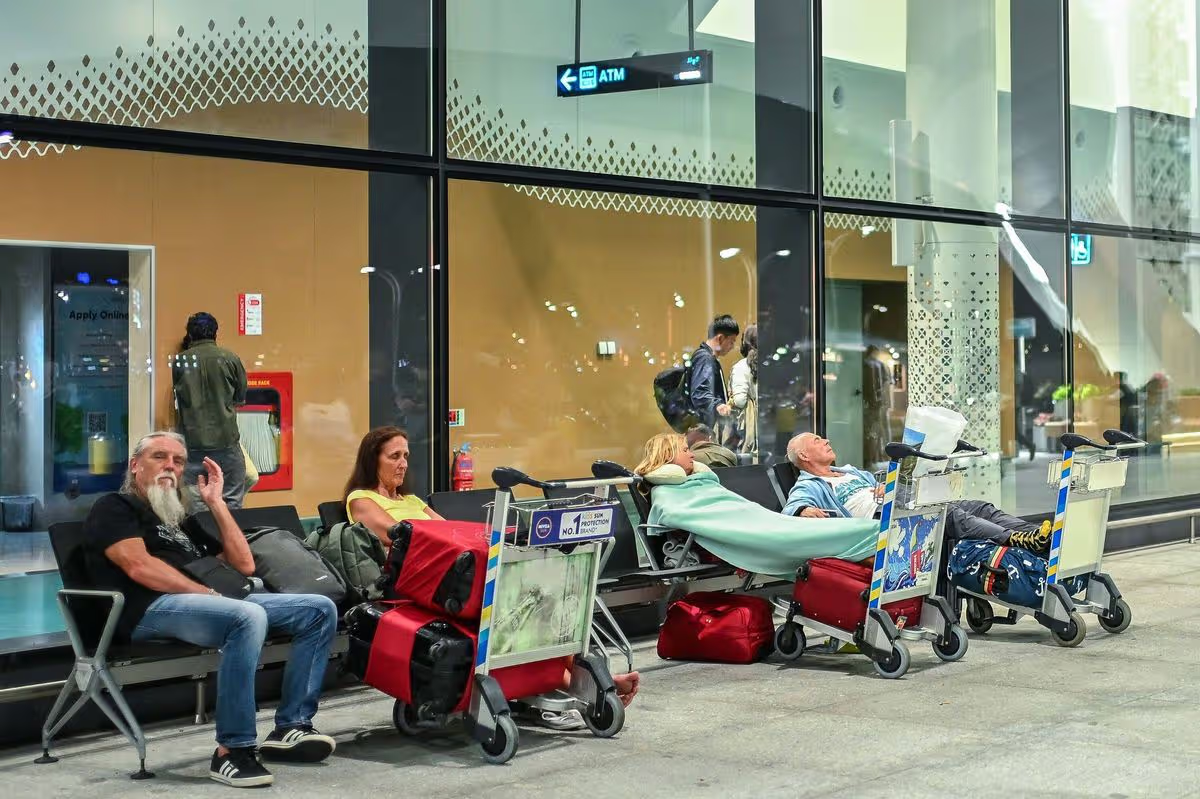
The war in Iran has plunged air travel into its biggest crisis since the pandemic as airports shut across the world and airlines cancel huge numbers of flights.

Conflict between Iran, the US and Israel has spread across the Middle East and triggered widespread airspace closures, sparking major disruption to flights, and leaving thousands of British tourists stranded abroad.

Popular holiday destinations including Egypt, Abu Dhabi and Dubai are among those to ground all flights or severely limit departures, but the ‘ripple effects’ are also impacting travel to and from a number of other countries, including Cyprus and Turkey.

Here’s all the latest on flight cancellations, cruise ships and your rights if something goes wrong:

Ensure our latest headlines always appear at the top of your Google Search by making us a Preferred Source. Click here to activate or add us as your Preferred Source in your Google search settings.

READ MORE: First Dubai flights as Emirates and Etihad operate very limited routesREAD MORE: Cyprus flights update as easyJet, British Airways and Ryanair cancel routes this week

Which destinations are affected?

The UK Foreign Office now advise against all but essential travel to the UAE, Qatar and Bahrain.

Airspace closures mean flights to and from the United Arab Emirates (including Dubai and Abu Dhabi), Qatar, Saudi Arabia, Lebanon, Kuwait and Oman are almost entirely cancelled, with aviation largely reserved for military and cargo flights.

If you have a flight due soon to one of these countries, you should get in touch with your airline as soon as possible.

While flights to and from Cyprus, Egypt and Turkey are going ahead largely as scheduled, they may be subject to short-notice delays or cancellations, so you should check regularly with your airline before you travel.

Dubai and UAE travel advice

The Foreign Office advises against all but essential travel to United Arab Emirates.

Your travel insurance could be rendered invalid if you travel against this advice.

British nationals currently in the country should stay indoors due to risk of missile attacks, and the current advice reads: “Remain indoors in a secure location, avoid all travel and follow instructions from the local authorities.”

Cyprus travel advice

After a suspected Iranian-made drone was fired at the RAF base at Akrotiri, the Foreign Office updated its advice to read: “Regional escalation poses significant security risks and has led to travel disruption.

“British nationals in the Sovereign Base Areas should follow instructions from the Sovereign Base Areas Administration. British nationals in the Republic of Cyprus should follow any instructions from Cypriot local authorities.”

Turkey travel advice

The Foreign Office advises against all travel to within 10km of the border with Syria due to “fighting and a heightened risk of terrorism”.

Egypt travel advice

There is “heightened risk of regional tension” which “could lead to travel disruption and other unanticipated impacts”, the Foreign Office said.

Which airlines have cancelled flights?

A handful of flights will bring British nationals stranded in the Middle East back to Britain today – but the majority of departures from the region remain cancelled.

The current Emirates flight status is that the airline plans to operate two flights to Heathrow, and one each to Gatwick and Manchester. At least some of these flights will be operated by the airline’s A380 jets, which can each carry up to 615 passengers depending on how they are configured.

Emirates usually operates 146 weekly flights to the UK, which is the equivalent of about 21 per day.

Etihad Airways has scheduled one UK flight on Tuesday, from Abu Dhabi to Heathrow.

Qatar Airways, which usually serves Heathrow and Gatwick from Qatar, said on Tuesday morning that its operations remain suspended because of the closure of Qatari airspace.

British Airways has cancelled its timetabled flights to Heathrow from Abu Dhabi, Amman, Bahrain, Doha and Dubai on Tuesday.

The airline told passengers: “We are closely monitoring the situation and have cancelled a number of our flights to the Middle East.

“Safety is always our top priority and we would never operate a flight unless it was safe to do so.”

Passengers with bookings on certain routes up to March 15 are being allowed to amend the date to fly on or before March 29.

Virgin Atlantic axed a flight from Dubai to Heathrow.

What about connecting flights?

You could also be affected if you’re due on a flight that changes at an airport disrupted by the war – such as Abu Dhabi, which acts as a major hub for connecting flights to Thailand, Vietnam, India, Australia and New Zealand. Check with your airline in advance if you’re in any doubt.

What if I’m stuck abroad?

British nationals currently in the Gulf have been advised by the Foreign Office to remain indoors and follow local authorities. Plans for evacuation repatriation flights are going ahead, but at a very limited capacity, and you should not make plans around these until you have been contacted by British consular staff.

What are my rights if something goes wrong with my flights?

Don’t cancel your own ticket if your destination or connecting flight is affected – instead, wait for the airline to cancel the flight.

If you cancel voluntarily, you will likely forfeit your right to a full refund or rebooking under UK air passenger rights.

It’s important to check your travel insurance, as standard policies will usually cover extended emergency medical expenses if you are stranded abroad – but many exclude cancellation or curtailment costs arising directly from acts of war.

What about cruise ships?

Thousands of cruise line passengers are currently trapped in ports in the Middle East due to the war in Iran.

At least six well-known ships from big companies, including TUI, are reported to be at a standstill and awaiting news of when they can leave.

Cruise liners affected include TUI Cruises’ ships Mein Schiff 4 and Mein Schiff 5, which are stranded in the ports of Abu Dhabi and Doha. The cruise line has had to cancel its upcoming departures due to the lack of operating repatriation flights.

The MSC Euribia remains docked in the port of Dubai, under strict security measures, with embarkations suspended until further notice.

The ships Celestyal Journey and Celestyal Discovery have also had their departures cancelled and are being kept under supervision in regional ports.

TUI Cruises said in its latest alert: “We are currently monitoring the evolving situation in the Middle East region and the latest guidance from the UK Foreign, Commonwealth & Development Office (FCDO).”

Disruption ‘could last weeks’

Last night, US president Donald Trump said the joint US-Israel military operation in Iran could last four to five weeks or “far longer”.

Aviation consultant John Strickland said it could take weeks to clear the backlog of passengers, even if the conflict ends sooner.

He said: “It’s a bit uncertain (when that will happen) because of course it will depend on how long the airspace restrictions remain in place.

“But factoring in the high volumes of normal daily traffic and the high capacity of aircraft such as the A380 and the Boeing 777, plus the fact that other flights covering similar routes operate at high occupancy, then it will certainly be quite a period of time which would likely run into weeks.”
Source link

Iran conflict: Global oil, gas prices surge on supply disruption fears

A tanker anchored in the Persian Gulf off coast of Dubai, one of scores halted on either side of Strait of Hormuz after it was effectively closed due to threats against shipping made by the regime in Tehran that have sent global energy prices soaring. Photo by Stringer/EPA

March 3 (UPI) — The price of Brent crude oil rose to $80 a barrel and the price of natural gas jumped 30% to $1.97 per therm on Tuesday after Iran effectively shut the key Strait of Hormuz shipping lane, with an official threatening its forces would “set fire to anyone who tries to pass.”

Prices continued their upward trajectory from Monday when markets reopened following the military strikes over the weekend on Iran by the United States and Israel and Tehran’s strikes on its oil and gas producing neighbors across the Gulf.

Concerns over supply disruptions are growing as the conflict widens across the region with Iranian strikes going beyond military bases used to launch attacks on Iran to target oil and gas production facilities, as well as Amazon data centers in the United Arab Emirates and Bahrain.

On Monday, Qatar Energy, one of the world’s largest exporters of liquefied natural gas, shut down production following “military attacks” on its Ras Laffan plant and Saudi Arabia’s state-run Aramco shuttered its giant Ras Tanura refinery near the port city of Dammam after it was set ablaze in a drone strike.

Analysts warned the oil price could surpass $100 a barrel if the disruption continued for very long — translating to a 25-cent-a-gallon rise in U.S. petrol prices.

The risk to maritime traffic was also pushing up the cost of moving oil from the Gulf to Europe and Asia and around the world with the leasing cost of a tanker to ship Middle East to China doubling to $400,000 a day on Monday.

The president of logistics technology platform Flexport, Sanne Manders, told the BBC that while Iran had not physically blockaded the strait, through which 20% of the world’s oil and gas transits, it was closed as far as global shipping was concerned.

Manders said it was partly that shipping lines were simply unwilling to expose their vessels, cargo and crews to potential jeopardy and partly insurance companies “not being willing to insure this risk anymore.”

He warned that expectation of higher fuel costs would feed through to movement of all goods by sea with carriers hiking rates “for any shipping in the world.”

That all fed into investor fears over the consequences for inflation and interest rates, sending global stock markets tumbling overnight, led by Japan’s Nikkei 225 Index, which ended Tuesday down more than 3%.

In mid-morning trade London’s FTSE 100 was down 2.8 %, Germany’s blue-chip DAX was trading 4% lower, down more than a thousand points, and the CAC 40 in Paris was off by 3.2%.

The pan-European Stoxx 600 Index continued its retreat, with across-the-board falls in all sectors pulling it 2.9% lower, while the blue-chip Euro Stoxx 50 was even lower, down 3.1%.

However, hotels, airlines and utilities took the biggest hits while energy firms and defense contractors performed better.

Ahead of the opening of U.S. markets, S&P 500 futures fell by 1.8%, Nasdaq 100 futures were down 2.3% and Dow Jones Industrial Average-linked futures moved lower by around 1.7%, or 821 points.

Defense and energy stocks rose on Monday led by Northrop Grumman, up 6%, and Palantir, up 5.8%, which together with a surge in NVIDIA’s share price, helped the overall market erase big losses early on to end the day in the black.

U.S. President Donald Trump was due to discuss the economic and cost-of-living impacts with Treasury Secretary Scott Bessent and Energy Secretary Chris Wright on Tuesday while Secretary of State Marco Rubio trailed administration plans to cope with energy price spikes.

“We knew that going in would be a factor. Starting tomorrow you will see us rolling out those phases to try to mitigate against that,” said Rubio.

Former South African president Nelson Mandela speaks to reporters outside of the White House in Washington on October 21, 1999. Mandela was famously released from prison in South Africa on February 11, 1990. Photo by Joel Rennich/UPI | License Photo

Source link

News Analysis: Toppling Iraq’s Hussein unleashed chaos. Why Iran war poses similar risks

A shock-and-awe campaign laying down a tsunami of bombs. An enemy succumbing rapidly under overwhelming firepower. And a triumphant U.S. president trumpeting a quick and easy campaign.

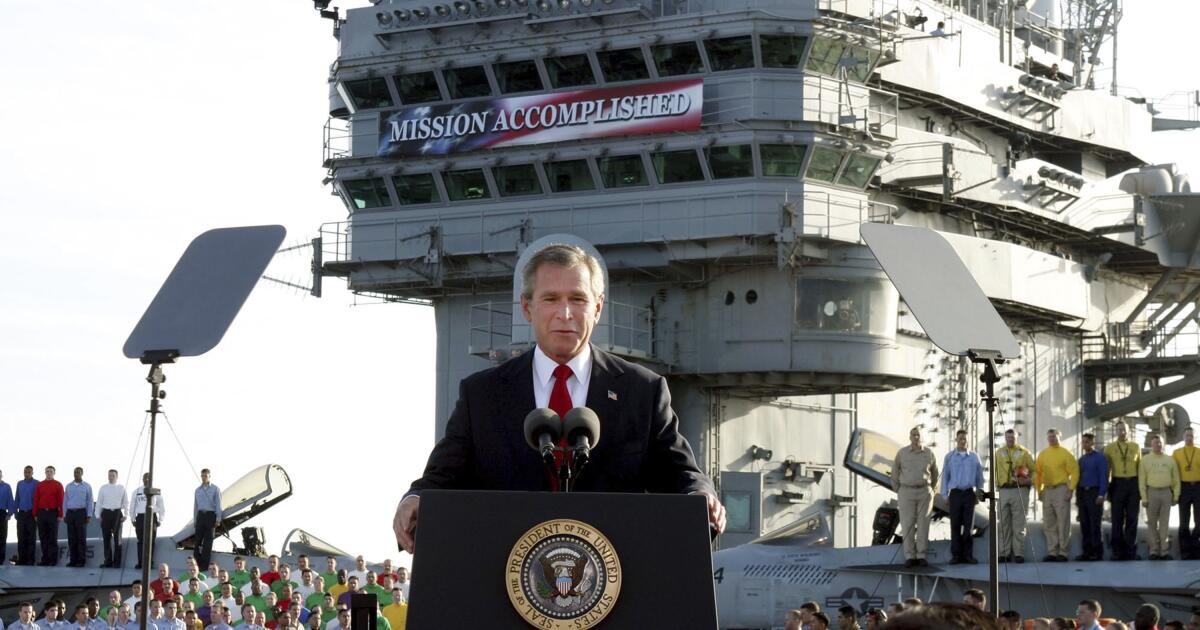
In 2003, President George W. Bush strode confidently on the deck of an aircraft carrier less than five weeks after he ordered the invasion of Iraq and declared the “end of major combat operations” under a banner proclaiming “Mission Accomplished.”

It proved anything but.

The invasion became a meat grinder, leaving thousands of Americans and possibly more than a million Iraqis dead. It unleashed forces whose effects are felt in the region and beyond to this day.

More than two decades later, another U.S. president attacked another Persian Gulf nation, promising rapid success in yet another Middle East adventure that he says will remake the region.

President Trump and his staff have vehemently rejected any comparison between “Operation Epic Fury,” launched Saturday, and “Operation Iraqi Freedom.” On Monday, Defense Secretary Pete Hegseth gave a pugnacious news conference, insisting, “This is not Iraq. This is not endless.”

Yet the assault on Iran — almost four times larger than Iraq with more than double its population — presents no lack of challenges, ones that could spread chaos far beyond Iran’s borders and become a defining feature of Trump’s presidency.

In many ways, analysts say, toppling Iran’s leadership represents a much more complex task than Iraq ever did. Iraq was a state with deep sectarian divisions that was largely dominated by a single dictator: Saddam Hussein.

The Iran that emerged after the 1978-79 Islamic Revolution had a supreme leader, but Iran also developed an elaborate system of governance. That includes a president, a parliament and varying governmental, military and religious hierarchies, noted Paul Salem, senior fellow at the Middle East Institute.

“Unlike Saddam’s Iraq, the Iranian state is multi-institutional and hence much more resilient — and, yes, not as vulnerable,” Salem said. “And hostility to the United States and Israel is at the heart of the Islamic Revolution — baked into the state.”

Here are some of the ways the Iran attacks could develop into the very scenarios Trump once derided in his days as the antiwar candidate:

Boots on the ground

For now, the U.S. and Israel have wielded air power to pound Tehran into submission. In the first minutes of the joint operation, a 200-plane fleet — Israel’s largest — struck more than 500 targets in Iran, according to the Israeli military. One such strike killed Supreme Leader Ayatollah Ali Khamenei.

Iran is still fighting back, lobbing missiles at Israel, Persian Gulf nations, Jordan and other areas with U.S. bases in the region. The U.S. has the qualitative and quantitative edge of materiel to eventually prevail, but Iran’s capabilities will not make it easy, as the losses in service members and planes have demonstrated in the last two days.

And wars have never been won with air power alone. Rather than relying on boots on the ground, Trump expects ordinary Iranians to finish the job for him.

“When we are finished, take over your government. It will be yours to take,” he said in a video address on the first day of the campaign.

During the Arab Spring of 2011, protesters throughout the Middle East took to the streets to demand change. But those efforts mostly did not lead to significant reforms and, in some countries, prompted further repression.

In Iran, it’s true many people would welcome the Islamic Republic’s demise — as many Iraqis rejoiced at Hussein’s fall. But it’s unlikely that mostly unarmed protesters will triumph in a confrontation against enforcers from the Islamic Revolutionary Guard Corps or its volunteer wing, the Basij.

It’s also difficult to gauge how many of Iran’s 93 million people despise the government enough to rise up against it.

Meanwhile, Trump has left the door open for dispatching U.S. troops, but the math of such a deployment raises doubts.

According to the U.S. Army, counterinsurgency doctrine dictates 20 to 25 troops for every 1,000 inhabitants to achieve stability. In the case of Iran that would entail deploying 1.9 million people — almost all the U.S. military’s active duty, reserve and National Guard personnel.

New leadership unclear

At this point, it’s not clear that decapitation of much of Iran’s leadership class will produce any real change in government, much less a successor inclined to bend to U.S. wishes. The top echelons of the Islamic Republic boast a deep bench of mostly hard-liners — not surprising, perhaps, for a nation that has braced for attack for years, if not decades.

Whatever new leadership that does emerge could rally around the “martyrdom” of Khamenei. Not especially popular in life, he appears to have become, in death, a rallying cry for defiance. And martyrs are exalted in Shiite Islam, Iran’s prevalent faith.

“He was the religious leader of the Shiites, so it’s sort of like killing the pope,” Salem said. “And he’s more popular dying as a martyr, than, say, of a heart attack. … He went out in style, no doubt about it.”

When the U.S. occupied Iraq, the expectation was that whatever came next would be a fervent U.S. ally, an idea perhaps best captured in the notion in Washington that a grateful Iraqi populace would shower U.S. troops with flowers. That didn’t happen. And in the Darwin-esque culling of leaders that followed, the ones that emerged victorious had little love for the U.S.

One of them was Nouri Al-Maliki, a Shiite supremacist whose policies were blamed for fueling years of sectarian bloodletting, and whose loyalties often seemed more aligned with Tehran than Washington.

Meanwhile, Tehran, playing on its proximity and deep ties to the new Iraqi ruling class, was able to steer Iraq — a majority Shiite country — deeper into its orbit.

After the Iraqi government — with the help of a U. S.-led coalition — pushed Islamic State out of Iraq in 2017, Iran was able to embed allied militias into Iraq’s armed services. That created the paradoxical situation of Tehran-aligned fighters wielding U.S.-supplied materiel.

Iraq has yet to emerge from Iran’s shadow. After Iraq’s most recent elections, Maliki seems poised to become prime minister once more, prompting Trump to write on Truth Social, “Because of his insane policies and ideologies, if elected, the United States of America will no longer help Iraq.”

A fragmented opposition

Iran’s population is diverse; an estimated two-thirds of Iranians are Persian, while minorities include Kurds, Baloch, Arabs and Azeris.

Those minorities have long-standing grievances against the ruling majority. It’s possible that Trump’s campaign and the resulting disorder could fuel separatist tensions.

Just last month, Iranian Kurdish factions joined together in a coalition that they said would seek the overthrow of the Islamic Republic “to achieve the Kurdish people’s right to self-determination, and to establish a national and democratic entity based on the political will of the Kurdish nation in Iranian Kurdistan.”

An experienced insurgency

Over the decades, the Islamic Republic created a network that at its peak stretched from Pakistan to Lebanon.

It was a fearsome constellation of paramilitary factions and amenable governments that became known as the Axis of Resistance. It included Hezbollah in Lebanon, Hamas in Palestinian lands, Yemen’s Houthis, and militias in Iraq, Afghanistan and Pakistan.

After Hamas’ Oct. 7, 2023, attacks, Israel — and, eventually, the United States — launched offensive campaigns to defang the groups.

Although weakened, the factions still survive, and could form a powerful, transnational and motivated insurgency when the time comes to fight whatever emerges if the Islamic Republic falls.

Bulos reported from Khartoum, Sudan, and McDonnell from Mexico City.

Source link

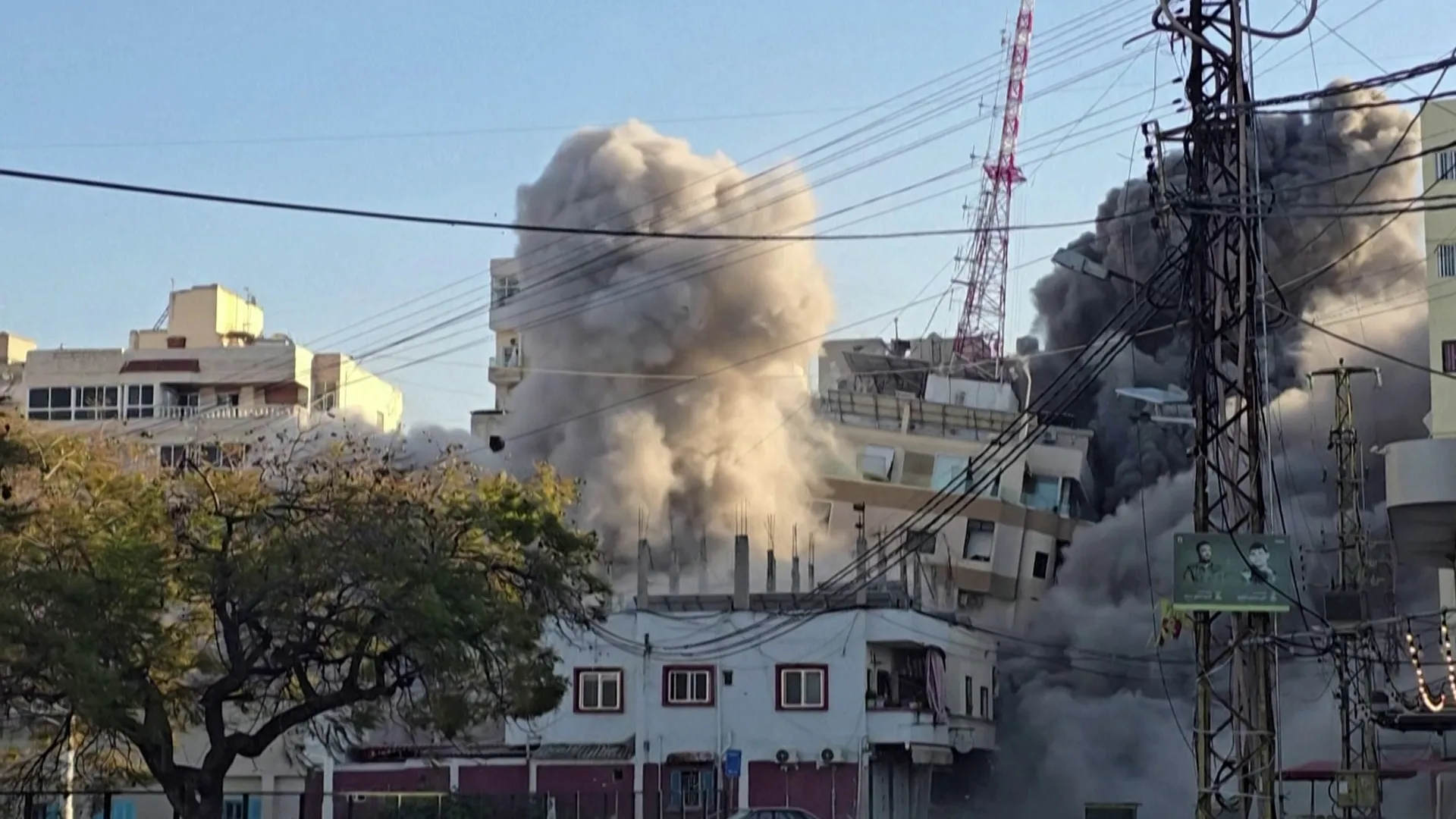
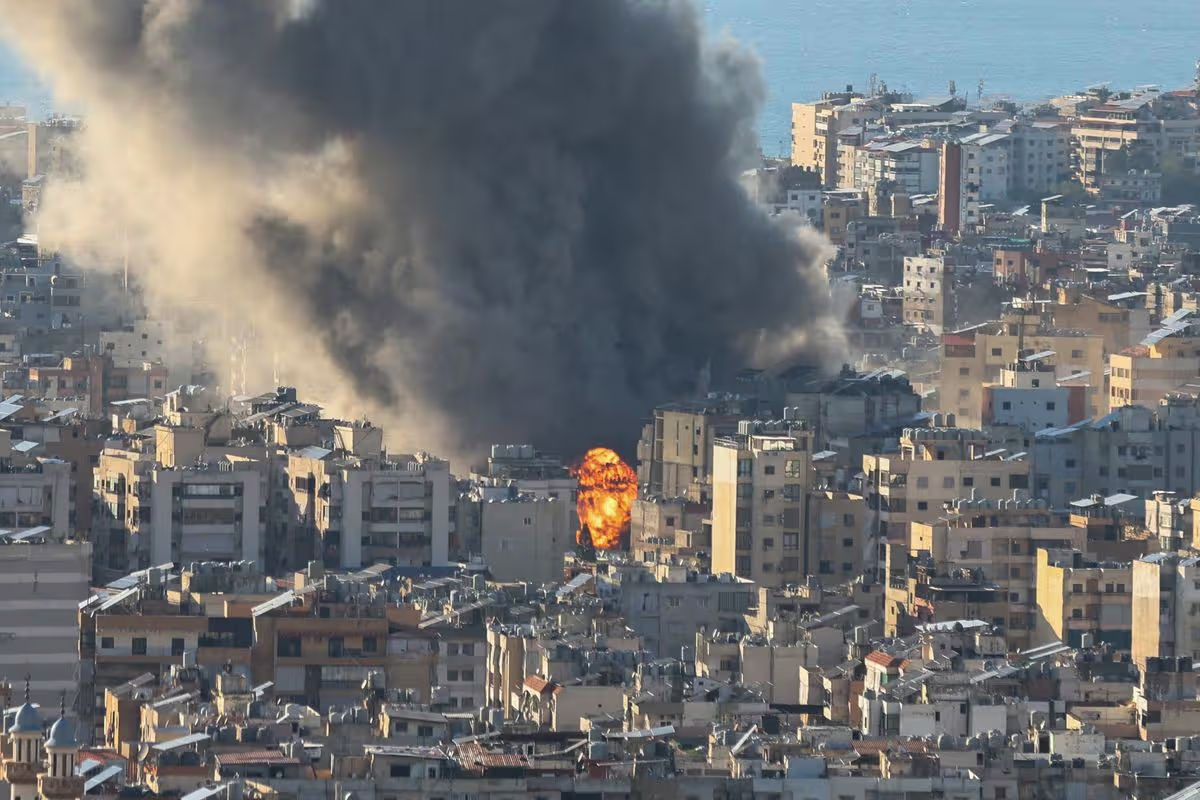
Israel launches strikes on Beirut as troops advance into southern Lebanon | Israel attacks Lebanon

NewsFeed

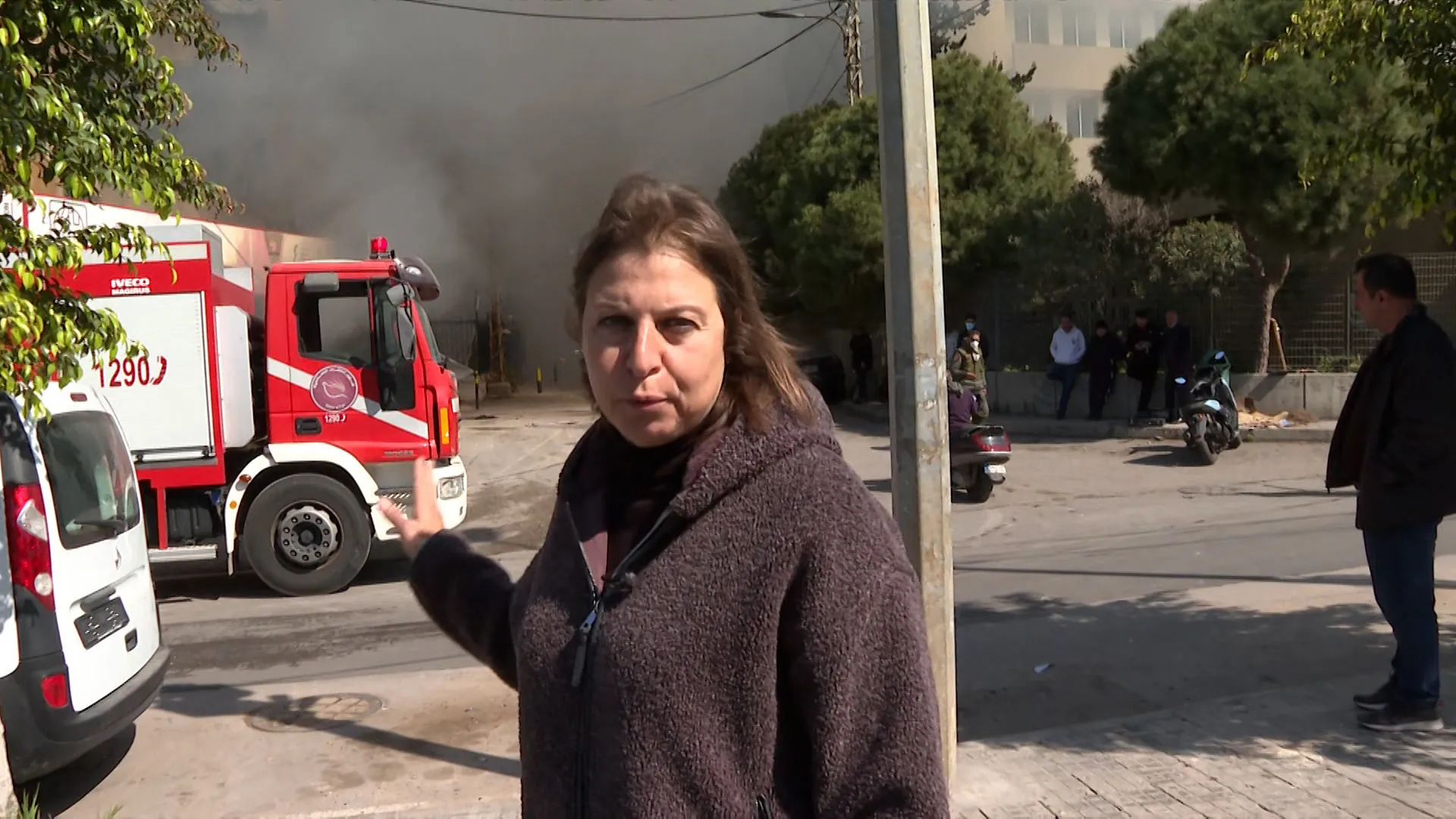
Al Jazeera’s Zeina Khodr reports from the site of an Israeli attack in Beirut’s southern suburbs, which Israel says targeted a ‘Hezbollah area’. Israeli forces have taken more land inside Lebanon, expanding a de facto buffer zone that has already displaced tens of thousands of people.

Source link

FIFA World Cup 2026 ticket frenzy unfolds amid global unrest | World Cup 2026 News

With 100 ⁠days to go until the tournament kicks off, appetite for tickets to the 2026 World Cup in the United States, Mexico and Canada is reaching fever pitch despite eye-watering prices that have fans crying foul amid global unrest after the US-Israeli attacks on Iran.

In addition ⁠to the war against Iran – a country scheduled to play its World Cup group stage games in the US – the heavy-handed immigration crackdowns in the US and the violence that erupted near host city Guadalajara after the death of Mexico’s most-wanted drug cartel leader are causing concern for fans.

Recommended Stories

list of 4 itemsend of list

“I’m afraid I might not ⁠be allowed into the country. I’ve decided to fly to Canada at most but not to the USA,” German football fan Tom Roeder told the Reuters news agency

“I hope that at least the issue of war with Iran does not reach North America, at least not in a way that affects us personally.”

FIFA, which did not immediately respond to a request from Reuters for comment, has said nearly 2 million tickets were sold in the first two sales phases and demand was so intense that World Cup tickets were oversubscribed more than 30 ‌times.

The most expensive tickets for the opening game are going for almost $900 and more than $8,000 for the final while tickets in general cost at least $200 for matches involving leading nations. The cheapest tickets for the final cost $2,000 and the best seats $8,680 – that is before taking into account FIFA’s official resale site, where one category three seat for the game in New Jersey on July 19 was being advertised for an eye-watering $143,750, more than 41 times its original face value of $3,450.

Political and social tensions surrounding host nations are nothing new for the World Cup.

Mexican President Claudia Sheinbaum said there was “no risk” for fans coming to the country, and Adrian Nunez Corte, leader of Unipes, a fan association in Spain, said the situation has not affected willingness to buy tickets.

“Obviously, it is causing concern, but some Spanish fans living in the area have helped to calm things down after the initial hours of alarm,” Corte said.

“There is no alarm regarding US immigration policy, but people are taking preparation of the necessary visas seriously to avoid problems, especially since some fans will be travelling between the US and Mexico due to the match schedule.”

The buzz around the tournament in North America is unprecedented.

“The demand for the 2026 World Cup ⁠in the USA, Canada and Mexico is the strongest I’ve ever experienced,” said Michael Edgley, director at Australia’s Green and ⁠Gold Army Travel.

“I think FIFA will make record amounts of money. There’s no question.

“This World Cup will be a massive financial success, and the beneficiaries will be the member federations.”

But such popularity comes with a price.

Geography adds another layer of complexity as the tournament spans 16 host cities across three countries, making it more challenging and expensive for fans wanting to follow their teams.

“The price of ⁠tickets has been a major drawback, particularly affecting the number of matches each fan will attend, as well as the distances between venues and the costs involved,” Corte said.

Secondary ticket market soars

The sticker shock is even more pronounced this year, especially with ⁠a huge resale market in which tickets are sold at above face value, which is legal in the ⁠US and Canada.

FIFA defended the ticketing model.

“Unlike the entities behind profit-driven third-party ticket marketplaces, FIFA is a not-for-profit organisation,” a spokesperson said.

“Revenue generated from the FIFA World Cup 2026 ticket sales model is reinvested into the global development of football. … FIFA expects to reinvest more than 90 percent of its budgeted investment for the 2023-2026 cycle back into the game.”

Mehdi Salem, vice president of the French football fans association Les ‌Baroudeurs du Sport, said its members are seeing more than a 200 percent increase on what they were told would be the prices in 2018 by the French federation and FIFA.

The pricing pain is so acute that Salem’s association, which boasts about 400 members, will have only 100 attend the tournament – a dramatic drop that he attributed to ticket prices ‌and ‌the political landscape in the US.

“We feel like this World Cup will not really be a people’s World Cup but rather an elitist World Cup,” Salem added.

Source link

Vulnerable Republicans in California’s redrawn congressional districts back war in Iran

California Republicans facing tough reelection fights in this year’s midterm elections have lined up in support of President Trump’s war on Iran, which polling suggests is not popular.

They include Republicans whose chances of reelection were already diminished by the passage by voters in November of Proposition 50, which gave Democrats in Sacramento the authority to redraw the state’s congressional districts in favor of Democratic candidates.

Rep. Darrell Issa (R-Bonsall), who sits on the House Foreign Affairs Committee and has long criticized Iran, has defended the latest attacks as overdue and legal under existing authority the White House has for combating terrorism — which he said Iran is deeply involved in.

Asked Sunday by ABC News about Trump’s promises not to start new foreign wars during the 2024 campaign, and the attacks on Iran conflicting with that, Issa said the belief that Trump owes immediate answers about his intentions was “folly,” that the attacks on Iran’s nuclear facilities last summer had made people around the world “happy,” and that the latest attacks were a continuation of that effort.

He said Iran has funded terrorism for decades, expanding extremism around the region, and asking whether the Trump administration had a specific reason to attack now was the wrong question.

“The real question is, after nearly half a century, do we need a specific trigger, or do we at any time say enough is enough, we’re going to take the claws and the teeth out of this tiger, and then see if in fact it’s willing to drink milk rather than blood,” Issa said.

Issa’s district is one of five that Democrats reshaped to better favor a Democrat under Proposition 50. The measure was championed by Gov. Gavin Newsom and others as a response to similar mid-decade redistricting efforts that Republicans undertook, at Trump’s urging, to win favor in states such as Texas.

Whether the Republican candidates’ backing of Trump in Iran will make them even more vulnerable is unclear. Some in California — including among the Iranian diaspora in Los Angeles — have been pleased with Trump’s actions and the death of Supreme Leader Ayatollah Ali Khamenei, a conservative cleric who ruled the country with brutal force for decades.

However, several recent polls suggest the war is not popular.

According to a Reuters/Ipsos poll that closed Sunday, only 1 in 4 Americans approved of the U.S. strikes on Iran, while about half — including 1 in 4 Republicans — said they believed Trump is too willing to use military force. Overall, 43% of respondents said they disapproved of the strikes, 27% said they approved, and 29% said they were not sure.

A text poll by SSRS for CNN on Saturday and Sunday found nearly 6 in 10 Americans said they opposed the decision to take military action against Iran. A separate text poll by SSRS for the Washington Post found 52% of Americans opposed the strikes, and 39% supported them.

Rep. Ken Calvert (R-Corona) — who has long been hawkish on Iran, and accused the Biden administration of maintaining a weak policy on the Middle East nation — is another Republican in a redrawn district who has come out strongly in favor of the war effort.

“President Trump’s decision to launch Operation Epic Fury will protect America and our allies by eliminating the Iranian regime’s ability to wage terror and threaten its enemies. It will also provide the Iranian people with a historic opportunity to shape their own future free from oppression,” said Calvert, chair of the Defense Appropriations Committee, wrote on X Saturday.

Another member of the House Foreign Affairs Committee facing reelection in a redrawn district, Rep. Young Kim (R-Anaheim Hills), shared on Saturday a committee post on X that quoted Trump’s announcement that Khamenei was dead and committee chair Rep. Brian Mast (R-Fla.) stating that although President Biden had given Iran funding, “President Trump gave him death.”

On Monday, she reposted video of a demonstration in favor of the attacks by Iranian Americans and others in Los Angeles, writing, “So grateful for our President’s decisive action & for our vibrant Iranian American community. From Southern California to Tehran, let freedom ring!”

Also facing redrawn districts and backing the war were Rep. David Valadao (R-Hanford) and Rep. Kevin Kiley (R-Rocklin).

Valadao wrote Saturday on X that Iran had for years “ruled through fear at home and terror abroad,” and that as “the world’s leading state sponsor of terrorism, it continues to arm violent proxies, threaten our allies, and destabilize the region.”

“I commend President Trump for taking decisive action and pray for our brave men and women throughout the region working to keep us all safe,” Valadao wrote.

Kiley, in an X post Sunday, wrote, “It is the longstanding policy of the United States that one of the most evil regimes in history cannot get its hands on the most powerful weapon in history. The decapitation of the Iranian regime and the destruction of its instruments of terror and death hold the potential for a safer America and a more peaceful world.”

Kiley wrote that he looked forward “to being briefed soon on the scale of operations, the strategy going forward, and any risks to American lives and interests that need to be met with urgency,” and that Congress “must be centrally involved in defining and pursuing U.S. objectives going forward.”

Leading Democrats in California condemned the attacks — saying that although the Iranian government under Khamenei was corrupt and guilty of terrorism and violence, there was no evidence that it presented an “imminent threat” to the U.S. and no congressional authorization for Trump to commit the nation to war there unilaterally.

Many of the Democrats running in the state’s redrawn congressional districts staked out a similar position.

“I’m deeply disturbed that President Trump is moving us toward another regime-change war without congressional authorization, public support, or a clearly defined mission,” said San Diego Councilwoman Marni von Wilpert, a Democrat challenging Issa. “The Iranian regime is brutal and must never obtain a nuclear weapon — but the Constitution is clear: only Congress can declare war, and it must reconvene and exercise that authority now.”

Esther Kim Varet, an art dealer and one of several Democrats challenging both Calvert and Kim in the state’s new 40th District, in Orange County and the Inland Empire, wrote on X that “America and the world are safer without Khamenei” but that “Congress alone has the power to commit the U.S. military to wage war, or to amass its forces in foreign territory, unless in response to a clear and present danger.”

Source link

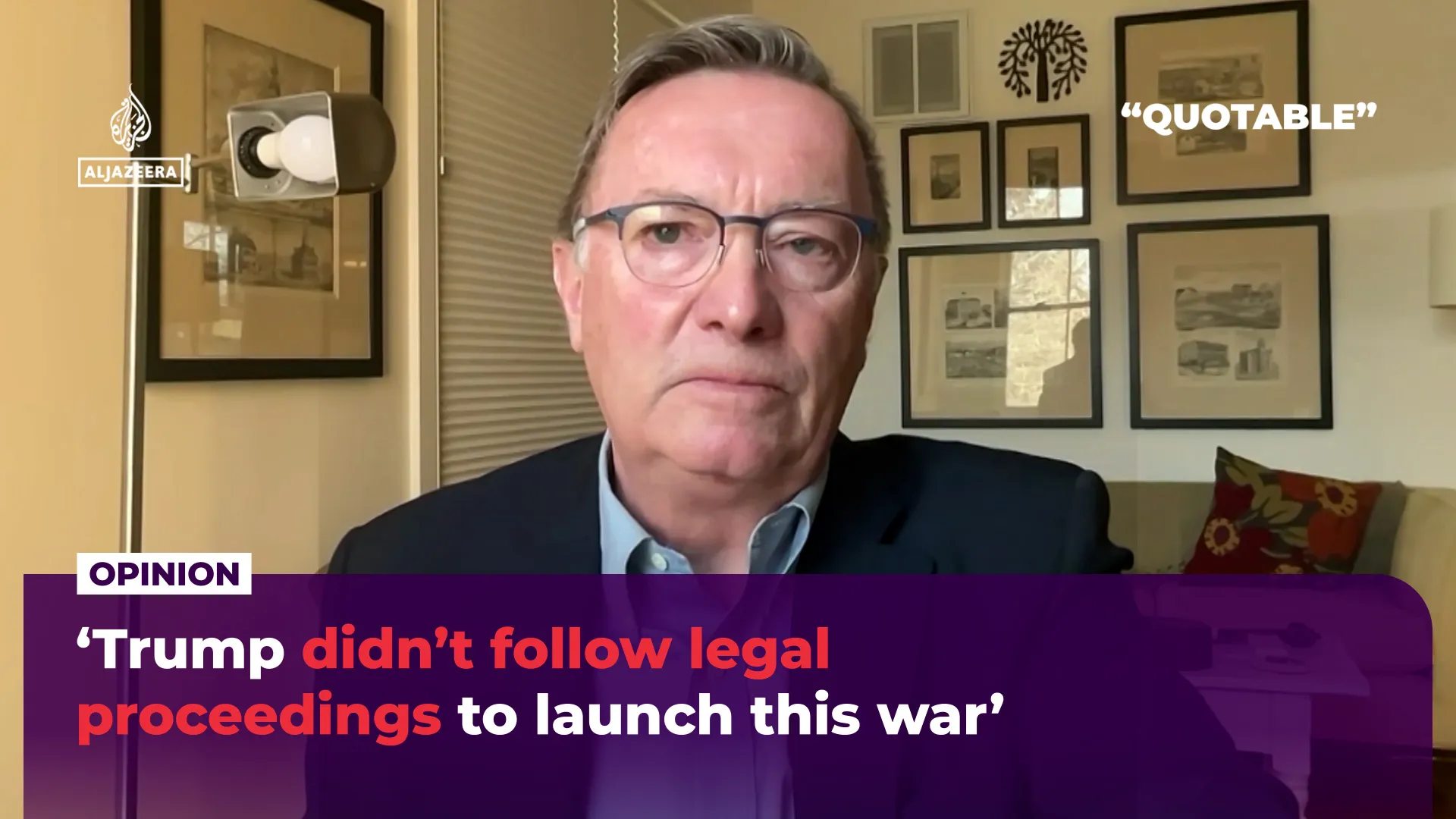
‘Trump didn’t follow legal proceedings to launch this war’ | Benjamin Netanyahu

Jeffrey Feltman, former US Assistant Secretary of State for Near Eastern Affairs, questions the legal basis and endgame of the US-Israel war on Iran, saying he does not believe Iran posed an imminent threat to the United States that would justify war.

Source link

Iran mourns 165 girls, staff killed in school strike during US-Israel war | Israel-Iran conflict News

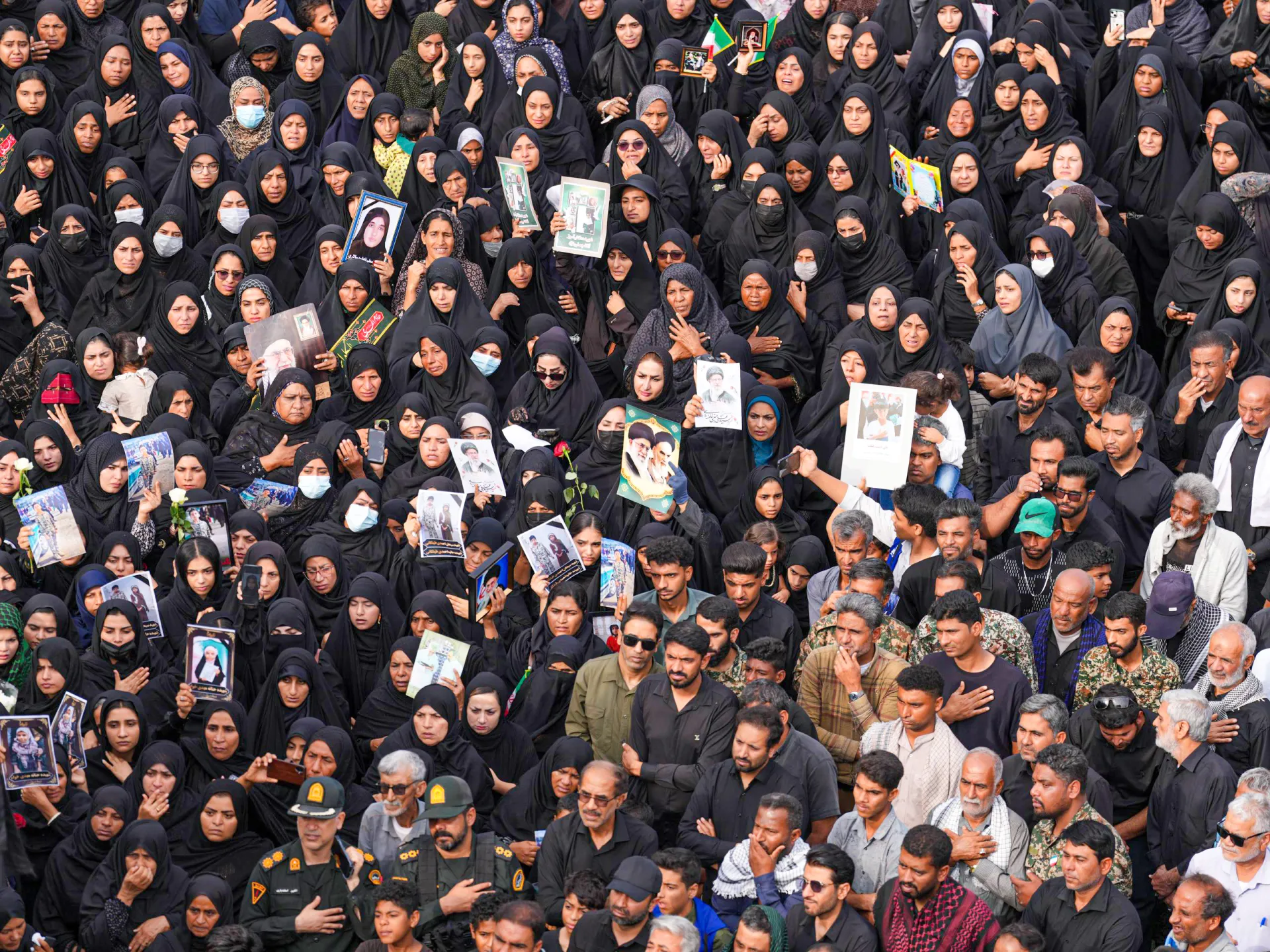
Iran has held a mass funeral for 165 schoolgirls and staff killed in what it has described as a United States-Israeli attack on a girls school in the southern city of Minab.

Saturday’s strike came on the first day of the joint US and Israeli attacks on Iran. It was the deadliest incident in the campaign against Tehran so far.

The Israeli military said it was not aware of any Israeli or US attacks in that area. Throughout its genocidal war on Gaza, however, Israel has repeatedly denied responsibility for deadly attacks on Palestinian civilians, only to later backtrack when evidence emerged, often describing such incidents as “accidental”.

The attack in Minab has been condemned by UNESCO and Nobel Peace Prize-winning education activist Malala Yousafzai.

Deliberately attacking an educational institution, hospital or any other civilian structure is a war crime under international humanitarian law.

On Monday, Iranian Ministry of Foreign Affairs spokesman Esmaeil Baghaei said the two countries “continue to indiscriminately strike residential areas, sparing neither hospitals, schools, Red Crescent facilities, nor cultural monuments”.

Source link

The market winners: Which stocks are ‘boosted’ by the Iran war so far?

The US-Israeli military campaign that began on Saturday has already killed Iran’s Supreme Leader Ali Khamenei and senior commanders, triggered retaliatory strikes across the region and raised the spectre of prolonged disruption to global energy flows.


ADVERTISEMENT


ADVERTISEMENT

While diplomats scramble and the UN calls for restraint, certain defence contractors and energy majors have emerged as early market victors.

As the conflict enters its fourth day, demand for advanced weaponry, missile-defence systems and intelligence platforms is projected to surge.

Lockheed Martin’s stock, the world’s largest defence contractor by revenue, hit a new all-time high on Monday, closing at $676.70 after rising over 4%.

Its F-35 fighters, precision munitions and radar systems are central to the air campaign under way over Iran.

The rally extended across the defence sector.

Northrop Grumman shares jumped 6%, lifted by its stealth-bomber and missile-defence technologies.

RTX, formerly Raytheon, gained nearly 5% while L3Harris Technologies and General Dynamics also recorded solid increases.

Palantir Technologies, whose data-analytics tools support intelligence operations, rose almost 6%.

European companies followed the upward trend on a more modest scale. Germany’s Renk and Italy’s Leonardo posted gains as investors eyed possible increases in NATO procurement and export orders.

Analysts note that defence budgets, already earmarked for growth in 2026, now face even fewer hurdles in Washington and European capitals.

With President Trump stating that operations could last “four to five weeks” or “far longer”, and Iran continuing missile and drone barrages, markets are positioning for weeks of high-intensity military activity.

The gains reflect classic geopolitical risk pricing.

Other market outliers

These rises stand in sharp contrast to broader equity weakness, highlighting how narrowly the benefits are concentrated. Beyond the pure-play defence names, energy companies have been the other clear outperformers, riding the oil and gas wave.

Iranian retaliation has already included strikes to energy sites in Saudi Arabia and Qatar, threats to close the Strait of Hormuz, which could choke off roughly 20% of global oil supply and send energy prices soaring.

The international benchmarks for oil, Brent crude (BZ) and West Texas Intermediate (WTI), are trading at over $82.50 and $75.50 respectively, at the time of writing.

Alongside them, integrated oil majors moved swiftly higher.

ExxonMobil shares rose more than 4% recording a new all-time high, while Chevron, Occidental Petroleum and ConocoPhillips posted comparable gains.

In Europe, Shell and TotalEnergies advanced in line with the global pricing surge.

The QatarEnergy LNG production halt announced on Monday, following Iranian drone strikes on Ras Laffan and Mesaieed facilities, sent European benchmark TTF gas prices over 50% higher, reaching €62/MWh by Tuesday.

Markets reacted swiftly as the indefinite shutdown raised immediate fears of rerouted demand and renewed energy inflation risks in Europe.

LNG equities climbed notably since Monday’s open on the news.

Cheniere Energy, the largest LNG exporter in the US, Venture Global and Australia’s Woodside Energy, all saw intraday strength at the start of the week.

However, analysts caution that actual substitution will take time due to shipping and contract constraints, keeping price action geopolitically sensitive.

The European Commission announced it is closely tracking both price and supply developments and will convene an Energy Task Force with Member States, in liaison with the International Energy Agency, for a meeting sometime this week.

Source link

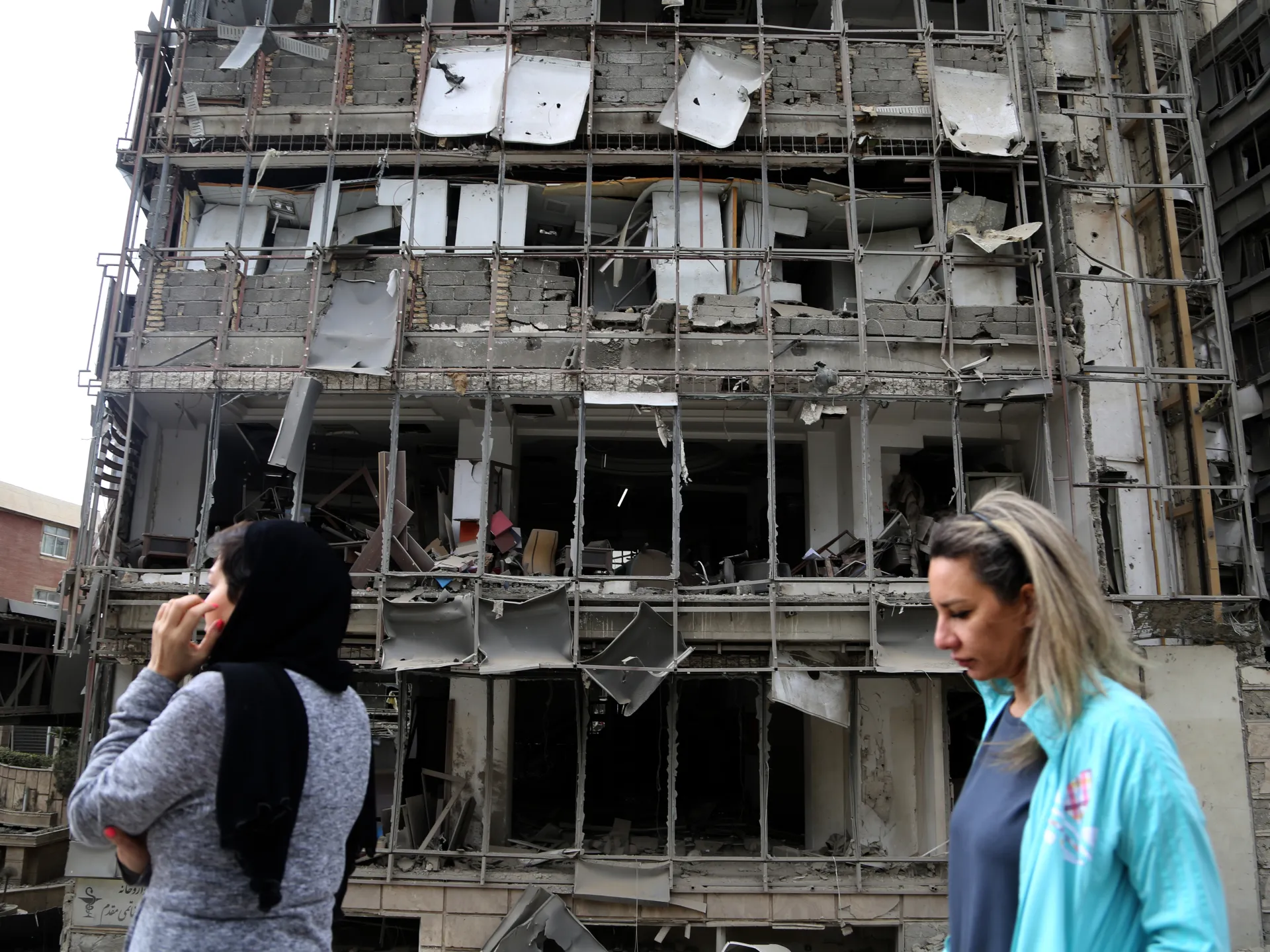
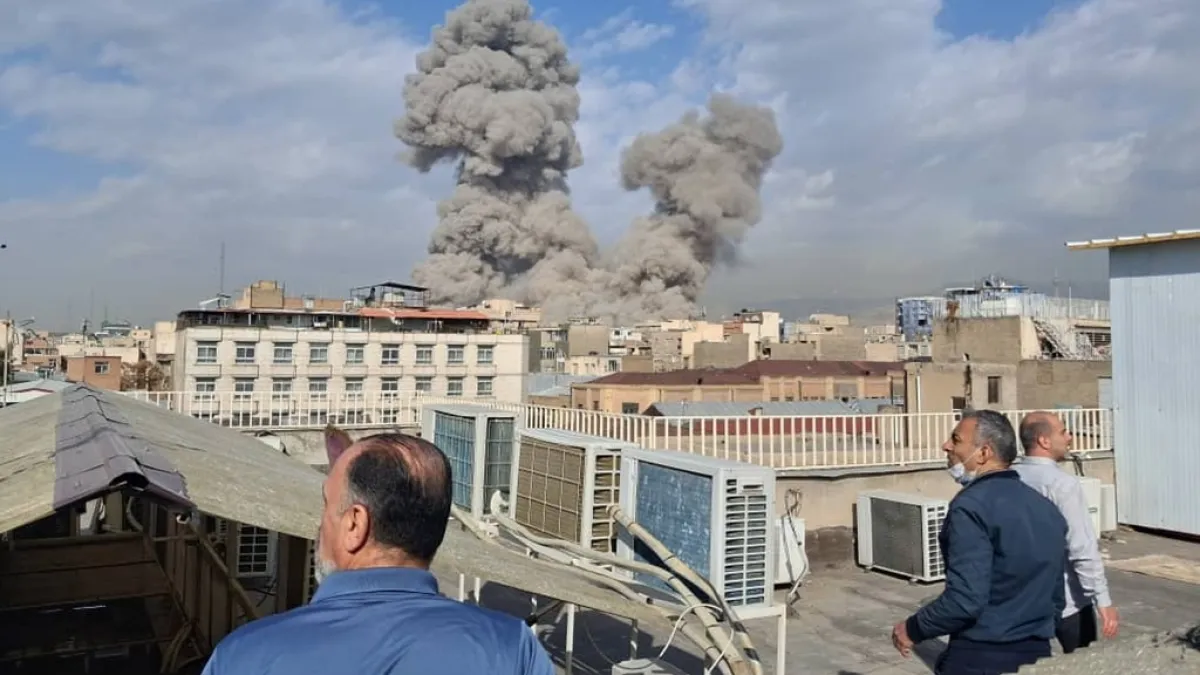
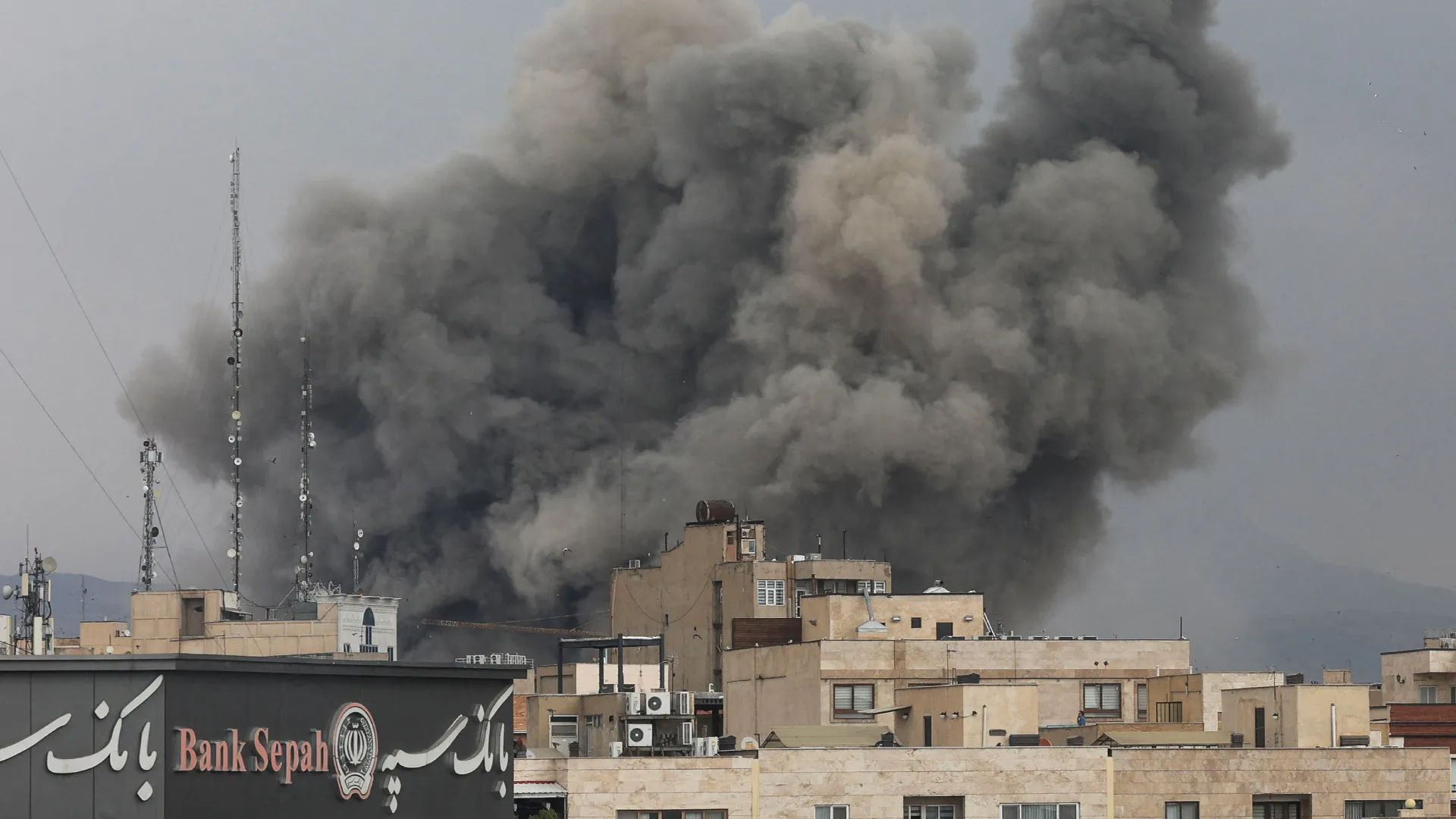
The aftermath of ongoing Israeli and US strikes on Iran’s capital, Tehran | Israel-Iran conflict News

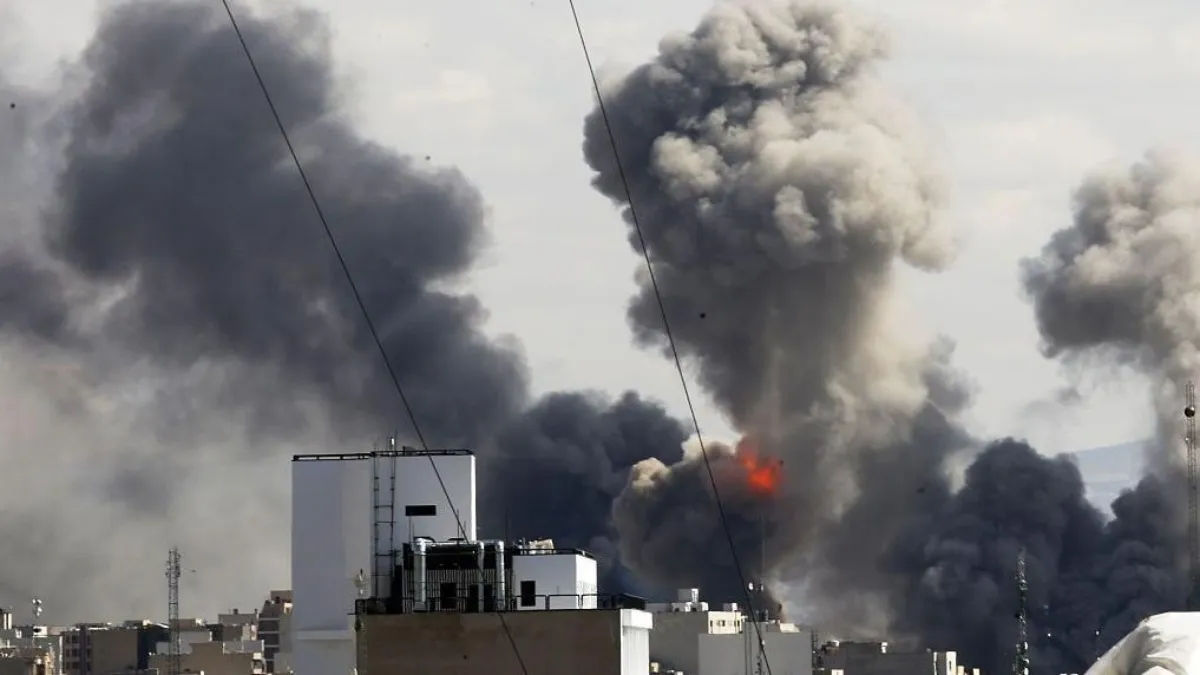
Explosions have rung out across Tehran as the war entered its fourth day with the United States and Israel continuing to pound Iran’s capital and numerous other cities and locations after the assassination of Supreme Leader Ali Khamenei.

Iran continued on Tuesday to retaliate against Israel and throughout the Gulf where nations host US assets.

At least 787 people have been killed in US-Israeli strikes on a minimum of 131 cities across Iran, the Iranian Red Crescent Society said on Tuesday.

Israel’s military said it had “struck and dismantled” the headquarters of Iran’s state radio and television broadcaster, the Islamic Republic of Iran Broadcasting (IRIB), accusing it of “calling for the destruction of the State of Israel and for the use of nuclear weapons”.

In a post on Telegram, IRIB reported explosions near its headquarters in Tehran but said there had been no disruption to its operations.

Tehran’s streets have been largely deserted as people take shelter during the air strikes.

Iranian media also reported explosions in the city of Karaj, just outside Tehran, as well as in the central city of Isfahan.

Iran held a mass funeral on Tuesday for 165 schoolgirls and staff killed on Saturday in what Iran said was a US-Israeli attack on a school in the southern city of Minab.

Source link

Venezuelan Popular Movements Voice Iran Solidarity, Gov’t Deletes Controversial Statement

Venezuelan authorities have offered no explanation on the withdrawn statement. (Anadolu Agency)

Mérida, March 2, 2026 (venezuelanalysis.com) – Venezuelan popular movements condemned the recent US and Israeli attacks against Iran and expressed support and solidarity with the West Asian nation. 

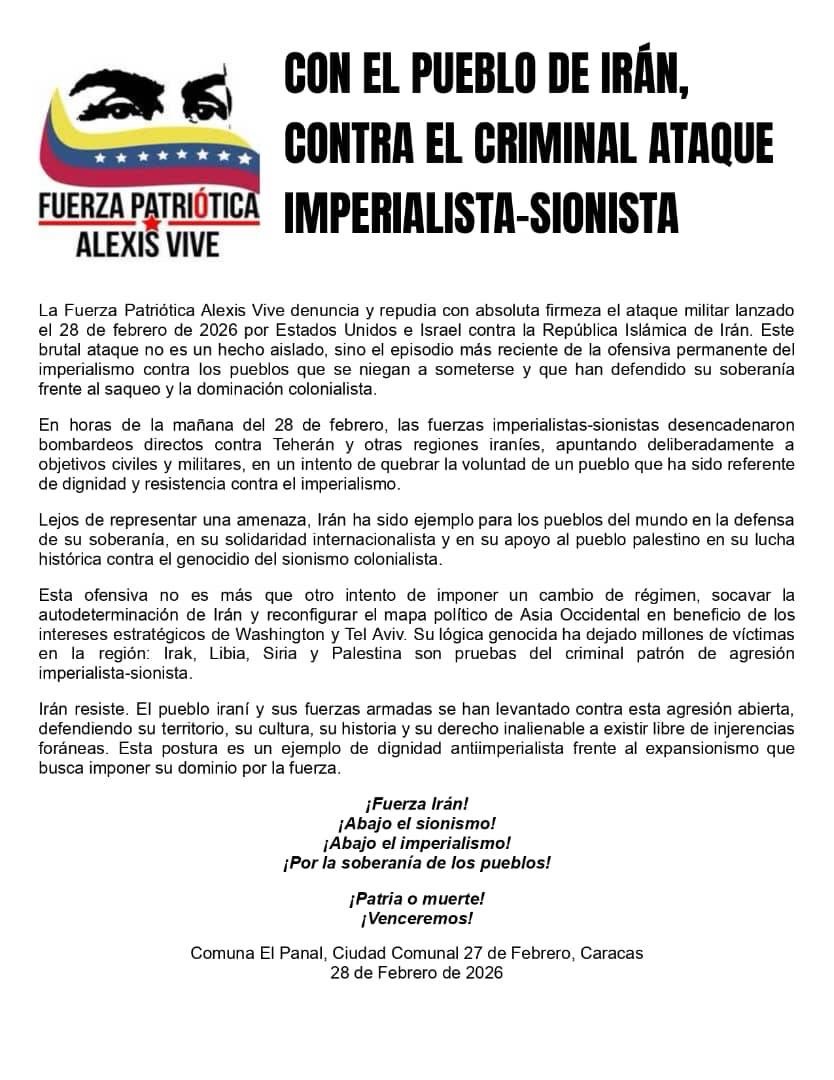
On Saturday, February 28, the International Platform for Solidarity with the Palestinian Cause and the Alexis Vive Patriotic Force were among the organizations issuing statements rejecting Washington and Tel Aviv’s military actions.

The organizations decried the bombings of Iranian territory, including against civilian targets, and described the operations as serious violations of international law. The International Platform for Solidarity with the Palestinian Cause expressed “deep outrage” over the bombing of a girls’ school in Minab that killed over 175 people.

“This infamous act will not crush the heroic resistance of the Iranian people, in their example of dignity in the face of imperialist and zionist aggression,” the platform’s communiqué read.

For its part, the Alexis Vive Patriotic Force emphasized that the latest attacks are not an isolated incident, but rather “another attempt to impose regime change and undermine Iran’s self-determination.” 

“These actions seek to reconfigure the political map of Western Asia in favor of the strategic interests of Washington and Tel Aviv,” the organization, a driving force in El Panal Commune in Caracas, added in its statement.

The Venezuelan chapter of Alba Movimientos, a continental alliance of social movements, likewise issued a statement declaring “unrestricted solidarity” with Iran and calling on multilateral organizations to deter the US and Israel’s “warmongering.”

Venezuelan grassroots organizations scheduled a rally on Tuesday in front of the Iranian embassy in Caracas to reiterate their support and condemnation of the foreign aggression against the country.

West Asia has been thrown into open conflict after the US and Israel launched operations “Epic Fury” and “Lion’s Roar,” respectively, on Saturday, with widespread bombings against Iran and targeted assassinations against the country’s leadership. Ayatollah Ali Khamenei, Iran’s supreme leader, was killed along with several relatives by an Israeli strike. 

Washington and Tel Aviv justified the systematic bombing of Tehran and other cities as a “preemptive strike,” with officials from both countries claiming without evidence that Iran was working toward nuclear weapons.

In response, Iranian forces launched defensive maneuvers and retaliatory attacks against US military assets in the region, striking bases and other targets in countries including Bahrain, the United Arab Emirates, Qatar, Iraq, and Jordan. Iran has also launched multiple waves of missiles against Israel and vowed to implement a strategic blockade in the Strait of Hormuz.

Caracas withdraws statement, expresses solidarity with Qatar

The Venezuelan government issued a statement on Saturday expressing its “condemnation and deep regret” that the “military option was chosen” with attacks against Iran while diplomatic talks were ongoing. However, Caracas did not name the US and Israel as the perpetrators. 

The communiqué went on to condemn Iran’s retaliatory actions as “inappropriate and reprehensible military reprisals against targets in various countries in the region.” The document ended with a call for a return to negotiations between all parties.

The government’s position drew widespread criticism on social media and was removed from the Foreign Ministry’s official accounts, as well as from Foreign Minister Yván Gil’s Telegram and X platforms, on Saturday evening.

Venezuelan leaders, including Acting President Delcy Rodríguez, have offered no explanation for the statement’s publication and deletion. On Monday, Rodríguez reported a phone conversation with Qatari Emir Tamim bin Hamad Al Thani in which she expressed “solidarity” amidst the “violence and instability” in the region.

“I expressed my condolences and deep concern over the loss of civilian lives due to the ongoing conflict, reiterating our call to respect international law and preserve peace,” the acting president wrote.

Caracas’ latest stance contrasts with its previous fierce condemnations of US and Israeli actions in West Asia, including the genocide in Gaza, attacks against Lebanon, and the assassination of Hezbollah leader Hassan Nasrallah.

Venezuela had likewise firmly backed Iran, one of its strongest allies in the past quarter century, against foreign attacks, including during the June 2026 war against Israel.

During Hugo Chávez’s presidency (1999-2013), Caracas and Tehran consolidated a multidimensional strategic alliance based on opposition to US expansion and a commitment to building a multipolar world. During this period, more than 270 bilateral agreements were signed in sectors such as energy, housing, agriculture, and technology.

The close ties, described by both governments as a “revolutionary brotherhood,” also provided key lifelines as both countries faced US-led economic sanctions. Venezuela benefited from Iranian technology transfers in areas such as drone manufacturing, cement, and vehicle assembly.

Iran provided key fuel shipments in 2020, defying US threats, as the Venezuelan economy reeled under US coercive measures.

Edited by Ricardo Vaz in Caracas.


Source link

Iran blocks Strait of Hormuz, taking hit at global shipping

Remaining regime forces have blocked the Strait of Hormuz after the United States and Israel launched a war against Iran on Saturday morning. An aerial view, taken with a drone, shows a crowd holding a flag during a march and rallyin support of regime change in the Middle Eastern nation. Photo by Ted Soqui/EPA

March 3 (UPI) — The Strait of Hormuz, a waterway that runs alongside Iran and through which roughly 20 percent of the world’s oil supply, in addition to other essential commodities, runs through, has been blocked.

After the United States and Israel launched a war against Iran, blocking the key trade route has been among the reactions that what is left of the nearly half-century-long regime after the attacks were launched over the weekend.

Iranian state media reported Sunday that Iran’s Revolutionary Guard announced it would fire on any ship looking to pass the route as many shippers were looking to avoid the region amid the burgeoning war, NBC News, Barron’s and The Times of Israel reported.

Ships that look to avoid the Strait of Hormuz would be forced to sail around the Cape of Good Hope, which is the southernmost tip of Africa and will add at least several days to anything taking the alternate shipping route.

“If major carriers restrict bookings and vessels reroute round the Cape of Good Hope, you’re adding weeks to global shipping schedules,” Wasel & Wasel managing partner Mahmoud Abuswasel told NBC. “That effectively removes capacity from the system.”

Cutting off access, however, may not entirely cut off shipping along the Asia-to-Europe shipping route, but according to Barron’s, the freeze on moving through the strait is “unprecedented” and most shipping companies have advised their vessels to avoid the situation and seek safe haven.

Travelling south around Africa adds roughly 10 days and may increase costs for shipping companies by 30 percent.

Abuswasel told NBC that stretching transit times by days to weeks can slow down a range of businesses, starting with raw materials showing up late and the dominoes falling from there.

“Manufacturers feel it first, and consumers feel it soon after in the form of delays, tighter inventories and rising prices,” he said.

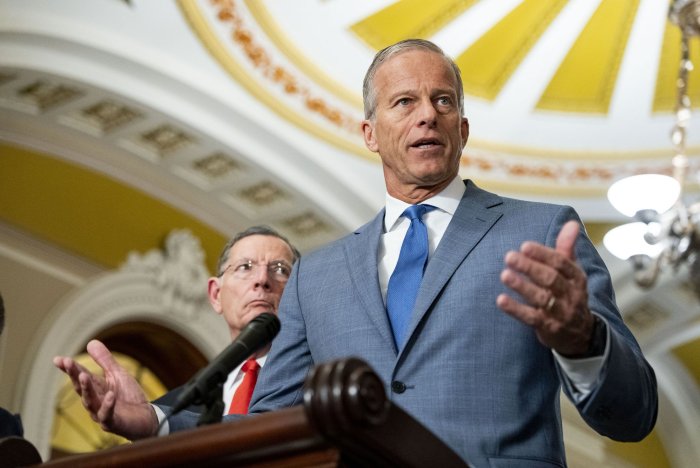
Senate Majority Leader John Thune, R-S.D., speaks during a press conference after the weekly Republican Senate caucus luncheon at the U.S. Capitol on Wednesday. Photo by Bonnie Cash/UPI | License Photo

Source link

‘I’m a travel expert — do these things first if your flight is cancelled’

With thousands of people either stranded or diverted across the Middle East following the attacks on Iran, one travel expert has shared the advice you need to know

Thousands of travellers are either stuck or have had their plans thrown into disarray across the Middle East following Israel and the US’s strike on Iran. The missile strikes have triggered widespread disruption throughout the UAE and the broader Middle East region, leaving thousands of holidaymakers facing an anxious wait.

Flight cancellations have swept through major Gulf aviation hubs as well as Cyprus in what experts are calling the most severe travel turmoil since the Covid-19 pandemic.

Chris Harrington, Managing Director at hoppa, has outlined the top four things travellers need to understand if their flight gets axed, including your passenger rights and what compensation you might be owed.

The initial step when you spot that dreaded red ‘cancelled’ notice appearing on the departures board is to get in touch with your airline.

If you’re already inside the airport terminal, make your way to the customer service desk. However, if you turn the corner and discover a mammoth queue of passengers already assembled there, Chris has an alternative approach, reports the Express.

He advised: “Try using the airline’s app if they have one or ring the customer service team to find out about the next steps.”

Once you’ve managed to locate a staff member to speak with, it’s time to explore what options are on the table.

“In most cases, the airline will have to make an alternative plan for you. When you manage to speak to a member of staff, see if they can rebook you on a later flight.

“You may also want to consider opting for an alternative route or flying to another airport close to your final destination. It’s important to understand that the airline can book you a flight through a different provider, so make them aware of this.”

It’s vital to ensure you’ve got insurance sorted for any overseas trip. This will safeguard you against cancellations or other complications.

Chris explained: “If your flight has been cancelled, check your travel insurance documents as some policies will cover the cost of hotels, airport transfers, alternative flights, and food. It’s also worthwhile enquiring with your airline about vouchers for cancelled flights, as many offer them for passengers to find accommodation and cover the cost of food.”

Chris’s final piece of advice is to ensure you’re fully aware of your passenger rights.

He stated: “If the flight cancellation is due to the actions of the airline, then it’s likely you’ll be entitled to compensation. As stated by ABTA, if an airline cancels your flight in less than 14 days before you’re due to depart, then you’ll be entitled to compensation based on the length of your journey.

“However, in this case, because the cancellation is caused by extraordinary circumstances outside of the airline’s control, compensation is unlikely to apply. In these cases, passengers are still entitled to a refund or rebooking, as well as care and assistance such as meals and, if necessary, overnight accommodation.”

Source link