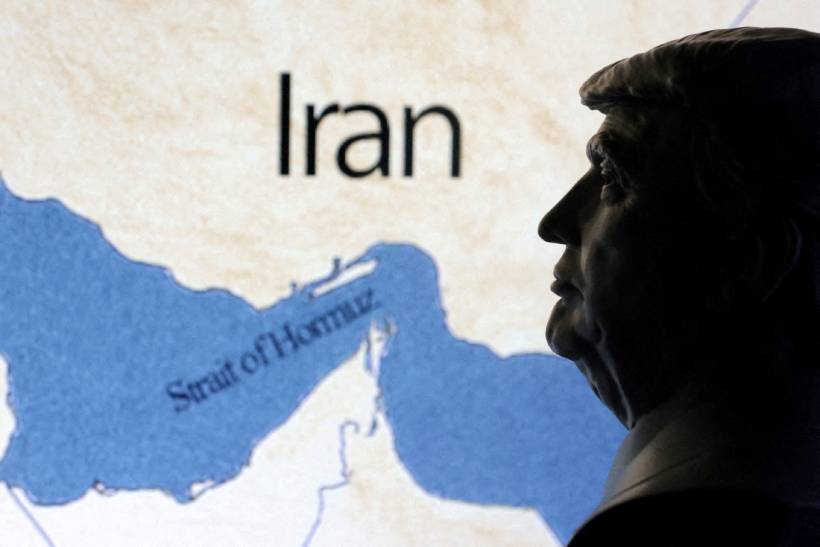
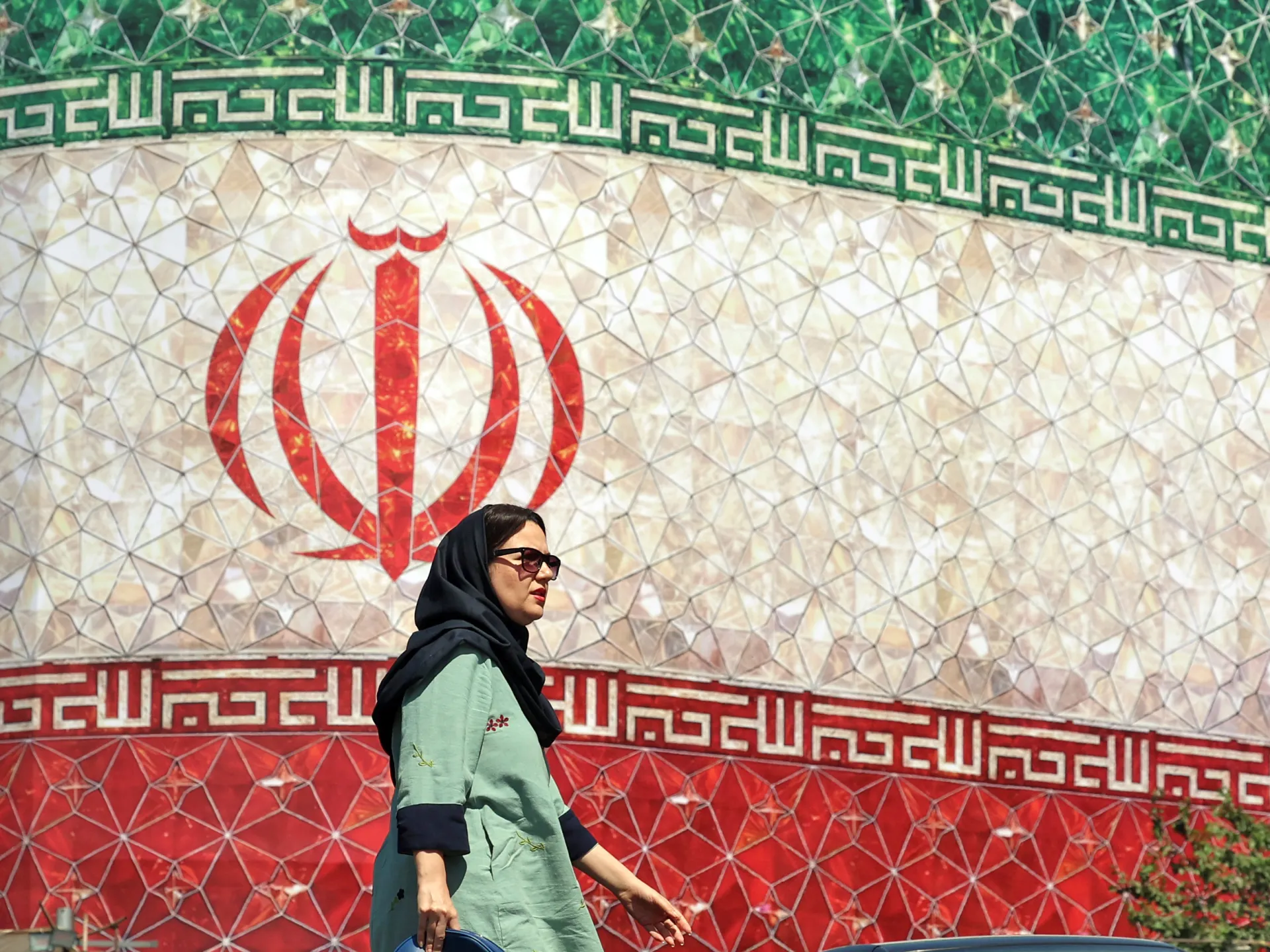
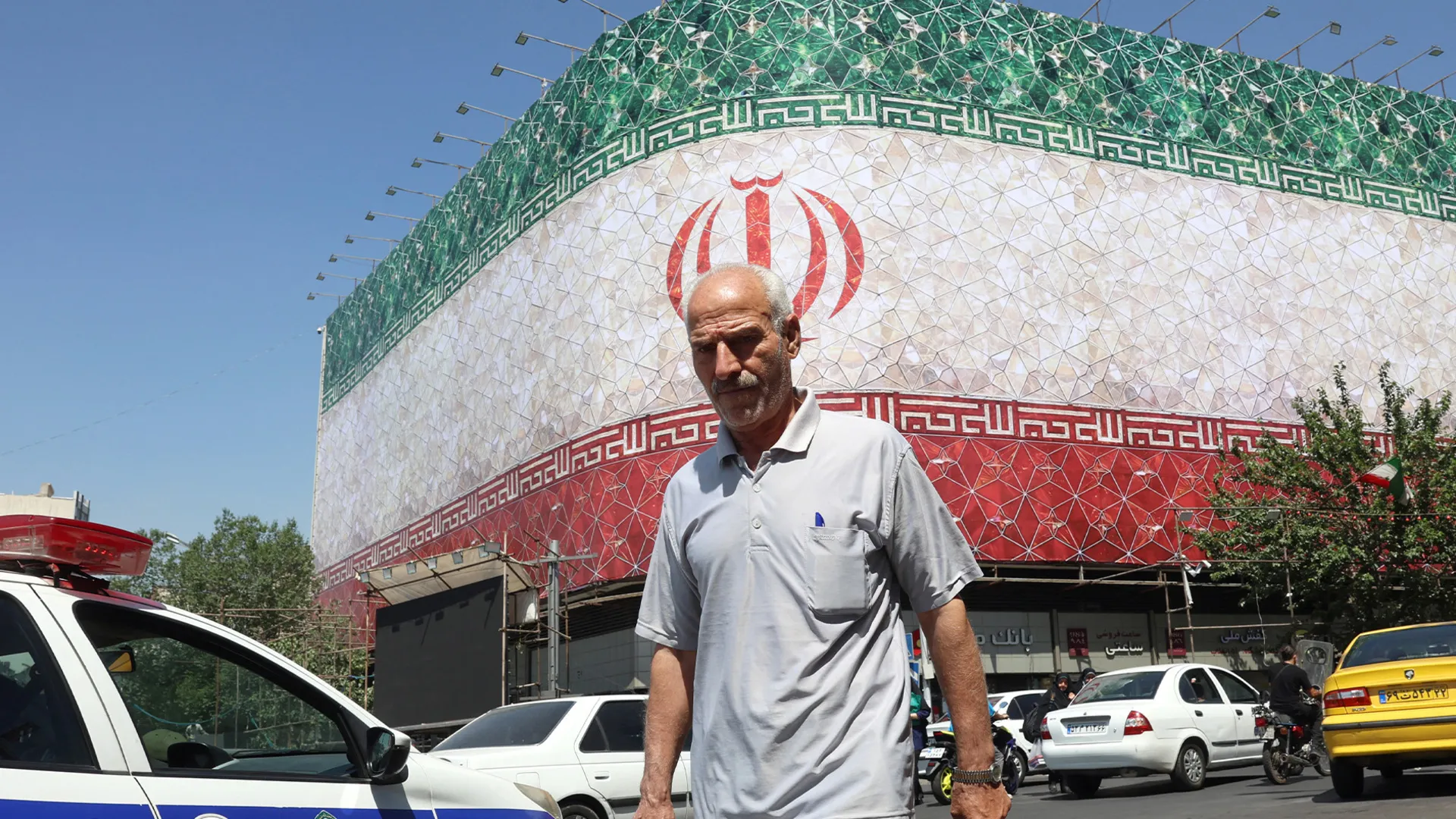
Meanwhile, shipping companies, the U.N. and a maritime security company tell us they are taking a wait-and-see attitude before changing current operations or offering advice to do so. As Trump noted over the weekend, the Strait needs to be fully de-mined while Iranian officials say they will still impose fees for transit.
“The blockade is ongoing and is expected to remain in place until the signing [of the memorandum of understanding] on Friday,” the source, speaking on condition of anonymity to discuss operational details, told us.
The U.S. naval blockade of Iranian ports will remain in effect until a deal is signed on Friday, a source familiar with the process told us. (Google Earth)
The official declined to tell us whether that means the U.S. will fire on vessels trying to run the blockade or turn ships back, as they have in the past.
As of June 12, U.S. Central Command (CENTCOM) said it disabled nine vessels trying to run the blockade and redirected 139 others. You can read more about how those ships were disabled here.
U.S. forces continue to strictly enforce the blockade against Iran. CENTCOM has redirected 139 compliant commercial ships and disabled 9 non-compliant vessels since April 13. pic.twitter.com/Sl8x1fF2wM
Iran’s reopening of the Strait of Hormuz, combined with the U.S. ending the blockade that went into effect on April 13, is a major component of the U.S.-Iran agreement. Iran closed the Strait to most shipping after it was attacked by the U.S. and Israel on Feb. 28. As we have frequently reported, that had a cascading effect on the global economy, sending oil prices higher.
President Trump says a historic peace agreement is set to be signed Friday in Switzerland after more than 100 days of war. The deal is expected to reopen the Strait of Hormuz, allowing oil to flow again and, according to Trump, helping bring peace and security to the region.… pic.twitter.com/EUh0rSSyeV
During a press conference and in a message on Truth Social, Trump on Monday said the Strait of Hormuz was already “partially opened.”
“Ships are starting to move, many loaded up with Oil, out of the Strait of Hormuz,” the president said on his social media site. “They are going along the Southern ‘Highway,’ which is totally safe, secure, and pristine. There are other areas of travel, also!!!”
“Ships are starting to go out now,” Trump added later at a press conference in France. “By Friday it will completely opened.”
As we previously reported, ships had been transiting the Strait via a southern route close to the United Arab Emirates and Oman under the overwatch of the U.S. military. Last week, Trump revealed that the U.S. had enacted a secret plan to get hundreds of ships out of the Strait; however, that still pales in comparison to the number of ships transiting before the war broke out.
NOW: Trump on Iran:
The strait is already partially open… by Friday, it will be completely open.
As for the blockade, Iranian officials on Monday said it was their understanding it would be lifted right away.
“Under the agreements reached, the war and military operations on all fronts, including Lebanon, will come to an immediate and permanent end beginning tonight,” the Secretariat of Iran’s Supreme National Security Council stated early Monday morning EDT, according to Iran’s official IRNA media outlet. “Furthermore, the naval blockade against Iran will be lifted immediately and completely.”
Also on Monday, Iran’s Foreign Ministry Spokesman, Esmail Baghaei, said the country will continue to charge vessels transiting the Strait for services rendered.
“According to the MoU, Iran and Oman will be responsible for managing passage through the Strait of Hormuz,” he stated. “Iran is not seeking to impose tolls. However, in return for navigation services, environmental protection, insurances and other maritime services, Iran will collect the necessary fees.”
JUST IN: Iran’s Foreign Ministry Spokesman, Ismael Baqaei on the Strait of Hormuz:
“According to the MoU, Iran and Oman will be responsible for managing passage through the Strait of Hormuz.
Iran is not seeking to impose tolls. However, in return for navigation services,… pic.twitter.com/HrpmE9kKtc
A day earlier, Trump addressed the blockade in two statements on his Truth Social site.
“This Great Deal will bring Peace and Security to the whole Region. Many presidents have tried to make Peace with Iran, and all have failed before me,” the president said in the second of the two posts, issued at 6:27 P.M. EDT. “The Leaders of the Region have, for the first time, found a President who can help them achieve real Peace. With the opening of the Strait upon the signing of the Deal on Friday, for purposes of mine removal, oil will flow on both ends again for the Region, and the World!”
A little less than an hour earlier, Trump said he was authorizing “the immediate removal” of the blockade.
“The Deal with the Islamic Republic of Iran is now complete. Congratulations to all! I hereby fully authorize the toll free opening of the Strait of Hormuz, and, simultaneously herewith, authorize the immediate removal of the United States Naval blockade. Ships of the World, start your engines.”
We reached out to the White House for further clarification.
Though both Trump and Iranian officials have weighed in on this deal, much about it remains unknown, something Vice President JD Vance explained Monday morning.
Vance told CNBC’s “Squawk Box” program that though the U.S. and Iran struck a preliminary deal, there are “a lot” of details that remain to be ironed out, but he expressed confidence that America has “all the cards” in subsequent talks.
Vance told the network that Iran’s foreign minister Abbas Araghchi is expected to be involved in those upcoming discussions — as well as its parliamentary speaker, Mohammad Bagher Ghalibaf. He is a hard-liner, Squawk Box noted, whose participation could signal that the regime’s conservative faction is on board with the deal.
“The agreement reached Sunday would extend the U.S.-Iran ceasefire for 60 days and set up a framework for future negotiations about Tehran’s nuclear program and other key issues,” CNBC further explained. “The preliminary deal has yet to be signed and its text has not been released.”
The sides have given themselves “60 days to reach a technical agreement on how to down-blend Iran’s highly enriched uranium and both freeze and monitor its nuclear program going forward,” Axios reported. “That’s a tall order given how difficult it was to reach the much less detailed memorandum of understanding.”
The U.S. “insists Iran is incentivized to reach a final agreement because sanctions relief and access to frozen funds depend on progress on the nuclear front,” Axios added. “Some hawks in the U.S. and Israel worry there will never be a final deal and the war will end with the nuclear questions unresolved.”
Trump told the New York Times on Sunday afternoon that the agreement he had reached with Iran would ultimately assure that the Strait of Hormuz was “permanently toll-free,” a seeming sticking point with Iranian expectations as we discussed earlier in this story.
Trump also insisted that if Iran failed to reach a final nuclear accord with the United States, he would restart military attacks on Tehran or make the United States “the guardian of the Middle East” in return for 20 percent of the region’s revenues.
Given that the U.S. began building up forces in the region in January, many of the ships, aircraft and troops will have to retrograde out of the CENTCOM area of responsibility in the coming weeks. So exactly what the American footprint will be in the CENTCOM area of responsibility in two months is questionable.
There is also massive global and domestic political pressure to end the war, which, as we noted earlier, has created economic upheaval around the world. Moreover, the conflict has not been popular at home, and American voters go to the polls in November for the midterm Congressional elections with Trump’s Republican party struggling to maintain control. Starting the war again, especially knowing how it went this time around and failed to deliver a deal on top of it, would see these pressures magnify.
President Donald Trump tells the New York Times if Iran failed to reach a final nuclear accord with the United States, he would restart military attacks on Tehran. pic.twitter.com/kuCpXU3WUv
Regardless of the diplomatic breakthrough, shipping companies tell us that they are not changing course when it comes to transiting the region.
“The announced agreement is a welcome and positive development, but publicly available details are still limited, and it is too early to assess how it will impact logistics and maritime operations in the Middle East,” a spokesperson for Maersk told us. “At this stage, there are no changes to our operations in the region.”
A spokesperson for Hapag-Lloyd expressed similar sentiments.
“The latest developments give reason to hope that the security situation in the Strait of Hormuz will improve,” the spokesperson told us. “We are currently reviewing the information available and are in close contact with relevant authorities and our security partners. At this stage, our risk assessment remains unchanged and the Strait of Hormuz remains closed for Hapag-Lloyd transits until further notice. The safety of our crews and vessels, and the security of our customers’ cargo, remain our highest priority.”
The U.N.’s International Maritime Organization (IMO) told us that it too was waiting for further details to emerge before offering any concrete new advice to commercial vessels sailing in the region.
“Details of the agreement are due to be released, which will provide more clarity on how restoring full trade can return through the Strait of Hormuz,” IMO told us.
The organization “is working with relevant countries, particularly Oman, Iran and the rest of the coastal States, on the safe route to be used for the evacuation of seafarers on trapped vessels and for trade to resume,” IMO added. “We are assessing the feasibility for vessels to transit and conduct the trade safely and securely, avoiding possible hazards like mines as well as congestion which could lead to accidents.”
I welcome with great satisfaction the peace agreement reached. A first step to restoring safety in this vital corridor,particularly for our seafarers. And for IMO to advance the evacuation plan, which requires safety & security guarantees from all parties. https://t.co/uBCjkD84wypic.twitter.com/PoQH4Q1vlq
An official with the Ambrey maritime security company said there is still a long way to go before commercial vessels can navigate these waters securely.
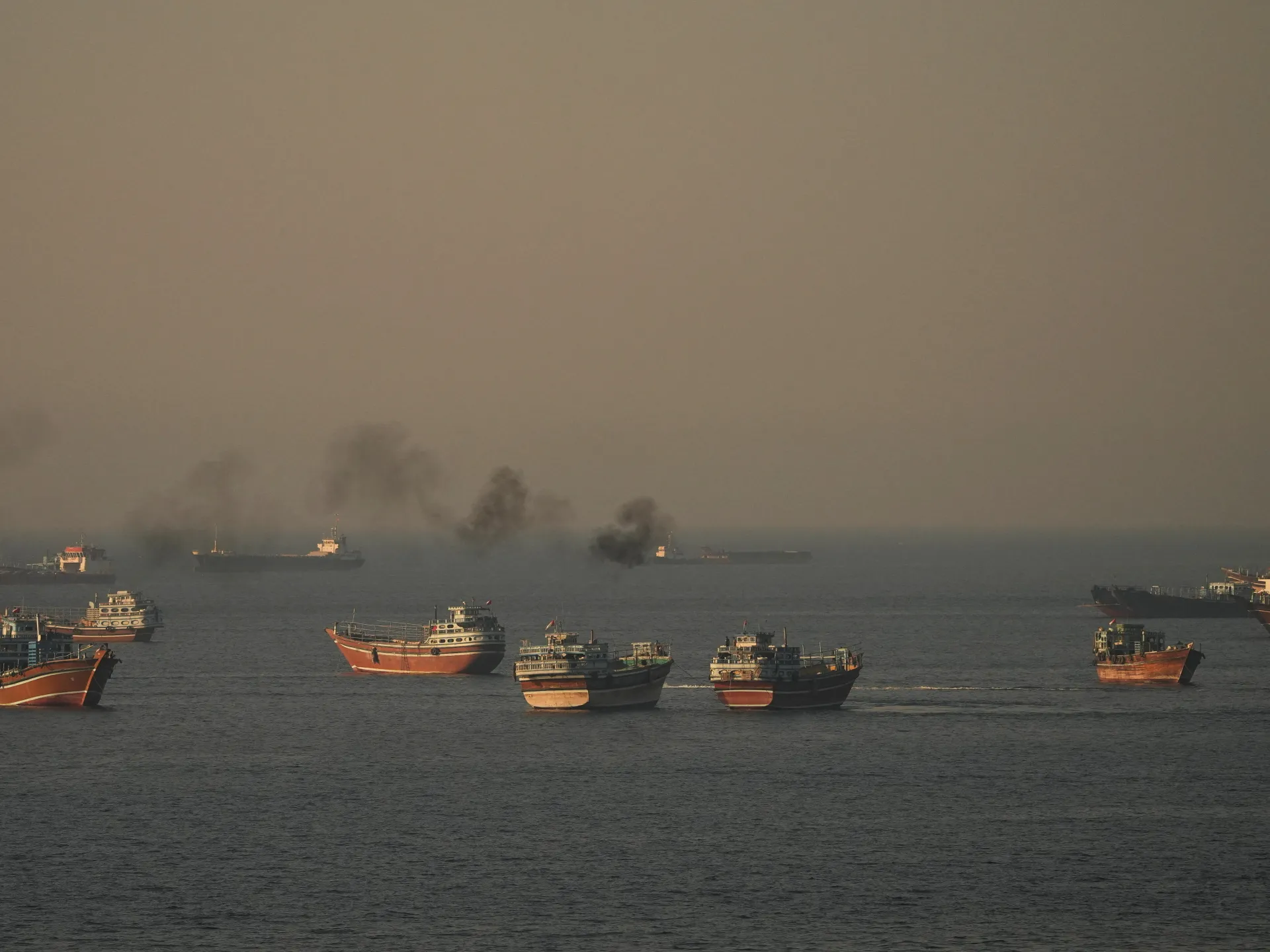
“The proposed deal still requires meaningful implementation across multiple governments, which will take time,” Joshua Hutchinson, a former Royal Marine commando now serving as the company’s Managing Director of Risk and Intelligence, told us. “Furthermore, over 1,000 vessels remain in the Persian Gulf, and the threat of mines looms; clearing such a large number of vessels will take several months of coordination.”
In addition, “reports say that the agreement will allow the Iranian Maritime Authority to retain control of the Strait of Hormuz through a clearance system, and, for the time being, this will be one of the major concerns that ship operators and owners need to understand,” Hutchinson added.
Another factor in all this remains Israel. Officials in Jerusalem have stated that they will not withdraw from southern Lebanon and will continue to strike Hezbollah targets they deem necessary. The Israeli airstrike on a Hezbollah site in Beirut on Sunday reportedly almost derailed the announcement of the MOU, with an Iranian missile attack on Israel scrubbed at the last moment.
BREAKING: Israel won’t withdraw from land seized in Lebanon, Syria and Gaza, its defense minister says, hours after an interim Iran-U.S. deal was announced. Israel Katz’s remarks are the first official Israeli comments since the announcement. https://t.co/KdVpD2iaxq
Though the preliminary agreement marks the biggest diplomatic breakthrough since hostilities began, there is still a long way to go until Friday in a region known for its volatility. As we have previously reported, several rounds of tit-for-tat attacks between the U.S. and Iran threatened to derail the shaky ceasefire in the past.
Even if Friday’s milestone signing should be reached, questions still remain about whether peace will ultimately be achieved. Given everything at stake, the world awaits warily to see what happens next.
US President Donald Trump says Iran has agreed to not acquire nuclear weapons and will ‘suffer unbelievable consequences’ if they do. His remarks came during a meeting with Qatar’s Emir Sheikh Tamim at the G7 summit in France.
The US-Iran memorandum of understanding expected to be formally signed in Switzerland on Friday could allow for the establishment of a $300bn investment fund for Iran, as part of a broader settlement to end the war that triggered a global energy crisis and upended markets worldwide.
US Vice President JD Vance told CBS News on Monday that the incentives would be connected to Iran’s “performance” in adhering to the deal, which was digitally signed by both sides on Sunday.
Recommended Stories
list of 3 itemsend of list
The scale of the financial incentives grabbed the headlines due to US President Donald Trump’s longstanding criticism of a 2015 nuclear accord that he claimed delivered economic benefits to Tehran.
In a bid to manage perceptions around this politically sensitive issue, Trump took to his Truth Social platform to claim that “the story that the US is paying Iran 300 million Dollars is Fake News,” while Vance told CBS News that the money would not be a US payout in exchange for Iran’s enriched uranium.
“When people say that billions of dollars of assets will be released, that’s not true,” the vice president told the CBS Morning programme. “What is true is that Iran will have a much better and much more prosperous future if they meet the obligations they make in this agreement.”
What do we know about the $300bn investment fund?
Vance said the deal “fundamentally extends a hand to Iran and says, ‘Look, if you guys are willing to honour your obligations, if you’re willing to allow real inspections of your nuclear programme, then we will welcome you back into the world economy.’
“That’s the sort of thing they could have access to, funded by the Gulf Coast coalition, so long as they honour their end of the obligation,” Vance told CBS. He also claimed that while US money would not be injected, economic opportunities could arise once Iran repositions itself in the global economy.
The New York Times quoted sources saying the fund would not come from governments but be created for companies eager to invest in Iran.
Muhanad Seloom, a non-resident senior fellow at the Middle East Council on Global Affairs, said the setup was a no-lose solution for Washington. “If Iran reforms, the administration owns the peace; if it doesn’t, the US loses nothing and the Gulf carries the risk,” he told Al Jazeera.
What about the Iranian frozen assets?
Seloom said the idea of an investment fund was built precisely to escape the optics of releasing Iran’s frozen funds. While the exact amount of Iran’s frozen assets is unclear, official Iranian reports and experts have set the total amount at more than $100bn.
Iran’s economy has been crippled due to years of sanctions imposed on the country by the United States and other nations following the Islamic revolution in 1979, and then amplified over Iran’s nuclear and ballistic missiles programmes. These measures have restricted Tehran’s ability to access its own assets, such as revenues from oil sales, which have been frozen in foreign banks.
Tehran was granted sanctions relief in the wake of the landmark 2015 nuclear deal signed under President Barack Obama, but Trump tore it up in 2018 during his first term. The 2015 deal had put limits on Iran’s nuclear enrichment in exchange for sanctions relief.
Iran’s state-affiliated Mehr News agency reported on Sunday that the 14-point draft memorandum of understanding provided for the release of $24bn in frozen Iranian assets.
Pressed by CBS News on the possibility of releasing frozen funds, Vance said the $24bn figure “just doesn’t appear anywhere in any of the texts that we’ve talked about with the Iranians”.
“What we have said is that we’re willing to talk about unfreezing assets, but a much, much bigger deal is unsanctioning their economy – so long as they make the long-term commitments on the nuclear programme,” the vice president added.
For Iran, where the war inflicted an estimated $29bn damage and the population is struggling with the highest inflation rate since 1942, the investment fund may constitute a much-needed lifeline.
But the optics will not be as favourable, raising a “dignity problem”, Seloom said. “Tehran reads this as supervised, conditional money rather than sovereign relief,” the analyst told Al Jazeera.
Which other contentious issues will be discussed after signing the deal on Friday?
One of the US’s main declared objectives has been to assuage concerns surrounding Iran’s nuclear programme, including a stockpile of more than 440kg (970lbs) of enriched uranium.
The memorandum extends an existing ceasefire arrangement for another 60 days, during which the two sides are expected to hold further negotiations on issues including the disposal of the enriched uranium.
Vance said Tehran had agreed to surrender its stockpile, undergo regular inspections and refrain from producing or buying nuclear weapons, but the full text of the memorandum of understanding has yet to be disclosed.
The reopening of the Strait of Hormuz, which has been subject to competing blockades by the US and Iran, has also been a point of contention. Trump suggested an agreement to reopen the waterway had been reached when he announced a deal on Sunday with the words: “Let the oil flow!”
Speaking to CNBC, however, Vance acknowledged that not all sticking points surrounding the passageway had been resolved. “Well, our expectation is that the strait is gonna be opened in a toll-free way for the long term, and that’s the sort of thing that we’re gonna figure out in these technical negotiations,” he said.
Israel’s ongoing aggression on Lebanon is also expected to create friction, as Iran has insisted any ceasefire deal must include the allied nation. Israel has so far rejected any arrangement that would limit its ability to strike what it says are Hezbollah targets. Defence Minister Israel Katz on Friday said the military would continue operating in Lebanon regardless of any agreement with Tehran.
Mixed reactions to the agreement
Iranian Foreign Minister Abbas Araghchi said the memorandum of understanding would reap economic benefits for Iran but stressed that Tehran would not rely on those benefits for all of its needs.
“We have a history of broken promises, non-compliance, and the tearing up of agreements,” Araghchi said on Monday, according to Press TV. He said discussions about the lifting of US sanctions and Iran’s nuclear programme would be held during a 60-day period of negotiations following the official signature on Friday.
Iran’s new supreme leader, Mojtaba Khamenei, has yet to comment. Some Iranian observers objected to the timing of the announcement, which coincided with Trump’s birthday. Referring to the assassination of former Supreme Leader Ayatollah Ali Khamenei at the beginning of the US-Iran war, conservative journalist Parisa Nasr wrote on X: “Was giving a birthday gift to the killer of the martyred Leader also one of the unwritten conditions of the deal?”
Iranian President Masoud Pezeshkian said Iran’s Supreme National Security Council had approved the deal so that “America’s genuine commitment to respecting the rights of the Iranian nation could be tested in practice.”
Speaking at the G7 summit in France on Tuesday, Trump described the deal with Iran as “fair”, “good”, and under which Iran “can’t have a nuclear weapon” or “they get blown up.”
Qatar’s Emir Sheikh Tamim bin Hamad Al Thani, who is also attending the summit, said the Iran-US agreement will result in positive outcomes for the region.
“This is a very important deal, there’s still a lot of work to be done, but with this momentum – if we continue like that, Mr President – I think we can achieve and do great things in the region,” Sheikh Tamim said.
US Democratic lawmakers welcomed a deal to halt the war with Iran but stressed that its terms must be made public. Senator Gregory Meeks said “any final agreement must be durable, enforceable, transparent” and more than “vague announcements or political spin”.
US Republican Senator Lindsey Graham on Sunday said he was “pleased” about the deal but also “somewhat concerned that Iran’s view of the agreement seems different than what the American negotiating team is claiming”.
Seloom, at the Middle East Council on Global Affairs, said the different narratives underlined that the two sides were “not really talking to each other”. “They’re talking past each other, to domestic audiences,” he said. “Each side has to sell this as a victory it cannot sell honestly.”
South Korea is consulting with the United States and Iran about navigation through the Strait of Hormuz, the Foreign Ministry said Tuesday. In this photo, the South Korean oil tanker Universal Winner arrives near Ulsan on June 10 after exiting the Strait. Photo by Yonhap
South Korea has begun consultations with the United States, Iran and other relevant countries regarding navigation through the Strait of Hormuz following the signing of a preliminary deal aimed at ending the monthslong war in the Middle East, the foreign ministry said Tuesday.
According to U.S. officials, President Donald Trump, Vice President JD Vance and Iran’s parliamentary speaker Mohammad Bagher Ghalibaf inked the memorandum of understanding (MOU) that would extend the countries’ ceasefire for 60 days, during which negotiations will take place to address nuclear and other issues to reach a final peace deal.
A large number of vessels, including two dozen South Korea-linked ships, have been stranded in the waterway, which Iran has effectively choked off with threats of missile and drone strikes amid the war.
“We are assessing the details related to maritime transit and have begun necessary communication with relevant countries, including the U.S. and Iran,” ministry spokesperson Park Il said during a regular press briefing.
According to Park, the government is closely monitoring a range of factors before making judgments on passage operations, including the presence of naval mines, the overall security situation in the strait and shipping traffic conditions.
He said the government will continue to prioritize the safety of South Korean vessels and sailors while working to ensure the smooth resumption of shipping.
Park added the government will also maintain close consultations with shipping companies in assessing developments in the region.
Copyright (c) Yonhap News Agency prohibits its content from being redistributed or reprinted without consent, and forbids the content from being learned and used by artificial intelligence systems.
Los Angeles – “I’m sure when we score a goal today, everyone will be cheering.”
That was the prediction of Iranian fan Parsa Tafreshi, who had travelled from New York to Los Angeles to see Iran take on New Zealand on Monday.
Recommended Stories
list of 3 itemsend of list
His words would prove largely true.
The game ended in a thrilling 2-2 draw, and each time Iran – known as Team Melli – scored, the stadium erupted in deafening celebrations.
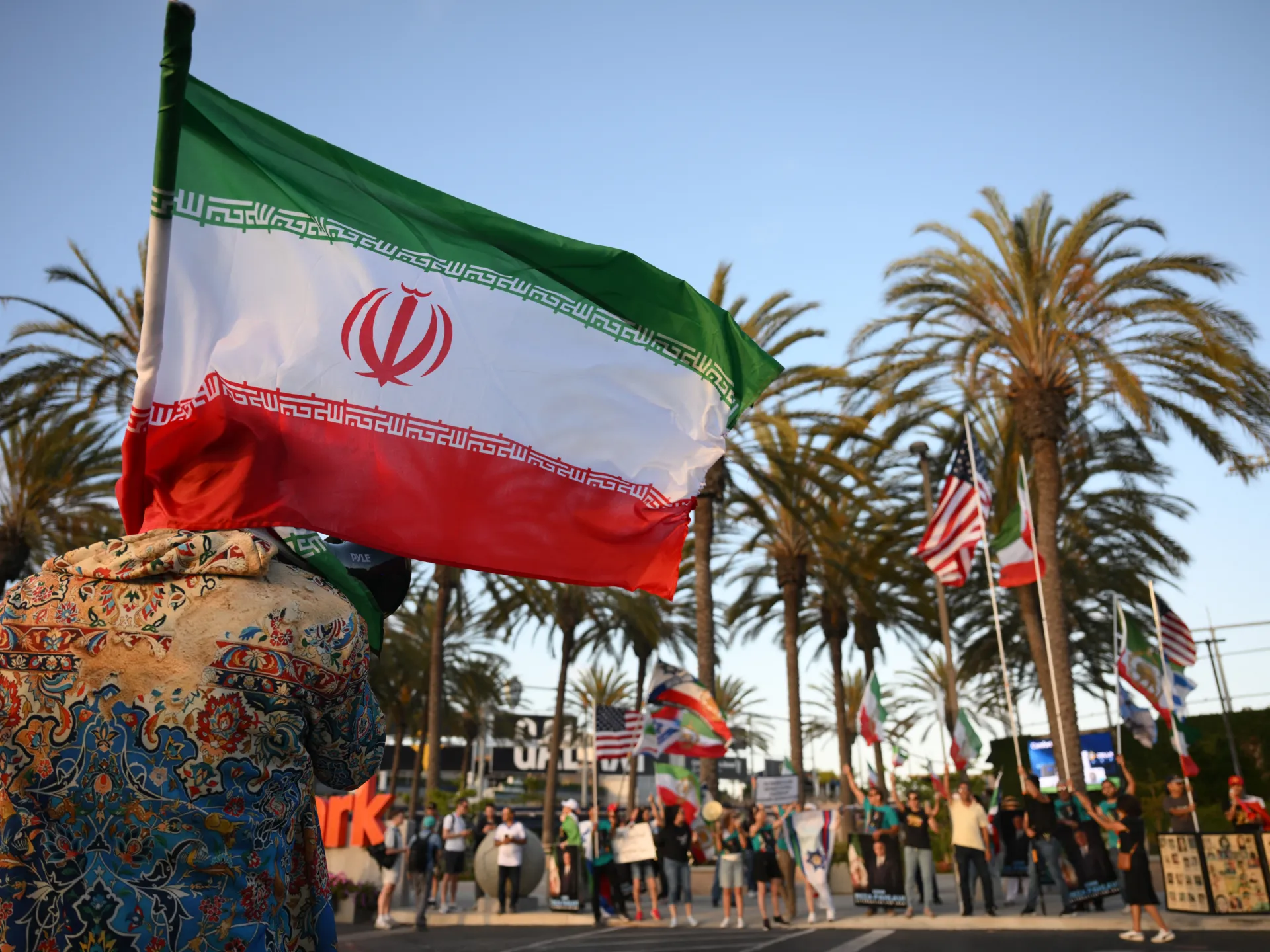
There were two opposing sets of Iranian flags in Los Angeles, home to a large Iranian American community that is largely staunchly opposed to the governing system in Tehran.
Some fans waved the Islamic Republic flag, adorned with the name of God. Others opted for the pre-1979-revolution flag featuring the lion and sun, used by the Iranian opposition.
But when Team Melli were building up an attack, their supporters sang in unison.
Chants of “Iran, Iran” rang throughout the stadium, and the fans held their breath collectively each time Iran’s attackers came near New Zealand’s goal.
Concerns of unrest around the game did not materialise. Iranian fans vastly outnumbered their New Zealand counterparts at the stadium, and the game ended without any major incident.
Anti-team protest
A small group of demonstrators had gathered outside the venue, waving Israeli flags and chanting in support of opposition figure Reza Pahlavi.
They also called on United States President Donald Trump to resume the war with Iran, although Washington and Tehran have already reached a ceasefire deal.
“President Trump, finish the job,” they chanted on a loud megaphone.
Protesters also shouted slogans against the Palestinian group Hamas and Lebanon’s Hezbollah.
One of the demonstrators held a banner featuring the faces of Team Melli players with red crosses on them.
“IRGC Team,” it said, referring to Iran’s Islamic Revolutionary Guard Corps, with red ink meant to resemble blood dripping from the letters.
Protester Kourosh Kiumarsi told Al Jazeera that the Iranian squad is the “regime team”.
Asked about the Israeli flags at the demonstration, he said: “Israel and the USA attacked the regime and helped the people of Iran. They are not at war with Iran. They are at war with the Islamic Republic regime.”
Despite the intensity of the slogans at the protest, it was small and contained.
Protesters outside Los Angeles Stadium, June 15, 2026 [Ali Harb/Al Jazeera]
“I love that all the hype was just outside of the stadium,” said Sudi Farokhnia, who wore a green, white and red wig and a shirt featuring the lion and sun flag.
“Once you walked into the stadium, all you could hear was Iran, Iran, Iran. The energy was amazing. The people were amazing,” she told Al Jazeera after the match.
But that does not mean the entire affair was apolitical.
It would be difficult to argue that the pre-revolution flag is not a political statement.
FIFA bans political symbols at international matches, but thousands of Iranian fans on Monday were able to come in with lion-and-sun flags, shirts and hats.
Many also wore political slogans like “Make Iran Great Again” and “free Iran”.
FIFA did not respond to Al Jazeera’s request for comment on the issue.
Minab message
There were also other political expressions at the match.
Arash, an Iranian fan who asked to be identified by his first name only, wore a shirt that said “Mibab 168” on the back.
The US-Israel war on Iran killed hundreds of civilians, including 168 children at a girl’s school in the southern city of Minab, during the first day of the conflict.
“This is not a political shirt. This is not just to send a political message,” Arash told Al Jazeera.
“It’s a simple, simple statement: Schools are sanctuaries, whether it’s school shootings, bombings. School is a place of virtue. It’s a place of learning. It’s a place that – no matter who you are, what you believe in, what country – school should be off limits.”
An Iranian fan in Los Angeles wears a shirt that says, ‘Minab 168’ [Ali Harb/Al Jazeera]
Inside the stadium, a group of Iranian fans also revealed a “MINAB 168” message during the game.
There were also Palestinian and Israeli flags visible in the stands.
The match kicked off with a political message: Many fans jeered the Iranian national anthem, which opposition activists see as representative of the government.
Iran’s participation in the tournament was in peril earlier this year because of the war. Team Melli were forced to stay in Mexico as their base camp, while all their group-stage matches were in the US, because the Trump administration refused to host them.
Once the ball was kicked, however, that all faded into the background.
It was 11 versus 11. And the football delivered excitement, joy and disappointment.
Iran dropped two valuable points against a lower-ranked team, but came twice from behind and hit the woodwork once.
And each of the two times the net bulged, the goals brought happiness to a nation with two flags at home and abroad that has gone through war and immense hardship.
There was a number of protesters outside.
But when Iran scored, almost all Iranians cheered.
Weekly insights and analysis on the latest developments in military technology, strategy, and foreign policy.
Here’s TWZ’s weekly carrier tracker monitoring America’s flattop fleet, including deployed Carrier Strike Groups (CSG) and Amphibious Ready Groups (ARG), using publicly available open-source information. Check out last week’s report here.
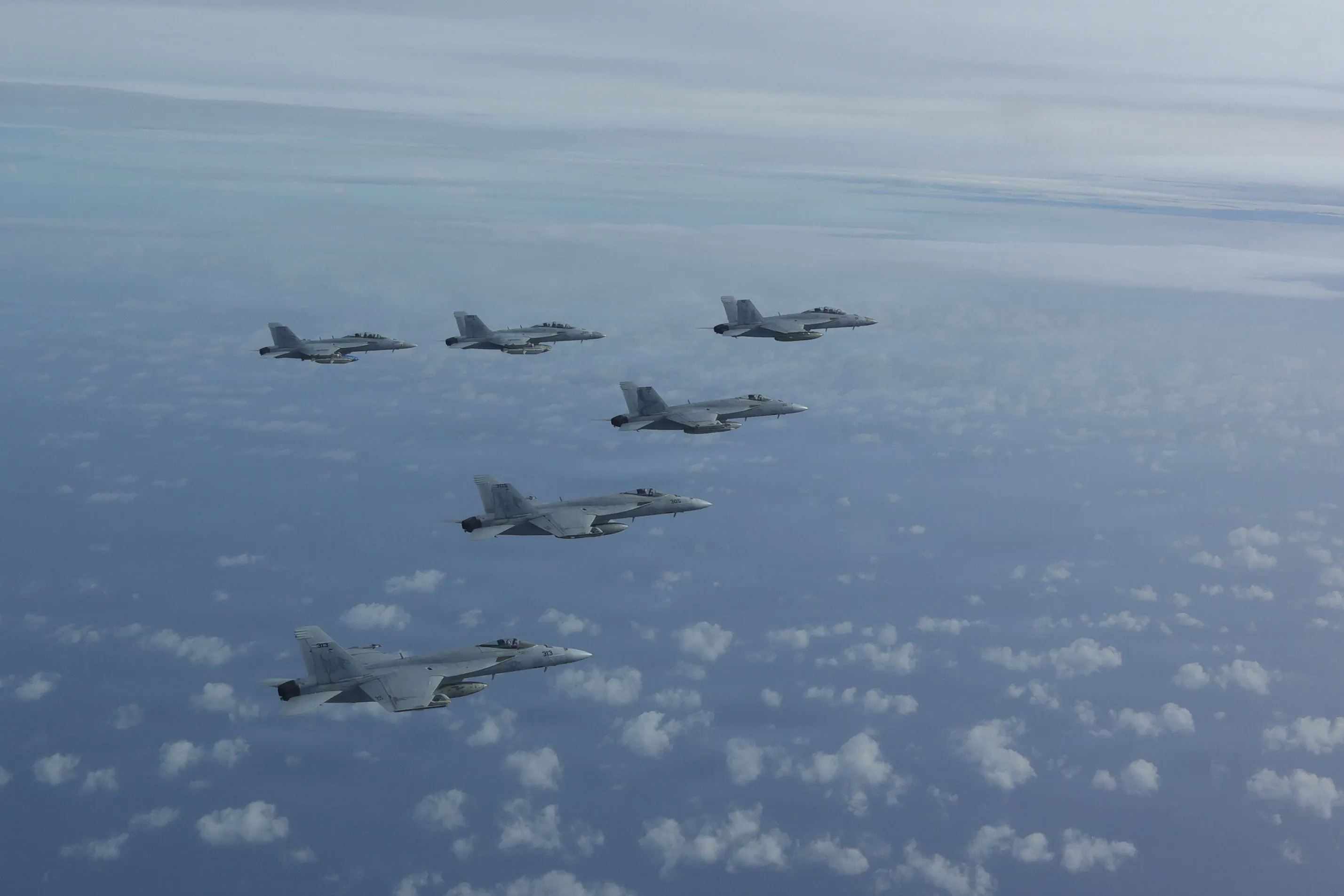
The U.S. naval blockade of Iranian ports remains in full effect, for now, pending the execution of the ceasefire agreement, scheduled to be formally signed on Friday in Geneva, according to a notice released today by NAVCENT. U.S. Central Command (CENTCOM) forces launched multiple waves of strikes last week against Iran following the shootdown of a U.S. Army Apache helicopter, and disabled an additional two commercial vessels that tried to skirt the blockade, bringing the total to nine. Two carriers, USS Abraham Lincoln and USS George H.W. Bush, embarked with a combined seven squadrons of F/A-18E/F Super Hornets, two squadrons of EA-18G Growlers, and one squadron of F-35C Lightning IIs, continue to support “self defense” strikes and blockade operations.
The Lincoln CSG has been deployed for nearly seven months and would likely be among the first naval assets to rotate out of the theater if the blockade winds down. The details, and scale, of the drawdown of forces in the CENTCOM area of responsibility (AOR), as agreed upon in the memorandum of understanding (MOU), are murky as of publication. More than 20 U.S. Navy surface combatants have been operating in the region.
U.S. Navy fighter jets and command and control aircraft prepare to take off from USS Abraham Lincoln (CVN 72) as the ship transits the Arabian Sea. pic.twitter.com/SAGl2e7y0e
USS Nimitz entered the final leg of her homeport shift to Norfolk, operating off the east coast in U.S. 2nd Fleet AOR after a monthslong circumnavigation of South America, according to flight tracking data and public AIS. Nimitz conducted operations northwest of Cuba and the Bahamas last week. On Thursday, six Super Hornets, attached to the “Kestrels” of Strike Fighter Squadron (VFA) 137, carried out an air power demonstration and show of force, dropping MK-82/BLU-111 bombs on a simulated target in the Gulf of America.
U.S. Navy photo by LT Will “Simple Will” Shortal LT Will “simple Will” ShortalU.S. Navy photo Petty Officer 2nd Class Peter McHaddad
On the west coast, USS Theodore Roosevelt continues working up in preparation for a future deployment. The flattop got underway on June 10 for INSURV inspections to verify readiness and returned to San Diego the following day. The group was also spotted conducting a live fire exercise with the Mk 38 25mm machine gun. USS Carl Vinson got underway for sea trials after a nine-month Planned Incremental Availability (PIA) and moored at port in San Diego on June 13.
U.S. Navy photo by Mass Communication Specialist Seaman Devin Kraemer Seaman Recruit Devin Kraemer
In the Western Pacific, USS George Washington is on a summer patrol and operating in the Philippine Sea. The CSG conducted a replenishment-at-sea with USNS Earl Warren and helo operations while underway in the vicinity of Guam last week. Destroyer USS Shoup, part of the CSG, pulled into Apra Harbor early this morning, according to AIS.
Eyes in the sky.
An MH-60S Sea Hawk assigned to Helicopter Sea Combat Squadron (HSC) 12 operates above Nimitz-class aircraft carrier USS George Washington (CVN 73) while underway in the Philippine Sea.
Two ARG-MEUs are currently deployed. Forward-deployed USS Tripoli continues operations in the CENTCOM AOR, and USS Boxer is underway in the Indo-Pacific (INDOPACOM) AOR, operating in the South China Sea. For a detailed review of America’s amphibious assault fleet, check out our recent report here.
Note: Positions are general approximations.Non-deployed LHA/LHD amphibious warships are not shown.
Contact the author: ian.ellis-jones@teamrecurrent.io
The Iranian national team finally got to just play soccer.
Their journey to the World Cup has been uniquely fraught, with a war erupting between the host of their matches and their home country.
They had to relocate their base camp from Arizona to Tijuana, struggled to get all of their traveling party into the United States amid visa scrutiny and absorbed President Trump’s suggestion they may not be safe if they chose to play in the World Cup.
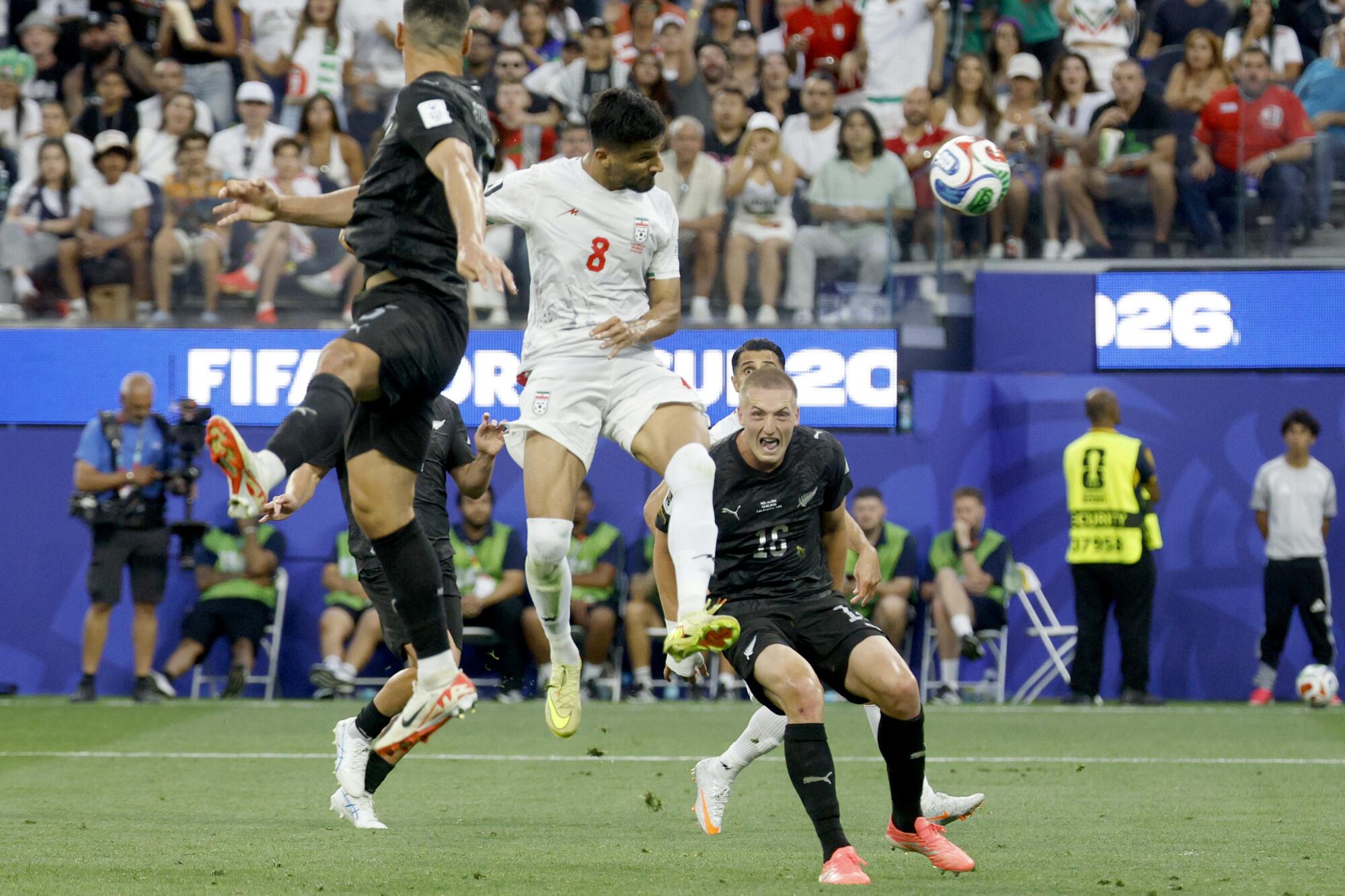
Iran forward Mohammad Mohebi (8) heads the ball for a goal during the second half against New Zealand in group play at the World Cup on Monday.
(Ronaldo Bolanos / Los Angeles Times)
With the focus shifted solely to soccer, Iran’s 2-2 draw with New Zealand in front of an announced crowd of 70,108 Monday night at SoFi Stadium may have felt like a victory because of the sheer fight it took for Team Melli to play in Inglewood.
After Belgium and Egypt tied 1-1 earlier Monday, all the teams in Group G are tied at one point apiece.
The All Whites showed no signs they were rattled by the pro-Iran crowd or their standing 65 slots behind Iran in FIFA world rankings.
Iran fell behind twice, but the team rallied to avoid plummeting to the bottom of its group.
A flurry of chances generated by both teams during stoppage time never translated into a winning goal.
New Zealand struck first.
New Zealand forward Elijah Just, right, celebrates after scoring his second goal against Iran on Monday.
(Robert Gauthier / Los Angeles Times)
Elijah Just rumbled toward the box and seemed to pinball around the Iranian defense. He passed to Sarpreet Singh, who chipped the ball to Chris Wood in the box. Wood then chested the ball back to Just, who took one touch before kicking the ball in for New Zealand’s first goal in the seventh minute.
A small but hearty contingent of New Zealand cheered.
After the hydration break, Iran’s Ramin Rezaeian pushed the ball into the box and tapped it to Saman Ghoddos. Shahriyar Moghanlou’s shot was blocked, but Rezaeian was in position to tap the deflection into the far lower left corner of the net in the 32nd minute.
The stadium roared as Mexico fans joined Iran fans cheering and waving flags.
1
2
3
4
1.Iran goalkeeper Alireza Beiranvand watches the ball go into the net after a goal by New Zealand forward Elijah Just in the first half.(Allen J. Schaben/Los Angeles Times)2.Iran defender Milad Mohammadi leaps over a New Zealand defender during the second half.(Kelvin Kuo / Los Angeles Times)3.New Zealand defender Finn Surman, top, goes after the ball in front of Iran forward Ali Alipour during the second half.(Allen J. Schaben / Los Angeles Times)4.Iranian soccer team fans show their support during the team’s 2-2 draw with New Zealand.(Kelvin Kuo / Los Angeles Times)
Both teams has chances to break the tie late in the first half.
New Zealand earned a free kick in the 45th minute just outside the box. Wood took a direct shot at the goal, but Iran goalkeeper Alireza Beiranvand gathered it with ease.
During first-half stoppage time, Rezaeian’s free kick was headed home by Ali Nemati, but Nemati was clearly offsides and the goal was waived off by the referees.
In the 54th minute, Iran turned the ball over and Just connected with Just for his second goal of the match.
Iran responded in the 64th minute with Rezaeian’s cross headed home by Mohammad Mohebi, tying the game and delighting fans.
Iran forward Mohammad Mohebi reacts after scoring against New Zealand in the second half Monday.
(Kelvin Kuo / Los Angeles Times)
Before the game, protesters outside SoFi Stadium argued Iran’s oppression regime should be sanctioned for human rights violations and banned from competition. Other Iranian Americans countered they gathered at the venue to cheer on players rather than Iran’s totalitarian leaders.
Iran captain and star striker Mehdi Taremi said before the game he hoped the team that has unified in the face of massive distractions could provide solace during a difficult time.
“We, the players of the national team, we play for every Iranian, be it the Iranian diaspora or be it Iranians in the country,” Taremi said through a FIFA interpreter. “Look, in every country, people have different opinions, but we are here as footballers to unite people, and we will try to bring joy to all Iranians, irrespective of where they live.
“Everyone is entitled to their own opinion, and we respect them, but we are here to bring joy to the Iranian people. We do not get involved in politics. We are here to play football.”
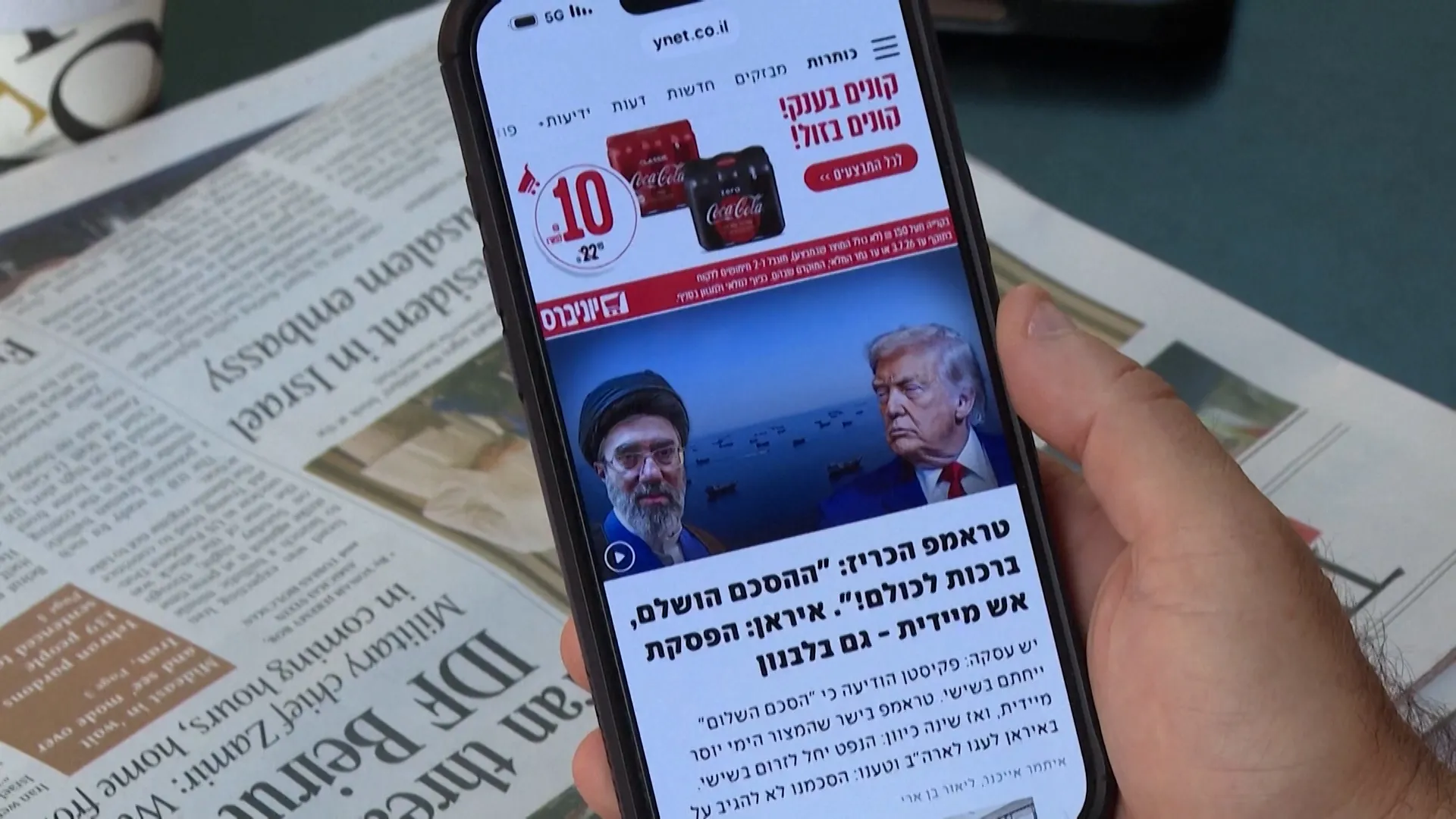
WASHINGTON — The terms of a deal to end President Trump’s war with Iran remained a secret on Monday as both sides claimed victory and the months-long conflict reached a nebulous end.
The memorandum of understanding, providing a rough framework to conclude the war, was signed digitally Sunday, with a ceremony scheduled to take place on Friday in Switzerland, U.S. officials said.
Trump hailed the document as a breakthrough after months of negotiations. Yet its broad contours remained unclear more than a day after the deal was announced, as each side offered conflicting public messaging about what had been agreed.
Iran said it would continue regulating traffic through the Strait of Hormuz, a strategic paradigm shift from the prewar status quo that was denied by the White House. The two sides expressed disagreement over whether the status of Iran’s ballistic missile program would be addressed in future negotiations, or whether Israel’s withdrawal from Lebanon was a part of the deal.
And Trump administration officials rejected Iranian claims that the United States would provide immediate sanctions relief as misleading “spin.”
Hours later, another U.S. official suggested that Iran, in fact, might receive some relief at the front end.
“We are prepared to release frozen funds, and we are prepared to release sanctions,” a senior U.S. official told reporters on a call. “And we’ll do some small gestures of that in the beginning, if they make some small gestures to us that show they’re willing to meet their commitments as well.
“We’ll know over the next two to three weeks whether those understandings will turn into actual agreement,” the official added.
Trump started the war in February citing Iran’s nuclear program, which had expanded after he withdrew from a prior nuclear agreement negotiated by President Obama. That deal capped more than two years of intensive diplomacy but ultimately failed under the weight of political criticism from Republicans — led by Trump — over its inclusion of sanctions relief for Tehran.
Trump administration officials said the new agreement would include a commitment from Iran not to develop or purchase nuclear weapons — a vow the Islamic Republic has repeatedly made through the Nuclear Non-Proliferation Treaty, the Obama-era deal and a religious edict from the late supreme leader. Yet the enforcement mechanisms for policing Iran’s nuclear work were left to negotiate another day.
Iran could get sanctions relief
In an interview with CBS News, Vice President JD Vance acknowledged that Iran could get significant sanctions relief — and up to $300 billion in reconstruction funds — if they abide by U.S. terms, such as the full reopening of the Strait of Hormuz, one of the world’s most important commercial waterways.
“Our expectation is that the strait is going to be opened in a toll-free way for the long term, and that’s the sort of thing that we’re going to figure out in these technical negotiations,” Vance said.
In a separate interview, he described the president’s policy as “extending an open hand” to Tehran.
“The hard-liners of the Iranian system will overemphasize the benefits that Iran gets,” he added, “while underemphasizing all the things that they have to concede, and all the things that they have to provide, in order to get these benefits.”
Uncertainty across the region
The news of peace came with a sense of bewilderment and uncertainty in a region that suffered as collateral damage through months of war.
Sunni Arab states that once hoped Iran would emerge weakened from the war issued tepid support for an agreement that could ultimately leave the fate of their oil exports at the whims of an emboldened adversary. And Israeli leaders, across the political aisle, expressed deep concerns over the deal in private, warning they would not be bound by an agreement to which they were not a party.
Israel’s decisions moving forward — particularly in Lebanon— may ultimately decide whether the agreement survives over the next 60 days, when Washington and Tehran plan on ironing out its more technical details.
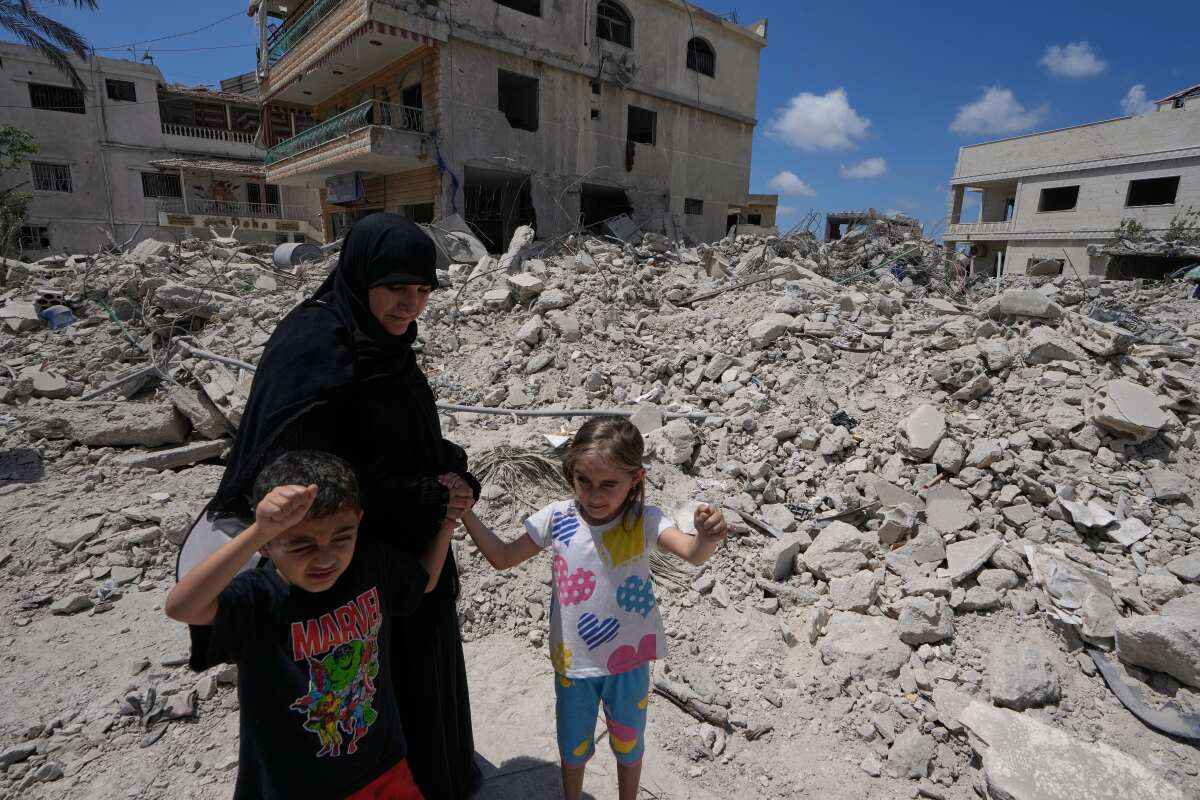
Hours after word of the signing came out, a stream of cars crowded the highway leading to southern Lebanon, full of displaced families desperate to check on homes and villages they hadn’t seen for more than 100 days.
They did so in defiance of Lebanese officials, who called on people to remain where they were until an official end to war in Lebanon — a secondary front in the larger U.S.-Israel war on Iran that has nevertheless seen staggering levels of destruction.
A woman and her children return to their Lebanese village Monday following the ceasefire announcement.
(Mohammed Zaatari / Ap Photo/mohammed Zaatari)
In the more than three months since the Lebanese Shiite group Hezbollah attacked Israel, nearly 3,800 people have been killed, and almost a quarter of the country’s 6 million people are displaced. Israeli troops occupy more than 10% of Lebanese territory, leaving a trail of destruction that has seen swaths of the country’s south all but razed.
‘Everything is gone’
None of that discouraged Hassan Shareef from leaving where he was staying in Beirut at 7 a.m. to head to Nabatieh, one of south Lebanon’s largest cities and a frequent target of Israeli strikes in recent weeks, to check on his tailoring business.
“I wasn’t afraid. I had to come. But what I saw would make you cry,” he said. “Everything is gone. My house, I can’t live in it. And the business is destroyed.”
Aqeel Khalaf, an herbalist, hit the road in the early morning with his brother, son and daughter-in-law. They reached Nabatieh in two hours.
Yet it was less of a homecoming than Khalaf hoped: Israeli troops were still stationed near his village, a few miles down the road from where he stood in Nabatieh’s central market. Their house was tantalizingly close, but for the moment it might as well have been on the moon.
“It’s hard for me, but the Lebanese army told us we can’t go yet. We have no choice,” Khalaf said. “Maybe in 24 hours, when things crystallize with the deal.”
He could at least check on his shop here in the central market, though he already knew there would be damage: The family regularly checked satellite images of the area and saw the building was hit about a week ago.
Standing before it, Khalaf saw how the wall of the adjacent building had toppled onto the ground floor, flooding the shop with rubble and coating everything with a film of fine gray dust. A nearby blast had collapsed the roof.
“Nabatieh was hit very hard this time,” he said. Still, he could salvage something, he said, pointing to his son as he fished out boxes of herbal treatments from under the rubble.
Two ceasefires in the last two months, forged during U.S.-led talks between the Lebanese and Israeli governments but without Hezbollah or Iran’s involved, were broken as soon as they were announced. A previous ceasefire from November 2024 saw Hezbollah stop all attacks while Israel continued military operations in south Lebanon.
This iteration of the truce appeared to have more success: On Monday, Hezbollah launched no missiles but announced an attack on an Israeli force to stop its advance; and the Israeli military mostly stayed its fire as well, barring a number of shelling incidents and a drone strike on a car in the village of Kfar Tebnit that injured a journalist and killed one person, according to Lebanese media.
Obstacles to a durable peace
Lebanese army units, meanwhile, deployed in parts of the south, barring motorists from reaching areas near Israeli troops. Lebanon’s army remained on the sidelines during the war, but 30 soldiers, including a general, having been killed in Israeli attacks since March 2. Hezbollah attacks killed at least 30 Israeli soldiers and one civilian contractor.
Obstacles to a more durable peace remain. Israeli officials insist on freedom of action against Hezbollah, and they will create a so-called security zone in Lebanon indefinitely so to protect Israel’s northern border. For its part, Hezbollah says it will respond to any attack and will continue fighting until Israel withdraws.
Though the truce appeared to be holding for now, Khalaf, who had raced to reopen his Nabatieh shop after the 2024 ceasefire, was waiting this time. For now, he would take what stock he could and open a shop in Sidon or Beirut.
“We have to work and feed our families. But the damage is too much this time. I’ll come back when things are better,” he said. “And my home too. When I get to see it, even if it’s a mound of rubble, I’ll pitch a tent on it and rebuild.”
Wilner reported from Washington and Bulos from Nabatieh.
The preliminary deal to end US-Israel war on Iran has sent oil prices tumbling to a three-month low amid hopes that the Strait of Hormuz will reopen.
But it could be months before American consumers see major relief at the petrol pump.
Recommended Stories
list of 3 itemsend of list
The closure of the strategic chokepoint disrupted global energy markets for more than three months, cutting off a major shipping route through which roughly one-fifth of the world’s oil and liquefied natural gas normally passes.
On Sunday, US President Donald Trump said prices would “drop like a rock” once the strait reopens, a claim he has made multiple times in the past few weeks.
However, experts caution that a major decline in prices is unlikely to happen as quickly as Trump suggests.
While Asian markets rely more heavily on oil shipped through the Strait of Hormuz than North American markets, tighter supply and steady demand have pushed prices higher worldwide.
On Monday, petrol prices in the US remained above $4 per gallon (3.78 litres), averaging $4.06 nationwide, according to the American Automobile Association (AAA). This was a dip from a high in early May of $4.48 per gallon.
By comparison, prices stood at $2.98 per gallon on February 28, when the US and Israel first struck Iran, triggering a ripple effect across global energy markets.
Energy prices have risen sharply in the US in recent months, increasing 7.7 percent over the last two months alone, and are up 40 percent from a year ago, according to last week’s inflation report from the Labor Department’s Bureau of Labor Statistics,
However, prices are beginning to fall, a dip that began as Washington and Tehran entered negotiations.
“The potential deal that the US and Iran agreed to over the weekend certainly could pave the way for even lower prices… in the next two to three days by what we saw over the weekend,” Patrick De Haan, head of petroleum analysis at GasBuddy, which tracks petrol prices, told Al Jazeera.
But De Haan expects a plateau and says that consumers may not see gas prices at pre-war levels until 2027, even if the ceasefire holds.
“It may take many months, if not beyond a year, for global oil inventories to recover to pre-war levels,” De Haan said.
Amid strains on the supply chain, producers will also need time to ramp up output, while port bottlenecks and heightened demand during the busy summer travel season could delay any substantial relief for everyday consumers.
“There are some mitigating factors that are going to slow the decline in prices. There are a lot of organisations and companies that have to re-up their stockpiles [like the US’s strategic petroleum reserve] and fulfil contracts that have been on hold for the last few months,” John Deal, managing director of capital markets at the Post Oak Group investment bank, said.
Supply chain strains
Fixing kinks in the supply chain takes time.
Oil production slumped amid the war. More than 14 million barrels per day, or 14 percent of the world’s demand, has been shut, according to the International Energy Agency.
Deal said it would take time to get oil production back online.
“My sense is that there’s going to be sustained high demand through the summertime, and we probably won’t get back to pre-war levels [on petrol prices] until after the summer, maybe September or October,” Deal said.
Mark Jones, a professor of political science at Rice University, said that producers might be reluctant to bring full operations back online until they can see the ceasefire hold.
The agreement opening the blockade is for a 60-day negotiation period between the two countries.
“Many [producers] may be reluctant to restart production until they are convinced that the peace will hold, because the last thing they want to do is carry out the costly effort to restart production only to see the conflict revived and then have to shut it down once again,” Jones told Al Jazeera.
Getting production back online is also dependent on the impact individual producers have faced throughout the war.
Refineries that were shut as a precaution could reach as much as 95 percent capacity within 40-60 days, Vitol Bahrain’s head of research, Bader Nooruddin, told the Reuters news agency. Those damaged in the fighting could take much longer.
But bottlenecks at ports could be the biggest hurdle, according to Deal.
“There’s a lag time with shipping capacity. Shipping capacity is perhaps the most significant constraint,” Deal said.
This is because there are more than 500 ships still awaiting passage, according to shipping data from Kpler.
With the ships headed all over the world, it will take them weeks to reach their destinations, dock, and unload at the ports.
That also means a wave of empty ships is waiting in limbo for spots at ports to load cargo and ramp back up to normal operations.
Major shipping giants are in a holding pattern.
Norway’s Wallenius Wilhelmsen and Denmark’s Maersk both told Reuters that they have not changed their Middle East operations in the wake of the announcement.
During the war, there was limited passage through the Strait of Hormuz, with an average of 10 ships a day passing through, compared with 135 that normally transit the waterway, according to an analysis by Bloomberg.
“Tankers take months to reach their final destination and then come back again. So the ability to replenish the stocks is going to take until, I think, the early fall, just from a shipping perspective, to get back to the status quo that was in place before the conflict started,” Jones said, referring to the preferred term for the months of September through November in North America.
At the same time, US strategic reserves are running low, at their lowest levels since 1983. Reserves have tumbled by 18 percent since the war began.
“Demand might keep prices high through the summer as strategic reserves get refilled,” Deal added.
Jet fuel demand will also put pressure on consumers amid the normally busy JuneAugust travel season in the US.
“The war has really affected airlines and their ability to schedule and anticipate how the summer months are going to go,” Deal added.
In April, United Airlines CEO Scott Kirby said that airfares for the carrier may have to jump as much as 20 percent on higher fuel prices.
Grocery woes
The increase in prices is also hitting food budgets.
The most recent consumer price index report showed US inflation ticked up by 4.2 percent compared with this time last year. While inflationary pressures were mostly driven by fuel prices, the impact has still been felt at the grocery store.
Almost half of the world’s urea, which is used in fertiliser, is produced in the Gulf region and passes through the Strait of Hormuz. For American farmers, that means access to fertilisers for the next crop season is more expensive.
Tomato prices, already driven up by Trump’s tariffs on Mexico, have surged 40 percent in the last year amid rising transportation costs.
Lettuce prices rose by more than 16 percent in May, and the price of ground beef increased by about 12 percent compared with this time last year.
Jones warned that food prices may not go down.
“Many retailers, wholesalers, and producers will keep them where they are or only reduce them if forced to from a sales perspective. Unlike petrol, which tends to ebb and flow with the price of oil, prices for many other goods that have been adversely affected by all of this are much less likely to return to where they were prior to the start of the conflict,” Jones said.
“For groceries, for manufacturing goods, for anything that has gone up during the conflict, the price that is there now often becomes the new baseline from which prices move in the future.”
This can be compared with the COVID-19 pandemic period. When the pandemic stalled supply chains, producers increased prices. A 2024 investigation by the Federal Trade Commission found that retail grocers kept prices elevated after supply chain constraints brought on by the pandemic had eased.
“Some in the grocery retail industry seem to have used rising costs as an opportunity to further raise prices to increase their profits,” the report said.
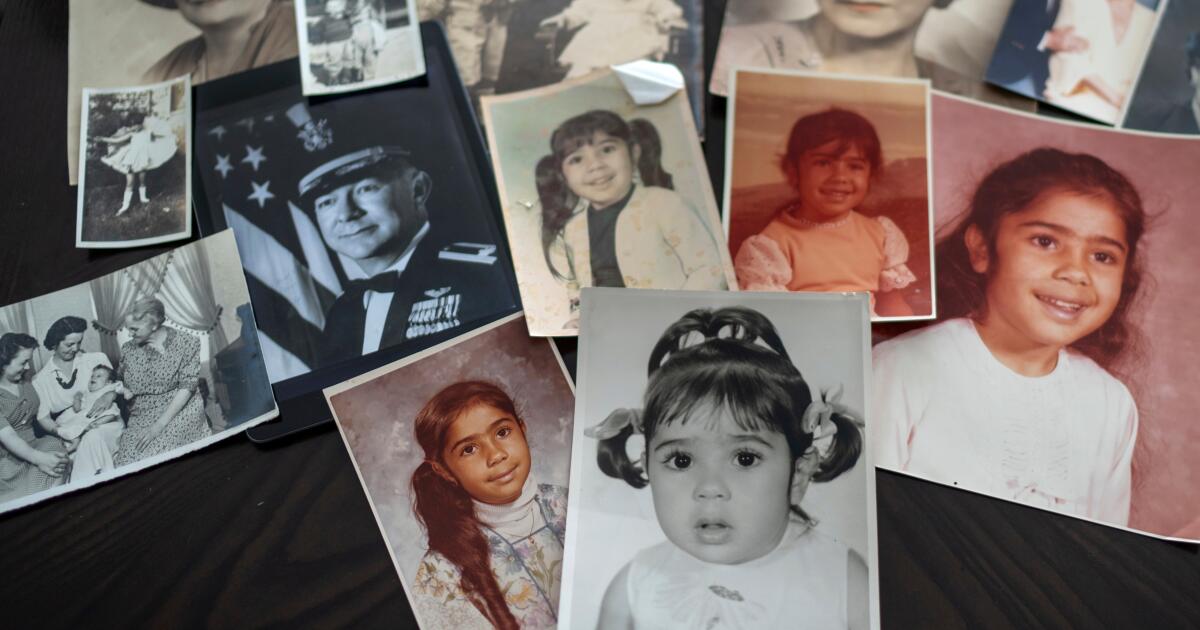
A federal immigration judge has granted asylum to a woman orphaned in Iran in the 1970s and adopted by an American war veteran, whom immigration officials threatened this year with deportation to the country with which the U.S. is now at war.
Judge Andrew Fishkin’s ruling probably ends a months-long ordeal for the California woman, one of thousands adopted from abroad who were never granted citizenship because of bureaucratic loopholes between adoption and immigration law.
The woman has lived in the United States since she was adopted by American parents as a toddler and has no criminal record. The Associated Press is not naming her because she worries her legal situation remains tenuous as the administration has time to appeal. A federal judge has allowed her to use a pseudonym, “Ms. S,” in her challenge to the government’s determination of her immigration status.
The woman received a letter from the Department of Homeland Security in February that ordered her to appear for removal proceedings, saying she is subject to deportation because she overstayed her visa in March 1974 at 4 years old.
The woman, 56, described what came next as a terrifying and humiliating few months.
She grew up in a Christian, military family on a farm in Wisconsin and was taught to be patriotic. But the documents she received from the government described her as an “alien;” some said she did not understand English, which is the only language she speaks.
Immigration officials told her she was being arrested, but was released and tracked with an ankle monitor. She bought new pants to try to hide it and taught herself not to cross her legs in work meetings, terrified it would threaten the corporate job in healthcare she’s held for almost two decades.
They fingerprinted her and took her DNA. She said she was obviously weeping in the mug shot they snapped of her.
She prepared herself to be detained: She put her bills on autopay and gave her friends a key to her home.
Her lawyer, Emily Howe, said the government had the power to agree she is an American citizen.
“Instead they treated her like a terrorist, like she was the worst of the worst criminals,” Howe said. “It felt very Big Brother, very Orwellian.”
The Department of Homeland Security declined to comment on the record on an individual case.
The Associated Press profiled the woman in 2024 as part of a story about how many international adoptees were left without citizenship because their American adoptive parents failed to naturalize them.
The woman’s parents were living in Iran, where her father was working for a U.S. government contractor, in the 1970s. He was retired from the Air Force as a lieutenant colonel. He’d been held for years a prisoner of war in Germany during World War II.
The couple found the toddler at an orphanage and returned to the U.S. with her in 1973 and soon completed the adoption. At that time, parents had to separately naturalize adopted children. The woman’s parents have since died.
She didn’t learn she hadn’t been naturalized until she applied for a passport at 38 years old. She still doesn’t know how the oversight happened. She searched her father’s papers and found a letter from a lawyer, dated 1975, that said he was working with immigration officials, “it appears this matter is concluded,” and billed her father for his services.
She filed a federal lawsuit this month trying to prohibit the government from removing her and forcing it to grant her citizenship.
She has long believed she should be considered a U.S. citizen: She has a Social Security card, and a driver’s license and has been legally allowed to work and pay taxes for decades. It’s only the immigration agency that denies she is a citizen. She suspects her paperwork was lost, probably when militants seized the U.S. Embassy in Tehran in 1979.
Fishkin seemed to agree: He wrote in his ruling that documents from that embassy are not available to her or to the U.S. government. He declared her a refugee, entitled to work in the U.S. His ruling puts the woman on a pathway to being recognized as a citizen.
She’d felt hopeful, she said, when she learned her court date before Fishkin was scheduled for her late father’s birthday. She always felt like she needed to protect not only herself but also her father’s legacy. He was a conscientious military official, she said, who would not have knowingly allowed such a glaring oversight that left his daughter in legal limbo.
The announcement of a preliminary US-Iran agreement has generated cautious optimism in Lebanon, where months of conflict have displaced large portions of the population and devastated communities across the south.
While the framework reportedly calls for the immediate cessation of military operations, Lebanese authorities are warning residents against assuming that conditions are safe enough for a rapid return.
The caution reflects uncertainty over how the agreement will be implemented and whether all parties will abide by its terms.
Adding to those concerns, Israel has made clear that it does not consider itself bound by the agreement and intends to maintain security zones in southern Lebanon.
Lebanon became one of the principal battlegrounds of the wider regional conflict after Hezbollah opened a front against Israel in support of Iran following the outbreak of hostilities.
The resulting escalation led to extensive Israeli military operations across southern Lebanon, causing widespread destruction and one of the largest displacement crises in the country’s recent history.
Entire communities were uprooted as residents fled bombardment and military activity.
Iran consistently pushed for any agreement with Washington to include provisions addressing Lebanon, viewing the conflict there as inseparable from broader regional tensions.
The inclusion of Lebanon in the framework agreement therefore represents a significant diplomatic concession and a central element of Tehran’s negotiating position.
Why This Matters
Lebanon has become one of the clearest examples of how regional conflicts can produce devastating humanitarian consequences.
The conflict has:
Displaced more than a million people.
Damaged homes, infrastructure, and businesses.
Increased pressure on Lebanon’s already fragile economy.
Deepened political and social instability.
A durable ceasefire could allow reconstruction efforts to begin and reduce the risk of further regional escalation.
However, the humanitarian benefits will depend on security conditions improving on the ground rather than merely on diplomatic declarations.
The Challenge of Returning Home
For displaced families, peace announcements do not automatically translate into confidence.
Many residents remain uncertain about:
Whether military operations have truly ended.
The presence of Israeli forces in southern areas.
The condition of homes and infrastructure.
Future security guarantees.
The hesitation expressed by displaced residents reflects a broader reality in conflict zones: trust often takes much longer to rebuild than physical infrastructure.
Even if active fighting stops, communities may remain reluctant to return until they believe the risk of renewed conflict has genuinely diminished.
Israel’s Position Complicates the Picture
A major obstacle to immediate normalization is Israel’s position.
Israeli officials have indicated they will continue maintaining security zones and reserve the right to conduct operations they deem necessary for national security.
This creates ambiguity regarding implementation of the broader agreement.
While the US-Iran framework may establish a diplomatic foundation for reducing violence, the practical situation on the ground will depend on decisions made by actors who were not direct participants in the negotiations.
This distinction could prove crucial in determining whether the agreement produces lasting stability.
A Test of Regional Diplomacy
The inclusion of Lebanon in the agreement demonstrates how interconnected Middle Eastern conflicts have become.
The war was never confined solely to the United States and Iran. It involved multiple regional actors, proxy groups, and overlapping security concerns.
As a result, success will be measured not only by whether Washington and Tehran uphold their commitments but also by whether the agreement influences behavior across the broader region.
Lebanon is likely to become one of the first and most visible tests of that process.
Key Stakeholders
Lebanon and its government institutions
Displaced Lebanese civilians
Israel and its military leadership
Hezbollah
Iran
The United States
Regional mediators including Pakistan
Humanitarian organizations operating in Lebanon
What to Watch Next
Whether military activity in southern Lebanon decreases in the coming days.
Israeli decisions regarding security zones.
Hezbollah’s official response to the agreement.
The pace of civilian returns to southern communities.
International support for reconstruction and humanitarian assistance.
Broader negotiations during the 60-day ceasefire period.
The agreement creates an opportunity for Lebanon to move toward greater stability after months of destruction and displacement.
If implemented successfully, reduced hostilities could pave the way for reconstruction, humanitarian relief, and the gradual return of displaced populations.
Yet significant uncertainty remains. Security concerns, damaged infrastructure, and competing interpretations of the agreement could slow progress and complicate efforts to restore normalcy.
For many Lebanese families, the end of active conflict would represent only the beginning of a much longer recovery process.
Analysis
The most revealing aspect of Lebanon’s reaction is the disconnect between diplomacy and reality.
International leaders may celebrate ceasefires and framework agreements, but people living through conflict judge peace by different standards. They look not at official statements but at troop movements, security conditions, and whether it is safe to return home.
That gap is already visible in southern Lebanon. While diplomats describe the agreement as a breakthrough, local authorities are warning residents against rushing back. Israel’s decision to maintain security zones further reinforces uncertainty about how quickly conditions can normalize.
This highlights a recurring challenge in conflict resolution. Agreements can stop wars on paper, but rebuilding trust often takes far longer than negotiating a ceasefire.
Lebanon’s experience may therefore become a key measure of whether the US-Iran agreement delivers meaningful change beyond diplomatic symbolism. If displaced communities can safely return, reconstruction begins, and violence declines, the agreement will gain credibility. If insecurity persists despite the deal, questions will quickly emerge about its effectiveness.
Ultimately, Lebanon represents the human dimension of the broader regional settlement. The success of the agreement will not be judged solely by geopolitical outcomes or energy markets but by whether ordinary people feel secure enough to rebuild their lives after months of war.
The preliminary memorandum represents the first formal framework outlining how Washington and Tehran intend to move from military confrontation toward diplomacy.
While many details remain unpublished, statements from U.S., Iranian and Pakistani officials provide a broad outline of the deal’s structure.
Rather than resolving every dispute immediately, the agreement establishes a phased process aimed at reducing tensions first and addressing more difficult issues later.
The approach reflects the reality that both sides were able to reach consensus on ending hostilities more easily than on the underlying disputes that fueled the conflict.
Phase One: Ending the Fighting
The first stage focuses on immediate de-escalation.
According to mediator Pakistan, both sides have agreed to permanently halt military operations across all fronts.
The formal memorandum is expected to be signed in Switzerland, after which implementation would begin.
The objective of this phase is straightforward: stop active hostilities, reduce the risk of escalation, and create space for broader negotiations.
This represents the most immediate achievement of the agreement and is likely the reason markets reacted positively.
Reopening the Strait of Hormuz
The reopening of the Strait of Hormuz is arguably the agreement’s most significant economic provision.
The waterway serves as one of the world’s most important energy transit routes and has been at the center of global concerns throughout the conflict.
Both sides indicate that commercial shipping will resume following the signing of the memorandum.
The restoration of maritime traffic could:
Increase global oil supply.
Reduce shipping disruptions.
Ease pressure on energy prices.
Lower inflation risks for major economies.
However, questions remain over how the route will be governed.
Iran has suggested it will coordinate management of traffic with Oman, potentially giving Tehran a more formal role in overseeing one of the world’s most strategically important waterways.
That issue could become a future source of diplomatic friction.
The Nuclear Issue Has Been Deferred
The most controversial subject in the negotiations remains unresolved.
Rather than settling the nuclear dispute immediately, both sides appear to have agreed to address it during a 60-day negotiation period.
According to Iranian officials, Tehran would freeze nuclear activities during that time by halting additional enrichment and refraining from expanding facilities.
The long-term future of Iran’s nuclear infrastructure remains unclear.
Washington continues to emphasize inspections and preventing Iran from acquiring a nuclear weapon.
Tehran continues to insist that its nuclear program is peaceful and seeks recognition of its right to maintain civilian nuclear activities.
These competing positions are likely to dominate the next phase of talks.
Sanctions Relief Could Shape the Success of the Deal
Economic issues may ultimately prove as difficult as nuclear negotiations.
Iran expects meaningful sanctions relief as part of any final settlement.
Iranian officials have spoken about:
Temporary waivers on oil sanctions.
The release of frozen assets.
Financial support mechanisms.
A pathway toward lifting U.S. and international sanctions.
The Trump administration has signaled a more cautious approach.
Washington has indicated that sanctions relief will depend on Iranian compliance and future negotiations rather than automatic implementation.
This difference highlights one of the central tensions in the agreement: each side expects benefits on different timelines.
Lebanon Remains a Flashpoint
The agreement’s treatment of Lebanon illustrates how regional conflicts have become intertwined.
Iran views a ceasefire in Lebanon as a critical component of the broader settlement.
Lebanese political leaders have welcomed the inclusion of Lebanon in the framework.
Israel, however, has made clear that it does not consider itself bound by all aspects of the agreement and intends to maintain military positions in areas it views as strategically important.
This creates uncertainty about whether the Lebanon component can be implemented as envisioned.
The issue could quickly become one of the first tests of the agreement’s durability.
Why This Matters
The memorandum matters because it shifts the conflict from the battlefield to the negotiating table.
The agreement addresses several immediate concerns:
Rising energy prices.
Shipping disruptions.
Escalating regional instability.
Growing economic uncertainty.
At the same time, it leaves the most difficult questions unresolved.
This means the framework should be viewed as the beginning of a diplomatic process rather than its conclusion.
Its success will depend on whether negotiators can transform temporary understandings into binding commitments.
Key Stakeholders
United States
Iran
Pakistan (mediator)
Israel
Lebanon
Oman
European powers
Gulf Arab states
International energy markets
Global shipping industry
International Atomic Energy Agency (IAEA) and nuclear inspectors
What to Watch Next
Formal signing of the memorandum in Switzerland.
Reopening of the Strait of Hormuz.
Progress during the 60-day negotiation period.
Discussions on Iran’s nuclear program.
Decisions regarding sanctions relief.
Reactions from Congress and international partners.
Israeli actions in Lebanon and other contested areas.
The memorandum creates a framework for de-escalation, but its long-term success remains uncertain.
If implemented effectively, the agreement could stabilize energy markets, reduce regional tensions, and create momentum for broader diplomatic engagement.
However, many of the issues that triggered the conflict remain unresolved.
Nuclear enrichment, sanctions, regional security arrangements, and competing strategic interests are all likely to generate difficult negotiations.
The coming 60 days will therefore be more important than the announcement itself.
They will determine whether the framework becomes a durable peace process or merely a temporary pause in a conflict whose underlying disputes remain intact.
Analysis
The structure of the agreement reveals a pragmatic calculation by both Washington and Tehran.
Rather than attempting to solve every dispute at once, negotiators prioritized issues where agreement was achievable: ending active hostilities, reopening shipping routes, and creating a mechanism for future talks.
This approach reflects the political realities facing both governments.
For President Trump, reducing energy prices and ending a costly conflict addresses growing domestic pressure. For Iran, halting military operations while preserving room to negotiate on sanctions and nuclear issues offers a path to economic relief without immediate capitulation.
Yet the framework’s greatest strength may also be its greatest weakness.
By postponing the hardest questions, the agreement creates momentum for diplomacy but also leaves significant room for disagreement later. Nuclear enrichment, sanctions relief, and regional security arrangements are not peripheral issues—they are the core disputes that drove the conflict.
As a result, the memorandum should be viewed less as a peace treaty and more as a diplomatic bridge. It lowers immediate risks and creates opportunities for negotiation, but it does not yet resolve the strategic rivalry between the United States and Iran.
Whether this becomes a historic breakthrough or a temporary truce will depend on what happens after the signatures are placed on the document. The real negotiations are only beginning.
Governments across the world have welcomed the tentative deal between the US and Iran to end the war, calling it a major diplomatic breakthrough. But Israeli politicians have been quick to criticise it, claiming it would undermine Israel’s security.
Israeli journalist Gideon Levy says the US-Iran announcement represents a personal defeat for Prime Minister Benjamin Netanyahu and his ambitions against Iran and Lebanon. His relationship with US President Donald Trump could also be at risk if Israel jeopardises the deal.
The World Cup group stage continues on Monday, with four more matches taking place across the United States.
Spain begin their campaign against World Cup newcomers Cape Verde, Belgium face Egypt in what could be one of the day’s closest games, Saudi Arabia take on Uruguay in Miami, and Iran meet New Zealand in Los Angeles.
Recommended Stories
list of 4 itemsend of list
Away from the football, Uruguay’s disrupted travel plans, divisions within Los Angeles’s Iranian American community before Iran’s opener, and Haiti’s inspiring return to the World Cup are all drawing attention beyond the pitch.
Belgium face Egypt at Seattle Stadium in Seattle at the same time, with the Group G rivals also getting under way at 12pm local time (19:00 GMT).
Later, Saudi Arabia meet Uruguay at Miami Stadium in Miami Gardens, Florida. That match starts at 6pm local time (22:00 GMT).
The day’s final fixture sees Iran face New Zealand at Los Angeles Stadium in Inglewood, California. Kickoff is at 6pm local time (01:00 GMT on June 16).
What do the predictions say for Spain vs Cape Verde?
Spain are the clear favourites to win, but Cape Verde have already made history by reaching the World Cup for the first time.
The teams have never played each other. Spain’s last two World Cup matches against African opponents came against Morocco, drawing 2-2 in 2018 before losing on penalties after a 0-0 draw in the 2022 quarterfinals.
Opta’s predictions strongly favour Spain. After running 25,000 simulations, the statistics company gave Spain an 87.2 percent chance of winning the Group H opener. A draw was predicted in 8.1 percent of the outcomes, while Cape Verde were given a 4.8 percent chance of causing an upset.
Only one African team has ever beaten Spain at a World Cup: Nigeria, who won 3-2 in the group stage in 1998.
Spain vs Cape Verde
What do the predictions say for Belgium vs Egypt?
This one could be much closer than many people expect.
Opta’s predictions suggest there is very little separating the sides. In 25,000 match simulations, Belgium won 37.2 percent of the time, while Egypt came out on top in 35.5 percent. A draw happened in 27.3 percent of the simulations.
Belgium are slight favourites. It could end up being one of the closest games of the day, with a single goal potentially making the difference.
Belgium face pressure to avoid repeating their performance in 2022 in Qatar, when they did not advance beyond the group stage. The Belgians finished third in 2018 in Russia.
Belgium vs Egypt – World Cup
What do the predictions say for Saudi Arabia vs Uruguay?
Saudi Arabia and Uruguay have met only once before at a World Cup. Uruguay won that match 1-0 in 2018.
The teams have also faced each other in a friendly match. That game, played in Saudi Arabia in 2014, ended in a 1-1 draw.
The predictions favour Uruguay. In 25,000 simulations run by Opta, Uruguay won 64.7 percent of the time. Saudi Arabia won 13.9 percent of the simulations, while 21.4 percent ended in a draw.
Saudi Arabia vs Uruguay – World Cup
What do the predictions say for Iran vs New Zealand?
Iran and New Zealand have only played each other twice before, and this will be their first meeting in a competitive match.
Their first game ended in a 0-0 draw in New Zealand in 1973. Thirty years later, Iran won 3-0 in Tehran, with Ali Karimi scoring twice before Hossein Kaebi added a third goal.
The predictions give Iran the edge. In 25,000 simulations run by Opta, Iran won 53.8 percent of the time. New Zealand won 20.4 percent of the simulations, while 25.8 percent ended in a draw.
Iran vs New Zealand – World Cup
What else is shaping the World Cup?
Uruguay’s travel plans hit by delays before World Cup opener
Uruguay’s preparations for their World Cup opener have been disrupted after travel problems delayed the team’s arrival in the US.
The squad had been due to fly from Cancun, Mexico, before Monday’s Group D match against Saudi Arabia in Miami. However, reports in Uruguay said the charter flight was not cleared to enter the US, forcing the team to make alternative arrangements.
The Uruguayan Football Association (AUF) said the delay was outside its control. A replacement plane was eventually organised, with the team expected to reach South Florida only about a day before kickoff.
“Due to problems beyond the control of the AUF, the departure from Mexico has been delayed,” the association said in a statement. “The squad is resting at the hotel. The new departure time set by FIFA is 4:15pm [21:15 GMT].”
Japan fans continue World Cup cleanup tradition after Netherlands draw
The blue bags Japanese fans waved while celebrating their team’s goals, and then stayed behind for something else after the match ended.
Following Japan’s 2-2 draw with the Netherlands, supporters stayed behind to collect rubbish from the stands before leaving the stadium, continuing a tradition that has become a familiar part of the World Cup.
The cleanup effort first caught global attention at the 1998 tournament in France, and Japanese fans have kept it going at every World Cup since.
Iranian Americans divided over Team Melli
As Iran prepare to begin their World Cup campaign in Los Angeles, members of the Iranian American community in Westwood, or “Tehrangeles”, remain split over how to respond.
While some opposition activists plan protests against the team, others are setting politics aside to support the football. Business owner Roozbeh Farahanipour told Al Jazeera’s reporter Ali Harb that “the community is divided” and there is no consensus on whether to boo the national team or back the US-Israel war against Iran.
Trudeau defends attending US match instead of Canada’s opener
Former Canadian Prime Minister Justin Trudeau attended the US World Cup opener against Paraguay in California instead of Canada’s game against Bosnia and Herzegovina in Toronto.
Trudeau said he chose to be at the game in Inglewood because his girlfriend, singer Katy Perry, was performing in the pre-match show at SoFi Stadium.
“Sometimes supportive boyfriend duties call. But you know who I’m rooting for to take the Cup,” he wrote on X.
Canada’s opener in Toronto and the US match in Los Angeles were played just hours apart, prompting some fans to question why the former prime minister was not supporting the home team.
Trudeau served as Canada’s prime minister from 2015 to 2025.
After returning to the World Cup for the first time since 1974, Haiti’s campaign has given people a rare reason to celebrate.
For Olivier Woodensky Pierre, the World Cup is a dream come true. He is the only player in Haiti’s squad who still lives in the country. Born in Cite Soleil, one of the poorest areas in the capital, Port-au-Prince, Pierre hopes the team’s achievement will inspire young people back home.
“Every player always wishes to play in the World Cup. That was my dream. That’s why I’m fighting to be here. I got the chance to be selected to play in the World Cup. I am advising the youth not to be discouraged. Keep fighting, work, and be disciplined,” Pierre told Al Jazeera’s Teresa Bo.
Haiti’s qualification has brought a sense of hope to a country going through one of the most difficult periods in its recent history. Gangs control large parts of the capital, violence has displaced hundreds of thousands of people, and many Haitians have taken to the streets to demand peace while also celebrating the team’s return to football’s biggest stage.
The journey to the World Cup was far from straightforward. Because of the ongoing political crisis, Haiti had to play its home qualifiers abroad. There was also a lack of funding.
“It was really difficult before because there were no sponsors to finance the team. You know, since we qualified for the World Cup, FIFA provided money for preparation, and the government provided $4m that were crucial to help us prepare,” Thecieux Jeanty of the Haitian Football Federation told Al Jazeera.
Pastor Winston Noel also voiced disappointment over US visa restrictions affecting Haitians.
“FIFA must talk to the Trump administration to tell them that this cannot be the case because it is the World Cup. All countries that qualify must have their fans to come and support their teams,” he said.
“The World Cup is something special for us Haitians. Many children here in Haiti will participate in the World Cup, even though this generation doesn’t know the names of all the players. But we are very happy because it’s a great achievement for us,” Noel said.
Haiti eventually opened their World Cup campaign with a 2-0 defeat to Scotland, but for many supporters the tournament is about more than results. It remains a rare moment of pride, unity and hope for a country that has endured years of hardship.
Crude prices retreated on Monday as US President Donald Trump confirmed a peace agreement with Iran and both sides announced a lifting of their respective blockades of the Strait of Hormuz.
ADVERTISEMENT
ADVERTISEMENT
At the time of writing, the front month contract on US West Texas Intermediate (WTI) crude was down almost 6% from Friday’s close to roughly $80 per barrel, while Brent crude, the international standard, dropped around 5% to about $83 per barrel.
The specific concessions made by each side are still unclear and there are questions surrounding whether the Prime Minister of Israel will respect the withdrawal of troops from southern Lebanon, which, according to the Prime Minister of Pakistan is included in the deal.
Benjamin Netanyahu has yet to publicly address the US-Iran deal, or the issue of Lebanon, and CNN has reported that the Prime Minister of Israel is seeking an urgent meeting with US President Donald Trump after this week’s G7 summit.
Nonetheless, markets are reacting swiftly to the prospect of the Strait of Hormuz slowly reopening and the potential that the Iran war is closer to ending than reigniting.
The freshly announced peace deal is currently expected to be signed on Friday.
European, Asian and US markets
At the open, European markets also rose on the news that there is meaningful progress in ending the Iran war.
Both the Euro Stoxx 50 and the broader pan-European Stoxx 600 traded over 1% higher at the start of Monday’s session.
The UK’s FTSE 100, Germany’s DAX 30, Italy’s FTSE MIB, Spain’s IBEX 35, the Netherlands’ AEX and Switzerland’s CH20, all traded between 0.5% and 1% higher than their Friday close.
France’s CAC 40 led the pack and rose almost 1.5%.
In the US, S&P500 futures traded over 2% higher and the teach-heavy Nasdaq 100 rose more than 3%.
In other trade dealings on Monday, Asia-Pacific markets jumped overnight with South Korea’s Kospi climbing over 5%, recovering from a 4% drop on Friday, while Japan’s Nikkei 225 also traded roughly 3% higher.
Australia’s S&P/ASX 200 rose 0.8%, while Hong Kong’s Hang Seng Index jumped about 0.5% and Shangai’s SSE climbed over 1.5%.
US President Donald Trump and Iranian leaders say a deal has been agreed to end more than 100 days of war that killed thousands.
By Agence France Presse and Reuters
Published On 15 Jun 202615 Jun 2026
United States President Donald Trump and Iran’s Deputy Foreign Minister Kazem Gharibabadi said on Sunday that they had reached an initial deal to end the war and to resume traffic through the Strait of Hormuz.
Trump said the deal allows for toll-free shipping through the Strait of Hormuz, which has been largely closed since the US and Israel launched an assault on Iran on February 28.
“The Deal with the Islamic Republic of Iran is now complete,” Trump wrote on Truth Social on Sunday.
The US and Iran will sign a memorandum of understanding in Switzerland on Friday, said the prime minister of Pakistan, whose country has served as a mediator.
Monday marks 108 days since the war began, with the US and Israel’s attacks on Iran. Here is what’s happening:
What we know about the deal
The content of the agreement, which follows weeks of fraught negotiations and periodic threats from Trump of new hostilities unless Iran reaches a deal, remained unclear.
Strait of Hormuz to reopen: Iran’s semi-official Mehr news agency said the draft deal called for reopening the Strait of Hormuz within 30 days under Iranian arrangements. Trump, who turned 80 on Sunday, said the deal allows for toll-free shipping through the Strait of Hormuz, which has been largely closed since the US and Israel launched an assault on Iran on December 28.
Frozen assets to be released: Iran’s Mehr news agency reported that the US would release $12bn in frozen assets to Iran before the start of negotiations.
Iran’s enriched uranium: In an interview with The New York Times on Sunday, Trump said Washington was still negotiating whether Iran would suspend its enrichment for 20 years. Trump hinted that he might settle for a 15-year suspension, but said he did not want to negotiate via the press.
Israel has not commented: There has been no official comment from Israel about the peace agreement.
In Iran
The secretariat of Iran’s Supreme National Security Council said on Monday that the deal with the US includes the immediate suspension of hostilities on all fronts. “Based on the agreements reached, the war and military operations on all fronts, including Lebanon, will end immediately and permanently as of tonight, and in addition, the naval blockade against Iran will end immediately and completely,” it said in a statement.
In the US
Democrats slam Trump over war: While Democratic lawmakers welcomed the deal, they criticised the Trump administration’s decisions pertaining to the war. Senator Chris Coons of Delaware said that while the deal moves the situation in the “right direction”, several questions remain. He warned that competing interpretations of what was agreed upon could pose risks. Senator Chris Murphy, who serves on the Senate Foreign Relations Committee, said the deal is a “surrender to Iran” but that the US should be “glad about it because every day this insane, illegal war continues, we get weaker”.
In Lebanon
Trump rebukes Israeli attack on Beirut: On Sunday, shortly before the deal was announced by Trump, Israel launched an air attack on Beirut. Trump angrily blamed Israel for delaying the deal’s signing after launching this attack. In an expletive-laden phone interview with US news outlet Axios, Trump fumed about Israeli Prime Minister Benjamin Netanyahu, saying: “I was so pissed off. I let him know.”
Global response
Western leaders praise deal: UK Prime Minister Keir Starmer said he was ready to aid the further technical talks between the US and Iran, adding that he hopes the reopening of the Strait of Hormuz will stabilise energy markets.
French President Emmanuel Macron also praised the deal and said Paris would support the Lebanese government.
European Union chief Antonio Costa welcomed a deal between the US and Iran to end the Middle East war, adding that the bloc was ready to contribute to a strategy for “lasting peace”.
UN Secretary-General Antonio Guterres said it was a “critical step” towards resolving the war in the Middle East.
Global economy
Oil prices drop: Oil prices slipped to their lowest since March on Monday, with global benchmark Brent crude futures falling $4.08, or 4.7 percent, to $83.25 a barrel by 04:15 GMT. US West Texas Intermediate was at $80.53, down $4.35, or 5.1 percent. Both contracts fell to their lowest levels since March 10 on Monday after tumbling more than 3 percent on Friday.
Asian markets soar: Markets in Japan soared, more than 5 percent up; in South Korea, they were up 5.3 percent; in Taiwan, they were up 2.4 percent. In Shanghai, they were up 1.3 percent; and in Hong Kong, they were up half a percent; while in Indonesia, they were up 2.07 percent; and in the Philippines, they were up 5.2 percent.
The US and Iran say they have reached a deal to end fighting on all fronts and open the Strait of Hormuz. Al Jazeera’s Osama Bin Javaid explains how both sides are claiming victory, even as tough negotiations over the details still lie ahead.
Behind a veil of good-natured diplomacy, American adversaries are exploiting the conflict in Iran by gaining insights, strategic lessons, and geopolitical power while the United States wages feckless war against the Middle Eastern theocracy. Beyond the bombings, the blockade, and the oil prices, Russia and China keenly watch how America struggles, succeeds, and scrambles. In doing so, these adversaries are leveraging the conflict to challenge America’s readiness, aid its adversaries, and gain invaluable intel on America’s successes and failures.
The concept of observing a conflict to acquire critical intelligence on how to best conduct combat is not unique to the war in Iran. For example, in the Russo-Ukrainian War, America has gained indispensable knowledge on the most and least effective tools of 21st-century warfare, including information on the power of unmanned aerial systems. With the war in Iran, though, Russia and China are the scientists, and America is the experiment. The Middle East is now a testing ground for cutting-edge drone swarm technologies and a catalyst for how smaller powers can effectively deny their adversaries from accomplishing their objectives—a lesson that China is certainly eager to learn about for a possible conflict over Taiwan. Therefore, when America wages war against Iran, there are consequences that are crucial to recognize, and one of those consequences is that the United States is inadvertently empowering and informing its adversaries.
Maintaining its signaled commitment of multipolarity and geopolitical neutrality, China’s Foreign Ministry spokeswoman Mao Ning commented, “…China…has been making active efforts to promote ceasefire and peace…we will continue playing an active role in restoring…tranquility to the Middle East…” Reality demonstrates that this is false. China is discreetly gaining intelligence on the U.S. military’s readiness, pacing, and warfighting strategies. Furthermore, China has directly supported Iran, providing anti-missile weaponry, building blocks for ballistic missiles, and invaluable military intelligence to the Iranian Revolutionary Guard Corps. Instead of promoting peace and tranquility, these actions are designed to empower Iran and keep America locked in the struggle, weakening the country and allowing China to acquire more intelligence on U.S. readiness. Despite China’s claimed intentions, it’s clear that the nation is bolstering Iran’s strength and sustaining its defenses. Even from a domestic point of view, these actions are increasing domestic American division and the depletion of America’s defense resources. The conflict with Iran is not limited to Iran; by proxy, it’s with America’s foremost adversaries, too.
Similarly, Russia has provided critical support to Iran in the form of targeting intelligence, which Iran couldn’t have otherwise acquired. Shahed drones, assets that have proven to be exceptionally effective against western defenses, are manufactured in Russia’s Alabuga Special Economic Zone and are being provided to Iran by Russia. Contradicting these actions, a statement by the Russian Ministry of Foreign Affairs declared that the country “…stands ready to assist in advancing peaceful solutions grounded in international law, mutual respect, and a balanced consideration of interests.” But equipping Iran with efficacious tools of war is not a peaceful solution. Giving the nation targeting information cannot be construed as a neutral or geopolitically insignificant act. In reality, America’s adversaries are taking an active, hands-on approach to the war in Iran, indirectly but clearly aiding the nation and actively working against U.S. goals.
In response to this tacit yet significant aid to Iran, the natural response for America should be to publicly highlight the hostile actions of its adversaries. But the United States has been hesitant, if not downright unwilling, to do so. For example, Matthew Whitaker, the U.S. Permanent Representative to NATO, commented that “China certainly is not participating and is not aiding and abetting the Iranian demise…” Separately, he claimed, “There’s no indication that we can talk about publicly that the Russians are participating with the Iranians.” Public investigations, though, have proven both those assertions false. The trepidation of the United States to clearly and confidently condemn its adversaries’ belligerence in the region is an enormous blunder of strategic communications. Contrasting this, Russia and China have simultaneously and aggressively pursued campaigns of condemnation to weaken America’s global power. For example, Russia has often claimed that certain U.S. support to Ukraine may constitute an act of war; China strongly condemned recent American intervention in Venezuela as violating the international laws by which America claims to be guided. U.S. adversaries are eager and willing to strategically undermine and criticize U.S. actions, yet America is unwisely unwilling to do the same.
Russia’s and China’s cooperative aid to Iran demonstrates that the conflict is, in many senses, between world powers. A new ‘axis of resistance’ against Western liberalism is developing, and allowing American adversaries to act without denunciation is a failure of strategic communications and allows these nations to act with undeserved impunity. As the United States continues to wage war against Iran, it’s crucial to recognize that every bomb America drops, every mission American soldiers complete, and every destroyed military asset is a datapoint that U.S. adversaries will exploit. Russia’s and China’s critical support to Iran is hostile and counter to American goals; ignoring this is strategically imprudent. Beyond the explosions, America’s adversaries are watching—and acting. It’s the responsibility of the United States to expose those actions for what they really are.
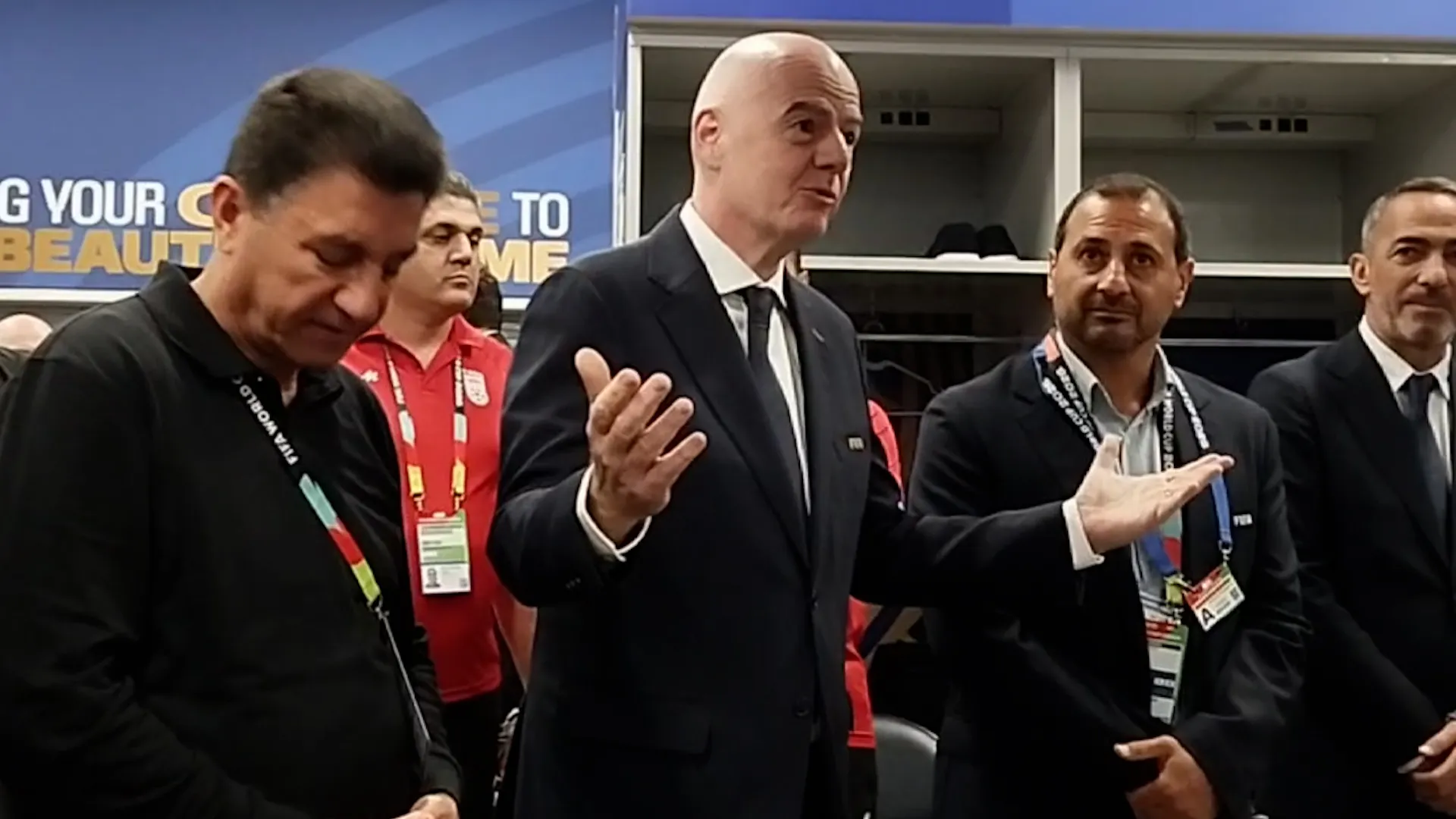
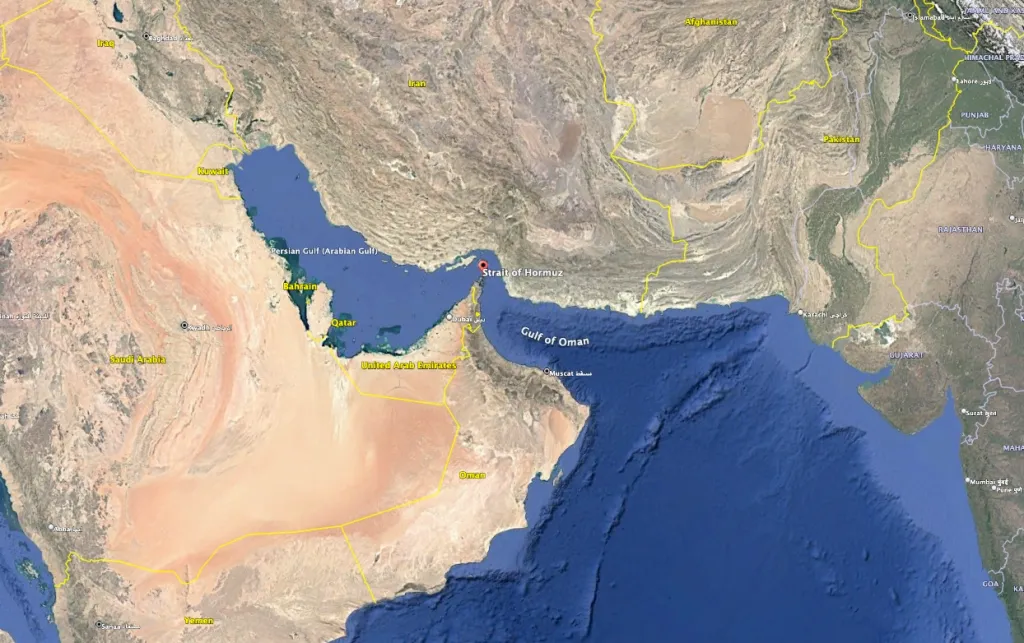

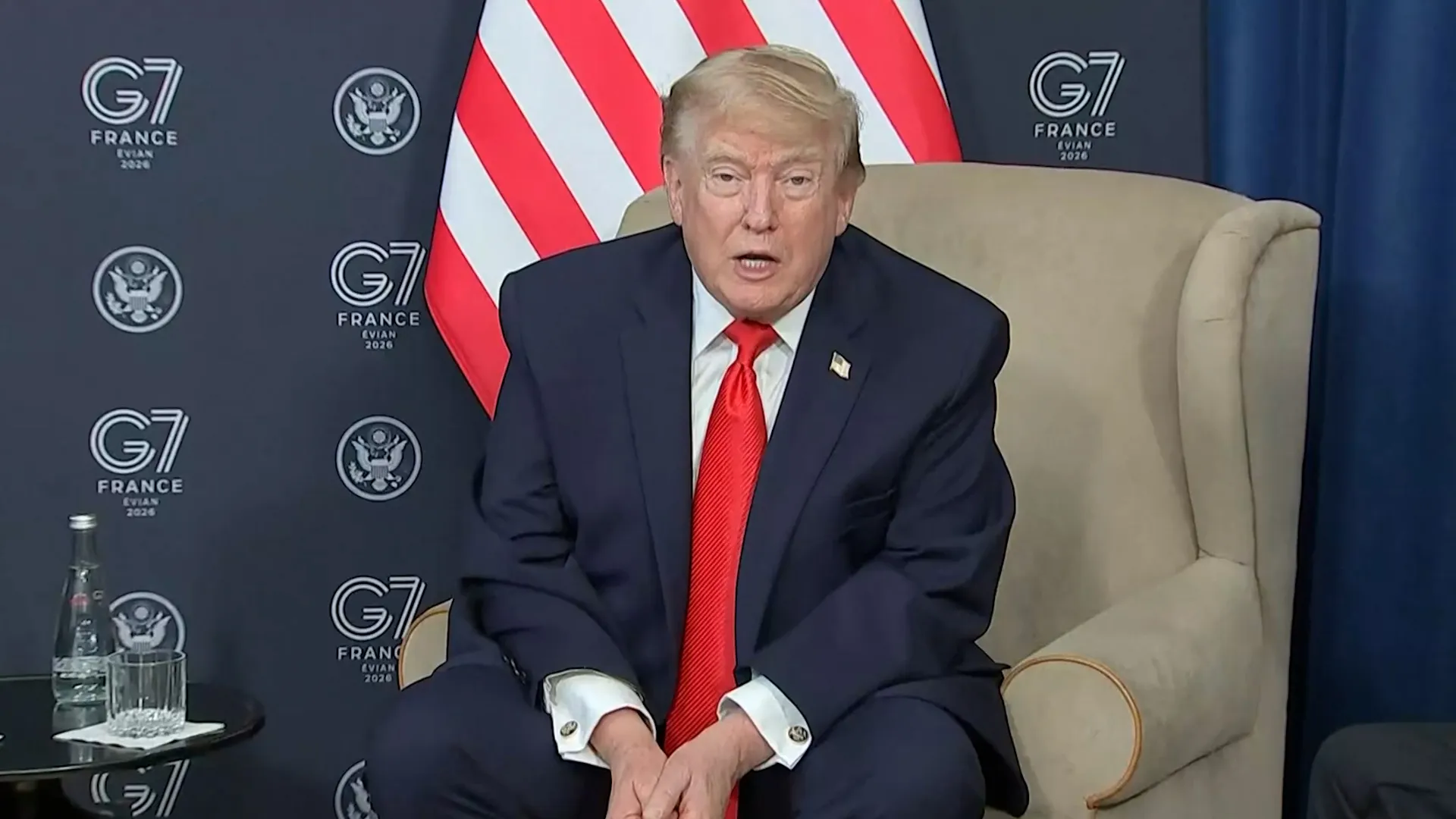
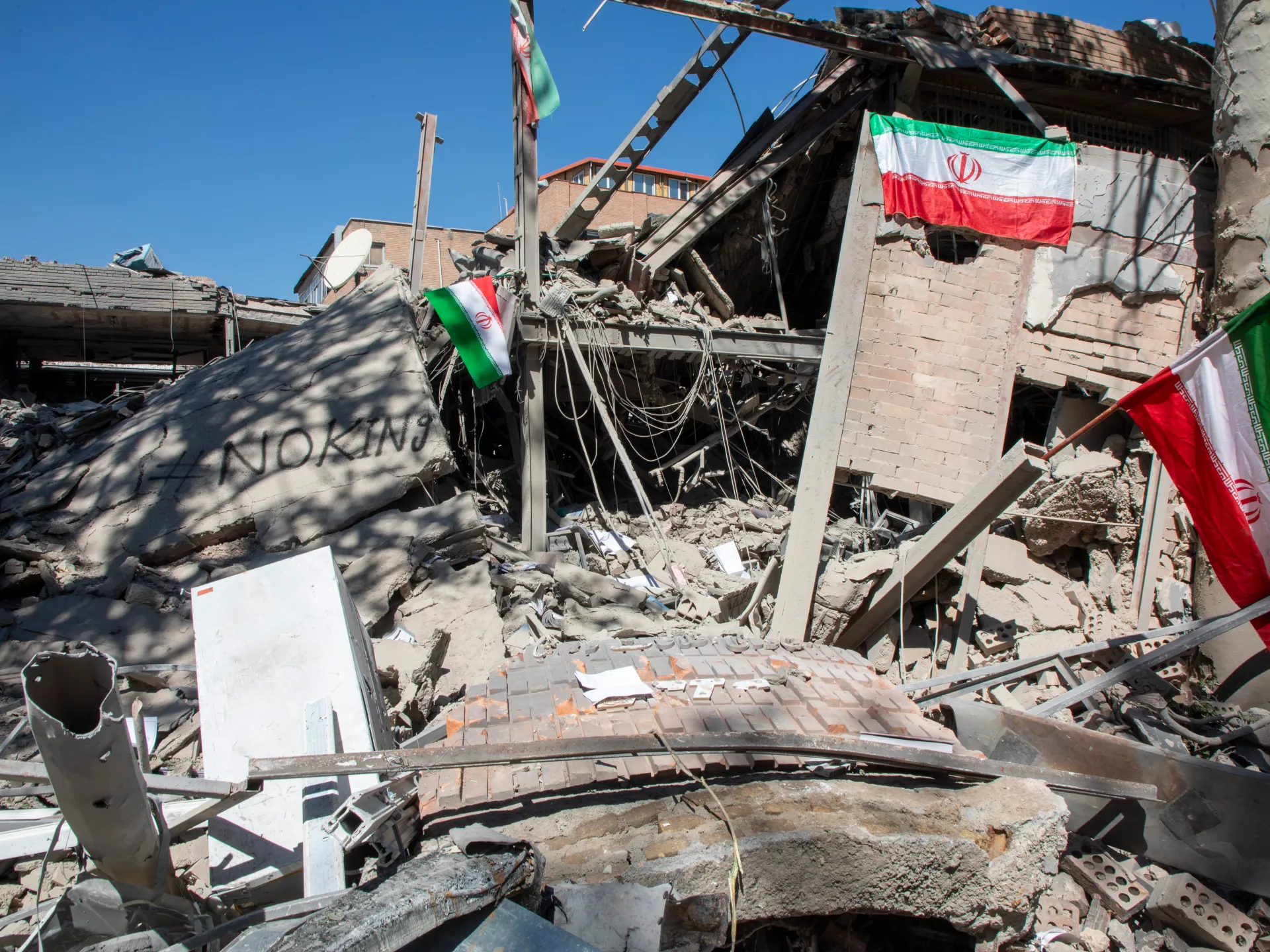
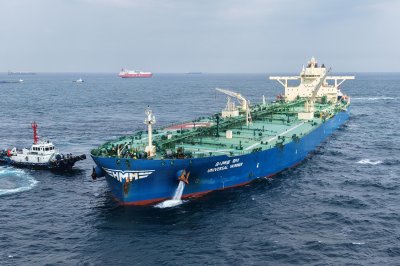

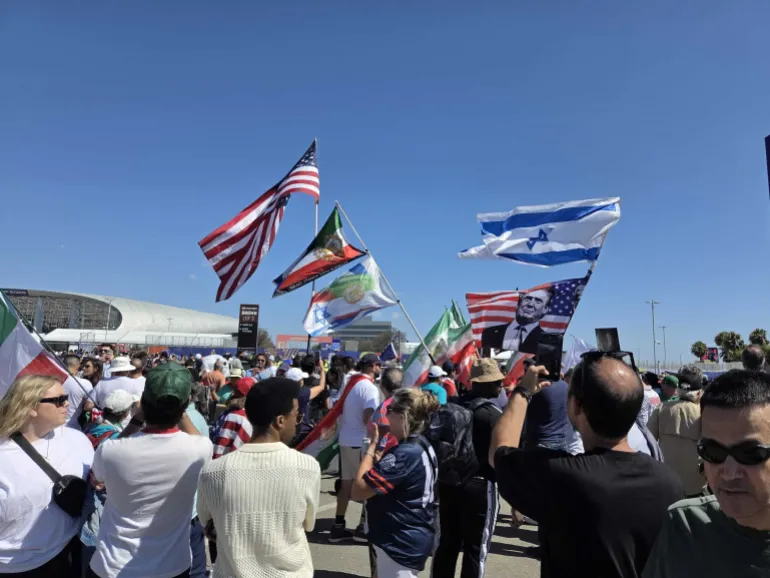
![Protesters outside the Los Angeles Stadium [Ali Harb/Al Jazeera]](https://i0.wp.com/occasionaldigest.com/wp-content/uploads/2026/06/1000180724-1781564207.jpg?w=640&ssl=1)