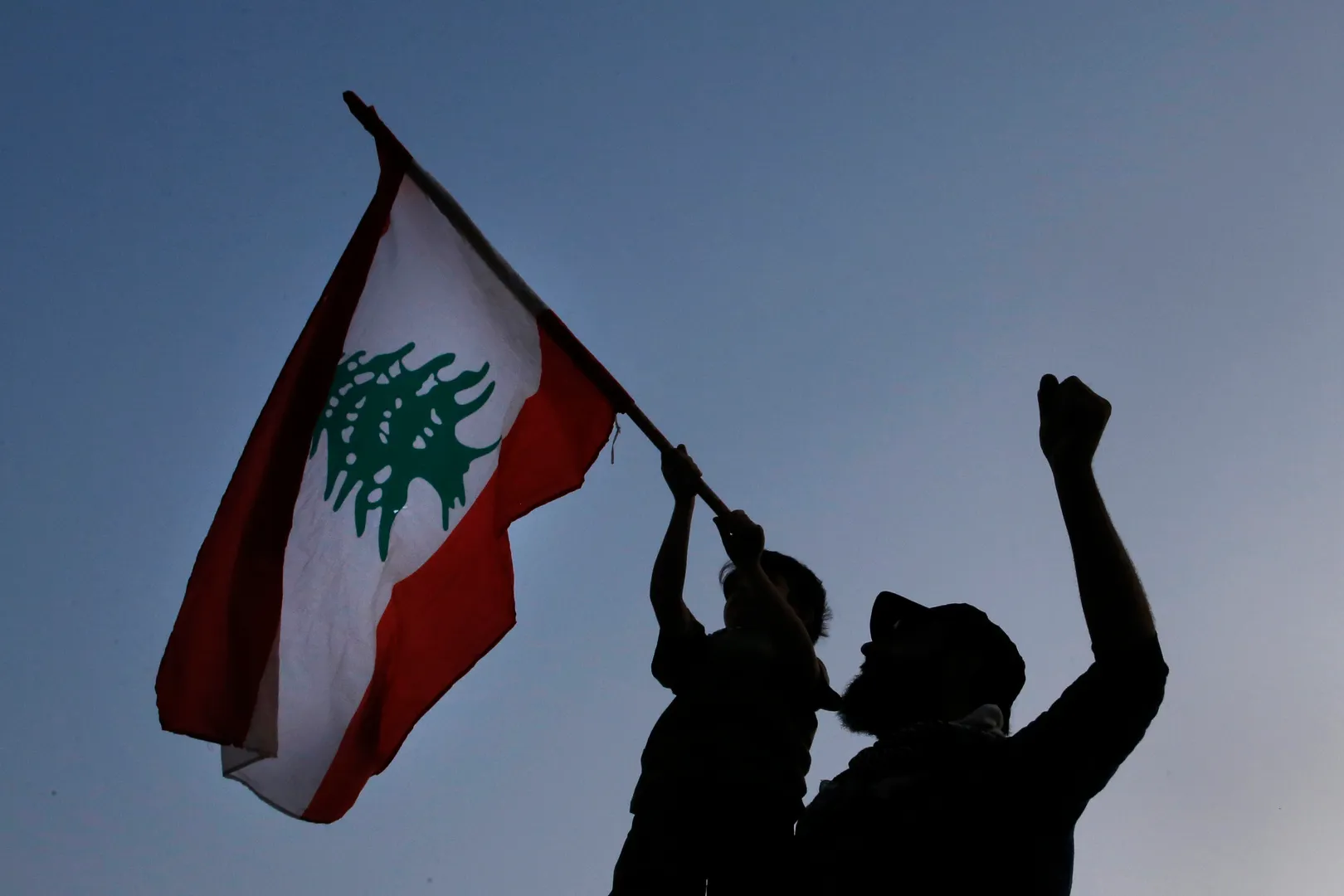
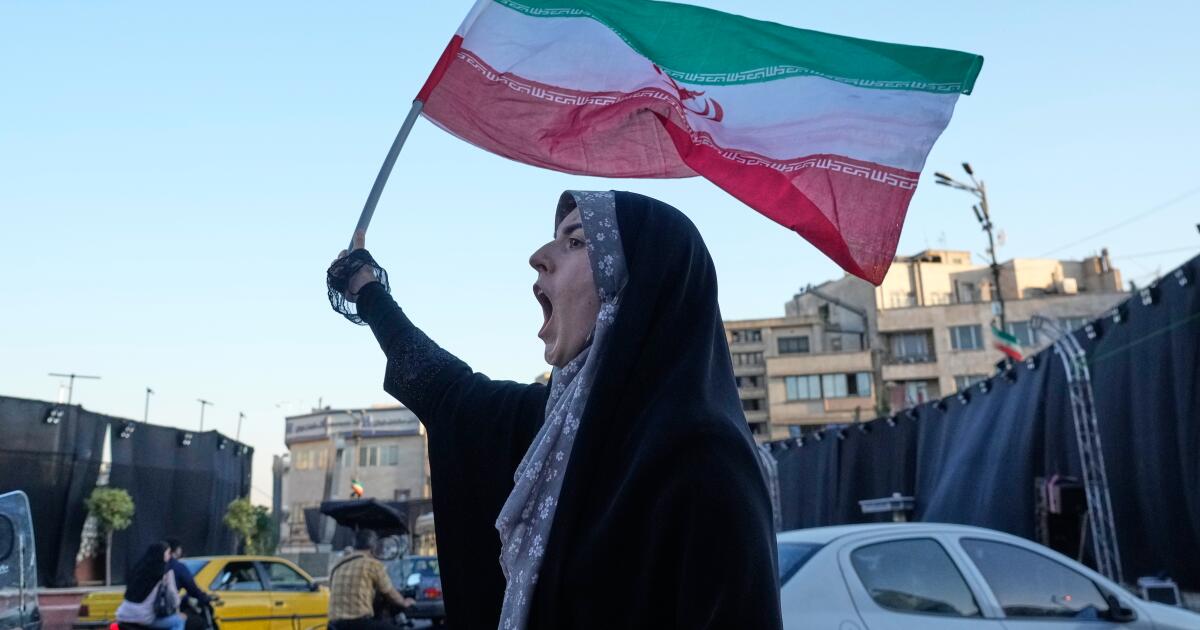
The US-Iran ceasefire announcement has raised hopes in Lebanon, after Pakistani mediators claimed it included an end to Israel’s war on the country. But as Al Jazeera’s Heidi Pett explains, we’ve been here before.
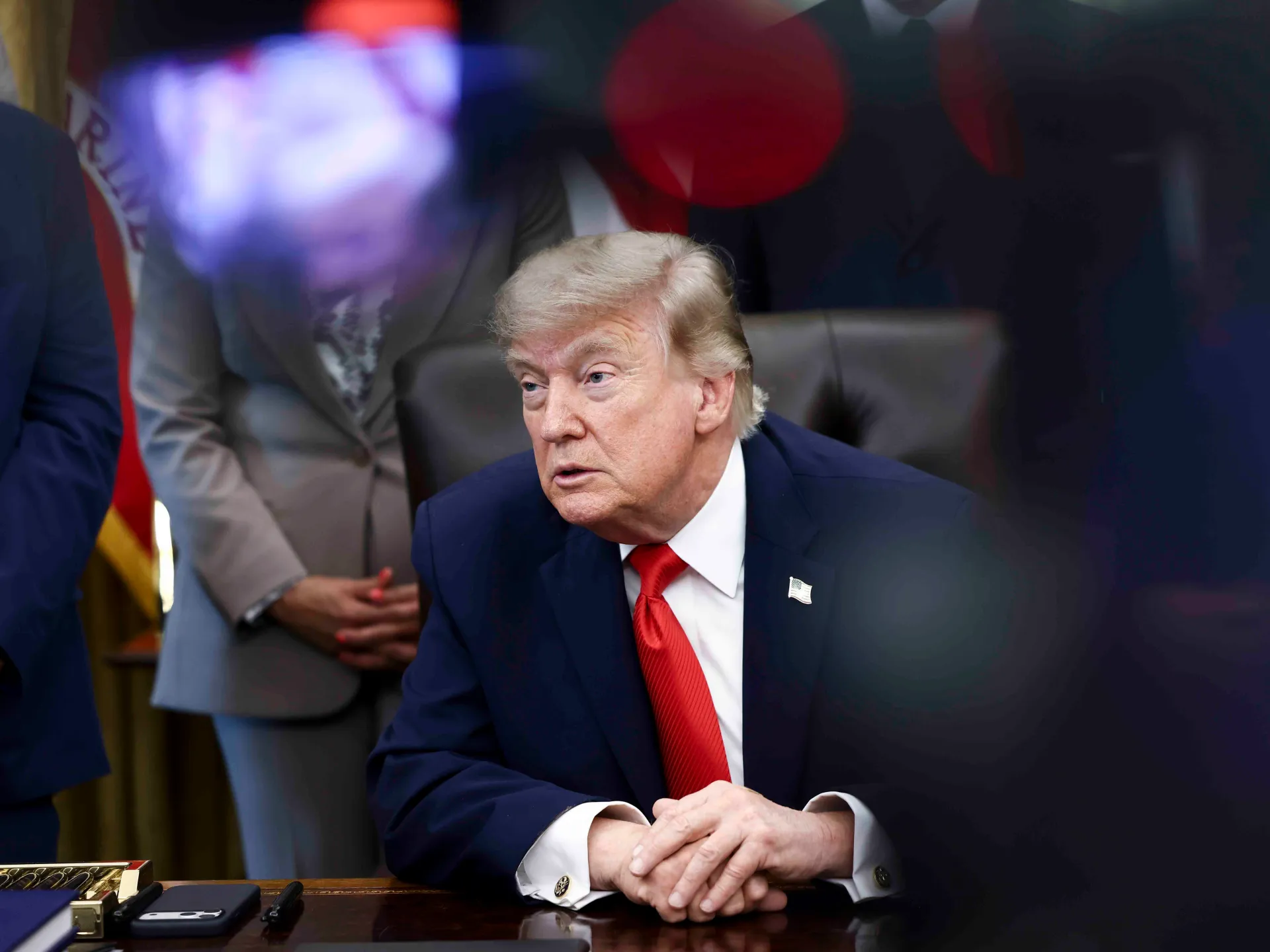
WASHINGTON — President Trump said Sunday that the United States and Iran have reached a framework agreement to end the war in the Middle East, a breakthrough in months of negotiations aimed at ending the conflict.
The deal, described by diplomats as a memorandum of understanding, commits Tehran to forgo the development or acquisition of nuclear weapons in exchange for helping reopen the Strait of Hormuz, and the paced release of its assets frozen overseas, upon the signing of the deal Friday in Switzerland.
Trump said he has also authorized “the immediate removal of the United States Naval blockade” on Iranian imports.
“Ships of the World, start your engines. Let the oil flow!” Trump wrote in a social media post Sunday evening. It was the president’s 80th birthday.
The full details of the agreement have not been released. Many details — including how Tehran would give up, destroy or dilute its fissile material, or whether Iran would continue treating the international strait as its sovereign waters — will continue to be negotiated in the coming days.
Pakistani Prime Minister Shehbaz Sharif said Sunday that mediators are planning to hold a series of meetings this week to “lay the foundation for the technical talks and the official signing ceremony.”
“We would like to thank the United States of America and the Islamic Republic of Iran for their commitment to finding a diplomatic solution to the conflict,” Sharif wrote in a post on X.
The Associated Press reported that negotiations on outstanding issues like Iran’s nuclear program would continue over the next 60 days, according to two senior Pakistani officials who spoke on condition of anonymity.
Vice President JD Vance told Fox News that the White House is “still figuring out the logistics” on whether he or Trump will attend the signing ceremony.
“What we know is that we have a lot of work to do, but a very big win for the American people tonight,” Vance said.”We are just going to keep on working at it, keep on driving energy prices down, keep on ensuring that region of the world is less than a basket case and finally, and most importantly, celebrate, that we can say with confidence Iran will never have a nuclear weapon.”
Iran’s deputy foreign minister, Kazem Gharibabadi, confirmed the agreement on state television but said Iran would not start implementing it until it was signed on Friday. He said the deal followed over 14 hours of talks in Tehran with a representative from Qatar, another mediator.
Iranian state TV showed a banner asserting: “US was forced to sign an agreement to end the war.”
Iran’s commitment to refrain from pursuing nuclear weapons would simply repeat a vow Iran has made several times before, including in its signing of the Nuclear Non-Proliferation Treaty and its nuclear deal brokered with international powers under the Obama administration over 10 years ago.
Iran has 972 pounds of uranium that is enriched up to 60% purity, a short, technical step from weapons-grade levels of 90%, according to the International Atomic Energy Agency. Under the 2015 international agreement with Iran abandoned by the first Trump administration, Iran’s uranium enrichment wascapped at less than 4%, monitored by IAEA inspectors.
The vagueness of the new agreement, the demand for further negotiations to flesh out its details, and the pacing of sanctions relief for Iran are all likely to draw criticism of the president, who launched his political career in 2015 by attacking President Obama’s newly signed nuclear deal as a historically bad agreement.
That deal, known as the Joint Comprehensive Plan of Action, followed two years of painstaking negotiations that were predicated on a similar, yet more detailed framework, called the JCPOA.
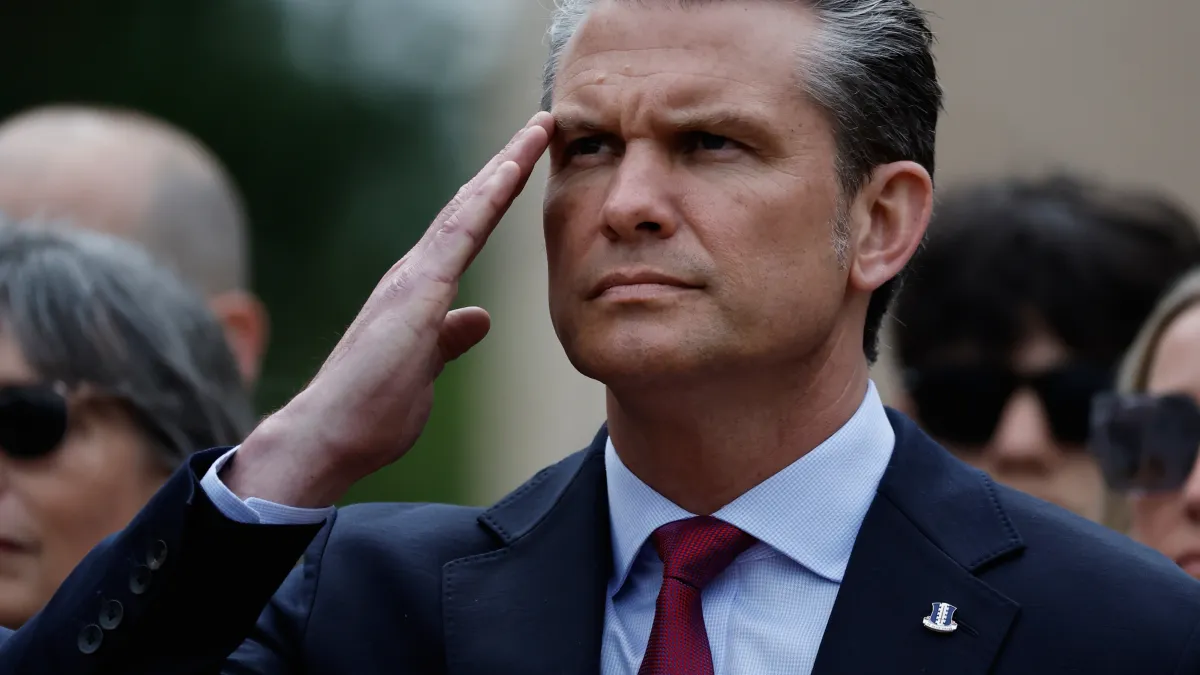
Defense Secretary Pete Hegseth said in a Sunday morning interview on CBS’ “Face the Nation” that the the difference between the JCPOA and how the Trump administration is handling negotiations is the “threat of military force.”
“The huge difference is we did this from a position of strength,” Hegseth said. “That military might will stay as long as necessary.”
And, as in 2015, Israeli leadership across the political aisle remains deeply skeptical of the agreement, pronouncing they will not be bound by a deal to which they are not a party.
“To be honest with you, he should be very thankful to us for doing this. Because if Iran had a nuclear weapon, Israel wouldn’t be around for two hours,” Trump said.
Since the U.S.-Israeli attacks on Iran that started the war Feb. 28, there have been 3,468 confirmed deaths in Iran,according to independent monitors. In addition, 13 U.S. service members have been killed, and the Israeli war with Hezbollah has killed 2,679 in Lebanon as well as 23 Israelis, including eight civilians.
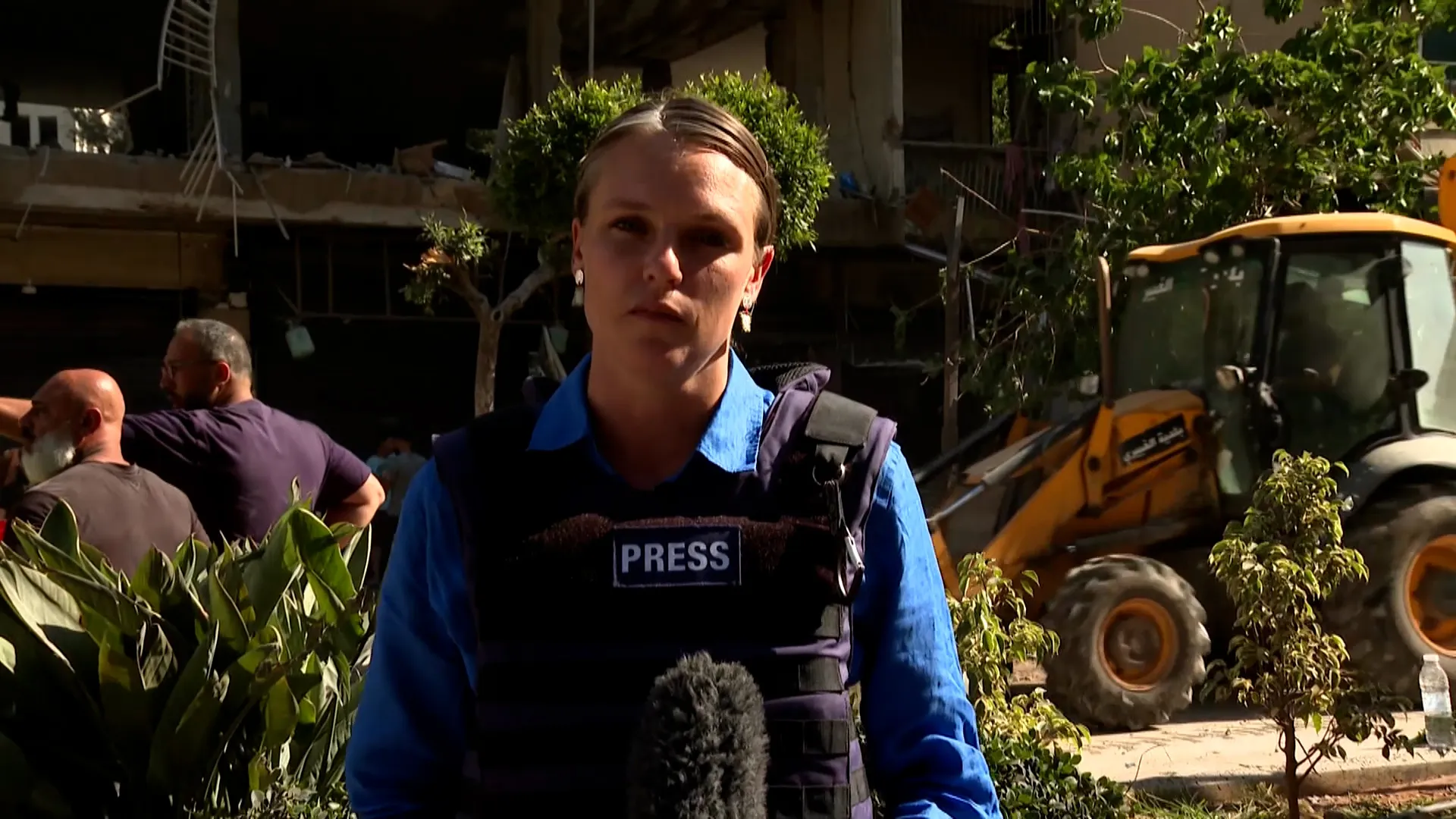
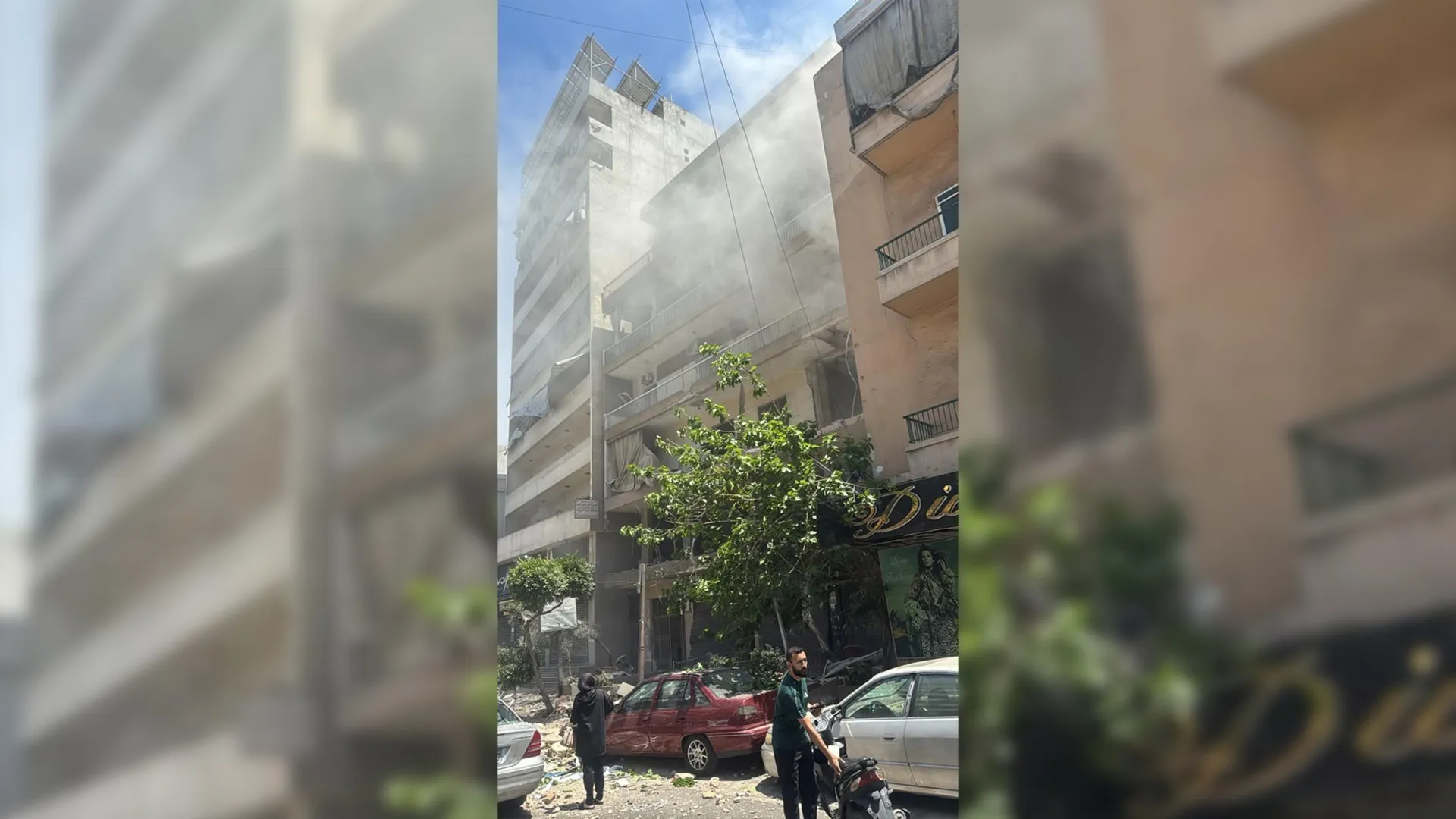
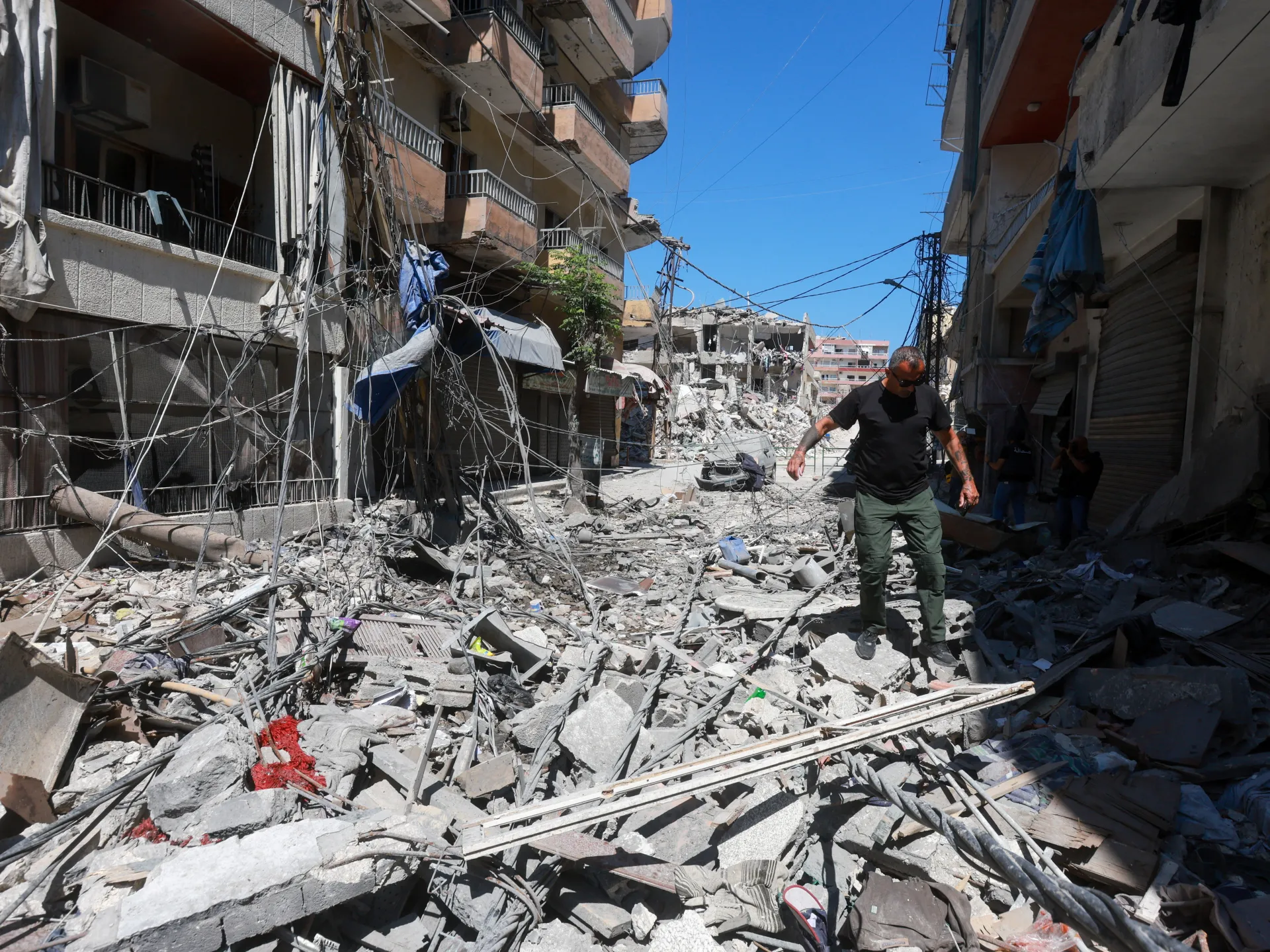
Al Jazeera’s Heidi Pett reports from the site of an Israeli attack on a residential building in southern Beirut, which Israel calls a Hezbollah command centre. The strike came hours before President Trump said a US-Iran deal was meant to be signed.
Israel has bombed the southern suburbs of Beirut, saying it targeted Hezbollah ‘infrastructure’ in response to cross-border fire. The strikes come as Israel continues to violate a supposed ceasefire with incursions and daily bombardment in southern Lebanon. Trump has said a deal to end the war on Iran will be signed on Sunday.
June 13 (UPI) — President Donald Trump and Pakistan have said that a memorandum of understanding extending the cease-fire between the United States and Iran will be virtually signed Sunday, though Iran has not confirmed the meeting.
Trump posted on Truth Social at 12:45 p.m. EDT Saturday: “The Deal is scheduled to get signed tomorrow, and immediately after it is signed, the Hormuz Strait is OPEN TO ALL.”
He also posted a screenshot of a Saturday morning tweet by Pakistani Prime Minister Shehbaz Sharif: “We are closer to a peace deal than ever before. With finalization expected in the next 24 hours, Pakistan is preparing for the electronic signing of the peace deal immediately after, followed by technical level talks next week.”
The Pakistani foreign minister confirmed that the signing was set for Sunday, Axios reported.
But Iran said there were no talks planned for Sunday. Iranian Foreign Ministry Spokesperson Esmail Baghaei said there were no plans for an Iranian negotiating team to travel to Geneva or elsewhere in the next day or two, according to IRIB, Iran’s state broadcaster, The New York Times reported. While Iran could also sign electronically, it’s unclear if the signing event will happen.
One of the main reasons the signing will be virtual is that Vice President JD Vance, who has been negotiating the peace deal, wouldn’t be able to go to the signings and be back in the United States before Trump leaves for the G7 summit in France Monday, Axios said.
Also, Sunday is the president’s 80th birthday and the day of the UFC fight on the White House lawn.
United States President Donald Trump has said an initial agreement to end the US-Israeli war with Iran is “scheduled to get signed tomorrow”.
But that announcement, made on Trump’s Truth Social account on Saturday, contradicts an earlier statement by Iranian Ministry of Foreign Affairs spokesman Esmaeil Baghaei.
Recommended Stories
list of 3 itemsend of list
In remarks carried by Iran’s IRNA news agency, Baghaei said a memorandum of understanding would not be signed on Sunday and that negotiators are not planning to travel immediately to Geneva, Switzerland, in preparation for such an event.
According to Baghaei, a signing could happen “in the coming days”.
Hours later, Trump wrote, “The Deal is scheduled to get signed tomorrow, and immediately after it is signed, the Hormuz Strait is OPEN TO ALL.” Sunday marks Trump’s 80th birthday.
In recent days, Iran and the US have repeatedly contradicted each other when describing the details of the anticipated agreement, even as both sides have broadly signalled that a deal was closer than ever before.
Still, no terms have been officially released, with US and Iranian officials on Friday stressing that the agreement had not been finalised.
Beyond opening the Strait of Hormuz, Trump said in Saturday’s post that the agreement would be a “A WALL TO NO NUCLEAR WEAPON!” and that “no money would exchange hands”.
Trump also maintained that “at the appropriate time, when all is calm, we will go in and get the Nuclear Dust”, referring to Iran’s stockpile of enriched uranium.
But speaking on Iran’s Press TV on Friday, Iranian Foreign Minister Abbas Araghchi said the initial memorandum of understanding would only be a launch point for negotiations about the future of Iran’s nuclear programme.
He added that the signing would result in an immediate pause in fighting, but that Iran and Oman would continue to administer the Strait of Hormuz.
The issue of lifting foreign sanctions against Iran and unfreezing the country’s assets would be discussed following the signing of the memorandum of understanding, Araghchi said.
From threats to diplomacy
The latest flurry of diplomacy came after the US and Iran traded strikes for two days this week, threatening to end a pause in fighting that has persisted since April 8.
The US and Israel launched the war on Iran on February 28, amid ongoing indirect talks on the future of Iran’s nuclear programme.
The US and Israel had also launched a 12-day war on Iran in 2025, during another round of nuclear talks.
Iranian officials have said that deep distrust towards the US has slowed the progress towards creating a lasting agreement to bring the current war to an end.
Trump, meanwhile, has repeatedly pledged to reach a deal that would surpass the 2015 Joint Comprehensive Plan of Action (JCPOA), struck under his Democratic rival, former President Barack Obama.
That agreement, from which Trump unilaterally withdrew in 2018, saw Tehran agree to limit its nuclear programme and allow for international inspections in exchange for sanctions relief.
For years, Iran has maintained that it is building a nuclear programme for civilian use only and is not seeking a nuclear weapon.
In his post on Truth Social, Trump again pledged that any deal reached would be more stringent than the JCPOA.
“Our relationship with Iran is a much different and better one than previous Administrations have had,” he said.
“Hopefully, this process will all work out quickly, easily, and smoothly,” he added.
“If it doesn’t, we have the ultimate alternative, hopefully never to be used again!” he wrote, without elaborating on what his threat meant.
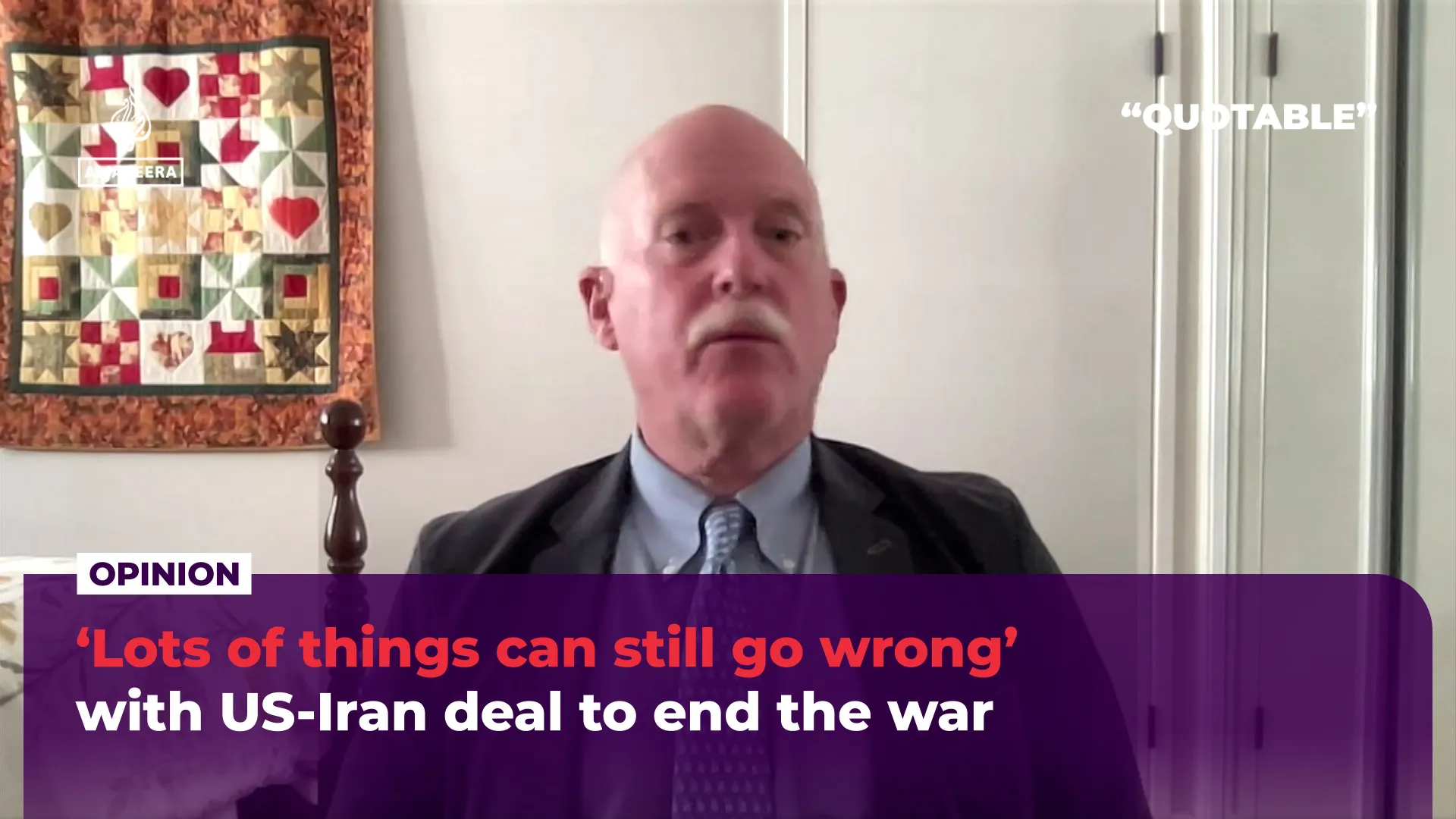
Henry Ensher, a former US ambassador, says the US–Iran agreement is not a final settlement but only the start of a process, with many ways it could still go wrong.
The United Arab Emirates has agreed to unlock billions of dollars for Iran, pursuing a tactical shift after weeks of Iranian attacks on the wealthy Gulf Arab state amid its ongoing war with the United States and Israel, four sources told the Reuters news agency.
The report on the move coincided with the final stages of broader negotiations between Tehran and Washington to end the war. Diplomats say those talks involve the release of tens of billions of dollars in Iranian oil revenues frozen in foreign banks under US sanctions.
Recommended Stories
list of 3 itemsend of list
Two regional sources told Reuters that the UAE had agreed to release a total of $10bn, more than $3bn of which had already been delivered.
Two other sources with knowledge of the arrangement put the total funds involved at $20bn, adding that the move had been agreed in return for a halt to Iranian attacks on the UAE.
One of the sources with knowledge of the arrangement also said a first tranche of $3bn had already been made available.
Reuters could not establish whether the funds earmarked for the transfers belong to the UAE or originate in long-blocked Iranian accounts in the UAE banking system, or elsewhere.
But a UAE official, asked to comment on the transfer, said the country was trying to ease tension and foster peace.
“The UAE’s foreign policy is guided by promoting de-escalation and reducing tensions across the region, while advancing lasting peace and stability,” the official said.
“The UAE supports efforts, including those undertaken by the United States, to protect the peoples of the region from the repercussions of conflict.”
The White House did not immediately respond to Reuters’s request for comment on the move.
‘Red line’ workaround
Earlier on Friday, Vice President JD Vance said that frozen funds would not immediately be released to Iran upon signing a deal with the US.
He said the potential deal is structured to ensure that economic benefits would flow to Tehran if it meets its obligations.
There was no immediate response from Iranian authorities to a Reuters request for comment on the move.
None of the sources cited by Reuters would agree to be identified due to the sensitivity of the matter.
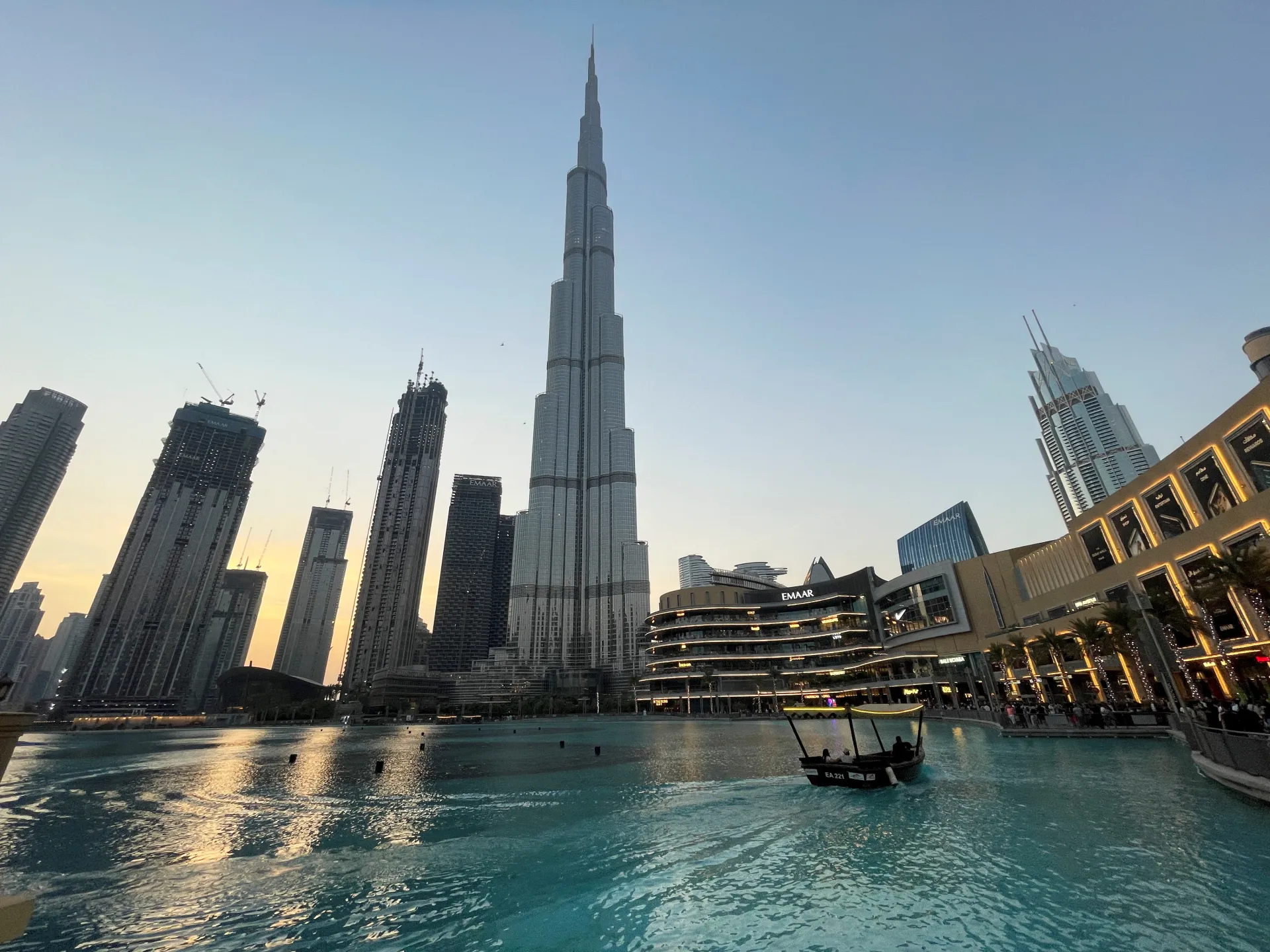
The arrangement signals a striking pivot from the open animosity of UAE-Iran relations through much of the war, when Iranian attacks emptied Dubai’s hotels, drove some expatriates to flee and shook the reputation for safety that is central to the country’s position as a premier business hub.
One of the sources with knowledge of the arrangement said the move offered a way to help solve the conflict between the US and Iran without either side crossing its red line. Iran can claim it extracted compensation for war damages. Washington can insist it paid nothing.
Abu Dhabi, meanwhile, obtains its own security and protects Dubai’s hub status, while framing the move as an investment in rebuilding regional trust.
The other source with knowledge of the arrangement said that in return for the disbursement, Iran would halt missile and drone attacks on the UAE, and there would be a rebuilding of bilateral ties, including intelligence sharing and economic cooperation.
The source added that Iran had approached at least two other Gulf Arab countries to make a similar arrangement.
The last known direct attack by Iran on the UAE was more than a month ago – a May 4 strike on the Gulf state’s Fujairah port on the Gulf of Oman.
The first source with knowledge of the arrangement said talks had started several weeks ago but quickened pace when officials of Iran’s powerful Revolutionary Guard visited Abu Dhabi last week to meet Sheikh Tahnoun bin Zayed al Nahyan, the UAE’s national security adviser and deputy ruler of Abu Dhabi, and stayed at his guest house.
That trip was followed by a visit by UAE officials to Tehran to negotiate the details of the mechanism.
Frozen funds
Dubai’s banks have long held substantial Iranian-linked deposits, much of them now immobilised under US sanctions that police the global dollar-clearing system and expose any foreign bank dealing with blacklisted Iranian entities to being cut off from the US financial network.
On April 11, a senior Iranian source told Reuters that the US had agreed to release Iranian frozen assets held in Qatar and other foreign banks, although a US official swiftly denied the assertion.
The source, who declined to be named due to the sensitivity of the matter, said that unfreezing the assets was “directly linked to ensuring safe passage through the Strait of Hormuz”, a key issue in talks aimed at ending the conflict.
As Washington and Tehran move towards a long-term ceasefire agreement, Gulf states will likely look for new long-term security solutions when a war in their region – which they did not start – finally ends.
It comes as United States President Donald Trump cancelled new strikes on Iran saying that a deal with Tehran was imminent, and that a “time” and “place” for signing would soon be announced.
Recommended Stories
list of 4 itemsend of list
In Tehran, officials appeared more cautious with one senior Iranian official telling Al Jazeera that the government was still reviewing a proposed Memorandum of Understanding with Washington.
Subsequent comments by Pakistan Prime Minister Shehbaz Sharif point to a deal being made, and what follows in the coming days could have important implications for collective regional security.
Attacks on the Gulf
The United States operates military facilities in at least 19 locations across the MENA region, including permanent bases in Bahrain, Egypt, Iraq, Jordan, Kuwait, Qatar, Saudi Arabia and the United Arab Emirates, according to the Council on Foreign Relations. Between 40,000 and 50,000 US troops were stationed across the region before the war on Iran started.
This US-Gulf nexus appeared to insulate states from conflicts engulfing other parts of the region, but over the past four months, Gulf states hosting US military facilities have been targeted by Iran.
“If there is a way to describe the prevailing security model in the region since the 1980s, the concept of security partnerships best encapsulates it,” said Mahjoub Al-Zuwairi, an academic and expert on Middle East politics.
“The countries of the region have chosen to align their security with broad international alliances. For decades, this model has provided a reasonable deterrent and logistical and intelligence depth that is difficult to replace.”
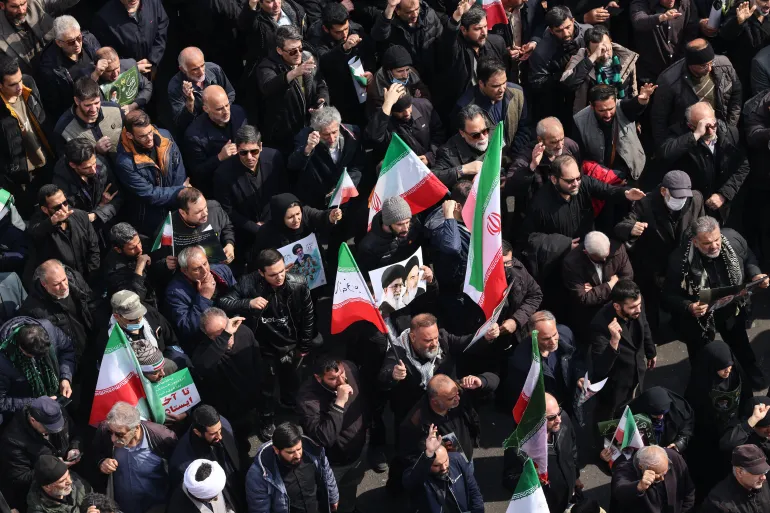
Iranians in Tehran at the funerals of Iran’s Revolutionary Guards Corps (IRGC) commanders, army officers and others killed in the early days of the United States and Israeli strikes on Iran, March 11, 2026 [AFP]
A security umbrella with holes
The war on Iran has exposed a paradox – while Iranian officials have repeatedly referred to their Gulf neighbours as “brothers”, they have also repeatedly targeted them during the war.
Despite the protestations of Gulf states that no attacks on Iran were launched from their soil, they have been repeatedly targeted.
“Just the war itself has pierced that sense of security, the US security umbrella is moribund at worst, or ineffective at best,” Simon Mabon, professor of international relations at Lancaster University, told Al Jazeera.
“They’ve long relied on it for their own security. Yet the presence of US forces on their territory directly meant they became targets. They can’t escape their geography [and] despite the tensions, despite the hostilities, despite the attacks, Iran isn’t going away. They have to find a way of dealing with this reality.”
The economic cost of war
The closure of the Strait of Hormuz has proven be a setback for some Gulf states working to diversify their energy-reliant economies towards tourism, services and finance, but not all have been affected equally.
Saudi Arabia was able to redirect some oil exports through its East-West pipeline to the Red Sea, while Oman – whose main ports are outside the Strait of Hormuz – has also benefited from rising energy prices.
The UAE, Bahrain, Kuwait and Qatar have been more heavily affected due to their dependence on the waterway for their energy exports, but the war has encouraged new thinking on long-standing security and economic arrangements.
“There are new pipelines being set up, but the capacity of these alternatives is infinitely smaller than the Strait itself,” said Mabon. “It will take enormous investment and years of development before they can come close to replacing it.”
Moving closer to Iran?
One possible lesson from the conflict is that Gulf states may seek engagement with Iran rather than confrontation, something that Gulf states had already made some groundwork on before the US-Israel war began.
Al-Zuwairi says that the conflict could revive plans for MENA-led regional security arrangements, as envisioned in the 2019 Hormuz Peace Initiative, which proposed a Gulf security framework involving Iran, Iraq and the six GCC states.
But the distrust fostered since then – notably Tehran’s strikes on its Gulf neighbours – would make such a formation unlikely in the near future.
“The recent war has opened the door wide to reconsidering the Gulf security system with its neighbours,” Al-Zuwairi said.
“How can Tehran propose a non-aggression pact while raining missiles on neighbouring cities? The initiative appears theoretically sound but practically bankrupt unless Iranian behaviour changes.”
Looking beyond Washington?
The solution for the Gulf could be a hybrid arrangement where ties with Washington are maintained, but other regional and domestic options are explored, including greater investment in local defence industries.
A possible blueprint for this could be the mutual defence agreement between Saudi Arabia and Pakistan last September, stating that an attack on one country would be considered an attack on both.
Yet previous instances when Gulf states felt abandoned by the US have led to divergent responses, with the UAE and Bahrain deepening ties with Israel, but a new paradigm means that a more collective action to the issue of security might be considered.
“The war has demonstrated that every guarantor, no matter how many banners it flies, primarily protects its own interests,” said Al-Zuwairi.
“The region ends up paying the price for a war it did not choose … The security of the Gulf will not be created in Washington … It will be created when Gulf countries recognise that they must build it themselves, because when fires start, it is always those closest to the flames who pay the price.”
U. S. President Donald Trump expressed on Friday that Iran’s comments about a potential deal do not match what has been agreed in writing. He described their statement as weak and claimed they are not trustworthy in negotiations. Trump emphasized the urgency for Iran to “get their act together. “
On Thursday, Trump had decided against new strikes on Iran, believing a deal had been made. According to Iranian officials, the deal would meet many of their demands, while Trump did not achieve much besides the reopening of the Strait of Hormuz, which Iran had closed following attacks he ordered in February.
A senior Iranian source stated that the draft deal would lift sanctions on Iran’s oil, unfreeze billions of dollars of Iranian assets, and require an end to hostilities in various regions, including Lebanon. Discussions on nuclear issues would be postponed. The U. S. aims for a deal to prevent Iran from developing nuclear weapons, while Iran insists it does not seek such weapons. The source did not mention what Iran might offer in return.
Trump cancels planned Iran attacks, saying talks are close as Tehran reviews a proposed US deal.
Published On 12 Jun 202612 Jun 2026
United States President Donald Trump said he had cancelled a third straight night of planned attacks on Iran, saying talks with Tehran were close to producing a deal.
The announcement marked a dramatic turnaround. Just hours earlier, Trump warned that Iran would be hit “very hard” and threatened to target Kharg Island and other oil facilities.
Reporting from Tehran, Al Jazeera’s correspondent said a senior Iranian official confirmed that a proposed memorandum of understanding with the US was being considered by Iran’s top leadership.
Here is what has happened:
In Iran
Trump calls off planned Iran attacks: Hours after warning that Iran would be hit “very hard” and threatening attacks on Kharg Island and other oil facilities, Trump said he had cancelled the planned strikes, claiming negotiations had reached a breakthrough. In a Truth Social post, Trump said discussions had been elevated to Iran’s top leadership and that the “final points” of an agreement had been approved by all parties involved, including the US and several regional allies.
Tehran says the sacrifices of war were worth it: Reporting from Tehran, Al Jazeera’s Mohamed Vall said many Iranians would be relieved to see the conflict end after months of hardship and loss. But the government is also trying to sell a potential deal as a victory, telling people that “it is worth the suffering” because Iran could come out of the war “in much stronger shape”, with the possibility of sanctions being lifted and assets being unfrozen.
In the US
Expert says Trump used an ‘escalate to de-escalate’ strategy: Richard Weitz, an international security expert at the NATO Defense College, told Al Jazeera that Trump’s threats to intensify the conflict may have been aimed at forcing a diplomatic breakthrough. The strategy, he said, is to “threaten to escalate” a conflict “in order to force an end to it”. However, Weitz cautioned that “we still have a bit of uncertainty over what precisely was agreed and how it will be implemented.”
Trump has tried to hold Netanyahu back in recent weeks: Reporting from Washington, DC, Al Jazeera’s Kimberly Halkett said Donald Trump and Israeli Prime Minister Benjamin Netanyahu have long had “a shared desire to limit Iran’s nuclear programme” and ensure Tehran never obtains a nuclear weapon. But she said there was a “growing concern” within the White House that Netanyahu could “derail efforts in the diplomatic realm”, with Trump increasingly trying to restrain the Israeli leader and, in the US president’s words, “allow time for diplomacy”.
In Lebanon
Hezbollah says it carried out 24 attacks on Israeli forces: The Lebanese armed group said it launched a series of drone, missile and rocket attacks on Israeli soldiers, armoured vehicles and military positions across southern Lebanon and the Bekaa Valley between Wednesday and Thursday. Hezbollah said it repeatedly struck troop concentrations near Tayr Harfa, while also attacking Israeli forces in Naqoura, al-Qaouzah, Rashaf, Qantara, Zawtar al-Sharqiyah and Yohmor al-Shaqif.
Wall Street and Asian markets rally on hopes for an end to the US-Israel war on Iran.
Published On 12 Jun 202612 Jun 2026
Stock markets have surged following US President Donald Trump’s announcement that he called off planned strikes against Iran and a peace deal with Tehran is imminent.
Wall Street’s benchmark S&P500 index finished nearly 1.8 percent higher on Thursday, ending a three-day streak of losses for the biggest single-day gain since April.
Recommended Stories
list of 4 itemsend of list
The tech-focused Nasdaq Composite jumped 2.5 percent, while the older, blue-chip Dow Jones Industrial Average gained about 1.9 percent.
The rally continued in the Asia Pacific on Friday, with markets in Japan, South Korea, Taiwan, Hong Kong, and Australia racking up gains.
South Korea’s Kospi, the best-performing major index this year, surged more than 8 percent in morning trading, while Japan’s benchmark Nikkei 225 rose as much as 4 percent.
Taiwan’s TAIEX gained about 2.4 percent, and Australia’s ASX 200 rose about 1.8 percent.
In Hong Kong, the Hang Seng Index was up more than 1 percent.
Brent crude, the primary international benchmark for oil prices, fell about 1 percent to below $89.50 a barrel on hopes for a return to normality in the Strait of Hormuz, which in peacetime carries about one-fifth of global energy supplies.
The market rebound came after Trump on Thursday suggested that a deal to end the war on Iran could be signed as soon as this weekend.
“We just made a great settlement of the war with Iran… subject to finalisation of documents,” Trump told reporters in the Oval Office of the White House.
Iran has not publicly confirmed Trump’s claims, but a Ministry of Foreign Affairs spokesman told reporters a memorandum of understanding with the US is “under consideration”.
“For the rally to be sustained, investors will want to not only see the actual deal being signed, but a complete reopening of the Strait of Hormuz,” Khoon Goh, head of Asia research for ANZ Bank, told Al Jazeera.
“Only then will we see the gains extend.”
Fabien Yip, a market analyst at the online broker IG Group in Sydney, Australia, said the rally reflected a “meaningful easing of geopolitical risk”, as well as anticipation over Friday’s market debut of SpaceX, set to be the largest of its kind in history.
“The broader read on today’s Asian follow-through is that dip-buying interest remains genuine,” Yip told Al Jazeera.
“That matters for how you characterise what’s happened over the past week.
“This looks less like a structural break in the bull market and more like a healthy reset after a rapid, near-straight-line advance, the kind of consolidation that can potentially extend a rally’s longevity.”
The Washington institution cut its global growth forecast by 0.4 percentage points to 2.5 percent, citing surging energy prices, inflation and borrowing costs.
Published On 11 Jun 202611 Jun 2026
The conflict in the Middle East is set to bring global economic growth to its slowest since the COVID-19 pandemic, the World Bank has warned.
In its latest Global Economic Prospects report, published on Thursday, the Washington-based institution cut its global growth forecast for 2026 to 2.5 percent from the 2.9 percent it had predicted in January, citing surging energy prices, rising inflation and higher borrowing costs.
Recommended Stories
list of 3 itemsend of list
The report highlights the significant economic costs of the conflict, which is at risk of flaring up again, as the fragile ceasefire between the United States and Iran is tested on both sides.
The analysis warns that the outlook could decline further if supply disruptions worsen. Iran’s closure of the Strait of Hormuz – a vital passageway for oil and gas transit – in response to the hostilities launched by the US and Israel has put huge stress upon global energy and other supply chains.
The World Bank estimates that Brent crude prices — the international oil benchmark — will average $94 a barrel this year, 36 percent above last year’s average. Fertiliser prices are forecast to increase significantly this year, with knock-on effects for food prices.
Overall, the closure of the strategic waterway will help to push global inflation to 4 percent this year, a substantial increase from last year’s rate of 3.3 percent.
However, the World Bank cautions that global growth could plummet to as low as 1.3 percent this year, should energy supply disruptions worsen, with inflation pushing to 4.4 percent.
The World Bank report also cautions that developing countries are on the front line of the potential impact.
In its report, the institution has downgraded its growth forecasts for two-thirds of countries since January. Global growth is expected to improve to 2.8 percent in 2027, but will remain 0.4 percentage points below the average during the 2010s, during which the world economy was recovering from the global financial crisis.
Excluding China and India, the report worries that developing countries have made little progress towards narrowing their per capita income gap with wealthy nations over the past decade.
“Developing countries have faced a series of challenges over the last decade,” said Ajay Banga, president of the World Bank Group. “The impact differs by country, but the basic test is the same: protect people and preserve stability today, without giving up on growth and jobs tomorrow.”
The World Bank is pledging to assist any developing country experiencing the economic fallout of the Middle East conflict. The organisation says it has set aside up to $60bn to help. It added that if the conflict persists, it can increase its support to $100bn.
DUBAI, United Arab Emirates — President Trump threatened Thursday to launch major strikes on Iran and seize control of its oil industry as escalating attacks between the countries pushed the Middle East closer to the resumption of a full-scale war.
Trump said in a social media post that the U.S. would hit Iran “VERY HARD TONIGHT” and would “assume total control” of Iran’s oil and gas industries, including the vital Kharg Island oil terminal, in the “not too distant future.”
The American leader’s latest threats came as efforts to negotiate an end to the war appeared stuck. Trump has voiced his frustration with the stalled negotiations, warning earlier in the week that Tehran would “pay the price” for taking too long to reach a deal.
Iran’s monthslong stranglehold on the Strait of Hormuz has disrupted global energy supplies, driven up fuel prices and made food and other basics more expensive well beyond the region.
The U.S. and Iran traded strikes for a second straight day Thursday after reaching a tenuous ceasefire more than a month ago. While the strikes have increased tensions in the region, they have been more limited compared to the early weeks of the war and negotiations between the U.S. and Iran are ongoing.
Trump’s threats on Thursday, while stark, represented his latest verbal escalation in the Iran war. In April, he warned Iran that “a whole civilization will die tonight, never to be brought back again” if it didn’t agree to his terms, before extending a ceasefire.
Trump weighs trying to seize Iran’s main oil terminal
Kharg Island — located on the other side of the Persian Gulf from U.S. bases in Kuwait and Saudi Arabia — is the beating heart of Iran’s oil industry, through which 90% of its exports pass. It is important because Iran’s coastline is mostly too shallow for tanker ships to dock.
It was unclear how serious Trump was about his threat to seize it.
“My preference has always been to take Kharg Island,” Trump said in an interview Thursday on Fox News. “I don’t know that America has the stomach for it to be honest.”
American troops would be vulnerable on Kharg Island because of its close proximity — about 21 miles — to the Iranian mainland, from which missiles, drones and artillery could be fired.
Trump indicated in the interview that he remains averse to sending U.S. forces into Iran. “We could walk in there tomorrow. We could take soldiers — I don’t want to have boots on the ground. But if I wanted to we could put a small group of soldiers and take over the place.”
Trump compared his threat to take over Iran’s oil industry to how the U.S. assumed control of Venezuela’s oil sector after capturing then-president Nicolás Maduro in January.
Iran says US attacks have made ceasefire `meaningless’
American strikes on Iran that lasted into Thursday morning appeared more intense and widespread than the day before.
Tehran released little information on the extent of the damage and said it fired back at Kuwait, Bahrain and Jordan, as it had the previous day.
It was the third time this week that back-and-forth strikes have rattled the Middle East. The first involved attacks between Iran and Israel, followed by the two rounds of fire between the U.S. and Iran, which hit countries in the region that host American bases.
Iran’s Foreign Ministry said in a statement Thursday that the U.S. attacks had “effectively rendered the ceasefire … meaningless,” without saying it was abandoning it.
U.S. Treasury Secretary Scott Bessent said in a social media post that the U.S. would extract funds from frozen Iranian accounts to offset the costs of damage to American allies as well as any tolls Iran imposes on ships seeking passage through the Strait of Hormuz.
Beyond the deadlock over the strait, the two sides also remain at odds over Iran’s nuclear program, which Tehran insists is peaceful but which the U.S. and Israel fear could be used to build an atomic weapon due to its stockpile of highly enriched uranium. The U.S. and Israel said a major reason they went to war on Feb. 28 was to ensure that Iran would never be able to do that.
Iran has insisted that any deal to end the war must also end fighting in Lebanon between its ally Hezbollah and Israel. But Israeli Prime Minister Benjamin Netanyahu appears intent on pursuing his goal of destroying the militant group.
U.S. strikes Iran and Iran fires back at Gulf states
Central Command said its latest round of airstrikes came “in response to Iran’s unwarranted and continued aggression” and targeted “Iranian military surveillance capabilities, communication systems and air defense sites.” It did not elaborate on the damage done by the strikes, which it said ended just before sunrise Thursday in Iran.
Explosions from the strikes echoed around Iran’s capital, as well as the port city of Bandar Abbas and other southern areas along the Strait of Hormuz. Iran’s paramilitary Revolutionary Guard later said sites hit included a manufacturing complex, a military barracks and a local Guard base outside of Tehran.
Kuwait closed its airspace for several hours because of the attack, but did not elaborate on any damage. Jordan said it intercepted 20 Iranian missiles fired toward an area that is home to a base hosting U.S. troops, though no one was hurt.
Bahrain’s Interior Ministry said an 11-year-old girl was hurt and cars and homes were damaged by debris from interceptions responding to the Iranian attack.
Meanwhile, Israel warned residents in the country’s north to seek shelter after the detection of suspected incoming fire from Lebanon, where Israel is fighting the Iran-allied Hezbollah militant group.
U.S. fires on another merchant ship to enforce blockade
The U.S. military’s Central Command said Thursday that it struck a Guinea-Bissau-flagged tanker attempting to evade the American blockade on Iranian ports. It said the M/T Jalveer was transporting Iranian oil when it was disabled late Wednesday after its crew failed to obey U.S. orders.
It’s the ninth merchant vessel the U.S. military says it disabled to enforce the blockade.
Three Indian sailors were killed when American forces struck the Palau-flagged M/T Settebello on Tuesday, India’s minister overseeing ports and shipping said Thursday on X.
U.S. Central Command said American forces issued warnings before firing on the ship, which it accused of trying to evade the blockade.
The leader of the International Maritime Organization, a United Nations agency, condemned the attack.
Gambrell and Madhani write for the Associated Press. Madhani reported from Washington. AP writers Will Weissert, Collin Binkley, Michelle L. Price and Konstantin Toropin in Washington; Sheikh Saaliq in New Delhi; Munir Ahmed in Islamabad, Victoria Eastwood in Cairo and Russ Bynum in Savannah, Ga., contributed to this report.
A US strike on an oil tanker accused of transporting Iranian oil has killed three Indian sailors. It was the second attack in three days on a ship carrying crew members from India.
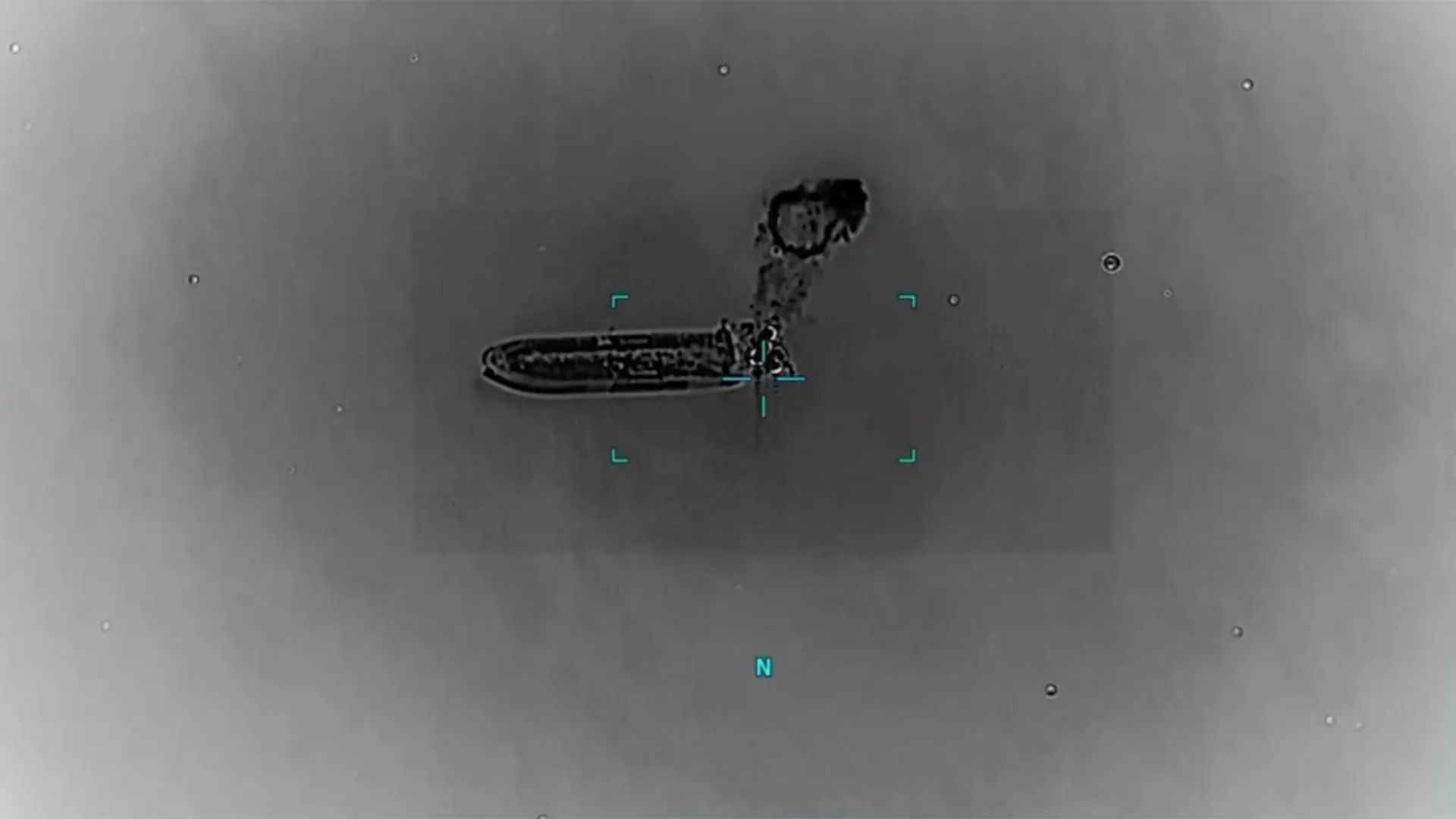
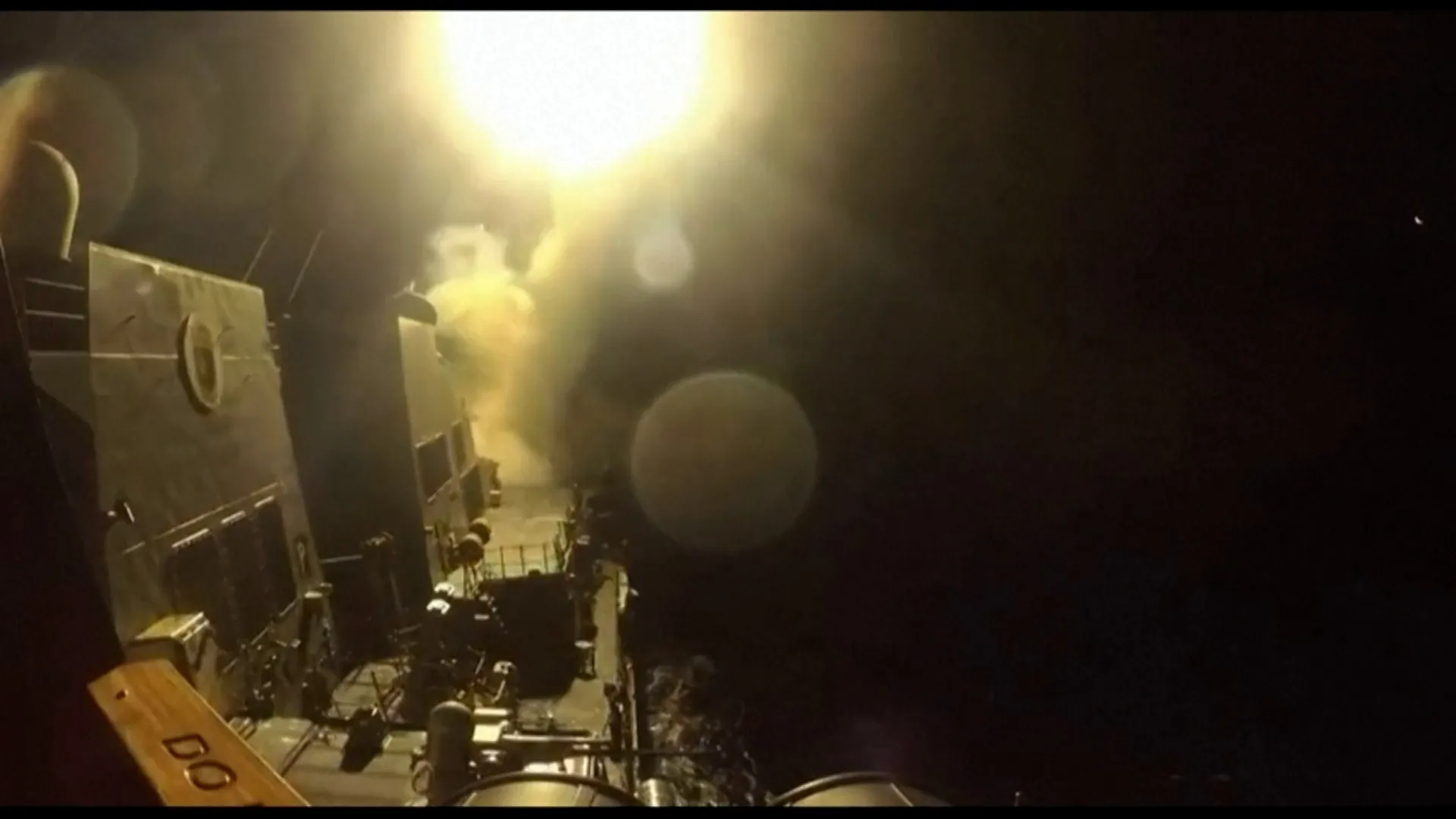
Video released by US Central Command shows what the military says are ‘self-defence’ strikes on Iranian military surveillance capabilities, communications systems and air defence sites. The footage accompanied a statement that US forces had completed the latest wave of attacks.
Weekly insights and analysis on the latest developments in military technology, strategy, and foreign policy.
Israel and Iran may be seeking an off-ramp to keep the latest flare-up of fighting from boiling over to an extended conflict in the wake of strikes between the two nations on Sunday and Monday. The attacks marked the most serious challenge to the shaky ceasefire that went into effect on April 8. They took place despite President Donald Trump urging both sides to stand down to let the sputtering peace process move forward.
The Islamic Revolutionary Guard Corps (IRGC) said it was halting attacks on Israel but maintained the right to resume them if Jerusalem continued “to target Hezbollah in Lebanon,” Fox News reporter Trey Yingst reported.
Israeli Prime Minister Benjamin Netanyahu claimed the decision to stop attacking Iran was made because “after we dealt a heavy blow to the terrorist regime in Tehran, it ceased its attacks on us. If the terrorist regime in Iran makes a mistake and attacks us again—we will respond with full force.”
در حال حاضر، آتش متوقف شده است، زیرا پس از اینکه ما به رژیم تروریستی در تهران ضربه محکم زدیم، حمله به ما را متوقف کرد.
اگر رژیم تروریستی در ایران اشتباه کند و دوباره به ما حمله کند – ما با قدرت پاسخ خواهیم داد.
In a post on his social media platform, President Donald Trump said both sides “are looking to do an immediate CEASEFIRE! Final negotiations on ‘Peace’ are proceeding, subject to ignorance or stupidity getting in its way.”
The ongoing U.S. blockade of Iranian ports, however, “will remain in place, and in full force and effect, until a ‘Final Deal’ is reached,” Trump added. “Things should move quickly.”
“Both sides, Israel and Iran, are looking to do an immediate CEASEFIRE! Final negotiations on “Peace” are proceeding, subject to ignorance or stupidity getting in its way…” – President DONALD J. TRUMP pic.twitter.com/zLoFSZo3jZ
Earlier on Monday, Trump demanded that the two sides stop fighting.
“Israel and Iran must immediately stop ‘shooting,’” Trump insisted on Truth Social.
As we noted yesterday, the latest Israel-Iran fighting was sparked by Israeli bombing of Beirut on Sunday. Hours after that took place, Iran launched missiles at Israel and Israel fired back. Initially on Monday, Israeli leaders said they were expecting a conflict that would last for at least several days and that Iran has sufficient stocks of ballistic missiles to carry that out, according to the Israeli N12 News outlet.
In addition, the IDF was preparing for more attacks from the Houthis and Hezbollah, N12 stated.
However, that analysis had apparently changed in recent hours.
Israel’s retaliatory strikes came despite Trump telling several reporters on Sunday that he was going to tell Netanyahu to hold his fire and that both sides had done enough to each other and should cease attacking. Those conversations pointed to either messaging to deceive Iran about a pending attack or further signs of strain between the two leaders.
Trump to Channel 13 News: ”I think Israel has responded enough, no need for more. We can achieve peace after 3,000 years.”
Netanyahu’s push to attack Hezbollah in Lebanon had reportedly already earned a invective-laden rebuke from Trump.
“You’re fucking crazy,” Axios said Trump told the Israeli leader in a phone call last week. “You’d be in prison if it weren’t for me. I’m saving your ass. Everybody hates you now. Everybody hates Israel because of this.”
After Israel struck Beirut on Sunday, Trump told Financial Timesthat Netanyahu would have no choice but to accept any deal the U.S. negotiates with Iran, because he “calls the shots.”
“He won’t have any choice,” Trump told the outlet in a telephone interview. “I call the shots. I call all the shots. He [Netanyahu] doesn’t call the shots.”
BREAKING: President Trump says Israeli Prime Minister Netanyahu will have “no choice” but to accept a US deal with Iran, because he “calls the shots,” per FT.
Details include:
1. “I call the shots. I call all the shots. He [Netanyahu] doesn’t call the shots,” Trump said
2.…
— The Kobeissi Letter (@KobeissiLetter) June 7, 2026
Despite Trump putting his foot down, overnight, “dozens of Israeli Air Force fighter jets struck nine Iranian air defense systems in western and central Iran, and this morning, the IAF struck three factories at a petrochemical complex in southwest Iran,” the Times of Israel reported. “The military says the strikes are only being carried out by Israel, but there is ‘full coordination’ with CENTCOM. Meanwhile, IDF Chief of Staff Lt. Gen. Eyal Zamir has spoken with his counterpart, CENTCOM chief Adm. Brad Cooper, three times, according to the military.”
U.S. forces “are assisting in intercepting incoming missiles,” I24 News Diplomatic Correspondent Amichai Stein reported on X. “So far, Iran has launched approximately 22–24 missiles, while the Houthis have fired two.”
An IDF official confirmed that to us, saying that “the Israeli strikes were fully coordinated with CENTCOM across multiple dimensions, including intelligence, defensive preparedness, and operational planning.”
CENTCOM declined to comment.
However, a U.S. official told TWZ that American forces “did not defend Israel with air defense against missiles and drones.”
IDF sources:
• The military is preparing for at least several days of combat.
• U.S. forces are assisting in intercepting incoming missiles.
• So far, Iran has launched approximately 22–24 missiles, while the Houthis have fired two.
Earlier on Monday, Israel released video it says showed attacks on Iranian air defense systems.
🎥FIRST FOOTAGE: Watch IDF strikes targeting aerial defense systems in Iran, which housed missiles intended to target aircraft. pic.twitter.com/7pWhnOuSGV
That strike was part of a wave of attacks Israel carried out on Iranian air defenses across the country.
⭕️🛩️ STRUCK: The IDF completed a large-scale strike on strategic defense systems belonging to the Iranian terror regime.
Recently, defense systems were deployed across Iran to restore the regime’s capabilities degraded during Operation Roaring Lion. The strike led to the… pic.twitter.com/eEqV2QnXK3
“These facilities were used by the armed forces of the Iranian terror regime to produce and export raw materials for weapons production,” the IDF posited. “The targeted infrastructure produced unique materials that serve as critical components for the development of ballistic missiles.”
🚨 confirmed. Among the 15 Targets IAF attacked is the Mahshahr Petrochemical Complex, officially known as the Petrochemical Special Economic Zone (PETZONE) in Bandar-e Mahshahr, Khuzestan Province. Right across the border from Kuwait !
Video emerged online showing the Israeli airstrikes in Tehran.
For the first time since the April ceasefire, Israel and Iran have attacked each other. Israel carried out strikes on western and central Iran including the Iranian capital Tehran.
While Iran launched missiles at northern Israel and said it is the beginning of a week of attacks.… pic.twitter.com/SmcwFKMw14
The attacks sparked a warning from the U.S. Embassy in Jerusalem.
“As a result of the current security situation in Israel, including Home Front Command alerts for multiple regions,” the U.S. Embassy in Jerusalem is ordering “all U.S. government employees and their family members to shelter in place, and be prepared to move to a protected shelter in the event of a red alert, until further notice.”
As a result of the current security situation in Israel, including Home Front Command alerts for multiple regions, the U.S. Embassy has directed all U.S. government employees and their family members to shelter in place, and be prepared to move to a protected shelter in the event… pic.twitter.com/ohyK56GyNh
— U.S. Embassy Jerusalem (@usembassyjlm) June 8, 2026
Though both Israel and Iran say they are willing to stop fighting, tensions in the region remain high. We will continue to monitor the situation.
UPDATES
As we noted earlier in this story, the Houthi rebels of Yemen said they are banning Israeli ships from the Red Sea and took credit for missile attacks on Israel that took place on Sunday.
“We announce a complete ban on navigation for the enemy in the Red Sea, and any Zionist movements will be considered military targets for our forces,” said Brigadier General Yahya Sare’e, the Houthis’ spokesman. “We will confront escalation with escalation, and our operations will be escalating in line with the battle and our participation in the axis of jihad and resistance.”
“We affirm the right of our people and the free peoples of our nation to confront American-Israeli aggression,” he added. “We will not stand idly by in the face of the unjust siege on our people and the peoples of the axis of jihad and resistance.”
Sare’e also said the Houthis launched “a missile strike on sensitive targets of the Israeli enemy in occupied Jaffa, and achieving its objectives with precision, thanks to God.”
There were no reported injuries or damage from that attack.
Yemen’s Iran-backed Houthis announce that they launched a missile attack on Israel and declared a ban on Israeli shipping in the Red Sea.#Yemenpic.twitter.com/LYYPB7bibK
— Al Arabiya English (@AlArabiya_Eng) June 8, 2026
As we have previously reported, there have been major and relevant concerns that the Houthis could effectively shut down the Bab el-Mandeb (BAM) strait, a narrow stretch of water between Yemen and Djibouti. Doing so would choke off a flow of oil exports from Saudi Arabia to the east, exacerbating a huge spike in oil prices after Iran closed off the Strait of Hormuz to most shipping. Having both straits closed at once is something of a ‘sum of all fears’ scenario for the global energy marketplace.
A new Houthi offensive would be a major cudgel for Iran, because it would open a new front in the war and draw in U.S. military resources at a time when they are already heavily involved in the region.
During the previous Houthi Red Sea campaign that stretched into early 2025, the U.S. and its allies deployed many warships, including the Eisenhower and Truman Carrier Strike Groups (CSG) to both defend against Houthi attacks and strike targets in Yemen. These operations resulted in a large expenditure of air defense munitions already under strain as Iran rained down missiles and drones across the Middle East.
You can see video from some of those encounters below.
Strikes on Iranian-backed Houthi Targets by USS Gravely, USS Carney, and USS Dwight D. Eisenhower
Iran, meanwhile, insists it is maintaining its control over the Strait of Hormuz.
“No vessel without Iran’s permission has the right to pass through the Strait of Hormuz Command vessel of the IRGC Navy,” the official Iranian Fars News Agency stated on X. “It is announced to all vessels that entry of any vessel from hostile countries into the Strait of Hormuz is prohibited and, if observed, they will immediately be targeted.”
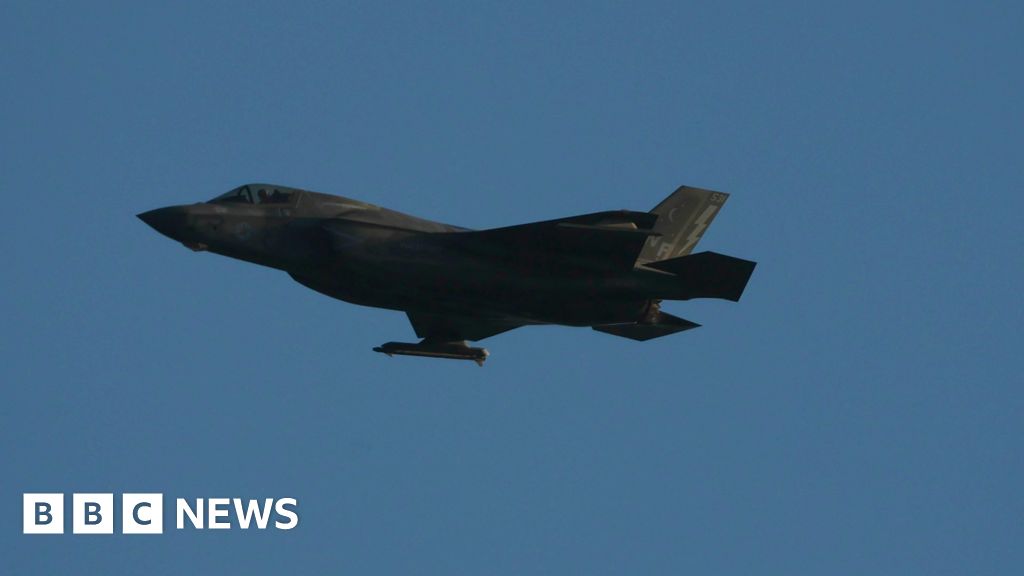
CENTCOM says its forces once again disabled a ship trying to run the blockade. This time, the effort involved an F/A-18E/F Super Hornet from the aircraft carrier USS Abraham Lincoln (CVN 72) firing “a precision munition into the ship’s engineering and steering spaces after the crew failed to comply with directions.”
The incident, involving the Palau-flagged M/T Marivex, took place as the unladen oil tanker transited international waters in the Gulf of Oman toward Iran, the command stated on X.
“Marivex is no longer sailing to Iran,” CENTCOM added.
This was the seventh ship trying to run the blockade that CENTCOM forces disabled, the command noted. In addition, it said it “redirected 134 ships that complied, and allowed 42 vessels supporting humanitarian aid to pass since initiating the blockade on April 13.”
You can read more about how the other six ships were disabled in our story here.
According to a release from U.S. Central Command (CENTCOM), the U.S. disabled an unladen oil tanker, the M/T Marivex, in the Gulf of Oman today. Per the release, a “precise munition” from an F/A-18 Super Hornet was fired into the engine and steering areas of the vessel when the… pic.twitter.com/qyW4WBhfLa
Given existing concerns that Iran has mined the Strait, “US allies will seek Trump’s approval for a Europe-led plan to demine the Strait of Hormuz at next week’s G7 summit in France,” Bloomberg News is reporting. “The UK and French-led mine-clearing mission is operationally ready and set to deploy in the days after any Iran deal. Securing a G7 endorsement of the mission is one of the main goals of the summit. European leaders see it as a way of showing the continent is stepping up to help the US after Trump’s fury it didn’t back his war.”
US allies will seek President Donald Trump’s approval for a Europe-led plan to demine the Strait of Hormuz at next week’s Group of Seven summit in France. https://t.co/Byy6mE94rh
You can read more about what it takes to conduct demining operations in our exclusive interview with a former MH-53E pilot who carried out those operations, which you can read here.
My exclusive interview with a pilot who flew the behemoth MH-53E Sea Dragon helicopters on counter mine missions over the Persian Gulf and Strait of Hormuz.https://t.co/C0tvO2sLKp
Despite the renewed fighting, Iran’s president says his country has not abandoned diplomacy.
“Our priority is national security and the peace of our people. We will defend the rights of the nation with authority and will not retreat in the face of any threat,” Masoud Pezeshkian stated on X. “Diplomacy and defense are the two wings of national power; we have neither abandoned the field nor the negotiating table. God willing, with unity and rationality, Iran will emerge triumphant from this trial as well.”
اولویت ما امنیت ملی و آرامش مردم است. با اقتدار از حقوق ملت دفاع میکنیم و در برابر هیچ تهدیدی عقبنشینی نخواهیم کرد. دیپلماسی و دفاع دو بال قدرت ملیاند؛ نه میدان را ترک کردهایم و نه میز مذاکره را. به امید خدا با وحدت و عقلانیت ایران از این آزمون نیز سربلند عبور خواهد کرد.
In a post on X, the Islamic Revolutionary Guard Corps (IRGC)-connected Tasnim news agency claims Iran fired a new jet-powered drone at Israel during its waves of attacks yesterday. The outlet provided no details about the weapon or any imagery of it in flight. TWZ cannot independently verify the claim.
Iran Utilized Newly Unveiled Jet-Powered Drone in Overnight Strikes on Israel
Iran employed a previously unseen jet-powered drone in its overnight attacks on Israel, according to Seyed Mohammad Taheri, a military analyst at Tasnim News Agency’s War Interpretation Desk. https://t.co/ATvBOUmiOZpic.twitter.com/Z4SBHawMcz
— Tasnim News Agency (@Tasnimnews_EN) June 8, 2026
Explosions hit Qeshm Island, ports along Strait of Hormuz after Trump threatens to hit Iran ‘very hard’.
Published On 10 Jun 202610 Jun 2026
The United States has launched fresh strikes against “multiple targets” in Iran at President Donald Trump’s direction, in a fresh escalation that prompted Tehran to declare the Strait of Hormuz closed to “all types of vessels”.
The US military said the strikes late on Wednesday were “in response to Iran’s unwarranted and continued aggression”, as Iranian state media reported explosions on Qeshm Island and in the cities of Bandar Abbas and Sirik along the Strait of Hormuz.
Recommended Stories
list of 4 itemsend of list
Blasts also hit the southern city of Kargan, wounding at least two people.
Iran’s Islamic Revolutionary Guard Corps accused the US of “repeated violations” of their April ceasefire, and said the Strait of Hormuz was “closed until further notice”.
It said all traffic in the vital waterway, including oil tankers and commercial vessels, would be affected, and firmly rejected the US’s previous claims that it had helped ships pass through the strait.
The IRGC subsequently added that “two oil tankers attempting to illegally pass through the strait were hit”.
The escalation comes a day after the US and Iran exchanged tit-for-tat strikes over the downing of a US Apache helicopter in the Strait of Hormuz.
Earlier, Trump said the US would hit Iran “very hard”.
“We’ll see what happens with the deal. We were really close to a deal. But they keep stringing us along. They keep playing us for suckers because you know what? They dealt with some very stupid presidents. I have to say that I’m embarrassed to say it,” he told reporters at the White House.
Iran’s President Masoud Pezeshkian slammed Trump’s threat in a post on X.
“Critical infrastructures are the lifeblood of the people. Threats to target them – from transportation networks to the electricity and water industries – are not a show of strength but a sign of desperation in the face of a nation’s will,” he wrote.
“Iran, relying on the knowledge and capabilities of its specialists, national unity, and solidarity, will stand firm against any pressure or threat,” he added.
Defence Secretary Pete Hegseth has confirmed that the United States is launching strikes on “key facilities” in Iran, framing the attacks as part of the ongoing negotiations for a permanent ceasefire.
Hegseth spoke to reporters on Wednesday in Tampa, Florida, as he left the headquarters for the US Central Command (CENTCOM), the military apparatus that oversees operations in the Middle East and parts of Asia.
Recommended Stories
list of 3 itemsend of list
His remarks echoed the escalating rhetoric of Republican President Donald Trump, who warned earlier that Iran would “have to pay the price” for taking too long with the negotiations.
“ CENTCOM — Central Command — will be busy tonight because President Trump said we will be hitting Iran hard, and we will be,” Hegseth said.
He explained that he had just reviewed the plans for Wednesday night’s attack with Admiral Bradley Cooper, CENTCOM’s commander.
“ Those strikes that’ll happen tonight will be strong. They will be clear,” said Hegseth, who then suggested they may continue into a second day. “If they have to happen tomorrow night, they will be strong, and they will be clear.”
CENTCOM followed Hegseth’s comments with a social media post, announcing “additional self-defence strikes” at 5:15pm US Eastern time (21:00 GMT).
“The strikes are in response to Iran’s unwarranted and continued aggression,” it wrote.
Within minutes of those comments, Iran’s IRNA media outlet reported explosions in Bandar Abbas, Qeshm, Gorgan and Hengam.
Wednesday’s attack will mark the second straight day of US attacks against Iran, fracturing the fragile truce struck on April 8.
The US has been at war with Iran since February 28, when the Trump administration joined Israel in an unprovoked attack on the country.
Both Israel and the US have argued that the attack was necessary to prevent Iran from obtaining a nuclear weapon, though Tehran has long denied seeking one.
But the Trump administration has offered contradicting rationales for the war in the months since it began.
At one point, US Secretary of State Marco Rubio suggested that the US acted “pre-emptively” because it “knew that there was going to be an Israeli action” and it wanted to head off retaliation. Rubio has since walked back those remarks.
Hegseth on Wednesday credited the upcoming strikes to frustration with Iran’s negotiating tactics.
“ As President Trump said, they’ve been tap-tap-tapping. You can see when someone’s trying to tap-tap-tap on a deal,” he said. “Instead, they’re going to have tap, tap, tap bombs dropping on key facilities in Iran from the United States of America.”
Since a temporary ceasefire was announced on April 8, much of the most intense fighting between the US and Iran has been paused.
But this week’s escalation began when an AH-64 Apache helicopter was downed near the Strait of Hormuz overnight on Monday.
Trump on Tuesday blamed Iran for the helicopter’s crash. Though no US service members were hurt, he said the US “must, of necessity, respond to this attack”.
In announcing a second round of attacks, Hegseth denied that the US sought to resume full-scale fighting. He instead framed the offensive as a means of kick-starting the stalled negotiations with Iran.
“That’s not because we want to restart anything we don’t have to restart,” Hegseth said of Wednesday night’s attack. “It’s because the War Department is prepared to set the terms to ensure that we get the kind of deal President Trump expects.”
The two sides have differed over issues like the fate of Iran’s nuclear programme and whether Iran would receive sanctions relief.
Trump has repeatedly threatened to attack Iran’s bridges and energy infrastructure, at one point warning that “a whole civilization will die” as a result of US attacks.
Those comments have prompted human rights concerns. Intentionally targeting civilian infrastructure can be considered a war crime, and critics compared Trump’s threats against Iranian “civilisation” to genocidal remarks.
Reporters confronted Hegseth with those concerns on Wednesday.
“You just mentioned you’re going to plan to hit them and strike them hard tonight,” one reporter asked. “If the response is in hitting bridges, electrical infrastructure, how would that not be a war crime, potentially targeting civilian infrastructure?”
Hegseth dismissed the question as “disingenuous” and accused the reporter of “impugning the motives” of the US military. But he did not rule out that civilian infrastructure would be struck as part of Wednesday’s attacks.