Iran

Iran’s Foreign Ministry defends retaliatory strikes, slams US betrayal | News

Spokesman Esmaeil Baghaei says Iran’s attacks on US targets across the region are legitimate defensive actions.

Iran is entitled to defend itself from Israeli and US attacks, the spokesman for Iran’s Ministry of Foreign Affairs has stressed.

“We have every right in accordance with international law, with the UN Charter, to defend ourselves with all might”, Esmaeil Baghaei said in an interview with Al Jazeera on Saturday.

Recommended Stories

list of 3 itemsend of list

The US and Israel launched a wave of attacks across multiple Iranian cities, including Tehran, on Saturday, in what US President Donald Trump described as “major combat operations”.

At least 201 people have been killed, according to Iranian media, citing the Red Crescent.

Iran
A plume of smoke rises following a reported explosion in Tehran on February 28, 2026 [AFP]

Iran responded by firing missiles towards Israel and US military targets in multiple countries, including Bahrain, Iraq, Jordan, Kuwait, Saudi Arabia, Qatar and the United Arab Emirates.

Baghaei said the country’s armed forces “are defending national sovereignty and the territorial integrity of Iran against these barbaric acts of aggression”.

The US-Israeli attacks came after a third round of indirect negotiations on Iran’s nuclear programme between the US and Iran ended on Friday.

“We were supposed to meet on Monday to talk about technical aspects of any possible deal on [the] nuclear issue,” Baghaei said. “And the Americans themselves acknowledged that these negotiations went quite well. The mediator, [the] foreign minister of Oman, qualified this round of negotiations as being of significant progress.”

It was the second time in less than a year that diplomacy had been scuttled by an attack on Iran, Baghaei noted. Iran and the US had engaged in several rounds of negotiations last year, when Israel launched a 12-day war on Iran in June, which the US briefly joined, despite Trump saying he was committed to a diplomatic resolution.

Baghaei said the US “launching an act of aggression against another member of the United Nations” also threatened the international body, as its main pillar, “the UN Charter, is the provision of the use of force.”

“So, I think what is at stake is not only the security and peace of the region and that of Iran, but also the whole fabric of international law. And the normative system that has been created by the United Nations Charter,” he added.

Friends in the region

Baghaei defended Iran’s retaliatory attacks in several countries across the region.

“Under international law, any place, any location, any logistical support that are given to the aggressor [is a] legitimate target for the victim state,” he said. “So, we are not attacking any country in the region. We are friendly with all countries of the region. What we are doing is just taking defensive actions.”

“We have proven that we trust our friends in the region,” Baghaei said. “That’s why we try to get together with the countries of the region in furtherance of this diplomatic process. The problem is that the United States is conducting this war of aggression at the cost of everyone, including the countries of the region.”

Source link

Iran begins 40-day mourning after Khamenei killed in US-Israeli attack | Israel-Iran conflict News

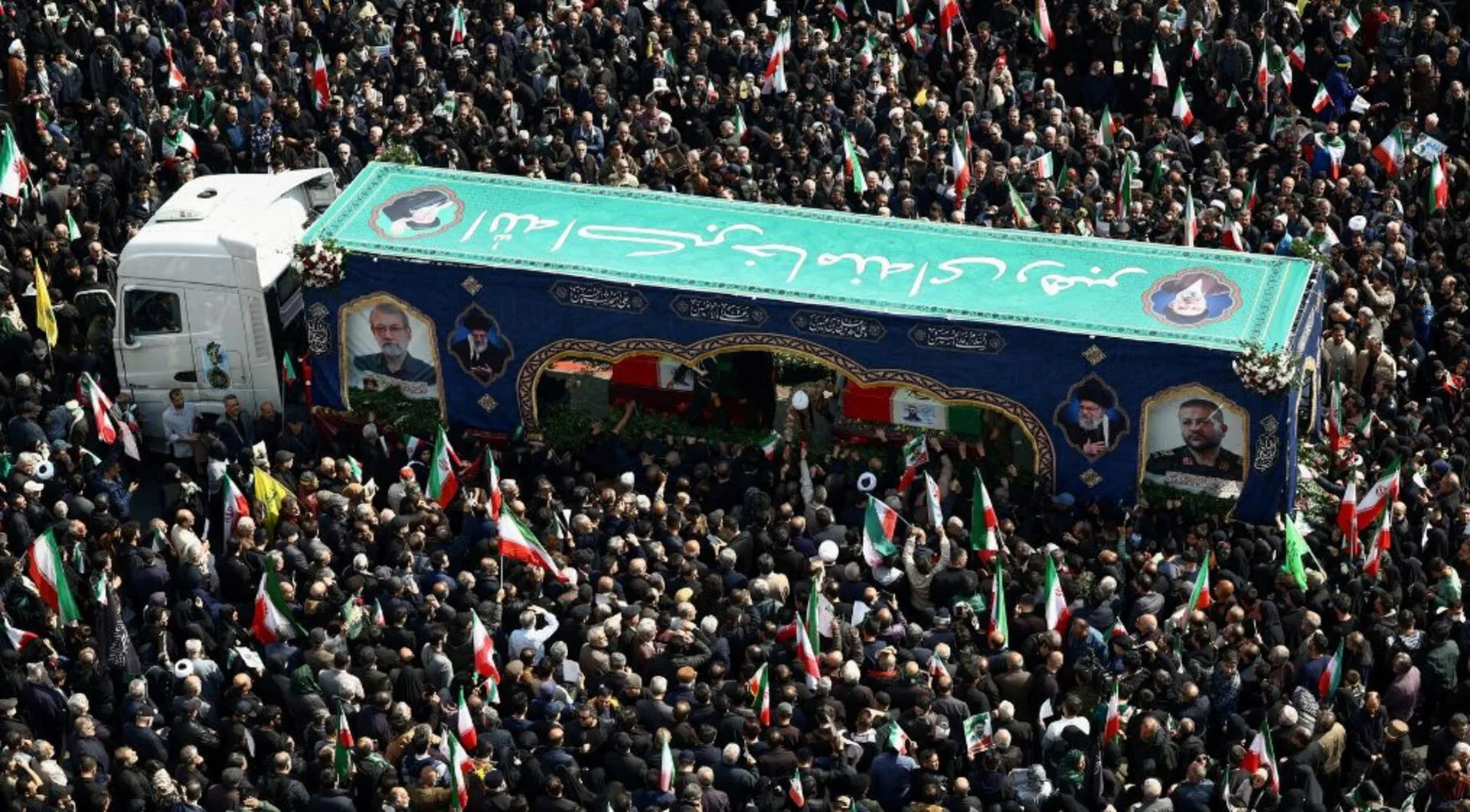
Iran has begun 40 days of mourning after Supreme Leader Ayatollah Ali Khamenei was killed in ongoing attacks by the United States and Israel, according to Iranian state media.

Top security officials were also killed in Saturday’s strikes, along with Khamenei’s daughter, son-in-law and grandson. The killings mark one of the most significant blows to Iran’s leadership since the 1979 Islamic revolution.

Recommended Stories

list of 4 itemsend of list

President Masoud Pezeshkian condemned the killing as “a great crime”, according to a statement from his office. He also declared seven days of public holidays in addition to the 40-day mourning period.

Reporting from Tehran, Al Jazeera’s Tohid Asadi said people were pouring into the streets of the capital following the news of Khamenei’s killing.

“There will be expected ceremonies,” he said, noting they would likely take place amid continuing bombardment across the country.

Iran's Supreme Leader Ayatollah Ali Khamenei killed in Israeli and U.S. strikes
People mourn at the Enghelab Square in Tehran [Majid Asgaripour/West Asia News Agency via Reuters]

Protests denouncing Khamenei’s killing were also reported elsewhere, including Shiraz, Yasuj and Lorestan.

“There will be expected ceremonies,” he said, noting they would likely take place amid continuing bombardment across the country.

Footage aired by Iranian state media showed supporters mourning at the shrine of Imam Reza in Mashhad, with several people seen crying and collapsing in grief.

The killing also led to protests in neighbouring Iraq, which declared three days of public mourning. In Baghdad, protesters confronted security forces in the heavily fortified Green Zone, which houses Iraqi government buildings and foreign embassies.

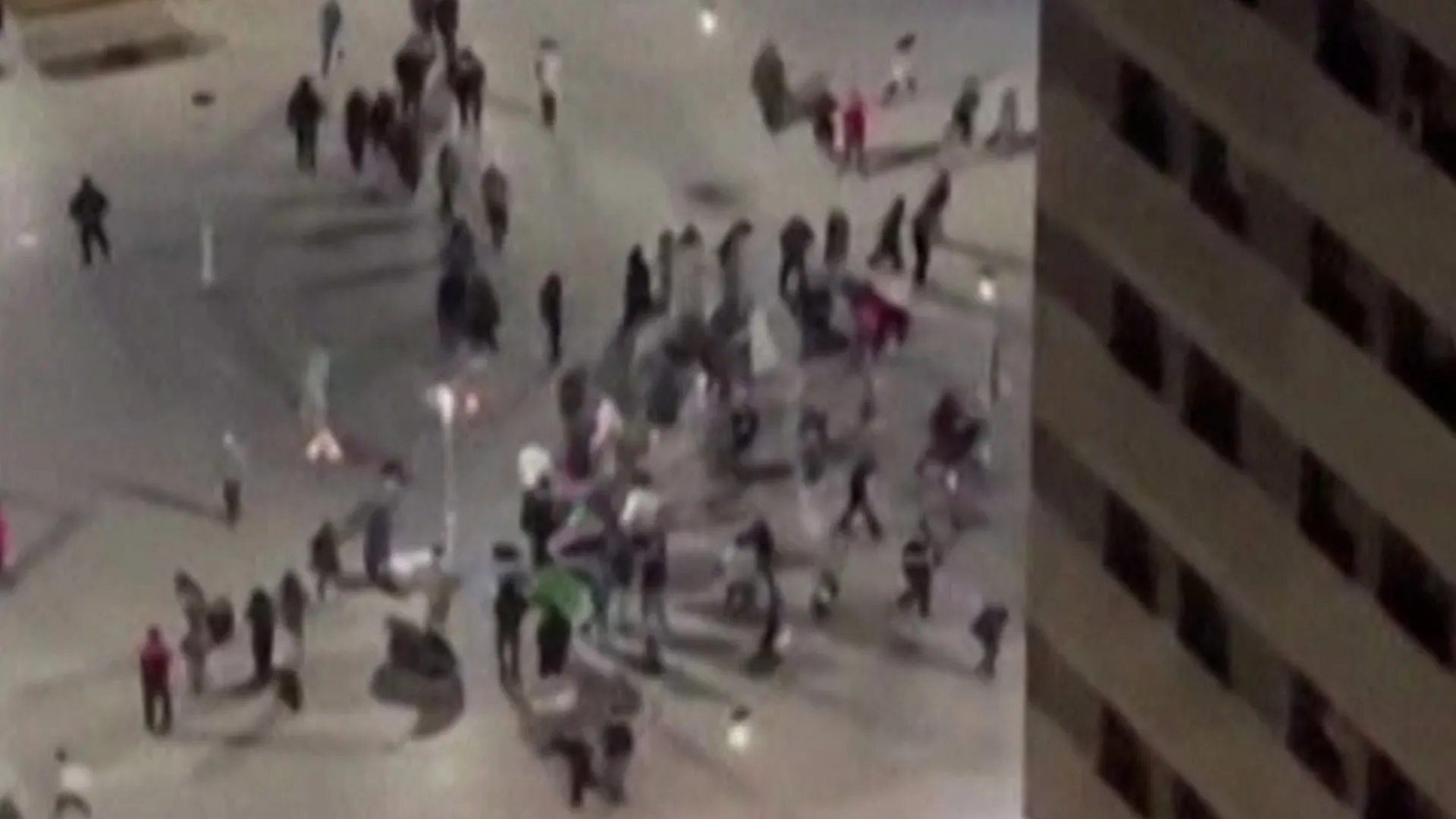
Videos verified by Al Jazeera showed demonstrators waving flags and shouting slogans, with witnesses saying some were attempting to mobilise towards the US Embassy. Footage also showed protesters blocking vehicles at a roundabout near one of the entrances to the area.

Supporters of Iraqi Shi'ite armed groups gather after the killing of Iran's Supreme Leader Ayatollah Ali Khamenei, in Baghdad
Protesters demonstrate near the entrance of the Green Zone after the killing of Iran’s Supreme Leader Ayatollah Ali Khamenei, in Baghdad, Iraq, March 1, 2026 [Thaier Al-Sudani/Reuters]

There was also a protest in the Pakistani city of Karachi, where footage, verified by Al Jazeera, showed people setting fire to and smashing the windows of the US consulate.

However, there have also been reports of celebrations in Iran, with the Reuters news agency quoting witnesses as saying some people had taken to the streets in Tehran, the nearby city of Karaj and the central city of Isfahan.

Meanwhile, the official IRNA news agency reported that a three-person council, consisting of the country’s president, the chief of the judiciary, and one of the jurists of the Guardian Council, will temporarily assume all leadership duties in the country. The body will temporarily oversee the country until a new supreme leader is elected.

Khamenei assumed leadership of Iran in 1989 following the death of Ayatollah Ruhollah Khomeini, who had led the Islamic revolution a decade earlier.

While Khomeini was regarded as the ideological force behind the revolution that ended the Pahlavi monarchy, Khamenei went on to shape Iran’s military and paramilitary apparatus, strengthening both its domestic control and its regional influence.

Attacks across the region

Meanwhile, the Islamic Revolutionary Guard Corps (IRGC) pledged revenge and said it had launched strikes on 27 bases hosting US troops in the region, as well as Israeli military facilities in Tel Aviv.

Explosions have continued to be reported in Qatar and the United Arab Emirates, while security alerts are in place in several countries across the region.

US President Donald Trump, in a social media post on Sunday, warned Iran that it would be hit “with a force that has ⁠never been seen before” if it retaliated.

Iran’s retaliatory attacks since Saturday have targeted Israel and US assets across multiple Middle East countries, including Qatar, the UAE, Kuwait, Bahrain, Jordan, Saudi Arabia and Iraq.

Harlan Ullman, chairman of the strategic advisory firm Killowen Group and an adviser to the Atlantic Council in Washington, DC, said the US may have made a “big mistake” by killing Khamenei.

“Decapitation only works when you get all the leaders, and I don’t think that we got all the leaders,” Ullman said, adding that the US should not expect Iran’s leadership to enter negotiations in the immediate aftermath.

Iranian state media reported on Saturday at least 201 people have been killed in the joint US-Israeli attacks across 24 provinces, citing the Red Crescent. In southern Iran, at least 148 people were killed and 95 wounded in a strike on an elementary girls’ school in Minab on Saturday, with the toll continuing to rise, according to state media.

Source link

What dangers do the US and Israeli attacks on Iran pose? | Israel-Iran conflict

Iran has retaliated, firing at Israel, as well as US military assets, in the Middle East.

The United States and Israel have attacked Iran, and Tehran has retaliated, firing missiles at Israeli targets and US assets in the region.

The attacks come after weeks of Washington’s massive build-up of military assets in the Middle East, as well as indirect talks between the US and Iran over its nuclear programme.

So, how dangerous is the situation?

Presenter: James Bays

Guests:

Daniel Levy – president of the US/Middle East Project and a former Israeli negotiator

Mehran Kamrava – professor of government at Georgetown University in Qatar

Richard Weitz – senior fellow at the NATO Defense College in Washington, DC

Source link

BBC Breakfast shares ‘devastating’ deaths announcement minutes into show

BBC Breakfast’s Roger Johnson and Rachel Burden returned to our TV screens on Sunday’s (March 1) morning to deliver the day’s headlines

BBC Breakfast’s latest broadcast started with a distressing news update on the “most devastating offensive operation in history”.

During Sunday’s (March 1) episode of the BBC hit show, Roger Johnson and Rachel Burden returned to our screens as they delivered the day’s top headline stories from the UK and around the globe.

However, just moments into the live broadcast, Roger shared the news that Iran’s supreme leader Ayatollah Ali Khamenei has been killed following US-Israeli strikes on Tehran.

Rachel also revealed: “The Red Crescent says more than 200 people have been killed in the strikes with state media reporting at least 85 deaths following one air strike on a school in Iran.

“Overnight the Islamic Revolutionary Guard Corps warned it would attack US bases and Israel in retaliation for Khamenei’s death with what it called ‘the most devastating offensive operation in history of the Islamic Republic.”

This is a breaking showbiz story and is being constantly updated. Please refresh the page regularly to get the latest news, pictures and videos. You can also get email updates on the day’s biggest stories straight to your inbox by signing up for our newsletters.

Source link

Trump: Khamenei dead after US strikes Iran | Conflict

NewsFeed

US President Donald Trump says Iran’s Supreme Leader Ayatollah Ali Khamenei was killed in joint US-Israeli strikes. Israeli officials cite “growing signs” he’s dead. Iranian state media deny the claim, saying Khamenei remains in command. At least 201 reported killed as Iran retaliates.

Source link

Dubai airport chaos: British Airways cancels Middle East flights amid airspace closures

British Airways has cancelled flights to Tel Aviv, Bahrain and Amman with passengers offered free changes or refunds – as travellers are warned they may need to ‘get creative’ amid mass disruption

Travellers will need to “get creative” if they want to fly in the coming days, an expert has cautioned, with hundreds of thousands of people stranded or rerouted to alternative airports following widespread airspace closures throughout the Middle East.

Israel, Qatar, Syria, Iran, Iraq, Kuwait and Bahrain have all closed their airspaces. Flight tracking website FlightRadar24 recorded no flight activity over the United Arab Emirates, with the UAE government announcing a “temporary and partial closure” of its airspace.

British Airways has confirmed flights to Tel Aviv and Bahrain will remain suspended until next week, whilst flights to Amman, Jordan, were scrapped on Saturday.

READ MORE: Donald Trump tells Iran ‘better not’ strike after Ayatollah Khamenei killedREAD MORE: Dubai airport chaos: Emirates confirms when flights will resume as Brits scramble to flee

Ensure our latest headlines always appear at the top of your Google Search by making us a Preferred Source. Click here to activate or add us as your Preferred Source in your Google search settings.

This resulted in the shutdown of crucial hub airports in Dubai, Abu Dhabi and Doha, and the scrapping of over 1,000 flights by leading Middle Eastern carriers, reports the Express.

The three principal airlines operating from those airports – Emirates, Qatar Airways and Etihad – typically handle approximately 90,000 passengers daily through those hubs, with even greater numbers of travellers bound for Middle Eastern destinations, according to aviation analytics firm Cirium. Dubai international airport ranks as the world’s busiest airport for international flights.

Aviation industry analyst and president of Atmosphere Research Group Henry Harteveldt said, via AP: “For travellers, there’s no way to sugarcoat this… you should prepare for delays or cancellations for the next few days as these attacks evolve and hopefully end.

“Travellers should anticipate that there will be a lot of disruptions,” he said, before adding: “To be honest, if you haven’t left home, chances are you won’t be leaving home if you’re supposed to travel to or through these destinations for at least several days, if not longer. And if you are returning home, you will have to be very creative about how you get home.”

BRITISH AIRWAYS: FULL STATEMENT ON FLIGHTS TO AND FROM THE MIDDLE EAST.

BA released an official statement on its website late on Saturday (February 28) for passengers who may be affected by the rapidly developing situation in the Middle East.

Here is the statement in full:. “We are closely monitoring the situation and have cancelled a number of our flights to the Middle East. Safety is always our top priority and we would never operate a flight unless it was safe to do so.

“If you are due to fly between London Heathrow and Abu Dhabi, Amman, Bahrain, Doha, Dubai or Tel Aviv you can change your flight free of charge up to and including 6 March. Customers travelling up to and including 4 March may also request a full refund.

“Should you wish to do so, please ring our contact centres on 0800 727 800 within the UK or 020 3250 0145 where a member of our team will be happy to assist. You can also find useful information, including details of your consumer rights, at ba.com/helpme..

“Thank you for your understanding and we look forward to welcoming you on board soon.”

BA’s statement comes as airlines serving the Middle East cancelled or diverted flights en masse on Saturday in the wake of US and Israeli airstrikes against on Iran.

Iran hit back by launching a wave of attacks, targeting Israel and four Gulf Arab nations hosting US military bases – Bahrain, Kuwait, Qatar and the UAE.

British Airways, Virgin Atlantic and Wizz Air were amongst the carriers to reduce their schedules to Middle Eastern destinations, citing safety concerns. The UK Foreign Office urged British nationals in Bahrain, Qatar, Kuwait and the United Arab Emirates (UAE) to immediately shelter in place following explosions.

UK Foreign Office issues advice for Britons trapped in Dubai.

For any Britons currently in the UAE, the Foreign Office released new guidance overnight.

All citizens already present in the UAE are strongly encouraged to notify the UK government by registering their presence to receive further updates as the situation continues to develop across the Middle East. “Due to reported missile attacks, British nationals in the UAE should immediately shelter in place. Remain indoors in a secure location, avoid all travel and follow instructions from the local authorities.”

The FDCO also advised British nationals in the UAE to take sensible precautions, taking into account their own personal circumstances.

  • – Read the UK Government’s fact sheet If you’re affected by a crisis abroad. This includes guidance on how to prepare for a crisis with suggestions on what you might include in your emergency supplies and what to do in a crisis.
  • – Follow advice from the local authorities and sign up to receive information and alerts. Read the FDCO fact sheet: National Emergency Crisis and Disaster Management Authority’s guidance across numerous emergencies.
  • – Sign up to FCDO Travel Advice to get email notifications on updates as they happen.

Follow our live blog for the latest travel updates by clicking here.

Source link

Who is Ali Shamkhani, Iran official reportedly killed in US-Israel attacks? | Explainer News

The former defence minister and secretary of Iran’s Defence Council was involved in US-Iran nuclear negotiations.

Ali Shamkhani, the secretary of Iran’s Defence Council and close adviser to Supreme Leader Ayatollah Ali Khamenei, has reportedly been killed in Israeli and US strikes on Iran.

An Israeli military spokesperson said he was among several top Iranian officials killed on Saturday.

Recommended Stories

list of 3 itemsend of list

There was no immediate comment from Tehran on his fate.

The 70-year-old was overseeing the negotiations between the US and Iran over the Iranian nuclear programme, the latest round of which concluded on Friday.

“If the main issue of the negotiations is not making nuclear weapons by Iran, this is in compliance with a religious decree issued by Iran’s leader and the country’s defence doctrine, and an immediate agreement is within reach,” Shamkhani said on Thursday.

Shamkhani had also been targeted in an Israeli strike in June 2025, during the 12-day war between Iran and Israel. There were reports that he had been killed in the attack, but he was later confirmed to have survived. He was pulled from the rubble of his home, and had sustained severe injuries.

He was recently appointed the secretary of Iran’s Defence Council, which was created after the war and coordinates Iran’s defence and national security policies, while mobilising resources to address threats.

In January, he warned that Iran’s response to any US military action would be “immediate, all out, and unprecedented, targeting the heart of Tel Aviv and all those supporting the aggressor”.

He led the Supreme National Security Council (SNSC) for a decade until 2023, making him the second-longest-serving security chief since 1979 after former President Hassan Rouhani, who was SNSC secretary for nearly 16 years.

Born in Ahvaz in Iran’s Khuzestan, Shamkhani and his family moved to Los Angeles in the United States when he finished school. He later returned to Iran, where he studied engineering.

During the Iran-Iraq war in the 1980s, Shamkhani was a commander in Iran’s Revolutionary Guard Corps (IRGC), and went on to be a commander of both of Iran’s navies, the IRGC Navy and the Iranian Navy.

He was the minister of defence between 1997 and 2005, and was the first Iranian defence official to visit Saudi Arabia since the revolution. He also came third in the 2001 presidential elections before returning to his role as defence minister.

Source link

How have US politicians reacted to the attack on Iran? | Donald Trump News

Figures from across the United States political spectrum have reacted to President Donald Trump’s joint attack with Israel on Iran, with Republicans largely expressing support and Democrats failing to offer a robust and unified response.

The attacks have reportedly killed at least 201 people, including more than 80 in a school in southern Iran, many of them children.

Recommended Stories

list of 3 itemsend of list

Iran has launched retaliatory strikes on Israel as well as US bases across the region, located in countries such as Bahrain, Qatar, the United Arab Emirates, Saudi Arabia, Jordan, and Kuwait, prompting fears that the conflict could spiral out of control and plunge the region into violence.

An initial YouGov poll conducted on February 28, after the strikes, suggested that 33 percent of US adults approved of the US attacking Iran, while 45 percent disapproved. Among Democrats and Independents, approval was just 10 percent and 21 percent, respectively, while 68 percent of Republicans expressed support.

Here’s how some of the US’s most prominent elected representatives and political figures have reacted.

President Donald Trump: “A short time ago, the United States military started major combat operations in Iran. Our objective is to defend the American people by eliminating imminent threats from the Iranian regime, a vicious group of very hard, terrible people. Its menacing activities directly endanger the United States, our troops, our bases overseas, and our allies throughout the world.”

Republican House of Representatives Speaker Mike Johnson: “Today, Iran is facing the severe consequences of its evil actions. President Trump and the Administration have made every effort to pursue peaceful and diplomatic solutions in response to the Iranian regime’s sustained nuclear ambitions and development, terrorism, and the murder of Americans—and even their own people.”

Republican Senate Majority Leader John Thune: “For years, Iran’s relentless nuclear ambitions, its expanded ballistic missile inventory, and its unwavering support for terror groups in the region have posed a clear and unacceptable threat to U.S. servicemembers, citizens in the region, and many of our allies. Despite the dogged efforts of the president and his administration, the Iranian regime has refused the diplomatic off-ramps that would peacefully resolve these national security concerns. I commend President Trump for taking action to thwart these threats.”

Democratic House Minority Leader Hakeem Jeffries: “Donald Trump failed to seek Congressional authorization prior to striking Iran. Instead, the president’s decision to abandon diplomacy and launch a massive military attack has left American troops vulnerable to Iran’s retaliatory actions. We pray for the safety of the men and women of the US military as they have been put into harm’s way in a dangerous theatre of war.”

Democratic Senate Minority Leader Chuck Schumer: “The administration has not provided Congress and the American people with critical details about the scope and immediacy of the threat. Confronting Iran’s malign regional activities, nuclear ambitions, and harsh oppression of the Iranian people demands American strength, resolve, regional coordination, and strategic clarity. Unfortunately, President Trump’s fitful cycles of lashing out and risking wider conflict are not a viable strategy.”

Democratic Representative Rashida Tlaib: “The American people do not want a war with Iran. Trump is acting on the violent fantasies of the American political elite and the Israeli apartheid government, ignoring the vast majority of Americans who say loud and clear: No More Wars.”

Democratic Representative Alexandria Ocasio-Cortez: “The American people are once again dragged into a war they did not want by a president who does not care about the long-term consequences of his actions. This war is unlawful. It is unnecessary. And it will be catastrophic. Just this week, Iran and the United States were negotiating key measures that could have staved off war. The president walked away from these discussions and chose war instead.”

New York City Mayor Zohran Mamdani: “Today’s military strikes on Iran — carried out by the United States and Israel — mark a catastrophic escalation in an illegal war of aggression. Bombing cities. Killing civilians. Opening a new theatre of war.  Americans do not want this. They do not want another war in pursuit of regime change. They want relief from the affordability crisis. They want peace.”

Democratic Senator Bernie Sanders: “This Trump–Netanyahu war is unconstitutional and violates international law. It endangers the lives of U.S. troops and people across the region. We’ve lived through the lies of Vietnam and Iraq. No more endless wars. Congress must pass a War Powers Resolution immediately.”

Democratic Senator Chris Van Hollen: “Trump is lying to the American people as he launches an illegal, regime-change war against Iran. This is endangering American lives and has already resulted in mass civilian casualties. This is not making us safer & only damages the US and our interests. The Senate must immediately vote on the War Powers Resolution to stop it.”

Republican Senator Lindsey Graham: “I fervently pray that the long-suffering people of Iran will have their oppression ended soon. I also fervently pray that we’re on the verge of a new dawn in the Middle East, with historic opportunity for lasting peace and prosperity. As to our allies in Israel, President Trump and all under his command, your bravery has set in motion the end of evil and darkness, and the beginning of the light. Well done.”

Democratic Representative Ro Khanna: “Trump has launched an illegal regime change war in Iran with American lives at risk. Congress must convene on Monday to vote on Representative Thomas Massie and my WPR [War Powers Resolution] to stop this. Every member of Congress should go on record this weekend on how they will vote.”

Republican Representative Thomas Massie: “I am opposed to this War. This is not “America First.” When Congress reconvenes, I will work with Representative Ro Khanna to force a Congressional vote on war with Iran. The Constitution requires a vote, and your Representative needs to be on record as opposing or supporting this war.”

Republican Senator Tom Cotton: “Iran’s missile program poses an imminent threat to the United States and our allies. I’m thankful President Trump is taking necessary action to protect our homeland.”

Democratic Senator Adam Schiff: “Trump is drawing our country into yet another foreign war that Americans don’t want and Congress has not authorised. The Iranian regime is a brutal and murderous dictatorship. But that does not give Trump the authority to unilaterally initiate a war of choice.”

Democratic Senator John Fetterman: “Operation Epic Fury. President Trump has been willing to do what’s right and necessary to produce real peace in the region. God bless the United States, our great military, and Israel.”

Former Democratic Presidential Nominee Kamala Harris: “Donald Trump is dragging the United States into a war the American people do not want. Let me be clear: I am opposed to a regime-change war in Iran, and our troops are being put in harm’s way for the sake of Trump’s war of choice.”

Former Republican Representative Marjorie Taylor Greene: “We said “No More Foreign Wars, No More Regime Change!” We said it on rally stage after rally stage, speech after speech. Trump, Vance, basically the entire admin campaigned on it and promised to put America FIRST and Make America Great Again. My generation has been let down, abused, and used by our government our entire adult lives and our children’s generation is literally being abandoned.”

Source link

How the world has reacted to US and Israeli strikes on Iran

At an emergency UN Security Council meeting in New York on Saturday afternoon, US Ambassador Mike Waltz said the strikes were “directed toward specific and strategic objectives: to dismantle missile capabilities that threaten allies, to degrade naval assets used to destabilise international waters, and to disrupt the machinery that arms proxy militias and to ensure the Iranian regime, never ever can threaten the world with a nuclear weapon”.

Source link

Netanyahu’s war? Analysts say Trump’s Iran strikes benefit Israel, not US | Donald Trump News

President Donald Trump stood in front of regional leaders during a visit to the Middle East in May and declared a new era of US foreign policy in the region, one that is not guided by trying to reshape it or change its governing systems.

“In the end, the so-called nation-builders wrecked far more nations than they built, and the interventionists were intervening in complex societies that they did not even understand themselves,” the US president said in rebuke of his hawkish predecessors.

Recommended Stories

list of 3 itemsend of list

Less than a year later, Trump ordered an all-out assault on Iran with the stated goal of bringing “freedom” to the country, borrowing language from the playbook of interventionist neoconservatives, like former President George W Bush, whom he spent his political career criticising.

Analysts say the war with Iran does not fit with Trump’s stated political ideology, policy goals or campaign promises.

Instead, several Iran experts told Al Jazeera that Trump is waging a war, together with Israel, that only benefits Israel and its prime minister, Benjamin Netanyahu.

“This is, once again, a war of choice launched by the US with [a] push from Israel,” said Negar Mortazavi, a senior fellow at the Center for International Policy in Washington, DC.

“This is another Israeli war that the US is launching. Israel has pushed the US to attack Iran for two decades, and they finally got it.”

Mortazavi highlighted Trump’s criticism of his predecessors, who had waged regime-change wars in the region.

“It is ironic, because this is a president who called himself the ‘president of peace‘,” she told Al Jazeera.

History of warnings of the Iranian ‘threat’

Netanyahu, who promoted the 2003 US invasion of Iraq, has been warning for more than two decades that Iran is on the cusp of acquiring nuclear weapons.

Iran denies seeking a nuclear bomb, and even Trump administration officials have acknowledged that Washington has no evidence that Tehran is weaponising its uranium enrichment programme.

After the US bombed Iran’s main enrichment facilities in the 12-day war in June last year – an attack that Trump says “obliterated” the country’s nuclear programme – Netanyahu pivoted to a new supposed Iranian threat: Tehran’s ballistic missiles.

“Iran can blackmail any American city,” Netanyahu told pro-Israel podcaster Ben Shapiro in October.

“People don’t believe it. Iran is developing intercontinental missiles with a range of 8,000km [5,000 miles], add another 3,000 [1,800 miles], and they can get to the East Coast of the US.”

Trump repeated that claim, which Tehran has vehemently denied and has not been backed by any public evidence or testing, in his State of the Union address earlier this week.

“They’ve already developed missiles that can threaten Europe and our bases overseas, and they’re working to build missiles that will soon reach the United States of America,” he said of the Iranians.

Trump has been building the case for a wider war with Iran since the June conflict, repeatedly threatening to bomb the country again.

But the US president’s own National Security Strategy last year called for de-prioritising the Middle East in Washington’s foreign policy and focusing on the Western Hemisphere.

Meanwhile, the US public, wary of global conflict after the wars in Iraq and Afghanistan, has also been largely opposed to new strikes against Iran, public opinion polls show.

Only 21 percent of respondents in a recent University of Maryland survey said they favoured a war with Iran.

The first day of the war saw Iran fire missiles against bases and cities that host US troops and assets across the Middle East in retaliation for the joint US-Israeli strikes, plunging the region into chaos.

Trump acknowledged that US troops may suffer casualties in the conflict. “That often happens in war,” he said on Saturday. “But we’re doing this not for now. We’re doing this for the future. And it is a noble mission.”

‘Ignoring the vast majority of Americans’

The Trump administration had appeared to step back from the brink of conflict earlier this month by engaging in diplomacy with Tehran.

US and Iranian negotiators held three rounds of talks over the past week, with Tehran stressing that it is willing to agree to rigorous inspections of its nuclear programme.

Omani mediators and Iranian officials had described the last round of negotiations, which took place on Thursday, as positive, saying that it yielded significant progress.

The June 2025 war, initiated by Israel without provocation, also came in the middle of US-Iran talks.

“Netanyahu’s agenda has always been to prevent a diplomatic solution, and he feared Trump was actually serious about getting a deal, so the start of this war in the middle of negotiations is a success for him, just like it was last June,” Jamal Abdi, the president of the National Iranian American Council (NIAC), told Al Jazeera.

“Trump’s embrace of regime change rhetoric is a further victory for Netanyahu, and loss for the American people, as it suggests the US may be committed to a long and unpredictable military boondoggle.”

While announcing the strikes on Saturday, Trump said his aim is to prevent Iran from “threatening America and our core national security interests”.

But US critics, including some proponents of Trump’s “America first” movement, have argued that Iran – more than 10,000km (6,000 miles) away – does not pose a threat to the US.

Earlier this month, US Ambassador to Israel Mike Huckabee told conservative commentator Tucker Carlson that “if it were not for Iran, there wouldn’t be Hezbollah; we wouldn’t have the problem on the border with Lebanon”.

Carlson said, “What problem on the border with Lebanon? I’m an American. I’m not having any problems on the border with Lebanon right now. I live in Maine.”

On Saturday, Congresswoman Rashida Tlaib stressed that the US public does not want war with Iran.

“Trump is acting on the violent fantasies of the American political elite and the Israeli apartheid government, ignoring the vast majority of Americans who say loud and clear: No More Wars,” Tlaib said in a statement.

Source link

US strikes on Iran lead to renewed demands for war powers legislation | Donald Trump News

Democratic lawmakers have largely condemned the strikes on Iran, emphasizing the lack of congressional approval.

Lawmakers from the Democratic Party have condemned the US attacks on Iran as a “dangerous” and “unnecessary” escalation, and called on the Senate to immediately vote on legislation that would block the president’s ability to take further military action without congressional approval.

Senator Tim Kaine, a member of the Senate Armed Services and Foreign Relations Committees and the primary author of the war powers resolution, called President Donald Trump’s order to attack Iran a “colossal mistake”.

Recommended Stories

list of 3 itemsend of list

“The Senate should immediately return to session and vote on my War Powers Resolution to block the use of US forces in hostilities against Iran,” Kaine said in a statement on Saturday. “Every single Senator needs to go on the record about this dangerous, unnecessary, and idiotic action.”

House of Representatives Minority Leader Hakeem Jeffries echoed Kaine, saying that House Democrats are committed to forcing a floor vote on a measure to restrict Trump’s war powers regarding Iran.

“Donald Trump failed to seek Congressional authorisation prior to striking Iran. Instead, the President’s decision to abandon diplomacy and launch a massive military attack has left American troops vulnerable to Iran’s retaliatory actions,” he said in a statement. “The Trump administration must explain itself to the American people and Congress immediately.”

The push for a legislative check on Trump’s executive power has gained significant bipartisan momentum in the Senate, of which the Republican Party maintains a slim majority.

Senate Minority Leader Chuck Schumer demanded on Saturday that Congress be briefed immediately about the Iran attacks, including an all-senators classified session and public testimony, criticising the administration for not providing details on the threat’s scope and immediacy.

“The administration has not provided Congress and the American people with critical details about the scope and immediacy of the threat,” he said in a statement.

Senator Mark Warner, vice chairman of the Senate Select Committee on Intelligence, described the strikes in a statement posted on X as “a deeply consequential decision that risks pulling the United States into another broad conflict in the Middle East”.

He questioned the urgency and intelligence behind the attack, warning of repeating “mistakes of the past”, like the Iraq war.

“The American people have seen this playbook before – claims of urgency, misrepresented intelligence, and military action that pulls the United States into regime change and prolonged, costly nation-building,” he said.

Not just Democrats

While the push to curb executive military authority is largely driven by the Democratic caucus, a growing contingent of Republican lawmakers has signalled a rare break from the White House to join the effort.

Republican representative Thomas Massie, one of the most outspoken critics, described the strikes as “acts of war unauthorised by Congress”.

“I am opposed to this War. This is not America First,” he wrote on X.

In the Senate, Republican Senator Rand Paul, who also co-sponsored the war powers resolution, said his opposition to the war is based on constitutional principles.

“My oath of office is to the Constitution, so with studied care, I must oppose another Presidential war,” he said on X.

Source link

Lebanon warns of ‘adventures’ dragging it into U.S.-led war on Iran

Lebanese Prime Minister Nawaf Salam, pictured at Lebanon’s presidential palace in Baabda in 2025, said that his country will not be dragged into “adventures” that threaten it’s security and unity. File Photo by Wael Hamzeh/EPA-EFE

Feb. 28 (UPI) — BERUIT — Lebanese Prime Minister Nawaf Salam said on Saturday that he rejects any attempt to drag his country into “adventures” that threaten its security and unity, indirectly calling on Iran-backed Hezbollah to refrain from involving Lebanon in the ongoing U.S.-led war on Iran.

Salam’s warning coincided with a statement from the U.S. Embassy in Lebanon urging U.S. citizens still in the country to leave “now, while commercial options remain available.”

In a post on X, the prime minister appealed to all Lebanese “to act with wisdom and patriotism” in light of the “dangerous developments in the region,” urging them to place Lebanon’s interests “above any other consideration.”

“I reiterate that we will not accept anyone dragging the country into adventures that threaten its security and unity,” he said, referring to Hezbollah, which previously announced that it would not remain neutral if Iran were attacked and its leader, Ayatollah Ali Khamenei, were targeted.

Salam, who also held a meeting with several ministers and relief officials, urged sparing the country the “repercussions” of the war on Iran, which broke out Saturday morning with joint U.S.-Israel attacks and prompted Iranian retaliatory strikes on Israel and U.S. targets across the Gulf Arab states.

When asked whether Hezbollah had reassured the Lebanese state that it would not participate in the war, he reiterated his call to spare Lebanon another war that “would bring even more suffering upon the Lebanese people.”

He was referring to the war with Israel that broke out on October 8, 2023, when Hezbollah opened a front in support of Gaza, during which top Hezbollah leaders, military commanders, and Lebanese civilians were killed, and substantial damage was inflicted, with border villages in southern Lebanon completely destroyed.

Despite a cease-fire agreement reached on Nov. 27, 2024, Israel continued to operate with near-total freedom, striking suspected Hezbollah operatives and positions almost daily, causing further destruction and casualties, including among civilians.

Salam and President Joseph Aoun also conducted diplomatic contacts in an effort to keep Lebanon “neutral and spare it from the repercussions” of the ongoing war in the region.

Aoun, for his part, affirmed that sparing Lebanon from “the disasters and horrors of external conflicts” and preserving its sovereignty, security, and stability are “absolute priorities.” Later, he was informed by U.S. Ambassador to Lebanon Michel Issa that Israel has “no intention of escalating” against Lebanon, as long as there are no hostile actions from the Lebanese side, according to a presidential statement.

Hezbollah, for its part, announced the postponement of a Saturday event during which its Secretary-General, Sheikh Naim Qassem, was scheduled to speak. Instead, it released a statement condemning “the treacherous U.S.-Israeli aggression” that targeted Iran after months of threats aimed at forcing it to “surrender.”

Hezbollah also expressed “full solidarity” with Tehran and urged the countries of the region to “stand against this aggressive scheme and recognize its dangers,” warning that “its dire consequences will affect everyone without exception if left unchallenged.”

It refrained from hinting to the possibility of supporting Iran militarily.

The Prime Minister condemned Iran’s strikes targeting Qatar, Bahrain, Jordan, the United Arab Emirates, Kuwait, and Saudi Arabia, during calls with their top officials to reaffirm Lebanon’s solidarity against such “aggressions.”

Asked whether the U.S. Embassy in Lebanon and the Hamat military base, which hosts U.S. training teams, might be targeted by Iran, Salam said he could not rule it out but noted that all necessary security measures had been taken to prevent such attacks.

He also confirmed that his government was prepared for “any emergency,” having adopted “proactive measures” in anticipation of war, and assured that food, medicine, and fuel were available in quantities sufficient to meet citizens’ needs for at least two months.

He noted that Beirut’s Rafik Hariri International Airport remains open, with the country’s national carrier, Middle East Airlines, operating as usual — except for countries in the region that have closed their airspace. He added that some airlines have canceled their flights to Lebanon.

His comments came at a time U.S. citizens were urged by the U.S. State department not to travel to Lebanon and those who are already in the country to leave “now while commercial options remain available.”

Senate Majority Leader John Thune, R-S.D., speaks during a press conference after the weekly Republican Senate caucus luncheon at the U.S. Capitol on Wednesday. Photo by Bonnie Cash/UPI | License Photo

Source link

Missile debris injures eight in Qatar after Iran launches barrage | Israel-Iran conflict News

Interior Ministry official says 66 missiles were fired at Qatar, and there were 114 reports of falling shrapnel. 

Doha, Qatar – Eight people have been injured in Qatar after missile shrapnel landed in multiple locations across the country, authorities said, following a barrage of Iranian missiles that Qatar said were intercepted by its air defences.

Brigadier Abdullah Khalifa Al-Muftah, the head of public relations at Qatar’s Ministry of Interior, said in a televised address on Saturday that 66 missiles were fired at Qatar and that authorities received 114 reports of shrapnel falling nationwide. He said one of the injured people was in serious condition.

Recommended Stories

list of 3 itemsend of list

The Interior Ministry issued an emergency alert urging the public to stay away from military sites and remain indoors, warning people not to approach or handle any unidentified debris and to report any to authorities.

Qatar’s Ministry of Defence said it had “successfully intercepted” a second wave of attacks targeting several areas. It said all missiles were intercepted before reaching the country’s territory, and urged residents to remain calm and follow official instructions.

Qatar’s Ministry of Foreign Affairs condemned what it said was the targeting of Qatari territory with Iranian ballistic missiles, calling it “reckless and irresponsible”, as well as a “flagrant violation” of sovereignty and an escalation threatening regional stability.

Ibrahim Sultan Al-Hashemi, the head of public relations at the Foreign Ministry, said the attack was inconsistent with the principles of “good neighbourliness”, and that Qatar reserved the right to respond “in accordance with international law”.

The ministry also called for an immediate halt to escalation and a return to negotiations.

The missile barrage came as Iran launched strikes across the Gulf after the US-Israeli attacks on Iran, an escalation that prompted air-defence interceptions over several countries. The news agency Reuters reported that Kuwait, Qatar, the United Arab Emirates and Bahrain said they intercepted Iranian missiles, while Jordan also intercepted missiles.

This is not the first Iranian attack on Qatar. In June 2025, during the 12-day war between Iran and Israel, Iran launched missiles at the Al Udeid airbase, a key facility hosting US forces near Doha.

Saturday’s barrage came after the United States and Israel carried out strikes on Iran, raising fears of a wider conflict and increasing pressure on Gulf states that host US forces and critical energy infrastructure.

The developments heightened anxiety across the Gulf, where Ramadan routines were disrupted by air raid alerts, interceptions and warnings about unexploded fragments, as leaders urged restraint amid fears of a widening confrontation.

Source link

Travel expert Simon Calder predicts when BA, Etihad and Emirates flights will resume after Iran attack

Major airlines including British Airways, Emirates and Qatar Airways have cancelled flights following joint US-Israeli strikes on Iran

Travel expert Simon Calder has forecasted when flights between the UK and the Middle East might recommence. Several leading airlines, including British Airways, Emirates, and Qatar Airways, have suspended flights in the wake of joint US-Israeli attacks on Iran.

It is estimated that hundreds of thousands of travellers are stuck in the region, with no immediate hope of return flights due to the unstable situation. Airports in Dubai and Doha have halted all operations after US bases in Bahrain, Qatar, the UAE and Kuwait were hit by Iranian retaliatory strikes.

British Airways has called off all flights to Tel Aviv and Bahrain until 3 March. Speaking on Radio 5 Live, Mr Calder admitted it was difficult to predict when flights would start again.

He stated: “It’s possible that flights will resume tomorrow (Sunday). Looking at what Emirates are saying in Dubai, it is possible there will not be any more flights until 3pm on Sunday afternoon – that is 11am GMT – with the implication that flights may well resume again then.

READ MORE: Nationwide customers’ three steps needed to qualify for free £100 payoutREAD MORE: ‘I’m a doctor and there are three things I always do when flying’

“Etihad, just down the road in Abu Dhabi, are saying that flights will be resuming at 2pm local time, so 10am tomorrow morning GMT. We will see if that happens. Quite a lot would need to be said and done to make the airlines confident that the airspace was safe.

“At the moment though, if I had a flight booked back from Doha then, my goodness me, my absolute sympathy with anybody who is stuck in a war zone with missiles coming in, it is unbelievable and I am so, so sorry it is happening, but I would think March 5 is not a bad day to have planned your escape.”

Airports across London and Manchester have reported disruptions, with one British Airways flight from London to Doha forced to turn back to Heathrow after three hours in the air.

Leading global carriers including Delta, Lufthansa, Cathay Pacific and Turkish Airlines have suspended services to the Middle East, alongside certain routes traversing the region.

The UK Foreign Office (FCDO) urged British nationals in affected nations to “immediately shelter in place” and steer clear of travel to Israel and Palestine. “Remain indoors in a secure location, avoid all travel and follow instructions from the local authorities,” the FCDO stated.

The department confirmed it was working tirelessly to bring home thousands of stranded Britons following the attacks. UK citizens are being encouraged to register via Register Your Presence and sign up for travel advisory emails to receive the most current updates from the Foreign Office.

Source link

UN’s Guterres condemns US-Israeli strikes, retaliatory attacks by Iran | United Nations

NewsFeed

United Nations Secretary-General Antonio Guterres is calling for “genuine dialogue and negotiations” after the US and Israel launched massive military strikes across Iran, calling the attacks a grave threat to “international peace and security.”

Source link

Trump vowed to end wars. He is now opening a new front against Iran

For a decade, President Trump promised to end what he calls forever wars, casting himself as a leader opposed to prolonged conflicts in the Middle East and who would rather pursue peace in the world.

Now, early in his second term, Trump is taking military action against Iran that could expand well beyond a limited effort to halt the country’s nuclear program.

In a video posted on Truth Social, the commander-in-chief said American forces also plan to “raze their missile industry to the ground” and “annihilate their navy.” He warned members of Iran’s military to surrender or “face certain death.” And urged the Iranian people to take the moment as an opportunity to rise up against their government.

“This regime will soon learn that no one should challenge the strength and might of the United States armed forces,” Trump said.

Trump, who has been considering a strike on Iran for several weeks, acknowledged he reached the decision to attack while aware of the human toll that could come with it.

“The lives of courageous American heroes may be lost, and we may have casualties. That often happens in war,” he said. “But we are doing this, not for now, we are doing this for the future, and it is a noble mission.”

Trump’s military campaign in Iran is a sharp turn in tone for a president who has long been critical of open-ended conflicts in the Middle East, and marks a shift from an America-first agenda message that helped him return to the White House.

I’m not going to start a war. I’m going to stop wars,” Trump said in his November 2024 victory speech as he promised to focus national resources on domestic priorities rather than foreign conflicts.

As Trump advocated to bring home American forces from deployments around the world and to withdraw from key defense treaties, his position resonated with a war-weary electorate in the lead up to the election.

Fewer than six in 10 Americans (56%) believed the United States should take an active role in world affairs ahead of the election — the second-lowest level recorded since the question was first asked in 1974, according to polling by the Council on Foreign Affairs.

Trump’s posture on war in the Middle East had been consistent before he ran for office.

In 2013, he criticized former President Obama’s negotiations with Tehran, predicting in a post on Twitter, that Obama would “attack Iran because of his inability to negotiate properly.” That same year, Trump warned that “our horrendous leadership could unknowingly lead us into World War III.”

And in a heated February 2016 debate, Trump attacked former Florida Gov. Jeb Bush, stating that his brother George W. Bush lied about Iraq’s nuclear capabilities to get the U.S. into the Iraq War. Trump called the Iraq War a “big, fat mistake” that “destabilized the Middle East.”

“They lied. They said there were weapons of mass destruction. There were none, and they knew there were none,” he said.

Trump’s confrontation with Iran bears little resemblance to those early rebukes.

Trump has yet to present evidence of an imminent threat to the United States from Iran’s nuclear program — a capability he claimed to have “obliterated” just eight months ago — and has instead framed the military campaign as one to ensure Tehran never develops nuclear weapon at all.

“It is a very simple message,” he said. “They will never have a nuclear weapon.”

Trump’s shift has already drawn the attention of congressional Democrats, many of whom are calling the president out for backing out on his promise to end foreign wars — and are demanding that he involve Congress in any further military actions.

“Regardless of what the President may think or say, he does not enjoy a blank check to launch large-scale military operations without a clear strategy, without any transparency or public debate, and not without Congressional approval,” Sen. Alex Padilla (D-Calif.) said.

Sen. Adam Schiff (D-Calif.) criticized Trump for “drawing the country into yet another foreign war that Americans don’t want and Congress has not authorized.”

The military involvement in Iran is not the first time that members of Congress have complained about the Trump administration’s willingness to sideline the legislative branch on decisions that could trigger broader conflicts this year.

In January, Trump ordered military forces to capture former Venezuelan President Nicolás Maduro and said the United States would run the sovereign nation until further notice. He threatened military action in Colombia, whose leftist President Gustavo Petro has been one of Trump’s most vocal critics.

Trump has alienated allied nations when he said he was willing to send American troops to seize Greenland, a semi-autonomous territory of Denmark. And on Friday, he said U.S. is in talks with Havana and raised the possibility of a “friendly takeover of Cuba” without offering any details on what he meant.

His actions have coincided with his annoyance at not being awarded the Nobel Peace Prize for his efforts to seek peace in the world. At one point, the president said he no longer felt an “obligation to think purely of Peace” because he didn’t get the recognition.

Trump’s shifting tone, and his use of violent war imagery in his pretaped remarks about Iran, have rattled even part of his base.

“I did not campaign for this. I did not donate money for this,” said former Rep. Marjorie Taylor Greene, a conservative who recently left Congress after a bitter fight with Trump. “This is not what we thought MAGA was supposed to be. Shame!”

Republican leaders, however, are largely standing behind the president.

Senate Majority Leader John Thune (R-S.D.) said Iran “posed a clear and unacceptable threat” to the United States and has refused “the diplomatic off-ramps.” House Speaker Mike Johnson (D-La.) said Trump took the action after exhausting “every effort to pursue peaceful and diplomatic solutions.”

Other top Republican lawmakers rallied behind the president, too.

“The butcher’s bill has finally come due for the ayatollahs,” Sen. Tom Cotton, the chairman of the Senate Intelligence Committee, wrote in a post on X. “May God bless and protect our troops on this vital mission of vengeance, and justice, and safety.”

Source link

Congress split on support for Iran attack; some call for war powers resolution

1 of 3 | Rep. Thomas Massie, R-Ky., (L) and Rep. Ro Khanna, D-Calif., speak to reporters outside the Department of Justice offices in Washington, D.C., on February 9. Together, the two authored a war powers resolution. File Photo by Bonnie Cash/UPI | License Photo

Feb. 28 (UPI) — While congressional reaction to the U.S.-Israeli attack on Iran overnight was largely split along party lines, Democratic and some Republican lawmakers expressed concern that President Donald Trump ordered the strikes without first seeking congressional approval.

Lawmakers — who had already been pushing to limit Trump’s ability to carry out lethal strikes on suspected drug-smuggling boats in the Caribbean — said they would renew their efforts to pass a war powers resolution.

Reps. Thomas Massie, R-Ky., said he was “opposed to this war” in a post on X Saturday morning.

“When Congress reconvenes, I will work with [Rep. Ro Khanna, D-Calif.] to force a congressional vote on war with Iran,” he wrote.

“The Constitution requires a vote, and your representative needs to be on record as opposing or supporting this war.”

NBC News reported that Massie and Khanna together wrote a war powers resolution ahead of the Iran attack. Under Article 1 of the Constitution, Congress, not the executive branch, has the power to declare war on another country.

NPR reported that the White House notified the top eight leaders in Congress — known collectively as the Gang of Eight — shortly before the attack.

Speaker of the House Mike Johnson showed his support for Trump’s actions to limit Iran’s nuclear program.

“Today, Iran is facing the severe consequences of its evil actions,” Johnson said in a statement posted on X. “President Trump and the administration have made every effort to pursue peaceful and diplomatic solutions in response to the Iranian regime’s sustained nuclear ambitions and development, terrorism and the murder of Americans — and even their own people.”

Johnson said the Gang of Eight received a briefing earlier in the week about the potential military action.

Senate Democratic leader Chuck Schumer of New York, meanwhile, called on the Trump administration to brief the Senate on the threat. He said he had asked Secretary of State Mark Rubio to be transparent with Congress and the American people about the objectives of the strikes and the subsequent steps.

“The administration has not provided Congress and the American people with critical details about the scope and immediacy of the treat,” he said on X.

“Confronting Iran’s malign regional activities, nuclear ambitions and harsh oppression of the Iranian people demands American strength, resolve, regional coordination and strategic clarity.

“Unfortunately, President Trump’s fitful cycles of lashing out and risking wider conflict are not a viable strategy.”

Source link

Iran, US, Israel officials give civilians clashing directives as bombs drop | News

Tehran, Iran – Iranians are being directly addressed by leaders inside and outside the country after the United States and Israel launched attacks across Iran, prompting Tehran to respond with a wave of ongoing missile and drone attacks across the region.

“In light of the continued joint operations by the US and the Zionist regime against Tehran and several other major cities, if possible while remaining calm, please travel to other centres and cities where it is feasible for you to do so,” read a text message sent to the 10 million residents of Tehran by the government on Saturday afternoon.

Recommended Stories

list of 3 itemsend of list

All outbound roads from the capital were heavily congested with traffic from the morning, shortly after the US and Israel began joint strikes that targeting more than 20 of Iran’s 32 provinces.

Inside Tehran, people also formed long queues in front of petrol stations, even as government authorities emphasised that they remain in control, saying that food and fuel supplies would not be a problem and that contingency plans were in motion.

Authorities also accommodated civilians trying to exit the city, including by setting up roadside refuelling stations. Many families were headed to three provinces to the north near the Caspian Sea, as they did during the 12-day war with Israel.

Last June, during the war, US President Donald Trump issued a direct warning telling all Tehran citizens to immediately evacuate.

But in a video message released shortly after the strikes began on Saturday, he urged the Iranian people to stay in their homes and wait for a suitable time to rise up and overthrow the theocratic establishment governing Iran since a 1979 Islamic revolution. He framed it as “probably your only chance for generations”.

Similar sentiments were echoed in separate video messages released by Israeli Prime Minister Benjamin Netanyahu and Reza Pahlavi, the son of Iran’s Mohammad Reza Pahlavi, the US-backed shah who was overthrown by clerics led by Ayatollah Ruhollah Khomeini during the revolution.

“Be vigilant and prepared so that at an appropriate time, which I will inform you precisely, you return to the streets for the final effort,” Pahlavi said.

This was in reference to nationwide protests that gripped Iran in January, during which thousands of civilians were killed, many on the nights of January 8 and 9.

TEHRAN, IRAN - FEBRUARY 28: Cars sit in traffic amid reports of widespread attacks in the country by the United States and Israel on February 28, 2026 in Tehran, Iran. After explosions were seen in the Iranian capital, the office of the Israeli Defense Minister issued a statement saying it had launched a preemptive strike against the country, followed by a statement from the U.S. president that they had launched combat operations. (Photo by Majid Saeedi/Getty Images)
Cars sit in traffic in Tehran on February 28, 2026 [Majid Saeedi/Getty Images]

Iranian authorities claim that civilians were killed by “terrorists” and “rioters” armed, funded and trained by the US and Israel. But the United Nations and international human rights organisations have blamed state forces for an unprecedented crackdown against peaceful protesters, and say tens of thousands have been incarcerated and some face execution.

Student protests also took place last week in Tehran and major cities, including the holy Shia city of Mashhad to the northeast and Shiraz to the south of Iran. A number of students were suspended, while others were arrested or summoned by intelligence authorities.

Universities and schools were declared closed after the strikes on Saturday until further notice, according to a directive by the Supreme National Security Council. Most had already been moved online until the end of the Iranian calendar year on March 20 in response to the unrest at other universities.

But dozens of people, many of them children, were killed after two schools were hit in southern Iran’s Minab and in Tehran.

State media showed paramilitary Basij members of the Islamic Revolutionary Guard Corps (IRGC) patrolling the streets of downtown Tehran on Saturday afternoon on motorcycles and vehicles and waving flags.

A similar gathering was recorded in Palestine Square, where pro-state groups shouted “Death to America” and “Death to Israel”.

Iranians forced into another internet blackout

The opening salvo in Tehran targeted the Pasteur neighbourhood in the downtown area, where government offices are located.

A satellite image and videos of the area showed that the compound housing the offices of the supreme leader was largely destroyed in the strikes. It was not immediately clear if Ayatollah Ali Khamenei was present at the time of the attack, but the foreign minister later told NBC News that Khamenei and President Masoud Pezeshkian were alive “as far as I know”.

Minutes after the start of the war, Iranian authorities began shutting down internet connections and mobile phone connections across multiple areas of Tehran. Some mobile connectivity was restored, but the internet shutdown was expanded across the country, with almost all traffic blocked and leaving only few proxy connections working to access the global internet.

The Islamic Republic had imposed an unprecedented 20-day total internet shutdown in January, and heavy state filtering was in place prior to the shutdown on Saturday.

Iranian authorities urged citizens on Saturday to only follow official state media, to report any suspicious activity, and to refrain from collaborating with “enemies” on pain of heavy punishment.

As daylight waned, Tehran’s streets emptied, but the sounds of explosions continued to ring loud.

Source link