
Iran

Iran says US and Israel attacked Natanz nuclear facility | News

No leakage of radioactive materials reported in the area in central Iran, Tehran’s atomic energy organisation says.

The United States and Israel have struck Iran’s Natanz nuclear facility, according to its atomic energy organisation.

“Following the criminal attacks by the United States and the usurping Zionist regime against our country, the … Natanz enrichment complex was targeted this morning,” the organisation said in a statement carried by the Tasnim news agency on Saturday.

Recommended Stories

list of 4 itemsend of list

It added that there was “no leakage of radioactive materials reported” at the Shahid Ahmadi Roshan enrichment facility in Natanz in central Iran, one of the country’s most important uranium enrichment sites, about 220km (135 miles) southeast of Tehran.

No radioactive material was released, Tasnim reported, quoting Iranian officials. There is no danger to the population living near the facility, according to the report.

The Natanz nuclear facility was also targeted by Israel in the 12-day war between Iran and Israel in June 2025.

INTERACTIVE-Iran’s NATANZ military structure-JUNE 14, 2025 copy-1749981913

Al Jazeera’s Mohamed Vall, reporting from Tehran, said the Iranian nuclear organisation’s statement did not say how Saturday’s attack happened and what types of bombs were used in it.

“We know that Natanz is one of the key nuclear sites in Iran, towards the middle of the country, along with the Isfahan nuclear facilities,” he said.

“And we know a major goal of this war by the Americans and Israelis was about the nuclear programme of Iran, how to destroy it and prevent Iran from producing a nuclear bomb.”

Call for restraint

In a post on X, the International Atomic Energy ⁠Agency (IAEA) said Iran has ⁠informed it about the US-Israeli attack on the ⁠Natanz site.

No increase ⁠in off-site radiation ⁠levels was reported, the United ⁠Nations nuclear ⁠watchdog said, adding that it was looking into ‌the report.

IAEA head Rafael Grossi repeated his “call for military restraint to avoid any risk of a nuclear accident” during the war on Iran.

The White House has said a key objective of the war it launched alongside Israel on February 28 is to prevent Iran from ever acquiring nuclear weapons.

The Natanz site was previously hit in the first week of the 22-day war, and several buildings were damaged, according to satellite images at the time.

The UN nuclear watchdog said on March 3 that the nuclear site suffered “recent damage”, a day after Iran said the underground uranium enrichment plant was attacked.

Russia has condemned the latest attack ⁠on the Natanz facility, calling it “a blatant ‌violation of international law,” the Russian Foreign Ministry’s spokeswoman Maria Zakharova said in a statement.

Meanwhile, Israeli Defense Minister Israel Katz warned the US and Israel would intensify their strikes on Iran in the week starting Sunday.

“This week, the intensity of the strikes to be carried out by the IDF [Israeli army] and the US military against the Iranian terror regime and the infrastructure on which it relies will rise significantly,” Katz said in a statement on Saturday.

Source link

Iran war triggering British staycation boom as bookings ‘up 235%’

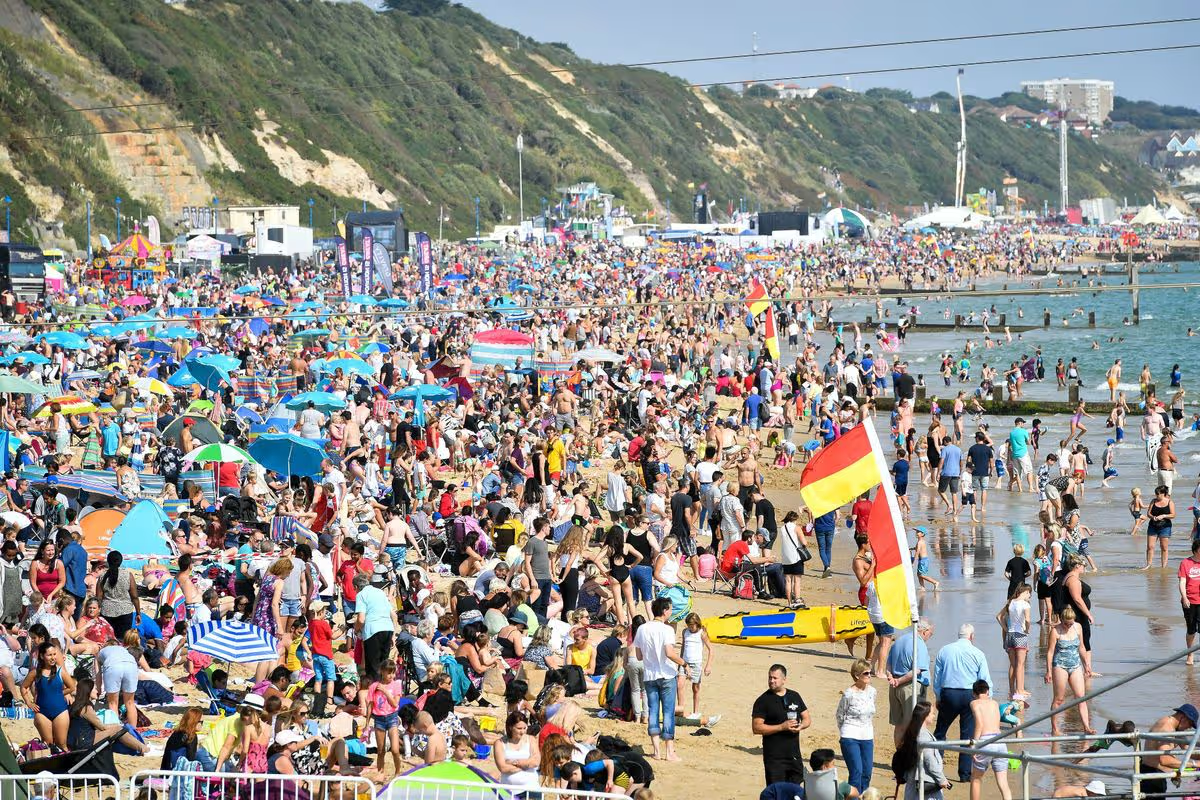
British holiday firms are reporting a boom in bookings up to 235% compared to this time last year, as the Iran war forces people to cancel far-flung destinations and look closer to home instead

Brits are looking again at holidays closer to home this summer as fears grow that the Iran war could ground flights and spike plane ticket prices by up to 50%.

Aviation bosses are said to be growing increasingly worried that the closure of the Strait of Hormuz could spell jet fuel shortages within weeks – and are struggling to get guarantees of supply beyond the next month. ⁠

Contingency plans being drawn up would see holidaymakers hit by airlines ‘rationing’ their operations, including a reduced schedule, higher prices and cancellation of less profitable routes.

READ MORE: Dubai flights chaos as another major airline grounds all planes after explosionsREAD MORE: Simon Calder issues crucial Abu Dhabi travel insurance warning as he flies through UAE

It comes as other destinations beloved by British tourists have ended up Iran’s crosshairs.

Cyprus, Turkey and Abu Dhabi are some of the destinations thrown into doubt this year thanks to the Middle East crisis – but holidaymakers are already making ‘staycation’ bookings instead for the likes of Norfolk, Pembrokeshire and the Isle of Wight as they eye up a safer, more certain getaway.

David Land, who works at the University Technical College in Durham, was forced to cancel upcoming stays in Dubai and the Maldives for his wife Barbara’s birthday – and has lined up “sunny Cornwall” as an alternative.

“I’m a bit of a foodie, so I quite like the idea of seeing how many restaurants I can go to, in terms of Paul Ainsworth’s, Rick Stein’s”, he said, aiming to spend four or five days “at least” in the Land of Saints.

David and his wife, who are both in their 70s and tied the knot in 1979, went on one of their first holidays together on the beaches of Northumberland – and he’s also considering a return there this year.

“I would say the majority of our holidays have been abroad, in Europe, the Middle East, the Indian Ocean – but we’ve been saying ‘Why can’t go on a holiday more in the UK’?”, he told the Mirror. “Apart from the need to pack appropriate clothing, it’s a lovely place to go – as long as the people doing it don’t try to rip us off, as happened a bit around Covid.”

‘We’re not going to listen to Donald Trump’

Asked why he hasn’t chosen to simply reschedule his existing foreign holidays, he said: “We’re not going to listen to Donald Trump when he says the war’s going to be over in ‘three or four weeks’. There’s no confidence that we would be able to go back, not until the war stops, and even then we’d have to know that it’s not going to start again.”

Businesses across the UK tourism industry are already reporting a boom in bookings not seen since the pandemic, with Google searches for ‘best staycations’ up 40% since Trump launched his bombardment of Iran.

Business is booming, say British travel firms

Samantha Evans, founder of Humphreys of Henley, said her luxury travel firm has experienced the “busiest start to the year on record”, with the “safe and deeply enriching” surrounds of the English countryside attracting both domestic guests and those from further afield, particularly the United States.

She told the Mirror: “Luxury hotels are reporting an increase in domestic demand over the next three months. British guests are choosing to stay closer to home, but still want exceptional, experience-led travel – so they’re trading airports for the countryside rather than cancelling plans altogether.”

Rental agency Habitat Escapes told the Mirror that their bookings are up 235% this week compared to the same date last year, with the majority for Silverlake Estate in Dorset and the remainder for Lower Mill Estate in the Cotswolds.

And industry expert Emily Keogh, a former judge for The Hotel Magazine Awards, said there was renewed interest in “spontaneous countryside escapes and coastal getaways that can be booked at relatively short notice” because of the new difficulties in international travel.

Others believe this is part of a movement back towards British holidays that began well before the Middle East crisis, as Matthew Price, CEO of travel firm Awaze, said: “This trend of staying closer to home is part of a broader pattern of behaviour we’ve seen in the UK for a number of years, where holidaymakers are choosing staycations over going abroad. From coastal to countryside getaways, the quality and variety on offer in the UK means a domestic break can feel just as exciting as going overseas.

He revealed bookings were up 26% for Cottages.com, alongside a 10% rise in summer bookings for Hoseasons. While the South West remains a popular destination, regions like the North West and Southern Scotland are seeing “the strongest year-on-year growth for the peak summer period”, Mr Price said.

And the Great British holiday may benefit too from rising jet fuel prices, which experts have warned could push up the cost of plane tickets very soon.

Jet fuel shortages threaten cancellations and price hikes

European jet fuel prices reached an all-time high of $1,698 per tonne this week – more than double the $830 per tonne before the air strikes on Iran – and the closure of the Strait of Hormuz is sending alarm bells ringing among airline bosses.

While European airlines have stressed that they are currently operating with normal levels of fuel, Scandinavia’s SAS became the first this week to admit it had introduced a “temporary price adjustment” in response to the soaring prices, with more expected to follow.

Experts now predict a potential 30% to 50% hike in plane tickets for European summer holidays if the fuel crisis drags on, potentially costing an extra £600 for a family of four heading to the Canary Islands, Greece or Morocco.

Long-haul flights would see even steeper price increases, with a family trip to Australia going up by an eye-watering £2,400.

James Noel-Beswick, head of commodities at market intelligence firm Sparta Commodities, told the BBC: “I think we’re weeks away from maybe flight cancellations or delays due to lack of jet fuel, rather than months.”

An end to the age of cheap foreign holidays is likely to help tip the balance back in favour of domestic holidays when it comes to cost, as ‘staycations’ have long been criticised for poor value for money – especially when it comes to accommodation.

You can expect to pay at least £500 for five nights in a budget holiday let near St Ives – but in Malaga, the equivalent would set you back just £350.

Air travel chaos threatens holiday favourites

British holidaymakers preparing to head to Spain on their Easter getaways have meanwhile been warned to expect chaos at airports, with a national baggage handler strike threatening to cause missed connections and delayed boarding.

And there’s mounting uncertainty around Turkey, where three Iranian missiles have been intercepted since the beginning of the conflict, and popular Brit destination Cyprus, which saw the RAF base on the island’s southern coast come under drone attack.

Foreign Office chiefs currently advise anyone travelling to either country to be aware of the risks of ‘regional escalation’.

The Citizens Advice Bureau say holidaymakers who are unsure over a trip they have booked in the months ahead should get in touch with their travel provider – but don’t cancel before speaking to them, as you may lose your right to a refund.

Top 10 destinations for British summer holidays:

The top 10 UK destinations for summer staycations, based on consumer research of 2,000 UK adults by Sykes Holiday Cottages:

  1. St Ives (Cornwall)
  2. Isle of Skye (Inner Hebrides, Scotland)
  3. Bath (Somerset)
  4. Whitby (North Yorkshire Coast)
  5. Ambleside (Lake District, Cumbria)
  6. Brighton (East Sussex)
  7. Cambridge (Cambridgeshire)
  8. Bourton-on-the-Water (Cotswolds)
  9. Padstow (Cornwall)
  10. Anglesey (North Wales)

Source link

Iran says it will allow Japanese ships to transit the Strait of Hormuz | US-Israel war on Iran News

Japan sources more than 90 percent of its crude oil imports from the Middle East and is heavily dependent on exports transiting the key waterway.

Iran says Japanese ships will be allowed to transit the Strait of Hormuz, in the latest sign that Tehran has started pursuing a selective blockade of the strategic waterway.

“We have not closed the strait. In our opinion, the strait is open. It is closed only to ships belonging to our enemies, countries that attack us. For other countries, ships can pass through the strait ,” Iranian Foreign Minister Abbas Araghchi told Japan’s Kyodo News late on Friday.

Recommended Stories

list of 4 itemsend of list

“We are talking to them to find a way to pass safely. We are ready to provide them with safe passage. All they need to do is contact us to discuss how this route will be,” Araghchi said, according to an English transcript of the interview shared on his Telegram account.

Japan sources more than 90 percent of its crude oil imports from the Middle East and is heavily dependent on exports transiting the strait, but the waterway has been de facto closed since the United States and Israel attacked Iran on February 28.

INTERACTIVE - Strait of Hormuz - March 2, 2026-1772714221

Iran’s Islamic Revolutionary Guard Corps (IRGC) warned in the early days of the war that its forces would set “ablaze” any ships trying to transit the waterway, bringing marine traffic to a near standstill.

Over the past week, however, Iran has toned down the rhetoric to say the strait is only closed to Tehran’s enemies.

Japan may soon join the small cohort of countries – mainly China, India, and Pakistan – whose vessels have been allowed to transit the waterway in recent days, with approval from Iranian authorities.

Lloyd’s List, a shipping and maritime information service, separately reported that 10 ships have transited the strait by sailing close to Iran’s coastline – a route that is emerging as a “safe corridor” for shipping.

The latest ship, a Greek bulk carrier, transited on Friday by passing close to Iran’s Larak island , Lloyd’s said, while broadcasting the message “Cargo Food for Iran”.

While ships have been transiting on a case-by-case basis, Lloyd’s List reported that the IRGC is developing a more coordinated vetting and registration system.

As the war on Iran hits three weeks, a handful of countries – among them US allies – have already started lobbying Tehran to reopen the strait or allow their ships safe passage.

Japan, France, Germany, Italy, the Netherlands, and the United Kingdom earlier this week issued a joint statement expressing their “readiness to contribute to appropriate efforts to ensure safe passage through the Strait”.

Iraq, Malaysia, China, India and Pakistan have all reportedly held direct talks with Tehran to discuss the matter, according to Lloyd’s.

Araghchi’s remarks to Kyodo follow a call with Japanese Foreign Minister Toshimitsu Motegi on Tuesday, during which Tokyo expressed concern about the large number of Japanese vessels currently stranded in the Gulf, according to a Japanese readout of the call.

Source link

Palestinian citizens of Israel demand better protection against missiles | US-Israel war on Iran

NewsFeed

At least 15 people have been killed by attacks in Israel since the war on Iran started late last month. Israel operates a network of shelters to keep people safe, but not all Israeli citizens enjoy the same level of protection.

Source link

300 million people celebrate Nowruz under a cloud of war | US-Israel war on Iran

NewsFeed

Millions of people have rung in the ancient Persian New Year, Nowruz, as war grips the Middle East. The 3,000-year-old Zoroastrian-rooted celebration marks the beginning of spring in the northern hemisphere and is celebrated by 300 million people in Iran and Central Asia.

Source link

Military movements indicate Trump is considering Iran ground operation | US-Israel war on Iran

NewsFeed

The US is moving military assets to the Middle East that are key to providing support for ground troop operations. Al Jazeera’s Kimberly Halkett says it’s the clearest sign yet of potential US boots on the ground in Iran to secure the Strait of Hormuz.

Source link

Will Europe be pulled into the Iran war? | News

Europe is under pressure as Trump pushes allies to support the Iran war. How are they responding?

As US President Donald Trump pushes deeper into war with Iran, Europe is keeping its distance, calling it “not our war”. But as strikes on Gulf energy facilities send oil and gas prices soaring, that distance is being tested. In a rare joint move, leaders from across Europe and Japan have pledged to help stabilize energy markets and ensure safe passage through the Strait of Hormuz. Can Europe stay out of the fighting while being pulled in by its economic consequences?

In this episode: 

  • Sven Kühn von Burgsdorff, Former EU Diplomat

Episode credits:

This episode was produced by David Enders and Chloe K. Li, with Spencer Cline, Sonia Baghat, Tuleen Barakat, Catherine Nouhan and our host, Malika Bilal. It was edited by Sarí el-Khalili. 

Our sound designer is Alex Roldan.  Our video editors are Hisham Abu Salah and Mohannad al-Melhem. Alexandra Locke is The Take’s executive producer. 

Connect with us:

@AJEPodcasts on X, Instagram, Facebook, and YouTube


Source link

What are the risks of turning energy sites into battlefields? | US-Israel war on Iran News

Oil and gas facilities in the Gulf have been attacked since early in the war on Iran.

The war in the Middle East took a serious turn when Israel bombed Iran’s energy facilities, pushing Iran to step up attacks on its Gulf neighbours.

The damage has been significant and will take years to repair. It also has long-term consequences, with Qatar already warning of a reduction in exports.

Recommended Stories

list of 3 itemsend of list

The escalation is dangerous, experts say, as energy exports from the Gulf region account for a fifth of global output.

So, what are the risks of turning energy facilities into battlefields?

Presenter: Imran Khan

Guests:

Mohsen Baharvand – Former Iranian ambassador to the United Kingdom

Jim Walsh – Research associate in MIT’s security studies programme

John Sfakianakis – Chief economist at the Gulf Research Center

Source link

Pentagon orders 2,500 troops, 3 warships from California to the Middle East

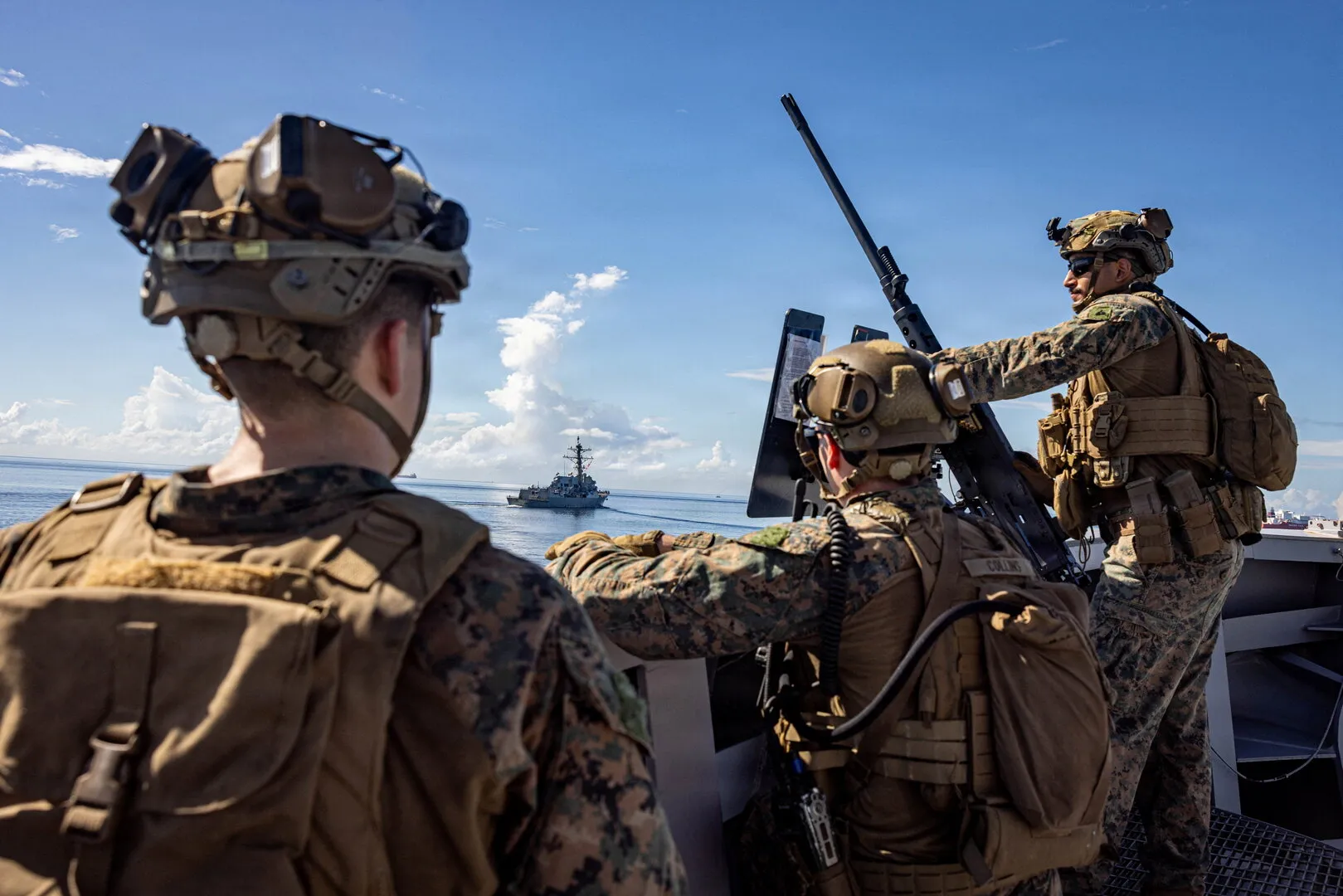
The Pentagon is reportedly sending three California-based warships and roughly 2,500 Marines to the Middle East, the second significant deployment in a week.

The three warships are part of the San Diego-based USS Boxer amphibious ready group. The Marines are from the 11th Marine Expeditionary Unit, based at Camp Pendleton. The deployments were reported Friday by the Associated Press, citing Pentagon sources.

A 2,500-strong Marine unit accompanied by the USS Tripoli warship launched from Japan on Saturday.

The major reinforcement comes as the war’s economic shock waves are felt throughout the globe, as Washington seeks to secure vital shipping lanes and deter further attacks on energy infrastructure around the Persian Gulf.

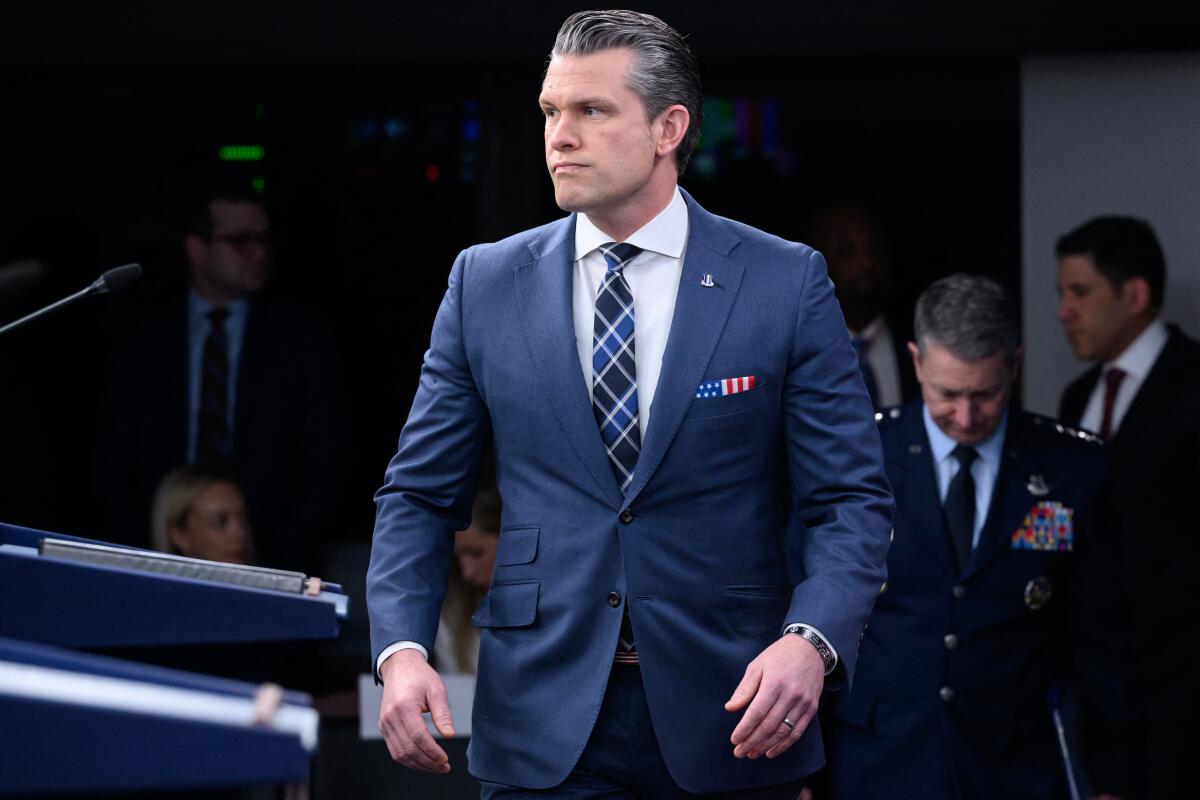
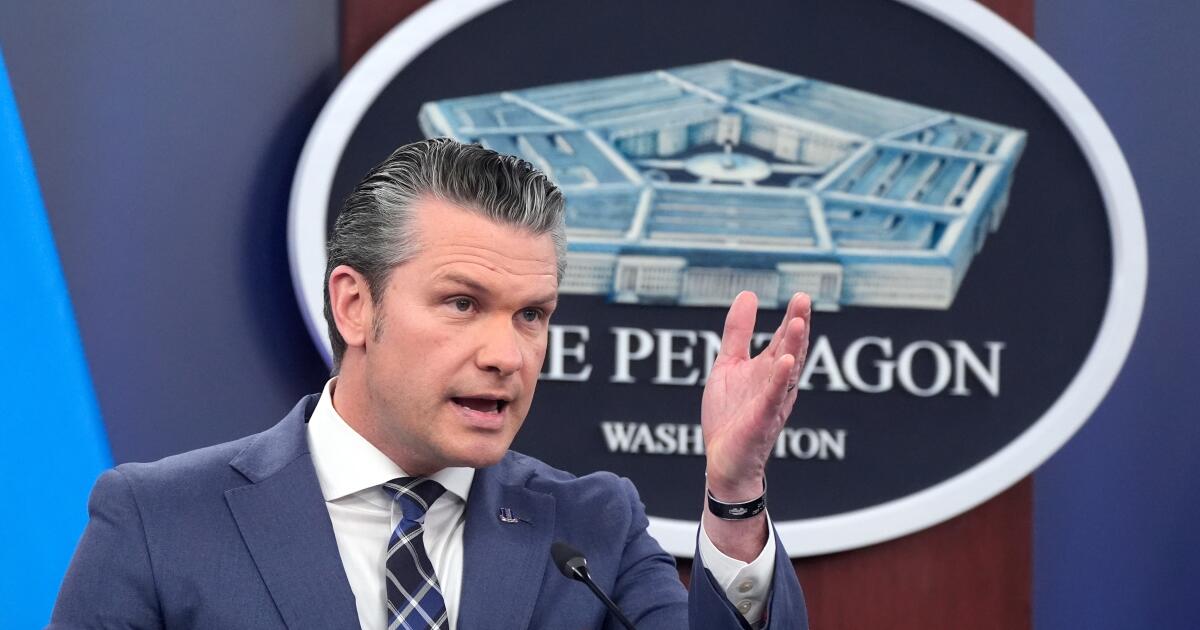
Secretary of Defense Pete Hegseth and Chairman of the Joint Chiefs of Staff General Dan Caine arrive for a news conference

Secretary of Defense Pete Hegseth, front, and Chairman of the Joint Chiefs of Staff General Dan Caine arrive for a news conference at the Pentagon in Washington on Thursday.

(Mandel Ngan / AFP via Getty Images)

President Trump has continued pressing allies to join his proposed coalition to patrol the Iranian-controlled Strait of Hormuz, a vital shipping lane through which about 20% of the world’s oil supply passes. So far, Europe, Japan, China and Australia have refused to heed the call.

Trump on Thursday said Iran “is close to demolished,” but that securing the Strait of Hormuz remained a struggle. He suggested the U.S. was working to secure the strait not for its own oil needs, but “just to be nice” to other countries that rely on oil from the region to a much larger degree than the U.S.

Marines perform a demonstration with helicopters and the amphibious assault ship USS Boxer

Marines perform a demonstration with helicopters and the amphibious assault ship USS Boxer Oct. 18, 2025, on Marine Corps Base Camp Pendleton.

(Gregory Bull / Associated Press)

“They complain about the high oil prices they are forced to pay, but don’t want to help open the Strait of Hormuz, a simple military maneuver that is the single reason for the high oil prices. So easy for them to do, with so little risk. COWARDS, and we will REMEMBER!” Trump wrote Friday on Truth Social.

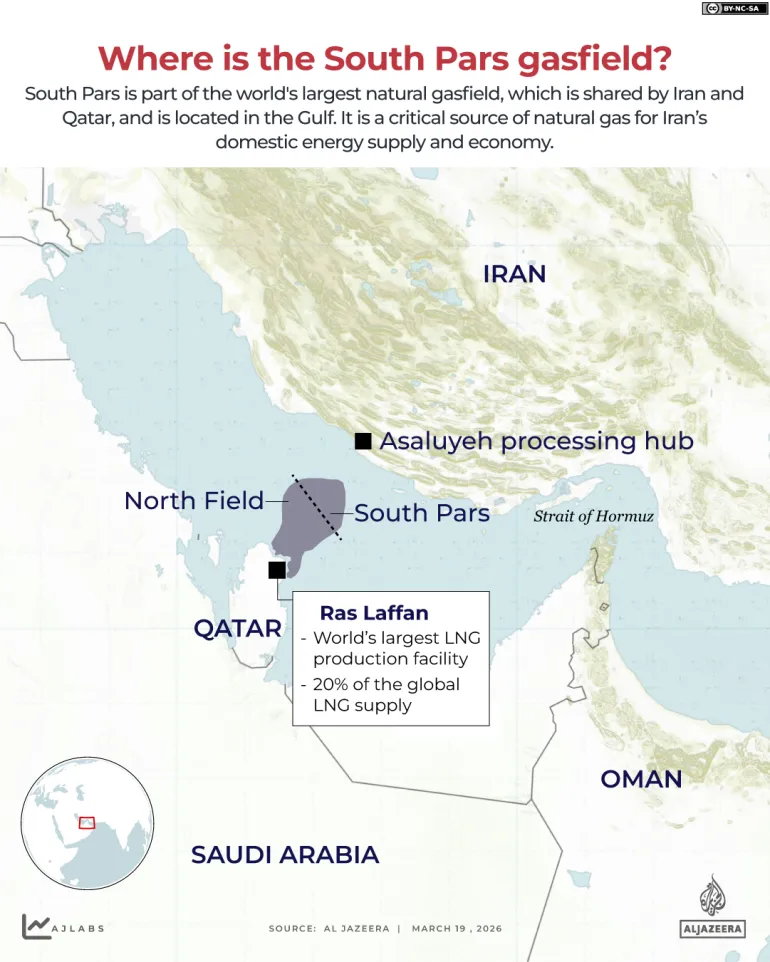
Iran continued sweeping attacks on Mideast energy facilities, a retaliation to Israeli strikes on its Iran’s South Pars field, the world’s largest natural gas field Wednesday. The fallout has dragged the gulf states into the war amid the largest energy supply disruption in history.

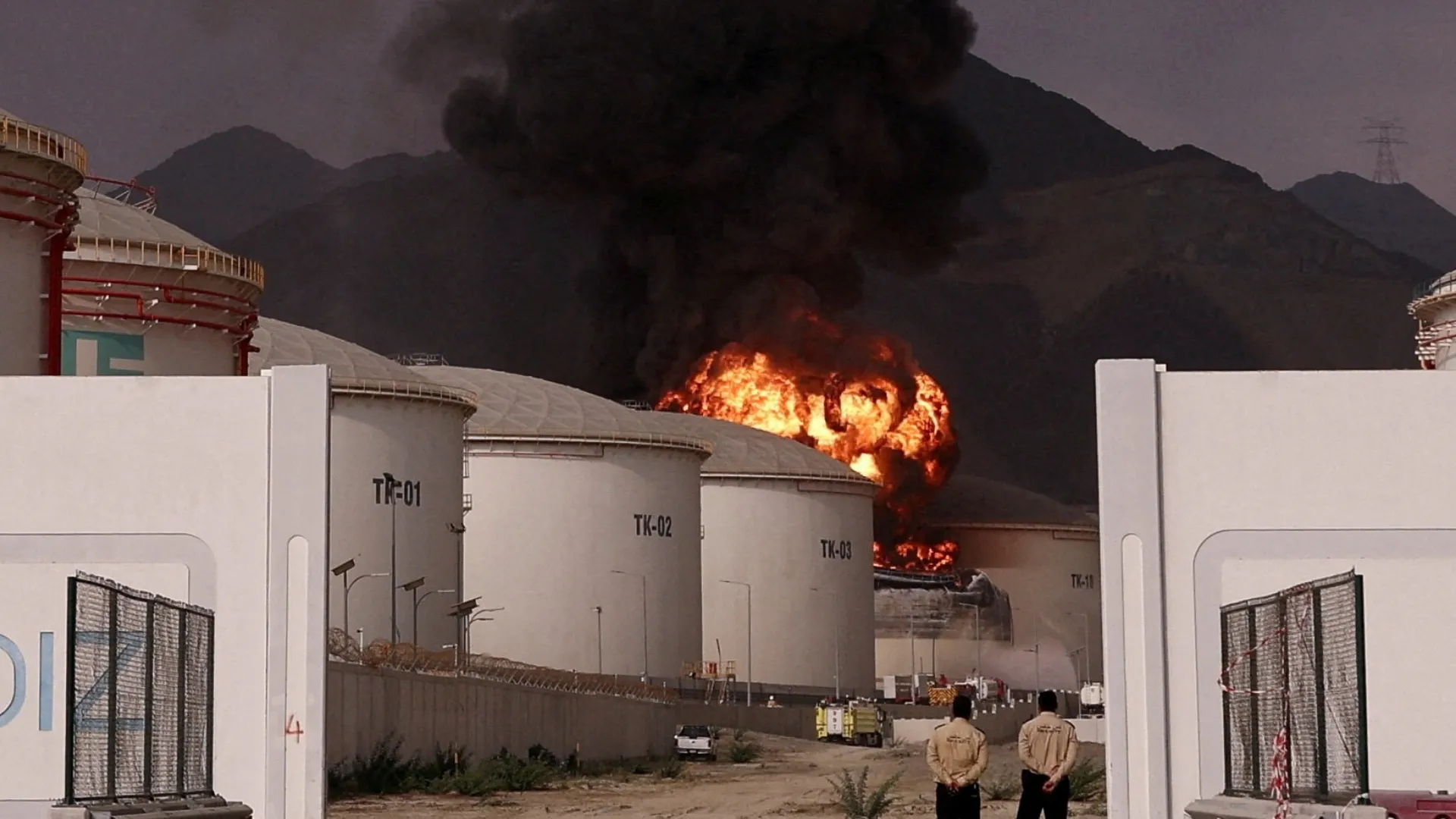
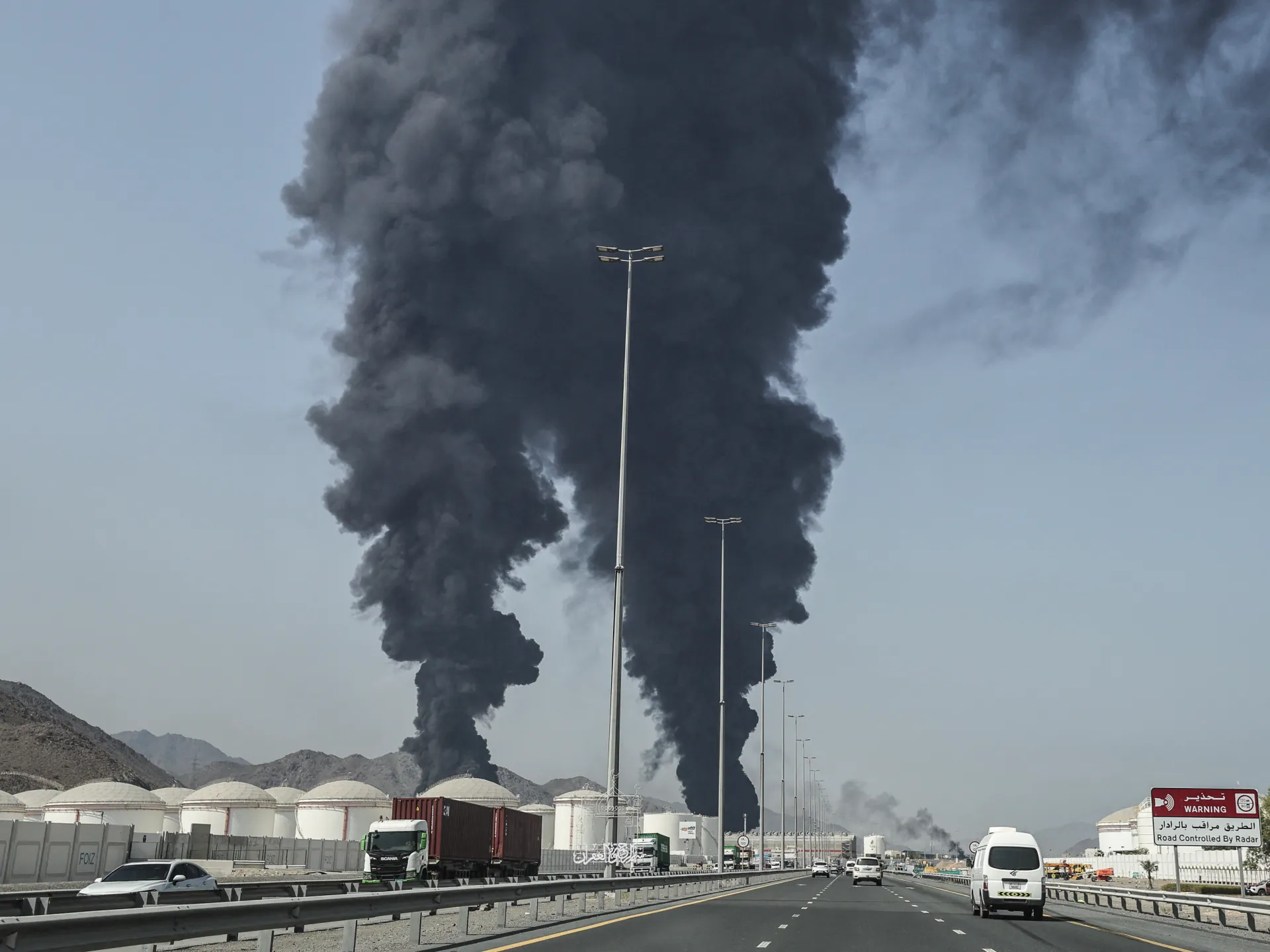
Iranian Shahed drones hammered Kuwait’s largest oil refinery Friday. Similar attacks triggered fires at Ras Laffan Industrial City in Qatar, bringing energy product screaming to a halt at the largest natural gas hub in the globe. Repairs are expected to take years.

Meanwhile, United Arab Emirates’ air defense systems were countering Iranian missiles overnight, and Saudi Arabia said it might respond with force if Iran continues to attack facilities in the kingdom.

An Israeli self-propelled howitzer artillery gun fires rounds

An Israeli self-propelled howitzer artillery gun fires rounds toward southern Lebanon from a position in the upper Galilee in northern Israel near the border on Friday.

(Jalaa Marey / AFP via Getty Images)

Israel said Friday it had killed Esmail Ahmadi, a senior intelligence official in Iran’s Basij and deputy to its commander, in an airstrike. Officials described Ahmadi as “one of the most important pillars” of the Basij volunteer paramilitary force.

Even as Israel carries out daily decapitation airstrikes in Tehran and the U.S. deploys renewed forces to its front door, the Islamic Republic has not faltered.

Abolfazl Shekarchi, a senior spokesperson for Iran’s armed forces, said American and Israeli officials could be targeted worldwide.

“From now on, based on the information we have, even recreational and tourist locations around the world will not be safe for you,” Shekarchi said.

Oil prices have surged past $100 a barrel and found a volatile new floor amid the chaos.

Financial markets have reacted with sustained losses. Wall Street has now posted its fourth consecutive week of declines, with investors increasingly pricing in the risk that higher energy costs could slow economic growth while reigniting inflation. Analysts warn that persistently elevated crude prices are likely to squeeze corporate margins and weigh on consumer spending in the United States and beyond.

The International Monetary Fund has cautioned that the conflict could push inflation higher, too. The Federal Reserve is now facing renewed uncertainty as they weigh whether to hold interest rates higher for longer in response to rising energy costs.

At a White House event on Friday, Trump maintained that the United States’ military operation is “going extremely well in Iran.”

“The difference between them and us is they had a navy two weeks ago and they have no navy anymore. It’s all at the bottom of the sea,” Trump said. “Fifty-eight ships were knocked down in two days and we have the greatest navy in the world. It is not even close.”

The president did not take questions from reporters in the room. But in unprompted remarks, he said the United States and Iran are not engaging in talks because their leaders “are all gone,” adding to the uncertainty about the war’s exit strategy.

“We are having a hard time, we want to talk to them and there is nobody to talk to,” he said. “We have nobody to talk to and you know what? We like it that way.”

Source link

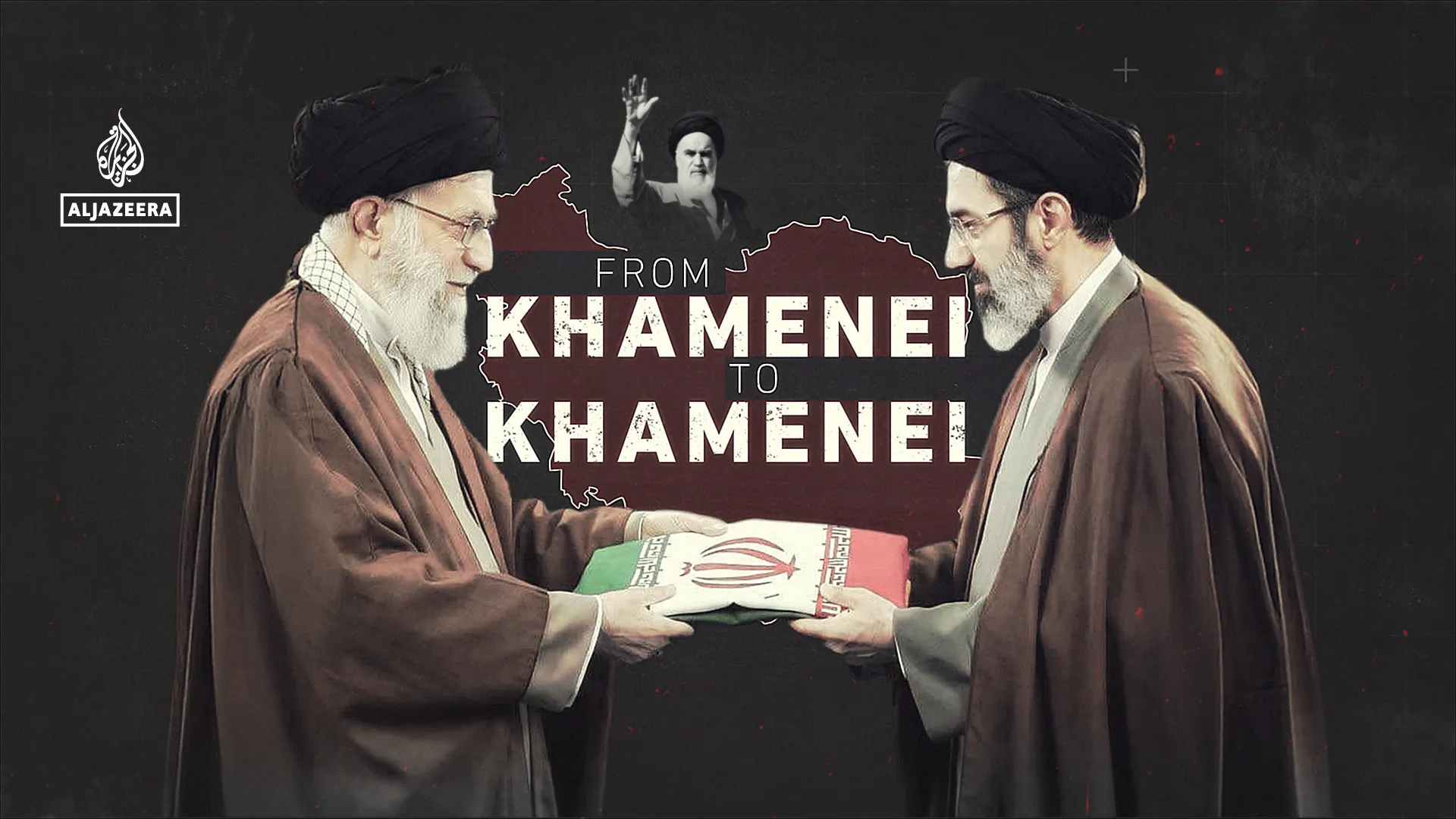
Iran: From Khamenei to Khamenei | US-Israel war on Iran

How Iran’s power structure was built, and how it survives its architect.

After a US-Israeli strike killed Iran’s Ali Khamenei, the war on Iran escalates, and the Islamic Republic faces a critical moment. Mojtaba Khamenei has been elected supreme leader, marking a rare and controversial succession. This explainer breaks down how Iran’s power structure was built after the 1979 Islamic revolution led by Ayatollah Ruhollah Khomeini, and how Ali Khamenei transformed that revolution into a complex political and security structure.

We examine how the supreme leader sits above all institutions in Iran, shaping decisions across government, the military, and the Islamic Revolutionary Guard Corps, and how this system is designed to endure beyond any single leader. As Mojtaba Khamenei takes power, questions grow over how Iran will be governed, how the IRGC will influence decision-making, and whether the system Ali Khamenei built can withstand both internal pressure and external conflict.

From Ali Khamenei to Mojtaba Khamenei, this is the story of Iran’s supreme leader, the system behind power in Iran, and what comes next.

Source link

Iran’s Khamenei says enemy ‘defeated’ in written Nowruz message | US-Israel war on Iran News

Mojtaba Khamenei has not been seen in public since he replaced his slain father as Iran’s supreme leader.

Supreme Leader Mojtaba Khamenei has said Iran’s enemies were being “defeated” in a written message for the Persian New Year, as the US and Israel continue to pound the country with attacks.

In a statement read on Iranian television on Friday, Khamenei praised the steadfastness of the Iranian people marking Nowruz, which he said ushered in ‌the year of a “resistance economy under national unity and national security”.

Recommended Stories

list of 3 itemsend of list

“At the moment, due to the particular unity that has been created between you, our compatriots – despite all the differences in religious, intellectual, cultural and political origins – the enemy has been defeated,” he said.

Khamenei has not been seen in public since he became supreme leader, following the assassination of his father, Ayatollah Ali Khamenei, at the start of the war on February 28.

Iran’s supreme leader said that while the US and Israel believed that after one or two days of attacks, the Iranian people would overthrow the government, but this was a “gross miscalculation”.

The war was launched under “the delusion that if the pinnacle of the regime and certain influential military figures were to attain martyrdom, it would instil fear and despair in our dear people … and through this means, the dream of dominating Iran and subsequently dismembering it would be realised”, he said.

Instead, “a fracture has emerged in the enemy,” he added.

Analysts have observed that the Iranian constitution itself was drafted with the spectre of a power vacuum in mind, a “survival protocol” designed to give the system the capacity to continue even at a moment of maximum shock.

Khamenei also denied that Iran or its ‌allied forces were responsible for attacks ⁠against Turkiye and ⁠Oman.

Those were “false flag” incidents used by Iran’s enemy to “sow discord among neighbours, and it may occur in other countries as well”, he claimed.

The Turkish Ministry of National Defence last week said NATO air defences intercepted a ballistic missile launched from Iran. Two people were killed in Oman after drones came down in the Sohar province.

The supreme leader also called on Afghanistan and Pakistan to end their fighting and said he stood ready to assist.

“We consider our eastern neighbours to be very close to us”, the supreme leader said. “I appeal to our two brotherly countries, Afghanistan and Pakistan, to establish better relations with each other … and I myself am ready to take the necessary actions.”

The neighbouring countries agreed to a temporary “pause” in hostilities during the Muslim holiday of Eid al-Fitr this week, after weeks of deadly violence.

Source link

Pete Hegseth’s Christian rhetoric draws renewed scrutiny after the U.S. goes to war with Iran

Since becoming defense secretary, Pete Hegseth has found no shortage of ways to bring his strand of conservative evangelicalism into the Pentagon.

He hosts monthly Christian worship services for employees. His department’s promotional videos have displayed Bible verses alongside military footage. In speeches and interviews, he often argues the U.S. was founded as a Christian nation and troops should embrace God, potentially risking the military’s secular mission and hard-won pluralism.

Now the defense secretary’s Christian rhetoric has taken on new meaning after the U.S. and Israel went to war with Iran, an Islamic theocracy.

“The mullahs are desperate and scrambling,” he said at a recent Pentagon press briefing, referring to Iran’s Shiite Muslim clerics. He later recited Psalm 144, a passage of Scripture that Jews and Christians share: “Blessed be the Lord, my rock, who trains my hands for war and my fingers for battle.”

Hegseth has a history of defending the Crusades, the brutal medieval wars that pitted Christians against Muslims. In his 2020 book “American Crusade,” he wrote that those who enjoy Western civilization should “thank a crusader.” Two of his tattoos draw from crusader imagery: the Jerusalem Cross and the phrase “Deus Vult,” or “God wills it,” which Hegseth has called “the rallying cry of Christian knights as they marched to Jerusalem.”

Matthew D. Taylor, a visiting scholar at Georgetown who studies religious extremism and has been a frequent Hegseth critic, said, “The U.S. voluntarily going to war against a Muslim country with the military under the leadership of Pete Hegseth is exactly the kind of scenario that people like me were warning about before the election and throughout his appointment process.”

Taylor said Hegseth’s rhetoric and leadership “can only inflame and reinforce the fears and deep animosity that the regime in Iran has towards the U.S.”

When asked whether Hegseth views the war in Iran in religious terms, a Defense Department spokesperson pointed to a recent CBS interview in which Hegseth seemed to confirm as much.

“We’re fighting religious fanatics who seek a nuclear capability in order for some religious Armageddon,” Hegseth said of Iranian leaders. “But from my perspective, I mean, obviously I’m a man of faith who encourages our troops to lean into their faith, rely on God.”

Allegations U.S. military commanders cited biblical prophecies remain unverified

Generations of evangelicals have been influenced by their own version of Armageddon and the end of the world, circulated by books like the “Left Behind” series and “The Late Great Planet Earth,” or the horror film “A Thief in the Night.” Some evangelicals espouse prophecies in which warfare involving Israel is key to bringing about the return of Jesus.

Christian Zionist pastor John Hagee, head of Christians United for Israel, said of the Iran war, “Prophetically, we’re right on cue.”

The co-founder of Hegseth’s denomination, however, does not teach this theology. Pastor Doug Wilson of the Communion of Reformed Evangelical Churches identifies as a postmillennialist, meaning he believes most of the apocalyptic events of the Bible have already happened, paving the way for the gradual Christianization of the world before Christ’s return.

Hegseth has not said the Iran war is part of Christian prophecy. Yet days after the conflict began, claims went viral that U.S. military commanders were telling troops the war fulfilled biblical prophecies around Armageddon and the return of Christ.

The Associated Press has not been able to verify these claims, which stem from one source: Mikey Weinstein, the head of the Military Religious Freedom Foundation, a watchdog group. Based on allegations Weinstein said he received from hundreds of troops, 30 Democratic members of Congress asked the Pentagon inspector general to investigate.

In an interview with the AP, Weinstein declined to provide documentation or the original emails he received from service members. He said troops were afraid of retaliation, so they would not speak to the media, even if their identities remained protected.

Three major religion watchdog groups — the Freedom From Religion Foundation, the Anti-Defamation League and the Council on American-Islamic Relations — said they have not received similar complaints. The Pentagon declined to comment on the allegations.

Hegseth wants to reform the military chaplain corps

Hegseth’s church network, the CREC, preaches a patriarchal form of Christianity, where women cannot serve in leadership, and pastors argue that homosexuality should be criminalized. Hegseth last year reposted a video in which a CREC pastor opposed women’s right to vote. Wilson, its most prominent leader, identifies as a Christian nationalist and preached at the Pentagon in February at Hegseth’s invitation.

Both Wilson and Hegseth have questioned Muslim immigration to the United States. Wilson argues the country should restrict Muslim immigration in order to remain predominantly Christian. In “American Crusade,” Hegseth lamented growing Muslim birth rates and that Muhammad was a popular boys’ name in the U.S.

As head of the armed forces, Hegseth has overseen changes that are in line with his conservative Christian worldview, including banning transgender troops, curtailing diversity initiatives and reviewing women in combat roles.

Youssef Chouhoud, a political scientist at Christopher Newport University, said, “The intrusion of Christian nationalist policy, not just Christian nationalist rhetoric … that is what’s troubling.”

Hegseth has pledged to reform the military’s chaplain corps, which provides spiritual care to troops of any faith and no faith at all. He scrapped the 2025 U.S. Army Spiritual Fitness Guide and wants to renew chaplains’ religious focus, which he said in a December video message has been minimized “in an atmosphere of political correctness and secular humanism.”

Rabbi Laurence Bazer, a retired U.S. Army colonel and chaplain, said it risks making service members feel like outsiders when the language of military leadership draws exclusively from one faith tradition.

“The U.S. military reflects the full diversity of this country — people of every faith step forward to serve,” Bazer said in a statement. “That diversity is a strength worth protecting.”

Stanley writes for the Associated Press. AP reporter Peter Smith in Pittsburgh , and AP reporter Konstantin Toropin contributed to this report..

Source link

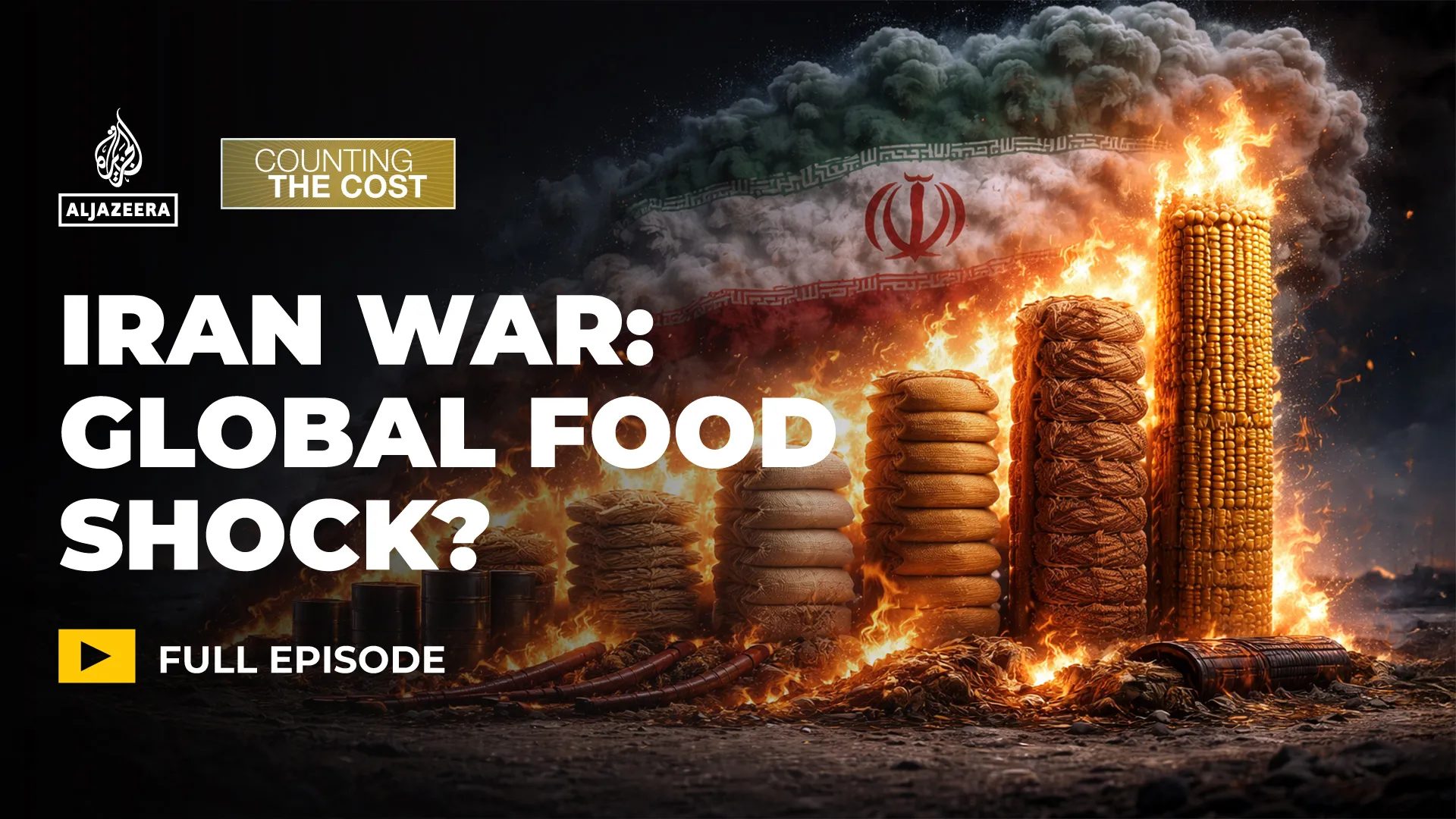
Could Iran war trigger the next global food shock? | US-Israel war on Iran

From factories to supermarket shelves, the Iran war is disrupting global supply chains.

First came the energy shock. Now, the Iran war is hitting something even more basic: Food.

With the Strait of Hormuz blocked, vessels are being rerouted and supply chains are under strain.

The disruption is pushing up the costs of almost everything from factories to supermarket shelves thousands of miles away.

The longer the Iran conflict continues, the greater the pressure on businesses and consumers worldwide.

The United Nations warns that rising food, oil and shipping costs could push an additional 45 million people into acute hunger – taking the global total above its record of 319 million.

Source link

Will Russian oil be the biggest winner in the US-Israel war on Iran? | US-Israel war on Iran News

Russian oil is emerging as a key beneficiary of the US-Israeli war on Iran, as countries scramble to charter tankers following United States President Donald Trump’s decision to temporarily ease sanctions, analysts say.

Following a phone call with Russian President Vladimir Putin on March 10, Trump said the US would waive Russian oil-related sanctions on “some countries” to ease the shortage caused by Iran’s closure of the Strait of Hormuz, which in peacetime carries 20 percent of the world’s oil and gas from producers in the Gulf.

This week, it was reported that a number of tankers carrying Russian oil bound for China had changed course and were heading for India instead.

According to figures from the Centre for Research on Energy and Clean Air (CREA), Russia earned an additional 672 million euros ($777m) in oil sales in the first two weeks of the war on Iran, which began on February 28 when Israel and the US launched strikes on Tehran, killing Ayatollah Ali Khamenei and other senior Iranian officials.

Iran has since struck back, launching thousands of missiles and drones towards Israel as well as US military assets and infrastructure in neighbouring Gulf countries. The war stepped up a level this week, when Israel bombed Iran’s critical South Pars gasfield, and Iran hit back with strikes on Gulf energy assets, including Qatar’s Ras Laffan Liquefied Natural Gas (LNG) facility – the world’s largest.

Gasfield
(Al Jazeera)

This week, the average price of Urals oil – the Russian benchmark – was significantly higher than the pre-war price of less than $60, at around $90 per barrel.

Here’s more about who is buying Russian oil and which other nations might benefit from the oil crisis.

Why is Russian oil benefitting from the Iran war?

Iran’s effective closure of the Hormuz Strait, which is the only sea route from the Gulf to the open ocean, has “walled in” 20 million barrels of Gulf oil per day, George Voloshin, an independent energy analyst based in Paris, told Al Jazeera.

This has prompted the US to, at least temporarily, ease sanctions on shipped Russian oil to slow the ensuing energy crisis and potential global price collapse. The price of Brent crude, the international benchmark, has risen to above $100 a barrel since the closure of the strait, compared with about $65 before the war began.

Many analysts say a price of $200 is no longer “far-fetched”.

“Russia has emerged as a primary beneficiary of the Middle East conflict due to the massive supply vacuum created by the closure of the Strait of Hormuz,” Voloshin said. “Global refiners are desperate for alternative medium-sour crudes, a need that Russia’s Urals grade specifically meets.”

He added that the US decision to grant a temporary reprieve for shipped Russian oil “has provided Moscow with a critical window to maximise export volumes and oil revenues, essentially allowing Russian crude to act as the world’s primary swing supply during the Iranian blockade”.

INTERACTIVE - Strait of Hormuz - March 2, 2026-1772714221
(Al Jazeera)

How has the price of Russian oil been affected so far?

The price of Russian Urals has surged significantly, experts say. As a result of US sanctions, the oil had been trading at below $60 a barrel for some time. However, while “Urals historically traded at a significant discount to Brent due to Western sanctions”, Voloshin said, “that gap has narrowed as demand outstrips supply”.

“Since the beginning of the year, the price of Russian oil is estimated to have risen by nearly 80 percent – most recently close to $90 per barrel – and consistently trading well above the G7 price cap of $60 as buyers prioritise energy security over regulatory compliance in a high-volatility environment,” he added.

Are ships changing course to deliver Russian oil to new buyers?

Earlier this week, Bloomberg reported that at least seven tankers carrying Russian oil had changed course mid-voyage from China to India, citing data from Vortexa, the data analytics group.

Then, Indian media quoted Rakesh Kumar Sinha, special secretary in the Ministry of Ports, Shipping and Waterways, confirming that the Aqua Titan, a Russian oil-laden tanker originally destined for China, is now expected to arrive at New Mangalore port on March 21 having been chartered by Mangalore Refinery and Petrochemicals Limited (MPCL).

India was the first country to receive a time-limited exemption from the US Treasury to import Russian oil that is already at sea, Voloshin said.

“There is clear evidence of a massive logistical redirection of Russian oil cargoes mid-voyage. Several tankers originally bound for Chinese ports have, indeed, switched trajectory to India. This shift is driven by India’s aggressive pursuit of discounted distressed cargoes to fill its strategic reserves and meet domestic demand, as well as the increased risk and insurance costs associated with long-haul shipments to East Asia via contested waters.”

Until recently, Trump had been strongly pressuring India to stop buying Russian oil, even slapping additional 25 percent trade tariffs on India last year in punishment for doing so. This was lifted earlier this year when Trump claimed he had received assurances from India’s Prime Minister Narendra Modi that India would start buying US oil, or even Venezuelan oil seized by the US, instead.

Which countries are buying Russian oil now?

Indian media has reported that India’s purchases of Russian crude have surged in the past three weeks, since the war on Iran began and the Strait of Hormuz was closed.

“The primary buyers of Russian oil continue to be India and China, who together now account for the vast majority of Russia’s seaborne exports,” Voloshin said.

Turkiye is also a significant buyer, he added, now using Russian crude to stabilise its domestic market amid the gas shortages caused by the Israeli strikes on Iran’s South Pars field.

“Additionally, a shadow fleet of ageing tankers continues to move Russian oil to smaller, less-regulated refineries across Southeast Asia and the Middle East, often through complex ship-to-ship transfers designed to obscure the origin of the crude,” he added.

He said this shadow fleet is becoming the primary delivery mechanism for oil in several contested regions, meaning more buyers could appear. “Additionally, the degree of cooperation between the US and its European allies remains a wild card. If the EU continues to refuse participation in military operations near Iran, the diplomatic and economic pressure on the US to maintain the Russian oil reprieve will likely increase.”

Russian oil
A French Navy helicopter hovers over the Deyna vessel, which is believed to be a member of the Russian shadow fleet, during an operation in the Western Mediterranean Sea, in this handout image obtained by Reuters on March 20, 2026 [Prefecture maritime de la Mediterranee/Etat Major des Armees/Handout via Reuters]

Will Russian oil remain in demand if the US re-imposes sanctions?

If there is nowhere else to readily source oil, countries may continue to seek Russian crude even if the US reimposes sanctions, Voloshin said. The International Energy Agency (IEA) says the closure of the Hormuz Strait has caused a shortage of 8 million barrels of oil per day.

If that persists, “major importers like India may feel they have no choice but to continue buying Russian oil to prevent domestic economic collapse”, Voloshin said.

If secondary sanctions on Russian oil are reintroduced, he added, buyers may demand much lower prices to compensate for the increased legal and financial risks of dealing with Moscow. “At the same time, in the presence of a continued severe market disruption, the US is very likely to roll over [extend] current exemptions,” Voloshin said.

Which other energy-producing nations could benefit?

Two other major non-OPEC energy producers that could benefit are Norway and Canada, experts say. However, this will largely depend on their capacity to increase production.

“Norway has already signalled its intent to maintain maximum gas and oil production to support European energy security, primarily selling to EU nations seeking to replace lost Iranian and Russian volumes,” Voloshin said. “Canada is exploring ways to increase its export capacity to the US Gulf Coast. However, like Russia, its ability to significantly ramp up production in the short term is constrained by pipeline throughput and infrastructure bottlenecks.”

Source link

Who are the Gulf’s military allies, and how are they helping in Iran war? | Drone Strikes News

Gulf countries are coming increasingly under attack from Iranian strikes as the United States-Israeli war on Iran continues to escalate.

On Friday, Saudi Arabia intercepted multiple waves of Iranian drones and Kuwait Petroleum Corporation said its Mina al-Ahmadi refinery had been targeted by several early-morning drone attacks, leading to some units being shut down.

Gulf countries have repeatedly insisted that their defences are sufficient to repel these Iranian strikes. However, they also have military partnerships and agreements in place with other countries which could potentially provide more assistance as tensions escalate.

In this explainer, we look at what these partnerships are, how they are helping the Gulf and whether they could do more.

What military partnerships do the Gulf countries have?

The Gulf countries have a handful of military partnerships of different kinds.

Qatar

Qatar is home to the largest military base hosting US assets and troops in the region – Al Udeid.

The 24-hectare (60-acre) base, located in the desert outside the capital Doha, was established in 1996 and is the forward headquarters for US Central Command, which directs US military operations in a huge swath of regional territory stretching from Egypt in the west to Kazakhstan in the east.

It houses the Qatar Emiri Air Force, the US Air Force, the United Kingdom’s Royal Air Force, as well as other foreign forces.

Qatar is the second largest Foreign Military Sales (FMS) partner to the US after Saudi Arabia. FMS is the official, government‑run channel the US uses to sell weapons, equipment and services to other governments.

In January, the US State Department said that “recent and significant” sales to Qatar included the Patriot long-range missile system, the National Advanced Surface to Air Missile System, early warning systems, radars and attack helicopters.

On September 9, 2025, Israel struck a residential area of Qatar’s capital, Doha, targeting senior leaders of Hamas including negotiators for a ceasefire in Israel’s genocidal war in Gaza.

On September 29, US President Donald Trump signed an executive order reaffirming support for Qatar, saying: “The United States shall regard any armed attack on the territory, sovereignty, or critical infrastructure of the State of Qatar as a threat to the peace and security of the United States.”

On Wednesday, Israel struck Iran’s critical South Pars gasfield. Soon after, Iran retaliated, hitting a major gas facility at Qatar’s Ras Laffan plant.

In response, Trump wrote in a Truth Social post guaranteeing that Israel would not attack the South Pars field again unless Iran again “unwisely” attacked Qatar.

Trump added that, if it did, the US “with or without the help or consent of Israel, will massively blow up the entirety of the South Pars Gas Field at an amount of strength and power that Iran has never seen or witnessed before”.

There is also a Turkish military base in Qatar as the two countries collaborate via defence cooperation agreements and joint training.

In recent years, Qatar has also strengthened ties with the United Kingdom through joint training and exercises and with France from which it buys weapons.

Earlier this month, UK Prime Minister Keir Starmer said he would send four additional Typhoon fighter jets to Qatar to help with defence.

Despite initially stating that the UK would not permit the US to use UK bases for strikes on Iran, Starmer partially relented on March 1 when he granted a US request to use UK bases for “defensive” strikes on Iranian capabilities.

Nevertheless, Starmer has stated that the UK will not send its own assets or troops or otherwise become involved in the ongoing war.

Saudi Arabia

Saudi Arabia hosts US military assets and personnel at the Prince Sultan Air Base (PSAB), located near Al Kharj, southeast of Riyadh.

Saudi Arabia is also the largest Foreign Military Sales (FMS) partner of the US.

There is no formal mutual‑defence treaty between the US and Saudi Arabia, similar to NATO’s Article 5. Instead, there are defence cooperation agreements between Riyadh and Washington.

Pakistan and Saudi Arabia have had a decades-long security partnership. This was strengthened in September 2025, when the two countries signed a formal mutual defence pact.

The extent to which Pakistan, which shares a 900km (559-mile) border with Iran in its southwest, can and will intervene is unclear, however.

On March 3, Pakistan’s Deputy Prime Minister and Foreign Minister Ishaq Dar told a news conference he had personally reminded Iranian Foreign Minister Abbas Araghchi of Pakistan’s defence obligations to Saudi Arabia.

“We have a defence pact with Saudi Arabia, and the whole world knows about it,” Dar said. “I told the Iranian leadership to take care of our pact with Saudi Arabia.”

An estimated 1,500 to 2,000 Pakistani troops are stationed in Saudi Arabia.

United Arab Emirates

The UAE also hosts US assets and personnel at its Al-Dhafra airbase, including advanced aircraft such as F-22 Raptor stealth fighters and various surveillance planes, drones and airborne warning and control systems (AWACS).

On Thursday, the US announced an $8.4bn arms deal with the UAE, for the Gulf nation to buy drones, missiles, radar systems and F-16 aircraft.

Recently, the UAE has bolstered its military partnership with India. In January this year, the president of the UAE, Sheikh Mohamed bin Zayed Al Nahyan, visited India.

During this meeting, India and the UAE reaffirmed the India-UAE Comprehensive Strategic Partnership. Established in 2017, this is a bilateral agreement focused on defence cooperation, energy security and technology exchange.

The UAE and India do not have a mutual defence-style agreement in place, however.

Oman

The US has long-term access agreements for key air and naval facilities in Oman, notably the Port of Duqm and Port of Salalah, both of which have been subject to Iranian strikes over the past three weeks.

The UK and Oman also have a defence cooperation agreement and conduct regular joint exercises.

Pakistan and Oman also have military ties where they hold regular joint naval exercises.

However, there are no mutual defence commitments in place.

Bahrain

The US operates the Naval Support Activity (NSA) in Bahrain. Home to the US Navy’s Fifth Fleet, the base provides security to ships, aircraft, detachments and remote sites in the region.

Bahrain and the UK also have a comprehensive security pact. Earlier this month, Starmer held talks with King Hamad bin Isa Al Khalifa of Bahrain and confirmed that the UK would send aircraft to bolster Bahrain’s security.

Kuwait

Kuwait hosts Camp Arifjan, a major US Army installation that functions as the main logistics, supply and command hub for US military operations across the Middle East, especially within the US Central Command (CENTCOM) area of responsibility.

On Thursday, the US announced an $8bn arms deal with Kuwait – for air and missile defence radar systems.

In 2023, Kuwait signed an agreement on military cooperation with Pakistan, focusing on joint training and military exercises.

These are not mutual defence agreements, however.

What could these partners be doing to better assist Gulf countries?

Experts say military allies of Gulf nations could provide naval escorts to ships transiting the Strait of Hormuz. One-fifth of the world’s oil and gas supplies are shipped through this route in peacetime from Gulf producers.

On March 2, Ebrahim Jabari, a senior adviser to the commander-in-chief of Iran’s Islamic Revolutionary Guard Corps (IRGC), announced that the Strait of Hormuz – through which 20 percent of the world’s oil and gas is transported – was “closed”. This has contributed to the recent surge in oil prices, which have surpassed $100 a barrel, compared with the pre-war Brent crude price of about $65.

In recent days, countries have been individually scrambling to negotiate safe passage for ships with Iran. A handful of mainly Indian, Pakistani and Chinese-flagged ships have been able to get through as a result.

“Pakistan and India are working with Iran to ensure of safe passage of tankers for their markets,” David Roberts, a senior academic in international security and Middle East studies at Kings College London, told Al Jazeera.

Roberts said that theoretically, the countries could also offer a naval escort for their tankers and other tankers.

“As neutrals, this might be a plausible gambit, but would need the acquiescence of Iran. Support establishing a shipping channel from the monarchies to China, Pakistan, India is plausible with concerted pressure from the three states, but Iran will be reluctant to give up that pressure point.”

Roberts said that European countries on the other hand, are “stretched thinly” when it comes to offering any such military support in the Strait of Hormuz.

He suggested the UK could send “another plane or two” to Qatar to join their joint Typhoon squadron. However, he added that it is difficult to make predictions about what support is likely to be forthcoming.

“Gulf states clearly need support. But it’s not clear what can be offered by anyone,” Roberts said.

He added they likely need more munitions for missile defence but stocks are tight everywhere.

Source link