We immediately felt at home in our Privilege double, with decor nodding to Oxford-style vintage fashion.
Our upgrade from a Classic came with complimentary soft drinks, a Nespresso machine, robes and slippers.
All rooms have free fast wifi, bottled water, a mini fridge, hairdryer, tea/coffee facilities and a rainfall shower.
Classic rooms start from £116 a night. See all.accor.com.
The hotel is a great base for being near OxfordCredit: Supplied
What is there to eat and drink?
The breakfast in Frank’s was excellent, with both continental and full English options and a great juice station.
However, we found Frank’s a bit disappointing for for dinner, with an unimaginative menu offering British fare such as fish and chips and pie of the day. I had the sirloin steak (£35).
The Terrace bar is nice for light bites or afternoon tea (£25pp) with an outdoor area for warmer days.
Hawkwell House was refurbished in 2021 and its vintage fashion design includes quirky details such as the story of the Oxford brogue, which I found fascinating.
What else is there to do there?
The pet-friendly hotel – popular for weddings – has three acres of gardens for walkies, with or without your mutt (£20pn).
Is it family friendly?
The hotel has family rooms that sleep up to four people.
There is also the Family Fun Package from £149 which lets kids eat free as well as includes cuddle toys for kids.
Is it accessible?
There are accessible rooms on the ground floor as well as step free access across the hotel.
WASHINGTON — Dozens of House Democrats are asking the new director of Immigration and Customs Enforcement to roll back a policy that they say hinders their ability to speak with detainees during oversight visits.
The new policy requires that lawmakers identify detainees by name at least two business days before a visit and provide a signed consent form from each detainee. It’s the latest point of conflict in an ongoing battle over when and how lawmakers can inspect immigration facilities.
In a letter Thursday to acting ICE Director David Venturella, Rep. Mike Levin (D-San Juan Capistrano) and 77 other members of Congress, including two dozen from California, argued that they need to conduct constant oversight of immigration facilities because of historic levels of reports regarding the mistreatment of detainees, deaths in custody and substandard facility conditions.
“This Administration has enabled a revolving door of arbitrary policies, directives, and guidance on member access to facilities or on communication with detainees designed to hinder any productive oversight,” they wrote.
The letter was written in response to the new policy, which was outlined in a memo last month.
In the letter, Levin and the other members wrote that detainees have a hard time accessing the visitation form because it is at times unavailable at a detention center’s law library. They said it limits their ability to speak broadly with detainees, particularly those from vulnerable populations, such as the elderly.
Detainees previously used a sign-up sheet to meet with members of Congress or just started talking to detainees they encountered during facility tours.
In the memo outlining ICE’s new policy, then-acting director Todd Lyons said the increased visits by members of Congress have become a burden and a time suck. Homeland Security didn’t immediately reply to a request for comment, but previously said that the policy doesn’t prevent lawmakers from speaking with detainees.
Levin said the increase in visits was necessary because the agency slashed staffing of its oversight offices. The letter notes that for next fiscal year, the president requested additional cuts to the Homeland Security Office of Inspector General.
“These actions, coupled with the constant changes to policies surrounding member access to facilities, reveal a clear attack on the levers that ensure government transparency at every level,” the members wrote.
Democratic House members sued the Trump administration last July after they were repeatedly denied access to immigrant detention facilities in California and across the country.
Homeland Security officials previously implemented a policy requiring lawmakers to give seven days’ notice before a visit, but that policy was temporarily blocked in federal court.
This week, lawyers said a Belizean man who helped organize hunger strikes at the Adelanto ICE Processing Center was moved to facilities out of state and scheduled to be deported after he spoke to three members of Congress about conditions at the detention center in San Bernardino County.
Ariana Grande was crystal clear in the White House’s comments section on TikTok.
The “We Can’t Be Friends” hitmaker didn’t mince words on Thursday when she commented on a White House TikTok: “Please do not ever use my music in relation to this barbaric, inhumane, heinous nonsense. F— ice,” she wrote in her comment.
The TikTok in question, posted by the White House on Tuesday, promoted the administration’s crackdown on immigration and featured Immigration and Customs Enforcement officers handcuffing various people to the tune of the Grammy-winner’s song “Bye.”
“Bye-bye 👋 President Trump has delivered the most secure border in history,” the caption on the video read. Grande’s comment has since been deleted or hidden from the video’s replies, and the sound on the TikTok has been disabled.
White House spokeswoman Abigail Jackson responded to Grande’s comment in an emailed statement to The Times, writing, “We’ll say this one last time: what’s actually barbaric, inhumane, and heinous are the criminal illegal aliens who have injured and murdered innocent American citizens.”
Grande joins a slew of prominent musicians and artists who have told the Trump administration to cease using their tunes to promote his agenda.
On the 2024 presidential campaign trail, Beyoncé endorsed former Vice President Kamala Harris, who used Queen Bey’s song “Freedom” as a rally anthem. When a spokesman for Trump used the same song in a social media post, the mega star’s team responded swiftly with a cease-and-desist.
During a 2024 Montana rally, Trump’s team played a video clip using “My Heart Will Go On,” the theme song from the 1997 film “Titanic.” Celine Dion’s management team and record label responded with a statement shooting down the song’s use: “In no way is this use authorized, and Celine Dion does not endorse this or any similar use. … And really, THAT song?”
And then, of course, when Trump used Bruce Springsteen’s “Born in the U.S.A.” on the 2016 campaign trail without the artist’s permission, the American rocker responded by endorsing Hillary Clinton and calling Trump a “moron.”
Add to the list Nancy Sinatra, who posted that Trump’s nod to Frank Sinatra’s song “My Way” was “sacrilege”; the Smiths’ former guitarist Johnny Marr, who said, “Consider this s— shut right down right now,” when the band’s song was used at a 2023 Trump rally; Sabrina Carpenter, who slammed the use of her song in a video, calling it “evil”; and many, many, many more.
WASHINGTON — A rare lapse in a law that allows the United States to gather intelligence abroad appears likely after the House failed on Thursday to temporarily extend the program, in a protest of President Trump ‘s refusal to name a permanent head of the nation’s intelligence agencies.
Trump has doubled down on his temporary pick for director of national intelligence, federal housing finance regulator Bill Pulte, even though Pulte has little experience for the job. Democrats say they won’t support the renewal of Section 702 of the Foreign Intelligence Surveillance Act, known as FISA, unless the Republican president withdraws Pulte’s appointment and nominates a permanent replacement.
The House vote collapsed in bipartisan fashion, with some Republicans and nearly all Democrats rejecting the temporary measure, 198-218. The Senate may try its own vote later Thursday, but hopes are dimming to prevent what could be an unprecedented lapse in the surveillance tool. The law expires on Friday at midnight.
The impasse could soon result in limitations on what intelligence the U.S. government can collect abroad just as World Cup games begin in cities around the country and ahead of celebrations for the nation’s 250th anniversary.
“We can’t let them extort us,” Trump said of Democrats.
Trump has stuck with Pulte as the acting head, rebuffing demands from lawmakers for a more qualified nominee. Trump asked Congress for a short-term extension of the law to “provide time for the selection and confirmation” of a permanent director. He said he wants Pulte to begin downsizing intelligence agencies.
The parties leveled blame for the potential interruption in what has been seen as an essential, if long-debated, surveillance program for keeping the country safe.
“We’re going to ask every member here to do the right thing,” said House Speaker Mike Johnson, R-La. “We cannot allow that to go dark.”
The House Democratic leadership announced its opposition, saying Pulte has no relevant intelligence background, in defiance of the law’s requirement for “extensive” national security experience.
“The apparent motivation for his elevation is the demonstrated willingness of Bill Pulte to search government databases for alleged dirt on President Trump’s chosen political enemies,” Democratic leader Hakeem Jeffries of New York and the leadership team said in a joint statement. They said there is a path to reauthorizing FISA, “but it will require enacting meaningful reforms.”
GOP leaders lobby the White House, to no avail
Congressional Republicans have lobbied Trump all week to quickly nominate a permanent replacement. But he said he needs more time to do so.
Senate Majority Leader John Thune, R-S.D., said Republican leaders have “made our views known” to the White House.
Trump has said that he is interviewing five candidates for his pick to lead the agency permanently, after the resignation of Tulsi Gabbard.
Johnson said the president has made it very clear that Pulte will serve a “very short term — a sort of renovation role” to help the Office of the Director of National Intelligence be “renovated and downsized.”
But Democrats on the House Intelligence Committee led by Rep. Jim Himes of Connecticut said in a letter to the president that Pulte is a “uniquely poor choice” to serve even in the acting capacity.
Both Republican and Democratic lawmakers skeptical of Pulte have pointed to his lack of intelligence experience and also his record at the Federal Housing Finance Agency. In the position, he has been linked with criminal referrals over allegations of mortgage fraud by public officials Trump sought to punish, including New York Attorney General Letitia James, a Democrat; Sen. Adam Schiff, D-Calif.; and Lisa Cook, a board member of the Federal Reserve.
“He has distinguished himself only as someone who will do or say anything to stay in your good graces,” Himes and the other lawmakers wrote, “qualities that are precisely the opposite of what our nation needs.”
FISA will lapse at midnight Friday
Section 702 of FISA allows agencies such as the CIA, National Security Agency and FBI to collect communications from foreign targets overseas without a warrant.
While members of both parties who cite privacy issues have long wanted to limit the authority, there was broad bipartisan support to renew it, especially after Republicans and Democrats recently worked out a compromise bill.
Virginia Sen. Mark Warner, the top Democrat on the Senate Intelligence Committee, has worked with Republicans on the compromise legislation to renew the authority. But he called Pulte’s appointment to replace Gabbard “a live hand grenade” disrupting the process.
Warner said the only way he’ll support a short-term extension of the surveillance law is if the principal deputy director of national intelligence, Aaron Lukas, is the acting leader during the duration of that extension.
Arkansas Sen. Tom Cotton, the chairman of the Senate Intelligence Committee, and Iowa Sen. Chuck Grassley, chairman of the Senate Judiciary Committee, have warned the administration that the spy tool is likely to lapse.
The administration should prepare “for a potential significant gap in foreign intelligence collection,” they wrote in a letter.
Trump doesn’t back down on Pulte
After bipartisan pushback to Pulte’s temporary appointment, Trump said last week that he would not permanently nominate him to the position. But Democrats, and some Republicans, want his appointment pulled immediately and for Trump to nominate a replacement that can be confirmed by the Senate.
On Tuesday, though, Trump announced that Pulte would not only take over as acting director — he’d also start earlier than expected, on June 19.
One of several possible replacements could be Pete Hoekstra, Trump’s ambassador to Canada and a former chairman of the House Intelligence Committee. The White House has reached out to Hoekstra about the job and conversations are ongoing, according to a person familiar with the outreach who requested anonymity to discuss the private conversations.
Jalonick, Mascaro and Kim write for the Associated Press. AP reporters Joey Cappelletti, Kevin Freking and Eric Tucker contributed to this report.
Every morning, Harvard-Westlake tennis player Chase Klugo’s house shakes like it’s in the middle of a small earthquake. His alarm clock, a big and bulky machine that’s Bluetooth-connected to the house’s fire alarm, rattles his room until he finally shuts it off.
Klugo’s moderate-to-severe hearing loss requires hearing aids to navigate life, a daily reminder that he isn’t like his teammates. Instead of forgetting his sneakers or a racket at home, Klugo might mistakenly leave without his hearing aid’s batteries.
In Sacramento, Gov. Gavin Newsom is negotiating with the legislature to pass the 2026-27 budget by a June 15 deadline. Klugo wants to add language to the budget to include hearing aid coverage — an idea that, despite bipartisan support, has stalled on Newsom’s desk multiple times.
“It’s been instilled in me since I was young that it’s important for not only yourself to thrive, but your community to thrive,” Klugo said, sitting in his family’s house in the San Fernando Valley. “I find it insane how someone can be denied one of their five senses, and not only one of their five senses, but one of the most important senses that you could possibly have.”
Off the court, Klugo is quieter, more reserved. His coach at Harvard-Westlake, Robert “Bo” Hardt, described him as a 45-year-old man trapped in a 17-year-old’s body. Hardt reminds Klugo to go to parties and enjoy his high school experience, but it’s the furthest thing from Klugo’s mind.
Instead, he does community outreach for the about 20,000 deaf or hard-of-hearing children in the state whose hearing aids are not covered by their insurance. He works with Michelle Marciniak, the founder of Let California Kids Hear, to share his story.
California’s current $30 million plan, the Hearing Aid Coverage for Children program, had just 314 active participants as of April. The $6,000 out-of-pocket cost every three years of hearing aids can force some parents into debt or to delay or skip treatment, Marciniak said.
An insurance mandate would decrease the taxpayer money spent on the HACCP, reducing the number of children who need the program’s assistance. Instead, more private insurance companies would cover costs associated with hearing aids for children and young adults under 21-years-old, she said.
Harvard-Westlake tennis coach Robert “Bo” Hardt described Chase Klugo as a 45-year-old man trapped in a 17-year-old’s body.
(Courtesy of Harvard-Westlake)
Newsom has cited concerns about the precedent of adding requirements to California’s affordable care act insurance and raising prices for those who don’t need the hearing aid coverage, favoring expanding the state-funded program instead, according to Cal Matters.
Let California Kids Hear and Klugo have been steadfast in their response that insurance costs would be minimal and the state program falls far short of fulfilling needs throughout the state. Thirty-five other states require coverage of children’s hearing aids — through a state mandate for all insurers, their affordable care act insurance or both.
Klugo is persistent for a reason. Those most affected by any legislation can’t knock on state representatives’ doors or write letters to Newsom, he said. Deaf and hard-of-hearing children are more likely to achieve a high quality of life personally and professionally when hearing concerns are identified and intervened with before they’re 6 months old, according to the World Health Organization.
Children who don’t receive treatment for hearing loss are more likely to be at risk for developmental issues in speech perception, language, cognitive and social skills, according to the World Health Organization’s 2021 world report on hearing.
“These babies, they can’t tell their stories about what’s actually happening. I’m sure the parents are obviously furious and they can advocate, but they don’t have that experience of what it’s like to actually firsthand experience it,” Klugo said. “So I think it’s my job to do that.”
Marciniak has worked with hard-of-hearing teenagers like Klugo to spread awareness for nearly a decade.
“It’s a really heavy weight,” Marciniak said. “Every single person, every single year has supported this. It’s not a red, it’s not a blue issue. This is about a child’s ability to hear, and it shouldn’t be dependent on their zip code or their family’s income.”
“It haunts me.”
Tennis has been Klugo’s outlet to release the weight he feels on his shoulders sometimes, he said. An overflowing duffle bag of tennis balls sat by the front door, the only chaos in a tidy house. Klugo’s parents — Karen, a former tennis player in high school, and his father, a Penn State swimmer — each carried the genes that could lead to hearing loss. Neither, though, was affected.
Karen first found out about hearing loss when Klugo’s older sister failed a routine newborn auditory test. Klugo did, too. The family adapted to its new normal, and Klugo and his sister enrolled in athletic programs.
Still, Klugo’s hearing loss couldn’t be brushed away. In fourth grade, he was reading a book and had turned off his hearing aids. He only realized something was wrong when he looked at his teacher, whose face was drained. He looked around. All his classmates had pushed in their chairs, and he was the only one left in the classroom in the middle of a fire drill.
Not every situation is life-threatening, but most that Klugo encountered in school required self-advocacy. Sure, teachers needed to talk louder, especially when they turned around and Klugo couldn’t read their lips. But he also needed his friends to be more patient. Sometimes it took one or two times to understand what they were saying.
When the family moved from Ohio after his freshman year, Klugo’s self-reliance helped elevate the tennis team. In return, Klugo joined a built-in support system.
“He’s intense, but he’s good, and they respect the way he works, and that rubbed off on a lot of the team, too. It’s like a pro in his practice habits and his work,” Hardt said. Take his doubles teammate Aaron Chung, for instance. Chung speaks in a low, hushed tone, but to accommodate Klugo, he becomes a bit louder — though not too loud to give away their attack plans to their opponents.
“I told him that you got to speak up, because I’m not gonna be able to hear if it’s super loud and you’re very quiet,” Klugo said. “He’s typically a pretty quiet person too on the court, which has been cool to see him transform a little bit. He’s been doing a great job helping me out.”
After Chung and Klugo huddle, they line up on the court like two halves of the same body, moving in tandem as the balls ricochet off rackets. It’s a flow of squeaking of tennis shoes and the pitter-patter of the ball hitting the concrete court until either Klugo or Chung scores. The same teenager who drafts op-eds to send to places like the Times plots his next battle attack.
When either of the two scores, Klugo releases a full-chested yell in celebration, and they slapped hands, a rhythm that repeats until the sets are over, until the game is over. From a distance, his mom watches in the shade on the benches. His dad paces in the background.
Every so often, the sun catches on the small, clear wires of Klugo’s hearing aids. Otherwise, they’re shielded from the sun under his white baseball cap and his curly hair.
Klugo’s teammates help out with more than winning sets. Klugo’s Bluetooth alarm clock isn’t portable, and the hotel alarms ring too softly for him to hear. He can’t sleep in his hearing aids. The device will completely block the ear canal and cause a low buzzing noise that makes drifting off hard. So, when Harvard-Westlake travels, one of his teammates wakes him.
Klugo wears his hearing aids while competing, but even then he might miss something. Karen has watched her son accidentally miss his opponents saying something as he turns to get a stray ball.
Nonetheless, Klugo’s leadership as a junior on the team makes him a leading team captain candidate next season, Hardt said.
On the court, the well-spoken, thoughtful Klugo sheds any semblance of the person who takes time to answer questions and lists off numbers about hearing loss.
But, tennis doesn’t change who Klugo is, Karen said. The sport only amplified his personality.
“It’s helped me be a better person off the court,” Klugo said. “On the tennis court, too. It’s a game of who’s going to be better on that day, and I feel like the person who wants the most and is advocating the most for themselves is going to end up winning.”
June 10 (UPI) — Billionaire Microsoft founder Bill Gates told the House Oversight Committee Wednesday that he had no knowledge of Jeffrey Epstein‘s crimes and that Epstein had uses Gates’ personal life to pressure him.
“I never witnessed nor had any indication that Epstein was engaged in ongoing criminal conduct. I never went to his island, his ranch, or his Florida home. I have never victimized anyone,” Gates said in his prepared opening remarks.
“While he may have sought to foster a personal relationship, I was never interested in that and never reciprocated. I learned Epstein had become aware of sensitive information about my personal life, including the fact that I had been unfaithful in my marriage. These affairs had nothing to do with my interactions with Epstein, but they were painful for my family.”
His testimony comes a day after Epstein’s former executive assistant, Lesley Groff, testified saying she knew nothing about Epstein’s crimes.
Gates told the House Oversight Committee Wednesday that he was introduced to Epstein in 2011. Epstein “claimed he could raise billions of dollars for global health from people for whom he provided tax and estate services.”
“I recall being aware that Epstein had faced prior legal issues, but I did not fully understand the extent of the crimes he committed. I accepted the introduction without applying the scrutiny I should have,” he said.
Gates said that Epstein used his knowledge of Gates’ cheating on his wife, “in addition to many lies that he layered on top,” to re-engage with him after Gates had cut off contact in 2014.
“He was unsuccessful in this effort, but it shows some of the ways he tried to leverage his interactions with me to further his agenda. I should never have met with Epstein in the first place,” Gates’ opening statement said.
Before the interview, Gates said he was ready to testify.
“I hope my testimony is helpful to the important work of the committee to find justice for the victims,” Gates said in a brief statement after he arrived in Washington, D.C.
In a statement to The Guardian, a representative for Gates said that he “welcomes the opportunity to appear before the committee” and said that “while he never witnessed or participated in any of Epstein’s illegal conduct, he is looking forward to answering all the committee’s questions to support their important work.”
Rep. Robert Garcia, D-Calif., told reporters earlier this week, “we want to know what did Mr. Gates know, who else was around that orbit, and why Mr. Gates continued to have a relationship with Mr. Epstein.”
Committee Chairman Rep. James Comer, R-Ky., told reporters Tuesday that “anything’s on the table.”
“He seems like he’s — according to his attorneys — I wouldn’t say eager to testify, but he’s willing to testify, and he hasn’t fought it. And I appreciate that.”
Gates became friends with Epstein in 2011, three years after he was convicted in Florida for soliciting an underage girl for prostitution. Epstein served 13 months in jail for that charge and became a registered sex offender.
Epstein died by suicide in jail in 2019.
Gates has publicly expressed regret for his friendship with Epstein. He has said he met with Epstein several times to discuss philanthropy but said it was “foolish” of him.
“Yes, I think I was quite stupid,” Gates said. “I thought it would help me with global health philanthropy; in fact, it failed to do that, and it was just a huge mistake.”
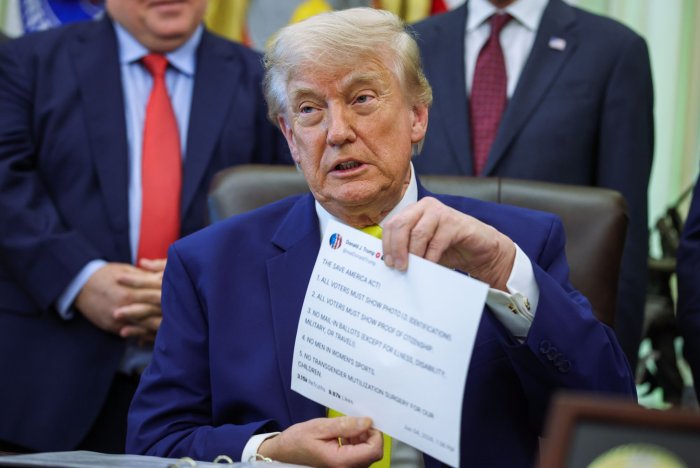
President Donald Trump discusses renovations to the Lincoln Reflecting Pool and makes an announcement on coal in the Oval Office at the White House on Thursday. Photo by Samuel Corum/UPI | License Photo
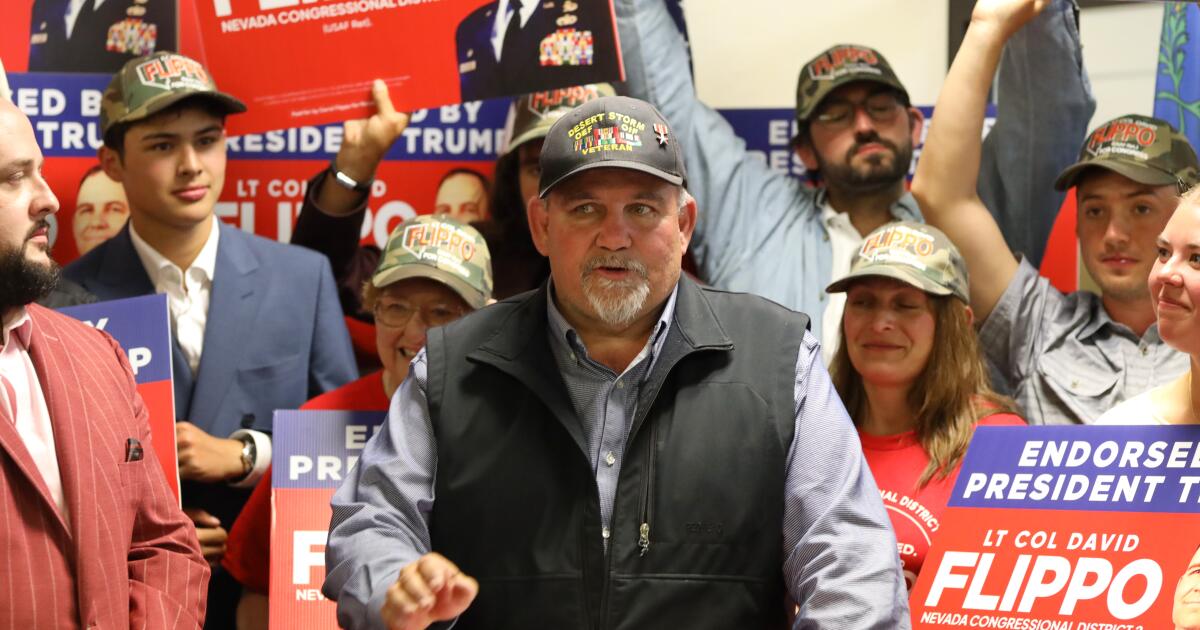
LAS VEGAS — Retired Air Force Lt. Col. David Flippo has won the Republican primary in Nevada’s 2nd Congressional District after securing President Trump’s endorsement in the closing weeks of the campaign.
The race, which was called Wednesday, put Trump opposite Republican Nevada Gov. Joe Lombardo and retiring Rep. Mark Amodei, who both backed former state Sen. James Settelmeyer. Amodei announced he was retiring after 15 years, opening up a competitive primary for Nevada’s only Republican-held House seat.
Flippo said he will fight “relentlessly” for secure borders, American energy, tax cuts, national defense and “the America First agenda our country needs.”
“Nevada deserves a fighter, and that’s exactly what I will deliver,” he said in a statement.
Democrats had hoped for a Flippo victory, thinking it would make it easier for them to win over less partisan voters in November in the conservative-leaning district. They nominated the chief of staff to state Atty. Gen. Aaron Ford, former majority floor leader Teresa Benitez-Thompson.
“I will ensure that Nevada families have an authentic Nevadan voice fighting for their needs in Washington DC,” Benitez-Thompson said in a Wednesday morning statement.
The 2nd District race is one of several Nevada contests that will be watched closely this year. In southern Nevada’s 3rd Congressional District, Democratic Rep. Susie Lee will face Marty O’Donnell, a composer known for writing the soundtrack to the video game “Halo.”
Trump won the 3rd district in 2024 and backed O’Donnell, who thanked Trump in his victory statement.
Tuesday’s primary also set the general election contest for governor, with Ford defeating a progressive candidate in the Democratic primary and moving on to face Gov. Lombardo. The incumbent, a former Clark County sheriff, is running on his record of public safety and job creation while pledging to work on housing affordability in a second term.
Ford is tying Lombardo to Trump in placing blame for soaring prices across the state and has pledged to lower costs for families. He would be the state’s first Black governor if elected in November.
In other races for statewide offices, Republican primaries for attorney general and secretary of state included several candidates who had pushed election conspiracy theories or been skeptical of election operations. Adriana Guzmán Fralick, who has expressed concerns about voting security, won the GOP nomination for attorney general and will face Democratic state Senate Majority Leader Nicole Cannizzaro.
The Republican primary for secretary of state, the office that oversees elections, included Jim Marchant, a former state lawmaker who has said the 2020 election “ was probably stolen,” and Sharron Angle, a former state lawmaker who was part of an effort to block the certification of Nevada’s 2020 election results. Another candidate who was competitive in the race, Shirley Folkins-Roberts, is an attorney who has denied that there is widespread voting fraud in Nevada.
In the 2nd District race, Flippo said he understands issues important to the region, including mining, water rights and fuel prices. He sought to turn Settelmeyer’s long political record into a liability, pointing to votes he said did not match conservative values.
He moved to the district this election cycle after losing a race in southern Nevada in 2024. The 2nd District covers all northern Nevada. It mostly rural but includes the major battleground county of Washoe, home to Reno.
A UFC fight card scheduled for Sunday on the White House South Lawn is facing legal challenges in federal court.
The watchdog group Public Integrity Project filed a lawsuit last weekend on behalf of two Virginia residents aiming to shut down the Mixed Martial Arts event, which has been billed as part of a celebration of the nation’s 250th anniversary. The event is scheduled to take place on President Trump‘s 80th birthday.
The lawsuit refers to the plan for UFC Freedom 250 as “illegal,” stating that proper authorization was not obtained to hold the event and to build structures on federal parklands, and “corrupt,” in that the president and others allegedly stand to benefit financially from the “private, for-profit sports event.”
“This is a profoundly corrupt scheme to enrich the President and his friends,” Public Integrity Project founder Brendan Ballou said in a statement on the group’s website. “If this fight is allowed to proceed, it will be only the beginning, and our national monuments will become little more than branding opportunities for the rich and well-connected. We plan to stop that.”
The group also filed for a temporary restraining order to stop the construction and prevent further planning for the event.
The National Park Service and Department of the Interior, as well as executives from each department, are named as defendants.
“This is an obstructionist, baseless, and dilatory lawsuit brought simply to prevent President Trump from hosting what will undoubtedly go down as one of the most historic sporting events in our Nation’s history during our semiquincentennial celebration,” a Trump administration official said in a statement emailed to The Times.
“This iconic event is no different than the various other White House-hosted events on the South Lawn and properly permitted events on the Ellipse and National Mall throughout the year.”
According to the lawsuit, UFC Freedom 250 violates NPS policy that prohibits sporting events on the South Lawn. In addition, it states that the plans for the event did not receive approval from Congress to construct a massive structure on the lawn and did not undergo a required environmental review before construction.
Last year, the NPS established a temporary rule that allows “special events planned, organized, and executed by executive departments and agencies or the Semiquincentennial Commission for the celebration of the 250th anniversary of American Independence” on Washington’s monumental grounds.
The lawsuit states, however, that the rule does not apply to Sunday’s MMA event.
“UFC Freedom 250 is a private, for-profit sporting event being ‘planned, organized, and executed’ by the UFC, its broadcast partners, and its advertisers, not by the federal government,” the filing states.
“And it is not in any material sense a ‘celebration of the 250th anniversary of American Independence’ — it is, instead, a celebration of the UFC’s brand and the 80th anniversary of Donald Trump’s birth.”
UFC and parent company TKO are said to be footing the bill for the reported $60 million event. Still, it’s a massive platform for UFC, which longtime Trump friend and supporter Dana White runs. The president reportedly bought between $15,000 and $50,000 of TKO stock earlier this year.
No tickets are being sold to the general public. Most of the 5,000 seats next to the White House will be given to military members, while thousands of others will be able to watch on big screens in nearby parks. The event also will stream live exclusively on Paramount+, which is controlled by Trump allies Larry and David Ellison.
“This will be one of the greatest and most historic sports events in history, and President Trump hosting it at the White House is a testament to his vision to celebrate America’s monumental 250th anniversary,” White House spokesperson Davis Ingle said in a statement. “Anyone who finds a problem with that clearly suffers from a severe and incurable disease known as Trump Derangement Syndrome.”
WASHINGTON — Vice President JD Vance is pressing federal prosecutors to investigate Minnesota Gov. Tim Walz and state Atty. Gen. Keith Ellison over allegations they failed to stop widespread social services fraud, amplifying concerns the White House will use a new Justice Department division to target political rivals.
Vance, who has been tapped to lead the Republican Trump administration’s anti-fraud efforts as he seeks to raise his political profile as a potential 2028 presidential candidate, cited in a letter to the Justice Department a report from the Republican-led House Oversight Committee that alleges Walz and Ellison were aware of pervasive misuse of government programs for years and let it flourish.
The Justice Department didn’t immediately respond to questions Tuesday about whether it would open an investigation. It was unclear what, if any, potential violations of federal law could support a probe into the Democratic Minnesota officials, who have characterized a separate Justice Department investigation involving state leaders as politically motivated.
A spokesperson for Walz didn’t immediately respond to a message seeking comment. Ellison called the allegations unfounded and said there’s no evidence his office ignored wrongdoing or failed to act as required by law. He dismissed Vance’s referral as “a political stunt from an administration that uses the machinery of government to target its perceived opponents while extending leniency to those aligned with its interests.”
“It is deeply troubling to see official powers and public resources diverted away from serving the people and instead aimed at pursuing political adversaries,” Ellison said in a statement. “That is not what government is for, and it diminishes public trust in our institutions.”
Vance’s referral to the Justice Department’s new National Fraud Enforcement Division marks an escalation in the Trump administration’s stated “war on fraud” in government programs that officials have said would not be political or partisan.
The new division has drawn intense scrutiny over the potential for political influence given its close relationship with President Trump’s White House, which announced its formation in January and initially said its leader would answer directly to the president instead of the typical Justice Department command.
In his referral, Vance wrote that officials in Minnesota or anywhere else in the country “must be held accountable” if they facilitated fraud, prevented officials from stopping it or retaliated against whistleblowers who tried to report it.
“Minnesota state officials are not above the law,” Vance wrote in a post on X.
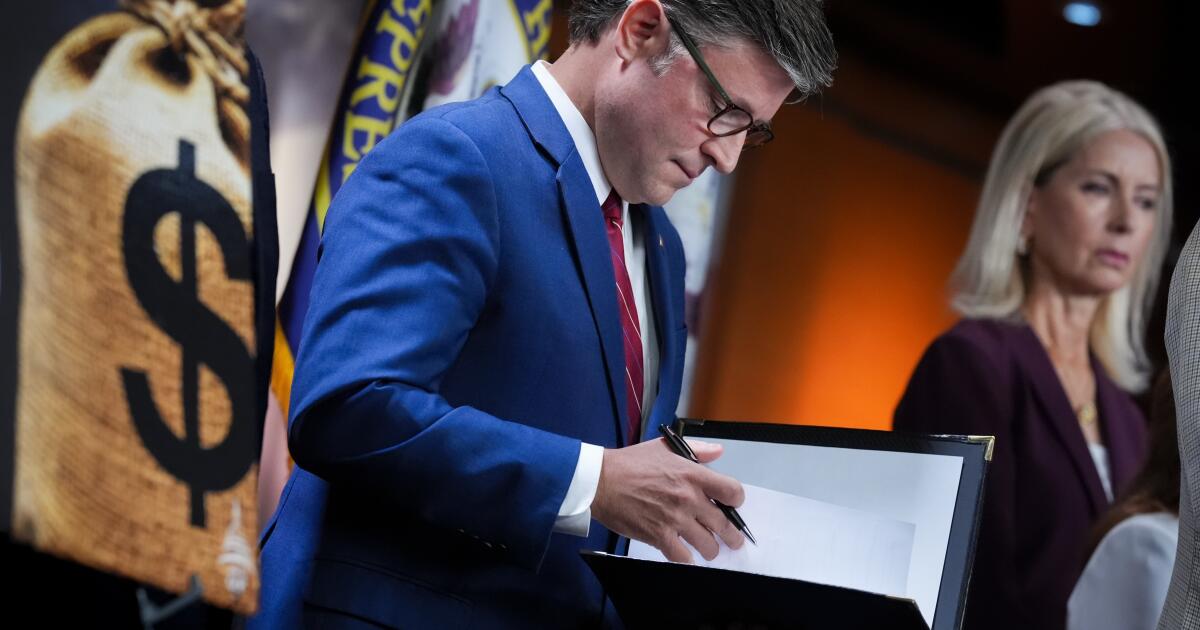
WASHINGTON — House Republicans will look to get nearly $70 billion for immigration enforcement over the finish line Tuesday, enough to fund a pair of Homeland Security agencies through the next three years and the rest of President Donald Trump’s time in office.
Speaker Mike Johnson will need near perfect attendance and unity on his side to complete weeks of action on the bill. The legislation got sidetracked when Republicans sought to include $1 billion for enhanced security on the White House grounds, including for Trump’s new ballroom, and the Trump administration tried to create a nearly $1.8 billion fund to compensate allies of the president who claim they have been unjustly investigated and prosecuted. Those proposals proved politically toxic and were scrapped.
Now, the bill is focused entirely on immigration enforcement, a topic that Republicans have treated as a defining issue between the two major political parties and one they hope will carry them to victory in this year’s midterm elections. The bill provides $38 billion for Immigration and Customs Enforcement, $26 billion for the Border Patrol and another $5 billion to cover unforeseen costs, fueling Trump’s deportation agenda.
“It’s long overdue,” said Johnson, R-La., of the bill. “We have to fund border security and immigration enforcement, and it’s sad that Republicans have to do it on our own.”
Funding accelerates Trump’s deportation agenda
The funding comes on top of the nearly $140 billion that the Republican-controlled Congress gave ICE and Customs and Border Protection last year as part of Trump’s tax and spending cuts bill.
Democrats objected to giving the agencies more money without significant changes in the way they operate after the deaths of Alex Pretti and Renee Good in Minneapolis. For example, Democrats insisted that agents be required to display their ID badges during enforcement operations and that they get a judicial warrant before entering private property. Instead, the funding will come with virtually no strings attached.
House Democratic Leader Hakeem Jeffries vowed his party would oppose the package.
“We believe that taxpayer dollars should be used to make life more affordable for the American people – not give ICE another $70 billion blank check so that they can unleash brutality on American citizens and violently target law-abiding immigrant communities,” said Jeffries of New York.
Homeland Security faced longest shutdown in history
The package is the result of a monthslong standoff in Congress after Democrats refused to fund the Department of Homeland Security in the wake of the immigration enforcement actions in Minneapolis and other American cities, leading to the longest shutdown in agency history.
Negotiations had been underway with the White House to alter ICE operations as Democrats were demanding. When those negotiations failed, Republicans turned to a complicated procedural maneuver to get around the filibuster and pass the immigration funding with no Democratic votes.
If approved, the package would next go to Trump for his signature, all but assuring an essentially uninterrupted flow of funds for his immigration enforcement and deportation agenda into 2029.
The Senate completed its work on the legislation last week during an all-night session that extended into the early morning hours Friday. The final 52-47 vote on the bill was nearly party line, with Sen. Lisa Murkowski of Alaska the only Republican to oppose it.
Money comes at pivotal time for immigration agenda
The money will come at a pivotal time for the Department of Homeland Security, which is under new leadership after Trump replaced Kristi Noem with new Secretary Markwayne Mullin in March.
While Mullin has vowed to keep the department out of the headlines, the administration is under pressure from anti-immigration advocates to deliver on Trump’s campaign promise of the largest deportation operation in American history.
So far, the administration has not hit its goal of 1 million deportations a year, but Trump’s border czar, Tom Homan, has promised more to come, including hinting at immigration enforcement actions in New York, the nation’s biggest city, which is heavily Democratic.
At the same time, the administration is making it more difficult for legal immigrants to remain in the U.S. by working to end Temporary Protective Status, changing the processes for obtaining green cards and leaving some Dreamers — the young people who were brought illegally to the U.S. as children — reporting delays in renewing their status, which allows them to stay and work.
Tight vote ahead
On the House side, Johnson has little margin for error. Republicans can afford to lose only a couple of votes if every lawmaker is present. GOP leadership opted to avoid any hiccups and sent lawmakers home last week rather than take up the bill early Friday once the Senate had completed its all-nighter.
The bill is just a slim package, without the hundreds of pages of details and directives that typically come from Congress when it provides funding for agencies.
Leading up to the vote, Democrats portrayed DHS as an agency that has used its new resources to buy private jets for its leadership, warehouse immigrants in deplorable conditions and attack U.S. citizens.
“To give these rogue agencies another $70 billion now when they still have $100 billion in the bank from last year would implicate all of us in the escalating corruption and shameful actions of this department,” said Rep. Jamie Raskin of Maryland, the ranking Democratic member on the House Judiciary Committee.
Republicans countered that they were fulfilling their duty to safeguard the nation and support the men and women charged with enforcing the law.
“Democrats can say whatever they want, but what it’s about is public safety. What’s it about is keeping Americans safe,” said Rep. Michelle Fischbach, R-Minn.
Freking and Mascaro write for the Associated Press.
The UFC White House event scheduled for Sunday, 14 June has been challenged by a federal lawsuit which alleges it is unlawful.
UFC Freedom 250 is set to take place on the White House’s South Lawn on US President Donald Trump’s 80th birthday, as part of celebrations to mark 250 years of United States independence.
However, the Public Integrity Project has filed a lawsuit – seeking an emergency temporary retraining order – against the event billed as the first professional sporting event to be held on the White House grounds.
“We think that this is a profound misuse of our sacred national monuments for private gain. And we think that needs to be stopped because it breaks the law,” said Brendan Ballou, lead attorney for the Public Integrity Project.
The Public Integrity Project is a self-described anti-corruption law firm based in Washington.It is led by Democrats including former Senator Russ Feingold and politician Zephyr Teachout, and has brought several suits against Trump, including one to undo the sale of the social media app TikTok and another to stop a billion-dollar “anti-weaponisation” fund.
The group argues that Trump and the UFC believe they do not have to apply for a permit to use the National Mall, ask Congress to approve construction of “The Claw” at the White House, or conduct an environmental review, because the fight is part of special semiquincentennial celebrations.
But it says that the event does “not in any material sense” celebrate the anniversary of the country’s founding and is not being carried out by the federal government or the official commission steering the anniversary’s observance.
The Trump administration issued a response to the BBC: “This is an obstructionist, baseless and dilatory lawsuit brought simply to prevent President Trump from hosting what will undoubtedly go down as one of the most historic sporting events in our nation’s history during our semiquincentennial celebration.”
Legal challenge claims US president did not seek proper approval for fighting event to be held on his 80th birthday.
Published On 7 Jun 20267 Jun 2026
A lawsuit is seeking to stop United States President Donald Trump from hosting an Ultimate Fighting Championship (UFC) match at the White House.
The lawsuit, lodged on behalf of two Virginia residents, is the first known legal challenge to the mixed martial arts event, which is set to be hosted on June 14.
Recommended Stories
list of 3 itemsend of list
The event will take place on Trump’s 80th birthday. It is also pegged to the 250th anniversary of the signing of the Declaration of Independence, which the US will commemorate on July 4 of this year.
The legal challenge filed on Saturday maintained that Trump did not receive proper authorisation to host the fight.
It argued that the event violated US National Park Service regulations prohibiting sporting events on federal parklands, that Congress did not consent to the construction of a towering arch overlooking the event space, and that no environmental review was conducted before the construction.
“This is fundamentally a private, commercial, corrupt use of our most sacred national monuments for private gain,” said Brendan Ballou, a lawyer for the plaintiffs. “And that is what is motivating this lawsuit.”
In a statement to the Associated Press, the White House dismissed the lawsuit as “obstructionist, baseless, and dilatory”.
The White House maintained the UFC fight was “no different than the various other White House-hosted events on the South Lawn and properly permitted events on the Ellipse and National Mall throughout the year”.
Crews have been erecting an octagon-shaped fighting cage on the South Lawn of the White House, with Trump saying the project will include a “5,000-seat arena right outside the front door of the White House”.
Attendance at the fight will be invite-only and closely monitored. The Military Times news site reported earlier this week that 1,200 service members given tickets to the event must meet certain waist-to-height ratio standards.
Public viewing areas will also be set up at the nearby Ellipse.
Trump has long been closely involved with both professional wrestling and UFC, with his casinos and event spaces hosting past events.
He regularly appeared as a version of himself in World Wrestling Entertainment (WWE) events throughout the 1990s and early 2000s. His current secretary of education, Linda McMahon, is a co-founder of the WWE.
Trump has more recently embraced UFC, which is currently owned by the same company, TKO Group Holdings, as the WWE.
UFC president Dana White has been a close ally of Trump’s.
Political analysts have credited Trump’s embrace of the sport with reaching disaffected male voters in the US, particularly during his 2024 election campaign.
WASHINGTON — President Trump has issued a pardon to Stephen Buyer, a Republican former congressman from Indiana who served nearly two years in prison for making illegal stock trades based on inside information after he left office.
Buyer was sentenced to 22 months in prison in 2023 for trades made while working as a consultant and lobbyist. He was ordered to forfeit more than $350,000, representing the amount of the illegal gains, and pay a $10,000 fine. He was released in 2025.
The Supreme Court in May rejected Buyer’s appeal without comment or noted dissent.
In granting “a full, complete, and unconditional pardon,” Trump cited Buyer’s career as a judge advocate general in the Army and in the House that was “distinguished and highly productive.” The pardon was dated Thursday and released by the White House late Friday.
Buyer asserted that the pardon “corrects a politically motivated prosecution” and that it was “horrific to be imprisoned for a crime that I did not commit.”
Trump used his social media platform May 31 to share a pair of letters requesting a presidential pardon for Buyer, a lawyer and Persian Gulf War veteran who left office in 2011. He was a House prosecutor at President Clinton’s 1999 impeachment trial and in 2016 he served on Trump’s transition team focusing on veterans issues.
A letter signed by more than 40 Republican former members of Congress said Buyer was “targeted by the deep state” because of his involvement in Clinton’s trial a generation ago.
A second letter, from five current House Republicans, including Ken Calvert of Corona, said pardoning Buyer would bring justice to his case. The June 2025 letter was also signed by Tom Cole of Oklahoma, Marlin Stutzman of Indiana, Jack Bergman of Michigan and Pete Sessions of Texas.
Buyer, 67, was convicted in connection with insider trading involving the $26.5-billion merger of T-Mobile and Sprint, announced in April 2018, and illegal trades in the management consulting company Navigant when his client Guidehouse was set to acquire it in a deal publicly disclosed weeks later.
The Constitution gives a president broad power to grant pardons for federal crimes. The pardons do not erase a recipient’s criminal record but can be seen as an act of mercy or justice.
Iran players get visas 10 days before their opening World Cup match against New Zealand in Los Angeles on June 15.
Published On 5 Jun 20265 Jun 2026
Iran’s World Cup football players have been granted visas to enter the United States, according to a White House official, just 10 days before their first match in Los Angeles amid a conflict between the two countries.
Iran’s ambassador to Mexico, Abolfazl Pasandideh, said late on Thursday the squad had still not received their US visas, but these were granted overnight, the White House official said.
Recommended Stories
list of 4 itemsend of list
US Ambassador to Turkiye Tom Barrack confirmed the visas in a message on X on Friday. “Proud of our outstanding team at the U.S. Embassy in Ankara for their work processing visas for Iran’s national football team on their road to the @FIFAWorldCup in the United States,” he said, commenting on a news report that Iran’s World Cup players have been granted the visas to enter the United States.
The US had not yet issued visas to some members of the Iran team’s technical and administrative staff, the semi-official Fars news agency reported on Friday.
Iran’s federation has not yet made a statement on the news.
“Visas for some members of the national team’s technical and executive staff have not yet been issued, and the US embassy has so far refused to issue them,” Fars said, without citing a source.
The US-Israel war on Iran has turned the World Cup – the biggest global sporting event – into a geopolitical contest, with both sides appearing to use the tournament for political posturing.
It is the first World Cup, since its inception in 1930, in which a host nation is set to receive a country it is at war with.
Tehran negotiated a last-minute move of the team’s base from Arizona to Tijuana in Mexico due to the visa issues and a growing feeling in Iran that the squad’s presence in the United States should be kept to a minimum.
They are scheduled to land in Tijuana early on Sunday.
Iran are due to play their first Group G match on June 15 against New Zealand in Los Angeles, where they will also face Belgium before taking on Egypt in Seattle.
The US has never formally said it does not want the Iranian team to stay on its territory, Ambassador Pasandideh said.
However, Secretary of State Marco Rubio told lawmakers on Tuesday that the US would not allow Iran to include in its World Cup delegation individuals linked to the Islamic Revolutionary Guard Corps, a powerful branch of the Iranian armed forces.
Mehdi Taj, president of Iran’s football federation, was denied entry for the tournament draw in Washington in December. He is a former commander in the Revolutionary Guards.
Iran’s desire to compete in the World Cup underscored its efforts to reach a resolution in the war with Washington, Pasandideh said.
“Iran’s participation in the World Cup – even on the soil of what is seen as its enemy – shows that Iran seeks peace,” Pasandideh said, speaking through a Spanish interpreter at the Iranian embassy in Mexico City.
Progress in peace talks between Iran and the US has been slow, with both sides seemingly inching towards an interim agreement even as they continue to carry out military strikes.
WASHINGTON — The House passed legislation Thursday that would aid Ukraine and sanction key segments of the Russian economy, overriding objections from Republican leaders who warned the bill would undermine negotiations designed to achieve a comparable but stronger result.
The legislation, sponsored by Rep. Gregory Meeks, D-N.Y., seeks to cement U.S. assistance for Ukraine by providing more than $1 billion in security and reconstruction aid. It would make another $8 billion available for Ukraine’s defense through loans.
The 226-195 vote is a sign of impatience with President Trump’s approach to the war and represents the House’s second major foreign policy break with Trump this week. The day before, the House, for the first time, approved a war powers resolution aimed at halting U.S. military action against Iran.
Supporters were able to force action on the Ukraine bill by gathering 218 signatures on a discharge petition, a legislative tool that allows a majority of the House to effectively bypass leadership.
Once rarely successful, House members have used the petition tool this Congress to pass bills on releasing the government’s files on Jeffrey Epstein and to extend health care subsidies to many of those who get health coverage through the Affordable Care Act, though the latter measure faltered in the Senate.
Meeks said the question before the House was simple. Would it help Ukraine negotiate from a position of strength or help Russia outlast American resolve?
“We all want this war to end,” Meeks said. “The question is how. Will we abandon Ukraine and force it into a terrible deal? That is what Vladimir Putin is counting on. Or will this body live up to the commitments we’ve made since the start of this war?”
The vast majority of Republicans opposed the measure. Rep. French Hill, the chairman of the House Financial Services Committee, said he is a steadfast supporter of Ukraine. However, the Arkansas Republican said the House was confronted with a flawed, outdated measure that actually calls for less funding for Ukraine security assistance compared to what Congress had agreed to as part of this year’s defense policy. Another section could lead to a decrease in defense spending by some NATO members, he warned.
Rep. Brian Mast, the chairman of the House Committee on Foreign Affairs, said he believed the bill was “a cudgel to fight against President Trump.”
“This bill, in my opinion, is an unserious bill that was crafted basically a year-and-a-half ago,” Mast, R-Fla., said.
Rep. Don Bacon, R-Neb., broke with most of his Republican colleagues in voicing support for the measure.
“Are we going to stand with good or are we going to stand with evil? That’s what this is about tonight,” he said.
In the end, 18 Republicans, 207 Democrats and one independent voted for the bill. Democratic Rep. Ilhan Omar joined with 194 Republicans in voting against it.
Lawmakers want to send a message
Supporters are hopeful that the House’s passage of the Ukraine bill would put pressure on the Senate to do the same. But they also know the Senate likely won’t go along unless Trump endorses the bill.
“It’s probably not going to get 60 votes in the Senate, but it’s going to hopefully force the Senate to address the issue,” said Rep. Brian Fitzpatrick, R-Pa., who signed the discharge petition and voted for the bill. “It’s going to send a great message to the soldiers of Ukraine.”
He said the vote would also send a message to Putin that “we do have a pulse here, that we do care about Ukraine and that we are going to utilize our authority to help them.”
As the war has dragged on, it’s gotten more difficult for supporters of Ukraine in Congress to provide additional financial support to help Ukraine defend itself.
The U.S. has approved some $195 billion for the Ukraine response, according to the latest quarterly inspector general report for Operation Atlantic Resolve, with roughly a quarter of that going to replenish weapons stockpiles for the U.S. military. The last major legislation designed to bolster the Ukraine response occurred in April 2024, though modest amounts have since been included in annual appropriations bills.
Republican leaders tried to stop the bill
Republican leaders urged their members to oppose the legislation. House Majority Leader Steve Scalise, R-La., said there are good-faith negotiations between members of Congress and the White House to boost Ukraine. He described the negotiations as complicated.
“I think they are going to yield positive results, but you set that back if you pass legislation that doesn’t go as far as the negotiations are going,” Scalise said.
The war that followed Russia’s full-scale invasion of its neighbor is more than four years old, with no end in sight. In recent days, both sides have sought an edge by launching long-range missile strikes.
U.S.-led peace efforts have fizzled out as the sides made no progress on key differences and after the war in Iran grabbed Washington’s attention. Ukrainian President Volodymyr Zelensky accepted an unconditional ceasefire demanded by Trump, but Putin refused.
Action in the Senate on Ukraine has revolved around a bill that would impose sweeping tariffs and secondary sanctions on countries that purchase Russia’s oil, gas, uranium and other exports, which are crucial to financing Russia’s military. But the bill has languished.
Freking writes for the Associated Press. AP writer Lisa Mascaro contributed to this report.
This is the moment the Republican-led US House of Representatives passed a resolution to reign in President Donald Trump’s ability to keep attacking Iran, unless Congress declares war or approves the use of military force. But it’s unlikely to become law as Trump can veto it even if it passes the Senate.
June 3 (UPI) — The U.S. House of Representatives voted 215-208 on Wednesdayto pass a measure directing President Donald Trump to remove U.S. troops from the conflict with Iran unless Congress votes to allow the conflict. Four Republicans joined Democrats in voting for the measure.
The measure is largely symbolic, as both chambers of Congress must pass it — and then Trump is sure to veto it. Still, this marks the first time the House has come together to pass this symbol of disapproval for the war.
Reps. Thomas Massie, R-Ky.; Brian Fitzpatrick, R-Pa.; Tom Barrett, R-Mich.; and Warren Davidson, R-Ohio, joined the Democrats in the vote. Rep. Jared Golden, D-Maine, who had voted against previous measures, also joined his party on the vote.
This follows a similar measure passed by the Senate in May, in which four Republicans (Sens. Susan Collins of Maine, Lisa Murkowski of Alaska, Rand Paul of Kentucky and Bill Cassidy of Louisiana) joined most Democrats (barring Sen. John Fetterman of Pennsylvania) to pass. It was unclear Wednesday when the Senate might vote to pass this House version, CBS News reported.
Even if both chambers pass the measure, Trump can still veto it, and each chamber would need two-thirds support to override that.
The 1973 War Powers Act gives the U.S. president 48 hours to notify Congress in writing if deploying U.S. forces without a congressional declaration of war. U.S. forces attacked Iran on Feb. 28, with Trump notifyingCongress on March 2.
The act further gives the president 60 days to act unilaterally in the defense of the United States without a declaration of war from Congress. May 1 marked the end of that 60 days counted from March 2, but the administration and some congressional Republicans are arguing that the count stopped with the cease-fire reached on April 7. Both United States and Iranian forces have attacked each other since then.
Republicans opposing the measure have said that it undermines Trump and U.S. negotiators. The president has gone back and forth on the status of the negotiations, telling CNBC on Monday that peace talks were starting “to get very boring” and that he didn’t care if they were over.
The House also passed a measure Wednesday that could bring forward a measure that could provide aid for Ukraine. That sets up a vote Thursday, NBC News reported.
WASHINGTON — The House approved a war powers resolution Wednesday that would halt the U.S. military action against Iran, defying President Trump as a handful of Republicans joined with Democrats to end the three-month-long war that has reordered politics at home and abroad.
House Speaker Mike Johnson had tried to prevent an outcome that would show the mounting opposition to the war, abruptly shutting down floor action two weeks ago when the war powers resolution was on the verge of approval. But displeasure has only grown as the conflict drags on and as Trump struggles to negotiate a quick resolution.
The roll call Wednesday was 215-208, and cheers erupted in the House chamber.
“This reckless and costly war of choice needs to end today,” House Democratic Leader Hakeem Jeffries of New York said earlier in the week.
“All we need are a handful of Republicans to join us and we can end this reckless and costly war of choice — a war that has cost the American taxpayer over $100 billion — that’s extraordinary — and left our country in a weaker position relative to Iran.”
Opposition to war grows
It’s the fourth time the House has tried to curb the U.S. war against Iran, and the first time the House was able to pass the measure. The Senate advanced its own war powers resolution last month when a handful of GOP senators broke ranks with the Republican president in a rare show of political pushback from his party.
Each time Democrats have pushed forward the war powers resolution, the vote tallies have inched higher as political unease with the U.S. war swells. Trump had campaigned for the White House on a promise to end U.S. entanglements abroad and focus more on domestic issues, but the war has shifted attention back to the Middle East.
Johnson insisted Trump is “laser focused” on the domestic front, particularly ahead of the midterm elections that will determine control of Congress.
The speaker said he spent three hours at the White House with the president this week as Trump is calling on allies to help reopen the Strait of Hormuz for commerce, especially the flow of oil.
Since the U.S. joined Israel in launching the Feb. 28 strikes on Iran, Americans have seen gas prices spike at the pumps, adding to inflationary pressure on consumer spending.
Iran has been able to interrupt shipping through the Strait of Hormuz, a vital channel for a large segment of the world’s oil, natural gas and related products such as fertilizer.
“We’re working on that final piece,” said Johnson, R-La. “The entire world has an interest in the Strait of Hormuz being reopen for commerce. That what he’s working on.”
While a ceasefire in the conflict was declared in April, it remains uneasy and uncertain. Talks for a more durable end to the fighting have dragged, increasingly complicated by Israel’s broadening war with Iran-backed Hezbollah militants in Lebanon. Meanwhile, military strikes between the U.S and Iran continue to flare.
Congress exerts its war powers authority
The war powers resolution from the House would not immediately stop the war, but it would provide a symbolic if not legal step against further military action.
If approved, it would then go to the Senate, where four Republican senators last month joined Democrats in advancing a similar measure to curtail the U.S. campaign against Iran. The Senate has yet to take a final vote to approve or reject its own war powers resolution.
Secretary of State Marco Rubio warned Wednesday testifying at a House Foreign Affairs Committee hearing that the Iranians would think that the administration’s “hands are going to be tied” if Congress approved a war powers resolution. He said they would think ”we won’t be able to do anything to them, so why make a deal?”
It’s not the only action Congress is taking in the national security arena as Democrats, in the minority, work to peel off Republican support for measures beyond the war against Iran.
The House is also voting Wednesday on another Democratic-led effort that would authorize U.S. support for Ukraine’s military operations as it battles Russia and to help reconstruct the war-torn country. The House this week is also expected to consider a war powers resolution to block U.S. action in Lebanon.
While Congress has the authority under the Constitution to declare war, the president also has power as the commander in chief to engage in military action, creating a legal dispute over which branch of government has ultimate say in matters of war and peace.
Under the war powers act, the White House has a 60-day window to seek approval from Congress for military action. The administration, however, has indicated that because a ceasefire has been declared in the current conflict in Iran, the hostilities have ceased.
WASHINGTON — When nearly all the scheduled musical performers pulled out of a concert series marking America’s 250th anniversary — fearing the event had become too closely tied to President Trump — he responded by making it official.
Trump announced he’d now be the headlining act of the Great American State Fair.
That put to rest any possible scenario where a president who has built his personal and political persona on seizing the spotlight might cede the stage to avoid overshadowing a national celebration bigger than himself. It also offered a peek into how the president is likely to approach hosting the upcoming World Cup.
From his reality shows before becoming a politician, to hours spent entertaining at events in ways planned and impromptu, to proudly showing off his various properties and efforts to overhaul the White House, the president relishes hosting. Last year he even jokingly mused about leaving the presidency to do it again full time on TV.
Trump can be a gracious, personable and highly watchable master of ceremonies — but he’s also one who tends to make every event about himself.
“The president has an outsized personality,” said Timothy Naftali, former director of Richard Nixon’s presidential library and professor at Columbia University’s School of International and Public Affairs. “There’s a predictability to the way in which the president frames his actions — or any actions around any event associated with him — and that’s just part of who he is, and his makeup and his professional background.”
Exhibit A is the fair, which begins June 25 and was supposed to feature concerts but now will be kicked off by a Trump rally. That will follow a UFC bout at the White House on June 14. Trump is a longtime cage match fan and the event marks his 80th birthday, but the president has sought to bill it as part of the anniversary festivities.
Many presidents relished hosting — but not like this
Andrew Jackson threw open the White House for an 1829 Inauguration Day bash so unruly that staff eventually dispersed the crowd by moving tubs of whiskey and ice cream to the lawn. Franklin D. Roosevelt mixed pre-dinner cocktails for friends and aides at White House gatherings he playfully dubbed “The Children’s Hour.” Audrey Hepburn was among the luminaries Ronald Reagan hosted at the White House.
Trump frequently had first-term dinners with business leaders but has more fully embraced the role since returning to the White House. He built a patio area similar to one at his Mar-a-Lago estate and frequently travels to Florida and his properties in Bedminster, New Jersey, and Sterling, Virginia, to headline fundraisers and other swanky gatherings.
Asked if Trump might overshadow events meant to bring the country and the world together, White House spokesman Davis Ingle pointed to the president’s efforts to lead extensive renovations at the White House and around Washington. He said in a statement that the “historic beautification” gives the city “the glory it deserves during our nation’s historic semiquincentennial celebration — something everyone should celebrate.”
Still, Trump has found unprecedented ways to inject himself into the anniversary.
The State Department is issuing passports with the president’s picture and officials have designed a new $250 bill with his likeness. The Trump Organization, being run by Trump’s children while he’s president, applied to trademark “Trump 250” logos and other merchandise.
The U.S. Mint is also producing a 24-karat gold commemorative coin with Trump’s face, though that recalls a half-dollar silver coin bearing the likeness of President Calvin Coolidge to help mark America’s 150th anniversary in 1926.
Past presidents had starring anniversary roles
Ulysses S. Grant opened a Centennial Exposition in Philadelphia to mark the 100th anniversary of the signing of the Declaration of Independence in 1876. Richard Nixon, in 1971, inaugurated a five-year “Bicentennial Era” ahead of the 200-year mark, though he resigned before the big day arrived.
Nixon’s successor, Gerald Ford, then in the midst of an ultimately unsuccessful reelection campaign, began the week of July 4, 1976, by inaugurating the Smithsonian Institution’s National Air and Space Museum and attending a Kennedy Center event featuring Bob Hope, OJ Simpson and others reading patriotic texts.
On Independence Day, Ford spoke at historic Valley Forge, then traveled to Philadelphia’s Independence Hall, declaring, “Liberty is a living flame to be fed, not dead ashes to be revered.“ He also went to New York Harbor for a tall ship parade, presided over naturalization ceremonies at Thomas Jefferson’s Monticello estate and hosted a state dinner for Britain’s Queen Elizabeth II.
Still, “while Ford certainly hoped to use the bicentennial to promote his reelection campaign, he didn’t do it in such a self-aggrandizing, self-centered, narcissistic way,” said Marc Stein, a history professor at San Francisco State University and author of “Bicentennial: A Revolutionary History of the 1970s.”
Ford, added Naftali, “knew when to step out of the limelight and make sure the focus was on what mattered, which was the United States of America and the Declaration of Independence.”
Trump, by contrast, “generally has contempt for norms” and rarely mentions “the great sweep of history,” Naftali said.
Dueling anniversary planners as Trump pushes to revise history
Congress charged a national organization, America250, with planning commemorative events. Ahead of the 2024 election, the group drafted a memo asking whomever the incoming president was to mobilize federal agencies and welcoming presidential involvement in events and initiatives.
Asked about Trump, America250 Chair Rosie Rios said the group “has had a very supportive and collaborative relationship with the organizations planning initiatives on behalf of the president.”
But Rios’ organization is separate from Freedom 250, a mix of public and private partnerships which the Trump administration established to fund and prepare anniversary events — which has caused confusion.
America250 aims to “inspire our fellow Americans to reflect on our past, strengthen our love of country, and renew our commitment to the ideals of democracy through programs that educate, engage, and unite us as a nation.”
That might seem a departure from the “Restoring Truth and Sanity to American History” executive order Trump signed last year. It sought to beat back a “revisionist movement” responsible for “replacing objective facts with a distorted narrative driven by ideology rather than truth.”
Stein, now serving a one-year term as president of the Organization of American Historians, is helping organize “We Want More History,” a push to coordinate local events celebrating the public’s love for the subject in fact-based ways.
He said Trump’s version of history is “closer to propaganda, and it’s closer to cheerleading.”
World Cup gives Trump another platform to play host
The president has similarly taken his exceeding-normal-limits approach to the soccer tournament the U.S. is co-hosting with Mexico and Canada.
He created a federal World Cup task force, and leads it. He collected a peace prize from soccer’s governing body, FIFA, and said he’d be on stage to present the tournament’s golden trophy to the winning team.
Trump even oversaw the tournament’s draw at the Kennedy Center, which he’s sought to rename for himself, sparking legal challenges.
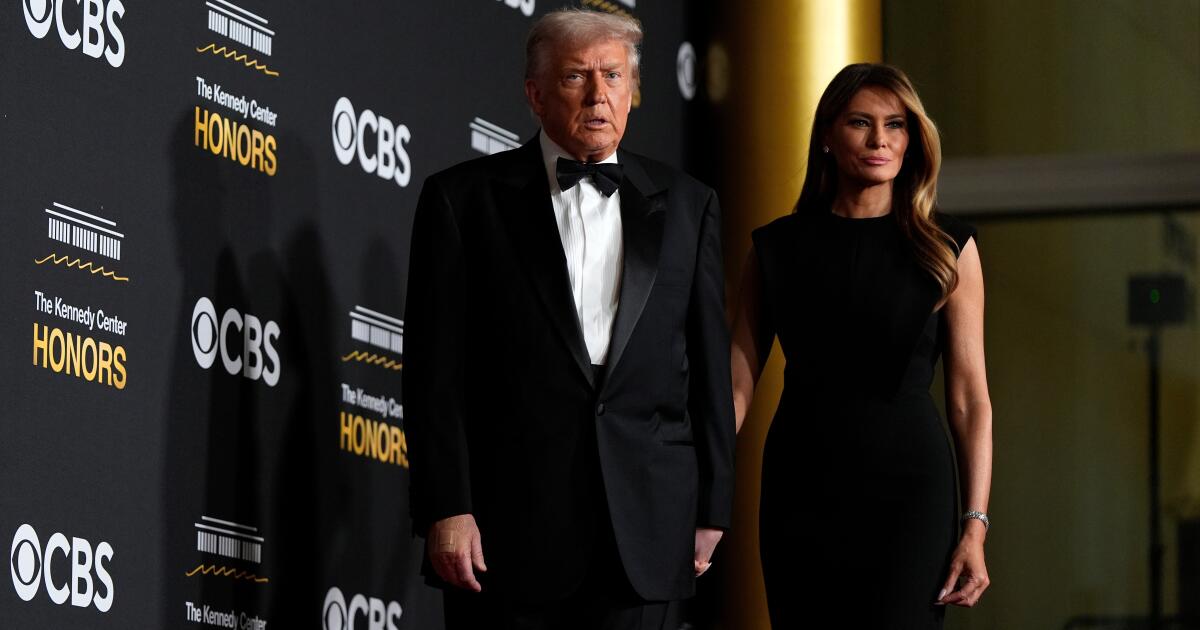
He returned to the same building to headline December’s Kennedy Center Honors, noting, “We never had a president hosting the awards before.” He later posted on social media, “Would you like me to leave the Presidency in order to make ‘hosting’ a full time job?”
Naftali noted, “Whatever filters there were in the first term — and there weren’t many — are gone.”
WASHINGTON — Democratic Rep. Jimmy Gomez of Los Angeles is reportedly under investigation by the House Ethics Committee over sexual misconduct allegations.
The investigation came after the New York Post reported in April that the 51-year-old, five-term congressman had been spotted kissing a much younger congressional staffer from a different office in 2023.
According to CNN, which on Tuesday first reported news of the investigation, the congressional committee learned of other allegations of sexual misconduct as it investigated the report of Gomez’s 2023 conduct with the staffer.
The 2023 incident with Gomez and a younger staffer reportedly occurred at a party hosted by Swalwell, according to the New York Post. Gomez’s office denied the report at the time.
Another lawmaker, Texas Republican Rep. Tony Gonzales, also resigned from Congress in April in the wake of allegations of sexual misconduct with a former staffer who later committed suicide.
Both Swalwell and Gonzales were under investigation by the ethics committee before they resigned, but those investigations ended when they left office as the committee only has jurisdiction to investigate sitting members.
Gomez’s office didn’t respond to multiple requests for comment, but, in a statement to CNN, Gomez said he would cooperate with the ethics investigation. While he acknowledged making “personal mistakes” outside his marriage and apologized to his family, he said his actions didn’t violate House ethics rules.
“Years ago, I made personal mistakes outside my marriage that have caused real pain to my wife and family. Although my actions were consensual in nature and haven’t violated the law or House ethics rules, that doesn’t diminish the impact that these mistakes have made on those I care about the most,” Gomez said.
The House Ethics Committee declined to comment on the reported investigation.
Gomez is married to Mary Hodge, a past top aide to former Los Angeles Mayor Eric Garcetti. The couple have a son whom Gomez wore in a baby carrier during the lengthy House speaker election in 2023. That same year, Gomez founded the Congressional Dads Caucus, which has advocated for expanded child tax credits and other parent-friendly legislation.
The disclosure of the congressional investigation comes as Gomez faces a campaign challenge from Angela Gonzales-Torres, a Pasadena City College counselor with the backing of the progressive Justice Democrats.
Gonzales-Torres has criticized Gomez for receiving the backing of the American Israel Public Affairs Committee, or AIPAC, though Gomez has at times taken political stances at odds with the group.
After news of the ethics investigation broke, Gonzales-Torres wrote on the social media platform X, “I take political corruption seriously … I also take very seriously what appears to be a culture in Congress in which men abuse women.
“If @RepJimmyGomez has nothing to hide, he should have no concern. But if there was any criminal behavior that he witnessed, participated in, or helped conceal, we will find out and we will help ensure accountability and justice.”
Gomez was first elected to Congress in a 2017 special election to succeed Xavier Becerra, who is now running for governor and has seen the biggest boost in support following Swalwell’s departure from the race in April.
Gomez previously served in the state assembly from 2012 to 2017 and was political director for the United Nurses Assn. of California before that.
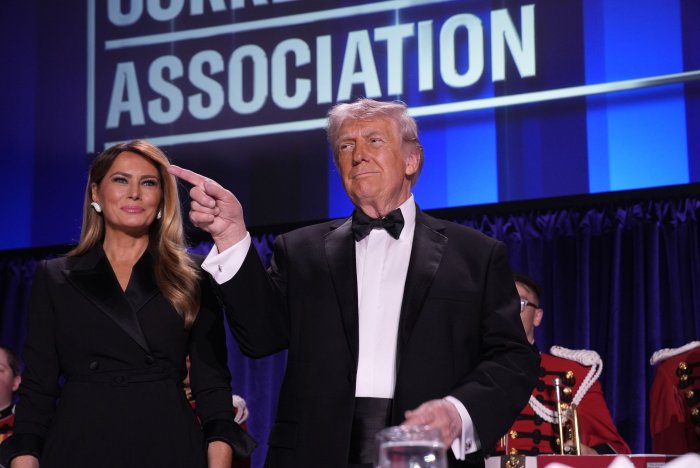
June 2 (UPI) — Officials have rescheduled the White House Correspondents’ Association Dinner for July 24, several weeks after a gunman disrupted the original event.
Weijia Jiang, president of the association and a senior White House correspondent for CBS, said Tuesday that the event will be a “more intimate gathering” with additional security precautions.
“When gunfire interrupted this year’s event, it further clarified the WHCA’s mission to advocate for the freedoms that are protected in the First Amendment,” Jiang wrote in an email to WHCA members. “We will not allow an act of violence to have the last word, especially during a year when we are reflecting on the 250th anniversary of America and everything we stand for.”
The original event April 25 ended when an armed man charged a security checkpoint outside the event at the Washington Hilton, and the president and other officials evacuated. The suspect, Cole Allen, 31, has been charged with attempting to assassinate the president, assaulting a federal law enforcement official with a deadly weapon and other offenses. Allen pleaded not guilty to all charges.
Trump said the dinner will take place at the Waldorf Astoria in Washington, D.C., which is the former Trump International Hotel. In the email announcing the rescheduling, Jiang did not mention a site.
“This dinner will not only be an opportunity to carry out our program,” she wrote. “It will be a statement that violence has no place in American life and a free press will not be intimidated into silence. As you have all demonstrated, courage and community can and should rise above.”
The Washington Post reported after the prior event that some critics thought the president should not be so prominently featured.
“Why do I need to pay hundreds of dollars and dress up in a tuxedo to go listen to the president of the United States insult my colleagues?” Steven Herman, executive director of the University of Mississippi’s Jordan Center for Journalism Advocacy and Innovation, said in the Post. “I think he’s made it pretty clear he is not a champion of free speech or a free press. He only likes press or speech when it reflects positively on him.”
President Donald Trump and first lady Melania Trump participate in the 2026 White House Correspondents’ Association Dinner in Washington on April 25, 2026. Photo by Yuri Gripas/UPI | License Photo
Replimune (REPL) won over the FDA to submit a marketing application for its lead asset RP1 for the third time despite previous rejections, thanks to the intervention of White House officials, The Wall Street Journal reported, citing people familiar with the matter.