
12 of the best FX shows on Hulu if you're already missing 'The Bear'
If the end of ‘The Bear’ has left you jonesing for another great show to fill its place, we have a few suggestions.
Source link
If the end of ‘The Bear’ has left you jonesing for another great show to fill its place, we have a few suggestions.
Source link

Videos show Israeli settlers, protected by Israeli soldiers, trying to seize a house under construction on the outskirts of the town of Qabalan, just south of Nablus, in the occupied West Bank.
Published On 27 Jun 202627 Jun 2026
Share
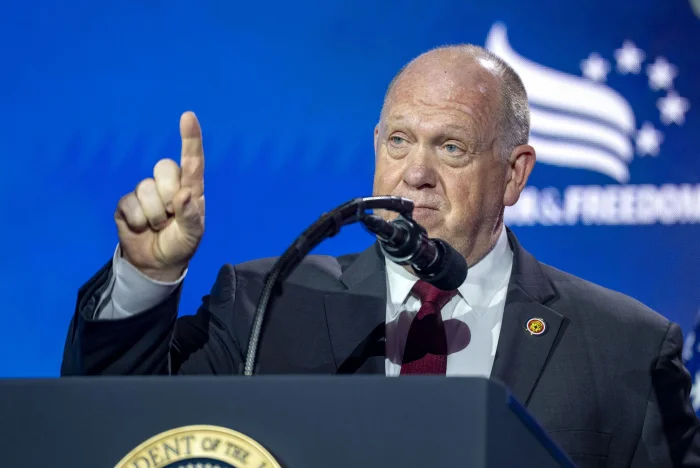
June 26 (UPI) — A Federal Emergency Management Agency official who claims he was once teleported to a Waffle House has been ousted from the agency, unnamed sources familiar with the situation told media outlets Friday.
Gregg Phillips, who was appointed to lead the Office of Response and Recovery in December, was asked to vacate his position because of concerns about how he’s publicly perceived, anonymous sources told The New York Times, The Washington Post and CNN.
Phillips, the associate administrator for FEMA’s Office of Response and Recovery, posted on social media in April doubling down on his teleportation claim. He said it really happened and that it is connected to his Christianity.
“God will not be mocked,” Phillips posted on Truth Social. “People can debate me. Question me. Even ridicule what they don’t understand.”
He clarified that it happened while he was heavily medicated during cancer treatment.
“The word ‘teleportation’ was not mine,” Phillips posted on Truth Social. “It was used by someone else in the conversation reaching for language to describe something with no easy name. The more accurate biblical terms are ‘translated’ or ‘transported’ — not new ideas for people of faith.”
The Department of Homeland Security confirmed Thursday that Phillips is leaving the agency, saying he is taking leave for personal reasons. But sources told CNN the departure was not by his choice.
New DHS leadership was tired of his public image and clashes with department leadership, the sources said. David Arnold, a senior official who left FEMA earlier this year, will fill in as an acting leader of the Office of Response and Recovery.
The office has more than 1,000 employees and a budget of nearly $300 million. It’s critical to the mission of responding to disasters.
Phillips was known as a conspiracy theorist, particularly concerning election fraud. He said millions of noncitizens had voted in the 2016 election. Trump also boosted those claims.
Some agency staff were unhappy with his ouster, saying he wanted to help improve the agency.
“He showed interest in preserving the mission of the agency and helping us serve citizens,” one current agency official told The Post.
Another agency official told The Post that Phillips was one of the only political appointees who supported staff and would push back against leadership such as former Homeland Security Secretary Kristi Noem or Karen Evans, who briefly led FEMA.


The TWZ Newsletter
Weekly insights and analysis on the latest developments in military technology, strategy, and foreign policy.
The Pentagon and the U.S. Air Force have fully abandoned an attempt to axe the acquisition of E-7 Wedgetail airborne early warning and control aircraft, and to use E-2D Hawkeyes to help fill the resulting gap. In something of a twist, the Pentagon has proposed cutting U.S. Navy E-2D purchases, as well as raiding a classified Air Force account, to keep the E-7 program going. The House Appropriations Committee has now pushed back on the E-2D part of that plan. The back-and-forth underscores the critical importance of airborne early warning and control aircraft and the strain on existing U.S. fleets.
Defense News drew specific attention to the new jostling over funding for the E-7 in a report earlier today. Breaking Defense had been among the first to report the basic points yesterday. The House Appropriations Committee had released the details in a report accompanying a draft defense spending bill for the 2027 Fiscal Year, which we will come back to in a moment.

To recap quickly, roughly a year ago, the Pentagon and the Air Force disclosed their intention to axe the E-7 program, which had suffered delays and cost overruns, and acquire additional E-2Ds as an interim gap-filler. Questions about the future survivability of the Wedgetail were also raised. The Air Force’s long-term goal was then and still is now to eventually push most air moving-target indicator (AMTI) tasks into space, though that is still years away from truly becoming a reality. Congress subsequently intervened to save the Wedgetail, appropriating billions for the effort in Fiscal Year 2026. The E-7 was again missing from the Air Force’s proposed 2027 Fiscal Year budget, which raised the prospect of a new battle with Congress.
Top Pentagon and Air Force officials subsequently said that the viewpoint on the Wedgetail had fundamentally changed, and submitted an amendment to the budget request to include funding for the program. Per a memo earlier this month from Russell Vought, Director of the Office of Management and Budget (OMB) at the White House, this was done in two ways. $898,549,000 was taken from “Other Procurement, Air Force” section of that service’s budget proposal, while another $650,549,000 came out of “Aircraft Procurement, Navy.”
The combined $1,549,098,000 was moved into the “Research, Development, Test and Evaluation, Air Force” account. According to Vought’s memo, the funding would go toward “priority requirement to deliver two E-7 Wedgetail prototype aircraft and continue Engineering Manufacturing and Development activities for a program of record.”
The Air Force already has seven E-7s on order now, including the two jets to support rapid prototyping efforts. It is unclear when the service expects to begin flying Wedgetails operationally. Before the attempt to cancel the program, the target date for initial operational capability had already slipped from 2027 to 2032. It should be noted here that variants of the E-7 are already in service in Australia, South Korea, and Turkey, and that the United Kingdom is set to field a fleet of Wedgetails, too.

The report the House Appropriations Committee released yesterday included important additional context about the latest funding plans.
“While the President’s budget request for fiscal year 2027 did not include funding for the E–7 Wedgetail program, the Secretary of the Air Force and Secretary of Defense testified before the House Defense Appropriations Subcommittee that they support this critical platform and have submitted a budget amendment to the Office of Management and Budget to restore funding for the platform,” it explained. “The shift in mindset at the Department of Defense translated to requested transfers from the Special Update Program in Other Procurement, Air Force, and the E–2D program in Aircraft Procurement, Navy for a total investment of $1,549,098,000 for E–7 in Research, Development, Test and Evaluation, Air Force in fiscal year 2027.”
“While the Committee wholly supports the E–7 program and funding realignment, the Committee also restored the E–2D program to six aircraft for fiscal year 2027,” the report added. “The Committee understands the operational necessity of the E–2D platform; the complementary nature of the E–2D and E–7; and believes that more aircraft, not fewer, are necessary to support our warfighters now and in the future.”

It is not immediately clear whether the draft spending plan that the House Appropriations Committee has now put forward still includes the full $1,549,098,000 for the E-7 program, as well as the restoration of funding for the E-2D purchases. The memo from OMB had stressed that its intent in shifting funding around was not to add to the roughly $1.5 trillion topline for its proposed 2027 Fiscal Year defense budget. Congress can, of course, appropriate additional funds as it sees fit, and often does.
Regardless, this new debate over how and where to find funding for the E-7 highlights larger issues surrounding airborne early warning capacity within the U.S. Air Force and the U.S. Navy.
“The conflict in Iran has reinforced the need for the Air Force to maintain a credible airborne battle management capability, currently being met with the Air Force’s E–3 Airborne Warning and Control System and the Navy’s E–2D Hawkeye programs,” the House Appropriations Committee’s report also notes. “As the E–3 is set to retire, the E–7 Wedgetail will serve as [a] modern replacement for lost battle management capability, commensurate and interoperable with assets already being utilized by key allies.”

This is all true, as TWZ has previously stressed in detail, long before the latest conflict with Iran erupted in February. Airborne early warning and control is absolutely vital to the prosecution of modern air operations, and even more so now in an age of exploding drone and cruise missile threats. The substantial deployment of E-3s to Saudi Arabia was one of the clearest indicators that a major campaign against Iran was increasingly imminent. The same had been true about the lead-up to the operation to capture ex-Venezuelan dictator Nicolas Maduro.
Not mentioned in the report, however, is the Air Force’s slashing of the E-3 fleet in recent years, the service’s repeated deferral of any plans to acquire a replacement for those aircraft, and the loss of Sentry on the ground in an Iranian attack in March. The strain on the Air Force’s E-3s has been readily apparent for years now.
The House Appropriations Committee report also leaves out any broader context about the planned E-2D purchases for Fiscal Year 2027. When it released its proposed budget for Fiscal Year 2025 back in 2024, the Navy had no plans to order more Hawkeyes, at least over the next five years. In its 2026 Fiscal Year budget request, the service asked for funding for four E-2Ds, presumably as part of the plan to cancel the E-7. Congress subsequently appropriated funding for three Hawkeyes in that fiscal cycle.
When it rolled out its latest budget request earlier this year, the Navy outlined all-new plans to buy 12 E-2Ds – six in Fiscal Year 2027, two in Fiscal Year 2028, and four in Fiscal Year 2029 – explicitly “to replenish accelerated service life burn down of existing force structure due to Overland Airborne Early Warning (AEW) tasking.” This underscores operational strain on the Hawkeye fleet, which can only have been further added to by operations in relation to Iran over the past few months. This also points to E-2Ds supplementing E-3s in providing overland coverage.

Just yesterday, the White House sent Congress a separate supplemental funding request for nearly $90 billion, primarily to help cover various costs associated with the war against Iran.
How exactly the E-7 program gets funded in Fiscal Year 2027, as well as what happens to the plans to order more E-2Ds, remains to be seen. The House Appropriations Committee’s draft defense spending plan could still evolve in various ways in the coming weeks and months, and will need to be reconciled with companion legislation making its way through the Senate. Once Congress passes the bill, President Donald Trump will still need to sign off on it, too.
It’s also worth noting that other potential options for providing additional airborne early warning and control capacity in the interim are emerging.
What is clear is that both the E-3 Sentry and E-2D Hawkeye fleets remain as critical as ever, but have been even more stressed by recent operations against Iran, with new E-7s still years away from entering service.
Contact the author: joe@twz.com

Daryl Hall recently underwent a kidney transplant and he’s already feeling better.
The 79-year-old musician — formerly of the iconic rock duo Hall & Oates — took to social media Tuesday to share the news.
“I thought you should know that I recently received a kidney transplant from a very kind and generous living donor,” Hall wrote in an Instagram post. “It happened a couple of weeks ago, and I’m already starting to feel better. It was, according to my doctors, a complete success!”
The “Dreamtime” singer-songwriter added that he expects to be “back to normal in a few months” and promised “more music and lots of Daryl’s House shows” in the future. Hall has been hosting “Live from Daryl’s House,” a web series where he and his band perform with guest artists, on and off since 2007.
A living-donor kidney transplant is when a healthy living person donates their kidney. The recipient is usually experiencing kidney failure. According to the National Kidney Foundation, “kidneys from a living donor may last longer and are more likely to start working right away than a kidney from a deceased donor.”
Hall did not share any additional details regarding his kidney transplant.
The “Bring It On Home” singer has opened up about other health issues in the past. In 2005, Hall & Oates had to postpone a series of shows after Hall was diagnosed with Lyme disease.
Lyme disease is a bacterial infection that is spread through the bite of infected black-legged ticks — also known as deer ticks. Symptoms can include fever, rash, facial paralysis, an irregular heartbeat and arthritis, according to the CDC.

Diego Cano-Lasso had been looking for an architectural project when he found two hillside lots with spectacular views for sale in Mt. Washington. With work scarce in 2012, the SCI-Arc graduate persuaded his family to invest in the property, and together they bought the two plots for $95,000.
“We are not developers,” he says, “but sometimes you have to jump.”
He didn’t realize the Mt. Washington project would take 12 years to complete, including a shutdown during the COVID-19 pandemic, or that he, his family and friends would end up doing much of the work themselves.


Diego Cano-Lasso stands in front of the hillside lots in 2012. (Hassan Ismail) The lots today. (Myung J. Chun / Los Angeles Times)
As a fan of Los Angeles’ Midcentury Modern architecture, he imagined designing and building a post-and-beam dream home next-door to a similar home by his aunt Lucia Cano and her husband, José Selgas, of the Madrid architecture firm SelgasCano, stretching over the hillside and connecting to the city below.
Growing up in Madrid, the 41-year-old Cano-Lasso first discovered modernist architecture as a child while visiting his grandfather Julio Cano Lasso’s architecture office. There, he saw architectural photographer Julius Shulman’s famous photo of Pierre Koenig’s glass and steel Case Study House No. 22 in West Hollywood, one of L.A.’s most iconic homes and a lasting symbol of midcentury L.A.
“It’s why I moved here,” Cano-Lasso says. “Midcentury design was like a dream to me, because it’s not just an architectural style; it’s a lifestyle.”
But his dream quickly hit a snag when the geotechnical engineer arrived in Mt. Washington to assess the site.
“He said the plots were unbuildable,” Cano-Lasso recalls. “He told me, ‘It is impossible. We cannot even do the soils report, because a big machine can’t fit up here on these narrow streets.’”
Eventually, Cano-Lasso found someone who visited the site and said, “No problem.”

La Canaria House by José Selgas and Lucia Cano features canary yellow aluminum tubes.

Cano-Lasso and his wife, Belén Rodero, in the open kitchen and living area of La Canaria House.
Then the city told him that he didn’t have the right to build on the property. To get permission, Cano-Lasso and his family would need to widen the narrow street, put in a sewer system and add a power pole.
Permits were just as difficult. According to Cano-Lasso, neighbors complained about the project, and the city bureaucracy dragged out the process for three years.
Eventually, he and his crew began digging into the hillside and moved more than 120 truckloads of soil through the steep, narrow streets of Mt. Washington. Without a general contractor, they managed construction themselves and hired different crews for each job.
When COVID-19 hit, construction on the project stopped, and Cano-Lasso returned to Spain. Construction did not restart until 2022, by which time the construction industry had changed and the project felt even more challenging to complete.
“Everything cost more, and there weren’t enough skilled workers,” Cano-Lasso says. As a result, Juan de Santiago, the master builder Cano-Lasso hired and calls “paramount to the project,” was too busy to finish the houses, which had windows and drywall but still needed finishing.
“The only way we could do it was by doing most of the work ourselves and with friends,” Cano-Lasso says.
With help from his brother Alejandro Cano, who is also known as Cato, and his wife, Belén Rodero, they handled everything from carpentry and metal work to lighting, wall finishes, flooring, painting, furniture, custom garage doors and landscaping.
“What I didn’t realize at the time — not even when hundreds of boxes of Moroccan tiles showed up at our door in Madrid — was that I was signing up for both a crash course and a career in tiling,” Cato says of designing murals for three of the Cano Home’s four walls. “I wasn’t expecting to lay a single tile, let alone take on the filing, sanding, rearrangement and all the care and attention required when most tiles come in odd sizes.”
Seven years and plenty of mishaps later, including the time a truck got stuck on the narrow, winding streets of Mt. Washington hauling 42-foot wooden beams, Cano-Lasso finally has a finished home that feels peaceful and warm.
With eye-catching details everywhere, the 2,250-square-foot homes feel relaxed and reflect the style of a Spanish designer inspired by Frank Lloyd Wright and Rudolph Schindler. (Cano-Lasso once lived in Schindler’s Sachs apartment in Silver Lake.) The open floor plan, designed by his father, Spanish architect Diego Cano Pintos, features warm oak floors, inexpensive radiata pine walls and ribbed wood ceilings.

“I am enjoying witnessing the house being lived in,” Cano-Lasso says of renting his house to music producer Jennifer Jimenez and interior designer Hanna Li, pictured right.
The rooms of the Cano House are filled with colorful art, accessories and custom furniture by Andrew Riiska and Cato. “Although we were working toward a deadline on a project that had already been under construction for several years, most pieces of furniture were designed and fabricated on site, with the conviction that we were building something special,” Cato says of setting up a furniture workshop in the garage.
Ceramic rain gutters from Ceramiques Est in Spain have been repurposed as wall-mounted light fixtures for indoor use. Door handles are made from stones found on the beach, and glass light fixtures by Luz Mixtura in Spain echo Robert Irwin’s disc installations. Large boulders from the excavation were brought inside to serve as furniture. Built-ins were made in Spain and shipped to Los Angeles in three containers. Outside, the house is covered in shou sugi ban charred-wood siding, which they installed themselves.
Both homes have similar structures and layouts with four bedrooms and four bathrooms, but La Canaria House features canary yellow powder-coated aluminum tubes inspired by California sunsets, while the Cano House is minimal and warm. “The homes are all about the beams,” Cano-Lasso says, which makes them look like they are floating above the city.
The neutral rooms feel warm and simple, with striking pops of yellow that reflect Southern California’s sunshine and decks that allow a smooth flow from indoors to outdoors.

Li, left, and Jimenez in their music room. The custom DJ workstation, designed by Li, is clad in ceramic tiles designed to look like plywood.
Behind the Cano House, Cano-Lasso created a narrow outdoor space with built-in banquette seating, a raised-bed herb garden and a water fountain. Now the house opens up to the outdoors, making it easy to entertain. “The garden is the coolest feature,” he says. “It really makes the house feel special.”
In some ways, the modern design has revived the midcentury ideal by using post-and-beam construction, an open floor plan, simple materials and easy indoor-outdoor access, all with Cano Lasso’s artistic touch.
But finishing the project also left Cano-Lasso with the large debt he took on — he estimates the project cost about $1 million, although he saved around 40% by acting as his own contractor.
Cano-Lasso and his wife divide their time between La Canaria House and a project in Venice, so he is renting out his dream house to interior designer Hannah Li and music producer Jennifer Jimenez, who grew up together in Pasadena.

Li descends the spiral staircase to the music room on the first floor.
Renting such a personal project might seem overwhelming for the tenants, since the rental included some of Cano-Lasso’s custom furnishings, but the two have made the house their own. They added a striking listening room on the first floor, with a turntable lined with ceramic tiles designed by Li to resemble plywood.
“We’re all artists in this house,” Jimenez says. “We’re always creating here, and other music producers often come over to make music and jam with us. It’s such an inspiring, creative space.”
“It’s a very comfortable house,” adds Li, who enjoys practicing archery on the terrace deck.
The friends’ rental is filled with treasures from their travels, along with pieces Li designed specifically for the home. Li turned one of the first-floor bedrooms into a cozy study by paneling the walls with wood and adding textiles she collected on her trips.
Recently, they hosted a birthday party with art-making stations, candle-making and even goats and they invited their landlord. “Mt. Washington has so many artists, so it’s wonderful to bring everyone together,” Li says.

Cano-Lasso, greets Jimenez, center, and Li on their side-by-side terraces.
When asked if he might consider tackling another hillside project, Cano-Lasso laughs.
“When I finished, I said, ‘I will never do that again,’” he says. “Now I’m starting to think there’s a plot of land for sale nearby. We installed a sewer line, so why not take advantage of it?”
Despite his debt, he isn’t planning to sell the house. “In a way, the project doesn’t finish with construction; I am enjoying witnessing the house being lived in,” he says. Even if he’s not the one living in it.


June 23 (UPI) — Lawmakers in the U.S. House of Representatives on Tuesday overwhelmingly approved a sweeping bipartisan housing package that seeks to lower housing costs and expand homeownership access, sending the legislation to President Donald Trump to be signed into law.
The House voted 358-32 in favor of the 21st Century ROAD to Housing Act on Tuesday night, with 41 lawmakers not voting.
On Monday, the Senate passed the bill in a similarly overwhelming 85-5 outcome.
“This bill speaks to the real change that our constituents have been demanding, where everyone can afford a dignified place to call home, where tenants are protected and where working Americans can finally get ahead,” Rep. Maxine Waters, D-Calif., ranking member of the House Committee on Financial Services, said from the House floor on Tuesday.
The vote follows months of haggling over the bill’s content by the House and Senate and Democrats and Republicans. In the end, the sweeping bill includes more than 60 pieces of legislation, 36 of which were sponsored by bipartisan lawmakers, according to the Bipartisan Policy Center.
The bill aims to increase housing supply while lowering costs, limiting corporate and institutional ownership for rental purposes and expanding financing for lower-income individuals.
Provisions target bureaucracy to hasten development while seeking to modernize federal housing programs and banking regulations to expand local lending and offer incentives to local governments that prioritize more housing.
Habitat for Humanity, the global nonprofit aimed at helping families build homes, applauded the legislation’s passage on Tuesday, saying it “will bring homeownership within reach for more Americans by tackling longstanding barriers in the housing system.”
“With the passage of this major legislative package, Congress has demonstrated strong, bipartisan leadership by coming to an agreement and taking a critical step in addressing the nation’s housing affordability challenge,” Jonathan Reckford, chief executive officer at Habitat for Humanity International, said in a statement.
The steeply divided Congress came together to pass legislation as the United States faces what some have called a housing affordability crisis.
The United States is facing a housing shortage that is disproportionately affecting lower-income individuals.
According to the National Low Income Housing Coalition, the United States is experiencing a shortage of 7.2 million affordable units for low-income renters, with only 35 such rental homes in existence for every 100 low-income renter households.
The nonprofit said extremely low-income renters face the shortage in every state.
House Speaker Mike Johnson, R-La., described the 21st Century ROAD to Housing Act as “transformational legislation” that will “help the housing affordability problem, reduce regulations so builders can build, limit institutional investing in the housing market and bring the American Dream back into reach for millions of young and working families.”
“Congress is paving a path back to homeownership for American families who have been locked out for far too long,” he said in a social media statement Tuesday night.

WASHINGTON — The Senate for the first time approved a war powers resolution Tuesday seeking to block U.S. military action against Iran, as lawmakers warily watch President Trump’s efforts to resolve a conflict that the administration launched on its own and now needs Congress to fund.
It was the 10th time the Senate has tried to stop the war, and the outcome, on a vote of 50 to 48, was a stunning turnaround from past efforts. While the resolution is largely symbolic, and does not fully carry the force of law, it reflects the growing concerns from a number of Republican lawmakers in both the House and Senate over both the war and the deal Trump struck with Iran to end it. The House approved the resolution earlier this month.
“Time after time, the vast majority of Senate Republicans sided with Trump and his war instead of the American people,” said Senate Democratic Leader Chuck Schumer of New York.
Schumer said Americans have paid the price for “Trump’s historic blunder in Iran. It’ll go down in the history books as one of the worst foreign policy forays America has ever made.”
In the past, as many as four GOP senators have voted for the war powers resolutions, and they did so Tuesday — Republicans Lisa Murkowski of Alaska, Susan Collins of Maine, Rand Paul of Kentucky and Bill Cassidy of Louisiana. One Democrat, Sen. John Fetterman of Pennsylvania, voted against the resolution.
On this vote, the absence of two Republicans, including Sen. Mitch McConnell of Kentucky, who was admitted to the hospital recently for an undisclosed matter, left the GOP without a full majority to halt the effort. Sen. Dave McCormick (R-Pa.) also missed the vote.
The vote also comes as the Pentagon is seeking $80 billion from Congress, mostly for the Iran war as it backfills munitions and stockpiles.
Trump himself is headed to the Capitol this week to meet with GOP senators as Vice President JD Vance has been overseas working to negotiate with Iran to end its nuclear ambitions — which had been among the stated rationales for the war.
The president is not pleased with the Republicans who have been critical of the deal he struck with Iran, according to one GOP senator granted anonymity to discuss the private dynamics.
The terms of the Iran deal are spelled out in a memorandum of understanding that Trump signed last week, starting a 60-day clock for the sides to reach a broader agreement over ending Iran’s nuclear program.
But Republicans have particularly objected to the $300-billion fund to help Iran rebuild, which is far greater than the $1.7 billion then-President Obama refunded the country under his administration’s 2015 Iran deal.
“I believe President Trump is getting very poor advice on Iran,” Sen. Ted Cruz (R-Texas) said last week on his podcast after the deal was made public.
Over and again, Democrats have been forcing votes on the Iran war, almost since the U.S. and Israel launched missile strikes on Iran on Feb. 28.
Nearly each week they’re in session, the Senate Democrats have put forward war powers resolutions, but they have failed to amass the majority needed for passage in the narrowly split chamber, where Trump’s Republican Party holds the majority.
The House pushed its own version to passage earlier this month, with four Republicans joining all Democrats in approving the war powers resolution, over the objections of House Speaker Mike Johnson (R-La.) and the GOP leadership.
While such resolutions do not go to the president for his signature, passage stands as a powerful, if symbolic, statement from Congress and a rebuke of the administration’s military actions.
Sen. Tim Kaine, the Democrat from Virginia who has led his party’s efforts, said the pause in warfighting, as Trump’s team works to shore up a fragile ceasefire, provides the perfect time for Congress to step back and assess “what should the next chapter be.”
Defense Secretary Pete Hegseth is also on Capitol Hill this week, seeking roughly $80 billion in supplemental funding to shore up defense supplies in the aftermath of the Iran war, which is drawing scrutiny when many Americans are reeling from high gas prices and costs of living.
The Pentagon early on had estimated the war cost $11.3 billion during its first week, and experts have put the overall price tag at close to $100 billion.
The Defense Department’s funding request is part of a broader beef-up of military money the White House wants as part of its budget request this year.
The Trump administration is seeking $1.5 trillion in defense funding this year — a 50% increase — including $350 billion that it wants in a so-called budget reconciliation package. Johnson and GOP leaders are working to pass that package on their own, over the objections of Democrats, much the way they approved Trump’s big tax cuts bill last year.
The 2025 tax cuts package also included a sizable increase of about $175 billion for the military.
Mascaro writes for the Associated Press.

Paul Avery, a journeyman actor best known for his role on “All My Children,” and his wife, Sheila, have died following a house fire. He was 81 and she was 77.
The couple’s death was confirmed by their daughters Parker Sanchez and Kyle Avery, who said the fire broke out in their home in Blairstown, N.J., early last Tuesday morning. While firefighters were able to reach Paul and Sheila inside the Mohican Road home, the couple succumbed to smoke inhalation.
The cause of the fire is under investigation.
Paul had a recurring role playing Hughie the bartender at Foxy’s on the ABC daytime soap “All My Children” for 12 years. He also acted in the 1978 film “Superman,” “Three’s Company,” “Soap,” and appeared in more than 300 commercials. He also acted in theater productions and produced plays in both New York and Los Angeles.
According to his daughters, the actor joked that his “elastic face” landed him multiple national commercials that ran concurrently. Casting directors looking for a “Paul Avery type” would turn the actor away because he was in too many commercials.
“He had a teeny tiny part — one line in Superman — but boy did he make a meal out of that,” Sanchez joked.
Kyle Avery added that at the Oscars, they played a clip from “Superman” that featured Paul reciting his line.
“His good friend ran into the kitchen and made him an Oscar out of tinfoil and handed it to him,” she said. “But I think the thing that he was proudest of was that he could make a living as an actor.”
Paul Avery was born Oct. 8, 1941; and Sheila Avery was born May 22, 1949. Paul was raised in Indianapolis, served in the Vietnam War in his 20s and moved to Los Angeles and then New York by his late 20s to try to make it as an actor. Sheila was raised in Kansas City, Mo., and moved to New York where she worked as a registered nurse but also had a background in theater.
She studied the craft in college, performed on a USO tour in Vietnam and worked as a costume mistress.
According to the couple’s daughters, the two brought their Midwest charm and sensibilities to the East Coast.
The couple met while living in an apartment building filled with other journeymen actors in the late 1970s.
“They were all part of this theater community, people who would go from regional theater to regional theater with the season,” Kyle Avery said. “They were a whole troupe of people who’d be in New York for part of the year, but then they’d go and be in Lakewood, Ohio, or Kansas City or Chicago, just following the theater.”
Sheila was previously married to John Quincy Bruce Jr., also an actor in the New York theater community and the father of Sanchez. Sheila and Paul got together in 1982 and married in 1984. They celebrated their 42nd wedding anniversary in April.
Paul was a jack-of-all-trades and master of many. He was a small plane pilot who often flew into a tiny airport in Blairstown, N.J., which is how the couple discovered the town they’d call home. There, they opened a bookstore, Cabbages and Kings. Paul also launched a magazine: the Warren County Companion. According to the couple’s daughters, Paul was the first internet service provider in town. He also penned film reviews for the New Jersey Herald and some for the New York Times as well.
Sheila found what her daughters called the “perfect job,” which brought together her work as a registered nurse and background in theater: speaking in schools about domestic violence and sexual assault. She also became a counselor who worked with survivors, and a trainer who worked with volunteers, teaching them how to interact with victims.
“People who took her training 20 years ago have been contacting us and saying, ‘Your mother changed the way I thought about the world, she is the basis for my feminism,’” Sanchez said. “It’s been so fascinating to hear the ripple effects of young women who took that training from her, and who are now middle-aged women who are still thinking about her.”
The daughters said that their parents were community icons who were dedicated to service. “They had a sense of duty to the people around them,” Kyle Avery said.
“They loved to throw parties,” Sanchez said. “They hosted an annual event called Faux Giving and they would have these insane traditions, like we would have a head-measuring contest and measure the circumference of people’s heads, and then a winner gets to eat their pie first, and a badge.
“Whoever had the smallest head, everyone there would shout, ‘Pin head! Pin head!’ at this person, and it was the silliest thing in the world, but everyone who attended that event, even if they came one time, would talk about it forever.”
Kyle Avery added, “They were incredibly memorable.”
“They were community builders, they were people who wanted to nourish you in every way, and they were so good at it.”
They are survived by their children: Kyle Avery; Parker Sanchez and her husband, Pablo; Paul Avery’s son from a previous relationship, Stuart Sutherland; and their grandchildren, Avery, Duncan and Liana.
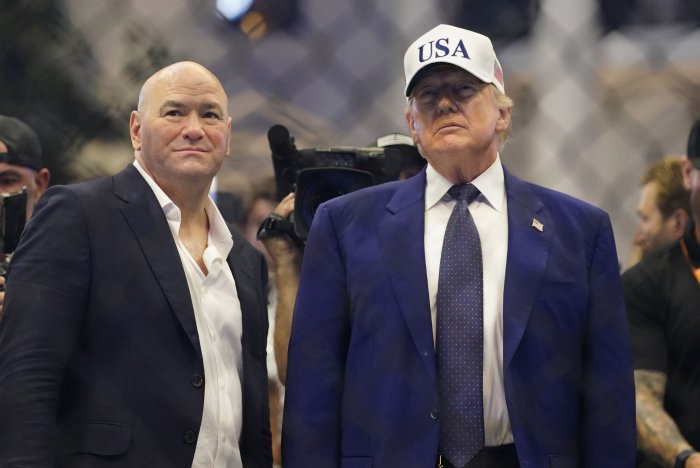
June 22 (UPI) — Federal authorities have arrested two additional suspects allegedly involved in last week’s foiled attack targeting the Ultimate Fighting Championship bout at the White House, prosecutors said Monday.
Both suspects made their initial court appearances Monday, the Justice Department said in a release. Jordan Rincker, 28, of St. Joseph, Mo. appeared in a Kansas City court, and William Lee Spartacus Falkner appeared before a judge in Tacoma, Wash.
They each have been charged by criminal complaint with one count of conspiracy to commit murder.
Prosecutors said Falkner was arrested midday Friday, while Rincker was arrested Sunday.
A total of seven people have now been arrested and charged in a sprawling scheme that federal authorities have said involved 23 people conspiring to attack the White House’s Freedom 250 event on June 14, staged in celebration of the United States’ 250th anniversary and the birthday of President Donald Trump.
According to federal prosecutors, the alleged conspiracy planned to attack the north side of the event with explosive-carrying drones, which would force an evacuation to the south side of the event, where snipers would be deployed to open fire on the fleeing crowd, court documents state.
Authorities learned of the alleged attack from the parents of Tycen Proper, who alerted police to their son’s purchase of weapons and online activities. Proper, 19, was among the initial batch of five suspects arrested and charged last week.
The court documents state the group’s alleged grievances appear to be purported government corruption and involvement of U.S. lawyers with Israel.
FBI agents reviewing Proper’s communications were able to identify several alleged co-conspirators, including Falkner.
Prosectuors alleged that Falkner indicated in those communications that he had experience manufacturing and piloting drones and discussed loading them with explosives.
Online communications reproduced in the criminal complaint against Falkner allegedly show discussions on logistics of the attack, including potential flight costs, 3D printing and shipping of the drones.
“I can fly 40+ drones at the same time at the same target,” Falkner is alleged to have said.
Federal prosecutors alleged that just two days before the alleged attack, Rincker met Abraham Alvarez, 31, who was arrested and charged last week along with Proper, in person and accepted $1,200 from him. Rincker then allegedly sent a $100 CashApp payment from the money he received to another previously arrested and charged suspect, Bryan Roa, 24, to pay for his drive from California to Washington, D.C.
Authorities identified Rincker as an alleged member of the conspiracy through information they received from Alvarez following his arrest, according to court documents. Authorities also learned that Rincker allegedly gave a 12-gauge shotgun to Alvarez during an in-person meeting they had in Omaha.
The FBI executed search warrants for Rincker’s residence and storage unit, uncovering a trove of weapons and related paraphernalia, such as a gas mask with cartridge, night vision goggles, ballistic plates, a 3D printer and more.
No attack occurred at the UFC event, at which Trump and other members of his Cabinet were in attendance.
Asked about the thwarted attack a day after the event, Trump told reporters that he had heard about it.
“The attack that I watched were the fighters,” he said, to laughs.
“They were as good a fights as I’ve ever seen. The best.”

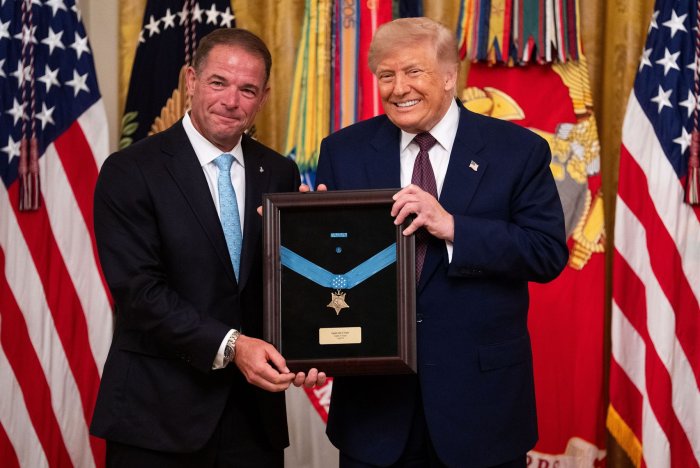
June 22 (UPI) — Leaders in the House Energy and Commerce Committee announced a bipartisan agreement Monday to advance the Kids Online Safety Act.
Committee Chairman Rep. Brett Guthrie, R-Ky., and ranking member Rep. Frank Pallone, D-N.J., announced the agreement that will set new standards for online platforms in respect to child users.
The committee passed the Kids Internet and Digital Safety Act in March on partisan lines but Monday’s deal brings some changes to the bill.
“Coming into this Congress, we knew that protecting children and teens online would be one of the most significant challenges this committee would have to address,” Guthrie and Pallone said in a joint statement. “Through empowering parents, establishing safety as a default, strengthening privacy for children and teens, increasing transparency around data brokers, and holding Big Tech accountable, the KIDS Act delivers the 21st century protections parents have demanded and our kids deserve.”
The updated bill is expected to be considered on the House floor next week.
The Senate is considering a different version of the Kids Online Safety Act. If the House bill passes, the differences between the bills will need to be resolved.
One of the key distinctions in the House version of the bill is the absence of a duty of care standard which would require social media companies to design their platforms with the safety of children in mind. This includes implementing measures that block children from consuming age-inappropriate content and assures the platform’s design does not contribute to compulsive use.
States would be allowed to implement stricter regulations.


“House of the Dragon” is unveiling the next chapter of its Targaryen family drama.
Premiering Sunday, Season 3 of HBO’s epic fantasy will pick up right after the events of the second season, which ended with Rhaenyra Targaryen (Emma D’Arcy), the displaced would-be ruler of the Seven Kingdoms, finally finding some momentum in her campaign to claim the Iron Throne.
The Targaryen civil war has been a bit of a slow burn so far, though both sides of the family have suffered major casualties. That’s likely to change in Season 3, now that both factions have added key reinforcements.
“House of the Dragon” is about the Targaryen war of succession known as the Dance of the Dragons. Rhaenyra’s claim to the Iron Throne stems from her father, King Viserys I, naming her his heir, despite women traditionally being overlooked in the line of succession.
But when King Viserys died, his eldest son Aegon was crowned king instead. King Aegon II is Rhaenyra’s younger half-brother who was born after she had already been announced as Viserys’ heir.
Rhaenyra’s supporters, known as the Blacks, include her uncle-turned-husband Daemon Targaryen and their children, as well as Corlys Velaryon.
Aegon’s faction, the Greens, includes his mother Alicent Hightower, Rhaenyra’s childhood friend; and siblings Helaena (his wife), Aemond and Daeron.

Daemon (Matt Smith) and Rhaenyra (Emma D’Arcy) in “House of the Dragon” Season 3.
(Theo Whiteman / HBO)
Much of “House of the Dragon” Season 2 involved both sides assembling allies and establishing battle lines — but there was plenty of bloodshed along the way.
The season kicked off with Rhaenyra demanding vengeance against Aemond for killing her son Lucerys. Unfortunately, Daemon’s hired assassins killed Aegon’s young son Jaehaerys instead so any real possibility for a family reconciliation was lost.
The big battle of the season happened at Rook’s Rest, where Princess Rhaenys and her dragon Meleys were killed by Aemond and his dragon Vhagar while fighting Aegon and his dragon Sunfyre. Aegon was severely injured by Aemond and Vhagar in that battle.
Aemond was named Prince Regent in the aftermath, and seized control of the Iron Throne while Aegon recovered.
The Greens made a key alliance with the Triarchy to fortify its naval forces. The Blacks, meanwhile, essentially held open tryouts to find new dragonriders to add more aerial firepower. They also gained more ground troops thanks to Daemon’s efforts in the Riverlands.
In the Season 2 finale, Alicent took a secret trip to Dragonstone to make a deal with Rhaenyra. She offered to essentially hand over the Iron Throne while Aemond was away if Rhaenyra promised to spare her and her family. When Rhaenyra insisted that Aegon had to die for her to properly claim victory, Alicent agreed.
Unfortunately for them, Aegon had snuck out of King’s Landing with the help of Larys Strong.
Meanwhile, various troops led by Criston Cole, Gwayne Hightower, Jason Lannister and others were on the move.

Aegon (Tom Glynn-Carney) is on the move in “House of the Dragon” Season 3.
(Theo Whiteman / HBO)
The Greens have four dragons ridden by the Targaryen siblings, but not all are currently available for battle.
Aegon and his dragon Sunfyre are both injured. Helaena, whose dragon is Dreamfyre, told Aemond that she would not join him in battle. The oldest and largest is Aemond’s dragon Vhagar, who has already triumphed over a couple of Team Black’s dragonriders.
Their youngest brother Daeron rides Tessarion, but they have not yet joined the fray.
The Blacks, meanwhile, currently have seven dragons among them, including Rhaenyra‘s beast Syrax. Daemon, who has the most experience in battle, rides Caraxes. Their children Jacaerys and Baela’s dragons are Vermax and Moondancer, respectively.
Newly added to the mix are lowborn dragonriders of Valyrian descent, Addam of Hull (whose father is Corlys Velaryon), Hugh and Ulf. Their respective dragons are Seasmoke, Vermithor and Silverwing.
There are also some wild dragons in Westeros like the one Rhaena (Daemon’s daughter, Baela’s sister) encounters in the Vale called Sheepstealer.

Dragons will battle in “House of the Dragon” Season 3.
(HBO)
Season 3 will kick off with a massive clash on the sea known as the Battle of the Gullet. This will involve Corlys Velaryon and his fleet trying to fend off an attack by Tyland Lannister and the Triarchy. It’s also no secret that Rhaenyra will make her way back to the Red Keep to claim King’s Landing.
New characters such as Ormund Hightower (Alicent’s cousin) and Daeron Targaryen (Alicent’s youngest son) will officially join the action for the Greens in Season 3. The Blacks can expect reinforcements from the north in the form of the Winter Wolves.
Other loose ends from previous seasons include Rhaena’s quest to tame a wild dragon and the status of Rhaenyra’s youngest children who were sent away for their safety. There is also the mystery around the captivity of Otto Hightower, Alicent’s father.

Ronda Rousey and Jake Paul have taunted the UFC and Dana White for failing to break Most Valuable Promotions’ MMA record audience figure with the White House event last week.
US broadcaster Paramount said UFC 250 Freedom on Sunday reached 7m people in the US on Paramount+.
Netflix said Rousey’s 15-second demolition of Gina Carano in May had a US average audience of 9.3m and a US “peak audience” of 11.6m.
Paul, who co-founded MVP with Nakisa Bidarian, wrote on X: “As a boxing promoter it feels good waking up today being the biggest MMA promoter.”
Paul has a history of taunting UFC president White, and the MVP-promoted Rousey v Carano event was positioned as a “takeover” of MMA by boxer Paul.
Rousey, who chose to fight on an MVP card rather than the UFC because of fight purse demands, reacted to news of the viewing figures by targeting UFC chief business officer Hunter Campbell.
“Lmao [laughing my ass off]! Kiss my ass, Hunter Campbell,” Rousey said.
UFC White House, which had two title fights and was held on the south lawn of US President Donald Trump’s home, averaged 8.2m viewers across the US and Latin America.
Paramount said 17m people watched at least one minute of the event in those countries, including 15.3m in the US.
It said the live audience figures were verified by Nielsen, the industry standard in reporting TV viewership metrics, and Adobe Analytics.
Streaming giants Netflix did not release any figures other than for the US and did not say whether the numbers were verified by Nielsen or any other party.
Paramount suggested the UFC would release further global figures for the White House event.
American Justin Gaethje gave the Trump-fronted event a fairytale ending on the president’s 80th birthday by upsetting the odds to beat Ilia Topuria in the main event.
Gaethje, a Trump supporter, claimed the UFC lightweight title for the first time at the age of 37.

WASHINGTON — More than $350 million from President Trump’s “big, beautiful bill” has been quietly directed to White House security, an allotment that Democrats warn appears to be helping fund his new ballroom project — despite the president’s insistence that no taxpayer dollars would be used.
The apportionment of funds, which the White House’s Office of Management and Budget made late Friday, comes from two accounts that were intended to provide the U.S. Secret Service with extra money for hiring and training in the aftermath of last year’s assassination attempts on the president, according to Democrats on the Senate Budget Committee. The shift was made days after Congress rejected a $1-billion request for the White House in a Homeland Security bill that Trump signed into law and as the ballroom project is tangled in legal challenges.
Senate Judiciary Committee chairman Chuck Grassley, whose panel initially drafted the security funding, said Thursday he was unaware of the allocations.
“The president said that it was all going to be paid for with private money,” said Grassley (R-Iowa). “And that’s what the country expects.”
Sen. Jeff Merkley of Oregon, the top Democrat on the Senate Budget Committee, charged that Trump’s actions are potentially illegal.
“After repeatedly telling the American people that zero taxpayer dollars would be spent on his gold-plated ballroom boondoggle, now Trump appears to be using a smoke and mirrors tactic,” Merkley said in a statement.
“Trump has proven that he can’t be trusted to follow the law,” Merkley said. “He only cares about wasting taxpayer money on his vanity projects.”
Trump has faced setbacks in his attempts to build the ballroom on the White House grounds, where he ordered the demolition of the storied East Wing to make way for it.
Touring the construction site last month, Trump called the development a “gift” to the American people. He has repeatedly said that it is being paid for by donations — which has also run into ethics questions from watchdogs concerned about potential corruption and conflicts of interest.
Congress refused the Trump administration’s request for $1 billion for the ballroom last month. The administration wanted the money as part of a Homeland Security bill, but Republican and Democratic lawmakers rejected efforts to tack it on. It became politically toxic at a time when Americans are reeling from inflationary high costs of living.
The Washington Post reported earlier this week that the price tag for the project has ballooned to $600 million, according to a project summary prepared by the contractor, with more than half of that funding coming from taxpayers. Roll Call first reported on the apportionment of new funds for White House security.
At its core, arguments are swirling over how much of the White House project is to bolster security underground, with bomb shelters and a medical facility, and how much of the costs are related to the president’s promised 999-seat ballroom on top.
A spokesman for the White House said that Trump and donors are funding some $400 million for the ballroom development, and that the coordination with the Secret Service had been noted in the initial announcement of the project.
“The East Wing Modernization Project is inextricably tied to the security of the President, the White House grounds and the certain security infrastructure assets,” said White House spokesman Davis R. Ingle in a statement.
He said the events over the past weekend, including an alleged attack plan targeting the UFC Freedom 250 event at the White House, proves why the project is needed.
“President Trump and generous American patriots are funding the ballroom to the tune of approximately $400 million, which will be a secure and appropriate venue for Presidents for generations to come,” he said.
Government lawyers have argued that the project includes critical security features to guard against a range of threats, such as drones and missiles.
The White House has said in court documents that the East Wing project would be “heavily fortified,” including bomb shelters, military installations and a medical facility underneath the ballroom. The Secret Service told senators last month that $220 million of the White House’s $1-billion request would go to harden the ballroom addition, with bulletproof glass, drone detection technologies, chemical and other systems.
The rest of the money would go for other security improvements, according to a document provided to Senate Republicans, including $180 million for a new, “long overdue” White House visitors screening facility.
The shifting funds are certain to ignite growing concerns in Congress over the separation of powers, and the president’s use of federal funds allocated by lawmakers.
The money comes from Trump’s big tax breaks and spending cuts bill that the president signed into law last summer. It provided more than $1 billion for Secret Service resources, including “personnel, training facilities, programming, and technology; and performance, retention, and signing bonuses.”
The provision was uncontested at the time, even as Democrats voted against the broader bill. Democrats said they did not challenge this section or try to strip it out from the package.
Under the Constitution, only Congress has the specific authority to allocate funds across the federal government, including the executive and judicial branch operations.
While the president holds the power to sign — or veto — those appropriation bills, once the funding becomes law, it largely must stand.
Mascaro writes for the Associated Press.

Lesley Horton, the UK’s Chief Property Ombudsman, said: “If implemented carefully and supported by clear guidance and appropriate training, these reforms can create a home buying and selling system that is faster, fairer and better equipped to meet the needs of consumers in the years ahead.”

Today, we discuss political jockeying, litigation and Hail Mary passes.
There’s so much going on these days …
Indeed.
Between the war with Iran, the World Cup and President Trump slapping his filigreed (emphasis greed) name on everything in sight, I’ve completely lost track of the fight for control of Congress.
Well, now that the California gubernatorial primary is in the rear view, let’s catch up. The midterm election is not until November, of course. But a fierce political competition, aimed at skewing the result, has been underway since last summer.

Share via
It started in Texas, where Trump strong-armed Republican lawmakers into redrawing their congressional map in hopes of boosting the GOP’s chances of keeping control of the House. That led California voters to pass an eye-for-an-eye measure aimed at boosting Democratic prospects.
Other states joined the skirmishing, capped by Virginia, where voters in April approved new political lines aimed at netting Democrats as many as four additional seats.
For a short time, it looked as though Trump’s move had backfired and Democrats might actually come out ahead, at least on paper, by a seat or two.
And then?
And then the courts stepped in.
In a 4-3 decision in May, the Virginia Supreme Court struck down the state’s new congressional map, ruling that the Democratic-run legislature had violated procedural requirements when it placed the constitutional measure on the ballot.
But the more significant legal decision came a week prior, when the U.S. Supreme Court nullified a major part of the federal Voting Rights Act, freeing several Southern states to hastily redraw a number of congressional districts to Republicans’ advantage.
What’s the bottom line?
It looks as though the GOP has come out ahead, but not by more than a handful of seats, give or take. It’s important to note that all that cartographic competition offers no guarantee of success.
“Cartographic competition?”
Those gerrymandered maps were drawn for the express purpose of helping out one party or the other, but the partisan manipulation doesn’t make all those redrawn districts a lock come November.

California Gov. Gavin Newsom signs legislation calling for a special election to redraw the state’s congressional map
(Godofredo A. Vasquez / Associated Press)
In California, for instance, the Central Valley seat held by Republican David Valadao — a perennial Democratic target — remains highly competitive. In Texas, GOP lawmakers redrew their map assuming the substantial Latino support that Trump enjoyed in 2024 would carry over to Republican candidates in this year’s midterm election. That seems increasingly less likely, given shifting Latino attitudes, which means at least two of those redrawn Texas seats are more competitive than Republicans would like.
Bottom line, where does that leave things in the fight for control of the House?
There are no certainties …
… Beyond death and taxes. Understood.
It still seems more likely than not that Democrats will win the House in November.
They just need to gain three seats. Going back more than half a century, the out party (which is to say the one not in the White House) has gained an average of more than two dozen House seats in the midterm election. So Democrats have that going for them.

President Trump kicked off a redistricting battle by strong-arming Texas into redrawing its congressional map.
(Alex Brandon / Associated Press)
Also, more significantly, Trump’s approval ratings — in a word — stink. There’s a very strong correlation between a president’s standing in polls and his party’s performance, given midterm elections are almost always a referendum on the party in the White House. Since disgruntled voters are more likely to turn out, that means the out party typically gains seats.
“It would be one thing if Republicans were trying to buck a historical trend and they were doing so strengthened by a popular Republican president,” said Jacob Rubashkin, an analyst with the authoritative nonpartisan political guide Inside Elections. “But that’s simply not the case. … [Trump] is less popular than any president heading into a midterm election in a very long time.”
What about control of the Senate?
Advantage Republicans.
How so?
Part of it is straight-up math. Democrats need to flip four seats. There are 35 Senate races being decided this fall, but only 10 or so are even remotely competitive. Nearly all are in states that Trump carried.
That said, things are looking up considerably for Democrats from where they were a few months ago.
Oh?
There’s much less correlation between presidential approval and the outcome of Senate races. Still, Trump is putting up some pretty strong headwinds that Republicans will have to overcome this fall, including in battleground states such as Georgia, Michigan and North Carolina. (His gaseous effusions — “I love the inflation,” “Affordability is a con job” — are not helpful, to put it mildly, when gasoline and hamburger are costing hard-pressed voters an arm and a leg, respectively.)
And Democrats have done about as well as they could have hoped in landing their preferred candidates in the Republican-leaning states of Alaska, Ohio and Iowa, making those contests far more competitive than they would have been.
That started out as Democrats’ top target this election cycle. Five-term incumbent Susan Collins has the distinction of being the only Republican senator running in a state that Kamala Harris won. The race is still considered a toss-up.
But the nomination of Graham Platner, an oyster farmer and Marine Corps veteran with a history that is, um, problematic — a tattoo resembling a Nazi SS symbol he did or did not apprehend; extramarital sexting; coarse online commentary — could turn the race into more of a referendum on the Democrat than either Trump or Collins.
And Texas?
You mean the boneyard of Democratic dreams?
It’s been decades since the party won a statewide race in Texas, despite all manner of attempts. (The “dream team” of a white/Black/Latino slate; the streaking-comet candidacies of Beto O’Rourke and Wendy Davis, who both flamed out short of victory.)
Democrats are giddy again, this time over 37-year-old state Sen. James Talarico, who’s built a national following with his telegenic, Christian-infused progressive platform. More pertinent, he’s running against a singularly flawed Republican nominee, state Atty. Gen. Ken Paxton, whose dubious resume is muddied with a felony indictment, impeachment by the GOP-run Texas House and allegations of repeated adultery.
Still, it’s Texas. Electing Talarico would be like connecting on one of those last-second, desperation, alley-oop passes in the end zone. Not impossible.
But don’t bet the ranch.

VENEZUELA Fury looked unimpressed when her new husband Noah Price criticised her family for buying them such a “small house”.
The eldest daughter of Tyson Fury, 37, has moved into a static home which her boxer dad bought for her and Noah, 19, after they tied the knot last month.
Since moving into their first home as a married couple, Venezuela, 16, has been sharing videos of their life living there.
In the influencer’s latest TikTok, she posted a clip of her new husband Noah complaining about how small their static house is.
Noah can be heard laughing, as he says: “Why did you (Tyson) get me such a tiny house, oh cause you (Tyson) bought it!”
Venezuela can then be seen looking unimpressed at her husband’s comment about the size of their home that her dad had paid for.
At 42ft long and 14ft wide, the static home spans 588 square feet – roughly the same size as a large London studio flat.
The Sun revealed how generous Tyson and wife Paris Fury, 36, splashed out on the £46,995 static home as a wedding gift for them.
They also gave them a nice little nest egg of £5M, to get them started out, as well as paying for their lavish wedding.
Meanwhile, the new couple have found their marriage has been lucrative so far for them.
Fans can’t get enough of their TikTok videos, where they share their daily life in their static home.
Venezuela and Noah have become so popular that The Sun recently reported how they are in talks to star in their own fly-on-the-wall show.
A TV insider said: “The couple are not A-list celebrities but everyone has become obsessed with their love story.
“People are genuinely intrigued by them.
“Whether it’s the fact they have married so young, Venezuela’s famous family or their gypsy lifestyle, they have the ‘X factor’.
“Several TV executives think a proper fly-on-the-wall series following their lives as newlyweds in the gypsy community would be fascinating.”
Netflix is likely to win any bidding war for the show, as the streamer already has a working relationship with the Fury family.
Their series, At Home With The Furys, became an instant hit when it dropped in 2023 and filming is already under way on a third series, which is due later this year.

The TWZ Newsletter
Weekly insights and analysis on the latest developments in military technology, strategy, and foreign policy.
A plan to attack the UFC America 250 event at the White House on June 14 with explosive drones was thwarted by the FBI, according to federal records. Exactly how capable those involved were of actually pulling it off remains unclear. However, the alleged plot amplifies concerns that TWZ has been documenting for years about threats posed by drones to critical facilities in the homeland and how they continue to change the national security picture at home and abroad.
The long-standing potential for a drone attack on the White House was something we recently discussed last month in an examination of President Donald Trump’s plans to fortify the under-construction ballroom. More on that later in this story.

The plot involved a group of individuals who wanted to “attack the UFC event and involved staging a ‘demonstration’ on the north side of the White House,” CBS News reported, citing the court filings. “The group would then fly drones ‘laden with unspecified explosive devices which would detonate over the north side of the UFC arena,’” according to the filing in the case of one of the five people arrested, 19-year-old Tycen Proper.
When the drones exploded, “the group then planned to force attendees of the UFC event and ‘high value targets’ to evacuate to the south,” Proper’s affidavit read. The suspect told investigators that the plan was for group members to “act as snipers and additional shooters,” shooting fight attendees and the “high value targets” as they fled from the explosions.
The affidavit said the “high value targets” were “wealthy people” and politicians, CBS noted.
Proper allegedly told investigators the goal of the attack was to “jumpstart” a revolution in the U.S. He was interviewed from a hospital, according to the document, where he was admitted on an emergency basis due to “homicidal ideations.”
NEW: Tycen Proper, one of five suspects arrested in the White House UFC drone attack plot, allegedly wanted to target Sen. Marsha Blackburn because she received money from “the pro Israel lobby and supports them.”
“These are the people we’re going to focus on,” Proper texted… pic.twitter.com/e3Wf8YJbDH
— Kaelan Deese (@KaelanDC) June 16, 2026
In addition to Proper, Bryan Omar Roa, 24, of Calimesa, California; Michael Alan Thomas, 32, of Pinon Hills, California; Daniel K. Eskridge, 32, of Kidder, Missouri; and Abraham Hermosillo Alvarez, 31, of Omaha, Nebraska were also charged, according to the Justice Department.
BREAKING: Details via federal arrest affidavit reveal that a California man named Michael Alan Thomas was one of the alleged organizers of the alleged UFC White House terror plot. Feds say he admitted he believes the U.S. government is run by elites who sacrifice and eat… pic.twitter.com/L8i1bTR9Em
— Bill Melugin (@BillMelugin_) June 16, 2026
Fox News was the first to report details about the plot.
BREAKING: FBI, law enforcement partners disrupt alleged plot against UFC Freedom 250 event at White House; 5 in custody, officials say https://t.co/CEBKJA5zPt
— Fox News (@FoxNews) June 16, 2026
TWZ cannot independently verify any of these details at this time and it remains publicly unclear what capabilities, training, funding and equipment the suspects had to actually carry out a complex attack like the one described. Proper’s mother said her son “began interacting with a group online that was comprised of individuals who claimed to be ex-military and Christian-based,” according to the court documents. They espoused anti-government and anti-Semitic sentiments.
At the very least, it would have taken unique skills and some level of discipline, coordination and operational security to pull off this kind of a plot. It would have also required funding and time. The FBI and other law enforcement agencies disrupt attack plans long before they get close to becoming operational, and many of those have a low chance they could actually been implemented as dreamed-up. That does not mean the individuals involved or their plans are not still a significant threat. In this case, there is no information available on whether anyone involved had the means and ability to stage an attack like the one described.

Regardless, it is important to note it would be a challenge to stop people simply from bringing weaponized uncrewed aircraft into range of the White House without law enforcement having prior knowledge. Actually employing those drones as weapons successfully is another story. Still, the danger of such an attack looms large and is growing by the day.
As we have frequently highlighted, two incidents last year highlight the alarming danger of near-field drone attacks that raised lingering concerns in the U.S.
On June 1, 2025, Ukraine launched drones hidden in trucks at air bases across Russia, causing severe damage to its strategic aviation fleet. Weeks later, Israel fired drones from deep inside Iran at the country’s air defenses during the 12-Day War.
TWZ raised concerns about just these kinds of attacks for years long before the ones in Russia and Iran took place.
The following video shows one of the Ukrainian drone attacks on Russian bombers during Operation Spider Web.
In both Russia and Iran, the drones were set up undetected deep in enemy territory during armed conflict against military targets. The plot on the White House, as characterized in the court documents, is of course different on many levels and was to be planned and executed by citizens, not sponsored by another nation at war with its neighbor. At the same time, both presents a host of challenges to defend against, many of which overlap.
Given the presence of the president, his family and thousands of VIP guests on the White House lawn at the time, as well as the event’s extremely high-profile nature, UFC Freedom 250 was “designated a Special Event Assessment Review 1 event, like the Super Bowl, Indianapolis 500, Kentucky Derby and college football games, according to the Department of Homeland Security,” ABC News reported last week.
Security was also tightened at the Ellipse outside the White House, where thousands more watched the event on large screens.

The increased precautions included concern about drones, said Tara McLeese, special agent in charge of the Secret Service’s Washington Field Office.
Federal law prohibits flying drones in the airspace over the National Capital Region, so McLeese advised fans ahead of the event to “leave their drones at home.”
“We will have law enforcement drones for overwatch, but just to make it simple for the public, if they see a drone, we want them to report that,” she said, according to ABC.
The Secret Service declined to talk about its concerns over drone threats, instead pointing us to its post on X.
Protective intelligence cases are on the rise, and our teams work tirelessly behind the scenes to investigate threats, identify those responsible, and ensure accountability. Statement from Director Curran on the events of this past weekend: pic.twitter.com/Oca3QVLg9o
— U.S. Secret Service Office of Communications (@SecretSvcSpox) June 16, 2026
While we don’t know the extent of the counter-drone measures deployed by the FBI, Secret Service or even the military, they certainly included devices to detect and, if needed, jam the signals of threatening drones. However, as the war in Ukraine and Israel’s push into Lebanon have proven, the efficacy of these methods is far from assured. This is especially so since the introduction of drones controlled via fiber optic cables, which mitigate the effects of radio frequency passive detection and active jamming with a direct hardwired link between a drone and its operator.

Meanwhile, as we noted in our story about Trump using the ballroom he is building as a kind of defensive fortification, using traditional kinetic protection from drones and other aerial threats in and around the White House is limited and risky. The advent of interceptor drones, many that are hit-to-kill or use electromagnetic pulses and other low collateral damage means instead of explosive warheads, is starting to mitigate some of those concerns.
From the story about Trump’s ballroom:
“Clearly, the drone issue is a massive one and has been for many years. This structure will serve as a secure place to do daily business if needed. Based on Trump’s comments, it will also act as a critical active defense node with its roof hosting air defenses, and apparently ones that are capable of at least a limited degree of area defense, not just highly-localized point defense. This is where drones could come into play. Drone interceptors (drones that intercept other drones) are well suited for the unique challenges of defending the White House and the Mall area as a whole, where collateral damage is a huge concern. Some of these systems use warheads, while others do not, physically smashing into their targets or blasting them with electrical pulses and other non-traditional effects instead. Drone interceptor capabilities are expanding rapidly now, equipping forward bases and warships. They proved critical in defending U.S. interests against Iranian attacks during the recent war. In Ukraine, they have proven indispensable in countering waves of Russian Shaheds.”

Directed energy, such as lasers and high-power microwave weapons are another potential countermeasure, but these systems remain somewhat in their infancy and have very short range. Above all else, using them in dense urban areas, especially those with nearby low-flying air traffic, can be extremely problematic. They are not widely deployed for the counter drone role in the United States and won’t be in the near term.
It’s also worth remembering that the alleged plan did not necessarily rely on the accuracy of the drones or the damage they could inflict. The goal was to induce panic by their very presence and drive people into a field of fire to be attacked by snipers.
Even if counter-drone measures were able to provide a relatively robust protective bubble over UFC 250 at the White House, the plot as described in the documents further highlights the vulnerability large events have from even the lowliest of drone attack attempts.
The U.S. at the moment is protecting several facilities across the country with huge crowds during the World Cup soccer tournament at a time of heightened global tensions. Countering drone attacks was a central component of pre-event security measures as well as ongoing efforts.

This all comes as the U.S. is working to increase authorities to allow the military and law enforcement to better protect against drone threats.
We were the first to report numerous unauthorized drone flights over U.S. military facilities and other sensitive areas. The defensive capabilities have been constrained by a labyrinth of often confusing legal and regulatory hurdles. Incursions by cartels along the U.S.-Mexico border have sharpened the need for reforms, some of which are underway.
As we reported back in February, in advance of the U.S. hosting the 2026 World Cup and 2028 Olympic Games, the Trump administration pushed to expand counter-drone authorities. Congress granted that when it passed the Fiscal Year 2026 National Defense Authorization Act (NDAA).
Officials have already taken action against drone operators using these new authorities. Last week, FBI Los Angeles said it seized drones and issued citations to pilots near SoFi Stadium for alleged violations of temporary flight restrictions during last Friday’s World Cup match, The Los Angeles Times reported. The bureau “shared photos showing confiscated drones as well as an image of a drone operator being cited,” the newspaper noted. “However, it did not specify how many drones were taken or how many pilots were issued citations. It also did not provide details on the technology used to locate or track the drone operators.”
The bureau did not say if the operators of these drones had nefarious intent or whether they were armed, though neither of those are prerequisites for violating the no-drone-zone rules.
The FBI’s Counter Drone Enforcement Team has been busy around last night’s #WorldCup game and related events ensuring drone pilots aren’t violating @FAA Temporary Flight Restrictions. But some were, and as promised, they were cited and had their drones seized. Meanwhile,… pic.twitter.com/s0vy75E73E
— FBI Los Angeles (@FBILosAngeles) June 13, 2026
While the actual ability of the alleged perpetrators to pull off the combined drone and sniper attack on the White House like what’s described remains unknown, the threats to the homeland from uncrewed aircraft are only growing by the day, as are nefarious actors’ experience and creativity with the technology.
Contact the author: howard@twz.com

WASHINGTON — Law enforcement officials disrupted “planned attacks” meant to target the UFC cage-fighting show staged at the White House this past weekend for President Trump’s birthday, and multiple people were in custody, FBI Director Kash Patel said on Tuesday.
The nature of the potential threat was not immediately disclosed, with additional details expected to be released once charges are unsealed later Tuesday.
Five people were arrested from states including Ohio, Missouri and California, said a law enforcement official familiar with the matter. The official spoke to The Associated Press on the condition of anonymity to discuss information that was not yet public.
The FBI learned about the possible threat on June 10, four days before the mixed martial arts extravaganza on the White House’s South Lawn, “and thanks to the rapid action of the FBI, our partners, and the Department of Justice in a multi-state operation, multiple individuals are now in custody and allegedly planned attacks were stopped cold,” Patel said in a post on X on Tuesday morning.
The Secret Service “worked around the clock to identify those responsible and hold them accountable,” Director Sean Curran said in a separate statement.
Trump, who celebrated his 80th birthday at the UFC event on Sunday, sought to tie the fights to larger celebrations of the 250th anniversary of the signing of the Declaration of Independence. Speaking to reporters Tuesday in Évian-les-Bains, France, where he was attending the Group of Seven summit, Trump said he had not been briefed on the thwarted plot.
Tucker writes for the Associated Press. AP writer Darlene Superville in Évian-les-Bains, France, contributed to this report.
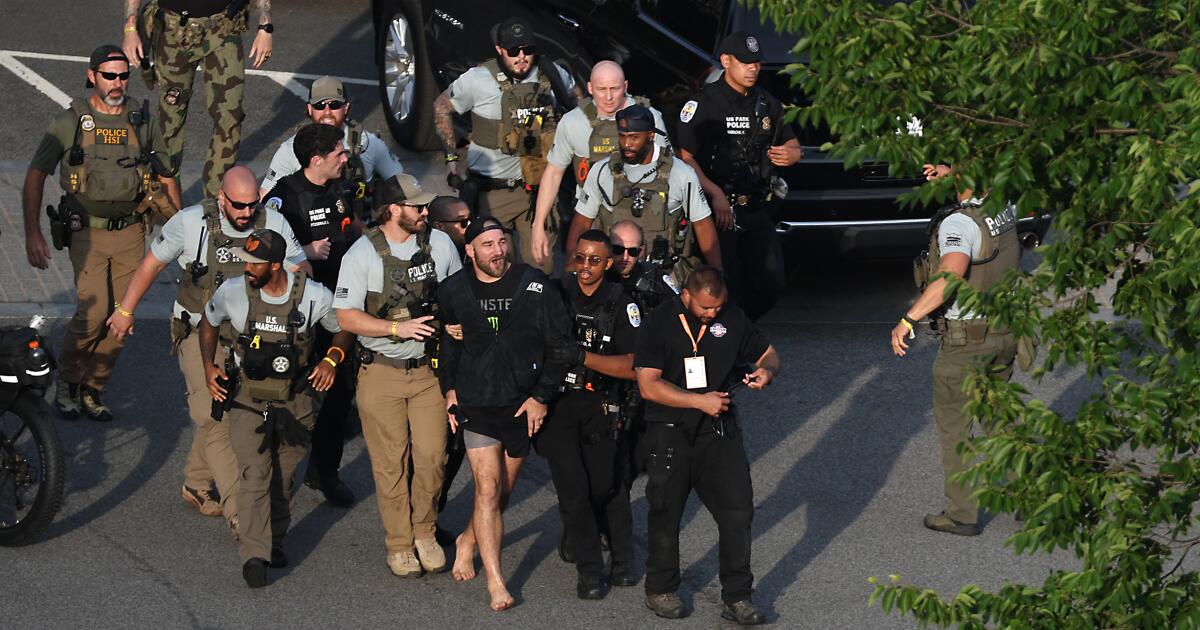
UFC middleweight champion Sean Strickland was escorted out of a UFC Freedom 250 fan fest near the White House on Sunday evening for his own safety and the safety of other attendees, according to the U.S. Park Police.
Strickland was not on the card for the UFC event held on the White House South Lawn in connection with a summer-long celebration of the nation’s 250th anniversary. Instead, the 35-year-old fighter attended a viewing event on the Ellipse, causing a stir among fans as he eventually entered a wrestling ring set up in the area.
“At approximately 7 p.m., the U.S. Park Police received report of a disturbance within the UFC event,” the agency said in a statement emailed to The Times. “The unplanned presence of Sean Strickland drew significant attention from attendees, resulting in disorder. Due to concerns for Strickland’s safety and the safety of event patrons, personnel from the U.S. Marshals Service, U.S. Park Police, and other assisting agencies evacuated him safely from the area.”
In videos posted to his Instagram Story from, during and after the incident, Strickland states he “might be going to jail” and “may have been charged with disorderly conduct.”
However, the Park Police said that is not the case.
“Strickland was neither cited nor arrested in connection with the incident,” the agency said. “However, he was advised not to return to the venue for his own and public safety. USPP escorted him to his hotel without incident.”
Strickland was once a supporter of President Trump but has become a vocal critic over such issues as the Jeffrey Epstein files and the war with Iran. Still, he had expressed interest in attending UFC Freedom 250, which took place on Trump’s 80th birthday, but has said on X that the UFC told him he “wasn’t cleared by the white house.”
UFC president and chief executive officer Dana White has said that nobody, including Strickland, was banned from the event.
On Saturday, Strickland posted on X that he wanted to attend the fan fest on the Ellipse.
The next day, he posted a video on Instagram that shows him doing just that. Apparently filmed by the MMA star as he was being led through the crowd by another man (Strickland later said on X that a fan “snuck me in”), the video shows Strickland trying to avoid being recognized until getting to the ring.
Once there, however, he basked in the attention of a large crowd that chanted, “U-S-A! U-S-A!”
Strickland also posted a photo to Instagram of himself being escorted barefoot out of the event, with the caption “NOT AMERICAN ENOUGH.”

Thousands are expected at the mixed martial arts fight, which coincides with Trump’s 80th birthday.
Source link

WASHINGTON — One by one, the burly mixed martial arts fighters made their entrance past the solemn, hulking marble statue of America’s 16th president and jogged down the steps of the Lincoln Memorial to roars from thousands of fans drawn to the unusual sporting weekend marking the nation’s 250th anniversary and President Trump’s 80th birthday.
The news conference Friday night featured the fighters who are preparing to face off Sunday in the Octagon built outside the White House. But it was also a chance to see the UFC fans who have thronged to Washington and endured lightning, humidity and bugs.
Tracy Philbeck and his son Levi drove from Charlotte, N.C., with a group of friends to support their favorite fighter, American Justin Gaethje, in the upcoming lightweight title bout against Georgian Ilia Topuria.
“You will hear an eagle screaming when Justin Gaethje wins,” the elder Philbeck said with a chuckle.
David Halstead journeyed from Albany, Australia, to watch the sport he has loved for a decade. Halstead said Trump, who regularly attends the fights, “put UFC on the map.”
The UFC has said it spent $60 million on this weekend’s festivities, and the president has billed his birthday fete as “the greatest show on Earth.”
Not everyone agrees.
The Public Integrity Project described the event as a “private, commercial, corrupt use of our most sacred national monuments for private gain” in a lawsuit the watchdog group filed to try to stop it from happening on federal land. A federal judge ruled Friday that the White House was allowed to go ahead.
About 1 in 10 U.S. adults consider themselves mixed martial arts fans, according to Ipsos Sports polling conducted in February and March. That survey suggests MMA fans tend to be male and nonwhite. They are more likely to identify as Republicans than Democrats.
“One misconception is that everyone who watches UFC is a Trump supporter, but that’s not the case,” said Ricardo Rodriguez, 24, explaining that he loves the physicality of the sport. “People also expect a knockout every time.”
Ellie Louizes, who practices Muay Thai, or Thai kickboxing, and jujitsu martial arts, drove from Daytona Beach, Fla., with her boyfriend, Jacob Purvis.
Female fans of MMA are the minority. But Louizes said she knows a lot of women who get into watching the sport through their male partners. She said “female fighters are often way more aggressive” than the men.
The fans at the Lincoln Memorial brushed off criticism about the bouts being held at the White House — on federal grounds owned not by its occupant, but by the American people.
Holding fights at the “people’s house,” Tracy Philbeck said, “goes back to the days of Teddy Roosevelt.”
President Theodore Roosevelt regularly held sparring sessions at the White House, though they were not formal, public prizefights. He was an enthusiastic amateur boxer who had boxed at Harvard and continued the sport throughout much of his life.
Boxing fans also make up a large part of the UFC’s fan base.
At a UFC-sponsored community event this week at the District of Columbia’s Midtown Youth Academy, the boxing gym’s executive director was helping out with a visit from UFC fighter Randy Brown, who sparred with more than a dozen local teenagers and preteens.
Gloria Lee said meeting the fighter was a big deal for kids at her gym. “It’s just been a thrilling week, and I was about to fall out when he came in the door!” she said.
Asked about her personal UFC fandom, Lee said she had not watched it much. But by the end of Brown’s visit, she got into the ring with the professional fighter and threw some slugs of her own.
Hussein writes for the Associated Press. AP writer Linley Sanders contributed to this report.

