Hormuz

U.S. Navy Won’t Be Ready To Escort Tankers Through Hormuz For Weeks

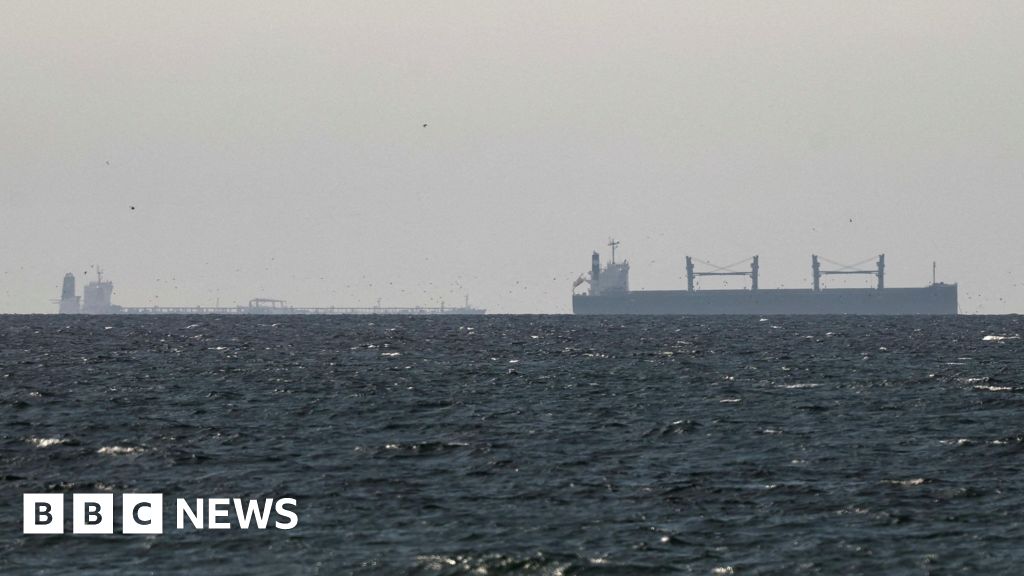
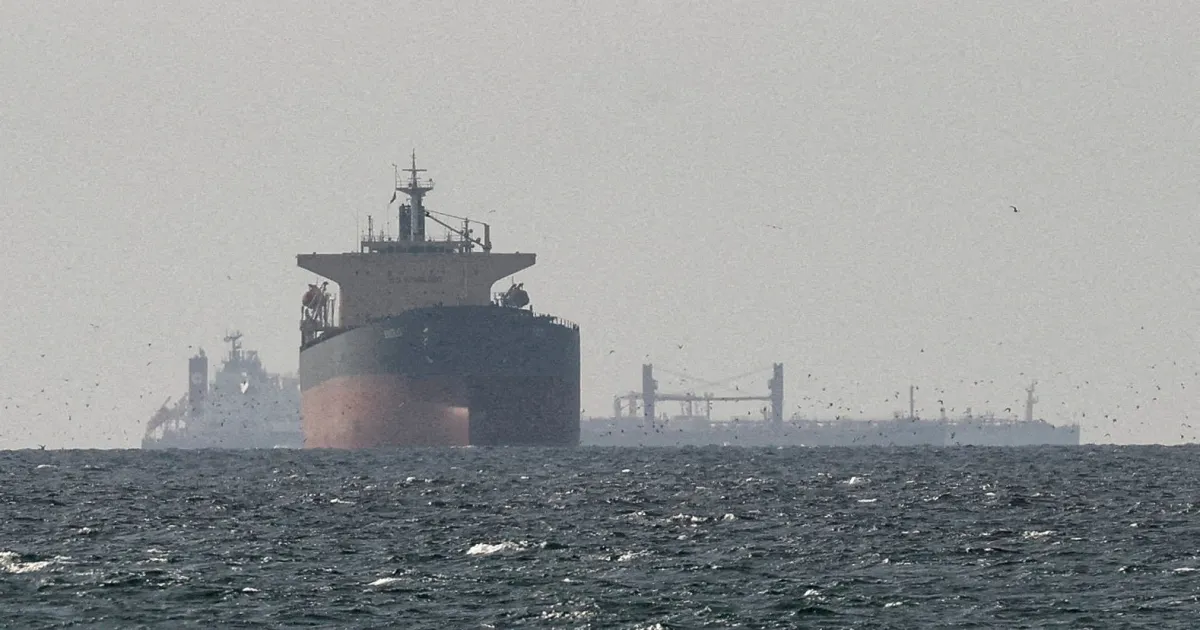
The U.S. Navy is not yet ready to escort oil tankers through the Strait of Hormuz, but it will happen. This is the synopsis provided by U.S. Energy Secretary Chris Wright in an interview with CNBC. The development comes as Iran continues to pummel international shipping in and around the critical channel, which the new Iranian supreme leader, Mojtaba Khamenei, vows to keep closed.

“It’ll happen relatively soon, but it can’t happen now,” Wright said, of the planned naval escort mission. “We’re simply not ready. All of our military assets right now are focused on destroying Iran’s offensive capabilities and the manufacturing industry that supplies their offensive capabilities.” Wright added that the Navy should be able to escort tankers through the strait by the end of this month.

BREAKING: Iran’s Supreme Leader Mojtaba Khamenei:

We will not forgo avenging the blood of the martyrs.

The Strait of Hormuz should still remain closed.

— Clash Report (@clashreport) March 12, 2026

Khamenei, it appears, is also resolute in his plan to keep the strait closed to all maritime traffic, reportedly having turned down approaches from several countries that were seeking an end to the attacks.

🚨 Lebanese Al-Akhbar newspaper, which is associated with Hezbollah: Official sources from Turkey, Egypt, India, and Pakistan approached Tehran demanding to stop the attacks in the Strait of Hormuz, but were met with a firm response stating that “security will be for everyone or…

— Raylan Givens (@JewishWarrior13) March 12, 2026

U.S. President Donald Trump said on March 3 that “the United States Navy will begin escorting tankers through the Strait of Hormuz, as soon as possible.”

Putting a date of the end of this month on the escort mission is certain to trouble markets that are already feeling the pressure of the conflict. At the very least, this is an indicator that the war or its hostile aftermath will continue for weeks to come.

Equally pessimistically, there have been reports from analysts suggesting that fully reopening the strait may require some kind of ground operation to seize the Iranian coastline adjacent to it.

“Strategic priorities, like opening the Strait of Hormuz and securing what remains of Iran’s nuclear stockpile, will likely require some ground troops if no diplomatic options are pursued,” Brian Katulis, a senior fellow at the Middle East Institute, told The Wall Street Journal. “What we are looking at is potentially a very messy situation.”

Even without boots on the ground, which now seems like a remote prospect, running a tanker-escort mission, which would involve convoys protected by warships and accompanied by mine-clearing assets, is fraught with difficulty. Military unwillingness to take on missions of this kind is an issue we have explored in the past at TWZ.

The warships involved in any such endeavor would also be at extreme risk, especially from Iranian ground-mobile anti-ship missiles, which are relatively small and can be easily disguised in utility trucks. Eliminating that threat is one potential driver for a ground operation along the coast of the strait.

The U.S. military has made extensive efforts in recent days to remove the Iranian minelaying capability, but, according to the U.K. Defense Secretary, there are now increasing signs that Iran may have started mining the strait.

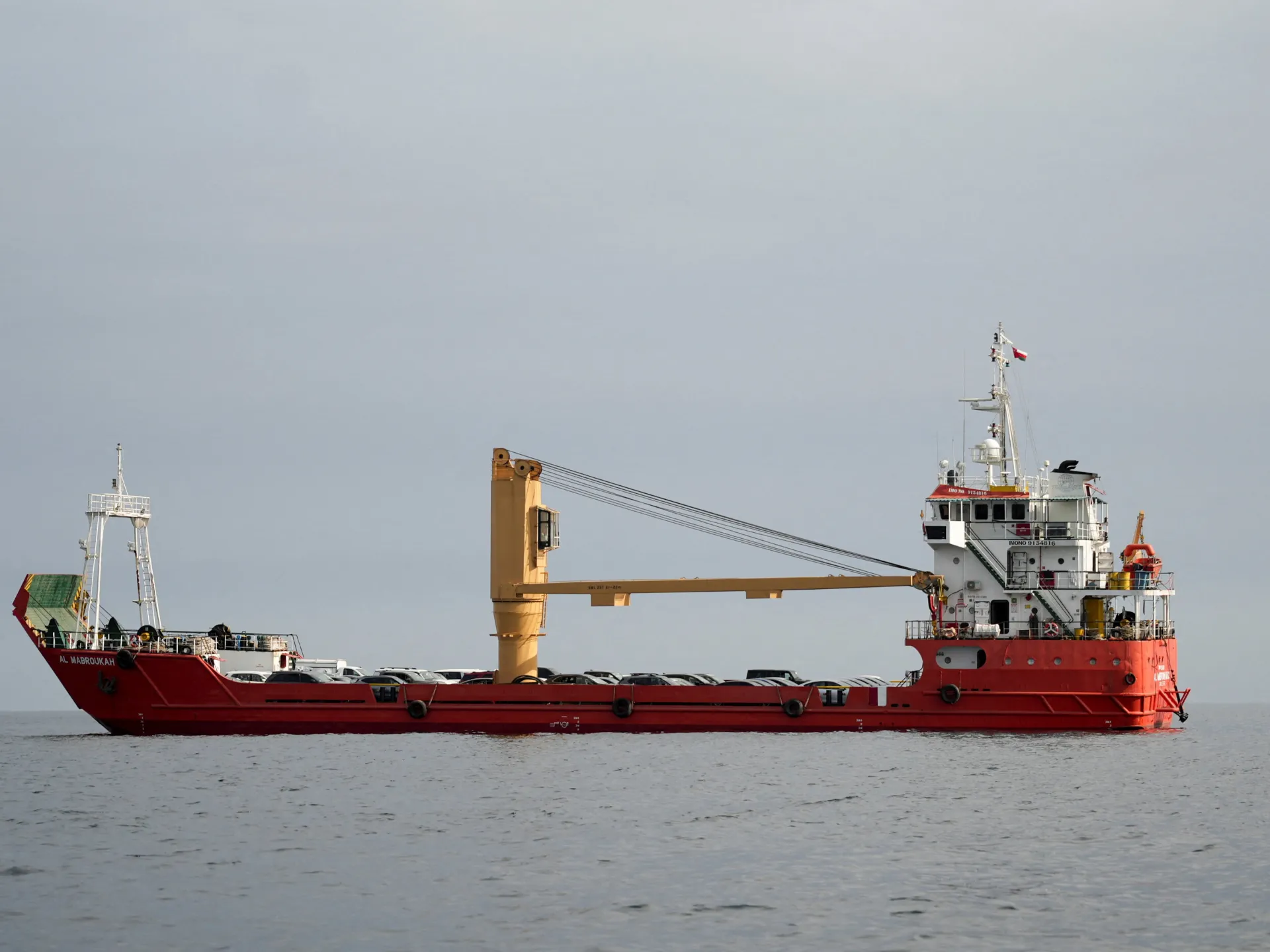
While tanker traffic through the strait remains at a standstill, Iran continues its campaign against commercial tankers elsewhere in the region, with another two vessels set ablaze earlier today in Iraqi waters. Iraq reportedly halted all operations at its oil ports after the attack.

The Ambrey maritime security firm told us that a Malta-flagged crude oil tanker and another merchant vessel were targeted in an attack in Al Basrah Anchorage, Iraq. One fatality was reported. At least 38 individuals were rescued from both vessels according to the Iraq Port Authority, with further search and rescue operations ongoing as of this morning.

Video footage of the incident shows a vessel engulfed in fire with a large plume of smoke rising from the area of impact. Fire can also be seen in the water as a result of the oil spill.

Unverified reports state that the two tankers were struck by uncrewed surface vehicles (USVs).

Iraq’s State Organization for Marketing of Oil identified the two vessels as crude oil tanker Safesea Vishnu and the combined chemical and oil tanker Zefyros. While the Zefyros is Malta-flagged, the Safesea Vishnu is owned by a U.S. company but was sailing under the Marshall Islands flag. A dramatic video has appeared that is said to show the moment of the explosion that targeted the Safesea Vishnu.

The moment of the attack on the oil tanker Safesea Vishnu by an Iranian explosive boat tonight in the Persian Gulf near Iraq.

One crew member was killed. The tanker is owned by a U.S. company and was sailing under the Marshall Islands flag. pic.twitter.com/Xy2JKRoZt2

— Special Kherson Cat 🐈🇺🇦 (@bayraktar_1love) March 12, 2026

In a statement, the IRGC said that it considered the Safesea Vishnu as an asset of the U.S. military and claims that it was struck after ignoring repeated warnings and alerts from the IRGC Navy.

Iran’s IRGC says it struck a US-owned vessel ‘Safe Sia,’ a vessel considered as an asset of the US army, early this morning in the northern Persian Gulf.

The vessel ignoed repeated warnings and alerts from the IRGC Navy. pic.twitter.com/tkJDO5VUf1

— Arya Yadeghaar (@AryJeay) March 12, 2026

Ambrey also reports that a container vessel was struck by an unknown projectile 38 nautical miles north-northeast of Jebel Ali, United Arab Emirates. The strike was reported to have caused a small fire on board the vessel, and the crew was reported to be safe.

Another vessel, the Japanese-flagged container ship One Majesty, was reportedly also damaged while anchored in the Persian Gulf. The damage was only discovered later, around 60 miles from the Strait of Hormuz. There were no reports of casualties.

A Japanese-flagged container ship, One Majesty, was damaged while anchored in the Persian Gulf.

The crew felt a shock near the stern and later discovered damage while the ship was about 60 miles (96 km) southwest of the Strait of Hormuz.

All crew members are safe and the…

— Clash Report (@clashreport) March 12, 2026

The vessel seen burning in the video below, from the perspective of crew members who evacuated on a liferaft, is the Thai-flagged cargo vessel, Mayuree Naree Bangkok, which was attacked near the Strait of Hormuz yesterday.

The continued attacks on energy infrastructure and shipping by Iran, and concerns over the intensifying conflict in the Middle East, have seen oil prices spike.

The international benchmark Brent crude is back above $100 per barrel.

NEW: Iran war is “creating the largest supply disruption in the history of the global oil market,” International Energy Agency says. https://t.co/bCKgzI6Mi8

— NBC News (@NBCNews) March 12, 2026

In an effort to reduce concerns over global oil supplies, the International Energy Agency (IEA) has ordered the largest release of government reserves in its history.

Meanwhile, the government of Denmark is calling upon its citizens to reduce their consumption of fossil fuels.

Denmark’s Energy Minister urged people to reduce fuel use amid the oil shock from the Iran war, saying:

“Please, please, please — if you do not need to drive, do not do so.”

Source: CNBC pic.twitter.com/gvCQbWSfnY

— Clash Report (@clashreport) March 12, 2026

In a post on his Truth Social site, President Trump said he remained committed to ensuring Iran cannot develop nuclear weapons, despite the impact on the global oil trade.

“The United States is the largest Oil Producer in the World, by far, so when oil prices go up, we make a lot of money. BUT, of far greater interest and importance to me, as President, is stoping [sic] an evil Empire, Iran, from having Nuclear Weapons, and destroying the Middle East and, indeed, the World.”

Trump:

The United States is the largest Oil Producer in the World, by far, so when oil prices go up, we make a lot of money.

BUT, of far greater interest and importance to me, as President, is stoping an evil Empire, Iran, from having Nuclear Weapons, and destroying the Middle… pic.twitter.com/lp6As74W7h

— Clash Report (@clashreport) March 12, 2026

The day-to-day running of the conflict also comes with a high cost to the U.S. government. According to Reuters, officials from the Donald administration estimated during a congressional briefing this week that the first six days of the war on Iran had cost the United States at least $11.3 billion.

Officials from President Donald Trump’s administration estimated during a congressional briefing this week that the first six days of the war on Iran had cost the United States at least $11.3 billion, a source familiar with the matter said on Wednesday. @ReutersZengerle

— Idrees Ali (@idreesali114) March 11, 2026

The Israeli Air Force (IAF) has struck a nuclear site in Iran, the Israel Defense Forces (IDF) announced today. The targeting of the Taleghan compound was part of a larger wave of strikes conducted over the past few days, the IDF said. Taleghan is part of the Parchin military complex, located around 20 miles southeast of Tehran.

The development comes after we reported on evidence of some kind of airstrike against the Taleghan compound, including the possibility that the hardened facility was hit by 30,000-pound GBU-57/B Massive Ordnance Penetrator (MOP) bunker buster bombs. You can read that analysis, based on satellite imagery, here.

The Israeli military said that IDF intelligence had determined that Iran had been using the Taleghan compound to develop weapons and conduct experiments as part of Amad, an Iranian scientific project aimed at developing nuclear weapons.

🎯STRUCK: The ‘Taleghan’ compound, a site used by the Iranian regime to advance nuclear weapons capabilities.

The compound was used to develop advanced explosives and conduct sensitive experiments as part of the covert ‘AMAD’ project in the 2000s.

— Israel Defense Forces (@IDF) March 12, 2026

According to a statement from the Israeli military:

“During Operation Rising Lion, the IDF has operated systematically against knowledge centers and infrastructure related to the Iranian nuclear weapon program in order to eliminate the emerging existential threat to the State of Israel. Despite the significant damage inflicted on the program, the Iranian regime has continued efforts to advance and develop the capabilities required for the development of a nuclear weapon.”

The IDF added that it had recently identified that Iran has taken steps to rehabilitate the compound after it was struck in October 2024.

The IDF says it recently struck an Iranian nuclear facility where the regime advanced “critical capabilities in the development of nuclear weapons.”

The site in Tehran, identified by the military as the Taleghan compound, was hit as part of waves of strikes carried out in the… pic.twitter.com/4bYQLAv3CJ

— Emanuel (Mannie) Fabian (@manniefabian) March 12, 2026

Israel announced last week that it had struck Minzadehei, another nuclear site in Iran where it said scientists were covertly developing a key component for nuclear weapons.

“The strike is a part of the series of operations carried out throughout Operation Rising Lion aimed at further damaging the Iranian terrorist regime’s nuclear aspirations.”

Other recent targets of the IDF include Abu Dharr Mohammadi, described as the operations commander responsible for the Islamic Revolutionary Guard Corps’ (IRGC) missile unit within Hezbollah.

A member of Iran’s Islamic Revolutionary Guard Corps who was operating as a commander in Hezbollah’s missile unit was killed in an Israeli airstrike in Lebanon this week, the IDF announces.

Abu Dharr Mohammadi, who the military says was a “central figure in the military… pic.twitter.com/StV45w6qIZ

— Emanuel (Mannie) Fabian (@manniefabian) March 12, 2026

“Earlier this week (Tuesday), the IDF struck and eliminated the terrorist Abu Dharr Mohammadi … Mohammadi was a central figure in the military coordination between Hezbollah and the Iranian terror regime, while coordinating and connecting between Hezbollah and Iranian senior officials,” the IDF said.

“Mohammadi was a key figure in Hezbollah’s military force build-up as it related to missiles, focusing on rehabilitating the program following Operation Northern Arrows,” the IDF added.

For its part, Hezbollah continues to hit back against Israel.

According to the Israeli military, Hezbollah militants launched around 200 rockets and approximately 20 drones yesterday evening from Lebanon toward Israel. After reportedly detecting signs of an unusual buildup, the IDF said it carried out a preemptive strike to disrupt the firing and thwart terrorists.

⭕️ ~70 terror targets were struck including terrorist infrastructure, weapons storage facilities, central headquarters, key terrorists, and an IRGC Air Force HQ in Beirut. pic.twitter.com/T8VBtiQmup

— Israel Defense Forces (@IDF) March 12, 2026

The IDF acknowledges that it was a mistake not to update the public ahead of Hezbollah’s large rocket and drone attack on northern Israel last night, especially once Israel’s assessments of the planned barrage were leaked on social media and published by international media.

The… https://t.co/Ec9PX06xjK

— Emanuel (Mannie) Fabian (@manniefabian) March 12, 2026

The U.S. military has also continued airstrikes on Iran, with a recent video released by Central Command (CENTCOM) showing the destruction of a C-130 Hercules transport and a P-3F Orion maritime patrol aircraft (both of which were supplied to Iran before the 1979 Islamic Revolution) and an Ilyushin Il-76 Candid airlifter.

The Iranian regime is losing air capability day by day. U.S. forces aren’t just defending against Iranian threats, we are methodically dismantling them. pic.twitter.com/CrJj2nFtHB

— U.S. Central Command (@CENTCOM) March 12, 2026

Of these aircraft, the Islamic Republic of Iran Air Force (IRIAF) P-3F was especially notable, since it was reportedly the last of the type that was still airworthy in Iranian service.

IRIAF P-3F 5-8704 from 71 ASW squadron is no more.

Iran’s five P-3Fs that started the war had unique camo patterns for ID, as well as you can partially make out the 5-___4 of the tail, which in of itself is a giveaway to the airframe’s ID. https://t.co/1pPpdgJS9w pic.twitter.com/SvMBibwWdI

— Evergreen Intel (@vcdgf555) March 12, 2026

Following attacks on Mehrabad and Bandar Abbas Air Bases, the runways at both have now been blocked by parked buses and helicopters, according to satellite imagery. The reason for this is unclear, but it is possible that it has been driven by concerns about a potential aerial assault on either of these locations. Alternatively, the aircraft and vehicles may have been arranged as decoys. The same thing has been seen in the war in Ukraine, as well as in Venezuela, earlier this year.

🛰️ Satellite images show runways at Tehran’s Mehrabad and Bandar Abbas airports blocked with parked buses and helicopters.

The measure appears intended to prevent further strikes or aircraft use by making the runway unusable. pic.twitter.com/s5KcmcOw3G

— Clash Report (@clashreport) March 12, 2026

U.S. airstrikes against Iranian missile systems have also continued. The CENTCOM video below is noteworthy since it shows (around the 0:07 mark) the destruction of a ballistic missile apparently in the process of being erected from its launch vehicle.

A U.S. strike overnight on three bases associated with the Iranian-backed Ansar Allah al-Awfiya militia reportedly killed dozens of militiamen. The bases near al-Qaim, al-Anbar, were used to fire projectiles at U.S. interests in Jordan. The following video purports to show the results of the attack on al-Qaim.

ما فعله الحشد بالعراقيين من قتل و ذبح يرتد عليه اليوم

تم دفن عناصر وقادة الحشد اليوم تحت مقراتهم في القائم غربي العراق pic.twitter.com/dK2rvCAJkG

— عمر مدنيه (@Omar_Madaniah) March 12, 2026

Footage has also emerged that apparently shows a U.S. military Low-Cost Uncrewed Combat Attack System (LUCAS) kamikaze drone headed toward a militia target in Iraq. Based on the Iranian Shahed-136, these weapons were used in combat for the first time in the opening salvos of Operation Epic Fury and repeatedly since.

Overnight attacks on Iraq also struck Erbil, home to an Italian military detachment in the country. According to reports, this has led to the temporary evacuation of the Italian presence from the base.

An Italian military base in Erbil, northern Iraq, was hit overnight by an airstrike, Italian defense officials said Thursday. No injuries were reported.

The strike was first thought to be a missile but was later identified as a drone that destroyed a military vehicle.

Source:…

— Clash Report (@clashreport) March 12, 2026

NEW — 🇮🇹🇮🇶🇮🇷🇺🇸 Italy announces the “temporary” withdrawal of its forces from a military base in Iraq following attacks in the area.

— UK Report (@UK_REPT) March 12, 2026

Mojtaba Khamenei has vowed to continue attacks on U.S. bases in the region, calling for American forces to leave them immediately, or face further strikes.

BREAKING: Iran’s Supreme Leader Mojtaba Khamenei:

All US bases should immediately be closed in the region, and those bases will be attacked.

— Clash Report (@clashreport) March 12, 2026

While we have regularly seen Iranian ballistic missiles target Israel with cluster warheads, we now also have a view of how the separate munitions disperse, as seen from the vantage point of the cockpit of an IAF fighter jet.

In the United Arab Emirates, authorities have reportedly arrested a British tourist after they allegedly filmed missiles hitting Dubai. The 60-year-old Londoner faces two years in prison after being charged with a cybercrime, The Daily Mail reports.

He is reportedly one of 20 people to have been charged over videos and social media posts relating to recent Iranian missile strikes on the UAE. 

British tourist, 60, ‘who filmed Iranian missiles’ in Dubai is facing two years in prison after being charged with cybercrime offence https://t.co/rtFMqtOiwt

— Daily Mail (@DailyMail) March 12, 2026

The on-off deal to get Ukrainian-made counter-drone technology into U.S. hands has apparently taken another turn.

Taking to X, Ukrainian Prime Minister Volodymyr Zelensky wrote that he had hoped to “sign a big drone production deal with the United States, but we needed the approval from the White House.”

The deal, covering “different kinds of drones and air defense,” has not been signed yet, Zelensky added.

“I hope that maybe [our] American friends will be closer to this decision now, especially after such challenges as we see in the Middle East,” the Ukrainian leader wrote.

We wanted to sign a big drone production deal with the United States, but we needed the approval from the White House. It was about different kinds of drones and air defense. They operate as one system and can defend against hundreds or thousands of Iranian “shaheds“ and… pic.twitter.com/KZX7MLcCZG

— Volodymyr Zelenskyy / Володимир Зеленський (@ZelenskyyUa) March 12, 2026

A fire broke out aboard the aircraft carrier USS Gerald R. Ford.

“On March 12, USS Gerald R. Ford (CVN 78) experienced a fire that originated in the ship’s main laundry spaces,” Naval Forces Central Command said in a statement on X. “The cause of the fire was not combat-related and is contained. There is no damage to the ship’s propulsion plant, and the aircraft carrier remains fully operational. Two Sailors are currently receiving medical treatment for non-life-threatening injuries and are in stable condition. Additional information will be provided when available.”

On March 12, USS Gerald R. Ford (CVN 78) experienced a fire that originated in the ship’s main laundry spaces. The cause of the fire was not combat-related and is contained.

There is no damage to the ship’s propulsion plant, and the aircraft carrier remains fully operational.…

— U.S. Naval Forces Central Command/U.S. 5th Fleet (@US5thFleet) March 12, 2026

Earlier today, a U.S. official told USNI News that the initial fire had been extinguished, but the crew was still working to control the damage.

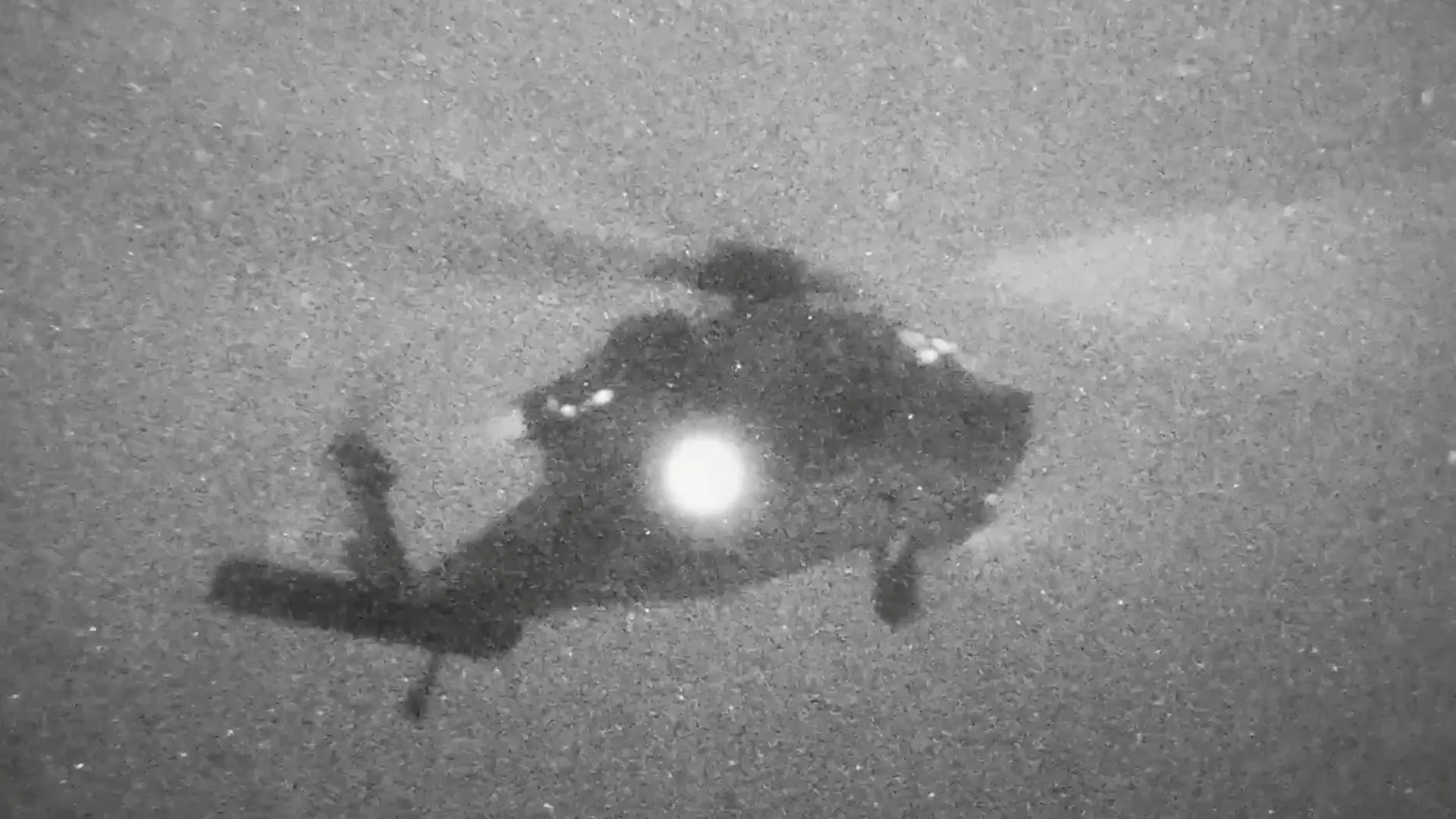
The United Arab Emirates is now using UH-60 Black Hawk series helicopters for counter-drone work, as seen in this video, which captures an engagement over Dubai.

UAE’s UH-60 Black Hawk helicopter intercepts an Iranian Shahed/Geran-type long-range strike drone over Dubai.

Burj Khalifa seen in the background. pic.twitter.com/c81YnAoRFU

— Status-6 (War & Military News) (@Archer83Able) March 12, 2026

According to a report from Reuters, citing U.S. intelligence officials, most of the Iranian leadership remains intact, and the regime is not currently at risk of collapse, despite the U.S.-Israeli campaign against it.

U.S. intelligence indicates that Iran’s leadership is still largely intact and is not at risk of collapse any time soon after nearly two weeks of relentless U.S. and Israeli bombardment, according to three ​sources familiar with the matter. @ErinBanco @JonathanLanday

— Idrees Ali (@idreesali114) March 11, 2026

Certainly, as far as public statements are concerned, the remaining elements of the Iranian leadership remain steadfast in their refusal to give up the fight.

Iranian Parliament Speaker Ghalibaf:

Any aggression against soil of Iranian islands will shatter all restraint.

We will abandon all restraint and make the Persian Gulf run with the blood of invaders.

The blood of American soldiers is Trump’s personal responsibility. pic.twitter.com/hx2Hebt7s8

— Clash Report (@clashreport) March 12, 2026

Contact the author: thomas@thewarzone.com

Thomas is a defense writer and editor with over 20 years of experience covering military aerospace topics and conflicts. He’s written a number of books, edited many more, and has contributed to many of the world’s leading aviation publications. Before joining The War Zone in 2020, he was the editor of AirForces Monthly.


Source link

US military ‘not ready’ to escort oil ships through Hormuz, official says | US-Israel war on Iran News

The United States military is “not ready” to accompany oil ships through the Strait of Hormuz, a top official in President Donald Trump’s administration says as Iran continues to block the strategic waterway.

US Energy Secretary Chris Wright told the CNBC business news channel on Thursday that the markets are experiencing a “short-term disruption”, predicting that the war would go on for “weeks, not months”.

Recommended Stories

list of 3 itemsend of list

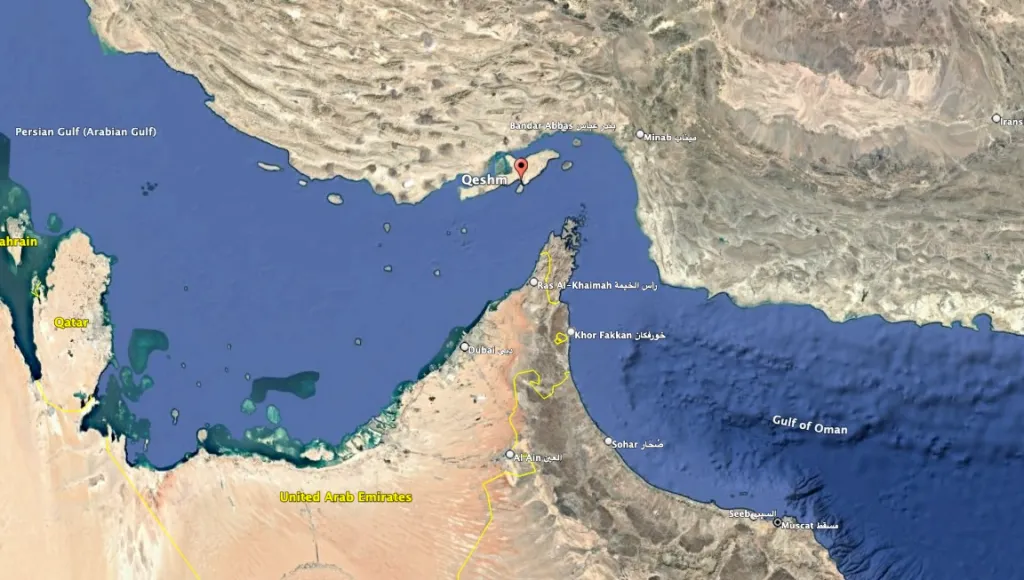
Despite Trump’s repeated threats, Iran has largely succeeded in shutting down the strait, which links the Gulf to the Indian Ocean. The closure has sent oil prices soaring.

Wright described the effects of the crisis as “short-term pain for long-term gain”, arguing that the US is “destroying” Iran’s ability to threaten the energy market.

Last week, Trump suggested that the US Navy would escort ships through the Gulf, but Wright said on Thursday that the move “can’t happen now”.

“We’re simply not ready. All of our military assets right now are focused on destroying Iran’s offensive capabilities and the manufacturing industry that supplies their offensive capabilities,” the energy secretary said.

“We don’t want this to be a brush-off for a year or two. We want to permanently destroy their ability to build missiles, to build roads, to have a nuclear programme.”

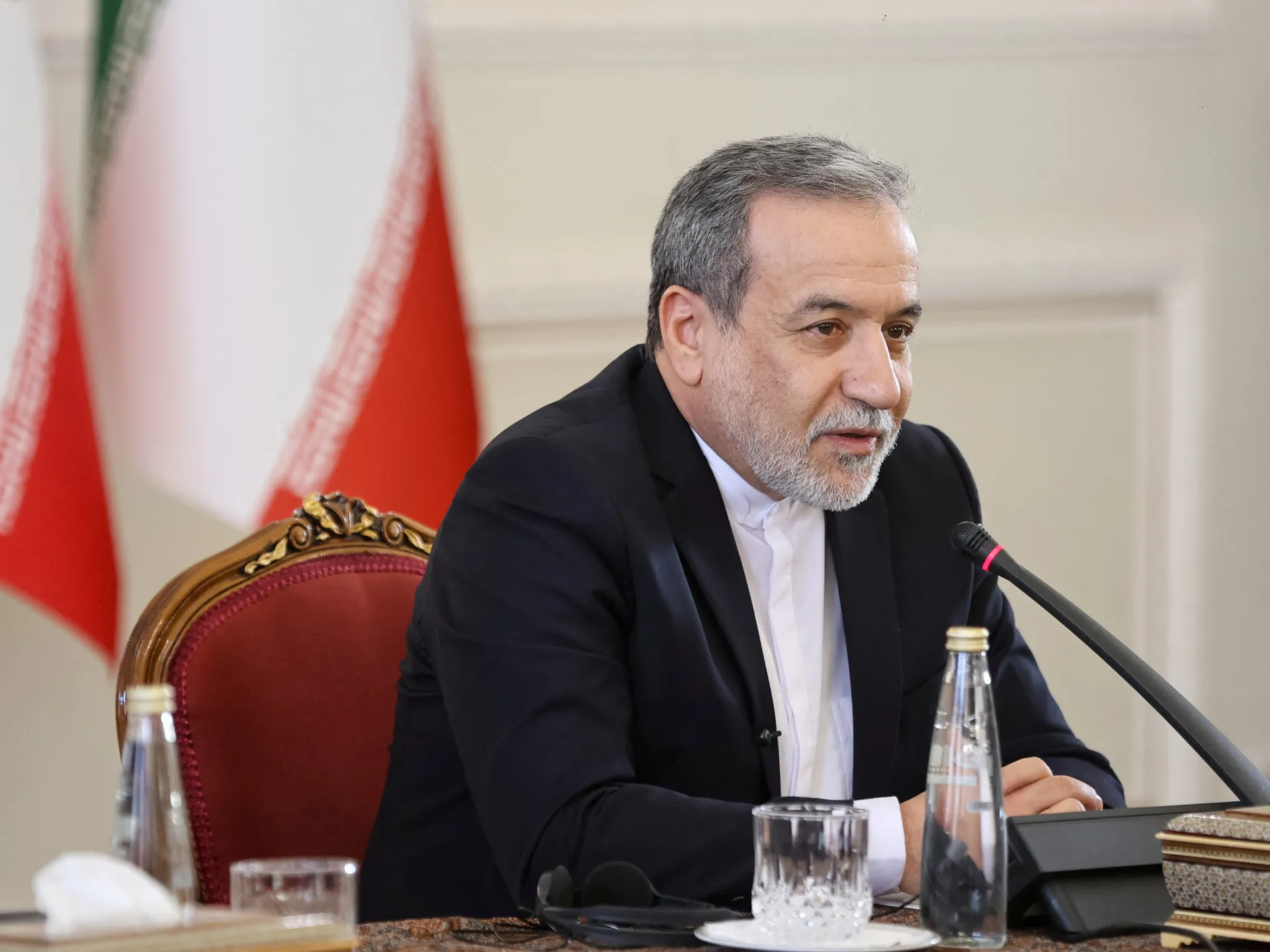
His comments came as Iran’s new supreme leader, Mojtaba Khamenei, affirmed in his first public comment since being selected to succeed his assassinated father, Ali Khamenei, that the Strait of Hormuz should remain closed during the war.

“The will of the people is to continue effective and deterrent defence,” Khamenei said in a written statement. “The tactic of closing the Strait of Hormuz must also continue to be used.”

The Iranian military has said it would “welcome” the US Navy escorting oil ships, suggesting it is prepared to strike US forces in the narrow waterway.

On Wednesday, three commercial vessels were attacked near the strait.

Wright announced earlier this week on social media that the US Navy had escorted an oil ship through the strait, then quickly deleted the post. The White House subsequently confirmed that the claim was not true.

It is not clear why the statement was released and then retracted.

Assurances by US officials that Washington would open the strait have temporarily calmed markets, only for prices to spike again.

The price of a barrel of oil peaked at about $120 on Sunday, up from about $70 before the US and Israel launched the war on February 28. It has been yo-yoing between $80 and $100 for the past few days.

In addition to the marine blockade, Iran has targeted oil installations across the Gulf.

As one of the world’s largest oil producers, the US is largely self-sufficient. But possible shortages in Asia and Europe have put a strain on prices globally.

According to data from the American Automobile Association, the average price of one gallon (3.78 litres) of petrol in the US is now $3.60, up from $2.94 last month.

Rising energy prices could fuel inflation and affect the cost of basic goods, including food.

But Trump suggested on Thursday that the US is benefitting from skyrocketing oil prices.

“The United States is the largest Oil Producer in the World, by far, so when oil prices go up, we make a lot of money,” the US president wrote in a social media post.

“BUT, of far greater interest and importance to me, as President, is stopping an evil Empire, Iran, from having Nuclear Weapons, and destroying the Middle East and, indeed, the World.”

Iran denies seeking a nuclear weapon, and Trump reiterated for months before the current conflict that US strikes against Iranian facilities in June had “obliterated” the country’s nuclear programme.

Source link

Iran Turns Up The Heat Around The Strait Of Hormuz (Updated)

As the Operation Epic Fury joint U.S.-Israeli attack on Iran moves into its 12th day, Tehran is intensifying its campaign against shipping in and around the Strait of Hormuz. At least three commercial ships were struck today, according to a British monitoring organization.

Each were hit in separate incidents by an “unknown projectile,” according to the United Kingdom Maritime Trade Operations (UKMTO), a monitoring agency that is part of the U.K. Royal Navy. One was a cargo ship traveling north of Oman. Another was a bulk carrier hit north of Dubai. The third was a container vessel struck near Ras al-Khaimah in the United Arab Emirates, The Washington Post noted.

A Thai-flagged cargo vessel, Mayuree Naree Bangkok, was attacked near the Strait of Hormuz on March 11, leaving 3 of its 23 crew missing. The ship had departed Dubai and was heading to India when struck near its stern. #Iran pic.twitter.com/0BYBjqJIt1

— NOELREPORTS 🇪🇺 🇺🇦 (@NOELreports) March 11, 2026

Since Epic Fury was launched on Feb. 28, UKMTO “has received 17 reports of incidents affecting vessels operating in and around the Arabian Gulf, Strait of Hormuz (SOH) and Gulf of Oman,” the organization stated. That figure includes 13 attacks and four suspicious incident reports.

Iran said it is increasing these attacks to serve as an economic weapon against the U.S., Israel and allies.

The U.S. “will not be able to control oil prices,” the spokesperson for Tehran’s Khatam al-Anbiya military command headquarters vowed on Wednesday.

“We won’t allow even one liter of oil to reach the U.S., Zionists and their partners,”  Ebrahim Zolfaqari proclaimed. “Any vessel or tanker bound to them will be a legitimate target.”

“Get ready for the oil barrel to be at $200 because the oil price depends on the regional security which you have destabilized,” Zolfaqari added.

As one example of market volatility, Brent Crude was trading at just over $90 a barrel as of Wednesday morning Eastern Day Light time, according to OilPrice.com. The prices have fluctuated wildly, surging to a recent high of more than $116 a barrel on March 8 and dropping to a little more than $84 a barrel yesterday.

🚨Iran is threatening to not allow ships through the Strait of Hormuz, also saying they will force oil to $200 per barrel.

“Not a single liter of oil will pass through the Strait of Hormuz for the benefit of the U.S., Israel, or their partners.”

pic.twitter.com/AdabOT8t3Q

— Breaking911 (@Breaking911) March 11, 2026

Even as it cuts off the Strait for others, Iran is “exporting more oil through the Strait of Hormuz than before the war, showing it is in control of a strategic waterway that it has closed off to the rest of the region’s oil producers,” The Wall Street Journal reported.

Iran is exporting more oil through the Strait of Hormuz than before the war, showing it is in control of a strategic waterway that it has closed off to the rest of the region’s oil producers https://t.co/CeZTClmHBa

— The Wall Street Journal (@WSJ) March 11, 2026

The world’s biggest liquefied natural gas (LNG) export plant in Qatar hasn’t exported a shipment for five days, Bloomberg News reported. It marks the longest streak in data going back to 2008.

“A loaded tanker hasn’t left the Ras Laffan facility in five days,” according to a Bloomberg analysis of Kpler ship-tracking data. “No LNG ship traversed the Strait of Hormuz after Feb. 28, when the US and Israel began strikes on Iran.”

The unprecedented closure of the liquefaction plant, which supplies nearly 20% of the world’s LNG, came after an Iranian drone attack early last week — resulting in a jump in gas prices in Europe and Asia, the news organization noted. Ras Laffan did load a handful of shipments after stopping output, likely using fuel from storage tanks, the last of which was on Friday.

The world’s biggest LNG export plant in Qatar hasn’t exported a shipment for five days — the longest streak in data going back to 2008 — threatening to further boost prices for the fuel https://t.co/BKFTpIV0dH

— Bloomberg (@business) March 11, 2026

Two pipelines were built – one in Saudi Arabia, the other in UAE – just to bypass the Strait of Hormuz. This conflict, The Wall Street Journal posited, has highlighted their importance since they are the only ways to get a significant amount of oil out of the Persian Gulf and into world markets.

The blockage in the Strait of Hormuz has suddenly made Saudi Arabia’s East-West pipeline one of the most critical pieces of infrastructure in the world https://t.co/6bwxev9vKc

— The Wall Street Journal (@WSJ) March 11, 2026

Iran’s closure of the Strait to most foreign shipping has thrown the world energy market into chaos, causing oil and gas prices to fluctuate dramatically.

“Japan, Germany and Austria will release oil from their strategic reserves in response to disruptions in the supply from the Middle East, officials in those countries said on Wednesday,” according to the Post. “They made the announcements hours before a meeting of leaders of the Group of 7 industrialized nations, including the United States, to discuss jointly releasing oil in consultation with the International Energy Agency.”

Japan will begin releasing oil from its reserves as early as Monday to offset disruptions in Middle Eastern supply, Prime Minister Sanae Takaichi said Wednesday in Tokyo.

— Clash Report (@clashreport) March 11, 2026

The International Energy Agency (IEA) on Wednesday agreed to release 400 million barrels of oil to address the supply disruption triggered by the Iran war, the largest such action in the organization’s history, CNBC reported.

“The IEA did not set out a timeline for when the stocks would hit the market,” the news outlet noted. “It said that the reserves would be released over a timeframe that is appropriate to the circumstances of each of its 32 member countries.”

The U.S., meanwhile, has yet to tap into its Strategic Petroleum Reserve, a network of salt caverns in Texas and Louisiana that can hold up to 714 million barrels of crude.

PARIS/LONDON, March 11 (Reuters) – The International Energy Agency is to recommend the release of 400 million barrels of oil, the largest such move in IEA history, to try to restrain soaring crude prices amid the U.S.-Israeli war with Iran.

— Idrees Ali (@idreesali114) March 11, 2026

Iran is not preventing all ships from passing through the Strait. Tehran has agreed to provide Bangladeshi oil vessels with safe passage. The move comes as the Bangladesh government has intensified efforts to maintain a stable fuel supply through multiple strategic measures amid escalating conflict in the Middle East.

Bangladesh has sought assurances from Iran for the safe passage of its oil and liquefied natural gas (LNG)-carrying vessels through the Strait of Hormuz as escalating conflict in the Middle East threatens one of the world’s most critical energy shipping routes.

Iran has officially agreed to grant safe passage to Bangladeshi oil and LNG vessels traveling through the Strait of Hormuz. Under the new agreement, Bangladeshi ships must notify Iranian authorities before entering the strategic waterway to ensure secure transit.

The move comes… pic.twitter.com/24spSuaLKl

— Middle East Monitor (@MiddleEastMnt) March 11, 2026

Some vessels are also using their AIS system to identify as Chinese owned, shipping expert Sal Mercogliano noted. Iran’s closure of the Strait does not pertain to Chinese-owned ships.

The Marshal Islands-bulker KSL Laiyang is running the Strait.

She is broadcasting on AIS “China Owners & Crew”.

This is EXACTLY what we saw happen in the Red Sea against the Houthis. Expect to see more of this. pic.twitter.com/LSCESnEDKI

— Sal Mercogliano (WGOW Shipping) 🚢⚓🐪🚒🏴‍☠️ (@mercoglianos) March 10, 2026

The New York Times claimed that Iran’s ongoing attacks on shipping, as well as its continuing missile and drone barrages are an example of how the Trump administration miscalculated Iran’s response to Epic Fury.

The Trump administration has said it will send U.S. Navy warships to escort commercial vessels through the Strait, but that plan has yet to be implemented. Such a deployment would put American warships at far greater risk than they are facing now at standoff distances from Iran. It remains unclear how much longer Epic Fury will continue. The longer it does, however, the more Iran can bring economic pain around the globe with even just threats against Strait shipping. The Iranian attacks have led to Trump proposing that the U.S. provide political risk insurance for seaborne trade in the Gulf. “However, Lloyd’s of London, the heart of maritime insurance globally, emphasizes it has not stopped providing contracts to those who ask – although at the right tariff,” The Guardian reported.

Though no escorts have been set up, the U.S. is continuing to strike Iran’s Navy, including the sinking of the last of Iran’s Soleimani class catamaran warships, the head of U.S. Central Command said in a video statement on Wednesday morning.

“To date, we have struck more than 5,500 targets inside Iran, including more than 60 ships using a variety of precision weapon systems,” Adm. Brad Cooper said in a video. “Just yesterday, we had strike waves nearly every hour from different locations and directions going into Iran. We also took out the last of four Soleimani class warships. That’s an entire class of Iranian ships now out of the fight.”

Cooper did not name which of the catamarans was hit, but the video shows one from the Soleimani class and one from a smaller class. The hull number on the smaller ship – PC313-01 – indicates it was the IRIS Abu Mahdi al-Muhandis. The ship was unveiled in a ceremony at Bandar Abbas in January 2024, the Iranian Press TV news outlet reported at the time.

The now-sunk IRIS Abu Mahdi al-Muhandis at its unveiling in January 2024. (Iranian media)

U.S. Army Sgt. First Class Cory Hicks told ABC News about the Iranian drone attack on a command center in Kuwait that killed six soldiers on March 1.

Sgt. First Class Cory Hicks described the horrific moment a drone struck a U.S. command center in Kuwait and killed six service members: “I turned to my right, and that’s when it blew up and just blew the whole building apart.”

What You Need to Know is streaming on @DisneyPlus.… pic.twitter.com/7Zf0WQLYIp

— ABC News (@ABC) March 11, 2026

The deadly attack was more severe than previously known, with dozens of troops suffering injuries that included brain trauma, burns and severe injuries from shrapnel, according to CBS News.

NEWS via @CBSNews: An Iranian drone attack in Kuwait that killed U.S. service members in the early hours of the war with Iran was more severe than previously known, with dozens suffering injuries that included brain trauma, shrapnel trauma and burns, per sources. More than 30…

— Jennifer Jacobs (@JenniferJJacobs) March 11, 2026

Iran’s new supreme leader, Mojtaba Khamenei, is “safe and sound” despite war injuries, Yousef Pezeshkian, a government adviser and the son of Iran’s president, claimed on Wednesday.

“I heard news that Mr Mojtaba Khamenei had been injured. I have asked some friends who had connections,” Pezeshkian stated on Telegram. “They told me that, thank God, he is safe and sound.”

State television had called Khamenei, 56, a “wounded veteran of the Ramadan war” but never specified his injury.

BREAKING Iran’s new supreme leader Mojtaba Khamenei is “safe and sound” despite reports of an injury during the war with Israel and the United States, the son of the Iranian president said on Wednesday pic.twitter.com/97ofF4dS1G

— AFP News Agency (@AFP) March 11, 2026

Iran’s Islamic Revolutionary Guard Corps (IRGC) has threatened to attack “economic centers and banks” related to United States and Israeli entities in the region after what it called an attack on an Iranian bank, Al Jazeera reported.

A spokesperson for the Khatam al-Anbiya Headquarters, a group described as IRGC-owned by the United Nations, said on Wednesday that “the enemy left our hands open to targeting economic centres and banks belonging to the United States and the Zionist regime in the region.”

To the people of Bahrain, the UAE, and Kuwait: Do not remain within one kilometer of banks

Khatam al‑Anbiya Headquarters spokesperson: After the U.S. and Israeli attack on an Iranian bank, we are now free to target U.S. and Israeli economic centers and banks across the region.

— IRAN MILITARY ☫ (@IranMilitaryEN) March 11, 2026

The warning came after a reported attack on a Bank Sepah branch north of Iran, which is said to have killed many putting in extra hours ahead of the Persian New Year.

The Khatam Al-Anbiya Air Defense HQs warns people in the entire region to stay away for 1km from banks after American-Zionists attacked a Bank Sepah branch in north of Tehran, killing a lot of personnel working extra hours ahead of Persian New Year. pic.twitter.com/JYcAaCQlLI

— Fereshteh Sadeghi فرشته صادقی 🟩 ☫ 🟥 (@fresh_sadegh) March 11, 2026

Iranian officials claimed to have hit several other U.S. targets in the region on Wednesday.

(Reuters) – The Iranian military said on Tuesday it had launched missiles at a U.S. base in northern Iraq, the U.S. naval headquarters for the Middle East in Bahrain, and at Be’er Ya’akov city in central Israel.

Explosions rang out in Bahrain, while in Dubai four people were…

— Phil Stewart (@phildstewart) March 11, 2026

IDF Chief of the General Staff, Lt. Gen. Eyal Zamir claimed that “many thousands” of Iranian soldiers and commanders have been killed so far in this war.

IDF Chief of Staff Lt. Gen. Eyal Zamir says “many thousands” of Iranian soldiers and commanders have been killed in Israeli strikes in Iran, warning that “no one is immune.”

“We are in a campaign that is deepening the damage to the Iranian regime and its foundations and pushing… pic.twitter.com/0C5XvjBFTy

— Emanuel (Mannie) Fabian (@manniefabian) March 11, 2026

The IDF released new video showing airstrikes on what it claims were Iranian troops preparing to launch drones.

The IDF releases footage showing airstrikes on Iranian soldiers who were preparing to launch drones at Israel from western Iran this week.

According to the military, the Iranian soldiers were identified on Monday at a drone launching site. A short while later, an Israeli Air… pic.twitter.com/XRWXO7YVaq

— Emanuel (Mannie) Fabian (@manniefabian) March 11, 2026

The IDF completed another wave of strikes in Dahiyeh in Beirut against what it claims were Hezbollah command centers and weapons storage sites. IDF said it issued a warning to residents before the attacks and also struck a Hezbollah command post in the coastal area of Tyre.

צה”ל השלים גל תקיפות נוסף בביירות

הבוקר , צה”ל השלים גל תקיפות נוסף בדאחייה שבביירות נגד מפקדות טרור ואתרים בהם אוכסנו אמצעי לחימה של ארגון הטרור חיזבאללה.

בנוסף, צה”ל תקף אתמול , מפקדה של ארגון הטרור חיזבאללה במרחב צור שבלבנון.

טרם התקיפות ננקטו צעדים כדי לצמצם את הסיכוי… pic.twitter.com/9nx1X4ZCJ2

— צבא ההגנה לישראל (@idfonline) March 11, 2026

The IDF justified the strike by claiming the Lebanon-based Iranian proxy is hiding missiles, drones and other weapons in the heart of the Dahieh neighborhood in Beirut.

INTELLIGENCE REVEALS: Hezbollah is hiding its strategic weapons in the heart of the Dahieh in Beirut, beneath the residential buildings of Lebanese residents. These are missiles, drones and additional weapons funded by the Iranian terror regime and designed to harm Israeli…

— LTC Nadav Shoshani (@LTC_Shoshani) March 10, 2026

The owner of this white pickup may be the luckiest person in the Middle East. Video emerged on social media showing Lebanese Army troops removing an unexploded bomb from the vehicle’s cargo bed.

Faced with growing threats from Hezbollah, Zamir ordered the Golani Brigade to be transferred from the Southern Command to operations in the Northern Command sector.

Zamir added that a decision will be made regarding additional reinforcements.

🚨NEW: The IDF says Chief of Staff Lt. Gen. Eyal Zamir has ordered significant reinforcements to Israel’s northern front, shifting the Golani Brigade combat team from the south to Northern Command following a new operational assessment.

The move comes amid developments in…

— Israel War Room (@IsraelWarRoom) March 11, 2026

In a post on X, the UAE Defense Ministry (MoD) said its air defenses “are currently dealing with missile attacks and incoming drones originating from Iran, and the Ministry of Defense confirms that the sounds heard in scattered areas of the country are the result of the air defense systems intercepting ballistic missiles, as well as fighter jets intercepting drones and loitering munitions.”

تتعامل حالياً الدفاعات الجوية الإماراتية مع اعتداءات صاروخية وطائرات مسيرة قادمة من إيران وتؤكد وزارة الدفاع أن الأصوات المسموعة في مناطق متفرقة من الدولة هي نتيجة اعتراض كل من منظومات الدفاع الجوي للصواريخ البالستية، والمقاتلات للطائرات المسيرة والجوالة.

UAE air defences are… pic.twitter.com/aa5b1gw7vh

— وزارة الدفاع |MOD UAE (@modgovae) March 11, 2026

Reuters posted a photograph on X of a building in Manama, Bahrain, reportedly damaged by an Iranian drone strike.

A building damaged in a reported Iranian drone strike, amid the U.S.-Israeli conflict with Iran, in Seef, Manama, Bahrain, March 10, 2026. REUTERS/Stringer pic.twitter.com/luPTavYyJT

— Idrees Ali (@idreesali114) March 11, 2026

With Bahrain also being battered by Iranian attacks, Gulf Air has relocated its fleet of aircraft from there to Saudi Arabia, according to Al Jazeera.

Iranian Armed Forces spokesperson Brig.-Gen. Abolfazl Shekarchi “called on regional Muslims and countries to reveal the locations of U.S. and Israeli military assets to enable Tehran to conduct more accurate attacks,” the Jerusalem Post reported, citing official Iranian media.

Shekarchi also framed the request as a way to ensure the safety of the people in the region.

“I call on the Muslim people of the region and the countries of the region to show us the hideouts of US and Zionist forces so that they themselves will not be harmed, and so that we can strike them more precisely,” Shekarchi proclaimed.

Iranian Armed Forces spokesperson Brig.-Gen. Abolfazl Shekarchi called on regional Muslims and countries to reveal the locations of US and Israeli military assets to enable Tehran to conduct more accurate attacks.https://t.co/YSSDWmIZ8s

— The Jerusalem Post (@Jerusalem_Post) March 11, 2026

In the wake of the joint U.S.-Israeli attack, The New York Times “has identified at least 17 damaged U.S. sites and other installations, several of which have been struck more than once since the war began,” the publication reported. “Our analysis is based on high-resolution, commercial satellite imagery, verified social media videos and statements by U.S. officials and Iranian state media.”

U.S. Air Force maintainers can be seen in the X post below loading weapons onto B-1B Lancer bombers, which have arrived at Fairford Air Base in the U.K.

US Airforce ground crew work under hatches of a B1 Lancer at RAF Fairford today. What appear to be cruise missiles sit by the warplane. Three B1 bombers returned this morning, on what is believed to be the first attack on Iran from a British base during this conflict. @AJENews pic.twitter.com/80YkxHL5rT

— Richard Gaisford (@richardgaisford) March 11, 2026

Romanian President Nicusor Dan said that U.S. refueling planes, monitoring equipment and satellite communications systems can use his country’s military bases.

BUCHAREST, March 11 (Reuters) – American refueling planes, monitoring equipment and satellite communications could use Romanian military bases during the U.S.’ offensive in Iran, Romanian President Nicusor Dan said on Wednesday.

— Idrees Ali (@idreesali114) March 11, 2026

Turkey has reportedly deployed an ASELSAN’s ŞAHİN 40mm anti-drone system to Northern Cyprus, where it is now operational to defend against low-flying mini and micro UAVs using airburst smart grenades.

Türkiye deployed ASELSAN’s ŞAHİN 40mm anti-drone system to Northern Cyprus, where it is now operational to defend against low-flying mini and micro UAVs using airburst smart grenades. pic.twitter.com/HT641qe6w7

— Clash Report (@clashreport) March 11, 2026

Ukrainian President Volodymyr Zelensky claims that Russia may send troops to Iran. That would be in addition to the support Moscow is already providing in the form of drones and air defenses, Zelensky said. He added that Russia will likely send missiles in the not-far-off future.

Ukraine, which has long sought interceptors to help fend off waves of Russian missile and drone attacks, took to social media to note the discrepancy in how much it has been supplied over the course of four years versus how much the U.S. and allies have used during 11 days of Epic Fury.

800 Patriot missiles were used for air defense in just 3 days in the Middle East. Ukraine received 600 in 4 years of full-scale war.

Russia, Iran and North Korea form a new Axis of Evil. Ukraine was the first to confront this Axis. We continue to fight, but we need support.

The… pic.twitter.com/wUQVn9gSVK

— Defense of Ukraine (@DefenceU) March 10, 2026

Add Italian Prime Minister Giorgia Meloni to the list of world leaders proclaiming that an Ayatollah-led regime in Iran should never obtain nuclear weapons.

Italy’s Meloni on Iran:

We cannot afford an Ayatollah regime in possession of a nuclear weapon, combined, moreover, with a missile capability that could soon be able to directly strike Italy and Europe. pic.twitter.com/gdQE6HlckA

— Clash Report (@clashreport) March 11, 2026

UPDATES:

We have concluded our rolling coverage in this piece.

UPDATE: 5:11 PM EST

Video has emerged showing a reported attack on an oil tanker near Iraq. Information at this point is scarce. The Ambrey martime security firm said it is investigating the matter.

The U.S. used as much as $4 billion worth of munitions in the first 72 hours of its attacks against Iran, including about 400 cruise missiles and 800 air defense interceptors, Bloomberg News reported, citing estimates from German defense giant Rheinmetall AG.

“The numbers, released in the company’s earnings presentation on Wednesday, were drawn from ‘publicly available sources and in-house assumptions,’ the slides said,” according to the news outlet. “Other reports have put the munitions cost for the first two days of the conflict higher, at as much as $5.6 billion.”

The US used as much as $4 billion worth of munitions in the first 72 hours of its attacks against Iran, including about 400 cruise missiles and 800 air defense interceptors, according to estimates from German defense giant Rheinmetall https://t.co/7xiR8WNbtM

— Bloomberg (@business) March 11, 2026

Trump said that he picked the name Epic Fury from a list of about 20 and that the U.S. has already won.

“You know, you can only do it if you win — and we’ve won,” the American leader proclaimed. “Let me say: we’ve won. You never like to say it too early, but we won the bet in the first hour. It was over.”

Trump on Iran:

Operation Epic Fury — is that a great name? Well, it’s only good if you win.

You know, you can only do it if you win — and we’ve won. Let me say: we’ve won. You never like to say it too early, but we won the bet in the first hour. It was over.

They gave me a… pic.twitter.com/AJOEGY08Eq

— Clash Report (@clashreport) March 11, 2026

Israel’s Iron Dome air defense system “could not stop about half the 100 rockets Hezbollah launched at Israel just a few hours ago,” New York Post reporter Caitlin Doornbos posted on X.

Exclusive: The Iron Dome could not stop about half the 100 rockets Hezbollah launched at Israel just a few hours ago.

— Caitlin Doornbos (@CaitlinDoornbos) March 11, 2026

The leaders of the G7 group of nations – the United States, Canada, Japan, Italy, Britain, Germany and France – “agreed to examine the option of providing escort for ships so they can navigate freely in the Gulf,” according to a statement from the G7 Presidency on Wednesday.

(Reuters) – The leaders of the G7 group of nations – the United States, Canada, Japan, Italy, Britain, Germany and France – agreed to examine the option of providing escort for ships so they can navigate freely in the Gulf, said a statement from the G7 Presidency on Wednesday.…

— Phil Stewart (@phildstewart) March 11, 2026

Despite threats from the regime to stay home, anti-government protestors are reportedly continuing to take to the streets in Iran demanding change.

For 12 consecutive night, without missing a single day, Iranian people have hit the streets to express their anger over Israel/US attacks on Iran & its leader.

They express support for armed forces & demand harsh revenge.

Video from Urumia, 11 PM. https://t.co/GfIhLwFnzZ pic.twitter.com/w0RAIdrxXm

— Arya Yadeghaar (@AryJeay) March 11, 2026

The U.K. Defense Ministry (MoD) provided its latest update on Middle East operations.

The UAE MoD said its air defenses “dealt with 6 ballistic missiles, 7 cruise missiles, and 39 drones coming from Iran” today. “Since the start of the brazen Iranian aggression, UAE air defenses have dealt with 268 ballistic missiles, 15 cruise missiles, and 1,514 drones.”

الدفاعات الجوية الإماراتية تتعامل مع 6 صواريخ باليستية و7 صواريخ جوالة و 39 طائرة مسيرة.

تعاملت الدفاعات الجوية الإماراتية (11 مارس 2026) مع 6 صواريخ باليستية، و7 صواريخ جوالة، و 39 طائرة مسيرة قادمة من إيران.

ومنذ بدء الاعتداء الإيراني السافر تعاملت الدفاعات الجوية… pic.twitter.com/8BV5VPkwaE

— وزارة الدفاع |MOD UAE (@modgovae) March 11, 2026

UPDATE: 4:48 PM EST –

The IRGC posted video it claims shows missile launches toward U.S., Israeli and allied military bases housing American forces in the region.

Iran’s IRGC published footage of its missile launches towards “Israel” and US bases.

The missiles include Qadr, Emad, Kheybar Shekan, and Fattah missiles against targets in Tel Aviv, Haifa, and US bases in the region such as the Muwaffaq Salti Air Base in Jordan & Prince Sultan… pic.twitter.com/Jkb8JRO04q

— Arya Yadeghaar (@AryJeay) March 11, 2026

Kuwaiti air defenses are currently confronting hostile missile and drone attacks, the nation’s army announced on X. 

“The General Staff of the Army notes that if explosion sounds are heard, they are the result of air defense systems intercepting the hostile attacks,” the announcement added.

تتصدى حالياً الدفاعات الجوية الكويتية لهجمات صاروخية وطائرات مسيرة معادية.

تنوه رئاسة الأركان العامة للجيش أن أصوات الانفجارات إن سمعت فهي نتيجة اعتراض منظومات الدفاع الجوي للهجمات المعادية.

يرجى من الجميع التقيد بتعليمات الأمن والسلامة الصادرة عن الجهات المختصة.… pic.twitter.com/vFiXjuXdXP

— KUWAIT ARMY – الجيش الكويتي (@KuwaitArmyGHQ) March 11, 2026

UPDATE: 4:18 PM EST

Three Ukrainian teams of military personnel and engineers have gone to the Middle East to help the U.S. and allies in the fight against Iran, Ukrainian President Volodymyr Zelensky stated on X.

After four years of fending off daily bombardment by Russian missiles and drones, Ukraine has a lot of hardearned expertise to share.

Three Ukrainian teams have gone to the Middle East. Strong teams – with experts, military personnel, and engineers. The military are already communicating and working today. The NSDC Secretary, Rustem Umerov, has arrived in the UAE today to discuss areas of cooperation. He will…

— Volodymyr Zelenskyy / Володимир Зеленський (@ZelenskyyUa) March 11, 2026

Al Jazeera said a senior Iranian military official claimed that if “Washington commits a strategic mistake, another strait will be in a situation similar to the Strait of Hormuz,” the publication posted on X. “The region may enter a regional war soon, and we still have many cards to play. Any American mistake will complicate the situation in the region, and Iran has phased and graduated military plans.”

#عاجل| مسؤول عسكري إيراني رفيع للجزيرة: إذا ارتكبت واشنطن خطأ استراتيجيا فإن مضيقا آخر سيكون في وضع مماثل لمضيق هرمز
– المنطقة قد تدخل حربا إقليمية قريبا ولا تزال لدينا أوراق عديدة لاستعمالها
– أي خطأ أمريكي سيعقد الوضع في المنطقة ولدى #إيران خطط عسكرية مرحلية ومتدرجة pic.twitter.com/gLm38EUy4D

— قناة الجزيرة (@AJArabic) March 11, 2026

Video is emerging on social media claiming to show Tehran under a large drone attack.

Holy sh*t

Drones are flying all over Tehran tonight hitting basij/IRGC stations

Israel is neutralizing the regime’s crackdown machine…it’s finally happening pic.twitter.com/Yz7Nj3sdNW

— Throwback Iran (@Tarikh_Eran) March 11, 2026

Despite what appears to be a coordinated Israel attack on Basij checkpoints in Tehran, the regime is reportedly keeping a tight lid on any potential anti-government protests, journalist Nilo Tabrizy said a source told her.

“The government constantly sends threatening [text] messages to everyone. It says that if you come to the streets to protest, you will be considered an Israeli soldier and will be killed.”

A source in Iran told me about the continued repression by state security forces despite waves of heavy air strikes over their city:

“The government constantly sends threatening [text] messages to everyone. It says that if you come to the streets to protest, you will be…

— Nilo Tabrizy (@ntabrizy) March 11, 2026

Meanwhile, the Speaker of the Iranian Parliament is urging pro-government crowds to remain on the streets.

“Dear Iranian nation, to whom I would sacrifice my life a thousand times!” MB Ghalibaf stated on X. “Your presence in the streets has bewildered and enraged the enemy. This humble soldier of yours has three requests from you: the streets, the streets, the streets. Your children in the armed forces have taken their lives in hand to defend #Iran; strengthen their backs by holding the streets firm.”

ملت عزیز ایران که جانم هزاران بار فدای شما!

حضور شما در خیابان‌ها دشمن را گیج و عصبانی کرده است.

این سرباز کوچکتان سه درخواست از شما دارد: خیابان، خیابان، خیابان.

فرزندان شما درنیروهای مسلح جان خود را برای دفاع از #ایران در دست گرفته‌اند، پشت آنها را با حفظ خیابان محکم کنید.

— محمدباقر قالیباف | MB Ghalibaf (@mb_ghalibaf) March 11, 2026

Alarms have again sounded in Bahrain, as the nation braces for another wave of Iranian attacks, officials there claim.

تم إطلاق صافرة الإنذار ،نرجو من المواطنين والمقيمين الهدوء والتوجه لأقرب مكان آمن ومتابعة الأخبار عبر القنوات الرسمية

— Ministry of Interior (@moi_bahrain) March 11, 2026

Kuwait National Guard bomb squad engineers have destroyed a drone warhead that fell inside a fuel tank, spokesman Jadaan Al-Fadhel said in a statement on Wednesday, adding that no injuries were reported during the operation.

Kuwait National Guard bomb squad engineers have destroyed a drone warhead that fell inside a fuel tank, Spokesman Jadaan Al-Fadhel said in a statement on Wednesday, adding that no injuries were reported during the operation.

The bomb squads worked for seven days to unload the… pic.twitter.com/dj03OwacvK

— KUWAIT TIMES (@kuwaittimesnews) March 11, 2026

UPDATE: 3:45 EST –

During a visit to Thermo Fisher Scientific in Cincinnati on Wednesday, Trump said that for Iran, it’s a “war.” But for America, it’s “easier than we thought.”

During a site visit to Thermo Fisher Scientific in Cincinnati on Wednesday, President Trump told reporters the U.S. military operation in Iran is “both” a “little excursion” and a “war.”

“For them it’s a war,” Trump said. “For us it’s turned out to be easier than we thought.”… pic.twitter.com/RkRZxWuRfN

— ABC News (@ABC) March 11, 2026

The U.S. president also claimed that more than two dozen Iranian mine boats have been destroyed during Epic Fury.

“They started talking about mines. So we hit 28 mine ships as of this moment,” Trump proclaimed. “Twenty-eight. Like, using the same weapon — the exact same weapon that we use against the drug dealers in the water. We have — as an example, we had tremendous drugs pouring in through the water — through the sea. And now we have almost none. It’s down 97%.”

U.S. President Donald J. Trump tells reporters that 28 mine-laying vessels operated by the Iranian Navy and Islamic Revolutionary Guard Corps Navy (IRGCN) have now been targeted and destroyed:

“They started talking about mines. So we hit 28 mine ships as of this moment.… pic.twitter.com/znwGK9sydD

— OSINTdefender (@sentdefender) March 11, 2026

Iran deployed about a dozen mines in the Strait of Hormuz, Reuters reported, citing two sources familiar with the matter. The move is likely to complicate reopening the waterway — an important route for shipping oil and liquefied natural gas.

🚨 Western sources in a conversation with N12: “The Iranians have already laid more than 10 mines in the Strait of Hormuz and intend to lay more. Both the entry and exit routes are blocked – to put pressure on us. They have created a bypass route and allow only those they want to…

— Raylan Givens (@JewishWarrior13) March 11, 2026

Trump is preparing to invoke Cold War-era powers to pave the way for renewed oil production off the southern California coast, Bloomberg News is reporting. The move is seen as “a long-shot bid to help ease the global crude supply crunch spurred by his war with Iran,” according to the outlet.

“Trump is set to soon summon authorities under the Defense Production Act to preempt state laws and ease permitting for Sable Offshore Corp., a Houston-based company looking to restart significant production from a cluster of offshore platforms in California,” Bloomberg added. “The plan was described by a person familiar with the matter who asked not to be named because it’s not yet public.”

Trump is preparing to invoke Cold War-era powers to pave the way for renewed oil production off the southern California coast, a long-shot bid to help ease the global crude supply crunch spurred by his war with Iran. https://t.co/uopErGQnUh

— Bloomberg (@business) March 11, 2026

The fire at Oman’s Salahah Port seems to be intensifying. The port was attacked by Iran earlier on Wednesday.

Several security forces and members of Iran’s paramilitary Basij force were killed by Israeli drones in Tehran today, according to the IRGC-affiliated Fars News Agency.

Iran’s IRGC-affiliated Fars News Agency has reported that several security forces and members of the paramilitary Basij force were killed in Tehran today, accusing Israel of targeting them with drones.

— Ghoncheh Habibiazad | غنچه (@GhonchehAzad) March 11, 2026

UPDATE: 2:53 PM EST –

Hezbollah fired dozens of rockets from Lebanon and Iran fired several ballistic missiles at the area, according to Israeli media.

The Israeli military later confirmed that it didn’t intercept some of the projectiles, adding that rescue services and emergency teams are “currently operating at the impact sites.”

Video has emerged showing an Iranian Shahed-type long-range strike drone approaching, then hitting the fuel tanks in the Omani port of Salalah earlier on Wednesday. The attack caused a powerful explosion and fireball.

In a post on X, Iranian President Masoud Pezeshkian said he told leaders from Russia and Pakistan that his nation reaffirms its “commitment to peace in the region.”

“The only way to end this war—ignited by the Zionist regime & US—is recognizing Iran’s legitimate rights, payment of reparations, and firm int’l guarantees against future aggression,” he exclaimed.

Talking to leaders of Russia and Pakistan, I reaffirmed Iran’s commitment to peace in the region. The only way to end this war—ignited by the Zionist regime & US—is recognizing Iran’s legitimate rights, payment of reparations, and firm int’l guarantees against future aggression.

— Masoud Pezeshkian (@drpezeshkian) March 11, 2026

The Coordination Committee of the Iraqi Resistance issued a warning to Syrian leader, Ahmed Sharaa, threatening that any hostile move toward Lebanon, particularly if coordinated with the U.S. or Israel, would be treated as a declaration of war against the entire Axis of Resistance.

Notable: The Coordination Committee of the Iraqi Resistance – a loosely coordinated body made up of Iran-backed Shiite militias in Iraq that align messaging, threats, and occasionally operations – issued a warning to Syrian leader, Ahmed Sharaa, threatening that any hostile move… pic.twitter.com/ze40sgZcPC

— Joe Truzman (@JoeTruzman) March 11, 2026

The threat in Iraq remains real as you can see by the following video, which reportedly shows an interceptor hitting an Iranian drone over Erbil.

There is pushback to claims that the U.S. is sending Terminal High Altitude Area Defense (THAAD) systems from Korea for deployment to the Middle East.

According to the latest reports, the six launchers present in Korea left their base, delivered (presumably 48) interceptor missiles to Osan Air Base to be transported out, then returned. (And an anti-THAAD group is demanding the radar be removed, as it is still there) https://t.co/T4igHmcCDq

— Joel Atkinson (@Joel_P_Atkinson) March 11, 2026

UAE reportedly sees an opportunity to reclaim the Abu Musa, Greater and Lesser Tunb islands that Iran seized in 1971.

The Bellingcat investigative team geolocated eight videos showing U.S. Tomahawk launches.

Bellingcat has geolocated eight videos showing US Tomahawks cruise missiles in Iraq heading towards Iran. The missiles appear to be flying low across valleys and were most likely fired from the Mediterranean sea, an expert told us. pic.twitter.com/9bTO2BODa1

— Trevor Ball (@Easybakeovensz) March 11, 2026

UPDATE: 2:40 PM EST –

Saying most of Iran’s Navy has been destroyed, Trump urged oil companies to start using the Strait of Hormuz again.

TRUMP: I think oil companies should use the Strait of Hormuz.

“We took out just about all of their mine ships in one night… just about all of their navy is gone.”

pic.twitter.com/vJ53Xr1AiN

— Breaking911 (@Breaking911) March 11, 2026

Meanwhile, India condemned the Iranian attack on the Thai ship bound for Kandla.

“Iran and the terrorist militias allied with it may be planning to target U.S.-owned oil and energy infrastructure in Iraq,” the U.S. Embassy in Baghdad warned. “Additionally, Iran-aligned terrorist militias have targeted hotels frequented by Americans in various parts of Iraq, including the Kurdistan Region of Iraq. “

تنبيه أمني – سفارة الولايات المتحدة في بغداد، العراق – 11 آذار 2026 – تحديث رقم 1

الموقع: العراق

التحديث:
قد تكون إيران والميليشيات الإرهابية المتحالفة معها بصدد التخطيط لاستهداف البنية التحتية للنفط والطاقة التي تملكها للولايات المتحدة في العراق. كما وقامت ميليشيات إرهابية…

— U.S. Embassy Baghdad (@USEmbBaghdad) March 11, 2026

The IDF released a video containing what it says was audio of a radio exchange between an Israeli and U.S. pilot.

UPDATE: 2:06 EST –

An ongoing military investigation has determined that the United States is responsible for a deadly Feb. 28 Tomahawk missile strike on an Iranian elementary school, The New York Times reported, citing U.S. officials and others familiar with the preliminary findings.

The Feb. 28 strike on the elementary school was the result of a targeting mistake by the U.S., preliminary inquiry says: “U.S. Central Command created the target coordinates for the strike using outdated data provided by the Defense Intelligence Agency.” https://t.co/sgMwh2wRz1 pic.twitter.com/2cTHHdGg3q

— Christiaan Triebert (@trbrtc) March 11, 2026

Iran’s Armed Forces spokesman General Shekarchi warned the U.S. and allies against striking Iranian ports.

“If any threat is made against our ports, all docks and economic ports in the entire region will be our legitimate targets, and we will carry out operations heavier than those we have done so far,” he vowed.

#BREAKING
Spokesperson of Iran’s Armed Forces General Shekarchi:
If any threat is made against our ports, all docks and economic ports in the entire region will be our legitimate targets, and we will carry out operations heavier than those we have done so far. pic.twitter.com/vrtKP4bOkQ

— Tehran Times (@TehranTimes79) March 11, 2026

Iran may be using a Chinese satellite navigation system to target Israel and United States military assets in the Middle East, intelligence experts say, according to Al Jazeera.

“Former French foreign intelligence director Alain Juillet told France’s independent Tocsin podcast this week that it is likely that Iran has been provided access to China’s BeiDou satellite navigation system because its targeting has become much more accurate since the 12-Day War with Israel in June,” the outlet reported.

1:55PM EST—

The NYT reports that Pentagon officials told U.S. lawmakers that Iran has as much as 50% of its missiles and launchers remaining.

“Two military officials said there was concern that the Pentagon did not have full clarity on all of Iran’s launch sites. The officials also said that Iran had kept many missiles in reserve to strike at important battlefield targets like the American radars…. Pentagon officials…

— ProfTalmadge (@ProfTalmadge) March 11, 2026

A Merlin early warning and control helicopter has arrived in Cyprus to provide a critical ‘look down’ capability for spotting incoming drones. You can read about how critical this capability is and how new assets are being sent to the Middle East to help provide it in our story from yesterday linked here.

Contact the author: howard@thewarzone.com

Howard is a Senior Staff Writer for The War Zone, and a former Senior Managing Editor for Military Times. Prior to this, he covered military affairs for the Tampa Bay Times as a Senior Writer. Howard’s work has appeared in various publications including Yahoo News, RealClearDefense, and Air Force Times.


Source link

400 million barrels of oil to be released from strategic reserves as Iran targets commercial ships

Attacks on multiple commercial ships in the waters around Iran on Wednesday increased global energy concerns, pushed nations to unleash strategic oil reserves and sparked fresh critiques of the Trump administration’s readiness for a war it started.

As Trump administration and U.S. military officials continued to claim increasing success and advantage in the conflict — and authorities downplayed a reported threat of drone attacks on California — leaders around the world scrambled to respond to the latest attacks and the International Energy Agency’s call for the largest ever release of strategic oil reserves by its members to help stem energy price spikes.

President Trump also faced renewed questions about a deadly strike on an Iranian elementary school at the start of the war, after the New York Times reported Wednesday that a military investigation had determined the U.S. was responsible.

“I don’t know about it,” Trump said when asked about the report.

In an address Wednesday morning, IEA Executive Director Fatih Birol said energy shipments through the Strait of Hormuz had “all but stopped” amid the conflict, driving massive global competition for oil and gas in wealthier countries and fuel rationing in poorer nations.

He said the IEA’s 32 member nations have brought a “sense of urgency and solidarity” to recent discussions on the matter, and had unanimously agreed to “launch the largest ever release of emergency oil stocks in our agency’s history,” making 400 million barrels of oil available.

However, he said the most needed change is the “resumption of traffic through the Strait of Hormuz.”

A vendor pumps petrol from tankers.

A vendor pumps petrol from Iranian fuel oil tankers for resale near the Bashmakh border crossing between Iraq and Iran.

(Ozan Kose / AFP/Getty Images)

Several countries, including Germany, Austria and Japan, had already confirmed their plans to release reserves.

The White House did not immediately respond to a request for comment on any U.S. plans to release its strategic reserves, or how much would be released. The U.S. is an IEA member.

Trump told reporters Wednesday that the U.S. has hit Iran “harder than virtually any country in history has been hit,” including by wiping out its naval fleet and eliminating other vessels capable of laying mines, and that he believes oil companies should resume shipments through the strait despite the recent attacks.

U.S. Interior Secretary Doug Burgum backed the idea of releasing oil reserves in a Fox News interview.

“Certainly these are the kinds of moments that these reserves are used for, because what we have here is not a shortage of energy in the world; we’ve got a transit problem, which is temporary,” Burgum said. “When you have a temporary transit problem that we’re resolving militarily and diplomatically — which we can resolve and will resolve — this is the perfect time to think about releasing some of those, to take some pressure off of the global price.”

Burgum said that while Iran is “holding the entire world hostage economically by threatening to close the strait,” Trump has made the consequences of such actions “very clear,” and “there’s a lot of options between ourselves and our allies in the region, including our Arab friends in the region, to make sure that those straits keep open and that energy keeps flowing for the global economy.”

The IEA did not provide details as to the release of the 400 million barrels, part of a broader reserve of some 1.2 billion barrels held by its members. It said the reserves “will be made available to the market over a time frame that is appropriate to the national circumstances of each Member country and will be supplemented by additional emergency measures by some countries.”

The agency said an average of 20 million barrels of crude oil and oil products transited the strait per day in 2025, and that options for bypassing the strait are “limited.”

While some tankers believed linked to Iran were still getting through the Strait of Hormuz, which under normal circumstances carries about 20% of the world’s oil and natural gas, Iranian officials threatened attacks on other vessels — saying they would not allow “even a single liter of oil” tied to the U.S., Israel or their allies through the channel, which connects to the Persian Gulf.

Trump has repeatedly claimed that the U.S. and its powerful Navy would support commercial vessels and ensure the strait remains open to oil shipments, but that has not been the case.

Gas tankers sit offshore.

Tankers wait off the Mediterranean coast of southern France on Wednesday.

(Thibaud Moritz / AFP/Getty Images)

The United Kingdom Maritime Trade Operations center, run by the British military, reported at least three ships struck in the region Wednesday — including ships off the United Arab Emirates and a cargo ship that was struck by a projectile in the strait just north of Oman, setting it ablaze.

The Trump administration and the U.S. military, meanwhile, have been pushing out messaging about wiping out Iran’s ability to plant mines in the strait — posting dramatic videos of major strikes on tiny boats on small docks.

Adm. Brad Cooper, the leader of U.S. Central Command, said in a video posted to X on Wednesday morning that “in short, U.S. forces continue delivering devastating combat power against the Iranian regime.”

“I’ve said this before, but it bears repeating: U.S. combat power is building, Iranian combat power is declining,” he said.

The U.S. has struck more than 60 Iranian ships, and just “took out the last of four Soleimani-class warships,” he said. “That’s an entire class of Iranian ships now out of the fight.”

Cooper said Iranian ballistic missile and drone attacks have “dropped drastically” since the start of the war, though “it’s worth pointing out that Iranian forces continue to target innocent civilians in gulf countries, while hiding behind their own people as they launch attacks from highly populated cities in Iran.”

He also addressed the attacks on commercial shipping in the region directly, saying that “for years, the Iranian regime has threatened commercial shipping and U.S. forces in international waters,” and that the U.S. military’s “mission is to end their ability to project power and harass shipping in the Strait of Hormuz.”

Other U.S. leaders called the U.S. war plan — and specifically its approach to protecting the Strait of Hormuz — into question.

In a series of posts to X late Tuesday, which he said followed a two-hour classified briefing on the war, Sen. Chris Murphy (D-Conn.) slammed the administration’s plans as “incoherent and incomplete.”

Murphy wrote that the administration’s goals for the war seemed to be focused primarily on “destroying lots of missiles and boats and drone factories,” and without a clear plan for what to do when Iran — still led by “a hardline regime” — begins rebuilding that infrastructure, other than to continue bombing them. “Which is, of course, endless war,” he wrote.

Murphy also specifically criticized the administration’s plan for the Strait of Hormuz — which he said simply doesn’t exist.

“And on the Strait of Hormuz, they had NO PLAN,” he wrote. “I can’t go into more detail about how Iran gums up the Strait, but suffice it [to] say, right now, they don’t know how to get it safely back open. Which is unforgiveable, because this part of the disaster was 100% foreseeable.”

Ships in the strait remained under threat of various forms of attack Wednesday, as did much of the region as the war raged on.

There was an attack on a U.S. Embassy operations center at Baghdad’s airport, which officials attributed to a drone launched by Iranian proxies based in Iraq. No casualties were reported.

Lebanon’s Health Ministry reported the death toll there — from fighting between Israel and Iranian-backed Hezbollah fighters — had risen to 634 since last week, including 91 children. Another 1,500 people had been wounded, the ministry said.

Iranian authorities have said U.S. and Israeli attacks have killed 1,255 people since Feb. 28. That includes many Iranian leaders, including then-Supreme Leader Ayatollah Ali Khamenei. U.S. officials have said Iranian attacks in the region have killed seven U.S. service members, with another 140 wounded.

CBS News reported Wednesday that dozens of those injuries were sustained by service members in the March 1 Iranian drone attack on a tactical operations center in Kuwait — which is also where six of the seven deaths occurred.

The outlet reported that the attack was more severe than the Trump administration has revealed, with more than 30 military members still in hospitals Tuesday with a range of battle injuries including “brain trauma, shrapnel wounds and burns.”

Threats extended beyond the Middle East, too — including to California, where law enforcement agencies were warned by federal authorities that Iran “allegedly aspired to conduct a surprise attack” on California using drones launched from a vessel off the U.S. coast.

However, sources told The Times that advisory was cautionary and not backed by credible intelligence.

Times staff writer Gavin J. Quinton, in Washington, D.C., contributed to this report.

Source link

Trump warns of consequences at levels ‘never seen before’ if Iran does not remove mines from Strait of Hormuz – Middle East Monitor

US President Donald Trump on Tuesday threatened Iran with unprecedented military consequences if it had placed mines in the Strait of Hormuz and failed to remove them, Anadolu reports.

“If for any reason mines were placed, and they are not removed forthwith, the military consequences to Iran will be at a level never seen before,” Trump wrote on his social media platform Truth Social.

He added that removing the mines would be “a giant step in the right direction.”

Trump, however, also noted that US has “no reports of” Tehran putting out mines in the waterway.

The warning came after a CNN report that Iran has begun laying mines in the strait. Sources told the news outlet that only a few dozen had been placed so far, but Iran still had up to 90% of its small boats and mine-laying vessels intact, leaving it capable of deploying hundreds more.

The Strait of Hormuz is one of the world’s most critical energy chokepoints, with around 20 million barrels of oil passing through it daily. Iran’s IRGC had previously announced the closure of the strait to transit following the start of the US-Israeli attacks on Iran on Feb. 28, pushing oil prices above and raising fears of a prolonged global energy disruption.

The escalation in the Middle East flared since Israel and the US launched a joint attack on Iran on Feb. 28, and to date killing more than 1,200 people, including Ayatollah Ali Khamenei, who was the supreme leader. At least eight US service members have been killed since the beginning of the campaign.

Source link

Not ‘a litre of oil’ to pass Strait of Hormuz, expect $200 price tag: Iran | US-Israel war on Iran News

Warning comes as 400 million barrels of oil are being released from global reserves during waterway’s closure.

Iran’s Islamic Revolutionary Guard Corps (IRGC) says it will not allow “a litre of oil” through the Strait of Hormuz as the closure of the key Gulf waterway continues to roil global energy markets during the US-Israeli war on Iran.

A spokesperson for the IRGC’s Khatam al-Anbiya Headquarters said on Wednesday that any vessel linked to the United States and Israel or their allies “will be considered a legitimate target”.

Recommended Stories

list of 3 itemsend of list

“You will not be able to artificially lower the price of oil. Expect oil at $200 per barrel,” the spokesperson said in a statement. “The price of oil depends on regional security, and you are the main source of insecurity in the region.”

Global oil prices have fluctuated wildly this week during continued US-Israeli attacks against Iran, which has retaliated by firing missiles and drones at targets across the wider Middle East.

The closure of the Strait of Hormuz, through which about one-fifth of the world’s oil supplies transit, and production slowdowns in some Gulf countries have raised concerns of further disruptions.

Concerns around the duration of the war, which began on February 28 and has shown no sign of abating, are also adding to uncertainty, sending oil prices soaring.

On Wednesday, three ships were hit by projectiles in the Strait of Hormuz, maritime security and risk firms said, including a Thai-flagged cargo vessel that came under attack about 11 nautical miles (18km) north of Oman.

Release of oil reserves

World leaders, including members of the Group of Seven (G7) and the European Union, have been mulling what action to take in response to the war’s impact on global economies.

Christian Bueger, a professor of international relations at the University of Copenhagen and an expert in maritime security, said Europe will be facing “a major energy supply crisis” if the Strait of Hormuz is not reopened.

“For the shipping industry right now, it’s impossible to go through the Strait of Hormuz,” Bueger told Al Jazeera. “And if there are not stronger signals in the near future that they can at least try to go through the strait, then we are looking at a major shipping crisis, which can last weeks if not months.”

On Wednesday, the International Energy Agency (IEA) announced that its 32 member countries had unanimously agreed to release 400 million barrels of oil from their emergency reserves to try to lower prices.

“This is a major action aiming to alleviate the immediate impacts of the disruption in markets,” IEA Executive Director Fatih Birol said during an address from the agency’s headquarters in Paris.

“But to be clear, the most important thing for a return to stable flows of oil and gas is the resumption of transit through the Strait of Hormuz,” he added.

The reserve supplies will be made available “over a timeframe that is appropriate” for each member state, the IEA said in a statement without providing details.

German Economy and Energy Minister Katherina Reiche said earlier in the day that the country would comply with the release while Austria also said it would make part of its emergency oil reserve available and extend its national strategic gas reserve.

Meanwhile, Japan’s Ministry of Economy, Trade and Industry said it would release about 80 million barrels from its private and national oil reserves.

Japanese Prime Minister Sanae Takaichi said the country, which gets about 70 percent of its oil imports through the Strait of Hormuz, would begin releasing the reserves on Monday.

Source link

White House disputes claim of Navy escort on Strait of Hormuz

March 10 (UPI) — President Donald Trump posted on social media that the United States has destroyed 10 inactive mine-laying vessels on the Strait of Hormuz while the White House cleared up a claim by another administration official.

White House press secretary Karoline Leavitt said Tuesday that the U.S. Navy did not escort an oil tanker through the Strait of Hormuz after Energy Secretary Chris Wright claimed it did on social media.

Leavitt said President Donald Trump may consider using Navy escorts for oil tankers on the strait but that has not happened yet.

“The U.S. Navy has not escorted a tanker or vessel at this time,” Leavitt told reporters during a press briefing Tuesday.

Earlier in the day, Wright posted that the U.S. Navy “successfully escorted an oil tanker through the Strait of Hormuz to ensure oil remains flowing to global markets.”

Leavitt said she was “made aware of this post,” but had not spoken with Wright about it.

The post was later taken down.

The price of crude oil fell below $80 per barrel briefly following Wright’s post. It climbed again after the post was deleted.

Iran has taken measures to close the Strait of Hormuz, a critical oil trade route, since the United States and Israel launched strikes on Feb. 28.

To combat the impact the military conflict with Iran will have on the global oil market, the United States has discussed plans to escort oil tankers through the Strait of Hormuz. However, retaliatory strikes by Iran have demanded more military resources, Wright previously said.

Source link