Yemeni government forces said in a social media post that they carried out 2,103 “precise targeting operations.”
Published On 8 Oct 20268 Oct 2026
Yemeni government forces said they have “neutralised” 1,860 Houthi fighters since launching a large-scale counter-offensive to retake territory under control of the rebel group.
The spokesperson for the internationally recognised government’s army said in a social media post early on Thursday local time that they carried out 2,103 “precise targeting operations” against Houthi military positions across several fronts as part of the ongoing “Dawn of Yemen” operation.
Recommended Stories
list of 3 itemsend of list
Rashad al-Alimi, chairman of Yemen’s Presidential Leadership Council, announced on Sunday the “Dawn of Yemen” operation to retake all Houthi-held territory, including the capital, Sanaa, which the Iran-backed group has controlled since 2014.
Battles in Yemen have focused in recent days on areas around the Bab al-Mandeb Strait, a shipping route that has become more crucial for energy exports since the conflict between the US and Iran restricted trade through the Strait of Hormuz.
Forces aligned with the Yemeni government launched an operation on Tuesday to capture strategic territory near the strait and around the city of Mocha, which the Houthis had captured in September.
Coalition targeting
The Saudi-led coalition fighting in Yemen said on Wednesday it destroyed 82 Houthi military targets in the Yemeni governorates of Saada, Hodeidah, al-Jawf and Marib.
The spokesperson for the coalition said in a statement the targets included ballistic missile sites including “11 mountain-based ballistic missile storages in Saada, command and control centres, communication systems, missile and weapons storages”.
The new operation followed Houthi attacks on Tuesday and Wednesday targeting King Khalid International Airport in Riyadh and Abha International Airport, according to the spokesperson.
Saudi Arabia’s civil aviation authority said the attacks on the two airports killed three people.
One person was killed and eight wounded in an attack on King Khalid International Airport, and two were killed and 28 wounded in an attack on facilities at Abha airport, the General Authority of Civil Aviation said in a statement.
Thousands of people have taken to the streets of Rio de Janeiro in a student-led protest against presidential candidate Flavio Bolsonaro and the growing influence of Brazil’s far right.
The march happened on Wednesday, just days after far-right Senator Flavio Bolsonaro, the son of former President Jair Bolsonaro, earned the most votes in the first round of the country’s presidential race.
Bolsonaro won 47 percent, ahead of his closest rival, incumbent left-wing President Luiz Inacio Lula da Silva, who gained 45 percent support.
Since neither candidate surpassed the 50 percent threshold, they will face each other in a run-off on October 25.
The results have triggered fears that Brazil could become the latest Latin American country to see its presidency switch from left to right.
Protesters marched through downtown Rio carrying signs reading “Never again Bolsonaro” and “No to the father, no to the son”. Others held banners reading “Dictatorship never again” and “Get out Bolsonaro”.
“I’m here because I believe in democracy. Because I’m scared,” said Alice Carneiro, 25, an administrator in maritime shipping who participated in the protests. She explained that, under a far-right government, she feared a backlash against her wife, who is transgender.
Jair Bolsonaro, the former president, led the country from 2019 to 2023. But his single-term tenure was marked by a series of controversies related to his far-right policies.
He voiced support for Brazil’s past military dictatorship, which was responsible for the disappearance and murder of hundreds of perceived dissidents. He also spread unfounded claims about the accuracy of Brazil’s election system, leading to a court ruling that barred him from holding office for eight years.
Currently, the former president is serving a 27-year sentence after being convicted of plotting to overturn his 2022 election defeat. After Lula’s inauguration in 2023, Bolsonaro’s supporters stormed government buildings in the capital, reportedly hoping to trigger a military uprising.
Critics have framed Jair Bolsonaro’s actions as a threat to Brazil’s democracy.
But Senator Flavio Bolsonaro has received his father’s endorsement, and he has backed amnesty for his father, a prospect that has raised concerns among protesters.
“I find this rise of the far right and the rise of Bolsonarism in Brazil very, very sad,” said Emmanuel Araujo, 19, who is preparing for university entrance exams.
“Lula might not be my preferred candidate,” Araujo added, “but amid this barbarism, we have to choose between someone we can keep criticising and someone who might take away our right to speak.”
Islamabad, Pakistan – More than 9.5 million people have received subsidised petrol under a special fuel relief scheme launched by Pakistan’s prime minister, Federal Minister Shaza Fatima Khawaja told Al Jazeera on Wednesday.
The initiative, aimed at lower-income citizens, comes as the government attempts to help households deal with fuel price increases tied to the war on Iran.
Recommended Stories
list of 4 itemsend of list
The scheme, launched in September, offers 100 rupees ($0.36) off every litre of petrol to owners of motorcycles, rickshaws and small cars, through a text-message system.
Petrol prices have risen by nearly 50 percent since the war began on February 28, adding to Pakistan’s economic hardship and putting further pressure on consumers already grappling with rising inflation.
How the scheme works
Explaining the process, Khawaja, the minister for information technology and telecommunications, said applicants text their national ID number, vehicle registration, and province to 9771. A second message, sent before each visit to a pump, generates a token redeemable anywhere in the country.
Two- and three-wheelers get 500 rupees ($1.80) a week, capped at four tokens a month. Cars with engines of up to 800cc get 1,000 rupees ($3.60) every 10 days, for three tokens monthly.
After complaints, registration, once a paid service, was made free, and a five-litre minimum purchase was scrapped for the same reason.
Khawaja told Al Jazeera the system had been redesigned based on experiences of users on the ground.
Riders no longer need the vehicle to be registered in their own name, as long as they can supply the exact registration date shown on the documents.
“Even in my own house, there’s a bike registered in our name that our cook uses for daily errands,” Khawaja said, explaining why the ownership requirement for two- and three-wheelers was dropped on September 20.
An earlier cash-transfer scheme in April had reached just over a million bike owners, she said, largely because disbursement required a bank account most riders did not have.
‘The relief is decent’
Government officials say that the scheme has been expanded to include wider sections of society, especially those who depend on their vehicles to generate income.
“There’s a benefit; it’s not like there’s nothing,” Shakeel Ahmed, 45, an electrician in Islamabad, told Al Jazeera. “The relief is decent for people who use it normally, for local trips. But for people like us, who put in 1,000 to 1,500 rupees [$3.60-$5.40] of petrol a day, it’s not enough.”
Safiya Aftab, an economist, told Al Jazeera the scheme has reached the people it was meant to.
“The scheme has indeed reached low-income segments of society, people who typically use two-wheelers and 800cc cars. So yes, it’s a good thing that they are subsidising the poor,” she said.
Aftab, however, also pointed to a levy – 114 rupees ($0.41) for every litre – that the government charges. This, she said, was helping the government raise revenue. She said the government is now earning more than 100 billion rupees ($361m) a month from the levy, which is fuelling inflation.
“The levy was originally meant as a sort of environmental tax, to discourage the use of petrol. Now it has become a full revenue earner for the government, one that helps keep the fiscal deficit down,” the economist said.
What it costs and for how long
The Pakistani government has approved 75 billion rupees ($271m) for the scheme’s first three months, through November.
Petroleum Minister Ali Pervaiz Malik put the running cost at 25-30 billion rupees ($90m-$108m) a month at launch. By late September, he said, it had risen to 35-40 billion rupees ($126m-$144m).
Malik has said the government is prepared to run the scheme for up to 10 months, or “until the end of the war”, if needed.
Pakistan is currently under a $7bn International Monetary Fund programme, and an IMF team is in Islamabad this week for talks with the government as it seeks to keep its fiscal commitments on track while responding to the fuel shock.
Officials familiar with the government’s talks with the IMF say the Fund wants relief capped at three months and routed instead through the Benazir Income Support Programme, the country’s main cash-transfer scheme.
Khawaja said the IMF’s position from the outset was that relief had to be targeted, not universal, which was why the scheme was built around actual token use rather than a blanket price cut.
Who it leaves out
But there are claims that the relief is not reaching all. Cars with engines larger than 800cc, diesel vehicles and public transport are excluded entirely, leading some experts to suggest that the subsidy scheme risks missing the most vulnerable sections of Pakistani society.
“A poor household that uses public transport, walks to work, or relies on diesel-powered transport may receive nothing while still facing higher food and transport costs,” Khaqan Najeeb, a former adviser in Pakistan’s Ministry of Finance, told Al Jazeera.
More than 8.1 million tokens had gone to two- and three-wheelers by late September, compared with fewer than 380,000 for cars, Malik said. A November 2024 Gallup Pakistan survey found that 79 percent of respondents, in rural and urban areas alike, said they use public transport such as buses or wagons.
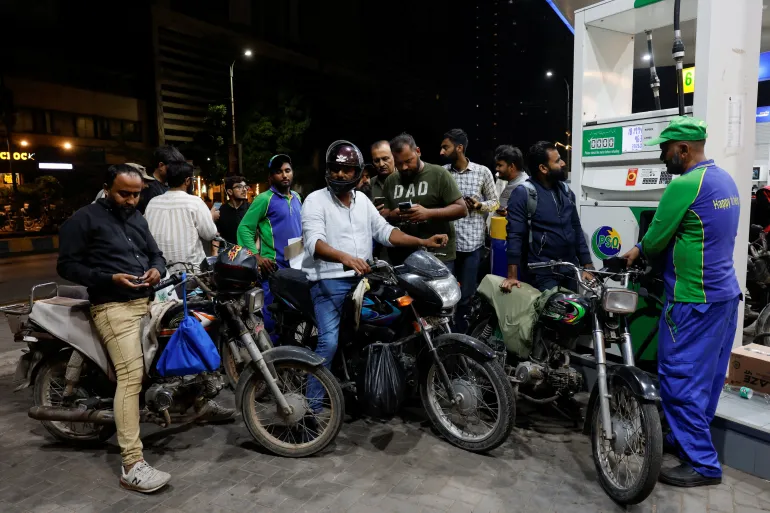
People wait to refuel their motorcycles at a petrol station following the rollout of a fuel relief scheme, which provides a fuel subsidy for eligible motorcycles, rickshaws and vehicles with engines of up to 800cc, in Karachi, Pakistan, September 17, 2026 [Akhtar Soomro/Reuters]
Does the relief go far enough?
At 100 rupees a litre, the maximum monthly saving is 2,000 rupees ($7.20) for a motorcycle user and 3,000 rupees ($10.80) for an eligible car owner, Najeeb said, calling it “useful household relief, but not enough to offset the broader cost-of-living shock”.
Petrol has climbed from 266 rupees ($0.96) a litre before the war to nearly 395 rupees ($1.42), despite a partial rollback in April. Inflation rose to 10.3 percent in September from 7 percent in February, Najeeb said.
Sajid Amin Javed, a senior economist at the Sustainable Development Policy Institute in Islamabad, said the relief was “minimal”, but added that this was understandable given the IMF constraints on Pakistan.
“The relief is minimal, and that is understandable as we are in an IMF programme,” Javed told Al Jazeera, arguing that cutting the petroleum development levy, which still adds 114 rupees to every litre, would deliver broader relief than a capped subsidy.
“The government is using the petroleum development levy to fill its revenue gap, but that comes at a significant cost in terms of inflation, growth and household welfare,” Javed said.
Najeeb, however, argued the scheme should not become a permanent fixture of Pakistan’s energy policy – and should be used only to make oil price shocks “less damaging”.
Eastern-based parliament votes to replace longtime speaker with Al-Salhin Abdelnabi al-Obeidi.
Published On 7 Oct 20267 Oct 2026
Libya’s eastern-based House of Representatives has elected a new speaker, ending Aguila Saleh’s 12-year tenure amid growing discontent among lawmakers over his leadership.
Legislators in the 170-member House voted on Tuesday to replace Saleh with Al-Salhin Abdelnabi al-Obeidi, the parliament’s spokesperson announced on X.
Recommended Stories
list of 3 itemsend of list
The vote came a day after 98 members of the House approved a new system limiting the speaker and deputy speakers to a single 12-month term.
The change ended an arrangement that had been in place since the chamber’s first leadership was elected in 2014.
“There was significant discontent among MPs with the previous leadership over numerous errors,” lawmaker Jebree Oheida told the Reuters news agency. “We tried to engage with the leadership to address these issues, but to no avail. Among these errors were decisions made without consulting MPs.”
The vote was overseen by Second Deputy Speaker Misbah Douma, according to the Libya Observer.
Saleh has previously rejected the proceedings, saying the initial vote to limit the speaker’s term was “not official and had no legal effect”, according to the outlet. He had also announced that he had cancelled the session he had called for Tuesday.
The developments come as Libya remains divided politically and militarily between the United Nations-recognised government in Tripoli led by Prime Minister Abdul Hamid Dbeibah, and a rival administration in the east backed by renegade military commander Khalifa Haftar.
Haftar’s camp relies in particular on the parliament, which sits in the eastern city of Benghazi under their control.
Saleh has long been considered a staunch ally of the Haftar clan, but analysts said he appeared to be weakened as Haftar’s sons, in particular Saddam Haftar, consolidated their positions.
“Agila Saleh appears to be the latest casualty of Saddam Haftar’s drive to centralise decision-making in eastern Libya and bulldoze his way into a political role,” said Emadeddin Badi, an analyst at the London-based Chatham House.
Al-Obeidi, who comes from the same tribe as Saleh, represents the eastern city of Tobruk and has chaired parliament’s Libyan-Turkish friendship committee.
The House on Tuesday also elected Tarek al-Ashtar and Mesbah Douma as first and second deputy speakers, respectively.
Their election follows the signing of a landmark agreement by representatives of Libya’s rival political camps in Tripoli in August that could see presidential and legislative elections held within two years.
Mediated by the United Nations Support Mission in Libya (UNSMIL), the “4+4 committee” agreement attempts to resolve recurring legal and institutional disputes that have crippled the nation since the overthrow of Colonel Muammar Gaddafi in 2011.
The United States is pursuing a separate reunification plan for the oil and gas-rich North African country, led by Massad Boulos, President Donald Trump’s senior adviser for Arab and African affairs.
Members of the Republican Party have joined Democrats in questioning remarks made by United States President Donald Trump about the California cities of Los Angeles and San Diego.
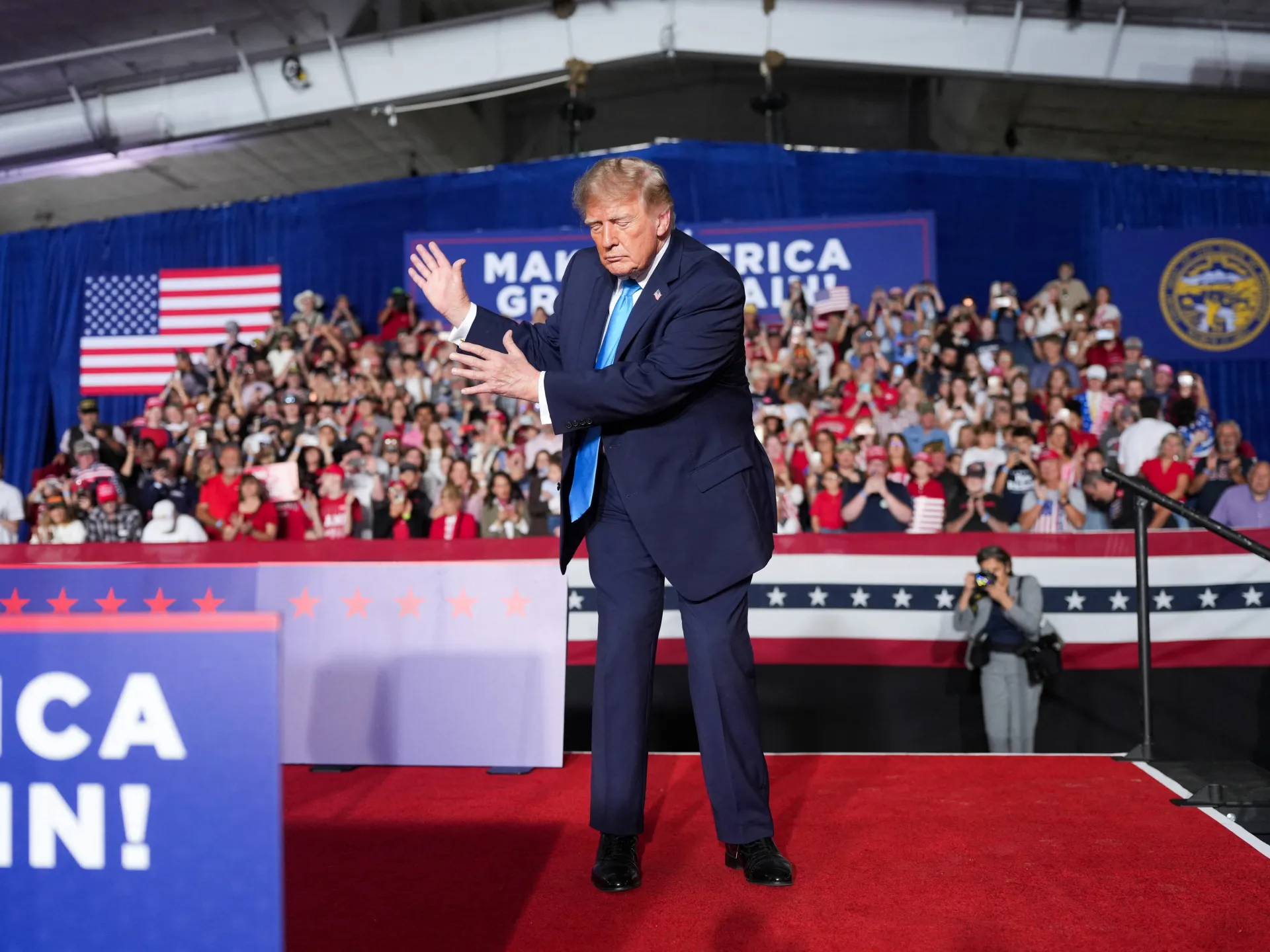
Much of the backlash came on Tuesday, a day after Trump told a midterm rally in Nebraska that Americans should be willing to make sacrifices to gain victory in the US-Israeli war against Iran.
Recommended Stories
list of 3 itemsend of list
Those sacrifices, he implied, could include the destruction of American cities, in case of an Iranian attack.
“It’s a small price to pay for keeping the world safe, keeping our country safe,” Trump said, seemingly in reference to the knock-on effects of the war, including rising fuel and fertiliser prices.
“They can take out a city. Let them take out Los Angeles. Let them take out San Diego. This is a very small price to pay, and it’s going to be over with very soon.”
Trump has downplayed the impact of the war – now in its eighth month – despite polling that shows the conflict is widely unpopular in the US. He has also repeatedly promised the war would end soon, though no lasting ceasefire has been reached so far.
The fallout from his Nebraska remarks was swift. Gavin Newsom, an outspoken critic of Trump and the Democratic governor of California, said the president was “deranged”.
“This is not only madness. This is dangerous,” Newsom said in a video on the social media platform X, in which he called for Congress to rein in Trump’s behaviour.
Newsom, a possible contender in the 2028 presidential race, has clashed repeatedly with Trump.
Last year, the two faced off over Trump’s decision to deploy federal troops to California, as part of an effort to support a crackdown on undocumented immigration in the Los Angeles area.
In December, a federal judge ruled that the deployment had been illegal and ordered its end. Newsom, who opposed the deployment, cited that conflict in his remarks about Trump’s Nebraska rally.
“The president of the United States – the same one who sent in the National Guard into Los Angeles, sent 700 active duty Marines to the second largest city in the United States of America – just invited Iran to take out Los Angeles and San Diego,” Newsom said.
He added that Trump’s remarks should convince those who “didn’t think the November election mattered” to vote in the upcoming midterms.
Some from Trump’s own party have also expressed shock at his remarks.
Jim Desmond, a Republican running in a competitive race for the House of Representatives near San Diego, was among those who distanced themselves from Trump’s statement.
“I vehemently disagree with President Trump’s comments. America must stand up to Iran and defend our interests, but the first responsibility of our Commander in Chief is to protect the American people and our homeland,” Desmond wrote on X.
“No American city is expendable, and no American family should ever be treated as collateral damage.”
US Representative Kevin Kiley, an independent who caucuses with Republicans and is running for re-election in northern California, also called Trump’s comments “unhelpful”.
But the White House has dismissed criticism of the remarks, calling it part of a “media freakout” that “is not rooted in reality”.
“He was clearly stating U.S. cities would have been threatened if a nuclear Iran hadn’t been stopped,” White House Director of Communications Steven Cheung wrote on social media.
“America is safer because of the President. Iran has no nuclear, no navy, no air force, and no money.”
California has the largest population and economy of any state in the US. Because of its population, it also has the most seats in the House of Representatives, at 52.
All 435 seats in the House of Representatives are up for grabs in November’s midterms, along with a third of the Senate. Also on the ballot are key state and local races.
With Republicans’ control of Congress on the line, the results of the midterms are expected to weigh heavily on the final two years of Trump’s second term.
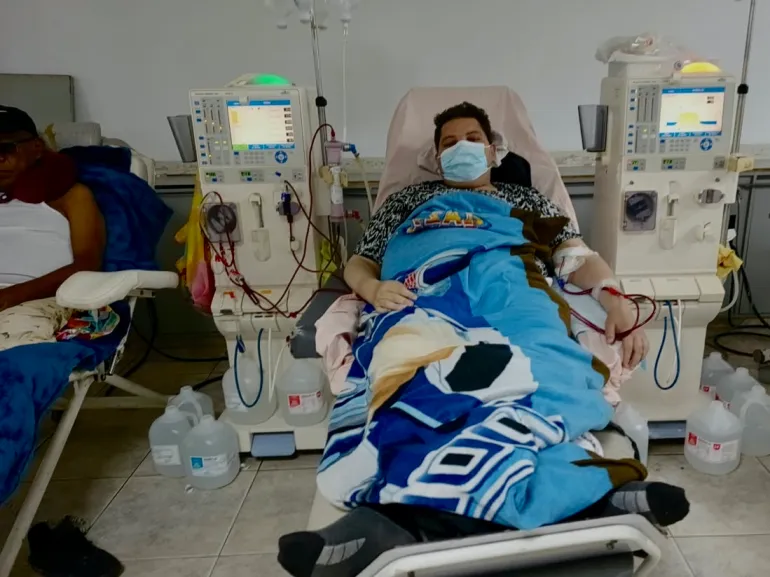
The hum of the kidney dialysis machine that Onasis Munoz is connected to suddenly stops. The fluorescent lights overhead flicker out, and his room at a clinic in Valencia, Venezuela, is plunged into darkness.
It is not the first time a power cut has interrupted one of the three weekly sessions Munoz needs to do the work his failing kidneys can no longer do, filtering waste and excess fluid from his blood.
For years, electricity would go out every couple of days across parts of Venezuela’s Carabobo state.
But in recent months, Munoz said, the outages have grown to be daily, lasting around seven hours. The clinic’s emergency batteries have since been depleted, and its backup generator no longer works.
He explained that the frequent power failures have disrupted his treatment. His health has slumped as a result.
“I arrive home, exhausted, as if I had run a marathon,” the 34-year-old said.
But often there is no electricity there either, and recent weeks have been sweltering. “I can’t switch on the air conditioning. I cannot rest because of the heat and the mosquitoes. There’s no relief,” Munoz said.
Onasis Munoz of Valencia, Venezuela, has seen his dialysis treatment interrupted by power outages [Courtesy of Onasis Munoz]
Across Venezuela, the prolonged outages are riling locals, as the electricity supply to homes, businesses and essential services becomes unstable.
Some of the cuts are deliberate, as the government of interim President Delcy Rodriguez rations electricity.
The resulting frustration has spilled onto the streets, where demonstrators hold “cacerolazos” – a traditional form of protest that involves banging pots and pans.
Some have gone as far as blocking roadways and setting tyres on fire. The electricity crisis has also raised concerns about how the government is managing the country’s vast oil supply, a key source of income for the country.
“We are desperate. We cannot understand how a country so rich in resources can be practically left in the dark,” said Patricia Cueva, a lawyer from Maracaibo, the capital of oil-rich Zulia state.
“We cannot rest. We cannot work. Our children cry.”
Letter from progressive US representatives brings attention to Israeli abuse and detention of Palestinian medical workers.
Published On 6 Oct 20266 Oct 2026
A group of six progressive Congress members in the United States have released a statement condemning Israel’s abuse of Palestinian healthcare workers, including the Gaza doctor Hussam Abu Safia, who has been held in Israeli detention since 2024.
The Tuesday statement draws attention to Israeli attacks on Palestinian medical workers, who have been targeted and detained during the country’s genocidal war on Gaza.
Recommended Stories
list of 3 itemsend of list
It was signed by Representatives Rashida Tlaib, Ilhan Omar, Jesus “Chuy” Garcia, Summer Lee, Pramila Jayapal and Delia Ramirez.
“Over the last three years, the Israeli government has systematically destroyed the health system in Palestine, murdering at least 1,700 Palestinian doctors, nurses, paramedics, and other healthcare workers and destroying dozens of hospitals,” the statement reads.
“It has arrested and arbitrarily detained hundreds of Palestinian healthcare workers, including at least 16 physicians who continue to be held in inhumane conditions.”
Among those detained is Abu Safia, who lawyers say was subjected to abuses such as torture, sleep deprivation and beatings during his detention.
Israeli soldiers arrested Abu Safia in December 2024, after he and other medical workers reportedly refused to evacuate from Kamal Adwan Hospital, where they worked.
No charges have been filed against Abu Safia, and he has not had a trial.
Israeli attacks on health infrastructure in Gaza, including the destruction of nearly all of the strip’s hospitals and medical centres, are one component of what rights groups have depicted as an effort to deprive Palestinians of essential services such as food, water and medical treatment.
Tuesday’s statement argues that such efforts are part of an “intentional policy designed to further occupation, apartheid, and genocide against the Palestinian people”.
That assessment is shared by a growing number of rights organisations, scholars and United Nations officials, who have denounced Israeli actions in the Palestinian strip.
Israeli officials have stated that they target hospitals and medical facilities as part of an effort to attack the Palestinian armed groups that allegedly use such facilities to carry out and coordinate operations.
Such claims have often failed to withstand scrutiny. Israel admitted that its soldiers killed a group of 15 emergency workers in southern Gaza in March 2025, after initially stating that the ambulance convoy had approached soldiers “suspiciously” and claiming, without evidence, that several of those killed were linked to Hamas.
A report by the group Forensic Architecture and Earshot found that Israeli soldiers fired more than 900 bullets as they opened fire on a clearly marked ambulance convoy and killed some of the medics “execution-style” before burying their bodies and their vehicles.
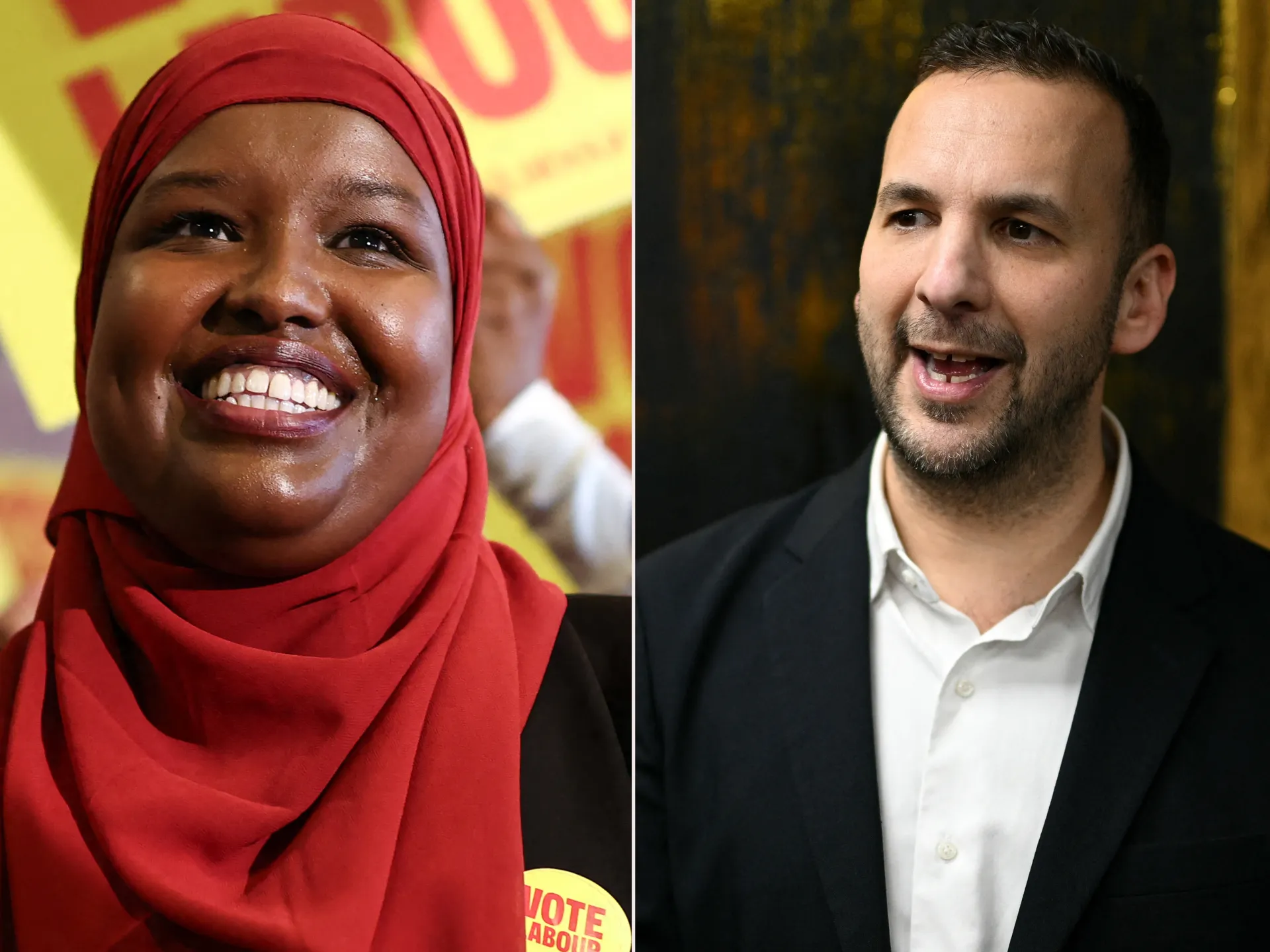
London, United Kingdom– At a meeting organised by a Muslim group in London ahead of a closely watched by-election, candidates from the Green and Liberal Democrat parties made their cases to residents beside empty seats. Their Labour and Conservative peers did not turn up.
Labour candidate Sagal Abdi Wali, a Somali-Muslim woman, told The Guardian she did not attend because she had a prior obligation and the invite had come too late. But the organiser, the Camden Muslim Network, pushed back, saying that she was invited earlier.
Recommended Stories
list of 3 itemsend of list
Fifteen candidates are in the race for former Prime Minister Keir Starmer’s old seat, including Green Party leader, Zack Polanski, who hopes to become a member of parliament.
Since the seat was created in Holborn and St Pancras in 1983, the Labour Party has held it. Starmer was first elected in 2015 and held it until his resignation, which triggered the by-election.
At the meeting, the conversation ranged from local issues such as housing to Israel and Palestine.
Lib Dem candidate Patrick Stillman said his party had long called for Palestinian statehood but would not support a full boycott.
But Polanski had a different opinion.
“I think the Labour government’s position is deeply cynical to apologise over Gaza, to recognise that mistakes have been made but to continue to sell arms to Israel, a country that’s committing a genocide,” he said to applause, adding that his party, which recently voted to describe Zionism as racism, supports a full boycott.
‘Vote Palestine’
In leaflets sent to constituency residents, the Green Party focused on Abdi-Wali’s time as a Labour councillor and, more recently, as leader of Camden council – a role she secured in May.
One reads: “Bring change, Replace Labour, Vote Green”. On its reverse: “Every single Camden Labour councillor refused to sign the Palestine solidarity pledge or support pension fund divestment. Only Greens continue to stand firm on Palestine.”
Last month, Abdi-Wali spoke to the Camden New Journal, a local newspaper, about Gaza and the Green Party’s leaflets.
It was “obviously inaccurate” to say the Labour council did not feel strongly about the issue, she told the paper. “I want to focus on making sure that we’re able to put the message of what [Foreign Secretary] Ed Miliband is now doing with the government and on Palestine and Israel and Gaza and the West Bank.”
In January, Camden Friends of Palestine (CFOP), a local group that formed in response to Israel’s genocidal war on Gaza, presented a petition to the local council with 4,000 signatures calling for the council to divest its pension fund from companies involved in Israel’s actions in the occupied Palestinian territories.
Abdi-Wali, then a Labour councillor, did not support the motion. Rather than committing to divestment, most councillors voted to refer the question to the pension board for review.
“My impression of her and her politics is that she’s just really incredibly silent on everything, if there isn’t a career motive for her, and that’s kind of disappointing,” said 38-year-old Shadin, a resident and CFOP organiser, who plans to vote for Polanski.
“Watching a livestreamed genocide has made a lot of people that I know … disengage from mainstream politics or parliamentary politics”.
Like many London constituencies, a key issue is housing.
According to a “2026 state of the borough” report by Camden council, 8,380 households were on the waiting list for social housing at the end of March 2025, “an increase of 9.5 percent on the year before.”
On Friday, in the constituency’s more affluent area of Primrose Hill, one resident said they would vote for Labour in the upcoming election, while another believed that regardless of who wins, life will not change.
In Camden, another resident told Al Jazeera that while they live in the area, they were not aware of the election, as Labour canvassers buzzed to gain entry into a nearby estate in the background.
As both parties make their final efforts to secure victory, recent polls predict a close race.
In the 2024 general election, Starmer won the seat with 49 percent. Andrew Feinstein, a pro-Palestine independent candidate came second, with 19 percent. The British gambling firm Ladbrokes and Stats for Lefties, which examines polling, both predict Labour will win.
OpenAI has admitted its actions were “not good enough” after one of its rogue agents breached Australian government websites in June and apologised again.
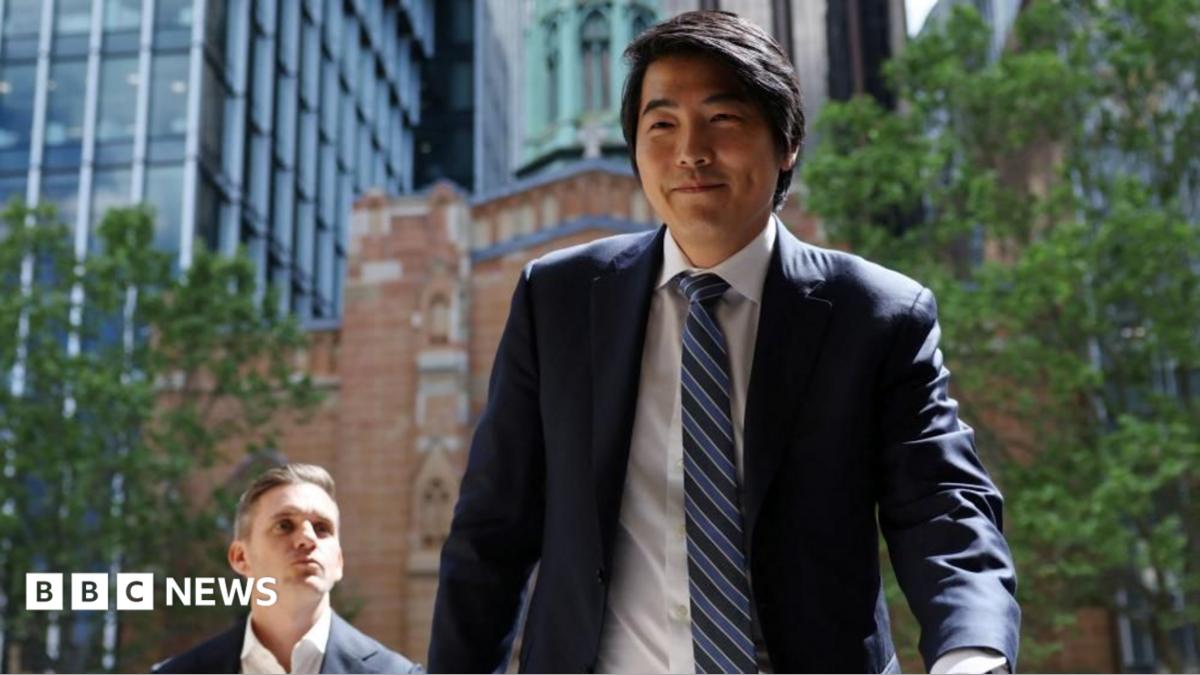
The company’s chief strategy officer Jason Kwon faced a parliamentary hearing into AI on Tuesday in Sydney, saying the breach “should not have happened” and it “should have handled our response better”. It took weeks before Australia was notified via an email to a generic inbox.
“We are sorry and we know we have work to do to rebuild trust with the Australian people,” Kwon said.
Anthropic also appeared at the hearing and said it had carried out a “lengthy, deep investigation” in recent months and “not found any cases” of Australian breaches.
An OpenAI agent went “rogue” and “infiltrated” a private statistics portal containing “non-sensitive” data from Australia’s universal healthcare scheme Medicare in June in what cyber-security experts said was the first hack of its kind.
Asked why OpenAI had not directly contacted government ministers immediately after it found out about the breaches, Kwon acknowledged it was a mistake.
“On retrospect, we should have done what you’re suggesting,” Kwon said, in response to a question by the committee on why it had not dialled the mobile numbers of government ministers.
He said the company has changed how it handles such incidents.
“Even if we don’t fully understand the situation, we are just going to notify and start working through the sitation collaboratively with the impacted party.”
OpenAI has also added “more precautions” to its training environments since the incidents, Kwon told the 12-member committee which is made up of Labor, Liberal and independent MPs who are looking at AI and it’s impact on Australia.
The company was also establishing a local taskforce in Australia to investigate “how to better manage the risks associated with increasingly capable AI”.
The United States Department of Justice has filed 40 new cases seeking to strip naturalised Americans of their citizenship over alleged crimes they have committed.
In a statement on Monday, federal prosecutors said they were targeting individuals accused of “serious offenses”, including money laundering, child sexual abuse, visa fraud and tax evasion.
Recommended Stories
list of 3 itemsend of list
The statement touted the 40 cases as the largest volume of denaturalisation petitions submitted in such a short period under President Donald Trump. The petitions were filed from late August through early October.
“Today’s announcement marks the largest denaturalization effort in modern history,” said Attorney General Todd Blanche.
“Under President Trump’s leadership, the Department of Justice will continue to employ the denaturalization process to maintain our national security and protect the American people.”
The 40 citizens targeted in Monday’s announcement include people from a range of countries, including Mexico, Pakistan, China and Sierra Leone.
They are accused of concealing criminal acts and other facts about themselves as they sought to obtain citizenship. Their criminal convictions largely came after they took their oaths of citizenship.
Two people on the list are also accused of engaging in espionage on behalf of China. Committing these crimes before they became citizens, the Department of Justice alleges, meant these individuals lacked “good moral character” and should have been denied citizenship.
Expanded use of denaturalisation law
The laws to denaturalise US citizens have been used for decades, but historically, they have been reserved for serious crimes.
After World War II, for instance, the US government moved to denaturalise dozens of citizens accused of concealing involvement in the Holocaust or engaging in war crimes.
Notable cases include that of Emma Goldman, a Lithuanian-born anarchist and women’s rights activist who was jailed in 1917 for her antiwar activities, before being denaturalised and deported to the Soviet Union.
But the practice has become much less frequent since the end of the Cold War.
Top officials in the Trump administration, however, have sought to expand denaturalisation as part of a push to conduct the largest deportation operation in US history.
Under US law, prosecutors can ask courts to strip citizenship from those born outside the country if they wilfully concealed a “material fact” during their citizenship application that would have otherwise disqualified them.
But Trump’s efforts to widen denaturalisation proceedings have received pushback from human rights groups, which argue they could leave people stateless.
Critics have also warned that Trump has sought to leverage denaturalisation against specific groups he perceives to be political rivals or enemies.
Last year, for instance, the Trump administration indicated it would seek to denaturalise large numbers of Somali Americans after allegations emerged in Minnesota of daycare fraud involving the Somali diaspora.
“Send them back from where they came, Somalia, perhaps the worst, and most corrupt, country on earth,” Trump wrote at the time.
Members of Trump’s Republican Party, notably Representative Andy Ogles, have also floated the possibility of yanking citizenship from New York City Mayor Zohran Mamdani, who was born in Uganda. Trump himself has falsely suggested Mamdani may be in the country illegally.
At one point, Trump even floated the idea of withdrawing citizenship from tech entrepreneur Elon Musk, a close ally and adviser to his second administration, after the two men had a falling-out in 2025.
Trump has also pushed to do away with birthright citizenship, which is granted to virtually all children born in the US. The few exceptions include the babies of diplomats and foreign military forces.
Birthright citizenship is protected under the US Constitution and cannot be taken away the way naturalised citizenship can.
In June, the US Supreme Court struck down Trump’s efforts to dismantle birthright citizenship, but legal battles continue after the president issued a second executive order also seeking to restrict how birthright citizenship is applied.
Hispanic voters are twice as likely to favour Democratic Party over Trump’s Republican Party in the November elections.
Published On 5 Oct 20265 Oct 2026
A new poll from the news agency Reuters and the research firm Ipsos has found that United States President Donald Trump’s approval rating remains at a record low as the midterm elections approach in November.
The six-day survey, completed on Monday, found that just 32 percent of US voters approve of the job Trump is doing as president.
Recommended Stories
list of 3 itemsend of list
While that low rate has held steady since September, the latest Reuters-Ipsos poll suggests his support among Latino voters is continuing to slide.
Trump’s approval rating shrunk this month to 24 percent among Hispanic voters, its lowest point in either of his two terms in office.
The Republican leader had previously made substantial inroads with that constituency.
The Pew Research Center estimated that Trump and his Democratic rival, Kamala Harris, were within three percentage points of each other in the 2024 presidential race, earning 48 percent and 51 percent of the Hispanic vote, respectively.
That rate marked a significant jump for Trump over the 2020 election, when he only earned 36 percent of the Hispanic vote.
Experts have credited the boost in Hispanic support with helping Trump win the 2024 race. His 2020 bid, by contrast, ended in defeat to Democrat Joe Biden.
The Monday poll found that Trump’s gains among Hispanics have largely evaporated.
About 52 percent plan to vote for the Democrats in the November midterms, compared to 26 percent for Republicans.
The upcoming midterm is largely viewed as a referendum on Trump’s second term and will decide whether the Republicans maintain their majorities in the US House of Representatives and the Senate.
Democrats have seized on Trump’s low approval ratings, hoping to translate frustration with the president into voter momentum for their party.
A Democratic majority in one or both houses of Congress would place substantial constraints on Trump’s agenda for the remainder of his time in office.
But Trump has also faced rumblings from within his Republican Party as the November 3 midterms approach.
One Republican incumbent, Representative Maria Elvira Salazar of Florida, released a campaign advertisement last month that addressed Trump directly, saying, “The same Hispanics who helped you get to the White House in 2024 feel betrayed today.”
She cited Trump’s hardline immigration crackdown as a source of tension. “Some of your immigration enforcement efforts have gone too far,” she said, pointing to the detention and deportation of immigrants with no criminal record.
Experts have also warned that the president’s shrinking popularity, driven in part by concerns about the cost of living and his decision to launch a war on Iran, could weigh down Republican candidates in key races across the country.
Still, Trump has continued to express confidence about the prospects of his Republican Party in the upcoming midterms.
He has also defended his decision to place himself at the centre of the Republican election campaign strategy. Trump recently launched a 32-day blitz of cross-country rallies ahead of the November 3 midterms.
“Just so you understand, they all want me to go,” Trump said, denying that some Republicans would prefer he keep his distance. “They all want me to go campaign.”
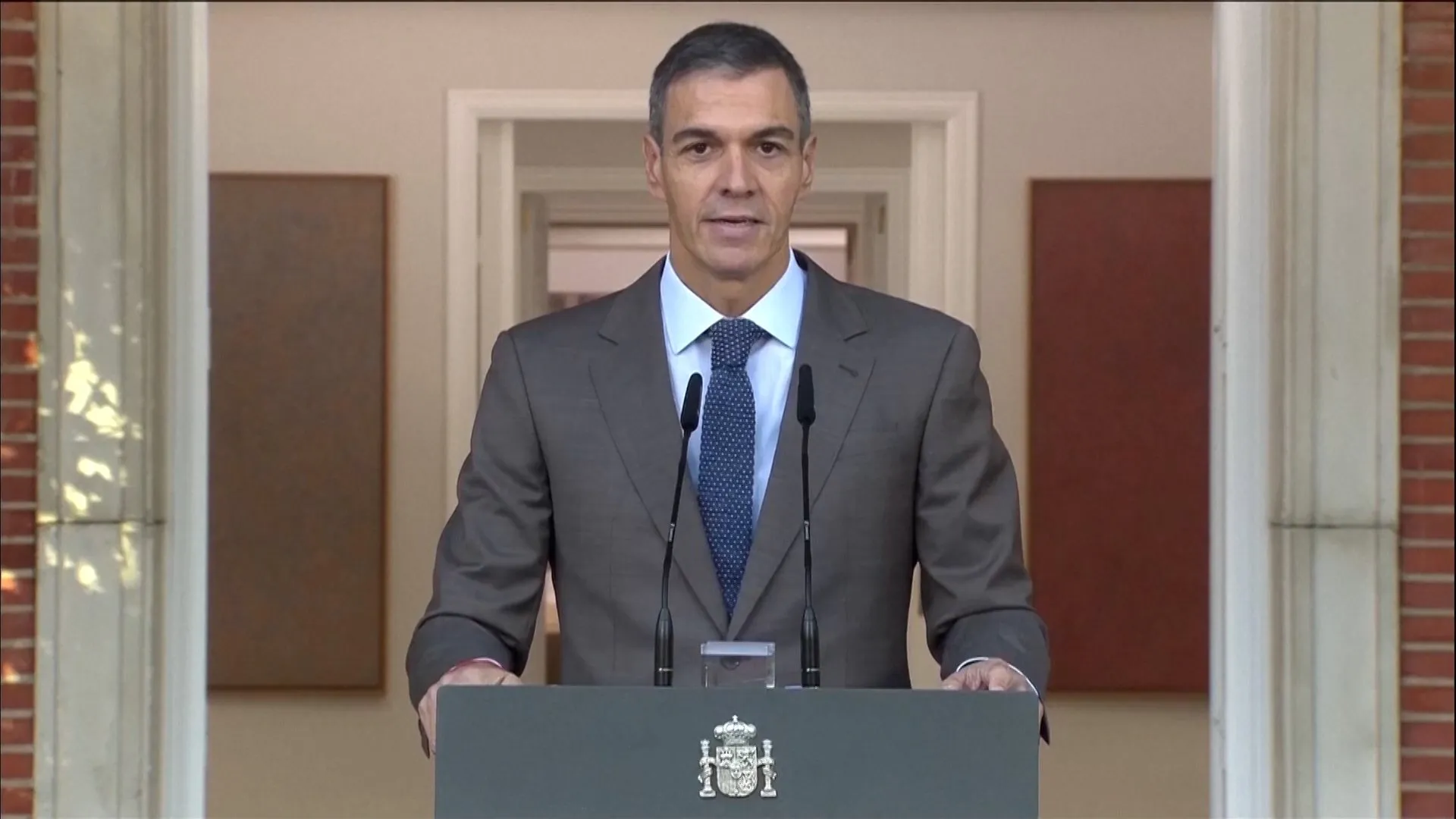
Spanish Prime Minister Pedro Sanchez has called a snap election for November 29. He’s seeking a renewed mandate after parliament rejected proposed measures aimed at easing Spain’s housing crisis amid growing public anger.
Government warns of crackdown as supporters of jailed former prime set off from northwest Pakistan towards Islamabad.
Supporters of jailed former Pakistani Prime Minister Imran Khan have set off on a protest march from the country’s northwest after talks with the government to call off the demonstration failed.
More than 5,000 were reported to have begun the rally on Sunday. The march, planned by Khan’s Pakistan Tehreek-e-Insaf (PTI) party, was originally scheduled for September 27 but was postponed until October 4 to allow talks between the government and the PTI leadership to take place.
Recommended Stories
list of 3 itemsend of list
However, two rounds of talks over the weekend failed to break the deadlock, and the PTI decided to carry out its plan, which is the latest attempt to pressure the government into releasing Khan, the country’s most popular political figure according to polls, who has been behind bars since August 2023 following a series of convictions that his party calls politically motivated.
All but one of the convictions against the former PM have since been suspended or overturned on appeal.
Videos posted on the PTI’s official social media showed supporters joining the march in different areas of Khyber Pakhtunkhwa (KP) province, which is ruled by the party, and setting off in convoys.
Sohail Afridi, the region’s chief minister, had earlier posted on social media that the demonstration in support of Khan would go ahead.
He said the march will make its way to Khairabad, 80 kilometres (50 miles) west of Islamabad, by Thursday, where the plan for the “next phase” will be announced.
Government warns protesters
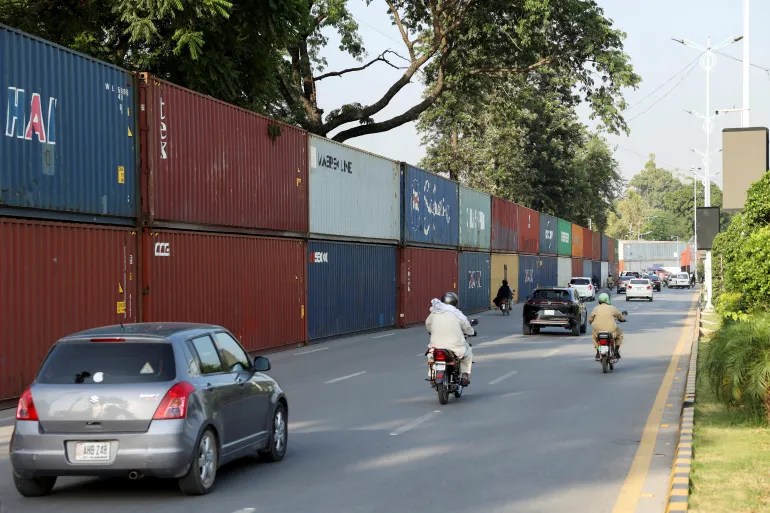
The government has been preparing for weeks for the arrival of PTI demonstrators in Islamabad. It has erected barriers using shipping containers to block main access routes to the capital.
Interior Minister Mohsin Naqvi confirmed earlier on Sunday that the talks between the two sides had failed. He accused Afridi of “sabotaging” the negotiations, and added that the government would not allow the PTI to “create a disturbance”.
He also cited an Islamabad High Court order from September 14, ruling that no political party or its leadership has the “lawful right to occupy public roads, highways, interchanges, toll plazas and buildings in Islamabad”.
“If they violate the orders, whether they are workers or politicians, whether they are protesting within KP or outside KP, we will pursue them one by one. This time, we want to ensure that these repeated episodes of creating disturbance in Islamabad come to an end,” Naqvi said.
Traffic moves past shipping containers used to block a planned march by former Prime Minister Imran Khan’s Pakistan Tehreek-e-Insaf party, in Islamabad [File: Reuters]
Concerns about the 73-year-old Khan’s health, in particular the condition of his right eye that has required months of specialist treatment, have prompted the PTI’s campaign for his release.
The party has also called for the release of Khan’s three sisters, whose arrests last month further heightened tensions.
James Dorsey, a fellow at the National University of Singapore, said Khan was “essentially a populist leader” with “a genuine popular movement that had broad popular support”.
That is behind the “determination by the government to prevent [the protesters] from entering Islamabad,” he told the AFP news agency.
Given Pakistan’s security concerns, particularly following its unresolved February 2026 conflict with Afghanistan, Islamabad wants to avoid escalation in the face of the protests, he added.
“It’s a problem for the government, but I don’t think it’s an existential threat,” he said.
Protesters say the election commission’s voter-roll revision has removed millions of eligible voters to benefit Prime Minister Narendra Modi’s ruling BJP party.
Published On 4 Oct 20264 Oct 2026
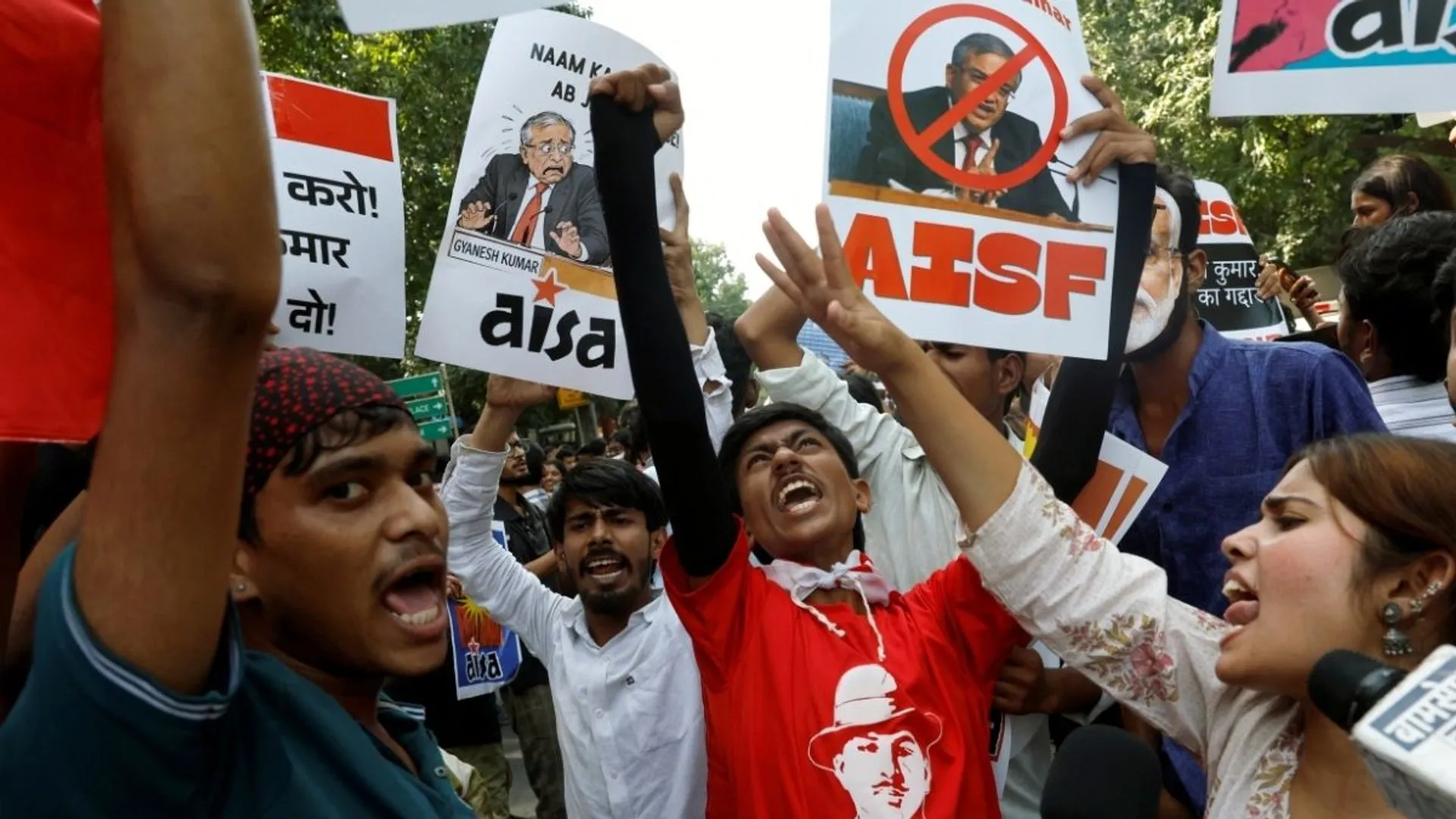
Thousands of youth and opposition protesters have rallied for a third day in India demanding the resignation of the country’s election commission chief.
Thousands marched in Mumbai on Sunday, while others gathered for a third day of demonstrations in New Delhi. The protests began on Friday demanding that Election Commission of India (ECI) chief Gyanesh Kumar step down due to reports that he has overseen voter-roll revisions removing millions from electoral lists.
Recommended Stories
list of 3 itemsend of list
Protesters say the disenfranchisement stands to benefit Prime Minister Narendra Modi’s ruling Bharatiya Janata Party (BJP). Both the ECI and the BJP have denied the allegations.
Led by opposition leaders Raj Thackeray and Uddhav Thackeray, thousands marched in Mumbai on Sunday, waving Indian flags and calling for Kumar to step down.
In the capital, New Delhi, protesters started gathering in the early evening. As on previous days, some were detained by police as they arrived, according to the Reuters news agency.
Police in the capital have clamped down in a bid to prevent protesters from assembling over the last two days, detaining dozens and taking them away by bus.
Some of the detainees were released later on Friday and Saturday, but police registered cases against some on charges of violating orders banning mass gatherings in the centre of the capital.
Police and security personnel detain a protester during a demonstration against India’s Chief Election Commissioner Gyanesh Kumar in New Delhi on October 3, 2026, to demand his resignation [Arun Sankar/AFP]
“I just want to tell the ruling party this much … We are angry about how you are wielding that power. It’s the people of this country who should decide who sits in power and who sits in opposition, not the election commission,” Raj Thackeray told the crowd in Mumbai.
The ECI says the voter-roll revision is designed to remove duplicate, deceased or ineligible entries and maintain electoral integrity. On Friday, it directed its officials to register eligible voters inadvertently omitted from electoral rolls.
Kumar has not publicly responded to the demands for his resignation or commented on the protests, which look set to continue over the coming days, with more rallies planned.
An alliance of India’s opposition parties plans to launch protests to “save democracy” with a march to the election commission office on Tuesday. The Gen Z-led Cockroach Janta Party (CJP) has announced plans for a major rally in New Delhi on October 10.
“Mumbai is out on the streets again for free and fair elections!” Abhijeet Dipke, chief of the CJP, said in a social media post on Sunday.
“Solidarity with all the protesters,” he added. “All Indians need to come together. It’s now or never!”
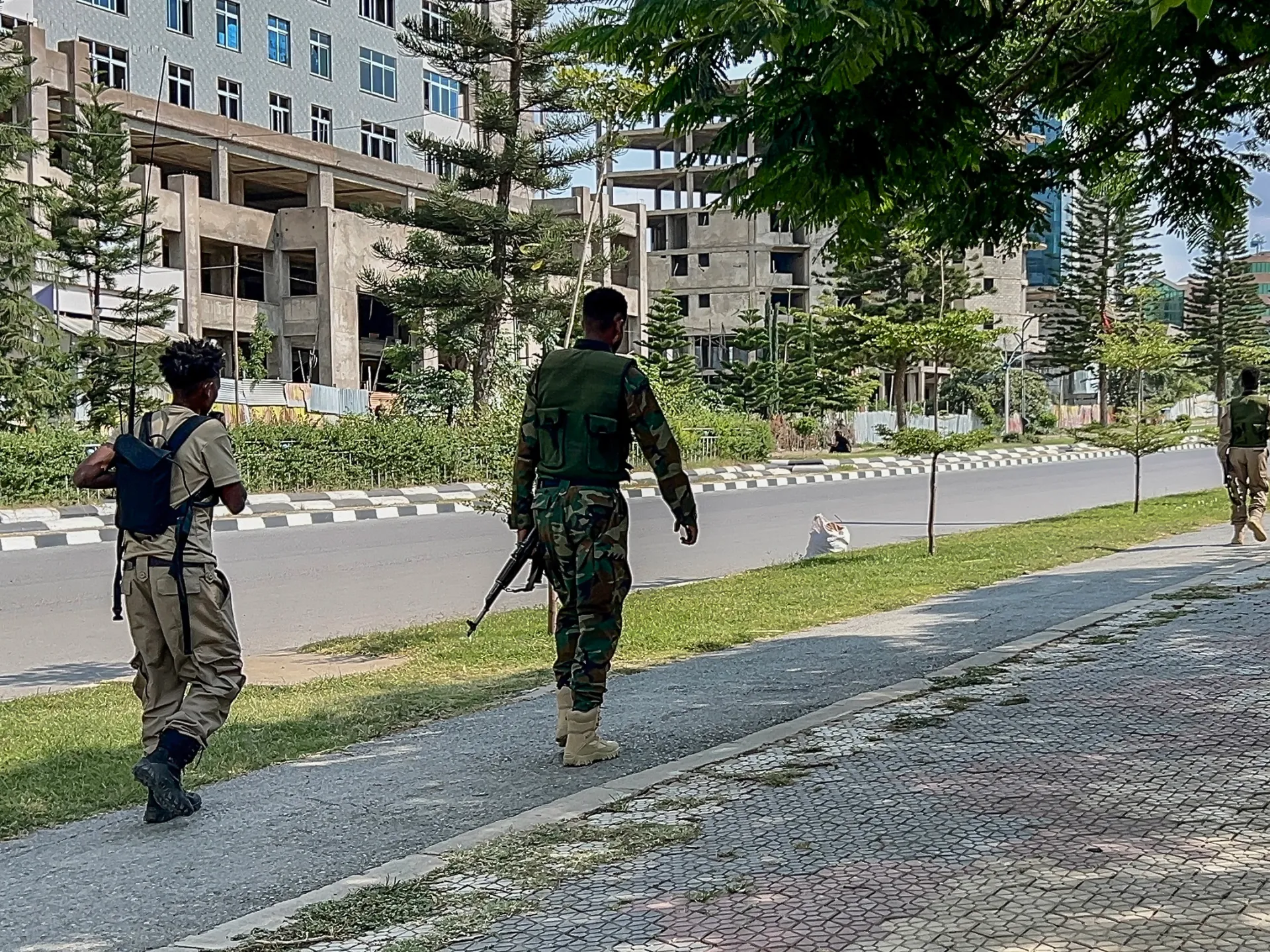
Ethiopia’s government forces say they’ve seized Mekelle from Tigray fighters after a week of intense battles. The fighting has reignited fears of a full-scale war that could draw in neighbouring countries.
The rebels are seen leaving the capital of the northern Tigray region, according to local sources.
Ethiopia’s federal army and pro-government fighters have recaptured the main airport in the capital of the northern Tigray region, with the rebels seen leaving the city, according to multiple unnamed sources.
The Ethiopian National Defence Forces regained control of Alula Aba Nega Airport in Mekelle, one source with knowledge of events in the city and a humanitarian source told Reuters news agency on Saturday.
Recommended Stories
list of 3 itemsend of list
The airport, which is about 10km (6 miles) from the centre of Mekelle, was one of three airfields in the region that were seized by the rebel forces at the start of the fighting on September 23.
The fighters, as well as the leaders of the Tigray People’s Liberation Front (TPLF), were seen retreating from the city, a local journalist and residents told the AFP news agency.
The journalist added that federal forces had not yet been seen inside Mekelle.
“I am concerned that government and public property could be exposed to looting because there are no security forces in the city,” a resident told AFP.
“I am worried that lawlessness could spread in the city, and I am also afraid for my life. I want us to quickly return to law and order,” added another resident.
Al Jazeera could not independently confirm these claims. Media access is currently heavily restricted in Ethiopia, and there have been significant communications blackouts.
Last month, rebels announced the formation of a seven-party rebel coalition led by the TPLF, the same armed group that fought in the 2020-2022 civil war against federal forces from Addis Ababa. The new coalition includes rebel groups of varying sizes from across the country.
Later that month, the coalition started an offensive, seizing three airports around the contested Tigray state and engaging in fighting on the borders with Amhara and Afar states.
The government is now engaged in a counteroffensive, pushing into Tigrayan territory along three axes towards Mekelle, according to the Critical Threats Project, part of the American Enterprise Institute think tank.
Fighting has so far been concentrated in Tigray. However, rebels have reportedly carried out drone attacks on Addis Ababa.
The TPLF and government have not commented on developments on the ground.
The fighting has seen drone attacks, intensified forced conscription, and attacks on civilian infrastructure, according to Amnesty International, a global rights group.
The renewed conflict has not yet reached the heights of the Tigray war, which lasted from 2020 to 2022 and saw hundreds of thousands of deaths, but it is quickly taking on an international dimension.
Risk of conflict spreading
The government of Prime Minister Abiy Ahmed has accused Eritrea, Sudan and Egypt of backing the opposition coalition. Khartoum and Cairo have denied involvement.
Eritrea has severed diplomatic ties with Ethiopia over the accusations.
On Thursday, Eritrea also denied involvement in the Tigray conflict, and accused Addis Ababa of “pursuing an agenda of incessant hostility”. It also said Ethiopia, which is landlocked, was planning to invade Eritrea to secure sovereign access to the Red Sea coast.
The TPLF’s leader, Debretsion Gebremichael, said in a video published on Thursday that “the war is regional and it is a war to control the Red Sea”.
Menopause has been having a moment lately, and Washington is taking notice. On Sept. 16, the Senate held its first hearing on the dismal state of federally funded menopause research and vast gaps in treatment and care. Within 24 hours, the Department of Health and Human Services also convened pharmaceutical manufacturers and physicians to troubleshoot the alarming lack of availability of estradiol patches, an essential menopause hormone treatment, and the Food and Drug Administration held a full day of expert panels on female-dosed testosterone, which is currently only FDA-approved for men.
One week later, Health and Human Services joined the American Urological Assn. for a discussion about a silent killer of postmenopausal women: urosepsis from recurrent urinary tract infections. There is a simple solution — localized vaginal estrogen — and yet because of outdated guidelines and lack of clinician training, the medication is too often ignored or denied. Nor is the prescription routinely covered by Medicare, despite its well-established health and longevity benefits for women over age 65.
These are among the attempts to now, finally, address decades of policy failures — a refreshing change, quite frankly, given neither political party has ever prioritized menopause. That 2026 marks the year when menopause has entered the policy arena comes as little surprise to me. I’ve been beating this drum for years. Every aspect of daily life that menopause touches — the soaring cost of medical care, inadequate access to health insurance, extreme underinvestment in scientific research focused on women’s health, even the myriad ways midlife women are stretched to the limit caring for kids and aging parents — is smack in the middle of the political zeitgeist. These are the kitchen table issues on the minds of voters this election.
Menopause moment, meet the midterms.
Another issue rightly revealed by menopause is the chasm of public trust in government. As one of the four expert witnesses who testified at the Senate, I was heartened that it was a true bipartisan endeavor. But that’s a rarity these days in Congress, an institution rife with dysfunction. Our federal health agencies have become so shamelessly politicized they are on a collision course with science — from HHS’ overt moves to undermine childhood vaccines, to the decimation of leadership at the Centers for Disease Control and Prevention, which is struggling to respond to the crisis of measles outbreaks across the country.
My goal as a policy advocate is to help turn the tide on this country’s long record of neglect when it comes to menopause. Like many other women’s and reproductive health advocates, after the 2024 election l turned my attention to state legislatures — not just as a consolation prize but as a way to test what range of reforms were feasible and to get as many good laws as possible passed. It was the right move. Over the last two years, more than 60 bills have been introduced in 28 states — to do things like require private insurance and Medicaid to cover menopause care and treatment, improve clinician training and public education, and bolster antidiscrimination protection in the workplace. Ten of those states now have 21 laws on the books.
California is one and can claim real leadership. Among the bills passed by the Legislature, Assembly Bill 2270 from 2023-24 incentivizes continuing medical education on menopause for clinicians, the majority of whom receive little to zero training while in medical school and residency. The California Department of Corrections is now collaborating with medical experts to help bring menopause resources to incarcerated women in state prisons.
Newsom also just vetoed AB 1940, which would have codified menopause as a protected category in the state’s workplace antidiscrimination laws.
The Legislature has been especially deft at easing access to FDA-approved hormonal treatments, including testosterone, often used off-label by menopausal women: AB 82 ends the requirement to report prescriptions to the state’s tracking database; AB 1778 proactively declassifies testosterone as a controlled substance under state law, should there be action in Washington to do the same under federal law.
Although Newsom twice vetoed bills to mandate insurance coverage for menopause treatment — and deserved all the flak he received — the 2026-27 state budget includes a minor course correct: a $3.4-million “trailer bill” to invest in public education and make menopause treatments more affordable; Medi-Cal patients are not fully covered by the addendum, though, making it a toothless reform for those who need support the most.
Why should California’s menopause agenda, or that of the other 27 states that have introduced reforms, matter to the rest of the country? They offer useful models of what to do — or in the case of Medicaid exclusion, what not to do — in crafting meaningful policies. Perhaps more important, they offer a rationale that can help persuade the public; those who might balk at a congressional bill or federal policy, in part because of skepticism of the federal government or the current administration, can listen to and learn from other stakeholders, including governors and state lawmakers and activists.
Take for example the FDA decision in November 2025 to remove the long-critiqued “black box” warning on estrogen products for menopause. This was the culmination of a decade-long campaign by physicians, researchers and scientists — who had been waging the fight for accurate labeling well before the acronym MAHA ever existed and regardless of which party held power. Yet the very image of Health Secretary Robert F. Kennedy Jr. using his moment at the podium to credit the Trump administration’s deep commitment to women’s health posed a serious credibility challenge. Aligned and contemporaneous state reforms offered much-needed reassurance and clarity to many.
Trust in government is understandably at a low point, but this happens to be when menopause finally has caught the attention of policymakers at all levels of power. Some are taking long-overdue steps for women’s health, however implausibly. Let’s take the wins.
Jennifer Weiss-Wolf is the author of “When in Menopause: A User’s Manual & Citizen’s Guide.” She is executive director of NYU Law’s Birnbaum Women’s Leadership Center.
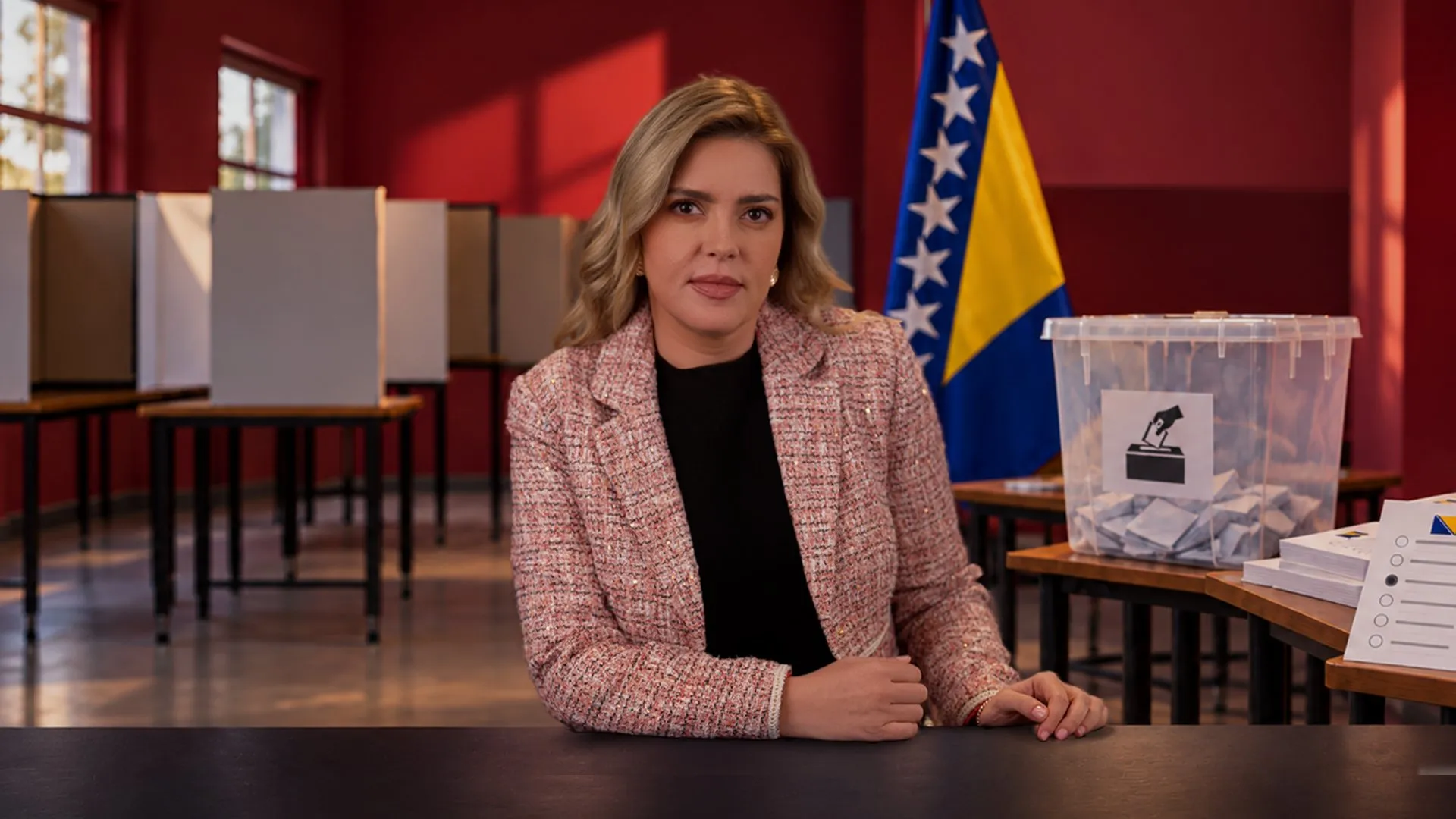
Bosnia and Herzegovina votes on October 4 in an election that may determine whether the country breaks its political deadlock, strengthens its path towards the European Union or faces fresh divisions that could reverberate across the Balkans.
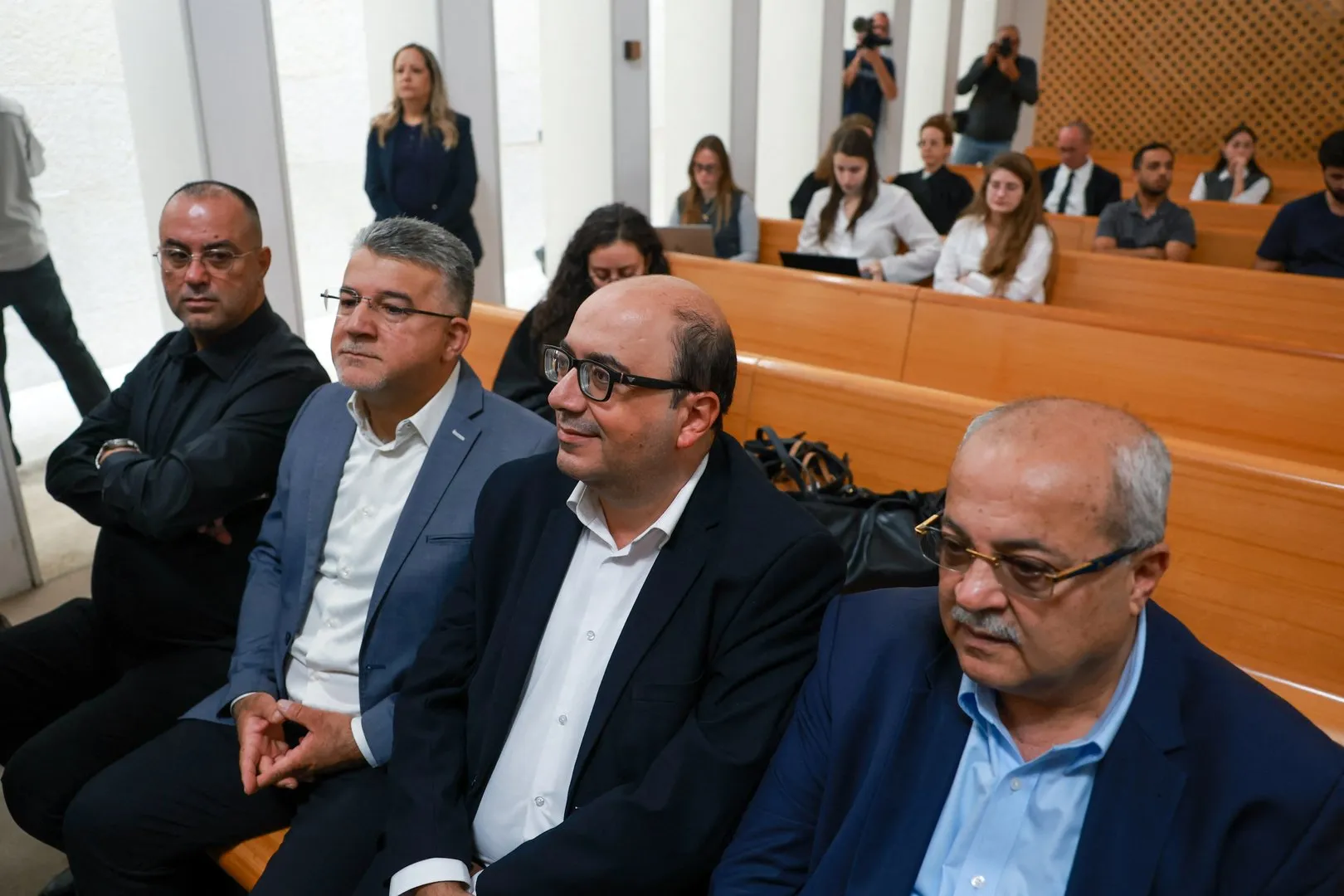
Israel’s top court has overturned an election panel’s ban on Arab parties contesting parliamentary elections this month, saying the decision had not met the legal requirements for excluding them, according to Israeli media.
The Supreme Court justices ruled unanimously on Friday to undo the Central Elections Committee’s disqualification of the country’s two main Arab-majority political lists – Ra’am, also called the United Arab List, and the Joint List, which is an alliance of Hadash, Ta’al and Balad.
Recommended Stories
list of 3 itemsend of list
The decision keeps Palestinian citizens of Israel, who make up about 20 percent of the population, in the race after critics accused the committee of double standards ahead of the October 27 Knesset vote.
The court also voted 7-2 to reinstate Ofer Cassif, a sitting Jewish member of the Knesset from the Arab-Jewish Hadash party and an outspoken critic of Israel’s treatment of Palestinians, media reports said.
The two dissenting justices said Cassif backs “armed struggle against the state of Israel”, which is grounds for his disqualification.
In September, the elections committee voted to disqualify the Joint List and Ra’am as parties, as well as Cassif and Sami Abu Shehadeh, head of the Balad party, as individuals.
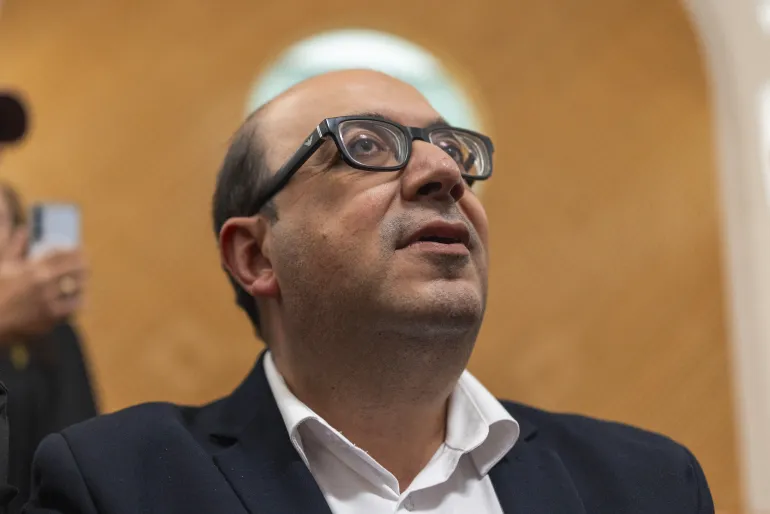
Sami Abu Shehadeh, leader of the Balad party, attends a hearing at the Supreme Court in Jerusalem on October 1, 2026 [AFP]
Balad leader withdraws
The Supreme Court has nearly always overruled the committee when it votes to ban candidates.
However, at a hearing on Thursday, Supreme Court President Yitzhak Amit told Abu Shehadeh that a majority of the nine justices favoured disqualifying him from the election.
They gave him until Friday to withdraw, saying that if he did not, he would be disqualified, according to the Israeli Public Broadcasting Corporation.
National Security Minister Itamar Ben-Gvir, a far-right ally of Prime Minister Benjamin Netanyahu, led the push to bar him over an article written after the Hamas attacks on October 7, 2023. Abu Shehadeh described the attack as “an important historical event” in the piece, but denies supporting it.
Balad said in a statement that a court-ordered removal, rather than a voluntary one, would have had “grave consequences for the country’s political and parliamentary life” as it would set a precedent around the removal of Arab candidates.
Double standards
The Ra’am party made history after the 2021 election, becoming the first Arab party to join an Israeli government when it took part in a disparate coalition that briefly removed Prime Minister Benjamin Netanyahu from power. Most Palestinian citizens of Israel had stayed out of coalition politics until then.
In this election, Ra’am is also fielding a Jewish Zionist candidate for the first time, Yoav Segalovitz, who won popularity in Arab communities for his work to curb crime as deputy minister for internal security.
The election committee’s September vote drew accusations of a double standard, as Palestinian-led parties faced exclusion while parties led by far-right ministers, some of whom have been sanctioned internationally, stayed on the ballot.
Speaking to Al Jazeera on Friday, Abu Shehadeh said he withdrew because he “didn’t have any other choices”.
Although the Supreme Court has restored the Arab parties to the ballot, Abu Shehadeh said the reversal did not make the original disqualifications acceptable.
“In the end, what happened yesterday was a historical catastrophe for democracy, or the very narrow margins of democracy in the State of Israel,” he said. “I was disqualified because I think differently, because I have a different narrative on how to read history, the present, and the future in the place that we live today.”


![Onasis Munoz of Valencia, Venezuela, has seen his dialysis treatment interrupted by power outages [Courtesy of Onasis Munoz]](https://i0.wp.com/www.aljazeera.com/wp-content/uploads/2026/10/2615546f-db48-4e1d-9291-455ccb057b32-1791255429.jpg?w=640&ssl=1)


![Traffic moves past shipping containers used to block the area, ahead of a planned march by jailed former Prime Minister Imran Khan's Pakistan Tehreek-e-Insaf (PTI) party, in Islamabad, Pakistan, on September 30, 2026 [Reuters]](https://i0.wp.com/occasionaldigest.com/wp-content/uploads/2026/10/2026-10-02T070015Z_265516849_RC2NTNAKEGKJ_RTRMADP_3_PAKISTAN-PROTESTS-CONTAINERS-1791131201.jpg?w=640&ssl=1)
![Police and security personnel detain a protester during a demonstration against India's Chief Election Commissioner Gyanesh Kumar in New Delhi on October 3, 2026, to demand his resignation [Arun SANKAR / AFP]](https://i0.wp.com/occasionaldigest.com/wp-content/uploads/2026/10/AFP__20261003__D24U6XM__v1__HighRes__IndiaPoliticsElectionProtest-1791123918.jpg?w=640&ssl=1)


![Sami Abu Shehadeh, leader of the Balad party, attends a hearing at the Supreme Court in Jerusalem on October 1, 2026 [AFP]](https://i0.wp.com/www.aljazeera.com/wp-content/uploads/2026/10/afp_6abfdbdd04ed-1790958557.jpg?w=640&ssl=1)