Government

Displaced families in Lebanon turn vehicles into rain-soaked shelters | Hezbollah

NewsFeed

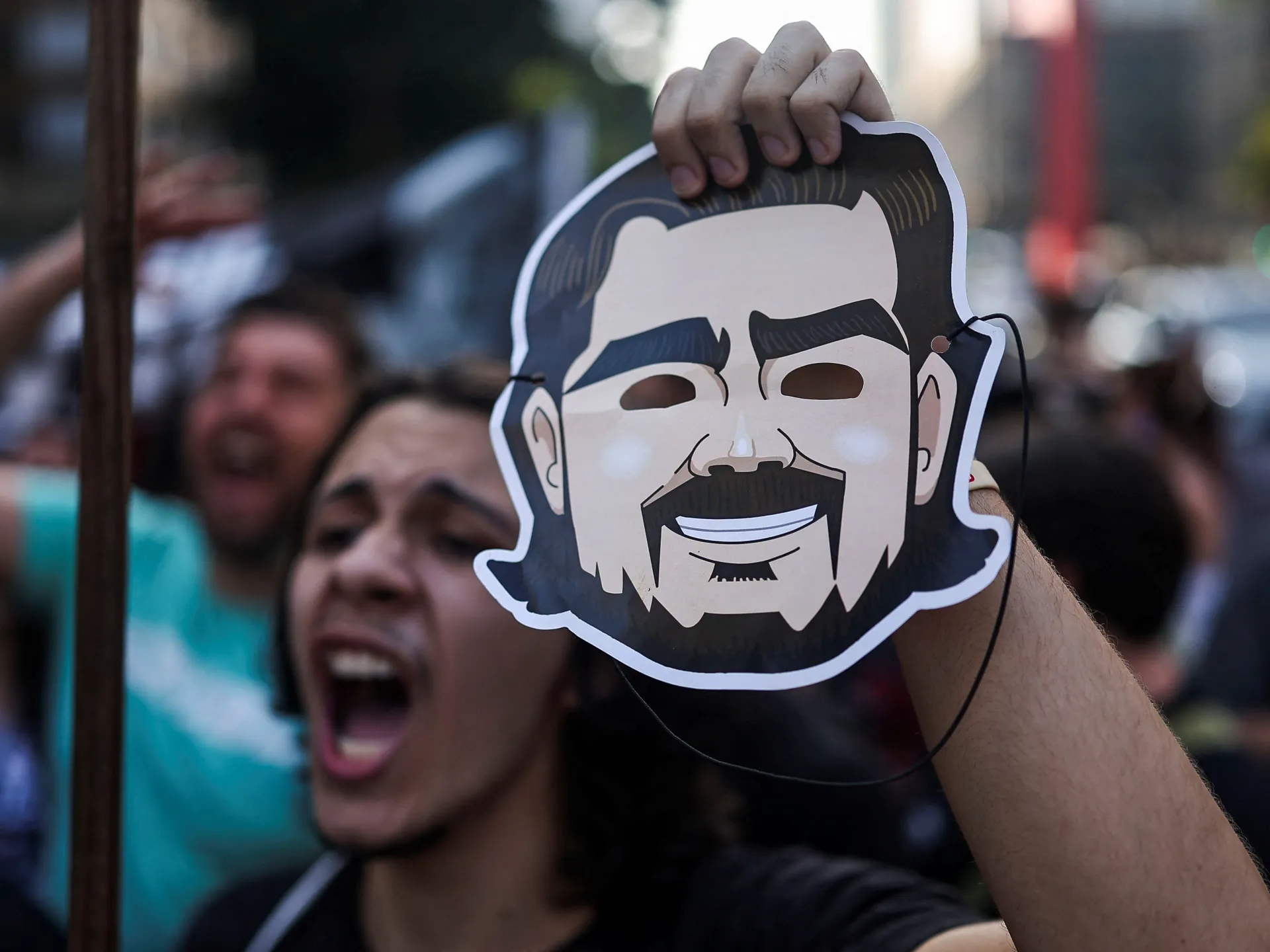
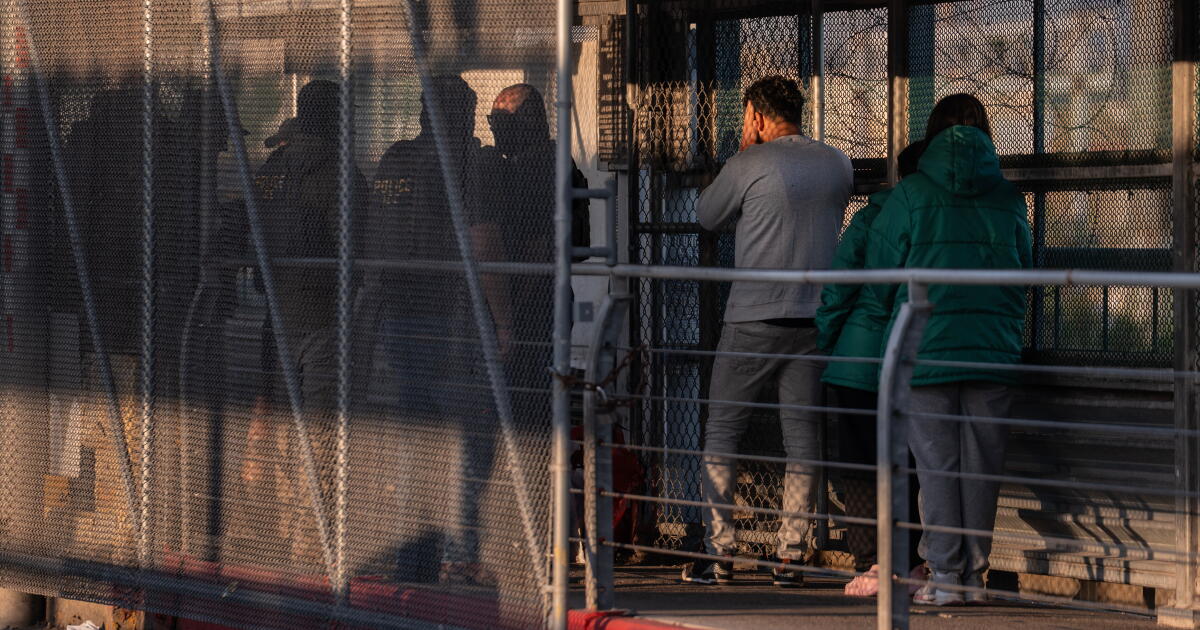
Displaced families in Sidon are turning their vehicles into makeshift shelters, covering them with tarp to shield themselves from the rain after failing to find space in local schools. Hundreds of thousands have been forced from their homes as Israel’s offensive in Lebanon intensifies.

Source link

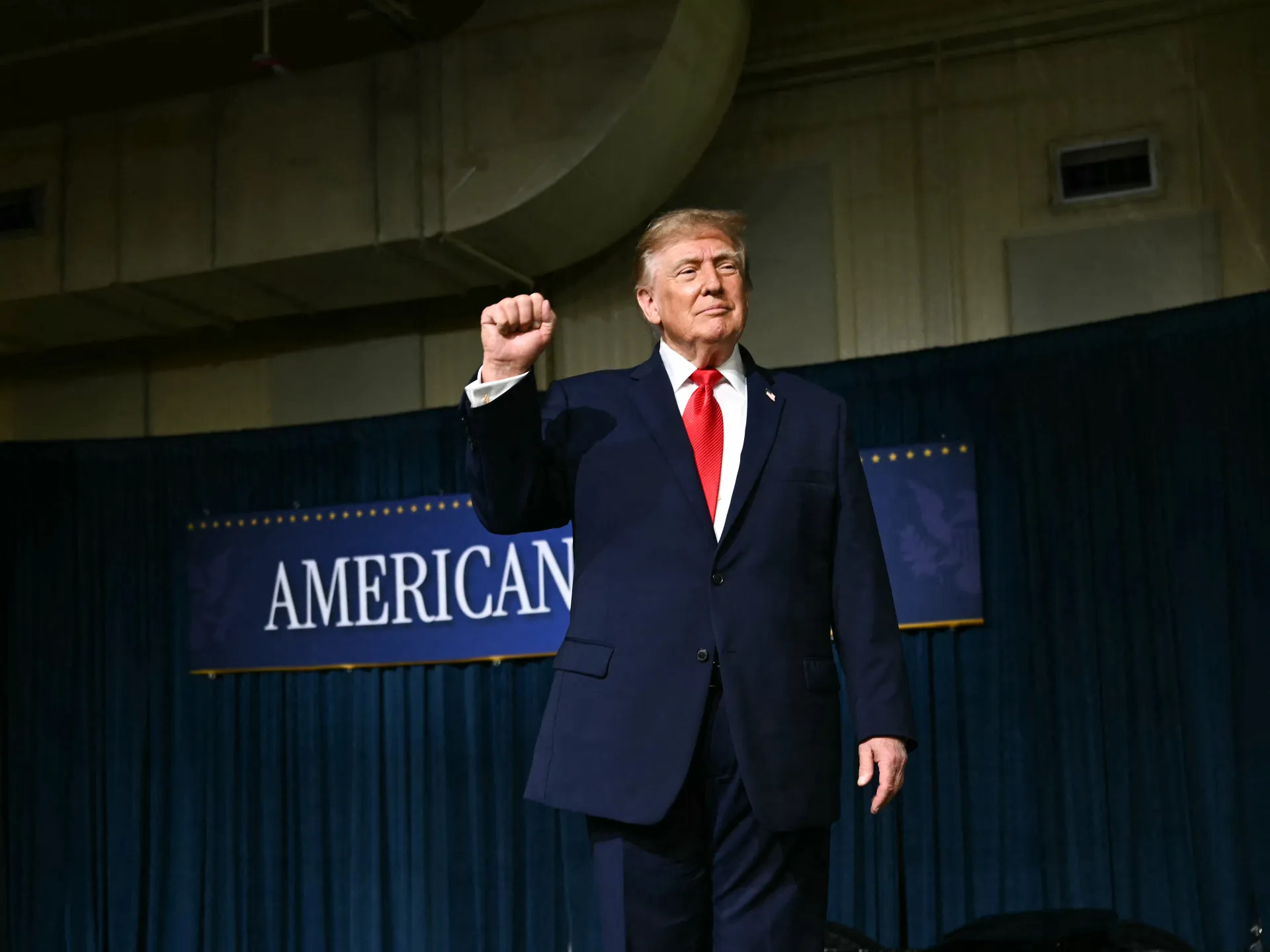
Trump is searching for an endgame to the Iran war

After two weeks of war with Iran, the Trump administration is being forced to temper its expectations of a swift end to the conflict, with U.S. intelligence and defense officials expressing doubt it can achieve the overthrow of Iran’s government and the destruction of its nuclear program through military means.

It was an outcome forewarned by analysts at the State Department, the CIA and the Pentagon, who together alerted the administration to the pitfalls full-scale war with Iran would bring before President Trump decided to proceed, two U.S. officials told The Times, granted anonymity to speak candidly.

Certain military goals of Operation Epic Fury laid out at the start of the war are still seen as achievable at the Pentagon, with U.S. and Israeli strikes making steady progress degrading Iran’s ballistic missile infrastructure, its drone program and its navy.

But a prewar U.S. intelligence assessment, that an air assault was unlikely to topple the Islamic Republic, still holds, with the intelligence community now casting doubt the assault had any more political effect than to radicalize a government already devoted to the destruction of Israel and harming the United States.

The casket of Ali Shamkhani, Iran's slain influential security adviser, proceeds during a military procession at his funeral

A military procession in Tehran carries the casket of Ali Shamkhani, political advisor to Iran’s last Supreme Leader Ayatollah Ali Khamenei, who was also killed in U.S.-Israeli attacks.

(Atta Kenare / AFP/Getty Images)

Concern has only grown that Iran’s new government will make the fateful strategic decision to build a bomb after the war, unless Trump decides to escalate the conflict with a perilous ground invasion. And the White House now contends with a new mission imperative, created by its decision to launch the war itself, of reopening the Strait of Hormuz to vital shipping traffic that carries 20% of the world’s daily oil and liquid natural gas supply.

The foreign policy strategy Trump publicly laid out as his playbook for the conflict — to come down hard on the government, decapitating its leadership, and hope the remnants would seek mercy — has not worked, with Tehran looking for new ways to expand the war and maximize pain for the U.S. administration.

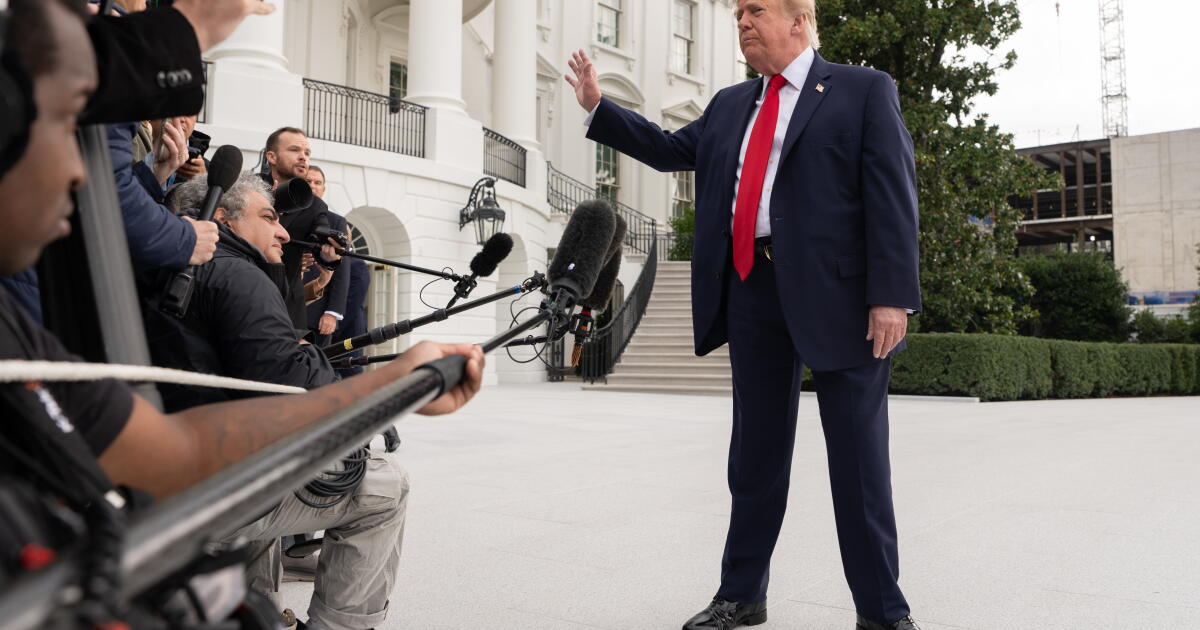
Trump has minimized the conflict as an “excursion” that would end “very soon,” while also calling it a war, vowing to take the time he needs to “finish the job.” He says it will conclude whenever he decides to end it.

It remains possible that a declaration from Trump that the fighting is over results in a ceasefire, as it did in June of last year, when Trump demanded an end to 12 days of war between Iran and Israel. But the Iranians have a vote, too — and senior leadership in the Islamic Republic have made plain they plan to continue fighting this time whether Trump likes it or not.

On Friday, the Pentagon announced that an additional expeditionary unit of 2,500 Marines was being deployed to the region to support the effort.

“Starting wars is an easy matter,” Ali Larijani, secretary of Iran’s Supreme National Security Council, wrote on social media. “Ending them does not happen with a few tweets.

“We will not leave you until you admit your mistake and pay its price,” he added.

It is a sore lesson for a president whose decade in public life has been distinguished by an exceptional ability to warp reality to his liking.

“The White House has created a dilemma for America: If it declares victory and ends the war, it leaves in place a weakened Iranian government with the means and renewed motivation to pursue nuclear weapons,” said Reid Pauly, a professor of nuclear security and policy at Brown University.

“If it presses on with the war,” Pauly added, “it risks the kind of mission creep that may eventually find American boots on the ground.”

In a news release last week, the White House said that, “from the opening hours of this historic campaign, the objectives were clear: obliterate Iran’s ballistic missile arsenal and production capacity, annihilate its navy, sever its support for terrorist proxies, and ensure the world’s leading state sponsor of terrorism will never acquire a nuclear weapon.”

Yet, at the start of the operation, Trump issued a promise to the people of Iran that, at the end of the U.S.-Israeli campaign, Iran’s military and paramilitary infrastructure would be so badly hobbled that a rare, generational opportunity would emerge for them to take their government back.

“To the great proud people of Iran, I say tonight that the hour of your freedom is at hand,” Trump said. “Stay sheltered. Don’t leave your home. It’s very dangerous outside. Bombs will be dropping everywhere. When we are finished, take over your government. It will be yours to take. This will be probably your only chance for generations.”

Trump said in the days that followed he would need to have a say over the next ruler, after assassinating the country’s longtime supreme leader, Ayatollah Ali Khamenei. But the Iranian system of clerics and militants defied the president, selecting in Khamenei’s son a man viewed as even more hostile to the West than his father was.

Israeli leadership, too, set out regime change as a goal of the war. Yet even their officials now say that a substantial leadership change in Tehran is an unlikely result.

Trump would go on to insist on the “unconditional surrender” from the Iranian government, a demand that he later said would be satisfied by the incapacitation of Iran’s military.

Repeating his conviction that the war will end soon, Trump told Fox News’ Brian Kilmeade in an interview Friday that he would order an end to the fighting “when I feel it. When I feel it in my bones.”

“The problem with the administration’s approach is that it has constantly shifted its goals. Some are achievable, such as degrading Iran’s conventional force. Others are not, such as picking the next leader of Iran,” said Ray Takeyh, a scholar on Iran at the Council on Foreign Relations.

“The mixed messages have led to confusion at home,” Takeyh added, “and lack of planning for oil shortages and getting the Americans out of the region shows that process and personnel can actually matter.”

Mark Dubowitz, CEO of the Foundation for Defense of Democracies, said the joint U.S.-Israeli campaign was always designed to unfold in three phases: degrading Iran’s ability to wage war, reducing Iran’s ability to repress democratic forces inside the country, and finally, encouraging the Iranian people to rise up.

“The president controls the strategy, but no president fully controls the endgame because the regime gets a vote,” Dubowitz said. “The endgame is not a scripted political transition directed from Washington. It is a regime under simultaneous military, economic, and internal pressure — to strip of its war-making and repression capabilities — and whether that produces succession, fracture, or collapse will ultimately be decided in Tehran.”

Whether the conflict will achieve the destruction of Iran’s nuclear program is an equally grave question in Washington, where officials are debating over a list of stark options on how to physically destroy, bury or retrieve the fissile material that Tehran could use to build a nuclear weapon — a threat seen as only more grave under the stewardship of an angry and vengeful government.

“The war was publicly justified, to the extent it was justified at all, in terms of destroying Iran’s nuclear program. Very few strikes have been directed against nuclear-related targets, however — almost certainly because those that survived last June’s attacks are invulnerable to air attack,” said James Acton, co‑director of the nuclear policy program at the Carnegie Endowment for International Peace.

“Unless the U.S. and Israel attempt high-risk special forces operations or a ground incursion,” he added, “Iran will end the war with its surviving nuclear infrastructure largely intact and greater incentives to build the bomb.”

Pauly agreed it is unrealistic to expect the United States and Israel can destroy Iran’s nuclear program through air power alone. The U.N. International Atomic Energy Agency believes Iran has roughly 440 kilograms — about 970 pounds — of 60% highly enriched uranium, possibly spread across multiple facilities.

“Securing this material will require either U.S. ground troops or, after some coercive bargain is reached, international inspectors,” Pauly said.

In an exchange with reporters last week at the Pentagon, Defense Secretary Pete Hegseth had few details to offer on what U.S. options were to remove or eliminate an accessible uranium stockpile, enriched to near weapons grade, that had been buried in a U.S. operation last year intended on obliterating the nuclear threat.

Diplomacy, he suggested, might be required to secure the material.

“I will say we have a range of options, up to and including Iran deciding that they will give those up,” he told reporters, “which of course we would welcome.”

Source link

Pakistan strikes Afghan base after its president warns ‘red line’ crossed | Conflict News

Islamabad hits Kandahar facility after Taliban drones strike civilian areas and military sites as conflict intensifies.

Pakistan has carried out strikes on an Afghan military facility in Kandahar after Taliban drones targeted civilian areas and military installations across the country.

The strikes on Saturday came after Pakistani President Asif Ali Zardari condemned the overnight drone attacks, warning Kabul it had “crossed a red line by attempting to target our civilians”.

Recommended Stories

list of 3 itemsend of list

Pakistan’s military said the drones, described as locally produced and rudimentary, were intercepted before reaching their targets, though falling debris wounded two children in Quetta and civilians in Kohat and Rawalpindi.

A security source told the AFP news agency that airspace around the capital, Islamabad, had been temporarily closed when the drones were detected.

Islamabad said the Kandahar facility had been used both to launch the drone attacks and as a base for cross-border rebel activity.

The exchange marks the sharpest single escalation yet in a conflict that has been building since late February, when Pakistan launched military operations against what it said were Pakistan Taliban fighters sheltering on Afghan soil.

Islamabad also accuses Kabul of harbouring fighters from the ISIL (ISIS) group’s Khorasan province affiliate.

The Taliban government has denied both charges.

The drone attacks followed Pakistani strikes on Kabul and eastern border provinces in Afghanistan overnight on Thursday into Friday. The Pakistani attacks killed four people in the capital, women and children among them, and two more in the east.

In the Pul-e-Charkhi neighbourhood of Kabul, one resident described being buried under rubble after his home was hit, saying he lay there believing it was his “last breath” before neighbours pulled him free.

A local representative told AFP that those killed were “ordinary people, poor people” with no involvement in the conflict.

Pakistani aircraft also struck a fuel depot belonging to the private airline Kam Air near Kandahar airport, which an airport official said supplied aid organisations, including the United Nations and the International Committee of the Red Cross.

The official added that there were “no military installations” at the site.

Afghanistan’s Ministry of Defence claimed that its forces had captured a Pakistani border post and killed 14 soldiers.

Islamabad dismissed the assertion as baseless, with the prime minister’s spokesman accusing the Taliban of “weaving fantasies” rather than dismantling rebel networks on Afghan territory.

The UN mission in Afghanistan says at least 75 civilians have been killed and 193 injured since hostilities intensified on February 26, a toll that includes 24 children.

According to the UN refugee agency, about 115,000 people have been forced from their homes.

The crisis is unfolding as the wider region remains engulfed by the US-Israeli war with Iran, which began just two days after the Pakistan-Afghanistan clashes escalated.

Chinese Minister of Foreign Affairs Wang Yi has urged both sides to pursue dialogue, warning that further force would only deepen the crisis, though his appeal came as Pakistani jets were already in the air over Kandahar.

Source link

Trump says we need a government shutdown. Here’s what’s happened in the past

It’s a political gambit that President Trump seems to think will pay off: Let the federal government grind to a halt.

“Our country needs a good ‘shutdown’ in September to fix mess,” he tweeted last week.

The unconventional proclamation from the unconventional president raised concern from both sides of the aisle.

His comments came as lawmakers agreed to a $1-trillion bipartisan budget bill that funds the federal government through September, which means another battle and potential government shutdown looms this fall.

Under a shutdown, thousands of federal employees would go without pay and national parks would close, among other things. In short: It will upset a lot of people.

Here’s a look at the key players and fallout from recent government shutdowns.


October 2013

How it happened

It’s simple — the battle over healthcare closed the government.

That year, House Republicans, angered by President Obama’s Affordable Care Act, repeatedly offered resolutions during budget negotiations that would have defunded the healthcare law. These resolutions were rejected by the Democratic-controlled Senate, which led to a budget impasse.

The government shut down for more than two weeks after Congress was unable to agree on a budget for the new fiscal year, leaving nearly 800,000 federal employees out of work without pay.

On the political front, the ramifications went both ways.

Members of the bipartisan budget conference Sen. Jeff Sessions (R-Ala.), Rep. Paul D. Ryan (R-Wis.), Sen. Patty Murray (D-Wash.) and Rep. Chris Van Hollen (D-Md.) speak to the media the day after Congress voted to ending a 16-day government shutdown. (Win McNamee / Getty Images)

Members of the bipartisan budget conference Sen. Jeff Sessions (R-Ala.), Rep. Paul D. Ryan (R-Wis.), Sen. Patty Murray (D-Wash.) and Rep. Chris Van Hollen (D-Md.) speak to the media the day after Congress voted to ending a 16-day government shutdown. (Win McNamee / Getty Images)

(Win McNamee / Getty Images)

Winners

Sen. Harry Reid (D-Nev.)

WASHINGTON, DC - OCTOBER 16: U.S. Senate Majority Leader Sen. Harry Reid (D-NV) (2nd L) speaks as Majority Whip Sen. Richard Durbin (D-IL) (R), Sen. Charles Schumer (D-NY) (L), and Sen. Patty Murray (D-WA) (3rd L) listen during a news conference after a vote October 16, 2013 on Capitol Hill in Washington, DC. On the 16th day of a government shutdown, the Senate has approved a bill to reopen the government until January 15 and raise the nation's debt ceiling until February 7, 2014. (Photo by Alex Wong/Getty Images) ORG XMIT: 185146633 ** OUTS - ELSENT, FPG, TCN - OUTS * NM, PH, VA if sourced by CT, LA or MoD **

(Alex Wong / Getty Images)

The then-Senate majority leader was a vocal Democratic critic of Republican-led efforts to defund President Obama’s healthcare bill. He relentlessly castigated Republicans for their tactics to defund Obamacare, which ultimately led to the shutdown.

“You know with a bully you cannot let them slap you around, because they slap you around today, they slap you five or six times tomorrow. We are not going to be bullied,” Reid told reporters.

In the end, Reid came out of the shutdown with a bolstered reputation as a fighter of Democratic causes and earned plaudits from Obama.

Obamacare

(Gary Friedman/Los Angeles Times)

At the time, the botched rollout of the healthcare law drew daily headlines. Web sites for healthcare exchanges didn’t work and the administration had few answers. Still, the healthcare law was able to remain intact and public scorn focused on Republicans as the government remained shuttered for 16 days and federal employees nationwide stayed home. Republicans thought their efforts would prove fruitful.

Sen. John McCain (R-Ariz.)

WASHINGTON, DC - MARCH 19: U.S. Sen. John McCain (R-AZ), talks with reporters on his way to the weekly Senate Republicans policy luncheon on March 19, 2013 in Washington, DC. The Senate is expected to pass a revised continuing resolution and send their edits back to the House in order to prevent a government shutdown next week, but any action in the Senate may be delayed until later in the week. (Photo by T.J. Kirkpatrick/Getty Images) ORG XMIT: 164200606

(T.J. Kirkpatrick / Getty Images)

In the months and weeks leading to the shutdown, McCain served as a voice of reason for the Republicans. He insisted that it would be unwise for the party to allow a shutdown over Obamacare.

“I campaigned in 2012 all over this country for months: ‘Repeal and replace Obamacare.’ That was not the mandate of the voters. If they wanted to repeal Obamacare, the 2012 election would have been probably significantly different,” he said at the time.

Ultimately, his efforts faltered as Republicans charged ahead with efforts to defund Obamacare and the government shutdown.

Losers

House Speaker John A. Boehner (R-Ohio)

WASHINGTON, DC - OCTOBER 16: U.S. Speaker of the House Rep. John Boehner (R-OH) walks to the House Chamber for a vote October 16, 2013 on Capitol Hill in Washington, DC. On the 16th day of a government shutdown, the House has passed a bill to reopen the government until January 15 and raise the nation's debt ceiling until February 7, 2014. (Photo by Alex Wong/Getty Images) ORG XMIT: 185146633

(Alex Wong / Getty Images)

He failed to rein in the most conservative grassroots wing of his party. Boehner was the middle man of sorts in negotiations between Democrats, moderate Republicans and conservative activists. Two years later, he resigned because of the strong opposition he faced from the Republican caucus.

Sen. Ted Cruz (R-Texas)

WASHINGTON, DC - OCTOBER 16: Sen. Ted Cruz (R-TX) answers questions from the media after meeting with Republican senators regarding a bipartisan solution for the pending budget and debt limit impasse at the U.S. Capitol October 16, 2013 in Washington, DC. The Senate announced that it had reached a bipartisan deal on funding the federal government and the extending the nation's debt limit after 16 days of a government shutdown. (Photo by Andrew Burton/Getty Images) ORG XMIT: 185146633 ** OUTS - ELSENT, FPG, TCN - OUTS * NM, PH, VA if sourced by CT, LA or MoD **

(Andrew Burton / Getty Images)

While Cruz raised his national profile as a staunch critic of Obamacare, he also made a lot of enemies. Weeks before the shutdown he delivered a 21-hour talkathon on the Senate floor, assailing the health care law — a move that drew scorn from Democrats and Republicans alike. Cruz’s vocal opposition to the law helped establish him as a force within the GOP grassroots and set him up for a presidential run in 2016.

Debbie Wasserman Schultz (D-Fla.)

(Carolyn Kaster / Associated Press)

(Carolyn Kaster / Associated Press)

(Carolyn Kaster / AP)

Public opinion polls consistently showed that Republicans were blamed for the government shutdown. Even so, the former Democratic National Committee chairwoman was unable to turn that into victory in the 2014 midterm. Many Democrats fault her leadership as a factor in the party’s sweeping losses in the midterm election.


November/ December 1995 and January 1996

How it happened

This battle over funding Medicare, public education and environmental initiatives pitted President Clinton against Republican House Speaker Newt Gingrich. It turned into the longest government shutdown in the country’s history. The shutdown came in two phases, with government services being shuttered from Nov. 14-19, 1995; then from Dec. 16 until Jan. 6, 1996. In total, the government closed for 27 days.

President Clinton and bipartisan leaders meet at the White House on Dec. 30, 1995, for talks on the federal budget. (Greg Gibson / Associated Press)

President Clinton and bipartisan leaders meet at the White House on Dec. 30, 1995, for talks on the federal budget. (Greg Gibson / Associated Press)

(GREG GIBSON / AP)

Winner

President Clinton

(Marcy Nighswander / Associated Press)

(Marcy Nighswander / Associated Press)

(Marcy Nighswander / AP)

He stood firm in his battle with the Republican-controlled Congress. Clinton wanted a budget that increased expenditures on, among other things, Medicare and public education, but Republicans wanted to slow government spending. This led to months of negotiations — the government closing, opening, then closing again — and through it all, Clinton’s public approval ratings dipped only slightly. He easily won reelection in November 1996.

Loser

House Speaker Newt Gingrich (R-Ga.)

(J. Scott Applewhite / Associated Press)

(J. Scott Applewhite / Associated Press)

(J.SCOTT APPLEWHITE / AP)

After sweeping gains in the 1994 midterm election, Republicans were emboldened and ready for a showdown.

“He can run the parts of the government that are left, or he can run no government,” Gingrich told reporters weeks before the first shutdown. “Which of the two of us do you think worries more about the government not showing up?”

News reports at the time also noted that Gingrich was open to a shutdown after Clinton made him exit the rear of Air Force One after the two attended the funeral of slain Israeli leader Yitzhak Rabin. The comments made the Republican leader appear petty. In the end, after weeks of a shutdown, Republicans ultimately conceded to Clinton and Democrats.


May 2017

What’s happening now

Last week Congress passed a $1-trillion budget that funds the federal government through September. However, the budget bill does not allocate funds for Trump’s much-promised border wall. It’s the first bipartisan piece of legislation of the Trump presidency and funding for his signature proposal is nowhere to be found. The bill, however, does have funding for border security and increases to defense spending — both of which were touted as wins by the Trump administration.

Senate Majority Leader Mitch McConnell (R-Ky.), flanked by Sen. Cory Gardner (R-Colo.), Sen. John Barrasso (R-Wyo.) and Sen. John Thune (R-S.D.), speaks to the media about the recent spending bill that averted a government shutdown. (Aaron P. Bernstein / Getty Images)

Senate Majority Leader Mitch McConnell (R-Ky.), flanked by Sen. Cory Gardner (R-Colo.), Sen. John Barrasso (R-Wyo.) and Sen. John Thune (R-S.D.), speaks to the media about the recent spending bill that averted a government shutdown. (Aaron P. Bernstein / Getty Images)

(Aaron P. Bernstein / Getty Images)

Key players

President Trump

It’s clear Trump does not like to lose and does not like bad headlines. By all accounts, Trump and his policies did not come out on top in the budget deal.

Trump blamed the Senate rules, which require 60 votes to pass most legislation, for the exclusion of key priorities from the spending bill.

This has in turn led some conservatives to push for Trump to support a government shutdown if Congress does not heed his policies this fall. Trump has always trusted his gut instinct in politics — so far it’s seemed to benefit him — and his comments will be closely watched this fall.

House Speaker Paul D. Ryan (R-Wis.)

FILE - In this April 4, 2017 file photo, House Speaker Paul Ryan of Wis. pauses during a news conference on Capitol Hill in Washington to talk about the failed health care bill. From cancer to addiction, doctors and patient groups are warning that the latest Republican health care bill would gut hard-won protections for people with pre-existing medical conditions. Some GOP moderates who may seal the legislation’s fate are echoing those concerns. (AP Photo/J. Scott Applewhite, File)

(J. Scott Applewhite / Associated Press)

He’s often had to stake out a position when Trump tweets. Indeed, this time was no different. Ryan alluded to Trump’s qualms with Senate rules.

“Look, we’ve got a long ways to go between now and September, but I share the president’s frustration,” Ryan told reporters. “What a lot of people in America don’t realize is appropriations bills, they take 60 votes to pass. They can be filibustered. So, all appropriations bills therefore have to be bipartisan because Democrats can always filibuster an appropriations bill. Having said all that, I feel very good about the wins that we got with the administration in this bill.”

Senate Minority Leader Charles E. Schumer (D-N.Y.)

Senate Minority Leader Chuck Schumer of N.Y. speaks with reporters about his opposition to Supreme Court nominee Neil Gorsuch on March 21, 2107, on Capitol Hill.

(J. Scott Applewhite / Associated Press)

He’s Trump’s chief critic in Congress and warned the president that a government shutdown is not wise.

“The president’s threat to shut down the government in September is just a very, very bad idea because it would hurt so many average folks,” Schumer said recently. “I strongly urge my colleagues, and they have already … said they have no desire to shut down the government. That is not the way to govern. That is not the way to come up with bipartisan compromise.”

Voters

Public opinion is not on Trump’s side when it comes to talk about a government shutdown.

In a Politico/Morning Consult poll released in April, 65% of voters said that Congress should “take all necessary steps to avoid a government shutdown.”

Other polls show similar disapproval among voters toward a government shutdown.

kurtis.lee@latimes.com

Twitter: @kurtisalee


Source link

Republic of Congo election: Who is running and what’s at stake? | Elections News

Voters in the Republic of Congo will choose their next president on Sunday, although longtime leader Dennis Sassou Nguesso is likely to be elected unchallenged, analysts say.

The central African nation, which has been led almost continuously by Nguesso for more than 40 years, is one of the most politically repressive in the world, with Freedom House giving it a 17 out of 100 rating for freedom.

Recommended Stories

list of 4 itemsend of list

The country is Africa’s third-largest oil exporter. It sells between 236,000 and 252,000 barrels per day, alongside copper and diamonds.

Congo is also highly biodiverse. Sprawling expanses of tropical rainforest in the country form part of the Congo Basin – the second-largest rainforest network in the world after the Amazon. The Nouabale-Ndoki National Park in the north is a UNESCO World Heritage site and is home to elephants, endangered lowland gorillas, and chimpanzees.

Still, the country of 6 million people is racked by economic woes. Corruption and mismanagement, analysts say, contribute to Congo being 171st of 193 countries on the United Nations Human Development Index.

A fractured political opposition, meanwhile, has only allowed Nguesso’s governing Congolese Labour Party (PCT) to consolidate power over the years, although a newcomer is raising hopes.

Here’s what we know about Sunday’s polls:

Nguesso supporters
Supporters of outgoing President Denis Sassou Nguesso, who is running for re-election, take part in a campaign rally before the March 15 presidential election, in Brazzaville, Republic of Congo, March 7, 2026 [Roch Bouka/Reuters]

When do polls open?

Polls will open on Saturday, March 15, between 6am (05:00 GMT) and 6pm (05:00 GMT). More than 2.6 million people are eligible to vote; that is, they are more than 18 years old and have been registered.

Voter turnout in 2021 — during the last election — was 67.70 percent according to the International Foundation for Electoral Systems (IFES). Authorities have announced that borders will be closed during voting.

Candidates with an absolute majority usually win the elections, or in rare cases, a run-off will be called between the two top polling candidates.

Presidential terms in Congo are for five years. While the constitution had previously allowed a maximum of two terms and an age limit of 70, those were removed in 2015.

Nguesso
France’s President Emmanuel Macron speaks with President of Congo Denis Sassou Nguesso during the signing of a letter of intent by Denis Christel Sassou Nguesso, Congolese minister of international cooperation and promotion of partnership, and France’s Delegate Minister for Francophonie and International Partnerships Thani Mohamed Soilihi at The Elysee Presidential Palace in Paris on May 23, 2025 [File: Thomas Samson/Reuters]

Who’s running?

Dennis Sassou Nguesso: The 82-year-old was first elected to office in 1979 and led the country for 12 years under a one-party state. He lost elections after opposition lawmakers voted to introduce a multiparty system. On his second attempt in 1997, he seized power in a bloody civil war and has remained in office since. He is Africa’s third-longest serving ruler.

Nguesso’s legacy has been one of gross underdevelopment and corruption, said Andrea Ngombet, the exiled founder of Sassoufit, a group advocating for Nguesso’s exit. In 2015, Nguesso pushed through a controversial referendum that reset presidential term limits from two to three. It also completely removed age restrictions, allowing him to run for the fifth consecutive time in 2021.

A strong hold on the country’s judiciary and the Independent National Electoral Body (CENI) has helped secure Nguesso’s hold, analysts say. His strategic international alliances, from Beijing to Moscow to Paris, have ensured foreign investments and boosted his influence, according to Ngombet. However, since 2013, France has launched investigations into his family’s numerous assets in Europe and the US under pressure from civil society. French authorities seized property belonging to his son, Denis-Christel Sassou Nguesso, in 2022.

Melaine Deston Gavet Elengo: At only 35, Elengo’s candidacy has caused ripples. The oil sector engineer leads the Republican Movement and is the youngest contender in the race. Although a first-time presidential candidate, Elengo appears to be pulling an unusual amount of interest as he presents himself as a departure from the old system. His campaign has emphasised a government built on transparency, an independent justice system, and inclusive development.

“He could secure at least 20 percent of the vote, signalling a generational shift,” Ngombet said.

“His unique advantage lies in the unspoken support from UPADS dissidents frustrated with the boycott,” he added, referring to the opposition party, Pan-African Union for Social Democracy (UPADS), which boycotted the March 21, 2021, presidential election over concerns of integrity. UPADS is doing the same this year but has called on its supporters to go out and vote according to their “conscience”.

Elengo is also closely allied with political heavyweights like the opposition Union of Humanist Democrats, founded by the popular opposition figure, late Guy-Brice Parfait Kolelas, who came second in 2016.

Congo
A man walks past a campaign banner of presidential candidate Destin Gavet, before the presidential election scheduled for March 15, in Brazzaville, Republic of Congo, March 11, 2026 [Roch Bouka/Reuters]

Joseph Kignoumbi Kia Mboungou, 73: The veteran lawmaker is the leader of the political party The Chain and represents the southwestern Lekoumou department. He has run several times in the past without much success, with his 2021 bid resulting in just 0.62 percent of the vote. Mboungou’s campaign promised political change and an economy that diversifies from oil, while reducing poverty.

Uphrem Dave Mafoula, 43: The economist is leader of the New Start party. He is making his second bid for the top post after running as the youngest candidate in 2021 and securing just 0.52 percent of the vote. Mafoula’s goal, he says, is to implement governance reforms, create jobs, and reduce inequalities.

Vivien Romain Manangou, 43: The independent first-timer is a university lecturer campaigning on institutional reforms, improving public finances, and promoting national unity.

Mabio Mavoungou Zinga, 69: Running under the opposition coalition Alliance party, the retired customs inspector and former member of parliament promises to tackle corruption and free jailed opposition leaders. It’s his first bid.

Anguios Nganguia Engambe, about 60: The president of the Party for Action of the Republic is running for his fourth time as presidential candidate. In 2021, he won only 0.18 percent of the vote. This time, he has pledged to bridge political divisions in the country and foster better political participation.

Which opposition leaders have been targeted?

Several opposition leaders are either jailed or have fled into exile. Some are:

Jean-Marie ⁠Michel Mokoko,78: A former chief of the army and an adviser to Nguesso, who turned against the president and ran for elections in 2016. He called for protests after the results showed that he won 13.74 percent and placed third. He was arrested afterwards on charges of undermining state security and was in 2018 sentenced to 20 years in prison.

Andre Okombi Salissa: a one-time leading member of the governing Congolese Labour Party, and a former minister, Salissa also switched to the opposition in 2016 to contest the polls. He was arrested shortly after, also on security charges. In 2019, he was sentenced to 20 years of hard labour.

What are the key issues?

Poverty despite oil riches

Analysts have long warned that a lack of economic diversification hurts the country’s prospects. As Africa’s third-largest oil producer, Congo earns more than 80 percent of its export revenue from oil, according to the World Bank,  making the economy vulnerable to shocks.

Government investment in hydrocarbons has only intensified in recent years. In 2015, authorities aimed to boost daily output to 500,000 barrels of oil per day within three years. Liquefied natural gas (LNG) production and export also began in 2024.

Despite this, around half the population lives below the poverty line. Most live in the main cities of Brazzaville and Pointe-Noire where access to electricity and roads is available but dismal. The situation is even worse in rural areas, analysts say.

While the population is young, with nearly half under 18, job creation is weak. Many young people with degrees have to turn to menial work for survival. The unemployment rate hovers at approximately 40 percent, with inadequate electricity being one of the major barriers for business, according to the World Bank.

Forests and agriculture

Before it began extracting oil in the 1970s, agricultural produce and timber were the biggest revenue generators in Congo.

However, Congo has become reliant on food imports amid the shift to oil.

Although the country has up to 10 million hectares (24 milllion acres) of arable land, only a small percentage is being cultivated, and that’s mostly for low-yield subsistence farming.

The government has touted plans to boost cassava, maize, sorghum, and soy farming, along with developing fisheries and poultry.

Meanwhile, deforestation in the Congo Basin, which encompasses parts of Congo and five neighbouring countries, nearly doubled between 2010 and 2020, compared to the previous decade.

Political freedom and post-Nguesso race

Protests are rare in the country as authorities don’t provide permits and respond with violence when demonstrators gather, according to the Africa Center for Strategic Studies.

Opposition members are routinely jailed. Nguesso appoints national judges himself, meaning the judiciary is not independent.

Many Congolese expect Nguesso to win Sunday’s elections, so much attention is now on who will likely take over leadership in the country in the coming years.

Analysts say an intense succession race is already brewing behind the scenes.

Denis-Christel Nguesso, the president’s son and minister of international cooperation, is the clear favourite, but he faces challenges from the president’s nephew and Head of National Security Jean-Dominique Okemba.

The Nguessos’ cousin, Jean-Jacques Bouya, who is currently the minister of planning and works, is another contender.

Source link

Brazil pulls visa of Trump adviser who asked to visit Bolsonaro in prison | Politics News

Brazilian President Luiz Inacio Lula da Silva says Darren Beattie was ‘prohibited from visiting’ Bolsonaro in prison.

The government of Brazil has revoked the visa of Darren Beattie, a far-right adviser to United States President Donald Trump who had planned to visit ex-President Jair Bolsonaro in his prison cell in Brasilia.

Brazilian President Luiz Inacio Lula da Silva confirmed on Friday that Beattie’s visa has been pulled. He equated it to the US pulling visas from Brazilian officials in Washington, DC.

Recommended Stories

list of 3 itemsend of list

Among them was Brazilian Health Minister Alexandre Padilha, whose US visa was revoked last year.

“That American guy who said he was coming here to visit Jair Bolsonaro was prohibited from visiting, and I forbade him from coming to Brazil until they release the visa for my health minister,” Lula said during an event in Rio de Janeiro.

Separately, Brazilian officials told news services, including the AFP, that Beattie had lied about the purpose of the visit on his visa request.

Bolsonaro is a far-right ally of President Trump, and he is currently serving a 27-year sentence for his role in a coup plot after Brazil’s 2022 election.

Friday’s decision shows the continued tension between the Brazilian and US governments, even as Trump and Lula have enjoyed warming relations.

Last August, Trump placed Brazil under heavy tariffs — some of the highest in the world — in protest against Bolsonaro’s prosecution. He demanded that the country’s legal system drop the case against Bolsonaro and accused Brazil of persecuting right-wing voices.

After Trump met Lula at the United Nations General Assembly in September and again at a summit for the Association of Southeast Asian Nations (ASEAN) in October, relations between the two leaders improved.

Lula also reached out by telephone in October in a bid to ease the cumulative 50-percent tariffs on certain Brazilian products. On November 20, Trump responded by issuing an executive order “modifying the scope of tariffs” on Brazilian exports like beef and coffee.

But speculation has remained high that Trump could again intervene in the country’s domestic politics to boost the prospects of the Brazilian right.

Brazil is set to hold a new presidential election in October, where Lula is facing off against Bolsonaro’s eldest son, Flavio.

Lawyers for the imprisoned Bolsonaro had asked the Brazilian Supreme Court to approve a visitation request from Beattie this week, but the court rejected that request on Thursday.

Beattie, a strong critic of Lula’s government, was fired during Trump’s first term in office following reports that he had attended a white nationalist conference.

Bolsonaro, meanwhile, was placed in intensive care on Friday, with hospital officials saying the 70-year-old had a “high fever, a drop in oxygen saturation, sweating and chills” linked to pneumonia.

Source link

Cuba confirms it’s begun talks with U.S. over ‘bilateral differences’

Cuba has begun direct talks with the United States in an effort to solve “bilateral differences” between the two countries, Cuban President Miguel Díaz Canel said Friday.

The comments, broadcast nationwide in Cuba, are the first confirmation of bilateral talks between two governments that have been fierce adversaries for almost 70 years, since Fidel Castro’s revolution toppled the U.S.-backed dictator Fulgencio Batista.

What exactly the talks are about remains unclear, but the Trump administration—which has choked off oil supplies to the island, triggering a severe energy crisis—has been insisting that Cuba’s communist government must change.

In a statement released on social media, Díaz Canel said, “The primary purpose of this conversation is, firstly, to identify the bilateral problems that require a solution—based on their severity and impact—and, secondly, to find solutions for these identified problems.”

Rumors of direct talks between the two nations have been circulating for months, but neither Washington or Havana had confirmed the talks until now.

On Tuesday, the Cuban ambassador to the United States, Lianys Torres Rivera, told The Times that the Cuban government was “ready to engage with the U.S. on the issues that are important for the bilateral relations, and to talk about those in which we have differences.”

Trump and Secretary of State Marco Rubio, the son of Cuban immigrants, have been insistent that the current government must change.

“It may be a friendly takeover, it may not be a friendly takeover,” Trump told Latin American leaders gathered in Florida on Saturday.

“It wouldn’t matter because they’re down to, as they say, fumes. They have no energy. They have no money. They’re in deep trouble,” Trump said.

Trump responded to the Cuban leader’s willingness to negotiate on Friday morning by amplifying a news article with the headline:”Cuba confirms talks with Trump officials, raising hopes for US deal.” He posted that on his Truth Social account.

Rolling blackouts, shortages of food and medicine, a lack of gasoline and other shortfalls have become everyday occurrences on the island, home to 10 million. Images of uncollected garbage rotting on Havana’s streets have been broadcast across the globe. A lack of jet fuel has bludgeoned the critical tourism sector.

“The status quo is unsustainable,” Rubio said last month. “Cuba needs to change…And it doesn’t have to be change all at once. It doesn’t have to change from one day to the next.”

The Cuban announcement comes 13 days after the U.S. attacked Iran and two months after U.S. forces, deployed by Trump, deposed Venezuelan President Nicolás Maduro, a longtime Cuban ally, and brought him to New York to face drug trafficking charges.

Source link

UN fact-finding mission warns of continued human rights abuses in Venezuela | Human Rights News

A United Nations fact-finding mission has concluded that “there are no indicators of structural reforms or change” to improve the human rights situation in Venezuela, despite the removal of its leader in January.

On Thursday, a member of the fact-finding mission, Maria Eloisa Quintero, delivered remarks (PDF) to the UN Human Rights Council questioning whether Venezuela’s leadership would face accountability for its record of human rights abuses.

Recommended Stories

list of 3 itemsend of list

She also pointed to ongoing abuses under the government of interim President Delcy Rodriguez, who was sworn into office on January 5.

“Civic and democratic space remains severely restricted. Civil society organizations, the few remaining independent media outlets, and political actors continue to face attacks, harassment or intimidation,” Quintero wrote in her statement.

“The prospects for full guarantees necessary for free and democratic elections remain remote.”

All told, the fact-finding mission found that at least 87 people have been detained since January.

Fourteen of them were journalists who were temporarily taken into custody while covering Rodriguez’s inauguration, and another 27 were reportedly arrested for celebrating the fall of Rodriguez’s predecessor, Nicolas Maduro.

The fact-finding mission revealed that at least 15 of the recent arrests involved children.

A violation of international law

Its report was one of the first international assessments of human rights under Rodriguez’s nascent presidency.

She took office after the United States launched a military operation in the early morning hours of January 3 to abduct Venezuela’s then-President Maduro. Previously, Rodriguez had served as Maduro’s vice president.

Maduro and his wife Cilia Flores currently remain imprisoned in New York, where they face charges of drug trafficking and weapons possession.

The US has backed Rodriguez’s ascent to the presidency. Both her government and that of US President Donald Trump have said there is no immediate plan to hold a new election in Venezuela, citing the need for stability.

Quintero emphasised that it was the view of the fact-finding mission that the US operation “violated international law”, echoing the legal consensus.

“While the Mission has reasonable grounds to believe that Nicolas Maduro is responsible for crimes against humanity committed against the civilian population, this does not justify an unlawful military intervention,” Quintero wrote.

Her remarks also pointed out that, while Maduro may be gone, the rest of his government remains.

That government has faced repeated accusations that it perpetrated violence against members of Venezuela’s political opposition and others deemed critical of the country’s socialist leadership.

“The legal instruments that have long served as a basis for political persecution remain fully in force,” Quintero said.

“State institutions that played a key role in the repression — and which have been identified in previous Mission reports — have not been reviewed or reformed.”

Human rights groups have collected thousands of reports of arbitrary detention, as well as torture and extrajudicial killings, under Maduro, who served as president from 2013 until January.

Members of Venezuela’s opposition have also called for the removal of the existing government, which they say fraudulently claimed victory in the 2024 presidential race, despite vote tallies indicating otherwise.

Limits to ‘positive’ steps

At first, Quintero said the fact-finding mission found that developments under Rodriguez “initially appeared encouraging”.

She pointed to “positive” steps like the release of political prisoners and passage of an amnesty law that would lift criminal penalties for dissidents facing certain criminal charges.

But the benefits of those steps, she said, were mitigated by irregularities. The amnesty law was narrow in scope — only addressing certain accusations, made within a specific time range — and the bill never received a full, public reading.

Meanwhile, the government has claimed to release more political prisoners than has actually been verified by local human rights groups.

Quintero added that the fact-finding mission also found that 30 officials from Venezuela’s Scientific, Criminal and Forensic Investigations Corps (CICPC) — part of the national police agency — were detained for failing to produce false evidence about the US’s attack on January 3.

Their family members, she indicated, also faced government retaliation. The fact-finding mission called for more changes to be made to address the continued human rights abuses.

“A far deeper and more enduring transformation is required so that the population can trust that the long years of repression and violence have truly come to an end,” Quintero wrote.

Instead, she warned that the existing “machinery” of repression is simply “mutating” to adapt to the new reality in Venezuela, post-Maduro.

Source link

Advocates push for major probe as US boat strikes in Latin America kill 157 | Donald Trump News

Washington, DC – In September, the United States began launching dozens of deadly military strikes against alleged drug-smuggling boats in the Caribbean Sea and eastern Pacific.

Nearly half a year later, remarkably little is known about the strikes. The identities of the nearly 157 people killed have not been released. Any purported evidence against them has not been made public.

Recommended Stories

list of 3 itemsend of list

But a group of United Nations and international law experts are hoping to change that on Friday, when they testify at the Inter-American Commission on Human Rights (IACHR).

The international hearing will be the first of its kind since the strikes began on September 2, and rights advocates hope it can help lead to accountability as individual legal cases related to the strikes proceed.

Steven Watt, a senior staff lawyer with the American Civil Liberties Union’s human rights programme, said the goal of the hearing will be threefold.

“Our ask will be to conduct a fact-finding investigation into what’s going on,” Watt said.

The second aim, he continued, would be “to assert or to arrive at a conclusion that there is no armed conflict here”, in what would be a rebuke to US President Donald Trump’s previous claims.

Finally, Watt said, he hopes the proceedings will yield long-sought transparency from the Trump administration on “whether or not they have a legal justification for these boat strikes”.

“We don’t think there are any,” Watt added.

‘We don’t know the names’

The experts set to testify at Friday’s hearing said the IACHR has a unique mandate to uncover the truth behind the US strikes.

The commission, based in Guatemala City, Guatemala, is an independent investigative body within the Organization of American States, of which the US was a founding member in 1948.

While the Trump administration has claimed it has a right to carry out the deadly attacks as part of a wider military offensive against so-called “narco-terrorists”, rights groups have decried the campaign as a series of extrajudicial killings.

They argue that Trump’s deadly tactics deny those targeted of anything that approaches due process.

Legal experts have also dismissed Trump’s claims that suspects in drug-related crimes are equivalent to “unlawful combatants” in an “armed conflict”.

Few details have emerged from the air strikes. Several families have come forward, however, to informally identify the dead as their loved ones.

Victims are said to include 26-year-old Chad Joseph and 41-year-old Rishi Samaroo, who were sailing home to Trinidad and Tobago when they were killed in October, according to relatives.

A complaint filed against the US government said both men travelled often between the islands and Venezuela, where Joseph found work as a farmer and fisherman, and Samaroo laboured on a farm.

The family of Colombian national Alejandro Carranza, 42, have also said he was killed in September when the US military attacked his fishing boat off the country’s coast.

The US has yet to confirm the victims’ identities, and only two survivors have ever been rescued in the 45 reported strikes.

A clearer picture of what happened will be a significant step towards accountability, according to experts like Watt.

“[The IACHR] is uniquely positioned to identify who all these persons are,” Watt said. “We just know the numbers from the United States. We don’t know the names or the backgrounds of these people.”

The IACHR has launched a range of human rights investigations in recent decades, including probes into the 2014 mass kidnapping of 43 students in Iguala, Mexico, and a series of murders in Colombia from 1988 to 1991 dubbed the Massacre of Trujillo.

The commission has also examined US policies, including extrajudicial detentions at Guantanamo Bay, Cuba, during its so-called “global war on terror”.

The IACHR has the power to seek resolutions to human rights complaints or refer them for litigation before the Inter-American Court of Human Rights.

Just last week, the court ordered Peru to pay reparations to the family of a woman who died during a government-led forced sterilisation campaign in the 1990s.

The Carranza family has filed its own complaint to the IACHR, and the families of Joseph and Samaroo have also lodged a lawsuit against the US in a federal court in Massachusetts.

Angelo Guisado, a senior staff lawyer at the Center for Constitutional Rights (CCR), said a fuller accounting of the US actions is needed to prevent future abuses. He is among the experts testifying on Friday.

“You can’t normalise assassinating fishermen off the coast of South America,” Guisado told Al Jazeera. “That’s just sadistic and an abomination to the rules-based order that we’ve created.”

“So we hope that the commission can do some investigation.”

A war against ‘narco-terrorists’?

One of Guisado’s goals for Friday’s hearing will be to unpack the Trump administration’s argument that the attacks are necessary from a national security standpoint.

Even before the US strikes began, the Trump administration began framing the Latin American drug trade as an existential threat to the US.

As part of that re-framing, the administration borrowed messaging from its “global war on terror”, taking the unorthodox approach of labelling several cartels “foreign terrorist organisations”.

Speaking last week at a meeting of Latin American leaders, White House security adviser Stephen Miller maintained there is no “criminal justice solution” to drug cartels.

Instead, he affirmed that the US would use “hard power, military power, lethal force, to protect and defend the American homeland”, even if that meant carrying out deadly operations throughout the Western Hemisphere.

Guisado, however, noted that the administration has admitted that the targeted boats were largely carrying cocaine, not the highly addictive fentanyl responsible for the majority of US drug overdoses.

He explained that the administration has done little to prove its claims that drug traffickers are part of a coordinated effort to destabilise the US.

Such hyperbolic language, Guisado added, could be used as a smokescreen to conceal illegal actions.

“When you invoke national security interest, it seems as if scrutiny and any legitimate analysis or condemnation gets pushed to one side in favour of an ersatz martial law,” Guisado said.

“The idea that you could just proclaim anyone a narcoterrorist and do whatever you want with them is just so repugnant to our system of fairness, justice and law.”

Watt, meanwhile, said he hopes the IACHR will draw a clear “line in the sand”, separating drug crimes from what is conventionally considered an armed conflict.

He also would like to see the IACHR clearly outline the US’s human rights obligations.

“But even if there was an armed conflict — of which there isn’t — the laws of war would prohibit the type of conduct that the United States is engaging in here,” Watt explained.

“It would be an extrajudicial killing. It would be a war crime.”

Transparency or accountability

Friday’s hearing will only be an initial step towards accountability, and critics question how effective the IACHR will ultimately be.

The US has regularly shrugged off human rights probes at international forums, and it is not party to entities like the International Criminal Court in The Hague, raising barriers to the pursuit of justice.

Despite being a member of the OAS, the US has also not ratified the American Convention on Human Rights, one of the organisation’s founding documents.

It is, therefore, unclear how binding any IACHR decisions could be, although Watt argued that it is “longstanding jurisprudence of the commission that the declaration imposes obligations on non-ratifying member states”.

Still, legal experts said Friday’s hearing may yield clarity on the Trump administration’s legal argument for the boat strikes.

The IACHR has said US government representatives are set to appear at the hearing.

To date, the US Department of Justice has not released the Office of Legal Counsel’s official reasoning for the boat strikes, considered the foundational legal document for the military actions.

A separate memorandum from that office addressed the US abduction of Venezuelan President Nicolas Maduro on January 3, which it framed as a drug enforcement action.

That memo touched on the boat strikes, but it only served to raise further questions about Trump’s rationale.

“This will be an opportunity for the United States to put its case before the commission,” Watt said.

“But of course, it depends on US cooperation,” he continued. “They’re going down there, but it’ll be interesting to see what they actually say”.

Source link

As another shutdown impacts travelers, some see privatizing TSA screening as a solution

Long security lines snaked into baggage claim areas and parking garages at some U.S. airports over the weekend, a possible indicator of more widespread travel problems as the latest government shutdown drags on.

That kind of disruption, while not yet widespread, is not a concern that typically surfaces at San Francisco International Airport, the largest of nearly two dozen U.S. airports where screening checkpoints are staffed by private contractors under a little-used federal program that allows airports to outsource security screenings while maintaining TSA oversight.

Because contractors’ pay comes from a federal contract, it often continues even when the government shuts down.

“The money’s already been allocated, the payments have already been made, and that continues without interruption,” SFO spokesperson Doug Yakel told the Associated Press. “That is a very nice place to be.”

The contrast draws attention to a long-running debate in the aviation industry: Can private contractors operating under TSA oversight provide a stopgap — and shield airport security operations from the political impasses that can disrupt U.S. air travel?

Some aviation experts see the TSA screening program as a potential model for keeping security lines moving with fewer disruptions during shutdowns. At SFO, that system helped maintain screening operations during last year’s record 43-day shutdown, Yakel said.

But critics caution that privatization is not a silver bullet and could introduce new risks. The union representing federal screeners argues that moving operations to private companies could erode job protections and reduce pay and benefits for workers already facing high turnover amid demanding conditions.

How the program works

Established in 2004, TSA’s screening partnership program allows airports to use private security companies chosen by the federal government to run checkpoints while TSA retains authority over procedures and oversight. The agency says private screeners receive the same security background checks as their federal counterparts.

The program “provides needed relief to staffing shortages brought on by a government shutdown,” TSA said in a statement to AP.

In addition to SFO, other participating airports include Kansas City International Airport, Atlantic City International Airport and Orlando Sanford International Airport.

The vast majority of the nation’s roughly 400 commercial airports, meanwhile, rely on federal screening officers employed directly by TSA. During shutdowns, those workers must continue reporting for duty even though they stop getting paid — a dynamic that has historically led to higher absenteeism and slower-moving checkpoints the longer a shutdown lasts.

The current partial shutdown affects only the Department of Homeland Security, which includes TSA. Democrats in Congress refused to fund the department over objections to its immigration enforcement tactics. The lapse marks the third shutdown in less than a year to leave TSA workers temporarily without pay — and once the government reopens, to have to wait for backpay.

Those disruptions can ripple through the travel system, cascading problems across already crowded flight schedules. The strain is especially acute this time of year as airlines and airports brace for what they expect will be one of the busiest spring break travel seasons on record.

San Francisco’s airport is a ‘litmus test’

Aviation security expert Sheldon Jacobson, whose research contributed to the design of TSA PreCheck, said the program’s success at SFO, a large international airport, shows that privatization “is something that needs to be explored.”

SFO is among the top 15 busiest airports in the U.S. when measured by passenger traffic. A major hub for international travel, it is the second-busiest airport in California behind Los Angeles International Airport.

“It’s operated just as well as any other airport,” Jacobson said, adding that SFO’s multiple concourses and status as a hub for United Airlines demonstrate that even large-scale operations can be managed effectively under this model. “If SFO is the litmus test for delivering this privatized product, then many other airports can do it, too.”

Jacobson noted that most airports currently using the program are smaller, but “the scale issue should not be a limiting factor,” and he called for a broader conversation on how such options could deliver government services efficiently and benefit travelers.

“Of course TSA would have oversight. It’s not like they’re freewheeling on their own,” he said of privately contracted screeners. “We might as well use a government shutdown that affects air travel as an opportunity to begin that discussion.”

Why TSA’s union opposes the private model

The American Federation of Government Employees, which represents TSA officers, has long opposed privatization.

“We will never advocate for any privatization of any federal employees. We don’t believe that’ll work,” Johnny Jones, secretary-treasurer of the TSA union’s bargaining unit, said in a brief phone call this week.

In a blog post on its website, the union argues it could weaken accountability for aviation security — one of the reasons Congress chose to federalize airport screening after the Sept. 11 attacks.

The union also warned that private companies could face pressure to cut costs in ways that affect training, staffing levels and employee benefits. Relying on contractors, the union says, could create inconsistencies between airports if different companies operate checkpoints across the country, potentially complicating oversight of a system designed to maintain uniform national security standards.

“We have to remember the TSA was created in the wake of 9/11 when there were no security standards or very minimal security standards,” said airline industry analyst Henry Harteveldt, president of Atmosphere Research Group. “The TSA came around, they established very stringent airport screening security requirements, which exist to this day.”

Others say there are simpler ways to address the shutdown problem.

Industry groups — including the U.S. Travel Assn., Airlines for America and the American Assn. of Airport Executives — are urging Congress to pass legislation that would ensure aviation workers are paid regardless of the government’s funding status.

“Every time Washington fails to fund the government, these essential workers pay the price. So do travelers. So does the economy,” Geoff Freeman, U.S. Travel Assn.’s president, said in a statement. “That is why America’s travel industry has come together, because this workforce is too important, and the stakes are too high, for this to keep happening.”

An unintended benefit of outsourcing screeners

Republican lawmakers have pushed in recent years to dismantle the agency entirely. Last year, two GOP senators introduced the “Abolish TSA Act,” which would phase out the agency and transfer oversight to a new office charged with aviation security. Supporters of the long-shot legislation say privatized screening could be more efficient and less vulnerable to shutdowns.

TSA leadership has signaled an openness to discussion. Speaking at a House Appropriations subcommittee hearing last year, Ha Nguyen McNeill, a senior official performing the duties of TSA administrator, said “nothing is off the table” regarding potential privatization.

“If a new privatization scheme makes sense, then we’re happy to have that discussion to see what we can come up with,” McNeill said. “It’s not an all-or-nothing game.”

At SFO, officials say its screening model was adopted more than 20 years ago for reasons unrelated to government shutdowns. But with shutdowns in recent years growing longer and more disruptive, the airport says its arrangement has revealed an unintended benefit: fewer staffing disruptions at checkpoints.

“The benefits, I think, are compelling,” Harteveldt said. “The real issue is making sure that any vendor, any partner to the TSA, upholds the strict standards that TSA has established and works with TSA to ensure that screening remains efficient and finds ways to make it even better.”

Yamat writes for the Associated Press. AP video journalist Haven Daley contributed to this report from San Francisco.

Source link

Cuba is ‘ready’ for talks with U.S. amid growing pressure from Trump

Cuba’s top diplomat in Washington says Havana is prepared to enter diplomatic talks with the United States, reiterating the country’s willingness to engage even as tensions escalate with President Trump asserting that the island nation’s government could soon collapse.

“We are ready to engage with the U.S. on the issues that are important for the bilateral relation, and to talk about those in which we have differences,” Ambassador Lianys Torres Rivera, who leads Cuba’s mission in Washington, told The Times on Wednesday.

Any dialogue would need to respect Cuba’s sovereignty and its “right to self-determination,” the ambassador said.

“We are sure that it is possible to find a solution,” she said.

Her comments in a wide-ranging interview come at a particularly volatile moment for Cuba, which is under mounting economic pressure after the Trump administration imposed an oil blockade that has choked off the island’s energy supplies.

The measures have deepened a humanitarian crisis and prompted Cuban President Miguel Díaz-Canel to call for an “urgent” overhaul to the country’s economic model.

The situation in Cuba worsened after U.S. forces removed Venezuelan President Nicolás Maduro in January, allowing Washington to later cut off oil shipments from Venezuela to its longtime ally. The Trump administration later pressured other suppliers, including Mexico, to reduce deliveries.

“We are doing our best, and we are being very creative, but it has a serious impact,” Torres Rivera said of the blockade. “It is a collective punishment against the Cuban people.”

The White House this week framed Cuba’s worsening economic and humanitarian conditions as a potential opening to pressure Havana into negotiations.

“The country is obviously in a very weak place, economically speaking, the people are crying out for help, and the president believes and knows the Cuban regime wants a deal,” White House Press Secretary Karoline Leavitt said during a news briefing Tuesday.

Rep. Mario Diaz-Balart (R-Florida) told the Miami Herald on Wednesday that the Trump administration had been having secret, high-level conversations with several people in former President Raul Castro’s inner circle, a similar approach that was taken in Venezuela before Maduro’s capture. (The operation to seize Maduro killed 32 Cuban officers stationed in the country.)

Three people in uniform hold portraits of three men, while a row of people above them, also in uniform, wave flags

Cuban President Miguel Díaz -Canel, fourth from right, holds up a Cuban flag during a rally in Havana on Jan. 16, 2026, to protest the killing of Cuban officers during the U.S. operation that captured Venezuelan President Nicolás Maduro.

(Ramon Espinosa / Associated Press)

Another report by the USA Today this week said the Trump administration was close to announcing an economic deal with Cuba that would ease travel restrictions, among other things. A representative with the Cuban government declined to comment on the report.

The White House has not specified what a deal may look like. But Trump has said the United States is interested in a “friendly takeover” and has suggested that the move would allow Cubans to visit the island, a place that many Cuban exiles have worried about returning to while the current regime is in place.

“It is just a question of time before a lot of unbelievable people are going back to Cuba,” Trump said at an event last week.

Several news outlets have reported that the Justice Department is examining possible federal charges against officials within Cuba’s government, a move that could prompt a change in the island’s government.

Torres Rivera said she is aware of the reports but said the “judicial accusations” are an “instrument of political coercion without any legitimacy.”

“It is not something we are losing sleep over,” she said.

As for the potential negotiations, Torres Rivera did not provide specifics but talked about restoring diplomatic ties somewhat to how they existed during the Obama administration.

“We are neighbors,” she said. “We have common challenges, common threats, and we can speak about all that, and we can speak on the basis of respect for each other’s sovereignty and each other’s right of self-determination. We are ready for that.”

President Trump has approached diplomacy with Cuba with a harsher tone.

“As we achieve a historic transformation in Venezuela, we’re also looking forward to the great change that will soon be coming to Cuba,” Trump said Saturday, one week after U.S. and Israeli forces attacked Iran and killed Supreme Leader Ayatollah Ali Khamenei.

He added: “Cuba’s at the end of the line. They’re very much at the end of the line. They have no money. They have no oil. They have a bad philosophy. They have a bad regime that has been bad for a very long time.”

Trump said that he has put Secretary of State Marco Rubio in charge of leading the talks with Cuba and that he believes a “deal would be made very easily with Cuba.”

Torres Rivera did not offer an opinion on Rubio being tapped to lead the negotiations. Rubio is the son of Cuban immigrants who came to Florida three years before Castro’s brother, revolutionary Fidel Castro, rose to power in 1959. She reiterated that Cuba is “ready to engage” in talks regardless of who is leading them.

“We are not talking about persons, we are talking about the government and we are ready to engage with the U.S. to talk about the very important issues that we have in bilateral relations,” she said.

Source link

Engineer sues L.A. County over Pride flag at government buildings

A Christian engineer with L.A. County claims his bosses discriminated against him by forcing him to pass by a Pride flag on the way to his office, the latest legal challenge to the government’s policy of requiring many government buildings display the flag throughout June.

Eric Batman, a 24-year veteran of the Department of Public Works, sued the county March 10 for refusing to let him work remotely in June, when the rainbow-striped flag hangs in front of his department’s Alhambra headquarters.

It’s the second lawsuit to target the county’s 2023 policy ordering the raising of the “Progress Pride Flag,” a modified version of the traditional rainbow flag with additional stripes representing people of color and transgender and nonbinary people.

In May 2024, Jeffrey Little, an evangelical Christian county lifeguard, sued the county for requiring he work feet away from the flag. That case, filed by conservative Catholic legal group Thomas More Society, is ongoing.

Batman said he first asked to work remotely for the month of June in 2024 to avoid the flag, which he found “highly offensive,” according to the suit.

A supervisor rejected his request, according to the filing, noting the county was “committed to fostering an inclusive workplace, including for our LGBTQ+ employees.” The supervisor suggested he use another entrance, Batman’s suit claimed.

“They wouldn’t give it to him because the county said ‘Our interest is in inclusivity — regardless of whether or not that includes you,”’ said Daniel Schmid, an attorney with Liberty Counsel, a Christian legal group representing Batman.

Liberty Counsel frequently takes on high-profile plaintiffs who oppose same-sex marriage, including the case of Kim Davis, the Kentucky county clerk who refused to provide marriage licenses to same-sex couples.

A spokesperson for the county’s public works department said she could not comment on the suit as it had not yet been served.

Source link

Homeland Security resumes Global Entry during partial government shutdown

March 11 (UPI) — The United States resumed Global Entry, a program that allows trusted travelers to quickly get through U.S. customs, on Wednesday after a short break.

The service began again at 5 a.m. EDT Wednesday, the Department of Homeland Security said.

“We are working hard to alleviate the disruptions to travelers caused by the Democrats’ shutdown,” a DHS spokesperson said in a statement.

The program was suspended to preserve staff and resources during the partial government shutdown that began Jan. 31. When it was announced, the department said it would also suspend TSA PreCheck, which allows low-risk travelers to speed through Transportation Security Administration checkpoints, but quickly reversed course on that decision.

Geoff Freeman, president and CEO of the U.S. Travel Association, said the organization was pleased with the decision.

“Over the last two weeks, the travel industry has been clear about the role programs like Global Entry and TSA PreCheck play in both security and efficiency,” Freeman said in a statement. “Through outreach to members of Congress and administration officials, collaboration across the travel sector and strong public engagement, we highlighted a simple reality: Trusted Traveler Programs enhance security while keeping travel moving.”

Travelers at airports have seen long lines for TSA checkpoints, some lasting several hours with lines stretching out onto sidewalks.

The DHS, which includes TSA, is shut down because Congress couldn’t agree on a funding bill for the department. Democrats don’t want to fund it until guardrails are put on the agency, and Republicans haven’t agreed to Democrats’ demands.

Because of this, TSA workers got a partial paycheck on Feb. 28 and will miss their first full check Saturday. There have been more work absences while staff are not getting paid, which slows the TSA lines at major airports.

Sen. Markwayne Mullin, R-Okla., speaks to the press outside the U.S. Capitol on Thursday. Earlier today, President Donald Trump announced Mullin would replace Kristi Noem as Secretary of the Department of Homeland Security. Photo by Bonnie Cash/UPI | License Photo

Source link

Press freedom declines in Americas, with US seeing sharpest drop: Report | Freedom of the Press News

A new report has expressed alarm at what it describes as backsliding press freedoms across the Americas, with the United States seeing the steepest decline.

The Inter American Press Association (IAPA) released its latest press freedom index on Tuesday, ranking last year as the lowest point for freedom of expression since the report began in 2020.

Recommended Stories

list of 3 itemsend of list

Researchers found that the Americas have experienced a “dramatic deterioration” in unrestricted speech, according to the report.

“This is one of the worst years for journalism in the region, marked by murders, arbitrary arrests, exile, and rampant impunity in countries such as Mexico, Honduras, Ecuador, Nicaragua, El Salvador, Guatemala, Colombia, Cuba, and Venezuela,” the report said.

It added that enhanced restrictions on free speech have occurred in countries of various ideological persuasions, whether right-wing or left-wing.

The US, however, was singled out as an area of “alarming decline”. In a ranking of 23 countries across the hemisphere, the US dropped from fourth place to 11th, indicating that journalists operate with increased restrictions.

Changes under President Donald Trump, who returned to office last year, were cited as a primary factor.

“Even though journalistic practice in the United States remains protected by the Constitution and laws, last year’s events saw the erosion of safeguards,” the report explained.

Trump, it said, had contributed to the “stigmatisation of critical journalism”. The report also pointed to developments like cuts to public media funding and the closure of Voice of America, a government-funded broadcaster, as detriments to the free press.

In total, the report tallied 170 attacks against journalists in the US last year, and it cited interactions with federal immigration agents as an area of concern.

The report also noted that Nicaragua and Venezuela continue to rank as “without freedom of expression”.

In Venezuela’s case, for instance, it cited the closure of more than 400 radio stations and the detention of 25 journalists in the wake of the controversial 2024 presidential election.

On a scale of 100, the report ranked press freedom in the country at 7.02. It remains in last place on the report’s list of 23 countries.

El Salvador also dropped in the index’s latest evaluation, now in 21st position on the press freedom list, just ahead of Nicaragua and Venezuela.

In an accompanying statement, Sergio Arauz, the president of the Association of Journalists of El Salvador (APES), denounced what he called the “escalating repression” under the government of President Nayib Bukele.

Arauz noted that 50 Salvadoran journalists had been pushed into exile in the last year amid a campaign of harassment by the government.

“There are no possibilities of practicing journalism fully without facing consequences when there is an Executive branch with virtually unlimited powers and no effective legal oversight,” said Arauz.

Since 2022, Bukele and his government have placed the country under a state of emergency that suspended key civil liberties and granted wide latitude to state security forces, in the name of addressing crime.

Tuesday’s report pointed to the state of emergency as a factor in undermining free speech, and also cited El Salvador’s new Foreign Agents Law, which gives the government the power to dissolve organisations that receive funding from abroad.

El Salvador is one of eight nations categorised in the index as “high restriction”, along with Ecuador, Bolivia, Honduras, Peru, Mexico, Haiti and Cuba.

The Dominican Republic, Chile, Canada and Brazil were ranked among the highest for protecting press freedoms.

Source link