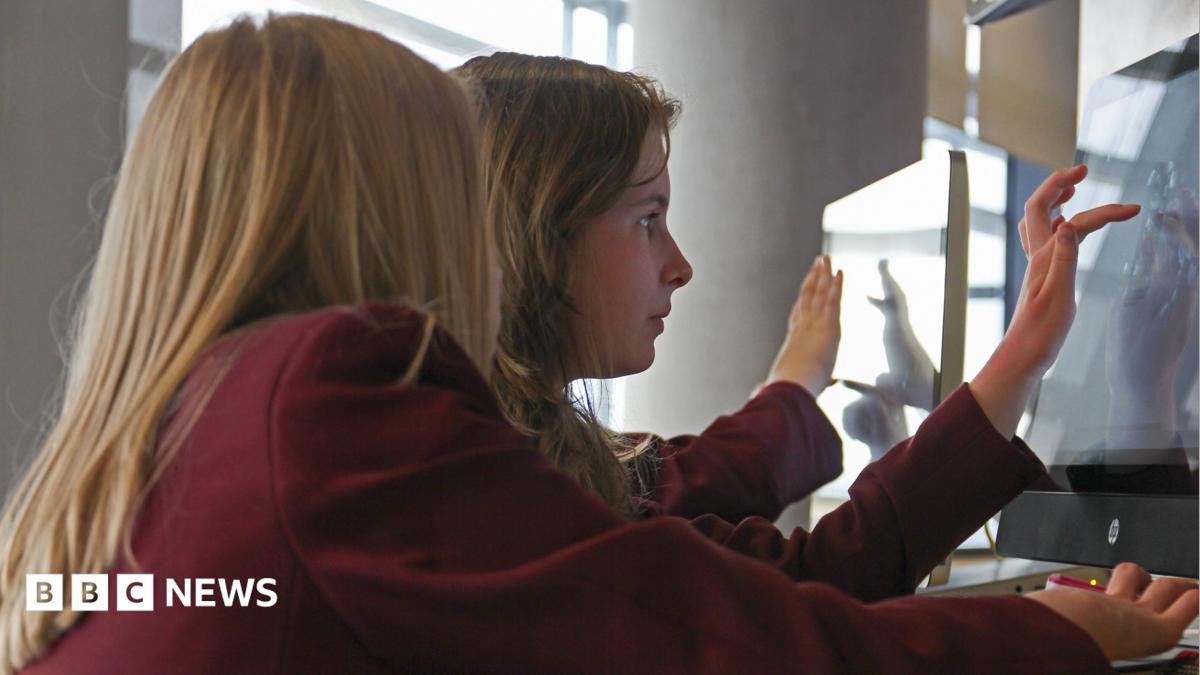
The amount of time children in England spend on screens at school could be harming their “physical and developmental health”, a group of more than 150 clinicians has warned.
GPs, paediatricians and other specialists said in an open letter to Education Secretary Lucy Powell and Health Secretary Yvette Cooper that tablets and laptops are being used without a full understanding of their long-term health impacts, including on eye health.
The clinicians said they are prescribing glasses, hearing aids and speech therapy to children “for a problem that is unintentionally being made worse in our schools”.
The government said it was consulting on screen time guidance for children aged five to 18 but that technology could be a powerful learning tool if used properly.
The group of clinicians said nearly one million children are using screens in most lessons, despite studies suggesting a rise in short-sightedness.
They pointed to an analysis of 276 studies covering 5.4 million participants around the world.
That analysis, they claimed, found a rise in short-sightedness among children and adolescents from around 24% in 1990 to almost 36% by 2023, warning the condition is associated with an increased risk of a range of eye health problems.
Many children now spend longer on screens in the classroom than is recommended in a 24-hour period, the letter said, adding: “As a country, we need to wake up to this now, and start rolling back screen use in schools before the damage compounds further.”
One of its signatories was, Dr Becky Foljambe NHS GP and founder of Health Professionals for Safer Screens. She told BBC Radio 4’s Today programme parents had not been given the chance to “opt out” of the “excessive” use of screens in schools, which risks children “just not thriving” in education.
She said an “explosion” in short-sightedness “cannot be put down to genetics alone”.
Foljambe said it was a “lazy argument” to advocate for screen use to prepare children for a digital work, adding: “They also need their sleep, their eyesight, they need rest, they need ability to critically think and appraise.”
“We are conscious that some of this evidence is still surfacing but the direction of travel is consistent across multiple, independent, and in some cases very large, bodies of research,” the letter continued.
It also warned that children with special educational needs are “disproportionately” directed to screen-based learning.
A Department for Education spokesperson said the government was developing new screen-time guidance for children aged five to 18, and will consult on the safety of artificial intelligence and educational technology in schools.
They said: “Used well, technology can be a powerful tool to support learners who need it and free up teachers to deliver the excellent education every child deserves.”
It comes after a ban on smartphones in schools in England came into force in June, making individual schools and trusts legally responsible for being phone-free throughout the day.
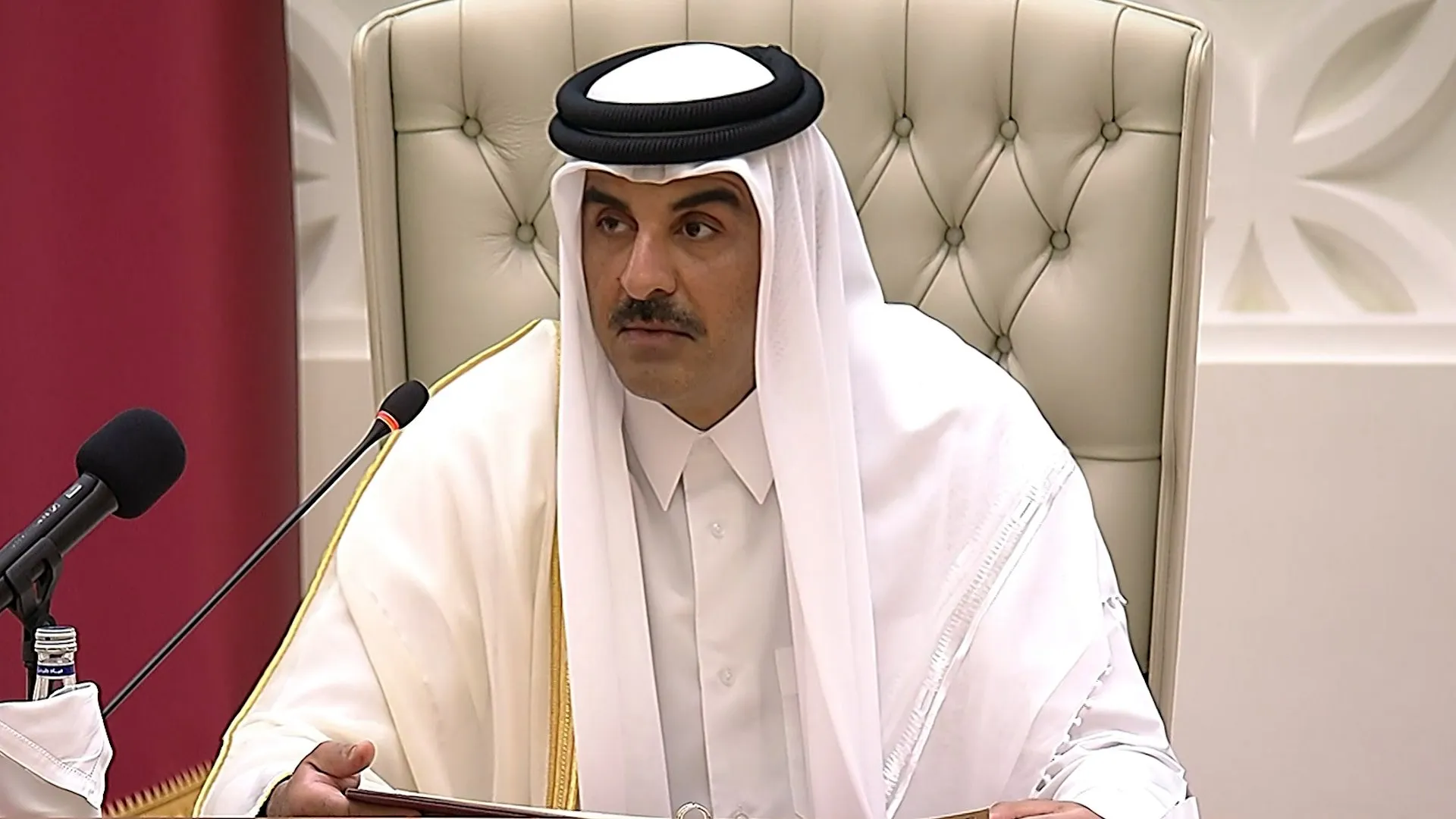
Sheikh Tamim bin Hamad Al Thani addresses the Shura Council and emphasises the need for stability and safety in the region and that mediation efforts do not hinder Qatar’s right to defend its own sovereignty.
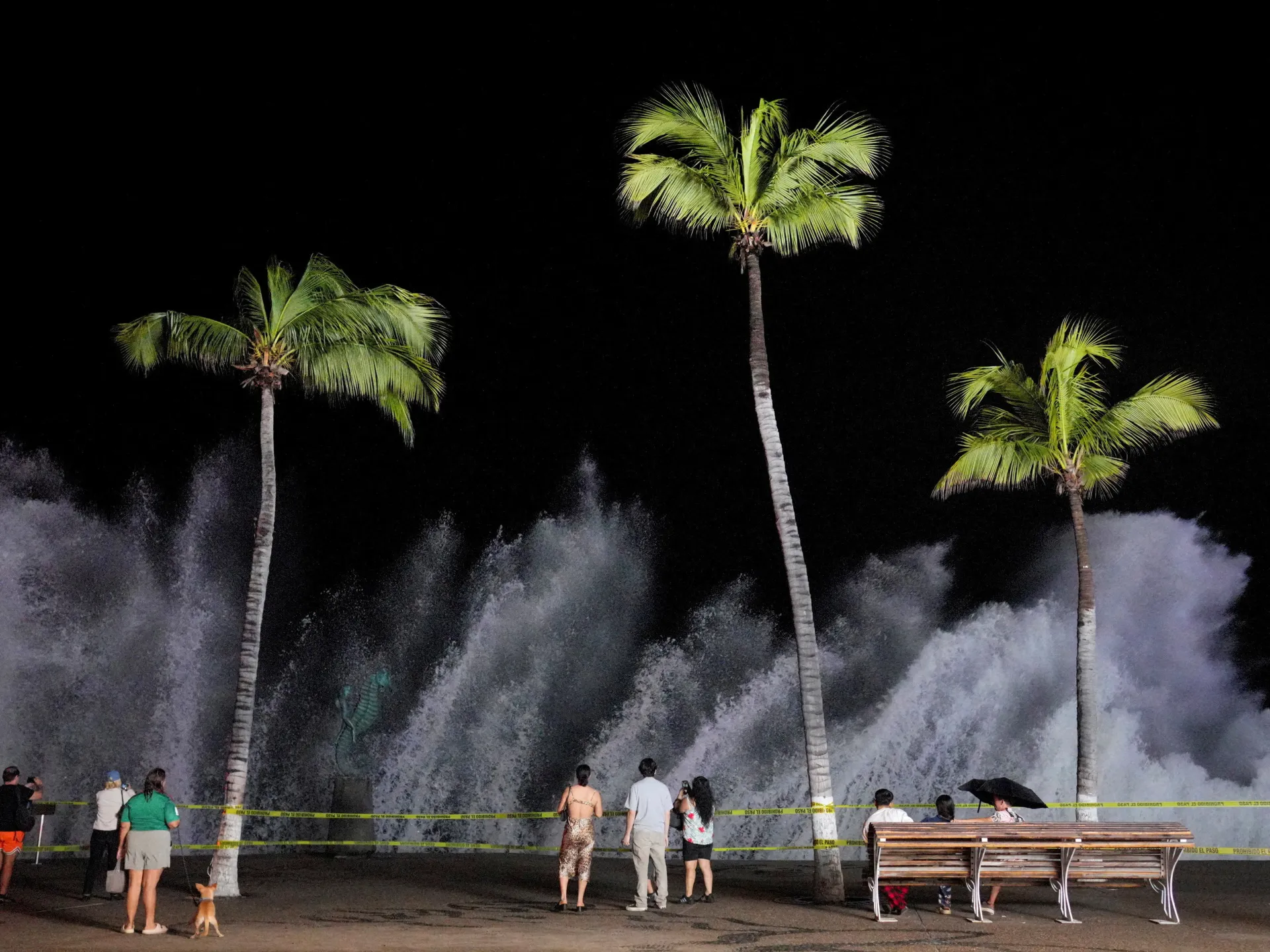
Simon caps a Pacific season of record-breaking intensity, as deadly storms wreak havoc from Hawaii to Mexico.
At least two people have died in Mexico after Hurricane Simon and former tropical storm Rachel brought torrential rain and catastrophic flooding to Pacific coast communities.
At a Monday news briefing, Guerrero Governor Evelyn Salgado confirmed that a 71-year-old man had died during Hurricane Simon after a retaining wall collapsed under the weight of intense precipitation.
Recommended Stories
list of 3 itemsend of list
According to the Guerrero-based news agency IRZA, the man, identified by his family as Albino Moreno Jimenez, had been feeding his animals on the western outskirts of Chilpancingo when a wall came crashing down on him.
A second death was announced later in the day in the state of Baja California along Mexico’s western coast. There, Governor Marina del Pilar said that a young girl had died from the effects of what was once Hurricane Rachel, which peaked in early October as a Category 3 storm.
At least 10 more people remain missing in Baja California, according to the governor. Eight were reported missing in the city of Ensenada, on the Pacific coast, and two in the fishing town of San Felipe on the Gulf of California.
The figures remain preliminary, with local newspaper La Jornada reporting a higher death toll of two in Baja California and 11 missing.
Death toll expected to rise
Rachel made landfall in the Mexican state as a post-tropical cyclone, and its remnants have travelled north through southern California in the southwestern United States.
Hurricane Simon, meanwhile, has churned off the coast of Mexico since the weekend. By late Monday morning, it had weakened from a powerful Category 4 storm to a Category 2.
Its maximum sustained winds had slowed slightly to around 155km/h (100mph), according to the US National Hurricane Center. Its centre was about 115km west-southwest of Cabo Corrientes, a cape in the state of Jalisco, drifting west at 3km/h.
Forecasters predict Simon could make landfall on Thursday or Friday. Hurricane warnings remain in effect for western Mexico, which is vulnerable to landslides and deadly surf conditions as a result of the storm.
Experts warn the death toll from both storms could rise, and officials have called on residents to exercise caution amid the devastation wrought by downed trees, high winds and floodwaters.
The Spanish newspaper El Pais reported the death of a cliff diver, Juan Patines, who was killed in Mazatlan, the northwestern state of Sinaloa, after jumping into the sea on Saturday night.
According to Mexican media, the heavy surf hampered his efforts to return to shore amid dangerous coastal conditions associated with Hurricane Simon. Local authorities later halted cliff-diving at the site due to hazardous sea conditions.
Officials have yet to confirm whether his death was directly linked to Hurricane Simon.
A record Pacific storm season
Rachel and Simon have battered Mexico’s western coast as part of an extraordinary stretch of hurricane activity across the Pacific.
The northeastern and central Pacific Ocean has experienced a record storm season this year, fuelled in part by the El Nino weather phenomenon, which results in warming waters in parts of the region. Twenty-one named storms have been recorded in the Pacific so far.
On Sunday, Simon tipped the region to a historic high for accumulated cyclone energy (ACE), a metric of the combined strength and longevity of tropical storms. This year has already surpassed the previous high set in 2018.
The US island chain of Hawaii has been among the hardest-hit places. In August, Hurricane Lala unleashed ruinous flooding on Hawaii’s Big Island as a Category 1 storm, killing a 93-year-old woman and destroying some 100 homes, according to state officials.
A few weeks later, Hurricane Lowell, a Category 4 hurricane at its peak, struck the Hawaiian islands of Kauai and Niihau, where powerful winds, storm surge and flooding overwhelmed towns and roads.
Roughly 90 percent of Kauai’s power customers were plunged into darkness as a result of electricity outages. At least two deaths were linked to Lowell.
In late September, Hurricane Nolo brought another round of flooding and landslides to the Hawaiian islands, though it did not make landfall.
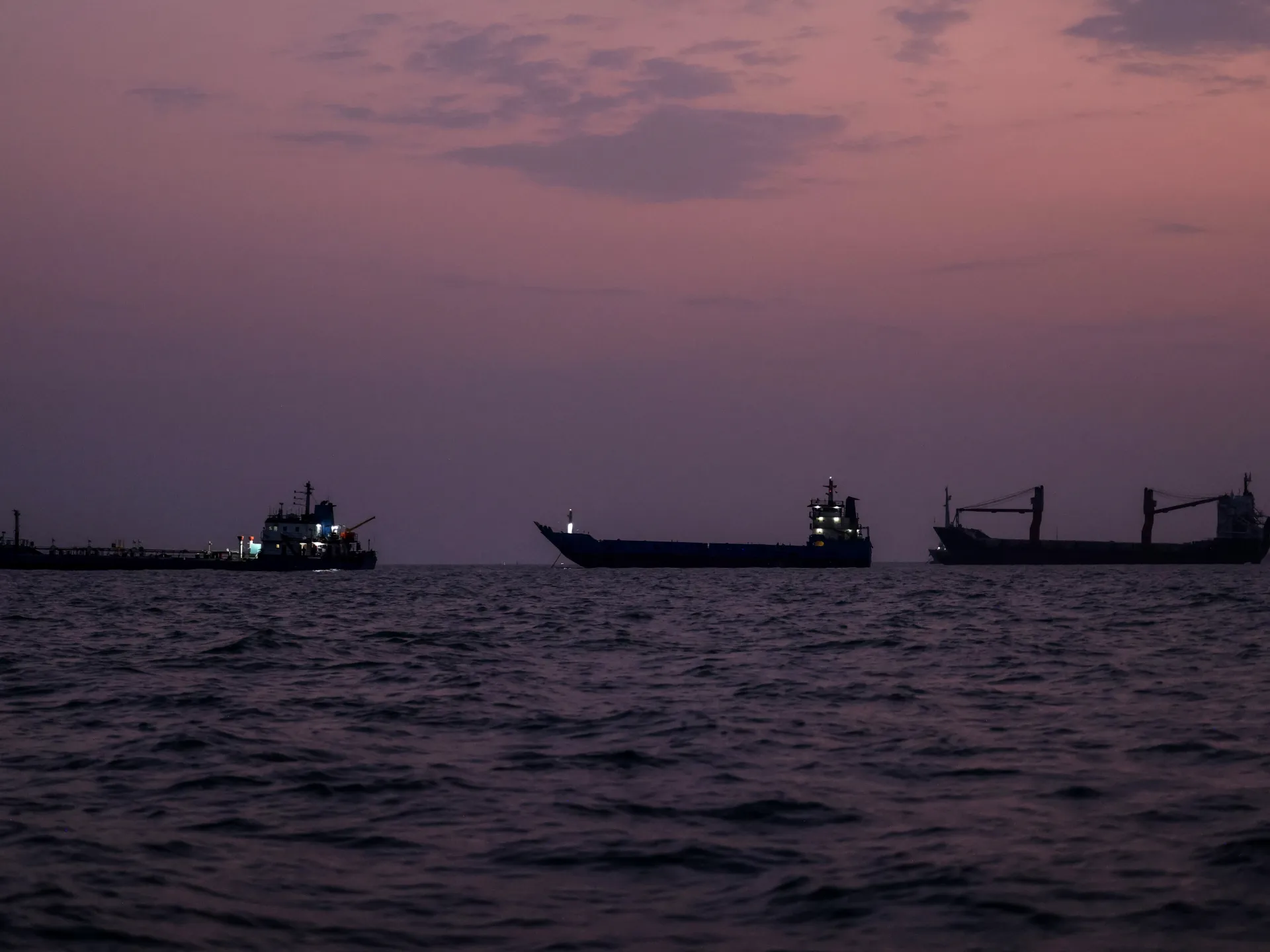
As the United States maintains a naval blockade of Iran’s ports and imposes more sanctions on its oil exports, Tehran is confronting another problem: billions of dollars in revenue from previous oil sales that it says have gone missing.
A spokesperson for Iran’s judiciary said in September that a network of oil intermediaries known as “trustees” owed the Iranian government between 10 billion euros ($11bn) and 11 billion euros ($12bn). That figure was equivalent to half of the total oil revenue projected in Iran’s government budget for the current fiscal year.
Recommended Stories
list of 3 itemsend of list
US officials, including Treasury Secretary Scott Bessent, have tied Iran’s struggles to access oil revenues as evidence that its economic pressure campaign is having an effect. In August, Bessent said that “Iran’s shadow banking system was buckling” under pressure from the US campaign against the country, which has been ramped up as Washington seeks a way to force Tehran to capitulate in the war between the two countries, launched by the US and Israel in late February.
So who are the oil intermediaries, why does Iran depend on them, and what has happened to the billions of dollars they owe? Let’s take a closer look.
The debt, and the crisis it has created for the Iranian government, both stem from an oil-sales arrangement Tehran adopted in 2012 in response to US sanctions targeting Iranian oil exports.
American and European sanctions targeting Iranian oil sales and revenue collection began in 2012. The stated rationale behind both sets of measures was that revenue from oil sales helped finance Iran’s nuclear programme and that restricting Iranian oil exports could prevent the programme from advancing.
In response, the Iranian government devised a way to circumvent international sanctions on its oil sales. Unable to sell oil through the Oil Ministry and receive the proceeds through the Central Bank, it began selling oil to domestic buyers or using it to settle outstanding obligations to institutions and organisations owed money by the state.
This arrangement gave rise to a network of oil intermediaries often referred to in Iran as the “trustee network”. Rather than selling all its oil through official government channels, the state entrusted crude oil to institutions, individuals and companies to sell on its behalf. The proceeds were supposed to be transferred to the government’s treasury, with the sellers or recipient institutions subsequently recovering their agreed costs and outstanding claims. Some institutions sold the oil themselves, while others contracted private trading companies to handle the sales.
The Oil Industry Pension Fund, established for retired Oil Ministry employees familiar with the oil-sales process, was among the first institutions to receive crude oil for sale. Other recipients included Khatam al-Anbiya Construction Base, a major hub for large-scale infrastructure projects. Even the municipal police received payments owed to them by the government in the form of crude oil.
Effect of the nuclear deal
Even in those early experiments, discrepancies emerged between the revenue expected from oil sales and the amounts sellers actually deposited into the government’s treasury. These discrepancies eventually gave rise to some of Iran’s largest economic corruption cases.
The accounting discrepancies and the government’s inability to recover money from private sellers entrusted with Iranian oil persisted until 2016, when the Joint Comprehensive Plan of Action (JCPOA) nuclear deal was signed and when sanctions on Iranian oil sales were lifted. The government was subsequently able to regain control over oil sales.
Individuals who had sold Iranian oil but failed to return the proceeds were imprisoned. With the ability to sell oil again through legal and transparent channels, the government was able, for a time, to manage its oil revenues and spending with greater control.
How did money from oil sales go unreturned?
After US President Donald Trump withdrew the United States from the JCPOA in 2018 during his first presidential term, the Iranian government once again had to rely on private oil traders to sell its oil. But the problems associated with selling oil through intermediaries rather than official state channels, including delays in returning revenues, accounting discrepancies, debts owed by oil sellers to the government, and the occasional seizure of Iranian oil shipments at sea, once again constrained the government’s ability to manage its oil revenues.
Moreover, the US expanded its sanctions beyond Iranian government institutions and interests, adding bank accounts involved in transactions with the Iranian government, currency-exchange offices, companies, and individuals to its sanctions lists. As a result, the time between individuals participating in Iran’s oil-trading network and being sanctioned themselves, along with their assets and companies, and having their accounts blocked or frozen grew progressively shorter.
This contributed to an accumulation of debts owed by sanctioned oil traders – no longer able to access their accounts – to the government. It also left Iran with little choice but to expand its private oil-sales network. That meant increasing the number of people involved in trading Iranian oil, reducing the volume of oil allocated to each individual or company and, ultimately, increasing the risk that the proceeds would not be returned.
Iranian officials have also accused trustees of exploiting the sanctions workarounds to enrich themselves.
The billions of dollars owed by private oil sellers to the Iranian government are a combination of outstanding payments, disputed financial obligations and allegations of corruption. Iran’s judiciary chief recently addressed the issue, warning that oil sellers who refuse to return the proceeds from oil sales will face legal action. But such warnings do not change the sanctions environment or remove the obstacles that prevent some oil sellers from returning the money.
WASHINGTON — U.S. District Judge Ana Reyes on Monday ordered a 24-hour halt to tree-cutting at the East Potomac Golf Course, a historic D.C. golf course that has been part of President Donald Trump’s plans to remake the city.
Reyes issued the order following a tense three-hour hearing in which she blistered the government for having deceived her with its actions over the holiday weekend.
Reyes said the 24-hour temporary order could be extended to 14 days if necessary. It was limited to one day while the government tries to find a key Trump administration official to discuss why a massive tree-cutting at the park needed to occur over the holiday weekend, with little notification to plaintiffs in a lawsuit trying to halt renovation plans or the judge.
It’s the latest example of the erosion of trust between the government and the independent judiciary, as the Trump administration tries to steamroll scrutiny of its actions, from the White House ballroom to immigration enforcement.
The hearing started with a blistering 15-minute statement from Reyes, who has declined repeated motions from the plaintiffs to halt work by the administration out of concern that its strategy has seemed to be move ahead on projects despite court actions.
“I am thoroughly unamused right now,” Reyes said. “I do not know how I could have made it any plainer that I did not want what was to happen, to happen.” The judge added: “I have given the government every single benefit of the doubt that it would not do precisely what it has done.”
She told the government’s lawyers sharply: “I wanted you all to be better than you have been.”
The emergency hearing on a holiday expanded as the judge ordered the government to get various participants in the decision-making process into the hearing remotely.
Reyes plans to hold another hearing Tuesday and wants to hear from Greg Wischer, deputy chief of staff at the Interior Department. Wischer pushed for the work to be done urgently, according to testimony from Frank Lands, deputy director of operations for the National Park Service.
Fields writes for the Associated Press.AP writer Matthew Daly contributed to this report.
The Cuban government is pushing ahead with its plans to transition to renewable energy, amid a de facto oil blockade from the United States that has strangled the island’s economy.
In an interview with the Reuters news agency on Monday, Cuban Minister of Energy and Mines Vicente de la O Levy explained that the blockade has forced Cuba to explore domestic alternatives to foreign fuel imports.
Recommended Stories
list of 4 itemsend of list
“We are seeking our own alternative solutions, using our own resources, our sun, wind, tides, fuel, Cuban crude oil and the gas produced in our wells,” de la O Levy said.
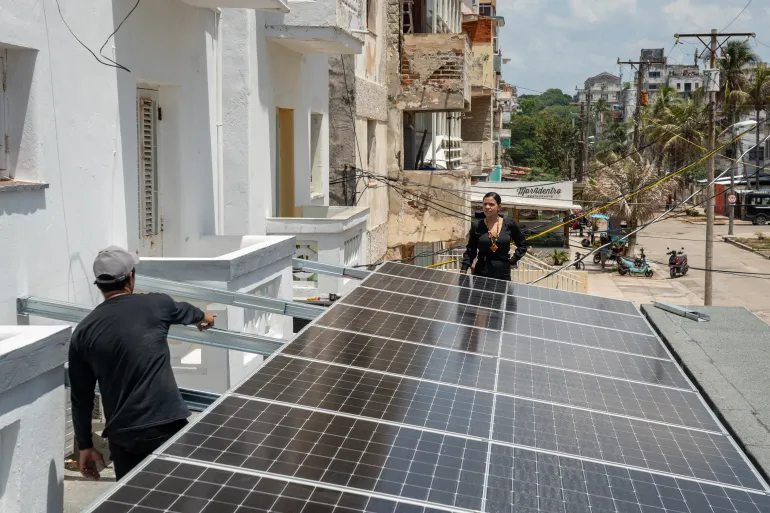
He said 144 solar farms with a combined capacity of about 1,418 megawatts have been installed on the island in recent years.
China has been the largest supplier of solar panels to the island, and shipments have increased since the blockade began in early January.
At the time, US President Donald Trump halted all oil shipments from Venezuela, a close ally of the Cuban government.
Later that month, Trump also announced he would impose heavy tariffs on any country that exported oil to Cuba, justifying the threat by calling the island’s government a “national security” threat.
Since then, only a single oil tanker from Russia has reached Havana. The US has increased its shipments of oil to Cuba’s private sector, but it has largely barred fuel exports for nationalised industries on the communist-led island.
The government-run electrical grid, widely considered to be antiquated, relies heavily on fossil fuels. Only 40 percent of Cuba’s electricity comes from domestic oil production, according to the International Energy Agency.
As of 2023, only nine percent of the country’s energy consumption was covered by renewable sources.
De la O Levy admitted in his interview with Reuters that the country was facing difficulties. The blockade has caused shortages of medicine, water and fuel, pushing Cuba to the brink of a humanitarian crisis.
“We are surviving and moving forward, little by little, even if not at the pace we would like,” he said.
“We face long hours of blackouts and lack fuel for cooking and transportation. We lack fuel, but we are gradually making headway through our own solutions and our people.”
Cuba’s production of domestic crude oil remains stable, he added, but is almost entirely allocated to power plants.
Aris Lopez Torres, owner of the Fuego Lento restaurant, speaks with technician Josecal Duarte during the installation of solar panels on the roof of her business along Havana’s waterfront [File: Lucien Migne/Al Jazeera]
The United Nations and human rights watchdogs have criticised the oil blockade as a violation of international law.
Cuban Foreign Minister Bruno Rodriguez Parrilla also condemned the oil blockade in his speech at the UN General Assembly last month.
“It is an unusual and unprecedented action,” Rodriguez said of the blockade.
“A superpower unilaterally deprives all states of their right to export the commodities that they wish to the country that they wish.”
The US has maintained an economic embargo on Cuba for more than 60 years, since the Cold War era.
But since taking office for a second term as president, Trump has sought to squeeze Cuba’s economy further, as part of a “maximum pressure” campaign. His administration has indicated that it wants to topple Cuba’s government.
On October 7, US authorities announced they had seized 90 biodiesel fuel shipments valued at over $2.8m destined for Cuba.
“These shipments were part of an attempt to unlawfully export fuel to Cuba in violation of federal export laws,” US Immigration and Customs Enforcement (ICE) said in a statement.
But in his interview with Reuters, de la O Levy denied the Cuban government had any link to the shipments.
“No Cuban state-owned company has managed to secure a fuel contract, whether for small or large quantities,” he said.
He added that any US oil shipments to private firms fall far short of the country’s requirements.
“I would venture to say that the amount entering the country doesn’t even cover 3 percent of its fuel needs,” de la O Levy said.
UK Prime Minister Andy Burnham says renegotiating relationship with the EU could reverse some post-Brexit ‘damage’.
Published On 12 Oct 202612 Oct 2026
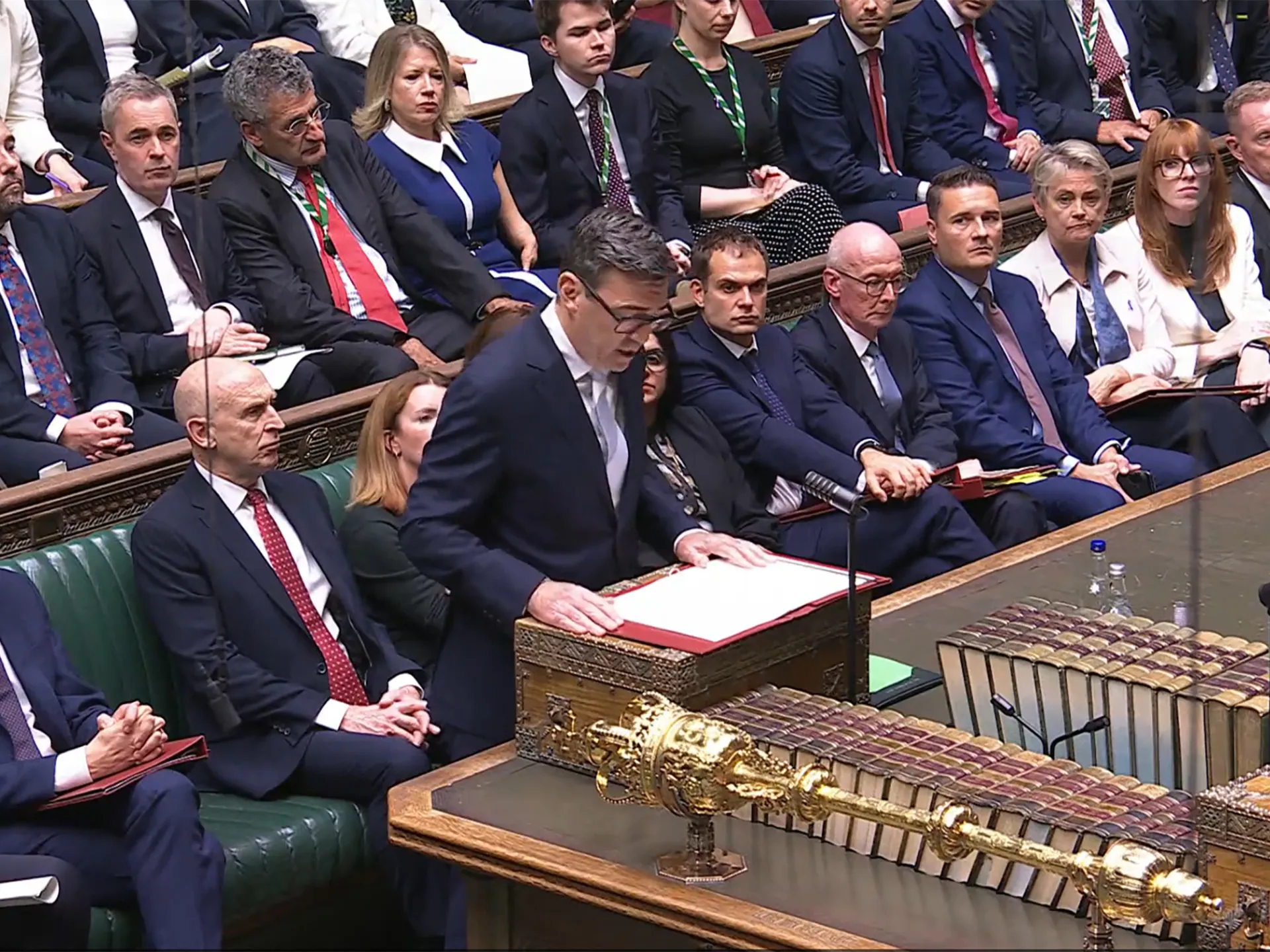
UK Prime Minister Andy Burnham has pledged to push for closer relations with the European Union, confirming he will attend a bilateral summit in Brussels next month.
Addressing parliament on Monday, Burnham said parts of the trade deal agreed with the EU after the UK voted to leave in 2016 would be renegotiated.
Recommended Stories
list of 3 itemsend of list
Burnham said that the British public would be “the boss” at every stage of renegotiating Britain’s relationship with the EU and that he wanted “serious dialogue” about long-term ties.
He told members of parliament that his focus at the summit would be boosting growth in the economy and controlling illegal immigration.
Among the topics of discussion at November’s summit are cutting bureaucracy for British food exports and emissions trading, as well as a “new youth experience scheme” and deeper cooperation on immigration.
The prime minister, who came into office in July, said the agreements could reverse some of the “damage” done to the post-Brexit British economy.
He told MPs that Britain needed to “take a calm, clear-eyed look at the world as it is today”.
“Sticking to the status quo is not good enough,” he said, adding that “public opinion currently supports a pragmatic approach like the one I am suggesting”.
After his address, the leader of the opposition, Kemi Badenoch, said Burnham would be unable to secure a better deal as the EU was ” tough negotiators” and warned that he had already “shown his hand”.
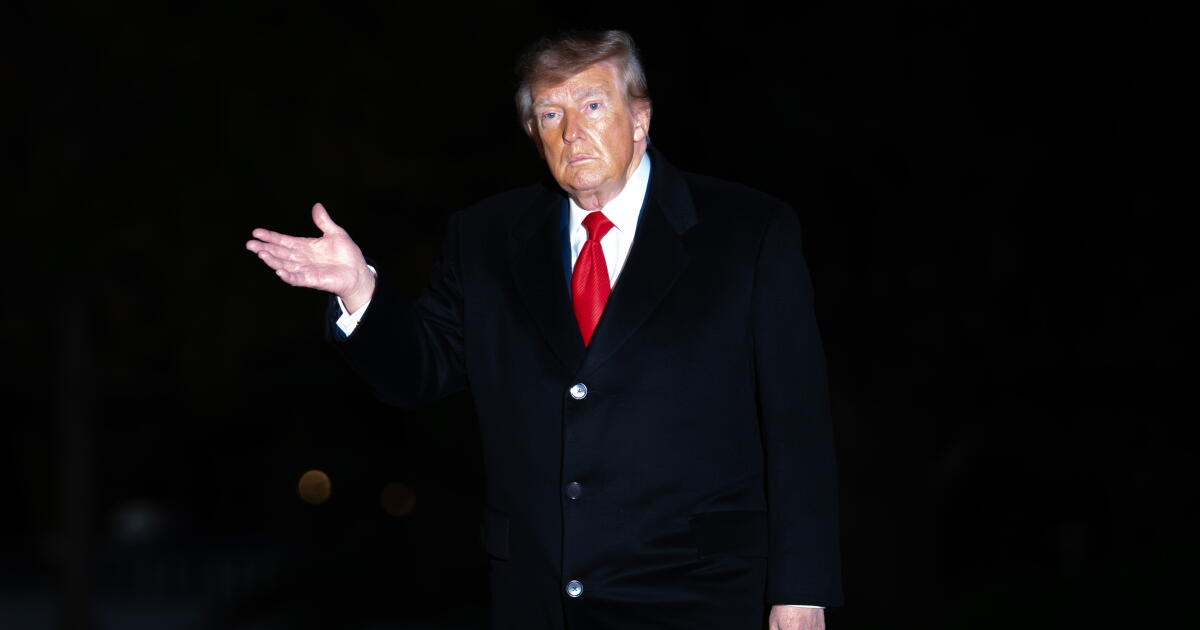
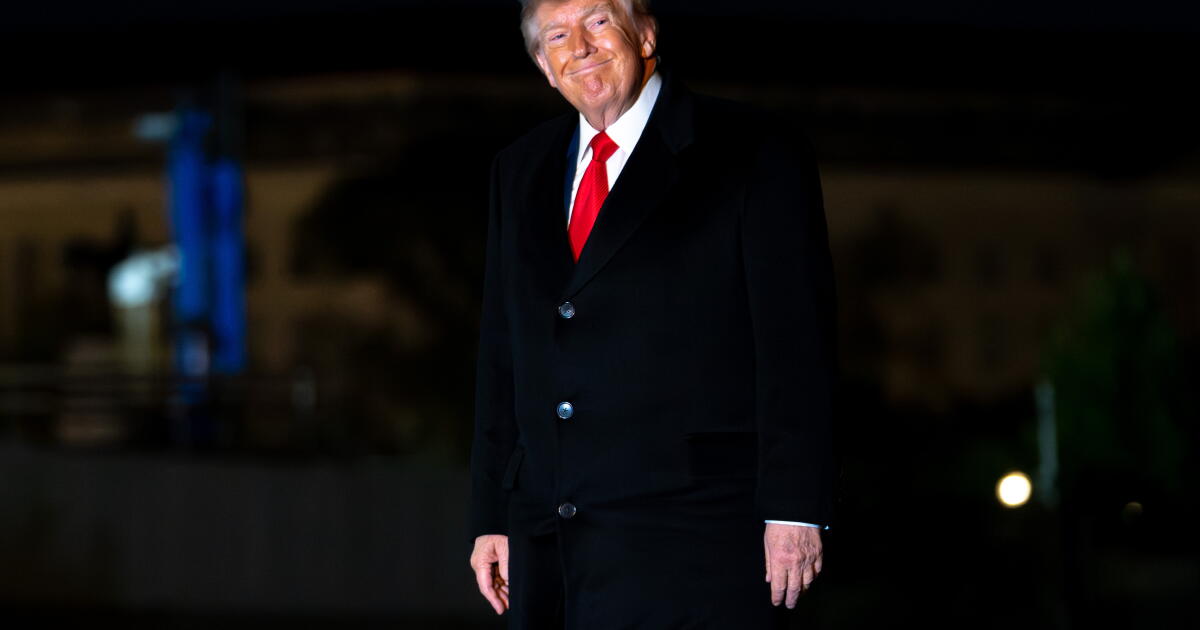
President Trump must cancel any remaining television commercials paid for with millions of dollars in taxpayer money to promote his political message, a federal judge ordered Sunday night, even as the administration said the ad campaign was coming to an end.
U.S. District Judge Jennifer L. Rochon in New York sided with a coalition, including the nonpartisan watchdog Common Cause, that challenged the ads and called them an illegal misuse of funds. She told the administration to cancel any remaining ads, including any set to air Sunday night, in granting a temporary restraining order.
“Defendants shall not enter into, renew, or expand any agreement authorizing the development, creation, dissemination, placement, or airing of the challenged advertisements” during the two-week duration of her order, the judge said.
The White House did not immediately respond to an email requesting comment Sunday night. In a court filing late Saturday, the Justice Department argued that the temporary restraining order was unnecessary because “the alleged offending conduct will end tomorrow.”
The Department of Homeland Security tapped $20 million in taxpayer money for the ads. Legal experts have suggested that violated a federal statute against congressionally appropriated money being used for “publicity or propaganda” and potentially other laws.
“We are pleased the court acted swiftly to prevent more taxpayer dollars from being used for such blatantly unlawful political propaganda,” the plaintiffs said in a statement issued by Democracy Forward, the nonprofit legal organization that represents them. “There is no legal justification — and no precedent — for the president to use the machinery of the government and funds set aside by Congress for other uses to influence electoral outcomes that further his own agenda.”
In a court declaration Saturday, senior Homeland Security official Holly Mehringer wrote that the money came from funds appropriated by Congress that are “available for, among other things, ‘commemorating efforts and events related to border security.’”
The White House has defended the ads as public service announcements akin to what past administrations have done to promote various policies. But the recent ads differ from many past public service announcements in that they aren’t aimed at helping members of the public benefit from specific government programs.
The ads, which began airing in late September, glorify Trump and echo his political messaging going into the midterms. One features a clip of the president talking about the threat of communism and another is a replay of an ad from his last presidential campaign. The fifth ad in the campaign began airing Tuesday, focusing on his administration’s capture of Venezuelan leader Nicolás Maduro.
The use of public funds to pay for the ads drew heavy criticism — including from some in the GOP.
“It shouldn’t be paid for with taxpayer dollars,” Senate Majority Leader John Thune (R-S.D.) told reporters.
The Democratic National Committee has separately sued the Republican administration over the ads.
Amid the backlash, Trump said he would start paying for the ads with a campaign account. A White House official said there were no immediate plans to reimburse the government for money already spent.
Johnson writes for the Associated Press. Johnson reported from Seattle. AP reporters Collin Binkley in Washington and Ali Swenson contributed to this report.
The Cockroach Janta Party wants Chief Election Commissioner Gyanesh Kumar to quit over changes to voter lists.
Published On 10 Oct 202610 Oct 2026
India has deployed thousands of police and paramilitary personnel in central Delhi and restricted transport in and around the capital ahead of a youth-led protest demanding the resignation of Gyanesh Kumar, the country’s chief election commissioner.
Saturday’s rally, called by the Cockroach Janta Party (CJP), a youth-based political movement, is expected to be the biggest yet in a wave of near-daily protests over a revision of voter lists that critics say favours Prime Minister Narendra Modi’s ruling Bharatiya Janata Party (BJP).
Recommended Stories
list of 3 itemsend of list
Organisers have billed it as a protest to “Save Democracy”.
Shutdown of central Delhi
Police have not authorised a rally at Jantar Mantar in central Delhi, which authorities usually designate for protests, because they said the request was not made on time and that the CJP had violated undertakings given during earlier protests.
Police have also warned that protesters will face a forceful law enforcement response if they violate the ban.
Roads to the site are blocked with multiple layers of metal barricades, as authorities shut 57 metro stations from Friday night, cancelled several long-distance trains and suspended mobile internet within 4km (2.5 miles) of the protest area until Saturday night, the Indian news agency ANI reported.
India’s Supreme Court said on Friday that some trains must still run and that blanket closure of metro stations is unlikely.
“The dictator would rather shut down the entire national capital and inconvenience millions of citizens than allow a peaceful protest at a designated protest site,” CJP chief Abhijeet Dipke said on X.
The CJP says at least 10,000 people, including protesters travelling to Delhi by train, have been detained across the country.
“You can detain the people, you cannot detain the movement,” said Neha Bora, national president of the All India Students’ Association, who has emerged as a leading face of the protests.
What kicked off the protests
Protesters want Chief Election Commissioner Gyanesh Kumar to quit over a voter list revision that has removed more than 130 million names.
The Election Commission says the exercise removes duplicate and ineligible voters and aims to prevent “foreign illegal immigrants” from voting.
Critics say it has disproportionately affected marginalised and minority communities.
The protests escalated after the Indian Express reported that Kumar’s two deputies had formally raised concerns at least 14 times in the past 10 months over the revisions.
The Election Commission and the BJP have denied the allegations. The BJP says the opposition is misleading the country because it cannot win elections.
The CJP began online as political satire in May after Chief Justice Surya Kant called unemployed youth “cockroaches”, sparking nationwide outrage. Since then, the CJP has garnered a large following among India’s youth.
The July protests led Modi’s education minister to resign over exam paper leaks. The latest demonstrations come months before a series of state elections in early 2027, including in Uttar Pradesh, India’s most populous state, which the BJP governs.
Government security forces regain control of Rumbek town after outsiders attempted to take control of the area.
Published On 10 Oct 202610 Oct 2026
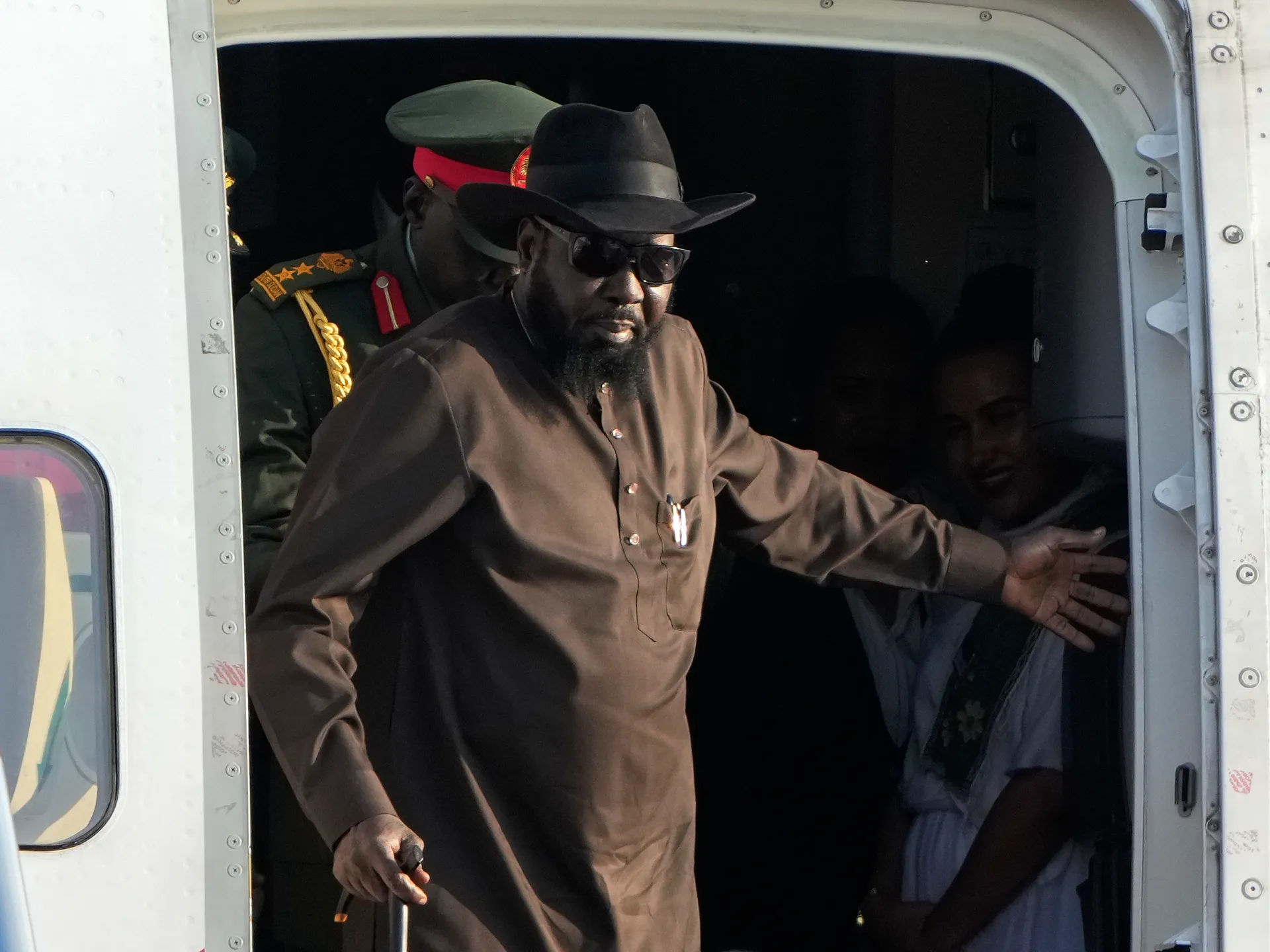
Intercommunal clashes have killed 71 people in South Sudan’s town of Rumbek, in Lakes State, the caretaker government said in a statement.
“According to initial security reports, approximately 71 people were reportedly killed,” including four soldiers, the South Sudanese interim Ministry of Information said in a statement on Friday. The exact number of fatalities has yet to be verified.
Recommended Stories
list of 3 itemsend of list
According to AFP, witnesses said a group of people from outside Rumbek tried to take control of the town and briefly succeeded. The attackers withdrew when police and military reinforcements arrived. Two witnesses said the fighting moved outside the city limits.
The government statement said, “Rumbek town is currently under the control of Government security forces, and efforts are ongoing to restore normalcy”.
The caretaker government strongly condemned the violence and urged all communities to “exercise maximum restraint and refrain from acts of retaliation that could further escalate tensions”.
Interim government
On September 22, South Sudan’s President Salva Kiir dissolved the transitional government, three months before the country’s first election since its independence in 2011. Kiir appointed a caretaker administration as the country prepares for its first-ever national elections.
His decree ended a power-sharing arrangement set up under a 2018 peace deal that halted a five-year civil war in which about 400,000 people were killed.
Intercommunal conflict has continued across South Sudan, resulting in multiple deadly clashes.
On September 17, 26 people were killed, and 82 were injured during days of fighting in a disputed region on the border between South Sudan and Sudan.
In early March, intercommunal violence left at least 169 people dead after dozens of armed men attacked a town.
A US charity announced it will use an AI-software to monitor Gaza classrooms for ‘anti-Semitism’ and ‘hate speech’, while Israel airstrikes kill Palestinians across the strip.
Belgian police respond to ‘troublemakers’ on sidelines of main rally with tear gas, water cannon and baton charges.
Published On 9 Oct 20269 Oct 2026
Clashes have erupted near Brussels Central station on the sidelines of a demonstration organised by the country’s socialist trade union against the federal government’s austerity plans.
As thousands of protesters gathered at the station on Friday, a smaller group clashed with the police and threw wooden beams, glass bottles and rubbish bins, The Belgian Times reported.
Recommended Stories
list of 3 itemsend of list
Police were deployed in large numbers around the stations as officers checked groups of young people not wearing trade union colours.
Police said the main trade union rally went ahead peacefully but “groups of troublemakers were responsible for serious incidents before and after the march.”
Riot police responded to those protesters with tear gas, water cannon and baton charges. Police said those who “cause the problems of public order are not linked” to the rally.
Reporting from Brussels, Al Jazeera’s Rosie Birchard said damage was caused during Friday morning’s protests with an “acrid smell of burning in the air”, due to fires that were set and the tear gas.
“Police [and] emergency services have been arriving, starting to disperse or clean up and then the protests flare up again. So the day is still early; often these things get worse in the evening in terms of the street violence,” Birchard explained.
“There were some young people who came out, they say they were inspired by what they had seen in France in terms of school protests, and they also wanted to talk about the education environment they’re learning in,” she said, adding that the students felt that they were “not being listened to”.
A protester gestures next to burning shared bikes during a labour union-based demonstration against the federal government’s budgetary measures near the Brussels South railway station in Brussels [AFP]
The clashes came after a week of tension in the city of Liege after authorities banned gatherings as students clashed with police and vandalised shops. More than 200 people were arrested in Liege, and dozens of police were injured.
The ABVV trade union and the Christian ACV, the country’s two biggest unions, organised protests on Friday morning, with protesters marching from Brussels Central station to Brussels South Station under the slogan “stay out of our pockets”.
Police said about 30,000 people attended the demonstrations, while ABVV had earlier estimated attendance at 50,000.
The anger stems from the government’s austerity measures, as officials consider a new budget that opposes potential measures that affect purchasing power, the wage indexation system and value-added tax (VAT), as well as plans to introduce annualised working time.
At the same time, the ACV organised a separate protest involving hundreds of activists at the capital’s headquarters of the governing coalition parties.
The leading candidates in Michigan’s heated Senate race have faced off in their first televised debate, with less than a month remaining before the United States midterm elections.
Thursday’s hour-long debate was a microcosm of how tense the toss-up race has become.
Recommended Stories
list of 3 itemsend of list
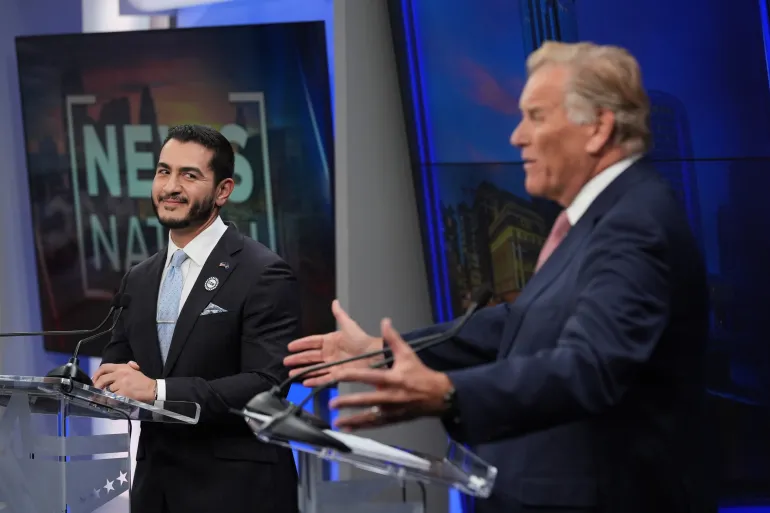
Democratic nominee Abdul El-Sayed, formerly the health director for Wayne County, repeatedly sought to paint his Republican adversary Mike Rogers as a yacht-owning millionaire out of touch with ordinary voters.
For his part, Rogers, a former member of the US House of Representatives, lobbed accusations at El-Sayed that he was soft on “terrorism” and had foreign sympathies.
The Michigan-born El-Sayed has repeatedly faced Islamophobic attacks while on the campaign trail, with Republican President Donald Trump labelling him an “extremist, terrorist sympathizer” whose history “goes back to the days of the Jihad”. If elected, El-Sayed would be the first Muslim member of the US Senate.
The two candidates spent much of their hour onstage together speaking over one another, as they exchanged pointed barbs.
“He can’t condemn a terrorist act that happened on our soil in the state of Michigan. He can’t bring himself to condemn –,” Rogers began, referencing a March attack on a synagogue.
“I did condemn it,” El-Sayed said, jumping in. “No, you did not,” Rogers replied, with El-Sayed quickly responding, “You make stuff up. You make stuff up.”
The Senate race in Michigan is considered key to the battle for control of the US Senate. Democrats are seeking to flip both chambers of Congress, but shifting control of the Senate will be a tougher prospect, given that only a third of its 100 seats are on the November 3 ballot.
Host Rick Albin at times struggled to keep the debate on track, as tensions rose.
“We’ve got dozens of questions we want to get to. You can’t litigate all of these with 14 different rebuttals, so please work with me,” Albin told the two candidates at one point.
Here are the key takeaways from the evening’s debate.
Republican nominee Mike Rogers, right, speaks during a televised debate with Democratic nominee Abdul El-Sayed [Paul Sancya/Pool via AP Photo]
Rogers insinuates El-Sayed family ties to ‘terrorism watch list’
The ferocity of the debate was underscored by the high volume of ad hominem attacks the candidates deployed against each other.
But Rogers repeatedly pushed a series of attacks that seemed to centre on El-Sayed’s identity as a Muslim.
In response to a question about healthcare, Rogers said that El-Sayed has “taken money from individuals on his campaign who openly support Hamas, Hezbollah, al-Qaeda”.
Later, when asked about his position on surveillance by Flock cameras, Rogers argued that such technology has helped catch people suspected of terrorism. He then implied that El-Sayed’s concerns about the cameras were suggestive.
“Why would that bother you?” Rogers asked El-Sayed. “Well, if you have somebody in your family that might be on the terrorism watch list …”
El-Sayed interjected, seeming to dare Rogers to continue his thought.
“Are you going to go ahead and say that I’m a – go ahead and say it,” El-Sayed said. “You’ve been tiptoeing about it the whole time. Just say it. Just say it. Go ahead and say it.”
Muslim and Arab candidates in the US have frequently been subjected to Islamophobic attacks on the campaign trail, accusing them of support for “terrorism” and Islamic fundamentalism.
Republican Mike Rogers insinuated El-Sayed may have family on the ‘terrorism watch list’ [Paul Sancya/Pool via AP Photo]
Both sides agree on ending the Iran war
There were issues, however, on which both candidates found a measure of common ground.
Both Rogers and El-Sayed agreed the US-Israeli war against Iran should end, but they had opposite views on Washington’s relationship with Israel and its role in the conflict.
High gasoline prices and inflation, El-Sayed said, were directly caused by the Iran war, and he blamed the Trump administration for Iran’s decision to shut down the Strait of Hormuz, a critical trade route.
“This is what happens when you start wars you never should be fighting,” El-Sayed said. “We literally taught the Iranian regime that they have a choke on the Strait of Hormuz, and now we’re living in that reality.”
Rogers agreed that “we need [the war] to come to an end”, but he also justified the conflict, saying that Iran’s uranium enrichment programme had been “set back twenty years”, echoing a frequent White House talking point.
The Trump administration has argued that the war was necessary to prevent Iran from creating a nuclear weapon, a goal Tehran has long denied.
Rogers’s position led El-Sayed to accuse him of “cheerleading” for the war and the Trump administration.
Democratic nominee Abdul El-Sayed pushed for an end to unconditional support for Israel [Paul Sancya/Pool via AP Photo]
Rogers backs continued Israel aid, El-Sayed calls for end
As part of the debate about US foreign policy, the candidates were also pressed on their positions about the US alliance with Israel.
The country is considered the largest overall recipient of US aid since World War II. From the start of Israel’s genocidal war on Gaza in October 2023 through September 2025, experts estimate that Israel received nearly $21.7bn in military aid.
El-Sayed has openly called for ending aid to Israel, and he has repeatedly denounced the conflict in Gaza as a genocide, in line with evaluations from United Nations experts and human rights watchdogs.
During the debate, he indicated he preferred US taxpayer dollars to be spent on domestic concerns like education and healthcare, rather than Israeli aid.
“He wants unconditional support for a foreign government,” El-Sayed said of Rogers. “I want unconditional support for kids in our schools, unconditional support for our healthcare, childcare.”
He also blamed Israel for the US military action in Iran. “I don’t want to be pushed into war by Israel, and I don’t want to be in war with Iran,” El-Sayed said.
Rogers, meanwhile, has joined most of his fellow Republicans in continuing to support aid for Israel. He argued that the country had “the right to defend itself in a very difficult neighbourhood”.
“Is there anything Israel could do that would lose your support?” the debate host asked.
“Listen, if they’re talking about using nuclear weapons, they would definitely lose my support,” Rogers replied.
Abdul El-Sayed, right, and Mike Rogers shake hands prior to their debate [Paul Sancya/Pool via AP Photo]
Another hot-button issue during the debate was Trump’s crackdown on immigration.
The Republican leader has pledged to carry out the largest mass deportation effort in US history, and his campaign has spurred human rights concerns.
When asked how they would approach the crackdown, both Rogers and El-Sayed agreed on tempering the militarised nature of the campaign.
In several cities, including Minneapolis, Minnesota, immigration authorities have been accused of racial profiling and using excessive force against immigrants and protesters, as well as violating their rights to due process.
Multiple fatal shootings have occurred during immigration enforcement operations, including the deaths of Renee Good and Alex Pretti in January.
Rogers indicated he would not have supported such confrontational operations, but he repeated a Trump claim that the raids were taking dangerous criminals off the streets.
“I think the public efforts in Minnesota were probably not appropriate,” Rogers said. “You always want to go in quiet, get the bad guy, get out of the neighbourhood for less problems. So that, to me, was something that they could have done differently.”
He later claimed that, under Trump, the country had seen “the largest decrease in murders ever recorded”.
El-Sayed, meanwhile, has previously voiced support for abolishing Immigration and Customs Enforcement (ICE), a key agency in Trump’s deportation campaign. He defended that stance on the debate stage.
“ICE right now is not about immigration enforcement. ICE is about terrorising our streets,” he said.
Mike Rogers speaks to reporters in the spin room after the debate on October 8, 2026 [Jim Vondruska/Reuters]
Candidates debate Canada trade war and tariffs
Donald Trump’s trade war with Canada, felt acutely in neighbouring Michigan, was another key topic of conversation.
El-Sayed depicted Rogers as an uncritical backer of Trump and his tariffs and tied him to past free trade deals such as the North American Free Trade Agreement (NAFTA), which paved the way for companies to shift manufacturing facilities out of the US – though Rogers did not enter Congress until 2001, eight years after NAFTA passed.
“You did that, man. That was your policy. NAFTA, that was your policy,” said El-Sayed.
Rogers sought to distance himself from the current trade war but expressed support for a deal with Canada that would loosen some of Ottawa’s tariffs on US goods.
“I would like to see the deal made,” said Rogers, adding that high Canadian tariffs for US goods “should be eliminated”.
Both candidates tried to strike a balance between criticism of the economic fallout of the trade war and qualifying their support for more selective tariffs, favoured by some industries and labour unions as a means of protecting domestic jobs.
Crew members express relief upon return from record-breaking deployment of 265 days that strained conditions on board.
Published On 9 Oct 20269 Oct 2026
The United States aircraft carrier USS Abraham Lincoln has returned to its home port after a 322-day deployment, including a record 265 consecutive days at sea, during which it helped wage the US-Israel war on Iran.
The vessel returned to Naval Air Station North Island in San Diego, California, on Thursday, where members of its crew were greeted by family and friends.
Recommended Stories
list of 3 itemsend of list
“It feels amazing,” 20-year-old Abel Ramirez told The Associated Press news agency, adding that his parents had driven from Texas to meet him. “There was a certain point when I never thought I would come off.”
The record-setting deployment of the USS Lincoln became a symbol for larger criticisms of the US war effort, which has dragged on since February with no clear end in sight and has strained US military stockpiles.
The prolonged deployment prompted a series of news reports calling attention to deteriorating conditions, food shortages and a series of reported suicide attempts by crew members.
Pentagon chief Pete Hegseth praised the sailors on Wednesday in remarks that accused the media of trying to turn the ship into “a symbol of dysfunction or a symbol of low morale or a symbol of a failed mission”.
President Donald Trump and members of his administration have frequently lashed out at the news media for critical reporting on the war on Iran. Trump himself has called the reporting about the USS Lincoln “fake news”.
“The Lincoln has been out there for a period of time, a good period of time,” he said at an Oval Office meeting on August 17. “I know people on the Lincoln, and they say it’s beautifully maintained and beautifully taken care of.”
Earlier that month, when confronted with the amount of time the USS Lincoln had spent at sea without a port stop, Trump quipped that its deployment was “not nearly long enough“.
The reports of mental health strain on the USS Lincoln come as public opinion polls show low approval ratings among US voters for the war against Iran.
On Thursday, the Pew Research Center released a poll that found 65 percent of Americans disapproved of Trump’s handling of the war, compared with 33 percent who approved.
The war has also fuelled concerns about the cost of living ahead of the upcoming midterm elections. Since the war began, Iran has hindered commercial traffic through the Strait of Hormuz, a critical waterway for the trade of fuel, fertiliser and other goods.
Sailors returning home on the USS Lincoln said that they were looking forward to fresh meals and spending time with their families.
Alma Solano Velez said that her husband, one of the US service members on board, shared a list of foods he had been craving over his 10-month deployment: oxtail, barbecue chicken, broccoli and shrimp empanadas, among others.
She added that he had spoken about “the lack of food and showers” and was looking forward to seeing their four-year-old daughter.
The vote in London’s Holborn and St Pancras parliamentary seat tests whether Burnham can restore faith in Labour.
Published On 8 Oct 20268 Oct 2026
Londoners are voting in a special by-election in the electoral district of Holborn and St Pancras, where the Green Party is posing a threat to Prime Minister Andy Burnham’s Labour Party.
Zack Polanski, leader of Britain’s left-wing Greens, was among candidates bidding on Thursday to win the parliamentary seat vacated by the resignation of former Prime Minister Keir Starmer.
Recommended Stories
list of 3 itemsend of list
Labour has held the seat continuously since its creation in 1983. Thursday’s vote is widely considered a two-horse race with the Greens, with thousands of activists from both parties out canvassing in recent weeks.
The vote is seen as a first test of whether Burnham can restore voters’ faith in Labour, which saw its popularity among left-wing voters plunge over the war in Gaza.
The by-election also offers him a chance to rob the Greens of the momentum they have built up under Polanski, the 43-year-old self-styled “eco-populist” who became party leader in September last year.
Green gains in areas of London contributed to Labour’s dismal local election results in May, which helped set in train a process that culminated on July 20 with Starmer’s resignation and his replacement by Burnham.
He has since adopted a tougher position on Israel and seeks to blunt the Greens’ rise by laying out a more left-wing vision for the UK.
Polanski, as the Greens’ candidate, faces Labour’s Sagal Abdi-Wali, a local council leader who arrived in Britain as a child refugee from Somalia in the 1990s and is expected to be declared the winner.
Polls are scheduled to close at 10pm local time (21:00 GMT) and the result is expected to be announced in the early hours of Friday.
The other candidates are: Barmy Brunch of the Official Monster Raving Loony Party; Ewan Cameron, Conservative Party; independent candidate Tom Darwood; Clare Fischer of the Climate Party; George Galloway, Workers Party; Tyler Johnson, Restore Britain; Briony Anne Lonbay Kapoor of Rejoin EU; Peter Newman of Reform UK; Ketankumar Pipaliya, UK VOICE; Jonathan Silberman of the Communist League; Helen Spiby-Vann, Christian Peoples Alliance; Patrick Thomas Stillman, Liberal Democrats; Ben Walker, UKIP.
French Prime Minister Sebastien Lecornu has promised to address student concerns as growing protests force hundreds of schools to close. Students are demanding better school conditions and more teachers, while criticism grows over how police are handling the demonstrations.
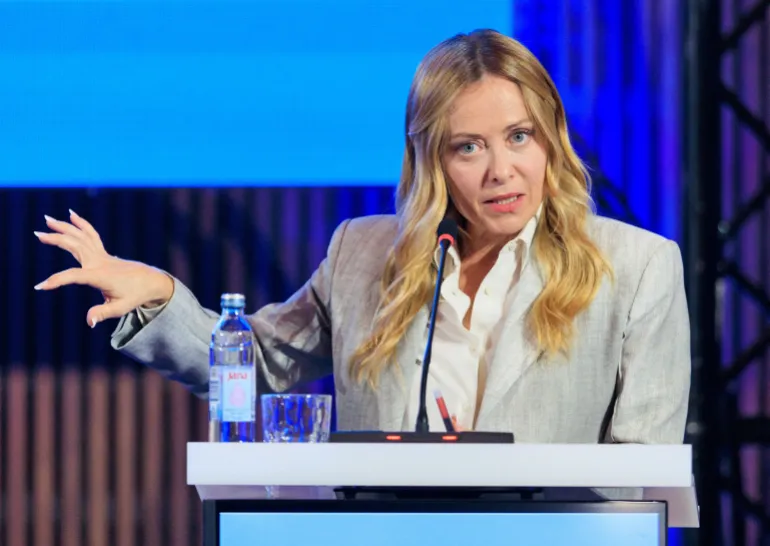
Italy’s parliament is voting on Thursday on a new electoral law that would make it easier for election winners to form a majority government.
The law, proposed by Prime Minister Giorgia Meloni, would award extra seats to any party or coalition that obtains more than 42 percent of seats in both parliamentary chambers, ensuring it holds a majority.
Recommended Stories
list of 3 itemsend of list
Meloni has framed the legislation as a route to greater stability in Italy’s political system, which has often been run by fragile coalition governments. Her critics, however, say the move is actually aimed at boosting her own chances in elections next year.
Here’s what we know about the electoral law and what it means for Italian politics:
What is Italy’s current electoral system?
Italy currently has a mixed electoral system for its 600-seat parliament, with about 36 percent of members of parliament elected directly in constituencies where the candidate with the most votes wins, and the rest decided through proportional representation.
The system, called “Rosatellum”, has been in place since 2017. It encourages coalition-building but can produce fractured results that make a governing majority hard to forge.
What would the new law change?
The new legislation would replace the mixed electoral system with a fully proportional one, as well as awarding extra seats to the party or coalition that wins the most seats if it secures at least 42 percent in both chambers.
The bonus would be as many as 70 seats in the 400-member Chamber of Deputies, the lower house, and up to 35 seats in the Senate, which has 200 elected members.
That means if a party or coalition meets the 42 percent share threshold in both chambers, it would have stronger power to govern. If no party or coalition meets the threshold, representation would be decided proportionally.
The new law would also force coalitions to announce their candidates for prime minister before the elections. Rado Fonda, head of research at Italian pollster SWG, told the Reuters news agency this provision could “prove problematic for the centre-left, potentially forcing an early leadership contest and exposing divisions that could weaken the bloc”.
Meloni, who currently leads the country’s longest-serving government since World War II, has said the reform will help stabilise the country rather than serve any one political group. “Whoever wins the elections will have the numbers to govern,” she said.
What stage is the legislation at?
The proposed law has already been approved by the Senate and must now undergo a final secret-ballot vote in the Chamber of Deputies.
Giovanni Orsina, a political scientist at Rome’s Luiss Guido Carli University, predicted that the law is “extremely likely” to pass.
If it fails, Meloni has said she will resign.
Italian Prime Minister Giorgia Meloni speaks during the MED9 Summit, in Split, Croatia, October 7 [Antonio Bronic/Reuters]
Why is the legislation controversial?
Opponents say the law is undemocratic because it could potentially grant a winning coalition a disproportionate level of power in parliament.
They also say that the legislation is intended to favour Meloni, whose Brothers of Italy party (Fdl) is bracing for a tough election battle next year.
Riccardo Magi, head of the liberal More Europe party, who is on a hunger strike to protest the proposed reform, has called it an “anti-democratic law” that risks giving a minority bloc a huge majority in parliament.
Senator Matteo Renzi, who leads the Italia Viva party, has accused Italy’s governing coalition of pushing the electoral reform due to a fear of losing power.
Other critics have pointed out that the law would do little to stabilise the political system if no party or coalition reaches the 42 percent threshold in both chambers – a relatively high bar.
“This could produce a hung parliament, making post-electoral negotiations necessary to form a government,” Vincenzo Emanuele, a political science professor at Luiss Guido Carli University in Rome and a member of the Italian Center for Electoral Studies (CISE), told Al Jazeera. “Even relatively small changes in coalition composition could make the difference between a clear parliamentary majority and a situation of political deadlock.”
When are Italy’s next elections, and what do the polls show?
Italy’s next general election must be held by December 22, 2027, although the government can call elections earlier if it wishes.
Currently, Meloni’s Fdl is polling ahead of all other parties, with 27 percent support, according to Politico’s polling aggregator. Her coalition partners, Lega and Forza Italia, have a combined 12 percent support, according to Politico, bringing the coalition share to 39 percent.
Fdl’s polling has been dented by support for a new far-right group, Futuro Nazionale (National Future), Reuters reported. It currently has 7.8 percent support, according to Italian polling institute SWG.
In opposition, the Democratic Party (PD) has 21 percent support, the Five Star Movement (M5S) has 12 percent and the Alliance of Greens and Left (AVS) has 6 percent, according to Politico. The Italy Viva (IV) and More Europe parties have 2 percent support each.
Emanuele said the current landscape means the proposed electoral law would not necessarily favour Meloni and could even benefit the opposition.
He said recent simulations by the CISE have shown that a centre-left coalition including the PD and M5S could potentially reach 44 percent of the vote, securing a “comfortable parliamentary majority”, though that could change if Meloni allies with National Future.
“The reform does not inherently favour the incumbent government: Its effects will depend crucially on how the competing coalitions are formed,” said Emanuele.
Dozens of people have been injured in the protests, including students, teachers, and police officers.
Published On 8 Oct 20268 Oct 2026
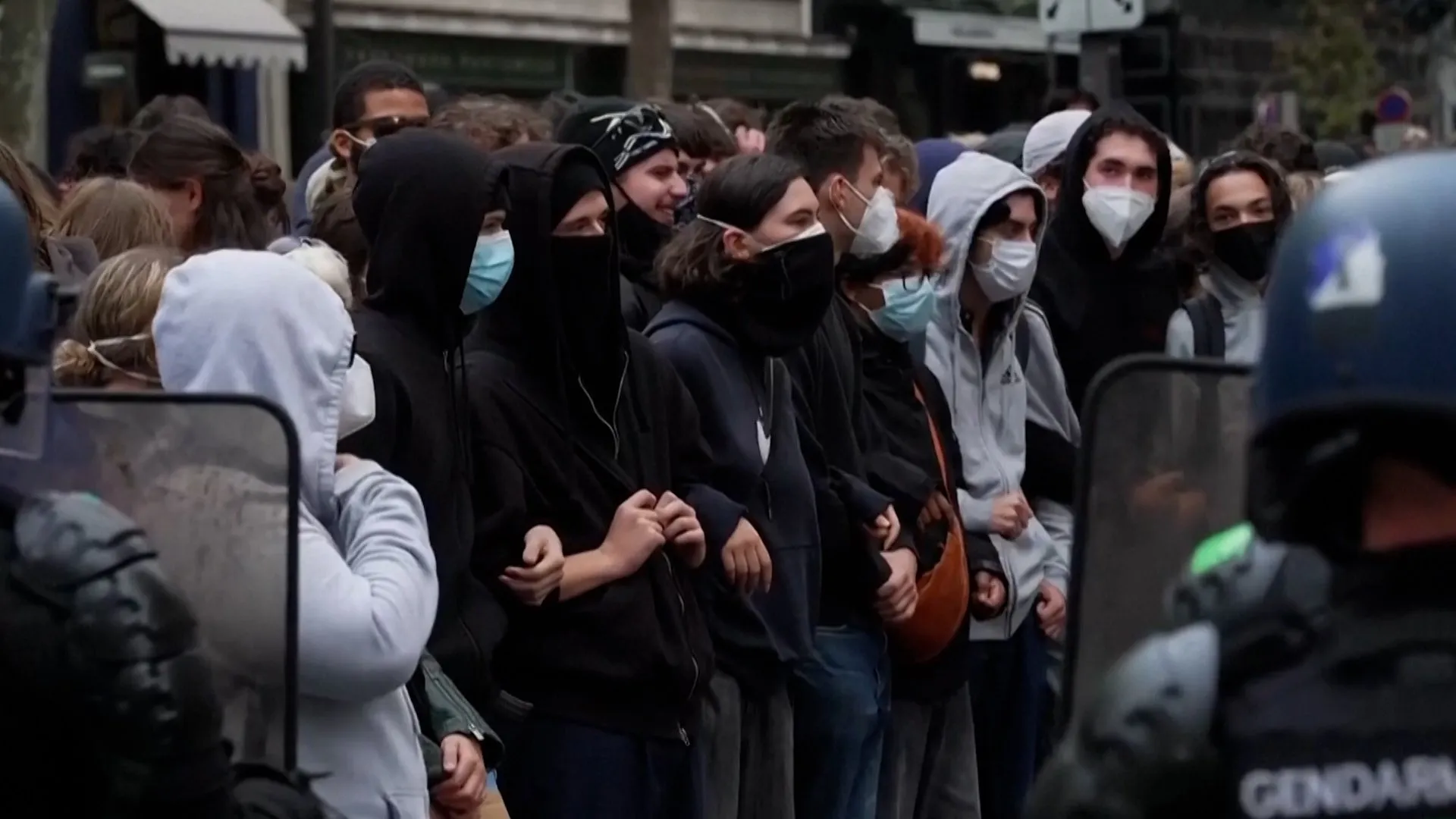
Protests have resumed at schools across France as high school students press on with demands for more education funding and better conditions, the day after the country’s prime minister ordered ministers to provide an action plan.
Reporting from Paris, Al Jazeera’s Natacha Butler said university students and more trade unions have joined the nationwide protests and that a large rally is expected in the capital on Thursday.
Recommended Stories
list of 4 itemsend of list
“They are moving around, trying to block off the streets,” Butler said from outside one school, where university students were barricading a large area.
“They are out, they say, in solidarity with high school students because they say it’s important that as many young people join in the protests as possible,” she added.
The wave of protests began in a high school in a deprived area of Paris on September 21 . Tens of thousands of students across the country have since marched with a range of demands, from renovated school buildings to fewer classroom hours.
Police response under scrutiny
Rights groups have accused security officials of using disproportionate force against protesters.
Several demonstrators have been injured, including one teenager who lost a hand and another whose jaw was shattered by an exploding stun grenade. They have since been banned at marches.
Police officers and teachers have also been injured, authorities say, accusing students of committing violent acts. At least 6,600 arrests – mostly of minors – have been made so far, according to the Interior Ministry.
Authorities said 375 schools were either fully or partially closed on Thursday, and that two dozen had been burned or destroyed.
The demonstrations are increasing pressure on the cash-strapped outgoing government of Emmanuel Macron ahead of April elections.
Prime Minister Sebastien Lecornu condemned the violence in a TV address on Wednesday. He faulted “political leaders who use this anger to conduct their electoral battles”, after opposition leader Jean-Luc Mélenchon called for protesters to keep marching.
Lecornu has ordered ministers to provide an action plan responding to students’ demands by the end of the month, but protesters remain unconvinced.
“As far as they are concerned, the government only talks about solutions but never actually comes up with concrete actions, so they say they are going to keep coming out onto the streets until their demands are met,” Butler said.
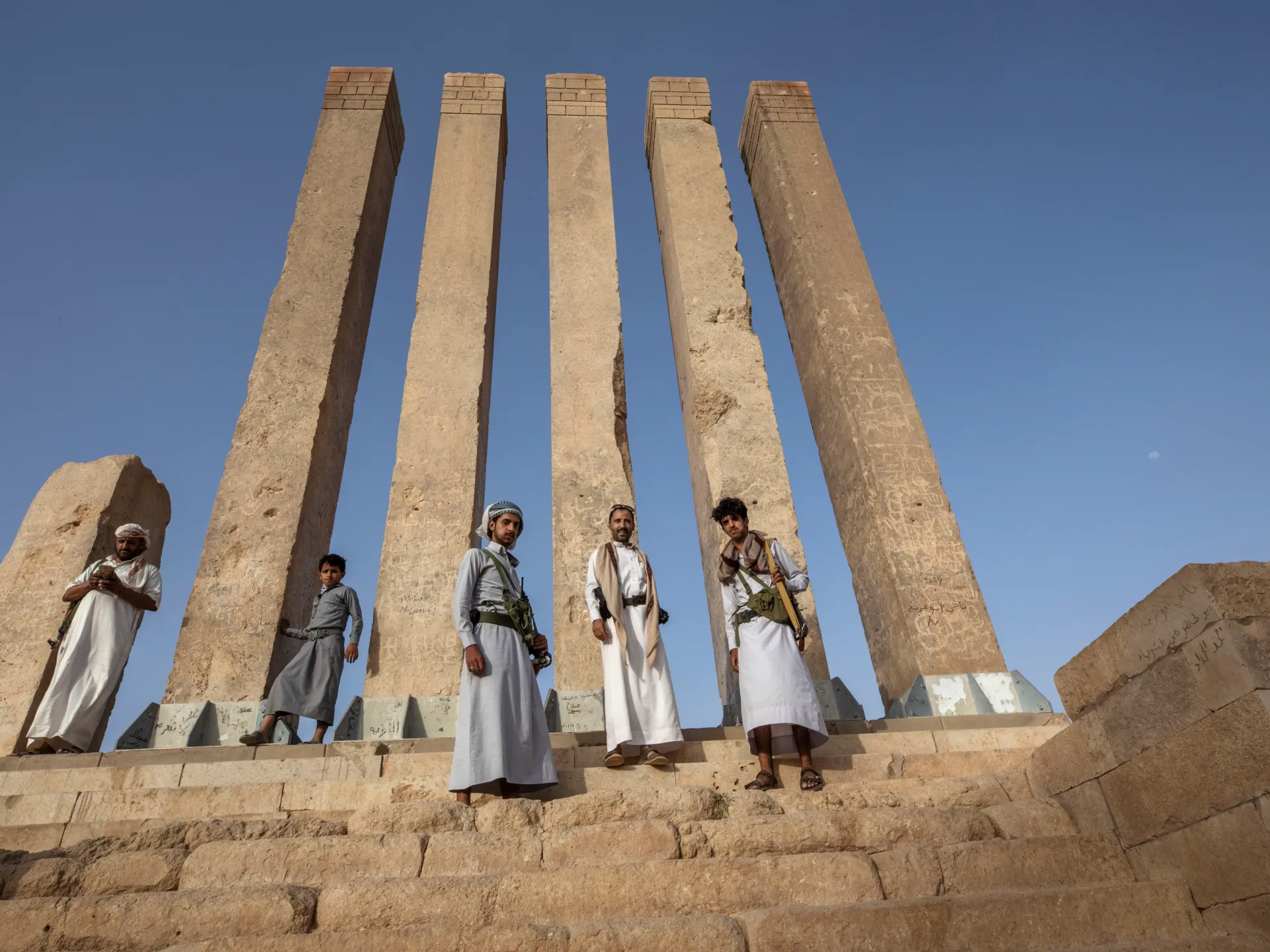
Sanaa, Yemen – The Yemeni government’s new military offensive against the Houthis is testing more than the balance of forces in the country – it is also testing whether the government can persuade powerful tribes in Houthi-controlled areas that the balance of power is beginning to shift.
For years, many of the tribes hostile or wary of the Iran-backed Houthis have stopped short of openly confronting the movement, deterred by their military strength and by previous failed uprisings. Those same tribes are now looking to the internationally recognised government’s newly-activated frontlines – on the Red Sea coast, Marib and al-Jawf primarily – to see if the limited advances made since the Dawn of Yemen military operation launch this week can turn into sustained gains.
Recommended Stories
list of 3 itemsend of list
The offensive by the Saudi Arabia-backed government forces follows major Houthi gains in September, when the armed group also known as Ansar Allah (Arabic for Supporters of God) swept across the country’s Red Sea coast. The Houthis captured vital trade corridors, including the port city of Mocha and territory around the Bab al-Mandeb Strait, one of the world’s most important shipping routes.
While airstrikes have inflicted losses on Houthi forces over the past few days, pushing towards Houthi strongholds where the group has been entrenched since the war started in 2014, including Sanaa, Saada, and Amran, remains a formidable challenge.
With the government declaring an all-out war on the Houthis, pledging to recapture Sanaa, tribal distrust of the government may diminish, prompting tribes to shift positions at the right time, experts say. The role of the tribes could therefore prove critical to the government’s ability to advance deeper into Houthi-controlled territories.
On Monday, Marib governorate – the government’s stronghold in the north – saw a large tribal rally attended by tribal sheikhs and local anti-Houthi fighters from tribes such as the Jadan from Marib, Nihm from Sanaa and other allied tribes.
The rally announced a general mobilisation to support the armed forces in the battle to “restore the state and topple the Houthi coup”.
“If this tribal support translates into actual mobilisation and sustained participation in the battle, tribes will help government troops advance toward Houthi-controlled areas and the Houthi heartland, including Sanaa,” said Adel Dashela, a researcher at the Sana’a Center for Strategic Studies.
Over the past decade of war in Yemen, tribes have repeatedly mobilised against the Houthis at a local level, but deep divisions and a lack of sustained outside backing have prevented the emergence of a unified tribal front. Nevertheless, tribes can potentially be a key source of manpower and influence for the government.
“Tribal fighters remain indispensable to any future campaign against the Houthis. But to be effective, their military engagement must occur through formalised state and coalition command structures, rather than as an independent vanguard,” Dashela said.
‘Wait for the right time’
Tribes in Yemen do not want to risk confronting Houthi forces without support, and they “wait for the right time” to act, Abdulsalam Mohammed, chairman of the Yemeni Abaad Studies and Research Center, said.
“The tribes seek a powerful state, and once they find the state reliable, they can side with it,” Mohammed said.
He added that tribes do not want to repeat mistakes made by tribes that had rebelled against the Houthis, and then not received enough support from the government.
“Those tribes revolted against the Houthis, and they were crushed amid the absence of the government’s effective role,” Mohammed said.
In January 2019, fighting broke out between the Houthis and the Hajoor tribe in northwest Yemen’s Hajjah, lasting several weeks. The Houthis eventually captured the Hajoor areas in March of the same year.
At the time, Saudi Arabia dropped food, medical supplies and weapons to besieged Hajoor fighters, but this did not prevent the tribe’s defeat by the Houthis.
Mohammed said that even in areas where the Houthis have local support, some tribes could gradually shift their allegiance towards the government, if they saw it as serving their interest.
“Not all tribes fighting for the Houthis are staunch supporters. Their motivations range from pragmatism to ideological loyalty and material necessity,” Mohammed said.
‘A friend of the tribe’
Over the past decade, the Houthis have weakened traditional tribal power structures in areas under their control, co-opting some leaders and replacing others with loyalists. They have defeated tribal challenges, and have withstood not only conflict with the Yemeni government and Saudi Arabia, but also bombing by the United States, the United Kingdom and Israel. All of that has reinforced a perception among tribes that the Houthi military capability had become “invincible”.
A tribal sheikh in northern Yemen, who asked not to be named for security reasons, told Al Jazeera that the Houthi military “supremacy” in the country over a decade-long war has “dwarfed the political and military role of the tribe”.
“Before the Houthi takeover of power, the government was like a friend of the tribe,” he said. “Today, the tribe is subordinate to the Houthis.”
The Houthis, according to him, used three tactics to tighten their grip on territories under their control: military force, financial incentives and their public identification with the Palestinian cause.
“The Houthis used military force if negotiations or financial incentives failed to win the tribes’ backing. Moreover, the Houthi military support for Palestine has earned the group additional popular and tribal support,” said the tribal figure.
As the Houthis built up enormous military and financial power over the past few years, the tribal sheikh said tribes acting alone could not match the group’s power. He also said that the government’s reported gains on some frontlines could not by themselves be taken as a sign that the Houthis were collapsing.
“A concrete government advance on the battlefields would reassure some Yemeni tribes that the Houthis have lost ground,” the tribal sheikh said. “Once this materialises, anti-Houthi and neutral tribes can feel confident and begin confronting the group.”
Thursday marks 30 days since Israel’s foreign minister ordered the closure of the UK consulate in occupied East Jerusalem.
Published On 8 Oct 20268 Oct 2026
Workers at the UK consulate in occupied East Jerusalem have removed its signage as the Israeli shutdown deadline arrives, further damaging strained ties between allies.
Journalists from the Reuters news agency saw workers remove a plaque reading “British Consulate General” from the building on Thursday, as well as another sign for its consular section. The UK flag was still flying over the building.
Recommended Stories
list of 3 itemsend of list
Thursday marks 30 days since Israeli Foreign Minister Gideon Saar ordered the closure of the consulate in occupied East Jerusalem. The move was in response to the UK’s wave of sanctions on illegal Israeli settlements, including a ban on importing goods made there.
The United Nations and most countries consider the settlements illegal under international law. Israel disputes this.
The United Kingdom threatened to expel 27 Israeli diplomats if Israel proceeded to close the consulate in occupied East Jerusalem, according to unverified Israeli media reports.
The consulate has not responded to an immediate request for comment.
Israel has been adamant the consulate will close even as the UK has sought to keep it open, including sending the country’s top national security adviser to Israel last week for talks.
The UK’s presence in the city dates back almost 200 years, long before the state of Israel was established in 1948. The closure order does not affect the UK’s embassy in Tel Aviv, which handles diplomatic relations with Israel’s government.
The consulate, in the Sheikh Jarrah neighbourhood of occupied East Jerusalem, handles the UK’s relations with Palestinians in Jerusalem, as well as in the occupied West Bank and Gaza. It also provides consular services to Palestinians.
The UK Foreign Office on Wednesday declined to comment when asked whether the consulate was still operating or if diplomats working there had returned to the UK.
Despite the current strains, the UK and Israel are close economic, security and intelligence partners.
The State Department has accused the official of paying bribes to Fijian citizens to advance Chinese interests.
Published On 8 Oct 20268 Oct 2026
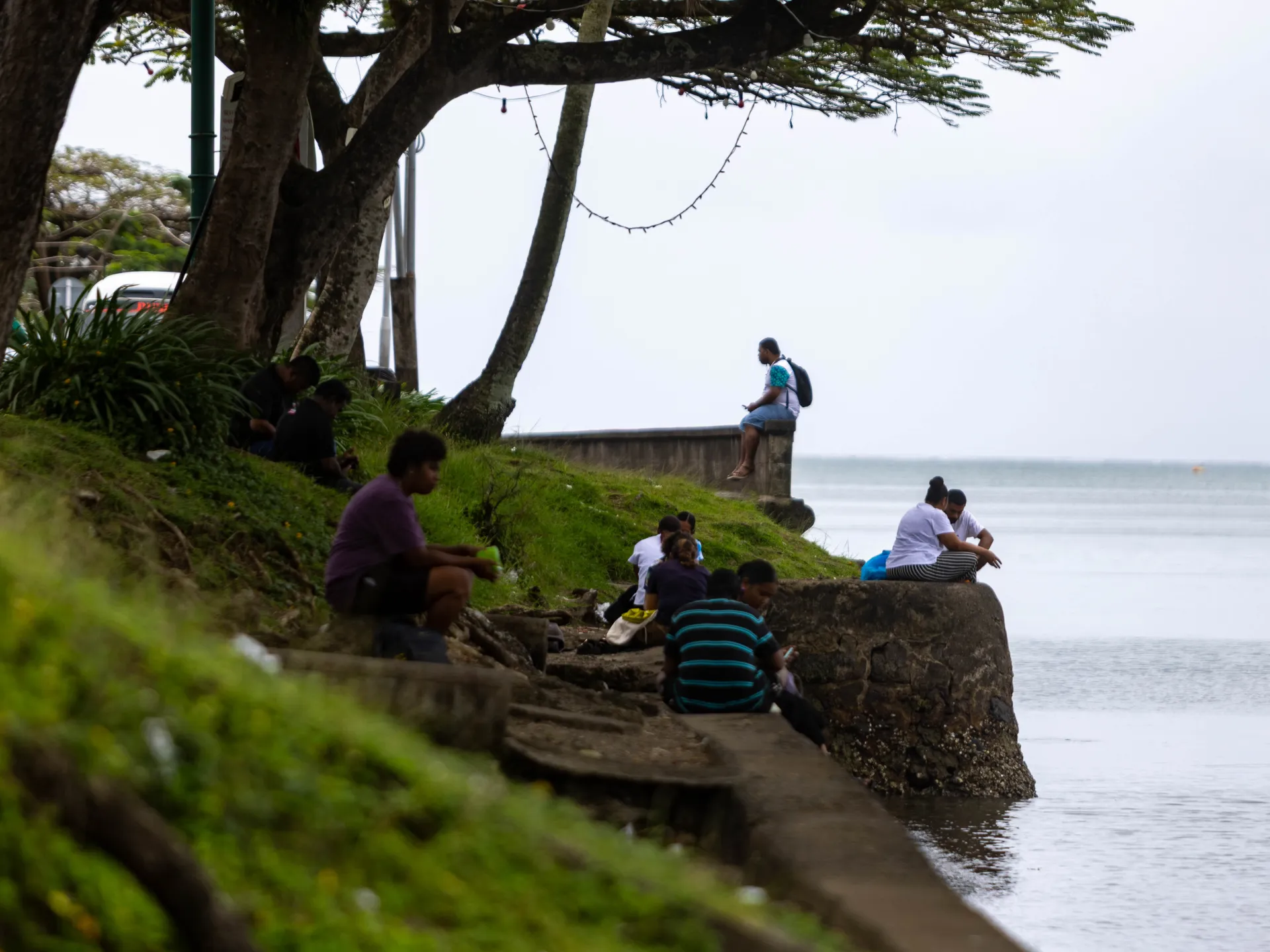
The US Department of State has publicly designated a Fiji-based man for his involvement in corruption on behalf of Chinese actors.
Zhao Fugang, the director of the Overseas Chinese Service Center, “abused his public position by paying bribes to Fijian citizens to advance China-based government, business, and criminal interests”, the State Department said in a press release on Wednesday.
Recommended Stories
list of 3 itemsend of list
“His actions constituted significant corruption and adversely affected U.S. interests in Fiji.”
The designation renders Zhao and his immediate family members “generally ineligible for entry into the United States”.
The US embassy in Suva, Fiji’s capital, said Zhao’s actions left the Pacific nation open to “malign foreign influence facilitated by Chinese government, business, and criminal actors”.
The embassy also said, “Public reporting shows an established trend of criminals operating across the Pacific with ties to China.”
Beijing says Overseas Chinese Service Centers help its nationals with administrative issues abroad, such as renewing driving licences. However, rights groups have alleged they are fronts for Beijing to push interests abroad, including the targeting of dissidents.
In February, the Trump administration sanctioned two leaders of Pacific island nations for alleged corruption tied to China. The US Department of State issued a notice alleging that Hokkons Baules, the president of Palau’s Senate, and Anderson Jibas, a former mayor in the Marshall Islands, had created openings for China to increase its influence in the region.
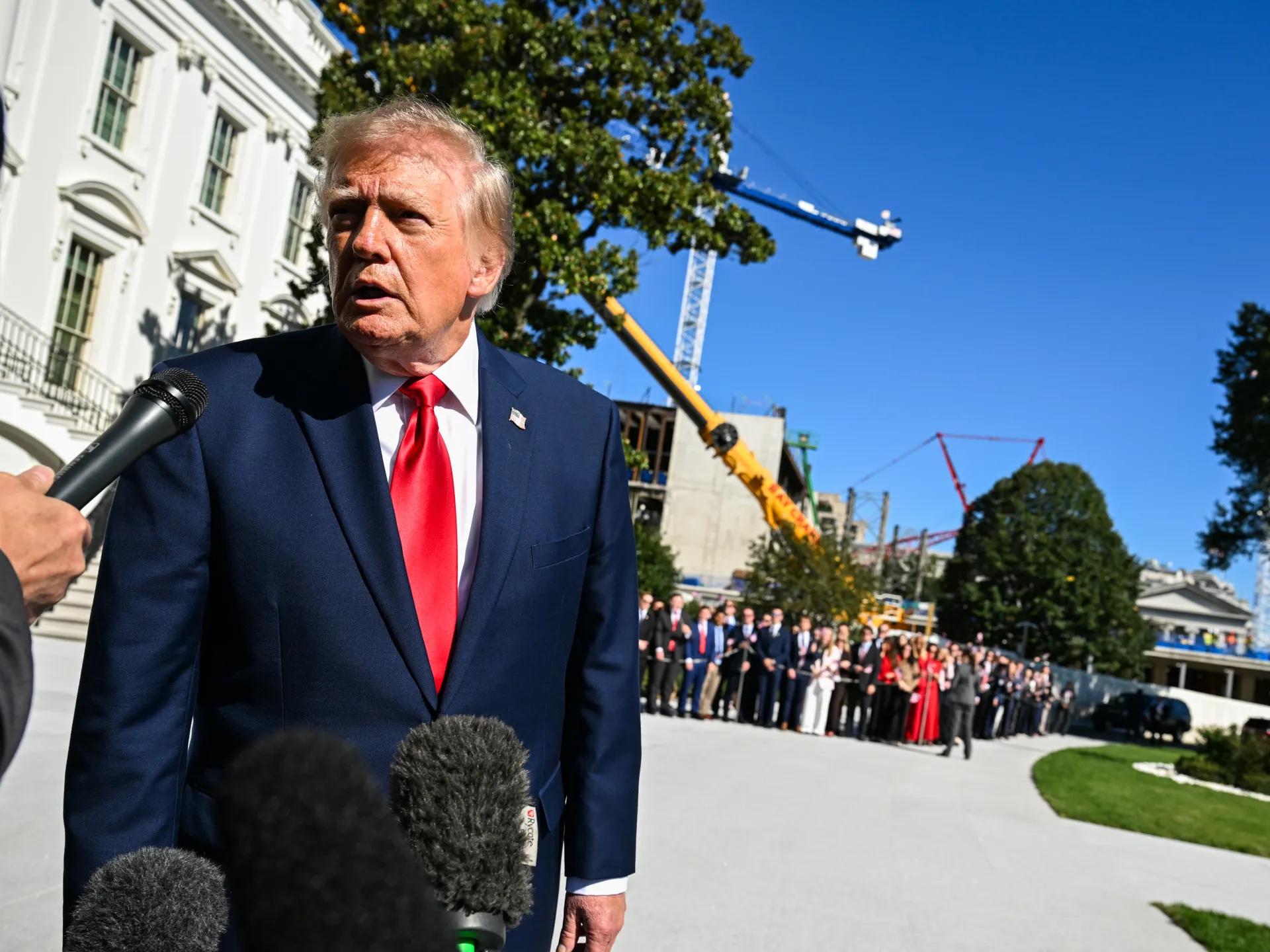
The Democratic National Committee has filed a lawsuit against United States President Donald Trump over television advertisements that were publicly funded and allegedly used to promote his political policies.
Ken Martin, who heads the Democratic Party’s leadership body, suggested in a statement on Wednesday that the ads were designed to bolster Republican odds in the upcoming November 3 midterm elections.
Recommended Stories
list of 3 itemsend of list
“Donald Trump is misusing millions of taxpayer dollars to fund pure propaganda ads in a last-ditch attempt to save Republicans in November,” Martin said.
Later that day, Common Cause, a democracy watchdog group, filed a second lawsuit over the same set of ads.
It argued that the ads were “overtly political” and therefore ran afoul of laws that bar public funds from being used for political propaganda.
“These ads are not public-service announcements,” Common Cause said in its lawsuit, citing a justification Trump has offered for the television spots. “They are personal publicity and political propaganda through and through.”
Both lawsuits argue that, to create the ad campaign, Trump directed the White House to repurpose $20m in funds that Congress allocated for commemorative activities related to border security, including for those killed in the line of duty.
That manoeuvre, they argue, violates the separation of powers established in the US Constitution.
“The founders made clear more than 200 years ago that the executive can spend money only according to Congress’s direction,” Common Cause’s lawsuit said.
The two lawsuits also point to a provision Congress includes in its appropriations bills barring the use of taxpayer funds for “publicity or propaganda purposes”.
Both complaints seek to have the ads declared illegal, and the expenditures stopped. They also call for steps to be taken to recover any money already spent on the ads.
The Democrats’ lawsuit was filed in Washington, DC, while the Common Cause complaint will be heard in the Southern District of New York.
Trump has faced mounting criticism over the ads, which began airing in September.
So far, the advertising campaign has cost more than $12m to run, according to the media tracking firm AdImpact.
The $20m Trump tapped for the ads comes from a $175m package Congress assigned to the Department of Homeland Security as part of Trump’s immigration enforcement agenda.
Critics have pointed out that one of the ads appears nearly identical to a television spot Trump used in his 2024 re-election campaign.
Three ads have aired so far. In one, a choir sings “love me” over a montage of Trump as he declares the US will “never be a communist country”. Another uses images of Mount Rushmore as Trump heralds a new “golden age of America”.
The third is darker: Trump walks towards the camera in black and white, warning of a “final battle” against the “deep state” and other perceived enemies.
On Wednesday, the news agency Reuters and the research firm Ipsos released a poll showing the ads are highly unpopular. Some 86 percent of the Americans surveyed, including four out of five Republicans, said it was inappropriate for Trump to have used public money for them.
Trump has defended the ads as “promotion for the country”, and he has argued they were similar to public outreach campaigns put out by previous administrations.
But after a bipartisan backlash, Trump said on Monday that taxpayer funds would no longer be used for future ads.
He did not, however, commit to paying back the money already spent on the existing ads.
Members of Trump’s Republican Party have been among those speaking out against the ad campaign.
Senator Thom Tillis, a Republican from North Carolina, said the advertisements resembled something former Hungarian leader Viktor Orban would put out.
Senate Majority Leader John Thune, meanwhile, indicated he agreed with the message in one of the advertisements, but he emphasised that “it shouldn’t be paid for with taxpayer dollars”.