Global

Understanding the value of gold: Prices, global reserves, and market trends | Business and Economy News

Interest in gold has skyrocketed in recent weeks, with the price of one ounce hitting an all time high of $5,600 on January 29 before settling back to just under $5,000 on Sunday.

As economic conditions fluctuate and geopolitical tensions rise, more individuals are seeking gold as a secure investment.

In this visual explainer, Al Jazeera breaks down how gold value is determined, the prices of gold coins in different markets, and the countries holding the largest reserves.

How is the value of gold measured?

Understanding the value of a gold item requires knowing its weight in troy ounces alongside its purity in karats.

INTERACTIVE - How is gold value measured-1770547787
(Al Jazeera)

Weight (in troy ounces)

The weight of gold and other precious metals like silver and platinum is commonly measured in troy ounces (oz t). One troy ounce is equal to 31.1035 grammes.

At $5,000 per troy ounce, 1 gramme of gold is worth about $160, and a standard 400-troy-ounce (12.44kg) gold bar costs $2m.

Troy ounces are different from regular ounces, which weigh 28.35 grammes and are used to measure everyday items including foods.

Purity (in karats)

Karat or carat (abbreviated as “K” or “ct”) measures the purity of a gold item. Pure gold is 24 karats, while lower karats such as 22, 18, and 9 indicate that the gold is mixed with less expensive metals like silver, copper, or zinc.

To determine the purity of gold, jewellers are required to stamp a number onto the item, such as 24K or a numeric value like 999, which indicates it is 99.9 percent pure. For example, 18K gold will typically have a stamp of 750, signifying that it is 75 percent pure.

Some typical values include:

  • 24 karat – 99.9% purity – A deep orange colour, is very soft, never tarnishes and is most commonly used for investment coins or bars
  • 22 karat  – 91.6% purity – A rich orange colour, moderate durability, resists tarnishing and most often used for luxury jewellery
  • 18 karat – 75% purity – A warm yellow colour, high durability, will have some dulling over time and most often used in fine jewellery
  • 9 karat – 37.5% purity – A pale yellow colour, has the highest durability, dulls over time, used in affordable jewellery

Other karat amounts such as 14k (58.3% purity) and 10k (41.7% purity) are often sold in different markets around the world.

When you buy jewellery, the price usually depends on the day’s gold spot price, how much it costs to make, and any taxes.

If you know the item’s exact weight in grammes and the gold’s purity in karats, you can calculate the craftsmanship cost on top of that.

You typically cannot negotiate the spot gold price, but you can often haggle over the craftsmanship costs.

The price of gold has quadrupled over the past 10 years

Gold has been valued for thousands of years, serving various functions, from currency to jewellery. The precious metal is widely regarded as a safe haven asset, particularly in times of economic uncertainty or market volatility.

Up until 1971, the United States dollar was physically defined by a specific weight of gold. Under the classical gold standard, for nearly a century, from 1834 until 1933, you could walk into a bank and exchange $20 for an ounce of gold.

In 1933, amid the Great Depression, the price was raised to $35 per ounce to stimulate the economy.

In 1971, under President Richard Nixon, gold was decoupled from the dollar, and its price began to be determined by market forces.

Over the past 10 years, the price of gold has quadrupled from $1,250 in 2016 to around $5,000 today.

INTERACTIVE - Timeline of price of gold-1770547790
(Al Jazeera)

How is the price of gold determined in different countries?

Gold is priced globally based on the spot market, where one troy ounce is traded in US dollars on exchanges such as London and New York. Local prices vary as the dollar rate is converted into domestic currencies, and dealers add premiums for minting, distribution and demand.

Taxes and import duties further influence the final cost: India adds 3 percent GST, while the United Kingdom and United Arab Emirates impose none on gold investments.

Different countries produce unique gold bullion coins and bars, each with its own distinct features and cultural significance. Notable examples include the Gold Eagle from the US, the Gold Panda from China, and the Krugerrand from South Africa.

INTERACTIVE - The gold price in different countries-1770551461

Which countries have the most gold reserves?

The US leads global gold reserves with 8,133 tonnes, nearly equal to the combined total of the next three countries. Germany is in second place with 3,350 tonnes, and Italy comes in third with 2,451 tonnes.

The graphic below shows the top 10 countries with the largest gold reserves.

INTERACTIVE - Which countries have the most gold-1770549820
(Al Jazeera)

Source link

India now sets the terms of global cricket | Cricket

After Pakistan announced their boycott of the forthcoming T20I World Cup match against India, the International Cricket Council (ICC) was quick to lament the position the Pakistan Cricket Board (PCB) had put fans in. “[Pakistan’s] decision is not in the interest of the global game or the welfare of fans worldwide,” the ICC said in a release, before going on to make special mention of “millions in Pakistan”, who will now have no India fixture to anticipate.

Through the course of this statement, and the one the previous week, justifying the ICC’s ultimatum to the Bangladesh Cricket Board (BCB) – which eventually led to Bangladesh’s exit from the tournament – the ICC leaned on ideals of fairness and equality. The “integrity and sanctity” of the World Cup was invoked, as well as the “neutrality and fairness” of such an event.

Pakistan’s fans may clock, of course, that they had not attracted such concern before the Champions Trophy in 2025, when India had refused to play in Pakistan for what were, in truth, purely political reasons. As it happened, a semifinal and the final of that tournament were eventually moved away from Pakistan, India’s cricketing magnetism pulling the knockouts to Dubai, after the ICC had adopted a “hybrid” model wherein India played all its matches outside the “host” country.

This was a key moment setting cricket on its current trajectory. In return for India’s refusal to play in its home country, Pakistan insisted they would not travel to India for this year’s T20 World Cup – two of the most storied cricketing nations on the planet descending to reciprocal petulance. In the lead-up to this World Cup, Bangladesh was also drawn into the fray, the Indian Premier League (IPL) franchise’s jettisoning of Bangladesh bowler Mustafizur Rahman prompting Bangladesh to demand all its matches be played in Sri Lanka (India’s co-host for this tournament), and that demand, in turn, leading to it being thrown out entirely.

All claims that any of these boycotts are founded on security concerns are, in fact, bogus; security assessments ordered by the ICC had found India sufficiently equipped to handle Bangladesh’s visit, while Pakistan had hosted ICC-sanctioned international cricket involving multiple touring teams, and Pakistan had played an entire One Day International (ODI) World Cup in India as recently as 2023.

What is also clear, however, is that the ICC has now allowed its sport to become the medium through which South Asian states, currently as riven as they have been for decades, exchange geopolitical blows. What’s more, the ICC has begun to favour one set of geopolitical ambitions over others, India never so much as copping a censure for its refusal to play in Pakistan, while India’s men’s team’s refusal to shake hands with the Pakistan players in last year’s Asia Cup has now been adopted across the Board of Cricket in Control’s (BCCI’s) teams – the women’s and Under-19 (U19) sides following suit. To take the ICC at face value would also require believing that ICC Chair Jay Shah is conducting his business in complete separation from Amit Shah, who is India’s home minister.

It is India’s stupendous cricket economy that has chiefly brought about this imbalance. Since 2014, when a Big Three (India, Australia, England) takeover at the ICC diverted cricket to a hypercapitalist path, the game’s top administrators have been adamant that it is profits that must define cricket’s contours. Because India is the wellspring of much of the game’s finances, the ICC has organised for the Board of Control for Cricket in India (BCCI) to receive close to 40 percent of the ICC’s net earnings, while international men’s cricket largely surrenders a fifth of the calendar to the IPL. The sport’s high-octane driver of financial growth demands protection, or so the official line goes. If member boards fail to align with the BCCI agenda at the ICC, it has long been taken as read that the BCCI may threaten to cancel India’s next tour of that country, which in turn may shatter the smaller board’s revenues. The vote to issue that ultimatum to the BCB had run 14-2 against Bangladesh. A board must never forget at whose table it eats.

A cricket world that has spent 12 years lionising economic might cannot now be surprised that politics has now begun to overrun even the game’s financial imperatives. That monopolies tend to lead to appalling contractions in consumer choice has been a fundamental tenet of economics for generations. Hundreds of millions of Bangladesh fans are about to discover this over the next few weeks, as will the remainder of the cricketing world on February 15, when India and Pakistan were due to play. That profit-driven systems, which equate wealth with power, frequently lose the means to check the most powerful, is another longstanding principle in political economics.

The tournament’s competitive standards will also undoubtedly slip for Bangladesh’s absence. Bangladesh have a body of work in cricket that, respectfully, utterly dwarfs that of Scotland, who have replaced them. There are warnings here, too, for other cricketing economies. Although broadcast revenues from Bangladesh are a mere sliver of the mountains India presently generates, macroeconomic indicators from Bangladesh (a growing population, an improving gross domestic product (GDP) per capita and Inequality-adjusted Human Development Index (IHDI) ranking) suggest that market is set to grow in future decades. If the ICC is willing to freeze a Full Member with Bangladesh’s potential, what will it do to more vulnerable boards – Sri Lanka, New Zealand, and the West Indies, for example?

The irony for many boards is that they have largely served the BCCI’s agenda at the ICC for a dozen years, helping extend its financial dominance. Since the Big Three first carved up governance and finances at the ICC in 2014, most smaller boards have been enthusiastic supporters of the BCCI’s programme, believing that only by appeasing India can they survive, which in itself is a tacit admission of a galling lack of ambition. And still, a dozen years of carrying this water has delivered them to no less bleak a position. In fact, several of the smaller Full Members have regressed..

Sri Lanka Cricket, for instance, has in recent years been among the BCCI’s most loyal allies. But it has now been a dozen years since any of their senior teams made the semifinal of a global tournament. Their Test cricket survives, but barely – the schedule is increasingly thin. Sri Lanka men only have six Tests on their slate in 2026, having had as few as four Tests to play last year. Cricket West Indies, meanwhile, has not seen a major resurgence on the field either, their men’s T20 fortunes having subsided since 2016, while both their men’s and women’s ODI teams have failed to qualify for the most recent World Cups. Zimbabwe Cricket is in no less challenging a footing now than it was two decades ago.

New Zealand and South Africa have held their own on the field, especially in women’s cricket and in the Test format. But to get here, Cricket South Africa (CSA), in particular, has had to be publicly chastened by the BCCI – in 2013, when India shortened a tour there because the BCCI resented the appointment of a CEO it didn’t like. More recently, South Africa’s top T20 league has also failed to feature Pakistan players, because each of the SA20’s franchise owners has a base in India. Excluding sportspeople based on the circumstances of their birth cuts hard against the ethos of post-Apartheid sport in South Africa. And yet even this national ambition has been subjugated by Indian political interests. Smaller boards have become so reliant on funds flowing from India that India increasingly chooses the terms of their cricketing survival.

Now, a World Cup is about to begin with Bangladesh having learned the harshest lesson of all. The BCB had been among the first of the smaller boards to sign away power to the Big Three during the first takeover in 2014. In 2026, the BCB now finds itself deeply out of favour for non-cricketing reasons.

India is inarguably the greatest cricketing superpower there ever has been. Even in the days of the Imperial Cricket Conference (the ICC’s predecessor), Australia and England could perhaps be relied on to check each other’s most predatory instincts. Such checks do not hold when one board is the sun, and the remainder are merely planets in its orbit. Perhaps the lesson for CA and the ECB – the BCCI’s most eager collaborators – is that the time may be coming when India has decided they are past their use-by date too. Why shouldn’t the BCCI freeze them out eventually? Would India not merely be doing what all superpowers tend to do, which is to leverage its stupendous power until all others either conform or are cast off? And why should the BCCI’s ambitions fall short of gobbling up even those established markets?

Cricket is now making clear its allegiances, and despite the ICC’s rhetoric, its commitments are no longer to neutrality and competitive equilibrium which are such vital rudiments of any sport. Other boards have allowed India’s will to prevail to such an extent that its motives now need not be merely economic; they can be nakedly political. And cricket is being eaten alive in this dark intersection between money and politics.

The views expressed in this article are the author’s own and do not necessarily reflect Al Jazeera’s editorial stance.

Source link

‘US’s critical minerals summit will burden Global South with most costs’ | Al Jazeera

The United States has hosted its first critical minerals summit aimed at challenging China’s dominance of the global supply chain for rare earth elements. But political economist Stefan Zylinski warns that Global South countries are likely to bear the greatest cost from any plan conceived by the Global North.

Source link

Who are the global stars to follow at Milan-Cortina 2026?

Lindsey Vonn skiing, Ilia Maninin performs figure skating trick and Eileen Gu does freestyle skiing trickImage source, Getty Images

Around 2,900 athletes from more than 90 countries will compete on the ice and snow at Milan-Cortina 2026.

The world’s biggest winter sports stars will descend on northern Italy from Friday 6 February and there’s certain to be thrills, drama and breakout performances.

BBC Sport takes a look at some of the global stars and stories to look out for.

Lindsey Vonn – alpine skiing

USA's Lindsey Vonn competes during the Women's Super G event of FIS Alpine Skiing World Cup in Tarvisio, ItalyImage source, Getty Images

Age: 41 Nation: United States

Just five days before the women’s downhill event takes place in Cortina, Olympic champion Lindsey Vonn announced that she had ruptured her left anterior cruciate ligament but is still hopeful that she can compete on Sunday.

Vonn was airlifted to hospital in Switzerland after crashing in the final World Cup race of the season but remains determined to compete in her fifth Olympics, despite the serious injury.

The veteran skier is no stranger to a comeback having retired in 2019 because of injury before undergoing partial replacement knee surgery on her right knee and returning to the sport in 2024.

The four-time overall World Cup winner is unsure whether she will be able to compete in the super-G and team events but, as a heavy favourite for the downhill gold before suffering the injury, she is determined to make the start gate at what will likely be her last Olympics.

Mikaela Shiffrin – alpine skiing

Mikaela Shiffrin of Team United States in action during the Audi FIS Alpine Ski World Cup Women's Slalom Image source, Getty Images

Age: 30 Nation: United States

Mikaela Shiffrin is the greatest alpine skier of all time and, competing at her fourth Olympics, has said she wants to “make peace” with the Games following disappointment in Beijing along with serious injury and mental health struggles.

The five-time overall World Cup winner has 108 World Cup wins, securing victory in the opening five slalom events of the season which, when added to her victory in the final slalom of last season, equalled her own record of six consecutive wins in the discipline.

But the two-time Olympic champion will be targeting a return to the podium in Cortina while her fiance Aleksander Aamodt Kilde is also on the comeback trail from a bad injury.

Maxim Naumov – figure skating

Maxim Naumov holds a photograph of his parents after competing in the Championship Men Free Skating during the 2026 United States Figure Skating ChampionshipsImage source, Getty Images

Age: 24 Nation: United States

American figure skater Maxim Naumov’s participation in the Milan-Cortina Games could be emotional as he makes his Olympic debut after his parents were killed in a plane crash in Washington DC last year.

Naumov’s dream to make Team USA was one of the last things he spoke about with his parents before they were killed.

His parents, Vadim Naumov and Evgenia Shishkova, skated for Russia and were world champions in pairs figure skating in 1994.

Emily Harrop – skimo

Emily Harrop of France participates in the Individual Race Women's event at the ISMF Ski Mountaineering World Cup Comapedrosa Andorra 2025 Image source, Getty Images

Age: 28 Nation: France

Ski mountaineering, or ‘skimo’, is making its Olympic debut at Milan-Cortina and, while Great Britain have failed to qualify an athlete in the Games’ new sport, France’s Emily Harrop is the next best thing.

With English parents, Harrop could have competed for Team GB but having relocated to the French Alps as a child she opted to represent France.

Harrop is well placed for an Olympic medal having finished the 2025 season with seven wins out of seven races at the ski mountaineering World Cup, winning the sprint and overall crystal globe for the fourth consecutive season.

Jutta Leerdam – speed skating

Jutta Leerdam during the match between Olympisch Kwalificatietoernooi v day 4 at the Thialf Image source, Getty Images

Age: 28 Nation: Netherlands

Dutch speed skater Jutta Leerdam will compete in the 1,000m and 500m in Milan.

A former world sprint champion, Leerdam also won a silver medal in the 1,000m at the 2022 Beijing Olympics.

She is also engaged to YouTuber-turned-boxer Jake Paul, who can often be spotted at competitions and will be cheering her on from the sidelines in Italy.

Finley Melville Ives – freestyle skiing

Finley Melville Ives of Team New Zealand competes in the first run of the Aspen Snowmass Men's Freeski Halfpipe Finals during the Toyota US Grand Prix 2026 at Aspen Snowmass Ski Resort Image source, Getty Images

Age: 19 Nation: New Zealand

Teenager Finley Melville Ives arrives in Italy as one of the most exciting prospects on the freestyle skiing circuit.

Ives’ parents are both snowboard instructors and his twin brother followed in their footsteps, but Ives opted instead for skis from a young age.

His breakout season came last year when he claimed his first World Cup victory in Calgary then weeks later became the halfpipe world champion in Engadin, Switzerland, beating Olympic greats Alex Ferreira and Nick Goepper along the way.

Eileen Gu – freestyle skiing

Eileen Gu Ailing of China competing in the Women's FIS Freeski Final on day three of FIS Freeski Halfpipe World Cup 2025 at Genting Snow ParkImage source, Getty Images

Age: 22 Nation: China

Born and raised in California, freestyle skier Eileen Gu was China’s poster girl for Beijing 2022, where – aged 18 – she won gold in the big air and freeski halfpipe competitions and silver in the slopestyle.

In addition to her Olympic triumphs, she is also a two-time world champion and three-time Winter X Games champion.

Away from the snow, Gu is one of the most famous winter sports athletes in the world and has modelled in New York, Barcelona, Paris and at Milan Fashion Week while also studying quantum physics at Stanford University.

NHL stars – ice hockey

Jack Eichel #9 of the Vegas Golden Knights faces off against Auston Matthews #34 of the Toronto Maple Leafs during the second period at T-Mobile Arena Image source, Getty Images

For the first time since Sochi 2014, the National Hockey League is permitting its athletes to participate in the Winter Olympics.

NHL stars did not travel to the 2018 or 2022 Games because of financial disputes and pandemic-related complications but will return to the ice this year.

In their absence, the last two men’s titles have been won by Olympic teams from Russia and Finland while the United States failed to win a medal at both events, but this could be a huge boost to their hopes of returning to the podium.

Chloe Kim – snowboarding

Chloe Kim of the United States reacts to an injury sustained during training prior to competing in the Women's Snowboard Halfpipe Finals during the Toyota US Grand Prix 2025 at Copper MountainImage source, Getty Images

Age: 25 Nation: United States

Eight years after winning gold as a 17-year-old in Pyeongchang, American halfpipe snowboarder Chloe Kim is going for a three-peat in Italy.

She successfully defended her title in Beijing four years ago but her preparations for Milan-Cortina have been disrupted after she dislocated her shoulder at the beginning of the year.

She said in an update on Instagram she was “good to go” for the Games, where she will aim to become the first woman to win three consecutive Olympic gold medals in the halfpipe.

Francesco Friedrich – Bobsleigh

Francesco Friedrich and Simon Wulff (GER) in action in Altenberg, GermanyImage source, Getty Images

Age: 35 Nation: Germany

Legendary German bobsleigh pilot Francesco Friedrich arrives in Italy hoping to become the first man do the treble double – winning two and four-man gold for the third Games in a row.

He is a 16-time world champion across the two and four-man events while he has well over 100 World Cup podium finishes, claiming a 50th victory in the two-man earlier this year.

Germany tend to dominate the Olympic bobsleigh events and the question is whether anyone can stop him from making history.

Arianna Fontana – speed skating

Arianna Fontana of Italy looks on after competing on the Women 1000m Quarterfinals on Day 1 of the ISU European Short Track Speed Skating Championships 2026 at IJssportcentrum Image source, Getty Images

Age: 35 Nation: Italy

Competing at her sixth Games, Arianna Fontana is an 11-time Winter Olympic medallist and has won medals at her five previous appearances – including as a 15-year-old in Turin.

Twenty years later, the short track skater is also aiming to compete in long track speed skating.

Two-time Olympic champion Fontana will also be one of Italy’s flag bearers at the opening ceremony at the San Siro.

Lucas Pinheiro Braathen – alpine skiing

Lucas Pinheiro Braathen of Team Brazil in action during the Audi FIS Alpine Ski World Cup Men's SlalomImage source, Getty Images

Age: 25 Nation: Brazil

Norwegian-born skier Lucas Pinheiro Braathen could make history in Italy by winning a first Winter Olympics medal for a South American country after he switched allegiance to compete for his mother’s home country of Brazil.

The slalom and giant slalom expert retired in 2023 having competed for Norway but returned in 2025 to represent Brazil and became the first Brazilian to finish on a World Cup podium last year before claiming the country’s first victory this season to add to his five for Norway.

A charismatic and deep-thinking character, Braathen says that people don’t believe him when he tells them he represents Brazil in alpine skiing.

Adeliia Petrosian – figure skating

Adeliia Petrosian performs her free skate during Stage 4 of the 2025/26 Russian Figure Skating Grand Prix at CSKA Arena in Moscow, RussiaImage source, Getty Images

Age: 18 Nation: Independent Neutral Athlete

Russian skater Adeliia Petrosian is one of around 20 Russian or Belarusian athletes competing under a neutral flag in Italy.

The teenager had not competed internationally at senior level until the Olympic qualifiers because of the ban on Russian athletes but is a genuine medal contender having won the qualifying event.

She is coached by the controversial Eteri Tutberidze, who coached Kamila Valieva during the Beijing 2022 Olympics. Valieva was given a four-year ban for doping after she helped Russia to win team gold before it was then revealed she had failed a drug test before the start of the Games.

Ilia Malinin – figure skating

Ilia Malinin competes in the Championship Men Free Skating during the 2026 United States Figure Skating Championships at Enterprise Center Image source, Getty Images

Age: 21 Nation: United States

Ilia Malinin is the only skater to have successfully landed the quadruple Axel, skating’s most difficult jump, in competition, earning him the nickname the ‘Quad God’.

The American, born to Olympic figure skaters Tatiana Malinina and Roman Skorniakov, is the hot favourite for the men’s singles title in Italy with previous routines including seven quads and a back flip.

The reigning world champion will be competing at his first Olympics having controversially been left out of the US team in Beijing.

Source link

Scotiabank’s Global Head Of FICC On Staying Agile In A Volatile Market

Stephanie Larivière, managing director and global head of Fixed Income, Currencies, and Commodities (FICC) Sales at Scotiabank—which was named the Global winner of Best FX Derivatives Provider—explains how a client-first philosophy and advanced structured solutions enable businesses to proactively manage uncertainty, effectively diversify risk, and maintain agility in fast-moving currency markets.

Global Finance: Last year began with elevated G7 foreign exchange volatility driven by US election results, followed by a spike in volatility tied to the Trump administration’s tariff announcements. Implied volatility eventually subsided. Against this backdrop, how has client demand evolved for structured FX solutions and derivatives that combine FX with interest rate and other exposures?

Stephanie Larivière: Tariffs and the resulting uncertainty around international trade were top of mind for clients throughout 2025. In the first half of the year, the US Dollar Index vaulted back toward the highs we saw during the pandemic, and there were fears that it would be driven even higher as we grappled with the prospect of a global recession, given the US administration’s push for increased global tariffs. We saw increased interest in hedging and the need for structured solutions from clients in these early months as US dollar buyers worried about a sustained surge in the index and the impact on their cash flows. 

The outlook for exports to the US remains no less murky moving forward. As a result, client demand for structured FX solutions has only increased. Clients have focused on cost management and have incorporated flexibility into hedging programs via options-based solutions. By protecting existing profit margins while retaining the ability to participate in favorable moves in FX markets, these strategies have allowed clients to remain agile and adapt quickly to changing market conditions. 

GF: Have you observed currency diversification strategies or increased activity in non-dollar crosses from your customer base?

Larivière: The uncertain outlook for international trade and dissenting views on the Federal Reserve Open Market Committee have led to increased demand from clients to protect against further potential dollar weakness. As we settle into a lower-volatility regime, we have seen interest in expressing views in non-dollar crosses and some rotation into international and emerging-market equity exposure. 

One example was a strengthening Mexican peso as clients returned to expressing views via carry trades. We have also seen a weak Canadian dollar against other majors, driven by uncertainty over Canada’s budget, the size of the Carney government’s deficit, and questions about how the new US and Canadian administrations will work together. That said, the US dollar remains the dominant base currency in most commodities and currency trading.

GF: OTC interest rate derivative volumes have surged, nearly doubling for euro-denominated contracts and rising significantly for yen- and sterling-denominated contracts. How are clients adapting their strategies in response to this increased activity?

Larivière: There are a couple of factors at play here. Greater volatility in rates has caused volumes to surge. Central banks were also more in play over the second half of last year, which further contributed to this phenomenon. Both factors are responses to overexposure to the dollar and a shift to hedge against some of that exposure. We could see this continue to increase as larger institutional names right-size their exposure to the US.

GF: Are clients’ expectations changing around reporting transparency, multi-currency liquidity, and access to customized derivatives products?

Larivière: Clients are seeking bespoke hedging solutions built on a full suite of derivatives products across asset classes. These customized solutions are tailored to their unique company requirements, allowing clients to express market views while hedging underlying exposures. In addition to the increased flexibility these products provide, clients expect proactive advice that leverages expertise from sales, trading, strategy, and structuring teams.

At Scotiabank, we strive to provide thoughtful, well-coordinated ideas that help clients navigate the uncertainty of operating global businesses across borders in an uncertain international trade environment.

GF: What trends do you expect will shape FX and derivatives markets this year, particularly regarding volatility, market structure, and regulation?

Larivière: The Fed has embarked on a cutting cycle, though it remains unclear how deep the cuts will be. If yields continue to decline, we expect increased pressure on the dollar, leading to higher volatility. The FX market typically grows during periods of volatility; the shift away from yield-enhancement strategies toward a pickup in volatility should drive an increase in FX in 2026.

Another theme we are watching is the shifting regulatory landscape for digital assets. Regulatory changes that favor these assets will facilitate more interest and investment in the products.

Source link

Trade Didn’t Crack—It Shifted | Global Finance Magazine

The world braced for a Washington-made rupture last year. Trade held up, while China flooded many regions with its exports.

The world entered 2025 expecting a trade shock stamped “Made in Washington.” US President Donald Trump vowed to shrink chronic deficits and pledged a tariff-driven reset that would force companies—and trading partners—into new lanes. The shock never fully arrived.

Global commerce kept moving, prices for traded goods didn’t spiral, and exemptions and carve-outs softened the blow. The year still produced a real shift in the trade landscape—just not the one most people were watching for. China’s export engine accelerated, widening its surplus and pushing its cheaper goods deeper into markets in Southeast Asia and Europe, to the concern of those regions.

Meanwhile, the fastest-growing slice of trade wasn’t steel, cars, or containers; it was services. “Trade in services is growing at least twice as fast as trade in goods, and the US is a very important player there,” says Marc Gilbert, who leads the Center for Geopolitics at the Boston Consulting Group (BCG).

The Shock That Wasn’t — And The Shifts Nobody Saw Coming

As the dust begins to settle on a tumultuous 2025, the trade outlook for this year appears calmer. Trump is looking toward the midterm congressional elections, with an electorate fixated on rising prices that his tariffs can only aggravate. Old-fashioned political upheaval could accelerate, though, as the US leader threatens military action in half a dozen countries. “This year should see more economic stability but more geopolitical volatility,” says Cedric Chehab, Singapore-based chief economist at BMI, a subsidiary of Fitch Solutions.

Marc Gilbert, who leads the Center for Geopolitics, Boston Consulting Group

Trump’s 2016 election, followed by the supply chain disruptions of the Covid-19 pandemic, set in motion new megatrends in world trade and international relations: diversification of supply chains to avoid bottlenecks, “China+1” investment—in which companies keep operations in China while expanding production elsewhere—to reduce dependence on Beijing, a US leaning more toward its American neighbors, and South-South trade growing faster than commerce with either of the two superpowers.

All should continue into 2026 unless they don’t: for instance, if Trump decides to tear up the US-Mexico-Canada Agreement (USMCA), which is up for review this year; if China decides the time is ripe to force “reunification” with Taiwan; if Trump reinstates the 10% tariff on Europe that he recently shelved amid European opposition to his Greenland acquisition demands; or if the US Supreme Court, in a case now before it, strikes down the legal strategy underpinning his tariff regime, triggering a torrent of lawsuits by companies seeking refunds of tariffs already paid.

“Every executive in the world is thinking about the balance between efficiency and resilience,” says Drew DeLong, global lead of Geopolitical Dynamics at consulting firm Kearney. “The age of corporate statecraft is beginning.”

Trump turned the world on its head with his April 2 announcement of the eye-popping “Liberation Day” tariffs. By year’s end, the globe was back on its feet, largely because Trump lowered many of his announced duties. The US goods trade deficit fell to multiyear lows in the last few months of the year. But that may have reflected importers drawing down inventories that had swelled ahead of expected tariffs.

For the rest of the world, commerce had a bumper year. According to UN Trade and Development, combined goods and services trade surged by 7% to more than $35 trillion. The price of traded goods rose at a tolerable pace despite rising US levies and actually fell in the fourth quarter. “The rhetoric on trade contraction is way ahead of the data,” says Gary Hufbauer, a senior fellow at the Peterson Institute for International Economics (PIIE).

The US is less important in this picture than it might appear from Washington, accounting for just 16% of global imports, BCG’s Gilbert estimates, although as much as 40% might be “affected” by the No. 1 economy. That includes, for example, components shipped from one Asian country to another for a product ultimately sold in the US.

After US stocks crashed 12% over the week following the April 2 announcement, Trump quickly backpedaled from his Liberation Day targets. Baseline tariffs on major trading partners outside North America—the EU, Japan, and South Korea—settled at 15%-20%. With US manufacturers paying similar rates on imported raw materials or components, the result was something like an even playing field. The Trump administration steadily issued tariff exemptions for irreplaceable imports, including semiconductors and pharmaceuticals as well as coffee and bananas.

China’s Trade Boom

Trump has also made concessions to archrival China, as President Xi Jinping pushed back by threatening to disrupt the flow of essential rare-earth metals. While the US baseline tariff on China remains at 45%, exemptions and carve-outs reduced the effective rate to half that level. “The established trajectory is for the US to end up tariffing other countries as much as China,” says Brad Setser, a senior fellow at the Council on Foreign Relations (CFR) in Washington.

While US policy gyrated, China’s trade trajectory was consistently upward last year. Beijing’s global trade surplus surged by 20% to nearly $1.2 trillion. It offset falling US sales with a more than 10% increase in sales to nations in Southeast Asia, collectively China’s biggest market, and a greater than 8% rise in exports to the EU.

This breakout year capped a decade-long shift in global trade from the US to China. That shift has made export-led growth much more difficult for emerging economies, BMI’s Chehab says. “Ten or 20 years ago, most countries’ largest trading partner was the US, which ran trade deficits,” he says. “Now it is China, which runs surpluses.”

Customers everywhere are seeking instruments to stem the Chinese export tsunami. EU President Ursula von der Leyen has announced a policy of “derisking” from China. Japan is offering “China-exit subsidies” to suppliers who relocate elsewhere. Developing Asian markets are considering sectoral tariffs on steel and strategic products.

Success is unclear. A generation of policy and hard work has made China’s comparative advantage in manufacturing all but unassailable. “Energy prices are quite low, and they can produce on a scale that is incredible,” Chehab says.

China is expanding its dominance into key technologies of the future, particularly those essential for the green-energy transition. Shenzhen-based electric-vehicle champion BYD surpassed US-based Tesla as the global sales leader last year. Total clean-energy exports set new records for the first eight months of 2025, driven by a 75% increase in sales to ASEAN customers, according to industry monitor Ember Energy Research.

The world’s No. 2 economy maintains a lock on other, less flashy but no less essential technologies, from copper alloys to legacy microchips that have become too low-margin to interest Silicon Valley. “Synthetic fibers for apparel, lagging-edge chips: these are the kinds of areas where China says, ‘We are going to win,’” Kearney’s DeLong says.

And then there is the chokehold on rare earths that Xi has already effectively wielded against Trump. “China has got the West over a barrel, as things stand right now,” concludes James Kynge, senior research fellow for China and the World with the Asia-Pacific Programme at the UK think tank Chatham House. “It will take a decade or more to recreate viable parts of the Chinese supply chain in different geographies.”

China could rebalance its trade more effectively through internal policy changes that shift wealth to consumers. Increased purchasing power would boost imports and absorb some excess domestic manufacturing capacity. “The puzzle with China is the absence of imports, whether aircraft or European handbags,” CFR’s Setser says.

The most dramatic effect could come from Beijing instituting pensions and other social-welfare transfers on the model of fully developed economies, PIIE’s Hufbauer says. That does not seem to be on Xi’s agenda. “They do not want to build out a social safety net,” Hufbauer says. “They want to direct resources into frontier technology.”

What Will Happen To The USMCA?

In the US sphere, the main event of 2026 is a review of the USMCA, built into the agreement when Trump signed it during his first term in 2018. The president, true to form, has hinted at annulling the pact, which regulates about 30% of US trade. “We don’t need cars made in Canada. We don’t need cars made in Mexico,” he remarked while touring a Ford Motor factory in Dearborn, Michigan, in January.

Brad Setser, Senior Fellow at the Council on Foreign Relations

But Trump left most USMCA provisions untouched through 2025, and trade watchers are betting the accord will survive with relatively minor changes. US Trade Representative Jamieson Greer struck a more measured tone in congressional testimony in December. “The USMCA has been successful to a certain degree,” he testified. “From the information we have received from interested stakeholders, there is broad support for the agreement.”

“There’s a growing recognition of how important USMCA is,” DeLong says. “The US trade representative received over 1,500 comments from companies. I think it survives with stronger rules of origin and some incentives for specifically US content.”

If so, Mexico could emerge from the current trade upheaval as a big winner, with the North American nearshoring trend accelerating and Mexican President Claudia Sheinbaum toning down her predecessor, Andrés Manuel López Obrador’s, hostility toward business. “This whole story has been great for Mexico,” Hufbauer says. “They’ve improved their position in the US market.”

Over time, the dominance of China and the US in world trade will decline, BCG’s Gilbert predicts. The firm’s 10-year projections show US trade, including services, increasing by 1.5% annually; China’s by 2%; and the rest of the world’s by 2.5%.

One reason is simple arithmetic: India and parts of East Asia are growing faster than China, with explosive potential for both imports and exports. Vietnam’s position as a rising export power seems cemented; its trade volume shrugged off global turmoil, rising nearly 18% last year.

India, so far a domestically focused economy, is the global trade wild card as its economy continues to boom by more than 6% annually and multinational champions like Apple build advanced manufacturing there. “India has improved a lot on infrastructure and the availability of skilled labor,” Gilbert says. “It’s one to watch.”

The EU And Beyond

The world beyond the US and China is also striking back with a wave of diplomacy leaning toward free trade. The EU, sandwiched between Chinese competition and US protectionism, is taking the lead. The EU and India signed a two-way trade agreement on January 27 that slashes tariffs.

Brussels also inked a trade deal with South America’s Mercosur bloc, dominated by Brazil, early this year after a quarter-century of negotiations, although the EU Parliament voted to delay enacting it until it passes a legal review. New Delhi, stung by a 50% tariff Trump imposed as punishment for buying Russian oil, finalized a trade agreement with the UK last year.

London joined the other 11 members of the Comprehensive and Progressive Agreement for Trans-Pacific Partnership in late 2024, after Trump’s reelection. The United Arab Emirates, a rising power in the Middle East, is pushing for free trade with almost everyplace except Washington and Beijing. “Trade deals are happening in months that would have taken decades,” DeLong summarizes.

None of that means the world can easily return to the free-trading consensus that reigned in the decades following the Cold War. The supply chain shocks of the pandemic, China’s political assertiveness, and the working-class resentment across the developed world that Trump channels are pushing toward a new paradigm, though its details remain fuzzy at best. “There’s a positioning of economic security as national security,” DeLong says.

On the other hand, no one can repeal the law of comparative advantage in an ever more complex global economy. Experts’ discussions focus on how trade between nations might shift or slow, not reverse. “When you look at the data, you don’t see too much evidence of a global trade shock,” CFR’s Setser notes.

Within the US, Trump did not visibly turn any clocks back during the first year of his second term. Ed Gresser, director for trade and global markets at the Progressive Policy Institute in Washington, points out that both manufacturing employment and manufacturing’s share of GDP dipped in 2025.

Discontent with China’s export juggernaut might take a back seat in the coming years to fears that US-based internet and AI providers will control the global digital high ground, particularly if Washington continues to use it for geopolitical leverage. “The real growth areas in international trade are data and digitization, and it’s not lost on any nation that the US is a leading provider,” BCG’s Gilbert says.

All of the above leaves decision-makers at multinational corporations in an unenviable position: knowing the deck of world politics and trade is being reshuffled yet not knowing what hand they will ultimately be dealt. “C-suites are embedding geopolitics into strategic and capital allocation decisions in a much more formalized way,” Gilbert says. “But large capital outlays are still in the domain of planning and preparation.”

Notable exceptions were the so-called hyperscalers in AI and their suppliers, who are shelling out capital everywhere at once.

Maybe 2026 will bring more clarity. Maybe not.

Source link

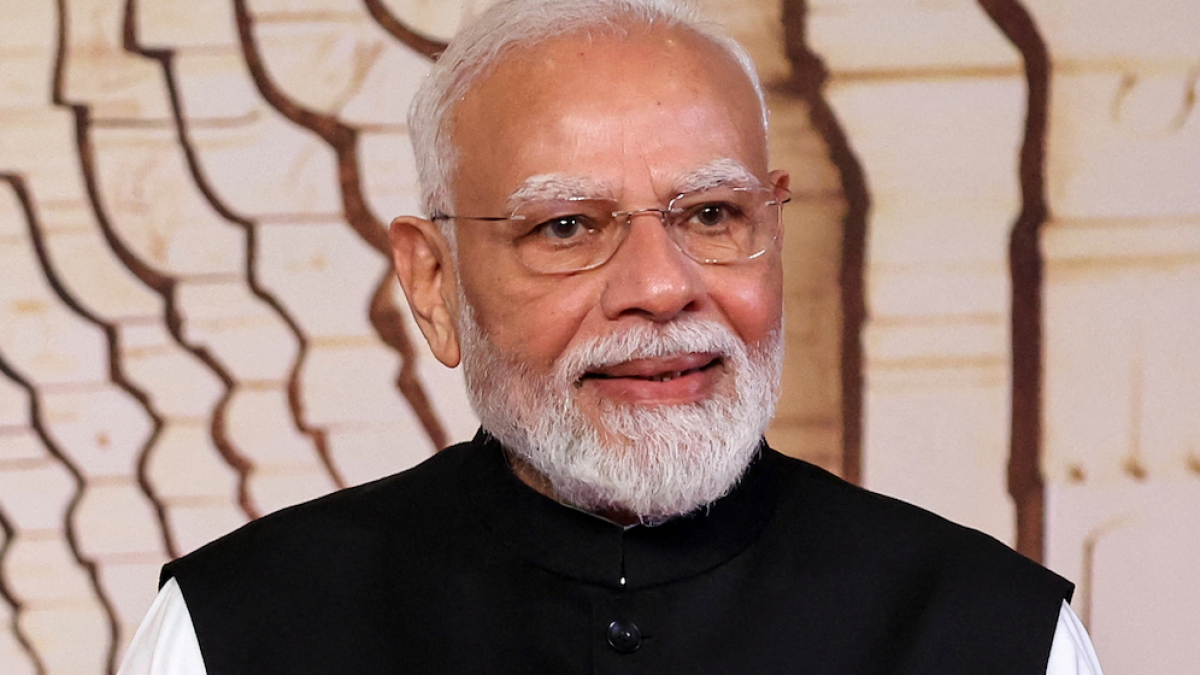
India’s budget bets on infrastructure, manufacturing amid global trade war | Business and Economy News

Modi’s government presents annual budget, focusing on sustaining growth despite volatile financial markets and trade uncertainty.

Indian Prime Minister Narendra Modi’s government has unveiled its annual budget, aiming for steady growth in an uncertain global economy rocked by recent tariff wars.

Finance Minister Nirmala Sitharaman presented the budget for the 2026-2027 financial year in Parliament on Sunday, prioritising infrastructure and domestic manufacturing, with a total expenditure estimated at $583bn.

Recommended Stories

list of 3 itemsend of list

India’s economy has so far weathered punitive tariffs of 50 percent imposed by United States President Donald Trump over New Delhi’s imports of Russian oil. The government has sought to offset the impact of those duties by striking deals, such as its trade agreement with the European Union.

Despite the past year’s challenges, the Indian economy has remained one of the world’s fastest growing.

The budget for the new financial year, which starts on April 1, projects gross domestic product (GDP) growth in the range of 6.8 to 7.2 percent, according to the government’s annual Economic Survey presented in Parliament. It is a shade softer than this year’s projected 7.4 percent but still outpaces estimates by global institutions such as the World Bank.

To keep growth strong, the government said it will spend 12.2 trillion rupees ($133bn) on infrastructure in the new fiscal year, compared with 11.2 trillion rupees ($122bn) last year. It will also aim to boost manufacturing in seven strategic sectors, including pharmaceuticals, semiconductors, rare-earth magnets, chemicals, capital goods, textiles and sports goods while stepping up investments in niche industries like artificial intelligence.

Despite plans to prop up growth with state spending, the government is aiming to bring down the federal government debt-to-GDP ratio from 56.1 percent to 55.6 percent in the next financial year and the fiscal deficit from its current projected level of 4.4 percent of GDP to 4.3 percent.

Sitharaman offered no populist giveaways, saying New Delhi would focus on building resilience at home while strengthening its position in global supply chains, marking a departure from last year’s budget, which wooed the salaried middle class with steep tax cuts.

Before the budget presentation, Modi on Thursday said the nation was “moving away from long-term problems to tread the path of long-term solutions”.

“Long term solutions provide predictability that fosters trust in the world,” he said.

Modi’s government has struggled to raise manufacturing from its current level of contributing under 20 percent of India’s GDP to 25 percent to generate jobs for the millions of people entering the nation’s workforce each year.

It has also seen a sharp decline in the value of the rupee, which has recently weakened to all-time lows after foreign investors sold a record amount of Indian equities. Those sales have added up to $22bn since January last year.

“Overall, this is a budget without fireworks – not a big positive, not a big negative,” Aishvarya Dadheech, founder and chief investment officer at Mumbai-based Fident Asset Management, told the Reuters news agency.

Source link

West Coast rapper Snoop Dogg aims to make Swansea City a ‘global name’

“We want to take Swansea to the Premier League, and to do that we are going to need money – that’s the reality of the game these days.

“I want to introduce sponsorship deals and publicity that will make them a global name.”

The West Coast rapper has sold more than 30 million albums worldwide but is yet to attend a Swansea game, though his son Cordell Broadus was in the directors’ box for the Welsh side’s draw with Watford last August.

American billionaire businesswoman Martha Stewart, who joined Snoop Dogg and Real Madrid legend Luka Modric as a Swansea co-owner in December, was in Wales for the game against Wrexham just before Christmas.

Swansea have said Snoop Dogg is likely to attend a game at some point this season, though there is still no confirmation of when he may appear at the Swansea.com Stadium.

“For real I want to meet with the fans,” Snoop Dogg said.

“These fans are passionate, they are real, and I want to hear what they got to say when I am in Swansea.

“I knew I always wanted to invest in a soccer team – it’s been a dream of mine for years, it was all about waiting for the right opportunity.”

Modric was the first celebrity name to get involved at Swansea, with the former Ballon d’Or winner named as a co-owner last April.

Swansea’s American owners, led by Brett Cravatt and Jason Cohen, believe bringing in high-profile names at boardroom level will help increase the profile the club which will in turn boost income.

Source link

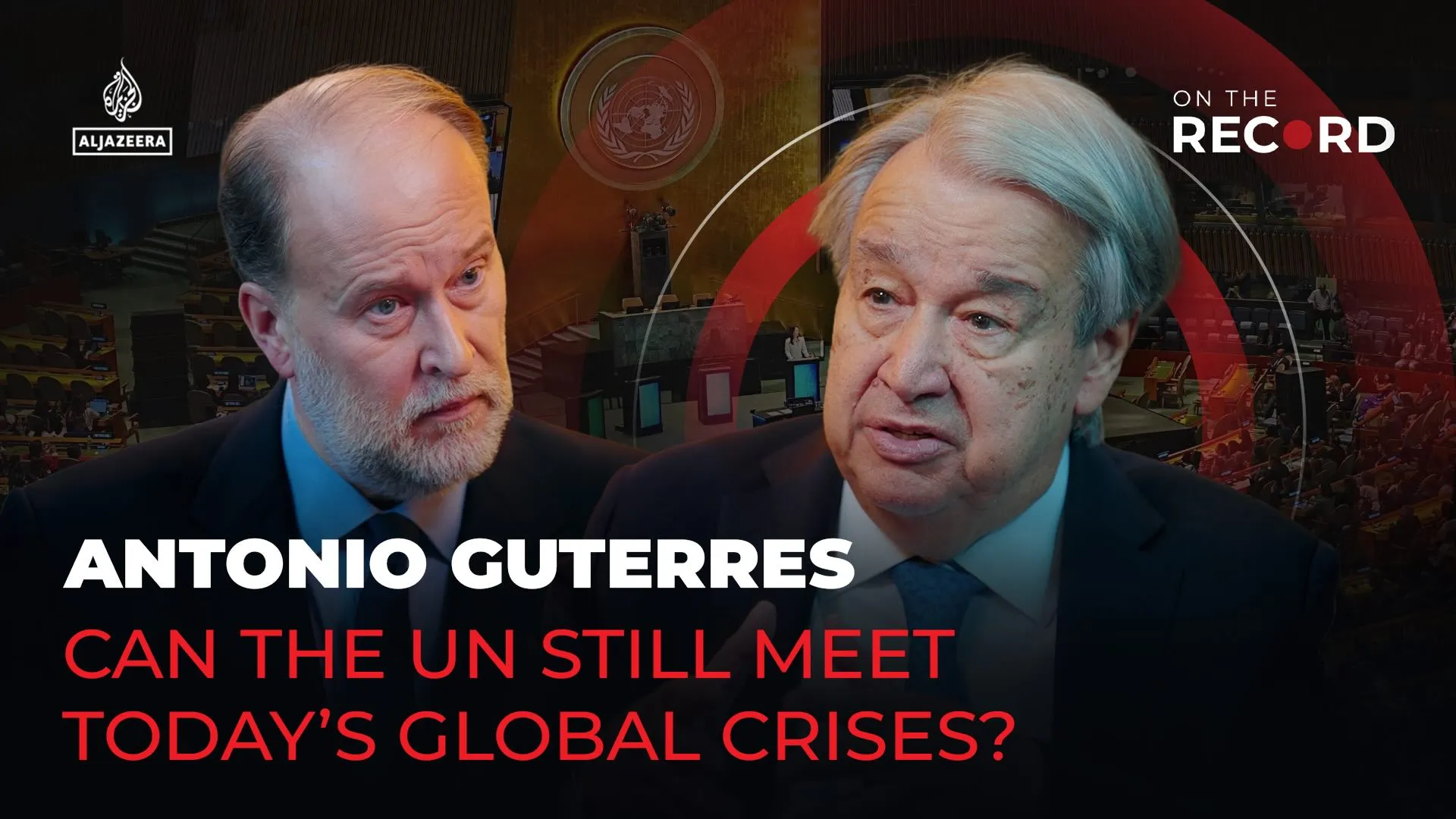
‘No one power’ can solve global problems, says UN chief as Trump veers away | United Nations News

United Nations chief Antonio Guterres appears to point at Trump as critics say his ‘Board of Peace’ aims to replace UN.

United Nations Secretary-General Antonio Guterres has warned that international “cooperation is eroding” in the world, during a media briefing where he took aim at one – maybe two – powerful countries undermining efforts to solve global problems collectively.

In his annual address as secretary-general, where he outlined priorities for the UN, Guterres said on Thursday that the world body stood ready to help members do more to address their most pressing issues, including the climate catastrophe, inequality, conflict and the rising influence of technology companies.

Recommended Stories

list of 4 itemsend of list

But he warned that “global problems will not be solved by one power calling the shots,” in apparent reference to United States President Donald Trump’s administration and his moves to abandon much of the UN system, while also impelling countries to join his newly-created “Board of Peace”.

Guterres went on to say that “two powers” would also not solve key problems by “carving the world into rival spheres of influence”, in what appeared to be a reference to China and its growing role in global affairs.

Guterres, who will step down from his position at the end of the year, underscored the UN’s ongoing commitment to international law amid concerns that treaties, which countries have abided by for decades, are coming undone.

Amid Israel’s genocidal war on Gaza and the brazen abduction of Venezuela’s President Nicolas Maduro by US forces, the UN chief warned that international law is being “trampled” and “multilateral institutions are under assault on many fronts.”

But, he added, the UN was still “pushing for peace – just and sustainable peace rooted in international law”.

Beginning in his first term as US President, Trump sought to end his country’s formal participation in many aspects of the UN system, while also eager to wield influence over key decision-making bodies, including through the use of the US veto in the UN’s powerful Security Council.

Trump’s current administration has also imposed sanctions on UN Special Rapporteur for Palestine Francesca Albanese and threatened to sanction negotiators involved in UN talks on shipping pollution at the International Maritime Organization.

The US leader’s actions have drawn criticism.

Brazilian President Luiz Inacio “Lula” da Silva earlier this month accused Trump of wanting to create “a new UN”.

Lula made his comment just days after Trump launched his “Board of Peace” initiative at the World Economic Forum in Davos, Switzerland.

While more than two dozen countries in the Middle East, Africa, Asia, Latin America and Europe have signed up as founding members of the peace board, several major nations, including France, have turned down invitations to join, and Canada has been excluded.

France said the Trump-led peace board “goes beyond the framework of Gaza and raises serious questions, in particular with respect to the principles and structure of the United Nations, which cannot be called into question”.

Source link

Airports embrace AI to manage growing global passenger traffic | Aviation News

Airports use technology for passenger flow, baggage tracking and predictive maintenance to enhance efficiency and experience.

As global air passenger traffic is forecast to hit 10.2 billion in 2026, a 3.9 percent year-on-year increase, investments have been pouring in to improve airport infrastructure and operational efficiency and use artificial intelligence to achieve it.

Working with data released by Airport Council International, airports are relying on the increasing use of AI to embrace the rise in demand.

Recommended Stories

list of 3 itemsend of list

AI is now being embedded in airports’ workflows to reshape everything from passenger flow management to airside maintenance, cybersecurity, lost luggage and enhancing on-site and virtual customer experiences, according to analysts and experts at the Airport AI Exchange event this month during discussions of the technology’s existing use and its potential.  

The use of AI-powered analytics to anticipate congestion at security, immigration and boarding points is also helping to prevent delays. Resources are being allocated to shift from reactive crowd management to predictive operations.

AI-powered baggage optimisation tools and biometric processing – which would allow passengers to walk through immigration without the need to present a physical passport – are also gaining traction as airports seek to improve passenger experience while maintaining operational efficiency.

“AI started changing very rapidly in 2017 and initiated this entire AI race and enabled us to really use AI, the neural network that we talked about and heard about since the 1940s,” Amad Malik, chief AI officer at Airport AI Exchange, said.

“Since then, the progressions have been very, very steep. If you look at the curve from the first day to now, AI is able to do so much more. In only the last two years, the ability has grown exponentially.”

What are airports using AI for?

In addition to quicker immigration controls, analysts said AI is aiding automated check-ins and boardings, baggage handling and tracking, and predictive maintenance. It is also enhancing passenger experience, providing security screening, and offering personalised services and assistance, they said.

AI-powered analytics can enable airports to tailor services and experiences to individual passenger preferences, fostering a more personalised and efficient journey from check-in to boarding, according to Mahmood AlSeddiqi, former vice president of IT for the Bahrain Airport Company.

While insights shared at the Airport AI Exchange suggested AI has advanced at an exponential pace over the past few years, some argue that aviation’s adoption of the technology has remained comparatively limited.

“AI has progressed exponentially over the past few years, but compared to that curve, aviation’s use of AI is still negligible,” said Malik, adding that that gap is partly explained by the sector’s reliance on legacy systems and its inherently cautious operating model.

Much of the technology still underpinning aviation operations dates back decades and innovation is often slowed by the industry’s safety-critical nature, he said.

“When you’re dealing with people’s lives, safety and regulation outweigh speed of innovation,” Malik noted.

Source link

Is the global economic order unravelling? | Business and Economy

As the United States pushes its ‘America First’ agenda, its partners are edging towards China and new alliances are being formed.

It was built on democracy, open markets and cooperation – with America at the helm.

But the rules-based global order created after World War II is now under strain. Conflicts are rising. International rules are being tested. Trade tensions are escalating. And alliances are shifting.

At the centre of it all is US President Donald Trump.

In just a few short weeks, he’s captured Venezuela’s president, vowed to take control of Greenland, and threatened to slap tariffs on those who oppose him.

Meanwhile, China is presenting itself as a stable partner.

Many warn that the global order is starting to break apart.

Source link

B-21 Raider Future Insights From Global Strike Command’s Top General

The B-21 Raider stealth bomber is one of the Air Force’s most ambitious weapons programs, designed to carry out deep-penetrating nuclear and conventional strikes over heavily defended skies and other missions its predecessor, the B-2, was never envisioned as doing. As the head of the U.S. Air Force Global Strike Command (AFGSC), one of Gen. Stephen L. Davis’s main tasks is guiding the development of the Raider, of which 100 are currently slated for procurement and that number could grow substantially larger in the coming years.

In his first interview since taking command on Nov. 4, 2025, from Gen. Thomas Bussiere, Davis offered The War Zone exclusive insights about the B-21 and what it can bring to the table in a future high-end fight. As the leader of AFGSC, Davis also oversees B-1B Lancer, B-2A Spirit, and B-52 Stratofortress strategic bombers and all U.S. Air Force intercontinental ballistic missiles (ICBMs). During his Monday morning conversation with us, Davis talked about a host of other topics beyond just the Raider, including the future of the E-4C “Doomsday Plane,” the way forward for the troubled Sentinel ICBM program, and challenges posed by China and Russia.

You can read the first part of our interview here.

Some of the questions and answers have been lightly edited for clarity.

Air Force Gen. Stephen L. Davis, commander of U.S. Air Force Global Strike Command. (USAF)

Q: What capabilities will the B-21 have by the time it achieves initial operating capability (IOC), and what will come later?

A: Right now, I’m focused on delivering the initial capability. And unfortunately, I can’t talk too much about the capabilities of the bomber. They are significant, and they are impressive. From the command’s perspective, we’re concentrating on getting everything in place up at Ellsworth Air Force Base in South Dakota to bed down that capability. Really, it’s the acquisition community that’s still delivering that plane, and I’m certainly interested in that, but I’m probably more focused on the bed down and getting those things right.

Q: Can you provide an update on the Raider’s Initial Operating Capability (IOC)?

A: As for IOC, we are thinking of it in an OPSEC framework. We are not building prototypes, and the infrastructure to support the B-21 is on time. The program remains a benchmark of acquisition and has validated the value of the digital engineering that went into it from the beginning; I can tell you that the penetrating global strike platform we are building and will get with the Raider is amazing.

Q:  Will the B-21 still be optionally manned?

A: That’s a future capability for the aircraft. Right now, we’re planning for the manned implementation of that aircraft and getting the crews ready to be at Ellsworth when the plane arrives.

We now have our first look at the U.S. Air Force's two flying B-21 Raider stealth bombers together at Edwards Air Force Base.
The two flying B-21s at Edwards Air Force Base. (USAF)

Q: What roles will the B-21 be capable of executing beyond the standard deep strike mission set of the B-2? Will they be able to defend themselves kinetically from air threats as well as ground threats?

A:  I really don’t want to talk about those specific attributes of the B-21 because some of those are classified. What I can say is that it will continue to build on the capabilities of the B-2. As you know, in the environment and the places where it might operate, those people are improving their defenses, and likewise, we have to improve the capabilities so we can deliver for the president and the nation a penetrating bomber. Clearly, with a nuclear mission, there are places that we’re going to have to go to deliver nuclear weapons, if ever called upon by the president of the United States, and that’s something that I have to provide to the Department of War and to the president.

Q: We have heard so much about the Long-Range Strike family of systems, but so far, we only know of two members of that family, the B-21 and the Long-Range Stand-Off Weapon (LRSO). What other types of systems make up this family and when will we be able to meet them in the future? 

An Air Force illustration of the Long-Range Stand-Off Weapon. (USAF)

A: Well, once again, you hit me on all the classified aspects of the program. I would say any platform operating today is in a family of systems that’s connected to other things within the Department of the Air Force, and the Department of War, and that’ll continue to be the case of the B-21. And, as a matter of fact, we’re going to extend those, and it will be more connected than the B-2 in order to do its penetrating global strike mission. I think one thing you could add to family systems is the F-47 6th-generation fighter. You know, it’s going to be paired with the F-47 under certain circumstances. So we certainly consider that new 6th-generation stealth fighter as part of the family of systems that might be employed with the B-21.

Q: Any update on that program?

A: Nothing other than I believe it still remains on track. I was recently out of St. Louis, and they got a chance to take a look at the work that they were doing out there. As you know, Air Force Gen. Dale White has just been announced as the Direct Reporting Portfolio Manager for Critical Major Weapon Systems, leading the F-47 and the B-21 programs, so that will create some integration there as well. I know Dale. He’s a very talented acquirer, so I think that bodes well for both those programs.

President Donald Trump has brought up the possibility of changing the designation of the U.S. Air Force's F-47 sixth-generation stealth fighter if the program gets to a point where "I don't like it."
The future F-47 6th-generation stealth fighter will be paired with the B-21 under certain circumstances. (USAF illustration) USAF

Q: How will unmanned systems, specifically aerial drones, be paired with the future bomber force? What capabilities are you looking at in this regard? 

A: In terms of what we might incorporate into both the B-21 and the B-52 in future environments, we’re going to take every bit of information we get on board that aircraft to improve situational awareness. So I’m agnostic on where that comes from, whether that’s overhead capabilities, whether that’s remotely piloted capabilities, or UASs. Our plan is to integrate as much information as we can of that platform.

Q: Will B-21s be able to control collaborative combat aircraft (CCAs) or longer-range drones? What about the B-52J?

A YFQ-42A CCA in flight during testing. (GA-ASI)

A: In terms of CCAs, I think where the Air Force is right now is that they’re building those to be incorporated into the F-47 primarily in fighter aircraft. That’s the first step. It’s certainly possible in the future that they might become part of that family of systems. When you think about long-range strike, when we’re doing [continental U.S.] CONUS-based missions, it really would limit the ability to use some of those platforms as they don’t quite have the extended flight envelopes that the B-21 and the B-52 have.

Q: And with the B-52, as far as working with CCAs, is that still to be determined?

A: I would say yes. I would think that the B-21 would be the more logical partner for that. But once again, we have to deliver that capability that the Air Force does and integrate with fighters. That’s the first step. Assuming that goes well. I think we’ll look at the next steps.

The B-21 Raider was unveiled to the public at a ceremony Dec. 2, 2022 in Palmdale, Calif. The B-21 is a product of partnerships with industry, the Department of Defense, and Congress. The program is designed to deliver on our enduring commitment to provide flexible strike options for coalition operations that defend us against common threats. (U.S. Air Force photo)
The B-21 Raider was unveiled to the public at a ceremony Dec. 2, 2022 in Palmdale, Calif. (U.S. Air Force photo) 94th Airlift Wing

Q: What will it take to pierce China’s A2AD [anti-access/area denial] umbrella? What capabilities do you need to do the job, from a [ground moving GMTI/AMTI target indicator/air moving target indicator] space layer to drones to accompany B-21s? What is your vision?

A: We have a requirement to be able to do that day-to-day for the president. We have to be able to penetrate adversary air defenses and deliver capabilities as directed. And we’ll continue to do that, taking all the information we can get and integrating it into the B-21. Obviously, one of the great things about the B-21 is that it’s going to be much more capable. It will have more sensors. It will have more inputs to it that will make it even stronger and more capable as a penetrating bomber.

Q: What role will your bombers play in taking down the Chinese Navy?

A: That’s an operational plan. I really can’t talk much about it, other than to say that long-range strike contributes to every important mission set that we have in the Department of War. Obviously, one of the attributes of the modern force is the variety of weapons they can carry, and the number and types of targets they can attack. I think in any major confrontation that the U.S. would find itself in, you’re going to find your bomber forces are bringing those skill sets to bear.

The first pre-production B-21 Raider seen from below during its first flight in November 2023. (Andrew Kanei) The first pre-production B-21 Raider seen from below during its first flight in November 2023. Andrew Kanei

Q: What makes the move to put a single pilot onboard the B-21, along with a weapon systems officer (WSO) instead of two pilots, possible, and why is that the right call? 

A: In terms of the crew complement for the B-21, that’s an ongoing discussion within the Department of the Air Force. No final decision has been made. Frankly, we had the same discussion on the B-2 on how it would be manned. And ultimately, they went with two pilots, in part because of the cost of the platform and the number they were producing. Actually, at the time, it was a requirement to have navigator or WSO experience to be a B-2 pilot. We went away from that over time, but that was one of the initial requirements. With B-21 pilots, it’s a different plane, as it has a number of different capabilities. So we think that the right thing to do is look carefully at that crew complement and decide how to best make that the most capable combat platform we can.

A B-21 Raider conducts flight testing, which includes ground testing, taxiing, and flying operations, at Edwards Air Force Base, California. The B-21 will interoperate with our allies and partners to deliver on our enduring commitment to provide flexible strike options for coalition operations that defend us against common threats. (Courtesy photo)
A B-21 Raider conducts flight testing at Edwards Air Force Base, California. (Courtesy photo/USAF) Giancarlo Casem

Q: Will the B-21 have creature comforts that the B-2 doesn’t have to help the crew out during long missions?

A: I think the B-21 is going to be largely like the B-2 in how it supports the crews. There’s enough room for crew members to go on rest status. There’s a place to go to the bathroom, obviously, and to prepare food. All those things will exist in the B-21.

Contact the author: howard@thewarzone.com

Howard is a Senior Staff Writer for The War Zone, and a former Senior Managing Editor for Military Times. Prior to this, he covered military affairs for the Tampa Bay Times as a Senior Writer. Howard’s work has appeared in various publications including Yahoo News, RealClearDefense, and Air Force Times.


Tyler’s passion is the study of military technology, strategy, and foreign policy and he has fostered a dominant voice on those topics in the defense media space. He was the creator of the hugely popular defense site Foxtrot Alpha before developing The War Zone.


Source link

Global brand in an EFL world – Wrexham’s finances explained as club eye Premier League

Because the EFL’s profit and sustainability rules are about trying to make sure clubs are not losing unsustainable amounts of money.

Despite going on a summer spending spree, paying about £30m for players and having one of the highest net spends around, Wrexham are well within the financial parameters because of the commercial revenue already being brought in thanks to deals with giants such as United Airlines and HP.

In League Two, they were already bringing in more than 20 of the 24 Championship clubs.

“Under the PSR rules, you’re allowed to lose £39m over three years,” said Maguire. “Looking at their two most recent sets of accounts, Wrexham lost around about £23m – but they’ve had substantial increases in broadcast revenue, from about £1.2m in TV money in League Two to about £12m this season.”

That is before taking into account a significant jump in sponsorship and commercial income, with chief executive Michael Williamson estimating they are already on a par with some top-flight clubs.

“We have a global brand, a Premier League brand in the Championship,” Williamson told Ben Foster’s Fozcast podcast in August 2025.

“What we don’t have is the broadcast revenue of Premier League clubs or the parachute payments.

“From a commercial standpoint, if you compared us to Championship clubs, I’m sure we’d be among the top and – on commercial revenues only – we would probably surpass a handful of Premier League clubs, around four or five I would guess.”

Source link

Why Japan’s economic plans are sending jitters through global markets | Business and Economy News

Japanese Prime Minister Sanae Takaichi’s tax and spending pledges in advance of snap elections next month have sent jitters through global markets.

Japanese government bonds and the yen have been on a rollercoaster since Takaichi unveiled plans to pause the country’s consumption tax if her Liberal Democratic Party wins the February 8 vote.

Recommended Stories

list of 4 itemsend of list

The market turmoil reflects concerns about the long-term sustainability of Japan’s debt levels, which are the highest among advanced economies.

The volatility has extended beyond Japan, highlighting broader fiscal sustainability worries in an era in which the United States and other major economies are running huge deficits.

What has Takaichi promised on the economy?

Takaichi said last week that she would suspend the country’s 8 percent consumption tax on food and non-alcoholic beverages for two years if her government is returned to power, following her dissolution of the House of Representatives.

Based on Japanese government data, Takaichi’s plan would result in an estimated revenue shortfall of 5 trillion yen ($31.71bn) each year.

Takaichi, a proponent of predecessor Shinzo Abe’s agenda of high public spending and ultra-loose monetary policy, said the shortfall could be made up by reviewing existing expenditures and tax breaks, but did not provide specific details.

Takaichi’s tax pledge comes after her Cabinet in November approved Japan’s largest stimulus since the COVID-19 pandemic.

The package, worth 21.3 trillion yen ($137bn), included one-time cash handouts of 20,000 yen per child for families, subsidies for utility bills amounting to about 7,000 yen per household over a three-month period, and food coupons worth 3,000 yen per person.

Why have Takaichi’s pledges unnerved markets?

Japan’s long-term government bond yields soared following Takaichi’s announcement.

Yields on 40-year bonds rose above 4 percent on Tuesday, the highest on record, as investors exited from Japanese government debt en masse.

Bond markets, through which governments borrow money from investors in exchange for paying out a fixed rate of interest, are closely watched as a gauge of the health of countries’ balance sheets.

While typically offering lower returns than stocks, government bonds are seen as low-risk investments as they have the backing of the state, making them attractive to investors seeking safe places to park their money.

As confidence in a government’s ability to repay its debts declines, bond yields rise as investors seek higher interest payments for holding riskier debt.

“When Prime Minister Takaichi announced a planned reduction in consumption taxes, this made existing bond-holders of Japan’s debt uneasy, requiring a higher compensation for the risk they bear,” Anastassia Fedyk, an assistant professor of finance at the Haas School of Business of the University of California, Berkeley, told Al Jazeera.

“As a result, bond prices dropped and yields rose. And yes, this is a general pattern that applies to other countries, too, though Japan has an especially high level of debt, making its position more vulnerable.”

Japan’s debt-to-GDP ratio already exceeds 230 percent, following decades of deficit spending by governments aiming to reverse the country’s long-term economic stagnation.

The East Asian country’s debt burden stands far above that of peers such as the US, UK and France, whose debt-to-GDP ratios are about 125 percent, 115 percent and 101 percent, respectively.

At the same time, the Bank of Japan (BOJ) has been scaling back bond purchases as part of its move away from decades of ultra-low interest rates, limiting its options for interventions to bring yields down.

“Bond investors reacted because her headline package looks like large, near-term fiscal loosening at exactly the moment the BOJ is trying to normalise policy,” Sayuri Shirai, a professor of economics at Keio University in Tokyo, told Al Jazeera.

How does all this affect the rest of the world?

The sell-off in Japanese bonds reverberated through markets overseas, with yields on 30-year US Treasuries rising to their highest level since September.

As Japanese bond yields rise, local investors are able to earn higher interest payments at home.

That can incentivise investors to offload other bonds, such as US Treasuries.

As of November, Japanese investors held $1.2 trillion in US Treasuries, more than any other foreign group of buyers.

In an interview with Fox News last week, US Treasury Secretary Scott Bessent expressed concern about the impact of Japan’s bond market on US Treasury prices and said he anticipated that his Japanese counterparts would “begin saying the things that will calm the market down.”

Japan’s long-term bond yields fell on Monday amid the expectations that Japanese and US authorities would step in to prop up the yen.

On Friday, The New York Times and The Wall Street Journal reported that the Federal Reserve Bank of New York had inquired about the cost of exchanging the Japanese currency for US dollars.

“Japan matters globally through flows. If Japanese government bond yields rise, Japanese investors can earn more at home, potentially reducing demand for foreign bonds; that can nudge global yields and risk pricing,” Shirai said.

“This is why global-market pieces have framed Japan’s bond move as a wider rates story.”

Higher bond yields in Japan, the US and elsewhere raise the cost of borrowing and servicing the national debt.

In a worst-case scenario, a sharp escalation in interest rates can lead to a country defaulting on its debts.

Masahiko Loo, a fixed income strategist at State Street Investment Management in Tokyo, said that the reaction of international investors to Takaichi’s plans reflects growing sensitivity to fiscal credibility in highly indebted economies.

“Yes, Japan may be the spark, but the warning applies equally to the US and others with large structural deficits,” Loo told Al Jazeera.

Is Japan on the verge of a financial crisis?

Probably not.

While Japan is more indebted than its peers, its fiscal position is more sustainable than it might appear due to factors specific to the country – at least in the short to medium term – according to economists.

The vast majority of Japan’s debt is held by local institutions and denominated in yen, reducing the likelihood of a panic induced by foreign investors, while interest rates are far lower than in other economies.

“The debt situation is more manageable than a lot of people think,” Thomas Mathews, head of markets for Asia Pacific at Capital Economics, told Al Jazeera.

“Net debt-to-GDP is on a downward trajectory, and Japan’s budget deficit isn’t all that big by global standards.”

Loo of State Street Investment Management said that the turmoil surrounding Japan had more to do with a “communication gap around fiscal sustainability and policy coordination” than the country’s solvency.

“That said, markets are likely to continue testing the feasibility of the agenda, as even fiscally sanguine countries have, at times, been disciplined by market forces,” Loo said.

Source link

EU inks ‘mother of all trade deals’ with India amid global turmoil

After months of intense negotiations, the European Commission concluded on Tuesday a free-trade deal with India which sharply reduces tariffs on EU products from cars to wine as the world looks for alternative markets following President Donald Trump’s tariff hit.

The announcement was made during a high-level visit by European authorities including Commission President Ursula von der Leyen. Both countries hailed a “new chapter in strategic relations” as the two looks for alternatives to the US market.

India is currently facing tariffs of 50% from the Trump administration, which has severely dented its exports. After sealing the Mercosur deal with Latin American countries earlier this month, the EU has said it aims to speed up its trade agenda with new partners.

“We did it – we delivered the mother of all deals,” von der Leyen said after the deal was announced. “This is the tale of two giants who choose partnership in a true win-win fashion. A strong message that cooperation is the best answer to global challenges.”

Talks went down to the wire with negotiators meeting over the weekend and in the early hours of Monday. The deal says it will bolster the “untapped” potential of their combined markets but did not include politically sensitive sectors such as agriculture.

The EU’s powerful trade chief Maroš Šefčovič, who in charge of negotiating on behalf of the 27 EU member states, said Brussels aims for a fast implementation by 2027.

In an interview with Euronews from Delhi after the deal was announced, Šefčovič said the India deal showcases the EU’s new approach when it comes to trade: more pragmatic on deliverables, rather than getting stuck on political red lines.

“We resumed negotiations with a new philosophy, being very clear in saying: if this is sensitive for you, let’s not touch it,” Šefčovič told Euronews, describing the strategy as a gamechanger.

A win for European exports looking to tap Indian market

Under the agreement, the EU aims to double goods exports to India by 2032 by cutting tariffs on approximately 96% of EU exports to the country, saving around €4 billion a year in duties. At its full potential, the deal creates a market of 2 billion people.

Europe’s carmakers emerge as beneficiaries, with Indian customs duties gradually reduced from 110% to 10% under a quota system. Tariffs in sectors including machinery, chemicals and pharmaceuticals will also be almost entirely eliminated.

Wine and spirits, key exports for countries like France, Italy and Spain, will see duties reduced from 150% to around 20 to 30%. Olive oil duties will be cut to zero from 40%.

After years of tensions with EU farmers, the Commission said sensitive agricultural products had been excluded from the agreement, leaving out beef, chicken, rice and sugar.

When it comes to India, the agreement keeps trade terms on dairy and grain untouched in line with the demands of the Indian authorities, which saw it as a red line.

The Commission, which negotiated the deal on behalf of the EU’s 27 member states, said it included a dedicated sustainable development chapter “which enhances environmental protection and addresses climate change.”

The agreement does not cover geographical indications, another contentious area for negotiators, which will be addressed in a separate deal aimed at protecting EU products from imitation on the Indian market.

Deal cut under pressure from Trump’s tariffs

The timing of the deal is important as the two sides look to de-risk their economies from the threat of Trump’s tariffs.

The EU saw tariffs triple to 15% last year under a contentious deal and India is currently operating under a 50% tariff regime from Washington.

The Trump administration slapped an additional 25% duty on India last year as punishment for buying Russian oil, which India has defended citing a need for cheap energy to power a country of 1.4 billion people.

Talks between the EU and India first began in 2007 but quickly ran into hurdles.

Negotiations were relaunched in 2022 and talks intensified last year as the two sought to cushion the impact of Trump’s return to the White House.

After the deal was signed during a two-day trip on Tuesday, in which the chiefs of the Commission and the European Council were guest of honour, the EU said the deal showcases that “rules-based cooperation” remains the preferred path for the bloc – and a growing number of partners from Latin America to India.

Before the deal can be implemented, the European Council and the European Parliament will have to ratify it, which can become an arduous process.

The Commission hopes to begin implementing the agreement from January 2027.

This story has been updated with comments by Commissioner Šefčovic to Euronews. Watch online and on television.

Source link

Ripple Nears Banking License | Global Finance Magazine

Crypto firm Ripple has been granted conditional approval in its bid to secure a national trust bank charter from the Office of the Comptroller of the Currency (OCC)—the US federal regulator that supervises national banks and federal savings associations.

Ripple, together with four other crypto-related businesses, Circle, BitGo, Fidelity Digital Assets, and Paxos, won provisional agreement from the OCC despite opposition from Main Street banks.

The OCC tentatively approved Ripple, creator of the RLUSD dollar-backed stablecoin and XRP payment token, and Circle, issuer of the USDC stablecoin, to establish national trust banks. Elsewhere, the OCC also gave preliminary approval to BitGo, Fidelity Digital Assets, and Paxos, to convert from state-regulated trust companies to nationally regulated trust banks.

Analysts say the pushback from banking industry groups might be an overreaction. The American Bankers Association, Independent Community Bankers of America, and Bank Policy Institute argue that granting charters is a backdoor into the banking sector that poses a systemic risk.

“[The] decision by the OCC to grant conditionally five national trust charters leaves substantial unanswered questions,” said Greg Baer, president and CEO of the Bank Policy Institute, in a prepared statement. “Chiefly, whether the requirements the OCC has outlined for the applicants are appropriately tailored to the activities and risks in which the trust will engage.”

But national bank trust charters do not allow regulated entities to solicit deposits, offer checking or savings accounts, or access insurance from the FDIC [Federal Deposit Insurance Corporation], which underwrites most banking deposits in the US.

Despite the OCC’s provisional approval, crypto firms must still satisfy the OCC’s capital, risk, and governance standards before full approval is granted.

Meanwhile, Ripple has secured approval from Abu Dhabi’s financial regulator, permitting Ripple’s RLUSD stablecoin for use inside the Abu Dhabi Global Market (ADGM)—a financial center—as an Accepted Fiat-Referenced Token. Approval from the Financial Services Authority will place RLUSD alongside a small group of tokens approved for ADGM use. Earlier this year, RLUSD received approval from the Dubai Financial Services Authority and has recently expanded its Middle East footprint into neighboring Bahrain.

Source link