Hans-Joachim Watzke, one of German football’s vice presidents, adds to list calling for Gianni Infantino’s resignation.
Published On 18 Sep 202618 Sep 2026
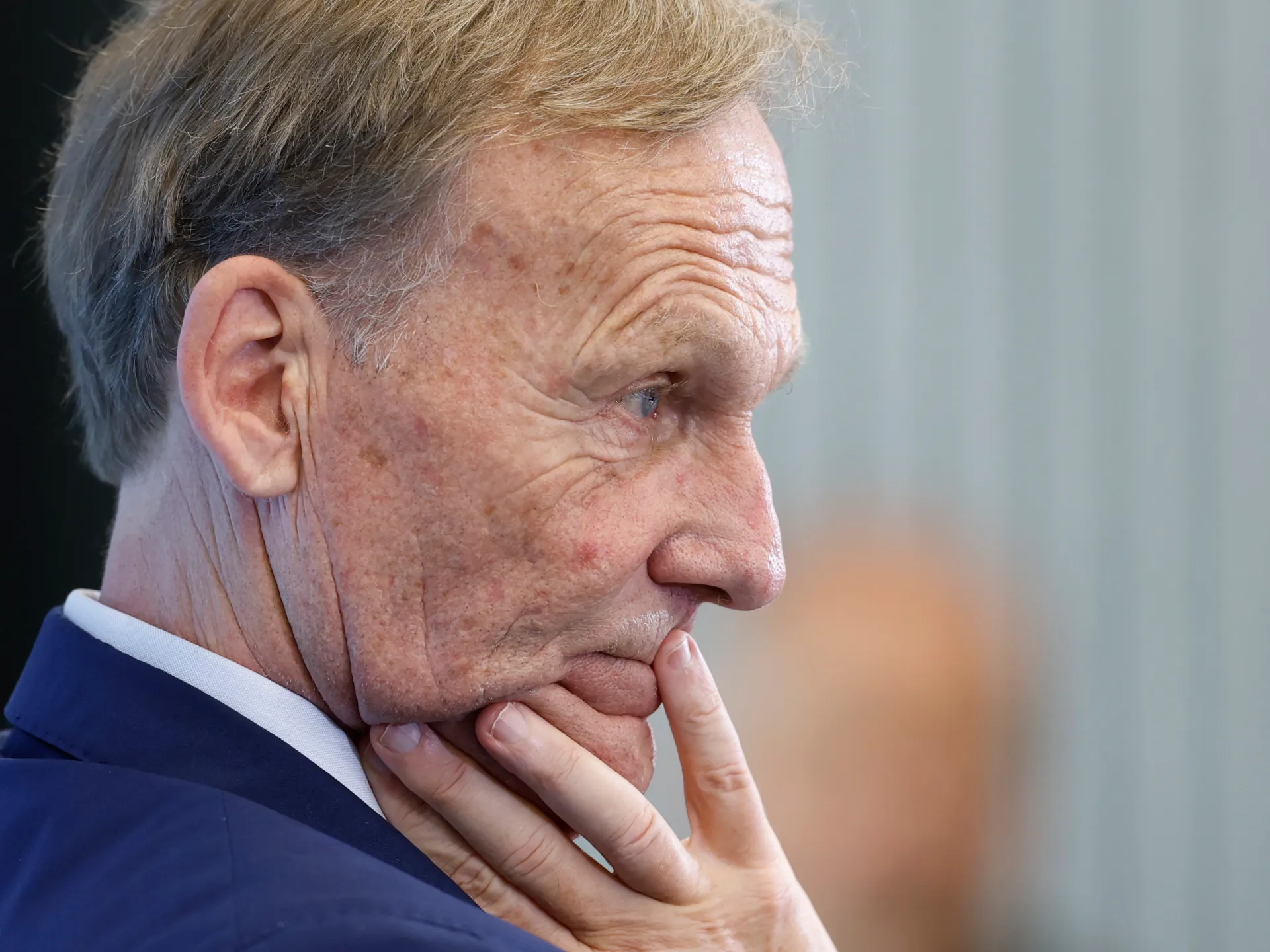
Gianni Infantino must leave the FIFA presidency “no ifs or buts”, according to Hans-Joachim Watzke, one of the vice presidents of the German Football Association (DFB), as he spoke at a festival dedicated to artificial intelligence in Berlin.
The DFB was one of the few federations not to sign a letter of support for Infantino’s re-election as FIFA president in six months’ time.
Recommended Stories
list of 4 itemsend of list
“He has to go, no ifs or buts,” declared Watzke, who said late on Thursday that three points in particular counted against the Swiss.
The first was the FIFA Peace Prize, launched by Infantino and awarded in December 2025 to US President Donald Trump, to whom Infantino is close, during the draw for the 2026 World Cup.
Infantino “created this prize himself, and he decided on it himself,” said Watzke.
“You can’t just invent something on your own and then announce it, it’s madness,” said Watzke.
Watzke also condemned the controversial handling of the Folarin Balogun red card during this year’s World Cup, which was hosted in the US, Canada and Mexico.
The American forward was sent off in the last 32 but his automatic one-match suspension was lifted after a phone call from Trump to Infantino.
“It can’t be that when someone gets sent off, the head of state calls the FIFA president, and, remarkably, the whole thing is immediately overturned. That’s madness,” said Watzke.
The third issue was the project, unveiled on July 28 and dropped four days later, to create a commercial company that would have been open to private investors and became a focal point of the rebellion against Infantino.
“It’s completely insane,” said Watzke. “Nobody knew about it, his vice presidents in FIFA knew nothing, the Council knew nothing.”
DFB president Bernd Neuendorf said earlier in the week in an interview with RTL/ntv television that it was also time for Infantino to depart.
“The relationship of trust with Gianni Infantino, under this FIFA leadership, has of course been completely shattered,” he said.
“It’s important that this Infantino system comes to an end.”
For now, Infantino is the only candidate for the FIFA presidency in the election scheduled for March 18, 2027, with candidacies open until November 18.
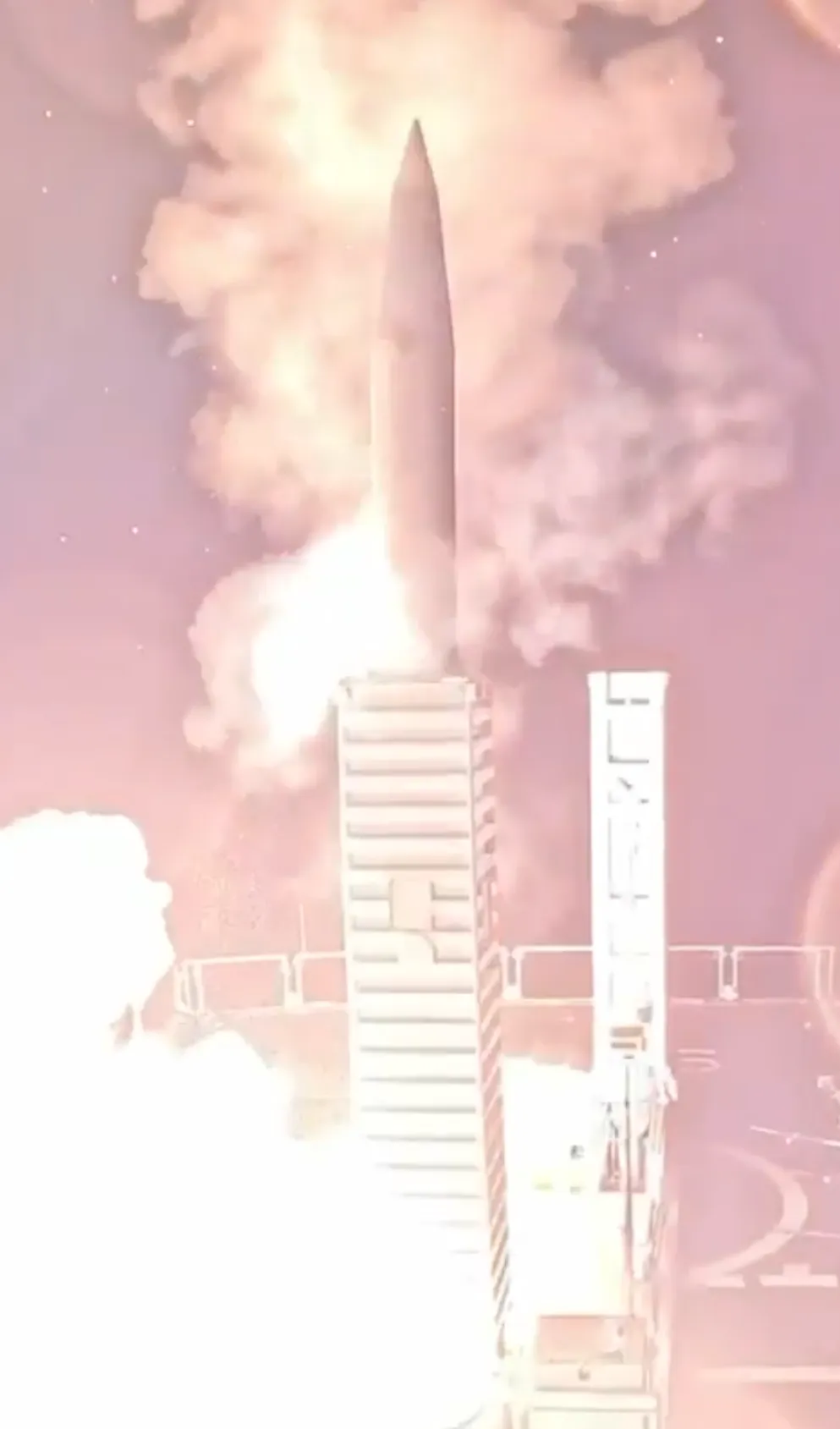
The German Navy has demonstrated the launch of Israel Aerospace Industries’ (IAI) LORA ballistic missile from an F125 frigate, with at least two missiles fired from the Sachsen-Anhalt during a test in the North Atlantic last night. The demonstration points to a potentially significant new long-range strike capability for Germany’s surface fleet, should it be adopted.
A LORA missile leaves the launch canister on the flight deck of the frigate. German Ministry of Defense/screencap
Video released by the German Ministry of Defense alongside the test shows two LORA launch canisters positioned on the frigate’s flight deck, followed by a missile launching from each container.
🇩🇪Die Fregatte „Sachsen-Anhalt” (Klasse 125) hat im Nordatlantik mindestens zwei ballistische Raketen vom Typ LORA (IAI) verschossen – gestartet aus Kanistern auf dem Flugdeck. Die Erprobung erfolgte im Rahmen der OPEX-Serie.
The launches were conducted as part of the Bundeswehr’s operational experimentation (OPEX) program in cooperation with the Bundeswehr Innovation Center in Erding. Reportedly, two German frigates were deployed to the waters between Ireland and Iceland for the test, and a warning was issued to maritime and air traffic 45 days beforehand.
The test marks a notable expansion of the weapons capabilities demonstrated by Germany’s F125 frigates and could provide a pathway toward a new long-range naval strike capability.
A LORA canister is raised into the launch position. German Ministry of Defense/screencap
German Navy Inspector General Vice Adm. Jan Christian Kaack described the event in a statement distributed through the Bundeswehr’s official WhatsApp channel:
“With the successful launch of a ballistic missile last night in the North Atlantic, we have made naval history. I am extremely pleased with this achievement. The system can be successfully deployed by our units, and its potential range exceeds anything we have seen before. For the protection of Germany and our allies, this test marks a new chapter in deterrence and defense readiness at sea.”
IAI also confirmed the results of the test, stating that both missiles followed their planned trajectories and struck their targets with high precision.
The exact targets, engagement ranges, flight profiles, and missile configurations used during the test have not been disclosed.
There is no possibility that Sachsen-Anhalt will retain the launchers in their current location, since they mean the F125’s flight deck cannot be used, depriving it of a critical capability. Potentially, they could be installed elsewhere on the vessel, but, moreover, it is unclear if the current experiment will lead to a formal acquisition program.
The two LORA canisters on the flight deck of the frigate. German Ministry of Defense/screencap
At the same time, LORA is a substantially different weapon from the anti-ship and land attack cruise missiles normally associated with modern surface combatants.
Available for ship- and ground-launch, the missile is approximately 17 feet long, 25 inches in diameter, and weighs around 3,500 pounds. It follows a quasi-ballistic trajectory and has an officially stated range of approximately 60 to 270 miles. An air-launched derivative has also been developed.
A weapon capable of reaching targets hundreds of miles away would give German surface combatants a long-range strike option extending far beyond the range of traditional naval guns and many shorter-range precision weapons.
Its quasi-ballistic flight profile also differentiates LORA from a conventional cruise missile. A ballistic-style trajectory allows the weapon to cover distance rapidly and presents an air-defense challenge different from that posed by a low-flying cruise missile. This type of missile also impacts its target with much greater kinetic energy, making it especially useful for striking more hardened target sets.
LORA uses a navigation architecture combining GNSS satellite navigation with an inertial navigation system and can achieve a circular error probable, or CEP, of approximately 33 feet. IAI also says LORA can be launched within minutes, including from unprepared positions, and can attack a target within its range in less than 10 minutes after a decision to launch.
Back in 2017, as you can read about here, IAI successfully test-fired LORA from a containerized launcher on the back of a truck sitting on the deck of a cargo ship. The missile successfully struck a target on land.
LORA Ballistic Missile Firing Trial
What is less clear is its ability to strike targets at sea.
A long-range anti-surface application would be particularly interesting for the German Navy, although the weapon, in its basic form, has no terminal seeker. This limits the missile to use against targets with a fixed location, rather than autonomously finding and tracking a maneuvering warship during the terminal phase of flight.
In a 2020 test, IAI demonstrated firing two LORA missiles from a ship before hitting separate floating targets at approximately 60 miles and 250 miles. However, striking a static floating target is different from an enemy warship that is maneuvering and potentially employing electronic warfare and air defenses.
Regardless, Germany has an even clearer requirement for land attack capabilities, which LORA is fully capable of fulfilling, as we will return to later.
As for Germany’s F125 frigates, these were designed primarily for long-duration deployments, maritime security, stabilization operations, and other missions requiring a persistent naval presence. Their overall lack of firepower is something we have examined in detail before now.
The frigate Sachsen-Anhalt (F 224) arrives in port. Photo by Hauke-Christian Dittrich/picture alliance via Getty Images picture alliance
The latest test involving the Sachsen-Anhalt is in line with the Bundeswehr’s OPEX framework, which is intended to evaluate emerging technologies and operational concepts under realistic conditions before decisions are made about wider adoption.
There is precedent for such experimentation leading to operational capabilities. Israeli-developed systems, including IAI’s Blue Whale autonomous underwater vehicle, have previously been evaluated through German naval experimentation efforts and subsequently moved toward formal adoption.
As well as the four F125 hulls, Germany might look to incorporate LORA from the start on its future F127 multi-purpose frigates and/or its planned Large Remote Missile Vessels (LRMV), uncrewed vessels that will serve as arsenal ship ‘wingmen,’ supporting conventional surface combatants.
A highly provisional diagram shows the F127 frigate (top) and the LRMV (below). German Navy
It is worth noting that Germany has recently acquired various other Israeli-made missile and rocket systems. These include the Arrow 3 anti-ballistic missile system — the largest-ever Israeli defense export deal — and the PULS multiple rocket launcher. A German purchase of the land-based version of LORA would also be an option, with the truck-mounted system also able to be launched from ships at sea.
The LORA test also reflects a broader European push toward longer-range precision fires.
Russia’s war in Ukraine has underscored the importance of ballistic and cruise missiles, while NATO countries have increasingly sought weapons capable of holding targets at greater distances at risk.
Key German Navy operating areas, including likely Russian attack routes. German Navy
Germany has historically possessed comparatively limited deep-strike capability. The Bundeswehr is now working to expand its ability to conduct long-range precision engagement, both independently and within NATO structures. This includes planned procurement of land-based Tomahawk cruise missiles, with a range exceeding 1,000 miles depending on the exact configuration.
A naval LORA capability could add another layer to that effort and would allow Germany to distribute long-range fires across surface combatants, complicating an adversary’s targeting problem while giving its naval forces a more meaningful role in high-end combat operations. With the security situation in Europe deteriorating, the potential deterrence factor that such a weapon would bring to Germany, and to NATO, should also not be underestimated.
BERLIN — Leaders of an extremist, far-right party in Germany have quietly borrowed pages from President Trump’s playbook to cast doubt on the integrity of absentee voting — alleging without evidence that residents of nursing homes have had their ballots manipulated and calling for an end to postal voting.
The attack on mail ballots comes as Germany approaches a potentially historic state election that could shatter one of the taboos of its postwar political order by opening the door to a far-right government.
Politicians across the ideological spectrum, mindful that polls show Trump to be widely unpopular, don’t invoke his name.
But the specter of the American president nevertheless hangs over the election that could have reverberations across Europe if the Alternative for Germany, or AfD, party — tacitly echoing Trump’s attacks on migrants, the media and the integrity of elections — pulls off an unprecedented political shock in postwar Germany.
In a country where the guilt of its Nazi past is never far from the surface, the AfD has unapologetically campaigned against what it portrays as the shackles of Germany’s history and won over many new supporters, in part by adopting Trump’s hard-line stance on migrants and his drumbeat of attacks on mainstream news outlets.
Trumpism and the MAGA movement have undoubtedly been an inspiration and model for many European radical right parties
— Lars Rensmann, political scientist
The AfD leader, Tino Chrupalla, surprised Germans recently with warnings of voter fraud in the Sunday election in Saxony-Anhalt state, telling a national television audience that some senior citizens in nursing homes had had their absentee ballots cast and signed for them without their knowledge.
This week, in neighboring Mecklenburg-Vorpommern state, the AfD candidate for governor, Leif-Erik Holm, declared, “Postal voting is more vulnerable to potential attempts of manipulation.”
Election officials and organizations representing nursing home caregivers have rejected the allegations and say there is no evidence of voter fraud.
The AfD, considered one of the most extreme far-right parties in Europe, has surged so far ahead in opinion polls that it could emerge as the dominant political force in Saxony-Anhalt and potentially lead a German state government for the first time, either with an absolute majority or with a junior coalition partner.
Trump has spent years attacking mail-in voting as vulnerable to fraud, despite scant evidence of widespread abuse. Trump himself has voted by mail in recent elections. His administration continues to fight court battles to limit voting by mail.
“Sowing distrust in political institutions is part of the strategy of right-wing populist parties,” said Marcel Lewandowsky, a political scientist at Martin Luther University in Halle, Germany.
“The ‘rigged election’ lie is a powerful narrative within the MAGA movement,” he added, “and serves as a crucial element that fosters a shared identity” with far-right parties in Europe. (Such messaging has also been employed by many rightist politicians in Latin America.)
An AfD victory in one of Germany’s 16 federal states would in one fell swoop obliterate a central tenet of the postwar order: that the far right must never return to power in the country responsible for the Holocaust and the devastation of Europe in World War II.
Many fear that taking power there could serve as a springboard for the ostracized party at the national level, where it is leading opinion polls with about 29% support, putting it far ahead of the other four parties with seats in the federal Parliament.
“Trumpism and the MAGA movement have undoubtedly been an inspiration and model for many European radical right parties,” said Lars Rensmann, a political scientist at the University of Passau who has studied the far right. “In many ways, Trump has been the successful model many European radical right parties try to follow while adopting it to European conditions.”
The AfD’s ascent has parallels across Europe, from Italian Prime Minister Giorgia Meloni and her Brothers of Italy party to Britain’s Nigel Farage, Geert Wilders in the Netherlands and Herbert Kickl in Austria. In France, the far-right Rassemblement National is looking to the 2027 presidential race with its candidate, Marine Le Pen, having perhaps her strongest chance yet of winning after reaching the runoff in 2017 and 2022.
Meloni`s relationship with Trump has cooled during her nearly four years in power, due in part to the war in Iran, tariffs and security policies that have strained U.S. relations with Italy and all of Europe.
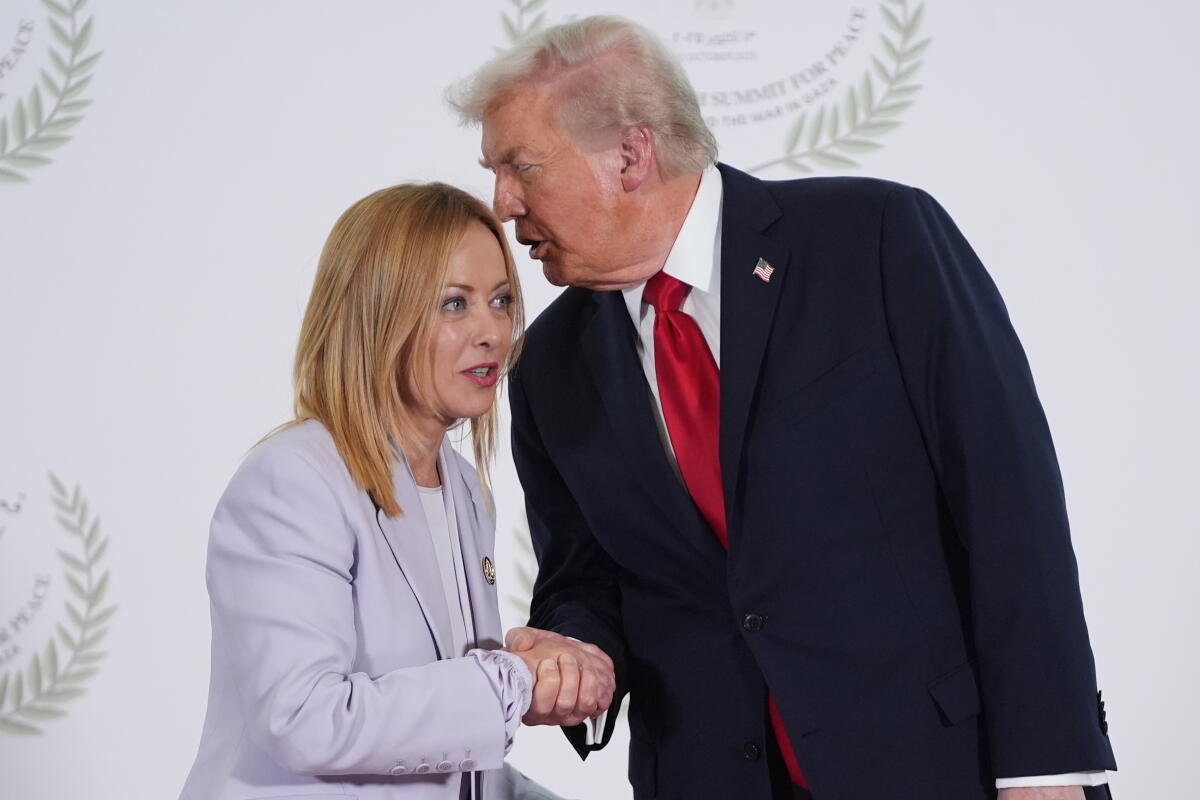
President Trump greets Italy’s Prime Minister Giorgia Meloni at a summit Egypt in 2025. Their once warm relationship has since cooled.
(Evan Vucci / Pool via Associated Press)
Yet there is no pan-European alliance of the far right, in part because these parties champion their own national interests.
“Some components of Trumpism can be shared and exported, such as hostility towards migration and ‘wokeism,’ but it is very clear that national interests that the far-right champion cannot be defended the same way as the American national interests,” said Giovanni Orsina, head of the political science department at LUISS University in Rome.
“If you put your nation first and do so aggressively, you have diverging national interests and so it’s not possible to have an international network of nationalists,” Orsina added.
But many far-right leaders are united in one sense. They admire not just Trump’s tactics, but the “boldness of his transgressions, dismantling liberal and civil norms by repeating things that were once deemed unacceptable for someone seeking public office,” said Rensmann.
“Trump is unpopular in Germany, even across the political right,” Lewandowsky said. “It would be risky for the AfD to embrace him openly, especially because he failed to keep his promise not to start any further wars and large segments of the public feel threatened by the United States under Trump.”
The AfD was created in 2013 as a small anti-euro party before morphing into an anti-migrant force that tapped into voter frustration over immigration and the strains many Germans perceive on housing, jobs and public services.
Despite being ostracized by mainstream parties and kept out of coalition cooperation, it has survived and thrived as a disruptive force.
In the last decade Germany has sheltered millions of refugees, mainly from Syria and other troubled countries in the Middle East. It provides housing, medical care and generous financial support to refugees that AfD politicians say serve as a magnet. Trump once accused former German Chancellor Angela Merkel of “ruining” her country by allowing in so many refugees.
“I think this could be a watershed moment for Europe,” Orsina said of the upcoming election.
An election poster touts the far-right Alternative for Germany party, AfD, right, in Berlin in 2025. It reads “Now AfD.”
(Michael Sohn / Associated Press)
He said the election in 2022 of Meloni and her Brothers of Italy party, which traces its origins to Italy’s postwar neo-fascist movement, sparked fears across Europe that, in hindsight, may have been exaggerated. But Germany is a different story when it comes to the far right.
“Some said she is a neo-fascist and a danger to democracy, but most people in Italy didn’t believe that,” he said. “Italy isn’t a better democracy after four years of Meloni but it isn’t any worse either. But Germany isn’t Italy. And Germany’s relationship with its past is a lot different.”
David Bebnowski, an author who has written books on far-right populism and who is a history instructor at the Free University in Berlin, said there is another important connection among far-right voters across Europe that the AfD is tapping into — a yearning for change in countries where establishment parties have struggled to respond to voter frustration.
Trump’s success as a force for disruption, he said, has provided a powerful example.
“You can’t really trace a grand MAGA strategy adopted by the far right, but you can see that they are, in part, very much in line with the ‘spirit of Trumpism,’” Bebnowski said. “What aligns them is a sense of disruption and optimism that they will be able to change the way politics are done in a way the other parties can’t.”
BOURNEMOUTH is one of the most popular seaside towns in the UK, pulling in millions of visitors every year to its pretty beaches.
But there’s so much more to it than just its coastline, as Michael Regenhard, who manages the Bournemouth Highcliff Hotel, reveals.
Michael Regenhardt is the Multi Property General Manager of the Bournemouth HighcliffCredit: SuppliedThere’s lots more to do in Bournemouth as well as enjoy its beautiful beachesCredit: Alamy
Michael Regenhardt left Germany for Bournemouth 20 years ago and he’s lived there ever since – what did he make of it when he first arrived?
He told us: “I’m German, so you look at the English and think they do all these weird and wonderful things. Then when you live here – I eat my lamb with mint sauce now – my mother will never forgive me for that.”
Sign up for the Travel newsletter
Thank you!
Michael continued: “I wear brown suede shoes now too. And when I came to Bournemouth – it was the first time I went to an amusement arcade I was given a bundle of coins and I thought ‘what do I do with this?’
“But now, when I have friends come to visit, I take them on the lift down to the beach – then we go there and their eyes light up.
“I see it with Brits too because it’s nostalgic – it takes them back to their childhood. It’s a lovely experience – then we go for fish and chips afterwards.
“You can’t get more English than that.”
Here are his top Bournemouth recommendations.
Hotels
Bournemouth Highcliff Marriott Hotel sits high above the beachCredit: Supplied
Being the Multi Property General Manager of the beautiful Bournemouth Highcliff (and the Portsmouth Marriott) – Michael has to recommend it to visitors.
“The Highcliff is 150-years-old and was initially just four townhouses then it was converted into a hotel. Next to us we have the original coastguard cottages that Bournemouth had when the smugglers still came across the sea.
“They go back to around 1830 – and they’re part of the hotel as well. Now they’re rooms, with a little garden in front of them.”
The coastal cottages are now beautiful rooms that guests can stay inCredit: Mike Caldwell
“Winston Churchill stayed here at the beginning of World War Two – he was actually declared wartime leader at the hotel.”
Michael continued: “We have 160 bedrooms and the hotel sits on top of the cliff, so we get the best views out of most of the hotels I would say.
“We have Brasserie Blanc, it’s our restaurant partner, and we have an outdoor swimmingpool.”
Restaurants
“I have one in the summer which is called El Murrino – it’s right on the beach. But it’s only open from April until September.
“It has good vibes, it has good food – it’s very simple, pizzas, burgers, salads, cocktails and beers. But it’s one of the only restaurants right on the beach.
“We have a place for Tiien Thai, which I have to say, is in my hotel. It’s not part of the hotel, but it is inside. It’s been around for almost 12 years and I think it’s the best Thai restaurant in the south.
El Murrino is a seasonal beach bar right on the sandCredit: UnknownAruba has a tropical feel and an outdoor terrace looking over the pierCredit: TripAdvisor
“I’m a Panang man – it’s what I have every time I go. And they have the best crispy squid, or calamari.”
Bars
When it comes to beach bars, he said there aren’t many, but praises Aruba which overlooks the pier, saying there is “always a good vibe in there during the evening”.
He added: “We have a place called The Botanist now in the square in the old Debenhams building – it’s very beautiful and it’s on the rooftop.
“You take an old staircase up, and it is a restaurant too but they have a lovely outside bar – you overlook the square and the Lower Gardens.
“Our hotel has a bar as well, it’s part of Brasserie Blanc, they have a fantastic terrace – but that would be biased from me!”
Pubs
“One in the town centre is called The Sun which has recently been refurbished, it used to be called 60 Million Postcards.
“It has a good look to it with a big terrace.
“Then there’s a couple up in The Triangle, they’re a bit older; The Branksome is one of those.
“There’s two pubs in the main square too – like the Wetherspoons. It depends what you want.”
Date night spots
“Go back to the Urban Garden as a restaurant because you can go on a romantic walk there too through the gardens, take the staircase, it’s half in the jungle.
“Afterwards, if you’re a bit younger, I’d say go down to 1812 which is next to the BIC.
“It’s a huge building and there’s a cocktail bar inside there – it gets busy on Fridays and Saturdays.
“But it’s a nice setting, especially if you sit outside.”
Best beaches
Sandbanks has pretty sandy beaches and is much quieter during the weekCredit: AlamyBournemouth has miles and miles of coastlineCredit: Getty
“One really nice beach is if you go towards Sandbanks, the beach is beautiful, there aren’t any stones – but it is busy.
“During the week, it’s much quieter.
“Branksome is a lovely beach with two lovely restaurants there and it’s a nice, family-friendly spot. It’s not too busy – and you can only park in the Chines.
“I don’t think there’s a bad spot in Bournemouth though.”
Hidden gems
“One of those is Sobo Beach, which is in Southbourne. It’s very much a neighbourhood beach and is usually quiet, but busy enough that it has a good vibe.
“SOBO Beach Bar and Restaurant is great too – it’s very quirky, a bit Miami, very colourful with good music on the weekend.
“During the week it’s part of the neighbourhood where people go for coffees in the morning and so on. That’s a great beach and it’s not busy.
“If I give one tip – if you ever go to the beach, avoid the piers. Go 200 metres one way or the other, it’s just too packed.
“There are miles and miles of beach.”
Local experiences
These are some of England’s most expensive beach hutsCredit: AlamyWestbourne is the place to visit for unique shopsCredit: Alamy
“Past Southbourne is a little place called Tuckton, and when you speak to all the English tourists they talk about Tuckton Tea Garden – but that’s not the experience I’m talking about.
“They have a mini marina there and from there you take boat trips up to Mudeford Spit. It’s like little boats for eight or nine people, then you drive up the river a bit, go part Christchurch and come out on Christchurch Bay.
“It’s a beautiful little trip. Then when you get there you have England’s most expensive beach huts, which go for around £250,000 and over.
“They are the only beach huts where you can stay overnight and some of them have dual aspect so you can see the Isle of Wight and Christchurch Bay.
“It’s a beautiful trip. There’s a little train as well which goes to Hengistbury Head and from there you can take a bus or a cab back.
“Not many people know about that.”
Family attractions
“There’s the Oceanarium – it’s something for the whole family. It’s right on the pier, they have penguins there.
“It’s nicely done with lots of activities, quite educational – it’s a nice thing to do as a family.
“The pier has a zipwire, and a climbing centre now too. Overall, the pier has lots of little activities for families.
“As for attractions – it’s really all about the beach.”
Shopping
“I’d say Westbourne which from the hotel is a five-minute drive away.
“It’s a very nice, older kind of neighbourhood; it has an arcade with shops inside and the high street isn’t one long road, it’s more of a loop.
“They’re all very individual shops, with nice cafes, lovely restaurants – it’s all a bit quirky.
“It takes you away from the classic shopping centre – which we do have.”
Cheap food spots
At the Pier View Kitchen you can pick up breakfast for £5Credit: TripAdvisor The Russell Cotes Museum sits on Eastcliff and is full of art workCredit: Alamy
“Where the pier is, there’s the Pier View Kitchen and it’s got a huge terrace, it’s half self-service and half service.
“But they have everything you need and you can pick up a bacon butty and a coffee for £5.
“It does what it says on the tin and you can look over the whole pier approach.”
Sweet treats and coffee
“There are two places that aren’t far from each other – there’s a place called Fika on Westover Road.
“It’s where the Pavilion is, and they’re really individual coffee shop, it’s a lovely place to eat, they do ice creams too – it’s very cute.
“Then there’s another coffee spot I recommend called BigWigs – it’s a family bakery that have a few places dotted through Bournemouth.
“Great pastries, cakes and great coffee – they serve Bad Hand coffee which is a local coffee roastery.
“Then you have Bad Hands itself which is up towards the Triangle, that’s where their roastery is, and they have a coffee shop now too.”
Cheap activities
“We had a group recently that hired some bikes and went all along the promenade from one end to the other. And the best time to do that? 8 o’clock in the morning – it’s stunning.
“That’s a nice way of doing some sightseeing while in Bournemouth. If you’re looking for something free to do, head to the beach.”
Cultural activities
“There’s the Russell Cotes Museum on Eastcliff in a beautiful old building which goes back over 100 years.
“It used to be family owned and the people in there loved collecting art and sculptures and it was slowly turned into a museum.
“It’s very beautiful and inside, it’s fantastic and it’s Bournemouth-centric.
“That’s from the pier, five minutes up the hill – there are also some art galleries on Westover Road if that takes your fancy.”
Best views
Explore nearby Swanage on a Breezer BusCredit: AlamyMudeford Spit is a place most tourists heading to Bournemouth won’t visitCredit: Alamy
“So if you go over to Mudeford Spit, that is attached to Hengistbury Head – and you want to go to the oppositesidee of Sandbanks.
“It’s not a mountain, it’s a hill and it’s beautiful to walk, you can go along the beach and around it – or up and over.
“Once you’re on top of it, you see the Isle of Wight and The Needles, Swanage and Christchurch – it’s absolutely beautiful.
“When the regatta is on over on the Isle of Wight you can see all the ships too.
“The best time to do it in the early morning when it’s clearer – you can see for miles.”
Michael has some final tips as a local…
“I just say prepare for the weather! It’s one of the main things that people do wrong.
“It could be sunny and then it gets cold – which it always does in the evenings.
“As I said before there’s never the wrong weather, just the wrong clothes – and I’d say Bournemouth is just as lovely in the autumn and winter.
“It’s lovely in the summer months but it can be a bit too much – if you come out of season, October, November – it doesn’t matter, it’s still lovely. Just put your jacket on.”
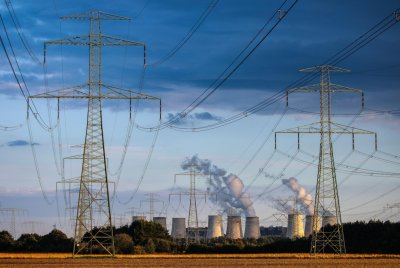
Power lines stand in front of the Janschwalde power plant in Turnow-Preilack, Germany, Tuesday. Several improvised explosive devices were found at a substation, damaging several power lines, according to police and a grid operator. The facility is an important hub in the Lausitz power grid and is connected to the nearby Janschwalde coal-fired power plant. Photo by Clemens Bilan/EPA
Sept. 1 (UPI) — Police in Brandenburg, Germany, said they found several improvised explosive devices at a coal-fired power plant in Tunow-Preilack, some of which hadn’t been detonated.
Power company 50Hertz said there was a “brief interruption of service” but that all power lines were back in operation at the substation. It distributes electricity from the Jänschwalde, Germany, plant.
Brandenburg Police in Potsdam asked the public for information or witnesses who may have seen something on Tuesday morning.
Also on Tuesday, Germany accused Russia of responsibility for a drone attack at Leipzig’s airport last month and announced new measures against Moscow.
While it’s not yet known who placed the IEDs at the power substation, the German interior minister said Germany is, “a daily target of hybrid attacks.”