finance

Liberty Global targets $2B year-end corporate cash while advancing Ziggo Group spin to mid-’27 (NASDAQ:LBTYA)

Earnings Call Insights: Liberty Global (LBTYA) Q2 2026

Management View

  • “Number one, it was a strong quarter commercially, and particularly in the Netherlands, where VodafoneZiggo continues to execute brilliantly… This was our best consumer broadband performance in 6 years… And as Charlie will outline, we’re confirming

Seeking Alpha’s Disclaimer: This article was automatically generated by an AI tool based on content available on the Seeking Alpha website, and has not been curated or reviewed by humans. Due to inherent limitations in using AI-based tools, the accuracy, completeness, or timeliness of such articles cannot be guaranteed. This article is intended for informational purposes only. Seeking Alpha does not take account of your objectives or your financial situation and does not offer any personalized investment advice. Seeking Alpha is not a licensed securities dealer, broker or US investment adviser or investment bank.

Source link

Jim Ovia, Nigeria’s Banking Godfather, Retires

Jim Ovia steps down as Zenith Bank chairman after 36 years, passing the torch to CEO Adaora Umeoji.

When Jim Ovia founded Zenith Bank in July 1990 at age 38, with NGN 20 million (then about $2.5 million) in capital, Nigeria already had a rich history of indigenous banking institutions. National Bank of Nigeria (1933), African Continental Bank (1937), and Agbonmagbe Bank (1945), later renamed Wema Bank, were among the major banks. 

In May, nearly 36 years after Zenith’s founding, Ovia retired as chairman after completing the maximum 12-year tenure permitted under the Central Bank of Nigeria’s (CBN) corporate governance code. Known as the godfather of Nigerian banking, Ovia leaves Zenith as Nigeria’s most valuable listed bank, with more than NGN 30 trillion (about $19.5 billion) in assets and NGN 1 trillion in after-tax profit in 2025.

Zenith was among the institutions that emerged stronger from Nigeria’s landmark 2004–05 banking consolidation, during which the CBN raised minimum capital requirements from NGN 2 billion to NGN 25 billion, reducing the number of the nation’s commercial banks from 89 to 25. 

Building an African Banking Empire

The lender has since expanded beyond Nigeria, with subsidiaries in Ghana, Sierra Leone, and Gambia; branches in London, Paris, and Dubai; a representative office in China; and a growing East African presence following the acquisition of Paramount Bank Kenya. Last year, Zenith became the first Nigerian lender to exceed NGN 5 trillion in market capitalization.

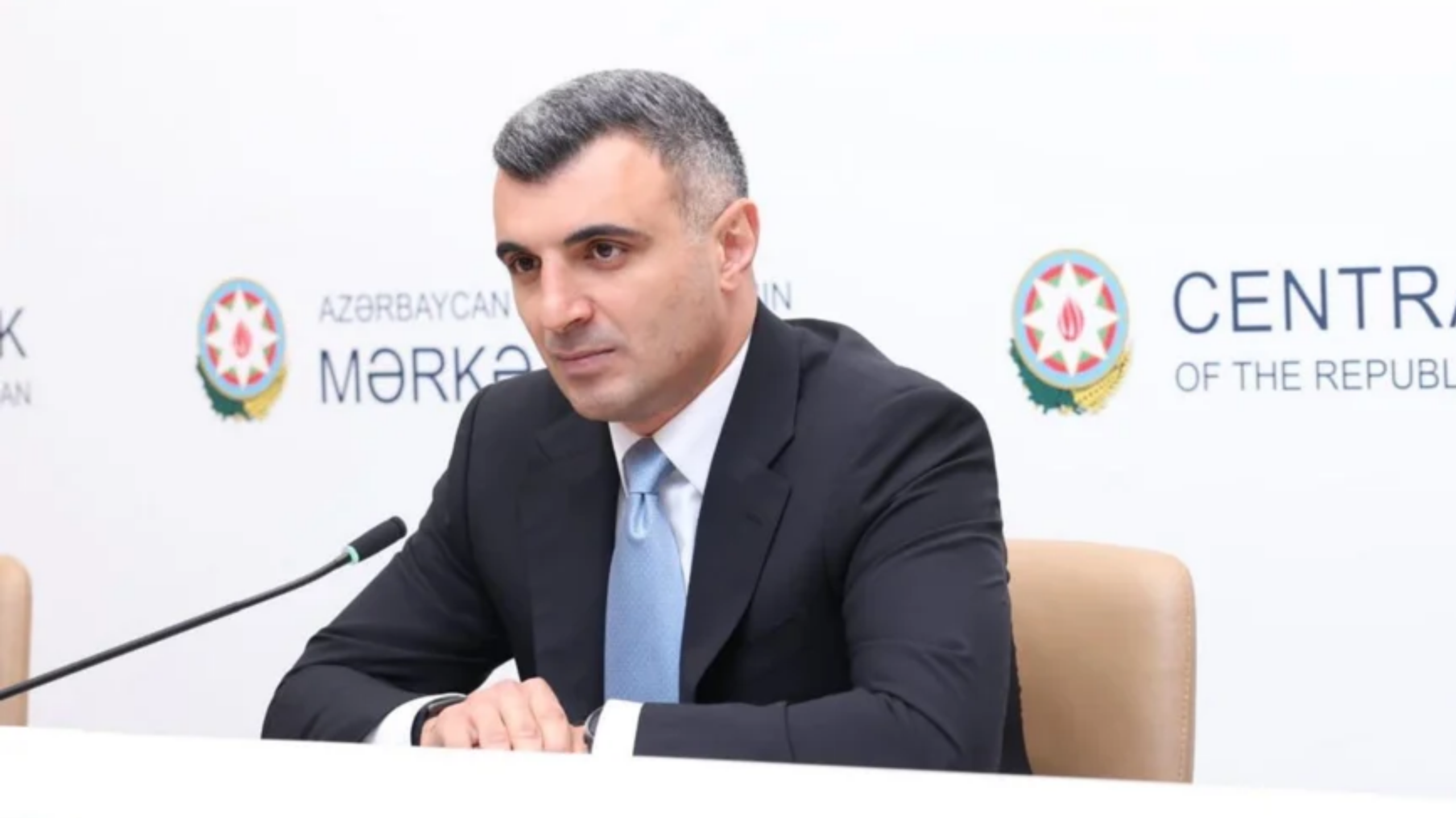
Prominent Nigerian banking executive in formal suit and glasses.
Nigerian banking industry leader retiring, symbolizing leadership transition in finance sector.

The leadership transition follows years of internal succession planning. Adaora Umeoji, who joined Zenith in 1998, became the bank’s first female group managing director and CEO in 2024, after a 28-year career at the institution. Under her leadership, Zenith completed an NGN 350.46 billion capital raise, 160% subscribed, comfortably exceeding Nigeria’s new regulatory capital requirements while maintaining record profitability.

Ovia strengthened his financial commitment before stepping down as chairman. In December, five months before retiring, he acquired an additional NGN 14.8 billion in Zenith Bank shares, increasing his holding to 16.2% and cementing his position as the bank’s largest individual shareholder.

Ovia’s leadership laid “the foundation for what has become one of Africa’s most respected and globally recognized financial institutions,” according to the Nigerian Education Loan Fund. Shareholder advocate Boniface Okezie, national coordinator of the Progressive Shareholders Association of Nigeria, terms Zenith “one of the strongest banks in the country because of the solid foundation [Ovia] laid,” and expresses confidence that the lender’s governance framework will remain strong without its founder.

Charles Wachira is a contributing writer based in Kenya.

Source link

EU seeks dialogue with US as tensions rise after Google fine

Published on

The European Commission said on Friday it would engage with the US to de-escalate tensions after the EU executive fined Google on Thursday over its dominance in the EU’s digital market, sparking an angry reaction from Washington.


ADVERTISEMENT


ADVERTISEMENT

US Trade Representative Jamieson Greer said the EU’s fine jeopardised dialogue between the two sides of the Atlantic on digital regulation, as well as the trade deal that the US and EU struck last year after tough negotiations.

The Trump administration has persistently railed against the EU’s digital rules, accusing Brussels of imposing non-tariff barriers on US companies and disproportionately targeting American Big Tech.

However, the Commission’s chief spokesperson, Paula Pinho, said on Friday that the US had left the door open for talks.

“There’s a call for dialogue which we fully embrace,” she said, adding that Brussels would engage while making sure to preserve the EU’s regulatory “autonomy”.

‘The EU undermines dialogue’

Earlier this week, 25 US lawmakers wrote to US President Donald Trump calling for a US investigation into EU trade practices in advance of the anticipated fine against Google.

The fine was duly announced on Thursday, penalising the tech giant to the tune of €890 million under the EU’s Digital Markets Act, which Washington has relentlessly criticised over the past year, along with the Digital Services Act – an EU regulation targeting illegal content on large online platforms.

“We are trying to resolve our concerns with the EU’s Digital Markets Act and other actions through responsible, constructive dialogue,” Greer said in a statement after the fine was announced. “The EU’s recent actions undermine these efforts and pose a real risk to the continuation of transatlantic stability with respect to trade,” he added.

German Socialist MEP Bernd Lange, the European Parliament’s trade chief, told Euronews that he feared further escalation in transatlantic relations and expected additional action from the US.

The EU lawmaker was at the forefront of the negotiations to implement the EU-US agreement struck in July 2025 by Trump and Commission President Ursula von der Leyen after weeks of trade disputes. Yet despite the deal, EU officials still consider transatlantic relations volatile.

On Thursday, the White House announced a new tariff regime targeting its trading partners, including the EU, over forced labour allegations. While insisting it has stringent rules to combat products made with forced labour, Brussels chose not to retaliate, arguing that the new tariffs respected the 15 percent cap on EU goods set out in the trade deal.

Source link

‘Expect more action from the US after the Google fine,’ top EU lawmaker says

Published on

German Socialist MEP Bernd Lange, chair of the European Parliament’s trade committee, told Euronews that the EU should brace for further action from the US following the €890 million fine imposed on Google by the European Commission on Thursday.


ADVERTISEMENT


ADVERTISEMENT

Tensions escalated across the Atlantic after US Trade Representative Jamieson Greer said the fine was “unreasonable” and created “uncertainty” for US-EU trade.

Brussels imposed the fine on the tech giant under the Digital Markets Act (DMA), which is designed to curb Big Tech’s dominance in the EU’s digital markets and has been a repeated target of US criticism since Donald Trump’s return to the White House.

“We have the tariff for the deal of Scotland and we have some regulation where everybody, not only US companies but also Europeans or whatever companies, has to respect it,” Lange said.

He added that both the DMA and the Digital Services Act (DSA) remain in Washington’s crosshairs and warned that the EU should prepare for retaliation.

“To be honest, I expect that some action will come,” he said.

Imposing tariffs over forced labour is ‘crazy’

The EU and the US have been bound since July 2025 by a trade deal struck in Scotland that imposes 15% US duties on EU goods while removing EU tariffs on US products.

Brussels, which hopes the deal will shield European businesses from Washington’s erratic decisions and tariff threats, had expected the US to announce a new tariff regime to replace the current one expiring on Friday and was prepared to accept it as long as it did not exceed the 15% cap.

Washington unveiled the new regime on Thursday, targeting trading partners around the world, including the EU, over forced labour.

According to Lange, the fact that the US targeted the EU over forced labour is “crazy”.

“We have a wonderful legislation, even stronger than the United States has,” he said.

However, he believes the new tariffs could eventually be challenged before US courts and hopes trade policy will return to the hands of Congress.

“I guess the courts in the United States will judge about that,” Lange said, adding: “I hope that after the midterms in November, the Congress will take over a little bit more like it is written down in the Constitution of the United States, Article 1, Paragraph 8, that trade policy is in the hands of the Congress.”

“I hope this will give us also additional stability.”

Source link

What Is a COFO? The Combined CFO/COO Role Explained

Why finance leaders are taking over operations—and why the new COFO role isn’t a simple shortcut.

There’s a new acronym roaming the C-suite. The so-called COFO — a hybrid chief operating and financial officer — is more common than ever, marking a structural shift in how companies are deciding who runs the business. But the combined role is a risky one: it works far better going one direction than the other, industry watchers tell Global Finance.

Salesforce made it official last year. The San Francisco-based company named Robin Washington its first COFO — tasking a 30-year finance veteran with steering both the balance sheet and the company’s artificial intelligence (AI) and digital-labor transformation.

PayPal, headquartered in San Jose, California, took a similar route. The company expanded CFO Jamie Miller’s mandate to cover operations as well as finance, putting one executive in charge of the strategic growth initiatives that used to require two separate memos and a joint meeting to sort out. Two very different companies, same conclusion: the boss who understands the cash is likely the person who’s expected to move it.

While some observers view this trend as temporary, many industry leaders see the hybrid COFO as a permanent shift in corporate leadership.

“I do think this is a trend that’s here to stay,” said Jaylene Kunze, COFO at Denver-based LegitScript, a risk management service.

For decades, the CFO and COO occupied a kind of awkward office marriage: sharing a roof, splitting the chores, occasionally blaming each other when the numbers didn’t add up.

“Historically, the CFO and COO were often set up to work against each other by default since each one’s success depended on the other, but neither had the full picture needed to make the best decisions for the company,” Kunze added.

That being said: Does the COO job disappear? Kunze calls “operational acumen and a real connection” to the business as “essential.” However, she argues the CFO seat has evolved past spreadsheets and GAAP.

“That’s exactly why the COFO role is emerging as such a powerful one,” she said. “It’s not enough to build the model; you must know what growth targets you’re driving toward and which levers to pull, when, and how.”

‘A Whole New Job’

Executive coach Edith Hamilton, who works with CFOs and COOs at NEXT New Growth, noticed the same pattern.

“It’s not title inflation. It’s authority redistribution,” she said, pointing to AI-driven process change as a major accelerant. But the honeymoon, she warns, is short.

“The second emotion is, ‘Oh dear Lord, this is a whole new job.’” Boards, she added, flip the script overnight — from “protect the numbers” to “use your authority to change the business.”

Her verdict: durable, but not universal. “It will work in companies where finance and operations need to be welded together — not merely coordinated.”

Sierra Hinson has been living this arrangement for over a decade under various titles. Most recently, as a “fractional CFOO” through her firm, Additive Insights. Her reaction to the sudden buzz? “What took so long?” Splitting finance and operations creates blind spots and slows everyone down, she said. And it shows up at the worst possible moment — the exit. “In a transaction, buyers look for inconsistency between what the financials say and what the operations show,” she said. “The title is the easy part — the track record is not.”

Missing the Point

Not everyone’s convinced the direction of travel could reverse. Ariela Tannenbaum, former CFO at Wilson Sonsini Goodrich & Rosati and now a profitability architect, thinks the whole debate is arguing about the wrong things. “The COFO debate misses the point on two counts,” she said. “First, titles. Whether you call it inflation or evolution, a title reflects accountability, not capability. The higher the title, the greater the responsibility. Rebranding a role does not dilute it; it expands it.”

Her second point takes aim at the assumption that AI is what’s really behind all this. “Faster information is not faster judgment,” Tannenbaum said. “A CFO or COO in a COFO role will spend exactly as much time reviewing, analyzing, validating, and deciding as before. AI compresses the data cycle. The thinking, judgment, and responsibility cycle remains unchanged.”

What’s actually driving the trend, she argues, is something more old-fashioned: good managers building good benches. “Great financial leaders already mentor, elevate, and develop their teams to the point where the CFO can spread his or her wings to take on an expanded operational mandate,” she said. Given the chance herself, she wouldn’t blink: “I would run the operation with conviction through the financial lens, where clarity lives.”

The Risk of Reversing the COFO Role

But Tannenbaum, like Hamilton, sees the arrangement working in only one direction. “Can an experienced CFO absorb the COO role? Absolutely,” she said. “Capital discipline, resource allocation, performance accountability — these are financial constructs applied operationally.”

The reverse, however, is not symmetrical.

A COO assuming the COFO role introduces real risk: technical gaps in financial analysis, regulatory exposure, and the kind of judgment calls that only come from deep financial experience.

Her bottom line: “The COFO is not a shortcut. But it works in one direction far better than the other.” And for companies simply focused on saving a salary line rather than building real bench strength, she has a warning dressed up as a punchline: “Can’t find two great executives? Look under the light.”

Which brings the debate back to a question. Firms like Ridgeway Financial Service ask CEOs: does your team just report the numbers, or help run the business? Increasingly, in this new hybrid role, the answer is both — same office, same person, one very full inbox.

Anthony Noto covers corporate finance and private credit. Contact him at anoto@gfmag.com

Source link

Vita Coco expects $790M-$805M net sales and $154M-$161M adjusted EBITDA as it adds Copra (NASDAQ:COCO)

Earnings Call Insights: The Vita Coco Company (COCO) Q2 2026

Management View

  • “I’m pleased to announce the acquisition of Copra Inc.” (Co-Founder, Executive Chairman & President Michael Kirban) and “we estimate that this super premium cold segment represents approximately 13% of U.S. coconut water sales,” with Copra positioned as “the

Seeking Alpha’s Disclaimer: This article was automatically generated by an AI tool based on content available on the Seeking Alpha website, and has not been curated or reviewed by humans. Due to inherent limitations in using AI-based tools, the accuracy, completeness, or timeliness of such articles cannot be guaranteed. This article is intended for informational purposes only. Seeking Alpha does not take account of your objectives or your financial situation and does not offer any personalized investment advice. Seeking Alpha is not a licensed securities dealer, broker or US investment adviser or investment bank.

Source link

Summit outlines November 14 FDA PDUFA date for ivonescimab BLA while planning HARMONi-3 PFS in 2H 2026 (NASDAQ:SMMT)

Earnings Call Insights: Summit Therapeutics (SMMT) Q2 2026

Management View

  • Robert Duggan (Co-CEO & Executive Chairman) said, “we expand our clinical development plan and prepare for commercialization in anticipation of a decision from the FDA on our BLA towards the end of this year,” and highlighted

Seeking Alpha’s Disclaimer: This article was automatically generated by an AI tool based on content available on the Seeking Alpha website, and has not been curated or reviewed by humans. Due to inherent limitations in using AI-based tools, the accuracy, completeness, or timeliness of such articles cannot be guaranteed. This article is intended for informational purposes only. Seeking Alpha does not take account of your objectives or your financial situation and does not offer any personalized investment advice. Seeking Alpha is not a licensed securities dealer, broker or US investment adviser or investment bank.

Source link

Freeport outlines Grasberg ramp to 80% by mid-2027 as Bagdad capex nears $4.5B (NYSE:FCX)

Earnings Call Insights: Freeport-McMoRan (FCX) Q2 2026

Management View

  • “We’re pleased to release FCX’s second quarter results. They can be described in a single word, progress.” (Chairman Richard Adkerson) “Our team today will talk with you about the great progress we have achieved in

Seeking Alpha’s Disclaimer: This article was automatically generated by an AI tool based on content available on the Seeking Alpha website, and has not been curated or reviewed by humans. Due to inherent limitations in using AI-based tools, the accuracy, completeness, or timeliness of such articles cannot be guaranteed. This article is intended for informational purposes only. Seeking Alpha does not take account of your objectives or your financial situation and does not offer any personalized investment advice. Seeking Alpha is not a licensed securities dealer, broker or US investment adviser or investment bank.

Source link

Former Tech CEO Named as South Korea’s 2nd Female PM

From journalist to CEO to PM: Han Seong-sook breaks barriers to lead Korea’s AI revolution.

The National Assembly — South Korea’s parliament — has confirmed former Naver CEO Han Seong-sook as the country’s new prime minister. The 59-year-old will be only the second woman to hold the position in South Korea. The first female prime minister was Han Myeong-sook, who served from 2006 to 2007. 

After President Lee Jae-myung’s Democratic Party dominated June’s local elections, he nominated Han as prime minister. She had previously served as minister for small businesses and startups.

Han began her career as a technology journalist, then joined a search startup, and later rose through Naver’s senior ranks. She was the first non-engineer CEO of a major South Korean technology company and, at the time, the only woman outside the chaebol families — the dynasties that control the country’s large industrial conglomerates — to lead a top-100 firm. 

During her five-year stint at Naver, Han pushed the company beyond search into shopping, payments, and content generation, cementing its position as the country’s top internet group. With a reputation for hands-on communication, she gave up the top-floor suite for a mid-level office to be closer to staff. When she entered government last year, she became the richest public-office nominee in Korea’s post-1993, post-autocracy history.

Driving South Korea’s AI Growth Agenda

“I think one can interpret the nomination of Han Seong-sook as a deliberate signal to markets: a former CEO rather than a career politician is being installed to place a credible tech operator at the heart of Lee’s AI-led growth agenda,” says Hannes Mosler, chair of East Asian Social Sciences at the University of Duisburg-Essen. “The promise is continuity in the semiconductor export boom and a pledge to recycle those gains into AI and a sturdier social safety net.”

Yet, Han’s nomination remains clouded by suspicion.

Mosler notes: “The controversies are real, but mostly the standard Korean confirmation gauntlet: multiple-home ownership that sits badly against Lee’s anti-speculation line, a data breach in her own ministry’s startup program, and family property dealings. None look good on her, nor do they look disqualifying, even though you never know.” 

The harder question, Mosler argues, is not so much her confirmation, since Lee’s party holds the majority in Parliament, but rather her ability to deliver. 

“Korea’s premiership is largely administrative,” he points out, “so Han’s real influence depends on whether President Lee genuinely lets a technocrat drive industrial policy or keeps her as the public face.”

Luca Ventura is a contributing writer based in Italy.

Source link

Rates market tantrum risks trapping Fed into hiking – Nomura (SHY:NASDAQ)

Department of Treasury & The Federal Reserve

Douglas Rissing/iStock via Getty Images

Escalating Middle East tensions are driving crude (USO) (BNO) prices sharply higher and triggering what Nomura’s Charlie McElligott calls a “vicious rate vol impulse”—creating treacherous conditions heading into next week’s Federal Reserve meeting.

McElligott is dismissing the buyside’s interpretation that

Source link

The Multi-Billion Dollar Black Box the US and Delcy Refuse to Open

Is the Trump administration actually stealing from Venezuelans?

The Financial Times estimated the “likely value” of Venezuela’s oil revenues since January, when those income streams (not only from oil and gas, but also from gold and other minerals) came under the direct control and supervision of the US government. Using data from Kpler and Argus Media, the newspaper put the figure at $13 billion. 

Let’s assume that one figure is accurate or at least comes close to the real number. The key question here, which neither the United States nor Venezuelan authorities have bothered to answer, is how much of that has been trickling back to the Venezuelan economy.

American officials, in press conferences and hearings, have given remarks about how the revenue repatriation framework is supposed to work under the current arrangement. There was a temporary framework immediately after the gringo takeover (the famous Qatar fund we reported in January). Now, it allegedly works like this:

1) Oil revenues flow into accounts managed by the US Treasury. Crude buyers, such as India and Spain, route payments into US-controlled “Foreign Government Deposit Funds.” 

2) Secretary of State Marco Rubio (empowered by Executive Order 14373) provides instructions to the Treasury for disbursements to Venezuelan entities, particularly the Venezuelan Central Bank (BCV).

3) The funds land in BCV accounts.

4) One chunk of that pays pensions, public workers’ salaries, the military and the police apparatus, i.e. the basic components of the State.

5) Another part of those dollars is channelled to the domestic banking system through a select group of private banks—here’s where things start to get tricky. Rather than holding competitive auctions or floating currency rates on a free market, the BCV distributes capped quotas of dollars to these banks at the strictly controlled official exchange rate.

6) At the final stage, from commercial banks to the private sectors, the transaction is a direct cash sale: to purchase dollars, Venezuelan companies must have the full equivalent in bolivars ready in their accounts. Banks immediately debit the buyer’s bolivar account at the day’s official rate and credit the equivalent dollars into the company’s local foreign-currency account. It works as a rationing mechanism, since major corporations (e.g. those in key sectors like food and medicine) are prioritized, and smaller companies acquire USD on a first-come, first-served basis through online banking platforms until daily dollar quotas run out.

Good. So now we know how the repatriation framework is supposed to work.

Let’s go back to the $13 billion figure, and the stage of the sequence connecting the US Treasury and the BCV. The US calls itself de facto custodian of Venezuelan money (remember EO14373 speaks of the “Custodial Nature of United States Possession”), so it should showcase full transparency over those transactions and demand accountability from the Delcy Rodríguez government. How much money has the US disbursed? Has it published anything about those disbursements? What about the Delcy government?

The fundamental question is not only how much revenue the US and the Rodríguez administration are processing, but who ultimately benefits from these flows and whether they contribute to genuine economic recovery.

Here’s where the news is worse. Washington has not disclosed anything concrete. What we know is limited to what US officials tell journalists (mainly foreign correspondents) off the record, which is very vague, and very little. Most recently, a “senior US official” told reporter Stephania Taladrid (who wrote this 11-pager about Maria Corina Machado) that the Trump administration “authorized the disbursement of more than six billion dollars to Rodríguez’s government.” Officials had given some accounts of the amounts disbursed in the first days of the arrangement. For instance, Rubio mentioned that $300m were disbursed through the Qatari fund during a Senate hearing in late January. In early February, an anonymous US official confirmed that Venezuela received its first $500 million post-Maduro. That was the first full disbursement, the last one that the US addressed, though without offering any form of paper trail.

You could say things are equally opaque on Delcy’s front, with the caveat that we are used to this defining feature of the chavista regime. I should add something else about the US-Venezuela framework explained above: according to public statements from American officials, Caracas should submit monthly budget requests to the US, so Rubio can keep authorizing cash transfers with peace of mind. The State Department (through Western Hemisphere chief diplomat Michael Kozak, who is playing an important role in Venezuelan politics) said in April that the accounting firm KPMG was hired to produce quarterly audits of how Venezuelan oil revenues are being spent. He also claimed that, by then, $3 billion had been “moved through” to Venezuela.

Three months later, those reports do not exist. Or are not public at least. It seems that our friend El Kenedi was right when he warned Venezuela will never show you the money, but that’s the Viceroy’s fault, not just Delcy’s.

The Financial Times, which ran the story that ignited the controversy, is playing an interesting role in shaping the conversation about the value of Venezuelan assets and liabilities. Right before the devastating earthquakes, an FT scoop said the Delcy government would reveal a $240 billion debt pile (“much higher than expected”). The latest article might not paint the full picture (as a New York Times reporter suggests) but it’s perhaps the first major broadsheet to lambast Trump for his irresponsible (and misleading) remarks, and his team for the lack of transparency over the handling of Venezuelan money. This issue is nothing new, although the recent catastrophe makes full disclosure much more urgent. Other prominent figures and organizations had raised their voice before the quakes.

On June 2, Harvard economist Ricardo Hausmann wrote a column in Project Syndicate titled “The Rape of Venezuela” where he addresses this issue and others, including the politics of the looming debt restructuring and the lack of a democratic recovery. In it, he accuses the Trump White House of viewing Venezuela not as a democratic reconstruction project, but as a strategic hydrocarbon asset in the service of American power. A day later, the Council on Foreign Relations (a leading liberal-leaning US think tank) broke down how US control of Venezuelan oil remains murky. That has served as a valuable source for much of the stuff we mention here.

Going back to yesterday’s story, it quotes Venezuelan economist Alejandro Grisanti noting clear indications of large dollar inflows over the past few months. While Grisanti had initially expected economic growth to accelerate in the fourth quarter of this year, he noted that the recent earthquake is now likely to push that recovery back into the middle of next year.

These “indications of large dollar inflows” provide a clear clue as to how the Delcy Rodríguez administration is spending the oil revenues disbursed by the US Treasury. The BCV continues to deploy significant foreign currency reserves to artificially stabilize the official exchange rate. As Juan Comella observed in May, Rodríguez’s monetary policy differs little from that of the Maduro regime. Grisanti and Ecoanalítica remain sharp critics of this interventionist model, the very mechanism that wrecked Venezuela’s economy in the first place by turning privileged access to official-rate dollars into a primary driver of systemic corruption and economic inefficiency.

In an April report, Ecoanalítica criticized the rigid framework governing the domestic private sector’s acquisition of foreign exchange. Only entities with foreign bank accounts (which can be cleared through the SWIFT network) can buy dollars from the select group of major Venezuelan banks, effectively excluding emerging firms and SMEs. Consequently, local businesses receiving US dollars often cannot execute international transactions (such as paying overseas vendors) because they lack the proper banking infrastructure or because their local financial institutions lack correspondent banks abroad. Furthermore, the report highlights that retail accounts held by natural persons capture 20-30% of total FX allocations. This reflects the classic playbook of rewarding cronies while perpetuating market distortions: privileged individuals purchase dollars cheaply at the official BCV rate and immediately offload them on the parallel market at a premium.

We may not know the exact figures, but funds are trickling through the system. The fundamental question is not only how much revenue the US and the Rodríguez administration are processing, but who ultimately benefits from these flows and whether they contribute to genuine economic recovery.

Source link

ECB holds rates at 2.25% as the reignited Iran war keeps a second hike in play

The European Central Bank kept interest rates unchanged on Thursday, holding steady as it waits to see how much of a lingering energy shock from the Middle East conflict will feed through into eurozone inflation.


ADVERTISEMENT


ADVERTISEMENT

The ECB’s governing council held the deposit facility rate at 2.25%, with the main refinancing rate staying at 2.4% and the marginal lending facility at 2.65%.

Monetary policy for the eurozone is set through these three key interest rates, with the deposit facility rate serving as the main benchmark.

“The outlook for energy prices, while highly volatile, currently stands close to the baseline of the June Eurosystem staff projections and well above the levels recorded prior to the conflict in the Middle East,” the central bank’s statement read.

“Uncertainty remains high and the full inflationary impact of the energy shock has yet to play out. The Governing Council is therefore closely monitoring the intensity and duration of the shock, as well as its indirect and second-round effects,” it added.

The decision follows confirmation last week that eurozone inflation eased to 2.8% in June from May’s 3.2%, the first decline this year, with core price growth slowing to 2.4%.

The pause comes just six weeks after the ECB raised rates for the first time in nearly three years, responding to a war-driven energy shock that had pushed inflation to its highest since September 2023.

ECB President Christine Lagarde has been careful to keep the door open.

At the central bank’s Sintra forum, Lagarde insisted June’s move was not an “insurance hike” but a response to a genuine inflation problem, with projections showing a return to the 2% target only in late 2027, and only if monetary policy tightened further.

Lagarde also refused to pre-commit to a path, saying “forward guidance is not currently in the cards.”

July is not a forecasting round and economists at ING, for example, had argued the bank would prefer to wait for September’s fresh projections, when they see a second hike as the more realistic outcome.

The complication is that the shock behind June’s hike is back.

Oil neared $120 a barrel in March before sliding to around $72 after an interim peace agreement at the end of June, but the truce has frayed badly this month, with the US and Iran exchanging fresh strikes, attacks on tankers and renewed sanctions pushing Brent back above $90 a barrel.

A prolonged rise in energy prices would feed through to household bills and headline inflation in the second half of the year, precisely the second-round effects central bankers currently fear.

The ECB and its peers

As the chart shows, Frankfurt tightened from previously being far below its peers.

The Federal Reserve’s target range sits at 3.50% to 3.75% and the Bank of England’s rate at 3.75%, while the Swiss National Bank is parked at zero.

Both of the ECB’s larger counterparts decide again next week.

The Fed announces next Wednesday, with futures markets assigning roughly an 89% probability to a hold, according to CME’s FedWatch tool, after June’s unanimous decision and projections signalling no cuts this year.

The Bank of England follows the next day, on 30 July, with new forecasts in tow and economists overwhelmingly expect a hold at 3.75%, although a Reuters poll found nearly 40% see at least one hike before year-end, after two policymakers voted for an increase to 4% in June.

For now, the ECB is the only major Western central bank to have actually raised rates in this cycle.

Source link

Gulf oil producers race to build alternative routes to the Strait of Hormuz

Before the war, roughly 15 million barrels of Gulf oil passed through the Strait of Hormuz every day, as roughly a fifth of the world’s traded oil moved through the maritime chokepoint in peacetime.


ADVERTISEMENT


ADVERTISEMENT

With the channel still largely closed and prices elevated, at least seven major pipeline projects are now under construction, in planning or under discussion to push supplies out through the Red Sea, the Suez Canal and the Gulf of Oman instead, according to Gulf officials, energy companies and market analysts.

With the Iran war reignited this month, Brent crude is trading again at around $93 a barrel at the time of writing, well above the roughly $72 it fetched after June’s short-lived truce, and the US benchmark WTI has also risen to roughly $90 a barrel.

Depending so heavily on the Strait of Hormuz “is no longer a prudent long-term strategy,” said Victoria Grabenwöger, a senior researcher at the data firm Kpler.

Two escape valves already exist, and both are close to their limits.

Saudi Arabia’s East-West pipeline, built in the 1980s when Tehran threatened shipping during the Iran-Iraq war, carries crude from the Abqaiq complex to Yanbu on the Red Sea, where tankers head south towards the Arabian Sea or north to the Suez Canal.

Meanwhile, the UAE has been channelling more oil to Fujairah, its port on the Gulf of Oman about 145 kilometres south of the Strait of Hormuz.

Together the two links had a spare capacity of some 3.5 to 5.5 million barrels a day before the war, according to the US Energy Information Administration, and both now run close to full representing around 6.5 million barrels a day.

Abu Dhabi’s state oil company is also racing to finish a project it began before the war.

Its $3 billion (€2.6bn), 300-kilometre pipeline to Fujairah, laid alongside an existing line, is designed to lift deliveries by over 1.2 million barrels a day and is roughly half built, according to Kpler, which expects the official early-2027 completion target to slip to mid-2027 because the port itself must be expanded.

Even that timetable, the firm argues, only became conceivable because of the blockade.

Red Sea relief, Red Sea risk

The Red Sea route has vulnerabilities of its own, and this week served as a reminder.

Yemen’s Iran-backed Houthi rebels, who declared a blockade on Saudi-linked shipping in retaliation for the kingdom’s blockade of Yemen and an attack on Sanaa’s airport, said on Thursday they had attacked two Saudi tankers, the Encelia and the Layla, setting both on fire.

Saudi state media reported a blaze at the bow of the Encelia with no casualties, while the UK Maritime Trade Operations centre reported a tanker struck by “an unknown projectile” southwest of Al Shuqaiq.

The Iran-backed group has disrupted the Bab el-Mandeb Strait before, a maritime chokepoint carrying about 12% of world trade, and a Houthi drone strike forced the East-West pipeline itself to shut back in 2019.

Iraq’s $60 billion bet on Washington

Nowhere is the scramble more urgent than in Iraq, which draws about 90% of state revenues from oil exports and has had to cut output because of its dependence on the Strait of Hormuz.

Prime Minister Ali al-Zaidi returned from Washington last week with 48 agreements signed with American firms, spanning energy, healthcare and technology and worth more than $60 billion, according to Reuters, including tie-ups involving ExxonMobil, Shell, Halliburton, KBR and GE Vernova.

The centrepiece is a deal with Syria to rebuild the long-dormant pipeline running from the Kirkuk fields to the Mediterranean port of Baniyas, a project Iraqi state media says Chevron will execute and which the US State Department, welcoming the plan, called “a critical energy corridor” with an initial capacity of 2 million barrels a day.

Baghdad is also weighing a line from Basra to Jordan’s Aqaba.

Washington’s ambassador to Turkey, Tom Barrack, predicted the agreements would render the Strait of Hormuz “an afterthought”.

Source link

Alphabet signals $195B-$205B 2026 CapEx while expanding third-party capacity as a bridge (NASDAQ:GOOG)

Earnings Call Insights: Alphabet (GOOGL) Q2 2026

Management View

  • “Alphabet revenue grew 24% year-over-year” (CEO & Director Sundar Pichai). “We saw 17% revenue growth in Search and Other and YouTube ads grew 13%. Cloud revenue grew 82%… and Cloud backlog grew to $514 billion.”

Seeking Alpha’s Disclaimer: This article was automatically generated by an AI tool based on content available on the Seeking Alpha website, and has not been curated or reviewed by humans. Due to inherent limitations in using AI-based tools, the accuracy, completeness, or timeliness of such articles cannot be guaranteed. This article is intended for informational purposes only. Seeking Alpha does not take account of your objectives or your financial situation and does not offer any personalized investment advice. Seeking Alpha is not a licensed securities dealer, broker or US investment adviser or investment bank.

Source link

Pegasystems outlines $700M+ 2028 free cash flow target while highlighting no per token costs for ai agents (NASDAQ:PEGA)

Earnings Call Insights: Pegasystems (PEGA) Q2 2026

Management View

  • Alan Trefler framed the quarter around what he called a market reset in AI economics, saying, “what was once available for free or for all-you-can-eat licensing is priced now by token use with

Seeking Alpha’s Disclaimer: This article was automatically generated by an AI tool based on content available on the Seeking Alpha website, and has not been curated or reviewed by humans. Due to inherent limitations in using AI-based tools, the accuracy, completeness, or timeliness of such articles cannot be guaranteed. This article is intended for informational purposes only. Seeking Alpha does not take account of your objectives or your financial situation and does not offer any personalized investment advice. Seeking Alpha is not a licensed securities dealer, broker or US investment adviser or investment bank.

Source link