Stocks eye fresh highs as U.S.-Iran talks resume, oil rises on Hormuz tensions
Source link
Stocks eye fresh highs as U.S.-Iran talks resume, oil rises on Hormuz tensions
Source link

Wirestock/iStock Editorial via Getty Images
Volkswagen (VWAGY)(VLKAF)(VWAPY) is preparing to end its partnership with automotive supplier Bosch on automated driving technology, according to a report by Germany’s Bild newspaper, as the carmaker intensifies efforts to reduce costs and improve competitiveness.
The collaboration, launched in 2022 between
$5.7M bet on one word exposes growing problem for prediction markets
Source link
Iran claims sole authority over Strait of Hormuz under Trump peace deal
Source link
Elon Musk says Grok 4.5 enters private testing at SpaceX and Tesla
Source link
No quick fix to lowering gas prices despite Trump's protests, Chevron exec says
Source link
SA Asks: What's the best bank stock right now for investors?
Source link
Originally published in Spanish on Asdrúbal’s personal Substack
There are weeks that change a government. And there are weeks that change a country. This is one of them.
Until just a few days ago, the economic debate regarding Venezuela revolved around how much we would grow this year. Around whether the figure would be 4% or 6%, and at what point that growth would materialize in people’s daily lives: exchange rate stabilization, the reestablishment of relations with multilateral organizations, and the possibility of slowly beginning a recovery process.
On the morning of June 24th, a Financial Times scoop centered the discussion on the actual size of our foreign debt. That was the horizon. Today, the horizon no longer looks like that. The earthquakes that struck this week not only leave a human tragedy of dimensions still difficult to quantify; they also profoundly alter the country’s economic outlook. International evidence shows that a major earthquake can generate losses equivalent to between 3% and 10% of GDP, depending not only on physical damage but on the State’s capacity to respond.
Anyone who thinks the problem is limited to the cost of rebuilding highways, hospitals, or housing is seeing only a part of the picture. Earthquakes destroy infrastructure, but they also destroy productivity, employment, tax revenues, logistical chains, and confidence. Thousands of businesses interrupt operations, families postpone consumption and investment decisions, and economic activity loses momentum for months or even years. The expectations and decisions of economic agents are disrupted by a widespread sense of loss and uncertainty.
The economic literature is quite consistent on this point. Studies by the World Bank, the IMF, and numerous academic papers conclude that the impact of a natural disaster depends far less on the intensity of the phenomenon itself than on the institutional strength of the affected nation. Economies with solid States tend to absorb the initial shock and recover relatively quickly. Conversely, in fragile States, a natural disaster often mutates into a prolonged economic crisis because institutional weakness amplifies the damage and delays reconstruction.
The economic agenda will no longer be dominated exclusively by growth, but by reconstruction. We need to prevent the disaster from destroying a large part of Venezuela’s remaining physical and human capital.
That is precisely Venezuela’s primary challenge. Over the years, the country lost fiscal, technical, and operational capacity. This is not a political assessment, but an observable fact. The State’s capacity to design public policy has been significantly reduced. The prolonged economic crisis and hyperinflation led us to a state of “save yourself if you can.”
The difficulties in maintaining basic infrastructure, public utilities, or the hospital network were already evident before the earthquake. Rebuilding cities like La Guaira demands far more than financial resources: it requires planning, engineering, contracting capacity, technical supervision, and a public administration capable of coordinating thousands of projects simultaneously. Today, the Venezuelan State lacks a good portion of those capabilities.
Our recent history shows how society has demonstrated resilience where the State has lost capacity. The private sector, non-governmental organizations, churches, universities, and multiple civil society initiatives have, through years of crisis, developed a remarkable ability to organize, mobilize resources, and respond swiftly to emergencies. We saw it during the pandemic, during the landslides in Las Tejerías, and in so many other humanitarian crises. And we are seeing it now. This accumulated experience will be one of the most critical assets in confronting this tragedy, though on its own, it remains insufficient to undertake a reconstruction of this magnitude.
It would be a mistake to turn international aid into a battleground for confrontation. Venezuela doesn’t need speeches on sovereignty, but engineers, heavy machinery, hospitals, drinking water, electricity, and the capacity to rebuild.
That is why I maintain that this earthquake completely changes the economic conversation. Just a few weeks ago, we were discussing how to accelerate growth, attract investment, or deepen reforms. We argued that institutional reform was necessary for Venezuela to achieve sustained and inclusive growth. Today, the priority has shifted to preventing the disaster from destroying a large part of the country’s remaining physical and human capital. The economic agenda will no longer be dominated exclusively by growth, but by reconstruction.
An inevitable conclusion emerges from this: Venezuela cannot face this challenge alone. This is not merely a matter of securing financing. It will be indispensable to mobilize technical assistance, specialized teams, field hospitals, temporary infrastructure, fast-access credit, and international coordination mechanisms. International cooperation will cease to be a mere complement and will become a necessary condition for recovery.
There’s some good news, however: for the first time in many years, the conditions exist for such cooperation to be possible. The reestablishment of relations with international financial institutions opens a window that until a few months ago seemed firmly shut. It would be a mistake to turn this aid into a new battleground for political confrontation. Countries do not need speeches on sovereignty after an earthquake. They need engineers, heavy machinery, hospitals, drinking water, electricity, and the capacity to rebuild.
The country needs to design a roadmap to achieve broad political agreements, leading to a democratically elected government able to drive the necessary reforms.
Economic history demonstrates that major disasters can become turning points. Some countries seized these tragedies to modernize their infrastructure, strengthen their institutions, and build more resilient economies. Others remained trapped for decades in a cycle of destruction and precariousness. The difference was never solely the magnitude of the earthquake, but the quality of the collective response.
Beyond the immediate emergency, this tragedy also leaves a political lesson that is impossible to ignore. The reconstruction of Venezuela demands more than financial resources or international assistance. It requires leadership with democratic legitimacy and the capacity to build consensus. The country needs to design a roadmap to achieve broad political agreements, leading to a democratically elected government and providing it with the necessary backing to drive the economic and institutional reforms that recovery demands. No reconstruction program will be sustainable unless it rests upon legitimate institutions, clear rules, and a political pact that offers stability, generates trust, and allows for the mobilization of support from the international community and private investment.
That is why I believe this earthquake has not only moved the earth. It shifted Venezuela’s economic horizon. The projections we made just a week ago likely no longer describe the country we will have at the close of this year. The Venezuelan economy has just entered a new phase, and the speed with which we manage to combine the efforts of the State, the proven capacity of the private sector and civil society, and the decisive support of the international community will determine not only the economic performance of 2026, but the real possibilities for recovery over the next decade.
SpaceX to join Nasdaq-100, effective July 7, 2026
Source link
Halfway through a turbulent year, a clear pattern has emerged across global markets: anything tied to the physical build-out of AI has soared, while several other assets that investors traditionally turn to in uncertain times have stumbled.
War in the Middle East, political upheaval and an oil-price spike formed the backdrop, yet stock markets in several regions still pushed to fresh record highs.
According to Dan Coatsworth, head of markets at AJ Bell, companies on the receiving end of the AI spending boom were the standout investments of the first half, while Bitcoin proved “a shocker” and gold lost its shine.
It is, Coatsworth noted, a remarkable run of events for only half a year’s worth of trading.
The most spectacular gains came from an unglamorous corner of the technology world: the firms that make memory chips.
As demand for AI computing collided with tight supply, prices surged and took shares with them. SanDisk led the US market with a gain of over 850% in six months, while Western Digital, Micron Technology and Seagate Technology all more than tripled in value, a pace of return that would ordinarily take many years to achieve.
The driver is the vast quantity of high-speed memory and storage needed to train and run AI systems as the largest technology companies race to expand their data centres.
Other US equities that soared on the back of the AI trade include Intel, Dell, Advanced Micro Devices (AMD) and Applied Materials, which all rose between 150% and 280% year to date.
The rush also lifted emerging markets, where Asian chipmakers such as TSMC and SK Hynix carry heavy weight, helping South Korea’s KOSPI double in value, Japan’s Nikkei 225 climb roughly 40% and the MSCI Emerging Markets index rise by around 27%.
In Europe, the FTSE 100 gained 7% in the first half of the year, France’s CAC 40 rose 5%, while Germany’s DAX gained 2%. Meanwhile, the MSCI India index fell 5% and Hong Kong’s Hang Seng lost 6%.
Notably, the memory rally has begun to unwind in recent days, with several of the same names caught in a sharp technology sell-off.
The flipside was brutal for yesterday’s winners.
Previous AI darlings Meta and Microsoft were left behind, down 14% and 24% respectively on a total-return basis, as heavy AI spending turned the technology giants into more capital-hungry businesses and investors stopped paying a premium for them.
Microsoft now trades at its cheapest level in a decade, leaving both it and Meta valued more modestly than McDonald’s, an outcome few would have predicted at the height of the “Magnificent 7” craze.
Elsewhere, the assets many expected to lead disappointed.
Gold took investors on a volatile ride. After surging to a record high of $5,594.82 an ounce on 29 January, the precious metal lost around 28% from its peak despite the geopolitical turmoil that would normally send investors flocking to safe-haven assets. Instead, its appeal was undermined by higher bond yields and cash rates, which offer an income that a gold bar cannot.
Bitcoin fared worse still, falling 28% since the start of the year as enthusiasm for crypto drained away and money rotated towards technology shares instead.
In the UK, takeovers did much of the heavy lifting.
Six FTSE 100 companies, among them Glencore, Schroders and Segro, attracted bid interest in the first half, a sign that buyers still see value in British blue chips even after a three-year re-rating.
Housebuilders such as Persimmon struggled against a sluggish property market, while tech-adjacent names like Experian and RELX were swept up in fears about AI disruption.
One trade that conspicuously cooled was defence.
After a storming 2025, the likes of BAE Systems, Germany’s Rheinmetall and America’s Palantir all gave ground, as the good news on rising military budgets looked fully priced in and investors drifted elsewhere.
This article does not constitute financial advice. Always do your own research and invest according to your specific circumstances.
Uzbekistan’s largest-ever public market transaction has highlighted growing investor interest in the country and its economic reforms, while shifting attention to the next stage of developing its financial markets.
The listing of the National Investment Fund of Uzbekistan, managed by Franklin Templeton, raised more money than all previous IPOs in the country combined over the past 30 years, according to Marius Dan, Central Asia CEO at Templeton Global Investments.
For investors and market operators, the transaction has drawn attention to a wider issue: how Uzbekistan develops the rules, institutions and market depth needed to support capital markets, debt financing, venture capital and private investment.
“What investors really want to know is that they’ll put their money in and that they will get their money back,” Julia Hoggett, chief executive of the London Stock Exchange, told Euronews.
Hoggett said investors usually begin by looking at a country’s fundamentals, including currency stability, inflation, economic growth, population trends and assets, before turning to the regulatory environment.
Uzbekistan is preparing new financial legislation as it seeks to expand the range of financing available to companies and investors.
Laziz Kudratov, the country’s minister of Investment, Industry and Trade, told Euronews that legislation establishing the Tashkent International Financial Centre is expected to be signed soon.
The project would create a separate jurisdiction based on common law principles. Kudratov said the aim is to give foreign financial companies a legal environment based on international standards rather than requiring them to operate solely through local legislation.
He also said the planned jurisdiction would include 50 years of tax incentives, including exemptions from corporate income tax, value-added tax (VAT), property tax and customs duties.
The government is also preparing legislation covering alternative investment structures, including venture capital, private equity and limited partner-general partner investment models.
“We are also coming up with a new law on alternative investments,” Kudratov said. “It will create a framework to protect venture capital, LP and GP investment, and private equity investment in Uzbekistan.”
Dan said the National Investment Fund listing showed that international investors were willing to participate when transactions were structured in the right way.
“The initial public offering of the National Investment Fund shows that, in the right structure, investors are very keen to participate in the capital markets of the country,” he said.
Dan said Uzbekistan’s capital market would need more companies, greater liquidity and more foreign institutional investors in the coming years.
He said continued listings of state-owned enterprises, both within and outside the National Investment Fund’s portfolio, would be important in broadening the investment universe.
Local debt markets are also beginning to attract more attention, he said, with retail investors looking more closely at investment opportunities inside Uzbekistan.
Kudratov said reforms introduced since 2017 had changed the investment environment through tax reforms, currency liberalisation and the removal of restrictions on profit repatriation.
“Any investor can come, invest and get their revenues out of the country within one day,” he said.
For Hoggett, investor confidence also depends on a proven track record.
“You can’t change things overnight and say people need to believe it. They need the evidence to see it,” she said.
The growth of local debt markets and the entry of more retail investors are early signs that Uzbekistan’s financial market is beginning to widen beyond foreign institutional capital, according to Dan.
Hoggett said public markets can play a wider role by opening investment opportunities to more participants.
“The public markets are democratising,” she said.
Hoggett added that private companies are often owned by a relatively small group of investors, while public markets allow a broader range of investors to access company growth. That wider access comes with stronger disclosure requirements for issuers.
For Uzbekistan, broader participation would mean more than attracting foreign capital. It would also involve creating opportunities for domestic investors to participate in the growth of listed companies, debt markets and other financial products.
Governance remains central to the development of Uzbekistan’s capital markets.
Dan said several companies within the National Investment Fund’s portfolio had already introduced board-level changes, including the appointment of independent directors.
“Corporate governance is key,” he said.
He described stronger oversight of state-owned companies as part of improving their operations.
Hoggett said public markets also impose discipline on companies seeking capital.
“The first rule of doing an IPO is meet your estimates, hit what you say you’re going to do,” she said.
That requires companies to build systems, controls, accounting capacity, finance teams and planning processes, she said. Hoggett added that such structures can help companies operate at scale and grow faster.
U.S. crude oil climbs back above $70 after strike on Iran
Source link

kmk-vova/iStock via Getty Images

ermingut/iStock Unreleased via Getty Images
McDonald’s (MCD) shares were trading around $268 a share in Friday midafternoon trading, up some 1.4% intraday, but the daily chart still shows a stock under pressure after sliding toward two-year lows.
MCD has been making lower highs since its
Ecobank is betting that saving African biodiversity is good business — and investors are all in.
In May, Togo’s Ecobank became the first commercial bank in Africa to issue a nature bond, mobilizing $450 million that will primarily be utilized to finance sustainable agriculture, biodiversity, and water infrastructure across sub-Saharan Africa. Floated at the main market of the London Stock Exchange, it is being touted as the world’s first commercial bank-issued nature bond that meets standards set by the International Capital Market Association (ICMA).
The ICMA last year introduced the nature bond label as a secondary designation under its Green Bond Principles framework. Ecobank thus becomes the first commercial bank to issue a green bond with the nature bond label.
The offering creates a new route for investors who want to help protect the continent’s biodiversity. Home to 1.5 billion people — about 20% of the global population — Africa hosts 25% of global biodiversity, although it has lost nearly a quarter of its pre-industrial total, according to a study by the Stockholm Resilience Centre (SRC).
Conflicts, perennial food insecurity, economic instability, and stunted development are among the culprits, and action is only becoming more urgent as the climate crisis worsens, yet Africa receives less than 3% of global nature finance.
Given the challenge, the Ecobank bond has generated unprecedented excitement. The 10.25-year, Tier 2 eurobond was oversubscribed nearly four times, attracting order books in excess of $1.36 billion against an initial target of $350 million. Owing to the overwhelming demand, Ecobank decided to increase the transaction by $100 million and tighten pricing by 50 basis points. Moody’s awarded the transaction its SQS1 Excellent score, the highest possible sustainability quality mark.
“This transaction is a defining moment for African sustainable finance,” said Jeremy Awori, Ecobank CEO. “Investors did not just support this bond. They demanded more of it, allowing us to increase the size and tighten pricing.”
FMO, the Dutch entrepreneurial development bank, was the anchor investor with a $50 million participation, noting that the bond aligns with its strategy of supporting green and sustainable finance that contributes to biodiversity in sub-Saharan Africa. It was the second time FMO has served as anchor investor for an Ecobank transaction. In 2021, it invested a similar amount in the bank’s inaugural $350 million Tier 2 sustainability notes.
Finnfund was another major investor, with a $15 million ticket; the bond falls in line with the Finnish development financier and impact investor’s broader focus on safeguarding biodiversity.
“By supporting investments that promote sustainable land use and protect natural resources, Finnfund aims to contribute to preserving the natural capital that economies and livelihoods depend on,” said Ulla-Maija Rantapuska, Finnfund’s senior investment manager, in a prepared statement.
For Ecobank, the nature bond’s debut was timely, enabling it to refinance its outstanding $350 million of 8.75% notes, which are due to mature in June 2031. The proceeds of the transaction will be ring-fenced to support smallholder farmers adopting sustainable agricultural practices. Additionally, the funds will back agri-processors with verified deforestation-free supply chains. Funding will also target water infrastructure protecting freshwater ecosystems that millions of people rely upon.
Ecobank operates in 34 sub-Saharan African countries, where it boasts 32 million customers and $801 million in pre-tax profits as of last year; it has identified 24 markets as key for biodiversity lending. Critical lending criteria favor countries where agricultural land-use change is the primary driver of biodiversity loss.
John Njiraini is a contributing correspondent based in Nairobi, Kenya.

iQoncept/iStock via Getty Images
Consumer discretionary stocks remain in focus as companies navigate shifting consumer spending, travel demand, e-commerce growth, and evolving economic conditions across retail and leisure markets.
In light of this, below is a list of the top S&P 500 Consumer Discretionary holdings
After years of skepticism, agentic AI is reshaping how CFOs run their organizations.
Working in conjunction, global accountancy and advisory firm PwC and OpenAI are bringing agentic AI to CFOs and their organizations. They promise that their agents can deliver benefits to the planning, forecasting, reporting, procurement, payments, treasury, and tax functions of financial organizations.
The technology is no longer seen as emerging—it is now widely accepted as an essential tool for optimizing operations and driving long-term growth.
As recently as October 2025, AI remained controversial. Deloitte in Australia faced a reported $290,000 judgment after it submitted a report to Australia’s Department of Employment and Workplace Relations that included a range of generative AI hallucinations, prompting litigation. Such incidents made accountants wary of the technology and its shortcomings.
Nevertheless, appreciation for AI input has rapidly evolved, with a little help from human touch. PwC and OpenAI have clearly defined roles: AI agents execute and coordinate work, while PwC employees supervise—a structure designed to reduce the risk of hallucinations.
OpenAI is presented as “customer zero.” The company uses its ChatGPT AI chatbot and Codex software coding agent in its own financial organization, where they “monitor payments, review contracts, update forecasts, and prepare reporting materials,” according to a prepared statement. Meanwhile, PwC implements that know-how in other companies. The lessons learned at OpenAI will help other CFOs.
Some of the complex corporate workflows that AI agents have managed, according to OpenAI officials, include processing five times more contracts without adding professionals to the existing team, and managing more than 200 investor interactions during a fundraising event.
PwC and OpenAI appear to have mastered the path to deploying agentic workflows.
Nevertheless, in this rapidly evolving new world, PwC doesn’t work exclusively with OpenAI. The firm recently announced another collaboration with OpenAI rival Anthropic. PwC is offering its large client portfolio access to Anthropic’s Claude AI assistant. Financial services, pharmaceuticals, and life sciences clients are particularly interested in Claude’s efficiencies, according to PwC. In the insurance sector, underwriting cycles could be reduced from weeks to days. In cybersecurity, agents respond to threats in minutes rather than hours. The reimagining of the CFO’s office is just beginning.

P_Wei/E+ via Getty Images
Here’s a quick look at the stocks that are seeing gap-up moves before the bell Friday.
Stock index futures (SPX) were mixed before the bell as a renewed sell-off in technology stocks and mounting concerns over elevated AI-related valuations

Sean Gallup/Getty Images News
Volkswagen AG (VWAGY) is considering deeper cost-cutting measures, including eliminating up to 100,000 jobs and closing several factories, as CEO Oliver Blume seeks to improve the automaker’s competitiveness, Manager Magazin reported Friday, citing people familiar with the matter.
According to
OHB shares drop after re-IPO lifts satellite maker’s free float
Source link
Protests escalate in La Paz over President Rodrigo Paz’s new energy privatization law.
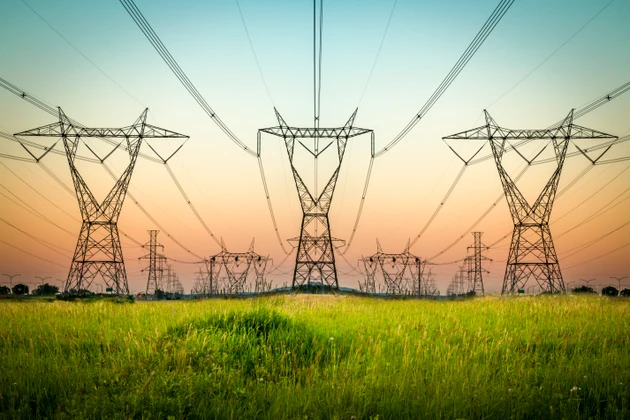
The Bolivian government has proposed a new Electricity and Renewable Energy Law, which it says aims to open the electricity market to private competition, promote clean energy, and attract foreign investment by permitting private companies to bid on public tenders.
The proposal arrives as the government faces a national crisis. Energy privatization is one of the issues at stake.
The possibility of privatization and the loss of natural resources to foreign control are among the issues protesters have targeted during a vast national strike. As the work stoppage entered its third week, miners, teachers, unionized workers, and campesinos converged on the capital, La Paz.
Food shortages, rising fuel prices, and inflation have sparked further discontent, leading to calls for President Rodrigo Paz to resign. Running on the slogan “Capitalism for all,” Bolivia elected Paz president in October during a historic runoff election.
At a press conference, Hydrocarbons and Energy Minister Marcelo Blanco said that allowing private companies to import and export energy products would end ENDE’s state-run electricity monopoly.
“With this new law, we move from a market largely controlled by the state to a competitive market and, above all, one that gives the private sector its proper role,” he said.
The proposed law still must undergo institutional scrutiny, legislative debate, and input from civil society. Under its terms, ENDE would remain the system operator, while private companies could compete in electricity generation, transmission, and distribution. A new independent body, the Energy Regulatory Entity, would ensure transparency and regulatory compliance.
The proposed legislation would replace a 1994 law that Blanco said is now outdated: “Furthermore, the current law does not take into account renewables and storage, so we must adapt it to the new reality.”
The proposed law aligns with a regional trend toward modernizing the electricity sector, which has included public tenders for billing, renewable energy generation, and the import and export of energy to neighboring countries. Sixteen countries are working toward 80% renewable electricity by 2030 under the RALC (Renewables in Latin American Countries) initiative.
“We are pursuing energy diversification through the incorporation of non-conventional renewable energy, universal access to electricity, and ensuring that access is equitable and participatory,” Blanco said.