Erling Haaland and SoFi Stadium, ladies and gentlemen. Your breakout stars of the World Cup.
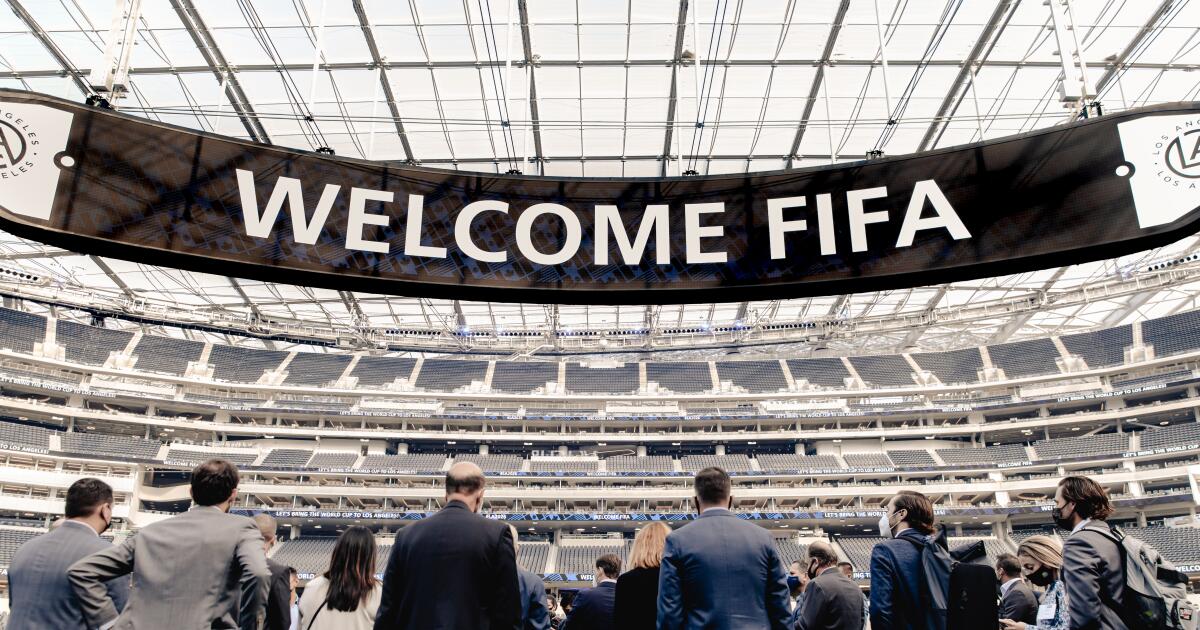
We’ve all fallen for the blond forward who has rowed Norway to its first World Cup quarterfinal berth — and also for SoFi Stadium.
Or “Los Angeles Stadium,” FIFA’s designation for the $5.5-billion architectural masterpiece that welcomed the world to Inglewood.
I cover Rams and Chargers games there regularly, but the World Cup changed how I feel about the place. It has more soul now, more character.
There is more history attached, “core memories,” as Kevin Demoff, president of parent company Kroenke Sports & Entertainment, put it.
The exultation when the United States went up 1-0 in the seventh minute of its tournament-opening, 4-1 victory over Paraguay? “That’s now a core memory of this stadium,” Demoff said.
So is the proud Iranian diaspora showing up en masse to mostly support Team Melli twice, in draws with New Zealand and Belgium.
And the goal by LAFC’s Stephen Eustáquio in the second minute of second-half stoppage time to lead Canada to a 1-0 victory over South Africa in its first knockout game.
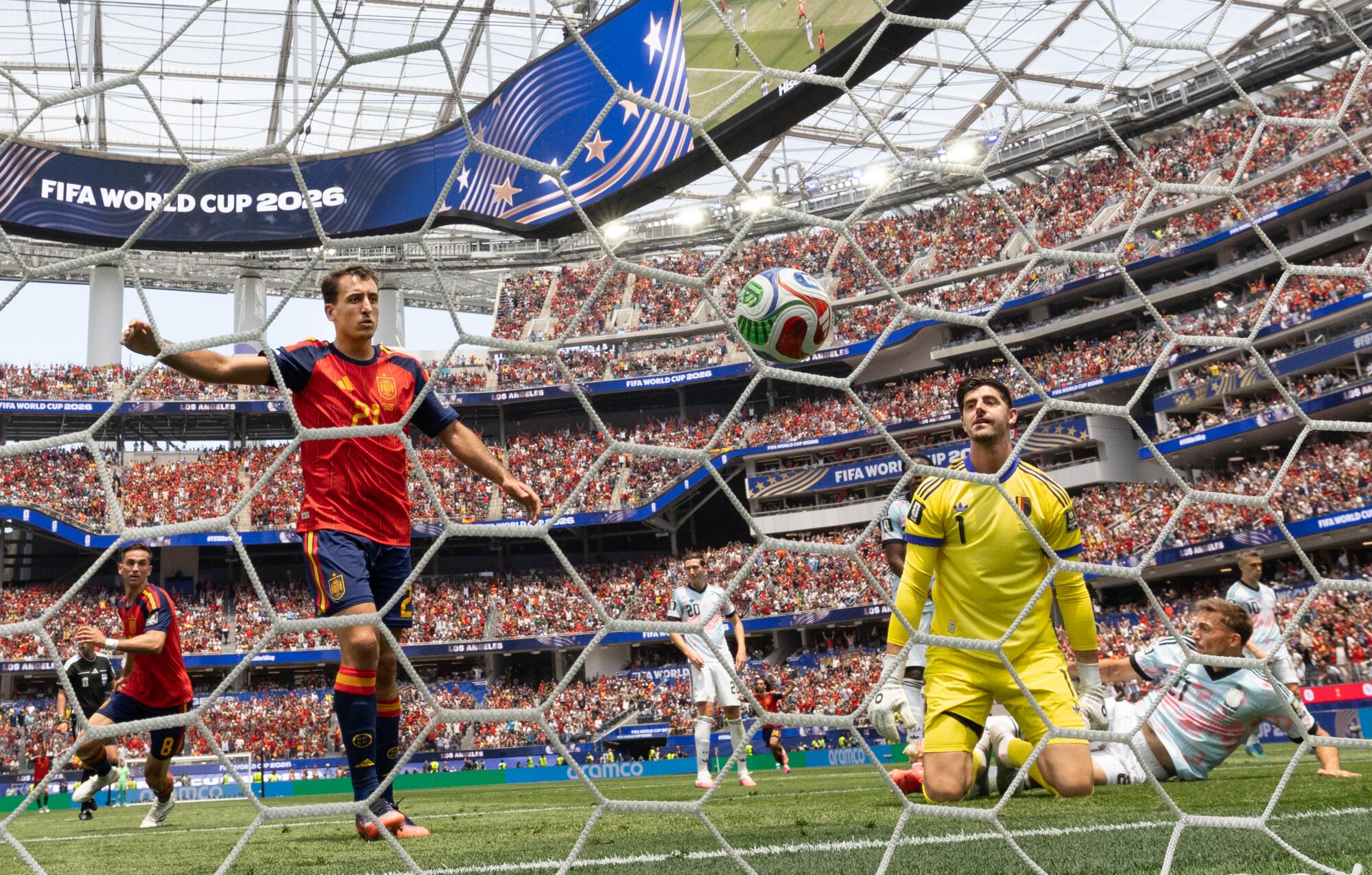
And Spain’s taut, 2-1 victory over Belgium in Friday’s high-stakes quarterfinals match.
FIFA might say these sensational scenes put L.A. — our tiny hamlet of more than 18 million people — “on the map.”
What they did was put SoFi Stadium on everyone’s radar as one of the world’s foremost football stadiums.
Jose Ovalle, a 34-year-old from Reynosa, Mexico, has watched matches at Estadio Azteca in Mexico City and Estadio BBVA in Monterey, both sites of World Cup action this summer.
“They’re amazing stadiums — a lot of history, so much history,” Ovalle said Friday. “But [SoFi Stadium] is one of the top stadiums in the world.”
Spain midfielder Fabián Ruiz, left, celebrates after scoring past Belgium goalkeeper Thibaut Courtois, right, in the World Cup quarterfinals at SoFi Stadium on Friday.
(Allen J. Schaben / Los Angeles Times)
Nah, said New Zealand coach Darren Bazeley: “This is the best football stadium I’ve ever been in.”
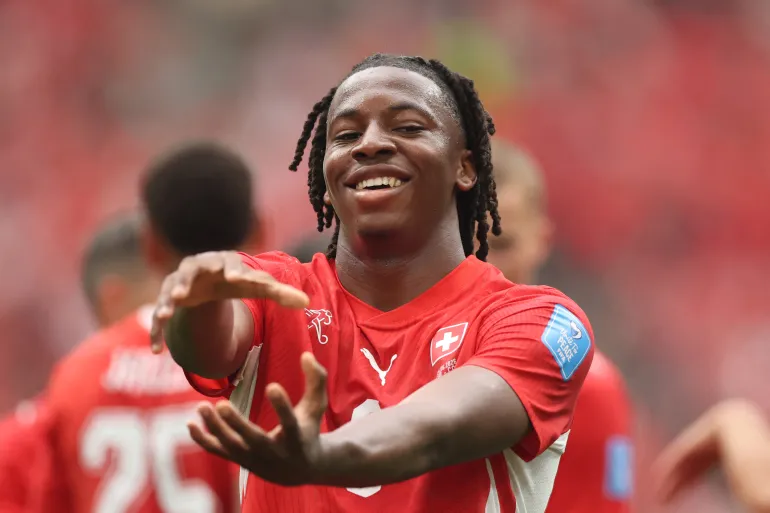
Swiss center back Manuel Akanji plays for Inter Milan and roots for the Atlanta Falcons. It was a big deal for him to play at their home field, Mercedes-Benz Stadium, in last year’s FIFA Club World Cup.
“It’s really nice, but this is the best,” Akanji said after Switzerland defeated Bosnia-Herzegovina in group play at Sofi Stadium. “This is the best I’ve seen overall among all the stadiums I’ve ever been to. It’s amazing.”
Eight matches, five group stage games, two round-of-32 knockout affairs, Friday’s quarterfinal and a partridge in a pear tree — it was a monthlong run that was everything SoFi Stadium’s team could have wished for when it began preparing to host eight years ago. And more.
“I don’t think you can envision the passion of national team fans,” Demoff said. “We’ve seen so many great events here, NFL games, concerts, but the pride of a national event and seeing people come to Los Angeles and the U.S. for the first time, and seeing this building for the first time…
“There’s something magical about 30,000 Bosnians in blue singing, marching from the airport to here. You can’t properly envision that, no matter how many times you’ve been here.”
People raved about sight lines and sound. They admired the architecture and the infinity screen and the way the canopy kept things cool. In line to buy merchandise Friday, Orange County’s Nick Valencia looked around and mused: “Wow, humans made this.”
Players had the run of the place on real grass, not the artificial turf in place for NFL games. (Don’t expect that to change, Demoff said, noting that upkeep would be doubly challenging at SoFi Stadium with two NFL teams using the field.)
Soccer fans amplified their positive reviews online, where the only complaint having to do with SoFi Stadium was that FIFA decided to give the World Cup final to the archaic-by-comparison MetLife Stadium — a.k.a. “New York/New Jersey Stadium” — instead.
The stadium popped in person and on TV, its distinctive, futuristic shape making it immediately recognizable in a way that not every stadium is.
Vibes were good among volunteers and visitors from around the world and every corner of the United States — and among stadium staffers, who won raises in a late-breaking contract agreement that resulted in increases to more than $30 per hour.
The Rams’ house — and Chargers’ — was full almost every match, with four sold-out crowds of 70,492 and an eight-game total of 561,656.
People paid thousands of dollars for tickets and got their money’s worth at the world’s most-expensive stadium, a modern marvel that’s only getting better with age.
Dodger Stadium is dripping in lore, from Kirk Gibson’s legendary walk-off home run in 1988 to more history, like Shohei Ohtani playing perhaps the greatest game ever last postseason.
Staples — er, Crypto.com Arena — is where Kobe Bryant dropped 81. Decathlete Rafer Johnson lit the Olympic flame in 1984 at the Los Angeles Coliseum. And we all can picture Brandi Chastain ripping off her top in her iconic celebration after scoring the game-winning penalty kick in the 1999 Women’s World Cup at the Rose Bowl.
“We may not have the Brandi Chastain moment from ‘99,” Demoff said. “But we’ve had so many great moments off this tournament that I think will be replayed over and over and over again.”
There are more moments to come, with SoFi Stadium slated to host Super Bowl LXI in February and then, in 2028, to stage the Olympic Opening Ceremony and the Olympic swimming competition.
“Where the U.S. scored the opening goal,” Demoff said, “is going to be the middle of the Olympic swimming pool. I think that contrast blows people’s minds. It certainly blows mine.”
And for the past month, Los Angeles’ stadium blew the world’s mind.
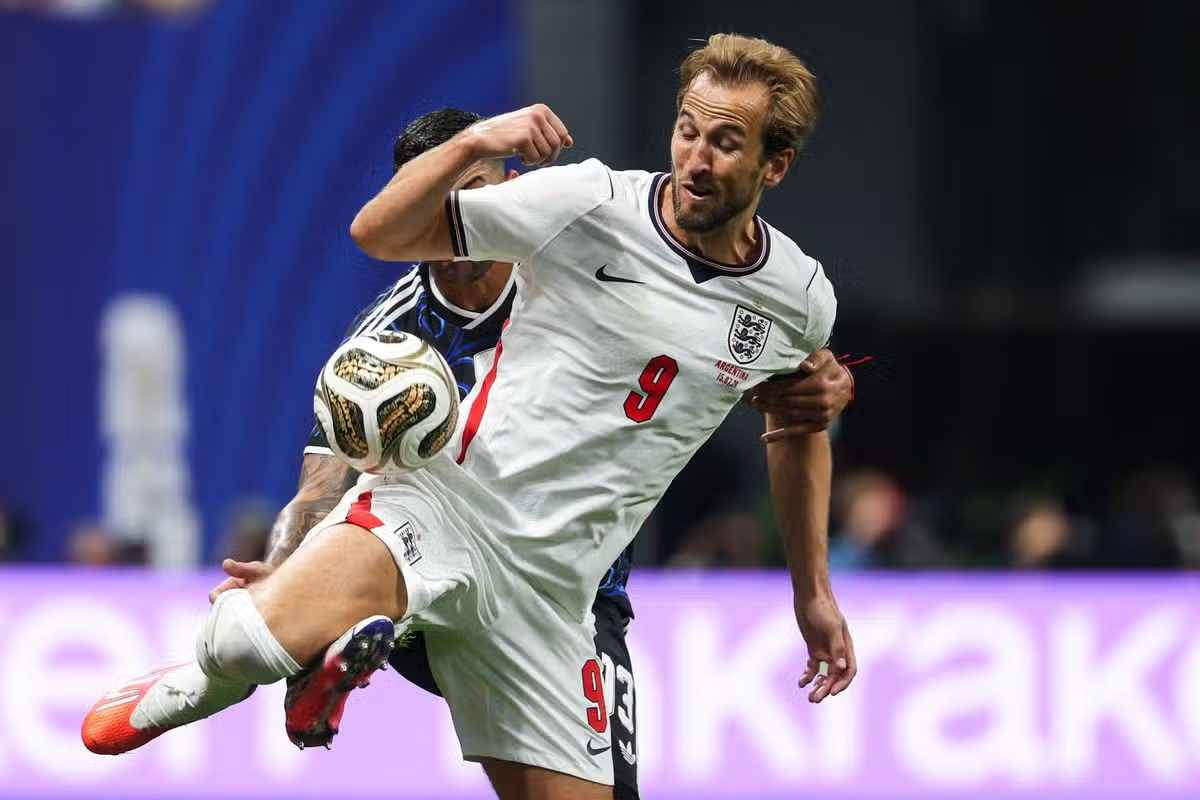
As the game began, the camera panned to the live audience who were watching the match unfold in Atlanta. However, BBC viewers were quick to notice a famous face in the crowd who was there to support the England squad.
Taking to X, one person said: “WAS THAT LOUIS TOMLINSON IN THE AUDIENCE. IT WAAASSSSS AAAAA.” Another wrote: “Louis Tomlinson is there. Oh my god.” Someone else commented: “LOUIS TOMLINSON SPOTTED AT THE #WorldCup”
A third shared: “Louis Tomlinson blessing our screens at the England game tonight was everything I needed.” While a fourth person wrote: “I’m already satisfied with the match cause I saw Louis Tomlinson in the crowd #WorldCup #England.”
The former One Direction star wasn’t the only famous face who was spotted in the crowd, either, as Rolling Stones legend Mick Jagger was also there to support the team.
Elsewhere during the game, Argentina fans have caused outrage with viewers as they were heard booing during England’s national anthem before kick-off began, although the Three Lions supporters retaliated with boos of their own.
Recently, Thomas Tuchel came under fire for his comments made after the 2-1 match against Norway, as he made critiques on the technical side of England’s performance.
When an interviewer asked Jude Bellingham what he thought of his manager’s remarks, he replied: “Yeah, well… whatever. Whatever. It’s difficult out there. It’s a tough shift.”
Discussing the comments, Thomas Tuchel told The Guardian there is no issues between them as he said: “Our comments come from the same place – from being competitive and having the edge when competition is on.
“He [Bellingham] was just confronted with a critique of my side. I [also] called him a world-class player. I said he had world-class actions again to decide the match. I said the mentality is outstanding of this team. All of that was not part of the question.
“I would maybe also bite back when I come from 120 minutes, score two goals and give literally everything that is in my body. It’s just a very normal reaction for a player of his mindset. So no problem.”
The World Cup final airs on Sunday, July 19, on BBC One from 8pm
England reached their fourth World Cup semi-final with an extra-time victory against Norway in the quarter-finals, and were victorious in the Atlanta stadium in the last 32, when they came from behind again to defeat DR Congo.
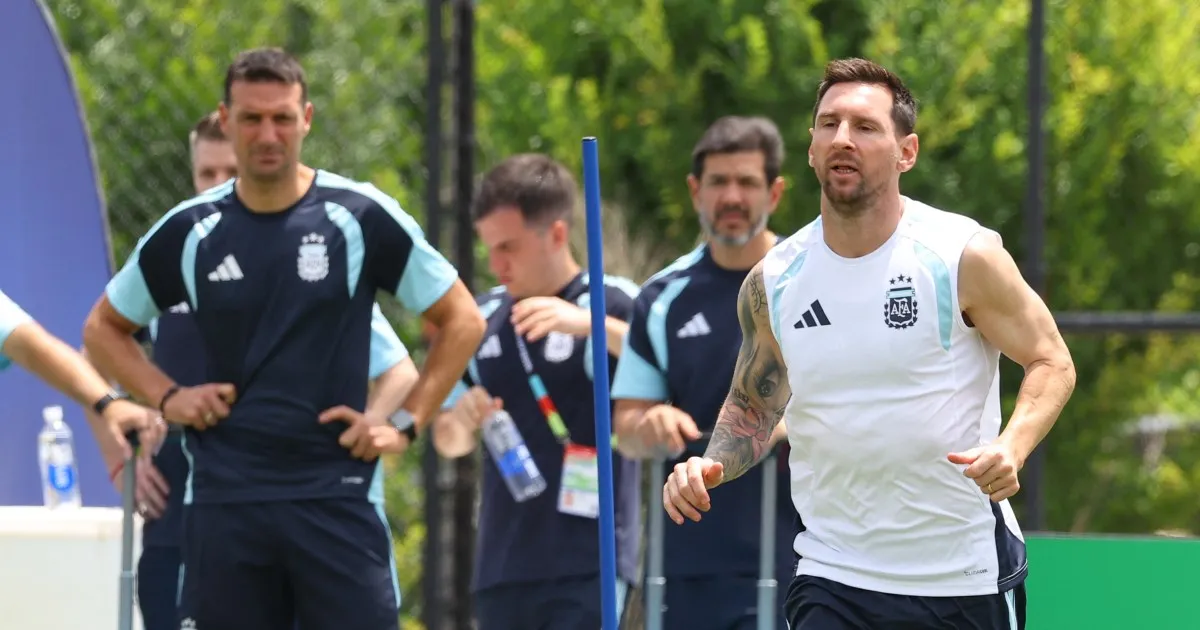
Meanwhile, reigning champions Argentina have managed to score three times in each of their knockout matches so far, with Lionel Messi set to face England for the first time in his career.
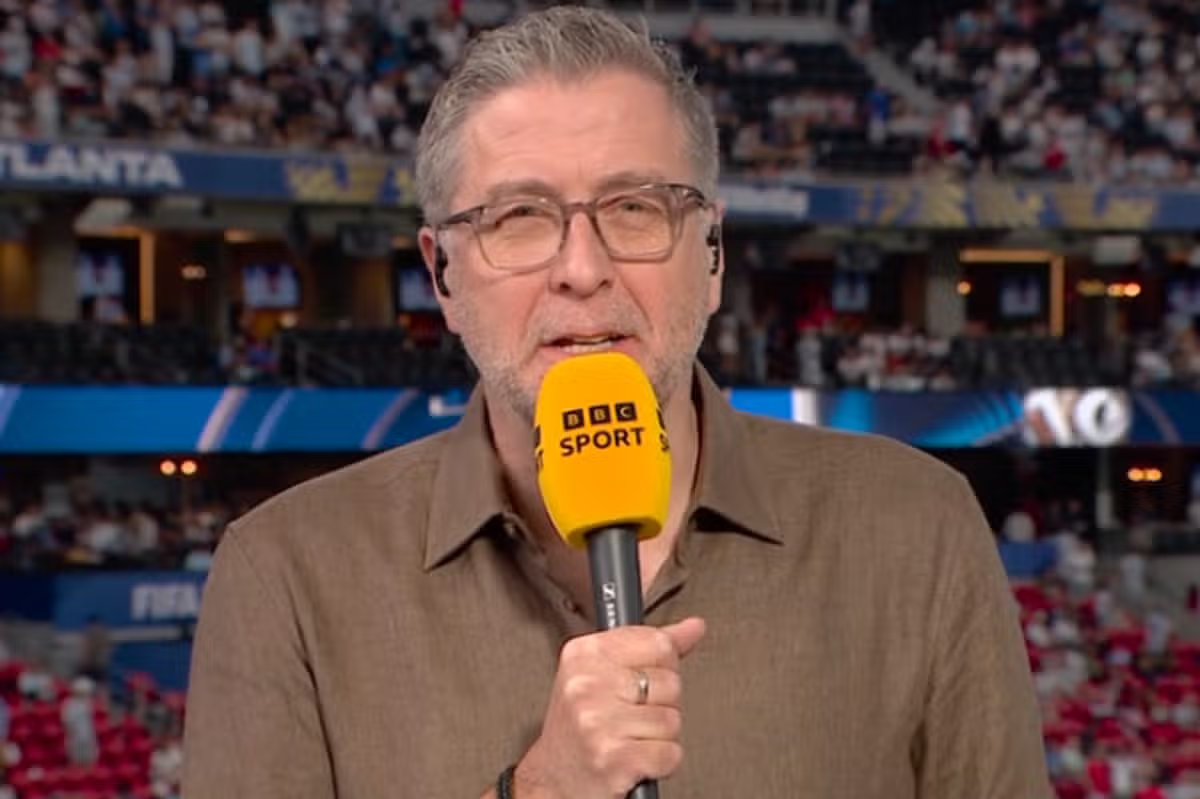
Mark was joined by regular pundits Wayne Rooney, Joe Hart and Micah Richards during the build-up to the anticipated match, with BBC viewers quickly noticing a huge change.
Up until now, BBC stars Mark, Kelly Cates and Gabby Logan have hosted the coverage live from a state of the art immersive studio in Salford, which transported viewers to 16 cities across three host nations.
But for the latest encounter, the team travelled to Atlanta Stadium in person, after the BBC announced that it would be leaving its domestic studio to head across the pond.
Viewers were quick to share their verdict on X (formerly Twitter), as Mark introduced the coverage from inside the spacious stadium for the first time.
“The BBC finally arrive at the World Cup. Only about a month late,” one person wrote, with another adding: “I see that the BBC pundits have finally bothered to travel out for the World Cup.”
A third said: “Remember all that nonsense about the BBC presenting the World Cup from Salford while ITV1 was actually IN one of the host countries?! Tonight, one of them presents LIVE from a stadium for the first time. What one? Yes, the BBC!”
Someone else wrote: “BBC actually made it to the World Cup. Crazy.”
Mark began the coverage by saying: “Evening, don’t look back in anger. Sometimes it’s hard not to.”
A montage of some of England’s most devastating footballing moments against Argentina was then played, including Diego Maradona’s Hand of God moment and David Beckham’s 1998 red card.
Some viewers weren’t impressed with the negative start to the coverage, with one angry fan writing: “The BBC could not hate us more! We play Argentina tonight in the World Cup semi-final and how does the [BBC] open its coverage?
“Some inspiring footage of England’s past triumphs? Of course not. They open with a montage of some of our most devastating footballing moments. With the soundtrack of a post apocalyptic horror movie playing in the background.”
Someone else wrote: “The rest of the build up is just one big [Lionel] Messi love in! It’s sickening, FFS if I was Kane or Bellingham I’d be fuming, let’s have some god damn positivity please BBC.”
Meanwhile, former Football Focus host Dan Walker praised the BBC team’s build-up, writing on X: “Brilliant build-up from the BBC. Pundits all on it, Chappers superb, in the stadium, on the pitch… best of the World Cup so far.”
Coverage of the FIFA World Cup 2026 airs on the BBC and ITV
The FIFA World Cup 2026 Final Halftime Show is expected to have one more surprise performer not yet formally announced
16:57, 14 Jul 2026Updated 17:08, 14 Jul 2026
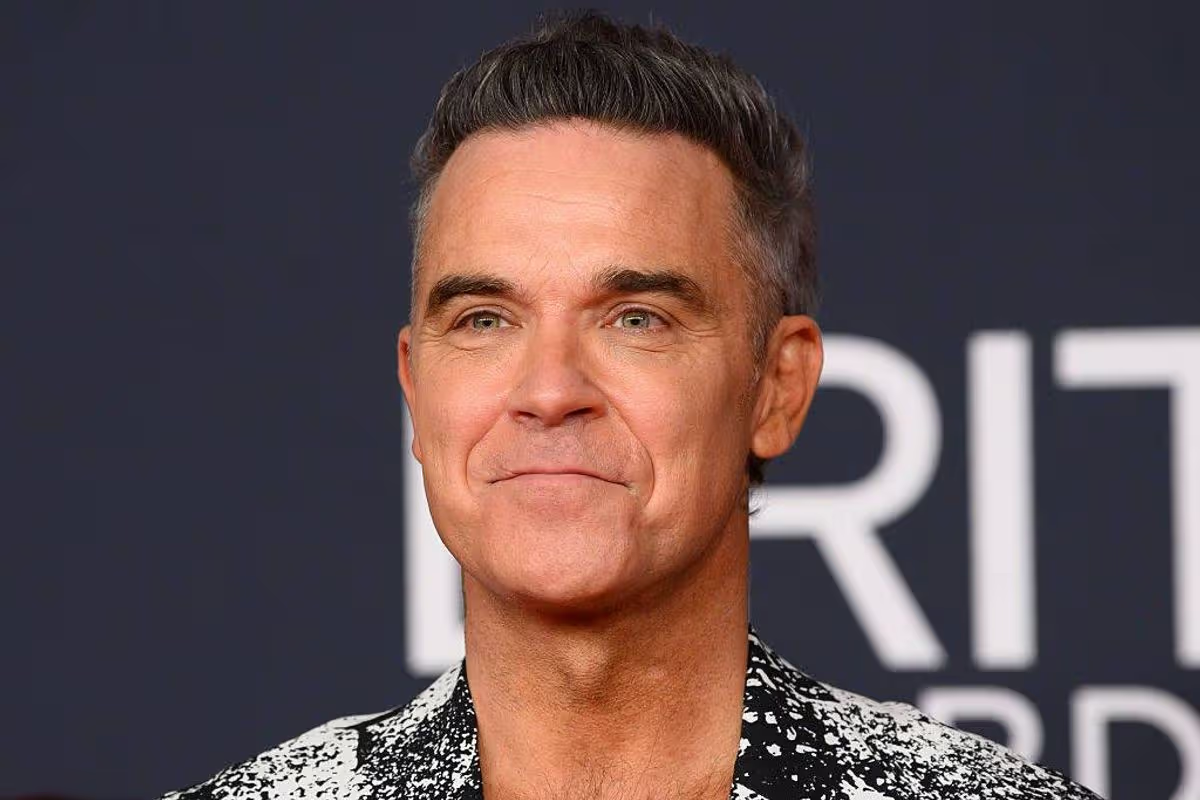
Robbie Williams is set to perform in the World Cup half time show(Image: FilmMagic)
The FIFA World Cup 2026 Final Halftime Show will feature some of the biggest performers in the world – but there’s one more surprise on the way for fans.
The famous faces will all co-headline a special show, which similar to the Superbowl Halftime show, will take place on Sunday, 19 July 2026, at New York New Jersey Stadium when the final two teams take on one another.
Currently, it is between the four semi finalists, with either France or Spain taking on either England or Argentina in the competition. By Wednesday night, following the second semi-final, we will know who will play against one another in the final.
The show will last 11 minutes, and will support the Fifa Global Citizen Education Fund. Shakira and Burna Boy are likely to perform their song Dai Dai, which is the official anthem for the 2026 World Cup.
However, there is one performer yet to formally be announced. It has been reported that Italian popstar Laura Pausini will be joined by none other than Robbie Williams for a performance of their official FIFA anthem, Desire.
“Robbie loves football and is excited to play at this momentous gig. Of course, he hopes England will be one of the teams in the final,” a source told The Sun of the Angels singer’s inclusion in the festivities.
Robbie and Laura were also on hand to perform during the the FIFA Club World Cup 2025 final match between Chelsea FC and Paris Saint-Germain in July last year, where they wowed with their song.
Oasis star Noel Gallagher is less than impressed by the changes to have a half-time show.
“I’m doing the half-time raffle for a leg of lamb,” he quipped to TalkSport, before adding: “I don’t like changes in football. I’m looking forward to these new rules about corners and time-wasting, that might be a good thing for the game, but I don’t like the razzmatazz of football; it’s been functioning perfectly for hundreds of years.” Noel also questioned whether any of the performers had any links to football and why they had been chosen specifically.
During the big announcement, Chris Martin appeared with Sesame Street characters including Elmo. He said: “Well, this year for the first time, there’s a halftime show at the World Cup Final! It’s where people get together and there’s singing, and there’s dancing, and there’s music. It’s a chance to show how amazing all different kinds of humans are. And monsters, aliens – it’s one big family, really.”
When Kylian Mbappé and Lamine Yamal lead their sides out at AT&T Stadium in Arlington, Texas, on Tuesday evening, they will be doing more than chasing a place in Sunday’s final, they will be fronting the priciest collection of talent ever assembled for a men’s World Cup semi-final.
ADVERTISEMENT
ADVERTISEMENT
Transfermarkt’s latest figures value France’s squad at roughly $1.78 billion (€1.56bn) and Spain’s at $1.43 billion (€1.25bn), a combined total of around $3.2 billion (€2.8bn), which outstrips any previous last-four meeting in the tournament’s history.
Much of that financial weight is concentrated in a handful of individuals.
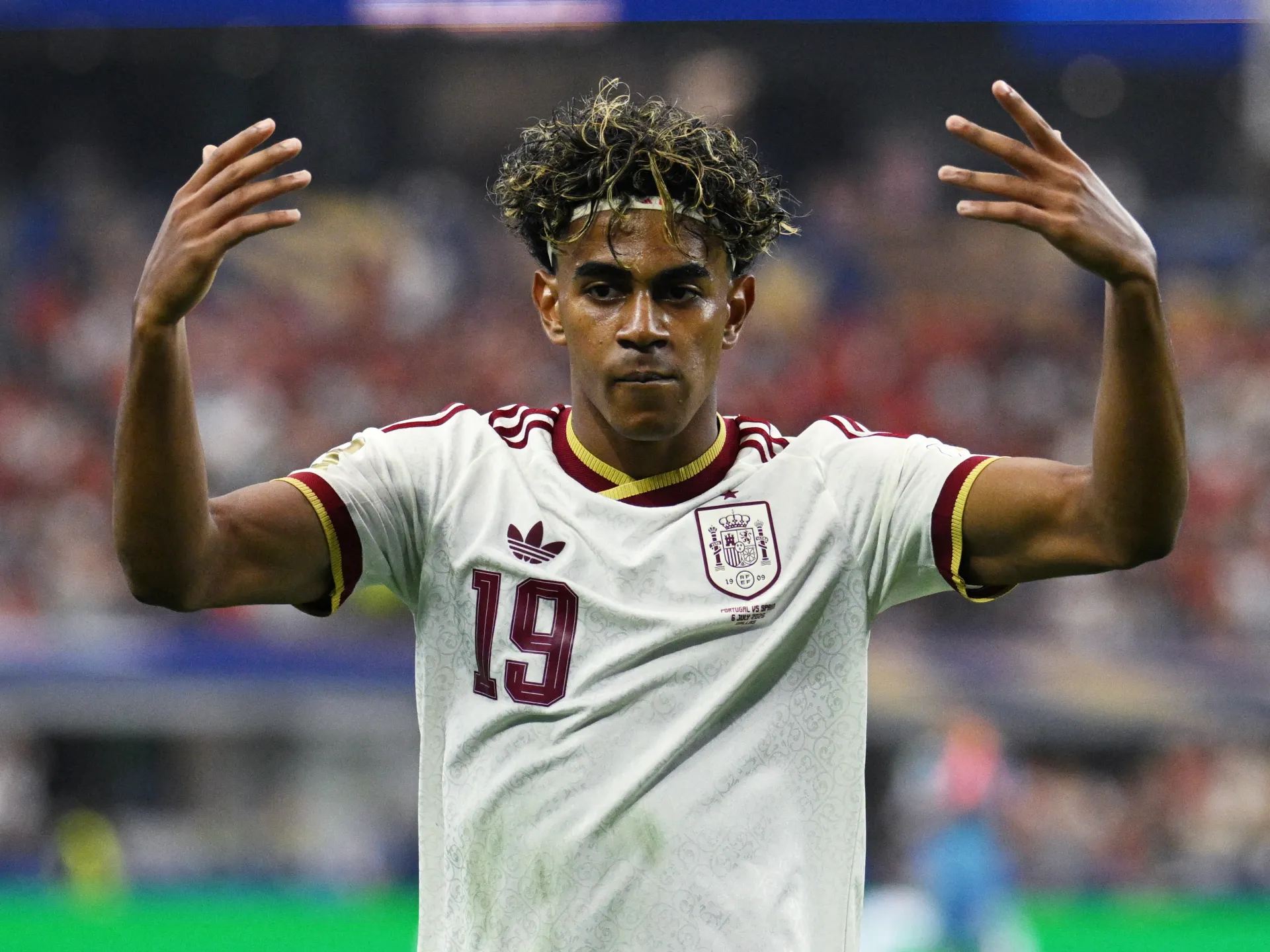
Barcelona’s Yamal, who turned 19 the day before kick-off, is the most expensive player left in the competition at around $234 million (€205m), with Mbappé close behind at roughly $211 million (€185m).
Michael Olise and Pedri follow, both valued at around $176 million (€154m).
Between them, the quartet accounts for four of the five costliest footballers in the world, with the fifth being Norway’s Erling Haaland, whose side did not reach this stage after losing to England.
France’s edge is starkest in attack, where forwards including Ousmane Dembélé and Désiré Doué push the unit’s combined worth to roughly $878 million (€770m), well ahead of Spain’s $489 million (€428m) attacking line, even with Yamal in its ranks.
France also lead in defence, valued at $473 million (€414m) to Spain’s $337 million (€295m), while Spain have the edge in goal, their goalkeepers are worth a combined $113 million (€99m), against France’s $67 million (€58m).
Market value has not dictated ticket demand
Market value has seemingly has not dictated demand for tickets at World Cup matches.
Resale prices for Wednesday’s second semi-final between England and Argentina in Atlanta have been running around $1,000 higher on average than for Tuesday’s tie, even though that fixture’s combined squad value, at roughly $2.5 billion (€2.2bn), trails France and Spain’s total.
Demand there is being driven largely by Lionel Messi’s possible farewell World Cup appearance.
As for the match itself, recent history offers Spain some reassurance against what the figures suggest.
La Roja have won six of the last 10 meetings between the sides, including victories at Euro 2024 and in last year’s Nations League, both by narrow margins.
Kick-off is at 2pm local time, 8pm in the UK and 9pm in Paris and Madrid, with the match falling, fittingly for the French camp, on Bastille Day.
Al Jazeera put nine leading AI models to the test to predict the 2026 FIFA Men’s World Cup champion.
Published On 14 Jul 202614 Jul 2026
As the 2026 FIFA Men’s World Cup enters its final stages, AJLabs asked nine leading AI models to predict the tournament’s final podium based on all available data for each team, including:
Team strength
Squad quality
Coaching
Historical performance
Team’s performance during the current tournament
France emerged as the favourite to lift the trophy, receiving five (Gemini, Grock, DeepSeek, Le Chat and Qwen) of the nine champion votes.
Argentina, the defending world champions, received the remaining four votes (ChatGPT, Claude, Copilot and Meta AI).
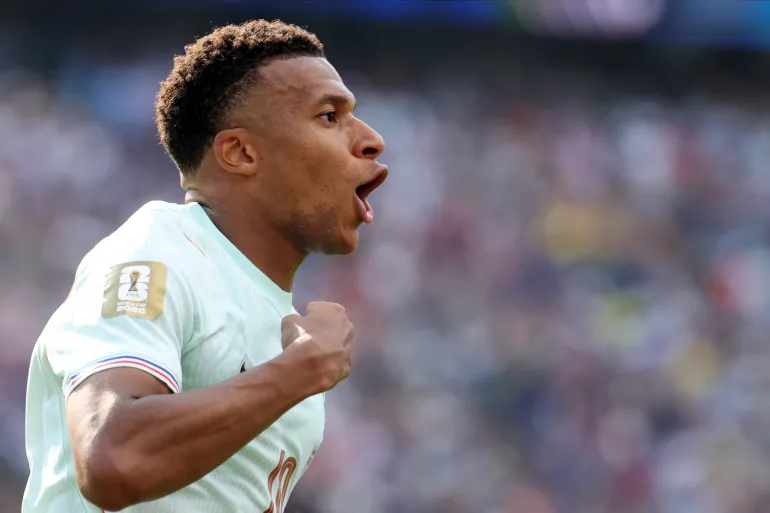
France’s forward #10 Kylian Mbappe celebrates scoring his team’s first goal during the 2026 World Cup football tournament quarterfinal match between France and Morocco at Boston Stadium in Foxborough on July 9, 2026 [Odd Andersen/AFP]
Predictions for the runner-up were more divided: France and Argentina each received three votes, followed by England with two and Spain with one.
Spain was the clear favourite to finish third, receiving six of the nine third-place predictions, while England and France each received fewer votes.
Lamine Yamal celebrates after the match as Spain qualify for the semifinal stage of the World Cup [Gary Vasquez/Reuters]
The predictions reflect a broad AI consensus around the four remaining contenders, France, Argentina, Spain and England, but also highlight differences in how leading language models weigh recent performances, squad depth and tournament momentum.
The AI predictions come as the tournament reaches the semifinals. France will face Spain on July 14 at AT&T Stadium in Arlington, Texas, while England will meet Argentina on July 15 at Mercedes-Benz Stadium in Atlanta, Georgia.
The third-place playoff will be played on July 18, before the World Cup final on July 19 at MetLife Stadium in East Rutherford, New Jersey.
Spain-France clash is filled with superstars like Kylian Mbappe, Ousmane Dembele and Lamine Yamal, among others.
European giants France and Spain will compete for a place in the World Cup final on Tuesday, as the first semifinal kicks off in Dallas.
Both sides have some star names among their ranks, with the likes of Kylian Mbappe, Michael Olise and Lamine Yamal set to play a key role in securing their country’s place in Sunday’s final.
Recommended Stories
list of 4 itemsend of list
Here’s a closer look at some of the key players who will decide Tuesday’s first semifinal.
Kylian Mbappe in action against Paraguay during their round of 16 match [Bill Streicher/Reuters]
Kylian Mbappe
World Cup 2026 statistics:
Goals: 8
Assists: 3
Minutes played: 563
The French captain has been in remarkable form at this World Cup, breaking numerous records along the way.
After bagging four goals in the group stages, Mbappe has now scored in every knockout round so far, and he has also provided a number of assists.
The Real Madrid forward is in the form of his life and is the biggest threat in a star-studded Les Bleus XI.
After scoring a hat-trick in a World Cup final loss to Argentina in Qatar, Mbappe will be determined to go one step further this year.
Michael Olise in action against Paraguay [Bill Streicher/Reuters]
Michael Olise
World Cup 2026 statistics:
Goals: 0
Assists: 5
Minutes played: 488
Michael Olise may not have got himself on the scoresheet at this World Cup so far, but he is the player that has provided the most assists.
He has set up five goals for France, and his partnership with Mbappe has been a highlight of the tournament.
The Bayern Munich midfielder has the technical ability to unlock defences, and he will be a key attacking threat in the semifinal with Spain.
France’s Ousmane Dembele celebrates scoring their second goal against Morocco [Mike Segar/Reuters]
Ousmane Dembele
World Cup 2026 statistics:
Goals: 5
Assists: 2
Minutes played: 492
The dynamic Paris-Saint Germain (PSG) forward came into this tournament looking for his first-ever World Cup goal. He now has five of them.
He scored a first-half hat-trick in a group game with Norway and also bagged the second in France’s 2-0 win over Morocco in the quarterfinals.
Les Bleus have been having their own Golden Boot competition, with Dembele pushing Mbappe all the way.
The pair have now scored 13 goals between them at this World Cup, a feat that has not been achieved by two players from the same country since Brazil’s Ronaldo and Rivaldo in 2002.
Spain’s Lamine Yamal celebrates after the match as Spain qualify for the semifinals [Gary Vasquez/Reuters]
Lamine Yamal
World Cup 2026 statistics:
Goals: 1
Assists: 0
Minutes played: 405
At a tournament where stars like Lionel Messi, Kylian Mbappe and Harry Kane have been prolific, 18-year-old Lamine Yamal has just one goal to date, in a routine 4-0 group drubbing of Saudi Arabia.
Despite this, the Barcelona teenage sensation remains a key attacking threat for La Roja and scored against France in the semifinals of Euro 2024.
He was awarded player of the match for his performance in Spain’s quarterfinal win over Belgium, and he has also recorded the most successful dribbles at the tournament so far.
“I know I can contribute even if I don’t score. I know my movements draw in many opponents, so I do everything I can to help the team,” Yamal said after Spain’s victory over Belgium.
Mikel Oyarzabal, left, celebrates scoring his team’s first goal during the round of 32 match between Spain and Austria [Etienne Laurent/AFP]
Mikel Oyarzabal
World Cup 2026 statistics:
Goals: 4
Assists: 1
Minutes played: 519
The Real Sociedad forward is Spain’s top scorer at this World Cup, and he will be La Roja’s biggest hope for goals in Tuesday’s semifinal.
He scored six goals in six games during World Cup qualification and has followed that up with four goals at the tournament proper.
Oyarzabal also has experience of scoring crucial goals at the business end of tournaments. He bagged an 86th-minute winner against England in the Euro 2024 final, proving he can perform under pressure on the biggest stage.
La Roja will hope for more of the same this week.
Mikel Merino celebrates scoring his team’s second goal against Belgium in the quarterfinals [Paul Ellis/AFP]
Mikel Merino
World Cup 2026 statistics:
Goals: 2
Assists: 0
Minutes played: 180
If Spain need a goal against France in the closing stages of the semifinal, then Luis de la Fuente will be turning to one man on his bench.
Mikel Merino has twice played the role of super-sub at this World Cup, coming off the bench to score late winners against Portugal and Belgium.
The Arsenal midfielder is unlikely to start against Les Bleus on Tuesday, but he remains a key part of Spain’s squad and will pose a real threat against tired legs towards the end of the match.
The football teams of forty-eight countries set out with a chance of winning the World Cup on June 11, and the hopes of just four nations remain alive.
The top four teams in the FIFA rankings, with eight previous titles between them, will lock horns on Tuesday and Wednesday to try to secure a place in what is set to be the grandest of showpiece occasions in sport: the World Cup Final at New York New Jersey Stadium on Sunday, July 19.
Recommended Stories
list of 4 itemsend of list
Al Jazeera ranks the contenders for the title:
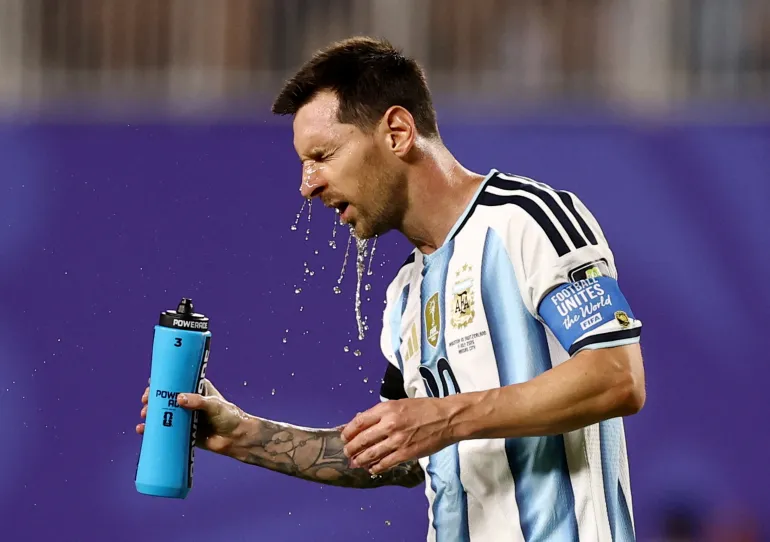
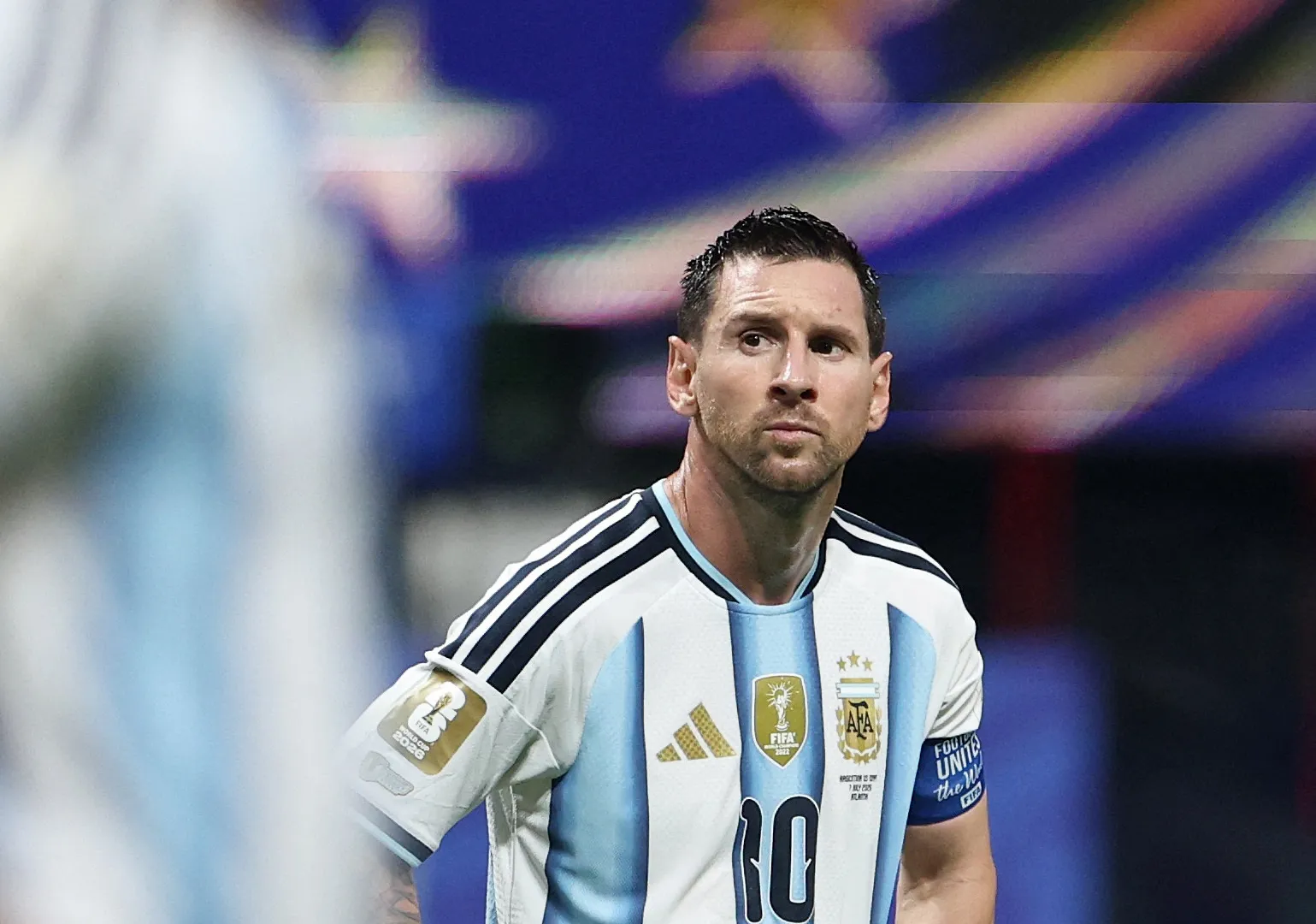
Argentina’s Lionel Messi takes a break during the quarterfinal [Lee Smith/Reuters]
4. Argentina
What’s this? The defending champions as the outsiders?
Well, Algeria, Austria, Jordan, Cape Verde, Egypt and Switzerland must be one of the kindest ever paths to the business end of a World Cup, and La Albiceleste have not exactly been convincing along it.
They were made to sweat by Cape Verde and Egypt in the knockout stages before finding a way to prevail in dramatic circumstances, and the pattern was repeated against Switzerland in Kansas City on Saturday night, when they went almost 90 minutes without a shot on target following Alexis Mac Allister’s early opening goal.
Their ageing side eventually prevailed after 120 minutes in sweltering conditions. Had Switzerland kept 11 men on the field, things might have been very different, but, once again, in the end, the defending champions found a way to win when they were well below their best.
Surely they cannot get away with another performance like that against England? Well, England fans might well be saying the same about the Three Lions. Both Harry Kane and Lionel Messi fell well short of their best in the last-eight matchups too.
The outpouring of emotion from Messi at full-time in the comeback win over Egypt showed just how close the three-time winners came to being eliminated. In an already emotionally charged matchup with England, expect tempers to rise and tears to flow on either side come full-time.
If Argentina, and – in his first-ever appearance against the Three Lions – Messi, are able to rediscover their swagger and win, ousting their old foes from the tournament in the knockout stages for a third straight time, then the confidence and momentum they would take into the final would be huge.
However, nothing they have shown in the US this summer would suggest that is likely to happen.
And even if it did, whether it would be enough to give them the edge against European champions Spain, or a vengeful France side they vanquished on penalties in the epic final of Qatar 2022, is another matter entirely.
England’s Jude Bellingham and Harry Kane celebrate after beating Norway [Paul Childs/Reuters]
3. England
Have we seen the best of England in this tournament? Probably not. And yet, here they are, in the semifinals for just the fourth time ever.
The win over Norway was neither pretty nor convincing, and manager Thomas Tuchel admitted they were lucky to get through, thanks largely to Jude Bellingham putting the team on his shoulders at a couple of key moments once again. Could a midfielder really win the Golden Boot? He is only two behind Messi and Kylian Mbappe with six goals already.
Much to Tuchel’s frustration, bar a 20-minute purple patch in the second half of the 4-2 opening game win against Croatia, England have yet to dominate a team, and relied on counterattacking bursts to give them a 3-2 lead to defend in the epic round-of-16 victory over Mexico in the cauldron of the Azteca.
What they have shown is character, in abundance, and they will likely need plenty more of that if they are to end 60 years of longing for a second World Cup title.
The game against Argentina will be far more than 11 vs 11; the ghosts of football history will line up alongside both teams, and the hype and pressure are sure to be enormous.
A few possible positives for England will be that they have already made par for this tournament: Ranked fourth in the world, they have reached the last four. Anything else would be a bonus. Nobody really considers them a top-two team in the world, which might help to alleviate some of the burden of expectation.
After a trip to the altitude of Mexico City, and the oppressive heat and humidity of Miami, a return to the 22-Celsius (71.6F) climate-controlled confines of Atlanta, where England overcame DR Congo in the round of 32, will be welcome.
They also have no new suspensions to deal with, with Jarell Quansah left with one game of his two-match ban to serve; and there were minutes for Reece James against Norway. England will meanwhile be hoping Declan Rice recovers fully after a 45-minute cameo in which he was patently not fit following illness.
An ageing Argentina side have struggled against the pace, movement and trickery of Cape Verde, Egypt and Switzerland in the past three rounds, and Bukayo Saka, Anthony Gordon, and even Marcus Rashford will be even better placed to exploit that.
Beyond Messi, Argentina have not posed too many attacking questions themselves, though Julian Alvarez’s stunning strike against Switzerland might just be the start of his own World Cup.
All things considered, expect England to make it through to the final, but France would likely be a step too far, and even Spain would be a big ask, despite the additional motivation of revenge for their Euro 2024 final defeat.
Spain’s Mikel Merino celebrates the victory against Belgium [Jessie Alcheh/Reuters]
2. Spain
They are the third semifinalists yet to find top gear at this tournament, bar a one-sided display against Austria in the round of 32.
La Roja’s stoic defence might have been punctured for the first time this summer by Belgium in the last eight, but the 649 minutes that preceded that goal were the longest streak in World Cup history without conceding, and they have still allowed just seven shots on target in their six matches so far.
Though the goal contribution stats might not reflect it, Lamine Yamal has shown flashes of a return to top form after that season-ending hamstring injury in April, while La Roja’s carousel of tricky attackers has posed problems for defences in all six matches so far, and Mikel Merino has written himself into folklore with last-gasp winners against Portugal and Belgium.
Four-goal leading scorer Mikel Oyarzabal has gone off the boil in the past couple of games, however, and is unlikely to strike too much fear into the French backline.
While teenage defender Pau Cubarsi looks at home on the biggest stage of all, he is yet to face the kind of test that Kylian Mbappe, Michael Olise and Ousmane Dembele will pose.
If they make the final, Spain will be favourites to win it, and they have won the World Cup the only time they previously reached the last four, but despite having beaten France in their past two encounters, a third should be beyond them.
France’s forward line of Kylian Mbappe (bottom), Ousmane Dembele (top), Bradley Barcola (right), and Michael Olise (left) is considered the strongest at the tournament [Mauro Pimentel/AFP]
1. France
Before their last-eight matchup with Morocco, we asserted that France were the class of the field with a fearsome foursome in attack and a defence that, although it had not really been tested yet, had only allowed two goals in five matches.
Well, make that two in six, even if they still have not really been tested, such was the Atlas Lions’ toothless attack on the night in their 2-0 defeat.
Mbappe further enhanced his credentials for the Golden Boot and all-time World Cup scoring record with another quality goal against Morocco, and Olise, Dembele, Desire Doue and Bradley Barcola continue to threaten across the field in a way no other team on earth can.
Spain, and in particular their defence, will pose a different challenge, and the underworked French defence will likely get their own test this time, too, with the likes of Dani Olmo, Alex Baena, Ferran Torres and Fabian Ruiz getting into promising positions around Oyarzabal, and that’s not to mention super-sub Merino.
Whoever beats France will surely lift the World Cup, but none of the remaining teams can match the dynamism of Les Bleus’ forwards. Although Spain will likely be their hardest challenge, it is one you can expect Didier Deschamps’s men to overcome, not least fuelled by the additional motivation of having lost to La Roja in the Euro 2024 and Nations League semifinals over the past two years.
Four former champions have qualified for the FIFA World Cup semifinals for the first time since 1990. Argentina, England, France and Spain capitalised on the inexperience of lesser-pedigreed foes to reach the final four.
For the Albiceleste, it was an unwise Swiss dive.
For the Three Lions and La Roja, opposing goalkeepers spilled rebounds.
And Les Bleus benefited from an inexplicable, forward-less, Morocco lineup.
Here are the key takeaways from the quarterfinals:
France too good for Morocco in 2-0 route in Boston
What we learned:Nothing works against France, so far.
Morocco tried a unique approach to unsettling the French. Mohamed Ouahbi went with a striker-less lineup, which, predictably failed to threaten.
Post-match, France’s coach Didier Deschamps said what everyone else in the room was thinking: “I was quite surprised by the starting 11. I tried to understand why [Ouahbi] made these choices, no real forwards.”
Part of the reason would have been the absence of injured forward Ismael Saibari, who had a breakout tournament, though the Morocco roster included three other forwards, including Soufiane Rahimi, who entered in the 60th minute. That was just after Kylian Mbappe’s dipping right-footer inside the far post the opened the scoring for Les Bleus.
Ouahbi’s reasoning remains a mystery.
He might have been hoping for a France own goal, which was narrowly avoided as a Dayot Upamecano shank landed on top of the net. Or perhaps the game strategy was that goalkeeper Yassine Bounou would continue to bail out Morocco, as he did earlier in the quarterfinal tie when he saved Mbappe’s first-half penalty kick, following a two-minute-plus VAR review.
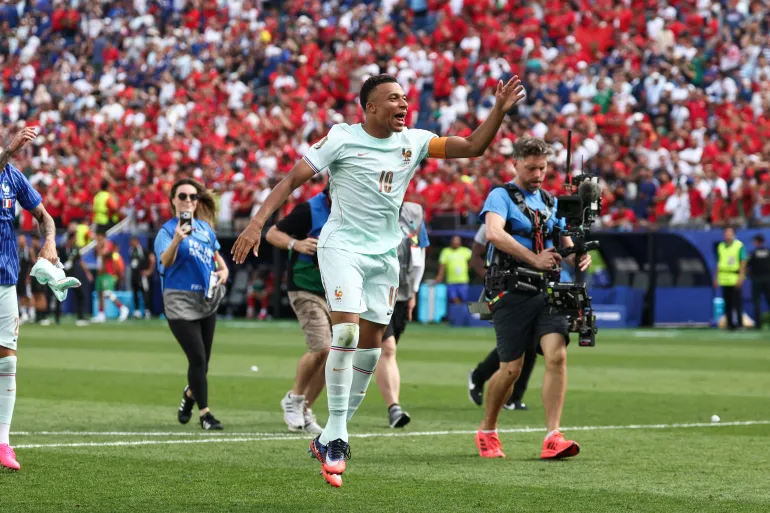
France’s Kylian Mbappe celebrates after winning the 2026 World Cup quarterfinal against Morocco at Boston Stadium on July 9, 2026 [Franck Fife/AFP]
Spain snatch late winner to see off Belgium 2-1 in Los Angeles
What we learned:Pau Cubarsi is not in over his head.
A Barcelona teenager’s shot led to the deciding goal for Spain against Belgium – but no, it wasn’t wonderkid Lamine Yamal, who was held to a single score in the tournament.
With the score even, and superb Belgium goalkeeper Thibaut Courtois on the bench injured, Cubarsi advanced and unexpectedly fired from close to 30 metres out.
Reserve keeper Senne Lammens could have been taken by surprise – this was Cubarsi’s first attempt since the first half of Spain’s opening 0-0 draw with Cape Verde on June 15.
In any case, the shot handcuffed Lammens (actually, Lammens handcuffed himself), leaving the rebound for Mikel Merino, who converted from close range to score the game winner in the 88th minute.
So, no, Cubarsi is not there to generate offense. But the fact a 19-year-old is starting on the Spain back line is significant. Few successful World Cup teams have gone with youthful centre backs, an exception being Italy’s Giuseppe Bergomi, who was 18 when he played in 1982, as a substitute for injured Fulvio Collovati.
Cubarsi struggled at times against the Belgians, but was not troubled by imposing substitute forward Romelo Lukaku. Belgium became the first team to score against La Roja in the tournament but the key to Spain’s defending is much less battening it down, but rather Barcelona-style keep-away, and that’s where Cubarsi is most comfortable.
Meanwhile, substitute forward Merino is providing close to instant offense, scoring two minutes after entering against Belgium, and five minutes in against Portugal in their 1-0 last-16 victory.
What we, and France, also learned is that Jeremy Doku’s double-teaming easily shut down 18-year-old Yamal, which means expect more of the same from Desire Doue in the semifinals.
Spain’s Mikel Merino, second from right, scores the match winner against Belgium keeper Senne Lammens in the quarterfinal in Inglewood on July 10, 2026 [Paul Ellis/AFP]
England defeats Norway 2-1 in Miami
What we learned:First off, Norway still has a lot to learn. Also, don’t believe your eyes when it comes to the World Cup “connected” ball, whose “heartbeat” insisted a Orjan Nyland goal kick did not strike a TV camera cable.
During the first round, Norway coach Stale Solbakken let everyone know that his nation was not some “naive country, playing for fun,” when he rested everyone before a 4-1 loss to France.
The idea was to keep stars Erling Haaland and Martin Odegaard in the tournament into the elimination stages. Solbakken’s strategy worked well, until the quarterfinals, when the Norwegians were exposed.
Sure, England’s Elliot Anderson went down as if he had taken a Zinedine Zidane circa 2006 head-butt. But, no, it was only a Haaland shove, leading to a Norway goal being disallowed, following a VAR replay. That would not be the only moment of Norwegian naivety.
Late in the first half, a 2-on-1 ended with Alexander Sorloth failing to square for Haaland, and unable to get past John Stones.
Then, instead of milking stoppage time to protect a 1-0 lead, Nyland sent a long goal kick that appeared to suddenly change trajectory and land at the feet of Anderson, triggering the TV cable-gate accusation from Solbakken to the match officials. Nothing to see here – that’s the FIFA version, anyway. Anderson quickly found Anthony Gordon, on to Jude Bellingham, and an England equaliser ensued before halftime.
It didn’t help Norway’s defending on the wings when Julian Ryerson went out injured. But it took until the third minute of extra time before Bukayo Saka earned a corner against Marcus Holmgren Pedersen. Nyland tipped away Harry Kane’s chip for another corner – and there was Bellingham, again, this time to convert the rebound of a Morgan Rogers shot.
Then, with Haaland on the bench, Norway had a final chance. At least, that is what lanky Norway defender Kristoffer Ajer thought, after England goalkeeper Jordan Pickford and a defender collided, leaving an open goal. Not so, French referee Clement Turpin, who stopped play, and cautioned Ajer for dissent.
Thomas Tuchel said his team got “lucky.” But evidence, and experience, points to the Three Lions making their own luck.
England’s Harry Kane, left, Jude Bellingham, centre, and Morgan Rogers celebrate after winning their quarterfinal match against Norway at Miami Stadium on July 11, 2026 [Patricia de Melo Moreira/AFP]
Defending champions Argentina eliminate Switzerland 3-1 in Kansas City
What we learned:Don’t dive.
Switzerland appeared to have momentum against Argentina when Bree Embolo went down near the halfway line just before a drinks break.
Joao Pinheiro cautioned Leandro Paredes, then switched the call to an Embolo yellow card for simulation, following a VAR review. The official call was “mistaken identity,” for the first time VAR invoking a directive to intervene in case of a “potential” red card.
Whatever the justification, the result was Embolo – earlier cautioned for taking down Paredes – was ejected. Embolo’s flop seemed out of character – this was his first red card with the national team, second at the senior level, and first since a 2015-16 Europa League match with FC Basel.
We also learned Argentina doesn’t need Lionel Messi to score.
But it helps when Messi is taking corners – he pinpointed one for Alexis Mac Allister to head in for the opening goal on 10 minutes. The Albiceleste coaching staff celebrated by congratulating assistant Walter Samuel, who, possibly, figured out Mac Allister could find space in the midst of a Swiss team whose shortest player is four centimetres (an inch and a half) taller than him.
Argentina’s Lautaro Martinez, right, scores the match winner against Switzerland in their quarterfinal at the Kansas City Stadium on July 11, 2026 [Odd Andersen/AFP]
Pieces from the turf used at the stadium will go on sale as memorabilia and will be priced from $450 to $1,200.
By Reuters and The Associated Press
Published On 11 Jul 202611 Jul 2026
FIFA is hoping to make money off the World Cup final even after the match is finished and the tournament is wrapped up.
Segments of the pitch for the World Cup final will be up for sale starting at $450 per piece, football’s governing body announced on Saturday.
Players and coaches have criticised the quality of the field at New Jersey’s MetLife, which usually uses an artificial surface for NFL games of the New York Giants and Jets. FIFA renamed the venue to New Jersey New York Stadium for the World Cup.
FIFA, accused of charging high prices for this year’s tournament in the United States, will earn more than $11m from the sale, according to a report in The Athletic.
“Own a genuine piece of football history with an authentic 2026 FIFA World Cup Piece of the pitch, permanently preserved in a premium acrylic with a USB keepsake,” the website says. “Each piece contains an original fragment of the iconic Final playing surface, making it a unique collectable that celebrates one of the world’s greatest sporting events.”
The official store says each segment of turf is 17.5 by 17.5 by 17.5, although it doesn’t specify whether that figure is inches, centimetres or millimetres.
FIFA said “the acrylic USB features an authenticity film, while offering a sleek, contemporary display piece. Presented in a premium hinged shoulder box with striking spot UV detailing, this exclusive item is designed for collectors, fans, and football enthusiasts alike”.
FIFA is making the turf available to send only to addresses in the United States and Europe.
“Orders will not be shipped until after the FIFA World Cup 2026 Final,” the governing body said.
In addition to the high-priced tickets and memorabilia for the tournament, it will cost $3,000 for the highest-priced tier of souvenir turf. The three-by-three-inch (7.6-by-7.6-centimetre) piece of grass comes with a gold-etched replica ticket, a miniature replica World Cup ball and a crystal-cut World Cup trophy.
The three other tiers of souvenir turf will sell for $450, $900 and $1,200.
There will be no more than 2,026 pieces available in any one tier.
FIFA is selling regular tickets for the final at up to $32,970 for the final and is asking $34,500 and $32,500 for hospitality tickets that include food and drinks.
The report indicated that the turf which will be used for the World Cup final was grown at a turf farm in North Carolina.
For consistency, new turf fields were installed at all World Cup venues, including those that typically have artificial surfaces like the stadiums in Seattle, Washington; Atlanta, Georgia; East Rutherford, New Jersey; Vancouver, Canada; Arlington, Texas; and Inglewood, California.
There is no indication of what will happen to the turf fields that are not being used for the final.
England defender Jarell Quansah has been given a two-match ban for his red card against Mexico.
Quansah was sent off in the 54th minute of the 3-2 win following a high challenge on Jesus Gallardo.
It was classed as serious foul play, meaning the Bayer Leverkusen player was handed an extra match on top of the automatic one-game suspension by Fifa’s disciplinary committee.
Former Liverpool man Quansah will miss Saturday’s quarter-final with Norway (22:00 BST) and a potential semi-final against Argentina or Switzerland.
Quansah, 23, will be available if England reach the final in New Jersey on 19 July.
The Football Association (FA) was considering whether to appeal, but under the tournament regulations there is no avenue to contest the ban.
However, BBC Sport has been told the FA made very strong representations to Fifa over the process that reached the Quansah red card decision, arguing that the referee was shown a still image of the tackle and slow-motion replays before being shown the incident in real-time on the pitchside screen, and that this could have resulted in ‘outcome bias’.
In the Premier League, officials are always shown incidents at full speed first – though England’s top flight is an outlier.
The ban complicates matters for head coach Thomas Tuchel at right-back.
Quansah filled in against Mexico while England were without the injured Reece James, with Djed Spence only used as a substitute after a minor fitness issue.
However, Tuchel has said he expects James to be available against Norway after missing games because of the hamstring injury he sustained in the second group match against Ghana.
Tuchel’s assistant coach Anthony Barry said the Quansah news was “disappointing”.
“Disappointing, not with the decision, just the fact that we lose a good player,” he added.
“He was excellent in training, and of course we have some injuries in that position, so it looked like a space had opened up for Jarell.
“But the decision’s been made, we won’t waste any more energy on it. Overall for us, we lose a good player for two games, but it’s just another hurdle that we have to overcome.”
Winger Bukayo Saka said the ban was “incredibly frustrating for us, and for him”.
“But it is what it is. We have to adapt and pick a team to win against Norway,” he added.
Fifa has announced that French referee Clement Turpin, who took charge of England’s 4-2 win over Croatia, has been appointed to officiate the Norway game.
Ninety-six games in the books, just eight more matches to come. FIFA World Cup 2026 has lived up to its billing as the biggest of all time, and may yet end up in the conversation as the best tournament, too.
We’re down to the final eight nations with hopes of winning the trophy – four of them for the first time – while the other four are aiming to write a new glorious chapter in their football history.
Recommended Stories
list of 4 itemsend of list
But now the last 16 and the first rest day of the competition are out of the way, who has the best chance of being crowned champions in New York/New Jersey on July 19?
Al Jazeera ranks the contenders for the title:
Switzerland’s Johan Manzambi has been one of the breakout start of World Cup 2026 [Alex Grimm/Getty Images via AFP]
8. Switzerland
It feels like a place in the last eight for the first time in 72 years is already a win for the Swiss, and don’t expect them to make further history.
Murat Yakin’s men benefitted from a kind draw which pitted them against the cohosts Canada, Bosnia and Qatar, and they only managed to ensure top-spot in that group by withstanding late pressure from the Maple Leafs after being held to a 1-1 draw by Qatar in their opening match.
They overcame Algeria without too much alarm in the last 32 but needed penalties to eliminate an off-form Colombia in the last round, with the Swiss failing to register a shot on target after the 32nd minute of normal time.
The potential loss of speedy 20-year-old Johan Manzambi, one of the tournament’s breakout stars, to a knee injury in training will diminish their hopes against Argentina, and even if they did manage to shock the world and send Messi and co home early, the chances are they would struggle in a semifinal against either England or Norway, let alone a final against France or Spain.
Star Morocco midfielder Brahim Diaz (#10) will clash with Real Madrid teammate Kylian Mbappe of France in the quarterfinal [Ronaldo Schemidt/AFP]
7. Morocco
When Morocco flew out of the blocks in the opening 45 minutes of their Group C game with Brazil, the world thought this was a new and improved version of the Atlas Lions which had made a shock run to the last-four in Qatar, however they failed to put that game to bed, despite their dominance.
A 1-0 win over Scotland followed in their second match before twice having to come from behind to see-off Haiti in the final gropup match day.
They then played the Netherlands in the last 32, and although they recovered from falling behind in the final 20 minutes to force extra-time with a goal in stoppage-time, they needed penalties to progress from another game they might well have won.
In the last 16, the played their best match of the tournament against Canada. The North African side was clinical, scoring three second-half goals to set up a France quarterfinal meeting.
They will need all that and more to avoid a one-sided defeat against France, who knocked them out in the last-four in 2022.
While only a handful of the XI beaten four years ago are likely to feature, the loss of leading scorer Ismael Saibari will also not help their cause against a nation where six of their squad were born. Indeed teenage midfielder Ayyoub Bouaddi captained the French under-21 side in a European Championship qualifier just 101 days before he is set to face Les Bleus in Boston, but switched allegiance on the eve of the tournament.
If Morocco are able to rediscover their form and spring an almighty surprise to see-off their old foes then all bets are off. They already know what it takes to beat Spain or Belgium, they did so in Qatar, while a potential final would not only make history as the first African and Arab country to take part in the showpiece, it might provide the wave of momentum which takes them all the way to the trophy itself.
Youri Tielemans (#8) and Belgium have been one of the surprise teams of the tournament but will face a huge test against unbeaten Spain in the quarterfinal [Alex Grimm/Getty Images via AFP]
6. Belgium
Belgium would have been at the No 8 ranking a few days ago but they had a reshuffle against the US and looked far better than they did in any of the group stage games or the first 75-minutes or so against Senegal in the Round of 32.
Inspired by the attacking play of Leandro Trossard, coach Rudi Garcia might have stumbled across a formula which works, leaving Kevin De Bruyne on the sidelines for the first time in 38 Belgium games and having Jeremy Doku and Romelo Lukaku as other potential game-changers off the bench.
The Red Devils certainly began slowly and only a 5-1 thumping of New Zealand in their final group game saw them through as group winners on goals scored, after failing to beat Egypt or Iran.
They made even harder work against Senegal, who should have been out of sight long before the comeback, when Lukaku and Youri Tielemans capitalised on some slack defending to score in the final four minutes of normal time before the latter dispatched a penalty five minutes from the end of extra-time to complete the unlikely turnaround.
It feels like the end of the road, and an era, for Belgium’s ageing golden generation, and if they did somehow get past Spain, then France would surely represent an insurmountable hurdle in the last four anyway.
Norway’s star forward Erling Haaland is equal-second in the Golden Boot race heading into the quarterfinal tie against England [AFP]
5. Norway
We’re officially in uncharted territory for these dark horses. They came into the tournament never having won a knockout match at the World Cup – now they are eyeing a third straight.
Ruthlessly efficient is one way to describe Norway’s passage to the last eight. They arrived at their first World Cup in 28 years with a plan, and they have they stuck to it.
After an opening group game victory against Iraq, the pivotal match of their summer was always likely to be the second group game against Senegal. They won it 3-2. It ensured their passage to the knockout stages as runners-up and allowed Stale Solbakken to rest 10 players for the group finale against France.
Much was made of the decision not to try and match-up to Les Bleus for a potential top-spot in Group I, but despite the 4-1 defeat, it still looks like a great call.
Norway left it late before seeing-off Ivory Coast in the round of 32. Against Brazil in the last 16, they also left it late but finished strong with two goals in the final 11 minutes from Erling Haaland.
The 25-year-old has scored seven goals from just 18 shots across four games in this tournament, though the game management of midfielder Martin Odegaard, particularly against Brazil, has gone under the radar. The Arsenal player has three assists already, the same as left-sided super-sub Andreas Schjelderup, while corner taker Patrick Berg has two more.
Quarterfinal opponents England will have to figure out a way to deal with crosses into the middle better than they have done in their previous games and their management of Odegaard, and their own fitness levels, could be key to determining which European nation goes through to the semifinals to face, in all likelihood, Argentina.
However for all their attacking efficiency, Norway have kept one clean sheet in their past dozen matches and, were it not for the heroics of keeper Orjan Nyland, they might already be on their way home.
Harry Kane and Jude Bellingham will fancy their chances against defenders Kristoffer Ajer and Torbjorn Heggem and we could be in for another ding-dong battle with goals galore in sapping conditions, rather than any cagey defensive battles.
Lionel Messi and Argentina needed to rally to defeat Egypt in the round of 16 [Paul Childs/Reuters]
4. Argentina
Algeria, Austria, Jordan, Cape Verde, Egypt, Switzerland. It’s not a bad run for a defending champion, is it?
However it has been far from plain sailing for the Albiceleste, who have had to lean heavily on the 39-year-old legs and ageless football brain of Lionel Messi just to make it to the quarterfinals.
Messi leads the Golden Boot race with eight goals – though it should be double figures already with two penalty misses to his name.
Staring at the end of his World Cup career and trailing Egypt 2-0 with 11 minutes remaining, Messi put the nation on his back and registered his first assist of the tournament as Cristian Romero halved the deficit before thumping the equaliser himself four minutes later before the turnaround was completed in controversial fashion in stoppage-time.
The outpouring of emotion from Messi at fulltime showed just how close the two-time winners came to being eliminated, and expect them to try and learn their lesson against Switzerland, who possess less of the counterattacking threat than either of the African teams, especially if Johan Manzambi is ruled-out by the knee injury sustained in training.
Expect a potential semifinal with England to be a massive occasion – it’s a rivalry which runs deep, on and off the pitch. While this Argentina side boast extraordinary experience and clearly demonstrated their hunger, their starting XI against Egypt was the second oldest they have ever fielded in a World Cup, and they continue to look suspect at the back, something that Harry Kane, or even potentially Haaland – should Norway get through – would be sure to test.
If it is to be a rematch against France in the final – as many predicted before and during the competition – then we can look forward to another extraordinary climax, with Les Bleus set on revenge for their penalty shootout heartache in Qatar after a pulsating 3-3 draw.
Who knows what mastery Messi is capable of summoning on any given day, but this France team is older, wiser and extra-motivated to land their third title, and it would take something extraordinary to stop them.
England will rely heavily on stars Jude Bellingham, left, and Harry Kane, to take them to the semifinal [Yuri Cortez/AFP]
3. England
The Three Lions were seeded fourth in this tournament and, as a result, a run to the semifinals should be the minimum expectation for Thomas Tuchel’s men. It also comes with the added bonus of avoiding France or Spain until the final.
England capped off an up and down World Cup in the round of 16, recording one of their most memorable wins of all-time to overcome Mexico in the cauldron of the Azteca, playing out 58 minutes with 10 men and holding on for a 3-2 victory.
Norway will be a very different proposition in the sweltering conditions of Miami, and England have the most potential injury disruption of any side, with fitness issues over the likes of key players Declan Rice, Bukayo Saka and Reece James while stars Harry Kane and Jude Bellingham know a booking in the quarterfinal would rule them out of any potential semifinal.
If they can keep Haaland quiet and prevent Odegaard from dictating the play, they will fancy their chances of reaching the last four for the fourth time.
If they do, and with Kane and Bellingham available, don’t discount them winning it to reach their first World Cup final since 1966.
Switzerland would hold little fear for the now tournament-savvy Three Lions in a potential semifinal, while an ageing Argentina side have been caused issues by the width, trickery and counter attacking threat of both Cape Verde and Egypt in the past two rounds, opening the door of opportunity for the likes of Saka, Anthony Gordon and Marcus Rashford to exploit, should England make it to the last four.
France or Spain in the final might be a different matter, however.
Les Bleus knocked England out in the quarterfinal in Qatar after an epic encounter while Spain bested them in the dramatic Euro 2024 final.
There would be the motivation of revenge, of course, but France’s front four would likely cause England’s makeshift back-line plenty of issues. The Spain game would likely be more equal, though reliant on England to win the midfield battle and for whoever plays full-back to try to keep Lamine Yamal quiet.
Mikel Oyarzabal, left, is Spain’s leading goal scorer at World Cup 2026 [Etienne Laurent/AFP]
2. Spain
It’s not how you start it’s how you finish. Spain did not begin well, having to settle for a goalless draw with Cape Verde – although hindsight makes that result look a lot more respectable.
They made light work of Saudi Arabia in the group stage and then Austria in the round of 32, although they had to grind out victories over Uruguay in their group finale and then Portugal in the last 16 courtesy of a stoppage-time winner.
Their hopes are built on their defence and they have not conceded a goal in the tournament. Spain have six straight World Cup clean sheets dating back to Qatar 2022, the longest streak in history – and they have allowed just five shots on target across their opening five matches.
At the other end, Mikel Oyarzabal has bagged four goals but he’s missed a few chances to truly cement himself in the Golden Boot race and while their defence and midfield look solid enough, the X-factor Lamine Yamal has been visible in flashes only.
The European Champions should have enough to see-off Belgium in the quarters, despite the Red Devils’ improved showing against the USA, but a semifinal against, in all likelihood, France, will be a different matter.
While teenage defender Pau Cubarsi looks at home on the biggest stage of all, he’s yet to face the kind of test that Kylian Mbappe, Michael Olise and Ousmane Dembele will pose, while either Desire Doue or Bradley Barcola would cause problems for Spain’s right-back, whether Luis de la Fuente opts for Pedro Porro or Marcos Llorente.
If they make the final, Spain will be favourites to win it, but ‘if’ remains the biggest two-letter word in all of sports.
France’s Ousmane Dembele, right, celebrates with Kylian Mbappe and other teammates after scoring his side’s third goal during the World Cup Group I soccer match between Norway and France [Martin Meissner/AP]
1. France
France are the class of the field with a fearsome foursome in attack and a defence which, although it hasn’t really been tested yet, has only allowed two goals in five matches.
The most uncomfortable France have looked in any game was the opening half of their opening game against Senegal, when Mbappe looked off the pace and Senegal were guilty of missing good chances.
In every match since, it has been largely plain sailing: seeing off Iraq and Norway’s B-team to top the group, then sweeping Sweden aside and keeping their composure to see-off Paraguay in a feisty round of 16 encounter.
Morocco will be a big step-up, but with Mbappe eyeing both the Golden Boot and all-time World Cup scoring record, and Olise, Dembele, Doue and Barcola all providing a threat across the pitch, they will fancy their chances of extending their unbeaten record against the Atlas Lions to seven matches and will hope Olise avoids another caution which would rule him out of the semifinal after a booking against Paraguay.
Spain, and in particular their defence, would pose a different challenge, but one which Didier Deschamps’ men would back themselves to overcome, while a potential grudge match against Argentina or England in the final would provide the greatest stage of all for some of the greatest players of all to shine.
Don’t be surprised if the all-time World Cup scoring record is broken in the showpiece, a fitting finale to a summer for the ages.
StubHub is getting a red card from some World Cup fans
Two World Cup customers are suing the New York-based ticket-selling company, alleging “false and misleading” advertising that left them without tickets or a refund for the World Cup games they paid to attend.
In federal court in New York last week, two Californians — Julia Reeker Moghal and Reuben Renteria — sued StubHub seeking monetary damages and a ban on the company selling World Cup tickets. The lawsuit aims to become a class action and comes after weeks of fierce criticism and complaints from customers regarding the company’s practices.
Throughout the World Cup, videos have emerged on Instagram and TikTok of StubHub customers describing their nightmare experiences with the ticket-selling platform.
Some said they had purchased tickets to World Cup games as early as November of last year, booked flights and hotels and arranged travel plans, then StubHub notified them days to weeks before the match of a refund for their tickets, which they never requested.
There were similar complaints about last-minute cancellations from people who bought Coachella tickets on StubHub.
In the lawsuit, Moghal said she had purchased three tickets for nearly $2,000 for the June 18 match between Switzerland and Bosnia-Herzegovina at SoFi Stadium in Inglewood, which were then canceled by StubHub. Moghal said she was contacted by StubHub and told her tickets would remain canceled, then was later told the tickets would be available one hour before the game.
When the match began, Moghal said she was at SoFi Stadium, but the tickets never came.
Renteria said he paid around $2,300 for the June 18 Mexico versus South Korea match in Guadalajara, Mexico, but they were canceled
“Devoted soccer fans have traveled from around the world to attend World Cup matches — and they reasonably relied on StubHub to provide the tickets they paid for as well as on StubHub’s warranty,” Blake Hunter Yagman, the attorney representing the two, said in a statement. “Instead of rewarding their business, StubHub sold them World Cup tickets that they either could not provide or on speculation, only to be stranded, in many cases, at the stadium gates without any recourse.”
According to StubHub’s website, its Fan Protect Guarantee states the platform will deliver valid tickets or refund in the event of a ticket issue, and that it will “go out of our way to find replacement tickets” of a comparable value. The lawsuit alleges the replacement tickets many fans were given by StubHub were worse than their original tickets.
FIFA, the World Cup organizer, states in its terms and conditions that the FIFA Marketplace, its own ticket-selling platform, is the only authorized platform for World Cup tickets, and that only tickets purchased through it are guaranteed by FIFA to be valid.
Despite the risk of purchasing through a third-party platform such as StubHub, many fans opted to do so to avoid the 30% FIFA resale tax, believing that the Fan Protect Guarantee would safeguard their order.
Since World Cup tickets began selling on FIFA Marketplace last September, fans have expressed disappointment in the expensive price tag. FIFA utilized a dynamic pricing system for the sale, and as sales phases progressed leading up to the games, the cost of tickets increased tremendously. In March, the extreme cost of tickets prompted 69 members of Congress to write a letter to FIFA urging them to lower their prices.
Tickets for the upcoming Friday match between Spain and Belgium in Los Angeles are selling on StubHub for over $1,300.
StubHub said in various statements to the news and in legal proceedings that ticket cancellations were a result of transfer problems and issues with FIFA’s ticketing infrastructure.
StubHub did not respond to requests for comment.
A FIFA spokesperson responded to this accusation in a statement, saying, “FIFA has no visibility over, or control of, secondary market ticket transactions carried out on third-party platforms. The transactions facilitated on these platforms occur entirely independently of FIFA’s official ticketing platform. With reference to the reliability of the services available to fans on FIFA’s official ticket platform, FIFA rejects any suggestion that the functional issues being experienced by users of third-party platforms with respect to FIFA World Cup 2026 tickets are the result of FIFA’s ticketing infrastructure.”
The problem is, having our President butt in here was a joke. Unfunny and out of bounds, offsides, an own goal — all of the things.
It put the U.S. team at the center of a geopolitical maelstrom, which is exactly what they did not need in the hours before the biggest match of their lives and the biggest match in the history of the U.S. men’s soccer program.
Some 40 or 50 million viewers were expected to tune in; how many of them watched for the first time? And what sort of impression did Monday’s 4-1 blunder-filled meltdown against Belgium make? That we stink at soccer — still?
If you were one of them, please, believe your soccer-fan friends when they tell you the Americans played much better in previous matches.
But so much for a magical run. On their home turf, the Americans pulled up lame before the finish line (aka, for the U.S. team’s purposes, its first quarterfinals since 2002).
To their credit, after the debacle, members of the U.S. team didn’t complain about anything being rigged. They didn’t use the distraction as an excuse. And they didn’t point fingers at anyone — anyone at all.
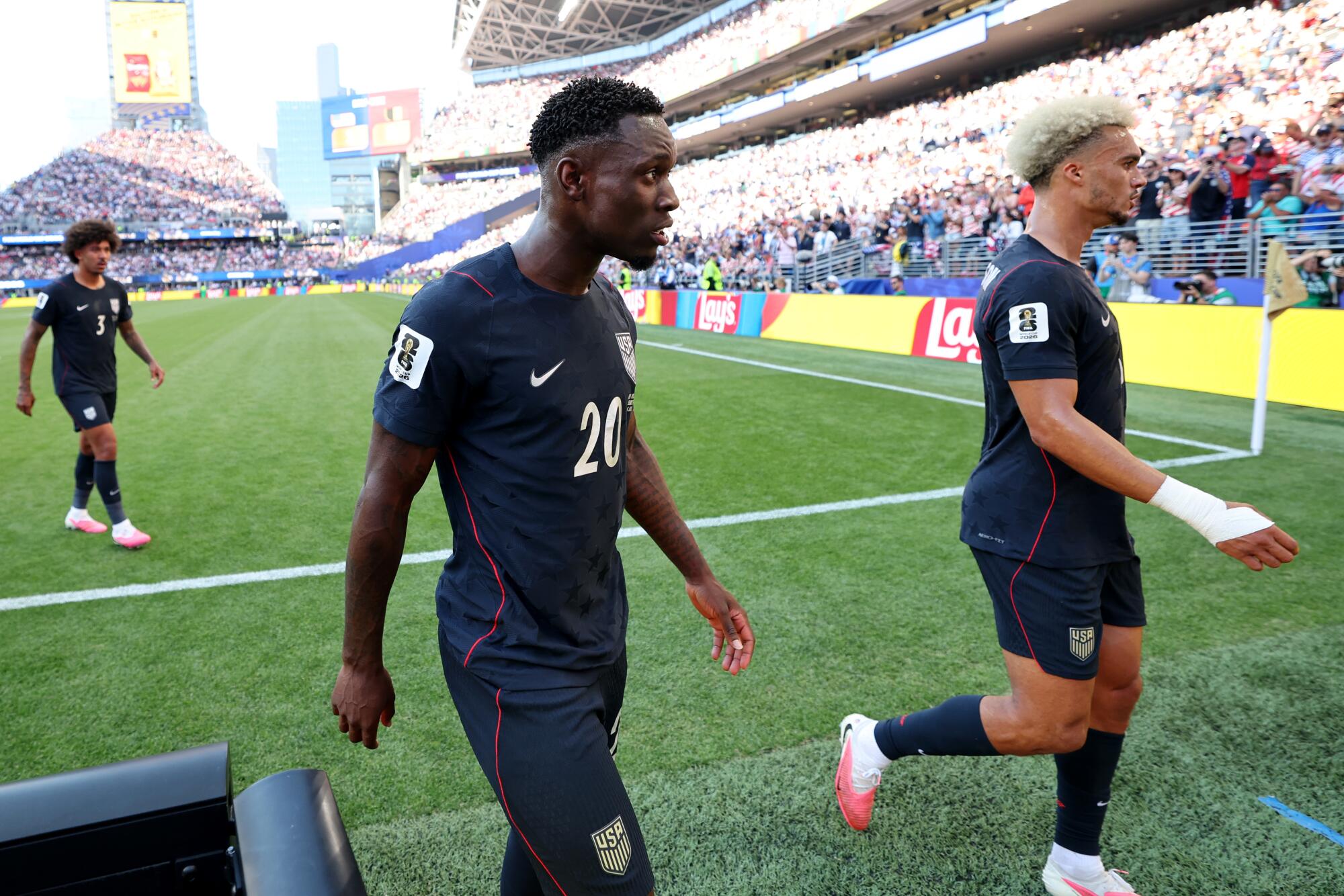
U.S. striker Folarin Balogun (20) walks to the locker room at halftime against Belgium in the World Cup on Monday at Lumen Field in Seattle.
(Allen J. Schaben / Los Angeles Times)
“We’re playing on home soil,” defender Chris Richards said. “So the only pressure we put on ourselves is to perform for our country, and ultimately didn’t feel the way we wanted to today. But I don’t think the antics of the last 24 hours had anything to do with it.”
No, they said the “debate,” or “outside noise” or “political manipulation” — as Tim Ream, Alex Freeman and coach Mauricio Pochettino described what others are calling “Balogate” — were not to blame for the gut-punch that answered the question: Why not us?
Because the U.S. is not yet good enough to beat the world’s great teams. Especially not when their pregame preparation includes having to try to block out an international uproar.
To have any hope against the Belgians in the round of 16 — a matchup between FIFA’s Nos. 9- and 17-ranked sides — the Americans needed to be going full-tilt, to be focused and ferocious and probably also a little bit lucky.
Instead, they looked shook, rattled. And they got rolled.
They were the worst version of themselves at the worst time, which was so weird from a team that had been on its front foot from the first whistle against Paraguay.
Not Monday. Against Belgium, they were on their heels from the outset. Heavy touches, slow afoot, playing like they had the weight of the World Cup on their shoulders.
And all that White House maddening meddling — for what?
Balogun started and played most of the match, but it could just as well have been reserve striker Ricardo Pepi. Or you or me, Balogun was that ineffective.
His play of the day came postmatch, when he approached Belgian coach Rudi Garcia and the two had a respectful exchange. A real diplomat, that Brooklyn-born, Britain-raised American by birthright.
This loss was a real team effort, of course. Christian Pulisic came off in the 59th minute after twisting his right ankle — leaving this World Cup without a goal in the four matches he appeared.
Matt Freese, the Harvard-educated starting goalkeeper, had a brain cramp of epic proportions when he stepped outside of the box and failed to corral a ball. Belgium’s Charles De Ketelaere kicked it loose and set up Hans Vanaken, whose shot traveled behind Ream for an easy score that made it 3-1 in the 57th minute.
There was a lot of poor decision-making with this match, on and off the pitch.
In the end, Trump’s appeal to Infantino did more harm than good. But what if some good could come from it?
Hey, FIFA, what about giving teams a process to appeal cards, like our American athletes in the NBA, NFL and MLB have?
Offering a suggestion box wouldn’t be opening Pandora’s box, not if it were a transparent and regular part of the game that would, hopefully, offer increasingly fair outcomes in a tournament where every match is so monumental — as our President recognized, much too enthusiastically.
U.S. coach Mauricio Pochettino waves to the crown after a 4-1 loss to Belgium at the World Cup on Monday.
As World Cup spending surges, BofA’s year-long merchant preparation is paying off.
Exorbitant ticket prices be damned. Die-hard soccer fans are flocking to host cities across the U.S., Canada, and Mexico for the first tri-nation tournament in FIFA history. And they are proving to be exceptionally big spenders.
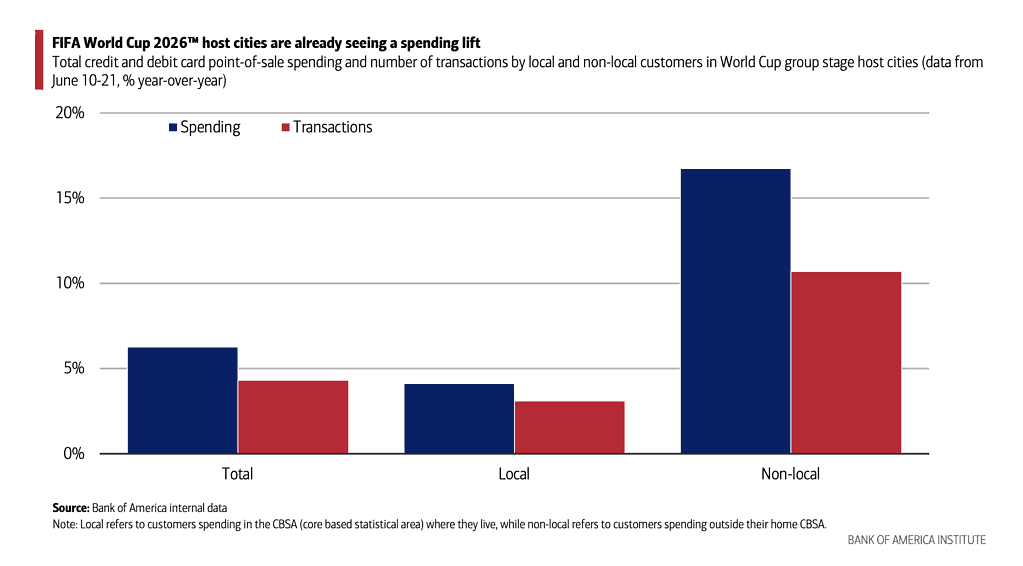
The Bank of America Institute — the firm’s research arm — mined its credit and debit card data and learned that the 2026 FIFA World Cup is delivering a massive economic win for host cities, driven overwhelmingly by these hefty-spending, out-of-town visitors.
During the tournament’s opening days from June 10–21, overall consumer spending in host markets jumped 6.3% year over year. “Non-local” cardholders — a category tracking both international tourists and U.S. residents traveling out of state for matches — fueled the lift. Their spending, according to data shared with Global Finance, climbed 16.7% year over year.
Bank of America’s data also highlighted a lucrative trend for local merchants: visiting fans are out-purchasing non-fans by a nearly 3-to-1 margin.
Pre-Tournament Warmup
“We’re really only halfway through, as you know, so no surprise that the majority of that spend has been driven from non-local residents coming in,” said Sara Walsh, a Bank of America managing director who oversees the bank’s relationships with vendors and networks in payments and has spent more than a year preparing merchants for the tournament. “Restaurants, bars, hotels, of course, make up the majority of that.”
The data tracks with results from last year’s FIFA Club World Cup, a smaller-scale tournament that Bank of America Institute found drove a 7% year-over-year rise in consumer spending in host zip codes. Walsh told Global Finance in a phone interview that the event effectively served as a dry run for the numbers the bank is now seeing at scale.
“The Club World Cup gave us a nice little pilot into what the stats would look like, and they were very consistent with what we’re seeing here,” Walsh said.
Soccer fans, meanwhile, are proving to be especially heavy spenders. A study Bank of America conducted with Visa found that soccer fans spend on average 2.8 times more than non-fans, according to the Institute. Walsh said the bank analyzed customers making purchases tied to FIFA and MLS tickets to reach that conclusion.
The scale of the opportunity is significant. The tournament’s 16 U.S., Mexican and Canadian host cities together represent:
$11 trillion in gross domestic product (GDP)
Roughly 130 million people, and
An expected draw of 33 million international visitors annually.
Historically, host nations have seen an average 0.4 percentage-point lift in GDP growth in the year following the tournament, the Institute found.
A Year of Preparation
Sara Walsh, Bank of America
Bank of America began preparing merchants for the World Cup surge more than a year ago. It drew on its position spanning treasury, card-issuing and merchant-services clients. The prep work centered on three areas: building tools for merchants to capture customer data and loyalty even after fans leave the U.S.; speeding up checkout through contactless and pay-at-table technology; and ensuring cards from international networks, such as Japan’s JCB, are accepted without triggering declines.
“Merchants can either survive the World Cup or prosper from the World Cup,” Walsh said, citing a colleague’s framing of the stakes.
Restaurants and bars needed the most hand-holding, Walsh said, particularly around pay-at-table functionality that’s common internationally but was slower to catch on in the U.S. The bank also coached retailers on when to use 3D Secure authentication — the phone-based verification step common in Europe — given the risk of transaction friction in crowded, high-traffic settings with spotty connectivity.
“We did not want to have customers who are standing in line, they’ve come all this way, get ready to purchase, and have their cards decline,” Walsh said. So far, she said, cross-border approval rates have held up as fans travel from city to city.
Spillover Into Other Events
One surprise for the bank has been spending spillover into unrelated events and sectors. Walsh said Bank of America has seen international visitors attending Major League Baseball games and concerts during their trips, alongside a pickup in merchandise sales tied to breakout national teams.
“You’re going to have people who are purchasing things from some of these teams that maybe a month ago no one had ever even heard of these countries, and all of a sudden they’re winning,” Walsh said, adding that merchandise sales represent a “fun kickback” opportunity for merchants tied to Cinderella-story squads.
Cape Verde’s inspiring World Cup run, for example, captivated fans. The team, representing an island nation of just 535,000, reached the knockout stage unbeaten and pushed Argentina, the reigning champs, to a hard-fought 3-2 extra-time loss.
Bank of America worked with Visa and FIFA, along with industry forums including Money20/20, the Electronic Transactions Association, and the Merchant Advisory Group, to prepare merchants of all sizes through its Merchant Engagement Program, Walsh said.
Looking ahead, Walsh said that the bank plans to apply lessons from the World Cup to future events on U.S. soil. That includes the 2028 Summer Olympics in Los Angeles and the 2031 FIFA Women’s World Cup, which the U.S. will jointly host with Mexico, Costa Rica, and Jamaica.
“We will definitely continue to use these events for learning opportunities to improve where we need to and get ready for those events as well,” she added.
Anthony Noto covers corporate finance and private credit. Contact him at anoto@gfmag.com
WASHINGTON — President Trump did not like what he saw. So, once again, he picked up the phone.
Trump said Monday that he called FIFA President Gianni Infantino after he disagreed with the World Cup referee who gave a red card to U.S. men’s soccer team star Folarin Balogun. The discipline, which Trump called “very unfair” and a “stain” on the World Cup, would have barred Balogun from playing in Monday’s elimination game against Belgium.
“I asked for a review because I didn’t think it was a foul,” Trump told reporters during an event in the Oval Office. “I am good at this stuff. I didn’t think it was a foul. I thought it was two great athletes that crashed into each other and got entangled.”
Trump said he initially didn’t know “what the hell a red card was” or what it meant. “When I found out, I said, ‘You gotta be kidding!’” he said.
Trump’s involvement in soccer’s disciplinary process created an international uproar.
UEFA, European soccer’s governing body, said FIFA “crossed a red line” with the reversal. Belgium’s football association appealed the ruling, which FIFA denied during a hearing Monday. Belgian coach Rudi Garcia mocked the decision as an April Fools’ joke.
“This decision clearly raises many questions,” Belgian Foreign Minister Maxime Prévot said in a statement Monday, according to the New York Times.
“If a phone call really is what explains this incomprehensible decision, it would amount to undermining the most basic rules of soccer and sports,” added Prévot, a former soccer referee.
Trump’s close relationship with Infantino also has drawn new scrutiny.
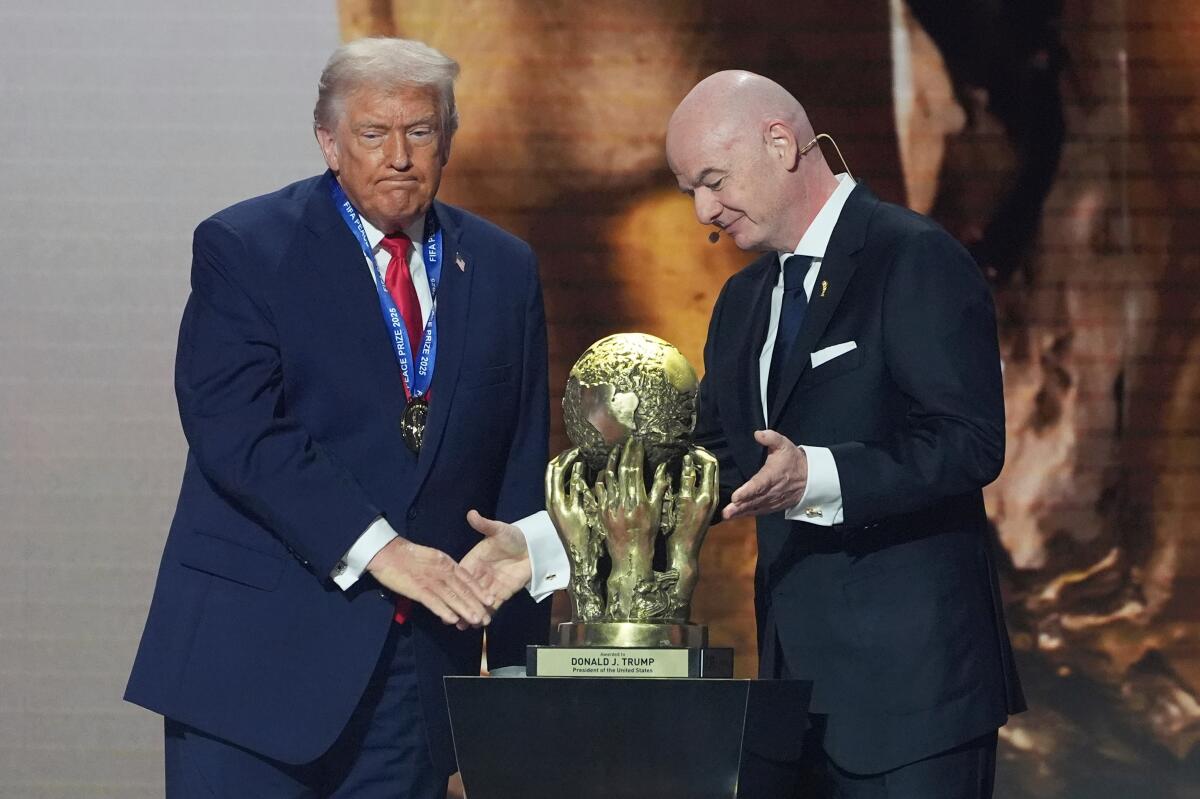
In December, Infantino presented Trump with the inaugural FIFA Peace Prize, an award the governing body created after Trump was passed over for the Nobel Peace Prize. That decision is now the subject of an ethics complaint, backed by members of the European Parliament, who argue it compromised FIFA’s political neutrality.
Trump said he did not ask Infantino to reverse the call. But that was the outcome reached by FIFA’s disciplinary committee, which, in 64 years, has reversed a red-card penalty only once during a World Cup tournament.
The episode serves as a reminder of a pattern of behavior the president has exhibited when he doesn’t get his way, regardless of the rules of the game. For Trump, a deal-maker who has described the world as “a casino,” often pushes the boundaries of long-standing norms.
After FIFA reversed course, Trump called the decision “brilliant” and said Belgium can now “be really proud” if they were to beat the U.S. team on Monday night.
“The other way, if they beat us, we’ll say, or I’ll say it was rigged, just like the election was rigged in 2020, but I won’t get into that,” Trump said.
Steven Levitsky, a Harvard political scientist and co-author of “How Democracies Die,” said Trump’s action are “perfectly consistent with how Trump has behaved on the world stage.”
“He has no interest in or no respect for any kind of international rules or norms,” he said.
Levitsky said the events illustrate the Trump administration’s worldview, one that, he argues, revolves around the ethos that “if we’re strong enough, we can leverage our way to whatever the hell we want.”
As examples, he pointed to the administration’s military strikes on boats in the Caribbean and efforts to acquire Greenland, both of which have led to diplomatic tensions.
Trump also has a history of using phone calls to pressure officials to reach an outcome he wants.
In a 2019 call, he asked Ukrainian President Volodymyr Zelensky to investigate his political rival, a moment that became the catalyst of his first impeachment. And after losing the 2020 election, he pressed Georgia Secretary of State Brad Raffensperger to “find 11,780 votes,” the margin he needed to flip the state, a move that ultimately led to a criminal indictment.
FIFA President Gianni Infantino presents President Trump with the FIFA Peace Prize in December.
(Evan Vucci / Associated Press)
Trump defended his call with Infantino to reporters and appeared to downplay how much it may have contributed to the red card penalty being reversed.
“I can’t tell [Infantino] what to do, and I don’t believe he made the decision,” Trump said. “I think it was a committee that made the decision, and they made the right decision, because No. 1, it wasn’t a foul, and you want to see a game with your best players.”
Sen. Ted Cruz (R-Texas), who was in the Oval Office when Trump acknowledged the call with Infantino, made reference to the Peace Prize as he thanked Trump for “getting rid of the ridiculous red card” ahead of the knockout game.
“There was a reason the FIFA trophy sat here for as long as it did,” Cruz told Trump.
Infantino, for his part, issued a statement Monday insisting that the decision came from FIFA’s independent disciplinary committee and that he told Trump the case would be decided by the body. Bill White, the U.S. ambassador to Belgium, also defended Trump, saying he “would never interfere with the inner workings of FIFA.”
Norman Eisen, co-founder of Democracy Defenders Action, said Trump’s decision to get involved in soccer’s disciplinary process is a “classic example of achieving a right outcome through wrong means.” He added that he believes the Trump administration and FIFA showed to be “two of the most corrupt entities around.”
“Like many Americans who are following the World Cup and rooting our team on, I thought it was a bad call,” Eisen said. “But I would never have chosen to bring that about in this fashion.”
Levitsky argued that given the popularity of the World Cup, which hundreds of millions of people around the world are tuning into to watch, Trump is opening himself up for more scrutiny on the global scale.
“People across the world who don’t give a damn about politics are following the World Cup, and they’re seeing the United States behave this way, taking what it can take at the expense of others unfairly,” he said. “Of course it is going to hurt the U.S. image abroad.”
Four wins to go. How can your team reach the final and win the World Cup 2026? Click here to find out.
Who: Argentina vs Egypt What: FIFA World Cup 2026 – Round of 16 Where: Atlanta Stadium, Atlanta, Georgia, the United States When: Tuesday, July 7, at 12pm (16:00 GMT) How to follow: We will have all the build-up on Al Jazeera Sport from 12:30 GMT before our live text commentary stream.
Recommended Stories
list of 4 itemsend of list
Get ready for a spicy battle of the number 10s – a dazzling duel between Lionel Messi and Mohamed Salah, two of the greatest forwards in world football, as Argentina face Egypt in the World Cup round of 16.
Argentina have been the clear favourites in every game they’ve played at the tournament, but after being made to work for victory in the last tie, the presumption that the reigning champions are unbeatable has been broken.
Egypt, on the other hand, are on a historic run of their own, gearing up to chase a first-ever quarterfinal berth. One of only two African sides remaining at the tournament, they carry the hopes of the continent and have gone toe-to-toe with the world’s best.
Al Jazeera tells you everything about Argentina vs Egypt:
How did Argentina and Egypt reach the round of 16?
Argentina topped Group J with a perfect record of nine points, winning against Austria, Algeria and Jordan. In the round of 32, they were pushed to extra time by a resilient Cape Verde team before edging past the tournament debutants 3-2 in a thrilling contest.
Egypt came second in Group G with five points, drawing with Belgium and Iran and winning against New Zealand. They defeated Australia 4-2 on penalties in the round of 32 after the game was tied 1-1 following extra time. It marked the first-ever World Cup knockout for Egypt, who made their tournament debut in 1934.
Argentina legend Messi, France’s Kylian Mbappe and Norway’s Erling Haaland are all tied at seven goals, with Mbappe leading the list, his two assists breaking the tie.
If Messi – who has scored in each of Argentina’s four games so far – finds the net against Egypt, not only will he become the Golden Boot leader, but he will also join Guillermo Stabile (1930) as the only Argentina player to score eight goals in a single World Cup.
But ahead of Tuesday’s last-16 tie, there have been concerns about fatigue, and it’s not just limited to Messi.
Argentina were forced to play extra time by Cape Verde in the heat in Miami in the US on Friday, while Egypt-Australia went all the way to penalties on the same day. Those gruelling knockout games left both teams with little time for rest and recovery.
Argentina’s 39-year-old forward Lionel Messi played the full 120 minutes against Cape Verde [AFP]
Messi admitted after the last match that he was tired, and he lamented Argentina’s inability to press their opponents high up the pitch.
Meanwhile, Egypt relied heavily on their defensive organisation and looked to Salah and Manchester City forward Omar Marmoush to launch counterattacks against Australia, an approach they could employ again against Argentina.
For Egypt, a fully fit Salah could be crucial after the attacking winger entered the Australia match with a hamstring concern and at times appeared reluctant to sprint at full speed during a draining 120-minute contest.
If Egypt stun Argentina, they will become the fifth African nation to reach the World Cup quarterfinals after Cameroon (1990), Senegal (2002), Ghana (2010) and Morocco (2022 and 2026).
Argentina vs Egypt prediction
The Opta supercomputer gives Argentina a 69.1 percent likelihood of winning in regulation time, while Egypt’s chances of winning are 12.3 percent.
The model estimates a 18.5 percent probability of the game going to extra time.
Argentina vs Egypt: Kickoff, TV schedule
Argentina: TyC Sports, TyC Sports Play (1pm, Argentina Standard Time)
United Kingdom: BBC One, BBC iPlayer (5pm, British Summer Time)
To check the TV listings for your country, head to FIFA’s TV listing schedule here.
Argentina supporters are hoping for a back-to-back World Cup triumph [Roberto Schmidt/AFP]
Who will the winner face in the quarterfinals?
The winner of the Argentina vs Egypt match will play either Switzerland or Colombia in the quarterfinals in Kansas City in the US on Saturday, July 11.
Argentina vs Egypt: Head-to-head
This will be the first World Cup match between Argentina and Egypt.
Their last meeting was a friendly in Cairo in 2008, which Argentina won 2-0.
Argentina are on an eight-game winning run against African nations at the World Cup, with two of those coming in this edition (3-0 vs Algeria, 3-2 vs Cape Verde). No side in the competition’s history has won three games against African opponents in a single edition before.
Argentina vs Egypt: Team news
Argentina’s Gonzalez (ankle injury) and Medina (physical discomfort) are doubtful, while Egypt’s Fatouh (muscle) and El Fotouh (hamstring) are out injured.
Argentina’s predicted lineup
(4-4-2): E Martinez (goalkeeper); Molina, Romero, L Martinez, Tagliafico; De Paul, Mac Allister, Fernandez, Almada; Messi, Lautaro