FIFA face global mutiny as Asian Football Confederation stand with Europe and North America after their boycott threats.
By Reuters and The Associated Press
Published On 31 Jul 202631 Jul 2026
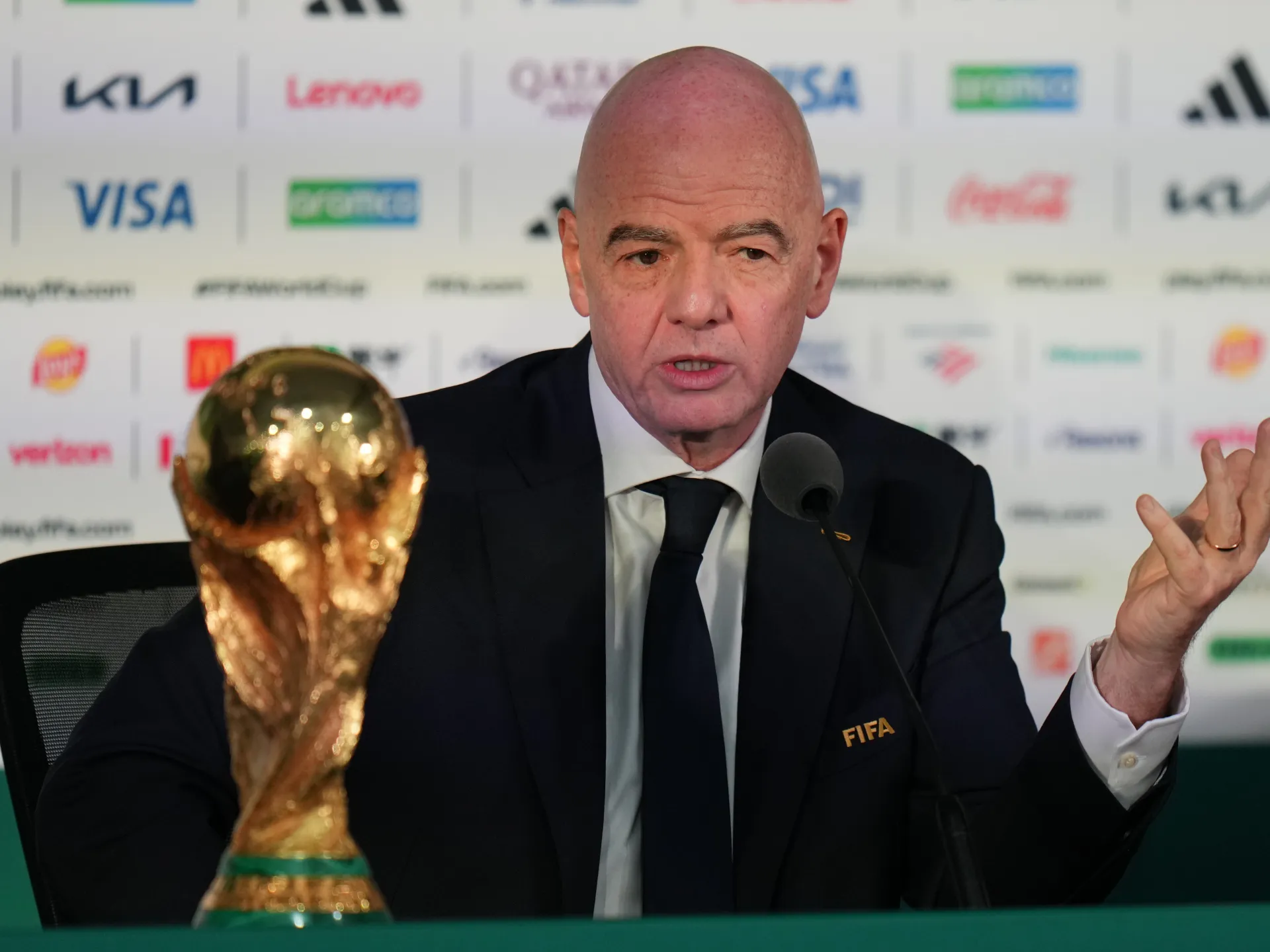
The Asian Football Confederation has said it “stands in solidarity” with regional bodies UEFA and CONCACAF in opposing plans to sell a stake in the World Cup to private investors but stopped short of threatening to boycott events run by FIFA, global football’s governing body.
The confederation in a statement on Friday expressed “deep concern” over the proposed establishment of a $20bn commercial subsidiary, FIFA Forward Enterprise (FFE), to run the World Cup and FIFA’s other events.
Recommended Stories
list of 4 itemsend of list
“The fact that the situation has reached the point where the real possibility of a FIFA World Cup boycott has entered public discourse should concern everyone who cares about the future of our game,” the statement said.
“Football should never have been placed in such a position.”
UEFA, European football’s governing body, voted unanimously on Thursday to boycott all FIFA events unless the plans were dropped. CONCACAF, the regional federation for North America, Central America and the Caribbean, has also rejected FIFA’s proposal.
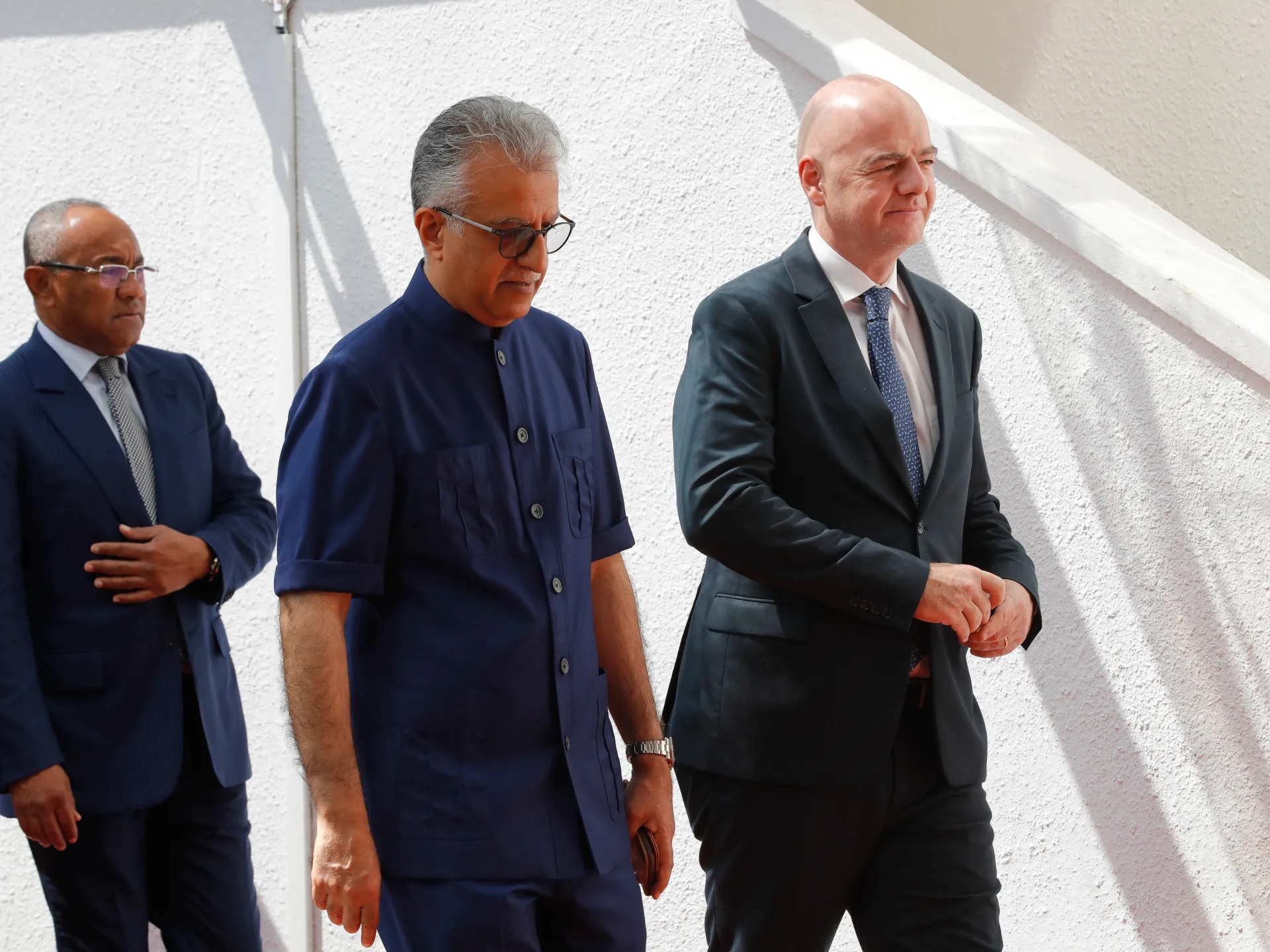
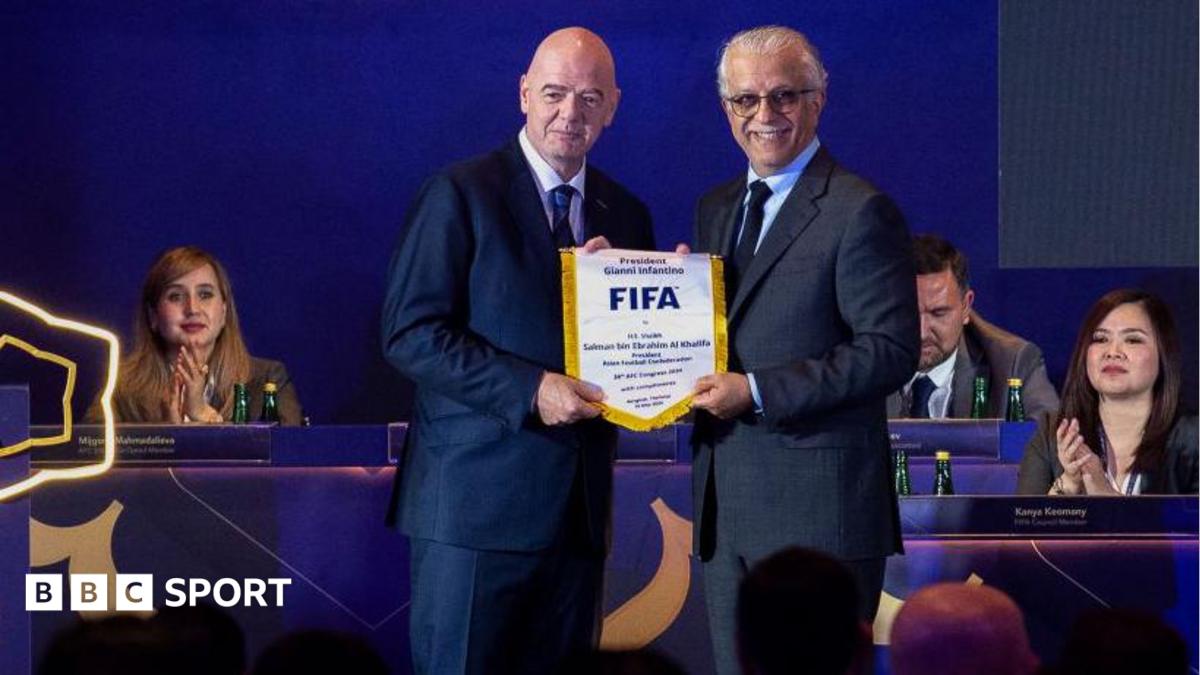
On Thursday, AFC President Sheikh Salman bin Ebrahim Al Khalifa had said the way the proposal had been made was “totally unacceptable”, in a letter to member associations.
The AFC said “the proposed FFE cannot realistically achieve the necessary broad consensus and unity required to move forward.
“The FIFA World Cup is the pinnacle of global football and derives its strength from the participation of all confederations and the world’s leading football nations.”
The AFC also made a thinly veiled attack on the governing body’s president, Gianni Infantino, saying the plan “has exposed fundamental weaknesses in FIFA’s consultation and decision-making processes that must now be addressed”.
Even after FIFA issued a new statement on Friday, saying each national association “should be allowed to review the proposal and have a say in shaping their own future”, the AFC said “central concerns surrounding governance, institutional process and meaningful consultation remain unanswered”.
It said the furore must become a catalyst for institutional reform at FIFA, and that “meaningful democracy is not measured solely by the opportunity to vote.
“It begins with transparent governance, timely consultation, informed deliberation and genuine participation throughout the decision-making process.”
Fifa president Gianni Infantino’s plan to sell stakes in competitions to private investors appears to be in jeopardy, with a third confederation expressing opposition.
In a statement published on Friday, the Asian Football Confederation (AFC) said it “stands in solidarity” with its counterparts in Europe and North, Central America and the Caribbean.
The AFC added Infantino’s plan could not “realistically achieve the necessary broad consensus and unity required to move forward”.
“The Fifa World Cup is the pinnacle of global football and derives its strength from the participation of all Confederations and the world’s leading football nations,” it said.
“Any proposal that risks undermining the unity and universal character of the competition must be reconsidered.”
The AFC’s statement means Infantino’s plans are unlikely to be approved by Fifa members if put to a vote.
Infantino had indicated the proposals would need a straight majority to go through – meaning 106 of its 211 members to vote in favour for the proposal.
Uefa – the body that governs European football – has 55 votes. Concacaf, which oversees football in North, Central America and the Caribbean, has 35 and Asia has 46.
Asian football’s governing body accused Fifa of once again setting the “direction of travel” for a “significant initiative” before consulting stakeholders.
It said Fifa’s failure to consult its member associations on the proposals had “exposed fundamental weaknesses in Fifa’s consultation and decision-making processes that must now be addressed”.
The AFC also criticised Fifa for leaving “confederations, member associations and even Fifa’s own governing bodies, including the Fifa Council, feeling sidelined.
“The Fifa World Cup, and the game itself, belong to the entire global football family,” it added.
Their future must always be shaped collectively, through institutions that reflect the voices of all Confederations and member associations.
“The AFC calls upon Fifa to undertake an urgent review of its governance and decision-making framework to ensure that proposals of global significance are developed through proper consultation, meaningful engagement and appropriate oversight by Fifa’s statutory bodies.”
Fifa wants to create a commercial subsidiary to run its main events, including its World Cups, and external investors will be able to buy stakes in it.
It said it would “invite third parties to make minority, non-controlling investments” in a new subsidiary – Fifa Forward Enterprise (FFE).
On Friday, Fifa said FFE had been proposed “to ensure all Fifa member associations have the opportunity to take meaningful ownership of the commercial opportunity of football in their respective countries”.
“This does not come at the cost of either the spirit or the governance of Fifa or football itself,” it added.
However, Uefa has accused Fifa of using football “to enrich themselves and their friends”.
Infantino previously wrote to Fifa members saying they will receive $40m (£30m) if they back his controversial proposal. He set a deadline of 19 September for federations to accept his plans if they want to access an initial $20m (£15m).
If approval is granted, Fifa says Thrive Eternal is expected to lead the proposed investor group for FFE.
Thrive is an American venture capital firm founded by Joshua Kushner – the brother of US President Donald Trump’s son-in-law Jared.
“UEFA and its national associations will not participate in FIFA competitions,” the European soccer body said after an urgent online meeting of its 55 member nations.
The next scheduled FIFA tournament is within weeks in Europe — the Women’s Under-20 World Cup hosted by Poland from Sept. 5 — and the four British federations comprise FIFA’s only bidder to host the 2035 Women’s World Cup. That decision is due Nov. 23.
“Some things are simply too important to sell,” UEFA said in a statement. “The FIFA World Cup belongs to football. It always will. And so long as Europe has a voice, it will never be for sale.”
The strategy meeting was called to counter FIFA president Infantino’s offer of $20 million to each of FIFA’s 211 global members that has to be accepted by mid-September.
Later Thursday, the 41-member Confederation of North, Central American and Caribbean Assn. Football (CONCACAF) met and announced it rejected Infantino’s plan.
In a statement, CONCACAF said members “expressed deep concerns about the lack of due process surrounding the proposal, the artificially short deadline imposed, and the absence of any review or approval by the relevant FIFA governance bodies.” It also questioned the need for outside investment “following the most profitable FIFA World Cup in history.”
Infantino’s secret project was revealed Tuesday to spin off its commercial operations in a new $20-billion subsidiary called FIFA Forward Enterprise (FFE) 20% owned by private investors. The core investor would be a New York investment firm created by Joshua Kushner, the brother of U.S. President Trump’s son-in-law Jared Kushner.
Infantino wrote Tuesday to the 211 members — already the effective owners of FIFA as a nonprofit association under Swiss law — that if they approve FFE their promised $10-million basic funding for the next four years will double to $20 million. He projected their FIFA funding through 2038 would be $86 million each, instead of about $36 million.
“This is not merely a profound failure of leadership, but an abdication of FIFA’s duty as the custodian of world football,” said UEFA, where Infantino was a longtime staffer and its CEO-like general secretary when he was first elected to lead FIFA in 2016.
Infantino’s presidency at risk?
Infantino’s high-stakes financial gambit now could threaten his previously secure 11-year presidency of FIFA as anger and frustration with him rises among soccer stakeholders including three of the six continental bodies.
FIFA has set a Nov. 18 deadline for potential candidates to declare in a presidential vote of the 211 members scheduled next March in Rabat, Morocco.
Infantino had seemed — 11 days ago after the World Cup final in East Rutherford, N.J. — to have a clear path to being reelected unopposed for a fourth and final term in office through 2031, despite a furor over letting United States forward Folarin Balogun play against Belgium despite a red card in his previous game.
Soccer officials have said privately Infantino has eyed a lucrative commissioner-like role at the FFE spinoff beyond 2031.
“Game over, Gianni #InfantinOUT,” the Football Supporters Europe group, which advises UEFA on fan issues such as ticket prices, posted after the boycott threat.
Soccer’s concern at investor pressure
UEFA detailed Thursday why soccer officials fear external investors owning a stake of the global game’s biggest events, including World Cups and Club World Cups for men and women.
“The moment external investors acquire ownership interests in FIFA competitions, football changes forever,” UEFA said. “Commercial return becomes a permanent obligation. Investor expectations become a daily pressure.”
Infantino has presented the private equity offer as a chance to “turbocharge” funding development of soccer across the world, where a majority of the 211 FIFA members rely on its funding.
Officials from about 40 UEFA members spoke at the urgent meeting, with anger expressed that FIFA is not using some of its multi-billion reserves to fund extra development programs.
“As a result of today’s discussion, no UEFA national teams will participate in any FIFA competition for so long as these proposals remain alive,” the European soccer body said, “unless this proposal has been abandoned in its entirety and binding assurances have been given that FIFA will never again open its governance or competitions to private ownership.”
Asia adds rare criticism of Infantino
On a seismic day in soccer politics, a traditional bedrock of support in Asia for FIFA and Infantino had earlier Thursday been shaken.
“FIFA’s unilateral actions appear to undermine the very foundations of continental football,” the Asian Football Confederation president Sheikh Salman bin Ibrahim Al Khalifa said in a letter to its 46 members of FIFA, warning of risks to their own competitions.
Sheikh Salman, an ally to Infantino since losing the FIFA presidential election to him in 2016, wrote “such an initiative will not succeed without the support of all the confederations, which is not the case now.”
In a video message published Wednesday by FIFA, Infantino insisted spinning off its money-making operations was “an offer, not an obligation.”
A FIFA presentation for its members, co-written with its banking advisors from J.P. Morgan and seen by the Associated Press, set a goal for FFE as “commercial rigor and expertise to better capitalize on broadcast rights, sponsorships and a growing tournament portfolio.”
FIFA squeeze on continental games
That growing portfolio probably would include adding more teams to FIFA competitions such as the World Cup and Club World Cup for men and women, and potentially staging them more often than every four years, including in the U.S.
FIFA adding teams, games and competitions would squeeze the value, status and space in the congested global fixture calendar for those that fund and are organized by the six continental soccer bodies like UEFA and the AFC. Those include World Cup qualifying games, continental tournaments and Champions Leagues.
“It is important that the AFC family has a complete understanding,” Sheikh Salman wrote, “of how such an initiative may affect key areas of global and Asian football, including the sustainability of confederation and [domestic] competitions, as well as the organization and commercial landscape surrounding the AFC’s activities.”
UEFA’s previous boycott threat
A threatened World Cup boycott from Europe helped derail Infantino’s plan in 2021 to play World Cups every two years instead of four.
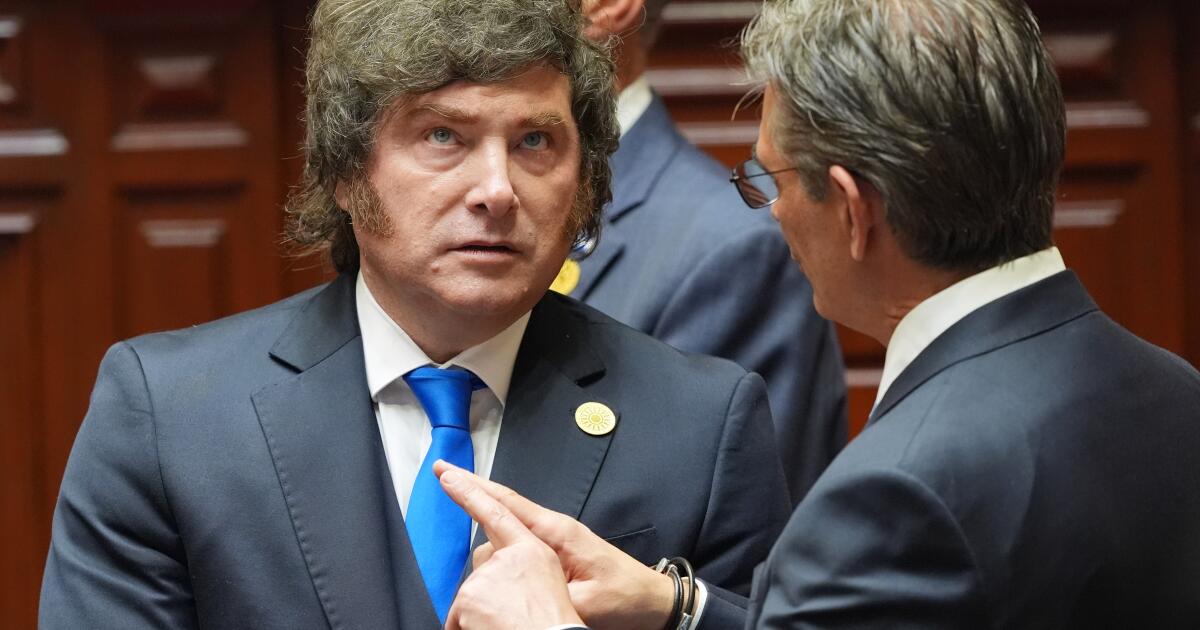
BUENOS AIRES — After a bruising World Cup defeat gave way to what many Argentines saw as a sweeping wave of hatred against their country, Argentine President Javier Milei on Thursday signed an emergency decree empowering the government to deny entry to or expel foreigners who incite discrimination or violence against Argentines because of their nationality.
The measure adds new grounds to Argentina’s immigration law, allowing authorities to bar, deport and revoke visas of people found to have promoted hatred against Argentines in spoken or written statements or who have desecrated national symbols.
“In light of recent displays of hostility toward the Argentine Republic and Argentines, the national government reaffirms that the defense of the nation, its citizens and its symbols is non-negotiable,” the president’s office said. “Anyone who attacks the Argentine Republic is not welcome in our country.”
The move marks a sharp shift for a country that has long prided itself on welcoming immigrants. Argentina’s Constitution explicitly encourages immigration, and for decades the country has offered foreigners broad civil rights and relatively easy access to legal residency, public education and healthcare.
Milei’s office cast the decree as a response to weeks of criticism from celebrities, opposing fans and social media users after controversial refereeing decisions fueled speculation that FIFA had tilted the tournament in favor of the reigning champions and superstar Lionel Messi.
Condemnations of occasionally aggressive Argentine fans and the team’s roughhousing on the pitch soon broadened into attacks on Argentine society as a whole, amplifying long-standing criticism that Argentines view themselves as culturally and economically superior to their Latin American neighbors. Online petitions to expel Argentina from the World Cup drew hundreds of thousands of signatures.
The backlash intensified when Argentina players and staff became involved in a post-match brawl with Spanish opponents after the World Cup final.
FIFA, global soccer’s governing body, on Wednesday opened disciplinary proceedings against the Argentine Football Assn. over the scuffle, as well as over alleged racist abuse and fan misconduct. Players also faced a FIFA investigation into their parading of a banner that asserted Argentina’s claim to the British-controlled Falkland Islands after the team’s semifinal victory over England.
Milei, a close ally of President Trump’s, has described the torrent of criticism as an “anti-Argentina campaign.” He alleged without evidence last week that the left-wing governments of Brazil and Mexico and the U.S. Democratic Party had financed the effort to stigmatize Argentina to discredit his libertarian government.
His accusations and insults triggered a diplomatic crisis with neighbor Brazil, which recalled its ambassador to Argentina last weekend.
Thursday’s decree says the punishments don’t apply to ideological disagreement or political, academic or civic criticism protected under Argentina’s Constitution.
But it leaves unanswered how officials will distinguish protected speech from prohibited hate speech, whether immigration authorities will review foreigners’ social media activity and how aggressively the new powers will be enforced against tourists and longtime residents.
Uefa’s 55 member associations have voted to boycott the World Cup if Fifa proceeds with its plan to sell stakes in its competitions to private investors.
The decision was made at an emergency meeting on Thursday to discuss the proposals announced by Fifa – world football’s governing body – on Tuesday.
Uefa, which governs European football, had made its opposition clear by releasing two damning statements about the plans – and that strength of feeling has now been reaffirmed.
The boycott would cover all Fifa competitions, including the men’s and women’s World Cups and Club World Cup and be triggered if Fifa president Gianni Infantino’s proposals are voted through by member associations.
The first time this stance will be tested is October, when the Women’s World Cup play-offs are due to be held.
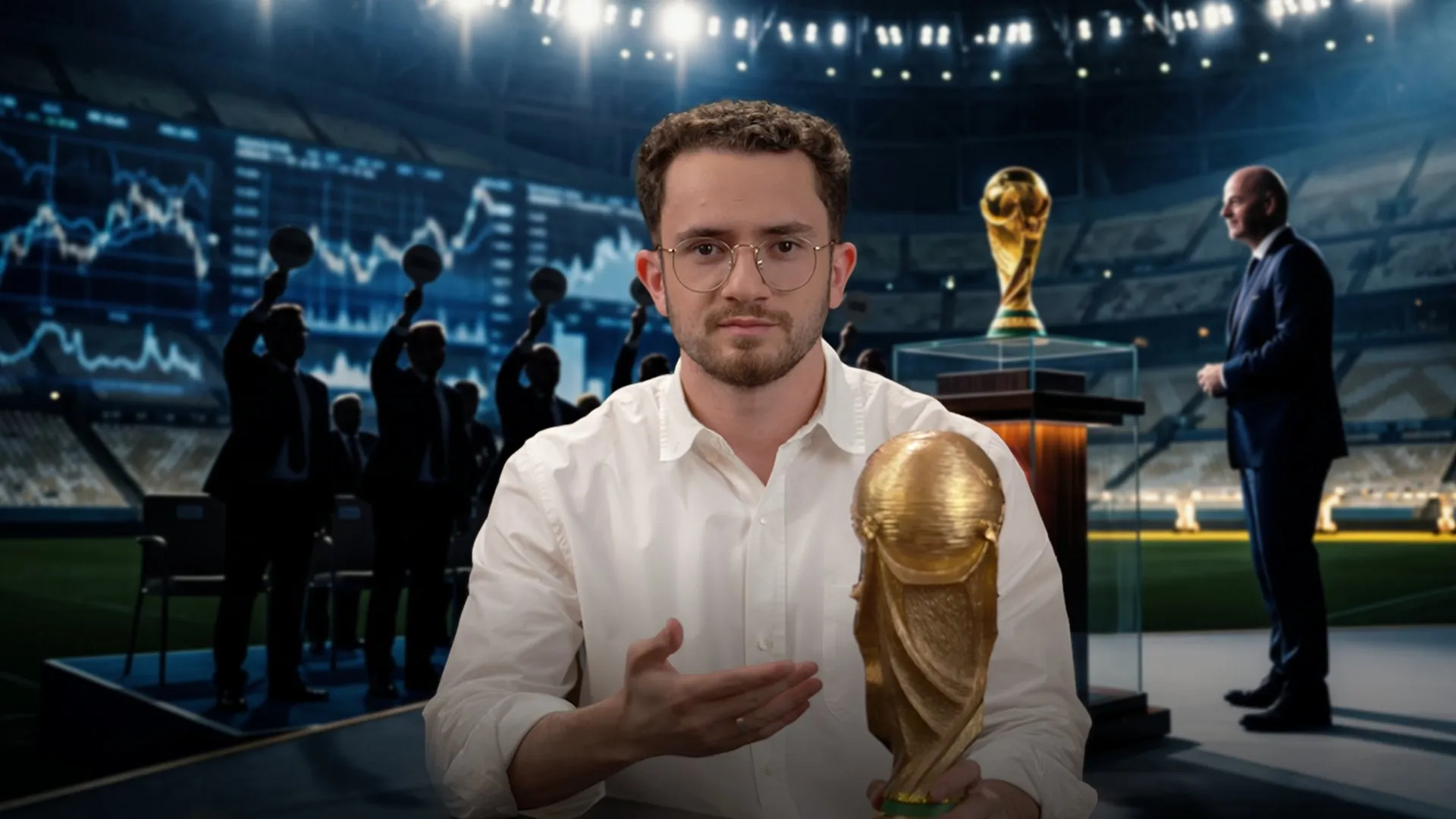
This week FIFA announced plans to form a new subsidiary company to run part of the World Cup and offer a 20% stake to private investors, worth over $4B. Jared Kushner’s brother’s investment firm Thrive Eternal has been named a likely buyer. Al Jazeera’s Mohammad Saleh explains.
FIFA’s president lobbies for latest proposal for investment in football’s governing body, which has met with criticism.
Published On 29 Jul 202629 Jul 2026
FIFA President Gianni Infantino has set a September 19 deadline for the 211 member federations to accept a one-off $20m offer to each underwritten by the investment firm of Jared Kushner’s brother as part of a project to sell stakes in the World Cup.
Infantino set out the “singular and unique funding opportunity” in a letter detailing why he wants to create a $20bn FIFA subsidiary that would be 20 percent owned by private investors and would run the football body’s competitions and events like World Cups and Club World Cups.
Recommended Stories
list of 4 itemsend of list
“It is my duty and responsibility as FIFA president to present such game-changing opportunities to you, our members,” Infantino wrote on Wednesday in the letter seen by The Associated Press news agency.
The proposal, revealed on Tuesday and backed by Joshua Kushner’s investment firm Thrive Capital, was met with immediate fury by Infantino’s former colleagues at the European football body UEFA, which said the World Cup “is not FIFA’s to sell”.
UEFA is expected to call its 55 member federations to an emergency online meeting, likely on Thursday.
Joshua Kushner’s brother, Jared Kushner, is a son-in-law of United States President Donald Trump.
FIFA’s private equity plan is the latest ambitious project proposed during Infantino’s 11-year presidency, during which he has increasingly seemed to be an executive leader acting without consulting football’s major stakeholders.
Previous plans include creating a FIFA Peace Prize and trying to reorganise football’s calendar with World Cups every two years instead of four.
Concerns about the previously secret plan were aired on Wednesday by the continental football bodies for Asia and the North American, Central American and Caribbean region, known as CONCACAF.
“We are deeply concerned by the lack of due process,” CONCACAF said in a statement.
The Kuala Lumpur-based Asian Football Confederation said it was “disappointed that a matter of such significance entered the public domain before the AFC family had been afforded the opportunity to examine and discuss it.”
Continental bodies that organise their own international club and national team competitions – such as the Champions League, European Championship and Copa America – likely will see threats to those events from FIFA wanting to increase revenue and value for investors by playing World Cups and Club World Cups for men and women more often.
If the FIFA Forward Enterprise subsidiary is approved by a majority of the 211 members, they are each promised $20m in funding from the four-year commercial cycle tied to the men’s 2030 World Cup.
That would lead, Infantino wrote, to “a pool of diverse international investors” joining Joshua Kushner’s Thrive as the anchor investor. “This process will be led by J.P. Morgan,” his letter said.
If Infantino’s plan is rejected, those members will get their previously promised $10m over the next four years, the letter stated.
FIFA’s plan met quick opposition from British Prime Minister Andy Burnham, whose government is preparing to support hosting the 2035 Women’s World Cup in England, Scotland, Wales and Ireland. FIFA is to confirm that lone bid for 2035 at an online meeting in November.
“Football does not belong to investors,” Burnham, a longtime football fan, said in a video message on Instagram. “Once you have sold a piece of [the World Cup], you have sold out. Football belongs to the fans. It always has, and it always will.”
Resistance by British lawmakers – including threats of legislation by then-Prime Minister Boris Johnson in 2021 – previously helped stop the divisive European Super League project that was criticised as an existential threat to UEFA’s Champions League and which Infantino had discreetly supported.
The dust has barely settled on the expanded 48-team FIFA World Cup 2026, yet further development of the competition’s future has already been mooted, as well as struck by a fierce backlash.
The shine on the trophy, now held by Spain after their defeat of Argentina in the final, still glitters brightly, but there were tarnishes to this year’s event.
Recommended Stories
list of 3 itemsend of list
Now, the game’s global governing body, FIFA, and its president, Gianni Infantino, face yet more criticism after a plan was released to sell stakes in future World Cups and other events to private investors.
From European football’s governing body, UEFA, to the United Kingdom’s new prime minister, Andy Burnham, FIFA’s plan has been slammed. There has even been a suggestion of a boycott by UEFA.
Al Jazeera Sport takes a look at what the latest proposals on FIFA’s desk mean.
What are Gianni Infantino and FIFA’s new World Cup plans?
FIFA announced plans on Tuesday to sell stakes in future World Cups and other events to private investors in a bid to maximise revenue for the sport.
The proposal is to create a $20bn subsidiary to run the World Cup and other events.
FIFA says it would retain the majority share of a newly created FIFA Forward Enterprise (FFE) scheme, meaning it would still preside over football governance, competitions, match calendars and regulatory and sporting decisions.
Minority stakes, however, would be sold to external investors to raise up to $4.2bn as part of the new proposal.
Why do Infantino and FIFA want to sell stakes in the World Cup?
Debate raged for months in the build-up to World Cup 2026 that FIFA’s ticket pricing was pushing fans out of “the people’s game”, as it has long been regarded.
FIFA’s defence was that the World Cup is their main source of income to support the game around the globe – from the sport’s grassroots to the administration of the major international events.
This latest proposal is FIFA’s attempt to stretch that revenue potential even further.
How would the new plan for the FIFA World Cup work?
Billions of dollars are already raised by FIFA tournaments, largely from broadcasting rights, sponsorship and other commercial deals.
This new commercial subsidiary, the FFE, would extend beyond traditional means of raising funds and would be akin to the franchise model that many sports have now turned to.
The Indian Premier League (IPL), a T20 cricket tournament, was one of the first competitions to fully exploit the potential of franchise models, selling stakes in teams in a newly formed competition.
Teams in that competition are owned by majority investors, who therefore hold significant sway in how it is run.
Other models, including The Hundred of the England and Wales Cricket Board (ECB) – an attempt to rival the IPL – have sold minority ownership of the teams.
ECB, as a result, retains control of the competition, and this is what FIFA is proposing for the share of the World Cup and its events that it intends to sell privately.
Nonetheless, a share is a share and new investors, be it in cricket’s The Hundred or in the FIFA World Cup, will expect at the very least to be heard when it comes to decision-making.
This is where concerns are being raised about the proposals.
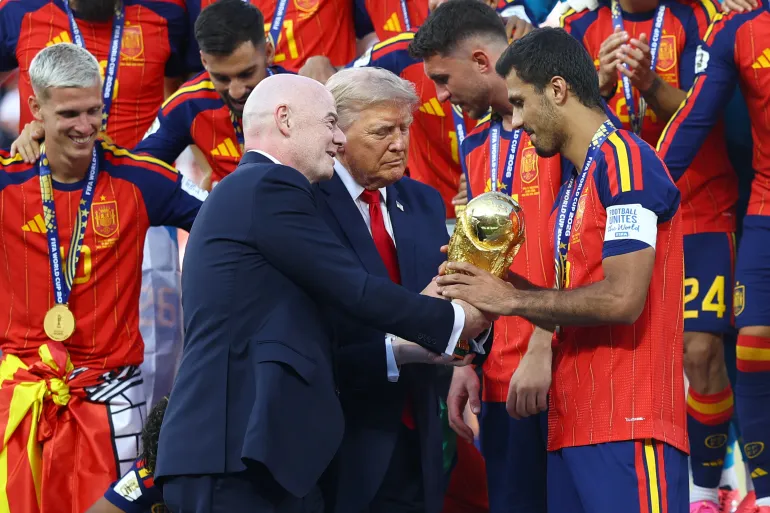
US President Donald Trump and FIFA President Gianni Infantino, left, hand the World Cup trophy to Spain’s Rodri before the 2026 trophy lift [Hannah Mckay/Reuters]
Who are the potential investors in the World Cup and other FIFA events?
Thrive Eternal, a United States venture capital firm, has been put forward to lead the proposed investor group, FIFA said.
The vehicle was founded by Joshua Kushner, the brother of US President Donald Trump’s son-in-law, Jared Kushner.
Any potential investors would thereafter buy into the FIFA events via Thrive Eternal.
What benefits are FIFA claiming if the World Cup and events plan succeeds?
FIFA has said all net benefits will be reinvested in football, and that all countries should benefit from the ever-increasing profitability of the sport.
“Football is the world’s most popular sport,” FIFA President Gianni Infantino said in a statement.
“Parts of the game have turned that popularity into remarkable commercial value – and we celebrate that success and want it to continue, because it lifts the whole game.
“Our job is to make sure the rest of football grows with it: FIFA exists to support sustainable, inclusive development in every corner of the world.”
‘It is not FIFA’s to sell’: UEFA and UK PM reaction to Infantino’s World Cup plan?
FIFA has already clashed with domestic and continental governing bodies during World Cup 2026. The European powerhouse, UEFA, was the first to speak out against the new proposals.
“This crosses a line that football’s governing institutions should never cross,” UEFA said.
“UEFA takes it extremely seriously. So should every National Football Association. So should every stakeholder who cares about the future of the game.
“The soul and governance of football are not assets to trade – especially with zero transparency as to who gains financially. None of us are the owners of football. It is not FIFA’s to sell.”
Andy Burnham, who only replaced Keir Starmer as the United Kingdom’s prime minister last week, wrote on X: “Let me say this very directly. Football does not belong to investors. It belongs to the people who fill the stands and who stand on the touchline week in, week out, rain or shine.
“The World Cup is not a product. It is the greatest competition in world sport, and it was never anyone’s to sell. Dress the deal up however you like. Once you have sold a piece of it, you have sold out.
“Football belongs to the fans. It always has, and it always will,” he added.
The Confederation of North, Central America and Caribbean Association Football (CONCACAF) said on Wednesday that it had not been informed of FIFA’s proposed sale of equity to outside investors and was “deeply concerned” over a lack of due process.
What will happen next for FIFA’s World Cup plans, and will UEFA boycott?
Any change will need to be voted through by FIFA’s 211-country membership.
Of that number, 55 nations fall within UEFA’s governance.
The European body will hold an emergency meeting later this week to discuss the proposals.
Were FIFA to implement such a plan, one possible response UEFA could take would include a boycott of FIFA competitions.
Although at just above a quarter of FIFA membership, Europe has produced the winner of six of the last eight World Cups.
Argentina and Brazil are the only teams to prevent a clean sweep by the Europeans in that time, and, indeed, are the only nations outside Europe to win the World Cup since fellow South Americans Uruguay won their second and last title in 1950.
What were the main criticisms of FIFA World Cup 2026?
The main criticism going into the 2026 World Cup, held in the US, Canada and Mexico, was pricing. From tickets to transport links, it was felt that football fans on median salaries around the world were being priced out of the game.
During the World Cup, the decision to suspend a red card shown to USA striker Folarin Balogun “undermined the game’s integrity and credibility,” according to UEFA.
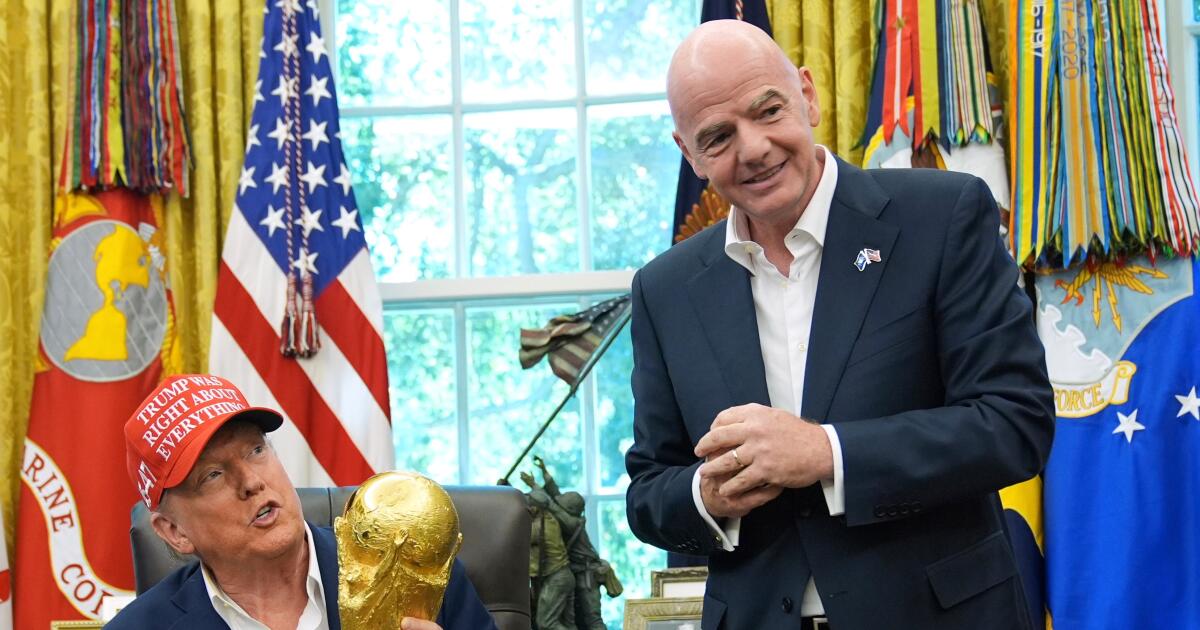
US President Donald Trump said he called Infantino about the ban that Balogun faced – the forward lined up for USA in their next match against Belgium.
FIFA also faced a backlash over hydration breaks that were introduced midway through each half of those matches. Critics said the breaks functioned primarily as commercial opportunities for broadcasters and disrupted the traditional flow of football matches at the tournament.
Argentina superstar Lionel Messi, right, during a hydration break at the World Cup [Lee Smith/Reuters]
Football’s world governing body announces plans to sell stakes of up to 20 percent in the World Cup and other events.
Published On 29 Jul 202629 Jul 2026
FIFA has proposed a plan to sell stakes in the World Cup and other events to private investors, provoking a furious response from the European football governing body, UEFA.
Under the plans announced by FIFA on Tuesday, a $20bn subsidiary would be created to run the World Cup and other events.
Recommended Stories
list of 4 itemsend of list
World football’s governing body said it would retain a majority share in the new FIFA Forward Enterprise, offering minority stakes to external investment to raise up to $4.2bn.
The plan still needs to be voted on by FIFA’s 211 member nations.
If successful, the proposed investor group is expected to be led by a vehicle founded by Joshua Kushner, the brother of US President Donald Trump’s son-in-law, Jared Kushner, FIFA said.
UEFA said the proposal “crosses a line that football’s governing institutions should never cross”.
Reinvested in the game
FIFA has just held a 48-team World Cup across the United States, Canada and Mexico – the biggest in the tournament’s history.
It is one of the world’s wealthiest sporting organisations, generating billions of dollars, largely from broadcasting rights, sponsorship and other commercial deals linked to the World Cup.
But it says this proposal can increase funds to widen access to the sport and strengthen global participation, with all net benefits to be reinvested in football.
“Football is the world’s most popular sport,” FIFA President Gianni Infantino said in a statement.
“Parts of the game have turned that popularity into remarkable commercial value – and we celebrate that success and want it to continue, because it lifts the whole game.
“Our job is to make sure the rest of football grows with it: FIFA exists to support sustainable, inclusive development in every corner of the world.”
FIFA said that in addition to retaining sole control of the subsidiary, it would retain authority over football governance, competitions, match calendars and regulatory and sporting decisions.
‘World Cup is not a product’
The proposal deepens the divide between FIFA and UEFA, with Europe positioning itself as football’s custodian, while FIFA, a not-for-profit organisation, says it is focused on broadening access with financial largesse.
In a statement, UEFA said it takes the new proposals “extremely seriously”.
“So should every National Football Association. So should every stakeholder: leagues, clubs, players, supporters, governments and everyone who cares about the future of the game.
“The soul and governance of football are not assets to trade – especially with zero transparency as to who gains financially. None of us are the owners of football. It is not FIFA’s to sell.”
The United Kingdom’s new prime minister, Andy Burnham, joined critics, saying on social media that the sport does not belong to investors.
“The World Cup is not a product. It is the greatest competition in world sport, and it was never anyone’s to sell,” Burnham wrote on X.
“Dress the deal up however you like. Once you have sold a piece of it, you have sold out.”
As the FIFA World Cup 2026 reached its final week, Gourav Roy, an Indian software engineer living in San Francisco, drove more than 9,650 kilometres (6,000 miles) across the United States to attend both the semifinals and the final.
For Roy, it was the next best thing to what he had grown up dreaming of: seeing India play in the World Cup.
Recommended Stories
list of 4 itemsend of list
But the possibility of that dream coming true is looking ever more distant as deep-rooted systemic issues and the failure to implement reforms have left the country of 1.45 billion ranked a lowly 138th in the world, failing to even qualify for the 2027 Asian Cup.
“I’ve learned to love without expectation. That’s the burden of the Indian football fan,” said Roy.
While countries with tiny populations like Curacao and Cape Verde qualified for the 2026 World Cup, India remains a prime example of wasted potential in the planet’s most popular sport.
Those working in Indian football say the problems range from poor youth development systems, a lack of popularity, and a national federation (the All India Football Federation) struggling to implement a uniform vision with a loose patchwork of state associations.
“If you ask me, to clean up the system and reorganise it will take a full cycle of four years,” Ravi Puskur, the CEO of Indian Super League (ISL) club FC Goa, told Reuters.
“Then it’s another 20-25 years to get us to the World Cup.”
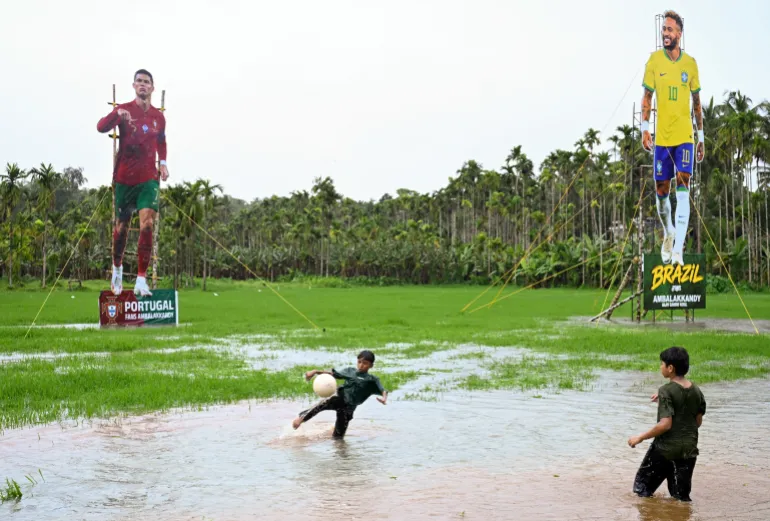
Children play football in front of cutouts of Portugal’s Cristiano Ronaldo and Brazil’s Neymar Jr put up by supporters ahead of the 2026 FIFA World Cup, in Kozhikode, India, on June 9, 2026 [CK Thanseer/Reuters]
Confined to pockets
In cricket-mad India, football remains popular only in a handful of states like West Bengal, Goa, Kerala, Mizoram and Manipur.
The ISL, launched in 2014 with the backing of Reliance Industries, one of India’s biggest conglomerates, tried to change that with limited success.
In 2025, the AIFF and Reliance did not renew their partnership as negotiations stalled amid a Supreme Court case to implement a new constitution for the federation.
This year, under new management led by clubs, the ISL is yet to finalise a broadcaster and announce fixtures.
NorthEast United CEO Mandar Tamhane, who previously led Bengaluru FC, said clubs alone cannot fix Indian football.
“You’re talking about the government, corporate India… it has to be a collective effort,” he said.
“The federation has to make sure the clubs, state associations, the corporates and other stakeholders all work together.”
Weak youth development
AIFF executive committee member and Mizoram’s sports minister Lalnghinglova Hmar said the government can help with infrastructure, but for Indian football to improve, the country’s youth development system needs a drastic overhaul.
“In South Korea and Japan, kids play over 40 competitive matches per season. This is missing in India,” he said.
“We start developing players too late. Most under-15 players get only 12 to 15 competitive games yearly. Some get called up to the youth national camp after playing less than 20 competitive games.
“We’re short on qualified coaches. Many states don’t even have a youth league… we just can’t compete like that.”
But India’s size, the very thing that makes it an attractive sports market and led to the huge success of cricket’s Indian Premier League, also makes it difficult for the AIFF to implement widespread reforms.
“If even half the states were doing a proper job at grassroots, things would grow,” Hmar added.
The uncertainty over the ISL, which forced some teams to suspend player salaries last year, also dealt a blow to the clubs’ development programmes.
“If you can provide stability, gradually the investment will increase,” Puskur said.
Global football stars like Lionel Messi of Argentina (centre) – seen here at the Arun Jaitley Stadium, New Delhi, India on December 15, 2025 – have a high fan profile in India, despite the national team’s underwhelming on-field performance [Adnan Abidi/Reuters]
A limited window
With India bidding to host the 2036 Olympics, the government is considering the launch of a “sports passport” that allows Indian-origin athletes to represent the country.
The AIFF leadership has backed the initiative, believing it will help improve the national team’s performances. But the proposal is still far from becoming law, and Hmar said Indian football needs to act fast.
“The other nations aren’t sitting idle… if we don’t match them, even if we improve, we will remain where we are,” he said.
While Indian football hangs in limbo, fans like Roy can only live in hope.
“They are talking about a 64-team World Cup,” he said. “It won’t gift us anything, but more places mean more hope.”
Infantino also addressed criticism surrounding the standard of officiating at the tournament, in particular concerns about political interference after USA forward Folarin Balogun was made available for their last-16 tie when his one-match ban was suspended by Fifa – following the intervention of US President Donald Trump.
Of the 191 other red cards shown at a men’s World Cup, only one other player has escaped a suspension.
Infantino, however, argued that such decisions are not out of the ordinary, claiming similar rulings are “routine and widely accepted in some of the biggest leagues worldwide”.
He added: “It’s curious that the same countries employing these practices are the ones criticising.”
The International Olympic Committee has said it will not investigate Infantino for any possible breaches of political neutrality, stating the complaint levelled by human rights campaign group FairSquare falls outside the jurisdiction of its ethics commission.
Infantino’s advice to his opponents was “to show some love” and “respect” to a tournament where “people came together as families, as fans, as one”.
“To everyone who missed our beautiful game, the emotions, the celebrations, the laughter, the crying, the deception and the joy. To all of you who missed watching kids, babies, grandparents and parents come together for the beautiful game… sorry that you were so consumed by hate and criticism that you missed it all,” Infantino wrote.
“While they celebrated, you were busy planting seeds of hate. Our world needs love, not hate; tolerance, not division; celebration, not mourning.
“To those spending their time and energy hating us, please take a moment to reflect, meditate, pray or watch a football match and truly observe the faces, the eyes, the emotions.
“Because only our beautiful game can deliver such an extraordinary show, a show where everyone becomes one and reconnects as humans.
“I am incredibly proud, as Fifa President, to have contributed, even a little, to this show. It’s a great feeling.”
EAST RUTHERFORD, N.J. — The largest, longest and most complex World Cup in history came to a close Sunday, with Spain beating Argentina 1-0 in extra time. But FIFA president Gianni Infantino didn’t bother waiting for the final result before passing judgment on the tournament.
“By all means this World Cup has exceeded all expectations,” he said during a reception at Trump Tower two days before the final kicked off. “This has not just been the greatest FIFA World Cup of all time. It is the greatest human social and cultural event that mankind has ever witnessed.”
No, but it was pretty good, with FIFA emerging as the World Cup’s biggest winner, allowing Infantino to reportedly shore up support within the organization despite a number of norm-shattering decisions during the tournament.
Attendance topped 6.8 million, a World Cup record averaging more than 65,000 fans a game. FIFA estimated the cumulative global TV audience topped 5 billion people across linear television, digital streaming and social platforms while more than 1.8 billion people were expected to watch the final, according to the BusinessStats website, making it the most-viewed sporting event in history.
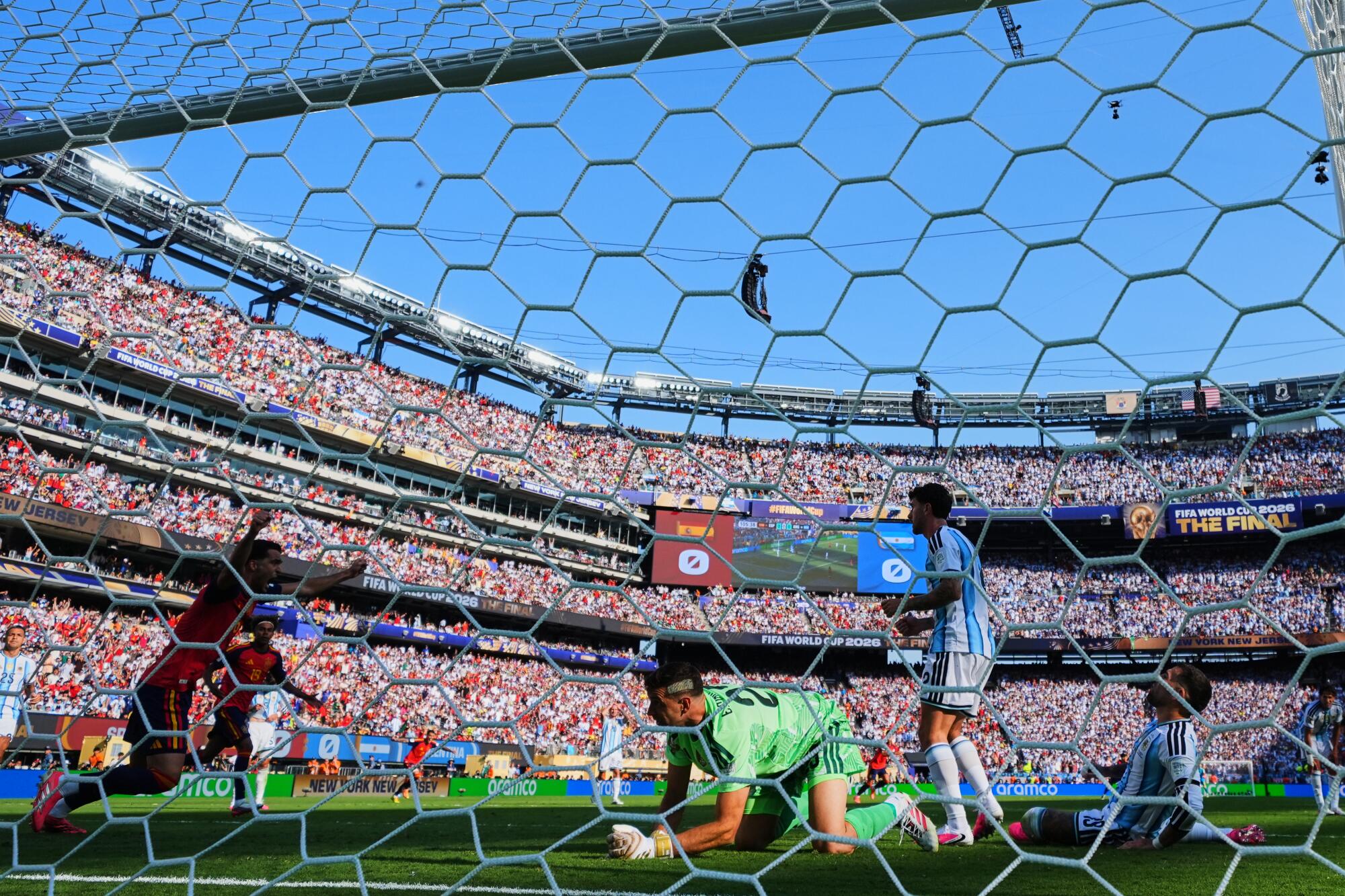
Argentina goalkeeper Emiliano Martínez reacts as Spain’s Ferran Torres scores during the World Cup final in East Rutherford, N.J., on Sunday.
(Julio Cortez / Ap Photo/julio Cortez)
Exact figures won’t be known for a few days.
Revenue for the four-year World Cup cycle is anticipated to reach $13 billion, making it the first $10-billion sporting event in history — bolstering Infantino’s case for reelection as FIFA’s president next year.
The final was among the most expensive U.S. sporting events of all time, with the get-in asking price for a single ticket on the secondary market peaking at about $7,400 three hours before kickoff and the average purchase price topping $10,800. One seat sold for $32,502, which is either a good thing or a bad thing, depending on whether you’re buying the ticket or selling it.
Inglewood’s SoFi Stadium hosted eight games, including two of the U.S. team’s three group-stage games and Spain’s quarterfinal win over Belgium. The matches had a total attendance of 561,656 people, about 99.6% of capacity — that’s more than each of the first three World Cups drew for the entire tournaments.
U.S. and Paraguay oversized flags are featured on the pitch before a World Cup group stage match at SoFi Stadium on June 12.
(Allen J. Schaben/Los Angeles Times)
Weather disrupted just a handful of matches, not the dozen or more that were feared, and the logistical nightmares of staging the 39-day tournament across three countries for the first time — the U.S. co-hosted the event with Mexico and Canada — never materialized. The expansion to 48 teams and 104 games, meanwhile, made room for a number of surprises that gave the tournament its life and sparkle.
Tiny Cape Verde, the second-smallest country to qualify for a World Cup, made a memorable debut, playing Spain to a scoreless draw in its opener, then taking Argentina to extra time before falling in the cruelest way possible, on an own goal, in the knockout rounds.
Norway, playing in the tournament for the first time this century, made it to the quarterfinals behind its hulking striker Erling Haaland, who quickly became a fan favorite while the team’s supporters saw their synchronized “Viking Row” celebration go viral.
Canada and Egypt both won World Cup games for the first time, advancing to the Round of 16, with Egypt becoming one of nine African teams to make it to the knockout rounds. Of FIFA’s six continental confederations, only UEFA, representing Europe, did better than Africa, sending 13 teams beyond the group stage.
Argentina’s Lionel Messi erased any doubt that he’s the greatest player in World Cup history — if not soccer history — by willing his team to the final and winning the Silver Ball, runner-up for the tournament’s most outstanding player. On Sunday, Messi was thwarted in his attempt to win a second straight World Cup and third Golden Ball, but he walked off the field at MetLife Stadium as only the second man to play in three World Cup finals.
And he finished his record-setting sixth tournament as the all-time leader in games (34), assists (12) and goal contributions (33), more than standing the test of time. Two of the players Spain started against Argentina in the final hadn’t even been born when Messi, 39, made his World Cup debut in 2006.
But if those were the highlights, there were also lowlights.
This was by far the most political World Cup in history and the first in which a host country, the U.S., was actively at war with a participating one, Iran.
Iran defender Ramin Rezaeian celebrates with teammates after scoring during a World Cup match against New Zealand at SoFi Stadium on June 15.
(Allen J. Schaben/Los Angeles Times)
That had all kinds of ramifications, starting with the State Department’s refusal to grant visas to more than a dozen members of Iran’s official delegation. Iran was also forced to move its base camp from Tucson to Tijuana, and though it played all its games in the U.S., it was denied permission to remain in the country after each match, an option granted to every other team.
Despite the harassment, Iran did not lose a game, playing to three draws despite having three goals — any of which would have sent it to the knockout rounds — erased by video reviews.
The State Department also denied entry to Omar Abdulkadir Artan, a decorated Somali referee, turning him away at Miami International Airport in June, citing “vetting concerns.” Artan, named Africa’s top referee last year, had a valid entry visa and was selected by FIFA to work the tournament last April.
Iran wasn’t the only team to have its World Cup ended early by technology. Although the video assistant referee (VAR) system was adopted primarily to alert the head official to potential clear and obvious errors or serious missed incidents, in this tournament it became intrusive, eliminating Croatia on evidence from a NASA-level ball sensor and costing Egypt what would have been a game-winning score for a perceived foul that took place nearly 100 yards from the goal.
Coaches and players are still allowed to make mistakes, but the technology now has referees making calls on things that are imperceptible to the naked eye, something critics say has removed any sense of judgment or nuance, robbing the game of much of its drama.
“Football is an art. That’s why we love it,” said Christina Unkel, a former FIFA referee and a rules of the game analyst for multiple TV networks. “When you do pursue black and white — objectivity is what they’re trying to get to, and I get it; they want to eliminate as much subjectivity as possible — what everyone is hating is this perfection thing.”
Then there was the official’s call that President Trump took credit for overruling from 2,800 miles away.
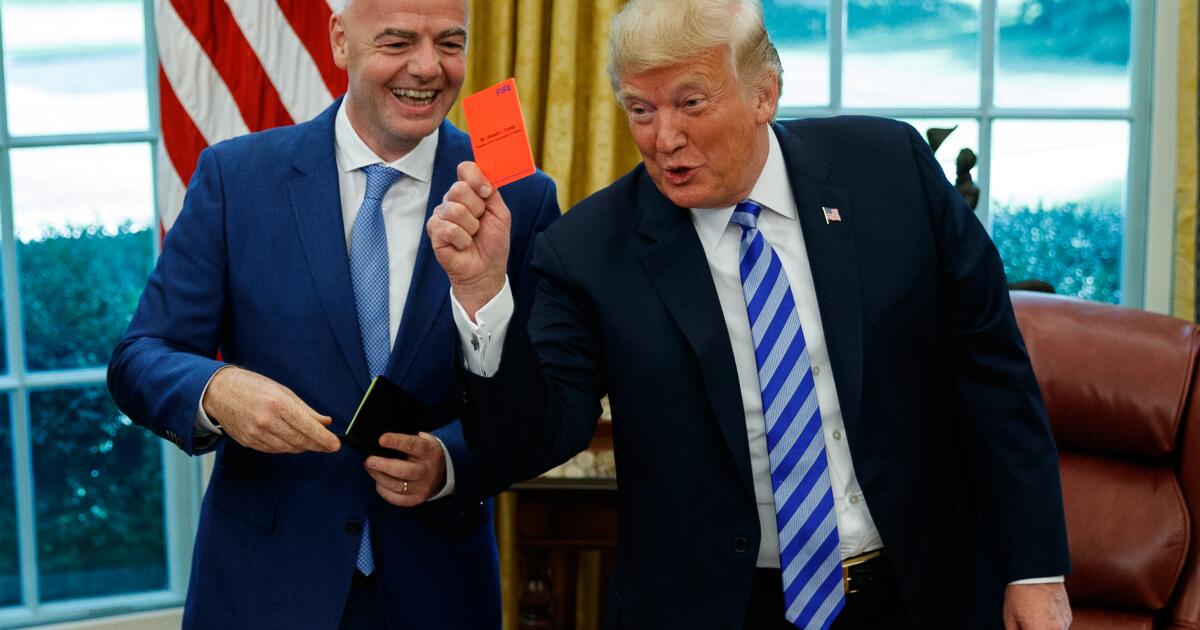
When striker Folarin Balogun, the U.S. team’s leading scorer, was given a red card in the second half of his team’s Round of 32 win over Bosnia-Herzegovina, he was immediately suspended from the Americans’ next elimination game with Belgium. But Trump admitted he phoned Infantino three times, lobbying for the suspension to be rescinded.
U.S. forward Folarin Balogun stepped on Bosnia-Herzegovina defender Tarik Muharemovic’s foot during a World Cup match and received a red card at Levi’s Stadium on July 1.
(Robert Gauthier/Los Angeles Times)
Less than 30 hours before the Belgium game, the card penalty was suspended and Balogun was placed on one year’s probation by FIFA’s disciplinary committee, marking just the second time in World Cup history that a player who received a red card was allowed to play in his team’s next game. The international uproar that followed overwhelmed the U.S. team, which played its worst game of the tournament against Belgium.
Trump, who was booed as he saluted the national anthem Sunday from a luxury box before the game, was booed again by the crowd of 80,663 when he strode onto the pitch for the awards ceremony afterward.
UEFA, the FIFA confederation in which Belgium plays, protested the decision to let Balogun play, saying it had “crossed a red line.” It was far from the only bright red line Infantino crossed in this tournament. And some of that line crossing could set dangerous precedents.
Allowing the U.S. to turn away the Somali official and limit the Iranian team’s time in the country, for example, could embolden future World Cup hosts to do the same. What’s to stop Morocco, co-host of the 2030 tournament, from banning officials and players from Algeria over the two countries’ territorial dispute in the Western Sahara? And if a red card is handed to a player from Spain, another 2030 co-host, would the Spanish prime minister call Infantino to try to get it rescinded? Despite FIFA’s insistence that the disciplinary committee works independently, many believe Trump’s meddling worked.
But as always with FIFA, money speaks the loudest, so Infantino’s norm-shattering behavior over the last year doesn’t seem to have cost him much support. The Guardian reported last week that as the World Cup neared its successful conclusion, nearly 200 of FIFA’s 211 member associations are endorsing Infantino’s bid for reelection to a fourth term as president next March.
Which is why Spain wasn’t the only winner in this tournament.
Argentina’s Leandro Paredes was seen shoving Spanish players, which led to an on-field melee while Spain’s Lamine Yamal prayed calmly.
FIFA says it is investigating an on-pitch altercation between Argentinian and Spanish players at the conclusion of their World Cup final in New Jersey in the US, where the European champions dethroned their South American counterparts in a 1-0 win.
Football’s global governing body confirmed the probe on Monday, saying its disciplinary committee assessed match reports of the multi-player brawl which resulted in an ugly end to a heated match that was decided in extra time.
“FIFA’s Disciplinary Committee has appointed a Disciplinary and Ethics Prosecutor to investigate potential breaches of the FDC with regard to the post-match incidents,” FIFA told Al Jazeera in a statement.
A report on the findings and results of the probe will be shared once it is completed, the statement added.
Spain’s celebrations after winning their second world title were marred by the melee, which seemed inevitable given the flared tempers and angry outbursts between both teams and their staff.
When the referee blew the full-time whistle at the end of extra time, a few players from both teams fell to the ground in celebration and heartbreak, but several others were involved in an ugly brawl.
In what has now become a viral video, Spanish star Lamine Yamal is seen going down on his knees and raising his hands in a prayer of thanks while multiple fights break out in the background, with Argentinian players physically attacking their Spanish opponents.
Argentina defender Leandro Paredes shoved Spain’s Eric Garcia by the throat, and when Spanish substitute player Gavi jumped in to intervene, Paredes pushed him to the ground.
The 2022 champions’ coach Lionel Scaloni rushed to the scene and separated Paredes from the two players, only for the number five to push more Spanish players before he was physically pulled back by a teammate.
While a few players from both sides greeted each other after the match – most noticeably, there was a warm embrace between Yamal and Argentine captain Lionel Messi – the overall atmosphere remained bitter between the two finalists.
As the post-match ceremony stage was being set up, Spain’s players formed a guard of honour for the runners-up and applauded the Argentinian players when they walked up to receive their silver medals.
However, Argentina did not return the favour and instead turned their backs on the newly crowned champions as they were handed gold medals and the famous winners’ trophy.
It is unclear when FIFA’s probe into the incident will conclude and whether any action will be taken against the players.
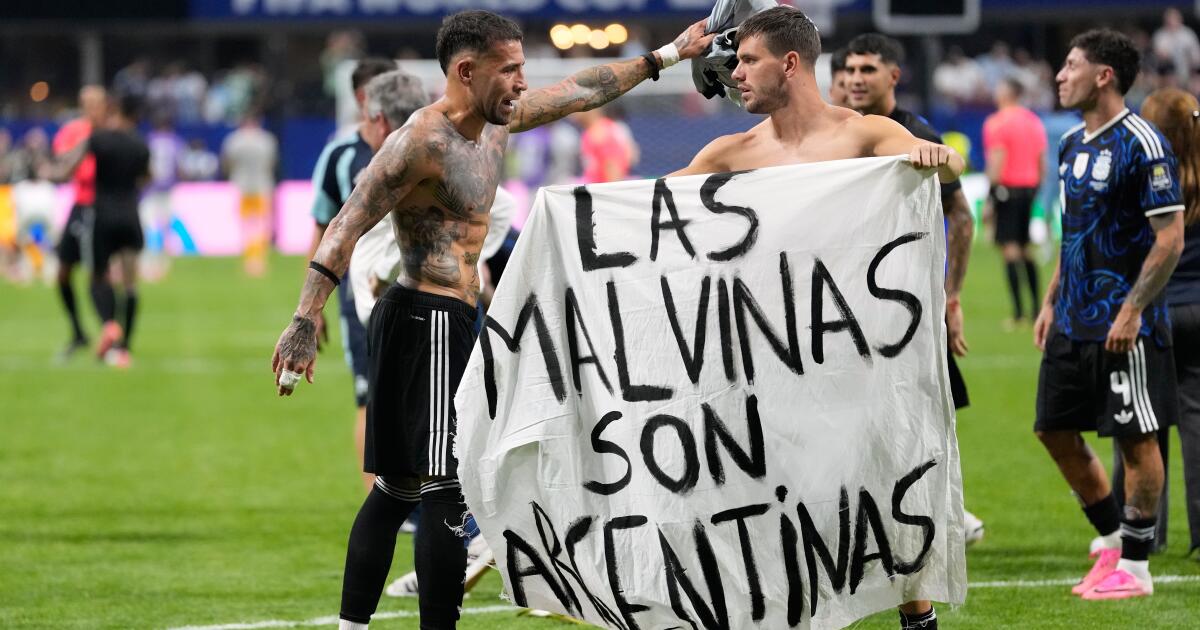
Last week, FIFA said it was investigating Argentinian players’ display of a political banner after their World Cup semifinal victory over England, a move that violated its stadium code of conduct and struck a nerve in the United Kingdom over the political sovereignty of the Falkland Islands, a self-governing British overseas territory off the coast of Argentina.
Defender Lisandro Martinez and unused substitute Giovani Lo Celso held up a banner reading “Las Malvinas son Argentinas”, meaning “The Falklands are Argentinian”, as they celebrated the win on the pitch, grinning and waving to fans in the stands after securing a dramatic comeback win on Wednesday.
The move sparked a row in the UK, where top government officials urged FIFA to investigate the matter and the global governing body confirmed it had launched a probe as a “standard procedure”.
“FIFA’s independent disciplinary committee is currently assessing the match reports and considering the relevant circumstances before deciding on potential further steps based on the FIFA disciplinary code,” a FIFA spokesperson told Al Jazeera on Thursday.
While many are eagerly awaiting what the halftime show will bring, it’s not the same thoughts everywhwere.
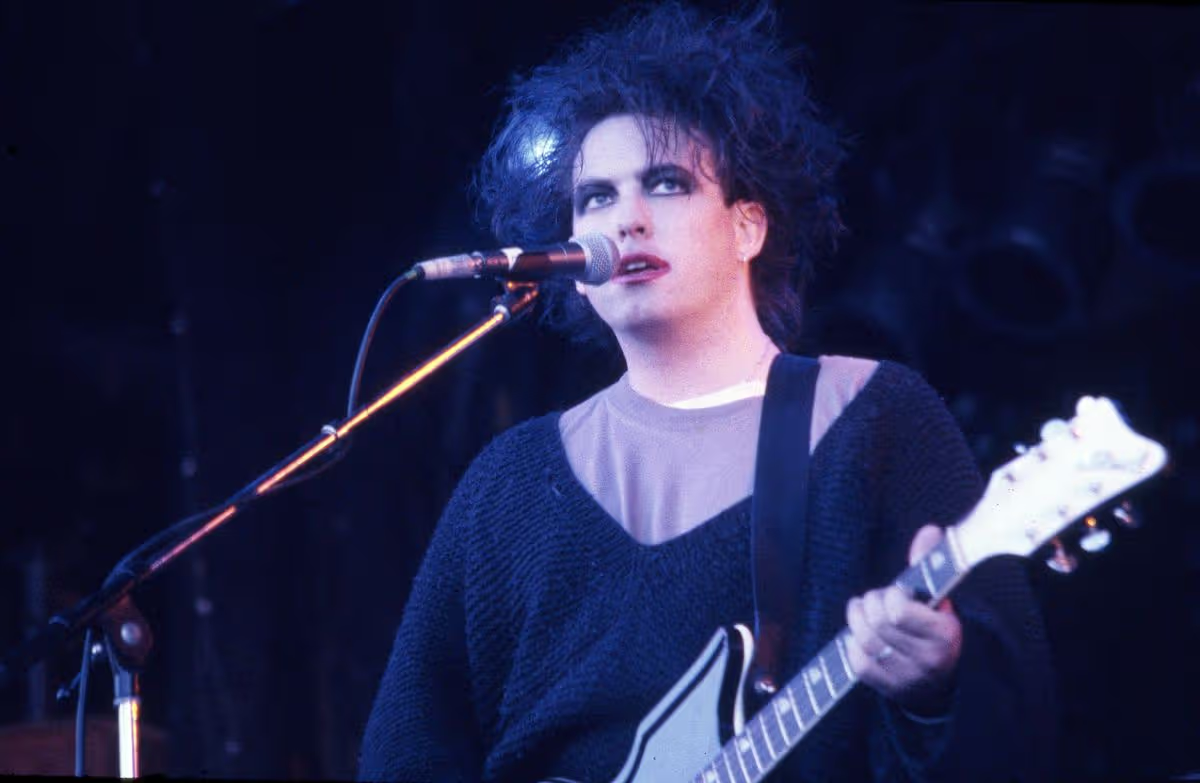
The Cure star Robert Smith has furiously hit out at the upcoming FIFA World Cup 2026 halftime performance line-up curated by Coldplay’s Chris Martin
Robert Smith took to social media to share his blunt reaction and took aim at FIFA President Gianni Infantino.
He berated: “The half-time show, which has been curated by Coldplay’s Chris Martin, will feature Madonna, Justin Bieber, Shakira and the K‑pop boyband BTS. Fifa’s president, Gianni Infantosser, has described the half-time show as ‘groundbreaking spectacle’ that will ‘celebrate football, music and our shared values, ensuring a legacy that transcends the final whistle’.”
The FIFA World Cup 2026 final is not far away, and the predictions are coming in thick and fast.
Spain, the reigning European champions, are eyeing their second World Cup title, 16 years on from their maiden triumph in South Africa. But standing in their way are holders Argentina, the South American giants aiming to become just the third country to win back-to-back World Cup titles.
Recommended Stories
list of 4 itemsend of list
Stats provider Opta predicts Spain as the favourites to win the 2026 World Cup, with a 59.56 percent probability of lifting the trophy in New Jersey. La Roja are also the picks of several former players and pundits.
Former England striker Michael Owen said world number two Spain are the “deserved” winners of the tournament.
“Spain haven’t got the greatest individual players, I think France probably have … but Spain as a team are everything England are not – they are brave, courageous with the ball,” Owen told The Straits Times.
“Spain are just a great team that pass the ball confidently and play amazing football as a collective.”
Spain, the reigning European champions, are looking to add a second world title to their trophy cabinet [File: Mauro Pimentel/AFP]
Zlatan Ibrahimovic, the ex-Barcelona and Manchester United striker who represented Sweden at two World Cups, expects Spain to dominate the final, which comes two years on from their Euro 2024 triumph.
Spain handled France very good [in the semifinals]. I believe they can handle this Argentina,” Zlatan, now a pundit on US broadcaster Fox Sports, said.
“Argentina is not a counterattacking team. Spain are going to do their thing. They’re going to play collectively … I believe Spain are going to dominate that game.”
Spain were also John Terry’s favourites for glory, with the former England captain saying on the Sports Uncensored show that Luis de la Fuente’s side have “got too much for Argentina”.
Former goalkeeper Iker Casillas, the Spain captain during their maiden World Cup triumph in 2010, expressed his confidence in the team’s ability to bring home a second, sharing a picture of another star halfway stitched on the top of their badge.
A star represents every World Cup a team has won.
[Translation: And why not?]
While a lot of the consensus centred around a Spain win, some think Argentina have a chance, even if it is slim.
Alan Shearer, one of England’s greatest strikers of all time, backed the reigning champions, saying on The Rest is Football podcast, “If there’s one team that can do it in terms of stopping them [Spain], it’s Argentina because of their mentality and togetherness.
“They have been down so many times and in trouble, and somehow managed to get a win. That’s what you’ve got to admire about them.
“When you’ve got a genius in your side,” he added, referring to Messi, “you’ve always got a chance.”
But how can Argentina beat favourites Spain in the title clash?
English football pundit Micah Richards thinks the answer to that is low-block transition – the strategy of teams sitting back closest to their goal and, after winning possession, rapidly shifting from a compact defensive shape into an offensive counterattack.
“Get the ball to Messi, whereas [Julian] Alvarez or [Lisandro] Martinez just make it horrible, make it how they did with England,” he added.
“I think Argentina need to stay in the game as they did against England and turn it on when they see a shift in momentum.”
Can Lionel Messi, centre, guide Argentina to their fourth World Cup victory [Handout/Michael Regan/FIFA via Getty]
Meanwhile, another of England’s greats, Gary Lineker, stuck with his pretournament pick, Spain, but added that Argentina are “so gritty”, making the predictions a very tough choice.
“You cannot go against that little fella [Messi]. He’s so great; it’s going to be really, really close. It’s genuinely 50-50.”
Unlike others, New York City Mayor Zohran Mamdani refused to pick a side.
“Everyone I root for has lost,” he said, with a laugh. “So I feel like whoever I say is going to lose at this point.
“I’m gonna say the classic politician’s answer – I’m excited for a good game.”
Protesters are inviting soccer fans to join them in issuing referee-style red cards during the World Cup final.
A coalition of artists, community organizers and advocacy groups will be handing out tens of thousands of specially designed commemorative red cards to those headed to Sunday’s championship showdown between Argentina and Spain at MetLife Stadium in East Rutherford, N.J.
In addition to the slogan “Unitas Mundi” — Latin for “unity of the world” — the mock referee cards direct people to a website explaining the coalition’s campaign and invite them to participate in a collective demonstration inside the stadium to denounce FIFA President Gianni Infantino and President Trump.
The action comes amid increased scrutiny around Infantino and Trump‘s relationship. Infantino has announced that Trump will join him at the final to present the trophy to the winner. He also awarded Trump the first-ever FIFA Peace Prize — created after the U.S. leader was not awarded the Nobel Peace Prize — in December.
And it was after Trump called Infantino to ask for a review of a red card issued to U.S. striker Folarin Balogun that the star forward’s suspension was delayed to allow him to play in the next game. The controversial move prompted an international uproar and accusations that Infantino has violated established rules around political neutrality.
FIFA has strict rules prohibiting political messaging on flags, banners and other items displayed by players and attendees in and around stadiums.
Organizers of the Final Red Card demonstration are also calling out the Trump administration’s immigration and mass deportation policies, which are back in the spotlight after three people were killed within a week during separate encounters with Immigration and Customs Enforcement officers. The fatalities include two people who were shot and killed by ICE officers in Houston and Maine during immigration operations, and another killed in a car crash while fleeing ICE officers in Florida.
At least 10 people have been killed during the Trump administration’s immigration crackdowns.
The coalition behind the campaign includes Contra-ICE, the arts collective that was also a part of the Flags in the Stands Super Bowl action that involved the “ICE OUT” rally towels. Partner organizations also include Make the Road New Jersey, 50501, People vs the Machines and South Asians for America, according to a press release.
New Jersey, United States – Tobin Heath knows everything about winning a football World Cup and defending it successfully.
As a key member of the peerless USA women’s football team of the late 2000s and 2010s, Heath won the FIFA World Cup in 2015 and 2019, as well as Olympic gold medals in 2008 and 2012.
Recommended Stories
list of 4 itemsend of list
But it is not just the medals and honours that elevated her to the pantheon of football greats. Instead, it was Heath’s role in revolutionising the women’s game as a skilful and gifted forward that set her apart.
From mazy runs around defenders while running down the flanks to jaw-dropping assists and finishes inside the penalty area, Heath is often regarded as one of the most technically gifted playmakers in football history.
It is no surprise, then, that Heath’s analysis of World Cup teams as a member of FIFA’s Technical Study Group went viral on social media and prompted questions about why she has not been seen on popular football shows prior to the tournament.
The 38-year-old hung up her boots in 2025 after career-ending injuries forced her into retirement. Her 181 international appearances brought her 36 goals but left an indelible mark on the game.
Having followed the knockout matches as the only female member of an elite panel of analysts at a men’s World Cup, Heath’s insights stood out as the tournament progressed towards the final.
As a World Cup replete with goals – 307 in 103 matches, at an average of nearly three goals per match – the ongoing tournament has left some fans questioning whether more scoring equates to a better overall spectator experience.
In an exclusive interview with Al Jazeera Sport, Heath shares her thoughts on the goals, players, styles of play and teams that stood out at the FIFA World Cup 2026 and the tournament’s legacy:
Al Jazeera: Have more teams and more matches led to a record number of goals at the World Cup? Is it correct to rank this tournament as the most entertaining edition?
Tobin Heath: Yeah, that’s the biggest factor. For me, this is the evolution of football. It’s an evolution of football that the fans are obviously enjoying.
There are multiple factors [behind the high goal average] that we are analysing. But the top one is where these teams are winning the ball back, how they’re counter-pressing and the use of attack in wide areas. The use of the full-backs in the attack has been a key theme and a big positive for football.
We always want to see more goals. So we have to look at the increased team format and the diversity of the teams that are being matched up with each other. Personally, I love seeing diversity in football.
Stylistically, it makes for very interesting matches, and I think we saw some of those most interesting matches in the group stages and towards the beginning of the knockout rounds, where we saw teams that typically play different styles going toe-to-toe with the giants of football.
Al Jazeera: What impression did the likes of Cape Verde, Egypt, DR Congo and other African teams leave on you?
Heath: It was fantastic. Cape Verde are top of my mind in terms of their results. If you look at their result against Spain in particular, and then the thrilling game against Argentina, it’s basically the two finalists. There’s a direct correlation there, which is fascinating to see. And just the bravery with which they played – with so many low blocks – is very rare.
And then in the Egypt game, another outstanding match against Argentina. The result, very well, could have gone either way for me. It was just a beautiful display of football.
I remember watching the African club teams in the Club World Cup last summer and enjoying African football. I’ve enjoyed playing African teams in the World Cup, too. For me, as a football player, it gives you a different problem to solve.
Another team that stood out for me and that I thoroughly enjoyed this tournament was Ivory Coast. I loved their football, I loved their style, I loved their individual brilliance.
For African football, this is a big positive, and another step in the growth of football on that continent with various styles. And I hope to see more of the same in the Women’s World Cup next summer.
Al Jazeera: Having been a big exponent of attractive football in your playing days and a proponent of it after your retirement, how would you rate the different styles on display at the World Cup? And did you think it was an entertaining World Cup?
Heath: Oh my gosh, 100 percent! What we have seen in the level of creativity in this tournament has been nothing short of inspiring.
I became a huge fan of France because at any given moment on the pitch, you could see something that has never been done before in football. You’d see innovative football, innovative individual players.
Creativity has been at an all-time high. When you see the best players in the world performing at the top level, being highest in all the metrics. You look at (Jude) Bellingham, (Kylian) Mbappe, (Lionel) Messi, (Erling) Haaland – these are the best players that were showcasing their best football in this tournament.
There’s something in the water in the US that we just love our stars, we love putting them on a platform and the stars showed up big time at this World Cup.
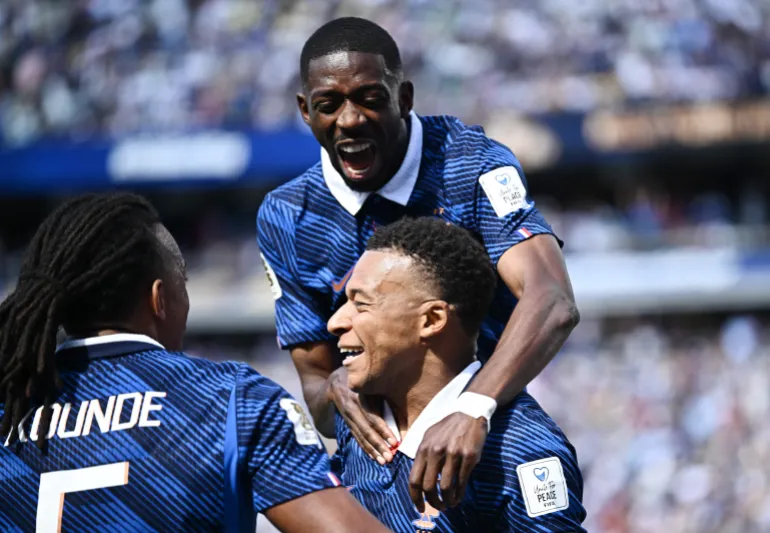
Heath says she became a huge fan of France at the World Cup 2026 as the likes of Kylian Mbappe and Ousmane Dembele, pictured here, built fluid attacks against their opposition [File: Dylan Martinez/Reuters]
Al Jazeera: Which young players have impressed you the most and what do their performances mean for the future of football?
Heath: The most incredible name that stands out for me is (Pau) Cubarsi.
To be so young, to play so many minutes and be so effective with this Spanish defence, it highlights an incredible way that Spain is generationally able to really connect the ideas and implementation of the type of football that they want to play.
I hope and pray that we see Lamine Yamal perform in a supersonic way in the final. He’s due for a moment. The anticipation has been there all tournament.
We talked about these young players, but we also have to highlight what Messi is doing and the age at which he’s doing it. It’s nothing short of extraordinary. I was laughing that we should give out a veteran award, but he could also win player of the tournament.
From the young superstars to the old, football is in good hands for generations to come.
Spain’s Pau Cubarsi, centre, has been the standout player for Heath, who wants to see Lamine Yamal, left, shine in the final [File: Lisi Niesner/Reuters]
Al Jazeera: What do you think about the future of football in the US and what this World Cup has done for it?
Heath: It’s so interesting because I’ve been thinking about this a lot. Our culture and society move fast. There are so many things that capture the attention of Americans at any given moment, and the World Cup captured the audience.
We put on a fantastic event; we showcased incredible stadiums and what the different parts of our country look like in the summertime, from the Pacific Northwest to the Miami heat. Stadiums with roofs to uncovered stadiums.
And yet, I’m left wondering how it affects football for us, especially men’s football in our country.
We talk about stars and the importance of stars in our country, but when I think about the players who had a good tournament, including Malik Tillman and Folarin Balogun, there’s no stardom. It’s a little lacklustre for what the USA team and the World Cup have done in terms of the popularity and interest in this country.
I hope that there is a direct correlation with players to come, both girls and boys, who can point to this World Cup as their inspiration. It will be the greatest indication of whether this tournament was a success.
Our country has been captured by the moment of watching the World Cup, but no one knows if they’ve been captured with it in their soul. It feels a little bit like a flash in the pan.
Al Jazeera: What is the biggest footballing aspect that stood out for you at this World Cup?
Heath: The gap between the possibility of winning a World Cup and actually winning a World Cup. It’s still extremely wide.
We had competitive matches, smaller teams going toe-to-toe with the biggest giants in the world, but it still seems that the closer you get, the bigger the gap between the top teams that can realistically go far in the tournament and the ones we enjoyed watching in the beginning.
I always say, winning is a muscle. It’s no surprise that we have two teams in the final that have enjoyed a lot of success in international football.
We see this both in men’s and women’s football. It will take something truly special to be able to break into that group.
Argentina and Messi will look to become only the third team to successfully defend the World Cup [File: Ashley Landis/AP Photo]
Note: This interview has been edited for clarity and brevity.
Who: Spain vs Argentina What: FIFA World Cup 2026 final Where: New York-New Jersey Stadium, East Rutherford, New Jersey, United States When: Sunday at 3pm (19:00 GMT) How to follow: We will have all the build-up on Al Jazeera Sport from 15:00 GMT before our live text commentary stream.
Chaos vs calm. Godfather vs heir. World number one vs world number two.
Recommended Stories
list of 4 itemsend of list
The storylines could not be any better.
As the sun shines on the New York skyline, football’s biggest stage gets ready for its perfect closing act: the FIFA World Cup final between Argentina and Spain.
It is a gift for the football purists, a clash of philosophies, if you will – Argentina, the reigning champions who have made a habit of embracing the suffering, and Spain, the European winners who have taught the world a masterclass in control.
On one hand is the unstoppable, almost unnatural force of Lionel Messi – whose movements on the field are no less than spells from a magic wand – and on the other is Lamine Yamal, the teen prodigy whose flair on the field and flamboyant personality off it show signs of a superstar in the making.
So when the confetti falls and the fireworks erupt, will it be Argentina lifting a historic second straight world title, or will the golden generation of Spain bring back joy after 16 years of waiting?
Here’s all to know about the seismic showdown:
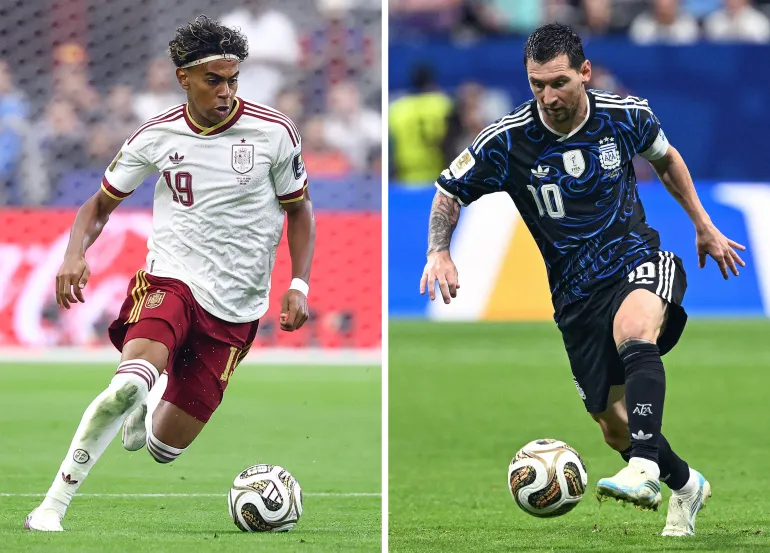
Who will win the battle between Lamine Yamal and Lionel Messi [File: Charly Triballeau and Roberto Schmidt/AFP]
How did Spain and Argentina reach the World Cup final?
Spain topped Group H with seven points, beating Saudi Arabia and Uruguay and drawing with Cape Verde. They began their knockout campaign with a 3-0 thrashing of Austria in the round of 32 before beating Portugal 1-0 with a late goal in an Iberian football derby in the round of 16.
Argentina had a strong showing in the first round, topping Group J by beating Algeria, Austria and Jordan. In the round of 32, they were pushed to their limits before squeezing past Cape Verde 3-2 in extra time, and came from two goals down to beat Egypt 3-2 in a controversial last-16 contest which drew allegations of officiating bias.
Against Switzerland in the quarterfinals, they again played a full 120 minutes before securing a 3-1 win and broke English hearts with a late 2-1 comeback win in a highly charged semifinal encounter.
Marvellous Messi’s Last Dance?
If there were not already enough new records Messi has made in the past month, the 39-year-old diminutive forward is set to add another to his tally – the oldest outfield player to feature in a World Cup final.
It could also be his last.
Leo – as Argentinians commonly call him – has not spoken about his future, but with an illustrious career, headlined by his 2022 World Cup triumph, this year’s tournament seems to be his last, especially if he fulfils a rare back-to-back World Cup title dream.
“He has made history. He is a legend,” Argentina coach Lionel Scaloni said of Messi, one of the greatest players to have graced the football field.
A decade ago, frustrated after a Copa America final loss to Chile, his fourth defeat in a final for Argentina, Messi hung up his boots. The narrative then centred around the fact that despite all his success at the club level, international glory had eluded Messi.
But fast forward to 2026, the Argentina captain has led his team to successive World Cup finals and is bidding for his first Golden Boot – a twist of fate even Messi would not have imagined.
“To have been able to get to a final in the way that he has in this moment, at the age of 39, I think it is incredible,” Scaloni added. “That is why I said we should enjoy having him, because look at what happened with Diego [Maradona] and how we ended up missing him.
“We still have Leo, and we should appreciate that. He is the historic figure and the legend, as are all these players who have given us these marvellous years.”
The little magician from Rosario will lead Argentina’s charge on Sunday, as La Albiceleste aim to become just the third team in the tournament’s history to retain the World Cup after Italy (1934 and 1938) and Brazil (1958 and 1962).
Slick Spain out to silence Argentina
Unlike Argentina, whose game largely depends on the individual brilliance of Messi, Spain are a team built solidly on the collective.
La Roja love to keep the ball and suppress the attacking potential of any opponent.
Their organised, sturdy defence has kept six clean sheets, already the most by any side at a single World Cup tournament, and leaked just one goal en route to the final.
On Sunday, Spain will carry more hunger than fear against Argentina, “the team to beat”, as described by captain Rodri.
“We’ve been through a gradual process of growth, where we’ve seen a team mature over the last few years,” Rodri said. “This team and this generation were going to make a name for themselves … and now reaching the final of a World Cup.
“So we’re pleased with the journey the team has taken, but we’re not stopping there; our ambition goes much further.”
Left to right, Spain’s Lamine Yamal, Dani Olmo and Mikel Oyarzabal are key players of their attack [File: Jessie Alcheh/Imagn Images via Reuters]
The bookmakers’ favourite from the beginning, Spain have played like a side that knows best how to deal with pressure. They produced the performance of the tournament in their stunning semifinal defeat of France, silencing Les Blues’ valiant attack.
Rodri said while that display was “one of the best” the current Spanish side had ever produced, they would need to scale new heights to defeat Argentina and clinch their first world title since 2010.
“I think we have to raise the level because they are the champions. And I’m really confident that we can do [it],” he added.
Spain vs Argentina predictions
The Opta supercomputer views Spain as the favourites in the final, with a 45 percent probability of winning in 90 minutes. It predicts a 26 percent probability of Argentina winning in regulation time, while there is a 29 percent probability of the match going to extra time or penalties.
Overall, Spain have a 59.56 percent chance of winning the 2026 World Cup, while Argentina have a 40.44 percent probability of retaining the title they won in Qatar four years ago.
Who are the referees for Spain vs Argentina?
Referee: Slavko Vincic (Slovenia)
Assistant referee 1: Tomasz Klancnik (Slovenia)
Assistant referee 2: Andraz Kovacic (Slovenia)
Fourth official: Adham Makhadmeh (Jordan)
Reserve assistant referee: Mohammad Alkalaf (Jordan)
Spain vs Argentina: Kickoff time, where to watch
Spain: DAZN Mundial (9pm, Central European Summer Time)
Argentina: TyC Sports, TyC Play (4pm, Argentina Standard Time)
United Kingdom: BBC One, BBC iPlayer, STV, STV Player, ITV1, ITVX, Red Button 1 (8pm, British Summer Time)
US: Fox, Fox One, Peacock, Telemundo App and Network, Universo, Telexitos (3pm, Eastern Daylight Time)
To check the TV listings for your country, head to FIFA’s TV listing schedule here.
Where is Spain vs Argentina being played?
The World Cup final will be played at MetLife Stadium, home to two National Football League (NFL) teams: the New York Giants and the New York Jets. For the FIFA World Cup, the venue has temporarily been rebadged as New York-New Jersey Stadium.
Built in 2010, this huge multipurpose stadium holds up to 82,500 spectators for football matches. The venue also hosted the 2025 FIFA Club World Cup final and both semifinals.
The last World Cup match at the MetLife Stadium was a round-of-16 match that Norway won 2-1 against Brazil [File: Omar Aziz/Reuters]
What is the weather forecast and air quality for New Jersey?
AccuWeather predicts mostly sunny and less humid weather for Sunday in New Jersey.
Smoke from Canadian wildfires has blanketed much of the northeastern US, triggering health alerts. On Thursday, the air quality in New Jersey was rated “unhealthy for sensitive groups” by several air quality measurement platforms.
But for Sunday, the US government’s official air quality monitoring site, airnow.gov, expects the air quality index (AQI) to be “moderate”.
Spain vs Argentina: Head-to-head
This will be only the second World Cup meeting between Spain and Argentina, with Argentina winning 2-1 in the group stages in 1966.
While Latin Americans have traditionally rallied behind football teams from the region who advance deep into the FIFA World Cup, a flood of memes, jokes and criticism has made it clear there is one exception: Argentina.
In one photoshopped image that went viral, Lamine Yamal — who stars for Argentina’s final opponents Spain — is wearing a Brazilian jersey. The snarky caption? “The hope of the Brazilian people.”
The fervour goes beyond the historic rivalry between Pele’s Brazil and Diego Maradona’s Argentina: Mexico, Colombia, Chile, and others are all hoping Lionel Messi’s Albiceleste bite the dust on Sunday.
A similar phenomenon occurred before Argentina won their third World Cup title in Qatar in 2022.
Colombian sociologist German Gomez believes the “dynamic of solidarity … has been broken” with Argentina.
He said the digital era and social networks have fuelled “narratives” that the team is a darling of FIFA and Gianni Infantino, president of football’s world governing body.
“Argentina has had help from referees,” said Francisco Santos, a Brazilian fan trading World Cup stickers at a shopping centre in Sao Paulo, where cheers rang out when England scored first against Argentina in the semifinal.
If Brazil could not become six-time champions, “I would rather see Spain become two-time champions than Argentina become four-time champions,” the 42-year-old said.
Critics say Argentina have received more favourable calls such as penalties and yellow or red cards against opponents, even when such decisions have been backed by FIFA and experts.
“We’re going to cheer for Spain,” said Juan Camilo Abusaid, a 28-year-old finance worker in Bogota, Colombia’s capital.
‘Very political’
Antonio Lopez, 51, a police officer in Mexico City, described Messi as a “legend”.
But he added: “If you’re going to sweat and break your back on the pitch to become champions twice, I accept that. If referees are going to help you, I don’t”.
At a media conference, Mexican President Claudia Sheinbaum jokingly asked journalists which team they were supporting in the final.
“Spain! Spain!” they replied.
For Mexican anthropology professor Jorge Negroe, a specialist in social studies of sport, “this World Cup has proven to be very political”.
Colombian sociologist Gomez added that while Maradona was seen as a revolutionary who confronted FIFA’s power, current narratives perceive Messi as FIFA’s “golden boy”.
Argentina’s Lionel Messi receives the World Cup in Qatar in 2022 [Kai Pfaffenbach/Reuters]
National politics has also created resentment.
“I really don’t like Javier Milei (Argentina’s president) at all!” said Rachid Sjoberg, a 29-year-old agricultural laboratory operator in Santiago.
“The idea that he would then boast about having won the World Cup if they win does not sit well with me.”
Argentine fans and some players have also faced accusations of racism — such as a chant sung by the team in the past mocking the black players in the French team as not being really French.
There is also a long history of club-level fans throwing bananas on the field or making monkey gestures at Brazilian fans or black players.
During this World Cup, FIFA condemned racism in a statement after an Argentinian supporter told a black US influencer known as IShowSpeed to go “cry at the zoo” during a livestream.
‘We are unbearable’
Messi himself has acknowledged the strong feelings surrounding whether the team wins or loses.
“Four years ago, we achieved what we wanted: to play the final and be the best for four years. Once again, we have shown that nobody gives us anything for free, and we have put ourselves among the two best again,” he said.
“Let it hurt whoever it hurts.”
A brand of fernet, an alcoholic drink which is hugely popular in Argentina, has taken advantage of the anti-Argentine sentiment with humour.
Under the slogan “We are unbearable,” it launched an advert showing fans from different teams sitting in a therapy circle complaining about Argentina’s unbridled passion for football.
While many in Latin America are rooting against Argentina, the team has received a rapturous response at training camps in the US, with fans chanting “Messi! Messi!”
But some still embrace regional solidarity.
“I’m going to support Argentina because it’s a South American country,” said Valentino Tocto, a 20-year-old student in Lima.
Five weeks after the start of the biggest-ever football tournament, it’s almost time for the day billions across the world have waited for – the FIFA World Cup final.
Spain, the champions of Europe, face defending World Cup winners Argentina in a title clash for the ages.
Recommended Stories
list of 3 itemsend of list
For Spain, it marks the final step in their quest for a second world title, 16 years on from their maiden triumph, while Argentina are chasing history to become only the third country to lift back-to-back World Cups.
Here are the top 10 things you need to know ahead of Sunday’s final in New York, United States:
Deja vu: Messi and Yamal meet again after two decades
The moment Argentina set up the World Cup final against Spain, social media was again flooded with the now-viral photo of a young Messi bathing baby Yamal during a TV commercial. At first, many thought it was an AI-generated image, but it’s indeed real and dates back to 2007.
During a UNICEF fundraising shoot at his former club, Barcelona’s Camp Nou stadium, a 20-year-old Messi met Yamal, who was only five months old at that time and accompanied by his mother, Sheila Ebana.
Almost two decades on from that day, Messi and Yamal face each other in a clash of generations in the 2026 World Cup final.
“It is a true miracle of destiny,” the photographer Joan Monfort told BBC Sport.
This photo, taken in September 2007, shows a 20-year-old Lionel Messi, who had embarked on his legendary Barcelona career four years earlier, helping to bathe Lamine Yamal, six months, with Yamal’s mother Sheila Ebana [Joan Monfort/AP Photo]
Will Donald Trump attend the World Cup final?
Yes. The White House has said US President Donald Trump will attend Sunday’s World Cup final – his first appearance at the tournament. He will jointly present the trophy, along with FIFA President Gianni Infantino, to the winning team’s captain.
Though Trump was not at any game of the 48-team tournament, he was still involved – rather controversially. Trump personally urged Infantino to review a decision to hand a red card to US striker Folarin Balogun.
FIFA, then, broke its own rules to suspend Balogun’s one-game ban, allowing him to play in the quarterfinals, which the US lost to Belgium. The controversial decision drew criticism and once again put the spotlight on the growing influence of politics on sport.
US President Donald Trump holds up a red card as he meets with FIFA President Gianni Infantino in the Oval Office of the White House [File: Leah Millis/Reuters]
Superstitions first: Argentinian President Milei won’t attend the final
It is common practice for the heads of state of the finalist nations to attend the ultimate showdown, but Argentinian President Javier Milei won’t be travelling to New Jersey. Why? Because of superstition.
Milei has decided to watch the game on a TV from his presidential residence, just like he did for each of Argentina’s seven matches en route to the final. He will also be putting on the same heavy jacket he wears each time.
In Latin America, and particularly in Argentina, so-called “cabalas”, or ritualistic beliefs and habits, carry unusual weight, reflecting their passion for the national team.
Canadian wildfire smoke blankets New York before World Cup final
Smoke from Canadian wildfires has blanketed much of the northeastern US, triggering health alerts, but a cold front expected on the weekend will help dissipate the dangerous haze in time for Sunday’s World Cup final in the New York area.
More than 80,000 people are expected to attend the World Cup final at the open-air New York-New Jersey stadium, while another 50,000 are expected to watch the game from Central Park in Manhattan.
New York City began feeling the effects of the wildfires this week, and local authorities issued an alert, urging residents to reduce strenuous outdoor activity and take extra breaks if they are outside.
On Thursday, the air quality in New Jersey, the site of the stadium, was rated as “unhealthy for sensitive groups” by several air quality measurement platforms.
World Cup final: The most expensive US sporting event
As of Friday, the get-in price for the Spain vs Argentina final is $7,595, according to ticket-tracking service TicketData.com. The platform states a 10 percent increase in price over the last three days.
As per data from secondary ticket marketplace TickPick, the average purchase price for the final is $11,327, the highest ever recorded in US sporting history, surpassing the ticket prices for the NFL’s Super Bowl and the NBA Finals.
NFL-style half-time show
For the first time in history, a football World Cup final will feature a half-time show, inspired by the Super Bowl.
Expect fireworks to light up the New York skyline when a pop party kicks off, headlined by Madonna, Justin Bieber, Shakira, BTS, Burna Boy, Coldplay and others.
The performance is expected to last about 11 minutes, with the half-time break potentially extended to up to 30 minutes. Additionally, there will be a closing ceremony 90 minutes before kickoff, with Tom Cruise, Robbie Williams and Nicole Scherzinger expected to feature.
Colombian singer, songwriter and producer Shakira, who performed during the opening ceremony of the 2026 World Cup, will also be at the half-time show [Carl De Souza/AFP]
Record-breaking prize money
In December, FIFA announced a record World Cup prize fund of $727m – a 50 percent increase on the funds distributed at the 2022 tournament in Qatar.
Four months later, the prize money on offer was further increased, with the world governing body projected to surpass $11bn in revenue in the current four-year cycle from 2023 to 2026.
FIFA’s December announcement on prize money said the champions would take home $50m and the runners-up $33m. Additionally, each qualified nation would be entitled to $1.5m to cover preparation costs.
World Cup trophy to arrive in bespoke Louis Vuitton trunk
As was the case in the last four finals, the golden World Cup trophy – the biggest prize in football – will be transported to the venue in a bespoke Louis Vuitton trunk designed by the French luxury fashion house.
The trunk features a golden V for “Victory” – and “Vuitton” – across the front, with the brand’s recognisable monogram pattern and gold-plated brass corner protectors.
Golden Boot among awards up for grabs
Apart from the winning team earning the opportunity to lift the coveted World Cup trophy, players will also have a shot at individual glory.
As many as five official trophies, including the Golden Boot for the top scorer and Golden Ball for the best player of the tournament, will be handed out.
Messi leads the race for the Golden Boot, ahead of France’s Kylian Mbappe, who will feature in the third-place playoff a day before the final. Mbappe won the Golden Boot last year while Messi is bidding for his first such achievement.
The Golden Glove, Young Player and Fair Play are the other official awards presented by the FIFA Technical Study Group.
Argentina’s Lionel Messi celebrates with his teammates at the end of the World Cup semifinal [Rebecca Blackwell/AP]
The referee lineup
The World Cup final will be officiated by Slovenia’s Slavko Vincic, who will be assisted by his compatriots Tomasz Klancnik and Andraz Kovacic.
Jordanian duo Adham Makhadmeh and Mohammad Alkalaf will be the fourth official and reserve assistant referee, respectively.
LONDON — The British government on Thursday urged FIFA to investigate Argentina’s team after players posed with a banner claiming sovereignty over the contested Falkland Islands.
Argentina beat England 2-1 in a World Cup semifinal on Wednesday in Atlanta.
During post-match celebrations, Argentine players held a banner handed over by fans in the stands, reading “Las Malvinas son Argentinas” — “The Malvinas are Argentine.”
Argentina refers to the Falkland Islands as Islas Malvinas. They were invaded in 1982 under orders from Argentina’s then-military dictatorship, triggering a 10-week war won by Britain.
“The World Cup might not be ours, but the Falkland Islands definitely are,” a spokesperson for Prime Minister Keir Starmer said Thursday. “Self-determination rests with the islanders and our commitment to the Falklands will never waver.”
Starmer supported calls for FIFA to investigate, the spokesperson said, after U.K. Business Secretary Peter Kyle said the players’ behavior was “entirely inappropriate.”
FIFA can prosecute Argentina’s players and soccer federation because its disciplinary code prohibits at stadiums any “message that is not appropriate for a sports event” including those of “a political, ideological, religious or offensive nature.”
The FIFA fines for political messaging are $5,000 to $20,000.
FIFA was approached for comment Thursday.
A FIFA disciplinary case under previous leadership banned a South Korea player for two 2014 World Cup qualifying games because he held up a similar banner about a territorial claim against Japan at the 2012 London Olympics. Park Jong-woo took a fan banner with the slogan “Dokdo is our territory” after South Korea beat Japan in the men’s bronze medal game.
On Wednesday, Argentina player Lisandro Martínez was asked if the banner could have stirred deep emotions and tears for a veteran of the Malvinas conflict.
“We couldn’t let the Argentine people down” said Martínez, who has played in England for the past four years with Manchester United.
Argentina-England soccer rivalry
The sporting rivalry between the two countries is heightened by political tensions over the South Atlantic archipelago. It is a British overseas territory with a population of around 3,500 people located about 8,000 miles from the U.K. and 300 miles from Argentina.
Argentina argues that the islands were illegally taken from it in 1833. Britain, which says its territorial claim dates to 1765, sent a warship to the islands in 1833 to expel Argentine forces who sought to establish sovereignty over the territory.
The war in 1982 killed 649 Argentine troops, 255 British service personnel and three islanders.
That conflict ended during the 1982 World Cup in Spain where Argentina, England, Scotland and Northern Ireland all played. British television networks declined to broadcast Argentina playing in the tournament’s opening game, when the defending champion lost to Belgium.
“Sadly, it is a sad part of our history,” Argentina player Leandro Paredes said in Atlanta about the banner, “for everyone involved in that chapter of, I repeat, our history. And it hurts. We knew we were playing for them, too.”
Politics in soccer
British government minister Kyle told the BBC “politics needs to be separate from football.”
“In fact, the World Cup has one of its central tenets that politics is separate from football,” he said. “That is now a matter for FIFA.”
FIFA’s statutory political neutrality has been questioned at this World Cup after its president, Gianni Infantino, and disciplinary process — which could now judge Argentina — seemed to cave to pressure from U.S. President Donald Trump in allowing United States forward Folarin Balogun to play Belgium in the round of 16.
Balogun was shown a red card in the previous round and FIFA disciplinary rules mandated he should be banned from his team’s next game. FIFA deferred that suspension for one year of probation, provoking an all-time controversy in modern World Cup history. Belgium beat the U.S. 4-1 to advance to the quarterfinals.
Infantino is expected to sit with Trump and Argentina President Javier Milei, who are political allies, at the World Cup final Sunday. Argentina plays Spain in East Rutherford, New Jersey.
Previous cases
Argentina players showed the same “Las Malvinas son Argentinas” slogan at a warmup game in June 2014 in Buenos Aires for the World Cup that started days later in Brazil.
FIFA’s disciplinary panel ruling in that case was published after the tournament finished and fined the Argentina federation $37,000.
In the 2012 London Olympics case, FIFA’s ruling said the conduct of the South Korea player “cannot be tolerated.”
At the 2022 World Cup, FIFA fined the Serbia federation 20,000 Swiss francs ($24,800) for hanging a political banner about neighboring independent state Kosovo in the locker room before playing Brazil.
It showed a map of Serbia that included the territory of Kosovo, which has been an independent state since 2008, and the slogan “No Surrender.”
Lawless and Dunbar write for the Associated Press. Dunbar contributed to this report from Geneva.