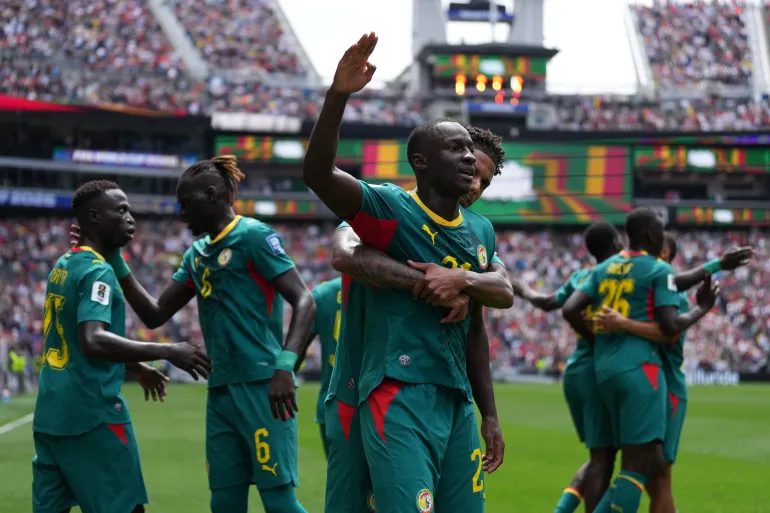
For some Egyptian football fans, watching Mohamed Salah qualify with Egypt for two World Cups in 2018 and 2026 will never make up for the fact that the “golden generation” did not get their shot in 2006, 2010 or 2014.
“It is unfair to compare the two generations,” Ahmed Elshiekh, a former national team player who now covers the World Cup for Modern MTI TV, told Al Jazeera.
Recommended Stories
list of 4 itemsend of list
“The golden generation did everything but get to the World Cup. They beat Italy [when they were World Cup champions]. The draw in qualification was just unkind to them.”
Salah is the captain and leader of the current generation. He won every trophy on offer while playing for Liverpool in a glittering nine-year career that saw him become the highest scoring foreigner in the history of the English Premier League.
Given his status, it is perhaps no surprise that Salah shouldered the blame for an AFCON drought that stretches back to 2010. His achievement in dragging Egypt to the 2018 World Cup in Russia is brushed aside due to the fact that Egypt was the first team to be eliminated. A half-fit Salah, who had dislocated his shoulder in the UEFA Champions League final, scored twice, but Egypt lost all three matches, including to Saudi Arabia.
The failures were compounded when Egypt lost the 2021 AFCON final to Senegal on penalty kicks. Thirteen months later, Egypt met Senegal in a World Cup playoff and once again lost on penalty kicks. In the first shootout, Salah was designated as the fifth taker but never got a chance to take his penalty. For the second shootout, perhaps realising his mistake, he went first and missed.
Salah might have been one of the best players in the Premier League, but Egypt fans were frustrated. To soothe their pain, they hung on to the memories of a team that was crowned African champions in 2006, 2008 and 2010 – successes that were spearheaded by the legendary midfielder Mohamed Aboutrika, who is equally famous for his “Sympathise with Gaza” T-shirt as he is for his immaculate first touch.
The despondence was so deep that fans had lost hope for their national team. AFCON 2023 was blighted by an injury to Salah, who elected to return to Liverpool for rehabilitation but promised to return should the team advance to the final. Egypt’s tournament ended shortly after that statement, courtesy of a penalty shootout defeat in the round of 16.
Working at that time as an analyst for Egyptian TV, now-Egypt manager Hossam Hassan said that if Salah had done that on his watch, he would “never pick him for the national team again”.
A couple of weeks later, Hassan was appointed to lead the national team after Rui Vitoria’s dismissal.
It was widely speculated that the only reason the Egyptian Football Association hired Hassan was because the currency crisis had prevented them from attracting a foreign manager.
“Hossam Hassan as a player has achieved everything you can imagine,” Elsheikh said, referencing the former striker’s record 69 goals for Egypt and three AFCON titles.
“But as a manager, we saw what he can produce, and the results were not great. … Also he brought problems and created crises.”
The crises Elsheikh referred to have been a hallmark of Hassan’s journeyman coaching career marked by brawls and altercations with fans.
But the appointment proved to be a stroke of unintended genius.
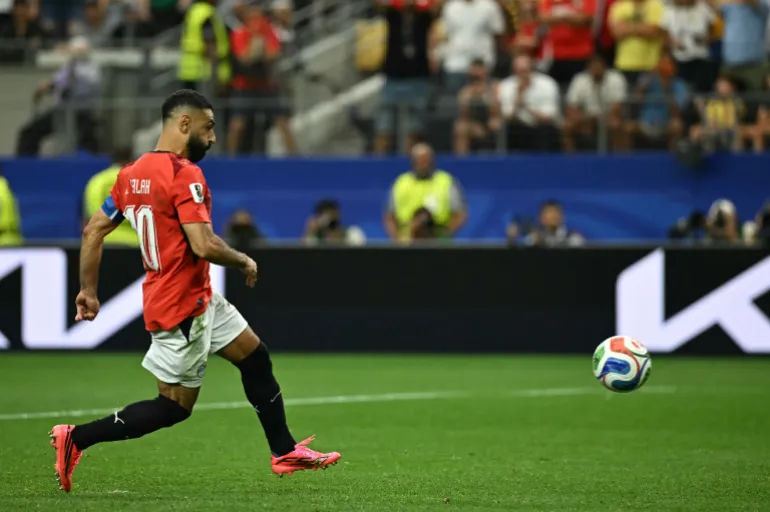
Salah shoots and scores in a penalty shoot-out during the 2026 World Cup round of 32 football match between Australia and Egypt at the Dallas Stadium in Arlington on July 3, 2026 [Paul Ellis/AFP]
Salah finds form under Hassan
Instead of falling out with Salah, he and Hassan became joined at the hip. If there was anyone who could understand the pressure of Salah’s position, it was Hassan, who had lived it all before but with the added pressure of having played mostly in Egypt and having crossed the Cairo divide when he left Al Ahly to sign with bitter rivals Zamalek.
“Hassan does have a captain’s personality and is very energetic. He might not be the strongest tactically, but he does provide a solid defensive base” Elsheikh said.
Salah has enjoyed a rich vein of form under Hassan’s tutelage. Egypt qualified for the 2026 World Cup undefeated, winning eight out of their 10 matches. The team also reached the semifinals of the 2025 AFCON tournament – not that the achievement silenced any of the doubters.
Of course, it’s not all about Salah. Egypt have a raft of talented players, including Man City’s Omar Marmoush and Al Ahly’s Emam Ashour.
Their undefeated team is going into the round of 16 to face defending champions Argentina on Tuesday. Egypt have overcome a great deal of adversity to reach this stage of the tournament as well.
A second-half comeback against New Zealand in the group stage was needed to secure the nation’s first win at a World Cup. Salah exited the final group game against Iran with a hamstring injury but played all 120 minutes of the penalty shootout win over Australia in the last 32. The 34-year-old converted his kick with a Panenka against Socceroos goalkeeper Mat Ryan.
In the aftermath of that victory, Aboutrika, now an analyst for beIN Sports, did his best to pass the baton to the new generation.
Goalscorer Ashour had expressed his joy at being compared to Aboutrika, saying his ambition was to be “as half as good or even a quarter as good as him”.
Later on in the studio, Aboutrika responded by saying: “You are better than [me]. You’ve scored two goals in a World Cup,” and insisting that this was the biggest night in the history of Egyptian football.
Not everyone is so convinced.
“This Egypt team is better than any we have seen in years yet is still remarkably fragile,” opined Karim Zidan, a writer focused on the intersection of sports, power and politics.
Salah, meanwhile, was once again asked who was the greatest Egyptian player of all time and again deferred to Aboutrika, saying “there is absolutely no discussion.”
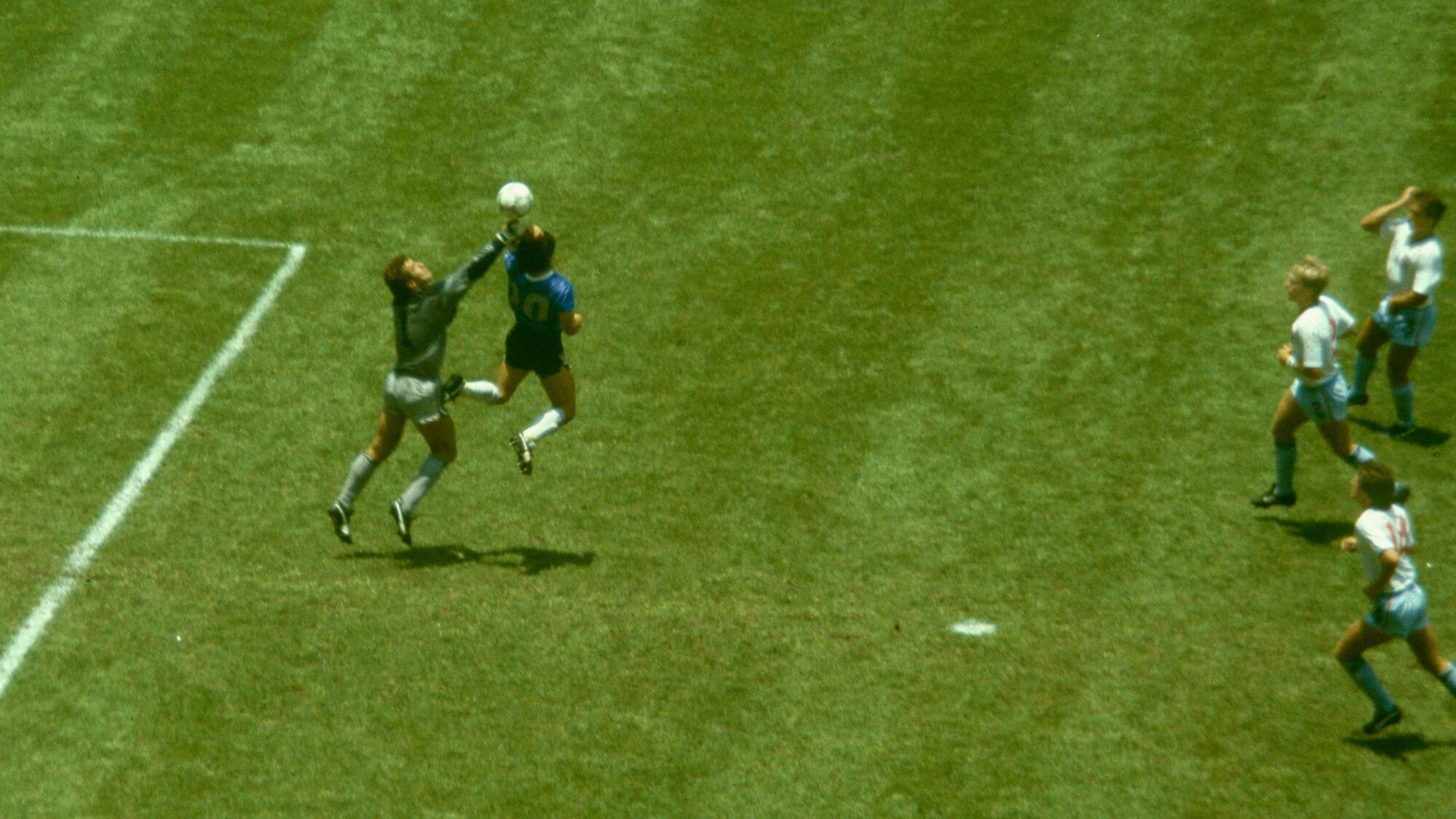
England famously found itself on the wrong side of World Cup history at Azteca Stadium, surrendering Diego Maradona’s iconic “Hand of God” goal and another strike known as the tournament’s “most beautiful goal.”
Maradona and eventual champion Argentina eliminated England 2-1 in the quarterfinals of the 1986 World Cup, leaving the Brits to stew over their link to a soccer legend.
England will return to Azteca Stadium on Sunday to take on World Cup co-host Mexico in a round-of-16 match kicking off at 5 p.m. PDT and airing on Fox and Telemundo.
England coach Thomas Tuchel said during interviews before their departure for Mexico that this will be a way to “make amends” with the stadium that hosted a goal Maradona punched in with his fist, and “karma will come back for us.”
Argentina’s Diego Maradona punches the ball past England goalkeeper Peter Shilton to score his “Hand of God” goal during a 1986 World Cup match at Azteca Stadium.
(Getty Images / Getty Images)
“It’s one of the most beautiful, most exciting matchups you can have — playing Mexico at the Azteca,” Tuchel said during a news conference after defeating the Democratic Republic of the Congo in the round of 32.
But the road to Azteca Stadium hasn’t been easy for England.
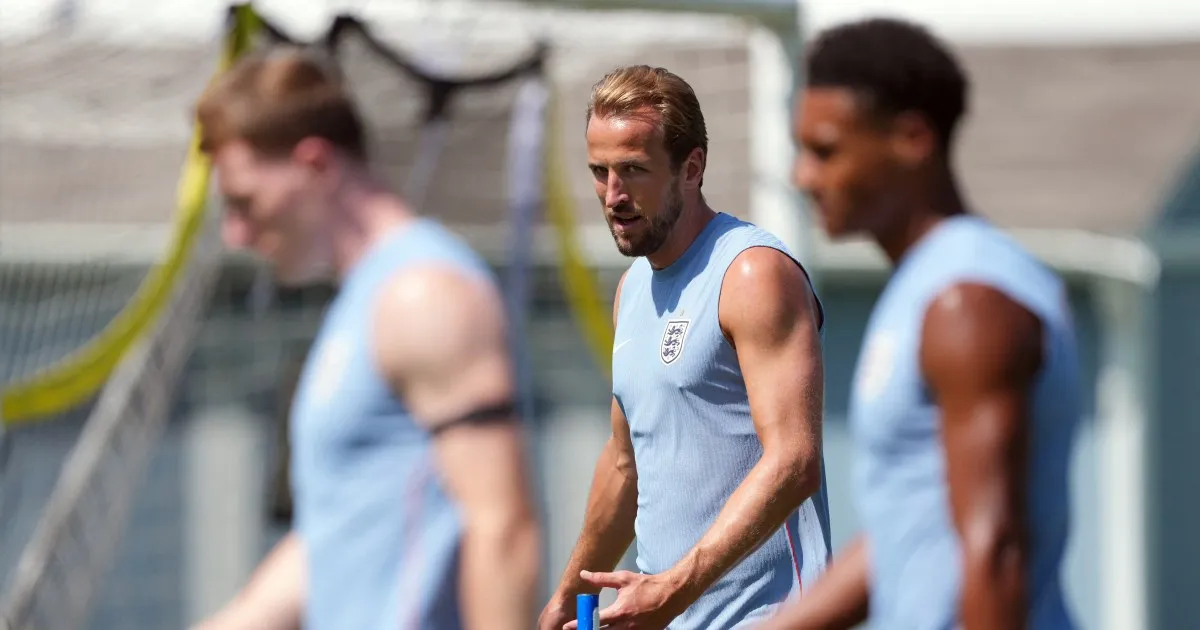
England enters this matchup after a hard-fought victory over Congo. The African team took the lead and had chances to extend it, but ultimately paid dearly for squandering those opportunities. Top England scorer Harry Kane stepped up with two decisive goals that helped his team advance. It was England’s first World Cup victory after trailing 1-0 since the 1966 final, which the English team won as a tournament host.
The English have to contend with not only the ghost of Maradona’s two goals, but also the altitude in Mexico City, which is about 7,350 feet above sea level.
Mexico has lost only two of 89 matches at Azteca Stadium, winning 70 and tying 17. The last time it lost an official match there was a 2-1 defeat to Honduras in a 2013 World Cup qualifier.
“There will be many obstacles — the altitude will be a major disadvantage because we can’t acclimate to it,” Tuchel said. “Let’s hope that when we face difficulties along the way, we’ll find the answers.”
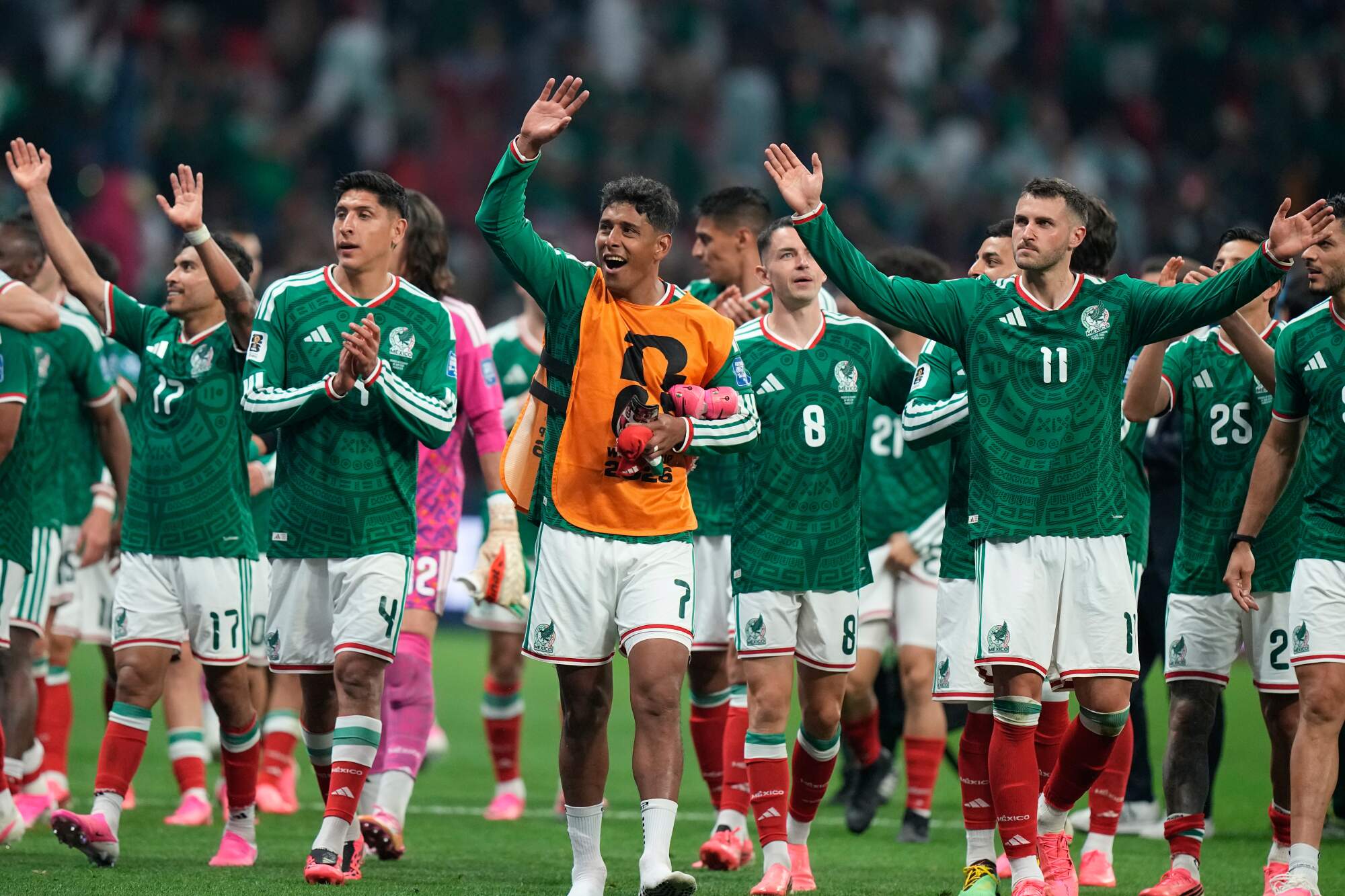
Mexico players celebrate after the team’s World Cup win over Ecuador at Azteca Stadium on Tuesday.
(Luke Hales/Getty Images)
Tuchel noted his team got accustomed to heat and humidity while training in the United States.
“At the end of the day, it’s a soccer game,” said England’s Marcus Rashford, who also plays for Manchester United. “We’ve all been playing soccer since we were kids, and we’ve played in different environments and under different conditions — some more difficult than others, some in terrible places. But it’s up to us to find a way to win and to work as a team.”
England expects to face an intense atmosphere, with the majority of more than 80,000 fans backing Mexico.
“It’s one of the great stadiums in soccer. Playing there is a blessing. Mexico is probably the favorite. They’re at home, playing on their home turf; it will be a big challenge for us, but we’ll be ready,” England’s Marc Guehi told the BBC.
The match also will pose a significant challenge for the Mexican team, which has not conceded a goal during the World Cup but will face an English side that excels in aerial play, with lethal scorers like Kane and Jude Bellingham. Mexico’s defensive performance has been credited to the direction of Rafa Márquez, a former Barcelona player who is one of Mexico’s assistant coaches.
“They’re high-caliber players who can make a difference at any moment, and we have to take advantage of playing at home and maintain our current level of play because no one has given us anything for free,” said veteran backup goalkeeper Guillermo Ochoa, another key voice supporting Mexico’s defensive effort.
Less than 72 hours before the game, FIFA explored moving the evening kickoff to noon local time — a change that would have completely disrupted the sporting, logistical and emotional planning of both teams.
FIFA first weighed the unprecedented change reportedly because of the threat of thunderstorms. The Athletic and media outlets covering both teams later reported security concerns after the death of four Mexico fans during round-of-32 postgame celebrations triggered the potential change, but both team pushed back, and Mexico’s security officials assured FIFA they could keep fans safe. FIFA relented and did not change the start time.
Mexico’s Álvaro Fidalgo celebrates after scoring against Czechia during a World Cup match at Azteca Stadium on June 24.
(Silvia Izquierdo / Ap Photo/silvia Izquierdo)
“No one wants a celebration — such an important moment, a once-in-a-lifetime moment — to turn into a sad occasion because of certain things. We don’t want anyone to lose a loved one,” Mexico midfielder Álvaro Fidalgo said.
Contrary to what many experts expected, Mexico has breezed through the group stage and the second round at home. Coach Javier Aguirre has eased some of the pressure on himself by leading the team to its fifth World Cup match — a feat Mexico had not achieved in eight consecutive World Cups. Two of those failed attempts came under Aguirre’s leadership: in 2002, when Mexico lost to the United States, and in 2010, when it lost to Argentina — both in the round of 16.
“We’ll try to keep this momentum going at home,” Aguirre said. “We’ll try to play a complete game.”
With the support of its fans and a sense of hope that grows with every game, the Mexican team will seek to match its best performances from 1986 and 1970 — World Cups it hosted, though with fewer participating teams.
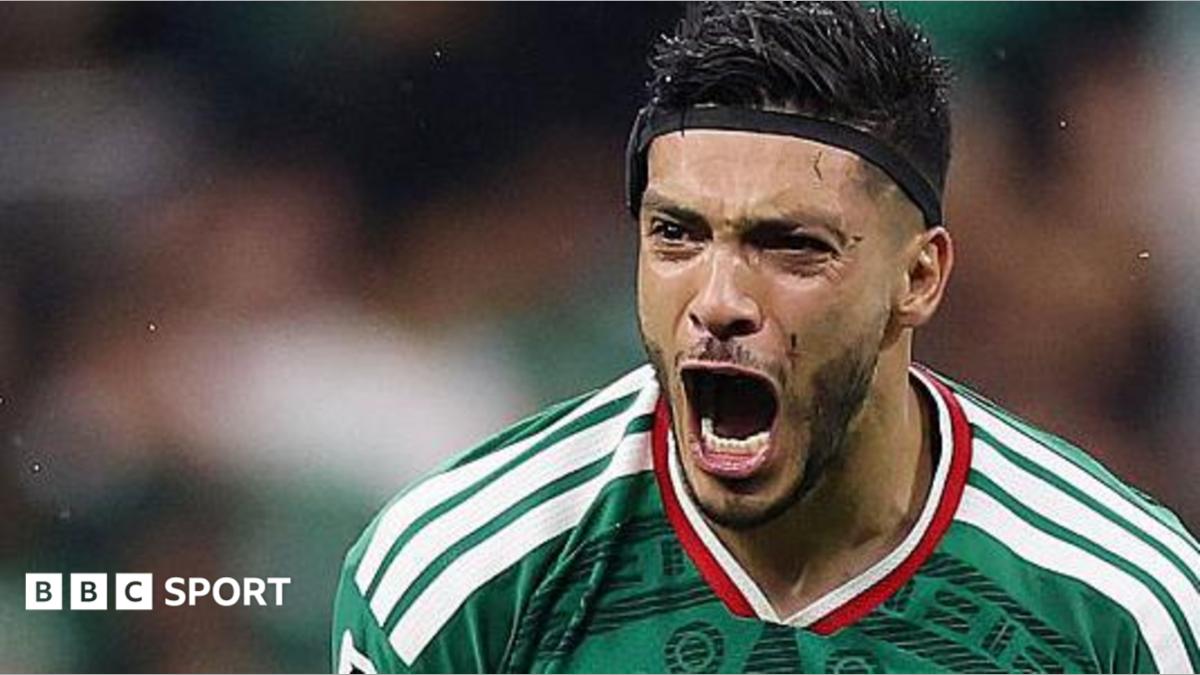
Mexico’s Raúl Jiménez celebrates after scoring against South Africa during a World Cup match at Azteca Stadium on June 11.
(Carl Recine / Getty Images)
“We have to let them know that we’re just as good,” said Raúl Jiménez, Mexico’s leading scorer. “That we can compete on equal terms, we can play a good game, and we have the support of the fans. It doesn’t matter which goalkeeper is in front of us — if we put it in the corner, no goalkeeper can stop it.”
Advancing past England would mark the first time Mexico defeated a past champion in a knockout round, and it also would be the first time the team strung together two knockout-round victories in a World Cup, after beating Ecuador in the round of 32.
Mexico defeated past champions France and Germany in 2010 and 2018, respectively, but those wins came in the group stage.
“It’s a match everyone always dreams of. Being in the round of 16 at the Azteca — not just saying it, but even thinking about it — is incredible,” Fidalgo said. “We have to rise to the occasion.”
The FIFA World Cup round of 16 on Sunday has two heavyweight ties as Brazil face Norway in New Jersey before cohosts Mexico take on England in Mexico City.
Here’s the full schedule, Opta’s predictions and the latest news from the tournament, including Morocco’s march into the quarterfinals and France’s fiery win over Paraguay.
What is Sunday’s schedule?
Brazil vs Norway: 4pm (20:00 GMT) at New York New Jersey Stadium in East Rutherford, New Jersey, United States
Mexico vs England: 6pm (00:00 GMT into Monday) at Mexico City Stadium
What are the predictions for Brazil vs Norway?
Brazil will be hoping to end an unwanted trend when they face Norway in the round of 16.
The teams have met four times previously in all competitions, and Norway have yet to lose the fixture. The Scandinavians have won twice and drawn twice, including a memorable 2-1 victory over Brazil at the 1998 World Cup.
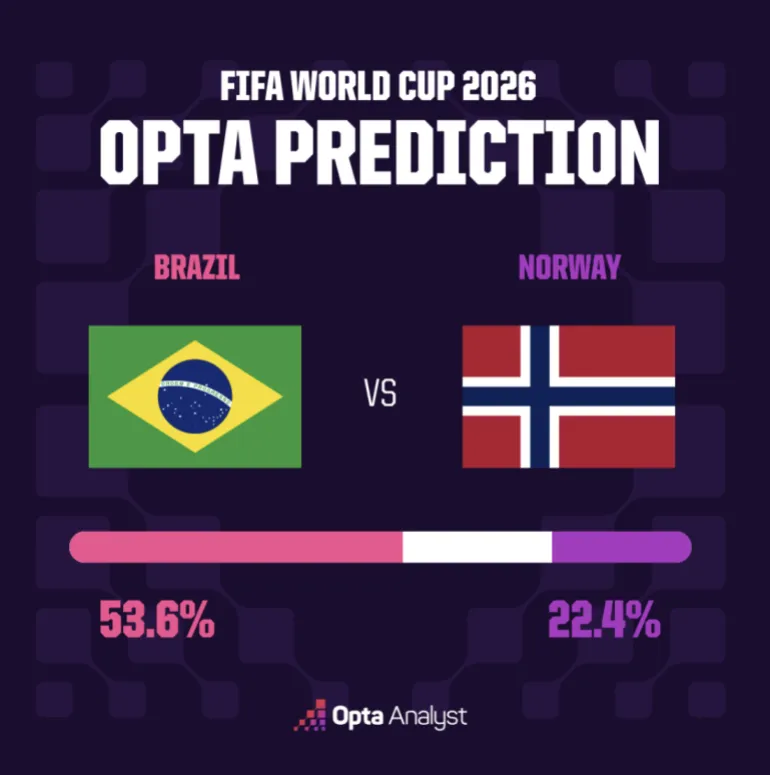
Despite those historical trends, the Opta supercomputer calculates Brazil as the clear favourites. After running 25,000 pre-match simulations, Brazil won in regulation time in 53.6 percent of the outcomes.
Norway claimed victory within 90 minutes in 22.4 percent of the simulations while 24 percent ended level after normal time, sending the tie to extra time and potentially penalties.
What are the predictions for Mexico vs England?
England and Mexico have crossed paths only once before at the World Cup, and that meeting dates back nearly 60 years.
The encounter came during the group stage of the 1966 tournament when tournament hosts England secured a 2-0 victory, thanks to goals from Bobby Charlton and Roger Hunt. The Three Lions went on to lift the trophy that summer, claiming the only World Cup title in their history.
England have also enjoyed the upper hand in the fixture outside the World Cup, winning each of their last four meetings with Mexico. Those victories all came in international friendlies played from 1986 to 2010.
Opta’s supercomputer predicted one of the closest contests of the round of 16 with neither side holding a decisive advantage.
England enter the tie with a favourable historical record against Mexico, but El Tri’s home support and familiarity with the conditions help narrow the gap.
Across 25,000 simulations, England won in normal time 40.6 percent of the time, while Mexico did so in 31.5 percent. A further 27.9 percent of simulations ended level after 90 minutes, meaning the match would require extra time and possibly a penalty shootout.
Remaining round of 16 schedule:
Brazil vs Norway: Sunday, New York New Jersey Stadium, 20:00 GMT
Mexico vs England: Sunday, Mexico City Stadium, 00:00 GMT going into Monday
Portugal vs Spain: Monday, Dallas Stadium, 19:00 GMT
USA vs Belgium: Monday, Seattle Stadium, 00:00 GMT going into Tuesday
Argentina vs Egypt: Tuesday, Atlanta Stadium, 16:00 GMT
Switzerland vs Colombia: Tuesday, BC Place Vancouver, 20:00 GMT
What else is happening?
Morocco’s historic quarterfinal run
Morocco reached the World Cup quarterfinals for a second consecutive tournament after defeating cohosts Canada 3-0 on Saturday with Azzedine Ounahi scoring twice to end the North Americans’ historic run.
The final score did not reflect the balance of the game. Canada controlled much of the first half, creating several promising chances while keeping Morocco from registering their first shot until the 28th minute.
Morocco coach Mohamed Ouahbi was visibly frustrated on the touchline before the break as misplaced passes and sloppy errors disrupted his side’s rhythm, but the team responded with a much-improved display after half-time.
“It’s a World Cup match, and these are difficult games with teams playing for their lives,” Ouahbi said. “We reacted very well in the second half, especially in the duels and in winning the second balls.
Was Paraguay’s play ‘dirty’?
France captain Kylian Mbappe insisted his side were prepared to match Paraguay’s physical approach after securing a hard-fought 1-0 victory on Saturday to reach the World Cup quarterfinals.
Mbappe, who converted the decisive penalty in the 70th minute after Desire Doue was fouled in the area, dismissed the suggestion that France were unsettled by Paraguay’s aggressive tactics.
“They thought we’d come out in tuxedos, trying fancy tricks and one-twos,” Mbappe said. “But we know how to play dirty football too. If that’s what the game requires, we have no problem doing it.”
The winning penalty was awarded only after a VAR review with France coach Didier Deschamps questioning referee Ilgiz Tantashev’s handling of the increasingly physical contest.
“We received three yellow cards while they kept fouling us throughout the game,” Deschamps said. “Every team is entitled to play in its own way, but I could have done without some of the insults from the opposition.”
Mexico’s fortress awaits England
Mexico will look to end a 40-year wait to advance to the World Cup quarterfinals when they face England on Sunday, backed by one of international football’s strongest home records.
The cohosts have lost only two official matches at Mexico City Stadium since it opened in 1966 with the last defeat coming against Honduras in a World Cup qualifier in 2013.
Former Mexico striker Hugo Sanchez believes the stadium could once again make the difference.
“The stadium is a monster; that explains the high number of wins and draws and the few losses, which were just accidents. We approach this with optimism because we know it’s England, but if we play the way we did against Ecuador, we can beat them.”
Mexico’s World Cup record at the stadium reflects that dominance. Across the 1970, 1986 and 2026 tournaments, El Tri have played 10 World Cup matches there, winning eight and drawing two. In this year’s tournament, they have beaten South Africa, Czechia and Ecuador in Mexico City without conceding a goal while also defeating South Korea in Guadalajara.
Four wins to go. How can your team reach the final and win the World Cup 2026? Click here to find out.
Who: Brazil vs Norway What: FIFA World Cup 2026 – Round of 16 Where: New York New Jersey Stadium, East Rutherford, New Jersey, US When: Sunday, July 5, at 4pm (20:00 GMT) How to follow: We will have all the build-up on Al Jazeera Sport from 17:00 GMT before our live text commentary stream.
Recommended Stories
list of 3 itemsend of list
Two of the world’s most exciting forwards, Vinicius Jr and Erling Haaland, will light up Sunday evening in New Jersey when Brazil face Norway in a blockbuster round of 16 clash.
For all their dominance on the world stage, Brazil have historically struggled to find a way past Norway, and after four failed attempts, the Selecao will hope the fifth time is the charm.
Carlo Ancelotti’s talented side has its fair share of flaws, and having narrowly escaped elimination in the last 32 against Japan, they need an improved performance against Norway – one of the dark horses at this tournament.
Spearheaded by Haaland and Martin Odegaard, Norway arrive with bragging rights – they are one of only three countries Brazil have faced at a World Cup without registering at least one victory.
How did Brazil and Norway reach the round of 16?
Brazil finished at the top of Group C, with wins over Scotland and Haiti, and a draw with Morocco. They fought from a goal down to beat Japan 2-1 in stoppage time in the last 32.
Norway came second in Group I, winning against Iraq and Senegal and falling to France. They sealed a late 2-1 victory over Ivory Coast in the last 32 – the Scandinavian nation’s first World Cup knockout victory after previous exits to Italy in 1938 and 1998.
Can Haaland extend Norway’s dream run?
Be it for club or country, towering forward Haaland’s impact cannot be understated.
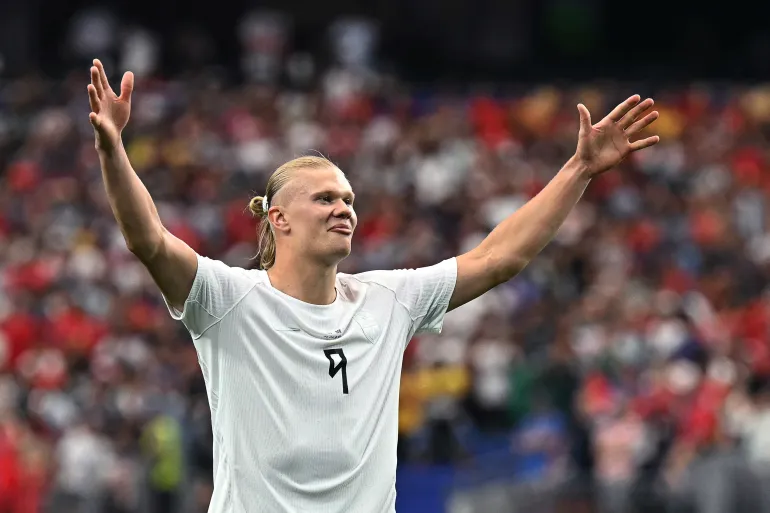
Of the 10 goals Norway have scored at the tournament, Haaland is responsible for half – numbers that are remarkable for a 25-year-old making his World Cup debut.
Come Sunday, Norway will need their 1.95-metre- (6.4ft)-tall, pony-tailed talisman to strike again if they are to reach the quarterfinals for the first time.
Brazil will be wary of Norway’s lethal striker Erling Haaland [Paul Ellis/AFP]
Norway could take inspiration from their 1998 World Cup side, which famously beat Brazil 2-1 in a group game. And they need not look further than their coach Stale Solbakken – a midfielder in that Norwegian squad – for words of advice.
“Brazil are favourites, of course they are, but we are hopeful that we will give them a match, and we are not playing the game for fun – we are playing to win the game and to reach the quarterfinals,” said Solbakken. “It’s possible, but it’s very difficult.”
The Norwegians will be wary of Brazil’s very own trump card Vinicius, whose four goals at the tournament have made him the team’s leading scorer and most influential player. Vinicius became the first Brazilian since Ronaldo and Rivaldo in 2002 to score in all three group stage matches at a World Cup. That was the last time Brazil lifted the trophy.
Brazil vs Norway prediction
The Opta supercomputer gives Brazil a 53.6 percent likelihood of winning in regulation time, while Norway’s chances of winning are 22.4 percent.
The model estimates a 24 percent probability of the game going to extra time.
Brazil vs Norway: Kickoff time, TV channel
Brazil: SBT, CazeTV (4pm, Brasilia Standard Time)
Norway: TV2, NRK (9pm, Central European Summer Time)
United Kingdom: ITV1, ITVX, STV, STV Player (8pm, British Summer Time)
United States: FOX, FOX One, Telemundo App, Telemundo Network, Peacock (4pm, Eastern Daylight Time)
To check the TV listings for your country, head to FIFA’s TV listing schedule here.
Norway fans do the traditional rowing celebration in the stands [Dylan Martinez/Reuters]
Who will the winner face in the quarterfinals?
The winner of the Brazil vs Norway match will face either Mexico or England in the quarterfinals in Miami on Saturday, July 11.
Brazil vs Norway: Head-to-head
Norway hold the rare distinction of never having lost to Brazil, with two wins and two draws from their four previous meetings, including a memorable 2-1 victory over Brazil in the group stage of the 1998 World Cup.
Brazil and Norway last met in a friendly in 2006, which ended 1-1.
More worryingly for Ancelotti, Brazil have been eliminated from each of their last six World Cup knockout ties against European opponents since beating Germany in the 2002 final.
Brazil vs Norway: Team news
Brazil’s Lucas Paqueta picked up a hamstring injury in the last game, while Raphinha, who also picked up the same issue in the second game, has resumed individual training and could make the bench.
Norway’s Julian Ryerson is out with a thigh injury.
Brazil’s Bruno Guimaraes has four assists at the World Cup – only Pele recorded more (six) for the five-time world champions at a World Cup [Annegret Hilse/Reuters]
The penalty awarded against the Senegalese national team in the final moments of their match against Belgium on Wednesday caused widespread controversy after it led to their elimination from the Round of 32 at the 2026 World Cup, in a harsh turn of events that saw the “Lions of Teranga” go from leading 2-0 to losing 3-2.
Honduran referee Said Martinez awarded a penalty kick at the end of the second period of extra time, after a VAR review, following a challenge by Senegal’s Lamine Camara on Belgian captain Youri Tielemans, with the score tied 2-2 and the match heading towards a penalty shootout.
The “Archivo VAR” platform, which specialises in analysing refereeing decisions, said that VAR intervened excessively during the match, confirming that it was Tielemans who extended his foot in front of Camara, causing the contact.
The platform added, via its account on “X,” that the incident did not warrant VAR intervention, explaining that it was the Belgian player who forced the contact entirely, and that the situation did not amount to the clear and obvious error needed to justify the referee reviewing the decision.
Recommended Stories
list of 4 itemsend of list
The decision triggered a wave of controversy on social media, with one fan writing: “This is 100% robbery. Senegal have been robbed. How is this a penalty? Belgium do not deserve to go through corruption.”
Sports content creator Sneako blamed the result on match ‘”rigging”.
“Rigged! Senegal should storm the pitch right now. Leave the pitch and go home. This is rigged!”
Another sports fan wrote: “I’m sorry, but this was never a penalty. Camara went to clear the ball, but it was Tielemans who got in his way. Senegal was robbed, and it should have been Belgium going out.”
Spanish sports journalist Manolo Lama commented: “They stole the Africa Cup of Nations from them, and now they’re stealing all the solidarity with Senegal at the World Cup too.”
Senegal’s Habib Diarra, front, celebrates scoring their first goal with Ismail Jakobs, back, during the World Cup round of 32 soccer match between Belgium and Senegal in Seattle, Wednesday, July 1, 2026. (AP Photo/Abbie Parr) (AP)
Egyptian journalist Mohamed Saeed linked the incident to what happened in the 2025 Africa Cup of Nations final against Morocco, writing: “You can feel that the penalty awarded against Senegal in the final seconds was a harsh lesson and a difficult test. After the scenes from the Africa Cup of Nations final, I think that if it weren’t for the change in the rules around the withdrawal incident, this scene could have repeated itself.”
Another sports fan, Fares Ahmed, wrote that football ”teaches lessons” and the outcome brought back the memory of Senegal at the tournament in Morocco.
“They took advantage of the tournament’s vulnerable position and the host’s need to make it a success, and used that to impose their pressure,” Ahmed wrote. “Today, the scene was almost repeated against Belgium — a penalty in the final minutes, objections, and disbelief over the decision — but this time there was no threat of withdrawal, because you can’t risk penalties like that in a tournament the size of the World Cup.”
Drawing a connection between the two events, one follower wrote on “X”: “When there was a clear penalty in the Morocco final, they rebelled against the decision and tarnished the reputation of African football, just because the tournament was in Morocco. But when an unclear penalty came along that eliminated them from the World Cup, they stayed silent, because this time it was in the West.”
Senegal’s Pathe Ciss #6 kneels on the pitch after Belgium were awarded a penalty during the World Cup Round of 32 match in Seattle, on Wednesday, July 1, 2026 [Maddy Grassy/AP Photo]
After the dramatic penalty was awarded, Tielemans stepped up to take it and scored successfully, netting Belgium’s third goal and capping off an unexpected comeback that eliminated the Lions of Teranga.
But back on the pitch, Senegal had the run of play for 85 minutes. The African team held a two-goal lead, and had all but secured a spot in the round of 16 at the World Cup.
Within five minutes, it crumbled and the players were feeling it.
“We were at the heart of writing the beautiful pages of the history of our football in this world,” defender Krepin Diatta said. “And we have to accept that we failed at our mission.”
Senegal midfielder Habib Diarra said. “We had a good first half, but it wasn’t enough. A match lasts 90 minutes, and we’re devastated. It’s very tough. I don’t know what to say. When you’re on the pitch, you have to give your all, and that’s not what we did. We’ve only got ourselves to blame.”
If there were such a thing as a mid-table team at the World Cup, it would probably be Mexico. They are almost ever-present, yet no side has played as many matches at the tournament – 64 in total – without lifting the trophy.
Their supporters can be demanding but expectations were more modest this summer. However, the co-hosts ended a 40-year wait for a knockout win by beating Ecuador, so confidence will be raised for their match against England.
The failure to reach an elusive fifth game – the curse of the ‘quinto partido’ – plagued Mexico for generations. El Tri went out in the round of 16 at seven consecutive World Cups between 1994 and 2018, before ending that sequence in the worst possible way in Qatar, where they exited at the group stage.
Since then, Mexico have hired and fired two coaches before bringing back the vastly experienced Aguirre for a third spell in charge in 2024.
No stone has been left unturned in his preparations. El Tri played 22 matches over the past year before the tournament began, giving Aguirre ample scope to experiment with tactics and personnel. He used 54 players in that time, fewer than half of whom made the final squad.
Those who did are well drilled now, especially the 12 domestic-based players. Most were told to report for training on 6 May, meaning some squad members were in camp for five weeks by the start of the World Cup.
MEXICO CITY — Mexico once again enjoyed a night of celebration with its fans, this time after defeating an old nemesis — the knockout stage of the World Cup.
El Tri won its first knockout match at a World Cup since 1986, beating Ecuador 2-0 on Tuesday night at the majestic Azteca Stadium packed with 80,824 fans.
From 1994 to 2018, Mexico failed to win a World Cup knockout game and, in 2022, failed to advance past the group stage — its worst showing at a World Cup since 1978.
“Bringing joy to the fans is the best thing that can happen to us,” Mexico coach Javier Aguirre said after the win. “Our duty is to give it our all on the field. Our duty is to defend our crest and represent our country with dignity.”
Thanks to an expanded 48-team World Cup format with a knockout round of 32 teams and a formidable home-field advantage, Mexico achieved a goal that had seemed impossible.
Mexico players celebrate after the World Cup round of 32 win over Ecuador in Mexico City on Tuesday.
(Fernando Llano / Associated Press)
Ecuador, which finished second in the South American World Cup qualifiers, put up a strong fight, bombarding the Mexican team with crosses, albeit without much organization.
Fans roared their approval for the Mexican national team, which took a lap of honor after the match, as the crowd sang “El Rey” and other songs to express their love for their team.
Julián Quiñones scored the first goal for Mexico in the 22nd minute on a counterattack, while Raúl Jiménez added the second in the 31st minute, in a match where El Tri had numerous scoring opportunities against an Ecuador side that did not appear to be well-organized defensively despite having advanced after defeating Germany in the group stage. The victory over Germany helped Ecuador become one of the third-place finishers to advance to the knockout round.
Mexico will play one more match in Mexico City, facing the winner of the England versus the Democratic Republic of Congo match to be played Wednesday in Atlanta. Mexico’s round of 16 game is scheduled for Sunday. The team is one step away from matching its best World Cup performance — a run to the quarterfinals it achieved in 1970 and 1986 when Mexico hosted both tournaments.
El Tri is now 4-0 in World Cup matches and has yet to concede a goal, both firsts for the Mexican national team.
Tuesday night’s showdown with Ecuador was delayed by an hour because of lightning.
The Ecuadorian team complained before the match that their fans had not received the tickets required by FIFA and that Mexican fans made noise all night outside the Ecuadorian team’s hotel — a common practice in Latin America designed to prevent the opponent from getting a good night’s sleep the night before a decisive match. Finally, Ecuador’s coach, Argentine Sebastián Beccacece, complained about the logistics of the trip to Mexico, claiming it involved long journeys that were an undue burden for his team.
Frustration flared up throughout the match, with both teams briefly crowding the sideline after a hard foul.
When Ecuador could not earn shots on target and time was running out during the second half, Piero Hincapié ran toward forward Santi Giménez and covered his mouth while speaking.
The referee saw the exchange and stopped play, calling for video review. Once he confirmed Hincapié’s action, the referee issued a red card and the Ecuador player became the second player this World Cup for violating FIFA’s restriction against players covering their mouths during heated exchanges. Since Ecuador lost, Hincapié will serve his red-card suspension during the team’s next international match.
FIFA established the new rule to prevent players from trying hide use of offensive language.
Paraguay’s Miguel Almirón was the first player to get a red card for the infraction against Turkey earlier in the World Cup.
Other players have covered their mouths while speaking to opponents during the World Cup, but a red card is only issued if the conversation occurs during a confrontation or heated exchange.
The Round of 32 has already delivered shocks, shootouts and scenes that will live long in World Cup memory.
After Paraguay stunned Germany and Morocco sent the Netherlands home on penalties, Tuesday brings three more games, with France, Norway and co-hosts Mexico all looking to avoid becoming the next big casualty.
Recommended Stories
list of 4 itemsend of list
Ivory Coast face Norway, France meet Sweden and Mexico take on Ecuador as three more places in the last 16 are decided.
Here is what we know:
What is Tuesday’s schedule?
Ivory Coast vs Norway (noon/17:00 GMT) at Dallas Stadium, Texas, in the US
France vs Sweden (5pm/21:00 GMT) at New York/New Jersey Stadium in the US
Mexico vs Ecuador (7pm/02:00 GMT on Wednesday) at Mexico City Stadium in Mexico
Ivory Coast have found European opposition difficult at the World Cup while Norway have traditionally fared well against African teams. They have lost only two of their 19 meetings with CAF nations across all competitions.
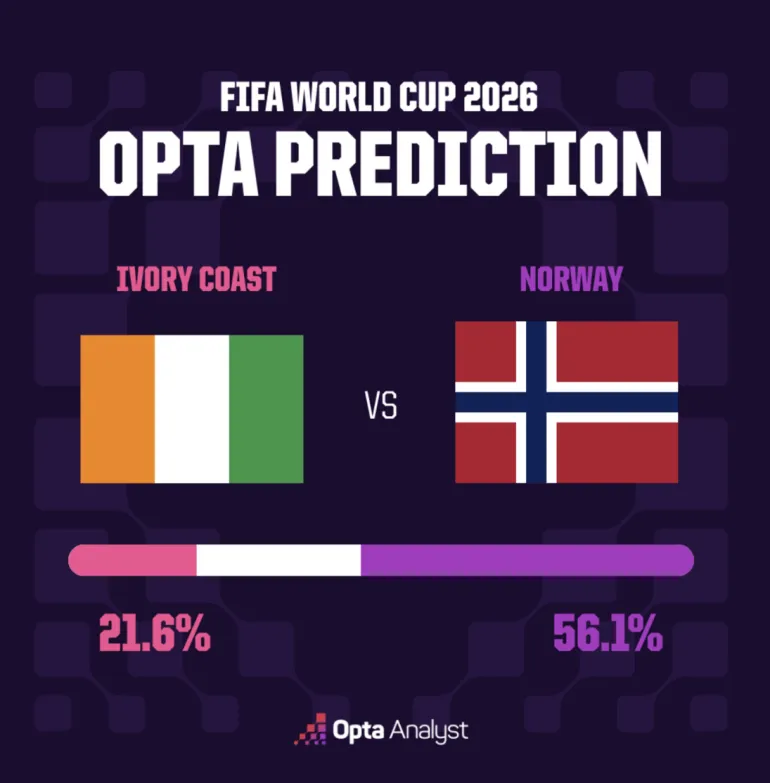
The Opta supercomputer calculates Norway as the clear favourites to progress.
Across 25,000 pre-match simulations, Norway won in normal time 56.1 percent of the time, while Ivory Coast claimed victory in 21.6 percent. A draw after 90 minutes, sending the tie to extra time, occurred in 22.3 percent of simulations.
Norway are also strongly backed to reach the Round of 16 and equal their best-ever World Cup finish, while Ivory Coast will need to produce one of the tournament’s biggest upsets to keep their campaign alive.
What is the prediction for France vs Sweden?
France and Sweden are familiar opponents, having met 23 times across all competitions. France hold the advantage with 12 wins to Sweden’s six, while five matches have ended level.
Despite that long history, this will be their first-ever meeting at a FIFA World Cup.
The Opta supercomputer gives France a commanding edge heading into the Round of 32.
Across 25,000 pre-match simulations, France won in normal time 75.1 percent of the time, underlining their status as one of the tournament favourites. Sweden were victorious in just 9.5 percent of simulations, while 15.4 percent of matches were level after 90 minutes and required extra time or penalties.
What is the prediction for Mexico vs Ecuador?
Mexico and Ecuador have met only once before at the FIFA World Cup, with El Tri claiming a 2-1 victory during the group stage of the 2002 tournament.
Recent meetings have been far more evenly matched. The sides are unbeaten against each other in their last three encounters, with all three ending in draws, raising the possibility that this Round of 32 tie could be decided beyond 90 minutes.
The Opta supercomputer gives the tournament co-hosts the edge but expects a competitive contest.
Across 25,000 pre-match simulations, Mexico won in normal time 47.1 percent of the time, compared with 23.7 percent for Ecuador. A draw after 90 minutes occurred in 29.2 percent of simulations, making extra time a realistic possibility.
Factoring in extra time and penalties, Mexico’s chances of reaching the Round of 16 rise to 61 percent, while Ecuador are given a 38.9 percent probability of progressing.
Which teams have advanced to the Round of 16 and who has been eliminated?
The tournament has now moved into the Round of 32. So far, these teams have advanced to the Round of 16:
Canada (defeated South Africa 1-0)
Brazil (defeated Japan 2-1)
Paraguay (defeated Germany on penalties after a 1-1 draw)
Morocco (defeated the Netherlands on penalties after a 1-1 draw)
What else is happening?
Morocco stuns Netherlands on penalties
Morocco beat the Netherlands 3-2 in a penalty shootout to reach the FIFA World Cup last 16 after a dramatic 1-1 draw following extra time in Monterrey.
Goalkeeper Yassine Bounou was the hero, saving Crysencio Summerville’s penalty before Ismael Saibari fired home the decisive spot-kick to send Morocco through.
Morocco will now face Canada in the Round of 16 in Houston on Saturday.
The match appeared to be heading for a Dutch victory after Cody Gakpo, playing just days after he and his partner announced the loss of their unborn child, put the Netherlands ahead midway through the second half.
Gakpo’s emotional World Cup goal
Cody Gakpo broke down in tears after scoring for the Netherlands against Morocco, just two days after he and his partner announced the loss of their unborn child.
The forward chose to remain with the squad despite the tragedy and received a standing ovation from Dutch fans when he was substituted in extra time.
Netherlands’ Cody Gakpo, kneeling, is congratulated by teammates after scoring his team’s first goal during the World Cup round of 32 soccer match between the Netherlands and Morocco [Ricardo Mazalan/AP]
Saibari celebrates with his mum
A heartwarming moment goes viral as Ismael Saibari, who scored the decisive penalty kick against Netherlands, celebrates Morocco’s big win with his mother on the pitch.
Germany suffers shock early exit
Germany’s campaign came to a stunning end on Monday as Paraguay pulled off one of the greatest upsets in tournament history, winning a dramatic Round of 32 tie on penalties.
Paraguay took a deserved 1-0 lead into half-time after Julio Enciso headed home from Matias Galarza’s cross in the 42nd minute.
Germany responded eight minutes into the second half when Kai Havertz glanced in Florian Wirtz’s cross to level the match at 1-1.
With neither side able to find a winner in extra time, the tie went to penalties. Havertz missed Germany’s opening spot-kick and the Germans failed to convert three of their five attempts, allowing Paraguay to seal a famous 4-3 shootout victory and book their place in the last 16.
Paraguay declares national holiday after stunning Germany
Paraguay President Santiago Pena declared Tuesday a national holiday after the country’s shock penalty shootout victory over Germany secured a place in the FIFA World Cup last 16.
Paraguay stunned the four-time world champions 4-3 on penalties after a 1-1 draw following extra time on Monday, pulling off one of the biggest upsets in World Cup history.
Paraguay became the second South American nation to declare a national holiday after a surprise World Cup victory over Germany. Ecuador was the first, doing so after its 2-1 group-stage win over the four-time champions.
Translation: Giant Paraguay! Today, an entire country celebrates. It celebrates the victory of a team that represents the deepest part of our identity: the grit, the faith, and the strength of a people who never give up. Thank you, Albirroja, for gifting us this immense joy and for once again uniting millions of Paraguayans under the same flag. Decree No. 6280: the best things are worth the wait. Let’s go Paraguay!
US homeland security chief celebrates Iran’s exit
US Homeland Security Secretary Markwayne Mullin said he “danced a happy dance” after Iran were eliminated from the World Cup.
Iran missed out on the Round of 32 on goal difference after a stoppage-time winner against Egypt was ruled out for offside, with their elimination confirmed when Algeria and Austria drew 3-3 on Sunday.
Speaking during a World Cup briefing on Monday, Mullin said he was “glad they’re done, and they’re not coming back”, adding he was happy when Iran’s visas were revoked and the team left US soil. He also said Iran had required more attention from US authorities than any other team at the tournament.
The comments add to Mullin’s public dispute with the Iranian team. Earlier in the tournament, he alleged members of Iran’s travelling delegation had attempted to bring someone with ties to the Islamic Revolutionary Guard Corps into the United States, an accusation the Iran Football Federation dismissed as “false, fabricated and entirely baseless.”
Knockout matches begin with South Africa vs Canada as Iran exit, Africa make history and hopes for Messi-Ronaldo final rise.
The knockout stage of the 2026 FIFA World Cup begins on Sunday with South Africa taking on Canada in the first round of 32 tie.
With the group stage complete, the full knockout bracket is now set. Nine African nations have reached the round of 32, Iran were eliminated after Algeria’s late qualification and the draw has left the door open to a Lionel Messi vs Cristiano Ronaldo final.
Recommended Stories
list of 4 itemsend of list
Here’s the full round of 32 schedule, the South Africa vs Canada prediction and the latest World Cup news:
What is Sunday’s schedule?
South Africa vs Canada at Los Angeles Stadium, California, in the United States at noon (19:00 GMT).
What are the predictions for South Africa vs Canada?
This will be only the second meeting between South Africa and Canada. The sides’ only previous encounter ended in a 2-0 win for Bafana Bafana in a friendly in Durban in 2007.
Canada, however, will be looking to end another unwanted record. They have lost both of their previous competitive matches against African opposition, falling 2-0 to Cameroon at the 2001 Confederations Cup before a 2-1 defeat to Morocco at the 2022 World Cup in Qatar.
Despite that history, the Opta supercomputer shows Canada as the clear favourites. They won 55 percent of 25,000 pre-match simulations while South Africa triumphed in 20 percent. The remaining 24.9 percent of its calculations ended level after 90 minutes, which would send the tie to extra time and potentially penalties.
Overall, Canada are given a 67.8 percent chance of reaching the quarterfinals, compared with 32.2 percent for South Africa.
When and where will the other knockout matches be played?
Monday
Brazil vs Japan: (noon/17:00 GMT) at Houston Stadium, Texas, in the US
Germany vs Paraguay: (4:30pm/20:30 GMT) at Boston Stadium, Massachusetts, in the US
Netherlands vs Morocco: (7pm/01:00 GMT on Tuesday) at Monterrey Stadium in Mexico
Tuesday
Ivory Coast vs Norway (noon/17:00 GMT) at Dallas Stadium, Texas, in the US
France vs Sweden (5pm/21:00 GMT) at New York/New Jersey Stadium in the US
Mexico vs Ecuador (7pm/02:00 GMT on Wednesday) at Mexico City Stadium in Mexico
Wednesday
England vs Democratic Republic of the Congo (noon/16:00 GMT) at Atlanta Stadium, Georgia, in the US
Belgium vs Senegal (1pm/20:00 GMT) at Seattle Stadium in the US state of Washington
USA vs Bosnia and Herzegovina (5pm/00:00 GMT on Thursday) at San Francisco Bay Area Stadium, California, in the US
Thursday
Spain vs Austria (noon/19:00 GMT) at Los Angeles Stadium
Portugal vs Croatia (7pm/23:00 GMT) at Toronto Stadium, Ontario, Canada
Switzerland vs Algeria (8pm/03:00 GMT on Friday) at BC Place Vancouver, British Columbia, Canada
Friday
Australia vs Egypt (1pm/18:00 GMT) at Dallas Stadium
Argentina vs Cape Verde (6pm/22:00 GMT) at Miami Stadium, Florida, in the US
Colombia vs Ghana (8:30pm/01:30 GMT on Saturday) at Kansas City Stadium, Missouri, in the US
What else is happening?
Is Iran eliminated from the 2026 World Cup?
Yes. Iran have been eliminated from the 2026 FIFA World Cup.
Team Melli’s hopes depended on the final Group J match on Saturday between Austria and Algeria. A draw was the only result that could have knocked Iran out, and the 3-3 score meant that Algeria moved above Iran in the ranking of third-placed teams.
Algeria finished third in Group J on four points, enough to take the final available place among the eight best third-placed teams, which advanced to the round of 32.
Iran, who had been holding the last qualifying spot, were, therefore, eliminated in the group stage.
Africa set a new World Cup record
African teams have enjoyed their best ever men’s World Cup campaign.
A record 10 African nations qualified for the expanded 2026 tournament, and nine have reached the round of 32, the most from the continent in a single World Cup.
Those who qualified are: Algeria, Cape Verde, DR Congo, Egypt, Ghana, Ivory Coast, Morocco, Senegal and South Africa.
Tunisia are the only African side eliminated so far.
The success builds on Africa’s growing influence on the world stage after Morocco’s historic run to the 2022 semifinals. With more nations now consistently challenging football’s traditional powers, the continent is enjoying its strongest World Cup showing yet.
Lionel Messi, then of PSG, and Cristiano Ronaldo, part of an exhibition Riyadh XI side, last played each other in Riyadh, Saudi Arabia on January 19, 2023 [EPA-EFE]
Messi vs Ronaldo final?
A potential knockout clash between superstars Lionel Messi and Cristiano Ronaldo remains a possibility – but only if both captains lead their teams all the way to the World Cup 2026 final.
With the round of 32 bracket now confirmed, Argentina and Portugal are on opposite sides of the draw, ruling out the quarterfinal meeting many fans had anticipated. That means football’s two greatest modern rivals can face each other only if both reach the final on July 19.
The bracket has sparked widespread reaction on social media, where fans have been sharing predictions, memes and hopeful scenarios for one last meeting between the two icons, who are both playing in their sixth World Cup.
This is Frenchman Sebastien Desabre’s 11th coaching role in Africa.
The 49-year-old has qualified DR Congo for successive Africa Cup of Nations, reaching the semi-finals in 2023, as well as the World Cup. He had previous success with Uganda.
How did DR Congo get to the last 32?
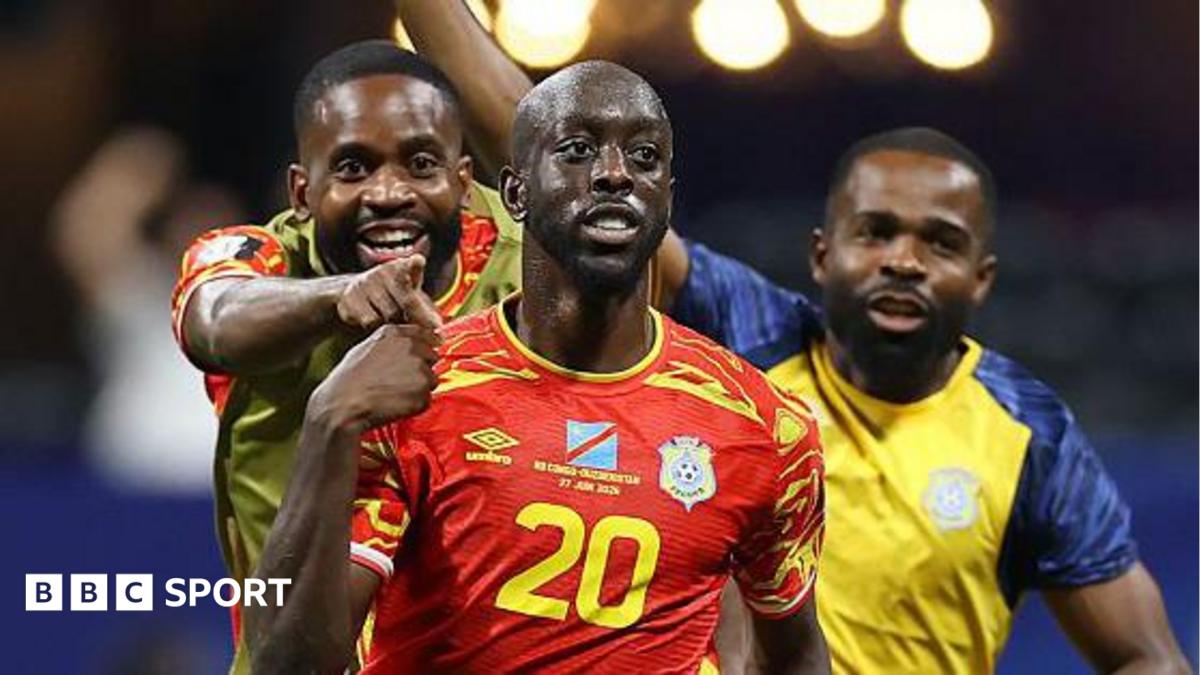
They earned the first World Cup point in their history by holding strongly-fancied Portugal to a 1-1 draw but then lost 1-0 to Colombia. That left DR Congo needing to beat Uzbekistan, which they duly did 3-1 to progress to the last 32 as one of the best third-placed teams.
Where can I watch DR Congo?
Their last-32 tie against England will be live on BBC One on Wednesday 1 July, with build-up from 16:00 BST.
The match will also be covered live on BBC Radio 5 Live, the BBC Sport website and app.
Give me a fact to impress my friends
Superfan Michel Kuka Mboladinga, who went viral at the Africa Cup of Nations for his eye-catching patriotism during games, has been included in DR Congo’s official World Cup delegation at the request of the players.
Since 2013, Mboladinga has worn colourful suits and silently imitated a statue of revered revolutionary leader Patrice Lumumba, with one arm raised, for entire matches.
Now give me some proper detail
The Congolese proverb little by little, grow the bananas emphasises the virtues of patience and steady progress. But during the national football team’s 52-year gap between World Cups – the joint-fourth longest of any nation – patience has been exhausted and progress stalled. Until now.
There has been a determination to change the country’s World Cup narrative after a 1974 debut that left them ripe for ridicule. Zaire, as DR Congo was then known, lost all three games – including 9-0 against Yugoslavia.
Then came the infamous moment when right-back Mwepu Ilunga charged out of a defensive wall to boot the ball away as Brazil lined up a free-kick.
Bemused onlookers were unaware it was an act of political protest. The players had learned their expected wages and bonuses wouldn’t be paid – and Zaire President Mobutu then threatened them with exile if they lost by more than three goals against Brazil.
By kicking the ball away, Ilunga had hoped to waste time and get sent off. He was only booked and Zaire lost 3-0; they were allowed home but President Mobutu cut their funding.
Ever since, the 1968 and 1974 African champions have been kept on the game’s periphery by a combination of conflict, corruption, poor football governance and a lack of facilities.
Current head coach Desabre has brought in fresh talent from the vast Congolese diaspora – all but six of the World Cup squad were born in Europe – and the nation is now seeing the fruits of his endlessly patient nurturing.
How have DR Congo done at previous World Cups?
The central African nation has only played in the World Cup once before – in 1974, when the country was named Zaire. They lost all three group games without scoring, including 9-0 against Yugoslavia.
Fifa World Cup 2026 fans were quick to take to social media to share their reactions to tonight’s coverage.
Hayley Anderson and Hayley Anderson Screen Time TV Reporter
21:29, 27 Jun 2026
ITV’s Fifa World Cup 2026 host Laura Woods. (Image: ITV)
Football fans voiced the same complaint minutes into tonight’s World Cup match on ITV.
Ahead of this evening’s match against Panama, England was sent through to the last 32 following matches against Croatia and then Ghana earlier this week.
So England fans were on a high prior to tonight’s game, which kicks off at MetLife Stadium in East Rutherford, New Jersey at 10pm UK time and 5pm US time.
However, just minutes into the coverage ahead of this evening’s match, viewers couldn’t stop themselves from flocking to X as two unexpected faces popped up on their screens.
Presenter Laura Woods welcomed none other than ITV legends Ant McPartlin and Dec Donnelly as they joined her at the channel’s stunning New York studio.
She asked about their opinion on tonight’s match, as well as about their own memories of previous World Cups but not everyone was happy to see the I’m A Celebrity hosts.
In fact, many commented that they were ‘switching off’ ITV’s coverage following their appearance.
“Ant and Dec FFS, I’ll switch back on at 9.55,” someone said on X (Twitter).
A second echoed: “Ant and Dec appeared. I switched to Five Live”, with someone else adding: “Ant & Dec being ‘interviewed’ during the World Cup may be the strangest thing I’ve seen during this whole event.”
Taking to X, a fan exclaimed: “Surely they could have got better than ant and dec for the World Cup, so annoying!”
Meanwhile, someone else asked: “No football people available tonight?”, as a fellow viewer sarcastically commented: “I was just saying to myself ‘We really don’t see Ant and Dec on the tellybox enough'”.
However, one fan defended the award-winning ITV duo, arguing: “Ant and Dec are much better than Neville and carragher.”
The last time England took centre stage was against Ghana which ended 0-0 at the Gillette Stadium in Boston.
Meanwhile, even though Scotland beat Haiti 1-0 in their first match of the World Cup 2026, they have since lost to both Morocco and Brazil.
The Fifa World Cup is available to watch on ITV and ITVX.
FIFA’s inaugural U-15 World Cup in October has been opened to all of its member associates, paving way for Russia’s return.
Published On 25 Jun 202625 Jun 2026
A Russian team may be allowed to participate in a FIFA event for the first time since Moscow’s 2022 invasion of Ukraine after football’s global authority said its inaugural U-15 World Cup and Festival, set to be held in Azerbaijan in October, is open to all FIFA member associations.
FIFA banned Russia from international competition in February 2022 after it invaded Ukraine, but it lifted the suspension from the country’s U-17 boys’ and girls’ teams the next year.
Recommended Stories
list of 4 itemsend of list
However, Russian teams have remained absent from U-17 tournaments organised by FIFA and UEFA as several European countries, including Ukraine and England, continue to boycott Russia over its ongoing invasion of its neighbour.
“The first edition will be open to boys’ teams from all FIFA member associations, the second instalment in 2027 will feature girls’ teams only,” FIFA said on Wednesday about the U-15 World Cup and Festival.
“From 2028 onwards, all member associations will be invited to participate with both their boys’ and girls’ U-15 teams in two separate competitions.”
The U-15 event will kick off on October 22 and conclude nine days later.
From early on, we were looking at the game, yes, but also working out the mad significance of it all. We turned elsewhere to see what all of this meant in the grand scheme of things.
Before the games began on Wednesday, Scotland were sitting relatively pretty as second of the best third-placed teams in the tournament.
Bosnia-Herzegovina’s win over Qatar dropped Scotland to third. Brazil’s dominance dropped them further. Down and down they went, their buffer all but removed, their obsession about results elsewhere in the coming days multiplying as they went.
Back to Charlotte, North Carolina they’ll go on Thursday; battered and dazed, uncertain of their future in this tournament, if they have one.
As it stands, the predictor has them playing Mexico on Tuesday – a shot at redemption or another trip to a torture chamber?
That might turn on its head, of course. Other teams in the coming days will have plenty to say about this yet.
Scotland are sweating on a place in the last 32. That’s the no-man’s land they’re living in now, frantically looking at the respective fates of Senegal and Ecuador, Curacao and Cape Verde, Saudi Arabia and others.
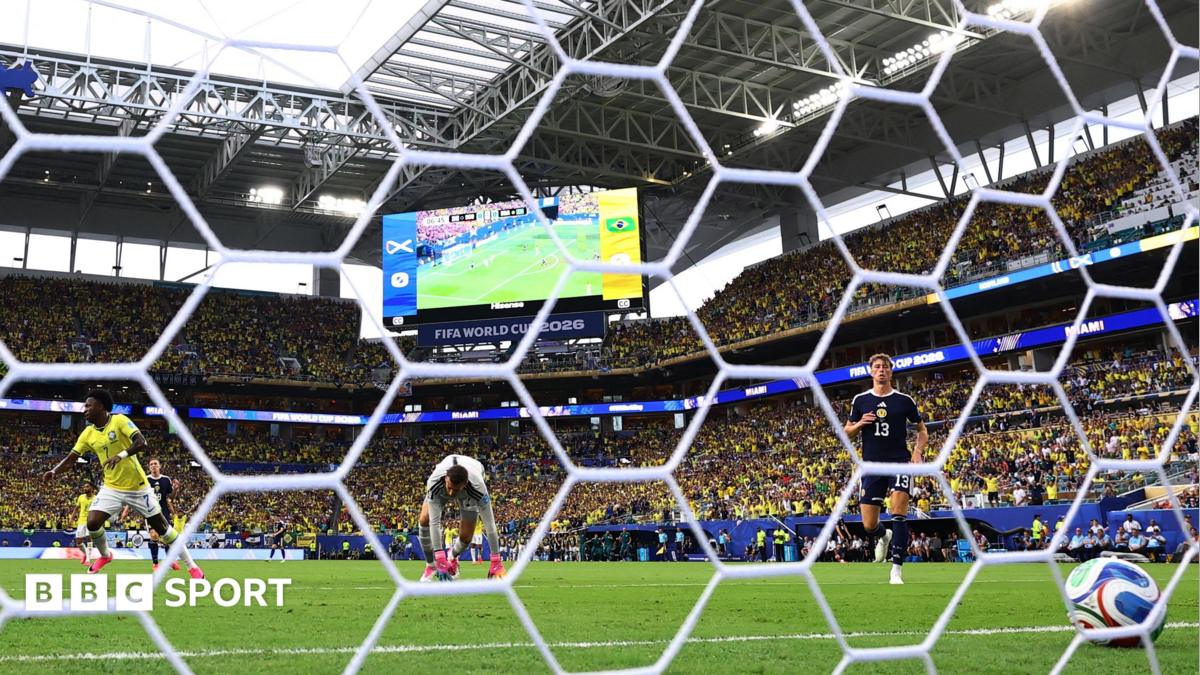
There was a certain inevitably about it. Until Bolivia earlier this month, Scotland have never beaten South American opposition, never beaten Brazil in 10 attempts going back 50 years. They rallied and created moments but it was too little, too late.
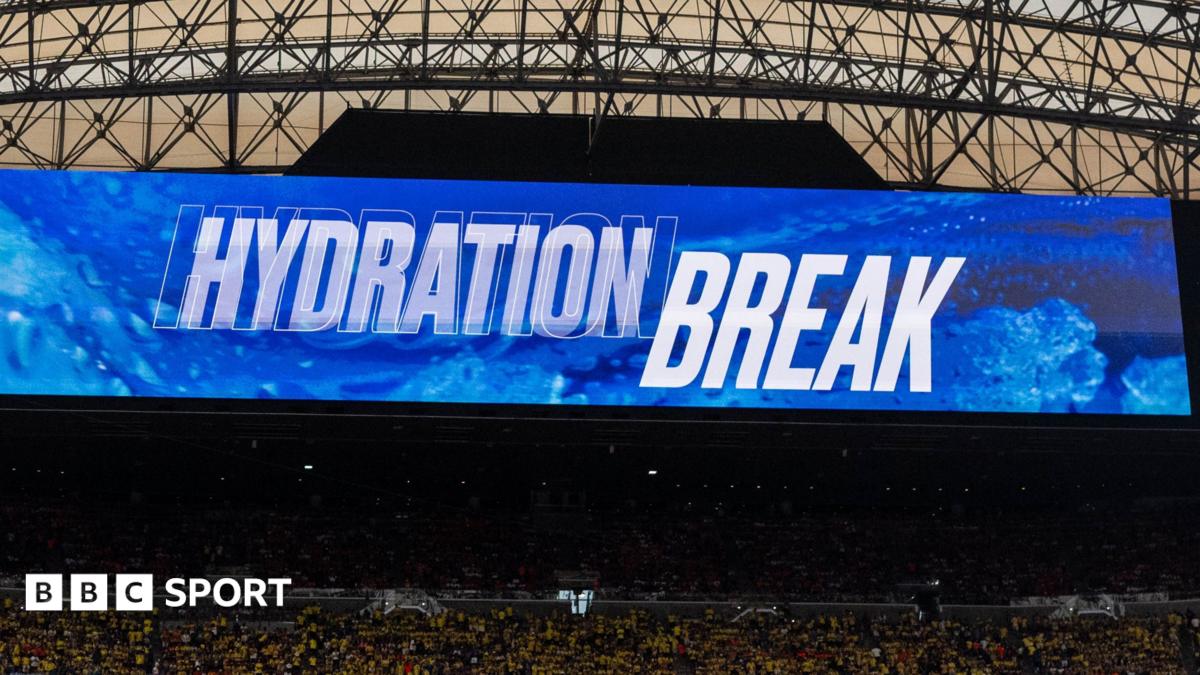
Managers and coaching staff are allowed to discuss tactics with their players while the breaks are taking place.
Infantino said: “The main reason [for the breaks] is the heat, but we also have to understand that in a competition like the World Cup, played over 39 days, with teams potentially playing eight matches in those 39 days, having a moment to rest is extremely important.
“What matters even more to us is ensuring that all teams, in every match, are playing under the same conditions.
“And it’s very difficult to accept that a coach might have the opportunity to influence a match by making adjustments simply because it is hotter, while in another match, where the temperature is slightly lower, the same coach does not have the same opportunity.
“We want to ensure equal conditions for everyone and that’s why these breaks are implemented in every match.”
Experts have told BBC Sport an average 30-second World Cup advertising slot on Fox Sports costs between $200,000 (£152,000) and $300,000 (£227,000), rising to $750,000 (£567,000) during USA matches and the final stages.
That means advertising during hydration breaks is likely to generate more than $250m (£189m) in the USA alone.
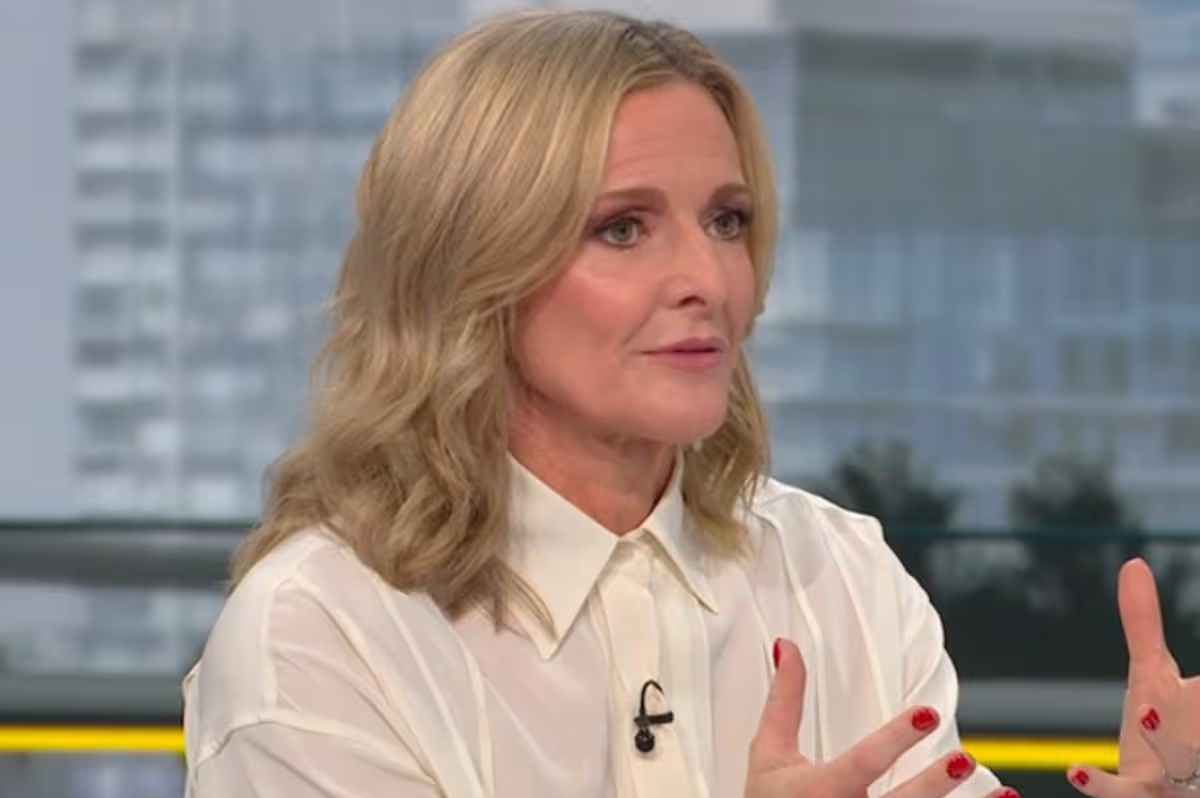
Gabby Logan hosted the BBC’s live coverage of England’s second World Cup group match
22:28, 23 Jun 2026Updated 22:31, 23 Jun 2026
Gabby Logan led the BBC’s coverage(Image: BBC)
BBC viewers weren’t impressed as they tuned in to watch England play.
Gabby Logan returned to screens on Tuesday (June 23) to present coverage of England’s Group L match against Ghana at Boston Stadium in the USA, as both teams played their second game of the group stage.
This is just the second time that these sides have ever met and the first time they’ve faced each other in a competitive fixture. The last time was back in March 2011, when former Sunderland striker Asamoah Gyan scored an injury-time equaliser to salvage a 1-1 draw at Wembley Stadium.
Gabby was joined in the Salford studio by Joe Hart, Wayne Rooney and Micah Richards, with match commentary coming from Guy Mowbray and Alan Shearer.
However, BBC viewers were quick to issue the same complaints about the broadcaster’s coverage. Many fans weren’t impressed with the “buffering” coverage on iPlayer, as well as a live interview with British rapper Stormzy.
“England v Ghana on BBC iPlayer is buffering like crazy. It’s not just iPlayer, games buffer on ITVX too. Happens on the big fixtures, obvs,” one person wrote on X (formerly Twitter), with another adding: “@BBCiPlayer not fit for purpose. Give me @itvx every time.”
A third wrote: “@BBC what’s going on,” alongside a screenshot of the app not loading.
Referring to Stormzy’s interview ahead of the match, a fourth viewer said: “Dear BBC Sport. Football. Fans. Don’t. Care. About. Celebrities. At. The. World. Cup. Stop it,” with another adding: “@BBCSport wasting licence payers cash yet again with a pointless interview with #Stormzy! Pathetic & nothing to do with football!”
More complaints were issued, with someone else writing: “BBC World Cup coverage is poor. S***,” while another shared: “Their coverage of this #worldcup has been beyond woeful.”
Another commented: “Congrats to ITV and the BBC for making the World Cup unwatchable.”
Meanwhile, other viewers praised the BBC’s World Cup coverage, particularly lead hosts Gabby and Kelly Cates.
“BBC coverage soo much better. Great female presenters with Gabby and Kelly. Miles better than ITV,” one person wrote, with another agreeing: “Yeah the female presenters are excellent.”
The Three Lions will be hoping to make it through to the knockout stages for the third consecutive World Cup. They have only been knocked out at the group stage once in their last seven appearances in the finals.
Tonight’s viewer complaints come after several disruptions to the BBC’s coverage of the football tournament.
Gabby Logan notably made a politics announcement during Monday’s (June 22) live broadcast, just hours before coverage was pulled off air due to France and Iraq’s match being delayed.
FIFA issued a statement after warnings of a “severe thunderstorm approaching” the Philadelphia stadium.
Coverage of the FIFA World Cup 2026 is available to stream on BBC iPlayer and ITVX