Features

Bad optics? Israel jails soldiers who smashed Jesus statue in Lebanon | Israel attacks Lebanon News

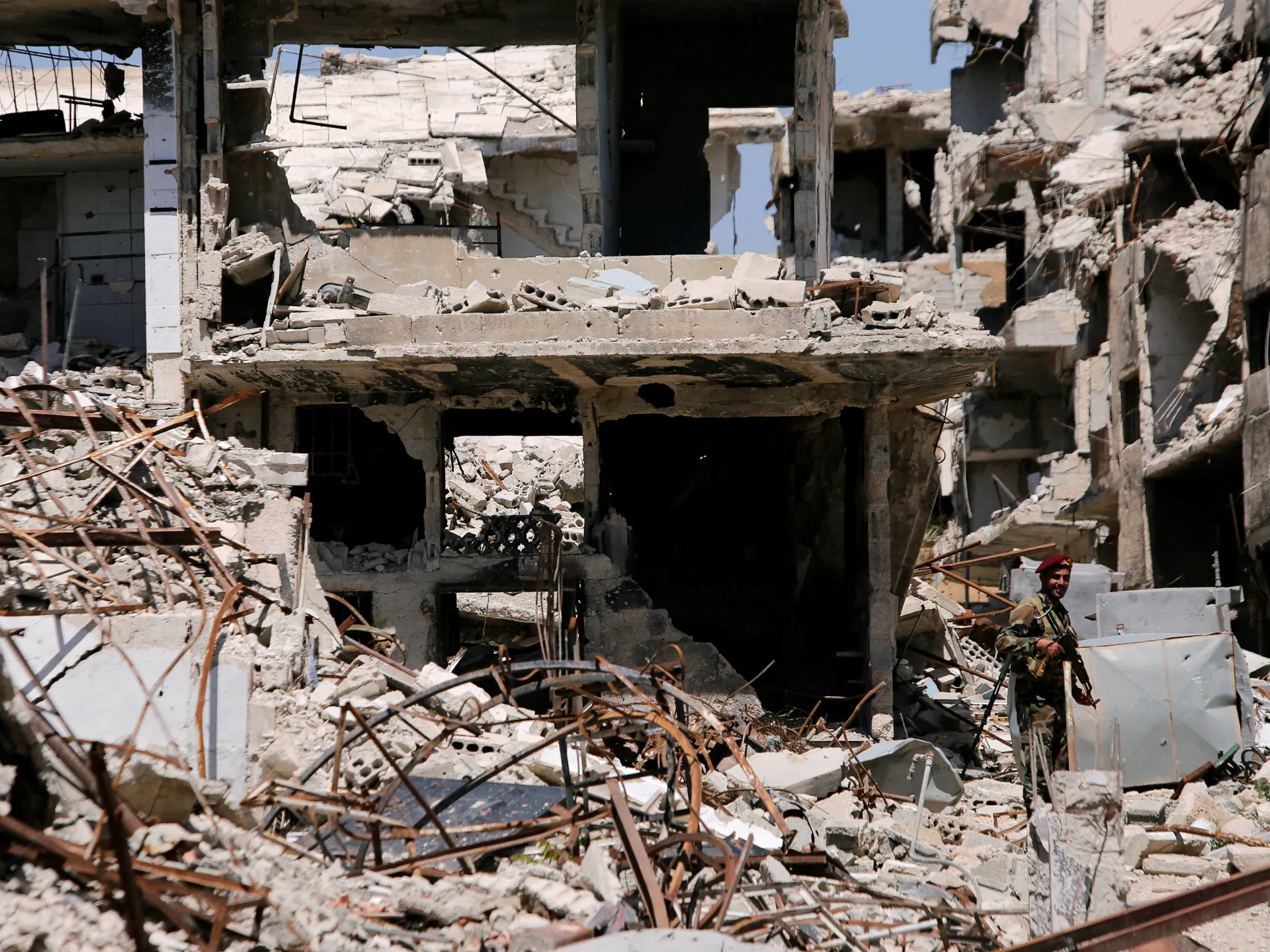
Footage of an Israeli soldier attacking a Christian statue depicting the crucifixion of Jesus in southern Lebanon with a sledgehammer was difficult for Israel’s political establishment to ignore. The country has long tried to frame itself as a defender of Christians, and is allied with the powerful Christian Zionist movement in the United States.

But as Israel continues to lose support in the US and the West for its genocidal war in Gaza and attacks in Lebanon and Iran, support among Christians has also dipped – even before the video of the desecration of the Christian statue surfaced.

Recommended Stories

list of 3 itemsend of list

Responding to the footage on Monday, a day after it first went viral, Israeli Prime Minister Benjamin Netanyahu pushed his regularly repeated line that Israel respects all religions, even as critics point out that his government regularly does the opposite.

But, with even some of Israel’s supporters voicing anger at the soldier’s actions, Israel announced on Tuesday that he had been jailed for 30 days, along with another soldier who had been filming him. Six other soldiers have been summoned for questioning.

The decision to pursue action against the two soldiers stands out because it is in marked contrast to Israeli military investigations conducted into violations by soldiers, which overwhelmingly find them not to have been at fault. In fact, no Israeli soldier has been charged with killing a Palestinian this decade, despite the thousands killed even outside of the Gaza war context, including the 2022 killing of Al Jazeera’s correspondent in the occupied West Bank, Shireen Abu Akleh, who was herself a Christian.

Yossi Mekelberg, a senior consulting fellow with Chatham House, noted that it was important for the Israeli government to ensure that its response to the attack on the statue of Jesus was visible, particularly in light of the important role Christian supporters of Israel – including the US ambassador to Israel, Mike Huckabee – play in the administration of US President Donald Trump.

Those supporters frequently justify their support for Israel by relying on Christian Zionist interpretations of the Bible, and emphasising a “Judeo-Christian” value system and shared cultural heritage.

But official Israeli action in this case makes inaction in other cases more glaring.

“This [attack on the statue of Jesus], and the attacks upon mosques by settlers and the killing of Palestinians are all war crimes,” Mekelberg said. “The problem is that we don’t know how widespread it is. We only know about this one because they filmed it.”

History of violence

Through much of the conflicts in Gaza and Lebanon, observers and analysts have pointed to the stark difference in Israeli government responses to attacks on Christian symbols and places of worship and what has been the large-scale destruction of Islamic sites.

In March, Netanyahu found himself having to explain the decision to block the passage of Cardinal Pierbattista Pizzaballa, the Latin patriarch of Jerusalem, from entering the Church of the Holy Sepulchre to mark Palm Sunday, one of the holiest days of the Christian calendar. Before the end of the same day, Netanyahu had posted to social media, explaining that there had been “no malicious intent whatsoever, only concern for his safety”.

Last July, Netanyahu again found himself apologising for a strike on a third church in Gaza following pressure from the Trump administration, when three of the hundreds of people sheltering there were killed and several others injured, including the parish priest who regularly spoke to the late Pope Francis.

In a statement issued through his office, the Israeli prime minister claimed he deeply regretted the strike on the church, which he said was an accident.

“Every innocent life lost is a tragedy. We share the grief of the families and the faithful,” he said, without referencing the almost 60,000 men, women and Palestinian children his forces had killed by that point in the war.

Throughout the war, Israel’s defenders have emphasised the concept of Judeo-Christian values in an effort to justify Israel’s attacks and its repeated breaking of international law. But evidence of a shared civilisational bond is thrown into question by attacks on Christian symbolism, such as in Lebanon, and by Israel’s long-standing treatment of Palestinian Christians, who face the same dispossession and occupation as their Muslim neighbours.

“I think a lot of Israel’s defenders in the West like to portray it as being ‘us’, just over there, as if ‘over there’ is some form of dark jungle,” said HA Hellyer, a senior fellow at the Center for American Progress and senior associate fellow at the Royal United Service Institute.

“So, they can make excuses for Israelis killing Arabs in their thousands,” Hellyer said. “They can even make excuses for them killing Christians. But when you see Israeli soldiers destroying Christian symbols, it becomes much harder to defend those actions and to stem the growing trend of US supporters, both Democrat and Republican, moving away from Israel.”

What’s next for Israel’s relationship with Christians?

While the Israeli government has been keen to preserve evidence of the Judeo-Christian bond, complaints of harassment by Christian groups within Israel are growing, particularly with the increase in strength of the Israeli far right, including in government.

In 2025, the interreligious Rossing Center for Education and Dialogue recorded 155 incidents targeting Christians in Israel, a marked increase from the previous year. While physical assaults were the most common, comprising 39 percent of incidents, there were also accounts of spitting, hitting, and pepper-spraying.

Christian holidays, specifically those around the time of Easter, have become particular sources of tension, the report noted, with priests and nuns wearing visible Christian clothing in West Jerusalem and occupied East Jerusalem facing the risk of harassment every time they enter public spaces.

“We’ve entered a period of what [Australian genocide studies scholar] Dirk Moses called ‘permanent security’, where anything different, anything that might be a threat, or could even be a threat in the future, has to be destroyed,“ prominent Israeli sociologist Yehouda Shenhav-Shahrabani told Al Jazeera.

That difference is inherent to the Christian faith.

“It’s not about left or right,” Shenhav-Shahrabani explained. “It even goes to language. In everyday Hebrew, people refer to Jesus as Yeshu, which is a curse word, rather than Yeshua, which is correct.”

“That’s commonplace. That’s how it’s used in everyday media,” he continued. “If that’s where you begin, it doesn’t matter if it’s stupidity or ignorance, it all leads to the same place.”

Source link

Inside Jack Whitehall’s ‘mystery feud’ with Freddie Flintoff & James Corden after dodging £250k wedding & Instagram snub

WHEN Jack Whitehall decided to leave Sky’s A League of Their Own in 2018 to try and crack America, he feared it would leave his friendship with his co-stars James Corden and Freddie Flintoff in tatters.

Fast forward eight years, and it appears Jack’s prophecy may have come true. Both Flintoff and Corden skipped his £250k nuptials on Saturday –  with Flintoff posting photos of himself on the golf course in Slough instead.

Freddie Flintoff’s absence from Jack Whitehall’s wedding has raised eyebrows and sparked rumours of a feud between the former best mates Credit: Alamy
When Jack left A League Of Their Own, he feared his friendships with co-stars would be left in tatters Credit: Alamy
James Corden was at Jack’s stag do, but didn’t make the star-studded wedding Credit: CLICK NEWS – DEAN

And neither Corden 47, who attended the stag do in London on March 30th, nor Flintoff, 48, – who was involved in a horrific and life-changing crash while filming the BBC’s Top Gear – have congratulated Jack and his new wife Roxy Horner online. 

Their absence at the bash raised eyebrows – and sparked rumours of a feud between the former best mates.

One guest tells us: “Of course, people noticed that Freddie and James weren’t there. They were huge parts of Jack’s life for so long.

“But Freddie has been through so much over the last few years, and people suspected he just didn’t want to be at such a public event. 

“All the guests were photographed for Vogue, and it was actually quite a big spectacle, so it wouldn’t be surprising if Freddie didn’t want to be part of the circus.

“Why James missed it is another matter and very bizarre considering he was at the stag do.”

‘Very bizarre’

Other guests, including Jamie Redknapp, who also worked on the Sky show, shared gushing posts about the nuptials on Instagram. Corden however, is no longer following Whitehall. 

Meanwhile, Redknapp certainly made his presence known; he posted his Vogue snaps from the big day and gushed: “Congratulations to Jack and Roxy on your big day. I honestly couldn’t be happier for you both. I think the world of you guys, and I’m so proud to be there to see it all

“Jack, you’re like a little brother to me, although somehow still my favourite man baby. And Roxy, fair play… you’ve taken on a lifelong project there.

“Wishing you both a lifetime of laughs, love, and just enough chaos to keep things interesting. Have the best day, and an even better life together.”

Roxy sent a pointed response, saying: “Thank you so much for being there on our special day x”

Whitehall, known for Fresh Meat, tied the knot with Roxy at Euridge Manor in Wiltshire over the weekend, with their daughter Elsie by their side.

His stag do took place at the end of March in London and saw him joined by fellow celebs Jamie Redknapp and James Corden as well as ex-rugby star, Lawrence Dallaglio.

The boozy day out, which Whitehall says started at 11am with a Guinness, ended up getting so rowdy that the comedian can barely remember what happened.

Whitehall tied the knot with Roxy at Euridge Manor over the weekend Credit: anna_longford / Instagram
Roxy and Jack’s wedding took place in the grounds of £12million stately home Euridge Manor, near Chippenham, Wilts Credit: Instagram/Roxyhorner
Jack Whitehall starred alongside James Corden, Jamie Redknapp and Freddie Flintoff on the hit Sky show A League Of Their Own Credit: Handout

The lads sank pints at The Devonshire pub, before visiting the infamous and very sexy nightclub The Box, which is believed to have put on a private show just for Whitehall and his rowdy group of mates.

They then moved on to mini-golf hotspot, Swingers and ended the night with drinks at the Soho Hotel bar.

Images from the night showed Whitehall staggering down the street with Corden and Redknapp,  but Flintoff was absent.

The four mates started working together in 2012, at the time Whitehall was a relative unknown, while Flintoff and Redknapp were sporting legends, and Corden had made his name in comedy Gavin & Stacey.

‘Breaking up the friends’

Whitehall’s career started to take off, and despite League of Their Own being a huge hit, he decided to quit in 2018 to pursue a career in America like Corden.

He admitted at the time he was worried about leaving his mates behind and said: “It was very sad ­sitting down with Jamie and ­Freddie and telling James on the phone. Jamie wept.

“I’m the b*****d breaking up the friends. But I think they still like me.

“I think we’re all still pals, it will probably help going forward with our friendship as we won’t see each other all the time.”

His career skyrocketed from there, and a few years later, Corden quit A League of Their Own and then Flintoff left a year later. 

Jamie Redknapp, pictured, and James Corden attended Jack’s boozy stag do in London – but Flintoff gave it a miss Credit: CLICK NEWS – DEAN
Flintoff posted photos of himself on the golf course in Slough on Jack and Roxy’s big day Credit: Instagram

Former cricket star Flintoff landed a place on Top Gear in 2019 but in December 2022, he was involved in a terrifying accident while filming the BBC show.

He was airlifted to hospital after his three-wheeled Morgan flipped, leaving him with devastating facial injuries, which meant he needed reconstructive surgery, as well as suffering some broken ribs.

He became a social recluse, not leaving the house for over six months, and struggled with his mental health, including suffering from PTSD, flashbacks, and anxiety.

Whitehall appeared in Flintoff’s 2025 Disney+ documentary about his accident and recalled their first meeting, he said: “I remember being quite intimidated. I was meeting Freddie Flintoff, who I looked up to a lot as a kid, for the first time.

“So many people think of him as so strong and so alpha, but he’s definitely fragile.”

Asked if he had a message for Flintoff, whose friendship with Top Gear co-host Paddy McGuinness also struggled post-crash, Whitehall replied straight-faced: “Answer my texts.”

Source link

My dreams in Iran were already dead before the ceasefire came | US-Israel war on Iran News

Sina* is a 28-year-old video editing assistant who fought hard to build a life in Tehran. After completing mandatory military service, he refused to return to his hometown of Neyshabur in eastern Iran, knowing opportunities for a young man with a background in film editing and independent student theatre were bleak there. Through a college friend, he found his footing at a video content creation studio in the capital, climbing from camera assistant to assistant video editor within six months, before losing his job as a result of the US-Israel war on Iran. As told to Arya Farahand. 

It has been a few days since the guns fell silent, and the sliver of hope I felt when the ceasefire was announced is already fading. Out of all the resumes I sent in desperation, only one company called me for an interview. The salary they offered would not cover the bare minimum to survive. My family keeps calling from Neyshabur, repeating the same line: “Come back, there’s work for you here.” What they intend as a lifeline feels like salt in the wound.

Recommended Stories

list of 3 itemsend of list

I had stopped taking money from my father, my salary grew, and I was buying gifts for my two sisters. I was, for the first time in my life, truly independent. Now, I am sitting in my grandmother’s empty apartment in Tehran, staring at a phone with almost no internet, waiting for a job offer that’s not coming.

This is what the war has done to me. Not a scratch on my body, but everything else – gone.

Croissants on the roof

The morning the war started, we were in a briefing meeting, drinking tea. A colleague had brought fresh croissants. Then we heard the roar of a fighter jet, a whistle, and seconds later, an explosion.

Our initial instinct wasn’t terror, but naive curiosity. Against every survival guide we had read from the previous war, we piled into the elevator and went up to the roof, mugs still in hand. Pillars of smoke were rising across the city. Then, another explosion hit, deafeningly close. We sprinted for the stairs.

Our manager sent us home. The city had seized up. My driver called to say he couldn’t get through the gridlock, so we started walking – 40 minutes under the glaring sun, past stranded people and stalled cars. At one point, a middle-aged driver lost his nerve, swerving into the bus lane against traffic. A bus appeared head-on and deadlocked the lane. Trapped, he looked ready to explode. I didn’t stick around. I just kept walking.

I went to my grandmother’s house. Hard of hearing, she hadn’t heard a single blast and was simply overjoyed to see me. I drank tea, sat in front of the television, tried to process what was happening, then ate lunch and slept.

The city hollowing out

When I woke up, I reached for my phone, only to be reminded that the internet was dead. I am someone who fills every spare moment with online gaming or Instagram. Without either, the boredom was stifling. I couldn’t smoke in front of my grandmother, and the forced abstinence only added to my agitation.

In the days that followed, the city hollowed out. Whenever I stepped into the alley – using a quick errand as a pretext to sneak a cigarette – I saw fewer and fewer people. In our building, only five of the 12 units remained occupied. I could tell by the empty spaces in the parking garage.

When my cigarette supply ran out, the corner shop didn’t have my brand and the supermarket was charging double. With no certainty that my March salary would be paid, I settled for a cheaper, unknown brand. It was like inhaling truck exhaust.

The days blurred: the unemployment anxiety, the stifling boredom, the desperate secret cigarettes. I tried buying VPNs twice. The first worked for a single day. The second – the seller blocked me the moment I transferred the money.

The closest I have come to death

The true nightmare came on the night of March 5. A mild explosion jolted me awake around 4m. I walked to the kitchen for water. Then a blast ripped through the air – a sound seared into my brain for life. I froze. My grandmother stumbled out of her bedroom in terror. I pulled her into the kitchen.

Then came the barrage. More than 10 consecutive explosions, each less than 10 seconds apart. My grandmother sat on the floor beside me, arms wrapped tightly around my leg, head buried. It was the closest I have ever felt to death.

When it finally stopped, the windows held. My grandmother, shaken, recalled how during the Iran-Iraq war, sirens had warned them in time to reach shelters. What she found most painful about this war was the absolute lack of warning – no sirens, no shelters. Just sitting, waiting for the next blast. With tired legs, she climbed back into bed. I did not sleep until morning.

Ten voices in my head

Through all of it, I kept telling myself, “Hold on”. Our manager had hoped this war, like the previous conflict, would end in under two weeks. Whenever my parents called, begging me to return to Neyshabur, I said no.

On March 17, we had our final online meeting. The studio’s debts were mounting, invoices unpaid, and our manager saw no end in sight – for the war or the internet blackout. For the new Iranian year, starting on March 21, only 200 resources staff would remain. The rest of us were laid off, without pay.

As the call ended, it felt like 10 different voices were screaming in my head. I couldn’t rely on my grandmother’s meagre pension. My father was already supporting a family of four. The calculation was merciless: move back to Neyshabur and work at my uncle’s supermarket. Instead of planning how to improve my life, I was plotting survival.

I packed up and left. It was a gruelling 10-hour bus ride through eerily quiet roads. What haunted me most were the final moments in Tehran. The city felt hollow, silent, swallowed by a darkness I had never seen before.

The void

From Neyshabur, I called my manager, hoping against hope. He laid out the brutal math. During the previous war and the December protests, waiting out the shutdowns had been viable. But a relentless year of economic bleeding, capped by this blackout, had driven revenue to zero. Even if the internet were restored tomorrow and we worked nonstop for months, it wouldn’t be enough. The studio hadn’t paused. It had collapsed.

I updated my resume, bought a return bus ticket, and went back to my grandmother’s apartment. There was nothing to go back to. I just needed to feel like I was doing something.

When the ceasefire was announced, I felt a sliver of hope. It lasted about a day.

My life used to be a blur of motion: the studio, independent theatres, cafes with friends, early mornings and late nights. Now, my entire existence has shrunk to four walls. The war has ended, at least for now. The internet remains largely throttled, the economy is in ruins, and the job market that existed before February 28 has not returned with the ceasefire.

Outside, people are beginning to move through the streets again. For them, perhaps, something is resuming. For me, there is nothing to resume.

I don’t know how much longer I can hold out.

*Name changed for security reasons

Source link

Cash shortages grip Yemen despite currency stabilisation | Business and Economy News

Mukalla, Yemen – The Yemeni government’s measures to curb the devaluation of the Yemeni riyal have finally borne fruit, but they have created another problem: A severe liquidity crunch.

The government’s central bank, based in the southern city of Aden, has shut down unauthorised exchange firms it says were involved in currency speculation, centralised internal remittances under a controlled system, and formed a committee to oversee imports and provide traders with hard currency.

Recommended Stories

list of 3 itemsend of list

These measures have helped curb the riyal’s freefall, from about 2,900 to the United States dollar months ago to about 1,500 today, a move that was initially welcomed. But the gains have been short-lived, as public frustration has grown over a worsening shortage of cash in riyals.

People across government-controlled cities such as Aden, Taiz, Mukalla and others have said they are facing an unprecedented shortage of Yemeni riyals in the market. Many, particularly those holding US dollars or Saudi riyals, said local banks and exchange firms are refusing to convert foreign currency, or are limiting daily exchanges to as little as 50 Saudi riyals per person, citing a shortage of local cash.

This has left many Yemenis unable to access cash or use their savings in hard currency at a time of mounting economic pressure, paralysing businesses and giving rise to a black market where traders exchange foreign currency at more unfavourable rates to the customer.

Businesses grind to a halt

Mohammed Omer, who runs a small grocery shop in Mukalla, said he has spent hours crisscrossing the city’s exchange firms trying to convert a few hundred Saudi riyals he received from customers. “I’ve gone from one exchange to another, and they refuse to exchange more than 50 riyals,” said Omer, a man in his early 50s with a salt-and-pepper goatee. “It’s a waste of time and effort – I’ve had to close my shop.”

Yemen has endured an economic meltdown for more than a decade, stemming from a war between the Saudi-backed government and the Iran-aligned Houthis that has killed thousands and displaced millions.

Alongside the fighting on the battlefield, the warring sides have targeted each other’s main sources of revenue, leaving both the Houthis and the government strapped for cash, struggling to pay public-sector salaries and fund basic services in areas under their control.

At a board meeting in March, the Central Bank in Aden said it was aware of the cash shortage and had approved several unspecified “short- and long-term” measures to address the problem, noting that it is pursuing “conservative precautionary policies” to stabilise the riyal and curb inflationary pressures.

Government employees have also complained that the cash-strapped Yemeni government is paying salaries in low-denomination banknotes – mainly 100 riyals – forcing them to carry their wages in bags.

Munif Ali, a government employee in Lahj, took to Facebook to express his frustration, posting a video of himself sitting beside large, tightly packed bundles of 100- and 200-riyal notes that he said he received from the central bank. Munif, like many Yemenis on social media, said traders are refusing to accept large quantities of low-value notes. “Merchants are refusing to recognise this,” Munif said, referring to the stacks of 100- and 200-riyal notes in front of him. “Legal action should be taken against them.”

People who have kept their savings in Saudi riyals, the de facto currency in parts of Yemen, as well as Yemeni expatriates who send remittances in hard currency to their families, and soldiers paid in Saudi riyals, are among those most affected by the cash shortage.

Finding workarounds

To cope with cash shortages and the refusal of exchange firms to convert hard currency, Yemenis have adopted a range of workarounds. Some rely on trusted shopkeepers who allow delayed payments, while others exchange foreign currency at local groceries or supermarkets, often at lower, unfavourable rates. Banks and exchange firms have also introduced online money transfers, which have helped ease the crisis for some.

In rural areas, where internet access is limited and exchange shops are scarce, the problem is even more acute.

Saleh Omer, a resident of the Dawan district in Hadramout, told Al Jazeera that he received a remittance of 1,300 Saudi riyals sent from Saudi Arabia. But the exchange firm that handed him the money refused to convert it into Yemeni riyals, citing a lack of cash, and advised him to try nearby shops.

With the official exchange rate at about 410 riyals to the Saudi riyal, a shopkeeper agreed – after repeated appeals – to exchange only 500 riyals, and at a lower rate of 400. “I nearly begged the shopkeeper to exchange 500 riyals,” Saleh said. To convert the remaining 800 riyals, he added, he would have to return another day and go from one shop to another. “We are suffering greatly just to convert Saudi riyals into Yemeni riyals.”

Connections matter

Well-connected individuals are often better positioned than others to navigate the cash shortage, with some relying on personal contacts at banks and exchange firms to access cash. Khaled Omer, who runs a travel agency in Mukalla, said most of his business transactions are conducted in Saudi riyals or US dollars. But when he needs Yemeni riyals to pay employees or cover utilities, he turns to a trusted contact at a local exchange firm. “We work with a money exchange trader when we need riyals to pay salaries or meet basic expenses,” Khaled told Al Jazeera. “Exchange companies say they are facing a liquidity crunch.”

On social media, Yemenis say some patients have been denied medication as health facilities refuse to accept payment in Saudi riyals, while exchange firms decline to convert the currency into Yemeni riyals.

In Taiz, Hesham al-Samaan said a local hospital refused to accept Saudi riyals from a relative of a patient, forcing him to roam the city in search of someone to exchange the money to pay for treatment. “Is there any justice for the people, oh government? Will anyone hold accountable those who refuse to exchange currency and exploit people’s needs?” al-Samaan wrote in a Facebook post that drew dozens of comments from others reporting similar experiences, including being denied medical services because they did not have local currency.

For traders who import goods from Saudi Arabia, the cash crisis has become something of a blessing in disguise, as Saudi riyals are increasingly available at discounted rates. A clothing trader in Mukalla told Al Jazeera that he accepts payments in both Yemeni riyals and Saudi riyals, partly to attract customers and partly to secure the foreign currency he needs for his business. “As a businessman who sells goods in Yemeni riyals, I benefit from the cash shortage,” he said on condition of anonymity. “Exchange companies that need local currency I hold sell me Saudi riyals at lower rates.”

Source link

Trump claims on Iranian concessions trigger questions, rejections in Tehran | US-Israel war on Iran News

Tehran, Iran – United States President Donald Trump’s announcements about securing major concessions from Tehran have riled supporters of the Iranian establishment, prompting rejections and clarifications from the authorities.

Several current and former senior officials, state media and the Islamic Republic’s hardcore backers expressed anger, frustration, and confusion after the US leader made a series of claims, with days left on a two-week ceasefire reached on April 8.

Recommended Stories

list of 4 itemsend of list

Trump on Friday said Iran and the US would jointly dig up the enriched uranium buried under the rubble of bombed Iranian nuclear sites, and transfer it to the US. He claimed Iran had agreed to stop enriching uranium on its soil.

He also said the Strait of Hormuz had been opened and would never be closed again, while the US naval blockade of Iran’s ports remained in place, and sea mines were removed or were in the process of being removed.

Trump also emphasised that Iran would not receive billions of dollars of its own frozen assets abroad due to US sanctions, and that the 10-day ceasefire between Israel and Lebanon was completely unrelated to Iran.

Amid Pakistan’s ongoing efforts to mediate another round of negotiations, Iran’s Parliament Speaker Mohammad Bagher Ghalibaf, who led the Iranian delegation to the Islamabad talks earlier this month, rejected all of Trump’s claims.

“With these lies, they did not win the war, and they certainly will not get anywhere in negotiations either,” he posted on X early on Saturday.

By Saturday noon, the Khatam al-Anbiya Central Headquarters of the Islamic Revolutionary Guard Corps (IRGC) released a statement, saying the Strait of Hormuz is once again heavily restricted and under “strict management” of the armed forces. It cited continued “acts of piracy and maritime theft under the so-called label of a blockade” by Washington as the reason.

‘Haze of confusion’

In the hours it took between Trump’s flurry of announcements on Friday and official responses from Iranian authorities, supporters of the establishment voiced serious concerns about any major concessions.

“Is there no Muslim out there to talk to the people a bit about what is happening?!” Ezzatollah Zarghami, a former state television chief and current member of the Supreme Cyberspace Council that controls the heavily restricted internet in Iran, wrote on X.

Alireza Zakani, the hardline mayor of Tehran, said if any of Trump’s claims are true, then the Iranian establishment must beware “not to gift the vile enemy in negotiations what it failed to achieve in the field”.

A fan account on X for Saeed Jalili, an ultrahardline member of the Supreme National Security Council who has opposed any deals with the US for decades, said “dissent” may be at play. It said Supreme Leader Mojtaba Khamenei, who has not been seen or heard from outside of several written statements attributed to him, must release a voice or video message to confirm what is happening.

Jalili’s main account distanced itself from the comment, saying the fan account – which was subsequently deleted – was a sign of “infiltration” by enemies of Iran who were trying to sow discord.

Iranian state media released another written statement attributed to Khamenei on Saturday to mark Army Day, but made no mention of the political drama unfolding hours earlier, or the negotiations with the US.

The dissonance was clearly on display on state television and other state-linked media on Friday, especially those affiliated with the IRGC.

Multiple state television hosts and analysts harshly attacked Foreign Minister Abbas Araghchi because he tweeted on Friday that the Strait of Hormuz was “declared completely open for the remaining period of ceasefire, on the coordinated route as already announced by Ports and Maritime Organisation”.

One of the hosts demanded Araghchi must immediately clarify. Another said the top diplomat’s tweet was in English, and since the Iranian people do not have access to X due to the state-imposed near-total internet shutdown for seven weeks, the message was not directed at the people.

With a huge Hezbollah flag in the background, a furious presenter on state television’s Channel 3 claimed that Araghchi was somehow “the representative of the people of Lebanon, Yemen and Iraq” because they are a part of Iran’s “axis of resistance” of armed forces, so he should demand concessions on their behalf from Trump.

Morteza Mahmoudvand, a representative for Tehran in the Iranian parliament, went as far as saying Araghchi would have been impeached had it not been for “the excuse of war”.

The Fars and Tasnim news sites, which are affiliated with the IRGC, also heavily criticised Araghchi and called for further explanations on Friday evening, with Fars arguing that “Iranian society was plunged into a haze of confusion.”

Armed supporters in the streets

Critical comments from supporters of the Iranian government also flooded social media, including local messaging applications and the comments section of state-run sites.

“We took to the streets every night with clear demands, but you shook hands with the killer of our supreme leader and handed our strait to the Zionists,” one user wrote on Friday in the local app Baleh, in reference to Israel.

“After all these years of sanctions and war and costs imposed on the people, if you are to give up the uranium and the strait, then why did you play with the people’s livelihoods and the blood of the martyrs for so long?” another user wrote.

A large number of analysts and media personalities, including Hossein Shariatmadar, the head of the Kayhan newspaper, who was appointed by late Supreme Leader Ayatollah Ali Khamenei, also voiced criticism and demanded answers on Fars and other outlets.

Regardless of whether there will be more mediated negotiations in Pakistan or whether the war will continue, Iran continues to encourage and arm backers to take to the streets to maintain control.

State media on Friday aired footage of more armed convoys moving through the streets of Tehran while waving the flags of Lebanon’s Hezbollah, Iraq’s Hashd al-Shaabi and other groups. The video below shows women and children crewing heavy machineguns mounted on the back of pick-up trucks during a rally in downtown Tehran.

With no end in sight to the state-imposed internet shutdown that has wiped out millions of jobs in Iran, in addition to steel factories and other infrastructure that were destroyed, the Iranian economy continues to suffer.

The timing of the back-and-forth between Trump and the Iranian officials meant that oil prices dropped before Western markets closed on Friday, and the Iranian currency experienced more volatility.

The rial was priced at about 1.46 million against the US dollar on Saturday morning, the first day of the working week in Iran. But it shot back up to about 1.51 million after the IRGC announced the repeated closure of the Strait of Hormuz.

Source link

Writer’s block is a lonely feeling…but Marcus Mumford gave me great advice, says Noah Kahan ahead of fourth studio album

AFTER the whirlwind success of No1 hit Stick Season, Noah Kahan didn’t rush back into the studio.

In fact, he stopped completely. Facing writer’s block and still processing everything that had happened, he stepped away for six months, forced to rethink not just the music, but what success meant.

Noah Kahan is back with a new album, The Great Divide Credit: Patrick McCormack
Noah’s 2022 album Stick Season sold over four million copies and had billions of global streams Credit: Stephen Keable

His 2022 album Stick Season — rooted in Vermont and exploring mental health, identity and small-town life — transformed the singer from a cult folk artist into a global name.

Topping the charts in the UK, the record was also certified multi-platinum in the US, where it sold over four million copies and had billions of global streams.

Kahan was nominated for a Grammy for Best New Artist and the emotionally raw, nostalgic and deeply personal record was widely seen as one of the defining albums of the decade.

“I just couldn’t write for a while,” he confesses. “When I first got off the road, I didn’t make any music in a long time.

speaking out

Victoria Beckham breaks silence on Brooklyn feud for first time


BAY BEAUTY

Iconic Baywatch star signs up to reboot alongside Brooks Nader and Livvy Dunne

“I spent months not doing anything and it was painful because I like to be busy.

“It took so much strength for me to push that feeling away.

“I’m aware of how rare the moment was, how big the moment was and how lucky and fortunate I was, but my whole life I was trying to prove to people that I had a place here. So when the huge moment was happening, instead of being like, ‘Yeah, I made it’, I was like, ‘Oh my god, how am I going to stay here?’.”

That pressure quickly took its toll. Kahan said: “Writer’s block is such a lonely feeling — it makes you feel like your value’s been taken away. I felt completely unable to open up about it, but I ended up reaching out to friends.

“Marcus Mumford really helped. He understood what it’s like to be under a lot of pressure and afraid of failing and gave me great advice.”

Kahan also had to redefine success. It was not chasing numbers — just being able to make music was enough.

He says: “I learned the hard way about burnout. Success is a double-edged sword. I’ve always said if I had any, or if my tour sells out, I’d be happy. But the second it sells out, you’re looking at the next thing to achieve.

“Starting off this new album was really scary. I had to realise I didn’t need to be the biggest artist in the world or where Stick Season took me. I didn’t need to be successful to be loved.”

Kahan is in London for a few days to promote The Great Divide, his fourth studio album, which is out next Friday.

Taking time off to reset both mentally and emotionally was essential to writing again.

“I’ve struggled with my mental health,” he says candidly.

“But I was struggling more than anybody knew. I’ve struggled with anxiety, depression and body dysmorphia, but it was the OCD that I hadn’t figured out.

“I was diagnosed with OCD last year. It’s not about washing my hands a thousand times — it’s obsessive thinking. I was struggling with a lot of self-esteem and confidence issues, but I’d never dealt with anything so acutely like OCD. I’m supposed to be the singer who’s open about his mental health, but I felt so much shame.

“I needed medical intervention and therapy, and I didn’t want to be open about that because I was afraid. It was frightening as I’d been stripped of

this thing I loved.

“I couldn’t express myself through music any more, and so I didn’t tell anybody and it came to a breaking point.”
Through help and time, Kahan started to recognise his disorder in ways he hadn’t before.

“Now I wake up knowing my day is not going to be decided by what I see on my phone,” he says when discussing how therapy has helped him.

“Before, I’d have 700 brilliant words of praise, but it would be the one negative word that would shatter me. For a long time, I thought I was crazy.”

Kahan is focused on bringing his album to the stage Credit: Patrick McCormack

In August 2025, Kahan married his longtime partner Brenna Nolan, bringing a new sense of stability to his life.

The singer has also made a Netflix documentary — Noah Kahan: Out Of Body. It captures this difficult period, which he sees as part of his healing.

He says: “Making the film was a strange but amazing process. Having people follow you around took time to get used to, but they captured a really honest moment for me. Watching it back with my family was emotional. It showed how we really are.

“It was hard seeing how unhappy I was then, but in the end, it told a beautiful story.”

He adds: “My family are on the new record. I love the song American Cars. It’s about my sister.

“Whenever things were tough at home, she’d drive up from New York in a rental car, sunglasses on, just a total badass.

“She’s a surgeon, she just gets things done. She’d come back and help us through it, and the song came from that. Like, you need to come home and help fix this.”

The Great Divide is an album about friendship, miscommunication, regret and personal growth, and the title track became the guiding, emotional “north star” of the record.

He says: “Yeah, The Great Divide is really about a friendship that didn’t work out — one where I wasn’t able to express myself.

“And then there’s a song, Dan, which is about the opposite — being open, telling each other how much you care, facing hard truths. It ends in a way that really encapsulates the whole record. It’s probably my favourite song we made.

“There are a lot of stories,” he adds.

“It’s very emblematic of my childhood and a lot of people’s, young men in particular. Talking about feelings or asking difficult questions can feel like more discomfort than it’s worth, but the consequence is you don’t really know someone as well as you think you do.”

Noah says of his new album: ‘The Great Divide is really about a friendship that didn’t work out — one where I wasn’t able to express myself’ Credit: Patrick McCormack

It’s an expansive album with 17 tracks, including the gorgeous We Go Way Back, Willing And Able, Haircut and Porch Light.

He adds: “I can’t wait to see crowds singing back Willing And Able, and Haircut started from that idea of someone coming back to town changed — like they’ve outgrown it. I felt like I’d become that person, only going home for inspiration instead of really being there.

“The song is almost someone singing to me, saying, I’m glad you’ve figured things out, but at least I’m still here and still real. You’ll leave again, and we’ll still be here. That’s what it’s about.

“Then, Porch Light is really about my biggest fear — how I’ve changed.

“I worry about going home and feeling like people see me differently, like I’ve become this ‘Hollywood’ version of myself, too big for where I’m from. That my relationship with Vermont has been changed by success and leaving Vermont for Nashville.

“But my family has always kept me grounded. They’re so happy for me. I wanted to write about that fear you have in your head before you even pick up the phone.

“You’re always anticipating what people might think. But there’s a silver lining in Porch Light. It’s about people saying, ‘We still care about you, we’ll still be here — but you need to figure things out first’.”

And that sense of place runs throughout the album.

“Yeah, the first and last songs really frame the album — I wanted them to feel like an intro and an outro,” Kahan says.

“The first track, End Of August, is this big, building track about that time of year in Vermont . . . It’s that moment when the tourists leave and the people who live there can finally come out of hibernation — like, ‘They’re gone’.”

He’s been working with Stick Season collaborator Gabe Simon, The National’s Aaron Dessner — best known for his work with Taylor Swift, Bon Iver and, more recently, Gracie Abrams — plus Ed Sheeran and Mumford & Sons.

Kahan says: “Gabe and I are really close — we went through a lot making Stick Season, so on this album we leaned on each other. He’s like a brother and the perfect person to go through this with.”

Noah will be in the UK, including three nights at London’s O2 in November Credit: Patrick McCormack

Aaron Dessner brought calm, structure and creative balance to the process.

“Aaron came in early on, but I was intimidated at first,” admits Kahan. “I looked him up on Wikipedia and was terrified of his success. This guy’s a legend.

“This was where Taylor Swift writes and Justin Vernon (Bon Iver), who works with Aaron, is my hero. Aaron has a magic to his music — a real understanding of what an artist is trying to say. But he’s a sweet, calm man who lives a very humble life in upstate New York on a farm.

“I needed him to stabilise me creatively. He is regimented in how he makes music and I need a routine. He is an amazing producer and this album sounds so f*****g cool because of what Aaron did.”

The sound on the new album is more expansive than Kahan’s earlier music and includes horns, guitar and richer production.

He says: “Honing on a sound and a theme started the process. Aaron’s place had dirt bikes, fishing rods and skeet shooting — all the things that I grew up doing.

“We couldn’t make the music in Vermont this time and the setting was really important, feeling connected to nature and beauty.

“It’s hard for me to make music in a city. Whenever I’m in a city, all I write is, ‘Get me out of the city’ songs.”

He adds: “We were also still in the middle of touring and I was over the Stick Season songs.

“There’s a lot of electric guitar on the new record, and bouzouki and mandocello, instruments we haven’t really used before. It’s a new confidence, but having spent three years on the road, I just want to make music that’s exciting to play live.”

It’s the connection with his audience that remains key.

He says: “I love it when I see fans singing back my songs as it means they’re feeling it.

“I’m always honoured when someone says my music has helped them to reach out for help. Though it can be overwhelming when people tell me they’re struggling with difficult thoughts.

“I don’t always feel equipped to handle that and I worry I’m not helping in the way they need. It’s hard when you feel you’re letting someone down.”

Now, his attention is focused on bringing the album to the stage.

He says: “I’m looking forward to playing these new songs. This record tells a story, so we’re working on the stage design, setlist and lighting to tell that story. We’re playing stadiums now, but I want fans to still have an intimate experience.”

Kahan returns to historic Boston baseball stadium Fenway Park, the home of the Boston Red Sox, for four nights this July.

He will also be back in the UK, including three nights at London’s O2 in November.

He says: “I’m excited about those dates, but my dream is to play Stamford Bridge.

“It’s my favourite sport and I love Chelsea FC. But I was told you can’t play there. I’ve achieved so much already, but that is my ultimate dream.”

  • The Great Divide album is out next Friday, April 24.

NOAH KAHAN – The Great Divide

★★★★★

Noah Kahan – The Great Divide, his fourth studio album, is out next Friday

Source link

How Madonna became the queen of cool aged 67 with club-inspired album, a hot toyboy and a new Gen Z fanbase

SHE was 35 and in her prime when Smash Hits magazine published images of her parading the stage in a skimpy bra – and scoffed: “Calm down, grandma!”

But the cutting headline, which accompanied a review of her Girlie Show tour in 1993, did nothing to deter the uniquely stylish Madonna.

In a career spanning more than 40 years, Madonna became the hottest female singer in the world, selling over 400million records Credit: Rafael Pavarotti
The Queen of Pop has faced intense backlash over her appearance through it all Credit: Instagram
Madonna with her boyfriend, former footballer Akeem Morris, 29 Credit: instagram

In a career spanning more than 40 years, she became the hottest female singer in the world, selling over 400million records.

But through it all, the Queen of Pop faced intense backlash over her appearance.

Critics have judged everything from her cone bra in 1990 to her Met Gala “bondage”-style outfit in 2016, when she was 57.

But now, as Madge prepares to return to the spotlight with her 15th studio album, she has done what many thought would never be possible.

speaking out

Victoria Beckham breaks silence on Brooklyn feud for first time


BAY BEAUTY

Iconic Baywatch star signs up to reboot alongside Brooks Nader and Livvy Dunne

Aged 67, she is finally cool again.

The Vogue singer confirmed this week that she will release her first record in seven years this July — a sequel to her 2005 smash Confessions On A Dance Floor.

The original, inspired by disco and Eighties electropop, shifted more than 10million copies.

It featured No1 singles Hung Up and Sorry, and ushered in a new era of dance music.

Now, Confessions On A Dance Floor: Part II is promising to be a continuation of the project.

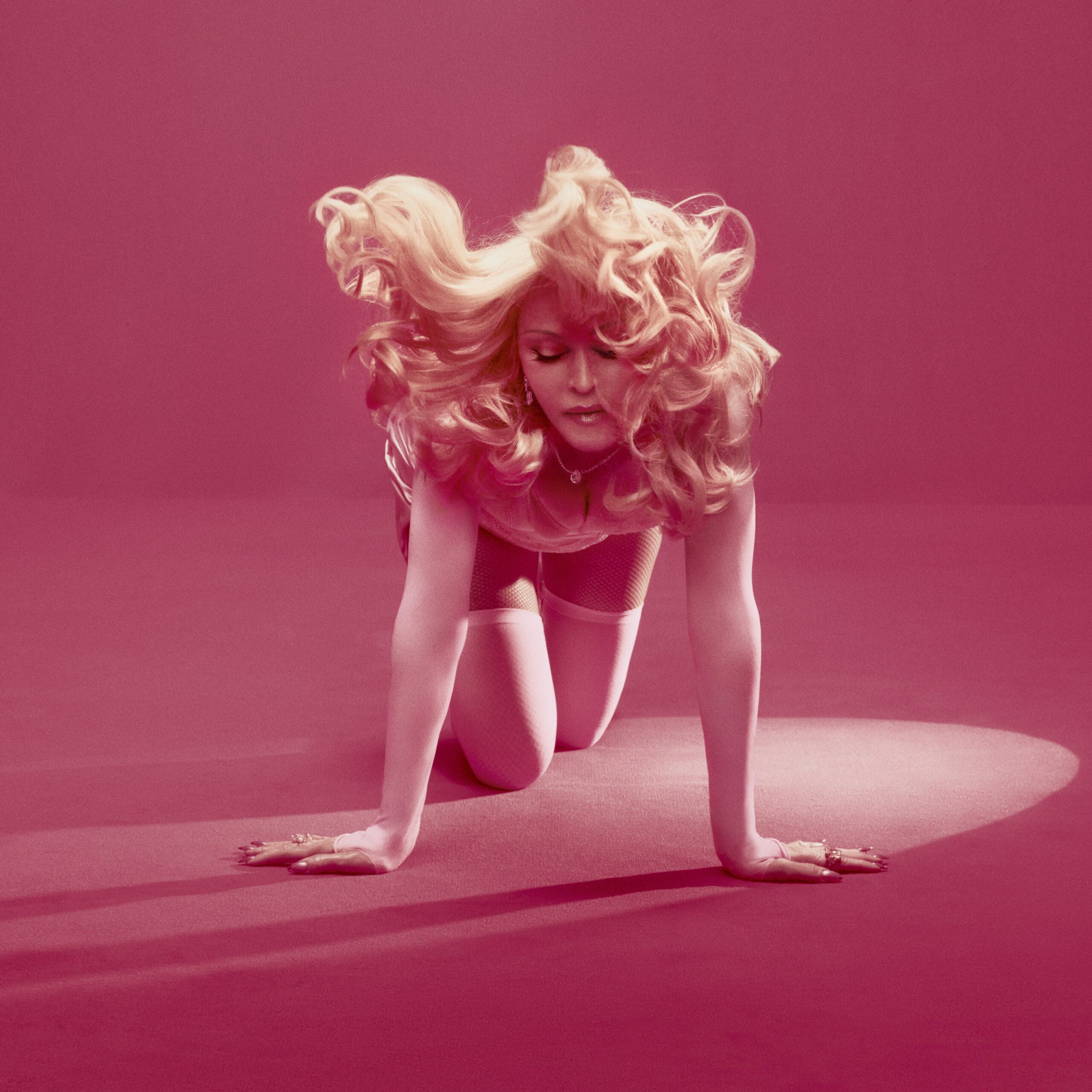
And Madonna is still not letting her age define her fashion, posing in a blue leotard, fishnets, a silver jacket and shades in a defiant photo to promote the record.

The Vogue singer confirmed she will release her first record in seven years this July — Confessions On A Dance Floor: Part II Credit: AP
Madonna guest DJ’s with producer Stuart Price Credit: instagram/madonna

A music insider said: “Madonna has locked in for this project and it’s not at all what you’d expect from any other woman who is nearly 70.

“It has roots in New York house music and rave culture and her record label believes it will usher in a whole new generation of fans.

“Confessions 1 showed Madonna at her coolest and, after straying into other genres on her last few albums, this feels wonderfully authentic.”

Madge is yet to release the album’s first single, but she has been steadily building a Gen Z fanbase, who have been discovering her back catalogue.

Last month, her 1985 chart-topper Into The Groove returned to the Top 20 after going viral on TikTok.

Cruz Beckham, KSI, Aitch and Sam Thompson were among those who shared videos of themselves dancing to the song 41 years after it was a No1 hit.

Madge is yet to release the album’s first single, but she has been steadily building a Gen Z fanbase, who have been discovering her back catalogue Credit: Getty
Sabrina Carpenter said: ‘She’s so lovely and so exactly how you expect her to be — just, like, so magnetic’ Credit: Getty

And she is heavily tipped to make a live return tonight at the buzziest festival of the year alongside one of the world’s hottest young pop stars, Sabrina Carpenter, 26.

The Espresso singer will headline the second weekend of Coachella in California and has extended her set by ten minutes, further fuelling industry whispers that Madge may join her on stage.

It would be the veteran pop star’s first performance there in 20 years. She delivered a memorable set in 2006 following the release of her first Confessions album.

Sabrina idolises Madonna as a blueprint for pop music — and there are suggestions they may have collaborated on a song.

In 2024, she paid tribute to Madge by attending the MTV VMAs in a vintage strapless gown previously worn to the Oscars by her musical hero in 1991.

Sabrina said of Madonna last year: “She’s so lovely and so exactly how you expect her to be — just, like, so magnetic.”

Madonna plays an epic set at Coachella Festival 20 years ago Credit: Getty
Stuart Price was musical director on her 81-date Celebration Tour in 2023 and 2024 Credit: Getty

Many of the current crop of pop starlets have named Madonna as their top inspiration.

Dua Lipa has said her 2020 No1 album Future Nostalgia was heavily influenced by Madge, and she worked with her on a remix of her song Levitating.

Jade Thirlwall said last year: “She is one of the best pop stars we will ever get.”

In fact, Madge has such pulling power, supermodel Kate Moss, plus film stars Benedict Cumberbatch and Gwendoline Christie, are set to have cameos in her comeback music video.

It is a sea-change from previous generations who used Madge as a verbal punching bag.

When asked to name the most overrated person in pop, Lily Allen once said: “Madonna. She might have meant something once, but I don’t know many people my age who care.”

A Smash Hits magazine headline pouring scorn on her style back in 1993 Credit: Unknown

And Lady Gaga insisted she could not be compared to the megastar, explaining: “I play a lot of instruments. I write all my own music . . .  I’m a producer. I’m a writer. What I do is different.”

On Wednesday, Madonna released a snippet of upcoming track I Feel So Free, which heavily samples the 1989 house tune French Kiss by Lil Louis.

The original features more than two minutes of sex noises — something which seems fitting for pop’s most notorious provocateur.

For Confessions II, Madonna has teamed up again with British producer Stuart Price, who was musical director on her 81-date Celebration Tour in 2023 and 2024.

Meanwhile, her boyfriend, former footballer Akeem Morris, 29, is regularly seen dancing and larking around with her in videos on TikTok, where her clips have been liked over 45million times.

Last month, Madonna was in Venice shooting for the second series of the Apple TV show The Studio, in which she will appear opposite Julia Garner.

But now it is full steam ahead with her music, after re-signing with Warner Records — her label for the first 24 years of her career.

Madonna said of her new album: “When Stuart Price and I first started working on this record, this was our manifesto: We must dance, celebrate and pray with our bodies . . .  To rave is an art. It’s about pushing your limits and connecting to a community of like-minded people.”

Gen Z will not know what has hit them . . . 

Source link

‘Sent to be killed’: How Russia forces migrants to fight in Ukraine | Russia-Ukraine war News

Kharkiv, Ukraine – Hushruzjon Salohidinov, 26, was working as a courier in Saint Petersburg, Russia’s second-largest city and President Vladimir Putin’s hometown.

But last year, the Tajik man and practising Muslim says he was arrested while picking up a parcel which police claimed contained money stolen from elderly women.

Salohidinov says he never interacted with the alleged criminals, but nevertheless spent nine months in the Kresty-2 pre-trial detention centre about 32km (20 miles) from the city, while a judge refused to start his trial because of the “weak evidence” against him.

But instead of releasing him after that, prison wardens threatened to place him in a cell with HIV-infected inmates who, they said, would gang-rape him – unless he “volunteered” to fight in Ukraine.

“They said, ‘Oh, you’ll put on a skirt now, you’ll be raped,’” Salohidinov, who has raven black hair and a messy full beard, told Al Jazeera at a centre for war prisoners in northeastern Ukraine, where he is now being held, having been captured in January this year by Ukrainian forces.

Using a carrot-and-stick tactic, the wardens also promised him a sign-up bonus of 2 million rubles ($26,200), a monthly salary of 200,000 rubles ($2,620) and an amnesty from all convictions.

So, in the autumn of 2025, Salohidinov signed up as he “saw no other way out”.

Officials in Kresty-2, St Petersburg’s prosecutors’ office and Russia’s Ministry of Defence did not respond to any of Al Jazeera’s requests for comment.

Russia migrants
Hushruzjon Salohidinov, 26, a Tajik man forced to fight for Russia, at a prisoner of war facility [Mansur Mirovalev/ Al Jazeera]

‘Catching migrants’

Salohidinov is just one of tens of thousands of labour migrants from Central Asia coerced by Russia to become soldiers as part of the Kremlin’s nationwide campaign, according to human rights groups, media reports and Russian officials.

Hochu Jit, a Ukrainian group that helps Russian soldiers surrender, has published verified lists of thousands of Central Asian soldiers like Salohidinov.

“They are literally sent to be killed, no one considers them soldiers that need to be saved,” the group wrote in a 2025 post on Telegram. These soldiers’ life expectancy on the front line is about four months. “Losses among them are catastrophic,” the group reported.

With its low birthrate and large oil wealth, Russia has for years been a magnet for millions of labour migrants from ex-Soviet Central Asia, especially Tajikistan, Uzbekistan and Kyrgyzstan.

The campaign by the Kremlin to force Central Asians to fight in Ukraine dates back to 2023 – the year after Russia’s invasion of Ukraine – when police began rounding up anyone who didn’t look Slavic and charging them with real or imagined transgressions such as a lack of registration, expired or “fake” permits or blurred stamps on their documents. Sometimes, migrants are simply bused straight to conscription offices.

In 2025, Al Jazeera interviewed another Tajik man who said he had been detained with an expired work permit and was then tortured into “volunteering” while being subjected to countless xenophobic and Islamophobic slurs from his officers.

Migrants say they are abused, tortured and threatened with jail or having their entire families deported.

“The main way of recruiting as many migrants as possible is pressure on them with threats of deportation,” Alisher Ilkhamov, the Uzbekistan-born head of the London-based Central Asia Due Diligence think tank, told Al Jazeera.

Sometimes, migrants are simply duped.

Salohidinov said one serviceman in his squad was an Uzbek who “didn’t speak a word of Russian” and was fooled into “volunteering” while signing papers at a migration centre.

In their reports about “catching” migrants, officials frequently use derogatory terms about them, and also when they describe men who have obtained Russian passports but skipped registration at conscription offices. Since the Soviet era, such registration has been obligatory for all men and, since 2024, a newly naturalised Russian national can lose his citizenship if he fails to do it.

“We’ve caught 80,000 such Russian citizens, who don’t just want to go to the front line, they don’t even want to go to a conscription office,” chief prosecutor Alexander Bastrykin said in May 2025, referring to the migrants’ alleged patriotic sentiments.

He boasted that 20,000 Central Asians with Russian passports were herded to the front line in 2025.

The year before, he said 10,000 Central Asians had been sent to Ukraine.

Such remarks resonate with the Russian public that lives with “a high level of xenophobia in the stage of fear and helplessness,” Sergey Biziyukin, an exiled opposition activist from the western city of Ryazan, told Al Jazeera.

“For them, such phrases from Bastrykin are a form of sedative.”

What makes Central Asians easy targets is that they hail from police states, which depend on Moscow politically and economically, observers say.

“While the migrants are frightened into signing contracts, their motherland doesn’t really pay any attention,” Galiya Ibragimova, an Uzbekistan-born, Moldova-based regional expert, told Al Jazeera.

Despite hefty signup bonuses and relentless propaganda, the number of Russians who want to fight in Ukraine fell by at least one-fifth this year, and Moscow will strive to recruit more Central Asians, she said.

Russia conscripts
Russian conscripts called up for military service attend a ceremony marking their departure for garrisons from a recruitment centre in Saint Petersburg, Russia, on October 15, 2025 [Anton Vaganov/Reuters]

‘We’ll have our fingers broken’

After signing the contract and leaving his debit card with his sign-up bonus with his parents, Salohidinov was sent to the western city of Voronezh for three weeks of training that did little to prepare him for the war.

“We just kept running back and forth with guns,” he said.

Their drill sergeants, he says, told the conscripts that the standard-issue flak jackets, helmets, boots and flashlights were of subpar quality and urged them to pitch in a million rubles ($13,100) each for “better” gear.

The incident corroborates reports on dozens of similar cases in Russian military units.

Salohidinov was ordered to work in a kitchen – and was verbally abused and beaten for the slightest transgression.

Of 28 men in his unit, 21 were Muslims – but their ethnic Russian officers ignored their pleas not to have pork in meals, repeating a decades-old practice of ignoring religion-related dietary restrictions dating back to the Soviet army.

The commanders demonised Ukrainians, telling them “that if we surrender, we’d be tortured, have our fingers broken, maimed, get [construction] foam up our a**, have our teeth yanked out one by one, have our arms broken”, Salohidinov says.

In early January this year, the conscripts were bused to the Russia-occupied Ukrainian region of Luhansk.

Salohidinov says he was tired, frightened and disoriented – Ukrainian drones were “always” above them and a grenade explosion nearby damaged his left eardrum.

Ukraine prisoner swap
A woman waits for news about a missing loved one as some Ukrainian soldiers return during a prisoner of war (POW) swap, amid Russia’s attacks on Ukraine, in an undisclosed location in Ukraine, on April 11, 2026 [Thomas Peter/Reuters]

‘Glad I got captured’

On the fourth day of his service, Salohidinov was ordered to run beyond Ukrainian positions as part of Russia’s new tactic to send two or three servicemen to infiltrate the porous front line.

The mission was suicidal because the terrain was open, dotted with landmines and the bodies of dead Russian soldiers, while Ukrainians were firing machineguns and flew drones above them.

“I ran and ran and saw we were being shot at,” he said. “Me and my commander decided to surrender voluntarily instead of dying for nothing.”

They detached their assault rifles’ magazines, raised their hands and yelled they were surrendering.

What followed was “a calm feeling, beautiful”, he said. “They fed us, let us have a smoke, gave us food and water and even cake.”

Now, Salohidinov hopes to return to Tajikistan and panics at the thought of being made part of a prisoner swap – these have taken place several times each year – and returning to Russia because he would be sent back to the front line.

Tajikistan and other Central Asian nations have never endorsed Russia’s war in Ukraine, but nor have they openly criticised it.

In August 2025, Tajikistan’s Prosecutor General Habibullo Vohidzoda declared that no Tajik national would be charged for fighting in Ukraine.

So, what Salohidinov needs right now is an extradition request.

“I’m even glad that I got captured, because I’m not fighting anyone now, not risking anything,” he said. “I’ll even say thanks to Ukraine for taking me prisoner.”

The Tajik embassy in Kyiv did not respond to Al Jazeera’s request for comment.

Source link

Inside Molly-Mae’s plan to ‘Fury-proof’ her £22m fortune with prenup ‘cheating clause’ & spare mansion after Tyson snub

AFTER becoming the first Love Island star to make Forbes’ 30 Under 30 list, savvy Molly-Mae Hague has a nifty plan to ‘Fury-proof’ her finances.

With a staggering £22million in the bank and a second baby with boxer fiancé Tommy on the way, there are whispers that a watertight pre-nup featuring a “loyalty clause” is in the works.

Molly-Mae took Tommy Fury back a year ago after their shock split in 2024… but she’s determined to make sure he’s 100% dedicated to herCredit: Getty
Tommy surprised Molly with a romantic Ibiza proposal in 2023Credit: Instagram

Molly, 26, took the shamed boxer back a year ago after cheating allegations against him led to their shock split in 2024.

And while her £600,000 engagement ring is back on and she is pregnant with a sibling for three-year-old Bambi, there is no sign of a wedding on the horizon.

Now sources close to the business-minded beauty say she is determined to make sure Tommy, 26, is 100 per cent dedicated to her before tying the knot.

An insider explained: “Molly has more than proved she knows a thing or two about making money and she knows full well what marriage could mean for her wealth.

“There’s been talk that she would want him to sign a contract before they commit any further, which would have a cheating clause and allow her the access to her money she feels she might need to move on.”

Molly was already a popular influencer when she appeared on Love Island in 2019 and met Tommy but her rise to super stardom and extreme wealth after the show is unprecedented.

‘Old home is back up’

She did not just land a fast fashion deal like other Islanders. She became Pretty Little Thing’s creative director, earning a reported £400,000 per month.

She also secured deals with huge companies such as L’Oreal and Fairy.

And recently she is said to have been paid more than £2million to collaborate with Adidas.

Molly would not be the first woman to demand a cheating clause.

Catherine Zeta Jones is said to have included a similar one in the pre-nup prior to her 2000 wedding to fellow actor Michael Douglas.

It was reported that if he ever cheated he would have to pay ­Catherine £1million for every year they were married.

Justin Timberlake and Jessica Biel also allegedly have a clause in their prenup that would entitle Jess to £400,000 if he cheated.

It was late in the summer of 2024 that Molly dumped Tommy, telling her followers: “Never in a million years did I think I’d ever have to write this.

“After five years of being together I never imagined our story would end, especially not this way.”

The couple had been planning to move into a £5million mansion but after Tommy was accused of kissing a blonde beauty on a lads’ holiday to Macedonia, Molly stayed put in her £4million Cheshire home and booted Tommy out.


There’s been talk that she would want him to sign a contract before they commit any further, which would have a cheating clause


Insider

But the couple were seen sharing a kiss at a New Year’s Eve party and officially reunited in May 2025.

And while they now live in their new family home, we can reveal Molly has kept hold of her first mansion, which is solely in her use.

Molly was already a popular influencer when she appeared on Love Island in 2019 and met TommyCredit: Rex
Molly has started wearing her huge engagement ring againCredit: mollymae/Instagram..

Our insider said: “Molly has been very reluctant to sell the Cheshire home and knows it’s probably wise to keep hold of it as a back up.”

At the start of the year fans were shocked when Molly quietly announced she was expecting another baby with Tommy, and was already six months pregnant.

Pals say the star opted to have another child with Tommy because she was keen that her children all have the same father.

Another source adds: “Molly is very traditional in lots of ways and Tommy is, of course, also very old school, so they wanted to have more children together.”

A blended family was not an option for Molly, the source said.

Molly’s dream

“She wants her kids to have ­consistency like she had growing up. It’s one of the main reasons she got back with him.”

Casting doubt over their relationship, Tommy’s dad John Fury said in the family’s Netflix show, At Home With The Furys: “Molly is a lovely person, but she can’t help the life she’s been brought up in, it’s contrasting to ours.

“But she’s put up with some s*** hasn’t she, so fair play to her – she’s not a bad girl.

“I’m also going to be there to support them. Let’s see what happens.”

Tommy’s half brother and former world heavyweight boxing champion Tyson has also been critical of Molly’s career.


She wants her kids to have consistency like she had growing up. It’s one of the main reasons she got back with him.


Source

In the new series of his show he appears mocking of influencers, warning his daughter Venezuela: “If you are an influencer your private life is non-existent. Look at Tommy and Molly. If you want to make money out of doing nothing, ­basically privacy doesn’t exist.

“I’ve done a million-thousand achievements. I can write a table full of them. We’re just in an era where you can get famous for what? Getting our tits out on telly.”

But Molly, a dropout from the London College of Fashion, has come a long way since Love Island.

Forbes might have put Tyson at No3 in its ranking of the highest-paid athletes in the world, with his earnings being estimated at £120 million, but Molly is hot on his heels (wearing her sold-out Adidas shoe collection).

Pals say Molly opted to have another child with Tommy because she was keen her children all have the same fatherCredit: Instagram
Molly has been very reluctant to sell the Cheshire home to keep it as a back up, revealed our insiderCredit: Refer to source

Source link