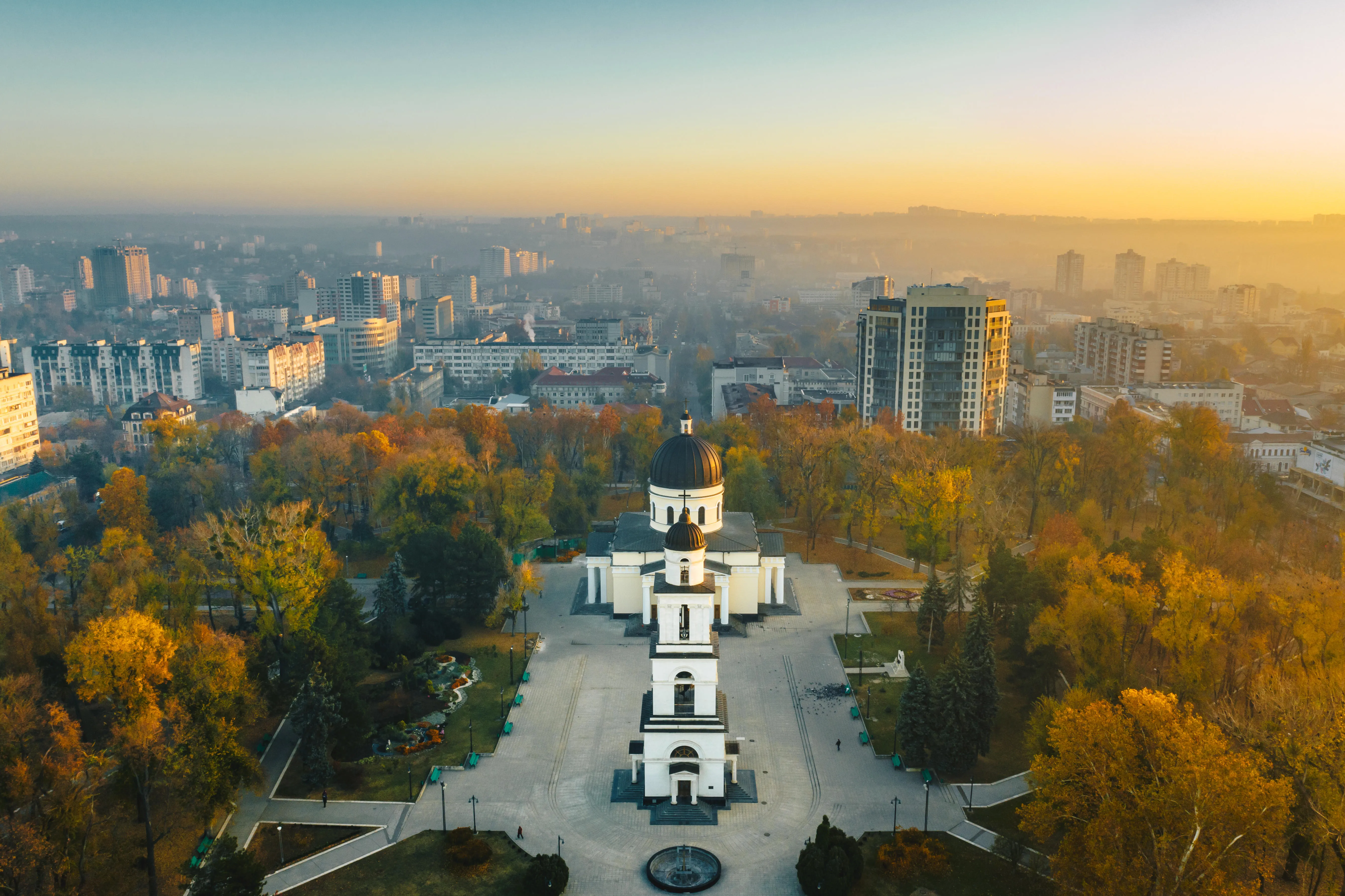
Wizz Air is launching new flights to MoldovaCredit: Alamy
The route will operate year-round, four times a week on Mondays, Wednesdays, Fridays and Sundays.
Flights will take off on October 25 and cost from £36.99.
Sign up for the Travel newsletter
Thank you!
Yvonne Moynihan, Managing Director at Wizz Air UK, said: “We’re delighted to give our UK customers another opportunity to discover Chișinău with the launch of our new service from London Gatwick.
“Moldova is one of Europe’s emerging destinations, offering everything from fascinating history and vibrant culture to some of the world’s oldest wine regions.
Sun reporter Felix Naylor Marlow visited the country last year and here are his thoughts:
“Despite sharing a continent, Chisinau feels a world away from the UK with its stark Soviet design
“Once there, pretty much every local I met was shocked to see a tourist doing a spot of sightseeing.
The flights will launch from London Gatwick on October 25Credit: AlamyThey will the operate year-round, four times a weekCredit: Alamy
“Their confusion was understandable though, as the largely forgotten country of Moldova – squeezed between Ukraine and Romania – holds the title of ‘least visited country in Europe’.
“Chisinau is a city that has been through a lot – a mind-boggling 70 per cent of it was destroyed in wars across the twentieth century.
“During my stay in the city in early March, as the UK was seeing temperatures of 6C, I was wandering around the city in a T-shirt thanks to highs of 24C.
“I spent a very pleasant evening ordering several martinis in the bar’s cute cocktail garden, enjoying the unseasonably warm weather.
“If you fancy somewhere completely different, cheap as chips, and where people are genuinely pleased to see you, book a flight.”
WE pause half way up the hill, observing the perfectly still lake below that offers an exact reflection of the lush trees and craggy mountain scape behind.
Normally, I’d be pulling out my phone to snap a picture of the stunning scene. But it’s back at the hotel, locked away and I couldn’t be happier about it.
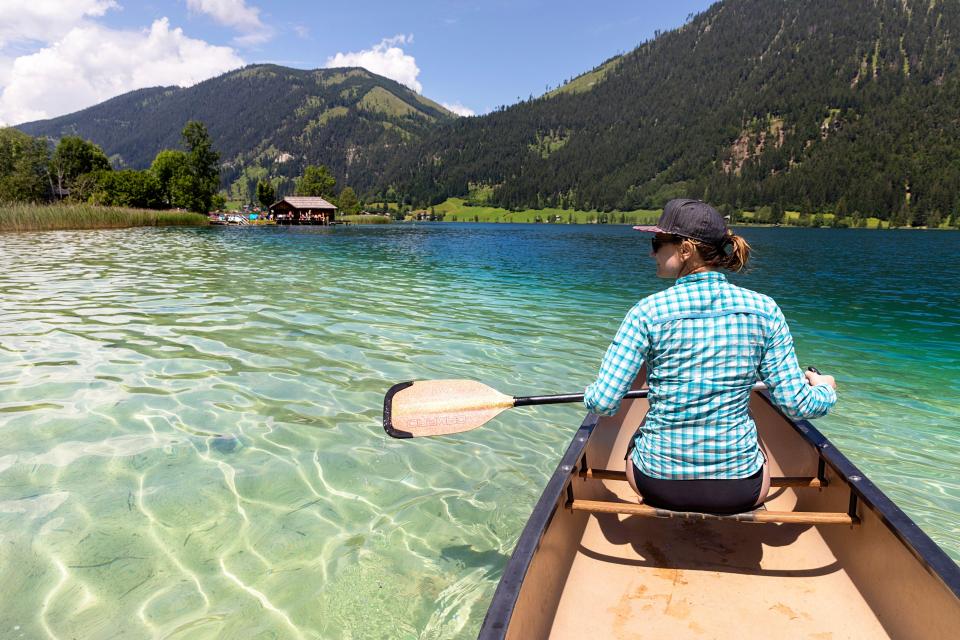
The crystal-clear waters of Weissensee Lake in CarinthiaCredit: AlamyThe Hotel der Paternwirt is a beautiful building with gorgeous rooms overlooking mountains and has a wellness area with saunaCredit: paternwirt.at
I was on a digital detox in Austria’s breathtaking Lesachtal Valley, where the alpine air, jaw-dropping scenery and tranquil sounds of nature are guaranteed to melt even the most anxious traveller’s stresses away.
Before our stunning hike, I’d ticked off a soothing yoga session, tucked into a lunch of traditional Austrian pasta with a hearty potato filling, and relaxed in a jacuzzi under a clear sky. And without the distraction of our devices, my five fellow detoxers and I felt fully present in every moment.
Sign up for the Travel newsletter
Thank you!
According to a recent study from the Austrian Tourism board, 53 per cent of Gen Z Brits spend over four hours in front of their screens outside of work or education and as a result three in five don’t feel well-rested in the morning.
I can’t argue with those stats. After a couple of days without my phone, I was sleeping significantly better. Plus, my entire group had noticed a difference in their mood and stress levels.
This feeling of zen was amplified by our stay at the Hotel der Paternwirt, a beautiful building with gorgeous rooms overlooking mountains and a wellness area with sauna offering the same panoramic views.
Even the delicious breakfast buffet had wellbeing at the forefront with unusual additions like lavender butter.
Despite how jam-packed our itinerary was, life here seemed slow. And being in a rural setting, we felt that we were able to simply breathe.
The nearby meadows blooming with daisies and cornflowers were a great place to unwind. Or you could visit the Weissensee – a crystal-clear alpine lake in Carinthia, around 90 minutes from the hotel – which was worth the drive for the scenery alone.
The region is also home to the Michelin-starred Die Forelle, which serves up some of the freshest fish caught from waters nearby.
If you’re not into fish but still want to sample some traditional grub, the set dinner at Hotel Zum Weissensee is worth a go. Each of the five courses was perfectly executed with star dishes being the pickled elderleaf buds, celeriac cannelloni and plum sorbet with fennel greens.
Even on my final and rather gloomy morning in the Austrian alps, I couldn’t help but appreciate the sheer beauty of this region.
The clouds were slowly drifting behind the mountains, making the views in front of me look like an impressionist painting.
So, I’d managed to conquer a solid five days without my phone. But did I miss it? Apart from having the ability to take photos with ease, not one bit.
Being surrounded by nature and tranquillity definitely had some impact. And I no longer felt an uncontrollable urge to check my notifications every ten minutes. Not when the views were this good.
GO: AUSTRIA
GETTING THERE: Ryanair flies from Stansted to Salzburg from £38 return. See ryanair.com.
Rooms at Hotel der Paternwirt cost from £184 per night. See paternwirt.at. For more info, see austria.info.
IF YOU are looking for your next European city break, then look no further as the best spots on the continent have been announced.
From popular Spanish spots to Italian hidden gems, the best 15 cities in Europe have been named – though it is bad news for the UK that didn’t feature on the list at all.
Florence in Italy has been named the best city in Europe by Travel + LeisureCredit: Alamy
Travel + Leisure’s World’s Best Awards are decided by readers’ votes and this year over 661,000 people took part.
Coming out on top is Florence in Italy, scoring 89.48 out of 100.
Sign up for the Travel newsletter
Thank you!
Deputy Travel Editor Kara Godfrey, who has previously visited the city, said: “There is no better place to go for art lovers, with Florence being home to famous works from Michelangelo, Botticelli and Leonardo da Vinci.
“You can also dine like a king, with slices of pizza for €1.50 (£1.29) and pasta dishes from €5 (£4.29).
“All of the major attractions are a short walk from each other although if you really need a break, you can book an electric golf-buggy eco-tour that traverses the narrow roads.
“Something unusual to keep an eye out for is Florence’s wine windows – ordering a glass of vino through a tiny hole in the wall was created as a way to socially distance during the plague in the 17th century.”
Then in second place is Prague, in the Czech Republic – nicknamed ‘jewel in the crown of Europe’ – scoring 88.89 out of 100.
Prague in Czech Republic came in second placeCredit: AlamyThe city is known for having the largest castle in the worldCredit: Getty
One Sun reporter who previously visited the city said: “Prague may be best known for its beer, but hillside winery Vini ní Altan is a great option.
“There are great views from inside the intricately carved wooden gazebo, and children can burn off some energy in the vine-strewn park below.
“Prague boasts the largest castle in the world — effectively a small town on top of a hill.
Rounding out the top three is Salzburg in Austria, scoring 88.31 out of 100.
Rounding out the top three is Salzburg in AustriaCredit: GettyThe city is known for being the home of the famous film The Sound of MusicCredit: Getty
The Sun’s Laura Purkess said: “Salzburg, the home of Mozart and The Sound of Music, sits in Austria’s beautiful Eastern Alps.
“While most of us associate the Alps with snow- caps and skiing, this city makes an ideal summer holiday destination — and it’s affordable.
“If you’re a keen hiker, it’s relatively easy to get from the city centre into the mountains which are filled with stunning, tree-lined trails that take anywhere from 15 minutes to three hours to complete.
“Hardcore fans of The Sound of Music should swap the free walking tour for a proper guided one of the film sets that takes you to locations beyond the city centre, including Church Mondsee, where Maria wed the Baron.”
Porto, Portugal and Ljubljana, Slovenia – nicknamed the ‘green jewel of Europe’ – then followed to round out the top five.
Two spots in Spain featured on the list with Seville in 10th and Madrid in 13th.
A couple of Spanish cities also featured on the list as wellCredit: AlamyAnd a lesser-known Italian gem did tooCredit: Alamy
Seville is the capital of Spain’s Andalusia region and is known for its Moorish architecture as well as UNESCO World Heritage Sites.
As for the Spanish capital, Madrid, you can head to a number of museums and Royal Palaces.
Two spots in Italy also featured on this list with Rome in seventh, and for a lesser-known Italian spot, head to Siena which featured in 14th.
The medieval city found in Tuscany, boasts a UNESCO-listed historic centre, where you can head to Piazza del Campo – the main square – and Duomo di Siena – a cathedral with black-and-white marble.
And places like Funchal – nicknamed the Hawaii of Europe – snuck into the top 20.
Europe’s best cities, according to Travel + Leisure
AS a family, we absolutely love a theme park holiday – it’s a chance to escape everyday life – and, if we’re honest, the adults probably need that just as much as the kids do.
Whether it’s white-knuckle rollercoasters, splash zones, storybook castles, safari adventures or pint-sized rides for mini adrenaline junkies; Europe has a theme park for it all.
I travel for a living and have found the most family-friendly theme parks in Europe
But when you consider ticket prices, crowds, endless queues and the familiar challenge of keeping every age group entertained, choosing the right destination can feel less like a holiday and more like a logistical marathon.
I’m a travel expert and mum-of-two and I love sharing tips on my page Instagram@thetravelmumon how to travel the world without spending a fortune.
Here are my pick of Europe’s best family theme parks that strike a balance between adventure and convenience, and how to enjoy them without the stress.
Plus, the best cheap accommodation to stay in while you’re there.
Europa Park, Germany
Europa park has 21 themed lands and over 100 attractions to exploreEuropa is Germany’s largest theme park and even has a waterparkCredit: Getty
At Germany’s largest theme park, and Europe’s second largest (behind Disneyland Paris) – you’re absolutely spoilt for choice.
There’s 21 lands all themed on a different country, with world-class rollercoasters, over 100 attractions and 20 different shows.
It’s also home to waterpark, Rulantica, where you could easily spend a day in itself. Here there’s more rides and slides, as well as a toddler splash pool and a spa area for those over twelve years old.
The scale of this park, which costs Adults (12+) €67.00 (£57) – €76.00 (£65) and Child/Senior: €56.50 (£47) – €65.00 (£55) for a one-day ticket, means you’re best to explore it over a few days – stay at one of the park’s six hotels – and it’s better suited to families with older children and teens.
Getting there: 6.5 hour drive from Calais.
The nearest airports are Strasbourg, Baden Baden and Basel.
Flights:Ryanair: London Stansted to Baden Baden – return flights August 6 to August 8 August 2026 (summer holidays) from £107 per person.
Easyjet: London Gatwick to Basel – is another route often offering cheap fares.
Accommodation: Stay on-site at the new Riverside Western Lodge – a comfort plus room coming in at £1,035.50 for a family of four, on a bed and breakfast basis for three nights in October half term (October 26-29).
Kids will love the Wild West themed rooms, the free shuttle ‘Rust’ bus makes getting around easy and, as a hotel guest, you get VIP early access to the waterpark – Rulantica.
On a budget? The on-site ‘Tipi Town’ offers a variety of glamping and lodge options – some are shared ‘dorm’ style, and some are private, but with shared bathroom facilities. From €172 (£147) for a 4-bed tipi this August, or alternatively, bring your own tent and pitch up in the Europa park campsite from €59 (£50) a night.
The savings can be substantial compared to the on-site hotels, but it’s worth noting that some options require you to bring your own bedding.
Staying on-site guarantees you access to best price park tickets, and free parking across all the accommodation types.
Our top tips:
Book accommodation early
Utilise budget airlines and for best prices be flexible on which airport you fly into as they’re all an easy 1-1.5 hr drive from Europa Park
Buy tickets in advance online to save money
Use the park app to plan your day
Take advantage of the excellent baby facilities onsite
Bring refillable water bottles
Plan for two full days in the park (three if doing Rulantica).
Efteling, Netherlands
Efteling is one our favourite theme parks to visit – especially with young childrenCredit: Jen CarrEfteling is a fairy-tale inspired theme park in the NetherlandsCredit: Efteling
One of our personal favourites to visit with our two young children, this fairy-tale inspired park with tickets ranging from €40-€56 (£34-£48), does a great job of catering to a wide range of people.
It blends rides, gentle attractions and some great rollercoasters, with beautifully detailed storytelling.
Families love the enchanting Fairytale Forest, while older children will enjoy thrill rides like Baron 1898 and Python.
The on-site accommodation is fab and, if you do want to spend more than one day in the park, it’s worth pricing up an overnight stay as it can work out better value as you typically get park tickets for both your arrival and departure days included.
Getting there: Three-hour drive from Calais.
The nearest airports are Eindhoven and Amsterdam Schiphol, with fights from £27 return.
Getting to the Netherlands from the UK is easy – whether you prefer to drive, fly or take a ferry – you’ve got plenty of options.
Accommodation: Staying off site – we love Guesthouse Hotel Kaatshuevel – it’s not onsite but it’s within walking distance to Efteling and is perfectly designed for families.
Think spacious rooms with bunk beds for the kids, pancakes for breakfast and a rooftop garden terrace with mini golf and games.
It’s affordable too – in October half term you can get rooms from £135 per night.
In the summer, I’d recommend Bosrijk Village, woodland cottages dotted around in a pretty forest setting – with playgrounds and little streams, perfect for cooling off.
There’s an indoor pool complex too. I also loved the Efteling Grand Hotel which opened in August 2025 and has a cosy fairytale vibe – which really adds to the magic when visiting Efteling in the colder months.
Our top tips:
You’ll want at least two full days in the park – three would be ideal
If staying onsite – use your early entry to do the big attractions before the queues build
Download the app for site map, queue times and route planning
Pack for all weathers – the Netherlands (just like the UK!) can be unpredictable
Plan your lunchtime to avoid busy times – eat at 11.30am or 14.00pm – the popular restaurants get busy
Don’t skip the shows – great for giving little legs a break.
PortAventura World, Spain
You get everything at PortAventura – it’s a theme park and waterpark in oneCredit: Jen CarrYou can stay on-site at its hotels with easy access to the park and it’s quieter on weekdaysCredit: Alamy
Located on Spain’s Costa Dorada, PortAventura World combines a major theme park, waterpark and Ferrari Land resort in one destination, along with six on-site hotels.
The theme park area is divided into six lands, each with its own atmosphere and character.
One thing we did notice is that the height requirements were higher than we have seen anywhere else, so make sure you take this into account.
There is still plenty to do for younger visitors, including the Sesame Street themed land.
We stayed in the Wild West themed Colorado Creek hotel when we visited, having booked our stay as a package from the UK – with flights, transfers, accommodation and park tickets included, it felt so easy.
On The Beach currently has a package holiday including flights, hotel and park tickets for four nights from £303pp for a family of four in August.
If you’re able to travel off-peak, it was noticeably quieter on weekdays than weekends, and another tip we learnt was that, as far as theme park fast passes go, they were relatively good value here.
For instance, On the Beach has the same 4-night offer in early September from £218pp, for a family of four.
Tickets to just the park cost £45 euros per adult and £36 for kids for two days, and also allow access to Ferrari Land.
Getting there: The nearest airport is Reus, followed by Barcelona El Prat.
Flights: Ryanair, EasyJet and Jet2 both fly from London Stansted or Manchester to Reus.
For example, you can fly with Ryanair from Manchester to Reus from 27th July to 30th July for just £65.98 return, excluding luggage.
Accommodation: The onsite hotels start from €130 (£112) per night, and come with their own swimming pools and park tickets included.
They can also be booked as a package with Jet2Holidays too.
For example, a family of four can stay onsite at the 4* Hotel Gold River in October half term on a half board basis for £3,411 – which is a great price considering it includes your flights, transfers and theme park tickets for everyday you’re there.
Our top tips:
Travel off-peak – it was noticeably quieter on weekdays compared to weekends
Avoid July / August (if you can) – it’s busy and it gets hot!
Express passes offer good value here, compared to other theme parks
If staying onsite – retreat back to your hotel and make the most of the pools or air con during the hottest part of the day.
Puy Du Fou, France
Puy du Fou has no rides but is still very entertaining for familiesCredit: AlamyThe theme park has previously been voted the best in the world, twiceCredit: AFP via Getty Images
Puy du Fou is different from the other theme parks on our list, as there’s no rides.
Instead, all the action centres around 20 spectacular historical shows, featuring Viking battles, Roman gladiators, birds of prey, sword fights, thundering horses, fire and unbelievable stunts.
While the shows are all spoken in French, most people say it doesn’t matter as they’re so visual, but you can listen to a translation via a headset.
If you’re thinking this doesn’t sound like your thing, Puy du Fou (tickets from £38.25 (€46) for adults and kids ages 3–11 from £27.67 (€33)) was voted best theme park in the world twice.
It’s best suited to families with children aged six and over.
There’s a range of themed accommodation on site, or plenty of places to stay nearby, as you need at least two full days there to ensure you can see everything, especially as some of the shows happen after dark.
The park is huge, so prepare for long days and a lot of walking.
Use the app to map out your day in advance as you want to arrive at the shows around 30 minutes before they start to ensure entry.
It might not be your traditional theme park, but if you enjoy theatre, history and live action, immersive experiences – it’s definitely one for the list.
Getting there: It’s a six hour drive from Calais. Or the nearest airport is Nantes.
Ryanair and easyJet both serve Nantes airport from London airports, with flight prices as low as £37 return in October.
Unless you only plan on visiting Puy du Fou, you’d be best hiring a car if travelling to France by plane.
Accommodation: If you’d like to stay onsite then I strongly advise you book accommodation as far in advance – especially during the summer holidays – with prices starting at around €60 (£51.62) per person per night.
Nearby towns like Les Epesses and Les Herbiers have plenty of accommodation available on booking sites and are just a few kilometres away from Puy du Fou.
Eurocamp has two sites within an hour’s drive of Puy de Fou Castel Camping La Garangeoire or Château La Forêt, which would make for an easy way to combine a visit here with a longer family break in the area.
You can stay for a week at the latter for a family of four in the summer holidays for just under £600.
Our top tips:
Download the official app and map out your day in advance – the site is huge
Comfortable shoes are a must
Arrive at shows 30 minutes before the start time to secure your space
Allow for two full days in the park
Book restaurants in advance – they get busy
LEGOLAND Billund, Denmark
My family and I prefer Billund’s Legoland to the one in the UKCredit: Jen CarrLegoland Billund is considered one of the best LEGOLAND parks in the worldCredit: Alamy Stock Photo
Built beside the original LEGO factory in Denmark, Legoland Billund is widely considered one of the best LEGOLAND parks in the world.
We actually prefer the park in Billund to the one in the UK.
Packed with interactive attractions, mini cities and creative play zones, it perfectly suits younger families and tickets cost from 349 DKK (£40).
The atmosphere is relaxed, clean and easy to navigate, with plenty of rides children can enjoy together with parents.
Staying in one of the themed hotels adds extra magic for younger children.
Ideal for ages two to 12, particularly primary school-aged LEGO fans.
Whilst Billund is a fairly small place, you can also tie in a trip to Lalandia Waterpark, Lego House and Wow Park.
Getting there: The nearest airport is Billund.
Billund Airport couldn’t be any closer to Legoland – it’s just a five minute drive or bus away.
However, since Ryanair stopped flying there, flight options are more limited – you can fly directly with British Airways or Norwegian from Heathrow, Gatwick and Edinburgh.
We found return flights with British Airways from Heathrow to Billund 2nd to September 7 for less than £104 return.
The next best option is to fly to Copenhagen and take a three-hour drive or train from there.
This could be a great excuse to explore Copenhagen too, we think it’s one of the best city breaks you can do with kids.
Accommodation: For the full Lego experience, you need to go all in and stay onsite at Legoland.
There’s a choice of accommodation, similar to the Windsor park – Legoland Hotel, Castle Hotel plus cabins and glamping barrels.
A night in September including park tickets at the Legoland hotel for a family of four is around £415 in total.
We’d recommend using the Legoland short breaks website – as it brings up the availability and prices of not only all of the onsite accommodation but also off site options too – some of which can include your park tickets.
Just remember to consider how far away you want to be from the park – and factor in the cost of car hire or public transport.
Our top tips:
Don’t just focus on the rides, there’s so much more to do here – two full days would be ideal
Packed lunches are allowed to be brought into the park and a great way to save money
Denmark’s weather can be unpredictable – you’ll want to pack layers, waterproofs and suncream at most times of the year
Always book your tickets in advance – it’s never the best price at the gate on the day
Energylandia, Poland
Energylandia in Poland has some thrilling rides and rollercoasterCredit: InstagramYou can easily get to Energylandia by heading to KrakowCredit: Energylandia
Poland’s largest theme park has fast secured a spot as one of Europe’s biggest thrill-ride destinations, known for rides like Hyperion – one of Europe’s tallest, and Zadra with its huge vertical drop.
It boasts the joint largest number of roller coasters (20) at any theme park around the world.
However, there’s still plenty to do for those looking for a more gentle experience, with dedicated areas for younger children, as well as an open-air water park included within the entry price 169PLN (£34) for kids up to 140cm and from 209PLN (£46) for anyone over 140cm.
Compared with other parks, Energylandia often comes up as one of the more budget-friendly options.
The park is do-able in a day, especially if you’re able to visit off-peak, but two days would give you a more relaxed experience – especially if you’re catering to multiple ages.
With many regional airports flying to Krakow, you can really shop around for a great deal on flights – great if you’re keen to keep costs down.
For example, we found Wizz Air flights from Gatwick to Krakow from September 8-11 for under £80 return.
Accommodation: Stay at Western Camp, just 1km away from the park – about as close as you could get. You can walk in less than 20 minutes or there’s a free shuttle.
There are often offers when booking accommodation here which include entry tickets and even a fast pass.
From Wild West themed wagons, log cabins – perfect for larger families, to tipis and even house boats – wooden lodges on stilts over the lake, it’s the perfect place for a unique and memorable family stay.
Prices start from £60 per night, and include a buffet breakfast.
Our top tips:
The waterpark is included in the theme park entry fee – so remember to pack swimwear
The food onsite here is very reasonably priced – but queues for food can be long at peak times, so plan for an earlier or later lunch
It’s a huge site with lots of walking between areas, so wear comfy shoes!
Download the app to see live queue times
Buy your tickets online – not only is it cheaper, but you’ll get in quicker too
Tivoli Gardens, Denmark
Tivoli Gardens in Copenhagen is one of the oldest amusement parks in the worldCredit: Jen CarrIt’s a beautiful spot filled with classic family ridesCredit: Alamy
One of the world’s oldest amusement parks, Tivoli Gardens combines vintage charm with modern attractions right in the heart of Copenhagen, and is said to have provided Walt Disney with some of his inspiration for Disneyland.
Unlike some of the other theme parks included in this guide, UK visitors tend to include Tivoli Gardens as part of a city break rather than as a dedicated theme park holiday.
It’s a unique place to visit, with shows, classic rides, and a few larger coasters all within beautifully landscaped gardens.
It’s not on the same overwhelming scale as some of the parks, and its range of attractions within a relatively compact area makes it a great option for all ages.
Entry tickets to the park and rides cost tickets cost 249DKK (£28) for kids aged 1-7 years and 499DKK (£57) for anyone 8 and upwards.
But you can also buy park access tickets for to 190DKK – 95DKK (£21 – £10) (but kids under three go free and children aged 3-7 are half price).
But that only gets you access to the gardens, events and concerts – you also need to pay for a ride pass 349 DKK (approx. £39) for visitors 8 and older, and 174 DKK (approx. £19) for children aged 1–7.
separately – which is great if not all of your family want to go on the rides.
Tivoli Gardens really comes to life after dark, the twinkling lights adding to the cosy, magical vibes – for extra atmosphere, we’d recommend visiting during their popular Halloween and Christmas event weeks too.
Getting there: The nearest airport is Copenhagen.
Just a short 1.5 hour flight will land you in Copenhagen, we found bargain £55 return flights from Manchester with Ryanair from November 17-20 – which would make for a great trip to kick off the festive season.
Accommodation: A great family-friendly hotel just 10 minutes out of the city by bus, or an easy 20- minute walk is Tivoli Hot. This place has a huge indoor play area – complete with bouncy castle and games room for older childr -n, along with a swimming pool.
Based on a family of three sharing a room, a three-night stay between November 17-20 would be around £660 in total – which includes a fab buffet breakfast.
Our top tips:
Combine Tivoli Gardens with a city break to Copenhagen – but remember it isn’t open all year round
Visit at night for extra magic – although expect it to be busier!
You can leave and re-enter the park during the day (handy if you want to hunt out cheaper food options)
Bring refillable water bottles – tap water is free and safe
Parque Warner Madrid, Spain
Parque Warner is perfect for fans of superheroes
The perfect destination for superhero fans, Parque Warner Madrid is themed around DC Comics and Warner Bros across its five areas.
With six rollercoasters, Looney Tunes attractions for younger visitors, and live stunt shows, there’s plenty to do for all ages.
Being a slightly under the radar option, you can find lower queue times than at some of the larger European parks we’ve featured, particularly if you’re visiting midweek and outside of Spanish holiday periods.
It’s worth noting though that the park, with tickets costing from €32.90 (£28) doesn’t open until midday – but stays open late.
With Madrid temperatures soaring over the summer, you might want to factor in some time out of the heat.
If you fancied more than a day trip here, there’s a separate waterpark attraction that’s open over the peak summer months.
Whilst there’s no hotels on site, there’s a range of accommodation nearby, from apartment rentals to hotels.
As you’d expect, reaching the capital of Spain is straightforward from the UK, with flights from most major cities.
We found return flights with Ryanair from Birmingham for just £72.98 in October half term – leaving on October 24 and returning on October 29.
Accommodation: Whilst there’s no hotels on site, there’s a range of accommodation nearby, from apartment rentals to hotels.
The best location will depend on whether you are intending to combine the park with other activities in the local area.
I’d recommend either staying centrally to Madrid and using the official shuttle bus (easier than public transport which requires a train and a bus), or in Pinto – the closest town to the park.
In Pinto, the 4* Princesa de Eboli has family rooms for around £150 per night, and is 13kms away from Parque Warner.
Our top tips:
Plan your route to the park in advance – especially if relying on public transport
Arrive at opening time when it’s quieter, and head for the big attractions first
Don’t skip the shows, note down the timings and plan your day accordingly
The water park is seasonal and separate to the park – it does sell out on hot days – make sure to buy tickets in advance
The shops stay open after the rides close – so save souvenir shopping to the end of the day to maximise ride time
Gardaland, Italy
Gardaland is in one of the prettiest locations in Europe – Lake GardaCredit: Jen CarrIt has high thrill rollercoasters and children’s rides tooCredit: Getty
Set beside Italy’s Lake Garda, Gardaland combines family rides, themed areas and impressive scenery in one of Europe’s most picturesque locations, with tickets costing from €44 (£37).
The park caters well to younger children, but also offers major attractions including Oblivion and Blue Tornado for thrill-seekers.
Many UK families combine a visit with a relaxing Italian lakes holiday, making it ideal for mixed itineraries.
Nearby hotels and campsites provide plenty of family accommodation options. Best suited to children aged four to 15.
Getting there: The nearest airport is Verona, with flights from low-cost airlines like Ryanair, EasyJet and Jet2.
Milan Bergamo and Venice airports are also within travelling distance, so you can definitely shop around for the best flight times and prices.
You can fly from London Stansted to Verona with Ryanair on October 1-6 for just under £83 return.
Accommodation: The original Gardaland resort, Gardaland Adventure and Gardaland Magic all have access to an outdoor swimming area.
Two nights in a Princess themed room within the Gardaland resort at the end of August is around £800 for a family of four, but does include two days entry to Gardaland, plus entry to the Legoland Water Park and to the Sealife Centre.
The highly rated Bella Italia Eurocamp is just a 10-minute drive away – where a week’s stay in a safari lodge tent would cost £1326 for a family of four, arriving on August 24.
Our top tips:
Arrive early to make the most of the quietest (and coolest) part of the day
Visit midweek and avoid Italian public holidays for fewer crowds and shorter queues
Ditch the flip flops – many rides require closed footwear!
You will get wet on the water rides – bring a spare change of clothes and a towel!
If you’re arriving by public transport, the nearest train station is Peschiera del Garda – there’s a free shuttle service to the park from there
These are the nine best family-friendly theme parks in Europe
Ultimately, there’s no single “best” theme park in Europe for families – it all comes down to what kind of trip you’re looking for.
Whether you want all-out thrills, immersive storytelling, toddler-friendly rides, spectacular live shows or a more relaxed atmosphere, there’s a park to suit every style of family holiday.
Above all, remember that the moments your children will remember most probably won’t be the perfectly planned itinerary – but the excitement of choosing the next ride together, the shared laughs, and the feeling of escaping normal life.
Many holiday hotspots have seen anti-tourism protests thanks to overcrowding and the issues it causes for locals. But the European island that’s the most overcrowded wants to pack more visitors in
The island has a tourist to local ratio of seven to one(Image: Getty Images/iStockphoto)
The most overcrowded island in Europe has seen no over-tourism protests – and bosses want more visitors.
A study has named the Continent’s most packed island, based on tourism density, and it’s not in the Balearics or Canaries.
In fact, the local tourism board wants to bring more visitors to the island and triple the tourism sector’s contribution to the economy. The plans would see the island’s visitor numbers rise from just over four million last year to 4.5 million by 2035.
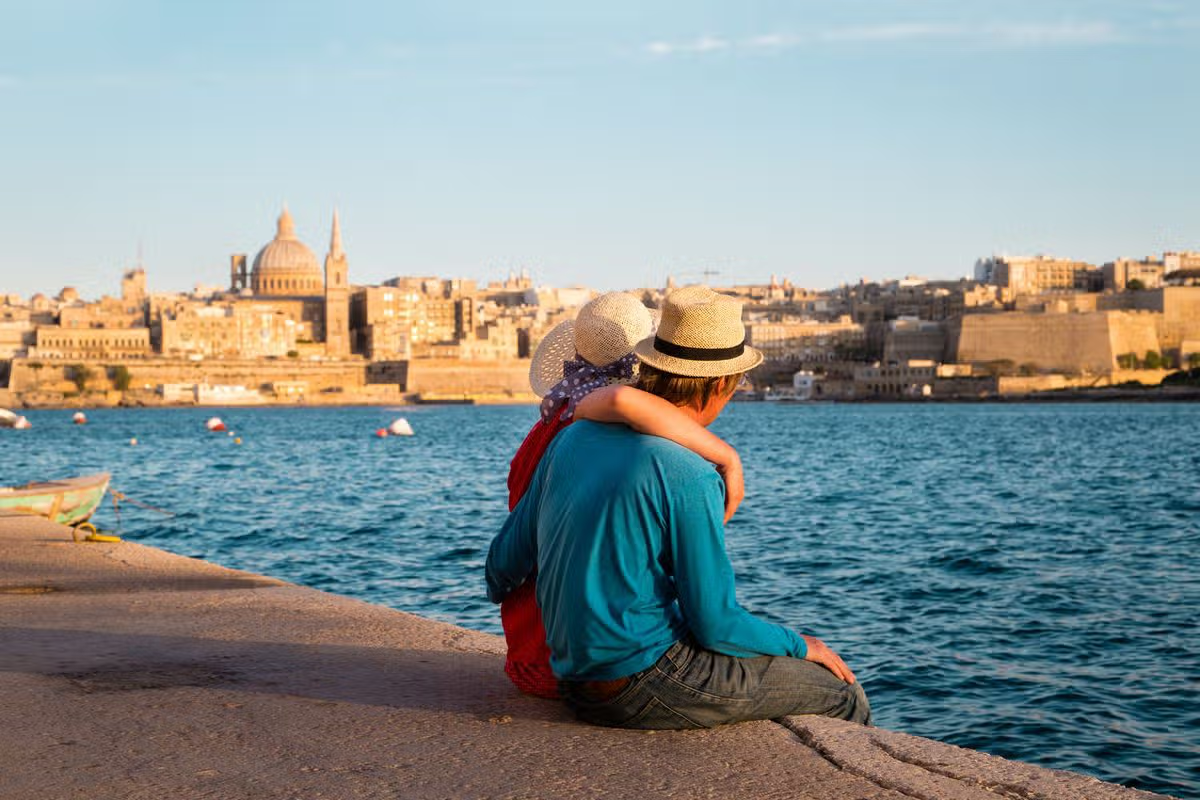
With a total area of 316 km², Malta is roughly a fifth of the size of London and has a population of around 575,000, about a third of which are foreign residents. This means there’s a ratio of roughly seven tourists for each resident, so locals are already outnumbered.
The study was carried out by BookRetreats.com, which “analysed the latest data from the European Commission, focusing on overnight stays in tourist accommodation per square kilometre (km²)—a measure of tourism density.”
While Mallorca (Majorca) had the most visitors out of the islands in the study, nearly 14 million last year, Malta’s mainland came on top as the most overcrowded island due to its relatively small size. Brits account for the largest number of visitors year-round, and the island has long been a winter sun destination thanks to its 16C days in January and a majority of the island being fluent in English.
The capital, Valletta, has become a popular spot for sun-soaked city breaks thanks to its colourful 16th-century architecture, and the ancient walled city of Mdina is also a hit with tourists thanks to its winding medieval streets. It’s also famous for its beaches, especially in the north of the island, which has turquoise blue seas and calm, shallow waters.
But there have been some measures put in place on Malta’s islands to help ease overcrowding. For example, the Blue Lagoon on Comino used to get daily crowds of up to 12,000 in the summer, and in response, authorities capped tourist numbers to the white sand beach at 4,000 a day. There have since been calls to halve this number to protect the delicate ecosystem.
The islands of Gozo and Comino came 14th on the list, meaning while they’re still overcrowded, they don’t have the same tourism density as Malta’s mainland.
Perhaps unsurprisingly, Spanish islands dominated much of the list of the most overcrowded spots, with Lanzarote, Ibiza, Tenerife, and Gran Canaria ranking highly. Greek islands including Corfu and Zakynthos (Zante), also made the top ten, as well as the Portuguese island of Madeira, which is also a winter sun favourite with Brits.
A WIZZ AIR pilot-in-training has revealed all about what it is like to work for the airline including the flying tips and tricks you need to know.
Having joined Wizz Air back in 2024 as cabin crew, Sebastien Harrison is now training to be a pilot through Wizz Air’s Cabin Crew to Captain programme.
Sign up for the Travel newsletter
Thank you!
And from spending years in the air, he has loads of tips for travellers.
When it comes to flying itself, the 20-year-old had many tips including where the best place to sit on Wizz Air planes.
He said: “The best seats in the plane for turbulence are on or about row 15; this is because if the plane is pitching up or dowduringne turbulence in the middle of the plane there is least movement.”
And for nervous fliers, Sebastien says: “If you are a first-time or nervous flyer, let the crew know as soon as you board.
“They are excellent at providing reassurance and will check in on you throughout the flight.”
And when it comes to managing tiredness when you reach your destination, Sebastien recommends not napping before your bedtime so you get solid sleep and avoid “pushing back the tiredness”.
He added: “Go to the gym at maybe 5pm because it’s going to make you tired and then you can go to sleep a bit earlier.”
And of course, there are a number of destinations Seb is excited to see and recommends visiting.
He revealed: “I’m very excited for the Greek destinations like Santorini, because obviously it’s an island with very beautiful weather and beautiful scenery.”
And if you want to head to a really unique destination then Seb recommends Tromso in Northern Norway.
He shared: “It’s in the Arctic Circle and it’s very beautiful, set in a valley surrounded by mountains.
“It is some of the best scenery I’ve seen in the world.
“You can see the Northern Lights, head skiing, spot whales and see reindeer – it’s just a very interesting place with loads to do.”
He added that the destination is also super unique because in the summer you get midnight sun, and in the winter you get polar night, where the sun remains below the horizon between late November and mid-January.
For a more beachy destination, Sebastien suggests heading to Catania in Sicily – which is Italy‘s sunniest destination.
He said: “There’s a volcano which you can see from the airport and the beaches are really cool.”
Having grown up only 10 minutes from Glasgow Airport in Scotland, Seb knew he wanted to one day become a pilot.
He said: “As a child I was always excited to literally leave the earth – you’re defying gravity.
“I think being able to literally fly planes is very rewarding.”
Then in 2024, his dream of working on planes came true as he got a job as Wizz Air cabin crew.
He said: “Being cabin crew has been a very useful experience.”
“Obviously I went into cabin crew knowing that I wanted to become a pilot and I just thought as cabin crew I would have the opportunity to speak to pilots a lot and really gain a lot of insight about the job.
“I knew that if I was cabin crew, I’d kind of see the job firsthand – it’s a very sociable job being cabin crew too.
“When I’m a pilot, it’s probably going to make me a better pilot as well because I’m going to understand what the cabin crew do as well, but some pilots they don’t 100 per cent appreciate it.”
“At the moment we’re only doing classroom theory training and we’re in the classroom for about four hours a day on average.
“There’s quite a lot of testing maybe about two or three tests a week just to make sure that you’re progressing – there’s 13 theory exams that you have to pass in total across around two years.”
Europe’s defense transformation is not a spending problem that more money will solve, rather it’s a doctrinal crisis, and the gap between the warfare Europe has been preparing for and the warfare Ukraine has demonstrated reveals that the continent’s most urgent investment is not in platforms but in fundamentally rethinking how its armies plan, target, and fight.
The Wake-Up Call That Came From an Exercise Field in Estonia
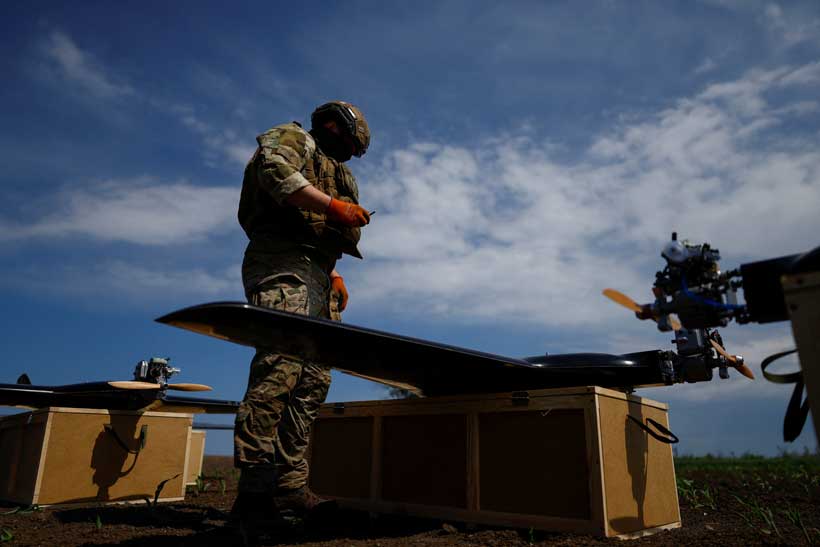
At Exercise Hedgehog 2025 in Estonia, roughly ten Ukrainian drone operators spent a day systematically destroying nearly twenty NATO armored vehicles in a simulated engagement. NATO forces tried to hide under tree lines. They parked armored vehicles in visible positions. They built command stations in exposed terrain. They did everything that Ukrainian soldiers have long since learned will get you killed. The Ukrainian operators, accustomed to battlefields where drone saturation is double what the exercise permitted, found it straightforward.
The exercise was designed to test readiness and interoperability. What it revealed instead was that NATO forces have not been forced by the realities of war to adapt the way Ukraine has. Movement patterns, command structures, and the basic assumptions about how to survive on a modern battlefield, all of it was calibrated for a threat environment that no longer exists. NATO’s deputy supreme allied commander in Europe, Air Chief Marshal Sir Johnny Stringer, said it plainly at a defense conference in London last week: “The threat we face is at 360 degrees.” The German army’s commander, Lieutenant General Christian Freuding, went further, saying that land warfare is “fundamentally changing” and that Europe must “fundamentally adapt how we will fight.” These are not politicians speaking. They are the senior military officials responsible for defending the continent, and they are saying, as clearly as their institutional language permits, that Europe is preparing for the wrong war.
To read the full analysis, please subscribe to our MD Briefing here
Stay ahead of the geopolitical week.
MD Briefing delivers expert analysis across five global fronts — the Indo-Pacific, energy, geoeconomics, European security, and the Middle East — every Monday morning. Free.
On The Beach’s Rob Brooks has highlighted a city he claims is the ‘Barcelona of Eastern Europe’ that boasts a stunning beach, vibrant streets and architecture, and restaurants that don’t require you to spend a fortune
The location has been described as the ‘Barcelona of Eastern Europe’ (stock)(Image: Patryk Kosmider/Getty Images)
If you’re yet a to book a trip abroad this summer, a holiday expert highly recommends the “best hidden gem beach holiday” in Europe, claiming it comes at a fraction of the price of the most popular resorts on the continent. Rob Brooks, who works for travel agent, On The Beach, took to TikTok with advice for those who’d appreciate all the perks of Barcelona, but without the cost.
“I’ve just found Eastern Europe’s Barcelona, and you’ve definitely never heard of it,” he began in a video. “So here’s some clues – it’s half the price, around a two-hour flight from the UK, it’s brilliant for families and it can even feel like proper luxury if you book smart.”
For anyone wondering where Rob could be referring to, he went on to tease that it’s not in Spain, Portugal, Turkey, Italy or France.
“One destination has suddenly landed on my desk after a sudden explosion in holiday searches,” he continued. “So I went away and did my research, crunched the numbers and dug through the data – and now I’m genuinely convinced this could be one of Europe’s biggest hotspots in a few years.”
Rob admitted that he had previosuly considered the destination a “rogue place” for a beach holiday, but that all changed when he saw the photos of it.
Content cannot be displayed without consent
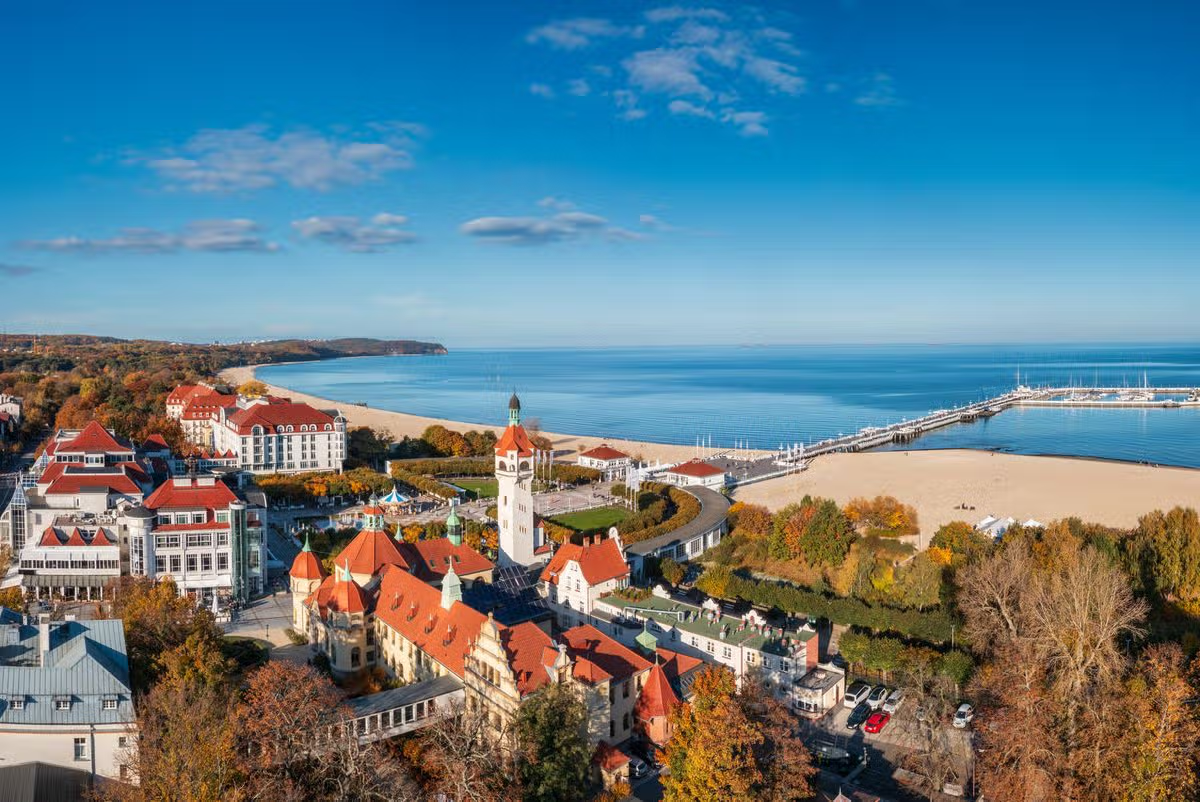
“It’s got a huge, golden sandy beach, it’s got loads of beachfront bars and restaurants… colourful streets, beautiful architecture and there’s loads of luxury hotels and a massive pier that stretches out right into the sea,” he enthused.
Rob said he then realised why comparisons are being made to Barcelona – only this location is “nowhere near as busy or expensive”, and hardly anyone is talking about it.
Direct flights from UK airports take as little as two hours and five minutes, with Rob finding one for as little as £36.
“It sounds much further away than it actually is, but what really caught my eye is how much variety there is there,” he explained. “You can spend the morning on the beach, wander around beautiful old streets in the afternoon, eat ridiculously well and eat gorgeous food without spending a fortune – and because spending money goes such a long way here, it feels way more luxury than it probably should.”
So where is Rob talking about? “Summer temperatures are sitting at up to 26 degrees… I really don’t think this place will stay a secret for much longer,” he said. “The more I looked into it, the more I realised that this location is only going to get bigger and bigger over the next few years.
“It’s Sopot – a gorgeous seaside town on Poland’s Baltic coast. I even found a deal here I genuinely might book myself.”
Rob closed by highlighting one particular deal – five nights at the Hotel Aqua beside the beach for just £265 per person – which includes flights from London Stansted Airport this September.
“You’re getting Barcelona’s beach culture, but for Poland’s prices,” he declared.
Sopot’s tourism website boasts online: “Sopot is one of the most charming places in Poland and a hugely popular Baltic resort. Here you’ll find not only abundant greenery, beautiful sandy beaches, and the soothing sound of waves, but also a rich history, spa architecture, and top-class hotels and restaurants.”
Writing in response to Rob’s video, one TikTok user exclaimed: “It’s a beautiful place, I was there in May. Gdansk is just along the way which is even better. Definitely worth a visit.”
A second person added: “Sopot is a beautiful town and so is neighbouring Gdynia. Both towns are within a short commute of the larger city of Gdansk, which is also a marvel. Very clean environment, moderate prices to eat out and drink and very well worth a visit.”
While a third wrote: “Sopot is stunning, we had a great time earlier this year. We stayed in Gdansk which is about 15 minutes by train. I couldn’t recommend both places enough.”
Estel Farrell-Roig travelled to Romania with Intrepid to take on a section of the Transilvanica Trail, a 1,400 kilometer long route that crosses Romania diagonally from Putna to Drobeta Turnu Severin
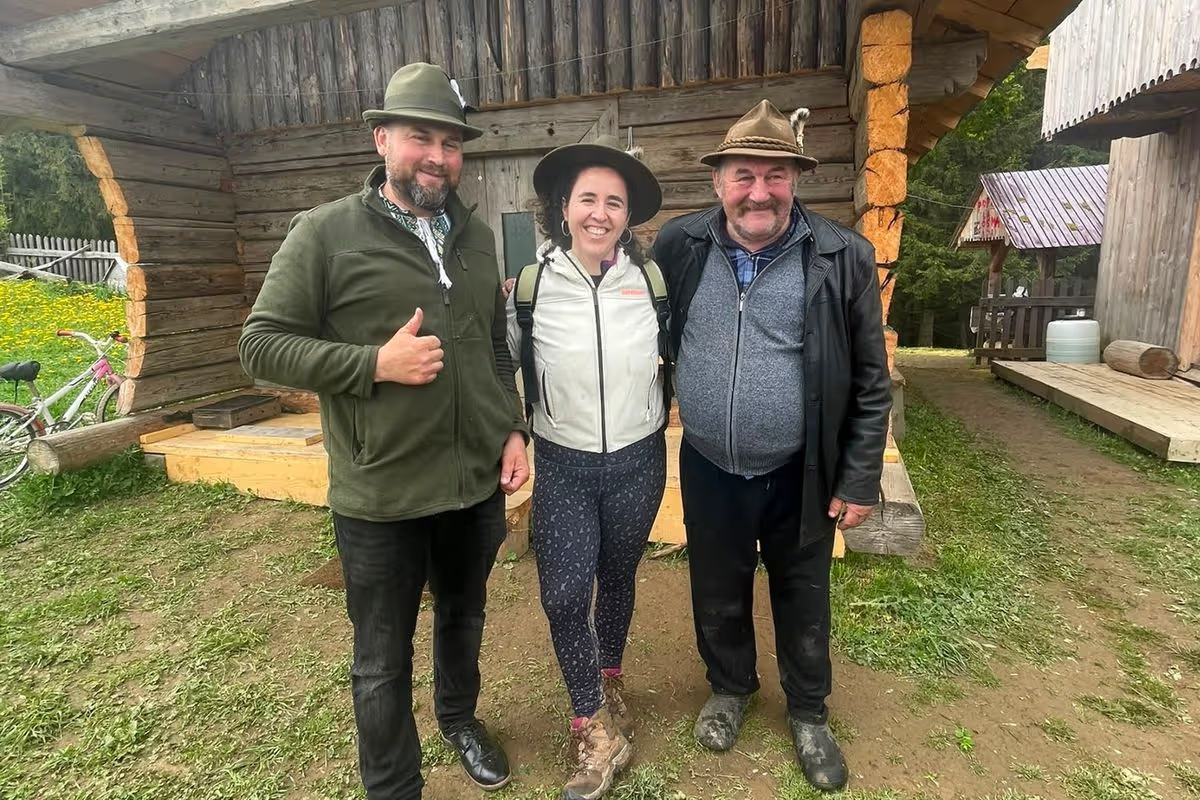
Me with a couple of hosts from one of the guesthouses where we stopped for lunch(Image: ReachPlc)
It’s not every year you turn 32. It’s also not every year you celebrate it by hiking around Romania.
Transilvanica Trail was sold to me as Romania’s answer to the Camino de Santiago, a walking route that stretches across northern Spain, which is enjoying a huge surge in popularity.
In its totality, the Via Transilvanica, or “the road that unites”, is a 1,400 kilometer long route that crosses Romania diagonally from Putna to Drobeta Turnu Severin.
As fun as that sounds, my journey was a little shorter. Guided by Intrepid, I was taking on five days of the route, managing around 10km a day. That might not sound like a lot, the idea of that much hiking made me nervous.
I needn’t have been.
What unfolded was a trip like no other, which left me desperate to go back for more.
Day 1
My alarm went off at 4.30am, ending a night at a Stansted Airport hotel. While this certainly felt brutal, the prospect of being on a flight without a three-year-old still seemed like a luxury to me. Compared to my usual journeys filled with Paw Patrol, drawing, toys and snacks, this was such an easy, smooth ride. I just slept.
Landed in Cluj-Napoca, trip leader Raluca bundled me into a minibus and we headed north.
Before setting off, we are fed (something the Romanians are very good at, as I will quickly learn). I loved the delicious pepper and mushroom soup with sour cream, while the roast chicken with potatoes was so full of flavour too. Little did I expect what a culinary journey I was about to embark on.
Day 2
Up at 8.30am after a good night’s sleep, I enjoyed a typical Romanian breakfast at the family-owned Pension Elegance at Guru Humorului.
The hotel itself is not pretentious – and not what we would probably class as a 4* hotel in the UK – but it is comfortable and homely. My room had a small balcony overlooking the gorgeous countryside. What else could I ask for?
First stop was the UNESCO-listed Sucevița Monastery. The painted monastery is home to 80 nuns and is gorgeous. Even having grown up in a country of Catholic churches, it was unlike anything I had seen before.
Afterwards, it was time to start hiking. The weather was a bit misty, but thankfully not rainy. Our hike started at Palma Pass checkpoint and led us through spruce forests. I found the hike on the first day rewarding and exciting; I felt pleased with myself for comfortably managing the 10km walk.
I was definitely ready for lunch by the time we stopped at Popas la Cosma, one of the guesthouses along the trail, famous for its authentic local dairy products made by shepherds. They could not have been more welcoming, showing us the accommodation and how they prepared the food. As well as the usual beds, there was an option to sleep in the hay barn.
We were served a delicious selection of meats and cheeses, as well as a yummy salad, but I am so glad I left room for dessert because the pancakes, filled with sweet cheese and blueberries, were incredibly moreish.
Day 3
A 45-minute drive away, we transferred to Sadova trailhead via Vatra Moldoviței. The second day of hiking – around 11km – was definitely the most challenging one of the three, most likely because the sunny, warm weather made the journey feel completely different from the previous day.
The process of walking through the woods, placing one foot in front of another, helped clear my head. By the end of our second day of trekking, I felt calmer and clearer-minded than I had in months.
The lunch stop at La Moara Bucovina restaurant was the best meal I had in Romania, without a doubt. Not only was the location breathtaking and the hosts incredibly warm and friendly, but the food was also excellent from start to finish. The highlight was a sarmale, a traditional Romanian dish consisting of stuffed cabbage rolls with rice and mince.
Our room for the night was at Hotel Dorna in Vatra Dornei, a ski resort town. Excited to be in a bit of a livelier place for the first time, I explored the beautiful, but quiet town before dinner.
Day 4
On our third day of hiking, we drove to the Mestecăni trailhead, where there is a small, ridiculously cheap souvenir shop. I bought two mugs, three painted eggs and a jigsaw puzzle for £10.
Despite it being our third day of walking, the day’s hike feels easier. Perhaps my legs had gotten stronger. The highlight was the wildlife we saw, including a frog and a couple of snakes.
The lunch spot was another idyllic guest house with staggering, far-reaching views. As well as serving scrumptious food, Gigi Ursu Chalet has a lovely terrace where you can sunbathe on a sunny day. Happily, the rays were shining for our visit, providing a perfect atmosphere for me to meet the two resident puppies and a gorgeous, friendly back cat.
Day 5
Our last day was another travelling day, driving about three and a half hours back to Cluj-Napoca. Having some tasty pasta for lunch in a sunny square, we had a bit of time to explore the city centre before having to head to the airport.
The Via Transilvanica may not yet compete with the Camino de Santiago or Via Francigena, the iconic pilgrimage that links Canterbury and Rome, it has something else. A rawness and a quietness that come from walking through parts of the world far from where most ever tread.
It was sadly time to head back to the UK, but this short trip will stay with me for a long time – and inspire me to go on more hiking holidays.
Book it
Intrepid Travel’s 10-day Hiking in Romania: Via Transilvanica Trail costs from £1,616pp which includes accommodation, ground transport, services of a local leader, guided hikes and some meals and other activities. Book at intrepidtravel.com or call 0808 274 5111.
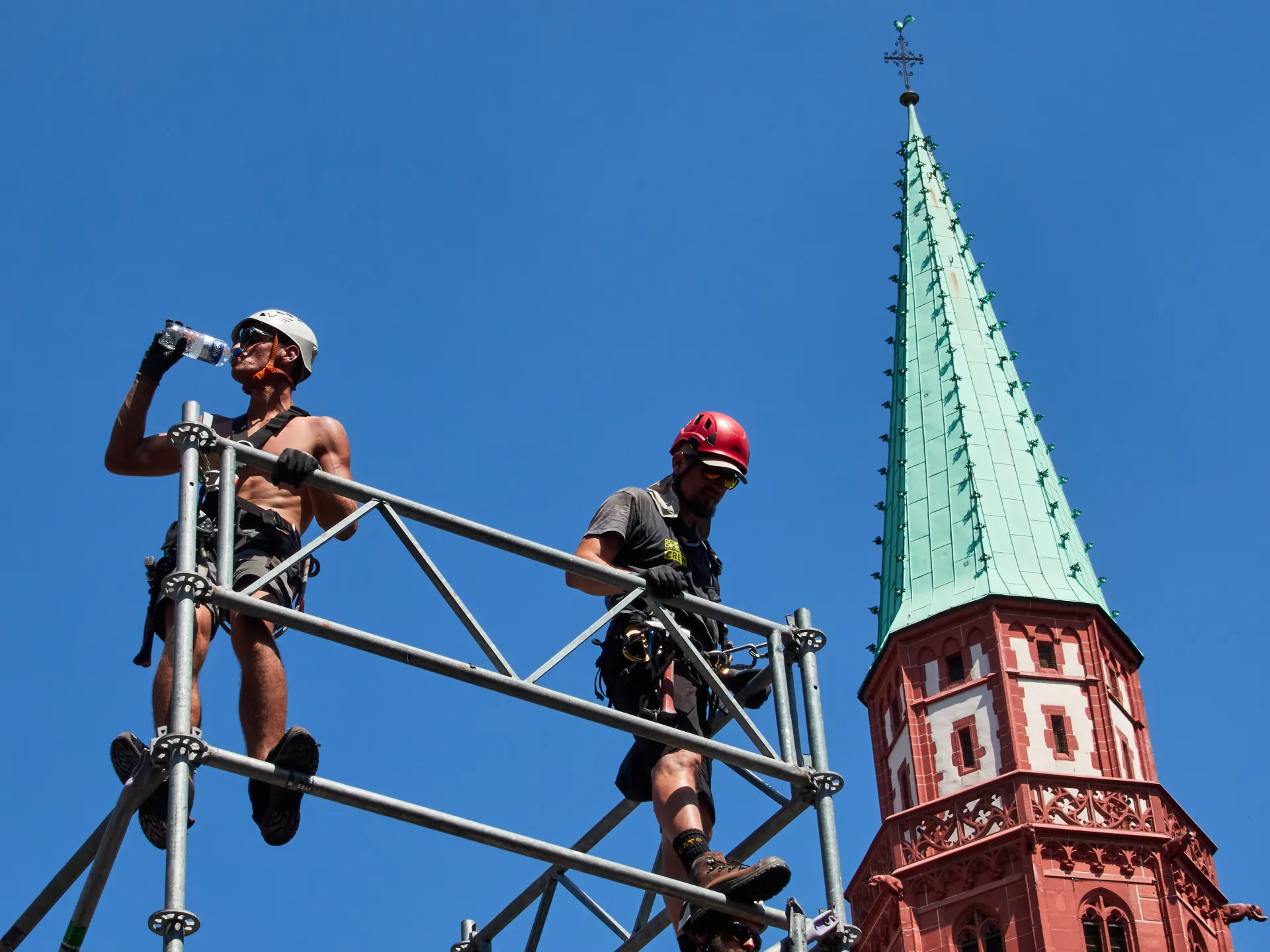
Temperatures in Europe hit a new high this summer, with hotter early-summer heatwaves triggering illness, deaths and the collapse of infrastructure across the continent.
Transport buckled on Sunday as temperatures hit 40C (104F) across Germany, the Czech Republic and Poland. In France, days averaging 29.8C (85.6F) – spiking to 44C (111.2F) in one town – gave way to storms, leaving an estimated 1,000 excess deaths behind.
Scenes like this may well be the new normal.
Last summer’s heatwave alone caused an estimated 2,300 climate-related deaths in 12 European countries, WWA says.
A study by World Weather Attribution (WWA) has found that intense heat on this level is now tens to hundreds of times more likely than it was in 2003, and was unheard of 50 years ago.
“Heat-related mortality is likely to remain a feature of Europe’s warming climate,” warns Dr Hans Kluge, the World Health Organization (WHO)’s regional director for Europe. Deaths have already risen by an average of 52 per million people annually since the 1990s, he told Al Jazeera – a trend he says shows little sign of reversing on its own.
So what does this mean for the future? Are these temperatures the new normal, and if so, why?
We asked the climate experts:
Is this really the new normal?
Yes, it certainly looks that way. According to WWA, heatwaves were generally about 3.5C cooler in June 1976, and 2C cooler even in 2003.
“Think of it like a race where the starting line has been moved much closer to the finish,” Dr Akshay Deoras of the University of Reading told Al Jazeera. Ultimately, this is down to global warming, he says.
Europe has warmed at roughly twice the global average since the 1980s, according to the European Commission’s climate change service, Copernicus.
Deoras says this amounts to “loading the dice” towards once-rare extremes.
WWA’s modelling goes further: at current emissions rates, an event of the magnitude of this summer’s heatwave is expected to occur every couple of decades – and today’s extremes are effectively a preview of what an ordinary summer could look like by the middle of the century.
Why is this happening in Europe now?
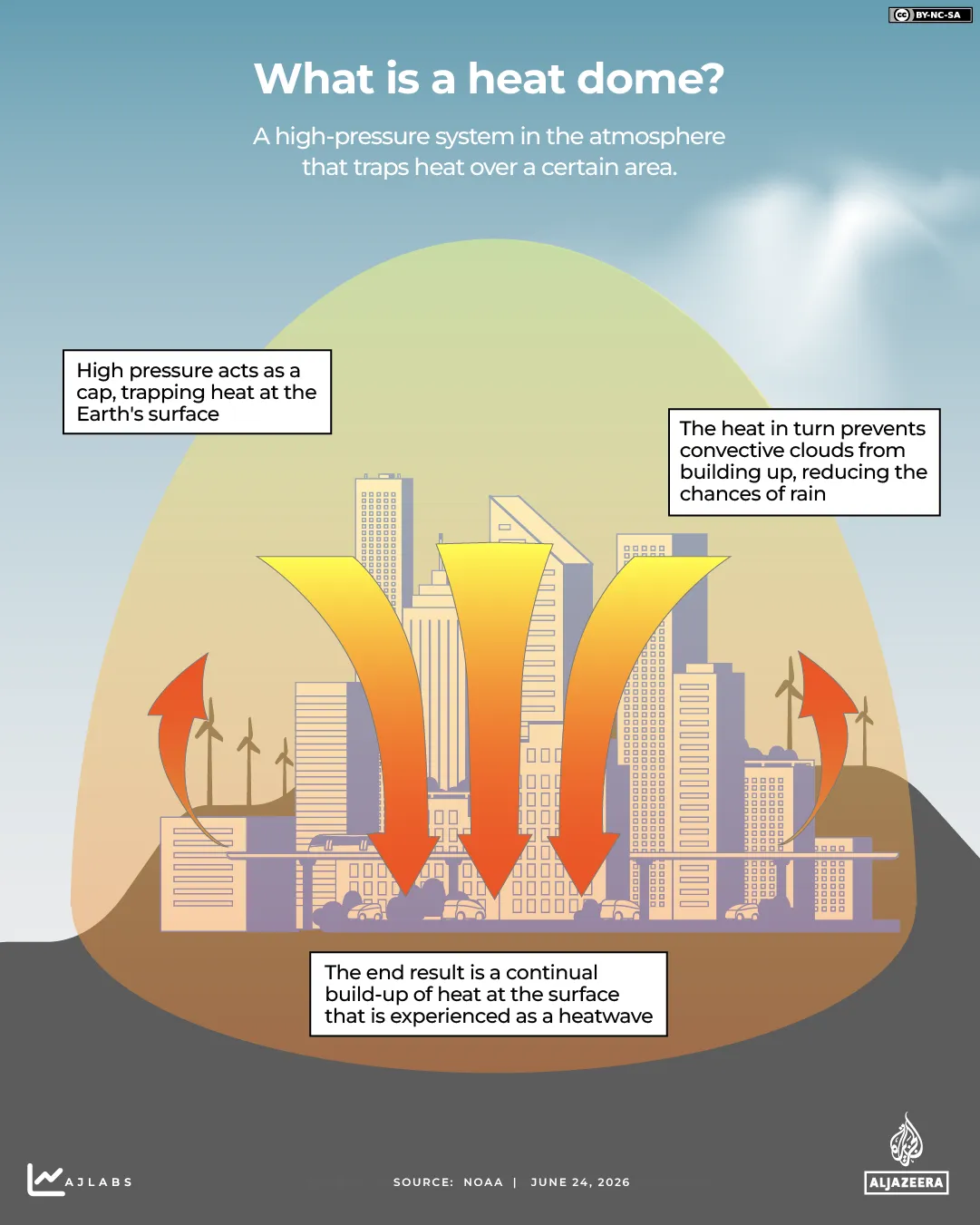
The immediate trigger is a stalled high-pressure system, or a “heat dome”, which traps heat in one concentrated area for days or weeks.
Heat domes aren’t new, but Europe’s already-shifted baseline means the same pattern now produces far hotter outcomes than decades ago, Deoras told Al Jazeera.
Professor Hannah Cloke of the University of Reading told Al Jazeera that’s because the warming behind new, extreme weather patterns comes from emissions released decades ago, and the climate system takes time to respond – so we’re feeling the effects now of pollution from the past.
Copernicus’s European State of the Climate 2025 report confirms this: more than 95 percent of the continent saw above-average annual temperatures last year, alongside record Alpine glacier loss and the highest sea-surface temperatures ever measured in Europe.
And because Europe is warming roughly twice as fast as the rest of the planet, that gap with the global average is projected to keep widening – meaning whatever the world experiences on average in the coming decades, Europe will likely see first, and worse.
Is this trajectory irreversible?
Partly. Some of the damage is permanent. Some of it isn’t – yet.
Take glaciers. Because the effects of pollution from decades ago are cumulative, “some of what we are experiencing this summer is already locked in”, Cloke says.
Alpine glaciers, which feed major European rivers, she says, have already shrunk past the point of recovery, and their contribution to summer river flow is “permanently reduced”.
Not everything is set in stone, however. “Every tonne of emissions avoided changes the odds of what comes next,” Cloke says.
What we do now, therefore, will decide the difference between summers that are simply hard to live with in the future, and summers that become “genuinely beyond our ability to cope with”.
Some resources, like groundwater in northern Europe, can still recover – “but the window to act is narrowing with each dry year”, she says.
What is this doing to human health?
The toll is already severe and likely to worsen.
The Lancet Countdown Europe calculates that there were 62,000 heat-related deaths across the region in 2024 alone, with projections showing a steep further rise by 2050 if we don’t make changes.
Much of the problem, Kluge told Al Jazeera, is architectural and largely unaddressed.
“Most of the housing stock across this region was designed for a colder climate – to retain heat, not shed it,” he said, warning that without large-scale retrofitting, deaths could keep climbing past 2050 regardless of how good warning systems become.
His prescription: treat heat as predictable, not an emergency.
“Governments need to plan for heat the way they plan for winter flu – as a recurring, predictable challenge requiring permanent infrastructure, not a one-off crisis requiring emergency improvisation.” The highest-return step, he added, is identifying who’s most at risk – often older people living alone – and reaching them before a heatwave hits, not after.
What else can be done?
Cloke points to two priorities: early warning systems that reliably reach the people who most need to be protected, and an overhaul of water infrastructure in Europe which has been built for rainfall patterns that no longer exist.
Deoras says emissions also still matter: cutting them won’t eliminate heatwaves, which are “a natural part of the climate system”, but doing so would make them “less intense, less frequent and shorter-lived”.
None of the experts who spoke to Al Jazeera describe this as hopeless.
They do warn that the window of opportunity for addressing the issue is narrowing: infrastructure can still be retrofitted, emissions can still be cut, warning systems can still be improved – if the decisions to do so are made now, rather than after the next heatwave.
What a “normal” European summer looks like in 2050 is still being written, they say.
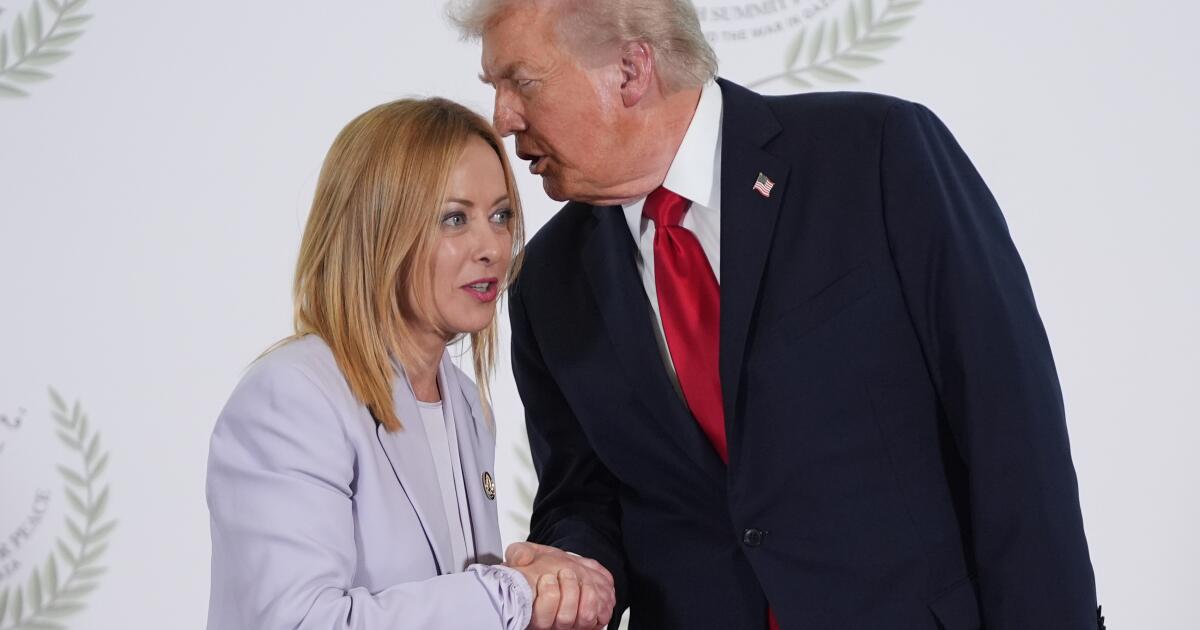
ROME — President Trump’s attacks on Italy’s premier have had an unintended consequence.
After Trump questioned Italy’s reliability as a wartime ally and claimed Giorgia Meloni had groveled for his attention, European leaders rallied to Meloni’s side, thawing what had been a frosty relationship over her hard-right political roots.
It is the latest example of how the often divisive American president is helping to draw Europe closer together.
European leaders are finding more reasons to coordinate on defense, tariffs and foreign policy as they confront wars in Ukraine and Iran, a ballooning trade deficit with China, and threats from Russia. That leaves Trump, who has often preferred to negotiate with European countries individually, with less ability to do so, analysts say.
“Most of the mainstream leaders realize that Europe is getting squeezed between China and America, and so, if not now, then when?” said Sudha David-Wilp, vice president at the German Marshall Fund. “They need to act as a bloc in order to maintain Europe’s place in the world.”
This newfound European unity could be tested next week at a NATO summit in Turkey.
European leaders rally around Meloni
Meloni’s spat with Trump has helped her strengthen ties with European leaders once wary of her party’s post-fascist roots.
A pivotal moment came in March when she wouldn’t allow U.S. bombers headed to the Middle East to use a base in Sicily without parliamentary approval.
For years before then, France and Germany often kept Meloni outside the small-group talks that helped shape Europe’s response to major foreign policy crises. That persisted into 2026 amid disagreements over the Russian war on Ukraine, including Meloni’s rejection of a proposal by Britain and France to send European troops there following a possible ceasefire.
But Trump’s escalating attacks on Meloni — who called Trump’s criticism of Pope Leo “unacceptable” — helped shift the dynamic, prompting European leaders to rally around her.
After all, they, too, have been on the receiving end of Trump’s barbs.
Meloni was firmly in the fold at a late June meeting in Berlin with the leaders of Germany, France, Britain and Poland. And she met the next day with French President Emmanuel Macron in southern France — the first bilateral summit since the pandemic.
Europe’s nationalist parties are adjusting
Even nationalist parties across the continent once aligned with Trump are recalibrating their stances because his trade policies and war with Iran are proving unpopular with voters.
In France, far-right leader Jordan Bardella recently blasted U.S. actions as “foreign interference” and described Trump as “erratic” and “extremely unsteady.” Bardella had previously welcomed Trump’s brand of nationalism as a “wind of freedom.”
In Germany, leaders of the far-right Alternative for Germany party have criticized the U.S. military campaign against Iran. The co-leader of the party, Tino Chrupalla, said in March he was “extremely disappointed” with Trump, whom he had viewed as a politician who would avoid new conflicts.
The changing rhetoric comes as elections approach, putting more focus on domestic issues.
“This pushes everyone to consider a European horizon more than an international one,” said Lorenzo Castellani, a political analyst and professor at Rome’s LUISS University,
Beyond Europe’s biggest powers
These dynamics are playing out beyond the European Union, from the Arctic Ocean to the Balkans.
When Trump threatened to take Greenland by force, protests erupted in its capital, Nuuk, and in the Danish capital of Copenhagen. Leaders across the political spectrum bristled at the threatened infringement of European sovereignty and feared it could shatter the already stressed NATO military alliance.
In Albania, a luxury development being planned that is linked to Trump’s family business has become a major political issue, drawing protests in June.
The political risks of close alignment with Trump were perhaps most clearly illustrated in Hungary. Prime Minister Viktor Orbán — long regarded as Trump’s closest ally in the European Union — was voted out of office in April despite support from the U.S. president and prominent figures in the MAGA movement.
An analysis by the consultancy Maplecroft suggested that negative perceptions of the Trump administration may have weighed on Orbán politically.
Meloni’s balancing act
Though Meloni remains closely aligned with Trump on issues like immigration and security, she has long diverged from him on Ukraine. Her steadfast support for Kyiv made her more palatable for European leaders and has been a key factor in forging a more united European front toward the U.S.
During their public spat last month, Meloni said her friendship with Trump came with a heavy political cost.
In her response to his accusation that she had “begged” to be photographed with him while at the recent G7 summit in France, she wrote on social media: “As for my popularity, being your friend has certainly not helped it, nor does it depend on my relationship with you.”
A recent Pew Research Center survey found that Trump is deeply unpopular in Italy. According to the survey, 83% of Italians have no confidence in Trump’s ability to do the right thing regarding foreign affairs. His handling of a range of issues — including Iran, tariffs, and U.S. immigration policies — received a low level of support.
With a national election due by 2027 — and possibly as early as next spring — Meloni faces mounting political pressures, including fallout from the unpopular Iran war and her former ties to Trump.
Voters across Europe could hold their own politicians accountable for the actions of an American president beyond their control, said Castellani, the political analyst.
“At a certain point, when voters see the price of gasoline rising because of a war perceived as distant, they ask Meloni for the bill, not Trump.”
Zampano and McNeil write for the Associated Press. McNeil reported from Brussels. AP writers Sylvie Corbet in Paris, Geir Moulson in Berlin, and Justin Spike in Budapest, Hungary, contributed to this report.
Looking nervously to my right, I see a small avalanche careering down the side of Mont Blanc.
It’s a not-so-subtle reminder that the ropes around our waists are the only things that might offer protection if the glacier beneath our feet suddenly shifts.
But despite the snow on the ground, I’m soon stripping off my layers because the temperatures can reach balmy heights in this gorgeous Italian Alpine region during summer.
To arrive here, I hopped on the Skyway Monte Bianco cable car which whizzed me 3,466 metres up to the glacier from the village of Courmayeur in ten minutes — with a stop at 2,173 metres to switch cabs.
The cable car costs £50 in advance to go to the top — but this does include entrance to a variety of attractions including an Alpine garden, kids’ play area and Europe’s highest library.
As well as a chance to refuel in its restaurants, the middle Skyway station offers another treat — a cave where they mature a vintage wine grown here.
And even if you’re not drinking wine, you’ll be able to drink in the amazing views of Italy’s Aosta Valley.
Skyway Monte Bianco slowly rotates so you don’t miss any of the incredible scenery.
Back in the sun-drenched valleys, there’s not a speck of snow in sight — but we still eat for winter, piling our plates with gourmet raclette and classic Italian pastas.
The region’s restaurant highlights include Cadran Solaire, whose wild-boar ragu is the stuff foodie dreams are made of.
But if your stomach is firmly in summer mode, you can tuck into lighter home-cooked delights at La Terrazza, where the owner has brought southern Italian delicacies to the Alps.
Classics like carbonara are on offer, as well as starters of anchovies with mozzarella.
Live the high life on the Skyway Monte BiancoCredit: GettyEnjoy stunning mountain viewsCredit: Getty
If you’re worried about all those calories, the slopes of Courmayeur will be your saviour.
The mountains become a walkers’ paradise in summer, with unbelievable trails from the two valleys either side.
One morning, I headed to Val Ferret, which can be accessed by bike, a free bus or car.
It’s flanked by the Mont Blanc Massif, Mont Dolent and Tour Noir.
From here you can see the gigantic Brenva Glacier — the second-longest glacier in Italy.
The valley can be enjoyed on foot, or on horseback for around €30 (£25) an hour.
But for those who prefer something more challenging, the ski area Checrouit offers uphill walks where you climb 300 metres in just an hour.
Thank goodness for the heated pool and sauna back at the Gran Baita.
I’m not sure how my limbs would have recovered without them.
GO: COURMAYEUR
GETTING THERE: easyJet flies to Geneva from £36.49 or Turin from £40.99.
The extreme June temperatures would have been ‘virtually impossible’ 50 years ago, says the World Weather Attribution group.
Published On 26 Jun 202626 Jun 2026
The historic heatwave gripping Europe is part of a dangerous weather trend that can only be explained by human-caused climate change, scientists have said.
The extreme temperatures sweeping across much of Europe mark the region’s “most severe” heatwave ever tracked for the month, and would have been “virtually impossible” half a century ago, the World Weather Attribution group of scientists said in a report released on Friday.
Recommended Stories
list of 3 itemsend of list
Millions in France, Italy, Spain, the United Kingdom and elsewhere in Europe have been experiencing blazing heat this week, with daytime temperatures topping 40 degrees Celsius (104 Fahrenheit) in many places.
The heatwave was reported on Friday to be moving eastwards, threatening Germany and central Europe with similar conditions to those which killed dozens in the western reaches of the continent, strained medical services and stressed the economy.
The World Weather Attribution estimated that a heatwave with similar characteristics occurring in the climate of June 1976 – when Europe was also hit by persistently high temperatures – would have been about 3.5 degrees Celsius cooler.
During another episode in 2003, temperatures would have been about 2 degrees Celsius cooler, the research suggests.
The analysis shows that intense heat is increasing rapidly, even within living memory, “with such events tens to hundreds of times more likely since only 2003 and virtually impossible just 50 years ago,” the study says.
“This event would not have been possible in June without climate change,” the study’s lead author, Theodore Keeping from Imperial College London, told reporters.
Phasing out fossil fuels ‘critical’
The planet has warmed about 1.4C above pre-industrial times, driven by the burning of coal, oil and gas.
Scientists agree this is making extreme weather events like heatwaves more frequent and intense, and that limiting warming is vital to avoid the worst impacts of climate change.
Of the nearly 850 cities the World Weather Attribution’s study analysed in Europe, some 45 percent had broken – or were expected to break – their all-time heat stress records in June.
“The weather pattern itself is not particularly unusual, but the temperatures are – or at least they used to be without human-induced climate change,” said Friederike Otto, the cofounder of World Weather Attribution.
The June heatwave in Europe is the second such episode this year. An early-season period of heat in May brought temperatures more typical of high summer to central and western parts of the continent.
World Weather Attribution said the rapid phase-out of fossil fuels is “critical if we are to avoid even higher temperatures and their consequences in the future”.
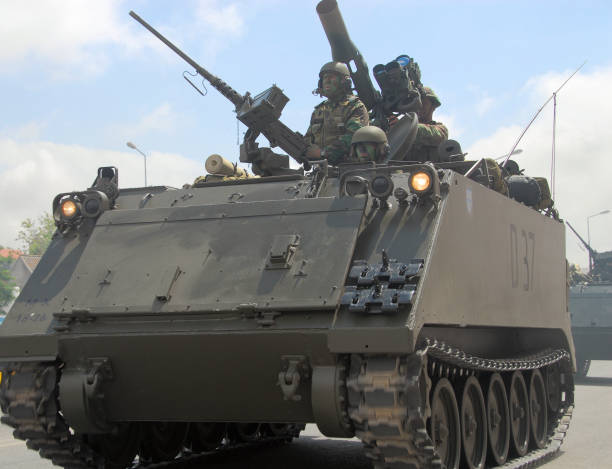
The family behind German industrial group Wegmann is preparing to cash in on Europe’s defense spending boom through the planned initial public offering of KNDS, the Franco-German tank manufacturer that could be valued at €15 billion to €18 billion, Bloomberg News reported Thursday.
Paris and other European cities are experiencing temperatures above 40C (104F), reaching levels normally seen across the Middle East.
A blistering heatwave has gripped much of Europe, prompting the highest-level red alerts in parts of the United Kingdom, France, Spain and Italy.
Authorities have warned of health risks, wildfires and travel disruptions as extreme temperatures persist.
Recommended Stories
list of 3 itemsend of list
With temperatures approaching record highs, officials have taken emergency measures, including a localised alcohol ban in parts of France under red alert, nationwide heat warnings in Germany and the cancellation of a World Cup fan zone screening in Madrid, where temperatures hit 39C (102F).
Why is it so hot in Europe?
A persistent area of high pressure, known as a heat dome, has trapped hot air over Western Europe, bringing clear skies, weak winds and prolonged sunshine. Hot air moving north from North Africa has added to the extreme temperatures.
(Al Jazeera)
Unusually warm seas around the UK, Ireland, France and the western Mediterranean have also helped keep coastal areas hot, especially at night. Coastal waters around Spain have reached record warm levels, according to Spain’s port authority.
In the worst-affected areas – western France, England and Wales – daily average temperatures have soared more than 12C above the 1991-2020 baseline, according to Copernicus data.
(Al Jazeera)
Scientists say the early-season heatwave is part of a broader warming trend. Europe is the world’s fastest-warming continent, with temperatures rising by approximately 0.56C per decade since the mid-1990s, more than double the global average.
Climate change is making heatwaves more frequent, more intense and likely to occur earlier and later in the year.
How hot are European cities today?
To contextualise the temperatures Europe is dealing with, Al Jazeera looked at the maximum temperatures in five European capitals on June 24 and compared them with cities across the Middle East, North Africa and Asia, where high temperatures are more typically experienced.
Europe is particularly vulnerable – much of its housing and infrastructure was not built for prolonged extreme heat, and only about 20 percent of European homes have air conditioning.
The graphic below shows how European cities’ maximum temperatures today compare with some other cities around the world:
(Al Jazeera)
How is temperature measured?
The temperature you see on the news or the weather app on your phone relies on a network of weather stations positioned around the globe.
To ensure accurate readings, weather stations typically use specialist platinum resistance thermometers placed inside shaded instruments known as a Stevenson screen.
Measurements are taken at a standard height of 1.25-2 metres (4-6.5 feet) above the ground. This provides a reading that reflects the air temperature that people actually feel.
(Al Jazeera)
There are two well-known scales used to measure temperature: Celsius and Fahrenheit.
Only a few countries, including the United States, use Fahrenheit as their official scale. Most of the world uses the Celsius scale, named after Swedish astronomer Anders Celsius, who invented the 0-100 degree freezing and boiling point scale, although originally inverted, in 1742.
Why does the temperature feel hotter than the forecast says?
Air temperature alone often doesn’t match how hot it feels to your body. That is why forecasts report a “feels like” temperature, which adjusts air temperature based on factors like humidity, wind speed and sun exposure.
(Al Jazeera)
Humidity
Humidity measures how much water vapour is in the air. This moisture slows the evaporation of sweat, so your body can’t cool itself as effectively.
Wind speed
In hot weather, a light breeze can help evaporate sweat, making it feel cooler.
Sun exposure
Even if the thermometer reads the same, direct sunlight adds extra warmth, which is why shaded areas feel cooler.
IF you’re looking to escape the heat, there is a huge new indoor attraction that is the first of its kind in Europe.
Slick City in Nottingham opened earlier this year, with everything from slides to coasters.
Sign up for the Travel newsletter
Thank you!
The attraction is the first Slick City in EuropeCredit: Slick CitySlick City in Nottingham opened back in MarchCredit: Slick City
For example, you could head on Royal Flush, where you’ll head down a sheer drop before being whizzed around a massive bowl – just like the motion of a flushing toilet.
Then there is Fast Lane, which is ideal for competitive families as it is a four-lane slide.
On Hyperloop, you’ll head through a number of twists and turns.
The attraction is the first Slick City in Europe and is also home to the world’s first UV AirGlider – a gravity-powered aerial coaster that creates the feeling of flying.
In between trying out the slides, visitors can test out the interactive games as well.
There’s a freestyle air court and sports court too, which has a cushioned, bouncy base ideal for parkour tricks.
Little ones aren’t left out either, as they can enjoy a soft play area.
While the kids are playing, parents can grab a bite to eat and a drink at the onsite cafe.
Though, Slick City isn’t just for kids – big kids (adults) can also have fun at one of the adults-only nights on the first Friday of every month.
The neon-lit attraction is for ages four and older and if you just want to watch you don’t have to pay entry.
There’s also the world’s first UV AirGlider – a gravity-powered aerial coaster that creates the feeling of flyingCredit: Slick CityThere’s a soft play for little ones as wellCredit: Slick City
There are a number of different ticket types available including ones for shorter 90 minute sessions and ones for longer two hour sessions.
Tickets cost £19.95 and £24.95 per person, respectively.
If you want to go on the AirGlider you’ll have to pay extra though – it’s £4 for one ride or £10 for three rides.
When at the attraction you also have to wear CitySocks, which cost £3 a pair – but you can keep and re-use them.
One recent visitor commented: “The slides are insane and it’s just so much fun.”
Another added: “Unique experience, such a great idea.
The clock is running down on the most consequential deadline the crypto sector has faced in Europe.
ADVERTISEMENT
ADVERTISEMENT
From the start of July, the transitional window under the Markets in Crypto-Assets Regulation (MiCA) closes for good, and companies that have not secured authorisation must either stop serving European customers or wind down altogether.
MiCA is the EU’s first comprehensive law for the crypto industry, bringing exchanges, brokers and digital wallet providers under the kind of formal oversight that has long applied to banks and other financial firms.
It replaces a fragmented mix of national rules with a single rulebook spanning all 27 member states: a company licensed in one EU country earns a “passport” to operate across the bloc, but in return it must meet standards on how much capital it holds, how it is run, how it safeguards customers’ funds and how it prevents money laundering.
“What emerges is a genuine single market replacing the old patchwork of 27 national regimes,” Yamal Kalaf, co-founder of MiCAR Whitepapers Europe, which advises crypto businesses on MiCA authorisation, told Euronews.
Since the core rules took effect at the end of 2024, existing operators have been allowed to keep operating under older national registrations, but that concession was temporary.
Crypto firms need European licences but many are behind
The scale of the looming shake-out is striking.
According to the European Securities and Markets Authority (ESMA), which confirmed in April that there would be no extension, only around 210 firms had obtained full authorisation by May, out of more than 1,200 that previously held national crypto registrations across the EU.
That points to a conversion rate of well under a fifth, leaving the vast majority of the old market without a licence as the cut-off arrives in a few days.
Speaking to Euronews, Roshan Dharia, CEO of distressed-investment firm Echo Base, explained that “the low conversion rate suggests that a meaningful portion of the market has concluded that obtaining and maintaining a MiCA licence is not economically viable within its current operating model.”
National regulators have warned that firms operating beyond the deadline without the new licence face enforcement action. France’s markets watchdog has also cautioned that continuing without authorisation could expose companies to criminal prosecution.
ESMA has told unlicensed providers to prepare orderly wind-downs, including transferring customer assets to authorised platforms or self-custody wallets, and to notify clients in advance so they can move funds safely.
“What we will see after 1 July is a smaller, more institutional market with real passporting. That is not a market in retreat. That is a market growing up,” Miguel Zapatero, Head Counsel at Crossmint, told Euronews.
Crossmint is a crypto infrastructure provider whose licensed rails let developers build wallets, custody and payment products.
A market reshaped around licensed rails
Plenty of familiar names have already cleared the bar.
Coinbase has been authorised in Ireland and Kraken in Ireland and Luxembourg. At the same time, the banking app Revolut secured its licence from Cyprus’s regulator late last year, allowing it to offer crypto services across the EU.
For these firms, the new rules promise a reward as unlicensed rivals retreat, the survivors stand to absorb their departing customers.
“MiCA is a genuine regulatory identity shift, not a registration exercise,” Gal Arad Cohen, partner at law firm S. Horowitz & Co, told Euronews.
The most prominent casualty so far may be Binance, the world’s largest crypto exchange.
According to Reuters, which cited two people familiar with the matter, Binance is set to lose permission to serve EU clients because its licence application to Greece’s market regulator, the Hellenic Capital Market Commission, is poised to be rejected.
Without approval in any member state, the exchange would be unable to operate across the bloc from July onwards.
Speaking to Euronews, Patrick Mollard, CEO at Fipto, a blockchain-based payments company for businesses, referred to the Binance case by stating that “scale earns you no shortcut to a licence, and that is precisely the point.”
Binance has pushed back, saying it has worked constructively with regulators for 18 months and believes its application met MiCA’s requirements. The company added that it understood the Greek authority had completed its review and found the filing compliant.
The company has promised a further update before 30 June.
The episode has also reputedly taken on a political dimension.
French crypto publication The Big Whale reported, citing unnamed sources, that ECB President Christine Lagarde had opposed Binance’s bid for a Greek MiCA licence.
Euronews could not independently verify the report, and neither the ECB nor the Greek government has publicly commented on the allegations.
The Big Whale also reported that Binance is exploring a potential MiCA application in France after the setback in Greece, a claim that neither Binance nor French regulators have publicly confirmed.
Binance did not immediately respond to a request for comment from Euronews.
A shake-out for smaller crypto firms
Beyond the biggest names, the deadline is expected to push smaller crypto apps and brokers towards licensed custody providers. Rather than building their own MiCA-compliant systems, many are likely to rely on authorised firms to hold customer assets.
“We will see consolidation and transfer of clients as the deadline will not be met by all currently operating entries,” Floortje Nagelkerke, partner at law firm Norton Rose Fulbright, explained to Euronews.
The result, analysts suggest, will be a smaller, more concentrated European market, with fewer players, higher barriers to entry and a clear advantage for those holding a licence, but stronger consumer protections.
“People who hold crypto in the EU after 1 July will, on balance, hold it on safer rails,” Miguel Zapatero, Head Counsel at Crossmint, concluded.
A LESSER-KNOWN European theme park has announced it is getting a major new ride.
Previously named one of the best amusement parks in Europe by the European Star Awards, Nigloland is about two and a half hours from Paris.
Sign up for the Travel newsletter
Thank you!
Nigloland is about two and a half hours from ParisCredit: Nigloland
And the French theme park will be getting a new £15.5million rollercoaster called ‘Supersonic 1887’.
The ride, which will be the park’s largest investment to date, is a launch shuttle rollercoaster.
At its highest point it will reach 47 metres off of the ground, and it will reach speeds of up to 56.5mph.
Even though the track itself stretches for 355 metres, riders will travel a total of 770 metres thanks to sections where the rollercoaster will travel backwards.
The rollercoaster will also turn the 32 riders upside down at least six times across three inverted parts of the track, including a loop.
Each of the two carriages also include eight ‘wing seats’ that allow riders to dangle their feet in the air.
And the park will soon get a new rollercoasterCredit: NiglolandThe rollercoaster is expected to open in 2027Credit: Nigloland
And what makes the ride even more fun will be the fact that over half the time riders are on it, they will be suspended over water.
The ride is inspired by World Expositions that took place during the 19th century, according to EAP Magazine.
The story of the ride will follow a character called Emilie Delaroche, an engineer who has developed a steam machine that travels at high speeds.
The rollercoaster is expected to open in 2027.
President and Director of the Park, Rodolphe Gelis said: “Nigoland is set to celebrate its 40th anniversary.
“To mark this milestone, we wanted to create a major attraction that reflects our ambitions.
“Supersonic is a project conceived by our creative and technical teams, which we entrusted to a leading manufacturer renowned for the quality of its work and its wealth of innovations.
“It is the most ambitious project Nigoland has ever undertaken.”
The theme park features more than 40 attractions in total, 27 of which are ideal for younger children.
There are four immersive zones in total including The Canadian Village, The Rock ‘n’ Rock Village, The Magical Village and The Swiss Village.
Rides include Krampus Expedition which is a water coaster based on Alpine folklore.
There’s also Spatiale Expérience, which is an indoor rollercoaster that travels through outer space.
Visitors can also stay onsite at the Hotel des Pirates.
A brand new long-distance European train service is set to launch on 25 June, running 807 miles from Frankfurt in Germany to Przemyśl in Poland
A new train route will have a duration of eighteen-and-a-half hours(Image: Alan Morris via Getty Images)
A brand new 807-mile train route across Europe is launching this month, linking Germany, Poland and the Czech Republic. Private railway company Leo Express will commence the service on June 25, with fares beginning at just €10 (£8.65).
The journey is expected to become one of Europe’s most extensive, with a projected travel duration of 18-and-a-half hours. It will operate once per day in each direction between the Polish city of Przemyl and Frankfurt in Germany.
Stops along the way include Kraków, Ostrava, Prague, Dresden, Leipzig and Erfurt.
Leo Express CEO Peter Köhler said: “At over 1,300 kilometres (807 miles), this is one of the longest direct train services in Europe.”
He went on to say that Przemyl’s closeness to the Ukrainian border meant the railway would “remove the iron curtains between western and eastern Europe”.
He said: “We are connecting important European centres and providing access to Ukraine..
“[And] in Germany, we are creating an alternative to existing operators..”
The carriages will include power sockets, wifi, onboard catering and air conditioning, reports the Express.
Meanwhile, there are various seating classes on offer, including premium, business and economy, according to The Independent.
The service departing Poland is scheduled to leave Przemyl at 1:31pm and reach Frankfurt the next morning at 7:53am.
The westbound service, meanwhile, will set off at 8:27am for a 2:23am touchdown.
Przemyl is situated approximately six miles from the Polish-Ukrainian border.
The city has acted as a key transit hub for refugees escaping the war-ravaged nation since Russia launched its invasion in 2022.
Weekly insights and analysis on the latest developments in military technology, strategy, and foreign policy.
Ukraine is increasingly emerging as a potential player in Europe’s race to build-up its long-range conventional strike capabilities. New partnerships centered on the Ukrainian Flamingo and Neptune cruise missiles underscore how the European defense industry is moving from supplying Kyiv to co-developing and manufacturing combat-proven Ukrainian missile technology for NATO’s own future arsenal.
Diehl Defense recently confirmed that it plans to launch production of Ukraine’s Flamingo cruise missile in Germany. Diehl’s chief executive, Helmut Rauch, said that his company was planning talks in the coming weeks with Fire Point, the manufacturer of the Flamingo. Previously, Diehl had signed a technology agreement with Fire Point but had not disclosed any details.
Visitors at the stand of Ukrainian defense technology company Fire Point during the Eurosatory defense and security trade fair, at the Paris-Nord Villepinte Exhibition Center in Villepinte, north of Paris on June 15, 2026. Photo by Guillaume BAPTISTE / AFP
Meanwhile, another European missile manufacturer, MBDA, the largest company of its kind in Europe, has signed a memorandum of understanding (MoU) with the Ukrainian defense firm Luch to expand collaboration on deep-strike capabilities by focusing on the Neptune family of cruise missiles. Under the agreement, MBDA and Luch will work together on the so-called Neptune 2 missile, via what the European missile house describes as a process of “disruptive innovation.”
Reflecting this broader trend, during a visit to Kyiv last month, German Minister of Defense Boris Pistorius noted Ukraine’s “remarkable” wartime technological advances and said that Berlin was looking at joint ventures that included long-range drones, air defenses, and electronic warfare.
German Defense Minister Boris Pistorius visits the command post of a Ukrainian Army combat and reconnaissance drone unit in Dnipro during a visit to Ukraine last month. Photo by Kay Nietfeld/picture alliance via Getty Images
Looking at these Ukrainian cruise missiles in more detail, Luch’s Neptune first emerged as an anti-ship missile, based on the Soviet-era Kh-35, known to NATO as the SS-N-25 Switchblade in its surface-launched form. The Neptune came to prominence when it was used to sink the Russian Navy’s Slava class cruiser Moskva in 2022.
The original configuration of the Neptune missile. Office of the President of Ukraine Volodymyr Zelensky
Ukraine reportedly began work on a new land-attack version of the Neptune in 2023. A Ukrainian defense official told TWZ that this version has a range of up to 225 miles (360 kilometers). This compares to a reported maximum range of around 190 miles (300 kilometers) for the anti-ship version.
Subsequently, Ukraine introduced the extended-range Long Neptune, which Ukrainian President Volodymyr Zelensky has stated has a range in the region of 620 miles (1,000 kilometers). The Long Neptune features an extended body to accommodate additional fuel for its turbofan engine. It has reportedly been used against dozens of targets inside Russia.
Ukrainian “Long Neptunes.” We’re producing more 🇺🇦 ____
— Volodymyr Zelenskyy / Володимир Зеленський (@ZelenskyyUa) November 14, 2025
The land-attack versions of the Neptune reportedly use a GPS-assisted inertial navigation system (INS) and an imaging infrared sensor in place of the anti-ship missile’s active radar seeker.
At least one more version of the Neptune has also been developed, this one apparently featuring fuel tank ‘bulges’ for increased range. As you can read about here, this model appears to be something like an intermediate-range version, falling between the original land-attack Neptune and the Long Neptune.
An official photo of the Long Neptune cruise missile. Government of UkraineThe ‘bulged’ Neptune variant. Denys Shmyhal/Ukrainian Ministry of Defense
Turning to the Flamingo, also known as the FP-5, this was designed from the ground up to hit targets deep within Russia, the missile having a reported range of 1,864 miles (3,000 kilometers). The Flamingo is significantly bigger than the Neptune series, being launched from rails mounted on a trailer, rather than from canisters on the flatbed of a truck.
Launch of a Flamingo long-range cruise missile. via Ukrainska Pravda
The Flamingo also features a notably larger warhead, reportedly weighing around 2,205 pounds (1,000 kilograms).
A video of the Flamingo cruise missile in action:
Випробувальний пуск ракети “Фламінго”
In terms of guidance, the Flamingo is said to use a combination of methods, including various types of satellite navigation. An underlying inertial navigation system is likely to be present. The missile is powered by an AI-25 turbofan engine, a type produced in Ukraine for military and civilian aircraft, including the L-39 Albatros trainer and the Yak-40 feederliner.
Ukraine’s development of increasingly long-range land-attack cruise missiles is driven by the requirement to strike targets deeper inside Russia. Kyiv has received standoff missiles from its allies, including the air-launched Storm Shadow and SCALP-EG from the United Kingdom and France, respectively, as well as the U.S.-supplied Army Tactical Missile System (ATACMS) short-range ballistic missile. However, these are not available in large numbers and are limited by restrictions imposed upon their use. Additionally, none of them have the kind of range or warhead capacity offered by the Flamingo.
Kyiv has long been campaigning to receive Tomahawk cruise missiles from the United States, but so far, Washington has refused these requests, with U.S. President Donald Trump saying he is “not looking to see an escalation” in the conflict. These highly accurate missiles would be able to hit targets roughly 1,000 miles (1,600 kilometers) from Ukraine’s borders.
As well as cruise missiles, Ukraine has also developed a huge variety of long-range one-way-attack drones, and other designs that blur the line between long-range kamikaze drones and cruise missiles, including Palianytsia, Peklo, and Trembita.
Ukrainian Peklo ‘missile-drones.’ Ukrinform/NurPhoto via Getty Images
Kyiv has also been working on developing new ballistic missiles. However, the longest-range one of these, as far as is known, is the Hrim-2, which can hit targets at 174 miles (280 kilometers) or possibly up to 310 miles (500 kilometers).
An artist’s rendition of the Hrim-2 TEL, as offered for export by Ukraine, back in 2015. Ukroboronexport
Meanwhile, Fire Point has developed the FP-7 ballistic missile, a weapon with a stated range of around 124 miles (200 kilometers), and a warhead of approximately 331 pounds (150 kilograms).
A rendering of the FP-7 surface-to-surface ballistic missile. Fire Point
In both cases, however, these ballistic missiles lack true strategic reach. This would be partially addressed by the FP-9, which Fire Point aims to start testing this summer, and which is expected to have a range of 530 miles (855 kilometers).
Ukraine’s efforts to develop new and more destructive missiles, and to build them at scale, come as Europe’s NATO members also increasingly look to field weapons in this class.
The scale factor is an important one, since Ukrainian wartime weapons development stresses equipment that can be produced rapidly, in large numbers, and at a lower cost point. Fire Point has said that it aims to increase Flamingo production to a daily rate of at least seven missiles by October of this year. This would translate to 2,555 built annually. It remains questionable whether this is a realistic target, but the prospect of additional production lines elsewhere in Europe would change things.
Additional details have been released about Ukraine’s new domestically-produced long-range cruise missile, dubbed the FP-5 “Flamingo” which is manufactured by Fire Point. According to an interview with Chief Technical Officer Iryna Terekh, the “Flamingo” has entered serial… pic.twitter.com/2D5GisrmFP
At the same time, it should be noted that the Flamingo and Neptune cruise missiles, for all their capabilities, are not especially sophisticated. They both fly at subsonic speed and do not appear to have any attempts at signature control. While they are certainly destructive, they are far from immune to interception.
Their effectiveness can be increased by using them in missile barrages and combined with drones and potentially decoys, to overwhelm air defenses. Here, too, is an area in which Ukrainian experience could help, creating a mix of high-end missile capabilities with combat mass from lower-end drones.
With this in mind, it is perhaps not surprising that Diehl is already looking at how it can improve the Flamingo.
Diehl’s Helmut Rauch has said that his company could outfit the Flamingo with a much more advanced seeker, leveraging the German firm’s experience in this area.
An unverified video that appears to show a Flamingo cruise missile strike on a military factory in Cheboksary in western Russia:
Similarly, MBDA’s expertise in missile development and production could potentially be incorporated in future versions of the Neptune.
Either way, Ukraine would benefit from advanced technologies that otherwise might not be immediately accessible.
What is clear is that European NATO allies are increasingly looking to address their lack of land-based long-range strike capabilities. As well as facing an increasingly belligerent Russia equipped with an expanding arsenal of long-range missiles, Europe is also confronting the prospect of its U.S. ally being unwilling to provide the same kinds of capabilities.
Ukraine is not alone in being unable to secure U.S.-made Tomahawk cruise missiles.
Berlin, in particular, is looking for alternatives to the U.S. Army long-range fires battalion equipped with various conventionally armed standoff missiles — including Tomahawk — that was expected to be deployed in Germany on a rotational basis, starting this year. The U.S. move was an apparent response to disagreements with Germany over the Iran war as well as ongoing tariff tensions.
U.S. personnel unload a trailer-based launcher associated with the Typhon weapon system from a C-17A transport aircraft in the Philippines in 2024. The Typhon was to be deployed in Germany as part of a U.S. Army long-range fires battalion, the 2nd Multi-Domain Task Force (2MDTF). U.S. Army
While Europe does have new long-range strike programs underway, they are not expected to bring new systems into service until the 2030s. At the same time, efforts like the European Long-Range Strike Approach (ELSA), which involves France, Germany, Italy, Poland, Sweden, and the United Kingdom, still have to agree on common requirements, provided that is even possible.
Separately, Germany and the United Kingdom have unveiled plans to jointly produce a “deep precision strike” weapon with a range of over 1,240 miles (2,000 kilometers). At this point, however, no industrial framework has been agreed on. Potentially, an advanced version of the Flamingo could meet that requirement, even if only as an interim measure before a more bespoke solution can be developed.
For Europe, Ukrainian missile developers like Luchs and Fire Point bring the valuable experience of wartime innovation, while established defense firms like MBDA and Diehl provide additional industrial capacity and advanced technologies. If either of these projects succeeds, they could not only help Ukraine field more advanced and capable cruise missiles, but also help address one of NATO’s most pressing capability gaps.
The airport has won a prestigious architecture award after a huge multi-billion Euro project, and it was the only European location on the list of the world’s most beautiful airports for 2026
08:58, 18 Jun 2026Updated 08:59, 18 Jun 2026
The airport was the only one in Europe to win the award(Image: Fraport AG)
The world’s most beautiful airports for 2026 have been announced, and only one European hub has made the list.
Prix Versailles published its World’s Most Beautiful; Airports List 2026, which included airports from around the world, “each one exhibiting extraordinary, distinctive architecture”, according to its press release. Among the winners on the list were Guangzhou Baiyun International Airport in China, and Pittsburgh International Airport in the US.
The sole European destination to make the cut was Frankfurt Airport, which unveiled its brand-new Terminal 3 in April, mostly for passengers taking long-haul flights. The £3.46 billion expansion took over 11 years, and became one of the continent’s largest infrastructure projects.
Sitting on 1.3 square kilometres of land, it’s around the same size as Frankfurt’s core city centre, and it includes a 2,900-square-metre culinary space, 112 check-in counters, premium lounges, and upmarket boutiques.
Content cannot be displayed without consent
The terminal is connected to the rest of the airport via a 3-mile-long Sky Line people mover, which can carry up to 4,000 passengers, with the journey taking just eight minutes. Terminal 1 has two train stations connecting the airport to passengers’ final destinations: a Regiobahnhof that takes passengers into the city centre and Fernbahnhof where you can take Germany’s high-speed ICE trains across the country.
Terminal 3 was designed by architect Christoph Mäckler, and the awards announcement said it “was contrived to be a lively urban environment”. It added: “To give travellers a smooth, familiar experience, its piers, boarding gates and lounges emulate the streets and squares of a city. Its aesthetics rely on noble materials in warm tones, like Jura limestone and travertine. Vast spaces, bathed in natural light thanks to large plate glass windows, create a soothing atmosphere while minimising the use of artificial light sources.”
Frankfurt is not generally a city break destination chosen by Brits, but it has a colourful old town with medieval houses and historic charm. Römerberg in particular is popular with tourists, and the cosy half-timbered houses make the perfect backdrop for Frankfurt’s famous Christmas market.
The Städel Museum is another must-visit for tourists, and this vast art gallery has works from the Middle Ages to the present day, as well as impressive visiting exhibitions such as a Monet show that’s on until July 5. If you don’t have much time to see the city, head for the Main Tower, which stands at 240 metres, for impressive 360-degree views.
Frankfurt is also known for being the financial capital of continental Europe, and its financial district is sometimes known as ‘Mainhattan’ after the River Main and its skyline’s resemblance to New York. Wander around and you’ll see lots of unique, contemporary architecture such as the glass-panelled Commerzbank Tower and art-deco style Messeturm.
Have a story you want to share? Email us at webtravel@reachplc.com
EUROPE’S largest funfair is returning to the UK this weekend, as the huge stretch of rides comes back for its 144th year.
Over 400 spectacular attractions will be on offer for all the family, including a new record-breaking ride for the ultimate thrillseekers.
Sign up for the Travel newsletter
Thank you!
The Hoppings is back for another year, as the summer funfair hits Newcastle’s Town MoorCredit: Get into NewcastleThe funfair spans over half a mile in the city centre, making it the biggest in EuropeCredit: Get into Newcastle
The Hoppings is back for its 144th year this weekend, as Newcastle’s Town Moor anticipates the return of Europe’s biggest funfair.
Located at the heart of the city centre, the funfair offers over 400 attractions and rides for thrillseekers and families alike – from the giant ferris wheel, to the classic helter skelter.
Despite occupying a smaller space than previous years, due to drainage works on the Moor, the fair still keeps all its excitement, and visitors can expect to see a jam-packed line-up.
After centuries of history, and a deep-rooted sense of North East nostalgia the fair evokes, generations of Geordie families love returning to The Hoppings year after year.
The fair includes a whole host of classic rides, and brand-new thrillseeking funCredit: AlamyJGA1A6 Hook-a-duck, The Hoppings, Town Moor, Newcastle upon TyneCredit: Alamy
This year, the fair has unveiled a whole host of adrenaline-pumping rides, including the return of fan-favourites Atmosfear and Extreme.
The stage has been set for the arrival of a record-breaking high-flying experience with the launch of the brand-new Elevate85 attraction.
Climbing up to 80metres, this drop tower with flying chairs has been hailed as “the world’s highest travelling ride” – only 10metres shorter than London’s Big Ben.
Foodies have another reason to celebrate with a brand-new Spud Bros stall joining the line-up, only weeks after the launch of its popular North Tyneside store.
The fair has spent the last week in June on the Town Moor since 1882Credit: AlamyThe Hoppings typically attracts 500,000 visitors every yearCredit: Alamy
The daily line-up also includes a Live Lounge stage with country, rock, and pop music, alongside delicious treats on offer from the Feast Street food village.
The arrival of the Hoppings in the last week of June is a fixture of the Geordie calendar, and has been since 1882.
Opening on the Town Moor over a century-and-a-half ago, the fair was initially marketed as a tee-total event to counteract the boozy activities of Newcastle Race Week.
Its initial form included traditional amusements and roundabouts, as well as kite-flying contests and military shows – a step away from its current form.
The Hoppings has evolved to represent the warmth and welcoming nature of Geordies themselves, and shows a city beyond bustling nightlife and football passion.
Now, the fair attracts over half a million annual visitors to indulge in the vibrant lights, exhilirating rides, and all the fun of the fair.
For those wanting to visit Newcastle, The Hoppings is the perfect starting point for organising a tour, with the city centre situated a 30-minute walk away from the Town Moor.
From there, a walk along the Quayside to see the famous Tyne Bridge, The Glasshouse and River Tyne is a must, with foodstalls often lining the streets on weekends.
Newcastle city centre offers lovely views and exciting shopping experiencesCredit: AlamyTynemouth Longsands, only a 30-minute commute away, is one of Britain’s best beachesCredit: Alamy
Newcastle, and surrounding North East towns, are incredibly well-connected with the Tyne and Wear Metro, with 60 stations and two separate lines.
Many may not know that the city has some of the best coastlines in the UK – travel 30 minutes east on the Metro and visit Tynemouth Longsands and enjoy the scenic views from the coastal villages.
Entry to The Hoppings is completely free this year, with standard ride prices ranging from just £3 to £5 and high-thrill attractions costing slightly more.
The Hoppings is returning for its 10-day bonanza between June 19 and June 28, running from 2pm to 11pm on weekdays, and 1pm to 11pm on weekends.