




europe

Beloved ferry link that connected UK to Europe could return after 18 years

A popular ferry service that linked the UK with Norway was withdrawn in 2008, but it could return, as there have been calls to restore the route that connects the twin cities

There have been calls to restore the popular DFDS ferry service linking the UK to the Norwegian city of Bergen, 18 years after it was discontinued.

The beloved DFDS ferry linking Tyneside to the Scandinavian port ceased operations in 2008. However, the upcoming launch of new direct flights from Newcastle to Bergen this year has reignited demands for the maritime connection to be revived as well.

The two cities have maintained their twin status since 1968, with Bergen previously sending Newcastle an annual Christmas tree for decades as a symbol of their bond, though this custom has since ceased due to environmental considerations. While operators consider restoring the ferry service financially unviable, Newcastle City Council leader Karen Kilgour informed colleagues on Wednesday that enthusiasm for reinstating the route persists.

READ MORE: Passport Office issues ‘be ready’ alert to anyone born in 2010READ MORE: Best country to retire in 2026 with great healthcare and food — full list

The Labour councillor revealed to a full council session that she anticipated the Jet2 flights commencing this April would “prove popular enough to allow the company to offer year-long flight options connecting our two great cities”.

Coun Kilgour continued: “Not only will this assist our economic links through strategic sectors in offshore energy but also allow tourists to take advantage of city breaks. We would also love to see the return of the ferry, which stopped running in 2008. We know lots of people in both cities have fond memories of travelling by sea to visit both Newcastle and Bergen, reports Chronicle Live.

“And while at this point operators consider the route is not economically viable, we will continue to work with partners and our friends in Bergen to explore all ways of bringing it back. Bergen remains a strategic partner in our international work and we intend not only to maintain but to deepen that relationship in the months ahead.”

The possibility of reinstating a ferry service is believed to have been hampered by the requirement to construct an expanded passport control facility at Bergen’s port should operations resume.

Lib Dem councillor Greg Stone, who has consistently championed the ferry’s return on a historic route stretching back to 1890, commented: “Warm words are one thing, but we need to make it a reality. I know there are costs involved in doing that but I hope the council will continue that work, redouble that work, and work potentially with the mayor [Kim McGuinness] to look at what we can do to restore the physical ferry link.”

Travellers are delighted at the prospect of the ferry route returning, as one shared on Facebook: “That would be great, I would be on that like a flash.” A second commented: “An absolute necessity to get this route back again. Bergen/Stavanger – Newcastle.”

A third wrote: “Out of all the routes lost the return of the Bergen route would be the most successful. Bergen is a great place to visit and is also the gateway to the rest of Norway.” Reminiscing another shared: “It used to go to Hamburg as well and I went there on DFDS with my nana and grandad to visit family when I was a kid.”

One more shared: “I so hope so. Pity it may not go to Haugesund and Stavanger, but I can take Bergen. It would be amazing to have the ship back again, so we can connect again with beautiful Norway. My homeland, on my father’s side.”

Do you have a travel story to share? Email webtravel@reachplc.com

Source link

Is the global economic order unravelling? | Business and Economy

As the United States pushes its ‘America First’ agenda, its partners are edging towards China and new alliances are being formed.

It was built on democracy, open markets and cooperation – with America at the helm.

But the rules-based global order created after World War II is now under strain. Conflicts are rising. International rules are being tested. Trade tensions are escalating. And alliances are shifting.

At the centre of it all is US President Donald Trump.

In just a few short weeks, he’s captured Venezuela’s president, vowed to take control of Greenland, and threatened to slap tariffs on those who oppose him.

Meanwhile, China is presenting itself as a stable partner.

Many warn that the global order is starting to break apart.

Source link

China’s Xi Jinping, UK’s Kier Starmer agree to deepen economic ties | Xi Jinping News

British PM Keir Starmer’s China visit is the first by a UK leader in eight years and marks a thaw in frosty relations.

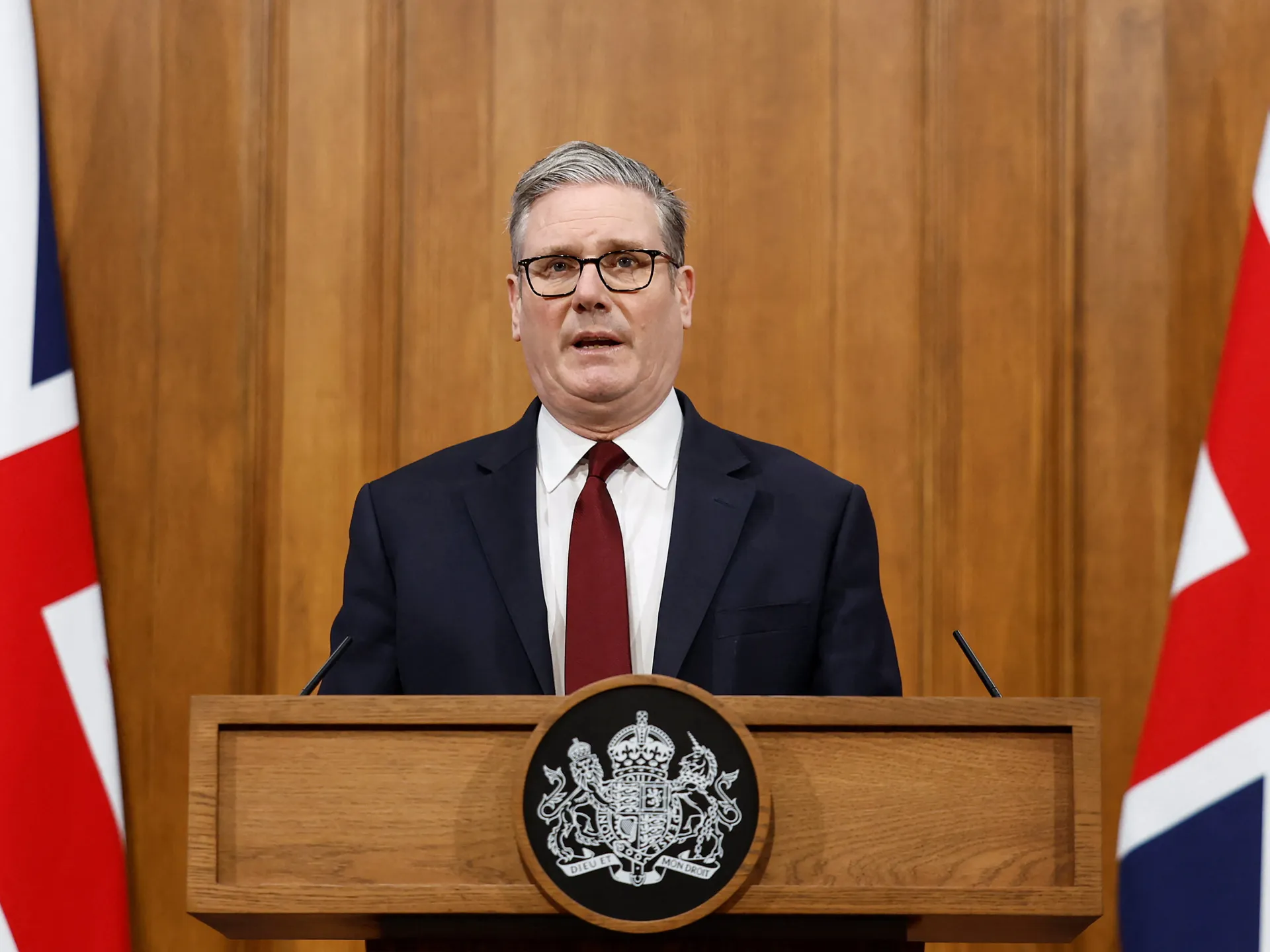
The United Kingdom’s Prime Minister Keir Starmer has met with Chinese President Xi Jinping in Beijing in the first trip of its kind by a British leader in eight years.

Starmer said before his trip that doing business with China was the pragmatic choice and it was time for a “mature” relationship with the world’s second-largest economy.

Recommended Stories

list of 4 itemsend of list

“I have long been clear that the UK and China need a long-term, consistent and comprehensive strategic partnership,” Starmer said on Thursday.

During their meeting, Starmer told Xi that he hopes the two leaders can “identify opportunities to collaborate, but also allow a meaningful dialogue on areas where we disagree”.

Xi stressed the need for more “dialogue and cooperation” amid a “complex and intertwined” international situation.

The meeting between the two leaders in Beijing’s Great Hall of the People on Thursday was due to last about 40 minutes, and will be followed by another meeting between Starmer and Chinese Premier Li Qiang later in the day.

Starmer is in China for three days and is accompanied by a delegation representing nearly 50 UK businesses and cultural organisations, including HSBC, British Airways, AstraZeneca and GSK.

The last trip by a UK prime minister was in 2018, when Theresa May visited Beijing.

Strengthening economic and security cooperation was at the top of the agenda during the Xi-Starmer meeting, according to Al Jazeera correspondent Katrina Yu.

“[Starmer] has the very big task of bringing this diplomatic relationship out of years of deep freeze, so the focus when he talks to Xi Jinping will be finding areas of common ground,” Yu said from Beijing.

China was the UK’s fourth-largest trading partner in 2025, with bilateral trade worth $137bn, according to UK government data.

Starmer is seeking to deepen those ties with Xi despite criticism at home around China’s human rights record and its status as a potential national security threat.

Besides business dealings, Starmer and Xi are also expected to announce further cooperation in the area of law enforcement to reduce the trafficking of undocumented immigrants into the UK by criminal gangs.

Relations between the UK and China have been frosty since Beijing launched a political crackdown in Hong Kong, a former British colony, following months of antigovernment protests in 2019.

London has also criticised the prosecution in Hong Kong of the pro-democracy media tycoon Jimmy Lai, who is also a British citizen, on national security charges.

Starmer’s trip to China comes as both Beijing and London’s relationship with the United States is under strain from President Donald Trump’s tariff war.

Trump’s recent threats to annex Greenland have also raised alarm among NATO members, including the UK.

Source link

Russia-Ukraine war: List of key events, day 1,435 | Russia-Ukraine war News

These are the key developments from day 1,435 of Russia’s war on Ukraine.

Here is where things stand on Thursday, January 29:

Fighting

  • The death toll from a Russian attack on a passenger train in Ukraine’s Kharkiv region on Tuesday rose to six, after the remains of several bodies were recovered from the wreckage, the Kharkiv Regional Prosecutor’s Office said on the Telegram messaging app.
  • At least six people were injured in a Russian missile attack on Ukraine’s Zaporizhia region, the head of the regional military administration, Ivan Fedorov, said on Telegram.
  • Russian forces attacked several locations across Ukraine’s Dnipropetrovsk region, killing a 46-year-old man and injuring at least two other people, the head of the regional military administration, Oleksandr Hanzha, said on Facebook.
  • One person was killed in a Ukrainian attack on the village of Novaya Tavolzhanka in Russia’s Belgorod region, the regional emergencies task force reported, according to the country’s TASS state news agency.
  • A Ukrainian drone attack killed one person in the city of Enerhodar, in a Russian-occupied area of Ukraine’s Zaporizhia region, Russia’s locally appointed official Yevhen Balitsky said, according to TASS.
  • Fedorov has ruled out installing anti-drone netting as a mode of defence, saying that “there are more effective ways to combat Russian attacks”, Ukraine’s Ukrinform news agency reported.

Military aid

  • Ukrainian President Volodymyr Zelenskyy said that France will deliver more “French aircraft, missiles for air defence systems, and aerial bombs” to Ukraine this year, following a phone call with French President Emmanuel Macron.

Regional security

  • Danish Prime Minister Mette Frederiksen said at an event in Paris that a 2035 target for rearming Europe “would be too late”.
  • “I think rearming ourselves now is the most important thing,” Frederiksen said. “Because when you look at intelligence, nuclear weapons, and so on, we depend on the US,” she added.
  • Switzerland plans to inject an additional 31 billion Swiss francs ($40.4bn) into military spending starting from 2028 by increasing sales taxes for a decade.
  • “The world has become more volatile and insecure, and the international order based on international law is under strain,” the Swiss government said, noting that other European countries have also been increasing their defence spending.

Politics and diplomacy

  • Vladislav Maslennikov, a top European Affairs official at the Russian Ministry of Foreign Affairs, told TASS that restoring relations with the European Union will only be possible if European countries “cease their sanctions policy”, stop “pump[ing] weapons into the Kyiv regime, and sabotag[ing] the peace process around Ukraine.”
  • President Macron said at an event in Paris that European countries must focus on asserting their “sovereignty, on our contribution to Arctic security, on the fight against foreign interference and disinformation, and on the fight against global warming”.
  • “France will continue to defend these principles in accordance with the United Nations Charter,” said Macron, who has turned down an invitation for France to join Trump’s Board of Peace, which some critics say is an attempt to replace the United Nations.

Peace talks

  • United States Secretary of State Marco Rubio told a Senate Foreign Relations Committee hearing that negotiations over Ukraine’s Donetsk region, which is part of the Donbas region that is now 90 percent occupied by Russian forces, are “still a bridge we have to cross” in talks between Russia and Ukraine.
  • “It’s still a gap, but at least we’ve been able to narrow down the issue set to one central one, and it will probably be a very difficult one,” Rubio said.

Energy

  • Kyiv’s Mayor Vitali Klitschko said that 639 apartment buildings in Kyiv remain without heat, with temperatures forecast to drop to -23 degrees Celsius (-9.4 degrees Fahrenheit) overnight this week.

Source link

Barcelona claim Champions League last-16 spot, but its the playoffs for PSG | Sport News

Barcelona leap into Champions League automatic qualifying positions with win in Copenhagen, but PSG face playoffs.

Barcelona stormed ‌back in the second half to claim a 4-1 victory over Copenhagen at the Camp ‍Nou, sealing ‍a top-eight finish and direct qualification for the last 16 of the Champions League.

Goals from Robert Lewandowski, Lamine Yamal, Raphinha and Marcus Rashford on Wednesday ensured the Catalans finished fifth in the standings on 16 points, level with Manchester City, Chelsea and Sporting but ahead on goal difference.

Recommended Stories

list of 4 itemsend of list

Copenhagen shocked ⁠the hosts early when 17-year-old Viktor Dadason slotted the opener past Joan Garcia in the fourth minute, but ​the second half began with a Barcelona fightback.

Yamal set up Lewandowski to equalise in ‍the 48th minute, before scoring himself in the 60th with a deflected effort that left Copenhagen keeper Dominik Kotarski helpless. Raphinha made it 3-1 from the penalty spot after Lewandowski was fouled, and Rashford added a fourth with a free kick ‍in the 85th minute.

“We ⁠all came here tonight thinking about getting into the top eight. We’re very happy with the win,” 18-year-old Yamal told Movistar Plus.

“When you concede a goal in the Champions League, it’s very difficult to come back, but the team was very resilient and managed to turn it around. With the number of matches we play in a season, having two fewer matches leaves you feeling much better.”

Despite the comfortable final result, Barcelona endured a frustrating first half, during which Copenhagen took ​a shock lead.

Dadason stunned the home crowd after Mohamed Elyounoussi delivered a ‌defence-splitting pass, allowing Dadason to outrun Barca’s high defensive line before rifling a low shot past keeper Garcia.

Clearly unsettled, Barcelona were wasteful in attack during the opening 45 minutes. Raphinha and Lewandowski spurned opportunities to equalise, while Eric Garcia came closest to levelling ‌when his driven effort struck the crossbar in the 33rd minute.

The second half, however, saw a completely transformed Barcelona.

Barely three minutes after the restart, Yamal burst forward ‌on a counterattack, darting past Copenhagen defenders before unselfishly squaring the ⁠ball for Lewandowski to slot into an empty net.

The hosts seized control and upped the tempo, pinning Copenhagen deep inside their own half, and Barca took the lead on the hour mark through Yamal, whose deflected shot from inside the box looped over a ‌stranded Kotarski and nestled into the far corner.

Raphinha made it 3-1 from the penalty spot in the 69th minute after Lewandowski was brought down inside the area while attempting to shoot, and substitute Rashford wrapped up ‍the scoring.

Although Barcelona delivered a clinical attacking display, questions remain about their defensive organisation. They completed the league phase without a clean sheet and finished with the worst defence among the top 13 teams.

PSG's Ousmane Dembele
Paris Saint-Germain’s Ousmane Dembele has his penalty saved by Newcastle United’s Nick Pope [Sarah Meyssonnier/Reuters]

Dembele’s penalty miss costs PSG in 1-1 draw with Newcastle

Ballon d’Or winner Ousmane Dembele had a night to forget, missing an early penalty and a golden chance from close range as defending champion Paris Saint-Germain drew 1-1 with Newcastle in the Champions League.

The draw meant both sides finished out of the top eight places in the league table and failed to qualify automatically for the last 16. They will enter the playoffs instead.

PSG was awarded an early penalty when Bradley Barcola got behind the defence down the left wing with less than one minute played. The ball hit Barcola’s arm following a tackle from a defender coming across, and then flew onto the arm of Lewis Miley right behind him.

Miley seemed unsighted, and the handball appeared accidental, but referee Slavko Vincic awarded the spot kick following a short video review.

Dembele aimed for the bottom right corner, but goalkeeper Nick Pope made a brilliant save. Pope was beaten in the eighth minute when Vitinha curled a shot into the same corner after being set up by Khvicha Kvaratskhelia on the edge of the penalty area.

Dembele, who scored 35 goals overall last season, scooped the ball well over the crossbar from 10 metres out in the 40th minute when meeting a cross from the left.

Joe Willock equalised for the visitors in first-half stoppage time, and substitute Harvey Barnes missed a chance to win it for the visitors with moments left.

Source link

Mourinho’s Benfica drag Real Madrid with them to Champions League playoffs | Football News

Benfica beat Real 4-2 which sends both teams into Champions League playoffs, as Madrid miss out on top eight.

Goalkeeper Anatoliy Trubin scored an astonishing 98th-minute header as Benfica beat Real Madrid 4-2 to keep themselves in the Champions League and deny their illustrious opponents an automatic spot in the last 16.

In an extraordinary finale on Wednesday, the Portuguese side were ⁠heading out despite leading 3-2 with seconds of stoppage time remaining before Trubin came forward for a free ​kick to score the goal needed to sneak into the playoff round on goal ‍difference.

Recommended Stories

list of 4 itemsend of list

That sparked wild celebrations from Benfica players, fans and their charismatic coach Jose Mourinho – a former manager of Real Madrid – at the Stadium of Light in Lisbon.

The Spaniards had hoped to finish in the top eight and go straight into the ‍last 16, but ⁠their 15 points from eight games were not enough, and they finished the match with nine men as Raul Asencio and Rodrygo were sent off.

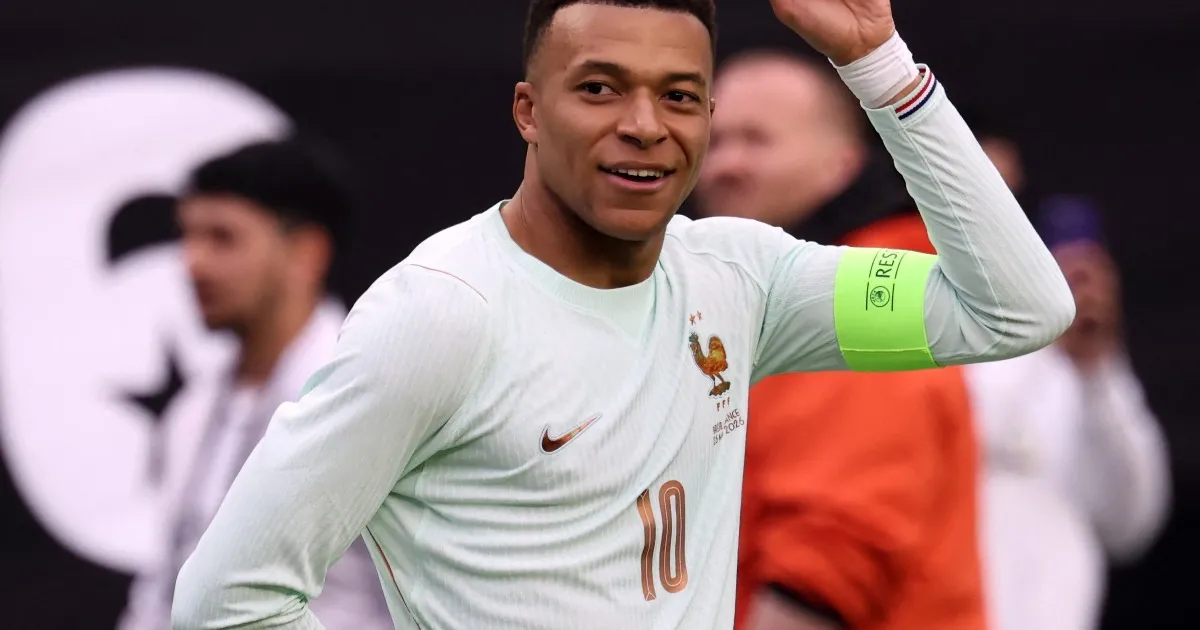
Andreas Schjelderup scored two goals for Benfica and Vangelis Pavlidis netted from the penalty spot, while Kylian Mbappe netted twice for Real in a hugely entertaining, end-to-end contest.

Benfica advance at the expense of Marseille, who lost 3-0 at Club Brugge. The giant screen in the stadium in Belgium congratulated both teams for advancing to the ​next stage, but that proved premature as Trubin turned the tables.

Both Benfica ‌and Real needed a goal for different reasons going into the final minutes, and it is a vindication of the competition’s format that a single goal could have such a dramatic effect on the table.

Anatoliy Trubin of Benfica scores his team's fourth goal
Goalkeeper Anatoliy Trubin of Benfica scores his team’s fourth goal with a header [Jose Manuel Alvarez Rey/Getty Images]

Benfica were denied two strong early penalty shots, ‌and Real took the lead on 30 minutes against the run of play when Asencio’s cross to the back post was headed in by Mbappe.

The home ‌side drew level six minutes later when Asencio’s slip in the ⁠wet conditions allowed Pavlidis to provide a perfect cross for Schjelderup to head into the net.

Benfica were awarded a penalty in first-half added time when Aurelien Tchouameni was adjudged to have hauled Nicolas Otamendi to the floor, and Pavlidis buried his spot-kick.

Schjelderup ‌scored his second of the game from Pavlidis’s perfect pass to make it 3-1, before Mbappe swept home his second, too – his 36th goal of the season in all competitions.

Benfica were still outside the top 24 ‍when they were awarded a free kick with virtually the final play, and Fredrik Aursnes’s delivery was headed in by Trubin to complete a night of high drama in Lisbon.

Source link

What will be the impact of the EU-India trade pact? | International Trade News

The ‘mother of all trade deals’ comes months after the United States slapped tariffs on India and the European Union.

One of the biggest trade deals in history has been struck by India and the European Union, months after United States President Donald Trump hit both with tariffs.

What’s in the agreement – and how much is driven by Washington’s unpredictable measures?

Presenter: Tom McRae

Guests:

Brahma Chellaney – Professor emeritus of strategic studies at the Centre for Policy Research in New Delhi

Remi Bourgeot – Associate fellow at the French Institute for International and Strategic Affairs in Paris

Dhananjay Tripathi – Senior associate professor in the Department of International Relations at South Asian University in New Delhi

Source link

France says will support EU designation of Iran’s IRGC as ‘terrorist’ group | European Union News

Foreign minister announces apparent reversal of France’s stance, saying Iran protest crackdown ‘cannot go unanswered’.

France has said it supports the European Union’s push to designate Iran’s Islamic Revolutionary Guard Corps (IRGC) as a “terrorist organisation”, reversing earlier opposition to the move.

In a statement shared on social media on Wednesday, French Foreign Minister Jean-Noel Barrot appeared to link the planned designation to the Iranian authorities’ recent crackdown on antigovernment protests across the country.

Recommended Stories

list of 3 itemsend of list

“The unbearable repression of the Iranian people’s peaceful uprising cannot go unanswered. Their extraordinary courage in the face of the violence that has been unleashed upon them cannot be in vain,” Barrot wrote on X.

“With our European partners, we will take action tomorrow in Brussels against those responsible for these atrocities. They will be banned from European territory and their assets will be frozen,” he said.

“France will support the designation of the Islamic Revolutionary Guard Corps on the European list of terrorist organisations.”

EU foreign ministers are meeting on Thursday in Brussels, where they are expected to sign off on the new sanctions against the IRGC.

The move, being led by Italy, is likely to be approved politically, although it needs unanimity among the bloc’s 27 member-states.

Established after the 1979 Islamic Revolution in Iran, the IRGC is a branch of the country’s military that answers directly to Supreme Leader Ayatollah Ali Khamenei.

It oversees the Iranian missile and nuclear programmes and plays a central role in Iran’s defence as well as its foreign operations and influence in the wider region.

While some EU member countries have previously pushed for the IRGC to be added to the EU’s “terrorist” list, others, led by France, have been more cautious.

They feared such a move could lead to a complete break in ties with Iran, impacting diplomatic missions, and also hurting negotiations to release European citizens held in Iranian prisons.

Paris has been especially worried about the fate of two of its citizens currently living at the embassy in Tehran after being released from prison last year.

The push by the EU to sanction the IRGC comes amid global criticism of a crackdown on a wave of demonstrations in Iran, which broke out last month in response to soaring inflation and an economic crisis.

The United States-based Human Rights Activists News Agency (HRANA) said it confirmed at least 6,221 deaths, including at least 5,858 protesters, linked to the weeks-long protest movement while it is investigating 12,904 others.

Iran’s government has put the death toll at 3,117, saying 2,427 were civilians and members of the country’s security forces and labelling the rest as “terrorists”.

Al Jazeera has been unable to independently verify these figures.

The protests also spurred renewed tensions between Iran and the US, as US President Donald Trump repeatedly threatened to launch an attack against the country in recent weeks.

Trump designated the IRGC as a “terrorist” group in 2019 during his first term in office.

Canada and Australia did the same in 2024 and in November of last year, respectively.

Iran has warned of “destructive consequences” if the EU goes ahead with plans to list the IRGC, and it summoned the Italian ambassador over Rome’s spearheading of the move.

Source link

Tiny, filthy rich country without an airport is ‘least visited’ in Europe

The peaceful alpine paradise is difficult to reach with no airport, and has the highest density of millionaires in the world.

For those seeking a getaway free from hordes of fellow holidaymakers, one tiny nation stands head and shoulders above the rest. According to findings from cruise and tour operator Riviera Travel, Liechtenstein delivers stunning mountain scenery, understated elegance and abundant attractions, all minus the throngs.

Throughout 2024, visitors clocked up more than 200,000 overnight stays in this principality. Set that against Serbia, the tenth least visited nation, where tourists racked up 12,662,151 nights, and it becomes crystal clear just how tranquil Liechtenstein truly is.

This serene haven, tucked away between Switzerland and Austria, ranks amongst the continent’s – and the world’s – most compact territories. It boasts the unique status of being doubly landlocked, which means it’s encircled by other landlocked states and getting to the coast necessitates travelling through no fewer than two neighbouring countries.

It’s additionally categorised as a microstate, a sovereign territory with an exceptionally modest population or geographical footprint, usually both.

As Europe’s fourth-smallest state, Liechtenstein spans barely 62 square miles and is home to 40,023 residents, positioning it as the sixth-smallest country globally, reports the Express.

Nevertheless, despite its minuscule dimensions, it has earned an enviable standing as one of the world’s most prosperous nations and continues to be governed by a monarch who features amongst Europe’s wealthiest figures. The semi-constitutional monarchy is led by the Prince of the House of Liechtenstein, currently Hans-Adam II.

As of March 2025, the Bloomberg Billionaires Index put his fortune at around £7.9billion, making him the 277th richest person on the planet.

Liechtenstein is also among the rare nations worldwide with zero debt. It was once considered a billionaire tax haven, hitting its height during a tax scandal in 2008, but the principality has since put in considerable effort to shed this reputation.

In 2020, Liechtenstein boasted the world’s highest concentration of millionaires, with 19% of households holding millionaire status. Switzerland ranked second at 15%, whilst Bahrain claimed third spot with 13%, and Qatar sat at 12.7%.

As an Alpine country, Liechtenstein’s rugged mountainous terrain draws winter sports fans to spots like the Malbun resort.

However, this very topography leaves precious little space for building an aviation facility, making it one of the few nations worldwide lacking an airport.

The nearest airport for Liechtenstein’s inhabitants is Altenrhein Airport in Switzerland’s St. Gallen canton, approximately 30 minutes away by motor. Those opting for Zurich Airport face a drive of just under 90 minutes from the capital, Vaduz.

The principality is also without railway stations and, unsurprisingly, lacks any seaports. The easiest rail links can be found via Swiss border stations at Buchs or Sargans, or alternatively through the Austrian station at Feldkirch.

Each provides superb express train connections and coach services to Vaduz. That being said, Liechtenstein isn’t completely cut off from aviation – a privately operated helicopter landing site functions in Balzers.

While Liechtenstein is a member of the United Nations, it stays beyond the borders of the European Union. Nevertheless, it takes part in both the Schengen Area and the European Economic Area, shares a customs union and monetary union with Switzerland, and utilises the Swiss franc as its official currency.

Source link

Tech giant ASML announces record orders in boost for AI boom | Technology

Dutch firm says it expects strong growth in 2026, countering fears of an investment bubble.

Tech giant ASML has reported a quarterly record in orders of its chip-making equipment, boosting hopes for the sustainability of the artificial intelligence boom and countering fears of an investment bubble.

The Dutch firm said on Wednesday that it booked orders worth 13.2 billion euros ($15.8bn) in the final quarter of 2025, more than half of which were for its most advanced extreme ultraviolet (EUV) lithography machines.

Recommended Stories

list of 4 itemsend of list

ASML logged orders worth 7 million euros during the same period the previous year.

Net sales came to 9.7 billion euros in the October-December period, ASML said, taking sales for all of 2025 to 32.7 billion euros.

Net profit for the year was 9.6 billion euros, up from 7.6 billion euros in 2024.

The Veldhoven-based company forecast net sales of between 34 billion euros and 39 billion euros in 2026.

ASML Chief Executive Officer Christophe Fouquet said the company’s chip-making customers had conveyed a “notably more positive assessment” of the market situation in the medium term based on expectations of strong AI-related demand.

“This is reflected in a marked step-up in their medium-term capacity plans and in our record order intake,” Fouquet said in a statement.

“Therefore, we expect 2026 to be another growth year for ASML’s business, largely driven by a significant increase in EUV sales and growth in our installed base business sales.”

Fouquet also said the company would cut about 1,700 jobs, most of them at the leadership level, amid concerns work processes had become “less agile”.

“Engineers in particular have expressed their desire to focus their time on engineering, without being hampered by slow process flows, and restore the fast-moving culture that has made us so successful,” Fouquet said.

The proposed cuts, which would affect positions in the Netherlands and the United States, represent about 4 percent of ASML’s 44,000-strong global workforce.

ASML holds an effective monopoly on the production of machinery used by TSMC, Samsung Electronics, and Intel to make the most advanced AI chips.

The company sells only about 50 of its extreme ultraviolet (EUV) lithography machines each year, with each unit costing about 250 million euros.

ASML’s share price surged on Wednesday, with its stock up nearly 6 percent as of 9.30am local time.

“ASML’s latest results suggest the AI boom is still in full swing, with strong orders and a bullish outlook,” said Russ Mould, investment director at AJ Bell.

“However, job cuts in the business would suggest it is not getting carried away with the strength of current trading.”

ASML’s restructuring “looks like a sharper focus on efficiencies and different ways of working, rather than saying there isn’t enough work for existing staff to do,” Mould added.

“Nonetheless, it’s a sign that the AI craze might be trying to catch its breath.”

Tech giants such as Meta, OpenAI, Nvidia and Oracle have poured billions of dollars into AI in the expectation that the technology will deliver dramatic changes to how people work and live.

Global AI-related spending is forecast to hit $2.53 trillion in 2026 and $3.33 trillion in 2027, according to projections by technology insights firm Gartner.

The investment boom has propelled the US stock market to record highs, stoking concerns about the sustainability of huge spending on a technology whose promise remains largely unrealised.

Source link

Is Trump’s ‘Board of Peace’ an effort to curtail Europe’s middle powers? | Israel-Palestine conflict News

Most European countries have either turned down their invitations to join United States President Donald Trump’s “Board of Peace” for overseeing the reconstruction of Gaza – or politely suggested they are “considering” it, citing concerns.

From within the European Union, only Hungary and Bulgaria have accepted. That is a better track record of unity than the one displayed in 2003, when then-US President George W Bush called on member states to join his invasion of Iraq.

Recommended Stories

list of 4 itemsend of list

Spain, Britain, Poland, Hungary, Czechia and Slovakia said “yes”.

France turned the invitation down on the grounds that Trump’s board “goes beyond the framework of Gaza and raises serious questions, in particular with respect to the principles and structure of the United Nations, which cannot be called into question”.

Trump pointedly did not invite Denmark, a close US ally, following a diplomatic fracas in which he had threatened to seize Greenland, a Danish territory, by force.

The US leader signed the charter for his Board of Peace on January 22 at the World Economic Forum in Davos, Switzerland, calling it “one of the most consequential bodies ever created”.

It has come across to many of the countries invited to join it as perhaps too consequential – an attempt to supplant the United Nations, whose mandate the board is meant to be fulfilling.

Although Trump said he believed the UN should continue to exist, his recent threats suggest that he would not respect the UN Charter, which forbids the violation of borders.

That impression was strengthened by the fact that he invited Russia to the board, amid its full-scale invasion of Ukraine.

‘Trump needs a big win ahead of midterms’

“Trump is thinking about the interior of the US. Things aren’t going well. He needs a big win ahead of the November midterms,” said Angelos Syrigos, a professor of international law at Panteion University in Athens.

The US president has spent his first year in office looking for foreign policy triumphs he can sell at home, said Syrigos, citing the abduction of Venezuelan President Nicolas Maduro, the bombing of Iran and his efforts to end the Ukraine war.

Trump has invited board members to contribute $1bn each for a lifetime membership, but has not spelled out how the money will be spent.

His son-in-law, Jared Kushner, is a member of the executive board.

“How will this thing function? Will Trump and his son-in-law administer it?” asked Syrigos.

Catherine Fieschi, a political scientist and fellow at the European University Institute, believed there was a more ambitious geopolitical goal as well.

“It’s as though Trump were gathering very deliberately middle powers … to defang the potential that these powers have of working independently and making deals,” she said.

Much like Bush’s 2003 “coalition of the willing” against Iraq, Trump’s initiative has cobbled together an ensemble of countries whose common traits are difficult to discern, ranging from Vietnam and Mongolia to Turkiye and Belarus.

Fieschi believed Trump was trying to corral middle powers in order to forestall other forms of multilateralism, a pathway to power that Canadian Prime Minister Mark Carney outlined in his speech at Davos, which so offended Trump.

“In a world of great power rivalry, the countries in between have a choice: [to] compete with each other for favour, or to combine to create a third path with impact,” Carney had said, encouraging countries to build “different coalitions for different issues” and to draw on “the power of legitimacy, integrity and rules”.

He decried the “rupture in the world order … and the beginning of a brutal reality where geopolitics among the great powers is not subject to any constraints”.

After the speech, Trump soon rescinded Canada’s invitation.

Countering agglomerations of power and legitimacy was Trump’s goal, Fieschi believed.

“Here you bind them into an organisation that in some ways offers a framework with Trump in it and the US in it, and implies constraints,” said Fieschi. “It’s not so much benign multilateralism as stopping the middle powers getting on with their hedging and with their capacity to have any kind of autonomy, strategic and otherwise.”

At the same time, she said, Trump was suggesting that the Board of Peace “might give them more power than they have right now in the UN”.

“Trump thinks this is like a golf club and therefore he’s going to charge a membership fee,” Fieschi said.

“If it was a reconstruction fee [for Gaza], I don’t think people would necessarily baulk at that,” she noted, adding that the fee smacked of “crass oligarchic motivation”.

The Board of Peace is called into existence by last November’s UN Security Council Resolution 2803 to oversee the reconstruction of Gaza.

It is defined as “a transitional administration” meant to exist only “until such time as the Palestinian Authority (PA) has satisfactorily completed its reform program … and [can] effectively take back control of Gaza.”

Trump’s charter for the board makes no mention of Gaza, nor of the board’s limited lifespan. Instead, it broadens the board’s mandate to “areas affected or threatened by conflict”, and says it “shall dissolve at such time as the Chairman considers necessary or appropriate”.

China, which has presented itself as a harbinger of multipolarity and a challenger of the US-led world order, rejected the invitation.

“No matter how the international landscape may evolve, China will stay firmly committed to safeguarding the international system with the UN at its core,” said Chinese Foreign Ministry spokesman Guo Jiakun last week.

The UN itself appears to be offended by Trump’s scheme.

“The UN Security Council stands alone in its Charter-mandated authority to act on behalf of all Member States on matters of peace and security,” wrote UN Secretary-General Antonio Guterres on social media on Monday, January 26.

“No other body or ad-hoc coalition can legally require all Member States to comply with decisions on peace and security,” he wrote.

Guterres was calling for a reform that would strengthen the legitimacy of the UN Security Council by better reflecting the balance of power in the world as it is, 81 years after the body was formed. But his statement can also be read as a veiled criticism of Trump’s version of the Board of Peace.

Transparency and governance are problematic, too.

Trump is appointing himself chairman of the board, with power to overrule all members. He gets to appoint the board’s executive, and makes financial transparency optional, saying the board “may authorise the establishment of accounts as necessary.”

Source link

New EA-37B Compass Call Electronic Warfare Jet Makes Maiden Voyage To Europe

Despite rampant speculation that it would eventually head to the Middle East amid growing tensions with Iran, an EA-37B Compass Call’s arrival in Germany yesterday had nothing to do with current events, according to the U.S. Air Force. The specialized electronic warfare (EW) jet made its first trip to Europe to show off its capabilities as the U.S. Air Force transitions from the EC-130 Compass Call turboprop aircraft.

“The aircraft is also slated to visit Spangdahlem Air Base in Germany and RAF Mildenhall, England, marking the platform’s introduction to Airmen, units and NATO Allies in the U.S. Air Forces in Europe area of responsibility,” U.S. Air Forces in Europe-Air Force Africa (USAFE) stated in a release. “The roadshow’s inclusion of multiple installations and units highlights the aircraft’s flexibility to integrate into various mission sets and teams, serving as a key node for joint and coalition operations.”

Turkish Air Force Airmen receive a tour of a U.S. Air Force EA-37B Compass Call aircraft, assigned to the 55th Electronic Combat Group, Davis-Monthan Air Force Base, Arizona, at Ramstein Air Base, Germany, Jan. 26, 2026. The aircraft is also slated to visit Spangdahlem AB, Germany, and RAF Mildenhall, England, marking the platform’s introduction to Airmen, units and NATO Allies in the U.S. Air Forces in Europe area of responsibility. (U.S. Air Force photo by Senior Airman Edgar Grimaldo)
Turkish Air Force airmen receive a tour of a U.S. Air Force EA-37B Compass Call aircraft, assigned to the 55th Electronic Combat Group, Davis-Monthan Air Force Base, Arizona, at Ramstein Air Base, Germany, Jan. 26, 2026. (U.S. Air Force photo by Senior Airman Edgar Grimaldo) Senior Airman Edgar Grimaldo
Royal Norwegian Air Force airmen receive a tour of a U.S. Air Force EA-37B Compass Call assigned to the 55th Electronic Combat Group, Davis-Monthan Air Force Base, Arizona, at Ramstein Air Base, Germany, Jan. 26, 2026. The EA-37B visited Ramstein as part of a road show to familiarize Airmen, units and NATO Allies in the U.S. Air Forces in Europe area of responsibility with the new platform and its capabilities. (U.S. Air Force photo by Senior Airman Edgar Grimaldo)
Royal Norwegian Air Force airmen receive a tour of a U.S. Air Force EA-37B Compass Call assigned to the 55th Electronic Combat Group, Davis-Monthan Air Force Base, Arizona, at Ramstein Air Base, Germany, Jan. 26, 2026. (U.S. Air Force photo by Senior Airman Edgar Grimaldo) Senior Airman Edgar Grimaldo
Military personnel assigned to Ramstein Air Base, Germany, receive a tour of an EA-37B Compass Call aircraft assigned to the 55th Electronic Combat Group, Davis-Monthan Air Force Base, Arizona, during its first stop in the European theater for a scheduled road show, Jan. 26, 2026. The roadshow’s inclusion of multiple installations and units highlights the EA-37B’s potential to integrate into various mission sets and teams, serving as a key node for joint and coalition operations. (U.S. Air Force photo by Senior Airman Edgar Grimaldo)
Military personnel assigned to Ramstein Air Base, Germany, receive a tour of an EA-37B Compass Call aircraft assigned to the 55th Electronic Combat Group, Davis-Monthan Air Force Base, Arizona, during its first stop in the European theater for a scheduled road show, Jan. 26, 2026. The roadshow’s inclusion of multiple installations and units highlights the EA-37B’s potential to integrate into various mission sets and teams, serving as a key node for joint and coalition operations. (U.S. Air Force photo by Senior Airman Edgar Grimaldo) Senior Airman Edgar Grimaldo

The Air Force statement about the EA-37B’s visit to Europe follows suppositions made in many posts on X and shows the limits of online speculation based just on tracking data. The conjecture is understandable given the electronic warfare capabilities such a jet could bring to the fight, jamming radars and interfering with Iranian communications and command and control.

👀🇺🇸✈️🇩🇪 The United States has redeployed an EA-37B electronic warfare aircraft, accepted into service in 2024, from Bermuda to Ramstein Air Base. The aircraft’s specific technical characteristics remain highly classified. The move is widely assessed as a preparatory step for a… pic.twitter.com/xQNWXOEhk9

— NSTRIKE (@NSTRIKE1231) January 26, 2026

USAF EA-37B Compass Call is likely en route to the Persian Gulf. This next-generation Airborne Electromagnetic Attack platform is based on the Gulfstream G550 and is designed to execute offensive counter-information warfare and the suppression of enemy air defenses. Its specific… pic.twitter.com/M6ASNDPZp6

— Lokman Karadag 盧克曼 (@DrLokmanKaradag) January 25, 2026

🚨🇺🇸 The U.S. has quietly shifted its newest EA-37B electronic warfare jet from Bermuda to Ramstein Air Base, Germany, a platform that only entered service in 2024.

Analysts see this as groundwork for a possible Middle East deployment.

If deployed, it would be the first real… pic.twitter.com/wVNTy4CeTM

— Defence Index (@Defence_Index) January 26, 2026

The EA-37B, however, is not yet operational, Kris Pierce, spokesman for the 55th Wing at Offutt Air Force Base told The War Zone Tuesday afternoon.

“We are still in training and testing phase,” he said. “We are still trying to figure out the capabilities.”

The new Compass Call is a heavily modified Gulfstream G550 business jet. It leverages the Israeli-developed Conformal Airborne Early Warning (CAEW) configuration, which has large ‘cheek’ fairings on either side of the fuselage, among other distinctive features.

The Air Force is planning to procure 10 of these jets to replace the aging and ever smaller fleet of turboprop EC-130H Compass Call planes, of which only four remain. The 43rd Electronic Combat Squadron flew the first training sortie for the EA-37B on May 2, 2025.

Many of the EA-37B’s mission systems are directly ported over from the EC-130H, which is why the two very different aircraft share the same nickname. Both aircraft are designed to provide critical stand-off jamming support, including against enemy radars and communications systems. They also have a secondary intelligence, surveillance, and reconnaissance (ISR) function given their ability to spot, track, and geolocate various types of emitters.

The EA-37B also offers new capabilities that go beyond what is found on the EC-130H. The Air Force has said in the past that the aircraft’s designation reflects its ability to not only attack, but also destroy certain targets, as you can read more about here.

An EA-37B Compass Call takes its first official flight at Davis-Monthan Air Force Base, Arizona, Aug. 28, 2024. The plane was officially brought to DM and is now an operational asset to installation capabilities. (U.S. Air Force photo by Senior Airman Andrew Garavito)

In addition, the G550-based aircraft can reach higher altitudes than the EC-130H, giving it a better field of view to provide effects across the electromagnetic spectrum (EMS) over longer distances and larger areas. The jet also offers speed, range, and endurance benefits over its turboprop predecessor. 

“One of the most important aspects of success in conflict is information superiority,” said U.S. Air Force Capt. Tyler Laska, 41st Electronic Combat Squadron EA-37B pilot. “Every moment of hesitation that we can implant into an adversary’s decision-making process increases the survivability of our men and women on the leading edge of every domain.” 

The value of Compass Call aircraft was recently highlighted during the recent pressure campaign against Venezuelan dictator Nicolas Maduro. An EC-130H likely played a role in jamming radars and communications to make it harder for Venezuelan forces to respond during Maduro’s eventual capture. E/A-18G Growler jets also played a major role in that effort.

You can see a video of the EC-130 arriving in the Caribbean below.

A video posted to social media yesterday (20 Dec) shows the arrival of a USAF EC-130H at Luis Muñoz Marin International Airport (SJU/TJSJ) in Puerto Rico.

There are only a few EC-130Hs left in USAF inventory.

Credit/permission: pinchito.avgeek (IG). pic.twitter.com/IxqBaKSBtE

— LatAmMilMovements (@LatAmMilMVMTs) December 22, 2025

As we noted in an earlier story: “Previous iterations of the EC-130H-based Compass Call system have proven their value in combat zones on multiple occasions in the past two decades. A contingent of these aircraft was continuously forward-deployed in the Middle East, from where they also supported operations in Afghanistan, between 2001 and 2021. EC-130Hs supported the raid that led to the death of Al Qaeda founder Osama Bin Laden in Pakistan in 2011 and prevented the detonation of an improvised explosive device that might have killed then-Maj. Gen. James Mattis, who later rose to the rank of General and also served as Secretary of Defense under Trump, in Iraq in 2003, among many other exploits, according to a recent story from Air Force Times.”

A U.S. Air Force EC-130H Compass Call electronic warfare plane was seen landing in Puerto Rico.
An EC-130 Compass Call. (U.S. Air Force photo by Master Sgt. Wolfram M. Stumpf) (U.S. Air Force photo by Master Sgt. Wolfram M. Stumpf)

Had the EA-37B that landed at Ramstein been bound for the Middle East as online trackers posited, that would have been a big deal indeed, marking its first foray into potential combat. Still, this tour, following the two last year to Asia, is a first introduction to a large number of U.S. and allied airmen, of an important new airborne EW platform.

Contact the author: howard@thewarzone.com

Howard is a Senior Staff Writer for The War Zone, and a former Senior Managing Editor for Military Times. Prior to this, he covered military affairs for the Tampa Bay Times as a Senior Writer. Howard’s work has appeared in various publications including Yahoo News, RealClearDefense, and Air Force Times.


Source link

Benfica’s Jose to kill Real with love, says Madrid boss ‘like his child’ | Football News

Fiery-tempered and fierce-tongued Jose Mourinho softens his tone as former club Real Madrid face crunch game in Benfica.

Benfica coach Jose Mourinho said his Real Madrid counterpart, Alvaro Arbeloa, was like a child to him, in the run-up to their Champions League meeting in the final round of league phase matches.

The veteran Portuguese manager, known for his fiery temper and fierce tongue, coached Arbeloa at Madrid during his time at the helm of Los Blancos between 2010-2013, and had a strong relationship with the former defender in a dressing room that was splintering.

Recommended Stories

list of 4 itemsend of list

After a comment from Mourinho last week about being “surprised” when inexperienced managers lead big European clubs was viewed as a dig at new Madrid coach Arbeloa, he said he would never try to make life hard for his former charge.

Former Inter Milan coach Mourinho said in Italy that his words were also being taken as criticism of the appointment of Cristian Chivu at the Serie A side last year.

“There is one problem – both Chivu and Arbeloa are my children, they are not just ex-players of mine, but they are special,” Mourinho told a news conference on Tuesday.

“Speaking about Alvaro, I would say that he is one of the players – from a human point of view, from a personal point of view, and personal empathy – he is one of my favourites of them all.

“Obviously, he is not the best player who has played for Real Madrid, but he is certainly one of the best men who has played for me at Real Madrid.”

Mourinho said he was surprised when he himself was offered the chance to lead Benfica at the beginning of his coaching career in 2000, so his words could not be taken as an insult.

“The last thing I would do would be to put pressure on him,” explained the 63-year-old. “I want everything to go well for him, and for him to have a fantastic career as a coach.”

Mourinho said he had not spoken to Arbeloa since the 43-year-old replaced Xabi Alonso at the helm, but that there was no need to.

“My telephone number is very complicated, because there’s only the club’s number, and after that, only my family has it, and then my other phone is always changing, changing, changing,” explained Mourinho.

“People lose my contact, and I lose theirs too, and with Alvaro, it’s not necessary to have a call to say ‘good luck’, he knows it.

“In the same way that I [want Real Madrid to win games], Alvaro wants to beat Benfica, but then after that, he hopes Benfica always win, that’s for sure — no call is necessary.”

Mourinho admitted he could not speak for Arbeloa’s quality as a coach yet because he had not watched Madrid’s reserves or youth teams play.

“I cannot analyse him as a coach because I do not know him,” said Mourinho.

“I’ve only seen results, not followed with my own eyes the trajectory of the youngsters at Madrid.

“I have no advice to give him. The only thing that is important for me is that he is happy, that he likes it, because coaching these days is a very difficult mission.”

Madrid will seal their spot in the last 16 with a victory, while Benfica need to win and hope other results go their way to reach the playoff round.

Source link

Rwanda sues UK over scrapped asylum seeker deal | Migration News

Rwanda began the inter-state arbitration proceedings under the asylum partnership agreement in November.

Rwanda has taken legal action against the United Kingdom’s refusal to disburse payments under a now-scrapped, controversial agreement for Kigali to receive deported asylum seekers, according to a Rwandan official and UK media reports.

Rwanda launched arbitral proceedings against the UK through the Hague-based Permanent Court of Arbitration on Tuesday. It is seeking 50 million pounds ($68.8m) in compensation after the UK failed to formally terminate the controversial agreement about two years ago, The Telegraph newspaper reported.

Recommended Stories

list of 3 itemsend of list

“Rwanda regrets that it has been necessary to pursue these claims in arbitration, but faced with the United Kingdom’s intransigence on these issues, it has been left with no other choice,” Michael Butera, chief technical adviser to the minister of justice, told the AFP news agency.

Butera added that Kigali had sought diplomatic engagement before resorting to legal action.

The programme to remove to East Africa some people who had arrived in the UK via small boats was agreed upon in a treaty between London and Kilgali. It was intended as a deterrent for those wanting to come to the UK in the same manner.

However, just four volunteers ultimately arrived in Rwanda.

Prime Minister Keir Starmer scrapped the deal – brokered by former Prime Minister Boris Johnson’s Conservative government in 2022 – when he took office in July 2024, declaring it “dead and buried”.

London had already paid Kigali 240 million pounds ($330.9m) before the agreement was abandoned, with a further 50 million pounds ($68.9m) due in April.

Starmer’s official spokesman told reporters on Tuesday, “We will robustly defend our position to protect British taxpayers.”

Last year, the UK suspended most financial aid to Rwanda for backing the M23 group’s offensive in the Democratic Republic of the Congo.

Kigali labelled the move “punitive”.

The agreement faced a string of legal challenges, culminating in a November 2023 ruling by the UK Supreme Court that it was illegal under international law.

Rwanda began the interstate arbitration proceedings under the asylum partnership agreement in November, according to the Permanent Court of Arbitration’s website, which lists the case status as pending.

Immigration has been an increasingly central political issue since the UK left the European Union in 2020, largely on a promise to “take back control” of the country’s borders.

Some 37,000 asylum seekers, including people fleeing Syria and Afghanistan, crossed the English Channel in 2024, and more than 40,000 in 2025 – the highest number since 2022, when nearly 46,000 people crossed. Dozens have died attempting the journey.

The UK government says it has removed 50,000 undocumented people living in the country.

In September, the UK and France implemented a “one-in-one-out” migrant deal aimed at returning asylum seekers to France while accepting those with UK family ties. However, the policy has faced criticism regarding its effectiveness. NGOs and charity groups have also described the scheme as a “cruel” move designed to restrict asylum rights.

Source link

ICE agents from US set to help with security at Winter Olympics in Italy | Winter Olympics News

The 2026 Milano Cortino Winter Olympics are set to begin on February 6, with shock at the late news of ICE involvement.

Agents from the United States’ divisive Immigration and Customs Enforcement (ICE) will help support US security operations for the Winter Olympic Games in Italy next month, a spokesperson told the AFP news agency.

“At the Olympics, ICE’s Homeland Security Investigations is supporting the US Department of State’s Diplomatic Security Service and host nation to vet and mitigate risks from transnational criminal organisations,” the agency said in a statement.

Recommended Stories

list of 4 itemsend of list

“All security operations remain under Italian authority.”

It added: “Obviously, ICE does not conduct immigration enforcement operations in foreign countries.”

The potential presence of ICE agents at the February 6-22 Milano-Cortina Games has prompted huge debate in Italy, following the outcry over the deaths of two civilians during an immigration crackdown in Minneapolis.

Italian authorities initially denied the presence of ICE and then sought to downplay its role, suggesting its agents would only help in security for the US delegation.

US Vice President JD Vance and Secretary of State Marco Rubio are attending the opening ceremony in Milan on February 6.

On Monday, the president of the northern Lombardy region, which is hosting several of the Olympic events, said ICE’s involvement would be limited to monitoring Vance and Rubio.

“It will be only in a defensive role, but I am convinced that nothing will happen,” Attilio Fontana told reporters.

However, his office then issued a statement saying he did not have any information on their presence, but was responding to a hypothetical question.

Thousands of ICE agents have been deployed by President Donald Trump in various US cities to carry out a crackdown on undocumented immigration.

Their actions have prompted widespread protests, and the recent killings of US citizens Renee Good and Alex Pretti, both 37, on the streets of Minneapolis, has led to outrage.

The US will host the 2028 Summer Olympics, with the Games being staged in Los Angeles.

Source link

India, EU agree on ‘mother of all’ trade deals | International Trade News

India and the European Union have agreed on a huge trade deal creating a free trade zone of two ‌billion people, European ​Commission President Ursula ‍von der Leyen and Indian Prime Minister Narendra Modi have said.

In a post on X during her visit to New Delhi on Tuesday, von der Leyen said the two parties were “making history today”.

Recommended Stories

list of 4 itemsend of list

“We have concluded the mother of all ​deals. ‌We have created a free trade zone of two ‌billion people, with ‌both sides ⁠set to benefit,” she added.

Modi said the landmark agreement, following nearly two decades of on-and-off ​negotiations, had been reached, hailing its benefits before a meeting with von der Leyen and European Council President Antonio Costa.

“This deal will bring many opportunities for India’s 1.4 billion and many millions of people of the EU,” he said.

The deal will cover about 25 percent of the global gross domestic product (GDP), Modi said, adding that India will get a boost in sectors including textiles, gems and jewellery, and leather goods.

The trade pact comes amid a push by Brussels and New Delhi to open up new markets in the face of tariffs imposed by the United States and Chinese export controls.

It will pave the way for ‍India, the world’s most populous nation, to open up its huge, protected market to free trade with the 27-nation EU, its biggest trading partner.

The EU views India as an important market for the future, while New Delhi sees Europe as an important potential source of technology and investment.

The formal signing of the deal will take ‌place after legal vetting, expected to last five to six months, the Reuters news agency reported, quoting an Indian government official aware of the matter. The official said the deal was expected to be implemented within a year.

EU exports ‘expected to double’

The EU said it expected its exports to India to double by 2032 as a result of the deal.

Bilateral trade between India and the EU in goods has already grown by nearly 90 percent over the past decade, reaching 120 billion euros ($139bn) in 2024, according to EU figures. Trade in services accounts for a further 60 billion euros ($69bn), EU data shows.

Under the agreement, tariffs on 96.6 percent of EU goods exports to India would be eliminated or reduced, EU officials said. The deal would save up to 4 billion euros ($4.74bn) a year in duties on European products, officials said.

Among the products that would have tariffs all or mostly eliminated were machinery, chemicals and pharmaceuticals.

Tariffs on cars would gradually reduce to 10 percent with a quota of 250,000 vehicles a year, officials said, while EU service providers would gain privileged access to India in key areas such as financial and maritime services. Tariffs on EU aircraft and spacecraft would be eliminated for almost all products.

Tariffs would be cut to 20-30 percent on EU wine, 40 percent on spirits, and 50 percent on beer, while tariffs on fruit juices and processed food would be eliminated.

“The EU stands to gain the highest level of access ever granted to a trade partner in the traditionally protected Indian market,” von der Leyen said on Sunday. “We will gain a significant competitive advantage in key industrial and agri-good sectors.”

Last-minute talks on Monday had focused on several sticking points, including the impact of the EU’s carbon border tax on steel, sources familiar with the discussions told the AFP news agency.

Talks on the India-EU trade deal were launched in 2007, but for many years made little progress. However, Russia’s full-scale invasion of Ukraine led to the relaunch of talks in 2022, while United States President Donald Trump’s aggressive tariff policy spurred rapid progress in negotiations.

India and the EU also announced the launch of a security and defence partnership, similar to partnerships the EU has with Japan and South Korea, as von der Leyen said Brussels and New Delhi would grow their strategic partnership further.

The moves come as India, which has relied on Russia for key military hardware for decades, has tried to reduce its dependence on Moscow by diversifying imports and pushing its domestic manufacturing base, while Europe is doing the same with regard to Washington.

The EU-India deal comes days after Brussels signed a key pact with the South American bloc Mercosur, following deals last year with Indonesia, Mexico and Switzerland. During the same period, New Delhi ​finalised pacts with the United Kingdom, New Zealand and ‌Oman.

Source link

Australia cancels visa of Israeli influencer accused of ‘spreading hatred’ | Islamophobia News

Social media influencer Sammy Yahood is known to spread Islamophobic content online.

Australia has cancelled the visa of an Israeli social media influencer who has campaigned against Islam, saying it will not accept visitors to the country who come to spread hatred.

Australian Minister for Home Affairs Tony Burke said in a statement on Tuesday that “spreading hatred is not a good reason to come” to Australia, hours after influencer Sammy Yahood announced that his visa was cancelled three hours before his flight departed from Israel.

Recommended Stories

list of 3 itemsend of list

People who want to visit Australia should apply for the correct visa and come for the right reasons, Burke said in a statement to the AFP news agency.

Just hours before his visa was cancelled, Yahood had written on X, “Islam ACCORDING TO ISLAM does not tolerate non-believers, apostates, women’s rights, children’s rights, or gay rights.”

He also referred to Islam as a “disgusting ideology” and an “aggressor”.

Australia tightened its hate crime laws earlier this month in response to a mass shooting at a Jewish celebration at Sydney’s Bondi Beach, which left 15 people dead.

In a recent post, Yahood, a native of the UK and a recent citizen of Israel, had also advocated for the deportation of United States Representative Ilhan Omar, a Somali-American, who is Muslim.

In another, he ridiculed the United Nations agency for Palestinian refugees, UNRWA, which is responsible for coordinating relief for Palestinians and Palestinian refugees in the occupied West Bank, Gaza, Jordan, Syria and Lebanon.

Israel began bulldozing UNRWA’s headquarters in occupied East Jerusalem last week, a move strongly condemned by the world body and Palestinian leaders, who said the flattening of the site marked a “barbaric new era” of unchecked defiance of international law by Israeli authorities.

Despite the cancellation of his visa to Australia, Yahood said he flew from Israel to Abu Dhabi, but was blocked from getting his connecting flight to Melbourne.

“I have been unlawfully banned from Australia, and I will be taking action,” he wrote on X.

“This is a story about tyranny, censorship and control,” he added in another post.

Yahood’s visa was reportedly cancelled under the same legislation that has been used in the past to reject people’s visas on the grounds of disseminating hatred.

Sky News Australia reported that Minister Burke previously revoked the visitor visa of Israeli-American activist and tech entrepreneur Hillel Fuld over his “Islamophobic rhetoric”, as well as the visa of Simcha Rothman, a lawmaker with Israel’s far-right Mafdal-Religious Zionism party and a member of Netanyahu’s governing coalition, amid concerns that his planned speaking tour in the country would “spread division”.

The conservative Australian Jewish Association, which had invited Yahood to speak at events in Sydney and Melbourne, said it “strongly condemned” the visa decision by Prime Minister Anthony Albanese’s government.

Source link

Russia-Ukraine war: List of key events, day 1,433 | Russia-Ukraine war News

These are the key developments from day 1,433 of Russia’s war on Ukraine.

Here is where things stand on Tuesday, January 27:

Fighting

  • At least two people were injured after Russian forces launched a drone and missile attack on Kharkiv, Ukraine’s second-largest city, Mayor Ihor Terekhov said. The attack also damaged apartment buildings, a school, and a kindergarten, he added.

  • Russian drones also hit a high-rise apartment building in Ukraine’s Kryvyi Rih, President Volodymyr Zelenskyy’s hometown southeast of Kharkiv. The head of the city’s military administration, Oleksandr Vilkul, said the attack triggered a fire, but there were no immediate reports of casualties.
  • A Russian drone and missile attack on the Ukrainian capital damaged parts of the Kyiv-Pechersk Lavra, Ukraine’s most famous religious landmark and a UNESCO World Heritage Site, Ukraine’s Ministry of Culture said in a statement.
  • In Russia, one person was killed following a Ukrainian drone attack in the border region of Belgorod, Governor Vyacheslav Gladkov said on the Telegram messaging app.
  • Ukraine’s military said it struck the Slavyansk Eko oil refinery in Russia’s Krasnodar region overnight. The military said in a statement that parts of the primary oil processing facility were hit. There were no initial reports of casualties.
  • One person was injured, and two business enterprises caught fire in the city of Slavyansk-on-Kuban – also in Russia’s Krasnodar – after fragments fell from a destroyed drone, the regional emergencies centre said.

  • Russia’s Ministry of Defence said that air defence systems had intercepted and destroyed 40 Ukrainian drones overnight, including 34 in the Krasnodar region.

Military aid

  • NATO Secretary-General Mark Rutte said Ukraine’s interception rate of Russian missiles and drones has decreased due to Kyiv having fewer weapons to protect it from incoming attacks. Rutte urged allies to dig into their stockpiles to help defend Ukraine.

Humanitarian aid

  • Czechs have collected more than $6m in just five days in a grassroots fundraising effort to buy generators, heaters and batteries to send to Ukraine, where hundreds of thousands of people are freezing in sub-zero temperatures after Russian attacks on power plants, the online fundraising initiative Darek pro Putina (“Gift for Putin”) said.

Ceasefire talks

  • Talks between Ukrainian and Russian negotiators are expected to resume on February 1, Zelenskyy said in his regular evening address. He urged Ukraine’s allies not to weaken their pressure on Moscow in advance of the expected talks.

  • In a separate post on X, Zelenskyy said military issues were the primary topic of discussion at trilateral talks with the US and Russia over the weekend in Abu Dhabi, but that political issues were also discussed. He added that preparations are under way for new trilateral meetings.

  • The US-brokered trilateral talks in Abu Dhabi between Russian and Ukrainian negotiators were held in a “constructive spirit”, but there was still “significant work ahead”, Kremlin spokesman Dmitry Peskov told journalists in Moscow. The talks should be viewed positively despite these differences, he added.
  • The Kremlin also said that the issue of territory remained fundamental to Russia when it came to getting a deal to end the fighting, the Russian state’s TASS news agency reported. Moscow has insisted that for the war to end, Russia must take over all of Ukraine’s eastern Donbas region.

  • German Federal Minister for Foreign Affairs Johann Wadephul denounced Russia’s “stubborn insistence on the crucial territorial issue” following the talks in Abu Dhabi.

Politics

  • European Union countries have approved a ban on Russian gas imports by late 2027, a move to cut ties with their former top energy supplier nearly four years after Moscow’s full-scale invasion of Ukraine.
  • Ukrainian Minister of Energy Denys Shmyhal welcomed the ban, saying in a statement that independence from Russian energy “is, above all, about a safe and strong Europe”.
  • Germany’s Wadephul said that Russia is testing European countries’ resilience with hybrid tactics, such as the damaging of undersea cables, the jamming of GPS signals and the deployment of a shadow fleet of vessels to break sanctions, as its deadly war in Ukraine continues.
  • Hungarian Prime Minister Viktor Orban said that Budapest would summon Ukraine’s ambassador over what Orban said were attempts by Kyiv to interfere in a Hungarian parliamentary election due on April 12. In recent weeks, Orban has intensified his anti-Ukrainian rhetoric and sought to link opposition leader, Peter Magyar, with Brussels and Ukraine.

TOPSHOT - Pedestrians walk past an amputee begging for alms at a metro station during an air raid alert in Kyiv on January 26, 2026, amid the Russian invasion of Ukraine. (Photo by Sergei GAPON / AFP)
Pedestrians walk past a person with an amputated leg begging at a metro station during an air raid alert in the Ukrainian capital, Kyiv, on Monday [Sergei Gapon/AFP]

Source link

NATO chief wishes ‘good luck’ to those who think Europe can defend itself without U.S. help

NATO Secretary-General Mark Rutte insisted on Monday that Europe is incapable of defending itself without U.S. military support and would have to more than double current military spending targets to be able to do so.

“If anyone thinks here … that the European Union or Europe as a whole can defend itself without the U.S., keep on dreaming. You can’t,” Rutte told EU lawmakers in Brussels. Europe and the United States “need each other,” he said.

Tensions are festering within NATO over President Trump’s renewed threats in recent weeks to annex Greenland, which is a semiautonomous territory of NATO ally Denmark.

Trump also said that he was slapping new tariffs on Greenland’s European backers, but later dropped his threats after a “framework” for a deal over the mineral-rich island was reached, with Rutte’s help. Few details of the agreement have emerged.

The 32-nation military organization is bound together by a mutual defense clause, Article 5 of NATO’s founding Washington treaty, which commits every country to come to the defense of an ally whose territory is under threat.

At NATO’s summit in The Hague in July, European allies — with the exception of Spain — plus Canada agreed to Trump’s demand that they invest the same percentage of their economic output on defense as the United States within a decade.

They pledged to spend 3.5% of gross domestic product on core defense, and a further 1.5% on security-related infrastructure – a total of 5% of GDP – by 2035.

“If you really want to go it alone,” Rutte said, “forget that you can ever get there with 5%. It will be 10%. You have to build up your own nuclear capability. That costs billions and billions of euros.”

France has led calls for Europe to build its “strategic autonomy,” and support for its stance has grown since the Trump administration warned last year that its security priorities lie elsewhere and that the Europeans would have to fend for themselves.

Rutte told the lawmakers that without the United States, Europe “would lose the ultimate guarantor of our freedom, which is the U.S. nuclear umbrella. So, hey, good luck!”

Source link

EU launches probe into Grok AI feature creating deepfakes of women, minors | Technology News

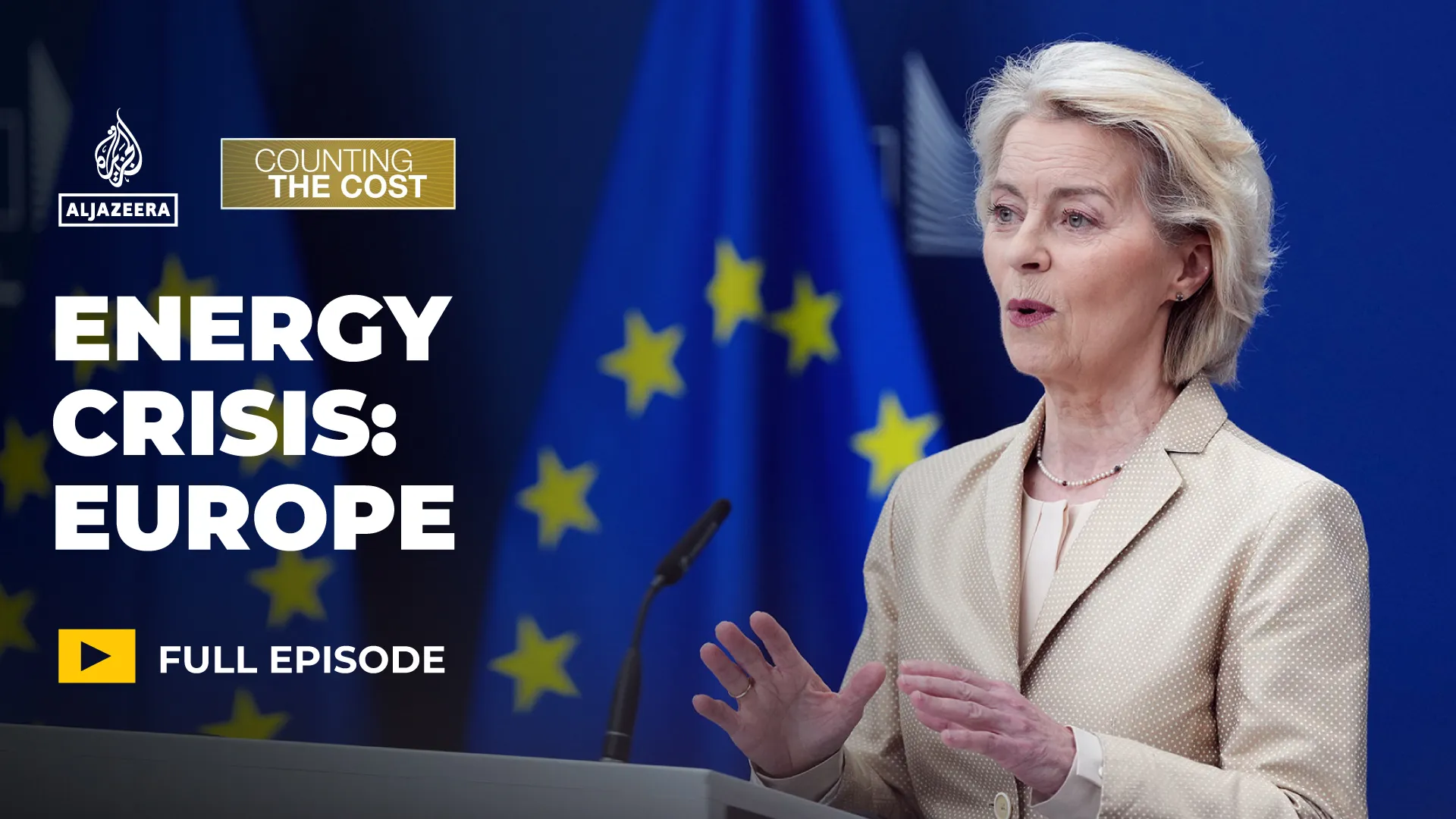
Commission President Ursula von der Leyen says Europe will not ‘tolerate unthinkable behaviour, such as digital undressing of women and children’.

The European Commission has launched an investigation into Elon Musk’s AI chatbot, Grok, regarding the creation of sexually explicit fake images of women and minors.

The commission announced on Monday that its investigation would examine whether the AI tool used on X has met its legal obligations under the European Union’s Digital Services Act (DSA), which requires social media companies to address illegal and harmful online content.

Recommended Stories

list of 3 itemsend of list

Brussels said the investigation would examine whether X had properly mitigated “risks related to the dissemination of illegal content in the EU, such as manipulated sexually explicit images, including content that may amount to child sexual abuse material”.

In a statement to the AFP news agency, European Commission President Ursula von der Leyen said Europe will not “tolerate unthinkable behaviour, such as digital undressing of women and children”.

“It is simple – we will not hand over consent and child protection to tech companies to violate and monetise. The harm caused by illegal images is very real,” she added.

Grok has faced a recent outcry after it was uncovered that users could ask the chatbot to create deepfakes of women and children by simply using prompts such as “put her in a bikini” or “remove her clothes”.

EU tech commissioner Henna Virkkunen said the rights of women and children in the EU should not be “collateral damage” of X’s services.

“Non-consensual sexual deepfakes of women and children are a violent, unacceptable form of degradation,” Virkkunen said in a statement.

X has been under investigation by the EU over its digital content rules since December 2023.

This month, Grok said it would restrict image generation and editing to paying customers after criticism of the tool’s capabilities.

A nonprofit organisation, the Centre for Countering Digital Hate, published a report last week that found Grok had generated an estimated 3 million sexualised images of women and children in a matter of days.

In December, the EU ordered X to pay a 120-million-euro ($140m) fine for violating the DSA’s transparency obligations.

The EU is not the only body investigating Grok’s tool; the United Kingdom’s media regulator, Ofcom, announced it had launched an investigation into X to determine whether it had complied with requirements under the UK’s Online Safety Act.

Source link