The countdown to the FIFA World Cup 2026 has entered the single-figure mark, with the tournament getting under way in nine days in Mexico City.
The biggest edition of the World Cup, with 48 nations and 104 games, will be hosted by three countries for the first time, as the United States and Canada share the honours with Mexico.
Recommended Stories
list of 3 itemsend of list
All 48 teams heading to the tournament have released their final 26-man squads, marking possible final appearances for greats like Lionel Messi and Cristiano Ronaldo.
Young stars looking to dethrone the icons, including Spain’s Lamine Yamal and Brazil’s Endrick, will look to make their mark in their first appearance at the global event.
Here are all 48 World Cup squads for the FIFA World Cup 2026:
Midfielders: Houssem Aouar, Nabil Bentaleb, Hicham Boudaoui, Fares Chaibi, Ibrahim Maza, Yassine Titraoui, Ramiz Zerrouki
Forwards: Mohamed Amine Amoura, Nadir Benbouali, Adil Boulbina, Fares Ghedjemis, Amine Gouiri, Riyad Mahrez, Anis Hadj Moussa
Argentina World Cup squad
Goalkeepers: Emiliano Martinez, Geronimo Rulli, Juan Musso
Defenders: Leonardo Balerdi, Gonzalo Montiel, Nicolas Tagliafico, Lisandro Martinez, Cristian Romero, Nicolas Otamendi, Facundo Medina, Nahuel Molina
Midfielders: Leandro Paredes, Rodrigo De Paul, Valentin Barco, Giovani Lo Celso, Exequiel Palacios, Alexis Mac Allister, Enzo Fernandez
Forwards: Julian Alvarez, Lionel Messi, Nicolas Gonzalez, Thiago Almada, Giuliano Simeone, Nicolas Paz, Jose Manuel Lopez, Lautaro Martinez
The World Cup 2026 will be Lionel Messi’s swansong [File: Gustavo Garello/AP]
Australia World Cup squad
Goalkeepers: Patrick Beach, Paul Izzo, Mathew Ryan
Defenders: Aziz Behich, Jordan Bos, Cameron Burgess, Alessandro Circati, Milos Degenek, Jason Geria, Lucas Herrington, Jacob Italiano, Harry Souttar, Kai Trewin
Midfielders: Cameron Devlin, Ajdin Hrustic, Jackson Irvine, Connor Metcalfe, Aiden O’Neill, Paul Okon-Engstler
Goalkeepers: Patrick Pentz, Alexander Schlager, Florian Wiegele
Defenders: David Affengruber, David Alaba, Kevin Danso, Marco Friedl, Philipp Lienhart, Phillipp Mwene, Stefan Posch, Alexander Prass, Michael Svoboda
Midfielders: Christoph Baumgartner, Carney Chukwuemeka, Florian Grillitsch, Konrad Laimer, Marcel Sabitzer, Xaver Schlager, Romano Schmid, Alessandro Schopf, Nicolas Seiwald, Paul Wanner, Patrick Wimmer
Forwards: Marko Arnautovic, Michael Gregoritsch, Sasa Kalajdzic
Belgium World Cup squad
Goalkeepers: Thibaut Courtois, Senne Lammens, Mike Penders
Defenders: Timothy Castagne, Zeno Debast, Maxim De Cuyper, Koni De Winter, Brandon Mechele, Thomas Meunier, Nathan Ngoy, Joaquin Seys, Arthur Theate
Midfielders: Kevin De Bruyne, Amadou Onana, Nicolas Raskin, Youri Tielemans, Hans Vanaken, Axel Witsel
Forwards: Charles De Ketelaere, Jeremy Doku, Matias Fernandez-Pardo, Romelu Lukaku, Dodi Lukebakio, Diego Moreira, Alexis Saelemaekers, Leandro Trossard
Bosnia and Herzegovina World Cup squad
Goalkeepers: Nikola Vasilj, Martin Zlomislic, Osman Hadzikic
Defenders: Sead Kolasinac, Amar Dedic, Nihad Mujakic, Nikola Katic, Tarik Muharemovic, Stjepan Radeljic, Dennis Hadzikadunic, Nidal Celik
Midfielders: Amir Hadziahmetovic, Ivan Sunjic, Ivan Basic, Dzenis Burnic, Ermin Mahmic, Benjamin Tahirovic, Amar Memic, Armin Gigovic, Kerim Alajbegovic, Esmir Bajraktarevic
Defenders: Alex Sandro, Bremer, Danilo, Douglas Santos, Gabriel Magalhaes, Ibanez, Leo Pereira, Marquinhos, Wesley
Midfielders: Bruno Guimaraes, Casemiro, Danilo Santos, Fabinho, Lucas Paqueta
Forwards: Endrick, Gabriel Martinelli, Igor Thiago, Luiz Henrique, Matheus Cunha, Neymar Jr, Raphinha, Rayan, Vinicius Jr
Brazil’s forward Neymar has found himself in the five-time champions’ World Cup squad despite recent injuries [File: Mauro Pimentel/AFP]
Canada World Cup squad
Goalkeepers: Dayne St Clair, Maxime Crepeau, Owen Goodman
Defenders: Alistair Johnston, Derek Cornelius, Richie Laryea, Niko Sigur, Joel Waterman, Luc de Fougerolles, Moise Bombito, Alphonso Davies, Alfie Jones
Midfielders: Stephen Eustaquio, Ismael Kone, Tajon Buchanan, Mathieu Choiniere, Ali Ahmed, Nathan Saliba, Liam Millar, Jacob Shaffelburg, Jonathan Osorio
Attackers: Jonathan David, Cyle Larin, Tani Oluwaseyi, Promise David
Forwards: Gilson Benchimol, Jovane Cabral, Dailon Livramento, Ryan Mendes, Nuno da Costa, Garry Rodrigues, Willy Semedo, Helio Varela
Colombia World Cup squad
Goalkeepers: Camilo Vargas, Alvaro Montero, David Ospina
Defenders: Davinson Sanchez, Jhon Lucumi, Yerry Mina, Willer Ditta, Daniel Munoz, Santiago Arias, Johan Mojica, Deiver Machado
Midfielders: Richard Rios, Jefferson Lerma, Kevin Castano, Juan Camilo Portilla, Gustavo Puerta, Jhon Arias, Jorge Carrascal, Juan Fernando Quintero, James Rodriguez, Jaminton Campaz
Forwards: Juan Camilo Hernandez, Luis Diaz, Luis Suarez, Carlos Gomez, Jhon Cordoba
Defenders: Josko Gvardiol, Duje Caleta-Car, Josip Sutalo, Josip Stanisic, Marin Pongracic, Martin Erlic, Luka Vuskovic
Midfielders: Luka Modric, Mateo Kovacic, Mario Pasalic, Nikola Vlasic, Luka Sucic, Martin Baturina, Kristijan Jakic, Petar Sucic, Nikola Moro, Toni Fruk
Forwards: Ivan Perisic, Andrej Kramaric, Ante Budimir, Marco Pasalic, Petar Musa, Igor Matanovic
(Standby: Lovro Majer, Franjo Ivanovic, Dion Drena Beljo, Ivan Smolcic, Karlo Letica, Adrian Segecic, Luka Stojkovic)
Defenders: Dylan Batubinsika, Gedeon Kalulu, Steve Kapuadi, Joris Kayembe, Arthur Masuaku, Chancel Mbemba, Axel Tuanzebe, Aaron Wan-Bissaka
Midfielders: Brian Cipenga, Meshack Elia, Gael Kakuta, Edo Kayembe, Nathanael Mbuku, Samuel Moutoussamy, Ngal’ayel Mukau, Charles Pickel, Noah Sadiki, Aaron Tshibola
Forwards: Cedric Bakambu, Simon Banza, Fiston Mayele, Yoane Wissa, Theo Bongonda
Ecuador World Cup squad
Goalkeepers: Hernan Galindez, Moises Ramirez, Gonzalo Valle
Defenders: Piero Hincapie, Willian Pacho, Pervis Estupinan, Felix Torres, Joel Ordonez, Jackson Porozo, Angelo Preciado, Yaimar Medina
Midfielders: Moises Caicedo, Alan Franco, Kendry Paez, Gonzalo Plata, Pedro Vite, Jordy Alcivar, Denil Castillo, John Yeboah, Nilson Angulo, Alan Minda
Forwards: Enner Valencia, Kevin Rodriguez, Jordy Caicedo, Anthony Valencia, Jeremy Arevalo
Egypt World Cup squad
Goalkeepers: Mohamed El Shenawy, Mostafa Shobeir, El Mahdy Soliman, Mohamed Alaa
Midfielders: Rouzbeh Cheshmi, Saeid Ezatolahi, Mehdi Ghaedi, Saman Ghoddos, Mohammad Ghorbani, Alireza Jahanbakhsh, Mohammad Mohebi, Amir Mohammad Razzaghinia, Mehdi Torabi, Aria Yousefi
Forwards: Ali Alipour, Dennis Dargahi, Amirhossein Hosseinzadeh, Mehdi Taremi, Shahriar Moghanlou
Iraq World Cup squad
Goalkeepers: Fahad Talib, Jalal Hassan, Ahmed Basil
Defenders: Hussein Ali, Manaf Younis, Zaid Tahseen, Rebin Sulaka, Akam Hashem, Merchas Doski, Ahmed Yahya, Zaid Ismail, Frans Putros, Mustafa Saadoon
Midfielders: Amir Al Ammari, Kevin Yakob, Zidane Iqbal, Aimar Sher, Ibrahim Bayesh, Ahmed Qasim, Youssef Amyn, Marko Farji
Forwards: Ali Jassim, Ali Al Hamadi, Ali Yousef, Aymen Hussein, Mohanad Ali
Ivory Coast World Cup squad
Goalkeepers: Yahia Fofana, Mohamed Kone, Alban Lafont
Goalkeepers: Yazid Abulaila, Noor Bani Attiah, Abdallah Al Fakhouri
Defenders: Mohammad Abu Hashish, Abdullah Nasib, Hussam Abu Dhahab, Yazan Al Arab, Mohammad Abu Alnadi, Salem Obaid, Saed Al Rosan, Ehsan Haddad, Anas Badawi
Midfielders: Amer Jamous, Noor Al Rawabdeh, Rajaei Ayed, Ibrahim Sadeh, Mohannad Abu Taha, Nizar Al Rashdan, Mohammad Al Dawoud, Mahmoud Mardahi
Forwards: Mohammad Abu Zraiq, Ali Olwan, Mousa Al Tamari, Odeh Fakhoury, Ibrahim Sabra, Ali Azaizeh
Mexico World Cup squad
Goalkeepers: Raul Rangel, Guillermo Ochoa, Carlos Acevedo
Defenders: Jorge Sanchez, Israel Reyes, Cesar Montes, Johan Vasquez, Jesus Gallardo, Mateo Chavez, Edson Alvarez
Midfielders: Erik Lira, Orbelin Pineda, Alvaro Fidalgo, Brian Gutierrez, Luis Romo, Obed Vargas, Gilberto Mora, Luis Chavez
Forwards: Roberto Alvarado, Cesar Huerta, Alexis Vega, Julian Quinones, Guillermo Martinez, Armando Gonzalez, Santiago Gimenez, Raul Jimenez
Morocco World Cup squad
Goalkeepers: Yassine Bounou, Munir El Kajoui, Ahmed Reda Tagnaouti
Defenders: Noussair Mazraoui, Anas Salah-Eddine, Youssef Bellammari, Achraf Hakimi, Zakaria El Ouahdi, Nayef Aguerd, Chadi Riad, Redouane Halhal, Issa Diop
Midfielders: Samir El Mourabet, Ayoub Bouaddi, Neil El Aynaoui, Sofyan Amrabat, Azzedine Ounahi, Bilal El Khannouss, Ismael Saibari
Defenders: Kristoffer Vassbakk Ajer, Fredrik Bjorkan, Henrik Falchener, Sondre Langas, Torbjorn Heggem, Marcus Holmgren Pedersen, Julian Ryerson, David Moller Wolfe, Leo Ostigard
Midfielders: Thelonious Aasgaard, Fredrik Aursnes, Patrick Berg, Sander Berge, Oscar Bobb, Jens Petter Hauge, Antonio Nusa, Andreas Schjelderup, Morten Thorsby, Kristian Thorstvedt, Martin Odegaard
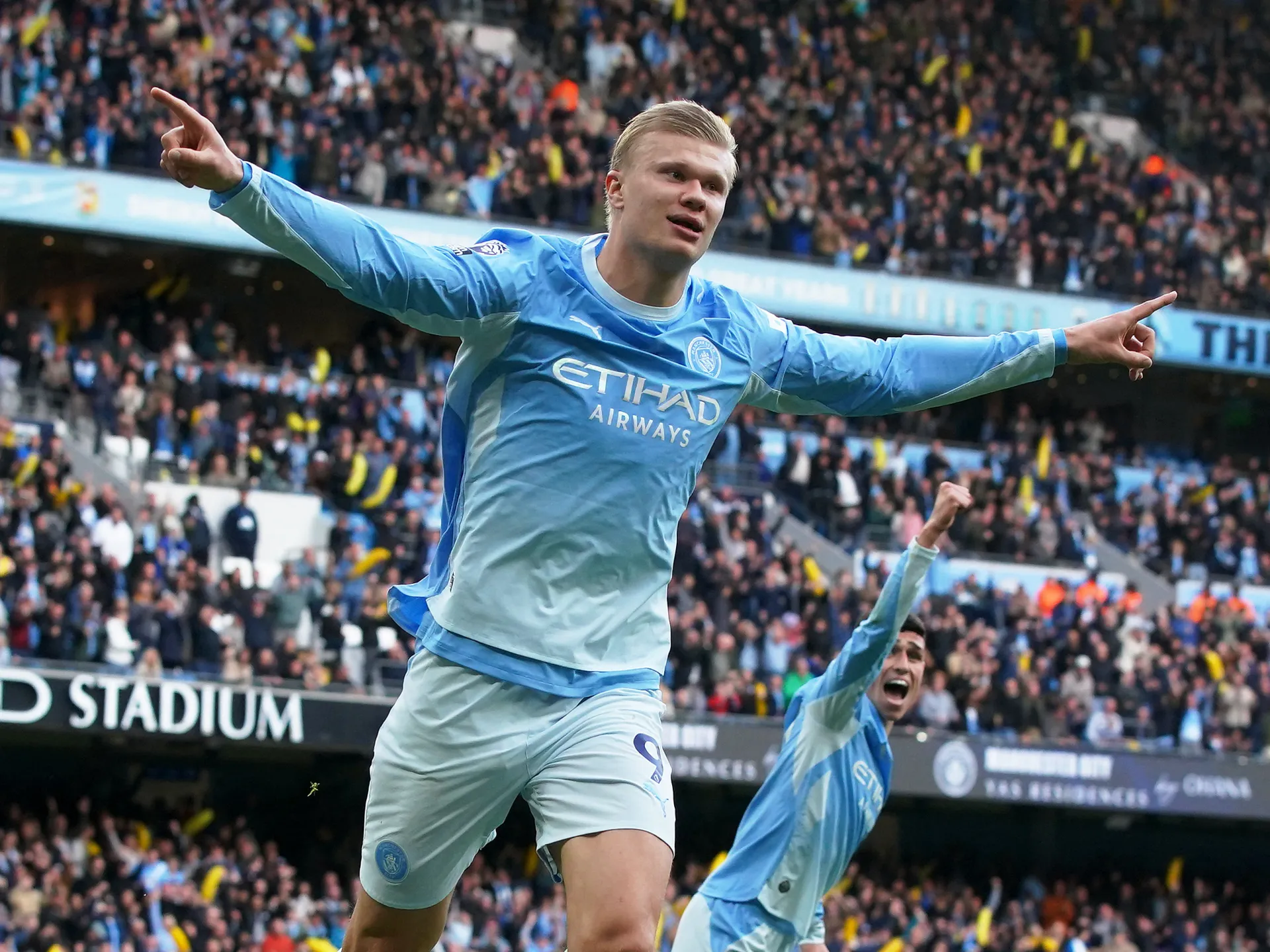
Forwards: Erling Haaland, Alexander Sorloth, Jorgen Strand Larsen
Panama World Cup squad
Goalkeepers: Orlando Mosquera, Luis Mejia, Cesar Samudio
Defenders: Cesar Blackman, Jorge Gutierrez, Amir Murillo, Fidel Escobar, Andres Andrade, Edgardo Farina, Jose Cordoba, Eric Davis, Jiovany Ramos, Roderick Miller
Midfielders: Anibal Godoy, Adalberto Carrasquilla, Carlos Harvey, Cristian Martinez, Jose Luis Rodriguez, Cesar Yanis, Yoel Barcenas, Alberto Quintero, Azarias Londono
Forwards: Ismael Diaz, Cecilio Waterman, Jose Fajardo, Tomas Rodriguez
Defenders: Juan Caceres, Gustavo Velazquez, Gustavo Gomez, Junior Alonso, Jose Canale, Omar Alderete, Alexandro Maidana, Fabian Balbuena
Midfielders: Diego Gomez, Mauricio Magalhaes, Damian Bobadilla, Braian Ojeda, Andres Cubas, Matias Galarza, Alejandro Gamarra
Forwards: Gustavo Caballero, Ramon Sosa, Alex Arce, Isidro Pitta, Gabriel Avalos, Miguel Almiron, Julio Enciso, Antonio Sanabria
Portugal World Cup squad
Goalkeepers: Diogo Costa, Jose Sa, Rui Silva
Defenders: Tomas Araujo, Joao Cancelo, Diogo Dalot, Ruben Dias, Goncalo Inacio, Nuno Mendes, Matheus Nunes, Nelson Semedo, Renato Veiga
Midfielders: Samuel Costa, Bruno Fernandes, Joao Neves, Ruben Neves, Bernardo Silva, Vitinha
Forwards: Francisco Conceicao, Joao Felix, Goncalo Guedes, Rafael Leao, Pedro Neto, Goncalo Ramos, Cristiano Ronaldo, Francisco Trincao
Qatar World Cup squad
Goalkeepers: Salah Zakaria, Meshaal Barsham, Mahmoud Abunada
Defenders: Boualem Khoukhi, Pedro Miguel, Sultan Al Brake, Al Hashmi Al Hussain, Ayoub Al Alawi, Issa Laye, Lucas Mendes, Homam Al Amin
Midfielders: Ahmed Fathi, Jassim Gaber, Assim Madibo, Abdulaziz Hatem, Karim Boudiaf, Mohammed Mannai
Forwards: Almoez Ali, Akram Afif, Tahsin Mohammed, Edmilson Junior, Ahmed Al-Janehi, Ahmed Alaa, Hassan Al Haydos, Mohammed Muntari, Yusuf Abdurisag
Saudi Arabia World Cup squad
Goalkeepers: Nawaf Al Aqidi, Mohamed Al Owais, Ahmed Alkassar
Defenders: Saud Abdulhamid, Jehad Thakri, Abdulelah Al Amri, Hassan Tambakti, Ali Lajami, Hassan Kadesh, Moteb Al Harbi, Nawaf Boushal, Ali Majrashi, Mohammed Abu Alshamat
Midfielders: Ziyad Al Johani, Nasser Al Dawsari, Mohamed Kanno, Abdullah Al Khaibari, Alaa Al Hejji, Musab Al Juwayr, Sultan Mandash, Ayman Yahya, Khalid Al Ghannam
Forwards: Salem Al Dawsari, Abdullah Al Hamdan, Feras Al Brikan, Saleh Al Shehri
Scotland World Cup squad
Goalkeepers: Craig Gordon, Angus Gunn, Liam Kelly
Defenders: Grant Hanley, Jack Hendry, Aaron Hickey, Dom Hyam, Scott McKenna, Nathan Patterson, Anthony Ralston, Andy Robertson, John Souttar, Kieran Tierney
Midfielders: Ryan Christie, Findlay Curtis, Lewis Ferguson, Tyler Fletcher, Ben Gannon-Doak, John McGinn, Kenny McLean, Scott McTominay
Forwards: Che Adams, Lyndon Dykes, George Hirst, Lawrence Shankland, Ross Stewart
Forwards: Arda Guler, Baris Alper Yilmaz, Can Uzun, Deniz Gul, Irfan Can Kahveci, Kenan Yildiz, Kerem Akturkoglu, Oguz Aydin, Yunus Akgun
Uruguay World Cup squad
Goalkeepers: Sergio Rochet, Fernando Muslera, Santiago Mele
Defenders: Guillermo Varela, Ronald Araujo, Jose Maria Gimenez, Santiago Bueno, Sebastian Caceres, Mathias Olivera, Joaquin Piquerez, Matias Vina
Midfielders: Maximiliano Araujo, Giorgian de Arrascaeta, Rodrigo Bentancur, Agustin Canobbio, Nicolas de la Cruz, Emiliano Martinez, Facundo Pellistri, Brian Rodriguez, Juan Manuel Sanabria, Manuel Ugarte, Federico Valverde, Rodrigo Zalazar
Forwards: Rodrigo Aguirre, Federico Vinas, Darwin Nunez
USA World Cup squad
Goalkeepers: Chris Brady, Matt Freese, Matt Turner
Defenders: Max Arfsten, Sergino Dest, Alex Freeman, Mark McKenzie, Tim Ream, Chris Richards, Antonee Robinson, Miles Robinson, Joe Scally, Auston Trusty
Midfielders: Tyler Adams, Sebastian Berhalter, Weston McKennie, Cristian Roldan, Brenden Aaronson, Christian Pulisic, Gio Reyna, Malik Tillman, Tim Weah, Alejandro Zendejas
Forwards: Folarin Balogun, Ricardo Pepi, Haji Wright
The FIFA World Cup begins on June 11. You can follow the action on Al Jazeera’s dedicated World Cup 2026 page with all the latest news, match build-up and live text commentary, and keep up to date with group standings, real-time match results and schedules.
The travel expert says ‘thousands upon thousands’ of Brits have had their holidays ruined
Many holidaymakers are being caught out and missing their trips(Image: simon2579/Getty)
Travel expert Simon Calder has issued a stark message to anyone who is going abroad in June, July and August. Many Brits are counting down to their summer holidays and the peak travel season.
However, Simon has urged everyone to do a vital check before travelling to avoid “wrecked holidays”. Simon explained that “thousands upon thousands” of people have already been caught out and missed their booked holidays.
He took part in a discussion on BBC Radio 2, where a holidaymaker explained that he had been turned away from his flight at the boarding gate.
James Luton was due to fly to Portugal last week for his 50th birthday but was denied boarding at the airport gate because his passport was issued more than 10 years ago, even though it was not expired.
Brits heading to the EU or Schengen areas cannot have passports older than 10 years when they arrive at their holiday destination. It must also be valid for at least three months after the day you plan to return home.
Simon appeared on the show to urge everyone with holidays booked to check their passports before it is too late. He said: “Unfortunately, he [James] is just one of thousands upon thousands of people who have fallen foul of this.
“As we speak, there will be people who have headed to the airport, and the same thing happened to them. It is just absolutely miserable.”
Simon urged: “You must remember, if you are going to the EU apart from Ireland, you cannot have a passport older than 10 years on the day you enter. It is the only part of the world that cares about when your passport is issued.
“Everywhere else only cares about the expiry date. Please, if you are going away in June, July and August please check that your passport is going to comply.
“Has it had its 10th birthday on the day you plan to go away, and has it got at least three months left on the date you plan to leave? That way, we can hopefully avoid too many more wrecked holidays.”
Before 2018, passports could remain valid for as long as 10 years and nine months.
This was because months remaining on old passports were rolled over to new passports, but the system was discontinued in 2018.
The problem mainly affects those holding burgundy passports, as anyone with a blue passport received it in 2020 or later.
Serena Williams has shaken up the tennis world by announcing her competitive return to the game after a nearly four-year absence.
The 23-time Grand Slam winner and mother of two said on Monday that she will compete in women’s doubles at this month’s Queen’s Club Championships in the United Kingdom, where media reported she will play with 19-year-old Canadian Victoria Mboko.
Recommended Stories
list of 4 itemsend of list
The 44-year-old American great received a wildcard entry for the competition, which is seen as a warm-up for Wimbledon, the year’s third Grand Slam.
“I’m very happy. Me and Serena have stayed in touch, which is really, really nice because I really look up to her,” Mboko said at the French Open last week.
Williams ended months of speculation over a rumoured return with a cheeky social media video captioned: “Good news travels fast.”
‘It will bring people to watch tennis’
Former world number one Lindsay Davenport said she believes Williams could make an appearance at her home Grand Slam, the US Open, in a couple of months.
“It seems like she’s trying to work her way up maybe to the US Open, and those fans would be so ready to see her back on a singles court there,” Davenport said.
Williams won seven Wimbledon titles and six at the US Open before stepping away from the game in 2022. In doubles, she won six titles at Wimbledon and two at the US Open – all with her older sister Venus Williams.
Four-time major champion Naomi Osaka, who beat Serena Williams in the 2018 US Open final for her first major title, was excited at the prospect.
“It will bring people to watch tennis,” Osaka said. “I’m going to be tuned in to the first match, for sure. I think a lot of people are. Everyone knows Serena and Venus were my role models growing up, so it’s going to be cool to see her on the grounds again.”
Osaka was joined by several current players in sharing their excitement at the news of Serena Williams’s return.
“She’s a legend. It’s inspiring to see,” top-ranked Aryna Sabalenka said at the ongoing French Open. “I’m excited to see her play and probably face her. … It’s very good news for tennis.”
Coco Gauff, who looked up to Serena Williams growing up, chimed in as well.
“One of my biggest regrets was not being able to play her,” the world number four said.
Gauff also commented on Williams’s Instagram post, saying, “Dreams come true.”
Naomi Osaka defeated Serena Williams in the women’s final of the US Open in 2018 [File: Adam Hunger/AP]
Singles return on the cards?
Fellow American and former champion John McEnroe suggested Williams could compete in singles at Wimbledon, which starts on June 28 .
“She’s not getting any younger, but she’s Serena Williams, so I bet you she would tell me about wanting to win the whole damn thing,” McEnroe said in Paris.
The Queen’s Club tournament starts on Monday, and the Women’s Tennis Association (WTA) said Williams will play “with a partner to be announced in due course”.
“Queen’s Club feels like the perfect place to begin this next chapter,” Williams said in a statement. “Grass has given me some of the most meaningful moments of my career, and I’m excited to be back competing on one of the sport’s most iconic stages.”
Davenport said some current women’s players travelled to Florida to practise with Williams recently.
“I don’t think anyone’s admitted to that, but I do know that some of them were,” Davenport said. “So I think she has kind of a handle on where the level is. But I don’t know if she’s been playing a two-hour singles match, right? We’ll have to see how she can handle that physically.”
Williams, who has won 14 Grand Slam doubles titles overall in her storied career, became eligible to compete in February after reregistering for a mandatory antidoping programme six months earlier – the first step towards a comeback.
Davenport admitted that her former opponent would face a tough challenge.
“It’s not going to be easy. If anyone could do it, certainly, it could be her.”
Grand Slam social media accounts used more playful language to celebrate her return, using the goat emoji to symbolise her status as the “greatest of all time”.
Williams joins list of champions making comebacks
Williams is not the only top-level athlete with unfinished business as advancements in training and medical care have allowed for longer careers across several sports.
Seven-time track gold medallist Allyson Felix said this year that she would try to make the US squad in what would be her sixth Olympics. She is aiming to secure a spot on the mixed 4x400m relay team at the 2028 Los Angeles Games despite having previously said the Tokyo Games would be her last.
“It’s just about testing the limits, kind of an experiment of what’s still left there,” the 40-year-old Felix, who gave birth to her second child in 2024, told the NBC TV network’s Today show last month.
Her fellow American Lindsey Vonn became the oldest downhill skier to win a World Cup race in December when she mounted a comeback after knee-replacement surgery.
Vonn, whose Milano-Cortina Olympics campaign ended abruptly with a horrific crash, was among the first top-level athletes to offer her encouragement to Williams on social media.
Vonn and Felix both celebrated Williams’s comeback announcement on social media.
In tennis, longtime Williams friend Caroline Wozniacki of Denmark made it to the fourth round at the US Open in 2023 and 2024 during her own comeback campaign while older sister Venus became the oldest WTA singles match winner since 2004 when she returned from a 16-month absence last year.
Serena Williams’s “return is an expression of her passion for competition”, WTA Chairwoman Valerie Camillo said in a statement on Monday. “I cannot wait to see her face a new generation.”
Over the past 10 years, the 34-year-old has served a sentence in five prisons across Belgium. He most vividly recalls conditions in Mons, a 19th-century prison near the French border, where he said 9-square-metre (97-square-foot) cells housed three to four detainees. He remembers bouts of scabies, bed bugs and monkeypox spreading widely and guards who faced severe exhaustion.
“During my 10 years in prison, things only got worse,” Bilal told Al Jazeera on condition that we use only his first name. “They took away some of our time outside of our cells, various activities.”
Belgium, one of Europe’s richest countries, is grappling with a deepening prison overcrowding crisis.
In mid-May, its 39 prisons counted 13,733 inmates – significantly exceeding a capacity of 11,064, according to data provided by the directorate-general of prisons.
“The combination of ever-increasing overcrowding and staff shortages makes the situation very, very, very difficult,” warned Pieter Houbey, vice-chairman of the Central Prison Monitoring Council (CCSP), an independent watchdog.
“It’s become almost impossible to maintain a detention system … aimed at reintegrating people,” he said.
In mid-May, 754 detainees were sleeping on mattresses on the floor, up from 672 in December.
Across Europe, prison populations have increased dramatically since the COVID-19 pandemic, with overcrowding affecting one-third of prison administrations.
Occupancy rates are highest in Cyprus, followed by Slovenia, France, Croatia, Italy, Romania, Austria and Belgium.
As a result, governments find themselves under pressure, with experts and workers criticising common responses – from building more detention facilities to transferring prisoners abroad – as ineffective.
‘Mice in a cage’
“To ensure decent conditions, we must first respect their rights – that is, stop treating them like mice in a cage,” said Yasin Sarikaya, vice-president of Brussels’ prisons.
Prisoners, especially those on remand, are often left in their cells for 22 to 23 hours a day, exacerbating the lack of privacy, as well as potentially pre-existing health and substance abuse issues. Receiving medical support can take months.
Loic*, who is serving his third of seven years at Saint-Gilles Prison in Brussels – meant to shut down by 2028 – said that work or other activities are hardly offered at the facility. Most detainees do not have a residency permit, he said.
“It’ll be tough to get back into the workforce,” the 23-year-old told Al Jazeera, looking at the floor while he spoke.
Bilal, convicted of two bank robberies and attempted murder, said he experienced suicidal ideation during imprisonment.
In recent years, videos circulating online have shown drones smuggling goods into prisons. In 2024, a video went viral showing a prisoner being tortured by five fellow inmates in his cell while the guards, on a 48-hour strike, failed to notice for days.
Guard burnout
Those conditions reinforce existing staff shortages.
At Haren, the country’s largest jail complex, “some guards are injured and can’t come to work”, said Sarikaya, who works at the complex.
According to the directorate-general of prisons, critical incidents in prisons doubled within a year.
With general crime rates having fluctuated in past years, experts connect the situation to Belgium’s carceral policy and its attempts to crack down on drug-related crime. While the country has struggled with overpopulation for decades, its most recent increase is mainly linked to a decision in 2023 to enforce all sentences of up to three years, previously served primarily under electronic monitoring.
Belgium also detains people for ever longer periods. Currently, the average detention lasts 9.9 months – a 39.4 percent increase over five years. Belgium’s pretrial detention rate of 32 percent is well above the European average (24.7 percent in 2024).
Emergency measures
Last July, Belgium’s parliament passed an emergency bill. The law, drafted by Justice Minister Annelies Verlinden, encourages the use of alternative punishments for sentences under three years and allows directors to release inmates, sentenced to a maximum of 10 years, six months before the end of their sentences.
In the longer term, the government seeks to install modular units and to renovate existing prisons pending the construction of new facilities.
That, however, is unlikely to reduce overcrowding, warned An-Sofie Vanhouche, a professor in the criminology department of Vrije Universiteit Brussel.
“Research shows that the more [prison] space we have, the more people we usually send to prison,” she said.
Cells to rent
As part of a stricter migration policy, Belgium is also seeking ways to deport detainees without legal residency, who comprise about a third of the prison population.
Earlier this year, Verlinden visited Estonia to discuss renting cells there. The government has already eyed similar deals with Kosovo and Albania.
Belgium is not the only European country considering such agreements.
Sweden has struck a deal with Estonia to rent 400 prison cells. According to the Estonian Ministry of Justice, prisoners could start arriving by the end of the summer. In 2019, Denmark reached an agreement to rent 300 prison cells from Kosovo.
Vanhouche described the moves as “very populist and symbolic”.
While only having a “small impact”, they raise numerous ethical questions around the protection of prisoners’ rights and their wellbeing, she argued.
The Belgian Ministry of Justice, as well as the Swedish and Danish ministries, did not respond to requests for comment. The Estonian ministry said that “prisoners remain protected under European human rights standards and applicable international law”.
Ways forward
Critics are calling on Belgium to move towards a greater emphasis on societal reintegration rather than just security – also through alternative punishment.
“Prison leads to recidivism,” warned Tahar Elhamdaoui, the founder of NGO Collectif Desistance, which helps young former prisoners reintegrate into society.
According to Houbey, Belgium’s reoffending rate is 60-70 percent.
Thanks to Elhamdaoui’s NGO, Bilal is interning as a football coach. Meanwhile, Loic* is trying out different jobs on day release.
But that’s not the norm, Elhamdaoui warned.
“As long as there are no prisons that prepare people to succeed outside,” he said, “we will not only be producing more crime upon release, but also a sense of despair so deep that people will not be able to reintegrate into society.”
Malak Mahmoud, the heavily pregnant woman filmed being thrown to the ground by a Dutch police officer as her Palestinian husband from Gaza was detained, has spoken to Al Jazeera.
Police in Zeist issued a statement saying they are reviewing the use of force and have opened an investigation, but have not responded to Al Jazeera’s request for comment.
A Gaza-bound ship carrying aid has begun its voyage from Sweden, weeks after Israeli forces abducted activists on a similar mission in international waters. The ‘Handala II’ vessel says it is carrying humanitarian supplies for Palestinians to break the Israeli blockade on the enclave.
A BEAUTIFUL city in Germany has been named one of the best hidden gems in Europe.
European Best Destinations has announced its list of ‘Best Treasure Destinations in Europe 2026’, naming any that have ‘rare beauty, timeless charm and extraordinary places still preserved from mass tourism’.
Sign up for the Travel newsletter
Thank you!
Tübingen has been named one of the ‘Best Treasure Destinations in Europe’Credit: AlamyOn Neckar River, locals and tourists can go on punting toursCredit: Alamy
At the very top of its list is Tübingen in Germany.
The publication called the city an “amazingtreasure destination in Europe“.
It added that it’s “a traditional university town; about one in three people living there is a student.
“From its historical sites to its beautiful green spaces, there are so many unique things to do in Tübingen.“
The city in southwest Germany has a very pretty Old Town, translated to Altstadt.
Tübingen is considered ‘untouched’ as unlike other German cities as it avoided being bombed in World War Two.
So it still has it’s pastel-coloured 15th-century half-timbered houses and cobblestone roads filled with independent and boutique shops, pubs, cafés, and restaurants.
One visitor said: “We went there in the middle of summer and the view was really beautiful. Between the alleys, typically German, colorful houses and flower railings.”
Tübingen has pretty colourful houses by the waterfrontCredit: Alamy
Another said the Old Town is “definitely the most beautiful place in the city. The square is plenty of restaurants and terrasses. It’s a good place to drink something and enjoy the atmosphere, especially in summer.”
One of the most famous sites in the city is the Hölderlin Tower, the former home of the poet Friedrich Hölderlin.
The tower was built in the late 18th century and sits on the Neckar River.
It’s now a museum with a permanent exhibition dedicated to Friedrich Hölderlin during the time that he lived in the tower.
Another popular activity is getting on Neckar River for Oxford-style punting.
Public punting along the Neckar River runs seasonally from May to September.
Hölderlin Tower is the former residence of the poet Friedrich HölderlinCredit: Alamy
One of the tour operators offers sessions from €70 (£60.54) per hour – this price is for a whole boat seating up to 16 people.
There are different tours available, some along the riverfront, others head to Neckar Island and sunset tours during the evening.
There are some food specialities to enjoy while visiting Tübingen including Maultaschen – pasta filled with minced meat, spinach, bread crumbs and onions.
There’s also Käsespätzle which are cheese noodles, the region is also known for its wines like Trollinger and Lemberger.
For Brits, the easiest way to get to Tübingen is to fly to Stuttgart, and then drive 40-minutes south of the airport.
It has been more than four years since Russia launched a full-scale invasion of Ukraine, expanding its occupation of Ukrainian lands, which started in 2014. In the chaos and violence of the first months of the invasion, families were separated, and childcare institutions were cut off from the control of the central authorities in Kyiv. As a result, the occupation forces forcibly transferred more than 20,000 Ukrainian children to Russia.
Russian officials claimed that they did not abduct Ukrainian children, but “saved” them through humanitarian evacuations. However, international investigations have since found that many such transfers were unlawful under international humanitarian law. In many documented cases, transfers were carried out without the consent of the living parent or legal guardians of the child.
International humanitarian law prohibits all forcible transfers and deportations of protected people from occupied territory, except for evacuations strictly required to ensure the population’s safety. Even then, evacuation must happen within occupied territory, be temporary, preserve family unity and return evacuees home as soon as hostilities cease.
Today, the lives of thousands of Ukrainian children are devastated by this forcible transfer. Instead of abiding by international legal obligations and returning them to their homeland, Russia has transformed the issue into yet another bargaining chip against the Ukrainian people.
But Ukraine refuses to abandon its children. For the past four years, there have been intense efforts from families, NGOs and the Ukrainian government to bring them back.
Take the case of Lesya (the name has been changed to protect her identity), whose testimony was recorded by The Reckoning Project— a global team of journalists and lawyers documenting and publicising atrocities committed in the war. Lesya was 15 years old when Russian forces occupied her village in the Kherson region in 2022. When the occupation authorities imposed a mandatory evacuation, she was put on a truck with more than 30 other children and was sent to a rehabilitation centre in Feodosia, Crimea. A woman accompanying the children told her that her mother would join her shortly.
At the facility, Lesya and other Ukrainian children were subjected to a strict routine, forced to do chores and study in Russian, using Russian textbooks. They were kept under surveillance indoors most of the time in a building with windows that could not be opened. Two days a week, the children underwent military training.
Eventually, a relative located her, and with the help of Save Ukraine, a Ukrainian NGO facilitating children’s return, her mother managed to bring her back.
But Lesya’s case is the exception rather than the rule. More than 2,000 Ukrainian children have been brought back thanks to efforts by NGOs, the government and foreign mediators.
Pressure through international institutions has also been pursued, but that has not accelerated the process of return.
In March 2023, the International Criminal Court issued warrants of arrest for Russian President Vladimir Putin and Commissioner for Children’s Rights Maria Lvova-Belova for the unlawful deportation and transfer of Ukrainian children.
In July 2025, the European Court of Human Rights, in Ukraine and the Netherlands v Russia, found Russia responsible for a number of human rights violations, including the organised removal of children. The court also required Russia to cooperate in establishing a mechanism to find and safely return children.
In March this year, the United Nations Independent International Commission of Inquiry on Ukraine concluded that Russia’s deportation and forcible transfer of Ukrainian children amount to crimes against humanity. The report identifies the removal of Ukrainian children as a part of a well-planned and systematically executed policy, conceived at the highest level.
On May 11, the European Union sanctioned 16 individuals and seven entities, while the United Kingdom sanctioned 29 individuals and entities responsible for the deportation, forced transfer, forced assimilation, indoctrination, militarisation and unlawful adoption of Ukrainian children. Overall, the EU has sanctioned more than 130 people and organisations for these actions. The United States, Canada, Australia, Japan, Switzerland and several other countries have introduced similar measures.
The lack of progress on this issue has driven families to desperation. Some have tried to bring their children back on their own or through often-daring missions by Save Ukraine and five other Ukrainian NGOs.
There should be no need for these risky missions. Under international humanitarian law, Russia is obligated to identify and register Ukrainian children in their care, facilitate family reunification, and permit access to neutral actors assisting Ukrainian children.
As negotiations for the end of the war have stalled and other global events have displaced Ukraine from global headlines, we urgently need to put the issue of the abducted Ukrainian children back in the spotlight.
There are several areas in which existing efforts can expand.
First, a comprehensive tracing mechanism needs to be established and financed to track abducted Ukrainian children and prevent their disappearance into dispersed care and adoption systems.
Second, ongoing legal efforts to hold to account Russian officials involved in the abduction should be intensified. This means coordinated prosecutions in states where the universal jurisdiction principle can be applied, as well as joint investigation strategies supported by Eurojust, the EU’s judicial hub. Ukraine’s partners should support its judicial processes launched against Russian officials and cooperate where needed, including through extraditions where legally applicable and other lawful transfer mechanisms. While justice may be slow, the prospect of accountability can have a deterrent effect.
Third, states can and should fully implement sanctions, trade restrictions and other obligations they assumed but did not consistently observe in practice. The sanctions regime on Russia has severely hurt its economy, but it has also seen continuous evasion. A strict implementation can help put more pressure on the regime in Moscow.
While stories of family reunions are heartening, they are just a drop in a bucket compared with the number of children who continue to be separated from their families and absorbed into a system of indoctrination and militarisation.
We must not allow the issue of returning Ukrainian children to be yet another negotiating chip for Moscow. It cannot be put on hold because negotiations have stalled or because other priorities have captured the world’s attention.
Four years is a long time in a child’s life. Each passing day further erodes their national identity and deepens the pain of separation, as they grow up in a hostile environment. There is no principle more universal than the belief that children belong with their parents and loved ones, and Ukrainian children deserve this basic human right today, not at some point in the future.
The views expressed in this article are the author’s own and do not necessarily reflect Al Jazeera’s editorial stance.
Athens, Greece – Bashir is a Syrian Muslim who has lived in Greece since 2014. He married a fellow Syrian in the country, and three months ago, they had a son. After years of picking olives and oranges, learning Greek and a trade in metalwork, and finally buying his own equipment to start work as an independent trader, Bashir felt his life was finally coming together.
Two months ago, the authorities handed him a piece of paper asking him to restate his reasons for coming to Greece and why he should now return to Syria.
Recommended Stories
list of 4 itemsend of list
Bashir, who requested to withhold his surname, had been granted asylum in Greece in 2015 because of the civil war then raging in Syria. The war ended in December 2024, and Bashir became one of 1,200 Syrians whose asylum cases were reopened in February.
“It’s a catastrophe,” he told Al Jazeera. “I don’t understand how this can happen. If they decide I should leave the country, should my family stay here?”
Bashir’s lawyer said only men are currently receiving such notices – and not just from Syria but Afghanistan, another country whose civil war is deemed to have ended, with the Taliban’s sweeping victory in August 2021.
But neither Syria nor Afghanistan is necessarily safe to return to, said the lawyer, Angeliki Theodoropoulou.
“We believe this has to do with the European Union’s stance towards Syria and Afghanistan, and with the fact that there are quite a few voluntary returns, which encourages authorities to say, ‘Let’s see if these people can return’,” Theodoropoulou told Al Jazeera.
She said the entire regime of international protection was being tightened for these two nationalities. “We’re also seeing asylum being given in very few cases, and a lot of rejections,” she said.
“We don’t understand on what criteria they decided Syria is safe,” Bashir said.
Earlier this year, renewed clashes erupted between the Syrian government and the Kurdish-led Syrian Democratic Forces (SDF), while Israel has continued attacks on the country sporadically.
Bilal said he feels uncomfortable about the idea of living in Syria for cultural and political reasons, having spent 15 years away.
“Many of the refugees here are like me,” he said.
Jihad, who requested to withhold his surname, has similar concerns but for the opposite reason. He has lived in Greece legally since 2001 and runs a small clothes shop. When the regime of Bashar al-Assad fell, the rest of his family also fled, because he and his family were Assad supporters.
He fears that he would be mistreated in Syria over his views.
“If they just look at my Facebook page or look at things I wrote in the past, they will send me to jail for sure,” Jihad said. “I’m afraid even to go to the embassy. I have never held a gun, I have never killed anyone, I just have an opinion.”
Both men have clean criminal records, pay taxes and social security contributions, and have nurtured families in Greece. Both say they would flee to another country rather than return to Syria. So why is Greece considering their eviction?
Greece’s turn to exclusion
Greek Migration Minister Thanos Plevris announced in February that he had ordered a reopening of any asylum cases that could be revoked. As a temporary status, it can be.
Last year, Greece revoked the asylum of almost 200 people, compared with 400 in the previous decade. Dozens more cases are under review this year. And there appears to be a religious element to the policy.
Greece suspended asylum applications for mainly Muslim asylum seekers arriving from Libya for three months last year. Most of the people whose asylum is being revoked are from majority-Muslim countries.
At a recent parliamentary committee hearing, Plevris stated clearly that Greece prefers non-Muslim migrant workers.
“There are countries with which we don’t have common values, and that’s mainly because of religion, let’s be clear, it’s because of hardcore Islam,” Plevris said. “So, you have to pick countries that are religiously neutral or Christian. We’re talking to Georgia, the Philippines, Armenia, India.”
Greece has been tightening its migration policy in other ways as well.
In September 2025, it adopted what Plevris described as “the strictest returns policy in the whole EU”, empowering the government to imprison people who refuse to be deported. Rejected asylum applicants can be fitted with ankle monitors and given just two weeks to remove themselves voluntarily. If they don’t, they face a 5,000-euro fine ($5,870) and two to five years’ confinement in closed camps.
In February, the governing conservative New Democracy party passed a law stipulating that if any aid worker is charged with helping to smuggle asylum seekers into Greece, their entire aid organisation can be delisted from the ministry’s registry. That means they could lose their funding and access to refugee camps, and could shut down.
The broader context
Europe is undergoing a transition as it prepares to put into force an Asylum and Migration Pact next month. The pact demands a hard-border policy and a returns policy for rejected asylum seekers, both of which each member state must manage itself.
“We’re at a pivotal point in time. We’re about to see the implementation of the European pact. This will fundamentally change the way that migration works,” Kristin Fabbe, chair in Business and Comparative Politics at the European University Institute, recently told a Delphi Economic Forum event in Athens.
The largest bottleneck, she said, “is that Europe has not yet figured out how to do returns at scale … in order to reform asylum and reform migration, you have to execute returns at scale, and the data show that that has been impossible”.
Greece, an EU front-line state, already has 938,000 legally resident migrants in a population of 10.3 million, a relatively high number. Of these, more than 137,000 are recipients of asylum or international protection.
As the Middle East and North Africa region remains unstable, the government is worried about the potential scale of future refugee flows.
More than a million asylum seekers crossed the Greek borders in 2015. In the years that followed, certain EU members took on thousands of asylum cases from Greece and Italy in a show of solidarity, and tens of thousands more asylum recipients in Greece moved to other EU states. Those states have agreed to keep them, but that would not necessarily happen again under the pact.
Observers say this explains Greece’s hardline attitude.
Commenting on the political mood in Europe, Fabbe said, “The legality, the sanctity of the [returns] solutions is being challenged, but I think we’re going to see the proliferation of those solutions and new institutional mechanisms.”
Previous World Cup appearances: 16 Best performance: Winners (1966) First appearance: 1950 (Brazil) Top goal scorer: Gary Lineker (10) Most appearances: Peter Shilton (18) Player to watch: Harry Kane FIFA world ranking: 4 Fixtures: Croatia (June 17, Dallas), Ghana (June 23, Boston), Panama (June 27, New York)
It has now been 60 years of hurt for England, who lifted their only World Cup title in 1966. But while the Three Lions are certainly genuine contenders this time around, they come into the 2026 edition in a rather unsettled mood.
Recommended Stories
list of 4 itemsend of list
The Three Lions strolled through their group, becoming the first European team to qualify for the 2026 World Cup as they booked their place with two games to spare.
However, it’s fair to say that it was not the toughest group, and their performances in recent friendlies have drawn boos from fairly unenthused Wembley crowds, not least the defeats to Senegal and Japan.
Can England get a tune out of the likes of Jude Bellingham and Harry Kane? Can the Three Lions find a way back to playing entertaining football? And does coach Thomas Tuchel actually know his best team?
Tuchel gambles on ‘chemistry’
The German manager’s squad selection raised a few eyebrows as several key names were left out amid a few surprise inclusions.
Chelsea’s Cole Palmer and Man City’s Phil Foden, two of England’s most creative players, did not make the cut after disappointing seasons, while Real Madrid’s Trent Alexander-Arnold and Man United’s Harry Maguire also missed out.
Meanwhile, striker Ivan Toney – who plays for Saudi Arabia for Al-Ahli and has barely featured for England under Tuchel – has made the squad, along with some other debatable choices in Tottenham’s Djed Spence, Brentford’s 35-year-old midfielder Jordan Henderson, and Bayer Leverkusen defender Jarell Quansah.
Nine members of the 26-man squad have no previous tournament experience.
Tuchel defended his selections by stressing the importance of unity.
“From day one, we were clear that we are trying to select and build the best possible team, which is not necessarily to select and collect the 26 most talented players,” Tuchel told reporters.
“Teams win championships. It’s as simple as that. Everything I know and hear about international football is that it is about the team and the chemistry.”
Unimpressed fans
England’s previous boss Gareth Southgate had his detractors, namely over in-game decisions and for presiding over some pretty stodgy, risk-averse football at times. But he did take England to the finals of two European Championships, as well as a World Cup semifinal in 2018.
In addition to contending with this record, the former Chelsea and PSG boss Tuchel has also faced criticism over the failure to improve England’s style of play, which is still often marred by slow, sideways passes.
And while it’s logical to experiment, it’s also not clear he really knows his best team, and attempts to play a false nine or two number 10s have not come off.
Nevertheless, there’s no doubt that Tuchel is an elite manager and his solid, well-organised England side won their group with a 100 percent record (eight wins from eight), including tough wins away at Serbia and Albania, and conceded zero goals in the process.
Amid some consternation among the tabloid press over appointing a German to the role, Tuchel would delight in confounding the naysayers by leading the England men’s side to a first major trophy since 1966.
Head coach Thomas Tuchel wants to deliver England their first World Cup trophy in 60 years [File: Justin Setterfield/Getty Images]
The Kane conundrum
Despite winning the golden boot at the 2018 World Cup, England have often failed to get the best out of their captain and record goalscorer at major tournaments.
By the end of a long season, Kane is frequently struggling for fitness and contending with knocks, and often comes into major tournaments looking off the pace.
However, if England can field a relatively fresh Kane in North America, the 33-year-old should be high on confidence following his best-ever season in front of goal.
Kane has averaged more than a goal a game on his way to scoring 61 times in 51 appearances across all competitions for Bayern Munich, who were crowned Bundesliga champions in April but were defeated by PSG in the Champions League semifinal.
England’s captain also has his country’s World Cup scoring record in sight as he needs just two more strikes to equal Gary Lineker’s record of 10 goals in the tournament.
The battle for number 10
Bellingham is perhaps the most effective out of several talented England number 10s, but the 22-year-old has had a frustrating club season as he has contended with injuries and his side’s frequently poor form, and accordingly, his England appearances have also been sporadic recently.
Aston Villa’s Morgan Rogers may have staked a strong claim to start ahead of him based on appearances under Tuchel and his sparkling club form.
Bellingham can also play further back in midfield, but assuming that Declan Rice and Eliot Anderson are fairly nailed on as holding midfielders, there may not be a space for him there either. So the Real Madrid player may have to initially look to make an impact from the bench.
England’s chances at the World Cup may rest on the performance of star Real Madrid midfielder Jude Bellingham [Stu Forster/Getty Images]
Have England finally solved their perennial left-back weakness?
England have probably not had a truly world-class left-back since Ashley Cole. However, that may be about to change with the rapid rise of Nico O’Reilly.
The 21-year-old Manchester City player also offers an attacking threat as he has grabbed seven goals and three assists in the Premier League this season, and scored a brace as City won the League Cup final.
While some of these goals have come from midfield, O’Reilly looks to have the defensive skills and positional nous to become a world-class full back – although he’s still a work in progress.
How does their group look?
Group L contains some tricky opponents, and England face a particularly tough opener against 11th-ranked Croatia, who beat England in the 2018 semifinal.
Panama are ranked a perhaps surprisingly high 33rd and beat the United States en route to becoming CONCACAF Nations League runners-up last year.
And while 74th-ranked Ghana are the four-seeded underdogs, they could also pose a stiff test as they boast the likes of Antoine Semenyo and Mohammed Kudus.
England’s group stage match dates and kickoff times:
⚽ June 17: England vs. Croatia (Arlington, Texas, US), 4pm (20:00 GMT) ⚽ June 23: England vs. Ghana (Foxborough, Massachusetts, US), 4pm (20:00 GMT) ⚽ June 27: Panama vs. England (East Rutherford, New Jersey, US), 5pm (21:00 GMT)
Al Jazeera’s prediction
Quarterfinals.
Is it coming home? Probably not, but England still expects.
Full squad
Goalkeepers: Jordan Pickford (Everton), Dean Henderson (Crystal Palace), James Trafford (Man City)
Midfielders: Declan Rice (Arsenal), Elliot Anderson (Nottingham Forest), Kobbie Mainoo (Man Utd), Jordan Henderson (Brentford), Morgan Rogers (Aston Villa), Jude Bellingham (Real Madrid), Eberechi Eze (Arsenal)
Forwards: Harry Kane (Bayern Munich), Ivan Toney (Al-Ahli), Ollie Watkins (Aston Villa), Bukayo Saka (Arsenal), Marcus Rashford (Barcelona), Anthony Gordon (Newcastle), Noni Madueke (Arsenal)
A GuruWalk study found the world’s most walkable destination for travellers fascinated by ancient history
There’s nothing better than exploring a city on foot(Image: andresr via Getty Images)
The old adage that the best things in life are free rings particularly true when it comes to travel. Exploring a city on foot, rather than wrestling with bewildering public transport networks or splashing out on car hire, is one of the finest ways to immerse yourself in unfamiliar surroundings — and it won’t cost you a penny.
Free walking tours are a firm favourite amongst seasoned travellers as a brilliant way to get acquainted with a new city while soaking up a bit of local history.
Europe is brimming with historic cities where you can stroll between landmarks in just a few minutes, including Cordoba in Spain, whose magnificent Old Town has even earned UNESCO World Heritage status.
The ability to simply wander up to a World Heritage Site is a remarkable privilege that’s easy to overlook, yet far from an everyday occurrence. But when it comes to exploring your surroundings on foot, one European city — dubbed an “open-air museum” — stands head and shoulders above the rest as the ultimate walkable destination.
A study by GuruWalk, the world’s largest platform for free walking tours, has crowned Rome the most walkable destination on the planet for “travellers fascinated by ancient history”, drawing on the preferences of more than four million users of the platform.
The city’s historic centre is packed with unmissable sights, while its surrounding streets and winding cobblestone alleyways are frequently too narrow for traffic to navigate, making it an absolute must for exploring on foot.
Many of Rome’s most iconic attractions, including The Colosseum, the Pantheon and the Trevi Fountain are within a mere 20-minute stroll of one another, with countless stunning Baroque piazzas to pause at along the way.
The oldest surviving structure in Rome, the present-day Pantheon — which originally functioned as a temple dedicated to Roman deities — was finished in 126 AD and sits encircled by three of the city’s most cherished squares: Piazza Navona, Piazza di Spagna, and Campo de Fiori, reports the Express.
Reflecting on the awe-inspiring monument, one Tripadvisor reviewer remarked: “We didn’t get to go in so this review is only in regards to the outside. I thought it was so cool to see. You’re walking through a city and suddenly walk right next to this beautiful ancient structure. There’s so much history to it!”
Indeed, there’s no finer method of immersing yourself in Ancient Rome than by meandering through its storied streets. A visit to the Vatican — the heart of the Roman Catholic Church and location of one of the world’s grandest churches, St Peter’s Basilica — wouldn’t be complete without popping into the nearby Pizzarium.
This beloved Roman establishment, famed for its pizza al taglio (by the slice), is adored by both residents and tourists, and there’s an abundance more to discover while exploring — from velvety gelato and piping hot bowls of pasta to a crisp Aperol Spritz to round things off.
If you find yourself worn out from all that strolling, there’s plenty of coffee bars to choose from, but be aware that milky coffees are only deemed acceptable before 11am, with tradition suggesting it’s wise to order an espresso after that time.
According to GuruWalk’s 2026 top ranking for Rome, it stated: “Rome has captivated travellers for over 2,700 years thanks to its unparalleled historical legacy. Walking through its cobblestone alleyways reveals one treasure after another: the Colosseum, where gladiators battled before 50,000 spectators, the Pantheon with its unreinforced concrete dome that remains the largest in the world, and the baroque fountains that spring up at every corner. Every step transports you through empires, popes, and renaissances.”
Environmental activists in Rome built a mock rocket with caricatures of Giorgia Meloni and Donald Trump, calling for ‘fascists’ to be launched to another planet. The protest condemned government inaction on climate change and the global rise of authoritarian politics.
Weekly protests in Dublin are growing as people demand justice and accountability for Yves Sakila, a Congolese man who died after being restrained by security guards outside a shopping centre.
A British couple have shared a video showcasing lesser-known paradise islands dubbed the ‘Hawaii of Europe’ – and it’s just a four-hour direct flight from the UK
These gorgeous islands have been compared to Hawaii, with gorgeous beaches and clear water (stock image)(Image: Getty Images)
While Hawaii frequently tops the list of dream getaways, there are several comparable alternatives within Europe — and it’s not Lanzarote or Madeira that are typically likened to the American state. Instead, there’s an archipelago situated in the middle of the Atlantic Ocean that features similar natural beauty and stunning coastlines.
Taking to Instagram, British duo Ellen and Tom have revealed their insider recommendation for travellers seeking an exotic escape without opting for the usual Spanish or Turkish resorts.
“Nobody told us Europe had it’s own Hawaii,” the text overlay announced at the beginning of the clip, which proceeded to showcase footage of the breathtaking island destination in question.
Content cannot be displayed without consent
“And no, it’s not Madeira. This is São Miguel in the Azores and we genuinely think it’s Europe’s most underrated island,” they explained in the post’s caption. “Volcanic, lush, and warm year-round. We were there in July and barely saw another tourist.”
The Azores is a Portuguese archipelago comprising nine volcanic islands in the North Atlantic Ocean, situated roughly 1,500km west of Lisbon, or around four hours by air from the UK. While each island boasts its own distinct personality, the largest and most frequented is São Miguel, commonly known as “The Green Island”.
Both British Airways and Ryanair run direct services from the UK to Ponta Delgada, São Miguel’s capital. With a journey time of just four hours, it’s a remarkably accessible option for a quick weekend getaway or an extended break.
The islands also offer an abundance of activities, catering to all tastes regardless of what you’re seeking from your getaway.
Ellen and Tom documented a range of experiences from their July trip, which featured visits to the volcanic landscapes at the vivid green crater lakes, discovering the black sand shores, and relaxing in hot springs. Visitors can also embark on treks through the verdant mountains, or venture out to spot whales and dolphins at sea.
Regarding the climate, there’s genuinely no poor season to travel, as the summer months deliver mild, agreeable, and predominantly settled conditions, with daytime temperatures typically ranging between 21C and 25C. It’s the driest and most tranquil period of the year, making it ideal for rambling, bathing, and whale observation.
That said, a summer visit isn’t essential to enjoy warm, tropical-like conditions. The region is known for a weather phenomenon called St Martin’s Summer, which typically falls between 11 and 20 November, bringing prolonged sunshine and daytime highs of between 20C and 22C, according to Living Azores. Temperatures seldom become uncomfortably warm, thanks to the moderating influence of the Atlantic Ocean on the local climate.
The video quickly drew a flood of comments from viewers left astounded by the Portuguese island region, with one person writing: “Omg, I think we need to go here!!
“I was there in 2024 and it was unbelievable beautiful!” another enthused, while a third added: “This is absolutely stunning.”
YouTuber Just Deano was travelling home from Benidorm when he tried the new Wetherspoons in Alicante Airport — but he was ‘not convinced’ by his pint of Guinness
The Guinness did not go down well(Image: Just Deano/Youtube)
The first ever Wetherspoons outside of the UK and Ireland opened back in February — but one travel influencer was recently floored by the cost of his Guinness.
The Spanish spoons is located down the coast from Benidorm at the Alicante-Elche Miguel Hernández Airport — and it has proved popular with Brits travelling home after their holidays.
However, keen to test it out after a trip to Benidorm, content creator Just Deano shared his thoughts after getting a seat by the bar.
And speaking to his 41,100 subscribers, he observed: “This is the smallest Wetherspoons I have ever been in. And I don’t normally get this in Spain — but I got myself a Guinness that was €7.50… €7.50!”
Visibly shocked by the price, he went on: “I thought this was Wetherspoons? And it’s absolutely dreadful. This is not a good start.”
Despite wincing at his first sip, he ordered an all-day brunch, bringing the total cost of his meal and pint to €20.45 (approx £17.73).
After his food arrived at the spoons which is named Castell de Santa Bàrbera, he said the eggs looked “terrible”, but things dramatically improved after trying the Lincolnshire sausages.
He said: “That might be the best sausage I’ve had in Spain. It is basically a spoons sausage. Now, at home, this wouldn’t be the best sausage ever, but compared to the standard of catering of sausages of usual places, this is decent.”
Deano, who hails from Huddersfield, said the chips were just like home but noted that the eggs were “one of the worst” he has had. However, he said the bacon and beans were solid.
He again repeated that it was “the tiniest premises ever” and questioned why it was so small.
And reflecting on his order, he said: “The best part about it? The sausages. The worst part about it is probably the Guinness. Normally the Wetherspoons Guinness is a solid eight out of 10. It’s not the best Guinness in the world but it’s 100% consistent. Unfortunately in Spain, they lost that consistency.”
He said his meal was acceptable but his problem was the price, and he claimed it was double the cost of what he paid for breakfast on his initial journey to Spain.
“So, although they are calling themselves spoons, they are definitely airport prices because that’s an extortionate amount of money,” he said. “€20.45 for a pint, a bad pint, and an all-day breakfast? Yeah, I’m not convinced about that.”
Deano said he was a “huge” fan of Wetherspoons but said his experience overall was five out of 10 — and he said he would have been better off paying to eat and drink at the airport lounge.
After posting the video, which you can watch in full here, one person defended the prices, saying: “Yeah & spoons are more expensive at the airports in the UK, like double so… No difference really.”
Another said: “Wetherspoons always up the prices in airports. I paid £16.50 at Gatwick spoons for brunch and a pint so not far off what you paid.”
After the successful launch of the famous pub chain in Alicante Airport, Wetherspoons has since announced two more will open in mainland Europe.
Both will be in Barcelona-El Prat Airport — with the first opening in Terminal 1 by September 2026 with the other to be welcomed in Terminal 2 by January 2027.
French Ministry of Interior says 416 people detained nationwide, including 283 in Paris, after PSG’s win over Arsenal.
Published On 31 May 202631 May 2026
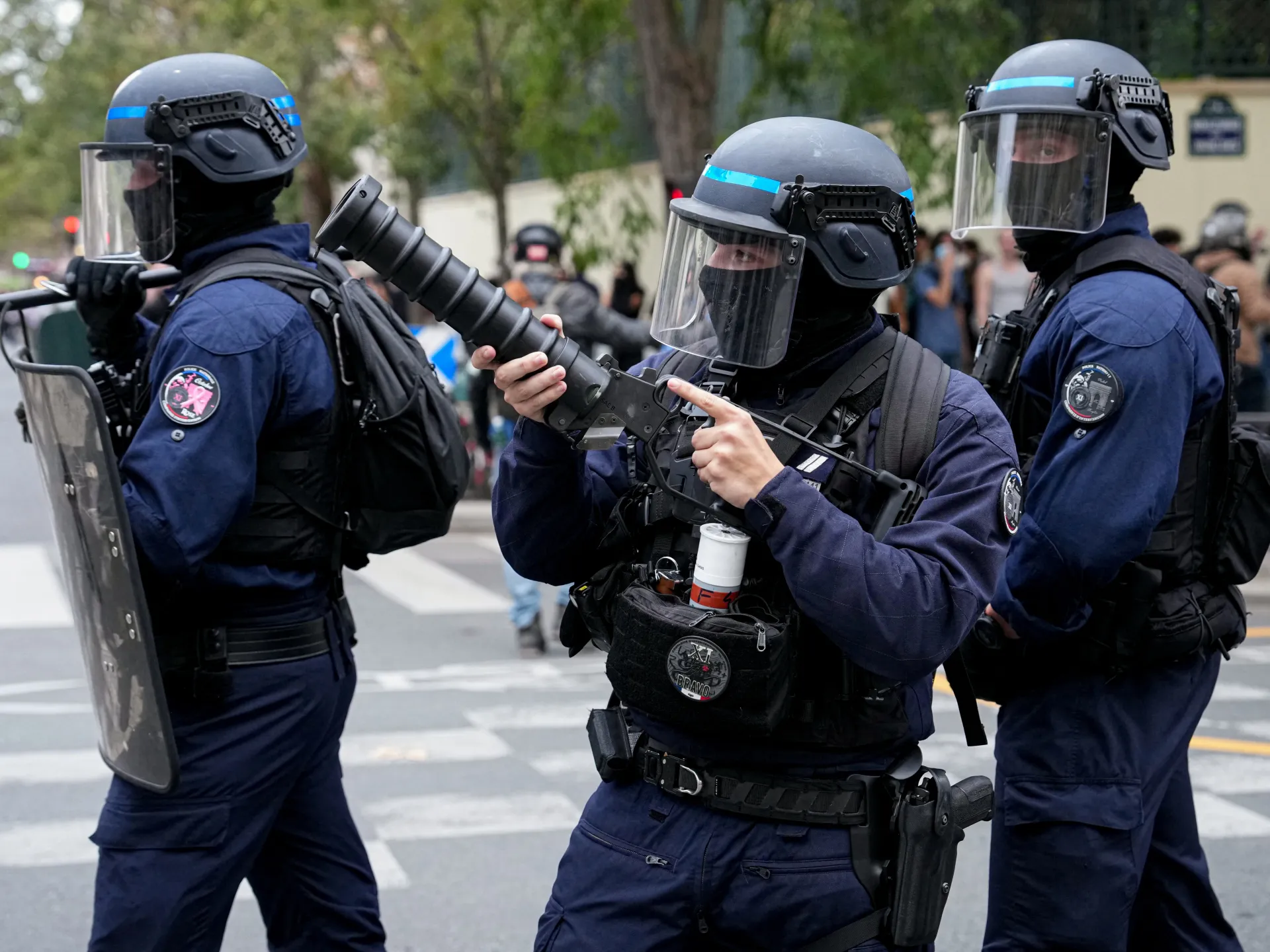
Police in France have detained more than 280 people in Paris after violent clashes erupted when thousands poured onto the streets after Paris Saint-Germain’s victory in the Champions League final.
About 22,000 police were deployed across France for the game on Saturday, including 8,000 in Paris, after unrest marred PSG’s win in the competition last year. Paris tram lines were halted, several metro stations shut and bus traffic halted in places in a bid to minimise disturbances.
Recommended Stories
list of 4 itemsend of list
According to the French Ministry of the Interior, 416 people were detained nationwide, including 283 who were apprehended in Paris. It was not immediately clear how many of these individuals were remanded in custody to face further investigation.
Interior Minister Laurent Nunez said seven officers were wounded and called the unrest “absolutely unacceptable”.
Six vehicles and two businesses were damaged.
A group of supporters also stormed the Paris ring road, the Boulevard Peripherique, bringing traffic to a halt for a time and setting off flares.
PSG supporters drive their scooters past antiriot police at the Place du Trocadero in Paris [AFP]
As fans celebrated the dramatic penalty shootout victory in the Hungarian capital, Budapest, about 20,000 people converged on Paris’s Champs-Elysees avenue, police said.
Shops boarded up their windows before the match to avoid a repeat of disturbances last year when youths ransacked shops on the Champs-Elysees and other streets. Hundreds of people were arrested.
Two dozen flares and about 100 fireworks were seized on Saturday while a bus shelter was destroyed near the Champs-Elysees.
The match was played on a hectic evening in Paris with singer Aya Nakamura performing at the Stade de France national stadium, rapper Damso at the La Defense Arena and the French Open tennis tournament in full swing.
Police said a bakery and a restaurant were damaged near PSG’s Parc des Princes stadium, where tens of thousands of people had gathered inside to watch the match. Another 4,000 to 5,000 people loitered outside with projectiles that were thrown at officers.
About 150 people “attempted to enter through one of the gates” at the stadium, but police pushed them back, a police spokesperson said.
Some also tried to erect a barricade with rental bikes, which was cleared by police.
Clashes broke out between police and supporters near the stadium, and officers responded with tear gas when fireworks were thrown at them.
PSG supporters gather on the Champs-Elysees after the club’s win [Romeo Boetzle/AFP]
‘Only in France’
The scenes angered the French far right. Three-time presidential candidate Marine Le Pen wrote on X that “only in France does a football club’s victory spark riots.”
“Only in France does everyone feel compelled to lock themselves in their homes on the evening of a victory to avoid being confronted with violence,” she added.
Nunez said there was a “very robust, very solid system in place” to curb violence.
“Our responsibility is to guarantee everyone a festive celebration that is calm and fully secure,” a police spokesperson said.
PSG’s players will take part in a parade on Sunday afternoon on the Champ de Mars in front of the Eiffel Tower in front of an expected crowd of 100,000 people before they are received by President Emmanuel Macron at the Elysee Palace.
BUDAPEST, Hungary — Winning the Champions League was so nice, Paris Saint-Germain had to do it twice.
PSG became back-to-back European champion by beating Arsenal 4-3 on penalties in a dramatic final in Budapest that ended 1-1 after extra time on Saturday.
“It’s incredible,” captain Marquinhos said. “From the very first day of this season, the coach said it’s hard to win, and winning twice is even more difficult. So we all had to get back to work. That was the mentality.”
Arsenal defender Gabriel Magalhaes fired the last of his team’s penalties over the bar to hand PSG the shootout win.
The French giant is only the second team to retain the trophy in the modern era after all-time king of Europe Real Madrid.
Luis Enrique became a three-time winner as a coach and has molded a team that is simply too good even for the best the continent has to offer. That includes an Arsenal team that won the Premier League last week and topped the first stage of the Champions League with a perfect winning record, finishing 10 points and 10 places ahead of PSG.
That mattered little in Puskas Arena as PSG reaffirmed its status as the dominant force in European soccer.
“It’s even more special because we knew before the match how difficult it would be,” Luis Enrique said. “I think it’s deserved over the course of the whole season, even if the final was very closely contested.”
After demolishing Inter Milan 5-0 in last year’s final, PSG endured a tougher foe as Arsenal sat deep and relied on the best defense in the competition.
PSG dominated possession but created little after going behind to a Kai Havertz goal in the sixth minute. It took an Ousmane Dembélé penalty in the 65th to level the score and take the final to extra time for the first time in 10 years.
PSG coach in elite company
By going back to back, Luis Enrique achieved what his good friend Pep Guardiola could not after winning Champions Leagues at Barcelona and Manchester City. Luis Enrique joined Carlo Ancelotti, Bob Paisley, Zinedine Zidane and Guardiola in an elite group of coaches with at least three European Cups.
The next target will be to emulate Madrid’s three in a row under Zidane from 2016-18. And with a starting lineup in Budapest with an average age of less than 24, Luis Enrique has built a team that has the potential to dominate for years.
“It’s crazy, it’s crazy. We’re going to enjoy it first, and after we’re going to work and work again because we want more. We are really hungry. We are a young team, and we know we are really ambitious. So next season we have to go again,” Désiré Doué told broadcaster TNT Sports.
Having waited 22 years to get its hands back on the Premier League trophy, Arsenal’s wait in Europe goes on.
This was its 226th game in the European Cup or Champions League without lifting the trophy. No other team has played so many without being champion.
“First of all you have to go through that pain, digest it and then turn it into fuel and improve and reach a different level because it will demand a different level with the quality that is around Europe,” manager Mikel Arteta said.
“I want to congratulate PSG because they are, in my opinion, the best team in the world. What they are able to do with the ball, individual actions, I haven’t seen it (before).”
Paris Saint-Germain held their nerve in a cagey Champions League final to retain the title by beating Arsenal 4-3 on penalties as Saturday’s nail-biting showdown ended 1-1 after extra time, cementing the French side’s status among Europe’s modern greats.
Arsenal defender Gabriel blasted his spot kick over Matvey Safonov’s crossbar at the Puskas Arena in Budapest, his miss confirming PSG as the first club to retain the trophy since Real Madrid completed their three-year reign from 2016 to 2018.
Recommended Stories
list of 4 itemsend of list
Long dismissed as glamorous underachievers despite vast resources, the Ligue 1 champions have now forged a dynasty under Luis Enrique, marrying attacking brilliance with resilience to establish themselves as the dominant force in European football.
“It’s stronger than last year because we knew before the match just how difficult it would be to play against Arsenal,” said Enrique, whose side had thrashed Inter Milan 5-0 a year ago to claim Europe’s elite trophy for the first time.
“As a club and a city, it’s incredible to win, and I think we deserved it over the course of the season. The final was a real battle,” added the Spanish coach.
The outcome left Arsenal midfielder Declan Rice devastated but proud as his side finished their European campaign without losing a match, aside from the shootout defeat in the final.
“It’s gutting. It’s devastating to lose a Champions League final on penalties,” he said. “But we try to take a lot of perspective from how far we’ve come as a group.
“An incredible season. Given it absolutely everything up until this point. We took the game to penalties. It’s a lottery.”
Eleven days after celebrating their first Premier League title in 22 years, Arsenal looked set for a maiden triumph on Europe’s biggest stage after Kai Havertz’s sixth-minute opener and a first hour spent smothering PSG’s vaunted attack.
However, the final in the Hungarian capital became chaotic, once PSG’s Ousmane Dembele equalised with a penalty in the 65th minute, the pace turning frantic before exhaustion took the match to a shootout.
Under Enrique, PSG have won the six shootouts they have contested, with the 56-year-old winning 12 of the 13 one-off club finals as coach.
After brushing aside Premier League opposition on their way to the final by eliminating Chelsea and Liverpool, PSG were facing a much sterner test against an Arsenal team playing their second Champions League final after losing to Barcelona in 2006.
Mikel Arteta’s side took the lead when Marquinhos’ clearance bounced off Arsenal’s Leandro Trossard into the path of Havertz, who raced into the box and fired into the roof of the net.
He is the fourth player to score in two different European Cup or Champions League finals with two different clubs.
It was the nightmare scenario for PSG – trailing so early against the best defence in the competition.
Arsenal lived up to their reputation as the best team without the ball and looked perfectly content with the script, doubling up on Khvicha Kvaratskhelia and suffocating the usual danger posed by the Georgian magician on the left flank.
PSG’s Fabian Ruiz was unable to impose his usual rhythm in midfield and, despite monopolising possession for long spells, the French side struggled to carve out clear-cut chances.
By half-time, PSG had attacked 32 times, Arsenal three.
Arsenal, however, were flirting with the boundaries with their challenges and Cristhian Mosquera brought down Kvaratskhelia in the area, with Dembele converting the penalty to equalise with his eighth goal in the competition.
The momentum had shifted.
Jurrien Timber and Viktor Gyokeres replaced Mosquera and Martin Odegaard. Arsenal had a more attacking mindset but were exposed to PSG’s counter attacks and at the end of one of them, Kvaratskhelia sped into the box, only for his left-footed effort to crash onto the outside of David Raya’s post.
After controlling the tempo in the first half, Arsenal played into PSG’s hands as the pace increased significantly, giving too much space to Kvaratskhelia or Bradley Barcola, who replaced the Georgian winger with seven minutes remaining.
In the 89th minute, PSG came close to giving the final an abrupt end as Vitinha’s shot grazed the top of the net. Barcola also shot over the bar after a counter attack, with what would have been the last kick of the game.
With both teams having run out of steam, extra time was a cautious affair and when referee Daniel Siebert blew his whistle, Arsenal had only managed one shot on target.
Arsenal’s Eberechi Eze missed his penalty before Raya saved Nuno Mendes’ attempt. Gabriel had to score to keep the Gunners’ hopes alive but, facing PSG’s end, he fired over.
The French side were left to celebrate being European champions once again, with extra-time substitute Lucas Beraldo’s goal in the shootout proving to be the winner.
Luka Doncic could be involved in two championship bids this upcoming season.
The Lakers superstar and former Dallas Mavericks general manager Donnie Nelson are leading an investor group that acquired a professional basketball team in Italy, it was announced Friday, with hopes that the franchise could become part of the NBA’s new European venture.
The group plans to move Vanoli Cremona, a team that plays in a northern Italian city about 60 miles southeast of Milan, to Rome, and submitted a bid for the club to join NBA Europe, making Doncic the first player to state his ambition to become part of the NBA’s expansion across the pond.
“I have dreamed about owning a team in Europe for a long time, to finally have this happen is amazing,” Doncic said in a statement. “Vanoli has a great history, and we are ready to take it to the next level in Rome. We have an amazing group of partners, and I really believe we can do something special for basketball in Italy and Europe.”
NBA commissioner Adam Silver said this year that the NBA is working with FIBA, the world governing body for basketball, to begin a stand-alone league in Europe. The league could begin as soon as October 2027 with up to 16 teams hosted in major cities in England, France, Spain, Italy, Germany, Greece and Turkey.
Rome and Milan are the top Italian targets to host NBA Europe teams. Rome, the Italian capital, has not had a Serie A team since 2020, when Virtus Roma ceased operations because of financial difficulties. Vanoli will begin playing in Rome for the 2026-27 season.
“Rome deserves world-class basketball, and we are excited to be bringing it back,” Nelson said in a statement. “Vanoli Cremona has a proud history, and we are committed to honoring that legacy as we build toward an exciting future in Rome. This city has been without top-flight basketball for too long. That changes now. We are bringing the resources, the expertise, and the passion to make this club a source of pride for Rome and for all Italy.”
Nelson, who is the lead investor and managing partner, was the general manager when the Mavericks traded for Doncic on draft night in 2018 and was the architect of Dallas’ 2011 NBA championship team led by German star Dirk Nowitzki. The investor group also includes Valerio Bianchini, a celebrated coach in the Italian league, and Rimantas Kaukėnas, a 17-year pro across European leagues.
The 27-year-old Doncic, who was born in Slovenia and started his professional career with Real Madrid in Spain, is part of a recent wave of international stars taking over the NBA. The last eight most valuable players have been born outside of the United States. Doncic finished fourth in MVP voting this year behind two-time winner Shai Gilgeous-Alexander, who is from Canada, three-time MVP Nikola Jokic, who is from Serbia, and Victor Wembanyama, a 22-year-old Frenchman expected to dominate the league for years.
The NBA played two regular-season games in Europe this season, with the Memphis Grizzlies and Orlando Magic facing off in Berlin and London. Next season, Wembanyama and the San Antonio Spurs will play in his home country against the New Orleans Pelicans and in Manchester, England.
Romanian President Nicusor Dan says that the Russian consul in the southeastern city of Constanta will be expelled and the consulate shut down after a drone intended for Ukraine crashed into an apartment complex in the border town of Galati.
Tensions between China and the EU have intensified in recent months, prompting the European Commission to convene most of its commissioners for a strategic rethink during an “orientation debate” on Friday.
ADVERTISEMENT
ADVERTISEMENT
“China is a critical partner, and engagement and dialogue will continue,” the commission said in a readout following the debate. “At the same time the current state of the trade and investment relationship is not sustainable.”
Calling the relationship “not sustainable” may understate the depth of the rupture.
Relations have steadily deteriorated since European Commission President Ursula von der Leyen branded Beijing a “systemic rival” in a landmark 2023 speech. But tensions surged to a new level once EU policymakers finally settled their differences over the EU-US trade deal that had consumed Brussels for months, freeing the bloc to sharpen its focus on China.
Last year, according to the commission, the bloc registered a record-high €359.9 billion trade deficit with Beijing, fuelling growing calls in Brussels to better protect the EU market from cheap Chinese imports that threaten entire sectors — metals, chemicals and the car industry among them.
“We are seeing a panic attack in the last few weeks on China,” an EU official told Euronews, speaking on condition of anonymity to speak candidly. The official added that the China issue had been “overlooked for too long.”
A total of 200,000 European jobs were lost in EU industry — particularly in the energy-intensive and automotive sectors — since 2024, with a further 600,000 job losses projected this decade in carmaking alone.
On Friday, the commission readout specified that its “overarching approach remains de-risking, not decoupling,” signalling that the bloc is still pursuing targeted efforts to reduce its dependence on China rather than sever economic ties altogether. Yet the risk of a full-scale trade war has never felt so real.
Here are five key points on how the situation has escalated to this point — and where it may be headed next :
1. Fines and regulatory pressure
During the previous legislative term, the EU passed legislation that drew Beijing’s anger — notably measures to screen foreign direct investment. And it has stepped up its fight against so-called dumping, whereby public subsidies are used to undercut competitors through exports sold below market prices in China.
The European Commission has grown increasingly assertive in countering China’s subsidy-driven approach, including by imposing duties on imports of battery electric vehicles. Several product-specific investigations are also ongoing.
Earlier this week, the Commission fined Chinese e-commerce giant Temu €200 million for selling unsafe products and opened a full-scale investigation into JD.com’s acquisition of e-commerce retailer MediaMarkt.
EU lawmakers and governments are also discussing the Industrial Accelerator Act, a legislative proposal that would impose strict conditions on investments in batteries, electric vehicles, solar panels and critical raw materials from countries controlling 40% of the global market share in a given sector.
A separate proposal — a revamped Cybersecurity Act — could push out Chinese equipment suppliers such as Huawei and ZTE from critical infrastructure.
2. A more systemic approach
To counter Chinese overcapacities, the EU agreed in April to double tariffs on steel imports that exceed EU quotas. The measure is a so-called “safeguard” — a tool backed by some of the EU’s largest economies, including France, Italy, Spain, the Netherlands and Lithuania, which called for it to be extended to sectors beyond metals.
In a non-paper, those countries argued that safeguards were more “agile” than other EU instruments targeting cheap export products. The paper also calls for economic security to be factored into assessments of the EU’s interests when deciding on trade defence measures.
The European industry is also ramping up pressure to crack down on Chinese cheap imports calling on the Commission to use trade defence measures “more flexibly, faster, and preventively.”
A major wake-up call for EU policymakers has been the recent case of Nexperia, a Dutch-based chipmaker acquired by Chinese giant Wingtech, which was caught in the crossfire of US-China trade tensions, causing significant disruption in the automotive sector.
The Commission is now set to require sectors such as the car industry to diversify chip suppliers in certain cases, taking supply-chain risks into account in procurement decisions.
Despite these various initiatives, EU policymakers have grown wary that the current rules are too slow-moving for a fast-moving adversary. After duties were imposed on electric vehicle batteries, China’s focus simply shifted to hybrid vehicles.
Brussels is now moving towards a more systemic approach, treating trade defence as a toolbox to rebalance relations with China. One potential addition is a so-called overcapacity instrument to cap imports in specific sectors.
3. China’s threats of retaliation
In recent weeks, China has repeatedly threatened retaliation if the EU presses ahead with closing its market to Chinese goods.
Both the “Made in Europe” legislation and the Cybersecurity Act have drawn Beijing’s ire, prompting intensified lobbying of Brussels and EU member states, with warnings that implementation will trigger a response.
The Europeans are walking a tightrope, acutely aware that their decisions could spark a trade war. After the EU imposed tariffs on Chinese electric vehicles in 2024, Beijing imposed tariffs on EU pork, brandy and dairy products.
“International trade is a two-way street. There’s no forced trade. The China-EU trade relations are win-win in nature. China does not aim for trade surplus,” Chinese Foreign Ministry spokesperson Mao Ning said at a press briefing on Thursday.
“The EU needs to put trade ties with China in perspective and honour its commitment to free trade. China will closely follow the EU’s moves and take all measures necessary to safeguard legitimate rights and interests,” Ning added.
Some argue it is already too late for the Europeans, who depend on China for key components of their supply chains — components Beijing can weaponize at will.
In 2025, China blocked exports of rare earths, which are vital for EU green technology and defence, as well as chips essential to the European car industry. Beijing can also leverage operating licences for EU companies and restrict access to its market at any time.
4. European divisions
Europe is far from united on China.
Germany, despite a troubling trade deficit with Beijing, has been slow to shift away from its cooperative approach, which prioritises securing market access for German companies in China.
Berlin did not endorse last weekend’s non-paper backed by other major EU economies. Instead, German Economy Minister Katherina Reiche repeated this week that Germany’s overriding priority is to avoid jeopardising exports to China.
Yet the economic cost of dependence on Beijing might be forcing Berlin to reconsider its stance. The German government is reportedly weighing a tougher line that would mark a significant shift in its China policy.
For years, the German industry had a relationship with the Chinese market that critics described as toxic — one that blocked any meaningful attempt to rebalance the trade deficit out of fear of losing commercial access to the vast Asian market.
Spain has emerged as the other major EU country reluctant to act against China. With relatively cheap energy costs, Spain has become attractive to foreign investors, of which Beijing accounts for a growing share.
Its position caused embarrassment for Madrid this week, after it initially appeared to support the France-led non-paper before retreating and claiming it had merely participated in discussions.
“There has been no specific political support for any ‘non-paper’,” Spanish trade minister Carlos Cuerpo said, adding that the EU should “engage” with Chinese authorities through “dialogue.”
5. What happens now?
Brussels’ reassessment of its China stance has been long in the making, rooted in decades of deepening economic dependence. But the latest acceleration was also prompted by a shift in US posture, most visibly the recent visit to Beijing by President Donald Trump.
The Commission’s orientation debate on Friday was just a first step in what could become a broader repositioning. Where that leads — given internal divisions and the threat of retaliation — remains deeply uncertain.
The conclusions of that exercise are expected to feed into a discussion on economic security at the next European Council meeting on 18-19 June. China has appeared on EU leaders’ agenda several times in recent years, only to be pushed aside by more pressing crises.
While Brussels considers adding new instruments to its policy toolbox, political will remains the key determining factor. Nowhere is that gap more stark than in the EU’s handling of the anti-coercion instrument, also known as the “trade bazooka,” which was designed to push back against economic pressure and unfair trade restrictions.
“The anti-coercive instrument was never used, even though we have been coerced quite a lot,” the EU official said. “We need tools that we are actually willing to use.”
KISS goodbye to overpriced holidays abroad this summer as we’ve found six gorgeous European beach resorts where you can fly out from UK airports for £15.99 or less.
Our list includes an undercover island paradise with white sands that look like the Caribbean and a cheaper Marbella alternative that offers the same high-end glamour.
You really don’t need to spend a fortune on a coastal city breakCredit: GettyThese European cities have pretty beaches and plenty to do, plus they’re all affordable to visitCredit: Getty
You really don’t need to spend a fortune on a coastal city break either, so grab your sunglasses and pack your bags.
These aren’t your typical, overcrowded tourist traps, either – plus, we’ve hand-picked cheap hotels for each destination, too.
Malaga, Spain
Malaga has golden beaches and all the glitz of Marbella – for a fraction of the costCredit: Alamy
In the heart of the sunny Costa del Sol, Malaga has all the high-end glamour, palm tree-lined boulevards, and buzzy cocktail bars of Marbella -but without the eye-watering price tags.
This sun-drenched hotspot blends a trendy city break with a classic fly-and-flop beach holiday.
History buffs can wander through ancient Moorish fortresses, while art lovers can browse the world-class Picasso Museum.
The bustling seafront promenade is lined with traditional beachside bars where you can feast on seafood such as espetos – fresh sardines barbecued on skewers. Pair that with sipping on some frozen cocktails on La Malagueta beach, and you’ve got the traditional Malaga experience nailed.
Ryanair offers £14.99 flights one-way from UK airports like Liverpool and Bournemouth.
Booking.com offers a 5-night stay for two at the Livensa Living Studios apartments for £242, working out to just £24.20pp per night.
Faro, Portugal
Fly to Faro and soak up the views of the Ria Formosa Natural ParkCredit: Getty
While some touch down in Faro only to sprint for the resorts of the central Algarve, staying put in Faro is well worth it.
This historic city is the gateway to the spectacular Ria Formosa Natural Park – a sprawling network of islands that feels a million miles away from the usual holiday chaos.
Hop on a ferry for a few euros to Ilha Deserta (Deserted Island), a stretch of pristine, white sand and turquoise water so bright that you could easily trick your friends into thinking you’re in the Caribbean.
After a day of sun-soaking on quiet beaches, wander back into Faro‘s beautifully-preserved Old Town.
Its cobblestone streets are lined with authentic pastelarias and traditional seafood taverns, where you can try locally harvested oysters washed down with a bottle of local Portuguese wine.
Ryanair offers £14.99 flights each way from London Luton and East Midlands airports.
Booking.com offers a 3-night stay for two at the Hotel Made Inn in Faro for £310.
Barcelona, Spain
Visit Park Güell in Barcelona, just one of Gaudí’s 12 attractions spread across the cityCredit: Getty
The city was crowned the World Capital of Architecture for 2026, and the Sagrada Familia officially became the tallest church in the world back in February.
There are plenty of famous spots to see here, and even if you’ve already visited, Barcelona is a city many return to time and again.
With 12 attractions to visit designed by famous architect Antoni Gaudí, nine golden sand beaches and thousands of bars and restaurants to try out, this city can never truly be ‘ticked off’ the travel list.
Stroll the famous shopping street La Rambla all the way along to the Port Vell to visit a harbour packed with market stalls selling hand-crafted goods, overlooked by a giant Ferris wheel.
Or visit the famous market La Boqueria to have a taste of anything from authentic Jamón Iberico to chocolate treats shaped like people, dinosaurs, flowers – basically anything you can imagine.
Ryanair offers £14.99 flights each way from London Luton, with £16.99 flights available from Birmingham, Bristol and East Midlands airports.
Expedia offers stays at the easyHotel Barcelona La Sagrera from £132 per night for a double room.
Genoa, Italy
Visit the nearby coastal town of Boccadasse on a trip to Genoa in ItalyCredit: Getty
If you want the romance of the Italian Riviera without the prices of nearby Portofino, Genoa offers those same stunning Ligurian Sea views for a much lower price.
This coastal city is home to the Caruggi: Europe’s largest network of medieval alleyways.
Here you can discover hidden pastel palaces and buy freshly-baked focaccia from local bakeries for pocket change.
For a seaside day out, hop on a quick 15-minute train ride down the coast to Boccadasse, a historic fisherman’s town.
Here, a cluster of pastel-pink, mint, and terracotta-coloured houses frames a pebbled cove where the locals like to sunbathe.
Genoa provides an authentic slice of La Dolce Vita that feels untouched by mass tourism.
Ryanair offers £14.99 flights each way from Manchester and London Stansted airport.
Booking.com offer stays at the Hotel Britannia in Genoa from £68 per night.
Alicante, Spain
Santa Barbara Castle in Alicante looks out over the Playa del PostiguetCredit: Getty
Unlike the sprawling concrete high-rises found further down the coast, Alicante retains authentic Spanish charm.
The must-visit beach is Playa del Postiguet, a sweeping crescent of powder-soft sand and calm waters that sit at the foot of Santa Barbara Castle.
Afternoons are best spent strolling the Explanada de España – a beautiful promenade paved with wavy marble tiles and lined with towering palm trees.
As the sun sets, head into the colourful, winding streets of El Barrio (the old town).
Here you can sample authentic tapas and paella at local prices, before hitting the city’s glamorous marina for a sundowner alongside the yachts.
Ryanair offers £15.99 flights each way from airports including Manchester, Bristol and Exeter.
Booking.com offers a 5-night stay for two at the B&B HOTEL Alicante Aeropuerto for £334 total, working out to £33.40pp per night.
Ancona, Italy
Ancona in Italy is often overlooked by Brits, but home to some seriously stunning beachesCredit: Ancona Tourism
Tucked away on Italy’s Adriatic coast, Ancona is a lesser-known gem that completely bypasses the packed tourist trails of the west coast.
This historic port city has a well-kept secret – its unique, elbow-shaped peninsula, which is one of the only places in Italy where you can watch the sun both rise and set directly over the sea.
The city itself is a treasure trove of Roman ruins, grand cathedrals, and lively piazzas, but the magic lies on the shores of the Conero Riviera.
Here, the rolling green hills of a dramatic national park plunge into the turquoise Adriatic Sea, carving out white-pebble beaches like Portonovo and Sirolo.
You can spend the day sun-soaking beneath dramatic limestone cliffs, swim out to hidden sea caves, and then wander back into the city to feast on fresh mussels with local white wine.
This wildly beautiful slice of Italy is a quiet spot that’s still off the radar for most Brits.
Ryanair offers £14.99 flights each way from London Stansted to Ancona.
Lastminute.com offer stays at the Hotel Fortuna from £72 per night.