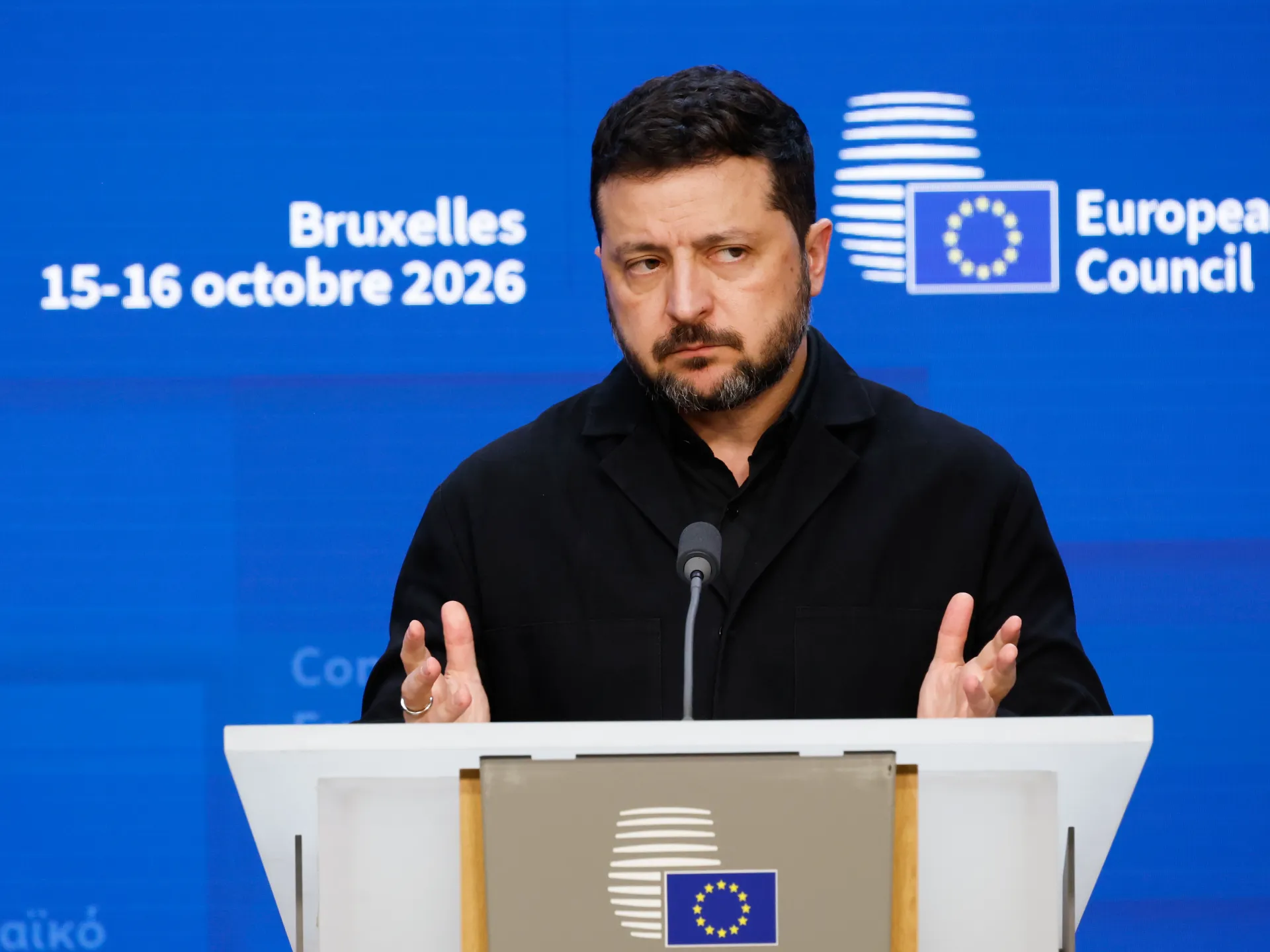
For the past four-and-a-half years, the war on Europe’s doorstep has haunted policymakers. Yet they have treated it as a looming threat rather than one already eroding the very foundations on which Europe stands.
Russia’s war has devastated much of Ukraine’s south and east, even as the front lines have shifted only slowly. For Europe, however, the challenge has never been confined to the battlefield. Supporting Ukraine and constraining Russia have tested the continent’s economic resources and political unity. Now, as United States President Donald Trump seeks to force a disadvantageous settlement on Kyiv and repeatedly threatens to withdraw US support, Europe faces the prospect of shouldering even more of that burden alone.
Even if the latest crisis is averted, Europe can no longer assume that Washington will guarantee its security. It must develop the financial capacity to sustain Ukraine’s defence, the industrial strength to defend itself and the economic leverage to constrain Moscow. To meet these challenges, Europe must build a war economy.
The past four years offer lessons in how Europe can finance such an effort, but also warnings about the divisions that could undermine it. The European Union has already been at the forefront of Ukraine’s recent financing, moving from an 18.1-billion-euro ($21bn) share of the G7’s $50bn Extraordinary Revenue Acceleration (ERA) loans in 2024 to finalising a new 90-billion-euro ($100bn) loan this April, one that came without US commitment. Yet internal divisions remain over numerous issues, particularly as they pertain to constraining Russia. This month, the EU adopted its largest-ever round of sanctions listings. But while the measures added a record number of designations, they did little to broaden the scope of restricted activity and did not accelerate the phase-out of Russian energy imports, with pipeline gas imports still permitted until autumn 2027. European leaders have also expressed concern over Trump’s decision to waive new Russia-related sanctions as he seeks to grapple with the costs his foreign policy has wrought.
However, the US-Israel war on Iran has, if anything, shown that Europe’s measures against Russian hydrocarbons could have gone further. Before February, some 20 million barrels per day (bpd) of crude and oil products and roughly 110 billion cubic metres (bcm) a year of liquefied natural gas (LNG) passed through the Strait of Hormuz. By comparison, Russia exported about 6.5 million bpd of oil and products in September, and some 43bcm of LNG last year – about a third of Hormuz’s oil and two-fifths of its LNG. As the crisis continues and Trump seeks additional Russian supplies, Europe must complement its efforts to constrain Moscow with greater investment in its own security.
The first and most important step is to establish a standing framework for joint EU borrowing – not only to finance Ukraine’s continued defence, but also to fund the defence industry Europe will need to sustain its own defence and, if necessary, prevail against future threats from Russia. Crisis begets innovation, as demonstrated during the COVID-19 pandemic, when EU member states pushed past their long-held aversion to mutualised borrowing, creating the 750-billion-euro NextGenerationEU recovery fund in 2020. The EU’s contribution to the ERA loans and this year’s 90-billion-euro facility, both financed by common EU borrowing, extended that logic to wartime finance. But these remain crisis-by-crisis improvisations. Deepening fiscal and capital markets union and building a genuine fiscal-military state would provide the foundations of Europe’s power and its ability to deter and win wars.
The same logic plays out in the US today, where deep capital markets have given companies such as SpaceX, which invested heavily for years before seeing returns, the space to develop technologies such as its Starlink network that have reshaped modern warfare. The importance of this technology is now keenly felt on Ukraine’s battlefields, where Kyiv’s communications have rested on a network subject to the whims of one man, SpaceX CEO Elon Musk. Europe therefore needs the fiscal capacity to fund its own technological development and procurement.
There are understandable jitters about the existing indebtedness of European states such as France and the United Kingdom. However, Russia’s frozen sovereign assets offer a potential way to support further borrowing. Divisions remain over using these assets, with Belgium, which hosts the lion’s share at Euroclear, opposing such a move over fears of Russian legal action and damage to its position in the global financial system. The bloc must come together to share that risk, which is overblown in any case. Not all EU fiscal support needs to come in the form of direct joint debt either. Greatly expanding the EU capital markets union and creating tax-advantaged structures across the region for defence firms and technological innovators may prove even more effective.
Beyond the assets themselves, Europe must also take greater control over its continued economic linkages with Russia. That means intervening far more actively in cases such as that of Austria’s Raiffeisen Bank. In 2025, following a Russian court ruling, more than 2.1 billion euros were taken from Raiffeisen’s Russian subsidiary to compensate Rasperia, a company tied to the sanctioned oligarch Oleg Deripaska. A Vienna court’s ruling last month now paves the way for Raiffeisen to seek compensation from Rasperia’s frozen assets in the EU – using the same sanctions derogation through which Euroclear released some $3bn in 2025. It is precisely this kind of legalised dealing with Moscow that keeps threats like those levelled at Belgium credible: if the Kremlin can seize European assets and prompt the release of Russian-linked assets frozen in the EU, every expropriation becomes a bargaining chip.
Furthermore, the UK and the EU have increasingly made use of measures against circumvention that share some features with US secondary sanctions. Europe should now be more assertive in making it clear that firms helping Russia evade its sanctions risk losing access to European financial systems and markets. US firms will choose Europe over the Kremlin, even if Trump waives more sanctions.
Finally, Europe should seek to reduce US influence over its foreign and security relationships. Speaking in Qatar this week, US Ambassador to Turkiye Tom Barrack said Washington was moving away from its decades-old bargain of security for Gulf oil. Europe may not be able to offer the same level of security, but it can offer a mutually beneficial partnership that addresses both sides’ concerns. And it is Europe that is now stepping up in the Gulf, with the UK and France deploying jets, air defences and refuelling support to help Saudi Arabia against Houthi attacks. Unlike Washington, Europe can promise a deeper partnership in the future and serve as a reliable buyer of Gulf oil and gas exports in exchange for Gulf states doing more to address Europe’s security concerns about Russia through enhanced sanctions compliance and, first and foremost, ending the Kremlin’s role in OPEC plus.
Europe has the means to finance its own security. It must now find the will to borrow for it.
The views expressed in this article are the author’s own and do not necessarily reflect Al Jazeera’s editorial stance.
The head of the Asian Football Confederation (AFC) says the body is endorsing Gianni Infantino for another term as FIFA president.
The AFC has 47 member confederations. Even if all the members do not follow Friday’s direction from Sheikh Salman bin Ibrahim Al Khalifa, those that do could be key to guaranteeing another mandate for Infantino, who leads the governing body of world football and is seeking a fourth term.
Recommended Stories
list of 4 itemsend of list
The FIFA election is in March. The deadline for candidates to file against Infantino is November 18, and so far, none has filed.
Sheikh Salman, speaking at the AFC’s extraordinary congress in Tokyo on Friday, embraced Infantino with a large hug in front of the membership as he delivered his endorsement.
“We affirm our full commitment to supporting you and your leadership as you seek a new mandate as the FIFA president.” Sheikh Salman said.
“You’ve visited a lot of countries in Asia. I’ve spoken to a lot of members within this continent. I know your feeling, and I think your commitment is clear as well.”
Addressing his remarks to Infantino, Sheikh Salman indicated not every AFC member would go along with the endorsement but most will.
“My feeling is, I’m sure, the feeling of most of my members,” the AFC president said. “And I’ve said that to you.”
A sudden about-face by AFC
This is an abrupt turnaround for Sheikh Salman. Just over two months ago, the AFC joined the football governing bodies of Europe and that of North and Central America in saying Infantino had committed a “fundamental breach of trust”.
Infantino apologised last week in Zurich to FIFA’s 37-member ruling council, which he chairs, for “mistakes” he made in assembling a now-scrapped $4.2bn plan to sell a stake in FIFA events, including the World Cup, to private investors.
Sheikh Salman referenced the differences with Infantino in his speech but glossed over any details.
“Gianni, I want to make it clear: Yes, we had some issues we spoke about in the past,” Sheikh Salman said. “But let’s not relate the two things together. I think the last few days we met in Zurich, you made it clear that there’s a true understanding between us.”
“The past I’m sure is part of our history,” he added, “We’ve all, I’m sure, learned important lessons from it. What matters now is how we move forward together. I think everyone has questions, and I’m sure the answers will be available, whether to us in Asia or the rest of the world. ”
Infantino’s electioneering around the globe
FIFA’s media office has been promoting Infantino’s travels around the world, seeking votes in exchange for millions of more dollars in financial support for small and large football countries.
“Thank you for being here,” Sheikh Salman said to Infantino. “I know you have been everywhere. I don’t know how you can do it. But I’m sure that you set a record for being in almost every country.”
Sheikh Salman then joked that, perhaps, Infantino had a “clone”.
That drew a laugh. But the largest applause came at the end of his brief address when he again repeated his support for Infantino.
“As one Asian family, we are ready to move forward, united in your support, Gianni,” Sheikh Salman added. “I want to make that clear today.”
Infantino accepts AFC’s support
Infantino took the podium after Sheikh Salman and kept his remarks light. But he did acknowledge some errors.
“When you do many things, you do – hopefully, as we did, many good things – you do some mistakes as well,” Infantino said. “The important, however, is, as you said, to learn, to learn always from the experience, from the mistakes, to apologise, to move ahead, to come together, to unite, to build for our future, for your future.”
The largest applause came as he mentioned how, under his leadership, millions more are flowing to FIFA’s patronage network.
“Before I started as FIFA president, each of you – some of you are still [here] and still remember that time – each of you was receiving $1m every four years” Infantino said. “As of the first of January of next year, it will be $25m.”
Bad Gastein is a relatively unknown gem. The Austrian state it sits in, Salzburg, offers free local transport (the guest mobility ticket) if you are staying in the state, so you can travel to the resort via train for nothing. The slopes are directly next to the station, too.
Rob Owen
Family fun in the French Alps
Puy-Saint-Vincent. Photograph: Santiago Urquijo/Getty Images
Puy-Saint-Vincent in France is a wonderful, small, child-friendly resort. Our grandchildren learned to ski each morning with great instructors on the gentle slopes under amazing azure skies. Three generations then made memories of a lifetime, skiing the wide quiet slopes together each afternoon. We enjoyed dog sleds and cosy hot chocolate in the slopeside cafes. A wonderful trip.
Barbara
Profile
Readers’ tips: send a tip for a chance to win a £200 voucher for a Coolstays break
Show
Guardian Travel readers’ tips
Every week we ask our readers for recommendations from their travels. A selection of tips will be featured online and may appear in print. To enter the latest competition visit the readers’ tips homepage
–
A historic railway and superb skiing in Norway
A ski lift in Gausta. Photograph: Alf Jacob Nilsen/Alamy
Gausta, Norway, is such fun. Stay at Gaustablikk,the hotel built by Kirk Douglas’s stuntman, a wonderfully quirky piece of local history. Explore Vemork, the historic heavy-water plant where British and Norwegian resistance fighters carried out their daring sabotage during the second world war. For families, the on-piste skiing is friendly and accessible; while the cross-country trails are simply stunning. Then there’s the real adventure: an old US military train climbs Gaustatoppen, opening up spectacular off-piste skiing with views and terrain that rival much of mainland Europe. It’s a brilliant mix of history, skiing, scenery and adventure, and somehow remains a wonderfully under-the-radar destination.
Fiona
Markets and gluhwein in the Austrian Tirol
St Johann in Tirol, Austria. Photograph: Animaflora/Getty Images
As a family of four, we loved St Johann in Tirol. It’s a comfortable Austrian village with Christmas markets, picturesque churches and gorgeous frozen valley walks – with little marmosets and weasels to look out for along the river. Wherever you stay, you can walk to a gondola. It’s really near to Salzburg airport, too. In Austria, kids get all-day lessons, which is a big bonus. Parents can just kick back or wander around and have a gluhwein or two. Prices were very reasonable in the Christmas holidays.
Nick
A locals’ favourite on the Italian border
Monte Lussari village. Photograph: Jacques Decro/Getty Images
Tarvisio-Monte Lussari on the Italian-Slovenian border covers 24km (15 miles) of skiable terrain interconnected across two main sectors: the historic and stunning Monte Lussari pilgrimage peak and the Priesnig area. Used by local people and those in the know, it offers sufficient ski runs and good value ski passes and restaurants, and is much cheaper than neighbouring resorts in Austria.
Neil
Magic in the air at La Rosière, France
Family-friendly La Rosière. Photograph: Real Image/Alamy
Stay in the attractive resort of La Rosière in France, in the foothills of the Mont Blanc region. Enjoy the short forest walk to the village, with wind chimes and magic in the air, for an après-ski drink and a cheese fondue in a local tavern with the kids.
About 50km (30 miles) from Ålesund, Strandafjellet has excellent pistes, but also some of the best off-piste skiing in Norway. Strap on a pair of randonnée skis and you can use the lifts to access spectacular backcountry skiing in the Sunnmøre Alps. The views down to the fjord make this truly special. Pistes are illuminated for evening skiing.
Graham
A charming village in Les Trois Vallées
Saint-Martin-de-Bellevile in the French Alps. Photograph: Delpixart/Getty Images
Saint-Martin-de-Belleville, in the French Alps (Les Trois Vallées), is low at about 1,500 metres, so go mid-season. The single run ends smack in the centre of the village, which has retained its historical features along with small, friendly bars and places to eat. Plus, it gives access to the whole of the Trois Vallées ski area – absolutely amazing from one small but beautiful village. There are plenty of choices for accommodation, both expensive and cheap.
Russell Walker
Queue-free skiing for all in Italy’s Dolomites
Christmas time in Brunico. Photograph: Nicola Simeoni/Alamy
Brunico is tucked away in the Dolomites, just a 90-minute transfer from Innsbruck. I had a great week at the beginning of March. Unlike bigger resorts, queues were nonexistent here. There are runs for beginners through to experts. Great snow and plenty of opportunities to use it.
Ian B
Winning tip: Bavarian charm and quiet slopes
A restaurant in Oberstdorf, Germany. Photograph: Harry Laub/Getty Images
Oberstdorf in Germany continues to be my go-to for a quiet and restorative ski week away. There are 130km (80 miles) of pistes for all levels, stacks of Bavarian restaurants, a wide variety of mountain huts, plenty of hotels for all budgets and family sizes, and the novelty of skiing into and out of Austria daily. Neuschwanstein Castle is a short hop away for a day off. Unbeatable value.
High winds propelled the blaze across the army base in Wainwright, killing four soldiers and injuring dozens more.
Published On 23 Oct 202623 Oct 2026
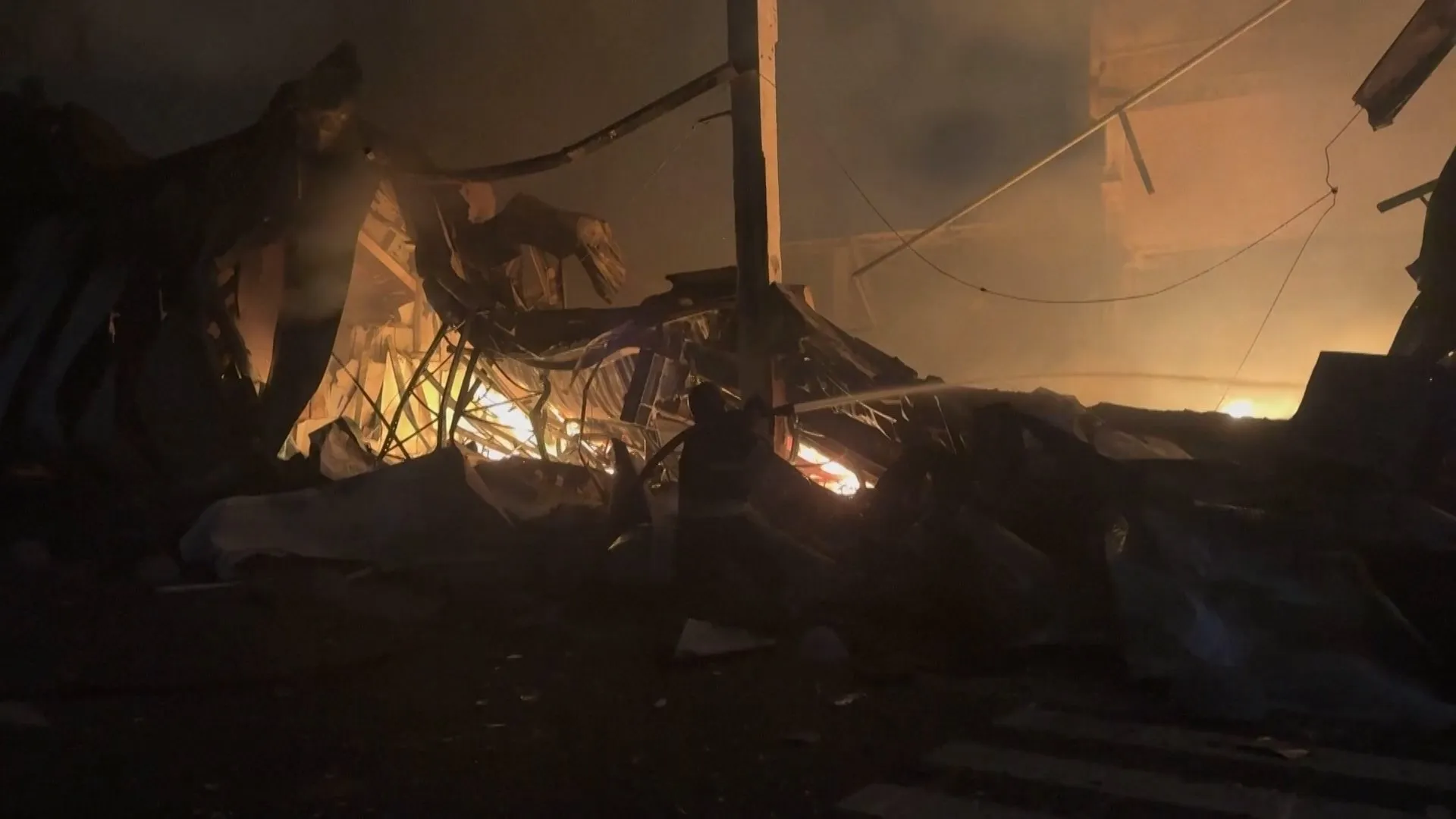
A fire that killed four soldiers at a western Canadian military base was sparked by an exercise using live grenades, a military official said.
The deadly fire broke out on a grenade launcher range during military exercises on Saturday, with high winds propelling it across the base, Brigadier-General Vanessa Hanrahan, commander of the Canadian Forces Military Police Group, told reporters on Thursday.
“A subsequent change in wind direction and velocity significantly increased the fire’s intensity,” she added, with the flames spreading to a training area at the Wainwright military base in Alberta.
Due to the blaze being in the “permanent danger area” of the range, firefighters were unable to directly combat it, Hanrahan added.
The fire spread on Saturday afternoon during high-intensity combat training involving Charlie Company of the 3rd Battalion, Princess Patricia’s Canadian Light Infantry.
The military base lies in the prairies, a landscape of wide, open grasslands, rolling plains and scattered groves of trees.
About 84 soldiers were split between a grenade range and an area where they practised attacks on simulated enemy positions. The fire swept into the second training area.
Four soldiers died and 39 were injured, with 27 requiring hospitalisation. The incident was one of the worst peacetime tragedies for Canada’s military.
The soldiers and reserve members were participating in exercises ahead of a planned deployment to Latvia, where Canadian forces have their largest international military operation.
The Wainwright base is one of the largest bases operated by the Canadian Armed Forces. It regularly hosts training exercises involving military personnel from NATO countries.
During the final months of World War II and for several months in 1946, the base was used as an internment centre for German prisoners of war.
The world authority on threatened wildlife classified 96 percent of all coral reef systems as “critically endangered”.
By AFP and The Associated Press
Published On 22 Oct 202622 Oct 2026
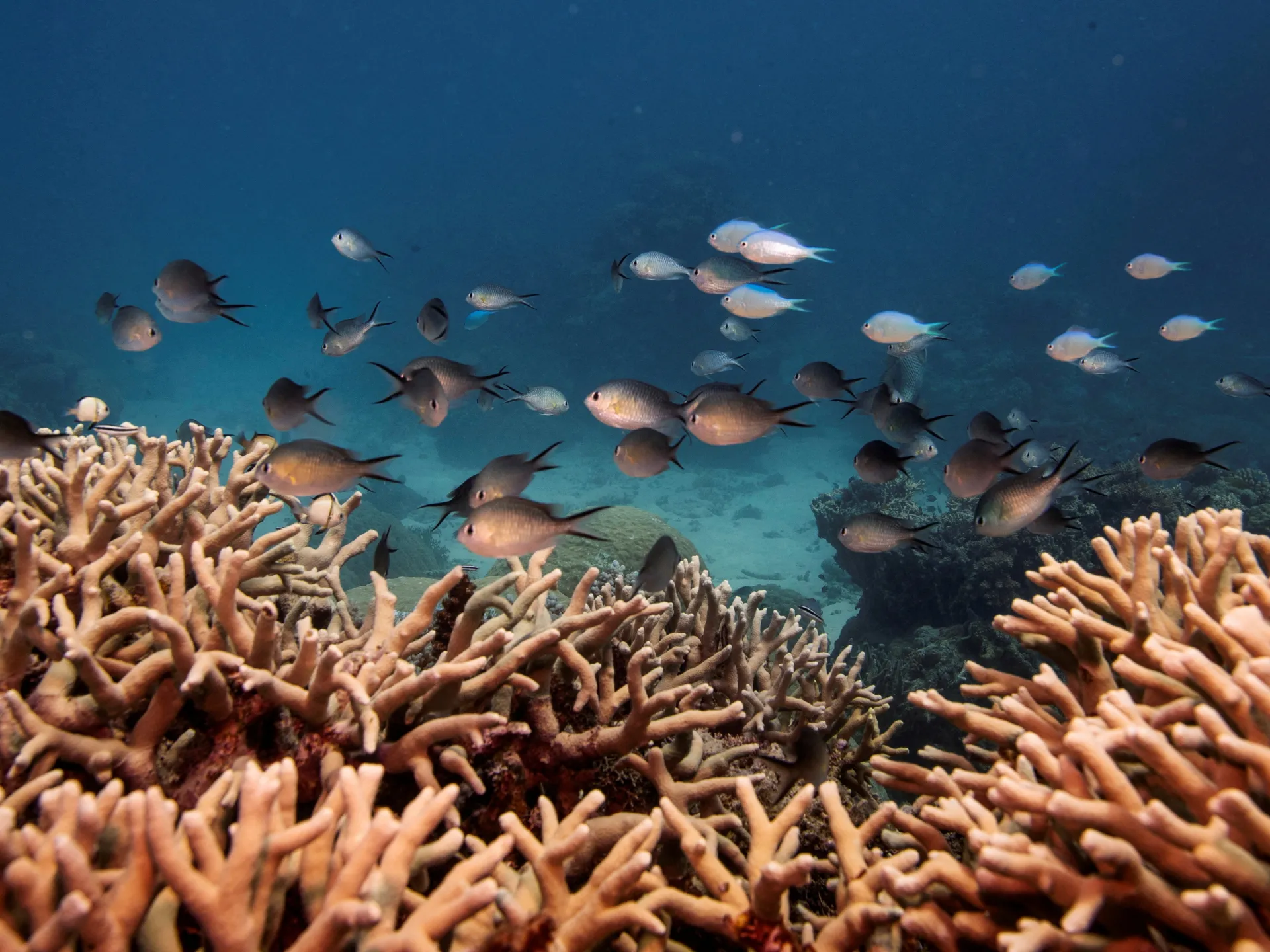
Almost all of the world’s shallow-water coral reefs face an extremely high risk of collapse in the next 50 years, the International Union for Conservation of Nature (IUCN) has warned in a new global assessment.
In a report released on Thursday, the world authority on threatened wildlife classified 96 percent of the planet’s coral reef systems as “critically endangered”, its highest risk category, with total extinction possible by 2075.
Recommended Stories
list of 4 itemsend of list
“The future threat of climate change is looming and severe, and that poses a very high risk to the survival of these ecosystems,” said Mishal Gudka, scientific lead of the IUCN Red List of Coral Reef Ecosystems assessment.
Corals are heat-sensitive and particularly vulnerable to human-driven climate change, which is warming the world’s oceans and increasing the frequency and intensity of damaging bleaching events.
When a reef collapses, hard corals disappear and are replaced by algae, rubble and sponges. As a result, the reef no longer supports a diverse ecosystem that can include everything from tiny invertebrates to reef fish like grouper.
The emergence this year of a “super” El Nino, the natural warming phenomenon, also presents a risk to corals, Gudka said at a news conference at the UN’s COP17 biodiversity summit in Yerevan, Armenia.
It’s the latest dose of bad news for coral reefs, which are critical sources for seafood and tourism and often serve as buffers against coastal erosion and storms.
Sometimes dubbed “rainforests of the sea”, they have some of the world’s richest biodiversity and support a quarter of marine species as well as coastal communities and businesses.
Most of the world’s famous reef systems – including the Great Barrier Reef in Australia, the Coral Triangle in the Western Pacific Ocean and Southeast Asia, the Mesoamerican Barrier Reef System and the Red Sea coral reefs – are critically endangered, according to the assessment.
Elevated risk of extinction
For its report, the IUCN used the “middle-of-the-road” scenario from the UN’s panel of climate experts that projects global temperatures rising 2.7C above pre-industrial levels by 2100.
Its analysis examined 127 tropical and subtropical coral systems covering 188,362 square kilometres.
A week ago, another IUCN study in the journal Nature found that nearly 44 percent of reef-building coral species face an elevated risk of extinction due to climate change. A year ago, a survey found that harmful bleaching of the world’s coral had grown to include 84 percent of the ocean’s reefs, the most intense of its kind in recorded history.
Despite its warning, the IUCN said coral reefs in most parts of the world “are not yet lost”.
“Coral reefs have shown a remarkable ability to bounce back from devastating bleaching events,” said Gudka. “Pockets of surviving, resilient coral reefs can still remain in the future, so we must do everything within our reach to set them up for success.”
Demonstrators gathered on the sixth anniversary of a near-total abortion ban imposed by Poland’s highest court.
By AFP and The Associated Press
Published On 23 Oct 202623 Oct 2026
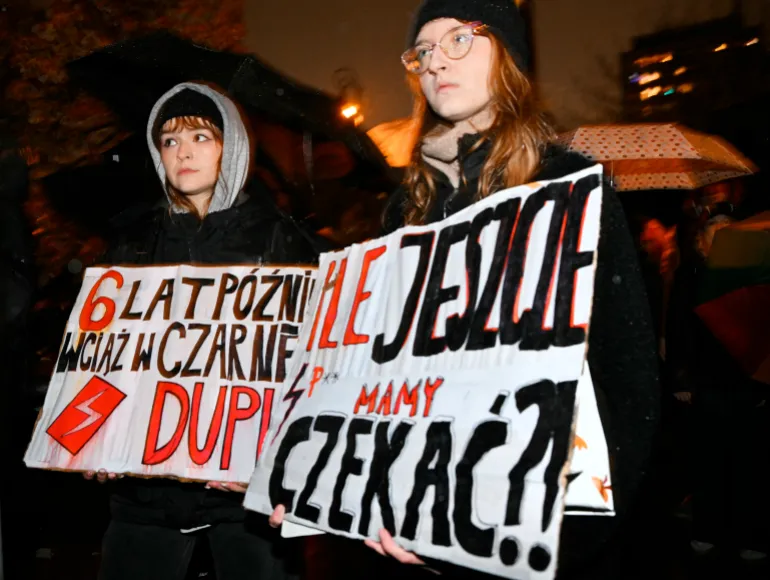
Thousands of people have protested in more than 20 towns and cities across Poland, calling for access to free and legal abortion services.
Demonstrators gathered on the sixth anniversary of a near-total abortion ban imposed by Poland’s highest court.
Recommended Stories
list of 4 itemsend of list
Currently, abortion is only legal in Poland when a pregnancy results from a criminal act like rape or incest, or when it threatens the life or health of the mother.
Prime Minister Donald Tusk’s government promised to liberalise abortion laws ahead of its 2023 election victory, but divisions within the coalition have slowed progress.
The demonstrations come days after parliament passed two bills that would ease abortion restrictions in the mostly Catholic country, but are likely to be vetoed by Poland’s conservative President Karol Nawrocki.
Passing the draft laws now, a year before the next parliamentary election, is a case of “token gestures” rather than a genuine effort to reform abortion law, said Zofia Marcinek of the Abortion Dream Team, a reproductive rights activist group in Warsaw.
She said the liberal government knew the draft laws stand no chance of withstanding Nawrocki’s veto, and has merely tried to create the impression of taking action because it needs women’s support to win elections next year.
In the capital, Warsaw, about 1,000 protesters demonstrated in front of parliament despite rain.
“Over the last six years, nothing has really changed,” said 36-year-old Emilia Niemiec, who manages the AboTak abortion centre, which provides women with access to resources, including pills, and a space to be able to seek support or carry out a pharmacological abortion.
Two young women demonstrate with placards reading ‘How much longer do we have to wait?’ as they attend a nationwide pro-abortion rights protest [Mladen Antonov/AFP]
Abortion laws tightened
Restrictive abortion laws have been in place in Poland since 1993, with Polish women leading calls for the legalisation of abortion ever since. In 2016, nationwide demonstrations took place, with women donning black as a sign of protest.
But rather than being relaxed, Poland’s abortion laws were tightened further, banning abortions of foetuses with congenital defects in 2020 under the national-conservative Law and Justice (PiS) government.
Despite the laws, abortions remain common in Poland, with the overwhelming majority carried out by women at home using pills obtained from outside the country. Women who undergo abortions, including by taking pills, do not face criminal responsibility under Polish law. But people helping them, including doctors and family, can potentially be prosecuted.
Polish hospitals performed 573 abortions in the first half of 2026, compared with 452 in the whole of 2022 before Tusk came to power, according to data from the National Health Fund. But activists say tens of thousands of abortions happen yearly outside of hospitals.
Campaigners organising Thursday’s protests are claiming the Tusk government has betrayed Polish women – and that Tusk’s claims that women’s access to abortion has improved during his administration have actually complicated getting care for some women.
“The government’s promises act as a type of disinformation,” Marcinek said. “Women getting pregnant hear the prime minister say that everything is OK, that there is access to abortion, and then they end up in the hospital and see that is not the case. So they come to us when it’s very late and very complicated and expensive to help them.”
UK Conservative Party leader Kemi Badenoch says the party does not condone former member, and candidate, Jack Ross’s conduct, which was revealed in an Al Jazeera investigation. It showed Ross discussing contract killers and offering to broker the services of a far-right activist.
When the 2026 Ballon d’Or ceremony gets under way at the London Palladium this Monday, much of England will hope it serves as a good omen.
After all, the English haven’t seen one of their own lift the golden ball – football’s most prestigious individual award – in 25 years.
Recommended Stories
list of 4 itemsend of list
Michael Owen was the embodiment of English pride when he won the accolade in 2001. Now, it is Harry Kane who could bring his nation an honour every footballer dreams of.
So, what are Kane’s odds of winning the Ballon d’Or? Al Jazeera takes a look:
The best season of Kane’s career bodes well for Ballon d’Or
Remember the time when Lionel Messi and Cristiano Ronaldo scored 50-plus goals for fun? When a football forward’s goal tally looked more like a batsman’s cricket score?
Kane’s 2025-26 goal-scoring exploit is the closest we have experienced to that in recent years.
The England captain’s 73-goal performance last season was the finest display the world has seen since Argentinian legend Messi’s 82-goal tally in 2011-12.
“I’ve never liked to talk about myself too much,” Kane said in an interview last month.
“The only thing I would say is that last season was incredible, on a personal level and as a team.
“It was, by far, the best season of my life.”
Age is no problem for England and Bayern Munich’s Kane
He scored an incredible 36 goals last season, making Kane the Bundesliga’s top scorer for the third year running and earning him a second European Golden Shoe, while finishing nine goals clear of Manchester City’s Erling Haaland in the continental race.
The Bayern Munich forward’s statistics look even more impressive given he is seemingly peaking at 33, an age when most forwards are far beyond their prime.
Kane is bidding to join the ranks of Messi, Luka Modric and Karim Benzema, some of the recipients of the last 10 editions who won the Ballon d’Or in their 30s.
Standing in his way, however, are two very talented juniors – Spain’s superstar-in-the-making, Lamine Yamal, who won the 2026 FIFA World Cup shortly after his 19th birthday, and France’s 2018 world champion, Kylian Mbappe, who is 27.
When Kane made his Premier League debut for Tottenham Hotspur in 2014, Yamal was still in primary school, and Mbappe was in high school.
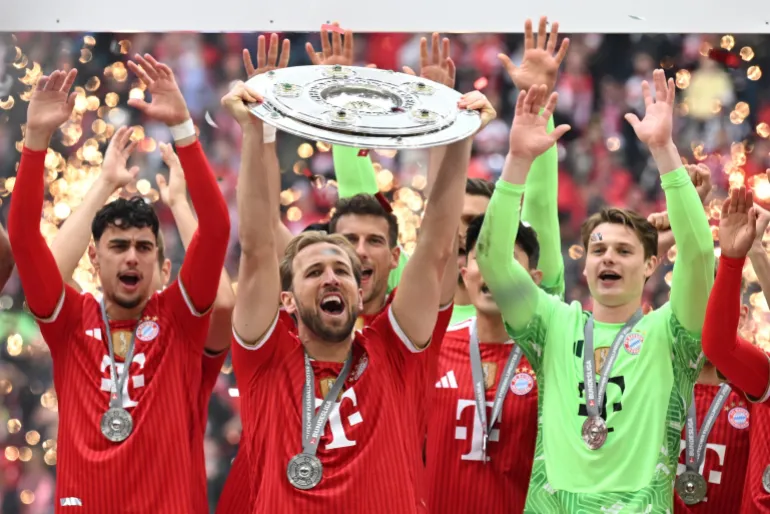
Bayern Munich’s Harry Kane lifts the trophy as he celebrates with teammates after winning the Bundesliga [File: Angelika Warmuth/Reuters]
Could Champions League and World Cup woes hurt Kane’s bid?
Since Kane moved from London to Munich, the forward has taken German club football by storm, and 2025-26 was no different. He finished the campaign with three trophies: the Bundesliga title, DFB-Pokal (the German Cup) and Franz Beckenbauer Supercup (the German Supercup).
But his failure to make an impact in the Champions League semifinal cost Bayern Europe’s most coveted club trophy, and the same was the case at the recent World Cup, where he finished third with England.
While World Cup success is not a strict requirement to win the Ballon d’Or, having a world title on your CV definitely helps. Furthermore, being pitted against 2026 World Cup winners Yamal and Rodri – also the 2024 Ballon d’Or recipient – could hurt Kane’s odds.
Recent history suggests that winning a title in one of the major tournaments has become almost a prerequisite.
Only four of the previous 19 Ballon d’Or winners failed to lift either the Champions League, World Cup, European Championship or Copa America during the year they won the honour.
Those exceptions include record eight-time Ballon d’Or recipient Messi and five-time winner Ronaldo.
England’s Harry Kane settled for bronze at the 2026 World Cup [File: Carlos Barria/Reuters]
Kane is the bookmakers’ favourite to win the Ballon d’Or
Only time will tell whether falling short in major competitions’ crucial knockout rounds will decide Kane’s fate, but for now, he is the bookmakers’ leading candidate for the trophy.
As of Tuesday, Kane holds about 65-70 percent market share to become the successor to Ousmane Dembele, the 2025 Ballon d’Or winner.
Unlike other Ballon d’Or contenders, especially the outspoken Yamal and Mbappe, who are campaigning hard for the award, Kane has been relatively quiet.
Bayern are speaking up for their leader, having put together a video in which teammates said Kane should win.
“He deserves to win it, 100 percent, without a doubt,” said Colombian Luis Diaz, who is also on the shortlist.
If Kane wins the award, he would become only the fifth English player to do so after Stanley Matthews, Bobby Charlton, Kevin Keegan and Michael Owen.
Some countries in the region say it infringes on their rights.
Libya’s eastern parliament has walked back its objection to an agreement with Turkiye, demarcating boundaries in the Mediterranean Sea.
Its rival administration, the internationally recognised Government of National Unity, signed the deal seven years ago.
The ratification has revived a simmering dispute over exploring a potentially gas-rich region. Greece, Cyprus and Egypt were quick to object, with Athens referring the issue to the UN Security Council.
They say Libya and Turkiye are ignoring their sovereign rights.
So what are the geopolitical implications of this deal in the eastern Mediterranean?
Presenter: Mohammed Jamjoom
Guests:
Sinan Ulgen – Chairman of the Centre for Economic and Foreign Policy Studies
Maria Gavouneli – Professor of international law at the National and Kapodistrian University of Athens
Tarek Megerisi – Director of Informmi, a geopolitical research and advisory firm
Israeli court releases nine settler suspects over West Bank attacks as investigations into recent assaults continue.
Published On 22 Oct 202622 Oct 2026
Israel has released nine of the 10 Israeli settler suspects arrested over attacks on a US journalist and European diplomats in the occupied West Bank, placing them under house arrest.
An Israeli court in Jerusalem ordered the release late on Wednesday, according to Honenu, a law firm that represents Israeli settlers.
Recommended Stories
list of 3 itemsend of list
Israeli police said one suspect remained in custody and that the investigation into the violent incidents was continuing.
Masked settlers were filmed last week assaulting Heidi Levine, a Washington Post photojournalist covering a Palestinian olive harvest who was taken to hospital and underwent surgery on a finger.
In a separate attack earlier this week, masked settlers assaulted French, Belgian and Polish diplomats and a French mayor in another part of the West Bank.
The suspects had been detained after the United States called for a crackdown on settler violence. France, Belgium and Poland also urged Israel to act.
“In the vast majority of attacks against Palestinians, no arrests are made at all,” said Yonatan Kanonich, head of research at the Israeli rights group Yesh Din. “In cases that receive media coverage … the police arrest several settlers and release most of them shortly afterward.”
United Nations Secretary-General Antonio Guterres said in a post on X Thursday that the situation in the occupied Palestinian territory was “out of control”, with Palestinians continuing “to suffer daily attacks by Israeli settlers” and journalists and diplomats also being attacked.
Guterres called for “a credible political path towards lasting peace”.
Separately, the Palestinian Colonization and Wall Resistance Commission on Thursday said it documented 17 West Bank pogroms by Israeli forces and settlers against Palestinian farmers and their land during the olive harvest.
The commission recorded 409 attacks in October, 317 of which were by settlers and 92 by Israeli forces.
Nablus recorded the most attacks, 166, followed by Salfit with 91.
The commission said the attacks included assaults on farmers, preventing them from reaching their land, theft of crops and agricultural equipment, damage and burning of olive trees, as well as arrests, threats at gunpoint and live fire.
Ali Hassan Bazzari from Burqa died of wounds from settler gunfire while picking olives on October 7, the commission reported.
On Thursday, settlers set fire to olive trees near Imatin, east of Qalqilya, while Israeli forces forced farmers to leave and detained a farmer and several of his workers, the Palestinian news agency Wafa reported.
Near Yabad, west of Jenin, settlers stole 17 bags of harvested olives and equipment, local sources said.
Citing a local Palestinian official, Wafa reported that around Jenin, Israeli forces closed transport roads and most village gates, preventing farmers from reaching land in Barta’a.
For more than 50 years, a group of timekeepers has been quietly sneaking extra seconds onto the world’s clocks. Now they’ve voted to stop, and the moon is getting its own clock. Al Jazeera’s Basel Ghazoghli breaks it down.
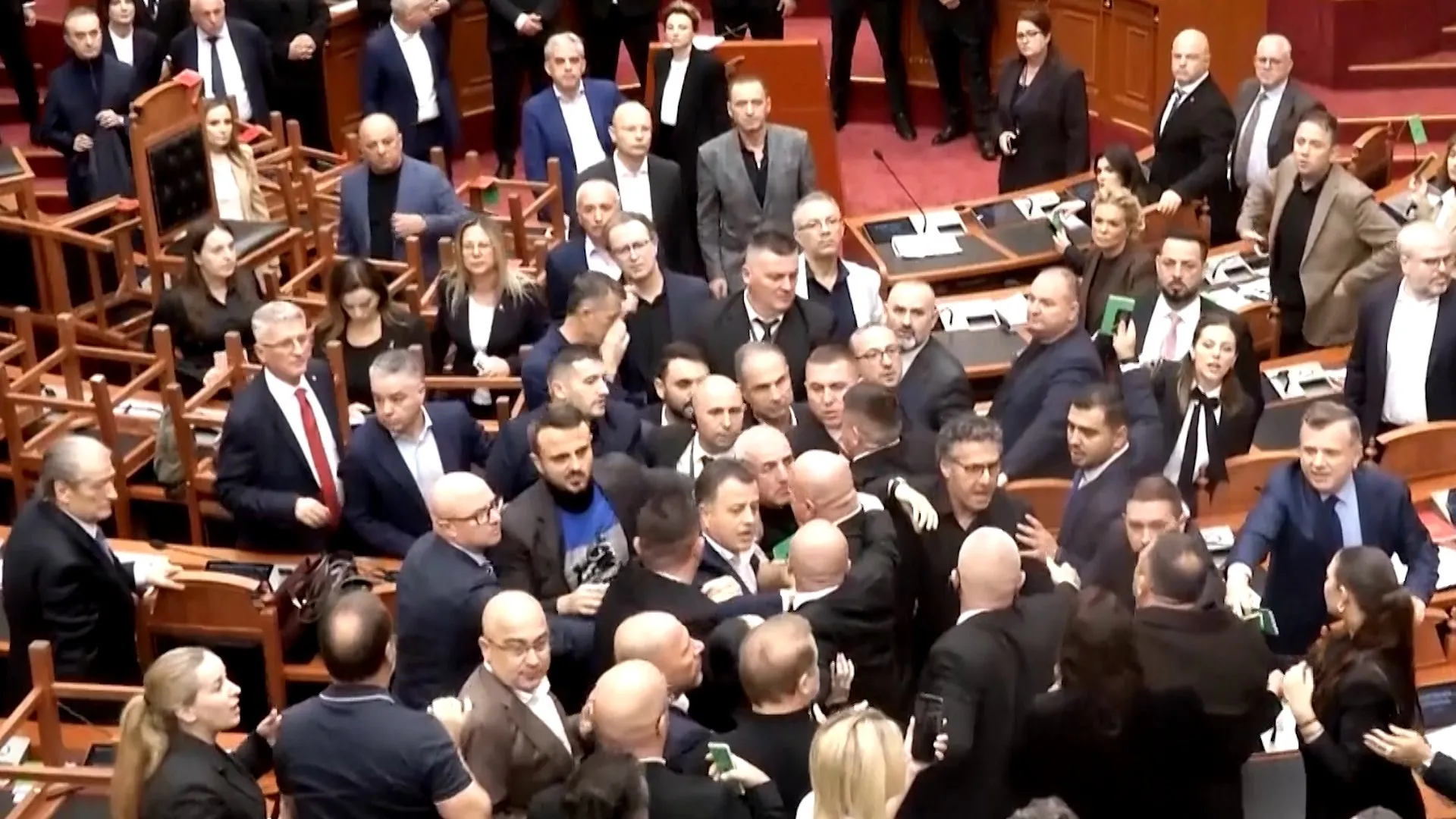
Albanian lawmakers have scuffled in parliament, throwing objects at one another and ripping microphones from desks. The chaos follows months of daily street protests, first over corruption, and now over schooling conditions.
MOVE over St Pancras – there’s a new kid on the block for rail services to Europe.
Lord Sadiq Khan has revealed plans to launch trains to Europe from Stratford International Station within the next four years.
Stratford International Station could get new rail services to EuropeCredit: Alamy
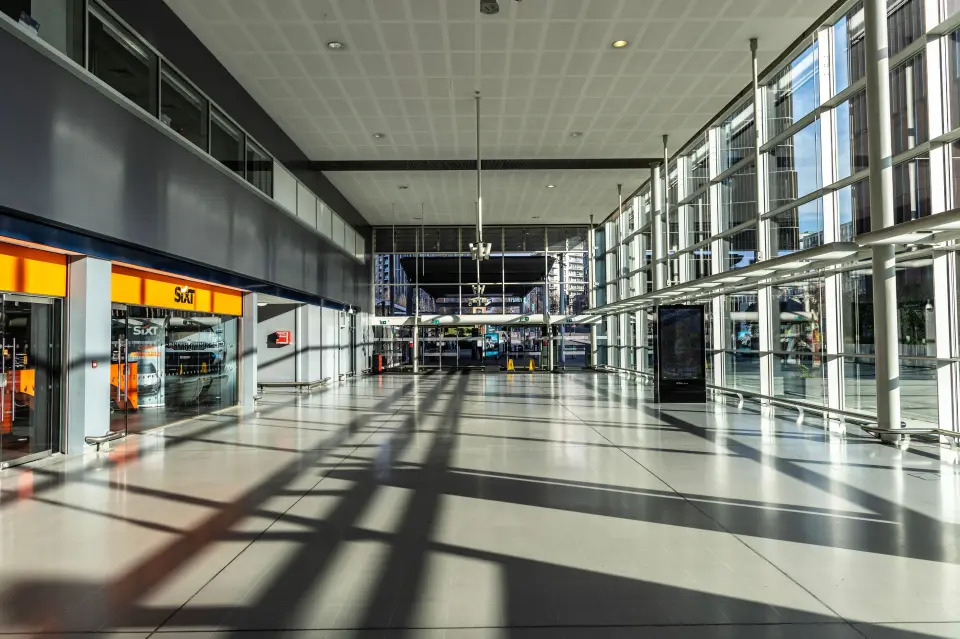
Despite its name, the station has never had international services, but according to The Standard, the station is set to undergo a £20million project to launch trains to France by 2030.
One in three trains to and from France could stop at the station under the new plans – being a stop on services, rather than a new origin or destination station.
Sign up for the Travel newsletter
Thank you!
It’s predicted that the stop would add five to eight minutes to the overall journey time.
Sadiq Khan told The Standard: “We’ve been working closely with the Government to make Stratford International truly ‘international’ for the first time – opening up new opportunities for jobs, investment and tourism, while connecting one of the UK’s fastest-growing economic centres directly to Europe.
“It’s time to unlock the full potential of this station and help write the next chapter in Stratford’s remarkable success story as we continue building a better, greener, more prosperous London for everyone.”
If trains to Europe did launch at Stratford International Station, around five million people in and around London would have better access to international rail services.
Services would initially be to France with plans to expand to other destinations in the futureCredit: Getty
Services could run to Paris, Brussels, Rotterdam and Amsterdam.
And eventually, there could be trains to Germany and Switzerland as well.
The current plans are also backed by a number of businesses as well as the train drivers’ union Aslef.
Stratford International finished construction in 2006 with four platforms.
However, the two platforms for international services as well as the area for international passengers have remained abandoned for the past two decades.
In order for the area to open, more work would need to be done including making the flow of passengers through security more efficient.
The station would be able to handle around 250 to 300 passengers at a time.
Meanwhile, Virgin is set to launch services from London St Pancras also by 2030, competing with Eurostar.
Government websites in Europe and elsewhere have gone offline after news of critical vulnerabilities in a widely used programming language sent website operators scrambling to protect their systems.
Developers of the PHP programming language on Wednesday released urgent new fixes, saying all users were “encouraged to update immediately”.
Recommended Stories
list of 3 itemsend of list
PHP runs on the servers that host websites, building pages behind the scenes before they reach a visitor’s browser. Most people never see it, but it powers everything from blogs to online shops and government portals.
The vulnerabilities, which had been lurking in the software for years, were uncovered with the help of artificial intelligence. Details about them leaked online on Tuesday before fixes were available, forcing PHP to rush them out.
Experts said they were bracing for a wave of intrusions as hackers jumped to get ahead of the updates.
What is the bug?
Andrew Cullen, a lecturer on AI and cybersecurity at the University of Melbourne, said many devices in the world are connected to one piece of foundational software, which is where the bug was found.
The vulnerability allows a hacker to run code on a website, meaning they could change the website or force it to release personal information collected in a database, Cullen told Al Jazeera.
Both flaws stem from how PHP handles fatal errors, such as running out of memory. Because the problem sits in PHP itself, even the simplest website running an affected version can be vulnerable, and attackers could read passwords and other credentials from a server’s memory, the cloud security company Wiz said. Both flaws scored 9.2 out of 10 on the industry’s standard severity scale, placing them in the “critical” category.
The two flaws, nicknamed PHP2Shell, were found independently by two cybersecurity companies using AI. Calif, working with OpenAI, reported the first on August 11. Wiz, which is owned by Google, reported the second on August 24.
The vulnerabilities remained hidden in the PHP codebase for more than a decade and would have been extraordinarily complicated for a human hacker to take advantage of, Wiz said in a statement.
Calif and Wiz said they had coordinated with each other, the PHP team and OpenAI before making the vulnerabilities public.
However, Amazon security chief CJ Moses said his security team detected an attempt to exploit the vulnerabilities on October 17, four days before the public disclosure.
Moses said it was unclear how the hacker learned of the flaws while Calif’s and Wiz’s reports were still under embargo. Security researchers usually keep details of flaws secret until a fix is ready, so attackers cannot use them in the meantime.
Who can potentially be affected?
PHP, a language that dates back to the early 1990s and initially stood for Personal Home Page, underpins huge parts of the public-facing web and is baked into WordPress, Drupal, Joomla and Magento sites, meaning any critical vulnerability potentially has enormous knock-on consequences.
Calif, Wiz and the web infrastructure company Cloudflare said the flaws affect PHP 5.4 and later versions, more than a decade of releases.
Cullen said the vulnerability was “really unprecedented”, noting that PHP powers more than 70 percent of websites globally, although sites that have been updated are protected.
“There is a real risk to the kind of shared digital infrastructure that we all rely on,” Cullen told Al Jazeera. “There is concern in the cybersecurity community about what the blast radius for this will be, even though the developers of PHP have been very quick to try and develop patches for it.”
Cullen added that while AI was getting better at cybersecurity, it was also getting better at being a hacker. “This means that we are developing systems … that are making the internet safer by helping to fix bugs, but we’re also making it riskier by discovering bugs and creating bugs they’ll be able to hack,” he said.
What has the impact been so far?
In the Netherlands, the Dutch cybersecurity agency itself went offline, saying it had done so as a precaution because of the vulnerabilities. Several organisations followed the example and took public-facing websites offline, including the Port of Rotterdam, government portal Overheid.nl, the national football association KNVB, the websites for the country’s five largest political parties and several hospital websites.
Dutch Prime Minister Rob Jetten said he was closely monitoring the situation.
Disruptions were even more widespread in Finland, where state IT services provider Valtori said government public network services had been taken offline “as a precautionary measure”.
France’s Ministry of the Interior said it had placed all of its websites into preventive maintenance.
Belgium’s Federal Public Service Foreign Affairs, Foreign Trade and Development Cooperation said it had temporarily taken its websites offline after reports of cyberattacks exploiting the PHP vulnerabilities although the country’s cybersecurity centre said it had not recorded any attacks on Belgian websites.
South Korea’s government raised its private-sector cybersecurity alert level and activated emergency response measures. It issued security guidance to about 28,000 companies with registered chief information security officers and 5,900 members of a government information-sharing network as well as operators of critical infrastructure, web-hosting firms and data centres.
The operator of the online encyclopedia Wikipedia also said it had taken down an unspecified number of systems until they could be safely patched while the Internet Archive, the sprawling online library, said it also briefly went offline to deal with the issue.
Until now, the virus was considered non-transferable to humans, making the patient the first documented human case.
Published On 22 Oct 202622 Oct 2026
French authorities have confirmed that a patient who died at a Lyon hospital earlier in October was infected with the Shamonda virus, the first such report of the virus in a human.
In a statement on Thursday, the French Ministry of Agriculture stressed that there were no identifiable health risks to the general population at this time.
Recommended Stories
list of 4 itemsend of list
Shamonda is an orthobunyavirus – a group of viruses primarily carried and spread by insects – transmitted to animals, mainly cattle, by biting midges of the genus Culicoides.
It was first detected in Nigeria in the 1960s, but has since been reported sporadically in East and Southern Africa, as well as Japan.
Until now, the virus was considered non-transmissible to humans, making the patient in France the first documented human case.
The French announcement said the leading hypothesis was that the patient was infected in eastern France, where the virus had circulated among animals this spring and summer.
“Clinical, biological and epidemiological investigations are continuing in conjunction with expertise in human, animal and environmental health,” the statement added.
Shamonda was first confirmed in Europe in late July after genomic tests on sick cattle in southern Germany, Switzerland and eastern France.
A report from France’s weekly animal health surveillance bulletin said the virus had also been detected in Austria, Belgium, Ireland, Italy, Liechtenstein, Luxembourg, the Netherlands, Portugal, Slovenia, Spain, and the United Kingdom’s Jersey.
Libya’s eastern-based parliament has backed a 2019 maritime deal with Turkiye already signed by the North African nation’s internationally recognised government based in Tripoli to delimit maritime boundaries in the Mediterranean Sea.
The vote on Tuesday came as Turkiye has been cultivating close ties in recent years with the eastern parliament, backed by renegade military commander Khalifa Haftar. Ankara had helped the Tripoli government, known as the Government of National Accord (GNA), push back an offensive in 2020 by Haftar’s self-styled Libyan National Army (LNA) that aimed to capture Tripoli.
Egypt and the European Union have rejected the ratification of the maritime borders agreement, calling the deal “null and void”.
On Tuesday, the Tobruk-based House of Representatives voted unanimously to approve the agreement, reversing its 2020 rejection.
Israel also condemned the move while Greece, which said the agreement violates international law, briefed the United Nations Security Council.
Turkish Foreign Minister Hakan Fidan dismissed the criticism, calling the deal “entirely legitimate”.
So what is the deal, and why has it drawn such a backlash? Here’s what you need to know:
What is the deal?
It is a memorandum of understanding that draws a sea border between Turkiye and Libya across the eastern Mediterranean.
It was signed in Istanbul on November 27, 2019, by Turkish President Recep Tayyip Erdogan and Fayez al-Sarraj, then-prime minister of the UN-recognised government in Tripoli.
Within weeks, Turkiye sent drones and military advisers to help repel Haftar’s assault on Tripoli.
The deal allowed Ankara to claim large and potentially gas-rich areas of the eastern Mediterranean.
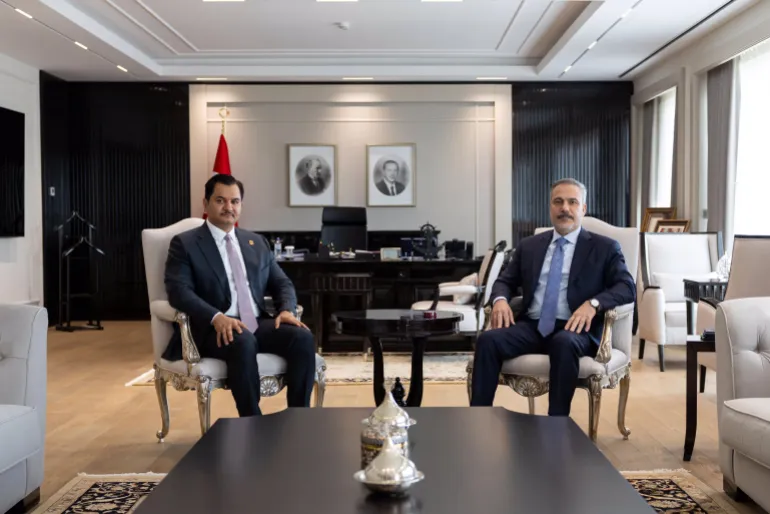
Turkish Foreign Minister Hakan Fidan, right, meets with General Saddam Haftar, deputy commander of the self-styled Libyan National Army, in Ankara, Turkiye [File: Handout/Turkish Ministry of Foreign Affairs]
Why does Egypt oppose it?
Because Cairo says it cuts into Egyptian waters.
Egypt’s Ministry of Foreign Affairs said the agreement “constitutes a clear infringement upon Egypt’s sovereign rights within its exclusive economic zone and continental shelf”.
It said the ratification “carries no legal consequences for Egypt”.
President Abdel Fattah el-Sisi has historically been one of Haftar’s strongest backers, but experts said their relations have cooled because Haftar allowed his territory to be used to funnel support to the Rapid Support Forces (RSF) paramilitary group, which is fighting Sudan’s military, the AFP news agency reported.
Cairo is also now a close security ally of Ankara, and in July, Egypt refrained from objecting to a maritime line drawn between Benghazi and Turkiye.
According to exclusive information Al Jazeera received in July, the rapprochement between Ankara and Haftar’s general command included agreements on developing military facilities and advanced surveillance systems.
The agreements also included training programmes in Turkiye for eastern Libyan officers with specialised Turkish defence companies participating in the projects.
Wolfgang Pusztai, a security policy analyst and former Austrian defence attache in Greece, told Al Jazeera that a possible Turkish military presence in eastern Libya was “probably more of a concern for Egypt”.
“This is not so much an issue for Greece, which has a Turkish military presence next door anyway,” he said, adding, “I doubt Cairo would accept this.”
Security forces stand guard outside the parliament building in Tobruk, Libya [File: Esam Omran Al-Fetori/AP Photo]
Why does the EU oppose it?
Because two of its member states said it seeks to take their waters.
In a joint statement on Tuesday, European Council President Antonio Costa and European Commission President Ursula von der Leyen said the memorandum infringes on the sovereign rights of third states and does not comply with the UN Convention on the Law of the Sea (UNCLOS).
They reaffirmed the bloc’s solidarity with Greece and Cyprus.
Athens said the deal ignores Greek islands, including Crete, Rhodes and Karpathos, and therefore infringes on its maritime territory, according to a briefing document from the Greek Ministry of Foreign Affairs.
Sotirios Zartaloudis, an associate professor in comparative European politics at the University of Birmingham, told Al Jazeera that Athens and Nicosia see the deal as a Turkish attempt to block the “crucial Great Sea Interconnector”.
The planned subsea power cable, which would link Greece’s grid to Cyprus and later Israel, has been delayed by a dispute between Athens and Ankara over waters off the Greek island of Crete, the Reuters news agency reported last year. The project is estimated to cost about $2.1bn.
Turkiye has not signed UNCLOS, which means Ankara is not bound by the treaty’s rules governing maritime boundaries.
On Wednesday, EU foreign policy chief Kaja Kallas urged all countries to respect member states’ sovereign rights under EU and international law, including UNCLOS.
Zartaloudis said both countries had pushed for the EU to condemn the deal, but “so far expectations were not met”, and that “they will try to gain further support against the deal”.
He added that “the main actor in the region is the US”, which he said had not repudiated the agreement.
What does Turkiye say?
Ankara said the deal is lawful and already in force.
Turkiye’s Ministry of Foreign Affairs said the memorandum safeguards both countries’ rights on the basis of international law and “the principle of equity”.
“There are countries reacting to this. We know why they are reacting,” Fidan told state media.
“However, this is an entirely legitimate deal, both from a legal and a statutory perspective,” he said.
Why did eastern Libya change its mind?
Because Ankara has spent years courting it and its parliament has new leadership.
After Ankara struck a deal with Haftar’s LNA in July, the eastern parliament on October 6 elected Al-Salhin Abdelnabi al-Obeidi as speaker, replacing Aguila Saleh after more than 12 years.
Al-Obeidi previously chaired the Libyan-Turkish parliamentary friendship committee.
Anas El Gomati, director of the Sadeq Institute, a Libyan think tank, told Al Jazeera that the turnaround in eastern Libya was about the route to the presidency under a US mediation plan for Saddam Haftar, Khalifa Haftar’s son and deputy commander.
“Turkiye is now the most consequential outside power in Libya with leverage over Tripoli and a military presence in the west, and he needs it to get there and to stay there,” El Gomati said.
“But a ratified treaty is hard to reverse, so Ankara gets something that looks permanent in return for support that, depending on how the Haftars use it, may not be,” El Gomati said.
Does the vote unite Libya’s rivals?
Not on the issues that divide them most.
Tripoli’s GNU welcomed Tuesday’s vote, meaning both of Libya’s rival centres of power now back the deal.
But El Gomati said the “unification was never about the sea”.
“It’s about who controls the budget, the army and the electoral commission, and this vote touches none of them,” he said.
What happens next?
Athens said it would take all appropriate measures to safeguard its sovereign rights.
El Gomati said implementation now depended on institutions such as Libya’s National Oil Corporation and he expected pressure “to be diplomatic and slow”.
Pusztai said the risk of naval incidents if Turkiye or Libya act on the deal at sea was “very high”.
He said it might also lead to the involvement of the EU naval mission enforcing the UN arms embargo on Libya since 2020.
In August 2020, months after the deal was signed with the GNU, Ankara sent the survey vessel Oruc Reis to explore for oil and gas in waters Greece claims, bringing the two NATO allies to the verge of military confrontation.
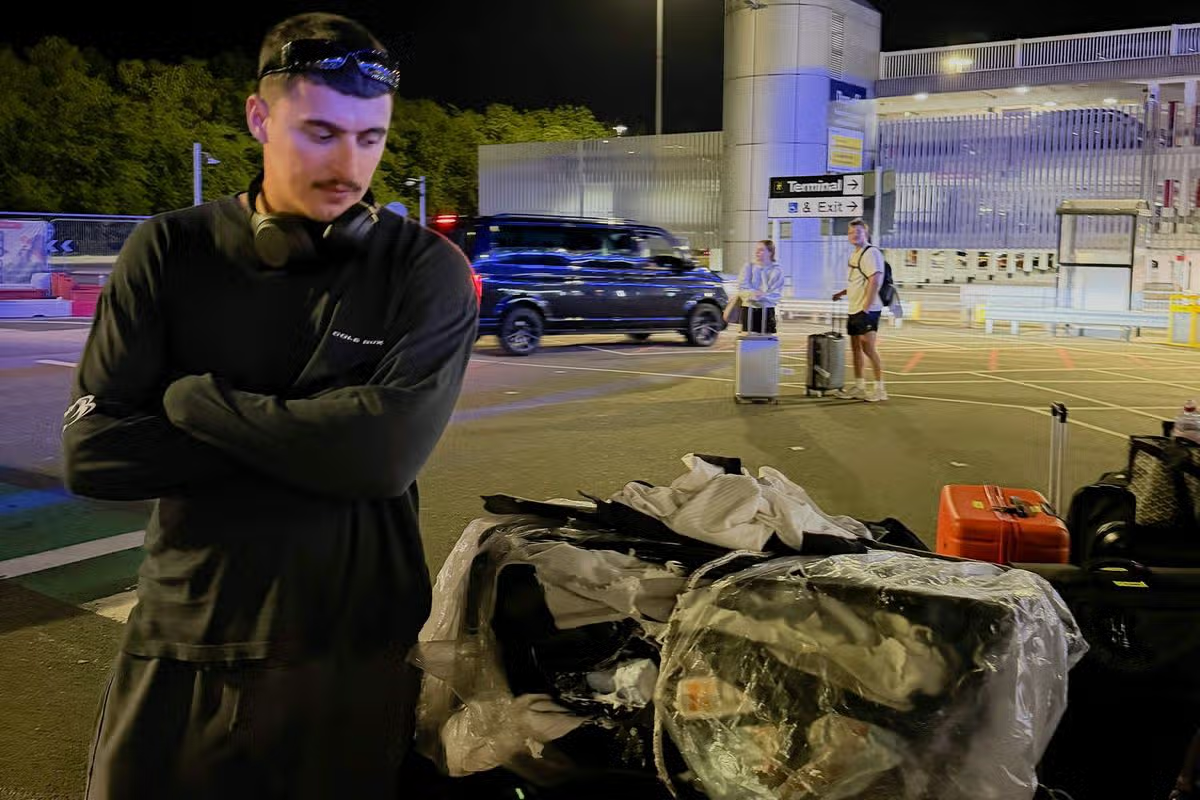
A Brit holidaymaker was left amazed after finding out that the plane he was aboard had driven over his suitcase – ‘completely destroying’ the bag and everything inside it. Louis Maybury, 27, was flying home from Madrid to Manchester Airport after a fortnight’s holiday with his partner when cabin crew woke him up with an unexpected request.
With approximately 30 minutes until touchdown, he was asked to remain on board once the other passengers had disembarked. He was then escorted to the cockpit, where the pilot delivered the unwelcome news: his luggage had been run over by the aircraft back in Madrid.
Louis could do nothing but watch in disbelief as his mangled suitcase appeared on the baggage carousel, containing what he claims was around £5,000 worth of belongings. His partner filmed the moment the battered bag was handed back to him in tatters on 11 July.
Louis, from Manchester, said: “I was extremely upset by the situation. I had packed two full weeks’ worth of belongings, including everything I needed for my trip.
“Unfortunately, all of my belongings were destroyed.” EasyJet staff informed Louis that his suitcase had been run over on the tarmac at Adolfo Suárez Madrid-Barajas Airport, resulting in a two-and-a-half-hour delay.
Since then, he has been engaged in a dispute with the airline over compensation for his possessions, which he valued at £5,000. Among the damaged items were a Burberry bag worth just over £1,000, an Invisalign retainer costing £500, and three Acne Studios shirts valued at roughly £300 each.
He said: “I was eventually left with no choice but to accept the minimum compensation offered and try to recover the remaining losses through my own insurance. Everything was destroyed, included a designer bag, four pairs of shoes, expensive chargers and an Oral B Toothbrush.”
An easyJet spokesperson said: “We’re very sorry that Mr Maybury’s luggage fell from a baggage cart and was damaged by an aircraft as it was coming onto stand. Safety is our highest priority and our engineers subsequently carried out an inspection of the aircraft and cleared it for departure.
“We know how important it is for customers to feel confident that their belongings are well cared for when travelling with us, so we investigated this with our ground handling providers in Madrid at the time and contacted Mr Maybury to apologise for his experience and provided him with the compensation he is due.”
Overnight attacks on Kyiv injured 15 people, while two were injured in Moscow as Russia said it intercepted 163 Ukrainian drones. The attacks came hours after Putin and Zelenskyy signalled willingness to resume peace talks with the US.
A theme park with no rides has been named the best in EuropeCredit: AlamyPuy du Fou Espana is a historical theme park less than an hour from MadridCredit: Alamy
Named Europe’s leading theme park by the World Travel Awards, Puy du Fou España is a historical theme park on the outskirts of Toledo, Spain – less than an hour from Madrid.
Rather than rollercoasters, visitors can expect large-scale live action shows with falconry displays featuring more than 200 birds.
Sign up for the Travel newsletter
Thank you!
The theme park is home to five historical villages – The Andalusian Askar, The Royal Town, Isidro’s Sale, The Suburb and Villaneuva del Corral.
The Andalusian Askar, for example, recreates the atmosphere of the 10th-century Córdoba.
And then in Villanueva del Corral, the theme is centred on a 16th-century Golden Age hamlet with traditional Spanish taverns.
During the day, visitors can watch a number of shows including the 25-minute immersive Beyond the Ocean Sea show which focuses on the Santa Maria ship trying to reach the East by sailing West.
At night, there’s the El Sueño de Toledo spectacular, which is a show about 1,500 years of Spanish history and includes water effects, lighting and hundreds of actors.
The park also has a number of outdoor play areas too and farm areas as well.
Scattered around the park visitors can also explore a number of shops for unique souvenirs.
Tickets cost from €37 (£31.07) per person.
And the good news for Brits is that a similar theme park is set to open in the UKCredit: Puy du Fou
And the even better news is that you won’t have to wait long until heading to similar theme park in the UK.
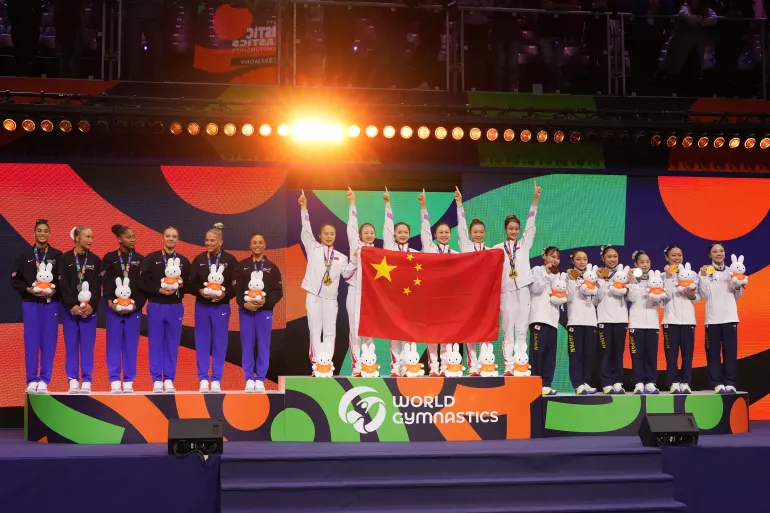
China finished 0.233 points ahead of the Americans, denying them a chance to win an gold eighth consecutive team gold.
Published On 22 Oct 202622 Oct 2026
China have denied the United States an eighth consecutive women’s team title at the Artistic Gymnastics World Championships as Qiu Qiyuan sealed a dramatic victory with the final routine.
Qiu needed to score more than 12.600 points in the closing floor routine to give her country gold and did just enough with 12.833 on Wednesday.
Recommended Stories
list of 4 itemsend of list
The USA last failed to win gold when they were beaten by Russia at the 2010 championships, but were left to count the cost of several errors on the balance beam in Rotterdam.
China, who also led the way in qualifying, finished with 165.764 points, edging out the Americans by 0.233 overall.
Japan were a further 1.468 points behind as they completed the podium ahead of fourth-placed France.
Silver medallists USA, from left, gold medallists China and bronze medallists Japan stand on the podium [Francisco Seco/AP]
USA superstar Simone Biles, a 23-time world champion including five times in the team competition, is taking a break from the sport and has not competed since the 2024 Paris Olympics, where she won three gold medals.
The reigning champions took a healthy lead at the halfway stage, helped by strong vault and uneven bars routines by Skye Blakely, the only gymnast on the team who was part of the quintet that won their seventh consecutive title in 2023.
But 18-year-old Caylor Dulcy stumbled on the beam, scoring just 12.333, as the Americans were outscored by more than four points on the apparatus by their rivals.
Zhang Qingying, who topped beam qualifying, in particular made them pay with a sparkling performance that earned her 15.066 points.
The Chinese were put under pressure on the floor, but Qiu held her nerve to secure their first women’s team world crown since 2006.
The championships continue in the Netherlands on Thursday as Japan’s Daiki Hashimoto defends his men’s all-around title, with a big challenge expected from his compatriot and Olympic champion Shinnosuke Oka.
Japan took the men’s team title on Tuesday, pipping Russia and China.
Zhang Qingying competes in the uneven bars [Francisco Seco/AP]
‘I have not given my own position any thought’, Carrick said after United’s 4-1 loss to Como in the Champions League.
Published On 22 Oct 202622 Oct 2026
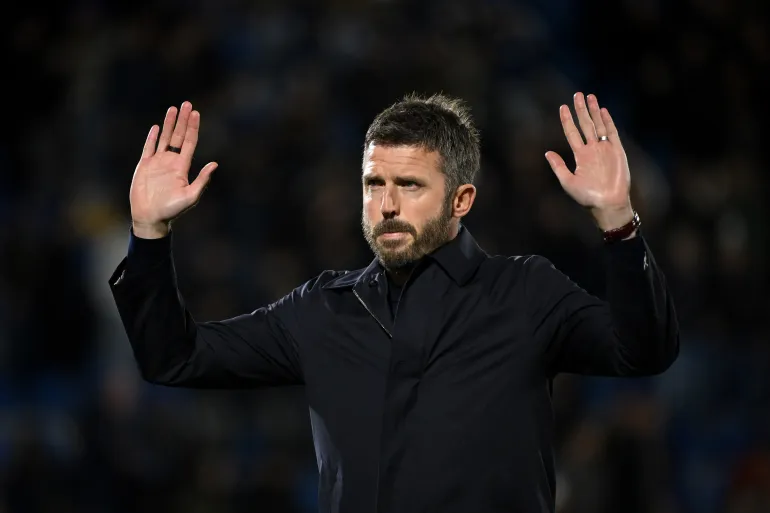
Michael Carrick has admitted that Manchester United were difficult to watch during an “unacceptable” 4-1 Champions League thrashing by Como, but insists he is not concerned about losing his job as manager.
The three-time European champions were outclassed by the Italian debutants at the Stadio Giuseppe Sinigaglia on Wednesday, as the embarrassing defeat extended their winless run to seven matches in all competitions.
Carrick’s position has come under scrutiny amid United’s slump, which has included their worst start to a league season for 40 years, but he told a news conference that he was not fearing for his position.
“I have not given my own position any thought,” Carrick said.
The Old Trafford boss insisted that his apology to the travelling fans at the end of the game held no extra significance as pressure builds on his position.
“I always go over to the fans regardless,” Carrick said.
“It wasn’t a particularly different reason why I went over. I think it’s the appreciation and acknowledgement of what they have gone through and what they have done over a period of a few weeks now. But particularly tonight.”
Carrick walked up to Manchester United’s travelling fans to applaud them after the match [Piero Cruciatti/AFP]
‘It was tough to watch’
United fell behind within two minutes to a Nico Paz goal, becoming the first English team ever to concede in the opening two minutes of two consecutive major European matches, having gone behind one minute into a 2-0 defeat by Atletico Madrid last week.
Cesc Fabregas’s side romped into a deserved 4-0 lead in northern Italy before substitute Joshua Zirkzee pulled back a stoppage-time consolation and Carrick admitted he was alarmed by the manner in which his team were outplayed.
“For us to play in that way, it’s not acceptable,” he said. “It wasn’t a good performance at all. We wanted to build on what we brought and the performance we had at Leeds.
“That bit of intensity, that spirit, that aggression, that real willingness to give everything. Tonight was the total opposite performance. I have to say, it was tough to watch.”
“There’s a lot going through my mind, watching that,” he continued. “Genuinely, it’s difficult to understand how it can be so different [from the Leeds performance].
“It shouldn’t be like that. We can all play well, we can all have poor performances, but to do it in that manner is really not right at all.”
Next up for Carrick’s side is a home Premier League game against Bournemouth on Sunday.
“I’m frustrated, more than frustrated, I’m really angry, to be honest,” Carrick said.
“You’ve got to move on, you’ve got to deal with what’s next and see what that looks like. At this moment in time, there’s a lot to do before that next game to get the team ready because that was a difficult night for everyone tonight.”
Manchester United’s Amad Diallo and Joshua Zirkzee react after the loss [Piero Cruciatti/AFP]









![Minister of Foreign Affairs Hakan Fidan met with Libyan National Army Deputy Commander General Saddam Haftar in Ankara. [Handout/Turkish MInistry of Foreign Affairs]](https://i0.wp.com/www.aljazeera.com/wp-content/uploads/2026/07/G6M_WQJWQAAIQcL-1784453011.jpeg?w=640&ssl=1)