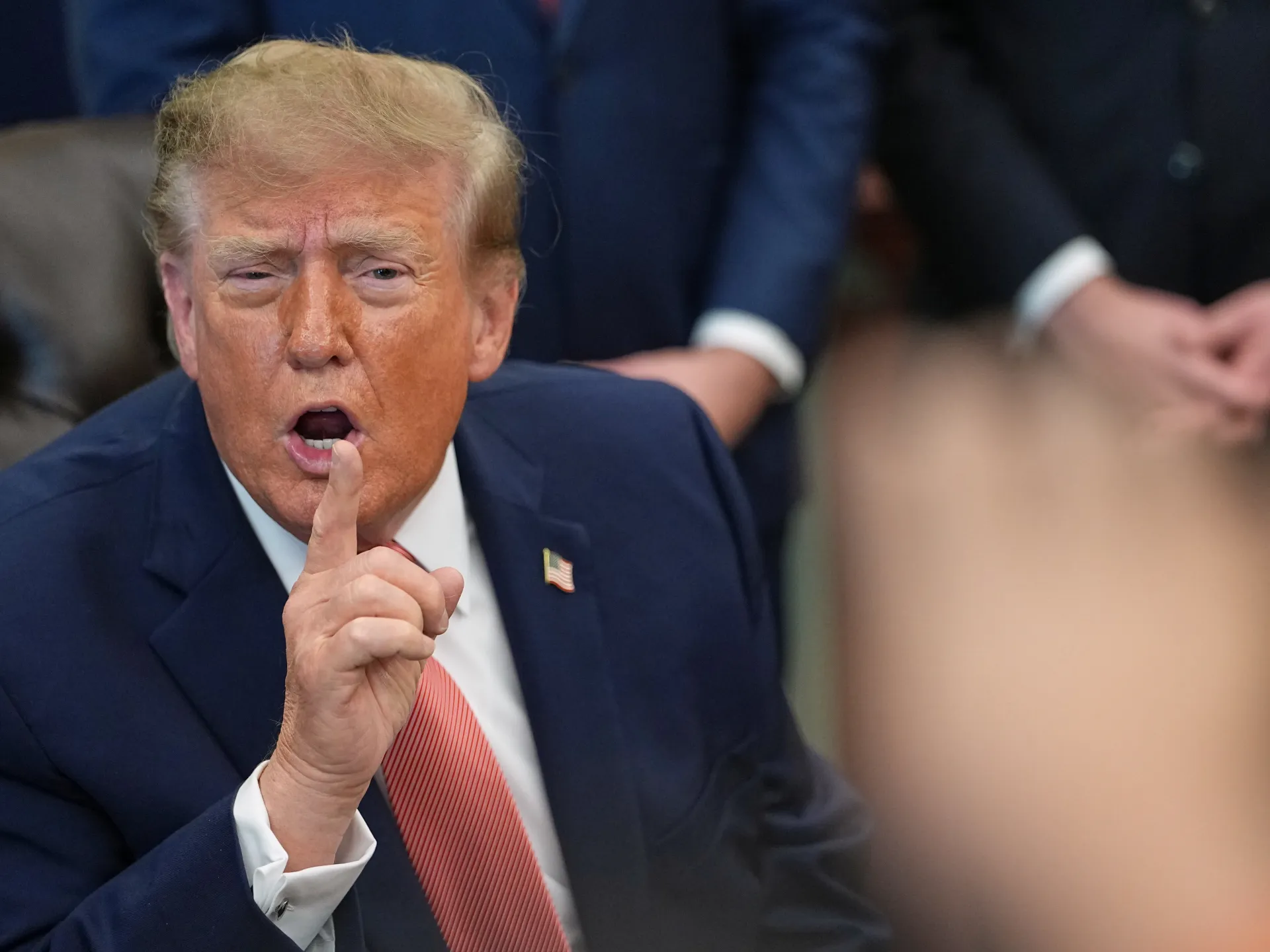
US citizen Stephen Hubbard has been freed from a Russian prison, four years after being convicted of being a mercenary for Ukraine, a claim he denies. The 74-year-old’s release coincided with US envoy Steve Witkoff’s visit to Russia to try and get Moscow to rejoin peace talks.
Kylian Mbappe and Yan Diomande score stunners as Real beat Leipzig to make it three from three in Champions League.
Published On 21 Oct 202621 Oct 2026
Real Madrid claimed a third Champions League victory in as many games, thrashing RB Leipzig 4-1 on Wednesday, with Kylian Mbappe and Yan Diomande among the goalscorers for Jose Mourinho’s side.
Bernardo Silva opened the scoring for Madrid from close range late in a tight first half, with Arda Guler doubling the advantage of the record 15-time European champions soon after the interval.
Recommended Stories
list of 4 itemsend of list
Mbappe bent home a third before Tidiam Gomis pulled one back for the German side, and Diomande rammed a volley into the top corner late on to cap Madrid’s triumph.
Their fourth consecutive win across all competitions will boost Madrid’s morale ahead of Sunday’s La Liga Clasico against bitter rivals Barcelona.
Without a major trophy in two seasons and after a shaky domestic start, Madrid can at least boast a perfect record in Europe, unlike Barca after their defeat at Paris Saint-Germain on Tuesday.
Mourinho started Vinicius, serving a four-match ban in La Liga, on the left flank and benched former Leipzig winger Diomande, despite his improving form.
The coach also brought Bernardo Silva and Eduardo Camavinga into midfield and put midfielder Federico Valverde at right-back again, as he did in Sunday’s win at Sevilla.
Visitors Leipzig created the first big chance, with Madrid stopper Thibaut Courtois getting down low to make a superb save from Romulo Cardoso.
Vinicius, who improved on a poor showing at Roma last week without breaking out of his rut, drew a full-stretch save from Leipzig’s Maarten Vandevoordt.
Madrid carved out an advantage in the final stages of a low-key first half when Valverde cut the ball back for Guler, whose shot Vandevoordt saved. However, the goalkeeper could not clear it, and Silva darted in to prod over the line.
It was the former Manchester City midfielder’s first goal for the club after joining this summer.
Vandevoordt saved well from Valverde’s fierce effort before Guler put Madrid two goals ahead in the 52nd minute.
Jude Bellingham crossed to the back post and Mbappe nodded the ball across goal, with Guler able to hold off a defender and turn home.
Mbappe lashed a shot into the side netting after Bellingham teed it up, as Madrid looked to put the game out of sight.
Mourinho sent on Diomande for Vinicius with 20 minutes remaining, and the Brazilian looked disappointed on the bench, knowing he cannot play again until November 4, when Madrid visit AEK Athens.
Madrid’s record 140 million-euro ($157m) signing, Diomande, pulled the ball back to Mbappe on the edge of the box for Madrid’s third, and the French forward bent it home.
Leipzig quickly grabbed a consolation goal at the other end as Dean Huijsen switched off, with Gomis firing past Courtois.
Diomande ended proceedings with a bang, rattling an emphatic volley from Brahim Diaz’s cross into the top corner for his third goal in his last four appearances.
WASHINGTON — President Trump’s latest embrace of Russian President Vladimir Putin is deepening alarm in Washington and among America’s allies that the White House pressure campaign could leave Ukraine vulnerable as Moscow advances.
Trump’s push to end the war, which has raged since 2022, comes on the cusp of a midterm election that could give Democrats partial or full control of Congress, expanding their oversight powers, and as polls show more than two-thirds of Americans disapprove of the president’s handling of foreign policy and support Kyiv’s fight against Russian aggression.
On Monday, Trump dismissed Russia’s ongoing assault on its neighbor, telling reporters that “they haven’t been doing much,” even as Russian forces bombed a park in Kharkiv that day, killing a mother and her 14-month-old child in her stroller.
Two days later, in St. Petersburg, Trump’s special envoy, Steve Witkoff, described Putin as a “humanitarian,” despite his invasion unleashing Europe’s deadliest conflict since World War II.
“You talk so much about my president, President Trump, being a humanitarian. You are a humanitarian also, sir,” Witkoff said after securing the release of a detained U.S. citizen from the Kremlin. At least two other Americans, both from Los Angeles, remain wrongfully detained by Russia. “I salute you, and I commend you,” he added.
Rep. Don Bacon (R-Neb.) described Witkoff’s remarks as “another embarrassment” after a steady stream of entreaties to Moscow from the Trump administration.
The diplomatic push follows Trump’s decision two weeks ago to import Russian diesel, a move that could bolster Moscow’s war effort and violate U.S. law. Days later, after Ukrainian President Volodymyr Zelensky publicly condemned the move, Trump ally Elon Musk reportedly throttled the speed of Starshield, a military-grade satellite internet service from Starlink that Kyiv relies on to defend itself against Russian attacks.
The Trump administration failed to provide Kyiv with intelligence warnings of incoming ballistic missile strikes, blaming the weather. The president waived sanctions on Russia that were passed just months earlier with overwhelming bipartisan support in the aftermath of the death of Sen. Lindsey Graham, a Trump ally and Ukraine supporter. And Trump declined to approve the transfer of interceptor missiles to Ukraine — more defensive weaponry used to protect the country from Russian strikes that have increasingly targeted civilian areas.
The developments have raised fresh questions over whether Trump has exceeded his legal authority in reshaping U.S. policy on Ukraine.
Russian diesel imports could violate a 2022 federal ban, the Ending Importation of Russian Oil Act, and throttling Starshield, withholding intelligence and delaying missile transfers could breach contractual or statutory obligations set forth by Congress — all potential subjects of investigation for a willing Congress.
And Trump’s push comes at a moment of political peril, as he faces the prospect of a Democratic-led legislature and a Republican Party ready to move beyond his lame-duck presidency.
But freedom from political obligation could also allow Trump to pursue his agenda without the needs for coalitions or popular support.
The prospect of an unchecked Trump has stoked fears on Capitol Hill that the White House could abandon Kyiv altogether.
Nine senators from both parties have asked the Pentagon’s inspector general to investigate the Starlink episode, while lawmakers across the aisle have condemned the speed restrictions. And should they take power after the midterms, Democrats are also weighing whether to make Defense Secretary Pete Hegseth’s resignation a condition of further defense funding, citing his criticism of Ukraine, according to a report in the newspaper the Hill.
“Congress will unequivocally reaffirm that Ukraine is an indispensable ally to the United States, that Russia is a self-declared enemy of the United States, and that the United States will 100% support and defend the people of Ukraine in their fight for their own freedom against this brutal, illegal, and unprovoked Russian invasion,” said Rep. Brian Fitzpatrick (R-Pa.).
“The United States must provide any and all defensive equipment that Ukraine needs to defend itself,” Fitzpatrick added. “Anyone who attempts to limit the use of Starshield for Ukraine will be fully investigated and will be held fully accountable, to include public congressional oversight hearings.”
Marco Rubio, the president’s secretary of State and national security advisor, was initially silent on Trump’s moves. But he ultimately defended them when confronted by reporters on a recent visit to Central Asia.
“We’re no longer going to be defensive about this topic,” Rubio said. “If it were not for the assistance of the United States, including under the Trump administration, there would be no Ukraine right now. Ukraine, as a sovereign state, would not exist.”
Still, Rep. Michael R. Turner (R-Ohio), a former chair of the House Intelligence Committee, said Sunday that Rubio’s explanation of Ukraine’s loss of Starlink access was “absolutely not” sufficient.
“This is something where there needs to be an investigation, there needs to be a congressional investigation,” Turner told CBS. “Lives are at risk, and lives are lost over these things.”
Trump has told reporters in recent days that his goal remains to secure a peace deal that ends the world’s deadliest conflict since World War II. But Mitt Romney, a former GOP senator from Utah and the Republican presidential nominee in 2012, dismissed Trump’s arguments as a break from U.S. values.
“Churchill could have shortened WW2 by years if he had just ‘done a deal’ with Hitler,” Romney wrote on social media. “George Washington could have done a deal to end the American Revolution.”
Zelensky “is in good company,” he added.
Europe, too, is preparing for a new confrontation with the Trump administration over the defense of Ukraine.
Germany’s chancellor rejected Trump’s approach, saying of Europe, “We are the firewall.” And the European diplomatic service responded with derision to Trump’s waiver of sanctions.
“When Russia escalates aggression against Ukraine,” the European Union’s diplomatic service said in a statement, “Europe responds with more pressure on the aggressor.”
Trump has floated a trilateral summit with Putin and Chinese President Xi Jinping in Shenzhen, China, next month, fueling European fears that he could strike a deal on Ukraine without Kyiv at the table.
The Russians and Ukrainians agreed this week in principle to begin peace talks at a technical level moderated by the United States. No timeline or framework has been set for the talks.
In an interview on Fox News, Zelensky said that he was prepared to agree to a peace deal that froze the existing battle lines, ceding nearly a quarter of Ukrainian land to Russian control. Over the last year, Russia has demanded that Kyiv also relinquish land in the Donbas region that it has failed to conquer through military means.
“Right now, we have to freeze. And I think this is a real way to end this war. We call this ceasefire,” Zelensky said. “This is minimum what we need from Russia today.”
“The most important is peace, and secure peace,” he added, “not to be afraid that occupation will come back, aggression will come back, killing will come back.”
Public sector workers and teachers joined student protesters, amid growing youth-led demonstrations across Europe.
Published On 21 Oct 202621 Oct 2026
Thousands of students and teachers have rallied across cities in Greece, demanding more funding for education, including better facilities and smaller class sizes.
The demonstrations echo a wave of youth-led protests across Europe this month, including in France and Albania, where anger over rising costs and alleged corruption has led to clashes with police and major property damage.
Recommended Stories
list of 3 itemsend of list
Greek police said about 10,000 demonstrators, including school and university students, rallied peacefully in central Athens and the capital’s suburbs on Wednesday.
“From Greece to France, we want public, free education,” protesters chanted as they gathered outside Parliament, where students staged an overnight sit-in nearby before the rally.
Others joined the protests in Thessaloniki, Patras, Larissa and other cities across Greece in solidarity with growing demonstrations in France and elsewhere in Europe, where rallies demanding educational resources have morphed into angry demonstrations over soaring living costs.
Cost-of-living crisis
In Greece, the protests add pressure to Prime Minister Kyriakos Mitsotakis and his centre-right government as the country prepares to hold elections in mid-2027 amid a weakening economy.
Greece struggled with a serious debt crisis from 2009 to 2018, during which the government agreed to spending cuts in exchange for three European Union and International Monetary Fund bailouts worth about 290 billion euros ($326bn).
But the measures have impacted Greek workers, who are among the poorest in Europe and struggle with stagnant wages, high rents and rising energy costs.
The average monthly salary of 1,500 euros ($1,685) sits at 2009 levels, with many young Greeks having been priced out of housing in cities by skyrocketing rents.
“Surviving here is very difficult; the rent is really high, the houses are really small. Our parents can’t make ends meet to pay for our rent, the electricity, for our life here,” university student Georgia Foukidou, 21, who joined the protest in Athens, told the Reuters news agency.
The protests on Wednesday included strikes by primary and secondary school teachers protesting low pay and staff shortages, while substitute teachers demanded permanent positions and reduced class sizes. Public sector workers and other unions also joined the demonstrations.
Education Minister Sofia Zacharaki said prior to the protests that she was listening to student demands, noting that the government was spending more than 733 million euros ($823m) on new student residences and facilities upgrades.
Mitsotakis’ government has also pledged about one billion euros ($1.12bn) in state subsidies and other benefits to offset increased energy costs for households and businesses due to the Iran war and inflation.
‘I have nothing left.’ Small business owners in Paris say they are traumatised after rioters looted their shops. With more protests expected across France on Saturday, Al Jazeera’s Virginia Pietromarchi speaks to shopkeepers fearing further destruction.
French president meets Crown Prince Mohammed bin Salman in Riyadh to discuss energy, security, and infrastructure as cost-of-living protests rage at home.
Published On 21 Oct 202621 Oct 2026
French President Emmanuel Macron visited Riyadh on a surprise “solidarity” visit, making him the first Western leader to touch down in Saudi Arabia since the Houthis intensified their attacks this month.
The unannounced trip comes as Saudi Arabia agreed to supply extra diesel to France “for as many months as necessary”, the Elysee Palace told the AFP news agency on Wednesday.
Recommended Stories
list of 3 itemsend of list
The visit aims to “demonstrate France’s solidarity with the kingdom in the face of the attacks carried out by the Houthis against its territory, and to continue efforts undertaken on securing and diversifying hydrocarbon supplies”, the French presidency said earlier.
The diplomatic push follows days of rioting in France, fuelled by the cost of living, especially as the US-Iran war and Iran’s blockade of the Strait of Hormuz have kept energy prices high.
Faced with criticism of his Gulf tour at home, Macron told reporters he was just “doing his job” in a bid to “ease tensions” over petrol prices, one of the causes of social unrest in France.
“There must be no sign of febrility,” he said. “I am fulfilling my role. I am at my post.”
Macron met Saudi Crown Prince Mohammed bin Salman in the Saudi capital, and the two agreed to consult on expanding security cooperation and on infrastructure projects to bypass the blockaded strait, the palace said.
It did not say how much extra diesel Saudi Arabia would supply.
Macron’s Gulf tour
The deal follows pledges secured earlier in Macron’s Gulf tour. The presidency said on Tuesday that the United Arab Emirates had committed to about 100,000 tonnes a month, with a further 100,000 tonnes monthly to be secured in Bahrain.
Together with Saudi deliveries, France now has commitments for 295,000 tonnes a month, just more than 10 percent of its consumption, it said.
Meanwhile, France is also sending military assets to Saudi Arabia, under an earlier agreement, to help protect the Red Sea port of Yanbu, which has come under attack from the Iran-backed Houthis, an armed group also known as Ansar Allah (Arabic for Supporters of God).
The United Kingdom also announced on Tuesday that it would deploy fighter jets to help shield the kingdom. Both countries say their support is purely defensive.
Analysts say the moves protect Saudi oil exports that matter to Europe’s energy markets and bolster the Gulf alliance as the US shows reluctance to offer direct military help. They also carry risks, analysts say, potentially drawing the two European states into the protracted Saudi-Houthi conflict.
French President Emmanuel Macron made an unannounced stop in Riyadh to meet Saudi Crown Prince Mohammed bin Salman during his ongoing Gulf tour. The surprise visit comes amid increasing attacks on Saudi Arabia by Yemen’s Iran-backed Houthis.
France and the United Kingdom have both moved to deploy military assets to Saudi Arabia, deepening their defence ties with the kingdom as its conflict with the Houthis, an armed group also known as Ansar Allah (Arabic for Supporters of God), in Yemen escalates.
Paris last week said it had begun sending assets to Saudi Arabia as part of a previously announced agreement, after President Emmanuel Macron committed to deploying troops and air defence systems to help protect the Red Sea port city of Yanbu, which has come under attack from the Iran-backed Houthis.
Both countries stressed that their support would be defensive.
Analysts say the European moves serve several geopolitical purposes: protecting Saudi oil exports that are important to European energy markets, shoring up their strategic alliance in the Gulf amid US reluctance to offer direct military assistance to Saudi Arabia, and strengthening deterrence against future Houthi attacks.
But the deployments also carry significant risks, many analysts say, potentially drawing the two European states more directly into the protracted Saudi-Houthi conflict.
“If insufficiently deterred, the Houthis may decide that the moment is ripe to test the resolve and resilience of Saudi Arabia’s defensive posture, and attempt to draw Saudi Arabia’s allies even further into the Yemen-Saudi confrontation,” Burcu Ozcelik, a senior research fellow for Middle East Security at the Royal United Services Institute (RUSI), told Al Jazeera.
‘Support during crisis’
The British and French military support measures come as Saudi Arabia faces a sustained Houthi missile and drone campaign against it, including targeting energy and transport infrastructure.
Houthi attacks targeting Saudi airports in Riyadh and Abha this month have killed 19 people and injured more than 300 others, according to the Saudi-led coalition spokesman Turki al-Maliki.
Addressing the UK’s stepped-up military support for Saudi Arabia, UK Defence Secretary Wes Streeting called recent Houthi attacks in Saudi Arabia “absolutely despicable”, specifically condemning the group’s targeting of Riyadh airport.
The UK Ministry of Defence said it would deploy Typhoon fighter jets to fly “defensive counter air missions” in Saudi Arabia, send UK military advisers to work with Saudi staff officers and provide an A400M transport aircraft to help move defence material within the kingdom.
French support for Saudi Arabia would include soldiers, radars and defence systems, Macron has said, without detailing the scale of the support.
Urban Coningham, a research fellow at RUSI, noted differences in the British and French roles, with the French mainly limited to protecting Saudi export infrastructure. The British, by contrast, will conduct “defensive patrols where they would shoot down incoming missiles or drones” in Saudi Arabia, as well as provide air-to-air refuelling support for Saudi bombers and jets heading into Yemeni airspace, he said.
Camille Lons, policy fellow and deputy head of the Paris office at the European Council on Foreign Relations, said France is limited in what it can provide to Saudi Arabia, particularly given the demands on European defences amid the war in Ukraine. Still, Paris sees its assistance as a way to “show support [for Saudi Arabia] in times of crisis, and a way to deepen the defence partnership”, Lons told Al Jazeera.
‘Freeing up’ Saudi aircraft
Saudi Arabia will welcome the European deployments, as it has struggled to translate some of its security partnerships into high-level military support.
In September, US President Donald Trump rejected multiple Saudi requests to participate in strikes on the Houthis, agreeing only to provide intelligence and targeting support, the news agency Reuters cited informed sources saying.
Turkiye and Pakistan have committed to “collective deterrence measures”, including potential troop deployments, under the newly signed Mecca defence pact with Saudi Arabia, but the agreement has yet to be ratified in Turkiye.
Egypt’s parliament has also postponed a vote that would authorise its armed forces to support Saudi Arabia.
Nawaf Obaid, a senior fellow at King’s College War Studies Department, called the UK and French deployments “militarily valuable and politically significant”, saying they could help shield the kingdom’s sprawling territory from persistent Houthi air attacks while giving Riyadh more room to focus its own assets on offensive operations.
“The British Typhoons can reinforce Saudi air defences and, crucially, free up Saudi Eurofighters for offensive operations,” Obaid told Al Jazeera. “France’s contribution is particularly important for protecting Yanbu.”
Saudi Arabia “does not need foreign assistance to conduct air strikes”, Obaid added, noting that the kingdom has its own powerful combat aircraft fleet. “What it needs is additional defensive coverage across its enormous territory, particularly for critical energy infrastructure.”
Ozcelik said the recent British move was “not insignificant”, but its deterrent impact was not immediately clear.
“The question remains whether the UK air missions will move the dial in deterring sustained Houthi attacks while Saudi air defences and interceptor stockpiles are stretched,” said Ozcelik. “The difference between deterrence and interdiction is an important one.”
‘Dragged into protracted conflict’
What also remains to be seen is whether the UK and France will maintain a purely defensive posture – and whether the Houthis will recognise that distinction at all.
Coningham said the Houthis could interpret European military involvement, especially the UK’s air-to-air support for Saudi bombers and jets, as “offensive” rather than defensive, leading the group to view those countries as belligerents and their forces as targets.
As a result, Coningham said, the Houthis could strike at British forces stationed in the region – whether in Saudi Arabia or elsewhere, such as Cyprus – or reverse their position on allowing free transit to non-Saudi vessels, including European ships, in the Bab al-Mandeb strait – a key maritime route in the world.
Another potential flashpoint would be a Houthi attack in Saudi Arabia that kills British or French personnel, analysts noted.
“Whether it’s a direct attack planned by the Houthis or collateral damage, if the British or French have any casualties … then there becomes a pointed debate in those countries as to whether they should then retaliate,” said Coningham.
Ozcelik said the UK could face pressure to play a more offensive role in the event of a “mass civilian casualty event” caused by the Houthis or “debilitating attacks on Saudi’s energy infrastructure”, although London would likely view such a scenario as a “last resort”.
“Neither the Mecca signatories nor the UK are inclined to get dragged into deeper and likely protracted conflict inside Yemen,” said Ozcelik.
Prague, Czech Republic – Youssef Moursi, a 25-year-old Egyptian university student and activist in Prague, has spent the last six months in pre-trial detention, accused of an arson attack in March against a Czech weapons factory with alleged ties to Israel.
Moursi is one of 11 people being charged with “terrorism” for the attack and could face up to 20 years in prison if convicted.
The case has echoes of legal battles in the United Kingdom, where Palestine Action activists have been sentenced under terrorism laws, and Germany, where five people accused of targeting a site linked to Elbit Systems, Israel’s largest weapons maker, are on trial.
Moursi, a humanities student at Charles University, said in a statement to Al Jazeera that “a group of armed and masked policemen smashed down [my] front door”, two days after the alleged attack, in which he denies any involvement.
He spent the first three months of his detention in solitary confinement, according to his lawyer. Today, he is allowed one hour outside his cell and 20 minutes on the phone a day, with visits from friends and family every two weeks.
“[There] is the psychological front being waged against us, where [the police] deliberately try to break us by putting some of us in solitary confinement for months, denying us visits, blocking correspondence, or spreading fear,” Moursi said. “Putting people in custody and prolonging it time and time again without direct evidence, mainly based on a mix of inclinations, activism, racism, and an attempted blurring of freedom of speech, is unacceptable.”
Moursi and his lawyer, Pavel Cizinsky, believe he has been targeted because of his involvement in pro-Palestine activism in Prague.
Cizinsky said part of the evidence police have against Moursi is that on the day after the fire, he posted advice for pro-Palestinian activists on social media, should they be approached by officers. Cizinsky called this “ridiculous.”
“If you put into Google what to do when interviewed by the police, the first advice is wait for your lawyer. But if you say it as a pro-Palestinian activist, if you write it to your friends, then it’s reason against you that you are guilty,” Cizinsky said.
At the beginning of the investigation, Cizinsky said he faced pressure from the authorities not to take the case. As a result, he was not present during the initial interrogation and house raid on Moursi’s flat.
“It is clear that there is extraordinary attention to this investigation by the police, and really great resources dedicated to this case,” Cizinsky said. “But the fact that he is already five months in prison is surely a breach of law.”
Under Czech law, individuals held in pre-trial detention who have not been convicted must have their detention reviewed by a court every three months. Moursi’s detention has so far been reviewed twice, with the court deciding each time that he must stay in prison.
His detention will be reviewed again in early December, and the trial is expected to start within a year.
The fire broke out in the early hours of March 20 at LPP Holding, a Czech weapons factory in Pardubice, about 120km (75 miles) east of Prague.
No one was injured but police said the building was destroyed, with damage estimates reaching hundreds of millions of crowns, or at least four million euros.
A previously unknown pro-Palestinian group called The Earthquake Faction claimed responsibility and posted videos of the fire, saying it targeted LPP Holding for its cooperation with Elbit Systems, an Israeli weapons company.
In 2023, LPP Holding and Elbit Systems announced a partnership to build drones in the Czech Republic. But on the day of the fire, an LPP Holding spokesperson told Czech media the collaboration never happened.
The fire inside LPP Holding after the alleged arson attack [Courtesy of The Earthquake Faction]
In the weeks following the attack, police launched a manhunt and arrested several foreign nationals including Ukrainian, Czech, Slovak, Polish and American citizens. Of the 10 other individuals accused, three are under house arrest in Poland and seven remain behind bars in the Czech Republic.
Over the past two years, Elbit Systems has become a primary target for pro-Palestine activists across Europe.
In June, a UK court convicted four imprisoned Palestine Action members of criminal damage with a “terrorist connection” after a raid on an Elbit Systems factory in Filton, near Bristol. In September last year, police in Poland arrested protesters at an arms fair for throwing red liquid over an Elbit Systems stand. This week, an elderly man in Germany was arrested after protesting against the Israeli weapons giant.
In Prague, the atmosphere for pro-Palestinian activists has grown increasingly tense.
A collective called Prague 4 Palestine Youth stopped organising demonstrations and charity events after police investigations into dozens of its members in the months following the arson attack.
Rue, a 25-year-old Czech activist who requested anonymity, said that friends of those detained in the arson case and fellow activists are being subjected to interrogations, house raids, and indefinite confiscations of their devices as the investigation continues.
Nine days after the fire, Rue said, “[The police] interrogated us, and then they took us back to [our] apartment where they did a search of the house. They kept us awake for more than 24 hours. I was having panic attacks for a week straight after it happened.”
An October 10 protest in Prague calling for an end to Israel’s genocidal war on Gaza [Isabella Fattore/Al Jazeera]
After the interrogation and house search, Rue was told they were being treated as a witness to the arson attack. The police confiscated their phone and computer, which have not been returned.
Rue believes they were investigated because of their friendship with suspects in the arson case. They have visited two in prison; one is in solitary confinement for 23 hours a day, Rue said.
“When it comes to the end of the visit, the tears come,” Rue added. “You’re free to go anywhere and do anything, and they go back to being in those four walls.”
The individuals detained in the Czech Republic could remain in prison for up to four years without being convicted, according to their lawyers.
Police confirmed they have arrested and charged suspects of several different nationalities and remanded them in custody.
“Given the gravity of the case and the ongoing investigation into terrorism-related offences, the supervising public prosecutor’s office has assumed exclusive authority to release information,” the police said.
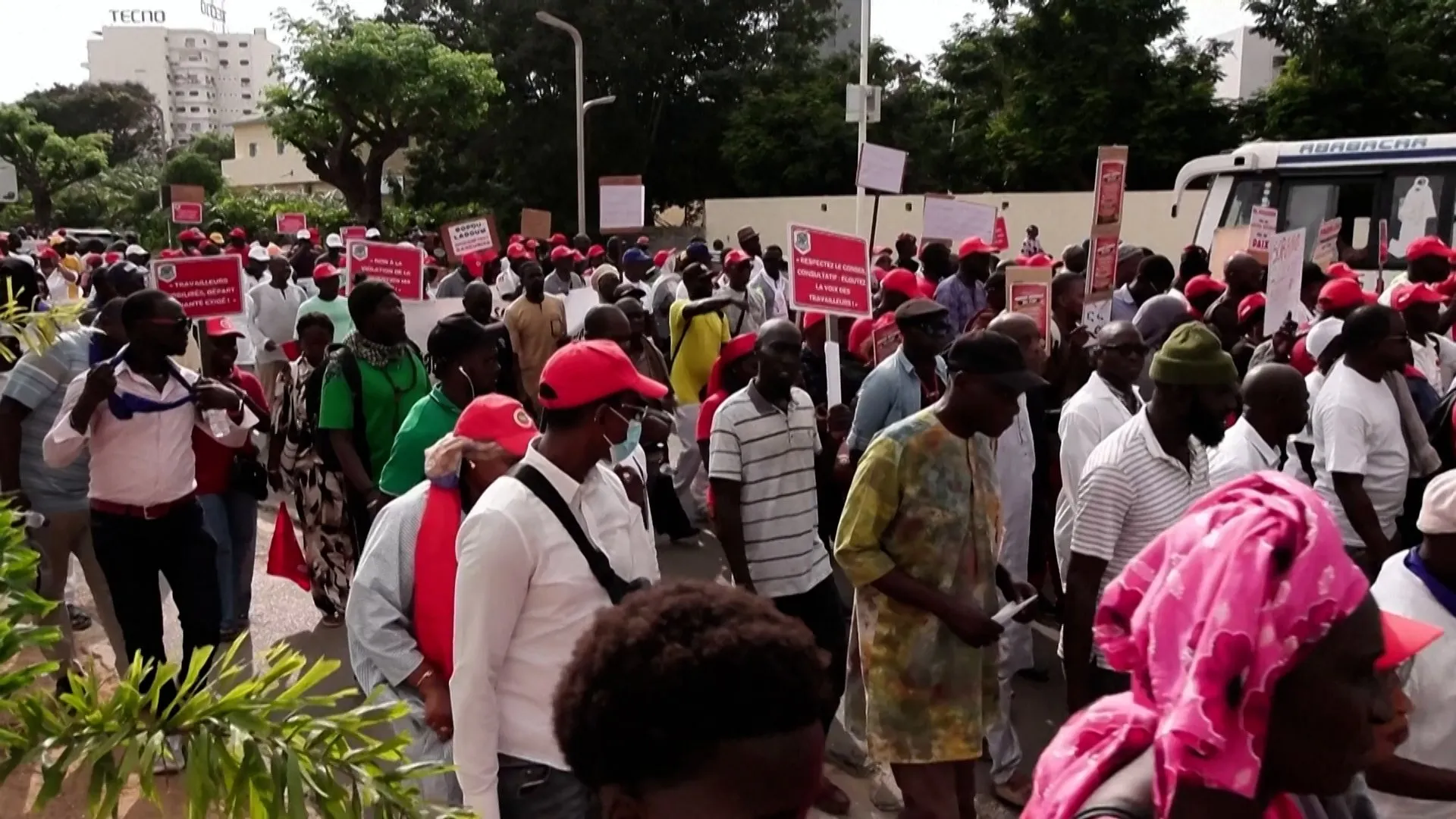
Alongside economic protests in European countries, rising living costs are fueling frustration in other nations too. People in Senegal, Costa Rica and Indonesia have been demanding action on the issue.
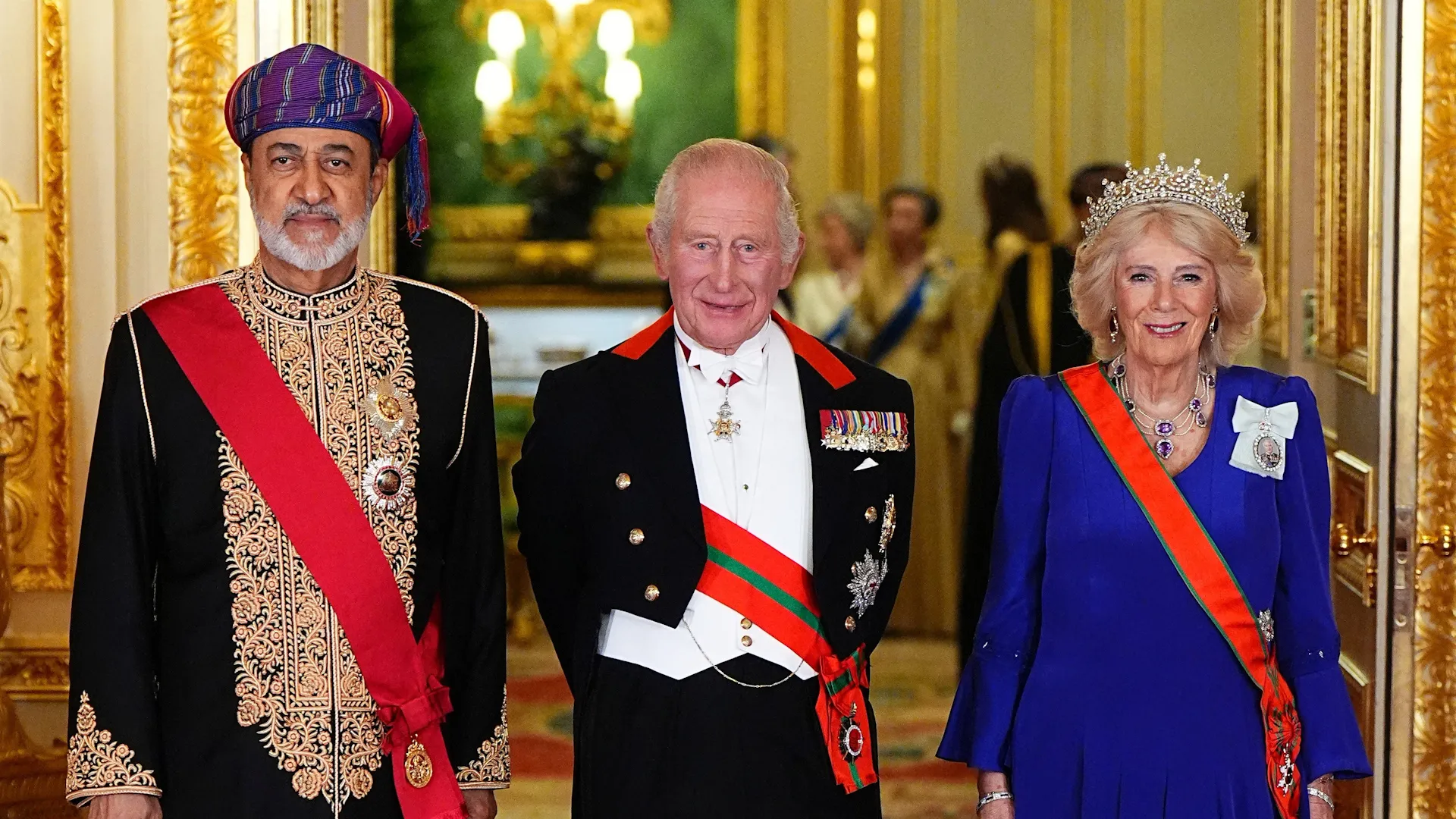
Britain’s King Charles III welcomed Oman’s Sultan Haitham bin Tariq on the first state visit in 44 years, praising Omani peacemaking efforts and quoting, in Arabic, a sacred text attributed to Islam’s Prophet Muhammad.
The decision has drawn sharp criticism from left-wing politicians and environmentalists.
Published On 21 Oct 202621 Oct 2026
The United Kingdom’s government has approved a natural gas project off the coast of Scotland, as the Labour government seeks to balance its climate goals with energy security concerns.
Energy Minister Miatta Fahnbulleh said on Wednesday that the Jackdaw gasfield would begin supplying energy to UK homes by the end of the month and would help to boost the country’s energy security.
Recommended Stories
list of 3 itemsend of list
The government said the North Sea project would increase UK gas production by about 6 percent at its peak.
Prime Minister Andy Burnham said the decision will “protect hundreds of jobs and help keep millions of homes warm”, but stressed it would not hinder the government’s targets on renewable energy.
The government also announced a New Energy Wealth Fund, which will invest in renewable and low-carbon energy projects as part of the green transition.
The fund has been established with an initial 2 billion pounds ($2.7bn), with plans to raise additional funds through tax revenues from North Sea oil and gas.
Higher energy prices amid the Russia-Ukraine war and the United States-Israel war on Iran have weighed on households and businesses, dragging on Britain’s economy.
Fahnbulleh told UK radio station LBC that the development of Jackdaw would not bring down household energy bills.
“I think it’s really important that we’re honest about this,” Fahnbulleh said.
“That was not a consideration in the decision because it won’t mean cheaper bills. This was about energy security.”
The announcement has drawn criticism from left-wing politicians and environmental groups.
Zack Polanski, the leader of the opposition Green Party, described the decision as “climate vandalism”.
“Surreal to hear [the] energy secretary try and say this is a ‘pragmatic decision’,” Polanski wrote in a post on X.
“It will do nothing to lower bills. It will do lots for the profits of the oil and gas companies. And will continue us further down the path of floods and wildfires.”
Environmental group Greenpeace said the decision showed “the toxic grip fossil fuel lobbyists still hold over our energy policy”.
“True pragmatism means severing our reliance on expensive oil and gas that leaves British households broke, supercharges extreme weather, and leaves our energy security at the mercy of petrostates,” said Ami McCarthy, head of politics at Greenpeace UK.
Bayern Munich host Arsenal on Wednesday, as the teams clash for the 16th time in Europe’s premier club competition.
Who: Bayern Munich vs Arsenal What: UEFA Champions League, match day 3 Where: Allianz Arena, Munich, Germany When: Wednesday, October 21, at 9pm (19:00 GMT) How to follow: Al Jazeera Sport will bring you all the build-up and live updates from 16:00 GMT.
The Champions League will live up to its name as the title holders from two top European leagues face-off in the group stage on Wednesday.
Recommended Stories
list of 3 itemsend of list
Bundesliga winners Bayern Munich host Premier League champions Arsenal at their Allianz Arena Munich fortress.
Bayern are on a 10-game unbeaten streak across all competitions this season, largely thanks to the striking prowess of Harry Kane and Michael Olise.
But the German giants, aiming for a seventh UCL crown, face an early test of their title credentials when they play Arsenal in Munich without in-form winger Olise. London-born Olise, who started in Arsenal’s junior system, is unavailable following a silly suspension in the last game.
The Frenchman’s absence hands a huge advantage to Arsenal, who have made a strong start to their English top-flight title defence, losing just one game all season. Bukayo Saka and Victor Gyokeres have led from the front, while Declan Rice has lived up to his reputation as a playmaker.
Bayern and Arsenal are familiar foes in the UCL, and it’s Vincent Kompany’s side that leads the head-to-head record, having won eight of the previous 15 meetings in the competition.
Before Wednesday’s fixture, here’s everything you need to know:
How have Bayern Munich played this season?
Bayern are top of the Bundesliga table with 14 points after six games. They have won four games and drawn two.
How have Arsenal played this season?
Arsenal are second in the Premier League standings with 18 points after seven games. The Gunners have won six games and lost just once.
What happened in the first and second Champions League rounds?
Bayern thrashed 10-man Bodo/Glimt 5-0 at home to kick off their UCL campaign and were held to a 3-3 draw by Viking in their next away game.
Those results keep Arsenal seventh in the Champions League standings on six points and Bayern 10th on four points.
Bayern Munich vs Arsenal: Predictions
Opta’s supercomputer has given Bayern a 46.4 percent probability of winning this fixture, while Arsenal have a 29.3 percent chance.
There are 24.3 percent odds of the game ending in a draw.
Bayern Munich vs Arsenal: Head-to-head
(Only in the Champions League)
Matches: 15
Bayern wins: 8
Arsenal wins: 4
Draws: 3
Bayern Munich vs Arsenal: Form guide
(Last five matches across all competitions; latest game first)
Bayern Munich: W-D-D-W-W
Arsenal: W-W-W-L-W
Who are the top players to watch?
Harry Kane and Luis Diaz (Bayern Munich): Forward Kane has been unstoppable for Bayern this season, with his nine goals in all competitions making him their joint leading scorer alongside Olise. The England international also has six assists. Winger Diaz, on the other hand, has five goals, which include a hat-trick over RB Leipzig in the last match.
Bukayo Saka and Declan Rice (Arsenal): Winger Saka is Arsenal’s joint-top scorer this season, alongside Victor Gyokeres, with four goals in all competitions. Rice, on the other hand, leads the chart for the most assists (four).
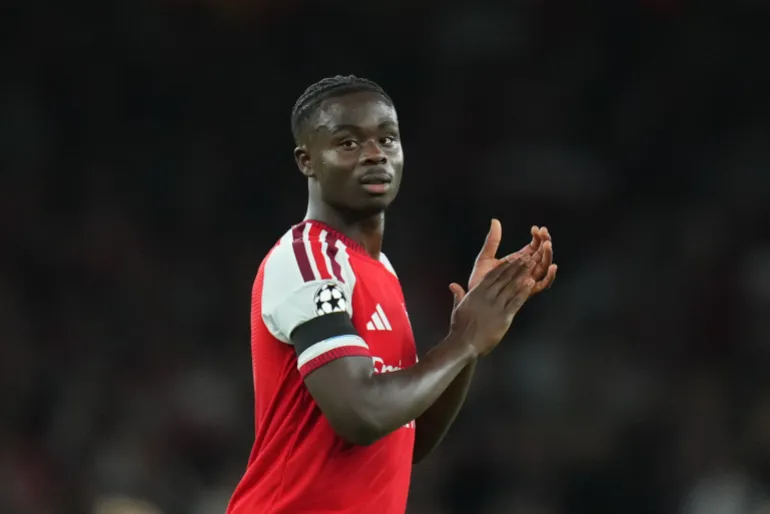
Bukayo Saka is Arsenal’s leading Premier League scorer this season with three goals [Kirsty Wigglesworth/AP]
Team news and predicted lineups
Bayern Munich
Olise is suspended after picking up two yellow cards inside a minute in Bayern’s 3-3 draw with Viking last week.
Goalkeeper Manuel Neuer is doubtful, while midfielder Jamal Musiala is out for a few weeks with a thigh injury.
Predicted starting XI:
Manuel Neuer; Konrad Laimer, Dayot Upamecano, Jonathan Tah; Alphonso Davies; Joshua Kimmich, Aleksandar Pavlovic; Lennart Kartl, Ismael Saibari, Luis Diaz; Harry Kane
Arsenal
Arsenal have three injuries in the squad – Piero Hincapie (ankle), Christos Tzolis (hamstring) and William Saliba (back).
Predicted starting XI:
David Raya; Jurrien Timber, Ezri Konsa, Gabriel, Riccardo Calafiori; Declan Rice, Myles Lewis-Skelly; Bukayo Saka, Martin Odegaard, Noni Madueke; Kai Havertz
Manchester United manager’s troubles grow as seven players are out injured before a Champions League trip to Como.
Published On 21 Oct 202621 Oct 2026
Manchester United manager Michael Carrick says he needs no reassurances from the club’s hierarchy as he knows winning games is the only way to silence speculation over his future.
Before a Champions League trip to Italian side Como on Wednesday, United have won just two of their 10 games in all competitions this season.
The Red Devils are off to their worst start to an English top-flight campaign in 40 years, having been knocked out of the League Cup by Brighton last month and comfortably beaten by Atletico Madrid last week in the Champions League.
Carrick was appointed manager on a permanent basis in May only after an impressive spell as interim boss in the second half of last season.
But he has quickly become just the latest manager under pressure at Old Trafford at a club that has fallen from grace since Alex Ferguson’s retirement in 2013.
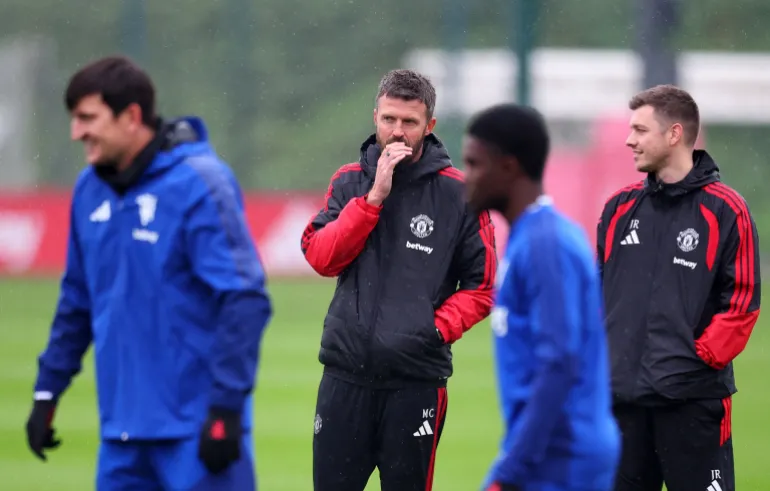
Several Manchester United players will miss the trip to Como for their Champions League tie [Ed Sykes/Reuters]
“I know we’ve got to win football games for everything to flow and everything to fit into place. That’s the great thing about it; we can do something about it,” Carrick told his pre-match news conference in Italy.
“I don’t need any reassurance. It’s pretty clear.
“I know the role, I know the responsibilities. I don’t need anyone else to kind of tell me that or tell me when it’s going well or when it needs to be better. I know that myself.”
Carrick’s hopes of turning things around have not been aided by a growing injury list.
Lisandro Martinez started Sunday’s 1-1 draw at Leeds, despite his stinging criticism of the club’s lack of transfer activity following the defeat at Atletico, but had to be replaced at half time.
The Argentinian international will miss the trip to Como, as will Luke Shaw, Kobbie Mainoo, Marcus Rashford, Benjamin Sesko, Patrick Dorgu and Ayden Heaven.
An unruly rabble bursts on to the street: a noisy eruption, bubbling towards us. This isn’t closing time on the Croisette in Cannes. A flock of sheep bustles past our cottage towards the shade of a huge chestnut tree, driven by three generations of herders and their dogs. The waterlike cacophony of their bells slows until only the odd tink tink punctuates the cicadas’ hum. The sheep graze, the shepherds doze off, and the mountain hamlet is still again.
My partner and I had set off by Eurostar less than 24 hours before, yet this place felt a world away from the ad agency where I work.
We’d booked cheap tickets to Paris months ago, intending to plan a trip on from there by train. As our departure approached, Instagram seemed to be full of aspirational, yet similar, holiday photos, and almost every other TikTok post I flicked past offered the promise of a hidden destination … discovered.
I find ratings, reviews and recommendations just as reassuring as the next person, especially when faced with a limited holiday allowance. The safety of the search bar helps to give me the confidence that I’m spending my hard earned money as wisely as possible. I work in a world that runs on data and optimisation and I love it, but I wondered whether I’d optimised the adventure out of my own holidays.
So, we tried a simple experiment. We closed down the tabs and opened a map of western Europe. Embracing a bit of low-tech randomness, we chose to let chance decide our trip.
I shut my eyes and we promised to go wherever my finger landed. I waved my hand like a magic wand and pointed, then took a deep breath, eyes still closed. What if we ended up in some industrial wasteland? But we were in luck. My finger landed upon the commune of Saint-Hilaire-de-Lavit in Cévennes, a place we’d never heard of and almost certainly would never have found by searching “places to go in France”.
A shepherd and flock in Les Ayres. Photograph: Camilla Yates
After overnighting in Paris, a three-hour fast train zipped us down to Montpellier, where we hired a car. We stopped for provisions in a Lidl on the edge of town, stocking up for the whole trip – we weren’t expecting to find any shops at our journey’s end. A short drive inland, and the roads began to get narrower and more sparsely populated. As they climbed and zigzagged into this south-east corner of the Massif Central, we entered a south of France far removed from the honeypots served up by algorithms.
We pulled into a grassy layby on a high mountain pass where there was one other car parked. Had we arrived? We’d followed the cottage owner’s directions as there was no signal here for Google Maps, so it was hard to tell. Stretching our legs in the fresh, cool air, the first thing we noticed was the quiet. No traffic, no tourists. Just stillness. But the languid buzz of big insects flying by and the whirring chorus of cicadas told us this place was alive.
Squinting into the low sun, we saw someone waving. Our host, Guilaine, had appeared as if by magic and was beckoning us to the cottage a little farther down the road. We had found the hamlet of Les Ayres: a cluster of maybe 10 stone buildings, 800 metres above sea level. The rough-walled dwellings huddled either side of the narrow road, making the most of the tiny strand of level ground before the mountain’s spine fell away into steep forest. A long wooden awning and some outdoor tables suggested a cafe opposite our cottage, but the building was shuttered, and Les Ayres’ only potential customers seemed to be ourselves and Guilaine. She took us to the back of our accommodation, to a veranda that looked out over chestnut and pine-clad mountains rolling into the horizon. It’s a landscape that appears wild but has actually been shaped by farming, forestry and the seasonal movement of livestock for thousands of years.
The next morning, as I watched the sheep and their guardians settle down in the shade, I felt the ancientness of the place. Shepherds must have moved their flocks along the same path and most likely slept under the same chestnut trees for centuries. Traditional farming practices endure here in part because the area is veined with crystal-clear mountain streams, meaning animals traversing the paths are never too far from a drink. So rather than opening the internet, we let these ancient tracks, known as drailles, guide our hikes.
‘We discovered that shady, secluded river pools were waiting for us on all the paths that led down from our cottage.’ Photograph: Camilla Yates
We took sweaty, daylong expeditions without seeing another human or hearing the sound of cars. The forests protected us from the worst of the sun’s blaze but, on our first trek, the real treat came when we rounded a corner to find that what we thought was the sound of wind in the pines was actually water gushing through a narrow gorge below us. Another couple of switchbacks and we arrived at a deep, clear pool created as the stream carved a corner into the rock. Dappled sunlight filtered down through trees clinging to the steep-sided valley, creating spotlights for damselflies to dart through. We stopped for a picnic and a swim in the freezing mountain water, picking wild strawberries from the bank for dessert.
We discovered that these shady, secluded river pools were waiting for us on all the paths that led down from our cottage. As well as being the ultimate pit stops for mid-hike refreshment, they were teeming with wildlife – tadpoles wriggled in the shallows, fish flickered in the depths and a huge variety of butterflies, dragonflies and other insects skimmed the surface. We even saw a snake swimming across water we’d been submerged in just minutes before.
We spent our last afternoon reading on a rock, summoning the energy to walk back up the mountain (one drawback of staying high up on a pass). We watched the sun swing over the water and the light change as the day wore on. When the air began to cool, we worked our way back towards the cottage. As the path turned into an empty, single-track road, a car approached – a big event after so much seclusion. It was Guilaine – the only person apart from the shepherds we’d encountered.
In the evening, as the light faded, the sound of brass band practice drifted towards our veranda. Later, owls called to each other and a distant wild boar screeched into the quiet night. None of this had appeared in my search results. There was no review promising unexpected trumpeting, no listicle recommending the best pool for swimming among tadpoles, and no algorithm that could have told me where the sheep would pass on that first morning. We hadn’t looked at our phones for days – maybe that was the real discovery.
Italy has approved the deployment of troops and tougher legal penalties in a bid to quell cost-of-living protests in the north of the country that occasionally turned violent over the weekend.
The Italian cabinet on Tuesday approved sending 500 troops to Milan, a new legal offence covering violent participation in a demonstration, tougher penalties for rioters and financial liability for parents whose children take part in vandalism and looting.
Recommended Stories
list of 3 itemsend of list
Italy’s Ministry of Defence said the military will help reinforce security at key sites, step up surveillance of sensitive locations and enhance monitoring.
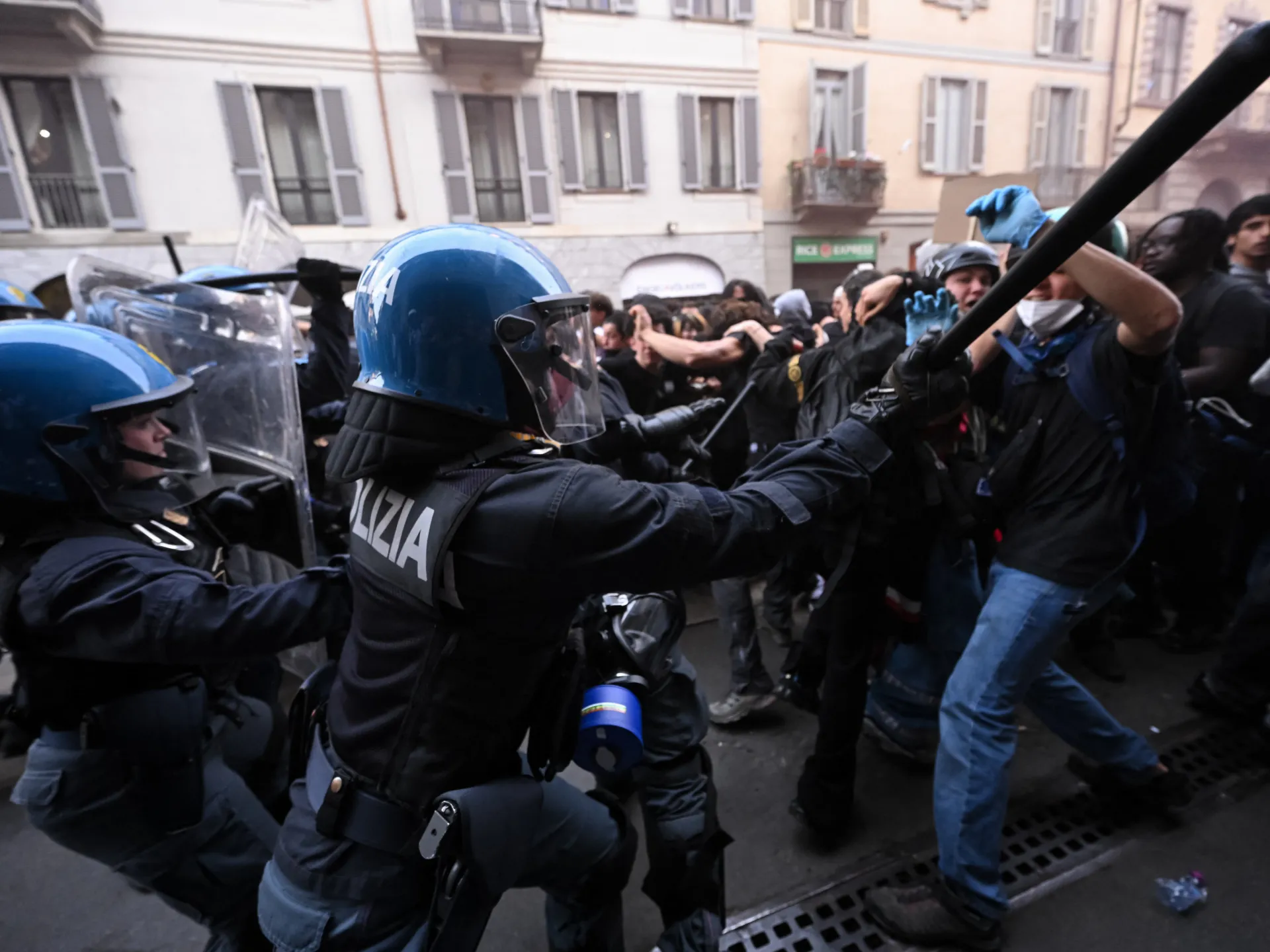
Unrest swept northern Italian cities at the weekend, including the financial capital Milan, where groups of mainly young people looted shops, smashed windows and clashed with the police. The demonstrations were driven by anger over soaring fuel and energy prices, high rents, low wages and the state of public services.
Public safety
As part of the new legal measures, which take effect immediately, anyone who takes part in a group of at least five people and endangers public safety during protests faces up to five years in prison and a maximum fine of €20,000 ($22,460).
Penalties increase if faces are concealed or people are injured.
Authorities can order prompt compensation for any damage inflicted and, in the case of minors, hold their parents liable.
Police will be allowed to detain youths aged between 14 and 17, even if they have not committed a crime, provided there is evidence they pose a danger, extending powers that previously applied only to adults.
But the cabinet did not approve giving soldiers policing powers, as expected, after opposition from President Sergio Mattarella, Italian media reported.
“Destroying and stealing is not protest, it is crime, and the state’s response must be firm,” Prime Minister Giorgia Meloni said in a social media post after the cabinet meeting.
Echoing protests
The disturbances in northern Italy echoed riots in neighbouring France, where hundreds of thousands of people took to the streets on Saturday in some of the country’s most violent turmoil in years.
Meloni’s government is also facing mounting pressure from a separate wave of protests in southern Italy, where truck drivers angered by soaring diesel prices and the rising cost of living have staged roadblocks that are disrupting supply chains.
Protesters in both the north and the south say rising prices are pushing families into poverty, a concern for Meloni ahead of the 2027 national elections.
Police have arrested 55 people after protesters camp in Lisbon and Porto.
Published On 21 Oct 202621 Oct 2026
Thousands of protesters have returned to two central squares in Portugal for demonstrations against an intensifying housing crisis, hours after police cleared their camps in the capital, Lisbon, and the city of Porto, arresting 55 people.
Activists have demanded the centre-right government withdraw a bill that makes evictions easier and ends rent caps on new leases, which passed a first parliamentary reading.
Recommended Stories
list of 3 itemsend of list
The demonstrators in Lisbon sought to rebuild their sit-in camp at Rossio Square on Tuesday, while those in Porto were returning to the northern city’s Dom Joao I Square.
Organisers said more than 1,000 people had gathered at each square. Activists have occupied Lisbon’s Rossio Square since Saturday, pitching around 200 tents, and Porto’s Dom Joao I Square for around 10 days.
A picture taken on October 19, 2026, shows a tent with a sign reading “Evicted by the State – Evicted by the climate – End to the evictions” at Rossio Square in central Lisbon [AFP]
‘Enough is enough’
Debora Miranda, 41, a communications consultant, told Reuters she joined the Rossio Square protest to represent generations struggling with soaring costs. “If people don’t feel at home, in every sense of the word, they can’t move forward with their lives…enough is enough.”
The camps mirrored housing protests in neighbouring Spain, and coincided with unrest over rising living costs in countries such as France, Belgium and Italy.
Shortly before 6am, after warning protesters that the camps were illegal, police launched coordinated operations in both cities. Demonstrators in Porto followed orders and dismantled their own tents. Officers cleared Lisbon’s Rossio Square in what Carla Valadao, a spokesperson for the camp, described as “very aggressive”.
Public Security Police superintendent Sergio Soares told reporters that the eviction had been “calm, proportionate and appropriate, with no police charge”.
The 55 detainees were later released pending a court appearance in Lisbon on Wednesday.
People gather to protest in Rossio Square against the housing crisis and cost of living in Lisbon, Portugal, on October 20, 2026 [Pedro Nunes/Reuters]
One of Europe’s worst housing crises
Portugal is grappling with one of Europe’s worst housing affordability crises as purchase prices have more than doubled since 2017 and rents for new leases have nearly doubled.
Jorge Paixao, 19, a history student, called it “a societal crisis”, saying his generation needed “the ability to live with dignity, start families and rejuvenate Portugal”.
The squeeze is most acute in the major cities, where there has also been opposition to excessive tourism and an influx of so-called digital nomads, people who travel while working remotely.
People at a protest camp at Rossio Square against the housing crisis and cost of living in Lisbon, Portugal, on October 19, 2026 [Pedro Nunes/Reuters]
Amid escalating tensions with Ukrainian leader Volodymyr Zelenskyy, United States President Donald Trump has increased pressure on the Eastern European country to make a deal that would end the war with Russia.
Speaking at the White House on Tuesday, Trump doubled down on his efforts to blame the Ukrainian president for holding up peace efforts that would bring the years-long conflict to a close.
Recommended Stories
list of 3 itemsend of list
“Zelenskyy has to want to settle this war, and if he doesn’t, I think it’s going to be a very bad thing,” Trump said as he talked about Russia having an “unlimited” supply of people to send in the fight.
Moments later, the US president referenced a contentious Oval Office meeting he held with Zelenskyy in February 2025, shortly after returning to power.
Zelenskyy, Trump said, could have made a “better deal” then. “He’s going to have to want to make a deal, because I don’t think his people are going to stand for it any longer,” Trump told reporters.
On Tuesday, the Ukrainian president met US special envoy Steve Witkoff and European leaders in Oslo, Norway, to discuss ending Russia’s war.
In a post on social media after the meeting concluded, Zelenskyy said, without providing specifics, that his country has “some clear ideas on how to get to peace”.
“We are united with our European partners in this effort, and we want the Americans to take these ideas to the Russians,” Zelenskyy wrote. “One of the important ideas is to move to a potential trilateral meeting of the leaders to address the issues that only the leaders can do.”
The Ukrainian leader added that Witkoff would head to Russia on Wednesday, where peace discussions are expected to continue.
“Let’s see what Putin has to say,” Zelenskyy said.
When asked whether Russian President Vladimir Putin should meet Zelenskyy, Trump said there was “tremendous” hatred between the two leaders.
“It’s hard for them to be in the same room,” Trump said. “I don’t care how it’s done.”
Starlink controversy
Trump’s remarks come as the White House continues to squeeze Ukraine in order to force the country to cut a deal with Russia.
Last week, Ukrainian officials reported slowdowns with Starshield, the military-grade version of the Starlink satellite system, run by the aerospace company SpaceX.
Ukraine relies on the technology for communications and intelligence to prevent Russian attacks.
It is unclear who ordered restrictions that limit Ukraine’s access to Starshield. SpaceX CEO and Trump ally Elon Musk pointed a finger at the White House.
“Starshield systems are owned and controlled by the US government. Any limits on speed or usage are decided by the US military and ultimately POTUS,” he wrote on October 14.
The news agency Reuters also reported that the order came from inside the White House, citing two US officials and a Western official.
But a report in The Wall Street Journal on Tuesday claimed US officials had blamed Musk himself for the slowdown, saying the SpaceX CEO ordered it last week. Trump and US Defence Secretary Pete Hegseth have both denied that the government directed the restrictions, with Hegseth pushing responsibility towards SpaceX.
Building ties with Putin
Trump, meanwhile, has sought to ease the historically tense relations between Russia and the US.
In August 2025, Trump invited Putin to Alaska, the Russian leader’s first visit to US soil in a decade.
More recently, Trump has expressed openness this month to meeting with Putin and Chinese President Xi Jinping, as part of a trilateral discussion on denuclearisation.
Trump also announced this month that he struck a deal to obtain diesel from Russia, marking a stunning reversal of years of US pressure on Moscow’s economy.
The US president also waived new economic restrictions that would have been imposed under the Lindsey Graham Sanctioning Russia and Iran Act, a bipartisan law he signed one month earlier, in honour of a late senator.
It would have imposed sanctions on Russian officials, banks and tankers, as well as tariffs on countries that purchase Russian oil.
US Secretary of State Marco Rubio defended the decision on Tuesday, saying the law allowed the waiver through a provision embedded in the legislation.
“The president chose to use a national security waiver to not immediately implement those [sanctions and restrictions], because he recognises that these things have to be looked at in their totality,” Rubio said in an interview with India’s News18.
Rubio argued that Trump was engaged in a “balancing act” in deciding the extent of US-imposed economic restrictions and how they could impact the rest of the world.
“When you do that pressure, sometimes it spills over and has a negative impact on other countries,” Rubio said.
The new strategy shifts the bloc’s focus from long-term climate concerns to urgent security measures.
Published On 20 Oct 202620 Oct 2026
The European Commission has unveiled a new Arctic strategy for the European Union that lists security and resilience first among four priorities, alongside climate change, economic prosperity and opportunities for Arctic communities.
The strategy calls for a new maritime security hub to help member states and partners share information and monitor maritime activity in the Arctic, the Commission said on Tuesday.
Recommended Stories
list of 3 itemsend of list
The hub would later expand to track shadow fleet vessels, detect illegal fishing and pollution, and improve search and rescue coordination.
The Commission also said the EU will work to expand European icebreaker capacity. Icebreakers are specialised vessels designed to navigate ice-covered waters by breaking up sea ice and maintaining safe shipping routes.
“The Arctic is one place where the tectonic plates of geopolitics are colliding,” European Commission President Ursula von der Leyen said, adding that sovereignty and territorial integrity can no longer be taken for granted.
EU foreign policy chief Kaja Kallas said Russia is expanding its military footprint in the high north, citing drone incursions, GPS jamming and cable sabotage, the AFP news agency reported.
Cutting reliance on Washington
Several measures appear aimed at reducing dependence on the United States. The Commission said the EU will back a strategic pan-Arctic fibre-optic telecommunications cable project linking Greenland directly to Europe. It is part of a wider plan that would also connect Canada, Japan and South Korea.
The EU will also provide secure satellite connectivity for government communications through the IRIS² constellation, a constellation AFP said is meant to rival US tech mogul Elon Musk’s Starlink.
The shift follows US President Donald Trump’s repeated demands to take control of Greenland, a Danish autonomous territory. Although his tone has softened this year, with a security deal signed with Greenland and Denmark, many in Europe remain wary, AFP said.
Member states press for action
The strategy follows last month’s meeting of leaders from 12 countries, including Germany, France, Finland and Denmark. Member states urged the EU to take a more strategic and proactive role, according to a joint statement.
Participants identified Russia as the largest threat while noting the ambitions of China and the US.
At the meeting, German Chancellor Friedrich Merz said the era of “high north, low attention” was over. Finnish Prime Minister Petteri Orpo called Russia the most significant long-term threat and said the EU must treat the Arctic as a strategic frontier.
The Commission reiterated the EU’s position remains that oil, coal and gas should stay in the ground, including in the Arctic.
To combat increasing climate concerns, the Commission pledged to “strengthen climate research, observation and monitoring to better understand these changes and support effective responses”, while working in tandem with the people who live and work in the Arctic.
London, United Kingdom – There was a moment towards the end of Andy Burnham’s conference speech in Liverpool that, through silence, spoke volumes.
The new prime minister and Labour leader fell quiet.
Recommended Stories
list of 4 itemsend of list
For 20 seconds he stood, saying nothing. He hadn’t forgotten his words. He was gathering his emotions for a passage of the speech he hadn’t been able to make it through in rehearsals without crying.
Burnham’s father had died just a couple of weeks before, and this was the section where he’d talk about it.
As the audience realised what was coming they stood, applauding, and urging him on with shouts of “Come on, lad!’ and “Come on, Andy!”
Thanking them, he composed himself and continued.
Conference speeches are theatre, and contemporary British political standards require that a leader be relatable. But there’s little doubt that Andy Burnham handled this moment with an emotional register that struck many as genuine.
His predecessor Keir Starmer sometimes came across as wooden, almost robotic and uncomfortable in front of cameras. Burnham, the seventh prime minister in 10 years, is more emotional.
He talks big ideas and grand solutions and relishes the opportunity to communicate.
In the vibes-denominated currency of modern political discourse, this matters.
The polls speak for themselves. Politico’s Poll of Polls had the Labour Party retake top spot shortly after Burnham became PM – a position it has not relinquished since. At the end of September, Ipsos found Andy Burnham to be the only politician with a positive net favourability rating.
YouGov’s polling also judges him the most popular politician in the UK at the moment.
But to keep up, Burnham must deliver tangible change before the next general election. Unless he calls one early, that will be 2029.
According to political analyst Sam Freedman, “So many in Westminster keep coming back to an early election, despite Burnham ruling it out … No one can quite figure out how Burnham keeps the hope vibe going for three more years with relatively little visible progress.”
‘Going back to what Labour was in the 50s’
In the Welsh town of Port Talbot, terraces of workers’ cottages cluster beside the UK’s largest steelworks.
Like much of Wales, Port Talbot did vote Labour for a century – until elections for the Senedd Cymru or Welsh Parliament in May.
Labour was beaten to an unprecedented third place behind Plaid Cymru’s nationalists, and the anti-immigration Reform UK.
But that was before Burnham took over.
Myles Lewis, who organises social walks for the town’s elderly, told Al Jazeera that Labour had not convinced people on immigration, and Starmer’s communication wasn’t good enough.
“[But now], it’s kind of going back to what Labour was in the 50s and 60s, where they actually looked after the working-class people. I do believe Andy Burnham can get there because I think he has the interests of the working-class people.”
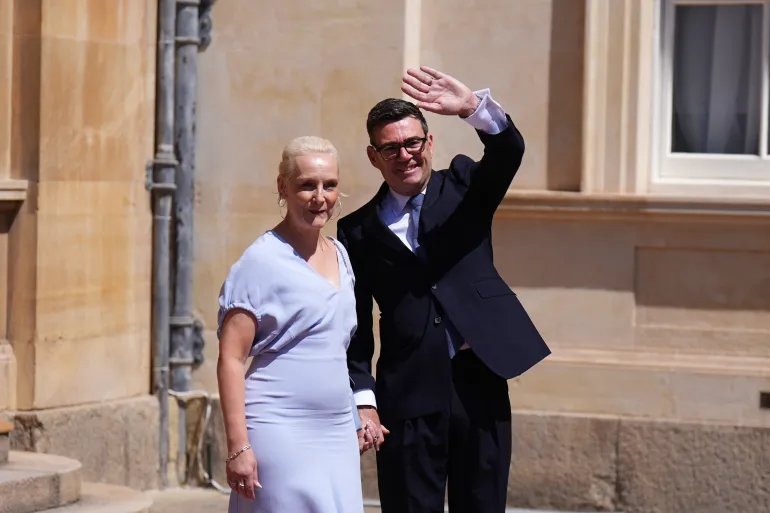
Prime Minister Andy Burnham and his wife Marie-France van Heel wave as they leave Buckingham Palace after an audience with King Charles III, where he was invited to become Prime Minister and form a new government on July 20, 2026 in London, England [Aaron Chown/Pool/Getty Images]
In his first weeks in power, Burnham delivered a quick flurry of eye-catching, domestic, cost-of-living-focused policies.
He capped bus fares, cut the value-added tax (VAT) on electricity bills, and cut business rates for pubs.
He said that he would end street homelessness, reindustrialise the country, take services back into public control, and start the biggest build-out of social housing since World War II.
The mayor of Greater Manchester for nine years, Burnham supports the devolution of powers from Westminster to the UK’s nations and regions.
In July, he announced mayors could keep a share of business rates from April 2027 and of income tax from 2028.
And his conference speech in September set out the contours of some big political battles to come, including a national social care service, free at the point of use, paid for by changing the UK pensions’ triple lock from 2030. It would arrive next parliament. Burnham also pitched a national commission on electoral reform, with a manifesto commitment to overhaul the voting system. And he delivered a blunt verdict on Brexit: that it “has done more harm than good”. He wouldn’t rule out an in-out referendum, or a pledge for the UK to rejoin the European Union, in Labour’s next manifesto, he said.
On foreign affairs, there is less blue water between Burnham and his predecessors.
When he travelled to Ukraine in August, the UK’s new prime minister came with a headline-grabbing gift – British know-how to build the long-range SCALP missile. He was the fourth British prime minister to visit Kyiv since Russia’s full-scale invasion of Ukraine and pledge steadfast support.
On Gaza, he has said the Labour government “didn’t get it right” and should have called for a ceasefire earlier. And in September, the Burnham government announced a sanctions package against illegal West Bank settlements.
But there has been no genocide declaration, and no full arms embargo against Israel. And Burnham hasn’t overturned the Starmer government’s proscription of the Palestine Action protest group as a “terrorist” organisation.
Defence spending is also a looming problem.
The government’s formal defence pledge is 3.5 percent of gross domestic product (GDP) by 2035, and Burnham has declined to say whether he’d pay for it with tax rises or welfare cuts.
John Healey, who resigned as the UK’s defence secretary in June over underfunding, is now chancellor of the exchequer, and will not commit to the 3-percent-by-2030 target he set himself.
Burnham’s first budget comes at the end of this month. A full spending review follows next year. Much will be clearer after these.
His biggest pledges – reindustrialisation, control of public services, a new social care system – are expensive.
Burnham certainly has the vibes. The public likes them, for now. The budget will show whether he can afford them.
For several days, the streets of Tirana have witnessed a wave of antigovernment demonstrations, with demonstrators engaged in fierce clashes with security forces, while police have fired tear gas on thousands of young protesters to prevent them from scaling barricades.
Protests escalated last week after school and university students joined them, citing rising tuition fees and crumbling infrastructure.
Recommended Stories
list of 4 itemsend of list
What initially began as a targeted environmental protest in May has rapidly escalated into one of the most serious political challenges facing Prime Minister Edi Rama in his more than a decade in power.
Yet, as the unrest reaches a boiling point, a fundamental question remains: Who is behind this movement, and can it force systemic political change?
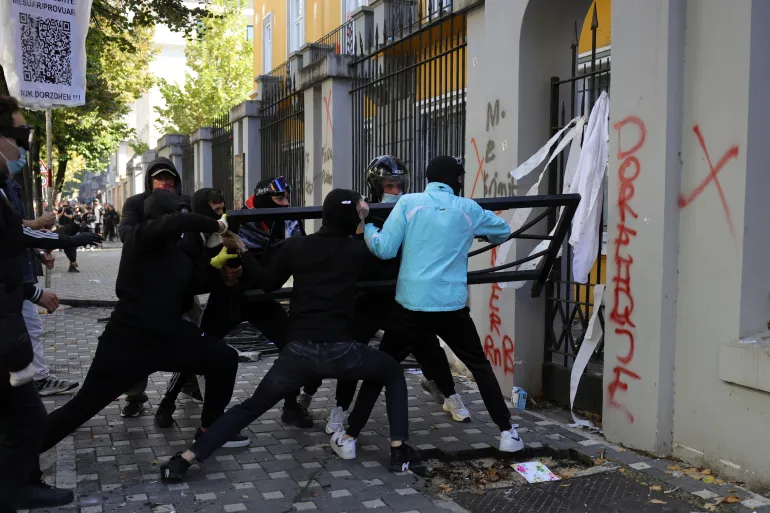
Hooded protesters try to break through a gate at the Education Ministry as the Albanian word “Resign” is displayed on a wall during clashes in Tirana on October 13, 2026 [Hameraldi Agolli/AP Photo]
Contrary to claims by government officials that the unrest is being orchestrated by political opponents or external actors, analysts and journalists on the ground emphasise that the movement is largely decentralised and youth-driven.
Fatos Hakorja, editor-in-chief of TV Klan and Klan News, told Al Jazeera that the demonstrations have evolved organically into a broad coalition of high school students, university students, environmentalists, and aggrieved citizens.
“So far, what can be said with certainty is that the protests have been organised mainly by young people themselves,” Hakorja told Al Jazeera. “What began as the ‘Flamingo Revolution’ gradually developed into a broader student and youth protest… There is no clear evidence that a single consolidated structure stands behind the protests,” he said, referring to the May protest against a luxury resort that threatens the protected coastline.
Hakorja noted that coordination takes place dynamically across digital platforms such as WhatsApp, Telegram, and Snapchat, rather than through formal organisational hierarchies.
Albanian political analyst and publicist Ben Andoni echoed this view, describing the situation not merely as a standard protest, but as “a genuine, horizontal revolt”.
“The protest has turned into a rebellion for the past seven days. It was a protest before, but it has never taken on the character of a movement. If it were so, there would be a leadership group and some short-, medium-, and long-term goals,” Andoni told Al Jazeera.
“It is a horizontal movement, where people are mobilised by TikTok groups and social networks, but not by true cultural and political organisations. That is also a handicap or a source of pressure for Rama’s government, which seeks to negotiate, but finds no single counterpart standing in its way.”
A car burns as clashes erupted during an anti-government demonstration outside the prime minister’s office, in Tirana on October 17, 2026 [Hameraldi Agolli/AP Photo]
From the ‘Flamingo Revolution’ to broad structural discontent
The roots of the current unrest are multifaceted, blending localised grievances with deep-seated frustration over governance, economic stagnation, and corruption.
The initial spark – dubbed the “Flamingo Revolution” – was ignited by environmental opposition to controversial luxury development projects, notably in the protected area of Zvernec and the planned resort investment on Sazan Island by the firm of Jared Kushner, United States President Donald Trump’s son-in-law.
The flamingo, native to these coastal lagoons, quickly became a symbol of resistance against the perceived commodification of public lands.
However, environmental concerns swiftly converged with student anger over high tuition fees, inadequate dormitory conditions, and low educational competitiveness. Beneath these immediate triggers lies a much deeper structural crisis.
“Problems of corruption, nepotism, and a lack of perspective are the main reasons that drove people to protest,” Andoni explained.
“The protest summarised the entire range of problems that Albania has, and brought them to the doorstep of a government that has crossed lines regarding corruption, inequality, and particularly a lack of empathy for the people.
“Among some protesters, especially on social media, there is also a narrative that Rama is placing the country’s interests at the service of private interests, his personal hold on power, or foreign interests, including Israeli interests. These claims have not been proven, but they seem to have increased the anger of some young people and part of the wider population,” Hakorja added.
Rama has strongly rejected the allegations, calling them conspiracy theories and dismissing them as manipulated disinformation spread through social media by “foreign hands”, aimed at destabilising the government and undermining the country’s public institutions.
Rejection of the entire political class
A defining feature of the uprising is the protesters’ explicit rejection of the ruling Socialist Party (SP) and the traditional opposition, including the Democratic Party (PD) led by Sali Berisha.
While Prime Minister Rama has accused the opposition of taking over the movement, and opposition supporters have joined the crowds on the ground, experts stress that opposition leaders exercise no direct control over the demonstrators. In fact, several opposition MPs who attempted to address the crowds faced open hostility and rejection.
“A large number of these young people seem to feel unrepresented by the whole political class,” Hakorja told Al Jazeera.
“They see the political system as disconnected from their reality and as a system that protects the interests of a minority more than it addresses the problems of the majority of citizens.”
This widespread cynicism has resulted in an uncompromising stance. Demonstrators have demanded the immediate resignation of Prime Minister Rama and the formation of a technical government, refusing official offers of dialogue due to a total breakdown of trust in state institutions.
The deep cynicism towards Albania’s political class stems from a widespread feeling that leaders are entirely indifferent to citizens’ daily struggles. Young people face rampant corruption, high unemployment, and an economy that drives huge brain drain.
This disconnect is further spurred by years of government apathy towards crumbling public education, high tuition fees, and poor dormitory conditions.
Furthermore, controversial state-backed developments – such as the planned luxury resort by Kushner’s firm – serve as prime examples for citizens who believe the political establishment consistently trades national resources and public goods for private and foreign interests.
Heavy-handed security and growing fatigue
Faced with a leaderless movement that refuses to negotiate, the Albanian government has increasingly relied on security forces to maintain control.
Police have been accused of brutality as they have used tear gas, water cannons, and rubber bullets to quell the protesters. At least 167 people have been arrested, including minors.
In a move that highlights the administration’s reliance on law enforcement, Prime Minister Rama announced a 2,500-euro ($2,800) bonus for police officers on the front lines, alongside substantial salary increases set for 2027.
Hakorja pointed out that the government is treating the crisis predominantly as a matter of public order and security.
He also highlighted troubling incidents, such as the appearance of unidentified civilians armed with wooden sticks inside the Socialist Party headquarters. While these individuals remained inside to protect the building as protesters hurled stones and attacked the entrance, their presence – including individuals holding public positions – led to fears of informal, non-state security responses operating alongside or outside official police forces.
What lies ahead?
As both sides brace for further escalation, the immediate outlook remains uncertain. Without clear leadership to negotiate terms, or intervention from international partners such as the European Union and the US, the deadlock threatens to prolong political instability.
According to Andoni, the Rama administration has used force as its main instrument, as it has suffered a severe loss of moral authority and legitimacy.
“Demonstrators remain persistent and aggressive, while Rama plays the card of force through the police,” Andoni told Al Jazeera, adding that “fatigue” is impacting the young protesters.
“It seems that young people may execute a tactical withdrawal first by temporarily stepping back from the streets due to exhaustion, leaving the weight and burden of proof on Mr Rama” – placing the ultimate responsibility on the prime minister to prove that his government has the legitimacy, capability, and sincere intent to carry out deep reforms and resolve a crisis that police force has only further escalated.
Whether this youth-led rebellion marks the beginning of a new political era in Albania or subsides under policing and exhaustion, it has irrevocably exposed the deep rift between Albania’s youth and its governing political establishment.
Protesters shout slogans during a demonstration against the government, following months of protests against a planned luxury resort backed by a company linked to Jared Kushner, the son-in-law of US President Donald Trump, on an environmentally sensitive part of the Adriatic coast, in Tirana on September 8, 2026 [Florion Goga/Reuters]
Ministry of Defence says warplanes will operate in ‘defensive role’ and not be used to attack Yemeni group.
Published On 20 Oct 202620 Oct 2026
The United Kingdom has said it will deploy fighter jets to help protect Saudi Arabia from attacks by Yemen’s Houthis.
In a statement on Tuesday, the British Ministry of Defence said the Typhoon warplanes would operate in a “defensive role” and not carry out attacks against the Iranian-backed armed group.
Recommended Stories
list of 3 itemsend of list
“The UK will fly defensive counter air missions to support the protection of Saudi cities and critical national infrastructure against aerial attack, using RAF Typhoon fighter jets,” it added.
The support includes an extension of air-to-air refuelling support for Saudi air operations, the ministry added.
The announcement comes amid heavy fighting between the Houthis – also known as Ansar Allah, Arabic for Supporters of God – and Yemen’s internationally recognised government, which is backed by Saudi Arabia.
In recent weeks, the Houthis have carried out missile and drone strikes against the kingdom, including Riyadh’s main airport, while the Saudi-led coalition supporting the Yemeni government has launched air attacks on Houthi positions in Yemen.
“The continuing attacks from the Houthis on our ally Saudi Arabia are absolutely despicable. The targeting of the airport in Riyadh in particular shows the lengths the Houthis are going to escalate the situation in the region,” UK Defence Secretary Wes Streeting said.
“That’s why today I have approved further UK military support. RAF Typhoons will fly defensive air missions to help protect Saudi airspace from drones and missiles. This builds on the UK equipment and personnel we already have in the country to defend against Houthi air attacks,” he added.


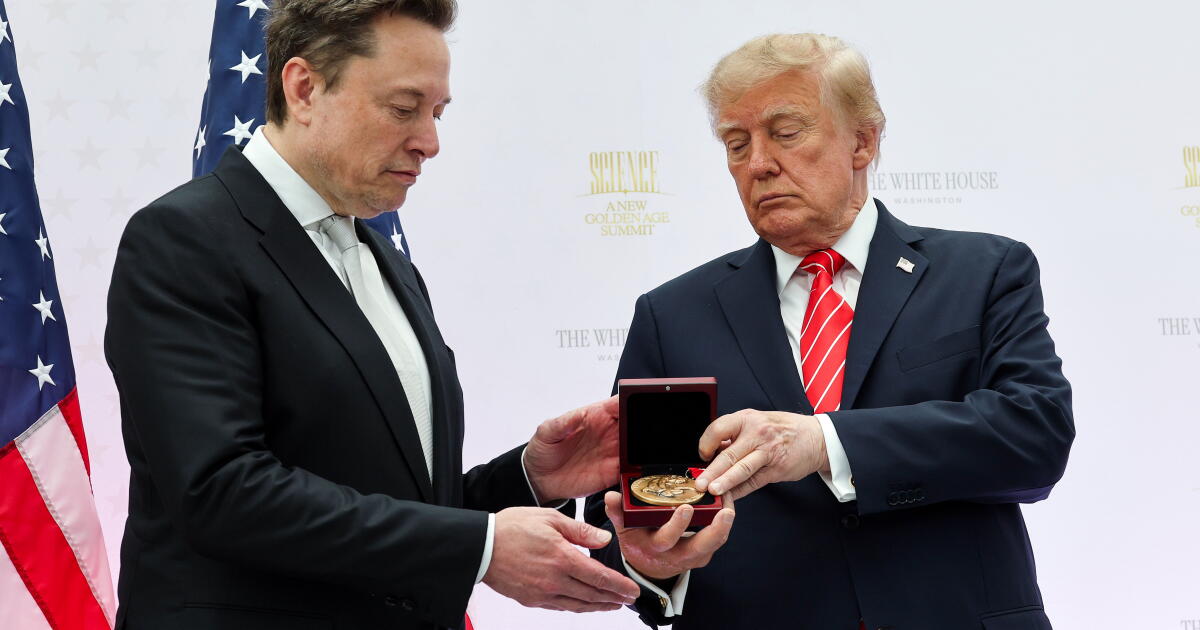
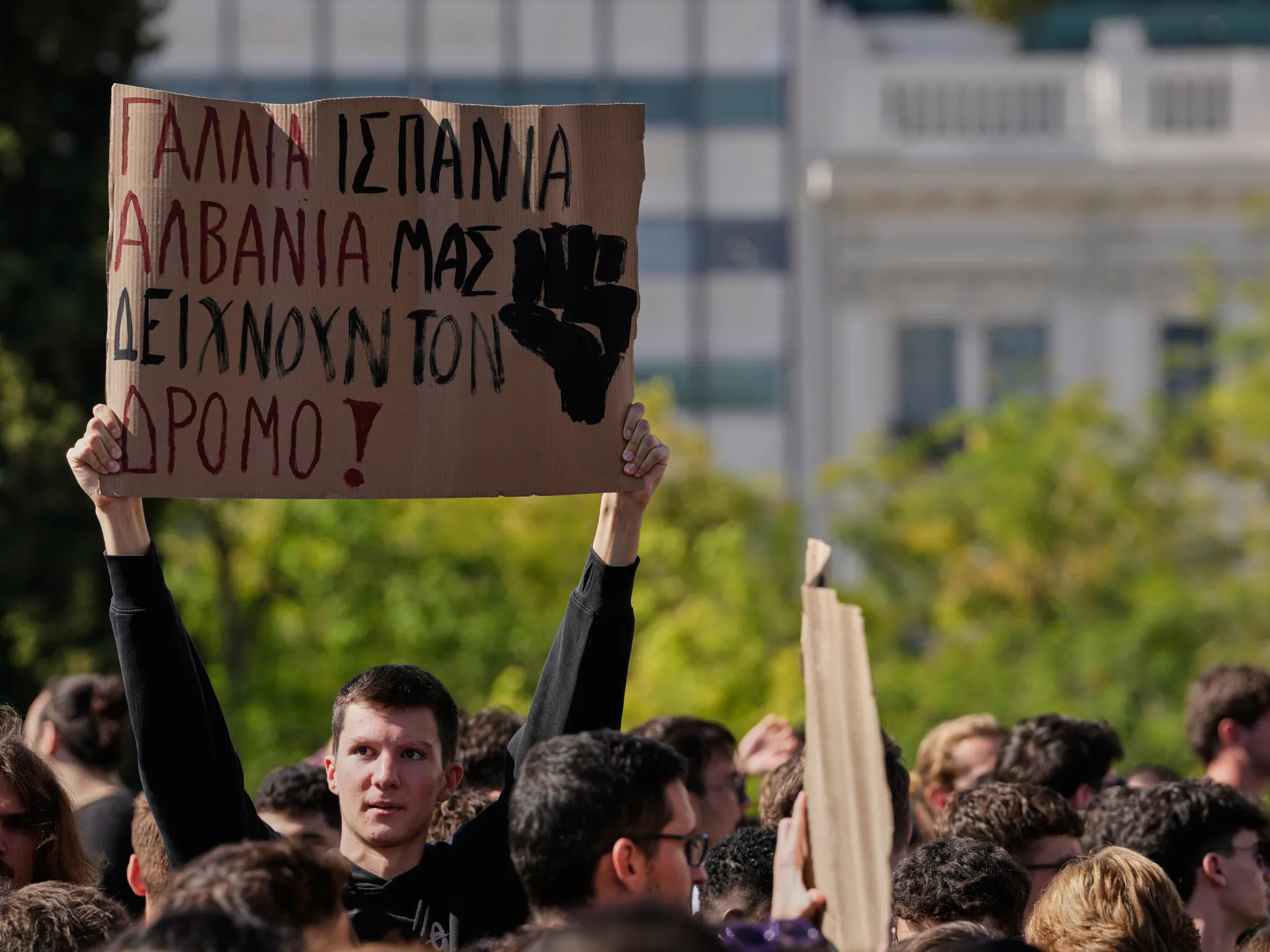
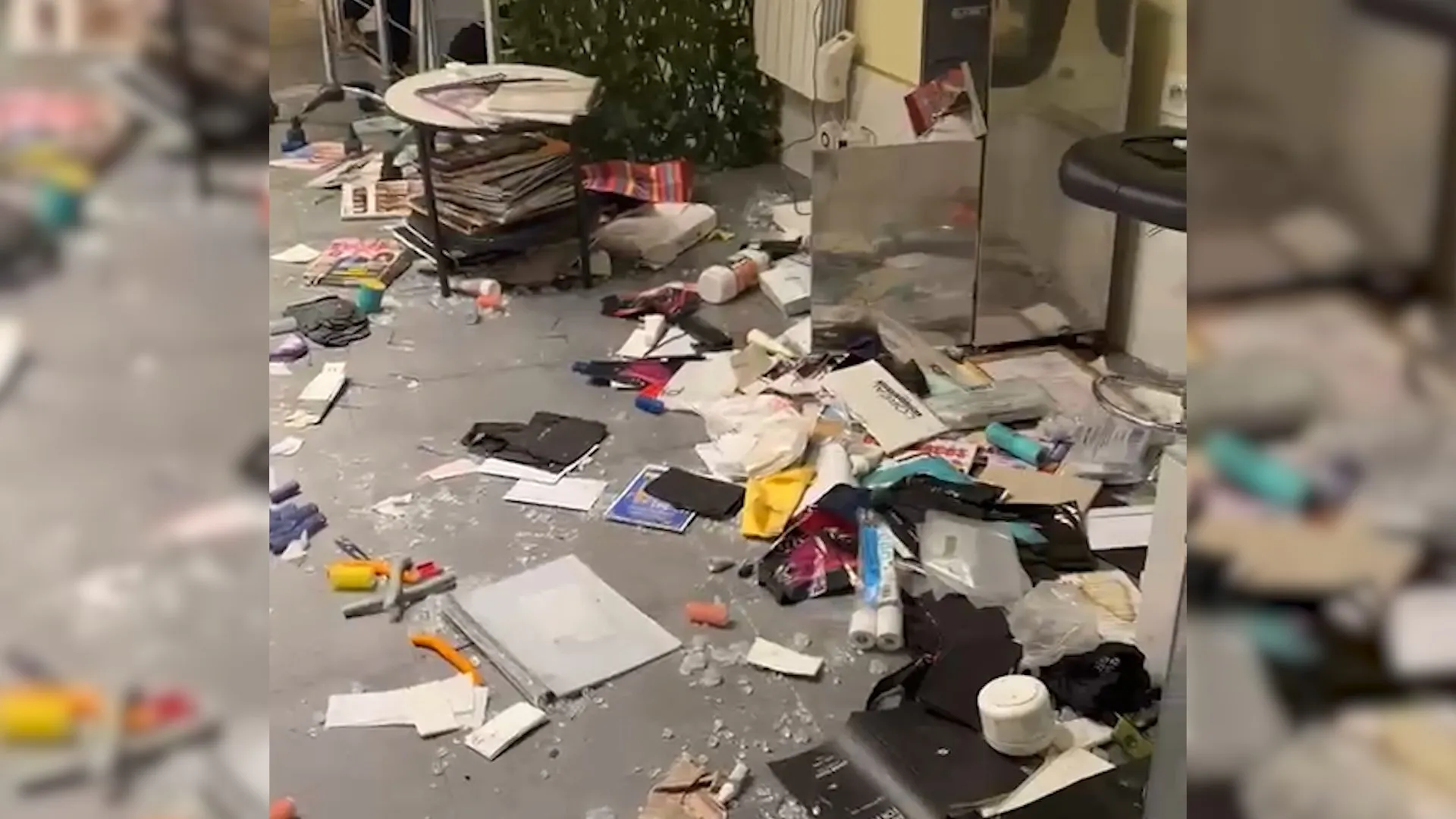

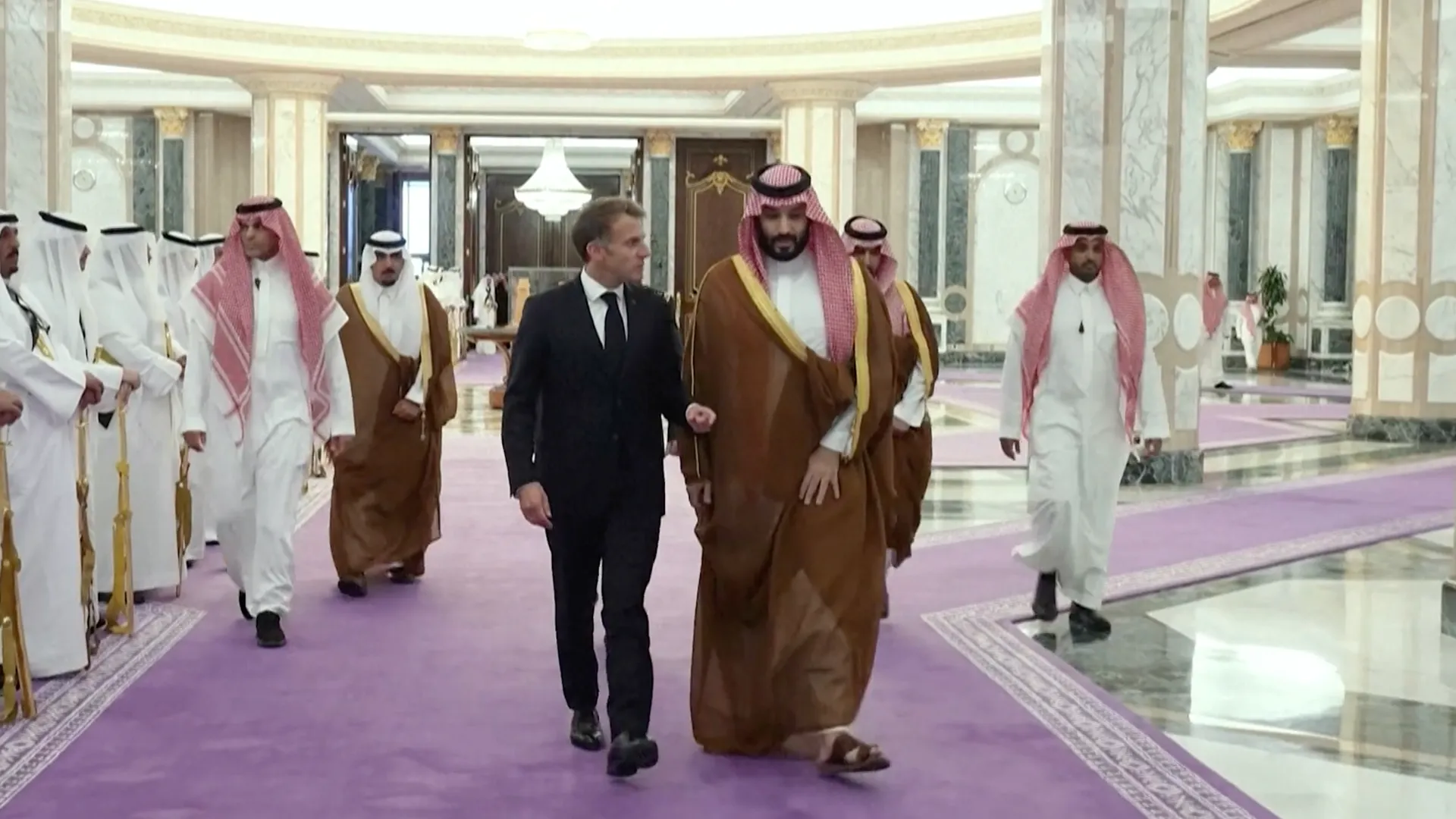
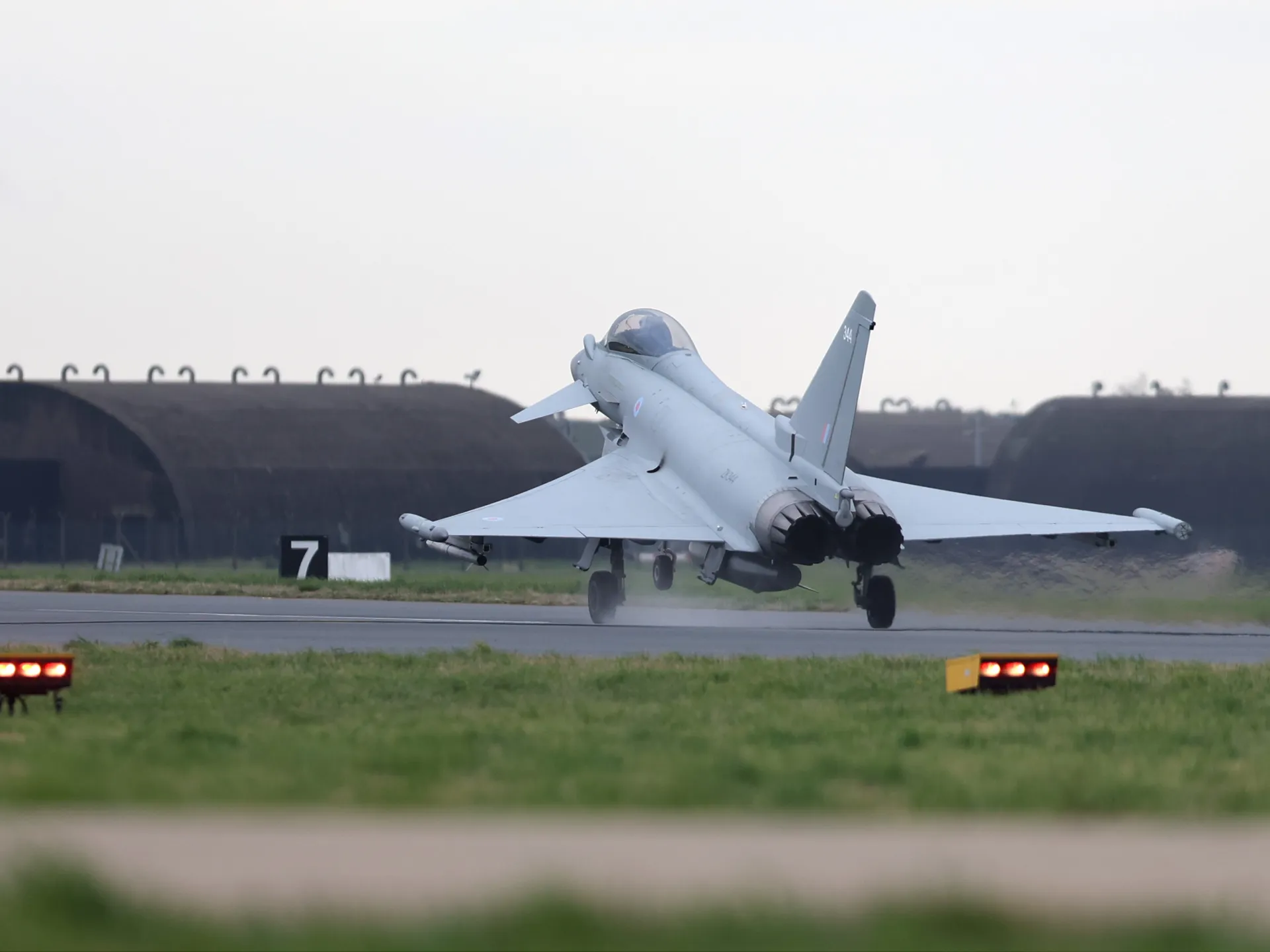
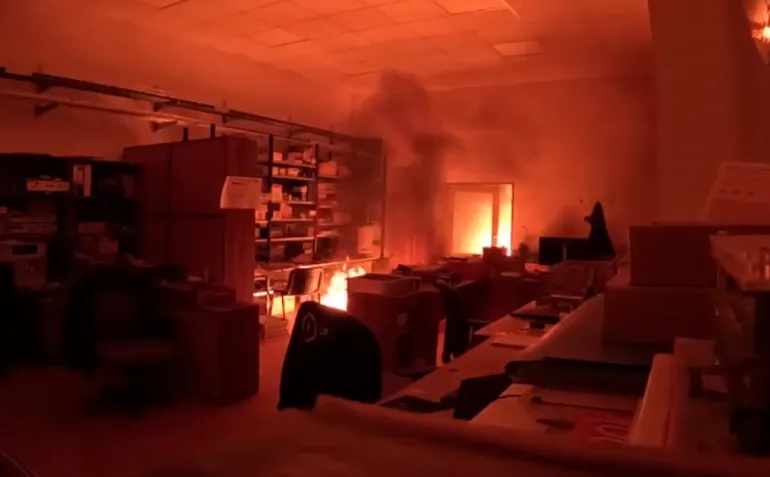
![The fire inside LPP Holding after the alleged arson attack [Courtesy of The Earthquake Faction]](https://i0.wp.com/occasionaldigest.com/wp-content/uploads/2026/10/Fire-inside-LPP-Holding.-The-Earthquake-Faction-1792580804.png?w=640&ssl=1)