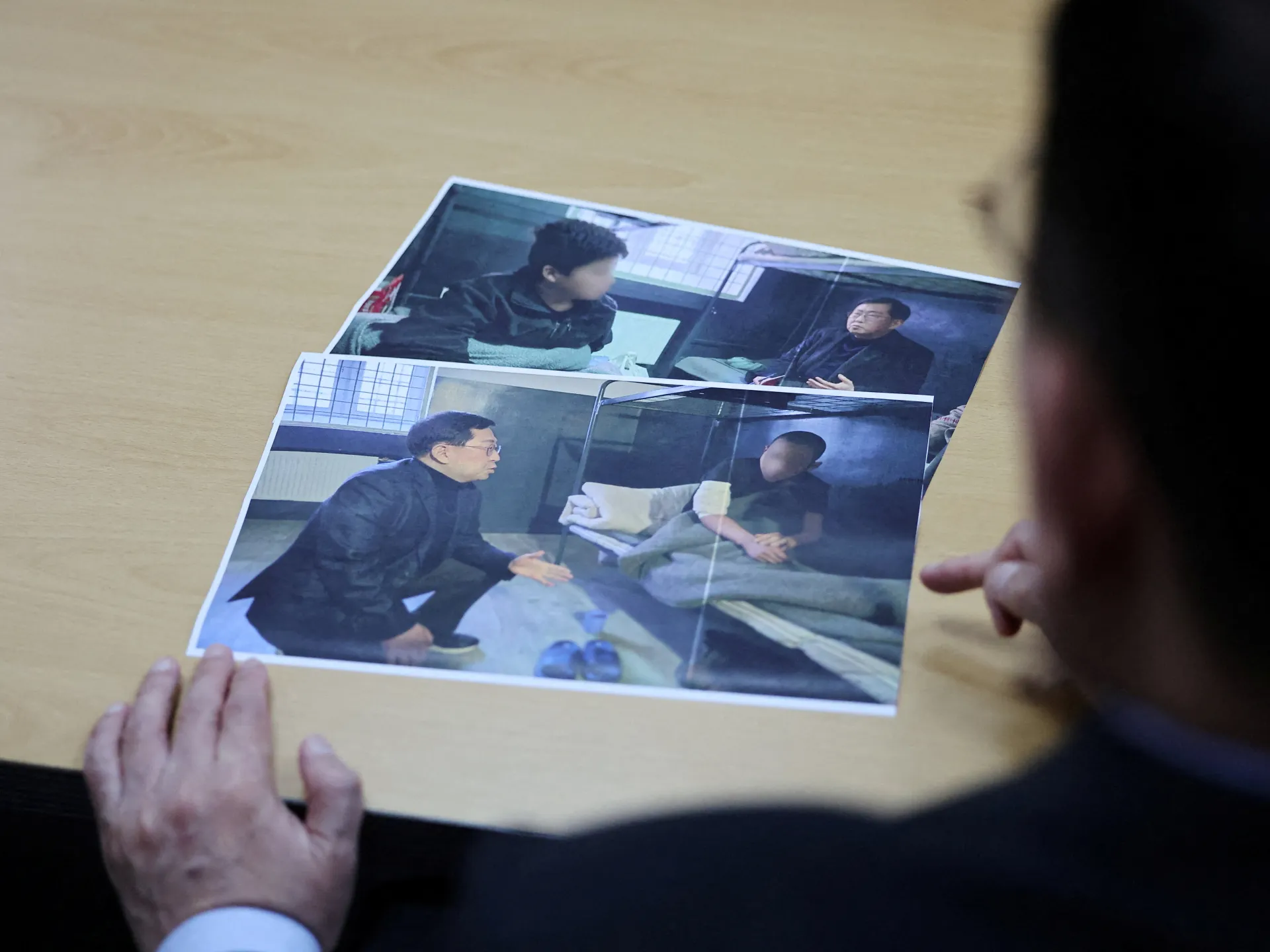
Earlier this month, South Korea recalled its ambassador from Kyiv after Zelenskyy disclosed the prisoner transfer.
Published On 20 Oct 202620 Oct 2026
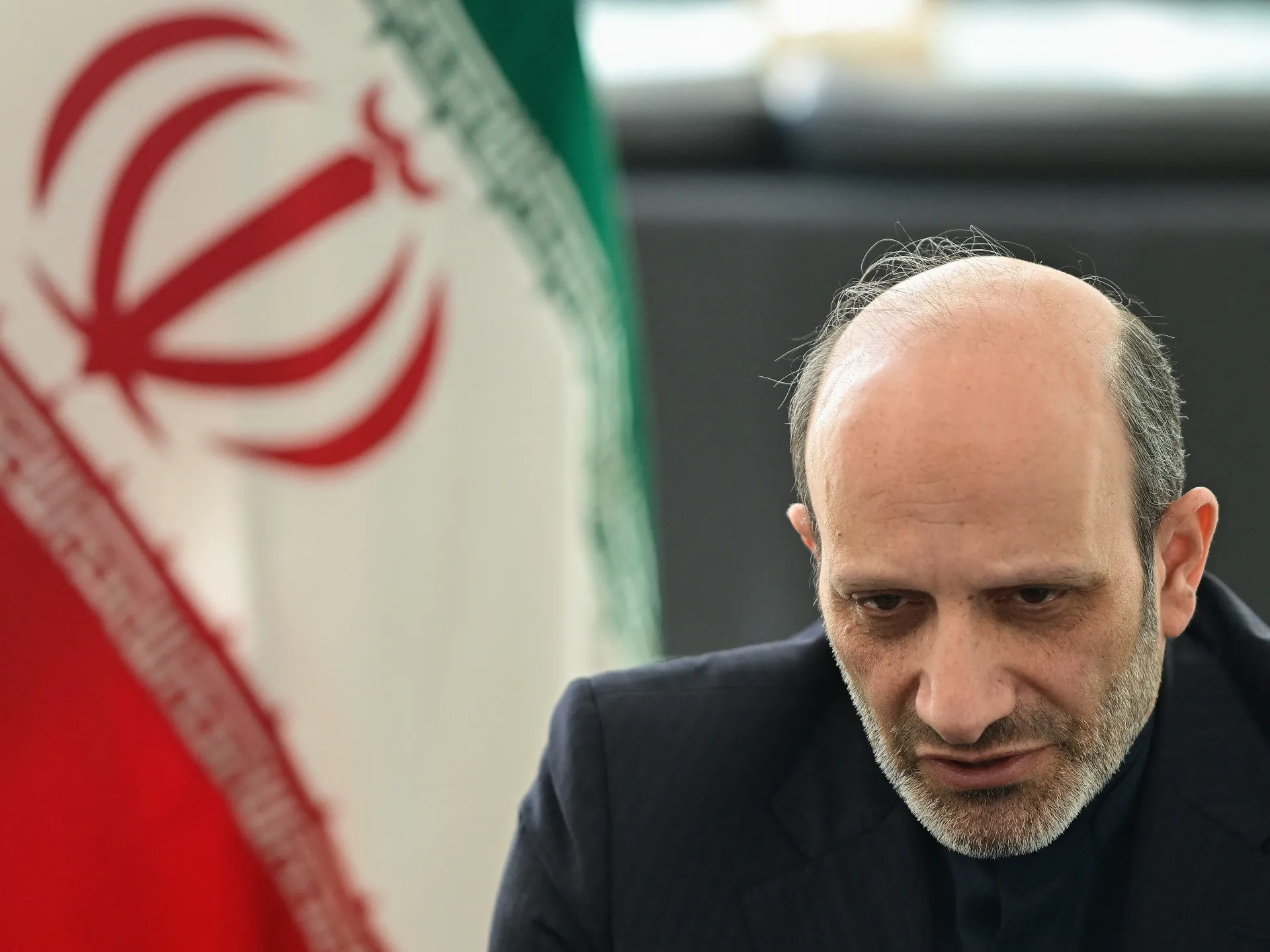
South Korea’s Ministry of Foreign Affairs says it will withdraw additional embassy personnel from Ukraine following Kyiv’s lack of “constructive response” in a dispute about North Korean prisoners of war (POWs).
Seoul had told Kyiv of its position via multiple channels but had not received a sufficient response from Ukraine, ministry spokesperson Park Doo-soon said on Tuesday.
Recommended Stories
list of 3 itemsend of list
Earlier this month, South Korea recalled its ambassador from Kyiv after President Volodymyr Zelenskyy told the United Nations General Assembly (UNGA) that Ukraine had transferred two captured North Korean soldiers to the South.
The disclosure angered Seoul, which said the operation should have remained confidential to protect the soldiers’ families in North Korea.
“This measure was taken because we judged it necessary to facilitate an amicable resolution of the issue and restore trust between the two countries,” Park told a regular press briefing, without saying how many staff members would leave.
A charge d’affaires would stay on in Kyiv to maintain diplomatic communication along with all consular staff to protect South Korean nationals, Park added.
Persistent threats of air strikes across Ukraine had also made it difficult to ensure staff safety, he said.
Seoul previously summoned the Ukrainian ambassador and threatened unspecified “further measures”.
‘Situation resolved’
Ukraine has insisted that “diplomacy must prevail over emotions” in relations between the countries, and also said Kyiv considered “the situation resolved”.
South Korea’s Foreign Minister Cho Hyun said earlier this month that Ukraine had sent a message that “included words of apology” over Zelenskyy’s disclosure, but it fell short of “the level” Seoul had in mind.
Under South Korea’s constitution, all North Koreans are considered citizens of the Republic of Korea, as the country is officially known, and those who reach its territory and seek to defect are generally allowed to stay.
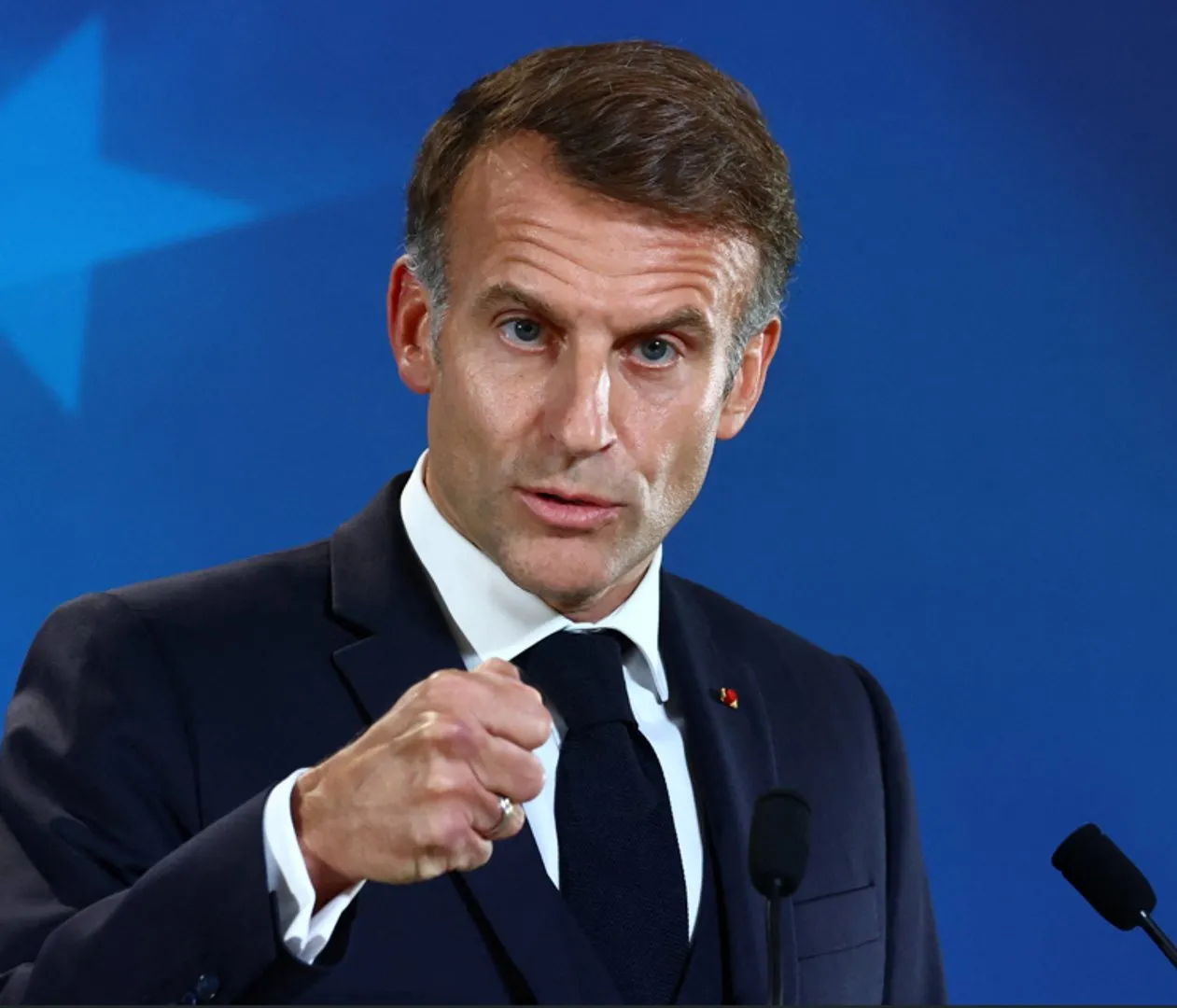
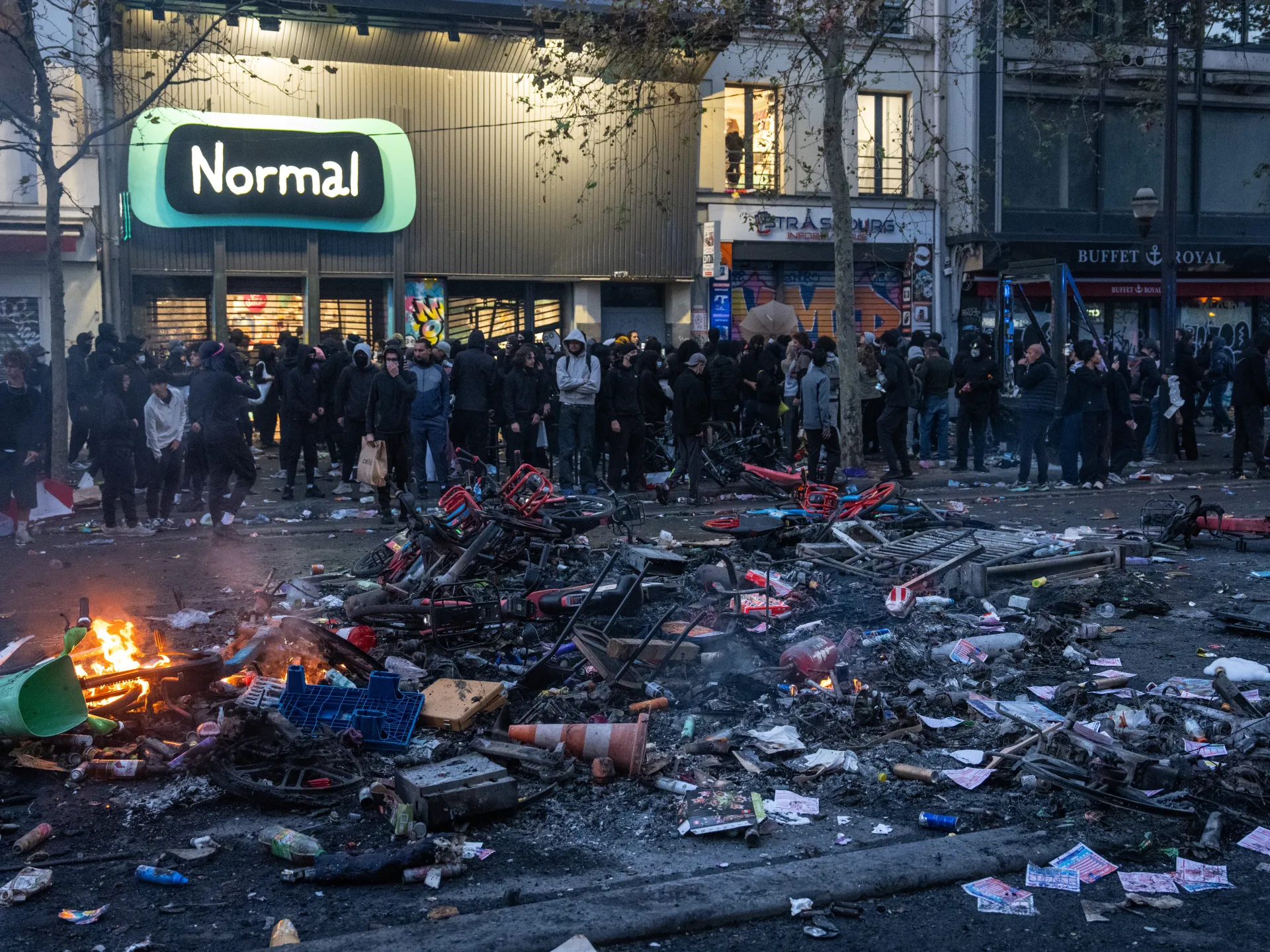
Paris, France – After nationwide protests turned violent, French President Emmanuel Macron on Sunday night tried to strike a balance between acknowledging the concerns of students demanding changes to the education system and criticising rioters.
“Those who have destroyed property must pay. Those who have looted must reimburse their victims. Those who sought to bring down the republic will be held accountable,” Macron said.
But the president’s speech was not what Yanis, a 20-year-old from Ivry-sur-Seine, a suburb just southeast of Paris, wanted to hear.
“He gave his usual ‘bla bla bla speech’ without putting forward anything concrete,” he said. “We’ll be back on the streets anyway. There will be one demonstration after another until something changes – every weekend, without a break”.
As France grapples with widespread anger that bubbled over in the form of violent protests last weekend, appetite – at least among the country’s youth – for centrist politics of the kind that Macron represents appears to be rapidly shrinking.
The unrest in France comes months before the country’s 2027 presidential election and has further sharpened political divisions, with parties seeking to present themselves as the answer to the frustration visible on the streets.
The populist-left leader Jean-Luc Melenchon has embraced the student movement with enthusiasm, while far-right firebrand Marine Le Pen has focused on the disorder that came with the demonstrations, framing it as a crisis of security and authority. The centrist Prime Minister Sebastien Lecornu has accused the extreme left of instigating violence as a “warm-up round” for the presidential election.
Polling before the election points to a contest in which both the far left and the far right could play a central role. But while the country is demanding change, there is little consensus on what that change should look like. Macron, who has been in power for two terms, will need to step aside after the election, as the constitution bars him from running again.
“Candidates have no choice but to take a stand and address young people,” said political analyst Beligh Nabli, a professor of public law at UPEC-Paris XII. “They have a political obligation to have a message aimed at young people. That message must not be empty, but it will have to answer their demands.”
Since launching their protest in mid-September, students have demanded better schools, more teachers and a more equal system. But the movement quickly spilled out of the schoolyards and into the streets, tapping into broader social and economic anxieties.
The protests have brought these issues to the centre of the political debate in a way that might not otherwise have happened, given young people’s comparatively low electoral participation and the tendency of political campaigns to focus on older voters and issues such as pensions, say analysts.
“If it wasn’t for this mobilisation, it would have been business as usual,” Nabli said. “We would have seen a kind of relative indifference from the candidates towards young people because they are not the social group that mobilises the most in elections, in contrast with those over 60.”
France Unbowed – La France Insoumise (LFI) in French – the left party led by Melenchon, has strongly supported the student movement to the point that critics have accused the party of spurring youth resentment and exploiting the unrest for political gain. Yet the party’s appeal among young voters predates the protests. Its programme addresses several of the movement’s central grievances, including investment in education, teachers’ pay and the abolition of Parcoursup, an online platform students must use for higher education applications that many say lacks transparency.
According to an OpinionWay poll for Les Echos, published on Thursday, Melenchon leads among voters aged 18 to 24, with 49 percent backing him – a 10-percentage-point increase compared with 2022.
For some young protesters, support for Melenchon reflects both opposition to the far right and frustration with the political centre.
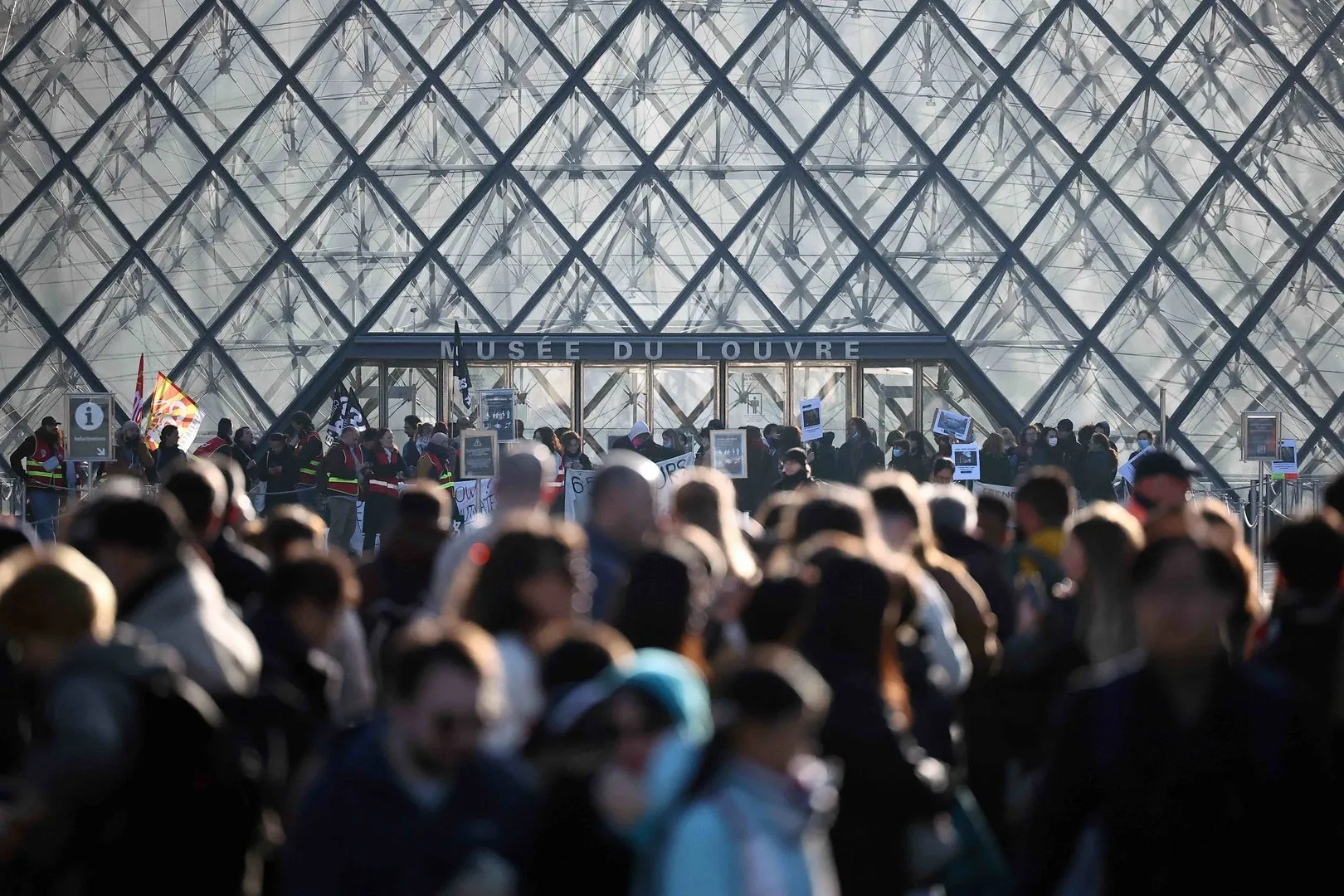
“I’m going to vote for La France Insoumise to counter the far right, the National Rally, and the centre, which is basically going to give us a repeat of Macron’s policies,” said Lydia, 21, a student at the Ecole du Louvre who took part in a protest at the museum on Monday.
But she said she was under no illusion that the party would necessarily solve France’s problems. She also criticised what she sees as the demonisation of LFI by critics, arguing that even moderately left-wing positions are increasingly labelled extreme. “It’s becoming rather exceptional to have empathy; it’s becoming something extreme left-wing,” she said.
On the other side of the political spectrum, Le Pen and her National Rally party have sought to make the unrest a question of law and order, accusing the government of failing to be able to control the country, and its main competitor, Melenchon, of stoking violence. Le Pen remains the leading contender in the presidential race with 32 percent of the vote, while the National Rally ranked second among voters aged 18 to 24, behind France Unbowed.
“Yesterday, you saw our cities, our streets, and our country mistreated, battered, and looted,” Le Pen said in a video message on Sunday night. “We are experiencing a profound crisis of trust and authority – one that poses a threat to our democracy.” She added that France was “caught in a vice – effectively held hostage – between violence and powerlessness”.
Caught between these competing narratives is the centrist bloc of Macron, whose presidency began amid the Yellow Vest protests and is now approaching its end against the backdrop of another major wave of social unrest. That earlier movement, initially triggered by a rise in fuel taxes, grew into a broader revolt against the cost of living and what demonstrators saw as Macron’s favouring of the elite.
One of the differences between now and then is that any government coming next will not have the fiscal room to quell the unrest by handing a cheque. Last year, the government recorded a deficit of 5.1 percent of France’s gross domestic product, one of the highest among European countries. By contrast, the European Union average is 3.1 percent. Any future president will have to deal with Macron’s headache: How to save money without deepening public anger.
The current mobilisation has exposed a wider sense of disillusionment with the political establishment. The president’s popularity stands at 15 percent, the lowest ever.
In his speech on Sunday night, Macron blamed “insurrectionists from fringe far-left groups, joined by numerous criminals” for the violence. But he only briefly spoke about the students’ demands and offered no specific new policy measures to address them. Instead, he tasked Lecornu with bringing together students, teachers, unions and elected officials to develop proposals in the coming days, while promising a tougher response to violence.
The unrest presents an opportunity for his opponents to argue that his presidency has failed to address deep-rooted inequalities. At stake is the support of a generation of young people who feel let down by the state and increasingly disconnected from the political establishment – and who all sides of the political spectrum are poised to woo in the coming months before the election.
In a letter outlining 42 questions, UEFA gives FIFA until November 2 to release documents on Infantino’s aborted plans.
Published On 20 Oct 202620 Oct 2026
UEFA has given FIFA a deadline of November 2 to release documents relating to its president Gianni Infantino’s aborted attempts at a secretive investment plan for the World Cup and other governance issues.
The latest move in a power struggle between the global and continental governing bodies was revealed on Monday, days after European football’s top officials were disappointed by what they perceived as a lack of clarity from Infantino over the issues at a FIFA Council meeting last week.
Among the 42 questions to which UEFA is demanding answers are: Infantino’s personal remuneration package, financial payments made to singer Marc Anthony, the handling of USA striker Folarin Balogun’s disciplinary case, business and political relationships involving US President Donald Trump and his family, and the operational independence of FIFA’s judicial, electoral and ethics committees.
UEFA asked US federal courts to authorise subpoenas compelling the production of documents and sworn testimony about the abandoned investment plan called FIFA Forward Enterprise.
FIFA lawyers have claimed UEFA is harassing Infantino.
Al Jazeera reached out to FIFA for a comment but did not receive a response.
Deep dissatisfaction
The formal letter, signed by UEFA general secretary Theodore Theodoridis on behalf of European FIFA Council members, stated Infantino’s apology for his actions and subsequent explanation failed to address their core concerns.
“These explanations have not begun satisfactorily to address a number of fundamental questions raised by Council members. Others remain unanswered, and the information and documentation requested have not been [provided],” the letter said.
“The withdrawal of FFE, the recognition of mistakes, and the announcement of ‘potential governance reforms’ do not answer how the relevant decisions were taken or why the FIFA Council was not involved at the appropriate stage.”
According to media reports, the letter further said: “Any refusal to disclose information or documents should be justified individually, with a clear explanation of the specific grounds relied upon.”
Tight timeline
UEFA submitted 42 detailed questions to FIFA, demanding responses by November 2 — 16 days before the nomination deadline for the presidential election on March 18, 2027.
With the next FIFA Council meeting scheduled for December 16 in Doha, Qatar — after nominations close — UEFA insisted that answers cannot wait.
“These questions require answers now. They cannot be deferred until the next meeting of the FIFA Council — nor can future governance reforms substitute for scrutiny of decisions already taken and accountability for them,” the letter emphasised.
The earlier deadline would give federations time to assess FIFA’s answers — or its failure to answer — while they can still nominate or endorse a challenger.
Trump calls for Zelenskyy to be replaced as negotiator, while Ukraine’s president says arms shipments delayed.
Published On 20 Oct 202620 Oct 2026
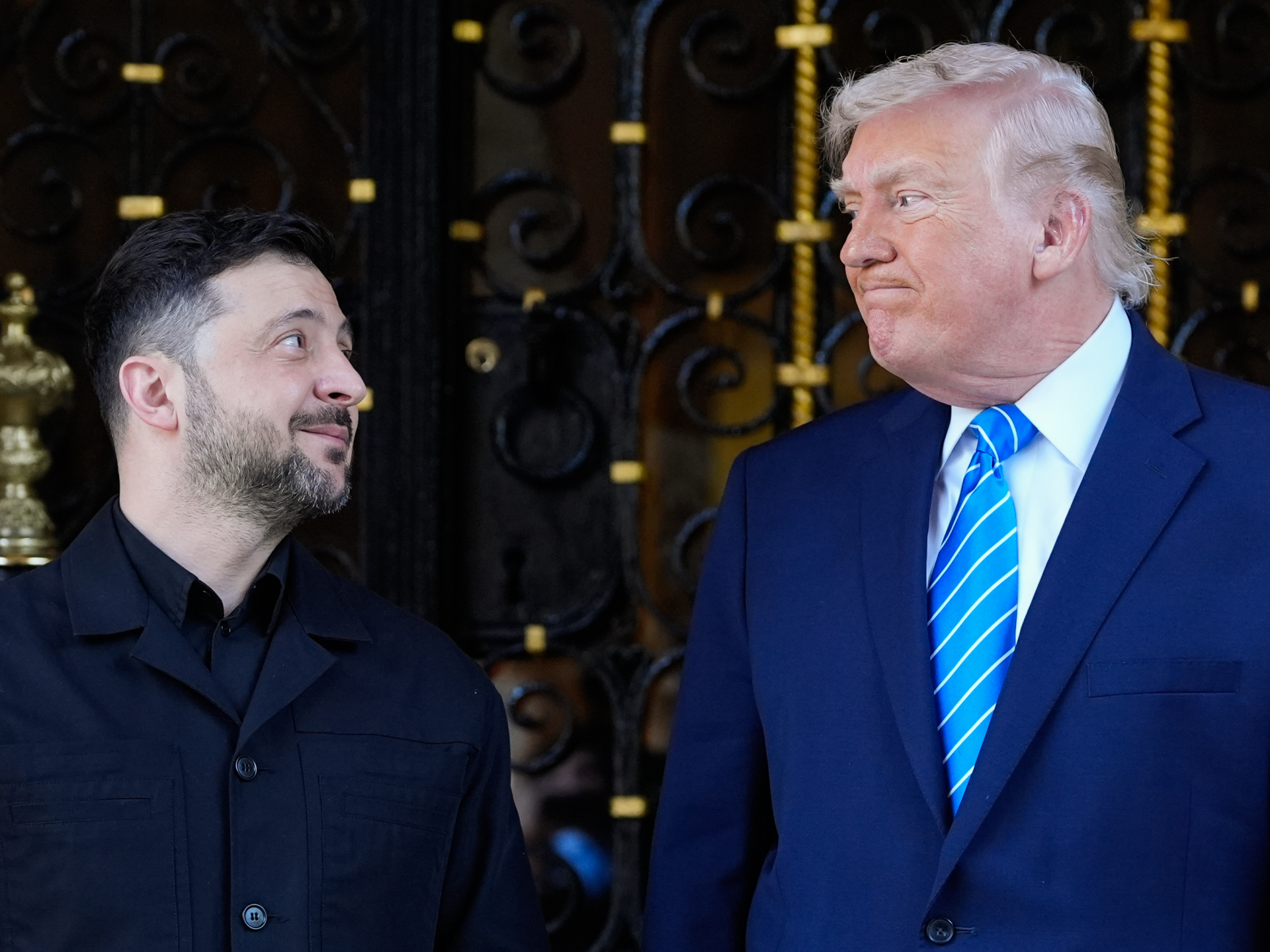
United States President Donald Trump says someone other than Ukrainian President Volodymyr Zelenskyy should negotiate on Kyiv’s behalf in talks to end Russia’s war.
“Zelenskyy is a man that should have had settled this war a long time ago. If he would’ve listened to me, he would have made a much better deal a long time ago,” Trump told reporters outside the White House on Monday. “Maybe it’s time for Zelenskyy to get somebody else to negotiate.”
Recommended Stories
list of 3 itemsend of list
The US president has been verbally swiping at his Ukrainian counterpart for several days as a rift between the leaders deepens.
On Sunday, Trump claimed on Truth Social that Zelenskyy does not want to end the war. Earlier this month, he called for him to be replaced as president, and labelled him a “warmonger” over Ukraine’s attacks on Russian oil refineries.
Trump has also defended sanctions waivers for Russia, saying in the same Truth Social post that he wants to keep Moscow at the negotiating table.
Zelenskyy said the decision “will hurt Ukraine” and strengthen Russian President Vladimir Putin’s war effort.
Trump also announced plans on October 9 for Russia to supply more than 300,000 metric tonnes of diesel to US and global markets to tackle fuel prices that have soared since the US and Israel launched a war on Iran in late February.
The decision has angered not only Kyiv, but also European partners and US officials, who say it rewards Moscow while it continues its four-and-a-half-year war on Ukraine.
Zelenskyy told US senators at a meeting on Monday that decisions taken by the Trump administration “are hard to explain between friends”.
He said arms shipments had been delayed and intelligence sharing restricted.
“We also know that … the Pentagon is delaying the delivery of missiles that our partners have already paid for through the PURL (Prioritised Ukraine Requirements List) programme,” he said.
To his knowledge, he added, one missile package was waiting for the signature of US Defense Secretary Pete Hegseth.
He also said several European countries were ready to transfer Patriot interceptor missiles from their own stockpiles but were awaiting US approval.
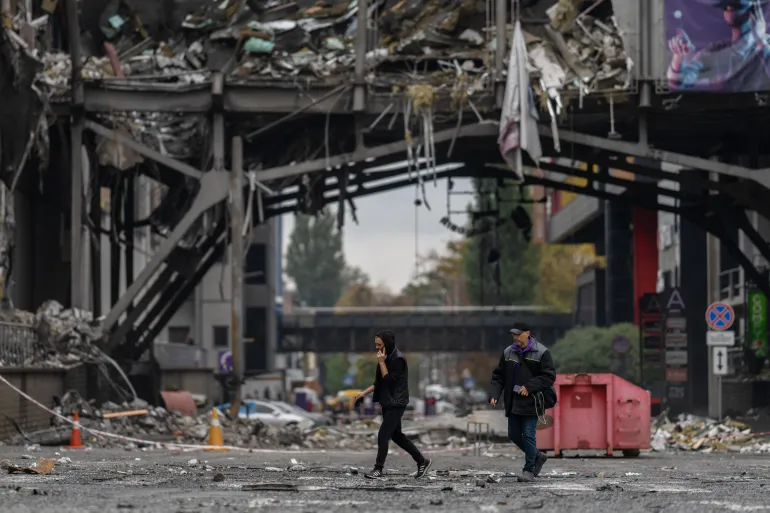
People walk in front of a damaged shopping mall following an air attack in Kyiv on October 19, 2026, amid the Russian invasion of Ukraine [Oleksii Filippov/AFP]
In remarks posted in a video on Telegram, Zelenskyy said that on three occasions in the past week, Ukraine had not received the advance warning of Russian attacks generally provided by its partners.
Last week, Zelenskyy suggested a disruption of Starlink services in Ukraine was “deliberate”. US Secretary of State Marco Rubio rejected the claim.
The sparring comes as Trump’s special envoy Steve Witkoff is set to travel to Norway this week for the next round of negotiations on ending the war in Ukraine, the Reuters news agency reported, citing three people familiar with the matter.
Two of the sources said they expected Zelenskyy to attend the meetings.
The Oslo discussions are expected to include Zelenskyy, Norwegian Prime Minister Jonas Gahr Store, representatives of the E4 – made up of the United Kingdom, France, Germany, and Poland – the European Union, and NATO.
Who: Paris Saint-Germain vs Barcelona What: UEFA Champions League, match day 3 Where: Parc des Princes, Paris, France When: Tuesday, October 20, at 9pm (19:00 GMT) How to follow: Al Jazeera Sport will bring you all the build-up and live updates from 16:00 GMT.
One of the most eagerly awaited Champions League matches of the season will be played against the backdrop of turmoil on the streets of the French capital as holders Paris Saint-Germain host Barcelona on Tuesday.
Recommended Stories
list of 4 itemsend of list
The fate of the match has been subject to debate as the French government seeks to control the violent protests gripping the country.
However, once the match gets under way at the Parc des Princes, fans can expect a mouthwatering battle between the Champions League’s top two teams as the back-to-back holders welcome five-time winners.
Boasting a perfect record across all competitions, Spanish giants Barca are arguably one of Europe’s best teams this season.
PSG too have been nothing short of lethal – the Parisians lead the UCL points table and have scored a whopping 10 goals in two games.
There will be plenty of star power on display when the match kicks off as the dazzling duo of Ferran Torres and Ousmane Dembele will headline the star-studded home side.
Lamine Yamal, who is enjoying one of the best starts to a La Liga season for a forward, will be joined by Raphinha for Barcelona.
Here’s everything you need to know ahead of PSG vs Barcelona:
How have PSG played this season?
After seven matches, PSG are second in Ligue 1 with 14 points, behind Lyon on goal difference. They have won four times, drawn twice and lost once in the French top division.
How have Barcelona played this season?
Barcelona are five points clear at the top of La Liga table with nine wins from nine. Their blistering attack has scored 39 league goals.
What happened in the first and second Champions League rounds?
Two-time holders PSG thrashed Slovan Bratislava 6-1 in their UCL opener at home before beating Manchester City 4-2 in a thrilling away fixture.
Barcelona thumped Feyenoord 5-1 at home and bounced back from a goal down to smash Galatasaray 4-1 away.
Those results keep PSG top of the table and Barcelona second, with both on six points.
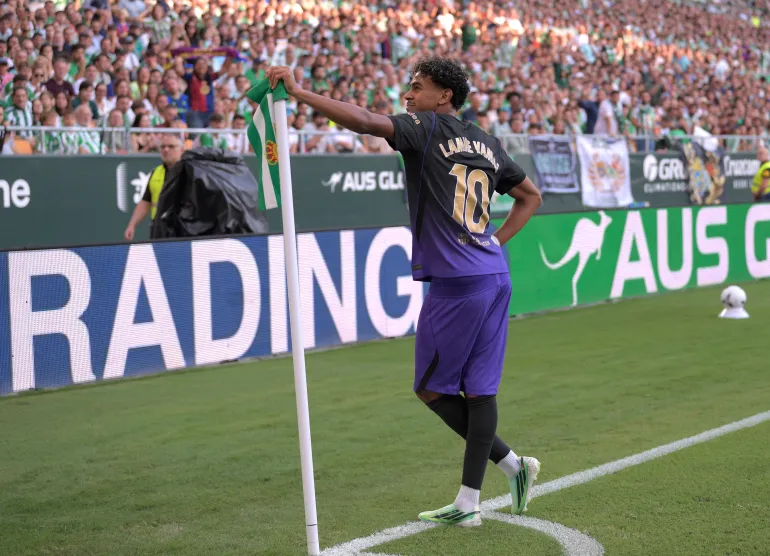
Barcelona’s Spanish #10 Lamine Yamal has made an impressive start to the season [File: Jorge Guerrero/AFP]
Will PSG vs Barcelona go ahead amid the protests in France?
Despite the violent protests and nationwide arrests, French Prime Minister Sebastien Lecornu said the match will not be postponed or cancelled.
Lecornu said on Monday that he had asked regional authorities to impose “partial” and “localised” curfews in some cities to protect businesses after weekend demonstrations spilled over into some of the worst street violence in recent years.
“These curfews must be local and partial. It is out of the question to put all of Paris under curfew.”
At the same news conference, Interior Minister Laurent Nunez told reporters there were no plans to cancel the match.
Police have arrested at least 2,400 people across France after violent groups clashed with officers and looted shops during nationwide demonstrations that attracted hundreds of thousands of people to denounce rising living costs and poor conditions in schools.
PSG vs Barcelona: Predictions
Opta’s supercomputer has given PSG a 39.7 per cent probability of winning, while Barcelona have a 37.7 per cent chance.
There are 22.6 per cent odds for a draw.
PSG vs Barcelona: Head-to-head
(Only in the Champions League)
Matches: 15
PSG wins: 6
Barcelona wins: 5
Draws: 4
PSG vs Barcelona: Form guide
(Last five matches across all competitions; latest game first)
PSG: W-W-W-W-W
Barcelona: W-W-W-W-W
Who are the top players to watch?
Ferran Torres and Ousmane Dembele (PSG): Torres, who joined PSG after four seasons at Barcelona, is their leading scorer with seven goals in all competitions, including an opening day Champions League hat-trick. Dembele has had an all-round impact with six assists and four goals.
Raphinha and Lamine Yamal(Barcelona): With 14 goals, Raphinha is the most prolific striker in European club football this season. Such is his dominance that even a brief injury absence did not take away his top spot. Yamal, on the other hand, has been unstoppable in his own way – the 18-year-old winger’s nine goals and 10 assists make him a once-in-a-generation talent.
Lamine Yamal and Raphinha share 23 goals between them this season [File: Jorge Guerrero/AFP]
Team news and predicted lineups
PSG
PSG suffered a major blow shortly before Tuesday’s trip when left-back Nuno Mendes suffered a thigh injury during their 3-1 Ligue 1 victory at Strasbourg on Saturday.
Mendes will be unavailable for the “next few weeks”, according to the team who are also without Senny Mayulu with a similar issue.
Ferran Torres, who also helped Spain win the FIFA World Cup 2026, celebrates scoring a hat-trick against Slovan Bratislava [File: Franco Arland/Getty Images]
Barcelona
Barcelona have been strengthened by the return of striker Raphinha and midfielder Frenkie de Jong.
Raphinha picked up a knock on recent international duty with Brazil and missed Barca’s wins over Getafe in the league and Galatasaray in the Champions League. Dutch international De Jong has not featured this season due to a knee issue sustained during the World Cup.
Both were on the bench in Barca’s last game, a 5-2 win over Real Betis, with Raphinha coming on as a second-half substitute.
However, defenders Eric Garcia and Jules Kounde are sidelined. Garcia will spend between “three to four weeks” out with a thigh injury, while right-back Kounde suffered an ankle sprain and will miss the game against PSG.
Predicted starting XI:
Joan Garcia; Xavi Espart, Pau Cubarsi, Gerard Martin, Joao Cancelo; Fermin Lopez, Rodri, Pedri; Lamine Yamal, Raphinha, Anthony Gordon
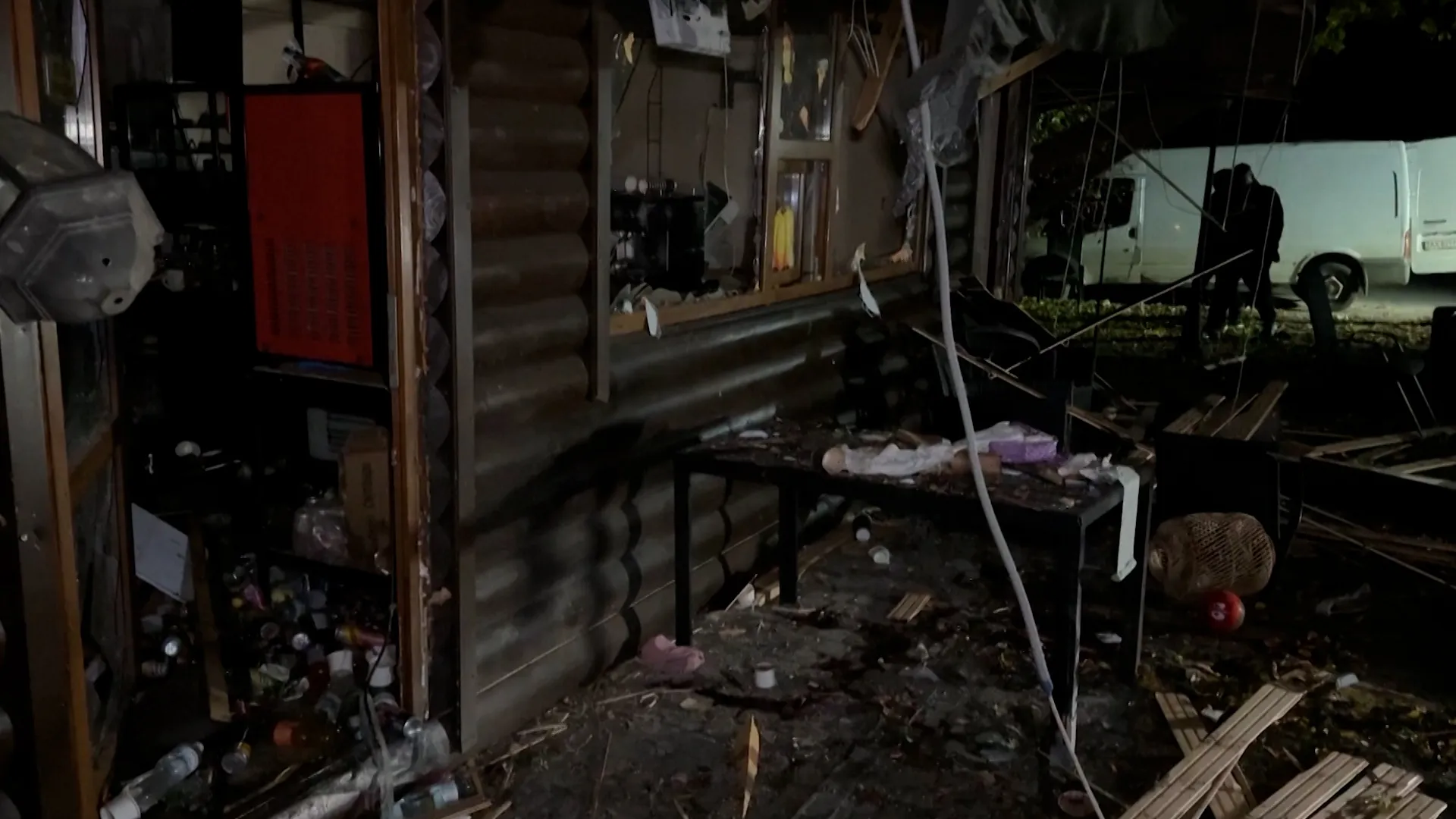
A Russian drone strike on a park in Ukraine’s north-eastern Kharkiv region has killed six people, including three children. The attack comes amid growing concerns over Ukraine’s air defences and Donald Trump’s moves to import Russian diesel.
Tehran summons envoy in tit-for-tat move after Berlin summoned ambassador to Iran.
Published On 19 Oct 202619 Oct 2026
Iran’s Ministry of Foreign Affairs has summoned Germany’s ambassador after a court in Hamburg found two men guilty of plotting to kill two leaders of Jewish organisations at Tehran’s behest, accusing Berlin of leveling “baseless political allegations”.
The decision to summon envoy Axel Dittmann came after Germany summoned the Iranian ambassador, Majid Nili Ahmadabadi, on Monday over allegations that Tehran was behind the plot to assassinate the two pro-Israel public figures.
Recommended Stories
list of 3 itemsend of list
“Levelling security-related accusations against Iran has long been a tactic employed by the Zionist regime and certain Western nations,” Iran’s Foreign Ministry said in a statement broadcast by official news agency IRNA.
“Attempting to provide a judicial face to baseless political claims not only fails to lend any credibility to such allegations but also undermines the standing of the German judiciary itself,” the statement added.
Hamburg conviction
Berlin’s allegations stem from a court case involving two men, a Danish national and an Afghan national, who were convicted in a Hamburg court on Thursday for planning to target the president of Germany’s main group representing the Jewish community and the head of the German-Israeli society.
The German Foreign Ministry said on X that the Iranian ambassador had been summoned, adding Tehran would not be allowed to “threaten our free society”.
“The malicious assassination attempts against Josef Schuster and Volker Beck will have legal consequences,” it added.
“We do not tolerate attacks on Jewish life and on those who defend it anywhere, and certainly not in Germany.”
The Dane, partially identified as Ali Hassan S, was jailed for eight-and-a-half years. The Afghan, who was recruited as his accomplice, was sentenced to four-and-a-half years.
Iran’s intelligence service steered the two men, the court said. The pair were arrested in Denmark last year and extradited.
In sentencing the men, the judge said they were guilty of “terrorist activities orchestrated by Iran”.
At the time they were charged, the Iranian embassy in Berlin released a statement rejecting what it called “unfounded allegations made at the behest of Iran’s enemies”.
HSBC’s ‘sharia-compliant’ fund invested over $100 million in companies linked to Israel’s military, raising questions about where the savings and investment of Muslims might end up going. Al Jazeera’s Lina-Serene explains.
French students are now blockading the world’s busiest museum. A group of demonstrators stood outside Paris’ Louvre Museum on Monday, preventing it from opening up to the public.
Student protests in France are into their second month, escalating into demonstrations across Europe.
What began in September in France with pupils protesting against overcrowded classrooms and teacher shortages has grown into wider anger at the cost of living and planned cuts to public services.
Recommended Stories
list of 3 itemsend of list
Protesters in Albania, Belgium, Greece, Italy, Portugal and Spain have also taken to the streets over the lack of affordable housing, rising costs and failing public services – with many young people saying they no longer expect to be better off than their parents.
Facing their anger are leaders such as French President Emmanuel Macron, Italy’s Prime Minister Giorgia Meloni, Spain’s PM Pedro Sanchez and Portugal’s PM Luis Montenegro. Sanchez belongs to the left, Meloni to the right and Macron and Montenegro are conservative-leaning centrists. But while their politics vary, they all face mounting unrest because of soaring costs of living.
Are they out of touch with the experiences and sentiments of youth in their countries? Al Jazeera visualises how prices, wages, housing and education have changed in France, Italy, Spain and Portugal over the past 26 years, from when Macron, Meloni, Sanchez and Montenegro were in their 20s, much like many of the protesters angry with them.
How much more expensive is it compared to 2000?
The prices paid for everyday items such as food, energy, transport and bills have risen by between 59 and 78 percent since 2000 in France, Italy, Spain and Portugal, according to Eurostat – the European Union’s statistics agency. Its harmonised index of consumer prices (HICP) is the EU’s official measure of how much everyday goods and services cost.
Spain recorded the steepest increase at 78 percent, followed by Portugal at 71 percent, 68 percent in Italy and France at 59 percent.
That means goods and services that cost 100 euros ($112) in 2000 now cost about 178 euros ($200) in Spain, 171 euros ($192) in Portugal, 168 euros ($188) in Italy and 159 euros ($178) in France.
Prices rose by about 2 percent a year on average, but jumped in 2022, when annual inflation hit 8.7 percent in Italy, 8.3 percent in Spain, 8.1 percent in Portugal and 5.9 percent in France, the highest rate in all four countries since at least 2000.
The surge was driven mainly by energy costs, which soared after Russia’s invasion of Ukraine in February 2022. By October that year, eight months into the war, energy prices across the eurozone were almost 42 percent higher than a year earlier, and food prices were also rising sharply, according to Eurostat.
Between 2021 and 2023, prices increased by 12 to 15 per cent in the four countries. Wages failed to keep up, and because prices do not fall back once inflation eases, many households are still feeling the squeeze today.
(Al Jazeera)
How have salaries changed?
Once inflation is taken into account, the average full-time wage in Italy fell by almost 5 per cent between 2000 and 2025. Over the same period, real wages rose by 7 per cent in Spain, 11 per cent in France and 20 per cent in Portugal, according to OECD wage data adjusted with Eurostat’s price index.
In Spain most new jobs were in tourism and services, and were often seasonal and poorly paid, Jaime Velazquez, a journalist in Madrid, told Al Jazeera’s Inside Story.
Julius Fintelmann, cofounder and editor-in-chief of The European Correspondent, said ageing societies were squeezing out opportunities for younger workers, adding that the pay gap between older and younger workers has been widening across high-income economies for decades, so the promise that each generation would be better off than the last no longer holds.
How has the cost of housing changed?
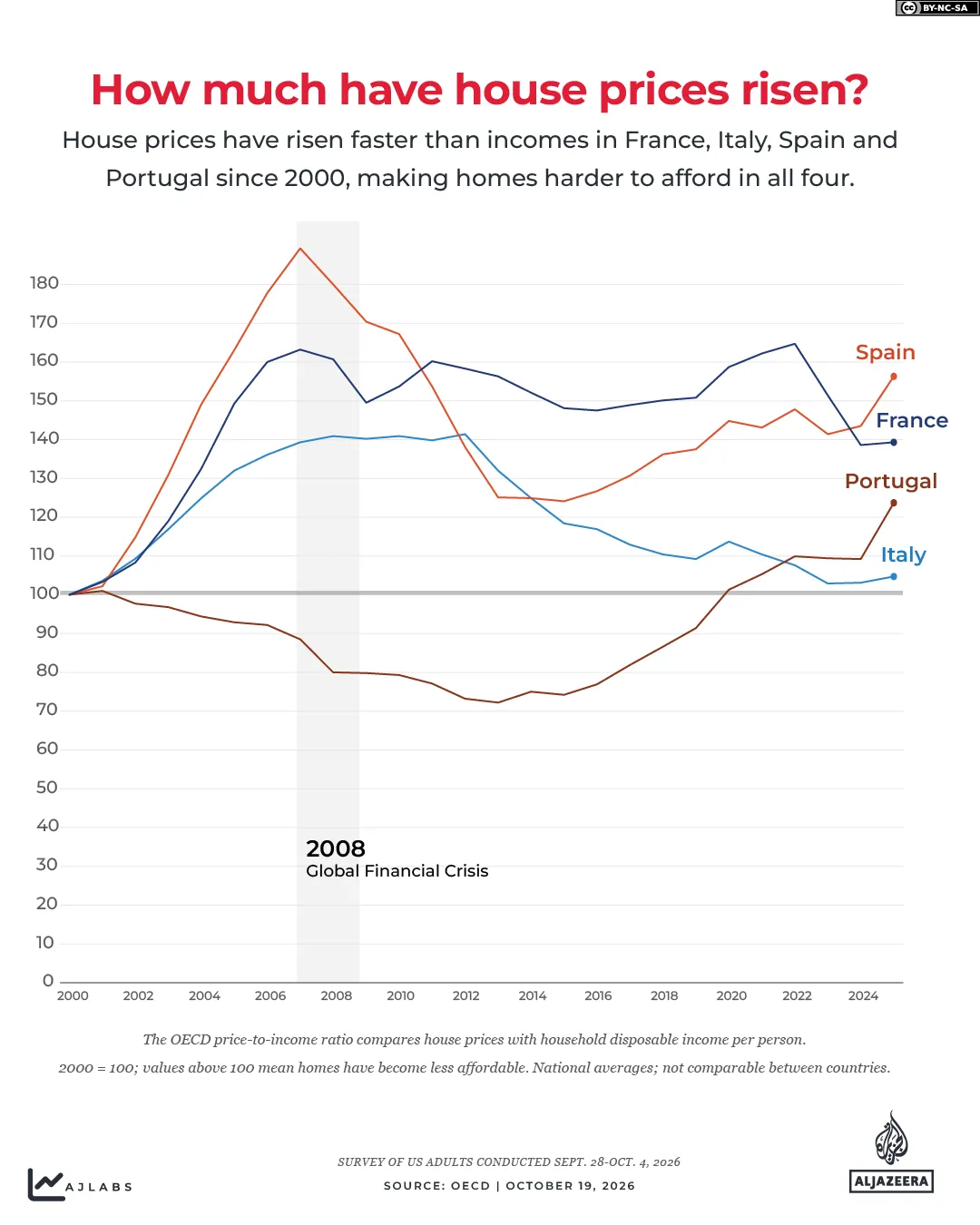
Housing has become harder to afford in all four countries since 2000, according to the OECD’s price-to-income ratio. It provides a broad picture of how house prices have changed relative to incomes over time. When prices rise faster than incomes, the ratio goes up, suggesting homes are becoming less affordable on average.
However, it doesn’t show which households or regions are hit hardest, does not account for mortgage and borrowing costs, and says nothing about the quality of the homes people are paying for.
Spain has seen the biggest change. Its price-to-income ratio is 56 per cent higher than in 2000, even after falling sharply following the 2008 financial crisis.
In France, the ratio is 39 per cent higher than in 2000, though it has eased slightly since peaking in 2022.
Italy is the exception where house prices have broadly kept pace with incomes, leaving the ratio just 5 per cent higher than in 2000.
Portugal has seen the sharpest change in recent years. Its price-to-income ratio fell steadily for 15 years after 2000, meaning homes became more affordable. But since 2015 the ratio has risen by 67 per cent.
The OECD publishes the price-to-income ratio with 2015 as its reference year. To compare it with the wage and price data in this article, which started in 2000, Al Jazeera has reset the figures so that 2000 = 100.
How has state expenditure on education changed?
Education has been at the heart of the unrest in France, where protests began because of overcrowded classrooms and teacher shortages. While in Belgium and Albania, demonstrators have rallied against the rising cost of education and access to universities.
According to the latest data from Eurostat, France’s public spending on education amounts to 5.1 per cent of its gross domestic product (GDP) compared to 5.6 per cent in 2000.
Italy spent 4.4 per cent of its GDP on education compared to 4 per cent in 2024, Spain spent 4.1 per cent in 2000 and the same in 2024. Portugal spent 4.8 per cent in 2000 and 4.3 per cent in 2024.
Barcelona have arrived in Paris for the Champions League match at the Parc des Princes on Tuesday at 19:00 GMT.
By Reuters and The Associated Press
Published On 19 Oct 202619 Oct 2026
The upcoming UEFA Champions League match between Paris Saint-Germain (PSG) and Barcelona will not be postponed or cancelled despite the ongoing violent protests in France, the country’s Prime Minister Sebastien Lecornu has said.
Lecornu said on Monday he had asked regional authorities to impose “partial” and “localised” curfews in some cities to protect businesses after weekend demonstrations spilled over into some of the worst street violence in recent years.
He said a state of emergency could be imposed “if necessary”, adding that curfews were a better solution to the crisis over violent protests.
“I am absolutely determined to restore order,” Lecornu said at a news conference after a crisis meeting.
“A state of emergency is still a very serious measure, including in terms of its implementation. So if it is necessary, of course we could do it. As things stand, however, the issue of curfews, and the implementation of those curfews, seems better suited to the situation we may be facing.”
He did not say which cities would impose partial curfews nor what form they would take, although he ruled out imposing a full curfew across Paris.
“These curfews must be local and partial. It is out of the question to put all of Paris under curfew.”
At the same news conference, Interior Minister Laurent Nunez told reporters there were no plans to cancel the match.
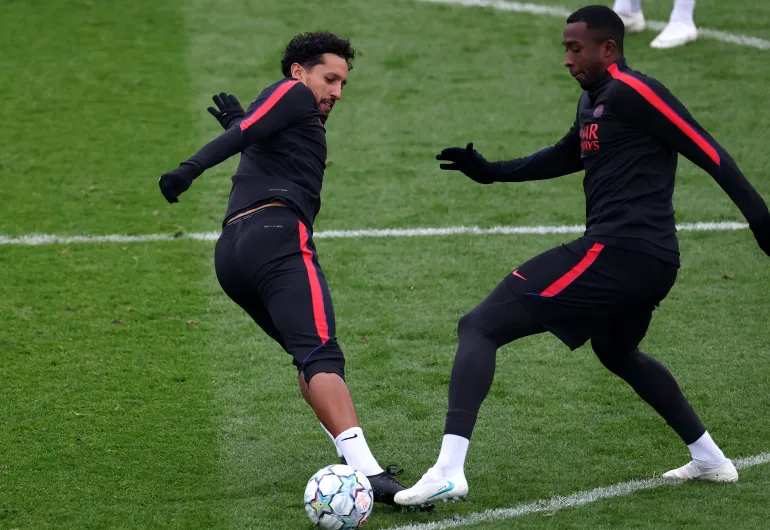
PSG players Marquinhos and William Pacho participated in a training session at the Campus Paris Saint-Germain in Poissy on the eve of the match [Franck Fife/AFP]
PSG, the reigning European and French champions, will host the Spanish visitors at the Parc des Princes on Tuesday night.
The fate of the match, touted as the pick of the group-stage fixtures in European football’s premier club competition, has been under threat after days of protests across the French capital and beyond.
However, neither club has indicated that the violence will affect the fixture, as Barcelona were arrived across their northern border to Paris on Monday afternoon.
The match is scheduled to kick off at 19:00 GMT on Tuesday.
The weekend of riots and looting has not spared French clubs, such as Marseille and Lille. The Ligue 1 clubs said their shops were vandalised during the protests.
Marseille said in a statement on Monday the looters caused “significant damage” to its official store located on La Canebiere — the southern port city’s most famous avenue — which has been temporarily closed.
Up north, Lille’s city centre store “suffered extensive damage and widespread looting”, the club said, adding that the shop will remain closed until further notice.
Lille thanked “everyone who has offered their support over the past few hours — first and foremost, our store employees, but also the many passersby, whether supporters or not, who spontaneously stepped forward to offer their help, practical assistance and comfort”.
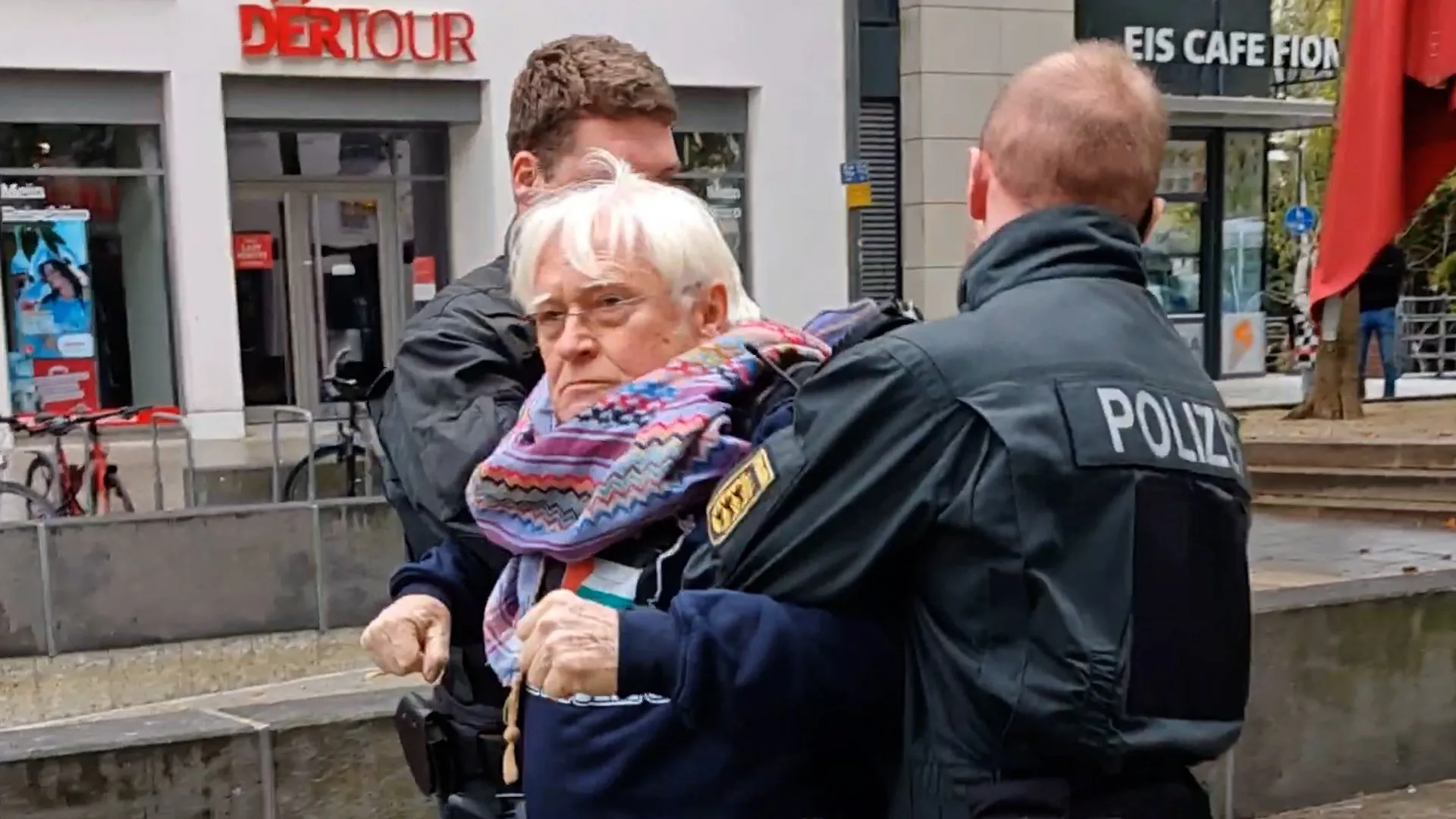
An elderly man was forcibly restrained by police during a protest against Israeli weapons manufacturer Elbit Systems in Ulm, Germany. The man was seen bleeding after officers forced him to the ground.
Interior Minister Laurent Nunez acknowledges that police ‘lost control’ during weekend protests.
Published On 19 Oct 202619 Oct 2026
French President Emmanuel Macron has declined Interior Minister Laurent Nunez’s offer to resign after nationwide demonstrations by students protesting educational conditions and groups angry over the high cost of living turned into widespread riots and looting, the Elysee presidential office says.
Macron said Nunez should stay in his position to ensure the chain of command is maintained within the police and security forces and asked the interior minister to establish new methods to deal with looters, the Elysee said in a statement on Monday.
Recommended Stories
list of 4 itemsend of list
The president also asked Nunez to “take all necessary steps to ensure transparency over the failures in planning and intelligence that led to the violence”, the statement added.
The Ministry of the Interior said more than 2,300 people were arrested and almost 1,000 police and gendarmes injured in protests on Saturday. Injuries were also reported among protesters, with one demonstrator’s hand blown off by a police crowd-control grenade.
The nationwide demonstrations brought together students demanding better conditions in the French education system and residents protesting against the high cost of living and faltering public services.
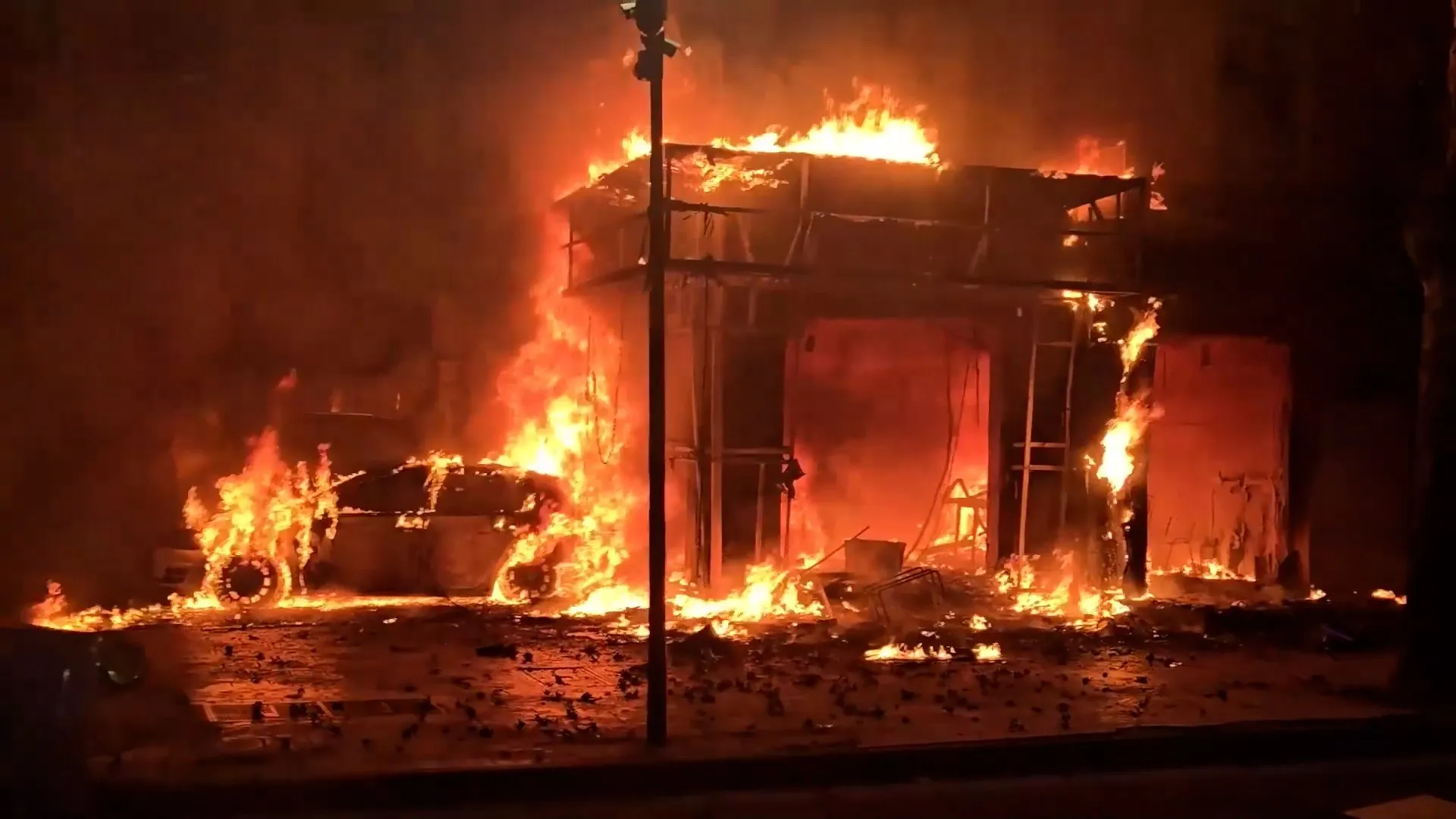
More than half a million people took part in the protests on Saturday. Looting, arson and damage to property occurred in many cities, with masked rioters attacking town halls, police stations and other government buildings.
Nunez acknowledged on Monday that police “lost control” during the protests.
“On Saturday in some major cities, you couldn’t look shopkeepers in the eye after hundreds of shops had been looted and tell them we hadn’t lost control,” Nunez said.
Nunez acknowledged a “lack of anticipation” in the deployment of security forces on Saturday, saying their numbers were insufficient to deal with the large crowds of rioters and looters on the fringes of the demonstrations.
He estimated that 60,000 law enforcement personnel were deployed across the country that day.
“Given the damage that has been caused, it was only right that I should hand in my resignation,” Nunez said.
Looting continued on Sunday, and Paris Mayor Emmanuel Gregoire said on Monday that about 30 shops had been targeted in the capital the previous day, describing the scenes as “unbearable”.
Nunez said about 350 people were arrested in Paris on Sunday and overnight.
Nationwide, more than 2,330 people were taken into police custody over the weekend, 70 percent of whom were adults, Justice Minister Gerald Darmanin said.
The violent weekend demonstrations followed weeks of protests by high school students against overcrowded classrooms, teacher shortages and underinvestment in education, the biggest youth-led protest movement in the country in recent memory.
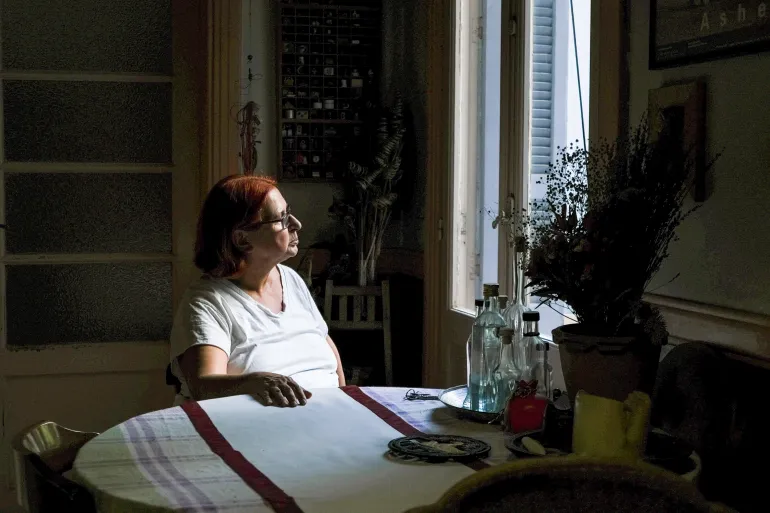
Athens, Greece – Tonia Katerini, a 69-year-old architect, leaned into her computer, scrolling through the property contracts that she said are remaking her neighbourhood.
Across Exarchia, the Athens district long known for its radical left-wing politics, flats are being bought up and turned into short-term rentals, pushing out the people who live there.
For months, Katerini and a group of neighbours have been digitally mapping foreign purchases using public records, marking them with red dots.
She zoomed out from her street on the map; it was a sea of red.
The balcony doors of her flat, where she has lived since 1986, were open and noise from the cafes below drifted in past the plants and stacks of architectural plans.
Her group says much of the money behind the rentals is Israeli; by their count, more than half of the area’s new company-run hotels and rentals .
In a neighbourhood where Palestinian flags hang from balconies and solidarity slogans cover the walls, that has caused friction.
On her own cobbled street, where the noise of arriving tourists rolling their suitcases wakes her in the morning, Israeli investors have bought two buildings, she said. The flat below hers belongs to one such company.
“They are nice guys we have downstairs,” she said. “It’s an Israeli company.”
Tonia Katerini in her flat in Exharchia in Athens [Nils Adler/Al Jazeera]
A few streets away, a residential building is streaked with black paint.
“Airbnbs leave us homeless,” reads one slogan across its facade. “Zionists not welcome,” reads another.
Such buildings are easy to spot. Instead of residents’ names, the buzzer panels show only numbers and a keypad by the door releases keys for Airbnb guests.
Across the neighbourhood, activists have splattered keypads and facades with red paint.
They say short-term rentals are driving an aggressive gentrification that is pricing out locals and erasing the area’s identity.
Foreign money has poured into Greek property in recent years: non-residents invested a record 2.75 billion euros ($3.2bn) in Greek real estate in 2024, according to the Bank of Greece, before easing last year.
No official figures break down foreign buyers in Athens by nationality. But an annual survey of completed sales by the agency network RE/MAX Hellas found that Israelis were the largest group of foreign buyers in Attica, the region around the capital, ahead of buyers from Turkiye and Lebanon, reported the Greek weekly To Vima.
Exarchia’s political activism runs deep. In 1973, students at the nearby Athens Polytechnic rose up against the US-backed military government, which fell the following year.
In 2008, police shot dead Alexandros Grigoropoulos, a 15-year-old Greek student, in Exarchia, provoking protests that spread across the country. It came, Katerini said, like “fire on dry land”.
As Greece’s debt crisis deepened, that anger on the streets helped propel the left-wing Syriza party to power in 2015.
A protester confronts riot police in Athens, December 7, 2008 [John Kolesidis/Reuters]
‘Tenants displaced, apartment blocks emptied’
Chrysoulla Papageorgiou, a schoolteacher who has lived in Exarchia for 24 years, is a familiar face on its streets. Earnest and straight-talking, the 46-year-old remembers it as “a neighbourhood of solidarity”.
The change came slowly, then quickened. At first, small owners rented out a spare room. After the COVID-19 pandemic, companies began buying entire blocks.
“Overnight, tenants were displaced and apartment blocks emptied,” she said.
Bars opened, spilling tables and chairs across pavements on streets that had once been quiet.
Rents rose and migrants and low-income families, many living in basements and on the lower floors, were the first to go. Schools lost pupils and old bookshops, traditional cafes and grocers closed.
For years, Exarchia residents sheltered refugees in occupied buildings. Sitting on prime real estate, they were among the first buildings police emptied and then sold, Papageorgiou said.
“Half were squats,” she said. “Now we have only one.”
That last building is draped in painted sheets declaring solidarity with the families inside. Neighbours help make sure the children get to school.
The last building in Exarchia where migrants and refugees without housing can stay [Nils Adler/Al Jazeera]
Since 2022, Exarchia Square, long the heart of the neighbourhood’s protests, has been a fenced-off construction site for a new metro station that many residents fought against. Riot police, Papageorgiou added, are now a daily presence.
The aim, she believed, is to turn central Athens into somewhere “purely touristic”.
In recent years, buyers have been “almost only Israeli”.
Riot police walk through Exarchia [File: Nils Adler/Al Jazeera]
Near the square hangs a large Palestinian flag. Tourists sometimes scrawl anti-Palestinian messages on its white stripe, and activists paint it white again.
Foreign buyers, Katerini said, see Greece as a safer place for their money than Israel itself, and in Athens “the government is very friendly with Israel”. In August, Athens signed a missile deal with Israel worth $3.5bn.
‘A very good opportunity’ for investors
Vagelis Lazaridis, a stocky real estate agent who heads a branch of the Athens-Attica Real Estate Agents’ Association, talks about his trade with passion. He said the reasons for the investments were purely practical.
Exarchia “was a run-down area” which made it “a very good opportunity”, he said.
It is beside the centre, close to the metro and to universities full of students from abroad. Unlike Plaka, beneath the Acropolis, it has few building restrictions.
Once a handful of buyers arrive, he said, others follow.
One of the many slogans criticising short-term rentals in Exarchia, Athens, Greece [File: Nils Adler/Al Jazeera]
Greece to become ‘far less appealing’ for Israeli buyers
The government is now trying to cool the market.
Prime Minister Kyriakos Mitsotakis announced last month that the transfer tax for homebuyers from outside the European Union would rise from 3 percent to 15 percent from next July.
“The party is over in Greece,” The Jerusalem Post wrote in a recent report. “The country, which in recent years has become a preferred destination for Israelis seeking real estate investments at reasonable prices and with attractive yields, is about to become far less appealing.”
Lazaridis said agents’ associations oppose the plan, which has yet to become law. It “may not take effect, or may be postponed”, he said.
Agents expect some non-EU buyers to speed up purchases before the deadline, reported the Greek news site in.gr.
A ‘tourists go home’ poster in Exarchia, October 10 2026 [Nils Adler/Al Jazeera]
‘Fewer Airbnbs’
Not everyone in the trade sees an unstoppable tide.
Iryna Rondyak, who is originally from Ukraine, runs her own estate agency near Exarchia. She said that when Israeli buyers began arriving about a decade ago, they made up about 60 percent of her foreign clients, many buying whole office buildings to turn into hotels.
Until around 2024, foreigners accounted for about 70 percent of her sales, she said.
This year, it is about 30 percent, as state-backed mortgages for young Greeks, under a scheme called “Spiti mou” (My Home), attract local buyers back.
Iryna Rondyak in her office in Athens, October 10, 2026 [Nils Adler/Al Jazeera]
She credits new rules for the turnaround.
No new short-term rental licences are being issued in central Athens, including Exarchia, and in September the freeze was extended to the end of 2027, reported To Vima.
Properties bought under Greece’s “golden visa” residency scheme can now only be let long-term. While a cheaper route into the scheme, at 250,000 euros ($280,000), rewards investors who convert empty office buildings into flats.
“Anyone living in Greece couldn’t find a home in the centre. Everything was on Airbnb,” she said. “Now there are far fewer.”
It is “a little better,” she said, but “the problem still exists”.
Rents remain high, at 10 to 15 euros ($12 to $17) per square metre, even in the southern suburbs, she said. Many flats sit empty because owners find renting them out is not worth the tax bill.
A building in Exarchia converted into Airbnb rentals has been pelted with paint by activists, October 10, 2026 [Nils Adler/Al Jazeera]
Residents are less convinced.
The rental freeze is temporary, they say, and investors with enough money can still find ways in. Nor does it undo what has already happened: many of the neighbourhood’s buildings are already short-term rentals.
Back in Exarchia, Papageorgiou counts herself lucky.
Her landlady, whose family has lived in the area for generations, refuses to raise the rent as an “act of resistance”.
Papageorgiou said jokingly that her landlady’s accountant has told her she is ruining the market.
Real Madrid beat Sevilla 4-1 a day after Barcelona thrashed Real Betis 5-2, as the Spanish giants prepare for El Clasico.
Published On 19 Oct 202619 Oct 2026
Kylian Mbappe scored twice as Real Madrid closed the gap on La Liga leaders Barcelona to six points with a 4-1 win over Sevilla at the Santiago Bernabeu, a week before the rivals meet.
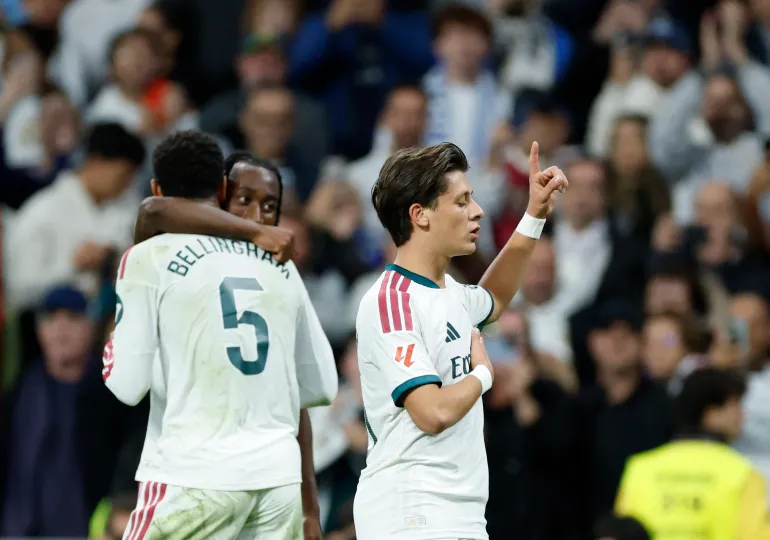
Despite the absence of suspended Vinicius Jr, Real produced the fluid attacking football the team had been lacking of late, with Arda Guler again orchestrating their best work on Sunday.
After a stale opening, the Turkish international sparked the match into life.
Sevilla appealed for a red card following an incident involving Guler and Peque Fernandez, but Guler responded minutes later by collecting Yan Diomande’s pass and arrowing a shot into the top corner.
Arda Guler scored his second goal of the La Liga season for Real Madrid [Oscar Del Pozo/AFP]
Mbappe scored an equally impressive second in the 37th minute, turning brilliantly to burst through on goal before calmly beating Odysseas Vlachodimos.
Fede Valverde, restored to right back by coach Jose Mourinho, made a crucial block to deny Felix Correia just before the hour as Sevilla threatened to work their way back into the contest.
Diomande then exploited the space created by Sevilla’s more adventurous approach, evading his marker before sending Mbappe in behind the defence. Andres Castrin brought down the French forward, who got to his feet to convert the resulting penalty and effectively settle the contest.
Substitute Manu Bueno reduced Sevilla’s arrears with a composed finish 10 minutes from time after Mbappe cheaply surrendered possession deep inside his own half.
Diomande restored Real’s three-goal advantage two minutes later, capping a fine display with a thunderous strike.
Eder Militao received a warm ovation when he came on in the 85th minute for his first appearance since undergoing hamstring surgery in April.
Mourinho will take encouragement from one of the most complete performances of his second spell at Real as they prepare for next Sunday’s pivotal meeting with Barcelona.
Real, who have won three straight games in all competitions following the international break, climbed to third on 21 points, one behind Atletico Madrid, while Sevilla are sixth on 14.
Lamine Yamal has begun the season in superb form for Barcelona [Jorge Guerrero/AFP]
Earlier on Saturday, Barcelona beat Real Betis 5-2 to make it nine wins from nine and stretch their blistering league tally to 39 goals.
Lamine Yamal lit the fuse with a dazzling opener before Rodri, Gabriel Jesus, Eric Garcia and substitute Dani Olmo joined the party, while Valentin Gomez and Ez Abde replied for Betis, who played much of the second half with 10 men after Facundo Bernal was sent off for head-butting Lamine.
Barca moved to 27 points, five above Atletico, who won 1-0 at Espanyol, while third-placed Betis have 19 and Real Madrid sit fourth on 18 before welcoming Sevilla on Sunday.
Elsewhere, Osasuna withstood second-half pressure from Racing Santander to win 2-0 in Jagoba Arrasate’s first game back as manager.
Two flying saves from Ionut Radu denied Alaves a point in a 2-1 defeat to Celta Vigo, while Real Sociedad won 5-2 at Malaga.
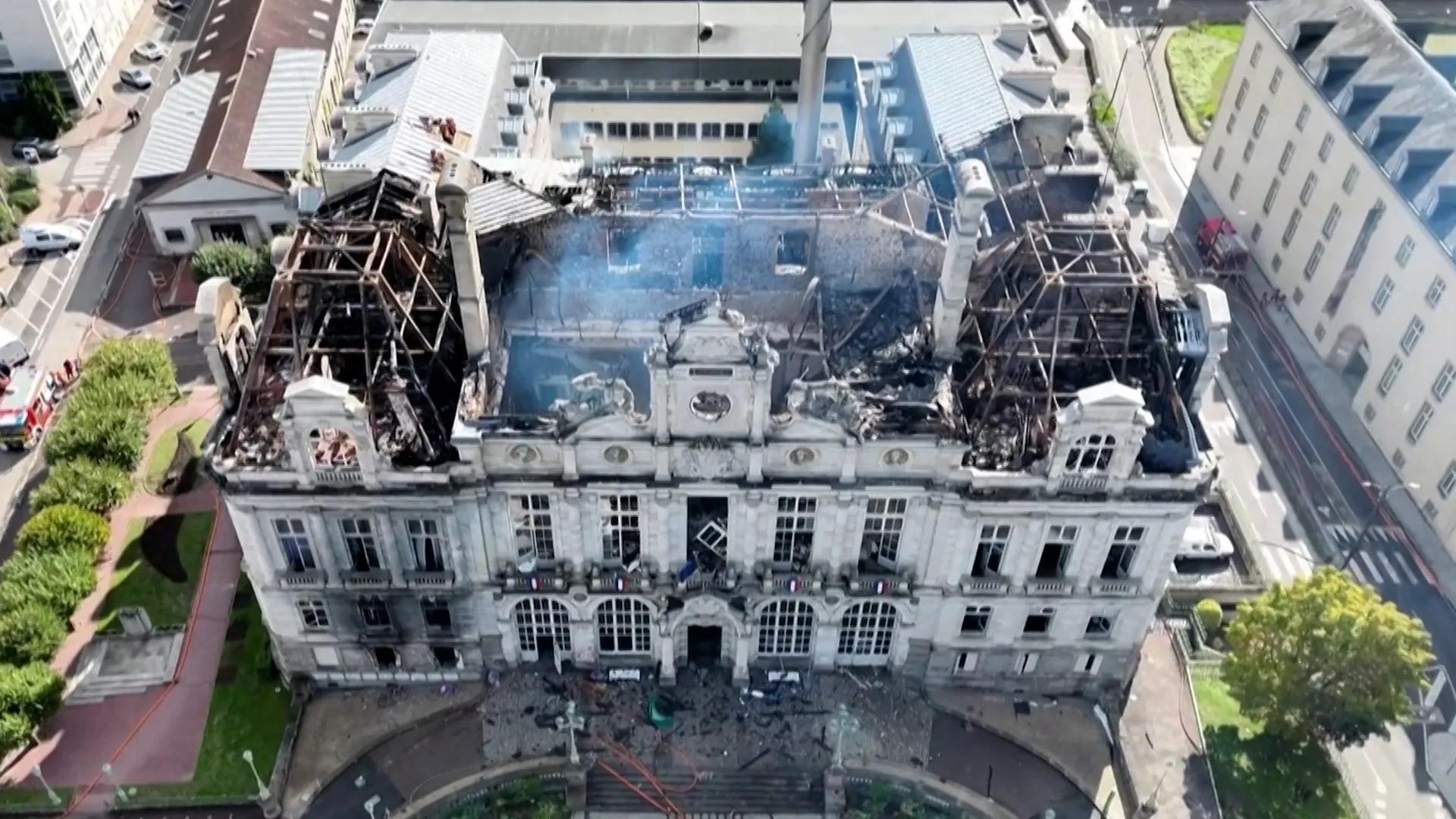
Residents in Limoges, France, are expressing shock and anger after protests saw their 140-year-old town hall set ablaze. The fire destroyed its roof and clock tower, as officials condemned the attack.
US president accuses Ukrainian leader of not wanting to end the war, as Zelenskyy speaks with Washington envoys.
Published On 19 Oct 202619 Oct 2026
United States President Donald Trump has defended sanction waivers for Russia, saying he wants to keep Moscow at the bargaining table and accusing his counterpart in Kyiv of not wanting to end the war in Ukraine.
Trump made the comments on Truth Social on Sunday in response to criticism of his decision to block numerous sanctions on Russia just days before they were due to take effect.
Recommended Stories
list of 3 itemsend of list
“My decision on Russia is a very simple one. I am in the process of negotiating Peace in the war between Russia and Ukraine, and don’t want to do anything that will drive, foolishly, Russia away from the bargaining table,” he said.
The move has triggered a significant diplomatic fallout between Trump and Ukrainian President Volodymyr Zelenskyy over the past week.
Zelenskyy said that waiving sanctions on Russia, which launched a full-scale invasion of its neighbour in 2022, “will hurt Ukraine”, telling NBC’s Meet the Press on Sunday that it would strengthen Russian President Vladimir Putin’s war effort.
“We can’t compare me and Putin. He’s [an] aggressor. He occupied us. He killed adults and children, his soldiers. He’s a terrorist, and that’s why I hope that President Trump will be very clear with this position.”
Trump reiterated his claim that Zelenskyy does not want the war on his country to end, saying on Truth Social that Kyiv was launching attacks on diesel refineries in Russia despite knowing it was “seriously hurting the world diesel markets”.
“Zelenskyy doesn’t care, and frankly, with all of the money that Europe is famously giving him… he doesn’t want to end this war, and probably never did,” Trump wrote.
Trump announced plans on October 9 for Russia to supply more than 300,000 metric tonnes of diesel to US and global markets to tackle fuel prices that have soared since the US and Israel launched war on Iran in late February. The move led Tehran to effectively close the Strait of Hormuz, through which one-fifth of global energy exports transited before the war.
Trump’s embrace of Russian energy has angered not only Kyiv, but also European partners and many US officials, who say the move rewards Moscow while it continues its four-and-a-half-year war against Ukraine.
US-Ukraine talks continue
The Ukrainian president said on X on Sunday that he has spoken with US presidential envoys Steve Witkoff and Jared Kushner as part of “virtually non-stop communication” between the two countries’ teams aimed at the “next steps in diplomacy”.
“We are doing everything on our part to make this happen, and to ensure that America’s position is strong and helps bring peace closer. Peace that everyone, except Russia, has been waiting for over the past four and a half years,” Zelenskyy wrote.
Zelenskyy spoke with Witkoff and Kushner as Russia and Ukraine continued to strike each other’s energy sites, with Moscow leaving thousands without power, and Kyiv carrying out the largest drone attack on Russia, in St Petersburg, since the war began.
Crew of Austrian Airlines flight OS82 decides to land in Sofia after receiving bomb threat, Bulgarian authorities say.
Published On 18 Oct 202618 Oct 2026
An Airbus A320 flight from Tel Aviv to Vienna has made an emergency landing in Bulgaria following a reported bomb threat, according to the Bulgarian Ministry of Transport.
Austrian Airlines flight OS82 was near the border with Romania when the crew received a bomb threat and decided to land in the Bulgarian capital, Sofia, the Transport Ministry said in a statement on Sunday.
Recommended Stories
list of 3 itemsend of list
Bulgaria’s Ministry of Defence said an air force MiG-29 fighter jet escorted the plane to Sofia airport.
Initial information showed the aircraft carried six crew members and 51 passengers, all of whom have all since disembarked, according to the Transport Ministry’s statement.
The airline told the AFP news agency that a security search of the aircraft was conducted.
“Once the search of the aircraft is complete, the passengers will be rebooked onto alternative flights as quickly as possible,” the airline said.
A crisis response team has been set up, and relevant authorities have launched an investigation into the incident, the Bulgarian Transport Ministry said.
According to aviation and flight tracking site FlightAware, Austrian Airlines 82 left the Ben Gurion airport in Tel Aviv on Sunday at 6:46pm local time (15:46 GMT) and landed about three hours later at Vasil Levski airport in Sofia at 9:43pm (18:43 GMT).
Flightradar24 data showed it entered Romanian airspace at about 9:10pm (18:10 GMT) before turning south and heading back towards Bulgaria.
Information from the flight-tracking platform ADS-B Exchange indicates the aircraft was transmitting squawk code 7700 – a signal for a general emergency – at around the same time.
Flydubai incident
Last month, a Flydubai plane carrying 174 passengers was on its way from the United Arab Emirates to Tel Aviv when a co-pilot allegedly attacked the pilot with an axe in an attempt to crash the plane.
A plane carrying passengers who were on the Flydubai aircraft bound for Israel from the United Arab Emirates, which was diverted to Saudi Arabia following an emergency signal, arrives at the Ben Gurion airport near Tel Aviv, Israel, on September 30, 2026 [Ammar Awad/Reuters]
The aircraft plunged about 17,000 feet (5,180 metres) before it was brought back under control by other Flydubai pilots after passengers and other crew subdued the alleged attacker.
The flight was diverted and forced to make an emergency landing at Prince Sultan bin Abdulaziz International Airport in Tabuk, northwestern Saudi Arabia.
Authorities in the UAE said the co-pilot was on a “suicide” mission to crash the plane at Israel’s Ben Gurion airport in Tel Aviv.
The co-pilot, Hamam Al-Hammami, an Omani national, has since been charged with terrorism offences in the UAE.
The Israeli government responded to the incident by ordering checks on the identities of all pilots flying into the country.
French President Emmanuel Macron says protesters who attacked government buildings need to pay for their crimes. His address comes after hundreds were arrested across France during violent protests against the rising cost of living and poor school conditions.
President Macron promises to increase security, but stops short of announcing a state of emergency or curfew.
Published On 18 Oct 202618 Oct 2026
French President Emmanuel Macron has expressed “anger and shame” over what he described as violent protesters’ attempts “to bring down the republic”.
In a televised address to the nation on Sunday, Macron promised that rioters and looters would “pay for their crimes”, after Saturday saw some of the worst urban violence in France in years.
Recommended Stories
list of 3 itemsend of list
The country’s Interior Ministry said that nearly 2,400 people were arrested on Saturday, with about 1,000 police and gendarmes injured.
Macron said there must be a distinction between protesters with “legitimate demands” and “those who destroyed, smashed, and looted”.
The president pledged to launch a “crisis unit” to provide “urgent aid … for those who are going through difficult moments”. He added that “lessons will be learned” after the destructive violence erupted this weekend.
“We need to be clear: yesterday, our law enforcement officers and officials, despite their professionalism, were subjected to unprecedented violence in several cities,” he said.
“I’ve asked the government to provide all the lessons learned and to be able to anticipate it to make sure that this does not happen again,” Macron said, adding: “We need unity, we need calm and respect.”
Protests across France descended into violence and looting across the country [Carl Court/Getty Images]
Reporting from Paris, Al Jazeera’s Natacha Butler said Macron’s speech had “perhaps no surprises”.
“Whether it’s going to be enough to placate some people, I’m not really sure, because those who have been out protesting say they’re fed up of hearing these sorts of speeches by the French president,” Butler said.
The protests are quickly becoming a political football for parties vying for public support ahead of presidential elections next year.
Left-wing presidential candidate Jean-Luc Melenchon said the French government is “solely responsible” for the destruction during protests, and has “failed to organise the maintenance of public order”.
Far-right presidential hopeful Jordan Bardella called Macron’s Sunday speech “lamentable” and “cowardly”, saying the government has nothing left to offer the French people and “cannot even protect them”.
Offices at the Supreme Court in Tirana were set ablaze as anti-government protests over corruption, education, and unemployment entered their fifth day.
A government at war with its critics – from young protesters to the media.
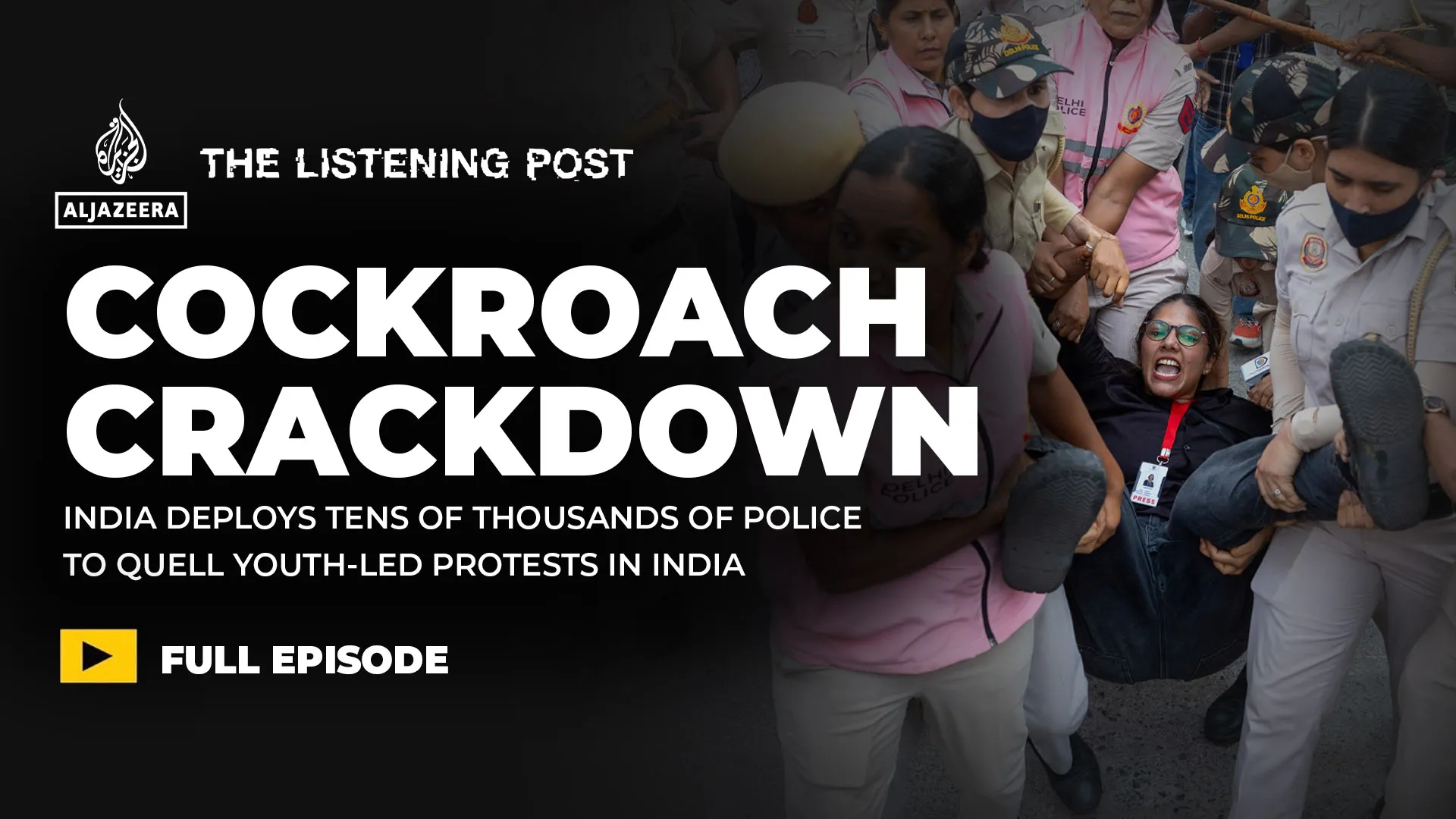
A wave of youth-led protests has returned to the streets of India’s capital, Delhi, after media reports revealed that the Electoral Commission removed about 130 million names from voter lists.
These protests differ from the unrest that exploded in July, though, by the attacks on the media.
Dozens of journalists and content creators have been detained, assaulted or blocked from doing their jobs. But tightening the screws on critical reporting doesn’t appear to be working, as a new generation rises to challenge the government.
Contributors: Saba Naqvi – Author and journalist Smita Sharma – Multimedia journalist Shyam Meera Singh – Founder, Strike Originals Sushant Singh – Lecturer, Yale University
On our radar
Pakistan has declared a state of emergency in the northwestern province of Khyber Pakhtunkhwa, following protests calling for the release of jailed former Prime Minister Imran Khan.
The state’s response has followed a familiar pattern: A media blackout and internet shutdown, while casting protesters as rebels.
Reporter: Tariq Nafi
The rise of digital micro-Bolsonaros
It’s been more than three years since Jair Bolsonaro fell from power, yet the right-wing movement he started is still without a clear leader. Into that gap has stepped a new crop of young evangelical political influencers, who are tapping into a decades-old religious media machine to build their audience.
Their viral content ricochets across social feeds, mobilising followers and voters in ways old-school politicians just can’t match.
The Listening Post’s Nicholas Muirhead reports on Brazil’s evangelical influencers and the political space they are looking to take over.
Featuring: Anna Virginia Balloussier – Journalist, Folha De Sao Paulo Caro Evangelista – Executive director, Iser Magali Cunha – Editor-in-chief, Berreia Project

![People walk in front of a damaged shopping mall following an air attack in Kyiv on October 19, 2026, amid the Russian invasion of Ukraine [Oleksii Filippov/AFP]](https://i0.wp.com/occasionaldigest.com/wp-content/uploads/2026/10/AFP__20261019__D3PR8JC__v1__HighRes__UkraineRussiaConflictWar-1792469703.jpg?w=640&ssl=1)










![A plane, carrying passengers who were on the FlyDubai aircraft bound for Israel from the United Arab Emirates, which was diverted to Saudi Arabia following an emergency signal, on the tarmac as it arrives at the Ben Gurion International Airport, in Lod, near Tel Aviv, Israel, September 30, 2026 [Ammar Awad/Reuters]](https://i0.wp.com/occasionaldigest.com/wp-content/uploads/2026/10/2026-10-04T143706Z_234243230_RC2RTNAGNE7D_RTRMADP_3_ISRAEL-GULF-FLIGHT-AUSTRALIA-1792361230.jpg?w=640&ssl=1)