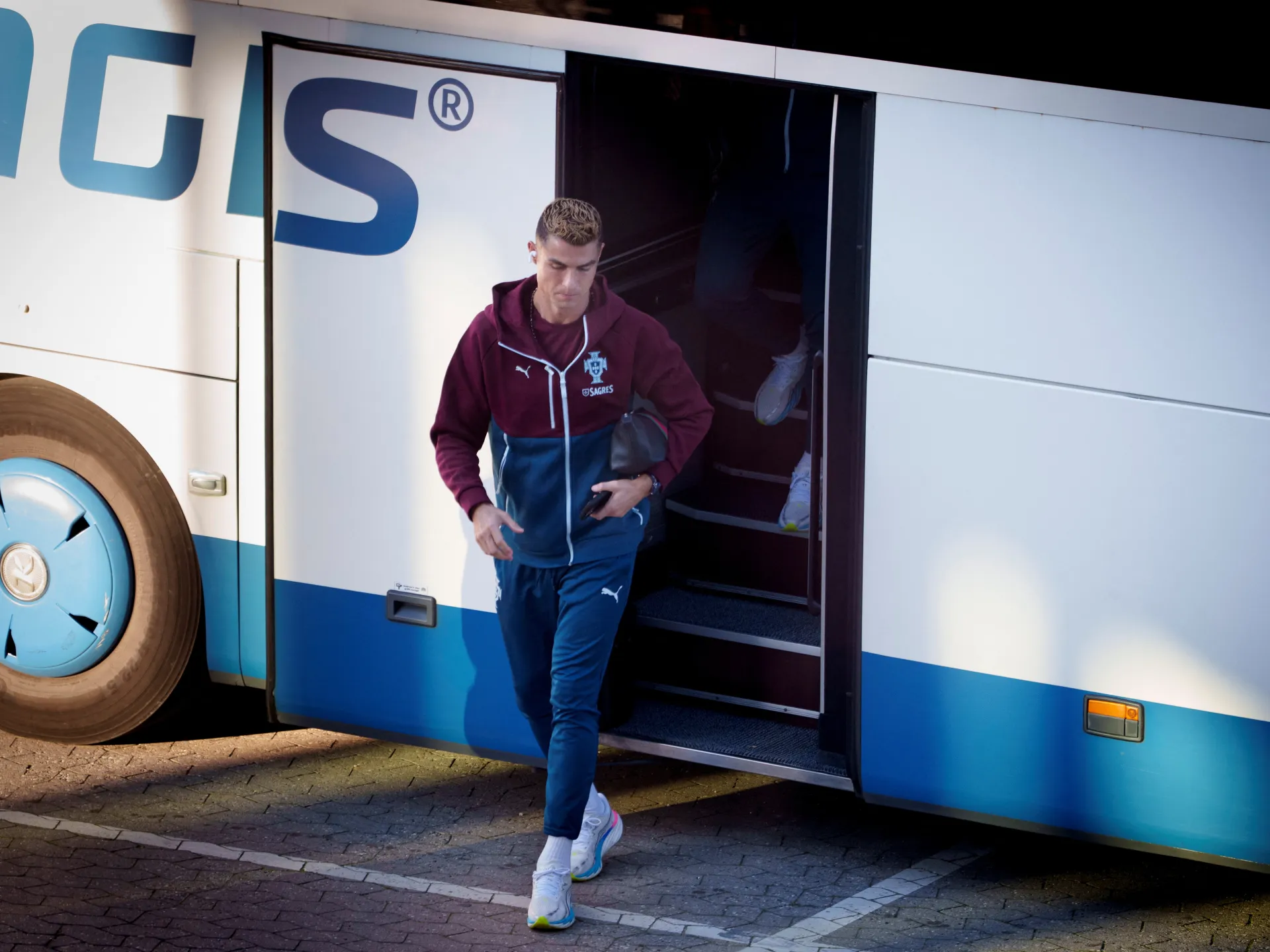
Alex Manninger played for Arsenal, Liverpool and Juventus at peak of his career while winning 33 Austria caps.
Published On 16 Apr 202616 Apr 2026
Former Austria goalkeeper Alex Manninger, who played for Arsenal and a string of Italian clubs, has died at the age of 48 when the car he was driving was hit by a train at a crossing near Salzburg.
The Austrian Football Association (OEFB) and clubs associated with the player, who retired as a professional in 2017, mourned his passing on Thursday.
Recommended Stories
list of 4 itemsend of list
Manninger made 33 appearances for Austria and played for Arsenal from 1997 to 2001 with the club winning the league title and FA Cup in the 1997-1998 season. He ended his career at Liverpool in 2017.
In Italy, the Austrian played for Fiorentina, Torino, Bologna, Siena, Udinese and Juventus.
“Alexander Manninger was an outstanding ambassador of Austrian football on and off the pitch,” OEFB Sporting Director Peter Schoettel said in a statement.
“With his international career, he has set standards and inspired and shaped many young goalkeepers. His professionalism, his calmness and his reliability made him an important part of his teams and also of the national team.”
Salzburg police said in a statement that the accident happened about 8:20am (06:20 GMT). First responders freed the driver from the vehicle, but resuscitation was unsuccessful.
“According to initial investigations, the car was hit by a railcar of the Salzburger Lokalbahn while crossing the railway crossing and dragged along. The driver was alone in the vehicle. The train driver was uninjured,” the police said.
Fiorentina said they will observe a minute’s silence and wear black armbands for Thursday’s home Conference League game with Crystal Palace while league leaders Arsenal conveyed their shock on social media.
Other clubs, including Liverpool, issued statements of condolence.
“Today is a very sad day. We have lost not only a great athlete, but a man of rare values: humility, dedication, and an exceptional sense of professionalism,” Juventus said
“Alex Manninger will be remembered for the example he set, on and off the pitch.”
Modern warfare has dramatically changed as we have seen from the Russia-Ukraine war, conflicts involving Gaza, India and Pakistan, and the recent US-Israeli strikes on Iran. At the centre of this shift is a surging global reliance on drone and missile technology as well as advanced air defence systems.
Turkiye, one of the largest military powers in the Middle East, is increasingly positioning itself as a major supplier in the global defence sector. Central to this effort is Roketsan, a company founded in 1988 to supply the Turkish Armed Forces, which has since evolved into the country’s primary manufacturer of missile and rocket systems.
Recommended Stories
list of 3 itemsend of list
Currently exporting to approximately 50 countries, the firm is one of the fastest-growing defence companies globally.
So how did Roketsan secure a large share of the global arms trade?
Bypassing Western embargoes
Turkiye’s defence expansion was largely accelerated by restrictions placed upon it. Western embargoes aimed at halting its military advancement meant Ankara could not acquire the necessary technical systems or components.
In 2020, the United States imposed Countering America’s Adversaries Through Sanctions Act (CAATSA) restrictions on Turkiye – a key member of the transatlantic military alliance NATO. These sanctions targeted Turkiye’s military procurement agency, its chief Ismail Demir, and three other senior officials. Washington also ejected Ankara from the F-35 stealth jet programme in July 2019.
The measures came after Ankara purchased Russia’s S-400 missile defence system, which was seen as a potential threat to NATO security. The European Union also prepared limited sanctions and discussed restricting arms exports following energy exploration disputes in the Eastern Mediterranean.
To circumvent this, the country built an integrated, domestic defence ecosystem. Today, Turkiye relies on a vast supply chain of nearly 4,000 small and medium-sized enterprises (SMEs) scattered across the country. As a result, the Turkish defence industry now operates with a local production rate exceeding 90 percent.
Türkiye’s defence industry now operates with a local production rate exceeding 90 percent, bypassing long-standing Western embargoes [Al Jazeera]
This shift has yielded significant financial returns for Ankara. In 2025, Turkiye’s defence industry reported $10bn in exports. Roketsan’s General Manager Murat Ikinci told Al Jazeera that the company currently ranks 71st among global defence firms, with ambitions to break into the top 50, then the top 20, and ultimately the top 10.
To support this expansion, Turkish President Recep Tayyip Erdogan inaugurated several large-scale facilities last week, including:
Europe’s largest warhead facility.
new research and development (R&D) centre housing 1,000 engineers.
the “Kirikkale” facility dedicated to rocket fuel technology.
new infrastructure for the mass production of ballistic and cruise missiles.
These projects represent a $1bn investment, with the company planning to inject an additional $2bn to expand mass production capabilities.
The ‘Tayfun’ and modern warfare
Roketsan’s R&D strategy – which employs 3,200 engineers and makes the company the third-largest R&D institution in Turkiye – is heavily influenced by data gathered from ongoing global conflicts.
According to Ikinci, the war in Ukraine highlighted the impact of cheap, first-person view (FPV) and kamikaze drones supported by artificial intelligence. In response, Roketsan developed air defence systems like “ALKA” and “BURC,” alongside the “CIRIT” laser-guided missile.
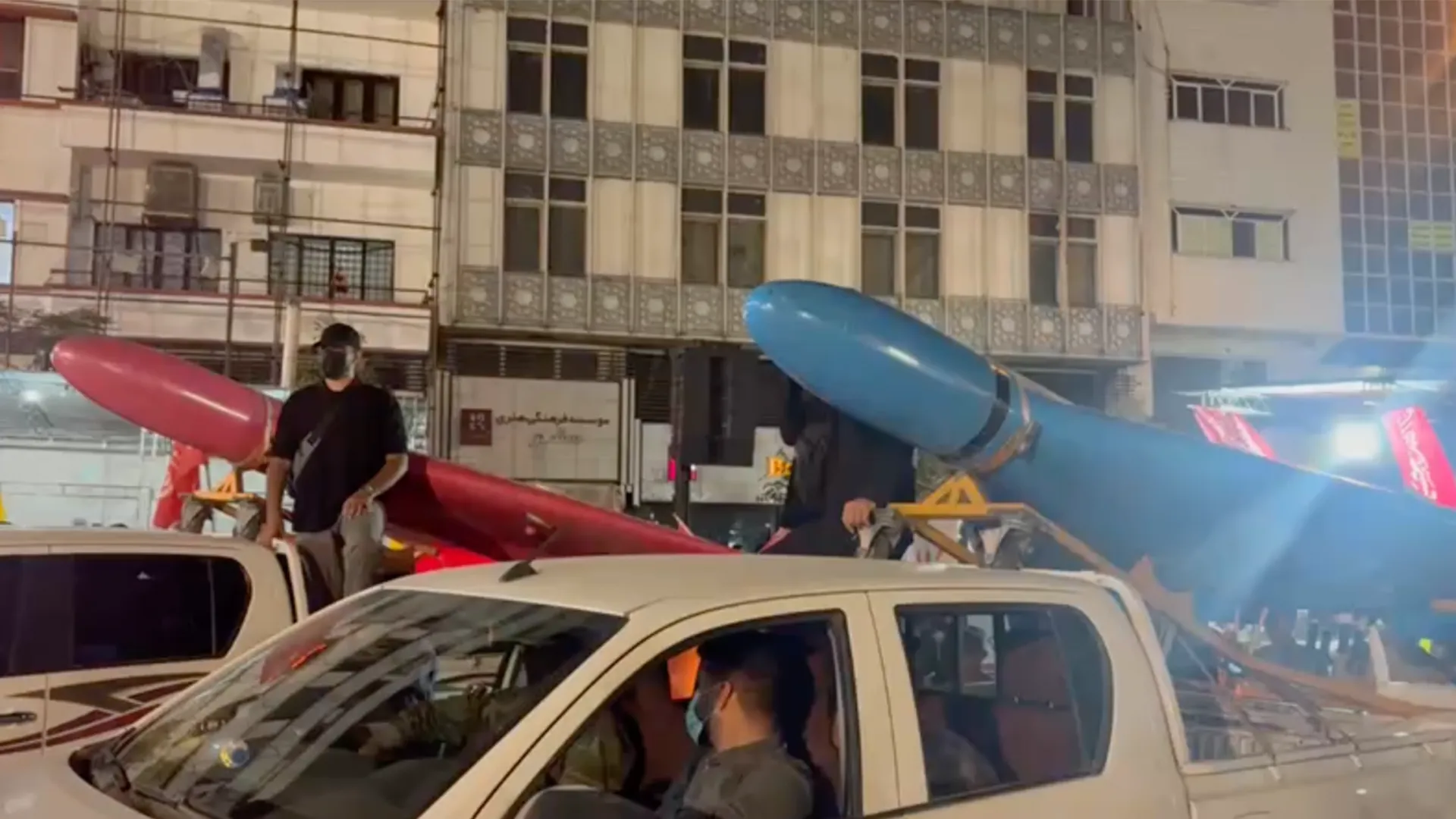
The regional landscape was further complicated during the US-Israel war on Iran, as cheap Iranian-designed Shahed drones – recently upgraded by Russia with “Kometa-B” anti-jamming modules – overwhelmed defences and even struck a British base in Cyprus in March 2026. During the same month, NATO air defences were forced to intercept three Iranian ballistic missiles that entered Turkish airspace.
Meanwhile, the recent conflict between Israel and Iran showcased the use of complex attacks combining ballistic missiles with “swarms” of kamikaze drones designed to overwhelm air defences. This environment makes hypersonic technology a critical asset.
This brings the Tayfun (Typhoon) project into focus. Tayfun is a developing family of long-range ballistic missiles. Its most advanced iteration, the Tayfun Block 4, is a hypersonic missile engineered to penetrate advanced air defence systems by travelling at extreme speeds.
When Al Jazeera asked for specific details regarding the Tayfun’s exact operational range, Ikinci was elusive. “We avoid mentioning its range; we just say its range is sufficient,” he noted.
Similarly, historical Western sanctions have pushed Turkiye to form new cooperation initiatives, effectively accelerating an “Eastern shift” away from Western defence dependence. Turkish drones are now being used by a growing number of countries, including by Pakistan during its war against India last May.
Based on these threat assessments, Roketsan has prioritised five key areas of production:
long-range ballistic and cruise missiles.
air defence systems, including the “Steel Dome”, Hisar-A, Hisar-O, and Siper.
submarine-launched cruise missiles, utilising the AKYA system to leverage Turkiye’s large submarine fleet.
smart micro-munitions designed specifically for armed drones.
long-range air-to-air missiles, a need highlighted by the brief India-Pakistan skirmish.
A strategic export model
Unlike traditional arms procurement, Turkiye is marketing its defence industry to international buyers as a strategic partnership.
“Our offer to our partners… is as follows: Let’s produce together, let’s develop technology together,” Ikinci stated.
Rokestan’s General Manager Murat İkinci, right, emphasises that Roketsan’s international strategy is based on ‘partnership models’ rather than simple sales [Al Jazeera]
By establishing joint facilities and R&D centres in allied nations across the Middle East, the Far East, and Europe, Turkiye is attempting to secure long-term geopolitical alliances rather than purely transactional sales. Ikinci highlighted Qatar as a prime example of this model, describing it as a benchmark for technological, military, and security cooperation in the region.
Filling the global stockpile gap
This rapid expansion comes at a critical time for the global arms trade. Ongoing wars have severely depleted the stockpiles of advanced weapon systems worldwide.
During the recent US-Israel war on Iran, Washington relied heavily on multimillion-dollar Patriot and Terminal High Altitude Area Defense (THAAD) systems to intercept cheap Iranian drones targeting US assets across Qatar, Kuwait, Bahrain, Saudi Arabia, and the United Arab Emirates. With growing concerns that US interceptor supplies could run low, Gulf states – which have collectively detected over 1,000 drones in their airspace – are actively seeking alternative defence technologies, creating a highly lucrative opening for Turkiye’s missile industry.
Defence analyses indicate that even military superpowers like the US will require significant time to replenish their current air defence inventories due to the complexity and massive infrastructure required to build them.
Turkish defence officials view this shortage as a strategic opening. Having localised its supply chain, Turkiye claims it can manufacture and export these highly sought-after complex systems independently.
As global demand for air defence and ballistic technologies rises, Roketsan is aggressively reinvesting its revenues into production infrastructure to expand its footprint in the international arms market.
Kharkiv, Ukraine – Hushruzjon Salohidinov, 26, was working as a courier in Saint Petersburg, Russia’s second-largest city and President Vladimir Putin’s hometown.
But last year, the Tajik man and practising Muslim says he was arrested while picking up a parcel which police claimed contained money stolen from elderly women.
Salohidinov says he never interacted with the alleged criminals, but nevertheless spent nine months in the Kresty-2 pre-trial detention centre about 32km (20 miles) from the city, while a judge refused to start his trial because of the “weak evidence” against him.
But instead of releasing him after that, prison wardens threatened to place him in a cell with HIV-infected inmates who, they said, would gang-rape him – unless he “volunteered” to fight in Ukraine.
“They said, ‘Oh, you’ll put on a skirt now, you’ll be raped,’” Salohidinov, who has raven black hair and a messy full beard, told Al Jazeera at a centre for war prisoners in northeastern Ukraine, where he is now being held, having been captured in January this year by Ukrainian forces.
Using a carrot-and-stick tactic, the wardens also promised him a sign-up bonus of 2 million rubles ($26,200), a monthly salary of 200,000 rubles ($2,620) and an amnesty from all convictions.
So, in the autumn of 2025, Salohidinov signed up as he “saw no other way out”.
Officials in Kresty-2, St Petersburg’s prosecutors’ office and Russia’s Ministry of Defence did not respond to any of Al Jazeera’s requests for comment.
Hushruzjon Salohidinov, 26, a Tajik man forced to fight for Russia, at a prisoner of war facility [Mansur Mirovalev/ Al Jazeera]
‘Catching migrants’
Salohidinov is just one of tens of thousands of labour migrants from Central Asia coerced by Russia to become soldiers as part of the Kremlin’s nationwide campaign, according to human rights groups, media reports and Russian officials.
Hochu Jit, a Ukrainian group that helps Russian soldiers surrender, has published verified lists of thousands of Central Asian soldiers like Salohidinov.
“They are literally sent to be killed, no one considers them soldiers that need to be saved,” the group wrote in a 2025 post on Telegram. These soldiers’ life expectancy on the front line is about four months. “Losses among them are catastrophic,” the group reported.
With its low birthrate and large oil wealth, Russia has for years been a magnet for millions of labour migrants from ex-Soviet Central Asia, especially Tajikistan, Uzbekistan and Kyrgyzstan.
The campaign by the Kremlin to force Central Asians to fight in Ukraine dates back to 2023 – the year after Russia’s invasion of Ukraine – when police began rounding up anyone who didn’t look Slavic and charging them with real or imagined transgressions such as a lack of registration, expired or “fake” permits or blurred stamps on their documents. Sometimes, migrants are simply bused straight to conscription offices.
In 2025, Al Jazeera interviewed another Tajik man who said he had been detained with an expired work permit and was then tortured into “volunteering” while being subjected to countless xenophobic and Islamophobic slurs from his officers.
Migrants say they are abused, tortured and threatened with jail or having their entire families deported.
“The main way of recruiting as many migrants as possible is pressure on them with threats of deportation,” Alisher Ilkhamov, the Uzbekistan-born head of the London-based Central Asia Due Diligence think tank, told Al Jazeera.
Sometimes, migrants are simply duped.
Salohidinov said one serviceman in his squad was an Uzbek who “didn’t speak a word of Russian” and was fooled into “volunteering” while signing papers at a migration centre.
In their reports about “catching” migrants, officials frequently use derogatory terms about them, and also when they describe men who have obtained Russian passports but skipped registration at conscription offices. Since the Soviet era, such registration has been obligatory for all men and, since 2024, a newly naturalised Russian national can lose his citizenship if he fails to do it.
“We’ve caught 80,000 such Russian citizens, who don’t just want to go to the front line, they don’t even want to go to a conscription office,” chief prosecutor Alexander Bastrykin said in May 2025, referring to the migrants’ alleged patriotic sentiments.
He boasted that 20,000 Central Asians with Russian passports were herded to the front line in 2025.
The year before, he said 10,000 Central Asians had been sent to Ukraine.
Such remarks resonate with the Russian public that lives with “a high level of xenophobia in the stage of fear and helplessness,” Sergey Biziyukin, an exiled opposition activist from the western city of Ryazan, told Al Jazeera.
“For them, such phrases from Bastrykin are a form of sedative.”
What makes Central Asians easy targets is that they hail from police states, which depend on Moscow politically and economically, observers say.
“While the migrants are frightened into signing contracts, their motherland doesn’t really pay any attention,” Galiya Ibragimova, an Uzbekistan-born, Moldova-based regional expert, told Al Jazeera.
Despite hefty signup bonuses and relentless propaganda, the number of Russians who want to fight in Ukraine fell by at least one-fifth this year, and Moscow will strive to recruit more Central Asians, she said.
Russian conscripts called up for military service attend a ceremony marking their departure for garrisons from a recruitment centre in Saint Petersburg, Russia, on October 15, 2025 [Anton Vaganov/Reuters]
‘We’ll have our fingers broken’
After signing the contract and leaving his debit card with his sign-up bonus with his parents, Salohidinov was sent to the western city of Voronezh for three weeks of training that did little to prepare him for the war.
“We just kept running back and forth with guns,” he said.
Their drill sergeants, he says, told the conscripts that the standard-issue flak jackets, helmets, boots and flashlights were of subpar quality and urged them to pitch in a million rubles ($13,100) each for “better” gear.
The incident corroborates reports on dozens of similar cases in Russian military units.
Salohidinov was ordered to work in a kitchen – and was verbally abused and beaten for the slightest transgression.
Of 28 men in his unit, 21 were Muslims – but their ethnic Russian officers ignored their pleas not to have pork in meals, repeating a decades-old practice of ignoring religion-related dietary restrictions dating back to the Soviet army.
The commanders demonised Ukrainians, telling them “that if we surrender, we’d be tortured, have our fingers broken, maimed, get [construction] foam up our a**, have our teeth yanked out one by one, have our arms broken”, Salohidinov says.
In early January this year, the conscripts were bused to the Russia-occupied Ukrainian region of Luhansk.
Salohidinov says he was tired, frightened and disoriented – Ukrainian drones were “always” above them and a grenade explosion nearby damaged his left eardrum.
A woman waits for news about a missing loved one as some Ukrainian soldiers return during a prisoner of war (POW) swap, amid Russia’s attacks on Ukraine, in an undisclosed location in Ukraine, on April 11, 2026 [Thomas Peter/Reuters]
‘Glad I got captured’
On the fourth day of his service, Salohidinov was ordered to run beyond Ukrainian positions as part of Russia’s new tactic to send two or three servicemen to infiltrate the porous front line.
The mission was suicidal because the terrain was open, dotted with landmines and the bodies of dead Russian soldiers, while Ukrainians were firing machineguns and flew drones above them.
“I ran and ran and saw we were being shot at,” he said. “Me and my commander decided to surrender voluntarily instead of dying for nothing.”
They detached their assault rifles’ magazines, raised their hands and yelled they were surrendering.
What followed was “a calm feeling, beautiful”, he said. “They fed us, let us have a smoke, gave us food and water and even cake.”
Now, Salohidinov hopes to return to Tajikistan and panics at the thought of being made part of a prisoner swap – these have taken place several times each year – and returning to Russia because he would be sent back to the front line.
Tajikistan and other Central Asian nations have never endorsed Russia’s war in Ukraine, but nor have they openly criticised it.
In August 2025, Tajikistan’s Prosecutor General Habibullo Vohidzoda declared that no Tajik national would be charged for fighting in Ukraine.
So, what Salohidinov needs right now is an extradition request.
“I’m even glad that I got captured, because I’m not fighting anyone now, not risking anything,” he said. “I’ll even say thanks to Ukraine for taking me prisoner.”
The Tajik embassy in Kyiv did not respond to Al Jazeera’s request for comment.
5 travel changes Brits should be aware of before summer – The Mirror
Need to know
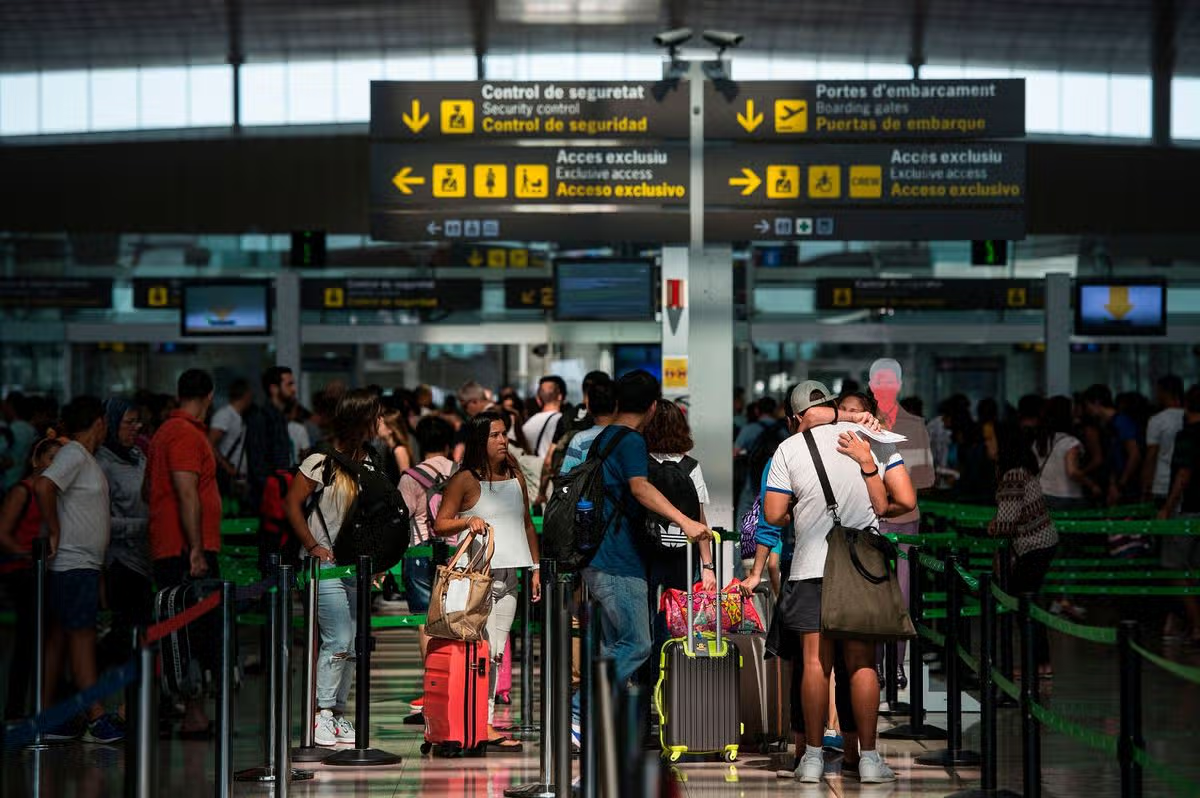
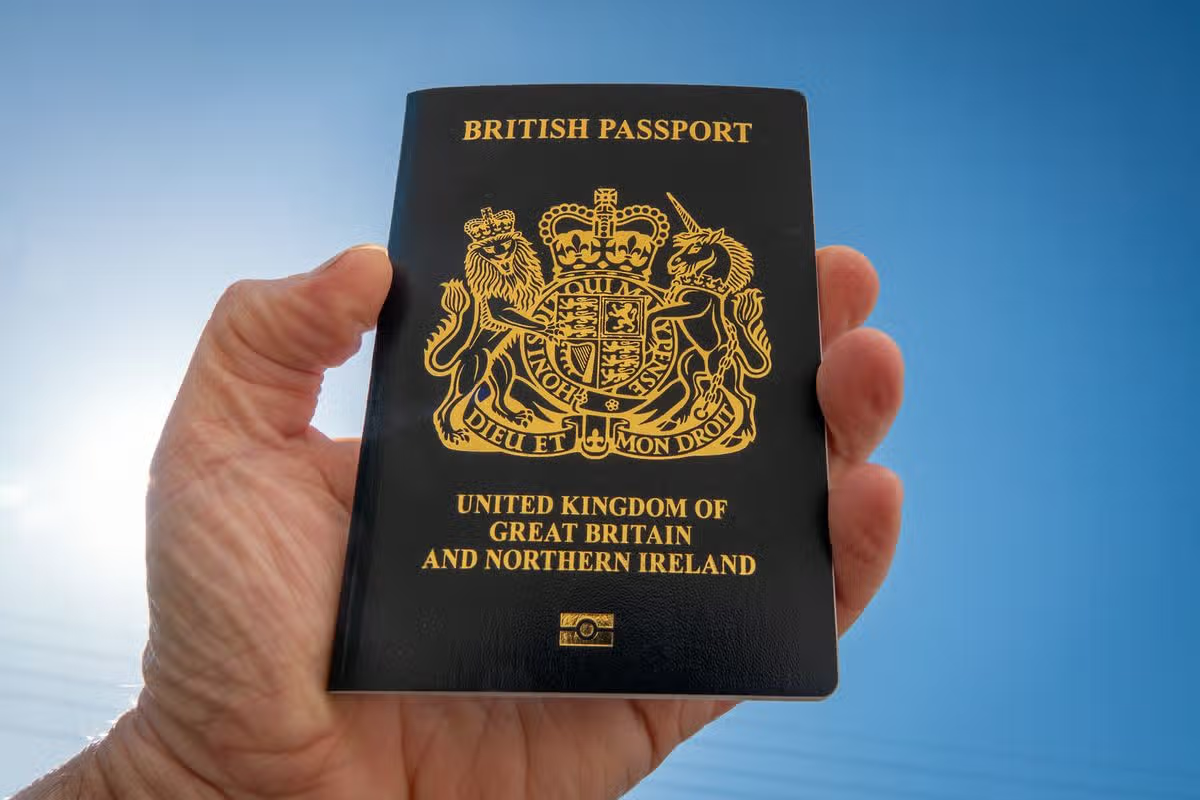
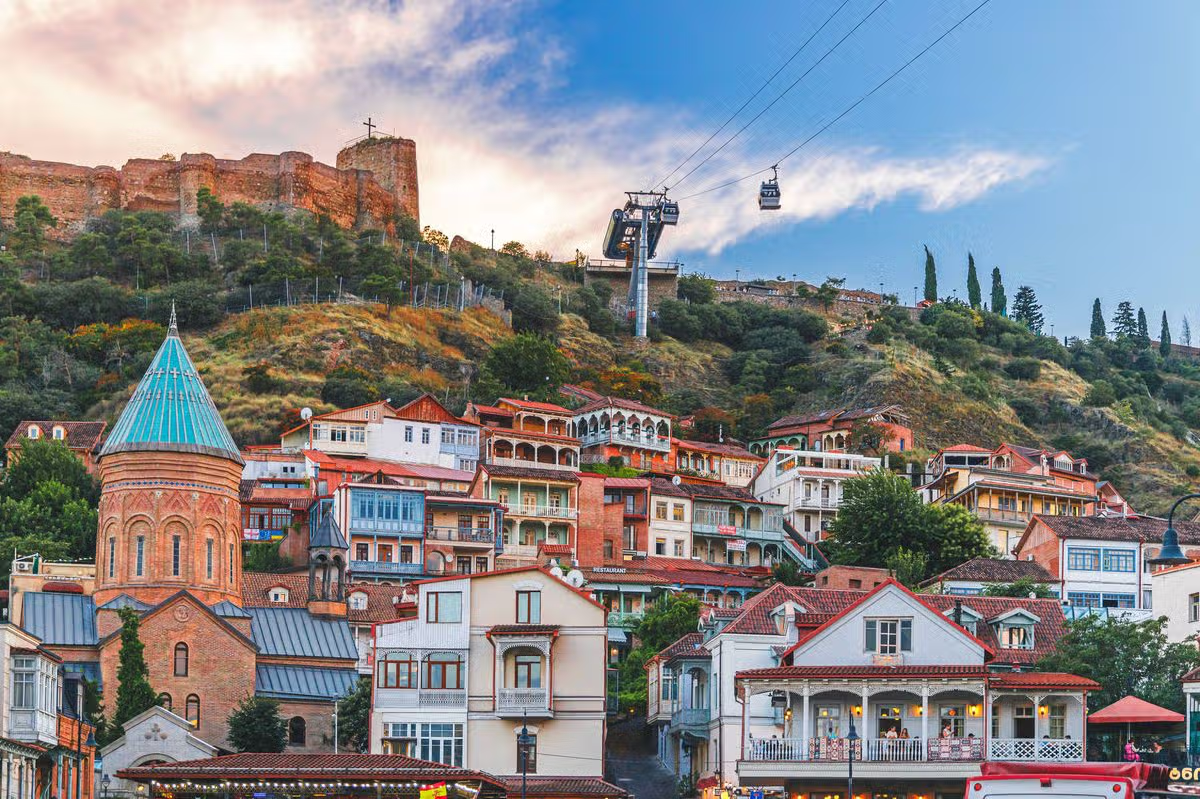
There have been several changes that will impact British holidaymakers heading to Europe this year, from the new Entry/Exit System (EES), a hike in tourism taxes, to a ban on alcohol
There are some key travel changes that will impact Brits heading on holiday to Europe(Image: Getty Images)
Five key travel changes to be aware of
The European Union’s (EU) new travel rules mean holidaymakers must “create a digital record” and register their biometric details, such as fingerprints and a photograph, upon their first arrival at the airport border in the Schengen area.
Alcohol restrictions are in place in the likes of Spain and Croatia, from rules around the hours booze can be sold, to restrictions on party boats in certain hotspots
Destinations are introducing caps on visitor numbers. Palma in Majorca is set to slash the number of daily cruise ship berths from 8,500 to 7,500 between June and September, under a new arrangement that will take effect from 2027 to 2029.
Some European cities have increased their tourism tax, including Barcelona and Bucharest, while Venice is set to reinstate its ‘day-tripper’ fee.
Major landmarks and attractions in Europe have increased entrance fees, including the Louvre Museum in Paris, the Trevi Fountain in Rome and Juliet’s Balcony in Verona.
Kyiv’s mayor says the attacks hit Podilskyi and Obolonsky districts, causing large fires and damage to residential buildings.
Published On 16 Apr 202616 Apr 2026
Russian forces have bombed the Ukrainian capital, Kyiv, killing a 12-year-old child and wounding at least 10 people, including several doctors, according to the city’s mayor.
The child was killed early on Thursday in Kyiv’s Podilskyi district, where rocket fragments hit a 16-storey building and caused a fire at a residential building, Mayor Vitaliy Klitschko wrote in a post on Telegram.
Recommended Stories
list of 4 itemsend of list
He said rescuers have pulled another child and her mother were pulled from the rubble in Podilskyi.
The attack also hit Kyiv’s Obolonsky district, with falling rocket debris causing a large fire at a non-residential building. “Cars are also on fire,” Klitschko wrote.
Italy’s decision to suspend a defence agreement with Israel has more symbolic value than concrete consequences, but it is an unprecedented move by the Italian government and reflects deep unease over its longtime ally’s actions in the Middle East, analysts say.
On Monday, Prime Minister Giorgia Meloni said Italy would not renew a memorandum of understanding – signed in 2003 and ratified in 2005 – between the two countries’ ministries of defence. The accord provided a framework for cooperation in “defence industry and procurement policy” and “import, export and transit of defence and military equipment”, among other things.
Recommended Stories
list of 3 itemsend of list
The memorandum was set to automatically renew every five years “unless a written notice of intention to denounce is given” by one of the two countries to the other.
That notice arrived on Monday in a letter written by Italian Defence Minister Guido Crosetto to his Israeli counterpart, Israel Katz.
The Israeli government has downplayed the move. Foreign Minister Gideon Saar said it was a deal that “never materialised” and did not have “substantial content”. “Israel’s security will not be harmed,” he wrote on X.
It is true that the Italy-Israel agreement constituted more of a political framework than a series of operational commitments between the two countries. Furthermore, the Italian government’s decision does not cancel it outright, as opposition parties and human rights advocates have long demanded, but merely suspends it.
Still, the move is a sharp reversal for a right-wing government that has been one of Europe’s staunchest allies of Israel.
Along with Germany, Italy has been one of the strongest opponents of calls to suspend a trade agreement between Israel and the European Union. Italy has largely supported Israel’s war on Gaza, which a United Nations inquiry says amounts to genocide, and it has refused to recognise Palestinian statehood.
But relations between Israel and Italy have soured recently.
On Monday, the Italian ambassador to Tel Aviv, Luca Ferrari, was summoned after Italy’s Foreign Minister Antonio Tajani condemned Israel for its “unacceptable attacks against the civilian population” in Lebanon during a visit there. And last week, the Italian government accused Israeli forces of firing warning shots at a convoy of Italian peacekeepers in southern Lebanon, prompting Tajani to summon the Israeli ambassador.
Israel also launched a massive attack across Lebanon last week, bombing 100 targets in 10 minutes on Wednesday, shortly after a two-week truce between Iran and the US was called. That series of strikes killed hundreds of people in one of the country’s worst mass slaughters since the end of the country’s civil war in 1990. Observers say the attack on Lebanon was an unwelcome disruptor to efforts to de-escalate tensions in the region.
De-escalating Middle East tensions
The Italian government’s decision to suspend its defence agreement with Israel “must be seen within a broader effort to progressively stabilise the region, including by reducing tensions in Lebanon”, said Michele Valensise, president of the Institute for International Affairs and former secretary-general of Italy’s Ministry of Foreign Affairs.
“Israel’s military operation there objectively constitutes an irritant, complicating negotiations with the Iranians,” said Valensise. “If the Lebanese front can be part of a deal with Iran, then everyone has an interest in de-escalation there.”
European governments, including Italy, have been watching nervously as the United States-Israeli war on Iran has unfolded. Following initial joint Israel-US strikes on Tehran on February 28, Iranian forces brought shipping traffic in the Strait of Hormuz to a near-total halt, causing the paralysis of the one-fifth of global oil and liquefied natural gas (LNG) exports that pass through the narrow waterway in peacetime.
Following a first failed round of high-stakes Iran-US talks in Islamabad last weekend – amid a fragile two-week truce – Washington imposed a naval blockade on Iranian ports, further aggravating fears of a protracted energy crisis. Italy heavily relies on gas imports.
‘Stop the genocide’
Possibly more importantly, Italy’s government and prime minister are preparing for elections next year.
“There is a general discontent over the war in Iran and the crisis in the Strait of Hormuz – a crisis that’s impacting Italian growth and, if it continues, could have a significant impact on citizens, something Meloni worries about in a pre-election year,” said Arturo Varvelli, a political scientist and senior policy fellow at the European Council on Foreign Relations.
Italian public opinion also has a strong pro-Palestinian component. Last October, more than two million Italians took to the streets as part of a general strike in solidarity with the Global Sumud Flotilla, which was intercepted by Israel while trying to bring aid to Palestinians in Gaza. The flotilla had been carrying 40 Italians among its passengers, calling on Israel to “stop the genocide”.
“There’s a concern that this will be a long agony, between an increasingly unmanageable Trump and the economic problems he and Netanyahu have caused with the war in the Middle East,” Varvelli said.
After years of efforts to emerge as US President Donald Trump’s “whisperer” in Europe, Meloni has been pushed by the war in Iran to put some distance between herself and Trump. Rome refused the US president’s request to join a naval coalition to force the opening of the Strait of Hormuz and to allow US bombers to refuel at a military base in southern Italy.
Trump had not commented on those decisions until yesterday, when, in an interview with Italian newspaper Corriere della Sera, he took aim at Meloni. The Italian PM had leapt to defend Pope Leo XIV after he became embroiled in a feud with Trump. Pope Leo had condemned the US president’s threat that Iran’s “civilisation will die” if it didn’t re-open the Strait of Hormuz. In response to that, Trump unleashed a storm of criticism at Leo, calling him “weak on crime” and “terrible for foreign policy”. He said he does not “want a Pope who criticises the President of the United States”.
Trump also posted a bizarre image of himself as a Christ-like figure healing the sick on social media. He has since claimed it was meant to depict him as a doctor, following widespread criticism.
Of Meloni, who he once affectionately called “a real live wire”, Trump said, “I’m shocked at her” during an interview with Corriere della Sera on Tuesday.
“Do people like her? I can’t believe it,” he said in the interview, adding, “I thought she had courage. I was wrong.”
England captain Ben Stokes was struck on the face by a cricket ball, which required surgery for a broken cheekbone.
Published On 15 Apr 202615 Apr 2026
England Test captain Ben Stokes has said he feels “quite lucky” to be alive as he recovers from surgery after being hit in the face by a cricket ball.
All-rounder Stokes required the procedure after suffering a broken cheekbone sustained by being hit by the ball during a net session while he was coaching academy players at his domestic county side Durham in February.
Recommended Stories
list of 4 itemsend of list
Stokes is set to play in two first-class County Championship games next month, but he revealed the incident could have been so much worse.
“I copped one straight in the face,” the 34-year-old told the England and Wales Cricket Board.
“Pretty nasty but, funnily, probably the best result of a bad situation, to be honest. Just a couple of inches one way or the other, I might not be here doing this interview, if I didn’t turn my head round.
“All things considered, although I had pretty major facial surgery to sort it out – it was a bit of a mess under here (cheekbone), I’ve got out quite lucky. So pretty thankful for that.”
He added: “Obviously it set everything back about a month, five weeks, with getting back to where I wanted to be to play at the start of the season for Durham, but just had to sort of quickly go back to the drawing board and put a plan together to get me ready to play a couple of games for Durham before the Test summer starts.
“At the back end of all that now, but it was a pretty scary situation. Thankfully still here and everything’s all right.”
Stokes is expected to be fit to lead England in the first Test of their home season against New Zealand at Lord’s starting on June 4, as they look to recover from their woeful 4-1 Ashes humiliation in Australia.
Stokes downplays rift with England coach McCullum
Stokes, meanwhile, has played down reports of disagreements with head coach Brendon McCullum but added that they do have different viewpoints at times.
British media reported that former New Zealand captain McCullum’s relationship with Test captain Stokes frayed during the Ashes series defeat in Australia, though the duo have publicly backed each other.
“I am very confident in mine and Brendon’s ability to be able to work together, because we’ve done it for such a long period of time now,” Stokes said in an interview with the England and Wales Cricket Board (ECB).
“But we work together in a slightly different way. The main point of me and Brendon is our alignment towards winning things and making this team as good as they can be.”
Since taking charge in 2022, McCullum and Stokes implemented an ultra-aggressive style of play known as “Bazball”, which has come under much scrutiny since England’s Ashes defeat, prompting the ECB to launch a thorough review into the team’s preparations.
“Agreeing on every single thing, that’s just impossible,” Stokes said.
“We agree 95% of the time on things, but those 5% things that we might have different views on, we talk about it between each other and then we end up getting to the place where we want to get to.
“We put a lot of our heart and soul into this job. Brendon certainly has for the four years he’s done it so far, and hopefully we’ll still be together at the end of 2027, winning what we want to win.”
England host New Zealand for a three-Test series in June before eight limited-overs matches at home to India.
Italy has suspended the renewal of a 20-year-long defence agreement with Israel, following recent tensions between the two countries after the Italian government accused Israeli forces of firing warning shots at a convoy of Italian peacekeepers in Lebanon.
Release of Mahdieh Esfandiari comes a week after Iran released two French citizens held on espionage charges.
Published On 15 Apr 202615 Apr 2026
Iranian national Mahdieh Esfandiari has returned home after being held in France for more than a year as part of what appears to be an exchange of detainees between the countries.
Iran’s state television reported on Wednesday that the “rights activist”, sentenced to one year in prison after making online comments supportive of Palestine and the 2023 Hamas attack on Israel that prompted the genocidal war on Gaza, had returned to Iran.
Recommended Stories
list of 2 itemsend of list
The University of Lyon graduate, who had been living in France since 2018, where she worked as a translator, was arrested in February last year on charges of promoting “terrorism”, and released on bail in October.
“I think it’s clear for everyone that there is no freedom of speech, at least not in France where I was. The court’s ruling was very unjust,” Esfandiari told state television in a Wednesday broadcast.
Esfandiari’s release comes a week after French citizens Cecile Kohler, 41, and Jacques Paris, 72, arrived in France after being held for more than three years in Iran.
Kohler and Paris were arrested by Iranian authorities in May 2022 but were freed in November last year, after more than three years in prison on espionage charges that their families vehemently deny.
They were taken by French diplomats to France’s mission in Tehran, where they lived under house arrest until their full release on April 7. Upon their release, they were driven from Iran to neighbouring Azerbaijan before taking a flight to Paris.
President Emmanuel Macron’s office said their release was the outcome of a “long-term effort”, but talks accelerated in recent weeks due to pressure from the US-Israel war on Iran, giving a sense of urgency to the situation.
While an exchange was not explicitly acknowledged by France, Iran’s state-run agency IRNA had previously said Tehran reached an agreement with Paris for the release of the French citizens in exchange for Esfandiari.
Javokhir Sindarov wins the Candidates Tournament with a round to spare and will face India’s Gukesh next.
Published On 15 Apr 202615 Apr 2026
Uzbek grandmaster Javokhir Sindarov has clinched victory in the chess Candidates Tournament with a round to spare, drawing with Dutchman Anish Giri to set up a World Championship match against India’s Gukesh Dommaraju.
The 20-year-old stormed through the event in Cyprus on Tuesday, winning six of his 13 games and losing none in a dominant performance never seen at the Candidates.
Recommended Stories
list of 3 itemsend of list
Sindarov moved to 9.5 points, two clear of second-placed Giri on 7.5, after the Dutchman failed to convert a winning position against China’s Wei Yi in the previous round.
“It was the hardest week in my life. I even slept really bad the last few days. I am very happy to finish this tournament with a win,” Sindarov said after his win.
The tournament had been seen as a possible last opportunity for the old guard to mount another challenge for the world title, but Americans Fabiano Caruana and Hikaru Nakamura never seriously threatened.
Gukesh won the title in 2024, defeating China’s Ding Liren in the 14th and final game of their match. Ding had himself become champion by beating Ian Nepomniachtchi after Magnus Carlsen, the five-times champion who remains world number one, relinquished the crown, citing a lack of motivation.
“I do not want to think a lot about the upcoming World Championship match right now. I know it will be a very hard match,” Sindarov said.
“Gukesh has an experience of playing at this level. But I have a very good team. I have a lot to work on, and I will work a lot for this and take my chances.”
While Sindarov’s breakthrough and the broader rise of a younger generation are likely to prompt new speculation about a Carlsen comeback, the Norwegian has said he has no intention of returning to the classical World Championship cycle.
A precise date and a venue for the World Championship match have yet to be announced.
Police in France have arrested students at Sorbonne University, Sciences Po and Paris-Saclay University during a sit-in against a controversial anti-Semitism bill that could outlaw criticism of Israel. Lawmakers are set to vote on the ‘Yadan law’, named after a pro-Israel French MP who sponsored the bill, on April 16.