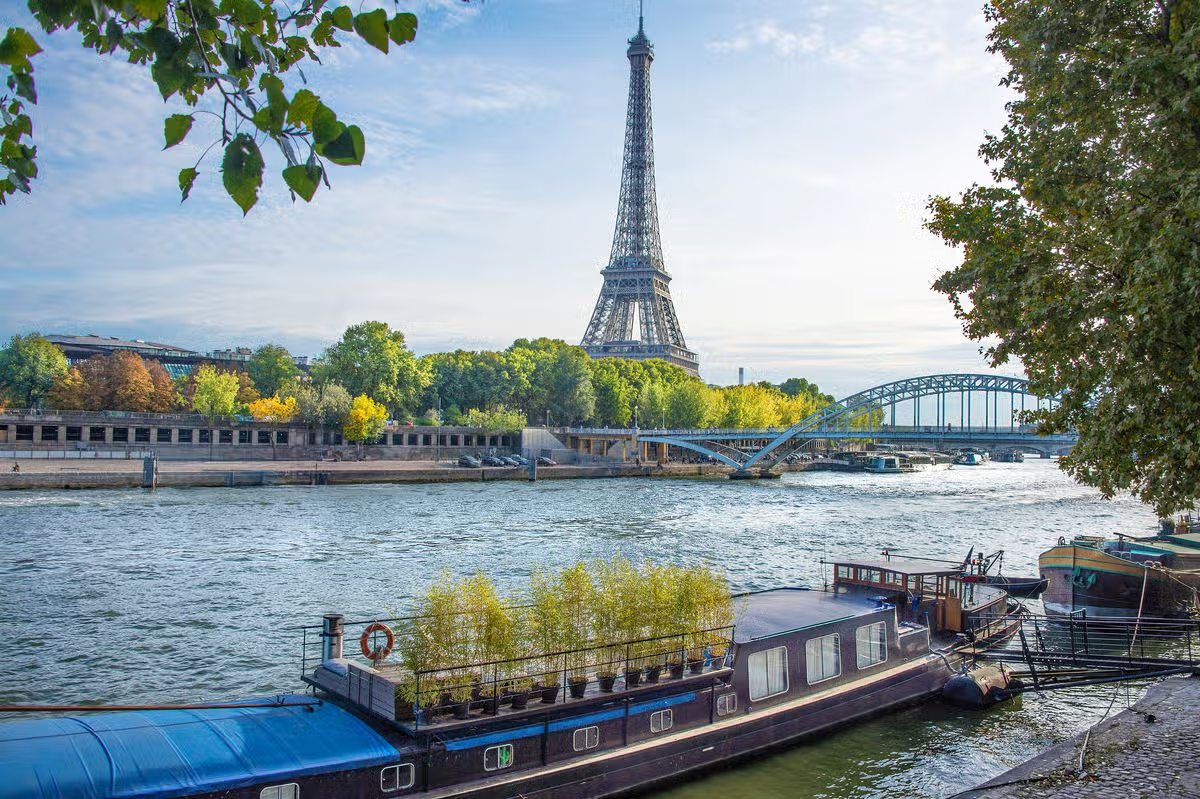
Virgin has offered a first glimpse into its new cross-Channel rail service that will provide services between London, Paris, Brussels and Amsterdam in one of its striking, high-speed trains
The new Virgin rail service will provide additional services from London to Paris(Image: Getty Images)
Virgin has offered a sneak peek at its new high-speed trains that will provide daily services from the UK to three major European destinations. The new cross-Channel rail service is set to rival Eurostar, with anticipation already building ahead of its launch, which is currently expected for 2030.
Plans include 20 daily return services between London, Paris, Brussels and Amsterdam as part of the new cross-Channel offering. With an estimate of about 7.5million seats every year, it’s expected to make it even easier for travellers to journey between the UK and European hotspots, while boosting tourism and creating up to 1,000 new jobs.
The rail operator offered a sneak peek of its trains with renderings of the sleek, futuristic black-and-red train, which the company says will be able to reach speeds of up to 300km/h. The firm has also hinted that it will recreate the likes of Virgin Atlantic’s Clubhouses as “pre-departure and onboard social spaces” where passengers can relax before their journey.
Passengers will be able to earn Virgin Points when using the rail service through their Virgin Red loyalty platform, which can then be redeemed on future train journeys, flights, hotels, cruises and other experiences.
Josh Bayliss, CEO of Virgin Group, said: “Virgin has a proud history in UK rail. With our latest venture we are drawing on more than four decades of experience across travel and hospitality to create something genuinely new. This time, we’ll be connecting London with some of Europe’s greatest cities and giving passengers a distinctive new choice in cross-Channel travel.
“Virgin has always thrived on challenging the status quo and aimed to provide our customers with a great experience. We’ll bring the same approach to the cross-Channel route, making the journey something to look forward to as much as the destination.
“We’re confident that more journeys between the UK and Europe will be made by train. We’re adding capacity for millions more international rail journeys each year, growing the market as a whole. We’re looking forward to seeing our distinctive red and black trains travelling across Europe.”
Do you have a travel story to share? Email webtravel@reachplc.com
The menu will be influenced by the food and drink offered on Virgin Voyages, while seating will be inspired by Virgin Hotels.
Before and after boarding will also have spaces inspired by Virgin Atlantic Clubhouses.
Josh Bayliss, CEO of Virgin Group, said: “Virgin has a proud history in UK rail. With our latest venture we are drawing on more than four decades of experience across travel and hospitality to create something genuinely new.
“This time, we’ll be connecting London with some of Europe’s greatest cities and giving passengers a distinctive new choice in cross-Channel travel.
“We’re confident that more journeys between the UK and Europe will be made by train.
“We’re adding capacity for millions more international rail journeys each year, growing the market as a whole. We’re looking forward to seeing our distinctive red and black trains travelling across Europe.”
The new trains will be decked out in the famous red and blackVirgin Trains previously ran until 2019Credit: Alamy
Jose Mourinho, one of most outspoken against Man City spending when United manager, jibes EPL appeal to outlast him.
Published On 8 Oct 20268 Oct 2026
Real Madrid manager Jose Mourinho joked that he may not live to see the end of Manchester City’s legal battle with the Premier League after the club appealed against a ruling that found it guilty of serious financial rule breaches.
An independent commission found City guilty of all charges relating to breaches of Premier League financial regulations between the 2009-10 and 2017-18 seasons, as well as three of four charges relating to failures to cooperate with the investigation. City have denied wrongdoing and lodged an appeal.
Recommended Stories
list of 4 itemsend of list
The Premier League said that City used “sham” commercial agreements to inflate revenue and understate costs by more than 900 million pounds ($1.19bn) over nearly a decade, resulting in inaccurate financial reporting and breaches of spending rules.
Mourinho managed Manchester United from 2016 to 2018 and led them to a second-placed Premier League finish behind Pep Guardiola’s City in 2017-18.
“I would rather laugh about it,” Mourinho said when asked about the case in an interview with Italy’s Corriere dello Sport.
“I think we will eventually get an ending, but we are both in our 60s, and we’ll need to be lucky enough to still be around when the final verdict arrives.
“There will be a verdict, then appeals, then more appeals.”
Mourinho has long maintained that one of his greatest achievements in football management was finishing second behind Guardiola’s side, given their spending power at the time.
The Portuguese manager, now 63, said in 2024 that he had not given up on being awarded a winner’s medal for the 2018 season.
“I think we still have a chance to win that league because maybe they punish Man City with points and maybe we win that league,” he quipped at a press conference ahead of a Europa League match against United with his then-club, Fenerbahce.
“Then they have to pay me the bonus and give me the medal.”
The appeal process will be conducted in private, and it remains unclear whether any sanctions would be imposed before it is heard, or whether any punishment would take effect immediately.
City, seeking a sixth successive league win, are top of the Premier League with 15 points from five matches and travel to Liverpool on Sunday.
Holders Arsenal entertain Leeds on Saturday, while United host Tottenham later the same day.
Mourinho’s Real Madrid trail fierce rivals and La Liga leaders Barcelona by six points, with five wins and two defeats from their seven league matches this season.
Both Barca and Real are in action on Saturday, with Getafe and Villarreal visiting, respectively.
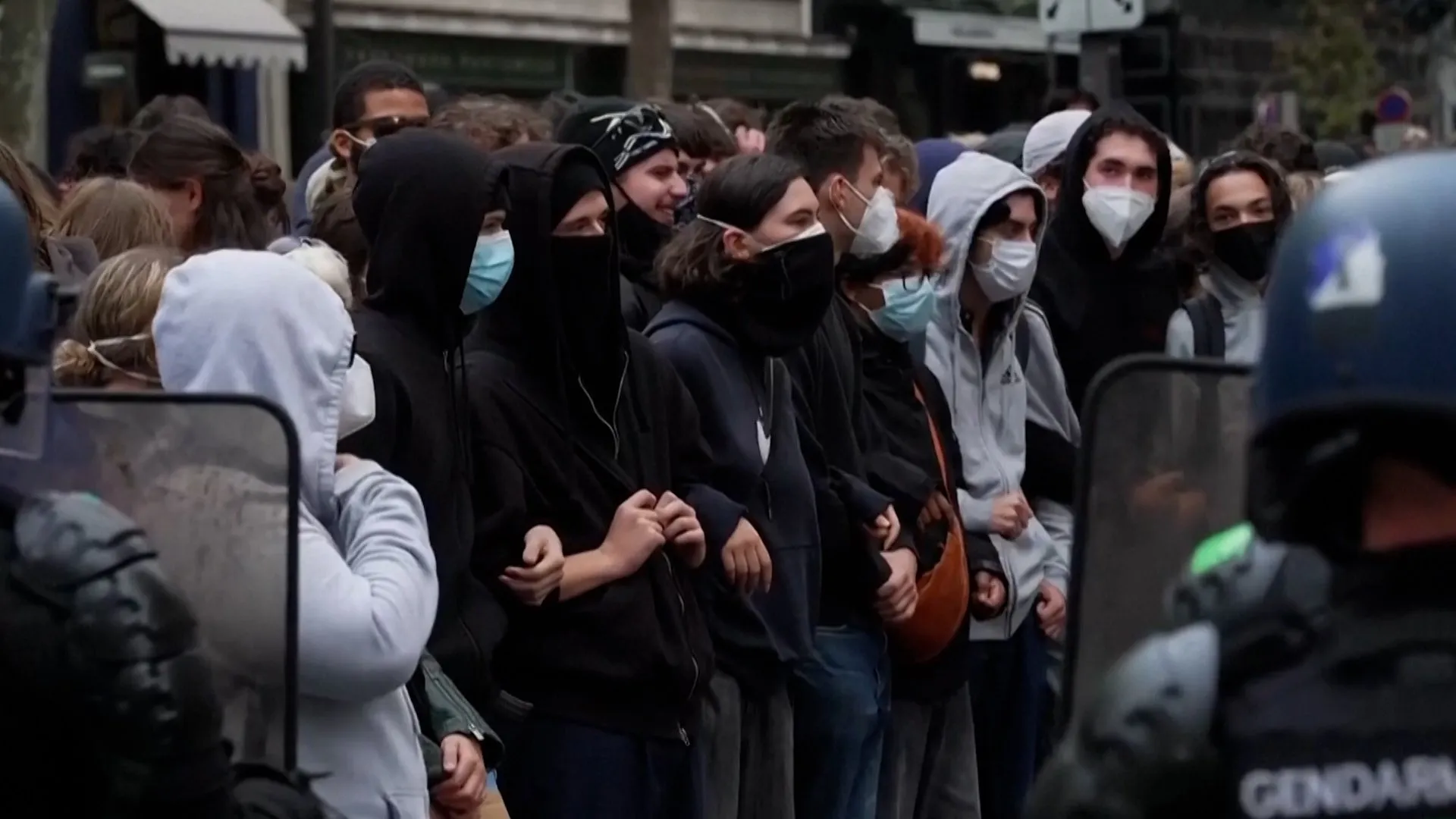
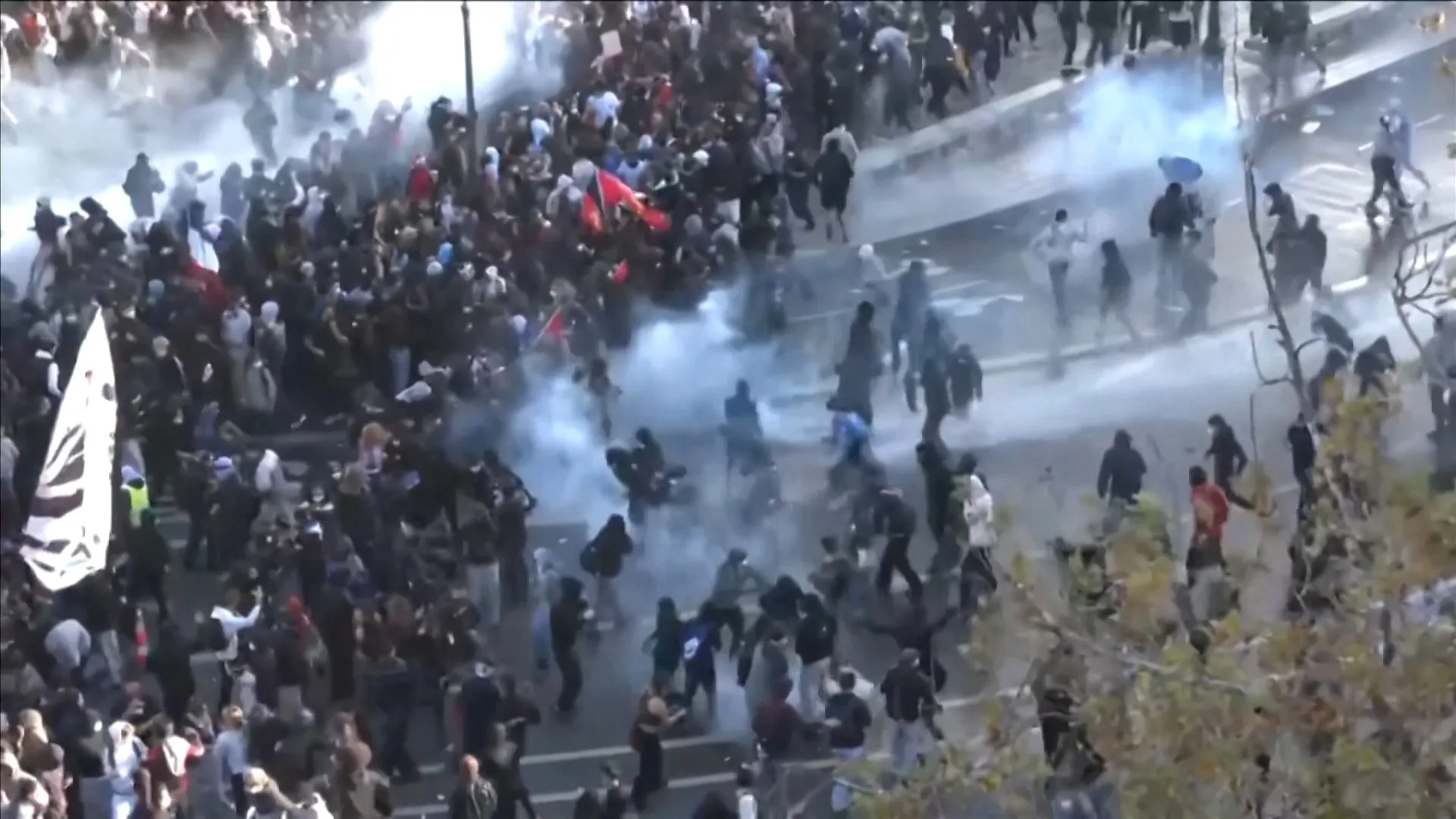
Police fired tear gas and water cannons as demonstrators gathered in Paris to demand more funding, teachers, and better conditions in schools. The movement has entered its third week, with police tactics under scrutiny after several teenagers were seriously injured.
Manchester City manager Enzo Maresca claims players unfazed by financial breaches verdict ahead of Liverpool showdown.
Published On 8 Oct 20268 Oct 2026
Manchester City manager Enzo Maresca has brushed off the guilty verdict hanging over the club and says he and the players are fully focused on football matters.
City could face a severe points penalty and even expulsion from the Premier League after an independent commission found they used “sham” commercial contracts to inflate revenue and cut costs by over 900 million pounds ($1.2bn) between 2009 and 2018.
Recommended Stories
list of 4 itemsend of list
City, who top the league with five wins in five games, return to action for the first time since the guilty verdict was revealed when they travel to Liverpool on Sunday.
The eight-time Premier League winners, who have appealed the decision, then play their first game in front of their own fans since the verdict, when they entertain back-to-back Champions League holders Paris Saint-Germain on Wednesday.
“I am very calm, the club has been quite calm. We trust completely the club,” Maresca told City’s in-house media on Thursday.
“We understand the noise, but the focus for us is what we control and we control the football side.
“The feeling is fantastic, to be honest.”
Maresca, who was assistant to former manager Pep Guardiola during the 2022-2023 season, addressed the players for the first time since the verdict when they returned to training on Thursday following the international break.
When asked about the reaction of the squad – many of whom have been linked with a move away from City if the club’s appeal fails – Maresca said they were “excited” given their start to the season.
“The players are excited for the next two games, but especially they are excited because in this moment, we are top of the league, so the players they are just focused on that,” he said.
“They know that what we can control is the football side. They are not worried at all about different things. They know they are professionals.
“They know that the noise is there, but they don’t care too much about the noise.
“They are just focused on this moment, how we can beat Liverpool, how we can, together with the fans, try to win at Anfield.”
As part of City’s appeal against the decision they have continued to maintain their innocence, saying the independent commission’s opinion contains “clear material errors” and that they possess evidence supporting their position.
The commission also found the club guilty of charges relating to their failure to cooperate with the investigation.
Premier League holders Arsenal begin the weekend’s action in the top flight on Saturday when they entertain Leeds United with the chance to move level on points with City, who would then hold Sunday’s game in hand.
Syrian authorities questioned why search and rescue operations were called off before the fate of 10 sailors was known.
Published On 8 Oct 20268 Oct 2026
Syria has called for an “independent and transparent” investigation into the sinking of a cargo ship in the Black Sea, demanding answers over the fate of the ship’s 10 crew members, including nine Syrians and an Egyptian, who remain unaccounted for.
The Togolese-flagged Alfa Watan, went down in Bulgaria’s exclusive economic zone early on Tuesday, amid a rising number of drone strikes hitting Black Sea shipping during the Russia-Ukraine war.
Recommended Stories
list of 3 itemsend of list
It is unclear who carried out the attack.
Mazen Aloush, from the Syria’s port authority asked the International Maritime Organization (IMO) and Bulgarian authorities to find out why a search and rescue mission was called off, before the missing sailors were found.
“Their fate is still unknown” said Aloush, adding that “the reasons that led to the suspension of search and rescue operations” had to be established.
The attack on Tuesday also hit the Palau-flagged Able, setting it ablaze. Eighteen Turkish and Indian crew members were rescued from the burning vessel, while the Alfa Watan sank.
Both commercial ships were managed by Turkey-based companies, according to the Equasis merchant shipping database.
The Syrian sailors’ union said contact with the ship’s crew had been lost and no survivors had been found after search operations were halted.
The fire-damaged “Royad Mammadov” ship in the Black Sea after a fire aboard the vessel outside Romania’s territorial waters left two people dead on October 5 2026 [Reuters]
Aloush condemned the targeting of a civilian commercial vessel saying it was a serious breach of maritime security and a threat to sailors.
He said Syrian General Authority for Ports and Customs was closely monitoring the incident.
He urged authorities to use all available technical means to locate and inspect the wreckage to help establish what caused the ship to sink.
He called for international and maritime bodies to strengthen measures to help commercial shipping as attacks in the Black Sea rise.
Erling Haaland calls on Man City to unit as Premier League club appeals more than 100 charges of wrongdoing.
Published On 8 Oct 20268 Oct 2026
Manchester City striker Erling Haaland says the Premier League club must ‘stick together’ following the guilty verdict delivered on more than 100 charges for financial breaches.
The league leaders head to Liverpool on Sunday for their first game since an independent commission found the club guilty of serious breaches of Premier League financial rules over nine years, as well as charges relating to their failure to co-operate with the investigation.
Recommended Stories
list of 4 itemsend of list
City have insisted they are innocent of all charges and have appealed the decision. Should the verdict be upheld, City could face relegation, points deductions and fines.
“We are going to have a good time [on Sunday]. We have to stick together, we have to stay positive. We have to look ahead and try to win football games,” Haaland told the United Kingdom broadcaster Sky Sports.
“No matter what happens in life we always have to have a smile.”
“We have to enjoy the situation. We have to spread the love to each other, stick together, enjoy the ride and smile.”
Haaland welcomes Liverpool test for Manchester City
City have won all five of their matches in the Premier League this season and are three points clear of last season’s champions, Arsenal.
Liverpool are sixth in the league and six points behind City, after a mixed start for their new manager Andoni Iraola. The joint record Premier League winners, with 20 titles alongside Manchester United, are, however, undefeated.
The Reds will also be buoyed by what is expected to be an even more vociferous support than usual at their Anfield home.
During the period that Manchester City were investigated, 2009-2018, Liverpool finished second by two points behind City.
Under the management of Jurgen Klopp, they also twice finished just a point behind Pep Guardiola’s City in subsequent years.
The allegation from rival fans is that City’s financial wrongdoing was tantamount to cheating and gave the club a significant advantage during that time and the seasons that have followed the period in question.
With that, Anfield is expected to deliver an angry and hostile reception for the current City squad, but Haaland, who played with Molde, Salzburg and Borussia Dortmund before joining City, says the game itself is always a big occasion.
“It is always special to play against Liverpool,” Haaland continued.
“Especially with Pep and Klopp, I remember sitting in Molde, Salzburg and Dortmund watching the games and how much they pushed each other.
“It is always special to play a game there. Every game against Liverpool is special.”
What does the future hold for Haaland and Man City?
Haaland was born in England, while his father – Alf-Inge Haaland – was a player in the Premier League for City and Leeds United.
The 26-year-old Norwegian international has, alongside the majority of City’s squad, been heavily linked with a move away from the club, should they be relegated.
In the meantime, Haaland was keen to stress what the club means to him and his family.
“I care a lot about this place. I spent my first four years here. It is a special place for us [his family],” Haaland added.
“I care a lot about City and the fans, I am a fan myself and I feel with them.”
The vote in London’s Holborn and St Pancras parliamentary seat tests whether Burnham can restore faith in Labour.
Published On 8 Oct 20268 Oct 2026
Londoners are voting in a special by-election in the electoral district of Holborn and St Pancras, where the Green Party is posing a threat to Prime Minister Andy Burnham’s Labour Party.
Zack Polanski, leader of Britain’s left-wing Greens, was among candidates bidding on Thursday to win the parliamentary seat vacated by the resignation of former Prime Minister Keir Starmer.
Recommended Stories
list of 3 itemsend of list
Labour has held the seat continuously since its creation in 1983. Thursday’s vote is widely considered a two-horse race with the Greens, with thousands of activists from both parties out canvassing in recent weeks.
The vote is seen as a first test of whether Burnham can restore voters’ faith in Labour, which saw its popularity among left-wing voters plunge over the war in Gaza.
The by-election also offers him a chance to rob the Greens of the momentum they have built up under Polanski, the 43-year-old self-styled “eco-populist” who became party leader in September last year.
Green gains in areas of London contributed to Labour’s dismal local election results in May, which helped set in train a process that culminated on July 20 with Starmer’s resignation and his replacement by Burnham.
He has since adopted a tougher position on Israel and seeks to blunt the Greens’ rise by laying out a more left-wing vision for the UK.
Polanski, as the Greens’ candidate, faces Labour’s Sagal Abdi-Wali, a local council leader who arrived in Britain as a child refugee from Somalia in the 1990s and is expected to be declared the winner.
Polls are scheduled to close at 10pm local time (21:00 GMT) and the result is expected to be announced in the early hours of Friday.
The other candidates are: Barmy Brunch of the Official Monster Raving Loony Party; Ewan Cameron, Conservative Party; independent candidate Tom Darwood; Clare Fischer of the Climate Party; George Galloway, Workers Party; Tyler Johnson, Restore Britain; Briony Anne Lonbay Kapoor of Rejoin EU; Peter Newman of Reform UK; Ketankumar Pipaliya, UK VOICE; Jonathan Silberman of the Communist League; Helen Spiby-Vann, Christian Peoples Alliance; Patrick Thomas Stillman, Liberal Democrats; Ben Walker, UKIP.
French Prime Minister Sebastien Lecornu has promised to address student concerns as growing protests force hundreds of schools to close. Students are demanding better school conditions and more teachers, while criticism grows over how police are handling the demonstrations.
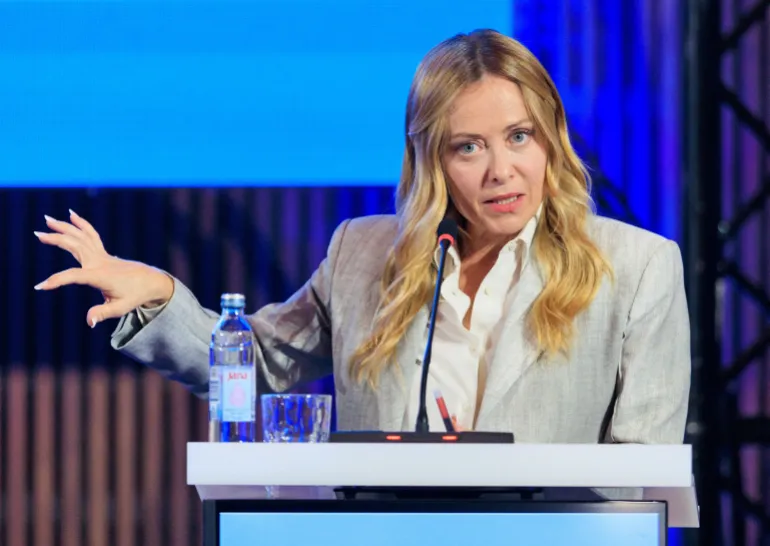
Italy’s parliament is voting on Thursday on a new electoral law that would make it easier for election winners to form a majority government.
The law, proposed by Prime Minister Giorgia Meloni, would award extra seats to any party or coalition that obtains more than 42 percent of seats in both parliamentary chambers, ensuring it holds a majority.
Recommended Stories
list of 3 itemsend of list
Meloni has framed the legislation as a route to greater stability in Italy’s political system, which has often been run by fragile coalition governments. Her critics, however, say the move is actually aimed at boosting her own chances in elections next year.
Here’s what we know about the electoral law and what it means for Italian politics:
What is Italy’s current electoral system?
Italy currently has a mixed electoral system for its 600-seat parliament, with about 36 percent of members of parliament elected directly in constituencies where the candidate with the most votes wins, and the rest decided through proportional representation.
The system, called “Rosatellum”, has been in place since 2017. It encourages coalition-building but can produce fractured results that make a governing majority hard to forge.
What would the new law change?
The new legislation would replace the mixed electoral system with a fully proportional one, as well as awarding extra seats to the party or coalition that wins the most seats if it secures at least 42 percent in both chambers.
The bonus would be as many as 70 seats in the 400-member Chamber of Deputies, the lower house, and up to 35 seats in the Senate, which has 200 elected members.
That means if a party or coalition meets the 42 percent share threshold in both chambers, it would have stronger power to govern. If no party or coalition meets the threshold, representation would be decided proportionally.
The new law would also force coalitions to announce their candidates for prime minister before the elections. Rado Fonda, head of research at Italian pollster SWG, told the Reuters news agency this provision could “prove problematic for the centre-left, potentially forcing an early leadership contest and exposing divisions that could weaken the bloc”.
Meloni, who currently leads the country’s longest-serving government since World War II, has said the reform will help stabilise the country rather than serve any one political group. “Whoever wins the elections will have the numbers to govern,” she said.
What stage is the legislation at?
The proposed law has already been approved by the Senate and must now undergo a final secret-ballot vote in the Chamber of Deputies.
Giovanni Orsina, a political scientist at Rome’s Luiss Guido Carli University, predicted that the law is “extremely likely” to pass.
If it fails, Meloni has said she will resign.
Italian Prime Minister Giorgia Meloni speaks during the MED9 Summit, in Split, Croatia, October 7 [Antonio Bronic/Reuters]
Why is the legislation controversial?
Opponents say the law is undemocratic because it could potentially grant a winning coalition a disproportionate level of power in parliament.
They also say that the legislation is intended to favour Meloni, whose Brothers of Italy party (Fdl) is bracing for a tough election battle next year.
Riccardo Magi, head of the liberal More Europe party, who is on a hunger strike to protest the proposed reform, has called it an “anti-democratic law” that risks giving a minority bloc a huge majority in parliament.
Senator Matteo Renzi, who leads the Italia Viva party, has accused Italy’s governing coalition of pushing the electoral reform due to a fear of losing power.
Other critics have pointed out that the law would do little to stabilise the political system if no party or coalition reaches the 42 percent threshold in both chambers – a relatively high bar.
“This could produce a hung parliament, making post-electoral negotiations necessary to form a government,” Vincenzo Emanuele, a political science professor at Luiss Guido Carli University in Rome and a member of the Italian Center for Electoral Studies (CISE), told Al Jazeera. “Even relatively small changes in coalition composition could make the difference between a clear parliamentary majority and a situation of political deadlock.”
When are Italy’s next elections, and what do the polls show?
Italy’s next general election must be held by December 22, 2027, although the government can call elections earlier if it wishes.
Currently, Meloni’s Fdl is polling ahead of all other parties, with 27 percent support, according to Politico’s polling aggregator. Her coalition partners, Lega and Forza Italia, have a combined 12 percent support, according to Politico, bringing the coalition share to 39 percent.
Fdl’s polling has been dented by support for a new far-right group, Futuro Nazionale (National Future), Reuters reported. It currently has 7.8 percent support, according to Italian polling institute SWG.
In opposition, the Democratic Party (PD) has 21 percent support, the Five Star Movement (M5S) has 12 percent and the Alliance of Greens and Left (AVS) has 6 percent, according to Politico. The Italy Viva (IV) and More Europe parties have 2 percent support each.
Emanuele said the current landscape means the proposed electoral law would not necessarily favour Meloni and could even benefit the opposition.
He said recent simulations by the CISE have shown that a centre-left coalition including the PD and M5S could potentially reach 44 percent of the vote, securing a “comfortable parliamentary majority”, though that could change if Meloni allies with National Future.
“The reform does not inherently favour the incumbent government: Its effects will depend crucially on how the competing coalitions are formed,” said Emanuele.
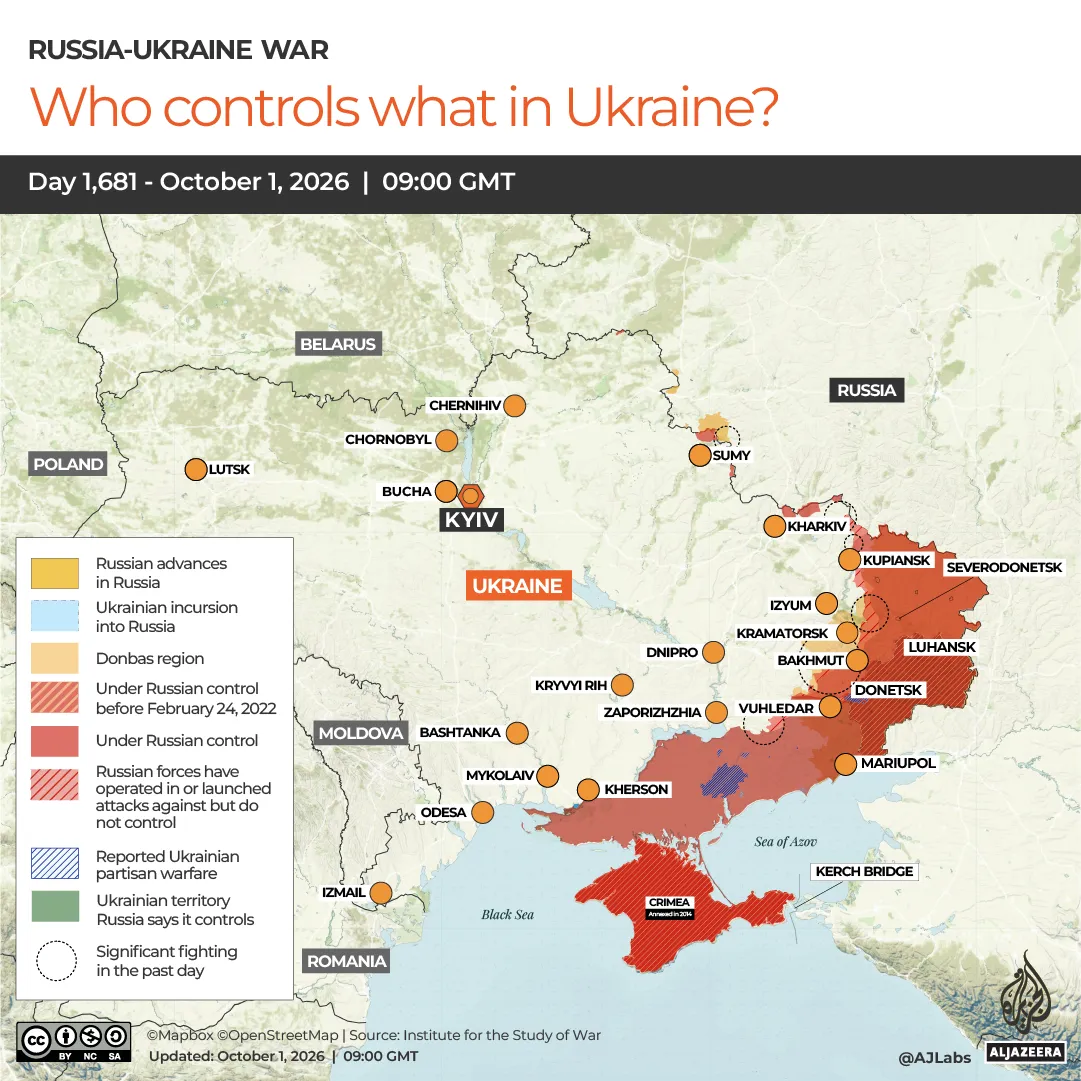
Ukraine says it has received proposals from India, Turkiye, Egypt and the United States to broker talks with Russia. The offers come as the two adversaries escalate attacks on each other’s energy and port infrastructure with their war now in its fifth year.
Ukrainian Foreign Minister Andrii Sybiha revealed the four proposals at a briefing in Kyiv on Friday and singled out New Delhi’s. “The most comprehensive is India’s proposal,” he said, adding that India had signalled a willingness to play a role for the first time.
Recommended Stories
list of 3 itemsend of list
None of the proposals aims to end the war. Each seeks a narrower truce, covering energy facilities, ports or commercial shipping in the Black Sea.
Here’s what we know:
What is India proposing?
India has not made its plan public. Quoting unnamed sources, however, Indian media have reported it has three parts. According to the Hindustan Times, it would aim to protect infrastructure, keep grain and energy supplies moving through Black Sea ports, and ensure the safety of commercial shipping.
The first part – mutually halting strikes on energy facilities and ports – matches what Kyiv has been demanding. Sybiha said any deal must be a complete energy truce that covers port infrastructure as well.
The second part builds on the Black Sea Grain Initiative, which Turkiye and the United Nations mediated in 2022 but Russia abandoned in 2023.
The third part, protecting merchant ships and their crews, is particularly important to India because Indian sailors have been killed or harmed on Black Sea routes.
The sources were quoted as saying India’s plan goes further than the other three proposals because it covers infrastructure and shipping together. A Ukrainian official told the Kyiv Independent that it incorporates elements of the Turkish, Egyptian and US initiatives. The Kyiv Post reported that Sybiha also described the plan as addressing a possible ceasefire along the front lines, although other accounts said he gave no specifics.
The proposal likely took shape during Indian External Affairs Minister Subrahmanyam Jaishankar’s first visit to Ukraine last month and in a later meeting with Sybiha at the UN General Assembly in New York, also in September. Jaishankar said New Delhi was “trying to be helpful, starting with the Black Sea safety of shipping issue”.
What do we know about the Turkish and Egyptian proposals?
Very little. Neither Ankara nor Cairo has published details. Both reportedly focus on keeping Black Sea grain supplies moving by suspending attacks on commercial shipping. Some reports said the two countries proposed a grain truce jointly while others described two separate plans.
Turkiye has done this before. With the UN, it steered the 2022 grain deal, one of the few narrow truces of the war to hold for any length of time. Ankara and the UN are now organising new Black Sea talks with a round planned for October.
Beyond its Black Sea focus, almost nothing is known about Egypt’s proposal. Its interest, however, is clear: Egypt relies on Ukraine for nearly one-third of its grain supplies.
What is the US pitching?
According to Ukrainian President Volodymyr Zelenskyy, Washington has proposed three steps: a mutual halt to energy strikes, a reopening of the grain corridor and a trilateral meeting with Ukraine and Russia, possibly in Abu Dhabi.
The latest effort began in early September when US President Donald Trump’s envoys visited Kyiv and Moscow and secured an agreement in principle for a trilateral meeting. Steve Witkoff and Jared Kushner met Russian President Vladimir Putin in Moscow on September 5 while Kremlin envoy Kirill Dmitriev visited the US twice in September.
The trilateral meeting has since been pushed back. It had been expected to take place in the United Arab Emirates in early October. Washington now wants it in late October, and people close to the talks blamed the delay on Russia.
Washington has also invited Putin to the Group of 20 summit in Miami, Florida, in December. “We hope that’s an invitation he’ll accept,” US Secretary of State Marco Rubio said. The Kremlin said no decision has been made.
At the same time, the US is applying pressure to try to end the war. Trump recently signed a law giving him sweeping powers to sanction buyers of Russian energy.
He has also called on Ukraine to stop targeting Russian diesel facilities amid a diesel prices crisis in the US, where Trump faces tricky midterm elections next month. “Mr Zelenskyy has to do one thing,” he said on September 13. “He has to stop knocking out diesel fuel in Russia.” This drew much criticism that Trump instead should focus his comments on Russia, which began the war with its invasion of Ukraine in February 2022.
He is reportedly sceptical about his own government’s latest diplomatic initiative. People familiar with his thinking have told US media that he doubted Putin would agree to an energy truce before winter.
(Al Jazeera)
How have Russia and Ukraine responded?
Sybiha said Ukraine would agree to a truce but with conditions. It would accept an energy and Black Sea shipping ceasefire, but only as a combined package, he said.
He added that Kyiv is also open to an unconditional ceasefire along the current front lines. Zelenskyy backs the US-proposed meeting but stressed it needs “not only Ukraine but also the Russian side” to support it.
Moscow has been warm in tone but has committed to nothing. Kremlin spokesperson Dmitry Peskov said Russia would welcome India’s peace efforts while Putin said Modi has “very good ideas aimed at finding mutually acceptable solutions”, but he did not elaborate.
In private, Moscow appears to have said no. A Ukrainian official told the Kyiv Independent that Russia has rejected India’s proposal although this has not been confirmed publicly. Ukraine’s agriculture minister said Russia had rejected every Black Sea ceasefire option the mediators have presented.
Why are Global South countries becoming more involved?
Food supplies, the lives of their citizens and fuel prices are all at stake.
“I think it’s clear to many countries that this war is not a localised war, but it’s a war that has these global consequences,” Fredrik Wesslau, a senior policy fellow at the European Council on Foreign Relations, told Al Jazeera.
Russia and Ukraine account for more than a quarter of global wheat shipments, and their attacks on each other’s ports helped push wheat futures to a three-year high in August.
Sailors from countries with no links to the war are being killed. At least five Indian seafarers have died in strikes on Black Sea shipping in recent months along with seven Azerbaijani crew members since June. On Saturday, a Russian strike on a Liberian-flagged ship in a port in the Odesa region killed a crew member. Ukraine, for its part, has targeted tankers it links to Russia’s shadow fleet since July.
The energy war is also being felt in global markets. Ukraine reported more than 194 drone attacks on Russian refineries this year, hitting all 11 of the largest. Bloomberg News estimated that Russia’s fuel output has fallen by more than 30 percent. With Middle East supply already down as a result of the US-Israel war on Iran, global diesel markets are more exposed to the loss of Russian supplies.
Maximilian Hess, a nonresident senior fellow in the Eurasia Program at the Foreign Policy Research Institute, said energy is at least as important as grain in driving the diplomatic efforts. He pointed to a “clear frustration” among many countries over high oil prices, which reflect both the Russia-Ukraine war and the crisis in the Middle East.
“Of course, Ukrainian grain is important for them, but the oil-price factor is important there as well,” he told Al Jazeera. “I think it is those commodity-shock concerns that are pushing them to re-embrace this rhetoric, rather than anything else.”
What are the challenges ahead?
Every previous attempt at diplomacy has failed to end the Russia-Ukraine war. A US-brokered, 30-day energy truce in early 2025 collapsed amid accusations of violations on both sides. At talks in Istanbul in May 2025, Zelenskyy complained that Russia had sent a junior delegation with no authority to sign a ceasefire.
In August 2025, a meeting between Trump and Putin in Alaska yielded no results despite Trump claiming to be close to a deal ahead of it.
Wesslau said Washington’s efforts have faltered partly because Trump – who had boasted he would end the war within 24 hours of taking office in January 2025 – has appeared unwilling to put real pressure on Moscow. “The Russians see this, and they conclude that they can continue this war,” he said.
Deep distrust remains. Oleksandr Merezhko, head of the Ukrainian parliament’s foreign affairs committee, said: “Putin never keeps agreements.”
Moscow’s actions on the ground suggest it is in no hurry, Wesslau said “They’re trying to strangle Ukraine, strangle the economy, and make it unliveable ahead of the winter,” he said. He added that Moscow’s occasionally softer rhetoric was aimed mainly at the Trump administration and “has always proved to be a bluff”.
Russia’s terms are another obstacle. Hess said Moscow’s demands have not softened at any point since it launched the war and at times have grown. Putin has demanded all of Ukraine’s Donetsk, Luhansk, Kherson and Zaporizhia regions, including territory Russian forces have never controlled, as well as a buffer zone in northern Ukraine. Moscow is also seeking sanctions relief and military concessions for any Black Sea deal.
“I don’t think it’s a question of who actually mediates. I think it’s really a question of the calculation in Moscow,” Wesslau said. “Fundamentally, the problem is that Putin doesn’t want a ceasefire or a peace agreement. He wants to continue the war. He believes that he can win.”
Analysts said only greater economic pressure is likely to change that calculation.
Wesslau said if Europe can close down Russia’s shadow fleet of oil tankers, “this would be a massive blow to Russia’s war economy.” Hess said the country best placed to shift things quickly is China, rather than the US, by cutting its purchases of Russian oil. However, he added: “I don’t think Beijing is interested in doing so.”
Hess said that unless there is an outside shock, the war “is much more likely to last another four years than another four months”.
Dozens of people have been injured in the protests, including students, teachers, and police officers.
Published On 8 Oct 20268 Oct 2026
Protests have resumed at schools across France as high school students press on with demands for more education funding and better conditions, the day after the country’s prime minister ordered ministers to provide an action plan.
Reporting from Paris, Al Jazeera’s Natacha Butler said university students and more trade unions have joined the nationwide protests and that a large rally is expected in the capital on Thursday.
Recommended Stories
list of 4 itemsend of list
“They are moving around, trying to block off the streets,” Butler said from outside one school, where university students were barricading a large area.
“They are out, they say, in solidarity with high school students because they say it’s important that as many young people join in the protests as possible,” she added.
The wave of protests began in a high school in a deprived area of Paris on September 21 . Tens of thousands of students across the country have since marched with a range of demands, from renovated school buildings to fewer classroom hours.
Police response under scrutiny
Rights groups have accused security officials of using disproportionate force against protesters.
Several demonstrators have been injured, including one teenager who lost a hand and another whose jaw was shattered by an exploding stun grenade. They have since been banned at marches.
Police officers and teachers have also been injured, authorities say, accusing students of committing violent acts. At least 6,600 arrests – mostly of minors – have been made so far, according to the Interior Ministry.
Authorities said 375 schools were either fully or partially closed on Thursday, and that two dozen had been burned or destroyed.
The demonstrations are increasing pressure on the cash-strapped outgoing government of Emmanuel Macron ahead of April elections.
Prime Minister Sebastien Lecornu condemned the violence in a TV address on Wednesday. He faulted “political leaders who use this anger to conduct their electoral battles”, after opposition leader Jean-Luc Mélenchon called for protesters to keep marching.
Lecornu has ordered ministers to provide an action plan responding to students’ demands by the end of the month, but protesters remain unconvinced.
“As far as they are concerned, the government only talks about solutions but never actually comes up with concrete actions, so they say they are going to keep coming out onto the streets until their demands are met,” Butler said.
French high school students have been protesting for more than two weeks over conditions in schools, including overcrowded classrooms and staff shortages, and they show no sign of stopping.
The unrest began on September 21 when pupils blockaded a school in the Paris suburb of Creteil, and within a week, their protest had spread across the country with students and police clashing violently.
On September 29, the demonstrations coincided with a nationwide public sector strike, in which teachers joined other state workers against a proposed pay freeze. More than 6,100 people have since been arrested.
With the government under pressure to rein in spending as its debt rises, Al Jazeera looks at how much France invests in education, how it compares with the rest of Europe and how it measures up against what the country spends on healthcare and defence.
How much does France spend on schooling?
According to the latest data from Eurostat, the European Union’s statistics agency, France’s public spending on education amounts to 5.1 percent of its gross domestic product (GDP). That figure does not include private spending, such as school fees paid by families.
The French Ministry of National Education uses a broader measure, known as domestic expenditure on education, which counts all the money that goes into education, whether from the state, local authorities, businesses or households. As well as teaching, it covers adult and continuing training and related costs such as school meals, boarding and transport.
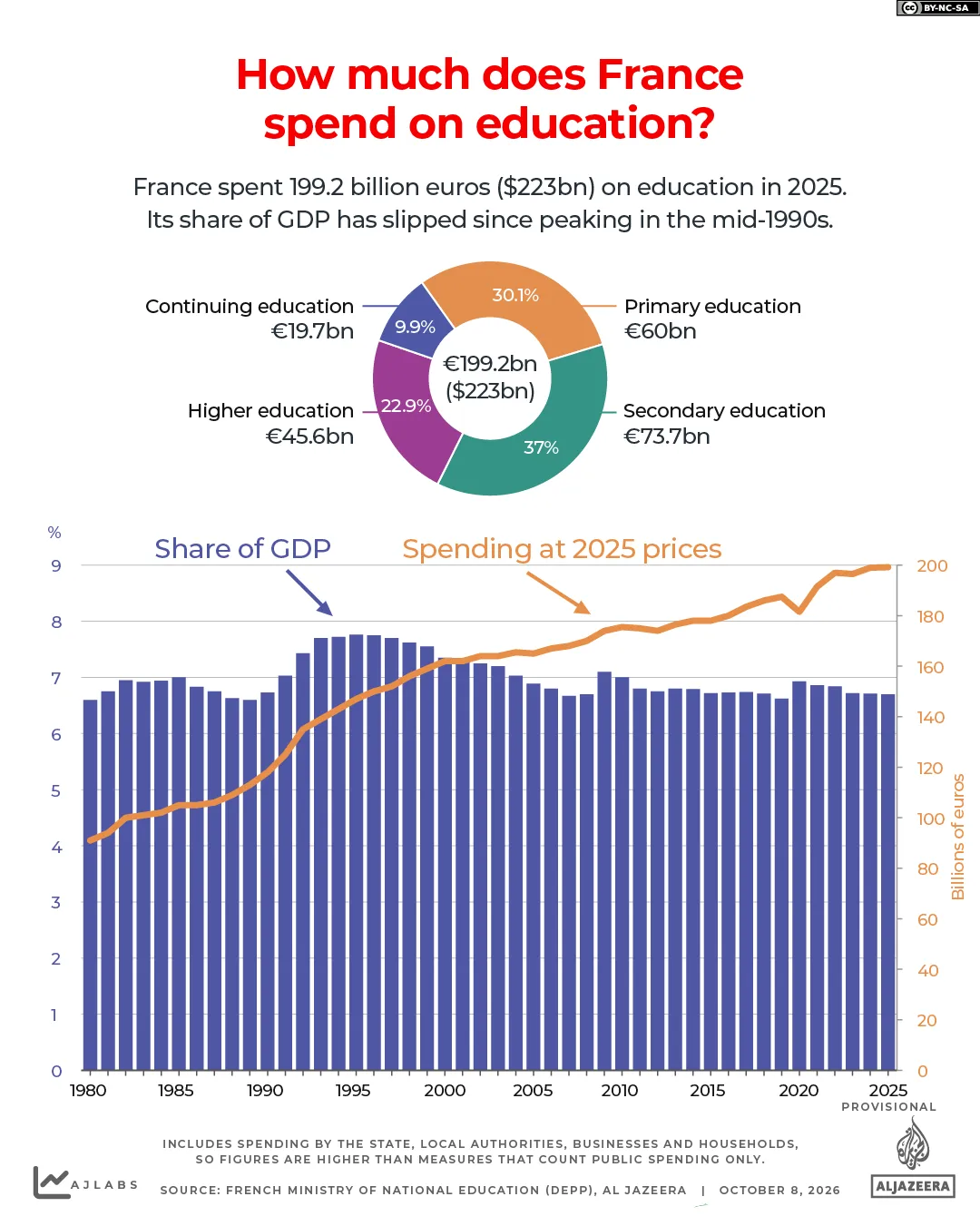
By this measure, France spent 199.2 billion euros ($223bn) on education in 2025, equivalent to 6.7 percent of its GDP and 2.4 billion euros more than in 2024, according to provisional ministry figures.
(Al Jazeera)
Spending has more than doubled since 1980, even after accounting for inflation. But the economy has grown too, so education spending’s share of GDP is lower today than it was in the mid-1990s.
Secondary education accounted for the largest share of spending at 73.7 billion euros (37 percent), followed by primary education at 60 billion euros (30 percent), higher education at 45.6 billion euros (23 percent) and adult and continuing education at 19.7 billion euros (10 percent), according to the National Education Ministry.
How much do other European countries spend on education?
Among European countries, Sweden spends the largest share of its GDP on education at 7.3 percent in 2024, followed by Iceland (7 percent) and Belgium, Estonia and Finland (6.3 percent each), according to Eurostat.
The lowest spenders are Ireland (2.7 percent), Greece (3.9 percent), Romania and Italy (4 percent each), and the United Kingdom and Spain (4.1 percent each).
At 5.1 percent, France is joint 13th, level with the Netherlands and Slovakia, and above the EU average of 4.8 percent.
But above-average spending has not shielded France from a problem affecting much of the developed world. Teacher shortages are growing across countries in the Organisation for Economic Co-operation and Development, according to the OECD’s latest Education at a Glance report.
Rather than leaving posts empty, many countries are filling them with teachers who lack full qualifications. In the 2024-2025 school year, 9 percent of primary and secondary teachers across the OECD were not fully qualified.
In France, the strain is most visible in secondary schools. About 11 percent of secondary teachers are not fully qualified, compared with less than 3 percent in primary schools. Furthermore, lower secondary classes average 26 pupils, compared with 23 across the OECD.
That echoes what pupils have been saying during the latest protests: Classes are large, and absent teachers are not being replaced. Some also described dilapidated buildings, a shortage of tables and chairs and, in some schools, rodent infestations. The intense heatwaves that hit France this year exacerbated existing problems in neglected buildings, many of which have no air conditioning, students said.
Teachers also feel undervalued. Only 4 percent said their profession is valued in society, the lowest share of any country surveyed and far below the OECD average of 22 percent.
How much has spending changed?
Historical UNESCO data showed France’s education spending slipped from 5.5 percent of GDP in 2017 to 5.3 percent in 2022 although it remained the ninth-highest among 29 European countries with data. A brief rise to 5.7 percent in 2020 reflected the pandemic shrinking the economy, not extra spending.
France was one of 14 countries where the share fell. Norway and Denmark saw the steepest drops while Slovakia, Slovenia, Lithuania and the Czech Republic recorded the biggest rises.
What else are these nations spending on?
The protests have coincided with nationwide public sector strikes over the government’s proposed 2027 budget, which seeks 54 billion euros ($61.3bn) in savings as French President Emmanuel Macron’s government tries to rein in a large public deficit.
Unions and public sector workers object in particular to a plan to freeze state employees’ salaries, which is expected to save about 2 billion euros ($2.27bn).
Across Europe, most governments spend more on education than on defence, but healthcare takes the largest share of national income of the three, according to 2022 data from the World Bank and UNESCO.
France spent 11.9 percent of its GDP on healthcare in 2022, one of the highest shares in Europe.
Police say the incident is not connected to ongoing investigations at the RAF Fairford airbase.
Published On 8 Oct 20268 Oct 2026
Police in the United Kingdom say they have arrested and charged a member of the Royal Navy accused of working with an unnamed foreign power after an investigation by counterterrorism police.
Teddy Young, 24, was charged with two offences under the National Security Act for allegedly obtaining protected information and preparing to transfer it for the benefit of a foreign power.
Recommended Stories
list of 4 itemsend of list
In a statement, authorities alleged that between November 2024 and May 2025, Young “obtained, copied, recorded or retained protected information, intending the conduct to benefit a foreign power… contrary to section 1 of the National Security Act 2023″.
Young is due to appear at London’s Westminster Magistrates’ Court later on Thursday.
“These are very serious charges against a serving member of the armed forces,” Commander Helen Flanagan, Head of Counter Terrorism Policing London, said in a statement.
“We have worked extremely closely with relevant operational colleagues within the Ministry of Defence as our investigation has progressed to ensure appropriate measures could be taken to mitigate any potential risks linked to this matter,” she added.
UK media reported that the officer was arrested at his home in Bedfordshire on Tuesday before he was taken into custody in London.
The police clarified that the case is not related to the ongoing investigation into an incident at the RAF Fairford airbase.
Tonda Eckert let off with fine and reprimand but avoids ban and will continue in his role with the club.
Published On 8 Oct 20268 Oct 2026
Southampton boss Tonda Eckert has escaped major punishment for his role in the so-called “spygate” scandal after the English Football Association (FA) announced a suspended ban.
Eckert was fined 28,000 British pounds ($37,000) and given a reprimand but avoided a lengthy ban in the announcement on Wednesday, and he is free to continue in his role at the English Championship club.
The Saints were kicked out of last season’s Championship playoff final and were docked four points in the current campaign after admitting to three breaches of English Football League (EFL) regulations following being caught snooping on semifinal opponents Middlesbrough and two other teams.
An EFL independent disciplinary commission ruled in May that Eckert had “specifically authorised” the spying, throwing his future at the English second-tier club into doubt.
The 33-year-old accepted full responsibility and was charged by the FA with misconduct.
The German coach attended an FA hearing at the start of the current international break. The outcome means he can continue in his role against rivals Portsmouth on Sunday.
“Tonda Eckert subsequently admitted the charges, and an independent regulatory commission imposed a six-week suspension from all football and football-related activity, which is suspended until the end of the 2027-28 season, a £28,000 fine and a reprimand following a hearing,” the FA said in a statement on Wednesday.
“The suspended sanction will come into effect in the event he is found to have committed a breach of rules or regulations by requesting, authorising, taking, or using information from any observation of the training of another club, in whatever guise that observation may take.”
Southampton said in a statement that this brings a “regrettable period of our history to a conclusion”.
The club, which sits 13th in the Championship, said that “measures have been put in place to ensure that such errors in judgement never happen again at our club”.
Southampton owner Dragan Solak said, “I’m pleased that the independent panel has come to a decision and that we have an outcome.
“We have already suffered enough, and we appreciate the panel’s recognition of that.
“We are confident the manager has learned from this matter, and a suspended sentence allows him to continue in his role.”
Eckert was appointed permanent Southampton boss in December 2025, leading the club to fourth spot in the Championship table after a poor start to the season.
‘I have the utmost respect for what you’ve accomplished with Argentina,’ Ronaldo writes in response to Messi’s post.
Published On 8 Oct 20268 Oct 2026
Cristiano Ronaldo has hailed his longtime adversary Lionel Messi in a tribute to the Argentinian icon, who bid a grand farewell to international football.
The Portuguese forward wrote the message in response to Messi’s social media post on Wednesday, a day after Argentina’s friendly match against Benin in Buenos Aires, where the local idol and global icon bid an emotional goodbye.
Recommended Stories
list of 4 itemsend of list
“Leo, after so many years of defending your country, you’ve made history that will last forever,” Ronaldo said in his reply to Messi’s Instagram post in which the Argentinian poured out his emotions after hanging up his boots for his country.
“I have the utmost respect for what you’ve accomplished with Argentina,” Ronaldo added, ending the message with: “A hug”.
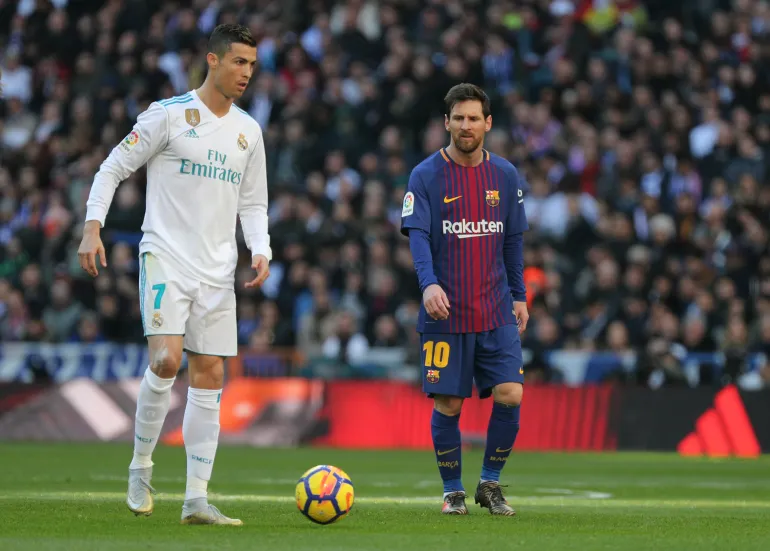
Ronaldo and Messi in action during a match between Real Madrid and Barcelona in 2017 [File: Sergio Perez/Reuters]
The careers of Messi and Ronaldo followed a similar trajectory and crossed paths for many years in club and international football.
It resulted in a hotly contested rivalry, mostly between the two players’ supporters over the past two decades.
The pair dominated the sport for more than 15 years, winning the prestigious Ballon d’Or award 13 times between them.
Their rivalry grew over the nine years in which they faced off against each other in Spain, with Messi starring for Barcelona and Ronaldo for Real Madrid.
Fans display a banner that reads ‘Ronaldo is Cristiano [Christian], but Messi is God’ during Argentina’s friendly match against Benin at the Monumental Stadium in Buenos Aires [File: Rodrigo Valle/Reuters]
Messi, 39, announced his retirement from international football after leading his country to the World Cup final in July in the United States, where the 2022 champions were runners-up behind Spain.
“Yesterday was my last game, and I already miss wearing the blue and white. I know I’m making the right decision,” Messi said in a lengthy message a day after his final match in the famous number 10 blue and white shirt. “It’s been an incredible journey, full of joy and also some sadness, but I know for sure that every step I took was worth it.”
“I don’t want to forget Diego [Maradona], who put our country where it deserved to be and who, as I always say, I know helped us both by being here with us and also from heaven, with every step we took,” he said.
“Thank you to the clubs where I played, for always respecting my feelings and allowing me to dedicate myself to my country whenever it was time to put on the national team jersey.”
An artist adds final touches to a painting featuring Messi and Ronaldo in Amritsar, India [File: Narinder Nanu/AFP]
Messi scored Argentina’s final goal in a 3-0 win and provided assists for the other two as the Albiceleste played in front of 85,000 fans at the Monumental Stadium.
Messi captained Argentina to the 2022 World Cup title and Copa America triumphs in 2021 and 2024, while also helping them win the 2022 Finalissima.
“I am grateful. I love you all very much; I’m going to miss you, and I will always thank you for having been by our side, by my side,” the Inter Miami playmaker added.
Messi and Ronaldo have vied for recognition as the greatest player of their generation throughout their illustrious careers.
The 41-year-old Portuguese forward was among the hundreds of thousands who responded to Messi’s post.
Messi’s final game came the same day Ronaldo apologised for his controversial departure from the Portuguese national team’s camp after a fallout with coach Jorge Jesus. It remains unclear whether Ronaldo will play for his country again, despite his apology for walking out, which leaves the door open to a return.
Messi and Ronaldo last met on the pitch in an exhibition match in Saudi Arabia in January 2023, when they took fans back in time to the heyday of their storied rivalry, as both forwards got on the scoresheet.
Ronaldo, who plays for Saudi Pro League champions Al Nassr, was part of a Riyadh Season Team that took on Messi’s then-club Paris Saint-Germain (PSG).
In the past three years, following the October 7 attacks and the start of Israel’s genocidal war on Gaza, the wider region has been marked by conflict, economic turmoil, and a shattering of the balance of power.
The network of alliances maintained by Iran, long central to its regional power, has been hit hard and severely weakened. Yemen’s Houthi rebels remain one notable exception.
Recommended Stories
list of 4 itemsend of list
Israel has made gains. Many of the leaders of the Lebanese group Hezbollah and the Palestinian group Hamas have been killed, while Iranian Supreme Leader Ayatollah Ali Khamenei was also assassinated in February. Israel occupies most of Gaza, where it has also killed more than 74,000 Palestinians and reduced much of the enclave to rubble.
Its military aggression has come at a cost, isolating it from its traditional allies and making it globally unpopular, including in the United States. The potential for more normalisation deals with Arab countries seems unlikely, at least in the short term.
Instead, Israel continues to launch attacks across the region, crossing previously held red lines – such as the 2025 attack on Doha, Qatar – and making many governments around the world view it as the primary source of unrest in the Middle East.
US not a protector
“Before October 7, the US’s entire policy in the Middle East rested on normalising Israel’s presence in the region through its so-called Abraham Accords,” HA Hellyer of the Royal United Services Institute said, referring to the normalisation deals with several Arab states, including the United Arab Emirates. “Israel’s response to the October 7 attack ended that.”
Instead, rather than a stable Middle East with Israel at its centre, the US entered into a war with Iran this year, and has since looked on as Tehran targeted US allies across the Gulf, shattering the perceived security of the US security umbrella.
Drones and missiles hit Qatar’s Ras Laffan gas hub and started fires near Dubai airport and at Fujairah’s oil zone. In September, the Houthis surged down Yemen’s Red Sea coast, taking the port of Mocha and nearby islands. Their gains tightened their grip on the Bab al-Mandeb strait, threatening a key route for global trade and energy supplies that had become even more important amid disruption in the Strait of Hormuz.
“There’s been a loss of faith in the US as a singularly sufficient security guarantor,” Hellyer continued.
“This is why you’re seeing many in the region talk to other external actors, in addition to continuing, and in some cases deepening their US ties, as well as initiatives such as the Mecca security pact as states in the region look elsewhere for ways to safeguard their security,” he said, referring to the defence agreement between Saudi Arabia, Turkiye and Pakistan, signed in August, agreeing that an attack on one was to be regarded as an attack on all.
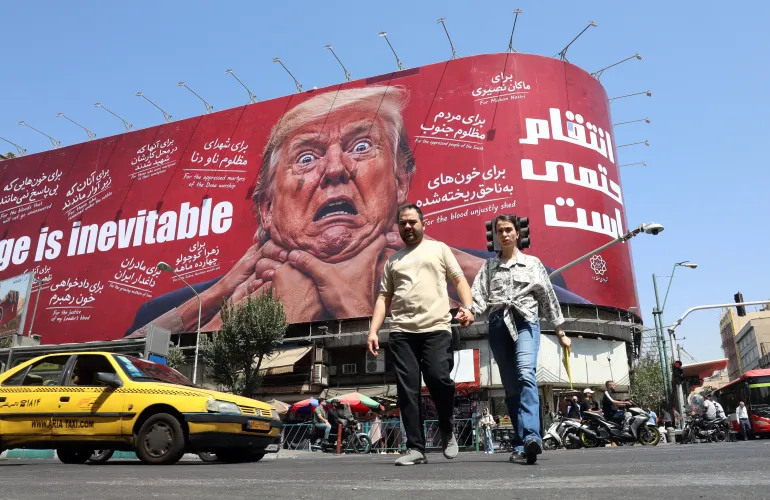
Iranians walk near an anti-Trump billboard in Tehran, Iran, August 19, 2026 [Abedin Taherkenareh/EPA]
Alliances
Alongside the loss of confidence in the US as a security guarantor has come a dramatic reordering of alliances and rivalries. Much of Iran’s network – most notably Hezbollah, whose reputation had long served as a deterrent against Israeli attack – appeared to buckle under Israeli pressure.
“The Middle East has always been multi-aligned. However, now it’s even more so,” Sanam Vakil, the director of the Middle East and North Africa Programme at Chatham House, said of the increased leverage given to external actors, such as Turkiye in Syria and China’s involvement in negotiations over the end to war on Iran, as Beijing finds its own energy supplies under threat.
“It’s ironic, since October 7, it’s Israel that has emerged as the revisionist power and Iran almost as the status quo power,” she said of the apparent reversal in status of the two belligerents, with Tehran seemingly more focused on regaining the ground it has lost in the last three years rather than advancing beyond them.
However, none of this was to overstate Israeli influence, or liken it to a regional superpower, Vakil cautioned. “Israel may currently be the preponderant military power in the Middle East, but real power is typically classed as being able to project stability, which Israel hasn’t shown itself able or willing to do,” she said.
Clogged arteries
While Israel and the US hoped February’s attacks would swiftly topple Iran’s government, they have instead opened a new front. Tehran now wields economic leverage over Israel, the US and their partners through the Strait of Hormuz, which borders Iran and typically carries about a fifth of the world’s oil and gas, and through Bab al-Mandeb, which is now threatened by its Houthi allies.
Whatever Tehran’s intentions, the economic pain has been uneven. The West, cushioned by emergency reserves, record US oil production and supplies from countries such as Norway, has so far avoided the turmoil of the 1970s oil shocks, when US drivers queued for petrol, even though the current disruption is on a greater scale. In April, the International Monetary Fund trimmed its 2026 global growth forecast only slightly, to 3.1 percent from 3.3 percent.
Gulf exporters, in contrast, have fared far worse. The same assessment cut its forecast for Saudi Arabia from 4.5 to 3.1 percent, and turned Qatar’s from growth of 6.1 percent into a contraction of 8.6 percent.
“It’s curious, in many ways the West’s reduced need for Gulf oil has increased the degree to which Israel has become a liability for the US,” Israeli political economist Shir Hever told Al Jazeera, referring to a diplomatic alliance between the two states long underpinned by Israel’s strategic position in an oil-rich region central to US interests.
“There’s a train of thought in Israel that the current crises may push the Gulf states into allying with it,” he said, while noting the irony that Israel had been the main aggressor in the conflicts that followed October 7. “Though that seems fairly unlikely.”
Talks will focus on the €1 billion daily deficit and rare earth export restrictions.
Published On 7 Oct 20267 Oct 2026
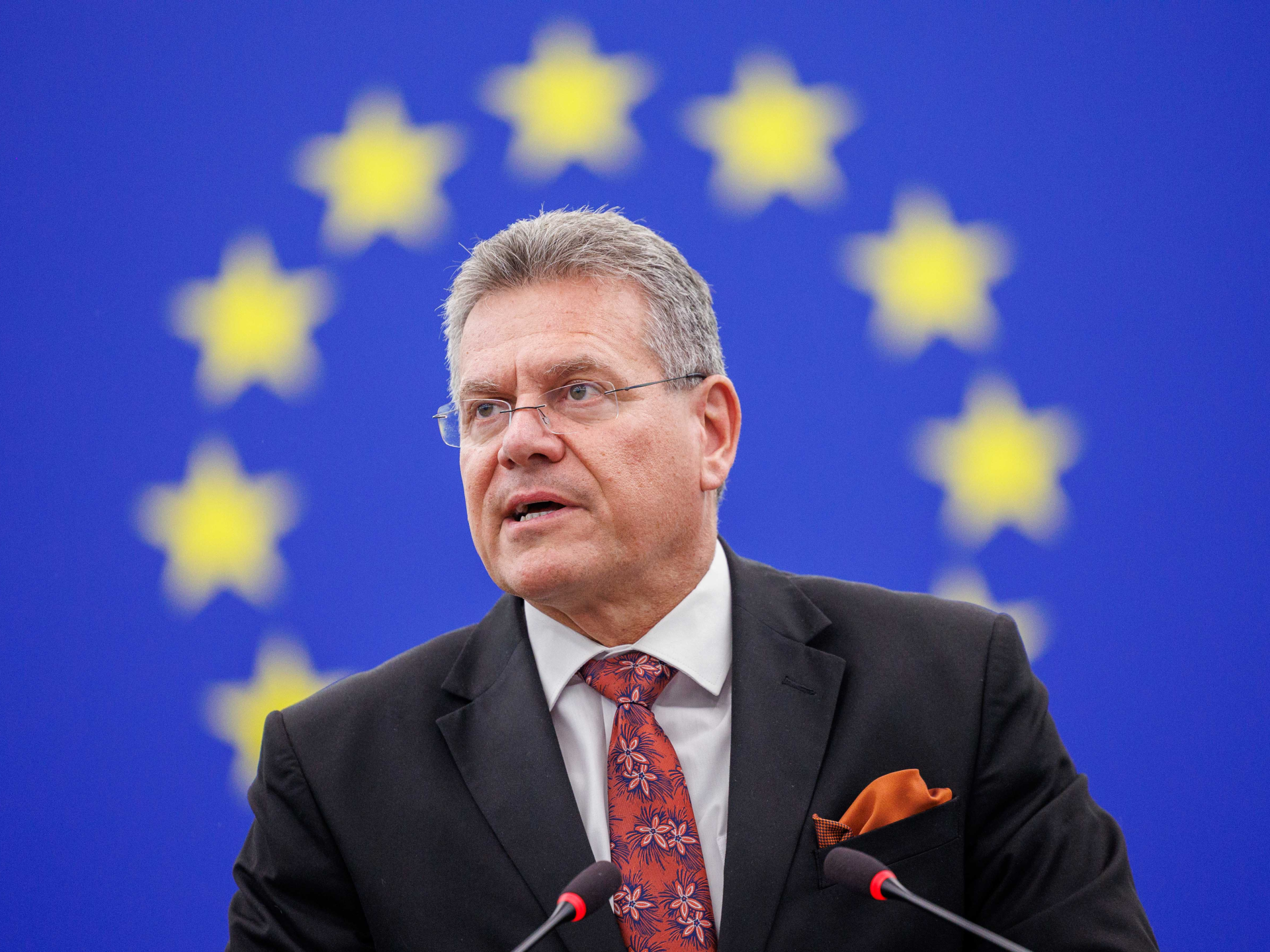
European Trade Commissioner Maros Sefcovic has arrived in Beijing for talks on the European Union’s (EU) growing trade deficit with China.
Sefcovic will meet Chinese Commerce Minister Wang Wentao on Thursday and Friday after months of discussions over the EU’s trade deficit of more than €1bn ($1.12bn) daily, as well as Chinese curbs on exports of rare earths and other critical minerals.
Recommended Stories
list of 3 itemsend of list
Meanwhile, Chinese companies are increasingly challenging Europe’s top car brands. China rejected the EU request for voluntary curbs on Chinese hybrid car exports as the two sides enter negotiations, the Financial Times reported on Wednesday. The European Commission now hopes to get Beijing to accept a unilateral EU measure to cap hybrid imports instead, the outlet said, citing two diplomats briefed on the plan.
The two days of discussions come just as a majority of EU lawmakers called for a more assertive trade policy towards Beijing in a non-binding resolution on Wednesday. China vowed a “resolute response” to safeguard its industries if the European Union goes ahead with restrictions against Chinese companies or products, according to its commerce ministry.
Germany and France propose rapid EU measure
French President Emmanuel Macron and German Chancellor Friedrich Merz, leaders of the bloc’s two biggest powers, on Tuesday urged the EU to prepare a “credible instrument” that could be quickly activated to strike back against countries that harm the bloc economically.
The new measure would not target any specific country. German officials said the EU needed a tool as powerful as the Section 301 tariffs imposed by the United States or China’s restrictions on critical-mineral exports.
The proposed weapon – to be discussed at an EU leaders’ summit next week – would give the European Commission the power to respond to a trade aggression within days.
China responded to the letter by urging Paris and Berlin to steer clear of “protectionist” measures.
“We hope that France and Germany, as major economies in the world, will uphold openness, cooperation and free trade,” the commerce ministry said in a statement.
“They should avoid going down the wrong path in the wrong way, only to ultimately suffer the consequences themselves.”
G20 finance leaders, except China’s, agreed in September to act against “non-market” distortions that exacerbate imbalances. Beijing says that hyping up issues such as economic imbalances and overcapacity is a form of protectionism designed to exert pressure on and restrict China.
Ongoing trade talks
EU and Chinese officials have been discussing trade imbalances since June. Sefcovic said he wanted “tangible results by October” as well as some form of commitment that can be put to EU leaders meeting in Brussels.
Trade relations with China top the summit’s agenda next week, as ballooning debt has prompted auditors to warn about the next seven-year EU budget and has spurred protests in France.
European Commission President Ursula von der Leyen told the European Parliament last month that the trade imbalance had reached a tipping point and that Europe would use every tool at its disposal to rebalance the relationship.
Far-right and far-left parties gain ground in local elections as Merz’s approval rating sinks.
Published On 7 Oct 20267 Oct 2026
Chancellor Friedrich Merz has hit out at what he called political “extremism” in Germany after recent stinging defeats in local elections to far-right and far-left parties.
“This is a task for our society as a whole, and it is one I intend to play my part in,” he said on Wednesday at an event in Berlin.
Recommended Stories
list of 3 itemsend of list
Merz said “extremism” was forcefully making its way into the country’s parliaments, a day after a member of the far-right Alternative for Germany (AfD) was elected president of the state parliament in Saxony-Anhalt and the Left Party won out in Berlin’s state election last month.
“Anyone who casts their vote for the AfD is playing the extremists’ game and undermining credibility,” Merz said. “In any case, this is incompatible with the values of my party, the CDU [Christian Democratic Union of Germany].”
Despite winning the vote in the September 6 election in Saxony-Anhalt, the AfD fell three seats short of the absolute majority it had had sought. AfD lawmaker Tobias Rausch won the presidency of the parliament in the eastern German state Tuesday, backed by the left-populists in a secret ballot.
Founded in 2013 as a Eurosceptic movement, the AfD won over voters with an increasingly hardline opposition to immigration after about a million people fled to Germany in 2015, many of them from war-torn Syria.
The party has since become a dominant political force in much of eastern Germany, especially among voters disillusioned with mainstream parties, though most traditional parties have pledged not to enter coalitions with the AfD.
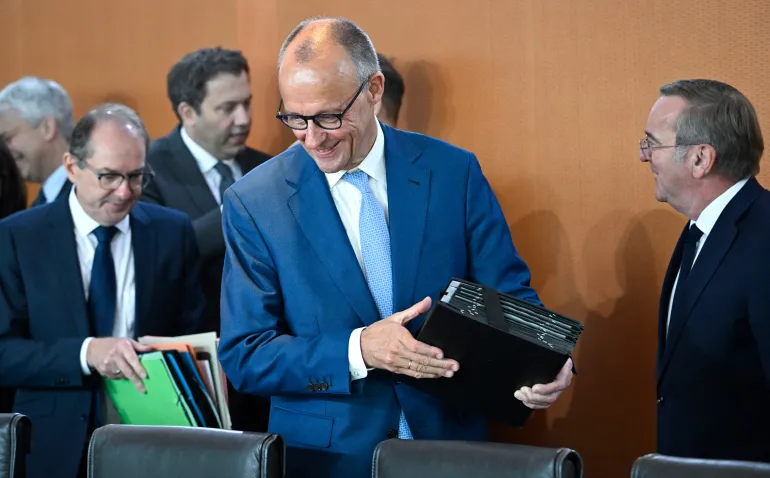
German Chancellor Friedrich Merz arrives for the weekly cabinet meeting in Berlin on October 7, 2026 [Tobias Schwarz/AFP]
Berlin election
Merz’s comments followed the far-left Left Party’s victory in the Berlin state election on September 20, in another defeat for the chancellor’s ruling Christian Democrats.
Lead candidate Elif Eralp campaigned on the soaring cost of housing in the German capital and immediately promised to follow through with a pledge to nationalise private housing associations that account for a large share of the city’s housing stock.
The result, which roughly doubled the party’s previous score, could see her become the first mayor of Berlin from the Left Party, which grew out of the former East German communist party following the reunification of the country 36 years ago.
Eralp, the 45-year-old daughter of left-wing Turkish parents who fled a coup in 1980, said the increasingly difficult rental situation was the biggest social problem in the capital.
She promised to proceed with nationalising the housing associations she said drove property speculation, in accordance with a referendum from 2021 in which 58 percent of voters backed a proposal to promulgate the move.
While the AfD has attracted most attention, the Left Party has also benefitted from a general turn against the mainstream centre-left and centre-right parties.
Meanwhile, Merz has received a record low approval rating. Earlier this month, a survey by Germany’s public broadcaster ARD found that only one in 10 respondents were satisfied or very satisfied with his performance, the lowest figure for any chancellor since the survey began in 1997.
Another major election test will come in North Rhine-Westphalia, Germany’s most populous state, where voters are set to elect a new parliament in April.
Protesting students demand accessible education in French-speaking areas of the country.
Published On 7 Oct 20267 Oct 2026
Police in Belgium have detained more than 100 people after demonstrations in the city of Liege against the rising cost of education turned violent in some places, as similar protests grip neighbouring France.
Students rallied in the city on Tuesday and Wednesday against overcrowded classrooms and difficulty accessing resources in Belgium’s French-language education system.
Eighty people were detained during the protests, and 27 were formally arrested, the Belga news agency reported, citing the Liege police.
Some protesters damaged property and set fires, the police added.
Attendees insisted that shortcomings in the education system gave them no choice but to take to the streets.
“When we saw nothing was changing without protests, we decided we would start,” said Amelia Di Salve, a 19-year-old studying to become a teacher, who added that protests in “France did influence us a little”.
“We support each other because we’re facing pretty much the same issues,” Alfred, another 19-year-old student, told the Reuters news agency.
‘Peaceful way’
Authorities were attempting to defuse tensions and head off further unrest.
“Dialogue can be established,” Willy Demeyer, the mayor of the city of Liege, told Belgian broadcaster RTBF, adding that he hoped “young people can express their grievances in a peaceful way and if possible have those concerns heard”.
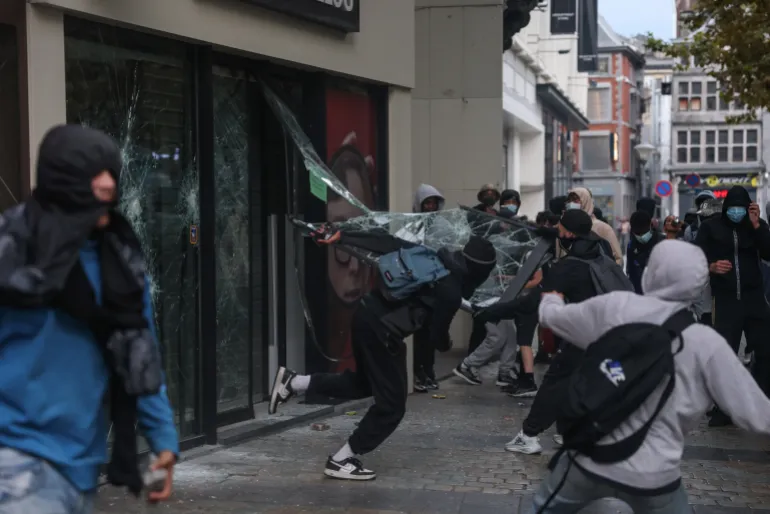
Demonstrators smash a shop window during a protest by high school students against education reforms and increased student fees in Liege, Belgium, on October 7, 2026 [Stephanie Lecocq/Reuters]
In Belgium, education is managed independently by the country’s linguistic communities, and there is no single national curriculum.
Instead, the Flemish population regulates education in Belgium’s Dutch-speaking Flanders region while French-speaking Wallonia oversees its own curriculum.
Parents can decide where to enrol children in the bilingual capital Brussels.
The protests in Liege follow sporadic violent demonstrations over the summer in Brussels against an increase in tuition fees for students in French-speaking areas from 835 euros ($930) to 1,194 euros ($1,340).
Belgium’s education budget has been under pressure as a result of a cost-of-living crisis and the spiralling cost of energy, issues that are helping fuel student protests in France as well.
European football leaders meet on Wednesday with the aim of shaping strategy to oust Gianni Infantino as FIFA president.
Published On 7 Oct 20267 Oct 2026
European football leaders were gathering Wednesday with time pressing to find a candidate and shape their strategy for trying to oust Gianni Infantino as president of FIFA.
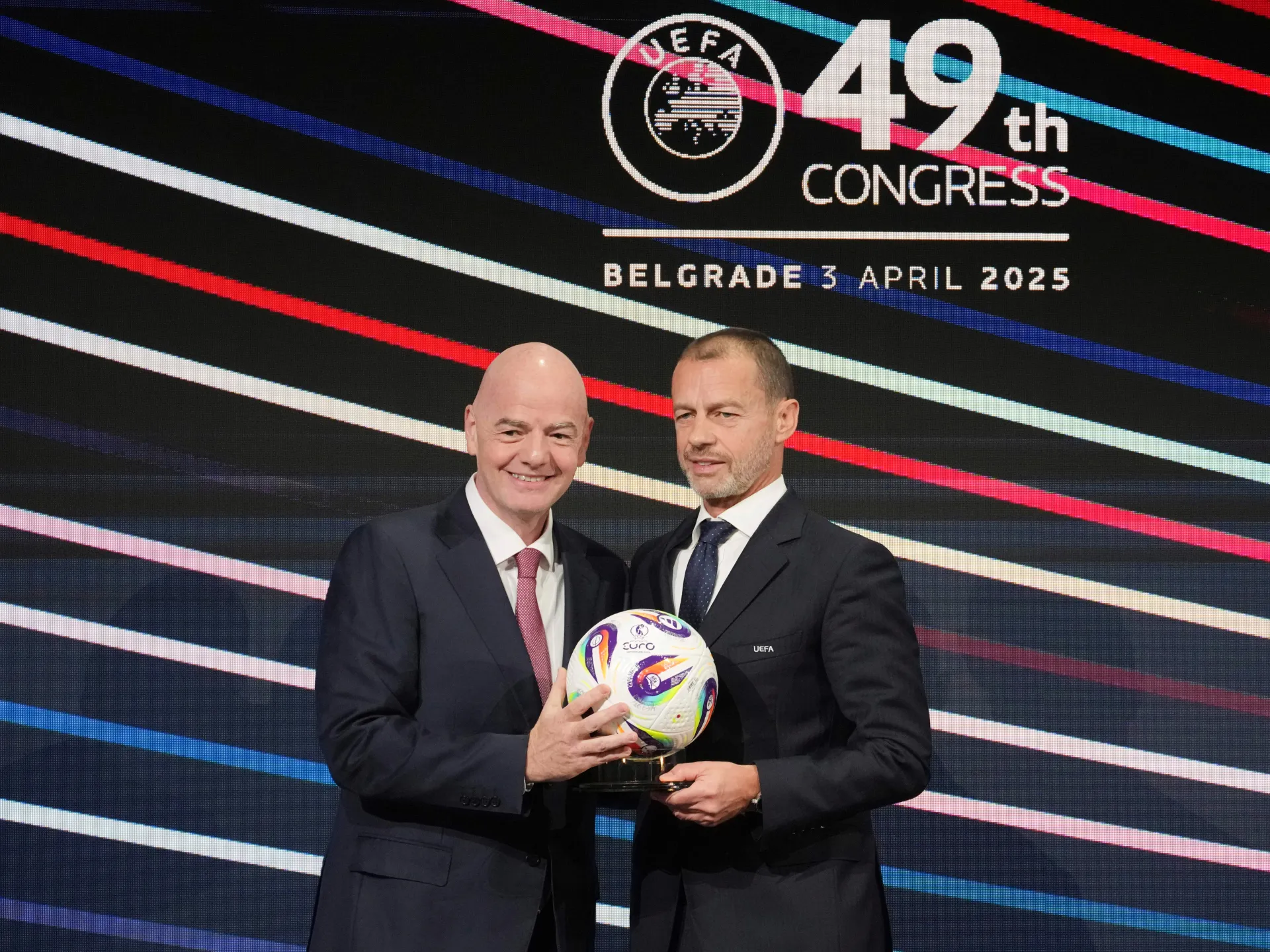
UEFA has called its 55 member federations to a previously scheduled summit on Thursday in Berlin that arrives in the midst of European efforts to get a new leader for football’s world body.
Recommended Stories
list of 4 itemsend of list
Infantino’s divisive World Cup private investment plan – that failed within days of being revealed in July – pushed UEFA to act on longstanding mistrust of its former employee’s increasingly executive presidency at FIFA.
UEFA’s longer-term plans include preparing a criminal complaint against Infantino in Switzerland for possible financial mismanagement in the World Cup sell-off deal. It has asked courts in the United States to authorise discovery of evidence.
“Somewhere along the way things went too far with FIFA, and we’re looking to put things back where they belong,” UEFA general-secretary Theodore Theodoridis said last month.
Europe’s 55 count for more than a quarter of FIFA’s 211 member federations that can vote in the election on March 18 in Rabat, Morocco. Research by The Associated Press news agency suggests Infantino already has about 90 votes pledged – albeit before any potential opponent is known.
Still, UEFA is not a united bloc. Infantino has support promised from Azerbaijan, the home country of a close aide, and Latvia. On Wednesday he met with football and government officials in the Czech capital Prague.
First, UEFA and its allies worldwide need to agree on at least one candidate to challenge Infantino by the November 18 deadline to enter the race.
UEFA President Aleksander Ceferin was joined in August by his fellow FIFA vice presidents from Asia and North America in denouncing Infantino for deception and breach of trust over the World Cup sell-off plan.
Still, neither Ceferin nor his counterparts at the AFC and CONCACAF, Sheikh Salman bin Ebrahim Al Khalifa of Bahrain and Victor Montagliani of Canada, currently look set to be on the FIFA ballot.
Ceferin has long dismissed any talk of himself running to lead FIFA, though he said last month at UEFA meetings in Greece there were “many, many” potential candidates.
Montagliani is expected to focus on his own re-election at CONCACAF in February.
Sheikh Salman has been Infantino’s FIFA election opponent before. He had been favourite in a five-man campaign that Infantino eventually won in February 2016.
Speculation has often pointed to Paris Saint-Germain president Nasser Al-Khelaifi, a close ally of Ceferin. The Qatari member of UEFA’s executive committee ruled himself out last week at a meeting of the influential European Football Clubs group he leads.
Infantino is part of UEFA’s focus in Berlin for the biennial business meeting of top executives from its member federations, which can debate policy, strategy and international football competitions.
The meeting is expected to discuss proposals for a more transparent FIFA and a presidential candidate willing to commit to those reforms.




![The fire-damaged “Royad Mammadov” ship in the Black Sea after a fire aboard the vessel outside Romania’s territorial waters left two people dead on October 5 2026 [Reuters]](https://i0.wp.com/www.aljazeera.com/wp-content/uploads/2026/10/2026-10-05T150002Z_1974670076_RC22XNAQIP2B_RTRMADP_3_ROMANIA-INCIDENT-1791231511.jpg?w=640&ssl=1)