Third strike on Yandex facilities in a week comes as Russia and Ukraine escalate attacks on tech infrastructure.
Published On 11 Oct 202611 Oct 2026
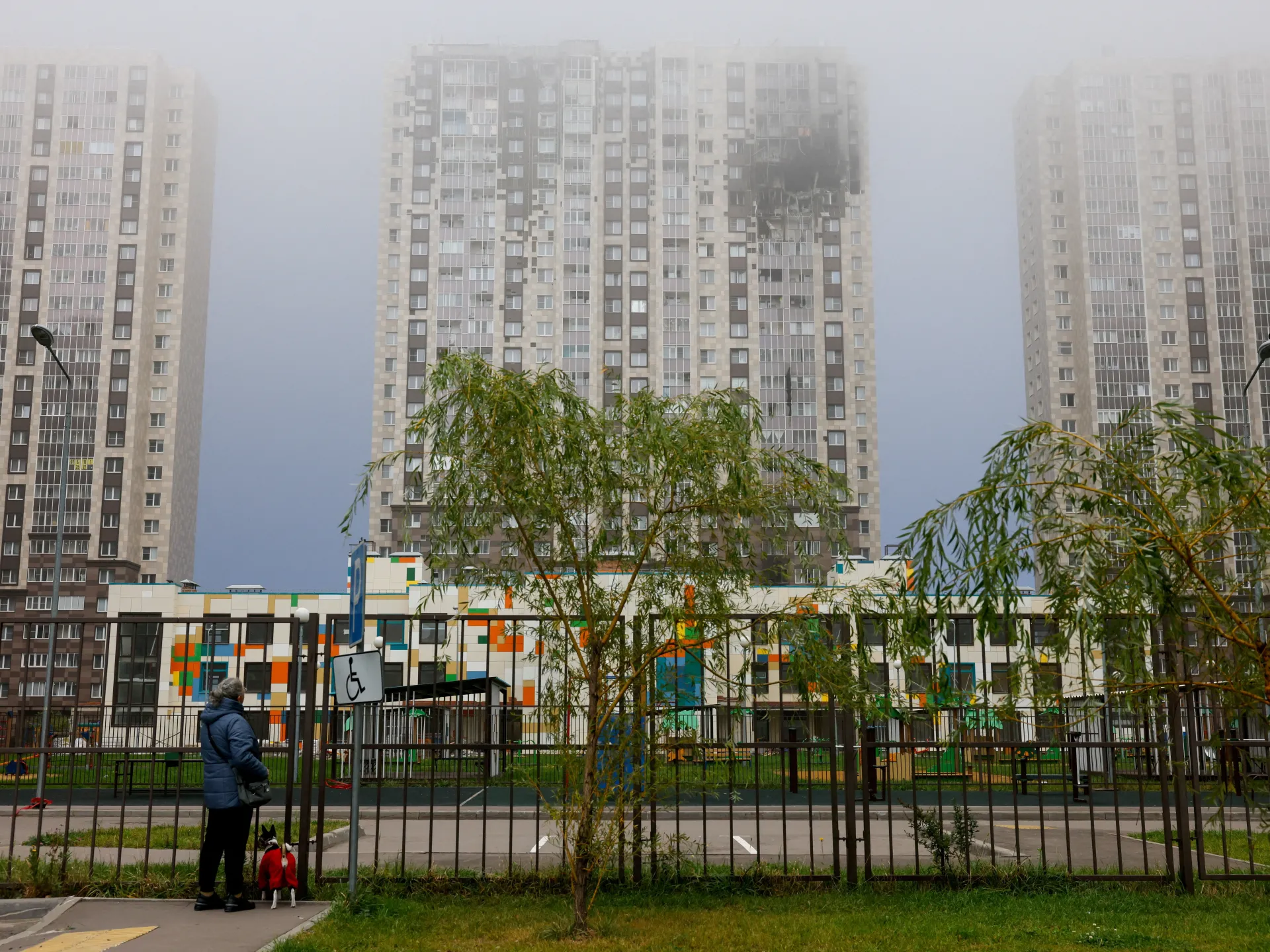
A Russian data centre run by technology and AI company Yandex has been shut down after it was hit in a drone attack.
No injuries were reported in the attack on the facility in the city of Vladimir, east of the capital, Moscow, the company said on Sunday.
Recommended Stories
list of 4 itemsend of list
Emergency services were at the site and several of Yandex’s services were unavailable to users, the company said, as it evaluated ways to restore its systems.
“Operations at the data centre have been completely suspended,” Yandex said in a service alert on Telegram, advising users to activate disaster-recovery plans as the platform operated in emergency mode.
“The remaining resource configuration is considered unstable,” it added, warning that technical support communications could also be disrupted as teams assessed the damage.
It is the third attack on the company’s data centres in the last week, as Russia and Ukraine continue to escalate attacks on each other’s technology infrastructure.
On Friday, Yandex, which is heavily involved in Russia’s AI development and is sometimes referred to as “Russia’s Google”, said its data centre in the Kaluga region southwest of Moscow was struck by Ukrainian drones and partly put out of action.
A day earlier, a Ukrainian attack shut down Yandex’s data hub in Sasovo, southeast of Moscow, where two of the three supercomputers used to develop the company’s AI model are housed.
“We always respond in mirror-like fashion,” Ukrainian President Volodymyr Zelenskyy said on Thursday, following the Sasovo strike. “You all know, they have been hitting and continue to hit our data centres. We are responding. I can’t share all the details.”
Russia has struck several Ukrainian data centres and telecommunications infrastructure facilities over the past month, including targets in central Kyiv, in an apparent effort to disrupt the country’s connectivity and digital commerce.
Man City face Liverpool in their first game since being found guilty of serious EPL financial breaches.
Red flares, smoke-filled pyrotechnics, strongly worded banners and trenchant chants.
Manchester City can expect a raucous and hostile reception when they arrive at Anfield for their Premier League match against Liverpool on Sunday.
Recommended Stories
list of 4 itemsend of list
Liverpool supporters are angry, and they are planning to parade their emotions for City as the league leaders play their first match since being found guilty of breaking more than 100 financial rules.
In a decision that could have a drastic effect on the future of the English top flight, an independent commission found that City and their Emirati owners had arranged “sham” deals to artificially inflate revenues and reduce costs by more than 900 million pounds ($1.2bn) from 2009 to 2018.
City, who deny any wrongdoing, have appealed against the devastating verdict.
The multiple breaches of Premier League regulations came during a period when City won three league titles and a clutch of other trophies while Liverpool struggled to break City’s stranglehold on the game in England.
City were given a taste of the resentment that awaits them when Manchester United fans goaded them during their 1-1 draw with Tottenham Hotspur at Old Trafford on Saturday.
Man City’s players and manager Enzo Maresca will get the full taste of a potentially fiery reception from Liverpool fans, who have also waited three weeks to watch their team back in action after the extended international break.
Social media posts and video reactions have made no secret of the anger that will be directed towards City by Liverpool’s supporters.
Spion Kop 1906, a Liverpool supporters group that organises flag and banner displays on The Kop, the famous single-tier south stand at Anfield, urged attendees to come prepared to show their support when the Reds host Man City.
“There’s loads riding on Sunday’s game on and off the pitch, but it’s down to us as a collective to bring the noise and get behind the team,” Spion Kop said on X.
“Bring your flags, bring your scarves and be at it from the very first minute.”
‘LFC vs Cheats’
A social media post promoting a “Bus greeting”, urging Liverpool supporters to gather near the stadium several hours before kickoff ahead of the arrival of the City players’ bus, is also making the rounds on X.
Another post about the bus greeting took a dig at Man City, describing the match as “LFC vs Cheats”.
Merseyside Police said there would be an appropriate policing operation in place on the day of the match.
Liverpool fans are no strangers to creating a hostile welcome for City.
In 2018 during a Champions League quarterfinal tie, City’s team bus was attacked with bottles and flares when it arrived at Anfield. Liverpool were subsequently fined 20,000 euros ($22,400) by UEFA, European football’s governing body.
Liverpool fans set off flares and throw bottles at the Manchester City team bus outside Anfield before their Champions League match in 2018 [File: Carl Recine/Action Images via Reuters]
Dom Farrell, author of the book Glory Days for the Waifs and Strays, which chronicled City’s rise from the third tier to European champions, expected Sunday’s showdown to be “massively hostile”.
“If they were to win against Liverpool and then beat an off-form Paris Saint-Germain [in the Champions League on Wednesday], you really get a siege mentality going,” Farrell told the AFP news agency.
“But there’s also a decent chance they get turned over, and then it just starts to feel like you’re in this sort of dead zone waiting for the verdict.”
‘Brutal day’
Former Manchester United captain and England defender Gary Neville expected Sunday to be a “brutal day” for visiting Man City, who lead the standings with a 100 percent record and are six points ahead of Liverpool.
“If they want an understanding of how angry the game is going to be, then Anfield will tell them like you would never believe,” Neville said on The Overlap podcast.
“I suspect there may be banners. There will certainly be chanting. There will be a reception like you have never seen for them at Anfield.”
Real Madrid forward has a goal disallowed, is sent off for the hair-pull offence and could miss the next three games.
By Reuters and The Associated Press
Published On 11 Oct 202611 Oct 2026
Real Madrid’s Vinicius Jr has apologised to his teammates and the club’s fans after being sent off in the 1-0 win over Villarreal in La Liga at the Santiago Bernabeu but now faces a nervous wait for a ruling by the disciplinary committee, which could see him miss Real’s fixture with rivals Barcelona in two weeks.
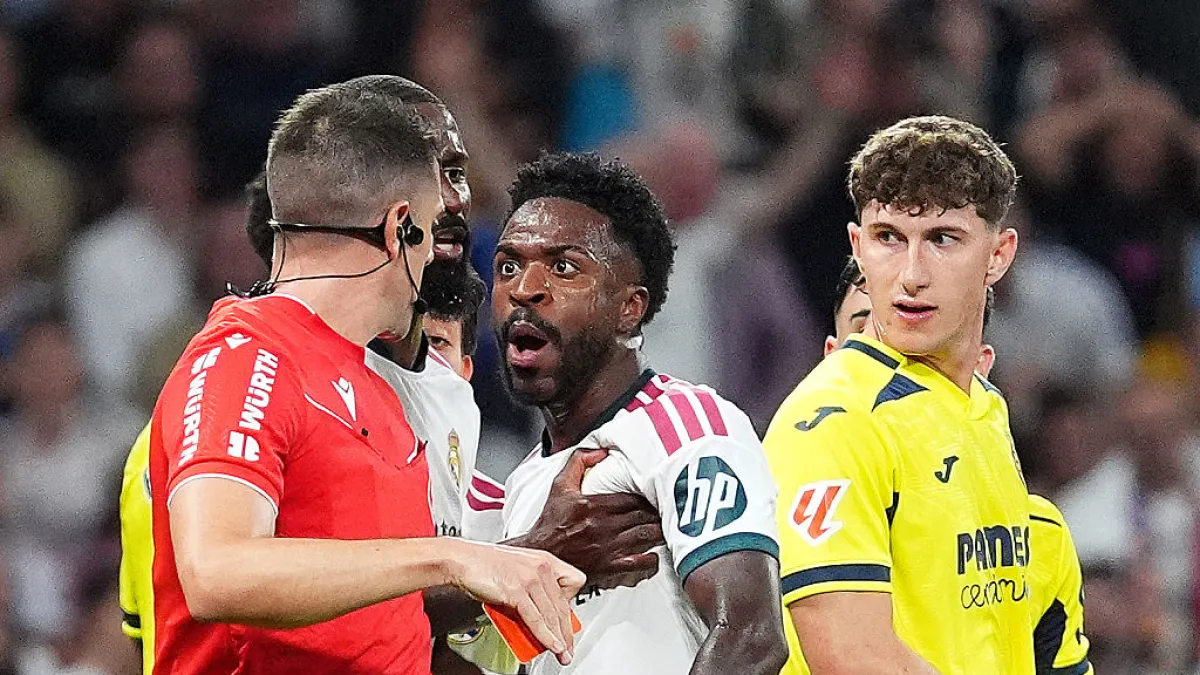
The Brazilian thought he had scored Real’s second goal in the match on Saturday, but his effort was disallowed after a video assistant referee (VAR) review found he should be dismissed for pulling Nathan Saliba’s hair in the build-up.
After the match, Vinicius, who came on in the 52nd minute and was red-carded 20 minutes later, posted on social media, saying, “sorry to the team and the fans”.
Vinicius was celebrating after scoring when referee Isidro Diaz de Mera was called by the VAR to review the moments before his goal. The referee waved off the goal and pulled out a red card for Vinicius.
When he thought Vinicius had doubled the lead, Real manager Jose Mourinho ran to join the celebrations with his players.
But moments later, Vinicius was left livid by the referee’s decision. He screamed at Diaz de Mera while his teammates tried to calm him down as he left the field.
Vinicius was restrained by his teammates as he argued with the referee [Oscar Del Pozo/AFP]
“I don’t think he meant to hurt anyone, but it is a red card,” Villarreal defender Juan Foyth said about the hair yank of Saliba.
Diaz de Mera wrote in his match report that after being shown the red card, Vinicius “protested my decision, raising his voice, toward where I was standing in an aggressive manner, and being held back by teammates”.
Royal Spanish Football Federation regulations state that pulling an opponent’s hair is regarded as violent conduct.
The sanction for violent conduct without causing injury to an opponent, according to Article 130 of the league’s rules, is a ban of one to three matches.
Real’s next three La Liga games are against Sevilla, Barca and Racing Santander, but missing El Clasico would be a bitter blow for the 26-year-old Brazil international.
Mourinho did not appear at the mandatory post-game news conference.
In 2021, Unesco designated 11 historic spa towns across Europe as one transnational world heritage site, recognising their “exceptional testimony to the European spa phenomenon, which gained its highest expression from around 1700 until the 1930s”. This was the original wellness tourism, and these grand health resorts include Bath in England and the town of Spa in Belgium, as well as the west Bohemia spa triangle of Karlovy Vary, Františkovy Lázně and Mariánské Lázně.
Of that trio, Karlovy Vary is the most well known and within a day trip of Prague, but Mariánské Lázně is arguably the prettiest. The town offers three natural healing traditions: mineral springs, carbon dioxide springs known as Maria’s Gas, and therapeutic peloids (mud and clay). Czech nationals are still prescribed weeks-long spa stays to recover from surgery, severe illness or chronic conditions, but anyone can check into the Nové Lázně hotel (doubles from €234 B&B, including spa access), a canary yellow neo-renaissance confection built in 1896 that faces the central park.
Its spa is a trip back in time: baths surrounded by marble columns and intricately decorated treatment cabins, including one built for King Edward VII, who visited nine times. Join tourists and locals drinking the waters from special porcelain cups while walking along the colonnades, and don’t forget to pair it with a spa wafer – large, thin, crispy confections with sweet fillings such as hazelnut or chocolate. It’s not all virtuous.
Bad Kissingen, Germany
Bad Kissingen in Bavaria is renowned for its architecture. Photograph: Moskwa/Alamy
Germany is home to about 350 designated spa towns, including three of the Unesco Great Spa Towns of Europe: celebrity favourite Baden-Baden, quiet riverside Bad Ems and elegant Bad Kissingen in Bavaria. The latter’s striking architecture is arguably the most interesting of the three, much of the central spa district having been rebuilt by star German architect Max Littmann in the early 20th century. This includes the grand fountain hall, with its stained-glass roof, where Brunnenfrauen (fountain women) dispense different mineral waters from bronze pipes, and the huge basilica-style Wandelhalle, where the town’s spa philharmonic orchestra performs several times a day.
Music has always been part of the spa experience – the Staatsbad Philharmonie Kissingen holds the world record for the most concerts performed in one year (727!) – and the beautiful art nouveau-style Regentenbau houses one of the best concert halls in Europe.
The modern KissSalis Therme (from €19 for two hours) on the southern edge of town is the main public bathhouse today, with indoor and outdoor thermal pools, mud treatments and various – clothing-free – saunas.
At the more classical end of the spa spectrum, the Grand Hotel Kaiserhof Victoria (doubles from €209 B&B, including spa access) sits next door to the Wandelhalle on the town’s Kurgarten. The water used in the spa here is pumped up directly from the brine spring, while the inhalation room has a wooden graduation tower covered in knobbly salt deposits, which mimics the healing effects of mineral-rich sea air.
Bad Wildbad, Germany
A pool at Palais Thermal in Bad Wildbad. Photograph: Cavan Images/Alamy
Deep in the north of the Black Forest, this spa town offers ways of immersing in nature beyond soaking in waters from the thermal springs. Rising above the town, Sommerberg (meaning “summer mountain”) will get pulses racing. A funicular railway whizzes visitors to the top, the starting point for hiking and biking routes. For more heart-pumping views, the accessible Treetop Walk (€12.50) spirals above the dense pine trees to an observation tower 40 metres up, with a tunnel slide back down the middle for extra thrills, while the Wildline suspension bridge (€9.50) – with its 380-metre walkway – arches over the Enz valley for maximum views.
Back in town, there are two thermal baths to dip into: the modern Vital Therme, where those with joint and back problems are prescribed movement therapy and spa treatments (€14 for three hours); and the historic Palais Thermal, where the pools are surrounded by marble pillars, statues of Venus and Moorish tiles (€21 for three hours). Mokni’s Palais Hotel is connected to the Palais Thermal building, meaning guests can pad over in their bathrobes (doubles from €183 B&B, including access to the spa).
Bagnoles-de-l’Orne, France
Château du Gué aux Biches at Bagnoles de l’Orne
Local legend has it that, after many battles, the medieval lord Seigneur Hugues de Tessé freed his faithful warhorse Rapide in Normandy’s Andaines forest to live out the rest of its days in peace. Much to the nobleman’s surprise, the horse later returned to him stronger and full of life, then led his master to the warm, sulphurous waters of Bagnoles’ spring. Centuries later, a spa resort sprang up so the Parisian bourgeoisie could also tap into this fountain of youth, with belle époque villas laid out on the shores of a lake in the middle of the forest (today, it’s also handily less than an hour and a half from the ferry at Caen for British wellness seekers).
That belle époque quartier was the vision of local politician Albert Christophle, whose former hunting lodge on the edge of the village is now the very lovely five-bedroom Château du Gué aux Biches (doubles from €195 B&B).
This summer, its Danish owners, Klaus Bentin and Soren Rasmussen, added a new restaurant in the old kitchen, serving up smørrebrød (open sandwiches).
The hotel has a partnership with the nearby spa at B’O Resort, meaning Klaus or Soren will line up your treatments, and there are bicycles to borrow so you can pedal a couple of kilometres over for that clay body wrap or hydromassage.
The surrounding forest is crisscrossed with hiking, biking and trail running routes. In autumn, take things more meditatively by going mushroom foraging among the more than 1,700 varieties sprouting from the Andaines forest floor.
Bad Gastein, Austria
Felsentherme thermal spa at Bad Gastein, Salzburg province. Photograph: Alamy
This genteel town in the Hohe Tauern Alps was built on water; indeed, a roaring waterfall cascades right through the middle of it. The healing reputation of its radon-rich waters, which bubble up from the town’s thermal springs, saw grand hotels built in the 19th century to house the emperors and aristocrats, writers and thinkers (Sigmund Freud among them) who came to be cured of their ills.
The fashion for “taking the waters” trickled away, but in recent years there’s been something of a revival, with a clutch of new hotels opening. The Cōmodo (doubles from €188 B&B) is one of them, a slick spot refashioned from a 1960s sanatorium. Bedrooms look out over the valley and mountains, as does the thermal water-filled indoor pool. There are several public fountains where you can still drink water straight from the source (warm, slightly salty and metallic tasting), but perhaps more palatable is to soak at the brutalist Felsentherme public bath complex with its numerous pools (€40 for a day pass).
Just as warming – but with fewer health benefits – is a bowl ofKaspressknödelsuppe (beef broth with cheese-infused dumplings) at the cosy cabin of Schafflinger Alm (soups from €4.50, mains from €17) after a bracing hike through the forest or carving up the Schlossalm-Angertal-Stubnerkogel ski area, where the season kicks off in late November.
Piešťany’s Spa Island, Slovakia
Irma Balneotherapy House in Piestany. Photograph: Piestany tourism board
Just before crossing the Colonnade Bridge to get to Piešťany’s Spa Island, there’s a statue of a man breaking his crutch, symbolic of the healing powers of the town’s thermal waters and sulphurous mud, harnessed on this enclave of wellness in the Váh River. The first simple wooden bathhouses were built on the island in 1778, but the opening of the Thermia Palace hotel and its Irma Balneotherapy House in 1912 turned it into a health resort.
Further hotels and spas are dotted between the trees and become increasingly concrete and functional as you get further from the bridge.
The Thermia Palace is still the fanciest option, with a raft of treatment programmes in the spa, from extensive diagnostics and lab tests to mud packs and pools (doubles from €210 half-board, including spa access). The blue-black goop is applied all over the body at a toasty 45C and left for about 10 minutes before being unceremoniously hosed off.
Outside, the spa park also feels restorative, with lily ponds, fountains and free-roaming peacocks.
In town, Elektrárňa Piešťany is a former power plant turned cultural centre that feels surprisingly vital, with film festivals and rock concerts, while the strikingly brutalist House of Arts hosts chamber orchestras and tango music trios.
Rogaška Slatina, Slovenia
The Grand hotel at Rogaška. Photograph: Andrija Majsen/Alamy
This town in eastern Slovenia is famed for Donat Mg, one of the world’s most magnesium-rich mineral waters, traditionally consumed for its digestive benefits. The company now sells millions of bottles of the stuff each year, but here at the source you can sip it for free from the fountains in the Pivnica Drinking Hall – although its salty, fizzy, metallic flavour is something of an acquired taste.
Like other towns of its ilk, Rogaška attracted the great and the good of Europe in the 19th century, and its confection of architecture is testament to that. A short stroll away from the drinking hall, through immaculately clipped gardens, the butter-yellow Grand Hotel Rogaška is straight out of the town’s golden age (doubles from €198 half-board include spa access). Bedrooms are traditional, but the spa has all the bells and whistles, from carbon dioxide baths and mineral water inhalations to reflexology and magnetotherapy.
Somewhat fittingly for a town famous for its drinking water, Rogaška is also known for its glassware – and visitors can tour the Rogaška crystal factory (€12) to see the glass-blowing in action before buying glasses for their Donat Mg from the on-site shop. The surrounding wooded hills are the place for autumn walks.
Salsomaggiore Terme, Italy
Terme Berzieri in Salsomaggiore, Emilia-Romagna. Photograph: Elena Dallari
In Emilia-Romagna’s so-called “food valley”, not far from Parma, this small spa town will help balance out some of that indulgence. Last year, the Italian thermal brand QC Spa of Wonders reopened the beautiful art deco-style Terme Berzieri, where the gilded interiors – all frescoes, mosaics, majolica and stucco – are as much of a draw as the salty spring waters, rich in iodine and bromide (five-hour spa sessions from €62). There’s the usual thermal attractions, as well as a sauna cinema and infinity rooftop pool, while treatments in wooden barrels nod to the area’s winemaking.
Try some of those wines at the Cantina Il Poggio vineyard in the hills outside Salsomaggiore, which produces a range of styles including the local sparkling Malvasia di Candia Aromatica (tastings from €30). Continue the tastings with a visit to a parmigiano reggiano producer, such as Caseificio Ugolotti (tour and tasting €23), before picking up some ham from Parma’s famous La Prosciutteria. Stop for a roast pork sandwich at legendary panini place Pepèn, before feasting your eyes on the Pilotta Palace complex with the Galleria Nazionale, Palatine Library and Farnese theatre, while the opulent Teatro Regio hosts the annual Verdi festival in October. The organic agriturismoCase Zucchi, about a 10-minute drive from Salsomaggiore, makes a suitably foodie base, with bedrooms named after herbs and the breakfast table piled with fresh bread, eggs, ham, cheese and fruit each morning (doubles from £104 B&B).
Caldas de Monchique, Portugal
The terraced fields of Serra de Monchique near Fóia, the highest mountain in the Algarve. Photograph: Image Broker/Alamy
High in the Serra de Monchique mountains, surrounded by cork oak and eucalyptus forests, the whitewashed hill town of Monchique offers a slower-paced autumn escape than the nearby Algarve coast. Its cobbled streets are lined with craft shops, ceramic workshops and simple taverns serving chouriço (smoked sausage) with a small glass of medronho (fruit brandy). In a wooded valley below town, the spa village of Caldas de Monchique is little more than a handful of 19th-century buildings around a shaded square and park, where you can drink slightly warm spring water from the public fountain.
The spa offers hydro rituals including a Vichy shower, massage and bath, or thermal water circuits around the pools, sauna and Turkish baths, before a dip in the outdoor pool.
Afterwards, the 1692 restaurant, with its stained-glass windows, dishes up bacalhau à Monchique (salt cod stuffed with chouriço and ham). It’s not far from here to Fóia, the highest mountain in the Algarve at 902 metres. It’s worth the walk to the summit for the views, or hike on a further 2½ miles (4km) to the Barbelote waterfall, which cascades over a rocky cliff face in the wetter months.
Chaves, Portugal
Eco cabins at Pedras Salgadas Spa and Nature Park
There’s a little run of spa towns in the north of Portugal near the Spanish border, a curative route through Pedras Salgadas, Carvalhelhos, Vidago, Carlão and Chaves.
In Chaves, the waters are some of the hottest in Europe, coming out of the ground at a scorching 76C. The Romans built a large therapeutic bathing complex here, that was only rediscovered by accident in 2006 when work began on an underground car park. Now, the free Museu Termas Romanas de Chaves allows visitors to explore the pools and soaking baths, perfectly preserved thanks to an earthquake in the 4th century that sealed them for millennia.
To take the waters today, head to the Aquae Salutem Thermal Complex (€30 for 90 minutes), a circuit of outdoor pools, saunas, steam and showers that opened in 2025.
About half an hour down the road, the Pedras Salgadas Spa and Nature Park sits on the fringes of one of the other small spa towns. The owners have built 18 eco-houses and treehouses on stilts (doubles from £171 B&B, spa access additional £17 per room) among the pine trees at the source.
Guests can do a spot of forest bathing before dipping into the spa – redesigned by one of Portugal’s most famous architects, Álvaro Siza – for a thermal water hydro-massage, or wander between the pink spring pavilions in the park. Pedras Salgadas is also a popular, naturally sparkling mineral water brand.
The rivalry between Manchester City and Liverpool will be renewed when they meet in Sunday’s supercharged Premier League clash at Anfield.
History suggests Liverpool are often favourites in this fixture, but recent form heavily favours the Manchester club.
Recommended Stories
list of 4 itemsend of list
City, who have dominated headlines in recent weeks over serious financial breach charges, lead the league’s points table with 15 points – six ahead of Liverpool, who are sixth in the standings.
Sunday’s match will be the 202nd fixture between the teams across all competitions, with Liverpool firmly leading the head-to-head with 95 victories, while City have won 53 matches with 53 drawn.
As Enzo Maresca faces off with Andoni Iraola this weekend, Al Jazeera looks back at the top five clashes over the years:
Liverpool 4-3 Manchester City (January 14, 2018 – Premier League)
Our list begins with this seven-goal league thriller from eight years ago.
Alex Oxlade-Chamberlain gave Liverpool an early lead that night at Anfield before Roberto Firmino, Sadio Mane and Mohamed Salah scored in a rousing eight-minute spell in the second half to build a staggering 4-1 lead.
But Man City struck twice in the final six minutes through Bernardo Silva and Ilkay Gundogan, forcing Liverpool to hold on for a nervous finish.
That result not only strengthened Liverpool’s top-four bid but also ended City’s unbeaten run that season.
Nonetheless, City went on to lift the title that term with a record-breaking 100 points, while Liverpool came fourth.
Mohamed Salah celebrates after scoring the fourth Liverpool goal [File: Shaun Botterill/Getty Images]
Liverpool 3-2 Manchester City (April 13, 2014 – Premier League)
This game goes further back in history and it’s another laden with goals.
Early goals by Raheem Sterling and Martin Skrtel put Liverpool in control, but City fought back through David Silva and a Glen Johnson own goal before Philippe Coutinho struck the winner for Liverpool 12 minutes from time.
Coutinho pounced on a loose clearance by City’s Vincent Kompany in the box, drilling the ball into the bottom corner as Anfield went wild for the ‘Little Magician’.
The victory marked a huge step towards Liverpool’s title charge, but ultimately it was City who won the league that season, finishing two points ahead of the Merseyside club.
Philippe Coutinho celebrates with Steven Gerrard after scoring the winning goal for Liverpool [File: Alex Livesey/Getty Images]
Manchester City 2-1 Liverpool (January 3, 2019 – Premier League)
The next game on our list sees City on the winning side.
Sergio Aguero had given City the lead with his first-half strike before Firmino equalised four minutes from the hour -mark.
But Leroy Sane won the three vital points for the hosts, scoring the winner in the 72nd minute.
After a quick counterattack, Sterling picked out the onrushing Sane on the left side, just outside the box, before the German’s left-footed shot hit the inside of the post and the ball rolled into the bottom corner.
With that, Liverpool suffered their first loss of the season, ending a 20-game unbeaten streak.
City also went on to reduce Liverpool’s lead at the top to four points and eventually lifted the trophy, beating the Reds by just one point.
Trent Alexander-Arnold of Liverpool challenges Leroy Sane of Manchester City [File: Clive Brunskill/Getty Images]
Liverpool 3-1 Manchester City (November 10, 2019 – Premier League)
This match goes back to the season that was the first to be affected by the COVID-19 pandemic.
Goals from Fabinho, Salah and Mane guided the Reds to a hugely impressive 3-1 home win over the title holders.
The match is best remembered by Liverpool fans for Fabinho’s stunning goal, as the Brazilian launched the ball into the net from about 25 yards (23 metres) out.
The result also opened up an eight-point lead at the top of the table and went down as a defining moment in Liverpool’s campaign as they ended their 30-year quest to win the league.
That season, Liverpool finished with 99 points, a whopping 18 points ahead of second-placed City.
Sadio Mane celebrates with Virgil van Dijk after scoring his team’s third goal [File: Laurence Griffiths/Getty Images]
Liverpool 3-0 Manchester City (April 4, 2018 – Champions League quarterfinal, first leg)
Our top five list ends with a Champions League clash.
Liverpool fired three goals in the opening half-hour, ripping through their opponents in the first leg of this UCL quarterfinal clash.
Once again, Salah, Mane and Oxlade-Chamberlain were among the scorers as Liverpool took control of the knockout tie.
Oxlade-Chamberlain’s fierce finish – a thundering strike from outside the box – was the highlight of this fixture.
Liverpool went on to reach the final, where they fell to Real Madrid.
Liverpool celebrate their 1-0 win over Man City in the first leg of their Champions League quarterfinal [File: Laurence Griffiths/Getty Images]
Physicians accuse Israeli Medical Association of remaining silent as Palestinian healthcare is systematically destroyed.
Hundreds of doctors have gathered outside the World Medical Association (WMA) summit in the Netherlands, calling for the suspension of the Israeli Medical Association (IMA) from the grouping of physicians.
On Saturday, 81 healthcare workers removed their scrubs and hung them in a line facing the WMA assembly in Rotterdam, each bearing the name of a Palestinian healthcare worker currently held in illegal Israeli detention.
Recommended Stories
list of 3 itemsend of list
It was part of a protest against the continued membership of the Israeli association in the WMA, “despite them breaching almost every ethical principle in the WMA’s Code of Medical Ethics”, the IMA Out! coalition that organised the demonstration said in a statement.
“These scrubs should not be empty. Our colleagues belong with their patients, not in Israeli prisons. Today, we literally placed their names at the WMA’s doorstep,” said Mejrem Ahmetaj, a general practitioner and member of IMA Out!.
Since October 2023, Israel’s genocidal war on Gaza has killed more than 1,700 Palestinian healthcare workers and destroyed nearly all the hospitals and healthcare facilities in the enclave.
The campaign accused the Israeli medical association of remaining silent as Palestinian healthcare has been systematically destroyed.
“The IMA is not a bystander. It defends these attacks and blocks international condemnation while Palestinian healthcare is being destroyed. That is not medical neutrality. That is complicity,” added Ahmetaj.
Empty scrubs containing names of detained Palestinian healthcare workers hang outside the WMA summit [Courtesy of IMA OUT! campaign]
At a meeting of international doctors, medical leaders and human rights activists during the WMA summit on Thursday, the destruction of Palestinian healthcare and the responsibility of the international medical community were discussed, the campaign said.
“Our Palestinian colleagues are being killed and imprisoned, where they are starved and tortured. Their hospitals have been destroyed and patients driven out or murdered. The IMA has said and done nothing about these war crimes against health workers, patients and hospitals,” said a statement by Jonathan Fluxman on behalf of IMA OUT!.
“Thirty years of WMA dialogue with the IMA has done nothing but give the IMA a sense of impunity … It is time for national medical associations and the WMA to speak out and take action. Break your ties with the IMA and suspend the IMA from the WMA now,” he added.
The IMA OUT! campaign said it delivered a petition calling for the IMA’s suspension, signed by more than 6,500 health workers from around the world.
They also demanded accountability for the complicity of Israeli doctors in the starvation, torture and medical neglect of Palestinian prisoners.
Among those held by Israel is Dr Hussam Abu Safia, head of Gaza’s Kamal Adwan Hospital, whose unlawful detention has prompted an international outcry.
He was briefly held at the notorious Sde Teiman detention camp and has been subject to torture and medical neglect. Doctors protesting in Rotterdam held up placards demanding his release.
Abu Safia’s son Elyas, addressing a meeting organised by the campaign, said, “My father and all Palestinian detainees must be treated in accordance with medical ethics, and doctors must abide by the Hippocratic oath they have taken. Care cannot be given based on whose life is deemed worthy.”
Real Madrid forward Vinicius Junior sent off for pulling Villarreal player’s hair in 1-0 La Liga victory.
Published On 10 Oct 202610 Oct 2026
Yan Diomande earned Real Madrid a tight 1-0 victory over Villarreal on Saturday to keep them six points behind La Liga leaders Barcelona, even though winger Vinicius Junior was sent off for hair-pulling.
Brazil international Vinicius, on as a substitute, scored, but his goal was disallowed. He was then dismissed after a VAR review showed he had pulled the hair of Villarreal’s Nathan Saliba.
Recommended Stories
list of 4 itemsend of list
Jose Mourinho’s Madrid battled through the final stages with 10 men but held on to win and go provisionally third.
Champions Barca lead La Liga after a 3-0 win over Getafe, while Atletico Madrid are five points behind in second after they edged Alaves 2-1.
Striker Kylian Mbappe was fit to start the match for Madrid at their Santiago Bernabeu stadium after suffering a knee problem playing for France during the international break.
There was a smattering of whistles for the superstar forward, with some fans believing he has been unprofessional in recent weeks, but also applause from other supporters.
Mbappe, a candidate for the Ballon d’Or trophy later this month, was Madrid’s most threatening player in the first half, although he had little competition.
Mourinho started with out-of-form winger Vinicius on the bench, following his trips to Australia and India with Brazil during the international break.
Madrid improved defensively, giving Villarreal few chances of note, but struggled to build much in attack themselves in a drab opening half.
Mbappe struck the post from Alvaro Carreras’s layoff as Madrid pushed Villarreal back early on.
Villarreal soon gained a foothold and restricted Madrid’s opportunities, until Mbappe forced a good save from Peter Gulacsi.
There was some more mild whistling for Madrid’s display from their fans at half-time, but they were soon able to celebrate summer arrival Diomande’s first goal for the club.
The Ivorian winger, Madrid’s record 140 million euro ($157m) signing, produced a sharp low finish into the far corner after good work from Federico Valverde to play him in.
Vinicius thought he had doubled Madrid’s lead after Jude Bellingham charged in down the left and cut the ball back for him.
However, the winger’s joy turned to anger after referee Isidro Diaz de Mera was called to watch Vinicius’s hair pull on Saliba in the buildup by VAR and sent off the Brazilian, voiding the goal.
Madrid’s Belgian goalkeeper Thibaut Courtois, who had made a couple of smart saves earlier in the half, produced an acrobatic stop to thwart Carlos Romero.
Mbappe was denied again by Hungarian goalkeeper Gulasci as the forward left the Bernabeu frustrated in his hunt for goals, although his team were able to clinch three important points to stay on Barca’s trail.
Ten-man Tottenham fight back from a goal behind to draw 1-1 at Manchester United in the Premier League.
Published On 10 Oct 202610 Oct 2026
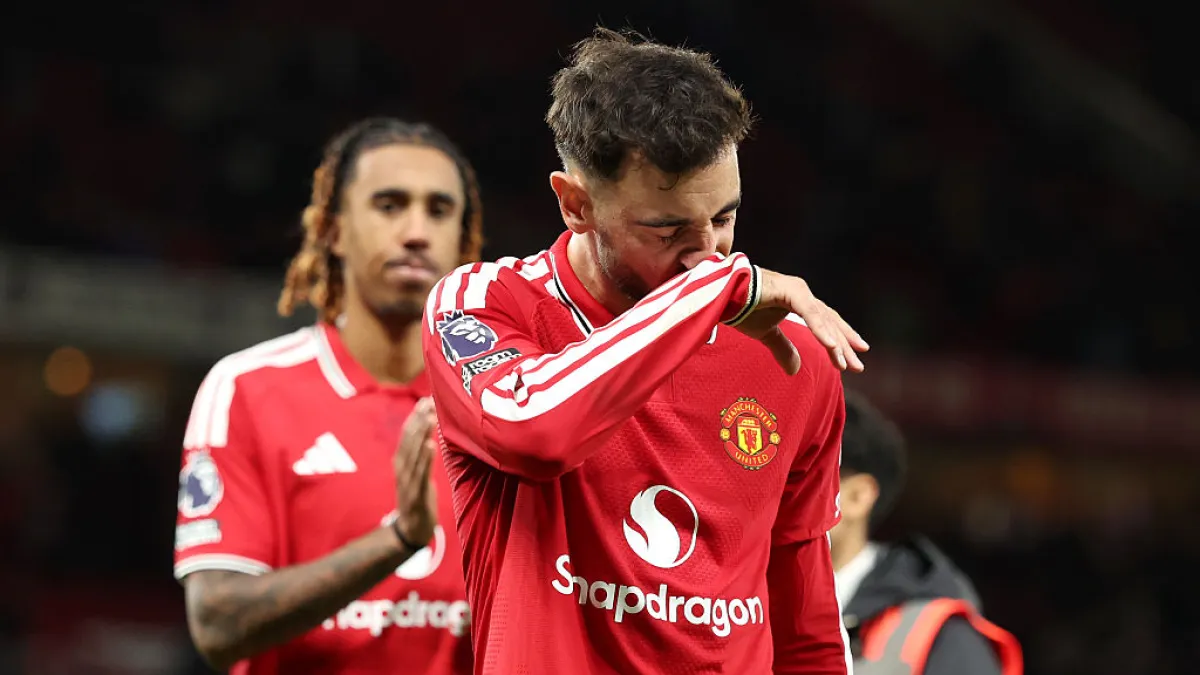
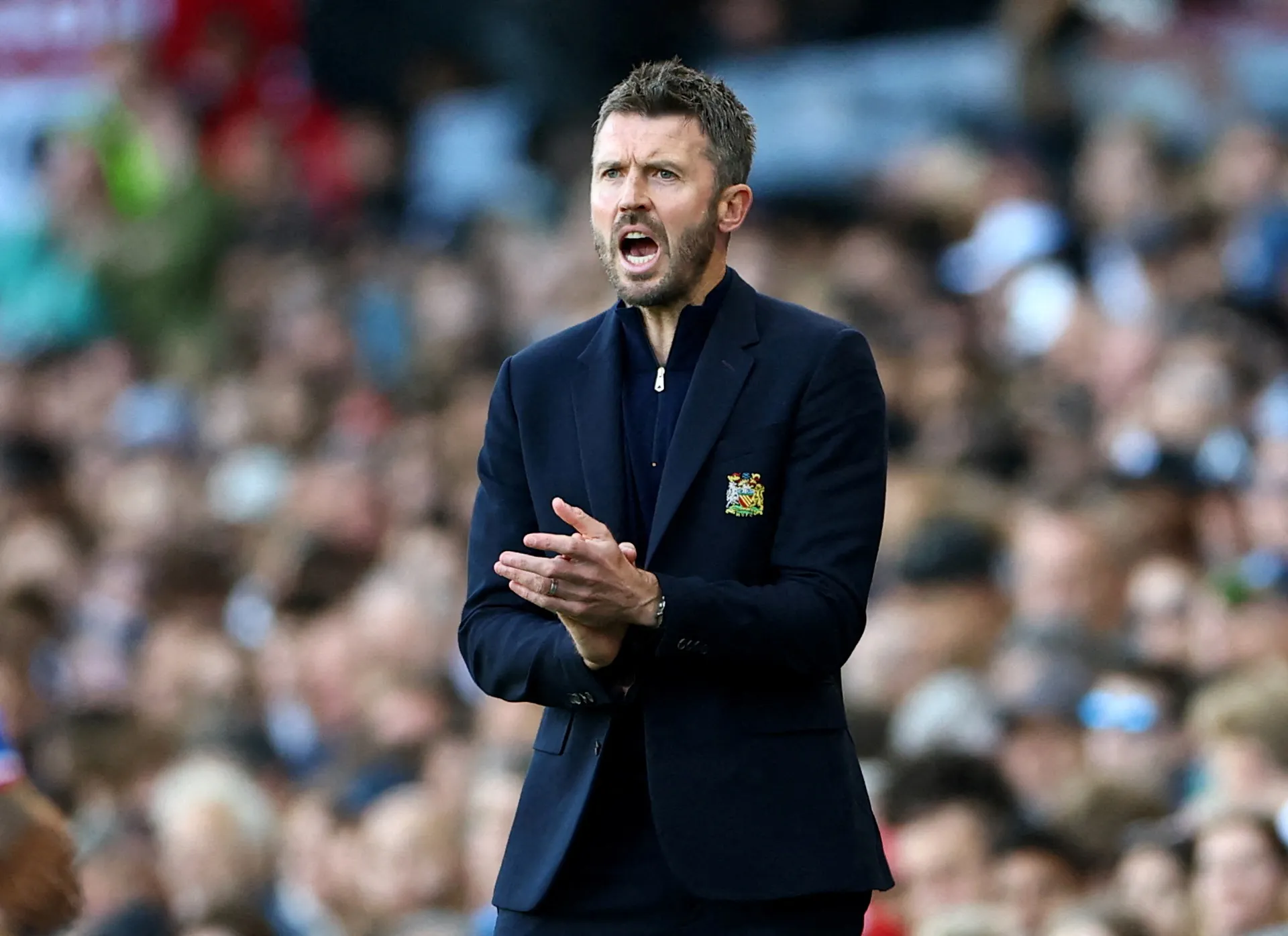
Dominic Solanke rescued a 1-1 draw for 10-man Tottenham to ramp up the pressure on Manchester United boss Michael Carrick on Saturday.
Solanke’s stoppage-time header edged Spurs off the foot of the Premier League table after it seemed like they would pay a heavy price for not taking their chances in a dominant display at Old Trafford.
Recommended Stories
list of 3 itemsend of list
Bryan Mbeumo put United in front against the run of play 17 minutes from time before Rodrigo Bentancur was shown a straight red card.
But not for the first time this season, Carrick’s men failed to make a man advantage count.
Manchester City won 1-0 at Old Trafford last month despite playing for more than an hour with 10 men.
Solanke stooped to head in Sandro Tonali’s cross to leave United with just six points from their opening six league games.
Tottenham had three weeks to fester on dropping to the bottom of the table during the international break after a disastrous start to their 300-million-pound ($397m) rebuild in the transfer window.
Roberto De Zerbi’s men took until the closing stages of their fifth league game to even score a goal, and a much-improved performance was undone by a familiar lack of cutting edge up front.
Before kickoff, the United supporters took aim at local rivals City, who have been found guilty on more than 100 charges of breaking Premier League financial rules.
But the home fans soon had their own troubles to concentrate on as Spurs penned United inside their own half.
Solanke should have opened the scoring when he fired too close to Senne Lammens before Mohammed Kudus blasted wide at the end of a flowing Tottenham move.
Chances continued to come and go for the visitors after the break, much to the frustration of a visibly animated De Zerbi.
Solanke spooned over, and Destiny Udogie curled wide before the game appeared to run away from Spurs.
Carrick helped turn the tide with a triple substitution on the hour mark.
Carlos Baleba added more dynamism to United’s midfield on his first appearance since a 70-million-pound ($92.6m) move from Brighton, while the introduction of Joshua Zirkzee allowed Matheus Cunha to drop into a deeper role.
United had barely threatened Antonin Kinsky’s goal until Mbeumo was afforded too much room to spin onto Cunha’s pass and fire into the far corner.
To compound Tottenham’s woes, Bentancur was then shown a straight red card for a headbutt on Luke Shaw after an angry confrontation between the pair.
But United again failed make their man advantage count.
Solanke finally ended Tottenham’s wait since May for an away goal when he outmuscled Lisandro Martinez to glance in Tonali’s cross.
The point edges Spurs up to 18th, with only goals scored keeping them inside the relegation zone.
Cristiano Ronaldo opened the scoring for Al-Nassr in their 3-0 win over Diriyah, his first game since Portugal walkout.
Published On 10 Oct 202610 Oct 2026
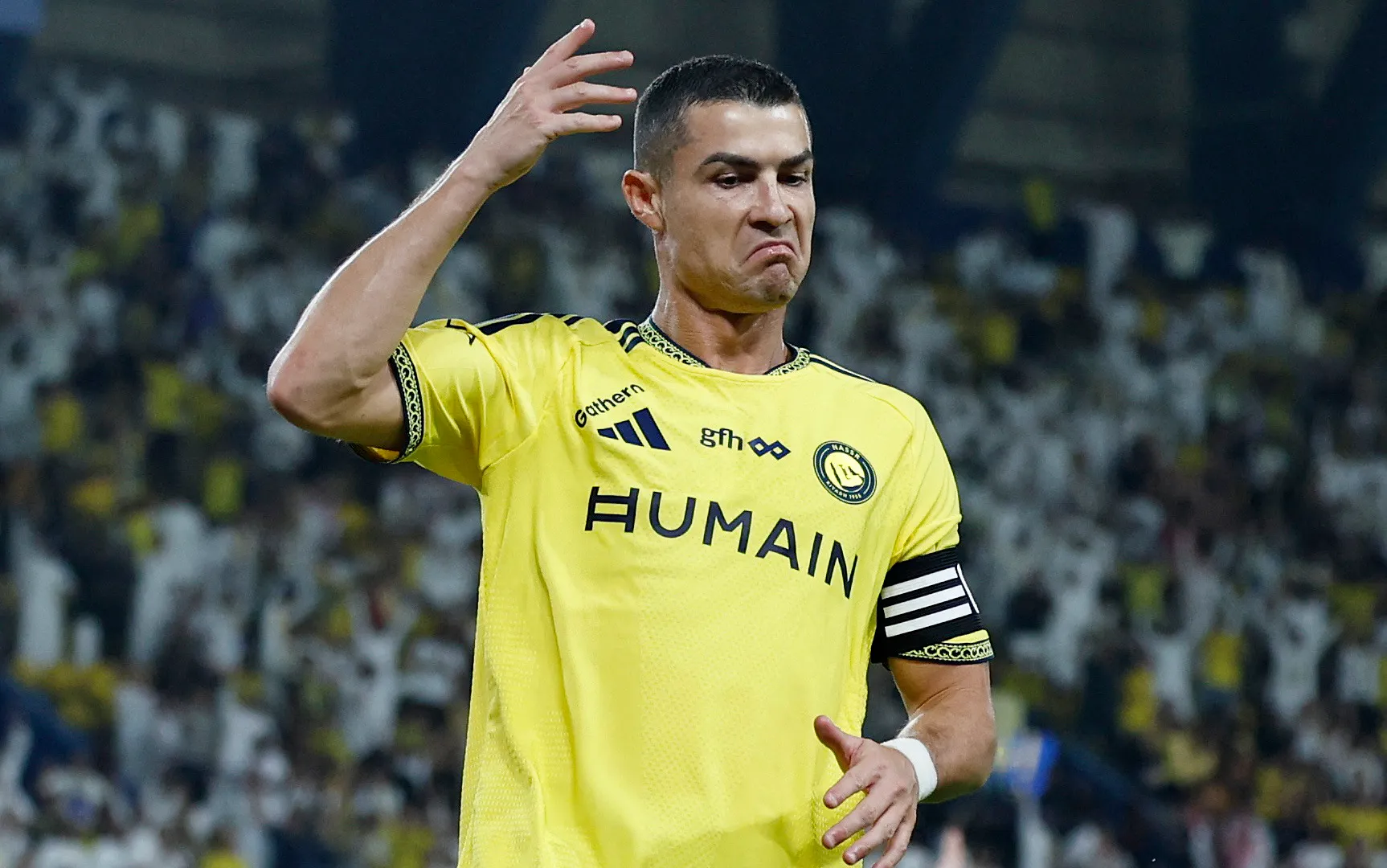
Cristiano Ronaldo returned to club football action on Friday after a controversial international break with Portugal and scored the opening goal as Al-Nassr beat Diriyah 3-0 in the Saudi Pro League.
The victory put the defending champions level on points behind leader Al-Qadsiah on goal difference in the eighth round.
Recommended Stories
list of 4 itemsend of list
During the international window, the 41-year-old Ronaldo walked out of the Portugal squad, for which he has scored 146 goals in 234 appearances.
In a long statement posted on Tuesday, Ronaldo said Portugal coach Jorge Jesus had not been true to his word about when he would play the striker in the Nations League.
Ronaldo won the Saudi Arabia title in May with Jesus as Al-Nassr coach, and opened the scoring on Friday midway through the first half.
Kingsley Coman’s shot from outside the area was blocked by goalkeeper Waleed Abdullah, and Ronaldo was there to shoot home the rebound from close range for goal number 980 in his career.
Samu Costa added a second for Al-Nassr, coached by former Tottenham Hotspur boss Ange Postecoglou, just before the break, and Coman sealed the win with 13 minutes remaining.
Al-Qadsiah earlier thrashed Al-Kholood 5-0, with Dutch international Tijjani Reijnders opening the scoring and Italy’s Mateo Retegui and Mexico’s Julian Quinones also finding the target.
Who: Manchester United vs Tottenham Hotspur What: English Premier League Matchweek 6 Where: Old Trafford, Manchester, United Kingdom When: Saturday, October 9, at 5:30pm (16:30 GMT) How to follow: Al Jazeera Sport will bring you all the build-up from 13:30 GMT.
Manchester United and Tottenham are accustomed to battling it out at the top end of the Premier League, albeit for UEFA Champions League rankings as opposed the domestic crown in recent years for the former in particular.
Recommended Stories
list of 4 itemsend of list
Recent seasons have seen both slide to dramatic lows by their standards and a concerned Old Trafford welcomes a Spurs side, whose immediate concerns are far greater than those of the hosts.
Roberto De Zerbi’s struggling North Londoners are bottom of the table with only two points to their name after five games. United’s have one only once in that time and a Spurs win will see the sides level on points.
Al Jazeera Sport takes a closer look at a match that, although early in the season, could well shape the months ahead for both sides and the immediate futures of their managers in a game that has been labelled: “El Sackicko”.
Carrick casts an eye across Manchester to eye City’s woes
United head coach Michael Carrick has plenty of problems of his own, but has called for a swift resolution to Manchester City’s financial charges case, saying the long-running process had raised many questions and affected him personally.
Last month, an independent commission found City guilty of all charges relating to breaches of the Premier League’s financial rules over nine seasons, between the 2009-10 and 2017-18 campaigns, as well as three of four charges concerning their failure to cooperate with the investigation.
City, who currently top the Premier league table as the only side with a perfect record after five matches, have denied wrongdoing and lodged an appeal.
Carrick spent 12 years at United from 2006 to 2018, winning five Premier League titles and the Champions League among numerous honours, before taking charge in January following Ruben Amorim’s departure.
During his playing career, the 45-year-old former midfielder lost out in two title races won by City, including the 2011-12 campaign when United fell short on goal difference after Sergio Aguero’s dramatic title-clinching goal on the final day.
“It’s thrown up a lot of questions. As it’s still ongoing, and we don’t know how long it’s going to go,” Carrick told a press conference when asked about the City charges.
“It’s affected me personally in different ways over a period of time.”
Would medals make up for lost titles for Man United?
Asked if he wants the titles United missed out on, Carrick said he would reserve judgement until the process was complete.
“I think regardless of anything, a medal anyway, in any sport in history, I think later on you get the medal and it’s proven at different times,” the Englishman added.
“It’s the moment that you strive for to win and achieve in that moment, so the medal here or there, not getting blase about it, but that doesn’t bring the feeling of when you initially win or you don’t win. That’s essentially what we’re all in it for.”
De Zerbi calls on struggling Spurs to react in Man Utd clash
Roberto De Zerbi has urged bottom-of-the-table Tottenham to “react” to the pressure of their crunch clash with fellow strugglers United.
Spurs have been waiting for the chance to erase the bitter taste of a 3-2 home defeat against Aston Villa in their last match before the international break.
And, with scrutiny mounting on the Italian, the Spurs manager demanded his players rise to the challenge against United.
“I’ve been waiting for this game from three weeks. After the defeat at home against Villa, personally I wanted to play the day after,” he told reporters on Friday.
“It was difficult, it was very tough, especially the first week. But it is football. It is part of the situation in this moment. We have to react, to work in this moment.”
Misfiring Tottenham must improve their aim
Tottenham failed to score in their first four league games before finally finding the net twice against Villa.
De Zerbi conceded his team have to improve in attack if they are climb out of the bottom three.
“We created chances to score many other goals in these seven games but we didn’t. We are working to improve in the last third, the assists and the finishing,” he said.
“We are fourth in the table for the team who brings the ball into the opponents’ area the most times.
“It is nothing but it shows we can arrive in the area. We are not good enough to score goals so far when we have clear chances.”
Can Carrick or De Zerbi survive ‘El Sackicko’?
With Carrick also under pressure following their poor start, Tottenham’s trip to Manchester has been dubbed ‘El Sackicko’.
De Zerbi saved Tottenham from relegation after arriving late last season, but that final-day survival feat is unlikely to save him from the axe if results don’t improve soon.
“We are Tottenham. United and Tottenham are still big clubs in the Premier League,” he said.
“We have to deserve to work in this club, playing better and making different results.”
What happened the last time Man United played Tottenham
The sides last met in February in a Premier League encounter at Old Trafford with the home side winning 2-0.
Cristian Romero was shown red on the half-hour mark for Spurs before Bryan Mbeumo and Bruno Fernandes netted the United goals.
When did Tottenham last beat Manchester United?
Spurs famously beat United 1-0 in the UEFA Europa League final in May 2025, thanks to Brennan Johnson’s first-half strike.
The match marked Ange Postecoglou’s last game in charge of the club before being sacked for their lowly league finish.
Ruben Amorim paid the same heavy price the following season.
When did Tottenham last win a match at Manchester United?
Spurs piled the pressure on Amorim early in the 2024-2025 season with a 3-0 Premier League win at Old Trafford.
Johnson gave the away team a third-minute lead, before United had Bruno Fernandes sent off on the stroke of half-time.
Dejan Kulusevski and Dominic Solanke completed the scoring in the second half.
Head-to-head – Manchester United vs Tottenham
This will be the 205th meeting between the clubs with United winning 96 matches compared to Tottenham’s 56 victories.
Prediction – Manchester United vs Tottenham
The Opta supercomputer has given United a 54 percent chance of winning, while offering Spurs only a 22 percent chance of emerging victorious.
Manchester United team news
“It’s a bit mixed really through the internationals,” Carrick said. “(Wing back) Patrick Dorgu came off and it looks like he’ll be out probably for a number of weeks.
“(Defender) Noussair Mazraoui came off and took a knock. He’s not quite right yet, we’ll have to see how he is.”
He added that Carlos Baleba was improving, while fellow midfielder Kobbie Mainoo, winger Amad Diallo and forward Marcus Rashford had resumed limited training. Striker Benjamin Sesko remains further away from a return.
Kulusevski, Xavi Simons, Wilson Odobert and Mykhaylo Mudryk all remain sidelined due to injury.
Jan Paul van Hecke has overcome a foot injury, but may miss out after his wife gave birth to twins – the club has said emotional needs will be taken into consideration.
Predicted Tottenham Hotspur starting lineup
Kinsky; Gray, Senesi, Van de Ven, Robertson; Gallagher, Tonali, Fernandes; Savio, Solanke, Marmoush
The recovered Renoir paintings, valued at millions, were stolen in a daring heist at Cagnes-sur-Mer last month.
Published On 10 Oct 202610 Oct 2026
Two paintings by the French Impressionist artist Pierre-Auguste Renoir that were stolen from a museum in southern France a month ago have been recovered, the town’s mayor said.
“These two paintings are not simply works of art. They are part of our city’s history,” Bryan Masson, the mayor of Cagnes-sur-Mer, near Nice, said on Friday. “Knowing they have been recovered is an immense relief.”
Recommended Stories
list of 3 itemsend of list
Six people have been arrested in connection with the theft, local authorities said. Masson did not say where the paintings were found or in what condition.
How the theft unfolded
Two thieves broke into the Renoir Museum a little before 6am on September 8, cutting through a fence to enter the grounds, smashing a window and using an electric saw to cut the clips securing the frames, Masson said at the time.
He described them as “well equipped” and “well informed”.
The museum alarm sounded at 5:48am, and municipal police arrived five minutes later, forcing the thieves to flee.
They had taken four paintings, valued by the mayor at about nine million euros ($10.5m).
Two of the stolen works – Renoir’s “Portrait of Madame Pichon” and “Coco Reading” – were later found dropped in the museum garden, the prosecutor’s office said at the time.
The two works that remained missing were “Portrait of Madame Colonna Romano” and “Young Woman at the Well”, the office said.
Police said last month that the thieves were not first-time offenders and had scoped out the premises.
The Marseille prosecutor opened a theft investigation into an organised gang, and the national office for trafficking in cultural goods joined the probe.
A string of museum heists
The museum, opened in 1960, is in the painter’s last home, where he died in 1919.
“This incident should serve as a warning about the protection of our museums,” Masson said after the robbery.
The theft came less than a year after jewels worth about $100m were stolen from the Louvre in Paris in a daylight robbery.
The four suspected robbers have been arrested, but the jewels have not been found.
In August, Italian police said they had recovered paintings by Renoir, Cezanne and Matisse worth more than $10.4m that were stolen from a museum in March.
Negotiators aim to present a proposal to Russia in the coming weeks, meanwhile Putin says resumption of talks unlikely.
Published On 10 Oct 202610 Oct 2026
Russian President Vladimir Putin has said an immediate resumption of peace talks with Ukraine is unlikely, citing drone attacks on Moscow during parliamentary elections last month.
In a phone call with US President Donald Trump on Friday, Putin said Moscow was ready to resume negotiations with Kyiv after the parliamentary elections. However, the drone attacks on the capital made the resumption of trilateral peace talks between Russia, Ukraine and the US unlikely.
Recommended Stories
list of 3 itemsend of list
“By launching a large-scale drone attack on Moscow, other cities and polling stations on the most important day of the elections, and by targeting some people involved in organising the elections, the Kyiv regime has, in reality, interrupted the possibility of an immediate resumption of the negotiation process,” said Kremlin foreign policy aide Yuri Ushakov about the call with Trump.
“As the president said, we will now assess when these negotiations can resume,” he added regarding the trilateral talks.
US Secretary of State Marco Rubio said on Thursday that Russia’s war in Ukraine is at a dangerous stalemate and the United States will keep working towards a deal to end the war.
Ukrainian President Volodymyr Zelenskyy said earlier this week that the country was ready to hold trilateral talks with the United States and Russia this month.
US-Russia diesel deal
Earlier on Friday, Donald Trump announced after the call with Putin that Russia agreed to deliver more than 300,000 tonnes of diesel to American and global markets.
The deal was criticised by US lawmakers, Zelenskyy and European allies.
Zelenskyy called the agreement a “gift to Putin”.
“All that money goes toward the war against people, against Ukraine, against all of us. I believe our team is simply being used as a smokescreen. And that is certainly not fair,” he said in a statement.
In response to the US-Russia diesel deal, a government spokesperson said the United Kingdom would continue to “maintain pressure on Russia through the toughest sanctions regime ever imposed by the UK.”
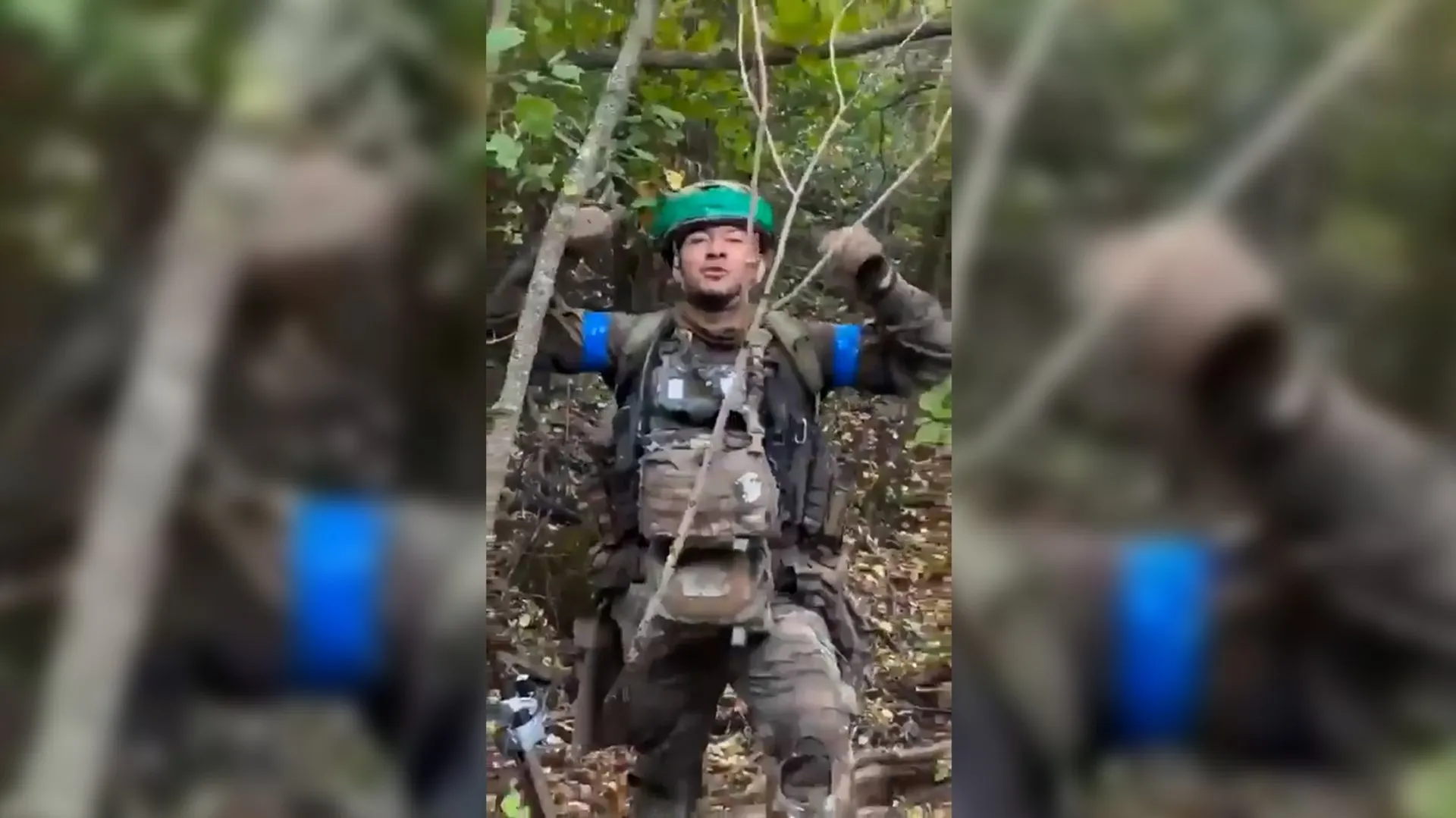
Mexico is investigating a viral video said to show mercenaries chanting drug cartel slogans in Ukraine. President Claudia Sheinbaum announced the inquiry. Mexico previously warned Kyiv cartel members were joining its International Legion to gain drone warfare experience.
Snap vote called after Parliament rejects measures to protect tenants and freeze rents.
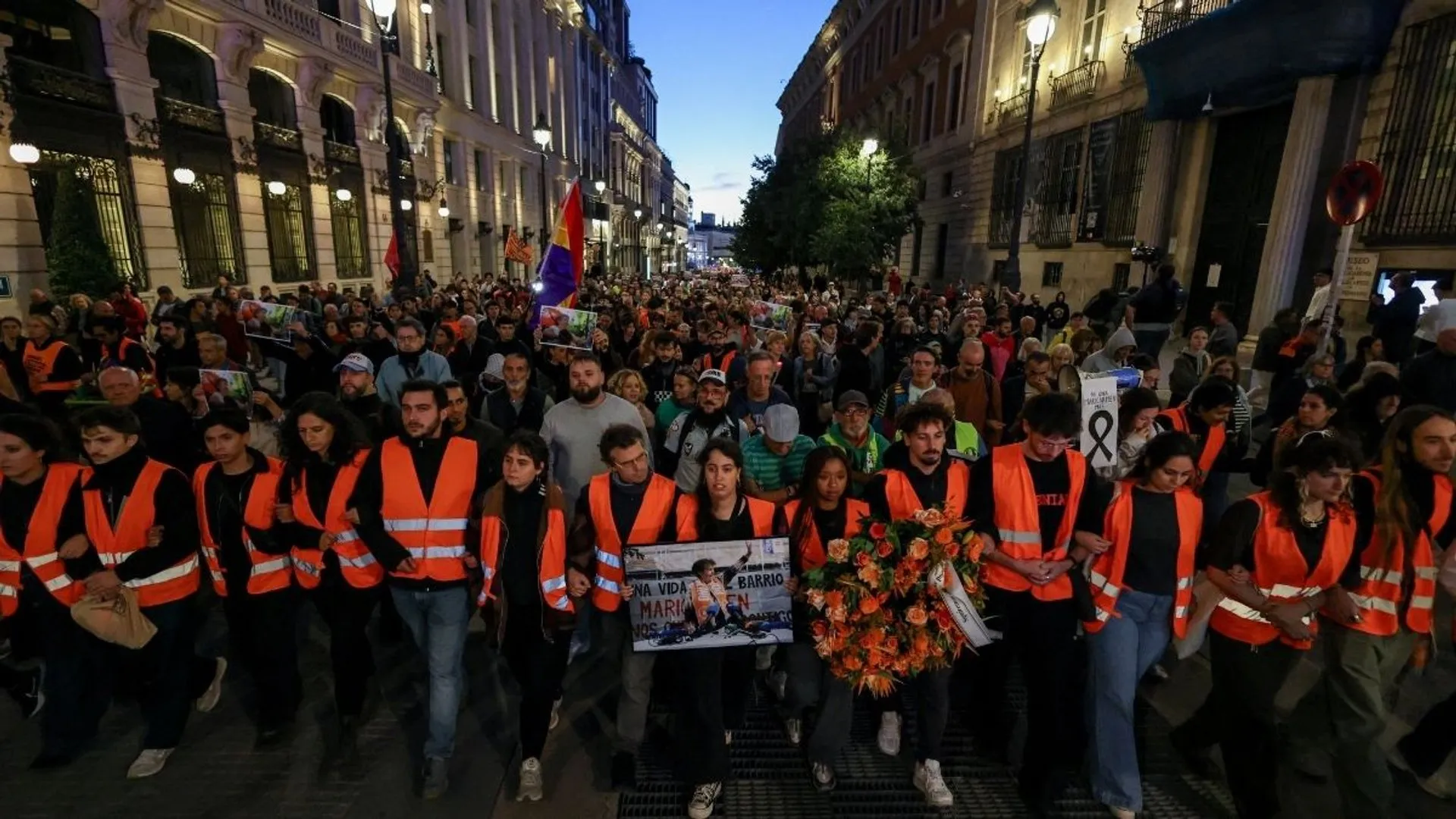
Rising frustration about housing shortages and surging rents in Spain has led to mass protests.
The demonstrations started last month after the eviction of Maricarmen Abascal, who died at age 87 this week.
The Socialist-led government tried to introduce measures to protect tenants and freeze rents, but Parliament rejected them. The conservative opposition says the solution is to ease regulations and build more homes.
Prime Minister Pedro Sanchez has since announced early elections. Analysts say he wants to galvanise support, as he faces pressure on immigration and corruption investigations into his party.
Two recent polls indicate the right-wing People’s Party and far-right Vox are on track for a combined majority.
Can demonstrations against the housing crisis reverse Sanchez’s political fortunes?
Presenter: Sami Zeidan
Guests:
Hana Jalloul – Secretary of international politics and cooperation for the Spanish Socialist Workers’ Party and a member of the European Parliament
Daniel Lacalle – Chief economist at Tressis and professor at the IE Business School
Pablo Calderon Martinez – Associate professor in politics and international relations at Northeastern University
The United States has imposed a new set of sanctions against the International Criminal Court (ICC), prompting several countries – including US allies – to condemn the move and reiterate their support for the world’s war crimes tribunal.
On Friday, US Secretary of State Marco Rubio announced that Washington would be banning transactions with the “rogue court, cutting off their resources and crippling its ability to operate”, adding that President Donald Trump would “never allow” the Hague to prosecute Americans.
Recommended Stories
list of 3 itemsend of list
The ICC was created in 2002 to prosecute individuals accused of genocide, war crimes and crimes against humanity when national authorities are unable or unwilling to do so.
The US Treasury Department announced the penalties with a six-month initial grace period and other exemptions that would allow some transactions for telecommunications, software, pension payments and transactions related to detainees.
Rubio said the sanctions would give the court and its member states an opportunity to address US concerns and would be adjusted if they did not meet those demands.
The Trump administration says the court has exceeded its authority by pursuing officials from countries that are not ICC members, such as Israel. The United States and Israel have never joined the court.
In response to the sanctions, the ICC said that the move was an “assault on the rule of law and on the very foundations of the international legal order”. It called on its 125 member states to defend the institution.
“The Court cannot stand alone. Its fate now rests also in the hands of the states that created it,” the ICC said in a statement. “This is not just about defending a single institution, but about safeguarding the international order grounded upon the rule of law. History will judge this moment.”
Soon after the US announcement, top United Nations officials condemned the move.
UN Secretary-General Antonio Guterres was “deeply alarmed” by the expected impact of the sanctions on the court as a whole, particularly its ability to carry out its mandate, a statement from his spokesperson Stephane Dujarric said.
“Today’s decision marks a serious blow to our collective pursuit of international criminal justice, of which the ICC is a key pillar,” the statement added.
UN Human Rights chief Volker Turk called for immediate measures to protect the ICC. “These sanctions – the latest in a series of retaliatory steps against the ICC and its personnel for the work they do every day to advance accountability for the very worst violations of human rights – are unacceptable,” he said.
ICC member states that are US allies also expressed dismay at the decision.
Dutch Foreign Minister Tom Berendsen, whose country hosts the ICC, said the US’s decision was “deeply regrettable”.
“We will stand firm in defence of the court. At the same time, it’s important to note that the sanctions will not take effect immediately and that service providers can continue to work for the ICC. The six-month period before the sanctions take effect creates scope for dialogue,” he said.
In a joint statement, the foreign ministers of Britain, Denmark, France, Germany, Italy, the Netherlands, Canada and Japan said they “regret and strongly disagree” with the sanctions.
“If put into effect, these sanctions will have a significant impact on the Court’s work, its dedicated staff and their families … We remain both united in our support for the ICC and committed to engaging in constructive and inclusive dialogue with non-States Parties,” they said.
Belgian Foreign Minister Maxime Prevot also said Brussels would discuss support for the ICC with European Union foreign affairs colleagues on Monday and at the upcoming European Council.
“We will press for concrete protection. The court’s independence cannot depend on whom it investigates. Europe must act. Belgium is calling for the activation of the EU Blocking Statute to protect the court,” Prevot said.
US aims to ‘ultimately destroy’ ICC
Similarly, organisations and rights groups sounded the alarm over the implications of the US decision.
Philippe Bolopion, executive director of US-based Human Rights Watch, said the Trump administration had made clear its aim to “destroy” the ICC and “shield US and Israeli officials from facing charges before the court”.
“The ICC was created to ensure that no one, no matter how powerful, is above the law. Governments that value human rights and accountability should condemn this outrageous move and take swift action to protect the ICC, its staff, and all those who cooperate with it, starting with the European Union using its laws to mitigate the sanctions’ impact in the region,” he said.
The Executive Director of the Open Society Justice Initiative, James Goldston, said the sanctions were a “calculated attack on the rule of law and the principles of judicial independence and equality that underpin it.”
“This is the latest move in a campaign of coercion intended to destroy the system of international justice,” he said.
Amnesty International called on countries to “resist”. Trump’s “sanctions are designed to isolate and ultimately destroy the International Criminal Court”, Erika Guevara Rosas, Amnesty’s senior director for research, policy, advocacy and campaigns, said in a statement. “This existential attack must fail. States must take concrete action to resist the imposition of these measures.”
Amid widespread criticism, Israel commended the US move.
Prime Minister Benjamin Netanyahu hailed the sanctions and praised Trump and Rubio for taking this “critical decision”.
“The ICC is not a court. It is a political body that poses a mortal threat to law-abiding democracies worldwide and to the very idea of national sovereignty,” Netanyahu wrote on X.
In 2024 the ICC issued an arrest warrant for Netanyahu on war crimes and crimes against humanity charges for the war on Gaza.
A powerful tornado tore through western Sicily, causing injuries, widespread destruction and forcing evacuations across the cities of Marsala and Petrosino.
Belgian police respond to ‘troublemakers’ on sidelines of main rally with tear gas, water cannon and baton charges.
Published On 9 Oct 20269 Oct 2026
Clashes have erupted near Brussels Central station on the sidelines of a demonstration organised by the country’s socialist trade union against the federal government’s austerity plans.
As thousands of protesters gathered at the station on Friday, a smaller group clashed with the police and threw wooden beams, glass bottles and rubbish bins, The Belgian Times reported.
Recommended Stories
list of 3 itemsend of list
Police were deployed in large numbers around the stations as officers checked groups of young people not wearing trade union colours.
Police said the main trade union rally went ahead peacefully but “groups of troublemakers were responsible for serious incidents before and after the march.”
Riot police responded to those protesters with tear gas, water cannon and baton charges. Police said those who “cause the problems of public order are not linked” to the rally.
Reporting from Brussels, Al Jazeera’s Rosie Birchard said damage was caused during Friday morning’s protests with an “acrid smell of burning in the air”, due to fires that were set and the tear gas.
“Police [and] emergency services have been arriving, starting to disperse or clean up and then the protests flare up again. So the day is still early; often these things get worse in the evening in terms of the street violence,” Birchard explained.
“There were some young people who came out, they say they were inspired by what they had seen in France in terms of school protests, and they also wanted to talk about the education environment they’re learning in,” she said, adding that the students felt that they were “not being listened to”.
A protester gestures next to burning shared bikes during a labour union-based demonstration against the federal government’s budgetary measures near the Brussels South railway station in Brussels [AFP]
The clashes came after a week of tension in the city of Liege after authorities banned gatherings as students clashed with police and vandalised shops. More than 200 people were arrested in Liege, and dozens of police were injured.
The ABVV trade union and the Christian ACV, the country’s two biggest unions, organised protests on Friday morning, with protesters marching from Brussels Central station to Brussels South Station under the slogan “stay out of our pockets”.
Police said about 30,000 people attended the demonstrations, while ABVV had earlier estimated attendance at 50,000.
The anger stems from the government’s austerity measures, as officials consider a new budget that opposes potential measures that affect purchasing power, the wage indexation system and value-added tax (VAT), as well as plans to introduce annualised working time.
At the same time, the ACV organised a separate protest involving hundreds of activists at the capital’s headquarters of the governing coalition parties.
After Manchester City were found guilty of Premier League breaches, rival managers give their reaction as games resume.
Published On 9 Oct 20269 Oct 2026
The Premier League returns to action this weekend following the international football break, and since a ball was last kicked domestically in the English top flight, a seismic shock was sent around the world by the guilty verdict faced by Manchester City.
An independent commission found the team guilty of more than 100 breaches of the Premier League’s financial rules between 2009 and 2018.
Recommended Stories
list of 4 itemsend of list
City have continued to protest their innocence and have lodged an appeal, but if the decision is upheld, then points deductions, fines, transfer embargoes and relegation are all possible punishments for the club.
City manager Enzo Maresca has said he believes the appeal will be won, and none of the trophies claimed since the period the charges began are tainted.
Al Jazeera Sport has collated the reaction of some of the managers, who were all speaking publicly for the first time since the verdict, starting with the club City face next when they travel to Liverpool on Sunday.
Liverpool manager – Andoni Iraola
“I think uncertainty is not good for anyone, and anyone involved, but the process is ongoing, and we have to be patient like everyone else and see what happens at the end,” Iraola said.
Manchester United manager – Michael Carrick
“I’ve got my own questions about it; it’s affected me personally in different ways over a period of time,” said the former United midfielder, who finished second to City as both a player and assistant manager since the 2008 Abu Dhabi takeover.
“What I will say, the sooner it gets sorted for everyone’s benefit is essential.
“There’s so many angles to look at, from so many different perspectives, but really speed is essential for everyone to be clear, to be able to deal with it, to be able to move on whatever happens.
“It’s unprecedented, a unique situation to be in, at this level with such a huge impact in so many ways.”
Arsenal manager – Mikel Arteta
“It is very important that we respect the process and the timelines; it is still an ongoing process because it has been appealed,” said the Spaniard, who was assistant manager to Pep Guardiola at City from 2015-2019.
“My position, and I think the club’s position, is to not make any comment until the appeal is fully resolved.
“In our hands is the way we have prepared since the international break to set the club up to win.”
Everton manager – David Moyes
“It looks terrible that Everton have been docked points and had to pay fines, and this was not so long ago, but there are other things going on that were more than 10 years ago and have not been dealt, which I find really difficult,” Moyes said in relation to the sanctions Everton faced, including being docked 10 points. Their charges related to breaches of financial sustainability rules between 2019 and 2022.
“I hope it is not just Everton that are being picked on. Manchester City have helped raise the level of the Premier League by the football they have played, their manager and the players they have had.
“We all had to park the bus, because they were that good and everybody used to say: ‘Why are you not having a go?’ – it was tough.
“But they were such a good side, and it was great times to play against Pep’s teams because they had so many good players.”
Chelsea manager – Xavi Alonso
“We need to be patient and wait until the final sanctions from the panel; they are independent enough to assess the situation,” Alonso said.
“Whatever I say and whatever opinion we have, they are the ones to take it, and we need to respect it.
“It is not in our hands; let’s see what happens, and then we need to respect it.”
Liverpool’s Andoni Iraola looks to Manchester City clash and rival’s appeal over guilty verdict for financial breaches.
Published On 9 Oct 20269 Oct 2026
Liverpool boss Andoni Iraola said the lack of clarity over Manchester City’s future after the club was found guilty of multiple breaches of financial rules was causing uncertainty throughout the Premier League.
City remain adamant they have done no wrong and have appealed against the findings of an independent commission announced last week.
Recommended Stories
list of 4 itemsend of list
The Premier League leaders potentially face a severe points deduction that threatens their place in the English top flight.
Iraola believes the world’s richest league is caught in limbo until there is a definitive outcome.
“I think the worst thing probably is the uncertainty, that no one knows what’s going to happen,” the Spaniard said ahead of City’s first outing since the verdict at Liverpool on Sunday.
“But we have to focus on Liverpool – be the best club we can be, the best team we can be and that’s my challenge.”
Iraola only joined the Reds in June but is looking forward to a red-hot atmosphere at home.
“The atmosphere is going to be big, especially at Anfield,” he said.
“We want to give also our supporters reasons to be with us. When they see the team they want to see on the pitch, we can create an even better atmosphere and we will work for that.”
Liverpool are still unbeaten under Iraola, but three draws in their opening five league games means they start the weekend six points off the top.
Iraola’s options up front are limited after Alexander Isak and Cody Gakpo were injured on international duty.
“As a club manager, you are always waiting until the game ends (hoping) the doctor doesn’t call you, doesn’t give you bad news, but in this case we’ve been unlucky with Alex and Cody, both of them,” he said.
“They are injured and they are not going to be involved on Sunday.”
Russian forces continue to retreat in Ukraine’s eastern Donetsk region.
The Kremlin-aligned channel Rybar, on Telegram, said on October 7 that Moscow’s forces were losing villages south of Lyman, a town they have tried to capture as a springboard to mount a full-scale offensive on the “fortress belt” cities of Sloviansk and Kramatorsk.
Recommended Stories
list of 4 itemsend of list
A Ukrainian counteroffensive named “Operation Vivaldi” this year has reclaimed 175 square kilometres (67 square miles) of previously occupied land around Lyman.
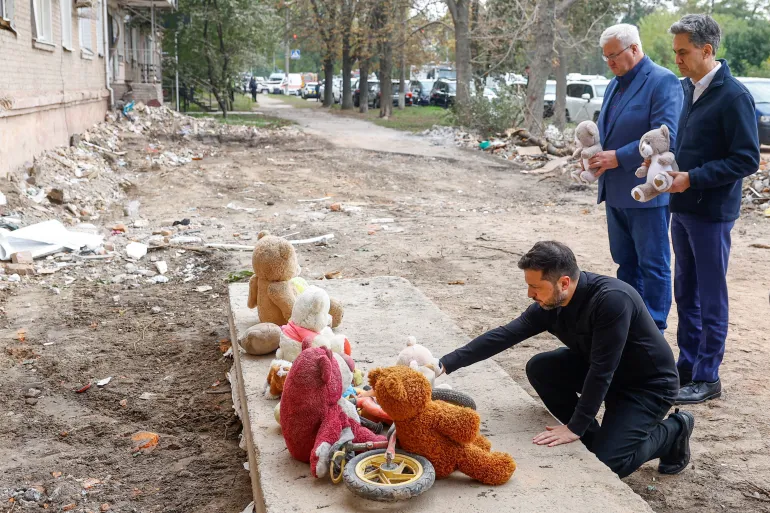
British Foreign Secretary Ed Miliband, Ukraine’s President Volodymyr Zelenskyy and Foreign Minister Andrii Sybiha visit a makeshift memorial at the site of an apartment building where 22 residents were killed the day before by a Russian missile strike in the town of Pryluky in the Chernihiv region, Ukraine, October 8, 2026 [Valentyn Ogirenko/Reuters]
“The enemy is using successes in the Lyman direction to develop attacks [east of Sloviansk], where Russian troops are forced to defend previously occupied positions and expend resources on restoring control, instead of launching their own offensive,” wrote Rybar.
“It is becoming increasingly clear that the possibility of storming the urban area [of Sloviansk] is receding into the more distant future.”
A key battle seems to be building for the village of Kryva Luka east of Sloviansk, which sits on high ground on the Russian-held right bank of the Siversky-Donets River, and which could serve as a base to launch counterattacks further east.
Ukrainian President Volodymyr Zelenskyy told the Reuters news agency that Operation Vivaldi was successful but incomplete.
To get as far as Kryva Luka, Russian sources acknowledged that Ukraine has recaptured settlements west of it. They blamed the Russian communications strategy of claiming settlements that have not been captured, giving away the plan of attack.
“Premature statements” aided Ukraine, said Rybar. “Some villages were declared liberated even before Russian units arrived, which allowed the enemy to accumulate forces there and launch counterattacks.”
A dog looks on while women hold posters as they participate in a rally demanding the establishment of a humanitarian corridor to evacuate Ukrainian civilians from the town of Oleshky in Kherson region, Kyiv, Ukraine, October 6, 2026 [Alina Smutko/Reuters]
Ukraine built up reserves in the Lyman area before unfolding its counteroffensive. That preparation seems to be yielding results.
Ukraine’s Ministry of Defence said its campaign to disrupt the flow of Russian ammunition and fuel to the front struck a record number of air defence assets and targets more than 50km (30 miles) away in September.
Russian President Vladimir Putin claimed Russia had captured 1,300sq km (500sq miles) of Ukraine in September, echoing claims by his generals.
People carry a casualty as emergency services work to rescue residents from the debris at the site of an apartment building which was hit by a Russian missile in the town of Pryluky in the Chernihiv region, Ukraine, October 7, 2026 [Valentyn Ogirenko/Reuters]
The Institute for the Study of War, which monitors territorial advances using geolocated, open-source data, said Russia actually lost 80sq km (30sq miles) during that month.
The Russian casualty rate rose to a record for 2026 of 46,230 in September, according to Ukraine’s military.
Of these, 33,087 – more than 70 percent – were confirmed kills, said Ukraine.
The commander of Ukraine’s Unmanned Systems Forces, Robert Brovdi, said enemy casualties were up by 40 percent in the first five days of October, compared with the same period in September.
The Ukrainian military on October 7 counted 1,545,950 Russian dead and wounded for the entire full-scale invasion since 2022.
A Russian jet-powered drone hits one of Kyiv’s bridges in Kyiv, Ukraine, October 2, 2026 [Valentyn Ogirenko/Reuters]
Putin’s response
Putin’s response has been to intensify bombing, causing civilian suffering.
Twenty-two people, five of them children, were killed in the city of Pryluky, in the northern Chernihiv region, when a Russian cruise missile demolished a five-storey apartment building on October 7, Putin’s birthday.
“Today, for Putin’s birthday, the Russian army ‘gifted’ the destruction of a residential building in Pryluky,” said Zelenskyy.
Ukraine’s Air Force said Russia unleashed 130 drones and 48 cruise missiles across 12 regions that day, as well as ballistics. At least two more people died in Kyiv and two in Oleksandria.
At least 30 people died in Kramatorsk on October 8, when a Russian bomb struck two city buses. Video of the emergency response showed bodies strewn across an avenue and in a park.
Ihor Malchevsky, 69, a deputy department head at Ukraine’s National Academy of Sciences, uses a ladder as flames rise from an administrative building hit by a Russian jet-powered drone attack, in Kyiv, Ukraine, September 28, 2026 [Valentyn Ogirenko/Reuters]
Recent analysis of the Geran-4 and Geran-5 jet-powered drones Russia increasingly uses for many of its attacks makes it unlikely that these attacks on nonmilitary targets are accidental.
Ukraine’s military intelligence said the attacks use satellite and sophisticated inertial navigation systems, as well as a camera that reads landmark features and checks them against an on-board database – all three systems working in concert to ensure accurate navigation.
Ukraine has responded to the jet-powered drones by speeding up delivery of F-16 fighters from its allies, which are proving an effective first line of defence.
“Currently, F-16s are destroying between 50 percent and 60 percent of the drone attacks,” said Zelenskyy.
Ukraine is also testing five new types of interceptor drones, the most successful of which is 30 percent effective, and experimenting with small-scale missiles, Zelenskyy said.
A dozen AI-driven heavy machine-gun turrets have been placed around Kyiv as a last line of defence, with dozens more planned around the country.
These are a “facility-level” defence, said Serhiy Beskrestnov, a senior Defence Ministry adviser. “It can protect a warehouse, factory, bridge, or power substation.”
Russia has begun hitting bridges across the Dnipro River, striking Kyiv’s southern and northern bridges seven times in the first four days of October. It has previously struck the building where Ukraine’s cabinet met, as well as energy facilities feeding the city, in an effort to cause a blackout.
Russia’s jet-powered drones travel at more than 500km (310 miles) per hour and are more difficult to intercept than its propeller-driven Shahed drones.
Despite this, during the October 7 strike, Ukraine’s Air Force said it intercepted 80 percent of the jet-powered drones, 95 percent of the propeller-driven drones and 80 percent of cruise missiles.
On October 7, German Chancellor Friedrich Merz visited Kyiv to announce a 1.3-billion-euro ($1.46bn) military aid package, and to sign agreements worth 8.5 billion euros ($9.5bn) to jointly develop drone defences and other weapons with Ukraine.
Merz’s visit was an important political gesture following recent elections in two German states where the pro-Russian AfD trounced his governing CDU party.
Ukraine continued long-range strikes inside Russia.
These struck refineries in Volgograd on October 2 and Bashkortostan on October 8, as part of a strategy to starve the Russian economy and military of fuel.
“Over 51 percent of the enemy’s oil refining capacity has been disabled,” said Ukraine’s military.
Ukraine also hit the Samara linear production and dispatch station, which its General Staff described as “a major hub for receiving, storing, and blending oil”.
The staff said eleven 20,000-tonne storage tanks and three 50,000-tonne storage tanks had been destroyed.
“The facility blends high- and low-sulfur oil from various fields to produce the export grade of oil known as Urals, which accounts for up to 50 percent of the total volume of Russian oil exports,” the military said.
Smoke rises in the city during a Russian missile attack in Kyiv, Ukraine, October 7, 2026 [Gleb Garanich/Reuters]
Ukraine also struck military targets. On October 7, it struck the Astrakhan Gas Processing Plant, which extracts gaseous sulphur for use in explosives.
On October 4, it destroyed a Sukhoi Su-35 multi-role fighter and a Sukhoi Su-34 fighter-bomber on the Adygea airfield, and also hit the Seshcha airfield in Bryansk.
Its campaign of mid-range strikes to destroy Russian power supply in occupied areas had reached 456 between July 6 and October 3.
Striker takes fire for where and how he has chosen to recover from a knee injury as his return to play could come as early as Saturday.
Published On 9 Oct 20269 Oct 2026
Real Madrid coach Jose Mourinho has slammed criticism of star striker Kylian Mbappe, calling the attacks “ridiculous”.
The French captain has come under fire for spending his time recovering from a left knee injury in France and Switzerland rather than Madrid. He suffered a hyperextension of the joint while playing in a Nations League match against Turkiye on September 25.
Recommended Stories
list of 4 itemsend of list
The 27-year-old was also pictured at the entrance of a Parisian nightclub and photographed on a bicycle when he was in Switzerland.
Some fans claimed it was a deliberate snubbing of Mourinho, who only days before had said players should avoid skiing or riding bicycles to avoid injury.
“Are these criticisms over the top? They are ridiculous,” Mourinho said at a news conference on Friday on the eve of Real’s La Liga home match with Villarreal.
“All the players who were obliged to be present every day for their recovery were here.
“Mbappe came, like the others, to undergo scans in order to be diagnosed.
“He then went to see a specialist in France because he has history with his knee, which we cannot ignore.”
Mourinho, whose side lost to Atletico Madrid in their last match and already lag six points behind bitter rivals Barcelona, is never one to shy away from a confrontation and tackled each of the criticisms against Mbappe.
“Problems involving football are not sufficient for you,” the 63-year-old Portuguese coach told reporters.
“Therefore, you have raised the issue of the discotheque, which in fact was not one because it was used for a private event for Fashion Week.
“As for the bicycle in Switzerland, it was in a hotel made up of small houses which makes them available so guests can ride to the communal areas, and you would have us believe he was competing in the Tour of Switzerland.”
Mbappe, who returned to training on Wednesday, could feature on the pitch as early as Saturday. Mourinho shrugged off the potential of a hostile reception for Mbappe against Villarreal, reiterating that he was “certain” the all-time World Cup record goal scorer has fulfilled “his obligations to Real Madrid”.
It is not the first time this season that Mbappe has been subjected to attacks by fans.
The Ultras Sur, a Real Madrid supporters group linked to the far right and banned from the Santiago Bernabeu, took issue with him last month.
They were furious that before a Real Madrid match, Mbappe, alongside Vinicius Jr and fellow Frenchman Ibrahima Konate, partially rolled up T-shirts bearing the words “We are all Ceutans“, which was intended to be a message of support for people in the Spanish territory bordering Morocco.
Mbappe was also criticised earlier this season over his choice of a location for recovery from a previous injury, which led to an online “Mbappe Out” campaign by some Real fans.

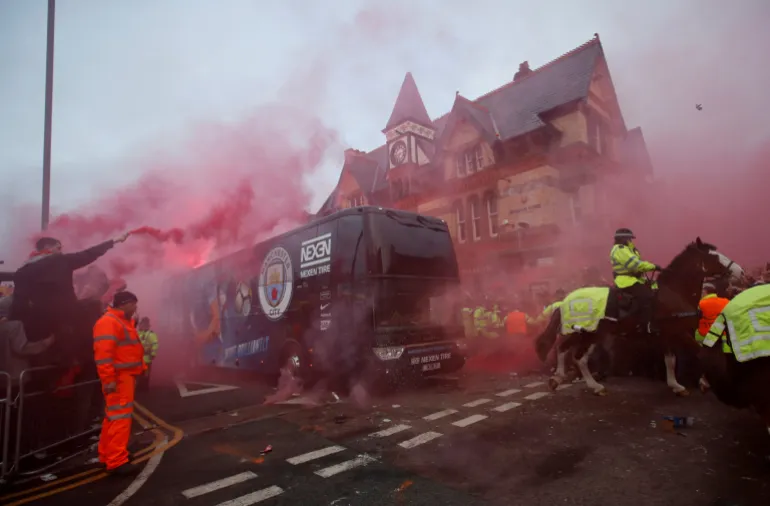

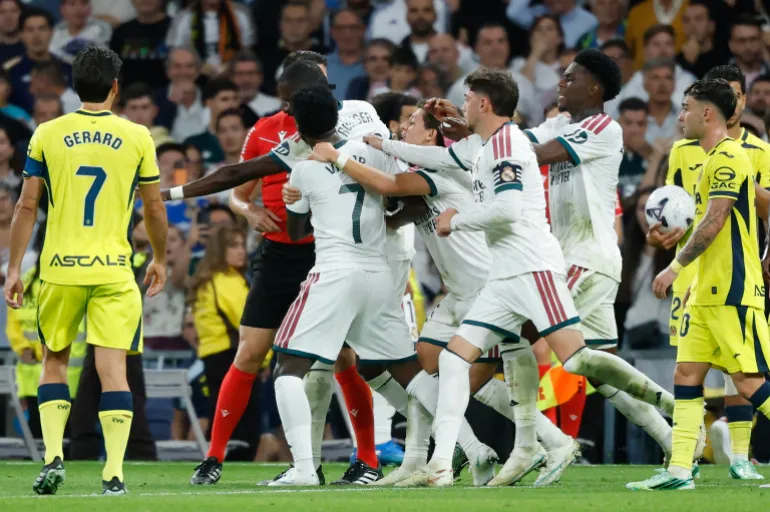

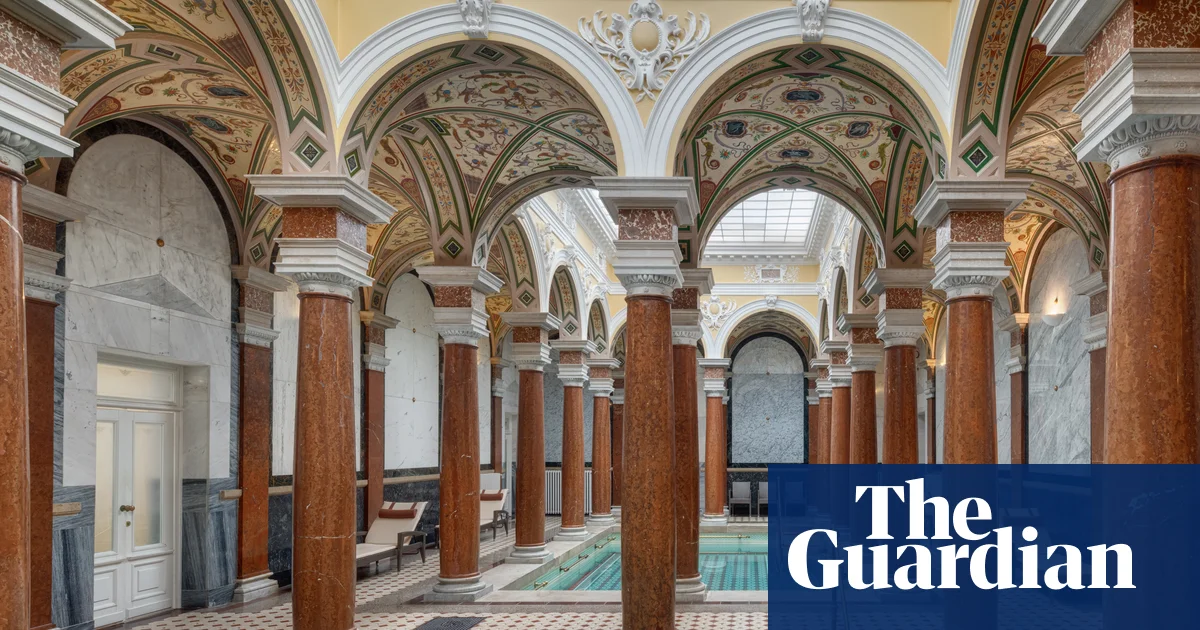
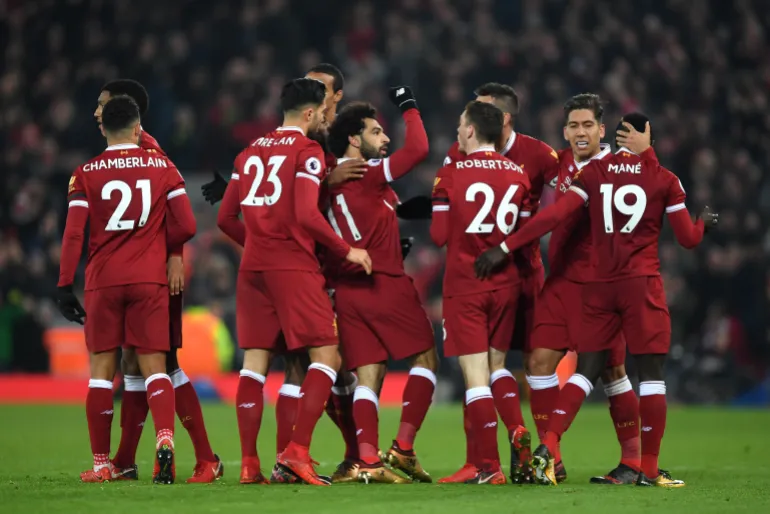


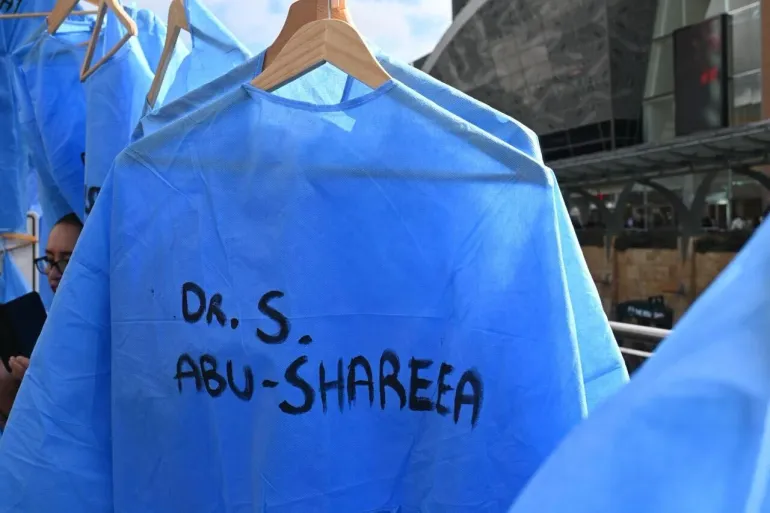
![Empty scrubs containing names of detained Palestinian healthcare workers hang outside the WMA summit [Courtesy of IMA OUT! campaign]](https://i0.wp.com/occasionaldigest.com/wp-content/uploads/2026/10/3c28041b-ba64-4a61-a62b-bb02868f9e39-1-1791663288.jpg?w=640&ssl=1)