europe

Iran war day 108: Iran, US reach a tentative deal to end conflict | Conflict News

US President Donald Trump and Iranian leaders say a deal has been agreed to end more than 100 days of war that killed thousands.

United States President Donald Trump and Iran’s Deputy Foreign Minister Kazem Gharibabadi said on Sunday that they had reached an initial deal to end the war and to resume traffic through the Strait of Hormuz.

Trump said the deal allows for toll-free shipping through the Strait of Hormuz, which has been largely closed since the US and Israel launched an assault on Iran on February 28.

“The Deal with the Islamic Republic of Iran is now complete,” Trump wrote on Truth Social on Sunday.

The US and Iran will sign a memorandum of understanding in Switzerland on Friday, said the prime minister of Pakistan, whose country has served as a mediator.

Monday marks 108 days since the war began, with the US and Israel’s attacks on Iran. Here is what’s happening:

What we know about the deal

  • The content of the agreement, which follows weeks of fraught negotiations and periodic threats from Trump of new hostilities unless Iran reaches a deal, remained unclear.
  • Strait of Hormuz to reopen: Iran’s semi-official Mehr news agency said the draft deal called for reopening the Strait of Hormuz within 30 days under Iranian arrangements. Trump, who turned 80 on Sunday, said the deal allows for toll-free shipping through the Strait of Hormuz, which has been largely closed since the US and Israel launched an assault on Iran on December 28.
  • Frozen assets to be released: Iran’s Mehr news agency reported that the US would release $12bn in frozen assets to Iran before the start of negotiations.
  • Iran’s enriched uranium: In an interview with The New York Times on Sunday, Trump said Washington was still negotiating whether Iran would suspend its enrichment for 20 years. Trump hinted that he might settle for a 15-year suspension, but said he did not want to negotiate via the press.
  • Israel has not commented: There has been no official comment from Israel about the peace agreement.

In Iran

  • The secretariat of Iran’s Supreme National Security Council said on Monday that the deal with the US includes the immediate suspension of hostilities on all fronts. “Based on the agreements reached, the war and military operations on all fronts, including Lebanon, will end immediately and permanently as of tonight, and in addition, the naval blockade against Iran will end immediately and completely,” it said in a statement.

In the US

  • Democrats slam Trump over war: While Democratic lawmakers welcomed the deal, they criticised the Trump administration’s decisions pertaining to the war. Senator Chris Coons of Delaware said that while the deal moves the situation in the “right direction”, several questions remain. He warned that competing interpretations of what was agreed upon could pose risks. Senator Chris Murphy, who serves on the Senate Foreign Relations Committee, said the deal is a “surrender to Iran” but that the US should be “glad about it because every day this insane, illegal war continues, we get weaker”.

In Lebanon

  • Trump rebukes Israeli attack on Beirut: On Sunday, shortly before the deal was announced by Trump, Israel launched an air attack on Beirut. Trump angrily blamed Israel for delaying the deal’s signing after launching this attack. In an expletive-laden phone interview with US news outlet Axios, Trump fumed about Israeli Prime Minister Benjamin Netanyahu, saying: “I was so pissed off. I let him know.”

Global response

  • Western leaders praise deal: UK Prime Minister Keir Starmer said he was ready to aid the further technical talks between the US and Iran, adding that he hopes the reopening of the Strait of Hormuz will stabilise energy markets.
  • French President Emmanuel Macron also praised the deal and said Paris would support the Lebanese government.
  • European Union chief Antonio Costa welcomed a deal between the US and Iran to end the Middle East war, adding that the bloc was ready to contribute to a strategy for “lasting peace”.
  • UN Secretary-General Antonio Guterres said it was a “critical step” towards resolving the war in the Middle East.

Global economy

  • Oil prices drop: Oil prices slipped to their lowest since March on Monday, with global benchmark Brent crude futures falling $4.08, or 4.7 percent, to $83.25 a barrel by 04:15 GMT. US West Texas Intermediate was at $80.53, down $4.35, or 5.1 percent. Both contracts fell to their lowest levels since March 10 on Monday after tumbling more than 3 percent on Friday.
  • Asian markets soar: Markets in Japan soared, more than 5 percent up; in South Korea, they were up 5.3 percent; in Taiwan, they were up 2.4 percent. In Shanghai, they were up 1.3 percent; and in Hong Kong, they were up half a percent; while in Indonesia, they were up 2.07 percent; and in the Philippines, they were up 5.2 percent.

Source link

Oliver Tree, musician and Santa Cruz native, dies in helicopter crash

Oliver Tree, a genre-defying singer-songwriter and Santa Cruz native, was one of six people killed when two helicopters collided Sunday morning in Brazil, according to the Associated Press. He was 32.

Tree, a quirky artist known for his highly theatrical music videos and crisp bowl cut, had been traveling through South America as a part of his world tour. CNN Brazil reported Argentinian YouTuber Gaspar Prim, also known as Gaspi, was among those killed in the crash.

The mid-air collision occurred in Rio de Janeiro, with one of the helicopters landing in the parking lot of a car dealership, the AP reports. Local authorities have launched an investigation into the cause of the crash.

Tree, born Oliver Tree Nickell, broke out in the electronic music world first performing as, simply, Tree. He released an e.p., “Demons,” in 2013, which included a cover of Radiohead’s “Karma Police.” He later attended CalArts north of Los Angeles, and signed to Atlantic Records for his major-label debut e.p. “Alien Boy” in 2018.

To find his distinct look, he told the Santa Cruz Sentinel that “I was making a statement with it. Everybody’s trying to look so beautiful and sexy nowadays. It was my way of rebelling against that. So, I tried to make myself look as silly and ridiculous as possible.”

Tree was an instant hit on the festival circuit for his outlandish stage productions and outsider charisma, performing at Lollapalooza, Coachella and Outside Lands. He collaborated with Skrillex, David Guetta and Zeds Dead, and was fiercely protective of his meticulously weird visual identity and video concepts, telling Rolling Stone that “That’s kind of my signature. The people who do f- with me know me because of my videos..Music is my day job but my real dream is to be making feature films.

He released his major label debut LP, “Ugly Is Beautiful,” in 2020. His hit song “Life Goes On” and collaboration “Miss You” with German DJ Robin Schulz earned him international recognition and climbed onto the Billboard Hot 100. He released four full length albums as Oliver Tree, most recently April’s independent LP “Love You Madly Hate You Badly.”

Tree had performed in Buenos Aires on June 4.

From July to October, he had shows scheduled throughout Europe, Australia and China. This year, he performed at the Coachella Valley Music and Arts Festival this year as a special guest of electronic producer Subtronics. In one of his last social media posts, he made a point to spotlight an upcoming show on Aug. 9 in his hometown at the Quarry Amphitheater at UC Santa Cruz.

“I can’t believe Oliver is gone,” Schulz posted on Instagram. “You were such a lovely soul and a one of a kind character. Working with you on ‘Miss You’ was an honor. My deepest condolences to his family, friends and everyone who loved him.”


Source link

Who is Sweden’s Yasin Ayari, and why didn’t he celebrate against Tunisia? | World Cup 2026 News

The 22-year-old scored two goals against Tunisia but had muted celebrations against the country of his father’s birth.

For a 22-year-old making his World Cup debut for Sweden, Yasin Ayari could only have dreamed of a better start to his introduction to the biggest showcase of football.

With a full-throttled volley into the top corner of Tunisia’s net just seven minutes into the first half of their Group H match in Monterrey, Ayari had opened the scoring for the Scandinavian side against their North African opponents.

The fresh-faced midfielder, though, did not revel in the moment as a young World Cup debutant might and instead chose to hold both his hands up before falling onto the ground in sujoud (Muslim act of prostration).

The reason? The deep Tunisian connection that runs in his blood, and one that could have seen him play for the opposition as late as four years ago.

Sweden's midfielder #18 Yasin Ayari celebrates scoring his team's first goal during the 2026 World Cup Group F football match between Sweden and Tunisia at the Monterrey Stadium in Guadalupe on June 14, 2026. (Photo by Julio Cesar AGUILAR / AFP)
Yasin Ayari did not partake in wild celebrations after scoring his first goal of the match [Julio Cesar Aguilar/AFP]

Ayari is of North African heritage, with a Tunisian father and a Moroccan mother, but was born in Sweden. At 18 years of age, the promising footballer decided to represent the country of his own birth, rather than his parents’, and his father backed the decision.

“I wanted him to play for Sweden,” Azzouz Ayari told Swedish newspaper Aftonbladet, adding: “He should feel like he is giving back to the country that took care of him.”

Azzouz, who migrated to the Scandinavian country, revealed that his son was offered a place on the Tunisian side, but neither father nor son considered it an option.

Sweden's midfielder #18 Yasin Ayari celebrates scoring his team's first goal during the 2026 World Cup Group F football match between Sweden and Tunisia at the Monterrey Stadium in Guadalupe on June 14, 2026. (Photo by Julio Cesar AGUILAR / AFP)
Ayari went down on the ground to prostrate after scoring his first World Cup goal [Julio Cesar Aguilar/AFP]

Ayari began playing football at age seven on the youth side of his hometown club Rasunda, in Solna, before moving to Scandinavian football giants AIK, where he made his senior team debut in 2020.

The attacking midfielder was signed by English Premier League club Brighton & Hove Albion in 2023, making his Sweden national team debut in the same year.

Explaining his decision to wear the yellow and blue of Sweden instead of the red and white of Tunisia, Ayari said it was “only natural” to continue representing the country he had played for as a child.

When the World Cup 2026 draws were announced in December, the irony of playing against the country of his father’s heritage was not lost on Ayari.

“It was crazy that we ended up with them in our group,” he said.

The young talent was the standout player in Sweden’s thumping win over Tunisia, and he bookended their dominant performance with another scorching individual goal in the 95th minute.

Ayari found the ball at the edge of the Tunisian goal and sent it flying into the far corner to bag his second World Cup goal in his debut game.

This time, though, he did celebrate and soak in the applause of the jubilant Swedish crowd.

Sweden's Yasin Ayari (18) celebrates with Anthony Elanga (11) and Mattias Svanberg (19) after scoring their fifth goal during the World Cup Group F soccer match between Sweden and Tunisia in Guadalupe, near Monterrey, Mexico, Sunday, June 14, 2026. (AP Photo/Dolores Ochoa)
Ayari celebrates with Anthony Elanga and Mattias Svanberg after scoring his team’s fifth goal [Dolores Ochoa/AP]

Source link

Sweden beat Tunisia 5-1 in strong start to World Cup | World Cup 2026 News

Two goals from Ayari and one each from Isak, Gyokeres and Svanberg take Sweden to the top of Group F in Monterrey.

Sweden crushed Tunisia 5-1 to leave the North African nation’s defensive reputation in tatters and seize control of World Cup Group F as the Mexican city of Guadalupe hosted its first fixture of the tournament.

Graham Potter’s men took the lead in the seventh minute of the game on Sunday, courtesy of midfielder Yasin Ayari’s thunderbolt from outside the box, following a mix-up at the back.

The celebrations of Ayari, who is of Moroccan and Tunisian descent, were muted, despite his fine finish.

Sweden doubled their lead on half an hour after a rapid break freed Alexander Isak on the left.

The Liverpool forward raced ahead and cut inside before unleashing a shot, which goalkeeper Mouhib Chamakh failed to keep out, even though he got a hand to the ball.

Sweden's fans celebrate after their team won the 2026 World Cup Group F football match between Sweden and Tunisia at the Monterrey Stadium in Guadalupe on June 14, 2026. (Photo by Julio Cesar AGUILAR / AFP)
Sweden’s fans celebrate after their team’s win [Julio Cesar Aguilar/AFP]

Tunisia did not concede a single goal in qualifying, becoming the first side to achieve the feat, subsequently matched by Ivory Coast and England.

Sweden threatened to overwhelm their opponents, but the match changed complexion minutes before half-time, when Omar Rekik headed home Hannibal Mejbri’s teasing cross.

However, the Scandinavian nation restored their two-goal cushion in the 59th minute after another defensive calamity for Tunisia.

Midfielder Ellyes Skhiri was caught in possession on the edge of the box by Isak, who fed Viktor Gyokeres, and the Arsenal man fired home.

Substitute Mattias Svanberg made it 4-1 late on after VAR ruled he was onside.

And there was still time for another stunning goal from Ayari from outside the penalty box.

Sweden reached the quarterfinals of the 2018 World Cup in Russia, but did not qualify for the tournament in Qatar four years later.

Tunisia were the first African team to win a World Cup match when they beat Mexico in 1978, but they have never progressed beyond the group stages.

INTERACTIVE-Football FIFA Teams that have qualified for the World Cup 2026-1776671102
(Al Jazeera)

Source link

Thousands protest as Trump, other world leaders set to meet for G7 summit | Protests News

Activists rally in Geneva to denounce policies of G7 countries ahead of group’s annual meeting this week in France.

Thousands of protesters have gathered in Geneva ahead of this week’s Group of Seven (G7) summit, which is set to bring together United States President Donald Trump and other world leaders in nearby France.

The demonstration on Sunday was led by the so-called “No-G7” coalition, which is comprised of more than 60 associations and groups, including Palestinian rights advocates, feminist activists and environmentalists.

Recommended Stories

list of 3 itemsend of list

“We are very afraid of the policy and the politics of Mr Trump and also of the other leaders of the G7, because they are fighting, making war all over the place,” said Francoise Nyffeler, a spokesperson for the coalition.

“The planet is in danger, and we are very scared about it and we want to protest and say that the people of the world are against their policies,” she added.

Swiss and French authorities have deployed thousands of police to provide security for the three-day summit, which begins on Monday in the French resort town of Evian-les-Bains.

Authorities have blocked off roads, banned unauthorised gatherings, and pledged financial support for businesses that could be hit by unrest.

A woman holds a sign which reads "G7-mental age years" as she participates in a "No G7" demonstration in Geneva, Switzerland, Sunday, June 14, 2026, ahead of the G7 summit scheduled to take place June 15-17. (AP Photo/Baz Ratner)
Protesters gather at the ‘No G7’ demonstration in Geneva, Switzerland [Baz Ratner/AP Photo]

Scores of businesses and shops have boarded up their storefronts with wooden panels as a precaution, leery of upheaval that left a trail of damage in Geneva during a similar summit in Evian in 2003.

Reporting from the protest in Geneva on Sunday, Al Jazeera’s Natacha Butler said demonstrators had denounced the G7 as being “all about the rich getting richer and the poor getting poorer”.

“They say the club of wealthy nations doesn’t represent the global population; that their policies and decisions have a negative impact on the world in terms of climate, equal rights and poverty,” Butler said.

Questions about the legitimacy of the G7 – which includes the US, Canada, Japan, France, Germany, Italy and the United Kingdom – are not new.

The group of countries previously accounted for 70 percent of global gross domestic product (GDP) – a figure that has shrunk to just 40 percent – while representing one-tenth of the global population.

In a sign that global power dynamics are shifting dramatically, other global groups also are growing. The BRICS countries – which include India, Russia and China – have doubled their bloc’s number of members from five to 11.

While G7 summits regularly draw protests, this year’s event also comes amid global frustration with Trump’s leadership on issues as diverse as tariffs, the US-Israeli war on Iran, and the climate crisis.

Demonstrators had been gathering for days in advance of Sunday’s march in Geneva.

A flotilla of around 20 boats appeared on Lake Geneva off the coast of Evian on Saturday, displaying anti-G7 and pro-Palestinian banners. Some 20 protesters were detained on Friday evening, according to Swiss media reports.

Source link

EU set to hold membership talks with Ukraine | European Union

NewsFeed

The European Union will begin accession talks with Ukraine and Moldova after Hungary’s new government withdrew its veto, paving the way for negotiations. Both countries believe EU membership would provide them with greater security against Russian aggression.

Source link

Spain vs Cape Verde: World Cup – Lamine Yamal, predictions and how to watch | World Cup 2026 News

Pre-tournament favourites Spain open their Group H campaign with a match against World Cup debutants Cape Verde.

The 2026 World Cup will have 13 different kickoff times. You can use the Al Jazeera Sport widget to find out exactly when your team is playing in your local time.

Who: Spain vs Cape Verde
WhatFIFA World Cup 2026 Group H match
Where: Mercedes-Benz Stadium, Atlanta, United States
When: Monday, 12pm local time (16:00 GMT)
How to follow: Catch all live updates on Al Jazeera Sport

Recommended Stories

list of 4 itemsend of list

Spain, the reigning European champions and strong favourites for the 2026 World Cup, begin their title bid on Monday by facing minnows Cape Verde in Atlanta.

Since winning their maiden world title in 2010, Spain have endured a dismal run in the following three campaigns, bowing out in the group stage in 2014 and exiting in the round of 16 in 2018 and 2022.

But their Euro 2024 success and a new golden generation of Lamine Yamal, Pedri, Gavi, Ferran Torres and others have prompted bookmakers to keep Spain at the top of the potential winners‘ list.

La Roja – known for playing entertaining, attacking football – have become unshakeable over the last four years, going 30 matches unbeaten since a 1-0 friendly loss to Colombia at Wembley in March 2024.

Spain will arguably be the team to beat in North America, with Opta’s supercomputer handing them a 15.94 percent probability to lift the title, and France a close second at 13.62 percent odds.

Soccer Football - FIFA World Cup 2026 - Spain Training - Baylor School, Chattanooga, Tennessee, U.S. - June 11, 2026 Spain's Lamine Yamal, Ferran Torres and Gavi during training IMAGN IMAGES via Reuters/Brett Davis
Spain’s Lamine Yamal, Ferran Torres and Gavi during training [Brett Davis/Imagn Images via Reuters]

Will Yamal play in Spain vs Cape Verde?

Yamal single-handedly stole the show in Germany two years ago en route to their Euro title, and will hope to repeat that form at the June 11 – July 19 tournament.

But the teen sensation may have to wait a little longer to make his World Cup debut.

Spain could take a cautious approach for the Cape Verde opener with winger Yamal and young forward Nico Williams in the final stages of recovery from hamstring injuries sustained ‌in April.

Both returned to training with their teammates on Thursday, but De la Fuente could opt to name them on the bench or keep them out of the matchday squad until they reach full fitness.

Lamine Yamal of Spain looks on.
Lamine Yamal will make his World Cup debut at the 2026 tournament [Florencia Tan Jun/Getty Images]

Cape Verde to break new ground in North America

Known for its crystal-clear waters and sandy white beaches, Cape Verde will make noise for different reasons this North American summer.

The archipelago of 10 islands in the Atlantic Ocean will make its World Cup debut on Monday, arriving at the global showpiece as one of 10 African representatives.

After their fairytale qualification, which coincided with its 50th anniversary of independence from Portugal, Cape Verde – with fewer than 600,000 inhabitants – became the third smallest country by population to ⁠reach the tournament after Iceland in 2018 and Curacao, also in 2026.

The team has slowly built credibility in recent years. Their international breakthrough came in 2013 when they ⁠qualified for their first Africa Cup of Nations (AFCON) and reached the quarterfinal stage.

Cape Verde has spread the national team net wide with starters based in several countries, including Portugal, the Netherlands, and the United States.

Cape Verde beat record African World Cup qualifiers Cameroon to seal their spot in the finals [File: Cristiano Barbosa/AP]

Spain vs Cape Verde prediction

Spain are strong favourites to win this match, having an 87.2 percent probability of walking away with three points. Cape Verde have a slim 4.8 percent chance of victory, while a draw has an 8.15 percent chance.

Overall, Spain have a 76.53 percent probability to win Group H, which also includes Saudi Arabia and Uruguay.

How to watch Spain vs Cape Verde?

The following is the list of broadcasters and platforms to watch the game in these countries:

  • Spain: LA 1, DAZN Mundial, RTVE Play
  • Cape Verde: New World TV, SuperSport
  • United Kingdom: ITVX, ITV1, STV Player, STV
  • USA: FOX, FOX One, Telemundo App, Telemundo Network, Peacock

Source link

I tried interrailing around Europe as a mid-lifer

AN Interrail adventure around Europe was once a rite of passage for many a British teen in the days before low-cost flights.

Now, a growing number of mid-lifers are taking to the rails to repeat the journeys of their youth, or even experience it for the first time.

An Interrail adventure around Europe was once a rite of passage for many a British teen in the days before low-cost flights. Credit: Getty
The beauty of a rail pass is that you can destination-hop for little or no extra cost Credit: Getty

But with age comes the need for a little comfort — picking a hotel instead of a hostel and a wheelie case over a rucksack.

The principle the same, though. Buy a rail pass, plot your route — and adios.

With the kids grown up, my husband and I joined the rail revolution to have our very own Interrail fun.

The beauty of a rail pass is that you can destination-hop for little or no extra cost, so we created a 12-day itinerary visiting several places we had never been to. First-class, too, as it’s only £90 more.

POSH SUITE

I stayed at the historic manor house that’s now a hotel right by city of Oxford


SPLASH OUT

Gorgeous free lido with sweeping city views is returning to UK this summer

We start with a ten-hour train journey from London to Milan, rattling towards the French Alps and Italy in plush, extra legroom seats.

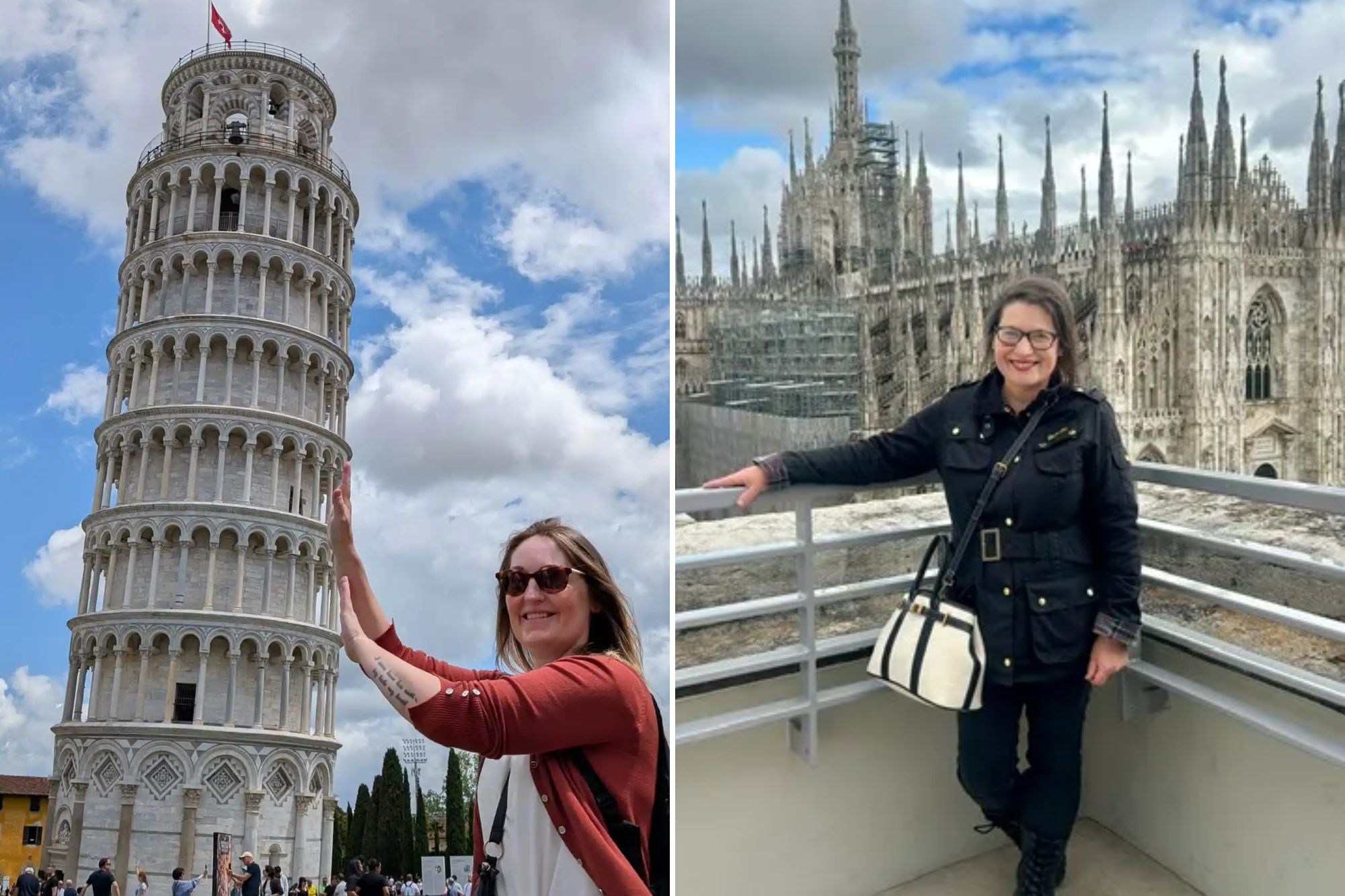
An overnight stay is followed by a whizz round Milan’s hotspots — including its impressive Duomo and glitzy shopping gallerias — then we’re back on the rails, snaking through the valleys and vineyards of northern Italy’s Trentino region towards the town of Riva on Lake Garda.

Framed by Alpine foothills, this 32 mile- long lake (Italy’s biggest) is idyllic — as is our base, the family-run Garda Suite Hotel, where every room comes with a balcony. Ours overlooks the hotel’s heated swimming pool as well as the lake.

The next 72 hours are spent admiring Lake Garda from in it, on it and above it.

We created a 12-day itinerary visiting several places we had never been to
Milan’s mighty Duomo is one of the majestic sites you can visit Credit: Getty

From the Ponale Path, a trail carved high into the mountainside, there’s a sheer drop to the water which shimmers below, a magical turquoise.

Less knee-trembling are the vistas from the colourful town of Riva’s Apponale Tower (mind your head as you climb its 165 steps) and Bastione funicular.

Entry to both, as well as local transport, is included in the Garda Guest Pass, free to hotel residents.

Other highlights include saffron risotto at La Capannina Pizza and Grill, wine-tasting at the local Comai vineyards (their Merlot’s superb) and a sunset sail-boat excursion.

Skipper Alesso explains how Lake Garda is 350m deep and home to freshwater sardines and giant pike.

“Any monsters?” I ask. “Yes, Bennie.”

He shows me a picture. Not a patch on our Nessie.

Then, we’re back on the rails and watching four countries roll past the window — Italy, Germany, Austria and then our next destination: Slovenia’s Lake Bled.

Strasbourg’s Notre Dame Cathedral was once the tallest building in Europe Credit: Getty
Visitors can get closer Lake Bled’s island and church by hiring a boat Credit: Getty

Alpine Lake Bled differs from Garda. It’s much smaller and circled by a four-mile walking trail. There’s a fairytale island at its heart with a church.

You can hire a boat to explore (£26 for 90 minutes) although the rowing is tough on arms. Happily, the hot tub at our Bled Rose spa hotel (no hostels for us) eases aching limbs.

While Bled is prominent on the tourist and Interrail trail, Slovenians have been keeping neighbouring Lake Bohinj (11 miles away) to themselves.

Surrounded by the Julian Alps and Triglav National Park, signposts keep leading us — slightly alarmingly — towards a “slap”. But it’s a relief to learn that this word is Slovenian for waterfall.

We follow a two-hour trail toward thunderous Slap Mostnice before lazing on one of the lake’s empty beaches.

The real taste of Slovenia, however, comes when we move on to capital Ljubljana and try strukli — cottage-cheese filled steamed dumplings. They’re served warm, sweet or savoury and the sugary ones are delicious.

Afterward, we climb to the castle on a hill for a panorama over the city’s jumble of steeples and turrets.

Our trip includes three ten-hour journeys, seven travel days, 14 trains and one missed connection. No matter, we take the next one. Some trains require seat reservations costing extra, but most don’t.

Working out how to get around is part of the Interrail experience Credit: Supplied
Jo said her only complaint about hopping from place to place is that time passes far too quickly Credit: Supplied

Working it out is part of the Interrail experience. Free wifi is the norm and everything’s done on the Interrailing app — no physical tickets. My only complaint is that time passes far too quickly.

Soon, we’re circling back toward France and our penultimate destination of Strasbourg, whose location close to Germany’s border lends it a Germanic feel.

The street signs are bilingual and Riesling’s the local wine. We enjoy a glass over dinner at our boutique Leonor Hotel — an 18th-century former police station which has a grandiose internal courtyard.

Round the corner is Strasbourg’s gothic Cathedral de Notre Dame which, for 400 years, was the tallest building in Europe.

A lung-busting 350 steps lead up to its viewing platform, from where we enjoy grandstand views over the city’s half- timbered Alsatian houses on backstreets criss-crossed by waterways.

Our biggest high, however, comes in Paris, where our trip ends. The new 4H hotel (built for the 2024 Olympics) towers over the city and is close to the Stade de France stadium where footie fans can enjoy tours.

Our room on the 35th floor affords a jaw-dropping view of the River Seine and Eiffel Tower. And on floor 40 is the highest swimming pool in Paris.

On the Eurostar back to London we toast an Interrailing trip which covered 2,509 miles, averaged 20,000 steps a day and crossed six borders.

Every moment felt fresh, exciting and youthful. Best lesson learned? To roll back the years, you must head for the rails.

GO: INTERRAILING

GETTING THERE: A “Travel 7 Days In One Month” Eurail Global Pass costs £334 (second-class) and £424 (first-class) with reduced fares for over-60s.

See eurail.com.

STAYING THERE: A double room at the Garda Suite Hotel, Lake Garda, is from £145 a night B&B (tonellihotels.com).

Doubles at the Bled Rose Hotel are from £174 B&B (bledrose.com).

Doubles at the Grand Plaza Hotel, Ljubljana from £131 B&B (grandplazahotel.si).

Doubles at the Leonor Hotel, Strasbourg from £168 (leonor-hotel.com).

Doubles at the H4 Hotel Wyndham Paris from £122 (h-hotels.com).

Source link

Martin Lewis ‘vital document’ advice for 2million people heading to Europe

You need to check if your paperwork is still valid for Spain, France, Portugal, Greece, Italy and other destinations

Martin Lewis’s MoneySavingExpert has issued urgent advice for anyone travelling to Europe this summer, as more than two million people will see a key document expire before they head off. MoneySavingExpert.com has a holiday warning for anyone visiting countries including France, Spain, Portugal, Greece and Italy.

Martin’s team has urged holidaymakers to check if their European Health Insurance Card (EHIC) or Global Health Insurance Card (GHIC) is still valid, as 1,285,250 GHICs and 926,954 EHICs are set to expire this year. The EHIC is being replaced by the new Global Health Insurance Card (GHIC). These cards are totally free to get and they give you access to state-run hospitals or GPs in EU countries for the same price as a local.

They last for up to five years, and the final EHICs issued after Brexit are expiring this year. The MSE newsletter reads: “These cards give access to state-run hospitals or GPs in EU countries for the same price as a local – so if it’s free for them, it’s free for you.”

You need to check your card for the expiry date, and apply for a new one if necessary.

The team said: “You’ll need to get a new card – it’s now called a GHIC (as it’s been rebranded a ‘Global’ card, though in essence still covers mostly the same European countries).” However, MSE also warned people not to fall for websites that charge you for these cards.

MSE said: “Never pay to get an EHIC or GHIC. It is always free, beware shyster sites trying to charge you for ‘fast tracks’ or other stuff, that’s nonsense. See how to safely get a free GHIC.” If you have an existing EHIC, it remains valid until the expiry date runs out – after this, you’ll need to apply for a GHIC card.”

The NHS explains: “The UK Global Health Insurance Card (GHIC) lets you get necessary state healthcare in the European Economic Area (EEA), and some other countries, on the same basis as a resident of that country. This may be free or it may require a payment equivalent to that which a local resident would pay.

“The UK GHIC has replaced the existing European Health Insurance Card (EHIC). If you have an existing EHIC you can continue to use it until the expiry date on the card. Once it expires, you’ll need to apply for a UK GHIC to replace it.

“The ‘Global Health Insurance Card’ (GHIC) and its predecessor, the EHIC, give access to state-run hospitals or GPs, mainly in European countries, for the same price as a local. So if they don’t pay, you don’t either. Over two million expire this year, check yours.”

A UK GHIC is free, and you can apply through the NHS website. The NHS advises avoiding unofficial websites, which may charge an application fee. People can apply for a new card up to nine months before their current card expires.

The NHS says: “Every member of your family needs their own card. You can add your spouse, civil partner and children to your application when you apply. You must enter your own details first and apply for any additional cards when prompted.”

Source link

L.A. museum highlights Jewish roots of most popular soccer styles

Béla Guttmann may be the most consequential soccer coach you’ve never heard of. But if it weren’t for Guttmann, you may never have heard of Pelé.

And Brazil may never have become the greatest soccer-playing country on Earth.

That’s because Guttmann changed the shape of modern Brazilian soccer — and changed the sport forever — when he imported the revolutionary 4-2-4 system from Hungary to Sao Paulo in 1957. A year later, Brazil won the first of five World Cups and the joga bonito was born.

But what Guttmann brought to Brazil isn’t nearly as interesting as how he got it there. That’s just one of the fascinating stories in “The Beautiful Game … The Untold Story,” the exhibit that will open the Holocaust Museum LA on Sunday at the Goldrich Cultural Center, a $70-million expansion that will double the size of the Pan Pacific Park museum’s campus to 70,000 square feet.

A soccer ball from the holocaust is among the items on display in the exhibit "The Beautiful Game … The Untold Story."

A soccer ball from the holocaust is among the items on display in the exhibit “The Beautiful Game … The Untold Story” at the Holocaust Museum LA.

(Eric Thayer/Los Angeles Times)

The exhibit was unveiled during a private reception on Saturday followed by a free preview day open to the public from 10 a.m. to 5 p.m. The grand public opening will take place in August.

The show’s launch coincides with eight local World Cup matches, which kicked off with the United States’ 4-1 win over Paraguay on Friday at SoFi Stadium, and it shines a light on the important but largely overlooked relationship between Jewish life and the global game, as well as how Jewish innovators like Guttmann shaped the modern rhythm, style and culture of the sport.

“It was in the same intellectual level as jazz, as art and everything modern and progressive,” journalist Allon Sander, who helped curate the exhibit, said of Jewish participation in European soccer in the years before World War II.

“The origin of the game and how it intersects with Jews and the Holocaust and the impact that these Jewish footballers and coaches had to shape the game and help popularize the sport is so fascinating,” added Beth Kean, the museum’s CEO. “And it’s an unknown history.”

Much of that story can be told through Guttmann, who was born in Budapest in the final year of the 19th century and developed into one of the sport’s first Jewish stars, representing Hungary in the 1924 Olympics and playing for nine teams in two countries before retiring to become a coach.

But none of that success mattered when the Hungarian government began introducing anti-Jewish laws in 1938, costing Guttmann his job and nearly his life when he was sent to a Nazi forced-labor camp, where he was tortured. Just days before he believed he would be shipped to Auschwitz, which meant certain death, he escaped alongside Erno Erbstein, another Jewish coach.

Erbstein revolutionized soccer in Italy before dying in 1949, along with the entire Torino team, when their plane crashed into a hilltop outside Turin. Four years ago, he was inducted into the Italian soccer hall of fame. Guttmann, meanwhile, who lost much of his family in the Nazi death camps, would go on to coach for 42 years in 14 countries, winning championships in six of them yet only staying in a single place for more than two years just once.

“He’s running away from his demons,” said Ronen Dorfan, a journalist and sports historian based in Budapest whose research was instrumental in putting the exhibit together. “His father was murdered, his sister was murdered. You never know how you survived in Budapest during the war so he had guilt feelings.”

A jersey worn by player Max Wozniak and a jersey from the 1930s are displayed in an exhibit.

A jersey worn by player Max Wozniak and a jersey from the 1930s are displayed in an exhibit called “The Beautiful Game … The Untold Story.”

(Eric Thayer/Los Angeles Times)

The exhibit was designed in three sections, the first devoted to the years before World War II, the second is about the Holocaust and the third is the postwar years. And while it details Jewish participation in, and influence on, global soccer, it also challenges the cliché that Jews were intellectuals, artists and laborers but not athletes.

“We are always trying to challenge stereotypes. Stereotypes that we might have about ourselves and even stereotypes that we believe about others,” said Jordanna Gessler, the museum’s vice president of education and exhibits who helped curate the show. “It’s crucial to help people find their place and their voice and really see the unity, the similarities between people.

“This is a story that was lost in time and we’re really bringing it out,” Gessler added. “To really have this conversation and encourage people to explore stories that they might not know.”

One thing people might not know is that in the 1920s and ‘30s, Europe’s best teams weren’t in England, Germany or France, but in Austria and Hungary, where they were led by Jewish players and coaches such as Hugo Meisl, Jozsef Braun, Arpad Weisz, Marton Bukovi, Gusztav Sebes and Gyula Mandi. Weisz and Braun were both killed by the Nazis.

A soccer ball from the 1974 World Cup is displayed at an exhibit called "The Beautiful Game … The Untold Story."

A soccer ball from the 1974 World Cup is displayed at an exhibit called “The Beautiful Game … The Untold Story.”

(Eric Thayer/Los Angeles Times)

The surge of antisemitism and fascism in Germany, Italy and Eastern Europe helped spread the influence of those revolutionary players and coaches around the world.

“With the rise of the Reich and the Holocaust, the coaches ran away,” Dorfan said. “And they ran to every corner of the world, to Brazil, to Argentina, to Portugal [and] provided coaches to Real Madrid, to Barcelona, to Benfica, to Flamengo.

“There isn’t one of these clubs that doesn’t owe its tactical development in the ‘40s and ‘50s to the Jewish coaches, which came primarily from Hungary.”

The primary tactical development was the shift from the popular but rigid 2-3-5 formation, which required immense physical endurance and tactical discipline, to the fluid 4-2-4, which spread the wingers to the touch line and allowed for improvisation and creativity on the attacking end, a formation pioneered in Budapest in the 1920s.

“They developed a more refined game of passing the ball, keeping it on the carpet rather than the English kick and run, and really put thought into tactical thinking,” Dorfan said.

Guttmann, who played or coached for more than two dozen teams in his career — including one, in Romania, that paid him in vegetables during the postwar period — brought the Hungarian approach to Brazil in 1957 when he coached Sao Paulo to a championship. After Vicente Feola, the manager Guttmann replaced at Sao Paulo, took over the national team a year later, he brought the formation with him, popularizing many of the tactics still used in modern soccer, such as fluid defensive wingers, overlapping full backs, the use of a withdrawn striker and an attacking midfield.

The soccer team at the Theresienstadt concentration camp's flag is displayed in a Holocaust Museum LA exhibit.

The soccer team at the Theresienstadt concentration camp’s flag is displayed in a Holocaust Museum LA exhibit called “The Beautiful Game … The Untold Story.”

(Eric Thayer/Los Angeles Times)

“He is the whole exhibition in one man,” Dorfan said of Guttmann.

“Obviously if we wouldn’t have had the Holocaust, those [coaches] wouldn’t be kept out of Europe, Europe would be much stronger, much more developed. [And] then the development of Brazil or the success of Brazil would be coming much later,” Sander said.

Dorfan spent the better part of two years tracking down many of the more than 100 trophies, uniforms, photos and trinkets that make up “The Beautiful Game” exhibit, a search that required determination, perseverance and more than a little luck. Many of the items, because of their ties to Jewish athletes and teams, were hidden during the war and presumed lost. Others resurfaced only through detective work that sent Dorfan following leads that spanned decades and crossed more than a dozen borders.

That also cost money. So Alan Rothenberg, the man who, as president of the U.S. Soccer Federation, first brought the World Cup to Los Angeles 32 years ago, stepped up to lead an effort that raised more than $1 million to fund the exhibit.

“The story really needs to be told, particularly with what’s going on right now with respect to antisemitism,” Rothenberg said. “It’s really important for people to realize what can happen. And soccer is a great vehicle to draw them in. The one main thing in the museum is bringing schoolkids in.”

The Nazis and their collaborators failed in their attempt to erase the history of Jewish soccer pioneers; in fact, they inadvertently popularized both the men — and women — and their ideas. But the sport also helped other Jews survive a dark period and Kean said that may be the most beautiful and uplifting part of “The Beautiful Game.”

“The main reason we decided to do this exhibition in the first place is because for years so many survivors, when they talk about their life before the war, so many of them talk about soccer. So many of them were passionate and fond of the sport,” she said.

“We knew the exhibit opening was going to coincide with the World Cup. L.A. is going to be on the world stage. This is a great opportunity for the museum to get these stories out.”

Source link

Romanian president picks Liberal former mayor as PM to form new government | European Union News

Adrian Vestea nominated as prime minister after previous choice, Eugen Tomac, withdraws.

Romanian President Nicusor Dan has nominated Adrian Vestea, a National Liberal Party member and former mayor, as prime minister to form a new government after the previous choice for the post withdrew.

“Eugen Tomac withdrew his mandate this morning and as such ‌I nominate Adrian Vestea as prime minister,” Dan, a centrist, said in a post on X on Sunday.

Recommended Stories

list of 3 itemsend of list

Vestea, 52, ⁠is the county council president of the central Romanian county of Brasov. Eugen Tomac had ⁠been seeking to lead a government of technocrats but lacked support from the parties in parliament.

Vestea, who served as a development minister from 2023 to 2024, said in a statement that he wants a “political government that will undertake real reforms and keep Romania on a pro-Western path”.

“We are the sixth largest country in Europe, and we need to put a major emphasis on development. Which I will do from day one,” he said.

Dan’s two nominations for the prime ministerial role this month come after a no-confidence vote toppled former Prime Minister Ilie Bolojan in May. A general election is not scheduled until 2028.

Dan said Vestea was suitable for the role because he had “gone through all the administrative stages” throughout his political career.

“He was a successful mayor, a successful county council president, a successful minister, and he attracted European funds, being focused on development, for example the Brasov airport, which is a success,” Dan said.

Parliamentary parties have previously said a minority government, whose members do not hold a ⁠majority of the seats in parliament, would be better ⁠than a government of technocrats.

Vestea will ⁠have 10 days to form ⁠a government and must win a parliamentary vote of confidence to take up his new post.

Romania has one of the highest budget deficits in the European Union and suffers from rampant inflation and a technical recession.

When a coalition government came to power in June 2025, it made reducing the budget deficit a priority. Bolojan was sworn in with the aim of ending one of Romania’s worst political crises in its post-communist history, but his government lasted less than a year.

Source link

I asked travel experts the 1 check everyone going on holiday this summer needs to do

Your holiday could be ruined if you don’t do the vital check first.

Thousands of Brits are counting down to their summer holidays, but there is a very important check that needs to be done first. Many people have already been caught out, leaving their getaways in tatters.

Travel expert Simon Calder recently explained that “thousands upon thousands” of people haven’t realised before it is too late and missed their booked holidays. To help avoid it happening to more holidaymakers, I asked a range of travel experts the one important check everyone must do before heading to the airport.

They all agreed that Brits heading to Europe need to not only check the passport’s validity but also ensure it was issued less than 10 years ago. Before 2018, passports could remain valid for as long as 10 years and nine months.

But now if you are heading to the EU or Schengen areas, you cannot have passports older than 10 years when you arrive at their holiday destination. It must also be valid for at least three months after the day you plan to return home.

The check every Brit needs to do

Francis Hellyer, CEO of tickadoo, said: “People check the expiry date, see it is months away, and relax. But for getting into the EU the border does not care about your expiry date, it cares about your issue date.

“If your passport is more than 10 years old on the day you land, you can be turned away at the gate even with eight months left on the page. Check the date of issue, not just the date of expiry.”

Natasha Inglis, Implementation and Client Success Director at Good Business Travel, added: “Your passport might still be in date, but that doesn’t always mean it’s valid for travel.

“Most travellers only look at their passport’s expiry date, but the issue date is just as important. For travel to EU countries, passports must be less than 10 years old on the day you arrive.

“This means that certain valid passports could still be rejected at the airport, so it’s really crucial to check both dates before you travel.”

Patrick Hill, Head of Paramount Cruises, said he is seeing “more and more” people getting caught out, especially when making last minute bookings.

He urged travellers to make the passport check before booking rather than before flying, and remember the new rules regarding the 10 year issue date.

Patrick explained: “If you renewed before October 1, 2018, the Passport Office sometimes carried over unused months from your old passport. The EU doesn’t count those. So check your date of issue, not just your expiry, they’re not the same thing.”

As well as passports not being allowed to be older than 10 years, there must be three months left after the date you plan to leave the Schengen area. However, Patrick noted that cruise lines often require six months from the end of the cruise.

He added: “Check both your issue date and expiry date the moment you start booking, not the week you travel. We’ve seen too many holidays evaporate at the check-in desk over a few missing months.”

How to check your passport

Find the date of issue on your passport photo page and add 10 years. Make sure your outbound flight falls before that date.

Next, find the date of expiry and minus three months. Make sure your return flight falls before that date. Ensure you check every passport included in your booking, especially children’s passports as they only last five years.

Francis Hellyer warned: “Do not assume that being allowed to check in means you are safe. Airlines turn away borderline passports to avoid EU fines, and immigration can still refuse you even after you board. If anything looks tight, renew now.”

He added: “When someone is refused boarding, the flight is only the start of the loss. We see how much a family spends on the holiday itself, the tours, the show tickets, the day trips, and a lot of that is non-refundable. A passport check takes two minutes and it is the cheapest insurance you will ever buy for the whole trip.”

Source link

Qatar net late against Switzerland to secure historic first World Cup point | World Cup 2026 News

Asian Cup holders Qatar level in injury time to draw 1-1 with Switzerland in World Cup 2026 opening game.

Boualem Khoukhi scored an equalising goal on a header in the fourth minute of stoppage time, and Qatar spoiled a dominant day by Switzerland in a 1-1 draw in Group B of the World Cup.

Several of the Qatari players fell to the ground on Saturday in celebration of the late goal, as others ran to each other to embrace.

Recommended Stories

list of 4 itemsend of list

Breel Embolo scored for Switzerland from the penalty spot in the first half just over a week after being cleared to enter the US following a visa delay, but the Swiss failed to capitalise on multiple other scoring chances.

In the 13th minute, Embolo was fouled by Qatar goalkeeper Mahmoud Abunada, who received a yellow card on the play. Abunada lay face down and appeared motionless for a couple of minutes before he began to move his legs and was able to stand up again.

When Embolo calmly sent his penalty into the upper left corner in the 17th minute, it sent the red-clad Swiss fans into a dancing frenzy in the stands of San Francisco Bay Area Stadium.

The 29-year-old forward applied for an urgent visa at the United States embassy in Bern on June 3, one day after he was denied boarding the team’s flight to travel for his third World Cup because of a 2018 criminal conviction that was only finalised in April.

Switzerland dominated the possession game on an unseasonably warm June afternoon — with sprinklers running during a first-half break.

Qatar's Boualem Khoukhi scores their first goal past Switzerland's Gregor Kobel
Qatar’s Boualem Khoukhi scores their first goal past Switzerland’s Gregor Kobel [Eloisa Lopez/Reuters]

There were thousands of empty seats scattered throughout Levi’s Stadium, home of the NFL’s San Francisco 49ers. Brazil and Colombia drew 70,971 two years ago in a group match at the Copa America. The stadium in Santa Clara staged the Super Bowl only four months ago.

Switzerland goalkeeper Gregor Kobel made a save in the second minute after Edmilson Junior got through the defence for a one-on-one. Kobel corralled the ball again in the 90th on a close-range attempt by Ahmed Alaaeldin.

Switzerland is hoping to advance further than its round-of-16 showing four years ago before losing 6-1 to Portugal — when Goncalo Ramos delivered an improbable hat-trick playing in place of benched star Cristiano Ronaldo. The loss prompted Switzerland midfielder Xherdan Shaqiri to apologize the the fans.

The Swiss used consistency and experience to go unbeaten through qualifying against Sweden, Kosovo and Slovenia. Coach Murat Yakin’s team produced four wins and two draws to secure its sixth straight World Cup appearance and hasn’t missed one since 2002, but the team has never gotten beyond the quarterfinals.

Qatar, led by Spanish coach Julen Lopetegui, had to qualify through a playoff in November — beating the United Arab Emirates and Oman — after missing an opportunity from its group stage of Asian qualifying.

The Gulf state country became the first host nation to lose all of its group matches four years ago. It lost to Senegal, Ecuador and the Netherlands in the 2022 tournament, scoring its lone goal in a 3-1 loss to Senegal.

Source link

UK court jails Palestine Action activists on ‘terrorism’ charges | Israel-Palestine conflict

NewsFeed

A UK court has sentenced four pro-Palestine activists to jail for a raid on an Israeli arms factory near Bristol in 2024. Palestine Action says their aim was to ‘dismantle drones and weaponry’ they believed would be used to kill people in Gaza.

Source link

Canada World Cup opener splits Bosnian fans among two ‘home nations’ | World Cup 2026

Thousands of Bosnia fans turned Toronto blue as they marched to the chants of ‘Free Palestine’ in Toronto.

Toronto, Canada — Nadia, a Bosnia and Herzegovina supporter who did not share her surname, stood out in her deep blue shirt as a sea of red-adorned Canada fans swarmed around her outside the Toronto Stadium an hour before kickoff to their FIFA World Cup 2026 opening game.

With the blue and yellow Bosnian flag draped around her, she found herself among the minority of “away” fans on Canadian soil on Thursday, less than two weeks after her team was given a warm welcome to the World Cup cohost nation.

Recommended Stories

list of 4 itemsend of list

It reminded Nadia, an immigrant, of her arrival in Canada in the mid-1990s when her family fled the Bosnian genocide that killed about 100,000 people and displaced more than two million.

“I wish I had space for two hearts so I could properly support both my countries,” Nadia told Al Jazeera when asked about her allegiance as loud roars of the crowd spilled out of the stadium behind her.

Nadia admitted her heart was ultimately with Bosnia, but the Canada cap she sported was a nod to the country that became home when she had to flee hers.

Earlier in the day, thousands of Bosnia supporters turned Toronto into a sea of blue as they marched towards the match venue in the city’s downtown while chanting “Free Palestine” to thunderous claps.

“They [Palestinians] should be free, enough with the wars and genocide,” Nadia said as her eyes welled up with tears. She took a deep breath before adding: “There is so much suffering, especially for the children.”

Cultures blend in Toronto

Dan, a Bosnia supporter in his 40s, was the same age as his primary school-aged son when he fled the genocide in his country.

The father-and-son duo enjoyed the game and soaked in the atmosphere among the 45,000-plus fans at the stadium before heading back slightly upset with the draw.

The day Canada opened its first World Cup became an amalgamation of immigrant Bosnian fans’ identities as they shared high fives and traded jerseys with their opposing numbers.

Every shade of skin colour and a multitude of mother tongues made the stadium and a nearby fan festival a microcosm of Toronto’s reputation as a multicultural hotspot.

The fan festival boasted the full spectrum of football enthusiasts — the hardcore supporters with expert analyses, laced with expletives at missed chances, and those in attendance purely for the vibes.

TORONTO, ONTARIO - JUNE 12: Bosnia and Herzegovina fans arrives before the FIFA World Cup 2026 Group B match between Canada and Bosnia and Herzegovina at Toronto Stadium on June 12, 2026 in Toronto, Ontario. Michael Steele/Getty Images/AFP (Photo by MICHAEL STEELE / GETTY IMAGES NORTH AMERICA / Getty Images via AFP)
Bosnian fans pose before the match [Michael Steele/Getty Images via AFP]

Football aside, several Canadian fans abhorred the immigration policies of their neighbour to the south. They were proud to be known for their hospitality at the 48-nation tournament across North America.

Admir, a travelling Bosnian fan, was full of praise for Canadian hospitality when he arrived from New Jersey.

“Everyone from ordinary people to stadium support staff to restaurant owners have been so accommodating since we got here,” he told Al Jazeera ahead of kickoff.

Compared with the barrage of immigration nightmare stories of World Cup supporters trying to enter the US, his journey to Canada was seamless.

Despite his home state hosting eight World Cup matches, Admir chose to pay an exorbitant price for tickets to see Bosnia, who returned to the World Cup after 12 years following a fairytale qualification.

The sun had drained most fans of their energy after the match, but not Tanya, who drove seven hours from New York to Toronto on Thursday morning.

“The atmosphere at the fan festival was amazing; Toronto has been great.”

“I think our boys played pretty well,” she said of the match. “We didn’t win, but it wasn’t a loss either.”

TORONTO, ONTARIO - JUNE 12: Bosnia and Herzegovina fans cheer in the stands during the FIFA World Cup 2026 Group B match between Canada and Bosnia and Herzegovina at Toronto Stadium on June 12, 2026 in Toronto, Ontario. Michael Steele/Getty Images/AFP (Photo by MICHAEL STEELE / GETTY IMAGES NORTH AMERICA / Getty Images via AFP)
Bosnia fans cheer in the stands during their team’s opening game at the FIFA World Cup 2026 [Michael Steele/Getty Images via AFP]

Source link

EU agrees launch of accession process for Ukraine and Moldova | European Union News

Progress for Kyiv’s membership bid given the green light after Hungary’s new government lifts Budapest’s veto.

The European Union has announced that the accession process for Ukraine and Moldova will launch next week.

At a meeting in Brussels on Friday, ambassadors from the 27 EU nations agreed to officially recommence negotiations with the two countries in Luxembourg on Monday.

Recommended Stories

list of 3 itemsend of list

EU leaders agreed to open accession talks with Ukraine and Moldova in December 2023. However, negotiations were paused due to opposition from Hungary, led at the time by pro-Russian Prime Minister Viktor Orban, to Kyiv’s membership bid.

Both Kyiv and Chisinau view EU membership as additional security against Russian aggression. Moscow insists that maintaining control over its “near abroad” – its term for the post-Soviet states – is key to its national security.

“All member states agreed to open the first accession negotiations cluster with Ukraine and Moldova,” European Council President Antonio Costa and European Commission President Ursula von der Leyen said in a joint social media post.

Hungary’s new government, which took power in May, agreed last week to drop Orban’s veto, allowing the accession process to resume.

“This is a recognition of the determination, courage and hard work shown by both countries in advancing reforms, even in the face of immense challenges,” Costa and von der Leyen said.

“Enlargement is a strategic choice,” they said, adding, “In a world marked by growing uncertainty, a larger European Union is in our common interest.”

Entry negotiations with Kyiv were formally opened in June 2024, kickstarting a complex process that usually takes years and involves negotiations on everything from agriculture to the rule of law.

The move was largely symbolic, intended as a powerful show of support for Ukraine after Russia’s full-scale invasion in 2022.

New Hungarian Prime Minister Peter Magyar struck a deal with Kyiv on the rights of Ukraine’s Hungarian ethnic minority last week. The issue has long been a sticking point between the neighbouring countries.

But Magyar has said Hungary does not support a fast-track procedure for Ukraine to join the EU.

He said Budapest will hold a referendum on Ukraine’s membership, should it “succeed in closing all 33 accession chapters within the next 10 to 15 years”.

Talks will begin on Monday with the opening of the “fundamentals” section of the process, Costa and van der Leyen said in their statement.

This covers basic principles such as rule of law that the two candidate countries will be expected to adhere to.

Source link

Pope warns people smugglers they face God’s wrath | Religion News

Migration has been a central theme throughout Pope Leo’s weeklong tour of Spain.

Pope Leo has warned human traffickers that they will face God’s wrath if they continue to exploit desperate African people trying to reach Europe via Spain’s Canary Islands.

On Friday, his second day in the Canary Islands, the pontiff said that he wanted to directly address those who “take advantage of people’s desperation [or] organise death routes”.

Recommended Stories

list of 3 itemsend of list

Throughout his weeklong tour of Spain, the American pope has insisted on the inherent dignity and rights of migrants, urging global leaders to welcome and integrate them into society.

“Stop. Repent,” said Pope Leo. “For every life lost, every family deceived … you will have to appear before divine justice.”

“Repent while there is still time,” he said, invoking the Catholic belief that someone who committed evil acts in life can confess their sins and make amends or be sent to hell upon their death.

Leo was visiting the Canary Islands, a Spanish archipelago off the western coast of Africa, as the culmination of a three-stop tour of Spain.

The islands are one of the main gateways into Europe for migrants, who risk a deadly journey across the waters of the Atlantic Ocean, often in improvised and overcrowded small craft.

Earlier, the first man from the United States to lead the Roman Catholic Church, warned world leaders that history would condemn those who allowed people fleeing war or poverty to suffer.

Located more than 1,000km (620 miles) from mainland Spain, the Canaries saw migration peak in 2024, when the islands received 46,843 migrants, compared with fewer than 1,000 in 2015, according to official data.

More than 3,000 people died last year trying to reach the islands, according to the NGO Caminando Fronteras.

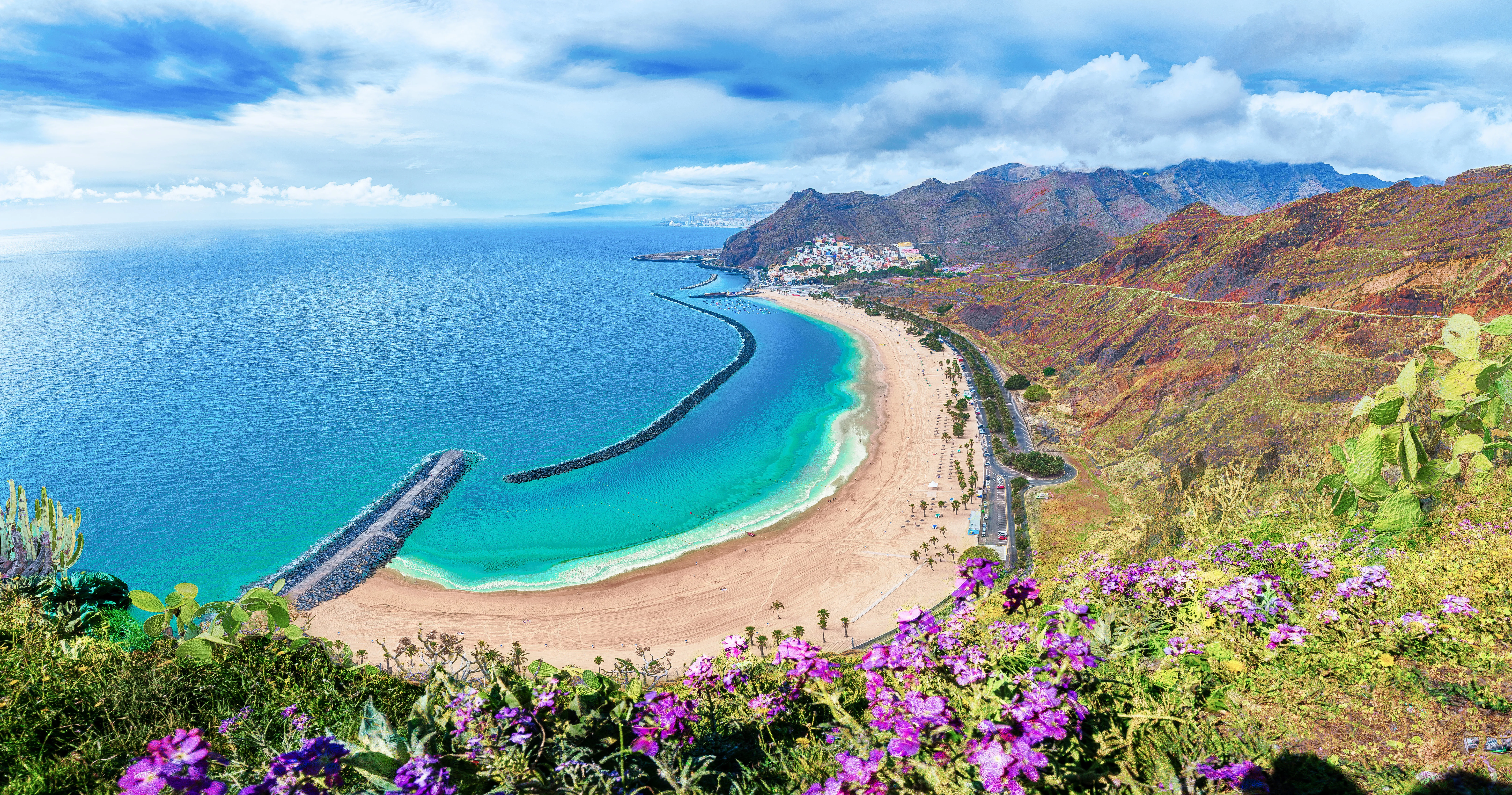
The pope also visited an interim housing centre in Tenerife, the largest of the Canary Islands, to hear testimonies from migrants. The facility has received some 70,000 people since it opened in 2021.

One woman, Bousso Diouf, told Pope Leo that migrants did not want special privileges but “respect, humanity and the opportunity to live with dignity.”

Source link

Tourists slam seaside town’s ‘dangerous’ new beach rules for anyone aged 10-65

A new beach rule for a European hotspot has been introduced for anyone aged between 10 and 65, but one traveller has dubbed it the ‘most unusual beach rule of 2026’

A popular European destination that welcomes thousands of Brits each year is introducing a new beach rule for everyone aged 10 to 65.

A day out at the beach, be it in the UK during the summer months or in Europe, is often accompanied by an umbrella to help provide shade from the balmy sun. However, holidaymakers of a certain age have been banned from using a parasol on a beach in Sardinia, Italy.

Under the new rule introduced earlier this month, Punta Molentis Beach, near the popular resort town of Villasimius in Sardinia, only allows families with children under 10 years old or people over 65 to put up an umbrella. It comes as the Italian beach limits the number of visitors to 150 at a time and puts in strict restrictions following wildfires in July last year.

In addition, visitors arriving at Punta Molentis Beach on foot will need to pay a fee of €10 (£8.60), while those arriving by boat will pay €5 (£4.31). Meanwhile, only 70 cars will be able to access the beach per day until 31 October, and reservations will be compulsory to visit, the Villasimius council website reported.

The town council also said in a message: “It’s therefore necessary to limit human impact and ensure protection of this heritage for future generations.”

The rules are in place throughout the summer season and aim to protect the beloved beach following last summer’s wildfires. Holidaymakers were forced to flee the wildfires by boat after they erupted in late July 2025, with around 100 hectares of Punta Molentis said to have been destroyed by the blaze, including cars in the beach car park.

However, not everyone is happy with the new rules. One person commented on X, formerly Twitter: “Banning shade in the Mediterranean summer heat sounds incredibly dangerous.”

A second said: “Guess I’m just gonna roast under the sun then, sounds like a fun time for my skin.” While a third added: “This might be the most unusual beach rule of 2026.”

One more wrote: “Banning basic sun protection for specific age groups under the guise of ‘saving space’ is a massive skin cancer risk waiting to happen.”

However, the council noted on its website that: “The ecosystem of Punta Molentis is one of the most valuable in our territory but also one of the most fragile.”

Meanwhile, in the Italian hotspot of Sorrento, people are banned from wearing swimwear away from beaches and pools. Anyone caught out could face fines of up to €500 (around 431), while Portofino, Positano and Capri have also enforced similar rules.

The rule is to avoid tourists walking around town or going to lunch in swimsuits or bikinis. But it doesn’t just apply to swimwear, as those caught walking around topless could also face a fine.

Do you have a travel story to share? Email webtravel@reachplc.com

Source link

Ukraine reclaims territory as it doubles attacks on Russian logistics | News

Ukraine said it reclaimed more of its territory than it lost during May, reversing a Russian trend of monthly net gains.

“The ratio of liberated and lost territories is almost 100 square kilometres (40 square miles) in our favour,” wrote Ukrainian commander-in-chief Oleksandr Syrskii on his Telegram messaging channel.

Recommended Stories

list of 4 itemsend of list

Ukrainian defence news outlet Militarnyi estimated net gains slightly higher, at 120 sq km (46 sq miles), citing sources within the military. Militarnyi said Russia seized 130 sq km (50 sq miles) and lost 250 sq km (100 sq miles) during the month.

The Institute for the Study of War, a Washington-based think tank using open source geolocated information, assessed Ukrainian gains higher still, saying Russia had seized or infiltrated 40 sq km (15 sq miles) in May but lost control of about 280 sq km (108 sq miles).

INTERACTIVE-WHO CONTROLS WHAT IN UKRAINE-1780491991
(Al Jazeera)

The ISW believed Ukraine actually reversed Russian gains in April, when it estimated Moscow’s gains at 28 sq km (11 sq miles) of Ukrainian land and lost 116 sq km (45 sq miles).

The ISW’s assessments suggest Ukrainian gains are growing.

Syrskii said Ukraine reclaimed 600 sq km (230 sq miles) during the first five months of 2026.

However, Russia was successful on one part of the front

Ukrainian military observer Kostyantyn Mashovets reported on June 10 that Russian forces had advanced into eastern Konstiantynivka, the southernmost of a “fortress belt” of four cities in the eastern region of Donetsk. Russian forces first infiltrated parts of the city last October, and now hold about 13 percent of it, said the ISW.

INTERACTIVE-WHO CONTROLS WHAT IN EASTERN UKRAINE copy-1780491964
(Al Jazeera)

Russian President Vladimir Putin has prioritised the capture of the remaining one-fifth of Donetsk he does not possess, but his set deadlines to achieve this have been missed several times.

Putin may be putting out feelers for potential ceasefire talks. Although on June 5 he rejected a call from Zelenskyy for direct talks, Zelenskyy said he had met with Russian oligarch Roman Abramovich who acted as Putin’s intermediary.

Mid-range attacks devastate Russian logistics

Ukraine says its battlefield achievements are thanks to a strategy of disrupting Russian supply lines by striking fuel and ammunition in warehouses and in transit.

“The logistical lockdown is working,” said Ukrainian Defence Minister Mykhailo Fedorov. “The number of hits on enemy targets at a distance of over 50km (30 miles) from the (frontline) has doubled,” he said, comparing May to April.

Syrskii put the May total at almost 2,000 strikes.

The effects of Ukraine’s strategy have begun to build up.

Weeks of attacks in the southern regions of Kherson and Zaporizhia reduced Russian military traffic by more than 70 percent along the M-14 motorway, the main east-west route, said Robert Brovdi, commander of Ukraine’s Unmanned Systems Forces.

INTERACTIVE-WHO CONTROLS WHAT IN SOUTHERN UKRAINE-1781084299
(Al Jazeera)

On June 7, regional authorities prohibited traffic along the M-14 altogether, Brovdi said.

That forced Russian planners to route more supplies along two highways that reach Kherson and Zaporizhia, via Crimea – the E105 and E97.

The following day, Ukraine struck a bridge that shoulders the E105 over the Chonhar Strait, leaving only the E97 passable. On June 9, as about 50 Russian fuel and ammunition trucks were routed to the E97, Ukrainian forces ambushed and destroyed some of them at Armyansk, commander Dmitry Filatov told Suspilne Radio.

“This operation would not have been possible if other units had not struck at Mariupol and the road to Berdyansk,” Filatov said, referring to the mainland routes. “This is what led to the units stationed in the Hulyaipil direction starting to be supplied, not via the Mariupol highways, but via Crimea.”

Civilians in Crimea have faced severe fuel shortages as a result of Ukrainian strikes, and these became dramatically worse in the past week.

On June 7, Sevastopol occupation governor Mikhail Razvozhaev rationed fuel to 20 litres per car per day. He later changed that to 20 litres per week.

Shortages were reportedly forcing troop evacuations from some outlying positions.

The Ukrainian underground group Atesh, which operates in Crimea, said Russian units were abandoning their positions on the Kinburn Spit because they were running out of food and fuel.

“We will create conditions under which it will be extremely difficult for military personnel and defence industry workers to remain in Crimea, in the temporarily occupied territories, or to use the routes leading to them,” Brovdi told Reuters.

Although Russia’s air force continues to command the skies over eastern Ukraine and to drop large ordnance there, Ukraine’s own figures suggest its drone superiority is the more effective tool.

Ukrainian short-and medium-range drones hit 180,000 targets in May, said Syrskii, 12.7 percent more than in April.

Ukrainian defenders are also reportedly becoming more adept at shooting down Russian Shahed drones with their own interceptor drones. Although Russia launched 25 percent more Shaheds in May compared to April, shoot-downs increased by 50 percent to about 4,000, said Fedorov,

Fedorov expected a step-change in Shahed elimination once a new generation of interceptor goes into full production which “automates 95 percent of the entire interception process”.

Beyond these mid-range strikes, Ukraine has also continued a successful long-range strike campaign that has devastated Russian refineries, oil depots and offloading terminals, reducing Russian oil production and export revenue.

Russian recruitment is low

Aware of the Ukrainian drone threat, Russia has created unmanned systems units of its own but appears to be having trouble manning them.

Since the beginning of the year, 14,500 people have signed contracts to serve in these units, about 21 percent of the annual recruitment target, said Syrskii. Overall, Ukraine has killed or wounded 12,500 more troops than Russia has been able to recruit this year, he said.

That is both because casualty figures have been rising since last autumn there – Ukraine estimated 31,500 Russian casualties in May – and because Moscow’s recruitment has been falling, despite increased bonuses to sign-up.

Russian opposition source Vazhnye Istorii said 71,200 people had been paid enlistment bonuses in the first quarter of 2026 according to budget data, compared to almost 90,000 in the first quarter of 2025.

It estimated that recruitment in 2025 was already 10 percent lower than in 2024.

Source link