europe

PSG beat Arsenal to win back-to-back Champions League titles after shootout | Football News

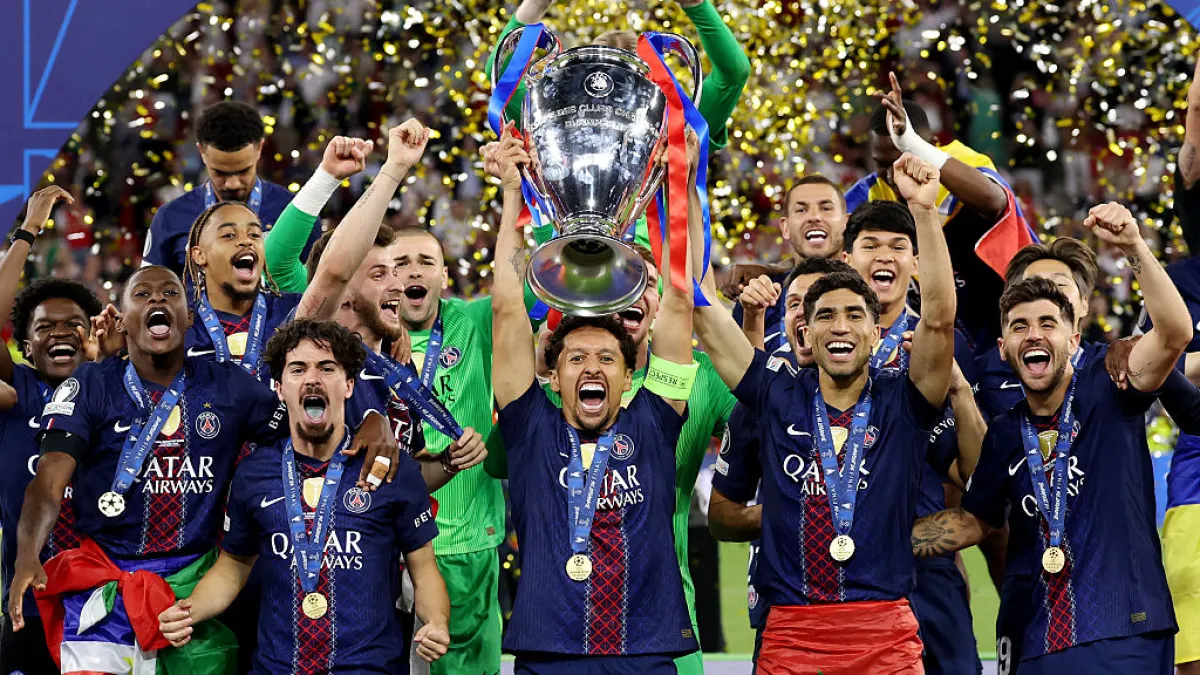
Paris Saint-Germain held their nerve in a cagey Champions League ⁠final to retain the title by beating ⁠Arsenal 4-3 on penalties as Saturday’s nail-biting showdown ended 1-1 after extra time, cementing the French side’s status among Europe’s modern greats.

Arsenal defender Gabriel blasted his spot kick over Matvey Safonov’s crossbar at the Puskas Arena in Budapest, his miss confirming PSG as the first club to retain the trophy since Real Madrid completed their ⁠three-year reign from 2016 to 2018.

Recommended Stories

list of 4 itemsend of list

Long dismissed as glamorous underachievers despite vast resources, the Ligue 1 champions have now forged a dynasty under Luis Enrique, marrying attacking brilliance with resilience to establish themselves as the dominant force in European football.

“It’s stronger than last year because we knew before the match just how difficult it would be to play against Arsenal,” said Enrique, whose side had ⁠thrashed Inter Milan 5-0 a year ago to claim Europe’s elite trophy for the first time.

“As a club and a city, it’s incredible to win, and I think we deserved it over the course of the season. The final was a real battle,” added the Spanish coach.

The outcome left Arsenal midfielder Declan Rice devastated but proud as his side finished their European campaign without losing a match, aside from the shootout defeat in the final.

“It’s gutting. It’s devastating to lose a Champions League final on penalties,” he said. “But we try to take a lot of perspective from how far we’ve come as a group.

“An incredible season. ‌Given it absolutely everything up until this point. We took the game to penalties. It’s a lottery.”

Eleven days after celebrating their first Premier League title in 22 years, Arsenal looked set for a maiden triumph on Europe’s biggest stage after Kai Havertz’s sixth-minute opener and a first hour spent smothering PSG’s vaunted attack.

However, the final in the Hungarian capital became chaotic, once PSG’s Ousmane Dembele equalised with a penalty in the 65th minute, the pace turning frantic before exhaustion took the match to a shootout.

Under Enrique, PSG have won the six shootouts they have contested, with the 56-year-old winning 12 of the 13 one-off club finals as coach.

After brushing aside Premier League opposition on their way to the final by eliminating Chelsea and Liverpool, PSG were facing a much sterner test against an Arsenal team playing their second Champions League final after losing to Barcelona in 2006.

Mikel Arteta’s side took the ⁠lead when Marquinhos’ clearance bounced off Arsenal’s Leandro Trossard into the path of Havertz, who raced into the box and fired into the roof of ⁠the net.

He is the fourth player to score in two different European Cup or Champions League finals with two different clubs.

It was the nightmare scenario for PSG – trailing so early against the best defence in the competition.

Arsenal lived up to their reputation as the best team without the ball and looked perfectly content with the script, doubling up on Khvicha Kvaratskhelia and suffocating the usual danger posed by the Georgian magician on the left flank.

PSG’s Fabian Ruiz was ⁠unable to impose his usual rhythm in midfield and, despite monopolising possession for long spells, the French side struggled to carve out clear-cut chances.

By half-time, PSG had attacked 32 times, Arsenal three.

Arsenal, however, were flirting with the boundaries with their challenges and Cristhian Mosquera brought down Kvaratskhelia in ⁠the area, with Dembele converting the penalty to equalise with his eighth goal in the competition.

The momentum had shifted.

Jurrien ⁠Timber and Viktor Gyokeres replaced Mosquera and Martin Odegaard. Arsenal had a more attacking mindset but were exposed to PSG’s counter attacks and at the end of one of them, Kvaratskhelia sped into the box, only for his left-footed effort to crash onto the outside of David Raya’s post.

After controlling the tempo in the first half, Arsenal played into PSG’s hands as the pace increased significantly, giving too much space to Kvaratskhelia or Bradley Barcola, who replaced the Georgian winger with ‌seven minutes remaining.

In the 89th minute, PSG came close to giving the final an abrupt end as Vitinha’s shot grazed the top of the net. Barcola also shot over the bar after a counter attack, with what would have been the last kick of the game.

With both teams having run out of steam, extra time was a cautious affair and when referee Daniel Siebert blew his ‌whistle, ‌Arsenal had only managed one shot on target.

Arsenal’s Eberechi Eze missed his penalty before Raya saved Nuno Mendes’ attempt. Gabriel had to score to keep the Gunners’ hopes alive but, facing PSG’s end, he fired over.

The French side were left to celebrate being European champions once again, with extra-time substitute Lucas Beraldo’s goal in the shootout proving to be the winner.

Source link

Luka Doncic invests in purchase of Italian basketball team with eye on NBA Europe

Luka Doncic could be involved in two championship bids this upcoming season.

The Lakers superstar and former Dallas Mavericks general manager Donnie Nelson are leading an investor group that acquired a professional basketball team in Italy, it was announced Friday, with hopes that the franchise could become part of the NBA’s new European venture.

The group plans to move Vanoli Cremona, a team that plays in a northern Italian city about 60 miles southeast of Milan, to Rome, and submitted a bid for the club to join NBA Europe, making Doncic the first player to state his ambition to become part of the NBA’s expansion across the pond.

“I have dreamed about owning a team in Europe for a long time, to finally have this happen is amazing,” Doncic said in a statement. “Vanoli has a great history, and we are ready to take it to the next level in Rome. We have an amazing group of partners, and I really believe we can do something special for basketball in Italy and Europe.”

NBA commissioner Adam Silver said this year that the NBA is working with FIBA, the world governing body for basketball, to begin a stand-alone league in Europe. The league could begin as soon as October 2027 with up to 16 teams hosted in major cities in England, France, Spain, Italy, Germany, Greece and Turkey.

Rome and Milan are the top Italian targets to host NBA Europe teams. Rome, the Italian capital, has not had a Serie A team since 2020, when Virtus Roma ceased operations because of financial difficulties. Vanoli will begin playing in Rome for the 2026-27 season.

“Rome deserves world-class basketball, and we are excited to be bringing it back,” Nelson said in a statement. “Vanoli Cremona has a proud history, and we are committed to honoring that legacy as we build toward an exciting future in Rome. This city has been without top-flight basketball for too long. That changes now. We are bringing the resources, the expertise, and the passion to make this club a source of pride for Rome and for all Italy.”

Nelson, who is the lead investor and managing partner, was the general manager when the Mavericks traded for Doncic on draft night in 2018 and was the architect of Dallas’ 2011 NBA championship team led by German star Dirk Nowitzki. The investor group also includes Valerio Bianchini, a celebrated coach in the Italian league, and Rimantas Kaukėnas, a 17-year pro across European leagues.

The 27-year-old Doncic, who was born in Slovenia and started his professional career with Real Madrid in Spain, is part of a recent wave of international stars taking over the NBA. The last eight most valuable players have been born outside of the United States. Doncic finished fourth in MVP voting this year behind two-time winner Shai Gilgeous-Alexander, who is from Canada, three-time MVP Nikola Jokic, who is from Serbia, and Victor Wembanyama, a 22-year-old Frenchman expected to dominate the league for years.

The NBA played two regular-season games in Europe this season, with the Memphis Grizzlies and Orlando Magic facing off in Berlin and London. Next season, Wembanyama and the San Antonio Spurs will play in his home country against the New Orleans Pelicans and in Manchester, England.

Source link

Romania to expel Russian consul after residential drone strike | Russia-Ukraine war

NewsFeed

Romanian President Nicusor Dan says that the Russian consul in the southeastern city of Constanta will be expelled and the consulate shut down after a drone intended for Ukraine crashed into an apartment complex in the border town of Galati.

Source link

Is Europe finally waking up to China?

Tensions between China and the EU have intensified in recent months, prompting the European Commission to convene most of its commissioners for a strategic rethink during an “orientation debate” on Friday.


ADVERTISEMENT


ADVERTISEMENT

“China is a critical partner, and engagement and dialogue will continue,” the commission said in a readout following the debate. “At the same time the current state of the trade and investment relationship is not sustainable.”

Calling the relationship “not sustainable” may understate the depth of the rupture.

Relations have steadily deteriorated since European Commission President Ursula von der Leyen branded Beijing a “systemic rival” in a landmark 2023 speech. But tensions surged to a new level once EU policymakers finally settled their differences over the EU-US trade deal that had consumed Brussels for months, freeing the bloc to sharpen its focus on China.

Last year, according to the commission, the bloc registered a record-high €359.9 billion trade deficit with Beijing, fuelling growing calls in Brussels to better protect the EU market from cheap Chinese imports that threaten entire sectors — metals, chemicals and the car industry among them.

“We are seeing a panic attack in the last few weeks on China,” an EU official told Euronews, speaking on condition of anonymity to speak candidly. The official added that the China issue had been “overlooked for too long.”

A total of 200,000 European jobs were lost in EU industry — particularly in the energy-intensive and automotive sectors — since 2024, with a further 600,000 job losses projected this decade in carmaking alone.

On Friday, the commission readout specified that its “overarching approach remains de-risking, not decoupling,” signalling that the bloc is still pursuing targeted efforts to reduce its dependence on China rather than sever economic ties altogether. Yet the risk of a full-scale trade war has never felt so real.

Here are five key points on how the situation has escalated to this point — and where it may be headed next :

1. Fines and regulatory pressure

During the previous legislative term, the EU passed legislation that drew Beijing’s anger — notably measures to screen foreign direct investment. And it has stepped up its fight against so-called dumping, whereby public subsidies are used to undercut competitors through exports sold below market prices in China.

The European Commission has grown increasingly assertive in countering China’s subsidy-driven approach, including by imposing duties on imports of battery electric vehicles. Several product-specific investigations are also ongoing.

Earlier this week, the Commission fined Chinese e-commerce giant Temu €200 million for selling unsafe products and opened a full-scale investigation into JD.com’s acquisition of e-commerce retailer MediaMarkt.

EU lawmakers and governments are also discussing the Industrial Accelerator Act, a legislative proposal that would impose strict conditions on investments in batteries, electric vehicles, solar panels and critical raw materials from countries controlling 40% of the global market share in a given sector.

A separate proposal — a revamped Cybersecurity Act — could push out Chinese equipment suppliers such as Huawei and ZTE from critical infrastructure.

2. A more systemic approach

To counter Chinese overcapacities, the EU agreed in April to double tariffs on steel imports that exceed EU quotas. The measure is a so-called “safeguard” — a tool backed by some of the EU’s largest economies, including France, Italy, Spain, the Netherlands and Lithuania, which called for it to be extended to sectors beyond metals.

In a non-paper, those countries argued that safeguards were more “agile” than other EU instruments targeting cheap export products. The paper also calls for economic security to be factored into assessments of the EU’s interests when deciding on trade defence measures.

The European industry is also ramping up pressure to crack down on Chinese cheap imports calling on the Commission to use trade defence measures “more flexibly, faster, and preventively.”

A major wake-up call for EU policymakers has been the recent case of Nexperia, a Dutch-based chipmaker acquired by Chinese giant Wingtech, which was caught in the crossfire of US-China trade tensions, causing significant disruption in the automotive sector.

The Commission is now set to require sectors such as the car industry to diversify chip suppliers in certain cases, taking supply-chain risks into account in procurement decisions.

Despite these various initiatives, EU policymakers have grown wary that the current rules are too slow-moving for a fast-moving adversary. After duties were imposed on electric vehicle batteries, China’s focus simply shifted to hybrid vehicles.

Brussels is now moving towards a more systemic approach, treating trade defence as a toolbox to rebalance relations with China. One potential addition is a so-called overcapacity instrument to cap imports in specific sectors.

3. China’s threats of retaliation

In recent weeks, China has repeatedly threatened retaliation if the EU presses ahead with closing its market to Chinese goods.

Both the “Made in Europe” legislation and the Cybersecurity Act have drawn Beijing’s ire, prompting intensified lobbying of Brussels and EU member states, with warnings that implementation will trigger a response.

The Europeans are walking a tightrope, acutely aware that their decisions could spark a trade war. After the EU imposed tariffs on Chinese electric vehicles in 2024, Beijing imposed tariffs on EU pork, brandy and dairy products.

“International trade is a two-way street. There’s no forced trade. The China-EU trade relations are win-win in nature. China does not aim for trade surplus,” Chinese Foreign Ministry spokesperson Mao Ning said at a press briefing on Thursday.

“The EU needs to put trade ties with China in perspective and honour its commitment to free trade. China will closely follow the EU’s moves and take all measures necessary to safeguard legitimate rights and interests,” Ning added.

Some argue it is already too late for the Europeans, who depend on China for key components of their supply chains — components Beijing can weaponize at will.

In 2025, China blocked exports of rare earths, which are vital for EU green technology and defence, as well as chips essential to the European car industry. Beijing can also leverage operating licences for EU companies and restrict access to its market at any time.

4. European divisions

Europe is far from united on China.

Germany, despite a troubling trade deficit with Beijing, has been slow to shift away from its cooperative approach, which prioritises securing market access for German companies in China.

Berlin did not endorse last weekend’s non-paper backed by other major EU economies. Instead, German Economy Minister Katherina Reiche repeated this week that Germany’s overriding priority is to avoid jeopardising exports to China.

Yet the economic cost of dependence on Beijing might be forcing Berlin to reconsider its stance. The German government is reportedly weighing a tougher line that would mark a significant shift in its China policy.

For years, the German industry had a relationship with the Chinese market that critics described as toxic — one that blocked any meaningful attempt to rebalance the trade deficit out of fear of losing commercial access to the vast Asian market.

Spain has emerged as the other major EU country reluctant to act against China. With relatively cheap energy costs, Spain has become attractive to foreign investors, of which Beijing accounts for a growing share.

Its position caused embarrassment for Madrid this week, after it initially appeared to support the France-led non-paper before retreating and claiming it had merely participated in discussions.

“There has been no specific political support for any ‘non-paper’,” Spanish trade minister Carlos Cuerpo said, adding that the EU should “engage” with Chinese authorities through “dialogue.”

5. What happens now?

Brussels’ reassessment of its China stance has been long in the making, rooted in decades of deepening economic dependence. But the latest acceleration was also prompted by a shift in US posture, most visibly the recent visit to Beijing by President Donald Trump.

The Commission’s orientation debate on Friday was just a first step in what could become a broader repositioning. Where that leads — given internal divisions and the threat of retaliation — remains deeply uncertain.

The conclusions of that exercise are expected to feed into a discussion on economic security at the next European Council meeting on 18-19 June. China has appeared on EU leaders’ agenda several times in recent years, only to be pushed aside by more pressing crises.

While Brussels considers adding new instruments to its policy toolbox, political will remains the key determining factor. Nowhere is that gap more stark than in the EU’s handling of the anti-coercion instrument, also known as the “trade bazooka,” which was designed to push back against economic pressure and unfair trade restrictions.

“The anti-coercive instrument was never used, even though we have been coerced quite a lot,” the EU official said. “We need tools that we are actually willing to use.”

Source link

The stunning Europe beach resorts you can fly to for £15.99 or LESS

KISS goodbye to overpriced holidays abroad this summer as we’ve found six gorgeous European beach resorts where you can fly out from UK airports for £15.99 or less.

Our list includes an undercover island paradise with white sands that look like the Caribbean and a cheaper Marbella alternative that offers the same high-end glamour.

You really don’t need to spend a fortune on a coastal city break Credit: Getty
These European cities have pretty beaches and plenty to do, plus they’re all affordable to visit Credit: Getty

You really don’t need to spend a fortune on a coastal city break either, so grab your sunglasses and pack your bags.

These aren’t your typical, overcrowded tourist traps, either – plus, we’ve hand-picked cheap hotels for each destination, too.

Malaga, Spain

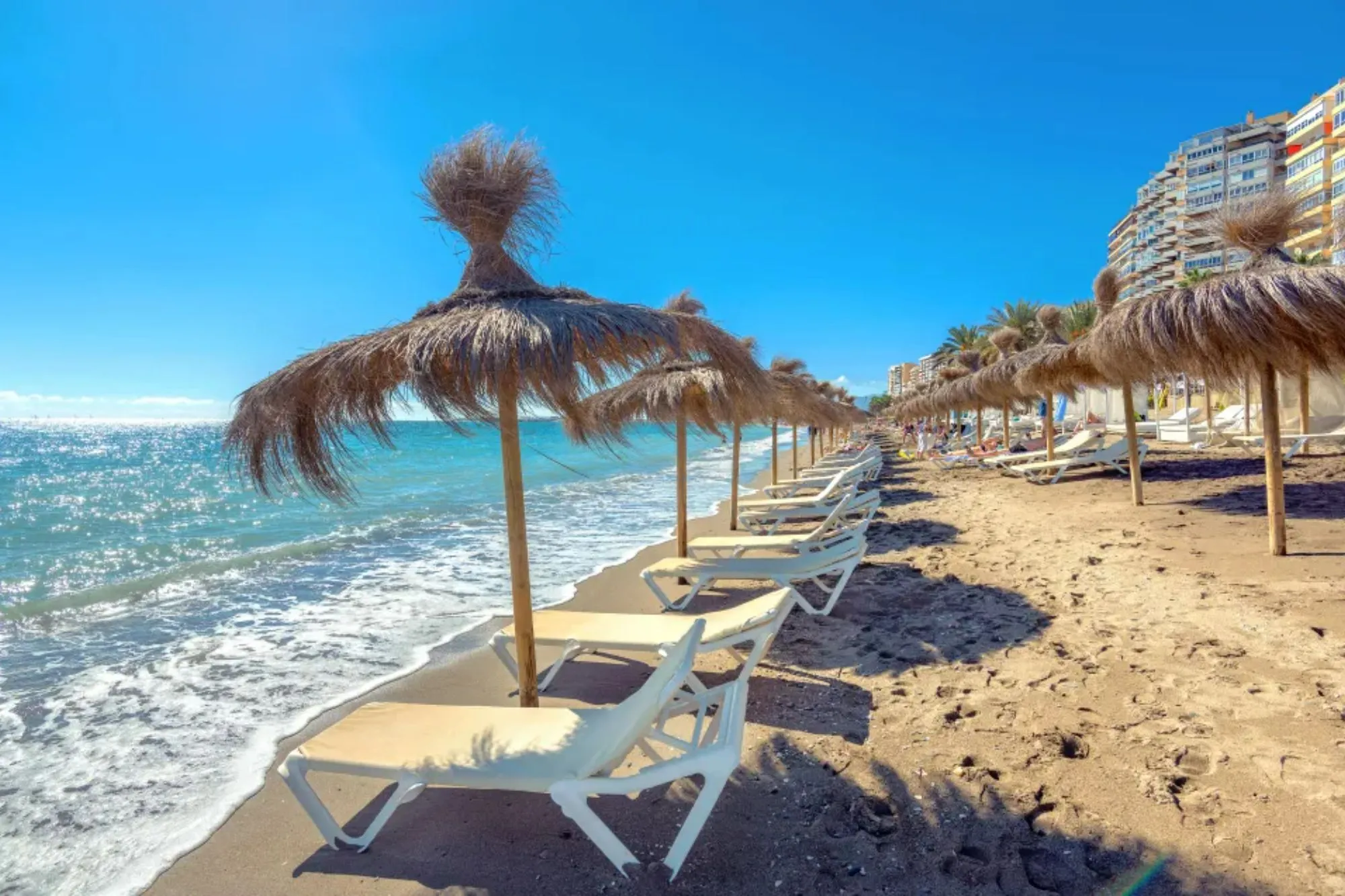
Malaga has golden beaches and all the glitz of Marbella – for a fraction of the cost Credit: Alamy

In the heart of the sunny Costa del Sol, Malaga has all the high-end glamour, palm tree-lined boulevards, and buzzy cocktail bars of Marbella -but without the eye-watering price tags.

This sun-drenched hotspot blends a trendy city break with a classic fly-and-flop beach holiday.

History buffs can wander through ancient Moorish fortresses, while art lovers can browse the world-class Picasso Museum.

The bustling seafront promenade is lined with traditional beachside bars where you can feast on seafood such as espetos – fresh sardines barbecued on skewers. Pair that with sipping on some frozen cocktails on La Malagueta beach, and you’ve got the traditional Malaga experience nailed.

Ryanair offers £14.99 flights one-way from UK airports like Liverpool and Bournemouth.

Booking.com offers a 5-night stay for two at the Livensa Living Studios apartments for £242, working out to just £24.20pp per night.

Faro, Portugal

Fly to Faro and soak up the views of the Ria Formosa Natural Park Credit: Getty

While some touch down in Faro only to sprint for the resorts of the central Algarve, staying put in Faro is well worth it.

This historic city is the gateway to the spectacular Ria Formosa Natural Park – a sprawling network of islands that feels a million miles away from the usual holiday chaos.

Hop on a ferry for a few euros to Ilha Deserta (Deserted Island), a stretch of pristine, white sand and turquoise water so bright that you could easily trick your friends into thinking you’re in the Caribbean.

After a day of sun-soaking on quiet beaches, wander back into Faro‘s beautifully-preserved Old Town.

Its cobblestone streets are lined with authentic pastelarias and traditional seafood taverns, where you can try locally harvested oysters washed down with a bottle of local Portuguese wine.

Ryanair offers £14.99 flights each way from London Luton and East Midlands airports.

Booking.com offers a 3-night stay for two at the Hotel Made Inn in Faro for £310.

Barcelona, Spain

Visit Park Güell in Barcelona, just one of Gaudí’s 12 attractions spread across the city Credit: Getty

Barcelona is having its moment this year.

The city was crowned the World Capital of Architecture for 2026, and the Sagrada Familia officially became the tallest church in the world back in February.

There are plenty of famous spots to see here, and even if you’ve already visited, Barcelona is a city many return to time and again.

With 12 attractions to visit designed by famous architect Antoni Gaudí, nine golden sand beaches and thousands of bars and restaurants to try out, this city can never truly be ‘ticked off’ the travel list.

Stroll the famous shopping street La Rambla all the way along to the Port Vell to visit a harbour packed with market stalls selling hand-crafted goods, overlooked by a giant Ferris wheel.

Or visit the famous market La Boqueria to have a taste of anything from authentic Jamón Iberico to chocolate treats shaped like people, dinosaurs, flowers – basically anything you can imagine.

Ryanair offers £14.99 flights each way from London Luton, with £16.99 flights available from Birmingham, Bristol and East Midlands airports.

Expedia offers stays at the easyHotel Barcelona La Sagrera from £132 per night for a double room.

Genoa, Italy

Visit the nearby coastal town of Boccadasse on a trip to Genoa in Italy Credit: Getty

If you want the romance of the Italian Riviera without the prices of nearby Portofino, Genoa offers those same stunning Ligurian Sea views for a much lower price.

This coastal city is home to the Caruggi: Europe’s largest network of medieval alleyways.

Here you can discover hidden pastel palaces and buy freshly-baked focaccia from local bakeries for pocket change.

For a seaside day out, hop on a quick 15-minute train ride down the coast to Boccadasse, a historic fisherman’s town.

Here, a cluster of pastel-pink, mint, and terracotta-coloured houses frames a pebbled cove where the locals like to sunbathe.

Genoa provides an authentic slice of La Dolce Vita that feels untouched by mass tourism.

Ryanair offers £14.99 flights each way from Manchester and London Stansted airport.

Booking.com offer stays at the Hotel Britannia in Genoa from £68 per night.

Alicante, Spain

Santa Barbara Castle in Alicante looks out over the Playa del Postiguet Credit: Getty

Unlike the sprawling concrete high-rises found further down the coast, Alicante retains authentic Spanish charm.

The must-visit beach is Playa del Postiguet, a sweeping crescent of powder-soft sand and calm waters that sit at the foot of Santa Barbara Castle.

Afternoons are best spent strolling the Explanada de España – a beautiful promenade paved with wavy marble tiles and lined with towering palm trees.

As the sun sets, head into the colourful, winding streets of El Barrio (the old town).

Here you can sample authentic tapas and paella at local prices, before hitting the city’s glamorous marina for a sundowner alongside the yachts.

Ryanair offers £15.99 flights each way from airports including Manchester, Bristol and Exeter.

Booking.com offers a 5-night stay for two at the B&B HOTEL Alicante Aeropuerto for £334 total, working out to £33.40pp per night.

Ancona, Italy

Ancona in Italy is often overlooked by Brits, but home to some seriously stunning beaches Credit: Ancona Tourism

Tucked away on Italy’s Adriatic coast, Ancona is a lesser-known gem that completely bypasses the packed tourist trails of the west coast.

This historic port city has a well-kept secret – its unique, elbow-shaped peninsula, which is one of the only places in Italy where you can watch the sun both rise and set directly over the sea.

The city itself is a treasure trove of Roman ruins, grand cathedrals, and lively piazzas, but the magic lies on the shores of the Conero Riviera.

Here, the rolling green hills of a dramatic national park plunge into the turquoise Adriatic Sea, carving out white-pebble beaches like Portonovo and Sirolo.

You can spend the day sun-soaking beneath dramatic limestone cliffs, swim out to hidden sea caves, and then wander back into the city to feast on fresh mussels with local white wine.

This wildly beautiful slice of Italy is a quiet spot that’s still off the radar for most Brits.

Ryanair offers £14.99 flights each way from London Stansted to Ancona.

Lastminute.com offer stays at the Hotel Fortuna from £72 per night.

*Prices correct at the time of publication.

Source link

World Cup 2026: How France created football’s deepest talent pool | World Cup 2026 News

Belgian defender Thomas Meunier caused debate recently after saying that France has the footballing talent to put out three teams capable of winning the World Cup.

Could Les Bleus, who are co-favourites with Spain in this summer’s World Cup, really lift the title with their second- or third-string team? Maybe not, but their talent is certainly Mariana Trench-deep.

Recommended Stories

list of 4 itemsend of list

Consider this: According to transfermarkt.com, a lineup of French players that didn’t make the 26-man cut would rank in value among the top five teams – ahead of Portugal, Brazil, the Netherlands and reigning champions Argentina.

Lucas Chevalier 30 million euros ($35m); Pierre Kalulu 32 million, Jeremy Jacquet 55 million, Leny Yoro 50 million, Adrien Truffert 25 million; Boubacar Kamara 40 million, Eduardo Camavinga 50 million; Dilani Bakwa 28 million, Senny Mayulu 40 million or Khephren Thuram 40 million, Mousa Diaby 28 million; Junior Kroupi 40 million. = 418 million [38 million average]

So, how did Les Bleus get to this point?

It started with frustration after French teams consistently fell short on the biggest stage from the 1930s to the 1970s. The solution, national team manager Georges Boulogne said in the early 1970s, would be for the French Football Federation to create training academies known as Centres de Formation.

“France had not won any trophies, and it was decided they needed to create a new structure,” INF (Institut National du Football) Clairefontaine administrator Franck Bentolila told Al Jazeera.

The government backed the programme, viewing it as promoting French ideals through sports, as well as a recipe for winning trophies.

A total of 16 centres were set up, the first opening in 1974 with the main site in Vichy. It recruited widely, drawing young players from the entire country, plus overseas departments. The centres laid a foundation, preparing players for professional careers and the national team.

The record was initially mixed. In the 1980s, France won the European Championship and Olympic Games titles (both in 1984) and reached two World Cup semifinals, but then failed to qualify for the 1990 and 1994 World Cups.

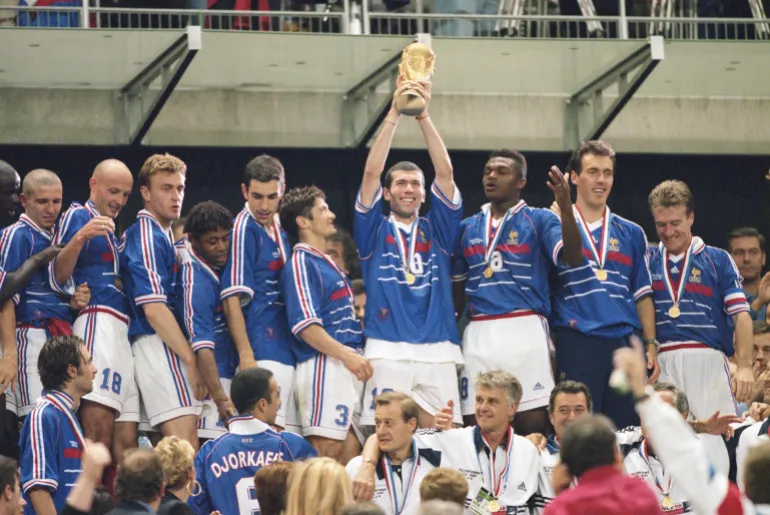
But by 1998, everything fell into place, with the so-called “Black-Blanc-Beur” squad winning the World Cup at home. The multiethnic group represented the changing nature of French society, as well as validating the federation’s development programme. Bentolila said coach Aime Jacquet dedicated the victory to “all the amateur clubs and academies – it’s also your trophy”.

“The [1980s] period with [Michel] Platini, [Alain] Giresse, [Jean] Tigana, had a lot of talent, but we don’t win a World Cup,” Bernard Lama, a goalkeeper who captained the national team in the 1990s, told Al Jazeera.

“The difference with our generation, all the guys were from academies. And we were hungry to win a title. And, also, we had one exceptional talent with Zinedine Zidane.”

France went on to lift the 2018 World Cup and were runners-up in 2006 and 2022.

12 Jul 1998: Joy for France as match winnner Zinedine Zidane lifts the trophy after victory in the World Cup Final against Brazil at the Stade de France in St Denis. Zidane scored twice as France won 3-0. Mandatory Credit: Ben Radford /Allsport
Zinedine Zidane lifts the trophy after France’s victory over Brazil in the 1998 World Cup Final [Ben Radford/Allsport via Getty]

‘We have players who can make a difference’

Lama traces France’s success to the combination of the centres, with the contribution of immigration.

“You have people coming from overseas – Africa, French Guyana, Martinique – they give us two things, music and sports,” Lama said.

“And, now, there is a sub-generation coming from overseas, and they are French. [Ousmane] Dembele, [Desire] Doue, they are French, they are not naturalised, they grew up in France, the majority around Paris.

“And they are hungry, you understand, for a lot of reasons. But, also, it’s not only a question of work; the first thing is they have talent.”

Lama sees a danger in football, more broadly, of players becoming overly drilled and “robotic”, but France has many exceptions who can give them an edge.

“We are lucky to still have these players who are capable of making the difference,” Lama said. “Maybe that is why we are so good, we have players like [Kylian] Mbappe, Dembele, Doue. They hate to lose and, physically and technically, they can make the difference, individually.

“And that is the force of the national team, and also PSG, our capacity to score. Today, we have maybe four or five guys – [Maghnes] Akliouche, [Rayan] Cherki, a different kind of talent. When you have that explosion of talent, it gives the coach more solutions, offensive solutions.”

Most national team members, no matter their background, have gone through the academies, but their development starts long before that.

“It’s cultural,” Bentolila said. “In America, when you are young, you have a basketball in your hands, or a football in your hands. In France, you have a football at your feet when you are a baby – and free access to facilities.”

That part of the formula sounds similar to many countries. Is there a secret to French development, or are they just doing it better than most?

“The secrets,” said longtime coach and scout Stephane Nado, “are a combination of hard work, structure and organisation.”

Nado said: “The player is the centre, the heart, of the project. The player will receive education. And we will not take them away from their family. It is important for them to keep their roots, important psychologically. This is why France is one of the best in the world at developing players for export.”

Training at Clairefontaine blends street game skills with organisation, including “lots of 1 vs 1, 2 vs 2”, Bentolila said. “You have to fight. You’re good at dribbling and first touch, now you organise possession, 5 vs 2. As soon as you get the ball, you have to have good control. We do that a lot.”

Clairefontaine is now focusing on younger age groups, ceding responsibility for older players to clubs. And development is expanding beyond the centres and established club academies, Bentolila said.

“Paris and Sao Paulo are the best areas in the world for talent,” Bentolila said. “Why? Private academies. It is an amazing situation. Kids, eight- and nine-year-olds, playing every day. Amateur coaches offer not a meal, but a snack at 4 o’clock. Then, they do homework and training sessions. When they are 12 years old, they play like Mbappe.

“In Paris, you have amateur clubs nobody knows, and they can beat [the youth teams of] Barcelona and professional clubs. They are better than PSG, Paris FC. So many players – they play anywhere, any time, eight years old against 10 years old. They are like soldiers, they fight every day, and they are good because they play under pressure.”

In the 1980s, Les Bleus were dubbed “The Brazilians of Europe”. It’s taken a while, but France appears to have lived up to the moniker. And they’ve gone about it their own way.

“Brazilian coaches [used to] tell me, ‘In our country, we are poor, but we can succeed in football or music. So, we start the day with football,’” Bentolila said.

“In France, we go to school, first, and, after, practise football. We do it every day and, like Brazil, we play a lot, and play well.”

Source link

Netherlands’ World Cup 2026 team preview: Players to watch, group, squad | World Cup 2026 News

Previous World Cup appearances: 11
Best performance: Runners-up (1974, 1978, 2010)
First appearance: 1934 (Italy)
Top goal scorer: Johnny Rep (7)
Most appearances: Wesley Sneijder, Robin van Persie (17)
Player to watch: Tijjani Reijnders
FIFA world ranking: 7

The Netherlands have never fulfilled their potential at the World Cup – they lost all three finals they reached (1974, 1978, 2010). The 1988 Euro winning cohort did not even come close to replicating their European success on the global stage.

Recommended Stories

list of 4 itemsend of list

But while previous golden generations repeatedly fell short, this more unheralded side should not be discounted too hastily.

The Dutch were unbeaten across their eight qualifiers, although Poland held them to draws.

With commanding defenders, a midfield of genuine class, and enough attacking options to cause problems for any defence, this Netherlands side have a outside chance of lifting the trophy for the first time.

Reijnders: the midfield heartbeat

Man City’s Tijjani Reijnders has steadily established himself as one of the finest midfielders in Europe over the last few seasons season and arrives at this tournament in fine fettle.

After two outstanding years at AC Milan, where he was named Serie A Best Midfielder of the season, he joined City in 2025 and has adapted well to life under Pep Guardiola, even if he is not always in the starting XI.

While he has grabbed five goals and two assists across 28 Premier League appearances this season, these relatively modest headline numbers do not tell the full story of his influence – especially at the international level.

Reijnders is the Netherlands’s all-action man – he gets forward and links defence and attack, breaks up opponents’ attacks, and is a classy, assured presence on the ball.

Generally, when he plays well, so do the Netherlands.

A solid core

Liverpool legend Virgil van Dijk may not quite be the force he was a few years ago, but he remains a world-class, richly experienced centre back.

He leads a talented defence that also features the likes of Micky van de Ven, Jurrien Timber and Jan Paul van Hecke.

Ahead of them, Ryan Gravenberch, outstanding for Liverpool over the last couple of seasons, shields the defence and is also capable of mounting dangerous forays forward.

His teammate Cody Gakpo offers a significant threat out wide and in front of goal, and has been one of Liverpool’s better performers in a poor season for the 2024/25 Premier League champions.

Injury worries

The Netherlands received a huge blow in April when playmaker Xavi Simons ruptured his anterior cruciate ligament playing for Tottenham. Arguably the most important creative Dutch player, he will be on the sidelines for months and has no chance of making the tournament.

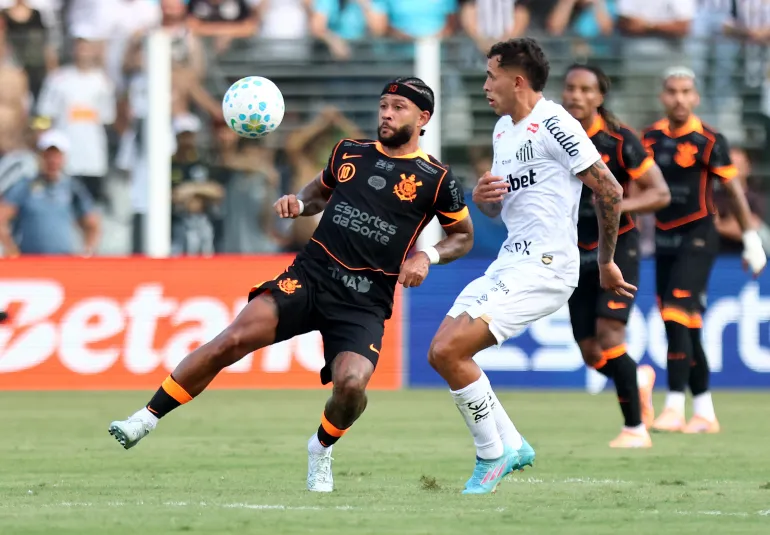
Memphis Depay, now his nation’s all-time leading scorer with 55 goals in 108 caps, usually provides the focal point up front, although his inconsistency has been a source of frustration for clubs and country alike.

He was named in the squad, despite ⁠only two substitute appearances for his Brazilian club Corinthians over the past two months, as he has struggled to recover from a hamstring injury.

“I selected Memphis because of who he still is. I don’t see anyone else in that position who can do it. I ⁠believe he can be an asset, but he does have ⁠to get through the coming period well,” coach Ronald Koeman said.

Arsenal defender Timber is also a concern as a groin injury has kept him on the sidelines since March, and he will certainly need time to get match-sharp.

“We have Ian Maatsen ‌and Lutsharel Geertruida on the standby list for Timber. The situation with him is that he was supposed to train with Arsenal today, to assess for the weekend. ‌They ‌have the Champions League final on Saturday. It remains to be seen whether he will be fit for that match,” Koeman said.

Soccer Football - Brasileiro Championship - Santos v Corinthians - Estadio Urbano Caldeira, Santos, Brazil - March 15, 2026 Corinthians' Memphis Depay in action with Santos' Christian Oliva REUTERS/Thiago Bernardes
Depay, left, in action for Corinthians with Santos’s Christian Oliva [File: Thiago Bernardes/Reuters]

Koeman’s second chance

This is Koeman’s second stint in charge of the national team, having previously managed them from 2018 to 2020.

After the Dutch failed to reach Euro 2016 and the 2018 World Cup, Koeman secured qualification for Euro 2020, but left before the tournament to manage Barcelona.

After struggling in his recent club roles, Koeman returns to take the reins again. He was a popular figure with the players during his last stint and commands respect as a legend of Dutch football, and he will face a tough task to balance his world-class talent with a squad that is patchy in places.

He will be hoping at least to not have to deal with the fractious egos and strong personalities that undermined very strong Dutch sides in the past. This current squad does not outwardly appear to be as combustible as previous iterations.

WARSAW, POLAND - NOVEMBER 14: Frenkie de Jong of Netherlands and Ronald Koeman head coach of Netherlands points at during the FIFA World Cup 2026 qualifier match between Poland and Netherlands at PGE Narodowy on November 14, 2025 in Warsaw, Poland. (Photo by Rafal Oleksiewicz/Getty Images)
Koeman gives instructions to Frenkie de Jong during a qualifier against Poland [File: Rafal Oleksiewicz/Getty Images]

How does their group look?

Group F should offer the Netherlands a relatively comfortable route to the last 32.

The toughest game is likely to be the opener against Japan, themselves a talented side considered to be dark horses, who recently defeated England at Wembley in a friendly.

Sweden had a terrible qualifying campaign but qualified through the playoffs via the Nations League, and nevertheless have plenty of dangerous players, such as Victor Gyokeres and Anthony Elanga.

The final group game against Tunisia should be more straightforward, as the North Africans lack real star quality – although they tend to be obdurate opponents that are hard to break down in major tournaments.

Netherlands’ group stage matches

⚽ June 14: Netherlands vs Japan (Dallas, United States), 4pm ET (20:00 GMT)
⚽ June 20: Netherlands vs Sweden (Houston, United States) 1pm ET (17:00 GMT)
⚽ June 24: Tunisia vs Netherlands (Kansas City, United States), 7pm ET (23:00 GMT)

Al Jazeera’s prediction

Last 16.

While the Dutch boast undoubted talent, it does not elite enough or cohere enough into a team that is bigger than the sum of its parts.

Netherlands World Cup squad

Goalkeepers: Bart Verbruggen (Brighton), Robin Roefs (Sunderland), Mark Flekken (Bayer Leverkusen).

Defenders: Jurrien Timber (Arsenal), Micky van de Ven (Tottenham), Virgil van Dijk (Liverpool), Nathan Ake (Manchester City), Jorrel ‌Hato (Chelsea), Denzel Dumfries (Inter), Jan Paul van Hecke (Brighton).

Midfielders: Ryan Gravenberch (Liverpool), Tijjani Reijnders (Manchester City), Frenkie de Jong (Barcelona), Teun Koopmeiners (Juventus), Marten de Roon (Atalanta), Quinten Timber (Marseille), ‌Guus ‌Til (PSV Eindhoven), Mats Wieffer (Brighton).

Forwards: Brian Brobbey (Sunderland), Memphis Depay (Corinthians), Cody Gakpo (Liverpool), Justin Kluivert (Bournemouth), Noa Lang (Galatasaray), Donyell Malen (Roma), Crysencio Summerville (West Ham), Wout Weghorst (Ajax).

Source link

NATO states slam Russia after drone crashes in Romania | Antonio Guterres News

Romania and its NATO allies have reacted angrily after a Russian drone crashed into an apartment building in eastern Romania, injuring two people.

The foreign ministry in Bucharest on Friday labelled the crash of the drone, part of an overnight attack aimed at Ukraine, a serious violation of international law and called on NATO to accelerate the transfer of anti-drone capabilities. The incident is just the latest incursion along the alliance’s eastern flank, raising concern that the risk of an open confrontation between Russia and NATO states is rising.

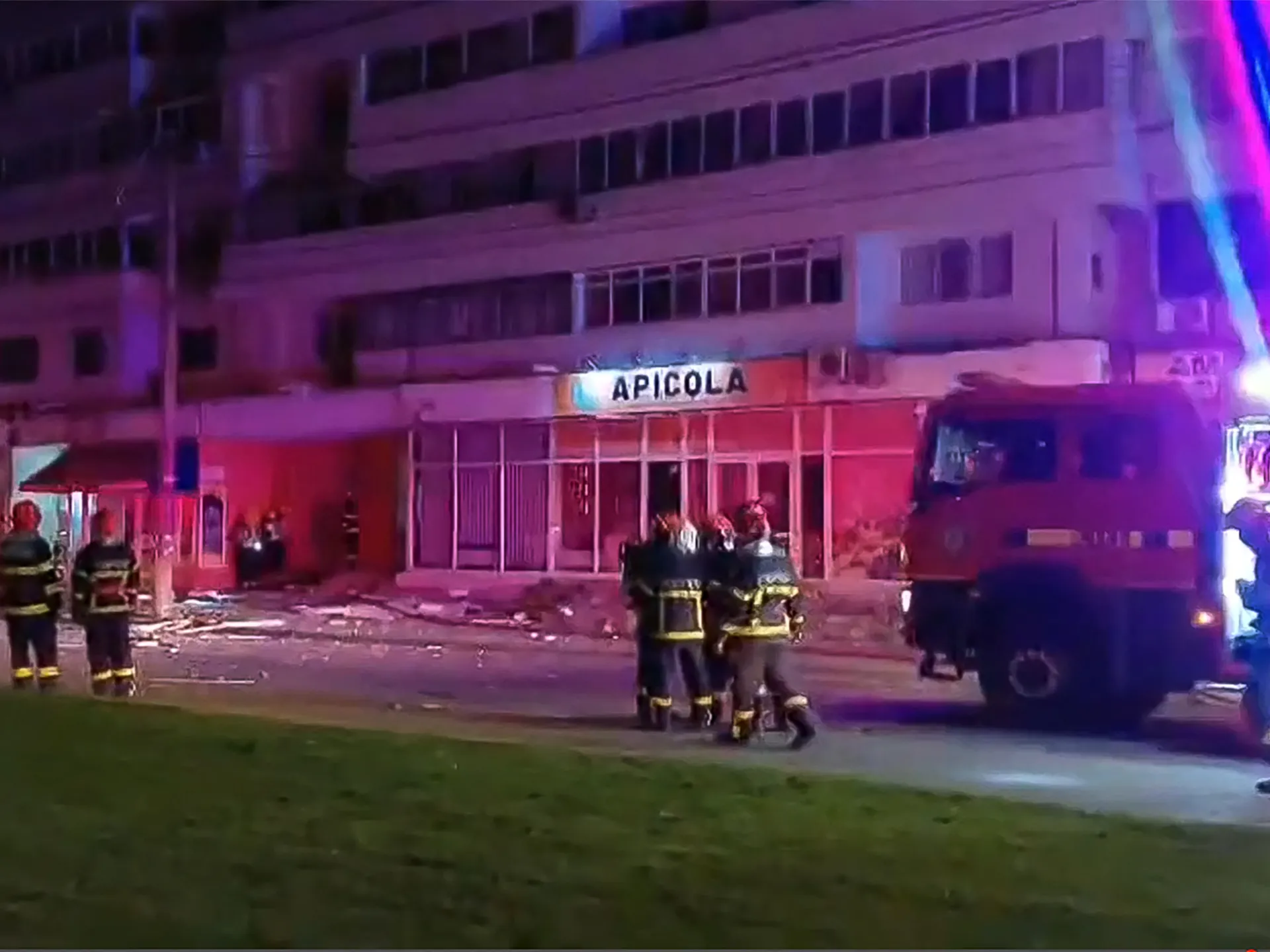
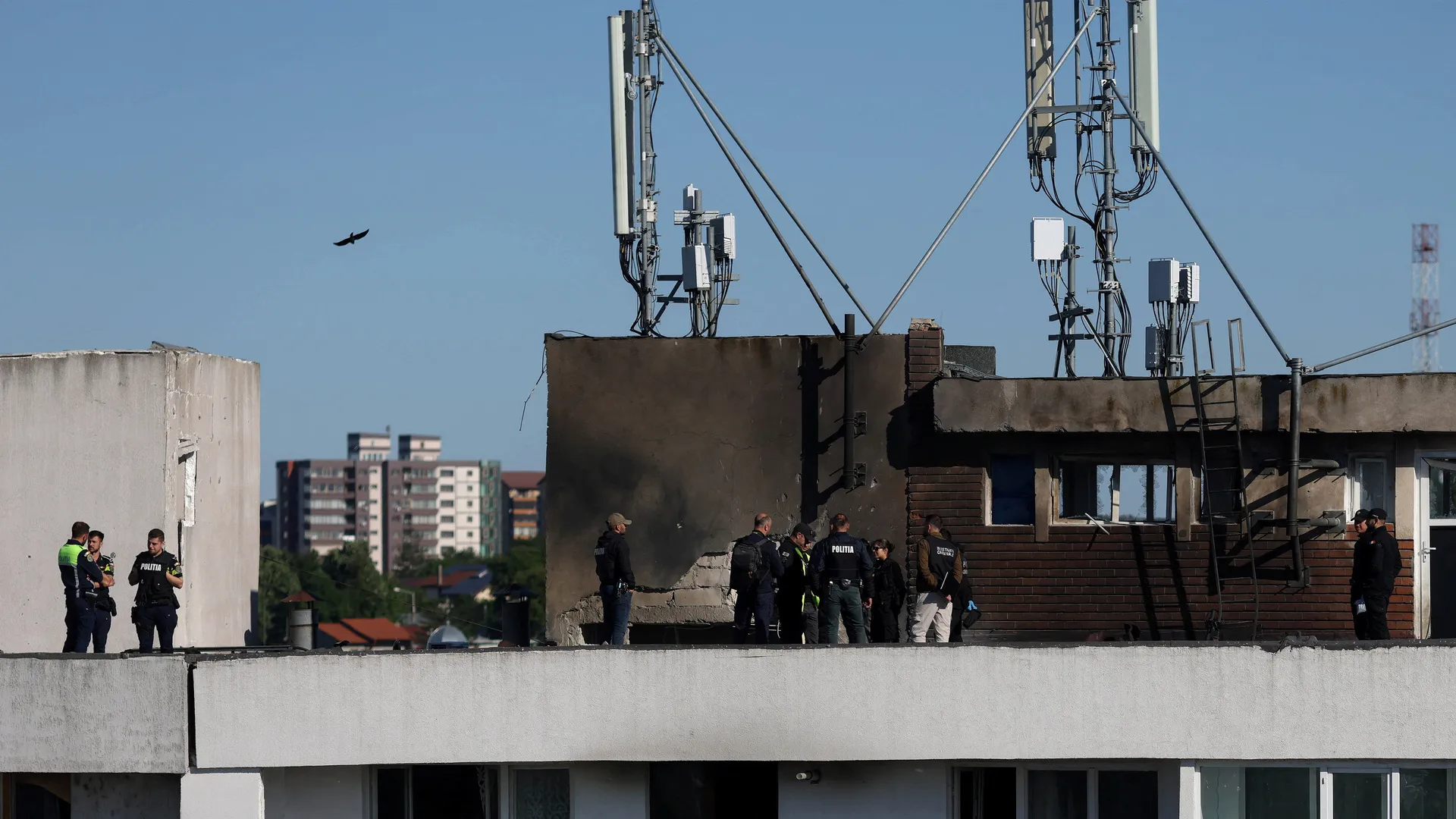
Romania said the overnight drone was tracked by radar in its airspace before crashing onto the roof of a residential building in the city of Galati.

Two F-16 fighter jets and a helicopter were scrambled, as authorities issued emergency alerts to residents. Two people suffered minor injuries and several residents were evacuated after a fire was triggered by the crash.

‘Consequences’

The incident is just the latest of several, as the war in Ukraine has spilled over into neighbouring NATO countries, raising fears of potential escalation.

Estonia, Lithuania and Latvia, as well as Finland have all reported repeated incursions into their airspace in recent months. Drone incursions sparked a government collapse in Latvia earlier this month.

Shortly after the crash, Bucharest called for NATO to speed up the transfer of anti-drone capabilities. Outgoing Prime Minister Ilie Bolojan also said that Romania would, within hours, sign ⁠a contract which ⁠will give it anti-drone defences ‌under the EU’S SAFE programme.

On Friday morning, Romania summoned the Russia ambassador.

“We will officially communicate the consequences that this lack of responsibility on the part of the Russian Federation will have for the diplomatic relations between our countries, as well as the next steps at the European level regarding sanctions packages,” Foreign Minister Oana Toiu wrote on social media.

President Nicusor Dan stated that Romania ⁠will ⁠not accept that the war of aggression ⁠waged by Russia against ⁠Ukraine be transferred to its citizens, and added that he had asked the foreign ministry ⁠to present without delay ⁠a series ⁠of measures regarding the country’s relationship with Russia, “proportionate to ‌this very serious situation”.

NATO allies and others joined the chorus of anger.

French Minister for European Affairs Benjamin Haddad said the incident highlighted the threat Russia poses to European security, noting that French troops are stationed in Romania.

“Regardless of ⁠whether it was on purpose ⁠or the ⁠result ⁠of ineptitude, Russia is still dangerous and ‌we must defend ourselves against ‌it,” ‌Polish ⁠Foreign Minister Radoslaw Sikorski told ⁠the Reuters news agency.

European Commission President Ursula von der Leyen said the incident showed that “Russia’s war of aggression has crossed yet another line”.

A NATO spokesperson also condemned “Russia’s recklessness” on social media.

Ukraine’s Foreign Minister Andrii Sybiha, whose country is pressing the United States to help boost its air defences, pledged “Ukraine stands firmly by Romania” as he branded Russia a threat to the Black Sea region and the wider ‌European continent.

“We are ready ⁠to work closely together ⁠to strengthen protection from such threats,” he wrote on social media, adding that the bid to ⁠strengthen Ukraine’s ⁠air defence is a “strategic task” to protect not only ‌Ukraine but also to reduce risks for ‌neighbouring ‌countries.

United Nations Secretary-General Antonio Guterres warned that the escalating attacks risk spiralling “out of control”, with “unknown and unintended consequences”.

He said more civilians had been killed in the first four months of this year than during the same period in the previous three years, and called for diplomacy, immediate de-escalation and “a full and unconditional ceasefire”.

Rising risk

Concern that the war is threatening to spillover is building as Russia escalates hostilities in a bid to ward off rising political and economic pressure at home.

Ukrainian forces reported that they shot down 217 drones overnight on Friday. Russia attacked with 232 drones and one ballistic missile. Hits were recorded in 14 areas, the air force said.

Moscow has said it plans “systematic strikes” on Kyiv and has issued a barrage of threats at Ukraine’s European allies, listing facilities in Europe that it said are involved in manufacturing drones and components for Ukraine.

Moscow’s Foreign Intelligence Service recently warned the Baltic nations that their NATO membership won’t protect them from retaliation should they allow Ukraine to launch attacks from their territory, with analysts warning that the risk of an open confrontation between Russia and NATO states is rising.

That heightens concern regarding NATO’s Article 5 collective defence clause, which President Donald Trump has hinted the United States may not honour in some cases.

However, the alliance’s Secretary General Mark Rutte insisted on Friday that NATO will defend all of its territory.

“Russia’s reckless behaviour is a danger to us all,” he wrote on social media. “Last ⁠night showed yet again ⁠that the implications of their illegal war of aggression don’t ⁠stop at the border.”

“We will ⁠continue to strengthen ⁠our deterrence and defence at home and continue our support for ‌Ukraine as they defend against Russia’s aggression,” he ‌added.

Source link