
europe

Spain immigration scheme sees 1.2 million apply for legal status | News

Spain’s immigration scheme sees more than a million applications, with Latin Americans leading the numbers at 67 percent.

Almost 1.2 million undocumented migrants have sought legal status in Spain under a scheme that has defied a growing European crackdown on irregular immigration.

The government of Socialist Prime Minister Pedro Sanchez, a standard-bearer of more open immigration policies, launched the vast plan in April while European neighbours toughen measures in response to pressure from ascendant far-right parties.

Recommended Stories

list of 3 itemsend of list

A total of 1,174,978 applications were submitted between mid-April and June 30 when the window closed, with more than 600,000 already being processed, Secretary of State for Migration Pilar Cancela told a news conference in Madrid on Thursday.

Latin America accounted for 67 percent of the submissions, with Colombia alone representing 25.9 percent of the total. African nationalities followed with 22.9 percent.

After Colombia, the most represented countries were Morocco at 13.3 percent, Venezuela with 11.8 percent and Peru at 8.8 percent.

An overwhelming majority of applicants were young, with eight out of 10 younger than 45 years old, while 57 percent of the total were males against 43 percent for females.

The application total does not necessarily indicate how many people will normalise their situation. According to government projections in April, there are about 500,000 potential beneficiaries.

Applicants must prove they have a clean criminal record and spent at least five consecutive months in Spain before January 1.

The authorities have three months to process their paperwork and decide whether to issue a work and residence permit valid only in Spain.

Sanchez has touted the benefits of immigration and the vast regularisation scheme for sectors such as construction that need to boost their workforce.

“Without immigration, Spain would lose 19 percent of its GDP by 2050,” Sanchez said on Tuesday during a presentation on migration. “And what does that mean in business terms? It means, for example, that 90,000 bars would have to close, that 50,000 primary and secondary classrooms would find themselves without students, and that around 220,000 farms would disappear.”

Without immigration, he added, Spain would be “poorer, emptier, weaker and without the resources to fund its welfare state”.

“Spain has never moved forward by building walls,” the prime minister said. “The only decent thing to do is extend a hand, not turn our backs on immigration.”

Spanish business leaders have welcomed the move, but the conservative and far-right opposition are furious about a policy they say will encourage more irregular immigration. Santiago Abascal, the leader of the far-right Vox party, slammed the scheme, calling it an “invasion”.

“More than a million strangers now competing with Spaniards for jobs, housing, daycare places, hospital beds, and social assistance. It’s an invasion. And it’s a betrayal,” Abascal said on X.

Source link

‘I ditched UK to start new life abroad – there’s one thing nobody talks about’

One British expat was left completely overwhelmed and exhausted after ditching her life in the UK, and revealed what no one talks about when making such a huge change

Many of us have contemplated what it would be like to ditch the UK and move abroad. One Brit who made it a reality found the move came with surprises and heartbreaking challenges.

Maria Randall, who hails from London, had been on a spontaneous three-day holiday with her husband when they made the brave decision to leave the UK in favour of sun-soaked Croatian rays. Just three weeks later, with their dog in tow, the couple boarded a one-way flight in the summer of 2023, filled with excitement ahead of their new life on the Adriatic coast.

But the reality of the mega move quickly sank in, and Maria found herself overwhelmed and drained.

“I was exhausted,” the 54-year-old told creatorzine.com. “People imagine moving abroad is exciting and glamorous, but I felt strangely numb. Everything had happened so quickly that I had barely had time to process it. I was excited, scared and wondering whether I had completely lost my mind.”

Even Maria’s first solo trip to the supermarket left her in tears as she got lost when Google Maps stopped working and felt deflated on arrival. And sadly, things didn’t get any better.

“I did not recognise any of the products on the shelves,” she recalled. “Something as simple as buying food suddenly felt difficult.”

Feeling overwhelmed and peckish, Maria innocently grabbed a cereal bar as she walked around the shop, only to be met with a furious local. “A man started shouting at me in Croatian, and I burst into tears,” Maria said.

“Later, I realised he worked for the supermarket and probably thought I was trying to steal the cereal bar before paying for it.

“Looking back now, it is funny. At the time, I wanted to get on a plane and go home. Coming from Britain, I was used to quieter and more reserved interactions. I genuinely thought people were arguing all the time. It took me a while to realise that what sounded aggressive to me was often just a normal conversation.”

As the couple began to settle into their new life in Croatia, their beloved dog sadly died shortly after the move. “Everything still felt unfamiliar and unsettled, and suddenly I was dealing with the loss of a much-loved family member as well,” she said.

Tragedy struck again when Maria lost her younger brother and mum, all within an 18-month period. She shared: “Nobody really talks about that side of living abroad. People see the sea, the sunshine and the photographs, but they do not see what it feels like when major family events happen hundreds of miles away.”

In addition to the family losses, Maria, who is severely lactose intolerant, faced her own health battles and was rushed to the hospital following a dairy contamination incident. “Being in an ambulance and then a hospital environment where I struggled to understand what was happening around me was one of the most frightening experiences I have had since moving here”, she revealed.

Despite the challenges and setbacks, things turned a corner. “I began to understand the culture. I started to appreciate the people,” Maria said.

“I made friends, many of them fellow expats who understood exactly what it was like to start again in a new country.” Maria even found herself taking on an unexpected business venture by running her own boat tour company, Island Discovery.

She explained: “It started as a conversation, then somehow I had a boat, then a website, then a skipper, then our first guest.” Maria’s skipper, Pasko, is actually someone she had met on a boat trip soon after arriving in Croatia.

“We stayed in touch, and when I launched Island Discovery, he was the first person I asked to join me”, she said. “Today I joke that he is my Croatian son.”

Maria has now settled into her life in the beautiful seaside town of Podstrana near Split, and is busy running boat tours around the Croatian coastline. Her love for the Adriatic Sea is part of why she stayed through the challenges she faced.

“There is something magical about the Adriatic,” she said. “The colour of the water still amazes me, and some mornings when I am walking my Jack Russell, Sid, along the coastline, I spot dolphins in the distance. Those moments never get old.”

While she misses parts of the UK, including Wagamama and “a proper Chinese takeaway”, Croatia has firmly become their home. “It is where I have built a business, it is where I have made friendships, it is where I walk Sid every morning,” Maria shared.

Today, she believes that many people underestimate the realities of uprooting their lives abroad. She also noted that Croatia has changed significantly in recent years, with higher rents, rising food and restaurant prices, and a “huge amount of development taking place”.

“Everywhere I look, there are new apartment blocks, villas and construction projects appearing, she said. “Personally, I think Croatia has changed significantly since joining the EU and later adopting the euro, although that’s just my observation.”

Despite this, it’s the place where Maria “rediscovered” herself and now calls home. “When I moved here, I thought I knew exactly who I was. What I did not expect was to spend my fifties learning about websites, social media, marketing, accounting, boating and how to build a business from scratch,” she explained.

“I realised I was tougher than I thought. I learned not to let other people dictate my mood. I learned to laugh at myself when things go wrong. Looking back, I do not think Croatia simply changed where I live. I think it changed who I am.”

Looking back, Maria said: “If I could give one piece of advice to the version of myself boarding that Croatia Airlines flight in July 2023, it would simply be, ‘buckle up, it will be one hell of a ride’.”

Do you have a travel story to share? Email webtravel@reachplc.com
Source link

Controversial penalty ends Senegal’s FIFA World Cup run against Belgium | World Cup 2026 News

The penalty awarded against the Senegalese national team in the final moments of their match against Belgium on Wednesday caused widespread controversy after it led to their elimination from the Round of 32 at the 2026 World Cup, in a harsh turn of events that saw the “Lions of Teranga” go from leading 2-0 to losing 3-2.

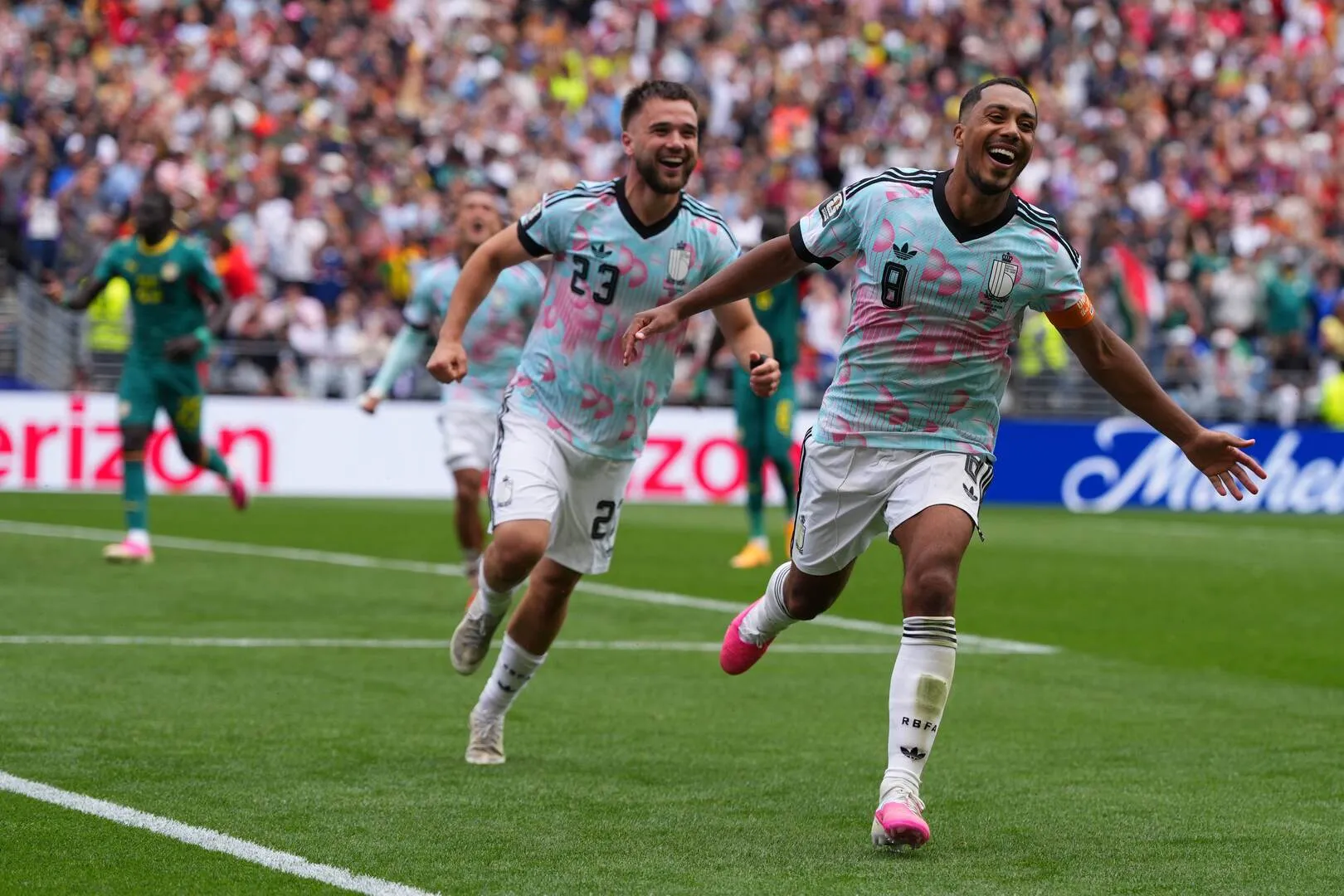
Honduran referee Said Martinez awarded a penalty kick at the end of the second period of extra time, after a VAR review, following a challenge by Senegal’s Lamine Camara on Belgian captain Youri Tielemans, with the score tied 2-2 and the match heading towards a penalty shootout.

The “Archivo VAR” platform, which specialises in analysing refereeing decisions, said that VAR intervened excessively during the match, confirming that it was Tielemans who extended his foot in front of Camara, causing the contact.

The platform added, via its account on “X,” that the incident did not warrant VAR intervention, explaining that it was the Belgian player who forced the contact entirely, and that the situation did not amount to the clear and obvious error needed to justify the referee reviewing the decision.

Recommended Stories

list of 4 itemsend of list

The decision triggered a wave of controversy on social media, with one fan writing: “This is 100% robbery. Senegal have been robbed. How is this a penalty? Belgium do not deserve to go through corruption.”

Sports content creator Sneako blamed the result on match ‘”rigging”.

“Rigged! Senegal should storm the pitch right now. Leave the pitch and go home. This is rigged!”

Another sports fan wrote: “I’m sorry, but this was never a penalty. Camara went to clear the ball, but it was Tielemans who got in his way. Senegal was robbed, and it should have been Belgium going out.”

Spanish sports journalist Manolo Lama commented: “They stole the Africa Cup of Nations from them, and now they’re stealing all the solidarity with Senegal at the World Cup too.”

Senegal Belgium WCup Soccer
Senegal’s Habib Diarra, front, celebrates scoring their first goal with Ismail Jakobs, back, during the World Cup round of 32 soccer match between Belgium and Senegal in Seattle, Wednesday, July 1, 2026. (AP Photo/Abbie Parr) (AP)

Egyptian journalist Mohamed Saeed linked the incident to what happened in the 2025 Africa Cup of Nations final against Morocco, writing: “You can feel that the penalty awarded against Senegal in the final seconds was a harsh lesson and a difficult test. After the scenes from the Africa Cup of Nations final, I think that if it weren’t for the change in the rules around the withdrawal incident, this scene could have repeated itself.”

Another sports fan, Fares Ahmed, wrote that football ”teaches lessons” and the outcome brought back the memory of Senegal at the tournament in Morocco.

“They took advantage of the tournament’s vulnerable position and the host’s need to make it a success, and used that to impose their pressure,” Ahmed wrote. “Today, the scene was almost repeated against Belgium — a penalty in the final minutes, objections, and disbelief over the decision — but this time there was no threat of withdrawal, because you can’t risk penalties like that in a tournament the size of the World Cup.”

Drawing a connection between the two events, one follower wrote on “X”: “When there was a clear penalty in the Morocco final, they rebelled against the decision and tarnished the reputation of African football, just because the tournament was in Morocco. But when an unclear penalty came along that eliminated them from the World Cup, they stayed silent, because this time it was in the West.”

Senegal Belgium WCup Soccer
Senegal’s Pathe Ciss #6 kneels on the pitch after Belgium were awarded a penalty during the World Cup Round of 32 match in Seattle, on Wednesday, July 1, 2026 [Maddy Grassy/AP Photo]

After the dramatic penalty was awarded, Tielemans stepped up to take it and scored successfully, netting Belgium’s third goal and capping off an unexpected comeback that eliminated the Lions of Teranga.

But back on the pitch, Senegal had the run of play for 85 minutes. The African team held a two-goal lead, and had all but secured a spot in the round of 16 at the World Cup.

Within five minutes, it crumbled and the players were feeling it.

“We were at the heart of writing the beautiful pages of the history of our football in this world,” defender Krepin Diatta said. “And we have to accept that we failed at our mission.”

Senegal midfielder Habib Diarra said. “We had a good first half, but it wasn’t enough. A match lasts 90 minutes, and we’re devastated. It’s very tough. I don’t know what to say. When you’re on the pitch, you have to give your all, and that’s not what we did. We’ve only got ourselves to blame.”

Source link

World’s best 50 islands revealed and there is ONE in the UK

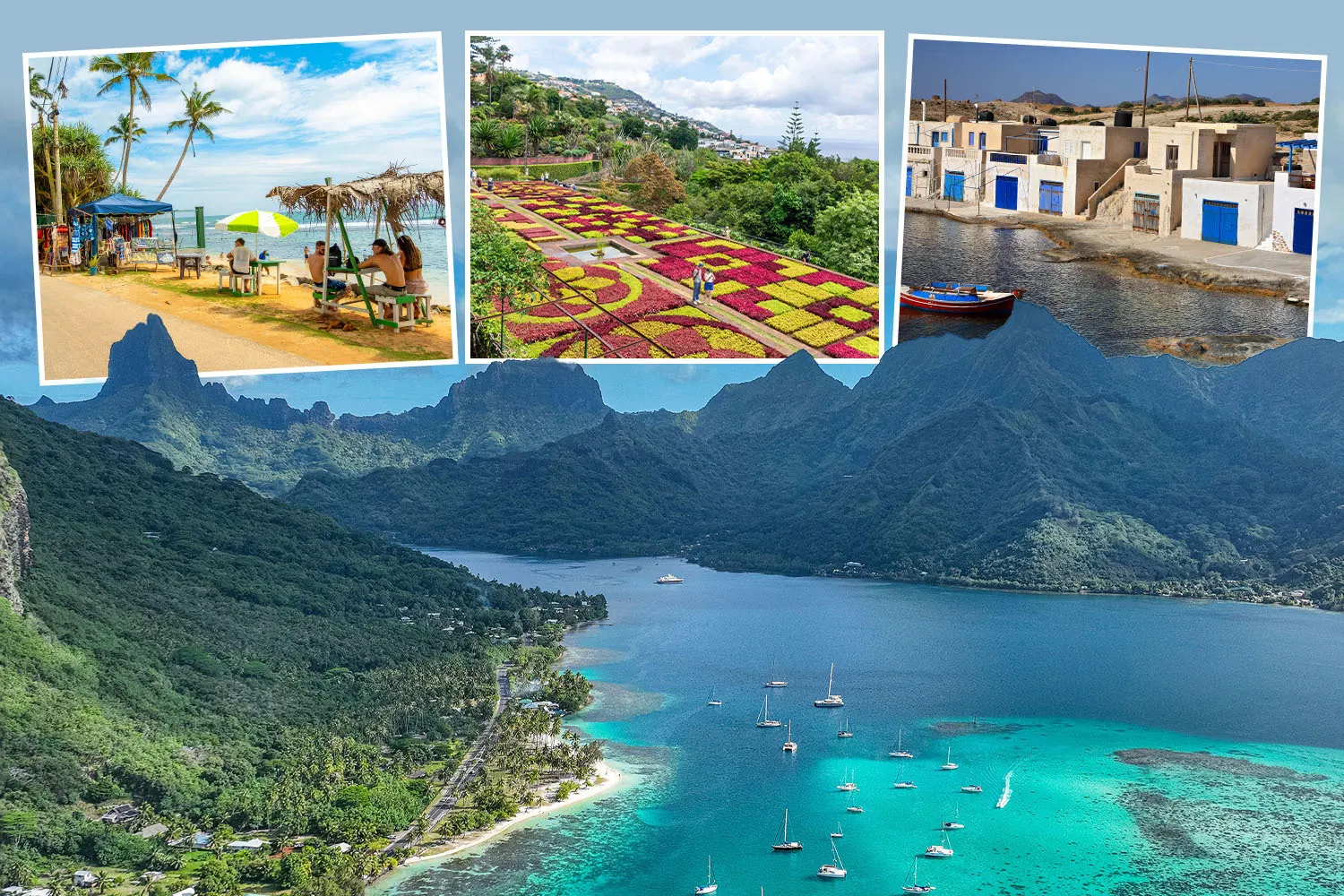
THE best islands in the world have been revealed and there is one in the UK that snuck into the top 50.

The 50 Best Islands in the World was revealed by Big 7, having run for seven years.

These are the world’s best islands, and they include one in the UK Credit: Alamy

The study looks at everything from popularity on social media and travel trends to insights from the editorial team.

And coming in no.1 was Sri Lanka which was praised for “having it all”.

It said: “Whiling away blissful days beach-hopping along the 833-mile coastline is part of the charm, but Sri Lanka offers much more beyond the shore.

“Itineraries fill up quickly here, between the timeworn temples, colonial towns, misty mountains, and wildlife safaris in Yala National Park, home to tigers and elephants.”

ISLE GO

I’ve booked trips to a Spanish island for a decade – here’s the best hidden spots


SOCIABLE BREAK

I explored Portugal on a solo travel holiday and made friends along the way

The Sun’s Assistant Travel Editor Sophie Swietochowski recently visited and said: “It was the off-grid excursions that gave me a real sense of what this region was truly about – a half-day cooking experience was just my cup of tea.

“And one night, an elephant stepped out from some undergrowth and plods slowly into the oncoming traffic, where drivers pulled to a casual halt until the lumbering giant disappeared.”

The beautiful Isle of Mull was the only UK island to make the list Credit: Alamy
Sri Lanka has been named the best island in the world Credit: Alamy

However, the only UK island to make the list was the Isle of Mull in Scotland, coming in 23rd place.

Making the list for its “rugged coastline and unexpectedly white sand,” it added: ” It’s an island of contrasts – where highland cows bathe in the calm, crystal-clear sea, and foamy waters crash into basalt columns.”

The island has everything from the coloured houses of Tobermory, as well as dolphin and seal watching – and even fluffy highlands cows on the beach.

While Mull was the only UK island to make the list, the nearby Achill Island in Ireland came in 8th.

European islands like Madeira made the top 50 Credit: Alamy
Milos (pictured) as well as Hydra won it for Greece Credit: Alamy

It made the top 10 for its “soft pink sunrises and turquoise seas to moss-green hills and fiery sunsets.”

Europe fared well too, with many in the top 20 including Madeira (4th), Milos (10th), Ischia (15th), Ibiza (17th) and Corsica (18th).

Popular islands Brits will know such as Jamaica was in 19th, while Bali was in 20th and Mauritius was 24th.

Sardinia, Hvar and Key West all just made it into the top 50.

World’s 50 Best Islands

  1. Sri Lanka
  2. Mo’orea, French Polynesia
  3. Socotra, Yemen
  4. Madeira
  5. The Galapagos, Ecuador
  6. Great Exuma, Bahamas
  7. Seychelles
  8. Achill Island, Ireland
  9. Koh Lipe, Thailand
  10. Milos, Greece
  11. Raja Ampat Islands, Indonesia
  12. Madagascar
  13. Ilha Grande, Brazil
  14. Kangaroo Island, Australia
  15. Ischia, Italy
  16. Dominica
  17. Ibiza
  18. Corsica
  19. Jamaica
  20. Bali, Indonesia
  21. Koh Rong, Cambodia
  22. Yasawas, Fiji
  23. Mull, Scotland
  24. Mauritius
  25. Salt Spring Island, Canada
  26. Yoron Island, Japan
  27. Munroe Island, India
  28. Unguja (Zanzibar Island), Tanzania
  29. Haida Gwaii, Canada
  30. Sal, Cape Verde
  31. Cocos Island, Costa Rica
  32. Cuba
  33. San Juan Islands, USA
  34. Sardinia, Italy
  35. Jeju Island, South Korea
  36. Siargao, Philippines
  37. Greenland
  38. Caye Caulker, Belize
  39. La Gomera, Spain
  40. Hvar, Croatia
  41. Isla Mujeres, Mexico
  42. Waiheke Island, New Zealand
  43. Benguerra Island, Mozambique
  44. Hydra, Greece
  45. Bozcaada, Turkey
  46. Key West, Florida, USA
  47. Mentawai Islands, Indonesia
  48. Barbados
  49. Eysturoy Island, Faroe Islands
  50. Bissagos Islands, Guinea


Source link

An extra 229,000 deaths: Is that the cost of US-UK drugs deal? | Health News

Research published in the British Medical Journal (BMJ) has found that a United Kingdom-United States pharmaceutical deal could cause 229,000 excess deaths as a result of the diversion of billions of pounds away from Britain’s National Health Service (NHS).

In December, the UK and US signed a pharmaceutical trade deal, under which the US government agreed not to impose tariffs on UK pharmaceutical and medical technology exports for the next three years.

Recommended Stories

list of 3 itemsend of list

In return, the British government committed to increasing NHS spending on new US medicines from 0.3 percent in 2026 to at least 0.6 percent of its gross domestic product (GDP) by 2036. This means that medicine spending overall should increase from 10 percent to 12 percent of the NHS budget.

UK politicians defended the deal with Science Minister Patrick Vallance saying in April that the arrangement gives patients across the NHS access to “life-changing new medicines that they previously would have been denied”.

“Not only this, but as the first country in the world to benefit from a zero percent tariff on pharmaceuticals to the US, Britain’s life sciences sector will be further boosted,” Vallance argued.

But the research published in the BMJ found that the commitment to spend so much more on new branded medicines over the next decade without any increase in NHS funding will “create substantial opportunity costs elsewhere, having a direct effect on population health”.

Samuel Cross, a professor in the department of pharmacology and therapeutics at the University of Liverpool, who coauthored the report, said the agreement “benefits pharmaceutical companies and comes at a cost of NHS patients”.

“There’s really no way to sugar-coat that. The numbers speak for themselves,” Cross told Al Jazeera.

Here’s what we know about the report:

What is in the US-UK deal?

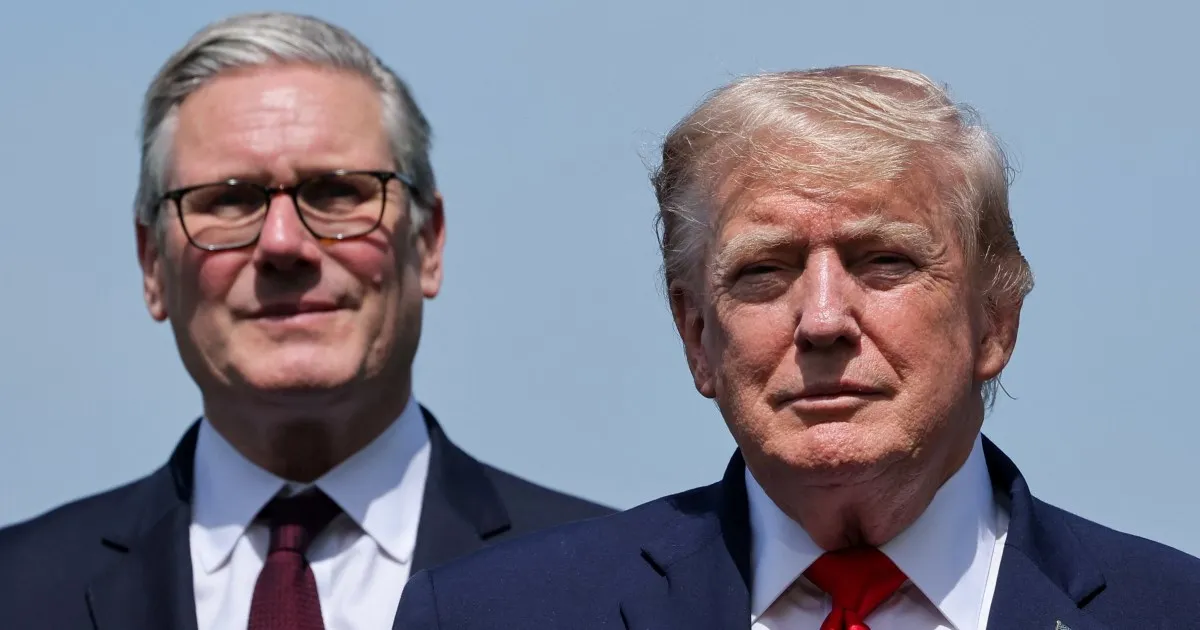
The agreement signed on December 1 was hailed as a landmark deal between British Prime Minister Keir Starmer and US President Donald Trump on pharmaceutical trade and pricing.

The US agreed not to impose tariffs on UK pharmaceutical and medical exports for the following three years – until January 19, 2029.

According to a policy paper published by the British government, the preliminary understanding of the agreement recognised that the US and UK shared a “mutual interest in developing a global medicines system that supports development and commercialisation of new innovations”.

 What did the research find?

In February, Vallance disclosed that funding for the increased spending on medicines would come from the Department of Health and Social Care, which funds the NHS in England, rather than the Treasury.

The study in the BMJ forecast that if spending targets are met and the economy grows as forecast by the Office for Budget Responsibility, the NHS would need to spend an extra 1.3 billion pounds ($1.73bn) a year by 2028 – about 25 million pounds ($33.4m) a week. By 2036, this would rise to an extra 8.8 billion pounds ($11.74bn) a year – about 170 million pounds ($227m) a week). Over the course of the agreement, that would add up to about 44.7 billion pounds ($59.7bn) by the end of 2036.

“Costs are even higher if the impact on publicly funded adult social care is also considered – modelling of English local authority data indicates that every £1bn [$1.33bn] the NHS must find to fund this deal will increase the costs of adult social care by £118m [$157.5m] because of increases in morbidity and mortality,” the report found.

Ultimately, the study predicted, excess deaths are likely as a result.

“Even if we restrict attention to the direct effect of reductions in available NHS expenditure, by 2036 this deal is likely to result in roughly 229,000 excess deaths – more than during the COVID-19 pandemic between March 2020 and June 2022 (137,000). If the indirect effect on adult social care is also included, the increase in excess deaths is even greater (291,000),” the report stated.

The report added that the findings are “unsurprising” given the existing pressures on the NHS and the “large burden of unmet need in highly cost-effective areas of care”.

It also referred to shortfalls in NHS funding and pharmaceutical pricing as “opportunity costs”.

Cross said that in health economics, opportunity costs are the “key to all of this”.

“In the NHS, we have a finite budget – we’re not made of money – and if you take money away to pay for, in this case, more medicines. then that comes at an opportunity cost of the places that the money has been diverted away from,” he explained.

Which health sectors will be worst affected?

The research predicted that the greatest number of deaths would occur in cardiovascular, respiratory, gastrointestinal and cancer patients.

It added that there will also be broader harm caused to quality of life for patients in those sectors as well as “neurological, endocrine, musculoskeletal, and mental health problems”.

“Despite this evidence and reassurances that ‘frontline services’ will be protected, the NHS will need to fund this deal from allocations made six months before the deal was agreed. The evidence suggests that if additional public expenditure was available, it could be more effectively deployed within the NHS itself,” it added.

The report also called the government’s claims that the US-UK agreement would encourage pharmaceutical innovation in the country “uncertain”.

“Pharmaceutical research and development operate within a global market, of which the UK represents a relatively small share. As such, there is limited evidence that UK domestic pricing materially influences global investment decisions,” the report stated.

“Even so, evidence suggests in most cases the UK is already paying more than 100 percent of the long-term value of new medicines; incentivising production of new medicines under this deal will do long-term harm to the public health objective of the NHS,” it added.

Cross added that because money has in effect been diverted away from the NHS, there is no way for the government to offset the impact on the service.

“If the funds are used to pay for new medicines, we will lose positive health outcomes elsewhere, and that is as simple as that,” he said.

He called for the government to release an impact assessment to trigger a public discussion about how good the US-UK deal really is for Britain.

Source link

Ronaldo fever hits Toronto ahead of Portugal vs Croatia World Cup clash | World Cup 2026

Toronto, Canada – The year was 2009, and a sculpted, spiky-haired, 24-year-old Ronaldo was greeted by hundreds of adoring fans in Toronto dying to catch a glimpse of the newly signed Real Madrid superstar as he graced the city with his presence for the first time.

Fast forward 17 years, and the visuals are almost identical, give or take a few differences.

Recommended Stories

list of 4 itemsend of list

Hundreds of Toronto residents took to the streets on Wednesday, lining highways, thronging downtown intersections, climbing onto each other’s shoulders and peeking out of high-rise buildings, all to get a 10-second glimpse of Ronaldo passing by, as Portugal arrived in the city ahead of their World Cup round of 32 clash with Croatia.

The last time the football icon was in Toronto was August 2009 when Real Madrid played a friendly against Toronto FC, coincidentally at the same stadium where Portugal will take on Croatia on Thursday evening.

Wednesday being a public holiday increased the chances of fans catching a glimpse of the 41-year-old football legend at what is likely to be his last ever World Cup, and potentially last World Cup match if Portugal are knocked out of the tournament.

The city was buzzing with Ronaldo fever right from the minute Portugal landed at Pearson airport early Wednesday afternoon.

Biker groups lined Gardiner Expressway to escort the Portuguese team bus to the Delta Hotel, where hundreds of fans gathered to get a glimpse of Ronaldo as he exited the bus, and then again when the team headed to Centennial Park for their training session.

Even at the grounds in Etobicoke, dozens of starstruck fans sporting red #7 jerseys stood outside the field as Ronaldo and the Portugal team warmed up on what was supposedly the hottest day of the year in Canada.

The fan frenzy was valid; for most Portugal fans in the city, this was the closest they would get to seeing the one and only Cristiano Ronaldo in person.

Sky-high ticket prices for the match, some as ludicrous as $30,000 Canadian dollars ($21,000), were unaffordable to the average football fan.

Tickets to the sold-out game have averaged $2,500-3,500 Canadian dollars over the past week on resale platforms, even though Ontario laws forbid third-party sales above face value.

“I’m a dad and a husband, and I couldn’t justify spending that kind of money on a ticket no matter how much I want to see Portugal play in Toronto,” Joey, 33, told Al Jazeera, as he closed out his shift at Bairrada Churrasqueira on the fringe of Little Portugal in Toronto.

“But it still feels surreal that Portugal is playing here in Toronto, who would have ever thought that,” the restaurant worker beamed, as he flipped chairs onto the tables before mopping the floor.

Worlds collide

Joey, who declined to share his surname, was one of tens of thousands of Portuguese-Canadians who have called Toronto home for several decades now.

The first wave of immigrants arrived in the 1950s seeking better opportunities for themselves and their families. Just last year, the city inaugurated the Azores Parkette in the heart of Little Portugal to honour the 18 “pioneering men” who departed Sao Miguel, Azores, and landed on the shores of Halifax to build a new life.

So when Portugal take the field in Toronto Stadium on Thursday, it’ll be more than just a game for generations of hyphenated Canadians in the city; for them, it’s two worlds colliding in a once-in-a-lifetime moment.

For Shannon Medeiros, 46, the match holds even more significance. The football fanatic fell in love with the sport aged six, inspired by her father, who attended every game and coached her as she delved into the sport.

The game has been a crucial part of her life, and her family’s, since her father and his family arrived in Canada when he was 16 years old, in the 1950s.

Like many immigrants at the time, schooling had to be abandoned in favour of a job to help make ends meet for the family, which, in his case, arrived in Montreal with a single suitcase and lived in another family’s basement until they could afford a place of their own.

Football was the only non-negotiable, axiomatic staple in the Portuguese community that grew from a few hundred to more than 300,000 people.

“It’s something we do as a family now; that’s how much the game means to us,” said Medeiros, who now coaches her two sons in the sport the way her father did for her.

The storyline is almost identical to that of Stephen Eustaquio, Canada’s wonder boy who scored against South Africa to send his team to the World Cup round of 16 for the first time in history.

Canada's midfielder #07 Stephen Eustaquio celebrates after winning the 2026 World Cup round of 32 football match between South Africa and Canada at the Los Angeles Stadium in Inglewood on June 28, 2026.
Canada’s Stephen Eustaquio celebrates after winning the 2026 World Cup round of 32 match against South Africa at the Los Angeles Stadium in Inglewood on June 28, 2026 [AFP]

The Ontario-born, partially Portuguese-raised football star was guided into the sport by his father and his Portuguese background for a love of football. The sport was a way for the community to come together and enjoy a shared sense of identity, as Canada welcomed dozens of ethnicities decade after decade.

“The one thing you’ll see in the Portuguese community is how proud we are – of our heritage, our culture, to wear the jersey, put a flag up,” Medeiros told Al Jazeera.

A walk through Little Portugal during the World Cup would show you just that; flags split diagonally with Canada and Portugal in each half, fluttering on porches or glued to bedroom windows, an omnipresent CN Tower needle peeking above the neighbourhood anywhere you stand.

Match predictions

Medeiros admitted that while the team has not been playing to their full potential at the tournament, they have a strong chance of winning against Croatia. She’ll see whether her prediction comes true or not as she watches the game with her father at his house.

Elsewhere in the city, fans without match tickets are heading to sports bars, match screenings and fan festivals to see whether Ronaldo will score his first knockout-round goal at a World Cup that saw an unimpressive start for the Portuguese captain.

“I think Portugal will win 2-1, or maybe 3-1. But don’t tell my girlfriend I said that,” Josh Madeiros grinned, as he waited for his drink at Garrafeira. The Portuguese-Canadian 35-year-old will be supporting his side away from his girlfriend, who is Croatian.

He thought long and hard before admitting that Portugal’s team has had a shaky run so far, and that there’s only so much Ronaldo can do as a player in his forties.

“But he’s still my guy, and he’s still the GOAT [greatest of all time].”

Source link

Asian stocks slide on chip sell-off as markets await US jobs data

Published on

Most Asian stock markets dropped on Thursday, dragged down by a wave of selling in semiconductor shares, as European bourses made a subdued start and Wall Street looked set to open in the red before the release of key US employment figures.


ADVERTISEMENT


ADVERTISEMENT

The pullback centred on the technology sector, where investors retreated from the chip stocks that have powered much of this year’s rally, amid growing unease that the vast sums Big Tech is spending on AI could leave the market awash with supply.

South Korea’s Kospi bore the worst of it, tumbling around 5% as its heavyweight chipmakers slid. Memory specialist SK Hynix lost close to 8% and Samsung Electronics fell more than 6%.

In Tokyo, the Nikkei 225 shed about 1.5%, with chip-equipment maker Tokyo Electron down around 5.6%, while Taiwan’s Taiex slipped 1.1% as TSMC, the world’s largest contract chipmaker, gave up 1.8%.

The falls followed a rough session for chip stocks on Wall Street this Wednesday, where Micron Technology dropped more than 10% and Intel sank around 9%.

The moves stand in sharp contrast to a stellar year for Asian tech, with the Kospi and the Nikkei still up roughly 85% and 34% respectively in 2026.

On the other hand, Hong Kong’s Hang Seng rose about 0.8%, lifted by an 8.7% jump in electric-vehicle maker BYD after it reported a second straight monthly rise in sales, while India’s Sensex added 0.5%.

In Europe, markets opened flat as both the Euro Stoxx 50 and the broader pan-European Stoxx 600 traded within a 1% range at the start of Thursday’s session.

The UK’s FTSE 100, Germany’s DAX 30, France’s CAC 40 and Spain’s IBEX 35, all traded between 0.1% and 0.3% higher.

Italy’s FTSE MIB led the pack and rose about 0.4%.

Oil extends its slide and US jobs in focus

Crude prices fell again, trading below where they sat before the Iran war began in late February, as hopes grew that supplies through the Strait of Hormuz will steadily recover.

Brent crude, the international standard, eased around 1% to about $70.89 a barrel while WTI, the US benchmark, dropped 3% to roughly $69.

Attention now turns to the US, where stock futures edged lower ahead of the June employment report, brought forward a day because of Friday’s Independence Day.

Economists polled by Dow Jones expect around 115,000 jobs were added last month.

The figure carries extra weight under the new Federal Reserve chair, Kevin Warsh, with investors wary that a strong reading could harden the case for keeping interest rates higher for longer.

According to economists at Capital Economics, demand for AI may keep growing but at a slower pace than many expect, a caution that helped sour sentiment towards the sector.

Additional sources • AP

Source link

‘The crisis is deep’: The view from Russia as fuel shortages worsen | Russia-Ukraine war News

Moscow, Russia – Russia faces a severe fuel deficit as Ukrainian drone strikes knock out a significant portion of its refining capacity.

With continuing war in Ukraine and agricultural harvesting under way, the government is scrambling to re-route supplies, maintain price caps and enforce export bans to prevent further domestic shortages.

Recommended Stories

list of 4 itemsend of list

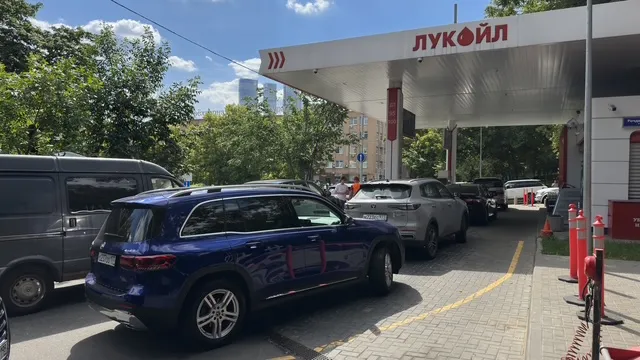
Long lines at petrol stations are now a common sight throughout the country, including in the prosperous capital Moscow.

People wait for hours to fill up their cars. In some places, the pumps are completely dry.

There is a sense of patience but also mounting anxiety in the air.

“I’m deeply frightened by the uncertainty and the lack of understanding where the situation is heading,” a woman named Irina, waiting to fill up her car in Moscow, told Al Jazeera.

Igor, another Moscow resident, said: “I think things can get out of control if the crisis causes major industries to shut down.”

Both interviewees requested to withhold their surnames.

Russia
President Putin has dismissed concerns about the fuel shortages, saying the situation is not ‘critical’ [Al Jazeera]

Analysts predict that increased fuel prices will mean higher transportation costs followed by significant price hikes for goods and services.

Stanislav Mitrakhovich, an expert at the National Energy Security Fund at the Russian Financial University, said the crisis is “deep, yet for a long time, Russian authorities were unwilling to acknowledge it”.

He added that the Russian response has led to “greater public distrust” of authorities and, consequently, triggered panic buying.

“Indirect evidence indicates that Ukrainian drone attacks have disabled about a quarter of Russia’s oil refining capacity,” he told Al Jazeera. “Seasonal demand has also contributed to the problem. The crisis has led to rising fuel prices and local shortages, as some regions simply lack oil refineries.”

The situation is “even worse” in regions close to the combat zone, he said. “Measures to restrict and ration fuel sales have long been in place there.”

To tackle the problem, Russia has imposed fuel rationing. Sales are often limited to about 20-30 litres (about 5-8 US gallons) per vehicle, and drivers must pump fuel strictly into vehicle tanks. Filling jerry cans is largely prohibited.

Earlier, the government banned petrol and jet fuel exports. Officials are now weighing a ban on diesel exports, too.

Authorities have loosened fuel-quality regulations, temporarily allowing lower-grade fuel for the domestic market.

In Russia-controlled Crimea, a state of emergency has been declared.

As the approaching agricultural harvesting season relies on a steady stream of diesel, authorities are prioritising farming allocations to prevent a hit to food security.

To offset the domestic shortfall, Moscow has sought fuel imports from neighbouring countries, such as Belarus, as well as Asian markets. Moscow has shipped in 60,000 to 80,000 tonnes of petrol from India, according to industry sources cited by the Reuters news agency. Russia reportedly plans to import 400,000 tonnes of petrol monthly from various countries.

‘I would say it is not critical’: Putin

While Russian President Vladimir Putin acknowledges the crisis, he appears reluctant to end the war in Ukraine and insists the situation is under control.

“These attacks on our facilities certainly create problems, that is obvious. We are currently seeing a certain shortage, though I would say it is not critical,” he said.

“First and foremost, we have to rapidly and significantly increase production of air defence systems that are most in demand. We must also continue to improve them … Repairs at refineries must be completed more quickly.”

Ukraine is seizing its opportunity. President Volodymyr Zelenskyy has authorised a 40-day military and intelligence campaign, aimed at pressuring Russia into ending the war.

Mitrakhovich said the way the crisis unfolds from here depends on what’s more effective: Ukraine’s drone strikes or Russia’s air defences.

Source link

German prosecutors charge Ukrainian suspect over Nord Stream explosions | Russia-Ukraine war News

Prosecutors allege a yacht was used in the sabotage of pipelines, with the suspect leading the operation.

German federal prosecutors ⁠have filed charges ⁠against a 50-year-old Ukrainian national over a series of explosions that destroyed two Nord Stream underwater gas pipelines linking Russia to Europe in 2022.

The federal prosecutor’s office declined to comment on the specifics of the indictment on Wednesday against the accused, who is identified only as Serhii K in court documents under German privacy rules.

Recommended Stories

list of 4 itemsend of list

Serhii K is accused of attacking civilian energy infrastructure, causing an explosion, and destroying structures, according to the German public broadcaster ARD.

The underwater explosions damaged both the Nord Stream 1 and Nord Stream 2 pipelines so severely that no gas could be transported through them, knocking out the key routes for Russian gas ⁠to Europe for months after Moscow’s full-scale invasion of Ukraine in February 2022.

In a December 2025 detention filing by the Federal Court of Justice, prosecutors allege that Serhii K helped coordinate a team that used a sailing yacht, the Andromeda, to place explosive devices on the pipelines near Denmark’s ⁠Bornholm Island in September 2022.

According to those documents, Serhii K is suspected of acting as the on-board coordinator and team leader, not as a diver or bomb expert.

The Berlin law firm Menaker, which is representing the accused Ukrainian, has not provided any details on the indictment.

Federal prosecutors confirmed to the AFP news agency that Serhii K was the same suspect who was arrested in August 2025 in Italy and extradited to Germany the following November, and who was named at the time as Serhii Kuznietsov.

At the time of his arrest, German prosecutors said Kuznietsov had used forged identity documents to charter a yacht, which departed from the German city of Rostock to carry out the attacks.

Kuznietsov has denied being part of the sabotage operation. He said he was a member of the Ukrainian armed forces and in Ukraine at the time of the incident, a claim his defence team has said would give him “functional immunity” under international law.

Answering a question from Germany’s Der Spiegel magazine during a news conference in Dublin on Wednesday, Ukrainian President Volodymyr Zelenskyy said it was too soon to comment on the charges against Serhii K in detail.

“We have not officially received any details; at least I have not seen them”, Zelenskyy said. “It is too early to say yet,” he added.

Ukraine’s government has previously denied any involvement in the sabotage or knowledge of the plot to bomb the Nord Stream 1 and Nord Stream 2 pipelines.

Source link

EU border rules causing travel chaos ahead of summer peak, industry warns | Aviation News

European airlines and airports call for flexibility to suspend digital border system amid severe delays.

The European Union’s new digital border check system is causing severe disruption to travel, with passengers facing five-hour queues and departure gates closing with planes only half-full, industry representatives have warned.

In an open letter published online on Wednesday, the top representative bodies for Europe’s airports and airlines said that delays caused by the bloc’s recently-implemented Entry/Exit System (EES) had reached a “critical point”.

Recommended Stories

list of 4 itemsend of list

“The current implementation of the EES is creating severe operational consequences, disrupting passengers and putting border authorities, airports and airlines under unsustainable pressure,” Airports Council International Europe, Airlines for Europe, and the International Air Transport Association said in a joint letter addressed to European Commission President Ursula von der Leyen.

“We therefore urge your immediate intervention before the situation deteriorates further during the peak summer travel season.”

With European airports expected to handle 40 million more passengers in July and August than the previous two months, EU leaders “must take stock of the reality of the current situation and of what our air transport system will face over the coming weeks”, the lobby groups said.

“Without additional flexibility, existing challenges will inevitably intensify,” they said.

“As representatives of Europe’s aviation sector, we have a responsibility to warn that this would result in a significant worsening of an already very difficult situation for passengers.”

Warning that the travel disruption was undermining the reputation of the EU and European tourism, the industry groups said it was crucial that the continent continued to be an “efficient, welcoming and competitive” destination.

“Reports already suggest that some international travellers are reconsidering trips to Europe because of the prospect of excessive border delays,” they said.

EU
A police officer scans a passport during a presentation of an automated terminal for registration to the Entry/Exit System (EES) at the Vaclav Havel airport in Prague, Czech Republic, on October 14, 2025 [David W Cerny/Reuters]

Until the stability of the EES is ensured and adequate staffing levels are in place, EU member states should be immediately granted the flexibility to “completely suspend” the new system whenever passenger numbers exceed the “operational capacity” of border facilities, the lobby groups said.

The World Travel and Tourism Council, the world’s largest representative body for tourism-related businesses, said on Wednesday that it endorsed the letter’s calls, warning that the delays could put up to 41 million arrivals and $45.4bn in visitor spending at risk.

“If lengthy delays become accepted practice, travellers will look elsewhere,” WTTC President and CEO Gloria Guevara said in a statement.

“Europe cannot afford to compromise its competitiveness or the experience it offers millions of visitors.”

The European Commission did not immediately respond to a request for comment sent by Al Jazeera outside of regular business hours.

The EU began rolling out the EES in October as a replacement for passport stamping.

The system records each traveller’s name, passport information, fingerprints and facial images, and his or her date and place of entry and exit.

The European Commission announced that the ESS was “fully operational” across the Schengen Area in April, but the system has been blamed for lengthy delays since its introduction, including cases of flights leaving before many of their passengers were able to board.

Source link

Warmest June on record for England, second-warmest for UK, says Met Office | Climate Crisis News

A punishing heatwave affected many parts of the country during the last week of the month.

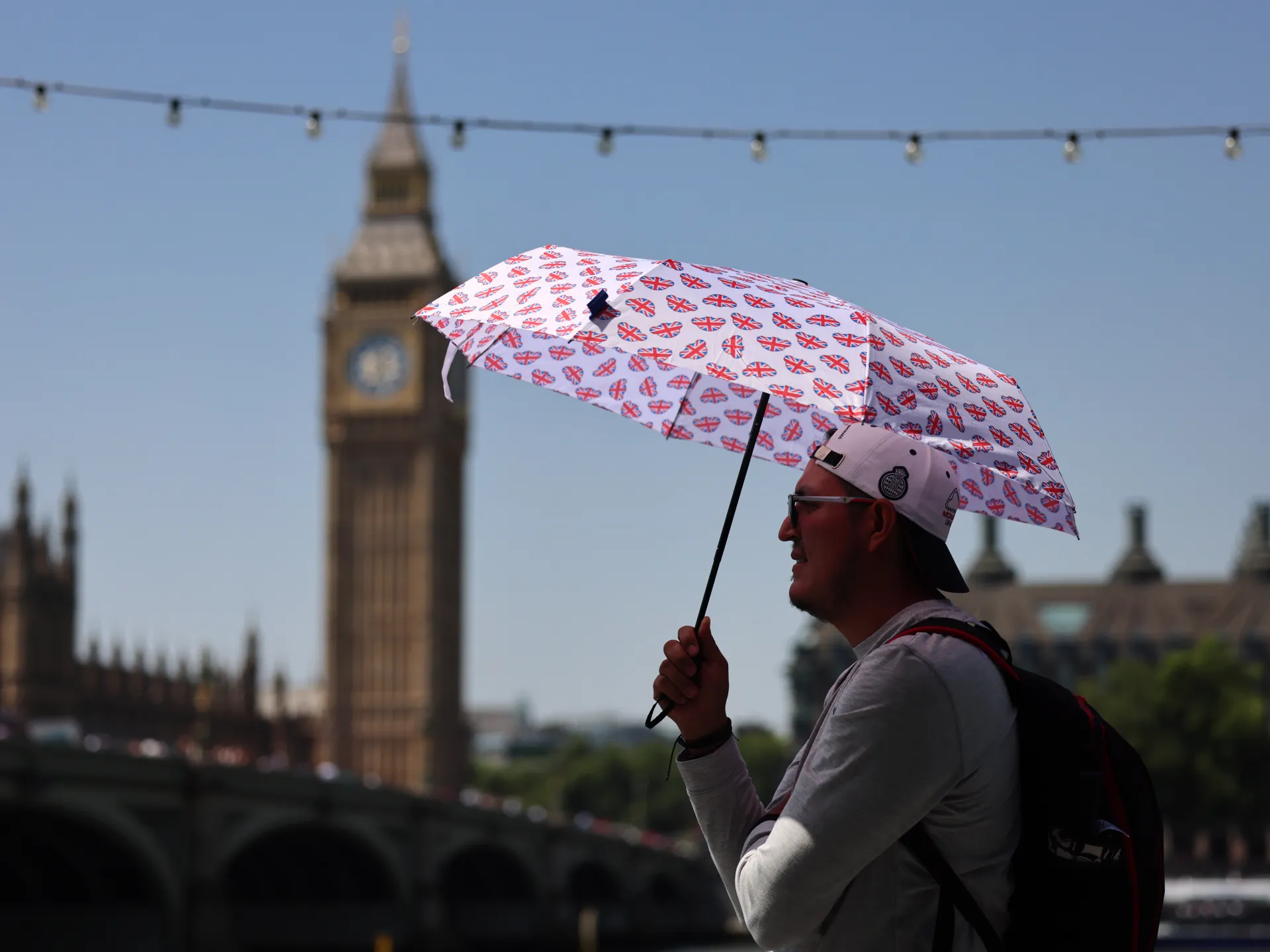
Last month was provisionally the warmest June in England since records began, as well as the second-warmest for the United Kingdom, according to figures published by the country’s Met Office.

Rare extreme heat warnings were issued for several days last month, with “exceptionally warm overnight temperatures”, the weather agency said on Wednesday.

Recommended Stories

list of 4 itemsend of list

England registered an average temperature of 17.1C (62.78 degrees Fahrenheit) last month – the highest since records began in 1884.

“The exceptional warmth was driven by an intense and record-breaking heatwave at the end of the month,” the Met Office said in a statement.

The previous record of 16.9C (62.4F) was set in June 2025, nearly 3C (5.4F) above the long-term average. It means England’s top three warmest Junes since data began in 1884 have all occurred this decade, with the third being in 2023.

A punishing heatwave affected many parts of the country during the last week of the month, with temperatures topping 30C (86F) at some places in the UK for seven days in a row from June 21-27.

A peak of 37.7C (99.86F) was provisionally reached at Lingwood in Norfolk on June 26 – the highest maximum temperature ever recorded for the month.

This was more than 2C higher (3.6F) than the previous June record of 35.6C (96.08F), set in 1957 at Camden Square in London and equalled in 1976 at Mayflower Park in Southampton.

Last month also saw a provisional new June record for the highest overnight minimum, with temperatures at Cardiff Bute Park dropping no lower than 23.5C (74.3F) on June 25.

More than 1,000 schools and nurseries were closed during the heatwave, and there was disruption to public transport with overhead wires and signalling strained because of the heat.

Critics felt the country was ill-prepared to deal with the sweltering heat. Climate experts have urged the UK government to adapt its infrastructure to warming summers, with a surge in demand for fans and air conditioners, which remain rare in British homes.

The heatwave has also affected many countries in Europe, including France, Germany, Slovakia, Serbia, Croatia, Italy, Austria and western Ukraine, with more than 1,000 deaths linked to the scorching heat reported in France alone.

A group of scientists blamed climate change for the dangerous weather blazing across Europe. In a report by the World Weather Attribution, experts warned that the phasing out of fossil fuels is essential to reverse the extreme weather trend.

Source link

World’s most liveable cities revealed and LOADS are in Europe

THE MOST liveable cities in the world have been named – but the UK didn’t make the cut.

Monocle’s Quality of Life Survey has been running for nearly 20 years, looking at a number of factors into what makes a city loved by its locals.

The world’s best cities to live in have been named and loads in Europe made the list Credit: Alamy

This includes everything from safety and connectivity to green spaces and late night openings.

New this year is ” excitement, urban ambition and security,” when it comes to making a city great.

Sadly, none in the UK made the top 20, with the study citing London missing out as it doesn’t have the “security of certain mature markets“.

What did come out on top was the city of Tokyo in Japan.

TOP SPOT

I visited UK’s ‘best city to see in 2026,’ it felt like Britain’s cowboy capital


TAKING OFF

Budget airline to launch more UK flights to one of the world’s best cities

It was praised for both its stability and security, citing its “old-fashioned sense of security”.

It explained: “Young children walk to school unaccompanied by their parents, huge events take place every week without major disorder, and crime rates are consistently low.

Tokyo came in first, with its safety highly praised Credit: Alamy
Lisbon’s strong sense of community put it into third place Credit: Alamy

“Tokyo should celebrate being such a well-mannered metropolis but its exemplary conduct is never taken for granted.”

However, a number of European cities made the top 20 list.

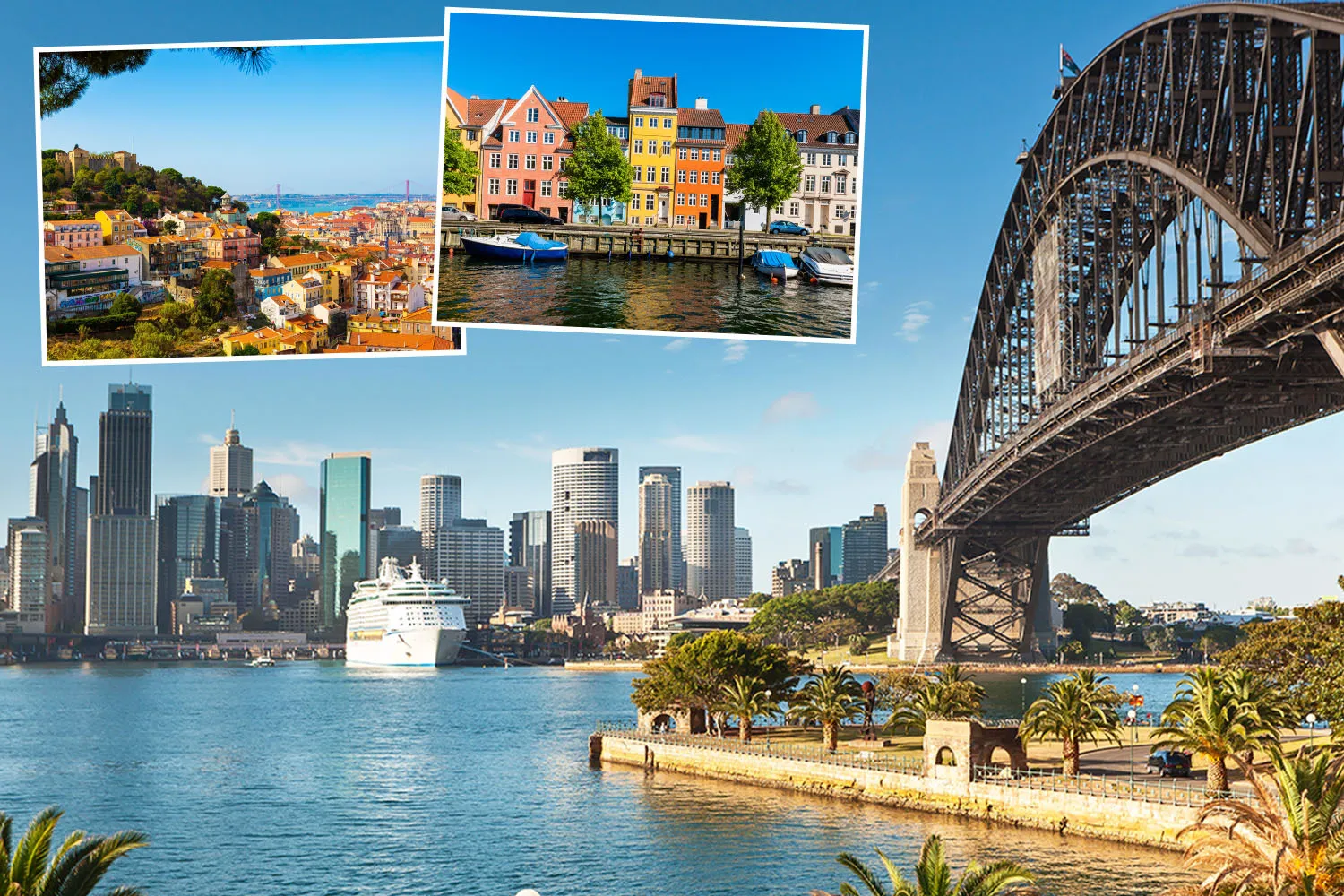
In second place was Copenhagen, citing its “booming restaurant and sauna scene” as well as its low crime rate and urban cycling schemes.

This was followed by Lisbon in third place, for it’s great public transport and local communities.

Sydney was one of the few outside of Europe to make the top 20 Credit: Alamy

Lisbon has even become one of the top expat destinations in the world.

Coming in fourth was Vienna, followed by Sydney in 5th.

Other European entries to make the top 10 include Zurich (6th), Madrid (7th), Paris (8th), Munich (9th) and Oslo (10th).

Stockholm, Barcelona, Milan, Amsterdam and Helsinki all snuck into the top 20.

World’s 20 best cities to live

  1. Tokyo
  2. Copenhagen
  3. Lisbon
  4. Vienna
  5. Sydney
  6. Zurich
  7. Madrid
  8. Paris
  9. Munich
  10. Oslo
  11. Stockholm
  12. Milan
  13. Barcelona
  14. Singapore
  15. Amsterdam
  16. Helsinki
  17. Seoul
  18. Melbourne
  19. Vancouver
  20. Kyoto

Source link

The missing capital market: Europe has €37tn in savings. Why isn’t more of it reaching businesses?

When Klarna chose New York over Europe for its stock market listing, it highlighted a challenge Brussels has been trying to solve for years: Europe’s fastest-growing companies often look across the Atlantic for deeper pools of capital.


ADVERTISEMENT


ADVERTISEMENT

As the EU seeks to build its own AI champions, strengthen its defence industry and keep more high-growth companies raising money at home, one question remains: why does a bloc with €37tn in household savings still struggle to finance its own fastest-growing businesses?

Now the European Union has stepped up efforts to reform its capital markets, aiming to make capital flow more freely across the bloc.

Policymakers are pursuing incremental reforms, including greater supervisory alignment, but a fully unified capital market is likely to take many years, as member states struggle to agree on key technical details, slowing the process.

The competitiveness challenge

The current speed of negotiations does not reflect the urgency being expressed by the EU’s political leadership: Europe needs more integrated capital markets to compete globally with major powers such as the US and China.

To do so, billions need to be invested in strategic sectors such as AI and defence, amid intense geopolitical uncertainty, including wars and trade tensions.

Lacking strategic industrial and technological leadership means sacrificing geopolitical power and economic resilience, especially in a global landscape where dominance, or even survival, depends on control over resources and expertise.

This narrative has been championed by leading EU politicians, including European Commission President Ursula von der Leyen, whose goal of making Europe more competitive on the global stage has become the North Star of her political mandate.

For this reason, von der Leyen tasked former European Central Bank President and Italian Prime Minister Mario Draghi with preparing a report on EU competitiveness, which identified capital markets reform as one of its central recommendations.

Presented in autumn 2024, the report says Europe needs €750bn-€800bn in investment each year, equivalent to up to 5% of GDP, to fulfil its competitiveness goals and remain globally competitive.

“It’s ‘Do this,’ or it’s a slow agony,” Draghi warned in one of his best-known remarks. Draghi describes this “agony” as a prolonged and cumulative erosion of Europe’s economic position, driven by structural weaknesses such as high energy costs and a fragmented single market, which together make the continent less conducive to investment and innovation.

The EU is focusing on two priorities to unlock the potential of its capital markets.

The first is convincing households to invest, mobilising a small percentage of the estimated €37tn in savings. The second is integrating national financial markets across the EU to reduce barriers within the single market, making it easier for businesses to raise funding and for investors to put their money to work.

For this to happen, households need better access to capital markets, along with a better understanding of how to invest and the potential benefits involved. For example, greater participation in financial markets can help individuals build their retirement savings.

At the same time, Brussels must advance the legislative framework — known as the Savings and Investments Union (SIU) — to enable these reforms to take place.

Why do businesses find it easier to seek funding in the US?

Capital markets are marketplaces where individuals, institutions and governments buy and sell long-term financial instruments, such as equities or debt.

They offer businesses a way to raise funds and support their growth. However, scaling up in Europe remains challenging. Cross-border operations can be costly, time-consuming and involve significant administrative burdens. This is because rules differ between member states, and even where they are the same, their implementation may differ.

These are among the reasons why firms in Europe obtain most of their financing through bank credit.

“What we need to develop is a more diversified funding source,” the head of the European Securities and Markets Authority (ESMA), Verena Ross, told Euronews in an exclusive interview with Euronews Business editor Angela Barnes.

Without enough diversification, businesses look for other markets where funding is more readily available, such as the US.

“The US capital market benefits from a more consolidated supervisory approach. There are fewer layers of bureaucracy and red tape because the US uses a single currency,” Rebecca Christie, senior fellow at Brussels-based think tank Bruegel, told Euronews.

Christie also said the US benefits from having a long-established federal system and from the dollar’s status as the world’s dominant reserve currency, both of which reduce barriers and increase its attractiveness.

“Anybody who needs financing has an incentive to go to US markets because that’s where the money is,” she said.

A less fragmented European capital market would have far-reaching implications, including making more capital available for strategic investments and strengthening the euro’s international role as a global currency — another major ambition of the current EU leadership amid the dollar’s declining role.

“We live in a global world and, particularly, capital markets are global by their nature. We also need to be attractive to overseas investors, whether they are American, Asian or from wherever they come, and make sure that Europe is a destination for that investment capital,” Ross told Euronews.

Why is a capital markets union so hard to achieve?

Despite broad agreement that capital markets need greater integration, there is still strong disagreement over how to make it happen.

The capital markets union legislation forms part of the Savings and Investments Union (SIU), a package of legislative proposals currently under negotiation.

One of the key pieces of legislation aimed at harmonising capital markets is the Market Integration and Supervision Package, known as MISP.

Despite the intensification of talks on MISP in recent months, member states have yet to reach a common position, particularly on how to harmonise capital markets supervision.

Last spring, the six largest European economies — Germany, France, Spain, Italy, Poland and the Netherlands — made a proposal setting out how to centralise supervisory powers.

In particular, they propose transferring some supervisory powers to ESMA, but there is no consensus on whether to proceed, an EU diplomat told Euronews on condition of anonymity. Even among those who agree, there are differing views on how and over what timeframe this should be implemented.

“The problem with the integration of capital markets is not even a political one; it is more a national issue,” Aurore Lalucq, chair of the European Parliament’s Committee on Economic and Monetary Affairs, who played an important role in the legislation, told Euronews.

“I think there will be progress in supervision, but there are a lot of details that will be tough to negotiate due to very different perspectives,” Lalucq added, referring to the fact that member states have very different capital market cultures.

Klarna’s decision to look across the Atlantic for deeper capital markets illustrates the challenge Europe faces. While there is broad agreement that the bloc needs to mobilise more private investment, national interests continue to slow progress towards a truly unified capital market.

Source link

Emergency crews search rubble after Athens building collapse | Housing

NewsFeed

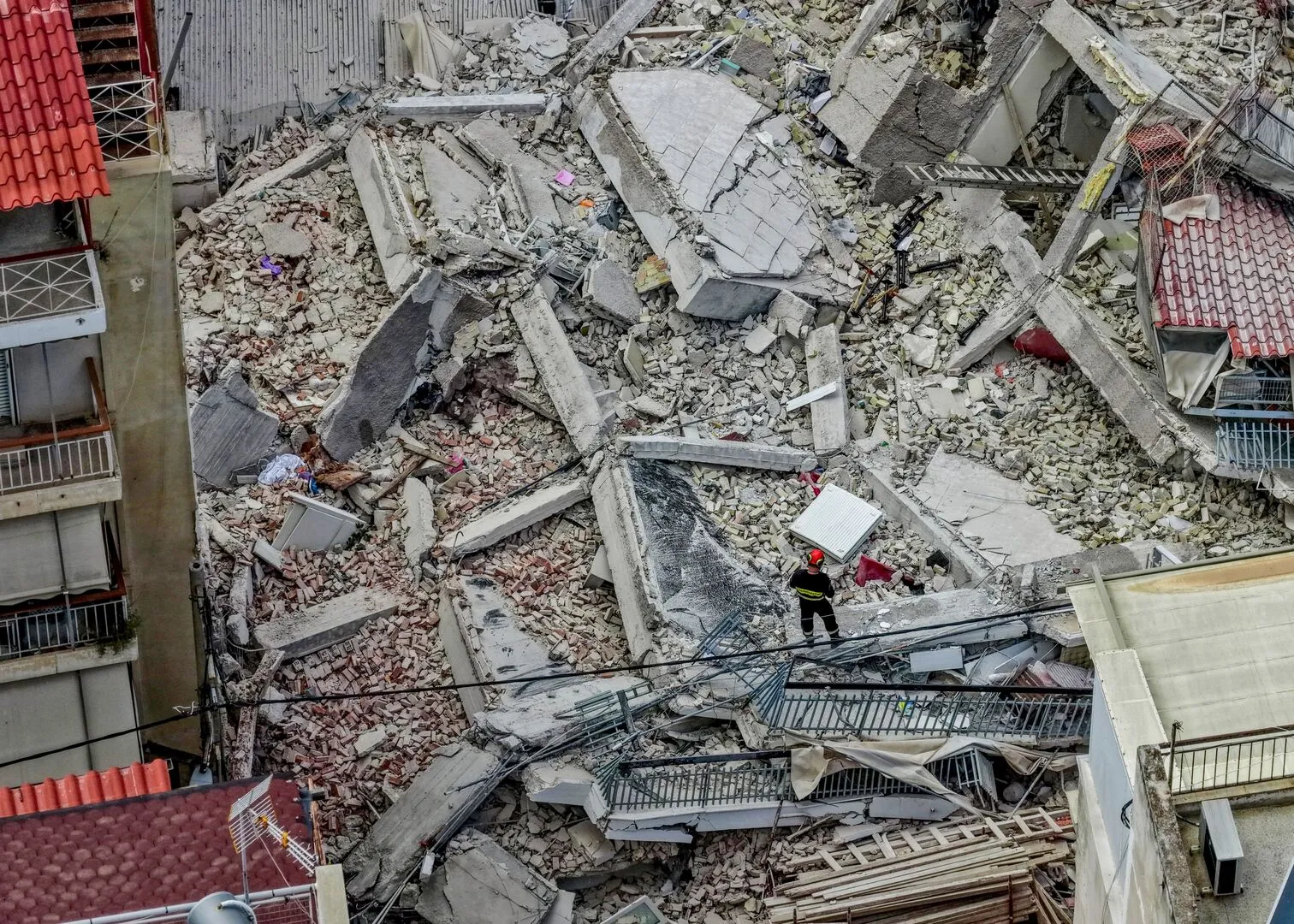
Rescue teams in Greece are combing through the rubble for survivors after a four-story apartment building in Athens collapsed on Tuesday. Four people have since been rescued from beneath the debris. Authorities are still investigating the cause of the collapse.

Source link

Monaco prosecutors say no ‘terror’ evidence after blast, suspect at large | Crime News

Search under way for suspect who fled scene after explosive device placed at entrance to residential building wounded three, authorities say.

Authorities in Monaco say at this stage have ruled out “terrorism” as a motive in an explosion that left three people wounded.

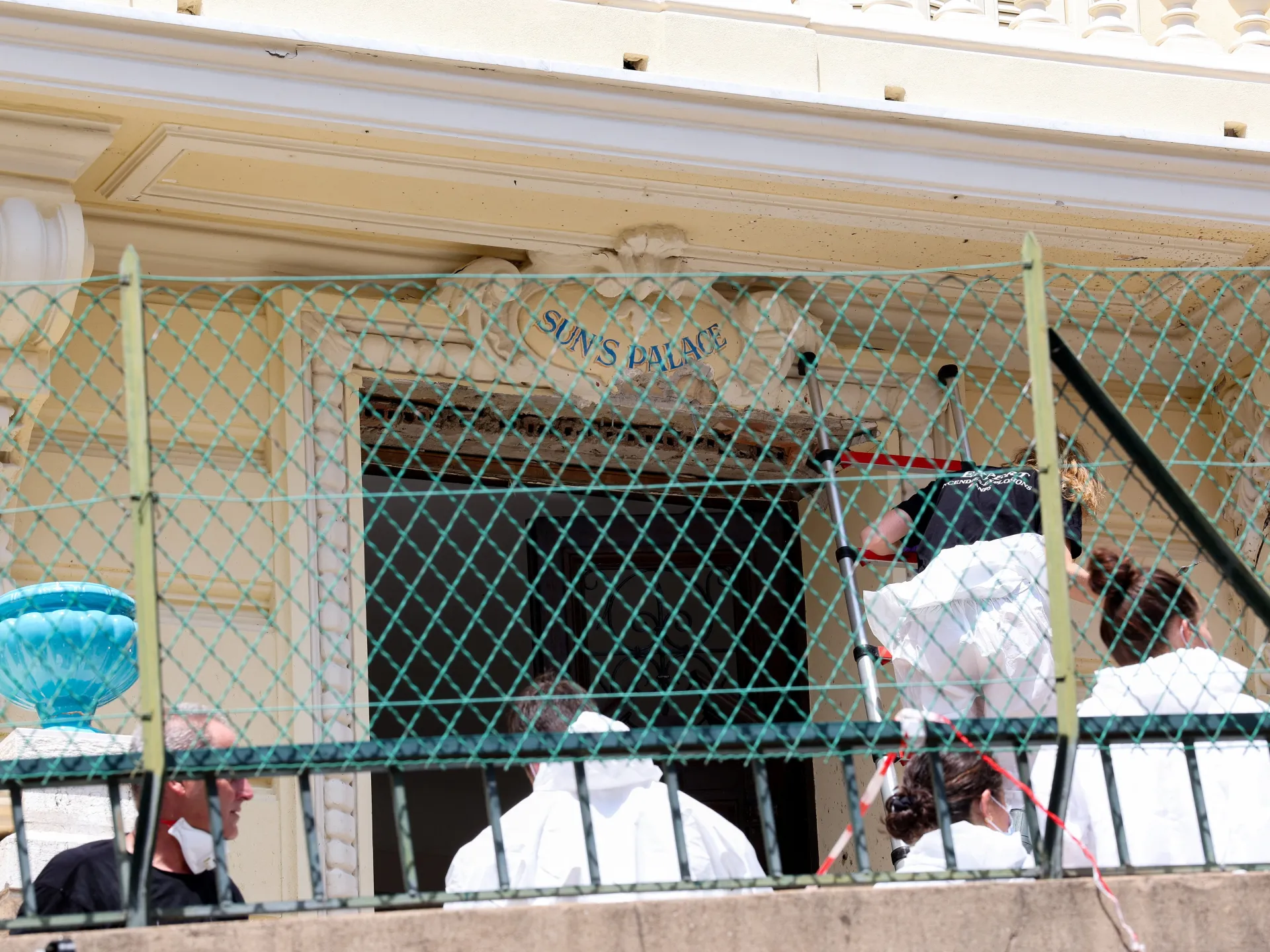
The powerful blast took place at the entrance to a residential building on Monday evening, after a man had apparently left a package there.

Prosecutor Stephane Thibault told reporters on Tuesday the suspect who fled on foot acted alone and remained at large.

security-camera footage showed the suspect walking in a street wearing a black jacket, light-coloured trousers, white shoes and a black hat that partly conceals his face.

Police have opened an attempted murder probe but are not qualifying it as a “terrorism” investigation, said Thibault, adding that the motive remained unclear.

‘Caught in the explosion’

One of the three injured is a woman in life-threatening condition, while her partner and a 13-year-old child suffered less severe injuries but remain in the hospital. Thibault did not provide their identities.

Media reports identified Ukrainian construction tycoon Vadym Yermolaiev as being among the injured. Ukrainian news site Ukrainska Pravda said he was targeted by Ukrainian sanctions in 2023 for alleged ties to Russia.

The three victims were “apparently returning home peacefully” in the early evening, according to surveillance footage, Christophe Mirmand, the minister of state for Monaco, told French news broadcaster LCI

“They were caught in the explosion as they crossed the threshold of their apartment building,” he said.

Ukraine’s Foreign Ministry said it ⁠was in touch with authorities in ⁠Monaco, saying the explosion wounded three people of Ukrainian ‌descent, who are members of one ⁠family. It did ⁠not name them, but said Ukrainian authorities are checking their citizenship.

Yermolaiev, a multimillionaire Monaco resident, has been subject to sanctions from Ukraine since December 2023, which Ukrainian security services reportedly said stemmed from his alcohol business activity in Russian-occupied Crimea.

Monaco is a microstate with a population of 38,000 people, where many ultra-wealthy people reside. It is considered to be one of the safest places in the world, with an extensive surveillance network of thousands of security cameras covering most public spaces.

Source link

What privacy settings has WhatsApp changed? | News

The app said it will be rolling out usernames gradually, in a move meant to improve privacy.

Change is coming for some three billion users of the world’s favourite messaging platform, WhatsApp.

The social media app owned by Meta will allow users to be identified by usernames instead of phone numbers, it said on Monday. WhatsApp is used in more than 180 countries and 60 languages, the platform says.

Recommended Stories

list of 3 itemsend of list

Users will soon be able to reserve unique handles, with a wider rollout planned for later this year.

The move is designed to improve privacy on the platform amid longstanding scrutiny over its data protection practices.

So what is changing, and how can you grab a handle no one else has?

What change has WhatsApp announced?

Users will soon be able to swap the phone numbers displayed on WhatsApp with usernames, the company said. Under the new system, which will commence later this year, users will be able to choose to be “findable” and contacted by their handles only.

The app said it has already begun allowing some users to reserve unique usernames before a bigger rollout later this year.

Why is WhatsApp making this change?

The messaging platform said the change is designed to improve privacy features, for which it and its parent company Meta have come under scrutiny in the past.

“We have designed this as a core privacy feature,” Alice Newton-Rex, WhatsApp’s vice president of product, told reporters.

According to the company, there will be no public directory of usernames and no autocomplete suggestions, meaning users will need to know someone’s exact username to reach them for the first time.

“When someone new walks into your life – a classmate, a neighbour, someone you meet at an event – sharing a phone number can feel like a big step,” a WhatsApp company blog post stated.

“That’s because a phone number is personal and it’s tied to so many parts of your life. Sometimes you just want to chat without handing over your digits.”

The company told one user on X that it has added multiple new features to help users defend themselves from scammers.

Optional username keys – or short numbered codes – can be added, which would mean people can only contact a user if they have both their username and its key, for example.

WhatsApp also said it will limit the number of new people any one account can contact as a guard against spam accounts, and that its systems can now detect and block “abuse patterns”.

How will the new usernames work?

Companies, organisations and creators with existing accounts on Meta’s other social media platforms – Instagram and Facebook – will have the opportunity to claim their usernames as handles on WhatsApp as well.

Usernames will have to be three to 35 characters. To prevent impersonation, WhatsApp will hold back usernames for high-profile people or groups, such as celebrities, public figures and government entities.

To reserve a specific username, WhatsApp said a user must download the latest version of WhatsApp, go to the Settings tab, the Account tab, and then the Username tab.

The reservation must be done with a smartphone – it cannot be done on WhatsApp Web or Desktop.

When will this change come into effect?

WhatsApp said it will roll out usernames gradually over the coming months and will notify users on WhatsApp when the new feature is available in their country. It has not given specific timelines.

To be prepared, the company told users to “make sure you have the latest version of WhatsApp downloaded and keep an eye on your app”.

What are WhatsApp’s current privacy features?

WhatsApp’s current privacy settings are limited to blocking individual users and silencing unknown callers.

Source link

FIFA World Cup: Tuesday schedule, predictions and eliminated teams | World Cup 2026 News

The Round of 32 has already delivered shocks, shootouts and scenes that will live long in World Cup memory.

After Paraguay stunned Germany and Morocco sent the Netherlands home on penalties, Tuesday brings three more games, with France, Norway and co-hosts Mexico all looking to avoid becoming the next big casualty.

Recommended Stories

list of 4 itemsend of list

Ivory Coast face Norway, France meet Sweden and Mexico take on Ecuador as three more places in the last 16 are decided.

Here is what we know:

What is Tuesday’s schedule?

  • Ivory Coast vs Norway (noon/17:00 GMT) at Dallas Stadium, Texas, in the US
  • France vs Sweden (5pm/21:00 GMT) at New York/New Jersey Stadium in the US
  • Mexico vs Ecuador (7pm/02:00 GMT on Wednesday) at Mexico City Stadium in Mexico

What is the prediction for Ivory Coast vs Norway?

This will be the first competitive meeting between Ivory Coast and Norway.

Ivory Coast have found European opposition difficult at the World Cup while Norway have traditionally fared well against African teams. They have lost only two of their 19 meetings with CAF nations across all competitions.

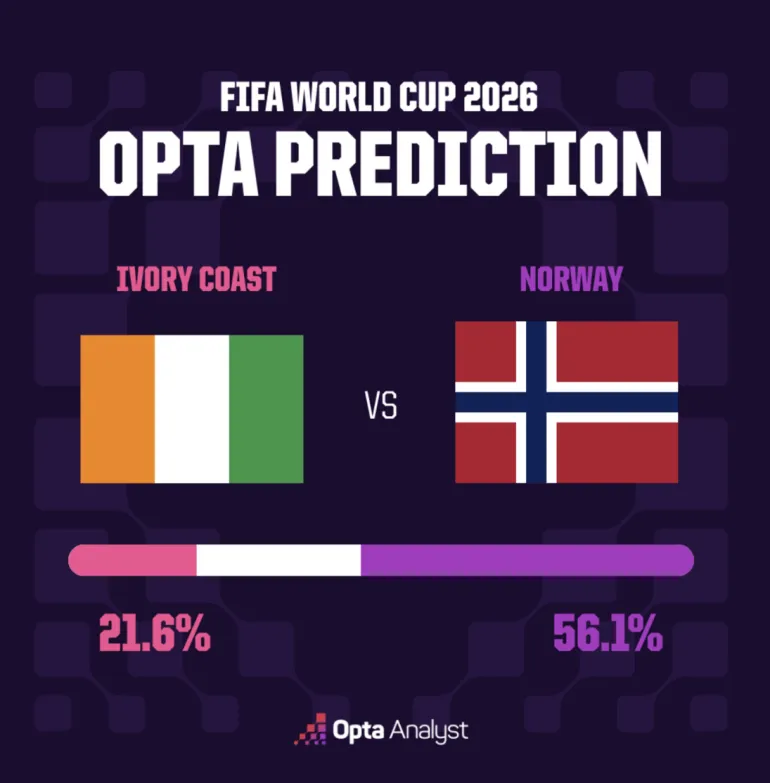
The Opta supercomputer calculates Norway as the clear favourites to progress.

Across 25,000 pre-match simulations, Norway won in normal time 56.1 percent of the time, while Ivory Coast claimed victory in 21.6 percent. A draw after 90 minutes, sending the tie to extra time, occurred in 22.3 percent of simulations.

Norway are also strongly backed to reach the Round of 16 and equal their best-ever World Cup finish, while Ivory Coast will need to produce one of the tournament’s biggest upsets to keep their campaign alive.

Yvory Coast vs Norway-

What is the prediction for France vs Sweden?

France and Sweden are familiar opponents, having met 23 times across all competitions. France hold the advantage with 12 wins to Sweden’s six, while five matches have ended level.

Despite that long history, this will be their first-ever meeting at a FIFA World Cup.

The Opta supercomputer gives France a commanding edge heading into the Round of 32.

Across 25,000 pre-match simulations, France won in normal time 75.1 percent of the time, underlining their status as one of the tournament favourites. Sweden were victorious in just 9.5 percent of simulations, while 15.4 percent of matches were level after 90 minutes and required extra time or penalties.

France vs Sweden

What is the prediction for Mexico vs Ecuador?

Mexico and Ecuador have met only once before at the FIFA World Cup, with El Tri claiming a 2-1 victory during the group stage of the 2002 tournament.

Recent meetings have been far more evenly matched. The sides are unbeaten against each other in their last three encounters, with all three ending in draws, raising the possibility that this Round of 32 tie could be decided beyond 90 minutes.

The Opta supercomputer gives the tournament co-hosts the edge but expects a competitive contest.

Across 25,000 pre-match simulations, Mexico won in normal time 47.1 percent of the time, compared with 23.7 percent for Ecuador. A draw after 90 minutes occurred in 29.2 percent of simulations, making extra time a realistic possibility.

Factoring in extra time and penalties, Mexico’s chances of reaching the Round of 16 rise to 61 percent, while Ecuador are given a 38.9 percent probability of progressing.

Mexico vs Ecuador

Which teams have advanced to the Round of 16 and who has been eliminated?

The tournament has now moved into the Round of 32.  So far, these teams have advanced to the Round of 16:

  • Canada (defeated South Africa 1-0)
  • Brazil (defeated Japan 2-1)
  • Paraguay (defeated Germany on penalties after a 1-1 draw)
  • Morocco (defeated the Netherlands on penalties after a 1-1 draw)

What else is happening?

Morocco stuns Netherlands on penalties

Morocco beat the Netherlands 3-2 in a penalty shootout to reach the FIFA World Cup last 16 after a dramatic 1-1 draw following extra time in Monterrey.

Goalkeeper Yassine Bounou was the hero, saving Crysencio Summerville’s penalty before Ismael Saibari fired home the decisive spot-kick to send Morocco through.

Morocco will now face Canada in the Round of 16 in Houston on Saturday.

The match appeared to be heading for a Dutch victory after Cody Gakpo, playing just days after he and his partner announced the loss of their unborn child, put the Netherlands ahead midway through the second half.

Gakpo’s emotional World Cup goal

Cody Gakpo broke down in tears after scoring for the Netherlands against Morocco, just two days after he and his partner announced the loss of their unborn child.

The forward chose to remain with the squad despite the tragedy and received a standing ovation from Dutch fans when he was substituted in extra time.

Netherlands' Cody Gakpo, kneeling, is congratulated by teammates after scoring his team's first goal during the World Cup round of 32 soccer match between the Netherlands and Morocco in Guadalupe, near Monterrey, Mexico, Monday, June 29, 2026. (AP Photo/Ricardo Mazalan)
Netherlands’ Cody Gakpo, kneeling, is congratulated by teammates after scoring his team’s first goal during the World Cup round of 32 soccer match between the Netherlands and Morocco [Ricardo Mazalan/AP]

Saibari celebrates with his mum

A heartwarming moment goes viral as Ismael Saibari, who scored the decisive penalty kick against Netherlands, celebrates Morocco’s big win with his mother on the pitch.

Germany suffers shock early exit

Germany’s campaign came to a stunning end on Monday as Paraguay pulled off one of the greatest upsets in tournament history, winning a dramatic Round of 32 tie on penalties.

Paraguay took a deserved 1-0 lead into half-time after Julio Enciso headed home from Matias Galarza’s cross in the 42nd minute.

Germany responded eight minutes into the second half when Kai Havertz glanced in Florian Wirtz’s cross to level the match at 1-1.

With neither side able to find a winner in extra time, the tie went to penalties. Havertz missed Germany’s opening spot-kick and the Germans failed to convert three of their five attempts, allowing Paraguay to seal a famous 4-3 shootout victory and book their place in the last 16.

Paraguay declares national holiday after stunning Germany

Paraguay President Santiago Pena declared Tuesday a national holiday after the country’s shock penalty shootout victory over Germany secured a place in the FIFA World Cup last 16.

Paraguay stunned the four-time world champions 4-3 on penalties after a 1-1 draw following extra time on Monday, pulling off one of the biggest upsets in World Cup history.

Paraguay became the second South American nation to declare a national holiday after a surprise World Cup victory over Germany. Ecuador was the first, doing so after its 2-1 group-stage win over the four-time champions.

Translation: Giant Paraguay! Today, an entire country celebrates. It celebrates the victory of a team that represents the deepest part of our identity: the grit, the faith, and the strength of a people who never give up. Thank you, Albirroja, for gifting us this immense joy and for once again uniting millions of Paraguayans under the same flag. Decree No. 6280: the best things are worth the wait. Let’s go Paraguay! 

US homeland security chief celebrates Iran’s exit

US Homeland Security Secretary Markwayne Mullin said he “danced a happy dance” after Iran were eliminated from the World Cup.

Iran missed out on the Round of 32 on goal difference after a stoppage-time winner against Egypt was ruled out for offside, with their elimination confirmed when Algeria and Austria drew 3-3 on Sunday.

Speaking during a World Cup briefing on Monday, Mullin said he was “glad they’re done, and they’re not coming back”, adding he was happy when Iran’s visas were revoked and the team left US soil. He also said Iran had required more attention from US authorities than any other team at the tournament.

The comments add to Mullin’s public dispute with the Iranian team. Earlier in the tournament, he alleged members of Iran’s travelling delegation had attempted to bring someone with ties to the Islamic Revolutionary Guard Corps into the United States, an accusation the Iran Football Federation dismissed as “false, fabricated and entirely baseless.”

Source link

‘Cancellations and delays possible’ during July 5 EasyJet strike in country

Pilots and cabin crew are set to strike on Sunday, with passengers facing cancellations and delays

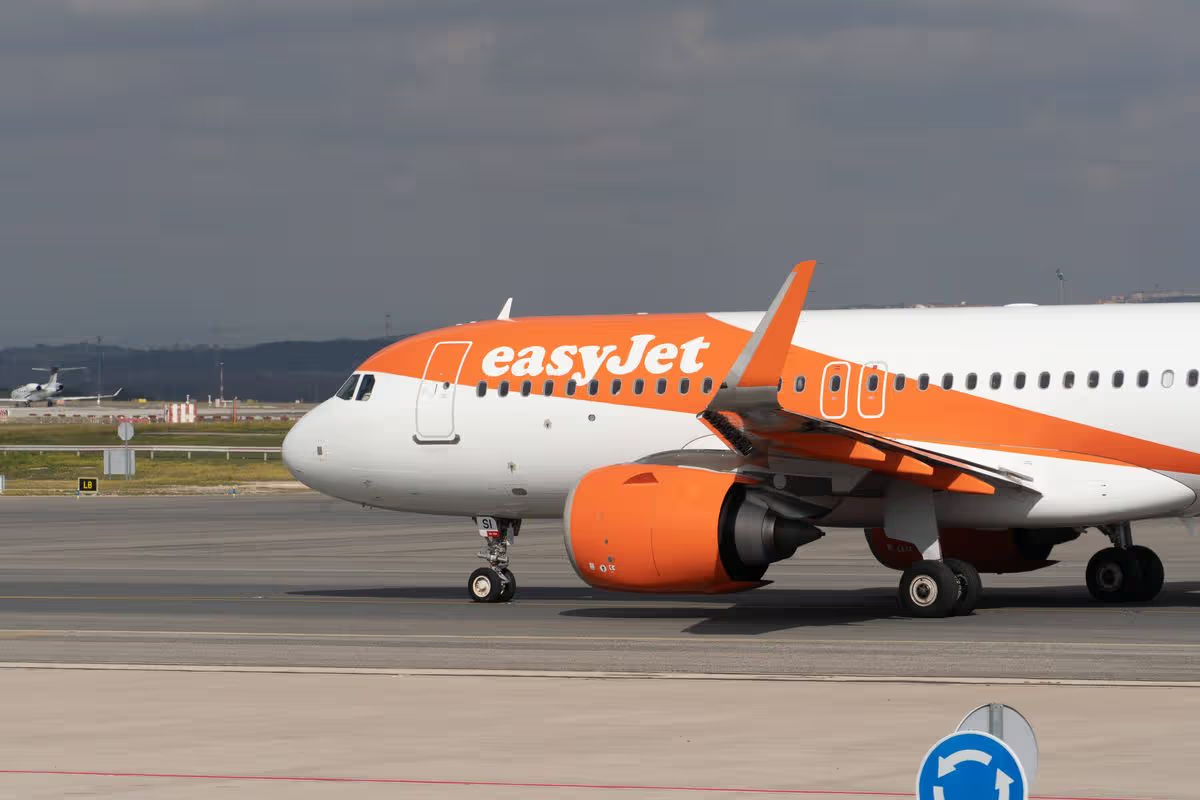
EasyJet passengers with travel plans should keep a close eye on their apps and emails for any last-minute updates arising from strike action in a popular holiday destination. Those flying to or from Italy on Sunday, July 5, face the risk of delays and cancellations.

Travel expert Kate Donnelly (@Thedonnellyedit) has reminded anyone who has trips booked to or from the European destination with the airline to monitor their inboxes carefully, as the situation could change at short notice. It comes as airline workers walk off the job this weekend, July 5.

She said: “If you’re travelling to Italy on July 5, you may well already be aware that multiple strikes are set to take place involving air traffic control and ground handling staff. But, now another one has been added to the calendar.”

Reports have confirmed that EasyJet’s Italian operation will strike on Sunday, July 5, with flights expected to be disrupted throughout the entire 24-hour period. According to the Strike Tracker website, the issue will last until midnight, with normal service expected to resume from Monday, July 6.

It says: “EasyJet pilots and flight attendants in Italy will stage a 24-hour national strike on July 5 (00:00-23:59), called by FILTCGIL, FITCISL, UILTUIL, UGL Trasporto Aereo and ANPAC. Flights to/from Italian airports may be cancelled or delayed. Travellers should check flight status with the airline.”

Content cannot be displayed without consent

Kate points out that this is an airline-specific issue, meaning it “won’t matter which airport you are arriving or departing from”. Any flight booked through EasyJet could potentially be affected, reports the Express.

She said: “If you are on an EasyJet flight, it could be impacted on this date. With this particular strike action, there is obviously the risk of delays, but also a higher risk of flight cancellations.

“Airlines will obviously do what they can to try and minimise disruption. Make sure you keep an eye on your app notifications and your emails because, if they do make changes ahead of the date, you will be notified directly by them first.”

Can I get compensation if EasyJet cancels my flight due to strike action?

If EasyJet reschedules your flight as a result of their own Italian pilots or cabin crew walking out, you are legally entitled to compensation. Internal staff strikes are not regarded as extraordinary circumstances.

If the airline can prove that your flight was rescheduled due to Air Traffic Control closing the skies or the airport’s baggage handlers staging a walkout, this is considered an “extraordinary circumstance”. In this case, you will receive a refund or be rebooked, but no additional compensation.

Even where the airline is not at fault, EasyJet is still legally obliged to take care of you. If your rescheduled flight leaves you stranded at the airport or stuck in Italy overnight, they are required to provide:

  • Free food and drink vouchers
  • Free hotel accommodation
  • Free transport between the hotel and the airport

To claim compensation or expenses from easyJet for a delayed or cancelled flight, you must submit a claim directly through the official easyJet Compensation Claims Portal or the easyJet Expense Claim Form. You will need your booking reference and your exact flight number.


Source link

WhatsApp to let users go by usernames, not phone numbers | Technology News

WhatsApp says the feature is designed to give its three billion users a new layer of control over who can contact them.

WhatsApp will let users go by usernames instead of phone numbers, closing a longstanding privacy gap on the app used by more than three billion people.

The Meta-owned platform said on Monday that it has begun letting users reserve unique usernames before a wider rollout later this year when people will be able to choose to be found and contacted only by their handles.

Recommended Stories

list of 4 itemsend of list

WhatsApp said the change was designed as a core privacy feature with no public directory of usernames and no autocomplete suggestions, meaning users will need to know someone’s exact username to reach them for the first time.

WhatsApp offers end-to-end encrypted communication across smartphones, tablets and desktop computers. Until now, it has allowed users to be contacted by anyone who has their phone number.

The app said in a blog post that over the “coming months”, users will get the option to be found and contacted only by their username, and not their number. It wasn’t more specific about the timeline.

“We have designed this as a core privacy feature,” Alice Newton-Rex, WhatsApp’s vice president of product, told reporters.

“People will need to know your exact username to contact you for the first time,” she said.

WhatsApp’s current privacy settings are limited to blocking individual users and silencing unknown callers.

The app also allows users to add a profile name, but that’s only displayed in chat groups for other people who don’t have the user’s contact info saved.

A scramble for unique usernames

While people in the United States still prefer text messaging to WhatsApp, the app is widely used in Europe, Asia and much of the rest of the world.

Catchy online handles are highly coveted, and users will likely scramble to claim a desirable one.

“I think a lot of people will go and get usernames, and that’s why we decided to open reservations early,” Newton-Rex said.

Companies, organisations and creators with existing accounts on Meta’s social media platforms, Instagram and Facebook, will get the chance to claim their usernames on WhatsApp.

Usernames need to be three to 35 characters. To prevent impersonation, WhatsApp will hold back usernames for high-profile people or groups, such as celebrities, public figures and government entities.

Source link