
monsitj/iStock via Getty Images

Central bank bottlenecks and massive import costs delay the impact of a $4B windfall.
War-torn Libya is pumping oil at its fastest pace in more than a decade, averaging about 1.4 million barrels per day in April, according to National Oil Corp. operating data.
Still, refining capacity, distribution networks, and subsidy-financed imports remain strained by years of institutional division since the 2011 conflict, when production fell sharply from about 1.5 million barrels per day to near-collapse levels during the civil war.
The imbalance reflects Libya’s fragmented downstream system, where crude oil exports continue but refining capacity, distribution networks, and subsidy-financed imports remain strained by years of institutional disruption since the 2011 uprising and the overthrow of longtime dictator Muammar Gaddafi, when production fell sharply.
The state-owned NOC reported $2.82 billion in gross oil revenue in April, followed by nearly $4 billion in May, the highest monthly intake in over 10 years, according to local energy reports citing official data. Crude flows through Es Sider, Ras Lanuf, and Zawiya terminals into Mediterranean markets, where it is priced against Brent-linked benchmarks.
Translating stronger production and upstream earnings into direct benefits to the state and its people remains challenging, however.
The May surge coincided with a sharp increase in fuel imports; NOC Chairman Masoud Suleman confirmed the contracting of 17 gasoline tankers, the highest monthly fuel import volume in Libya’s history. Even as import activity rose, several cities in western Libya reported fuel shortages and long queues at filling stations, exposing persistent breakdowns in domestic distribution.
The cash conversion of oil earnings is still structurally uneven. In April, only $1.91 billion of $2.82 billion in gross revenue reached the Central Bank of Libya after fuel-import and settlement deductions routed through the Libyan Foreign Bank mechanism. That left roughly $910 million stuck within upstream settlement layers awaiting final transfer into the sovereign liquidity system.
On June 3, the central bank launched a $3.5 billion foreign currency allocation program to cover letters of credit (LOCs), foreign transfers, and retail foreign-currency demand, according to Libyan financial disclosures, amid persistent import financing pressure on food, fuel, and industrial inputs.
The central bank sits at the center of this fiscal roundelay. It is the sole legal recipient of hydrocarbon revenues and converts inflows into domestic liquidity for salaries, imports, and foreign exchange allocations, making it the clearing hub for the national economy.
That role has repeatedly placed it at the center of political escalation. Last August, a dispute over central bank leadership triggered a production shutdown in the eastern half of the country that quickly cut output from nearly 959,000 barrels per day to 591,000, according to NOC data. The United Nations Support Mission in Libya warned that disruption of the central bank’s clearing function would freeze LOCs and salary payments, given that hydrocarbons account for more than 90% of export earnings.
The underlying political structure remains split between the UN-backed Government of National Unity in Tripoli and the Government of National Stability based in Benghazi and Tobruk in the east; UN mediation is ongoing, but national elections remain stalled. A rare shift occurred on April 11, however, when the rival eastern and western legislative bodies signed a landmark agreement to unify public spending, creating Libya’s first consolidated budget framework since 2013.
Production recovery continues. Libya is targeting 1.6 million barrels per day by the end of 2026, supported by the rehabilitation of mature fields across the Sirte and Murzuq basins and incremental drilling gains.
Investment is also returning at scale.
In February, Libya awarded oil and gas exploration licenses for the first time in 17 years, granting acreage to Chevron, Eni, QatarEnergy, and Repsol, alongside other global operators competing for the Sirte, Murzuq, and offshore Mediterranean blocks. The round followed broader upstream agreements involving TotalEnergies and ConocoPhillips, BP, Shell, and ExxonMobil, signaling renewed international exposure to Libya’s estimated 48.4 billion to 50 billion barrels of proven reserves, the largest in Africa.
Libya’s constraint is now fiscal rather than geological, the analytics firm Geopolitical Desk notes; production has stabilized, but “funding flows remain irregular, procurement cycles constrained, and fiscal authority contested across parallel administrations.”
The result is a landscape where record output, rising revenues, and partial political coordination coexist with fragmented financial execution, ensuring that Libya’s oil recovery is measured in barrels but constrained in how fully it translates into state power.

Tickets to watch the U.S. dominate Paraguay 4-1 on Friday night at Inglewood’s SoFi Stadium cost a fortune. But roughly nine miles north, fans such as Jose Santiago and Ivan Gonzalez enjoyed the match at a fraction of the price.
The pair each paid $10 for a ticket to watch the Stars and Stripes flourish in their first World Cup game on home soil in 32 years on big screens at the packed Coliseum on Day 2 of the Los Angeles FIFA Fan Festival.
“We bought these tickets [at the] last minute, not knowing what to expect,” said Santiago, of Fullerton. “And so far, we’ve been blown away. We definitely want to come back.”
“It’s dope,” added Gonzalez, of Yorba Linda. “You feel it. You feel the game. You feel the atmosphere. It’s fun. Everyone’s into it right now.”
Food and drink options. Pop-up tents featuring brands such as Galaxy and LAFC. A rare on-field experience at the home of USC football. And, of course, some good ‘ol collective effervescence.
“It makes you still feel like you’re a part of it,” Santiago said of his viewing experience. “It still makes you feel like you’re at the stadium, because we’re all watching the game.”
The U.S. took care of business in its World Cup opener. Presumably, those who could afford the intimidating ticket and parking prices at SoFi Stadium considered the experience worthwhile.
Santiago and Gonzalez, however, spoke for many who cherished their inexpensive night at the Coliseum, in the City of Angels itself, during their nation’s statement victory.

Fans cheer during a watch party at the Coliseum during the U.S. win over Paraguay Friday night.
(Mario Tama / Getty Images)
Several other attendees would agree — even those who aren’t backing the U.S.
Take Charlotte Cabeca, a 37-year-old from downtown L.A., is primarily rooting for Colombia — as well as “anybody from South America” — but was still grateful for the opportunity to watch the beautiful game with other fans at a bargain.
“It’s so fun,” Cabeca said with a laugh, as “USA” chants rang in the background. “It’s a really kid-friendly and family-oriented [environment.] It’s not as hectic as I had anticipated.”
Cabeca said she’ll attend more fan events in L.A. throughout the tournament, as Friday marked “the closest we can get [and] that we can afford” compared to actually attending a World Cup match.

U.S. fans celebrate during a watch party at the Coliseum as Americans beat Paraguay during the World Cup Friday.
(Mario Tama / Getty Images)
Perhaps more important, though, Cabeca appreciates the community engagement unfolding before her eyes.
“I love that the city is coming together,” Cabeca said. “I feel the unity. And even these fanfests, they bring us together. So even if we’re not at the game, it still brings all of us together as a country.
“It’s awesome. The traffic is not helpful, but other than that, it’s exciting. I really feel like everybody is for soccer right now, and that’s what we need right now to heal and be happy together.”
While Friday was a night of smiles, chants and relative affordability, there remain fans who wish FIFA and the U.S. would do more to make the World Cup more accessible, particularly by making everything, well, cheaper.
“Obviously, football is a very hard sport to monetize, because we don’t have the breaks like the NFL,” Kunal Mehrotra, a 25-year-old soccer fan from Koreatown, prefaced before saying, “Without the fans, it isn’t really a World Cup. So, it is disappointing from the U.S., and it’s not just the tickets. … It really shows that the U.S. is in it for the money and not at all for the football, which is disappointing.”
“It’s pretty ridiculous,” added Monica Unzueta, a Maywood resident and fan of Mexico and Spain. “But aye, at least FIFA’s holding some events. I mean, they should be free. But, I don’t know — that’s just FIFA.”
While they’d rather attend a World Cup game live, as Mehrotra and Unzueta noted, that isn’t realistic for most residents.
So, nights such as Friday at the Coliseum are the next-best thing.

A fan wears an American flag during a World Cup watch party at the Coliseum on Friday.
(Mario Tama / Getty Images)
And for fans such as Tyler David, a 24-year-old from Tampa, Fla., the trip to the home of the Trojans couldn’t have gone better.
“Beyond belief,” David said. “And it’s so cool to see everybody and the cultures colliding. Love it.”
Oh, and the USA’s big victory was splendid for fans too.
“Dude, absolutely magnificent,” David said, in disbelief of the U.S. leading 3-0 after 45 minutes against Paraguay. “Christian Pulisic, [coach Mauricio] Pochettino, all the guys, [Timothy] Weah. They’re playing at the top of the charts right now. I love to see it on the home soil in L.A.
“It’s getting me fired up; the fan base, the environment, the atmosphere — through the freaking roof.”
The Washington institution cut its global growth forecast by 0.4 percentage points to 2.5 percent, citing surging energy prices, inflation and borrowing costs.

Published On 11 Jun 202611 Jun 2026
The conflict in the Middle East is set to bring global economic growth to its slowest since the COVID-19 pandemic, the World Bank has warned.
In its latest Global Economic Prospects report, published on Thursday, the Washington-based institution cut its global growth forecast for 2026 to 2.5 percent from the 2.9 percent it had predicted in January, citing surging energy prices, rising inflation and higher borrowing costs.
list of 3 itemsend of list
The report highlights the significant economic costs of the conflict, which is at risk of flaring up again, as the fragile ceasefire between the United States and Iran is tested on both sides.
The analysis warns that the outlook could decline further if supply disruptions worsen. Iran’s closure of the Strait of Hormuz – a vital passageway for oil and gas transit – in response to the hostilities launched by the US and Israel has put huge stress upon global energy and other supply chains.
The World Bank estimates that Brent crude prices — the international oil benchmark — will average $94 a barrel this year, 36 percent above last year’s average. Fertiliser prices are forecast to increase significantly this year, with knock-on effects for food prices.
Overall, the closure of the strategic waterway will help to push global inflation to 4 percent this year, a substantial increase from last year’s rate of 3.3 percent.
However, the World Bank cautions that global growth could plummet to as low as 1.3 percent this year, should energy supply disruptions worsen, with inflation pushing to 4.4 percent.
The World Bank report also cautions that developing countries are on the front line of the potential impact.
In its report, the institution has downgraded its growth forecasts for two-thirds of countries since January. Global growth is expected to improve to 2.8 percent in 2027, but will remain 0.4 percentage points below the average during the 2010s, during which the world economy was recovering from the global financial crisis.
Excluding China and India, the report worries that developing countries have made little progress towards narrowing their per capita income gap with wealthy nations over the past decade.
“Developing countries have faced a series of challenges over the last decade,” said Ajay Banga, president of the World Bank Group. “The impact differs by country, but the basic test is the same: protect people and preserve stability today, without giving up on growth and jobs tomorrow.”
The World Bank is pledging to assist any developing country experiencing the economic fallout of the Middle East conflict. The organisation says it has set aside up to $60bn to help. It added that if the conflict persists, it can increase its support to $100bn.
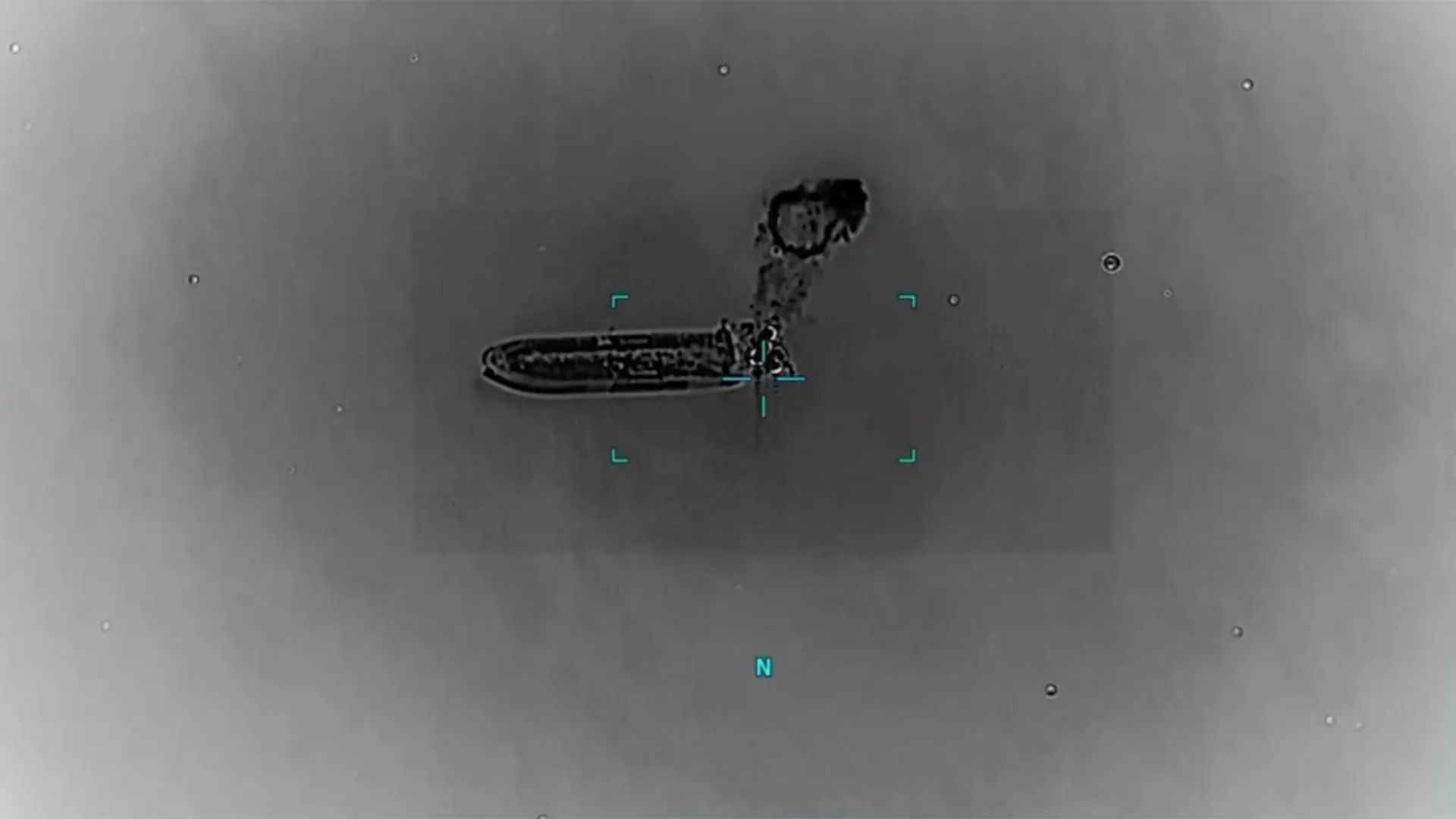
A US strike on an oil tanker accused of transporting Iranian oil has killed three Indian sailors. It was the second attack in three days on a ship carrying crew members from India.
Published On 11 Jun 202611 Jun 2026
Share
The European Fiscal Board (EFB) criticized the European Commission for allowing some of the defence spending leeway from last year to be used for transitioning to clean energy. Last year, the Commission allowed EU governments to spend an extra 1.5% of GDP annually for four years on defense against potential attacks from Russia, using a national escape clause due to uncontrollable events.
Italy, facing high fuel prices from the U. S.-Israeli war on Iran, sought more fiscal flexibility from the EU to help manage costs ahead of elections. The Commission agreed to permit 0.3% of that 1.5% for the clean energy transition. EFB Chairman Pieter Hasekamp stated that the energy crisis should drive transformation rather than increased spending, urging that fiscal credibility is critical to minimize borrowing costs.
The EFB emphasized the importance of adhering to previously agreed spending paths to reduce debt, noting that many EU countries still need to cut back post-pandemic stimulus. They expressed concern that extending escape clauses for energy could lead to excessive and untargeted financial support. The board also advised that if oil prices remain high, governments should prioritize public investment over efforts to sustain consumer demand.
With information from Reuters
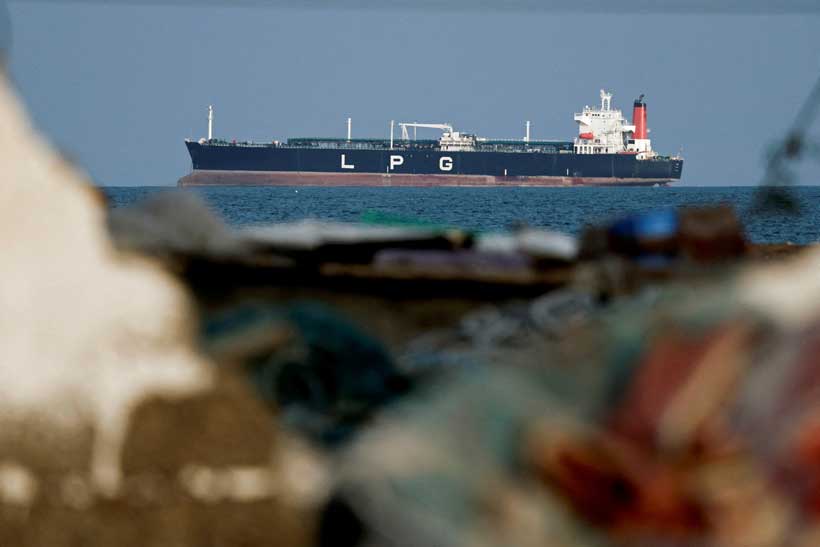
Oil shipments passing through the Strait of Hormuz have quietly increased in recent weeks, but traders say the movement reflects a fragmented and opaque energy market rather than a full recovery in global supply flows.
More than four months into the ongoing conflict involving Iran, tanker traffic remains heavily disrupted, with shipping patterns increasingly shaped by risk, secrecy and shifting political arrangements.
Shipping data suggests that only a small number of tankers are currently crossing the Strait of Hormuz compared with pre conflict levels.
Monitoring firms including LSEG and Kpler estimate that an average of just a few vessels per day are now passing through the strait, far below normal volumes.
Despite this, analysis of oil stored on tankers in the Gulf indicates that outflows have gradually increased, suggesting more crude is leaving the region than official shipping visibility shows.
A growing share of tankers are reportedly turning off tracking systems during transit through the strait, a practice known as going dark.
This involves disabling Automatic Identification System signals, making it harder to track vessel movements in real time.
According to shipping analytics firms such as Vortexa, a large majority of outbound tankers recently used this method, reflecting rising caution among operators.
This has made it significantly harder for markets to accurately assess global supply flows and has increased uncertainty in oil pricing.
One key indicator of market movement is the volume of oil stored on ships inside the Gulf, often referred to as oil on water.
Estimates from Kpler suggest that volumes have fallen from a peak of around 184 million barrels in March to roughly 148 million barrels more recently.
This decline indicates that more oil is gradually leaving the region, even if it is not fully visible through standard tracking systems.
Analysts estimate that outflows have increased over recent weeks, suggesting a slow and uneven recovery in shipping activity.
The ongoing conflict involving Iran has significantly disrupted maritime trade through the Strait of Hormuz, one of the world’s most important oil transit routes.
Limited access to the strait has forced producers to reduce output in some cases, while storage constraints have added pressure to supply chains across the Gulf.
Some shipping routes are reportedly being managed through informal arrangements or alternative corridors, while others rely on higher risk transit strategies to avoid detection or confrontation.
Despite signs of increased movement, analysts warn that the situation is far from a return to normal.
A sustained recovery in oil flows would require consistent shipping access, stable security conditions and sufficient tanker availability to support exports.
Many shipowners remain reluctant to operate in the region due to elevated insurance costs and the risk of vessels being stranded or targeted.
Industry observers warn that even if diplomatic progress leads to a formal reopening of the strait, the global oil market may not return to previous conditions.
There is growing discussion that Iran could attempt to impose tolls or control systems on shipping through the waterway, which would fundamentally alter global energy logistics.
Such a scenario could force Gulf producers to seek alternative export routes or invest in new infrastructure to reduce dependence on the strait.
The situation in the Strait of Hormuz highlights a shift from predictable global energy flows to a more fragmented and opaque system.
While oil continues to move out of the Gulf, the lack of transparency in shipping routes is creating uncertainty for traders and pricing benchmarks.
The increased use of stealth navigation and alternative transit arrangements reflects a market adapting to geopolitical risk rather than resolving it.
As long as tensions persist, energy markets are likely to remain volatile, with supply visibility as important as supply itself in determining global prices.
Oil shipments through the Strait of Hormuz are slowly increasing, but hidden tanker movements and ongoing conflict mean the global energy market remains deeply uncertain. Without stable political conditions and transparent shipping routes, a full recovery in oil flows is unlikely in the near term, keeping traders cautious and markets volatile.
With information from Reuters.
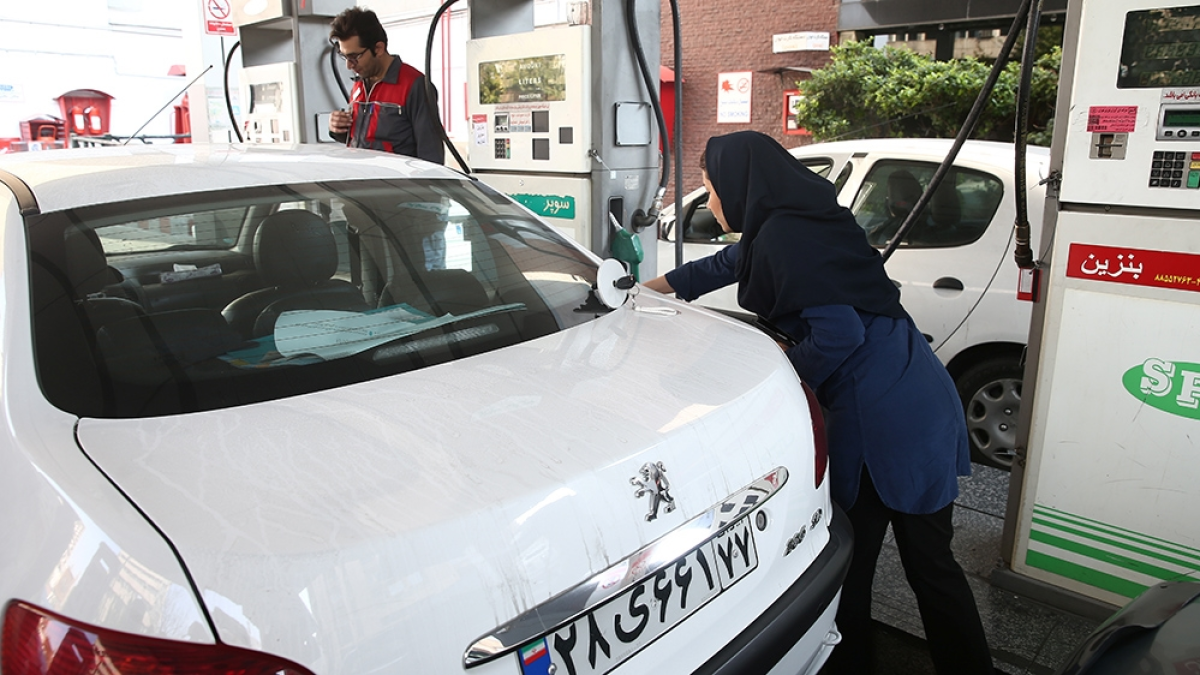
Tehran, Iran – Iran is facing more energy constraints as its summer season begins, with the widespread use of air conditioning and other needs during hotter months contributing to an imbalance between supply and consumption.
For decades, successive Iranian governments have kept utility bills well below supply costs for households and offices through a mix of implicit oil-and-gas subsidies, administered tariffs, state-controlled pricing, and sometimes direct financial support.
The negative impacts of the war with Israel and the United States on the economy mean the government has fewer tools at its disposal to deal with an energy crisis this summer.
Despite having the world’s third-largest proven crude oil reserves, Iran will have to import fuel again as demand outpaces refinery output.
President Masoud Pezeshkian has repeatedly urged households and offices to take practical steps to limit energy consumption. Last week, he removed his jacket during a government meeting to demonstrate how Iranians can avoid turning down their air conditioning thermostats in their offices.
Even though energy costs for households are much lower than in other parts of the world, corruption, mismanagement, sanctions, chronic inflation and currency devaluation have eroded the benefits Iranians usually feel from subsidised energy prices.
In November 2019, the government announced a tiered gasoline price scheme that would see huge increases for some consumers. This sparked nationwide protests, and since then, the government has been wary about similar price hikes.
While inflation has galloped on, continued subsidies have kept fuel artificially low.
The administration’s attempts to tackle the subsidies burden due to a mounting budget crunch have resulted in only limited increases in petrol through a complex three-tiered pricing system.
This is applied via a government-issued fuel card, giving most users of Iranian-made vehicles access to 60 litres (15.85 US gallons) per month of subsidised petrol at 15,000 rials (0.8 cents) and another 100 litres (26.42 gallons) at 1.6 cents.
Iranians going over this amount then must use an “emergency card” issued at petrol stations, permitting them to an additional 30 litres (7.9 gallons) of fuel a day at 50,000 rials (about 2.9 cents) per litre.
After a new cap was imposed during the war to limit fuel consumption, each card allows only 30 litres of fuel a day. Petrol stations are issued their own “emergency card” for uses beyond this limit.
Due to supply constraints, staff at petrol stations have now reportedly been instructed to limit the use of these cards to 10 to 15 litres (up to 4 gallons) or asked not to issue any new cards at all to customers.
The Iranian government is running similar schemes for natural gas, electricity and urban water, with fears of social unrest making them averse to any sudden price hikes.
There appears to be little the government can do to bridge the divide between lower energy production and growing demand for subsidised fuel, illustrated by the perpetual queues at petrol stations since the start of the war.
“Reforming and increasing the price of energy is currently not feasible and logical due to the current economic conditions and social concerns,” Esmail Saghab Esfahani, a vice president of the state-linked Organization for Energy Optimization and Strategic Management, said earlier this week.
There have been some changes to pricing structures, but this is impacting small businesses that are already struggling with the dire economic conditions in Iran.
One 35-year-old owner of a welding workshop near Tehran, who asked to remain anonymous, told Al Jazeera that a surge in his monthly energy bill from 40 million rials ($23) per month in the previous Persian calendar year to three times that today.
“I went to the electricity company, and they only kept saying the tariffs have gone up,” he said.
“I had a similar message from a friend who is paying much more now for roughly the same usage as before, so it looks like we’re to pay for the cost of war.”
Authorities say that any complaints about escalating bills will be reviewed. They also have a system where normal household energy consumption is kept artificially low, but excessive users can be billed as much as 45 times the normal prices.
Despite having the second-largest proven natural gas reserves in the world, Iran still suffers from perpetual supply shortages during its winter and summer, when consumption is at its highest.
The situation has worsened during the war, with strikes on Iranian energy facilities seeing Iran’s gasoline production capacity drop marginally from 115 million litres (30.37 million gallons) per day to 110 million litres (29.06 million gallons). Meanwhile, consumption has jumped from 10 million litres (2.64 million litres) in 2025 to 140 million litres this year (36.98 million litres).
US President Donald Trump’s threats of more strikes on power plants have heightened fears of further blackouts and gas shortages this summer, meaning the energy crisis is likely to continue in the coming months.
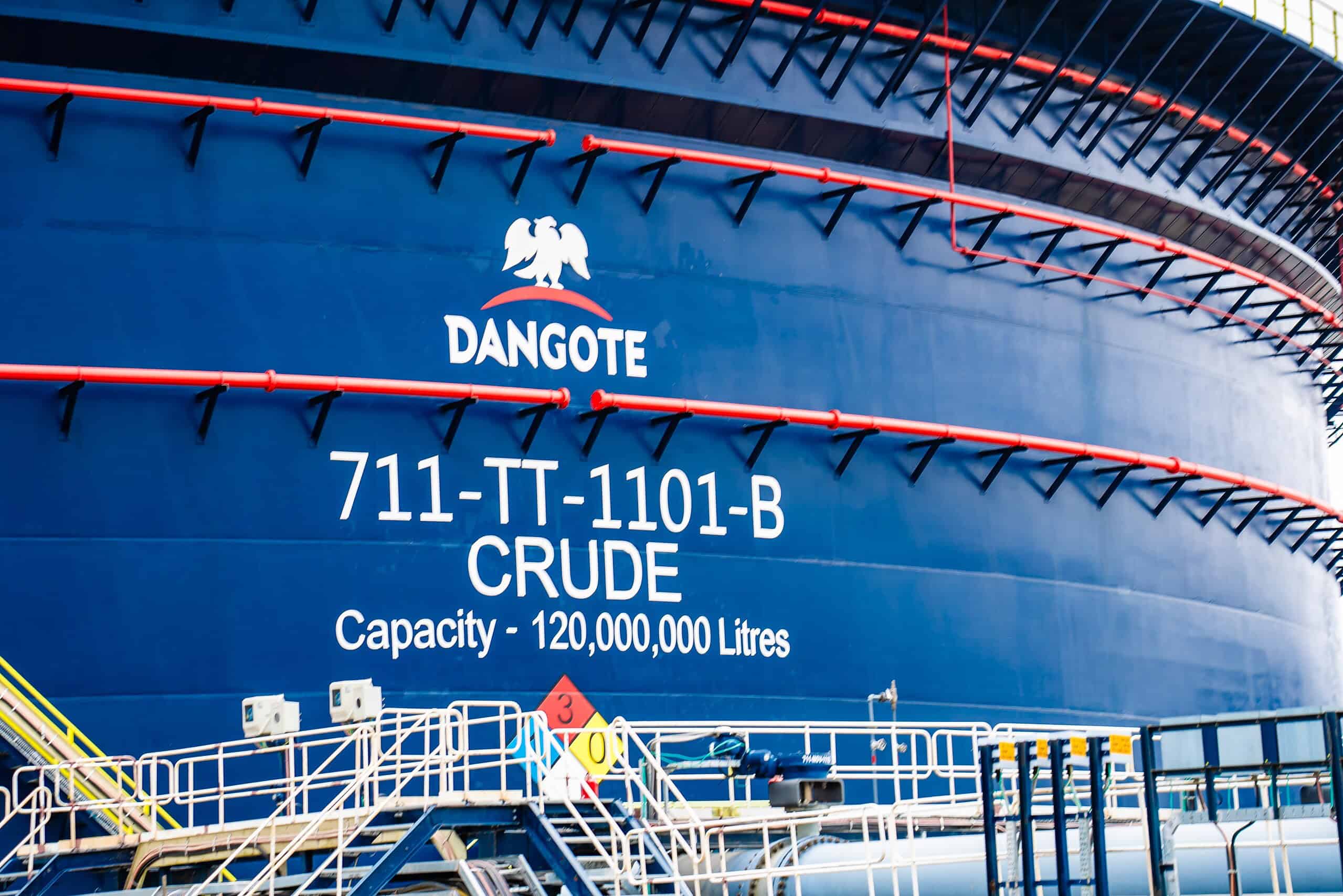
A $50 billion refinery valuation tests liquidity across African capital markets.
Dangote Refinery’s initial public offering is shaping up to be one of the most historic capital markets events for the continent—a referendum on whether Africa can mobilize the liquidity and investor confidence required to finance a globally competitive industry.
Chinenyem Anyanwu, CEO of Lagos-based Dependable Securities, said the offering is attracting both institutional investors and first-time investors, including Nigerians in the diaspora.
“The expectation is very high among the investing public,” Anyanwu tells Global Finance. “Some are Nigerians outside the country, while others are foreign investors looking for exposure to a strategic African industrial asset.” Aliko Dangote, chairman of the Dangote Group, disclosed that requests for private placement had surpassed $2 billion.
Speaking during a visit by executives from First HoldCo, the parent company of First Bank of Nigeria, Dangote said the company would be unable to meet all requests. He added that the response demonstrates investors’ confidence in the project.
Interest has also come from prominent Nigerian investors. Femi Otedola, chairman of First HoldCo, has said he plans to invest $100 million in a private placement ahead of the IPO, with proceeds from the sale of his stake in Geregu Power.
Although early market estimates put the refinery at about $50 billion, Dangote has said advisers are still determining the final valuation. Despite plans to offer only 10% of the equity to the public, the IPO would still be unprecedented for African exchanges.
“Ten percent of the refinery is still a substantial offering,” Anyanwu said. “It is larger than the market capitalization of many companies currently listed on the Nigerian Exchange, so demand is unlikely to be a problem.”
The refinery, which began operations in 2024, has already begun reshaping Nigeria’s energy trade by reducing reliance on imported fuel and positioning the country as an exporter of refined petroleum products. Built at an estimated cost of $20 billion, the 650,000-barrels-per-day facility in Lagos, where Dangote Group is headquartered, is expected to expand capacity in the coming years.
This article appears in the June 2026 issue of Global Finance Magazine.


Kim Hyun-tae, executive director of product planning and strategy for LG Energy Solution’s energy storage system business division, speaks Friday at the second Asia Today Environment Forum at The Plaza Seoul. Photo by Asia Today
May 29 (Asia Today) — LG Energy Solution sees the electric vehicle slowdown as an opportunity to expand its energy storage system business as artificial intelligence data centers drive surging electricity demand, a company executive said Friday.
Kim Hyun-tae, executive director of product planning and strategy for LG Energy Solution’s energy storage system business division, said the EV “chasm” has created risks but also opened a path for the company to shift more aggressively into ESS.
“In the carbon-neutral era, we must move beyond simply increasing renewable energy and improve both grid stability and energy efficiency,” Kim said.
Kim made the remarks at the second Asia Today Environment Forum held at The Plaza Seoul, where he gave a presentation titled “LG Energy Solution’s vision for power grid stabilization and decarbonization.”
He outlined LG Energy Solution’s strategy for shifting toward ESS and responding to electricity infrastructure needs in the AI era.
Kim said South Korea’s battery industry had built large-scale production bases in the United States, viewing it as a core automotive market. But the market contracted after the second Trump administration took office and reduced electric vehicle subsidies while changing related policies.
“We secured new business plans by proactively converting U.S. plants from EV-centered production to ESS production,” Kim said.
LG Energy Solution produces ESS products in South Korea, Europe and the United States, Kim said. Its ESS production capacity in North America is now about 50 gigawatt-hours, and the company plans to expand that to more than 80 gigawatt-hours by next year.
“The United States has the highest ESS demand after China,” Kim said. “An ESS boom is taking place in the United States because investment subsidies of at least 30% and as much as 60% are provided when ESS and renewable energy facilities are built.”
Kim said the spread of AI data centers is also driving ESS demand.
“AI data centers are called a hippopotamus that eats water and electricity because they consume enormous amounts of power,” Kim said. “Nvidia’s next-generation Rubin graphics processing unit is expected to consume about four times more power than the Blackwell chip currently being sold, so securing stable power is essential.”
Kim said global Big Tech companies are focused on “time to power,” or how quickly new power capacity can be secured.
“Because connecting to existing power grids takes a long time, demand is growing for quickly building onsite and off-grid power sources that combine solar power, ESS and small gas turbines,” he said.
Kim also proposed an ESS-based distributed power grid model as an alternative to delays in building new transmission networks.
“Large-scale electricity demand sites are increasing, such as the Yongin semiconductor cluster, but building new transmission networks or high-voltage direct current systems usually takes six to seven years,” Kim said.
“For example, a realistic alternative could be storing electricity generated from renewable energy in the Honam region in ESS and then using existing transmission networks to distribute it to demand centers,” he said.
In the medium and long term, Kim said sodium-ion batteries, sometimes called “salt batteries,” could become a game changer in the ESS market.
“When renewable energy’s share expands to about 50%, large-scale ESS will be needed to offset intermittency, but costs are currently high,” Kim said. “LG Energy Solution plans to test sodium-ion batteries that can replace lithium in the United States in 2027 and pursue large-scale commercialization in 2029.”
Kim also said the global ESS market is being reshaped around domestic protectionism.
“The United States is encouraging the use of U.S.-made products through subsidy policies based on the Inflation Reduction Act, and Europe is also pursuing the introduction of the Industrial Accelerator Act, which is being called a European version of the IRA,” Kim said. “In a blocked supply chain environment, policy consideration is also needed to protect domestic industries and strengthen supply chain competitiveness.”
Kim said LG Energy Solution is building a decarbonization system that includes its supply chain and recycling operations as it works toward achieving RE100 by 2030 and carbon neutrality across its value chain by 2050.
— Reported by Asia Today; translated by UPI
© Asia Today. Unauthorized reproduction or redistribution prohibited.
Original Korean report: https://www.asiatoday.co.kr/kn/view.php?key=20260529010008771
Japan’s stock market surges to record high on hopes of an end to US-Israel war on Iran.

Published On 25 May 202625 May 2026
Oil prices have fallen sharply amid tentative hopes for a deal to end the US-Israel war on Iran.
Brent crude, the primary benchmark for global oil prices, fell about 5 percent on Sunday as US President Donald Trump gave mixed signals on the prospects for a permanent end to the conflict.
list of 4 itemsend of list
Brent futures for July stood at $98.47 a barrel as of 01:05 GMT, down about 9 percent from a month ago but still up by more than a third compared with before the start of the war.
Japan’s benchmark stock index, the Nikkei 225, surged more than 3 percent in morning trading, hitting an all-time high after closing at a record peak on Friday.
Trump said in a social media post on Sunday that negotiations with Tehran were proceeding in an “orderly and constructive manner”, but he had instructed officials “not to rush into a deal”.
“Both sides must take their time and get it right. There can be no mistakes!” Trump wrote on Truth Social.
Trump’s remarks came after he raised hopes for a breakthrough on Saturday by announcing that a deal had been “largely negotiated,” with the terms including the reopening of the Strait of Hormuz.
“Fundamentally, there is no change to the underlying picture, where 10-11 million barrels per day of crude oil continue to be shut-in for every day the Strait of Hormuz remains shut,” June Goh, a senior oil market analyst at Sparta in Singapore, told Al Jazeera.
“However, markets are expecting a gush of 100 million barrels of crude oil from the stranded ships to flow out once the deal is in place.”
Goh said markets are likely to remain on edge for some time after any deal is finalised.
“Sparta estimates still about three to six months required to get everything back to status quo, including time to bring production and refineries back online,” Goh said.
Iran has effectively blockaded the strait since the start of the war in late February, disrupting about one-fifth of the global oil trade.
The US has imposed its own blockade of Iranian ports since mid-April, further disrupting commercial shipping in the waterway.
In his Truth Social post on Sunday, Trump said the US blockade would remain “in full force and effect until an agreement is reached, certified, and signed”.

An ambitious data center project stalls due to insufficient electrical capacity.
Kenya is positioning itself as Africa’s Silicon Savannah and its premier tech hub. Touting itself as a “full-package investment destination,” part of the strategy has been encouraging global tech giants to set up operations in the country.
Lately, however, the plan has run into a roadblock: electrical capacity.
Pull back to May 2024, when Microsoft Corp., in partnership with G42, an Emirati-based AI developer, unveiled plans to invest $1 billion in a data center in Kenya powered by geothermal energy.
Described as the single largest and broadest digital investment in the country’s history, the center would be the heartbeat of a digitally led economy in Kenya and the wider East Africa region, anchored in AI and cloud-computing services.
Two years later, the project has been abandoned on account of too little electricity to power the center.
According to G42, the facility was supposed to be located some 100 kilometers northwest of Nairobi, the epicenter of geothermal energy production. Initially, it would have required 100 megawatts of electricity to run, but when fully operational, 1 gigawatt.
For a country whose installed electricity capacity stands at only 3,840 MW (3.8 GW), and where national connectivity is approximately 76%, the realization was astounding.
“To switch on that one data center, we would need to shut off power for half the country,” said President William Ruto at a recent state event. “That’s when I knew there was a problem.” Kenya continues to lose high-value investments due to low electricity capacity, he conceded; to attract and secure investment, it needs at least 10 GW.
That leaves Kenya with no ongoing power generation projects or plans for more in the future.
The stalling of the data center is bad news for Microsoft. The tech giant saw East Africa as a ripe market for its Azure products and other cloud and AI-powered solutions for businesses and the public sector. A key focus was to help governments digitize operations and service delivery, starting with Kenya, which has indicated plans to move more of its services to the cloud. Another goal was to help startups, entrepreneurs, and organizations build a digital ecosystem offering critical solutions to key sectors of the economy.

Despite a raft of unrelated agreements resulting from talks between President Vladimir Putin (L) and Chinese President Xi Jinping on Wednesday, the pair failed to make progress on a long-planned 1,615 mile second pipeline from Siberia to supply China with natural gas. Photo by Alexander Kazakov/EPA
May 20 (UPI) — Talks between Russian President Vladimir Putin and Chinese President Xi Jinping on Wednesday failed to make progress on a long-planned 1,615-mile pipeline to supply China with an annual 50 billion cubic meters of natural gas from Russia’s Yamal field in Siberia.
The Power of Siberia 2 project negotiations on the final day of Putin’s two-day state visit to Beijing stalled due to differences over the timetable, financing and cost of the gas with Beijing holding out for a price of around 12-13 cents per cubic meter, in line with the cost in the domestic Russian market.
Moscow and Beijing signed a binding contract to develop the project during Putin’s last visit to China in September but left the details to be ironed out down the line.
Russia wants a similar deal to that for Power of Siberia 1, which experts projected would mean the price of the gas would be at least double the 12-13 cents figure.
The talks yielded 20 other trade and technology agreements and while a joint leaders’ statement talked of boosting their “comprehensive partnership” and shared vision “for a multipolar world and a new type of international relations,” the summit produced no breakthroughs of any great significance.
Analysts said the power imbalance in the Sino-Russia relationship — one where Russia needed China more than China needed Russia — was on full display during Putin’s visit.
Putin said that as one of China’s largest energy suppliers, Russia was ready to “reliably” meet fast-growing Chinese demand for oil, gas and coal.
“Russia and China are actively cooperating in the energy sector. Our country is one of the largest exporters of oil, natural gas, including liquefied gas, and coal to China. We are, of course, ready to continue to reliably ensure uninterrupted supplies of all these fuels to the rapidly growing Chinese market,” Putin said in comments that made no reference to the pipeline.
Kremlin spokesman Dmitry Peskov said the sides had “reached an understanding on the project’s main parameters” in Wednesday’s talks but that “some nuances remain to be ironed out.”
Beijing, which is looking to Russia to ameliorate the energy shock from the severe disruption to its supplies of oil and LNG caused by the Iran war and the closure of the Hormuz Strait, has already imported 35% more Russian oil in the January to March quarter than in the same period in 2025.
“Both China and Russia need each other, but Russia clearly needs China more than before at the global stage. Given today’s international environment, deep co-operation with China is extremely important for Russia in dealing with many of its current challenges,” Zheng Runyu, of the Centre for Russian Studies in Shanghai, told the BBC.


China’s Xi Jinping is hosting Russian President Vladimir Putin, just days after welcoming Donald Trump to Beijing. The Chinese leader is set to discuss energy security and trade, while balancing access to European markets, as Al Jazeera’s Katrina Yu explains.
Published On 19 May 202619 May 2026
Share

monsitj/iStock via Getty Images
Veteran investor George Noble said investors should avoid long-dated bonds and instead focus on energy, commodities, and gold miners as rising deficits, sticky inflation, and higher yields reshape markets.
(George Noble, in collaboration with Seeking Alpha, will host the
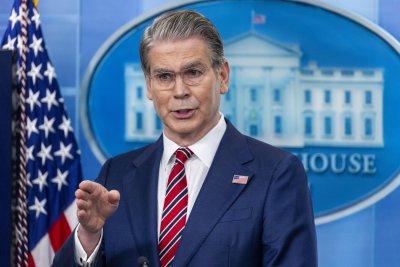

May 19 (UPI) — The Trump administration has issued temporary Russia sanctions relief for a third straight month, extending a waiver allowing the delivery and sale of Russian oil already loaded onto tankers at sea amid the ongoing energy crisis cause by the U.S. war with Iran.
Treasury Secretary Scott Bessent announced the 30-day reprieve on social media, saying it will “provide the most vulnerable nations with the ability to temporarily access Russian oil currently stranded at sea.”
“This extension will provide additional flexibility, and we will work with these nations to provide specific licenses as needed. This general license will help stabilize the physical crude market and ensure oil reaches the most energy-vulnerable countries,” he said in a statement.
The United States has imposed thousands of sanctions on Russia since it invaded Ukraine in February 2022, in an effort to cut it off from a lucrative revenue source to fund its war.
The sanctions relief — first issued on March 5 to permit the sale of Russian crude to India before being broadened March 12 — may have helped Russia generate ab additional $150 million per day in oil revenue, or $3.3 billion to $5 billion in the month of March alone, according to the Council on Foreign Relations.
Ukrainian President Volodymyr Zelensky said in mid-April that about $10 billion worth of Russian oil was at sea, condemning the sanctions relief by stating “every dollar paid for Russian oil is money for the war.”
Democrats and Ukrainians have been sharply critical about the sanctions relief, describing it as undercutting their years of work to try to hobble Russian President Vladimir Putin’s ability to make war.
Following the announcement of the extension on Monday, Democratic Sens. Jeanne Shaheen of New Hampshire and Elizabeth Warren of Massachusetts described the waiver as “delivering another dangerous and indefensible gift” to Putin.
“Every additional dollar the Kremlin earns from this license helps Putin finance his illegal war against Ukraine and kill innocent Ukrainians,” the Democratic pair said in a joint statement.
The Trump administration initially issued the waiver as oil prices surged in response to the war in the Middle East, which began Feb. 28 when the United States and Israel launched joint attacks on Iran.
Shaheen, ranking member of the Senate Foreign Relations Committee, and Warren, ranking member of the Senate Banking, Housing and Urban Affairs Committee, criticized the Trump administration over its reasoning that the waiver is to support vulnerable countries, stating that justification “would be more credible had it not launched this war, or if it had used policy tools to limit the prices Russia could push on those countries.”
“Instead, the Trump administration has helped Russia charge more for its oil cargoes by removing the risk of sanctions,” they said.
“Continuing to show weakness like this will only invite more aggression and put a just end to the war in Ukraine further away.”
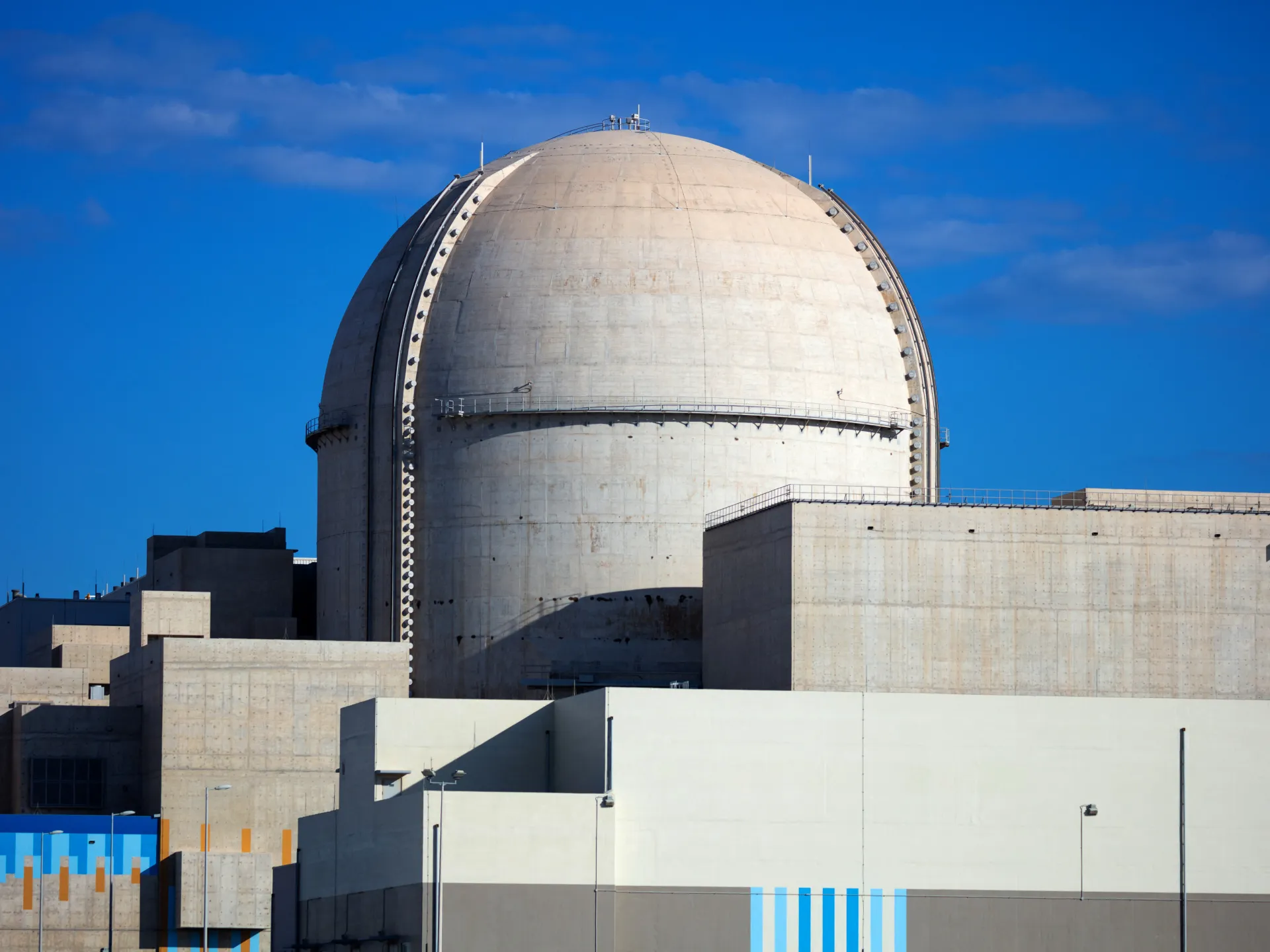
A drone attack that caused a fire close to the Barakah Nuclear Energy Plant in the United Arab Emirates has raised further concerns about nuclear security and military escalation in the Gulf as discussions of peace between Iran and the United States hang in the balance.
Barakah was the first nuclear power station to be built on the Arabian Peninsula. Here is what we know about it:
Barakah is a nuclear energy plant located in Al Dhafra, the largest municipal region of the emirate of Abu Dhabi. It is the UAE’s only nuclear power plant.
Construction of the plant began in 2012, and its first reactor became commercially operational in 2021.
The plant is located close to the border with Saudi Arabia, about 225km (140 miles) west of the UAE’s capital city, Abu Dhabi.
The facility features four pressurised water reactors, the most common type of nuclear power reactor. The model used here is the advanced power reactor 1400, a pressurised water reactor design developed in South Korea. Each reactor of this type has the capacity to produce 1,400 megawatts (MW), which is enough to power roughly 1 million homes.
According to the Emirates Nuclear Energy Corporation (ENEC), the plant’s reactors produce 40 terawatt-hours (TWh) each year, which is equivalent to about 25 percent of the UAE’s electricity needs. The website for the London-based World Nuclear Association also confirmed that Barakah, when fully operational, meets 25 percent of the UAE’s electricity needs.
According to a September report by the Abu Dhabi media office, Barakah had produced 40TWh of clean energy over “the past 12 months”.
Since nuclear power plants produce a lower amount of carbon dioxide emissions than conventional power plants, the ENEC said Barakah saves up to 22.4 million tonnes of carbon emissions each year, equivalent to removing 4.8 million cars from the roads.
Authorities in Abu Dhabi said a single drone strike caused a blaze to break out at an electrical generator outside the Barakah plant’s inner perimeter in the Al Dhafra region on Sunday. No injuries were reported, and officials said radiation levels remained normal.
The UAE’s nuclear regulator said operations at the Barakah facility had not been affected. “All units are operating as normal,” it said in a social media post.
In a statement, the UAE’s Ministry of Defence said two more drones had been “successfully” intercepted and the drones had been launched from the “western border”. It did not give more details.
The UAE’s Ministry of Foreign Affairs posted a statement on X on Sunday saying the country condemned “the unprovoked terrorist attack” in “the strongest terms”.
The statement added: “The UAE emphasised that it will not tolerate any threat to its security and sovereignty under any circumstances, and that it reserves its full, sovereign, legitimate, diplomatic, and military rights to respond to any threats, allegations, or hostilities in a manner that ensures the protection of its sovereignty, national security, territorial integrity, and the safety of its citizens, residents, and visitors, in accordance with international law.”
There was no immediate claim of responsibility, and the statements by the ministries did not publicly blame any country.
But Anwar Gargash, an adviser to the UAE’s president, wrote in an X post on Sunday: “The terrorist targeting of the Barakah clean nuclear power plant, whether carried out by the principal perpetrator or through one of its agents, represents a dangerous escalation and a dark scene that violates all international laws and norms, in criminal disregard for the lives of civilians in the UAE and its surroundings.”
Gargash’s post appeared to blame Iran and its proxy network of allied armed groups in the region, which Tehran calls the “axis of resistance”.
The launch point of the drones remained unclear, but on Sunday, Saudi Arabia also reported it had intercepted three drones that had been launched from Iraq, where some Iran-allied groups operate. If Iranian Shahed-136 drones, which have an estimated range of 2,000km to 2,500km (1,240 to 1,550 miles), were fired from Iraqi territory, both Saudi Arabia and the UAE would fall well within their reach.
Neighbouring Gulf states Saudi Arabia and Qatar condemned the attack on the Barakah plant.
The Ministry of Foreign Affairs of Kuwait also issued a statement denouncing the attack, which it called “heinous”.
The Indian Ministry of External Affairs condemned the attack, calling it “unacceptable”, saying it represented “a dangerous escalation” and urging a return to diplomacy.
Iran has not claimed responsibility for the drone attacks, and there has been no public statement from Iran about the incident at Barakah.
However, in the aftermath of the drone attacks, United States President Donald Trump wrote in a Truth Social post: “For Iran, the Clock is Ticking, and they better get moving, FAST, or there won’t be anything left of them. TIME IS OF THE ESSENCE!”
Iranian Ministry of Defence spokesperson Reza Talaei-Nik said on Sunday that the military is “fully prepared” to confront any new aggression from the US and Israel.
Iran has previously warned that countries where US military assets are deployed or Israeli-linked interests are located are viewed as legitimate targets.
Iran has also accused the UAE of strengthening ties with Israel while reports have emerged that Israeli Prime Minister Benjamin Netanyahu made a “secret” visit to the Gulf state during the US-Israel war on Iran. The UAE has denied this.
US Ambassador to Israel Mike Huckabee also said last week that Israel had deployed Iron Dome air defence systems and personnel to the UAE to help defend against possible Iranian attacks.
The International Atomic Energy Agency (IAEA), the global nuclear watchdog, said Sunday’s incident in the UAE had forced one reactor to rely temporarily on emergency diesel generators.
IAEA chief Rafael Grossi expressed “grave concern” and warned that military activity threatening nuclear facilities was “unacceptable”.
Attacks on nuclear power plants are especially worrying because they can risk damaging critical safety systems or reactors, which could release radioactive material into the atmosphere, not only over the country targeted but also across neighbouring states. Radiological material, specifically the hazardous isotope Caesium-137, could be released into the atmosphere.
The release of radioactive material could result in environmental contamination and poses major risks to public health. Water, if contaminated, becomes undrinkable while farmland and fisheries could become unsafe for decades, depending on the isotope released.
Short-term, acute exposure to radioactivity can cause burns and acute radiation sickness, which can be life-threatening.
Prolonged exposure, even to smaller doses, can increase the risk of illnesses such as cancer, especially thyroid cancer and leukaemia. Children and pregnant women are especially vulnerable.
Over the course of the US-Israel war on Iran, energy infrastructure has become a target.
Iran’s only functioning nuclear plant, the Bushehr power plant, has come under repeated attacks in the war. There are fears that damage at Bushehr could contaminate water across the entire Gulf region, most of which lacks groundwater and relies heavily on the desalination of seawater. Desalination plants are not specifically built to filter radioactive material, and not all plants currently are fitted with the technologies required to do so.

peterschreiber.media/iStock via Getty Images
NextEra Energy (NEE) is in talks to acquire Dominion Energy (D) in a mostly stock transaction that could value Dominion at roughly $66 billion, Bloomberg News reported Sunday, citing people familiar with the matter. If completed, the merger would become the largest
The TWZ Newsletter
Weekly insights and analysis on the latest developments in military technology, strategy, and foreign policy.
Forced to defend against thousands of Iranian drone and missile attacks before and after the ceasefire in the now-paused U.S.-Israel war on Iran, the United Arab Emirates (UAE) appears to have taken a play from Russia and its war with Ukraine in an attempt to secure some of its energy facilities with massive metal ‘cope cages.’
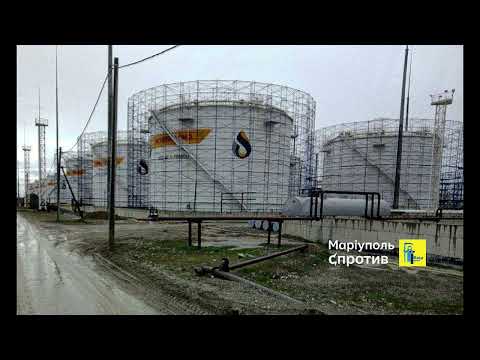
An image posted on X by Israel’s I24 News outlet shows what it claims is caging around oil tanks near Dubai International Airport. In the far-right section of the photo, what appears to be a more complete metal enclosure of some of the fuel tanks can be seen, while in the foreground, construction looks to be taking place on caging for additional tanks.
בדובאי החלו למגן באמצעות רשתות ברזל אתרים אסטרטגיים שקשורים לתעשיית הנפט, סמוך לנמל התעופה pic.twitter.com/mL4n28dBSH
— החדשות – N12 (@N12News) May 13, 2026
This seems to be the first sighting of these structures in the UAE and across the Gulf Arab nations. It is unclear when construction on the structures began or how many of these barriers the UAE is building or plans to build. We have reached out to the UAE Embassy in Washington for more details.
As we have reported in the past, the idea behind these kinds of metal structures is to mitigate the damage caused by incoming munitions by creating a barrier between the point of weapon impact and the target. The caging depicted is not designed to protect against Iranian ballistic missiles, and even cruise missiles could be a challenge. These kinds of structures are made to help defend against one-way attack munitions, such as the Shahed-136, many of which Iran has launched against the UAE. They can also protect from near-field small suicide drone attacks, although these have not been a major issue in the UAE during this conflict.
As noted earlier, while these structures may be new to the UAE, it is not the first time metal caging and even mesh nets have been used to protect critical energy infrastructure. Russia has employed these measures on its oil storage facilities in attempts to protect them from repeated Ukrainian drone attacks for a number of years now.
You can see some of those defensive measures in the following images and videos.

Russia Puts Cope Cages on Oil Storage Tanks
It is no surprise that the UAE would resort to such measures. Since the conflict broke out on Feb. 28, the Emirates have been particularly hard hit by Iranian attacks, especially on its energy infrastructure.
The UAE Defense Ministry says its air defenses “have engaged a total of 551 ballistic missiles, 29 cruise missiles, and 2,265 UAVs” fired by Iran.
Two of the UAE’s major energy infrastructure sites – the oil storage facilities at the UAE Port of Fujairah and the Habshan natural gas processing facility – have been damaged by Iranian missiles and drones. You can see video of some of the Iranian attacks on the UAE below.
🇮🇷🇦🇪 UAE Attacked AGAIN
Iran is suspected to have done it in retaliation to yesterday strikes. Waiting for comment from Iran.
There are reports of SMOKE at the airport, unclear if it is related to this event or something else. Pending confirmation.
The UAE Ministry of… https://t.co/m0cIgIKe9D pic.twitter.com/7pxMki1CFo
— Ryan Rozbiani (@RyanRozbiani) May 8, 2026
⚡🇮🇷🇦🇪 Iranian attack drones struck oil storage infrastructure worth around $50 billion in Fujairah, UAE, this morning, causing a large fire.
Notably, Fujairah is the only major oil export terminal in the UAE that bypasses the now closed Strait of Hormuz. Oil could hit $100 this… pic.twitter.com/nyIStj7gak
— Defense Intelligence (@DI313_) March 3, 2026
Habshan, the main natural gas plant supplying the fuel in the United Arab Emirates “will only return to full capacity next year, highlighting the long recovery times for some of the region’s most critical infrastructure that was damaged in the Iran war,” Bloomberg News noted.
🚨 The Habshan Gas Facility In 🇦🇪 UAE Will Not Be Restored To Its Complete Operational Capacity Before 2027 Because of 🇮🇷 Iranian Strikes.
– Financial Times pic.twitter.com/2Bz0Y9Cy8m
— Asad Nasir (@asadnasir2000) May 12, 2026
The most recent Iranian attack on the UAE came on May 10, more than a month after the U.S. and Iran agreed to a ceasefire that is barely holding on. The Emirates, however, haven’t just taken defensive measures. As we noted earlier this week, reports emerged that it carried out secret airstrikes on Iranian targets.
The war has once again highlighted the need for hardened structures to protect valuable assets, an issue TWZ has frequently covered. Meanwhile, shortly before the war broke out, the U.S. took a step toward acknowledging the importance of these kinds of defensive systems. The Pentagon issued new guidance for protecting critical infrastructure against drone attacks that calls for increased use of netting, cables, and other kinds of passive physical defenses.
The following video shows War Secretary Pete Hegseth introducing the Pentagon’s new approach to protecting infrastructure from drone attacks.
The new plan represented a notable shift in policy within the department. For years now, U.S. military officials have often pushed back on the utility and cost-effectiveness of investing more in the physical hardening of bases and other critical facilities, especially shelters to shield aircraft from drones and other threats.
Whether the new structures UAE is building to defend its energy infrastructure actually work will only be known should Iran launch a new round of attacks that target these sites. Clearly, the world will be watching and taking notes.
Contact the author: howard@twz.com
Trump is shelling out $2 billion of taxpayer money to kill wind power projects, but his hatred for the technology is based on myths
Picking the wildest fantasy promoted by President Trump as a basis for public policy is increasingly challenging — is it his yarn about schoolchildren being secretly abducted from their classrooms and given sex-changing operations? The notion that the vaccines given to children are like “a vat, like a big glass, of stuff pumped into their bodies?”
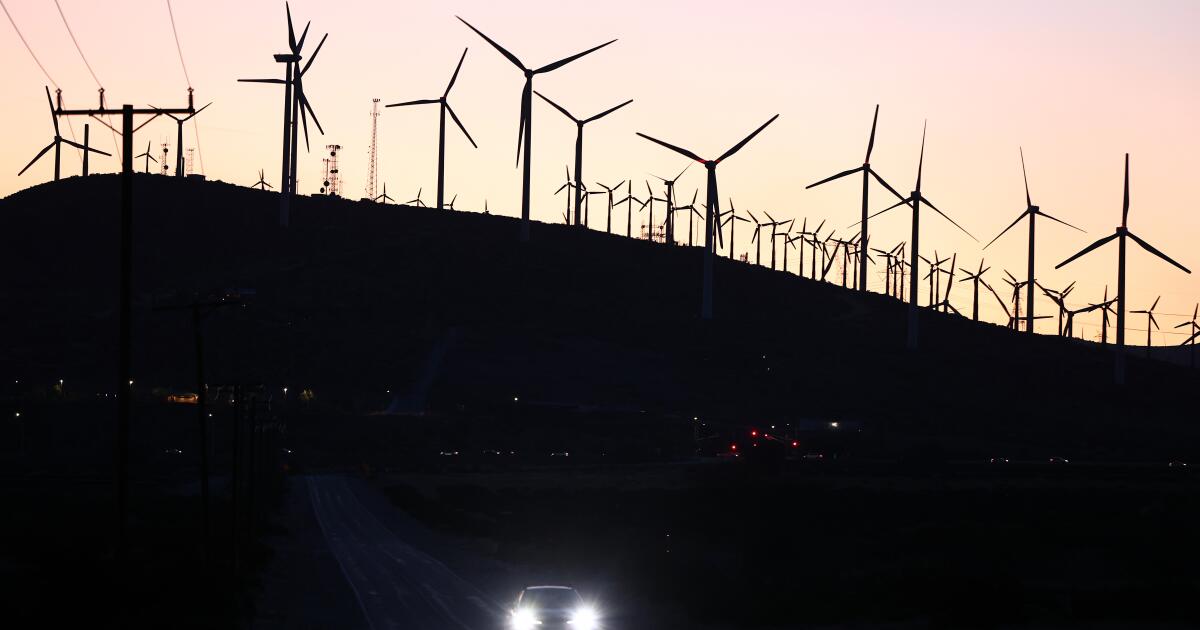
Here’s one that has disrupted the economics of renewable energy generation and will cost Americans billions of dollars: It’s Trump’s “completely weird war on wind power in the United States,” based on a sheaf of “fact-free arguments.”
That judgment comes from Steven Cohen, a climate policy expert at Columbia University, who points out that wind already accounts for 10.5% of U.S. energy generation, that it’s destined to continue growing — and that most of it is generated today in red states such as Texas, Oklahoma, Iowa and Kansas.
Fifty years from now, people are going to be amazed that we burned these rare, useful hydrocarbons for fuel, when the sun was just sitting up there providing an essentially infinite source of energy.
— Steven Cohen, Columbia University
There is no question that Trump’s weird war against wind is full blown. On the day of his second inauguration, he issued an executive order shutting down all new permits for offshore wind farms and ordered the Interior Department to review existing permits.
A federal judge in Massachusetts blocked the executive order in December, and his orders suspending work on existing offshore wind projects have been halted by other federal judges. The Trump administration has blocked or delayed as many as 165 wind projects on private land, citing “national security” concerns, according to the American Clean Power Assn.
Commentary on economics and more from a Pulitzer Prize winner.
By continuing, you agree to our Terms of Service, which include arbitration and a class action waiver. You agree that we and our third-party vendors may collect and use your information, including through cookies, pixels and similar technologies, for the purposes set forth in our Privacy Policy such as personalizing your experience and ads.
Most recently, Trump has reached agreements with offshore wind firms in which the government will pay them a combined $2 billion to abandon their U.S. projects.
At some level, this crusade resembles Trump’s misguided effort to revive the American coal industry, which is on the glide path to inevitable extinction. In that case, Trump is waging an explicitly partisan and ideological battle. “We’re ending Joe Biden’s war on beautiful, clean coal,” he declared last April.
Trump’s anti-wind program is part of his campaign to dismantle U.S. renewables policy because of its roots in the Biden administration.
Additionally, multiple commentators conjecture that his hostility to wind originated in 2011, when he groused that an offshore wind farm would be visible from one of his golf courses in Scotland. He sued to thwart the “ugly” project, and lost.
But Trump has mustered other arguments against wind, on- and offshore, none of which holds water.
During a cabinet meeting in July 2025, he called wind “a very expensive form of energy.” In fact, on average it’s cheaper than natural gas, coal and nuclear generation. Perhaps more important, the cost has been coming down sharply as technology improves and the sector reaches critical mass: falling to eight cents from 21 cents per kilowatt-hour from 2010 to 2024 for offshore projects, and to 3.4 cents from 11.3 cents for land-based wind farms over the same period.
Trump blamed wind turbines for mass killing whales and birds. Neither assertion is correct.
The National Oceanic and Atmospheric Administration, a federal agency, says “there are no known links between large whale deaths and ongoing offshore wind activities.”
The Audubon Society reported in January that although wind turbines can present hazards to birds, “developers can effectively manage these risks without significantly increasing project costs.” The biggest risks to birds come from the climate: “Two-thirds of North American birds are at increasing risk of extinction from global temperature rise,” the society reported — a threat that wind power can ameliorate.
Trump spokeswoman Taylor Rogers didn’t respond to my questions about the derivation of his anti-wind stance, but told me by email only that “President Trump has been clear: hard-earned taxpayer dollars shouldn’t be wasted on unreliable and costly wind farms that pose serious threats to our national security. Instead, we should be strengthening and expanding our infrastructure that produces reliable, affordable, and secure energy like natural gas plants.”
That brings us to the recent deals with offshore wind developers. The largest single deal, signed in March, was with the French firm TotalEnergies, which is to receive approximately $1 billion from the federal government to abandon all of its U.S. offshore wind projects and invest instead in oil and gas projects, including a liquefied natural gas export facility in Texas.
In his March 23 announcement of the deal, Interior Secretary Doug Burgum called offshore wind “one of the most expensive, unreliable, environmentally disruptive, and subsidy-dependent schemes ever forced on American ratepayers and taxpayers.”
This is what Huck Finn would call a “stretcher,” given the decades of subsidies spooned out to the oil and gas industry, reaching more than $30 billion a year in federal and state tax credits, indulgent regulation of pollution and low-cost access to federal lands. Indeed, the investment firm Lazard recently reported that renewables, including wind, are a cost-competitive form of generation even without subsidies. (Lazard’s calculation is of the “levelized cost of energy,” meaning the average cost over a generating plant’s lifetime.)
TotalEnergies fell into lockstep with the Interior Department in its own announcement, explaining its willingness to renounce U.S. offshore wind power because “offshore wind developments in the United States, unlike those in Europe, are costly,” echoing the agency’s position that “the development of offshore wind projects is not in the country’s interest.” Never mind that one factor that makes U.S. offshore wind development costly compared with Europe is the Trump administration’s opposition.
The government subsequently reached an agreement to pay the French company Ocean Winds $885 million to walk away from two offshore wind projects, including one in the waters off California. Ocean Winds described the deal as one driven chiefly by economics, but hinted at pressure from the White House.
“We welcome the opportunity to engage constructively with the administration on this agreement and acknowledge the clarity they have provided with this decision and deal,” Michael Brown, the chief executive of Ocean Winds North America, said when the deal was announced last month. “Our priority remains disciplined capital allocation and delivering reliable energy solutions that create long-term value for ratepayers, partners, and shareholders.”
The TotalEnergies deal, which the government has described as a “refund” of money the firm paid for its offshore leades, raised the hackles of congressional Democrats, who assert that it violates the law and constitution in multiple ways.
“We will hold you accountable for this billion-dollar ripoff,” Reps. Jamie Raskin (D-Md.), ranking member of the House Judiciary Committee and Jared Huffman (D-San Rafael), ranking member of the House Committee on Natural Resources, warned TotalEnergies CEO Patrick Pouyanné in an April 29 letter.
Among other infirmities Raskin and Huffman alleged, the government’s national security rationale for canceling offshore wind leases looks “fabricated”; the payout violates the statutory formula for compensation for canceled leases; the money is to come from a fund designed only to pay court-ordered judgments and settlements of lawsuits, which don’t exist in this case; and includes a provision preventing the deal from being reviewed by a court.
The last of those provisions would have to be authorized by Congress, the letter states, asking for documents and a response from the company by Wednesday. Committee spokespersons weren’t available to say whether they received a response from TotalEnergies, and the company didn’t respond to my request for comment. I received no response from the Department of the Interior.
The California Energy Commission has opened an investigation into the Ocean Winds deal.
“The Trump Administration is recklessly spending billions of taxpayer dollars on backroom deals that would turn back the clock on innovation” CEC Chair David Hochschild said. “Taxpayer dollars should be used to build a sustainable energy future, not to pay to make projects disappear.”
What’s especially wasteful about Trump’s crusade against wind power is that it’s almost certain to be time-limited.
It’s hardly debatable that renewables such as solar and wind will be our principal sources of energy in the future; holding back the clock achieves nothing but injecting uncertainty into investment decisions that need to be made now, at a time when the price of oil is on the upswing thanks to Trump’s Iran adventure and Europe and China are racing to transition away from fossil fuels, while the U.S. remains becalmed by ideology.
“In the long run, fossil fuels will be used for petrochemicals and not for burning,” Cohen told me. “Fifty years from now, people are going to be amazed that we burned these rare, useful hydrocarbons for fuel, when the sun was just sitting up there providing an essentially infinite source of energy.”

Considering the amount of comedy that was dropped on L.A. last week for the third Netflix is a Joke Festival, the idea that anyone can see it all is laughable. Yet of course, like fools, once again we tried. Between big outdoor shows, theaters and intimate club gigs, the seven day smorgasboard of stand-up, improv, variety shows, marathons and more was a wild ride we won’t soon forget. Here is our list of the funniest shows we saw at Netflix is a Joke 2026.

Ron White, from left, Jim Jefferies, Sam Jay, Shane Gillis, James McCann and Dan Soder at the Hollywood Bowl.
(Adam Rose / Netflix)
Shane Gillis and Friends
Hollywood Bowl
As a sea of comedy fans filled up the Hollywood Bowl to kick off the first outdoor event at Netflix is a Joke, Shane Gillis brought the energy of a season-opening football game to L.A.’s biggest bandshell. Commanding a solid roster of veteran comics including James McCann, Sam Jay, Ron White, Dan Soder, and Jim Jeffries, Gillis took on the role of a grizzled and playfully perverse football coach hosting the night and telling funny stories about his days as a very average high school football player on crappy all-white teams before he blew up in comedy.
“Whoever the home team was in high school football you got to pick the intro song that you would run onto the field to to get hyped. So when me and the white guys were the home team, our music would be like ‘Cut my life into pieces…’ [singing Papa Roach’s “Last Resort”] something scary, something suicidal. That’s as intimidating as white dudes get…sad. Those are the most dangerous whites. If this game doesn’t go well I might shoot this whole thing up on Monday,” Gillis joked.
Fortunately it did go pretty well throughout the night as Gillis brought up each comic that used their different styles to score plenty of laughs throughout the night. (Nate Jackson)
Mike Ward
Dynasty Typewriter
Comedy transcends lines and borders, so when we heard that comedian Mike Ward hopped his own border in Canada to be at Dynasty Typewriter, we were all in. Rachel Bonnetta opened the show with a mix of playful confidence and high-energy hilarity, perfectly warming up the crowd before introducing the main attraction to fans. Record breaker and a master of storytelling in French, he didn’t disappoint with his all-English crossover, covering everything from his legendary Supreme Court of Canada case to teenage lust, dating after marriage, attempting generosity, and “trunk love.” Ward mentioned jokes translating from French to English and how they’d hit, but he was definitely in his element, and it all translated to perfect laughs. (Ali Lerman)

Theo Von and Mike Tyson record a live podcast at the Wiltern.
(Matthew Salacuse/Netflix )
Theo Von: ‘This Past Weekend’ Live- Guest: Mike Tyson- The Wiltern
Stand-up might own the Netflix Is a Joke Festival, but the podcasts they delivered are absolutely worth talking about. For Theo Von’s first-ever live taping of his hit podcast “This Past Weekend,” he landed the ultimate guest: Iron Mike Tyson. The sold-out crowd at the Wiltern erupted the second Von hit the stage, but that was nothing compared to the deafening roar of screams and “We love you, Mike!” when Tyson walked out.
Tyson admitted he wasn’t familiar with Von, but thankfully stated he did indeed like him, because that would have really messed up the rest of the episode! The two share an inquisitive and child-like energy, turning heavy conversations about growing up broke, the solitude of incarceration, and desperate cries for attention, into something remarkably light. Tyson’s vulnerable side was also on display while speaking about his daughter dying tragically, God’s plan for him, and speaking about his mentor Cus D’Amato, which quite literally brought him to tears. Can a show be heartfelt and insane at the same time? Definitely interested to see how they edit a few things, but when this knockout episode comes out, you’re truly in for a beautiful treat packed with plenty of wild moments. (A.L.)
Seinfeld featuring Leanne Morgan
The Greek Theatre
Blending the big-city humor with hilarious Southern comfort might sound like an odd pairing when talking about comedy, but something about the combo of Jerry Seinfeld and Leanne Morgan just works. Yes, we love a good rant about the terrors of technology from a comedy legend like Seinfeld, who got famous long before the advent of artificial intelligence and smartphones. But his crotchety comedy on a cold night at the Greek Theatre was complimented by Morgan’s ability to add warmth and sweetness to her smack talk about being a small town cheermom in the world of competitive cheerleading which she described as “the Olympics meets Honey Boo Boo.”
Most big comedy shows at the fest had a strict no cellphones policy, Seinfeld was content with just reminding us that our friends are all sick of our stupid cellphone videos. “They don’t care what you’re doing, your life, your experiences, any more than you care about what your friends are doing…everyone is sick of everything. That’s where we’re starting tonight.”
Both are recognized around the world for being on popular TV shows bearing their names. One star seemed genuinely enthralled that people recognized her and clapped when she came out, the other one seemed like he couldn’t get out of the show fast enough and get back to bed. But the mix of both energies of these authentic polar opposites worked well together to keep the crowd laughing. (N.J.)

David Spade, Dana Carvey and Chris Rock at the Orpheum Theatre.
(Kit Karzen / Netflix)
‘Fly on the Wall’ podcast with Dana Carvey, David Spade and Chris Rock
The Orpheum Theatre
The best way to get amazing stories out of a famous comedian is to be one yourself. It’s the reason a podcast like “Fly on the Wall” with David Spade and Dana Carvey succeed at squeezing the best out of their guests who are often on somebody’s Mt. Rushmore of Comedy. For the festival, the two “Saturday Night Live” alumni brought out the big guns by inviting their buddy Chris Rock downtown — ”way downtown” by his estimation — at 6 p.m. last Wednesday to the Orpheum for a live taping of the podcast. The three stars began by diving ever-so-casually into stories about their interactions with Michael Jackson, Tupac, Kanye and Dave Chappelle. Rock also got to expound on the classic period where he released some of the best comedy specials ever made.
He talked about his groundbreaking hour “Bring the Pain” being the result of doing as many shows as possible to pay for a divorce and as a result, “I got way better” he told Carvey and Spade. “Then I went on a Rocky run where he was knocking motherf— out.” He took that momentum into his next classic special, 1999’s “Bigger & Blacker,” that helped reshape the face of stand-up. “There’s a time in your life when you’re just a vessel and I was in that point of my life,” Rock said. (N.J.)
Nate Jackson at Laugh Factory Hollywood
It’s a skill for a comedian to be able to sit in the pocket of a crowd’s energy and keep a room full of people laughing and on their toes at the same time. Try doing it for six shows back to back. While it’s not the most consecutive sold-out shows he’s ever done at a venue (last year he delivered nine in a row at Zanies in Nashville), Nate Jackson’s ability to leave a mark on the fest at his week-long residency at Laugh Factory Hollywood was akin to watching an executive chef doing a week of cooking in his restaurant. In Jackson’s case that meant delivering some third-degree burns in the front several rows of the crowd known as the “roast zone.” When it comes to killing his customers Jackson prefaces every show the same way. “Rule number one, if I look at you and you don’t want no smoke, look away,” he told the Laugh Factory crowd.
“That is the rule and the standard, I do not get people unless they lock eyes and give me consent. As a matter of fact, this is called the Roast Zone. If anybody is accidentally down there, it’s time to get the f— out. Because rule number two is, if I look at you and you look at me and I start and you don’t like what I decided to talk about, looking away will no longer save you.” To the people that got a little too charred during his show, don’t say he didn’t warn you. (N.J.)

Noah Wyle and Jon Stewart at the Hollywood Bowl.
(Adam Rose / Netflix)
Night of Too Many Stars
Hollywood Bowl
It was a starry, starry night at Thursday’s sold-out Hollywood Bowl Netflix is a Joke Presents: Night of Too Many Stars epic comic bonanza fundraiser benefitting autism programs nationwide, including Autism Speaks. Founded in New York by writer-producer Robert Smigel and his wife Michelle in 2003 following their son Daniel’s autism spectrum disorder diagnosis, the Los Angeles gala was hosted by longtime supporter Jon Stewart and featured a roster of top–tier stand-up talent including Niki Glaser, Ali Wong, Conan O’Brien, Tiffany Haddish, Sarah Silverman, John Mulaney and Adam Sandler, who closed the show with a trio of upbeat tunes. Cast members of reality shows such as “Love on the Spectrum” were also on deck to introduce comics, and auction items throughout the event raised crucially needed funds for individuals on the spectrum: a mock “physical examination” by Noah Wyle, star of HBO’s juggernaut medical series “The Pitt” fetched $18,000; a woman paid $50,000 to be animated into an episode of “The Simpsons.” One man stood up and donated $100,000 with no prize attached. The most special part of the night: I attended along with my son, 19, who is on the autism spectrum and laughed and smiled for three hours straight. (Malina Saval)
Wanda Sykes
Dolby Theatre
Politics, family, inflation, racism, weight gain and greed were among the multiple topics lampooned by Wanda Sykes during a dynamic and often wickedly funny tour stop at the Dolby Theatre last Thursday. Despite the large venue and packed-in audience, Sykes created an intimate club vibe, walking onstage in a utilitarian jumpsuit and instantly bonding with the audience over just how weird things have become in present-day America.
She likened 2026 to the Upside Down in “Stranger Things,” but populated with pedophiles, grifters and racists instead of demogorgons. Turn it upside down “and a billionaire falls through the ceiling,” she said. Her impersonation of Trump dancing and chatting with Epstein in the now infamous video clip was pure brilliance. How a 5-foot-2 Black woman looked more Trump than Trump was a feat unto itself.
Sykes also bemoaned the greed behind things marketed as conveniences, like supermarket self-checkout (“We’re working for free!”), food delivery bots and airport wheelchairs that get passengers to their gate without attendants. “That was someone’s job!” she said. Then added, “What if walking fast and [pushing heavy things] was the only thing they were good at?” Opening for Sykes was her former sidekick on “The Wanda Sykes Show,” Keith Robinson. (Lorraine Ali)
“Kill Tony”
Intuit Dome
The number one live podcast in the world, “Kill Tony,” returned to its roots in our beloved city on Thursday, and this time for the local masses at Intuit Dome. Co-hosted by Tony Hinchcliffe and Brian Redban, when there’s a show of this caliber during a festival, you just know the guests are going to be jaw droppers. Fighting the L.A. traffic to kick off the Dome show were Jelly Roll and Teddy Swims backed up by the Kill Tony Band, maybe? You know, it was hard to hear through all the women screaming. Kidding, we were all scream-singing, and it was such a fun way to start a show. Sitting on panel were beloved KT guests Harland Williams and Gabriel Iglesias, and the “legends bucket” made its way to its first arena in L.A., and the pulls were indeed clutch. Ron White, Joe DeRosa, and Tony’s number one favorite comic, Tony Hinchcliffe (played by Adam Ray), showed the crowd exactly what effortless and absolutely merciless veteran comedy looks like. Between bucket pull madness, a ton of Golden Ticket winners dazzled throughout, treating L.A. to a little slice of what we see in Austin on Mondays. (AL)

“Stamptown” at the Montalbán Theatre.
(Aaron Epstein / Netflix)
‘Stamptown’
Montalban Theater
Comedy variety show “Stamptown” begins with master of ceremonies Jack Tucker (the clown persona of Zach Zucker) descending from the ceiling covered in sweat as pyrotechnic flares explode on stage and electric guitars summon him before he falls flat on his face. But don’t worry, it only gets more insane from there. Part musical revue, part comedy showcase, and part circus — “Stamptown,” which filmed its shows for an upcoming Netflix special, is what happens when the lunatics get control of the asylum and decide to put on a Las Vegas show from hell. Tucker’s rapid-fire delivery is punctuated with sound effects, music cues, and the use of a variety of props dangling from his person at all times (including handcuffs, a wad of cash, and two guns). Featuring celebrity cameos, acrobatic stunts, full-frontal nudity, and the show’s stagecrew and audience members getting in on the chaos — “Stamptown” is a true homage to the theatrical possibilities of performance that toes the line ofwhat you think is possible to be done under the label “comedy show.” “Stamptown” at the Montalbán was filmed as part of a Netflix special that will air later this year, which any lover of brain rot and pageantry should be sure to check out. (Leila Jordan)
Dave Chappelle
The Palladium
We’re not allowed to say anything about went on at the Dave Chappelle three-show residency at the Palladium other than the fact that it was an evening of music and comedy. Per usual they locked up the crowd’s phones to see his show but fortunately there were plenty of actual cameras capturing what went on so hopefully you get to see what we saw very soon. (NJ)
Hasan Minhaj versus Ronnie Chieng
Dolby Theatre
Known for their spirited debates on “The Daily Show,” political satirists Hasan Minhaj and Ronny Chieng faced off in a comedy showdown where they challenged one another to prove who is better suited to fix a broken America, Asians (Chieng is from Malaysia) or Indians (Minhaj’s parents are from India)?
Never mind that Indians are South Asians, the two comedians got plenty of laughs backing up their absurd arguments with flow charts, graphs, curated news clips, a faux AI bot called “Niri,” and plenty of racist rhetoric. They broke down the debate into categories: Who’s better at academics? Business and the economy? Cuisine? Chieng argued that Asians are better at sports with a list of Olympic gold medal wins over the past three Summer Games. He won’t use all of Asia, he said, just China. Result? The country had over 100 gold medals. India had just one. Minhaj wondered aloud: For people who love gold so much, why is it so hard for us to win one?
Their choreographed debate exploited and skewered stereotypes via expert timing and pointed wit, hitting home with the predominantly Asian and South Asian audience. (L.A.)

Atsuko Okatsuka with Margaret Cho and Trevor Noah at the Orpheum.
(Andrew Max Levy / Netflix)
Atsuko Okatsuka
The Orpheum Theatre
An Atsuko Okatsuka show is typically full of surprises as a result of her offbeat humor and twerk-master physicality. Her show at the Orpheum is the result of a brand-new hour she’s been performing on her Big Bowl Tour and includes plenty of jokes about dinosaurs and love of Jamaican dancehall choreography. But before she even took the stage with new material, fans got gleefully blindsided by the appearance of two comedy titans, Margaret Cho and Trevor Noah, who came out to deliver punchy opening sets that got loads of laughter to set the tone for Okatsuka’s evening of examining reality through her absurdist lens as an artistic performer who often feels like she’s from another planet. At the end of the show she announced that after releasing her first two specials on HBO (“The Intruder” in 2022) and Hulu (“Father,” which came out in 2025) her next special will be released (surprise!) on Netflix in 2027. (N.J.)
‘My Crazy Ex-Girlfriend’ Reunion
“Crazy Ex-Girlfriend” premiered on the CW Network in 2015 and managed to tell a complete four season story about mental illness in a musical comedy series that featured parody songs on everything from “Cats” to modern pop music to Jewish folk songs. Seven years after it ended, the cast and creatives behind the show reunited to perform a stripped-down selection of the series’ beloved songs. But this concert is not meant to serve as an introduction for those unfamiliar with the original show. The reunion performance is a tribute both to the miraculous existence of “Crazy Ex-Girlfriend” and to the devoted fans who still know all the words to songs like “Let’s Generalize About Men” and “Don’t Be a Lawyer.” (L.J.)
James McCann
Hollywood Improv (Main Room)
Australian-born comedian James McCann topped the bill Saturday night at the Hollywood Improv, and the eclectic crowd packed the place ready to celebrate his arrival in L.A. Host Benton Harshaw and openers Ruby Setnik and Sam Campbell absolutely connected and killed. And if my word count were double, they’d get individual praise for setting the room up perfectly. High energy was the vibe when McCann got on stage to wild roars from the 9:30pm early show crowd and his energy match, noting he was excited to be at the historic club himself. Mullet looking flawless, poems in tow, and dark humor dialed to an 11, he questioned L.A.’s homeless crisis, may have questioned the audience a bit too much, and tore through his thoughts on a census overhaul, the insanity of the TV show “Survivor” (yes, it’s still on), the glory days of drinking, and having visions of finally being successful enough to hire his dream team. (A.L.)

Tom Segura, left, and Bert Kreischer speak during the Two Bears 5k event at the Rose Bowl.
(Jerod Harris / Getty Images for Netflix)
2 Bears 5K
Rose Bowl
Can’t. Type. Too. Sore. And that’s not even from the run-walking, it’s from the afterparty inside Rose Bowl Stadium in Pasadena. Whether you kicked off this magical day of athleticism in downward dog with Ari Shaffir, or if you went straight for the starting line with Bert Kreischer, Tom Segura, and a svelte-looking Jelly Roll (bravo!), there was stretching, pacing, sweating and rejoicing to be had. The hang was so casual it allowed participants to rub elbows with a surplus of comics on hand like H. Foley, Kevin Ryan, Steph Tolev, Jefferson McDonald, Joe DeRosa, Jessimae Peluso, Greg Fitzsimmons, Daphnique Springs, Brittany Ross, Ian Fidance, Kim Congdon, and Dave Williamson. The finish line led runners directly into the Rose Bowl where there was plenty of Por Osos flowing, snacks, interactive games and recovery stations, and a live taping of 2 Bears 1 Cave with our favorite boys and celeb participants.

Marcello Hernandez performed with Feid at the Hollywood Bowl on Sunday.
(Koury Angelo / Netflix)
Marcello Hernandez and Feid
Hollywood Bowl
On “Saturday Night Live,” he plays a Latin Lover named Domingo. But at the Hollywood Bowl on Mother’s Day Sunday, headliner Marcello Hernández riffed on his real life as a mama’s boy growing up in Miami — expanding on material from his 2026 Netflix special, “American Boy” — and duly invited out his mom, Isabel, who was met with a standing ovation. “God gave me a mother who worked her entire life for me,” said Hernández, who eased on his elastic goofball schtick to exalt immigrant mothers. “Today, I give thanks to her — and to all the mothers who are here, as well as those you left back home.”
Attended by nearly 17,000 people, the Bowl’s biggest Spanish-language comedy event also featured a special (and sensual) musical performance by Colombian reggaeton heartthrob Feid, as well as Mexican comedian Sofia Niño de Rivera, who opened the show with her own riotous act. At some point she asked the audience if beating piñatas had been canceled by the woke mob; you’ll just have to trust me when I say it’s even funnier in Spanish. (Suzy Exposito)
Roast of Kevin Hart
Kia Forum
Los Angeles showed up to the Forum in Inglewood for the roast of Kevin Hart, the comedian we love to hate but also love to laugh with. It was a brutal takedown of Hart that could only be accomplished by the utmost respect and love from his peers. A surprise appearance by his longtime rival Katt Williams brought the entire house to their feet. Sheryl Underwood expertly executed the punchlines and made the culture the star of her set. Chelsea Handler could have been the star of her own show. The Rock’s WWE entrance brought the heat of the pyrotechnics to the stage with his explicit propositioning of Hart’s wife, Eniko, and an attempt to breastfeed Hart. Some controversial jokes by lesser, edgy comedians fell flat but Jeff Ross, the master of roasts, held the tempo together and kept the roast moving forward. There was something for everyone in this, as Hart, the hardest working person in comedy, has become famous for. (Janelle Webster)
Flight of the Conchords
The Greek Theatre
Experiencing Flight of the Conchords at the Greek is something many fans of their lusty, yet-bone-dry musical comedy haven’t gotten to experience in a while. It’s been eight years since Jemaine Clement and Bret McKenzie have put us on “Business Time” with their stripped down odes to sexy R&B mixed with a hint of yacht rock, hip-hop power pop and whatever else they decided to throw together from their bag of classic jams that earned them fans in the early aughts. Following a killer opening set from comedian Arj Barker, Flight of the Conchords took the stage looking a bit more like silver foxes than young birds, which made the timeless chuckle-inducing tunes like “Robots,” “The Most Beautiful Girl (In the Room),” “Hurt Feelings” and “Business Time” land with even more impact as the crowd enjoyed some long-awaited nostalgia. Did they forget a few lyrics? Miss some solos? Mess up entire songs? Sure! But with a dose of Kiwi banter and the ability to laugh at themselves, the mistakes only made the show funnier and a reminder of why we’ve missed them. (N.J.)

Published on
Europe’s reliance on American liquefied natural gas is set to increase further next year as the EU continues efforts to phase out Russian fossil fuel imports, according to new analysis published by the IEEFA on Wednesday.

The report estimates that the US could supply close to two-thirds of Europe’s LNG imports in 2026, reinforcing Washington’s dominant position in the continent’s gas market after Russia’s invasion of Ukraine and the Iran war reshaped global energy flows.
According to IEEFA, the US already accounted for 57% of Europe’s LNG imports in 2025, a sharp increase compared with pre-war levels.
The organisation warned that the share could continue rising over the coming years if current import trends persist and additional long-term supply contracts enter into force.
The findings come as most European governments seek to fully eliminate Russian gas imports by 2027 under the European Commission’s REPowerEU strategy.
Since 2022, EU member states have rapidly expanded LNG purchases, particularly from the US, to compensate for declining Russian pipeline deliveries.
The IEEFA stated that the shift had improved Europe’s short-term energy security but also created a growing concentration risk.
The think tank argued that replacing dependence on Russian gas with heavy reliance on another single alternative supplier could expose Europe to future political and market instability.
The report noted that LNG imports from the US generally come at a higher cost than pipeline gas because of liquefaction, shipping and regasification expenses.
The IEEFA estimates that EU countries spent roughly €117 billion on US LNG imports between early 2022 and mid-2025.
Several European policymakers and regulators have previously warned against excessive dependence on imported LNG.
Earlier this year, European Commission Executive Vice President Teresa Ribera said the bloc should avoid replacing one energy dependency with another and accelerate investment in renewable power and electrification instead.
The European Union Agency for the Cooperation of Energy Regulators has also raised concerns about supply concentration risks linked to the growing role of US LNG in the European market.
The increase in LNG imports also comes despite a broader decline in European gas consumption in recent years.
High prices following the energy crisis, industrial weakness, energy-saving measures and faster deployment of renewable energy have all contributed to lower demand.
The IEEFA data shows Europe’s LNG imports declined in 2024 as gas consumption fell to its lowest level in more than a decade. However, imports rebounded in 2025 amid colder weather conditions and efforts by governments to replenish storage sites.
At the same time, several EU countries continue expanding LNG import infrastructure.
Germany, which previously relied heavily on Russian pipeline gas, has rapidly developed floating LNG terminals and emerged as one of the largest buyers of US LNG in Europe.
Analysts have also questioned whether Europe risks building excess LNG import capacity as long-term gas demand is expected to weaken further during the energy transition in the coming years.
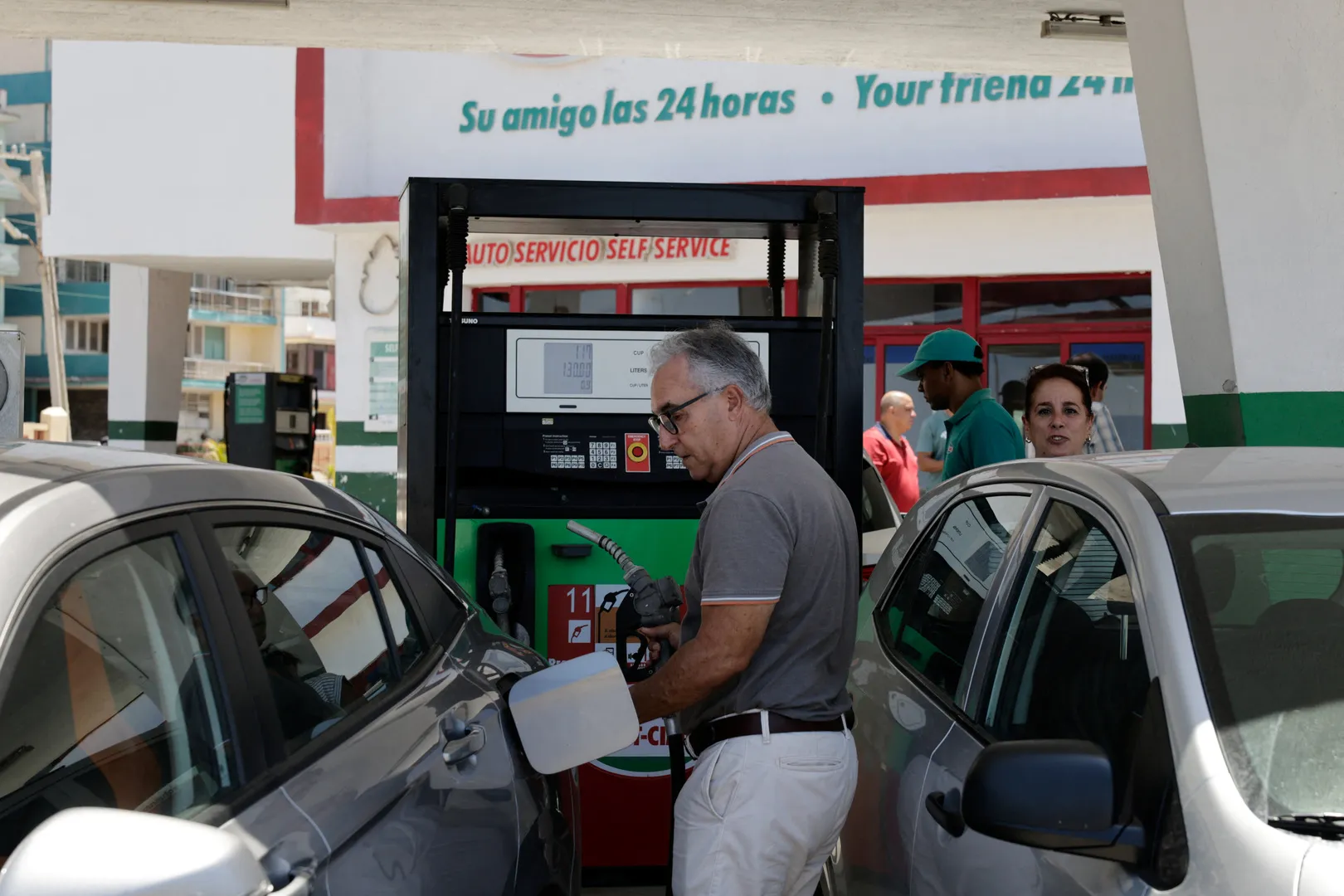
US President Donald Trump has called Cuba ‘a failed nation’, as his administration expands its pressure campaign. Cuba has announced it’s getting rid of its fixed prices at the petrol pump as fuel shortages and power cuts worsen.
Published On 13 May 202613 May 2026
Share