Donald Trump

Consumers to pay less as Trump lowers tariffs on ag products

Nov. 14 (UPI) — President Donald Trump lowered but did not eliminate reciprocal tariffs and beef, fruits, coffee and other foods in an effort to lower food prices for consumers.

The president announced the reduced tariffs a day after securing trade agreements with Argentina, Ecuador, El Salvador and Guatemala, although a 15% tariff remains in effect for Ecuador, according to The Hill.

“Today’s order follows the significant progress the president has made in securing more reciprocal terms for our bilateral trade relationships,” the White House announced Friday in a news release.

“President Trump’s deals have had and will continue to have broad impacts on domestic production and the economy as a whole, including enhanced market access for our agriculture exporters.”

The other nations will continue to have a 10% tariff in effect, but they could be lowered or eliminated for certain products.

Certain agricultural products won’t be subject to reciprocal tariffs, including tropical fruits and fruit juices, beef, cocoa and spices, bananas, oranges, tomatoes and fertilizers, according to the White House.

Consumers are paying more for coffee, beef and other foods since Trump initiated his reciprocal tariffs policy in April to offset tariffs being charged on U.S.-produced goods in respective nations, CNN reported.

The Consumer Price Index shows people are paying about 20% more for coffee than they did a year ago due to the president’s 50% tariff on coffee imported from Brazil, which is the nation’s largest supplier of the beloved caffeinated beverage.

Tomatoes also are costing more and will continue to have a17% tariff when imported from Mexico after a trade agreement between that nation and the United States expired in July.

Bananas and other food products that are not produced in the United States also are subject to tariff reductions.

Source link

White House announces trade agreements with four Latin American allies

Nov. 14 (UPI) — The White House announced new “trade framework agreements” with Argentina, Ecuador, El Salvador and Guatemala, all governed by administrations aligned with president Donald Trump, with the goal of reducing certain tariffs, eliminating non-tariff barriers and expanding access for U.S. products in those markets.

According to a statement issued by Washington on Thursday, the agreements establish reciprocal commitments.

The Latin American countries will eliminate or ease requirements and licenses that restrict the entry of U.S. goods — including agricultural products, medical devices, machinery and automobiles — while the U.S. government will reduce or waive tariffs on some key exports from those countries, as long as the products are not produced in sufficient quantities domestically.

“These agreements will help American farmers, ranchers, fishermen, small businesses and manufacturers increase U.S. exports and expand trade opportunities with these partners,” the White House said.

The commitments agreed to range from the acceptance of U.S. standards for vehicles, auto parts, medical devices and pharmaceuticals in El Salvador’s case to preferential access in Argentina for machinery, technology products, chemicals and agricultural goods, along with reforms to its intellectual property regime.

Guatemala agreed to ensure a favorable framework for digital trade, including free data transfers and a pledge not to impose taxes on U.S. digital services, while also strengthening its labor rules to prohibit goods linked to forced labor.

Ecuador assumed stricter environmental obligations, such as improving forest governance and combating illegal logging, as well as fully complying with international rules on fisheries subsidies.

On the trade front, it will eliminate or reduce tariffs on key products — fruits, nuts, legumes, wheat, wine and spirits — and dismantle its variable agricultural tariff system, opening significant access for U.S. exports.

The governments of all four countries welcomed the initiative as an opportunity to boost their exports, attract foreign investment and strengthen their competitiveness.

Argentine Foreign Minister Pablo Quirno said on X that the agreement “creates the conditions to increase U.S. investment in Argentina” and includes tariff reductions for key industries.

In a statement, the government of Javier Milei said that as part of this understanding, the two countries agreed to significantly expand access for Argentine beef in the U.S. market and to work together to eliminate non-tariff barriers to bilateral agrifood trade.

It added that the United States will eliminate tariffs on products it does not produce, while Argentina will grant tariff preferences to facilitate the entry of capital goods and intermediate inputs.

Guatemalan President Bernardo Arévalo and Economy Minister Gabriela García said on social media that more than 70% of the products the country exports to the United States will now enter tariff-free. They added that most remaining products will face a 10% tariff, Prensa Libre reported.

In Ecuador’s case, as Agriculture, Fisheries and Livestock Minister Danilo Palacios had previously indicated, among the products that will no longer pay the 15% tariff imposed by the United States in August are bananas and cacao, two of the main goods in Ecuador’s export basket, the newspaper Primicias reported.

While Salvadoran President Nayib Bukele reposted the White House’s official statement on X with the caption “Friends” alongside both countries’ flags, the Salvadoran Association of Industrialists said the agreement is a “unique opportunity” for exports and for attracting investment.

The Trump administration’s announcement remains at the framework stage, and the agreements are expected to be formalized in the coming weeks.

However, they do not amount to full free trade agreements, but are designed as specific market-access and regulatory commitments, including a guarantee not to impose digital taxes on U.S. companies.

Source link

Trump admin to end plan requiring airlines to pay passengers for delays | Aviation News

The Transportation Department announced its plan in September after referring to the requirement as ‘unnecessary regulatory burdens’.

The United States Department of Transportation is officially withdrawing from a directive that requires airlines to pay passengers if their flights are delayed.

The White House announced its official withdrawal on Friday after first disclosing its plan back in September.

Recommended Stories

list of 4 itemsend of list

The plan was first outlined during the administration of former US President Joe Biden, a Democrat.

In December 2024, the federal agency under former Transportation Secretary Pete Buttigieg sought public comment on the plan, which would have required airlines to pay $200 to $300 for domestic delays totalling more than three hours and as high as $775 for even longer, unspecified delays.

Trump’s Transportation Department said the rules would be “unnecessary regulatory burdens” amid its explanation of why it will scrap the plan.

Last month, a group of 18 Democratic senators urged the Trump administration not to drop the compensation plan.

“This is a common-sense proposal: when an airline’s mistake imposes unanticipated costs on families, the airline should try to remedy the situation by providing accommodations to consumers and helping cover their costs,” said the letter signed by Democratic Senators Richard Blumenthal, Maria Cantwell, Ed Markey and others.

Airlines in the US must refund passengers for cancelled flights, but are not required to compensate customers for delays.

The European Union, Canada, Brazil and the United Kingdom all have airline delay compensation rules. No large US airline currently guarantees cash compensation for significant flight disruption.

The Transportation Department said on Friday that abandoning the compensation plan would “allow airlines to compete on the services and compensation that they provide to passengers rather than imposing new minimum requirements for these services and compensation through regulation, which would impose significant costs on airlines.”

New rules

The Transportation Department also announced in September that it was considering rescinding Biden regulations requiring airlines and ticket agents to disclose service fees alongside airfares.

It also plans to reduce regulatory burdens on airlines and ticket agents by writing new rules detailing the definition of a flight cancellation that entitles consumers to ticket refunds, as well as revisiting rules on ticket pricing and advertising.

The department did not respond to Al Jazeera’s request for comment.

Al Jazeera also reached out to Buttigieg, who was behind the policy that is now being scrapped, but did not receive a response.

On Wall Street, most airline stocks remain below the market open but were trending upwards in midday trading. American Airlines is down 1.2 percent from the opening bell, United Airlines is down 1 percent, and Delta is down 1.3 percent. JetBlue is tumbling 3.6 percent for the day. Southwest is down by 0.2 percent.

The airline industry is still dealing with delays and cancellations brought on by the US government shutdown, which ended on Wednesday. There are still 1,000 delays on flights to, from and within the United States and 615 cancellations, according to FlightAware, a platform that tracks flight cancellations globally.

Source link

BBC apologizes to Donald Trump over Jan. 6 speech, issues retraction

Three days after U.S. President Donald Trump threatened it with a $1 billion defamation lawsuit over misleading editing of a speech he gave on Jan. 6, Britain’s BBC issued a retraction but refused to pay compensation. Photo by Andy Rain/EPA

Nov. 14 (UPI) — The BBC issued a retraction and a formal apology to U.S. President Donald Trump for edits to a speech he gave ahead of the Jan. 6 riots on Capitol Hill that made it appear as if he was inciting his supporters to violence.

The British public service broadcaster apologized Thursday night via the corrections page on its website, with the apology the lead story across all of its news platforms on television, radio and online during the evening and first thing Friday morning.

BBC Chairman Samir Shah also penned a personal written apology to the White House, however, the BBC indicated it would not be paying compensation, as demanded by Trump.

The retraction said an edition of Panorama titled Trump: A Second Chance, broadcast on Oct. 28, 2024, used excerpts lifted from different parts of Trump’s speech in a way that inadvertently made it appear they were contiguous.

The BBC’s version had Trump saying, “We’re going to walk down to the Capitol and I’ll be there with you. And we fight. We fight like hell,” when his actual words were, “We’re going to walk down to the Capitol, and we’re going to cheer on our brave senators and congressmen and women.”

The BBC said it accepted that this “gave the mistaken impression that President Trump had made a direct call for violent action.”

“The BBC would like to apologize to President Trump for that error of judgment.”

However, the notice made no mention of compensation, one of President Trump’s key demands in his letter threatening the BBC with a $1 billion lawsuit alleging the program had defamed him and giving it until 5 p.m. EST on Friday to respond.

A BBC spokesman said the corporation strongly disagreed “there is a basis for a defamation claim.”

There was no immediate response from either the White House or Trump’s legal counsel.

The Panorama program was not an isolated incident, according to The Telegraph, which said the BBC’s Newsnight program did something very similar with the same speech in a broadcast in 2022.

A spokesman for Trump’s legal team said that from the latest revelation it was “now clear that the BBC engaged in a pattern of defamation against President Trump” and accused it of attempting to try to influence the outcome of the 2024 election.

The debacle has sparked a furious debate about editorial impartiality at the BBC, which is funded by a $229 annual license that every household with a TV must pay, prompting calls for an overhaul of internal processes and procedures.

Culture Secretary Lisa Nandy acknowledged the BBC’s editorial rules were “in some cases not robust enough and in other cases not consistently applied,” and appeared to suggest the replacement for director-general Tim Davie, who quit Sunday, must be from a journalism background.

Davie spent the first half of his career as a senior marketing executive at PepsiCo before joining the BBC’s marketing division.

The opposition Conservative’s Shadow Culture Secretary, Nigel Huddleston, said he was waiting to see if Trump accepted the BBC’s response to be the “fulsome apology” he was entitled to receive.

“I do not want the British license fee payer or the rest of the BBC to pay the price for poor editorial decisions made by BBC journalists, he said in a post on X.

“However, we would all be in a better position if the BBC had never made these errors in the first place. The BBC needs a fundamental review of processes and procedures to ensure that such failures in impartiality never happen again.”

President Donald Trump signs the funding package to reopen the federal government in the Oval Office of the White House on Wednesday. Photo by Bonnie Cash/UPI | License Photo

Source link

U.S. approves South Korean nuclear submarine program in finalized trade deal

The United States and South Korea on Friday released a joint fact sheet on a sweeping trade and security agreement that includes the approval of Seoul’s nuclear submarine program. The deal was struck during U.S. President Donald Trump’s (L) meeting with South Korean President Lee Jae Myung at the APEC summit in Gyeongju in October. Photo by Yonhap

SEOUL, Nov. 14 (UPI) — The United States and South Korea on Friday released a joint fact sheet on a sweeping trade and security agreement that details a $350 billion investment pledge by Seoul and confirms Washington’s approval for its Asian ally to develop nuclear-powered submarines.

The document comes two weeks after U.S. President Donald Trump and South Korean President Lee Jae Myung finalized their trade negotiations on the sidelines of the Asia-Pacific Economic Cooperation forum in Gyeongju on Oct. 29.

“With this, the Korea-U.S. trade and security negotiations, which have been one of the greatest variables affecting our economy and security, have finally been concluded,” Lee said in a televised press briefing and Facebook post on Friday.

Lee expressed “gratitude and respect” for Trump’s decision and said both sides “achieved the best possible outcome, based on common sense and reason.”

Under the terms of the deal, Trump’s so-called “reciprocal” tariffs on South Korean goods, including automobiles, will drop from 25% to 15%, returning to the level initially established in July during Lee’s visit to the White House.

In exchange for the lower tariffs, South Korea has pledged to invest $350 billion in the United States, including $150 billion in the U.S. shipbuilding sector and $200 billion for strategic sectors under a memorandum of understanding to be signed by the two countries.

To minimize the impact on South Korea’s foreign exchange market, Seoul’s annual investment cap was set at $20 billion, the fact sheet said.

“The two governments confirmed that Korea’s investments will proceed only within a level our economy can fully sustain and only in commercially viable projects,” Lee said. “The mistrust and concerns of some who were worried this was a ‘de facto grant’ under the guise of investment in projects with difficult returns have been completely dispelled.”

The fact sheet also formalized Washington’s approval for Seoul’s plan to build nuclear-powered submarines, a capability South Korean leaders have pursued for years. Seoul has framed nuclear-powered vessels as essential for tracking North Korean ballistic missile submarines and for expanding its reach across the Indo-Pacific. Officials also see the program as a catalyst for the country’s nuclear energy and naval shipbuilding industries.

The agreement said Washington will work with Seoul to define requirements for the project, “including avenues to source fuel.” Securing enriched uranium for submarine reactors had been a sticking point in the release of the fact sheet, as Seoul has sought revisions to its bilateral nuclear cooperation pact to allow greater flexibility in enrichment and nuclear waste recycling.

Lee called the submarines “a decades-old dream of South Korea and a vital strategic asset for peace and stability on the Korean Peninsula.”

The agreement comes as Washington and Seoul undertake a broader effort to modernize their security alliance and reshape how the two countries share military responsibilities. The fact sheet noted that South Korea intends to raise defense spending to 3.5% of GDP “as soon as possible,” and reiterated a commitment to the eventual transition of wartime operational control to Seoul.

Seoul also pledged to spend $25 billion on U.S. military equipment purchases by 2030 and outlined plans to provide comprehensive support for U.S. Forces Korea amounting to $33 billion.

“The South Korea-U.S. alliance has evolved and deepened into a truly future-oriented strategic comprehensive alliance encompassing security, the economy, and cutting-edge technology,” Lee said.

As part of that broader strategic framework, the two governments reaffirmed their shared goal of a denuclearized Korean Peninsula and pledged to work together to implement the joint statement of the 2018 Singapore summit between Trump and North Korean leader Kim Jong Un.

The fact sheet called on North Korea to “return to meaningful dialogue and abide by its international obligations, including by abandoning its weapons of mass destruction and ballistic missile programs.”

North Korea has rejected calls for denuclearization since declaring itself a nuclear-armed state in 2022. In September, Kim signaled a willingness to resume diplomacy with Washington but warned that any discussion of giving up his regime’s nuclear arsenal would be off the table.

Source link

Door opened for Seoul’s pursuit of uranium enrichment, spent fuel reprocessing

The U.S.-South Korea trade deal fact sheet released Friday opens the door for Seoul to secure rights to enrich uranium and reprocess spent nuclear fuel. The agreement, struck during the meeting between U.S. President Donald Trump (L) and South Korean President Lee Jae Myung at the APEC summit in Gyeongju in October, approves South Korea’s quest to build nuclear submarines. Photo by Yonhap

South Korea took a major step forward Friday in its long-running quest to secure rights to enrich uranium and reprocess spent nuclear fuel for peaceful purposes, with the United States affirming its support in the countries’ joint summit document.

The joint fact sheet, released earlier in the day, outlines the agreements reached in the two summits between President Lee Jae Myung and U.S. President Donald Trump. It covers the allies’ commitments on a range of key trade and security issues.

“Consistent with the bilateral 123 agreement and subject to U.S. legal requirements, the United States supports the process that will lead to the ROK’s civil uranium enrichment and spent fuel reprocessing for peaceful uses,” the document showed. ROK stands for South Korea’s official name, the Republic of Korea.

Under the 123 agreement on peaceful nuclear energy cooperation, South Korea has very limited authority to reprocess spent nuclear fuel or enrich uranium for civilian purposes, as such activities require U.S. consent through bilateral consultations under the relevant treaties, laws and regulations governing both countries.

The agreement only allows South Korea to enrich uranium up to less than 20 percent based on U.S. consent, with U.S. concerns over nuclear proliferation known as the primary reason.

The nuclear energy pact, forged in 1974, was revised once in 2015 for a 20-year term, to accommodate Seoul’s request for the rights to reprocess spent fuel and enrich uranium, but it has been seen as effectively barring Seoul from producing its own civilian nuclear fuel.

South Korea, a global nuclear energy powerhouse, has long sought to expand its rights as a way to address growing nuclear waste stockpiles.

The country currently operates 26 commercial nuclear reactors. The storage for spent fuel rods from the reactors is expected to reach full capacity around 2030.

Its push to revise the agreement also comes as South Korea seeks to secure fuel supplies for its bid to build nuclear-powered submarines, a project for which it has obtained U.S. approval, as confirmed in their joint fact sheet.

Announcing the result of the summit Friday, Lee called U.S. support for Seoul’s uranium enrichment and spent fuel reprocessing a “significant advancement.”

“The door is now wide open for a South Korea-U.S. alliance renaissance, in which both nations can achieve a true win-win outcome,” he said.

In separate press material, the foreign ministry described the agreement on enrichment and reprocessing as “a strategic upgrade” of bilateral nuclear energy cooperation.

“We have publicly secured U.S. backing for (uranium) enrichment and spent fuel reprocessing for the first time,” the ministry said.

Having secured such support from its ally, South Korea faces a long and complex road ahead to advance these efforts, as implementing the agreement will require a lengthy and challenging negotiating process that could take years or more.

Seoul and Washington would need to decide whether the U.S. will allow uranium enrichment and spent fuel reprocessing within the current 123 agreement framework, or by revising the pact. Either way, tough negotiations over the terms are expected.

“It will require extensive discussions,” National Security Adviser Wi Sung-lac said following the joint fact sheet announcement. “How much adjustment is needed will depend on the results of these consultations,”

The prevailing view is that South Korea has looked at Japan’s 1988 agreement of the same kind with the U.S. as a case model. The U.S. has given Japan preapproved and long-term permission, known as “advance consent,” for the enrichment and reprocessing. It allows Japan to produce highly enriched uranium over 20 percent if the two parties agree.

First Vice Foreign Minister Park Yoon-joo signaled that the government is considering a revision.

“We are in talks with the U.S. with a revision in mind,” he told lawmakers during a parliamentary session.

South Korea and the U.S. have established a high-level bilateral commission under the 123 agreement. Any follow-up talks could start by resuming this platform.

Going forward, how Seoul will work with Washington to dispel nuclear proliferation concerns from within the U.S. government remains another major challenge.

It took more than two weeks after the Lee-Trump summit for the joint fact sheet to be released, apparently due to extended coordination among the relevant U.S. government agencies.

Wi said Friday that the delay had much to do with the enrichment and reprocessing issues.

“The bulk of the final discussions (within the U.S.) had focused on uranium enrichment and reprocessing,” he told reporters at the briefing.

“In any case, we believe the agreement will need some form of adjustment.”

Source link

DOJ sues California over redistricting effort, calling it a ‘power grab’

Nov. 14 (UPI) — The Justice Department is suing California over its recently voter-approved congressional maps, alleging they are an unconstitutional “power grab.”

Earlier this month, Californians approved Gov. Gavin Newsom‘s redistricting initiative, introduced in direct response to Texas’ effort to create new congressional maps that favor Republicans ahead of the 2026 midterm elections.

While Texas Republican lawmakers pursued an unprecedented mid-cycle redraw without voter approval, President Donald Trump and his allies have been critical of the California move. Democrats counter that they are trying to protect the state’s representation in Congress, accusing Trump — who pressured Texas to pursue the new maps — of undermining democratic norms.

Federal prosecutors on Thursday filed the lawsuit against Newsom over California’s redistricting plan, alleging that it racially gerrymandered congressional districts in violation of the Equal Protection Clause of the 14th Amendment.

“California’s redistricting scheme is a brazen power grab that tramples on civil rights and mocks the democratic process,” Attorney General Pam Bondi said in a statement. “Gov. Newsom’s attempt to entrench one-party rule and silence millions of Californians will not stand.”

According to the lawsuit, federal prosecutors accuse California’s Democratic leaders of manipulating congressional maps to bolster “the voting power of Hispanic Californians because of their race.”

“Our Constitution does not tolerate this racial gerrymander,” the 17-page court document states.

“No one, let alone California, contends that its pre-existing map unlawfully discriminated on the basis of Race. Because the Proposition 50 map does, the United States respectfully requests this court enjoin defendants from using it in the 2026 election and future elections.”

Texas’ GOP-controlled legislature in August passed its new maps that are projected to give Republicans as many as five additional seats in the U.S. House of Representatives in next year’s midterm elections.

Democrats have criticized this move as Trump trying to create more red seats to keep control of the House, which the GOP now narrowly holds.

Texas has 38 seats in the U.S. House of Representatives, 25 of which are filled by Republicans.

California, which has 52 House districts — 43 of them held by Democrats — responded with Proposition 50.

Republicans hold a 219-214 majority of the U.S. House of Representatives, with two seats vacant.

Several states — led by both Republicans and Democrats — have since announced efforts to redraw their maps, setting off a gerrymandering arms race ahead of 2026.

“These losers lost at the ballot box, and soon they will also lose in court,” Newsom’s office said in a statement in response to the Trump administration lawsuit.

Source link

Epstein emails with author Wolff raise journalism ethics questions: Experts | Media News

A newly released batch of correspondence involving disgraced sex offender Jeffrey Epstein has prompted new speculation about ties between the deceased financier and United States President Donald Trump, but experts say its significance stretches beyond the White House.

The never-before-seen emails have added to pressure on the Trump administration to release files about Epstein in the US government’s possession, with a vote in Congress now expected as early as next week. Trump has rejected suggestions that he has anything to hide, and insists that while he knew Epstein, they broke ties in the early 2000s.

Recommended Stories

list of 3 itemsend of list

But the newly released emails also raise ethical questions about the role played by acclaimed author Michael Wolff as he appeared to provide advice to Epstein on how to handle his dealings with Trump.

In the exchanges published by the Democrats on the House Oversight Committee, Wolff – best known for his bestselling books on the first Trump presidency – appeared to share confidential information before a presidential debate on CNN in December 2015 with Epstein, advising him on how to exploit his connection with Trump.

“I hear CNN planning to ask Trump tonight about his relationship with you – either on air or in scrum afterwards,” Wolff wrote.

“If we were to craft an answer for him, what do you think it should be?” Epstein replied.

“I think you should let him hang himself. If he says he hasn’t been on the plane or to the house, then that gives you a valuable PR and political currency,” Wolff told Epstein.

“You can hang him in a way that potentially generates a positive benefit for you, or, if it really looks like he could win, you could save him, generating a debt. Of course, it is possible that, when asked, he’ll say Jeffrey is a great guy and has gotten a raw deal and is a victim of political correctness, which is to be outlawed in a Trump regime,” Wolff added, in his response to Epstein.

Al Jazeera reached out to Wolff for comment, but has not received a response.

In a conversation on a podcast with the news outlet The Daily Beast, Wolff said he was seeking to build a relationship with Epstein at the time to better understand Trump, but acknowledged that in “hindsight”, his comments could be seen as “embarrassing”.

Wolff, 72, is best known for his four books exposing the inner workings of the first Trump presidency, including Fire and Fury: Inside the Trump White House.

Jane Kirtley, professor of media ethics and law at the University of Minnesota, said any judgement on whether behaviour like Wolff’s with Epstein was appropriate would depend on how the writer’s role is understood.

“Some people are reporters, some are commentators, and some are book authors, and there are some differences in the way that those different people operate,” Kirtley told Al Jazeera.

“If you want to be a public relations person, or if you want to be an agent, those are perfectly valid career choices. But I think that they are unfortunately incompatible with journalism because the public has a right to assume and to believe that you are acting independently,” she continued.

“You can’t serve two masters, as the saying goes, and your interest has to either be the public interest or serving some other interests.”

Insider reporting

Experts note that reporters often face ethical and professional dilemmas while cultivating relationships with sources, especially in areas where insider information is highly sought after, such as Wolff’s research on relations between various figures in the first Trump administration.

But the prerogative to build rapport with sources, especially those with influence, can also raise difficult questions about a reporter’s proximity to the very centres of power they are supposed to be scrutinising.

Edward Wasserman, a professor of journalism at the University of California, Berkeley, said such relationships have to maintain certain boundaries and be balanced with the usefulness of the information being brought to the public’s attention.

“I think that the public has the right to be sceptical of this kind of cosy relationship with sources,” Wasserman told Al Jazeera. “But the answer the journalist has is that this is in the interest of the public, that there’s a redemptive dimension to this. It enables the kind of relationships that will allow people to confide in a reporter, who can then share that information with the public.”

Still, such relationships can also have a troubling inversion, where a journalist might be tempted to offer a source preferential treatment if they believe they might be rewarded with information.

Another journalist who corresponded with Epstein in emails released on Wednesday, a former New York Times finance reporter named Landon Thomas Jr, also appeared to have a close relationship with the convicted sex offender, whom he informed about a writer named John Connelly who was researching him.

“Keep getting calls from that guy doing a book on you – John Connolly. He seems very interested in your relationship with the news media. I told him you were a hell of a guy :)” Thomas Jr said in an email dated June 1, 2016.

“He is digging around again,” Thomas Jr said in another email to Epstein on September 27, 2017. “I think he is doing some Trump-related digging too. Anyway, for what it’s worth…” he added.

The public broadcaster NPR reported that Thomas Jr was no longer working for the Times by January 2019, and it had come to light that the reporter had asked Epstein for a $30,000 donation to a cultural centre in New York City. The New York Times has previously stated that the behaviour was a clear violation of its ethics policies and that it took action as soon as it learned of the incident.

In the case of Wolff, Wasserman also noted that his direct participation in matters relating to Trump, Epstein, and the media raised doubts about the writer’s ability to credibly report on those issues. Those questions may be especially poignant in a scandal that, for many people in the US, has become a symbol of close relationships among figures at the highest levels of power.

“The problem is that Wolff was offering advice on how to engineer, how to play this situation, in a way that’s advantageous to Epstein. And the problem that I have with that is that he then would presumably preserve the right to report on the consequences,” he said.

It also remains unclear whether Wolff’s relationship with Epstein resulted in the kind of public revelations that journalists typically point to when justifying close ties with sources.

“It occurs to me as important that in this exchange, Wolff doesn’t do anything to illuminate the core mystery, which is whether Trump was a sexual participant in what was going on with Epstein and these young women,” said Wasserman.

“And there’s nothing in this where I’m seeing Wolff even asking that,” he added.

Source link

Russia-Ukraine war: List of key events, day 1,359 | Russia-Ukraine war News

Here are the key events from day 1,359 of Russia’s war on Ukraine.

Here is how things stand on Friday, November 14:

Fighting

  • Russian forces launched a “massive” attack on Kyiv early on Friday, Mayor Vitali Klitschko said, with air defences in action and a series of explosions reported in the capital.
  • Klitschko said falling debris had struck a five-storey apartment building in Dniprovskyi district on the east side of the Dnipro River, and a high-rise dwelling was on fire in Podil district on the opposite bank.
  • Ukrainian President Volodymyr Zelenskyy visited troops near Ukraine’s southeastern front line, where he warned of the need to shore up defences after his troops lost ground in increasingly high-intensity battles far from Russia’s main offensive in the east of the country.
  • President Zelenskyy said the situation near the city of Orikhiv in the Zaporizhia region was “one of the most difficult” along a sprawling front line and that thwarting Russian forces there was key to shielding Zaporizhzhia city.
  • Ukraine’s military said its troops hit a Russian oil terminal in occupied Crimea and also an oil depot in the occupied Zaporizhia region.
  • The Ukrainian General Staff said Russian oil facilities and other military targets were hit by domestically produced weapons, including the “Flamingo” ground-launched cruise missile, drone missiles, and drones.
  • Russia’s Ministry of Defence said its forces have captured two more Ukrainian settlements: Synelnykove in the Kharkiv region and Danylivka in the Dnipropetrovsk region.
  • Russian air defence units destroyed and intercepted 130 Ukrainian drones overnight over Russia, the state-run TASS news agency reports, citing daily data from the Defence Ministry in Moscow.

Peace talks

  • The Kremlin said Ukraine would have to negotiate an end to the war “sooner or later” and predicted that Kyiv’s negotiating position would worsen by the day.
  • Russian Foreign Minister Sergey Lavrov has said he hoped Washington would take no actions liable to escalate the Ukraine conflict.
  • Lavrov said United States President Donald Trump had long advocated dialogue with Russia, had sought to fully understand the Russian position on Ukraine and “demonstrated a commitment to finding a sustainable peaceful solution”.
  • “We are counting on common sense and that the maintaining of that position will prevail in Washington and that they will refrain from actions that could escalate the conflict to a new level,” Lavrov said.

Ukraine energy scandal

  • German Chancellor Friedrich Merz and President Zelenskyy have discussed the $100m energy corruption scandal that has engulfed Kyiv, the German government said in a statement.
  • Zelenskyy pledged complete transparency, long-term support for independent anticorruption authorities and further swift measures to regain the trust of the Ukrainian people, European partners and international donors, the statement said.
  • Ukrainian Prime Minister Yulia Svyrydenko also announced an audit of all state-owned companies, including in the energy sector, following the scandal that has led to the suspension of two cabinet ministers.
  • The European Bank for Reconstruction and Development (EBRD) said it is lending 22.3m euros ($26m) to a Ukrainian energy firm as part of a pipeline of deals, signalling its ongoing support for the sector despite the corruption scandal.
  • The EBRD cash will go to private Ukrainian energy company Power One to finance new gas-piston power plants and battery energy storage systems, the lender said in a statement.

Aid to Ukraine

  • The International Monetary Fund (IMF) will soon begin a staff mission to Ukraine to discuss its financing needs and a potential new lending programme, IMF spokesperson Julie Kozack said.
  • Ukraine is in talks with the IMF about a new four-year lending programme for the country that would replace its current four-year $15.5bn programme. Ukraine has already received $10.6bn of that amount.
  • European Commission President Ursula von der Leyen told the European Parliament that the European Union could either borrow the money needed to cover Kyiv’s financial needs in 2026 and 2027 against the collateral of its long-term budget, or each EU country could borrow on its own and extend a grant to Ukraine.
  • A third option was a proposal from the Commission to organise a loan that would effectively become a grant, on the basis of the Russian central bank assets frozen in the EU. European finance ministers agreed that funding Ukraine with a reparations loan based on immobilised Russian assets would be the most “effective” of the three options being considered.
  • Europe’s top development banks and Ukrainian energy firm Naftogaz signed a deal to provide an EU grant of 127 million euros ($127m) in additional funding to the firm, on top of a 300 billion euro loan ($349bn) it outlined last month to secure Ukraine’s natural gas supply, amid the ongoing attacks on Ukraine’s infrastructure by Russia.
  • Nordic and Baltic countries will together contribute $500m to the Prioritised Ukraine Requirements List arms initiative, their defence ministers said in a joint statement.

Russian sanctions

  • About 1.4 million barrels per day of Russian oil, or almost a third of the country’s seaborne exporting potential, remain in tankers as unloading slows due to US sanctions against energy firms Rosneft and Lukoil, according to US financial services firm JPMorgan.
  • Bulgaria’s parliament has overruled a presidential veto on legislation allowing the government to take control of Lukoil’s oil refinery and sell it to shield the asset from looming US sanctions.
  • Bulgarian President Rumen Radev had attempted to veto a move by lawmakers giving a government-appointed commercial manager powers to oversee the continued operation of Lukoil’s refinery in Bulgaria beyond November 21, when the US sanctions are due to take effect, and to sell the company if needed.
  • Russia’s Port Alliance group, which operates a network of sea cargo terminals, said foreign hackers had targeted its systems over three days in a distributed denial of service (DDoS) attack and an attempted hack.
  • The group said critical elements of its digital infrastructure had been targeted with the aim of disrupting export shipments of coal and mineral fertilisers at its sea terminals in the Baltic, Black Sea, Far East and Arctic regions. The attack was successfully repelled, and operations remained unaffected, Port Alliance said.

Source link

Dow Jones falls 800 points amid Fed rate cut doubts

Nov. 13 (UPI) — Doubts about a potential third Federal Reserve rate in December triggered an 800-point drop in the Dow Jones Industrial Average on Thursday after setting a record high a day earlier.

The Dow closed higher than 48,000 for the first time on Wednesday, but Investopedia reported a steep decline on Thursday amid concerns over the Federal Reserve rate.

The Dow reached a daily high or 48,211.83 during morning trading on Thursday but declined steadily afterward to a low of 47,431.43 and closed at 47,457.22, which is a drop of 797.60 and 1.65% for the day.

The Nasdaq and S&P 500 likewise posted downturns during the day’s trading, with the Nasdaq closing at 22,870.36, which is a decline of 536.10 and 2.29%.

The S&P 500 dropped by 113.43 and 1.66% when it closed at 6,737.49.

Analysts largely attributed the declines to concerns regarding the Federal Reserve and whether it will approve a third quarter-point rate reduction before the year’s end, according to CNBC.

In October, analysts placed a 95% confidence in a December rate cut, but confidence has declined to about 49% due to a lack of data because of the record 43-day federal government shutdown ended following President Donald Trump‘s signing of a funding measure on Wednesday.

The Federal Reserve Open Market Committee is scheduled to meet for two days on Dec. 9 and 10, but committee members have grown more doubtful of another 0.25% rate cut due to the effects of the government shutdown and the president’s often-changing tariff policies.

The current rate is between 3.75% and 4% after the Federal Reserve committee approved a 0.25% rate reduction on Oct. 29.

Source link

Trump administration joins lawsuit against California’s redistricting maps | Politics News

Voters’ approval of Proposition 50 means Democrats might win up to five additional seats in the US House of Representatives in 2026.

The administration of United States President Donald Trump has joined a lawsuit against California over the state’s redistricting effort, which was approved by a landslide in the November 4 election.

On Thursday, the Department of Justice said it would seek to overturn California’s new map of congressional districts, which was passed through a ballot initiative with approximately 64 percent support.

Recommended Stories

list of 3 itemsend of list

“California’s redistricting scheme is a brazen power grab that tramples on civil rights and mocks the democratic process,” Attorney General Pam Bondi said in a statement.

She accused California Governor Gavin Newsom, a Democrat, of attempting to stifle Republican voices in his state. “Governor Newsom’s attempt to entrench one-party rule and silence millions of Californians will not stand.”

The ballot measure, known as Proposition 50, is poised to redraw the boundaries of electoral districts to favour the Democrats in next year’s midterm elections.

The proposition was designed as a counterattack against Trump’s gerrymandering in Republican states.

In Texas, for instance, the Trump White House urged the state legislature to pass new congressional districts that would allow the Republicans the opportunity to win five more seats in the House of Representatives in 2026.

In August, Texas Governor Greg Abbott signed the new Republican-backed map into law.

Republicans also expect to gain one seat each from new maps in Missouri and North Carolina, and potentially two more in Ohio. Civil rights advocates have argued that the new boundaries in Texas and Missouri illegally disadvantage minority communities at the ballot box.

Proposition 50 in California means that Democrats might win as many as five additional seats in the House in 2026, in an explicit attempt to offset the new Texas congressional map.

However, the California Republican Party and 19 registered voters sued the state in federal court on November 5, a day after the election was held.

They claimed California’s redistricting effort violates provisions of the US Constitution by unlawfully favouring Hispanic communities.

The Justice Department has echoed those concerns in its complaint. It argues that California’s map “manipulates district lines in the name of bolstering the voting power of Hispanic Californians because of their race”.

In response, Brandon Richards, a spokesperson for Governor Newsom, said, “These losers lost at the ballot box and soon they will also lose in court.”

Newsom has emerged as a prominent Democratic critic of Trump, calling the president’s opposition to California’s ballot measure the “ramblings of an old man that knows he’s about to LOSE”.

Newsom has confirmed he will consider a White House run in 2028 once the 2026 midterm elections are over.

California’s new district boundaries will apply for the 2026, 2028 and 2030 elections.

Normally, congressional districts in California are drawn by an independent commission, based on the results of a national census taken every 10 years.

Proposition 50 suspends that commission’s work for the next three national elections and instead adopts a map created by the state legislatures.

In theory, electoral maps should reflect the people who live in a given state. In reality, most boundaries are rejigged by the parties in power, in a process called gerrymandering. Legislatures in many states determine how the districts are drawn.

California’s new congressional map aims to dilute Republican voters’ power, in one case by uniting rural, conservative-leaning parts of far northern California with Marin County, a famously liberal coastal stronghold across the Golden Gate Bridge from San Francisco.

The Justice Department is asking a judge to prohibit California from using the new map in any future elections.


Source link

West Bank mosque torched amid surge in Israeli settler violence | Gaza

NewsFeed

Israeli settler violence targeting Palestinians in the occupied West Bank is at its highest level on record, according to the UN. Settlers are destroying mosques, dairy facilities, and attacking olive farmers in hundreds of attacks that are terrifying families and disrupting everyday life.

Source link

U.S. bishops give ‘special’ message against Trump immigration policy

1 of 2 | American Catholic bishops pictured April 2008 singing in the Crypt Church of the Basilica of the National Shrine in Washington, D.C. On Wednesday, the U.S. Conference of Catholic Bishops issued sharp criticism to the Trump administration’s ongoing mass deportation of immigrants. File Photo by Alexis C. Glenn/UPI | License Photo

Nov. 13 (UPI) — America’s Catholic bishops sent sharp criticism of rising fear in the United States and ongoing mass deportations in a rebuke of Trump administration immigration policy.

On Wednesday, the U.S. Conference of Catholic Bishops said its some 273 active bishops were “disturbed” to see that “among our people a climate of fear and anxiety around questions of profiling and immigration enforcement.”

“We are saddened by the state of contemporary debate and the vilification of immigrants,” the group wrote in its statement.

It arrived after U.S.-born Pope Leo XIV directed bishops in the United States to be vocal and speak out against President Donald Trump‘s hardline crackdown on migration.

The U.S. religious leaders approved the rare “special message” with 5 votes against and 3 abstentions of 216 ballots cast at its meeting Wednesday in Baltimore, Md.

“We recognize that nations have a responsibility to regulate their borders and establish a just and orderly immigration system for the sake of the common good,” the plethora of all-male bishops added. “Without such processes, immigrants face the risk of trafficking and other forms of exploitation. Safe and legal pathways serve as an antidote to such risks.”

It marked the first time in 12 years the USCCB invoked its urgent way of collectively speaking as a body.

“We are concerned about the conditions in detention centers and the lack of access to pastoral care,” the bishops added. “We lament that some immigrants in the United States have arbitrarily lost their legal status.”

Trump has targeted immigration enforcement in Democratic-run cities such as the nation’s capital, Los Angeles and in Chicago with the presence of masked ICE agents leading to violent activity, arrests and sprayed tear gas.

The bishops wrote that Catholic teaching “exhorts nations to recognize the fundamental dignity of all persons, including immigrants.”

“We bishops advocate for a meaningful reform of our nation’s immigration laws and procedures,” they continued. “Human dignity and national security are not in conflict.”

The new pope has called for an end to Israel’s war in Gaza with the militant wing Hamas, expanded access to much-needed aid for hundreds of thousands of Palestinian refugees and children and a cease to Russia’s full-scale invasion of Ukraine.

On Wednesday, the Catholic leaders said national security and human dignity both “are possible if people of good will work together.

Source link

Donald Trump’s disapproval rating jumps to 58 percent: Poll | Politics News

The poll also shows 44 percent of Democrats were ‘very enthusiastic’ about voting in the 2026 midterm elections.

The approval rating for United States President Donald Trump remains at its lowest level since he began his second term in January, according to a new poll.

But Thursday’s survey, conducted by the news agency Reuters and the research firm Ipsos, found a jump in the share of respondents who said they disapproved of his performance.

Recommended Stories

list of 3 itemsend of list

His disapproval rating increased from 52 percent in mid-May to 58 percent in November. His approval rating, meanwhile, stayed at approximately 40 percent, roughly the same as it was in May.

The online poll, conducted over six days this month, surveyed 1,200 US adults nationwide about their opinions on top political figures and who they planned to vote for in the upcoming 2026 midterm elections.

It found that Democrats appeared to be more enthusiastic about next year’s midterms than their Republican counterparts, a result perhaps influenced by key Democratic victories this month.

Approximately 44 percent of registered voters who called themselves Democrats said they were “very enthusiastic” about voting in the 2026 elections, compared with 26 percent of Republicans.

Some 79 percent of Democrats said they would regret it if they did not vote in the midterm races, compared with 68 percent of Republicans.

All 435 seats in the House of Representatives will be up for grabs next year, as will 35 seats in the 100-member Senate. Republicans currently control both chambers of Congress.

But Democrats have recently been buoyed by wins on November 4, during the off-year elections.

The party won resounding victories in governor’s races for Virginia and New Jersey, and in New York City, a closely watched race mayoral race saw Zohran Mamdani sweep to victory over his centrist and right-wing competitors.

Voters in California also passed a ballot measure that will redraw its congressional districts to favour the Democrats, in response to Trump-inspired gerrymandering in Republican states.

The Reuters-Ipsos poll closed on Wednesday, just before Congress voted to end the longest government shutdown in US history.

The new spending bill, which extends federal funding until January 30, passed in the House of Representatives by a margin of 222 to 209, with six Democrats joining the Republican majority to reopen the government.

Trump signed a federal government spending bill late on Wednesday, ending the 43-day shutdown, which caused tumult for federal workers, families in need and air travel.

The bill had previously passed the Senate on Monday, after seven Democrats and one independent agreed to support it.

While Democrats appeared more “enthusiastic” than Republicans in the Reuters-Ipsos poll, the survey noted that the two parties appeared to be evenly matched in voter intention moving forward.

When poll respondents were asked whom they would vote for if congressional elections were held today, 41 percent of registered voters said they’d pick the Democratic candidate, while 40 percent chose the Republican candidate.

The narrow difference in those results fell well within the poll’s 3-percentage-point margin of error.

Source link

Judge to hear arguments questioning interim U.S. attorney’s authority in Comey, James cases

Letitia James, attorney general of New York, attends the National Night Out in Brooklyn on August 5. She has been accused of bank fraud but says the charges were brought against her improperly. File Photo by Derek French/UPI | License Photo

Nov. 13 (UPI) — A federal judge was set to hear arguments Thursday that interim U.S. Attorney Lindsey Halligan was improperly in her role when she brought charges against former FBI Director James Comey and New York Attorney General Letitia James.

Attorneys for Comey and James are attending a rare joint hearing to put their case before U.S. District Judge Cameron Currie in Virginia. Currie traveled to Virginia from her normal jurisdiction, the District of South Carolina, to hear the case to avoid a potential conflict of interest, NBC News reported.

The attorneys have argued that Halligan, a former personal attorney for President Donald Trump, is improperly in her position as interim U.S. attorney for the Eastern District of Virginia.

Trump handpicked her to replace Erik Siebert, whom the president ousted in September after he refused to bring charges against people considered political opponents of his. Siebert had also served in the U.S. attorney position on an interim basis since May.

Within days of being named interim U.S. attorney, Halligan brought charges against Comey on obstruction charges related to the Russian collusion investigation and, separately, against James on charges she committed bank fraud related to a property she purchased in 2023.

Under federal law, U.S. attorney posts may be served on an interim basis for only 120 days without a Senate confirmation.

James and Comey’s attorneys said that 120 days had already passed under Siebert’s leadership by the time Halligan was named to the post in September. Additionally, they argue that 120-day timer does not reset when a new interim U.S. attorney is named, CNN reported.

Currie’s ruling on the matter could upend the Justice Department’s cases against James and Comey. Comey’s lawyers additionally said Halligan didn’t have the ability to bring charges against him because a five-year statute of limitations had passed.

Both James and Comey have pleaded not guilty to the charges brought against them.

President Donald Trump speaks to members of the media during a swearing in ceremony for Sergio Gor, the new U.S. Ambassador to India, in the Oval Office of the White House on Monday. Photo by Craig Hudson/UPI | License Photo

Source link

Trump wants to recreate the British mandate in Palestine | Donald Trump

The Trump administration is pushing an Israeli-crafted resolution at the UN Security Council (UNSC) this week aimed at eliminating the possibility of a State of Palestine. The resolution does three things. It establishes US political control over the Gaza Strip. It separates Gaza from the rest of Palestine. And it allows the US, and therefore Israel, to determine the timeline for Israel’s supposed withdrawal from Gaza, which would mean never.

This is imperialism masquerading as a peace process. In and of itself, it is no surprise. Israel runs US foreign policy in the Middle East. What is a surprise is that the US and Israel might just get away with this travesty unless the world speaks up with urgency and indignation.

The draft UNSC resolution would establish a US-UK-dominated Board of Peace, chaired by none other than President Donald Trump himself, and endowed with sweeping powers over Gaza’s governance, borders, reconstruction, and security. This resolution would sideline the State of Palestine and condition any transfer of authority to the Palestinians on the indulgence of the Board of Peace.

This would be an overt return to the British mandate of 100 years ago, with the only change being that the US would hold the mandate rather than the United Kingdom. If it were not so utterly tragic, it would be laughable. As Marx said, history repeats itself, first as tragedy, then as farce. Yes, the proposal is a farce, yet Israel’s genocide is not. It is a tragedy of the first order.

Incredibly, according to the draft resolution, the Board of Peace would be granted sovereign powers in Gaza. Palestinian sovereignty is left to the discretion of the board, which alone would decide when Palestinians are “ready” to govern themselves – perhaps in another 100 years? Even military security is subordinated to the board, and the envisioned forces would answer not to the UNSC or to the Palestinian people, but to the board’s “strategic guidance”.

The US-Israel resolution is being put forward precisely because the rest of the world – other than Israel and the US – has woken up to two facts. First, Israel is committing genocide, a reality witnessed every day in Gaza and the occupied West Bank, where innocent Palestinians are murdered to the satisfaction of the Israeli military and illegal Israeli settlers in the West Bank. Second, Palestine is a state, albeit one whose sovereignty remains obstructed by the US, which uses its veto in the UNSC to block Palestine’s permanent UN membership. At the UN this past July and then again in September, the UN General Assembly voted overwhelmingly for Palestine’s statehood, a fact that put the Israel-US Zionist lobby into overdrive, resulting in the current draft resolution.

For Israel to accomplish its goal of Greater Israel, the US is pursuing a classic divide-and-conquer strategy, squeezing Arab and Islamic states with threats and inducements. When other countries resist the US-Israel demands, they are cut off from critical technologies, lose access to World Bank and IMF financing, and suffer Israeli bombing, even in countries with US military bases present. The US offers no real protection; rather, it orchestrates a protection racket, extracting concessions from countries wherever US leverage exists. This extortion will continue until the global community stands up to such tactics and insists upon genuine Palestinian sovereignty and US and Israeli adherence to international law.

Palestine remains the endless victim of US and Israeli manoeuvres. The results are not just devastating for Palestine, which has suffered an outright genocide, but for the Arab world and beyond. Israel and the US are currently at war, overtly or covertly, across the Horn of Africa (Libya, Sudan, Somalia), the eastern Mediterranean (Lebanon, Syria), the Gulf region (Yemen), and Western Asia (Iraq, Iran).

If the UNSC is to provide true security according to the UN Charter, it must not yield to US pressures and instead act decisively in line with international law. A resolution truly for peace should include four vital points. First, it should welcome the State of Palestine as a sovereign UN member state, with the US lifting its veto. Second, it should safeguard the territorial integrity of the State of Palestine and Israel, according to the 1967 borders. Third, it should establish a UNSC-mandated protection force drawn up from Muslim-majority states. Fourth, it should include the defunding and disarmament of all belligerent non-state entities, and it should ensure the mutual security of Israel and Palestine.

The two-state solution is about true peace, not about the politicide and genocide of Palestine, or the continued attacks by militants on Israel. It is time for both Palestinians and Israelis to be safe, and for the US and Israel to give up the cruel delusion of permanently ruling over the Palestinian people.

The views expressed in this article are the authors’ own and do not necessarily reflect Al Jazeera’s editorial policy.

Source link

Trump signs stopgap funding to end shutdown after narrow House OK

Nov. 12 (UPI) — President Donald Trump late Wednesday signed legislation to reopen the federal government, resuming programs and again paying millions of workers, blaming Democrats for the longest shutdown in history at 43 days.

The new stopgap bill will fund the government through Jan. 30, and provide a full year of funding for the Supplemental Nutrition Assistance Program and veterans programs. Furloughed employees are expected to return to report on Thursday.

The U.S. House, convening for the first time in two months, approved legislation sent two days earlier by the Senate. Most Democrats and Republicans have been on opposite sides on enhanced health insurance subsidies through the Affordable Care Act.

At 8:21 p.m., the House voted 222-209 to send the stopgap funding bill to the president. The outcome wasn’t strictly along party lines with six Democrats voting yes and two Republicans voting no. There were two not voting and two vacancies.

Two hours later, Trump appeared in the Oval Office with U.S. House Speaker Mike Johnson, Senate Majority Leader John Thune — both Republicans — as well as other House members. Also, financial industry leaders, whom he dined with earlier at the White House, watched the signing.

“I just want to tell the American people, you should not forget this when we come up to midterms and other things,” Trump said about elections in 2026 for the House and Senate. “Don’t forget what they’ve done to our country.”

In the public ceremony, Trump blasted the Affordable Care Act as “Obama madness,” bragged about the record-high stock market and spoke about gas prices around $2.50 a gallon. He didn’t take any questions from reporters.

Trump wants Obamacare to be scrapped.

“We’ll work on something having to do with healthcare,” said Trump, who hasn’t been able to find a replacement since first being president in 2017. “We can do a lot better.”

He has proposed bypassing providers with direct payment to users, who then could purchase their own plans.

“I’m calling today for insurance companies not to be paid,” Trump said, “but for this massive amount of money to be given directly to the people.” Basic Medicare is administered by the government rather than companies.

The House had been out of session since Sept. 19, when it passed the first version of a continuing resolution to temporarily fund the government. The Senate held 14 votes on the same legislation, but failed to reach the 60-vote supermajority needed to pass it.

The House originally approved the spending bill on a majority vote, but the Senate needed 60 votes and approval was held up in finding enough Democrats to agree to legislation that doesn’t guarantee enhanced health insurance subsidies starting Jan. 1.

The GOP holds a 53-47 edge.

Trump again on Wednesday night called for an end to the filibuster, saying “if we had the filibuster terminated, this would never happen again.”

Most Republicans have opposed this “nuclear option,” because Democrats could use it when they are in power.

After the House Rules Committee advanced the Senate bill Tuesday night, the full chamber convened at 4:08 p.m., and began debate for one hour at 4:36 p.m. The bill advanced 213-209.

The GOP has a 219-214 advantage, with Democrat Adelita Grijalvi having been sworn in when the House convened. She was elected Sept. 23. There are two vacancies.

Government reopens

At least 670,000 federal employees furloughed will return to work and roughly 730,000 essential workers, including air traffic control workers, will be paid, according to the Bipartisan Policy Center.

The White House’s Office of Management and Budget furloughed workers will return on Thursday.

“Agencies should take all necessary steps to ensure that offices open in a prompt and orderly manner on November 13, 2025,” the memorandum released Wednesday night reads.

Essential workers had to work without pay, including air traffic control personnel. This resulted in several thousand flights being canceled.

Government programs also will resume, including 42 million people receiving monthly payments from the Supplemental Nutrition Assistance Program. For the first time in history, November money wasn’t sent electronically.

“For 40 days, hardworking Americans have endured flight cancellations, missed paychecks and empty dinner tables – all because Democrats closed the government,” Johnson posted on X with a video before the vote.

“It was foolish, pointless, cruel and entirely avoidable. Republicans have been working every day to get the government reopened for the American people, and today we should finally be able to overcome the Democrats and accomplish our mission.”

Divided on insurance subsidies

The program, which became known as Obamacare, was approved in 2010 during Barack Obama’s presidency. A record 25 million were enrolled this year.

The credits were enhanced in 2021 by the American Rescue Plan Act during the pandemic and extended one year later through 2015. They increased the amount of financial assistance, expanded eligibility and capped the percentage of household income for the benchmark silver plan.

Eight senators who caucus with the Democrats voted Monday in favor of the new bill on Tuesday night, allowing the chamber to pass it with a vote of 60-40.

The Senate broke the impasse over the weekend after Republicans agreed to hold a separate vote on ACA tax credits in December.

On Wednesday night, Johnson told reporters that Republicans are “pulling together the best ideas that we think can, in the quickest fashion, bring premiums down.”

And that includes working with Democrats.

“I sent a note to Hakeem Jeffries and I said, ‘Look, we would love to do this in a bipartisan fashion,’ you know, and he and I exchanged texts yesterday about that.”

Democrats focus on healthcare

Jeffries unsuccessfully attempted a three-year extension of Obamacare by a discharge petition. There would be a vote if the minority party can secure support for a majority of the chamber — a total of 218 signatures. But there are only 214 Democrats and there wasn’t sufficient GOP backing.

“Affordable Care Act tax credits were extended by three years in the Inflation Reduction Act,” Jeffries said outside the Capitol before the House convened. “The legislation that we will introduce in the context of the discharge petition will provide that level of certainty to working-class Americans who are on the verge of seeing their premiums, copays and deductibles skyrocket in some cases, experiencing increases of $1,000 or $2,000 per year.”

Jeffries said Democrats will continue to fight on healthcae.

“We’ll continue to fight for the principle that in this great country, the wealthiest country in the history of the world, healthcare can’t simply be a privilege available only to the well-off, the wealthy and the well-connected.

“Healthcare must be a right available to every single American. And that’s the fight that House Democrats will continue to wage for the American people.”

Colorado Rep. Jeff Hurd said he wanted to extend the enhanced premium tax credits for time to work on “the underlying drivers that are pushing up those health care costs to begin with.”

Workers union wants healthcare addresses

The American Federation of State, County and Municipal Employees, with 1.4 million members, called on Congress to help Americans afford health insurance.

“AFSCME members have been clear from the start of this shutdown: we need to lower health care costs and fund public services,” AFSCME President Lee Saunders said in a statement to UPI.

“Unfortunately, this administration and the Project 2025 ideologues in Congress refused to come to the table to address the healthcare crisis gripping families across the country. We applaud all of the leaders in Congress who stood up and sounded the alarm about the massive insurance premium hikes affecting millions of Americans.

“The fight to protect families from these increases is far from over. Now that the government is reopening, we’re calling on members of Congress to keep their promise and hold a vote to extend the Affordable Care Act tax credits. Working families cannot afford to wait any longer to lower health care costs.”

Provision on suing DOJ

The legislation includes funds for eight senators to sue the Department of Justice for obtaining their phone records during an investigation when Joe Biden was president.

Rather than removing the provision and returning it to the Senate, Johnson said he plans to have separate legislation next week.

“I was very angry about it,” Johnson said. “I was, and a lot of my members called me and said, ‘Did you know about it?’ We had no idea. That was dropped in at the last minute. And I did not appreciate that, nor did most of the House members. Many of them were very – are very angry about that.”

Democrats also opposed the provision.

“What makes this corruption so staggering is that the payout is specifically designed to go to eight senators whose phone records were lawfully subpoenaed under due process by the Department of Justice,” Rep. Rosa DeLauro, the top Democrat on the House Appropriations panel, wrote in a statement.

She accused the senators of voting “to shove taxpayer dollars into their own pockets — $500,000 for each time their records were inspected.”

Daniel Haynes contributed to this report.

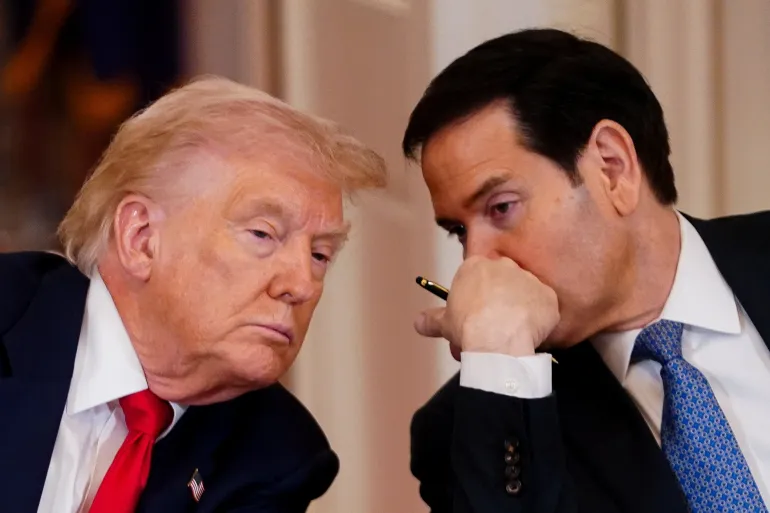
President Donald Trump speaks to members of the media during a swearing in ceremony for Sergio Gor, the new U.S. Ambassador to India, in the Oval Office of the White House on Monday. Photo by Craig Hudson/UPI | License Photo
Source link

House narrowly approves stopgap funding to end shutdown

Nov. 12 (UPI) — The U.S. House, convening for the first time in two months on Wednesday, approved legislation sent two days earlier by the Senate to reopen the federal government, resuming programs and paying millions of workers.

President Donald Trump plans to sign the legislation, ending the longest shutdown in history at 43 days.

The House originally approved a spending bill in September on a majority vote, but the Senate needed 60 days and approval was held up in finding enough Democrats to agree to legislation that doesn’t guarantee enhanced health insurance subsidies starting Jan. 1.

At 8:21 p.m., the House voted 222-209 to send the stopgap funding bill to the president. The outcome wasn’t strictly along party lines with six Democrats voting yes and two Republicans voting no. There were two not voting and two vacancies.

The White House said Trump would sign the legislation on camera at 9:45 p.m. from the Oval Office. He earlier attended a private dinner at the White House with financial industry leaders.

“I’ll abide by the deal,” he said earlier Monday. “The deal is very good.”

His signature means at least 670,000 federal employees furloughed will return to work and roughly 730,000 essential workers, including air traffic control workers, will be paid, according to the Bipartisan Policy Center.

Government programs will resume, including 42 million people receiving monthly payments from the Supplemental Nutrition Assistance Program. For the first time in history, November money wasn’t sent electronically.

After the House Rules Committee advanced the Senate bill Tuesday night, the full chamber convened at 4:08 p.m., and began debate for one hour at 4:36 p.m.

The bill advanced 213-209.

The GOP has a 219-214 advantage, with Democrat Adelita Grijalvi having been sworn in when the House convened. She was elected Sept. 23.

“For 40 days, hardworking Americans have endured flight cancellations, missed paychecks and empty dinner tables – all because Democrats closed the government,” Johnson posted on X with a video before the vote.

“It was foolish, pointless, cruel and entirely avoidable. Republicans have been working every day to get the government reopened for the American people, and today we should finally be able to overcome the Democrats and accomplish our mission.”

A provision was stripped from the House version regarding funds for eight senators to sue the Department of Justice for obtaining their phone records during an investigation when Joe Biden was president.

“House Republicans are introducing standalone legislation to repeal this provision that was included by the Senate in the government funding bill,” Johnson posted on X on Wednesday afternoon. “We are putting this legislation on the fast-track suspension calendar in the House for next week.”

Democrats have opposed the provision.

“What makes this corruption so staggering is that the payout is specifically designed to go to eight senators whose phone records were lawfully subpoenaed under due process by the Department of Justice,” Rep. Rosa DeLauro, the top Democrat on the House Appropriations panel, wrote in a statement.
She accused the senators of voting “to shove taxpayer dollars into their own pockets — $500,000 for each time their records were inspected.”

The House had been out of session since Sept. 19, when it passed the first version of a continuing resolution to temporarily fund the government. The Senate held 14 votes on the same legislation, but failed to reach the 60-vote supermajority needed to pass it.

A majority of Democrats in the Senate voted against the legislation, seeking to tie the funding bill to a renewal of enhanced Affordable Care Act tax subsidies set to expire in the new year.

The Senate broke the impasse over the weekend after Republicans agreed to hold a separate vote on ACA tax credits. Unnamed sources told ABC News that Republicans promised to hold a vote on the issue in December, though House Speaker Mike Johnson has yet to commit to voting on any ACA measure passed by the Senate.

The credits were enhanced in 2021 by the American Rescue Plan Act during the pandemic and extended one year later through 2015. They increased the amount of financial assistance, expanded eligibility and capped the percentage of household income for the benchmark silver plan.

Eight senators who caucus with the Democrats voted Monday in favor of the new bill on Tuesday night, allowing the chamber to pass it with a vote of 60-40.

The new stopgap bill will fund the government through Jan. 30, provide a full year of funding for the Supplemental Nutrition Assistance Program and veterans programs.

Democrats criticized the bill.

“As Democrats, we’re committed to addressing this affordability crisis. That’s what this fight has been all about,” House Minority Leader Hakeem Jeffries said outside the Capitol before the House convened. “We’ll continue this fight to fix our broken healthcare system.

“We’ll continue to fight for the principle that in this great country, the wealthiest country in the history of the world, healthcare can’t simply be a privilege available only to the well-off, the wealthy and the well-connected.

“Healthcare must be a right available to every single American. And that’s the fight that House Democrats will continue to wage for the American people.”

Jeffries unsuccessfully attempted a three-year extension of Obamacare by a discharge petition. There would be a vote if the minority party can secure support for a majority of the chamber — a total of 218 signatures. But there are only 214 Democrats and there wasn’t sufficient GOP backing.

“Affordable Care Act tax credits were extended by three years in the Inflation Reduction Act,” Jeffries said. “The legislation that we will introduce in the context of the discharge petition will provide that level of certainty to working-class Americans who are on the verge of seeing their premiums, copays and deductibles skyrocket in some cases, experiencing increases of $1,000 or $2,000 per year.”

Colorado Rep. Jeff Hurd said he wanted to extend the enhanced premium tax credits for time to work on “the underlying drivers that are pushing up those health care costs to begin with.”

The American Federation of State, County and Municipal Employees, with 1.4 million members, called on Congress to help Americans afford health insurance.

“AFSCME members have been clear from the start of this shutdown: we need to lower health care costs and fund public services,” AFSCME President Lee Saunders said in a statement to UPI.

“Unfortunately, this administration and the Project 2025 ideologues in Congress refused to come to the table to address the healthcare crisis gripping families across the country. We applaud all of the leaders in Congress who stood up and sounded the alarm about the massive insurance premium hikes affecting millions of Americans.

“The fight to protect families from these increases is far from over. Now that the government is reopening, we’re calling on members of Congress to keep their promise and hold a vote to extend the Affordable Care Act tax credits. Working families cannot afford to wait any longer to lower health care costs.”

President Donald Trump speaks to members of the media during a swearing in ceremony for Sergio Gor, the new U.S. Ambassador to India, in the Oval Office of the White House on Monday. Photo by Craig Hudson/UPI | License Photo

Source link

US House passes spending bill to end longest gov’t shutdown in history | Donald Trump News

BREAKING,

The successful vote means the long-delayed bill will now be passed on to President Trump to sign into law.

The House of Representatives has passed a federal government spending package, clearing the final hurdle and bringing an end to the longest government shutdown in United States history – at least for now.

In a vote held late on Wednesday evening in the Republican-held House, the bill was backed by 222 lawmakers – including six Democrats – while 209 voted against it, including two Republicans.

Recommended Stories

list of 3 itemsend of list

The long-delayed bill will now be passed on to President Donald Trump to sign into law.

On Monday night, the upper chamber of Congress had approved the spending package by a vote of 60 to 40 to fund the US government through January 30, reinstating pay to hundreds of thousands of federal workers after six gruelling weeks.

All but essential government services had ground to a halt amid the shutdown.

The breakthrough came following negotiations last weekend that saw seven Democrats and one independent agree to back the updated spending package and end the shutdown, which entered its 42nd day on Tuesday.

Crucially, however, the deal has not resolved one of the shutdown’s most central issues – healthcare subsidies for 24 million Americans under the Affordable Care Act, which the Trump administration planned to cut.

For weeks, Democrats repeatedly blocked the bill’s passage in Congress, saying the measure was necessary to force the government to address escalating healthcare costs for low-income Americans.

Shortly before Wednesday’s vote, Republican House Speaker Mike Johnson accused his Democratic colleagues of using American citizens as “leverage” in their “political game”, as he denounced them for preventing the resolution’s passage in September.

“Since that time, Senate Democrats have voted 14 times to close the government. Republicans have voted a collective 15 times to open the government for the people, and the Democrats voted that many times to close it,” he said.

As part of the deal breaking the impasse, Senate Republicans agreed to hold a vote on the issue by December, raising fears there could be another shutdown in January.

The agreement had also provoked anger among Democrats, who preferred to keep holding out, including Illinois Governor JB Pritzker – considered a contender for the 2028 presidential election – who called it an “empty promise” earlier this week.

David Smith, an associate professor at the University of Sydney’s United States Studies Centre, also described the agreement as “just a stopgap arrangement”.

“The deal that they’ve reached means most of the government will shut down again in January if they can’t come to another agreement,” he told Al Jazeera earlier this week.

Democrats who supported the deal were Senate Democratic Whip Dick Durbin from Illinois, John Fetterman from Pennsylvania, Catherine Cortez Masto and Jackie Rosen from Nevada, Maggie Hassan and Jeanne Shaheen from New Hampshire, and Tim Kaine from Virginia.

Angus King, an independent from Maine, also backed the deal.

This is a breaking news story. More to follow shortly.

Source link