Donald Trump

Democratic lawmakers end Cuba trip, urge U.S. to end ‘economic bombing’

April 6 (UPI) — Two Democratic lawmakers concluded a trip to Cuba on Monday by calling for the United States and Cuba to begin “real negotiations” and denouncing the Trump administration’s “economic bombing” of Havana.

Democratic Reps. Pramila Jayapal, of Washington, and Jonathan Jackson, of Illinois, returned to the United States following a five-day visit to Cuba. They said they spoke with officials and witnessed the effects of President Donald Trump‘s monthslong de facto oil blockade of the island nation.

The lawmakers said they saw premature babies in incubators put at risk due to Cuba’s energy crisis, children out of school because teachers have no fuel to travel to school and cancer patients being denied treatment because of a lack of medicine.

“This is cruel collective punishment — effectively an economic bombing of the infrastructure of the country — that has produced permanent damage,” the lawmakers said in a joint statement.

“It must stop immediately.”

The Trump administration has been enforcing a monthslong policy of choking off oil supplies to Cuba, plunging the socialist nation into a worsening energy and humanitarian crisis. On Jan. 29, President Donald Trump declared a national emergency with respect to Cuba and created a process to penalize countries that provide it with oil. According to a recent U.N. system action plan, citing Cuban authorities, no fuel imports have been recorded since Dec. 13.

“This disruption has triggered a severe energy shock, characterized by a critical fuel shortage affecting electricity generation, transportation and essential logistics across the country,” the U.N. report published last week said.

Widespread blackouts, fuel rationing and electricity shortages have been reported, it said.

The two Democratic lawmakers said they met with Cuba leaders in religion, civi society and the government, as well as dissidents, and all agreed that the blockade — which they called illegal — must end.

“We do not believe that the majority of Americans would want this kind of cruelty and inhumanity to continue in our name,” they said.

The pair met with President Miguel Diaz-Canel Bermudez, who said in a statement that he denounced to them the “energy siege decreed by the current U.S. government” and reiterated “the willingness of our Government to sustain a serious and responsible dialogue and to find solutions to the existing differences.”

Foreign Minister Bruno Rodriguez of Cuba said in a statement that he also told the lawmakers about the situation facing his country and their “willingness for serious and responsible dialogue to try to find solutions to bilateral problems.”

The Democrats said the Cuba government has sent signals that the country is ready for reform, pointing to its pardoning last week of more than 2,000 prisoners and efforts to liberalize its economy, while arguing the remaining obstacles to its progress is U.S. policy, which they called “outdated” from the Cold War-era.

“True reform will only come from charting a new course,” they said.

Trump has turned his attention to Cuba after detaining Venezuela’s authoritarian leader, Nicolas Maduro, in early January in a clandestine military operation.

He has said it is “a failing nation” and described it as on the precipice of collapse.

“As we achieve a historic transformation in Venezuela, we’re also looking forward to the great change that will soon be coming to Cuba,” he said on March 7 during the Shield of the Americas Summit.

“Cuba’s at the end of the line.”

Source link

Trump’s threat to strike Iran’s power plants looms | US-Israel war on Iran

NewsFeed

US President Donald Trump said ‘Tuesday will be power plant day’ in a vulgar post on social media. He says the US plans to start bombing electricity infrastructure unless Iran opens the Strait of Hormuz. Al Jazeera’s Hala Al Shami looks at Iran’s power plants and the dangers of potential attacks.

Source link

Vance heads to Budapest to shore up Orban’s support before Sunday vote | Politics News

United States Vice President JD Vance is travelling to Budapest to bolster support for Hungarian Prime Minister Viktor Orban, whose Fidesz Party faces its most difficult election in over a decade.

The White House announced last week that Vance would arrive in Hungary on Tuesday and hold two days of bilateral meetings.

Recommended Stories

list of 3 itemsend of list

In February, US President Donald Trump endorsed right-wing leader Orban ahead of Hungary’s April 12 parliamentary elections, while US Secretary of State Marco Rubio visited the country that month to show support.

Kim Lane Scheppele, a professor of sociology at Princeton University in the US who has spent years as an analyst and critic of Orban’s government, says that the trip is meant to underscore the close relationship between Trump and his Hungarian counterpart.

“Orban will make a big deal out of the fact that he’s got Trump’s support. And that’s why Vance is coming,” she said, adding that she is sceptical that Vance’s trip will have a large impact on the outcome of the election.

“If you look at the polls in Hungary, they show the opposition with an 8 to 12 percent lead, in some recent polls up to a 20 percent lead. One visit by a relatively low-profile American vice president is not going to change that.”

Fidesz party voter Gergo Farkas takes part in Prime Minister Viktor Orban’s election campaign rally with his friends in Szombathely, Hungary, April 2, 2026. REUTERS/Marton Monus
Fidesz party voter Gergo Farkas takes part in Prime Minister Viktor Orban’s election campaign rally with his friends in Szombathely, Hungary, April 2, 2026 [Marton Monus/Reuters]

Robust opposition

Orban’s 16-year tenure has been marked by the erosion of the independence of institutions such as the judiciary and the media, as well as reforms that critics say have slanted the electoral system in favour of Orban and his Fidesz party.

But despite what the opposition has described as a deeply imbalanced electoral environment, most polls show the 62-year-old Orban trailing the 45-year-old opposition leader, Peter Magyar, and his Tisza Party.

Magyar is a former high-ranking Fidesz official who broke with the party two years ago and has emerged as a popular voice railing against Orban’s rule.

His campaign has focused on corruption, deteriorating social services, economic conditions, and Orban’s combative relationship with the European Union, which has often centred on immigration and support for Ukraine.

The European Union suspended billions of euros in funding for Hungary in 2022 over what it characterised as democratic backsliding and declining judicial independence.

Magyar has pledged a more cordial relationship with the European bloc, as well as reforms that could lead to the restoration of suspended funds.

While Orban has depicted the opposition as a destabilising force that will sell out the country’s national interests on behalf of Ukraine and the EU, Magyar’s right-leaning politics mean that policies on issues such as immigration would see little change.

“Magyar is centre-right; he’s basically a believer in much of what Orban has done, minus the corruption. In EU terms, he’s slightly eurosceptical but wants to get the money back,” said Scheppele.

BUDAPEST, HUNGARY - MARCH 15: Peter Magyar, Hungarian opposition, leader of the 'TISZA' (Respect and Freedom) party, delivers a speech at a demonstration during commemorations of the 178th anniversary of the 1948/49 Hungarian Revolution on March 15, 2026 in Budapest, Hungary. A rally by Fidesz party supporters of Viktor Orban, Hungary's long-serving prime minister, is taking place alongside a demonstration led by Peter Magyar, leader of the Tisza party, and Orban's main challenger in the upcoming parliamentary elections scheduled for April 12. The 1848 Hungarian Revolution sought independence from Austria through a peaceful movement, standing apart from the many European Revolutions of that same year. Despite its failure, it remains pivotal in Hungarian history, with its anniversary, March 15, being one of the nation's three national holidays. (Photo by Janos Kummer/Getty Images)
Peter Magyar, Hungarian opposition leader of the ‘Tisza’ (Respect and Freedom) Party, delivers a speech at a demonstration during commemorations of the 178th anniversary of the 1948-49 Hungarian Revolution on March 15, 2026 in Budapest, Hungary [Janos Kummer/Getty Images]

Blueprint for the US right

While Orban’s approach to consolidating power and his embrace of far-right politics have mired his relationships in Europe, they have made him a source of inspiration for the US far right and prominent members of the Trump administration, such as JD Vance.

Hungary has previously hosted the Conservative Political Action Conference (CPAC), an annual summit where individuals and groups from across the US right and allies from other countries gather to discuss the future of the conservative movement.

When CPAC convened in Budapest in 2024, Trump sent a video praising Orban for “proudly fighting on the front lines of the battle to rescue Western civilisation”.

Shared ire for Muslims, immigrants, and centres of liberal politics such as universities has helped cement that bond, and Vance himself has enjoyed especially close relations with Orban’s government.

When he was selected as Trump’s running mate in July 2024, Orban’s political director shared a photo of himself posing with Vance, captioned: “A Trump-Vance administration sounds just right.”

Orban’s Hungary has been at the centre of the Trump administration’s shifting policy towards Europe, firmly aligning itself with far-right parties and immigration restrictionists in countries such as France and Germany.

Scheppele says that Orban’s relationship with the Trump administration and status as an icon of the global far right may be of limited use in an election that is mostly focused on domestic issues.

But she noted that more tangible steps, such as a pledge of US financial support from the Trump administration if Orban wins, could buoy his chances in the closing days of the race.

“The big thing to watch is that, when Orban came to the US recently, Trump appeared to promise a fiscal safety net if Orban wins,” said Scheppele, adding that the US took similar steps before the 2025 midterm elections in Argentina in order to bolster right-wing ally Javier Milei, now the country’s president.

“Trump hasn’t made that kind of formal promise, and he’s now denied that he made any specific promise. But the Orban people think that Trump is going to backstop them if they win the election,” Scheppele added. “If Vance makes that kind of announcement, it could be a real game-changer.”

Source link

Colombia’s Petro asks Brazil to extend Pix payment system

Colombian President Gustavo Petro called for regional integration of the Pix system, and he criticized international financial control mechanisms, particularly the U.S. Office of Foreign Assets Control, for enforcing economic sanctions. Photo by Mauricio Duenas Castaneda/EPA

April 6 (UPI) — Colombian President Gustavo Petro asked Brazil to extend its instant payment system Pix to Colombia and questioned U.S. financial sanctions in a message posted on X, amid Washington investigations into the Brazilian system.

In his post, Petro called for regional integration of the Pix system and criticized international financial control mechanisms, particularly the Office of Foreign Assets Control, the U.S. Treasury agency responsible for enforcing economic sanctions.

“I ask Brazil to extend the Pix system to Colombia and hopefully stop considering the OFAC list, which no longer works,” Petro wrote Saturday.

The message comes after the U.S. government last week published the 2026 National Trade Estimate Report on Foreign Trade Barriers, which mentions the Pix system.

The report includes concerns from U.S. companies that the system, operated by Brazil’s central bank, may have regulatory advantages over foreign private competitors such as Visa and Mastercard.

Pix has gained popularity for allowing fast and free transfers, which has generated tensions over its impact on the traditional financial system.

In the same message, Petro criticized the international sanctions system. “OFAC only serves to persecute political opposition and domesticate them around the world. It is an aberrant system of political control,” he said.

He also contended that drug trafficking has managed to evade these mechanisms.

“Drug trafficking mocks it, and they stay in Dubai, where they buy residency for about $4,000 and live in luxury,” he added.

The message also included references to international politics and armed conflicts. Petro said that “no war is good” and said he had asked U.S. President Donald Trump to stop ongoing conflicts.

“His circle wants blood and leads him to make mistakes all the time,” he wrote.

Petro also criticized Israeli Prime Minister Benjamin Netanyahu, whom he accused of committing crimes against humanity in Gaza and Iran, and called for him to be tried.

Petro added that the homicide rate in Colombia has decreased, adding he hopes the trend is not temporary.

So far, the Brazilian government has not publicly responded to the request.


Source link

How US operation to rescue air officer from Iran unfolded | US-Israel war on Iran News

United States President Donald Trump has announced that the US military has rescued a missing American fighter jet crew member in Iran.

The Air Force officer went missing in a remote part of Iran after the downing of his F-15 jet on Friday. Its two crew members ejected from the plane. The pilot was quickly rescued by US forces, but a search had to be launched for the F-15’s weapons systems officer.

In a Truth Social post on Sunday, Trump wrote that the US had rescued the second “seriously wounded, and really brave” airman from “deep inside the mountains of Iran”. It was reported that a firefight between US and Iranian forces took place in Kohgiluyeh and Boyer-Ahmad province before the rescue. Iran has not confirmed this, however.

Here is how the complicated rescue mission unfolded:

What has Trump said about the rescue?

While the identity of the rescued airman has not been made public, Trump referred to him as “a highly respected Colonel”.

He added that the type of rescue mission that recovered him “is seldom attempted because of the danger to ‘man and equipment’”.

Trump said two raids had taken place, and the pilot was rescued in “broad daylight” during the second raid. It is unclear when precisely the pilot was rescued. The US president wrote that the rescue was “unusual, spending seven hours over Iran”.

In his post, Trump said he would talk more about the rescue mission during a news conference with the US military in the Oval Office of the White House on Monday at 1pm (17:00 GMT).

Trump wrote on Truth Social: “This brave Warrior was behind enemy lines in the treacherous mountains of Iran, being hunted down by our enemies, who were getting closer and closer by the hour, but was never truly alone because his Commander in Chief, Secretary of War, Chairman of the Joint Chiefs of Staff, and fellow Warfighters were monitoring his location 24 hours a day, and diligently planning for his rescue.”

Trump added that he had ordered dozens of aircraft carrying “lethal weapons” to be sent to retrieve the airman, who had managed to evade Iranian forces for two days.

The Iranian state media said to show fragments of a downed U.S. jet in this picture said to be taken in central Iran and released on April 3, 2026. IRIB/Handout via REUTERS THIS IMAGE HAS BEEN SUPPLIED BY A THIRD PARTY. IRAN OUT. NO COMMERCIAL OR EDITORIAL SALES IN IRAN. NO USE BBC PERSIAN. NO USE VOA PERSIAN. NO USE MANOTO. NO USE IRAN INTERNATIONAL. NO USE RADIO FARDA. REFILE - CORRECTING FROM "JETS" TO "JET" VERIFICATION: -Reuters was not able to confirm the location or date when the photos were taken. -The red stripe seen on the tail fin of the plane in the photos is consistent with the tail section of a F-15E Strike Eagle seen in file photos.
Iranian state media released on April 3, 2026, images of what they said were fragments of a downed US fighter jet found in central Iran [Handout/IRIB via Reuters]

How did the search unfold?

On Friday morning, the US confirmed that an F-15E Strike Eagle had been shot down over southern Iran. The F-15 is a tactical fighter jet used by the US Air Force that first flew in 1972. Modern variants of the jet cost more than $90m each.

State media outlets in Iran showed photos of what they said was wreckage from the F-15 and what appeared to be an ejection seat with an attached parachute.

Trump suggested that the US knew the location of the plane’s second airman and was tracking him as the rescue mission unfolded.

Iran was also racing to locate the airman. Tehran called on the public to hand over the soldier to the authorities in what appeared to be an effort to secure an American prisoner of war.

Iran’s Islamic Revolutionary Guard Corps claimed on Sunday that Iranian forces had also destroyed two C-130 aircraft and two Black Hawk helicopters during the operation to rescue the US airman in southern Isfahan province.


INTERACTIVE - F-15


What do we know about the two C-130 planes that Iran says it destroyed?

The C-130 Hercules and the newer C-130J Super Hercules variant were developed by the US weapons manufacturer Lockheed Martin. They are military transport aircraft primarily used for tactical airlifts, troop transport and medical evacuations.

The Wall Street Journal reported that each C-130 costs more than $100m.

The newspaper said in a report on Sunday that the US blew up the C-130 jets on the ground during the rescue operation, quoting an unnamed person familiar with the matter. This unnamed official did not explain how the jets were downed during the rescue operation but told the outlet that it was necessary to destroy them to ensure they did not fall into enemy hands.

Has the US lost other military assets or personnel?

Yes. This conflict has killed 13 US service members and wounded more than 300, the US military’s Central Command said, but no US soldiers have been taken prisoner by Iran.

Since the start of the war on February 28, the US has lost three F-15 fighter jets in what it said was a friendly fire incident over Kuwait. A US military refuelling aircraft also went down over Iraq last month, killing all six crew members.

According to the US military, the last US fighter jet to be shot down by enemy fire before the F-15 on Friday was an A-10 Thunderbolt II during the 2003 US invasion of Iraq.

At least one Black Hawk helicopter was hit during the initial rescue operation, US officials said, but it managed to stay airborne.

An A-10 Warthog aircraft was also hit near the Strait of Hormuz a short time after the F-15E on Friday, but its pilot was able to eject before the plane crashed and was subsequently rescued. Iranian media reported this aircraft was hit by Iran’s defence systems.

Iran has not yet confirmed that a firefight took place before the F-15 airman’s rescue. Al Jazeera’s Tohid Asadi, reporting from Tehran, said a firefight appeared to have occurred in Kohgiluyeh and Boyer-Ahmad province and nine people were reported to have been killed in “strikes” there although it was unclear if this was related to the US rescue mission.

Source link

Iran vows crushing retaliation for further strikes on civilian targets

April 6 (UPI) — Iran warned Monday of “much more devastating retaliation” if U.S. President Donald Trump follows through on his “power plants and bridges day” attacks unless Tehran complies with his Tuesday deadline to reopen the Strait of Hormuz.

In a statement carried by state-run broadcaster IRIB, Khatam al-Anbiya Central Headquarters, the Iranian military’s central command, said any repeat of recent strikes on civilian infrastructure would trigger the retaliatory response.

“In the event of a repetition of the attack on civilian targets, the next stages of our offensive and retaliatory operations will be much more devastating and widespread, and their losses and damages in insisting on this approach will be multiplied,” the statement reads.

The threat came after Trump issued an ultimatum full of expletives on Sunday on his Truth Social platform, threatening to obliterate Iran’s power stations and bridges.

“Tuesday, 8:00 P.M. Eastern Time!” he posted shortly afterward, seemingly adding 24 hours to a deadline imposed on March 26 of Monday night for when “all Hell will reign down” if Tehran did not allow safe passage of shipping through the strategically vital sea lane.

Iranian deputy foreign minister Kazem Gharibabadi accused Trump of preparing to carry out war crimes, citing the prohibition in international law on breaches of territorial integrity and destruction of power plants and bridges.

“The American president, as the highest official of his country, has publicly threatened to commit war crimes. The threat to attack power plants and bridges (civilian infrastructure) is a war crime under Article 8(2)(b) of the Rome Statute of the International Criminal Court,” Gharibabadi wrote on X.

There was a slender possibility of a deal before the deadline with Iran and mediators in the region working to put together a 45-day cease-fire, four U.S., Israeli and regional sources told Axios on Monday, while the United States was reported to be “in deep negotiations” with Iran.

“There is a good chance, but if they don’t make a deal, I am blowing up everything over there,” Trump said.

The threat of attacks on ships by Iranian forces has effectively shut the strait since the United States and Israel launched their airborne military offensive on Feb. 28 but Iran has said it could reopen provided reparations are paid for the damage the country has sustained and it receives guarantees it would not be attacked in the future.

It has been suggested that it will begin requiring vessels to pay a toll charge to transit, with the Iranian president’s office saying the Strait of Hormuz would reopen when “a portion of transit tolls is used to compensate for all the damage caused.”

President Donald Trump delivers a prime-time address to the nation from the Cross Hall in the White House on Wednesday. President Trump used the address to update the public on the month-long war in Iran. Pool photo by Alex Brandon/UPI | License Photo

Source link

OPEC agrees on another oil production boost as Strait remains blocked

OPEC+ members announced Sunday they would modestly boost production as worldwide oil supplies tighten and prices spike amid the American-Israeli war on Iran. File Photo by Olivier Matthys/EPA

April 5 (UPI) — Members of the Organization of the Petroleum Exporting Countries said Sunday they will again modestly boost oil production as war rages in Iran and the Persian Gulf, although the move is largely symbolic as the Strait of Hormuz remains closed.

As first they did in March, the eight OPEC+ countries — Saudi Arabia, Russia, Iraq, United Arab Emirates, Kuwait, Kazakhstan, Algeria and Oman — on Sunday agreed to a 206,000 barrel-per-day production increase amid attacks by Iran on the oil and gas facilities of several of its members in the Persian Gulf.

Iran has blocked the key Strait of Hormuz shipping lane in response to the American and Israel attacks that started on Feb. 28.

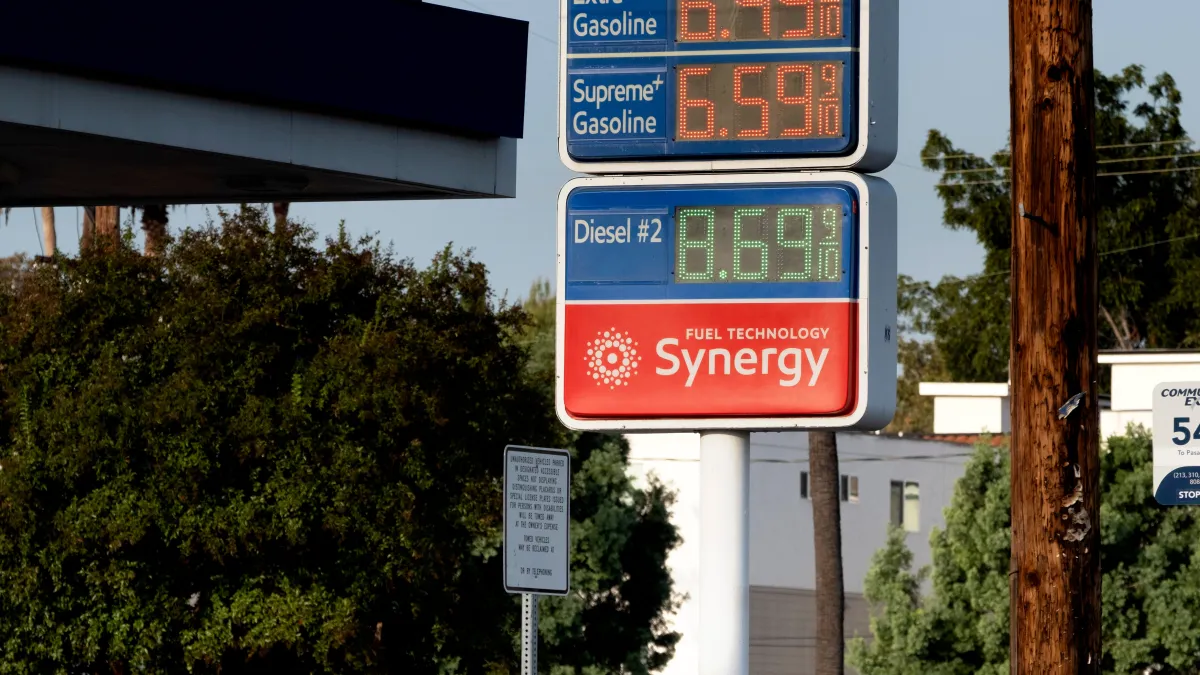
Since then the global price of oil has shot up by close to 60% while gas prices at the pump in the United States have surpassed $4 per gallon.

Although the waterway remains choked off, the OPEC+ move indicated producers will likely ramp up production to help alleviate the worldwide oil shock once the Strait is reopened and production facilities in the Gulf states are secured from Iranian drones and missiles.

U.S. President Donald Trump on Sunday continued to threaten Iran with destruction of civilian and military infrastructure by Tuesday unless Tehran loosens its grip on the Strait.

But Iran has remained defiant, continuing to launch drone attacks against OPEC members who host U.S. military facilities, particularly targeting Kuwait, Bahrain and the UAE, where critical infrastructure again came under attack on Sunday.

Damage was sustained at civilian facilities in all three countries, officials reported.

The Kuwait Petroleum Corp. announced “significant material losses” after Iranian drone attacks on several of its facilities, the KUNA news agency reported.

Meanwhile, Kuwaiti Interior Ministry spokesman Brig. Gen. Nasser Bousleib said officials had registered nine reports of falling shrapnel during the preceding 24 hours, boosting the total of such incidents since the beginning of the Iranian aggression to 678.

An Iranian flag stands amid the destruction in Enghelab Square following the attacks carried out by the United States and Israel on Tehran, Iran, on March 4, 2026. Photo by Nahal Farzaneh/UPI | License Photo

Source link

Pope Leo beseeches warring nations to lay down arms in Easter address

Pope Leo XIV waves to the crowd from the popemobile after he presided over the Holy Mass on Easter Sunday at Saint Peter’s Square in Vatican City on Sunday. It is Pope Leo’s first Holy Week as pontiff. Photo by Riccardo Antimiani/EPA

April 5 (UPI) — Pope Leo XIV on Sunday beseeched world leaders to “lay down” the weapons of war and use “dialogue” rather than force as the means to bring about peace.

In the annual Urbi et Orbi address delivered by the presiding Catholic pontiff each Easter Sunday in St. Peter’s Square at the Vatican, Leo said the holy day can provide a light from Christ allowing hearts “to be transformed by his immense love for us.

“Let those who have weapons lay them down. Let those who have the power to unleash wars choose peace. Not a peace imposed by force, but through dialogue. Not with the desire to dominate others, but to encounter them,” Leo said in his first Easter address as pontiff.

An estimated 50,000 people jammed the Roman square to hear Leo’s Urbi et Orbi Easter Mass homily, or “To the City and the World,” in which he warned against allowing “indifference” to blunt the impact of war’s devastation as conflicts raged in Iran, Lebanon, Gaza, Ukraine and elsewhere in the world.

“We are growing accustomed to violence, resigning ourselves to it, and becoming indifferent,” he said. “Indifferent to the deaths of thousands of people. Indifferent to the repercussions of hatred and division that conflicts sow. Indifferent to the economic and social consequences they produce, which we all feel.”

Instead, he declared, “We cannot continue to be indifferent! And we cannot resign ourselves to evil!”

Leo, the first American pope, has been a frequent critic of U.S. President Donald Trump, but did not specifically mention him or any other leader or country during the Easter homily. Rather, he anti-war remarks were universal.

“On this day of celebration, let us abandon every desire for conflict, domination, and power, and implore the Lord to grant his peace to a world ravaged by wars and marked by a hatred and indifference that make us feel powerless in the face of evil,” Leo urged.

In his time as pope, Leo has established a track record of issuing unambiguous calls for peace.

Last month, for instance, he voiced a direct demand for an end to the U.S.-Israeli war in Iran as the conflict entered its third week.

“On behalf of the Christians of the Middle East, and of all women and men of good will, I appeal to those responsible for this conflict: Cease fire!,” the pope said during the Angelus in St. Peter’s Square on March 15.

Pope Leo XIV celebrates the Christmas vigil Mass on Christmas eve on Wednesday in St. Peter’s Basilica in Vatican City, Vatican. Photo by Stefano Spaziani/UPI | License Photo

Source link

Mearsheimer: No signs of quick end to US-Israel war on Iran | US-Israel war on Iran

US political scientist John Mearsheimer argues that Israel – not Iran – is the Middle East country that is ‘highly aggressive’.

The greatest threat to stability in the Middle East is not Iran, but “the US working closely together with Israel”, argues United States political scientist John Mearsheimer.

Mearsheimer tells host Steve Clemons that the notion that the US and Israel are making a safer, more stable Middle East is “ludicrous”. And the idea that Iran is “the great destabiliser” in the region is “a myth that the US and Israel purvey”.

After US President Donald Trump insisted that “We have all the cards; they have none”, Mearsheimer says the exact opposite is true – “and that’s why we are in desperate straits”.

Source link

Trump threatens ‘hell’ for Iran over Hormuz Strait as deadline approaches | US-Israel war on Iran News

US president threatens to strike power plants and bridges on Tuesday in an expletive-laden social media post.

United States President Donald Trump has threatened to attack civilian infrastructure inside Iran, including bridges and power plants, if the Strait of Hormuz is not reopened by his stated deadline of Monday.

Trump made the threat in an expletive-laden social media post on Sunday, in which he repeated previous threats to pummel vital infrastructure across Iran.

Recommended Stories

list of 3 itemsend of list

“Tuesday will be Power Plant Day, and Bridge Day, all wrapped up in one, in Iran. There will be nothing like it!!! Open the F****** Strait, you crazy b*******, or you’ll be living in Hell – JUST WATCH! Praise be to Allah,” Trump said in a Truth Social post.

On March 26, Trump set a 10-day deadline for Iran to reopen the Strait of Hormuz, a key shipping route for the global energy market, where traffic has ground to a halt since the US and Israel first attacked Iran on February 28.

He told Fox News on Sunday that Iran was currently negotiating with the US and that he believed the two could reach a deal before the deadline.

The US president has frequently repeated that Iran is seeking a deal to end the war and that fighting will end soon since the conflict began. Iran has stated that it is not seeking to end the war and has vowed to step up escalation across the region if its infrastructure is targeted.

Throughout the war, US officials have threatened Iran with overwhelming violence if it does not capitulate to US demands. Last week, US Secretary of Defense Pete Hegseth threatened to send Iran “back to the Stone Age”.

US-Israeli strikes have already targeted civilian infrastructure and facilities, including bridges, schools, healthcare facilities, and universities. Experts have warned that some of those strikes could constitute war crimes.

The US president has said that he will hold a news conference in the White House on Monday.

Trump also offered additional details about the operation to locate and extract the pilot of an F-15E fighter jet that was shot down over Iran on Friday.

“We have rescued the seriously wounded, and really brave, F-15 Crew Member/Officer, from deep inside the mountains of Iran,” he said in a separate social media post on Sunday.

“An AMAZING show of bravery and talent by all!”

Source link

US pilot from downed F-15E plane rescued in Iran: What we know | US-Israel war on Iran News

United States President Donald Trump said early on Sunday that an American soldier who went missing in Iran after the downing of his F-15E jet has been rescued following what observers called a dramatic firefight between Iranian and US rescue forces.

The US and Iran were racing to find the airman for about two days, with Tehran calling on the public to hand over the soldier to the authorities in what appeared to be attempts to capture an American prisoner of war as the US-Israel war on Iran entered its 37th day.

Recommended Stories

list of 3 itemsend of list

That scenario would have delivered a significant win to Tehran amid the ongoing pummelling of its territory, and for Washington, a stunning blow, analysts say. It could have been the moment that parts of Trump’s support base, which has so far supported the war, started to rethink their stance, they say.

“It was a major test for the American military because they really don’t want to leave any of their servicemen behind enemy lines,” Amin Saikal, a professor of Middle East and Central Asian studies at the Australian National University, told Al Jazeera.

But this rescue “also really frees up President Trump to pursue whatever strategy he has in mind”, Saikal added, referencing Trump’s 48-hour deadline for Iran to make a deal or open the Strait of Hormuz “before all Hell will reign down on them”. Trump has already threatened to bomb energy plants in Iran. Targeting of civilian infrastructure is seen as a violation of the laws of war.

At least 2,076 people have been killed, and 26,500 have been injured in Iran since February 28, when the US and Israel first launched strikes on Iran and killed Supreme Leader Ayatollah Khamenei and several other senior military and political leaders.

The conflict has since escalated into a regional war with Iran retaliating against Gulf countries hosting US military and commercial assets.

What happened to the missing airman?

The F-15E jet carrying two members was flying over southern Iran when it was shot down on Friday morning local time.

According to Tehran, the aircraft was shot down by Iran’s “new advanced air defence system”, which it said remained effective despite claims by the US that it had been destroyed.

It was the first time during the war, and the first time since the invasion of Iraq in 2003, that a US aircraft had been shot down.

Washington immediately launched a rescue mission. Although US forces rescued one crew member hours after the crash, the second pilot, believed to be a colonel-rank weapons system officer, was yet to be found.

At least one Black Hawk helicopter was hit in the initial rescue, but US officials said it managed to stay airborne.

Trump suggested that the US appeared to have the location of the airman and was tracking him as the rescue mission unfolded in an area with difficult, mountainous terrain that made physical recovery challenging.

An A-10 Warthog aircraft was also hit near the Strait of Hormuz around the same time as the F-15E, but its pilot was able to eject before the plane crashed and was subsequently rescued. Iranian media reported that this aircraft was also hit by Iran’s defence system.

INTERACTIVE - F-15How did Iran react?

Following the downing of the F-15E, Iran’s Islamic Revolutionary Guard Corps (IRGC) cordoned off some parts of the mountainous southwestern Kohgiluyeh and Boyer-Ahmad province because they believed the airman went down in the vicinity.

Iranian media also reported that parts of the southern Khuzestan region, an important energy hub, were being scrutinised. That region was the focus of heavy US-Israeli strikes on Saturday that killed at least five people and injured dozens.

Iranian authorities, in a rare move, called on the public on Friday to help find and capture the missing American soldier. State media reported that Tehran offered a $60,000 reward for the airman as clips on state TV repeatedly played footage showing the remnants of the downed US aircraft.

Nomadic tribes in the area, appearing to heed the calls, set about searching for the US airman. Footage from state media showed men carrying rifles and Iranian flags moving in between the mountains of the country’s southwest region.

Some successfully shot at two US Black Hawks that were part of the rescue mission, Iranian officials said. The BBC also verified footage appearing to show Iranian men firing their rifles at US helicopters.

Nomadic groups in Iran, and elsewhere, usually carry rifles to protect their cattle from wildlife and bandits.

The IRGC on Sunday claimed that Iranian forces destroyed two C-130 aircraft and two Black Hawk helicopters during the operation to rescue the US pilot in southern Isfahan.

What did the US do to retrieve the soldier?

Early on Sunday morning, Trump announced in a post on Truth Social that the missing soldier had been rescued in “one of the most daring Search and Rescue Operations in U.S History”.

“This brave Warrior was behind enemy lines in the treacherous mountains of Iran, being hunted down by our enemies, who were getting closer and closer by the hour, but was never truly alone because his Commander in Chief, Secretary of War, Chairman of the Joint Chiefs of Staff, and fellow Warfighters were monitoring his location 24 hours a day, and diligently planning for his rescue,” Trump said in his message.

The president revealed some details of the high-risk operation. He had ordered that dozens of aircraft carrying “lethal weapons” be sent in to retrieve the airman who had managed to evade Iranian forces for two days. All the while, the US was tracking the airman.

Although Trump did not reveal details of the firefight believed to have ensued when the US closed in on the airman and went to retrieve him, he confirmed that the officer “sustained injuries” and added that “he will be just fine”.

Al Jazeera’s John Hendren gathered that there was a “heavy firefight” as what was meant to be a “get-in and get-out” rescue operation dragged on.

While US forces had aimed to use the cover of night to conduct the rescue mission after closing in on the airman, enemy fire prolonged the mission into daylight, making it more dangerous.

“We’ve heard it described to us as a heavy firefight,” Hendren reported. “In the end, they managed to spirit that airman out of the country … and into safety, but it didn’t come without injuries, including injuries to that airman himself, but in the end, the US was allowed to avoid a situation where they would have a prisoner of war inside of Iran.”

Hendren added that the US had earlier started a disinformation campaign in Iran, according to officials, claiming the airman was already rescued, to jeopardise Iran’s search.

Iran has not yet confirmed the incident. Al Jazeera’s Tohid Asadi, reporting from Tehran, said the firefight appeared to have occurred in the Kohgiluyeh Boyer-Ahmad region, and that nine people have been reported killed in “strikes”, although it is unclear if it was related to the US rescue mission.

Meanwhile, Iranian authorities said on Sunday morning that yet another US aircraft – a Lockheed C-130 Hercules – had been downed.

The US has not responded to those claims. At least one such aircraft was spotted flying low over southwest Iran, along with two smaller refuelling helicopters, during the rescue mission effort of the last 48 hours.

Source link

Trump gives Iran 48 hours to open Strait of Hormuz or face ‘hell’

April 4 (UPI) — President Donald Trump on Saturday reminded Iran that his 10-day deadline for it to reopen the Strait of Hormuz is 48 hours away and “all Hell will reign down” if the trade route is not made passable.

Trump said on March 26 that he had given Iran 10 days to start allowing ships to transit the Strait of Hormuz, through which roughly 20% of the world’s oil and gas supply travels, or he would direct the U.S. military to attack the nations energy sites.

Iran on Wednesday requested a ceasefire in the war launched in February by the United States and Israel, which Trump said he would consider when the Strait is “open, free and clear.”

Saturday morning, in a post on Truth Social, Trump reiterated his expected time frame for the Strait to open, the deadline for which is April 6.

“Remember when I gave Iran ten days to MAKE A DEAL or OPEN UP THE HORMUZ STRAIT,” Trump said. “Time is running out — 48 hours before all Hell will reign [sic] down on them. Glory be to GOD!”

U.S. Sen. Lindsey Graham, R-S.C., said later Saturday after speaking with Trump that he is “convinced that he will use overwhelming military force against the regime if they continue to impede the Strait of Hormuz and refuse a diplomatic solution to achieve our military objectives,” Axios reported.

Iran’s Gen. Ali Abdollah Aliabadi in a statement reportedly called Trump’s post “a helpless, nervous, unbalanced and stupid action,” and then Aliabadi returned Trump’s threat that “the gates of hell will open for you.”

In indirect negotiations, Iran has said that it would not accept a temporary ceasefire, and instead wants an end to the war and promises that the United States and Israel will not stage future attacks against it.

President Donald Trump delivers a prime-time address to the nation from the Cross Hall in the White House on Wednesday. President Trump used the address to update the public on the month-long war in Iran. Pool photo by Alex Brandon/UPI | License Photo

Source link

Trump says Iran has 48 hours to make deal as search for US pilot continues | US-Israel war on Iran News

United States President Donald Trump has issued another threat to Iran, writing that it has two days to “make a deal or open up the Hormuz Strait”.

Saturday’s brief, three-sentence post on Truth Social did not reference the ongoing search for a US pilot who is believed to have ejected over Iran after an F-15 fighter jet crashed in the country. Iran has taken responsibility for the downing, the first of its kind since the US and Israeli launched attacks on Iran on February 28.

Recommended Stories

list of 3 itemsend of list

A separate incident on Friday saw Iran claim it shot down an A-10 Warthog near the Strait of Hormuz, raising questions about Trump’s earlier assertion that the US has established dominance over Iran’s airspace.

Rather than remark on the recent crashes, Trump’s post focused on a 10-day deadline he announced on March 26.

He had called on Iran to open the Strait of Hormuz to international traffic, or else face the “destruction” of its energy plants. That 10-day period is set to expire on Monday.

“Remember when I gave Iran ten days to MAKE A DEAL or OPEN UP THE HORMUZ STRAIT,” Trump wrote. “Time is running out – 48 hours before all Hell will reign down on them. Glory be to GOD!”

Stalled negotiations

While Trump did not provide further details about Saturday’s threat, in a series of posts this week, he pledged to attack Iran’s power plants, oil facilities and “possibly all desalinization plants”.

During a national address on Wednesday, he also threatened to bomb Iran “back to the Stone Ages”, and on Friday, he cheered a strike on a bridge that connects Tehran to the Caspian Sea.

Just this week, more than 100 international law experts published an open letter, warning that targeting civilian infrastructure is a violation of the Geneva Convention and could constitute war crimes.

The Trump administration has also offered shifting objectives and plans for ending the war.

Administration officials have repeatedly said that the US prefers a diplomatic solution. Trump, meanwhile, has touted “victories” even as he has hinted at more weeks of attacks.

At the same time, Iran and the US have sent contradictory messages on the progress of peace talks.

On Saturday, Iranian Foreign Minister Abbas Araghchi said Tehran remained open to diplomacy, after Iran rejected an “unreasonable” 15-point plan put forward by the Trump administration.

“What we care about are the terms of a conclusive and lasting END to the illegal war that is imposed on us,” Araghchi said in a post on X.

The US, however, has argued that Iran’s demand that it maintain “sovereignty” over the Strait of Hormuz is a non-starter.

Pakistan has indicated it will continue to try to support ceasefire negotiations despite the ongoing “obstacles”.

No mention of downed pilot

While Trump has not publicly addressed the ongoing search for the US pilot, NBC News reported on Friday that he did not believe the incident would affect any negotiations with Iran.

“No, not at all. No, it’s war,” he reportedly told the network in a phone call.

Nevertheless, experts have warned that the possible Iranian capture of the pilot could create a crisis for Washington, giving Tehran a major leverage point that could snarl any diplomatic resolution.

The incident could also undermine US claims it has a dominant position in negotiations.

Marina Miron, a researcher at King’s College London, said the shooting down of the F-15 undercuts statements from Trump and Pentagon chief Pete Hegseth that the US has established complete control over Iranian airspace.

“Now we have a visible example that Iran still has the capability to target and successfully shoot down US aircraft, making this, of course, very important for Iran to demonstrate the capability to resist,” Miron told Al Jazeera.

“Most likely, the kinds of air defences that Iran is using, such as man-portable air defences, will be much more difficult to locate.”

Any US efforts to rescue the pilot would risk US casualties, Miron added, heightening the risk of further military escalation.

“It’s a race for time, because right now we have this critical window of up to 72 hours where both sides are trying to get hold of the pilot for both military and political purposes,” she said.

Source link

Search for downed U.S. airman enters second day in Iran

U.S. special forces were in a race against Iran to find a U.S. airman missing after their F-14E Strike Eagle fighter jet went down in Iran. File Photo courtesy the Department of Defense

April 4 (UPI) — Israel’s military suspended attacks in an area of Iran where a U.S. airman is believed to be lost as U.S. forces carried out a second day of search-and-rescue operations Saturday.

The service member was one of two pilots on board an F-15E fighter jet that Iran shot down over its airspace on Friday. U.S. officials were able to safely rescue one of the pilots, but the second was missing.

An unnamed Israeli official told The New York Times that the Israeli military halted its operations in the area — the mountainous regions of Kohgiluyeh, Boyer-Ahmad and Khuzestan provinces — amid the search. The official said it was also sharing information with U.S. officials to aid in the rescue mission.

Meanwhile, state-run media in Iran encouraged civilians in the region to also look for the missing U.S. airman, The Guardian reported.

Speaking Friday with NBC News, President Donald Trump said the downed U.S. fighter jet won’t affect the United States’ negotiations with Iran more than a month after U.S. and Israeli forces began strikes on the country.

“No, not at all,” Trump said of the possibility. “No, it’s war. We’re in war.”

A U.S. official told NBC News that it’s believed that the downed F-14E fighter jet was originally based out of Royal Air Force Lakenheath in Britain.

Elsewhere, Iraq closed its border crossing with Iran at Shalamja on Saturday after an Iranian missile strike at the site killed one person and injured five others. Lt. Gen. Omar al-Waeli, who heads the Border Ports Authority, said the injured were injured were taken to a hospital in Iran.

All trade and passenger traffic were halted, the Iraqi News Agency reported.

“There are alternatives to Shalamja crossing, regarding the entry of goods, such as the Safwan border crossing, in addition to the existence of other land crossings operating in the rest of the govern orates in order to secure the entry of goods and commodities,” al-Waeli said.

Source link

Federal judge refuses to reconsider quashing Fed subpoenas

A federal district court judge denied a Department of Justice motion asking the court to reconsider its quashing of subpoenas aimed at U.S. Federal Reserve Chair Jerome Powell, pictured in January at a press conference, and the Fed Board. File Photo by Annabelle Gordon/UPI | License Photo

April 3 (UPI) — A federal judge on Friday refused a Department of Justice request for him to reconsider his earlier ruling to block grand jury subpoenas it issued to Fed Chairman Jerome Powell.

U.S. District Judge James Boasberg on Friday said he would not lift his block on subpoenas that the Justice Department issued to board of the Federal Reserve regarding the $2.5 billion renovation of the Fed’s complex in Washington, D.C.

The judge had previously blocked the subpoenas because, he said, they had nothing to do with a Justice Department probe about the renovations, but rather were intended to pressure Powell into adjusting interest rates, as President Donald Trump had been chiding him to do for months.

“On March 11, 2026, this Court issued a Memorandum Opinion and Order that quashed the Government’s subpoenas directed to the Board of Governors of the Federal Research System,” Boasberg wrote in a response to the Justice Department request that was filed on Friday.

“The Government promptly moved for reconsideration of that decision,” he wrote. “As its cursory brief neither offers new evidence nor points to any material error, the Court will deny the Motion.”

The DOJ launched its criminal investigation into the Fed’s renovation budget, which Powell at the time called “pretexts” to punish him for not setting interest rates based on Trump demands.

Boasberg, in his response to the Justice when he blocked the subpoenas said that the government “has produced essentially zero evidence to suspect Chair Powell of a crime.”

The Justice Department later acknowledged when appealing Boasberg’s quashing of the subpoenas that it did not have evidence that a crime had been committed, instead saying that there were “1.2 billion reasons for us to look into it.”

President Donald Trump delivers a prime-time address to the nation from the Cross Hall in the White House on Wednesday. President Trump used the address to update the public on the month-long war in Iran. Pool photo by Alex Brandon/UPI | License Photo

Source link

Iran shoots down U.S. fighter jet; one pilot rescued, one missing

The Iranian military shot down a U.S. F-15E similar to the one pictured on Friday. File Photo by Senior Airman Mitch Fuqua/U.S. Air Force.

April 3 (UPI) — The U.S. forces rescued at least one crew member after Iran shot down a U.S. F-15E fighter jet Friday, unnamed U.S. military sources told multiple media outlets.

Officials confirmed the rescue to CBS News but said search-and-rescue operations were still taking place. CNN reported they were looking for one other pilot before Iranian forces could reach them. The F-15E has a standard crew of two pilots, The New York Times reported.

Iran’s state-run Tasnim news agency reported that Iranian officials’ efforts to locate the two U.S. pilot had “so far been unsuccessful.” Another Iranian news outlet, Fars News, said the government was offering a reward to anyone who captured an “enemy pilot or pilots.”

The New York Times reported that amid the search-and-rescue efforts, Iranian ground fire also hit a U.S. Air Force UH-60 Black Hawk helicopter. Officials told the news outlet that the crew was able to fly the aircraft back to safety in Iraq.

The Times also reported that another aircraft, an A-10 Thunderbolt, or Warthog, crashed near the Strait of Hormuz around the same time as the F-15E fighter jet. Two U.S. officials told the outlet that the only pilot on board the aircraft was rescued.

Iranian media outlets published photos of what appears to be a shot-down F-15 fighter jet.

White House press secretary Karoline Leavitt told CNN that President Donald Trump had been briefed on the incident.

This is the first U.S. aircraft to be shot down by Iran since the start of U.S. and Israeli bombing on Feb. 28. Three other F-15 jets were shot down by mistake in Kuwait.

President Donald Trump delivers a prime-time address to the nation from the Cross Hall in the White House on Wednesday. President Trump used the address to update the public on the month-long war in Iran. Pool photo by Alex Brandon/UPI | License Photo

Source link

Iran war: What is happening on day 36 of US-Israeli attacks? | US-Israel war on Iran News

Iran claims responsibility for downing two US warplanes, as search under way for missing crewmember.

Iran has claimed responsibility for shooting down two US warplanes.

Two American crewmembers were rescued and one airman remains missing after a F-15E Strike Eagle went down over the Kohgiluyeh and Boyer-Ahmad provinces and an A-10 Warthog crashed into the Gulf, according to US media reports.

Recommended Stories

list of 1 itemend of list

Iranians took to the streets in Tehran to celebrate what authorities described as a major military success.

Iranian officials said the downing of the aircraft demonstrates that Tehran still has the capability to confront US and Israeli forces, despite the Trump administration’s claims that the country’s military infrastructure has been severely damaged.

The incidents mark a significant escalation in the conflict, with search and rescue operations under way for the missing US crewmember.

Here is what we know about the latest developments:

In Iran

  • Major escalation: US forces are conducting search and rescue operations for a missing crewmember after Iran downed two American warplanes. A US Black Hawk helicopter involved in the search was also hit by Iranian fire but managed to remain airborne, according to US media reports.
  • Defence system: Iran said a “new advanced defence system” downed the aircraft, contradicting earlier US claims that its air defences had been destroyed.
  • Casualties and damage: The human toll continues to rise with at least 2,076 people killed and 26,500 wounded in Iran since the start of the war on February 28, according to Iranian authorities.

War diplomacy

  • Diplomacy stalls: Iran’s semi-official news agency Fars on Friday reported that Tehran had rejected a US proposal for a 48-hour ceasefire. The US did not confirm or comment on the report, which cited an unnamed source.
  • War of words: Iranian President Masoud Pezeshkian questioned whether the US is sincere about diplomacy, accusing Washington of hypocrisy and asking the world to judge “which side engages in dialogue and negotiation, and which in terrorism” after a recent attack that killed the wife of a senior Iranian official.
  • Appeal to world: Pezeshkian said he consulted Finland’s president over US President Donald Trump’s threat to bomb Iran “back to the Stone Ages”, calling the remark a clear admission of intent to commit a “massive war crime” and warning the international community against remaining neutral.

In the Gulf

  •  One killed at UAE gas site: An Egyptian national was killed and four others wounded after a fire at a gas complex in Abu Dhabi, caused by falling debris from an intercepted attack, the Government Media Office said.
  • Kuwait reports strikes: Authorities said Iranian strikes hit an oil refinery and a desalination plant, though Tehran denied targeting the water facility.
  • Drone interception in Bahrain: In Bahrain, the Ministry of Interior reported that four people were injured and several homes were damaged in the Sitra area after shrapnel fell from an intercepted Iranian drone.

INTERACTIVE - DEATH TOLL - tracker - war - US Israel and Iran attacks - APRIL 3, 2026 - 10gmt-1775210232

In the US

  • Trump briefed on downed plane, Iran hunts for pilot: Trump has been briefed about the downing of a military jet in Iran that has triggered a major search and rescue operation for a missing crewmember, the White House said. US media reported that another crewmember was rescued.
  • Propaganda impact: Geopolitical analyst Phyllis Bennis said the downing of a US fighter jet and search for the missing airman could make it harder for the White House to maintain public support for the war, particularly among Trump’s MAGA base. The incident “changes the propaganda equation”, even if it does not change the military balance, she told Al Jazeera.

  • Trump seeks $1.5 trillion defence budget: Trump asked lawmakers to approve a massive $1.5 trillion defence budget for 2027, as the US faces rising costs from its war with Iran and mounting global security commitments.

In Israel

  • Strikes on Israel: Iran launched missile attacks on southern Israel, sparking a fire at an industrial site in the Negev region.
  • Economic and societal toll: Simultaneous conflicts in Iran, Gaza and Lebanon have cost Israel an estimated $112bn, leading to significant cracks in the nation’s economy. Daily civilian life remains heavily disrupted, with schools across the country keeping their doors closed.
  • Political shifts and public opinion: Despite the disruption, 78 percent of Jewish Israelis still support the war against Iran, though pollsters warn this backing could eventually erode. Amidst the ongoing conflict, the Israeli government has lurched further to the right, recently passing a record $271bn budget as well as a highly controversial death penalty law targeting Palestinians.

In Lebanon and Syria

  •  Man killed in Syria: State media in Syria said Israeli fire killed a man in the Quneitra province in the country’s south near the Israeli-occupied Golan Heights.
  • Lebanon Front: Israel destroyed two critical bridges in Lebanon’s Bekaa Valley, while Hezbollah claimed responsibility for multiple missile strikes against Israeli soldiers and artillery in southern Lebanon.

Oil, energy and food

  • Australia faces petrol shortages: Australia’s government urged motorists to fill their cars at city petrol stations ahead of any long road trips over the Easter holiday. Energy Minister Chris Bowen said hundreds of service stations in rural towns had run out of diesel nationally.
  • Food prices rise: The UN’s Food and Agriculture Organization (FAO) said its Food Price Index, which measures the monthly changes in international prices of a basket of food commodities, rose 2.4 percent in March.
  • Free bus rides in Pakistan: State-run public transport in Pakistan’s capital and most populous province will be free for the coming month, officials said Friday.

Source link

Trump requests $152M to reopen Alcatraz as a prison

April 3 (UPI) — The Trump Administration has requested $152 million in its fiscal year 2027 federal budget proposal to refurbish and reopen Alcatraz as a prison.

President Donald Trump first broached the idea of reopening the prison on Alcatraz Island in the San Francisco Bay in May 2025, but with the administration’s release of its budget proposal to Congress he is looking to put his plan in motion.

Alcatraz was closed in 1963 after 30 years as an active prison that has become famous for its former inmates and stories of attempted escapes, but has long been a popular tourist attraction that sees more than one million people per year visit the island, the San Francisco Chronicle reported.

In the budget proposal, the administration argued that restoring Alcatraz is an appropriate response to the federal Bureau of Prisons housing “violent criminals in crumbling detention centers.”

“The Budget affirms the President’s commitment to rebuild Alcatraz as a state-of-the-art secure prison facility, providing $152 million to cover the first year of project costs,” the budget proposal said.

The request is part of the administration’s $5 billion request for the BOP, and its larger intent is to improve working conditions and pay to stem shortages of correctional officers.

While the $152 million is projected to over the first year of refurbishing the prison, there are no details of the project or longer-term details included in the proposal.

In 2025, however, when Trump said he’d directed his administration to start looking into reopening Alcatraz as a prison, his administration suggested that the multi-year project to make it usable could cost around $2 billion.

The prison originally was closed because it was so expensive to run — every supply needed for the facility has to be brought there by boat because it is in the middle of the San Francisco Bay — and had at least 36 inmates attempt a total of 14 separate escapes in its 30 years as a prison.

“Alcatraz is a historic museum that belongs to the public, and San Franciscans will not stand for Washington turning one of our most iconic landmarks into a political prop,” U.S. Rep. Nancy Pelosi, D-Calif., told The Los Angeles Times.

President Donald Trump delivers a prime-time address to the nation from the Cross Hall in the White House on Wednesday. President Trump used the address to update the public on the month-long war in Iran. Pool photo by Alex Brandon/UPI | License Photo

Source link