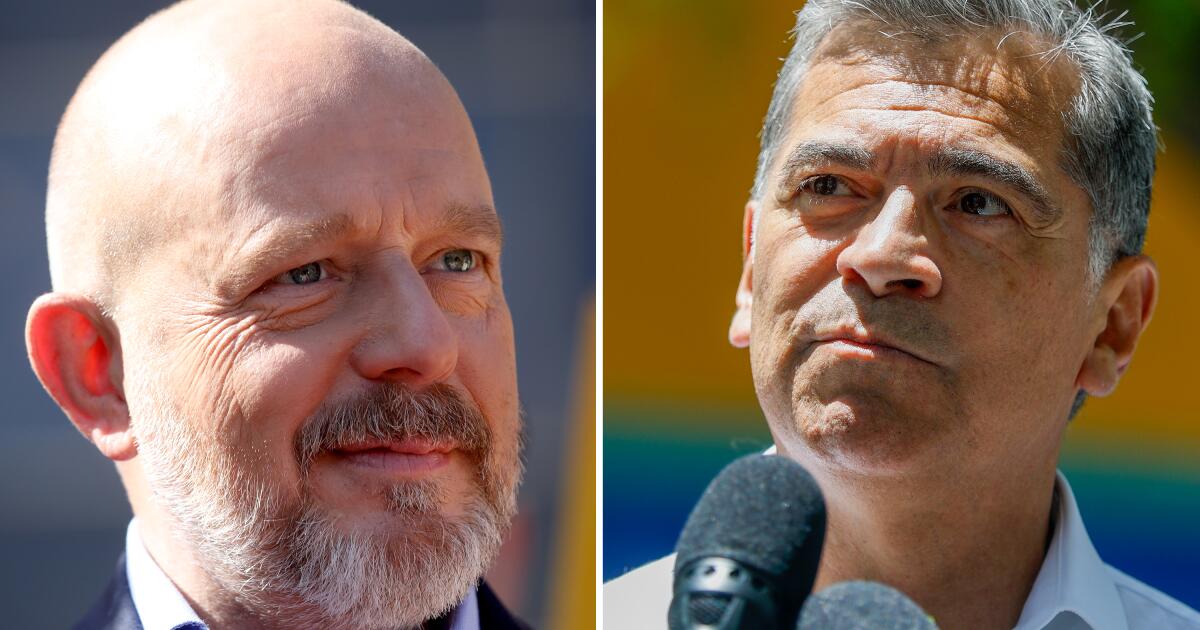
SACRAMENTO — Republican gubernatorial candidate Steve Hilton is pressuring his Democratic rival, Xavier Becerra, to participate in a series of debates in the weeks leading up the Nov. 3 election to determine California’s next governor.
In a video shared by his campaign Friday, Hilton listed six debate invitations he has received from cable broadcaster CNN and television news stations around the state, beginning in late September.
“I have accepted every single one of these debates,” said Hilton, standing behind a debate-style podium and gesturing at an empty one beside him with Becerra’s name on it . “This guy, Xavier Becerra, has not accepted any of them. That is completely outrageous. We have to have a debate in this governor’s race. So come on, Xavier.”
The video shows Hilton walk out of frame and return with a cardboard cutout of Becerra, which he plunks behind the second podium while urging the candidate to “man up and show up.”
Becerra’s campaign said he will debate Hilton and blasted the Republican for “chasing” publicity.
“Snowflake Steve is melting faster than he can plan another press conference. While he’s there chasing media and doing Donald Trump’s bidding, Xavier Becerra is building a coalition of Californians ready to elect a governor who won’t bring Trump’s chaos to their front door,” Becerra spokesman Jonathan Underland said in a statement to The Times.
Hilton, a British immigrant who once advised a U.K. prime minister, is endorsed by President Donald Trump and finished second in the June open-party primary election with 24.6% of the vote.
Years of hosting a weekly show on Fox News has made Hilton comfortable on camera and the debate stage; he appeared at-ease during a series of debates earlier this year while lobbing attacks at his Democratic opponents and blaming the party for the state’s long list of problems.
Becerra served as secretary of the Department of Health and Human Services during the Biden administration. Before that, he spent four years battling the first Trump administration as California attorney general and more than two decades representing a Los Angeles congressional district.
The longtime Democratic politician became the come-from-behind winner of the primary, finishing with 28.1% of the vote after polling near the middle or bottom of a crowded field for months. His meteoric rise came after another front-runner, former Rep. Eric Swalwell, dropped out after a former staffer and other women accused him of sexual assault and misconduct.
Becerra has kept a relatively low profile since the election with few public appearances.
Hilton has held several campaign events in recent weeks to court independent and Latino voters. As a Trump-endorsed Republican, he faces a steep climb in California, where the president is deeply unpopular and a GOP candidate has not won a statewide election since 2006.
Last week he accused Democratic leaders of “abandoning” residents in Boyle Heights, where flies, rats and the stench of rotting food have lingered weeks after a frozen food warehouse was damaged by fire.
Hilton also recently took out full-page ads in The Los Angeles Times and San Francisco Chronicle to make the case to voters who dislike Trump but are dissatisfied with the status quo in California.
July 31 (UPI) — The U.S. Department of State announced it will expand access to the Trump passports, previously only available in Washington, D.C.
“In response to overwhelming demand, the Department of State is making an additional 250,000 of the special commemorative passports available to the public. Americans all across the country will now have the opportunity to apply for one of these additional special passports, known as the ‘Patriot Passport,'” a press release said Thursday.
Passport offices in Centennial, Colo.; Chicago; Dallas; Detroit; Minneapolis; New Orleans; and Stamford, Conn., will host application events on Aug. 8. Other passport offices will do the same in later weeks.
The State Department announced the new passport in April, and a design was released in June that showed an image of President Donald Trump and an image of the signing of the Declaration of Independence. The new design is to commemorate the 250th anniversary of the United States.
“Since its release in celebration of 250 years of American independence, the commemorative passport has generated extraordinary public interest,” the State Department said in the release. “The Department of State is responding by expanding access so Americans across the country can obtain this unique and special document.”
A State Department spokesperson told CNN the department has, “been flooded — by phone, on social media, and in-person at events like the Great American State Fair — by inquiries and requests to apply for the Patriot Passport.
“That includes over 30,000 of Americans who have phoned our passport call center since July 4 seeking a chance to apply for this passport,” the spokesperson said.
Trump is the first sitting president to have his image on a passport.
This fall, the U.S. Mint will release a $1 gold coin featuring Trump’s portrait in honor of the country’s birthday.
President Donald Trump announces a program to allow veterans to expedite a career in commercial trucking on Thursday. Known as the Freedom Haulers program, the initiative would allow any veterans who drove heavy equipment to be automatically eligible for a commercial trucking license. Photo by Jim Lo Scalzo/UPI | License Photo
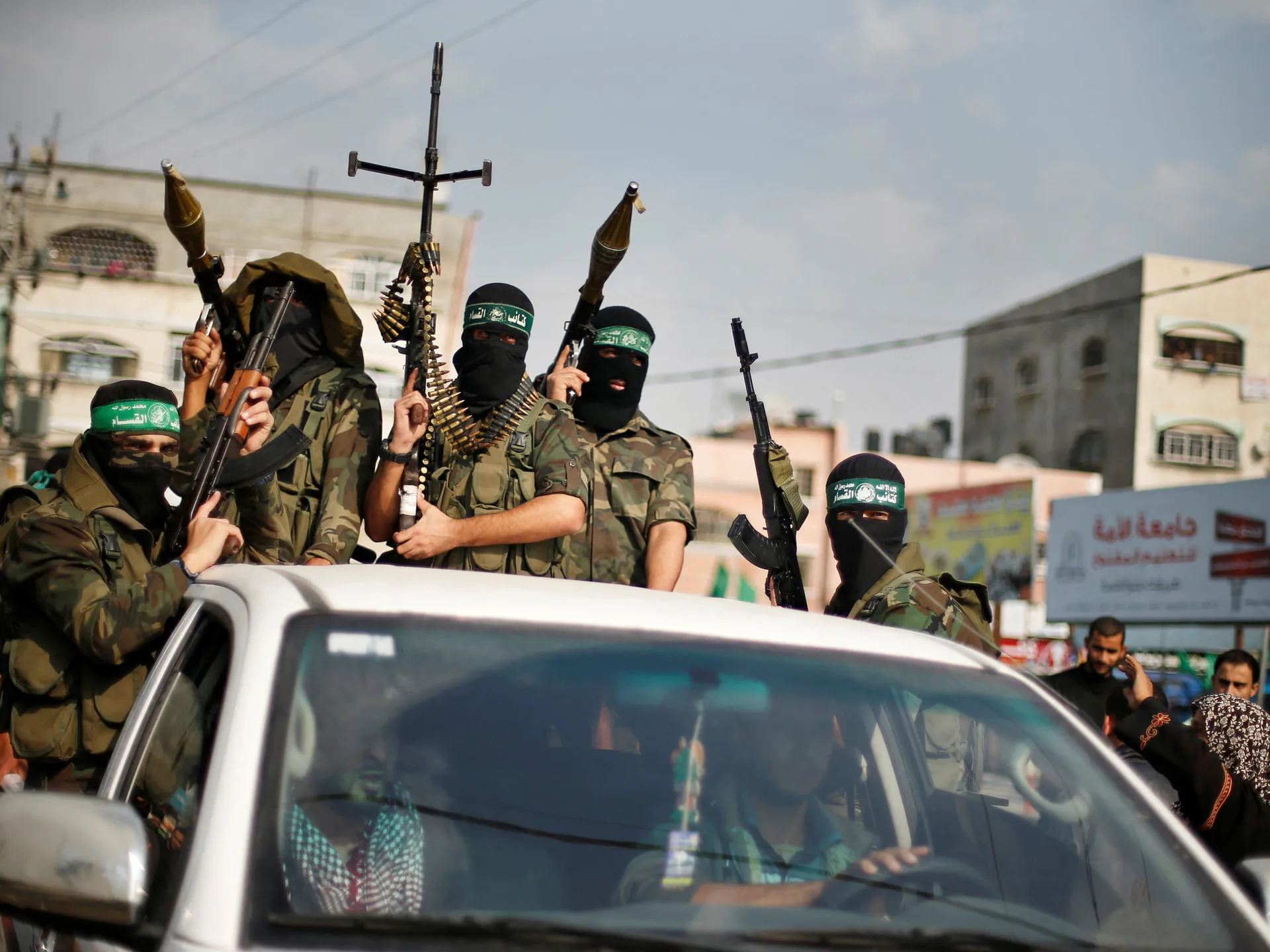
Hamas has agreed to gradually disarm in Gaza as part of Donald Trump’s 20-point peace plan. The US president called the deal ‘historic’. Here’s what we know.
A sweeping package of new Russian sanctions has cleared its first hurdle in the United States Congress, and, if passed, could trigger huge tariffs for countries such as India and China which continue to buy oil from Moscow.
The bill, which was advanced in the US Senate this week, has been named for the late Lindsey Graham, whose funeral was attended by world leaders including Israeli Prime Minister Benjamin Netanyahu earlier in the week.
Recommended Stories
list of 4 itemsend of list
Here’s what we know:
What happened in the Senate?
The “Lindsey O Graham Sanctioning Russia Act of 2026” was advanced overwhelmingly by the Senate this week in a vote of 86 to 12, meaning it can now proceed to the House of Representatives for further deliberation.
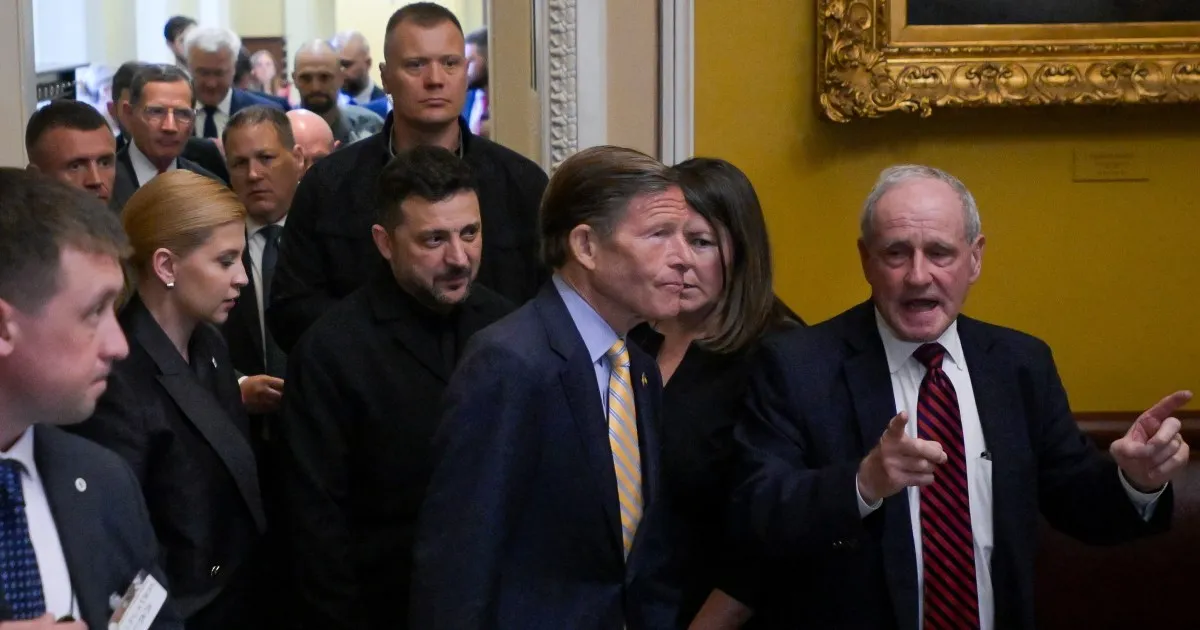
Named for the late Senator Graham, a staunch Ukraine supporter who died unexpectedly this month, the bill moved forward with the support of Ukrainian President Volodymyr Zelenskyy, who was in Washington to attend Graham’s funeral and watched the proceedings from the gallery.
“It was an honour to be present as the votes were counted – 86 senators supported the bill,” he wrote on X afterwards. “This is the first step towards implementing Lindsey [Graham]’s plans, and certainly a step towards peace. It is important that this tool works.”
After clearing the Senate, there will be a delay before the bill can move forward to the House, which is now in summer recess.
On Wednesday this week, US President Donald Trump ordered lawmakers to amend the bill to include tariffs covering Iran as well. This will likely delay the bill further if it deters Democrats from supporting it, analysts said.
David Smith, an associate professor at the University of Sydney’s US Studies Centre, told Al Jazeera: “One of the things they’re worried about is how the tariff power in relation to Iran is going to be expanded. They’re going to be ok with tariff powers on Russia but they’re worried about tariff power on countries buying Iranian oil, which means China. I think there are going to be a lot of Democrats that are going to say these powers should be limited to sanctions and not tariffs.”
Without the Iran addition, he said he would have expected the bill to pass once the House resumes given strong Democratic support for Ukraine.
“Democrats have been genuinely worried about the Trump administration abandoning Ukraine. Something like this, which is ramping the pressure up on Russia so much, I just think there will be a large critical mass of Democrats who will vote for this,” he said.
What’s in the bill?
The bill makes use of sanctions and tariffs to target Russia and cut off the economic pipeline that has kept the Ukraine war going.
Major provisions include new sanctions on Russian President Vladimir Putin as well as on more than 20 top officials and companies which work with the Russian defence industry. It also targets Russia’s “shadow fleet” of oil tankers and the network it uses to evade international sanctions on its energy exports.
The bill gives the president authority to impose sanctions by invoking the International Emergency Economic Powers Act (IEEPA). Under it, he would be able to apply tariffs of up to 100 percent on exports to the US from the top five purchasers of Russian energy, military equipment or countries facilitating Russian sanctions evasion.
Tariffs of up to 500 percent can also be applied to Russian imports directly into the US. The US imported $3.8bn in goods from Russia in 2025.
Which countries are likely to be targeted?
China, India and Türkiye are potential targets of the bill, as they are among the largest buyers of Russian energy, according to data compiled by the Centre for Research on Energy and Clean Air (CREA).
China has historically responded to Trump’s tariffs with tariffs of its own on US exports. Even Pay, a director at the Beijing-based consultancy Trivium China, told Al Jazeera that the US may wait to impose tariffs as Trump is due to meet Chinese President Xi Jinping later this year.
Trump would still welcome the option, she said, after the Supreme Court struck down many of his tariffs in February.
“If passed and signed into law [which is still a big if at this point], the legislation would give Trump something he’s wanted for a while, namely, the legislature’s permission to impose high tariffs on China, alongside the small handful of other countries that import Russian oil,” Pay told Al Jazeera.
India is in a tricky position as its attempts to diversify away from Russian energy were disrupted by the shutdown of the Strait of Hormuz, according to Maia Nikoladze, a deputy director of the Economic Statecraft Initiative at the Atlantic Council.
Due to the disruptions, it has also applied for and received US sanction waivers to continue buying Russian oil in the interim, Nikoladze wrote in a report this week, and it is expected to do the same in the future.
“India will face a trade-off between maintaining energy security and managing the risk of US tariffs, potentially prompting it to again seek waivers and exemptions,” Nikoladze said.
What do critics say about the bill?
Critics like Senator Maggie Hassan say the bill gives Trump too much power to impose tariffs while also potentially harming both the US taxpayer and allied countries.
Turkiye, for example, buys Russian energy but it is also a US ally and NATO member, while “major non-NATO ally” Brazil and “major security cooperation partner” Singapore both buy Russian oil products, according to CREA.
In a post on X, Hassan wrote that while she supports sanctioning Russia, she does “not think tariffs, which are paid for by American businesses and consumers, will help Ukraine win”.
The bill is also opposed by lobby groups such as the US Chamber of Commerce, which also says the true cost will be passed on to US businesses and consumers, as with past tariffs.
While many of Trump’s tariffs have already been struck down by the Supreme Court, the Russia tariffs could have more staying power because they would be imposed on a stronger legal basis, according to Smith.
That’s because it is new legislation which has been crafted using the powers of the IEEPA.
“Previously what Trump has done is to go back to old pieces of legislation and invoke from those his power to use tariffs in ways they haven’t been used before and in ways courts have subsequently found less lawful, whereas this looks like new legislation that is going to lawfully expand his tariff authority,” he told Al Jazeera.
July 30 (UPI) — Negotiators implementing the Gaza cease-fire plan and Iran-backed Hamas have reached a framework for disarming militant groups in the Palestinian enclave, President Donald Trump announced Thursday.
The tentative agreement could mark a significant breakthrough toward ending Israel’s war in Gaza, though it is contingent on Israel agreeing to withdraw its troops. Prime Minister Benjamin Netanyahu‘s administration has yet to comment.
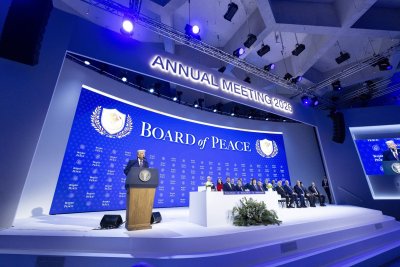
“This agreement is a critical step towards Gaza finally being governed by a new Palestinian government that will work closely with the Board of Peace to help the Palestinian people,” Trump said in a statement.
“At the same time, Israel will have the security it deserves, with Gaza no longer used as a base for terror attacks.”
Trump’s so-called Board of Peace — a coalition of 28 countries, including Israel and weighted toward Middle Eastern and smaller or midsize nations — was formed in January and is tied to a U.N.-backed, 20-point plan for the stabilization and reconstruction of Gaza, which has been devastated by the war.
According to a late Thursday statement from the Board of Peace, the agreement concludes months of negotiations and is the first time Hamas has committed to disarmament.
The board said that under the agreement, Israeli forces are to withdraw from Gaza after Hamas and other militant groups in the Palestinian enclave relinquish their weapons.
Trump said that after Israel withdraws, the International Stabilization Force will work with a new Palestinian police force to assume responsibility for security of Gaza.
The agreement “holds the promise of delivering significant benefits to the people of Gaza, who have waited for too long for a better future, and security to the people of Israel,” the board said.
Egypt, Qatar and Turkey mediated the agreement, Trump said.
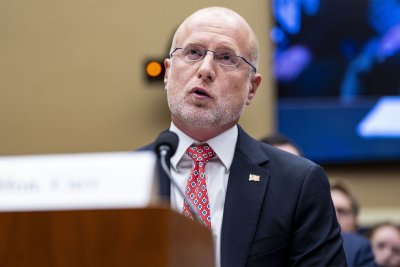
July 30 (UPI) — The ABC network has accused the Federal Communications Commission of attempting to censor what it broadcasts by pressuring its local stations to apply for early renewal of their licenses.
In its regulatory filing, which is a response to the FCC’s request that ABC-owned broadcast stations reapply for their licenses, ABC alleged that FCC chair Brendan Carr’s criticism and actions at the agency have amounted to “attempted censorship,” Politico reported.
The network said in the filing that actions by the agency and Carr have been aimed at shaping news reports across the media in ways that violate U.S. Constitutional freedom of the press.
The FCC, in a statement on Thursday to The Hill, contended that it is operating in the public interest, based on what it said are “equal opportunity regulations” as it accused the network of operating “in the narrow or partisan interests of a political party.”
The Trump administration, and President Donald Trump, have long alleged that members of the media — print, online or television — who are critical or engage in satire of him during his two terms as president are violating federal law.
“The retaliation against ABC is a signal to every media company in the country: accommodate the administration’s view of what news coverage should look like or pay the price,” the network said in the filing.
“Across the government, regulatory and contracting carrots and sticks have been trained on other disfavored speakers,” ABC said. “The tools vary; the objective does not: a media industry too fearful of official reprisal to report the news freely.”
The tightening restrictions have forced the Cuban government to effectively ration care.
In February, Havana announced a package of emergency energy-saving measures. Among them was the suspension of all non-essential medical services across the island.
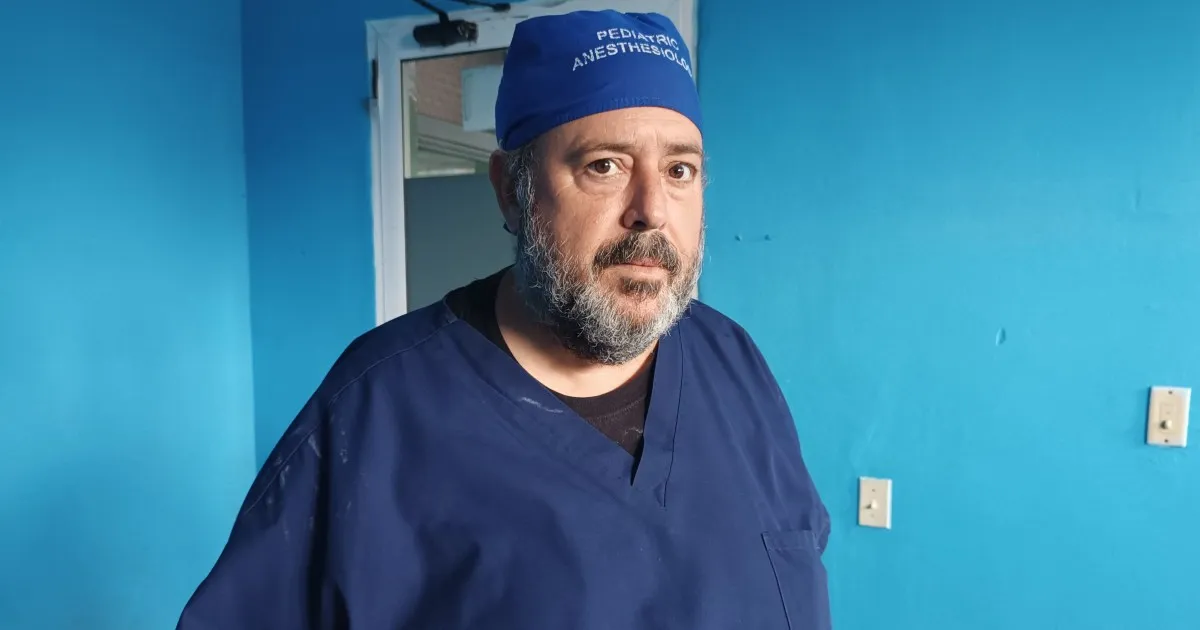
But non-essential does not mean unimportant. Fernandez, the paediatric anaesthesiologist, explained that preventive healthcare plays a major role in saving lives.
Under normal conditions, he said, preventive healthcare helps doctors catch potentially fatal conditions like appendicitis sooner.
But in recent months, Fernandez has observed patients arriving at his hospital in a “worsened” condition than they might otherwise have had.
“All the appendicitis cases we treat now present complications,” he said. “They demand more resources and antibiotics – supplies we don’t have.”
Deaths in Cuba have also escalated as years of increasing restrictions take effect.
Just last month, the Cuban Ministry of Public Health (MINSAP) reported that survival rates for childhood cancer dropped from 85 percent to 65 percent amid the oil blockade.
Infant mortality has also steadily climbed. In 2017, at the start of Trump’s first term, Cuba had an infant mortality rate of four for every 1,000 live births. That figure climbed to 7.7 in 2024, just before Trump’s second term, and reached 9.9 in 2025.
The maternal mortality rate similarly rose to 44.1 deaths for every 100,000 live births by the end of 2025, up from 40.6 the previous year.
Lilian Delgado, an obstetrician and gynaecologist at Cuba’s main maternity hospital, explained that the escalating humanitarian crisis has triggered a sharp rise in premature births and severe morbidity among pregnant women.
“Conditions are far from ideal at all the levels of the system,” Delgado noted. “There are shortages everywhere.”
The decision to prioritise emergency care can be deceptive. A wide range of medical procedures are considered “elective”. But just because they do not rise to the level of an emergency does not mean they are optional.
Typically, in Cuba, emergency surgeries are those that need to be urgently completed within 48 hours. Other necessary surgeries often fall into the “elective” category.
Mastectomies – a common breast cancer treatment – are among the surgeries often categorised as elective. So too are some organ transplants.
Healthcare advocates point out that, if certain elective surgeries are postponed too long, they too can result in deadly conditions.
More than 100,000 Cubans are currently on waiting lists for elective or reconstructive surgeries, a backlog MINSAP credited to the US sanctions.
Among those waiting are 5,152 cancer patients and approximately 12,000 children. Delgado said some of her patients have been languishing on such lists for months.
“Our surgical services are severely hampered by a lack of supplies,” she explained. “We have more women suffering from serious complications, and our operating rooms have become tied up with emergency cases, making it impossible to perform elective surgeries.”
Hospitals in Cuba largely have backup generators to weather the increasingly frequent power outages. But accessing even emergency medical care is tough when the fuel blockade is affecting basic services like transportation.
“Ultimately, if you have a cancer patient and cannot operate due to a number of factors – such as a nationwide blackout forcing the suspension of surgeries – then, whether you intend to or not, you are directly condemning that patient to death,” Delgado said.
The oil embargo has cost “human lives, both directly and indirectly”, she added.
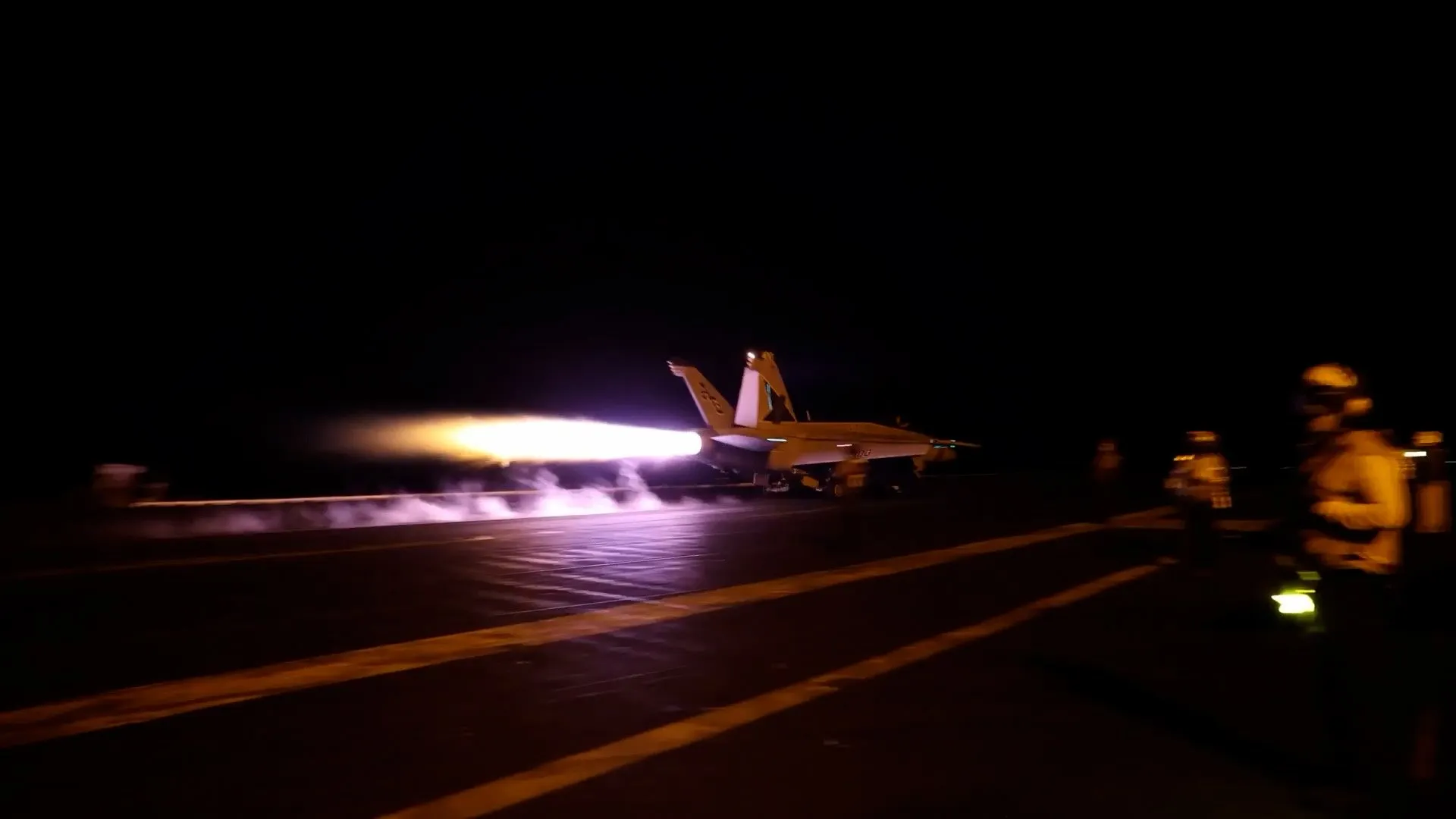
The US has bombed multiple cities across southern Iran, including Ahvaz and Abadan, in what Central Command described as a ‘heavy wave of strikes’. Earlier, US President Donald Trump said the US would hit Iran ‘very hard’ in retaliation for an attack on US forces in Jordan.
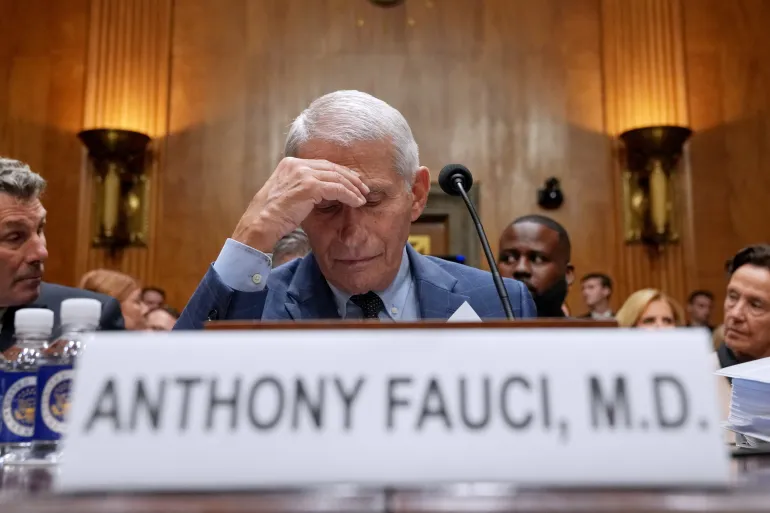
Dr Anthony Fauci, a former top United States public health official, has declined to answer questions at a Republican-led Senate committee hearing into the origins of COVID-19 and the handling of the pandemic.
The former director of the National Institute of Allergy and Infectious Diseases (NIAID) repeatedly invoked his Fifth Amendment right against self-incrimination on Wednesday.
Recommended Stories
list of 1 itemend of list
Fauci was called to testify by Republican Senator Rand Paul of Kentucky, who accuses him of misleading Congress and questions whether US-funded research in China played a role in the pandemic, allegations Fauci denies.
Although former President Joe Biden granted Fauci a preemptive pardon in 2025, Republicans claim it does not protect him from any alleged crimes committed after it was issued, such as perjuring himself at a Senate hearing.
Fauci’s lawyers advised him not to testify, arguing that anything he said under oath could expose him to new legal risks.
Here is what to know:
Who is Anthony Fauci?
Fauci, 85, is a physician and immunologist who led the US NIAID for 38 years, advising seven presidents, both Republican and Democratic.
He became the public face of the US response to the COVID-19 pandemic in 2020, after helping lead the country’s response to health crises including HIV/AIDS, Ebola and the 2001 anthrax attacks.
He became a target of conservative criticism over pandemic policies, including mask recommendations, vaccines and school closures.
During his last year in government, Fauci was also chief medical adviser to Biden until he retired in 2022.
During the pandemic, between 2019 and 2022, he kept more than 1,000 pages of diary entries documenting his work advising the White House and responding to the pandemic.
The notes chronicle his interactions with senior officials and the media.
Why is Fauci being questioned?
He was subpoenaed to testify over his handling of the pandemic and its origins before the Senate Homeland Security and Governmental Affairs Committee.
The hearing, led by Paul, focused on several issues:
COVID-19’s origins: Paul has long argued that the coronavirus that causes COVID may have leaked from a laboratory in Wuhan, China, and questioned whether US-funded research played a role in the outbreak.
Gain-of-function research: Republicans say Fauci misled Congress about whether the National Institutes of Health (NIH) funded gain-of-function research at the Wuhan Institute of Virology, involving modifying viruses to understand how they evolve and assess pandemic risks. Fauci says the NIH did not fund research that caused COVID-19.
Allegations of a cover-up: Paul accused Fauci of making false statements to Congress and concealing the NIH’s involvement in research in Wuhan. Fauci denies that.
Fauci’s diary: Before the hearing, Paul released more than 1,100 pages of Fauci’s typewritten diary. Health Secretary Robert F Kennedy Jr said the notes were government record because they were written by a federal employee on a government computer during a public health emergency and they were found on government property.
Paul said the diary showed differences between Fauci’s private discussions and his public statements. Fauci’s supporters say the entries reflect the uncertainty scientists faced as they learned more about a new virus.
Dr Anthony Fauci appears before the Senate Homeland Security and Governmental Affairs Committee at the Capitol on July 29, 2026 [Allison Robbert/AP]
What happened at the hearing?
The tense hearing lasted about three hours.
After a brief opening statement, Fauci repeatedly invoked his Fifth Amendment right against self-incrimination and declined to answer more than 100 questions.
He accused committee chairman Paul of having an “obsession” with prosecuting him.
Committee chairman Senator Rand Paul, a Republican from Kentucky [AFP]
The hearing included several tense moments:
Contempt vote: Paul said the committee would vote next week on whether to hold Fauci in contempt of Congress over his refusal to answer questions, threatening “consequences for refusing to answer”.
Lawyer removed: Paul directed Capitol Police to remove Fauci’s lawyer, David Schertler, after he tried to speak without being recognised by the committee. “This testimony is from Anthony Fauci. This is not a game with his lawyers,” Paul said. Schertler later described the hearing as an “obsessive vendetta”.
Democrats defend Fauci: Democratic senators said the hearing was politically motivated. Senator Gary Peters called it “a partisan exercise” designed to support “a predetermined conclusion” rather than offering legitimate oversight.
Closing the hearing, Paul asked rhetorically: “Did [Fauci’s] actions lead to the largest man-made plague in history?”
Why did Fauci invoke the Fifth Amendment?
Fauci said he invoked the Fifth Amendment on the advice of his lawyers because he believed his answers could expose him to new legal risks.
He argued that Paul was trying to build a criminal case against him rather than conduct legitimate congressional oversight.
Although Biden’s pardon protects Fauci from prosecution for actions before January 2025, Republicans say any false statements made under oath during this hearing could still expose him to perjury charges.
The Fifth Amendment protects people from being forced to give evidence that could incriminate them in a criminal case. Invoking it is a constitutional right and does not imply guilt.
What do scientists believe about COVID-19’s origins?
Most scientists believe COVID-19 likely spread naturally from animals to humans, known as zoonotic spillover, pointing to a wildlife market in Wuhan as the most likely place where it first spread.
Fauci has consistently said he believes that scientific evidence points to a natural origin, while remaining open to other possibilities.
Notes from his diary detail a January 2020 call with 11 top virologists and evolutionary biologists – only two were convinced the virus had a natural origin, while the rest debated whether it could have been engineered.
Today, most scientists favour a natural origin, while the US intelligence community is divided.
The FBI said in 2023 that a laboratory-related incident is the most likely origin of the pandemic. The CIA reached the same conclusion in 2025, but with low confidence. Other agencies and the National Intelligence Council continue to favour a natural origin or remain undecided.
Does Biden’s pardon protect Fauci?
Yes, but only what happened before the pardon was issued.
On January 19, 2025, Biden granted Fauci a full and unconditional pardon covering any federal offences he may have committed since 2014, saying the move aimed to protect Fauci from “politically motivated prosecutions”.
The pardon does not cover actions taken after it was issued. Fauci could face legal consequences if he were accused of committing a new crime, such as making false statements under oath during Wednesday’s Senate hearing.
Paul and other Republicans also argue that because Biden’s pardon shields Fauci from criminal liability for his past actions, he can no longer claim that his testimony about those actions would incriminate him and should not be able to invoke his Fifth Amendment.
The legal standing of this argument is not clear, and Paul has acknowledged that it is a novel “legal question that the courts may have to decide”.
Can Fauci be held in contempt or prosecuted?
Potentially, but it remains unclear whether either will happen.
Paul said the Senate committee will vote next week on whether to hold Fauci in contempt of Congress after he refused to answer more than 100 questions.
Being held in contempt means lawmakers believe a witness has refused to cooperate with a lawful investigation. It does not automatically lead to criminal charges, but can trigger further legal action.
If the committee approves the measure, it could refer the case to the Justice Department for possible criminal prosecution, ask a federal court to pursue a civil action, or, in the rarest case, ask the Senate to use its powers to detain a witness through the Senate sergeant-at-arms.
Paul has not said which option, if any, he plans to pursue.
Decision follows long-running feud between Trump and UN group.
Published On 30 Jul 202630 Jul 2026
The United States has announced the release of $600m for Gavi, as it cut off the World Health Organization (WHO) from the global vaccine alliance, in a major financial blow to the United Nations group.
In a joint statement, the US Department of State and the Department of Health and Human Services said: “The United States also reaffirms that it will not provide US Government funding to the World Health Organization through Gavi.”
The development, said the statement, is in line with US President Donald Trump’s instructions to “Health and Human Services Secretary Robert Kennedy Jr and Secretary of State Marco Rubio, to negotiate reforms with Gavi as a condition for renewed US support”.
US Republican Senator Susan Collins, who had pushed for the reinstatement of US funding for the global programme which expands access to immunisations around the world, welcomed the decision.
According to the State Department, Gavi agreed to work towards replacing mercury-containing vaccines with mercury-free alternatives, in partnership with its board and partner countries.
The Trump administration’s latest move against the WHO comes after historical animosity.
In 2020, Trump instructed his administration to temporarily halt funding to the WHO over its handling of the coronavirus pandemic, claiming the WHO promoted China’s “disinformation” about the virus, likely leading to a wider outbreak.
At the time, the US was the biggest donor to the WHO, contributing more than $400m in 2019, roughly 15 percent of its budget.
In January 2021, then-US President Joe Biden reversed Trump’s decisions, restoring US funding and halting the withdrawal process from the WHO.
However, on the first day of his second term, January 20, 2025, Trump said the US would withdraw from the WHO and suspended US contributions.
The WHO is funded by a combination of core operating funds that each member state pays, and voluntary contributions from various partners.
At about $3.4bn, the WHO’s budget is roughly a third of that of the Centers for Disease Control and Prevention (CDC), which got $9.3bn in core funding in 2023.
The WHO funds support programmes to prevent and treat polio, tuberculosis, HIV, malaria, measles and other diseases, especially in countries that struggle to provide healthcare domestically.
It also responds to health emergencies in conflict zones, including parts of Gaza, Sudan, the Democratic Republic of the Congo, and others.
New U.S. Ambassador to South Korea Michelle Steel (C) will arrive in Seoul on Thursday, sources said Wednesday. In this photo, she speaks to South Korean Trade Minister Kim Jung-kwan (L) and Ambassador to the U.S.
Kang Kyung-wha at an event in Washington on July 23. Photo by Yonhap
New U.S. Ambassador to South Korea Michelle Steel is set to arrive in Seoul on Thursday, becoming the first U.S. envoy to assume the post since President Donald Trump returned to office, sources said.
Steel is expected to arrive at Incheon International Airport, west of Seoul, at around 3:20 p.m. from Los Angeles, according to the sources. She was nominated by Trump in April and confirmed by the U.S. Senate last month.
The ambassadorial post has been vacant since Philip Goldberg left South Korea in January last year.
The submission of copies of her credentials is expected to take place as early as next week, as Foreign Minister Cho Hyun and the foreign ministry’s chief of protocol are currently accompanying President Lee Jae Myung on his trip to South America and are scheduled to return early next week, the sources added.
Before formally beginning their duties, newly appointed foreign ambassadors are required to present copies of their credentials to the chief of protocol at the foreign ministry. U.S. ambassadors also traditionally pay a courtesy call on the foreign minister on that occasion.
A Korean American Republican politician, Steel was born in Seoul in 1955 and immigrated to the United States in the mid-1970s. She served two terms in the U.S. House of Representatives representing California from 2020 to 2024.
Steel is the second Korean American to serve as the top U.S. envoy to South Korea, following Sung Kim, who served in Seoul from 2011 to 2014.
Responding to a question from Yonhap News Agency in Washington last week, Steel described strengthening the South Korea-U.S. alliance as her “top priority.”
Her arrival comes as Seoul and Washington face a series of pending security and economic issues, including South Korean investment in the U.S., civilian nuclear cooperation, Seoul’s push to build nuclear-powered submarines and ongoing efforts to modernize the decades-old alliance.
Steel’s nomination had drawn criticism from some progressive civic groups here, which view her as a conservative figure.
South Korean government officials, however, said she has a firm understanding of the importance of the South Korea-U.S. alliance and is committed to cooperating with the Seoul government.
“South Korea and the U.S. have a wide range of issues to work on together amid the rapidly evolving security and economic landscape,” a foreign ministry official said. “We welcome Ambassador Steel’s arrival and hope it will help advance discussions on those issues.”
Copyright (c) Yonhap News Agency prohibits its content from being redistributed or reprinted without consent, and forbids the content from being learned and used by artificial intelligence systems.
Interim United States Attorney General Todd Blanche is facing a possible roadblock from within the Republican Party as he faces a confirmation hearing to formally lead the Department of Justice.
Speaking to reporters on Wednesday, Republican Senator John Cornyn said he was still sceptical about confirming Blanche to the top federal law enforcement position in the country.
Recommended Stories
list of 3 itemsend of list
“I’m not prepared to vote yes,” said Cornyn.
The senator’s comments come a day before a key committee vote in the US Senate to move Blanche’s nomination forward.
Cornyn cited concerns about Blanche’s current stewardship of the Department of Justice, which he has led in an acting capacity since April.
Previously, Blanche served as deputy attorney general, and before joining President Donald Trump’s second term, he worked as the Republican leader’s criminal defence lawyer.
But Cornyn has questioned a rare settlement Blanche brokered in May, in response to a lawsuit Trump filed against the Internal Revenue Service (IRS).
Under the deal, Trump and his family would be shielded from future IRS audits. The scheme also created a so-called “anti-weaponisation fund”, under which individuals deemed to have faced alleged political persecution could seek financial compensation.
Blanche has backed away from the “anti-weaponisation fund” amid bipartisan backlash. Critics had described it as a slush fund that would benefit the president’s allies.
Earlier this month, a federal judge also ruled the settlement illegal, accusing Blanche of double-dealing by working on behalf of both the federal government and Trump as a private citizen.
During his confirmation hearing, Blanche again assured lawmakers that the fund was dead, but Cornyn said he was awaiting written guarantees on the matter.
“I haven’t seen a single piece of writing that is responsive to what I’ve requested,” Cornyn told reporters.
Committee vote looms
Cornyn spoke before the Senate Judiciary Committee is set to hold a Thursday vote on Blanche’s nomination, the first step in a wider Senate debate on his confirmation.
All Republicans on the committee would need to vote in favour of Blanche for him to progress to the broader confirmation hearing.
While Republican lawmakers have generally been wary of opposing Trump, Cornyn has become an increasingly public critic of the president in recent months.
Trump endorsed Cornyn’s primary opponent, former Texas Attorney General Ken Paxton, in May. Paxton went on to win the Republican Party’s nomination in May, allowing him to progress to the midterm election in November.
That race will see Paxton take on Democratic upstart James Talarico in what is expected to be one of the closest Senate races of the season.
Cornyn will leave the Senate, where he has served for more than two decades, at the end of his term in January.
In an Oval Office news conference on Wednesday, President Trump was asked about Cornyn’s reticence about approving Blanche for the attorney general role.
“ Well, all I can say is Todd Blanche is outstanding,” Trump said, before questioning Cornyn’s motives.
“Maybe John Cornyn’s upset with me because I didn’t endorse him. I don’t know what it is, but I haven’t heard that there’s a problem.”
Critics have accused Blanche of placing his loyalty to Trump above all else, including by using the Department of Justice to prosecute the president’s political adversaries.
Under Blanche’s watch, for instance, the Justice Department chose to file a second indictment against James Comey, a former director of the Federal Bureau of Investigation, over a social media message made of seashells.
Blanche has denied any claims that his relationship with Trump presents a conflict of interest, saying he acts independently of the president.
However, he did little to shed the perception during a mid-July hearing before US lawmakers. Senator John Kennedy, a Republican, asked at the time if Blanche considered Trump a “friend”.
“I’m his lawyer,” Blanche replied, before quickly correcting himself to say “was his lawyer”.
The Department of Justice has had a long tradition of prosecutorial independence, whereby criminal charges are not meant to be influenced by politics.
July 29 (UPI) — The United States announced a ban on imports of humanoid robots from China and other countries, citing “unacceptable risks” to national security and the safety of Americans.
The advanced robots ban, including humanoid, four-legged robots and bipeds, was part of a Federal Communications Commission update on Tuesday to a list of equipment and services “deemed to pose an unacceptable risk to the national security of the United States or the security and safety of U.S. persons” under the 2020 Secure Networks Act.
Power inverters that convert DC electricity to the AC electricity that flows across the country’s power grid were also banned.
The bans come after government agencies with “appropriate national security expertise” convened by President Donald Trump to look at the issue designated both technologies as national security threats.
“The networked capabilities of advanced robotic systems create extensive vulnerabilities and vectors for attacks that can manipulate the data and physical operation of the advanced robotic system. Relying on foreign-produced advanced robotic devices presents unacceptable supply chain and cybersecurity vulnerabilities,” the group said in its National Security Determination.
“Advanced robotic devices collect data that could be leveraged by malign actors to surveil Americans, enhance the capabilities of foreign intelligence services, or to remotely commandeer the robots,” it added.
China is the world’s largest producer of humanoid robots, with the United States its largest market.
Power-inverters, a critical kit which converts DC electricity from solar panels, batteries and other alternate energy sources into AC electricity enabling it to be fed into the U.S. energy grid, were also banned over fears overseas supplies could be manipulated or disrupted, compromising the United States’ electricity supply.
Any threat to electricity supply constituted a threat to the economy and national security, the FCC said, adding that in addition to supply chain vulnerabilities it was concerned increasingly networked inverters posed cybersecurity risks, including the possibility they could be switched off or used to harvest data as well as “facilitating remote access and surveillance by foreign government actors.”
Both bans only apply to new models and exempt overseas manufacturers with existing conditional waivers from the Public Safety and Homeland Security Bureau or, in the case of robots, the Defense Department, with the FCC saying it encouraged suppliers to apply for “conditional approval.”
FCC Chairman Brendan Carr said he welcomed the measures from the White House.
“I am pleased that the FCC has now added foreign produced advanced robotics and power inverters to the FCC’s Covered List. Following President Trump’s leadership, the FCC will continue to do our part to secure America’s critical supply chains and, with today’s action, the FCC is acting in lock step with our national security agencies to do just that,” said Carr.
China criticized the move, accusing the United States of overreach and erecting trade barriers.
“China firmly opposes the U.S. overstretching the concept of national security and going after Chinese companies. Protectionism does not make the U.S. more competitive and will only hurt the interests of U.S. companies and consumers,” Foreign Ministry spokeswoman Mao Ning told a news conference in Beijing on Wednesday.
“China will continue to do what is necessary to firmly defend the legitimate and lawful rights and interests of Chinese companies,” she added.
China’s Commerce Ministry called for the global community to combine forces to develop technologies “for the positive and for good,” saying Beijing resolutely stood against the “politicizing” of trade issues and the use of “groundless pretexts” to justify sanctions.
“China urges the United States to heed the objective and rational voices of the business communities in both countries, abandon its hegemonic mindset, and stop smearing Chinese companies and threatening them with sanctions,” a spokesperson for the ministry said.
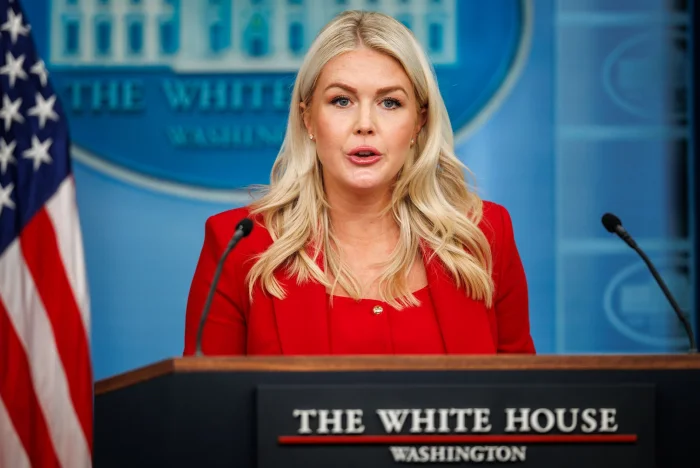
White House Press Secretary Karoline Leavitt speaks during a press briefing in the James S. Brady Press Briefing Room at the White House on Thursday. Photo by Samuel Corum/UPI | License Photo
The United States military says it intercepted ballistic missiles fired by Iran across the Middle East.
In a statement on X on Wednesday, US Central Command (CENTCOM) said Iran’s Islamic Revolutionary Guard Corps (IRGC) launched multiple ballistic missiles in an “attempted surprise attack on US forces based in the Middle East”.
Recommended Stories
list of 3 itemsend of list
All the missiles were intercepted, and “US forces remain vigilant and at a high state of readiness”, the statement added.
Five missile interceptions were reported over Jordan, according to the Jordan News Agency.
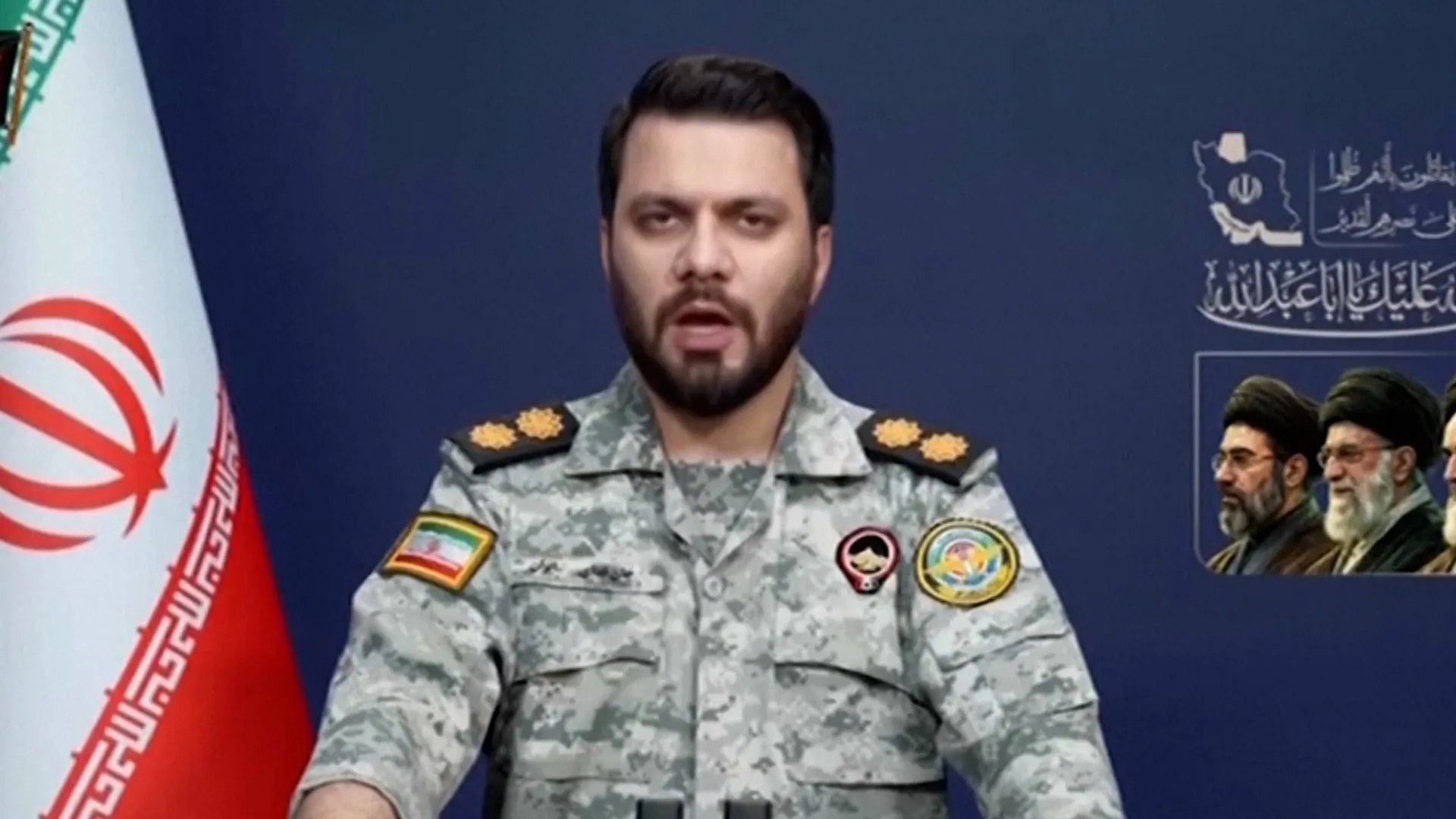
The IRGC said its air force targeted a US airbase and Central Command centre in Jordan, “with several ballistic missiles”.
“As long as threats against the Islamic Republic of Iran continue and illegal and vicious actions by American forces against our interests continue, the resistance will continue,” the IRGC said in a statement carried by Iran’s IRIB broadcaster.
Reporting from Tehran, Al Jazeera’s Resul Serdar said the latest escalation seemed like a “pre-emptive attack, not a reactionary measure”, from the Iranians.
US President Donald Trump had called off a two-week US bombing campaign on Iran on July 24, claiming after that “good talks” were under way with Iran.
“After 13 consecutive days of constant bombing, in the tit-for-tat US-Iran bombings, these latest attacks will most definitely have an impact on the mediation efforts”, Al Jazeera’s Serdar said.
Trump has threatened to restart strikes if negotiations stagnate, while Iran has denied seeking to resume talks with Washington.
‘Sending a message’
The Iranian attacks targeting US bases came as Trump was meeting with Israeli Prime Minister Benjamin Netanyahu, who has been pushing for war on Iran, in the White House.
“This is Iran sending a message to Trump that they need to be involved in all discussions,” Al Jazeera’s Alan Fisher said from Washington, DC.
“It was reported in Israel that Netanyahu was very keen to raise the question of Pickaxe Mountain. The Israelis said there has been building work going ahead there; they believe the Iranians are putting together another nuclear facility”, he said.
Jason Campbell, a senior fellow at the Middle East Institute, told Al Jazeera that Tehran is “trying to retake the initiative and the momentum with these latest attacks”.
“Iran has expressed scepticism that the US engages in these pauses between attacks to prepare for another phase of violence, so Tehran likely thinks the US is doing just that with this latest pause”, he said.
US oil futures jumped more than 4 percent to more than $82 a barrel, while Brent crude futures went to more than $88 a barrel after the US military confirmed the Iranian attack.
Oil prices were dropping earlier on Tuesday as Washington’s suspension of strikes on Iran continued, with traders closely monitoring reports of renewed talks.
Hormuz tensions continue
The Strait of Hormuz and its shipping traffic have been major talking points for Trump, who has decried Iran’s blocking of some vessels.
Iran asserts that it is within its rights to control shipping through the strait.
On Wednesday, the IRGC said it “struck and stopped” three oil tankers in Hormuz, according to Tasnim news agency.
It said the tankers “continued to move along an unsafe and illegal route, ignoring our warnings”,
Oman has presented Iran with a proposal to jointly manage traffic in the strait, but Iran has rejected it.
Deputy Iranian Foreign Minister Kazem Gharibabadi told state television that Tehran rejected splitting transit routes equally.
Instead, he said, Tehran proposed managing shipping on its side of the strait, while Muscat would manage part but not all of the opposite lane.
Walter “Jay” Clayton III, nominee to be director of national intelligence, speaks during a Senate Intelligence Committee hearing on his nomination on July 15. The Senate on Tuesday voted to advance his nomination. Photo by Bonnie Cash/UPI | License Photo
July 28 (UPI) — The U.S. Senate voted 51-47 along party lines Tuesday evening to confirm Jay Clayton as director of national intelligence, succeeding Bill Pulte.
The vote comes one day after lawmakers voted to advance Clayton’s nomination with no Democrats voting to approve.
After the vote Tuesday, Sen. Mark Warner, D-Va., the top Democrat on the Senate Intelligence Committee, said that he is skeptical of Clayton in the role.
“I came away from his confirmation process with serious reservations about whether he would be willing to stand up to political pressure when it matters most,” Warner said. “Now that he has been confirmed, I sincerely hope he proves those concerned unfounded, because the intelligence community deserves steadier leadership than it has received in recent months.”
Bill Pulte, the acting director, announced Tuesday on social media that he had executed “a fifth and near-final round of TERMINATIONS” that mark a 30% staff reduction during his time in the office.
On July 15, Democrats in the Senate questioned Clayton, a U.S. attorney, on Trump’s allegations that he won the 2020 election. Clayton wouldn’t say that former President Joe Biden won the election, but would say that he was “certified” as president. Clayton said he is not an election denier.
“You refuse to answer a basic question about who won a presidential election, but you ask to lead America’s intelligence community,” Sen. Jon Ossoff, D-Ga., said the confirmation hearing. “Isn’t it humiliating to be unable to answer this question, to have to indulge the president’s delusions?
President Donald Trumpannounced Clayton as his nominee in June as senators on both sides of the aisle protested the placement of Pulte. Pulte runs the Federal Housing Finance Agency and has referred four of Trump’s perceived enemies for prosecution on allegations of mortgage fraud.
Democrats in the House wouldn’t renew Section 702 of the Foreign Intelligence Surveillance Act, a bill that would have extended warrantless spy powers rules, in retaliation for Pulte being named for the position. It’s unclear if the Senate will vote to extend FISA once Clayton is approved.
The House will not be back in session until September.
White House Press Secretary Karoline Leavitt speaks during a press briefing in the James S. Brady Press Briefing Room at the White House on Thursday. Photo by Samuel Corum/UPI | License Photo
Hundreds of mourners have paid their respects to the late Senator Lindsey Graham of South Carolina.
The Republican lawmaker and key ally of President Donald Trump unexpectedly died on July 11.
Graham was elected to the US Senate in 2002 and was re-elected in 2008, 2014 and 2020. In 1994, he was elected to the US House of Representatives, the lower house of the US Congress, for South Carolina’s third congressional district. He recently served as chairman of the Senate Budget Committee. Graham also served as a member of the Senate Committee on Appropriations, the Senate Judiciary Committee and the Senate Committee on Environment and Public Works.
He was a strong supporter of the 2003 US invasion of Iraq and had long pushed for military action against Iran.
Graham was a longtime backer of Israel and supported Trump’s ongoing war on Iran. In a planned documentary, Graham told the filmmakers he “almost cried” after the US and Israel began strikes on Iran in February.
He also vocally supported Ukraine after Russia invaded the country in 2022.
Israeli Prime Minister Benjamin Netanyahu, Ukrainian President Volodymyr Zelenskyy and several other world leaders attended Graham’s funeral service on Tuesday afternoon at the Washington National Cathedral in Washington, DC.
Trump gave remarks, calling Graham a force in the world and US politics. He called Graham “a beloved friend” and said that he “died doing the work he was born to do”.
“For more than 30 years, nothing of consequence happened in this capital without Lindsey Graham knowing about it. Nothing of significance happened anywhere in the world without Lindsey Graham having a view on it,” Trump said. “And no bill became law in the most exceptional republic in human history without Lindsey Graham having a say in it.”
He added: “He was a man who gave America the full measure of his good and mighty heart until that heart itself just gave out.”
Democratic socialists face mixed understanding, with 49 percent of Americans saying they grasp their policies, poll shows.
Published On 28 Jul 202628 Jul 2026
Leftist candidates in the United States aligned with the Democratic Socialists of America (DSA) movement have been defeating centrist Democrats in primary elections this year. However, large swaths of the country still don’t know what the movement stands for, according to a new Reuters/Ipsos poll.
Members of the DSA, an activist organisation whose stated mission is to support workers gaining power through democratic means, feature prominent politicians such as New York Mayor Zohran Mamdani and New York Representative Alexandria Ocasio-Cortez. Other Democratic Party DSA members have also won in recent political races across the US.
The three-day Reuters/Ipsos poll, which concluded on Sunday, found that 49 percent of Americans say they understand democratic socialist policies while 47 percent say they do not, underscoring the challenges ahead for America’s anti-establishment left.
Asked if democratic socialists have good ideas or not, some 27 percent of respondents said they have at least some, while 51 percent said there were few, if any, and 20 percent said they weren’t sure.
People have a similar assessment of the ideas of MAGA Republicans, President Donald Trump’s “Make America Great Again” political base. Some 27 percent of poll respondents said MAGA Republicans have at least some good ideas, while 57 percent saw few or no good ideas from MAGA and 13 percent weren’t sure.
Prominent DSA member Mamdani, who was elected in 2025, endorsed other DSA members in New York City who went on to win their respective primaries in June. Other wins by DSA members include races in Colorado and in California.
Trump has seized on the movement’s rise to try to falsely paint all Democrats – including those unaffiliated with the democratic socialist movement – as “hardcore, godless communists”. The administration released a 100-page report earlier this month tying left-wing advocacy groups in the US to Cuba – often relying on circumstantial and ideological links, rather than direct connections.
Democratic socialists advocate pursuing progressive policies through elections. In contrast, communism seeks to abolish private ownership of property and create a classless society – ideas that the democratic socialists seeking election reject.
The Reuters/Ipsos poll, which was conducted online, surveyed 1,248 US adults nationwide and had a margin of error of three percentage points.
Iran rejected US President Donald Trump’s claim that ships damaged by Iran in the Gulf would be compensated from frozen Iranian funds. IRGC spokesperson Ebrahim Zolfaghari warned that any vessel taking such money will be banned from transiting the Strait of Hormuz.
Prime Minister Benjamin Netanyahu has long presented his closeness to the United States – both politically and personally – as evidence of his indispensability to Israel.
Arriving with a camera-ready American accent after spending a large portion of his youth in the country, Netanyahu is said to have used his unique understanding of US politics to charm and cajole numerous presidents into maintaining their unflagging support of Israel and his personal political projects.
Recommended Stories
list of 4 itemsend of list
For a time it appeared as though US President Donald Trump was the most amenable of all past presidents to Israel and to Netanyahu, particularly after he became the first US leader to agree to participate in a joint war with Israel against Iran.
And yet, with that war stalling, Trump appearing more willing to make deals in the Middle East without Israeli input, and increasing criticism of Israel in the US, there is a sense in Israel that Netanyahu’s Trump card may not be as useful as it once was.
That has come at a bad time for Netanyahu, who faces an election at home in late October and an ongoing trial for corruption, as well as several unresolved conflicts in the region.
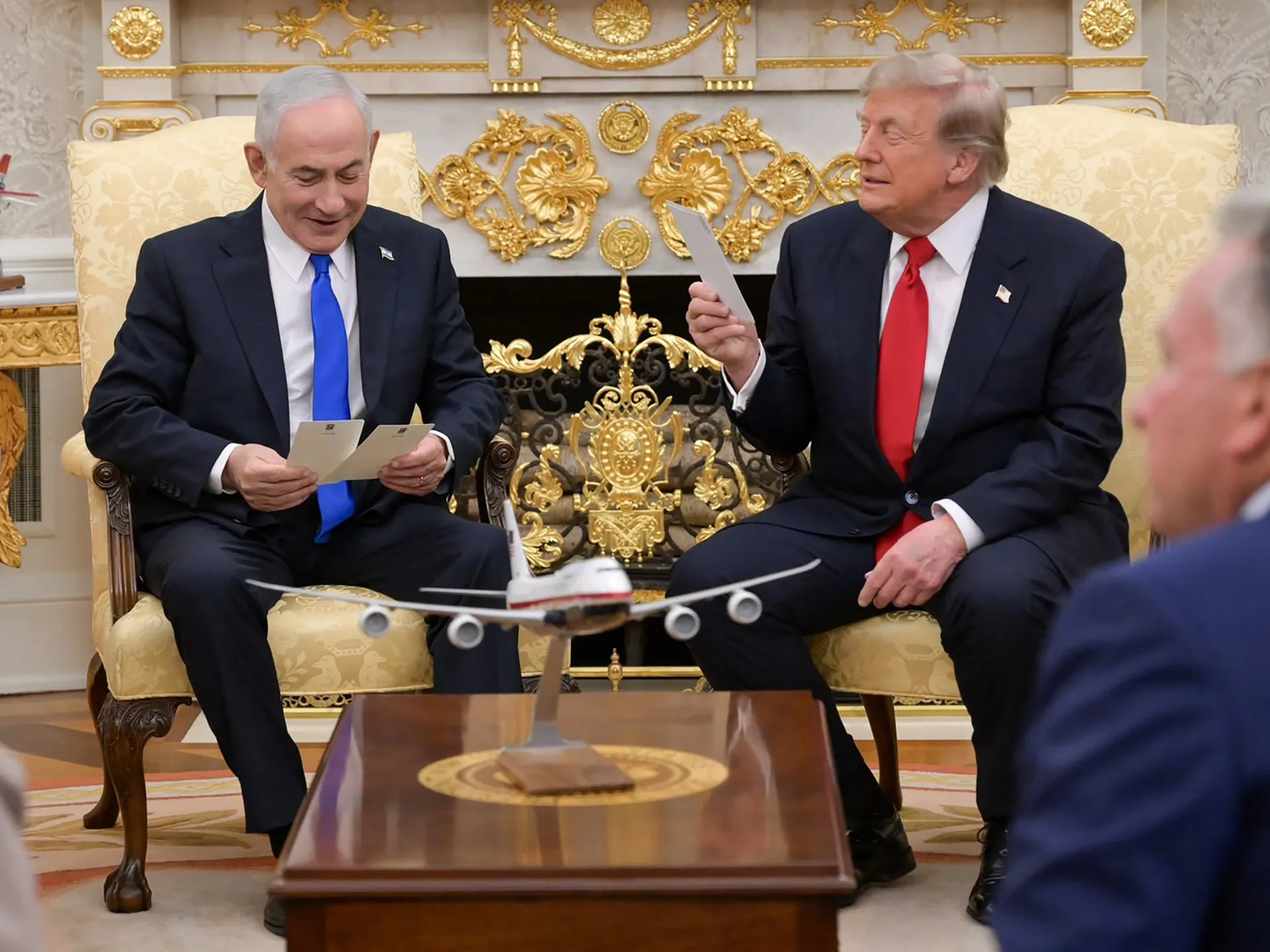
Netanyahu’s visit to Washington on Tuesday to meet Trump – his first since the war on Iran began – therefore is an opportunity for a refresh – and a photo opportunity to remind the Israeli public of his ties to the US president.
The optics
Strains in Netanyahu’s relationship with Trump have been growing since the start of the war on Iran, after reporting emerged that it was the Israeli prime minister who convinced the US president of the feasibility of the mission, and the potential for the Iranian state to be overthrown.
Concern has also grown within the US Congress over Netanyahu’s apparent indulgence of Israel’s increasingly violent settler movement – which included the extrajudicial detention of a US senator by settlers – alongside friction over Washington’s decision to consider selling F-35s to Israel’s regional rival Turkiye and agreeing a nuclear cooperation deal with Saudi Arabia.
“The real reason Netanyahu’s got this visit [to Washington] is purely cynical,” Alon Pinkas, a former Israeli ambassador and consul general in New York, told Al Jazeera. “He’s claimed that he’s flying all the way to the US to attend the wake of his apparently great friend [deceased Republican Senator] Lindsey Graham.”
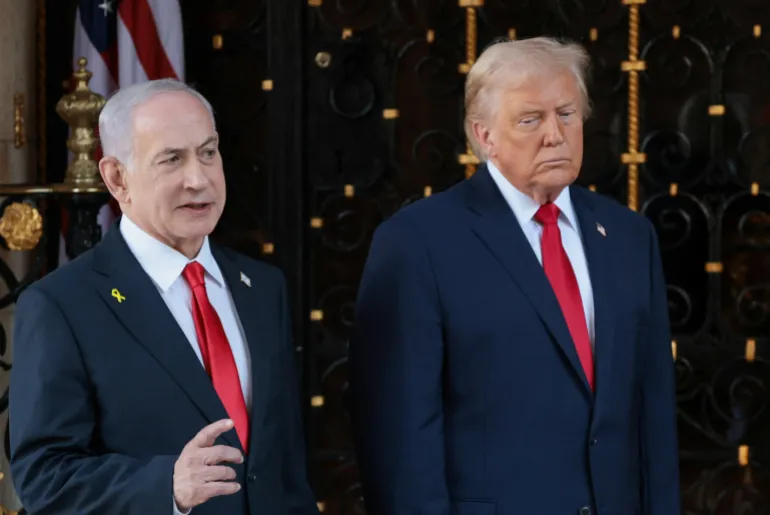
Israeli Prime Minister Benjamin Netanyahu speaks to the media as he is welcomed by US President Donald Trump for meetings at the Mar-a-Lago club in Palm Beach, Florida in December [File: Jonathan Ernst/Reuters]
“Supposedly there’s an agenda, supposedly they’re going to talk about Iran, F-35s and Saudi Arabia’s potential nuclear deal,” said Pinkas.
“But really this is about two things: hoping to assure allies and critics within Israel that the relationship with Trump holds and, separately, hoping that Trump will again call for his pardon in the corruption trial,” he added, referring to Trump’s unorthodox intervention in Israel on Netanyahu’s behalf in November 2025.
However, while Netanyahu may be hoping that a good meeting with Trump may help him in the polls, he arrives at a time when his stock in the US is potentially at its lowest.
Netanyahu has received widespread criticism from figures on the American right, such as podcast host Tucker Carlson and the former Republican US Representative Marjorie Taylor Greene. Vice President JD Vance has also been critical of “some” Israelis, using an interview with US podcaster Joe Rogan to suggest that figures within the Israeli government were trying to derail the agreement he was brokering with Iran to end the war.
Analysts have suggested that the Trump-Netanyahu meeting will combine public flattery with private cynicism on the US president’s part. Asked about Netanyahu’s public resistance to the F-35 sale to Turkiye on board Air Force One on Monday, Trump told reporters, “Nobody tells me what we should be selling”.
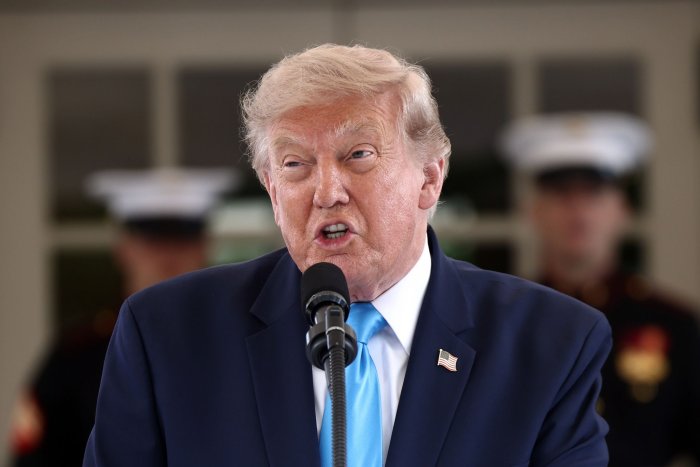
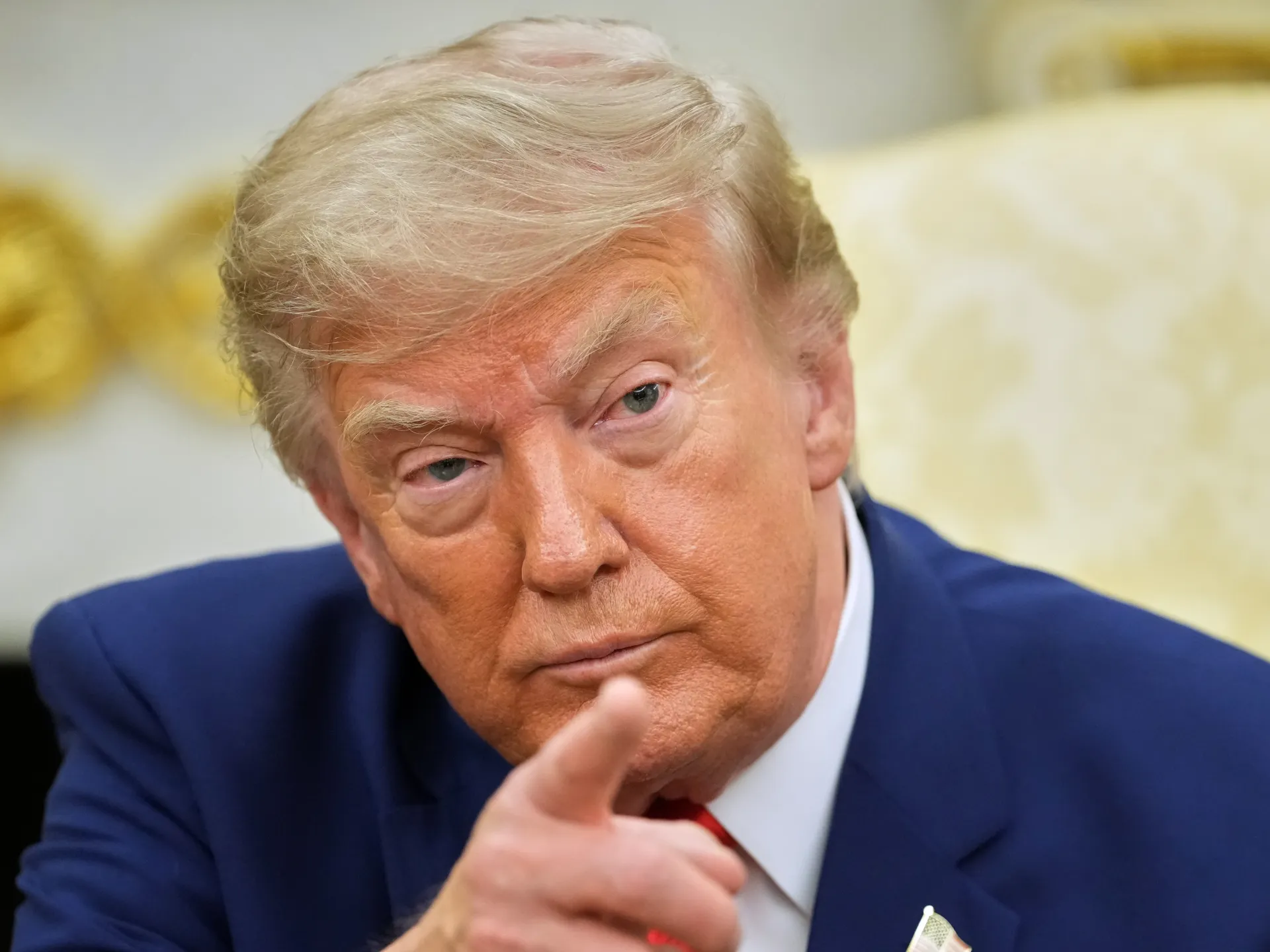
President Trump used a press conference on board Air Force One on Monday to push back against Israeli concerns over the potential sale of fighter jets to Turkiye, telling reporters, ‘Nobody tells me what we should be selling’ [Evan Vucci/Reuters] Burnt bridges
“Netanyahu arrives in Washington at a time when even many around [Trump] are suspicious of him. He has become toxic in the US,” Ahron Bregman, an Israeli security analyst and senior teaching fellow in the Department for War Studies at King’s College London. “He is regarded in the US – rightly or wrongly – as the one who dragged Trump into a war of choice that has turned into a strategic catastrophe. Nobody, not even Trump, will let him pretend to be the cleverest guy in the room. Those days are gone.”
While few expect any overt signs of disharmony from the visit in public, Netanyahu’s ability to present himself as uniquely positioned to manage the country’s relationship with the US – a key factor in the upcoming election – may be limited.
“Netanyahu’s had a tremendous track record with the US, but he’s burned a lot of bridges,” Mitchell Barak, an Israeli pollster and a former Netanyahu aide in the 1990s, told Al Jazeera, adding that the criticism of Netanyahu was not isolated to figures within the nationalist wing of the Republican Party, but included Israel’s traditional allies within the party’s centre right.
“We’ve seen tension through Trump’s comments on the various F-35 sales, including most recently to Turkiye, as well as US criticism of Netanyahu at the start of the Iran war, so I’m not too sure if Trump’s going to be stumping for Netanyahu for all that much longer,” Barak said. “It could easily be that Trump declares Netanyahu was a great wartime leader, but that it was time for Israel to move on, before meeting with [other Israeli politicians] and endorsing a new prime minister for Israel.”
July 28 (UPI) — Ukrainian President Volodymyr Zelensky was set to meet U.S. President Donald Trump in the White House on Tuesday to seek U.S. support to defend Ukrainian cities against Russian ballistic missiles, as well as a broader partnership to help hasten the end of the war.
In a post on X shortly after he arrived in Washington on Monday night, Zelensky said the top priority for Ukraine was “anti-ballistic defense and strategic cooperation with America.”
“Peace needs to be brought closer,” wrote Zelensky.
The talks come days after a conference call between Zelensky and his negotiating team and Trump envoys Steve Witkoff and Jared Kushner on how to kickstart stalled diplomatic efforts to bring peace closer and three weeks after a Trump-Zelensky meeting in Turkey.
Trump used the meeting on the sidelines of NATO’s annual summit to praise the way Ukraine was prosecuting the war and announce that he wanted to give Ukraine rights to manufacture Patriot air-defense missiles.
A worldwide shortage of missiles for the U.S.-made Patriot air-defense batteries has degraded Ukraine’s ability to defend itself amid a sustained Russian airborne campaign targeting Ukraine’s cities with highly destructive ballistic missiles in recent months.
Zelensky said he would also join Trump and other world leaders at Washington National Cathedral for the funeral of the late Sen. Lindsey Graham, R-S.C., a staunch supporter of Ukraine who passed away suddenly July 11 on his return from a trip to Kyiv.
“On behalf of all of Ukraine, we will honor the memory of Senator Lindsey Graham. Together with everyone attending the ceremony in Washington, we will remember his commitment to security and freedom across the transatlantic community and around the world,” said Zelensky.
Graham had just secured Trump’s backing for a long-delayed bipartisan bill imposing tough new secondary sanctions targeting Russia that he introduced along with Sen. Richard Blumenthal, D-Conn., in the U.S. Senate in April 2025.
In recognition of Graham, his Senate colleagues vowed to expedite the passage of his Sanctioning Russia Act, albeit a version that waters down the 500% tariff he wanted imposed on the imports of countries that purchase Russian oil and natural gas.
A first procedural vote was scheduled for later Tuesday with Zelensky expected to meet with senators afterward.
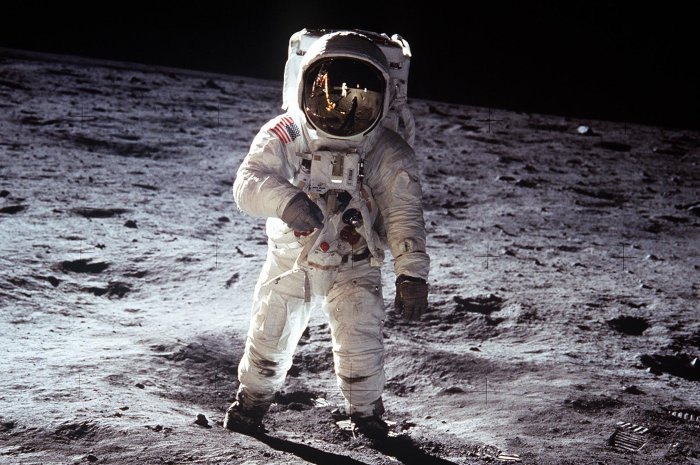
Astronaut Buzz Aldrin walks on the surface of the Moon during the Apollo 11 mission on July 20, 1969. Photo by NASA/UPI | License Photo
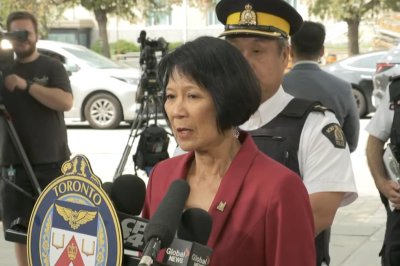
July 27 (UPI) — The U.S. Consulate in Toronto was shot at early Monday, according to authorities, marking the second time the facility been targeted by gunfire this year.
Deputy Chief Frank Barredo of the Toronto Police Service told reporters in a press conference that a police security detail at the consulate in downtown Toronto heard what sounded like a gunshot in the vicinity at 4:46 a.m. EDT.
The officer noticed a white late-model Honda Accord with no license plates speed away from the building and radioed the information. Additional officers noticed the suspect vehicle nearby and engaged it in a high-speed chase onto the Don Valley Parkway, heading northbound.
Barredo said the suspect vehicle was driving at speeds in excess of 87 miles per hour, prompting officers to end the chase, in accordance with police procedures because of the danger posed to the public, near the Don Mills Road and the DVP.
At the scene, police recovered a single shell casing, he said. The building’s facade also suffered damage, he added.
While no motive is known, Barredo said police suspect the shooting was premeditated.
“I don’t think it’s just a fluke that there was no license plate on the vehicle,” he said. He also described the shooting as “brazen” and “reckless” given that a police cruiser was parked outside.
Two security officers were inside the heavily fortified building at the time of the shooting, though Barredo said they would not necessarily have noticed the shot.
Toronto Mayor Olivia Chow mirrored Barredo’s description of the shooting as a “brazen attack” and vowed to work with authorities to get “the illegal American guns off our street” and to bring those responsible to justice.
“I want to say to the person or persons responsible. We will get you. We have apprehended the previous shooters, all three of them, and we will bring you to justice. You will be held accountable,” she said.
UPI has contacted the consulate for comment.
The shooting comes amid fraying relations between Canada and the United States. President Donald Trump‘s combative rhetoric and actions, including threatening to annex Canada and imposing stiff tariffs on it, have angered many across the Great White North and have compelled Ottawa to begin distancing itself economically and militarily from Washington.
In March, multiple shots were fired at the U.S. Consulate in downtown Toronto.
Last month, Toronto police arrested three people in connection with the March shooting. Constable Marc Pinizzotto was killed in a related police raid.
Police said the shooting was one of at least 27 they believe were carried out by criminals for hire. Authorities have not made public who hired them.
The second shooting at the consulate also occurred as two Jewish-owned bakeries in the city were the targets of vandalism, at least one of which was shot at.
Asked if the second shooting at the consulate was potentially another criminal-for-hire plot or connected to the bakery shootings, Barredo said it was too early to tell.
“We, obviously, would not rule that out as a possibility,” he said.
“We do know that is a phenomenon that has grown in the GTA area. Some criminals simply perform services for hire. They don’t have any personal interest in matter; they simply are hired to carry out a specific act of criminality.”
Minister of Public Safety Gary Anandasangaree said in an online statement he was “appalled by the brazen shooting” and has spoken with Chow, and offered his full support to the Toronto Police Service.
“Violence of any kind will never be tolerated in Canada,” he said.
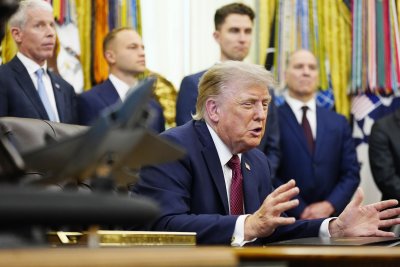
President Donald Trump speaks Friday in the Oval Office of the White House in Washington, D.C. On Monday, Trump said he paused attacks on Iran for negotiations, but Iran says no new negotiations with the United States are taking place. Photo by Bonnie Cash/UPI | License Photo
July 27 (UPI) — President Donald Trump said Monday that the United States paused attacks on Iran at Iranian leaders’ request but said he would order “strong military action” if negotiations fail.
However, there were mixed messages on what those talks entailed Monday. Iran’s Foreign Ministry said there were no new negotiations with the United States, CNN reported, though there are discussions with Oman over the Strait of Hormuz.
The United States halted attacks on Iran three days ago after 13 consecutive days of nightly bombing.
“We are in very deep talks with Iran,” Trump told Axios during an interview Monday. “If they don’t work out, we will go back to very strong military action.”
The president said in that interview that he isn’t willing to give much time to diplomacy, and that “either it goes fast or not at all.”
The Guardian reported that Trump later told reporters on Air Force One that, “They want to meet, and we’re meeting. Without what we did, they wouldn’t even be talking to us. … They would not have requested the meeting if we were doing poorly. The only reason they want to meet is because we’ve been hitting them very hard.”
Later yet, at a rally in Michigan, Trump said there are “very friendly negotiations” going on.
Oman’s Foreign Ministry said Foreign Minister Badr Al-Busaidi held calls with his counterparts from Iran, Saudi Arabia, Qatar, Kuwait and Egypt in a diplomatic push.
Al-Busaidi said in a statement that the talks between Iran and Oman “focused on ways to enhance the prospects for reaching practical, fair and sustainable arrangement for maritime navigation … throughthe Strait of Hormuz,” Axios reported.
Esmaeil Baghaei, a spokesman for Iran’s Foreign Ministry, said Tehran “would never allow the United States to determine the timing of war and peace.”
“Mediators may convey messages from the American side to us regarding current developments in the region,” he said, the Guardian reported. “But at present we are not engaged in any negotiations with the United States.”
Baghaei said the talks with Oman were “useful and constructive” but that they have nothing to do with the United States.









![President Trump used a press conference on board Air Force One on Monday to push back against Israeli concerns over the potential sale of fighter jets to Turkiye, telling reporters, ‘Nobody tells me what we should be selling’ [Evan Vucci/Reuters] Burnt bridges](https://i0.wp.com/occasionaldigest.com/wp-content/uploads/2026/07/2026-07-27T175408Z_243069669_RC2HMMAGKU6C_RTRMADP_3_USA-TRUMP-1785181801.jpg?w=640&ssl=1)