Donald Trump

Trump signs order to speed research on psychedelics for mental health

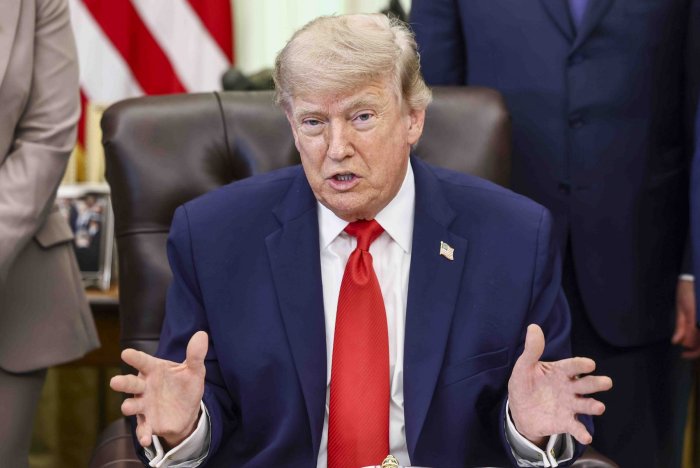
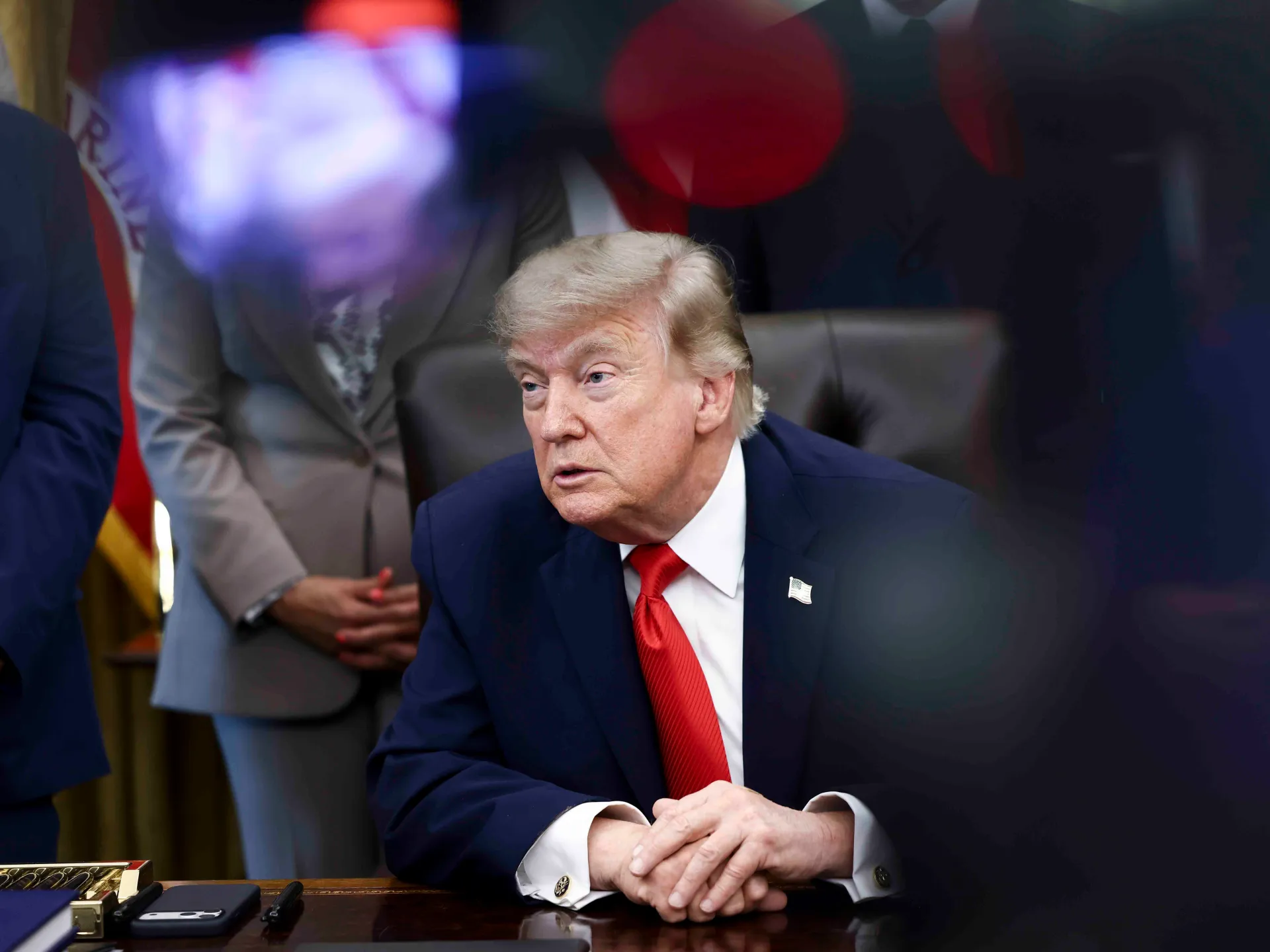
April 18 (UPI) — President Donald Trump signed an executive order Saturday to accelerate research for some psychedelic drugs to treat mental health disorders.

Surrounded by podcaster Joe Rogan and veterans, the president signed the order that could lead to use of the psychedelics in controlled, therapeutic settings.

“We’re taking this decision, this decisive step, to confront one of the most urgent public health challenges facing our nation, the mental health crisis,” Trump said Saturday in the Oval Office.

“Today’s order will ensure that people suffering from debilitating symptoms might finally have a chance to reclaim their lives and lead a happier life,” Trump said.

The order directs the Food and Drug Administration to speed its review of new treatments. Trump said the order applies to certain drugs that are already in the “advanced stages of clinical trials.”

Rogan said he sent the president “some information” about the drugs after he heard about them on his podcast, The Hill reported.

“I sent him that information. The text message that came back: ‘Sounds great. Do you want FDA approval? Let’s do it.’ Literally that quick,” Rogan said.

Trump mentioned ibogaine, which has been used to treat post-traumatic stress disorder in other countries. He said the administration would be “opening the pathway” for the drug to be included in the Right to Try Act, which allows terminally ill patients to participate in clinical trials for treatments still under FDA review, The Hill reported. Trump signed that act into law in 2018.

“Under this new program in this administration, drugs can get approved in weeks, not a year or year plus, but in weeks, if they are in line with our national priorities,” FDA Commissioner Martin Makary said at the signing.

“This is an unmet public health need, and there are potentially promising treatments,” Makary said. “That’s why there’s a sense of urgency around this. That’s why we’re doing it now.”

In 2024, 471 U.S. service members died by suicide, and there were 1,515 attempts reported, according to the Pentagon’s Annual Report on Suicide in the Military.

Some of the drugs included are ibogaine; LSD; psilocybin; known as magic mushrooms; and MDMA, known as ecstasy. Trump added that the government had just committed $50 million in additional funding for ibogaine research, The Post reported.

“Federal prohibition of psychedelic medicine in America is over,” said W. Bryan Hubbard, an advocate for access to ibogaine, The Washington Post reported.

Kevin Sabet, who was a White House drug policy adviser over three presidential administrations, disagreed. He said the order will “send the wrong message” and encourages hasty, potentially dangerous research.

“People need to realize there is little to no evidence for most of these drugs and most of the conditions they claim to alleviate,” Sabet, president of Smart Approaches to Marijuana, wrote in a text message to The Post.

Health and Human Services Secretary Robert F. Kennedy Jr. has championed the idea of using psychedelics to help with mental health conditions. On Saturday, he said officials owed it to veterans “to turn over every stone.”

“It’s disturbing to me and to the president that hundreds, in fact, thousands of veterans are having to travel to Mexico or other countries to experiment with interventions that hold great promise,” Kennedy said.

Source link

White House infighting gets very public and very profane

President Trump and his aides frequently complain about back-biting leaks from within the White House. But on Thursday, the infighting was out in the open, live on television.

The incoming communications director, Anthony Scaramucci, in a morning phone call broadcast on CNN, compared the West Wing to a fish that “stinks from the head down,” implying that White House Chief of Staff Reince Priebus is responsible for at least some of the leaks.

“There are people inside this administration who think it’s their job to save America from this president,” Scaramucci said.

Another Trump advisor, Kellyanne Conway, used a prison analogy for the broader backstabbing, telling Fox News that her White House colleagues were using “the press to shiv each other.”

Later, White House Press Secretary Sarah Huckabee Sanders declined to come to Priebus’ defense and say whether Trump has full confidence in his chief of staff.

While the discord might suggest a new level of chaos in a White House known for it, the style is all Trump. As a businessman, he has a history of fostering rivalries among his employees.

“He always did sort of like competition, backstabbing, infighting kind of stuff,” said Barbara Res, who spent nearly two decades as a top executive in Trump’s real estate business. “He set people up to do that.

“He’d pick the winner and blame the loser,” she added.

As president, he hasn’t changed. As Sanders told reporters: “The president likes that kind of competition and encourages it.”

Trump led the charge this week, using his Twitter account and an interview with the Wall Street Journal to ridicule his attorney general, Jeff Sessions, one of Trump’s first and most prominent campaign supporters. By Thursday, both Priebus and Secretary of State Rex Tillerson were seeing their fates publicly deliberated as well, less than a week after Press Secretary Sean Spicer was forced out after months of speculation and presidential slights.

The Priebus intrigue was amplified by Scaramucci on Twitter and in the CNN interview. He blamed Priebus for leaking Scaramucci’s personal financial disclosure forms — forms that are publicly available — and suggested that Trump encouraged his attack on Priebus in a phone conversation the two men had just had before Scaramucci dialed in to CNN.

Later Thursday, New Yorker magazine writer Ryan Lizza reported that Scaramucci, in a profanity-laden phone call to him Wednesday night, referred to Priebus as a “paranoid schizophrenic” who had blocked him from the White House for six months. He accused White House strategist Stephen K. Bannon of seeking to “build [his] own brand off the … strength of the president,” and he claimed to have evidence from the FBI about who in the White House had been leaking information fueling derogatory stories about Trump.

Infuriated that someone had told Lizza about a dinner that night at the White House, Scaramucci demanded to know the reporter’s source and said he would “eliminate everyone in the comms team and we’ll start over,” unless Lizza told him.

Priebus has declined to engage publicly. But hours after Scaramucci first aired his side in the two men’s strife, Sanders called it “healthy competition.”

The result of all the drama is a White House that increasingly resembles the set from the president’s former way of life, as the star of a reality TV show. His aides’ cable television appearances recall the “confessionals” familiar to fans of the genre, in which contestants look directly at the camera to confide their anger or enmity toward others on the show.

“The primary attribute for a successful tenure in the Trump White House is masochism,” tweeted Rick Wilson, a longtime Republican operative and Trump critic.

The repeated evidence of dysfunction and the high level of insecurity among Trump’s core aides help explain the White House’s inability to focus on its agenda.

Trump’s critics suggested the public staff blow-up was a deliberate distraction from several controversies — the struggle in Congress to pass a healthcare bill, ongoing investigations into potential collusion between his campaign and Russia, and the blowback from Republicans and others to Trump’s surprise Twitter announcement on Wednesday that transgender people will be barred from military service.

But those issues also were being heavily covered on cable news. The stories that were overshadowed were those the White House was trying to promote this week: a deal the administration helped strike with Taiwanese tech giant Foxconn to build a production facility in Wisconsin, creating thousands of new jobs, and nascent efforts to craft a tax overhaul plan.

“Right now, the president is operating the White House by himself,” relying on only a few aides, including Scaramucci, said Barry Bennett, a former Trump campaign advisor who maintains contacts in the White House.

It’s Scaramucci’s “natural inclination to go after Reince, and he’s not getting any kind of halt sign,” Bennett added. “One of them is not going to make it.”

The tension between Scaramucci and Priebus was widely known for months behind the scenes, as Scaramucci came to believe Priebus sabotaged his early attempts to join the Trump administration. Priebus, in turn, was miffed as Scaramucci recently edged aside Sean Spicer, his closest ally in the White House, as press secretary.

Trump has given Priebus little comfort. During Wednesday’s White House announcement about the planned Foxconn facility in Wisconsin on Wednesday — a deal that Priebus, a Wisconsin native, helped secure — Trump failed to recognize him even as the president praised the state’s governor, congressional delegation and other members of his Cabinet who came to the East Room event.

Scaramucci joins a cadre seen by some West Wing officials as “enablers” who encourage Trump’s most defiant and often self-defeating impulses, a group that notably includes Bannon.

In many ways Trump is his own chief of staff, and he’s not a very good one.

— David B. Cohen, political science professor, University of Akron

In recent months, on foreign policy in particular, Bannon has taken a step back as a faction of so-called “realists” — or, as Bannon likes to call them, “globalists” — including Trump son-in-law Jared Kushner, daughter Ivanka Trump and economics advisor Gary Cohn have held sway.

But Trump’s surprise announcement on Twitter on Wednesday morning of a ban on transgender troops, which blindsided Pentagon leadership, showed that the “realists” only have so much power to rein in the president.

Sanders defended Trump’s controversial speech at the Boy Scouts national jamboree on Monday night, a campaign-style event that prompted an apology from the organization’s chief executive on Thursday for the partisan tenor of the president’s address.

“I saw nothing but roughly 40,000 to 45,000 Boy Scouts cheering the president on,” Sanders said Thursday.

David B. Cohen, a political science professor at the University of Akron who has studied the role of the White House chief of staff, said many administration problems stem from Priebus’ lack of power to help set Trump’s agenda and manage the staff members competing for his attention.

“In many ways Trump is his own chief of staff, and he’s not a very good one,” Cohen said.

The fact that Scaramucci was hired last week over Priebus’ objections and reports directly to Trump, Cohen said, “shows that Priebus has been effectively neutered in the West Wing.”

Scaramucci seems eager to fill any void. But as other Trump aides have learned, the glow of the president’s affection is seldom permanent.

One Republican in regular contact with the White House, who asked for anonymity to preserve his access, said of Scaramucci, “What got him there was … being an effective counterpuncher. But at a certain point, you become at risk of becoming the punching bag.”

Sessions, who gave up a secure Senate seat to become Trump’s attorney general, learned that lesson over the last week as Trump began openly expressing his frustrations, objecting to Sessions’ recusal from the Russia investigation, which the president believes led to the appointment of special counsel Robert S. Mueller III.

Sessions said again on Fox News on Thursday that he intends to stay in the job if Trump does not fire him. Trump’s humiliation of Sessions lately has aroused more open complaints from congressional Republicans than any presidential action to date.

Sen. Lindsey Graham of South Carolina warned that “there will be holy hell to pay” if Trump fires Sessions. Any attempt to get rid of Mueller, Graham added, could be “the beginning of the end of the Trump presidency.”

brian.bennett@latimes.com | @byBrianBennett

noah.bierman@latimes.com | @noahbierman

ALSO

GOP senators seem ready to pass Obamacare repeal bill – as long as it never becomes law

Chairman of the Joint Chiefs says Pentagon has not banned transgender soldiers — for now

Adam Schiff, President Trump and the serendipity of slander


Source link

Trump joined by Joe Rogan as he signs order to speed up psychedelic review | Health News

The order calls on the federal government to relax restrictions on psychedelics, including ibogaine, for potential treatments.

United States President Donald Trump has signed an executive order to speed up the review of a handful of psychedelic drugs, including the controversial ibogaine.

Trump was joined by podcaster Joe Rogan during Saturday’s Oval Office event.

Recommended Stories

list of 3 itemsend of list

Rogan, considered one of the most influential podcasters in the country, has been a leading proponent of ibogaine, which is derived from a plant that grows in West Africa and has been embraced by some military veteran groups as a treatment for post-traumatic stress.

Speaking at the event, Rogan recounted how he had previously texted information to Trump about ibogaine.

He recalled that the president quickly texted back: “Sounds great. Do you want FDA [Food and Drug Administration] approval? Let’s do it.”

Advocacy groups have long pushed for more research into the possible use of psychedelics to treat an array of issues, including depression.

“Today’s order will ensure that people suffering from debilitating symptoms might finally have a chance to reclaim their lives and lead a happier life,” Trump said at the signing.

“If these turn out to be as good as people are saying, it’s going to have a tremendous impact.”

At one point, the president quipped that he would be open to taking psychedelics himself: “Can I have some, please? I’ll take some.”

But he quickly pivoted away from the joke. “I don’t have time to be depressed. You know, if you stay busy enough, maybe that works, too. That’s what I do,” he said.

Increasing research into psychedelics has proven a rare issue with bipartisan support in the US, where ibogaine and other psychedelics remain banned under the federal government’s most restrictive category for illegal drugs.

Health Secretary Robert F Kennedy Jr had previously pledged to ease access to psychedelics for medical use.

Trump’s executive order calls on the Department of Health and Human Services to direct at least $50m to states that have enacted or are developing programmes to advance psychedelic drugs for serious mental illness.

It also arrives ahead of several actions from the FDA to loosen restrictions.

This week, the agency will issue so-called “national priority” vouchers for three psychedelics, which the agency’s commissioner, Marty Makary, said will allow certain drugs to be approved quickly “if they are in line with our national priorities”.

The FDA is also taking steps to clear the way for the first-ever human trials of ibogaine in the US. Previous research had been stalled by concerns over the drug potentially triggering fatal heart problems.

Ibogaine was first used by members of the Bwiti religion in African nations like Gabon for religious ceremonies.

Rogan’s endorsement helped boost Trump ahead of the 2024 presidential election. He has since publicly questioned the administration’s war with Iran, saying it runs counter to Trump’s campaign pledges.

Also present on Saturday was Marcus Luttrell, a former Navy SEAL whose memoir about his time in Afghanistan, Lone Survivor, was later made into a film.

He praised ibogaine during the ceremony: “It absolutely changed my life for the better.”

Source link

Pope Leo XIV flies to Angola, says he is not debating Trump

1 of 2 | Pope Leo XIV waves during a welcome ceremony at Quatro de Fevereiro International Airport in Luanda, Angola, Saturday. The Pope is on an 11-day trip to Africa, with stops in Algeria, Cameroon, Angola and Equatorial Guinea. Photo by Jose Sena Goulao/EPA

April 18 (UPI) — Pope Leo XIV said he has no interest in debating President Donald Trump as he flew to Angola for the third leg of his 11-day trip to Africa.

In Cameroon on Thursday, Leo told attendees at a prayer meeting that the world was being “ravaged by a handful of tyrants.”

“The masters of war pretend not to know that it takes only a moment to destroy, yet often a lifetime is not enough to rebuild,” he said.

While traveling on the papal plane from Cameroon to Angola Saturday, Leo said his words were not an attack on Trump or his actions in Iran.

He told reporters that his speech was written “weeks ago, well before the president ever commented on myself, and on the message of peace I am promoting,” NBC News reported. “It looked like I was trying to debate the president, which is not my interest at all.”

Last Sunday, Trump lashed out at Leo over his criticism of the war in Iran, claiming a reason the American was named pontiff was because the Catholic Church was trying to curry favor with his administration.

Leo responded saying, “I have no fear of the Trump administration or of speaking out loudly about the message of the Gospel, which is what the Church works for.”

Aboard the plane Saturday, Leo vowed to “promote peace in our world,” and said that his Africa trip is to “be with, to celebrate with, to encourage and accompany all of the Catholics throughout Africa.”

Leo landed in Luanda, Angola, around 3 p.m. WAT Saturday and was welcomed by President João Manuel Gonçalves Lourenço.

The pope met with Angola’s authorities and others at the Presidential Palace in Luanda Saturday. In his speech, he acknowledged those who were affected by recent flooding in the Benguela Province, a coastal area south of Luanda. More than 30 people were killed.

He said he is praying for the victims and noted the national response, that Angolans are “united in a great chain of solidarity in support of those affected.”

Leo said the country’s most important resources are not material but human. “Your people possess treasures that cannot be sold or stolen. There is within them a joy that not even the most adverse circumstances have been able to extinguish,” he said.

The pope is scheduled to celebrate mass at Kilamba, a Luanda suburb, before travelling to the Shrine of Muxima. On Monday, he will travel to Saurimo, where he will visit the elderly and celebrate mass, before returning to Luanda. Tuesday morning, he travels to Equatorial Guinea for his final stop on the trip.

Source link

‘No regrets’: Venezuela’s Machado defends giving Nobel medal to Trump | Donald Trump News

Maria Corina Machado gave Trump her Nobel Peace Prize after the US leader captured Nicolas Maduro.

Venezuela’s main opposition leader Maria Corina Machado says she has “no regrets” about giving US President Donald Trump her Nobel Peace Prize medal.

Machado, the 2025 recipient of the prestigious prize, presented the medal that accompanies the prize to Trump when she met him at the White House in January, two weeks after he ordered US special forces to seize Venezuelan President Nicolas Maduro from Caracas.

Recommended Stories

list of 4 itemsend of list

Trump’s military operation to remove Maduro, who is currently detained in the US facing drug trafficking charges, is “something we Venezuelans will never forget”, she was quoted by AFP news agency as saying at a conference in Madrid on Saturday.

“There is a leader in the world, a head of state in the world, who risked the lives of his country’s citizens for Venezuela’s freedom,” she said.

Trump, who has long publicly coveted the Nobel Peace Prize, called Machado’s presentation of the medal at the time a “wonderful gesture of mutual respect”.

The Norwegian Nobel Committee, which honoured Machado for her tireless campaign to restore democratic rights in Venezuela and her struggle to achieve a peaceful transition from authoritarian rule, made clear after the handover that the prize is nontransferable and cannot be revoked, shared or transferred to others.

Machado, who had been living in hiding before leaving Venezuela in December to collect her prize in Oslo, said she was coordinating her return to the country with Washington.

US key to ‘democratic transition’

“I am speaking with the US government, and we are working in coordination, with mutual respect and understanding,” she said, adding that she believed Washington was “key to advancing a democratic transition” in Venezuela.

Trump has, however, publicly questioned Machado’s standing, calling her a “very nice woman” but saying she lacks “respect” within Venezuela. He has instead backed Maduro’s former vice president, Delcy Rodriguez, as the country’s interim leader.

Venezuela’s opposition last week called for presidential elections. Machado, who was banned from running in the disputed 2024 vote that returned Maduro to power, has not yet said whether she would stand in a future poll.

While in Spain, Machado declined a meeting with Prime Minister Pedro Sanchez, citing his hosting of a progressive leaders’ summit in Barcelona as proof the meeting was “not advisable”. Sanchez had said he was willing to meet her at any time.

This snub comes in contrast to her frequent encounters with Sanchez’s right-wing opponents.

Source link

Iran closes Strait of Hormuz again over US blockade of its ports | US-Israel war on Iran News

Reports of Iranian gunboats opening fire on a tanker in strait, after Tehran said it is closing the waterway until the US lifts the blockade of its ports.

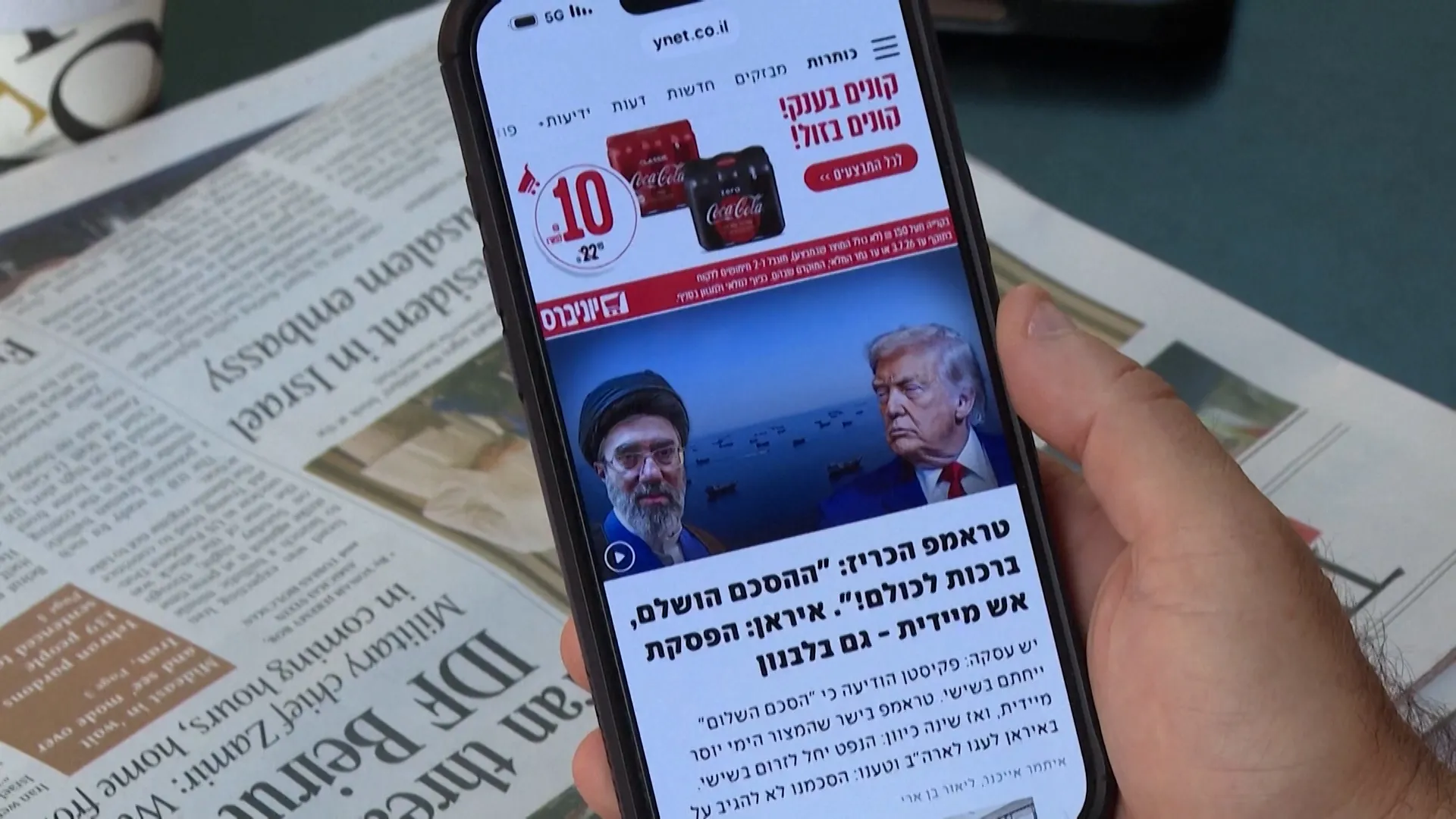
Iran says it has closed the Strait of Hormuz again, calling the decision a response to a continued blockade of its ports by the United States.

The Iranian military on Saturday said control of the strategic waterway, through which 20 percent of the global oil flows, has “returned to its previous state”, with reports saying Iranian gunboats fired at a merchant vessel as it attempted to ‌cross.

Recommended Stories

list of 4 itemsend of list

The closure of the strait came hours after it was reopened, with more than a dozen commercial ships passing through the waterway, after a US-mediated 10-day ceasefire deal was reached between Israel and Lebanon.

The Islamic Revolutionary Guard Corps (IRGC) on Saturday said in a statement, cited by the Iranian media, that the ongoing US blockade of Iranian ports represented “acts of piracy and maritime theft”, adding that the control over Hormuz is “under the strict management and control of the armed forces”.

“Until the US restores full freedom of navigation for vessels travelling from Iran to their destinations and back, the status of the Strait of Hormuz will remain tightly controlled and in its previous condition,” it said.

By 10:30 GMT on Saturday, no fewer than eight oil and gas tankers had crossed the strait, but at least as many ships appeared to have turned back, having begun to exit the Gulf, the AFP news agency reported.

The toing and froing over the strait cast doubt on US President Donald Trump’s optimism the day before, that a peace deal to end the US-Israel war on Iran was “very close”.

Trump had celebrated the reopening of the strait on Friday, but warned the US attacks would resume until Iran agreed to a deal, which included its nuclear programme.

“Maybe I won’t extend it,” Trump told reporters on board Air Force One about the temporary ceasefire agreement in place. “So you’ll have a blockade, and unfortunately we’ll have to start dropping bombs again.”

Asked whether a potential deal could be made in this short timeframe, Trump said: “I think it’s going to happen.”

But Iran says no date has been agreed for another round of peace talks, accusing the US of “betraying” diplomacy in all negotiations.

The conflicting and changing reports about the strait and how much freedom ships have to transit through it have deterred many vessels from crossing, according to John-Paul Rodrigue, a maritime shipping specialist at Texas A&M University.

“Ships have been attempting transit since the announcement, but it looks like many of them are heading back because the situation is unclear,” Rodrigue told Al Jazeera. “There is contradictory information being issued by all parties.”

Reporting from Tehran, Al Jazeera’s Tohid Asadi said “uncertainty is the name of the game” as far as the Strait of Hormuz is concerned.

“Iran is looking for a comprehensive end to the war across the region, security assurances, sanctions relief, the unfreezing of frozen assets, regional relations – and on top of all of that – the nuclear dossier and Iran’s stockpile of highly enriched uranium,” he said.

“But right now, uncertainty is the name of the game. The fragile situation makes it hard to talk about the possibility of successful negotiations down the road.”

Source link

Pope Leo heads to Angola in landmark Africa visit amid Trump clash | Religion News

Leo is the third pontiff to visit the fossil fuel-rich country after John Paul II in 1992 and Benedict XVI in 2009.

Pope Leo XIV is set to arrive in Angola on the third leg of a landmark African tour that has unfolded alongside an escalating war of words with United States President Donald Trump over the Middle East conflict.

Leo, the third pontiff to visit the fossil fuel-rich country after John Paul II in 1992 and Benedict XVI in 2009, is expected to arrive at 3pm local time (14:00 GMT) on Saturday in the capital, Luanda, where billboards bearing his image have been erected to welcome him.

Recommended Stories

list of 4 itemsend of list

The pope, who visited Cameroon for three days before flying to Luanda, is also slated to meet Angola’s President Joao Lourenco and deliver a speech in the country, where about 44 percent of the population identifies as Catholic.

Leo’s increasingly forceful calls for world peace are likely to resonate in Angola, which emerged in 2002 from a 27-year civil war that erupted after independence from Portugal in 1975.

Throughout his Africa visit, the first pope from the US has issued pointed warnings about corruption, the exploitation of the continent’s vast resources and the dangers of artificial intelligence.

‘Stick to matters of morality’

The pope’s Africa visit has also been marked by a clash with Trump, who has called the 70-year-old head of the Catholic Church “weak on crime” and “terrible for foreign policy”. Trump had also shared what appeared to be an AI-generated image of himself as Jesus, prompting a backlash from leaders across the religious spectrum.

The pope had responded by saying he was not afraid of Trump and that he would continue to speak out against war, marking a rare public clash between a pontiff and a sitting US president.

Speaking to reporters on Thursday, Trump said he had the right to disagree with the pontiff. “I have no disagreement with the fact the pope can say what he wants, and I want him to say what he wants, but I can disagree,” he said.

After US Vice President JD Vance urged the Vatican to “stick to matters of morality”, Leo said on Thursday that the world was “being ravaged by a handful of tyrants” and intensified criticism of those using religion to justify war.

During his stop in Cameroon, Leo also urged the country’s leaders to tackle corruption and condemned “those who, in the name of profit, continue to seize the African continent to exploit and plunder it”.

Leo’s warnings against corruption and exploitation may resonate in Angola, where one-third of the population lives below the poverty line despite vast fossil fuel reserves.

On Sunday, he will celebrate an open-air Mass in Kilamba, outside Luanda, before travelling by helicopter to Muxima, home to a 16th-century church and major pilgrimage site.

On Monday, Leo is due to travel to Saurimo to visit a retirement home and hold another Mass. He will then fly to Equatorial Guinea, the final stop of his 18,000km (11,185-mile) African tour.

Source link

Trump seeks ‘resolution’ of his $10bn lawsuit against IRS, spurring concern | Donald Trump News

Court filings have indicated that lawyers for President Donald Trump are seeking a resolution with the Department of Justice over a $10bn lawsuit he filed against the Internal Revenue Service (IRS).

But the trouble, critics say, is that such a settlement would leave Trump essentially negotiating with an executive branch under his control.

Recommended Stories

list of 3 itemsend of list

Friday’s court filing, however, emphasises the efficiency of seeking a settlement.

In the document, Trump’s lawyers call for the case to be paused for 90 days to allow a resolution to be hammered out.

“This limited pause will neither prejudice the parties nor delay ultimate resolution,” the filing says. “Rather, the extension will promote judicial economy and allow the Parties to explore avenues that could narrow or resolve the issues efficiently.”

How did the case start?

The case stems from an incident that began in 2017, when a worker named Charles “Chaz” Littlejohn was re-hired as a contractor through the government consulting firm Booz Allen.

While working on IRS files, Littlejohn stole copies of Trump’s tax returns, which had been the source of prolonged public scrutiny.

Until Trump, every president since Richard Nixon had released their tax returns as a gesture of transparency. Trump, however, claimed he could not, citing ongoing audits.

The tax returns Littlejohn stole were ultimately released to the media, and in 2020, The New York Times released a series of articles that showed Trump paid no income taxes in 10 of the 15 preceding years.

Other years, he paid relatively small sums, like $750, because he reported more losses than gains. ProPublica also ran stories based on the leaked tax returns, highlighting inconsistencies and Trump’s low tax payments.

Privacy law protects taxpayer information from being released by the IRS without explicit permission. Littlejohn was sentenced to five years in prison in 2024.

But in late January of this year, Trump filed a lawsuit arguing that he, his businesses and his sons Eric and Donald Jr had suffered “significant and irreparable harm” from the leaks.

The defendants in the lawsuit were the IRS and its overseeing body, the Treasury Department, both of which are part of the executive branch.

“Defendants have caused Plaintiffs reputational and financial harm, public embarrassment, unfairly tarnished their business reputations, portrayed them in a false light, and negatively affected President Trump and the other Plaintiffs’ public standing,” the lawsuit reads.

Questions of ethics and legality

But experts have warned that the lawsuit contains flaws that would normally prompt the Justice Department, also under Trump’s control, to seek dismissal.

The lawsuit, for instance, arrives at its whopping $10bn sum by supposedly tallying up media references to Trump’s leaked tax returns.

However, experts say the formula for damages is calculated by the number of unauthorised disclosures by a government employee, not by media re-printings.

Then there is the question of Littlejohn’s employment status. He was an outside contractor, not a government employee.

Trump also has to contend with the two-year statute of limitations in the case. The lawsuit contends that “President Trump did not discover the numerous violations” of his tax returns until January 29, 2024.

But critics point out he had posted on social media about his tax information being “illegally obtained” as far back as 2020, when The New York Times published its series.

Opponents say the lawsuit should be dismissed or at least delayed until Trump is no longer president. Otherwise, they argue it represents a conflict of interest, with Trump fundamentally negotiating with his own administration for a payout.

Controlling ‘both sides of the litigation’

Trump himself has acknowledged that such a payment would “never look good”. But he has justified the sum by saying it would be donated to charity.

“Nobody would care because it’s going to go to numerous very good charities,” he said in February.

Even that, legal experts argue, could run afoul of the Emoluments Clause in the US Constitution, which prohibits the president from profiting off his position, apart from his salary.

Government watchdogs have attempted to stop a settlement from unfolding. On February 5, for instance, the group Democracy Forward filed an amicus brief arguing the court should act to prevent an abuse of power.

“This case is extraordinary because the President controls both sides of the litigation, which raises the prospect of collusive litigation tactics,” the brief explains.

“To treat this case like business as usual would threaten the integrity of the justice system and the important taxpayer and privacy protections at the heart of this case.”

But the $10bn IRS lawsuit is not the only case Trump is seeking to settle with his own government. In 2023 and 2024, Trump filed administrative complaints seeking compensation for federal investigations he considered to be unfair.

One complaint concerns an FBI investigation into alleged Russian interference in the 2016 election, and the other is about the FBI’s raid of Trump’s Mar-a-Lago estate after he refused a subpoena to return classified documents.

For those complaints, Trump is reportedly seeking additional damages to the tune of $230m.

Source link

US judge blocks Justice Department bid to seize voter data in Rhode Island | Donald Trump News

Ruling is latest loss for Trump administration, which has sought access to state voter data ahead of the US midterms.

A federal judge in the United States has dismissed a Department of Justice lawsuit seeking to access voter data from Rhode Island.

The decision on Friday was the latest loss for the administration of President Donald Trump, which has sought to access voter data in dozens of states across the country.

Recommended Stories

list of 3 itemsend of list

In the ruling, US District Court Judge Mary McElroy sided with election officials and civil rights groups, writing that the Justice Department does not have the authority “to conduct the kind of fishing expedition it seeks here”.

Rhode Island Secretary of State Gregg Amore praised the ruling in a statement afterwards.

“The executive branch seems to have no problem taking actions that are clear Constitutional overreaches, regularly meddling in responsibilities that are the rights of the states,” Amore wrote.

“But the power of our democratic republic, built on three, coequal branches of government, is clearer than ever before.”

The Justice Department has sued at least 30 states for their voter information, maintaining it needs the information to secure election security. State officials have said that turning over the data raises an array of privacy concerns.

Under the US Constitution, state officials administer elections. Only Congress can pass laws related to how states oversee voting.

But Trump has sought to transform election administration, claiming that voting has been marred by widespread fraud.

In particular, Trump has continued to maintain that the 2020 election, in which he lost to former President Joe Biden, was “stolen”.

No evidence has ever been put forward to support the claims.

Federal judges have rejected attempts in California, Massachusetts, Michigan and Oregon to force the states to hand over voter files to the federal government. At least 12 states, however, have willingly provided or pledged to provide voter information to the Trump administration.

The push for voter information is one of several actions that have raised concerns over how the Trump administration will approach the midterm elections in November, which will decide the makeup of the US Congress.

He is currently calling on Republicans to pass the so-called SAVE America Act, a bill that would create higher documentation standards for voters to prove their citizenship when registering to vote and casting ballots.

The majority of Republican lawmakers have embraced Trump’s claim that the law is needed to prevent non-citizens from registering to vote, despite studies showing that instances of voter fraud are glancingly rare.

Critics say the measure would risk disenfranchising millions of voters, particularly those who have legally changed their names, which is a common practice in US marriages.

Source link

US Congress extends controversial surveillance power under FISA for 10 days | Privacy News

The measure has long been criticised for allowing US intelligence agencies to collect citizen data without a warrant.

The United States Congress has temporarily extended a controversial surveillance law which allows federal intelligence agencies to collect the data of foreigners, including their contacts with US citizens.

The move allows a provision of the Foreign Intelligence Surveillance Act (FISA) to continue until April 30. The short-term extension was passed by the House of Representatives and approved by the Senate on Friday.

Recommended Stories

list of 3 itemsend of list

The patch comes after President Donald Trump’s efforts to secure a more lasting extension broke down.

Section 702 of FISA allows the National Security Agency (NSA) and other intelligence services to collect data from foreigners outside of the country.

That could include their interactions with US citizens, a prospect that has alarmed rights advocates.

Collecting such data, which can include correspondence on email and telecommunications platforms, typically requires a warrant approved by a court.

The process has been described by critics as a “backdoor search” that circumvents existing privacy laws.

Speaking after Friday’s vote, Senate Majority Leader John Thune said there was still some openness to reforming the law.

“We’ve got to pivot and figure out what can pass, and we’re in the process ⁠of figuring out how to do that here,” he told reporters.

Supporters of reform, who stretch across party lines, have long sought to repeal or amend Section 702.

While FISA was initially passed in 1978, Section 702 was added as an amendment in 2008.

The addition came amid the US’s “global war on terror”. But during its approval, revelations emerged that the administration of former US President George W Bush had already used the tactics Section 702 legalised.

Supporters, including Trump, maintain that reforming the provision would lead to a lapse in national security.

“I have spoken with many in our Military who say FISA is necessary in order to protect our Troops overseas, as well as our people here at home, from the threat of Foreign Terror Attacks,” Trump wrote in a Truth Social post on Wednesday.

He has pushed for the law to be extended for 18 months without changes. That effort initially appeared on track in the House but was ultimately scuttled by pushback from within Trump’s own Republican Party.

Among the detractors was Republican Congressman Thomas Massie, who has been a regular critic of Trump.

“I will be voting NO on final passage of the FISA 702 Reauthorization Bill if it does not include a warrant provision and other reforms to protect US citizens’ right to privacy,” he wrote ahead of the House vote.

Source link

‘Trump forced Israel into a ceasefire’ with Lebanon | Israel attacks Lebanon

NewsFeed

Abed Abou Shhadeh, a political commentator based in Israel, says the ceasefire between Israel and Lebanon is ‘extremely problematic, not only for Netanyahu, but for the Israeli public who were promised for two and a half years now, absolute victory’.

Source link

US panel approves Trump’s design for massive arch in Washington, DC | Donald Trump News

The proposed 76-metre arch would tower over other iconic landmarks in Washington, DC, and has attracted scrutiny.

United States President Donald Trump’s goal of erecting a colossal arch in Washington, DC, has taken another step forward, with a key agency approving his proposed design for the monument.

The US Commission of Fine Arts, whose members were appointed by Trump, gave its go-ahead to the president’s design for a lofty 76-metre-high (250-foot) arch.

Recommended Stories

list of 3 itemsend of list

If given final approval, the arch would be built on Memorial Circle, between the Arlington National Cemetery and the Lincoln Memorial. It would tower above other landmarks in the national capital.

White House spokesperson Davis Ingle hailed the commission’s approval as a “step in accomplishing President Trump’s promise to the American people from the campaign trail — to Make America Safe and Beautiful Again”.

But the arch has faced criticism, including for potentially obscuring views of the national cemetery, a resting place for war veterans.

Public Citizen Litigation Group is representing some Vietnam War veterans in a lawsuit against the proposed construction, which they argue needs congressional approval.

Even the vice chair of the Commission of Fine Arts, James McCrery II, suggested that Trump’s proposed “Triumphal Arch” ditch the winged statue and eagles on its top. He also opposed the lions at its base, pointing out that African animals are “not a beast natural to the North American continent”.

The enormous arch is another effort by the US president to leave his mark on the physical landscape of Washington, DC.

In January, he told reporters he wants the arch to be the “biggest one of all”. The commission still needs to vote on final approval for the proposal after reviewing updated designs.

Current plans show the arch would be significantly larger than the Lincoln Memorial, which is 99 feet (30 metres) tall, and about twice as tall as the famous Arc de Triomphe in Paris, which the design resembles.

The phrases “One Nation Under God” and “Liberty and Justice for All” would be written in gold lettering atop either side of the monument.

About three out of every four people who delivered public comments about the project expressed opposition, many of them citing its enormous size.

But the arch is one of several Trump projects that have received public pushback.

Trump has sought to paint the granite of the Eisenhower Executive Office Building white, and his allies plan to close the Kennedy Center for the Performing Arts, a national theatre complex, for two years of renovations, after adding Trump’s name to the exterior.

One of the most permanent changes so far has been the abrupt demolition of the White House’s East Wing, in order to make room for an enormous ballroom, long one of Trump’s priorities.

But that project is likewise entangled in legal battles, with critics arguing that congressional approval is required.

On Wednesday, Judge Richard Leon clarified that construction on underground structures at the ballroom site could continue, as part of an exemption he previously allowed for national security concerns.

But he maintained his short-term injunction against construction on the ballroom itself, batting down Trump’s position that the whole project should proceed.

“Defendants argue that the entire ballroom construction project, from tip to tail, falls within the safety-and-security exception and therefore may proceed unabated,” Leon wrote in Thursday’s ruling.

“That is neither a reasonable nor a correct reading of my Order!”

The president responded on social media by calling Leon an “out of control Trump hating” judge. Leon was appointed in 2002 under Republican President George W Bush.

Source link

US State Department restricts visas for those who ‘support adversaries’ | Migration News

The State Department in the United States has announced it is restricting visas for “individuals from countries in our hemisphere who support our adversaries in undermining America’s interests in our region”.

Thursday’s statement underlined that 26 individuals had already seen their visas stripped as part of the policy.

Recommended Stories

list of 3 itemsend of list

The State Department’s stance comes as President Donald Trump seeks to expand US influence across the Western Hemisphere, as part of a platform he calls the “Donroe Doctrine”, a riff on the 19th-century Monroe Doctrine.

Since taking office for a second term, Trump has taken an aggressive stance towards stopping drug trafficking across the Americas, threatening economic penalties and military action for noncompliance.

He has also sought to check China’s growing sway over the region, as an increasing number of Latin American countries tighten their bonds with the Asian superpower.

The State Department explained that the expanded visa restrictions would penalise those who “knowingly direct, authorise, fund, or provide significant support to” US adversaries in the Western Hemisphere.

“Activities include but are not limited to: enabling adversarial powers to acquire or control key assets and strategic resources in our hemisphere; destabilising regional security efforts; undermining American economic interests; and conducting influence operations designed to undermine the sovereignty and stability of nations in our region,” the statement added.

The language was vague, never mentioning China or the campaign against drug-trafficking cartels.

But it continues a trend under the Trump administration to revoke visas from foreign critics and political opponents.

Last year, for instance, the administration sought to revoke visas for pro-Palestine protesters, claiming their presence could have foreign policy consequences for the US.

More recently, the administration has terminated the immigration visas for at least seven individuals with familial ties to the Iranian government or individuals connected to the 1979 Iranian revolution.

Revoking visas

The statement on Thursday did not identify the 26 individuals facing visa restrictions as part of the expanded policy.

But it cited the same authority under the Immigration and Nationality Act that the Trump administration has used to attempt to deport pro-Palestine student protesters last year.

Under the law, the entry of foreign nationals can be restricted when the secretary of state has reason to believe they pose “potentially serious adverse foreign policy consequences for the United States”.

While the administration has abandoned deportation efforts against some of the targeted individuals, at least two, Mahmoud Khalil and Badar Khan Suri, continue to face expulsion.

More recently, the administration has terminated the immigration visas for at least seven individuals with familial ties to the Iranian government or individuals connected to the 1979 Iranian revolution.

Already, some figures in Latin America have seen their visas revoked over political disagreements with the US.

In July, Brazilian officials involved in the prosecution of former right-wing President Jair Bolsonaro saw their US visas withdrawn. They included Brazilian Supreme Court Justice Alexandre de Moraes, a frequent target of right-wing ire.

Then, in September, the Trump administration stripped Colombian President Gustavo Petro of his visa after he made an appearance at the UN General Assembly that was critical of US policy.

The State Department, at the time, denounced Petro for “reckless and incendiary actions”. He was later invited to visit the White House in February, as part of a detente with Trump.

Visa restrictions have been part of Trump’s larger policy to exert pressure on foreign groups and limit immigration into the US.

Earlier this year, the administration enacted immigrant visa bans on dozens of countries, citing both national security and alleged stresses on social services.

Trump has also sought to take a more militaristic approach towards Latin American governments it deems as adversarial, referring to the whole of the Western Hemisphere as the US’s “neighbourhood”.

In January, the US launched an attack on Venezuela that culminated in the abduction and imprisonment of Venezuelan leader Nicolas Maduro, and it has also initiated an ongoing fuel blockade against Cuba.

Some of Trump’s actions in the region have been deadly. The Venezuela attack left dozens of Cubans and Venezuelans killed. And since September, the Trump administration has conducted at least 51 lethal strikes on alleged drug-smuggling boats in the eastern Pacific Ocean and Caribbean Sea.

The death toll in that campaign has reached at least 177 people. Rights groups have decried the attacks as extrajudicial killings.

But the Trump administration has labelled multiple drug cartels as “foreign terrorist organisations” and has argued they are seeking to destabilise the US through the drug trade.

Source link

Israel, Lebanon agree to 10-day cease-fire

April 16 (UPI) — President Donald Trump announced that Israel and Lebanon agreed to a 10-day cease-fire starting at 5:00 p.m., pausing Israel’s six-week war on Hezbollah in that country.

Trump spoke with Lebanese President Joseph Aoun and Israeli Prime Minister Benjamin Netanyahu on Thursday, both leaders confirmed, and agreed to the cease-fire and to work toward a more permanent peace between their countries.

Aoun and Netanyahu spoke to each other separately because Aoun declined to participate in a call with the Israeli leader because Israel was still bombing Lebanon, CNN reported.

“These two Leaders have agreed that in order to achieve PEACE between their Countries, they will formally begin a 10 Day CEASEFIRE,” he said in a post on Truth Social.

Vice President J.D. Vance, Secretary of State Marco Rubio and Joint Chiefs of Staff Chairman Dan Caine have been directed to work with officials of both countries to achieve a more lasting peace.

Lebanese Prime Minister Nawaf Salam in a statement thanked the United States, France, the European Union, Saudi Arabia, Egypt, Qatar and Jordan for helping to accomplish the cease-fire he had pursued “since the first day of the way,” NBC News reported.

After the United States and Israel launched the Iran war, Israel also launched offensives against the Iran-backed militia Hezbollah in Lebanon, from which it often launches attacks at Israel.

This week, delegates from the neighboring countries conducted diplomatic talks for the first time since 1993, meeting in Washington, D.C., to discuss a cease-fire and the larger issue of Hezbollah’s hijacking of Lebanese lands in order to target Israel.

Netanayhu said Thursday in a video statement that Israeli forces would “remain in a 10-kilometer security zone, which will allow us to prevent infiltration into communities and anti-tank missile fire.”

Calling the negotiations potentially historic, Netanyahu said that Israel’s chief goal is to disarm Hezbollah and its ability to invade or launch weapons across the Lebanese border into Israel.

“That is where we will remain,” he said. “We are not leaving.”

After the diplomatic talks on Wednesday, Rubio reinforced that a key part of the meeting and now peace talks between the two nations is to end Hezbollah’s destabilizing influence in Lebanon and the wider Middle East.

“We have to remember the Lebanese people are victims of Hezbollah,” Rubio said, also noting that accomplishing a lasting peace “will take time.”

First lady Melania Trump speaks during a House Ways and Means Committee roundtable discussion on protecting children in America’s foster care system in the Longworth House Office Building near the U.S. Capitol on Wednesday. The bipartisan group of lawmakers are looking to address challenges children in foster care face, including barriers to education and educational advocacy, housing, employment opportunities, financial independence, and technology. Photo by Bonnie Cash/UPI | License Photo

Source link

Cuban president defiant amid US pressure and energy blockade threats | Conflict News

Miguel Diaz-Canel marks anniversary of socialist revolutionary declaration under threat of US attacks.

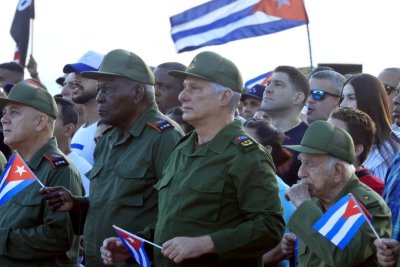
Cuban President Miguel Diaz-Canel has said that his country does not seek conflict with the United States but is prepared to fight if necessary, as Cuba marks the anniversary of its socialist revolutionary character amid the threat of US attacks.

Diaz-Canel struck a defiant tone on Thursday in remarks before a crowd marking the 65th anniversary of Fidel Castro’s declaration of the socialist nature of the Cuban Revolution and the failed invasion at the Bay of Pigs by forces aligned with the US the day after.

Recommended Stories

list of 3 itemsend of list

“The moment is extremely challenging and calls upon us once again, as on April 16, 1961, to be ready to confront serious threats, including military aggression,” Diaz-Canel said. “We do not want it, but it is our duty to prepare to avoid it and, if it becomes inevitable, to defeat it.”

President Donald Trump has threatened that the US could overthrow the Cuban government, a longtime source of ire for Washington, and has ratcheted up energy restrictions meant to squeeze the island’s economy.

“We may stop by Cuba after we finish with this,” Trump said earlier this week, stating that his attention could turn to Cuba after the end of the US-Israel war on Iran.

A US energy blockade and an end to oil shipments from Venezuela after the US abducted former Venezuelan President Nicolas Maduro in January have caused deteriorating conditions on the island. Fuel shortages and energy blackouts have roiled the island for weeks, heaping strain on workers and businesses.

Even before those increased restrictions, Cuba’s economy had suffered from decades of economic embargo from the US, along with economic mismanagement and political repression that prompted many Cubans to leave the country.

A vote at the United Nations in 2025 demanding an end to the US embargo passed with 165 votes in favour and seven against, including the US, Israel, Argentina, and Hungary. The resolution has been passed annually for more than 30 years.

“Cuba is not a failed state. Cuba is a besieged state,” Diaz-Canel said on Thursday. “Cuba is a state facing multidimensional aggression: economic warfare, an intensified blockade and an energy blockade.”

Source link

Hegseth says US blockade to continue, ready for new attacks on Iran energy | Donald Trump News

United States Pentagon Chief Pete Hegseth has said the military blockade of Iran’s ports will continue “as long as it takes”, saying Washington remained “locked and loaded” to attack Iran’s energy facilities.

The US Pentagon chief spoke on Thursday as a tenuous pause in fighting agreed to last week has continued. On Monday, President Donald Trump announced the military would blockade Iran’s ports in the Strait of Hormuz and the Persian Gulf after US-Iran talks in Pakistan failed to reach a breakthrough.

Recommended Stories

list of 3 itemsend of list

Hegseth struck an aggressive tone as he maintained the US military was monitoring Iran’s military movements during the pause in fighting, which currently is meant to extend through early next week.

“We are reloading with more power than ever before…even more importantly, better intelligence than ever before,” Hegseth said.

“As you expose yourself with your movement to our watchful eye, we are locked and loaded on your critical dual-use infrastructure, on your remaining power generation and on your energy industry,” he said.

Still, the Pentagon chief said the US prefers to resolve the conflict, which began with US-Israeli attacks on Iran on February 28, through diplomacy.

“You, Iran, can choose a prosperous future, a golden bridge, and we hope that you do for the people of Iran,” he said. “In the meantime and for as long as it takes, we will maintain this blockade, successful blockade, but if Iran chooses poorly, then they will have a blockade and bombs dropping on infrastructure, power and energy.”

On Wednesday, a Pakistani delegation arrived in Tehran to coordinate a new round of talks. While both sides have indicated they remained open to further negotiations, Major-General Ali Abdollahi, the commander of the Khatam al-Anbiya Central Headquarters of the Islamic Revolutionary Guard Corps (IRGC), warned that the US blockade could end the current pause in fighting.

White House spokesperson Karoline Leavitt, meanwhile, indicated the US maintained a positive outlook on future talks.

“At this moment, we remain very much engaged in these negotiations, in these talks,” she said.

But reporting from Tehran on Thursday, Al Jazeera’s Ali Hashem says deep-seated distrust remains. The US under Trump twice attacked Iran amid ongoing indirect talks over Iran’s nuclear programme, a fact that has cast a long shadow over the most recent bout of diplomacy.

“Clearly, there have been several messages conveyed to the Iranians. But rather than consolidating a feeling of trust and optimism, it seems that it’s already shaken,” he said.

“We saw a platform closely associated with the foreign ministry tweeting today, quoting a source saying that whatever is being demonstrated or said in the media regarding the optimism is just hype, and this is used for PR and it’s for President Trump to use in the markets,” he said.

Iran’s speaker of parliament, Mohammad Bagher Ghalibaf, who led the Iranian delegation in the talks with Iran, told his Lebanese counterpart on Thursday that a ceasefire in Israel’s invasion and ongoing bombardment of Lebanon is “as important” as the pause in fighting in Iran.

A Lebanon ceasefire has emerged as one of the main sticking points in talks, which also include control of the Strait of Hormuz and the future of Iran’s nuclear programme.

‘We will use force’

Speaking during the news conference on Thursday, General Dan Caine, the chairman of the Joint Chiefs of Staff, said so far, 13 ships leaving Iranian ports have turned around in response to US military warnings.

“If you do not comply with this blockade, we will use force,” Caine said.

Admiral Brad Cooper, the head of US Central Command (CENTCOM), meanwhile, said the US is using the wear to rearm and reposition its forces.

“We’re rearming, we’re retooling, and we’re adjusting our tactics, techniques and procedures. There’s no military in the world that adjusts like we do, and that’s exactly what we’re doing right now during the ceasefire,” said.

During questions with reporters, Hegseth also shot down reports that China was planning to send weapons to Iran amid the pause in fighting. Hegseth said Washington had received assurances from Beijing that this was not the case.

Hegseth also used a large portion of the news conference to attack US press coverage of the war, which the Trump administration is receiving criticism for its shifting objectives and justifications for launching the conflict.

Hegseth called the coverage “incredibly unpatriotic”.

Source link

Democrats clash with US Energy Secretary over Iran war and gas prices | US-Israel war on Iran News

Watch the moment a Democratic congresswoman tells the US Energy Secretary he is ‘living in a different world’ after his response to whether he’d adequately warned the White House that a war on Iran would have global consequences.

Source link

What is Trump-backed SAVE America Act and what could it mean for US vote? | US Midterm Elections 2026 News

Washington, DC – United States President Donald Trump has been unambiguous about his desire for Congress to pass the SAVE America Act, a sweeping voting law that supporters say will boost election security and that detractors say risks disenfranchising millions of voters.

The push has gained new urgency, with the US Senate continuing debate on the law following a two-week recess.

Recommended Stories

list of 3 itemsend of list

The president has said the bill, which at its core would create higher documentation standards for proving citizenship when registering to vote and casting a ballot, is his top priority ahead of the midterm elections in November, which will determine which party controls the Senate and the US House of Representatives.

The bill has near-total support from Republicans, with Democrats remaining largely unified in opposition. It passed in the Republican-controlled House of Representatives in February along party lines.

The measure has since remained stalled in Congress, where Republicans control 53 out of 100 seats, short of the 60 votes it will likely need to pass.

That is, unless party leaders move to change the chamber’s longstanding rules, a transformative approach considered a”nuclear” option that will reverberate for years to come.

Here’s what to know.

What would the SAVE America Act do?

The version of the Safeguard American Voter Eligibility (SAVE) America Act passed by the House in February would require voters to provide proof of citizenship – a birth certificate or passport – when registering to vote. It would also implement stricter voter identification requirements for individuals casting ballots, whether by mail or in person.

Under the US Constitution, states administer elections, and currently have different processes for registering voters and confirming citizenship. Voting by noncitizens is already illegal, and all people registering to vote attest they are US citizens under threat of perjury.

The bill does not provide any funding for the new verification processes, which would be effective immediately upon the bill being signed into law.

The legislation would also require all states to run their voter rolls through a US Citizenship and Immigration Services (USCIS) “Alien Verification Eligibility” system to identify potential noncitizens already enrolled.

It would include criminal penalties for election officials who register voters without the required documentation.

What has Trump said about the SAVE Act?

The US president has long maintained that elections in the country are marred by widespread fraud, including noncitizen voting, despite there being no evidence to support these claims.

Even the conservative Heritage Foundation, which has influenced many of Trump’s policies, has found only exceedingly rare instances of voter fraud over decades of US elections.

Trump’s focus on election administration dates back to his 2020 loss to former US President Joe Biden, which he continues to maintain was the result of the vote being “stolen”. Again, no evidence has emerged to back those claims.

The president has called the SAVE America Act “one of the most IMPORTANT & CONSEQUENTIAL pieces of legislation in the history of Congress, and America itself”.

In March, he vowed not to sign any other bills into law until the legislation was passed. He has further vowed not to endorse any Republicans who do not support the legislation.

Trump also told members of his party in March that passing the bill would “guarantee” their success not only in the midterm elections but in the years to come.

Several top Republicans have embraced Trump’s messaging, with US House Speaker Mike Johnson saying opponents of the legislation “want illegal aliens to vote in our elections”.

What have critics said about the SAVE Act?

Critics have said the bill would be tantamount to widespread voter disenfranchisement, creating onerous barriers to address what several studies show to be the fleetingly rare problem of noncitizens registering to vote.

Several studies have shown that about 11 percent of eligible voters do not have access to birth certificates, while 52 percent do not have valid passports. All told, a recent study by several election-monitoring groups found that about nine percent of eligible voters in the US do not have easy access to documents proving citizenship, accounting for about 21.3 million people.

Several groups, including the Bipartisan Policy Center, have argued the legislation risks doing more damage than good. Data from a USCIS voter verification system, which some states already use to identify noncitizens in their voter rolls, found that only 0.04 percent of reviewed cases were flagged as potential noncitizens.

But as noted by the Bipartisan Policy Center, evidence indicates that the rate may be considerably lower, pointing to a review by Travis County, Texas that found that a quarter of the voters flagged by USCIS had actually provided proof of citizenship.

In another example, a review of all registered voters in Utah from 2025 to 2026 found only a single instance of a noncitizen registered to vote out of more than two million voters. There were no confirmed instances of a noncitizen actually voting.

Top Democrats have echoed those criticisms, while charging that Trump is seeking to influence the outcome of the midterms as part of what they call a years-long effort to politicise voting administration.

“The only thing Republicans are trying to save with this legislation is their own skin in the next election,” Chuck Schumer, the top Democrat in the Senate, said earlier this week.

Could it affect women and name changes?

A main point of contention for opponents of the legislation is the additional barriers it could create for individuals, primarily women, who changed their last names after marriage or for other reasons.

An estimated 69 million women in the US lack easy access to documentation linking their current legal names to those at birth, according to the League of Women Voters, which has been a leading opponent of the bill.

The requirement for extra documentation for some married women creates inherent inequality in the system, the organisation has argued.

The law would further create extra barriers for individuals who move regularly, including members of the military, and those who have been afflicted by disruptive life changes, including natural disasters, opponents have argued.

How does this relate to the filibuster?

The so-called “filibuster” is a procedural rule in the Senate that can be used to require 60 votes to pass most bills, as opposed to a simple majority of 51 votes in the 100-seat chamber.

Parties in the minority have long used the rule to temper the party in the majority, with Republicans and Democrats rarely holding a filibuster-proof 60 seats.

Being a rule of the Senate’s own making, it could be easily scrapped by the party in power. However, doing so has long been seen as a “nuclear” option. While it would offer short-term benefits to the majority party, it would undermine the same party if it becomes the minority in future elections.

Nevertheless, Trump has heaped pressure on Republican leaders in the Senate to scrap the rule, writing on Truth Social in March, they need to “Kill the Filibuster”.

What happens next?

Debate remains ongoing in the Senate over the legislation, but major shifts in support are seen as extremely unlikely.

Republicans are unlikely to bring the legislation to a vote if they do not have the support for it to pass.

Currently, there is no plan to hold a vote to do away with the filibuster, which would require only a simple majority.

Lawmakers have also not yet pursued other, more incremental procedural manoeuvres to pass the bill without 60 votes.

Source link