Donald Trump

Maine Gov. Janet Mills vetoes bill pausing AI data center development

Maine Gov. Janet Mills on Friday vetoed a bill that would have paused construction of artificial intelligence data centers in the state because lawmakers in the Maine legislature refused a carve-out to the pause for an already in progress project there. File Photo CJ Gunther/EPA

April 24 (UPI) — Maine Gov. Janet Mills on Friday vetoed a bill that would have paused artificial intelligence data center construction in the state for 18 months.

Mills said she decided to veto it because it would have potentially harmed a permitted and in progress data center expected to create hundreds of jobs, both for construction and once the center opens.

The project, a $550 million data center in Jay, Maine, is a multi-year effort to redevelop the former Androscoggin Mill, which was damaged in a 2020 boiler explosion and then closed in 2023, took with it hundreds of jobs and 22% of the town’s tax revenue.

The bill would have been the first in the country restricting or slowing the spread of large-scale data centers required for power-hungry AI systems, which have driven up the cost of both electricity and water for residents living near them, NBC News and Politico reported.

“A moratorium is appropriate given the impacts of massive data centers in other states on the environment and electricity rates,” Mills said in a press release.

“But the final version of this bill fails to allow for a specific project in the Town of Jay that enjoys strong local support from its host community and region,” she said.

There are more than 5,000 data centers in the United States — more than any country in the world — and that number has grown significantly in the last four years as artificial intelligence has become a focus the tech industry.

While many state and local leaders have started to respond to concerns among residents about the huge amounts of electricity needed to power AI data centers and the huge amounts of water needed to keep them cool, as have some members of Congress.

As states have contemplated increased regulation and scrutiny from tech and AI companies, President Donald Trump at the same time has worked to keep the cuffs of tech companies because they “must be free to innovate without cumbersome regulation,” he said in December.

“Excessive state regulation thwarts this imperative,” Trump said in an executive order meant to prevent states from creating new regulations.

Mills said she worked with Maine’s legislature to carve out an exemption for the data center in Jay but was unsuccessful, so she vetoed the law.

The development in Jay, she said, is under contract and permitted, and is expected to create 800 construction jobs, more than 100 high-paying permanent jobs and “substantial tax revenue” for the Town of Jay.

In a letter informing the legislature that she planned to veto the bill, Mills said she plans to issue an executive order to establish a council to study the impacts — real and potential — of data centers in Maine.

“I believe it necessary and important to examine and plan for the potential impacts of large-scale data centers in Maine, as the use of artificial intelligence becomes more widespread,” Mills said.

“Given the serious conversations about data centers here and around the country, I believe this work should commence without delay,” she told legislators.

President Donald Trump speaks during a Health Care Affordability event in the Oval Office at the White House on Thursday. Trump announced announced a new drug price deal with Regeneron. Photo by Will Oliver/UPI | License Photo

Source link

Leavitt: Witkoff, Kushner heading to Pakistan Saturday for Iran talks

Special envoy Steve Witkoff (L) and President Donald Trump’s adviser and son-in-law Jared Kushner are heading to Islamabad, Pakistan, Saturday, to have more talks with Iran to make a peace deal. File Photo courtesy Ukrainian President’s Office | License Photo

April 24 (UPI) — Talks with Iran are set to resume with special envoy Steve Witkoff and President Donald Trump‘s adviser and son-in-law Jared Kushner heading to Pakistan on Saturday to meet with Iranian Foreign Minister Abbas Araghchi, the White House confirmed Friday.

Iranian state news agency IRNA said that no meeting has been scheduled, Axios reported.

“The Iranians want to talk. They want to talk in person, and the president is always willing to give diplomacy a chance,” White House press secretary Karoline Leavitt told reporters Friday.

“We hope progress will be made, and we hope that positive development will come from this meeting. We have certainly seen some progress from the Iranian side in the last few days.”

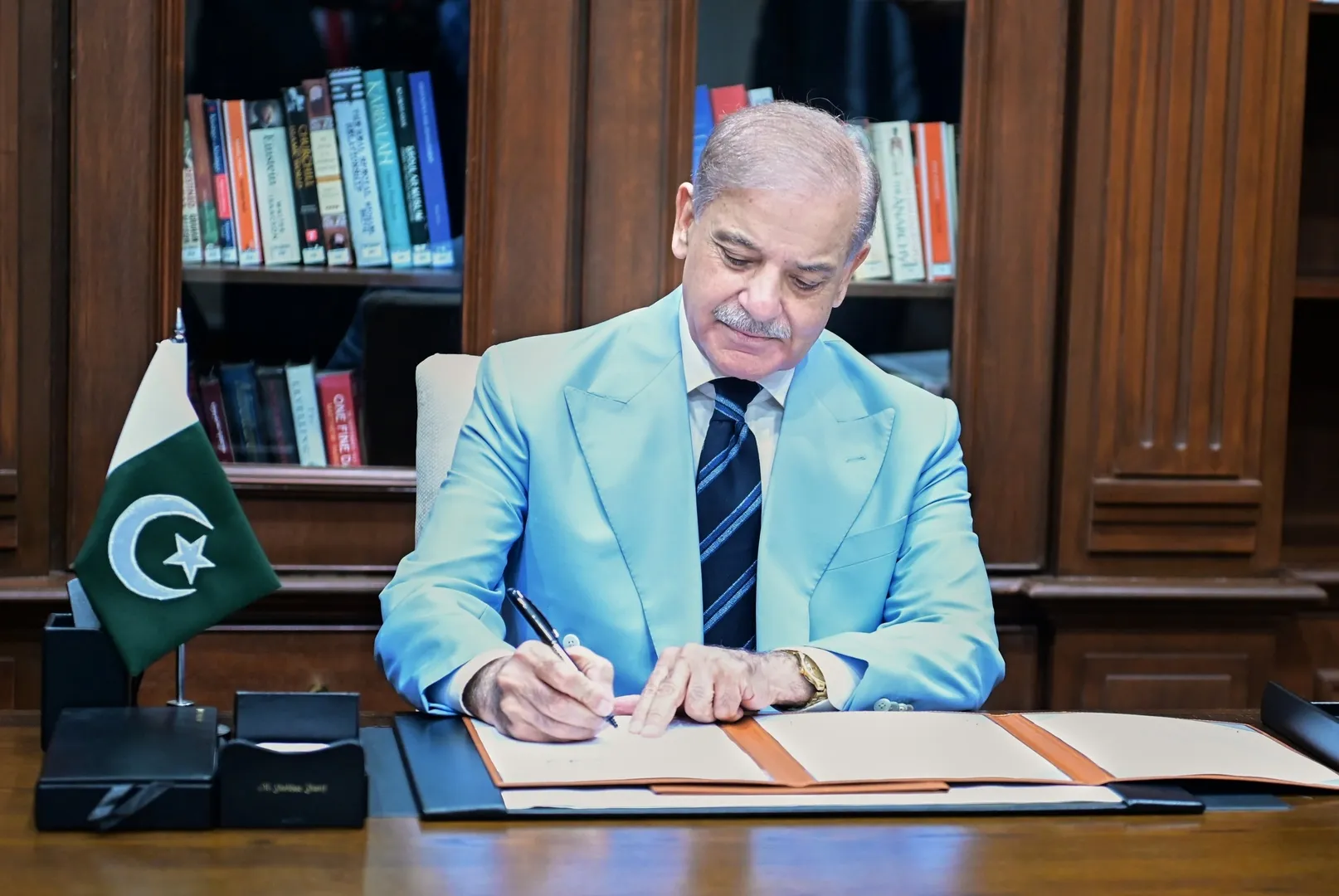
Araghchi landed in Islamabad on Friday night for talks with Pakistani Prime Minister Shehbaz Sharif, Foreign Minister Ishaq Dar and Field Marshal Asim Munir, Axios reported.

A Pakistani official told Axios that the meeting was expected to focus on relaunching negotiations with the Trump administration.

“A trilateral meeting with the U.S. will be assessed after our meeting with Araghchi,” the Pakistani official said.

“We’ve certainly seen some progress from the Iranian side in the last couple of days. Again, the president has made the decision to send Steve [Witkoff] and Jared [Kushner] to hear the Iranians out, and so we’ll see what they have to say this weekend,” Leavitt said about the potential for a peace deal.

Araghchi is scheduled to travel from Islamabad to Muscat, Oman, and then on to Moscow, Axios said. It’s not clear when he will meet with Witkoff and Kushner. Two sources told Axios that the meeting could happen Monday, after Kushner and Witkoff have talks with Pakistani mediators.

Vice President JD Vance will not travel to Pakistan for these meetings.

A missile identified as “Khorramshahr-4” was on display during a public rally in Tehran’s Enghelab Square on April 21, 2026. Photo by Behnam Tofighi/UPI | License Photo

ir

Source link

Trump to again end legal status of people who entered US with CBP One app | Donald Trump News

Judge had previously blocked move to end temporary legal status for those who entered US via Biden-era application.

The administration of President Donald Trump plans to again end the temporary legal status of hundreds of thousands of people who applied for asylum in the United States via the CBP One app.

The plan was detailed in a court filing in Boston, Massachusetts, and comes after a judge ruled that Trump’s earlier effort to terminate the legal status of those individuals was unlawful.

Recommended Stories

list of 3 itemsend of list

Under US President Joe Biden, individuals who registered for an appointment with US Customs and Border Protection (CBP) were preliminarily vetted and granted temporary legal status in the US as their asylum cases were adjudicated.

About 900,000 people were granted so-called humanitarian parole under the programme.

But in April of last year, just months after Trump took office for a second term, many of those individuals received emails saying their status had been terminated.

The message told its recipients it was “time for you to leave the United States”.

Federal Judge Allison Burroughs subsequently ruled that the Department of Homeland Security did not follow the proper procedures in terminating the legal status immigration status of CBP One users.

The US Department of Justice, in the new filings, told Burroughs that the Trump administration was complying with ⁠her order.

However, the department said the administration would begin issuing new parole termination notices, pursuant to a Tuesday memo from CBP’s head, Rodney Scott.

The memo is not public, but according to the Justice Department, Scott provided ‌an explanation for why, in his opinion, “parole is no longer appropriate for those aliens”.

Lawyers for Democracy Forward and Massachusetts Law Reform Institute, which represent the individuals whose status faces termination, urged Burroughs in a subsequent filing to prevent what they called a “deliberate attempt to evade compliance with the court’s order”.

The next hearing was set for May 6.

During his second term, Trump has pursued a hardline immigration policy that has included staunching nearly all asylum claims at the southern border.

Shortly after taking office, Trump’s officials also dissolved the CBP One app and relaunched it as CBP Home, a tool for self-deportation.

His administration has claimed there was an “invasion” at the border that constituted a “national emergency”, thereby allowing Trump to bypass legal requirements to allow individuals seeking asylum into the country.

Asylum, however, is a right enshrined both in domestic and international law, to protect people fleeing persecution on the basis of race, religion, nationality, political opinion or membership in a particular social group.

Separately, on Friday, a federal appeals court ruled against the Trump administration’s ban on asylum at the southern US border, potentially clearing the way for applications to once again be processed.

The administration is expected to appeal the decision.

Source link

US appeals court rejects Trump’s ban on asylum seekers, teeing up appeal | Migration News

Judges say Trump’s order for swift removal at the border ‘cast aside federal laws affording’ right to seek asylum.

An appeals court has ruled that President Donald Trump’s ban on asylum applications in the United States is unlawful, dealing a setback to the administration’s immigration crackdown.

In a decision released on Friday, a three-judge panel from the US Court of Appeals in Washington, DC, found that existing laws — namely the Immigration and Nationality Act (INA) — give people the right to apply for asylum at the border.

Recommended Stories

list of 3 itemsend of list

Trump had issued the asylum ban in a proclamation on January 20, 2025, on the first day of his second term.

But the appeals court questioned whether suspending asylum unilaterally was within the president’s power.

“Congress did not intend to grant the Executive the expansive removal authority it asserts,” the ruling said.

“The Proclamation and Guidance are thus unlawful to the extent that they circumvent the INA’s removal procedures and cast aside federal laws affording individuals the right to apply and be considered for asylum or withholding of removal protections.”

The decision validated a ruling by a lower court. While the judges blocked Trump’s order, it is unclear what its immediate impact will be. Already, the White House has signalled it plans to appeal.

Trump made immigration a major pillar of his 2024 re-election campaign, pledging to repel what he describes as an “invasion” of migrants by shutting down the southern border of the US.

Asylum in the US can be granted to people facing “persecution based on race, religion, nationality, political opinion, or membership in a particular social group”. Such protections have been recognised as a fundamental human right under international law.

But unauthorised border crossings reached record levels during the administration of President Joe Biden, which had itself imposed asylum restrictions.

Millions of migrants — many suffering from gang violence and political persecution in Central and South America — have claimed asylum upon reaching the US.

Nearly 945,000 filed for asylum in 2023, according to the Department of Homeland Security.

In his January 2025 decree, Trump suspended “the physical entry of aliens involved in an invasion into the United States across the southern border”.

The proclamation was quickly challenged in court, as other measures in Trump’s immigration crackdown have been.

But the appeals court panel concluded that the INA does not authorise the president to remove the plaintiffs under “procedures of his own making”.

Nor does it allow him to suspend the plaintiffs’ right to apply for asylum or curtail procedures for adjudicating claims of torture and persecution.

“The power by proclamation to temporarily suspend the entry of specified foreign individuals into the United States does not contain implicit authority to override the INA’s mandatory process to summarily remove foreign individuals,” wrote Judge J Michelle Childs, a Biden appointee.

The Trump administration will likely appeal the ruling to the full appellate court and subsequently to the Supreme Court.

The White House stressed after the court’s decision that banning asylum is part of Trump’s constitutional powers as commander-in-chief.

“We have liberal judges across the country who are acting against this president for political purposes. They are not acting as true litigators of the law. They are looking at these cases from a political lens,” White House spokesperson Karoline Leavitt told reporters.

Source link

US has three aircraft carriers in the Middle East for first time since 2003 | US-Israel war on Iran News

As tensions ramp up amid fragile truce, US military says it ‘redirected’ 34 vessels as part of blockade on Iran’s ports.

The United States has three aircraft carriers in the Middle East for the first time in 23 years with the arrival of the USS George HW Bush, the US military has said, amid a fragile ceasefire with Iran.

The Middle East-based Central Command (CENTCOM) of the US military said on Friday that the carriers include 12 accompanying ships, more than 200 aircraft, and 15,000 soldiers.

Recommended Stories

list of 3 itemsend of list

“For the first time in decades, three aircraft carriers are operating in the Middle East at the same time,” CENTCOM said.

The last time the US amassed that amount of military assets in the region’s waters was in the lead up to the US-led invasion of Iraq in 2003.

The other two US aircraft carriers in the region are USS Abraham Lincoln and USS Gerald R Ford, which is the largest in the world.

The show of force signals that the US is preparing to return to fighting should the fragile ceasefire between the US, Israel and Iran unravel.

Diplomacy between the two countries has been in limbo, with Iran setting the lifting of the US naval blockade against its ports as a condition for resuming the talks.

US President Donald Trump announced extending the truce on Wednesday, but he said the naval siege would persist.

For its part, Iran has reblocked the Strait of Hormuz in response to the US blockade after declaring the waterway completely open last week when the regional ceasefire was extended to Lebanon.

Trump has not set a deadline for the extended ceasefire and suggested that he is comfortable with the status quo, which he argues is depleting the Iranian economy at a low cost for the US.

“I have all the time in the World, but Iran doesn’t,” he wrote in a social media post on Thursday.

The US president was later asked how long he would be willing to wait before receiving a proposed deal from Iran. He said: “Don’t rush me.”

Iran has described the blockade – which has seen US forces seize at least two Iranian oil ships – as an “act of war”.

Iranian forces have also captured foreign commercial ships in the Hormuz Strait, accusing them of violating maritime regulations.

With negotiations on hold, Trump has shown no signs of willingness to lift the siege in order to facilitate talks.

On Friday, the US military said it has “redirected” 34 vessels in the region. “The blockade against ships entering or exiting Iranian ports continues,” CENTCOM said.

Trump has previously threatened to destroy Iran’s civilian infrastructure, including bridges, power and water stations.

Israeli Defense Minister Israel Katz said on Thursday that his country is awaiting the green light from Trump to return Iran to the “age of darkness”.

“Israel is prepared to renew the war against Iran. The [Israeli military] is ready in defence and offence, and the targets are marked,” Katz said, according to The Times of Israel newspaper.

Source link

US Justice Department drops criminal probe of Fed chair Jerome Powell | Business and Economy News

The announcement on Friday is expected to clear the path for the confirmation of his successor, Kevin Warsh.

The United States Department of Justice has ended its probe into US Federal Reserve chair Jerome Powell, clearing a major roadblock to the confirmation of his successor, Kevin Warsh.

US Attorney for the District of Columbia Jeannine Pirro said on X on Friday that her office was ending its probe into the Fed’s extensive building renovations because the Fed’s inspector general would scrutinise them instead.

Recommended Stories

list of 4 itemsend of list

Pirro, a Trump ally and the top federal prosecutor in Washington, DC, said she had instead asked the Fed’s internal watchdog, the Office of Inspector General, to examine cost overruns in renovations of the central bank’s Washington headquarters.

“The IG has the authority to hold the Federal Reserve accountable to American taxpayers,” Pirro said in a social media post. “I expect a comprehensive report in short order and am confident the outcome will assist in resolving, once and for all, the questions that led this office to issue subpoenas.”

The move could lead to a swift confirmation vote by the Senate for Warsh, a former top Fed official whom US President Donald Trump, a Republican, nominated in January to replace Powell. Powell’s term as chair ends May 15.

Senator Thom Tillis, a North Carolina Republican, had said he would oppose Warsh until the investigation was resolved, effectively blocking his confirmation.

The leadership transition at the world’s leading central bank could now proceed quickly.

Republicans praised Warsh during a Tuesday hearing even as Democrats questioned his independence from Trump, the lack of transparency around some of his financial holdings, and what they said was his flip-flopping on interest rates. Senator Elizabeth Warren of Massachusetts, the ranking Democrat on the committee, questioned if Warsh will be a “sock puppet“.

Still, Trump’s previous appointment to the Fed’s board of governors, Stephen Miran, was approved by the full Senate just 13 days after his nomination.

No evidence

The investigation was among several undertaken by the Department of Justice into Trump’s perceived adversaries. For months, it had failed to gain traction as prosecutors struggled to articulate a basis to suspect criminal conduct.

A prosecutor handling the case conceded at a closed-door court hearing in March that the government had not yet found any evidence of a crime, and a judge subsequently quashed subpoenas issued to the Federal Reserve.

The judge, James Boasberg, said prosecutors had produced “essentially zero evidence” to suspect Powell of a crime. Boasberg branded prosecutors’ justification for the subpoenas as “thin and unsubstantiated”.

More recently, prosecutors made an unannounced visit to a construction site at the Fed’s headquarters but were turned away, drawing a rebuke from a defence lawyer in the case who called the manoeuvre “not appropriate”.

Warsh said during the Senate hearing on Tuesday that he never promised the White House that he would cut interest rates, even as the president renewed his calls for the central bank to do so.

“The president never once asked me to commit to any particular interest rate decision, period,” Warsh said during the hearing. “Nor would I ever agree to do so if he had … I will be an independent actor if confirmed as chair of the Federal Reserve.”

Warsh’s comments came just hours after Trump, in an interview on CNBC, was asked if he would be disappointed if Warsh did not immediately cut rates and responded, “I would.”

The decision to abandon the investigation represents a rare pullback for a Department of Justice that over the last year has moved aggressively, albeit unsuccessfully, to prosecute public figures the president does not like.

Robert Hur, an lawyer for the Federal Reserve Board of Governors, did not immediately respond on Friday to an email seeking comment.

Source link

How long can Iran survive the US’s Hormuz blockade? | US-Israel war on Iran News

United States President Donald Trump has claimed Iran is “collapsing financially” and said the country is losing millions of dollars a day due to Washington’s naval blockade of Iranian ports.

In a post on his Truth Social platform on Tuesday night, Trump wrote: “Iran is collapsing financially! They want the Strait of Hormuz opened immediately – Starving for cash! Losing 500 Million Dollars a day. Military and Police complaining that they are not getting paid. SOS!!!”

Recommended Stories

list of 3 itemsend of list

The US blockade of Iranian ports began at 14:00 GMT on April 13. Since then, the US has fired on and seized an Iranian-flagged tanker near the Strait of Hormuz, and redirected ships in the open seas carrying cargo to or from Iran. Iran’s armed forces have called this “an illegal act” that “amounts to piracy”.

In response to the US naval blockade, Iran has closed the Strait of Hormuz to all foreign shipping and has captured several foreign-flagged ships. Previously, it had allowed some ships deemed “friendly” to Iran to pass.

On April 19, Iran’s First Vice President Mohammad Reza Aref said the “security of the Strait of Hormuz is not free”.

“One cannot restrict Iran’s oil exports while expecting free security for others,” he wrote in a post on X.

“The choice is clear: either a free oil market for all, or the risk of significant costs for everyone,” he added. “Stability in global fuel prices depends on a guaranteed and lasting end to the economic and military pressure against Iran and its allies.”

In a statement on social media on Thursday, Iran’s parliamentary speaker and lead negotiator in the ceasefire talks, Mohammad Bagher Ghalibaf, said a full ceasefire could only work if the US naval blockade is lifted.

Analysts say the blockade is hurting Iran but believe the country has the economic and political will to sustain it.

How long can Iran survive the naval blockade?

Here’s what we know:

How is the naval blockade hurting Iran?

Iran exports oil, gas and other goods including petrochemicals, plastics and agricultural products by sea. Analysts say the US naval blockade of its ports, including in the Strait of Hormuz, could therefore affect this trade.

Soon after the start of the US-Israel war on Iran on February 28, authorities in Tehran implemented the effective closure of the Strait of Hormuz, the only waterway out of the Gulf, through which 20 percent of the world’s oil and liquefied natural gas (LNG) supplies were shipped from Gulf producers in peacetime.

The near-shutdown of the vital chokepoint sent global oil and gas prices soaring, and since then, Iran has controlled the strait. However, it has continued to export its own energy products through the waterway.

Iran’s oil exports through the Strait of Hormuz account for about 80 percent of its total oil exports. According to Kpler, a trade intelligence firm, Iran exported 1.84 million barrels per day (bpd) of crude oil in March and has shipped 1.71 million bpd so far in April, compared with an average of 1.68 million bpd in 2025.

From March 15 to April 14, it exported 55.22 million barrels of oil. The price per barrel of Iranian oil – across its three major variants, known as Iranian light, Iranian heavy and Forozan blend – has not fallen below $90 per barrel over the past month. On many days, the price has surpassed $100 a barrel.

Even at the conservative estimate of $90 a barrel, Iran has earned at least $4.97bn over the past month from its ongoing oil exports.

By contrast, in early February before the war started, Iran was earning about $115m a day from its crude oil exports, or $3.45bn in a month.

Simply put, Iran has earned 40 percent more from oil exports in the past month than it did before the war.

Stopping this is a key motivation behind the US naval blockade of Iranian ports.

In an interview with Al Jazeera on April 14, Frederic Schneider, a nonresident senior fellow at the Middle East Council on Global Affairs, told Al Jazeera that the previous six weeks had been a boon for Iran in terms of oil revenues, but with the US blockade, that will change.

“Iran has some buffer in the form of crude oil reserves in floating tanks – basically parked tankers – which was estimated at about 127 million barrels in February. But that doesn’t mean that the blockade wouldn’t hurt Iran,” he said.

On Friday, Schneider told Al Jazeera that Iran, however, seems to be “playing the longer game” and has anticipated and prepared for this sort of conflict to some degree.

“The naval blockade has added economic strain, as several civilian ships have been captured in international waters. But it remains unclear how tight the blockade is, how many ships manage to pass given the considerable amount of floating Iranian oil, and how long Trump can maintain the blockade,” he said.

INTERACTIVE - Strait of Hormuz - March 2, 2026-1772714221
(Al Jazeera)

Can the US keep the blockade going for long?

Schneider noted that Trump will face a legislative challenge by May 1, when the 60 days he can maintain a foreign offensive without congressional approval come to an end.

Dire conditions have been reported on the ships that are upholding the blockade, he said, and it remains to be seen how China will react to the continuing seizure of ships that carry any of its cargo.

“China has already said it sees the blockade of Chinese trade with Iran as unacceptable. Further, the closure of Hormuz by Iran in retaliation is hurting, if not the US itself that much, American allies in the region and globally, raising the pressure on Trump,” he said.

“If we can glean anything from the behaviour of the two sides, it is Iran that is signalling patience and Trump showing impatience,” he added.

Adam Ereli, a former US ambassador to Bahrain, told Al Jazeera’s This is America programme that while the US blockade of Iranian ports and seizure of vessels transporting Iranian oil “makes sense” as a policy, it may not work as intended due to domestic political considerations in the US.

“The Iranians have prepared for this, for this eventuality. They have their own plans. They’ve got alternative means of storing their oil or selling their oil,” Ereli told Al Jazeera.

“Even if they ran out of oil, they have ways to survive a very tough blockade and sanctions regime that, frankly, I think will outlast Trump’s patience and the patience of the American people,” he said.

“Remember, this isn’t just about moving soldiers and ships and planes around on a map. There’s politics involved here in the United States,” he added.

“Trump is nothing if not attuned to the political winds. And for that reason, I think that you’ve got this Iran strategy on the one hand that runs up against an electoral strategy on another hand, and therefore, the question is, which one is going to give?”

Can Iran store the oil the US is blockading in the meantime?

Iran’s domestic refineries have a capacity of 2.6 million bpd, according to consultancy FGE Energy. Its oil and gas production facilities are concentrated in southwestern provinces: Khuzestan for oil and Bushehr for gas and condensate from the South Pars gasfield.

Iran is also the third-largest oil producer in the Organization of the Petroleum Exporting Countries (OPEC) and exports 90 percent of its crude oil via Kharg Island for shipping through the Strait of Hormuz.

The US naval blockade has begun affecting the country’s storage capacity, according to TankerTrackers, the maritime intelligence agency. The blockade means Iran has to store more oil, and space could become tight.

TankerTrackers said that on Kharg Island, to prepare for the possibility of running out of oil storage space, Iran has brought an old tanker named NASHA (9079107) out of retirement.

“She’s a 30yo [year old] VLCC [Very Large Crude Carrier] that’s been anchored empty for the past few years; currently spending 4 days on a trip that should take 1.5-2 days,” TankerTrackers said in a post on X, suggesting that the tanker is being used to store oil. It is unclear if the ship has a heading or course.

Can Iran continue to earn revenues from oil?

Yes, analysts say that for a few months, Iran can continue to earn revenue from oil which is already in transit at sea.

Kenneth Katzman, former Iran analyst at the Congressional Research Service in Washington, DC, said Iran is not exporting new oil amid the US blockade of Iranian ports, but Tehran has between 160 million and 170 million barrels of oil “afloat” on ships around the world currently.

Those supplies, which transited the Strait of Hormuz before the US blockade was imposed, are on board hundreds of tankers and “waiting to be delivered”, Katzman told Al Jazeera.

Katzman said he had been informed by an Iranian professor that, based on those supplies, Tehran could have revenue flows that can last until August despite the US naval blockade.

“Which is a long time. Does President Trump have until August? Probably not,” he said.

“He’s probably going to have to look at kinetic escalation if he wants to bring this to the conclusion that he wants, or he’s going to have to accept less than the deal he ideally wants,” he said.

Iranian ships will still have to avoid US naval ships on the open ocean, as the US Navy has also recently intercepted ships carrying Iranian cargoes.

On Wednesday this week, for example, the US military intercepted at least three Iranian-flagged tankers in ‌Asian waters, Reuters reported, and was said to be redirecting them away from their positions near India, Malaysia and Sri Lanka.

How else can Iran earn revenue?

Besides oil revenue, Iran is also currently receiving revenue from a “toll booth” system that the country imposed on the Strait of Hormuz in March.

On Thursday, Iran’s deputy parliament speaker Hamidreza Haji-Babaei said Tehran’s central bank had received the first revenues from tolls imposed since the start of the war, according to the semiofficial Tasnim news agency. It is unclear how much that toll revenue is.

Iranian politician Alaeddin Boroujerdi told the United Kingdom-based, Farsi-language satellite TV channel Iran International in March that the country has been charging some vessels as much as $2m each to pass through the strait.

According to Lloyd’s List, the shipping news outlet, at least two vessels that have transited the strait so far have paid fees in yuan, China’s currency. Lloyd’s List reported that one “transit was brokered by a Chinese maritime services company acting as an intermediary, which also handled the payment to Iranian authorities”. It is, however, not clear how much the vessels paid.

How resilient is Iran’s leadership?

In recent days, while pressuring Iran to negotiate a ceasefire deal, US President Donald Trump has claimed that Iranians are “having a very hard time figuring out who their leader is”, alleging that there is “crazy” infighting between “moderates” and “hardliners” in Tehran.

But the country’s officials have insisted that Iran’s government is united.

Mohammad Reza Aref, Iran’s first vice president, said on Thursday: “Our political diversity is our democracy, yet in times of peril, we are a ‘Single Hand’ under one flag. To protect our soil and dignity, we transcend all labels. We are one soul, one nation.”

Foreign Minister Abbas Araghchi also dismissed allegations that the Iranian military may be at odds with the political leadership.

“The failure of Israel’s terrorist killings is reflected in how Iran’s state institutions continue to act with unity, purpose, and discipline,” he wrote on X, referring to the assassinations of Iranian political and military figures Israel has carried out in recent weeks.

“The battlefield and diplomacy are fully coordinated fronts in the same war. Iranians are all united, more than ever before.”

One of the strongest messages of unity came from Iran’s President Masoud Pezeshkian.

“In Iran, there are no radicals or moderates,” he said on X.

“We are all Iranians and revolutionaries. With ironclad unity of nation and state and obedience to the Supreme Leader, we will make the aggressor regret.”

How strong is Iran militarily?

Iran has demonstrated considerable military resilience in the face of weeks of US-Israeli strikes through its use of asymmetric warfare.

This includes the use of guerrilla tactics, cyberattacks, arming and supporting proxy armed groups and other indirect tools.

During its war with the US and Israel, Iran has targeted energy infrastructure in Israel and across the Gulf, threatened to target banking institutions and targeted US data centres of technology companies such as Amazon in the United Arab Emirates and Bahrain.

Iran has also blocked the Strait of Hormuz and reportedly placed mines in the strait to disrupt shipping, sending global oil prices soaring.

Since the US began its naval blockade of Iranian ports in mid-April, Iranian officials have repeatedly promised that their country will defend itself and respond to any US attack.

Earlier this week, after the US military said it had seized an Iranian vessel and ordered dozens of others to turn around, Iran also retaliated by capturing foreign commercial vessels around the Hormuz Strait, which it said violated naval regulations.

Ereli, the former US ambassador, told Al Jazeera that Iran and the IRGC have “revolutionary fervour”, which means they can “survive”. “They can tolerate pain for a lot longer than I think most American decision makers and planners calculate,” Ereli said.

Ereli said it was unknown how long Tehran could last under “siege conditions” imposed by the US, but probably a lot longer than the US anticipates.

“I think they can go a lot longer, especially than most people imagine, and especially when it comes to kneeling to the Americans,” Ereli said.

“There’s a level of pride and survival. They’re at war with us, and for them it’s a war of necessity. They’ve got to survive,” he added.

Source link

India denounces ‘hellhole’ remark shared by Trump | Donald Trump News

India’s Foreign Ministry says comments by US radio host Michael Savage, circulated by Trump, are ‘uninformed’.

Comments shared by United States President Donald Trump referring to India as a “hellhole” were “in poor taste” and at odds with the countries’ relationship, an Indian official has said.

Trump did not make the remark himself, but reposted it without comment on his Truth Social account on Thursday. The statement came from conservative radio host Michael Savage.

Recommended Stories

list of 3 itemsend of list

Criticising US birthright citizenship – which Trump has sought to restrict – Savage said, “A baby here becomes an instant citizen, and then they bring the entire family in from China or India or some other hellhole on the planet.”

Reacting late on Thursday, India’s Foreign Ministry spokesperson Randhir Jaiswal said the remark was “obviously uninformed, inappropriate and in poor taste”.

The comments “certainly do not ⁠reflect the reality of the India-US relationship, which has long been based on mutual respect and shared interests”, Jaiswal added.

The US Embassy in New Delhi said, “The president has said ‘India is a great country with a very good friend of mine at the top’.”

China’s Foreign Ministry did not immediately comment on the matter.

‘Hurts every Indian’

India’s main opposition Congress party called the “hellhole” remark “extremely insulting and anti-India. It hurts every Indian”.

“Prime Minister ⁠Narendra Modi should take up this matter with the US President ⁠and register a strong objection,” the party said on X.

Indian government data shows nearly 5.5 million people of Indian origin live in the US. Indian Americans and Chinese Americans are the biggest groups of Asian origin in the US.

Savage’s comment, shared by Trump, continued: “There’s almost no loyalty to this country amongst the immigrant class coming in today, ‌which was not always the case. No, they’re not like the European Americans of today and their ancestors.”

Trump and Modi enjoyed ‌warm ties during Trump’s first term, but relations cooled after India was hit last year with some of the highest US tariffs, many of which were rolled back this year.

India and the US are ‌now ‌working on a trade deal aimed at preventing any renewed tariff increases and boosting sales to each other.

Trump has repeatedly used insulting language to refer to foreign nations and immigrant communities, including recently calling Somali immigrants “garbage”.

In 2018, Trump made global headlines for referring to El Salvador, Haiti and African nations as “s**thole countries”.

Source link

US says Iran can play at 2026 World Cup but bars those with ‘IRGC ties’ | World Cup 2026 News

US Secretary of State Marco Rubio says the US has not told the Iranian national team that it cannot play.

US Secretary of State Marco Rubio said Washington has no objections to Iranian players participating in the 2026 FIFA World Cup, but he added the players will not be allowed to bring people with ties to Iran’s Islamic Revolutionary Guard Corps (IRGC) with them.

Since the United States-Israeli war on Iran began on February 28, Iran’s participation in this summer’s edition of FIFA’s global showpiece has been in doubt because all of the country’s group-stage matches are scheduled to be played in the United States.

Recommended Stories

list of 3 itemsend of list

“Nothing from the US has told them they can’t come,” Rubio told reporters.

“The problem with Iran would be not their athletes. It would be some of the other people they would want to bring with them, some of whom have ties to the IRGC. We may not be able to let them in, but not the athletes themselves,” Rubio said.

“They can’t bring a bunch of IRGC terrorists into our country and pretend that they are journalists and athletic trainers,” Rubio added.

Washington has designated the IRGC as a “foreign terrorist organisation”.

US President Donald Trump, speaking alongside Rubio, added that his administration “would not want to affect the athletes”.

The World Cup is set to begin on June 11 across the US, Mexico and Canada.

INTERACTIVE-Football FIFA How teams are group World Cup 2026-1776670778

Speculation about Iran’s participation has been rife, with officials from both Iran and the US weighing in.

In a statement on Wednesday, however, Iran’s government spokesperson Fatemeh Mohajerani said all necessary arrangements for the team’s participation in the tournament have been ensured by the Ministry of Sports and Youth.

An envoy for Trump, though, has been quoted as suggesting that Italy, who failed to qualify for the World Cup for a third straight edition, should replace Iran at this year’s World Cup.

Paolo Zampolli, an Italian-American who is ⁠a US envoy for global relations, told The Financial Times that he made the suggestion to both Trump and FIFA President Gianni Infantino.

“I’m an Italian native, and it would be a dream to see the Azzurri at a US-hosted tournament. With four titles, they have the pedigree to justify inclusion,” Zampolli, who has no official connection with the World Cup ⁠or Italian football, said earlier this week.

Italian Sports Minister Andrea Abodi has rebuked the idea, saying “it ‌is not appropriate … You qualify on the pitch,” while Economy Minister Giancarlo Giorgetti described the concept as “shameful”.

Iran qualified for a fourth successive World Cup last year but, after the start of the war, requested that FIFA move the team’s three group matches from the US to Mexico – a suggestion that was rejected.

Iran is now seemingly ⁠proceeding as planned.

“We are preparing and making arrangements for the World Cup, but we are obedient to the ⁠decisions of the authorities,” Iranian football federation President Mehdi Taj told reporters at a pro-government rally in Tehran on Wednesday.

Source link

Soldier charged with using classified information to bet on Maduro capture

April 23 (UPI) — A U.S. Army special forces soldier who participated in capturing Venezuelan leader Nicolas Maduro has been charged with using classified information about the operation to make bets on Polymarket, a decentralized prediction platform, federal prosecutors said Thursday.

Gannon Ken Van Dyke, stationed at Fort Bragg in Fayetteville, N.C., is alleged to have profited by more than $400,000 through wagers he made on Polymarket concerning the future of Venezuela, Maduro and U.S. military intervention.

“Our men and women in uniform are trusted with classified information in order to accomplish their mission as safely and effectively as possible, and are prohibited from using this highly sensitive information for personal financial gain,” Acting Attorney General Todd Blanche said in a statement.

Polymarket is one of several crypto-based prediction markets that grew in popularity during the 2024 general election, allowing users to make wagers on seemingly anything, from who will be drafted first overall in the NFL Draft to when President Donald Trump will announce the war in Iran is over.

In the indictment unsealed Thursday, federal prosecutors alleged that starting from around Dec. 8, Van Dyke participated in the planning and execution of Operation Absolute Resolve.

On Dec. 26, Van Dyke allegedly created a Polymarket account, which he used to make 13 bets from Dec. 27, wagering a combined $33,034 on contracts concerning U.S. military involvement in Venezuela.

Before dawn on Jan. 3, U.S. military forces conducted a clandestine operation in Venezuela, resulting in the capture of Maduro and his wife, who were brought back to the United States to face narco-trafficking charges.

After Trump announced the operation that night, Van Dyke allegedly made $409,881 off his bets, which he withdrew to a foreign cryptocurrency vault before depositing them into a newly created online brokerage account, federal prosecutors said.

After the operation, news broke that one user had wagered $32,000 that Maduro would be ousted by the end of January, netting the multi-hundred-thousand-dollar payout.

Prosecutors alleged that as reports of the unusual wager spread, Van Dyke asked the platform on Jan. 6 to delete his account and he allegedly changed the email address registered to his cryptocurrency exchange account.

The indictment charges him with use of confidential government information for personal gain, theft of nonpublic government information, commodities fraud, wire fraud and making an unlawful monetary transaction.

If convicted, Van Dyke faces up to 10 years in prison for each of the three Commodity Exchange Act counts, 20 years for the one wire fraud count and 10 years for the unlawful monetary transaction charge.

The charges come amid concern about such decentralized markets that allow for betting on real-world events and calls for them to be regulated

In late March, dozens of lawmakers called on the Commodity Futures Trading Commission and the Office of Government Ethics to address illegal insider trading on these platforms by federal employees following the Polymarket payout on the capture of Maduro and other suspicious trades.

Asked about the development and if he is concerned about bets being placed on the Iran war, Trump told reporters at the White House that he will look into it.

“The whole world, unfortunately, has become somewhat of a casino. And you look at what’s going on all over the world, in Europe and every place, they’re doing these betting things,” he said.

“I was never much in favor of it. I don’t like it, conceptually, but it is what it is.”

Source link

How fake AI victims are being used to provide rationale for attacking Iran | Technology

NewsFeed

In the battle of propaganda, fake videos and images of female victims of Iran’s government are going viral, with even the US president sharing them. Al Jazeera’s Soraya Lennie explains how Iranian women, real or fake, are often used to sell foreign intervention.

Source link

Trump: Israel, Lebanon to extend cease-fire for 3 weeks

April 23 (UPI) — President Donald Trump on Thursday announced that Israeli and Lebanese diplomats agreed to extend their cease-fire by three weeks in talks held at the White House.

The announcement came after the president hosted the countries’ ambassadors for negotiations along with Vice President JD Vance, Secretary of State Marco Rubio, U.S. Ambassador to Israel Mike Huckabee and U.S. Ambassador to Lebanon Michael Issa.

“The Meeting went very well!” Trump posted on Truth Social.

“The United States is going to work with Lebanon in order to help it protect itself from Hezbollah. The Ceasefire between Israel and Lebanon will be extended by THREE WEEKS.

“I look forward in the near future to hosting the Prime Minister of Israel, Bibi Netanyahu, and the President of Lebanon, Joseph Aoun. It was a Great Honor to be a participant at this very Historic Meeting!”

During an Oval Office press conference on Thursday evening, Trump announced that Lebanese President Joseph Aoun and Israeli Prime Minister Benjamin Netanyahu would both be visit Washington in the next few weeks, though it was unclear if the trips were to occur at the same time.

“They actually like each other, Lebanon and Israel,” Trump said.

U.S. Ambassador to Lebanon Michel Issa thanked Trump and Rubio for arranging the rare meeting between Lebanon and Israel.

“This is 60, 70 years in the making and today is really a historical day,” he said.

“I’m going to keep going, working for a peace that we hope we’ll get it as soon as possible.”

Earlier Thursday, a senior White House official told The New York Times the ambassador-level negotiations originally expected to take place at the State Department. Israeli officials confirmed the meeting with The Times of Israel.

The two countries agreed to a 10-day cease-fire agreement after a first round of talks in Washington, D.C., on April 17, which was the first meeting between Israel and Lebanon in decades. The truce is shaky, though, as Israeli airstrikes have occurred since then, with Hezbollah responding with its own rocket fire.

Secretary of Health and Human Services Robert F. Kennedy, Jr. speaks during a Senate Committee on Health, Education, Labor, and Pensions hearing on the Department of Health and Human Services proposed fiscal year budget for 2027 in the Dirksen Senate Office Building near the U.S. Capitol on Wednesday. Photo by Bonnie Cash/UPI | License Photo

Source link

Oil rises above $106 per barrel as US, Iran deadlocked in Strait of Hormuz | US-Israel war on Iran

Jump in prices comes as Donald Trump says vessels will need permission of US Navy to transit key waterway.

Oil prices have jumped on heightened tensions between the United States and Iran in the Strait of Hormuz following Washington and Tehran’s tit-for-tat captures of commercial vessels.

Brent crude, the international benchmark, topped $106 per barrel early on Friday morning as Washington and Tehran stepped up their confrontation over the key maritime route for transporting the world’s energy.

Recommended Stories

list of 4 itemsend of list

Brent stood at $106.80 as of 01:00 GMT, up nearly 5 percent from its closing price on Wednesday, when it surpassed $100 per barrel for the first time in two weeks.

US stocks fell overnight, with the benchmark S&P 500 index dipping 0.41 percent and the tech-heavy Nasdaq Composite dropping 0.89 percent.

Shipping in the Strait of Hormuz, which normally carries about one-fifth of the world’s supply of oil and natural gas, remains at a standstill as Iran continues to demand the right to decide which vessels may pass and the US blocks Iran’s maritime trade.

US President Donald Trump said in a Truth Social post on Thursday that he had ordered the US Navy to destroy any Iranian boats laying mines in the strait, shortly after the Pentagon announced that it had seized a tanker carrying sanctioned Iranian oil for the second time in less than a week.

Trump also appeared to expand the scope of the US naval blockade beyond Iranian ports, writing on Truth Social that no ship “can enter or leave” the strait without the approval of the US Navy.

“It is ‘Sealed up Tight,’ until such time as Iran is able to make a DEAL!!!” Trump said.

Trump’s threats came a day after Iran’s Islamic Revolutionary Guard Corps announced the capture of two foreign cargo ships in the waterway.

The IRGC said it had seized the Panamanian-flagged MSC Francesca and Greek-owned Epaminondas after the vessels had endangered maritime security “by operating without the necessary permits and tampering with navigation systems”.

The Greek Maritime Affairs and Insular Policy Ministry has denied that the Epaminondas was captured and said the vessel remains under the control of its captain.

Only nine commercial vessels transited the strait on Wednesday, compared with seven on Tuesday and 15 on Monday, according to maritime intelligence platform Windward.

Before the US and Israel launched their war against Iran on February 28, the waterway saw an average of 129 transits each day, according to United Nations Trade and Development.

Source link

Trump promotes new drug price deal with Regeneron

April 23 (UPI) — On Thursday, President Donald Trump announced a new drug price deal with Regeneron, the latest to agree to the “most favored nation” price policy the White House has pushed since last year.

The price deals involve voluntary price cuts by manufacturers for drugs sold to the public and the government through the TrumpRx website. In return, the manufacturers get breaks on Trump’s tariffs and other perks.

In addition, Regeneron also announced Thursday that the Federal Food and Drug Administration has approved Otarmeni, a gene therapy for genetic hearing loss. The company said the therapy would be available free in the United States.

The company is the last of the 17 the administration sought for the price policy, but officials said that more will follow. Smaller companies may also look to make deals.

“It’s not the finish line,” said Chris Klomp of the Department of Health and Human Services, who was chief negotiator on the deals, the Washington Post reported.

For the most part, the discounts do not affect people with private insurance or those on Medicaid, Axios reported. They do affect Medicaid drug prices and those buying through the TrumpRx website.

Trump called the program “the biggest price reduction in drugs in history.”

However, some have said the prices are higher through TrumpRx than through other sources, the Washington Post reported. Some lawmakers also are calling for the confidential terms of the agreements to be released, a subject that came up in hearings this week with Health and Human Service Secretary Robert F. Kennedy Jr, who has not committed to such a release.

Source link

Iran dismisses Trump’s claim of leadership rift, says nation is ‘one soul’ | US-Israel war on Iran News

Several Iranian officials have stressed that their country is united, rejecting United States President Donald Trump’s claims of a rift in the leadership in Tehran.

Iran’s President Masoud Pezeshkian, Foreign Minister Abbas Araghchi and Parliament Speaker Mohammad Bagher Ghalibaf all issued statements rejecting the United States president’s assertion.

Recommended Stories

list of 3 itemsend of list

Pezeshkian and Ghalibaf joined the Supreme National Security Council in posting the same message on X.

“In Iran, there are no radicals or moderates,” it said.

“We are all ‘Iranian’ and ‘revolutionary’, and with the iron unity of the nation and government, with complete obedience to the Supreme Leader of the Revolution, we will make the aggressor criminal regret his actions.”

Mohammad Reza Aref, Iran’s first vice president, also shared the statement, adding another note in English.

“Iran is not a land of rifts, but a stronghold of unity,” Aref said. “Our political diversity is our democracy, yet in times of peril, we are a ‘Single Hand’ under one flag. To protect our soil and dignity, we transcend all labels. We are one soul, one nation.”

Iranian Supreme Leader Mojtaba Khamenei has not made a public appearance since replacing his father, Ali Khamenei, who was killed by US-Israeli strikes on February 28.

US officials have said that the younger Khamenei was wounded and “disfigured” in the strike that killed his father.

The New York Times reported on Thursday, citing unidentified Iranian officials, that Khamenei is gravely wounded but remains “mentally sharp”.

Trump and his aides have been reiterating daily over the past week that there are major disagreements among Iranian leaders.

The US president claimed that Iranians are “having a very hard time figuring out who their leader is”, alleging that there is “crazy” infighting between “moderates” and “hardliners” in Tehran.

Citing the supposed rift by Trump could serve to justify the extension of the ceasefire while also putting the blame on Iran for the stalled diplomacy.

Tehran, however, has stressed over the past days that the talks – previously scheduled to take place in Pakistan – are not happening due to the US blockade on its country’s ports.

On Thursday, Araghchi dismissed allegations that the Iranian military is at odds with the political leadership.

“The failure of Israel’s terrorist killings is reflected in how Iran’s state institutions continue to act with unity, purpose, and discipline,” he wrote on X.

“The battlefield and diplomacy are fully coordinated fronts in the same war. Iranians are all united, more than ever before.”

diplomatic impasse with the US, with Trump suggesting that he is comfortable with the status quo of blockading Iran’s ports to inflict economic pain on the country without resuming the war or rushing towards a conclusive deal.

“Iran’s Navy is lying at the bottom of the Sea, their Air Force is demolished, their Anti-Aircraft and Radar Weaponry is gone, their leaders are no longer with us, the Blockade is airtight and strong and, from there, it only gets worse — Time is not on their side!” Trump said on social media on Thursday.

“A Deal will only be made when it’s appropriate and good for the United States of America, our Allies and, in fact, the rest of the World.”

But the truce under the status quo remains tenuous. Air defences were activated over Tehran earlier on Thursday, but there has been no official confirmation of an attack against the country.

Earlier on Thursday, Trump said the US military will “shoot and kill” Iranian laying mines in the Strait of Hormuz, which could spark a response

And oil prices are once again rising due to the uncertainty and the double blockade in the Gulf – Iran closing down Hormuz and the US naval siege on Iranian ports.

Israel also appears ready to rejoin the war. Defence Minister Israel Katz said on Thursday his country is awaiting the green light from Trump to return Iran to the “age of darkness”.

“Israel is prepared to renew the war against Iran. The [Israeli military] is ready in defence and offence, and the targets are marked,” Katz said, according to the Times of Israel newspaper.

Source link

Stop being so chill, Xavier Becerra. Fight for California’s future

Xavier Becerra needed to land a knockout punch, even more so than the five other candidates for California governor he was facing at Wednesday night’s debate.

Instead, he fired off some slaps.

He needed to roar about his many accomplishments in his 35-year career in Sacramento and Washington, to distinguish himself from the relative political neophytes around him.

Instead, Becerra recited his resume with the vigor of someone rattling off his LinkedIn page.

He needed to uplift Californians with a vision of hope, when many feel the state is going in the wrong direction.

Instead, he offered the oratory equivalent of a pat on the shoulder.

No candidate had more at stake that night than Becerra, who went from an afterthought to a contender after Eric Swalwell dropped out and resigned his congressional seat over sexual assault allegations.

Five weeks ago, Becerra and other candidates of color were protesting their exclusion from a USC debate because they were all polling so low. Now, the 68-year-old has a chance to become California’s first Latino governor.

This possibility seems to have uncorked California’s silent majority — the rancho libertarians turned off by hard-right politics but also the wokoso politics they feel have left them behind. The people who yearn for an unglamorous, competent leader after eight years of all-about-me Gavin Newsom and a decade of Donald Trump.

Becerra’s campaign, once as rudderless as a leaf in a river in a race so chaotic for Democrats that many feared two Republicans would win on June 2 and face each other in the general election, suddenly latched onto a palpable wave.

At the Los Angeles Times Festival of Books last weekend, I saw people sporting Becerra campaign buttons who had just come from a rally that was expected to draw a few hundred but instead had over 2,000 RSVPs. On social media, friends who had never especially cared for state politics suddenly declared they were for Becerra and fought off their more lefty pals who think he’s a Latino Ned Flanders not up for this fraught moment.

Unglamorous and competent are Becerra’s middle names, and they were on display at the debate — for better and mostly worse. This was his chance to show both his new followers and undecided voters that they could trust him as California’s next governor.

But where he needed to be limber like a prizefighter, the former California attorney general was as tightly wound as a Rolex.

While the other candidates pressed their palms against the podiums, ready to pounce on every question, Becerra clasped his hands like an altar boy. When he did gesture, his movements never went further than the span of his shoulders.

As the others grinned and grimaced at their rivals’ responses, Becerra was as stone-faced as Buster Keaton. He stumbled more than he should have — how could someone in his position mistake Iraq for Iran when criticizing Trump’s Middle East quagmire? — and rarely seemed at ease, as if the weight of the moment and the good luck of his surge had suddenly hit him at the worst possible time.

Candidates in California's gubernatorial race

Candidates in California’s gubernatorial race, from left, Matt Mahan, Xavier Becerra, Chad Bianco, and Steve Hilton look on during a debate Wednesday, April 22, 2026, in San Francisco.

(Jason Henry / Associated Press)

Becerra’s supporters say a level-headed leader is what California needs. But voters almost never go for what they need — they pick what they want. And California wants someone who’s loud, or at least louder than Becerra. There’s a reason why strident partisans like Republicans Chad Bianco and Steve Hilton and progressives Tom Steyer and Katie Porter have consistently placed high in the polls, while moderates like Becerra, his frenemy Antonio Villaraigosa and San Jose mayor Matt Mahan have lagged.

The weird thing is that Becerra does know how to brawl. Wallflowers don’t go from a working class Mexican immigrant family to Stanford Law School. Wimps don’t survive the ruthlessness of Eastside politics as an outsider to become a congressmember at just 34. Cowards don’t file over 100 lawsuits against the Trump administration as California’s top prosecutor or tackle the coronavirus pandemic as President Biden’s health secretary.

I’ve only encountered the Sacramento native a few times but always came away impressed. In small crowds, he makes people laugh and tear up. He’s quick with ripostes, righteous in off-the-cuff remarks and has a do-gooder aura that never comes off as sanctimonious.

We saw hints of that Becerra at the debate. To Hilton, he quipped, “You can be a talking head and not worry about the consequences of what you do” after the former Fox News host babbled on about how one-party ruled had failed California.

After Porter accused him of not offering hard numbers for his economic plans, Becerra responded that he has balanced federal budgets larger than California’s. “It’s easy to say you haven’t done this; it’s easier to prove that you actually have,” he concluded.

But after Becerra described the evils of racial profiling by law enforcement and Bianco, the sheriff of Riverside County, ranted that California politicians need to stop thinking so much about race, it was Porter who responded with a verbal haymaker as Becerra silently looked on.

You don’t fight as a choirboy in a battle royale. Becerra wasn’t bad at the debate but he also wasn’t great — and that won’t win this race.

Voters want someone who’ll do the job, yes — especially if it comes with no drama. They also want to elect someone they think is a human, not a joyless bureaucrat. So how did Becerra respond to the debate’s last question about what was the last series you’ve streamed?

Becerra flashed his biggest smile of the night. It was such a softball query that even a kindergartener could have slammed it à la Shohei Ohtani.

“I wish I could tell you I had time to watch streaming shows,” he replied.

Dude. We’re all overworked, but everyone I know unwinds by watching mindless drivel (my current obsession is “Vanderpump Villa”). We all need to relax, even for a moment. As my dad says when he sees me filing one columna after another and urges me to take a break, “El trabajo nunca se acaba pero uno sí se acaba.

Work never ends, but people do.

Xavier, you know you’re on the wrong side of California when the only other candidate with a similar answer was Bianco, who said he doesn’t watch television at all.

Being careful has served you well, but this is the greatest opportunity of your life. You don’t have to suddenly become a flamethrower, but some sparks would help. It’s six weeks until the primary, so time to throw down — channel your inner cholo and go get what should be yours.

Source link

Senate passes resolution to begin budget reconciliation to fund DHS

April 23 (UPI) — Senate Republicans were up all night voting, eventually adopting a budget reconciliation package Thursday morning to prepare to fund the Department of Homeland Security.

The Senate plans to fund the department without Democrats’ help. The resolution was adopted at around 3:30 a.m. EDT Thursday by a vote of 50-48 after about six hours.

The only Republicans to vote against the resolution were Sens. Lisa Murkowski, R-Alaska, and Rand Paul, R-Ky. The bill now goes to the House. If the House adopts the resolution, the final funding bill can be written and voted on by Congress.

They are following a deadline of June 1 set by President Donald Trump.

“We have a multistep process ahead of us, but at the end Republicans will have helped ensure that America’s borders are secure and prevented Democrats from defunding these important agencies,” said Senate Republican Leader John Thune, R-N.D.

Thune told fellow senators to keep the package narrow to ensure speedy passage.

Since the January deaths of Renee Good and Alex Pretti in Minnesota, both shot and killed by DHS officers, Democrats have refused to support funding the department without reforms. The department has been shut down since Feb, 14, though Trump told the department to use emergency funds to pay essential workers.

Just before the Easter recess, the Senate passed a bill that would fund most of DHS but not ICE and Border Patrol. But the House rejected it.

Republicans are hoping to fund the department through 2029 at a cost of between $70 and $80 billion.

The late-night vote-a-rama included votes about amendments that could be added to the resolution. Two Republican Senators who are vulnerable in the November elections — Sens. Susan Collins, R-Maine, and Dan Sullivan, R-Alaska — broke ranks on some amendments.

Collins and Sullivan voted for amendments to lower health care costs, to reverse last year’s Supplemental Nutrition Assistance Program cuts and to tackle insurance companies that delay or deny medical care. Sen. Josh Hawley, R-Mo., joined with Collins and Sullivan on the latter.

Sen. Bernie Sanders, I-Vt., also sponsored an amendment that would tell the budget committee chair to help cut prescription drug prices by half. Hawley, Collins and Sullivan supported Sanders on it. Sanders said his amendment would codify ensuring that Americans wouldn’t pay more for prescriptions than Canadians or Europeans.

The amendments wouldn’t have the power to force Republicans’ hands, but they would make Republicans go on record about their views of these items.

“This reconciliation, or this budget act, will show who’s on whose side, and clearly if Republicans vote against our amendments, they’re not on the side of the American people,” Democratic Leader Chuck Schumer, D-N.Y., said on the Senate floor.

Homeland Security Secretary Markwayne Mullin told Fox and Friends on Tuesday that the department will run out of money for salaries next month.

“I’ve got one payroll left, and there is no more emergency funds so the president can’t do another executive order because there’s no more money there,” The Hill reported he said.

The resolution does not include the SAVE America Act, the voter security bill that Trump and other Republicans have pushed for. Sen. John Kennedy, R-La., sponsored an amendment to add similar restrictions, but it failed 48-50. Collins, Murkowski, Sen. Thom Tillis, R-S.C., and Sen. Mitch McConnell, R-Ky., voted against it.

FBI Director Kash Patel speaks during a press conference at Department of Justice Headquarters on Tuesday. The Trump Administration announced charges against the Southern Poverty Law Center, which the government alleges funneled over $3 million toward white supremacist and extremists groups. Photo by Bonnie Cash/UPI | License Photo

Source link

Senate Republicans again block Democrats’ bid to limit war powers

April 23 (UPI) — Senate Republicans have again blocked the Democrats from curbing President Donald Trump‘s ability to wage war with Iran, as negotiators try to find a diplomatic end to the conflict during the fragile cease-fire.

The Senate voted 51-46 on Wednesday afternoon against Sen. Tammy Baldwin‘s War Powers Resolution, the fifth time since March 4 that the Senate has voted against directing the removal of U.S. Armed Forces from hostilities with Iran until authorized by Congress.

As with previous votes, Wednesday’s was mostly along party lines with Republican Sen. Rand Paul of Kentucky again voting with his Democratic colleagues, and Democratic Sen. John Fetterman of Pennsylvania again voting with the Republicans.

“This entire war has been unnecessary, illegal and unwise. And we need to put a check on this president before it gets even worse,” Baldwin said from the Senate floor on Wednesday.

“Unfortunately, the president has shown us that he did not have a plan after day one. The president said the war would be over in a matter of days; we are coming up on the two-month mark with no real end in sight. And over the course of 50-plus days we have seen nothing short of a disaster.”

Sen. Tammy Duckworth, D-Ill., a veteran, vowed in a statement that the Democrats will continue to do all in their power to end the war.

“It’s infuriating that Senate Republicans keep shirking their oaths and giving Donald Trump the green light to plunge our nation even deeper into his war of choice, further endangering our troops abroad and surging prices at home,” she said.

“This wanna-be dictator keeps breaking every single promise he’s made to the American people who are sick and tired of watching Republicans duck their responsibility to stop this chaos.”

The war began Feb. 28 with the United States and Israel attacking Iran.

Since then, 13 Americans have been killed. At least 3,646 people have been killed in Iran, according to HRANA.

Gas prices have surged as Iran has restricted access to the important Strait of Hormuz energy transportation route, and the United States is enforcing a blockade of Iran’s ports, cutting it off from sea-based trade.

The vote was held as a two-week cease-fire was to end before President Donald Trump announced an indefinite extension amid negotiations. On Wednesday, Iran’s military claimed to have seized two cargo ships in the conflict over the waterway.

Since the war began, Democrats have been seeking to rein in Trump’s war powers, arguing the ongoing war with Iran violates the Constitution, which mandates that only Congress has the power to declare war.

Democrats in the Senate have pledged to use their powers to force weekly debates on the war as well as weekly votes, forcing Republicans to repeatedly and publicly state their position on the conflict.

The vote was held less than a week before the 60-day limit of the war passes. On April 28, the War Powers Act will compel Trump to seek congressional authorization for the war.

Sen. Lisa Murkowski, R-Alaska, has said that Trump should have sought Congress’ authorization, and appears to be leading Republican efforts to draft legislation for the continuation of the use of military force as that deadline comes.

“My focus is on the safety of America’s armed forces and the American civilians who are on the ground in the Middle East,” she said in a statement in early March, just days after the war began.

“At this point, we have little choice but to continue the military operation to degrade and destroy Iran’s capability for nuclear weapons.”

Source link

Democrats up in Virginia, but US voters may pay price for redistricting war | US Midterm Elections 2026 News

Washington, DC – The latest battle in United States congressional redistricting has been decided, with voters in Virginia approving redrawing the state’s electoral map.

The result of Tuesday’s referendum on Virginia redistricting is widely expected to benefit Democrats in their fight to retake control of the slimly Republican-controlled US House of Representatives in the midterm vote in November.

Recommended Stories

list of 4 itemsend of list

While redistricting is typically conducted every 10 years, following the US Census count of the country’s population, the election season has seen an unprecedented flurry of states moving to redraw their legislative maps early, initially spurred by pressure on US President Donald Trump to urge his fellow Republicans in Texas to do the same.

Democrats may be up at the moment, but several scenarios – including a redistricting push in Florida – could soon spoil those gains.

Experts, meanwhile, warn of the long-term implications of the election season’s norm-busting political manoeuvres, which they say could transform how and when electoral maps are drawn for years to come.

“Virginia’s unorthodox redistricting isn’t just a map redraw, it’s a mid-decade power play in a national arms race,” Rina Shah, a political adviser and strategist, told Al Jazeera.

“In a cycle defined by retaliation over reform, this sets a precedent: when one side bends the rules, the other follows, until courts or voters draw the final line.”

Democrats gain – for now

Trump has not been timid about his desire to redraw state congressional maps to benefit his Republican Party.

In July 2025, he confirmed the plan to reporters: “Texas would be the biggest one,” he said. “Just a very simple redrawing, we pick up five seats.”

By August, Texas’s Republican-controlled State House had passed a new map favouring Republicans, setting the party on course to secure five more seats in the US House of Representatives compared to the earlier map.

The move was soon followed by changes in Missouri, whose new maps are expected to net Republicans one additional seat, while redistricting in North Carolina and Ohio is expected to give the party two to three new Republican-dominated districts.

Democrats in several states responded in kind, pushing for redistricting in California and Utah that resulted in about six new Democrat-dominated districts. Virginia’s victory largely neutralised Republican gains, adding between two and four seats for Democrats.

“This could shift Virginia from a 6-5 split to something like 10-1 Democratic,” political adviser Shah said, referring to Virginia’s 11 congressional districts and noting this would result in “delivering up to four net seats and dramatically tightening the fight for House control in the 2026 midterms”.

This comes as Republicans are already expected to face a punishing election season, with wariness over the US-Israeli war in Iran and the stubbornly high cost of living in the US.

Democratic control of either chamber of Congress – or of both – would give the party the ability to largely curtail Trump’s agenda in the final two years of his presidency.

As of Wednesday, Sabato’s Crystal Ball, a midterm predictor published by the University of Virginia’s Center for Politics, rated 217 Congressional districts across the country as leaning towards Democrats, with 205 leaning towards Republicans and 13 rated toss-ups.

Good for Democrats, ‘terrible’ for democracy

In the short term, Democrats are “winning” from the redistricting battle, according to Samuel Wang, a professor of neuroscience at Princeton University who runs the Princeton Gerrymandering Project.

“But from a non-partisan good government standpoint, it’s just a terrible event,” Wang told Al Jazeera.

He explained the “incredible” flurry of redistricting in recent months opens the possibility of a new age of heightened gerrymandering, the process by which congressional boundaries are drawn to benefit one political group.

Prior to this election cycle, there had been just three instances of mid-decade redistricting over the last five decades. Wang described the recent spurt as a “complete busting of norms”.

“It’s bad in the sense of reducing competition. Gerrymandering on both sides, basically, removes voters from the equation everywhere it happens,” he said.

Top Democrats have largely argued their hands were forced in mirroring the Republican strategy, rather than yield to the opposing party ahead of a consequential election.

“We fought back,” Hakeem Jeffries, the top Democrat in the House, told the Associated Press after Virginia’s vote. “When they go low, we hit back hard.”

But some Democrats have echoed concerns over the new precedent being set.

John Fetterman, a Democrat from Pennsylvania who has regularly sided with Republicans, told Newsmax on Wednesday, “Whether it’s a red state or whether it’s a blue state, our democracy is degraded.”

Attention turns to Florida

To be sure, while opportunities for further redistricting are diminishing following the vote in Virginia, the final congressional maps ahead of the midterms may not yet be set.

The Virginia vote now shifts pressure on Republicans in Florida, where Governor Ron DeSantis is set to hold a special legislative session on April 28 to discuss possible redistricting.

A new map could add up to five Republican-dominated congressional districts in the state, but could be scuttled by strict language in Florida’s constitution related to the process.

Democrat Jeffries, in a statement on Wednesday, vowed to surge resources to the state to take down Republican incumbents if the map is redrawn. “Maximum warfare, everywhere, all the time,” he pledged.

Several challenges to Virginia’s redistricting ballot measure are also currently being heard before the state’s Supreme Court, which could hinder the implementation of the new map.

Trump on Wednesday decried the Virginia vote as “rigged”, without providing any evidence to back up the claim.

Meanwhile, a case pending before the US Supreme Court could beckon in another slate of redistricting in the US South.

In Louisiana v Callais, the justices will determine whether the creation of two Black-majority congressional districts is in line with the Voting Rights Act, which seeks to assure minority representation in states with a history of racist election policies.

A ruling could open the door to redrawing maps in several states that would have previously been banned due to so-called “racial gerrymandering”, a process of drawing congressional lines based on racial makeup to dilute the electoral power of a minority group.

A pathway to reform?

A handful of states have created independent commissions to oversee redistricting, in an effort to assure the process remains non-partisan.

But the vast majority rely on their state legislatures to draw the maps, which can lead to outsized influence over the party in control, barring legal challenges. That largely remains true whether redistricting is conducted every decade or, as the current election season could portend, more frequently.

But amid the current cavalcade of congressional map changes, Princeton’s Wang, who is himself running in the Democratic primary for Congress in New Jersey’s 12th district, sees a rare opportunity for federal reform.

That could take the form of Congress creating independent commissions to oversee redistricting.

“Now that mid-decade redistricting is backfiring on Republicans, it creates the possibility that both parties can see clearly that gerrymandering is a zero-sum game,” Wang said.

“It opens a path for possible bipartisan action.”

Source link

Judge blocks results of Virginia referendum on new congressional map

April 22 (UPI) — A judge in rural Virginia on Wednesday blocked the results of Tuesday’s state referendum, barring lawmakers, at least temporarily, from implementing a new congressional map that favored Democrats in November’s midterm elections.

The five-page ruling by Judge Jack Hurley of the Tazewell County Circuit Court sided with the Republican National Committee, which was challenging the results of Tuesday’s special election.

On Tuesday, 51.4% of the more than 3 million Virginians who voted approved amending the state’s Constitution to permit a mid-decade congressional district map redraw, according to unofficial results from the Virginia Department of Elections.

The new map is expected to favor Democrats to win 10 of the state’s 11 congressional districts. The Democrats currently hold six of the state’s 11 congressional seats and Republicans hold five.

Hurley agreed with each of the RNC’s claims, including that the legislation supporting the map redraw violated General Assembly rules and that the question voters were asked — “Should the Constitution of Virginia be amended to allow the General Assembly to temporarily adopt new congressional districts to restore fairness in the upcoming elections” — was “a flagrantly misleading question to the voters, and because the ballot language did not accurately describe the proposed amendment as it was passed by the General Assembly.”

The order declares that all votes from the referendum are “ineffective,” and the state is enjoined from certifying them and instituting the new congressional district map.

“This ruling is a major victory for Virginians,” RNC Chair Joe Gruters said in a statement.

“Democrats attempted to force an unconstitutional scheme to tilt congressional maps in their favor, but the court recognized it for what it is — a blatant power grab.”

Virginia said it will immediately appeal the ruling.

“As I said last night, Virginia voters have spoken, and an activist judge should not have veto power over the people’s vote,” Virginia’s Democratic attorney general, Jay Jones, said in a statement.

“We look forward to defending the outcome of last night’s election in court.”

Virginia Democrats first moved for a mid-decade congressional map redraw in the fall after Texas, under pressure from President Donald Trump, approved a map expected to favor Republicans, kicking off a gerrymandering arms race. Four Republican-led states have approved new maps compared with two Democratic-led states, though several other states under majority leadership of each party are seeking to do likewise.

Trump — who has repeatedly warned Republicans that losing the House in November could lead to his impeachment — has taken several executive actions, including tightening voting regulations, that could affect November’s midterms and that Democrats and critics argue are unlawful measures that could help Republicans maintain their narrow House majority.

He has also repeatedly cast doubt on election legitimacy.

On Wednesday, Trump made unfounded claims that the Virginia referendum was “RIGGED,” citing mail-in voting, a common voting practice that the president has targeted as a vehicle for election fraud, though Trump himself has voted by mail in Florida.

“The Democrats eked out another Crooked Victory,” he said in a statement on his Truth Social media platform before Hurley’s ruling. “Let’s see if the Courts will fix this travesty of ‘Justice.'”

Hurley previously ruled to block the Democrats’ redistricting plan twice, though the Supreme Court of Virginia allowed the referendum to move forward amid litigation.

Democratic-led states California and Virginia pursued their redraws through voter-approved ballot measures, while GOP-led Texas, Missouri, Ohio and North Carolina passed actions through their Republican-controlled state institutions, without voter-approved measures.

Source link