July 20 (UPI) — The Department of Defense on Monday identified the two active-duty U.S. soldiers who were killed in action by an Iranian strike on Friday in Jordan.
The Pentagon announced the deaths of 25-year-old Tyler James Feehan of Ewa Beach, Hawaii, and 19-year-old Isabella Gonzales of Carrollton, Texas. They were stationed at the Muwaffaq Salti Air Base in Jordan when it was hit by Iranian ballistic missile and drone strikes.
Four more U.S. troops were injured in the strikes.
The deaths of Feehan and Gonzales were the first deaths of U.S. troops since the peace deal between the United States and Iran was briefly met earlier this month. Since the war began in February, 17 U.S. troops have been killed, including a soldier who was killed in Iraq on Saturday. That soldier has not been publicly identified.
Feehan was assigned to the 32nd Army Air Missile Defense Command in Fort Bragg, N.C. Gonzales was assigned to the 10th Army Air Missile Defense Command in Ansbach, Germany.
The United States and Iran have traded strikes for nine consecutive nights since the peace agreement between the sides was broken earlier this month. President Donald Trump said Sunday that the U.S. strikes over the weekend were in “honor” of the “probably three” soldiers killed in Jordan and Iraq.
U.S. Central Command said in a statement on Saturday that it began launching new airstrikes against Iran at Trump’s direction.
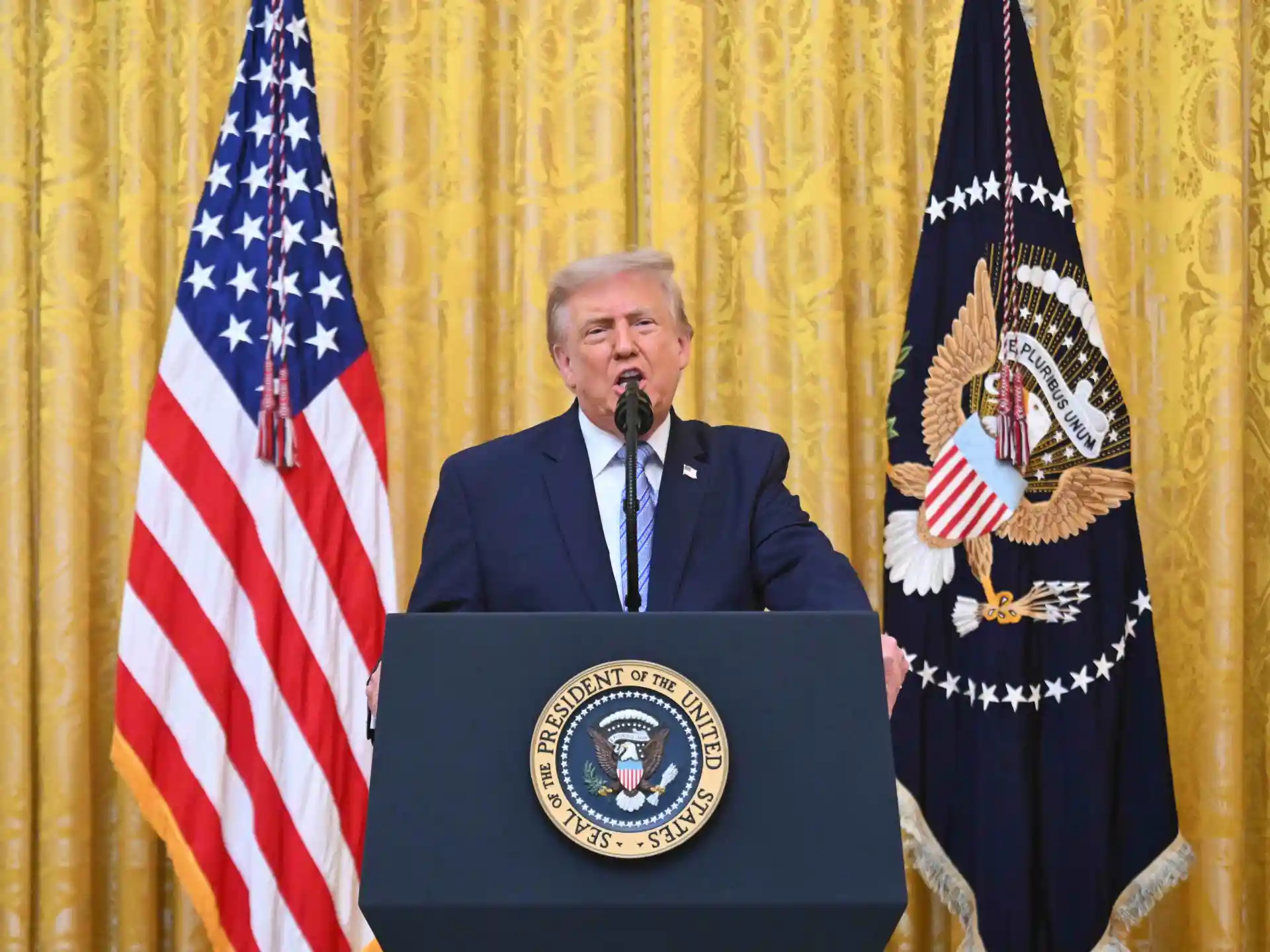
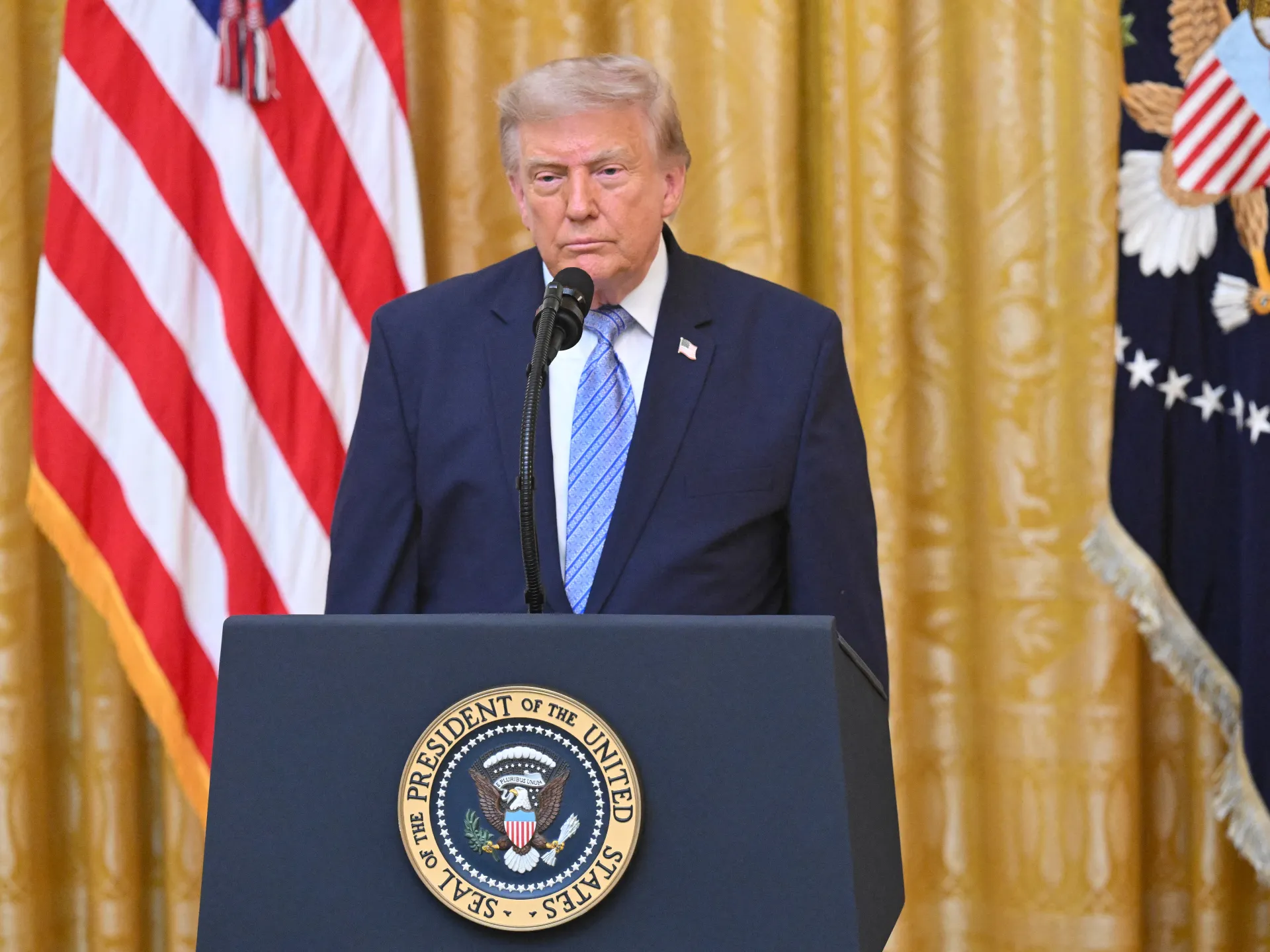
President Donald Trump delivers a prime-time address to the nation from the East Room of the White House on Thursday. Pool photo by Saul Loeb/UPI | License Photo
July 20 (UPI) — The average price of a gallon of regular grade gasoline in the United States has again reached $4 on Monday with renewed fighting in Iran.
AAA reported a 13-cent hike in the average gas price over the past week, bringing an end to declining prices. The latest surge comes on the back of the peace deal between the United States and Iran falling apart with both sides reigniting attacks.
The lowest gas prices in the United States on Monday can be found in Indiana, where a gallon of regular gasoline is $3.35. California has the highest average price per gallon at $5.49 and Washington and Hawaii are above $5 per gallon.
The average price of a gallon of gas was $2.98 before the United States and Israel launched strikes on Iran on Feb.28. Prices climbed quickly after that due to Iran effectively closing the Strait of Hormuz, a critical chokepoint in the Middle East oil trade. The average gas price in the United States topped $4.50 in May, marking a four-year high.
Brent crude oil, the international benchmark, surpassed $90 per barrel on Monday for the first time since early June. The price of Brent crude oil has climbed by 16% in the past week.
The price of a barrel of West Texas Intermediate crude oil has increased by $12 in July, hitting $82 per barrel.
Aggressions between the United States and Iran have brought the return of the U.S. naval blockade on the Strait of Hormuz. U.S. forces are again targeting any ships using Iranian ports.
U.S. economic data showed improvement beginning in June as talks of a peace agreement heated up. The White House welcomed a report from the U.S. Bureau of Labor Statistics last week that showed consumer prices falling in June.
“Prices are coming way down, and we’re doing a great job,” President Donald Trump told reporters last week. “And remember that for the midterms.”
The decline in consumer prices was largely attributed to falling gas and energy prices. Those prices were also the catalyst for prices surging over the past five months.
President Donald Trump delivers a prime-time address to the nation from the East Room of the White House on Thursday. Pool photo by Saul Loeb/UPI | License Photo
For the ninth consecutive night, the United States mounted attacks on Iran’s defence facilities and maritime capabilities into the early hours of Monday, with Tehran hitting back in tit-for-tat strikes as warning sirens blared in neighbouring Gulf countries and Jordan, home to US military bases.
Both sides have accused each other of violating the memorandum of understanding (MoU) they had signed in Islamabad, Pakistan, on June 17. US President Donald Trump has said he views the truce as over, while Iran has said it no longer intends to adhere to the MoU.
Meanwhile, the Strait of Hormuz — through which 20 percent of the world’s oil and gas passed during peacetime — is shut again, sending crude prices shooting up yet again. On Sunday, the US military said another American service member had been killed late last week, bringing the total number of deaths to 17.
So, what has changed in the last two months for the US, Iran and the Gulf countries as the MoU has unravelled in terms of economic impact, widening of military targets, and how they view the war?
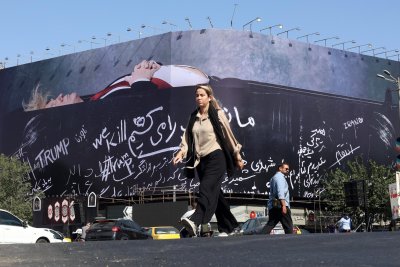
A billboard depicting US President Donald Trump lying in a coffin on a building in Tehran, Iran, July 18, 2026 [Majid Asgaripour/West Asia News Agency via Reuters]
Economy
The Strait of Hormuz — the kill switch of the global economy — has been closed down by Iranian authorities, warning that not even a drop of oil shall pass through the waterway amid US attacks and a naval blockade against Iran’s ports.
The MoU had paved a path for the reopening of the strait. And that had briefly pulled oil prices to par with pre-war levels.
The GCC
The strait is of critical importance, especially for Gulf Cooperation Council (GCC) states, which saw their economic security and energy strategy severely affected by export curbs. The war on Iran has brought about the largest disruption to global oil and liquefied natural gas (LNG) supplies in modern history.
The costs go beyond just energy revenue losses, noted Mohammad Reza Farzanegan, an economist at Germany’s Marburg University.
“The conflict also threatens the GCC countries’ diversification strategies. Tourism, aviation, logistics, construction, real estate and foreign investment all depend on perceptions of regional stability,” he told Al Jazeera. “Continued war increases insurance and transport costs and encourages investors and tourists to reconsider their exposure to the region.”
Iran
For Iran, the MoU lifted the naval blockade against Iranian ports and offered oil and banking sanctions waivers, and Tehran rushed to export tens of millions of barrels of crude oil.
The earlier US blockade had curbed Iranian exports, with Iran’s parliament speaker and chief negotiator, Mohammad Bagher Ghalibaf, telling Iranian state TV in an interview last month that “we did not export even one barrel” during the blockade.
However, as fighting resumed, the US disabled a vessel in the Strait of Hormuz, reported to be carrying Iranian crude. Tehran has also hit commercial vessels in the waterway, and the US has been bombing Iran’s coastal areas since then.
“[The renewed US naval blockade] is more damaging than conventional sanctions because the restrictions are now enforced physically,” said Farzanegan. “Iran therefore has much less room to use intermediaries, alternative flags and informal shipping arrangements to maintain oil exports.”
“The immediate consequences are lower foreign-exchange revenues, further depreciation of the rial and stronger inflationary pressure,” the economist told Al Jazeera.
Iran’s economy has been suffering from one of the world’s highest inflation rates. The rial touched nearly 1.9 million against the US dollar this week, a new all-time low. The Tehran Stock Exchange’s main index lost another 120,000 points or 2.4 percent on Saturday to stand at 4.77 million.
The US
Trump’s war has been widely unpopular in the US. The president recorded a 60 percent disapproval rating on the economy, as per the latest CNBC polling, with a net approval rating of -22, reported to be the lowest of his political career.
As per the poll, 61 percent of respondents said they are pessimistic about the state of the economy, the highest percentage since December 2023.
“The effects are most visible in energy prices and consumer purchasing power. This increases household costs and complicates the political position of President Trump and Republican candidates ahead of the November 2026 congressional elections,” said Farzanegan.
A vessel in the Strait of Hormuz, as seen from Musandam, Oman, July 16, 2026 [Reuters]
Military
The US
The US military has had 17 personnel killed in the war with Iran so far. Three of them have been killed since the resumption of the war about 10 days ago.
“We hit them very hard again tonight,” Trump said on Sunday, adding, “We did that in honour of the – probably three – it’s probably three great patriots.”
Two US personnel were killed in an Iranian attack on an airbase in Jordan on Friday, and a third is missing. Another soldier was killed last week in Iraq while defusing unexploded ordnance from an Iranian drone.
Tehran has claimed to have hit several US military facilities in Kuwait, Bahrain, and Jordan, including an aircraft at Aqaba airport.
Al Jazeera could not immediately verify the extent of damage to any facilities.
The Gulf
The renewed attacks from Iran on most Gulf countries, as well as Jordan, have forced them to deploy their interceptors. GCC countries had already used hundreds of expensive interceptors during the first phase of the US-Israel war on Iran in March and April.
But the Iranian military’s attacks have also hit civilian infrastructure in Gulf countries. The bombing of power and desalination plants in Kuwait has drawn widespread regional condemnation.
“What is happening is a severe shock to the GCC countries,” Nader Habibi, an Iranian-American economist, told Al Jazeera. “Now, after the disruptions of the past seven months, even as they have tried to avoid getting involved, the civilian population is indirectly impacted.”
Iran
The US insists that it has focused its attacks on Iran’s military infrastructure, especially on the country’s southern islands — some of which act as forward military or surveillance posts, and others that are believed to host missile bunkers.
But Tehran has accused the US of targeting civilian infrastructure as well in recent days, including bridges and tunnels, ports and dock facilities, power stations and water plants. Iranian officials have said more than 50 people have been killed and about 500 wounded in US attacks in the past three weeks.
Narrative
More than the war itself, a significant part of the messaging from the US and Iran has been over the control of the Strait of Hormuz.
The US
Washington says its renewed attacks are aimed at degrading Iranian capabilities to disrupt maritime traffic in the waterway, with Trump saying last week that “the US controls the Strait”.
Iran
Tehran has pushed back on Trump’s claim.
Farzanegan said Iran’s “ability to influence shipping through the Strait of Hormuz remains a unique source of bargaining power”. “Tehran is therefore prepared to bear considerable costs to preserve this leverage.”
He added that Iran may also calculate that extending part of the economic costs to neighbouring oil-exporting countries will encourage these governments to use their political influence in Washington and push the US towards negotiations.
“This appears to be one reason why Iran is prepared to maintain pressure in the Strait despite the considerable costs to its own economy,” the analyst added.
Aniseh Tabrizi, an associate fellow on the Middle East and North Africa Programme at think tank Chatham House in London, said the significant change since the MoU unravelled “is that there is less optimism than before about diplomacy being feasible”.
“For all the sides, it is difficult to foresee a scenario in which another deal is not only reached, but also implemented successfully,” she told Al Jazeera. “And that makes it particularly concerning for all the parties involved.”
Tabrizi noted that there appears to be “no imminent drive” from the Iranian side to sign a deal. “They are still maintaining escalatory attacks, but also reciprocating the kind of attacks that are conducted against the country,” she said.
Smoke rises from an explosion at an unknown location after a US strike on Iran in this screengrab from a video released on July 19, 2026 [Handout/US Central Command via Reuters]
The Gulf
GCC countries have continued to condemn Iran’s attacks on the regional countries, while calling for diplomacy to dial down the escalation. They have made it clear that Iran’s unilateral control over the Strait of Hormuz would not be acceptable to them.
Tabrizi added that, like the weeks before the Islamabad MoU, regional countries, especially Qatar, are still batting for talks.
If anything, Farzanegan said, the economic losses can bring all the sides to the table again for talks.
“Higher economic losses increase the incentives for negotiations,” he said. “A return to negotiations becomes more likely when both sides conclude that continued escalation cannot improve their bargaining position.”
Economist Habibi agreed that if an agreement is reached again, “it would be primarily because of the stability of the economic pressures on both sides”. However, he added that the probability of escalation in the next couple of weeks is higher than the probability of negotiation.
July 19 (UPI) — Second lady Usha Vance gave birth Sunday to her fourth child, JD Vance announced, making him the first sitting vice president in more than 150 years to welcome the birth of a child.
“We are excited to announce that our baby boy, Alec Neel Vance, was born this morning,” JD said in a statement.
“Usha and the baby are happy and healthy, and our kids are overjoyed to meet their little brother.”
The Vances have three other children: two sons, Ewan and Vivek, ages 9 and 6, respectively; and a 4-year-old daughter, Mirabel.
“The incredible military doctors and staff members of Walter Reed [National Military Medical Center] and the White House Medical Center and the White House Medical Unit have been a blessing,” JD continued.
“We are deeply thankful for all they have done for our family.”
Usha — a lawyer who resigned from Munger, Tolles & Olson on the day her husband was tapped to be Donald Trump‘s running mate in 2024 — announced her fourth pregnancy in January with a due date of late July.
With the birth, the Vances became the first vice presidential couple to welcome a child while in office since Vice President Schuyler Colfax’s wife, second lady Ellen Maria Colfax, gave birth to Schuyler Colfax III in 1870.
President Donald Trump delivers a prime-time address to the nation from the East Room of the White House on Thursday. Pool photo by Saul Loeb/UPI | License Photo
All the biggest talking points and stats from the first 45 minutes of a goalless World Cup final in New Jersey in the US.
Published On 19 Jul 202619 Jul 2026
After a star-studded tournament ceremony and the logistical delays caused by the arrival of US President Donald Trump, the World Cup final between Spain and Argentina ended in a goalless scoreline at half-time.
The match at the New York New Jersey Stadium on Sunday has been a cagey affair, with Spain enjoying greater possession and Argentina looking to make the game into a scrap.
The final kicked off six minutes late in New Jersey following a pre-match show that included singer Robbie Williams and actor Tom Cruise.
Once the football actually began, Spain looked to control the ball and force Argentina to chase the game. The South American giants were mostly restricted to their own half and looked to make it a physical battle.
Here are some of the biggest talking points from the first half.
A cagey affair in New Jersey
It all started so promisingly, with Lamine Yamal forcing a save from Emi Martinez after just five minutes. The teenager shot from a tight angle inside the box following some brilliant link-up play with Dani Olmo.
Since then, chances have been at a premium, with just three shots at goal in the entire first half, all by La Roja, with Argentina yet to register an effort.
Spain striker Mikel Oyarzabal tested Martinez on 39 minutes, but his shot from just outside the area was easily saved by the Argentine keeper. Marc Cucurella also dragged an effort wide late on.
While Spain saw more of the ball, Argentina looked to get stuck in and make it a scrappy final. So far, the defending champions’ game plan has worked.
Spain’s Rodri and Argentina’s Enzo Fernandez fight for the ball [AFP]
Referee keeps his cards in his pockets
Slovenian official Slavko Vincic declined to brandish a yellow card until the 40th minute, despite some hefty challenges in the first half.
Spain were furious when the referee didn’t penalise Alexis Mac Allister after a late challenge on Olmo just 15 minutes into the final.
The Argentine midfielder dived in, missing the ball entirely as he wiped Olmo out. The Spanish bench erupted, but the referee decided not to book the Liverpool man.
The first yellow card was eventually shown when Lisandro Martinez dragged Oyarzabal down from behind.
Lisandro Martinez fouls Mikel Oyarzabal [Jeenah Moon/Reuters]
Martinez heads off injured
Argentina suffered a late blow in the first half as key defender Lisandro Martinez was forced off with an injury.
Martinez has played a crucial role at the heart of defence for Argentina in this tournament, but they will now have to cope without him for the second half of the final.
Veteran defender Nicolas Otamendi is now tasked with keeping the likes of Yamal and Oyarzabal quiet.
What were the head-to-head stats in the first half of the Spain-Argentina final?
Spain saw a lot more of the ball and enjoyed 64.6 percent possession. They also had three shots at goal, compared to none for Argentina.
The South Americans committed two more fouls than their opponents and picked up one yellow card.
Spain have been awarded two corners so far, whilst Argentina have had none.
Iranian women hold an image of supreme leader Ayatolla Mojtaba Khamenei as Iranian officials, military commanders, families of war victims and their supporters gathered at Imam Khomeini Mosque in Tehran on Sunday. On Saturday, Khamenei called the United States “The Great Satan.” Photo by Behnam Tofighi/UPI | License Photo
July 18 (UPI) — Iran’s supreme leader, Ayatollah Mojtaba Khamenei called the United States the “Great Satan,” ramping up the war of words amid an actual war in the Persian Gulf.
“Today, the Great Satan has once again revealed its true, unmasked face, so that this dark episode of criminality and broken promises serves as yet another indisputable testament to the U.S.’s dishonesty, irrationality, unreliability, and malicious nature,” a post on X from Khamenei’s account said Saturday.
He also said, in another post: “Coercion, totalitarianism, and brutality are inseparable components of the U.S. creed and doctrine.”
On his Telegram channel, Khamenei said, “The Great Satan has once again revealed its malicious nature.
“The repeated breaches of the agreement by the Great Satan [the U.S.] regarding the memorandum of understanding (MOU) signed by the Presidents of Iran and the United States have once again laid bare a fundamental truth: the signature of the U.S. President is utterly worthless and devoid of credibility. It further reaffirms that coercion, totalitarianism, and brutality are inseparable components of the U.S. creed and doctrine,” he said.
“The Great Satan” is an epithet for the United States and was coined by supreme leader Ayatollah Ruhollah Khomeini in November 1979, one day after 66 American diplomats and civilians were taken hostage at the U.S. embassy in Tehran. Most of the hostages were held for 444 days.
Iran and the United States have increased strikes in the region for the past week. Both countries are enforcing blockades in the Strait of Hormuz: Iran is preventing ships from passing, and the United States is blocking Iranian ships and ports. The strait is a vital waterway for oil and gas transport.
As of this writing, President Donald Trump hasn’t responded on his social media channel.
President Donald Trump delivers a prime-time address to the nation from the East Room of the White House on Thursday. Pool photo by Saul Loeb/UPI | License Photo
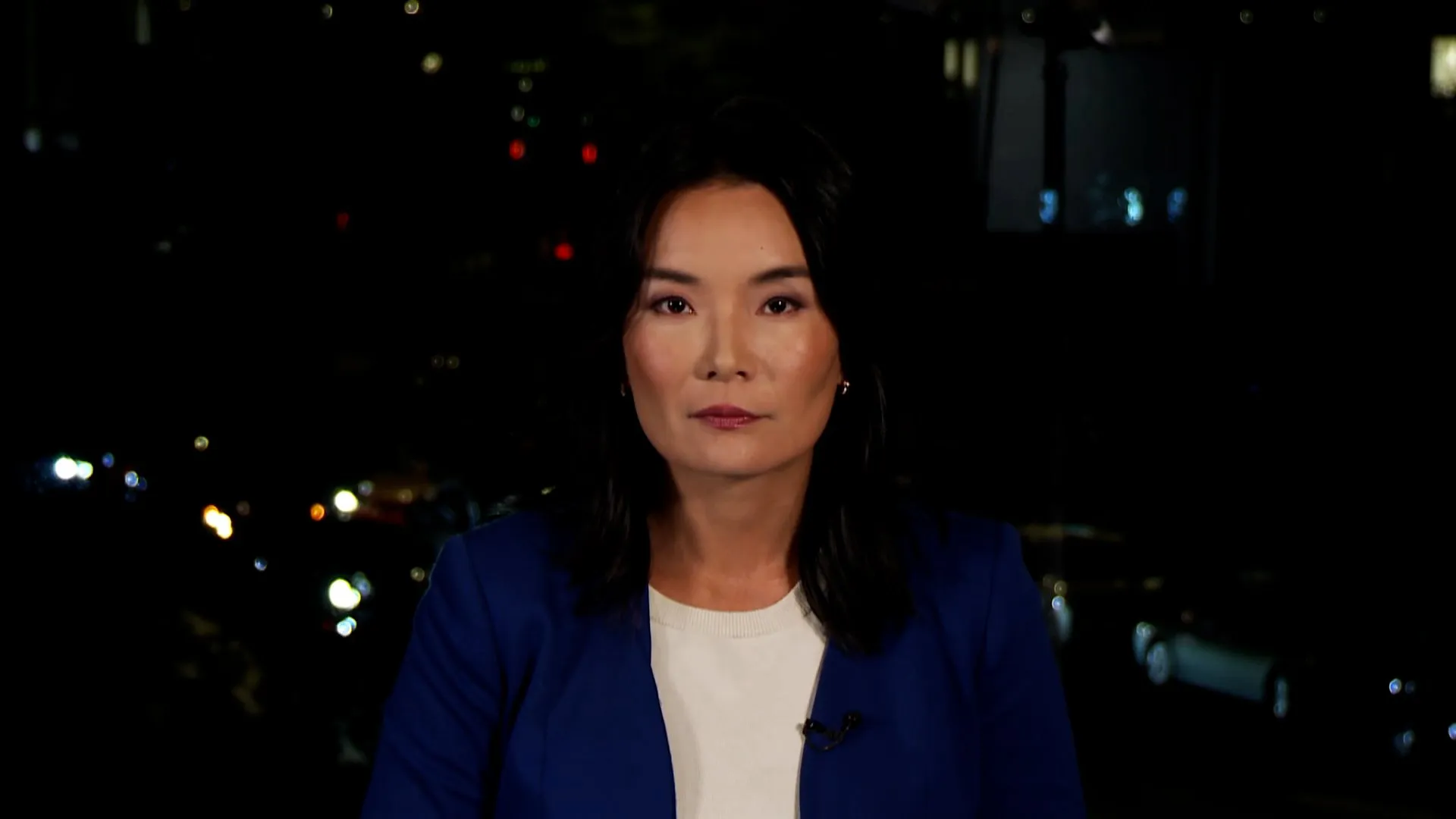
The US has launched a new wave of strikes on Iran after two American soldiers were killed by Iranian strikes in Jordan. President Donald Trump called it ‘swift punishment’, as Al Jazeera’s Heidi Zhou-Castro reports.
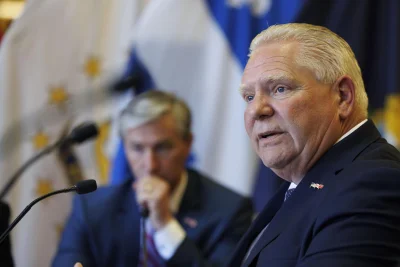
Ontario Premier Doug Ford said President Donald Trump’s comments about Canada’s efforts to control the ongoing wildfire crisis are a “shame” and “totally unacceptable.” File Photo by CJ Gunther/EPA
July 18 (UPI) — Ontario Premier Doug Ford on Saturday shot back at President Donald Trump, saying his comments about Canada’s efforts to control the ongoing wildfire crisis are a “shame” and “totally unacceptable.”
Trump threatened Friday to impose tariffs on Canadian imports and accused the country of “willful negligence” in its management of the blazes.
“I find it a shame, the administration in the U.S. and Congress people, writing these letters and blaming us,” Ford said in a press conference on Saturday. “They have a very short, short memory. We had the water bombers, everyone ready, going over to California — it was last year. We sent hydro linemen down to the Carolinas and Georgia to help out.”
Ford added, “That’s what neighbors do, right? You don’t get on and start threatening and criticizing because, guess what? One day it’s going to be your turn.”
As of Saturday, there were 959 active wildfires burning through Canada, 102 of which started in the past 24 hours, Canadian Interagency Forest Fire Centre reported.
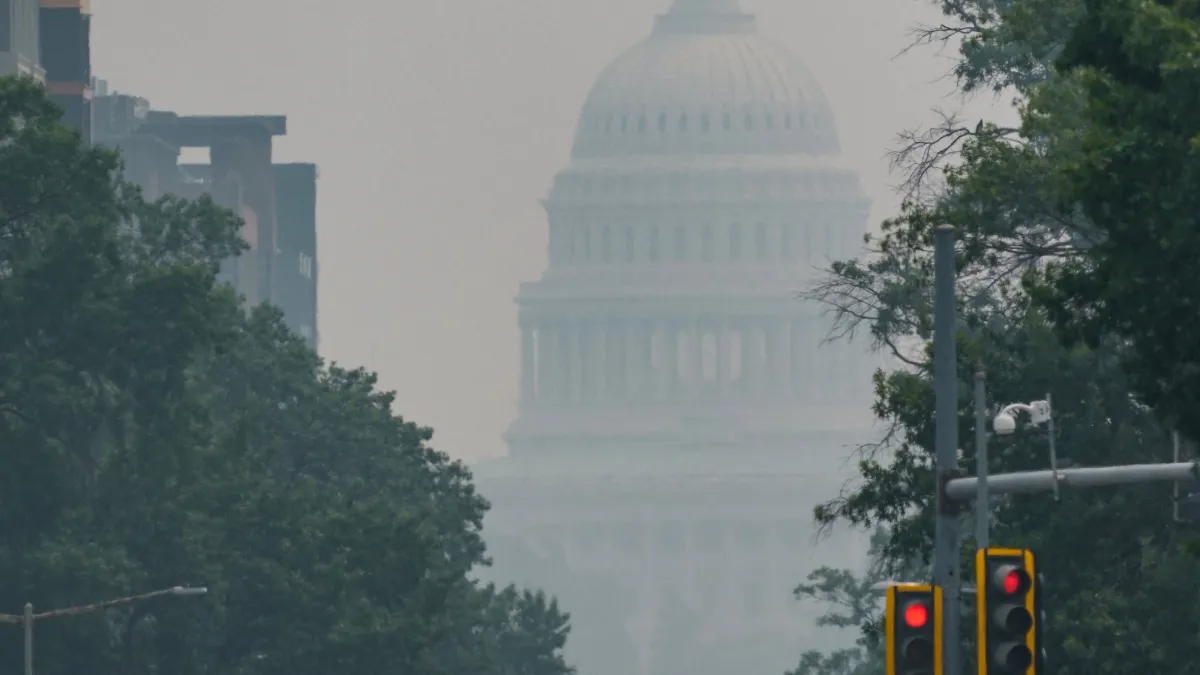
The blazes have left more than 100 million Americans under air quality alerts, from Minnesota to Virginia.
“We are holding Canada responsible for the fact that they are not properly maintaining their Forests, and Brush therein, and the United States is being unnecessarily invaded by filthy, polluted, and unhealthy air, the quality of which is dangerous, and totally unacceptable!” Trump wrote on Truth Social.
Despite the dispute, Ford said Canadians would stand at the ready should Americans need support in the future.
“We’re going to be down there without hesitation to support our neighbors, which we should be,” he added.
Mojtaba Khamenei says Trump’s signature is ‘worthless’ and that ‘bullying’ is a core element of US foreign policy.
Published On 18 Jul 202618 Jul 2026
Iran’s supreme leader has warned that the United States will suffer “unforgettable lessons” at the hands of Tehran and its regional allies, accusing the US of repeatedly violating the memorandum of understanding (MoU) between the two countries.
A written statement attributed to Mojtaba Khamenei was read out on state television on Saturday, in which the supreme leader said Washington’s breaches of last month’s MoU showed that President Donald Trump’s signature was “utterly worthless and invalid”.
Recommended Stories
list of 3 itemsend of list
“The repeated breach of agreements by the Great Satan vis-a-vis the accord has once again proven to all that the signature of the President of America is now utterly worthless and invalid, and that bullying, hegemonism and savagery are inseparable components of the American creed and doctrine,” the statement read.
“Now that the American enemy is seeking to foment war and suffer heavier costs and further humiliation, it should know that the dear nation of Iran and the Resistance Front hold unforgettable lessons for it,” it added.
The US dramatically escalated its attacks on Iran this week by targeting civilian infrastructure, including bridges, railway lines and water desalination plants.
Tehran has responded by successfully striking civilian infrastructure in Kuwait, with authorities there urging everyone to ration electricity.
The US-Israeli war on Iran, which began in February, is seen as existential by the country’s senior leadership.
Tehran has shown no sign of caving to the increasing demands from the Trump administration, as regional countries continue to push for an end to the conflict behind the scenes.
Khamenei said the US has “revealed its true face,” exposing its “deceitfulness, irrationality, unreliability and wickedness”.
He called on Iranians to trust the leadership to protect the country, urging people to remain “vigilant” and “active” as the fighting grinds on.
Reports have surfaced in recent days that the Houthis in Yemen could close the Bab al-Mandeb gateway to the Red Sea in support of their crucial ally Iran. That would further destabilise global energy markets, increase inflation and apply additional pressure on Trump to halt attacks.
The war is deeply unpopular in the US and has inflicted economic harm on Americans.
The MoU mediated by Qatar and Pakistan and signed last month aimed to create the conditions to bring the war to a permanent end.
However, Tehran and Washington have since declared the accord “over” after accusing each other of violating it.
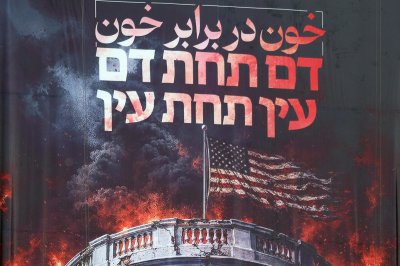
An Iranian woman walks next to a huge anti-United States billboard featuring President Donald Trump in a coffin, accompanied by a sentence in Persian that reads: “We kill Trump” displayed at the Enghelab Square in Tehran, Iran, Wednesday. Photo by Abedin Taherkenareh/EPA
July 18 (UPI) — The United States and Iran ramped up attacks on Saturday, while Israel and Lebanon did the same, as the Strait of Hormuz is still shut down.
The U.S. Central Command said in a statement on X that it targeted “surveillance sites, military logistics infrastructure, underground weapons storage and maritime capabilities. U.S. forces employed fighter aircraft, aerial drones, and warships in addition to other assets.
“CENTCOM continues to hold Iran accountable at the Commander in Chief’s direction while fully enforcing a naval blockade against Iranian ports,” it said.
Iran and the United States are enforcing blockades in the strait: Iran is preventing ships from passing, and the United States is blocking Iranian ships and ports. The strait is a vital waterway for oil and gas transport.
Iran’s state media reported Saturday that the country has suffered damage to bridges and roads in the southern part of Iran and that a water desalination plant in Jask was hit. A local official said that about 10,000 people are facing a water shortage.
Iran retaliated by hitting American allies. It heavily attacked Kuwait, including damaging a water desalination plant, vital to the desert country. Kuwait gets 90% of its drinking water from desalination. The attacks created a fire at the plant. An oil facility in Kuwait was struck, which created some injuries and “severe material losses,” Kuwait’s petroleum corporation said.
“The repeated targeting of these vital facilities reveals a systematic hostile approach targeting civilian sites and vital infrastructure that endangers the lives and safety of civilians,” the foreign ministry said.
Jordan’s army said Saturday that it had shot down 10 Iranian missiles with no casualties or damage.
“Air defense systems … intercepted 10 Iranian missiles that had entered Jordanian airspace and were targeting the Kingdom’s territory (which) were intercepted and shot down,” the army said in a statement.
Reza Amiri Moghadam, Iranian ambassador to Pakistan, said, “[The] U.S. interpreted [memorandum of understanding] contrary to its terms and gained control over parts of Strait Hormuz to obtain what it couldn’t in the battlefield,” Moghadam posted on X. “It was obvious that the Iranian side would not accept this arbitrary interpretation which blatantly violated the MOU.”
“Now, the U.S. has started a war contrary to the terms of MOU and international principles destroying the infrastructures,” he said. “The international community is expected to strongly condemn this aggressive and reckless act.”
Meanwhile, Israel has ramped up its attacks on Lebanon.
An Israeli drone hit Nabatieh, Lebanon’s state National News Agency reported. Israeli war planes also hit a neighborhood in Mansouri in the coastal Tyre district just after two more planes carried out airstrikes in a different part of Mansouri, the news agency said.
An Israeli military spokesperson said the military had attacked militants “who posed a threat” in Nabatieh but that the Israeli military was “not aware” of any Israeli attacks in Mansouri on Saturday.
Lebanese President Joseph Aoun left Saturday for Washington, D.C., to meet with President Donald Trump. He is expected to meet with U.S. officials and discuss the cease-fire with Israel and ways to boost security and stability with Israel. The meeting is scheduled for Tuesday.
Political analyst Eric Ham argues President Donald Trump’s renewed focus on election security and his push for the SAVE Act are attempts to expand federal authority over US elections ahead of November’s midterms.
July 17 (UPI) — President Donald Trump on Friday told FIFA officials they should pick the United States to host another World Cup, so long as they don’t include Canada or Mexico.
“You should choose the United States of America again,” Trump said during a FIFA World Cup reception at Trump Tower in New York, Politico reported. “This time we will leave Canada and Mexico out.”
The next World Cup, in 2030, will be co-hosted by Morocco, Portugal and Spain, followed by Saudi Arabia in 2034.
FIFA has not yet selected a host for the 2038 tournament.
Trump added FIFA should “pick somebody else for the next one and that will take some of the anger, hatred and steam out of everyone,” Politico reported.
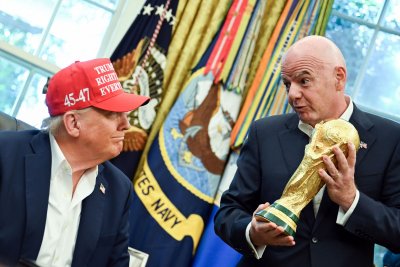
Trump has close ties to FIFA President Gianni Infantino.
The president earlier this month said he spoke with Infantino to ask for a reversal of a red card suspension to U.S. soccer star Folarin Balogun.
After Trump’s call, FIFA followed suit and allowed Balogun to play in the following match against Belgium.
“You made another great decision,” Trump told Infantino of the reversal on Friday. “You’ll never get credit for that.”
It made no difference: the U.S. soccer team was eliminated in a 4-1 loss to Belgium.
The World Cup comes to a close on Sunday. Trump said he would be present for the final match between Spain and Argentina.
United States President Donald Trump has threatened to impose additional tariffs against Canada, as a penalty for the wildfire smoke that has clouded cities across North America.
On Friday, Trump complained about the air quality on social media, as officials in Canada continue to battle 896 active blazes across the country.
Recommended Stories
list of 3 itemsend of list
Roughly 200 are burning in the province of Ontario, where Premier Doug Ford said 81 are still out of control. Trump, however, blamed the fires on Canadian governance.
“We are holding Canada responsible for the fact that they are not properly maintaining their Forests, and Brush,” Trump wrote.
“The United States is being unnecessarily invaded by filthy, polluted, and unhealthy air, the quality of which is dangerous, and totally unacceptable!”
He pledged to call Prime Minister Mark Carney, accusing the Canadian leader’s government of negligence.
“The cost is incalculable,” Trump added, saying the expense would be added to existing tariffs against Canadian exports to the US.
The post is the latest example of the US president wielding the threat of heightened tariffs to impose a wide range of demands on foreign countries.
Since returning to the White House for a second term in January 2025, Trump has ratcheted up pressure against Canada, using tariffs as a means of pressuring the country to increase border security and change trade practices he considered unfair.
Trump has also pushed Canada to cede its sovereignty and become the “51st” US state.
Scientists have attributed the proliferation of wildfires across North America to a range of factors, including hot and dry conditions worsened by climate change.
But the right-wing Trump has repeatedly blamed left-leaning and centrist politicians for mismanagement when powerful wildfires erupt.
Trump, for example, repeatedly attacked California Governor Gavin Newsom when his state was fighting wildfires around the city of Los Angeles in 2025.
He blamed the fire destruction on the state’s approach to water management and its endangered species protections.
“I will demand that this incompetent governor allow beautiful, clean, fresh water to FLOW INTO CALIFORNIA! He is the blame for this,” Trump wrote at the time, though experts say his accusations had little basis in fact.
During his first term, Trump also attacked California, saying that the state should have raked its forest floors to prevent wildfires.
“I said, you’ve got to clean your floors. You’ve got to clean your forests,” Trump told a rally in 2020.
Scientists say that multiple factors can contribute to large wildfires, including heightened heat, drought and overly repressive fire policies that prevent natural burns, resulting in overgrown landscapes.
The risk of damage is also heightened by the increasing number of people living in areas where the wildlands meet urban development.
In mid-July, Ontario saw its largest conflagration of the year so far, when several smaller fires merged in Wabakimi Provincial Park, destroying First Nations communities.
Ford, Ontario’s premier, said on Friday morning that 10 communities had been evacuated.
He thanked leaders across Canada, as well as in US states like Massachusetts and Minnesota, for providing support.
“Neighbours have each other’s backs, which is why Ontario has always been there for our American partners in their time of need,” he wrote on social media.
But Republicans, including Trump and US Representative Bill Huizenga of Michigan, have used the recent blazes to criticise Canada for its fire policy.
“Canada’s inability to mitigate, contain, and prevent its wildfires must be addressed,” Huizenga wrote on social media on Thursday. “These annual fires significantly harm not only our health and quality of life, but also our economic prosperity.”
On Friday, Trump reiterated his position that Canada’s fires could have been prevented through debris removal.
“Canada has refused to engage in basic Forest Management and Debris Removal, knowing that such refusal will lead to exactly this result,” Trump wrote.
“This is Willful Negligence, and becoming a yearly occurrence, costing the United States Billions of Dollars, which cost of this pollution must of necessity be added to the TARIFFS Canada is currently paying.”
The wildfire smoke has prompted concerns about the viability of hosting the FIFA World Cup final in New Jersey this weekend.
But the Trump administration itself has faced pushback over its wildfire preparedness.
The New York Times reported on Friday that the Trump administration had slashed funding for wildfire research, including laboratories that study the effects of wildfire smoke on human health.
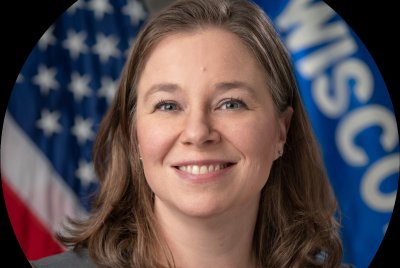
Wisconsin Lt. Gov. Sara Rodriguez on Friday dropped out of the race for governor due to issues with her campaign’s finances. Photo courtesy of Governor of Wisconsin’s office
July 17 (UPI) — One of the leading democratic contenders for Wisconsin governor on Friday quit the race due to troubling financial issues with her campaign.
Sara Rodriguez, the state’s lieutenant governor, on Monday had admitted her campaign was short hundreds of thousands of dollars because her campaign manager had double-counted donations.
“As we have continued to dig into our financial reports, it has become clear that there are issues that would be an ongoing distraction — not just for this campaign, but for the primary and for Wisconsin,” Rodriguez said in a statement Friday on X. “This race is too important to let that happen.”
Her departure leaves state Rep. Francesca Hong, a democratic socialist, and former Lt. Gov. Mandela Barnes as the frontrunners in the race.
The democratic nominee will likely face U.S. Rep. Tom Tiffany, who is endorsed by President Donald Trump, in the general election.
“Thank you to everyone who believed and showed up for this campaign,” Rodriguez wrote on X. “Let’s keep fighting — together — to protect the Wisconsin we love.”
July 17 (UPI) — The Department of Homeland Security on Friday ramped up the Trump administration’s efforts to address what the president claims are lapses in election security, threatening state officials with prison time if they don’t comply with federal demands.
DHS Secretary Markwayne Mullin told reporters in Washington he would apply “maximum pressure” against states that refuse to work with his department.
The Trump administration has focused on noncitizens allegedly casting ballots, which experts say is extremely rare, and the possibility that voting machines can be hacked — although they are, by design, never connected to the internet.
“If the election officials, once we gave them the information they need to secure their elections, and they chose not to, then those individuals can also be held accountable by fines, by penalties, and even, depending on how far it goes, prison time,” Mullin told reporters.
Mullin’s remarks come a day after President Donald Trump, in a primetime address, enumerated a series of debunked claims that the U.S. elections are rigged or have been influenced by foreign governments.
“Our elections were left vulnerable to being rigged and stolen, and the trust of the American people was lost,” Trump said Thursday. “This cannot be allowed to continue.”
Mullin said DHS has found more than 250,000 noncitizens registered to vote in four states — California, Nevada, New Jersey and Pennsylvania — and sent letters to their respective secretaries of state seeking answers.
“Before and after the election, we will scrub all election records looking for illegal aliens and those who are ineligible to vote, including those that somehow voted yet they were deceased,” Mullin said. “If you’re illegal and attempted to vote, or you tried to vote illegally for someone else, we will find you and we will charge you.”
In its letters, DHS did not accuse any of the noncitizens of having actually voted.
“We will pursue maximum pressure on this,” Mullin told reporters. “To let you know, we will be proactively looking at early voting, and then after post-election, we will continue to scrub all those that did vote.”
Al Schmidt, the Republican secretary of state in Pennsylvania, said, “All evidence has shown that noncitizen voting is extremely rare across the country,” including in his state.
“In Pennsylvania, every voter must take steps to verify their identity before they cast a ballot, including providing proper identification every time they register to vote, vote by mail, or vote at a new polling place,” Schmidt told The Hill.
In Nevada, Secretary of State Francisco Aguilar, a Democrat, said the administration’s efforts are intended to undermine elections.
“The administration lacks a fundamental understanding of how elections work,” Aguilar said in a statement. “They just want to cause chaos and doubt ahead of the midterms.”
President Donald Trump delivers a prime-time address to the nation from the East Room of the White House on Thursday. Pool photo by Saul Loeb/UPI | License Photo
Five weeks after the start of the biggest-ever football tournament, it’s almost time for the day billions across the world have waited for – the FIFA World Cup final.
Spain, the champions of Europe, face defending World Cup winners Argentina in a title clash for the ages.
Recommended Stories
list of 3 itemsend of list
For Spain, it marks the final step in their quest for a second world title, 16 years on from their maiden triumph, while Argentina are chasing history to become only the third country to lift back-to-back World Cups.
Here are the top 10 things you need to know ahead of Sunday’s final in New York, United States:
Deja vu: Messi and Yamal meet again after two decades
The moment Argentina set up the World Cup final against Spain, social media was again flooded with the now-viral photo of a young Messi bathing baby Yamal during a TV commercial. At first, many thought it was an AI-generated image, but it’s indeed real and dates back to 2007.
During a UNICEF fundraising shoot at his former club, Barcelona’s Camp Nou stadium, a 20-year-old Messi met Yamal, who was only five months old at that time and accompanied by his mother, Sheila Ebana.
Almost two decades on from that day, Messi and Yamal face each other in a clash of generations in the 2026 World Cup final.
“It is a true miracle of destiny,” the photographer Joan Monfort told BBC Sport.
This photo, taken in September 2007, shows a 20-year-old Lionel Messi, who had embarked on his legendary Barcelona career four years earlier, helping to bathe Lamine Yamal, six months, with Yamal’s mother Sheila Ebana [Joan Monfort/AP Photo]
Will Donald Trump attend the World Cup final?
Yes. The White House has said US President Donald Trump will attend Sunday’s World Cup final – his first appearance at the tournament. He will jointly present the trophy, along with FIFA President Gianni Infantino, to the winning team’s captain.
Though Trump was not at any game of the 48-team tournament, he was still involved – rather controversially. Trump personally urged Infantino to review a decision to hand a red card to US striker Folarin Balogun.
FIFA, then, broke its own rules to suspend Balogun’s one-game ban, allowing him to play in the quarterfinals, which the US lost to Belgium. The controversial decision drew criticism and once again put the spotlight on the growing influence of politics on sport.
US President Donald Trump holds up a red card as he meets with FIFA President Gianni Infantino in the Oval Office of the White House [File: Leah Millis/Reuters]
Superstitions first: Argentinian President Milei won’t attend the final
It is common practice for the heads of state of the finalist nations to attend the ultimate showdown, but Argentinian President Javier Milei won’t be travelling to New Jersey. Why? Because of superstition.
Milei has decided to watch the game on a TV from his presidential residence, just like he did for each of Argentina’s seven matches en route to the final. He will also be putting on the same heavy jacket he wears each time.
In Latin America, and particularly in Argentina, so-called “cabalas”, or ritualistic beliefs and habits, carry unusual weight, reflecting their passion for the national team.
Canadian wildfire smoke blankets New York before World Cup final
Smoke from Canadian wildfires has blanketed much of the northeastern US, triggering health alerts, but a cold front expected on the weekend will help dissipate the dangerous haze in time for Sunday’s World Cup final in the New York area.
More than 80,000 people are expected to attend the World Cup final at the open-air New York-New Jersey stadium, while another 50,000 are expected to watch the game from Central Park in Manhattan.
New York City began feeling the effects of the wildfires this week, and local authorities issued an alert, urging residents to reduce strenuous outdoor activity and take extra breaks if they are outside.
On Thursday, the air quality in New Jersey, the site of the stadium, was rated as “unhealthy for sensitive groups” by several air quality measurement platforms.
World Cup final: The most expensive US sporting event
As of Friday, the get-in price for the Spain vs Argentina final is $7,595, according to ticket-tracking service TicketData.com. The platform states a 10 percent increase in price over the last three days.
As per data from secondary ticket marketplace TickPick, the average purchase price for the final is $11,327, the highest ever recorded in US sporting history, surpassing the ticket prices for the NFL’s Super Bowl and the NBA Finals.
NFL-style half-time show
For the first time in history, a football World Cup final will feature a half-time show, inspired by the Super Bowl.
Expect fireworks to light up the New York skyline when a pop party kicks off, headlined by Madonna, Justin Bieber, Shakira, BTS, Burna Boy, Coldplay and others.
The performance is expected to last about 11 minutes, with the half-time break potentially extended to up to 30 minutes. Additionally, there will be a closing ceremony 90 minutes before kickoff, with Tom Cruise, Robbie Williams and Nicole Scherzinger expected to feature.
Colombian singer, songwriter and producer Shakira, who performed during the opening ceremony of the 2026 World Cup, will also be at the half-time show [Carl De Souza/AFP]
Record-breaking prize money
In December, FIFA announced a record World Cup prize fund of $727m – a 50 percent increase on the funds distributed at the 2022 tournament in Qatar.
Four months later, the prize money on offer was further increased, with the world governing body projected to surpass $11bn in revenue in the current four-year cycle from 2023 to 2026.
FIFA’s December announcement on prize money said the champions would take home $50m and the runners-up $33m. Additionally, each qualified nation would be entitled to $1.5m to cover preparation costs.
World Cup trophy to arrive in bespoke Louis Vuitton trunk
As was the case in the last four finals, the golden World Cup trophy – the biggest prize in football – will be transported to the venue in a bespoke Louis Vuitton trunk designed by the French luxury fashion house.
The trunk features a golden V for “Victory” – and “Vuitton” – across the front, with the brand’s recognisable monogram pattern and gold-plated brass corner protectors.
Golden Boot among awards up for grabs
Apart from the winning team earning the opportunity to lift the coveted World Cup trophy, players will also have a shot at individual glory.
As many as five official trophies, including the Golden Boot for the top scorer and Golden Ball for the best player of the tournament, will be handed out.
Messi leads the race for the Golden Boot, ahead of France’s Kylian Mbappe, who will feature in the third-place playoff a day before the final. Mbappe won the Golden Boot last year while Messi is bidding for his first such achievement.
The Golden Glove, Young Player and Fair Play are the other official awards presented by the FIFA Technical Study Group.
Argentina’s Lionel Messi celebrates with his teammates at the end of the World Cup semifinal [Rebecca Blackwell/AP]
The referee lineup
The World Cup final will be officiated by Slovenia’s Slavko Vincic, who will be assisted by his compatriots Tomasz Klancnik and Andraz Kovacic.
Jordanian duo Adham Makhadmeh and Mohammad Alkalaf will be the fourth official and reserve assistant referee, respectively.
An anti-U.S. billboard that hangs at Palestine Square in Tehran, Iran, features a sentence in Persian that reads “Blood for Blood,” on Thursday. Photo by Abedin Taherkenareh/EPA
July 17 (UPI) — Iran early Friday said it struck a U.S. special operations command center in southeastern Syria, escalating the war over the Strait of Hormuz, as the United States attacked bridges and other urban infrastructure in Iran.
The Islamic Revolutionary Guard Corps described the strike in a statement as a “surprise attack” conducted in retaliation for the seven soldiers killed early Wednesday in a U.S. attack on Bampur, near Iranshahr in southeastern Iran.
The elite military unit claimed to have destroyed a U.S. radar system and several special-operations helicopters. It claimed to have killed “a large number” of Americans.
State-run media reported Iran also attacked U.S. bases and assets in Kuwait and Bahrain in retaliation for the U.S. attacks hours earlier. Islamic Republic of Iran Broadcasting claimed the United States destroyed five bridges around Bandar Abbas near the Strait of Hormuz.
U.S. Central Command said it had completed a “major wave” of attacks on Iran at 9:40 p.m. EDT Thursday. It said it hit dozens of Iranian military targets, including coastal surveillance and air defense sites, military logistics infrastructure and maritime capabilities.
Though CENTCOM made no mention of civilian infrastructure, President Donald Trump on Tuesday warned that the U.S. military would be ramping up its attacks through the week and would include civilian targets, but explicitly stating, “Next week comes the bridges.”
While the war began in late February, with the Trump administration seeking to dismantle Iran’s nuclear weapons program and encourage regime change, this latest chapter is centered on the vital shipping lane of the Strait of Hormuz.
The Trump administration is seeking to restore freedom of navigation through the chokepoint, while Iran is fighting to maintain the leverage afforded by its ability to restrict passage.
Early Friday, the United Kingdom Maritime Trade Operations center said a tanker had been struck by an unknown projectile, causing minor damage to its port side.
“All crew are safe and accounted for,” it said.
The strike is at least the eighth attack on a commercial ship to attack in the Strait of Hormuz in a little over a week.
United States President Donald Trump has delivered an extraordinary primetime speech, alleging government “cover-ups” and “vulnerability” in the nation’s electoral system.
But experts were quick to point out that Trump failed to present any conclusive evidence that past presidential elections had been swayed by malfeasance.
Recommended Stories
list of 3 itemsend of list
In many ways, Trump’s speech on Thursday revisited any themes familiar to the Republican leader.
He made broad accusations about a “deep state” conspiracy involving his Democratic predecessors, Barack Obama and Joe Biden, and he lashed out at familiar foes, including the news media and China.
For years, Trump has spread baseless claims that his loss in the 2020 presidential election was “rigged” and “stolen”.
Trump stopped short of repeating his false claim that he had, in fact, won that race. But in his remarks, he sought to raise suspicion about the election’s outcome, pointing to declassified government documents.
Those files, however, painted a more nuanced picture than Trump portrayed, and they failed to substantiate his claims of a conspiracy.
After the speech, Democrats criticised Trump for attempting to mislead the public and reduce confidence in US electoral systems, with months to go until the November midterm election.
Here are the key takeaways from his address:
Trump claims China compromised election data
One of the biggest accusations of the night was levied against China, the US’s geopolitical rival.
“Starting during the 2020 election cycle, the People’s Republic of China carried out what is believed to be the largest compromise of election data in history,” Trump said near the outset of his speech.
He claimed that Beijing, through “illicit” means, had acquired 220 million US voter files, including names, addresses and party preferences.
“Think of that: Tens of millions of voters’ data in 18 states have been bought, stolen or hacked by China,” Trump said.
A spokesperson for China’s embassy denied such claims, saying the country “has never and will never interfere in the presidential elections of the US”.
Trump, however, did not say that the information had been used to influence any election.
But critics pointed out that such voter information is already publicly available. Some states even sell that public data, for prices ranging from $0 to $37,000, as the US Election Assistance Commission explained in a 2020 report.
The documents declassified by the White House also appeared to indicate Beijing was, at least in part, drawing from publicly available data. It did, however, express curiosity at China’s increasing interest in such information.
“While the PRC [People’s Republic of China] government has historically demonstrated interest in US elections, this is a newly-identified interest for this individual actor,” a heavily redacted assessment said.
“The US voter registration information is available for public download, with 2021 voter registration information available for some states.”
Trump claims a ‘deep state’ cover-up, vows retribution
In Thursday’s speech, Trump returned to a conspiracy theory that helped define his first successful bid for public office in 2016: that so-called “deep state” actors had sought to undermine his presidency.
He claimed there was a “shadow government” with “rogue bureaucrats” who attempted to cover up Chinese efforts to influence the 2020 vote.
They even sought to suppress information from his daily presidential brief, Trump alleged.
“ These were briefings I would get almost every day. Everything was kept out that was of importance,” he said.
Experts, however, have noted that presidential briefs are usually heavily curated to contain intelligence perceived to be of high importance.
An intelligence community report compiled in January 2021 assessed with “high confidence” that China had considered launching an influence campaign in 2020 — but that it eventually decided against it.
The report was declassified in March 2021. It contained a minority opinion that indicated China “took at least some steps” to undermine Trump’s re-election chances “primarily through social media and official public statements and media”.
The publication of the report would appear to contradict Trump’s claims of a “cover-up”.
Still, in his speech, Trump said he had instructed his top law enforcement officials to “fire those involved in the cover-up and to file criminal charges, if appropriate, against these people”.
Trump says public ‘blatantly lied to’ about election security
Critics had warned that Trump could use Thursday’s speech to undermine confidence in US elections by spreading falsehoods.
Some television news outlets, including ABC, NBC and CNN, even opted not to air the speech in full on their main broadcast channels.
The timing of the speech is significant, as it comes less four months ahead of the midterm elections, which decide control of Congress.
Trump did indeed spend part of his speech voicing allegations that American voters had been deceived by the same “deep state” actors he accused of targeting him.
“For many years, Americans were blatantly lied to about the security of our election infrastructure, including voting machines and ballot counting systems,” Trump said.
“They’re vulnerable, and they’re easily compromised, and people within our government knew that.”
But the declassified documents released by the White House did not appear to contain any major revelations about such claims. Potential vulnerabilities have long been known, and local and federal officials have sought to address them.
The fact that elections are administered on the state and local level has also been cited as a barrier against any widespread tampering.
Given the decentralised nature of US election administration, the US intelligence community has long assessed that large-scale voting manipulation would be all but impossible.
After Trump’s speech, Democrats dismissed Trump’s remarks as distortions designed to disincentivise voters from participating in elections.
“President Donald Trump continues to lie, distort the truth to try to sow doubt and suppress the 2026 election,” US Representative Jason Crow said in a video statement. “He doesn’t want Americans to vote. He doesn’t want their voice to be heard.”
Trump rehashes Michigan investigation
Trump made a gesture at unity in Thursday’s speech, arguing that election security should not be a “partisan issue”.
“It should cause to unite us, not to divide us,” he said at one point.
But the Republican leader fired off dubious claims against targets big and small.
He called for broadcasters that did not air his speech to lose their licenses. He berated California as “worse than any third world country”. And he rehashed a incident in the swing state of Michigan that took place well before the 2020 election.
The case involved allegations of fake voter registration forms. But the forms were not processed and did not have any bearing on that year’s election; they were flagged months before the vote took place.
The state Attorney General’s Office probed the incident, as did the Federal Bureau of Investigation.
Neither found evidence that fraud had been successfully committed. It is believed that the forms were not part of an election scam but rather an attempt to meet workplace quotas.
Still, Trump portrayed the incident as a significant breach in Thursday’s speech.
“It was pay, play, and cheat,” he alleged, proceeding to blame former President Biden for failing to pursue the case. “The Biden Department of Justice slow-walked the investigation and killed it.”
He added that he had instructed the FBI to re-open its investigation, although the declassified documents the White House released did not appear to provide new evidence in the case.
Speech sought to cast doubt, but contained few revelations
Trump’s speech had been hyped as a major moment in the president’s second term.
On Tuesday, when the primetime address was first announced, Trump said it would contain “really big news”. His press secretary, Karoline Leavitt, warned reporters earlier in the day that the speech would “shock”.
But Democrats and election experts have argued that the speech was underwhelming — and would mostly serve to fire up Trump’s Republican base.
Indeed, Trump opened his remarks on Thursday with a resume of his second-term accomplishments, from border security to efforts to combat crime.
And he closed his speech with an appeal to pass the SAVE America Act, a piece of legislation he has repeatedly championed to heighten voter requirements.
The bill would increase voter identification standards, requiring proof of citizenship in the form of documents like birth certificates and passports that some US citizens may not have.
Rights groups have argued the requirements could disenfranchise some citizens.
Speaking to Al Jazeera, political analyst Eric Ham said the speech was yet another push in Trump’s effort to bring elections under federal control.
“This is something that the president has had an ambition of doing for quite some time, and I think what we saw tonight was another shot across the bow at trying to fundamentally change elections,” Ham said.
Hakeem Jeffries, the top Democrat in the House of Representatives, also decried the speech as a distraction from Trump’s political woes ahead of the midterms.
“Donald Trump is a feeble, unhinged conspiracy-peddling 80-year old failed President,” Jeffries wrote on social media. “The economy is a disaster under this guy and the American people know it.”
July 16 (UPI) — President Donald Trump on Thursday made sweeping, largely unsupported claims of widespread problems with U.S. elections, many of which have been debunked or overstated, as he called on Congress to pass legislation he says would protect the electoral system but critics describe as voter suppression.
During his roughly 25-minute prime-time speech to the nation, Trump attempted to make his case for measures needed to address the alleged vulnerabilities, stating, “Our elections were left vulnerable to being rigged and stolen, and the trust of the American people was lost.”
“This cannot be allowed to continue,” he said.
The speech was delivered only months before November’s midterm elections, on which Trump has increasing focused, having repeatedly warned that if Republicans lose their slim majority in the House to Democrats, impeachment proceedings and investigations will follow.
Democrats and other critics have accused the president of attempting to sow confusion and distrust ahead of the midterms while pushing the election SAVE American Act, which would require photo identification to vote, documentary proof of citizenship to register and restrict mail voting to certain eligible groups. Opponents say those requirements would disproportionately burden Black and other minority voters and prevent some otherwise eligible citizens from voting.
It was a Capitol Hill mystery. For nearly a month, United States Senator Mitch McConnell was not seen or heard from in public.
Little was known about the 84-year-old’s condition, other than that he was hospitalised on June 14. Conspiracy theories began to bubble online. One prominent right-wing influencer, Laura Loomer, even spread rumours that the Republican leader was brain-dead.
Recommended Stories
list of 3 itemsend of list
But after weeks of silence, McConnell confirmed on Sunday that he was on the mend after suffering a fall.
Still, the Kentucky Republican has increasingly appeared frail on Capitol Hill, freezing in front of cameras and walking unsteadily when not in a wheelchair.
Members of Congress are typically on the older side. The average age for a US senator is around 65.
McConnell’s poor health — and the sudden passing of his Senate colleague Lindsey Graham, 71, on Sunday — have reignited the question: What would happen if McConnell were unable to serve the remainder of his term?
The answer is the subject of intense scrutiny, as Republicans seek to preserve their majority in the Senate.
Who is Mitch McConnell?
A seven-term senator from Kentucky, McConnell is the longest-serving party leader in the history of the Senate.
He first entered the Senate in 1985, and in 2007, he became the head of the Republican Party in the chamber, a position he held until 2025.
He continues to serve as a senator, though he is not seeking re-election in November’s midterm elections. His term ends in January.
What is wrong with McConnell’s health?
On Sunday, McConnell said in a statement that a fall on June 14 rendered him “briefly unconscious” and landed him in the hospital. The senator also said he had dealt with a mild case of pneumonia.
But McConnell has long struggled with health and mobility challenges. As a toddler, he survived a severe bout of polio, though it left one of his legs partially paralysed.
McConnell indicated his condition was improving, but that he would not return to the Senate yet.
“With signs of continued progress, I’ve been able to move from hospital care to a rehabilitation center where I’ll keep regaining my strength,” he wrote.
His statement was accompanied by a smiling photo of the senator in a hospital bed, with what appeared to be a copy of Sunday’s Washington Post newspaper.
Senator Mitch McConnell released this photo of himself and his wife, Elaine Chao, on July 12, amid questions about his health [Handout: Office of Senator Mitch McConnell via Reuters]
Has McConnell been hospitalised before?
This is not the first time the senior senator’s health has been a source of concern in recent years.
As recently as February, the veteran lawmaker was hospitalised for flu-like symptoms.
Also, in 2019, McConnell tripped and fell in his Louisville home, fracturing his shoulder.
According to reporting from the Louisville Courier Journal, he also collapsed three times in 2023, suffering a concussion and a broken rib that ultimately led to him using a wheelchair.
It was during that period that McConnell had several instances where he inexplicably appeared to freeze while speaking in public, prompting questions about his fitness to serve.
Why does his presence in the Senate matter?
Republicans have a controlling majority in the Senate — but only by a few seats.
With McConnell absent, the number of Republicans available to vote shrinks from 53 to 52 in the 100-seat Senate.
That could influence the outcome of divisive bills, when every Republican vote matters.
McConnell’s absence has already helped Democrats pass a resolution against President Donald Trump’s war on Iran, with four Republicans crossing party lines to vote for it.
McConnell also sits on the all-important Senate Appropriations Committee, which helps decide discretionary government spending.
The US government has a looming funding deadline on September 30, and McConnell’s continued hospitalisation could muddle efforts to pass funding measures.
Senator Mitch McConnell leans on a colleague’s arm as he walks through the US Capitol on January 15 [Allison Robbert/AP Photo]
What does McConnell’s absence reveal about Republican Party unity?
The Republican majority in the Senate has weakened over time, according to Stephen Voss, a political science professor at the University of Kentucky.
Moderates like Susan Collins and Lisa Murkowski — alongside wild cards like Rand Paul — have shown willingness in the past to join with Democrats during critical votes.
But that small proportion of “swing” Republicans has grown during the midterm primary season.
A number of lame-duck Republicans have lost their re-election bids to party rivals, backed by President Trump. That makes them more willing to buck their party leadership from time to time.
“McConnell’s absence could become inconvenient depending on what sort of policy battles we see in coming months,” said Voss.
What has been the reaction to McConnell’s absence?
News of McConnell’s hospitalisation sent alarm rippling through the US political sphere.
Republican leaders attempted to reassure the public that the senator would soon return to his post. But as the weeks stretched on, questions about McConnell’s condition mounted.
Ultimately, on July 8, Kentucky Governor Andy Beshear sent a letter to McConnell’s office, requesting an update on the senator’s health status.
Beshear has since called McConnell’s written statement on Sunday a “step in the right direction”, but he continues to push for more transparency, suggesting the Republican senator release a video update instead.
Some critics have called on McConnell to step down altogether, questioning his fitness for office. They include Democrat Charles Booker, who is running to succeed McConnell in the midterm elections.
Tres Watson, a Republican strategist and host of the Kentucky Politics Weekly podcast, sees no reason to doubt McConnell’s ability to serve, despite the recent health scares.
“I’ve been around the senator several times in the last year. His brain is functioning fine, his wit is there, his intellect is there, but the body is failing him, and he made the understandable decision not to run for another term,” Watson said.
Kentucky Governor Andy Beshear has pressed Mitch McConnell for a health update [File: Charlie Neibergall/AP Photo]
What happens if Mitch McConnell is unable to serve the rest of his term?
If McConnell were to vacate his senate seat before his term ends, it may be tempting for Democrats to think Beshear, the Democratic governor of Kentucky, could appoint someone from his own party.
That’s not the case, however, because of a recent change in state law. Kentucky is now one of four US states where the governor does not have authority to fill Senate vacancies.
In 2024, Kentucky’s Republican-controlled legislature passed a law requiring Senate vacancies to be filled by a special election, which must be called by the governor.
But experts say holding a special election this year would be fraught with challenges, one of which is timing.
The new law says the governor must give 63 days’ notice before the special election. Senate hopefuls would have to file their candidacy no later than 56 days prior to the vote.
Even if McConnell’s Senate seat were vacated immediately, the earliest a special election could occur is September.
But experts say that cobbling together a special election would not make sense, since November’s midterm elections are barely three and a half months away. McConnell’s Senate seat is up for grabs in that race.
“Setting up the process would take time, so we wouldn’t get a senator in office very quickly, even if this process kicked off soon,” said Voss, the political science professor. “The probability that we’d get a replacement ahead of time is pretty low.”
Watson, the Republican strategist, agrees. He questions the efficiency of rushing to hold a special election, when the midterms are on November 3.
“We’re getting pretty close to Election Day,” Watson said. “They’re not going to put the commonwealth through the expense of having another special election just so someone could be a US senator for effectively one month.”
Representative Andy Barr is running as the Republican nominee to succeed Mitch McConnell in November’s midterm elections [File: Jon Cherry/AP Photo]
Could there be challenges to filling McConnell’s seat?
Yes, a significant challenge could be litigation. Kentucky’s 2024 law is largely untested, and it would almost certainly attract legal challenges.
“I think there’s a decent chance the issue could end up in the courts,” said Joshua Douglas, a University of Kentucky law professor who teaches election law.
Douglas believes there may be a contradiction between the new law and parts of the Kentucky Constitution.
“The 17th Amendment says the legislature may authorise the governor to appoint a temporary replacement, Section 152 of the Kentucky Constitution says the governor appoints one, and the Kentucky legislature now says there must be a special election after the new law,” Douglas said.
Voss explained that the legal challenges could delay any special election to fill McConnell’s seat.
“This is the sort of thing that lawyers know how to tie up in litigation,” Voss said. “There would be people involved who know how to slow walk the process.”
Kentucky Democrat Charles Booker is racing against Republican Andy Barr in November for Mitch McConnell’s open Senate seat [File: Timothy D Easley/AP Photo]
Why can’t the governor pick McConnell’s replacement?
The 2024 law stripped the governor’s authority to select a temporary replacement for a US Senate seat.
Governor Beshear vetoed the bill, but the state legislature, which has a Republican supermajority, overrode his opposition.
The measure is part of a broader strategy of Republican lawmakers to shift powers away from the governor since Beshear’s election in 2019.
“We’ve seen an overall attempt by the Kentucky General Assembly to shift power from the executive to the legislative branch,” Voss said.
But the 2024 law was not the legislature’s first attempt at limiting the governor’s ability to fill Senate vacancies.
Initially, in 2021, Republican lawmakers passed a bill that required the governor to choose a temporary replacement from a list of three provided by the executive committee of the former senator’s party. After filling the vacancy, a special election would be held.
According to Watson, Republicans passed a new version because they were concerned about legal challenges to the 2021 law.
Republicans in the state argue that the 2024 update is more democratic and aligns with the process for filling other vacancies.
Beshear is the only Democrat to hold a statewide office in Kentucky. The state has not elected a Democrat to the US Senate since 1992.
Who is running to replace McConnell in the midterms?
In the general election, Democrat Charles Booker, a former state legislator, is running against Republican Representative Andy Barr to succeed McConnell.
United States Secretary of State Marco Rubio is hosting more than 65 countries for a conference focused on political violence from the far left, a designation that a number of critics say is being used to target legitimate opposition.
The “Ministerial on the Resurgence of Political Terrorism”, taking place on Thursday, brings together government representatives from around the world to coordinate on what the US Department of State calls a “renewed threat” that has “remained a blind spot in the international community’s counterterrorism focus”.
Critics, including the American Civil Liberties Union, told the Reuters news agency that “the far-left terrorism designations could be used to target lawful protest activity and political opponents rather than genuine security threats.”
Here’s what’s driving the summit and who’s attending:
What is this summit about?
The Trump administration’s 2026 counterterrorism strategy identifies three primary threats: “Islamist terrorism”, “narco-terrorism”, and “violent left-wing extremists, including Anarchists and Anti-Fascists”.
The strategy states that the third category of left-wing “extremists” has been traditionally ignored, and notes that Charlie Kirk’s assassination in September 2025 was executed “by a radical who espoused extreme transgender ideologies”.
The counterterrorism strategy omits right-wing extremism and white supremacist groups, despite growing instances of violence that some of these outfits have been accused of – including several of those who attacked the Capitol on January 6, 2020, in an attempt to overturn the US presidential election that Donald Trump lost.
Thomas Renard, director of The Hague-based International Centre for Counter-Terrorism, said the summit reflects a fundamental shift in how the US sees the threat.
“What we are seeing now in the United States is that counterterrorism has been completely politicised, instrumentalised,” he told Al Jazeera. “For instance, the threat from far-right terrorism, which was for decades considered as the primary domestic threat, has now completely disappeared from the US counterterrorism strategy.”
Who has been invited?
Invites went to more than 70 countries as the State Department wrote on social media that countries had shown “overwhelming interest”. It is reported that Israel’s Foreign Minister Gideon Saar will be present alongside representatives from multiple countries. The stated aim is to “expand coordination, enhance information sharing, and strengthen international law enforcement mechanisms”.
The summit follows a series of smaller meetings held earlier this year, including one in The Hague with law enforcement officials.
Renard says many European nations are expressing their unease with this ministerial meeting by sending relatively junior ministers.
“They are not particularly convinced that this is a topic that justifies this type of gathering, but at the same time, they don’t want to antagonise the United States either. And therefore, this is the compromise they found,” he said.
In November, 2025, the US designated four European groups as terrorist organisations: The German Antifa Ost, the Italian Informal Anarchist Federation/International Revolutionary Front (FAI/FRI), the Greek Armed Proletarian Justice and the Greek Revolutionary Class Self-Defense.
What is “far-left terrorism”?
The term is usually used by governments to describe movements accused of violence and driven by left-wing ideologies, including Marxism, socialism, or anarchism. Such movements usually describe themselves as anti-capitalist and anti-imperialist.
Latin America saw several left-wing armed movements during the Cold War, a number of which carried out sustained campaigns of political violence, such as Colombia’s Revolutionary Armed Forces of Colombia (FARC), the Farabundo Marti National Liberation Front (FMNL) in El Salvador and the Tupamaros in Uruguay. Throughout the 20th century, Washington repeatedly backed hardline right-wing regimes that opposed left-wing movements across Latin America.
India has been dealing with the Naxalite rebellion, a far-left Maoist movement that started in the 1960s and claims to fight for the rural population. The group is seen as one of India’s most serious internal security threats. At its peak, about the year 2000, thousands of people were killed due to the conflict with the Naxalite rebellion.
During the 1970s and 1980s, Marxist groups like the Red Army Faction in West Germany were behind several assassinations, abductions and bombings that they argued were aimed at weakening the capitalist state.
By contrast, the Antifa movement, which the Trump administration has consistently tried to portray as a major violent threat, is a loose, decentralised collection of socialist-leaning individuals opposed to far-right extremism, white supremacy and authoritarianism. Several individuals described by prosecutors as Antifa members have been indicted on accusations of violence in US courts, especially in states like Texas that are ruled by Trump’s Republican Party, since he returned to power. In June, eight such individuals were sentenced to several years in prison: Benjamin Hanil Song, convicted of the attempted murder of a law enforcement officer, was sentenced to 100 years in prison.
Far-right political violence and terrorism in the US
But the same Trump administration has pardoned all those charged with violence during the January 6, 2023 insurrection, including individuals accused of beating police officers.
This week’s summit also specifically focuses on far-left political violence but does not include the threat from far-right ideology and terrorism, similar to the counterterrorism strategy.
This, even though the Oklahoma bombing, which killed 168 people and wounded nearly 700 in the deadliest act of domestic terrorism in the US, was carried out by the right-wing hardliner Timothy McVeigh.
The Cato Institute, a US think tank in Washington, DC, stated in February that of politically motivated terrorism on US soil between 1975 and 2025, excluding the Oklahoma bombing and 9/11, “right-wing terrorists account for 45 percent of people murdered, Islamists are responsible for 32 percent, left-wing terrorists are responsible for 16 percent.”
Renard says the summit creates the very problem it claims to solve: “The United States, with this summit and with its strategy, is creating, actually, a blind spot about far-right terrorist threats, as that threat is strongly anchored and rooted in the United States.”
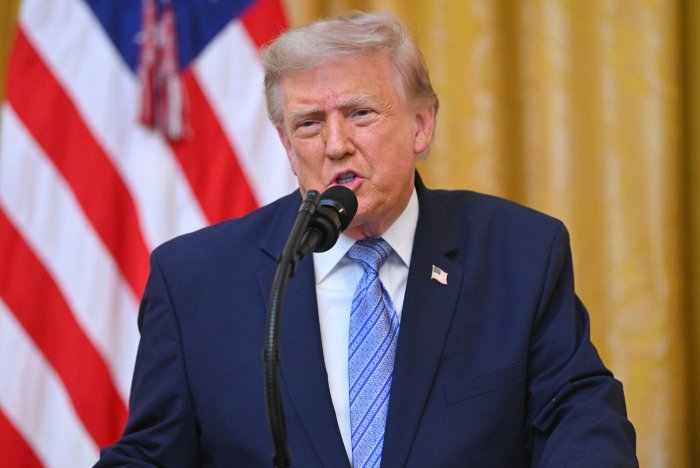

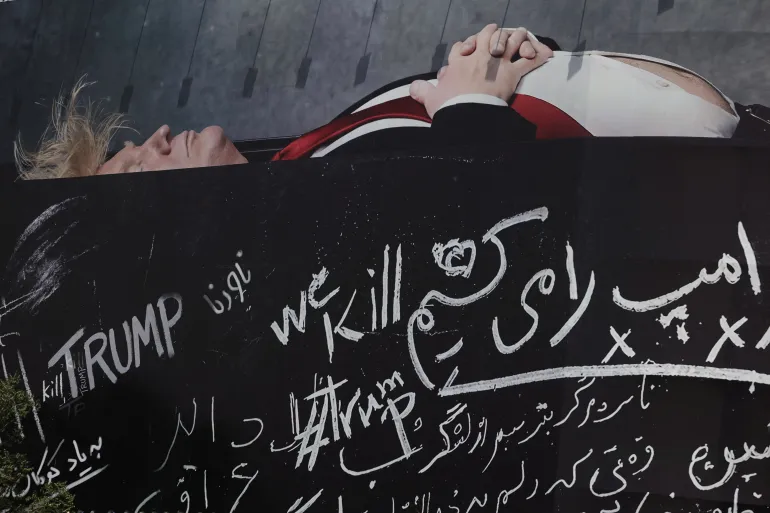

![A vessel in the Strait of Hormuz, as seen from Musandam, Oman, July 16, 2026 [Reuters]](https://i0.wp.com/occasionaldigest.com/wp-content/uploads/2026/07/2026-07-16T062529Z_1977252053_RC2QEMAIXJ4I_RTRMADP_3_IRAN-CRISIS-OMAN-HORMUZ-1784543675.jpg?w=640&ssl=1)