diesel

Bipartisan group of senators calls for Trump to reverse its Russian diesel plan

A bipartisan group of six senators — four of them Republicans — called Sunday for the Trump administration to “immediately reverse course” on a plan to purchase diesel from Russia as part of an effort to lower high fuel prices.

President Trump shocked lawmakers when he announced on social media Friday that he had struck a deal with Russian President Vladimir Putin in a phone call. He said Russia will immediately supply more than 300,000 tons of diesel to the American and global market, followed by an additional 500,000 tons in November and 1 million tons “immediately thereafter.” Russia will deliver an additional 3 million tons “within a short period of time” after that, he wrote.

Four Republican senators and two Democratic senators signed onto the statement released Sunday protesting the deal. They said the administration failed to consult with Congress or submit any explanation to justify its decision as required by statute.

“The United States should not provide Putin with a financial lifeline while Russia continues to kill Ukrainian civilians. The Administration must immediately reverse course,” they wrote.

The Republican senators who signed onto the statement are Sens. Susan Collins of Maine, Lisa Murkowski of Alaska, Thom Tillis of North Carolina and John Curtis of Utah. The Democratic senators are Sens. Jeanne Shaheen of New Hampshire and Richard Blumenthal of Connecticut.

Tillis, in an interview that aired Sunday on NBC’s “Meet the Press,” said there’s a legitimate case for saying the president is not following the law if the administration goes through with its diesel purchase plan.

“We were very clear that Russia is the aggressor. Russia is the one who can end this war by backing out of territory that they occupied,” Tillis said.

Trump’s announcement came just a few weeks after Congress passed legislation that directed Trump to impose substantial tariffs on the top importers of Russian oil or natural gas, with an exception for countries that import less than 15% of Russia’s natural gas exports and have taken significant steps to reduce those imports.

The congressional effort was aimed at cutting the flow of money Russia receives from oil and gas sales to finance its war against Ukraine.

The lawmakers also noted that Congress explicitly banned Russia energy imports in 2022 — after Russia’s full-scale invasion of Ukraine — to prevent the United States from financing the war.

“Congress was clear: the U.S. should not import oil from Russia until it ends its aggression against Ukraine and ceases threats against our NATO Allies,” the six lawmakers wrote in their statement. “President Trump’s decision to allow Russian diesel imports to the U.S. runs directly counter to that law.”

Sen. John Barrasso (R-Wyo.), when asked whether the president’s action would be in violation of U.S. law, said Trump is focused on reducing the cost of energy.

“The president is balancing and has to make tough decisions,” Barrasso said on CBS’ “Face the Nation.”

He also encouraged Trump to enforce the sanctions law that Congress passed last month.

“This is just another point of leverage for the president to use against Putin in an effort to get a long-term solution in that part of the world,” Barrasso said.

Trump has recently sought to blame record U.S. diesel prices on Ukraine rather than the U.S.-led war in Iran, which has elevated world energy prices.

Freking writes for the Associated Press.

Source link

Trump strikes deal with Putin for Russian diesel

Michelle L. Price and Collin Binkley

President Trump said that he has struck a deal to obtain diesel from Russia, a stunning reversal of years of U.S. pressure on Moscow over its war with Ukraine and an attempt to address high fuel prices ahead of the U.S. midterm elections.

Trump said on social media on Friday that he struck the deal with Russian President Vladimir Putin in a phone call in which he was expected to discuss a suspected case of plague in Russia. Instead, Trump announced that Russia will immediately supply more than 300,000 tons of diesel, followed by an additional 500,000 tons in November and 1 million tons “immediately thereafter.” Russia will deliver another 3 million tons “within a short period of time” after that, he wrote.

Trump’s shocking announcement comes after he signed a sweeping Russia sanctions law last month that aimed at clamping down on Russia’s energy economy, among other areas, that fuel its war against Ukraine.

His move casts doubt on the likelihood of the White House imposing sanctions on Russia this month, given that a bipartisan law passed by Congress directs the administration to target the top importers of Russian oil and gas.

Trump, in his announcement, did not address the sanctions or Russia’s war but said, “Lower prices for Americans, especially our Great Farmers, Ranchers, and Truckers, is my Greatest Priority.”

The White House did not immediately respond to questions about who was paying for the diesel from Russia and when the fuel being supplied under the agreement would become available. It also did not clarify whether subsequent supplies of Russian diesel set to come next month would be supplied prior to Election Day on Nov. 3.

Gas prices globally have surged as the war in Iran upends the energy sector. The national average for a gallon of diesel in the U.S. was $6.23 on Friday, according to AAA, after hitting a record $6.52 on Sept. 22.

Russian presidential envoy Kirill Dmitriev reposted the Treasury Department’s announcement on X Friday and said that “Russia-US cooperation on diesel and energy will benefit the world.”

Rep. Don Beyer, the senior House Democrat on the Joint Economic Committee, called Trump’s announcement, “infuriating.”

“This is what we warned anyone who would listen: Trump isn’t the slightest bit trustworthy when it comes to Russia,” Beyer said in a statement on X. “Giving him expanded tariff powers in hopes he would use them to help Ukraine was a mistake. Now he’s lifting sanctions on Russian fossil fuels.”

The law Trump signed last month envisions sanctions on Russian officials, banks and a shadow fleet of tankers and bans all new U.S. investment in Russia and the handling of sovereign debt.

It also directed Trump to impose tariffs of up to 100% on the top five importers of Russian oil or natural gas, with an exception for countries that import less than 15% of Russia’s natural gas exports and have taken significant steps to reduce those imports.

The U.S. has not imported Russian oil or gas since 2022, when the Biden administration banned them because of Moscow’s invasion of Ukraine, according to the U.S. Energy Information Administration.

Shortly after Trump made the announcement, the Treasury Department said it was immediately issuing a temporary license allowing Russian diesel to be supplied to the global market.

This is the latest in several licenses the U.S. Treasury has issued regarding Russian fuel shipments since the start of the Iran war earlier this year. But it is the first such license to ease sanctions on diesel for a period lasting longer than the standard 30-day window since the start of the Ukraine war.

The new so-called general license means U.S. sanctions will not apply until April 2027 on deliveries of Russian diesel that has been loaded onto tankers as of Friday. The department extended similar easing of sanctions in March and April even though Treasury Secretary Scott Bessent had ruled out such a move earlier in the year.

The extensions continue to underscore how the fallout from the Iran war has boosted Moscow’s ability to profit from its energy exports, which had been restrained by the U.S. and other allies since the invasion of Ukraine.

Price and Binkley write for the Associated Press. AP writer Will Weissert in Washington and Farnoush Amiri in New York contributed to this report.

Source link

Trump announces Russian diesel deal amid soaring US fuel prices | Oil and Gas News

Russia to supply 300,000 tonnes of diesel immediately, followed by 1.5 million more, as prices soar amid the Iran war.

United States President Donald Trump said that Russia has agreed to supply 300,000 tonnes of diesel fuel to global markets amid discussions with Russian President Vladimir Putin.

“I have just concluded a highly successful discussion with President Vladimir Putin, of Russia, wherein it was agreed that Russia will immediately supply over 300,000 Tons of Diesel Fuel to the American and Global Marketplace, another 500,000 Tons during the month of November, and 1,000,000 Tons immediately thereafter,” Trump said in a post on his Truth Social platform.

Recommended Stories

list of 4 itemsend of list

The president added that Russia would deliver an additional 3 million tonnes of fuel “within a short period of time”. He said that the country would supply 500,000 tonnes in November.

An envoy for Russian President Vladimir Putin, Kirill Dmitriev, praised cooperation between Russia and the United States on diesel and energy in a post on X shortly after.

“Russia-US cooperation on diesel and energy will benefit the world,” Dmitriev wrote on X.

Petrol price pressures

The deal comes despite Ukrainian air strikes, which have taken more than half of the country’s oil refining capacity offline, according to claims made by Ukraine’s Ministry of Defence on Sunday.

The latest announcement comes a week after the G7 countries agreed to release 100 million barrels amid pressure from the White House.

The move also comes as prices of diesel, used in agriculture, heating homes and trucking goods, are near record highs ahead of the November 3 congressional elections that will determine control of Congress.

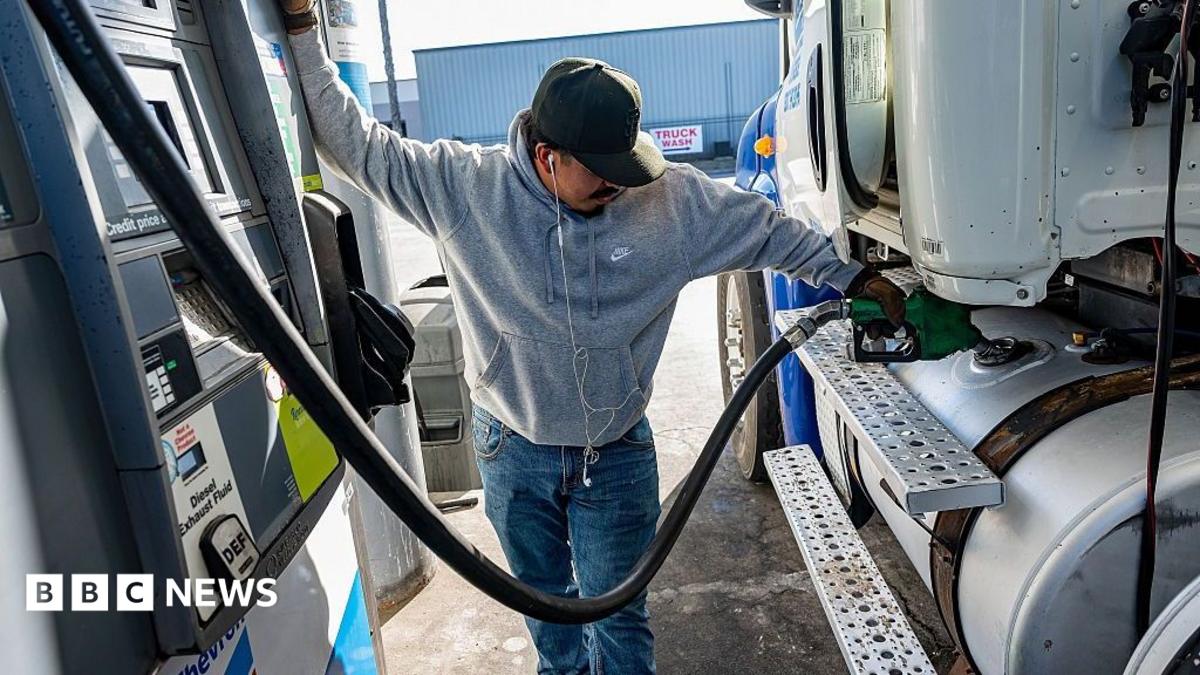
Diesel prices have been elevated in recent months but have started to decline. The average price for a gallon is $6.27 ($1.66 per litre), according to the American Automobile Association (AAA), which tracks daily petrol prices. That’s down $0.10 from this time last week, but up $5.94 from this time one month ago.

Diesel prices, which can drive inflation, are up 70 percent since the US and Israel’s war on Iran began this year, despite two high-profile recent moves by Trump to boost supplies of the fuel: pressuring allies ‌to release emergency reserves and expanding access to tax-exempt red-dyed diesel, which is normally used for farm equipment.

The wars in Iran and Ukraine have triggered an unprecedented global fuel supply crunch.

Source link

G7 to release 100 million barrels of oil and diesel, will it curb prices? | US-Israel war on Iran News

The Group of Seven countries has agreed to release 100 billion barrels of crude oil and diesel from emergency reserves over several months in an effort to reduce soaring energy prices after pressure from US President Donald Trump.

The US and Israel’s war on Iran, as well as Russia’s war on Ukraine, have triggered a spike in global oil and diesel prices.

Recommended Stories

list of 3 itemsend of list

Oil prices ‌jumped on Thursday and settled up more than $4 a barrel. Global diesel prices also hit a record high last Friday with the average price for a gallon (3.79 litres) of diesel at $6.50, up from $5.61 a month earlier, according to the American Automobile Association (AAA).

In a statement on Thursday, G7, which includes the US, UK, Canada, Japan, Germany, Italy and France, with the EU also represented, said there will also be a “substantial diesel release within the first 20 days” and discussions over “additional diesel releases as necessary” will be held in the coming days.

Will the G7’s energy release stabilise the global energy market?

Here’s what we know:

What has the G7 announced?

After a video conference of G7 leaders chaired by French President Emmanuel Macron on Friday, the group said in a joint statement: “Taking into account commitments that have already been fulfilled, we will implement our commitments with a coordinated release through the IEA of 100 million barrels.”

Earlier this week, the International Energy Agency’s (IEA) Executive Director Fatih Birol said that members had released about two-thirds of the 400-million-barrel agreement.

The G7 energy release will begin immediately and last for four months and will include a substantial diesel release for 20 days. It is not clear how many oil and diesel stocks each member of the group will release.

“We will convene in the context of the IEA in the coming days to discuss the possibility of additional diesel releases as necessary,” the statement said.

“We will coordinate maintenance schedules across G7 refineries to prevent simultaneous capacity shutdowns and temporarily increase utilization rates where feasible,” it added.

The G7 also urged member countries to refrain from imposing export restrictions on energy products among themselves.

Earlier this week, the Trump administration had threatened to impose a ban on US diesel exports and also pressured Europe to release its emergency diesel stocks to help ease soaring diesel prices.

Why are oil and diesel prices so high?

Global energy prices have been soaring due to the US and Israel’s war on Iran, which has disrupted energy exports from the Gulf. Meanwhile, the Ukraine attacks on Russian energy installations have also disrupted global energy supplies.

Former head of the International Energy Agency’s Oil Industry and Markets Division Neil Atkinson told Al Jazeera that there are three key factors contributing to the decline in global diesel supply.

First, “there isn’t diesel coming out of the Middle East to Europe, and Europe took quite a lot of diesel from Saudi Arabia and from Kuwait.”

Second, “Russia has now ceased to export diesel at all” due to “the attacks by Ukraine on Russian refineries”.

“And China is no longer exporting diesel,” he added.

“We’re in a situation where demand remains relatively high and is likely to stay high because of the agricultural harvesting season.”

According to data from the Joint Organizations Data Initiative (JODI) and the Organization of Petroleum Exporting Countries (OPEC), the United States is the world’s largest producer and exporter of diesel. It produces around 240.5 million tons and exports around 1.26 million barrels of diesel per day.

Russia is the world’s second-largest exporter of diesel, supplying 783.4 thousand barrels per day to the global market. Saudi Arabia is the world’s second-largest producer of diesel at 58.4 million tons, but it consumes large portion of its diesel domestically.

Will the G7 energy release bring prices down?

After the G7 announcement, French President Macron, who had co-chaired the meeting, said the group’s move to release the oil will “bring down the prices of petroleum products, particularly diesel.”

The price of Brent crude oil, the international benchmark, briefly dropped below $100 a barrel after the G7 announcement, but rose to around $102 in the evening.

Naeem Aslam, Chief investment Officer at Zaye Capital Markets, told Al Jazeera that the G7 energy release was “very much needed”, but the group’s announcement was just to ease off the pressure on the energy market.

“The actual structure changes about who is going to release [the energy stocks] and what and where the bans will be lifted, remains an important component in terms of the market,” he said.

Aslam added that by Sunday night especially before the markets open, the added pressure on energy prices will come off. “But going into Monday morning…we could potentially see the reversal in the market,” he added.

Atkinson, the energy expert, said the G7’s fuel release is welcome but “doesn’t deal with the fundamental problem that the global supply remains lower than normal”.

Atkinson told Al Jazeera that “seven months after this war started in the Middle East, we are still in a situation where the global supply of crude oil or products remains significantly below pre-war levels.”

“We are now in a situation where the focus is on end use of products, mainly diesel, which is what we’re talking about here,” he added.

What has Trump said?

Soaring diesel prices have been a source of tension for the Trump administration and Republicans who fear this will cost them votes in the upcoming November midterm elections.

Last week, Trump pressured Ukraine to stop attacking Russian diesel facilities amid the war.

Then, on Thursday this week, the US president told reporters that his administration “may” ask European countries to release diesel stocks, shortly after Treasury Secretary Scott Bessent urged Europe to “immediately” tap its reserves.

Trump also threatened to impose a ban on US diesel exports if Europe did not release emergency diesel stocks.

But on Friday, Trump told reporters at the White House that Washington would not impose a diesel export ban. He said the plan was never really on the table.

“Europe has a lot of diesel, and they’re going to be making a major world contribution, and so are we. And we’re not going to be doing the export ban. We’re going to be doing what we’re supposed to do,” Trump said.

“Trump is scared by diesel prices above $6, which is a price jump of 70 percent compared to before he started the war. This is likely to get worse with US diesel inventories at their lowest seasonal level since records began in 1982. So if there is not enough diesel being produced because of the US-Israeli war on Iran, and diesel reserves have been used up, the only way to bring more diesel to the US market is by exporting less,” Frederic Schneider, a nonresident senior fellow at the Middle East Council on Global Affairs, told Al Jazeera on Friday.

After the G7 announcement, Trump wrote on his Truth Social platform: “Europe has just agreed to release a massive amount of their heavily stocked Diesel Oil. The process will begin immediately.”

The White House is also reportedly preparing an executive order to tackle record-high US diesel prices that could be unveiled as early as next week, two people familiar with the process told the Reuters news agency.

Schneider noted that countries are also concerned about high energy prices since diesel and gasoline are important for economies and fulfil different roles.

“While gasoline fuels cars, diesel fuels anything from trucks, freight trains, ships, tractors, harvesters, construction machinery, mining equipment and backup generators. This means gasoline is used more by consumers while diesel is mostly used by producers, meaning a diesel price shock spreads into the price of almost everything else, most prominently food, building materials and anything delivered by truck,” he added.

Farmers are hit twice because diesel prices are rising at the same time as fertiliser prices, both of which have been pushed up by the closure of the Strait of Hormuz.

“A higher diesel price therefore acts like a tax on production and logistics, while higher gasoline prices act like a tax on consumers directly. Like higher gasoline prices, higher diesel prices risk stagflation by pushing up inflation while simultaneously squeezing margins in transport and agriculture, meaning central banks find [themselves] in a dilemma between cutting rates [helping producers] and raising rates [cutting inflation],” he said.
Source link

Trump says Europe agreed to release ‘massive amount’ of diesel reserves | Oil and Gas

US President Donald Trump says Europe agreed to release a ‘massive amount’ of diesel from emergency stockpiles as the US seeks to lower fuel prices. The proposed release could involve roughly 100 million barrels amid the US war on Iran and elevated fuel costs.

Source link

Trump claims Europe agreed to release ‘massive amount’ diesel stockpile | Donald Trump News

United States President Donald Trump has said Europe has agreed to release a “massive amount” of their diesel stockpile, although no European parties have confirmed the claim.

Trump made the statement on his Truth Social account on Friday as he has heaped pressure on European countries to release diesel stockpiles to ease soaring prices caused by the US-Israel war with Iran and the resulting constriction of traffic via the Strait of Hormuz.

Trump had previously floated banning US diesel exports if European countries did not comply. The European Union had earlier on Friday said it “fully rejects” the threat.

More to come…

Source link

US pressures Europe to release diesel reserves as Trump threatens export ban

Donald Trump has said he may ask European countries to release some of their diesel reserves as he considers banning US exports of the fuel.

The US President’s comment comes after Treasury Secretary Scott Bessent urged Europe to get ready to release diesel supplies immediately, arguing that US farmers, truckers, and businesses “should not be left carrying the burden” as prices soar.

The US has threatened to restrict diesel exports after the war in Iran caused sharp price rises for US voters ahead of the midterm elections in November.

On Thursday, the UK held talks with European partners about the potential release of diesel reserves in response to any ban.

Banning exports would flood the US market with diesel, and could bring prices down significantly for American drivers.

But experts warn such a ban would put further pressure on diesel prices in other countries, unless they can access further supplies.

The US is a vital supplier of diesel to the world, exporting between 1.2 and 1.5 million barrels per day.

Over half of the UK’s diesel is imported, with 31% of the imports coming from the US.

On Thursday, Trump was asked whether he would call on European countries to release some of their own diesel reserves.

“We may do that. They have some diesel,” he said.

An earlier post from Bessent on social media said European countries should “make additional supplies immediately available”.

The president is set to travel across the US campaigning for Republicans in the coming weeks in hopes of keeping control of the House and Senate in the November’s elections.

Diesel prices in the UK hit record highs this week and are hovering just under 200p per litre, according to motoring organisation the RAC.

UK Energy Minister Martin McCluskey was on a call with European counterparts on Thursday to discuss the potential ban.

A source familiar with the discussions told the BBC it was prudent to prepare a co-ordinated response with other countries, including those across EU, but added that there were still European reserves left from a coordinated release of strategic fuel stocks earlier in the year.

“We have a diverse and resilient supply. We continue to engage with our international partners and the UK fuel industry,” a government spokesperson said.

The government has stressed that there is no cause for concern about potential diesel shortages, though prices are expected to rise further.

Source link

Will Trump’s Diesel Threat Force Europe to Release Its Emergency Fuel Reserves?

The Trump administration has warned France and Germany to release emergency diesel reserves to help lower global fuel prices or risk facing a potential US ban on diesel exports, according to people familiar with the discussions.

The warning represents a sharp escalation in Washington’s pressure on European allies as President Donald Trump looks for ways to increase fuel supplies and bring down prices ahead of the November midterm elections.

US officials have become increasingly frustrated with France and Germany, which Washington believes have not fully acted on earlier commitments to release emergency oil and petroleum reserves as global fuel markets face mounting disruptions.

“It is in Europe’s best interest to work with the United States as we pursue multiple pathways to boost the supply of refined products and lower costs for consumers,” a US official told Reuters.

Stay ahead of the geopolitical week.

MD Briefing delivers expert analysis across five global fronts — the Indo-Pacific, energy, geoeconomics, European security, and the Middle East — every Monday morning. Free.

A second source familiar with the discussions said the United States had asked the European Union to release 120 million barrels of diesel over the next six months.

The demand highlights the growing importance of Europe’s fuel reserves at a time when disruptions to major energy-producing regions are tightening global supplies.

Washington Raises Pressure on Europe

The US administration’s warning comes as Trump considers restricting US diesel exports as part of a broader effort to increase domestic supplies and reduce fuel prices for American consumers.

The approach creates a difficult balance for Washington. Limiting exports could increase the amount of diesel available inside the United States, potentially putting downward pressure on domestic prices. But it could simultaneously reduce supplies available to international markets, particularly Europe, which has become increasingly dependent on imported refined fuels.

US Energy Secretary Chris Wright said on Wednesday that the administration expected European countries to announce additional diesel supplies soon.

“We’ve lost some diesel exports from the Middle East, although we’re restoring those, and we’ve lost diesel exports from China,” Wright told reporters.

The disruptions have exposed the vulnerability of global refined fuel markets to geopolitical conflicts and changes in trade flows.

Germany’s economy ministry did not immediately respond to a request for comment, while France’s energy ministry declined to comment.

The White House’s pressure also appears to have become a broader diplomatic issue among Western allies.

An official at the French presidency said Trump and French President Emmanuel Macron did not discuss the issue when they met on the sidelines of the UN General Assembly in New York last week.

Macron, however, plans to convene a video conference of G7 leaders to address rising fuel prices and the availability of refined petroleum products.

The discussions are expected to include coordination over the release of emergency reserves in cooperation with the International Energy Agency.

Why Europe Matters to the Fuel Market

Europe’s position in the global fuel market has changed substantially since Russia’s invasion of Ukraine.

European countries previously relied heavily on Russian crude oil and refined petroleum products. The subsequent sanctions and restrictions on Russian energy imports forced European governments and companies to find alternative suppliers.

The result has been greater dependence on imports from countries including the United States and suppliers in the Middle East and Asia.

That dependence has become more significant as the conflict involving the United States, Israel and Iran has disrupted energy flows from the Middle East.

The loss or reduction of refined fuel exports from major suppliers can quickly affect diesel markets because refining capacity cannot always be shifted between regions immediately.

Diesel is particularly important because it powers much of Europe’s commercial transport, heavy industry, agriculture and logistics sectors. Sustained shortages can therefore affect the broader economy rather than simply increasing prices at fuel stations.

The US Faces Its Own Fuel Dilemma

For Trump, the issue also has a strong domestic political dimension.

Fuel prices are highly visible to American consumers, making gasoline and diesel costs politically sensitive ahead of the November midterm elections.

The administration is therefore examining multiple ways to increase available supplies and reduce costs.

But a potential US diesel export ban could have consequences beyond America’s borders.

The United States has become an important supplier of refined petroleum products to international markets. Restricting those exports could tighten supplies elsewhere, potentially pushing international prices higher even if American prices fall.

That creates a difficult policy tradeoff for Washington.

The administration wants to protect US consumers from high fuel costs while maintaining sufficient supply in global markets. European governments, meanwhile, face pressure to use their own emergency reserves even as they seek to maintain energy security following the loss of Russian supplies.

Europe Seeks a Coordinated Response

France appears to be pursuing a broader G7 response rather than treating the issue as a bilateral dispute with Washington.

Macron’s planned meeting would allow the world’s major industrial economies to discuss the availability of refined products and potentially coordinate emergency stock releases through the International Energy Agency.

Such coordination could help prevent individual countries from taking measures that unintentionally worsen shortages elsewhere.

But disagreements over how much fuel should be released, when reserves should be used and who should bear the cost could complicate the process.

Emergency reserves are designed primarily to protect countries against severe supply disruptions. Releasing large quantities can provide temporary relief, but it also reduces the buffer available if another disruption occurs.

That makes Europe’s response particularly consequential at a time when energy markets remain exposed to geopolitical shocks.

A New Test for Transatlantic Energy Relations

The dispute illustrates how the global energy system has become increasingly intertwined with broader geopolitical and trade relationships.

Europe needs reliable fuel supplies after cutting its dependence on Russian energy, while the United States is attempting to use its position as a major energy producer and exporter to address domestic price pressures.

Trump’s warning to France and Germany adds another layer to that relationship by linking European reserve policy to continued access to US diesel exports.

Whether Europe ultimately releases the amount of diesel Washington has requested will depend on national assessments of market conditions, domestic energy security and the risks of further supply disruptions.

For now, the dispute signals that the energy consequences of conflicts in the Middle East are reaching far beyond the region itself.

As the United States and its European allies try to contain fuel prices, they face a common problem but increasingly different pressures over how the burden of stabilising global energy markets should be shared.

With information from Reuters.

Source link

UK tries to stop Trump’s diesel export ban

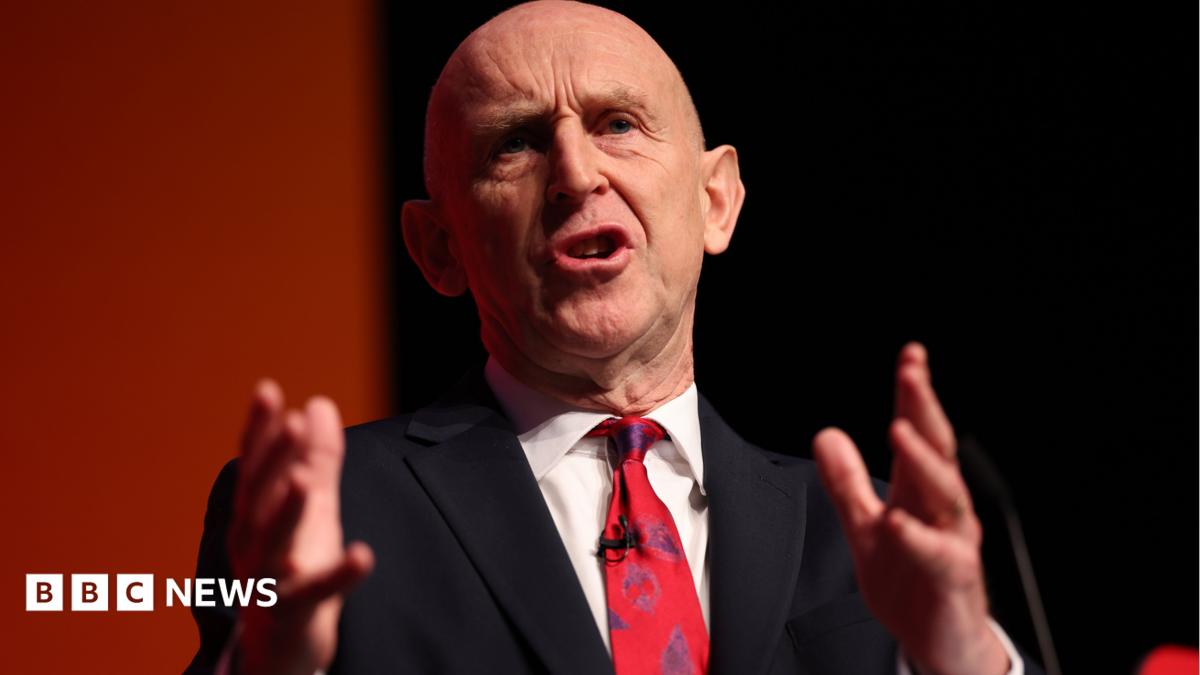
The UK is in talks with US authorities over a potential stoppage of diesel exports and has started preparing for a ban, Chancellor John Healey has told BBC News.

Diesel prices in the UK reached a new high on Monday due to supply pressures springing from the US-Israel conflict with Iran and Russia’s war with Ukraine.

Fuel prices are rising globally and US President Donald Trump has threatened to ban diesel exports, stating at the weekend: “We’re thinking about it very seriously.”

Healey, who admitted that UK diesel prices are “extreme”, said the government was in discussions with the US, adding: “We’re also making the provision that we may need to and we have our own stocks in the UK.”

Speaking on the sidelines of the annual Labour Party Conference in Liverpool, Healey said: “We work very closely with the Americans.

“In the end, we’re also working with the Americans where we can try and put in place what will solve this, or at least significantly ease it, which would be a diplomatic settlement [and] an end to the fighting with Iran.”

The UK depends on the US for around a third of its diesel imports and a ban would send prices even higher.

US sources suggest that Trump is considering a ban to attempt to bring down prices for domestic consumers ahead of the critical midterm elections.

The BBC has contacted the White House for comment.

In the UK, the average price for a litre of diesel reached 199.33p on Monday, according to the RAC motoring organisation, surpassing a previous high of 199.09p in June 2022 after Russia launched its full-scale invasion of Ukraine.

Petrol prices are also still rising, with a litre currently costing 174.23p.

Over the past seven months, the Iran war has severely disrupted the production and transportation of wholesale oil across the region, causing the price of fuels made from oil to surge.

The RAC said diesel prices had entered “uncharted territory” and served as a reminder of “just how exposed the UK is to events occurring far away”.

Healey said he was “very aware” of these cost of living pressures as he prepared what he called a “breathing space” Budget on 28 October.

A freeze on fuel duty, first implemented by the Conservative government in 2022, is due to expire at the end of the year. Duty is scheduled to increase by 3p in January and a further 2p in March.

Healey said: “Fundamentally, what we need is a settlement in the Middle East. We need an easing of the pressure of costs on business, the costs on households and on ordinary families that we see at the pumps in the most extreme level today for diesel.”

Source link

What Trump’s potential US diesel export ban could mean for you

For the US economy, a ban could deliver short-term relief at the pump by flooding the domestic market with excess supply.

However, energy analysts warn it could backfire.

David Fyfe, chief economist at Argus Media, notes that cutting off American supply would likely cause international prices to skyrocket.

That would push up global freight, food, and industrial costs, ultimately “feeding inflation back into the global economy”.

“At a stroke, the US’s reputation as a reliable supplier of energy to the world would be shot,” Fyfe added.

Removing more than a million barrels of daily American supply would trigger a fierce bidding war among importing nations in Latin America and Europe.

Sarah Raffoul, analytics manager at Argus Media, noted that while higher international prices would eventually curb demand, the immediate gap would severely strain trade relationships and accelerate global inflation.

Source link

UK diesel price hits all-time high

Diesel prices have hit an all-time high of 199.18p per litre, according to the motoring organisation RAC, as the war in the Middle East continues to push up the cost of fuel.

Petrol prices are also still rising, with a litre currently costing 174.13p.

Over the past seven months, the Iran war has severely disrupted the production and transportation of wholesale oil across the region, causing the price of fuels made from oil to surge.

RAC said diesel prices had entered “uncharted territory” and served as a reminder of “just how exposed the UK is to events occurring far away”.

Source link

What would a US diesel export ban mean for global fuel prices? | Inflation News

Diesel prices have hit record highs as the tensions between the United States and Iran, along with the war between Russia and Ukraine, disrupt key oil and fuel trade routes.

On Friday, the average price for a gallon (3.79 litres) of diesel was $6.50, up from $5.61 a month earlier, according to the American Automobile Association (AAA), which tracks fuel prices daily.

Recommended Stories

list of 4 itemsend of list

The spike has prompted the administration of US President Donald Trump and Republican lawmakers to consider restricting US diesel exports ahead of upcoming midterm elections.

A Reuters/Ipsos poll conducted in August found that 47 percent of voters said the cost of living was the single most important factor in deciding how they would vote in the midterms — more than twice the share who cited the next-most important issue, “democratic values and norms”.

A new Marist poll also found that Americans have more confidence in Democrats than Republicans to handle the economy, with 42 percent choosing Democrats compared with 34 percent for Republicans.

Amid that voter sentiment, US Energy Secretary Chris Wright said on Thursday that he was in touch with major oil refiners to gauge interest in a potential voluntary restriction on diesel exports, according to the Reuters news agency.

That followed remarks by Trump on Tuesday that he supported restricting diesel exports from the US, the world’s largest diesel exporter.

Energy analysts and industry groups have warned that an export ban could have unintended consequences, potentially pushing up fuel prices in the US and abroad.

Why are diesel prices so high?

Even though the US is the world’s largest diesel exporter, diesel is traded on a global market.

Disruptions to refineries in Russia and the Middle East have reduced the amount of fuel available worldwide, putting more pressure on US producers to fill the gap. In Russia, for example, drone attacks have damaged major refineries, forcing a cutback or halt in production.

“While US refineries are running at full tilt and higher than normal, the global gaps remain,” Rachel Ziemba, senior adjunct fellow at the Center for a New American Security, told Al Jazeera.

It comes as US diesel supplies are also shrinking. As of September 11, inventories had fallen to 107.9 million barrels, the lowest in more than four decades, according to the US Energy Information Administration.

With global supplies tightening, diesel prices have risen around the world — including in the US. Because American producers can sell their fuel into the global market, they are drawn to the soaring global prices rather than simply setting a lower price for domestic consumers.

Why is the US considering an export ban?

In Washington, DC, leaders have flirted with the idea of pushing US companies to stop or slow exporting diesel.

Republicans have been pushing for a slowdown or outright ban of exports in an effort to lower costs for consumers ahead of the pivotal midterm elections, where cost of living is becoming a critical issue.

Such a move, they hope, would reduce local diesel prices, which is significant as diesel is used in trucks to haul food and most products, Ziemba said, adding that US diesel exports are equivalent to about 40 percent of domestic consumption.

On Tuesday, Chuck Grassley, a Republican from Iowa, called on the president to put in place a temporary halt on exports.

“I encourage President Trump to put a temporary embargo on diesel exports through executive action,” Grassley said.

Republican Senator Dan Sullivan of Alaska made a similar call: “The cost of diesel is just too damn high. I’m calling for a temporary pause of American diesel exports so that we can rebuild our reserves ahead of winter,” Sullivan said in a statement on Tuesday.

In the House of Representatives, Congressman Tim Burchett of Tennessee introduced two bills that would restrict US diesel exports: One would impose a ban through January 2027, while the other would restrict exports if the national average price reaches $5 a gallon.

The administration has not made any official policy announcements, and the White House told Al Jazeera that the president is evaluating all options.

Oil and gas industry experts say that a ban could drive up prices rather than bringing them down.

“Diesel trades on a world market, just like corn. farmers don’t sell cheaper to Americans, and refiners can’t either since they buy crude at global prices. force a lower price and they’ll make less diesel. less supply means higher prices, not lower,” Patrick De Haan, head of petroleum analysis at GasBuddy, said in a post on X.

How would an export ban work?

A ban would prevent or restrict US refiners from selling diesel to buyers overseas, theoretically leaving more fuel available in the domestic market.

Analysts at Wood Mackenzie, a research and consulting firm, say that keeping more diesel stateside would ultimately fill up US storage tanks but also force refineries to cut production. That could affect other markets that rely heavily on US fuel, including Latin America and Europe, forcing them to compete with other global buyers for supplies and driving up prices for the global market.

Wood Mackenzie says China is the only major producer with enough spare refining capacity to potentially make up much of the shortfall.

“China is currently the only country with material spare refining capacity that could cover the loss of US refinery throughputs. However, China may well decide it is not in its interest to intercede,” analysts said.

Wood Mackenzie has warned that a ban could quickly fill US diesel inventories, forcing refiners to cut crude runs and potentially increasing US petrol imports.

That was also the view of an S&P Global analysis, which found that a complete ban could also mean that production would be reduced as storage capacity is filled up with unsold diesel. According to the analysis, that could lead to production cuts of as much as 750,000 barrels a day, which could put the US into being a net importer of petrol in the fourth quarter of this year.

Who would an export ban affect?

An export ban would affect US refiners and consumers, as well as countries that rely on US diesel.

“They [export bans] may provide temporary relief, but diesel is a global commodity. Treat one part of the system, and the effects travel elsewhere. Trade-offs are inevitable. Refiners are unlikely to cheer a blanket ban. Voluntary, controlled export reductions would generally be less disruptive in the short term,” Maksim Sonin, visiting scholar at Stanford University’s Precourt Institute for Energy, told Al Jazeera.

Disruptions to US exports could reduce the amount of fuel available on the global market. Wood Mackenzie analysts say countries in Europe and Latin America that rely heavily on US fuel could be forced to compete with other producers for supplies.

“If implemented, it would lead to European and Asian product prices increasing as the buyers of US fuel, mostly in Latin America, scramble to find new supplies, bidding up supplies. European crack spreads could widen, and overall we might see more disruptions,” Ziemba added.

“Given these issues, the US may opt for a mixture of carrots and sticks aiming to incentivise refineries to keep producing, perhaps including penalties if they cut production. There may be voluntary export quotas rather than a formal ban, and there may be exemptions for countries that provide crude oil to the US, like Mexico,” Ziemba said.

That could put pressure on consumers not only at the petrol pump but in the skies as well.

Airlines for America, an airline industry trade group, has also warned that an export ban could lead to higher prices for airlines and travellers, according to the Reuters news agency. The trade group did not respond to Al Jazeera’s request for comment.

The broader concern from analysts is that restricting exports could reduce US refinery production rather than simply redirecting diesel to US consumers, potentially putting upward pressure on fuel prices both domestically and internationally.

“It’s unlikely to help US consumers much given how it fails to solve underlying problems and could backfire if refineries hold on to production. The best way to address this is to end the conflicts prompting the shortages,” Ziemba said.

Source link